EP3761230A1 - Image processing method, device, storage medium and computer program product - Google Patents
Image processing method, device, storage medium and computer program product Download PDFInfo
- Publication number
- EP3761230A1 EP3761230A1 EP19759953.3A EP19759953A EP3761230A1 EP 3761230 A1 EP3761230 A1 EP 3761230A1 EP 19759953 A EP19759953 A EP 19759953A EP 3761230 A1 EP3761230 A1 EP 3761230A1
- Authority
- EP
- European Patent Office
- Prior art keywords
- image
- convolutional layer
- neural network
- deep
- network
- Prior art date
- Legal status (The legal status is an assumption and is not a legal conclusion. Google has not performed a legal analysis and makes no representation as to the accuracy of the status listed.)
- Granted
Links
Images







Classifications
-
- G—PHYSICS
- G06—COMPUTING OR CALCULATING; COUNTING
- G06N—COMPUTING ARRANGEMENTS BASED ON SPECIFIC COMPUTATIONAL MODELS
- G06N3/00—Computing arrangements based on biological models
- G06N3/02—Neural networks
- G06N3/08—Learning methods
-
- G—PHYSICS
- G06—COMPUTING OR CALCULATING; COUNTING
- G06F—ELECTRIC DIGITAL DATA PROCESSING
- G06F18/00—Pattern recognition
- G06F18/20—Analysing
- G06F18/21—Design or setup of recognition systems or techniques; Extraction of features in feature space; Blind source separation
- G06F18/214—Generating training patterns; Bootstrap methods, e.g. bagging or boosting
-
- G—PHYSICS
- G06—COMPUTING OR CALCULATING; COUNTING
- G06F—ELECTRIC DIGITAL DATA PROCESSING
- G06F18/00—Pattern recognition
- G06F18/20—Analysing
- G06F18/24—Classification techniques
- G06F18/241—Classification techniques relating to the classification model, e.g. parametric or non-parametric approaches
- G06F18/2413—Classification techniques relating to the classification model, e.g. parametric or non-parametric approaches based on distances to training or reference patterns
-
- G—PHYSICS
- G06—COMPUTING OR CALCULATING; COUNTING
- G06F—ELECTRIC DIGITAL DATA PROCESSING
- G06F18/00—Pattern recognition
- G06F18/40—Software arrangements specially adapted for pattern recognition, e.g. user interfaces or toolboxes therefor
-
- G—PHYSICS
- G06—COMPUTING OR CALCULATING; COUNTING
- G06N—COMPUTING ARRANGEMENTS BASED ON SPECIFIC COMPUTATIONAL MODELS
- G06N3/00—Computing arrangements based on biological models
- G06N3/02—Neural networks
- G06N3/04—Architecture, e.g. interconnection topology
-
- G—PHYSICS
- G06—COMPUTING OR CALCULATING; COUNTING
- G06N—COMPUTING ARRANGEMENTS BASED ON SPECIFIC COMPUTATIONAL MODELS
- G06N3/00—Computing arrangements based on biological models
- G06N3/02—Neural networks
- G06N3/04—Architecture, e.g. interconnection topology
- G06N3/045—Combinations of networks
-
- G—PHYSICS
- G06—COMPUTING OR CALCULATING; COUNTING
- G06N—COMPUTING ARRANGEMENTS BASED ON SPECIFIC COMPUTATIONAL MODELS
- G06N3/00—Computing arrangements based on biological models
- G06N3/02—Neural networks
- G06N3/04—Architecture, e.g. interconnection topology
- G06N3/0464—Convolutional networks [CNN, ConvNet]
-
- G—PHYSICS
- G06—COMPUTING OR CALCULATING; COUNTING
- G06N—COMPUTING ARRANGEMENTS BASED ON SPECIFIC COMPUTATIONAL MODELS
- G06N3/00—Computing arrangements based on biological models
- G06N3/02—Neural networks
- G06N3/08—Learning methods
- G06N3/09—Supervised learning
-
- G—PHYSICS
- G06—COMPUTING OR CALCULATING; COUNTING
- G06T—IMAGE DATA PROCESSING OR GENERATION, IN GENERAL
- G06T7/00—Image analysis
- G06T7/10—Segmentation; Edge detection
- G06T7/11—Region-based segmentation
-
- G—PHYSICS
- G06—COMPUTING OR CALCULATING; COUNTING
- G06V—IMAGE OR VIDEO RECOGNITION OR UNDERSTANDING
- G06V10/00—Arrangements for image or video recognition or understanding
- G06V10/20—Image preprocessing
- G06V10/26—Segmentation of patterns in the image field; Cutting or merging of image elements to establish the pattern region, e.g. clustering-based techniques; Detection of occlusion
- G06V10/267—Segmentation of patterns in the image field; Cutting or merging of image elements to establish the pattern region, e.g. clustering-based techniques; Detection of occlusion by performing operations on regions, e.g. growing, shrinking or watersheds
-
- G—PHYSICS
- G06—COMPUTING OR CALCULATING; COUNTING
- G06V—IMAGE OR VIDEO RECOGNITION OR UNDERSTANDING
- G06V10/00—Arrangements for image or video recognition or understanding
- G06V10/70—Arrangements for image or video recognition or understanding using pattern recognition or machine learning
- G06V10/77—Processing image or video features in feature spaces; using data integration or data reduction, e.g. principal component analysis [PCA] or independent component analysis [ICA] or self-organising maps [SOM]; Blind source separation
- G06V10/774—Generating sets of training patterns; Bootstrap methods, e.g. bagging or boosting
-
- G—PHYSICS
- G06—COMPUTING OR CALCULATING; COUNTING
- G06V—IMAGE OR VIDEO RECOGNITION OR UNDERSTANDING
- G06V10/00—Arrangements for image or video recognition or understanding
- G06V10/70—Arrangements for image or video recognition or understanding using pattern recognition or machine learning
- G06V10/82—Arrangements for image or video recognition or understanding using pattern recognition or machine learning using neural networks
-
- G—PHYSICS
- G06—COMPUTING OR CALCULATING; COUNTING
- G06V—IMAGE OR VIDEO RECOGNITION OR UNDERSTANDING
- G06V10/00—Arrangements for image or video recognition or understanding
- G06V10/94—Hardware or software architectures specially adapted for image or video understanding
- G06V10/945—User interactive design; Environments; Toolboxes
-
- G—PHYSICS
- G06—COMPUTING OR CALCULATING; COUNTING
- G06V—IMAGE OR VIDEO RECOGNITION OR UNDERSTANDING
- G06V10/00—Arrangements for image or video recognition or understanding
- G06V10/98—Detection or correction of errors, e.g. by rescanning the pattern or by human intervention; Evaluation of the quality of the acquired patterns
- G06V10/987—Detection or correction of errors, e.g. by rescanning the pattern or by human intervention; Evaluation of the quality of the acquired patterns with the intervention of an operator
-
- G—PHYSICS
- G06—COMPUTING OR CALCULATING; COUNTING
- G06N—COMPUTING ARRANGEMENTS BASED ON SPECIFIC COMPUTATIONAL MODELS
- G06N3/00—Computing arrangements based on biological models
- G06N3/02—Neural networks
- G06N3/08—Learning methods
- G06N3/084—Backpropagation, e.g. using gradient descent
-
- G—PHYSICS
- G06—COMPUTING OR CALCULATING; COUNTING
- G06T—IMAGE DATA PROCESSING OR GENERATION, IN GENERAL
- G06T2207/00—Indexing scheme for image analysis or image enhancement
- G06T2207/20—Special algorithmic details
- G06T2207/20081—Training; Learning
-
- G—PHYSICS
- G06—COMPUTING OR CALCULATING; COUNTING
- G06T—IMAGE DATA PROCESSING OR GENERATION, IN GENERAL
- G06T2207/00—Indexing scheme for image analysis or image enhancement
- G06T2207/20—Special algorithmic details
- G06T2207/20084—Artificial neural networks [ANN]
-
- G—PHYSICS
- G06—COMPUTING OR CALCULATING; COUNTING
- G06T—IMAGE DATA PROCESSING OR GENERATION, IN GENERAL
- G06T2207/00—Indexing scheme for image analysis or image enhancement
- G06T2207/20—Special algorithmic details
- G06T2207/20092—Interactive image processing based on input by user
- G06T2207/20104—Interactive definition of region of interest [ROI]
-
- G—PHYSICS
- G06—COMPUTING OR CALCULATING; COUNTING
- G06T—IMAGE DATA PROCESSING OR GENERATION, IN GENERAL
- G06T2207/00—Indexing scheme for image analysis or image enhancement
- G06T2207/20—Special algorithmic details
- G06T2207/20112—Image segmentation details
- G06T2207/20132—Image cropping
Definitions
- the present disclosure relates to the field of image recognition, and in particular, to an image processing method, an image processing apparatus, a storage medium, a related device, and a computer program product.
- image segmentation technologies are increasingly and extensively applied.
- An image processing method by using conventional technologies requires a plurality of operations on the image, resulting in complex steps and a bad effect.
- a deep-learning neural network as a new tool for image processing, has been developed rapidly in recent years.
- image processing performed by using a traditional deep-learning neural network results in complex steps, high use costs, a high bit error rate, a slow transmission speed, and poor security, causing unfriendly user experience.
- a segmentation result or matting result of the deep-learning neural network is not accurate enough, and a fixed object class may be only segmented or matted, greatly limiting an application of the deep-learning neural network to a real user scenario.
- a relatively accurate segmentation result or matting result may be obtained through a deep-learning neural network under user supervision, a calculation burden of the neural network is greatly increased.
- Embodiments of the present disclosure provide an image processing method and apparatus, a storage medium, a corresponding electronic device, and a computer program product, to overcome shortcomings of a bad segmentation result or matting result, or great increase of a calculation burden of a neural network while a relatively accurate segmentation result or matting result is obtained under user supervision, during image processing of a traditional deep-learning neural network, especially image segmentation or image matting.
- an image processing method is provided.
- the image processing method is performed by a computing device deployed with a deep-learning neural network.
- the image processing method includes:
- a method for training a deep-learning neural network includes:
- an image processing method includes:
- an image processing apparatus includes:
- an image processing method is provided.
- the image processing method is performed by a computing device deployed with a deep-learning neural network.
- the image processing method includes:
- an image processing apparatus includes:
- a computer-readable storage medium storing a computer program
- the computer program when executed by a processor, operations of the foregoing image processing method being implemented.
- an electronic device including:
- a computer program product including a program code, the program code, when the program product runs on a computing device, causing the computing device to implement the foregoing image processing method.
- the to-be-segmented object in the selection region of the image is segmented through the deep-learning neural network to obtain the first segmentation result, and then the first segmentation result is optimized based on the obtained correction information of the user for the first segmentation result by using the deep-learning neural network, to obtain the more accurate second segmentation result.
- the first segmentation result is optimized by using the correction information of the user for the first segmentation result, so that an accurate segmentation result or matting result is obtained through less user interactions, reducing calculation amount of the neural network, greatly reducing use costs, and improving user experience.
- FCN Fully convolutional network
- the pooling layer performs upsampling on an output image of each layer through bilinear interpolation to obtain an image having a size the same as a size of an original image. Pooling may reduce data amount for deep learning to reduce a parameter and calculation amount, thereby preventing overfitting. Different number of pooling layers may be inserted at an interval in successive convolutional layers depending on a situation. In some embodiments of the present disclosure, 4 pooling layers are added to the convolutional layer. Generally, for the pooling, mean-pooling and max-pooling are mainly used.
- Residual network (ResNet):
- a deep-learning neural network that may be used for image processing, especially image segmentation, includes a fully convolutional instance-aware semantic segmentation (FCIS) network and a deep interactive object selection (DIOS) network.
- FCIS fully convolutional instance-aware semantic segmentation
- DIOS deep interactive object selection
- the FCIS network and DIOS network generally use convolutional networks or fully convolutional networks as basic networks of the deep-learning neural network.
- FCIS uses a position-sensitive feature map to encode spatial position information, so as to predict a probability that a pixel belongs to an object instance at a relative position and a probability that the pixel is inside or outside an object boundary, and an instance segmentation result of the object is hereby generated.
- FIG. 1A shows an exemplary process of image segmentation by using an FCIS network.
- an output image feature map (score map) is processed through the other part of convolutional layer 1022 of the FCN in an upper branch, and the image feature map is also processed through a region proposal network (RPN) 103 in a lower branch.
- RPN region proposal network
- C is a natural number, representing a number of classes of objects; 1 represents a background class, then (C + 1) is a number of all classes of objects 1011 defined in the RPN 103, and 2 (C + 1) represents a total number of object classes inside or outside the boundary of the object 1011; and k represents a number of positions of the rectangular frame 105, and k is a natural number.
- 3x3 represents that the feature map 104 output by an upper branch is superimposed with a rectangular frame of 9 blocks.
- Each block of the rectangular frame 105 has a feature map, feature map, the feature map corresponding to a filter in a convolutional layer 1031.
- Assembling training is performed on the feature map 1041 after the image feature map 104 (position-sensitive internal/external score map) of the final result output by the FCN 102 and the rectangular frame 105 output by the RPN 103 is superimposed, to obtain an output image feature map 1042 of 2(C + 1) classes of objects 1011 in the rectangular frame 105.
- a pixel-wise function is run in a lower branch according to a situation of the object 1011 in the inside or outside of an object boundary represented by the rectangular frame 105, and a class similarity result 106 is obtained by using the rectangular frame 105 to select a to-be-segmented object 1011.
- An averaging and/or voting operation is performed on the class similarity result 106, to obtain whether an object 1011 selected in the output image 101 belongs to a corresponding classification result (yes/no) set in the RPN 103. If yes, it represents that the object 1011 selected in the rectangular frame 105 exists in a corresponding class. Therefore, a pixel-wise softmax function is run on an output result 1042 (that is, an image feature map) in an upper branch according to the situation of the object 1011 in the inside or outside of the object boundary represented by the rectangular frame 105, and an instance segmentation result 107 is obtained. If no, it proves that the object selected in the rectangular frame 105 fails to corresponding to a corresponding class, and then the segmentation result 107 is not processed.
- FIG. 1A only shows segmentation of a C th class of the object 1011. In an actual operation, segmentation of other C-1 classes of objects 1011 is further included.
- an FCIS network 100 segments the object 1011 by generating the rectangular frame 105 based on classification, and then generates an instance segmentation result 107d of the object 1011.
- the FCIS network 100 generates the instance segmentation result 107 of the object 1011 in an end-to-end manner.
- Such manner has two disadvantages below:
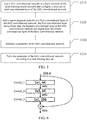
- FIG. 2B shows a process of image segmentation by using a DIOS network.
- a DIOS network 200 superimposes an input image 201 with one or more distance distribution maps 2021 and 2022 generated by user tapping.
- the images obtained through superimposing are input into an FCN 203.
- the FCN 203 processes a composite image including information about the input image 201 and the distance distribution maps 2021 and 2022 to obtain a final segmentation result 204.
- the DIOS network 200 obtains tapping information input by the user completely in a user interaction manner such as tapping to generate the segmentation result 204. Because the DIOS network 200 does not use a rectangular frame to calibrate a region of interest, a great many of user interactions is needed to generate the satisfactory segmentation result 204. In addition, in a case that the segmentation result 204 is generated, the entire FCN 203 needs to be recalculated for each user tapping, greatly increasing a calculation burden.
- a solution by using an improved deep-learning neural network for image processing, especially for image segmentation, is provided.
- FIG. 2A shows a schematic diagram of an image processing method and a system architecture of an image processing apparatus according to an embodiment of the present disclosure.
- a user 301 performs image processing through an application program on a mobile device including, for example, a mobile phone 302 and a personal digital assistant (PDA) 303, or through an application program on a device such as a computer 304.
- PDA personal digital assistant
- Different image processing interfaces may be used on different devices, for example, an interface 306 may be used on the mobile device, and an interface 307 may be used on a computer 304.
- the user 301 inputs an image and correction information for the image segmentation or matting result in the user interaction through input devices of the mobile devices 302, 303 and the computer 304.
- the mobile devices 302, 303 and the computer 304 segments or mats an object in the image by using the image processing method of the present disclosure.
- FIG. 2B shows a schematic diagram of an image processing method and a system architecture of an image processing apparatus according to another embodiment of the present disclosure.
- mobile devices 302 and 303, and a computer 304 serve as terminal devices or front-end devices, and an image input by a user 301 and correction information input by the user for image segmentation or matting in a user interaction are sent to a remote or a rear-end server 305.
- the server 305 runs an image processing program to implement the image processing method of the present disclosure, and returns an image segmentation or matting result to the terminal devices or front-end devices 302, 303, and 304.
- An interface similar to an interface in FIG. 2A may be used for the mobile device and computer 304 in FIG. 2B .
- a computing device that is used as an execution subject of the image processing method according to the embodiment of the present disclosure or an image processing apparatus according to the embodiment of the present disclosure may be a terminal device such as the mobile devices 302 and 303, and the computer 304, or may be a server device such as the server 305, or any other computing device that may implement the image processing method according to the embodiment of the present disclosure.
- FIG. 3A shows a schematic basic flowchart of the foregoing image processing solution according to an embodiment of the present disclosure.
- an image is obtained,
- a deep-learning neural network segments according to a rectangular frame (shown in a middle view of FIG. 3A ) given by a user for calibrating an object of interest, a target object in the rectangular frame through an algorithm to obtain a segmentation result;
- the segment result may be modified through fewer user interactions to achieve rapid optimization.
- FIG. 3B shows a schematic basic flowchart of an image processing solution according to another embodiment of the present disclosure.
- image processing there is a need for a user to mat an object of interest from an image, that is, a "matting" function of image processing software.
- the user intends to mat a portrait in a photo from the photo, and superimpose the matted portrait on other photos or images.
- image processing solution compared with the solution shown in FIG.
- FIG. 4 shows a method for generating a deep-learning neural network according to an embodiment of the present disclosure. The method includes the following steps:
- step S 100 publicly available PASCALVOC2012 and MSCOCO instance segmentation data sets are used as the training data sets.
- instance segmentation data top 5000 image instances may be used for training image recognition capability of a model, and last 3000 image instances may be used for training the user interaction correction capability of the model, so that the deep-learning neural network according to the embodiment of the present disclosure may accurately process an object class in a rectangular frame of an object of interest calibrated by the user and correction data for user interaction.
- all instance classes in the training data set are converted into a foreground class. That the multiple object classes are converted into a single foreground class is that, during training and use of the deep-learning neural network, a corresponding rectangular frame of a class is no longer determined and generated for a class in the training data, but rectangular frames are generated for all object classes.
- a step of classification of objects in an image is skipped.
- an object in a rectangular frame of interest calibrated by the user is segmented directly. Image segmentation is performed by fully using processing capability of the deep-learning neural network.
- all images in the training data set are flipped horizontally to generate a corresponding flipped image and label. In this case, the training data set is expanded to be twice bigger than the original training data set and is used as a new training data set.
- the creating a deep-learning neural network in step S200 further includes the following steps shown in FIG. 5 :
- step S210 the basic network is designed first.
- an FCN ResNet101 is used as a basic network model, parameters of the network structure being shown in Table 1.
- Table 1 Name of a convolutional layer Output size (pixel) ResNet-101 Conv1 300x500 7x7, 64, stride2 Conv2_x 150x250 3x3 maxpool, stride2 1x1, 64 x3 blocks 3x3, 64 1x1, 256 Conv3_x 76x126 1x1, 128 x4 blocks 3x3, 128 1x1, 512 Conv4_x 38x63 1x1, 256 x23 blocks 3x3, 256 1x1, 1024 Conv5_x 38x63 1x1, 512 x3 blocks 3x3, 512 1x1, 2048 Conv_new 38x63 1x1,1024
- the basic network, FCN, used in the present disclosure includes six convolutional layers of Conv1 to Conv_new. From Conv1 to Conv_new, a level of the convolutional layer gradually increases. Conv1 is a lowest convolutional layer, and Conv_new, as the last layer, is a highest convolutional layer. In some embodiments, the convolutional layers are all fully-connected layers.
- the fully convolutional network as a kind of a neural network, has a lowest convolutional layer equivalent to an input layer, a highest convolutional layer equivalent to an output layer, and an intermediate convolutional layer equivalent to a hidden layer.
- Convolutional layers Conv_new Conv1 and Conv_new are single convolutional layers.
- the convolutional layers of Conv2_x, Conv3_x, Conv4_x, and Conv5_x represent that the convolutional layers include a plurality of modules (blocks, or convolutional sublayers), respectively, x being a number of the modules the convolutional layers, respectively.
- the convolutional layer Conv2 has 3 modules (x3blocks), which are Conv2_1, Conv2_2, and Conv2_3 respectively. Numbers of Conv3, 4, and 5 modules are 4, 23, and 3, respectively.
- the convolutional layers with a plurality of modules may be also regarded as a combination of the plurality of convolutional layers.
- Each module (convolutional sublayer) is also actually a convolutional layer.
- An output result of each convolutional layer is a feature map of a processed image, a size of the feature map gradually decreasing from 300 (pixels) x500 (pixels) to 38 (pixels) x63 (pixels).
- a size of a filter is 7 (pixels) x 7 (pixels), there are 64 filters in total, and a stride is 2.
- a multi-module convolutional layer Conv4_x in Table 1 has 23 modules in total. Each module has 256 filters with 1 (pixel) x 1 (pixel), 256 filters with 3 (pixel) x 3 (pixel), and 1024 filters with 1 (pixel) x 1 (pixel).
- ReLU activation function
- BN batch normalization
- a structure of each module of the convolutional layer is shown in FIG. 6 , three modules of the convolutional layer Conv2 being used as an example.
- a 256-dimensional (256-d) feature data output from the convolutional layer Conv1 is processed by 64 filters with 1x1 of a module Conv2_1 respectively, is processed by a rectified linear unit of an activation function layer ReLU, is processed by 64 filters with 3x3 of a module Conv2_2, is processed by the rectified linear unit of the activation function layer ReLU, and is then processed by 256 filters with 1x1 of a module Conv2_3, to obtain a processing result.
- step S220 design of a high-level neural network is performed.
- a branch is added to a last layer, for example, the module Conv4_23, of a convolutional layer Conv4 of the basic network FCN, to generate a rectangular frame for training by using a region proposal network RPN.
- a processing result that is, the image feature map of the convolutional layer
- a processing result that is, the image feature map of the convolutional layer
- a processing result that is, the image feature map of the convolutional layer
- the module Conv4_23 is projected, through a rectangular frame generated by the convolutional layer of the RPN, onto a position-sensitive feature map output by a highest convolutional layer Conv_new of the FCN.
- a segmentation result of the object in the rectangular frame is generated.
- a branch of the RPN is generally added to an intermediate convolutional layer that is higher than a lowest convolutional layer and lower than a highest convolutional layer.
- An advantage of selection of the intermediate convolutional layer is that the position-sensitive feature map of the image is obtained by fully using training and computing capability of the FCN, and not all convolutional layers are necessarily adjusted during training in a reverse recursive calculation of a parameter of a neural network, so that efficiency is improved.
- a convolutional layer or a module of the convolutional layer that adds the branch of the RPN is called a first convolutional layer.
- the first convolutional layer is lower than a highest convolutional layer of the FCN and is higher than a lowest convolutional layer of the FCN.
- a position of the first convolutional layer is generally determined according to actual demands.
- the module Conv4_23 is used as the first convolutional layer.
- FIG. 7 shows a structure of an RPN 700 according to an embodiment of the present disclosure.
- the RPN 700 includes an intermediate layer 701 with 256-dimensional data, a classification layer (cls layer) 702 that outputs 2k scores, and a regression layer (reglayer) 703 that outputs 4k coordinates, K being a number of object classes.
- a training data set of the deep-learning neural network of the present disclosure converts the class of an instance image into a foreground class. Therefore, the number k of object classes herein is far more than a class that the RPN 700 may recognize in the FCIS network.
- the RPN 700 selects a sliding window 704 corresponding to k classes of anchor boxes 706 (rectangular frames corresponding to the class) to slid on the convolutional feature map 705. Data of the feature map in the selected sliding window 704 is input in the RPN 700 for processing.
- step S210 and step S220 architecture of the deep-learning neural network model is created. Now, it is necessary to initialize parameters of the neural network in step S230.
- convolutional layers Conv1 to Conv5 of the FCN are initialized with the parameters of ResNet101 pre-trained in the ImageNet dataset, and parameters of a highest convolutional layer Conv new are initialized by using Gaussian distribution with a variance of 0.01 and a mean of 0.
- the ImageNet dataset may be only classified originally, but is used for an image segmentation task in the present disclosure.
- step S240 a new training data set established in step S200 is used for training the deep-learning neural network.
- a gradient descent method based on stochastic gradient descent (SGD) is used for resolving a convolutional template parameter w and a bias parameter b of a neural network model.
- SGD stochastic gradient descent
- a prediction result error is calculated and propagated back to the FCN neural network model, a gradient is calculated again, and the parameter of the FCN neural network model is updated.
- the new training data set includes an image instance for image recognition capability and an image instance for user interaction correction capability
- the new training data set includes an image instance for image recognition capability and an image instance for user interaction correction capability
- not only assembling training is performed by superimposing a rectangular frame outputted from the RPN with a position-sensitive feature map outputted from a highest convolutional layer of the FCN, but also a feature map outputted from an intermediate convolutional layer is selected in convolutional layers of the FCN to be superimposed in parallel with the image instance (the image instance of the part may be in a form of a correction position map) used for user interaction correction, and a new position-sensitive feature map is outputted from a higher convolutional layer, and then assembling training is performed.
- the selected intermediate convolutional layer may be the same as or different from an intermediate convolutional layer added to a branch of the RPN, but the selected intermediate convolutional layer of the FCN during the correction still meets a requirement of being higher than a lowest convolutional layer and lower than a highest convolutional layer of the FCN.
- the correction is equivalent to training by using a partial layer close to an output layer in the neural network.
- the deep-learning neural network may be regarded as being composed of a first part and a second part. The second part is closer to an output side than the first part.
- FIG. 8 shows details of generation of a correction map, especially a correction distance map, by using a segmentation result 806 obtained by segmenting an object 8011 in an image 801 through correction information of user interaction.
- An error in the correction information of the user for the segmentation result 806 may be obtained in a manner of user interaction such as obtaining user input.
- Correction information of the user for the segmentation result 806 may be obtained, and a correction map is generated according to the correction information as the image instance for the user interaction correction in the training data set.
- the user may input the correction information by tapping the segmentation result 806.
- the segmentation result 806 obtained by superimposing the output of the FCN and output of the RPN may be provided to the user, for example, by displaying on a screen, and the user may indicate an error in the segmentation result 806 by tapping.
- the segmented object 8011 has a partial image 8061 more than a desired object segmentation result
- correction tapping by the user on the part may indicate that the partial image belongs to a background class.
- foreground correction tapping 803 For example, if the segmented object 8011 has a partial image 8062 less than the desired object segmentation result, correction tapping by the user on the part may indicate that the partial image belongs to a foreground class.
- Such tapping is called foreground correction tapping 803.
- the foreground correction tapping 803 and the background correction tapping 802 are processed to generate a foreground correction (distance) map 805 and a background correction (distance) map 804, respectively. Both correction distance maps are superimposed with the feature map outputted from the second convolutional layer in the FCN to obtain, through training, an updated position-sensitive feature map from a higher convolutional layer.
- parameters for example, trained network parameters in the foregoing training manner
- parameters of the first part of the deep neural network such as Conv1-4
- parameters of the second part of the deep neural network such as Conv5 and Conv new
- a training process of the neural network including acquisition of the new training data set, construction of the deep-learning neural network, and training of the deep-learning neural network by using the new training data set to obtain the deep-learning neural network model is described.
- the method includes the following steps:
- the image input by the user and a rectangular frame calibrated by the user on the image are received.
- the rectangular frame as a selection region of interest to the user, includes the object to be segmented from the image.
- the rectangular frame configured to calibrate the object may also be automatically generated through image recognition. The user may perform adjustment and determination by selecting or dragging an automatically provided recommended rectangular frame, further simplifying an operation flow of image processing.
- the image obtained in step S300 includes no selection region, but the entire image is selected by default or a to-be-segmented object is otherwise marked or pre-determined.
- the image and the selection region obtained in step S300 are input into the deep-learning neural network for image segmentation, and the first segmentation result is modified according to the correction information input by the user for the first segmentation result in user interaction.
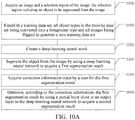
- the used deep-learning neural network is the foregoing trained neural network. Therefore, referring to FIG. 10A , the following steps are also included before step S400:
- a structure of the deep-learning neural network has the following features: a basic network of the deep-learning neural network is an FCN, a branch of the RPN existing on a first convolutional layer of the FCN, the first convolutional layer being lower than a highest convolutional layer of the FCN and higher than a lowest convolutional layer of the FCN.
- image segmentation by using a deep-learning neural network is mainly divided into two stages.
- step S400 includes the following steps shown in FIG. 12A :
- the rectangular frame 1104 outputted from the RPN 1102-1 is different from the calibrated rectangular frame 11011 input by a user.
- the rectangular frame 1104 outputted from the RPN 1102-1 is configured to calibrate a position range of the object 11012 in the image 1101.
- the rectangular frame 11011 input by the user indicates an image region in which the image object to be processed by the neural network is located, that is, the image object to be processed by the neural network is not the image 1101 input by the user, but a part of the image in the calibrated rectangular frame 11011 of the user.
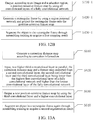
- step S600 includes the following steps shown in FIG. 13A :
- the second convolutional layer 11022 is selected as a last module Conv4_23 of a convolutional layer Conv4 of the FCN 1102.
- An updated feature map is obtained after the feature map 1109 outputted by the module Conv4_23 and the correction distance map 1107 obtained from user interaction are connected in parallel through the interaction module 1108.
- the updated feature map is input into the convolutional layers Conv5 and Conv new higher than the module Conv4_23 to output a new position-sensitive feature map 1110.
- the third convolutional layer 11023 is a module Conv5_1. Both the second convolutional layer 11022 (the module Conv4_23) and the third convolutional layer 11023 are higher than a lowest convolutional layer of the FCN 1102 and lower than a highest convolutional layer of the FCN 1102.
- Selection of the second convolutional layer 11022 and the third convolutional layer 11023 may be adjusted according to demands. For example, in the first stage, during the generation of the rectangular frame 1104 by using the RPN 1102-1, the object 11012 is no longer classified by using the new training set data converted into a single foreground class, causing too much calculation data amount to the neural network. Selection of positions of the second convolutional layer 11022 and the third convolutional layer 11023 may reduce a too much calculation data burden. In addition, a single class of image segmentation and user correction are specially selected for the new training data set of the deep-learning neural network of the present disclosure. Image recognition and correction optimization are provided for training during generation of the neural network.
- Modification of the segmentation result by using a partial convolutional layer is characterized in an advantage below: parameters of a convolutional layer lower than the second convolutional layer 11022 is fixed and skips modification and optimization, only a partial layer of the neural network, especially a partial layer close to the output layer, is used, so that a calculation burden of the entire network is reduced, efficiency of modification of the segmentation result by the neural network based on correction information may be improved effectively, an image segmentation speed is improved, and costs are reduced, causing the user to obtain better user experience.
- corresponding training may be performed according to the requirements of the two stages of the image processing method by using the neural network model.
- positions of the first convolutional layer to the third convolutional layer may also be selected according to setting during training of the network model.
- Taps 11061 and 11062 by the user on an error region in the segmentation result is obtained by receiving correction information input by the user for the first segmentation result 1105 in user interaction. Similar to a training process of the deep-learning neural network model, correction information of user interaction in a manner of correction tapping by the user indicates an error in the first segmentation result 1105 obtained by superimposing the position-sensitive feature map 1103 outputted from FCN 1102 in stage 1 and the rectangular frame 1104 outputted from the RPN 1102-1. Still referring to an upper part of FIG. 8 , if the segmentation result 806 has a partial image 8061 more than the expected segmentation result, it indicates that the partial image 8061 belongs to the background class other than the segmented object 8011.
- Such background correction tapping 802 is processed to generate a background correction distance map 804.
- the segmentation result 806 has a partial image 8062 less than the expected segmentation result, it indicates that the partial image belongs to the object 8011 in the foreground class other than the background class.
- Such foreground correction tapping 803 is processed to generate a foreground correction distance map 805. Both correction distance maps are superimposed with the feature map 1109 outputted from the second convolutional layer 11022 in the FCN to obtain, through training, an updated position-sensitive feature map 1110 from a higher convolutional layer.
- FIG. 9B a flow of image matting by using a deep-learning neural network is introduced.
- an object in an image is segmented and matted in a same or similar manner, and after a second matting result is obtained, the object is obtained from the second matting result.
- the method includes the following steps:
- step S400-1 includes the following steps:
- Step S600-1 includes the following steps shown in FIG. 13B :
- a content similar to the image processing method for image segmentation is not described again in the image processing method for image matting.
- the image processing method may be further loaded to a cloud platform for providing a service.
- the present disclosure further provides an image processing apparatus that performs image segmentation by using a deep-learning neural network.
- the image processing apparatus 1400 includes:
- the selection region of the image is generally a rectangular frame calibrated by the user on the image.
- the rectangular frame as a selection region of interest to the user, includes the object to be segmented from the image.
- the rectangular frame configured to calibrate the object may also be automatically generated through image recognition. The user may perform adjustment and determination by selecting or dragging an automatically provided recommended rectangular frame, further simplifying an operation flow of image processing.
- the image obtained in step S300 includes no selection region, but the entire image is selected by default or a to-be-segmented object is otherwise marked or pre-determined.
- a basic network of the deep-learning neural network is FCN.
- the first convolutional layer is lower than a highest convolutional layer of the FCN and higher than a lowest convolutional layer of the FCN.
- the processing unit 1403 is further configured to:
- the processing unit 1403 is further configured to:
- correction information in user interaction may be correction tapping by a user on an error region. Therefore, the interaction unit 1402 is further configured to obtain tapping by the user on the error region in the first segmentation result.
- FIG. 14B shows an image processing apparatus according to another embodiment of the present disclosure.
- the image processing apparatus 1400-1 includes:
- the processing unit 1403-1 is further configured to:
- the processing unit 1403-1 is further configured to:
- ResNet is used as the basic network of the deep-learning neural network in the present disclosure
- a person skilled in the art may implement the method of the present disclosure by using other basic network structures that are different from ResNet.
- a similar effect may be further achieved by placing the correction distance map in different positions.
- the object of interest is calibrated by the rectangular frame, and the deep-learning neural network segments or mats the target object in the rectangular frame.
- the error region in the segmentation result or matting result is selected through user interaction to correct the segmentation result or matting result.
- the segmentation result or matting result is modified and optimized by using the partial layer close to the output layer in the deep-learning neural network model again.
- the segmentation result is modified only through a partial higher convolutional layer of the neural network, and the lower convolutional layer skips the operation, greatly reducing the calculation burden.
- the user only needs to calibrate the object of interest by using the rectangular frame to obtain a good segmentation result or matting result, and more classes of objects other than a few classes of objects may be recognized.
- the image segmentation or matting result of the neural network may be properly adjusted through user interaction to optimally perform image processing and obtain better user experience.
- modules or units of the image processing apparatus are mentioned in the foregoing detailed description, such division is not mandatory.
- the features and functions of two or more modules or units described above may be embodied in one module or unit.
- features and functions of one module or unit described above may be further embodied in a plurality of modules or units.
- the components displayed as modules or units may or may not be physical units, that is, may be located in one place, or may be distributed on a plurality of network units. Some or all of the modules may be selected according to practical requirements to achieve the objectives of the present disclosure. A person of ordinary skill in the art may understand and implement the objective without creative efforts.
- a computer-readable storage medium is further provided, storing a computer program.
- the program includes an executable instruction.
- the executable instruction is executed by, for example, a processor, the steps of the image processing method described in any one of the foregoing embodiments may be implemented.
- various aspects of the present disclosure may also be implemented in the form of a program product, which includes a program code.
- the program product is run on a computing device, the program code is used to cause the computing device to perform the steps in the image processing method of this specification according to various exemplary embodiments of the present disclosure.
- the program product for implementing the foregoing method according to the embodiments of the present disclosure may use a portable compact disk read-only memory (CD-ROM) and include a program code, and may be run on a terminal device, such as a personal computer.
- CD-ROM portable compact disk read-only memory
- the program product of the present disclosure is not limited thereto.
- the readable storage medium may be any tangible medium including or storing a program, and the program may be used by or in combination with an instruction execution system, apparatus, or device.
- the program product may use any combination of one or more readable media.
- the readable medium may be a readable signal medium or a readable storage medium.
- the readable medium may be, for example, but not limited to, an electric, magnetic, optical, electromagnetic, infrared, or semi-conductive system, apparatus, or device, or any combination thereof. More specific examples of the readable storage medium (a non-exhaustive list) include: an electrical connection having one or more wires, a portable disk, a hard disk, a random access memory (RAM), a read only memory (ROM), an erasable programmable read only memory (EPROM) or flash memory, an optical fiber, a compact disk read only memory (CD-ROM), an optical storage device, a magnetic storage device, or any appropriate combination thereof.
- the computer readable storage medium may include a data signal transmitted in a baseband or as part of a carrier, and stores readable program code.
- the propagated data signal may be in a plurality of forms, including, but not limited to, an electromagnetic signal, an optical signal, or any appropriate combination thereof.
- the readable storage medium may alternatively be any readable medium other than the readable storage medium.
- the readable medium may be configured to send, propagate, or transmit a program configured to be used by or in combination with an instruction execution system, apparatus, or device.
- the program code included in the readable storage medium may be transmitted by using any suitable medium, including but not limited to, via wireless transmission, wired transmission, a cable, radio frequency (RF) or the like, or any suitable combination of thereof.
- RF radio frequency
- the program code configured to execute the operations of the embodiments of the present disclosure may be written by using any combination of one or more programming languages.
- the programming languages include an object-oriented programming language such as Java and C++, and also include a conventional procedural programming language such as "C" or similar programming languages.
- the program code may be completely executed on a user computing device, partially executed on a user device, executed as an independent software package, partially executed on a user computing device and partially executed on a remote computing device, or completely executed on a remote computing device or server.
- the remote computing device may be connected to a user computing device through any type of network including a local area network (LAN) or a wide area network (WAN), or may be connected to an external computing device (for example, through the Internet by using an Internet service provider).
- LAN local area network
- WAN wide area network
- an electronic device is further provided.
- the electronic device may include a processor, and a memory configured to store an executable instruction of the processor.
- the processor is configured to execute the steps of the image processing method in any one of the foregoing embodiments by executing the executable instruction.
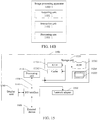
- the electronic device 1500 according to this embodiment of the present disclosure is described below with reference to FIG. 15 .
- the electronic device 1500 shown in FIG. 15 is only an example, and does not impose any limitation on the functions and the scope of use of the embodiments of the present disclosure.
- the electronic device 1500 is represented in the form of a general-purpose computing device.
- Components of the electronic device 1500 may include, but are not limited to: at least one processing unit 1510, at least one storage unit 1520, a bus 1530 connecting different system components (including the storage unit 1520 and the processing unit 1510), a display unit 1540, and the like.
- the storage unit stores a program code, and the program code may be executed by the processing unit 1510 to cause the processing unit 1510 to perform the steps in the image processing method of this specification according to various exemplary embodiments of the present disclosure.
- the processing unit 1510 may perform the steps shown in FIG. 4 , FIG. 5 , FIG. 9 , FIG. 10 , FIG. 12 , and FIG. 13 .
- the storage unit 1520 may include a readable medium in the form of a volatile storage unit, for example, a random access memory (RAM) 15201 and/or a cache storage unit 15202, and may further include a read-only memory (ROM) 15203.
- RAM random access memory
- ROM read-only memory
- the storage unit 1520 may further include a program/utility tool 15204 including a group of (at least one) program modules 15205, and such program modules 15205 include but are not limited to: an operating system, one or more application programs, other program modules, and program data. Each or certain combination of these examples may include implementation of a network environment.
- the bus 1530 may be one or more of several types of bus structures, including a storage unit bus or a storage unit controller, a peripheral bus, a graphics acceleration port, a processing unit, or a local bus using any of various bus structures.
- the electronic device 1500 may also communicate with one or more external devices 1600 (for example, a keyboard, a pointing device, a Bluetooth device, and the like), and may also communicate with one or more devices that enable a user to interact with the electronic device 1500, and/or communicate with any device (for example, a router, a modem, and the like) that enables the electronic device 1500 to communicate with one or more other computing devices. This communication may proceed through an input/output (I/O) interface 1550. Moreover, the electronic device 1500 may also communicate with one or more networks (for example, a local area network (LAN), a wide area network (WAN) and/or a public network such as the Internet) through a network adapter 1560.
- LAN local area network
- WAN wide area network
- Internet public network such as the Internet
- the network adapter 1560 may communicate with other modules of the electronic device 1500 through the bus 1530. It is to be understood that although not shown in FIG. 7 , other hardware and/or software modules may be used in conjunction with the electronic device 1500, including but not limited to: a microcode, a device driver, a redundancy processing unit, an external magnetic disk driving array, a RAID system, a magnetic tape drive, and a data backup storage system, and the like.
- the electronic device 1500 can also communicate with one or more networks (such as a local area network (LAN), a wide area network (WAN), and / or a public network, such as the Internet) through the network adapter 1560.
- the network adapter 1560 may communicate with other modules of the electronic device 1500 through the bus 1530. It is to be understood that although not shown in the figure, other hardware and/or software modules may be used in conjunction with the electronic device 1500, including but not limited to: microcode, device driver, redundant processing unit, external disk drive array, RAID system, tape drive and data backup storage system, and the like.
- the technical solutions according to the embodiments of the present disclosure may be embodied in the form of a software product.
- the software product may be stored in a non-volatile storage medium (which may be a CD-ROM, a USB flash drive, or the like) or on the network and includes several instructions for instructing a computing device (which may be a personal computer, a server, a network device, or the like) to perform the image processing method according to the embodiments of the present disclosure.
Landscapes
- Engineering & Computer Science (AREA)
- Theoretical Computer Science (AREA)
- Physics & Mathematics (AREA)
- General Physics & Mathematics (AREA)
- Evolutionary Computation (AREA)
- Artificial Intelligence (AREA)
- Software Systems (AREA)
- Data Mining & Analysis (AREA)
- Multimedia (AREA)
- Health & Medical Sciences (AREA)
- Computing Systems (AREA)
- General Health & Medical Sciences (AREA)
- Computer Vision & Pattern Recognition (AREA)
- Life Sciences & Earth Sciences (AREA)
- General Engineering & Computer Science (AREA)
- Biomedical Technology (AREA)
- Biophysics (AREA)
- Computational Linguistics (AREA)
- Molecular Biology (AREA)
- Mathematical Physics (AREA)
- Medical Informatics (AREA)
- Databases & Information Systems (AREA)
- Bioinformatics & Cheminformatics (AREA)
- Bioinformatics & Computational Biology (AREA)
- Evolutionary Biology (AREA)
- Quality & Reliability (AREA)
- Human Computer Interaction (AREA)
- Image Analysis (AREA)
Abstract
Description
- This application claims priority to Chinese Patent Application No.
201810172602.3 - The present disclosure relates to the field of image recognition, and in particular, to an image processing method, an image processing apparatus, a storage medium, a related device, and a computer program product.
- With the growing demand for image processing, image segmentation technologies are increasingly and extensively applied. In a case that a user processes an image, it is very practically needed that an object of interest is accurately segmented or matted from the image. An image processing method by using conventional technologies requires a plurality of operations on the image, resulting in complex steps and a bad effect. A deep-learning neural network, as a new tool for image processing, has been developed rapidly in recent years. However, image processing performed by using a traditional deep-learning neural network results in complex steps, high use costs, a high bit error rate, a slow transmission speed, and poor security, causing unfriendly user experience. For example, a segmentation result or matting result of the deep-learning neural network is not accurate enough, and a fixed object class may be only segmented or matted, greatly limiting an application of the deep-learning neural network to a real user scenario. In addition, although a relatively accurate segmentation result or matting result may be obtained through a deep-learning neural network under user supervision, a calculation burden of the neural network is greatly increased.
- Embodiments of the present disclosure provide an image processing method and apparatus, a storage medium, a corresponding electronic device, and a computer program product, to overcome shortcomings of a bad segmentation result or matting result, or great increase of a calculation burden of a neural network while a relatively accurate segmentation result or matting result is obtained under user supervision, during image processing of a traditional deep-learning neural network, especially image segmentation or image matting.
- According to an aspect of the present disclosure, an image processing method is provided. The image processing method is performed by a computing device deployed with a deep-learning neural network. The image processing method includes:
- obtaining an image, the image including an object to be segmented from the image;
- segmenting the object from the image by using the deep-learning neural network to obtain a first segmentation result;
- obtaining correction information input by a user for the first segmentation result; and
- modifying, according to the correction information, the first segmentation result by using the deep-learning neural network to obtain a second segmentation result.
- According to another aspect of the present disclosure, a method for training a deep-learning neural network is provided. The method includes:
- obtaining a training data set, and converting all object classes in the training data set into a foreground class to generate a new training data set; and
- training the deep-learning neural network by using the new training data set.
- According to still another aspect of the present disclosure, an image processing method is provided. The method includes:
- obtaining an image and a selection region of the image, the selection region including an object to be segmented from the image;
- segmenting the object from the image by using a deep-learning neural network generated by using the foregoing method for training the deep-learning neural network, to obtain a first segmentation result;
- obtaining correction information input by a user for the first segmentation result; and
- modifying, according to the correction information, the first segmentation result by using a partial layer close to an output layer in the deep-learning neural network to obtain a second segmentation result.
- According to yet another aspect of the present disclosure, an image processing apparatus is provided. The apparatus includes:
- an obtaining unit configured to obtain an image, the image including an object to be segmented from the image;
- an interaction unit configured to obtain correction information input by a user for a first segmentation result; and
- a processing unit configured to segment the object from the image by using a deep-learning neural network to obtain the first segmentation result, and modify, according to the correction information, the first segmentation result by using the deep-learning neural network to obtain a second segmentation result.
- According to yet still another aspect of the present disclosure, an image processing method is provided. The image processing method is performed by a computing device deployed with a deep-learning neural network. The image processing method includes:
- obtaining an image and a matting region of the image, the matting region including an object to be matted from the image;
- matting the object from the image by using the deep-learning neural network to obtain a first matting result;
- obtaining correction information input by a user for the first matting result;
- modifying, according to the correction information, the first matting result by using the deep-learning neural network to obtain a second matting result; and
- obtaining the object in the second matting result.
- According to yet another aspect of the present disclosure, an image processing apparatus is provided. The apparatus includes:
- an obtaining unit configured to obtain an image and a selection region of the image, the selection region including an object to be matted from the image;
- an interaction unit configured to obtain correction information input by a user for a first matting result; and
- a processing unit configured to mat the object from the image by using a deep-learning neural network to obtain the first matting result, and modify, according to the correction information, the first matting result by using the deep-learning neural network to obtain a second matting result.
- According to yet still another aspect of the present disclosure, a computer-readable storage medium storing a computer program is provided, when the computer program is executed by a processor, operations of the foregoing image processing method being implemented.
- According to another aspect of the present disclosure, an electronic device is provided, including:
- a processor; and
- a memory configured to store an executable instruction of the processor,
- the processor being configured to perform operations in the foregoing image processing method by executing the executable instruction.
- According to still another aspect of the present disclosure, a computer program product is provided, the computer program product including a program code, the program code, when the program product runs on a computing device, causing the computing device to implement the foregoing image processing method.
- In the image processing method and apparatus, the method for training the deep-learning neural network, the storage medium, and the corresponding electronic device and program product according to the embodiments of the present disclosure, the to-be-segmented object in the selection region of the image is segmented through the deep-learning neural network to obtain the first segmentation result, and then the first segmentation result is optimized based on the obtained correction information of the user for the first segmentation result by using the deep-learning neural network, to obtain the more accurate second segmentation result. In the foregoing and following one or more embodiments of the present disclosure, the first segmentation result is optimized by using the correction information of the user for the first segmentation result, so that an accurate segmentation result or matting result is obtained through less user interactions, reducing calculation amount of the neural network, greatly reducing use costs, and improving user experience.
- The above and other features and advantages of the present disclosure will become more apparent from the detailed description of exemplary embodiments of the present disclosure with reference to the accompanying drawings.
-
FIG. 1A is a schematic flowchart of image segmentation by an FCIS deep-learning neural network according to an embodiment of the present disclosure. -
FIG. 1B is a schematic flowchart of image segmentation by a DIOS deep-learning neural network according to an embodiment of the present disclosure. -
FIG. 2A is a schematic diagram of an image processing method and a system architecture of an image processing apparatus according to an embodiment of the present disclosure. -
FIG. 2B is a schematic diagram of an image processing method and a system architecture of an image processing apparatus according to another embodiment of the present disclosure. -
FIG. 3A is a schematic basic flowchart of an image processing solution according to an embodiment of the present disclosure. -
FIG. 3B is a schematic basic flowchart of an image processing solution according to another embodiment of the present disclosure. -
FIG. 4 is a schematic flowchart of a method for generating a deep-learning neural network according to an embodiment of the present disclosure. -
FIG. 5 is a schematic flowchart of steps for creating a deep-learning neural network according to an embodiment of the present disclosure. -
FIG. 6 is a schematic diagram of a module structure in a convolutional layer of a deep-learning neural network according to an embodiment of the present disclosure. -
FIG. 7 is a schematic structural diagram of an RPN according to an embodiment of the present disclosure. -
FIG. 8 is a schematic diagram of processing of correction information of a user interaction according to an embodiment of the present disclosure. -
FIG. 9A is an exemplary flowchart of an image processing method according to an embodiment of the present disclosure. -
FIG. 9B is an exemplary flowchart of an image processing method according to another embodiment of the present disclosure. -
FIG. 10A is an exemplary flowchart of an image processing method according to still another embodiment of the present disclosure. -
FIG. 10B is an exemplary flowchart of an image processing method according to yet another embodiment of the present disclosure. -
FIG. 11 is a schematic diagram of different stages of an image processing method according to an embodiment of the present disclosure. -
FIG. 12A is an exemplary flowchart of a first stage in an image processing method according to an embodiment of the present disclosure. -
FIG. 12B is an exemplary flowchart of a first stage in an image processing method according to another embodiment of the present disclosure. -
FIG. 13A is an exemplary flowchart of a second stage in an image processing method according to an embodiment of the present disclosure. -
FIG. 13B is an exemplary flowchart of a second stage in an image processing method according to another embodiment of the present disclosure. -
FIG. 14A is a schematic structural diagram of an image processing apparatus according to an embodiment of the present disclosure. -
FIG. 14B is a schematic structural diagram of an image processing apparatus according to another embodiment of the present disclosure. -
FIG. 15 is a structural block diagram of an electronic device for implementing an image processing method according to an embodiment of the present disclosure. - The exemplary embodiments are described comprehensively with reference to the accompanying drawings. However, the exemplary embodiments may be implemented in multiple forms, and it is not to be understood as being limited to the examples of implementations described herein. Conversely, the implementations are provided to make the present disclosure more comprehensive and complete, and comprehensively convey the idea of the exemplary embodiments to a person skilled in the art. In the figures, for clarity, the sizes of some components may be exaggerated or deformed. Same reference numerals in the accompanying drawings represent same or similar structures, and therefore detailed descriptions of the components or units are omitted.
- In addition, the described features, structures, or characteristics may be combined in one or more embodiments in any appropriate manner. In the following descriptions, a lot of specific details are provided to give a comprehensive understanding of the embodiments of the present disclosure. However, a person skilled in the art may be aware that, the technical solutions in the present disclosure may be implemented without one or more of the particular details, or another method or component may be used. In other cases, known structures, methods, or operations are not shown or described in detail to avoid obscuring aspects of the present disclosure.
- Related technical terms are introduced before a technical solution of the present disclosure is described.
- Neural network:
- a mathematical model that simulates neuron fitting data for classification and recognition. The neural network may have a plurality of layers, for example, from a data input-output direction, the neural network may include an input layer, an intermediate hidden layer, and a final output layer. Each layer is composed of nodes representing the neuron. An excitation function of the neuron is used for performing an operation on an input of each node to obtain an output value as an activation value and send the output value to a node of a next layer. Before the neural network is used, training data (set) is required to be used for training parameters of the nodes in each layer of the neural network.
- Fully convolutional network (FCN):
- a convolutional network commonly used in image processing, especially image segmentation, and being composed of a convolutional layer (CONV) and a pooling layer. In the fully convolutional network, a lower convolutional layer (or shallower convolutional layer, a convolutional layer closer to an input side) has a smaller perception domain and may learn a feature of a local region. A higher convolutional layer (or a deeper convolutional layer, a convolutional layer closer to an output side) has a larger perception domain and may learn a more abstract feature. Such abstract features are less sensitive to a size, a position, and an orientation, etc. of an object, thereby helping to improve recognition performance. A traditional convolutional neural network (CNN) includes a convolutional layer, a pooling layer, and a fully-connected layer, but the fully-convolutional network (FCN) has no fully-connected layer.
- The pooling layer performs upsampling on an output image of each layer through bilinear interpolation to obtain an image having a size the same as a size of an original image. Pooling may reduce data amount for deep learning to reduce a parameter and calculation amount, thereby preventing overfitting. Different number of pooling layers may be inserted at an interval in successive convolutional layers depending on a situation. In some embodiments of the present disclosure, 4 pooling layers are added to the convolutional layer. Generally, for the pooling, mean-pooling and max-pooling are mainly used. A parameter involved in the pooling layer is a stride. For example, max-pooling is performed on a feature map with stride = 2 and 100∗100 pixel, that is, input maximal values of feature maps with 50∗50 pixel in every 2∗2 regions are taken as a result of the pooling.
- Instance segmentation:
- segmenting each object in an image separately and giving class information of each object.
- Foreground segmentation:
- using each object in an image as a foreground class and segmenting each object separately.
- Interactive segmentation:
- segmenting an object in an image through a human-computer interaction.
- Feature map:
- a feature map obtained through a convolution operation on one or more filters in conventional layers of an image and FCN. The feature map is actually a score map corresponding to image position information. The feature map may be convolved with the filter of the convolutional layer again to generate a new feature map.
- Position-sensitive feature maps:
- maps obtained through a convolution operation on an image or a feature map of the image by using a set of dedicated convolutional layers (a filter of the convolutional layers being sensitive to a position). The position-sensitive feature map is a score map that encodes position information corresponding to a relative spatial position (for example, "on the left of an object").
- Residual network (ResNet):
- a type of a fully convolutional network, a fully-connected layer being unused at an end of the network. ResNet itself may be used for a classification task. In some embodiments of the present disclosure, ResNet may be first trained by using an ImageNet training set for the classification task, and then some functions of ResNet are selected for an image segmentation task.
- A deep-learning neural network that may be used for image processing, especially image segmentation, includes a fully convolutional instance-aware semantic segmentation (FCIS) network and a deep interactive object selection (DIOS) network. The FCIS network and DIOS network generally use convolutional networks or fully convolutional networks as basic networks of the deep-learning neural network.
- FCIS uses a position-sensitive feature map to encode spatial position information, so as to predict a probability that a pixel belongs to an object instance at a relative position and a probability that the pixel is inside or outside an object boundary, and an instance segmentation result of the object is hereby generated.
-
FIG. 1A shows an exemplary process of image segmentation by using an FCIS network. - After an
image 101 is processed by a part of aconvolutional layer 1021 of anFCN 102, an output image feature map (score map) is processed through the other part ofconvolutional layer 1022 of the FCN in an upper branch, and the image feature map is also processed through a region proposal network (RPN) 103 in a lower branch. A number ofrectangular frames 105 output by a105dRPN 103 extracted by theRPN 103 from an obtainedimage feature map 104 for image segmentation is 2(C+1)Xk2. C is a natural number, representing a number of classes of objects; 1 represents a background class, then (C + 1) is a number of all classes ofobjects 1011 defined in theRPN 103, and 2 (C + 1) represents a total number of object classes inside or outside the boundary of theobject 1011; and k represents a number of positions of therectangular frame 105, and k is a natural number. For example, when k = 3, 3x3 represents that thefeature map 104 output by an upper branch is superimposed with a rectangular frame of 9 blocks. Each block of therectangular frame 105 has a feature map, feature map, the feature map corresponding to a filter in aconvolutional layer 1031. - Assembling training is performed on the
feature map 1041 after the image feature map 104 (position-sensitive internal/external score map) of the final result output by theFCN 102 and therectangular frame 105 output by theRPN 103 is superimposed, to obtain an outputimage feature map 1042 of 2(C + 1) classes ofobjects 1011 in therectangular frame 105. In a case that theobject 1011 is inside or outside therectangular frame 105, a pixel-wise function is run in a lower branch according to a situation of theobject 1011 in the inside or outside of an object boundary represented by therectangular frame 105, and aclass similarity result 106 is obtained by using therectangular frame 105 to select a to-be-segmented object 1011. An averaging and/or voting operation is performed on theclass similarity result 106, to obtain whether anobject 1011 selected in theoutput image 101 belongs to a corresponding classification result (yes/no) set in theRPN 103. If yes, it represents that theobject 1011 selected in therectangular frame 105 exists in a corresponding class. Therefore, a pixel-wise softmax function is run on an output result 1042 (that is, an image feature map) in an upper branch according to the situation of theobject 1011 in the inside or outside of the object boundary represented by therectangular frame 105, and aninstance segmentation result 107 is obtained. If no, it proves that the object selected in therectangular frame 105 fails to corresponding to a corresponding class, and then thesegmentation result 107 is not processed.FIG. 1A only shows segmentation of a Cth class of theobject 1011. In an actual operation, segmentation of other C-1 classes ofobjects 1011 is further included. - Therefore, an
FCIS network 100 segments theobject 1011 by generating therectangular frame 105 based on classification, and then generates an instance segmentation result 107d of theobject 1011. TheFCIS network 100 generates theinstance segmentation result 107 of theobject 1011 in an end-to-end manner. Such manner has two disadvantages below: - 1) there is no result optimization way, if the
rectangular frame 105 is inaccurately generated or the segmentation result is bad, the result cannot be corrected and modified; - 2) because a number of output layers of the
FCIS network 100 is the same as a number of classes of a training data set, a fixed object class (such as a class C) may be only segmented. In a case that theobject 1011 belongs to an object class not in the training set,FCIS network 100 cannot segment theobject 1011 in theimage 101 because theFCIS network 100 needs to perform classification first, and then performs image segmentation upon classification success. - The two disadvantages greatly limit an application of the FCIS network to a real scenario.
-
FIG. 2B shows a process of image segmentation by using a DIOS network. - As shown in
FIG. 2B , aDIOS network 200 superimposes aninput image 201 with one or moredistance distribution maps FCN 203. TheFCN 203 processes a composite image including information about theinput image 201 and thedistance distribution maps final segmentation result 204. - The
DIOS network 200 obtains tapping information input by the user completely in a user interaction manner such as tapping to generate thesegmentation result 204. Because theDIOS network 200 does not use a rectangular frame to calibrate a region of interest, a great many of user interactions is needed to generate thesatisfactory segmentation result 204. In addition, in a case that thesegmentation result 204 is generated, theentire FCN 203 needs to be recalculated for each user tapping, greatly increasing a calculation burden. - According to an embodiment of the present disclosure, a solution by using an improved deep-learning neural network for image processing, especially for image segmentation, is provided.
-
FIG. 2A shows a schematic diagram of an image processing method and a system architecture of an image processing apparatus according to an embodiment of the present disclosure. Auser 301 performs image processing through an application program on a mobile device including, for example, amobile phone 302 and a personal digital assistant (PDA) 303, or through an application program on a device such as acomputer 304. Different image processing interfaces may be used on different devices, for example, aninterface 306 may be used on the mobile device, and aninterface 307 may be used on acomputer 304. Theuser 301 inputs an image and correction information for the image segmentation or matting result in the user interaction through input devices of themobile devices computer 304. Themobile devices computer 304 segments or mats an object in the image by using the image processing method of the present disclosure. -
FIG. 2B shows a schematic diagram of an image processing method and a system architecture of an image processing apparatus according to another embodiment of the present disclosure. Different fromFIG. 2A ,mobile devices computer 304 serve as terminal devices or front-end devices, and an image input by auser 301 and correction information input by the user for image segmentation or matting in a user interaction are sent to a remote or a rear-end server 305. Theserver 305 runs an image processing program to implement the image processing method of the present disclosure, and returns an image segmentation or matting result to the terminal devices or front-end devices FIG. 2A may be used for the mobile device andcomputer 304 inFIG. 2B . - Therefore, a computing device that is used as an execution subject of the image processing method according to the embodiment of the present disclosure or an image processing apparatus according to the embodiment of the present disclosure may be a terminal device such as the
mobile devices computer 304, or may be a server device such as theserver 305, or any other computing device that may implement the image processing method according to the embodiment of the present disclosure. -
FIG. 3A shows a schematic basic flowchart of the foregoing image processing solution according to an embodiment of the present disclosure. First, (a) an image is obtained, (b) a deep-learning neural network segments, according to a rectangular frame (shown in a middle view ofFIG. 3A ) given by a user for calibrating an object of interest, a target object in the rectangular frame through an algorithm to obtain a segmentation result; (c), the segment result may be modified through fewer user interactions to achieve rapid optimization. -
FIG. 3B shows a schematic basic flowchart of an image processing solution according to another embodiment of the present disclosure. In an actual application scenario of image processing, there is a need for a user to mat an object of interest from an image, that is, a "matting" function of image processing software. For example, the user intends to mat a portrait in a photo from the photo, and superimpose the matted portrait on other photos or images. In such image processing solution, compared with the solution shown inFIG. 3A , first, (a) an image is obtained, then (b) a deep-learning neural network mats, according to a rectangular frame given by the user for calibrating an object of interest, a target object in the rectangular frame through an algorithm to obtain a matting result, and (c) the matting result may be modified through fewer user interactions to achieve rapid optimization, and after (c) the matting result is optimized, (d) the object is matted from the optimized matting result. During matting of the object from the image, a corresponding matting result (segmentation result) is obtained in a same or similar manner as a manner for the object to be segmented. For the finally optimized matting result (segmentation result), in a matting process according to this embodiment, the object in the matting result is also matted for a further operation. - Image processing by using an improved deep-learning neural network first requires generation of the deep-learning neural network.
FIG. 4 shows a method for generating a deep-learning neural network according to an embodiment of the present disclosure. The method includes the following steps: - S100: Establish a training data set, all object classes in the training data set being converted into a foreground class and all images being flipped to generate a new training data set; and
- S200: Create a deep-learning neural work.
- In order to generate the deep-learning neural network, it is important to build a deep-learning neural network model based on interactive object segmentation.
- In a case that the training data set is established (step S 100), publicly available PASCALVOC2012 and MSCOCO instance segmentation data sets are used as the training data sets. In the instance segmentation data, top 5000 image instances may be used for training image recognition capability of a model, and last 3000 image instances may be used for training the user interaction correction capability of the model, so that the deep-learning neural network according to the embodiment of the present disclosure may accurately process an object class in a rectangular frame of an object of interest calibrated by the user and correction data for user interaction.
- Afterwards, all instance classes in the training data set are converted into a foreground class. That the multiple object classes are converted into a single foreground class is that, during training and use of the deep-learning neural network, a corresponding rectangular frame of a class is no longer determined and generated for a class in the training data, but rectangular frames are generated for all object classes. In a manner that the multiple classes are converted into a single class, a step of classification of objects in an image is skipped. During training and use of a network model, an object in a rectangular frame of interest calibrated by the user is segmented directly. Image segmentation is performed by fully using processing capability of the deep-learning neural network. In addition to class conversion, all images in the training data set are flipped horizontally to generate a corresponding flipped image and label. In this case, the training data set is expanded to be twice bigger than the original training data set and is used as a new training data set.
- The creating a deep-learning neural network in step S200 further includes the following steps shown in
FIG. 5 : - S210: Use a fully convolutional network as a basic network and configure a structure of each convolutional layer of the fully convolutional network;
- S220: Add a region proposal network to a first convolutional layer of the fully convolutional network, the first convolutional layer being lower than a highest convolutional layer of the fully convolutional network and higher than a lowest convolutional layer of the fully convolutional network;
- S230: Initialize a parameter of the fully convolutional network; and
- S240: Train the parameter of the fully convolutional network according to a new training data set.
- In step S210, the basic network is designed first.
- In some embodiments of the present disclosure, an FCN ResNet101 is used as a basic network model, parameters of the network structure being shown in Table 1.
Table 1 Name of a convolutional layer Output size (pixel) ResNet-101 Conv1 300x500 7x7, 64, stride2 Conv2_x 150x250 3x3 maxpool, stride2 1x1, 64 x3 blocks 3x3, 64 1x1, 256 Conv3_x 76x126 1x1, 128 x4 blocks 3x3, 128 1x1, 512 Conv4_x 38x63 1x1, 256 x23 blocks 3x3, 256 1x1, 1024 Conv5_x 38x63 1x1, 512 x3 blocks 3x3, 512 1x1, 2048 Conv_new 38x63 1x1,1024 - The basic network, FCN, used in the present disclosure includes six convolutional layers of Conv1 to Conv_new. From Conv1 to Conv_new, a level of the convolutional layer gradually increases. Conv1 is a lowest convolutional layer, and Conv_new, as the last layer, is a highest convolutional layer. In some embodiments, the convolutional layers are all fully-connected layers. The fully convolutional network, as a kind of a neural network, has a lowest convolutional layer equivalent to an input layer, a highest convolutional layer equivalent to an output layer, and an intermediate convolutional layer equivalent to a hidden layer.
- Convolutional layers Conv_new Conv1 and Conv_new are single convolutional layers. The convolutional layers of Conv2_x, Conv3_x, Conv4_x, and Conv5_x represent that the convolutional layers include a plurality of modules (blocks, or convolutional sublayers), respectively, x being a number of the modules the convolutional layers, respectively. For example, the convolutional layer Conv2 has 3 modules (x3blocks), which are Conv2_1, Conv2_2, and Conv2_3 respectively. Numbers of Conv3, 4, and 5 modules are 4, 23, and 3, respectively. In other words, the convolutional layers with a plurality of modules may be also regarded as a combination of the plurality of convolutional layers. Each module (convolutional sublayer) is also actually a convolutional layer. An output result of each convolutional layer is a feature map of a processed image, a size of the feature map gradually decreasing from 300 (pixels) x500 (pixels) to 38 (pixels) x63 (pixels).
- Different numbers of filters with different sizes are used for each single convolutional layer and each module in a multi-module convolutional layer. For example, in the convolutional layer Conv1, a size of a filter is 7 (pixels) x 7 (pixels), there are 64 filters in total, and a stride is 2. A multi-module convolutional layer Conv4_x in Table 1 has 23 modules in total. Each module has 256 filters with 1 (pixel) x 1 (pixel), 256 filters with 3 (pixel) x 3 (pixel), and 1024 filters with 1 (pixel) x 1 (pixel). A parameter of a pooling layer between the convolutional layer Conv1 and a convolutional layer module Conv2_1 is: stride = 2. Max pooling is performed on an output image feature map with 3 (pixels) x 3 (pixels).
- First modules (first convolutional sublayers) of convolutional layers Conv3_x and Conv4_x each has a stride of 2. Each convolutional layer is followed by an activation function (ReLU) layer and a batch normalization (BN) layer.
- A structure of each module of the convolutional layer is shown in
FIG. 6 , three modules of the convolutional layer Conv2 being used as an example. A 256-dimensional (256-d) feature data output from the convolutional layer Conv1 is processed by 64 filters with 1x1 of a module Conv2_1 respectively, is processed by a rectified linear unit of an activation function layer ReLU, is processed by 64 filters with 3x3 of a module Conv2_2, is processed by the rectified linear unit of the activation function layer ReLU, and is then processed by 256 filters with 1x1 of a module Conv2_3, to obtain a processing result. After the obtained processing result is combined with the input 256-dimensional feature map, the combined result is finally processed by the rectified linear unit of the activation function layer ReLU to generate an output result of the convolutional layer Conv2. Combination of the input 256-dimensional feature map with the processing result of the 256 filters of the third module Conv2_3 is intended to calculate a residual. An operation of the activation function ReLU may be the following: when x<=0, Y = 0; When x>0, y = x, y being an output, and x being an input. - Next, in step S220, design of a high-level neural network is performed.
- In the deep-learning neural network according to an embodiment of the present disclosure, a branch is added to a last layer, for example, the module Conv4_23, of a convolutional layer Conv4 of the basic network FCN, to generate a rectangular frame for training by using a region proposal network RPN. A processing result (that is, the image feature map of the convolutional layer) output by the module Conv4_23 is projected, through a rectangular frame generated by the convolutional layer of the RPN, onto a position-sensitive feature map output by a highest convolutional layer Conv_new of the FCN. Finally, a segmentation result of the object in the rectangular frame is generated. A branch of the RPN is generally added to an intermediate convolutional layer that is higher than a lowest convolutional layer and lower than a highest convolutional layer. An advantage of selection of the intermediate convolutional layer is that the position-sensitive feature map of the image is obtained by fully using training and computing capability of the FCN, and not all convolutional layers are necessarily adjusted during training in a reverse recursive calculation of a parameter of a neural network, so that efficiency is improved. A convolutional layer or a module of the convolutional layer that adds the branch of the RPN is called a first convolutional layer. The first convolutional layer is lower than a highest convolutional layer of the FCN and is higher than a lowest convolutional layer of the FCN. A position of the first convolutional layer is generally determined according to actual demands. For example, in an exemplary embodiment of the present disclosure, the module Conv4_23 is used as the first convolutional layer.
-
FIG. 7 shows a structure of anRPN 700 according to an embodiment of the present disclosure. TheRPN 700 includes anintermediate layer 701 with 256-dimensional data, a classification layer (cls layer) 702 that outputs 2k scores, and a regression layer (reglayer) 703 that outputs 4k coordinates, K being a number of object classes. Different from the FCIS network, a training data set of the deep-learning neural network of the present disclosure converts the class of an instance image into a foreground class. Therefore, the number k of object classes herein is far more than a class that theRPN 700 may recognize in the FCIS network. - For a
convolutional feature map 705 obtained after a convolutional layer of an FCN performs a convolutional operation on an image, theRPN 700 selects a slidingwindow 704 corresponding to k classes of anchor boxes 706 (rectangular frames corresponding to the class) to slid on theconvolutional feature map 705. Data of the feature map in the selected slidingwindow 704 is input in theRPN 700 for processing. - Through step S210 and step S220, architecture of the deep-learning neural network model is created. Now, it is necessary to initialize parameters of the neural network in step S230.
- In one embodiment, convolutional layers Conv1 to Conv5 of the FCN are initialized with the parameters of ResNet101 pre-trained in the ImageNet dataset, and parameters of a highest convolutional layer Conv new are initialized by using Gaussian distribution with a variance of 0.01 and a mean of 0. The ImageNet dataset may be only classified originally, but is used for an image segmentation task in the present disclosure.
- After the parameter is initialized, in step S240, a new training data set established in step S200 is used for training the deep-learning neural network. During training, a gradient descent method based on stochastic gradient descent (SGD) is used for resolving a convolutional template parameter w and a bias parameter b of a neural network model. In each iteration, a prediction result error is calculated and propagated back to the FCN neural network model, a gradient is calculated again, and the parameter of the FCN neural network model is updated.
- Because the new training data set includes an image instance for image recognition capability and an image instance for user interaction correction capability, during training of the FCN by using the image instance, not only assembling training is performed by superimposing a rectangular frame outputted from the RPN with a position-sensitive feature map outputted from a highest convolutional layer of the FCN, but also a feature map outputted from an intermediate convolutional layer is selected in convolutional layers of the FCN to be superimposed in parallel with the image instance (the image instance of the part may be in a form of a correction position map) used for user interaction correction, and a new position-sensitive feature map is outputted from a higher convolutional layer, and then assembling training is performed. In this case, the selected intermediate convolutional layer may be the same as or different from an intermediate convolutional layer added to a branch of the RPN, but the selected intermediate convolutional layer of the FCN during the correction still meets a requirement of being higher than a lowest convolutional layer and lower than a highest convolutional layer of the FCN. The correction is equivalent to training by using a partial layer close to an output layer in the neural network. In other words, the deep-learning neural network may be regarded as being composed of a first part and a second part. The second part is closer to an output side than the first part. When training is performed by using the image instance for the image recognition capability, the first part and the second part are used. When training is performed by using the image instance for the user interaction correction capability, only the second part (that is, the partial layer close to the output layer in the neural network) of the deep-learning neural network is used.
-
FIG. 8 shows details of generation of a correction map, especially a correction distance map, by using asegmentation result 806 obtained by segmenting anobject 8011 in animage 801 through correction information of user interaction. An error in the correction information of the user for thesegmentation result 806 may be obtained in a manner of user interaction such as obtaining user input. Correction information of the user for thesegmentation result 806 may be obtained, and a correction map is generated according to the correction information as the image instance for the user interaction correction in the training data set. The user may input the correction information by tapping thesegmentation result 806. For example, in one embodiment, thesegmentation result 806 obtained by superimposing the output of the FCN and output of the RPN may be provided to the user, for example, by displaying on a screen, and the user may indicate an error in thesegmentation result 806 by tapping. For example, if thesegmented object 8011 has apartial image 8061 more than a desired object segmentation result, correction tapping by the user on the part may indicate that the partial image belongs to a background class. Such tapping is called background correction tapping 802. For example, if thesegmented object 8011 has apartial image 8062 less than the desired object segmentation result, correction tapping by the user on the part may indicate that the partial image belongs to a foreground class. Such tapping is called foreground correction tapping 803. The foreground correction tapping 803 and the background correction tapping 802 are processed to generate a foreground correction (distance)map 805 and a background correction (distance)map 804, respectively. Both correction distance maps are superimposed with the feature map outputted from the second convolutional layer in the FCN to obtain, through training, an updated position-sensitive feature map from a higher convolutional layer. - When the deep-learning neural network is trained by using the image instance for the user interaction correction, parameters (for example, trained network parameters in the foregoing training manner) of the first part of the deep neural network (such as Conv1-4) are fixed, and parameters of the second part of the deep neural network (such as Conv5 and Conv new) are only adjusted.
- Through the foregoing training, optimization of parameters of the deep-learning neural network is completed, and tasks of image recognition and segmentation may be performed.
- In the foregoing embodiments described in combination with
FIG. 4 to FIG. 8 , a training process of the neural network including acquisition of the new training data set, construction of the deep-learning neural network, and training of the deep-learning neural network by using the new training data set to obtain the deep-learning neural network model is described. - Now, a flow of image segmentation by using a deep-learning neural network is described with reference to an exemplary image processing method in
FIG. 9A . The method includes the following steps: - S300: Obtain an image and a selection region of the image, the selection region including an object to be segmented from the image;
- S400: Segment the object from the image by using the deep-learning neural network to obtain a first segmentation result;
- S500: Obtain correction information input by a user for the first segmentation result; and
- S600: Modify, according to the correction information, the first segmentation result by using a partial layer close to an output layer in the deep-learning neural network to obtain a second segmentation result.
- First, the image input by the user and a rectangular frame calibrated by the user on the image are received. The rectangular frame, as a selection region of interest to the user, includes the object to be segmented from the image. In addition, the rectangular frame configured to calibrate the object may also be automatically generated through image recognition. The user may perform adjustment and determination by selecting or dragging an automatically provided recommended rectangular frame, further simplifying an operation flow of image processing. In another example, the image obtained in step S300 includes no selection region, but the entire image is selected by default or a to-be-segmented object is otherwise marked or pre-determined.
- Second, the image and the selection region obtained in step S300 are input into the deep-learning neural network for image segmentation, and the first segmentation result is modified according to the correction information input by the user for the first segmentation result in user interaction.
- The used deep-learning neural network is the foregoing trained neural network. Therefore, referring to
FIG. 10A , the following steps are also included before step S400: - S100: Establish a training data set, all object classes in the training data set being converted into a foreground class and all images being flipped to generate a new training data set; and
- S200: Create a deep-learning neural work.
- For details of training of the deep-learning neural network, referring to the foregoing introduction and
FIG. 5 , and the details thereof are not described herein again. - Therefore, a structure of the deep-learning neural network has the following features: a basic network of the deep-learning neural network is an FCN, a branch of the RPN existing on a first convolutional layer of the FCN, the first convolutional layer being lower than a highest convolutional layer of the FCN and higher than a lowest convolutional layer of the FCN.
- Referring to
FIG. 11 , image segmentation by using a deep-learning neural network is mainly divided into two stages. - Stage 1 (step S400):
- After an
image 1101 input by a user and anselection region 11011 are processed by a part of a convolutional layer before a firstconvolutional layer 11021 of anFCN 1102, an output image feature map 1103 (score map) continues to be processed by a convolutional layer higher than the firstconvolutional layer 11021, and the image feature map is also branched in an RPN 1102-1. A position-sensitive feature map 1103 outputted from a highest convolutional layer (referring to the embodiment of the present disclosure shown inFIG. 1 , a highest convolutional layer is Conv new) of theFCN 1102 is superimposed with arectangular frame 1104 projected from the RPN 1102-1. After assembling training, anobject 11012 in therectangular frame 1104 outputted from the RPN 1102-1 is segmented to obtain afirst segmentation result 1105 of theimage 1101. - Therefore, step S400 includes the following steps shown in
FIG. 12A : - S410: Output, according to an image and a selection region, a position-sensitive feature map by using all convolutional layers of a fully convolutional network;
- S420: Generate a rectangular frame by using a region proposal network and project the rectangular frame onto the position-sensitive feature map; and
- S430: Segment an object in the rectangular frame through assembling training to obtain a first segmentation result.
- The
rectangular frame 1104 outputted from the RPN 1102-1 is different from the calibratedrectangular frame 11011 input by a user. Therectangular frame 1104 outputted from the RPN 1102-1 is configured to calibrate a position range of theobject 11012 in theimage 1101. Therectangular frame 11011 input by the user indicates an image region in which the image object to be processed by the neural network is located, that is, the image object to be processed by the neural network is not theimage 1101 input by the user, but a part of the image in the calibratedrectangular frame 11011 of the user. - Stage 2 (step S600):
- After the correction information input by the user for the
first segmentation result 1105 is obtained in step S500, a position of a predicted error of the deep-learning neural network model instage 1 is introduced in correction taps 11061 and 11062 of the user, and a correspondingcorrection distance map 1106 is generated. Thecorrection distance map 1107 and afeature map 1109 outputted from a secondconvolutional layer 11022 are input, in parallel through aninteraction module 1108, to a higher thirdconvolutional layer 11023. A new position-sensitive feature map 1110 is outputted by using the thirdconvolutional layer 11023 and a higher convolutional layer. Theobject 11012 in therectangular frame 1104 is segmented again through assembling training to generate a newsecond segmentation result 1111. An operation is performed again herein by using the third convolutional layer to a partial convolutional layer (equivalent to a partial layer close to an output layer in a neural network) of a highest convolutional in FCN to generate the newsecond segmentation result 1111. - Therefore, step S600 includes the following steps shown in
FIG. 13A : - S610: Generate a correction distance map according to correction information;
- S620: Input, to a higher third convolutional layer in parallel, the correction distance map and a feature map outputted from a second convolutional layer, the second convolutional layer and the third convolutional layer being lower than a highest first convolutional layer of a fully convolutional network and higher than a lowest convolutional layer of the fully convolutional network;
- S630: Output a new position-sensitive feature map by using the third convolutional layer and a higher convolutional layer; and
- S640: Segment an object in a rectangular frame again through assembling training to obtain a second segmentation result.
- In some embodiments of the present disclosure, the second
convolutional layer 11022 is selected as a last module Conv4_23 of a convolutional layer Conv4 of theFCN 1102. An updated feature map is obtained after thefeature map 1109 outputted by the module Conv4_23 and thecorrection distance map 1107 obtained from user interaction are connected in parallel through theinteraction module 1108. The updated feature map is input into the convolutional layers Conv5 and Conv new higher than the module Conv4_23 to output a new position-sensitive feature map 1110. The thirdconvolutional layer 11023 is a module Conv5_1. Both the second convolutional layer 11022 (the module Conv4_23) and the thirdconvolutional layer 11023 are higher than a lowest convolutional layer of theFCN 1102 and lower than a highest convolutional layer of theFCN 1102. - Selection of the second
convolutional layer 11022 and the thirdconvolutional layer 11023 may be adjusted according to demands. For example, in the first stage, during the generation of therectangular frame 1104 by using the RPN 1102-1, theobject 11012 is no longer classified by using the new training set data converted into a single foreground class, causing too much calculation data amount to the neural network. Selection of positions of the secondconvolutional layer 11022 and the thirdconvolutional layer 11023 may reduce a too much calculation data burden. In addition, a single class of image segmentation and user correction are specially selected for the new training data set of the deep-learning neural network of the present disclosure. Image recognition and correction optimization are provided for training during generation of the neural network. Modification of the segmentation result by using a partial convolutional layer is characterized in an advantage below: parameters of a convolutional layer lower than the secondconvolutional layer 11022 is fixed and skips modification and optimization, only a partial layer of the neural network, especially a partial layer close to the output layer, is used, so that a calculation burden of the entire network is reduced, efficiency of modification of the segmentation result by the neural network based on correction information may be improved effectively, an image segmentation speed is improved, and costs are reduced, causing the user to obtain better user experience. - Therefore, in a process of generation of the deep-learning neural network model, during training of the parameters of the network model, corresponding training may be performed according to the requirements of the two stages of the image processing method by using the neural network model. In the two stages, positions of the first convolutional layer to the third convolutional layer may also be selected according to setting during training of the network model.
-
Taps first segmentation result 1105 in user interaction. Similar to a training process of the deep-learning neural network model, correction information of user interaction in a manner of correction tapping by the user indicates an error in thefirst segmentation result 1105 obtained by superimposing the position-sensitive feature map 1103 outputted fromFCN 1102 instage 1 and therectangular frame 1104 outputted from the RPN 1102-1. Still referring to an upper part ofFIG. 8 , if thesegmentation result 806 has apartial image 8061 more than the expected segmentation result, it indicates that thepartial image 8061 belongs to the background class other than thesegmented object 8011. Such background correction tapping 802 is processed to generate a backgroundcorrection distance map 804. Referring to a lower part ofFIG. 8 , if thesegmentation result 806 has apartial image 8062 less than the expected segmentation result, it indicates that the partial image belongs to theobject 8011 in the foreground class other than the background class. Such foreground correction tapping 803 is processed to generate a foregroundcorrection distance map 805. Both correction distance maps are superimposed with thefeature map 1109 outputted from the secondconvolutional layer 11022 in the FCN to obtain, through training, an updated position-sensitive feature map 1110 from a higher convolutional layer. - Now, referring to the exemplary image processing method in
FIG. 9B , a flow of image matting by using a deep-learning neural network is introduced. Compared with the image processing methods described inFIG. 9A ,FIG. 10A ,FIG. 12A andFIG. 13A , in the method, an object in an image is segmented and matted in a same or similar manner, and after a second matting result is obtained, the object is obtained from the second matting result. The method includes the following steps: - S300-1: Obtain an image and a selection region of the image, the selection region including an object to be matted from the image; S400-1: Mat the object from the image by using a deep-learning neural network to obtain a first matting result;
- S500-1: Obtain correction information input by a user for the first matting result;
- S600-1: Modify, according to the correction information, the first matting result by using a partial layer close to an output layer in the deep-learning neural network to obtain a second matting result; and
- S600-2: Obtain an object in the second matting result.
According to an embodiment of the present disclosure, referring toFIG. 10B , the following steps are further included before step S400-1:- S100-1: Establish a training data set, all object classes in the training data set being converted into a foreground class and all images being flipped to generate a new training data set; and
- S200-1: Create a deep-learning neural work.
- According to an embodiment of the present disclosure, referring to
FIG. 12B , step S400-1 includes the following steps: - S410-1: Output, according to an image and a selection region, a position-sensitive feature map by using all convolutional layers of a fully convolutional network; S420-1: Generate a rectangular frame by using a region proposal network and project the rectangular frame onto the position-sensitive feature map; and
- S430-1: Segment the object in the rectangular frame by assembling training to obtain a first matting result.
- Step S600-1 includes the following steps shown in
FIG. 13B : - S610-1: Generate a correction distance map according to correction information;
- S620-1: Input, to a higher third convolutional layer in parallel, the correction distance map and a feature map outputted from a second convolutional layer, the second convolutional layer and the third convolutional layer being lower than a highest first convolutional layer of a fully convolutional network and higher than a lowest convolutional layer of the fully convolutional network;
- S630-1: Output a new position-sensitive feature map by using the third convolutional layer and a higher convolutional layer; and
- S640-1: Segment the object in the rectangular frame again by assembling training to obtain the second matting result.
- A content similar to the image processing method for image segmentation is not described again in the image processing method for image matting.
- According to an embodiment of the present disclosure, the image processing method may be further loaded to a cloud platform for providing a service.
- In addition, the present disclosure further provides an image processing apparatus that performs image segmentation by using a deep-learning neural network. Referring to
FIG. 14A , the image processing apparatus 1400 includes: - an obtaining unit 1401: configured to obtain an image and a selection region of the image from a user, the selection region including an object to be segmented from the image to obtain a first segmentation result;
- an interaction unit 1402: configured to obtain correction information input by a user for the first segmentation result; and
- a processing unit 1403: configured to segment the object from the image by using a deep-learning neural network, and modify, according to the correction information, the first segmentation result by using the deep-learning neural network (such as a partial layer close to an output layer in the deep-learning neural network) to obtain a second segmentation result.
- The selection region of the image is generally a rectangular frame calibrated by the user on the image. The rectangular frame, as a selection region of interest to the user, includes the object to be segmented from the image. In addition, the rectangular frame configured to calibrate the object may also be automatically generated through image recognition. The user may perform adjustment and determination by selecting or dragging an automatically provided recommended rectangular frame, further simplifying an operation flow of image processing. In another example, the image obtained in step S300 includes no selection region, but the entire image is selected by default or a to-be-segmented object is otherwise marked or pre-determined.
- A model structure of the deep-learning neural network is described with reference to the foregoing description. Therefore, a basic network of the deep-learning neural network is FCN. There is a branch of an RPN on a first convolutional layer of the FCN. The first convolutional layer is lower than a highest convolutional layer of the FCN and higher than a lowest convolutional layer of the FCN.
- According to an embodiment of the present disclosure, the
processing unit 1403 is further configured to: - output a position-sensitive feature map according to the image and the selection region by using all convolutional layers of the FCN, generate a rectangular frame by using the RPN and project the rectangular frame onto the position-sensitive feature map, and segment an object in the rectangular frame through assembling training to obtain a first segmentation result.
- According to an embodiment of the present disclosure, the
processing unit 1403 is further configured to: - generate a correction distance map according to correction information; input, to a higher third convolutional layer in parallel, the correction distance map and a feature map outputted from a second convolutional layer of an FCN, the second convolutional layer and the third convolutional layer being lower than a highest convolutional layer of the FCN and higher than a lowest convolutional layer of the FCN; Output a new position-sensitive feature map by using the third convolutional layer and a higher convolutional layer; and segment the object in the rectangular frame again through assembling training to obtain a second segmentation result.
- According to an embodiment of the present disclosure, correction information in user interaction may be correction tapping by a user on an error region. Therefore, the
interaction unit 1402 is further configured to obtain tapping by the user on the error region in the first segmentation result. -
FIG. 14B shows an image processing apparatus according to another embodiment of the present disclosure. The image processing apparatus 1400-1 includes: - an obtaining unit 1401-1: configured to obtain an image and a selection region of the image from a user, the selection region including an object to be segmented from the image;
- an interaction unit 1402-1: configured to obtain correction information input by a user for a first matting result; and
- a processing unit 1403-1: configured to mat the object from the image by using a deep-learning neural network, and modify, according to the correction information, the first matting result by using a partial layer close to an output layer in the deep-learning neural network to obtain a second matting result.
- According to an embodiment of the present disclosure, the processing unit 1403-1 is further configured to:
- output a position-sensitive feature map according to the image and the selection region by using all convolutional layers of the FCN, generate a rectangular frame by using the RPN and project the rectangular frame onto the position-sensitive feature map, and segment an object in the rectangular frame through assembling training to obtain a first matting result.
- According to an embodiment of the present disclosure, the processing unit 1403-1 is further configured to:
- generate a correction distance map according to correction information; input, to a higher third convolutional layer in parallel, the correction distance map and a feature map outputted from a second convolutional layer of an FCN, the second convolutional layer and the third convolutional layer being lower than a highest convolutional layer of the FCN and higher than a lowest convolutional layer of the FCN; output a new position-sensitive feature map by using the third convolutional layer and a higher convolutional layer; and mat the object in the rectangular frame again by assembling training to obtain the second matting result.
- Although the fully convolutional network ResNet is used as the basic network of the deep-learning neural network in the present disclosure, a person skilled in the art may implement the method of the present disclosure by using other basic network structures that are different from ResNet. In addition, during user interaction, a similar effect may be further achieved by placing the correction distance map in different positions.
- According to the embodiments of the present disclosure, in the image processing method and apparatus by using the deep-learning neural network, generation of the deep-learning neural network, and especially the method for generating the neural network model, the object of interest is calibrated by the rectangular frame, and the deep-learning neural network segments or mats the target object in the rectangular frame. Afterwards, the error region in the segmentation result or matting result is selected through user interaction to correct the segmentation result or matting result. The segmentation result or matting result is modified and optimized by using the partial layer close to the output layer in the deep-learning neural network model again. During interactive segmentation, the segmentation result is modified only through a partial higher convolutional layer of the neural network, and the lower convolutional layer skips the operation, greatly reducing the calculation burden. In such image processing method, the user only needs to calibrate the object of interest by using the rectangular frame to obtain a good segmentation result or matting result, and more classes of objects other than a few classes of objects may be recognized. In addition, the image segmentation or matting result of the neural network may be properly adjusted through user interaction to optimally perform image processing and obtain better user experience.
- Although several modules or units of the image processing apparatus are mentioned in the foregoing detailed description, such division is not mandatory. In fact, according to the embodiments of the present disclosure, the features and functions of two or more modules or units described above may be embodied in one module or unit. Likewise, features and functions of one module or unit described above may be further embodied in a plurality of modules or units. The components displayed as modules or units may or may not be physical units, that is, may be located in one place, or may be distributed on a plurality of network units. Some or all of the modules may be selected according to practical requirements to achieve the objectives of the present disclosure. A person of ordinary skill in the art may understand and implement the objective without creative efforts.
- In an exemplary embodiment of the present disclosure, a computer-readable storage medium is further provided, storing a computer program. The program includes an executable instruction. When the executable instruction is executed by, for example, a processor, the steps of the image processing method described in any one of the foregoing embodiments may be implemented. In some possible implementations, various aspects of the present disclosure may also be implemented in the form of a program product, which includes a program code. When the program product is run on a computing device, the program code is used to cause the computing device to perform the steps in the image processing method of this specification according to various exemplary embodiments of the present disclosure.
- The program product for implementing the foregoing method according to the embodiments of the present disclosure may use a portable compact disk read-only memory (CD-ROM) and include a program code, and may be run on a terminal device, such as a personal computer. However, the program product of the present disclosure is not limited thereto. In this file, the readable storage medium may be any tangible medium including or storing a program, and the program may be used by or in combination with an instruction execution system, apparatus, or device.
- The program product may use any combination of one or more readable media. The readable medium may be a readable signal medium or a readable storage medium. The readable medium may be, for example, but not limited to, an electric, magnetic, optical, electromagnetic, infrared, or semi-conductive system, apparatus, or device, or any combination thereof. More specific examples of the readable storage medium (a non-exhaustive list) include: an electrical connection having one or more wires, a portable disk, a hard disk, a random access memory (RAM), a read only memory (ROM), an erasable programmable read only memory (EPROM) or flash memory, an optical fiber, a compact disk read only memory (CD-ROM), an optical storage device, a magnetic storage device, or any appropriate combination thereof.
- The computer readable storage medium may include a data signal transmitted in a baseband or as part of a carrier, and stores readable program code. The propagated data signal may be in a plurality of forms, including, but not limited to, an electromagnetic signal, an optical signal, or any appropriate combination thereof. The readable storage medium may alternatively be any readable medium other than the readable storage medium. The readable medium may be configured to send, propagate, or transmit a program configured to be used by or in combination with an instruction execution system, apparatus, or device. The program code included in the readable storage medium may be transmitted by using any suitable medium, including but not limited to, via wireless transmission, wired transmission, a cable, radio frequency (RF) or the like, or any suitable combination of thereof.
- The program code configured to execute the operations of the embodiments of the present disclosure may be written by using any combination of one or more programming languages. The programming languages include an object-oriented programming language such as Java and C++, and also include a conventional procedural programming language such as "C" or similar programming languages. The program code may be completely executed on a user computing device, partially executed on a user device, executed as an independent software package, partially executed on a user computing device and partially executed on a remote computing device, or completely executed on a remote computing device or server. For the case involving a remote computing device, the remote computing device may be connected to a user computing device through any type of network including a local area network (LAN) or a wide area network (WAN), or may be connected to an external computing device (for example, through the Internet by using an Internet service provider).
- In an exemplary embodiment of the present disclosure, an electronic device is further provided. The electronic device may include a processor, and a memory configured to store an executable instruction of the processor. The processor is configured to execute the steps of the image processing method in any one of the foregoing embodiments by executing the executable instruction.
- Those skilled in the art may understand that various aspects of the present disclosure may be embodied as a system, method, or program product. Therefore, various aspects of the present disclosure may be specifically implemented in the following forms, that is, a hardware-only implementation, a software-only implementation (including firmware, microcode, and the like), or an implementation of a combination of hardware and software, which may be collectively referred to as a "circuit", "module", or "system" herein.
- The
electronic device 1500 according to this embodiment of the present disclosure is described below with reference toFIG. 15 . Theelectronic device 1500 shown inFIG. 15 is only an example, and does not impose any limitation on the functions and the scope of use of the embodiments of the present disclosure. - As shown in
FIG. 15 , theelectronic device 1500 is represented in the form of a general-purpose computing device. Components of theelectronic device 1500 may include, but are not limited to: at least oneprocessing unit 1510, at least onestorage unit 1520, abus 1530 connecting different system components (including thestorage unit 1520 and the processing unit 1510), adisplay unit 1540, and the like. - The storage unit stores a program code, and the program code may be executed by the
processing unit 1510 to cause theprocessing unit 1510 to perform the steps in the image processing method of this specification according to various exemplary embodiments of the present disclosure. For example, theprocessing unit 1510 may perform the steps shown inFIG. 4 ,FIG. 5 ,FIG. 9 ,FIG. 10 ,FIG. 12 , andFIG. 13 . - The
storage unit 1520 may include a readable medium in the form of a volatile storage unit, for example, a random access memory (RAM) 15201 and/or acache storage unit 15202, and may further include a read-only memory (ROM) 15203. - The
storage unit 1520 may further include a program/utility tool 15204 including a group of (at least one)program modules 15205, andsuch program modules 15205 include but are not limited to: an operating system, one or more application programs, other program modules, and program data. Each or certain combination of these examples may include implementation of a network environment. - The
bus 1530 may be one or more of several types of bus structures, including a storage unit bus or a storage unit controller, a peripheral bus, a graphics acceleration port, a processing unit, or a local bus using any of various bus structures. - The
electronic device 1500 may also communicate with one or more external devices 1600 (for example, a keyboard, a pointing device, a Bluetooth device, and the like), and may also communicate with one or more devices that enable a user to interact with theelectronic device 1500, and/or communicate with any device (for example, a router, a modem, and the like) that enables theelectronic device 1500 to communicate with one or more other computing devices. This communication may proceed through an input/output (I/O)interface 1550. Moreover, theelectronic device 1500 may also communicate with one or more networks (for example, a local area network (LAN), a wide area network (WAN) and/or a public network such as the Internet) through anetwork adapter 1560. Thenetwork adapter 1560 may communicate with other modules of theelectronic device 1500 through thebus 1530. It is to be understood that although not shown inFIG. 7 , other hardware and/or software modules may be used in conjunction with theelectronic device 1500, including but not limited to: a microcode, a device driver, a redundancy processing unit, an external magnetic disk driving array, a RAID system, a magnetic tape drive, and a data backup storage system, and the like. - Moreover, the
electronic device 1500 can also communicate with one or more networks (such as a local area network (LAN), a wide area network (WAN), and / or a public network, such as the Internet) through thenetwork adapter 1560. Thenetwork adapter 1560 may communicate with other modules of theelectronic device 1500 through thebus 1530. It is to be understood that although not shown in the figure, other hardware and/or software modules may be used in conjunction with theelectronic device 1500, including but not limited to: microcode, device driver, redundant processing unit, external disk drive array, RAID system, tape drive and data backup storage system, and the like. - Therefore, the technical solutions according to the embodiments of the present disclosure may be embodied in the form of a software product. The software product may be stored in a non-volatile storage medium (which may be a CD-ROM, a USB flash drive, or the like) or on the network and includes several instructions for instructing a computing device (which may be a personal computer, a server, a network device, or the like) to perform the image processing method according to the embodiments of the present disclosure.
- The present disclosure has been described by using the foregoing related embodiments. However, the foregoing embodiments are only examples for implementing the present disclosure. The disclosed embodiments do not limit the scope of the present disclosure. On the contrary, changes and modifications made without departing from the spirit and scope of the present disclosure shall fall within the protection scope of the present disclosure.
Claims (17)
- An image processing method, performed by a computing device deployed with a deep-learning neural network, the image processing method comprising:obtaining an image, the image comprising an object to be segmented from the image;segmenting the object from the image by using the deep-learning neural network to obtain a first segmentation result;obtaining correction information input by a user for the first segmentation result; andmodifying, according to the correction information, the first segmentation result by using the deep-learning neural network to obtain a second segmentation result.
- The image processing method according to claim 1, wherein the deep-learning neural network comprises a first part and a second part connected to each other, the second part being closer to an output side of the deep-learning neural network than the first part,
the segmenting the object from the image by using the deep-learning neural network to obtain the first segmentation result comprising: segmenting the object from the image by using the first part and the second part of the deep-learning neural network to obtain the first segmentation result; and
the modifying, according to the correction information, the first segmentation result by using the deep-learning neural network to obtain the second segmentation result comprising: modifying, according to the correction information, the first segmentation result by using the second part of the deep-learning neural network to obtain the second segmentation result. - The image processing method according to claim 1 or 2, further comprising:before the segmenting the object from the image by using the deep-learning neural network to obtain the first segmentation result,obtaining a training data set, and converting all object classes in the training data set into a foreground class to generate a new training data set; andtraining the deep-learning neural network by using the new training data set.
- The image processing method according to any one of claims 1 to 3, wherein
a basic network of the deep-learning neural network is a fully convolutional network, a branch of a region proposal network existing on a first convolutional layer of the fully convolutional network, the first convolutional layer being lower than a highest convolutional layer of the fully convolutional network and higher than a lowest convolutional layer of the fully convolutional network. - The image processing method according to claim 4, wherein the segmenting the object from the image by using the deep-learning neural network to obtain the first segmentation result comprises:outputting, according to the image, a position-sensitive feature map by using all convolutional layers of the fully convolutional network;generating a rectangular frame by using the region proposal network and projecting the rectangular frame onto the position-sensitive feature map; andsegmenting an object in the rectangular frame through assembling training to obtain the first segmentation result.
- The image processing method according to claim 5, wherein the modifying, according to the correction information, the first segmentation result by using a partial layer which is closer to an output side of the deep-learning neural network to obtain the second segmentation result comprises:generating a correction distance map according to the correction information;inputting, to a higher third convolutional layer in parallel, the correction distance map and a feature map outputted from a second convolutional layer of the fully convolutional network, the second convolutional layer and the third convolutional layer being lower than the highest convolutional layer of the fully convolutional network and higher than the lowest convolutional layer of the fully convolutional network;outputting a new position-sensitive feature map by using the third convolutional layer and a higher convolutional layer; andsegmenting the object in the rectangular frame again through assembling training to obtain the second segmentation result.
- The image processing method according to any one of claims 1 to 6, wherein the obtaining the correction information input by the user for the first segmentation result comprises: obtaining tapping by the user on an error region in the first segmentation result.
- The image processing method according to any one of claims 1 to 8, wherein the obtaining the image comprises:obtaining the image and a selection region of the image, the selection region comprising the object to be segmented from the image.
- An image processing apparatus, comprising:an obtaining unit configured to obtain an image, the image comprising an object to be segmented from the image;an interaction unit configured to obtain correction information input by a user for a first segmentation result; anda processing unit configured to segment the object from the image by using a deep-learning neural network to obtain the first segmentation result, and modify, according to the correction information, the first segmentation result by using the deep-learning neural network to obtain a second segmentation result.
- The image processing apparatus according to claim 8, wherein a basic network of the deep-learning neural network is a fully convolutional network, a branch of a region proposal network existing on a first convolutional layer of the fully convolutional network, the first convolutional layer being lower than the highest convolutional layer of the fully convolutional network and higher than the lowest convolutional layer of the fully convolutional network.
- The image processing apparatus according to claim 10, wherein the processing unit is further configured to:output, according to the image, a position-sensitive feature map by using all convolutional layers of the fully convolutional network;generate a rectangular frame by using the region proposal network and projecting the rectangular frame onto the position-sensitive feature map; andsegment an object in the rectangular frame through assembling training to obtain the first segmentation result.
- The image processing apparatus according to claim 11, wherein the processing unit is further configured to:generate a correction distance map according to the correction information;input, to a higher third convolutional layer in parallel, the correction distance map and a feature map outputted from a second convolutional layer of the fully convolutional network, the second convolutional layer and the third convolutional layer being lower than the highest convolutional layer of the fully convolutional network and higher than the lowest convolutional layer of the fully convolutional network;output a new position-sensitive feature map by using the third convolutional layer and a higher convolutional layer; andsegment the object in the rectangular frame again through assembling training to obtain the second segmentation result.
- The image processing apparatus according to claim 9, wherein the interaction unit is further configured to obtain tapping by the user on an error region in the first segmentation result.
- An image processing method, performed by a computing device deployed with a deep-learning neural network, the image processing method comprising:obtaining an image and a matting region of the image, the matting region comprising an object to be matted from the image;matting the object from the image by using the deep-learning neural network to obtain a first matting result;obtaining correction information input by a user for the first matting result;modifying, according to the correction information, the first matting result by using the deep-learning neural network to obtain a second matting result; andobtaining the object in the second matting result.
- A computer-readable storage medium having stored thereon a computer program which, when being executed by a processor, cause the processor to implement operations in the image processing method according to any one of claims 1 to 8.
- An electronic device, comprising:a processor; anda memory for storing instructions executable by the processor,wherein the processor is configured to perform operations in the image processing method according to any one of claims 1 to 8 by executing the executable instructions.
- A computer program product comprising a program code which, when being run on a computing device, cause the computing device to implement the image processing method according to any one of claims 1 to 8.
Applications Claiming Priority (2)
| Application Number | Priority Date | Filing Date | Title |
|---|---|---|---|
| CN201810172602.3A CN108345890B (en) | 2018-03-01 | 2018-03-01 | Image processing method, device and related equipment |
| PCT/CN2019/076127 WO2019165949A1 (en) | 2018-03-01 | 2019-02-26 | Image processing method, device, storage medium and computer program product |
Publications (3)
| Publication Number | Publication Date |
|---|---|
| EP3761230A1 true EP3761230A1 (en) | 2021-01-06 |
| EP3761230A4 EP3761230A4 (en) | 2021-12-01 |
| EP3761230B1 EP3761230B1 (en) | 2025-12-17 |
Family
ID=62959655
Family Applications (1)
| Application Number | Title | Priority Date | Filing Date |
|---|---|---|---|
| EP19759953.3A Active EP3761230B1 (en) | 2018-03-01 | 2019-02-26 | Image processing method, device, storage medium and computer program product |
Country Status (4)
| Country | Link |
|---|---|
| US (1) | US11282207B2 (en) |
| EP (1) | EP3761230B1 (en) |
| CN (1) | CN108345890B (en) |
| WO (1) | WO2019165949A1 (en) |
Cited By (1)
| Publication number | Priority date | Publication date | Assignee | Title |
|---|---|---|---|---|
| US20220189149A1 (en) * | 2019-09-27 | 2022-06-16 | Fujifilm Corporation | Information processing apparatus, method for operating information processing apparatus, and operating program of information processing apparatus |
Families Citing this family (49)
| Publication number | Priority date | Publication date | Assignee | Title |
|---|---|---|---|---|
| US11568627B2 (en) | 2015-11-18 | 2023-01-31 | Adobe Inc. | Utilizing interactive deep learning to select objects in digital visual media |
| CN108345890B (en) * | 2018-03-01 | 2022-10-28 | 腾讯科技(深圳)有限公司 | Image processing method, device and related equipment |
| US11244195B2 (en) | 2018-05-01 | 2022-02-08 | Adobe Inc. | Iteratively applying neural networks to automatically identify pixels of salient objects portrayed in digital images |
| US11638569B2 (en) * | 2018-06-08 | 2023-05-02 | Rutgers, The State University Of New Jersey | Computer vision systems and methods for real-time needle detection, enhancement and localization in ultrasound |
| KR102695519B1 (en) * | 2018-07-02 | 2024-08-14 | 삼성전자주식회사 | Method and device to build image model |
| CN109145973A (en) * | 2018-08-10 | 2019-01-04 | 北京百度网讯科技有限公司 | Method and apparatus for detecting monocrystaline silicon solar cell defect |
| US11426142B2 (en) | 2018-08-13 | 2022-08-30 | Rutgers, The State University Of New Jersey | Computer vision systems and methods for real-time localization of needles in ultrasound images |
| CN110866138B (en) * | 2018-08-17 | 2024-09-24 | 京东科技控股股份有限公司 | Background generation method and system, computer system and computer readable storage medium |
| JP7287823B2 (en) * | 2018-09-07 | 2023-06-06 | パナソニック インテレクチュアル プロパティ コーポレーション オブ アメリカ | Information processing method and information processing system |
| JP6695947B2 (en) * | 2018-09-21 | 2020-05-20 | ソニーセミコンダクタソリューションズ株式会社 | Solid-state imaging system, image processing method and program |
| CN109271992A (en) * | 2018-09-26 | 2019-01-25 | 上海联影智能医疗科技有限公司 | Medical image processing method, system, device and computer readable storage medium |
| CN109410189B (en) * | 2018-10-12 | 2021-04-27 | 上海联影智能医疗科技有限公司 | Image segmentation method and image similarity calculation method and device |
| CN113168541B (en) * | 2018-10-15 | 2024-07-09 | 泰立戴恩菲力尔商业系统公司 | Deep learning inference system and method for imaging system |
| CN109544560B (en) * | 2018-10-31 | 2021-04-27 | 上海商汤智能科技有限公司 | Image processing method and device, electronic device and storage medium |
| CN109658425B (en) * | 2018-12-12 | 2021-12-28 | 上海联影医疗科技股份有限公司 | Lung lobe segmentation method and device, computer equipment and storage medium |
| US11282208B2 (en) * | 2018-12-24 | 2022-03-22 | Adobe Inc. | Identifying target objects using scale-diverse segmentation neural networks |
| CN111414922B (en) * | 2019-01-07 | 2022-11-15 | 阿里巴巴集团控股有限公司 | Feature extraction method, image processing method, model training method and device |
| CN111666960B (en) * | 2019-03-06 | 2024-01-19 | 南京地平线机器人技术有限公司 | Image recognition method, device, electronic equipment and readable storage medium |
| CN110210487A (en) * | 2019-05-30 | 2019-09-06 | 上海商汤智能科技有限公司 | A kind of image partition method and device, electronic equipment and storage medium |
| CN112561914B (en) * | 2019-09-10 | 2024-11-01 | 阿里巴巴集团控股有限公司 | Image processing method, system, computing device and storage medium |
| CN110610509B (en) * | 2019-09-18 | 2023-07-21 | 上海大学 | Method and system for optimizing image matting capable of specifying categories |
| CN112634123A (en) * | 2019-10-08 | 2021-04-09 | 北京京东尚科信息技术有限公司 | Image processing method and device |
| US11043003B2 (en) * | 2019-11-18 | 2021-06-22 | Waymo Llc | Interacted object detection neural network |
| KR20210061839A (en) * | 2019-11-20 | 2021-05-28 | 삼성전자주식회사 | Electronic apparatus and method for controlling thereof |
| CN111161301B (en) * | 2019-12-31 | 2021-07-27 | 上海商汤智能科技有限公司 | Image segmentation method and device, electronic equipment and storage medium |
| US11592828B2 (en) | 2020-01-16 | 2023-02-28 | Nvidia Corporation | Using neural networks to perform fault detection in autonomous driving applications |
| CN111260667B (en) * | 2020-01-20 | 2023-08-04 | 浙江大学 | Neurofibromatosis segmentation method combined with spatial guidance |
| CN111445440B (en) * | 2020-02-20 | 2023-10-31 | 上海联影智能医疗科技有限公司 | Medical image analysis method, equipment and storage medium |
| CN111906781B (en) * | 2020-07-08 | 2021-07-13 | 西安交通大学 | Robot autonomous tool construction method, system and related equipment based on graph neural network |
| CN112150485B (en) * | 2020-09-28 | 2023-05-30 | 上海联影医疗科技股份有限公司 | Image segmentation method, device, computer equipment and storage medium |
| US12361561B2 (en) * | 2020-10-30 | 2025-07-15 | Shanghai United Imaging Healthcare Co., Ltd. | Methods and systems for medical image segmentation |
| CN117994263A (en) * | 2020-10-30 | 2024-05-07 | 上海联影医疗科技股份有限公司 | Medical image segmentation method, system and device based on user interaction |
| CN112560637B (en) * | 2020-12-10 | 2024-03-15 | 长沙理工大学 | A clothing analysis method, equipment and storage medium based on deep learning |
| CN112542230A (en) * | 2020-12-23 | 2021-03-23 | 南开大学 | Multi-mode interactive segmentation method and system for medical image |
| CN113222108B (en) * | 2021-03-09 | 2024-04-16 | 北京大学 | Target detection processing method, device and equipment |
| CN112907560A (en) * | 2021-03-16 | 2021-06-04 | 中科海拓(无锡)科技有限公司 | Notebook appearance flaw segmentation method based on deep learning |
| CN113192072B (en) * | 2021-04-01 | 2023-11-24 | 北京达佳互联信息技术有限公司 | Image segmentation method, device, equipment and storage medium |
| CN113177953B (en) * | 2021-04-27 | 2024-04-26 | 平安科技(深圳)有限公司 | Liver region segmentation method, device, electronic device and storage medium |
| CN115564943A (en) * | 2021-07-01 | 2023-01-03 | 花瓣云科技有限公司 | An interactive map-cutting method and terminal |
| US11847725B2 (en) * | 2021-10-15 | 2023-12-19 | Adobe Inc. | Performing interactive digital image operations utilizing modified machine learning models |
| CN114387467B (en) * | 2021-12-09 | 2022-07-29 | 哈工大(张家口)工业技术研究院 | Medical image classification method based on multi-module convolution feature fusion |
| CN114241241B (en) * | 2021-12-16 | 2024-12-06 | 北京奇艺世纪科技有限公司 | Image classification method, device, electronic device and storage medium |
| CN114332116B (en) * | 2021-12-23 | 2024-05-17 | 上海科技大学 | Method for realizing intention perception feature propagation network for interactive segmentation |
| CN114511526A (en) * | 2022-01-24 | 2022-05-17 | 清华大学 | Aneurysm segmentation method and device based on deep learning |
| CN114693927B (en) * | 2022-03-25 | 2025-05-27 | 西安交通大学 | An interactive image segmentation method and system based on internal and external guidance |
| JP7846558B2 (en) * | 2022-05-12 | 2026-04-15 | 株式会社日立製作所 | Region extraction method, region extraction system |
| CN115496777B (en) * | 2022-10-11 | 2025-08-22 | 北京达佳互联信息技术有限公司 | Image segmentation model training method and related equipment |
| CN116395542A (en) * | 2023-04-21 | 2023-07-07 | 广西大学 | An escalator control method for detecting passenger status |
| CN116843639A (en) * | 2023-06-27 | 2023-10-03 | 清华大学 | Interactive tumor segmentation methods, devices and products for ultrasound images |
Family Cites Families (12)
| Publication number | Priority date | Publication date | Assignee | Title |
|---|---|---|---|---|
| US6400831B2 (en) * | 1998-04-02 | 2002-06-04 | Microsoft Corporation | Semantic video object segmentation and tracking |
| US7660468B2 (en) * | 2005-05-09 | 2010-02-09 | Like.Com | System and method for enabling image searching using manual enrichment, classification, and/or segmentation |
| CN101819679B (en) * | 2010-04-19 | 2011-12-07 | 李楚雅 | Three-dimensional medical image segmentation method |
| CN102572450A (en) * | 2012-01-10 | 2012-07-11 | 中国传媒大学 | Three-dimensional video color calibration method based on scale invariant feature transform (SIFT) characteristics and generalized regression neural networks (GRNN) |
| US9959486B2 (en) * | 2014-10-20 | 2018-05-01 | Siemens Healthcare Gmbh | Voxel-level machine learning with or without cloud-based support in medical imaging |
| US10331981B2 (en) * | 2015-04-30 | 2019-06-25 | Koninklijke Philips N.V. | Brain tissue classification |
| US10610302B2 (en) * | 2016-09-20 | 2020-04-07 | Siemens Healthcare Gmbh | Liver disease assessment in medical imaging |
| US10424064B2 (en) * | 2016-10-18 | 2019-09-24 | Adobe Inc. | Instance-level semantic segmentation system |
| CN106886801B (en) * | 2017-04-14 | 2021-12-17 | 北京图森智途科技有限公司 | Image semantic segmentation method and device |
| CN110809784B (en) * | 2017-09-27 | 2021-04-20 | 谷歌有限责任公司 | End-to-end network model for high-resolution image segmentation |
| US10628659B2 (en) * | 2017-11-27 | 2020-04-21 | International Business Machines Corporation | Intelligent tumor tracking system |
| CN108345890B (en) * | 2018-03-01 | 2022-10-28 | 腾讯科技(深圳)有限公司 | Image processing method, device and related equipment |
-
2018
- 2018-03-01 CN CN201810172602.3A patent/CN108345890B/en active Active
-
2019
- 2019-02-26 WO PCT/CN2019/076127 patent/WO2019165949A1/en not_active Ceased
- 2019-02-26 EP EP19759953.3A patent/EP3761230B1/en active Active
-
2020
- 2020-06-16 US US16/902,798 patent/US11282207B2/en active Active
Cited By (2)
| Publication number | Priority date | Publication date | Assignee | Title |
|---|---|---|---|---|
| US20220189149A1 (en) * | 2019-09-27 | 2022-06-16 | Fujifilm Corporation | Information processing apparatus, method for operating information processing apparatus, and operating program of information processing apparatus |
| US12136258B2 (en) * | 2019-09-27 | 2024-11-05 | Fujifilm Corporation | Information processing apparatus, method for operating information processing apparatus, and operating program of information processing apparatus |
Also Published As
| Publication number | Publication date |
|---|---|
| CN108345890B (en) | 2022-10-28 |
| WO2019165949A1 (en) | 2019-09-06 |
| CN108345890A (en) | 2018-07-31 |
| US11282207B2 (en) | 2022-03-22 |
| EP3761230B1 (en) | 2025-12-17 |
| US20200311943A1 (en) | 2020-10-01 |
| EP3761230A4 (en) | 2021-12-01 |
Similar Documents
| Publication | Publication Date | Title |
|---|---|---|
| EP3761230B1 (en) | Image processing method, device, storage medium and computer program product | |
| US11227182B2 (en) | Method, apparatus, and storage medium for recognizing image object | |
| US11257491B2 (en) | Voice interaction for image editing | |
| CN106204522B (en) | Joint Depth Estimation and Semantic Annotation for a Single Image | |
| AU2018211354B2 (en) | Image completion with improved deep neural networks | |
| WO2023159746A1 (en) | Image matting method and apparatus based on image segmentation, computer device, and medium | |
| CN108022212A (en) | High-resolution pictures generation method, generating means and storage medium | |
| CN112785493B (en) | Model training method, style migration method, device, equipment and storage medium | |
| CN111179284A (en) | Interactive image segmentation method, system and terminal | |
| CN116580184B (en) | YOLOv 7-based lightweight model | |
| CN116309983B (en) | Training method, generation method, device and electronic device for virtual character model | |
| CN114063858A (en) | Image processing method, image processing device, electronic equipment and storage medium | |
| CN112132232A (en) | Method, system and server for classification and labeling of medical images | |
| CN111598087A (en) | Irregular character recognition method and device, computer equipment and storage medium | |
| WO2025261282A1 (en) | Text-to-image model, model training method and apparatus, image generation method and apparatus, and electronic device | |
| CN110827341A (en) | Picture depth estimation method and device and storage medium | |
| CN114757972A (en) | Target tracking method and device, electronic equipment and computer readable storage medium | |
| CN110717405A (en) | Face feature point positioning method, device, medium and electronic equipment | |
| CN114358198A (en) | Instance segmentation method and device and electronic equipment | |
| CN114841906B (en) | Image synthesis method, device, electronic device and storage medium | |
| CN116343216B (en) | Image correction model acquisition method, processing method, device, equipment and medium | |
| CN114419051B (en) | A method and system adapted to multi-task scenarios involving pixel-level segmentation | |
| CN116956402A (en) | Forward design method and device for building information model, medium and electronic equipment | |
| CN117315758A (en) | Facial expression detection method, device, electronic device and storage medium | |
| CN113344200B (en) | Method for training separable convolutional network, road side equipment and cloud control platform |
Legal Events
| Date | Code | Title | Description |
|---|---|---|---|
| STAA | Information on the status of an ep patent application or granted ep patent |
Free format text: STATUS: THE INTERNATIONAL PUBLICATION HAS BEEN MADE |
|
| PUAI | Public reference made under article 153(3) epc to a published international application that has entered the european phase |
Free format text: ORIGINAL CODE: 0009012 |
|
| STAA | Information on the status of an ep patent application or granted ep patent |
Free format text: STATUS: REQUEST FOR EXAMINATION WAS MADE |
|
| 17P | Request for examination filed |
Effective date: 20200825 |
|
| AK | Designated contracting states |
Kind code of ref document: A1 Designated state(s): AL AT BE BG CH CY CZ DE DK EE ES FI FR GB GR HR HU IE IS IT LI LT LU LV MC MK MT NL NO PL PT RO RS SE SI SK SM TR |
|
| AX | Request for extension of the european patent |
Extension state: BA ME |
|
| DAV | Request for validation of the european patent (deleted) | ||
| DAX | Request for extension of the european patent (deleted) | ||
| A4 | Supplementary search report drawn up and despatched |
Effective date: 20211028 |
|
| RIC1 | Information provided on ipc code assigned before grant |
Ipc: G06T 7/11 20170101ALI20211025BHEP Ipc: G06N 3/08 20060101ALI20211025BHEP Ipc: G06N 3/04 20060101ALI20211025BHEP Ipc: G06K 9/62 20060101ALI20211025BHEP Ipc: G06K 9/03 20060101ALI20211025BHEP Ipc: G06K 9/34 20060101AFI20211025BHEP |
|
| RAP3 | Party data changed (applicant data changed or rights of an application transferred) |
Owner name: TENCENT TECHNOLOGY (SHENZHEN) COMPANY LIMITED |
|
| STAA | Information on the status of an ep patent application or granted ep patent |
Free format text: STATUS: EXAMINATION IS IN PROGRESS |
|
| 17Q | First examination report despatched |
Effective date: 20231006 |
|
| REG | Reference to a national code |
Ref country code: DE Ref legal event code: R079 Free format text: PREVIOUS MAIN CLASS: G06K0009340000 Ipc: G06N0003045000 Ref country code: DE Ref legal event code: R079 Ref document number: 602019079313 Country of ref document: DE Free format text: PREVIOUS MAIN CLASS: G06K0009340000 Ipc: G06N0003045000 |
|
| GRAP | Despatch of communication of intention to grant a patent |
Free format text: ORIGINAL CODE: EPIDOSNIGR1 |
|
| STAA | Information on the status of an ep patent application or granted ep patent |
Free format text: STATUS: GRANT OF PATENT IS INTENDED |
|
| RIC1 | Information provided on ipc code assigned before grant |
Ipc: G06N 3/045 20230101AFI20250624BHEP Ipc: G06V 10/26 20220101ALI20250624BHEP Ipc: G06V 10/774 20220101ALI20250624BHEP Ipc: G06V 10/82 20220101ALI20250624BHEP Ipc: G06V 10/94 20220101ALI20250624BHEP Ipc: G06V 10/98 20220101ALI20250624BHEP Ipc: G06N 3/08 20060101ALI20250624BHEP Ipc: G06T 7/11 20170101ALI20250624BHEP |
|
| INTG | Intention to grant announced |
Effective date: 20250716 |
|
| GRAS | Grant fee paid |
Free format text: ORIGINAL CODE: EPIDOSNIGR3 |
|
| GRAA | (expected) grant |
Free format text: ORIGINAL CODE: 0009210 |
|
| STAA | Information on the status of an ep patent application or granted ep patent |
Free format text: STATUS: THE PATENT HAS BEEN GRANTED |
|
| AK | Designated contracting states |
Kind code of ref document: B1 Designated state(s): AL AT BE BG CH CY CZ DE DK EE ES FI FR GB GR HR HU IE IS IT LI LT LU LV MC MK MT NL NO PL PT RO RS SE SI SK SM TR |
|
| REG | Reference to a national code |
Ref country code: CH Ref legal event code: F10 Free format text: ST27 STATUS EVENT CODE: U-0-0-F10-F00 (AS PROVIDED BY THE NATIONAL OFFICE) Effective date: 20251217 Ref country code: GB Ref legal event code: FG4D |
|
| REG | Reference to a national code |
Ref country code: DE Ref legal event code: R096 Ref document number: 602019079313 Country of ref document: DE |
|
| REG | Reference to a national code |
Ref country code: NL Ref legal event code: FP |
|
| PGFP | Annual fee paid to national office [announced via postgrant information from national office to epo] |
Ref country code: NL Payment date: 20260218 Year of fee payment: 8 |
|
| REG | Reference to a national code |
Ref country code: LT Ref legal event code: MG9D |
|
| PG25 | Lapsed in a contracting state [announced via postgrant information from national office to epo] |
Ref country code: NO Free format text: LAPSE BECAUSE OF FAILURE TO SUBMIT A TRANSLATION OF THE DESCRIPTION OR TO PAY THE FEE WITHIN THE PRESCRIBED TIME-LIMIT Effective date: 20260317 |
|
| PGFP | Annual fee paid to national office [announced via postgrant information from national office to epo] |
Ref country code: DE Payment date: 20260217 Year of fee payment: 8 |
|
| PG25 | Lapsed in a contracting state [announced via postgrant information from national office to epo] |
Ref country code: HR Free format text: LAPSE BECAUSE OF FAILURE TO SUBMIT A TRANSLATION OF THE DESCRIPTION OR TO PAY THE FEE WITHIN THE PRESCRIBED TIME-LIMIT Effective date: 20251217 Ref country code: FI Free format text: LAPSE BECAUSE OF FAILURE TO SUBMIT A TRANSLATION OF THE DESCRIPTION OR TO PAY THE FEE WITHIN THE PRESCRIBED TIME-LIMIT Effective date: 20251217 |
|
| PG25 | Lapsed in a contracting state [announced via postgrant information from national office to epo] |
Ref country code: RS Free format text: LAPSE BECAUSE OF FAILURE TO SUBMIT A TRANSLATION OF THE DESCRIPTION OR TO PAY THE FEE WITHIN THE PRESCRIBED TIME-LIMIT Effective date: 20260317 |
|
| PG25 | Lapsed in a contracting state [announced via postgrant information from national office to epo] |
Ref country code: LV Free format text: LAPSE BECAUSE OF FAILURE TO SUBMIT A TRANSLATION OF THE DESCRIPTION OR TO PAY THE FEE WITHIN THE PRESCRIBED TIME-LIMIT Effective date: 20251217 |
|
| PG25 | Lapsed in a contracting state [announced via postgrant information from national office to epo] |
Ref country code: BG Free format text: LAPSE BECAUSE OF FAILURE TO SUBMIT A TRANSLATION OF THE DESCRIPTION OR TO PAY THE FEE WITHIN THE PRESCRIBED TIME-LIMIT Effective date: 20251217 |
|
| REG | Reference to a national code |
Ref country code: AT Ref legal event code: MK05 Ref document number: 1869150 Country of ref document: AT Kind code of ref document: T Effective date: 20251217 |
|
| PG25 | Lapsed in a contracting state [announced via postgrant information from national office to epo] |
Ref country code: LT Free format text: LAPSE BECAUSE OF FAILURE TO SUBMIT A TRANSLATION OF THE DESCRIPTION OR TO PAY THE FEE WITHIN THE PRESCRIBED TIME-LIMIT Effective date: 20251217 |
|
| PG25 | Lapsed in a contracting state [announced via postgrant information from national office to epo] |
Ref country code: SM Free format text: LAPSE BECAUSE OF FAILURE TO SUBMIT A TRANSLATION OF THE DESCRIPTION OR TO PAY THE FEE WITHIN THE PRESCRIBED TIME-LIMIT Effective date: 20251217 |
|
| PG25 | Lapsed in a contracting state [announced via postgrant information from national office to epo] |
Ref country code: ES Free format text: LAPSE BECAUSE OF FAILURE TO SUBMIT A TRANSLATION OF THE DESCRIPTION OR TO PAY THE FEE WITHIN THE PRESCRIBED TIME-LIMIT Effective date: 20251217 |
|
| PG25 | Lapsed in a contracting state [announced via postgrant information from national office to epo] |
Ref country code: PL Free format text: LAPSE BECAUSE OF FAILURE TO SUBMIT A TRANSLATION OF THE DESCRIPTION OR TO PAY THE FEE WITHIN THE PRESCRIBED TIME-LIMIT Effective date: 20251217 |
|
| PG25 | Lapsed in a contracting state [announced via postgrant information from national office to epo] |
Ref country code: IT Free format text: LAPSE BECAUSE OF FAILURE TO SUBMIT A TRANSLATION OF THE DESCRIPTION OR TO PAY THE FEE WITHIN THE PRESCRIBED TIME-LIMIT Effective date: 20251217 |
|
| PG25 | Lapsed in a contracting state [announced via postgrant information from national office to epo] |
Ref country code: AT Free format text: LAPSE BECAUSE OF FAILURE TO SUBMIT A TRANSLATION OF THE DESCRIPTION OR TO PAY THE FEE WITHIN THE PRESCRIBED TIME-LIMIT Effective date: 20251217 |
|
| PG25 | Lapsed in a contracting state [announced via postgrant information from national office to epo] |
Ref country code: EE Free format text: LAPSE BECAUSE OF FAILURE TO SUBMIT A TRANSLATION OF THE DESCRIPTION OR TO PAY THE FEE WITHIN THE PRESCRIBED TIME-LIMIT Effective date: 20251217 |
|
| PG25 | Lapsed in a contracting state [announced via postgrant information from national office to epo] |
Ref country code: PT Free format text: LAPSE BECAUSE OF FAILURE TO SUBMIT A TRANSLATION OF THE DESCRIPTION OR TO PAY THE FEE WITHIN THE PRESCRIBED TIME-LIMIT Effective date: 20260417 Ref country code: IS Free format text: LAPSE BECAUSE OF FAILURE TO SUBMIT A TRANSLATION OF THE DESCRIPTION OR TO PAY THE FEE WITHIN THE PRESCRIBED TIME-LIMIT Effective date: 20260417 |
|
| PG25 | Lapsed in a contracting state [announced via postgrant information from national office to epo] |
Ref country code: CZ Free format text: LAPSE BECAUSE OF FAILURE TO SUBMIT A TRANSLATION OF THE DESCRIPTION OR TO PAY THE FEE WITHIN THE PRESCRIBED TIME-LIMIT Effective date: 20251217 |
|
| PG25 | Lapsed in a contracting state [announced via postgrant information from national office to epo] |
Ref country code: SK Free format text: LAPSE BECAUSE OF FAILURE TO SUBMIT A TRANSLATION OF THE DESCRIPTION OR TO PAY THE FEE WITHIN THE PRESCRIBED TIME-LIMIT Effective date: 20251217 |
|
| PG25 | Lapsed in a contracting state [announced via postgrant information from national office to epo] |
Ref country code: SE Free format text: LAPSE BECAUSE OF FAILURE TO SUBMIT A TRANSLATION OF THE DESCRIPTION OR TO PAY THE FEE WITHIN THE PRESCRIBED TIME-LIMIT Effective date: 20251217 |