EP3761209A1 - Security module with multiple independent physical and virtual lanes - Google Patents
Security module with multiple independent physical and virtual lanes Download PDFInfo
- Publication number
- EP3761209A1 EP3761209A1 EP20181626.1A EP20181626A EP3761209A1 EP 3761209 A1 EP3761209 A1 EP 3761209A1 EP 20181626 A EP20181626 A EP 20181626A EP 3761209 A1 EP3761209 A1 EP 3761209A1
- Authority
- EP
- European Patent Office
- Prior art keywords
- hardware resources
- certified
- shared
- function
- fpga
- Prior art date
- Legal status (The legal status is an assumption and is not a legal conclusion. Google has not performed a legal analysis and makes no representation as to the accuracy of the status listed.)
- Granted
Links
Images



Classifications
-
- G—PHYSICS
- G06—COMPUTING OR CALCULATING; COUNTING
- G06F—ELECTRIC DIGITAL DATA PROCESSING
- G06F21/00—Security arrangements for protecting computers, components thereof, programs or data against unauthorised activity
- G06F21/70—Protecting specific internal or peripheral components, in which the protection of a component leads to protection of the entire computer
- G06F21/71—Protecting specific internal or peripheral components, in which the protection of a component leads to protection of the entire computer to assure secure computing or processing of information
- G06F21/74—Protecting specific internal or peripheral components, in which the protection of a component leads to protection of the entire computer to assure secure computing or processing of information operating in dual or compartmented mode, i.e. at least one secure mode
-
- G—PHYSICS
- G06—COMPUTING OR CALCULATING; COUNTING
- G06F—ELECTRIC DIGITAL DATA PROCESSING
- G06F21/00—Security arrangements for protecting computers, components thereof, programs or data against unauthorised activity
- G06F21/70—Protecting specific internal or peripheral components, in which the protection of a component leads to protection of the entire computer
- G06F21/71—Protecting specific internal or peripheral components, in which the protection of a component leads to protection of the entire computer to assure secure computing or processing of information
- G06F21/76—Protecting specific internal or peripheral components, in which the protection of a component leads to protection of the entire computer to assure secure computing or processing of information in application-specific integrated circuits [ASIC] or field-programmable devices, e.g. field-programmable gate arrays [FPGA] or programmable logic devices [PLD]
-
- G—PHYSICS
- G06—COMPUTING OR CALCULATING; COUNTING
- G06F—ELECTRIC DIGITAL DATA PROCESSING
- G06F13/00—Interconnection of, or transfer of information or other signals between, memories, input/output devices or central processing units
- G06F13/14—Handling requests for interconnection or transfer
- G06F13/16—Handling requests for interconnection or transfer for access to memory bus
- G06F13/1668—Details of memory controller
-
- G—PHYSICS
- G06—COMPUTING OR CALCULATING; COUNTING
- G06F—ELECTRIC DIGITAL DATA PROCESSING
- G06F21/00—Security arrangements for protecting computers, components thereof, programs or data against unauthorised activity
- G06F21/30—Authentication, i.e. establishing the identity or authorisation of security principals
- G06F21/31—User authentication
- G06F21/33—User authentication using certificates
-
- G—PHYSICS
- G06—COMPUTING OR CALCULATING; COUNTING
- G06F—ELECTRIC DIGITAL DATA PROCESSING
- G06F21/00—Security arrangements for protecting computers, components thereof, programs or data against unauthorised activity
- G06F21/50—Monitoring users, programs or devices to maintain the integrity of platforms, e.g. of processors, firmware or operating systems
- G06F21/57—Certifying or maintaining trusted computer platforms, e.g. secure boots or power-downs, version controls, system software checks, secure updates or assessing vulnerabilities
-
- G—PHYSICS
- G06—COMPUTING OR CALCULATING; COUNTING
- G06F—ELECTRIC DIGITAL DATA PROCESSING
- G06F21/00—Security arrangements for protecting computers, components thereof, programs or data against unauthorised activity
- G06F21/70—Protecting specific internal or peripheral components, in which the protection of a component leads to protection of the entire computer
- G06F21/78—Protecting specific internal or peripheral components, in which the protection of a component leads to protection of the entire computer to assure secure storage of data
- G06F21/80—Protecting specific internal or peripheral components, in which the protection of a component leads to protection of the entire computer to assure secure storage of data in storage media based on magnetic or optical technology, e.g. disks with sectors
-
- G—PHYSICS
- G06—COMPUTING OR CALCULATING; COUNTING
- G06F—ELECTRIC DIGITAL DATA PROCESSING
- G06F21/00—Security arrangements for protecting computers, components thereof, programs or data against unauthorised activity
- G06F21/70—Protecting specific internal or peripheral components, in which the protection of a component leads to protection of the entire computer
- G06F21/82—Protecting input, output or interconnection devices
- G06F21/85—Protecting input, output or interconnection devices interconnection devices, e.g. bus-connected or in-line devices
-
- G—PHYSICS
- G06—COMPUTING OR CALCULATING; COUNTING
- G06F—ELECTRIC DIGITAL DATA PROCESSING
- G06F9/00—Arrangements for program control, e.g. control units
- G06F9/06—Arrangements for program control, e.g. control units using stored programs, i.e. using an internal store of processing equipment to receive or retain programs
- G06F9/44—Arrangements for executing specific programs
- G06F9/455—Emulation; Interpretation; Software simulation, e.g. virtualisation or emulation of application or operating system execution engines
- G06F9/45533—Hypervisors; Virtual machine monitors
- G06F9/45558—Hypervisor-specific management and integration aspects
-
- G—PHYSICS
- G06—COMPUTING OR CALCULATING; COUNTING
- G06F—ELECTRIC DIGITAL DATA PROCESSING
- G06F9/00—Arrangements for program control, e.g. control units
- G06F9/06—Arrangements for program control, e.g. control units using stored programs, i.e. using an internal store of processing equipment to receive or retain programs
- G06F9/46—Multiprogramming arrangements
- G06F9/50—Allocation of resources, e.g. of the central processing unit [CPU]
- G06F9/5061—Partitioning or combining of resources
-
- G—PHYSICS
- G06—COMPUTING OR CALCULATING; COUNTING
- G06F—ELECTRIC DIGITAL DATA PROCESSING
- G06F9/00—Arrangements for program control, e.g. control units
- G06F9/06—Arrangements for program control, e.g. control units using stored programs, i.e. using an internal store of processing equipment to receive or retain programs
- G06F9/46—Multiprogramming arrangements
- G06F9/50—Allocation of resources, e.g. of the central processing unit [CPU]
- G06F9/5061—Partitioning or combining of resources
- G06F9/5077—Logical partitioning of resources; Management or configuration of virtualized resources
-
- H—ELECTRICITY
- H04—ELECTRIC COMMUNICATION TECHNIQUE
- H04L—TRANSMISSION OF DIGITAL INFORMATION, e.g. TELEGRAPHIC COMMUNICATION
- H04L63/00—Network architectures or network communication protocols for network security
- H04L63/08—Network architectures or network communication protocols for network security for authentication of entities
- H04L63/0823—Network architectures or network communication protocols for network security for authentication of entities using certificates
-
- G—PHYSICS
- G06—COMPUTING OR CALCULATING; COUNTING
- G06F—ELECTRIC DIGITAL DATA PROCESSING
- G06F9/00—Arrangements for program control, e.g. control units
- G06F9/06—Arrangements for program control, e.g. control units using stored programs, i.e. using an internal store of processing equipment to receive or retain programs
- G06F9/44—Arrangements for executing specific programs
- G06F9/455—Emulation; Interpretation; Software simulation, e.g. virtualisation or emulation of application or operating system execution engines
- G06F9/45533—Hypervisors; Virtual machine monitors
- G06F9/45558—Hypervisor-specific management and integration aspects
- G06F2009/45583—Memory management, e.g. access or allocation
Definitions
- a single module may be unable to implement both shared module resources and dedicated module resources between a National Security Agency (NSA) Type 1 certified cryptographic function and a National Cross Domain Strategy Management Office (NCDSMO) certified cross domain function.
- NSA National Security Agency
- NCDSMO National Cross Domain Strategy Management Office
- a common host platform may be configured to host a certified NSA Type 1 cryptographic function, with all the host resources dedicated to that function.
- the common host platform may be configured to host a NCDSMO certified CDS function on the common hardware.
- the module may only be configured to implement these functions separately, and may not be capable of sharing and/or dedicating a subset of the resources (e.g., I/O) between the independent functions.
- the security module includes a common host platform configured to co-host a plurality of certified functions via a plurality of interconnected hardware resources.
- the common host platform may be configured to: host a first certified function independently certified via a first certifying authority.
- the first certified function may be hosted on a first set of hardware resources of the plurality of interconnected hardware resources, the first set of hardware resources including a first sub-set of dedicated hardware resources and a first sub-set of shared hardware resources.
- the common host platform may be further configured to host a second certified function independently certified via a second certifying authority different from the first certifying authority.
- the second certified function may hosted on a second set of hardware resources of the plurality of interconnected hardware resources, the second set of hardware resources including a second sub-set of dedicated hardware resources and the first sub-set of shared hardware resources, the first sub-set of shared hardware resources including one or more hardware resources shared with the first certified function.
- the security module includes a common host platform configured to co-host a plurality of certified functions.
- the common host platform may include a first set of one or more dedicated hardware resources, a second set of one or more dedicated hardware resources different from the first set of one or more hardware resources, and a first set of one or more shared hardware resources different from the first set of one or more hardware resources and the second set of one or more hardware resources.
- the common host platform is configured to host a first certified function independently certified via a first certifying authority, the first certified function hosted on a first set of dedicated hardware resources and the first set of shared hardware resources.
- the common host platform is further configured to host a second certified function independently certified via a second certifying authority different from the first certifying authority, the second certified function hosted on the second set of one or more dedicated hardware resources and the first set of one or more shared hardware resources.
- a method of co-hosting a plurality of certified functions on a common host platform may include: receiving a first initial certification of a plurality of interconnected hardware resources of the common host platform from a first certifying authority for a first certified function; receiving a second initial certification of the plurality of interconnected hardware resources of the common host platform from a second certifying authority for a second certified function; assigning a first sub-set of one or more dedicated hardware resources of the plurality of interconnected hardware resources to the first certified function; assigning a second sub-set of one or more dedicated hardware resources of the plurality of interconnected hardware resources to the second certified function; assigning a first sub-set of one or more shared hardware resources to the first certified function and the second certified function; receiving a first function-specific certification of the first set of one or more dedicated hardware resources and the first set of one or more shared hardware resources from the first certifying authority; and receiving a second function-specific certification of the second set of one or more dedicated hardware resources and the first set of one or more dedicated hardware resources and the first set of
- a letter following a reference numeral is intended to reference an embodiment of the feature or element that may be similar, but not necessarily identical, to a previously described element or feature bearing the same reference numeral (e.g., 1, 1a, 1b).
- reference numeral e.g. 1, 1a, 1b
- Such shorthand notations are used for purposes of convenience only and should not be construed to limit the disclosure in any way unless expressly stated to the contrary.
- any reference to “one embodiment” or “some embodiments” means that a particular element, feature, structure, or characteristic described in connection with the embodiment is included in at least one embodiment disclosed herein.
- the appearances of the phrase “in some embodiments” in various places in the specification are not necessarily all referring to the same embodiment, and embodiments may include one or more of the features expressly described or inherently present herein, or any combination of sub-combination of two or more such features, along with any other features which may not necessarily be expressly described or inherently present in the instant disclosure.
- Embodiments of the present disclosure are directed to a system and method for curing one or more of the shortfalls of the previous approaches identified above.
- FIG. 1 illustrates a module 100 including fully-dedicated resources for three separate functions certified by three separate certifying authorities.
- module 100 includes fully dedicated (e.g., unshared) hardware resources configured to carry out a first certified function 101a (F1) certified by a first certifying authority (Cert 1), a second certified function 101b (F2) certified by a second certifying authority (Cert 2), and a third certified function 101c (F3) certified by a third certifying authority (Cert 3).
- F1 certified function 101a
- F2 certified by a first certifying authority
- F2 second certified function 101b
- F3 certified function 101c
- FIG. 1 third certifying authority
- the first certified function 101a may include dedicated hardware resources including a processor 102a, a field-programmable gate array (FPGA) 104a, and a memory 106a., and one or more input/output (I/O) Additionally, the first certified function 101a may include one or more dedicated (e.g., unshared) input/output (I/O) mechanisms (e.g., I/O device, I/O coupling, and the like) (generally referred to as "I/O 108"). For instance, the first certified function 101a may include a first dedicated I/O 108 communicatively coupled to the processor 102a, and a second dedicated I/O 108 communicatively coupled to the FPGA 104a.
- I/O 108 dedicated input/output
- the first certified function 101a may include a first dedicated I/O 108 communicatively coupled to the processor 102a, and a second dedicated I/O 108 communicatively coupled to the FPGA 104a.
- modules and circuit cards typically utilize physical separation of hardware resources in order to carry out various processing functions, cryptographic encryption/decryption functions, certified cross-domain functions, and the like.
- This physical separation is shown in FIG. 1 as dedicated hardware resources physically separated from each other.
- the module 100 depicted in FIG. 1 may be said to be physically separated from end to end.
- Dedicated hardware resources dedicated to carrying out particular functions illustrates the concept of "physical lanes.”
- the term “dedicated hardware resource,” and like terms may be used to refer to hardware resources (e.g., processors, FPGA, memory, I/O) which are not shared and which are configured to perform functions for a single certified function 101 (e.g., certified function 101a (F1), certified function 101b (F2), certified function 101c (F3)).
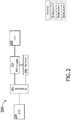
- FIG. 2 illustrates a module 200 including fully-shared resources.
- FIG. 2 illustrates a module 200 which utilizes shared hardware resources which may be shared by a plurality of certified functions.
- the processor 202, FPGA 204, memory 206, and I/Os 208 may be designated as shared hardware resources which may be configured to carry out steps/functions for two or more certified functions.
- shared hardware resource may be used to refer to hardware resources which are configured to perform functions for a two or more certified functions 101 (e.g., certified function 101a (F1), certified function 101b (F2), certified function 101c (F3)).
- the shared hardware resources e.g., processor 202, FPGA 204, memory 206, I/O 208 illustrated in FIG. 2 illustrates the concept of "virtual lanes," which may be distinguished from the physical separation present in the "physical lanes" depicted in FIG. 1 .
- the concept of shared hardware resources for carrying out a plurality of functions may be used to decrease the underutilization of resources, it suffers from an inability to allow for certified functions with varying certification requirements which are certified by independent certification authorities.
- module 200 depicted in FIG. 2 may be unable to be shared by a National Security Agency (NSA) Type 1 certified cryptographic function and a National Cross Domain Strategy Management Office (NCDSMO) certified cross domain function due to the varying certification requirements between the certified functions.
- NSA National Security Agency
- NCDSMO National Cross Domain Strategy Management Office
- embodiments of the present disclosure are directed to a module which utilizes both physical and virtual separation (e.g., physical lanes and virtual lanes) in order to co-host a plurality of certified functions on a single module.
- embodiments of the present disclosure are directed to a common host platform which allocates both shared and unshared (e.g., dedicated) hardware resources to a two or more independently certified functions. It is contemplated herein that embodiments of the present disclosure may allow for independent certification of a plurality of independent certified functions, while avoiding the need for each certifying authority to certify each hardware resource of the common host platform and/or the software/firmware of each function hosted on the common host platform.
- FIG. 3A illustrates a simplified block diagram of a module 300a including shared and dedicated resources, in accordance with one or more embodiments of the present disclosure.
- the module 300a may include a common host platform including a plurality of interconnected hardware resources including, but not limited to, one or more virtually-separated processors 302a, 302b, 302c, a shared hypervisor 303, one or more dedicated FPGAs 304a, 304b, 304c, one or more dedicated memories 306a, 306b, 306c, and one or more dedicated I/Os 308.
- the one or more I/Os 308 may include any means of input/output known in the art including, but not limited to, I/O devices, I/O couplings, and the like.
- the module 300a may be configured to co-host a plurality of certified functions 301 using both shared and dedicated hardware resources of a plurality of interconnected hardware resources.
- module 300a may be configured to host a first certified function 301a certified by a first certifying authority, a second certified function 301 b certified by a second certifying authority, and a third certified function 301c certified by a third certifying authority.
- module 300a may be configured to host the first certified function 301a on a processor 302a, an FPGA 304a coupled to the processor 302a, and a memory 306a coupled to the processor 302a and/or FPGA 304a.
- the first certified function 301a may include a first I/O 308 communicatively coupled to the processor 302a and a second I/O 308 communicatively coupled to the FPGA 304a.
- module 300 may be configured to host the second certified function 301b on a processor 302b, an FPGA 304b coupled to the processor 302b, and a memory 306b coupled to the processor 302b and/or the FPGA 304b.
- the second certified function 301b may further include a first I/O 308 communicatively coupled to the processor 302b and a second I/O 308 communicatively coupled to the FPGA 304b.
- the various certifying authorities reference herein may include any certifying authority, individual, or entity known in the art including, but not limited to, the National Security Agency (NSA), the National Cross Domain Strategy Management Office (NCDSMO), the National Institute of Standards and Technology (NIST), National Information Assurance Partnership (NIAP), the GPS Directorate (GPS-D), SPO, Nuke Surety, the North Atlantic Treaty Organization, Department of Defense (DoD), the Anti-Tamper Executive Agent (ATEA), Anti-Tamper Evaluation Team (ATET), and the like.
- NSA National Security Agency
- NIST National Information Assurance Partnership
- GPS-D GPS Directorate
- SPO Nuke Surety
- DOD North Atlantic Treaty Organization
- DoD Department of Defense
- UAT Anti-Tamper Executive Agent
- ATET Anti-Tamper Evaluation Team
- the processors 302a, 302b, 302c are virtually separated (as opposed to physically separated) via a hypervisor 310a.
- the hypervisor 310a may allow for allocation of processing resources of the hypervisor 310a between the various certified functions 301 co-hosted on the common host platform of the module 300a.
- a single co-hosted certified function 301 may be hosted on the module 300 on a set of hardware resources, wherein the set of hardware resources includes a sub-set of dedicated hardware resources and a sub-set of shared hardware resources.
- certified function 301 may be hosted on a set of hardware resources including hypervisor 310a (e.g., processor 302a), FPGA 304a, memory 306a, and one or more I/Os 308 wherein the set of hardware resources includes a sub-set of dedicated hardware resources (e.g., FPGA 304a, memory 306a, I/Os 308), and a sub-set of shared hardware resources (e.g., hypervisor 310a).
- hypervisor 310a e.g., processor 302a
- FPGA 304a e.g., memory 306a
- I/Os 308 e.g., shared hardware resources
- modules 300a which implements both physical separation and virtual separation in order to co-host multiple certified functions 301 on a single common host platform.
- module 300a depicted in FIG. 3A exhibits a hybrid of physical and virtual lanes for both physical and virtual separation.
- module 300a may exhibit physical separation between the FPGAs 304a, 304b, 304c and the memory 306a, 306b, 306c of the certified functions 301a, 301b, 301c, and may further exhibit virtual separation between the respective processors 302a, 302b, 302c of the co-hosted certified functions 301a, 301b, 301c via a shared hypervisor 310a.
- module 300a may enable independent certification of each respective certified function 301 hosted on module 300a. It is contemplated herein that the independent certification of certified functions 301a provided by embodiments of the present disclosure may allow for rapid certification and re-certification of hosted functions. In particular, it is contemplated herein that the improved certification/re-certification provided by module 300a is important in the development and deployment of modular open architectures. Furthermore, embodiments of the present disclosure may provide for the development of standards for sharing resources for cryptographic and cross-domain functions, as well as future functions.
- embodiments of the present disclosure may allow for rapid deployment of certified functions, while taking advantage of Moore's Law and increasing levels of processor, network, I/O, and logic resources in complex commercial chips.
- Embodiments of the present disclosure are based, at least in part, on the use of high-assurance multiple independent levels of security (MILS) concepts and virtualization technologies, which have been met with increasing levels of acceptance and implementation support in commercial off-the-shelf (COTS) chips.
- MILS multiple independent levels of security
- COTS commercial off-the-shelf
- module 300a is shown and described throughout the present disclosure as a single-chip module utilizing a multi-processor system-on-chip (MPSOC) including processors 302, I/O 308, FPGAs 304, and memory 306.
- MPSOC multi-processor system-on-chip
- module 300a may be formed with any number of chips, cards, boards, and the like.
- module 300a is not limited to single-chip solutions, in that multi-chip solutions may be implemented without departing from the spirit and scope of the present disclosure.
- module 300a may be implemented in chips which include integrated processors and FPGA fabric which are not MPSOCs.
- module 300a may include one or more application-specific processing devices known in the art including, but not limited to, FPGAs 304, application-specific integrated circuits (ASIC), and the like.
- module 300a may be implemented by a multi-processor system-on-chip (MPSOC) which includes embedded processors, multi-core processors, memory devices, I/O, networking hard cores, and FPGAs.
- MPSOC multi-processor system-on-chip
- module 300a may include, but are not limited to, hypervisors, virtual LAN, partial re-configuration, partitioned FPGAs, security monitoring (SECMON), formal methods, labeling, cryptographic binding, AT, multi-core processors, cryptography, and the like.
- module 300a may allow for certifying authorities to evaluate the interconnected hardware resources of the common host platform of module 300a, as well as the designated physical and virtual separation mechanisms implemented by module 300a.
- module 300a may allow for independent certifying authorities to evaluate the module 300a in such a manner as to ensure a certified function 301a hosted on one set of hardware resources does not impact another certified function 301b hosted on another set of hardware resources in any security-relevant manner.
- the implementation of both physical and virtual separation within module 300a may allow certifying authorities to independently evaluate respective certified functions 301 and hardware components without requiring each certifying authority to evaluate every hardware resource of module 300a and/or the software/firmware of every certified function 301 hosted on module 300a.
- each certifying authority associated with each respective certified function may be required to independently evaluate the module (e.g., module 200 depicted in FIG. 2 ) as a whole, independently evaluate each hardware resource of the module, and subsequently evaluate each other certified function with which the associated certified function 301 shares hardware resources.
- This traditional approach requires excessive amounts of evaluation/certification from each respective certifying authority, which can be exceedingly difficult and time-intensive. Additionally, satisfying all interested certifying authorities becomes exponentially more difficult with increasing numbers certified functions co-hosed on individual modules.
- module 300a of the present disclosure may provide for a more streamlined, efficient certification processes.
- certified authorities associated with co-hosted certified functions 301a-301n may evaluate/certify the common host platform of the module 300a (e.g., interconnected hardware resources) as a whole without any function-specific software or firmware loaded on the module 300a.
- Each certifying authority may then issue an "initial" or "general” certification (hereinafter referred to as an initial certification).
- Sets of dedicated and shared hardware resources may be assigned to each certified function 301a-301n.
- each certifying authority may evaluate each respective certified function 301 and the set of hardware resources allocated to the respective function.
- a first certifying authority may evaluate the first certified function 301a and the set of shared and dedicated hardware resources allocated to the first certified function 301a.
- each certifying authority may issue a function-specific certification.
- embodiments of the present disclosure may eliminate the need for each certifying authority to evaluate every single certified function 301 hosted on the module 300a, thereby streamlining the certification process.
- embodiments of the present disclosure may provide for independent certification by all interested certifying authorities.
- common, shared hardware resources may be implemented in such a manner which is trusted and independently evaluated by all certifying authorities, further simplifying the certification process.
- limitations and/or requirements on what types of certified functions 301 may share sub-sets of shared hardware resources may be implemented to further streamline the certification process.
- module 300a of the present disclosure may be configured to co-host a plurality of certified functions 301 with both shared and unshared hardware resources. Accordingly, module 300 may be configured to host certified functions across a wide variety of applications including, but not limited to, cryptographic encryption/decryption functions, cross-domain functions, AT functions, navigation functions, communications functions, nuke functions, and the like.
- Module 300a of the present disclosure may allow for reduced size, weight, power, and cost (SWaP-C) solutions which implement multiple security functions across a significantly smaller footprint. Techniques and functions of the present disclosure may reduce the lifecycle cost for common host platforms and the security module in the Open Communications Standard (OCS). Furthermore, it is contemplated herein that module 300 may reduce the lifecycle cost for future test, training, and live/virtual/constrictive solutions which require multiple security functions, low SWaP, and low latency.
- SWaP-C reduced size, weight, power, and cost
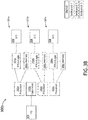
- FIG. 3B illustrates a simplified block diagram of a module 300b including shared and dedicated resources, in accordance with one or more embodiments of the present disclosure.
- the module 300b may include a common host platform including a plurality of interconnected hardware resources including, but not limited to, one or more dedicated processors 302a, 302b, 302c, a shared hypervisor 310b, one or more dedicated FPGAs 304a, 304b, 304c, and one or more dedicated memories 306a, 306b, 306c.
- the module 300b may further include, but is not limited to, a shared I/O 308 communicatively coupled to the hypervisor 310b and one or more dedicated I/Os 308 communicatively coupled to the one or more FPGAs 304a-304c.
- module 300a illustrated in FIG. 3A may be regarded as applying to module 300b illustrated in FIG. 3B , unless noted otherwise herein.
- module 300b depicted in FIG. 3B illustrates an additional and/or alternative implementation of module 300a exhibiting both physical and virtual separation of hardware resources.
- module 300b depicted in FIG. 3B exhibits physical separation between the processors 302a, 302b, 302c
- module 300a depicted in FIG. 3A exhibits only virtual separation between the processors 302a, 302b, 302c
- module 300b depicted in FIG. 3B includes a common, shared hypervisor 310b with a single shared I/O 308 communicatively coupled to the hypervisor 310b.
- shared hypervisor 310b may be configured to communicatively couple to each of the dedicated processors 302a, 302b, 302c of each respective certified function 301a, 301b, 301c.
- hypervisor 310b may be configured to share data with each of processor 302a, processor 302b, and processor 302c, whereas each respective processor 302a, processor 302b, and processor 302c can not communicate directly with each other.
- data may not be shared between the respective certified functions 301a, 301b, 301c except through the hypervisor 310b.
- module 300b of FIG. 3B illustrates an embodiment of the present disclosure which exhibits more physical separation (e.g., less virtual separation, fewer shared resources) as compared to module 300a of FIG. 3A .
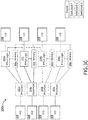
- FIG. 3C illustrates a simplified block diagram of a module 300c including shared and dedicated resources, in accordance with one or more embodiments of the present disclosure.
- the module 300c may include a common host platform including a plurality of interconnected hardware resources including, but not limited to, one or more dedicated processors 302a, 302b, 302c, a shared hypervisor 310c, one or more dedicated FPGAs 304a, 304b, 304c, one or more dedicated memories 306a, 306b, 306c, a shared FPGA 312, and a shared memory 314.
- Module 300c may further include one or more dedicated I/Os 308 communicatively coupled to the processors 302a-302c and/or the one or more FPGAs 304a-304c, and one or more shared I/Os 308 communicatively coupled to the hypervisor 310c and/or FPGA 312.
- module 300c depicted in FIG. 3C illustrates an additional and/or alternative implementation of modules 300a-300b exhibiting both physical and virtual separation of hardware resources.
- module 300c illustrated in FIG. 3C may exhibit physical separation between the dedicated processors 302a, 302b, 302c of each respective certified function 301a, 301b, 301c.
- Module 300c may also include a shared hypervisor 310c communicatively coupled to processors 302a, 302b, 302c.
- a shared I/O 308 may be communicatively coupled to the shared hypervisor 310c, and one or more dedicated I/Os 308 may be communicatively coupled to the dedicated processors 302a, 302b, 302c.
- module 300c includes a shared FPGA 312 communicatively coupled to the shared hypervisor 310c.
- Module 300c may further include a shared memory 314 communicatively coupled to the shared FPGA 312 and/or the shared hypervisor 310c.
- the shared FPGA 312 may be communicatively coupled to one or more of the dedicated FPGAs 304a, 304b, 304c.
- the shared FPGA 312 may be communicatively coupled to the first dedicated FPGA 304a and the second dedicated FPGA 304b.
- the first dedicated FPGA 304a and the second dedicated FPGA 304b may be configured to share data directly with the shared FPGA 312.
- the shared FPGA 312 may be configured to determine if and/or which data may be shared between the first dedicated FPGA 304a and the second dedicated FPGA 304b, such that data may be indirectly shared between the first certified function 301a and the second certified function 301b. Accordingly, in some embodiments, the shared FPGA 312 may be configured to determine logically which connections are available between the respective co-hosted certified function 301a-301n, and may determine how data may flow among/between each respective certified function 301a-301n.
- the shared memory 314 may be communicatively coupled to one or more of the dedicated memories 306a, 306b, 306c.
- the shared memory 314 may be communicatively coupled to the first dedicated memory 306a and the third dedicated memory 306c.
- the first dedicated memory 306a and the third dedicated memory 306c may be configured to share data directly with the shared memory 314.
- the shared memory 314 may be configured to determine if and/or which data may be shared between the first dedicated memory 306a and the third dedicated memory 306c, such that data may be indirectly shared between the first certified function 301a and the third certified function 301c.
- modules 300a-300c depicted in FIG. 3A-3C are provided solely for illustration, and are not to be regarded as limiting on the scope of the present disclosure, unless noted otherwise herein.
- additional and/or alternative configurations of modules 300a-300c exhibiting both physical and virtual separation may be implemented without departing from the spirit and scope of the present disclosure.
- FIG. 4 illustrates a simplified block diagram of a module 300d including shared and dedicated resources, in accordance with one or more embodiments of the present disclosure.
- module 300d may include a plurality of interconnected hardware resources 318a-318n.
- the plurality of interconnected hardware resources 318a-318n may include any hardware resources known in the art including, but not limited to, processors 302, FPGA 304, memory 306, I/O 308, hypervisor 310, and the like.
- modules 300a-300c illustrated in FIGS. 3A-3C may be regarded as applying to module 300d illustrated in FIG. 4 , unless noted otherwise herein.
- module 300d may include a plurality of interconnected hardware resources 318a-318n.
- module 300d may be configured to host a plurality of co-hosted certified functions 301a-301n.
- each certified function 301a-301n is hosted on a set of hardware resources 316a-316n of the plurality of interconnected hardware resources 318a-318n, wherein each set of hardware resources 316 for each respective certified function 301a-301n includes a sub-set of dedicated hardware resources 320 and one or more sub-sets of shared hardware resources 322.
- the first certified function 301a may be hosted on a set of hardware resources 316a of the plurality of hardware resources 318a-318n, wherein the set of hardware resources 316a includes a sub-set of dedicated hardware resources 320, a first sub-set of shared hardware resources 322a shared with a second certified function 301b, a second sub-set of shared hardware resources 322b shared with the second certified function 301b and the nth certified function 301n, and a third sub-set of shared hardware resources 322c shared with the nth certified function 301n.
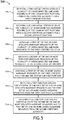
- FIG. 5 illustrates a flowchart of a method 500 for co-hosting a plurality of certified functions on a common host platform, in accordance with one or more embodiments of the present disclosure. It is noted herein that the steps of method 500 may be implemented all or in part by modules 300a-300c. It is further recognized, however, that the method 500 is not limited to the modules 300a-300c in that additional or alternative system-level embodiments may carry out all or part of the steps of method 500.
- a first initial certification of a plurality of interconnected hardware resources of a common host platform is received from a first certifying authority for a first certified function.
- a first certifying authority (Cert 1) for a first certified function 301a may evaluate and certify a plurality of interconnected hardware resources 318a-318n of a common host platform of a module 300d.
- a first initial certification of the common host platform may be received from the first certifying authority (Cert 1).
- a second initial certification of the plurality of interconnected hardware resources of the common host platform is received from a second certifying authority for a second certified function.
- a second certifying authority (Cert 2) for a second certified function 301b may evaluate and certify the plurality of interconnected hardware resources 318a-318n of the common host platform of the module 300d.
- a second initial certification of the common host platform may be received from the second certifying authority (Cert 2).
- the initial certifications of the common host platform may include evaluations/certifications of the common host platform of the module 300 (e.g., interconnected hardware resources) as a whole without any function-specific software or firmware loaded on the module 300d.
- a first set of one or more dedicated hardware resources of the plurality of interconnected hardware resources are assigned/allocated to the first certified function.
- a first set of hardware resources 316 of the plurality of interconnected hardware resources 318a-318n may be assigned/allocated to the first certified function 301a.
- the first set of hardware resources 316 may include a first sub-set of dedicated hardware resources 320a allocated to the first certified function 301a.
- a second set of one or more dedicated hardware resources of the plurality of interconnected hardware resources is assigned to the second certified function.
- a second sub-set of dedicated hardware resources 320b may be allocated to the second certified function 301b.
- a first set of one or more shared hardware resources is assigned to the first certified function and the second certified function.
- a first sub-set of shared hardware resources 322a may be included within the first set of hardware resources 316a allocated to the first certified function 301 and the second set of hardware resources 316b allocated to the second certified function 301b.
- the first sub-set of shared hardware resources 322a may be assigned/allocated to both the first certified function 301a and the second certified function 301b.
- a first function-specific certification of the first set of one or more dedicated hardware resources and the first set of one or more shared hardware resources is received from the first certifying authority.
- the first certifying authority may evaluate the first set of hardware resources 316a including the first sub-set of dedicated hardware resources 320a and the first sub-set of shared hardware resources 322a.
- a first function-specific certification of the common host platform may be received from the first certifying authority (Cert 1).
- respective certifying authorities may evaluate each respective sub-set of shared hardware resources 322.
- a second function-specific certification of the second set of one or more dedicated hardware resources and the first set of one or more shared hardware resources is received from the second certifying authority.
- the second certifying authority may evaluate the second set of hardware resources 308b including the second sub-set of dedicated hardware resources 320b and the first sub-set of shared hardware resources 322a.
- a second function-specific certification of the common host platform may be received from the second certifying authority (Cert 2).
- embodiments of the methods disclosed herein may include one or more of the steps described herein. Further, such steps may be carried out in any desired order and two or more of the steps may be carried out simultaneously with one another. Two or more of the steps disclosed herein may be combined in a single step, and in some embodiments, one or more of the steps may be carried out as two or more sub-steps. Further, other steps or sub-steps may be carried in addition to, or as substitutes to one or more of the steps disclosed herein.
Landscapes
- Engineering & Computer Science (AREA)
- Theoretical Computer Science (AREA)
- Computer Hardware Design (AREA)
- Software Systems (AREA)
- Physics & Mathematics (AREA)
- General Engineering & Computer Science (AREA)
- Computer Security & Cryptography (AREA)
- General Physics & Mathematics (AREA)
- Mathematical Physics (AREA)
- Microelectronics & Electronic Packaging (AREA)
- Computing Systems (AREA)
- Computer Networks & Wireless Communication (AREA)
- Signal Processing (AREA)
- Storage Device Security (AREA)
Abstract
Description
- Traditional module certifications do not support a common host platform which is capable of allocating shared and unshared resources between two or more independent functions certified by separate, independent certifying authorities. For example, a single module may be unable to implement both shared module resources and dedicated module resources between a National Security Agency (NSA)
Type 1 certified cryptographic function and a National Cross Domain Strategy Management Office (NCDSMO) certified cross domain function. For instance, using traditional methodology, a common host platform may be configured to host a certified NSAType 1 cryptographic function, with all the host resources dedicated to that function. Subsequently, the common host platform may be configured to host a NCDSMO certified CDS function on the common hardware. However, the module may only be configured to implement these functions separately, and may not be capable of sharing and/or dedicating a subset of the resources (e.g., I/O) between the independent functions. - A security module is disclosed. In embodiments, the security module includes a common host platform configured to co-host a plurality of certified functions via a plurality of interconnected hardware resources. The common host platform may be configured to: host a first certified function independently certified via a first certifying authority. The first certified function may be hosted on a first set of hardware resources of the plurality of interconnected hardware resources, the first set of hardware resources including a first sub-set of dedicated hardware resources and a first sub-set of shared hardware resources. The common host platform may be further configured to host a second certified function independently certified via a second certifying authority different from the first certifying authority. The second certified function may hosted on a second set of hardware resources of the plurality of interconnected hardware resources, the second set of hardware resources including a second sub-set of dedicated hardware resources and the first sub-set of shared hardware resources, the first sub-set of shared hardware resources including one or more hardware resources shared with the first certified function.
- A security module is disclosed. In embodiments, the security module includes a common host platform configured to co-host a plurality of certified functions. The common host platform may include a first set of one or more dedicated hardware resources, a second set of one or more dedicated hardware resources different from the first set of one or more hardware resources, and a first set of one or more shared hardware resources different from the first set of one or more hardware resources and the second set of one or more hardware resources. In embodiments, the common host platform is configured to host a first certified function independently certified via a first certifying authority, the first certified function hosted on a first set of dedicated hardware resources and the first set of shared hardware resources. In embodiments, the common host platform is further configured to host a second certified function independently certified via a second certifying authority different from the first certifying authority, the second certified function hosted on the second set of one or more dedicated hardware resources and the first set of one or more shared hardware resources.
- A method of co-hosting a plurality of certified functions on a common host platform is disclosed. In embodiments, the method may include: receiving a first initial certification of a plurality of interconnected hardware resources of the common host platform from a first certifying authority for a first certified function; receiving a second initial certification of the plurality of interconnected hardware resources of the common host platform from a second certifying authority for a second certified function; assigning a first sub-set of one or more dedicated hardware resources of the plurality of interconnected hardware resources to the first certified function; assigning a second sub-set of one or more dedicated hardware resources of the plurality of interconnected hardware resources to the second certified function; assigning a first sub-set of one or more shared hardware resources to the first certified function and the second certified function; receiving a first function-specific certification of the first set of one or more dedicated hardware resources and the first set of one or more shared hardware resources from the first certifying authority; and receiving a second function-specific certification of the second set of one or more dedicated hardware resources and the first set of one or more shared hardware resources from the second certifying authority.
- This Summary is provided solely as an introduction to subject matter that is fully described in the Detailed Description and Drawings. The Summary should not be considered to describe essential features nor be used to determine the scope of the Claims. Moreover, it is to be understood that both the foregoing Summary and the following Detailed Description are provided for example and explanatory only and are not necessarily restrictive of the subject matter claimed.
- The detailed description is described with reference to the accompanying figures. The use of the same reference numbers in different instances in the description and the figures may indicate similar or identical items. Various embodiments or examples ("examples") of the present disclosure are disclosed in the following detailed description and the accompanying drawings. The drawings are not necessarily to scale. In general, operations of disclosed processes may be performed in an arbitrary order, unless otherwise provided in the claims. In the drawings:
-
FIG. 1 illustrates a module including fully-dedicated resources for three separate functions certified by three separate certifying authorities. -
FIG. 2 illustrates a module including fully-shared resources. -
FIG. 3A illustrates a simplified block diagram of a module including shared and dedicated resources, in accordance with one or more embodiments of the present disclosure. -
FIG. 3B illustrates a simplified block diagram of a module including shared and dedicated resources, in accordance with one or more embodiments of the present disclosure. -
FIG. 3C illustrates a simplified block diagram of a module including shared and dedicated resources, in accordance with one or more embodiments of the present disclosure. -
FIG. 4 illustrates a simplified block diagram of a module including shared and dedicated resources, in accordance with one or more embodiments of the present disclosure. -
FIG. 5 illustrates a flowchart of a method for co-hosting a plurality of certified functions on a common host platform, in accordance with one or more embodiments of the present disclosure. - Before explaining one or more embodiments of the disclosure in detail, it is to be understood that the embodiments are not limited in their application to the details of construction and the arrangement of the components or steps or methodologies set forth in the following description or illustrated in the drawings. In the following detailed description of embodiments, numerous specific details may be set forth in order to provide a more thorough understanding of the disclosure. However, it will be apparent to one of ordinary skill in the art having the benefit of the instant disclosure that the embodiments disclosed herein may be practiced without some of these specific details. In other instances, well-known features may not be described in detail to avoid unnecessarily complicating the instant disclosure.
- As used herein a letter following a reference numeral is intended to reference an embodiment of the feature or element that may be similar, but not necessarily identical, to a previously described element or feature bearing the same reference numeral (e.g., 1, 1a, 1b). Such shorthand notations are used for purposes of convenience only and should not be construed to limit the disclosure in any way unless expressly stated to the contrary.
- Further, unless expressly stated to the contrary, "or" refers to an inclusive or and not to an exclusive or. For example, a condition A or B is satisfied by anyone of the following: A is true (or present) and B is false (or not present), A is false (or not present) and B is true (or present), and both A and B are true (or present).
- In addition, use of "a" or "an" may be employed to describe elements and components of embodiments disclosed herein. This is done merely for convenience and "a" and "an" are intended to include "one" or "at least one," and the singular also includes the plural unless it is obvious that it is meant otherwise.
- Finally, as used herein any reference to "one embodiment" or "some embodiments" means that a particular element, feature, structure, or characteristic described in connection with the embodiment is included in at least one embodiment disclosed herein. The appearances of the phrase "in some embodiments" in various places in the specification are not necessarily all referring to the same embodiment, and embodiments may include one or more of the features expressly described or inherently present herein, or any combination of sub-combination of two or more such features, along with any other features which may not necessarily be expressly described or inherently present in the instant disclosure.
- As noted previously herein, traditional module certifications do not support a common host platform which is capable of allocating shared and unshared resources between two or more independent functions certified by separate, independent certifying authorities. Conversely, traditional module certifications using shared resources may not be able to host two or more certified functions certified by independent certifying authorities with varying certification requirements.
- Accordingly, embodiments of the present disclosure are directed to a system and method for curing one or more of the shortfalls of the previous approaches identified above. Embodiments of the present disclosure are directed to a common host platform configured to co-host a plurality of certified functions. Additional embodiments of the present disclosure are directed to a common host platform which allocates both shared and dedicated hardware resources in order to co-host a plurality of certified functions certified by a plurality of independent certifying authorities. It is contemplated herein that the use of both shared and dedicated hardware may reduce the size, cost, and weight of associated modules, while simultaneously streamlining the certification process by independent certifying authorities. Further embodiments of the present disclosure are directed to a method of co-hosting a plurality of independent certified functions using both shared and dedicated hardware resources of a common host platform.
- Reference will now be made in detail to the subject matter disclosed, which is illustrated in the accompanying drawings.
-
FIG. 1 illustrates amodule 100 including fully-dedicated resources for three separate functions certified by three separate certifying authorities. In particular,module 100 includes fully dedicated (e.g., unshared) hardware resources configured to carry out a firstcertified function 101a (F1) certified by a first certifying authority (Cert 1), a secondcertified function 101b (F2) certified by a second certifying authority (Cert 2), and a thirdcertified function 101c (F3) certified by a third certifying authority (Cert 3). For example, as shown inFIG. 1 , the firstcertified function 101a may include dedicated hardware resources including aprocessor 102a, a field-programmable gate array (FPGA) 104a, and a memory 106a., and one or more input/output (I/O) Additionally, the firstcertified function 101a may include one or more dedicated (e.g., unshared) input/output (I/O) mechanisms (e.g., I/O device, I/O coupling, and the like) (generally referred to as "I/O 108"). For instance, the firstcertified function 101a may include a first dedicated I/O 108 communicatively coupled to theprocessor 102a, and a second dedicated I/O 108 communicatively coupled to theFPGA 104a. - As noted previously herein, traditional modules and circuit cards typically utilize physical separation of hardware resources in order to carry out various processing functions, cryptographic encryption/decryption functions, certified cross-domain functions, and the like. This physical separation is shown in
FIG. 1 as dedicated hardware resources physically separated from each other. Themodule 100 depicted inFIG. 1 may be said to be physically separated from end to end. Dedicated hardware resources dedicated to carrying out particular functions (e.g., F1, F2, F3) illustrates the concept of "physical lanes." As is it used herein, the term "dedicated hardware resource," and like terms, may be used to refer to hardware resources (e.g., processors, FPGA, memory, I/O) which are not shared and which are configured to perform functions for a single certified function 101 (e.g.,certified function 101a (F1),certified function 101b (F2),certified function 101c (F3)). - While physical separation of hardware resources may enable co-hosting of functions on a single module/circuit card, it also increases size, weight, power, and cost of the respective modules. Additionally, in many cases, physical separation creates redundancy and underutilization of resources. Therefore, there is a need in the art for a module which allows for increased functionality and more efficient use of hardware resource, while simultaneously decreasing the size, weight, and cost of the module itself.
-
FIG. 2 illustrates amodule 200 including fully-shared resources. As compared toFIG. 1 ,FIG. 2 illustrates amodule 200 which utilizes shared hardware resources which may be shared by a plurality of certified functions. For example, theprocessor 202,FPGA 204,memory 206, and I/Os 208 may be designated as shared hardware resources which may be configured to carry out steps/functions for two or more certified functions. As is it used herein, the term "shared hardware resource," and like terms, may be used to refer to hardware resources which are configured to perform functions for a two or more certified functions 101 (e.g.,certified function 101a (F1),certified function 101b (F2),certified function 101c (F3)). - The shared hardware resources (e.g.,
processor 202,FPGA 204,memory 206, I/O 208) illustrated inFIG. 2 illustrates the concept of "virtual lanes," which may be distinguished from the physical separation present in the "physical lanes" depicted inFIG. 1 . While the concept of shared hardware resources for carrying out a plurality of functions may be used to decrease the underutilization of resources, it suffers from an inability to allow for certified functions with varying certification requirements which are certified by independent certification authorities. For example,module 200 depicted inFIG. 2 may be unable to be shared by a National Security Agency (NSA)Type 1 certified cryptographic function and a National Cross Domain Strategy Management Office (NCDSMO) certified cross domain function due to the varying certification requirements between the certified functions. - Accordingly, embodiments of the present disclosure are directed to a module which utilizes both physical and virtual separation (e.g., physical lanes and virtual lanes) in order to co-host a plurality of certified functions on a single module. In particular, embodiments of the present disclosure are directed to a common host platform which allocates both shared and unshared (e.g., dedicated) hardware resources to a two or more independently certified functions. It is contemplated herein that embodiments of the present disclosure may allow for independent certification of a plurality of independent certified functions, while avoiding the need for each certifying authority to certify each hardware resource of the common host platform and/or the software/firmware of each function hosted on the common host platform.
-
FIG. 3A illustrates a simplified block diagram of amodule 300a including shared and dedicated resources, in accordance with one or more embodiments of the present disclosure. Themodule 300a may include a common host platform including a plurality of interconnected hardware resources including, but not limited to, one or more virtually-separatedprocessors dedicated FPGAs dedicated memories Os 308. As noted previously herein, the one or more I/Os 308 may include any means of input/output known in the art including, but not limited to, I/O devices, I/O couplings, and the like. - In embodiments, the
module 300a may be configured to co-host a plurality of certified functions 301 using both shared and dedicated hardware resources of a plurality of interconnected hardware resources. For example,module 300a may be configured to host a firstcertified function 301a certified by a first certifying authority, a secondcertified function 301 b certified by a second certifying authority, and a thirdcertified function 301c certified by a third certifying authority. For instance,module 300a may be configured to host the firstcertified function 301a on aprocessor 302a, anFPGA 304a coupled to theprocessor 302a, and amemory 306a coupled to theprocessor 302a and/orFPGA 304a. Continuing with the same example, the firstcertified function 301a may include a first I/O 308 communicatively coupled to theprocessor 302a and a second I/O 308 communicatively coupled to theFPGA 304a. By way of another example, module 300 may be configured to host the secondcertified function 301b on aprocessor 302b, anFPGA 304b coupled to theprocessor 302b, and amemory 306b coupled to theprocessor 302b and/or theFPGA 304b. The secondcertified function 301b may further include a first I/O 308 communicatively coupled to theprocessor 302b and a second I/O 308 communicatively coupled to theFPGA 304b. - The various certifying authorities reference herein may include any certifying authority, individual, or entity known in the art including, but not limited to, the National Security Agency (NSA), the National Cross Domain Strategy Management Office (NCDSMO), the National Institute of Standards and Technology (NIST), National Information Assurance Partnership (NIAP), the GPS Directorate (GPS-D), SPO, Nuke Surety, the North Atlantic Treaty Organization, Department of Defense (DoD), the Anti-Tamper Executive Agent (ATEA), Anti-Tamper Evaluation Team (ATET), and the like.
- In embodiments, the
processors hypervisor 310a. By virtually separating theprocessors hypervisor 310a may allow for allocation of processing resources of thehypervisor 310a between the various certified functions 301 co-hosted on the common host platform of themodule 300a. In this regard, a single co-hosted certified function 301 may be hosted on the module 300 on a set of hardware resources, wherein the set of hardware resources includes a sub-set of dedicated hardware resources and a sub-set of shared hardware resources. For example, certified function 301 may be hosted on a set of hardware resources including hypervisor 310a (e.g.,processor 302a),FPGA 304a,memory 306a, and one or more I/Os 308 wherein the set of hardware resources includes a sub-set of dedicated hardware resources (e.g.,FPGA 304a,memory 306a, I/Os 308), and a sub-set of shared hardware resources (e.g., hypervisor 310a). - As noted previously herein, embodiments of the present disclosure are directed to a
module 300a which implements both physical separation and virtual separation in order to co-host multiple certified functions 301 on a single common host platform. For example, as compared to themodule 100 depicted inFIG. 1 which exhibits physical separation from end to end,module 300a depicted inFIG. 3A exhibits a hybrid of physical and virtual lanes for both physical and virtual separation. For instance,module 300a may exhibit physical separation between theFPGAs memory certified functions respective processors certified functions hypervisor 310a. - By allocating both shared and unshared (e.g., dedicated) hardware resources to co-hosted certified functions 301,
module 300a may enable independent certification of each respective certified function 301 hosted onmodule 300a. It is contemplated herein that the independent certification ofcertified functions 301a provided by embodiments of the present disclosure may allow for rapid certification and re-certification of hosted functions. In particular, it is contemplated herein that the improved certification/re-certification provided bymodule 300a is important in the development and deployment of modular open architectures. Furthermore, embodiments of the present disclosure may provide for the development of standards for sharing resources for cryptographic and cross-domain functions, as well as future functions. - It is contemplated herein that embodiments of the present disclosure may allow for rapid deployment of certified functions, while taking advantage of Moore's Law and increasing levels of processor, network, I/O, and logic resources in complex commercial chips. Embodiments of the present disclosure are based, at least in part, on the use of high-assurance multiple independent levels of security (MILS) concepts and virtualization technologies, which have been met with increasing levels of acceptance and implementation support in commercial off-the-shelf (COTS) chips.
- It is noted herein that the examples shown and described herein are exemplary, and that the form, configuration, and/or components of the
module 300a may vary without departing from the spirit and scope of the present disclosure. For example,module 300a is shown and described throughout the present disclosure as a single-chip module utilizing a multi-processor system-on-chip (MPSOC) including processors 302, I/O 308, FPGAs 304, and memory 306. However, it is contemplated herein thatmodule 300a may be formed with any number of chips, cards, boards, and the like. In this regard,module 300a is not limited to single-chip solutions, in that multi-chip solutions may be implemented without departing from the spirit and scope of the present disclosure. For example, in some embodiments,module 300a may be implemented in chips which include integrated processors and FPGA fabric which are not MPSOCs. - It is further contemplated herein that additional and/or alternative components may be implemented within
module 300a without departing from the spirit and scope of the present disclosure. For example, it is contemplated herein that any application-specific processing device may be implemented in addition to, or in lieu of,FPGAs 304a-304n. In this regard, themodule 300a may include one or more application-specific processing devices known in the art including, but not limited to, FPGAs 304, application-specific integrated circuits (ASIC), and the like. By way of another example, in some embodiments,module 300a may be implemented by a multi-processor system-on-chip (MPSOC) which includes embedded processors, multi-core processors, memory devices, I/O, networking hard cores, and FPGAs. - Similarly, it is contemplated herein that a wide variety of components and/or techniques may be used to implement the virtual and physical separation of the present disclosure. Components/techniques which may be implemented by
module 300a may include, but are not limited to, hypervisors, virtual LAN, partial re-configuration, partitioned FPGAs, security monitoring (SECMON), formal methods, labeling, cryptographic binding, AT, multi-core processors, cryptography, and the like. - In embodiments,
module 300a may allow for certifying authorities to evaluate the interconnected hardware resources of the common host platform ofmodule 300a, as well as the designated physical and virtual separation mechanisms implemented bymodule 300a. In this regard,module 300a may allow for independent certifying authorities to evaluate themodule 300a in such a manner as to ensure acertified function 301a hosted on one set of hardware resources does not impact anothercertified function 301b hosted on another set of hardware resources in any security-relevant manner. Furthermore, it is contemplated herein that the implementation of both physical and virtual separation withinmodule 300a may allow certifying authorities to independently evaluate respective certified functions 301 and hardware components without requiring each certifying authority to evaluate every hardware resource ofmodule 300a and/or the software/firmware of every certified function 301 hosted onmodule 300a. - For example, with traditional modules utilizing shared resources, each certifying authority associated with each respective certified function may be required to independently evaluate the module (e.g.,
module 200 depicted inFIG. 2 ) as a whole, independently evaluate each hardware resource of the module, and subsequently evaluate each other certified function with which the associated certified function 301 shares hardware resources. This traditional approach requires excessive amounts of evaluation/certification from each respective certifying authority, which can be exceedingly difficult and time-intensive. Additionally, satisfying all interested certifying authorities becomes exponentially more difficult with increasing numbers certified functions co-hosed on individual modules. These drawbacks make traditional modules incompatible with modular, open-architecture platforms. - Conversely,
module 300a of the present disclosure may provide for a more streamlined, efficient certification processes. For example, referring tomodule 300a, certified authorities associated with co-hostedcertified functions 301a-301n may evaluate/certify the common host platform of themodule 300a (e.g., interconnected hardware resources) as a whole without any function-specific software or firmware loaded on themodule 300a. Each certifying authority may then issue an "initial" or "general" certification (hereinafter referred to as an initial certification). Sets of dedicated and shared hardware resources may be assigned to eachcertified function 301a-301n. Subsequently, each certifying authority may evaluate each respective certified function 301 and the set of hardware resources allocated to the respective function. For example, a first certifying authority may evaluate the firstcertified function 301a and the set of shared and dedicated hardware resources allocated to the firstcertified function 301a. After evaluating each respective function individually, each certifying authority may issue a function-specific certification. - By comparing the examples above, it may be seen that embodiments of the present disclosure may eliminate the need for each certifying authority to evaluate every single certified function 301 hosted on the
module 300a, thereby streamlining the certification process. Importantly, embodiments of the present disclosure may provide for independent certification by all interested certifying authorities. Additionally, common, shared hardware resources may be implemented in such a manner which is trusted and independently evaluated by all certifying authorities, further simplifying the certification process. Furthermore, limitations and/or requirements on what types of certified functions 301 may share sub-sets of shared hardware resources may be implemented to further streamline the certification process. - With simplified certification processes, it is contemplated herein that
module 300a of the present disclosure may be configured to co-host a plurality of certified functions 301 with both shared and unshared hardware resources. Accordingly, module 300 may be configured to host certified functions across a wide variety of applications including, but not limited to, cryptographic encryption/decryption functions, cross-domain functions, AT functions, navigation functions, communications functions, nuke functions, and the like. -
Module 300a of the present disclosure may allow for reduced size, weight, power, and cost (SWaP-C) solutions which implement multiple security functions across a significantly smaller footprint. Techniques and functions of the present disclosure may reduce the lifecycle cost for common host platforms and the security module in the Open Communications Standard (OCS). Furthermore, it is contemplated herein that module 300 may reduce the lifecycle cost for future test, training, and live/virtual/constrictive solutions which require multiple security functions, low SWaP, and low latency. -
FIG. 3B illustrates a simplified block diagram of amodule 300b including shared and dedicated resources, in accordance with one or more embodiments of the present disclosure. Themodule 300b may include a common host platform including a plurality of interconnected hardware resources including, but not limited to, one or morededicated processors hypervisor 310b, one or morededicated FPGAs dedicated memories module 300b may further include, but is not limited to, a shared I/O 308 communicatively coupled to thehypervisor 310b and one or more dedicated I/Os 308 communicatively coupled to the one ormore FPGAs 304a-304c. - It is noted herein that any discussion associated with
module 300a illustrated inFIG. 3A may be regarded as applying tomodule 300b illustrated inFIG. 3B , unless noted otherwise herein. Generally,module 300b depicted inFIG. 3B illustrates an additional and/or alternative implementation ofmodule 300a exhibiting both physical and virtual separation of hardware resources. - Comparing
module 300a depicted inFIG. 3A andmodule 300bFIG. 3B , it may be seen thatmodule 300b depicted inFIG. 3B exhibits physical separation between theprocessors module 300a depicted inFIG. 3A exhibits only virtual separation between theprocessors module 300b depicted inFIG. 3B includes a common, sharedhypervisor 310b with a single shared I/O 308 communicatively coupled to thehypervisor 310b. - In embodiments, shared
hypervisor 310b may be configured to communicatively couple to each of thededicated processors certified function hypervisor 310b may be configured to share data with each ofprocessor 302a,processor 302b, andprocessor 302c, whereas eachrespective processor 302a,processor 302b, andprocessor 302c can not communicate directly with each other. In this regard, data may not be shared between the respectivecertified functions hypervisor 310b. Accordingly,module 300b ofFIG. 3B illustrates an embodiment of the present disclosure which exhibits more physical separation (e.g., less virtual separation, fewer shared resources) as compared tomodule 300a ofFIG. 3A . -
FIG. 3C illustrates a simplified block diagram of amodule 300c including shared and dedicated resources, in accordance with one or more embodiments of the present disclosure. Themodule 300c may include a common host platform including a plurality of interconnected hardware resources including, but not limited to, one or morededicated processors hypervisor 310c, one or morededicated FPGAs dedicated memories FPGA 312, and a sharedmemory 314.Module 300c may further include one or more dedicated I/Os 308 communicatively coupled to theprocessors 302a-302c and/or the one ormore FPGAs 304a-304c, and one or more shared I/Os 308 communicatively coupled to thehypervisor 310c and/orFPGA 312. - It is noted herein that any discussion associated with
modules 300a-300b illustrated inFIGS. 3A-3B may be regarded as applying tomodule 300c illustrated inFIG. 3C , unless noted otherwise herein. Generally,module 300c depicted inFIG. 3C illustrates an additional and/or alternative implementation ofmodules 300a-300b exhibiting both physical and virtual separation of hardware resources. - In embodiments, as noted with respect to
FIG. 3B ,module 300c illustrated inFIG. 3C may exhibit physical separation between thededicated processors certified function Module 300c may also include a sharedhypervisor 310c communicatively coupled toprocessors O 308 may be communicatively coupled to the sharedhypervisor 310c, and one or more dedicated I/Os 308 may be communicatively coupled to thededicated processors - In embodiments,
module 300c includes a sharedFPGA 312 communicatively coupled to the sharedhypervisor 310c.Module 300c may further include a sharedmemory 314 communicatively coupled to the sharedFPGA 312 and/or the sharedhypervisor 310c. In embodiments, the sharedFPGA 312 may be communicatively coupled to one or more of thededicated FPGAs FIG. 3C , the sharedFPGA 312 may be communicatively coupled to the firstdedicated FPGA 304a and the seconddedicated FPGA 304b. In this regard, the firstdedicated FPGA 304a and the seconddedicated FPGA 304b may be configured to share data directly with the sharedFPGA 312. Additionally, the sharedFPGA 312 may be configured to determine if and/or which data may be shared between the firstdedicated FPGA 304a and the seconddedicated FPGA 304b, such that data may be indirectly shared between the firstcertified function 301a and the secondcertified function 301b. Accordingly, in some embodiments, the sharedFPGA 312 may be configured to determine logically which connections are available between the respective co-hostedcertified function 301a-301n, and may determine how data may flow among/between each respectivecertified function 301a-301n. - In embodiments, the shared
memory 314 may be communicatively coupled to one or more of thededicated memories memory 314 may be communicatively coupled to the firstdedicated memory 306a and the thirddedicated memory 306c. In this regard, the firstdedicated memory 306a and the thirddedicated memory 306c may be configured to share data directly with the sharedmemory 314. Additionally, the sharedmemory 314 may be configured to determine if and/or which data may be shared between the firstdedicated memory 306a and the thirddedicated memory 306c, such that data may be indirectly shared between the firstcertified function 301a and the thirdcertified function 301c. - As noted previously herein, various configurations of
modules 300a-300c depicted inFIG. 3A-3C are provided solely for illustration, and are not to be regarded as limiting on the scope of the present disclosure, unless noted otherwise herein. In this regard, additional and/or alternative configurations ofmodules 300a-300c exhibiting both physical and virtual separation may be implemented without departing from the spirit and scope of the present disclosure. -
FIG. 4 illustrates a simplified block diagram of amodule 300d including shared and dedicated resources, in accordance with one or more embodiments of the present disclosure. In embodiments,module 300d may include a plurality ofinterconnected hardware resources 318a-318n. As noted previously herein, the plurality ofinterconnected hardware resources 318a-318n may include any hardware resources known in the art including, but not limited to, processors 302, FPGA 304, memory 306, I/O 308, hypervisor 310, and the like. - It is noted herein that any discussion associated with
modules 300a-300c illustrated inFIGS. 3A-3C may be regarded as applying tomodule 300d illustrated inFIG. 4 , unless noted otherwise herein. - As shown in
FIG. 4 ,module 300d may include a plurality ofinterconnected hardware resources 318a-318n. In embodiments,module 300d may be configured to host a plurality of co-hostedcertified functions 301a-301n. In embodiments, eachcertified function 301a-301n is hosted on a set of hardware resources 316a-316n of the plurality ofinterconnected hardware resources 318a-318n, wherein each set of hardware resources 316 for each respectivecertified function 301a-301n includes a sub-set of dedicated hardware resources 320 and one or more sub-sets of shared hardware resources 322. For example, as shown inFIG. 4 , the firstcertified function 301a may be hosted on a set of hardware resources 316a of the plurality ofhardware resources 318a-318n, wherein the set of hardware resources 316a includes a sub-set of dedicated hardware resources 320, a first sub-set of sharedhardware resources 322a shared with a secondcertified function 301b, a second sub-set of sharedhardware resources 322b shared with the secondcertified function 301b and the nth certified function 301n, and a third sub-set of sharedhardware resources 322c shared with the nth certified function 301n. -
FIG. 5 illustrates a flowchart of amethod 500 for co-hosting a plurality of certified functions on a common host platform, in accordance with one or more embodiments of the present disclosure. It is noted herein that the steps ofmethod 500 may be implemented all or in part bymodules 300a-300c. It is further recognized, however, that themethod 500 is not limited to themodules 300a-300c in that additional or alternative system-level embodiments may carry out all or part of the steps ofmethod 500. - In a
step 502, a first initial certification of a plurality of interconnected hardware resources of a common host platform is received from a first certifying authority for a first certified function. For example, referring toFIG. 4 , a first certifying authority (Cert 1) for a firstcertified function 301a may evaluate and certify a plurality ofinterconnected hardware resources 318a-318n of a common host platform of amodule 300d. Subsequently, a first initial certification of the common host platform may be received from the first certifying authority (Cert 1). - In a
step 504, a second initial certification of the plurality of interconnected hardware resources of the common host platform is received from a second certifying authority for a second certified function. For example, continuing with reference toFIG. 4 , a second certifying authority (Cert 2) for a secondcertified function 301b may evaluate and certify the plurality ofinterconnected hardware resources 318a-318n of the common host platform of themodule 300d. Subsequently, a second initial certification of the common host platform may be received from the second certifying authority (Cert 2). As noted previously herein, the initial certifications of the common host platform may include evaluations/certifications of the common host platform of the module 300 (e.g., interconnected hardware resources) as a whole without any function-specific software or firmware loaded on themodule 300d. - In a
step 506, a first set of one or more dedicated hardware resources of the plurality of interconnected hardware resources are assigned/allocated to the first certified function. For example, a first set of hardware resources 316 of the plurality ofinterconnected hardware resources 318a-318n may be assigned/allocated to the firstcertified function 301a. The first set of hardware resources 316 may include a first sub-set ofdedicated hardware resources 320a allocated to the firstcertified function 301a. - In a
step 508, a second set of one or more dedicated hardware resources of the plurality of interconnected hardware resources is assigned to the second certified function. For example, a second sub-set ofdedicated hardware resources 320b may be allocated to the secondcertified function 301b. - In a
step 510, a first set of one or more shared hardware resources is assigned to the first certified function and the second certified function. For example, as shown inFIG. 4 , a first sub-set of sharedhardware resources 322a may be included within the first set of hardware resources 316a allocated to the first certified function 301 and the second set ofhardware resources 316b allocated to the secondcertified function 301b. In this regard, the first sub-set of sharedhardware resources 322a may be assigned/allocated to both the firstcertified function 301a and the secondcertified function 301b. - In a
step 512, a first function-specific certification of the first set of one or more dedicated hardware resources and the first set of one or more shared hardware resources is received from the first certifying authority. For example, the first certifying authority (Cert 1) may evaluate the first set of hardware resources 316a including the first sub-set ofdedicated hardware resources 320a and the first sub-set of sharedhardware resources 322a. Subsequently, a first function-specific certification of the common host platform may be received from the first certifying authority (Cert 1). With embodiments including multiple sub-sets of sharedhardware resources - In a
step 514, a second function-specific certification of the second set of one or more dedicated hardware resources and the first set of one or more shared hardware resources is received from the second certifying authority. For example, the second certifying authority (Cert 2) may evaluate the second set of hardware resources 308b including the second sub-set ofdedicated hardware resources 320b and the first sub-set of sharedhardware resources 322a. Subsequently, a second function-specific certification of the common host platform may be received from the second certifying authority (Cert 2). - It is to be understood that embodiments of the methods disclosed herein may include one or more of the steps described herein. Further, such steps may be carried out in any desired order and two or more of the steps may be carried out simultaneously with one another. Two or more of the steps disclosed herein may be combined in a single step, and in some embodiments, one or more of the steps may be carried out as two or more sub-steps. Further, other steps or sub-steps may be carried in addition to, or as substitutes to one or more of the steps disclosed herein.
- Although inventive concepts have been described with reference to the embodiments illustrated in the attached drawing figures, equivalents may be employed and substitutions made herein without departing from the scope of the claims. Components illustrated and described herein are merely examples of a system/device and components that may be used to implement embodiments of the inventive concepts and may be replaced with other devices and components without departing from the scope of the claims. Furthermore, any dimensions, degrees, and/or numerical ranges provided herein are to be understood as non-limiting examples unless otherwise specified in the claims.
Claims (15)
- A security module comprising:
a common host platform configured to co-host a plurality of certified functions, the common host platform including a plurality of interconnected hardware resources (102a, 106a, 304), wherein the common host platform is configured to:host a first certified function (101a) independently certified via a first certifying authority, the first certified function hosted on a first set of hardware resources of the plurality of interconnected hardware resources, the first set of hardware resources including a first sub-set of dedicated hardware resources and a first sub-set of shared hardware resources; andhost a second certified function independently certified via a second certifying authority different from the first certifying authority, the second certified function hosted on a second set of hardware resources of the plurality of interconnected hardware resources, the second set of hardware resources including a second sub-set of dedicated hardware resources and the first sub-set of shared hardware resources, the first sub-set of shared hardware resources including one or more hardware resources shared with the first certified function. - The security module of Claim 1, wherein the plurality of interconnected hardware resources comprises:one or more processors (102a);one or more memory devices (106a); andone or more application-specific processing devices (304), and optionally wherein the one or more application-specific processing devices include at least one of a field programmable gate array (FPGA) or an application-specific integrated circuit (ASIC).
- The security module of Claim 1, wherein at least one of the first certifying authority or the second certifying authority comprises at least one of the National Security Agency (NSA), the National Cross Domain Strategy Management Office (NCDSMO), the National Institute of Standards and Technology (NIST), the GPS Directorate (GPS-D), the National Information Assurance Partnership (NIAP), Nuke Surety, the North Atlantic Treaty Organization, the Department of Defense (DoD), or the Anti-Tamper Executive Agent (ATEA), Anti-Tamper Evaluation Team (ATET), or wherein at least one of the first certified function or the second certified function comprises at least one of a cryptographic function or a cross domain solution (CDS) function.
- The security module of any preceding Claim, wherein the common host platform is further configured to:
host an additional certified function independently certified via an additional certifying authority different from the first certifying authority and the second certifying authority, the additional certified function hosted on an additional set of hardware resources of the plurality of interconnected hardware resources, the additional set of hardware resources including an additional sub-set of dedicated hardware resources and the second sub-set of shared hardware resources, wherein the second sub-set of shared hardware resources include one or more hardware resources shared with at least one of the first certified function or the second certified function. - The security module of any preceding Claim, whereinthe first set of dedicated hardware resources comprises a first field-programmable gate array (FPGA) and a first memory communicatively coupled to the first FPGA,the second set of dedicated hardware resources comprises a second field-programmable gate array (FPGA) and a second memory communicatively coupled to the second FPGA, andthe first set of shared hardware resources comprises a hypervisor including one or more processors, wherein the hypervisor is communicatively coupled to at least one of the first FPGA or the first memory, and communicatively coupled to at least one of the second FPGA or the second memory.
- A security module comprising:a common host platform configured to co-host a plurality of certified functions, the common host platform including:a first set of one or more dedicated hardware resources (102a, 104a, 106a);a second set of one or more dedicated hardware resources different from the first set of one or more hardware resources;a first set of one or more shared hardware resources (204, 206, 208) different from the first set of one or more hardware resources and the second set of one or more hardware resources,wherein the common host platform is configured to host a first certified function independently certified via a first certifying authority, the first certified function hosted on a first set of dedicated hardware resources and the first set of shared hardware resources, wherein the common host platform is further configured to host a second certified function independently certified via a second certifying authority different from the first certifying authority, the second certified function hosted on the second set of one or more dedicated hardware resources and the first set of one or more shared hardware resources.
- The security module of Claim 6, wherein at least one of the first certifying authority or the second certifying authority comprises at least one of the National Security Agency (NSA) or the National Cross Domain Strategy Management Office (NCDSMO).
- The security module of Claim 6, wherein at least one of the first certified function or the second certified function comprises at least one of a cryptographic function or a cross domain solution (CDS) function.
- The security module of any preceding Claim, wherein the common host platform is further configured to:
host an additional certified function independently certified via an additional certifying authority different from the first certifying authority and the second certifying authority, the additional certified function hosted on an additional set of one or more dedicated hardware resources and an additional set of one or more shared hardware resources, the additional set of shared hardware resources including one or more hardware resources shared with at least one of the first certified function or the second certified function. - The security module of Claim 6, whereinthe first set of one or more dedicated hardware resources comprises a first field-programmable gate array (FPGA) and a first memory communicatively coupled to the first FPGA,the second set of dedicated hardware resources comprises a second field-programmable gate array (FPGA) and a second memory communicatively coupled to the second FPGA, andthe first set of shared hardware resources comprises a hypervisor including one or more processors, wherein the hypervisor is communicatively coupled to at least one of the first FPGA or the first memory, and communicatively coupled to at least one of the second FPGA or the second memory.
- The security module of Claim 1 or 6, whereinthe first set of dedicated hardware resources comprises a first processor communicatively coupled to a first field-programmable gate array (FPGA) and a first memory,the second set of dedicated hardware resources comprises a second processor communicatively coupled to a second field-programmable gate array (FPGA) and a second memory, andthe first set of shared hardware resources comprises shared processor communicatively coupled to the first processor and the second processor.
- The security module of Claim 1 or 6, whereinthe first set of dedicated hardware resources comprises a first processor communicatively coupled to a first field-programmable gate array (FPGA) and a first memory,the second set of dedicated hardware resources comprises a second processor communicatively coupled to a second field-programmable gate array (FPGA) and a second memory, andthe first set of shared hardware resources comprises shared processor communicatively coupled to a shared FPGA and a shared memory, wherein the shared processor is communicatively coupled to the first processor and the second processor, wherein the shared FPGA is communicatively coupled to at least one of the first FPGA or the second FPGA, wherein the shared memory is communicatively coupled to the first memory or the second memory.
- A method of co-hosting a plurality of certified functions on a common host platform, comprising:receiving a first initial certification of a plurality of interconnected hardware resources of the common host platform from a first certifying authority for a first certified function;receiving a second initial certification of the plurality of interconnected hardware resources of the common host platform from a second certifying authority for a second certified function;assigning a first sub-set of one or more dedicated hardware resources of the plurality of interconnected hardware resources to the first certified function;assigning a second sub-set of one or more dedicated hardware resources of the plurality of interconnected hardware resources to the second certified function;assigning a first sub-set of one or more shared hardware resources to the first certified function and the second certified function;receiving a first function-specific certification of the first set of one or more dedicated hardware resources and the first set of one or more shared hardware resources from the first certifying authority; andreceiving a second function-specific certification of the second set of one or more dedicated hardware resources and the first set of one or more shared hardware resources from the second certifying authority.
- The method of Claim 13, wherein at least one of the first certified function or the second certified function comprises at least one of a cryptographic function or a cross domain solution (CDS) function.
- The method of Claim13 or 14, whereinthe first sub-set of dedicated hardware resources comprises a first field-programmable gate array (FPGA) and a first memory communicatively coupled to the first FPGA,the second sub-set of dedicated hardware resources comprises a second field-programmable gate array (FPGA) and a second memory communicatively coupled to the second FPGA, andthe first sub-set of shared hardware resources comprises a hypervisor including one or more processors, wherein the hypervisor is communicatively coupled to at least one of the first FPGA or the first memory, and communicatively coupled to at least one of the second FPGA or the second memory, or whereinthe first sub-set of dedicated hardware resources comprises a first processor communicatively coupled to a first field-programmable gate array (FPGA) and a first memory,the second sub-set of dedicated hardware resources comprises a second processor communicatively coupled to a second field-programmable gate array (FPGA) and a second memory, andthe first set of shared hardware resources comprises shared processor communicatively coupled to the first processor and the second processor.
Applications Claiming Priority (1)
| Application Number | Priority Date | Filing Date | Title |
|---|---|---|---|
| US16/459,347 US11373011B2 (en) | 2019-07-01 | 2019-07-01 | Security module with multiple independent physical and virtual lanes |
Publications (2)
| Publication Number | Publication Date |
|---|---|
| EP3761209A1 true EP3761209A1 (en) | 2021-01-06 |
| EP3761209B1 EP3761209B1 (en) | 2023-10-25 |
Family
ID=71138525
Family Applications (1)
| Application Number | Title | Priority Date | Filing Date |
|---|---|---|---|
| EP20181626.1A Active EP3761209B1 (en) | 2019-07-01 | 2020-06-23 | Security module with multiple independent physical and virtual lanes |
Country Status (2)
| Country | Link |
|---|---|
| US (1) | US11373011B2 (en) |
| EP (1) | EP3761209B1 (en) |
Citations (2)
| Publication number | Priority date | Publication date | Assignee | Title |
|---|---|---|---|---|
| US20140047548A1 (en) * | 2012-08-10 | 2014-02-13 | Sprint Communications Company L.P. | Systems and Methods for Provisioning and Using Multiple Trusted Security Zones on an Electronic Device |
| US20170019259A1 (en) * | 2015-07-02 | 2017-01-19 | Thales | On Board Computerized System for Operating Certified Functions |
Family Cites Families (3)
| Publication number | Priority date | Publication date | Assignee | Title |
|---|---|---|---|---|
| US9390291B2 (en) * | 2012-12-29 | 2016-07-12 | Intel Corporation | Secure key derivation and cryptography logic for integrated circuits |
| US20150365227A1 (en) * | 2014-06-11 | 2015-12-17 | International Business Machines Corporation | Shared security utility appliance for secure application and data processing |
| US11296921B2 (en) * | 2017-12-03 | 2022-04-05 | Intel Corporation | Out-of-band management of FPGA bitstreams |
-
2019
- 2019-07-01 US US16/459,347 patent/US11373011B2/en active Active
-
2020
- 2020-06-23 EP EP20181626.1A patent/EP3761209B1/en active Active
Patent Citations (2)
| Publication number | Priority date | Publication date | Assignee | Title |
|---|---|---|---|---|
| US20140047548A1 (en) * | 2012-08-10 | 2014-02-13 | Sprint Communications Company L.P. | Systems and Methods for Provisioning and Using Multiple Trusted Security Zones on an Electronic Device |
| US20170019259A1 (en) * | 2015-07-02 | 2017-01-19 | Thales | On Board Computerized System for Operating Certified Functions |
Also Published As
| Publication number | Publication date |
|---|---|
| EP3761209B1 (en) | 2023-10-25 |
| US11373011B2 (en) | 2022-06-28 |
| US20210232715A1 (en) | 2021-07-29 |
Similar Documents
| Publication | Publication Date | Title |
|---|---|---|
| US9960921B2 (en) | Systems and methods for securely provisioning the geographic location of physical infrastructure elements in cloud computing environments | |
| US10614216B2 (en) | Paravirtualized security threat protection of a computer-driven system with networked devices | |
| US10528721B2 (en) | Trusted packet processing for multi-domain separatization and security | |
| US8478997B2 (en) | Multi-level security software architecture | |
| CN112583583A (en) | Dynamic sharing in a secure memory environment using edge service sidecars | |
| US10404674B1 (en) | Efficient memory management in multi-tenant virtualized environment | |
| US11250167B2 (en) | Secure external SoC debugging | |
| CN113051038B (en) | Data access methods and devices in multi-tenant cloud service environments | |
| DE112013005431T5 (en) | Secure key derivation and cryptography logic for integrated circuits | |
| US20190005224A1 (en) | Trust Based Computing | |
| US11886223B2 (en) | Leveraging hardware-based attestation to grant workloads access to confidential data | |
| US20220374512A1 (en) | Software-based hardware security module (hsm) for a virtualized computing environment | |
| US20260121877A1 (en) | Validation Method for Blockchain Network and Related Device | |
| EP3761209B1 (en) | Security module with multiple independent physical and virtual lanes | |
| US12095931B2 (en) | Chained cryptographically signed certificates to convey and delegate trust and authority in a multiple node environment | |
| US12506709B2 (en) | Method and system for managing traffic packets | |
| US12526165B2 (en) | Systems and methods for verifiable secure computing using multi-party computation and blockchain network | |
| US10554626B2 (en) | Filtering of authenticated synthetic transactions | |
| CN118733640A (en) | On-chain transaction data status query method, related device and medium | |
| US20190114430A1 (en) | Method and Apparatus for Processing Data | |
| CN115495767B (en) | Virtual session method, device, electronic equipment and computer readable storage medium | |
| EP4614371A1 (en) | Systems and methods for setting up and maintaining multi-party computation environments | |
| US12137161B2 (en) | Limiting use of encryption keys in an integrated circuit device | |
| Parkinson | Multicore MILS [microprocessor design] | |
| US20240169270A1 (en) | Model training method and apparatus, electronic device and storage medium |
Legal Events
| Date | Code | Title | Description |
|---|---|---|---|
| PUAI | Public reference made under article 153(3) epc to a published international application that has entered the european phase |
Free format text: ORIGINAL CODE: 0009012 |
|
| STAA | Information on the status of an ep patent application or granted ep patent |
Free format text: STATUS: THE APPLICATION HAS BEEN PUBLISHED |
|
| AK | Designated contracting states |
Kind code of ref document: A1 Designated state(s): AL AT BE BG CH CY CZ DE DK EE ES FI FR GB GR HR HU IE IS IT LI LT LU LV MC MK MT NL NO PL PT RO RS SE SI SK SM TR |
|
| AX | Request for extension of the european patent |
Extension state: BA ME |
|
| STAA | Information on the status of an ep patent application or granted ep patent |
Free format text: STATUS: REQUEST FOR EXAMINATION WAS MADE |
|
| 17P | Request for examination filed |
Effective date: 20210702 |
|
| RBV | Designated contracting states (corrected) |
Designated state(s): AL AT BE BG CH CY CZ DE DK EE ES FI FR GB GR HR HU IE IS IT LI LT LU LV MC MK MT NL NO PL PT RO RS SE SI SK SM TR |
|
| GRAP | Despatch of communication of intention to grant a patent |
Free format text: ORIGINAL CODE: EPIDOSNIGR1 |
|
| STAA | Information on the status of an ep patent application or granted ep patent |
Free format text: STATUS: GRANT OF PATENT IS INTENDED |
|
| INTG | Intention to grant announced |
Effective date: 20230511 |
|
| GRAS | Grant fee paid |
Free format text: ORIGINAL CODE: EPIDOSNIGR3 |
|
| GRAA | (expected) grant |
Free format text: ORIGINAL CODE: 0009210 |
|
| STAA | Information on the status of an ep patent application or granted ep patent |
Free format text: STATUS: THE PATENT HAS BEEN GRANTED |
|
| AK | Designated contracting states |
Kind code of ref document: B1 Designated state(s): AL AT BE BG CH CY CZ DE DK EE ES FI FR GB GR HR HU IE IS IT LI LT LU LV MC MK MT NL NO PL PT RO RS SE SI SK SM TR |
|
| REG | Reference to a national code |
Ref country code: GB Ref legal event code: FG4D |
|
| REG | Reference to a national code |
Ref country code: CH Ref legal event code: EP |
|
| REG | Reference to a national code |
Ref country code: DE Ref legal event code: R096 Ref document number: 602020019703 Country of ref document: DE |
|
| REG | Reference to a national code |
Ref country code: IE Ref legal event code: FG4D |
|
| REG | Reference to a national code |
Ref country code: LT Ref legal event code: MG9D |
|
| REG | Reference to a national code |
Ref country code: NL Ref legal event code: MP Effective date: 20231025 |
|
| REG | Reference to a national code |
Ref country code: AT Ref legal event code: MK05 Ref document number: 1625412 Country of ref document: AT Kind code of ref document: T Effective date: 20231025 |
|
| PG25 | Lapsed in a contracting state [announced via postgrant information from national office to epo] |
Ref country code: NL Free format text: LAPSE BECAUSE OF FAILURE TO SUBMIT A TRANSLATION OF THE DESCRIPTION OR TO PAY THE FEE WITHIN THE PRESCRIBED TIME-LIMIT Effective date: 20231025 |
|
| PG25 | Lapsed in a contracting state [announced via postgrant information from national office to epo] |
Ref country code: GR Free format text: LAPSE BECAUSE OF FAILURE TO SUBMIT A TRANSLATION OF THE DESCRIPTION OR TO PAY THE FEE WITHIN THE PRESCRIBED TIME-LIMIT Effective date: 20240126 |
|
| PG25 | Lapsed in a contracting state [announced via postgrant information from national office to epo] |
Ref country code: IS Free format text: LAPSE BECAUSE OF FAILURE TO SUBMIT A TRANSLATION OF THE DESCRIPTION OR TO PAY THE FEE WITHIN THE PRESCRIBED TIME-LIMIT Effective date: 20240225 |
|
| PG25 | Lapsed in a contracting state [announced via postgrant information from national office to epo] |
Ref country code: LT Free format text: LAPSE BECAUSE OF FAILURE TO SUBMIT A TRANSLATION OF THE DESCRIPTION OR TO PAY THE FEE WITHIN THE PRESCRIBED TIME-LIMIT Effective date: 20231025 |
|
| PG25 | Lapsed in a contracting state [announced via postgrant information from national office to epo] |
Ref country code: AT Free format text: LAPSE BECAUSE OF FAILURE TO SUBMIT A TRANSLATION OF THE DESCRIPTION OR TO PAY THE FEE WITHIN THE PRESCRIBED TIME-LIMIT Effective date: 20231025 |
|
| PG25 | Lapsed in a contracting state [announced via postgrant information from national office to epo] |
Ref country code: ES Free format text: LAPSE BECAUSE OF FAILURE TO SUBMIT A TRANSLATION OF THE DESCRIPTION OR TO PAY THE FEE WITHIN THE PRESCRIBED TIME-LIMIT Effective date: 20231025 |
|
| PG25 | Lapsed in a contracting state [announced via postgrant information from national office to epo] |
Ref country code: LT Free format text: LAPSE BECAUSE OF FAILURE TO SUBMIT A TRANSLATION OF THE DESCRIPTION OR TO PAY THE FEE WITHIN THE PRESCRIBED TIME-LIMIT Effective date: 20231025 Ref country code: IS Free format text: LAPSE BECAUSE OF FAILURE TO SUBMIT A TRANSLATION OF THE DESCRIPTION OR TO PAY THE FEE WITHIN THE PRESCRIBED TIME-LIMIT Effective date: 20240225 Ref country code: GR Free format text: LAPSE BECAUSE OF FAILURE TO SUBMIT A TRANSLATION OF THE DESCRIPTION OR TO PAY THE FEE WITHIN THE PRESCRIBED TIME-LIMIT Effective date: 20240126 Ref country code: ES Free format text: LAPSE BECAUSE OF FAILURE TO SUBMIT A TRANSLATION OF THE DESCRIPTION OR TO PAY THE FEE WITHIN THE PRESCRIBED TIME-LIMIT Effective date: 20231025 Ref country code: BG Free format text: LAPSE BECAUSE OF FAILURE TO SUBMIT A TRANSLATION OF THE DESCRIPTION OR TO PAY THE FEE WITHIN THE PRESCRIBED TIME-LIMIT Effective date: 20240125 Ref country code: AT Free format text: LAPSE BECAUSE OF FAILURE TO SUBMIT A TRANSLATION OF THE DESCRIPTION OR TO PAY THE FEE WITHIN THE PRESCRIBED TIME-LIMIT Effective date: 20231025 Ref country code: PT Free format text: LAPSE BECAUSE OF FAILURE TO SUBMIT A TRANSLATION OF THE DESCRIPTION OR TO PAY THE FEE WITHIN THE PRESCRIBED TIME-LIMIT Effective date: 20240226 |
|
| PG25 | Lapsed in a contracting state [announced via postgrant information from national office to epo] |
Ref country code: SE Free format text: LAPSE BECAUSE OF FAILURE TO SUBMIT A TRANSLATION OF THE DESCRIPTION OR TO PAY THE FEE WITHIN THE PRESCRIBED TIME-LIMIT Effective date: 20231025 Ref country code: RS Free format text: LAPSE BECAUSE OF FAILURE TO SUBMIT A TRANSLATION OF THE DESCRIPTION OR TO PAY THE FEE WITHIN THE PRESCRIBED TIME-LIMIT Effective date: 20231025 Ref country code: PL Free format text: LAPSE BECAUSE OF FAILURE TO SUBMIT A TRANSLATION OF THE DESCRIPTION OR TO PAY THE FEE WITHIN THE PRESCRIBED TIME-LIMIT Effective date: 20231025 Ref country code: NO Free format text: LAPSE BECAUSE OF FAILURE TO SUBMIT A TRANSLATION OF THE DESCRIPTION OR TO PAY THE FEE WITHIN THE PRESCRIBED TIME-LIMIT Effective date: 20240125 Ref country code: LV Free format text: LAPSE BECAUSE OF FAILURE TO SUBMIT A TRANSLATION OF THE DESCRIPTION OR TO PAY THE FEE WITHIN THE PRESCRIBED TIME-LIMIT Effective date: 20231025 Ref country code: HR Free format text: LAPSE BECAUSE OF FAILURE TO SUBMIT A TRANSLATION OF THE DESCRIPTION OR TO PAY THE FEE WITHIN THE PRESCRIBED TIME-LIMIT Effective date: 20231025 |
|
| PG25 | Lapsed in a contracting state [announced via postgrant information from national office to epo] |
Ref country code: DK Free format text: LAPSE BECAUSE OF FAILURE TO SUBMIT A TRANSLATION OF THE DESCRIPTION OR TO PAY THE FEE WITHIN THE PRESCRIBED TIME-LIMIT Effective date: 20231025 |
|
| PG25 | Lapsed in a contracting state [announced via postgrant information from national office to epo] |
Ref country code: CZ Free format text: LAPSE BECAUSE OF FAILURE TO SUBMIT A TRANSLATION OF THE DESCRIPTION OR TO PAY THE FEE WITHIN THE PRESCRIBED TIME-LIMIT Effective date: 20231025 |
|
| REG | Reference to a national code |
Ref country code: DE Ref legal event code: R097 Ref document number: 602020019703 Country of ref document: DE |
|
| PG25 | Lapsed in a contracting state [announced via postgrant information from national office to epo] |
Ref country code: SK Free format text: LAPSE BECAUSE OF FAILURE TO SUBMIT A TRANSLATION OF THE DESCRIPTION OR TO PAY THE FEE WITHIN THE PRESCRIBED TIME-LIMIT Effective date: 20231025 |
|
| PG25 | Lapsed in a contracting state [announced via postgrant information from national office to epo] |
Ref country code: SM Free format text: LAPSE BECAUSE OF FAILURE TO SUBMIT A TRANSLATION OF THE DESCRIPTION OR TO PAY THE FEE WITHIN THE PRESCRIBED TIME-LIMIT Effective date: 20231025 Ref country code: SK Free format text: LAPSE BECAUSE OF FAILURE TO SUBMIT A TRANSLATION OF THE DESCRIPTION OR TO PAY THE FEE WITHIN THE PRESCRIBED TIME-LIMIT Effective date: 20231025 Ref country code: RO Free format text: LAPSE BECAUSE OF FAILURE TO SUBMIT A TRANSLATION OF THE DESCRIPTION OR TO PAY THE FEE WITHIN THE PRESCRIBED TIME-LIMIT Effective date: 20231025 Ref country code: IT Free format text: LAPSE BECAUSE OF FAILURE TO SUBMIT A TRANSLATION OF THE DESCRIPTION OR TO PAY THE FEE WITHIN THE PRESCRIBED TIME-LIMIT Effective date: 20231025 Ref country code: EE Free format text: LAPSE BECAUSE OF FAILURE TO SUBMIT A TRANSLATION OF THE DESCRIPTION OR TO PAY THE FEE WITHIN THE PRESCRIBED TIME-LIMIT Effective date: 20231025 Ref country code: DK Free format text: LAPSE BECAUSE OF FAILURE TO SUBMIT A TRANSLATION OF THE DESCRIPTION OR TO PAY THE FEE WITHIN THE PRESCRIBED TIME-LIMIT Effective date: 20231025 Ref country code: CZ Free format text: LAPSE BECAUSE OF FAILURE TO SUBMIT A TRANSLATION OF THE DESCRIPTION OR TO PAY THE FEE WITHIN THE PRESCRIBED TIME-LIMIT Effective date: 20231025 |
|
| PLBE | No opposition filed within time limit |
Free format text: ORIGINAL CODE: 0009261 |
|
| STAA | Information on the status of an ep patent application or granted ep patent |
Free format text: STATUS: NO OPPOSITION FILED WITHIN TIME LIMIT |
|
| 26N | No opposition filed |
Effective date: 20240726 |
|
| PG25 | Lapsed in a contracting state [announced via postgrant information from national office to epo] |
Ref country code: SI Free format text: LAPSE BECAUSE OF FAILURE TO SUBMIT A TRANSLATION OF THE DESCRIPTION OR TO PAY THE FEE WITHIN THE PRESCRIBED TIME-LIMIT Effective date: 20231025 |
|
| PG25 | Lapsed in a contracting state [announced via postgrant information from national office to epo] |
Ref country code: SI Free format text: LAPSE BECAUSE OF FAILURE TO SUBMIT A TRANSLATION OF THE DESCRIPTION OR TO PAY THE FEE WITHIN THE PRESCRIBED TIME-LIMIT Effective date: 20231025 |
|
| PG25 | Lapsed in a contracting state [announced via postgrant information from national office to epo] |
Ref country code: MC Free format text: LAPSE BECAUSE OF FAILURE TO SUBMIT A TRANSLATION OF THE DESCRIPTION OR TO PAY THE FEE WITHIN THE PRESCRIBED TIME-LIMIT Effective date: 20231025 |
|
| REG | Reference to a national code |
Ref country code: CH Ref legal event code: PL |
|
| PG25 | Lapsed in a contracting state [announced via postgrant information from national office to epo] |
Ref country code: LU Free format text: LAPSE BECAUSE OF NON-PAYMENT OF DUE FEES Effective date: 20240623 |
|
| PG25 | Lapsed in a contracting state [announced via postgrant information from national office to epo] |
Ref country code: IE Free format text: LAPSE BECAUSE OF NON-PAYMENT OF DUE FEES Effective date: 20240623 |
|
| PG25 | Lapsed in a contracting state [announced via postgrant information from national office to epo] |
Ref country code: CH Free format text: LAPSE BECAUSE OF NON-PAYMENT OF DUE FEES Effective date: 20240630 Ref country code: BE Free format text: LAPSE BECAUSE OF NON-PAYMENT OF DUE FEES Effective date: 20240630 |
|
| REG | Reference to a national code |
Ref country code: BE Ref legal event code: MM Effective date: 20240630 |
|
| PGFP | Annual fee paid to national office [announced via postgrant information from national office to epo] |
Ref country code: DE Payment date: 20250520 Year of fee payment: 6 |
|
| PGFP | Annual fee paid to national office [announced via postgrant information from national office to epo] |
Ref country code: GB Payment date: 20250520 Year of fee payment: 6 |
|
| PGFP | Annual fee paid to national office [announced via postgrant information from national office to epo] |
Ref country code: FR Payment date: 20250521 Year of fee payment: 6 |
|
| PG25 | Lapsed in a contracting state [announced via postgrant information from national office to epo] |
Ref country code: FI Free format text: LAPSE BECAUSE OF FAILURE TO SUBMIT A TRANSLATION OF THE DESCRIPTION OR TO PAY THE FEE WITHIN THE PRESCRIBED TIME-LIMIT Effective date: 20231025 |
|
| PG25 | Lapsed in a contracting state [announced via postgrant information from national office to epo] |
Ref country code: CY Free format text: LAPSE BECAUSE OF FAILURE TO SUBMIT A TRANSLATION OF THE DESCRIPTION OR TO PAY THE FEE WITHIN THE PRESCRIBED TIME-LIMIT; INVALID AB INITIO Effective date: 20200623 |
|
| P01 | Opt-out of the competence of the unified patent court (upc) registered |
Free format text: CASE NUMBER: UPC_APP_0018732_3761209/2025 Effective date: 20251221 |
|
| PG25 | Lapsed in a contracting state [announced via postgrant information from national office to epo] |
Ref country code: HU Free format text: LAPSE BECAUSE OF FAILURE TO SUBMIT A TRANSLATION OF THE DESCRIPTION OR TO PAY THE FEE WITHIN THE PRESCRIBED TIME-LIMIT; INVALID AB INITIO Effective date: 20200623 |