EP3761196A1 - Password protect feature for application in mobile device during a remote session - Google Patents
Password protect feature for application in mobile device during a remote session Download PDFInfo
- Publication number
- EP3761196A1 EP3761196A1 EP20193215.9A EP20193215A EP3761196A1 EP 3761196 A1 EP3761196 A1 EP 3761196A1 EP 20193215 A EP20193215 A EP 20193215A EP 3761196 A1 EP3761196 A1 EP 3761196A1
- Authority
- EP
- European Patent Office
- Prior art keywords
- console
- mobile device
- user authentication
- authentication data
- entry
- Prior art date
- Legal status (The legal status is an assumption and is not a legal conclusion. Google has not performed a legal analysis and makes no representation as to the accuracy of the status listed.)
- Granted
Links
Images


Classifications
-
- G—PHYSICS
- G06—COMPUTING OR CALCULATING; COUNTING
- G06F—ELECTRIC DIGITAL DATA PROCESSING
- G06F21/00—Security arrangements for protecting computers, components thereof, programs or data against unauthorised activity
- G06F21/60—Protecting data
-
- G—PHYSICS
- G06—COMPUTING OR CALCULATING; COUNTING
- G06F—ELECTRIC DIGITAL DATA PROCESSING
- G06F3/00—Input arrangements for transferring data to be processed into a form capable of being handled by the computer; Output arrangements for transferring data from processing unit to output unit, e.g. interface arrangements
- G06F3/14—Digital output to display device ; Cooperation and interconnection of the display device with other functional units
- G06F3/1454—Digital output to display device ; Cooperation and interconnection of the display device with other functional units involving copying of the display data of a local workstation or window to a remote workstation or window so that an actual copy of the data is displayed simultaneously on two or more displays, e.g. teledisplay
-
- G—PHYSICS
- G06—COMPUTING OR CALCULATING; COUNTING
- G06F—ELECTRIC DIGITAL DATA PROCESSING
- G06F21/00—Security arrangements for protecting computers, components thereof, programs or data against unauthorised activity
- G06F21/30—Authentication, i.e. establishing the identity or authorisation of security principals
- G06F21/31—User authentication
-
- G—PHYSICS
- G06—COMPUTING OR CALCULATING; COUNTING
- G06F—ELECTRIC DIGITAL DATA PROCESSING
- G06F21/00—Security arrangements for protecting computers, components thereof, programs or data against unauthorised activity
- G06F21/60—Protecting data
- G06F21/62—Protecting access to data via a platform, e.g. using keys or access control rules
- G06F21/6209—Protecting access to data via a platform, e.g. using keys or access control rules to a single file or object, e.g. in a secure envelope, encrypted and accessed using a key, or with access control rules appended to the object itself
-
- H—ELECTRICITY
- H04—ELECTRIC COMMUNICATION TECHNIQUE
- H04L—TRANSMISSION OF DIGITAL INFORMATION, e.g. TELEGRAPHIC COMMUNICATION
- H04L41/00—Arrangements for maintenance, administration or management of data switching networks, e.g. of packet switching networks
- H04L41/28—Restricting access to network management systems or functions, e.g. using authorisation function to access network configuration
-
- G—PHYSICS
- G06—COMPUTING OR CALCULATING; COUNTING
- G06F—ELECTRIC DIGITAL DATA PROCESSING
- G06F2221/00—Indexing scheme relating to security arrangements for protecting computers, components thereof, programs or data against unauthorised activity
- G06F2221/03—Indexing scheme relating to G06F21/50, monitoring users, programs or devices to maintain the integrity of platforms
- G06F2221/032—Protect output to user by software means
-
- G—PHYSICS
- G09—EDUCATION; CRYPTOGRAPHY; DISPLAY; ADVERTISING; SEALS
- G09G—ARRANGEMENTS OR CIRCUITS FOR CONTROL OF INDICATING DEVICES USING STATIC MEANS TO PRESENT VARIABLE INFORMATION
- G09G2358/00—Arrangements for display data security
Definitions
- the present invention relates to mobile wireless communication devices, systems, networks, and methods of operation and in particular to a password protect feature for application in mobile device during a remote session.
- the mobile user customer care is handled manually by the customer care technician requesting the end user to take specific actions on the device and user informing the technician with the results observed on the device.
- the end user informs the technician the actions being performed on the device and the technician assessing the next steps based on the results observed according to predefined scripts that are defined in the knowledgebase.
- An objective is to provide a user with complete privacy of his/her application passwords during a remote control session.
- Another objective is to provide a user with complete privacy of his/her passwords to e-mails, social network, banking applications and the like applications which involves the user to enter the password or PIN.
- Still another objective is to contextually hide passwords from a customer care technician when being edited by the user.
- Still another objective is to allow a technician to navigate through a mobile device without any impact to user authentication data.
- Yet still another objective is to allow carriers and other tech support organizations to be able to support remote control to a mobile device without worrying about legal issues of privacy infringement.
- VMM Virtual Mobile Management
- VMM-RC Virtual Mobile Management Remote Control
- Technician Console 30 where care agents interact with the remote devices 10 through Control Center 20 services that mediate communication between the Technician Console 30 and the remote devices 10.
- the Control Center 20 comprises the following elements :
- the primary responsibility of CEG 200 is to manage and mediate sessions.
- the server provides communication endpoints between device 10 and Technician Console 30. This allows for multiple requests to be serviced within one session from multiple instances of 30.
- the CEG 200 provides a consistent manner of device connection and Tool service in a system with heterogeneous devices running different operating systems.
- the CEG 200 provides load balancing across multiple Connection Handlers on each Communication End Point Gateway Server in order to minimize single point of failure.
- FIG. 2 shows components of CEG 200 in detail.
- CEG 200 is comprised of two components; the Connection Monitor 201 and the Connection Handler 205.
- the primary function of 201 is: Create and manage multiple instances of 205; Creates Session ID for new connection requests; Monitors all the scheduled and existing sessions.
- the primary function of 205 is: authenticate inbound connections; mediate VMM session traffic between device 10 and Technician Console 30.
- FIG 3 shows the details of ACF 220 which is responsible in the administration, management and authorization of communication between the Control Center 20 and the devices 10. It comprises of the following service functions.
- the Administrative Service 221 is designed to be a central administrative entity of the entire virtual mobile management system. Through this service, system administrators perform administration, management and instrumentation servers within the system, create and maintain multiple tenants, assign tenant administrator roles, etc.
- the Management Service 225 provides the operational endpoint to the system.
- the primary functions of Management Service are: Load distribution among the CEG, management of device registration; Administration of devices; Administration of users, zones, policies, roles, etc.; and Session Queuing.
- the Management Entity 227 component is responsible in providing the Management service 225 with an in-memory data store for key operational data such as ACL, user/group/zone structures, etc.
- the Service Coordinator 231 coordinates the communication between various elements within the System. It provides the database interface to the RAF 240 in the Control Center. All services register themselves with this service. This service is responsible for service discovery.
- FIG. 4 shows the components of RAF 240 in detail; RAF 240 provides a single point of entry for all devices for enrollment and authentication services during VMM-RC session. It comprises of the following components : Registration Service 241 : During Auto-Enrollment, devices are required to register themselves with this service, prior to enrolling themselves.
- Enrollment Service 244 This service is responsible to enroll registered devices with the system.
- This service manages the various client packages in the system. Devices connect to this service to request for client update. If an update is available, the service will provide the appropriate client download link.
- Device Management 250 This service provides the enrolled devices an interface to update its parameters in the system such as MDN when the device detects a change.
- AnchorAdmin 253 This service provides the administration component.
- Data Repository 260 is the data warehouse that stores the information about the VMM-RC Mobile devices, server configuration, tasks and status settings. These databases are pivotal to configure and update managed devices and server components. It is also responsible to maintain the user login information as well as device authentication information.
- FIG. 5 illustrates the VMM client protocol architecture of Device 10.
- the VMM Client architecture comprises of the following protocol layers and function blocks VMM Manager 111 this layer encapsulates functional entities that provide the communication and protocol frameworks necessary to client services. This layer primarily handles bearer plane traffic. The following functional entities are part of 111.
- VMM Modules 112 provide a multitude of tool services. Tool Services are grouped together that exhibit common functionality such as Remote Control, File Manager, Device Management, etc.
- Each tool service maintains an instance of the state machine.
- a State Machine defines a set of shared states that the tool service on the device application shares with the server.
- Tool Service Coordinator 114 maintains a collection of active tool service instances that are currently being serviced by the VMM application. This entity maintains the lifetime of all Tool Services, and is responsible in creating and destroying Tool Services.
- NV Data Repository 115 authentication and authorization specific data that is shared between the VMM application and the server is maintained within the NV data repository. This data repository also serves the purpose of maintaining Tool Service configuration as well as VMM configuration data.
- Access Control Entity 121 layer provides a set of functions to the Tool Services to communicate with the Control Center 20. It provides in the encapsulation of messages before forwarding it to the Communication Core 130. This layer is responsible to invoke an instance of the Communication Core 130 layer and provides a state machine 123 that defines the state of the VMM application.
- Access Control Interface 122 provides a set of standard Application Programmer Interface or API to the Tool Services. These APIs provide a consistent communication platform to facilitate both synchronous as well as asynchronous communication.
- State Machine 123 identifies the overall state of the VMM application. State transitions within the ACE State Machine triggers events that are handled by the VMM layer. The states are Open and Closed. Traffic flows through the ACI layer only in the State Open.
- Message Routing Entity 124 is responsible for routing all signal messages, destined to Tool Services to the respective event handlers.
- Message Processing Function 125 is a signal message pre-processor. This entity receives signal messages from the Session Layer destined towards Tool Services. It de-frames these messages prior to forwarding it to the Message Routing Entity to apply routing rules. Messages that are destined for the server from Tool Services are encapsulated here.
- Communication Core Layer 130 is responsible to set up and maintain a dedicated communication channel with the Control Center 20. This layer provides the necessary framework to transport messages between the upper layers and the Control Center 20. It provides message encapsulation, framing, fragmentation and packet re-construction of Tool Service messages.
- the communication core 130 comprises of the following sub-layers.
- Figure 6 is a detail of Session Layer 140.
- the session layer maintains a set of shared state between the Communication Endpoint Gateway (CEG) 200 and the VMM Application Module 112.
- the session layer packets encapsulate signal messages that are transported between the CEG 200 and the VMM Module 112. Each message within the session layer packet defines the source and destination to which the signal messages are to be delivered.
- the session layer consists of the following entities:
- State Machine 141 maintains a state within a pre-defined set of shared state between the application and the CEG 200. State changes within the state machine trigger the execution of state transition procedures within the VMM Application Module 112.
- Signal Message Processor 142 is responsible to encapsulate and process signal messages that are transmitted between the CEG 200 and the Application Module 112. This entity is also responsible in influencing the state transition within the state machine by altering its state. Signal messages destined to VMM modules are forwarded to the Signal Message Routing Function.
- Signal Message Routing Function 143 is responsible with the task of forwarding signal messages to the appropriate destination. Signal messages destined to VMM modules are directly forwarded to the VVM Tool Service Coordinator 114. Signal messages destined to the CEG 200 are forwarded to the link layer 160.
- Link Layer 160 is responsible to establish and maintain a dedicated communication channel between the client and the CEG 200.
- the Link Layer encapsulates all messages within its frame prior to forwarding it to the network. Packets that are received by the Link Layer from the network are re-constructed and de-framed prior to forwarding it to the upper layer. This layer checks for message integrity.
- the Packet Framing Entity 161,162 is responsible to encapsulate messages in Link Layer frames. These frames are then forwarded to the Transport Channel, to be forwarded to the network layer.
- the packet framing entity comprises of Framer 161 and the De-Framer 162. When a network packet is received by the Packet Framing Entity, it inspects the packet and verifies the integrity of the packet. Malformed packets are silently discarded.
- the Transport Channel 163,164 binds to the appropriate transport layer of the underlying operating system, which is dependent upon the VMM Tool Service. It is responsible to forward messages to the network layer and receives messages from the network layer. It provides notification to the upper layer of the state of the network layer through asynchronous events.
- FIG. 8 shows is a schematic diagram of Virtual Mobile Management-Remote Control VMM-RC on Client side.
- the VMM-RC client Application 112.1 on the device provides Core Tool services, to manage the remote control session, collect the desired device diagnostics, provide self-care support for remote session activation and manage security protocol.
- the VMM-RC client application module 112.1 is one of the many VMM Client Application modules of 112
- the key features that are required by VMM-RC application to manage devices remotely include: Display Capture, this method involves the capturing of the device screen; Key event Injection, this method involves the injection of key events into the device screen; Touch event injection, this method involves the simulation of touch events on the device screen; and Device Information, getting the device information like network, power status, MNC, MCC, IMEI, IMSI, ESN, battery level of the smart phone etc., this is of value to the remote technician.
- the VMM-RC Enabler 191 performs the key functions: Intercepts all the SMS; keeps the VMM-RC Application to its current version; if the VMM-RC Application is removed accidentally the VMM-RC Enabler shall connect to the server and download the application and installs the same.
- FIG. 9 illustrates the overall process of End-to-End VMM-RC Session establishment.
- VMM-RC bearer data is carried over the bearer channels (D-B and C-B).
- VMM-Remote Session Termination referring to figure 10 , the Technician, operating the Technician Console 30 initiates the VMM-RC service disconnection. The following sequence of events occurs:
- the feature of Password Protection can be applied to applications on mobile devices during a remote control session.
- a remote control session is where a customer care technician is able to connect to a user mobile device and control the device to troubleshoot a problem.
- the current invention provides the user complete privacy of his/her application passwords during a remote control session.
- sensitive password text shall be contextually hidden from the remote support technician. This capability is extended to all password/PIN protected applications.
- the password data is contextually hidden from the customer care technician when being edited by the user.
- the technician shall also be prevented from editing the password data while being edited by the user.
- ACL Access control List
- a subscriber calls a customer service representative (CSR) and initiates the remote control session.
- CSR customer service representative
- the subscriber navigates to password sensitive applications. For example, e-mail setup, market place login, browser sessions with login pages with password fields, applications installed from market like Skype whose login page is password protected, and so forth.
- password sensitive applications For example, e-mail setup, market place login, browser sessions with login pages with password fields, applications installed from market like Skype whose login page is password protected, and so forth.
- password sensitive applications For example, e-mail setup, market place login, browser sessions with login pages with password fields, applications installed from market like Skype whose login page is password protected, and so forth.
- the subscriber clicks/highlights the password field the soft keyboard that appears on the screen shall be hidden from the CSR and will appear greyed out on the remote session console. Even if the orientation of the device is changed, the keyboard shall stay hidden from the CSR view.
- a toast message shall be shown once per remote session the first time a password field is highlighted/selected by the Subscriber. The content of the toast shall be "Your password shall not be visible to the customer service”. This message shall be visible to both CSR and Subscriber.
- the CSR will not be able to edit the password field by entering digits remotely from remote console.
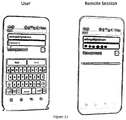
- Picture 1 of Figure 11 is a pictorial of a user display screen. The user has entered their e-mail address and the password is hidden.
- Picture 2 of Figure 11 is a pictorial of a remote technician display screen wherein the user's e-mail address is shown and the password is hidden.
- the technician would be able to navigate thru the device without any impact to user authentication data. This would allow carriers and other tech support organizations to be able to support remote control to a mobile device without worrying about legal issues of privacy infringement.
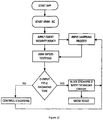
- Figure 12 describes the flow diagram of the current system.
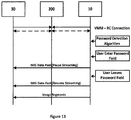
- Figure 13 describes the call flow diagram of the current system.
- a method of protecting passwords used on a mobile device during a remote session comprising the steps of: connecting a mobile device to a remote support technician providing said remote support technician access to the mobile device having a remote console for display of the mobile device screen; navigating by the user to their password sensitive application whose login page is password protected; highlighting a password field by the user wherein the password is contextually hidden on said remote console; displaying a toast message on the remote access console and the user's mobile device; and denying the remote support technician the ability to edit the password field.
- the password field on said remote access console will appear greyed out.
- the password field on said remote access console will contain asterisks.
- the password field on said remote access console will remain hidden even if the orientation of the mobile device is changed.
- said toast message will state "Your password shall not be visible to the customer service”.
- the method includes a step of concealing a keyboard display when the user is within the password field.
- the concealed keyboard display is visible when the user highlights any field outside the password field.
Landscapes
- Engineering & Computer Science (AREA)
- Theoretical Computer Science (AREA)
- Computer Security & Cryptography (AREA)
- Physics & Mathematics (AREA)
- General Engineering & Computer Science (AREA)
- General Physics & Mathematics (AREA)
- Software Systems (AREA)
- Computer Hardware Design (AREA)
- Health & Medical Sciences (AREA)
- Bioethics (AREA)
- General Health & Medical Sciences (AREA)
- Human Computer Interaction (AREA)
- Computer Networks & Wireless Communication (AREA)
- Signal Processing (AREA)
- Mobile Radio Communication Systems (AREA)
- Computer And Data Communications (AREA)
- Telephonic Communication Services (AREA)
- Thermal Insulation (AREA)
Abstract
Description
- The present invention relates to mobile wireless communication devices, systems, networks, and methods of operation and in particular to a password protect feature for application in mobile device during a remote session.
- Traditionally the mobile user customer care is handled manually by the customer care technician requesting the end user to take specific actions on the device and user informing the technician with the results observed on the device. In some instances the end user informs the technician the actions being performed on the device and the technician assessing the next steps based on the results observed according to predefined scripts that are defined in the knowledgebase.
- When a customer care technician is able to connect to a user mobile device and control the device to troubleshoot a problem it is desired that sensitive password text is contextually hidden from the remote support technician.
- In the background art,
US2012/0036452A1 Coleman et al describes masking sensitive information in a screen sharing session. XP013022888 IP.COM JOURNAL describes techniques to hide sensitive information on remote control or remote guidance systems by blanking the content of selected windows.US2008/0218431A1 Schmidt describes selectively not displaying sensitive data on a connected computer based on display values in a display set.US2009/0264102A1 Parmar et al describes a virtual management process and advertisement or alert management for mobile devices. - The present invention is defined according to the independent claims. Additional features will be appreciated from the dependent claims and the description herein. Any embodiments which are described but which do not fall within the scope of the claims are to be interpreted merely as examples useful for a better understanding of the invention.
- By way of introduction, the following discussion concerns a feature of Password Protection that can be applied to applications on mobile devices during a remote control session.
- An objective is to provide a user with complete privacy of his/her application passwords during a remote control session.
- Another objective is to provide a user with complete privacy of his/her passwords to e-mails, social network, banking applications and the like applications which involves the user to enter the password or PIN.
- Still another objective is to contextually hide passwords from a customer care technician when being edited by the user.
- Still another objective is to allow a technician to navigate through a mobile device without any impact to user authentication data.
- Yet still another objective is to allow carriers and other tech support organizations to be able to support remote control to a mobile device without worrying about legal issues of privacy infringement.
- Other objectives and advantages will become apparent from the following description taken in conjunction with the accompanying drawings wherein are set forth, by way of illustration and example, certain embodiments and examples.
-
-
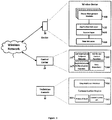
Figure 1 illustrates the overall architecture of the Virtual Mobile Management (VMM) system; -
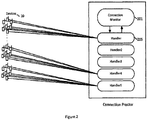
Figure 2 illustrates the details of Communication Endpoint Gateway; -
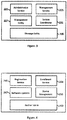
Figure 3 illustrates the details of Admin and Control Function; -
Figure 4 illustrates the details of Routing and Authentication Function; -
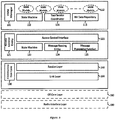
Figure 5 illustrates the VMM client protocol architecture of Device; -
Figure 6 illustrates the details of VMM Client Session Layer; -
Figure 7 illustrates the details of the VMM Client Link Layer; -
Figure 8 is a schematic diagram of Virtual Mobile Management-Remote Control VMM - RC on Client side; -
Figure 9 illustrates the overall process of End-to-End VMM-RC Session establishment; -
Figure 10 illustrates the overall process of VMM-RC Session termination; -
Figure 11 is a visualization of the current system; -
Figure 12 is a flow diagram of the current system; and -
Figure 13 is a call flow diagram of the current system. - Referring to
Figure 1 , set forth is the overall architecture of the Virtual Mobile Management (VMM) system. For the purpose of readability, Blocks number starting with 1xx relates toDevice 10 and it components; 2xx under refer to Control Center 20 and its components; 3xx under relate to TechnicianConsole 30 and its components. - The Virtual Mobile Management Remote Control (VMM-RC) is a powerful tool designed to be used by the customer care representatives to remotely view and control the mobile devices. In a preferred embodiment, the key components of the VMM-RC system include: Technician Console 30 where care agents interact with the
remote devices 10 through Control Center 20 services that mediate communication between the Technician Console 30 and theremote devices 10. - The Control Center 20 comprises the following elements :
- Communication Endpoint Gateway or CEG 200
- Admin and Control Function or
ACF 220 - Registration and Authentication Function or
RAF 240 -
Data Repository 260 - The primary responsibility of CEG 200 is to manage and mediate sessions. The server provides communication endpoints between
device 10 and Technician Console 30. This allows for multiple requests to be serviced within one session from multiple instances of 30. The CEG 200 provides a consistent manner of device connection and Tool service in a system with heterogeneous devices running different operating systems. The CEG 200 provides load balancing across multiple Connection Handlers on each Communication End Point Gateway Server in order to minimize single point of failure. -
Figure 2 , shows components ofCEG 200 in detail. CEG 200 is comprised of two components; the Connection Monitor 201 and the Connection Handler 205. - The primary function of 201 is: Create and manage multiple instances of 205; Creates Session ID for new connection requests; Monitors all the scheduled and existing sessions. The primary function of 205 is: authenticate inbound connections; mediate VMM session traffic between
device 10 and TechnicianConsole 30. -
Figure 3 shows the details of ACF 220 which is responsible in the administration, management and authorization of communication between theControl Center 20 and thedevices 10. It comprises of the following service functions. - The
Administrative Service 221 is designed to be a central administrative entity of the entire virtual mobile management system. Through this service, system administrators perform administration, management and instrumentation servers within the system, create and maintain multiple tenants, assign tenant administrator roles, etc. - The Management Service 225 provides the operational endpoint to the system. The primary functions of Management Service are: Load distribution among the CEG, management of device registration; Administration of devices; Administration of users, zones, policies, roles, etc.; and Session Queuing.
- The
Management Entity 227 component is responsible in providing theManagement service 225 with an in-memory data store for key operational data such as ACL, user/group/zone structures, etc. - The
Service Coordinator 231 coordinates the communication between various elements within the System. It provides the database interface to the RAF 240 in the Control Center. All services register themselves with this service. This service is responsible for service discovery. -
Figure 4 shows the components ofRAF 240 in detail;RAF 240 provides a single point of entry for all devices for enrollment and authentication services during VMM-RC session. It comprises of the following components :
Registration Service 241 : During Auto-Enrollment, devices are required to register themselves with this service, prior to enrolling themselves. - Enrollment Service 244 : This service is responsible to enroll registered devices with the system.
- The Enrollment process is defined in detail in the later sections of the document.
- Software Updates 247 : This service manages the various client packages in the system. Devices connect to this service to request for client update. If an update is available, the service will provide the appropriate client download link.
- Device Management 250 : This service provides the enrolled devices an interface to update its parameters in the system such as MDN when the device detects a change. AnchorAdmin 253 : This service provides the administration component.
-
Data Repository 260 is the data warehouse that stores the information about the VMM-RC Mobile devices, server configuration, tasks and status settings. These databases are pivotal to configure and update managed devices and server components. It is also responsible to maintain the user login information as well as device authentication information. -
Figure 5 illustrates the VMM client protocol architecture ofDevice 10. The VMM Client architecture comprises of the following protocol layers and functionblocks VMM Manager 111 this layer encapsulates functional entities that provide the communication and protocol frameworks necessary to client services. This layer primarily handles bearer plane traffic. The following functional entities are part of 111. -
VMM Modules 112 provide a multitude of tool services. Tool Services are grouped together that exhibit common functionality such as Remote Control, File Manager, Device Management, etc. -
State Machine 113, each tool service maintains an instance of the state machine. A State Machine defines a set of shared states that the tool service on the device application shares with the server. -
Tool Service Coordinator 114 maintains a collection of active tool service instances that are currently being serviced by the VMM application. This entity maintains the lifetime of all Tool Services, and is responsible in creating and destroying Tool Services. -
NV Data Repository 115 authentication and authorization specific data that is shared between the VMM application and the server is maintained within the NV data repository. This data repository also serves the purpose of maintaining Tool Service configuration as well as VMM configuration data. -
Access Control Entity 121 layer provides a set of functions to the Tool Services to communicate with theControl Center 20. It provides in the encapsulation of messages before forwarding it to theCommunication Core 130. This layer is responsible to invoke an instance of theCommunication Core 130 layer and provides a state machine 123 that defines the state of the VMM application. -
Access Control Interface 122 provides a set of standard Application Programmer Interface or API to the Tool Services. These APIs provide a consistent communication platform to facilitate both synchronous as well as asynchronous communication. - State Machine 123 identifies the overall state of the VMM application. State transitions within the ACE State Machine triggers events that are handled by the VMM layer. The states are Open and Closed. Traffic flows through the ACI layer only in the State Open.
-
Message Routing Entity 124 is responsible for routing all signal messages, destined to Tool Services to the respective event handlers. - Message Processing Function 125 is a signal message pre-processor. This entity receives signal messages from the Session Layer destined towards Tool Services. It de-frames these messages prior to forwarding it to the Message Routing Entity to apply routing rules. Messages that are destined for the server from Tool Services are encapsulated here.
-
Communication Core Layer 130 is responsible to set up and maintain a dedicated communication channel with theControl Center 20. This layer provides the necessary framework to transport messages between the upper layers and theControl Center 20. It provides message encapsulation, framing, fragmentation and packet re-construction of Tool Service messages. - The
communication core 130 comprises of the following sub-layers.Figure 6 is a detail ofSession Layer 140. The session layer maintains a set of shared state between the Communication Endpoint Gateway (CEG) 200 and theVMM Application Module 112. The session layer packets encapsulate signal messages that are transported between theCEG 200 and theVMM Module 112. Each message within the session layer packet defines the source and destination to which the signal messages are to be delivered. The session layer consists of the following entities: -
State Machine 141 maintains a state within a pre-defined set of shared state between the application and theCEG 200. State changes within the state machine trigger the execution of state transition procedures within theVMM Application Module 112. -
Signal Message Processor 142 is responsible to encapsulate and process signal messages that are transmitted between theCEG 200 and theApplication Module 112. This entity is also responsible in influencing the state transition within the state machine by altering its state. Signal messages destined to VMM modules are forwarded to the Signal Message Routing Function. - Signal Message Routing Function 143 is responsible with the task of forwarding signal messages to the appropriate destination. Signal messages destined to VMM modules are directly forwarded to the VVM
Tool Service Coordinator 114. Signal messages destined to theCEG 200 are forwarded to thelink layer 160. - Referring to
Figure 5 , another component is theLink Layer 160 which is responsible to establish and maintain a dedicated communication channel between the client and theCEG 200. The Link Layer encapsulates all messages within its frame prior to forwarding it to the network. Packets that are received by the Link Layer from the network are re-constructed and de-framed prior to forwarding it to the upper layer. This layer checks for message integrity. - The following components form the
Link Layer 160 as inFigure 7 , (Detail of Link Layer inFigure 5 ). The Packet Framing Entity 161,162 is responsible to encapsulate messages in Link Layer frames. These frames are then forwarded to the Transport Channel, to be forwarded to the network layer. The packet framing entity comprises ofFramer 161 and theDe-Framer 162. When a network packet is received by the Packet Framing Entity, it inspects the packet and verifies the integrity of the packet. Malformed packets are silently discarded. - The Transport Channel 163,164 binds to the appropriate transport layer of the underlying operating system, which is dependent upon the VMM Tool Service. It is responsible to forward messages to the network layer and receives messages from the network layer. It provides notification to the upper layer of the state of the network layer through asynchronous events.
-
Figure 8 shows is a schematic diagram of Virtual Mobile Management-Remote Control VMM-RC on Client side. The VMM-RC client Application 112.1 on the device provides Core Tool services, to manage the remote control session, collect the desired device diagnostics, provide self-care support for remote session activation and manage security protocol. The VMM-RC client application module 112.1 is one of the many VMM Client Application modules of 112 - The key features that are required by VMM-RC application to manage devices remotely include: Display Capture, this method involves the capturing of the device screen; Key event Injection, this method involves the injection of key events into the device screen; Touch event injection, this method involves the simulation of touch events on the device screen; and Device Information, getting the device information like network, power status, MNC, MCC, IMEI, IMSI, ESN, battery level of the smart phone etc., this is of value to the remote technician.
- The VMM-
RC Enabler 191 performs the key functions: Intercepts all the SMS; keeps the VMM-RC Application to its current version; if the VMM-RC Application is removed accidentally the VMM-RC Enabler shall connect to the server and download the application and installs the same. -
Figure 9 illustrates the overall process of End-to-End VMM-RC Session establishment. - (a) CEG200 receives C-S link connection request from
Technician Console 30; - (b) Authentication Request is received by
CEG 200 from theTechnician Console 30; - (c) Authentication Response is sent by 200 to 30;
- (d) PEER_CONNECT_REQ signal is received by 200 from 30;
- (e) 200 sends a Mobile Terminated SMS to
Device 10; - (f) 200 receives D-S link connection request from
Device 10; - (g) Authentication Request is received by 200 from
Device 10; - (h) Authentication Response is sent by 200 to
Device 10; - (i) PEER_CONNECT_REQ signal sent by 200 to
Device 10; - (j) ACK received by 200 from 10;
- (k) ACK transmitted by 200 to
Technician Console 30; - (l) TOOL_SVC_REQ received by 200 from 30;
- (m) TOOL_SVC_REQ relayed by 200 to VMM_RC 112.1;
- (n) 200 receives D-B link connection from 112.1 ;
- (o) 200 receives ACK from 112.1 for the TOOL_SVC_REQ for step (m) ;
- (p) ACK relayed by 200 to 30 ;
- (q) 200 receives C-B link connection request from 30.
- At this point, the control plane and bearer plane is/are established. VMM-RC bearer data is carried over the bearer channels (D-B and C-B).
- VMM-Remote Session Termination, referring to
figure 10 , the Technician, operating theTechnician Console 30 initiates the VMM-RC service disconnection. The following sequence of events occurs: - (a) TOOL_SVC_DISCONNECT is received from
Technician Console 30 byCEG 200; - (b) TOOL_SVC _DISCONNECT is relayed by 200 to
Device 10 ; - (c) ACK is received by 200 from 10;
- (d) ACK is relayed by 200 to
Technician Console 30 ; - (e) PEER_DISCONNECT is received from
Technician Console 30 byCEG 30; - (f) PEER _DISCONNECT is relayed by 200 to
Device 10 ; - (g) ACK is received by 200 from 10; and
- (h) ACK is relayed by 200 to
Technician Console 30. - At this time, all channels are disconnected and the VMM-RC session is closed.
- The feature of Password Protection can be applied to applications on mobile devices during a remote control session. A remote control session is where a customer care technician is able to connect to a user mobile device and control the device to troubleshoot a problem. The current invention provides the user complete privacy of his/her application passwords during a remote control session.
- During a remote control session, sensitive password text shall be contextually hidden from the remote support technician. This capability is extended to all password/PIN protected applications. When the user or technician navigates to various applications including but not limited to email, social network, banking applications which involves the users to enter the password or PIN, the password data is contextually hidden from the customer care technician when being edited by the user. The technician shall also be prevented from editing the password data while being edited by the user.
- If a soft keyboard is used to enter this data, the keyboard is completely hidden so that any key press by the user while entering the password/PIN is also hidden thereby preventing the customer care technician to guess the password being typed. This feature can be enabled/controlled dynamically as part of the Access control List (ACL) feature either by the user, server or both. ACL is a feature that enables access restrictions to be put for applications on mobile devices during a remote control session.
- In operation, a subscriber calls a customer service representative (CSR) and initiates the remote control session. During the remote session, the subscriber navigates to password sensitive applications. For example, e-mail setup, market place login, browser sessions with login pages with password fields, applications installed from market like Skype whose login page is password protected, and so forth. While the subscriber is at the password protected page for a password sensitive application, when the subscriber clicks/highlights the password field, the soft keyboard that appears on the screen shall be hidden from the CSR and will appear greyed out on the remote session console. Even if the orientation of the device is changed, the keyboard shall stay hidden from the CSR view.
- Any password input by the subscriber shall appear hidden to the CSR (only asterisk shall be visible). A toast message shall be shown once per remote session the first time a password field is highlighted/selected by the Subscriber. The content of the toast shall be "Your password shall not be visible to the customer service". This message shall be visible to both CSR and Subscriber.
- The CSR will not be able to edit the password field by entering digits remotely from remote console.
- Once the Subscriber is done typing in the password field, when he/she highlights any other field in the dialog outside the password field the keyboard shall become visible again.
- By way of example, referring to Picture 1 of
Figure 11 is a pictorial of a user display screen. The user has entered their e-mail address and the password is hidden. Picture 2 ofFigure 11 is a pictorial of a remote technician display screen wherein the user's e-mail address is shown and the password is hidden. During a remote control, the technician would be able to navigate thru the device without any impact to user authentication data. This would allow carriers and other tech support organizations to be able to support remote control to a mobile device without worrying about legal issues of privacy infringement. - As the capabilities of the mobile devices continue to expand, they provide the ability to the user to access all their financial transactions, email. Social network data and a multitude of other password protected browser based web transactions from the comfort of their smartphone device. This invention helps to protect the privacy of the end user in this context while a care agent performs the remote session.
-
Figure 12 describes the flow diagram of the current system. - (a) VMM-
RC application 112. starts on the device as a result VMM-RC remote initiation fromConsole 30 - (b) Client Security Policy is applied to the VMM-RC application 112.1
- (c) Text Input processor thread is invoked.
- (d) During navigation, if the text field in focus is "Password" type, Streaming is paused and a bearer notification is sent to the console
- (e) A toast message is displayed to the user.
- (f) When the Password text field is no longer in focus, streaming is resumed.
-
Figure 13 describes the call flow diagram of the current system. - Detailed embodiments of the instant invention are disclosed herein, however, it is to be understood that the disclosed embodiments are merely exemplary, which may be embodied in various forms. Therefore, specific functional and structural details disclosed herein are not to be interpreted as limiting, but merely as a basis for the claims and as a representation basis for teaching one skilled in the art to variously employ the present invention in virtually any appropriately detailed structure.
- One skilled in the art will readily appreciate that the present invention is well adapted to carry out the objectives and obtain the ends and advantages mentioned, as well as those inherent therein. The embodiments, methods, procedures and techniques described herein are presently representative of the preferred embodiments, are intended to be exemplary and are not intended as limitations on the scope. Changes therein and other uses will occur to those skilled in the art which are encompassed within the scope of the appended claims. Although the invention has been described in connection with specific preferred embodiments, it should be understood that the invention as claimed should not be unduly limited to such specific embodiments. Indeed, various modifications of the described modes for carrying out the invention which are obvious to those skilled in the art are intended to be within the scope of the following claims.
- In one example there has been described a method of protecting passwords used on a mobile device during a remote session comprising the steps of: connecting a mobile device to a remote support technician providing said remote support technician access to the mobile device having a remote console for display of the mobile device screen; navigating by the user to their password sensitive application whose login page is password protected; highlighting a password field by the user wherein the password is contextually hidden on said remote console; displaying a toast message on the remote access console and the user's mobile device; and denying the remote support technician the ability to edit the password field.
- In one example, the password field on said remote access console will appear greyed out.
- In one example, the password field on said remote access console will contain asterisks.
- In one example, the password field on said remote access console will remain hidden even if the orientation of the mobile device is changed.
- In one example, said toast message will state "Your password shall not be visible to the customer service".
- In one example, the method includes a step of concealing a keyboard display when the user is within the password field.
- In one example, the concealed keyboard display is visible when the user highlights any field outside the password field.
Claims (15)
- A method of protecting passwords on a mobile device (10) during a remote management session, the method comprising:establishing a remote management session between a console (30) and the mobile device (10);displaying a field for entry of user authentication data on the mobile device (10);displaying a soft keyboard at the mobile device (10) for entry of the user authentication data;hiding a display of the soft keyboard at the console (30) on a condition that the field for entry of the user authentication data is in focus on the mobile device (10), and displaying the soft keyboard at the console (30) on a condition that the field for entry of the user authentication data is no longer in focus on the mobile device (10).
- The method of claim 1, wherein hiding the display of the soft keyboard at the console (30) is selectively enabled and controlled from the mobile device (10) or from the console (30).
- The method of claim 1, wherein the soft keyboard is greyed out at the console (30) while the field for entry of the user authentication data is in focus on the mobile device (10).
- The method of claim 1, wherein the soft keyboard (30) remains hidden at the console (30) regardless of a change of orientation of the mobile device (10).
- The method of claim 1, wherein the field for entry of the user authentication data is greyed out on the console (30), or data entered therein appears as a predefined character, such as an asterisk, on the console (30).
- The method of claim 1, further comprising:
displaying a toast message on at least one of the console (30) and the mobile device (10) confirming that the user authentication data which is input into the field on the mobile device (10) will not be visible on the console (30). - The method of claim 1, wherein the console (30) is prevented from editing the field for entry of user authentication data.
- The method of claim 1, wherein the remote management session is at least one of end user initiated or console initiated.
- A system for protecting passwords on a mobile device (10) during a remote management session, comprising:the mobile device (10); anda technician console (30) configured with a remote session communication protocol to establish a remote management session with the mobile device (10);wherein the mobile device (10) is configured to display a field for entry of user authentication data and a soft keyboard for entry of the user authentication data; andwherein the soft keyboard displayed at the mobile device (10) is hidden at the console (30) on a condition that the field for entry of the user authentication data is in focus on the mobile device (10), and the soft keyboard is displayed at the console (30) on a condition that the field for entry of the user authentication data is no longer in focus on the mobile device (10).
- The system of claim 9, wherein hiding the display of the soft keyboard at the console (30) is selectively enabled and controlled from the mobile device (10) or from the console (30).
- The system of claim 9, wherein the soft keyboard is greyed out at the console (30) while the field for entry of the user authentication data is in focus on the mobile device (10).
- The method of claim 9, wherein the soft keyboard (30) remains hidden at the console (30) regardless of a change of orientation of the mobile device (10).
- The system of claim 9, wherein the field for entry of the user authentication data is greyed out on the console (30), or data entered therein appears as a predefined character, such as an asterisk, on the console (30).
- The system of claim 9, wherein a toast message is displayed on at least one of the console (30) and the mobile device (10) confirming that the user authentication data which is input into the field on the mobile device (10) will not be visible on the console (30).
- A computer readable medium having instructions which when executed cause a computer system to perform the method of any of claims 1 to 8.
Applications Claiming Priority (4)
| Application Number | Priority Date | Filing Date | Title |
|---|---|---|---|
| US201261617860P | 2012-03-30 | 2012-03-30 | |
| US13/842,691 US9069973B2 (en) | 2012-03-30 | 2013-03-15 | Password protect feature for application in mobile device during a remote session |
| PCT/US2013/034427 WO2013149046A2 (en) | 2012-03-30 | 2013-03-28 | Password protect feature for application in mobile device during a remote session |
| EP13724431.5A EP2831793B1 (en) | 2012-03-30 | 2013-03-28 | Password protect feature for application in mobile device during a remote session |
Related Parent Applications (1)
| Application Number | Title | Priority Date | Filing Date |
|---|---|---|---|
| EP13724431.5A Division EP2831793B1 (en) | 2012-03-30 | 2013-03-28 | Password protect feature for application in mobile device during a remote session |
Publications (2)
| Publication Number | Publication Date |
|---|---|
| EP3761196A1 true EP3761196A1 (en) | 2021-01-06 |
| EP3761196B1 EP3761196B1 (en) | 2023-08-02 |
Family
ID=49236930
Family Applications (2)
| Application Number | Title | Priority Date | Filing Date |
|---|---|---|---|
| EP13724431.5A Active EP2831793B1 (en) | 2012-03-30 | 2013-03-28 | Password protect feature for application in mobile device during a remote session |
| EP20193215.9A Active EP3761196B1 (en) | 2012-03-30 | 2013-03-28 | Password protect feature for application in mobile device during a remote session |
Family Applications Before (1)
| Application Number | Title | Priority Date | Filing Date |
|---|---|---|---|
| EP13724431.5A Active EP2831793B1 (en) | 2012-03-30 | 2013-03-28 | Password protect feature for application in mobile device during a remote session |
Country Status (3)
| Country | Link |
|---|---|
| US (1) | US9069973B2 (en) |
| EP (2) | EP2831793B1 (en) |
| WO (1) | WO2013149046A2 (en) |
Families Citing this family (21)
| Publication number | Priority date | Publication date | Assignee | Title |
|---|---|---|---|---|
| US9537716B1 (en) * | 2012-06-18 | 2017-01-03 | Crimson Corporation | Establishing a direct connection between remote devices |
| KR20140140957A (en) * | 2013-05-30 | 2014-12-10 | 삼성전자주식회사 | Method for mirroring screen data, machine-readable storage medium and electronic device |
| US10089633B2 (en) | 2013-08-13 | 2018-10-02 | Amazon Technologies, Inc. | Remote support of computing devices |
| US20150143510A1 (en) * | 2013-11-21 | 2015-05-21 | Toshiba Global Commerce Solutions Holdings Corporation | Systems and methods for notifying a user of a user entry that matches security information and for hiding display of a user entry that matches security information |
| US9361469B2 (en) * | 2014-03-26 | 2016-06-07 | Amazon Technologies, Inc. | Electronic communication with secure screen sharing of sensitive information |
| US10445051B1 (en) | 2014-03-27 | 2019-10-15 | Amazon Technologies, Inc. | Recording and replay of support sessions for computing devices |
| EP2978192B1 (en) | 2014-07-25 | 2021-06-02 | VMware, Inc. | Peer to peer remote control method between one or more mobile devices |
| US20160034980A1 (en) * | 2014-07-31 | 2016-02-04 | iCracked Inc. | Method and system to evaluate the condition of client equipment and accurately assess the price and extent of repairs |
| US9672340B2 (en) * | 2014-08-07 | 2017-06-06 | Lenovo (Singapore) Pte. Ltd | Secure handwriting input for password fields |
| GB2530983A (en) * | 2014-09-30 | 2016-04-13 | Ibm | Content mirroring |
| US9514333B1 (en) * | 2014-12-16 | 2016-12-06 | Amazon Technologies, Inc. | Secure remote application shares |
| US10078207B2 (en) | 2015-03-18 | 2018-09-18 | Endochoice, Inc. | Systems and methods for image magnification using relative movement between an image sensor and a lens assembly |
| US10614229B2 (en) | 2016-08-24 | 2020-04-07 | International Business Machines Corporation | Security and privacy controls for remote-access support services |
| JP6259962B1 (en) * | 2017-03-30 | 2018-01-10 | 株式会社オプティム | Remote work support system, remote work support method and program |
| CN107301009A (en) * | 2017-06-15 | 2017-10-27 | 深圳市金立通信设备有限公司 | A kind of method, terminal and the computer-readable recording medium of removal Toast message boxs |
| FR3087911B1 (en) * | 2018-10-24 | 2021-11-12 | Amadeus Sas | POINTING AND CLICKING AUTHENTICATION |
| US11165786B2 (en) | 2018-12-18 | 2021-11-02 | International Business Machines Corporation | Remote assistance controller that provides control over what a remote assistor can access |
| CN120669941A (en) * | 2020-09-10 | 2025-09-19 | 华为技术有限公司 | Display method and electronic equipment |
| US12026039B2 (en) * | 2022-08-16 | 2024-07-02 | Dell Products L.P. | Repair mode for computing devices |
| CN115499416A (en) * | 2022-09-15 | 2022-12-20 | 平安银行股份有限公司 | Privacy information protection method and device, electronic equipment and storage medium |
| US20250117457A1 (en) * | 2023-10-04 | 2025-04-10 | Capital One Services, Llc | Systems and methods for securing content |
Citations (4)
| Publication number | Priority date | Publication date | Assignee | Title |
|---|---|---|---|---|
| US20080218431A1 (en) | 2007-03-05 | 2008-09-11 | Sebastian Schmidt | Method for remote transfer of display data between two computers |
| US20090264102A1 (en) | 2008-04-21 | 2009-10-22 | Ramesh Parmar | Virtual mobile and ad/alert management for mobile devices |
| KR101066853B1 (en) * | 2011-02-10 | 2011-09-26 | 알서포트 주식회사 | Screen transmission blocking method of mobile communication terminal during remote control |
| US20120036452A1 (en) | 2010-08-09 | 2012-02-09 | Art Technology Group, Inc. | Masking sensitive information in a screen sharing session |
Family Cites Families (55)
| Publication number | Priority date | Publication date | Assignee | Title |
|---|---|---|---|---|
| US6047071A (en) | 1997-04-15 | 2000-04-04 | Nokia Mobile Phones | Network-initiated change of mobile phone parameters |
| US5999521A (en) | 1997-06-06 | 1999-12-07 | Lucent Technologies Inc. | System and method for providing local services to a wireless telephone served by another system |
| US5995829A (en) | 1997-07-03 | 1999-11-30 | Nokia Mobile Phones | Programmable system determination in dual-mode wireless communications systems |
| US6144849A (en) | 1998-02-23 | 2000-11-07 | Adc Newnet, Inc. | Method and apparatus for over-the-air service provisioning of a mobile telephone |
| US6148197A (en) | 1998-03-06 | 2000-11-14 | Sbc Technology Resources, Inc. | Intelligent roaming system with over the air programming |
| US6378088B1 (en) | 1998-07-14 | 2002-04-23 | Discreet Logic Inc. | Automated test generator |
| US6201964B1 (en) | 1998-11-13 | 2001-03-13 | Qualcomm Incorporated | Method and apparatus for fast and random access of variable sized records stored in a partitioned format |
| US6625451B1 (en) | 1999-07-14 | 2003-09-23 | Bell Atlantic Mobile, Inc. | Preferred roaming list and system select feature |
| US6516188B1 (en) | 1999-11-22 | 2003-02-04 | Qualcomm Incorporated | Method and apparatus for acquiring emergency service in a mobile radio communication system |
| US6584454B1 (en) * | 1999-12-31 | 2003-06-24 | Ge Medical Technology Services, Inc. | Method and apparatus for community management in remote system servicing |
| US6564055B1 (en) | 2000-01-21 | 2003-05-13 | Telecommunication Systems, Inc. | Intelligent roaming database (IRDB) updating |
| US6907546B1 (en) | 2000-03-27 | 2005-06-14 | Accenture Llp | Language-driven interface for an automated testing framework |
| US6959433B1 (en) | 2000-04-14 | 2005-10-25 | International Business Machines Corporation | Data processing system, method, and program for automatically testing software applications |
| US6615038B1 (en) | 2000-04-28 | 2003-09-02 | Samsung Electronics Co., Ltd. | System and method for automatically creating and updating a mobile station configuration database in a wireless network |
| US6970719B1 (en) | 2000-06-15 | 2005-11-29 | Sprint Spectrum L.P. | Private wireless network integrated with public wireless network |
| US6684359B2 (en) | 2000-11-03 | 2004-01-27 | Verisity Ltd. | System and method for test generation with dynamic constraints using static analysis |
| US20030182414A1 (en) | 2003-05-13 | 2003-09-25 | O'neill Patrick J. | System and method for updating and distributing information |
| US20020066039A1 (en) * | 2000-11-30 | 2002-05-30 | Dent Paul W. | Anti-spoofing password protection |
| US7194508B2 (en) * | 2001-09-27 | 2007-03-20 | International Business Machines Corporation | System and method for providing character interactive input/output |
| US20030065738A1 (en) | 2001-10-01 | 2003-04-03 | Thumb Logic, Inc. | Wireless information systems and methods |
| US7003767B2 (en) | 2001-10-02 | 2006-02-21 | International Business Machines Corp. | System and method for remotely updating software applications |
| US7363354B2 (en) | 2001-11-29 | 2008-04-22 | Nokia Corporation | System and method for identifying and accessing network services |
| US6925405B2 (en) | 2002-01-09 | 2005-08-02 | International Business Machines Corporation | Adaptive test program generation |
| US7339891B2 (en) | 2002-01-09 | 2008-03-04 | Mverify Corporation | Method and system for evaluating wireless applications |
| US7286802B2 (en) | 2002-02-15 | 2007-10-23 | Dyaptive Systems Incorporated | Wireless simulator |
| US6880079B2 (en) | 2002-04-25 | 2005-04-12 | Vasco Data Security, Inc. | Methods and systems for secure transmission of information using a mobile device |
| US7032212B2 (en) | 2002-05-06 | 2006-04-18 | Microsoft Corporation | Method and system for generating test matrices for software programs |
| US20040098715A1 (en) | 2002-08-30 | 2004-05-20 | Parixit Aghera | Over the air mobile device software management |
| US20040117785A1 (en) | 2002-12-13 | 2004-06-17 | Samsung Electronics Co., Ltd. | Component download manager for a wireless mobile station and method of operation |
| US8250565B2 (en) | 2003-06-27 | 2012-08-21 | Hewlett-Packard Development Company, L.P. | System and method for downloading update packages into a mobile handset in a carrier network |
| US7448080B2 (en) * | 2003-06-30 | 2008-11-04 | Nokia, Inc. | Method for implementing secure corporate communication |
| US20050193098A1 (en) | 2004-02-27 | 2005-09-01 | Nokia Corporation | Method and apparatus for selection of download technology |
| US7194264B2 (en) | 2004-04-09 | 2007-03-20 | Qualcomm, Incorporated | System selection and acquisition for a wireless device |
| CA2508586A1 (en) | 2004-05-28 | 2005-11-28 | Infinian Corporation | Service provider system and method for marketing programs |
| US8392545B2 (en) | 2004-07-01 | 2013-03-05 | Nokia Corporation | Device management system |
| US7698698B2 (en) | 2004-09-30 | 2010-04-13 | Smith Micro Software, Inc. | Method for over-the-air firmware update of NAND flash memory based mobile devices |
| US8499300B2 (en) | 2004-12-20 | 2013-07-30 | Bank Of America Corporation | System and method for task management of rule based tasks |
| CN101091163B (en) | 2004-12-31 | 2011-06-08 | 英特尔公司 | Manageable extension method, device and system for system firmware |
| US20060248522A1 (en) | 2005-04-15 | 2006-11-02 | Microsoft Corporation | Deploying agent software to managed computer systems |
| CN101273574B (en) | 2005-06-23 | 2014-06-18 | 法国电信公司 | Service Access Authentication Data Management System |
| US7668932B2 (en) | 2005-06-30 | 2010-02-23 | Nokia Corporation | Method, system, apparatus and computer program product for enabling the pre-download of media objects |
| GB2435146B (en) | 2005-09-13 | 2010-08-04 | Vodafone Plc | Group communications |
| US20070106564A1 (en) | 2005-11-04 | 2007-05-10 | Utiba Pte Ltd. | Mobile phone as a point of sale (POS) device |
| RU2441337C2 (en) | 2006-02-22 | 2012-01-27 | Аксальто С.А. | Authentication token for identifying cloning attack onto said authentication token |
| NZ547322A (en) | 2006-05-18 | 2008-03-28 | Fronde Anywhere Ltd | Authentication method for wireless transactions |
| US8775572B2 (en) | 2006-06-23 | 2014-07-08 | Microsoft Corporation | Public network distribution of software updates |
| US20080098380A1 (en) | 2006-10-18 | 2008-04-24 | Toby Klusmeyer | System, method, and device for updating programmable electronic equipment with a transport device from a deployment server via the internet or other communication medium |
| US20080096507A1 (en) | 2006-10-24 | 2008-04-24 | Esa Erola | System, apparatus and method for creating service accounts and configuring devices for use therewith |
| US9753747B2 (en) * | 2006-11-16 | 2017-09-05 | Oracle International Corporation | Dynamic generated web UI for configuration |
| ES2426192T3 (en) | 2006-11-30 | 2013-10-21 | Cassis International Pte Ltd. | Communication procedure between a device running Java ME and an airborne server with SOAP messages under APDU from / to an operator on a host, and corresponding system |
| US8640124B2 (en) | 2007-01-15 | 2014-01-28 | Microsoft Corporation | Multi-installer product advertising |
| US20080189781A1 (en) * | 2007-02-02 | 2008-08-07 | Sharp Laboratories Of America, Inc. | Remote management of electronic devices |
| US8943164B2 (en) | 2007-12-24 | 2015-01-27 | Qualcomm Incorporated | Apparatus and methods for retrieving/ downloading content on a communication device |
| US9313196B2 (en) * | 2009-11-06 | 2016-04-12 | Certified Cyber Solutions, Inc. | System and method for secure access of a remote system |
| US8782412B2 (en) | 2011-08-31 | 2014-07-15 | AstherPal Inc. | Secured privileged access to an embedded client on a mobile device |
-
2013
- 2013-03-15 US US13/842,691 patent/US9069973B2/en active Active
- 2013-03-28 WO PCT/US2013/034427 patent/WO2013149046A2/en not_active Ceased
- 2013-03-28 EP EP13724431.5A patent/EP2831793B1/en active Active
- 2013-03-28 EP EP20193215.9A patent/EP3761196B1/en active Active
Patent Citations (5)
| Publication number | Priority date | Publication date | Assignee | Title |
|---|---|---|---|---|
| US20080218431A1 (en) | 2007-03-05 | 2008-09-11 | Sebastian Schmidt | Method for remote transfer of display data between two computers |
| US20090264102A1 (en) | 2008-04-21 | 2009-10-22 | Ramesh Parmar | Virtual mobile and ad/alert management for mobile devices |
| US20120036452A1 (en) | 2010-08-09 | 2012-02-09 | Art Technology Group, Inc. | Masking sensitive information in a screen sharing session |
| KR101066853B1 (en) * | 2011-02-10 | 2011-09-26 | 알서포트 주식회사 | Screen transmission blocking method of mobile communication terminal during remote control |
| US20120206385A1 (en) * | 2011-02-10 | 2012-08-16 | Rsupport Co., Ltd. | Method of blocking transmission of screen information of mobile communication terminal while performing remote control |
Non-Patent Citations (1)
| Title |
|---|
| NO AUTHOR NAME SUPPLIED IN SOURCE DATA: "Technique to Hide Sensitive information on Remote Control or Remote Guidance Systems", IP.COM JOURNAL, IP.COM INC., WEST HENRIETTA, NY, US, 20 January 2005 (2005-01-20), XP013022888, ISSN: 1533-0001 * |
Also Published As
| Publication number | Publication date |
|---|---|
| WO2013149046A3 (en) | 2013-11-21 |
| US9069973B2 (en) | 2015-06-30 |
| EP2831793B1 (en) | 2020-09-02 |
| WO2013149046A2 (en) | 2013-10-03 |
| EP2831793A2 (en) | 2015-02-04 |
| US20130263288A1 (en) | 2013-10-03 |
| EP3761196B1 (en) | 2023-08-02 |
Similar Documents
| Publication | Publication Date | Title |
|---|---|---|
| EP3761196B1 (en) | Password protect feature for application in mobile device during a remote session | |
| EP2832125B1 (en) | Access control list for applications on mobile devices during a remote control session | |
| US12445451B2 (en) | Inline proxy with synthetic request injection logic for cloud policy enforcement | |
| US11757944B2 (en) | Network intermediary with network request-response mechanism | |
| US11184403B1 (en) | Synthetic request injection to generate metadata at points of presence for cloud security enforcement | |
| US12395534B2 (en) | Cloud policy enforcement with synthetic request injection logic | |
| US11271972B1 (en) | Data flow logic for synthetic request injection for cloud security enforcement | |
| US11831683B2 (en) | Cloud object security posture management | |
| US11888902B2 (en) | Object metadata-based cloud policy enforcement using synthetic request injection | |
| Okereafor et al. | Understanding cybersecurity challenges of telecommuting and video conferencing applications in the COVID-19 pandemic | |
| US11647052B2 (en) | Synthetic request injection to retrieve expired metadata for cloud policy enforcement | |
| US20170222872A1 (en) | Method and procedure for dynamic services orchestration that runs within an on-device software container | |
| US9603018B2 (en) | Peer to peer remote control method between one or more mobile devices | |
| US11736611B2 (en) | Visual engagement using automatically dynamically selected visualization mediums | |
| JP6430689B2 (en) | Authentication method, terminal and program | |
| US9015246B2 (en) | Session collaboration | |
| US20130260738A1 (en) | Roaming detection and session recovery during VMM-RC | |
| WO2022226210A1 (en) | Synthetic request injection for cloud policy enforcement | |
| EP4327518A1 (en) | Synthetic request injection to generate metadata for cloud security enforcement |
Legal Events
| Date | Code | Title | Description |
|---|---|---|---|
| PUAI | Public reference made under article 153(3) epc to a published international application that has entered the european phase |
Free format text: ORIGINAL CODE: 0009012 |
|
| STAA | Information on the status of an ep patent application or granted ep patent |
Free format text: STATUS: THE APPLICATION HAS BEEN PUBLISHED |
|
| AC | Divisional application: reference to earlier application |
Ref document number: 2831793 Country of ref document: EP Kind code of ref document: P |
|
| AK | Designated contracting states |
Kind code of ref document: A1 Designated state(s): AL AT BE BG CH CY CZ DE DK EE ES FI FR GB GR HR HU IE IS IT LI LT LU LV MC MK MT NL NO PL PT RO RS SE SI SK SM TR |
|
| STAA | Information on the status of an ep patent application or granted ep patent |
Free format text: STATUS: REQUEST FOR EXAMINATION WAS MADE |
|
| 17P | Request for examination filed |
Effective date: 20210629 |
|
| RBV | Designated contracting states (corrected) |
Designated state(s): AL AT BE BG CH CY CZ DE DK EE ES FI FR GB GR HR HU IE IS IT LI LT LU LV MC MK MT NL NO PL PT RO RS SE SI SK SM TR |
|
| GRAP | Despatch of communication of intention to grant a patent |
Free format text: ORIGINAL CODE: EPIDOSNIGR1 |
|
| STAA | Information on the status of an ep patent application or granted ep patent |
Free format text: STATUS: GRANT OF PATENT IS INTENDED |
|
| RIC1 | Information provided on ipc code assigned before grant |
Ipc: G06F 3/14 20060101ALI20230210BHEP Ipc: G06F 21/62 20130101ALI20230210BHEP Ipc: G06F 21/31 20130101AFI20230210BHEP |
|
| INTG | Intention to grant announced |
Effective date: 20230310 |
|
| GRAS | Grant fee paid |
Free format text: ORIGINAL CODE: EPIDOSNIGR3 |
|
| GRAA | (expected) grant |
Free format text: ORIGINAL CODE: 0009210 |
|
| STAA | Information on the status of an ep patent application or granted ep patent |
Free format text: STATUS: THE PATENT HAS BEEN GRANTED |
|
| AC | Divisional application: reference to earlier application |
Ref document number: 2831793 Country of ref document: EP Kind code of ref document: P |
|
| AK | Designated contracting states |
Kind code of ref document: B1 Designated state(s): AL AT BE BG CH CY CZ DE DK EE ES FI FR GB GR HR HU IE IS IT LI LT LU LV MC MK MT NL NO PL PT RO RS SE SI SK SM TR |
|
| REG | Reference to a national code |
Ref country code: GB Ref legal event code: FG4D |
|
| REG | Reference to a national code |
Ref country code: CH Ref legal event code: EP |
|
| REG | Reference to a national code |
Ref country code: DE Ref legal event code: R096 Ref document number: 602013084405 Country of ref document: DE |
|
| REG | Reference to a national code |
Ref country code: IE Ref legal event code: FG4D |
|
| REG | Reference to a national code |
Ref country code: LT Ref legal event code: MG9D |
|
| REG | Reference to a national code |
Ref country code: NL Ref legal event code: MP Effective date: 20230802 |
|
| REG | Reference to a national code |
Ref country code: AT Ref legal event code: MK05 Ref document number: 1595601 Country of ref document: AT Kind code of ref document: T Effective date: 20230802 |
|
| PG25 | Lapsed in a contracting state [announced via postgrant information from national office to epo] |
Ref country code: GR Free format text: LAPSE BECAUSE OF FAILURE TO SUBMIT A TRANSLATION OF THE DESCRIPTION OR TO PAY THE FEE WITHIN THE PRESCRIBED TIME-LIMIT Effective date: 20231103 |
|
| PG25 | Lapsed in a contracting state [announced via postgrant information from national office to epo] |
Ref country code: IS Free format text: LAPSE BECAUSE OF FAILURE TO SUBMIT A TRANSLATION OF THE DESCRIPTION OR TO PAY THE FEE WITHIN THE PRESCRIBED TIME-LIMIT Effective date: 20231202 |
|
| PG25 | Lapsed in a contracting state [announced via postgrant information from national office to epo] |
Ref country code: SE Free format text: LAPSE BECAUSE OF FAILURE TO SUBMIT A TRANSLATION OF THE DESCRIPTION OR TO PAY THE FEE WITHIN THE PRESCRIBED TIME-LIMIT Effective date: 20230802 Ref country code: RS Free format text: LAPSE BECAUSE OF FAILURE TO SUBMIT A TRANSLATION OF THE DESCRIPTION OR TO PAY THE FEE WITHIN THE PRESCRIBED TIME-LIMIT Effective date: 20230802 Ref country code: PT Free format text: LAPSE BECAUSE OF FAILURE TO SUBMIT A TRANSLATION OF THE DESCRIPTION OR TO PAY THE FEE WITHIN THE PRESCRIBED TIME-LIMIT Effective date: 20231204 Ref country code: NO Free format text: LAPSE BECAUSE OF FAILURE TO SUBMIT A TRANSLATION OF THE DESCRIPTION OR TO PAY THE FEE WITHIN THE PRESCRIBED TIME-LIMIT Effective date: 20231102 Ref country code: NL Free format text: LAPSE BECAUSE OF FAILURE TO SUBMIT A TRANSLATION OF THE DESCRIPTION OR TO PAY THE FEE WITHIN THE PRESCRIBED TIME-LIMIT Effective date: 20230802 Ref country code: LV Free format text: LAPSE BECAUSE OF FAILURE TO SUBMIT A TRANSLATION OF THE DESCRIPTION OR TO PAY THE FEE WITHIN THE PRESCRIBED TIME-LIMIT Effective date: 20230802 Ref country code: LT Free format text: LAPSE BECAUSE OF FAILURE TO SUBMIT A TRANSLATION OF THE DESCRIPTION OR TO PAY THE FEE WITHIN THE PRESCRIBED TIME-LIMIT Effective date: 20230802 Ref country code: IS Free format text: LAPSE BECAUSE OF FAILURE TO SUBMIT A TRANSLATION OF THE DESCRIPTION OR TO PAY THE FEE WITHIN THE PRESCRIBED TIME-LIMIT Effective date: 20231202 Ref country code: HR Free format text: LAPSE BECAUSE OF FAILURE TO SUBMIT A TRANSLATION OF THE DESCRIPTION OR TO PAY THE FEE WITHIN THE PRESCRIBED TIME-LIMIT Effective date: 20230802 Ref country code: GR Free format text: LAPSE BECAUSE OF FAILURE TO SUBMIT A TRANSLATION OF THE DESCRIPTION OR TO PAY THE FEE WITHIN THE PRESCRIBED TIME-LIMIT Effective date: 20231103 Ref country code: FI Free format text: LAPSE BECAUSE OF FAILURE TO SUBMIT A TRANSLATION OF THE DESCRIPTION OR TO PAY THE FEE WITHIN THE PRESCRIBED TIME-LIMIT Effective date: 20230802 Ref country code: AT Free format text: LAPSE BECAUSE OF FAILURE TO SUBMIT A TRANSLATION OF THE DESCRIPTION OR TO PAY THE FEE WITHIN THE PRESCRIBED TIME-LIMIT Effective date: 20230802 |
|
| RAP4 | Party data changed (patent owner data changed or rights of a patent transferred) |
Owner name: VMWARE LLC |
|
| REG | Reference to a national code |
Ref country code: DE Ref legal event code: R081 Ref document number: 602013084405 Country of ref document: DE Owner name: OMNISSA LLC, PALO ALTO, US Free format text: FORMER OWNER: VMWARE, INC., PALO ALTO, CA, US Ref country code: DE Ref legal event code: R081 Ref document number: 602013084405 Country of ref document: DE Owner name: VMWARE LLC, PALO ALTO, US Free format text: FORMER OWNER: VMWARE, INC., PALO ALTO, CA, US |
|
| PG25 | Lapsed in a contracting state [announced via postgrant information from national office to epo] |
Ref country code: PL Free format text: LAPSE BECAUSE OF FAILURE TO SUBMIT A TRANSLATION OF THE DESCRIPTION OR TO PAY THE FEE WITHIN THE PRESCRIBED TIME-LIMIT Effective date: 20230802 |
|
| PG25 | Lapsed in a contracting state [announced via postgrant information from national office to epo] |
Ref country code: ES Free format text: LAPSE BECAUSE OF FAILURE TO SUBMIT A TRANSLATION OF THE DESCRIPTION OR TO PAY THE FEE WITHIN THE PRESCRIBED TIME-LIMIT Effective date: 20230802 |
|
| PG25 | Lapsed in a contracting state [announced via postgrant information from national office to epo] |
Ref country code: SM Free format text: LAPSE BECAUSE OF FAILURE TO SUBMIT A TRANSLATION OF THE DESCRIPTION OR TO PAY THE FEE WITHIN THE PRESCRIBED TIME-LIMIT Effective date: 20230802 Ref country code: RO Free format text: LAPSE BECAUSE OF FAILURE TO SUBMIT A TRANSLATION OF THE DESCRIPTION OR TO PAY THE FEE WITHIN THE PRESCRIBED TIME-LIMIT Effective date: 20230802 Ref country code: ES Free format text: LAPSE BECAUSE OF FAILURE TO SUBMIT A TRANSLATION OF THE DESCRIPTION OR TO PAY THE FEE WITHIN THE PRESCRIBED TIME-LIMIT Effective date: 20230802 Ref country code: EE Free format text: LAPSE BECAUSE OF FAILURE TO SUBMIT A TRANSLATION OF THE DESCRIPTION OR TO PAY THE FEE WITHIN THE PRESCRIBED TIME-LIMIT Effective date: 20230802 Ref country code: DK Free format text: LAPSE BECAUSE OF FAILURE TO SUBMIT A TRANSLATION OF THE DESCRIPTION OR TO PAY THE FEE WITHIN THE PRESCRIBED TIME-LIMIT Effective date: 20230802 Ref country code: CZ Free format text: LAPSE BECAUSE OF FAILURE TO SUBMIT A TRANSLATION OF THE DESCRIPTION OR TO PAY THE FEE WITHIN THE PRESCRIBED TIME-LIMIT Effective date: 20230802 Ref country code: SK Free format text: LAPSE BECAUSE OF FAILURE TO SUBMIT A TRANSLATION OF THE DESCRIPTION OR TO PAY THE FEE WITHIN THE PRESCRIBED TIME-LIMIT Effective date: 20230802 |
|
| REG | Reference to a national code |
Ref country code: DE Ref legal event code: R097 Ref document number: 602013084405 Country of ref document: DE |
|
| PG25 | Lapsed in a contracting state [announced via postgrant information from national office to epo] |
Ref country code: IT Free format text: LAPSE BECAUSE OF FAILURE TO SUBMIT A TRANSLATION OF THE DESCRIPTION OR TO PAY THE FEE WITHIN THE PRESCRIBED TIME-LIMIT Effective date: 20230802 |
|
| PLBE | No opposition filed within time limit |
Free format text: ORIGINAL CODE: 0009261 |
|
| STAA | Information on the status of an ep patent application or granted ep patent |
Free format text: STATUS: NO OPPOSITION FILED WITHIN TIME LIMIT |
|
| 26N | No opposition filed |
Effective date: 20240503 |
|
| PG25 | Lapsed in a contracting state [announced via postgrant information from national office to epo] |
Ref country code: SI Free format text: LAPSE BECAUSE OF FAILURE TO SUBMIT A TRANSLATION OF THE DESCRIPTION OR TO PAY THE FEE WITHIN THE PRESCRIBED TIME-LIMIT Effective date: 20230802 |
|
| REG | Reference to a national code |
Ref country code: CH Ref legal event code: PL |
|
| PG25 | Lapsed in a contracting state [announced via postgrant information from national office to epo] |
Ref country code: BG Free format text: LAPSE BECAUSE OF FAILURE TO SUBMIT A TRANSLATION OF THE DESCRIPTION OR TO PAY THE FEE WITHIN THE PRESCRIBED TIME-LIMIT Effective date: 20230802 |
|
| PG25 | Lapsed in a contracting state [announced via postgrant information from national office to epo] |
Ref country code: LU Free format text: LAPSE BECAUSE OF NON-PAYMENT OF DUE FEES Effective date: 20240328 |
|
| PG25 | Lapsed in a contracting state [announced via postgrant information from national office to epo] |
Ref country code: MC Free format text: LAPSE BECAUSE OF FAILURE TO SUBMIT A TRANSLATION OF THE DESCRIPTION OR TO PAY THE FEE WITHIN THE PRESCRIBED TIME-LIMIT Effective date: 20230802 |
|
| PG25 | Lapsed in a contracting state [announced via postgrant information from national office to epo] |
Ref country code: MC Free format text: LAPSE BECAUSE OF FAILURE TO SUBMIT A TRANSLATION OF THE DESCRIPTION OR TO PAY THE FEE WITHIN THE PRESCRIBED TIME-LIMIT Effective date: 20230802 Ref country code: LU Free format text: LAPSE BECAUSE OF NON-PAYMENT OF DUE FEES Effective date: 20240328 Ref country code: BG Free format text: LAPSE BECAUSE OF FAILURE TO SUBMIT A TRANSLATION OF THE DESCRIPTION OR TO PAY THE FEE WITHIN THE PRESCRIBED TIME-LIMIT Effective date: 20230802 |
|
| REG | Reference to a national code |
Ref country code: BE Ref legal event code: MM Effective date: 20240331 |
|
| REG | Reference to a national code |
Ref country code: DE Ref legal event code: R081 Ref document number: 602013084405 Country of ref document: DE Owner name: OMNISSA LLC, PALO ALTO, US Free format text: FORMER OWNER: VMWARE LLC, PALO ALTO, CA, US |
|
| PG25 | Lapsed in a contracting state [announced via postgrant information from national office to epo] |
Ref country code: BE Free format text: LAPSE BECAUSE OF NON-PAYMENT OF DUE FEES Effective date: 20240331 |
|
| PG25 | Lapsed in a contracting state [announced via postgrant information from national office to epo] |
Ref country code: IE Free format text: LAPSE BECAUSE OF NON-PAYMENT OF DUE FEES Effective date: 20240328 |
|
| PG25 | Lapsed in a contracting state [announced via postgrant information from national office to epo] |
Ref country code: IE Free format text: LAPSE BECAUSE OF NON-PAYMENT OF DUE FEES Effective date: 20240328 Ref country code: BE Free format text: LAPSE BECAUSE OF NON-PAYMENT OF DUE FEES Effective date: 20240331 Ref country code: CH Free format text: LAPSE BECAUSE OF NON-PAYMENT OF DUE FEES Effective date: 20240331 |
|
| REG | Reference to a national code |
Ref country code: GB Ref legal event code: 732E Free format text: REGISTERED BETWEEN 20250220 AND 20250226 |
|
| PG25 | Lapsed in a contracting state [announced via postgrant information from national office to epo] |
Ref country code: CY Free format text: LAPSE BECAUSE OF FAILURE TO SUBMIT A TRANSLATION OF THE DESCRIPTION OR TO PAY THE FEE WITHIN THE PRESCRIBED TIME-LIMIT; INVALID AB INITIO Effective date: 20130328 |
|
| PG25 | Lapsed in a contracting state [announced via postgrant information from national office to epo] |
Ref country code: HU Free format text: LAPSE BECAUSE OF FAILURE TO SUBMIT A TRANSLATION OF THE DESCRIPTION OR TO PAY THE FEE WITHIN THE PRESCRIBED TIME-LIMIT; INVALID AB INITIO Effective date: 20130328 |
|
| PG25 | Lapsed in a contracting state [announced via postgrant information from national office to epo] |
Ref country code: TR Free format text: LAPSE BECAUSE OF FAILURE TO SUBMIT A TRANSLATION OF THE DESCRIPTION OR TO PAY THE FEE WITHIN THE PRESCRIBED TIME-LIMIT Effective date: 20230802 |
|
| PGFP | Annual fee paid to national office [announced via postgrant information from national office to epo] |
Ref country code: GB Payment date: 20260319 Year of fee payment: 14 |
|
| PGFP | Annual fee paid to national office [announced via postgrant information from national office to epo] |
Ref country code: DE Payment date: 20260320 Year of fee payment: 14 |
|
| PGFP | Annual fee paid to national office [announced via postgrant information from national office to epo] |
Ref country code: FR Payment date: 20260323 Year of fee payment: 14 |