EP3760839B1 - Particulate detection sensor assembly for gas turbine engines - Google Patents
Particulate detection sensor assembly for gas turbine engines Download PDFInfo
- Publication number
- EP3760839B1 EP3760839B1 EP20182692.2A EP20182692A EP3760839B1 EP 3760839 B1 EP3760839 B1 EP 3760839B1 EP 20182692 A EP20182692 A EP 20182692A EP 3760839 B1 EP3760839 B1 EP 3760839B1
- Authority
- EP
- European Patent Office
- Prior art keywords
- light source
- light
- sensing
- angle
- sensor
- Prior art date
- Legal status (The legal status is an assumption and is not a legal conclusion. Google has not performed a legal analysis and makes no representation as to the accuracy of the status listed.)
- Active
Links
Images




Classifications
-
- F—MECHANICAL ENGINEERING; LIGHTING; HEATING; WEAPONS; BLASTING
- F01—MACHINES OR ENGINES IN GENERAL; ENGINE PLANTS IN GENERAL; STEAM ENGINES
- F01D—NON-POSITIVE DISPLACEMENT MACHINES OR ENGINES, e.g. STEAM TURBINES
- F01D21/00—Shutting-down of machines or engines, e.g. in emergency; Regulating, controlling, or safety means not otherwise provided for
- F01D21/003—Arrangements for testing or measuring
-
- F—MECHANICAL ENGINEERING; LIGHTING; HEATING; WEAPONS; BLASTING
- F02—COMBUSTION ENGINES; HOT-GAS OR COMBUSTION-PRODUCT ENGINE PLANTS
- F02C—GAS-TURBINE PLANTS; AIR INTAKES FOR JET-PROPULSION PLANTS; CONTROLLING FUEL SUPPLY IN AIR-BREATHING JET-PROPULSION PLANTS
- F02C7/00—Features, components parts, details or accessories, not provided for in, or of interest apart form groups F02C1/00 - F02C6/00; Air intakes for jet-propulsion plants
- F02C7/04—Air intakes for gas-turbine plants or jet-propulsion plants
- F02C7/05—Air intakes for gas-turbine plants or jet-propulsion plants having provisions for obviating the penetration of damaging objects or particles
- F02C7/055—Air intakes for gas-turbine plants or jet-propulsion plants having provisions for obviating the penetration of damaging objects or particles with intake grids, screens or guards
-
- F—MECHANICAL ENGINEERING; LIGHTING; HEATING; WEAPONS; BLASTING
- F02—COMBUSTION ENGINES; HOT-GAS OR COMBUSTION-PRODUCT ENGINE PLANTS
- F02C—GAS-TURBINE PLANTS; AIR INTAKES FOR JET-PROPULSION PLANTS; CONTROLLING FUEL SUPPLY IN AIR-BREATHING JET-PROPULSION PLANTS
- F02C7/00—Features, components parts, details or accessories, not provided for in, or of interest apart form groups F02C1/00 - F02C6/00; Air intakes for jet-propulsion plants
- F02C7/04—Air intakes for gas-turbine plants or jet-propulsion plants
- F02C7/05—Air intakes for gas-turbine plants or jet-propulsion plants having provisions for obviating the penetration of damaging objects or particles
- F02C7/052—Air intakes for gas-turbine plants or jet-propulsion plants having provisions for obviating the penetration of damaging objects or particles with dust-separation devices
-
- F—MECHANICAL ENGINEERING; LIGHTING; HEATING; WEAPONS; BLASTING
- F02—COMBUSTION ENGINES; HOT-GAS OR COMBUSTION-PRODUCT ENGINE PLANTS
- F02C—GAS-TURBINE PLANTS; AIR INTAKES FOR JET-PROPULSION PLANTS; CONTROLLING FUEL SUPPLY IN AIR-BREATHING JET-PROPULSION PLANTS
- F02C9/00—Controlling gas-turbine plants; Controlling fuel supply in air- breathing jet-propulsion plants
- F02C9/16—Control of working fluid flow
-
- G—PHYSICS
- G01—MEASURING; TESTING
- G01N—INVESTIGATING OR ANALYSING MATERIALS BY DETERMINING THEIR CHEMICAL OR PHYSICAL PROPERTIES
- G01N15/00—Investigating characteristics of particles; Investigating permeability, pore-volume or surface-area of porous materials
- G01N15/06—Investigating concentration of particle suspensions
-
- F—MECHANICAL ENGINEERING; LIGHTING; HEATING; WEAPONS; BLASTING
- F05—INDEXING SCHEMES RELATING TO ENGINES OR PUMPS IN VARIOUS SUBCLASSES OF CLASSES F01-F04
- F05D—INDEXING SCHEME FOR ASPECTS RELATING TO NON-POSITIVE-DISPLACEMENT MACHINES OR ENGINES, GAS-TURBINES OR JET-PROPULSION PLANTS
- F05D2260/00—Function
- F05D2260/80—Diagnostics
-
- F—MECHANICAL ENGINEERING; LIGHTING; HEATING; WEAPONS; BLASTING
- F05—INDEXING SCHEMES RELATING TO ENGINES OR PUMPS IN VARIOUS SUBCLASSES OF CLASSES F01-F04
- F05D—INDEXING SCHEME FOR ASPECTS RELATING TO NON-POSITIVE-DISPLACEMENT MACHINES OR ENGINES, GAS-TURBINES OR JET-PROPULSION PLANTS
- F05D2270/00—Control
- F05D2270/80—Devices generating input signals, e.g. transducers, sensors, cameras or strain gauges
- F05D2270/804—Optical devices
-
- G—PHYSICS
- G01—MEASURING; TESTING
- G01N—INVESTIGATING OR ANALYSING MATERIALS BY DETERMINING THEIR CHEMICAL OR PHYSICAL PROPERTIES
- G01N15/00—Investigating characteristics of particles; Investigating permeability, pore-volume or surface-area of porous materials
- G01N15/06—Investigating concentration of particle suspensions
- G01N15/075—Investigating concentration of particle suspensions by optical means
-
- G—PHYSICS
- G01—MEASURING; TESTING
- G01N—INVESTIGATING OR ANALYSING MATERIALS BY DETERMINING THEIR CHEMICAL OR PHYSICAL PROPERTIES
- G01N15/00—Investigating characteristics of particles; Investigating permeability, pore-volume or surface-area of porous materials
- G01N2015/0042—Investigating dispersion of solids
- G01N2015/0046—Investigating dispersion of solids in gas, e.g. smoke
Definitions
- the present disclosure relates to air quality sensors and, more specifically, to a particulate sensor assembly for particulate detection in turbine engine gas path flow.
- Gas turbine engine components and structures may be sensitive to Foreign Object Debris (FOD) such as, for example, particulate matter.
- FOD Foreign Object Debris
- particulate matter When present in turbine engine gas path flows, particulate matter may tend to result in catastrophic engine failure.
- Relatively hard and/or dense FOD particles such as, for example, silicate sand, dust, rock, volcanic ash, and/or the like may impact and erode turbine components such as, for example, compressor blades and vanes.
- FOD particles in turbine engine gas paths tend to decrease the operational life and reliability of gas turbine engines.
- US 20170276588 A1 describes a particle detection system, such as an active video smoke detection system, including at least one illumination means for directing a beam of radiation through at least part of the air volume being monitored, an image sensor is positioned to capture images of at least part of a beam from illumination means; and means to analyse the captured images to detect the presence of particles within the volume.
- a particle detection system such as an active video smoke detection system, including at least one illumination means for directing a beam of radiation through at least part of the air volume being monitored, an image sensor is positioned to capture images of at least part of a beam from illumination means; and means to analyse the captured images to detect the presence of particles within the volume.
- US 20050259255 A1 describes an apparatus and method for detecting presence in gas of transient particulate above its normal zero or acceptable level within a duct, said apparatus comprising at least one emitter of illumination selected from infra-red, ultraviolet and visible radiation capable of being projected over essentially the entire cross section of the duct and at least one detector for detecting any sparkle of the illumination from the particulate.
- US 20090079981 A1 describes apparatuses, methods, and systems for measuring mean particle size and concentration of a polydispersion of agglomerates.
- the apparatuses include a light source; a focusing lens to form a probe volume; a first light detector positioned at a first angular position from the beam of light; and a second light detector positioned at a second angular position from the first direction of the beam of light, the mean particle size and concentration being determined using nearly invariant functions of a ratio of the light scattered measured by the first and second detectors.
- US 8013994 B1 describes a method of measuring parameters of a particle including providing a particle, wherein the particle has a first portion and a second portion.
- the process includes providing a column of photo-detectors including a first photo-detector and a second photo-detector, wherein the first photo-detector and the second photo-detector are sensitive to the same range of light frequencies.
- Light is projected from the particle onto the column of photo-detectors wherein the column of photo-detectors is oriented so the light from the first portion is projected onto the first photo-detector and light from the second portion is projected onto the second photo-detector.
- Light measured by the first photo-detector differs from light measured by the second photo-detector.
- US 20150369722 A1 describes a sensor for measuring particles in contaminated media containing an optically transparent measuring cell, through which a capillary tube for conducting and measuring a medium passes, an optical detector, and a magnetic detector.
- the measuring cell is cylindrical, the capillary tube extends coaxially in the measuring cell and an inspection space is arranged in a center of the measuring cell.
- the first angle ⁇ 1 and the second angle ⁇ 2 are congruent.
- the first set of sensing elements comprises a second infrared light source emitting light at a wavelength between 600 nm and 2000 nm and a second blue light source emitting light at a wavelength between 380 nm and 600 nm, wherein the second infrared light source and the second blue light source are divided by the common axis and located circumferentially about the center defined by the second light sensor, wherein the second infrared light source and the second blue light source define, respectively, a third angle ⁇ 1' and a fourth angle ( ⁇ 2'), the third angle ( ⁇ 1') being supplementary to the first angle ⁇ 1 and the fourth angle ⁇ 2' being supplementary to the second angle ⁇ 2.
- the first set of sensing elements comprises a third infrared light source emitting light at a wavelength between 700 nm and 2000 nm and a third blue light source emitting light at a wavelength between 250 nm and 700, the third infrared light source and third blue light source being aligned along the common axis, wherein each of the third infrared light source and the third blue light source have a symmetry axis of a respective emitted light cone perpendicular to a plane defined by the sensor face.
- the third set of sensing elements comprises an X-ray emitting source and an X-ray fluorescence detector.
- the gas turbine engine comprises an engine static structure having a lip defining an inlet, wherein a first particulate sensor assembly is coupled to the engine static structure proximate the lip to observe a sensing volume defining an inlet ingestion sensing region.
- the engine static structure further defines a bypass duct, wherein a second particulate sensor assembly is coupled to the engine static structure to observe a sensing volume within a bypass flow-path proximate an inlet of the bypass duct.
- any of the method or process descriptions may be executed in any order and are not necessarily limited to the order presented.
- any reference to singular includes plural embodiments, and any reference to more than one component or step may include a singular embodiment or step.
- any reference to attached, fixed, coupled, connected or the like may include permanent, removable, temporary, partial, full and/or any other possible attachment option.
- any reference to without contact (or similar phrases) may also include reduced contact or minimal contact.
- Surface shading lines may be used throughout the figures to denote different parts but not necessarily to denote the same or different materials.
- Gas turbine engine 20 may be a two-spool turbofan that generally incorporates a fan section 22, a compressor section 24, a combustor section 26 and a turbine section 28.
- fan section 22 can drive air along a bypass flow-path B while compressor section 24 can drive air through a core flow-path C for compression and communication into combustor section 26 then expansion through turbine section 28.
- a plurality of particulate sensor assemblies 200 may be located throughout the turbine engine 20 in the core flow-path C and/or the bypass flow-path B.
- turbofan gas turbine engine 20 Although depicted as a turbofan gas turbine engine 20 herein, it should be understood that the concepts described herein are not limited to use with turbofans as the teachings may be applied to other types of turbine engines including turbojet engines, a low-bypass turbofan, a high-bypass turbofan, or any other gas turbine known to those skilled in the art.
- Gas turbine engine 20 may generally comprise a low speed spool 30 and a high speed spool 32 mounted for rotation about an engine central longitudinal axis A-A' relative to an engine static structure 36 via one or more bearing systems 38 (shown as bearing system 38-1 and bearing system 38-2). It should be understood that various bearing systems 38 at various locations may alternatively or additionally be provided, including for example, bearing system 38, bearing system 38-1, and bearing system 38-2.
- Low speed spool 30 may generally comprise an inner shaft 40 that interconnects a fan 42, a low pressure (or first) compressor section 44 (also referred to a low pressure compressor) and a low pressure (or first) turbine section 46.
- Inner shaft 40 may be connected to fan 42 through a geared architecture 48 that can drive fan 42 at a lower speed than low speed spool 30.
- Geared architecture 48 may comprise a gear assembly 60 enclosed within a gear housing 62.
- Gear assembly 60 couples inner shaft 40 to a rotating fan structure.
- High speed spool 32 may comprise an outer shaft 50 that interconnects a high pressure compressor (“HPC") 52 (e.g., a second compressor section) and high pressure (or second) turbine section 54.
- HPC high pressure compressor
- a combustor 56 may be located between HPC 52 and high pressure turbine 54.
- a mid-turbine frame 57 of engine static structure 36 may be located generally between high pressure turbine 54 and low pressure turbine 46.
- Mid-turbine frame 57 may support one or more bearing systems 38 in turbine section 28.
- Inner shaft 40 and outer shaft 50 may be concentric and rotate via bearing systems 38 about the engine central longitudinal axis A-A', which is collinear with their longitudinal axes.
- a "high pressure" compressor or turbine experiences a higher pressure than a corresponding "low pressure” compressor or turbine.
- the core airflow C may be compressed by low pressure compressor 44 then HPC 52, mixed and burned with fuel in combustor 56, then expanded over high pressure turbine 54 and low pressure turbine 46.
- Mid-turbine frame 57 includes airfoils 59 which are in the core airflow path.
- Low pressure turbine 46, and high pressure turbine 54 rotationally drive the respective low speed spool 30 and high speed spool 32 in response to the expansion.
- Gas turbine engine 20 may be, for example, a high-bypass geared aircraft engine. In various embodiments, the bypass ratio of gas turbine engine 20 may be greater than about six (6). In various embodiments, the bypass ratio of gas turbine engine 20 may be greater than ten (10).
- geared architecture 48 may be an epicyclic gear train, such as a star gear system (sun gear in meshing engagement with a plurality of star gears supported by a carrier and in meshing engagement with a ring gear) or other gear system. Geared architecture 48 may have a gear reduction ratio of greater than about 2.3 and low pressure turbine 46 may have a pressure ratio that is greater than about 5. In various embodiments, the bypass ratio of gas turbine engine 20 is greater than about ten (10:1).
- the diameter of fan 42 may be significantly larger than that of the low pressure compressor 44, and the low pressure turbine 46 may have a pressure ratio that is greater than about (5:1). Low pressure turbine 46 pressure ratio may be measured prior to inlet of low pressure turbine 46 as related to the pressure at the outlet of low pressure turbine 46 prior to an exhaust nozzle. It should be understood, however, that the above parameters are exemplary of various embodiments of a suitable geared architecture engine and that the present disclosure contemplates other gas turbine engines including direct drive turbofans.
- turbofan engines may be designed for higher efficiency which is associated with higher pressure ratios and higher temperatures in the HPC 52. These higher operating temperatures and pressure ratios may create operating environments that may cause thermal loads that are higher than the thermal loads encountered in conventional turbofan engines, which may shorten the operational life of current components.
- HPC 52 may comprise alternating rows of rotating rotors and stationary stators.
- Stators may have a cantilevered configuration or a shrouded configuration.
- a stator may comprise a stator vane, a casing support and a hub support.
- a stator vane may be supported along an outer diameter by a casing support and along an inner diameter by a hub support.
- a cantilevered stator may comprise a stator vane that is only retained and/or supported at the casing (e.g., along an outer diameter).
- rotors may be configured to compress and spin a fluid flow.
- Stators may be configured to receive and straighten the fluid flow.
- the fluid flow discharged from the trailing edge of stators may be straightened (e.g., the flow may be directed in a substantially parallel path to the centerline of the engine and/or HPC) to increase and/or improve the efficiency of the engine and, more specifically, to achieve maximum and/or near maximum compression and efficiency when the straightened air is compressed and spun by rotor 64.
- sensing volumes for particulate sensor assemblies 200 of turbine engine 20 are illustrated in various embodiments. Sensing volumes may be defined in an inlet ingestion sensing region 202 and a turbine gas path sensing region 204.
- a first particulate sensor assembly may be coupled to engine static structure 36 proximate lip 36' to observe a first sensing volume 206 defining the inlet ingestion sensing region 202.
- a second particulate sensor assembly may be coupled to the engine static structure 36 to observe a second sensing volume 208 within bypass flow-path B proximate the inlet 214 of bypass duct 216.
- a third particulate sensor assembly may be coupled to compressor section 24 to observe a third sensing volume 210 within core flow-path C.
- a fourth particulate sensor assembly may be coupled proximate the exit 218 of bypass duct 216 to observe a fourth sensing volume 212 of the bypass flow-path B exhaust and/or the core flow-path C exhaust. It will be appreciated that any number of sensing volumes may be defined by a particulate sensor assembly configured for a particular area of interest.
- Particulate sensor 300 comprises a multi-angle, multi-wave array (302, 302') of sensing elements 304 comprising a plurality of light sources and a plurality of sensing devices distributed on the sensor face 306 of housing 308.
- array (302) includes at least three sets of sensing elements 304 collectively configured to detect and discriminate between categories of FOD including solid objects (e.g., hand tools, hail, rain, fasteners, rocks, etc.) and particulate matter such as, for example, silicate sand, dust, volcanic ash, sea-salt aerosol, smoke, steam, water vapor, and/or the like.
- Sensing elements 304 may be distributed circumferentially about a center point (e.g., array 302) or may be distributed linearly and/or in a ladder pattern as shown by array 302'.
- particulate matter comprises particles between about 0.01 micron ( ⁇ m) to about 5000 micron ( ⁇ m) where about in this context means ⁇ 5%.
- dust may be between about 0.05 micron ( ⁇ m) to about 10 micron ( ⁇ m)
- volcanic ash may be between 0.05 micron ( ⁇ m) and 2000 micron ( ⁇ m)
- silicate sand may be between 4 micron ( ⁇ m) and 5000 micron ( ⁇ m).
- the housing 308 comprises a protective cover over the multi-angle, multi-wave array (302, 302') tending thereby to increase the durability and longevity of the array (302, 302') when exposed to FOD and particulate matter in the engine 20 flow-paths.
- the protective cover may be relatively translucent to the light sources and sensing devices of the array (302, 302').
- the protective cover may cover each of sensing elements 304 individually or extend over multiple sensing elements 304.
- any of the sensing elements 304 may be configured to emit a pulsed light, or a continuous light, or may be configured to receive light.
- Set 400 includes a first light sensor 402, a second light sensor 404, and a third light sensor 406 each aligned along a common axis X-X'.
- the light sensors 402, 404, 406 may include, for example, photodiodes and light sensing devices such as Avalanche PhotoDiodes (APDs), Multi-Pixel Photon Counters (MPPCs), and other photodetectors.
- Avalanche PhotoDiodes Avalanche PhotoDiodes (APDs), Multi-Pixel Photon Counters (MPPCs), and other photodetectors.
- APDs Avalanche PhotoDiodes
- MPPCs Multi-Pixel Photon Counters
- common axis X-X' may parallel engine central longitudinal axis A-A' and, in this regard, may be generally aligned with direction airflow in engine 20 flow-paths.
- Set 400 includes a first infrared light source 408 and a first blue light source 410.
- the first infrared light source 408 and the first blue light source 410 are divided by the common axis X-X' and located circumferentially about a center defined by the second light sensor 404.
- the first infrared light source 408 and the first blue light source 410 define, respectively, angles ⁇ 1 and ⁇ 2 between the common axis X-X' with a vertex at a center defined by a position between any of the light sensors on the common axis.
- Angles ⁇ 1 and ⁇ 2 may be between 0° and 90°, or may be between 5° and 65°, or may be between 10° and 60°, and/or may be congruent.
- angles ⁇ 1 and ⁇ 2 may be tailored for a desired detection distance, for example, between about 1 cm to 700 cm where about in this context means ⁇ 5%.
- the vertex of angles ⁇ 1 and ⁇ 2 may lie along the common axis X-X' at the second light sensor 404, or may between the second light sensor 404 and the first light sensor 402, or may lie at the second light sensor 402.
- elements 402, 408, 406, 408, and 410 may lie at an angle with respect to the sensor face 306 (or common axis X-X' in a plane perpendicular to the sensor face 306).
- elements 402, 406, 408, and 410 may be between 5° and 60° with respect to the sensor face 306 and element 404 may be between 60° and 120° with respect to the sensor face 306.
- the first light sensor 402 is used to define a forward-scatter sensing detection volume formed by the overlap of the emission from the first infrared light source 408 and the first blue light source 410 having a first angle of coincidence.
- the first blue light source 410 may emit light between 380 nm and 600 nm (e.g., a first light).
- the first infrared light source 408 may emit light at a wavelength between 600 nm and 2000 nm (e.g., a second light).
- An angle of coincidence may be defined as the angle between the symmetry axis of an emitted light cone of a light source and a symmetry axis of an acceptance cone of a light sensor.
- the angle of coincidence is 180°. It will be appreciated that a scattering angle of light may be calculated by subtracting the angle of coincidence from 180°.
- the first light sensor 402 may have a first scattering angle of between 0° and 60°.
- the second light sensor 404 defines a mid-scatter sensing detection volume having a second scattering angle of between 60° and 120° and the third light sensor 406 defines a back-scatter sensing detection volume having a third scattering angle between 120° and 240°.
- the first set 400 of sensing elements 304 of array 302 includes a second infrared light source 408' and a second blue light source 410'.
- the second infrared light source 408' and the second blue light source 410' are divided by the common axis X-X' and located circumferentially about the center defined by the second light sensor 404.
- the second infrared light source 408' and the second blue light source 410' define, respectively, angles ⁇ 1' and ⁇ 2' between the common axis X-X'.
- angles ⁇ 1 and ⁇ 1' may be supplementary and, in like regard, angles ⁇ 2 and ⁇ 2' may be supplementary.
- the second infrared light source 408' may emit light at a wavelength between 600 nm and 2000 nm.
- the second blue light source 410' may emit light between 380 nm and 600 nm.
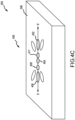
- the first set 400 of sensing elements 304 of array 302 may include a third infrared light source 409 and a third blue light source 411.
- the third infrared light source 409 and the third blue light source 411 may be positioned along the common axis X-X' relatively between the first light sensor 402 and the third light sensor 406.
- the third infrared light source 409 may emit light at a wavelength between 700 nm and 2000 nm.
- the third blue light source 411 may emit light between 250 nm and 700 nm.
- Each of the third infrared light source 409 and the third blue light source 411 may have a symmetry axis of the respective emitted light cone perpendicular to, or between 60° and 120° of, a plane defined by the sensor face 306 and or the light sensors 402, 404, 406.
- a second set 500 of sensing elements 304 of array 302 comprising at least one of a polarized light emitting element or a polarized light detecting element.
- set 500 may be configured for any combination of elliptical and linear polarization and may include various chirality.
- Second set 500 may include a first element 502, a second element 504, and a third element 506.
- Each of the elements (502, 504, 506) may be distributed circumferentially about a vertex 508 defined by an element light cone axis of each of the receiving and/or emitting light cones of each of the elements (502, 504, 506).
- the vertex may be projected in the plane of sensor face 306 to the center defined by the second light sensor 404.
- the first element 502 is an unpolarized light emitting element
- the second element 504 is a S polarization detecting element
- the third element 506 is a P polarization detecting element.
- the first element 502 is an unpolarized polarization detector
- the second element 504 is a P polarized light emitting element
- the third element 506 is a S polarized light emitting element (or vice versa).
- the second element 504 and the third element 506 may define an angle ⁇ therebetween as a projection of the element light cone axis in the plane of sensor face 306.
- the angle ⁇ may be 120°.
- the element light cone axis may be elevated out of the plane of the sensor face 306 at an angle between 30° and 60°.
- each of the vertex 508 angles defined between the element light cone axes may be orthogonal.
- the second set 500 may include a V polarized light emitting element with an element light cone axis oriented at 90° to an element light cone axis of the P polarized light emitting element (e.g., respectively orthogonal beamlines).
- any of the vertex 508 angles between the light cone axes of the elements may be ⁇ 30° from orthogonal (i.e., between 60° and 120°).
- the elements 502, 504, 506 are configured to operate at wavelengths between 400 nm and 1100 nm (e.g., a fifth light).
- the elements 502, 504, 406 may emit a laser light characterized by coherence.
- the third set 600 includes paired ultraviolet light emitting elements 602 and fluorescent light detecting elements 604 divided by the common axis X-X' and located circumferentially about the center defined by the second light sensor 404.
- the emitting element and the detecting element of the respective pair is located relatively circumferentially 180° apart.
- the emitting elements 602 may be configured to emit ultraviolet light between 220 nm and 405 nm or may be between 405 nm and 900 nm (e.g., a third light).
- the fluorescent light detecting elements comprise one or more filters tending thereby to enable greater discrimination within the fluorescence spectra.
- detecting elements 604 may include a first filter 606 configured between 330 nm and 370 nm, a second filter 608 configured between 370 nm and 410 nm, a third filter 610 configured between 410 nm and 450 nm, and a fourth filter 612 configured between 460 nm and 500 nm.
- the elements 602 may include an X-ray emitting source (e.g., a fourth light) and the elements 604 may include an X-ray fluorescence detector.
- a scattering angle for a fluorescence detector may be between 5° and 180°.
- references to "various embodiments,” “one embodiment,” “an embodiment,” “an example embodiment,” etc. indicate that the embodiment described may include a particular feature, structure, or characteristic, but every embodiment may not necessarily include the particular feature, structure, or characteristic. Moreover, such phrases are not necessarily referring to the same embodiment. Further, when a particular feature, structure, or characteristic is described in connection with an embodiment, it is submitted that it is within the knowledge of one skilled in the art to affect such feature, structure, or characteristic in connection with other embodiments whether or not explicitly described. After reading the description, it will be apparent to one skilled in the relevant art(s) how to implement the disclosure in alternative embodiments.
- the terms "comprises,” “comprising,” or any other variation thereof, are intended to cover a non-exclusive inclusion, such that a process, method, article, or apparatus that comprises a list of elements does not include only those elements but may include other elements not expressly listed or inherent to such process, method, article, or apparatus.
Landscapes
- Engineering & Computer Science (AREA)
- Chemical & Material Sciences (AREA)
- Combustion & Propulsion (AREA)
- Mechanical Engineering (AREA)
- General Engineering & Computer Science (AREA)
- Physics & Mathematics (AREA)
- Fluid Mechanics (AREA)
- Health & Medical Sciences (AREA)
- Dispersion Chemistry (AREA)
- Life Sciences & Earth Sciences (AREA)
- Analytical Chemistry (AREA)
- Biochemistry (AREA)
- General Health & Medical Sciences (AREA)
- General Physics & Mathematics (AREA)
- Immunology (AREA)
- Pathology (AREA)
- Investigating Or Analysing Materials By Optical Means (AREA)
Description
- The present disclosure relates to air quality sensors and, more specifically, to a particulate sensor assembly for particulate detection in turbine engine gas path flow.
- Gas turbine engine components and structures may be sensitive to Foreign Object Debris (FOD) such as, for example, particulate matter. When present in turbine engine gas path flows, particulate matter may tend to result in catastrophic engine failure. Relatively hard and/or dense FOD particles such as, for example, silicate sand, dust, rock, volcanic ash, and/or the like may impact and erode turbine components such as, for example, compressor blades and vanes. In this regard, FOD particles in turbine engine gas paths tend to decrease the operational life and reliability of gas turbine engines.
-
US 20170276588 A1 describes a particle detection system, such as an active video smoke detection system, including at least one illumination means for directing a beam of radiation through at least part of the air volume being monitored, an image sensor is positioned to capture images of at least part of a beam from illumination means; and means to analyse the captured images to detect the presence of particles within the volume. -
US 20050259255 A1 describes an apparatus and method for detecting presence in gas of transient particulate above its normal zero or acceptable level within a duct, said apparatus comprising at least one emitter of illumination selected from infra-red, ultraviolet and visible radiation capable of being projected over essentially the entire cross section of the duct and at least one detector for detecting any sparkle of the illumination from the particulate. -
US 20090079981 A1 describes apparatuses, methods, and systems for measuring mean particle size and concentration of a polydispersion of agglomerates. In one embodiment, the apparatuses include a light source; a focusing lens to form a probe volume; a first light detector positioned at a first angular position from the beam of light; and a second light detector positioned at a second angular position from the first direction of the beam of light, the mean particle size and concentration being determined using nearly invariant functions of a ratio of the light scattered measured by the first and second detectors. -
US 8013994 B1 describes a method of measuring parameters of a particle including providing a particle, wherein the particle has a first portion and a second portion. The process includes providing a column of photo-detectors including a first photo-detector and a second photo-detector, wherein the first photo-detector and the second photo-detector are sensitive to the same range of light frequencies. Light is projected from the particle onto the column of photo-detectors wherein the column of photo-detectors is oriented so the light from the first portion is projected onto the first photo-detector and light from the second portion is projected onto the second photo-detector. Light measured by the first photo-detector differs from light measured by the second photo-detector. -
US 20150369722 A1 describes a sensor for measuring particles in contaminated media containing an optically transparent measuring cell, through which a capillary tube for conducting and measuring a medium passes, an optical detector, and a magnetic detector. The measuring cell is cylindrical, the capillary tube extends coaxially in the measuring cell and an inspection space is arranged in a center of the measuring cell. - From a first aspect of the invention, there is provided a particulate sensor assembly as claimed in claim 1.
- In an embodiment, the first angle θ1 and the second angle θ2 are congruent. In various embodiments, the first set of sensing elements comprises a second infrared light source emitting light at a wavelength between 600 nm and 2000 nm and a second blue light source emitting light at a wavelength between 380 nm and 600 nm, wherein the second infrared light source and the second blue light source are divided by the common axis and located circumferentially about the center defined by the second light sensor, wherein the second infrared light source and the second blue light source define, respectively, a third angle θ1' and a fourth angle (θ2'), the third angle (θ1') being supplementary to the first angle θ1 and the fourth angle θ2' being supplementary to the second angle θ2.
- In various embodiments, the first set of sensing elements comprises a third infrared light source emitting light at a wavelength between 700 nm and 2000 nm and a third blue light source emitting light at a wavelength between 250 nm and 700, the third infrared light source and third blue light source being aligned along the common axis, wherein each of the third infrared light source and the third blue light source have a symmetry axis of a respective emitted light cone perpendicular to a plane defined by the sensor face. In various embodiments, the third set of sensing elements comprises an X-ray emitting source and an X-ray fluorescence detector.
- From a second aspect of the invention, there is provided a gas turbine engine as claimed in claim 7.
- In an embodiment, the gas turbine engine comprises an engine static structure having a lip defining an inlet, wherein a first particulate sensor assembly is coupled to the engine static structure proximate the lip to observe a sensing volume defining an inlet ingestion sensing region. In various embodiments, the engine static structure further defines a bypass duct, wherein a second particulate sensor assembly is coupled to the engine static structure to observe a sensing volume within a bypass flow-path proximate an inlet of the bypass duct.
- In an embodiment, there is provided a gas turbine engine as claimed in claim 10.
- The foregoing features and elements may be combined in various combinations without exclusivity, unless expressly indicated otherwise. These features and elements as well as the operation thereof will become more apparent in light of the following description and the accompanying drawings. It should be understood, however, the following description and drawings are intended to be exemplary in nature and non-limiting.
- The subject matter of the present disclosure is particularly pointed out and distinctly claimed in the concluding portion of the specification. A more complete understanding of the present disclosure, however, may best be obtained by referring to the detailed description and claims when considered in connection with the figures, wherein like numerals denote like elements.
-
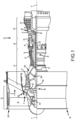
FIG. 1 illustrates an exemplary gas turbine engine, in accordance with various embodiments; -
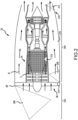
FIG. 2 illustrates particulate sensing volumes for particulate sensor assemblies in a gas turbine engine, in accordance with various embodiments; -
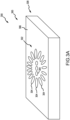
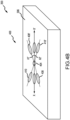
FIG. 3A illustrates a schematic diagram of a multi-angle, multi-wave array of a particulate sensor, in accordance with various embodiments; -
FIG. 3B illustrates a schematic diagram of a multi-angle, multi-wave array of a particulate sensor, in accordance with various embodiments; -
FIG. 4A illustrates a set of sensing elements for a particulate sensor, in accordance with various embodiments; -
FIG. 4B illustrates a set of sensing elements for a particulate sensor, in accordance with various embodiments; -
FIG. 4C illustrates a set of sensing elements for a particulate sensor, in accordance with various embodiments; -
FIG. 5 illustrates a set of sensing elements for a particulate sensor, in accordance with various embodiments; and -
FIG. 6 illustrates a set of sensing elements for a particulate sensor, in accordance with various embodiments. - All ranges and ratio limits disclosed herein may be combined, unless expressly indicated otherwise. It is to be understood that unless specifically stated otherwise, references to "a," "an," and/or "the" may include one or more than one and that reference to an item in the singular may also include the item in the plural.
- The detailed description of exemplary embodiments herein makes reference to the accompanying drawings, which show exemplary embodiments by way of illustration. While these exemplary embodiments are described in sufficient detail to enable those skilled in the art to practice the exemplary embodiments of the disclosure, it should be understood that other embodiments may be realized and that logical changes and adaptations in design and construction may be made in accordance with this disclosure and the teachings herein. Thus, the detailed description herein is presented for purposes of illustration only and not limitation.
- The scope of the invention is defined by the appended claims. The steps recited in any of the method or process descriptions may be executed in any order and are not necessarily limited to the order presented. Furthermore, any reference to singular includes plural embodiments, and any reference to more than one component or step may include a singular embodiment or step. Also, any reference to attached, fixed, coupled, connected or the like may include permanent, removable, temporary, partial, full and/or any other possible attachment option. Additionally, any reference to without contact (or similar phrases) may also include reduced contact or minimal contact. Surface shading lines may be used throughout the figures to denote different parts but not necessarily to denote the same or different materials.
- In various embodiments and with reference to
FIG. 1 , agas turbine engine 20 is provided.Gas turbine engine 20 may be a two-spool turbofan that generally incorporates afan section 22, acompressor section 24, acombustor section 26 and aturbine section 28. In operation,fan section 22 can drive air along a bypass flow-path B whilecompressor section 24 can drive air through a core flow-path C for compression and communication intocombustor section 26 then expansion throughturbine section 28. In various embodiments, a plurality ofparticulate sensor assemblies 200 may be located throughout theturbine engine 20 in the core flow-path C and/or the bypass flow-path B. Although depicted as a turbofangas turbine engine 20 herein, it should be understood that the concepts described herein are not limited to use with turbofans as the teachings may be applied to other types of turbine engines including turbojet engines, a low-bypass turbofan, a high-bypass turbofan, or any other gas turbine known to those skilled in the art. -
Gas turbine engine 20 may generally comprise alow speed spool 30 and ahigh speed spool 32 mounted for rotation about an engine central longitudinal axis A-A' relative to an enginestatic structure 36 via one or more bearing systems 38 (shown as bearing system 38-1 and bearing system 38-2). It should be understood thatvarious bearing systems 38 at various locations may alternatively or additionally be provided, including for example,bearing system 38, bearing system 38-1, and bearing system 38-2. -
Low speed spool 30 may generally comprise aninner shaft 40 that interconnects afan 42, a low pressure (or first) compressor section 44 (also referred to a low pressure compressor) and a low pressure (or first)turbine section 46.Inner shaft 40 may be connected to fan 42 through a gearedarchitecture 48 that can drivefan 42 at a lower speed thanlow speed spool 30.Geared architecture 48 may comprise agear assembly 60 enclosed within agear housing 62.Gear assembly 60 couplesinner shaft 40 to a rotating fan structure.High speed spool 32 may comprise anouter shaft 50 that interconnects a high pressure compressor ("HPC") 52 (e.g., a second compressor section) and high pressure (or second)turbine section 54. Acombustor 56 may be located betweenHPC 52 andhigh pressure turbine 54. Amid-turbine frame 57 of enginestatic structure 36 may be located generally betweenhigh pressure turbine 54 andlow pressure turbine 46.Mid-turbine frame 57 may support one ormore bearing systems 38 inturbine section 28.Inner shaft 40 andouter shaft 50 may be concentric and rotate via bearingsystems 38 about the engine central longitudinal axis A-A', which is collinear with their longitudinal axes. As used herein, a "high pressure" compressor or turbine experiences a higher pressure than a corresponding "low pressure" compressor or turbine. - The core airflow C may be compressed by
low pressure compressor 44 thenHPC 52, mixed and burned with fuel incombustor 56, then expanded overhigh pressure turbine 54 andlow pressure turbine 46.Mid-turbine frame 57 includesairfoils 59 which are in the core airflow path.Low pressure turbine 46, andhigh pressure turbine 54 rotationally drive the respectivelow speed spool 30 andhigh speed spool 32 in response to the expansion. -
Gas turbine engine 20 may be, for example, a high-bypass geared aircraft engine. In various embodiments, the bypass ratio ofgas turbine engine 20 may be greater than about six (6). In various embodiments, the bypass ratio ofgas turbine engine 20 may be greater than ten (10). In various embodiments, gearedarchitecture 48 may be an epicyclic gear train, such as a star gear system (sun gear in meshing engagement with a plurality of star gears supported by a carrier and in meshing engagement with a ring gear) or other gear system.Geared architecture 48 may have a gear reduction ratio of greater than about 2.3 andlow pressure turbine 46 may have a pressure ratio that is greater than about 5. In various embodiments, the bypass ratio ofgas turbine engine 20 is greater than about ten (10:1). In various embodiments, the diameter offan 42 may be significantly larger than that of thelow pressure compressor 44, and thelow pressure turbine 46 may have a pressure ratio that is greater than about (5:1).Low pressure turbine 46 pressure ratio may be measured prior to inlet oflow pressure turbine 46 as related to the pressure at the outlet oflow pressure turbine 46 prior to an exhaust nozzle. It should be understood, however, that the above parameters are exemplary of various embodiments of a suitable geared architecture engine and that the present disclosure contemplates other gas turbine engines including direct drive turbofans. - The next generation of turbofan engines may be designed for higher efficiency which is associated with higher pressure ratios and higher temperatures in the
HPC 52. These higher operating temperatures and pressure ratios may create operating environments that may cause thermal loads that are higher than the thermal loads encountered in conventional turbofan engines, which may shorten the operational life of current components. - In various embodiments,
HPC 52 may comprise alternating rows of rotating rotors and stationary stators. Stators may have a cantilevered configuration or a shrouded configuration. More specifically, a stator may comprise a stator vane, a casing support and a hub support. In this regard, a stator vane may be supported along an outer diameter by a casing support and along an inner diameter by a hub support. In contrast, a cantilevered stator may comprise a stator vane that is only retained and/or supported at the casing (e.g., along an outer diameter). - In various embodiments, rotors may be configured to compress and spin a fluid flow. Stators may be configured to receive and straighten the fluid flow. In operation, the fluid flow discharged from the trailing edge of stators may be straightened (e.g., the flow may be directed in a substantially parallel path to the centerline of the engine and/or HPC) to increase and/or improve the efficiency of the engine and, more specifically, to achieve maximum and/or near maximum compression and efficiency when the straightened air is compressed and spun by rotor 64.
- With additional reference to
FIG. 2 , sensing volumes forparticulate sensor assemblies 200 ofturbine engine 20 are illustrated in various embodiments. Sensing volumes may be defined in an inletingestion sensing region 202 and a turbine gaspath sensing region 204. For example, a first particulate sensor assembly may be coupled to enginestatic structure 36 proximate lip 36' to observe afirst sensing volume 206 defining the inletingestion sensing region 202. A second particulate sensor assembly may be coupled to the enginestatic structure 36 to observe asecond sensing volume 208 within bypass flow-path B proximate theinlet 214 ofbypass duct 216. A third particulate sensor assembly may be coupled tocompressor section 24 to observe athird sensing volume 210 within core flow-path C. A fourth particulate sensor assembly may be coupled proximate theexit 218 ofbypass duct 216 to observe afourth sensing volume 212 of the bypass flow-path B exhaust and/or the core flow-path C exhaust. It will be appreciated that any number of sensing volumes may be defined by a particulate sensor assembly configured for a particular area of interest. - With additional reference to
FIGs. 3A and3B , a schematic diagram of aparticulate sensor 300 of theparticulate sensor assembly 200 is illustrated in accordance with various embodiments.Particulate sensor 300 comprises a multi-angle, multi-wave array (302, 302') ofsensing elements 304 comprising a plurality of light sources and a plurality of sensing devices distributed on thesensor face 306 ofhousing 308. According to the invention, array (302) includes at least three sets of sensingelements 304 collectively configured to detect and discriminate between categories of FOD including solid objects (e.g., hand tools, hail, rain, fasteners, rocks, etc.) and particulate matter such as, for example, silicate sand, dust, volcanic ash, sea-salt aerosol, smoke, steam, water vapor, and/or the like. Sensingelements 304 may be distributed circumferentially about a center point (e.g., array 302) or may be distributed linearly and/or in a ladder pattern as shown by array 302'. As used herein, particulate matter comprises particles between about 0.01 micron (µm) to about 5000 micron (µm) where about in this context means ±5%. In various embodiments, for example, dust may be between about 0.05 micron (µm) to about 10 micron (µm), volcanic ash may be between 0.05 micron (µm) and 2000 micron (µm), silicate sand may be between 4 micron (µm) and 5000 micron (µm). In various embodiments, thehousing 308 comprises a protective cover over the multi-angle, multi-wave array (302, 302') tending thereby to increase the durability and longevity of the array (302, 302') when exposed to FOD and particulate matter in theengine 20 flow-paths. The protective cover may be relatively translucent to the light sources and sensing devices of the array (302, 302'). In various embodiments, the protective cover may cover each of sensingelements 304 individually or extend over multiple sensingelements 304. In various embodiments, any of thesensing elements 304 may be configured to emit a pulsed light, or a continuous light, or may be configured to receive light. - With additional reference to
FIG. 4A afirst set 400sensing elements 304 ofarray 302 is illustrated in isolation for clarity.Set 400 includes afirst light sensor 402, a secondlight sensor 404, and a thirdlight sensor 406 each aligned along a common axis X-X'. Thelight sensors engine 20 flow-paths.Set 400 includes a first infraredlight source 408 and a first bluelight source 410. The first infraredlight source 408 and the first bluelight source 410 are divided by the common axis X-X' and located circumferentially about a center defined by the secondlight sensor 404. The first infraredlight source 408 and the first bluelight source 410 define, respectively, angles θ1 and θ2 between the common axis X-X' with a vertex at a center defined by a position between any of the light sensors on the common axis. Angles θ1 and θ2 may be between 0° and 90°, or may be between 5° and 65°, or may be between 10° and 60°, and/or may be congruent. Each of the angles θ1 and θ2 may be tailored for a desired detection distance, for example, between about 1 cm to 700 cm where about in this context means ±5%. In various embodiments, the vertex of angles θ1 and θ2 may lie along the common axis X-X' at the secondlight sensor 404, or may between the secondlight sensor 404 and thefirst light sensor 402, or may lie at the secondlight sensor 402. In various embodiments,elements elements sensor face 306 andelement 404 may be between 60° and 120° with respect to thesensor face 306. - In various embodiments, the
first light sensor 402 is used to define a forward-scatter sensing detection volume formed by the overlap of the emission from the first infraredlight source 408 and the first bluelight source 410 having a first angle of coincidence. The first bluelight source 410 may emit light between 380 nm and 600 nm (e.g., a first light). The first infraredlight source 408 may emit light at a wavelength between 600 nm and 2000 nm (e.g., a second light). An angle of coincidence may be defined as the angle between the symmetry axis of an emitted light cone of a light source and a symmetry axis of an acceptance cone of a light sensor. Where the light source is pointed directly at the light sensor the angle of coincidence is 180°. It will be appreciated that a scattering angle of light may be calculated by subtracting the angle of coincidence from 180°. Thefirst light sensor 402 may have a first scattering angle of between 0° and 60°. In like regard, the secondlight sensor 404 defines a mid-scatter sensing detection volume having a second scattering angle of between 60° and 120° and the thirdlight sensor 406 defines a back-scatter sensing detection volume having a third scattering angle between 120° and 240°. - In various embodiments and with additional reference to
FIG. 4B , thefirst set 400 of sensingelements 304 ofarray 302 includes a second infrared light source 408' and a second blue light source 410'. The second infrared light source 408' and the second blue light source 410' are divided by the common axis X-X' and located circumferentially about the center defined by the secondlight sensor 404. The second infrared light source 408' and the second blue light source 410' define, respectively, angles θ1' and θ2' between the common axis X-X'. In various embodiments, angles θ1 and θ1' may be supplementary and, in like regard, angles θ2 and θ2' may be supplementary. The second infrared light source 408' may emit light at a wavelength between 600 nm and 2000 nm. The second blue light source 410' may emit light between 380 nm and 600 nm. - In various embodiments and with additional reference to
FIG. 4C , thefirst set 400 of sensingelements 304 ofarray 302 may include a third infraredlight source 409 and a third bluelight source 411. The third infraredlight source 409 and the third bluelight source 411 may be positioned along the common axis X-X' relatively between thefirst light sensor 402 and the thirdlight sensor 406. The third infraredlight source 409 may emit light at a wavelength between 700 nm and 2000 nm. The third bluelight source 411 may emit light between 250 nm and 700 nm. Each of the third infraredlight source 409 and the third bluelight source 411 may have a symmetry axis of the respective emitted light cone perpendicular to, or between 60° and 120° of, a plane defined by thesensor face 306 and or thelight sensors - With additional reference to
FIG. 5 , asecond set 500 of sensingelements 304 ofarray 302 comprising at least one of a polarized light emitting element or a polarized light detecting element. It will be appreciated that set 500 may be configured for any combination of elliptical and linear polarization and may include various chirality.Second set 500 may include afirst element 502, asecond element 504, and athird element 506. Each of the elements (502, 504, 506) may be distributed circumferentially about avertex 508 defined by an element light cone axis of each of the receiving and/or emitting light cones of each of the elements (502, 504, 506). In various embodiments, the vertex may be projected in the plane ofsensor face 306 to the center defined by the secondlight sensor 404. In various embodiments, thefirst element 502 is an unpolarized light emitting element, thesecond element 504 is a S polarization detecting element, and thethird element 506 is a P polarization detecting element. In various embodiments, thefirst element 502 is an unpolarized polarization detector, thesecond element 504 is a P polarized light emitting element, and thethird element 506 is a S polarized light emitting element (or vice versa). Thesecond element 504 and thethird element 506 may define an angle α therebetween as a projection of the element light cone axis in the plane ofsensor face 306. In various embodiments, the angle α may be 120°. In various embodiments, the element light cone axis may be elevated out of the plane of thesensor face 306 at an angle between 30° and 60°. In various embodiments, each of thevertex 508 angles defined between the element light cone axes may be orthogonal. In this regard, thesecond set 500 may include a V polarized light emitting element with an element light cone axis oriented at 90° to an element light cone axis of the P polarized light emitting element (e.g., respectively orthogonal beamlines). In various embodiments, any of thevertex 508 angles between the light cone axes of the elements may be ±30° from orthogonal (i.e., between 60° and 120°). Theelements elements - With additional reference to
FIG. 6 , athird set 600 of sensingelements 304 ofarray 302 is illustrated. Thethird set 600 includes paired ultravioletlight emitting elements 602 and fluorescentlight detecting elements 604 divided by the common axis X-X' and located circumferentially about the center defined by the secondlight sensor 404. The emitting element and the detecting element of the respective pair is located relatively circumferentially 180° apart. The emittingelements 602 may be configured to emit ultraviolet light between 220 nm and 405 nm or may be between 405 nm and 900 nm (e.g., a third light). In various embodiments, the fluorescent light detecting elements comprise one or more filters tending thereby to enable greater discrimination within the fluorescence spectra. For example, detectingelements 604 may include afirst filter 606 configured between 330 nm and 370 nm, asecond filter 608 configured between 370 nm and 410 nm, athird filter 610 configured between 410 nm and 450 nm, and afourth filter 612 configured between 460 nm and 500 nm. In various embodiments, theelements 602 may include an X-ray emitting source (e.g., a fourth light) and theelements 604 may include an X-ray fluorescence detector. In various embodiments a scattering angle for a fluorescence detector may be between 5° and 180°. - Benefits and other advantages have been described herein with regard to specific embodiments. Furthermore, the connecting lines shown in the various figures contained herein are intended to represent exemplary functional relationships and/or physical couplings between the various elements. It should be noted that many alternative or additional functional relationships or physical connections may be present in a practical system. However, the benefits, advantages, and any elements that may cause any benefit or advantage to occur or become more pronounced are not to be construed as critical, required, or essential features or elements of the disclosure. The scope of the invention is accordingly to be limited by nothing other than the appended claims, in which reference to an element in the singular is not intended to mean "one and only one" unless explicitly so stated, but rather "one or more." Moreover, where a phrase similar to "at least one of A, B, or C" is used in the claims, it is intended that the phrase be interpreted to mean that A alone may be present in an embodiment, B alone may be present in an embodiment, C alone may be present in an embodiment, or that any combination of the elements A, B and C may be present in a single embodiment; for example, A and B, A and C, B and C, or A and B and C.
- Systems, methods and apparatus are provided herein. In the detailed description herein, references to "various embodiments," "one embodiment," "an embodiment," "an example embodiment," etc., indicate that the embodiment described may include a particular feature, structure, or characteristic, but every embodiment may not necessarily include the particular feature, structure, or characteristic. Moreover, such phrases are not necessarily referring to the same embodiment. Further, when a particular feature, structure, or characteristic is described in connection with an embodiment, it is submitted that it is within the knowledge of one skilled in the art to affect such feature, structure, or characteristic in connection with other embodiments whether or not explicitly described. After reading the description, it will be apparent to one skilled in the relevant art(s) how to implement the disclosure in alternative embodiments.
- As used herein, the terms "comprises," "comprising," or any other variation thereof, are intended to cover a non-exclusive inclusion, such that a process, method, article, or apparatus that comprises a list of elements does not include only those elements but may include other elements not expressly listed or inherent to such process, method, article, or apparatus.
Claims (10)
- A particulate sensor assembly (200) for particulate detection in a gas turbine engine (20) gas flow path and configured to observe a sensing volume of the gas flow path, the particulate sensor assembly comprising:a particulate sensor (300) comprising a housing (308) and a multi-angle, multi-wave array (302) of sensing elements (304) distributed on a sensor face (306) of the housing (308), the multi-angle, multi-wave array (302) of sensing elements (304) comprising a plurality of light sources and a plurality of light sensors distributed on the sensor face (306) of the housing (308),wherein a first set (400) of sensing elements, a second set (500) of sensing elements, and a third set (600) of sensing elements of the multi-angle, multi-wave array (302) of sensing elements (304) are distributed on the sensor face (306) and are collectively configured to detect and discriminate between categories of foreign object debris including solid objects and particulate matter including silicate sand, dust, rock, volcanic ash, sea-salt aerosol, and smoke,wherein the first set (400) of sensing elements comprises a first light sensor (402) defining a forward-scatter sensing detection volume formed by the overlap of the emission from a first infrared light source (408) and a first blue light source (410) having a first angle of coincidence, the first light sensor (402) having a first scattering angle, a second light sensor (404) defining a mid-scatter sensing detection volume having a second scattering angle, and a third light sensor (406) defining a back-scatter sensing detection volume having a third scattering angle, wherein the first light sensor, the second light sensor and the third light sensor are aligned along a common axis (X-X'),wherein the first infrared light source (408) emits light at a wavelength between 600 nm and 2000 nm, and the first blue light source (410) emits light at a wavelength between 380 nm and 600 nm, and wherein the first infrared light source (408) and the first blue light source (410) are divided by the common axis and are located circumferentially about a center defined by the second light sensor (404), and wherein the first infrared light source (408) and the first blue light source (410) define, respectively, a first angle (θ1) and a second angle (θ2) between the common axis (X-X') with a vertex at a center defined by a position between any of the light sensors on the common axis,wherein the second set (500) of sensing elements comprises at least one of a polarized light emitting element or a polarized light detecting element configured to operate at a wavelength between 400 nm and 1100 nm,wherein the third set (600) of sensing elements comprises paired ultraviolet light emitting elements (602) and fluorescent light detecting elements (604) divided by the common axis (X-X') and located circumferentially about the center defined by the second light sensor (404), the emitting elements (602) configured to emit ultraviolet light between 220 nm and 405 nm, the fluorescent light detecting elements comprising one or more filters tending thereby to enable greater discrimination within the fluorescence spectra, andwherein the second set of sensing elements and the third set of sensing elements are arranged at least one of circumferentially about the center defined by the second light sensor or in a ladder pattern.
- The particulate sensor assembly of claim 1, wherein the first angle (θ1) and the second angle (θ2) are congruent.
- The particulate sensor assembly of claim 1 or 2, wherein the first set (400) of sensing elements further comprises a second infrared light source (408') emitting light at a wavelength between 600 nm and 2000 nm and a second blue light source (410') emitting light at a wavelength between 380 nm and 600 nm, wherein the second infrared light source (408') and the second blue light source (410 ') are divided by the common axis and are located circumferentially about the center defined by the second light sensor (404),
wherein the second infrared light source (408') and the second blue light source (410') define, respectively, a third angle (θ1') and a fourth angle (θ2'), the third angle (θ1') being supplementary to the first angle (θ1), and the fourth angle (θ2') being supplementary to the second angle (θ2). - The particulate sensor assembly of claim 2 or 3, wherein the first set (400) of sensing elements further comprises a third infrared light source (409) emitting light at a wavelength between 700 nm and 2000 nm and a third blue light source (411) emitting light at a wavelength between 250 nm and 700 nm, the third infrared light source and third blue light source being aligned along the common axis, wherein each of the third infrared light source and the third blue light source have a symmetry axis of the respective emitted light cone perpendicular to a plane defined by the first light sensor (402), the second light sensor (404), and the third light sensor (406).
- The particulate sensor assembly of claim 2 or 3, wherein the first set (400) of sensing elements further comprises a third infrared light source (409) emitting light at a wavelength between 700 nm and 2000 nm and a third blue light source (411) emitting light at a wavelength between 250 nm and 700 nm, the third infrared light source and third blue light source being aligned along the common axis, wherein each of the third infrared light source and the third blue light source have a symmetry axis of the respective emitted light cone perpendicular to a plane defined by the sensor face (306).
- The particulate sensor assembly of any preceding claim, wherein the third set (600) of sensing elements further comprises an X-ray emitting source (602) and an X-ray fluorescence detector (604).
- A gas turbine engine (20), comprising:a compressor section (24) configured to compress a gas;a combustor section (26) aft of the compressor section and configured to combust the gas;a turbine section (28) aft of the combustor section and configured to extract work from the gas;and one or more particulate sensor assemblies as claimed in claim 1.
- The gas turbine engine of claim 7, further comprising an engine static structure (36) having a lip (36') defining an inlet, wherein a first particulate sensor assembly is coupled to the engine static structure (36) proximate the lip to observe a first sensing volume (206) defining an inlet ingestion sensing region (202) of the gas turbine engine.
- The gas turbine engine of claim 8, wherein the engine static structure (36) further defines a bypass duct (216), wherein a second particulate sensor assembly is coupled to the engine static structure to observe a second sensing volume (208) within a bypass flow-path (B) proximate an inlet (214) of the bypass duct.
- The gas turbine engine of any of claim 7, wherein:a first particulate sensor assembly is coupled to an engine static structure (36) of the gas turbine engine (20) proximate a lip (36') and configured to observe a first sensing volume (206), the first sensing volume defining an inlet ingestion sensing region (202);a second particulate sensor assembly is coupled to the engine static structure (36) and configured to observe a second sensing volume (208) within a bypass flow-path (B) proximate an inlet (214) of a bypass duct (216) of the gas turbine engine;a third particulate sensor assembly is coupled to the compressor section (24) and configured to observe a third sensing volume (210) within a core flow-path (C) of the gas turbine engine; anda fourth particulate sensor assembly is coupled proximate an exit (218) of the bypass duct (216) and configured to observe a fourth sensing volume (212) of a bypass flow-path (B) exhaust and/or a core flow-path (C) exhaust.
Applications Claiming Priority (1)
| Application Number | Priority Date | Filing Date | Title |
|---|---|---|---|
| US16/503,097 US11492967B2 (en) | 2019-07-03 | 2019-07-03 | Particulate ingestion sensor for gas turbine engines |
Publications (2)
| Publication Number | Publication Date |
|---|---|
| EP3760839A1 EP3760839A1 (en) | 2021-01-06 |
| EP3760839B1 true EP3760839B1 (en) | 2024-07-24 |
Family
ID=71266387
Family Applications (1)
| Application Number | Title | Priority Date | Filing Date |
|---|---|---|---|
| EP20182692.2A Active EP3760839B1 (en) | 2019-07-03 | 2020-06-26 | Particulate detection sensor assembly for gas turbine engines |
Country Status (2)
| Country | Link |
|---|---|
| US (1) | US11492967B2 (en) |
| EP (1) | EP3760839B1 (en) |
Families Citing this family (4)
| Publication number | Priority date | Publication date | Assignee | Title |
|---|---|---|---|---|
| US11726035B2 (en) * | 2020-12-11 | 2023-08-15 | Raytheon Technologies Corporation | Terahertz enhanced foreign object debris discrimination for optical particulate sensor |
| US12019028B2 (en) | 2021-07-23 | 2024-06-25 | Rtx Corporation | Foreign object debris discrimination with modulated laser light |
| US12286889B2 (en) | 2023-07-11 | 2025-04-29 | General Electric Company Polska Sp. Z O.O. | Methods and apparatus to improve fan operability control using smart materials |
| US12391393B2 (en) | 2023-07-20 | 2025-08-19 | Rtx Corporation | Aircraft propulsion system with inlet air monitoring system and method |
Family Cites Families (31)
| Publication number | Priority date | Publication date | Assignee | Title |
|---|---|---|---|---|
| GB8707187D0 (en) | 1987-03-25 | 1987-04-29 | Hughes Ltd Stewart | Monitoring of foreign object in engines |
| US5164604A (en) | 1991-05-01 | 1992-11-17 | Allied-Signal Inc. | Multiport particle detection apparatus utilizing a plenum having a plurality of spatically separate channels in fluid combination |
| JP5115912B2 (en) | 2001-02-23 | 2013-01-09 | 独立行政法人日本原子力研究開発機構 | High-speed gate sweep type 3D laser radar system |
| JP4598766B2 (en) | 2003-04-29 | 2010-12-15 | エス3アイ, エル エル シィ | Multispectral optical method and system for detecting and classifying biological and non-biological microparticles |
| GB0323055D0 (en) | 2003-10-02 | 2003-11-05 | Unidata Europ Ltd | Particulate detector |
| GB0500687D0 (en) | 2005-01-14 | 2005-02-23 | Unidata Europ Ltd | Particulate detector |
| US7742167B2 (en) | 2005-06-17 | 2010-06-22 | Perkinelmer Health Sciences, Inc. | Optical emission device with boost device |
| US7518710B2 (en) | 2005-07-14 | 2009-04-14 | Battelle Memorial Institute | Optical devices for biological and chemical detection |
| US8013994B1 (en) | 2007-01-12 | 2011-09-06 | Cyber Materials Llc | Particle state and flux sensor |
| US8424279B2 (en) | 2007-03-28 | 2013-04-23 | United Technologies Corporation | Particle separator and debris control system |
| US7782459B2 (en) | 2007-09-24 | 2010-08-24 | Process Metrix | Laser-based apparatus and method for measuring agglomerate concentration and mean agglomerate size |
| US20090112519A1 (en) | 2007-10-31 | 2009-04-30 | United Technologies Corporation | Foreign object/domestic object damage assessment |
| CA2993208C (en) | 2007-11-15 | 2021-01-26 | Garrett Thermal Systems Limited | Particle detection |
| KR20130054285A (en) | 2010-04-29 | 2013-05-24 | 노르스크 인스티튜트 포 러프트포르스크닝 | System and method for detecting adverse atmospheric conditions ahead of an aircraft |
| US9018583B2 (en) | 2011-03-08 | 2015-04-28 | Magee Scientific Corporation | Method for automatic performance diagnosis and calibration of a photometric particle analyzer |
| US9010198B2 (en) | 2011-07-29 | 2015-04-21 | United Technologies Corporation | Aircraft debris monitoring sensor assembly |
| DE102012105379B3 (en) | 2012-06-21 | 2013-07-25 | Bernd Donner | Sensor and method for measuring particles in media |
| US9222873B2 (en) | 2013-05-02 | 2015-12-29 | Droplet Measurement Technologies, Inc. | Optical particle detector |
| EP3041743B1 (en) | 2013-09-06 | 2020-01-01 | GE Aviation Systems LLC | Aircraft and particulate detection method |
| US9915600B2 (en) | 2016-02-19 | 2018-03-13 | Research Triangle Institute | Devices, systems and methods for detecting particles |
| DE102015117361A1 (en) | 2014-10-13 | 2016-04-14 | Universität Duisburg-Essen | Device for the identification of aerosols |
| US10458990B1 (en) | 2015-03-06 | 2019-10-29 | Scanit Technologies, Inc. | Spore state discrimination |
| CH711170A1 (en) | 2015-06-08 | 2016-12-15 | Fachhochschule Nordwestschweiz Fhnw | Method and device for the detection of aerosol particles. |
| US10871452B2 (en) | 2016-06-15 | 2020-12-22 | Kidde Technologies, Inc. | Systems and methods for chamberless smoke detection and indoor air quality monitoring |
| US10852233B2 (en) | 2016-06-15 | 2020-12-01 | Kidde Technologies, Inc. | Systems and methods for chamberless smoke detection and indoor air quality monitoring |
| US20180068498A1 (en) | 2016-09-06 | 2018-03-08 | Rolls-Royce North American Technologies, Inc. | Systems and methods of modifying turbine engine operating limits |
| US20180136122A1 (en) | 2016-11-11 | 2018-05-17 | Kidde Technologies, Inc. | High sensitivity fiber optic based detection |
| US20180298778A1 (en) | 2017-04-18 | 2018-10-18 | Honeywell International Inc. | Gas turbine engine particulate ingestion and accumulation sensor system and method |
| US10620342B2 (en) | 2017-09-28 | 2020-04-14 | Rosemount Aerospace Inc. | Microscopic imager for aircraft cloud condition detection |
| US10339778B1 (en) * | 2018-01-15 | 2019-07-02 | Kidde Technologies, Inc. | Chamberless air quality monitors with temperature sensing |
| US10845294B1 (en) * | 2019-07-03 | 2020-11-24 | Raytheon Technologies Corporation | Systems and methods for particulate ingestion sensing in gas turbine engines |
-
2019
- 2019-07-03 US US16/503,097 patent/US11492967B2/en active Active
-
2020
- 2020-06-26 EP EP20182692.2A patent/EP3760839B1/en active Active
Also Published As
| Publication number | Publication date |
|---|---|
| EP3760839A1 (en) | 2021-01-06 |
| US11492967B2 (en) | 2022-11-08 |
| US20210003075A1 (en) | 2021-01-07 |
Similar Documents
| Publication | Publication Date | Title |
|---|---|---|
| EP3760839B1 (en) | Particulate detection sensor assembly for gas turbine engines | |
| EP3761009B1 (en) | Systems and methods for particulate ingestion sensing in gas turbine engines | |
| JP5898866B2 (en) | Multispectral system and method for generating multidimensional temperature data | |
| US8727706B2 (en) | System for providing cooling and purging air flow to a rotary machine online monitoring system | |
| US20090285259A1 (en) | System and method for thermal inspection of objects | |
| US10208602B2 (en) | Asymmetric diffuser opening for film cooling holes | |
| JP5916059B2 (en) | High temperature gas temperature measurement of gas turbine using tunable diode laser. | |
| JP5981709B2 (en) | System and method for detecting fracturing in a turbine engine | |
| US20130235391A1 (en) | One-dimensional coherent fiber array for inspecting components in a gas turbine engine | |
| CN112392552B (en) | Integral seal for blades retained within a rotatable annular outer drum rotor of a turbomachine | |
| US20240052757A1 (en) | Detection of gas turbine engine blade abnormalities based on light reflections | |
| Taniguchi et al. | Application of an optical pyrometer to newly developed industrial gas turbine | |
| US8174699B2 (en) | Fluid detection in turbine engine components | |
| EP4538518A1 (en) | In-flight emissions and contrail control system | |
| US11230927B2 (en) | Vane airfoil shapes for embedded members | |
| US11946811B2 (en) | Non-contact high temperature measurement system | |
| US12196658B2 (en) | Optical particulate detection for an aircraft | |
| US11840933B2 (en) | LiDAR based FOD detection for gas-turbine engines | |
| US20230013891A1 (en) | In-flight measured propulsion mass flow and thrust on aircraft | |
| CN102445283B (en) | The hot gas temperature using tunable diode laser in combustion gas turbine is measured | |
| Kerr et al. | Optical fouling of the RB199 pyrometer | |
| Niskayuna’NY | DeLancey et a].(45) Date of Patent: May 20, 2014 | |
| WILLIAMS et al. | Simultaneous velocity mapping of flow perturbations from counter rotating propellers |
Legal Events
| Date | Code | Title | Description |
|---|---|---|---|
| PUAI | Public reference made under article 153(3) epc to a published international application that has entered the european phase |
Free format text: ORIGINAL CODE: 0009012 |
|
| STAA | Information on the status of an ep patent application or granted ep patent |
Free format text: STATUS: THE APPLICATION HAS BEEN PUBLISHED |
|
| AK | Designated contracting states |
Kind code of ref document: A1 Designated state(s): AL AT BE BG CH CY CZ DE DK EE ES FI FR GB GR HR HU IE IS IT LI LT LU LV MC MK MT NL NO PL PT RO RS SE SI SK SM TR |
|
| AX | Request for extension of the european patent |
Extension state: BA ME |
|
| STAA | Information on the status of an ep patent application or granted ep patent |
Free format text: STATUS: REQUEST FOR EXAMINATION WAS MADE |
|
| 17P | Request for examination filed |
Effective date: 20210705 |
|
| RBV | Designated contracting states (corrected) |
Designated state(s): AL AT BE BG CH CY CZ DE DK EE ES FI FR GB GR HR HU IE IS IT LI LT LU LV MC MK MT NL NO PL PT RO RS SE SI SK SM TR |
|
| STAA | Information on the status of an ep patent application or granted ep patent |
Free format text: STATUS: EXAMINATION IS IN PROGRESS |
|
| 17Q | First examination report despatched |
Effective date: 20230329 |
|
| GRAP | Despatch of communication of intention to grant a patent |
Free format text: ORIGINAL CODE: EPIDOSNIGR1 |
|
| STAA | Information on the status of an ep patent application or granted ep patent |
Free format text: STATUS: GRANT OF PATENT IS INTENDED |
|
| INTG | Intention to grant announced |
Effective date: 20230919 |
|
| RAP3 | Party data changed (applicant data changed or rights of an application transferred) |
Owner name: RTX CORPORATION |
|
| GRAJ | Information related to disapproval of communication of intention to grant by the applicant or resumption of examination proceedings by the epo deleted |
Free format text: ORIGINAL CODE: EPIDOSDIGR1 |
|
| STAA | Information on the status of an ep patent application or granted ep patent |
Free format text: STATUS: EXAMINATION IS IN PROGRESS |
|
| GRAP | Despatch of communication of intention to grant a patent |
Free format text: ORIGINAL CODE: EPIDOSNIGR1 |
|
| STAA | Information on the status of an ep patent application or granted ep patent |
Free format text: STATUS: GRANT OF PATENT IS INTENDED |
|
| INTC | Intention to grant announced (deleted) | ||
| INTG | Intention to grant announced |
Effective date: 20240212 |
|
| GRAS | Grant fee paid |
Free format text: ORIGINAL CODE: EPIDOSNIGR3 |
|
| GRAA | (expected) grant |
Free format text: ORIGINAL CODE: 0009210 |
|
| STAA | Information on the status of an ep patent application or granted ep patent |
Free format text: STATUS: THE PATENT HAS BEEN GRANTED |
|
| AK | Designated contracting states |
Kind code of ref document: B1 Designated state(s): AL AT BE BG CH CY CZ DE DK EE ES FI FR GB GR HR HU IE IS IT LI LT LU LV MC MK MT NL NO PL PT RO RS SE SI SK SM TR |
|
| REG | Reference to a national code |
Ref country code: GB Ref legal event code: FG4D |
|
| REG | Reference to a national code |
Ref country code: CH Ref legal event code: EP |
|
| REG | Reference to a national code |
Ref country code: DE Ref legal event code: R096 Ref document number: 602020034377 Country of ref document: DE |
|
| REG | Reference to a national code |
Ref country code: IE Ref legal event code: FG4D |
|
| REG | Reference to a national code |
Ref country code: LT Ref legal event code: MG9D |
|
| REG | Reference to a national code |
Ref country code: NL Ref legal event code: MP Effective date: 20240724 |
|
| PG25 | Lapsed in a contracting state [announced via postgrant information from national office to epo] |
Ref country code: PT Free format text: LAPSE BECAUSE OF FAILURE TO SUBMIT A TRANSLATION OF THE DESCRIPTION OR TO PAY THE FEE WITHIN THE PRESCRIBED TIME-LIMIT Effective date: 20241125 |
|
| REG | Reference to a national code |
Ref country code: AT Ref legal event code: MK05 Ref document number: 1706481 Country of ref document: AT Kind code of ref document: T Effective date: 20240724 |
|
| PG25 | Lapsed in a contracting state [announced via postgrant information from national office to epo] |
Ref country code: NL Free format text: LAPSE BECAUSE OF FAILURE TO SUBMIT A TRANSLATION OF THE DESCRIPTION OR TO PAY THE FEE WITHIN THE PRESCRIBED TIME-LIMIT Effective date: 20240724 |
|
| PG25 | Lapsed in a contracting state [announced via postgrant information from national office to epo] |
Ref country code: PT Free format text: LAPSE BECAUSE OF FAILURE TO SUBMIT A TRANSLATION OF THE DESCRIPTION OR TO PAY THE FEE WITHIN THE PRESCRIBED TIME-LIMIT Effective date: 20241125 Ref country code: NL Free format text: LAPSE BECAUSE OF FAILURE TO SUBMIT A TRANSLATION OF THE DESCRIPTION OR TO PAY THE FEE WITHIN THE PRESCRIBED TIME-LIMIT Effective date: 20240724 |
|
| PG25 | Lapsed in a contracting state [announced via postgrant information from national office to epo] |
Ref country code: NO Free format text: LAPSE BECAUSE OF FAILURE TO SUBMIT A TRANSLATION OF THE DESCRIPTION OR TO PAY THE FEE WITHIN THE PRESCRIBED TIME-LIMIT Effective date: 20241024 |
|
| PG25 | Lapsed in a contracting state [announced via postgrant information from national office to epo] |
Ref country code: GR Free format text: LAPSE BECAUSE OF FAILURE TO SUBMIT A TRANSLATION OF THE DESCRIPTION OR TO PAY THE FEE WITHIN THE PRESCRIBED TIME-LIMIT Effective date: 20241025 Ref country code: FI Free format text: LAPSE BECAUSE OF FAILURE TO SUBMIT A TRANSLATION OF THE DESCRIPTION OR TO PAY THE FEE WITHIN THE PRESCRIBED TIME-LIMIT Effective date: 20240724 Ref country code: PL Free format text: LAPSE BECAUSE OF FAILURE TO SUBMIT A TRANSLATION OF THE DESCRIPTION OR TO PAY THE FEE WITHIN THE PRESCRIBED TIME-LIMIT Effective date: 20240724 |
|
| PG25 | Lapsed in a contracting state [announced via postgrant information from national office to epo] |
Ref country code: BG Free format text: LAPSE BECAUSE OF FAILURE TO SUBMIT A TRANSLATION OF THE DESCRIPTION OR TO PAY THE FEE WITHIN THE PRESCRIBED TIME-LIMIT Effective date: 20240724 |
|
| PG25 | Lapsed in a contracting state [announced via postgrant information from national office to epo] |
Ref country code: LV Free format text: LAPSE BECAUSE OF FAILURE TO SUBMIT A TRANSLATION OF THE DESCRIPTION OR TO PAY THE FEE WITHIN THE PRESCRIBED TIME-LIMIT Effective date: 20240724 |
|
| PG25 | Lapsed in a contracting state [announced via postgrant information from national office to epo] |
Ref country code: IS Free format text: LAPSE BECAUSE OF FAILURE TO SUBMIT A TRANSLATION OF THE DESCRIPTION OR TO PAY THE FEE WITHIN THE PRESCRIBED TIME-LIMIT Effective date: 20241124 Ref country code: AT Free format text: LAPSE BECAUSE OF FAILURE TO SUBMIT A TRANSLATION OF THE DESCRIPTION OR TO PAY THE FEE WITHIN THE PRESCRIBED TIME-LIMIT Effective date: 20240724 |
|
| PG25 | Lapsed in a contracting state [announced via postgrant information from national office to epo] |
Ref country code: HR Free format text: LAPSE BECAUSE OF FAILURE TO SUBMIT A TRANSLATION OF THE DESCRIPTION OR TO PAY THE FEE WITHIN THE PRESCRIBED TIME-LIMIT Effective date: 20240724 |
|
| PG25 | Lapsed in a contracting state [announced via postgrant information from national office to epo] |
Ref country code: RS Free format text: LAPSE BECAUSE OF FAILURE TO SUBMIT A TRANSLATION OF THE DESCRIPTION OR TO PAY THE FEE WITHIN THE PRESCRIBED TIME-LIMIT Effective date: 20241024 Ref country code: ES Free format text: LAPSE BECAUSE OF FAILURE TO SUBMIT A TRANSLATION OF THE DESCRIPTION OR TO PAY THE FEE WITHIN THE PRESCRIBED TIME-LIMIT Effective date: 20240724 |
|
| PG25 | Lapsed in a contracting state [announced via postgrant information from national office to epo] |
Ref country code: RS Free format text: LAPSE BECAUSE OF FAILURE TO SUBMIT A TRANSLATION OF THE DESCRIPTION OR TO PAY THE FEE WITHIN THE PRESCRIBED TIME-LIMIT Effective date: 20241024 Ref country code: PL Free format text: LAPSE BECAUSE OF FAILURE TO SUBMIT A TRANSLATION OF THE DESCRIPTION OR TO PAY THE FEE WITHIN THE PRESCRIBED TIME-LIMIT Effective date: 20240724 Ref country code: NO Free format text: LAPSE BECAUSE OF FAILURE TO SUBMIT A TRANSLATION OF THE DESCRIPTION OR TO PAY THE FEE WITHIN THE PRESCRIBED TIME-LIMIT Effective date: 20241024 Ref country code: LV Free format text: LAPSE BECAUSE OF FAILURE TO SUBMIT A TRANSLATION OF THE DESCRIPTION OR TO PAY THE FEE WITHIN THE PRESCRIBED TIME-LIMIT Effective date: 20240724 Ref country code: IS Free format text: LAPSE BECAUSE OF FAILURE TO SUBMIT A TRANSLATION OF THE DESCRIPTION OR TO PAY THE FEE WITHIN THE PRESCRIBED TIME-LIMIT Effective date: 20241124 Ref country code: HR Free format text: LAPSE BECAUSE OF FAILURE TO SUBMIT A TRANSLATION OF THE DESCRIPTION OR TO PAY THE FEE WITHIN THE PRESCRIBED TIME-LIMIT Effective date: 20240724 Ref country code: GR Free format text: LAPSE BECAUSE OF FAILURE TO SUBMIT A TRANSLATION OF THE DESCRIPTION OR TO PAY THE FEE WITHIN THE PRESCRIBED TIME-LIMIT Effective date: 20241025 Ref country code: FI Free format text: LAPSE BECAUSE OF FAILURE TO SUBMIT A TRANSLATION OF THE DESCRIPTION OR TO PAY THE FEE WITHIN THE PRESCRIBED TIME-LIMIT Effective date: 20240724 Ref country code: ES Free format text: LAPSE BECAUSE OF FAILURE TO SUBMIT A TRANSLATION OF THE DESCRIPTION OR TO PAY THE FEE WITHIN THE PRESCRIBED TIME-LIMIT Effective date: 20240724 Ref country code: BG Free format text: LAPSE BECAUSE OF FAILURE TO SUBMIT A TRANSLATION OF THE DESCRIPTION OR TO PAY THE FEE WITHIN THE PRESCRIBED TIME-LIMIT Effective date: 20240724 Ref country code: AT Free format text: LAPSE BECAUSE OF FAILURE TO SUBMIT A TRANSLATION OF THE DESCRIPTION OR TO PAY THE FEE WITHIN THE PRESCRIBED TIME-LIMIT Effective date: 20240724 |
|
| PG25 | Lapsed in a contracting state [announced via postgrant information from national office to epo] |
Ref country code: RO Free format text: LAPSE BECAUSE OF FAILURE TO SUBMIT A TRANSLATION OF THE DESCRIPTION OR TO PAY THE FEE WITHIN THE PRESCRIBED TIME-LIMIT Effective date: 20240724 Ref country code: SM Free format text: LAPSE BECAUSE OF FAILURE TO SUBMIT A TRANSLATION OF THE DESCRIPTION OR TO PAY THE FEE WITHIN THE PRESCRIBED TIME-LIMIT Effective date: 20240724 Ref country code: DK Free format text: LAPSE BECAUSE OF FAILURE TO SUBMIT A TRANSLATION OF THE DESCRIPTION OR TO PAY THE FEE WITHIN THE PRESCRIBED TIME-LIMIT Effective date: 20240724 |
|
| PG25 | Lapsed in a contracting state [announced via postgrant information from national office to epo] |
Ref country code: EE Free format text: LAPSE BECAUSE OF FAILURE TO SUBMIT A TRANSLATION OF THE DESCRIPTION OR TO PAY THE FEE WITHIN THE PRESCRIBED TIME-LIMIT Effective date: 20240724 |
|
| PG25 | Lapsed in a contracting state [announced via postgrant information from national office to epo] |
Ref country code: CZ Free format text: LAPSE BECAUSE OF FAILURE TO SUBMIT A TRANSLATION OF THE DESCRIPTION OR TO PAY THE FEE WITHIN THE PRESCRIBED TIME-LIMIT Effective date: 20240724 |
|
| REG | Reference to a national code |
Ref country code: DE Ref legal event code: R097 Ref document number: 602020034377 Country of ref document: DE |
|
| PG25 | Lapsed in a contracting state [announced via postgrant information from national office to epo] |
Ref country code: IT Free format text: LAPSE BECAUSE OF FAILURE TO SUBMIT A TRANSLATION OF THE DESCRIPTION OR TO PAY THE FEE WITHIN THE PRESCRIBED TIME-LIMIT Effective date: 20240724 Ref country code: SK Free format text: LAPSE BECAUSE OF FAILURE TO SUBMIT A TRANSLATION OF THE DESCRIPTION OR TO PAY THE FEE WITHIN THE PRESCRIBED TIME-LIMIT Effective date: 20240724 |
|
| PLBE | No opposition filed within time limit |
Free format text: ORIGINAL CODE: 0009261 |
|
| STAA | Information on the status of an ep patent application or granted ep patent |
Free format text: STATUS: NO OPPOSITION FILED WITHIN TIME LIMIT |
|
| 26N | No opposition filed |
Effective date: 20250425 |
|
| PGFP | Annual fee paid to national office [announced via postgrant information from national office to epo] |
Ref country code: DE Payment date: 20250520 Year of fee payment: 6 |
|
| PGFP | Annual fee paid to national office [announced via postgrant information from national office to epo] |
Ref country code: GB Payment date: 20250520 Year of fee payment: 6 |
|
| PGFP | Annual fee paid to national office [announced via postgrant information from national office to epo] |
Ref country code: FR Payment date: 20250520 Year of fee payment: 6 |
|
| PG25 | Lapsed in a contracting state [announced via postgrant information from national office to epo] |
Ref country code: SE Free format text: LAPSE BECAUSE OF FAILURE TO SUBMIT A TRANSLATION OF THE DESCRIPTION OR TO PAY THE FEE WITHIN THE PRESCRIBED TIME-LIMIT Effective date: 20240724 |
|
| REG | Reference to a national code |
Ref country code: CH Ref legal event code: H13 Free format text: ST27 STATUS EVENT CODE: U-0-0-H10-H13 (AS PROVIDED BY THE NATIONAL OFFICE) Effective date: 20260127 |
|
| PG25 | Lapsed in a contracting state [announced via postgrant information from national office to epo] |
Ref country code: MC Free format text: LAPSE BECAUSE OF FAILURE TO SUBMIT A TRANSLATION OF THE DESCRIPTION OR TO PAY THE FEE WITHIN THE PRESCRIBED TIME-LIMIT Effective date: 20240724 |
|
| PG25 | Lapsed in a contracting state [announced via postgrant information from national office to epo] |
Ref country code: LU Free format text: LAPSE BECAUSE OF NON-PAYMENT OF DUE FEES Effective date: 20250626 |
|
| REG | Reference to a national code |
Ref country code: BE Ref legal event code: MM Effective date: 20250630 |
|
| PG25 | Lapsed in a contracting state [announced via postgrant information from national office to epo] |
Ref country code: IE Free format text: LAPSE BECAUSE OF NON-PAYMENT OF DUE FEES Effective date: 20250626 |
|
| PG25 | Lapsed in a contracting state [announced via postgrant information from national office to epo] |
Ref country code: BE Free format text: LAPSE BECAUSE OF NON-PAYMENT OF DUE FEES Effective date: 20250630 |
|
| PG25 | Lapsed in a contracting state [announced via postgrant information from national office to epo] |
Ref country code: CH Free format text: LAPSE BECAUSE OF NON-PAYMENT OF DUE FEES Effective date: 20250630 |