EP3760303A1 - Composite semipermeable membrane and composite semipermeable membrane element - Google Patents
Composite semipermeable membrane and composite semipermeable membrane element Download PDFInfo
- Publication number
- EP3760303A1 EP3760303A1 EP19761310.2A EP19761310A EP3760303A1 EP 3760303 A1 EP3760303 A1 EP 3760303A1 EP 19761310 A EP19761310 A EP 19761310A EP 3760303 A1 EP3760303 A1 EP 3760303A1
- Authority
- EP
- European Patent Office
- Prior art keywords
- composite semipermeable
- semipermeable membrane
- coating layer
- polymer
- membrane
- Prior art date
- Legal status (The legal status is an assumption and is not a legal conclusion. Google has not performed a legal analysis and makes no representation as to the accuracy of the status listed.)
- Granted
Links
Images

Classifications
-
- B—PERFORMING OPERATIONS; TRANSPORTING
- B01—PHYSICAL OR CHEMICAL PROCESSES OR APPARATUS IN GENERAL
- B01D—SEPARATION
- B01D61/00—Processes of separation using semi-permeable membranes, e.g. dialysis, osmosis or ultrafiltration; Apparatus, accessories or auxiliary operations specially adapted therefor
- B01D61/02—Reverse osmosis; Hyperfiltration ; Nanofiltration
- B01D61/025—Reverse osmosis; Hyperfiltration
-
- B—PERFORMING OPERATIONS; TRANSPORTING
- B01—PHYSICAL OR CHEMICAL PROCESSES OR APPARATUS IN GENERAL
- B01D—SEPARATION
- B01D63/00—Apparatus in general for separation processes using semi-permeable membranes
- B01D63/10—Spiral-wound membrane modules
-
- B—PERFORMING OPERATIONS; TRANSPORTING
- B01—PHYSICAL OR CHEMICAL PROCESSES OR APPARATUS IN GENERAL
- B01D—SEPARATION
- B01D65/00—Accessories or auxiliary operations, in general, for separation processes or apparatus using semi-permeable membranes
- B01D65/08—Prevention of membrane fouling or of concentration polarisation
-
- B—PERFORMING OPERATIONS; TRANSPORTING
- B01—PHYSICAL OR CHEMICAL PROCESSES OR APPARATUS IN GENERAL
- B01D—SEPARATION
- B01D67/00—Processes specially adapted for manufacturing semi-permeable membranes for separation processes or apparatus
- B01D67/0081—After-treatment of organic or inorganic membranes
- B01D67/0088—Physical treatment with compounds, e.g. swelling, coating or impregnation
-
- B—PERFORMING OPERATIONS; TRANSPORTING
- B01—PHYSICAL OR CHEMICAL PROCESSES OR APPARATUS IN GENERAL
- B01D—SEPARATION
- B01D67/00—Processes specially adapted for manufacturing semi-permeable membranes for separation processes or apparatus
- B01D67/0081—After-treatment of organic or inorganic membranes
- B01D67/0093—Chemical modification
- B01D67/00933—Chemical modification by addition of a layer chemically bonded to the membrane
-
- B—PERFORMING OPERATIONS; TRANSPORTING
- B01—PHYSICAL OR CHEMICAL PROCESSES OR APPARATUS IN GENERAL
- B01D—SEPARATION
- B01D69/00—Semi-permeable membranes for separation processes or apparatus characterised by their form, structure or properties; Manufacturing processes specially adapted therefor
- B01D69/10—Supported membranes; Membrane supports
- B01D69/107—Organic support material
-
- B—PERFORMING OPERATIONS; TRANSPORTING
- B01—PHYSICAL OR CHEMICAL PROCESSES OR APPARATUS IN GENERAL
- B01D—SEPARATION
- B01D69/00—Semi-permeable membranes for separation processes or apparatus characterised by their form, structure or properties; Manufacturing processes specially adapted therefor
- B01D69/12—Composite membranes; Ultra-thin membranes
- B01D69/1213—Laminated layers
-
- B—PERFORMING OPERATIONS; TRANSPORTING
- B01—PHYSICAL OR CHEMICAL PROCESSES OR APPARATUS IN GENERAL
- B01D—SEPARATION
- B01D69/00—Semi-permeable membranes for separation processes or apparatus characterised by their form, structure or properties; Manufacturing processes specially adapted therefor
- B01D69/12—Composite membranes; Ultra-thin membranes
- B01D69/1214—Chemically bonded layers, e.g. cross-linking
-
- B—PERFORMING OPERATIONS; TRANSPORTING
- B01—PHYSICAL OR CHEMICAL PROCESSES OR APPARATUS IN GENERAL
- B01D—SEPARATION
- B01D69/00—Semi-permeable membranes for separation processes or apparatus characterised by their form, structure or properties; Manufacturing processes specially adapted therefor
- B01D69/12—Composite membranes; Ultra-thin membranes
- B01D69/1216—Three or more layers
-
- B—PERFORMING OPERATIONS; TRANSPORTING
- B01—PHYSICAL OR CHEMICAL PROCESSES OR APPARATUS IN GENERAL
- B01D—SEPARATION
- B01D69/00—Semi-permeable membranes for separation processes or apparatus characterised by their form, structure or properties; Manufacturing processes specially adapted therefor
- B01D69/12—Composite membranes; Ultra-thin membranes
- B01D69/125—In situ manufacturing by polymerisation, polycondensation, cross-linking or chemical reaction
- B01D69/1251—In situ manufacturing by polymerisation, polycondensation, cross-linking or chemical reaction by interfacial polymerisation
-
- B—PERFORMING OPERATIONS; TRANSPORTING
- B01—PHYSICAL OR CHEMICAL PROCESSES OR APPARATUS IN GENERAL
- B01D—SEPARATION
- B01D71/00—Semi-permeable membranes for separation processes or apparatus characterised by the material; Manufacturing processes specially adapted therefor
- B01D71/06—Organic material
- B01D71/52—Polyethers
- B01D71/521—Aliphatic polyethers
- B01D71/5211—Polyethylene glycol or polyethyleneoxide
-
- B—PERFORMING OPERATIONS; TRANSPORTING
- B01—PHYSICAL OR CHEMICAL PROCESSES OR APPARATUS IN GENERAL
- B01D—SEPARATION
- B01D71/00—Semi-permeable membranes for separation processes or apparatus characterised by the material; Manufacturing processes specially adapted therefor
- B01D71/06—Organic material
- B01D71/52—Polyethers
- B01D71/522—Aromatic polyethers
- B01D71/5223—Polyphenylene oxide, phenyl ether polymers or polyphenylethers
-
- B—PERFORMING OPERATIONS; TRANSPORTING
- B01—PHYSICAL OR CHEMICAL PROCESSES OR APPARATUS IN GENERAL
- B01D—SEPARATION
- B01D71/00—Semi-permeable membranes for separation processes or apparatus characterised by the material; Manufacturing processes specially adapted therefor
- B01D71/06—Organic material
- B01D71/56—Polyamides, e.g. polyester-amides
-
- B—PERFORMING OPERATIONS; TRANSPORTING
- B01—PHYSICAL OR CHEMICAL PROCESSES OR APPARATUS IN GENERAL
- B01D—SEPARATION
- B01D71/00—Semi-permeable membranes for separation processes or apparatus characterised by the material; Manufacturing processes specially adapted therefor
- B01D71/06—Organic material
- B01D71/76—Macromolecular material not specifically provided for in a single one of groups B01D71/08 - B01D71/74
- B01D71/82—Macromolecular material not specifically provided for in a single one of groups B01D71/08 - B01D71/74 characterised by the presence of specified groups, e.g. introduced by chemical after-treatment
-
- B—PERFORMING OPERATIONS; TRANSPORTING
- B32—LAYERED PRODUCTS
- B32B—LAYERED PRODUCTS, i.e. PRODUCTS BUILT-UP OF STRATA OF FLAT OR NON-FLAT, e.g. CELLULAR OR HONEYCOMB, FORM
- B32B27/00—Layered products comprising a layer of synthetic resin
- B32B27/34—Layered products comprising a layer of synthetic resin comprising polyamides
-
- B—PERFORMING OPERATIONS; TRANSPORTING
- B32—LAYERED PRODUCTS
- B32B—LAYERED PRODUCTS, i.e. PRODUCTS BUILT-UP OF STRATA OF FLAT OR NON-FLAT, e.g. CELLULAR OR HONEYCOMB, FORM
- B32B5/00—Layered products characterised by the non- homogeneity or physical structure, i.e. comprising a fibrous, filamentary, particulate or foam layer; Layered products characterised by having a layer differing constitutionally or physically in different parts
- B32B5/18—Layered products characterised by the non- homogeneity or physical structure, i.e. comprising a fibrous, filamentary, particulate or foam layer; Layered products characterised by having a layer differing constitutionally or physically in different parts characterised by features of a layer of foamed material
-
- C—CHEMISTRY; METALLURGY
- C02—TREATMENT OF WATER, WASTE WATER, SEWAGE, OR SLUDGE
- C02F—TREATMENT OF WATER, WASTE WATER, SEWAGE, OR SLUDGE
- C02F1/00—Treatment of water, waste water, or sewage
- C02F1/44—Treatment of water, waste water, or sewage by dialysis, osmosis or reverse osmosis
-
- C—CHEMISTRY; METALLURGY
- C08—ORGANIC MACROMOLECULAR COMPOUNDS; THEIR PREPARATION OR CHEMICAL WORKING-UP; COMPOSITIONS BASED THEREON
- C08G—MACROMOLECULAR COMPOUNDS OBTAINED OTHERWISE THAN BY REACTIONS ONLY INVOLVING UNSATURATED CARBON-TO-CARBON BONDS
- C08G69/00—Macromolecular compounds obtained by reactions forming a carboxylic amide link in the main chain of the macromolecule
- C08G69/02—Polyamides derived from amino-carboxylic acids or from polyamines and polycarboxylic acids
- C08G69/08—Polyamides derived from amino-carboxylic acids or from polyamines and polycarboxylic acids derived from amino-carboxylic acids
- C08G69/12—Polyamides derived from amino-carboxylic acids or from polyamines and polycarboxylic acids derived from amino-carboxylic acids with both amino and carboxylic groups aromatically bound
-
- C—CHEMISTRY; METALLURGY
- C08—ORGANIC MACROMOLECULAR COMPOUNDS; THEIR PREPARATION OR CHEMICAL WORKING-UP; COMPOSITIONS BASED THEREON
- C08G—MACROMOLECULAR COMPOUNDS OBTAINED OTHERWISE THAN BY REACTIONS ONLY INVOLVING UNSATURATED CARBON-TO-CARBON BONDS
- C08G69/00—Macromolecular compounds obtained by reactions forming a carboxylic amide link in the main chain of the macromolecule
- C08G69/02—Polyamides derived from amino-carboxylic acids or from polyamines and polycarboxylic acids
- C08G69/26—Polyamides derived from amino-carboxylic acids or from polyamines and polycarboxylic acids derived from polyamines and polycarboxylic acids
- C08G69/32—Polyamides derived from amino-carboxylic acids or from polyamines and polycarboxylic acids derived from polyamines and polycarboxylic acids from aromatic diamines and aromatic dicarboxylic acids with both amino and carboxylic groups aromatically bound
-
- C—CHEMISTRY; METALLURGY
- C08—ORGANIC MACROMOLECULAR COMPOUNDS; THEIR PREPARATION OR CHEMICAL WORKING-UP; COMPOSITIONS BASED THEREON
- C08G—MACROMOLECULAR COMPOUNDS OBTAINED OTHERWISE THAN BY REACTIONS ONLY INVOLVING UNSATURATED CARBON-TO-CARBON BONDS
- C08G69/00—Macromolecular compounds obtained by reactions forming a carboxylic amide link in the main chain of the macromolecule
- C08G69/40—Polyamides containing oxygen in the form of ether groups
-
- C—CHEMISTRY; METALLURGY
- C09—DYES; PAINTS; POLISHES; NATURAL RESINS; ADHESIVES; COMPOSITIONS NOT OTHERWISE PROVIDED FOR; APPLICATIONS OF MATERIALS NOT OTHERWISE PROVIDED FOR
- C09D—COATING COMPOSITIONS, e.g. PAINTS, VARNISHES OR LACQUERS; FILLING PASTES; CHEMICAL PAINT OR INK REMOVERS; INKS; CORRECTING FLUIDS; WOODSTAINS; PASTES OR SOLIDS FOR COLOURING OR PRINTING; USE OF MATERIALS THEREFOR
- C09D133/00—Coating compositions based on homopolymers or copolymers of compounds having one or more unsaturated aliphatic radicals, each having only one carbon-to-carbon double bond, and at least one being terminated by only one carboxyl radical, or of salts, anhydrides, esters, amides, imides, or nitriles thereof; Coating compositions based on derivatives of such polymers
- C09D133/02—Homopolymers or copolymers of acids; Metal or ammonium salts thereof
-
- C—CHEMISTRY; METALLURGY
- C09—DYES; PAINTS; POLISHES; NATURAL RESINS; ADHESIVES; COMPOSITIONS NOT OTHERWISE PROVIDED FOR; APPLICATIONS OF MATERIALS NOT OTHERWISE PROVIDED FOR
- C09D—COATING COMPOSITIONS, e.g. PAINTS, VARNISHES OR LACQUERS; FILLING PASTES; CHEMICAL PAINT OR INK REMOVERS; INKS; CORRECTING FLUIDS; WOODSTAINS; PASTES OR SOLIDS FOR COLOURING OR PRINTING; USE OF MATERIALS THEREFOR
- C09D171/00—Coating compositions based on polyethers obtained by reactions forming an ether link in the main chain; Coating compositions based on derivatives of such polymers
- C09D171/02—Polyalkylene oxides
-
- C—CHEMISTRY; METALLURGY
- C09—DYES; PAINTS; POLISHES; NATURAL RESINS; ADHESIVES; COMPOSITIONS NOT OTHERWISE PROVIDED FOR; APPLICATIONS OF MATERIALS NOT OTHERWISE PROVIDED FOR
- C09D—COATING COMPOSITIONS, e.g. PAINTS, VARNISHES OR LACQUERS; FILLING PASTES; CHEMICAL PAINT OR INK REMOVERS; INKS; CORRECTING FLUIDS; WOODSTAINS; PASTES OR SOLIDS FOR COLOURING OR PRINTING; USE OF MATERIALS THEREFOR
- C09D177/00—Coating compositions based on polyamides obtained by reactions forming a carboxylic amide link in the main chain; Coating compositions based on derivatives of such polymers
- C09D177/06—Polyamides derived from polyamines and polycarboxylic acids
-
- B—PERFORMING OPERATIONS; TRANSPORTING
- B01—PHYSICAL OR CHEMICAL PROCESSES OR APPARATUS IN GENERAL
- B01D—SEPARATION
- B01D2321/00—Details relating to membrane cleaning, regeneration, sterilization or to the prevention of fouling
- B01D2321/281—Details relating to membrane cleaning, regeneration, sterilization or to the prevention of fouling by applying a special coating to the membrane or to any module element
-
- B—PERFORMING OPERATIONS; TRANSPORTING
- B01—PHYSICAL OR CHEMICAL PROCESSES OR APPARATUS IN GENERAL
- B01D—SEPARATION
- B01D2323/00—Details relating to membrane preparation
- B01D2323/12—Specific ratios of components used
-
- B—PERFORMING OPERATIONS; TRANSPORTING
- B01—PHYSICAL OR CHEMICAL PROCESSES OR APPARATUS IN GENERAL
- B01D—SEPARATION
- B01D2323/00—Details relating to membrane preparation
- B01D2323/30—Cross-linking
-
- B—PERFORMING OPERATIONS; TRANSPORTING
- B01—PHYSICAL OR CHEMICAL PROCESSES OR APPARATUS IN GENERAL
- B01D—SEPARATION
- B01D2325/00—Details relating to properties of membranes
- B01D2325/06—Surface irregularities
-
- B—PERFORMING OPERATIONS; TRANSPORTING
- B01—PHYSICAL OR CHEMICAL PROCESSES OR APPARATUS IN GENERAL
- B01D—SEPARATION
- B01D2325/00—Details relating to properties of membranes
- B01D2325/20—Specific permeability or cut-off range
-
- B—PERFORMING OPERATIONS; TRANSPORTING
- B01—PHYSICAL OR CHEMICAL PROCESSES OR APPARATUS IN GENERAL
- B01D—SEPARATION
- B01D2325/00—Details relating to properties of membranes
- B01D2325/28—Degradation or stability over time
-
- B—PERFORMING OPERATIONS; TRANSPORTING
- B01—PHYSICAL OR CHEMICAL PROCESSES OR APPARATUS IN GENERAL
- B01D—SEPARATION
- B01D2325/00—Details relating to properties of membranes
- B01D2325/30—Chemical resistance
-
- Y—GENERAL TAGGING OF NEW TECHNOLOGICAL DEVELOPMENTS; GENERAL TAGGING OF CROSS-SECTIONAL TECHNOLOGIES SPANNING OVER SEVERAL SECTIONS OF THE IPC; TECHNICAL SUBJECTS COVERED BY FORMER USPC CROSS-REFERENCE ART COLLECTIONS [XRACs] AND DIGESTS
- Y02—TECHNOLOGIES OR APPLICATIONS FOR MITIGATION OR ADAPTATION AGAINST CLIMATE CHANGE
- Y02A—TECHNOLOGIES FOR ADAPTATION TO CLIMATE CHANGE
- Y02A20/00—Water conservation; Efficient water supply; Efficient water use
- Y02A20/124—Water desalination
- Y02A20/131—Reverse-osmosis
Definitions
- the present invention relates to a semipermeable membrane useful for selective separation of liquid mixtures, and to a composite semipermeable membrane excellent in water permeability and fouling resistance.
- membranes used for membrane separation of liquid mixtures include microfiltration membranes, ultrafiltration membranes, nanofiltration membranes, reverse osmosis membranes, and the like, and these membranes are used for, for example, obtaining drinking water from water containing salts or harmful substances, production of industrial ultrapure water, wastewater treatment, collection of valuables, and the like.
- Patent Literature 1 which is obtained by coating a microporous support membrane with a separation functional layer formed of a crosslinked polyamide obtained by a polycondensation reaction of polyfunctional amines with polyfunctional acid halides, has been widely used as a separation membrane having high permeability and a high selective separation property.
- Patent Literature 2 has proposed a method for preventing fouling by neutralizing charged states by means of coating a surface of a separation functional layer with a polyvinyl alcohol
- Patent Literatures 3 and 4 have proposed a method for, for example, forming a coating layer containing a polyalkylene oxide.
- a novel membrane is required in which the permeate flow rate is not prone to decrease even when the membrane is used for the treatment of seawater with a high salt concentration and a high heavy metal ion concentration.
- the present invention has a configuration of any one of the following items [1] to [10].
- a composite semipermeable membrane which has a small decrease in the amount of produced water when operated particularly in seawater with a high salt concentration and a high heavy metal ion concentration, and exhibits a high amount of produced water, is obtained.
- Fig. 1 schematically illustrates a method for measuring the height of a protruding portion of a membrane surface.
- the composite semipermeable membrane according to the present invention includes a support membrane, a separation functional layer formed on the support membrane, and a coating layer for coating the separation functional layer.
- the support membrane includes a microporous support layer, and the separation functional layer is arranged on the microporous support layer.
- the above separation functional layer virtually has separation performances, and the support membrane does not virtually have performances of separating ions or the like although the support membrane is permeable to water.
- the support membrane can impart the strength to the separation functional layer.
- the support membrane includes a substrate and a microporous support layer.
- the present invention is not limited to this configuration.
- the support membrane may be composed of only the microporous support layer without the substrate.
- the substrate examples include a polyester-based polymer, a polyamide-based polymer, a polyolefin-based polymer, mixtures or copolymers thereof, and the like.
- a fabric of a polyester-based polymer having high mechanical and thermal stability is particularly preferred.
- a long fiber nonwoven fabric or a short fiber nonwoven fabric, and a woven or knitted fabric can be preferably used.
- the microporous support layer does not virtually have performances of separating ions or the like, and imparts the strength to the separation functional layer virtually having separation performances.
- the size and distribution of pores of the microporous support layer are not particularly limited.
- a microporous support layer which has uniform micropores or micropores that gradually increase in size from a surface on a side where the separation functional layer is to be formed to the other surface, and in which the size of the micropores in the surface on the side where the separation functional layer to be formed is 0.1 nm or more and 100 nm or less.
- the materials used for the support layer or shapes thereof are not particularly limited.
- the materials of the microporous support layer it is possible to use homopolymers or copolymers alone or in combination, such as polysulfones, polyethersulfones, polyamides, polyesters, cellulosic polymers, vinyl polymers, polyphenylene sulfides, polyphenylene sulfide sulfones, polyphenylene sulfones, and polyphenylene oxides.
- the cellulosic polymers cellulose acetate, cellulose nitrate, and the like can be used
- the vinyl polymers polyethylene, polypropylene, polyvinyl chloride, polyacrylonitrile, and the like can be used.
- homopolymers or copolymers such as polysulfones, polyamides, polyesters, cellulose acetates, cellulose nitrates, polyvinyl chlorides, polyacrylonitriles, polyphenylene sulfides, and polyphenylene sulfide sulfones.
- Cellulose acetates, polysulfones, polyphenylene sulfide sulfones, or polyphenylene sulfones can be more preferably exemplified.
- polysulfones can be generally used since they have high chemical, mechanical and thermal stability and are easy to mold.
- the mass average molecular weight (Mw) of the polysulfones which is measured by gel permeation chromatography (GPC) using N-methylpyrrolidone as a solvent and polystyrene as a standard substance, is preferably 10,000 or more and 200,000 or less, and more preferably 15,000 or more and 100,000 or less.
- Mw of the polysulfones is 10,000 or more, preferred mechanical strength and heat resistance can be obtained for the microporous support layer.
- Mw is 200,000 or less, the viscosity of the solution can be in an appropriate range, and good moldability can be achieved.
- the thickness of the substrate and the thickness of the microporous support layer affect the strength of the composite semipermeable membrane and the packing density of the composite semipermeable membrane incorporated into an element.
- the total thickness of the substrate and microporous support layer is preferably 30 ⁇ m or more and 300 ⁇ m or less, and more preferably 100 ⁇ m or more and 220 ⁇ m or less.
- the thickness of the microporous support layer is preferably 20 ⁇ m or more and 100 ⁇ m or less.
- the term "thickness" means an average value unless otherwise noted. The average value herein refers to an arithmetic mean value.
- each of the thickness of the substrate and the thickness of the microporous support layer is determined by examining a cross-section thereof to measure the thickness thereof at 20 points at intervals of 20 ⁇ m along a direction (plane direction of the membrane) perpendicular to a thickness direction and calculating an average value of the thicknesses.
- an N,N-dimethylformamide (hereinafter, referred to as DMF) solution of the above polysulfones is applied onto a substrate, followed by subjecting to wet-coagulation in water, to obtain a microporous support layer.
- DMF N,N-dimethylformamide
- the separation functional layer contains a crosslinked aromatic polyamide.
- the separation functional layer preferably contains a crosslinked aromatic polyamide as a main component.
- the term "main component" refers to a component that accounts for 50 wt% or more of the components of the separation functional layer.
- the content of the crosslinked aromatic polyamide in the separation functional layer is preferably 80 wt% or more, and more preferably 90 wt% or more.
- the crosslinked aromatic polyamide can be formed through the chemical reaction between polyfunctional aromatic amines and polyfunctional aromatic acid chlorides.
- at least one of the polyfunctional aromatic amines and the polyfunctional aromatic acid chlorides contain a compound having three or more functional groups.
- a rigid molecular chain is obtained, and a favorable pore structure for removing micro solutes such as hydrated ions and boron is formed.
- the polyfunctional aromatic amines refer to aromatic amines which have two or more amino groups, which are at least one of primary amino groups and secondary amino groups, in one molecule, and in which at least one of the amino groups is a primary amino group.
- the polyfunctional aromatic amines include polyfunctional aromatic amines in which two amino groups are bonded to an aromatic ring in a positional relationship of any one of an ortho position, a meta position and a para position, such as o-phenylenediamine, m-phenylenediamine, p-phenylenediamine, o-xylylenediamine, m-xylylenediamine, p-xylylenediamine, o-diaminopyridine, m-diaminopyridine, and p-diaminopyridine, polyfunctional aromatic amines such as 1,3,5-triaminobenzene, 1,2,4-triaminobenzene, 3,5-diaminobenzoic acid, 3-
- the permeability and the heat resistance of a membrane are preferably used.
- m-phenylenediamine hereinafter, also referred to as m-PDA
- m-PDA m-phenylenediamine
- One of these polyfunctional aromatic amines may be used alone, or two or more thereof may be used in combination.
- the polyfunctional aromatic acid chlorides refer to aromatic acid chlorides having at least two chlorocarbonyl groups in one molecule.
- trifunctional acid chlorides include trimesic acid chlorides and the like
- bifunctional acid chlorides include biphenyl dicarboxylic acid dichloride, azobenzene dicarboxylic acid dichloride, terephthalic acid chloride, isophthalic acid chloride, naphthalene dicarboxylic acid chloride, and the like.
- the polyfunctional aromatic acid chlorides are preferably a polyfunctional aromatic acid chloride having 2 to 4 carbonyl chloride groups in one molecule.
- the separation functional layer can be obtained by forming a crosslinked aromatic polyamide by allowing a polyfunctional aromatic amine and a polyfunctional aromatic acid chloride to chemically react.
- the interfacial polymerization method is most preferred from the viewpoint of productivity and performances. The steps of the interfacial polymerization will be described below.
- the steps of the interfacial polymerization include: (a) a step of bringing an aqueous solution containing polyfunctional aromatic amines into contact with a porous support layer; (b) a step of bringing an organic-solvent solution (solution A) in which polyfunctional aromatic acid chlorides are dissolved into contact with the porous support layer that has been in contact with the aqueous solution containing the polyfunctional aromatic amines; (c) a step of further bringing an organic-solvent solution (solution B) in which polyfunctional aromatic acid chlorides are dissolved into contact with the porous support layer, and heating them; and (d) a step of draining the organic solvent solutions after the reaction.
- microporous support layer may be replaced with the term "support membrane”.
- a concentration of the polyfunctional aromatic amines in the aqueous solution containing polyfunctional aromatic amines is preferably within a range of 0.1 wt% or more and 20 wt% or less, and more preferably within a range of 0.5 wt% or more and 15 wt% or less. When the concentration of the polyfunctional aromatic amines is within this range, sufficient solute removal performances and water permeability can be obtained.
- the aqueous solution containing polyfunctional aromatic amines is brought into contact with the microporous support layer evenly and continuously.
- the contact method include a method in which the aqueous solution containing polyfunctional aromatic amines is applied to the microporous support layer by coating, a method in which the microporous support layer is immersed in the aqueous solution containing polyfunctional aromatic amines, and the like.
- the time period during which the microporous support layer is in contact with the aqueous solution containing polyfunctional aromatic amines is preferably 1 second or more and 10 minutes or less, and more preferably 10 seconds or more and 3 minutes or less.
- the solution After the contact of the aqueous solution containing polyfunctional aromatic amines with the microporous support layer, the solution is sufficiently drained not to allow droplets to remain on the membrane. If the solution is sufficiently drained, it is possible to prevent a decrease in the removal performance due to the fact that the remaining portion of the droplets becomes a membrane defect after the formation of the microporous support layer.
- Examples of a method for the solution-draining include: a method in which the support membrane which has contacted the aqueous solution containing polyfunctional aromatic amines is held vertically to allow the excess aqueous solution to flow down naturally, as described in JP-A-2-78428 ; a method in which an airflow such as nitrogen is blown from an air nozzle to forcedly drain the solution; and the like. After the solution-draining, the membrane surface may be dried to remove some of the water contained in the aqueous solution.
- the concentration of the polyfunctional aromatic acid chlorides in the organic-solvent solutions is preferably within a range of 0.01 wt% or more and 10 wt% or less, and more preferably within a range of 0.02 wt% or more and 2.0 wt% or less.
- the above range is preferred because a sufficient reaction rate is obtained when the concentration of the polyfunctional aromatic acid chlorides is 0.01 wt% or more, and the occurrence of side reactions can be inhibited when the concentration thereof is 10 wt% or less.
- the organic solvent is preferably a water-immiscible organic solvent which dissolves the polyfunctional aromatic acid chlorides and does not damage the support membrane. Any such organic solvent, which is inert to the polyfunctional aromatic amines and the polyfunctional aromatic acid chlorides, may be used. Preferred examples thereof include hydrocarbon compounds such as n-nonane, n-decane, n-undecane, n-dodecane, isooctane, isodecane, and isododecane, and mixed solvents thereof.
- a method for contacting the organic-solvent solution of the polyfunctional aromatic acid chlorides with the microporous support layer that has been in contact with the aqueous solution containing polyfunctional aromatic amines may be performed in the same manner as a method of coating the microporous support layer with the aqueous solution containing polyfunctional aromatic amines.
- the solution B in which polyfunctional aromatic acid chlorides are dissolved is brought into contact with the porous support layer, followed by heating.
- the temperature at which the heat treatment is performed is 50°C or higher and 180°C or lower, and preferably 60°C or higher and 160°C or lower.
- the organic solvent is removed by draining the organic-solvent solution after the reaction.
- methods for removal of the organic solvent include a method in which the membrane is held vertically to allow the excess organic solvent to flow down naturally so as to be removed, a method for drying and removing the organic solvent by blowing air with a blower, a method for removing the excess organic solvent by a mixed fluid of water and air, and the like.
- the composite semipermeable membrane includes a coating layer on the surface.
- the coating layer virtually has a function of inhibiting the adhesion of the dirt.
- the coating layer contains an aliphatic polymer having a polyether moiety and a carboxylic acid polymer moiety.
- the carboxylic acid polymer moiety can hold hydrated water, it is possible to prevent adhesion of heavy metals, and further to prevent a decrease in water permeability caused by the adhesion of heavy metals.
- the concentration of salts in water is increased, the amount of hydrated water that can be held by the carboxylic acid polymer moiety is reduced.
- polymers that constitute the coating layer as described in the present invention include not only a carboxylic acid polymer moiety but also a polyether moiety, so that the motility of the hydrated water can be improved, and the fouling of the membrane can be effectively inhibited even if the amount of the hydrated water is reduced.
- the polyether moiety is a moiety having an ether group and two or more carbon atoms.
- the polyether moiety preferably contains a structure represented by -O-CH 2 -CH 2 - and -O-CH(CH 3 )-CH 2 -.
- the polyether moiety may be linear or branched. Namely, the polyether moiety is preferably a linear or branched polymer including a polyalkylene oxide moiety, especially a polyethylene glycol moiety or a polypropylene glycol moiety. More specifically, the polyether moiety preferably contains at least one structure included in the following structure group (I).
- n is an integer of 1 or more and 100 or less
- x and y each independently are an integer of 1 or more and 50 or less
- R represents a methyl group.
- the weight fraction of the polyether moiety in the coating layer is preferably 30% or more.
- the aliphatic polymer can control the amount of water contained in the coating layer and provide moderate hydrophilicity by containing the carboxylic acid polymer moiety.
- the aliphatic polymer can function as a starting point of the crosslinking and a reaction with the membrane described below by having a carboxylic acid terminal.
- the carboxylic acid polymer include a polymer having a terminal carboxyl group, such as polyacrylic acid, polymethacrylic acid, and polyglutamic acid, or a copolymer containing the above polymer moiety. In that case, the above polymer may be linear or branched.
- the weight fraction of the carboxylic acid polymer moiety in the coating layer is preferably 5% or more, and more preferably 20% or more.
- a polymer such as nylon and polyesters in which carboxyl groups are mostly esterified or amidated and do not remain as a functional group virtually, is unsuitable from the above viewpoint and is not included in the carboxylic acid polymer.
- the content of the carboxylic acid polymer moiety is preferably 50% or less when considering the balance with an ether moiety.
- crosslinked structure means a structure obtained by linking polymers in a mesh form by covalent bonds.
- examples of the crosslinked structure include a structure in which linear polymers are crosslinked using a crosslinking agent, a structure in which a three-dimensional network polymer, a pendant polymer or a dendrimer is connected at a plurality of locations, and the like.
- crosslinking there are various methods for crosslinking, and examples thereof include methods using an addition reaction, a radical reaction, and a condensation reaction, and the like. Among them, a method for forming an amide bond by condensation by using residues of a carboxylic acid polymer is preferred because a crosslinked polymer with moderate chemical durability and hydrophilicity can be easily formed by this method.
- a polyether having an amino group is used, the amino group of the polyether can be condensed with a carboxyl group of a carboxylic acid polymer, thereby forming an amide bond.
- polyethers having an amino group examples include JEFFAMINE (registered trademark) Diamines (D, ED, EDR series) and JEFFAMINE (registered trademark) Triamines (T series), which are manufactured by Huntsmann, and the like.
- the coating layer is formed on a surface of the separation functional layer.
- the coating layer may be formed by applying the aliphatic polymer onto the separation functional layer, or the coating layer may be formed by immersing a membrane containing the separation functional layer in a solution containing the aliphatic polymer.
- the coating layer may be formed by allowing a substance as a raw material of the aliphatic polymer to react on the surface of the separation functional layer. Further, the coating layer may be formed by passing-through treatment with a solution of the aliphatic polymer after producing a composite semipermeable membrane element described below.
- a carboxyl group of the carboxylic acid polymer may be condensed with an amino group after being converted into a chlorocarbonyl group, or may be condensed by using a condensation accelerator.
- condensation accelerator examples include sulfuric acid, 4-(4,6-dimethoxy-1,3,5-triazin-2-yl)-4-methylmorpholinium chloride (DMT-MM), 1-(3-dimethylaminopropyl)-3-ethylcarbodiimide hydrochloride, N,N'-dicyclohexylcarbodiimide, N,N'-diisopropylcarbodiimide, N,N'-carbonyldiimidazole, 1,1'-carbonyldi(1,2,4-triazole), 1H-benzotriazol-1-yloxytris(dimethylamino)phosphonium hexafluorophosphate, 1H-benzotriazol-1-yloxytris(dimethylamino)phosphonium hexafluorophosphate, (7-azabenzotriazol-1-yloxy)tripyrrolidinophosphonium hexafluorophosphate, chlorotripyrrol
- reaction time and the concentration can be appropriately adjusted depending on the solvent, the condensing agent, and structures of the compound to be used, and from the viewpoint of the productivity, the reaction time is preferably 24 hours or less, more preferably 12 hours or less, still more preferably 6 hours or less, and particularly preferably 1 hour or less.
- the residue compound may be removed and the product may be purified.
- the coating layer and the separation functional layer may be linked to each other by chemical bonds. It is more preferred because the coating layer can exist more stably when chemical bonds are formed between the coating layer and the separation functional layer.
- the chemical bonds between the coating layer and the separation functional layer are preferably a covalent bond. From the viewpoints of using a functional group possessed by a polymer constituting each layer and maintaining the chemical durability at a high level, the chemical bonds between the coating layer and the separation functional layer are particularly preferably an amide bond.
- an amide bond can be formed between the coating layer and the separation functional layer by forming an amide bond through a reaction between an amino group of an aliphatic polymer and a carboxyl group of a crosslinked aromatic polyamide forming a separation functional layer, or forming an amide bond through a reaction between a carboxyl group of an aliphatic polymer and an amino group of a crosslinked aromatic polyamide forming a separation functional layer.
- the formation of the present amide bond is performed when the crosslinked aromatic polyamide constituting the separation functional layer and the aliphatic polyamide are in contact with each other.
- a chemical reaction may be performed between the coating layer and the separation functional layer when a solution containing a pre-synthesized polymer is applied onto a separation functional layer by coating to form the coating layer.
- the chemical reaction may be performed between the coating layer and the separation functional layer when a membrane containing the separation functional layer is immersed in the solution containing the pre-synthesized polymer to form the coating layer.
- the chemical reaction may be performed between the coating layer and the separation functional layer when the solution containing the polymer is subjected to liquid passing treatment after producing the composite semipermeable membrane element described below to form the coating layer.
- the polymer when the coating layer is formed by allowing the polymer to be the coating layer to react directly on the surface of the separation functional layer, the polymer may form amide bonds with the crosslinked aromatic polyamide forming the separation functional layer at the same time.
- the carboxyl group is preferably in a state of having a high reaction activity as necessary.
- a reaction between a chlorocarbonyl group possessed by the crosslinked aromatic polyamide immediately after the interfacial polymerization and an amino group possessed by the above aliphatic polyamide may be utilized, or various reaction aids (condensation accelerators) are preferably used for forming amide bonds in high efficiency and in a short time.
- the condensation accelerator the same compounds as those exemplified in the item (3-2) can be preferably used.
- reaction time and the concentration of the formation of amide bonds between the coating layer and the separation functional layer can be appropriately adjusted depending on the solvent, the condensing agent, and chemical structures of the polymer used, and from the viewpoint of the productivity, the reaction time is preferably 24 hours or less, more preferably 1 hour or less, and still more preferably 10 minutes or less. After the completion of the reaction, it is preferable that the obtained composite semipermeable membrane is washed with water, hot water or a suitable organic solvent to remove reactive compounds.
- a state of water contained in the coating layer affects the fouling resistance. Specifically, it has been found that the effect of preventing the adhesion of dirt is enhanced and a decrease in the amount of produced water during the operation in seawater with a high salt concentration and a high heavy metal ion concentration is reduced when intensity of the maximum peak between 3700 cm -1 and 2900 cm -1 , which represents the stretching vibration of the O-H bond of a water molecule, is 0.08 or more in a difference spectrum which is obtained by subtracting, from an infrared absorption spectrum (IR spectrum) measured from a coating layer side of a composite semipermeable membrane equilibrated at a temperature of 25°C and a relative humidity of 97%, an IR spectrum measured from the coating layer side of the composite semipermeable membrane equilibrated at a temperature of 25°C and a relative humidity of 3%, and the peak top wave number between 3700 cm -1 and 2900 cm -1 , which represents
- a saturated salt method described in JIS B 7920 can be used as a method for adjusting a relative humidity at a constant temperature.
- the IR spectrum of a laminated semipermeable membrane can be measured by Attenuated Total Reflectance (ATR) infrared spectroscopy.
- ATR Attenuated Total Reflectance
- the present inventors have found that, as for the membrane obtained by applying the above polymer to the crosslinked aromatic polyamide, the decrease in the amount of produced water during operation in the seawater with a high salt concentration and a high heavy metal ion concentration is reduced in a case where the peaks of positive and negative secondary ions satisfy the relationships of the following formulas (1) and (2) at the same time when the measurement is performed from the coating layer side of the composite semipermeable membrane by using time-of-flight secondary ion mass spectrometry.
- a + b / c + d + e ⁇ 10 in which a, b, c, d, e are count numbers in the cases of m/z of positive secondary ions 45.03, 59.05, 104.03, 108.07, 135.06, respectively.
- f / g + h + i ⁇ 1 in which f, g, h, i are count numbers in the cases of m/z of negative secondary ions 71.02, 103.02, 107.06, 133.04, respectively.
- the m/z values 45.03 and 59.05 of the positive secondary ions belong to ions (C 2 H 5 O + , C 3 H 7 O + ), which are derived from a polyalkylene oxide, when the aliphatic polymer contains a polyalkylene oxide moiety as a polyether moiety, and m/z values 104.03, 108.07, and 135.06 belong to ions (C 7 H 4 O + , C 6 H 8 N 2 + , C 7 H 7 N 2 O + ) derived from a partial structure of aromatic polyamide.
- the m/z value 71.02 of a negative secondary ion belongs to an ion (C 3 H 3 O 2 - ), which is derived from a polyacrylic acid moiety, when the aliphatic polymer contains a polyacrylic acid moiety, and the m/z values 103.02, 107.06, and 133.04 belong to ions (C 7 H 3 O - , C 6 H 7 N 2 - , C 7 H 5 N 2 O - ) derived from a partial structure of aromatic polyamide.
- the present inventors have found that high water permeability is exhibited when the proportion of protruding portions which have a height of 100 nm or more, of the membrane surface is 80% or more.
- the protruding portion of the membrane surface in the present invention refers to a protruding portion having a height that is 1/5 or more of a ten-point average surface roughness.
- the ten-point average surface roughness is a value obtained by the following calculation method. First, a cross-section in a direction perpendicular to a membrane surface is observed by an electron microscope at the following magnification. In the obtained cross-sectional image, a surface (indicated by the symbol "1" in Fig. 1 ) appears as a curve of a fold structure in which protruding portions and recessed portions are continuously repeated. As for this curve, a roughness curve defined based on ISO 4287:1997 is determined. A cross-sectional image is extracted with a width of 2.0 ⁇ m in the direction of an average line of the above roughness curve ( Fig. 1 ).
- the average line is a straight line defined based on ISO 4287:1997 and is a straight line that is drawn such that the total areas of the regions enclosed by the average line and the roughness curve, at the measurement length, are equal above and below the average line.
- the heights of protruding portions and the depths of recessed portions are respectively measured with the above average-line as a baseline.
- An average value is calculated for absolute values of heights H1 to H5 of five protruding portions from the highest protruding portion to a protruding portion having the fifth height with the heights decreasing gradually, and an average value is calculated for absolute values of depths D1 to D5 of five recessed portions from the deepest recessed portion to a recessed portion having the fifth depth with the depths decreasing gradually.
- a sum of absolute values of the two obtained average values is calculated. The thus-obtained sum is a ten-point average surface roughness.
- the heights of the protruding portions can be measured by a transmission electron microscope.
- a sample is embedded with a water-soluble polymer to prepare ultra-thin sections for the transmission electron microscope (TEM). Any polymer can be used as the water-soluble polymer as long as it can retain the shape of the sample, and for example, PVA or the like can be used.
- TEM transmission electron microscope
- Any polymer can be used as the water-soluble polymer as long as it can retain the shape of the sample, and for example, PVA or the like can be used.
- the sample is stained with OsO 4 and is cut by an ultra-microtome to prepare ultra-thin sections. A cross-sectional photograph of the obtained ultra-thin sections is captured by using TEM.
- the cross-sectional photograph is read into image analysis software to analyze the heights of the protruding portions.
- the heights of the protruding portions are a value measured for protruding portions having a height that is 1/5 or more of the ten-point average surface roughness.
- the heights of the protruding portions are measured as follows. When any 10 cross-sections are observed in the composite semipermeable membrane, the height of the protruding portion, which is 1/5 or more of the ten-point average surface roughness described above, is measured in each cross-section.
- each cross-section has a width of 2.0 ⁇ m in the direction of the average line of the above roughness curve.
- the height of the protruding portion affects a surface area of the membrane.
- the proportion of protruding portions in the present invention which have a height of 100 nm or more, is 80% or more, so that high water permeability can be obtained.
- the proportion of protruding portions having a height of 100 nm or more is more preferably 84% or more.
- the composite semipermeable membrane is preferably used as a spiral composite semipermeable membrane element which is wound around a cylindrical water collection pipe, which is provided with a large number of pores, together with a feed-water flow path material such as a plastic net, a permeated water flow path material such as a tricot, and a film for increasing the pressure resistance as required. Further, the elements may be connected in series or in parallel to form a composite semipermeable membrane module housed in a pressure vessel.
- the above composite semipermeable membrane, or the element thereof or the module may be combined with a pump for supplying feed water to the composite semipermeable membrane, the element thereof or the module, and with a device for pre-treating the feed water to constitute a fluid separation device.
- the separation device is used so that the feed water is separated into permeated water, such as drinking water, and concentrated water, which does not permeate the membrane, to obtain water for interest.
- Examples of the feed water to be treated by the composite semipermeable membrane according to the present invention include liquid mixtures containing total dissolved solids (TDS) of 500 mg/L or more and 100 g/L or less, such as seawater, brine, and wastewater.
- TDS refers to a content of total dissolved solids and is represented by "mass ⁇ volume” or "weight ratio”.
- the TDS value can be calculated from a weight of residues obtained by evaporating the solution, having been filtered by a 0.45-micron filter, at a temperature of 39.5°C or higher and 40.5°C or lower, but is converted from practical salinity (S) more conveniently.
- the operating pressure when water to be treated permeates the composite semipermeable membrane is preferably 0.5 MPa or more and 10 MPa or less in consideration of the durability of the composite semipermeable membrane and the fact that the energy required for operation also increases although the solute removal rate is improved when the operating pressure of the fluid separation device is high.
- the temperature of the feed water is preferably 5°C or higher and 45°C or lower since the solute removal rate decreases when the temperature increases and a membrane permeation flux also decreases when the temperature decreases.
- a 16.0 mass% DMF solution of polysulfone (PSf) was cast with a thickness of 200 ⁇ m at a condition of 25°C onto a polyester nonwoven fabric (air permeability: 2.0 cc/cm 2 /sec), followed by immediately immersing in pure water and allowing to stand for five minutes, and a porous support membrane was prepared.
- PSf polysulfone
- the obtained porous support membrane was immersed in a 3 mass% aqueous solution of m-phenylenediamine (m-PDA) for two minutes and then was slowly pulled up in the vertical direction, and nitrogen was blown from an air nozzle to remove the excess aqueous solution from a surface of the support membrane.
- m-PDA m-phenylenediamine
- a decane solution having a temperature of 40°C and containing 0.165 mass% of trimesic acid chloride (TMC) was applied to the porous support membrane such that the surface of the porous support membrane was completely wet, the porous support membrane was allowed to stand for one minute, followed by holding the membrane vertically to drain and remove the excess solution, and heating and drying for one minute at 80°C, and a composite semipermeable membrane having a crosslinked aromatic polyamide separation functional layer was obtained.
- TMC trimesic acid chloride
- a 16.0 mass% DMF solution of polysulfone (PSf) was cast with a thickness of 200 ⁇ m at a condition of 25°C onto a polyester nonwoven fabric (air permeability: 2.0 cc/cm 2 /sec), followed by immediately immersing in pure water and allowing to stand for five minutes, and a porous support membrane was prepared.
- PSf polysulfone
- the obtained porous support membrane was immersed in a 3 mass% aqueous solution of m-phenylenediamine (m-PDA) for two minutes and then was slowly pulled up in the vertical direction, and nitrogen was blown from an air nozzle to remove the excess aqueous solution from a surface of the support membrane.
- m-PDA m-phenylenediamine
- a decane solution having a temperature of 25°C and containing 0.165 mass% of trimesic acid chloride (TMC) was applied to the porous support membrane such that the surface of the porous support membrane was completely wet, the porous support membrane was allowed to stand for one minute, followed by holding the membrane vertically to drain and remove the excess solution, and heating and drying for one minute at 80°C, and a composite semipermeable membrane having a crosslinked aromatic polyamide separation functional layer was obtained.
- TMC trimesic acid chloride
- a compound shown in Tables 1 and 2 was dissolved in pure water at a concentration shown in Table 1, then 4-(4,6-dimethoxy-1,3,5-triazin-2-yl)-4-methylmorpholinium chloride was dissolved in the obtained solution as a condensing agent to reach a concentration of 1000 ppm, followed by performing stirring for one hour at 25°C, and a polymer solution was prepared.
- the obtained polymer solution was applied to a surface on a separation functional layer side of the composite semipermeable membrane having the crosslinked aromatic polyamide separation functional layer, which was obtained in Reference Example 1, followed by allowing to stand for 10 minutes at 25°C and washing with pure water, and a composite semipermeable membrane having a coating layer was prepared.
- a compound shown in Tables 1 and 2 was dissolved in pure water at a concentration shown in Table 1, followed by performing stirring for five minutes at 25°C, and a polymer solution was prepared.
- the obtained polymer solution was applied to a surface on a separation functional layer side of the composite semipermeable membrane having the crosslinked aromatic polyamide separation functional layer, which was obtained in Reference Example 1, followed by allowing to stand for one hour at 25°C, and a composite semipermeable membrane having a coating layer was prepared.
- a compound shown in Tables 1 and 2 was dissolved in pure water at a concentration shown in Table 1, then 4-(4,6-dimethoxy-1,3,5-triazin-2-yl)-4-methylmorpholinium chloride was dissolved in the obtained solution as a condensing agent to reach a concentration of 1000 ppm, followed by performing stirring for one hour at 25°C, and a polymer solution was prepared.
- the obtained polymer solution was applied to a surface on a separation functional layer side of the composite semipermeable membrane having the crosslinked aromatic polyamide separation functional layer, which was obtained in Reference Example 2, followed by allowing to stand for 10 minutes at 25°C and washing with pure water, and a composite semipermeable membrane having a coating layer was prepared.
- a polymer solution was prepared in the same manner as Example 3, and then the polymer solution was concentrated and purified to remove the condensing agent.
- the polymer was dissolved in pure water again to reach a concentration of 1200 ppm, and then a composite semipermeable membrane was produced by the same operation as in Example 3.
- a compound shown in Tables 1 and 2 was dissolved in pure water at a concentration shown in Table 1, followed by performing stirring for five minutes at 25°C, and a polymer solution was prepared.
- the obtained polymer solution was applied to a surface on a separation functional layer side of the composite semipermeable membrane having the crosslinked aromatic polyamide separation functional layer, which was obtained in Reference Example 1, followed by allowing to stand for 15 minutes at 25°C and washing with pure water, and a composite semipermeable membrane having a coating layer was prepared.
- the relative humidity of the air in equilibrium with a saturated aqueous solution of a salt depends on the kind of the salt and the temperature of the solution. Thus, by keeping a vessel, in which the saturated aqueous solution of the salt is placed, at a constant temperature, it is possible to create an equilibrium state and generate a predetermined relative humidity.
- the relative humidity corresponding to various salts is as shown in Table 3.
- the method for adjusting the relative humidity in this manner is referred to as a saturated salt method and is also described in JIS B 7920.
- the relative humidity was adjusted by using the saturated salt method to equilibrate the composite semipermeable membrane. Specifically, about 200 mL of a saturated salt solution was placed in a vessel having a capacity of 2.7 L, a membrane having been soaked in water (area: about 2 cm 2 ) was placed in the vessel in a wet state and was not in contact with the saturated salt solution, followed by sealing the vessel, and the vessel was allowed to stand for 30 days in an incubator at 25°C.
- the IR spectrum was measured by Attenuated Total Reflectance (ATR) infrared spectroscopy.
- ATR Attenuated Total Reflectance
- Avatar 360 FT-IR measurement machine manufactured by Nicolet Co., Ltd. was used as a measurement machine, and a single reflection horizontal ATR measurement device (OMNI-Sampler) manufactured by the same corporation, and an ATR crystal made of germanium were used as accessories for measuring the total internal reflection, to measure a surface of a sample.
- the resolution was set to 4 cm -1 and the number of scans was set to 256 times. Measurement was performed immediately after obtaining the composite semipermeable membrane equilibrated under the above conditions.
- the obtained spectrum was represented by absorbance and was subjected to auto baseline correction.
- the polarity of secondary ions was set to be negative, and the measurement was performed in the same manner.
- the count numbers in the cases of m/z of negative secondary ions 71.02, 103.02, 107.06, 133.04 were determined respectively, and those were respectively set as f, g, h, i to determine the value of f/(g + h + i).
- a composite semipermeable membrane containing a coating layer was embedded with PVA, stained with OsO 4 , and cut by an ultra-microtome to prepare ultra-thin sections.
- Cross-sectional photographs of the obtained ultra-thin sections were captured by using a transmission electron microscope.
- the cross-sectional photographs captured by the transmission electron microscope were read into image analysis software, a height of a protruding portion and a depth of a recessed portion in a distance of a length of 2.0 ⁇ m were measured, and the ten-point average surface roughness was calculated as described above. Based on the ten-point average surface roughness, a height of protruding portions having a height of 1/5 or more of the ten-point average surface roughness was measured. The above measurement was repeated until the height of the protruding portions exceeded 100 points, and a proportion of protruding portions having a height of 100 nm or more among the above protruding portions was determined.
- Salt removal rate % 100 ⁇ 1 ⁇ TDS concentration in permeated water / TDS concentration in feed water
- the permeate flow rate (m 3 /m 2 /day) was determined from the amount of permeated water (cubic meter) per day per square meter of the membrane surface, which was obtained under the above conditions.
- the TDS concentration was increased to 60,000 ppm, and seawater to which iron (III) chloride was added to reach a concentration of 10 ppm was subjected to water flow operation for 1.5 hours at the pressure of 7.1 MPa. Then, a membrane water flow test was performed again according to the method of the above item (5), and the permeate flow rate was measured to calculate a ratio of this permeate flow rate to the one during the manufacturing.
- the membrane performances of the composite semipermeable membranes obtained in the above Examples and Comparative Examples are shown in Table 4. As shown in Examples, it can be seen that the composite semipermeable membrane of the present invention has both a small decrease in the amount of produced water in seawater with a high salt concentration and a high heavy metal ion concentration and high water permeability.
- Example 1 Chemical structure Concentration (ppm) Separation functional layer Coating layer Compound 1 Compound 2 Compound 1 Compound 2 Example 1 Reference Example 1 300 900 Example 2 Reference Example 1 1000 3000 Example 3 Reference Example 1 300 900 Example 4 Reference Example 1 1000 3000 Example 5 Reference Example 1 300 900 Example 6 Reference Example 1 1000 3000 Example 7 Reference Example 1 600 600 Example 8 Reference Example 1 Polyacrylic acid (molecular weight 5000) Referring to Table 2 2000 2000 Example 9 Reference Example 1 2000 2000 Example 10 Reference Example 1 3000 1000 Example 11 Reference Example 1 3000 1000 Example 12 Reference Example 1 600 3400 Example 13 Reference Example 1 300 900 Example 14 Reference Example 1 1000 3000 Example 15 Reference Example 2 300 900 Example 16 Reference Example 2 1000 3000 Example 17 Reference Example 1 300 900 Comparative Example 1 Reference Example 1 Polyacrylic acid (molecular weight 5000) - 1000 - Comparative Example 2 Reference Example 1 Poly(2-ethyl-2-oxazoline) (molecular weight 500000) - 1000 - Comparative Example 3 Reference Example 1 Polyvinyl alcohol (polymer
Landscapes
- Chemical & Material Sciences (AREA)
- Chemical Kinetics & Catalysis (AREA)
- Engineering & Computer Science (AREA)
- Organic Chemistry (AREA)
- Health & Medical Sciences (AREA)
- Medicinal Chemistry (AREA)
- Polymers & Plastics (AREA)
- Water Supply & Treatment (AREA)
- Life Sciences & Earth Sciences (AREA)
- Manufacturing & Machinery (AREA)
- Inorganic Chemistry (AREA)
- Wood Science & Technology (AREA)
- Materials Engineering (AREA)
- Nanotechnology (AREA)
- Hydrology & Water Resources (AREA)
- Environmental & Geological Engineering (AREA)
- Separation Using Semi-Permeable Membranes (AREA)
- Laminated Bodies (AREA)
- Polyamides (AREA)
- Other Resins Obtained By Reactions Not Involving Carbon-To-Carbon Unsaturated Bonds (AREA)
Abstract
Description
- The present invention relates to a semipermeable membrane useful for selective separation of liquid mixtures, and to a composite semipermeable membrane excellent in water permeability and fouling resistance.
- Examples of membranes used for membrane separation of liquid mixtures include microfiltration membranes, ultrafiltration membranes, nanofiltration membranes, reverse osmosis membranes, and the like, and these membranes are used for, for example, obtaining drinking water from water containing salts or harmful substances, production of industrial ultrapure water, wastewater treatment, collection of valuables, and the like.
- Most of currently commercially available reverse osmosis membranes and nanofiltration membranes are composite semipermeable membranes, and among them, a composite semipermeable membrane (Patent Literature 1), which is obtained by coating a microporous support membrane with a separation functional layer formed of a crosslinked polyamide obtained by a polycondensation reaction of polyfunctional amines with polyfunctional acid halides, has been widely used as a separation membrane having high permeability and a high selective separation property.
- However, when a composite semipermeable membrane is continuously used, dirt substances, such as organic substances, heavy metals, and microorganisms, adhere to a surface of the membrane, and a permeation flux of the membrane tends to decrease. In order to remove the dirt substances, chemical cleaning by an acid or an alkali is required after a certain period of operation. However, as a result, the performances of the membrane may deteriorate. Therefore, in order to continue stable filtration operation for a long time, there is a demand for a composite semipermeable membrane to which dirt substances hardly adhere and which has little changes in performances before and after being cleaned with chemicals such as an acid and an alkali.
- As a method for improving adhesion of dirt, Patent Literature 2 has proposed a method for preventing fouling by neutralizing charged states by means of coating a surface of a separation functional layer with a polyvinyl alcohol, and Patent Literatures 3 and 4 have proposed a method for, for example, forming a coating layer containing a polyalkylene oxide.
-
- Patent Literature 1:
JP-A-2001-79372 - Patent Literature 2:
WO 97/34686 - Patent Literature 3:
JP-A-2003-501249 - Patent Literature 4:
JP-A-2015-516876 - A novel membrane is required in which the permeate flow rate is not prone to decrease even when the membrane is used for the treatment of seawater with a high salt concentration and a high heavy metal ion concentration.
- In order to solve the above problems, the present invention has a configuration of any one of the following items [1] to [10].
- [1] A composite semipermeable membrane including:
- a microporous support layer;
- a separation functional layer arranged on the microporous support layer; and
- a coating layer configured to coat the separation functional layer,
- in which the separation functional layer contains a crosslinked polyamide which is a condensate of a polyfunctional aromatic amine and a polyfunctional aromatic acid chloride, and the coating layer contains an aliphatic polymer containing a polyether moiety and a carboxylic acid polymer moiety.
- [2] The composite semipermeable membrane according to the above [1], in which a weight fraction of the polyether moiety in the aliphatic polymer is 30% or more.
- [3] The composite semipermeable membrane according to the above [2], in which a weight fraction of the carboxylic acid polymer moiety in the aliphatic polymer is 20% or more.
- [4] The composite semipermeable membrane according to the above [2] or [3], in which the polyether moiety has one or more structures included in the following structure group (I).

- [5] The composite semipermeable membrane according to any one of the above [2] to [4], in which the aliphatic polymer has a crosslinked structure.
- [6] The composite semipermeable membrane according to the above [5], in which the crosslinked structure includes an amide bond.
- [7] The composite semipermeable membrane according to any one of the above [1] to [6], which satisfies the following conditions (A), (B), (C), and (D):
- (A) intensity of a maximum peak between 3700 cm-1 and 2900 cm-1 is 0.08 or more in a difference spectrum of an IR spectrum measured under conditions of 25°C and a relative humidity of 97% and an IR spectrum measured under conditions of 25°C and a relative humidity of 3%;
- (B) a peak top wave number of the difference spectrum between 3700 cm-1 and 2900 cm-1 is 3400 cm-1 or more and 3550 cm-1 or less;
- (C) a formula (1): (a + b)/(c + d + e) ≥ 10 (1) is satisfied, in which a, b, c, d, e are respectively count numbers in the cases of m/z of positive secondary ions = 45.03, 59.05, 104.03, 108.07, 135.06 when a coating layer side of the composite semipermeable membrane is measured by using time-of-flight secondary ion mass spectrometry; and
- (D) a formula (2): f/(g + h + i) ≥ 1 (2) is satisfied, in which f, g, h, i are respectively count numbers in the cases of m/z of negative secondary ions = 71.02, 103.02, 107.06, 133.04 when the coating layer side of the composite semipermeable membrane is measured by using time-of-flight secondary ion mass spectrometry.
- [8] The composite semipermeable membrane according to any one of the above [1] to [7], in which a polymer contained in the coating layer and a crosslinked aromatic polyamide contained in the separation functional layer are bonded to each other by an amide bond.
- [9] The composite semipermeable membrane according to any one of the above [1] to [8], in which the coating layer has a fold structure including protruding portions and recessed portions, and a proportion of protruding portions having a height of 100 nm or more among the protruding portions of the fold structure is 80% or more.
- [10] A composite semipermeable membrane element including the composite semipermeable membrane according to any one of the above [1] to [9].
- According to the present invention, a composite semipermeable membrane, which has a small decrease in the amount of produced water when operated particularly in seawater with a high salt concentration and a high heavy metal ion concentration, and exhibits a high amount of produced water, is obtained.
- [
Fig. 1] Fig. 1 schematically illustrates a method for measuring the height of a protruding portion of a membrane surface. - The present invention will be described in detail below.
- In the present description, all percentages and parts expressed by mass are the same as percentages and parts expressed by weight.
- The composite semipermeable membrane according to the present invention includes a support membrane, a separation functional layer formed on the support membrane, and a coating layer for coating the separation functional layer. The support membrane includes a microporous support layer, and the separation functional layer is arranged on the microporous support layer. The above separation functional layer virtually has separation performances, and the support membrane does not virtually have performances of separating ions or the like although the support membrane is permeable to water. The support membrane can impart the strength to the separation functional layer.
- In the present embodiment, the support membrane includes a substrate and a microporous support layer. However, the present invention is not limited to this configuration. For example, the support membrane may be composed of only the microporous support layer without the substrate.
- Examples of the substrate include a polyester-based polymer, a polyamide-based polymer, a polyolefin-based polymer, mixtures or copolymers thereof, and the like. Among them, a fabric of a polyester-based polymer having high mechanical and thermal stability is particularly preferred. As the form of the fabric, a long fiber nonwoven fabric or a short fiber nonwoven fabric, and a woven or knitted fabric can be preferably used.
- In the present invention, the microporous support layer does not virtually have performances of separating ions or the like, and imparts the strength to the separation functional layer virtually having separation performances. The size and distribution of pores of the microporous support layer are not particularly limited. For example, preferred is a microporous support layer which has uniform micropores or micropores that gradually increase in size from a surface on a side where the separation functional layer is to be formed to the other surface, and in which the size of the micropores in the surface on the side where the separation functional layer to be formed is 0.1 nm or more and 100 nm or less. The materials used for the support layer or shapes thereof are not particularly limited.
- As the materials of the microporous support layer, it is possible to use homopolymers or copolymers alone or in combination, such as polysulfones, polyethersulfones, polyamides, polyesters, cellulosic polymers, vinyl polymers, polyphenylene sulfides, polyphenylene sulfide sulfones, polyphenylene sulfones, and polyphenylene oxides. Here, as the cellulosic polymers, cellulose acetate, cellulose nitrate, and the like can be used, and as the vinyl polymers, polyethylene, polypropylene, polyvinyl chloride, polyacrylonitrile, and the like can be used.
- Among them, preferred are homopolymers or copolymers such as polysulfones, polyamides, polyesters, cellulose acetates, cellulose nitrates, polyvinyl chlorides, polyacrylonitriles, polyphenylene sulfides, and polyphenylene sulfide sulfones. Cellulose acetates, polysulfones, polyphenylene sulfide sulfones, or polyphenylene sulfones can be more preferably exemplified. In these materials, polysulfones can be generally used since they have high chemical, mechanical and thermal stability and are easy to mold.
- The mass average molecular weight (Mw) of the polysulfones, which is measured by gel permeation chromatography (GPC) using N-methylpyrrolidone as a solvent and polystyrene as a standard substance, is preferably 10,000 or more and 200,000 or less, and more preferably 15,000 or more and 100,000 or less.
- When Mw of the polysulfones is 10,000 or more, preferred mechanical strength and heat resistance can be obtained for the microporous support layer. In addition, when Mw is 200,000 or less, the viscosity of the solution can be in an appropriate range, and good moldability can be achieved.
- The thickness of the substrate and the thickness of the microporous support layer affect the strength of the composite semipermeable membrane and the packing density of the composite semipermeable membrane incorporated into an element. In order to obtain sufficient mechanical strength and packing density, the total thickness of the substrate and microporous support layer is preferably 30 µm or more and 300 µm or less, and more preferably 100 µm or more and 220 µm or less. The thickness of the microporous support layer is preferably 20 µm or more and 100 µm or less. In this description, the term "thickness" means an average value unless otherwise noted. The average value herein refers to an arithmetic mean value. That is, each of the thickness of the substrate and the thickness of the microporous support layer is determined by examining a cross-section thereof to measure the thickness thereof at 20 points at intervals of 20 µm along a direction (plane direction of the membrane) perpendicular to a thickness direction and calculating an average value of the thicknesses.
- For example, an N,N-dimethylformamide (hereinafter, referred to as DMF) solution of the above polysulfones is applied onto a substrate, followed by subjecting to wet-coagulation in water, to obtain a microporous support layer.
- The separation functional layer contains a crosslinked aromatic polyamide. In particular, the separation functional layer preferably contains a crosslinked aromatic polyamide as a main component. The term "main component" refers to a component that accounts for 50 wt% or more of the components of the separation functional layer. When the separation functional layer contains 50 wt% or more of the crosslinked aromatic polyamide, it is possible to exhibit high removal performances. The content of the crosslinked aromatic polyamide in the separation functional layer is preferably 80 wt% or more, and more preferably 90 wt% or more.
- The crosslinked aromatic polyamide can be formed through the chemical reaction between polyfunctional aromatic amines and polyfunctional aromatic acid chlorides. Here, it is preferable that at least one of the polyfunctional aromatic amines and the polyfunctional aromatic acid chlorides contain a compound having three or more functional groups. As a result, a rigid molecular chain is obtained, and a favorable pore structure for removing micro solutes such as hydrated ions and boron is formed.
- The polyfunctional aromatic amines refer to aromatic amines which have two or more amino groups, which are at least one of primary amino groups and secondary amino groups, in one molecule, and in which at least one of the amino groups is a primary amino group. Examples of the polyfunctional aromatic amines include polyfunctional aromatic amines in which two amino groups are bonded to an aromatic ring in a positional relationship of any one of an ortho position, a meta position and a para position, such as o-phenylenediamine, m-phenylenediamine, p-phenylenediamine, o-xylylenediamine, m-xylylenediamine, p-xylylenediamine, o-diaminopyridine, m-diaminopyridine, and p-diaminopyridine, polyfunctional aromatic amines such as 1,3,5-triaminobenzene, 1,2,4-triaminobenzene, 3,5-diaminobenzoic acid, 3-aminobenzylamine, and 4-aminobenzylamine, and the like. In particular, in consideration of the selective separation property, the permeability and the heat resistance of a membrane, m-phenylenediamine, p-phenylenediamine, and 1,3,5-triaminobenzene are preferably used. Among them, it is more preferable to use m-phenylenediamine (hereinafter, also referred to as m-PDA) in view of the easy availability and easy handling. One of these polyfunctional aromatic amines may be used alone, or two or more thereof may be used in combination.
- The polyfunctional aromatic acid chlorides refer to aromatic acid chlorides having at least two chlorocarbonyl groups in one molecule. Examples of trifunctional acid chlorides include trimesic acid chlorides and the like, and examples of bifunctional acid chlorides include biphenyl dicarboxylic acid dichloride, azobenzene dicarboxylic acid dichloride, terephthalic acid chloride, isophthalic acid chloride, naphthalene dicarboxylic acid chloride, and the like. In consideration of the selective separation property and the heat resistance of a membrane, the polyfunctional aromatic acid chlorides are preferably a polyfunctional aromatic acid chloride having 2 to 4 carbonyl chloride groups in one molecule.
- The separation functional layer can be obtained by forming a crosslinked aromatic polyamide by allowing a polyfunctional aromatic amine and a polyfunctional aromatic acid chloride to chemically react. As a method of chemical reactions, the interfacial polymerization method is most preferred from the viewpoint of productivity and performances. The steps of the interfacial polymerization will be described below.
- The steps of the interfacial polymerization include: (a) a step of bringing an aqueous solution containing polyfunctional aromatic amines into contact with a porous support layer; (b) a step of bringing an organic-solvent solution (solution A) in which polyfunctional aromatic acid chlorides are dissolved into contact with the porous support layer that has been in contact with the aqueous solution containing the polyfunctional aromatic amines; (c) a step of further bringing an organic-solvent solution (solution B) in which polyfunctional aromatic acid chlorides are dissolved into contact with the porous support layer, and heating them; and (d) a step of draining the organic solvent solutions after the reaction.
- In this section, a case where a support membrane includes a substrate and a microporous support layer is taken as an example, and in a case where the support membrane has another configuration, the term "microporous support layer" may be replaced with the term "support membrane".
- In the step (a), a concentration of the polyfunctional aromatic amines in the aqueous solution containing polyfunctional aromatic amines is preferably within a range of 0.1 wt% or more and 20 wt% or less, and more preferably within a range of 0.5 wt% or more and 15 wt% or less. When the concentration of the polyfunctional aromatic amines is within this range, sufficient solute removal performances and water permeability can be obtained.
- It is preferable that the aqueous solution containing polyfunctional aromatic amines is brought into contact with the microporous support layer evenly and continuously. Specific examples of the contact method include a method in which the aqueous solution containing polyfunctional aromatic amines is applied to the microporous support layer by coating, a method in which the microporous support layer is immersed in the aqueous solution containing polyfunctional aromatic amines, and the like. The time period during which the microporous support layer is in contact with the aqueous solution containing polyfunctional aromatic amines is preferably 1 second or more and 10 minutes or less, and more preferably 10 seconds or more and 3 minutes or less.
- After the contact of the aqueous solution containing polyfunctional aromatic amines with the microporous support layer, the solution is sufficiently drained not to allow droplets to remain on the membrane. If the solution is sufficiently drained, it is possible to prevent a decrease in the removal performance due to the fact that the remaining portion of the droplets becomes a membrane defect after the formation of the microporous support layer. Examples of a method for the solution-draining include: a method in which the support membrane which has contacted the aqueous solution containing polyfunctional aromatic amines is held vertically to allow the excess aqueous solution to flow down naturally, as described in
JP-A-2-78428 - The concentration of the polyfunctional aromatic acid chlorides in the organic-solvent solutions (the solution A and the solution B) is preferably within a range of 0.01 wt% or more and 10 wt% or less, and more preferably within a range of 0.02 wt% or more and 2.0 wt% or less. The above range is preferred because a sufficient reaction rate is obtained when the concentration of the polyfunctional aromatic acid chlorides is 0.01 wt% or more, and the occurrence of side reactions can be inhibited when the concentration thereof is 10 wt% or less.
- The organic solvent is preferably a water-immiscible organic solvent which dissolves the polyfunctional aromatic acid chlorides and does not damage the support membrane. Any such organic solvent, which is inert to the polyfunctional aromatic amines and the polyfunctional aromatic acid chlorides, may be used. Preferred examples thereof include hydrocarbon compounds such as n-nonane, n-decane, n-undecane, n-dodecane, isooctane, isodecane, and isododecane, and mixed solvents thereof.
- A method for contacting the organic-solvent solution of the polyfunctional aromatic acid chlorides with the microporous support layer that has been in contact with the aqueous solution containing polyfunctional aromatic amines may be performed in the same manner as a method of coating the microporous support layer with the aqueous solution containing polyfunctional aromatic amines.
- In the step (c), the solution B in which polyfunctional aromatic acid chlorides are dissolved is brought into contact with the porous support layer, followed by heating. The temperature at which the heat treatment is performed is 50°C or higher and 180°C or lower, and preferably 60°C or higher and 160°C or lower. By performing heating within this range, synergistic effects of promoting the interfacial polymerization reaction by the heat and the concentration of the solution can be obtained.
- In the step (d), the organic solvent is removed by draining the organic-solvent solution after the reaction. Examples of methods for removal of the organic solvent include a method in which the membrane is held vertically to allow the excess organic solvent to flow down naturally so as to be removed, a method for drying and removing the organic solvent by blowing air with a blower, a method for removing the excess organic solvent by a mixed fluid of water and air, and the like.
- The composite semipermeable membrane includes a coating layer on the surface. The coating layer virtually has a function of inhibiting the adhesion of the dirt.
- The coating layer contains an aliphatic polymer having a polyether moiety and a carboxylic acid polymer moiety.
- When heavy metal ions adhere to the membrane, the water permeability decreases. In contrast, since the carboxylic acid polymer moiety can hold hydrated water, it is possible to prevent adhesion of heavy metals, and further to prevent a decrease in water permeability caused by the adhesion of heavy metals. In addition, when the concentration of salts in water is increased, the amount of hydrated water that can be held by the carboxylic acid polymer moiety is reduced. However, polymers that constitute the coating layer as described in the present invention include not only a carboxylic acid polymer moiety but also a polyether moiety, so that the motility of the hydrated water can be improved, and the fouling of the membrane can be effectively inhibited even if the amount of the hydrated water is reduced.
- Thus, a membrane, which has a small decrease in the amount of produced water even when operated under conditions of a high heavy metal ion concentration and a high salt concentration, is realized.
- The polyether moiety is a moiety having an ether group and two or more carbon atoms. The polyether moiety preferably contains a structure represented by -O-CH2-CH2- and -O-CH(CH3)-CH2-. The polyether moiety may be linear or branched. Namely, the polyether moiety is preferably a linear or branched polymer including a polyalkylene oxide moiety, especially a polyethylene glycol moiety or a polypropylene glycol moiety. More specifically, the polyether moiety preferably contains at least one structure included in the following structure group (I).

- In order to prevent a decrease in the amount of produced water when operated in the seawater having a high salt concentration and a high heavy metal ion concentration, the weight fraction of the polyether moiety in the coating layer is preferably 30% or more.
- The aliphatic polymer can control the amount of water contained in the coating layer and provide moderate hydrophilicity by containing the carboxylic acid polymer moiety. The aliphatic polymer can function as a starting point of the crosslinking and a reaction with the membrane described below by having a carboxylic acid terminal. Examples of the carboxylic acid polymer include a polymer having a terminal carboxyl group, such as polyacrylic acid, polymethacrylic acid, and polyglutamic acid, or a copolymer containing the above polymer moiety. In that case, the above polymer may be linear or branched. In order to impart the above function, the weight fraction of the carboxylic acid polymer moiety in the coating layer is preferably 5% or more, and more preferably 20% or more. A polymer, such as nylon and polyesters in which carboxyl groups are mostly esterified or amidated and do not remain as a functional group virtually, is unsuitable from the above viewpoint and is not included in the carboxylic acid polymer. The content of the carboxylic acid polymer moiety is preferably 50% or less when considering the balance with an ether moiety.
- By having a crosslinked structure, the aliphatic polymer can continue to maintain the function even when being cut at one location, so that the aliphatic polymer is preferred from the viewpoint of durability. Here, the term "crosslinked structure" means a structure obtained by linking polymers in a mesh form by covalent bonds. Examples of the crosslinked structure include a structure in which linear polymers are crosslinked using a crosslinking agent, a structure in which a three-dimensional network polymer, a pendant polymer or a dendrimer is connected at a plurality of locations, and the like.
- There are various methods for crosslinking, and examples thereof include methods using an addition reaction, a radical reaction, and a condensation reaction, and the like. Among them, a method for forming an amide bond by condensation by using residues of a carboxylic acid polymer is preferred because a crosslinked polymer with moderate chemical durability and hydrophilicity can be easily formed by this method. When a polyether having an amino group is used, the amino group of the polyether can be condensed with a carboxyl group of a carboxylic acid polymer, thereby forming an amide bond. Examples of the polyethers having an amino group include JEFFAMINE (registered trademark) Diamines (D, ED, EDR series) and JEFFAMINE (registered trademark) Triamines (T series), which are manufactured by Huntsmann, and the like.
- The coating layer is formed on a surface of the separation functional layer. The coating layer may be formed by applying the aliphatic polymer onto the separation functional layer, or the coating layer may be formed by immersing a membrane containing the separation functional layer in a solution containing the aliphatic polymer. The coating layer may be formed by allowing a substance as a raw material of the aliphatic polymer to react on the surface of the separation functional layer. Further, the coating layer may be formed by passing-through treatment with a solution of the aliphatic polymer after producing a composite semipermeable membrane element described below.
- When a polymer having an amino group is condensed with a carboxylic acid polymer by amide bonds to form a polymer, a carboxyl group of the carboxylic acid polymer may be condensed with an amino group after being converted into a chlorocarbonyl group, or may be condensed by using a condensation accelerator. Examples of the condensation accelerator include sulfuric acid, 4-(4,6-dimethoxy-1,3,5-triazin-2-yl)-4-methylmorpholinium chloride (DMT-MM), 1-(3-dimethylaminopropyl)-3-ethylcarbodiimide hydrochloride, N,N'-dicyclohexylcarbodiimide, N,N'-diisopropylcarbodiimide, N,N'-carbonyldiimidazole, 1,1'-carbonyldi(1,2,4-triazole), 1H-benzotriazol-1-yloxytris(dimethylamino)phosphonium hexafluorophosphate, 1H-benzotriazol-1-yloxytris(dimethylamino)phosphonium hexafluorophosphate, (7-azabenzotriazol-1-yloxy)tripyrrolidinophosphonium hexafluorophosphate, chlorotripyrrolidinophosphonium hexafluorophosphate, bromotris(dimethylamino)phosphonium hexafluorophosphate, 3 -(diethoxyphosphoryloxy)-1,2,3-benzotriazin-4(3H)-one, O-(benzotriazol-1-yl)-N,N,N' ,N' -tetramethyluronium hexafluorophosphate, O-(7-azabenzotriazol-l-yl)-N,N,N',N'-tetramethyluronium hexafluorophosphate, O-(N-succinimidyl)-N,N,N',N' -tetramethyluronium tetrafluoroborate, O-(N-succinimidyl)-N,N,N',N'-tetramethyluronium hexafluorophosphate, O-(3,4-dihydro-4-oxo-1,2,3-benzotriazin-3-yl)-N,N,N',N'-tetramethyluronium tetrafluoroborate, (4,6-dimethoxy-1,3,5-triazin-2-yl)-(2-octoxy-2-oxoethyl)dimethylammonium trifluoromethanesulfonate, S-(1-oxide-2-pyridyl)-N,N,N',N' -tetramethylthiuronium tetrafluoroborate, O-[2-oxo-1(2H)-pyridyl]-N,N,N',N'-tetramethyluronium tetrafluoroborate, {{[(1-cyano-2-ethoxy-2-oxoethylidene)amino]oxy}-4-morpholinomethylene}dimethylammonium hexafluorophosphate, 2-chloro-1,3-dimethylimidazolinium hexafluorophosphate, 1-(chloro-1-pyrrolidinylmethylene)pyrrolidinium hexafluorophosphate, 2-fluoro-1,3-dimethylimidazolinium hexafluorophosphate, fluoro-N,N,N',N'-tetramethylformamidinium hexafluorophosphate, and the like. The reaction time and the concentration can be appropriately adjusted depending on the solvent, the condensing agent, and structures of the compound to be used, and from the viewpoint of the productivity, the reaction time is preferably 24 hours or less, more preferably 12 hours or less, still more preferably 6 hours or less, and particularly preferably 1 hour or less. After completion of the reaction, the residue compound may be removed and the product may be purified.
- The coating layer and the separation functional layer may be linked to each other by chemical bonds. It is more preferred because the coating layer can exist more stably when chemical bonds are formed between the coating layer and the separation functional layer. The chemical bonds between the coating layer and the separation functional layer are preferably a covalent bond. From the viewpoints of using a functional group possessed by a polymer constituting each layer and maintaining the chemical durability at a high level, the chemical bonds between the coating layer and the separation functional layer are particularly preferably an amide bond. Specifically, an amide bond can be formed between the coating layer and the separation functional layer by forming an amide bond through a reaction between an amino group of an aliphatic polymer and a carboxyl group of a crosslinked aromatic polyamide forming a separation functional layer, or forming an amide bond through a reaction between a carboxyl group of an aliphatic polymer and an amino group of a crosslinked aromatic polyamide forming a separation functional layer. The formation of the present amide bond is performed when the crosslinked aromatic polyamide constituting the separation functional layer and the aliphatic polyamide are in contact with each other. Specifically, a chemical reaction may be performed between the coating layer and the separation functional layer when a solution containing a pre-synthesized polymer is applied onto a separation functional layer by coating to form the coating layer. Alternatively, the chemical reaction may be performed between the coating layer and the separation functional layer when a membrane containing the separation functional layer is immersed in the solution containing the pre-synthesized polymer to form the coating layer. Further, the chemical reaction may be performed between the coating layer and the separation functional layer when the solution containing the polymer is subjected to liquid passing treatment after producing the composite semipermeable membrane element described below to form the coating layer. Alternatively, when the coating layer is formed by allowing the polymer to be the coating layer to react directly on the surface of the separation functional layer, the polymer may form amide bonds with the crosslinked aromatic polyamide forming the separation functional layer at the same time. During the formation of amide bonds between the coating layer and the separation functional layer, the carboxyl group is preferably in a state of having a high reaction activity as necessary. For example, a reaction between a chlorocarbonyl group possessed by the crosslinked aromatic polyamide immediately after the interfacial polymerization and an amino group possessed by the above aliphatic polyamide may be utilized, or various reaction aids (condensation accelerators) are preferably used for forming amide bonds in high efficiency and in a short time. As the condensation accelerator, the same compounds as those exemplified in the item (3-2) can be preferably used.
- The reaction time and the concentration of the formation of amide bonds between the coating layer and the separation functional layer can be appropriately adjusted depending on the solvent, the condensing agent, and chemical structures of the polymer used, and from the viewpoint of the productivity, the reaction time is preferably 24 hours or less, more preferably 1 hour or less, and still more preferably 10 minutes or less. After the completion of the reaction, it is preferable that the obtained composite semipermeable membrane is washed with water, hot water or a suitable organic solvent to remove reactive compounds.
- As a result of intensive studies, the present inventors have found that a state of water contained in the coating layer affects the fouling resistance. Specifically, it has been found that the effect of preventing the adhesion of dirt is enhanced and a decrease in the amount of produced water during the operation in seawater with a high salt concentration and a high heavy metal ion concentration is reduced when intensity of the maximum peak between 3700 cm-1 and 2900 cm-1, which represents the stretching vibration of the O-H bond of a water molecule, is 0.08 or more in a difference spectrum which is obtained by subtracting, from an infrared absorption spectrum (IR spectrum) measured from a coating layer side of a composite semipermeable membrane equilibrated at a temperature of 25°C and a relative humidity of 97%, an IR spectrum measured from the coating layer side of the composite semipermeable membrane equilibrated at a temperature of 25°C and a relative humidity of 3%, and the peak top wave number between 3700 cm-1 and 2900 cm-1, which represents the stretching vibration of the O-H bond of a water molecule, is 3400 cm-1 or more and 3550 cm-1 or less in a difference spectrum which is obtained by subtracting, from an IR spectrum measured from a coating layer side of a composite semipermeable membrane equilibrated at a temperature of 25°C and a relative humidity of 97%, an IR spectrum measured from the coating layer side of the composite semipermeable membrane equilibrated at a temperature of 25°C and a relative humidity of 3%. As a method for adjusting a relative humidity at a constant temperature, a saturated salt method described in JIS B 7920 can be used. The IR spectrum of a laminated semipermeable membrane can be measured by Attenuated Total Reflectance (ATR) infrared spectroscopy.
- As a result of intensive studies, the present inventors have found that, as for the membrane obtained by applying the above polymer to the crosslinked aromatic polyamide, the decrease in the amount of produced water during operation in the seawater with a high salt concentration and a high heavy metal ion concentration is reduced in a case where the peaks of positive and negative secondary ions satisfy the relationships of the following formulas (1) and (2) at the same time when the measurement is performed from the coating layer side of the composite semipermeable membrane by using time-of-flight secondary ion mass spectrometry.


- The m/z values 45.03 and 59.05 of the positive secondary ions belong to ions (C2H5O+, C3H7O+), which are derived from a polyalkylene oxide, when the aliphatic polymer contains a polyalkylene oxide moiety as a polyether moiety, and m/z values 104.03, 108.07, and 135.06 belong to ions (C7H4O+, C6H8N2 +, C7H7N2O+) derived from a partial structure of aromatic polyamide. The m/z value 71.02 of a negative secondary ion belongs to an ion (C3H3O2 -), which is derived from a polyacrylic acid moiety, when the aliphatic polymer contains a polyacrylic acid moiety, and the m/z values 103.02, 107.06, and 133.04 belong to ions (C7H3O-, C6H7N2 -, C7H5N2O-) derived from a partial structure of aromatic polyamide.
- As a result of intensive studies, the present inventors have found that high water permeability is exhibited when the proportion of protruding portions which have a height of 100 nm or more, of the membrane surface is 80% or more.
- The protruding portion of the membrane surface in the present invention refers to a protruding portion having a height that is 1/5 or more of a ten-point average surface roughness. The ten-point average surface roughness is a value obtained by the following calculation method. First, a cross-section in a direction perpendicular to a membrane surface is observed by an electron microscope at the following magnification. In the obtained cross-sectional image, a surface (indicated by the symbol "1" in
Fig. 1 ) appears as a curve of a fold structure in which protruding portions and recessed portions are continuously repeated. As for this curve, a roughness curve defined based on ISO 4287:1997 is determined. A cross-sectional image is extracted with a width of 2.0 µm in the direction of an average line of the above roughness curve (Fig. 1 ). - The average line is a straight line defined based on ISO 4287:1997 and is a straight line that is drawn such that the total areas of the regions enclosed by the average line and the roughness curve, at the measurement length, are equal above and below the average line.
- In the image extracted with a width of 2.0 µm, the heights of protruding portions and the depths of recessed portions are respectively measured with the above average-line as a baseline. An average value is calculated for absolute values of heights H1 to H5 of five protruding portions from the highest protruding portion to a protruding portion having the fifth height with the heights decreasing gradually, and an average value is calculated for absolute values of depths D1 to D5 of five recessed portions from the deepest recessed portion to a recessed portion having the fifth depth with the depths decreasing gradually. Further, a sum of absolute values of the two obtained average values is calculated. The thus-obtained sum is a ten-point average surface roughness.
- The heights of the protruding portions can be measured by a transmission electron microscope. First, a sample is embedded with a water-soluble polymer to prepare ultra-thin sections for the transmission electron microscope (TEM). Any polymer can be used as the water-soluble polymer as long as it can retain the shape of the sample, and for example, PVA or the like can be used. Next, in order to facilitate the observation of cross-sections, the sample is stained with OsO4 and is cut by an ultra-microtome to prepare ultra-thin sections. A cross-sectional photograph of the obtained ultra-thin sections is captured by using TEM.
- The cross-sectional photograph is read into image analysis software to analyze the heights of the protruding portions. In this case, the heights of the protruding portions are a value measured for protruding portions having a height that is 1/5 or more of the ten-point average surface roughness. The heights of the protruding portions are measured as follows. When any 10 cross-sections are observed in the composite semipermeable membrane, the height of the protruding portion, which is 1/5 or more of the ten-point average surface roughness described above, is measured in each cross-section. Here, each cross-section has a width of 2.0 µm in the direction of the average line of the above roughness curve.
- The height of the protruding portion affects a surface area of the membrane. The proportion of protruding portions in the present invention, which have a height of 100 nm or more, is 80% or more, so that high water permeability can be obtained. The proportion of protruding portions having a height of 100 nm or more is more preferably 84% or more.
- The composite semipermeable membrane is preferably used as a spiral composite semipermeable membrane element which is wound around a cylindrical water collection pipe, which is provided with a large number of pores, together with a feed-water flow path material such as a plastic net, a permeated water flow path material such as a tricot, and a film for increasing the pressure resistance as required. Further, the elements may be connected in series or in parallel to form a composite semipermeable membrane module housed in a pressure vessel.
- The above composite semipermeable membrane, or the element thereof or the module may be combined with a pump for supplying feed water to the composite semipermeable membrane, the element thereof or the module, and with a device for pre-treating the feed water to constitute a fluid separation device. The separation device is used so that the feed water is separated into permeated water, such as drinking water, and concentrated water, which does not permeate the membrane, to obtain water for interest.
- Examples of the feed water to be treated by the composite semipermeable membrane according to the present invention include liquid mixtures containing total dissolved solids (TDS) of 500 mg/L or more and 100 g/L or less, such as seawater, brine, and wastewater. In general, TDS refers to a content of total dissolved solids and is represented by "mass ÷ volume" or "weight ratio". According to the definition, the TDS value can be calculated from a weight of residues obtained by evaporating the solution, having been filtered by a 0.45-micron filter, at a temperature of 39.5°C or higher and 40.5°C or lower, but is converted from practical salinity (S) more conveniently.
- The operating pressure when water to be treated permeates the composite semipermeable membrane is preferably 0.5 MPa or more and 10 MPa or less in consideration of the durability of the composite semipermeable membrane and the fact that the energy required for operation also increases although the solute removal rate is improved when the operating pressure of the fluid separation device is high. The temperature of the feed water is preferably 5°C or higher and 45°C or lower since the solute removal rate decreases when the temperature increases and a membrane permeation flux also decreases when the temperature decreases. In addition, operation in a neutral range is preferred since a scale of magnesium or the like may be generated in the case of feed water having a high solute concentration such as seawater when the pH of the feed water is increased, and there is concern about deterioration of the membrane due to high pH operation.
- The present invention will be described in more detail with reference to Examples. However, the present invention is not limited in any way.
- A 16.0 mass% DMF solution of polysulfone (PSf) was cast with a thickness of 200 µm at a condition of 25°C onto a polyester nonwoven fabric (air permeability: 2.0 cc/cm2/sec), followed by immediately immersing in pure water and allowing to stand for five minutes, and a porous support membrane was prepared.
- The obtained porous support membrane was immersed in a 3 mass% aqueous solution of m-phenylenediamine (m-PDA) for two minutes and then was slowly pulled up in the vertical direction, and nitrogen was blown from an air nozzle to remove the excess aqueous solution from a surface of the support membrane. Then, in the environment controlled at a room temperature of 40°C, a decane solution having a temperature of 40°C and containing 0.165 mass% of trimesic acid chloride (TMC) was applied to the porous support membrane such that the surface of the porous support membrane was completely wet, the porous support membrane was allowed to stand for one minute, followed by holding the membrane vertically to drain and remove the excess solution, and heating and drying for one minute at 80°C, and a composite semipermeable membrane having a crosslinked aromatic polyamide separation functional layer was obtained.
- A 16.0 mass% DMF solution of polysulfone (PSf) was cast with a thickness of 200 µm at a condition of 25°C onto a polyester nonwoven fabric (air permeability: 2.0 cc/cm2/sec), followed by immediately immersing in pure water and allowing to stand for five minutes, and a porous support membrane was prepared.
- The obtained porous support membrane was immersed in a 3 mass% aqueous solution of m-phenylenediamine (m-PDA) for two minutes and then was slowly pulled up in the vertical direction, and nitrogen was blown from an air nozzle to remove the excess aqueous solution from a surface of the support membrane. Then, in the environment controlled at a room temperature of 25°C, a decane solution having a temperature of 25°C and containing 0.165 mass% of trimesic acid chloride (TMC) was applied to the porous support membrane such that the surface of the porous support membrane was completely wet, the porous support membrane was allowed to stand for one minute, followed by holding the membrane vertically to drain and remove the excess solution, and heating and drying for one minute at 80°C, and a composite semipermeable membrane having a crosslinked aromatic polyamide separation functional layer was obtained.
- A compound shown in Tables 1 and 2 was dissolved in pure water at a concentration shown in Table 1, then 4-(4,6-dimethoxy-1,3,5-triazin-2-yl)-4-methylmorpholinium chloride was dissolved in the obtained solution as a condensing agent to reach a concentration of 1000 ppm, followed by performing stirring for one hour at 25°C, and a polymer solution was prepared.
- The obtained polymer solution was applied to a surface on a separation functional layer side of the composite semipermeable membrane having the crosslinked aromatic polyamide separation functional layer, which was obtained in Reference Example 1, followed by allowing to stand for 10 minutes at 25°C and washing with pure water, and a composite semipermeable membrane having a coating layer was prepared.
- A compound shown in Tables 1 and 2 was dissolved in pure water at a concentration shown in Table 1, followed by performing stirring for five minutes at 25°C, and a polymer solution was prepared.
- The obtained polymer solution was applied to a surface on a separation functional layer side of the composite semipermeable membrane having the crosslinked aromatic polyamide separation functional layer, which was obtained in Reference Example 1, followed by allowing to stand for one hour at 25°C, and a composite semipermeable membrane having a coating layer was prepared.
- A compound shown in Tables 1 and 2 was dissolved in pure water at a concentration shown in Table 1, then 4-(4,6-dimethoxy-1,3,5-triazin-2-yl)-4-methylmorpholinium chloride was dissolved in the obtained solution as a condensing agent to reach a concentration of 1000 ppm, followed by performing stirring for one hour at 25°C, and a polymer solution was prepared.
- The obtained polymer solution was applied to a surface on a separation functional layer side of the composite semipermeable membrane having the crosslinked aromatic polyamide separation functional layer, which was obtained in Reference Example 2, followed by allowing to stand for 10 minutes at 25°C and washing with pure water, and a composite semipermeable membrane having a coating layer was prepared.
- A polymer solution was prepared in the same manner as Example 3, and then the polymer solution was concentrated and purified to remove the condensing agent. The polymer was dissolved in pure water again to reach a concentration of 1200 ppm, and then a composite semipermeable membrane was produced by the same operation as in Example 3.
- A compound shown in Tables 1 and 2 was dissolved in pure water at a concentration shown in Table 1, followed by performing stirring for five minutes at 25°C, and a polymer solution was prepared.
- The obtained polymer solution was applied to a surface on a separation functional layer side of the composite semipermeable membrane having the crosslinked aromatic polyamide separation functional layer, which was obtained in Reference Example 1, followed by allowing to stand for 15 minutes at 25°C and washing with pure water, and a composite semipermeable membrane having a coating layer was prepared.
- The relative humidity of the air in equilibrium with a saturated aqueous solution of a salt depends on the kind of the salt and the temperature of the solution. Thus, by keeping a vessel, in which the saturated aqueous solution of the salt is placed, at a constant temperature, it is possible to create an equilibrium state and generate a predetermined relative humidity. The relative humidity corresponding to various salts is as shown in Table 3. The method for adjusting the relative humidity in this manner is referred to as a saturated salt method and is also described in JIS B 7920.
- In this test, the relative humidity was adjusted by using the saturated salt method to equilibrate the composite semipermeable membrane. Specifically, about 200 mL of a saturated salt solution was placed in a vessel having a capacity of 2.7 L, a membrane having been soaked in water (area: about 2 cm2) was placed in the vessel in a wet state and was not in contact with the saturated salt solution, followed by sealing the vessel, and the vessel was allowed to stand for 30 days in an incubator at 25°C.
- The IR spectrum was measured by Attenuated Total Reflectance (ATR) infrared spectroscopy. Avatar 360 FT-IR measurement machine manufactured by Nicolet Co., Ltd. was used as a measurement machine, and a single reflection horizontal ATR measurement device (OMNI-Sampler) manufactured by the same corporation, and an ATR crystal made of germanium were used as accessories for measuring the total internal reflection, to measure a surface of a sample. As measurement conditions, the resolution was set to 4 cm-1 and the number of scans was set to 256 times. Measurement was performed immediately after obtaining the composite semipermeable membrane equilibrated under the above conditions. The obtained spectrum was represented by absorbance and was subjected to auto baseline correction.
- A composite semipermeable membrane obtained in the examples of the above item (1) was dried at room temperature under vacuum and was subjected to the time-of-flight secondary ion mass spectrometry measurement by using TOF SIMS 5 device (manufactured by ION TOF) (secondary ion polarity: positive, mass range (m/z) = 0 to 200, raster size: 300 µm, number of scans: 16, number of pixels (one side) = 256, measurement vacuum degree = 4 × 10⁻⁷ Pa or less, primary ion species: Bi3 ++, primary ion acceleration voltage = 25 kV, pulse width = 12.5, 13.3 ns, bunching: yes, charge neutralization: yes, late acceleration: 10 kV).
- For the surface on the coating layer side of the composite semipermeable membrane, the count numbers in the cases of m/z of positive secondary ions = 45.03, 59.05, 104.03, 108.07, 135.06 were determined respectively, and the count numbers in the cases of m/z of positive secondary ions = 45.03, 59.05, 104.03, 108.07, 135.06 were respectively set as a, b, c, d, e to determine the value of (a + b)/(c + d + e). Next, the polarity of secondary ions was set to be negative, and the measurement was performed in the same manner. The count numbers in the cases of m/z of negative secondary ions = 71.02, 103.02, 107.06, 133.04 were determined respectively, and those were respectively set as f, g, h, i to determine the value of f/(g + h + i).
- Based on a peak intensity ratio when a coating layer model polymer with a known weight fraction was applied to a silicon wafer and the measurement was performed in the same method, the weight fraction of the polyether moiety and the polyacrylic acid moiety in the coating layer of the composite semipermeable membrane was calculated.
- A composite semipermeable membrane containing a coating layer was embedded with PVA, stained with OsO4, and cut by an ultra-microtome to prepare ultra-thin sections. Cross-sectional photographs of the obtained ultra-thin sections were captured by using a transmission electron microscope. The cross-sectional photographs captured by the transmission electron microscope were read into image analysis software, a height of a protruding portion and a depth of a recessed portion in a distance of a length of 2.0 µm were measured, and the ten-point average surface roughness was calculated as described above. Based on the ten-point average surface roughness, a height of protruding portions having a height of 1/5 or more of the ten-point average surface roughness was measured. The above measurement was repeated until the height of the protruding portions exceeded 100 points, and a proportion of protruding portions having a height of 100 nm or more among the above protruding portions was determined.
- Seawater (Total Dissolved Solids (TDS) concentration: 3.5%), which was adjusted to have a temperature of 25°C and a pH of 7, was supplied at operating pressure of 5.5 MPa to the obtained composite semipermeable membrane so as to perform a membrane water flow test, and performances at the time of manufacturing (initial performances) were determined.
- The salt removal rate was calculated from the following formula.

- The permeate flow rate (m3/m2/day) was determined from the amount of permeated water (cubic meter) per day per square meter of the membrane surface, which was obtained under the above conditions.
- After the evaluation of the performances at the time of the manufacturing in the above item (5), the TDS concentration was increased to 60,000 ppm, and seawater to which iron (III) chloride was added to reach a concentration of 10 ppm was subjected to water flow operation for 1.5 hours at the pressure of 7.1 MPa. Then, a membrane water flow test was performed again according to the method of the above item (5), and the permeate flow rate was measured to calculate a ratio of this permeate flow rate to the one during the manufacturing.
- The membrane performances of the composite semipermeable membranes obtained in the above Examples and Comparative Examples are shown in Table 4. As shown in Examples, it can be seen that the composite semipermeable membrane of the present invention has both a small decrease in the amount of produced water in seawater with a high salt concentration and a high heavy metal ion concentration and high water permeability.
Table 1 Chemical structure Concentration (ppm) Separation functional layer Coating layer Compound 1 Compound 2 Compound 1 Compound 2 Example 1 Reference Example 1 300 900 Example 2 Reference Example 1 1000 3000 Example 3 Reference Example 1 300 900 Example 4 Reference Example 1 1000 3000 Example 5 Reference Example 1 300 900 Example 6 Reference Example 1 1000 3000 Example 7 Reference Example 1 600 600 Example 8 Reference Example 1 Polyacrylic acid (molecular weight 5000) Referring to Table 2 2000 2000 Example 9 Reference Example 1 2000 2000 Example 10 Reference Example 1 3000 1000 Example 11 Reference Example 1 3000 1000 Example 12 Reference Example 1 600 3400 Example 13 Reference Example 1 300 900 Example 14 Reference Example 1 1000 3000 Example 15 Reference Example 2 300 900 Example 16 Reference Example 2 1000 3000 Example 17 Reference Example 1 300 900 Comparative Example 1 Reference Example 1 Polyacrylic acid (molecular weight 5000) - 1000 - Comparative Example 2 Reference Example 1 Poly(2-ethyl-2-oxazoline) (molecular weight 500000) - 1000 - Comparative Example 3 Reference Example 1 Polyvinyl alcohol (polymerization degree 2000, saponification degree ≥ 99%) - 2500 - Table 2 Compound 2 Example 1 (IV) y ≈ 40, x + z ≈ 6 Example 2 (IV) y ≈ 40, x + z ≈ 6 Example 3 (IV) y ≈ 13, x + z ≈ 6 Example 4 (IV) y ≈ 13, x + z ≈ 6 Example 5 (III) x = 19, y = 3 Example 6 (III) x = 19, y = 3 Example 7 (IV) y ≈ 40, x + z ≈ 6 Example 8 (IV) y ≈ 40, x + z ≈ 6 Example 9 (IV) y ≈ 13, x + z ≈ 6 Example 10 (IV) y ≈ 40, x + z ≈ 6 Example 11 (IV) y ≈ 13, x + z ≈ 6 Example 12 (IV) y ≈ 13, x + z ≈ 6 Example 13 (IV) y ≈ 13, x + z ≈ 6 Example 14 (IV) y ≈ 13, x + z ≈ 6 Example 15 (IV) y ≈ 13, x + z ≈ 6 Example 16 (IV) y ≈ 13, x + z ≈ 6 Example 17 (IV) y ≈ 13, x + z ≈ 6 Comparative Example 1 - Comparative Example 2 - Comparative Example 3 - 
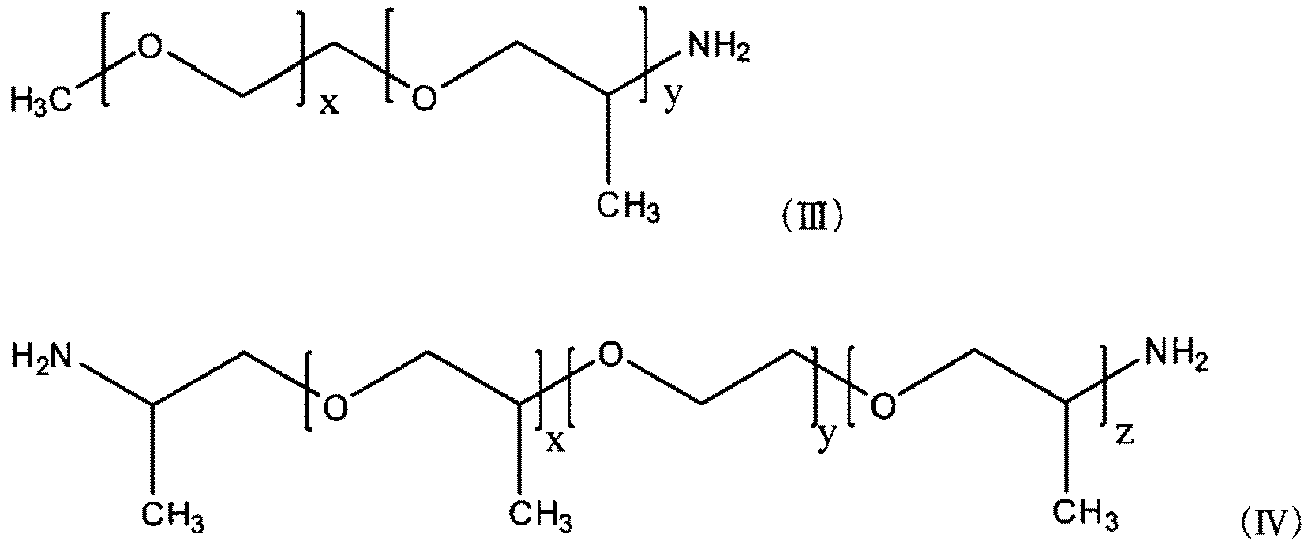
Table 3 IR measurement Protruding portions Time-of-flight secondary ion mass spectrometry measurement Weight fraction of compositions in nonaromatic polymers Crosslinking/ non -crosslinking Amide bond with membrane Intensity of maximum peak Peak top wave number Proportion of protruding portions of 100 nm or more Values of (a + b)/(c + d + e) Values of (f/(g + h + i)) Polyether Polyacrylic acid (-) (cm-1) (%) (-) (%) (%) (-) Example 1 0.12 3452 93 20 2 77 23 Crosslinking Yes Example 2 0.15 3448 87 55 10 73 27 Crosslinking Yes Example 3 0.10 3428 91 15 1 76 24 Crosslinking Yes Example 4 0.12 3420 83 30 8 69 31 Crosslinking Yes Example 5 0.09 3412 90 11 2 75 25 Non-crosslinking Yes Example 6 0.11 3400 90 40 15 75 25 Non-crosslinking Yes Example 7 0.12 3452 94 13 4 52 48 Crosslinking Yes Example 8 0.15 3448 88 37 20 49 51 Crosslinking Yes Example 9 0.12 3420 89 20 16 49 51 Crosslinking Yes Example 10 0.15 3448 93 24 27 26 74 Crosslinking Yes Example 11 0.12 3420 90 14 21 25 75 Crosslinking Yes Example 12 0.15 3448 92 55 10 87 13 Crosslinking Yes Example 13 0.24 3452 39 30 3 74 26 Crosslinking Yes Example 14 0.30 3448 41 82 15 77 23 Crosslinking Yes Example 15 0.20 3428 48 44 4 72 28 Crosslinking Yes Example 16 0.24 3420 51 89 24 77 23 Crosslinking Yes Example 17 0.05 3428 94 8 1 78 22 Crosslinking No Comparative Example 1 0.14 3352 97 - - - - Non-crosslinking No Comparative Example 2 0.06 3452 95 - - - - Non-crosslinking No Comparative Example 3 0.07 3332 93 - - - - Non-crosslinking No Table 4 Performances during manufacturing Fouling resistance test Permeate flow rate Salt removal rate Permeate retention rate m3/m2/day % (-) Example 1 0.86 99.80 0.85 Example 2 0.81 99.82 0.88 Example 3 0.92 99.78 0.80 Example 4 0.86 99.80 0.82 Example 5 0.90 99.76 0.78 Example 6 0.86 99.79 0.80 Example 7 0.91 99.80 0.76 Example 8 0.85 99.82 0.79 Example 9 0.91 99.80 0.72 Example 10 0.91 99.82 0.68 Example 11 0.89 99.80 0.69 Example 12 0.78 99.82 0.87 Example 13 0.76 99.71 0.85 Example 14 0.71 99.74 0.88 Example 15 0.67 99.73 0.79 Example 16 0.63 99.76 0.81 Example 17 0.94 99.78 0.70 Comparative Example 1 0.97 99.76 0.59 Comparative Example 2 0.76 99.76 0.55 Comparative Example 3 0.90 99.72 0.49 - Although the present invention has been described in detail with reference to specific embodiments, it will be apparent to those skilled in the art that various changes and modifications can be made without departing from the spirit and scope of the present invention. This application is based on Japanese Patent Applications (Japanese Patent Application No.
2018-034860 2018-034861 -
- 1
- Surface of membrane
Claims (10)
- A composite semipermeable membrane comprising:a microporous support layer;a separation functional layer arranged on the microporous support layer; anda coating layer configured to coat the separation functional layer,wherein the separation functional layer comprises a crosslinked polyamide which is a condensate of a polyfunctional aromatic amine and a polyfunctional aromatic acid chloride, andthe coating layer comprises an aliphatic polymer comprising a polyether moiety and a carboxylic acid polymer moiety.
- The composite semipermeable membrane according to claim 1, wherein a weight fraction of the polyether moiety in the aliphatic polymer is 30% or more.
- The composite semipermeable membrane according to claim 2, wherein a weight fraction of the carboxylic acid polymer moiety in the aliphatic polymer is 20% or more.
- The composite semipermeable membrane according to claim 2 or 3, wherein the polyether moiety has one or more structures included in the following structure group (I):

- The composite semipermeable membrane according to any one of claims 2 to 4, wherein the aliphatic polymer has a crosslinked structure.
- The composite semipermeable membrane according to claim 5, wherein the crosslinked structure comprises an amide bond.
- The composite semipermeable membrane according to any one of claims 1 to 6, which satisfies the following conditions (A), (B), (C), and (D):(A) intensity of a maximum peak between 3700 cm-1 and 2900 cm-1 is 0.08 or more in a difference spectrum of an IR spectrum measured under conditions of 25°C and a relative humidity of 97% and an IR spectrum measured under conditions of 25°C and a relative humidity of 3%;(B) a peak top wave number of the difference spectrum between 3700 cm-1 and 2900 cm-1 is 3400 cm-1 or more and 3550 cm-1 or less;(C) a formula (1): (a + b)/(c + d + e) ≥ 10 (1) is satisfied, in which a, b, c, d, e are respectively count numbers in the cases of m/z of positive secondary ions = 45.03, 59.05, 104.03, 108.07, 135.06 when a coating layer side of the composite semipermeable membrane is measured by using time-of-flight secondary ion mass spectrometry; and(D) a formula (2): f/(g + h + i) ≥ 1 (2) is satisfied, in which f, g, h, i are respectively count numbers in the cases of m/z of negative secondary ions = 71.02, 103.02, 107.06, 133.04 when the coating layer side of the composite semipermeable membrane is measured by using time-of-flight secondary ion mass spectrometry.
- The composite semipermeable membrane according to any one of claims 1 to 7, wherein a polymer comprised in the coating layer and a crosslinked aromatic polyamide comprised in the separation functional layer are bonded to each other by an amide bond.
- The composite semipermeable membrane according to any one of claims 1 to 8, wherein the coating layer has a fold structure comprising protruding portions and recessed portions, and a proportion of protruding portions having a height of 100 nm or more among the protruding portions of the fold structure is 80% or more.
- A composite semipermeable membrane element comprising the composite semipermeable membrane according to any one of claims 1 to 9.
Applications Claiming Priority (3)
| Application Number | Priority Date | Filing Date | Title |
|---|---|---|---|
| JP2018034861 | 2018-02-28 | ||
| JP2018034860 | 2018-02-28 | ||
| PCT/JP2019/007966 WO2019168138A1 (en) | 2018-02-28 | 2019-02-28 | Composite semipermeable membrane and composite semipermeable membrane element |
Publications (3)
| Publication Number | Publication Date |
|---|---|
| EP3760303A1 true EP3760303A1 (en) | 2021-01-06 |
| EP3760303A4 EP3760303A4 (en) | 2021-11-03 |
| EP3760303B1 EP3760303B1 (en) | 2024-02-21 |
Family
ID=67806170
Family Applications (1)
| Application Number | Title | Priority Date | Filing Date |
|---|---|---|---|
| EP19761310.2A Active EP3760303B1 (en) | 2018-02-28 | 2019-02-28 | Composite semipermeable membrane and composite semipermeable membrane element |
Country Status (6)
| Country | Link |
|---|---|
| US (1) | US11090614B2 (en) |
| EP (1) | EP3760303B1 (en) |
| JP (1) | JP7255478B2 (en) |
| KR (1) | KR102253557B1 (en) |
| CN (1) | CN111787997B (en) |
| WO (1) | WO2019168138A1 (en) |
Families Citing this family (6)
| Publication number | Priority date | Publication date | Assignee | Title |
|---|---|---|---|---|
| CN112755811B (en) * | 2020-12-18 | 2023-02-03 | 中化(宁波)润沃膜科技有限公司 | Acid and alkali resistant composite nanofiltration membrane, and preparation method and application thereof |
| US12434202B2 (en) | 2020-12-25 | 2025-10-07 | Toray Industries, Inc. | Composite semipermeable membrane |
| WO2025239398A1 (en) * | 2024-05-15 | 2025-11-20 | 東レ株式会社 | Composite semipermeable membrane and composite semipermeable membrane element |
| JP7848941B1 (en) * | 2024-05-31 | 2026-04-21 | 東レ株式会社 | Composite semipermeable membrane and method for manufacturing a composite semipermeable membrane |
| JP7889767B1 (en) * | 2024-12-26 | 2026-07-14 | 東レ株式会社 | Composite semipermeable membrane, composite semipermeable membrane element, fluid separation device, and method for manufacturing a composite semipermeable membrane |
| WO2026141616A1 (en) * | 2024-12-26 | 2026-07-02 | 東レ株式会社 | Composite semi-permeable membrane, composite semi-permeable membrane element, fluid separation device, and coating agent for composite semi-permeable membrane |
Family Cites Families (22)
| Publication number | Priority date | Publication date | Assignee | Title |
|---|---|---|---|---|
| US4839203A (en) * | 1985-04-03 | 1989-06-13 | The Dow Chemical Company | Semi-permeable membranes prepared via reaction of cationic groups with nucleophilic groups |
| JPH0278428A (en) | 1988-06-07 | 1990-03-19 | Toray Ind Inc | Laminated semipermeable membrane and production thereof |
| CN1213985A (en) | 1996-03-18 | 1999-04-14 | 日东电工株式会社 | Reverse osmosis composite membrane and its method for reverse osmosis treatment of water |
| US6132804A (en) | 1997-06-06 | 2000-10-17 | Koch Membrane Systems, Inc. | High performance composite membrane |
| US6280853B1 (en) | 1999-06-10 | 2001-08-28 | The Dow Chemical Company | Composite membrane with polyalkylene oxide modified polyamide surface |
| JP3284115B2 (en) | 1999-09-17 | 2002-05-20 | サエハン インダストリーズ インコーポレーション | Method for producing polyamide reverse osmosis composite membrane |
| JP2001327840A (en) * | 2000-05-25 | 2001-11-27 | Toray Ind Inc | Composite semipermeable membrane and method for producing the same |
| US6913694B2 (en) * | 2001-11-06 | 2005-07-05 | Saehan Industries Incorporation | Selective membrane having a high fouling resistance |
| JP4656511B2 (en) | 2004-10-04 | 2011-03-23 | 日東電工株式会社 | Method for producing composite reverse osmosis membrane |
| CN100588451C (en) | 2004-10-04 | 2010-02-10 | 日东电工株式会社 | Manufacturing method of composite reverse osmosis membrane |
| US7815987B2 (en) * | 2008-12-04 | 2010-10-19 | Dow Global Technologies Inc. | Polyamide membrane with coating of polyalkylene oxide and polyacrylamide compounds |
| US8709536B2 (en) * | 2010-09-01 | 2014-04-29 | International Business Machines Corporation | Composite filtration membranes and methods of preparation thereof |
| CN104053495B (en) * | 2012-01-16 | 2016-06-15 | 东丽株式会社 | Composite semipermeable membrane and manufacture method thereof |
| EP2916936A1 (en) * | 2012-11-12 | 2015-09-16 | Nagare Membranes, LLC | Methods for reducing ion exchange and reverse salt flux phenomena in membranes for osmotically driven membrane processes |
| WO2014133133A1 (en) | 2013-02-28 | 2014-09-04 | 東レ株式会社 | Composite semipermeable membrane |
| CN104245100B (en) | 2013-03-07 | 2018-01-05 | Lg化学株式会社 | There is excellent seperation film of antifouling property and preparation method thereof for water process |
| JP6046537B2 (en) * | 2013-03-29 | 2016-12-14 | 富士フイルム株式会社 | Method and apparatus for producing composite for acid gas separation |
| CN105611994B (en) * | 2013-09-30 | 2019-06-21 | 东丽株式会社 | Composite semipermeable membrane and method of making the same |
| JP2015147194A (en) * | 2014-02-07 | 2015-08-20 | 日東電工株式会社 | Composite semi-permeable membrane manufacturing method |
| US11198100B2 (en) | 2016-06-29 | 2021-12-14 | Toray Industries, Inc. | Composite semipermeable membrane and method for producing composite semipermeable membrane |
| JP6785097B2 (en) | 2016-08-31 | 2020-11-18 | 株式会社吉野工業所 | Discharge container |
| JP6820169B2 (en) | 2016-08-31 | 2021-01-27 | 株式会社吉野工業所 | Discharge container |
-
2019
- 2019-02-28 EP EP19761310.2A patent/EP3760303B1/en active Active
- 2019-02-28 JP JP2019513478A patent/JP7255478B2/en active Active
- 2019-02-28 KR KR1020207024718A patent/KR102253557B1/en active Active
- 2019-02-28 US US16/976,210 patent/US11090614B2/en active Active
- 2019-02-28 WO PCT/JP2019/007966 patent/WO2019168138A1/en not_active Ceased
- 2019-02-28 CN CN201980015916.5A patent/CN111787997B/en active Active
Also Published As
| Publication number | Publication date |
|---|---|
| CN111787997B (en) | 2021-05-25 |
| US11090614B2 (en) | 2021-08-17 |
| JPWO2019168138A1 (en) | 2021-01-07 |
| EP3760303B1 (en) | 2024-02-21 |
| KR102253557B1 (en) | 2021-05-18 |
| CN111787997A (en) | 2020-10-16 |
| JP7255478B2 (en) | 2023-04-11 |
| WO2019168138A1 (en) | 2019-09-06 |
| KR20200106214A (en) | 2020-09-11 |
| US20210001281A1 (en) | 2021-01-07 |
| EP3760303A4 (en) | 2021-11-03 |
Similar Documents
| Publication | Publication Date | Title |
|---|---|---|
| EP3760303B1 (en) | Composite semipermeable membrane and composite semipermeable membrane element | |
| EP3760302B1 (en) | Composite semipermeable membrane and composite semipermeable membrane element | |
| EP3015161B1 (en) | Polyamide-based water-treatment separation membrane having excellent durability, and manufacturing method therefor | |
| JP6197969B1 (en) | Composite semipermeable membrane | |
| KR20170021798A (en) | Composite semipermeable membrane | |
| KR101716007B1 (en) | Polyamide watertreatment membranes of drying type having properies of high performance and manufacturing method thereof | |
| CN110536743A (en) | Composite semipermeable membrane and method of making the same | |
| KR102844128B1 (en) | composite semipermeable membrane | |
| KR20170035814A (en) | Water-treatment membrane and method for manufacturing the same | |
| WO2023048288A1 (en) | Composite semipermeable membrane | |
| JP6702181B2 (en) | Composite semipermeable membrane | |
| KR20120077997A (en) | Manufacturing method for polyamide-based reverse osmosis membrane and polyamide-based reverse osmosis membrane manufactured thereby | |
| JP2017213501A (en) | Composite semipermeable membrane and method for producing composite semipermeable membrane | |
| KR20250143763A (en) | Composite semipermeable membrane, composite semipermeable membrane module, fluid separation device and method for manufacturing composite semipermeable membrane | |
| JP2020179367A (en) | Composite semipermeable membrane | |
| JP2020069469A (en) | Composite semipermeable membrane | |
| WO2024048695A1 (en) | Composite semipermeable membrane and method for producing composite semipermeable membrane | |
| JP2026003744A (en) | Composite semipermeable membrane and composite semipermeable membrane element | |
| WO2022138975A1 (en) | Composite semipermeable membrane |
Legal Events
| Date | Code | Title | Description |
|---|---|---|---|
| STAA | Information on the status of an ep patent application or granted ep patent |
Free format text: STATUS: THE INTERNATIONAL PUBLICATION HAS BEEN MADE |
|
| PUAI | Public reference made under article 153(3) epc to a published international application that has entered the european phase |
Free format text: ORIGINAL CODE: 0009012 |
|
| STAA | Information on the status of an ep patent application or granted ep patent |
Free format text: STATUS: REQUEST FOR EXAMINATION WAS MADE |
|
| 17P | Request for examination filed |
Effective date: 20200827 |
|
| AK | Designated contracting states |
Kind code of ref document: A1 Designated state(s): AL AT BE BG CH CY CZ DE DK EE ES FI FR GB GR HR HU IE IS IT LI LT LU LV MC MK MT NL NO PL PT RO RS SE SI SK SM TR |
|
| AX | Request for extension of the european patent |
Extension state: BA ME |
|
| DAV | Request for validation of the european patent (deleted) | ||
| DAX | Request for extension of the european patent (deleted) | ||
| A4 | Supplementary search report drawn up and despatched |
Effective date: 20211006 |
|
| RIC1 | Information provided on ipc code assigned before grant |
Ipc: B01D 61/02 20060101ALN20210930BHEP Ipc: C08G 69/32 20060101ALI20210930BHEP Ipc: C09D 177/06 20060101ALI20210930BHEP Ipc: C08G 69/40 20060101ALI20210930BHEP Ipc: B01D 71/82 20060101ALI20210930BHEP Ipc: B01D 67/00 20060101ALI20210930BHEP Ipc: C08G 69/12 20060101ALI20210930BHEP Ipc: B32B 27/34 20060101ALI20210930BHEP Ipc: B32B 5/18 20060101ALI20210930BHEP Ipc: B01D 71/52 20060101ALI20210930BHEP Ipc: B01D 69/12 20060101ALI20210930BHEP Ipc: B01D 69/10 20060101ALI20210930BHEP Ipc: B01D 69/00 20060101ALI20210930BHEP Ipc: B01D 71/56 20060101AFI20210930BHEP |
|
| STAA | Information on the status of an ep patent application or granted ep patent |
Free format text: STATUS: EXAMINATION IS IN PROGRESS |
|
| 17Q | First examination report despatched |
Effective date: 20220617 |
|
| RIC1 | Information provided on ipc code assigned before grant |
Ipc: B01D 61/02 20060101ALN20230720BHEP Ipc: C08G 69/32 20060101ALI20230720BHEP Ipc: C09D 177/06 20060101ALI20230720BHEP Ipc: C08G 69/40 20060101ALI20230720BHEP Ipc: B01D 71/82 20060101ALI20230720BHEP Ipc: B01D 67/00 20060101ALI20230720BHEP Ipc: C08G 69/12 20060101ALI20230720BHEP Ipc: B32B 27/34 20060101ALI20230720BHEP Ipc: B32B 5/18 20060101ALI20230720BHEP Ipc: B01D 71/52 20060101ALI20230720BHEP Ipc: B01D 69/12 20060101ALI20230720BHEP Ipc: B01D 69/10 20060101ALI20230720BHEP Ipc: B01D 69/00 20060101ALI20230720BHEP Ipc: B01D 71/56 20060101AFI20230720BHEP |
|
| GRAP | Despatch of communication of intention to grant a patent |
Free format text: ORIGINAL CODE: EPIDOSNIGR1 |
|
| STAA | Information on the status of an ep patent application or granted ep patent |
Free format text: STATUS: GRANT OF PATENT IS INTENDED |
|
| RIC1 | Information provided on ipc code assigned before grant |
Ipc: B01D 61/02 20060101ALN20230904BHEP Ipc: C08G 69/32 20060101ALI20230904BHEP Ipc: C09D 177/06 20060101ALI20230904BHEP Ipc: C08G 69/40 20060101ALI20230904BHEP Ipc: B01D 71/82 20060101ALI20230904BHEP Ipc: B01D 67/00 20060101ALI20230904BHEP Ipc: C08G 69/12 20060101ALI20230904BHEP Ipc: B32B 27/34 20060101ALI20230904BHEP Ipc: B32B 5/18 20060101ALI20230904BHEP Ipc: B01D 71/52 20060101ALI20230904BHEP Ipc: B01D 69/12 20060101ALI20230904BHEP Ipc: B01D 69/10 20060101ALI20230904BHEP Ipc: B01D 69/00 20060101ALI20230904BHEP Ipc: B01D 71/56 20060101AFI20230904BHEP |
|
| INTG | Intention to grant announced |
Effective date: 20230925 |
|
| GRAS | Grant fee paid |
Free format text: ORIGINAL CODE: EPIDOSNIGR3 |
|
| GRAA | (expected) grant |
Free format text: ORIGINAL CODE: 0009210 |
|
| STAA | Information on the status of an ep patent application or granted ep patent |
Free format text: STATUS: THE PATENT HAS BEEN GRANTED |
|
| AK | Designated contracting states |
Kind code of ref document: B1 Designated state(s): AL AT BE BG CH CY CZ DE DK EE ES FI FR GB GR HR HU IE IS IT LI LT LU LV MC MK MT NL NO PL PT RO RS SE SI SK SM TR |
|
| REG | Reference to a national code |
Ref country code: GB Ref legal event code: FG4D |
|
| REG | Reference to a national code |
Ref country code: CH Ref legal event code: EP |
|
| REG | Reference to a national code |
Ref country code: IE Ref legal event code: FG4D |
|
| REG | Reference to a national code |
Ref country code: DE Ref legal event code: R096 Ref document number: 602019046930 Country of ref document: DE |
|
| P01 | Opt-out of the competence of the unified patent court (upc) registered |
Effective date: 20240221 |
|
| REG | Reference to a national code |
Ref country code: LT Ref legal event code: MG9D |
|
| REG | Reference to a national code |
Ref country code: NL Ref legal event code: MP Effective date: 20240221 |
|
| PG25 | Lapsed in a contracting state [announced via postgrant information from national office to epo] |
Ref country code: IS Free format text: LAPSE BECAUSE OF FAILURE TO SUBMIT A TRANSLATION OF THE DESCRIPTION OR TO PAY THE FEE WITHIN THE PRESCRIBED TIME-LIMIT Effective date: 20240621 |
|
| PG25 | Lapsed in a contracting state [announced via postgrant information from national office to epo] |
Ref country code: LT Free format text: LAPSE BECAUSE OF FAILURE TO SUBMIT A TRANSLATION OF THE DESCRIPTION OR TO PAY THE FEE WITHIN THE PRESCRIBED TIME-LIMIT Effective date: 20240221 |
|
| PG25 | Lapsed in a contracting state [announced via postgrant information from national office to epo] |
Ref country code: GR Free format text: LAPSE BECAUSE OF FAILURE TO SUBMIT A TRANSLATION OF THE DESCRIPTION OR TO PAY THE FEE WITHIN THE PRESCRIBED TIME-LIMIT Effective date: 20240522 |
|
| REG | Reference to a national code |
Ref country code: AT Ref legal event code: MK05 Ref document number: 1658638 Country of ref document: AT Kind code of ref document: T Effective date: 20240221 |
|
| PG25 | Lapsed in a contracting state [announced via postgrant information from national office to epo] |
Ref country code: RS Free format text: LAPSE BECAUSE OF FAILURE TO SUBMIT A TRANSLATION OF THE DESCRIPTION OR TO PAY THE FEE WITHIN THE PRESCRIBED TIME-LIMIT Effective date: 20240521 Ref country code: NL Free format text: LAPSE BECAUSE OF FAILURE TO SUBMIT A TRANSLATION OF THE DESCRIPTION OR TO PAY THE FEE WITHIN THE PRESCRIBED TIME-LIMIT Effective date: 20240221 Ref country code: HR Free format text: LAPSE BECAUSE OF FAILURE TO SUBMIT A TRANSLATION OF THE DESCRIPTION OR TO PAY THE FEE WITHIN THE PRESCRIBED TIME-LIMIT Effective date: 20240221 |
|
| PG25 | Lapsed in a contracting state [announced via postgrant information from national office to epo] |
Ref country code: ES Free format text: LAPSE BECAUSE OF FAILURE TO SUBMIT A TRANSLATION OF THE DESCRIPTION OR TO PAY THE FEE WITHIN THE PRESCRIBED TIME-LIMIT Effective date: 20240221 |
|
| PG25 | Lapsed in a contracting state [announced via postgrant information from national office to epo] |
Ref country code: AT Free format text: LAPSE BECAUSE OF FAILURE TO SUBMIT A TRANSLATION OF THE DESCRIPTION OR TO PAY THE FEE WITHIN THE PRESCRIBED TIME-LIMIT Effective date: 20240221 |
|
| PG25 | Lapsed in a contracting state [announced via postgrant information from national office to epo] |
Ref country code: RS Free format text: LAPSE BECAUSE OF FAILURE TO SUBMIT A TRANSLATION OF THE DESCRIPTION OR TO PAY THE FEE WITHIN THE PRESCRIBED TIME-LIMIT Effective date: 20240521 Ref country code: NO Free format text: LAPSE BECAUSE OF FAILURE TO SUBMIT A TRANSLATION OF THE DESCRIPTION OR TO PAY THE FEE WITHIN THE PRESCRIBED TIME-LIMIT Effective date: 20240521 Ref country code: NL Free format text: LAPSE BECAUSE OF FAILURE TO SUBMIT A TRANSLATION OF THE DESCRIPTION OR TO PAY THE FEE WITHIN THE PRESCRIBED TIME-LIMIT Effective date: 20240221 Ref country code: LT Free format text: LAPSE BECAUSE OF FAILURE TO SUBMIT A TRANSLATION OF THE DESCRIPTION OR TO PAY THE FEE WITHIN THE PRESCRIBED TIME-LIMIT Effective date: 20240221 Ref country code: IS Free format text: LAPSE BECAUSE OF FAILURE TO SUBMIT A TRANSLATION OF THE DESCRIPTION OR TO PAY THE FEE WITHIN THE PRESCRIBED TIME-LIMIT Effective date: 20240621 Ref country code: HR Free format text: LAPSE BECAUSE OF FAILURE TO SUBMIT A TRANSLATION OF THE DESCRIPTION OR TO PAY THE FEE WITHIN THE PRESCRIBED TIME-LIMIT Effective date: 20240221 Ref country code: GR Free format text: LAPSE BECAUSE OF FAILURE TO SUBMIT A TRANSLATION OF THE DESCRIPTION OR TO PAY THE FEE WITHIN THE PRESCRIBED TIME-LIMIT Effective date: 20240522 Ref country code: FI Free format text: LAPSE BECAUSE OF FAILURE TO SUBMIT A TRANSLATION OF THE DESCRIPTION OR TO PAY THE FEE WITHIN THE PRESCRIBED TIME-LIMIT Effective date: 20240221 Ref country code: ES Free format text: LAPSE BECAUSE OF FAILURE TO SUBMIT A TRANSLATION OF THE DESCRIPTION OR TO PAY THE FEE WITHIN THE PRESCRIBED TIME-LIMIT Effective date: 20240221 Ref country code: BG Free format text: LAPSE BECAUSE OF FAILURE TO SUBMIT A TRANSLATION OF THE DESCRIPTION OR TO PAY THE FEE WITHIN THE PRESCRIBED TIME-LIMIT Effective date: 20240221 Ref country code: AT Free format text: LAPSE BECAUSE OF FAILURE TO SUBMIT A TRANSLATION OF THE DESCRIPTION OR TO PAY THE FEE WITHIN THE PRESCRIBED TIME-LIMIT Effective date: 20240221 |
|
| PG25 | Lapsed in a contracting state [announced via postgrant information from national office to epo] |
Ref country code: PT Free format text: LAPSE BECAUSE OF FAILURE TO SUBMIT A TRANSLATION OF THE DESCRIPTION OR TO PAY THE FEE WITHIN THE PRESCRIBED TIME-LIMIT Effective date: 20240621 Ref country code: PL Free format text: LAPSE BECAUSE OF FAILURE TO SUBMIT A TRANSLATION OF THE DESCRIPTION OR TO PAY THE FEE WITHIN THE PRESCRIBED TIME-LIMIT Effective date: 20240221 |
|
| PG25 | Lapsed in a contracting state [announced via postgrant information from national office to epo] |
Ref country code: SE Free format text: LAPSE BECAUSE OF FAILURE TO SUBMIT A TRANSLATION OF THE DESCRIPTION OR TO PAY THE FEE WITHIN THE PRESCRIBED TIME-LIMIT Effective date: 20240221 Ref country code: PT Free format text: LAPSE BECAUSE OF FAILURE TO SUBMIT A TRANSLATION OF THE DESCRIPTION OR TO PAY THE FEE WITHIN THE PRESCRIBED TIME-LIMIT Effective date: 20240621 Ref country code: PL Free format text: LAPSE BECAUSE OF FAILURE TO SUBMIT A TRANSLATION OF THE DESCRIPTION OR TO PAY THE FEE WITHIN THE PRESCRIBED TIME-LIMIT Effective date: 20240221 Ref country code: LV Free format text: LAPSE BECAUSE OF FAILURE TO SUBMIT A TRANSLATION OF THE DESCRIPTION OR TO PAY THE FEE WITHIN THE PRESCRIBED TIME-LIMIT Effective date: 20240221 |
|
| REG | Reference to a national code |
Ref country code: CH Ref legal event code: PL |
|
| PG25 | Lapsed in a contracting state [announced via postgrant information from national office to epo] |
Ref country code: DK Free format text: LAPSE BECAUSE OF FAILURE TO SUBMIT A TRANSLATION OF THE DESCRIPTION OR TO PAY THE FEE WITHIN THE PRESCRIBED TIME-LIMIT Effective date: 20240221 |
|
| PG25 | Lapsed in a contracting state [announced via postgrant information from national office to epo] |
Ref country code: SM Free format text: LAPSE BECAUSE OF FAILURE TO SUBMIT A TRANSLATION OF THE DESCRIPTION OR TO PAY THE FEE WITHIN THE PRESCRIBED TIME-LIMIT Effective date: 20240221 |
|
| PG25 | Lapsed in a contracting state [announced via postgrant information from national office to epo] |
Ref country code: LU Free format text: LAPSE BECAUSE OF NON-PAYMENT OF DUE FEES Effective date: 20240228 |
|
| PG25 | Lapsed in a contracting state [announced via postgrant information from national office to epo] |
Ref country code: CH Free format text: LAPSE BECAUSE OF NON-PAYMENT OF DUE FEES Effective date: 20240229 |
|
| PG25 | Lapsed in a contracting state [announced via postgrant information from national office to epo] |
Ref country code: EE Free format text: LAPSE BECAUSE OF FAILURE TO SUBMIT A TRANSLATION OF THE DESCRIPTION OR TO PAY THE FEE WITHIN THE PRESCRIBED TIME-LIMIT Effective date: 20240221 Ref country code: CZ Free format text: LAPSE BECAUSE OF FAILURE TO SUBMIT A TRANSLATION OF THE DESCRIPTION OR TO PAY THE FEE WITHIN THE PRESCRIBED TIME-LIMIT Effective date: 20240221 |
|
| PG25 | Lapsed in a contracting state [announced via postgrant information from national office to epo] |
Ref country code: SK Free format text: LAPSE BECAUSE OF FAILURE TO SUBMIT A TRANSLATION OF THE DESCRIPTION OR TO PAY THE FEE WITHIN THE PRESCRIBED TIME-LIMIT Effective date: 20240221 |
|
| PG25 | Lapsed in a contracting state [announced via postgrant information from national office to epo] |
Ref country code: SM Free format text: LAPSE BECAUSE OF FAILURE TO SUBMIT A TRANSLATION OF THE DESCRIPTION OR TO PAY THE FEE WITHIN THE PRESCRIBED TIME-LIMIT Effective date: 20240221 Ref country code: SK Free format text: LAPSE BECAUSE OF FAILURE TO SUBMIT A TRANSLATION OF THE DESCRIPTION OR TO PAY THE FEE WITHIN THE PRESCRIBED TIME-LIMIT Effective date: 20240221 Ref country code: RO Free format text: LAPSE BECAUSE OF FAILURE TO SUBMIT A TRANSLATION OF THE DESCRIPTION OR TO PAY THE FEE WITHIN THE PRESCRIBED TIME-LIMIT Effective date: 20240221 Ref country code: LU Free format text: LAPSE BECAUSE OF NON-PAYMENT OF DUE FEES Effective date: 20240228 Ref country code: EE Free format text: LAPSE BECAUSE OF FAILURE TO SUBMIT A TRANSLATION OF THE DESCRIPTION OR TO PAY THE FEE WITHIN THE PRESCRIBED TIME-LIMIT Effective date: 20240221 Ref country code: DK Free format text: LAPSE BECAUSE OF FAILURE TO SUBMIT A TRANSLATION OF THE DESCRIPTION OR TO PAY THE FEE WITHIN THE PRESCRIBED TIME-LIMIT Effective date: 20240221 Ref country code: CZ Free format text: LAPSE BECAUSE OF FAILURE TO SUBMIT A TRANSLATION OF THE DESCRIPTION OR TO PAY THE FEE WITHIN THE PRESCRIBED TIME-LIMIT Effective date: 20240221 Ref country code: CH Free format text: LAPSE BECAUSE OF NON-PAYMENT OF DUE FEES Effective date: 20240229 |
|
| PG25 | Lapsed in a contracting state [announced via postgrant information from national office to epo] |
Ref country code: MC Free format text: LAPSE BECAUSE OF FAILURE TO SUBMIT A TRANSLATION OF THE DESCRIPTION OR TO PAY THE FEE WITHIN THE PRESCRIBED TIME-LIMIT Effective date: 20240221 |
|
| REG | Reference to a national code |
Ref country code: DE Ref legal event code: R097 Ref document number: 602019046930 Country of ref document: DE |
|
| PG25 | Lapsed in a contracting state [announced via postgrant information from national office to epo] |
Ref country code: MC Free format text: LAPSE BECAUSE OF FAILURE TO SUBMIT A TRANSLATION OF THE DESCRIPTION OR TO PAY THE FEE WITHIN THE PRESCRIBED TIME-LIMIT Effective date: 20240221 |
|
| PG25 | Lapsed in a contracting state [announced via postgrant information from national office to epo] |
Ref country code: IT Free format text: LAPSE BECAUSE OF FAILURE TO SUBMIT A TRANSLATION OF THE DESCRIPTION OR TO PAY THE FEE WITHIN THE PRESCRIBED TIME-LIMIT Effective date: 20240221 |
|
| REG | Reference to a national code |
Ref country code: BE Ref legal event code: MM Effective date: 20240229 |
|
| PLBE | No opposition filed within time limit |
Free format text: ORIGINAL CODE: 0009261 |
|
| STAA | Information on the status of an ep patent application or granted ep patent |
Free format text: STATUS: NO OPPOSITION FILED WITHIN TIME LIMIT |
|
| PG25 | Lapsed in a contracting state [announced via postgrant information from national office to epo] |
Ref country code: IT Free format text: LAPSE BECAUSE OF FAILURE TO SUBMIT A TRANSLATION OF THE DESCRIPTION OR TO PAY THE FEE WITHIN THE PRESCRIBED TIME-LIMIT Effective date: 20240221 |
|
| PG25 | Lapsed in a contracting state [announced via postgrant information from national office to epo] |
Ref country code: BE Free format text: LAPSE BECAUSE OF NON-PAYMENT OF DUE FEES Effective date: 20240229 |
|
| PG25 | Lapsed in a contracting state [announced via postgrant information from national office to epo] |
Ref country code: FR Free format text: LAPSE BECAUSE OF NON-PAYMENT OF DUE FEES Effective date: 20240421 |
|
| PG25 | Lapsed in a contracting state [announced via postgrant information from national office to epo] |
Ref country code: IE Free format text: LAPSE BECAUSE OF NON-PAYMENT OF DUE FEES Effective date: 20240228 |
|
| 26N | No opposition filed |
Effective date: 20241122 |
|
| GBPC | Gb: european patent ceased through non-payment of renewal fee |
Effective date: 20240521 |
|
| PG25 | Lapsed in a contracting state [announced via postgrant information from national office to epo] |
Ref country code: IE Free format text: LAPSE BECAUSE OF NON-PAYMENT OF DUE FEES Effective date: 20240228 Ref country code: FR Free format text: LAPSE BECAUSE OF NON-PAYMENT OF DUE FEES Effective date: 20240421 Ref country code: BE Free format text: LAPSE BECAUSE OF NON-PAYMENT OF DUE FEES Effective date: 20240229 |
|
| PG25 | Lapsed in a contracting state [announced via postgrant information from national office to epo] |
Ref country code: SI Free format text: LAPSE BECAUSE OF FAILURE TO SUBMIT A TRANSLATION OF THE DESCRIPTION OR TO PAY THE FEE WITHIN THE PRESCRIBED TIME-LIMIT Effective date: 20240221 |
|
| PG25 | Lapsed in a contracting state [announced via postgrant information from national office to epo] |
Ref country code: GB Free format text: LAPSE BECAUSE OF NON-PAYMENT OF DUE FEES Effective date: 20240521 |
|
| PG25 | Lapsed in a contracting state [announced via postgrant information from national office to epo] |
Ref country code: CY Free format text: LAPSE BECAUSE OF FAILURE TO SUBMIT A TRANSLATION OF THE DESCRIPTION OR TO PAY THE FEE WITHIN THE PRESCRIBED TIME-LIMIT; INVALID AB INITIO Effective date: 20190228 |
|
| PG25 | Lapsed in a contracting state [announced via postgrant information from national office to epo] |
Ref country code: HU Free format text: LAPSE BECAUSE OF FAILURE TO SUBMIT A TRANSLATION OF THE DESCRIPTION OR TO PAY THE FEE WITHIN THE PRESCRIBED TIME-LIMIT; INVALID AB INITIO Effective date: 20190228 |
|
| PG25 | Lapsed in a contracting state [announced via postgrant information from national office to epo] |
Ref country code: TR Free format text: LAPSE BECAUSE OF FAILURE TO SUBMIT A TRANSLATION OF THE DESCRIPTION OR TO PAY THE FEE WITHIN THE PRESCRIBED TIME-LIMIT Effective date: 20240221 |
|
| PGFP | Annual fee paid to national office [announced via postgrant information from national office to epo] |
Ref country code: DE Payment date: 20260102 Year of fee payment: 8 |