EP3755019A1 - Method and system for broadcasting data in wireless network - Google Patents
Method and system for broadcasting data in wireless network Download PDFInfo
- Publication number
- EP3755019A1 EP3755019A1 EP19181733.7A EP19181733A EP3755019A1 EP 3755019 A1 EP3755019 A1 EP 3755019A1 EP 19181733 A EP19181733 A EP 19181733A EP 3755019 A1 EP3755019 A1 EP 3755019A1
- Authority
- EP
- European Patent Office
- Prior art keywords
- node
- receiving
- network
- data
- nodes
- Prior art date
- Legal status (The legal status is an assumption and is not a legal conclusion. Google has not performed a legal analysis and makes no representation as to the accuracy of the status listed.)
- Granted
Links
Images

Classifications
-
- H—ELECTRICITY
- H04—ELECTRIC COMMUNICATION TECHNIQUE
- H04W—WIRELESS COMMUNICATION NETWORKS
- H04W4/00—Services specially adapted for wireless communication networks; Facilities therefor
- H04W4/80—Services using short range communication, e.g. near-field communication [NFC], radio-frequency identification [RFID] or low energy communication
-
- H—ELECTRICITY
- H04—ELECTRIC COMMUNICATION TECHNIQUE
- H04L—TRANSMISSION OF DIGITAL INFORMATION, e.g. TELEGRAPHIC COMMUNICATION
- H04L12/00—Data switching networks
- H04L12/02—Details
- H04L12/16—Arrangements for providing special services to substations
- H04L12/18—Arrangements for providing special services to substations for broadcast or conference, e.g. multicast
- H04L12/1863—Arrangements for providing special services to substations for broadcast or conference, e.g. multicast comprising mechanisms for improved reliability, e.g. status reports
- H04L12/1868—Measures taken after transmission, e.g. acknowledgments
-
- H—ELECTRICITY
- H04—ELECTRIC COMMUNICATION TECHNIQUE
- H04W—WIRELESS COMMUNICATION NETWORKS
- H04W84/00—Network topologies
- H04W84/18—Self-organising networks, e.g. ad-hoc networks or sensor networks
Definitions
- the present disclosure relates to Bluetooth networks, particularly to methods of communication between Bluetooth devices in a Bluetooth low energy network.
- BLE Bluetooth® Low Energy
- ISM Industrial, Scientific and Medical
- Applications for the BLE specification include healthcare, security, fitness, and home entertainment.
- devices may utilise Bluetooth mesh profiles to communicate with other BLE devices in a network.
- Each device in the network can transfer data between other devices in the network, creating a so-called "mesh”.
- a BLE device operates across 40 channels in the 2.4 GHz band, each mapped onto a set of RF (radio frequency) channel index values 0, 1, ... , 39.
- Channels 0 to 36 are used for the transmission of data while channels 37, 38, and 39 are for the transmission of advertising (ADV) events.
- node may refer to any device that may have BLE capability. Such devices may include smartphones, smart plugs, light bulbs, laptops, home entertainment devices or any other device that can connect to a BLE network. A node may also be able to communicate in other wireless networks, such as Wi-Fi (RTM) networks or cellular networks. A node may also be able to communicate via the Internet through such networks. ,
- a node when a node does not have any data to send, it operates in a mode termed the "default mode".
- the default mode includes periodical ADV events and a low power state between the ADV events. Otherwise, if the node does have data to send, the node periodically sends periodic ADV events and inserts a scan mode between the ADV events.
- the scan mode is the mode in which the node is able to receive advertising packets from other nodes. The period of time over which this occurs is known as a scan window.
- the ADV event comprises transmitting an ADV packet on one of the ADV channels.
- a first node may advertise sequentially on some or all of the three ADV channels. Similarly, if the first node is in the scan mode, the scan may occur sequentially on some or all of the three ADV channels.
- a second node If a second node is in the scan mode and detects an ADV packet sent by the first node, the second node may communicate with the first node and a data session between the first and second nodes may be established. Once the data session has been established, data can then be transferred between the first and second nodes.
- a BLE network node may also transmit a broadcast ADV packet to all devices on the network.
- the broadcasting node may require that all other nodes in the network return an acknowledgment (ACK) packet, e.g., the SCAN Request packet in active scan mode or the ACK packet in multicast data mode, to the device to ensure that the broadcast data is received by all nodes on the network.
- ACK acknowledgment
- This may require the ACK packet to be communicated through one or more nodes on the network in order to reach the broadcasting node.
- This situation may trigger simultaneous responses from multiple nodes, which may then cause collisions of ACK packets at various points in the BLE network.
- Active scan and multicast data delivery of BLE are examples of communications that may lead to packet collisions. Packet collisions lead to failed communications and the hindrance of data transmission in networks.
- the present invention provides a method for communicating data between Bluetooth Low Energy (BLE) devices in a network comprising multiple nodes, the method comprising: broadcasting data from a broadcasting node; receiving the data at multiple receiving nodes; transmitting an acknowledgement (ACK) packet from each of the receiving nodes to the broadcasting node, wherein each receiving node waits for a waiting period before transmitting the ACK packet, and wherein the waiting period is a varying length of time for each receiving node.
- BLE Bluetooth Low Energy
- the invention provides a Bluetooth Low Energy network comprising multiple nodes and being an apparatus for communicating data between Bluetooth Low Energy (BLE) devices, the network comprising: a first BLE device configured to broadcast data; and multiple BLE receiving devices configured to receive broadcasted data; wherein the multiple receiving devices are receiving nodes that are configured to transmit an acknowledgement (ACK) packet to the first device upon receipt of broadcasted data, wherein each receiving node is configured to wait for a waiting period before transmitting the ACK packet; and wherein the waiting period is a varying length of time for each receiving node.
- the waiting period may be related to the receiving node's distance to the node broadcasting data or the receiving node's priority.
- the invention provides a computer programme product containing instructions that, when executed within a Bluetooth Low Energy network comprising multiple nodes, will configure the network to operate in accordance with the method of the first aspect.
- a node that receives broadcast data may send an ACK packet to the node broadcasting the data.
- the ACK function is to provide end-to-end communication assurance between broadcasting node and receiving nodes.
- the ACK packet format is compliance with BLE specifications in active scan mode or data mode.
- the reply node may include useful information, e.g., the node's neighbour density, remaining energy, link quality information, etc., in the ACK packet. This helps the broadcasting node learn the global network conditions and improves the overall network performance.
- An advantage of the present invention is, by introducing a time delay at the receiving node before sending the ACK packet the likelihood of packet collisions is reduced.
- the receiving node may use Code Division Multiple Access (CDMA) to send an ACK packet. Because the CDMA transmission is orthogonal in code domain, the likelihood of ACK packets collision could be alleviated.
- CDMA uses orthogonal spread codes to protect the ACK delivery and requires no transmission schedule for the ACK delivery. With the CDMA option, the radio configuration and wireless signal needs to be changed.
- the broadcasting node may be configured to broadcast or multicast to multiple receiving nodes in a BLE network.
- the broadcasting device may require the receiving devices to transmit an acknowledgment (ACK) packet to the broadcasting device so that the broadcasting device may verify receipt of its transmission at each receiving device.
- ACK acknowledgment
- the broadcast packet may be a command for a receiving device to return information to the broadcasting device such as battery status or temperature.
- An advantage of using the present method when a broadcasting node is broadcasting data to multiple receiving nodes is that, when each of the receiving nodes transmits an ACK packet the likelihood of packet collision between ACK packets is reduced.
- the waiting period before transmission of an ACK packet from one receiving node may be different from the waiting period that occurs at a different receiving node.
- the waiting period at one receiving node may the same as the waiting period determined for another receiving node, if the waiting period of the receiving nodes is such that the likelihood of packet collision is decreased, or at least has not been increased by having waiting periods that are equal lengths of time.
- the waiting period at each node may be randomised.
- the randomised waiting period may be any length of time greater than A.
- the randomised waiting period may be any length of time less than B.
- the waiting period i.e. the varying length of time
- the information that may be used includes, but is not limited to unique node information. That is, each receiving node may have a fixed waiting period before transmitting an ACK node that is dependent on the unique node information.
- the unique node information may be the node ID and the node's MAC address.
- Non-unique node information such as a combination of RF signatures at the receiving node, receiver signal strength, and signal phase, may also be used to provide unique node information with a high probability that the information of one node will not be replicated at another node.
- the waiting period at each receiving node may be different to the waiting period at all other receiving nodes.
- the waiting period at one receiving node may the same as the waiting period determined for another receiving node, if the waiting period of the receiving nodes is such that the likelihood of packet collision is decreased, or at least has not been increased by having waiting periods that are equal lengths of time.
- the node ID may be assigned by a network operator, the MAC address may be provided by a manufacturer. RF signatures may be created when the node receives a packet.
- the waiting period may also be determined by a combination of randomisation with node information. This may further reduce the possibility of an identical waiting period because the unique node information avoids the chance of the same randomized value chosen by two or more replying nodes.
- Randomisation of ACK packet transmission at each receiving node means that the chance of multiple nodes transmitting their ACK packets at the same time in response to receipt of broadcasted data is reduced.
- An advantage of using unique node information for determining waiting period over randomisation is that the likelihood of packet collision may be reduced even further. This is because the unique node information may be used to schedule specific times at which each receiving node transmits an ACK packet when receiving broadcasted data.
- the receiving nodes may be configured to have scheduled times for ACK packet transmission that are unique to each receiving node, meaning that ACK packets are not transmitted at the same time and so do not collide.
- the waiting period may be determined upon receipt of broadcasting data. Alternatively, the waiting period may be predetermined before receipt of the broadcasted data.
- the increase may be linearly proportional to the network scale.
- a receiving node may have to transmit an ACK packet through one or more intermediary nodes before the ACK packet can reach the broadcasting node.
- the intermediary nodes may also be receiving nodes.
- ACK packets from downstream receiving nodes may be aggregated at intermediary nodes before being transmitted upstream. That is, multiple ACK packets may be transmitted from receiving nodes having a hop distance greater than an intermediary node to the intermediary node. The intermediary node may then hold the ACK packets and send the packets as a bundle. If the intermediary node is also a receiving node, the intermediary node may hold its own ACK packet if there are downstream receiving nodes.
- This bundling method is important because each ACK packet transmission has to follow the Bluetooth data communication protocols, ADV and SCAN process and data delivery. If the ACK packets are sent as a bundle, all of the packets may be delivered in one cycle of ADV and SCAN process for data session setup. Otherwise, every ACK packet delivery may use one cycle of ADV and SCAN process for the data session setup. This results in a higher ACK packet delay and energy wastes.
- a BLE device may be any device that has the ability to communicate with other devices using Bluetooth low energy transmissions. Such devices may include smartphones, smart plugs, light bulbs, laptops, and home entertainment devices. BLE devices may be members of a BLE network.
- the BLE network may comprise a head node or gateway, where the head node is able to perform protocol conversions communicate data from the BLE network to another network that the head node is connected to.
- Other networks may include cellular networks, the Internet, a local intranet, and cloud networks.
- the BLE devices that are members of the network may be called nodes.
- the network may comprise any number of nodes and may be distributed so that the head node is connected to at least one node.
- Each node in the network may be connected directly to the head node or is connected to the head node via at least one other node. In this way, the head node is able to communicate with all nodes in a BLE network, and vice versa.
- All nodes in the network may be considered to be downstream with respect to the head node and, conversely, the head node may be considered upstream of other nodes in the network.
- the structure of the network may be that data can travel from the head node and through other intermediary nodes before reaching a destination node. In this way, intermediary nodes may be upstream of some nodes and may be downstream of other nodes.
- a node that is at the edge of a network may be called an end node.
- Data that is transmitted from the head node to an intermediary node or end node may be considered to be travelling downstream.
- Data that is transmitted from an end node or intermediary node in the direction of the head node may be considered to be travelling upstream.
- the BLE network may be configured to allow BLE devices to join and leave networks on the fly.
- BLE networks may be configured to be restructured to account for new devices joining the network or current devices leaving the network.
- a BLE network may be configured to restructure itself to account for changes in the physical location of BLE devices in the network and/or optimise the network for efficient data transfer between devices.
- the distance any particular node is away from the head node may be defined by the number of nodes data must travel through to reach that particular node. For example, a node that directly communicates with the head node may be considered one "hop" away from the head node. Likewise, a first node that communicates with the head node via a second node may be considered to be two "hops" away from the head node. In this latter case, the second node may be considered to be downstream of the head node and also upstream of the first node. In this way, it is possible to define how many hops any particular node is away from the head node. The number of hops has no bearing on the physical distance between nodes.
- the hop distance for a particular node may change due to a reconfiguration of the network.
- a reconfiguration may occur for any number of reasons including, but not limited to: optimisation of the network; in response to the number of nodes in the network changing; and the physical movement of nodes in the network.
- the hop distance for a particular node may be stored in the memory of said node as identifying data for that node.
- Other identifying data may include a node ID (identification) number or a MAC (media access control) address for the node.
- the node may store identifying data for other nodes in the network, such as neighbouring nodes.
- the default mode may comprise the periodic emission of advertisement (ADV) events and being in a low power state between the ADV events.
- Periodic ADV interval range may be between 20 ms and 10240 ms, according to Bluetooth specification 4.0. The shorter the ADV interval is, more frequent the node wakes up and transmits the ADV packets, though this may lead to higher energy consumption.
- a scan mode comprises a period of time in which a BLE device may receive data from an advertising BLE device.
- the channel on which the BLE device is scanning may be any one of the three ADV channels discussed above.
- the scan mode may sequentially cycle through each of the ADV channels.
- the period of time that the BLE device is scanning for is known as the "scan window”.
- the period of time between scanning events is known as the "scan interval”.
- the scan window may last for any length of duration up to a maximum length of time equal to the scan interval.
- the scan interval may have a defined duration.
- the scan window may have a defined duration that is less than the scan interval. According to Bluetooth specification 4.0, the scan window and scan interval range is between 2.5 ms and 10240 ms.
- the scan window may have a defined duration within a time period. This time period determines the maximum time of scanning an ADV channel. The shorter this time period is, the faster the node scans all of ADV channels and leads to a quick target discovery.
- the scan window may have a defined duration that is less than or equal to the scan interval.
- An advertisement (ADV) event comprises the transmission of an ADV signal by a first BLE device.
- the purpose of this signal may be to advertise that the first BLE device is available to establish a wireless connection.
- the ADV signal may be detected by a second BLE device that is in scan mode and a data session may then be established between the two devises and data may be exchanged between them.
- a BLE device may advertise on up to three advertising channels.
- An ADV event may comprise a BLE device transmitting an ADV signal on one, two or all three of the three available channels.
- a BLE mesh network may comprise a head node or gateway that transmits data to one or more nodes within the network.
- the network may comprise any number of nodes. All nodes in the network are considered to be downstream with respect to the head node and, conversely, the head node is upstream of other nodes in the network.
- the structure of the network may be that data can travel from the head node and through other intermediary nodes before reaching a destination node.
- FIG. 1 shows an example BLE network 100 where the network 100 is depicted as a tree.
- a head node 102 forms the "root" of the network 100 and devices in the BLE network form "branches" in the network.
- Some BLE devices are not directly connected to the head node 102; instead they are connected via a branch node. This means that any transmissions sent from the head node 102 may have to be communicated through another BLE node before the transmission reaches its destination node.
- a BLE device may be configured to broadcast data to a plurality of other BLE devices.
- the BLE device that broadcasts data may be termed a broadcaster or a broadcasting node.
- a BLE device that receives broadcasted data may be termed a receiver or a receiving node.
- FIG. 2 shows a broadcasting node 200 and a plurality of receiving nodes 202.
- Each node may be able to determine its position in a BLE network relative to other nodes by storing identifying information about its neighbours.
- Neighbouring nodes may be defined as those that are immediately connected to a node in the network. Identifying information may include hop distance and a unique node ID.
- the broadcasting node 200 is configured to broadcast data to one or more of the plurality of receiving nodes 202.
- the broadcast data formation should follow the BLE specifications in data transmission.
- Each receiving node 202 is configured to receive data broadcast from the broadcasting node 200 and to transmit an ACK packet back to the broadcasting node 200.
- the broadcasting node 200 is configured to receive ACK packets from all of the receiving nodes 202 to which the broadcast data was sent.
- a receiving node 202 may not be directly connected to the broadcasting node 200 in the BLE network. Upon receipt of broadcasted data, the receiving node may transmit its ACK packet via one or more intermediary nodes back to the broadcasting node 200.
- Receiving nodes 202 of the exemplary BLE network are configured to coordinate transmission of ACK packets to the broadcasting node 200.
- One or more receiving nodes 202 are configured to introduce a time delay before transmission of an ACK packet.
- the time delay is a random time delay.
- receiving nodes 202 are configured to receive data broadcasted from a broadcasting node 200, wait for a random length of time, and transmit an ACK packet to the broadcasting node 200. The longer the random back-off period is, the less likely ACK packet collision will occur.
- the time delay is determined using a property of the node, such as unique node information.
- the unique information used includes, but is not limited to, the node ID and the node's MAC address.
- receiving nodes 202 are configured to receive data broadcasted from a broadcasting node 200, wait for a length of time that is determined by information unique to each receiving node 202, and transmit an ACK packet to the broadcasting node 200.
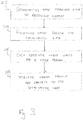
- FIG. 3 is a flowchart showing an exemplary method for broadcasting data from a broadcasting node to one or more of multiple receiving nodes.
- a broadcasting node broadcasts data to multiple receiving nodes.
- multiple receiving nodes receive the broadcasted data.
- the receiving nodes wait for a waiting period, where the waiting period for each receiving node may be different.
- the receiving nodes transmit an ACK packet to the broadcasting node.
- the length of the waiting period at each receiving node may be a random value or it may be a value that is dependent on information unique to each node.
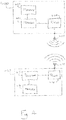
- FIG. 4 illustrates a pair of BLE devices 400, 410 which may utilise the methods discussed above.
- the BLE devices 400, 410 might be any suitable known type of device, and they are modified compared to the known devices to operate in accordance with a method as set out above.
- a first BLE device 400 comprises a processor 402, a memory unit 404, a radio 406, and an antenna 408.
- Computer program products for performing the methods described herein may be stored as an application in the memory unit 404.
- the memory unit 404 can be a hard drive, solid state or optical memory source.
- the processor 402 is configured to access and execute software, applications, and data stored on the memory unit 404.
- the radio 406 is configured to receive and transmit BLE signals via the antenna.
- the processor 402 is configured to interface with the radio 406 and the application may be configured to control the radio 406 and antenna 408 when executed on the processor 402.
- a second BLE device 410 includes similar hardware an operations to the first BLE device 400.
- the antenna 408 of the first BLE device 400 is configured to communicate with the antenna 418 of the second BLE device 410.
Landscapes
- Engineering & Computer Science (AREA)
- Computer Networks & Wireless Communication (AREA)
- Signal Processing (AREA)
- Mobile Radio Communication Systems (AREA)
Abstract
Description
- The present disclosure relates to Bluetooth networks, particularly to methods of communication between Bluetooth devices in a Bluetooth low energy network.
- The Bluetooth® Low Energy (BLE) specification is a set of standards for wireless network technologies operating within the 2.4 - 2.4835 GHz Industrial, Scientific and Medical (ISM) band. BLE is designed to considerably reduce power consumption compared to legacy, or "Classic", Bluetooth® devices.
- Applications for the BLE specification include healthcare, security, fitness, and home entertainment. Within these applications, devices may utilise Bluetooth mesh profiles to communicate with other BLE devices in a network. Each device in the network can transfer data between other devices in the network, creating a so-called "mesh".
- A number of previous applications (insert here) have attempted to address various issues such as increasing the speed at which a connection between BLE devices is established and for avoiding data packet collision.
- According to the BLE specification, a BLE device operates across 40 channels in the 2.4 GHz band, each mapped onto a set of RF (radio frequency) channel index values 0, 1, ... , 39. Channels 0 to 36 are used for the transmission of data while channels 37, 38, and 39 are for the transmission of advertising (ADV) events.
- The term "node" as used herein may refer to any device that may have BLE capability. Such devices may include smartphones, smart plugs, light bulbs, laptops, home entertainment devices or any other device that can connect to a BLE network. A node may also be able to communicate in other wireless networks, such as Wi-Fi (RTM) networks or cellular networks. A node may also be able to communicate via the Internet through such networks. ,
- In the status quo, when a node does not have any data to send, it operates in a mode termed the "default mode". The default mode includes periodical ADV events and a low power state between the ADV events. Otherwise, if the node does have data to send, the node periodically sends periodic ADV events and inserts a scan mode between the ADV events. The scan mode is the mode in which the node is able to receive advertising packets from other nodes. The period of time over which this occurs is known as a scan window.
- The ADV event comprises transmitting an ADV packet on one of the ADV channels. A first node may advertise sequentially on some or all of the three ADV channels. Similarly, if the first node is in the scan mode, the scan may occur sequentially on some or all of the three ADV channels.
- If a second node is in the scan mode and detects an ADV packet sent by the first node, the second node may communicate with the first node and a data session between the first and second nodes may be established. Once the data session has been established, data can then be transferred between the first and second nodes.
- These rules enable a fast data session setup for data exchanges while minimizing a node's energy consumption.
- A BLE network node may also transmit a broadcast ADV packet to all devices on the network. When doing so, the broadcasting node may require that all other nodes in the network return an acknowledgment (ACK) packet, e.g., the SCAN Request packet in active scan mode or the ACK packet in multicast data mode, to the device to ensure that the broadcast data is received by all nodes on the network. This may require the ACK packet to be communicated through one or more nodes on the network in order to reach the broadcasting node. This situation may trigger simultaneous responses from multiple nodes, which may then cause collisions of ACK packets at various points in the BLE network. Active scan and multicast data delivery of BLE are examples of communications that may lead to packet collisions. Packet collisions lead to failed communications and the hindrance of data transmission in networks.
- Viewed from a first aspect, the present invention provides a method for communicating data between Bluetooth Low Energy (BLE) devices in a network comprising multiple nodes, the method comprising: broadcasting data from a broadcasting node; receiving the data at multiple receiving nodes; transmitting an acknowledgement (ACK) packet from each of the receiving nodes to the broadcasting node, wherein each receiving node waits for a waiting period before transmitting the ACK packet, and wherein the waiting period is a varying length of time for each receiving node.
- Viewed from a second aspect, the invention provides a Bluetooth Low Energy network comprising multiple nodes and being an apparatus for communicating data between Bluetooth Low Energy (BLE) devices, the network comprising: a first BLE device configured to broadcast data; and multiple BLE receiving devices configured to receive broadcasted data; wherein the multiple receiving devices are receiving nodes that are configured to transmit an acknowledgement (ACK) packet to the first device upon receipt of broadcasted data, wherein each receiving node is configured to wait for a waiting period before transmitting the ACK packet; and wherein the waiting period is a varying length of time for each receiving node. The waiting period may be related to the receiving node's distance to the node broadcasting data or the receiving node's priority.
- Viewed from a third aspect the invention provides a computer programme product containing instructions that, when executed within a Bluetooth Low Energy network comprising multiple nodes, will configure the network to operate in accordance with the method of the first aspect.
- The following describes optional features that may be combined with the method of the first aspect, the network of the second aspect or the computer programme product of the third aspect.
- A node that receives broadcast data may send an ACK packet to the node broadcasting the data. The ACK function is to provide end-to-end communication assurance between broadcasting node and receiving nodes. The ACK packet format is compliance with BLE specifications in active scan mode or data mode. The reply node may include useful information, e.g., the node's neighbour density, remaining energy, link quality information, etc., in the ACK packet. This helps the broadcasting node learn the global network conditions and improves the overall network performance.
- An advantage of the present invention is, by introducing a time delay at the receiving node before sending the ACK packet the likelihood of packet collisions is reduced. Alternatively, the receiving node may use Code Division Multiple Access (CDMA) to send an ACK packet. Because the CDMA transmission is orthogonal in code domain, the likelihood of ACK packets collision could be alleviated. CDMA uses orthogonal spread codes to protect the ACK delivery and requires no transmission schedule for the ACK delivery. With the CDMA option, the radio configuration and wireless signal needs to be changed.
- The broadcasting node may be configured to broadcast or multicast to multiple receiving nodes in a BLE network. When a broadcast packet is sent by a BLE device, the broadcasting device may require the receiving devices to transmit an acknowledgment (ACK) packet to the broadcasting device so that the broadcasting device may verify receipt of its transmission at each receiving device. Alternatively, the broadcast packet may be a command for a receiving device to return information to the broadcasting device such as battery status or temperature.
- An advantage of using the present method when a broadcasting node is broadcasting data to multiple receiving nodes is that, when each of the receiving nodes transmits an ACK packet the likelihood of packet collision between ACK packets is reduced.
- The waiting period before transmission of an ACK packet from one receiving node may be different from the waiting period that occurs at a different receiving node. The waiting period at one receiving node may the same as the waiting period determined for another receiving node, if the waiting period of the receiving nodes is such that the likelihood of packet collision is decreased, or at least has not been increased by having waiting periods that are equal lengths of time.
- The waiting period at each node may be randomised. The randomised waiting period may be any length of time greater than A. The randomised waiting period may be any length of time less than B.
- Alternatively, the waiting period, i.e. the varying length of time, may be determined by information at a receiving node. The information that may be used includes, but is not limited to unique node information. That is, each receiving node may have a fixed waiting period before transmitting an ACK node that is dependent on the unique node information. The unique node information may be the node ID and the node's MAC address. Non-unique node information, such as a combination of RF signatures at the receiving node, receiver signal strength, and signal phase, may also be used to provide unique node information with a high probability that the information of one node will not be replicated at another node. These features are made unique in practical terms due to the time-varying wireless communication and physical surroundings. The waiting period at each receiving node may be different to the waiting period at all other receiving nodes. The waiting period at one receiving node may the same as the waiting period determined for another receiving node, if the waiting period of the receiving nodes is such that the likelihood of packet collision is decreased, or at least has not been increased by having waiting periods that are equal lengths of time.
- The node ID may be assigned by a network operator, the MAC address may be provided by a manufacturer. RF signatures may be created when the node receives a packet.
- The waiting period may also be determined by a combination of randomisation with node information. This may further reduce the possibility of an identical waiting period because the unique node information avoids the chance of the same randomized value chosen by two or more replying nodes.
- By either randomising the waiting period or by determining the waiting period according to unique or non-unique node information, or a combination of any of these, the likelihood of packet collision can be further reduced. Randomisation of ACK packet transmission at each receiving node means that the chance of multiple nodes transmitting their ACK packets at the same time in response to receipt of broadcasted data is reduced.
- An advantage of using unique node information for determining waiting period over randomisation is that the likelihood of packet collision may be reduced even further. This is because the unique node information may be used to schedule specific times at which each receiving node transmits an ACK packet when receiving broadcasted data. The receiving nodes may be configured to have scheduled times for ACK packet transmission that are unique to each receiving node, meaning that ACK packets are not transmitted at the same time and so do not collide.
- The waiting period may be determined upon receipt of broadcasting data. Alternatively, the waiting period may be predetermined before receipt of the broadcasted data.
- Changes in the network topology, density, and scalability, affect the proposed methods in terms of the number of ACK packets following the broadcast data. The increase may be linearly proportional to the network scale.
- A receiving node may have to transmit an ACK packet through one or more intermediary nodes before the ACK packet can reach the broadcasting node. The intermediary nodes may also be receiving nodes.
- ACK packets from downstream receiving nodes may be aggregated at intermediary nodes before being transmitted upstream. That is, multiple ACK packets may be transmitted from receiving nodes having a hop distance greater than an intermediary node to the intermediary node. The intermediary node may then hold the ACK packets and send the packets as a bundle. If the intermediary node is also a receiving node, the intermediary node may hold its own ACK packet if there are downstream receiving nodes. This bundling method is important because each ACK packet transmission has to follow the Bluetooth data communication protocols, ADV and SCAN process and data delivery. If the ACK packets are sent as a bundle, all of the packets may be delivered in one cycle of ADV and SCAN process for data session setup. Otherwise, every ACK packet delivery may use one cycle of ADV and SCAN process for the data session setup. This results in a higher ACK packet delay and energy wastes.
- A BLE device may be any device that has the ability to communicate with other devices using Bluetooth low energy transmissions. Such devices may include smartphones, smart plugs, light bulbs, laptops, and home entertainment devices. BLE devices may be members of a BLE network. The BLE network may comprise a head node or gateway, where the head node is able to perform protocol conversions communicate data from the BLE network to another network that the head node is connected to. Other networks may include cellular networks, the Internet, a local intranet, and cloud networks.
- In the BLE network, the BLE devices that are members of the network may be called nodes. The network may comprise any number of nodes and may be distributed so that the head node is connected to at least one node. Each node in the network may be connected directly to the head node or is connected to the head node via at least one other node. In this way, the head node is able to communicate with all nodes in a BLE network, and vice versa.
- All nodes in the network may be considered to be downstream with respect to the head node and, conversely, the head node may be considered upstream of other nodes in the network. The structure of the network may be that data can travel from the head node and through other intermediary nodes before reaching a destination node. In this way, intermediary nodes may be upstream of some nodes and may be downstream of other nodes. A node that is at the edge of a network may be called an end node. Data that is transmitted from the head node to an intermediary node or end node may be considered to be travelling downstream. Data that is transmitted from an end node or intermediary node in the direction of the head node may be considered to be travelling upstream.
- The BLE network may be configured to allow BLE devices to join and leave networks on the fly. The skilled person would readily understand that BLE networks may be configured to be restructured to account for new devices joining the network or current devices leaving the network. The skilled person would also readily understand that a BLE network may be configured to restructure itself to account for changes in the physical location of BLE devices in the network and/or optimise the network for efficient data transfer between devices.
- The distance any particular node is away from the head node may be defined by the number of nodes data must travel through to reach that particular node. For example, a node that directly communicates with the head node may be considered one "hop" away from the head node. Likewise, a first node that communicates with the head node via a second node may be considered to be two "hops" away from the head node. In this latter case, the second node may be considered to be downstream of the head node and also upstream of the first node. In this way, it is possible to define how many hops any particular node is away from the head node. The number of hops has no bearing on the physical distance between nodes.
- The hop distance for a particular node may change due to a reconfiguration of the network. Such a reconfiguration may occur for any number of reasons including, but not limited to: optimisation of the network; in response to the number of nodes in the network changing; and the physical movement of nodes in the network.
- The hop distance for a particular node may be stored in the memory of said node as identifying data for that node. Other identifying data may include a node ID (identification) number or a MAC (media access control) address for the node. The node may store identifying data for other nodes in the network, such as neighbouring nodes.
- When a node in the BLE network does not have data to send, it may maintain contact with the network by being in a default mode. The default mode may comprise the periodic emission of advertisement (ADV) events and being in a low power state between the ADV events. Periodic ADV interval range may be between 20 ms and 10240 ms, according to Bluetooth specification 4.0. The shorter the ADV interval is, more frequent the node wakes up and transmits the ADV packets, though this may lead to higher energy consumption.
- A scan mode comprises a period of time in which a BLE device may receive data from an advertising BLE device. The channel on which the BLE device is scanning may be any one of the three ADV channels discussed above. The scan mode may sequentially cycle through each of the ADV channels. The period of time that the BLE device is scanning for is known as the "scan window". The period of time between scanning events is known as the "scan interval". The scan window may last for any length of duration up to a maximum length of time equal to the scan interval. The scan interval may have a defined duration. The scan window may have a defined duration that is less than the scan interval. According to Bluetooth specification 4.0, the scan window and scan interval range is between 2.5 ms and 10240 ms. The scan window may have a defined duration within a time period. This time period determines the maximum time of scanning an ADV channel. The shorter this time period is, the faster the node scans all of ADV channels and leads to a quick target discovery. The scan window may have a defined duration that is less than or equal to the scan interval.
- An advertisement (ADV) event comprises the transmission of an ADV signal by a first BLE device. The purpose of this signal may be to advertise that the first BLE device is available to establish a wireless connection. The ADV signal may be detected by a second BLE device that is in scan mode and a data session may then be established between the two devises and data may be exchanged between them.
- As discussed above, a BLE device may advertise on up to three advertising channels. An ADV event may comprise a BLE device transmitting an ADV signal on one, two or all three of the three available channels.
- Certain embodiments of the invention will now be described by way of example only and with reference to the accompanying drawings in which:
-
Figure 1 shows an exemplary BLE network. -
Figure 2 shows BLE devices as a broadcasting node and a plurality of receiving nodes. -
Figure 3 is a flowchart illustrating a method for broadcasting data from a broadcasting node to one or more of multiple receiving nodes. -
Figure 4 shows a schematic view of a pair of BLE devices. - A BLE mesh network may comprise a head node or gateway that transmits data to one or more nodes within the network. The network may comprise any number of nodes. All nodes in the network are considered to be downstream with respect to the head node and, conversely, the head node is upstream of other nodes in the network. The structure of the network may be that data can travel from the head node and through other intermediary nodes before reaching a destination node.
-
Figure 1 shows an example BLE network 100 where the network 100 is depicted as a tree. Ahead node 102 forms the "root" of the network 100 and devices in the BLE network form "branches" in the network. Some BLE devices are not directly connected to thehead node 102; instead they are connected via a branch node. This means that any transmissions sent from thehead node 102 may have to be communicated through another BLE node before the transmission reaches its destination node. - A BLE device may be configured to broadcast data to a plurality of other BLE devices. The BLE device that broadcasts data may be termed a broadcaster or a broadcasting node. A BLE device that receives broadcasted data may be termed a receiver or a receiving node.
-
Figure 2 shows abroadcasting node 200 and a plurality of receivingnodes 202. Each node may be able to determine its position in a BLE network relative to other nodes by storing identifying information about its neighbours. Neighbouring nodes may be defined as those that are immediately connected to a node in the network. Identifying information may include hop distance and a unique node ID. - The
broadcasting node 200 is configured to broadcast data to one or more of the plurality of receivingnodes 202. The broadcast data formation should follow the BLE specifications in data transmission. Each receivingnode 202 is configured to receive data broadcast from thebroadcasting node 200 and to transmit an ACK packet back to thebroadcasting node 200. Thebroadcasting node 200 is configured to receive ACK packets from all of the receivingnodes 202 to which the broadcast data was sent. - A receiving
node 202 may not be directly connected to thebroadcasting node 200 in the BLE network. Upon receipt of broadcasted data, the receiving node may transmit its ACK packet via one or more intermediary nodes back to thebroadcasting node 200. - Receiving
nodes 202 of the exemplary BLE network are configured to coordinate transmission of ACK packets to thebroadcasting node 200. One ormore receiving nodes 202 are configured to introduce a time delay before transmission of an ACK packet. - In one example, the time delay is a random time delay. In this case, receiving
nodes 202 are configured to receive data broadcasted from abroadcasting node 200, wait for a random length of time, and transmit an ACK packet to thebroadcasting node 200. The longer the random back-off period is, the less likely ACK packet collision will occur. - In another example, the time delay is determined using a property of the node, such as unique node information. The unique information used includes, but is not limited to, the node ID and the node's MAC address. In this case, receiving
nodes 202 are configured to receive data broadcasted from abroadcasting node 200, wait for a length of time that is determined by information unique to each receivingnode 202, and transmit an ACK packet to thebroadcasting node 200. -
Figure 3 is a flowchart showing an exemplary method for broadcasting data from a broadcasting node to one or more of multiple receiving nodes. Atstep 302, a broadcasting node broadcasts data to multiple receiving nodes. Atstep 304, multiple receiving nodes receive the broadcasted data. Atstep 306, the receiving nodes wait for a waiting period, where the waiting period for each receiving node may be different. Atstep 308, the receiving nodes transmit an ACK packet to the broadcasting node. - At
step 306, the length of the waiting period at each receiving node may be a random value or it may be a value that is dependent on information unique to each node. -
Figure 4 illustrates a pair ofBLE devices BLE devices first BLE device 400 comprises aprocessor 402, amemory unit 404, aradio 406, and anantenna 408. Computer program products for performing the methods described herein may be stored as an application in thememory unit 404. Thememory unit 404 can be a hard drive, solid state or optical memory source. Theprocessor 402 is configured to access and execute software, applications, and data stored on thememory unit 404. - The
radio 406 is configured to receive and transmit BLE signals via the antenna. Theprocessor 402 is configured to interface with theradio 406 and the application may be configured to control theradio 406 andantenna 408 when executed on theprocessor 402. - A
second BLE device 410 includes similar hardware an operations to thefirst BLE device 400. Theantenna 408 of thefirst BLE device 400 is configured to communicate with the antenna 418 of thesecond BLE device 410.
Claims (15)
- A method for communicating data between Bluetooth Low Energy (BLE) devices in a network comprising multiple nodes, the method comprising:broadcasting data from a broadcasting node;receiving the data at multiple receiving nodes;transmitting an acknowledgement (ACK) packet from each of the receiving nodes to the broadcasting node, wherein each receiving node waits for a waiting period before transmitting the ACK packet, and wherein the waiting period is a varying length of time for each receiving node.
- The method of claim 1, wherein the waiting period is a randomly determined length of time.
- The method of claim 1 or 2, wherein the waiting period is determined by information that is unique to the receiving node.
- The method of claim 3, wherein the information unique to the receiving node is a node ID.
- The method of claim 3, wherein the information unique to the receiving node is a MAC address.
- The method of any preceding claim, wherein the waiting period is determined by the distance the receiving node is from the broadcasting node.
- The method of any preceding claim, wherein the waiting period is different for each receiving node.
- The method of any preceding claim, wherein the waiting period is determined by information that is non-unique to the receiving node, such as a combination of RF signatures at the receiving node, receiver signal strength, and signal phase
- The method of claim 8, wherein the non-unique information is a combination of RF signatures generated at the receiving node.
- The method of claim 8, wherein the non-unique information is a signal strength at the receiving node.
- The method of claim 8, wherein the non-unique information is a signal phase at the receiving node.
- The method of any preceding claim, wherein the receiving node sends an ACK packet using Code Division Multiple Access (CDMA).
- A Bluetooth Low Energy network comprising multiple nodes and being an apparatus for communicating data between Bluetooth Low Energy (BLE) devices, the network comprising:a first BLE device configured to broadcast data; andmultiple BLE receiving devices configured to receive broadcasted data;wherein the multiple receiving devices are receiving nodes that are configured to transmit an acknowledgement (ACK) packet to the first device upon receipt of broadcasted data, wherein each receiving node is configured to wait for a waiting period before transmitting the ACK packet; andwherein the waiting period is a varying length of time for each receiving node.
- A Bluetooth Low Energy network as claimed in claim 12, wherein the network is configured to operate in accordance with the method of any of claims 1 to 11
- A computer programme product containing instructions that, when executed within a Bluetooth Low Energy network comprising multiple nodes, will configure the network to operate in accordance with the method of any of claims 1 to 11.
Priority Applications (3)
| Application Number | Priority Date | Filing Date | Title |
|---|---|---|---|
| EP19181733.7A EP3755019B1 (en) | 2019-06-21 | 2019-06-21 | Method and system for broadcasting data in wireless network |
| US16/906,770 US11546096B2 (en) | 2019-06-21 | 2020-06-19 | Method and system for data transfer in a Bluetooth low energy network |
| US16/906,786 US11716176B2 (en) | 2019-06-21 | 2020-06-19 | Method and system for broadcasting data in wireless network |
Applications Claiming Priority (1)
| Application Number | Priority Date | Filing Date | Title |
|---|---|---|---|
| EP19181733.7A EP3755019B1 (en) | 2019-06-21 | 2019-06-21 | Method and system for broadcasting data in wireless network |
Publications (2)
| Publication Number | Publication Date |
|---|---|
| EP3755019A1 true EP3755019A1 (en) | 2020-12-23 |
| EP3755019B1 EP3755019B1 (en) | 2024-04-17 |
Family
ID=67003215
Family Applications (1)
| Application Number | Title | Priority Date | Filing Date |
|---|---|---|---|
| EP19181733.7A Active EP3755019B1 (en) | 2019-06-21 | 2019-06-21 | Method and system for broadcasting data in wireless network |
Country Status (1)
| Country | Link |
|---|---|
| EP (1) | EP3755019B1 (en) |
Cited By (1)
| Publication number | Priority date | Publication date | Assignee | Title |
|---|---|---|---|---|
| CN115379427A (en) * | 2021-05-21 | 2022-11-22 | Oppo广东移动通信有限公司 | Method, device, terminal and storage medium for broadcasting and receiving bluetooth data packets |
Citations (2)
| Publication number | Priority date | Publication date | Assignee | Title |
|---|---|---|---|---|
| US20030227934A1 (en) * | 2002-06-11 | 2003-12-11 | White Eric D. | System and method for multicast media access using broadcast transmissions with multiple acknowledgements in an Ad-Hoc communications network |
| WO2017160223A1 (en) * | 2016-03-18 | 2017-09-21 | Telefonaktiebolaget Lm Ericsson (Publ) | Methods and arrangements for supporting routing in a bluetooth® based mesh network |
-
2019
- 2019-06-21 EP EP19181733.7A patent/EP3755019B1/en active Active
Patent Citations (2)
| Publication number | Priority date | Publication date | Assignee | Title |
|---|---|---|---|---|
| US20030227934A1 (en) * | 2002-06-11 | 2003-12-11 | White Eric D. | System and method for multicast media access using broadcast transmissions with multiple acknowledgements in an Ad-Hoc communications network |
| WO2017160223A1 (en) * | 2016-03-18 | 2017-09-21 | Telefonaktiebolaget Lm Ericsson (Publ) | Methods and arrangements for supporting routing in a bluetooth® based mesh network |
Cited By (1)
| Publication number | Priority date | Publication date | Assignee | Title |
|---|---|---|---|---|
| CN115379427A (en) * | 2021-05-21 | 2022-11-22 | Oppo广东移动通信有限公司 | Method, device, terminal and storage medium for broadcasting and receiving bluetooth data packets |
Also Published As
| Publication number | Publication date |
|---|---|
| EP3755019B1 (en) | 2024-04-17 |
Similar Documents
| Publication | Publication Date | Title |
|---|---|---|
| US11716176B2 (en) | Method and system for broadcasting data in wireless network | |
| AU2008200541B2 (en) | Nearly collision-free channel access system and method | |
| JP5587888B2 (en) | Multi-channel mesh node with stack response | |
| JP6367459B2 (en) | Traffic announcement and scheduling in neighbor aware network data links | |
| US10932281B2 (en) | Dynamic scheduling method for guaranteeing quality of service depending on network transmission traffic in large-scale IOT environment and system using the same | |
| US20100040042A1 (en) | Beaconing techniques in frequency hopping spread spectrum (fhss) wireless mesh networks | |
| US20120207074A1 (en) | Transmitting multiple group-addressed frames in a wireless network | |
| JP2017522809A (en) | Traffic announcement and scheduling in neighbor aware network data links | |
| US10419293B1 (en) | Fast reformation in a directed acyclic graph based on deferred contention to higher devices | |
| JP7101108B2 (en) | System for coordinated repetition of broadcast messages | |
| Saha et al. | Efficient many-to-many data sharing using synchronous transmission and tdma | |
| US20070093208A1 (en) | Method and system for providing interference avoidance and network coexistence in wireless systems | |
| KR101986466B1 (en) | Network Coding Method and Apparatus for Reliable Communication of LoRa System | |
| EP3755019B1 (en) | Method and system for broadcasting data in wireless network | |
| CN106912110B (en) | Single-transmission multi-receiving air interface resource allocation method | |
| Shao et al. | Connectivity-aware medium access control in platoon-based vehicular ad hoc networks | |
| Liu et al. | Topology-transparent distributed multicast and broadcast scheduling in mobile ad hoc networks | |
| EP3755018B1 (en) | Method and system for data transfer in a bluetooth low energy network | |
| Kim et al. | Quick6TiSCH: Accelerating formation of 6TiSCH networks with TSCH and RPL | |
| JP2007288312A (en) | Data collection method and data collection system using wireless LAN | |
| US11825386B2 (en) | Broadcast delivery techniques in a wireless network | |
| CN107071925B (en) | A kind of broadcast channel method for reliable transmission under CSMA/CA mechanism | |
| KR20140134241A (en) | Method for generating of peer service group and accessing of link resources | |
| US20250081276A1 (en) | Schedule prioritization for wifi and bluetooth low energy communications | |
| KR101535477B1 (en) | Dsa cognitive radio network system and channel information exchange method through the same |
Legal Events
| Date | Code | Title | Description |
|---|---|---|---|
| PUAI | Public reference made under article 153(3) epc to a published international application that has entered the european phase |
Free format text: ORIGINAL CODE: 0009012 |
|
| STAA | Information on the status of an ep patent application or granted ep patent |
Free format text: STATUS: THE APPLICATION HAS BEEN PUBLISHED |
|
| AK | Designated contracting states |
Kind code of ref document: A1 Designated state(s): AL AT BE BG CH CY CZ DE DK EE ES FI FR GB GR HR HU IE IS IT LI LT LU LV MC MK MT NL NO PL PT RO RS SE SI SK SM TR |
|
| AX | Request for extension of the european patent |
Extension state: BA ME |
|
| STAA | Information on the status of an ep patent application or granted ep patent |
Free format text: STATUS: REQUEST FOR EXAMINATION WAS MADE |
|
| 17P | Request for examination filed |
Effective date: 20210622 |
|
| RBV | Designated contracting states (corrected) |
Designated state(s): AL AT BE BG CH CY CZ DE DK EE ES FI FR GB GR HR HU IE IS IT LI LT LU LV MC MK MT NL NO PL PT RO RS SE SI SK SM TR |
|
| STAA | Information on the status of an ep patent application or granted ep patent |
Free format text: STATUS: EXAMINATION IS IN PROGRESS |
|
| 17Q | First examination report despatched |
Effective date: 20221007 |
|
| GRAP | Despatch of communication of intention to grant a patent |
Free format text: ORIGINAL CODE: EPIDOSNIGR1 |
|
| STAA | Information on the status of an ep patent application or granted ep patent |
Free format text: STATUS: GRANT OF PATENT IS INTENDED |
|
| INTG | Intention to grant announced |
Effective date: 20231117 |
|
| GRAS | Grant fee paid |
Free format text: ORIGINAL CODE: EPIDOSNIGR3 |
|
| GRAA | (expected) grant |
Free format text: ORIGINAL CODE: 0009210 |
|
| STAA | Information on the status of an ep patent application or granted ep patent |
Free format text: STATUS: THE PATENT HAS BEEN GRANTED |
|
| AK | Designated contracting states |
Kind code of ref document: B1 Designated state(s): AL AT BE BG CH CY CZ DE DK EE ES FI FR GB GR HR HU IE IS IT LI LT LU LV MC MK MT NL NO PL PT RO RS SE SI SK SM TR |
|
| REG | Reference to a national code |
Ref country code: GB Ref legal event code: FG4D |
|
| REG | Reference to a national code |
Ref country code: CH Ref legal event code: EP |
|
| REG | Reference to a national code |
Ref country code: DE Ref legal event code: R096 Ref document number: 602019050323 Country of ref document: DE |
|
| REG | Reference to a national code |
Ref country code: IE Ref legal event code: FG4D |
|
| REG | Reference to a national code |
Ref country code: LT Ref legal event code: MG9D |
|
| REG | Reference to a national code |
Ref country code: NL Ref legal event code: MP Effective date: 20240417 |
|
| REG | Reference to a national code |
Ref country code: AT Ref legal event code: MK05 Ref document number: 1678412 Country of ref document: AT Kind code of ref document: T Effective date: 20240417 |
|
| PG25 | Lapsed in a contracting state [announced via postgrant information from national office to epo] |
Ref country code: NL Free format text: LAPSE BECAUSE OF FAILURE TO SUBMIT A TRANSLATION OF THE DESCRIPTION OR TO PAY THE FEE WITHIN THE PRESCRIBED TIME-LIMIT Effective date: 20240417 |
|
| PG25 | Lapsed in a contracting state [announced via postgrant information from national office to epo] |
Ref country code: NL Free format text: LAPSE BECAUSE OF FAILURE TO SUBMIT A TRANSLATION OF THE DESCRIPTION OR TO PAY THE FEE WITHIN THE PRESCRIBED TIME-LIMIT Effective date: 20240417 |
|
| PG25 | Lapsed in a contracting state [announced via postgrant information from national office to epo] |
Ref country code: IS Free format text: LAPSE BECAUSE OF FAILURE TO SUBMIT A TRANSLATION OF THE DESCRIPTION OR TO PAY THE FEE WITHIN THE PRESCRIBED TIME-LIMIT Effective date: 20240817 |
|
| PG25 | Lapsed in a contracting state [announced via postgrant information from national office to epo] |
Ref country code: BG Free format text: LAPSE BECAUSE OF FAILURE TO SUBMIT A TRANSLATION OF THE DESCRIPTION OR TO PAY THE FEE WITHIN THE PRESCRIBED TIME-LIMIT Effective date: 20240417 |
|
| PG25 | Lapsed in a contracting state [announced via postgrant information from national office to epo] |
Ref country code: HR Free format text: LAPSE BECAUSE OF FAILURE TO SUBMIT A TRANSLATION OF THE DESCRIPTION OR TO PAY THE FEE WITHIN THE PRESCRIBED TIME-LIMIT Effective date: 20240417 Ref country code: FI Free format text: LAPSE BECAUSE OF FAILURE TO SUBMIT A TRANSLATION OF THE DESCRIPTION OR TO PAY THE FEE WITHIN THE PRESCRIBED TIME-LIMIT Effective date: 20240417 |
|
| PG25 | Lapsed in a contracting state [announced via postgrant information from national office to epo] |
Ref country code: GR Free format text: LAPSE BECAUSE OF FAILURE TO SUBMIT A TRANSLATION OF THE DESCRIPTION OR TO PAY THE FEE WITHIN THE PRESCRIBED TIME-LIMIT Effective date: 20240718 |
|
| PG25 | Lapsed in a contracting state [announced via postgrant information from national office to epo] |
Ref country code: PT Free format text: LAPSE BECAUSE OF FAILURE TO SUBMIT A TRANSLATION OF THE DESCRIPTION OR TO PAY THE FEE WITHIN THE PRESCRIBED TIME-LIMIT Effective date: 20240819 |
|
| PG25 | Lapsed in a contracting state [announced via postgrant information from national office to epo] |
Ref country code: ES Free format text: LAPSE BECAUSE OF FAILURE TO SUBMIT A TRANSLATION OF THE DESCRIPTION OR TO PAY THE FEE WITHIN THE PRESCRIBED TIME-LIMIT Effective date: 20240417 |
|
| PG25 | Lapsed in a contracting state [announced via postgrant information from national office to epo] |
Ref country code: AT Free format text: LAPSE BECAUSE OF FAILURE TO SUBMIT A TRANSLATION OF THE DESCRIPTION OR TO PAY THE FEE WITHIN THE PRESCRIBED TIME-LIMIT Effective date: 20240417 |
|
| PG25 | Lapsed in a contracting state [announced via postgrant information from national office to epo] |
Ref country code: PL Free format text: LAPSE BECAUSE OF FAILURE TO SUBMIT A TRANSLATION OF THE DESCRIPTION OR TO PAY THE FEE WITHIN THE PRESCRIBED TIME-LIMIT Effective date: 20240417 |
|
| PG25 | Lapsed in a contracting state [announced via postgrant information from national office to epo] |
Ref country code: LV Free format text: LAPSE BECAUSE OF FAILURE TO SUBMIT A TRANSLATION OF THE DESCRIPTION OR TO PAY THE FEE WITHIN THE PRESCRIBED TIME-LIMIT Effective date: 20240417 |
|
| PG25 | Lapsed in a contracting state [announced via postgrant information from national office to epo] |
Ref country code: PT Free format text: LAPSE BECAUSE OF FAILURE TO SUBMIT A TRANSLATION OF THE DESCRIPTION OR TO PAY THE FEE WITHIN THE PRESCRIBED TIME-LIMIT Effective date: 20240819 Ref country code: PL Free format text: LAPSE BECAUSE OF FAILURE TO SUBMIT A TRANSLATION OF THE DESCRIPTION OR TO PAY THE FEE WITHIN THE PRESCRIBED TIME-LIMIT Effective date: 20240417 Ref country code: NO Free format text: LAPSE BECAUSE OF FAILURE TO SUBMIT A TRANSLATION OF THE DESCRIPTION OR TO PAY THE FEE WITHIN THE PRESCRIBED TIME-LIMIT Effective date: 20240717 Ref country code: LV Free format text: LAPSE BECAUSE OF FAILURE TO SUBMIT A TRANSLATION OF THE DESCRIPTION OR TO PAY THE FEE WITHIN THE PRESCRIBED TIME-LIMIT Effective date: 20240417 Ref country code: IS Free format text: LAPSE BECAUSE OF FAILURE TO SUBMIT A TRANSLATION OF THE DESCRIPTION OR TO PAY THE FEE WITHIN THE PRESCRIBED TIME-LIMIT Effective date: 20240817 Ref country code: HR Free format text: LAPSE BECAUSE OF FAILURE TO SUBMIT A TRANSLATION OF THE DESCRIPTION OR TO PAY THE FEE WITHIN THE PRESCRIBED TIME-LIMIT Effective date: 20240417 Ref country code: GR Free format text: LAPSE BECAUSE OF FAILURE TO SUBMIT A TRANSLATION OF THE DESCRIPTION OR TO PAY THE FEE WITHIN THE PRESCRIBED TIME-LIMIT Effective date: 20240718 Ref country code: FI Free format text: LAPSE BECAUSE OF FAILURE TO SUBMIT A TRANSLATION OF THE DESCRIPTION OR TO PAY THE FEE WITHIN THE PRESCRIBED TIME-LIMIT Effective date: 20240417 Ref country code: ES Free format text: LAPSE BECAUSE OF FAILURE TO SUBMIT A TRANSLATION OF THE DESCRIPTION OR TO PAY THE FEE WITHIN THE PRESCRIBED TIME-LIMIT Effective date: 20240417 Ref country code: BG Free format text: LAPSE BECAUSE OF FAILURE TO SUBMIT A TRANSLATION OF THE DESCRIPTION OR TO PAY THE FEE WITHIN THE PRESCRIBED TIME-LIMIT Effective date: 20240417 Ref country code: AT Free format text: LAPSE BECAUSE OF FAILURE TO SUBMIT A TRANSLATION OF THE DESCRIPTION OR TO PAY THE FEE WITHIN THE PRESCRIBED TIME-LIMIT Effective date: 20240417 Ref country code: RS Free format text: LAPSE BECAUSE OF FAILURE TO SUBMIT A TRANSLATION OF THE DESCRIPTION OR TO PAY THE FEE WITHIN THE PRESCRIBED TIME-LIMIT Effective date: 20240717 |
|
| RAP2 | Party data changed (patent owner data changed or rights of a patent transferred) |
Owner name: HONEYWELL INTERNATIONAL INC. |
|
| PG25 | Lapsed in a contracting state [announced via postgrant information from national office to epo] |
Ref country code: DK Free format text: LAPSE BECAUSE OF FAILURE TO SUBMIT A TRANSLATION OF THE DESCRIPTION OR TO PAY THE FEE WITHIN THE PRESCRIBED TIME-LIMIT Effective date: 20240417 |
|
| REG | Reference to a national code |
Ref country code: DE Ref legal event code: R097 Ref document number: 602019050323 Country of ref document: DE |
|
| PG25 | Lapsed in a contracting state [announced via postgrant information from national office to epo] |
Ref country code: EE Free format text: LAPSE BECAUSE OF FAILURE TO SUBMIT A TRANSLATION OF THE DESCRIPTION OR TO PAY THE FEE WITHIN THE PRESCRIBED TIME-LIMIT Effective date: 20240417 |
|
| PG25 | Lapsed in a contracting state [announced via postgrant information from national office to epo] |
Ref country code: CZ Free format text: LAPSE BECAUSE OF FAILURE TO SUBMIT A TRANSLATION OF THE DESCRIPTION OR TO PAY THE FEE WITHIN THE PRESCRIBED TIME-LIMIT Effective date: 20240417 |
|
| PG25 | Lapsed in a contracting state [announced via postgrant information from national office to epo] |
Ref country code: SK Free format text: LAPSE BECAUSE OF FAILURE TO SUBMIT A TRANSLATION OF THE DESCRIPTION OR TO PAY THE FEE WITHIN THE PRESCRIBED TIME-LIMIT Effective date: 20240417 Ref country code: RO Free format text: LAPSE BECAUSE OF FAILURE TO SUBMIT A TRANSLATION OF THE DESCRIPTION OR TO PAY THE FEE WITHIN THE PRESCRIBED TIME-LIMIT Effective date: 20240417 |
|
| PG25 | Lapsed in a contracting state [announced via postgrant information from national office to epo] |
Ref country code: SM Free format text: LAPSE BECAUSE OF FAILURE TO SUBMIT A TRANSLATION OF THE DESCRIPTION OR TO PAY THE FEE WITHIN THE PRESCRIBED TIME-LIMIT Effective date: 20240417 |
|
| PG25 | Lapsed in a contracting state [announced via postgrant information from national office to epo] |
Ref country code: SM Free format text: LAPSE BECAUSE OF FAILURE TO SUBMIT A TRANSLATION OF THE DESCRIPTION OR TO PAY THE FEE WITHIN THE PRESCRIBED TIME-LIMIT Effective date: 20240417 Ref country code: SK Free format text: LAPSE BECAUSE OF FAILURE TO SUBMIT A TRANSLATION OF THE DESCRIPTION OR TO PAY THE FEE WITHIN THE PRESCRIBED TIME-LIMIT Effective date: 20240417 Ref country code: RO Free format text: LAPSE BECAUSE OF FAILURE TO SUBMIT A TRANSLATION OF THE DESCRIPTION OR TO PAY THE FEE WITHIN THE PRESCRIBED TIME-LIMIT Effective date: 20240417 Ref country code: EE Free format text: LAPSE BECAUSE OF FAILURE TO SUBMIT A TRANSLATION OF THE DESCRIPTION OR TO PAY THE FEE WITHIN THE PRESCRIBED TIME-LIMIT Effective date: 20240417 Ref country code: DK Free format text: LAPSE BECAUSE OF FAILURE TO SUBMIT A TRANSLATION OF THE DESCRIPTION OR TO PAY THE FEE WITHIN THE PRESCRIBED TIME-LIMIT Effective date: 20240417 Ref country code: CZ Free format text: LAPSE BECAUSE OF FAILURE TO SUBMIT A TRANSLATION OF THE DESCRIPTION OR TO PAY THE FEE WITHIN THE PRESCRIBED TIME-LIMIT Effective date: 20240417 Ref country code: MC Free format text: LAPSE BECAUSE OF FAILURE TO SUBMIT A TRANSLATION OF THE DESCRIPTION OR TO PAY THE FEE WITHIN THE PRESCRIBED TIME-LIMIT Effective date: 20240417 |
|
| REG | Reference to a national code |
Ref country code: CH Ref legal event code: PL |
|
| PG25 | Lapsed in a contracting state [announced via postgrant information from national office to epo] |
Ref country code: IT Free format text: LAPSE BECAUSE OF FAILURE TO SUBMIT A TRANSLATION OF THE DESCRIPTION OR TO PAY THE FEE WITHIN THE PRESCRIBED TIME-LIMIT Effective date: 20240417 |
|
| PG25 | Lapsed in a contracting state [announced via postgrant information from national office to epo] |
Ref country code: LU Free format text: LAPSE BECAUSE OF NON-PAYMENT OF DUE FEES Effective date: 20240621 |
|
| PLBE | No opposition filed within time limit |
Free format text: ORIGINAL CODE: 0009261 |
|
| STAA | Information on the status of an ep patent application or granted ep patent |
Free format text: STATUS: NO OPPOSITION FILED WITHIN TIME LIMIT |
|
| 26N | No opposition filed |
Effective date: 20250120 |
|
| PG25 | Lapsed in a contracting state [announced via postgrant information from national office to epo] |
Ref country code: IE Free format text: LAPSE BECAUSE OF NON-PAYMENT OF DUE FEES Effective date: 20240621 |
|
| PG25 | Lapsed in a contracting state [announced via postgrant information from national office to epo] |
Ref country code: CH Free format text: LAPSE BECAUSE OF NON-PAYMENT OF DUE FEES Effective date: 20240630 Ref country code: SI Free format text: LAPSE BECAUSE OF FAILURE TO SUBMIT A TRANSLATION OF THE DESCRIPTION OR TO PAY THE FEE WITHIN THE PRESCRIBED TIME-LIMIT Effective date: 20240417 Ref country code: BE Free format text: LAPSE BECAUSE OF NON-PAYMENT OF DUE FEES Effective date: 20240630 |
|
| REG | Reference to a national code |
Ref country code: BE Ref legal event code: MM Effective date: 20240630 |
|
| PGFP | Annual fee paid to national office [announced via postgrant information from national office to epo] |
Ref country code: DE Payment date: 20250626 Year of fee payment: 7 |
|
| PGFP | Annual fee paid to national office [announced via postgrant information from national office to epo] |
Ref country code: GB Payment date: 20250617 Year of fee payment: 7 |
|
| PGFP | Annual fee paid to national office [announced via postgrant information from national office to epo] |
Ref country code: FR Payment date: 20250624 Year of fee payment: 7 |
|
| PG25 | Lapsed in a contracting state [announced via postgrant information from national office to epo] |
Ref country code: SE Free format text: LAPSE BECAUSE OF FAILURE TO SUBMIT A TRANSLATION OF THE DESCRIPTION OR TO PAY THE FEE WITHIN THE PRESCRIBED TIME-LIMIT Effective date: 20240417 |
|
| PG25 | Lapsed in a contracting state [announced via postgrant information from national office to epo] |
Ref country code: CY Free format text: LAPSE BECAUSE OF FAILURE TO SUBMIT A TRANSLATION OF THE DESCRIPTION OR TO PAY THE FEE WITHIN THE PRESCRIBED TIME-LIMIT; INVALID AB INITIO Effective date: 20190621 |
|
| PG25 | Lapsed in a contracting state [announced via postgrant information from national office to epo] |
Ref country code: HU Free format text: LAPSE BECAUSE OF FAILURE TO SUBMIT A TRANSLATION OF THE DESCRIPTION OR TO PAY THE FEE WITHIN THE PRESCRIBED TIME-LIMIT; INVALID AB INITIO Effective date: 20190621 |