EP3754480A1 - Context sensitive message notifications - Google Patents
Context sensitive message notifications Download PDFInfo
- Publication number
- EP3754480A1 EP3754480A1 EP20190534.6A EP20190534A EP3754480A1 EP 3754480 A1 EP3754480 A1 EP 3754480A1 EP 20190534 A EP20190534 A EP 20190534A EP 3754480 A1 EP3754480 A1 EP 3754480A1
- Authority
- EP
- European Patent Office
- Prior art keywords
- message
- mobile device
- notification
- received
- representation
- Prior art date
- Legal status (The legal status is an assumption and is not a legal conclusion. Google has not performed a legal analysis and makes no representation as to the accuracy of the status listed.)
- Ceased
Links
Images










Classifications
-
- G—PHYSICS
- G06—COMPUTING OR CALCULATING; COUNTING
- G06F—ELECTRIC DIGITAL DATA PROCESSING
- G06F1/00—Details not covered by groups G06F3/00 - G06F13/00 and G06F21/00
- G06F1/16—Constructional details or arrangements
- G06F1/1613—Constructional details or arrangements for portable computers
- G06F1/1633—Constructional details or arrangements of portable computers not specific to the type of enclosures covered by groups G06F1/1615 - G06F1/1626
- G06F1/1684—Constructional details or arrangements related to integrated I/O peripherals not covered by groups G06F1/1635 - G06F1/1675
- G06F1/1694—Constructional details or arrangements related to integrated I/O peripherals not covered by groups G06F1/1635 - G06F1/1675 the I/O peripheral being a single or a set of motion sensors for pointer control or gesture input obtained by sensing movements of the portable computer
-
- G—PHYSICS
- G06—COMPUTING OR CALCULATING; COUNTING
- G06F—ELECTRIC DIGITAL DATA PROCESSING
- G06F1/00—Details not covered by groups G06F3/00 - G06F13/00 and G06F21/00
- G06F1/16—Constructional details or arrangements
- G06F1/1613—Constructional details or arrangements for portable computers
- G06F1/1633—Constructional details or arrangements of portable computers not specific to the type of enclosures covered by groups G06F1/1615 - G06F1/1626
- G06F1/1684—Constructional details or arrangements related to integrated I/O peripherals not covered by groups G06F1/1635 - G06F1/1675
- G06F1/1698—Constructional details or arrangements related to integrated I/O peripherals not covered by groups G06F1/1635 - G06F1/1675 the I/O peripheral being a sending/receiving arrangement to establish a cordless communication link, e.g. radio or infrared link, integrated cellular phone
-
- G—PHYSICS
- G06—COMPUTING OR CALCULATING; COUNTING
- G06F—ELECTRIC DIGITAL DATA PROCESSING
- G06F3/00—Input arrangements for transferring data to be processed into a form capable of being handled by the computer; Output arrangements for transferring data from processing unit to output unit, e.g. interface arrangements
- G06F3/01—Input arrangements or combined input and output arrangements for interaction between user and computer
- G06F3/017—Gesture based interaction, e.g. based on a set of recognized hand gestures
-
- G—PHYSICS
- G06—COMPUTING OR CALCULATING; COUNTING
- G06F—ELECTRIC DIGITAL DATA PROCESSING
- G06F3/00—Input arrangements for transferring data to be processed into a form capable of being handled by the computer; Output arrangements for transferring data from processing unit to output unit, e.g. interface arrangements
- G06F3/01—Input arrangements or combined input and output arrangements for interaction between user and computer
- G06F3/048—Interaction techniques based on graphical user interfaces [GUI]
- G06F3/0487—Interaction techniques based on graphical user interfaces [GUI] using specific features provided by the input device, e.g. functions controlled by the rotation of a mouse with dual sensing arrangements, or of the nature of the input device, e.g. tap gestures based on pressure sensed by a digitiser
- G06F3/0488—Interaction techniques based on graphical user interfaces [GUI] using specific features provided by the input device, e.g. functions controlled by the rotation of a mouse with dual sensing arrangements, or of the nature of the input device, e.g. tap gestures based on pressure sensed by a digitiser using a touch-screen or digitiser, e.g. input of commands through traced gestures
- G06F3/04883—Interaction techniques based on graphical user interfaces [GUI] using specific features provided by the input device, e.g. functions controlled by the rotation of a mouse with dual sensing arrangements, or of the nature of the input device, e.g. tap gestures based on pressure sensed by a digitiser using a touch-screen or digitiser, e.g. input of commands through traced gestures for inputting data by handwriting, e.g. gesture or text
-
- H—ELECTRICITY
- H04—ELECTRIC COMMUNICATION TECHNIQUE
- H04M—TELEPHONIC COMMUNICATION
- H04M1/00—Substation equipment, e.g. for use by subscribers
- H04M1/72—Mobile telephones; Cordless telephones, i.e. devices for establishing wireless links to base stations without route selection
- H04M1/724—User interfaces specially adapted for cordless or mobile telephones
- H04M1/72403—User interfaces specially adapted for cordless or mobile telephones with means for local support of applications that increase the functionality
- H04M1/7243—User interfaces specially adapted for cordless or mobile telephones with means for local support of applications that increase the functionality with interactive means for internal management of messages
- H04M1/72436—User interfaces specially adapted for cordless or mobile telephones with means for local support of applications that increase the functionality with interactive means for internal management of messages for text messaging, e.g. short messaging services [SMS] or e-mails
-
- H—ELECTRICITY
- H04—ELECTRIC COMMUNICATION TECHNIQUE
- H04M—TELEPHONIC COMMUNICATION
- H04M1/00—Substation equipment, e.g. for use by subscribers
- H04M1/72—Mobile telephones; Cordless telephones, i.e. devices for establishing wireless links to base stations without route selection
- H04M1/724—User interfaces specially adapted for cordless or mobile telephones
- H04M1/72469—User interfaces specially adapted for cordless or mobile telephones for operating the device by selecting functions from two or more displayed items, e.g. menus or icons
Definitions
- a notification representation used to notify a user of a message received on the mobile device may be adjusted based on input, such as mouse movement, from a user.
- a first notification representation 218 may provide a small notification that does not distract the user or interfere with work currently being performed. If the user wishes to determine more information associated with the displayed notification, they are able to move a pointer towards the notification representation, which will expand to display information associated with the message as well as provide an option for taking a direct action associated with the message of the notification.
- a message can be received at a mobile device, such as a mobile phone, and a notification can be presented on the display of a second device coupled to the mobile device.
- the amount of information displayed for the notification on the mobile device can be controlled by the user.
- the functionality may comprise positioning based action notification functionality 1744.
- the position based action notification functionality 1744 allows a notification representation of a message that has a direct action area for carrying out a direct action associated with the message, to be progressively displayed based on positioning information of an input component.
- the message notification generation functionality 1742 may further comprise context based notification functionality for generating a notification representation for a message based on a current operating context of the computing device.
Landscapes
- Engineering & Computer Science (AREA)
- Theoretical Computer Science (AREA)
- General Engineering & Computer Science (AREA)
- Computer Hardware Design (AREA)
- Human Computer Interaction (AREA)
- Physics & Mathematics (AREA)
- General Physics & Mathematics (AREA)
- Signal Processing (AREA)
- Computer Networks & Wireless Communication (AREA)
- Business, Economics & Management (AREA)
- General Business, Economics & Management (AREA)
- Telephone Function (AREA)
- Information Transfer Between Computers (AREA)
Abstract
Description
- The current description relates to systems, devices and methods for generating message notifications and in particular to generating message at a mobile device based upon an operating context.
- Mobile devices, such as smart phones and tablets, allow users to send and receive messages with others. When messages are received at the mobile device, a notification may be presented to indicate to the user that a message has been received. The notification may present at least a portion of the message to the user. Messages can be presented to the user in graphical representation to notify them of events such as new messages, missed phone calls, status updates, etc., typically in a pop-up or notification center requiring the user to enter the associated application to respond to the notification.
- While it can be advantageous to receive notifications of messages on a mobile device it may be desirable to provide additional, alternative and/or improved functionality for presenting notifications on the mobile device.
- In accordance with the present disclosure there is provided a method for generating message notifications at a mobile device, the method comprising determining a current operating context of the mobile device; generating a first notification representation for a message in accordance with notification display settings associated with the determined current operating context; determining gesture information from a touch input component; and generating a second notification representation comprising at least a portion of the message and an action area for performing a direct action associated with the message in response to the determined gesture information while in the determined current operating context.
- In accordance with the present disclosure there is further provided a mobile device comprising a processor; and a memory coupled to the processor comprising instructions for generating message notifications at a mobile device comprising: determining a current operating context of the mobile device; generating a first notification representation for a message in accordance with notification display settings associated with the determined current operating context; determining gesture information from a touch input component; and generating a second notification representation comprising at least a portion of the message and an action area for performing a direct action associated with the message in response to the determined gesture information.
- Further features and advantages of the present disclosure will become apparent from the following detailed description, taken in combination with the appended drawings, in which:
-
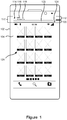
Figure 1 depicts displaying an actionable notification on a mobile device; -
Figure 2 depicts the process for generating message notifications at a computing device for messages received at a mobile device; -
Figure 3 depicts interacting with a display representation of a message indicator received from a mobile device; -
Figures 4A to 4C depicts interacting with a display representation of a message indicator received from a mobile device; -
Figure 5A to 5C depicts interacting with a display representation of a message indicator received from a mobile device; -
Figure 6A to 6C depicts interacting with a display representation of a message indicator received from a mobile device; -
Figure 7A and 7B depicts interacting with a display representation of a message indicator received from a mobile device; -
Figure 8A to 8C depicts interacting with a display representation of a message indicator received from a mobile device; -
Figure 9A to 9C depicts interacting with a display representation of a message indicator received from a mobile device; -
Figure 10 depicts processing notifications received from a mobile device for display; -
Figure 11 depicts processing notifications received from a mobile device for display; -
Figure 12 further depicts processing notifications received from a mobile device for display; -
Figure 13 further depicts processing notifications received from a mobile device for display; -
Figure 14A to 14C depicts processing notifications received at a mobile device; -
Figure 15A to 15C depicts processing notifications received at a mobile device; -
Figure 16 depicts displaying a notification representation based on an operating context of a mobile device -
Figure 17 depicts a system for generating display representations of notifications received by a mobile device; -
Figure 18 depicts a method for generating message notifications at a computing device; -
Figure 19 depicts a further method for generating message notifications at a computing device; and -
Figure 20 depicts a further method for generating message notifications on a mobile device. - Embodiments are described below, by way of example only, with reference to
Figs. 1-20 . Mobile devices, such as mobile phones, smartphone and tablets, can receive messages from numerous channels such as one or more e-mail accounts, instant messaging applications, short message service (SMS) text messaging applications, as well push notification applications such as stock price applications and sports scores applications. The mobile device can notify a user when a new message is received from one of the communication or messaging channels. As described further herein, the notification displayed on the mobile device may include functionality for facilitating taking an action, such as responding to a message, directly from the notification reducing processing requirements on the device and the number of user actions to respond to the notification. As further described herein, a notification of a message received at the mobile device may be displayed on a second device in communication with the mobile device. Control of the notification displayed on the second device may be provided to reduce an intrusiveness of notifications while still providing meaning notifications as well as notifications with direct actions. -
Figure 1 depicts displaying an actionable notification on a mobile device. Themobile device 102 is depicted as a mobile phone although other mobile devices that are capable of sending and receiving messages are contemplated as well. Themobile device 102 comprises adisplay 104 for displaying a user interface. Thedisplay 104 may be a touch sensitive display providing an input component for the mobile device. A user of themobile device 102 may have one or more applications on the mobile device for receiving messages from different channels. For example, a user may have a number of e-mail accounts setup to receive messages on the mobile device. Additional communication channels may include social media applications such as Twitter®, Facebook® and Linkedln®. Further communication channels may include instant messaging applications such as Blackberry Messenger BBM®, Skype® Windows Live Messenger ® and others. Further communication channels may include applications on themobile device 102 that receive pushed messages from remote sources such as applications that push sports scores, news, stock prices or other alerts. Typically, it is possible to specify a notification to be used for informing the user of a new message. For example, a user may select an alert tone or sound to notify the user of a new e-mail. It is often possible to customize the notifications based on the channel the message was received from as well as other message information. For example, a user may select one alert tone for e-mails received from a personal account and a different alert tone for e-mails received from a work account. - In addition to sound alerts, it is possible to provide visual notifications. For example a blinking light may be used to notify a user of a new message. Further, the notification may be displayed on the display as a pop-up or banner or other similar graphical representation. The pop-up or banner may display a portion of the text of the message and/or other relevant information.
- As depicted in
Figure 1 , anotification 110 for a received message may be displayed on themobile device 102. Thenotification 110 is depicted as a banner displayed at the top of thedisplay 104. When displaying such a banner notification, the banner may be displayed overtop of the currently displayed user interface. Alternatively, the user interface may be displaced downward, or the size of the user interface reduced to allow thebanner notification 110 to be displayed without obstructing other visual components of the display. As depicted inFigure 1 , a homescreen user interface 126 is displaced downwards to allow the notification to be displayed above the home screen. It will be appreciated that a banner type notification may be presented at other locations such as the bottom of the display. Further, the notification may be displayed as a pop-up which can be overlaid over the current user interface. - The
notification 110 may comprise amessage section 112 that displays information associated with the received message associated with the notification. Themessage section 112 may display an icon or graphic 114 associated with a sender of the message or associated with the type of message, as well as aname 116 associated with the sender of the message. The name of the sender may be displayed based on contact information of the sender stored in the mobile device. Additionally, the notification may displaytext 118 associated with the message. For example, if the notification is for an e-mail, thetext 118 may be the subject line of the e-mail and/or a body of the e-mail message. - In addition to the
message section 112, thenotification 110 may include adirect action area 120 associated with performing a direct action. Thedirection action area 120 may vary depend upon the notification, or the message channel associated with the notification. For example, if the message associated with the notification is a text based messaging application, the direct action may be associated with replying to the received message. The direct action area may include atext box area 122 for inputting reply text as well as areply button 124 for sending the reply. It is contemplated that the reply button may be omitted or replaced with another button. If thereply button 124 is not presented, than the reply text may be sent when the user presses enter, or takes a similar action. - The
notification 110 allows a notification for a message to be displayed along with an associated action that can be performed directly from the notification. When a message is received on the mobile device, a notification providing a direct action can be displayed on the device and as described further below, the message notification may be passed to a second device computing device, such as a tablet or desktop computer or laptop and displayed on the secondary screen. -
Figure 2 depicts the process for generating message notifications at a computing device for messages received at a mobile device. Thesystem 200 comprises amobile device 102 and asecond computer device 206. Themobile device 102 can receive messages and provide notifications on thedisplay 104. Themobile device 102 can connect to a second computer206, depicted as an all-in-one computer although other types of computing devices are contemplated, and use thedisplay 208 of the second computer to present a notification of the message received on themobile device 102. - When the
mobile device 102 is in proximity to the second computer 206 a connection may be established 210 between the two devices. The connection can be established using various communication techniques, to create local area networks (LAN) or personal area networks (PAN) including a USB connection, a Bluetooth connection, a Wi-Fi connection, a ZigBee connection or other wired or wireless connections. Amessage 212 is received at the mobile device. The mobile device can generate a notification for the message as well as a direct action area as described above with regard toFigure 1 . If themobile device 102 has established a connection to thesecond computer 206, a message indicator can be sent 214 from the mobile device to the second computer. The message indicator can be received at thesecond computer 216 and anotification representation 218 of the message indicator displayed to the user. As depicted, thenotification representation 218 may be a small graphical icon or other unobtrusive indicator. As described further below, a user of thesecond computing device 206 may interact with the notification representation, which may for example expand the graphical representation to allow the user to take a direct action from the notification representation. -
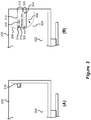
Figures 3A and 3B depicts interacting with a notification representation of a message indicator received from a mobile device. As depicted in section (A) ofFigure 3 , a message indicator has been received at thesecond computing device 206 from amobile device 102 and afirst notification representation 218 of the message indicator is displayed. Positioning information can be received from an input component, which is depicted graphically aspointer 302 inFigure 3 . - The input component, graphically represented as
pointer position 302, can be moved toward thegraphical representation 218 to alocation 306 as depicted by dashedarrow 304 in section (B) ofFigure 3 . The positioning information associated with thesecond pointer position 306 is within a display area surrounding the notification representation, represented by dashedline 308. When thepositioning information 306 is within the display area 308 asecond notification representation 310 of the message indicator may be presented on the second display. As depicted, thesecond notification representation 310 may comprise amessage portion 312 that may display agraphical icon 314 indicative of a sender of the message, or a message channel of the message. Themessage portion 312 may further comprise aname portion 316 displaying a name associated with the sender of the message as well as amessage body 318 displaying at least a portion of the message, such as the body of an e-mail or text message. Thenotification representation 310 also includes adirect action area 320 that allows a user to take a direct action associated with the message, such as replying to the message. Thedirect action area 320 may comprise atext box 322 for inputting a reply text as well as anaction button 324 for carrying out the direct action. Although depicted as adirect action button 324, a button may not be necessary for performing the direct action. For example, sending the reply to the message may occur when a user hits enter. Regardless of if a direct action button is present or not, an input selection is received, such as pressing the direct action button or hitting enter, that causes the associated direct action to occur. Further, although only a single direct action has been described, it is contemplated that a plurality of direct actions may be presented to the user. For example the input selection may also include the ability to share the message with one or more additional contacts. Alternatively, the direct action may also provide the ability to share a message with other contacts and not reply to the message in the instance that notification is broadcast type message. When multiple direct actions are presented, the input selection may select which of the direct actions to perform. - As depicted in
Figure 3 , a notification representation used to notify a user of a message received on the mobile device may be adjusted based on input, such as mouse movement, from a user. As depicted, afirst notification representation 218 may provide a small notification that does not distract the user or interfere with work currently being performed. If the user wishes to determine more information associated with the displayed notification, they are able to move a pointer towards the notification representation, which will expand to display information associated with the message as well as provide an option for taking a direct action associated with the message of the notification. -
Figures 4A to 4C depicts interacting with a notification representation of a message indicator received from a mobile device. The interaction depicted inFigure 4 is similar to the interaction depicted inFigure 3 ; however, it includes an additional intermediary notification representation of the message indicator. As depicted in section (A) ofFigure 4 , a message indicator has been received at the second computing device from a mobile device and afirst notification representation 218 of the message indicator is displayed. Positioning information can be received from an input component, which is depicted graphically aspointer 302. A user of thesecond device 206 can use an input component to move thepointer 302 to asecond position 402. If the positioning information associated withposition 402 is within an intermediary display area, depicted by dashedline 404, the notification representation of the message indicator can be changed to asecond notification representation 410 of the message indicator. Thesecond display notification 410 may comprise amessage portion 312, as described above, that may display agraphical icon 314 indicative of a sender of the message, or a message channel of the message. Themessage portion 312 may further comprise aname portion 316 displaying a name associated with the sender of the message as well as amessage body 318 displaying at least a portion of the message, such as the body of an e-mail or text message. - The user may continue moving the pointer toward the display notification from
position 402 toposition 406. If theposition 406 is within a direct action area depicted by dashedline 308, thenotification representation 310 that includes a direct action area as described above with regard toFigure 3 . - As depicted in
Figure 4 , a notification representation of a message may initially be small and unobtrusive so as not to distract the user. If the user wishes to see more information associated with the message, the pointer can be moved toward the notification representation, which can change to display additional information. If the user wishes to take a direct action associated with the message, they can continue moving the pointer toward the representation and once the pointer is within an area associated with displaying the direct action, the notification representation can be changed to include a direct action area. Accordingly, a user can control the amount of information about a message received at the mobile device that is revealed on a second device. -
Figures 5A to 5C depicts interacting with a notification representation of a message indicator received from a mobile device. As depicted, aninitial notification representation 218 is displayed and a user moves a pointer from afirst position 302 to asecond position 502. Thesecond position 502 is within the directaction notification area 308 and as such, thenotification representation 310 is presented on the display. The user may click 504 on the message portion of thenotification representation 310. Clicking on the message portion causes an application associated with the message to be displayed 506. Themessage application 506 may display the communication history of aconversation 508 as well as provide an area for sending a new message to the other participants in the conversation. - As described above, a message can be received at a mobile device, such as a mobile phone, and a notification can be presented on the display of a second device coupled to the mobile device. The amount of information displayed for the notification on the mobile device can be controlled by the user.
-
Figures 6A to 6C depicts interacting with a notification representation of a message indicator received from a mobile device. The second computing device ofFigure 6 is depicted as atablet type device 602 that includes a touchsensitive display 604 as the input component. A message indicator can be received at thetablet 602 and anotification representation 618 presented to the user. As described above with reference toFigures 3 to 5 ,different notification representation first location 606; the touch-based gesture may comprise dragging or swiping towards asecond location 608. Thegesture 612 may cause thenotification representation 618 to expand and display a more detailed notification representation of the message, possibly including a direct action area. Thegesture 612 may be compared to display criteria, which may include a direction of the gesture, the end location of the gesture, display time threshold, and/or the speed of the gesture in determining if the notification representation should be changed. If theswipe gesture 612 causes thenotification representation 610 to be displayed including a direct action area, ending the gesture by lifting the figure atposition 608 may cause the focus to switch toinput box 622 allowing a user to input text once the gesture is completed. -
Figure 7 depicts interacting with a notification representation of a message indicator received from a mobile device. The depicted interaction is similar to that described above with regard toFigure 6 . A message indicator is received and initially displayed. Agesture 612 starting at afirst position 606 and ending at asecond location position 608 causes anotification representation 610 to be presented. In contrast toFigure 6 , in which it is assumed that the user lifts their finger atlocation 608,Figure 7 depicts a further swipe gesture starting at thelocation 608 and ending atlocation 702. Thegesture 704 may be considered as the reverse ofgesture 612 and causes the notification representation to disappear. - In addition to using a gesture or other input to cause a displayed notification representation to disappear, it is possible for a display representation to disappear after a period of time has passed and no gesture or input has been received. Additionally or alternatively, a displayed notification may require user interaction in order to not be displayed. For example, a notification representation of a missed telephone call may be displayed as a 'sticky' notification which remains until a user interacts with it. Whether or not a notification representation should be displayed until an interaction has occurred may be determined based on the type of message, properties of the message such as a priority level as well as user settings. As a further example, a notification representation of a regular email message may be displayed for a set period of time after which it disappears if no interaction is received. A notification representation of a high priority email message may be displayed until a user expressly interacts with the display representation.
-
Figures 8A to 8C depicts interacting with a notification representation of a message indicator received from a mobile device. The interaction depicted inFigure 8 does not rely upon a swipe gesture. Rather when an initial notification representation of the message indicator is presented 618, the user may tap 802 on the notification representation, causing anothernotification representation 610, including message and direct action portions to be presented. Once presented, the focus may be placed on thetext input area 622, and avirtual keyboard 804 displayed on screen allowing the user to enter text into the reply area. -
Figures 9A to 9C depicts interacting with a notification representation of a message indicator received from a mobile device. The above description has described using an input component for controlling the notification representations associated with a message. The input component may also be provided by themobile device 102 itself. The mobile device may include one or more sensors for determining its orientation and movement. Each of thedifferent notification representations - As depicted, the
mobile device 102 may be rotated from ahorizontal position 902 to different positions. When a notification is presented on the display, the notification representation to present may be determined based on the position of the mobile device. As depicted if themobile device 102 is positioned between a horizontal position and a secondangular position 904 thenotification representation 218, which displays a small graphical icon, can be displayed. As the mobile device is rotated between the secondangular position 904 and a thirdangular position 906, asecond notification representation 410 that presents at least a portion of the associated message is displayed. If the mobile device continues to be rotated past the thirdangular position 908 to a fourthangular position 908, thenotification representation 310 may be presented on the display that includes at least a portion of the message as well as a direct action area allowing a user to carry out a direct action associated with the message. It will be appreciated that the particular angles defining theangular positions - The above has described displaying notifications received at a mobile device on a display of a second computing device that is communicatively coupled to the mobile device. The notification may have various notification representations, including a notification representation that includes a direct action area. By allowing the user to control, through an input component, which of the notification representations are presented the presentation of the notifications may be improved.
- As described further below, in addition to controlling when the display representation that includes a direct action area is displayed, it may be desirable to control which of the messages are notified to the user. For example, regardless of the notification representation used for the notification on the second device, a message notification received from the mobile device may be processed to determine if it should be displayed based on the current computing context. The current computing context may include various factors, such as what applications are running, what applications are currently displayed, networks the computing device is connected to as well as other factors such as preference settings.
-
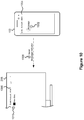
Figure 10 depicts processing notifications received from a mobile device for display. As depicted inFigure 10 , amessage 1002 is received for an account, depicted as being awork e-mail account 1004, on themobile device 102. As described above, themobile device 102 may send amessage indicator 1006 to asecond computing device 206. Thesecond computing device 206 is running ane-mail program 1008 for the work account. Accordingly the message that was received at the mobile device is also received at the second computing device and displayed 1010. - When the
message indicator 1006 is received at thecomputing device 206 the computing device processes the message indicator based on the computing context. InFigure 10 , it is contemplated that the computing context includes that the computing device is running an e-mail program for an e-mail account, and the user has set preferences indicating that notifications should not be presented if the message is associated with an e-mail account displayed in a currently running e-mail application. When themessage indicator 1006 is received, it is processed and it is determined that the message indicator is associated with a message for the work e-mail account that is displayed by thee-mail application 1006. Accordingly, the received message indicator is not presented to the user. -
Figure 11 depicts processing notifications received from a mobile device for display. The depiction inFigure 11 is similar to that ofFigure 10 ; however, a notification representation of the message indicator is presented to the user. A message 1102 is received at themobile device 102 for apersonal e-mail account 1104. Themobile device 102 sends amessage indictor 1106 to asecond computing device 206 that is communicatively coupled with themobile device 102. Themessage indicator 1106 is processed at thecomputing device 206, which determines that the message indicator is associated with a message for an account that is not associated with thework e-mail program 1006. Accordingly, the processing determines that a notification representation for the message should be presented to the user and presents the notification representation accordingly 1108. The notification representation may be displayed and controlled in accordance with the description of the position based action notification described above. Additionally or alternatively, the notification may be a static notification representation. - As described above with reference to
Figure 10 andFigure 11 , when a message indicator is received that is associated with an account of an application currently running on thesecond device 206, a notification representation of the message indicator is not presented on the display. If however, the message indicator is not associated with an account of a running application, the notification representation may be presented to the user on the display. -
Figures 12 and13 further depict processing message indicators received from a mobile device for display. InFigures 11 and12 a notification for a received SMS message is not displayed when the second computer is connected to a work domain, while a notification for a received SMS message is displayed when the second computing device is not connected to the work domain. As such, the context based display of notifications can allow notifications associated with personal accounts to only be displayed when not at work. - As depicted in
Figure 12 , amessage 1202 is received for apersonal SMS account 1204. Themobile device 102 sends themessage indicator 1206 to thesecond computing device 206 which receives the message indicator and processes it. Thesecond computing device 206 is connected to awork domain 1208, and as such, a notification representation of the received message indicator for the personal SMS message is not presented on thedisplay 1210. The determination that thesecond computing device 206 is connected to the work domain may be determined based upon network characteristics such as Internet Protocol (IP) address, domain registration, logon credentials, and access network or gateway/proxy configuration. - In contrast to
Figure 12 , thesecond computing device 206 ofFigure 13 is connected to ahome network 1302. As such, when themessage indicator 1206 for the personal SMS message is received, notification representation of the receivedmessage indicator 1302 is presented to the user. - As described above with regard to
Figures 10 - 13 , it is possible to control which notifications are displayed on a second computing device based on a current operating context. Rules or preferences may be specified in notification display settings that specify which message notifications should be displayed based on particular operating contexts. The operating context may specify one or more criteria such as what applications are running, currently visible applications, current time, a time of day, a day of the week, a current location of the portable device or computing device, as well as networks connected to the portable device or computing device. - Although described above as determining what notifications should be displayed on a second device, it is contemplated that the same context-based processing may be used in determining what notifications should be displayed in the mobile device.
- The message indicator sent from the mobile device to the second computing device may comprise various characteristics depending upon the type of message. For example, the characteristics of the message indicators may include information on a sender and receiver of the message, a message subject, a message body, a messaging application, and a time the message was sent and/or received.
-
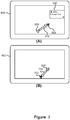
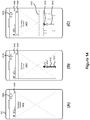
Figure 14 depicts processing notifications received at a mobile device. As described above with regard toFigure 1 , a notification for a received message may be displayed on themobile device 102. The notification may include a direct action area as described above. Further, the display of the notification may be based on position information related to a gesture performed on the device. Additionally, the presentation of the different notification representations can be controlled based on a current operating context of the mobile device. - As shown in
Figure 14(A) When a message is received at amobile device 102, theoperating context 1402 the device is determined. Theoperating context 1402 may be specified by the state of the operating system executed by the processor of the mobile device, such as one or more of the applications currently running, messaging application or communication channel. The determined operating context is used to determine notification display settings that specify, among other settings, whether a notification representation should be presented to the user or suppressed. When a message is received, if it is determined that a notification representation should be presented based on the operating context, afirst notification representation 1404 of the message may be displayed. Thefirst notification representation 1404 may presentmessage information 1406, such as a name of the sender and a portion of the message text, in a banner of the user interface. As shown inFigure 14(B) when thefirst notification representation 1404 is displayed a user may perform agesture 1410, for example by swiping one or more fingers from afirst location 1412 to asecond location 1414 to form the gesture. The gesture information may satisfy gesture criteria associated with a second notification representation of the message. If the information of thegesture 1410 does satisfy an associated display criteria, for example the swipe was in the correct general direction, was long enough and/or was fast enough, thesecond notification representation 1416 may include themessage information 1406 displayed as the first notification representation as well as adirect action area 1408 that allows a user to perform an action associated with the message without requiring the user to execute the messaging application. Thedirect action area 1408 is depicted as a text input box and a direct action button, although as described above, the direct action button is not required as other input selections may cause the action to be performed. Once thesecond notification representation 1416 is displayed, if the user lifts their finger from thelocation 1414, the focus may be switched to the text input box of thedirect action area 1408 and akeyboard 1418 as shown inFigure 14C can be displayed to allow the user to input text associated with the direct action of the notification representation. -
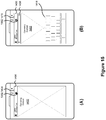
Figure 15 depicts processing notifications received at a mobile device. The notification processing ofFigure 15 is similar to that ofFigure 14 ; however, instead of a swipe based gesture displaying a second notification representation, the gesture is atap gesture 1502 as shown inFigure 15(A) . When thefirst notification representation 1404 of the message is displayed, the user may tap 1502 the representation, which causes the second notification representation, including the direct action area to be displayed. When thedirect action area 1408 is displayed, the focus may be set to the text input box and akeyboard 1418 displayed as shown inFigure 15(B) . -
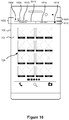
Figure 16 depicts displaying a notification representation based on an operating context of a mobile device. Themobile device 102 includes adisplay 104 that presents auser interface 126 to the user. Messages may be presented to the user in various notification representations. The display representation may be based on a current operating context of the mobile device. The operating context may include information on which applications are currently executing, which applications are currently visible, a current time, network connection information as well as location information. The messages may include messages sent to the mobile device such as e-mails, SMS messages, an instant messaging application, or push-based messages such as sports scores, news alerts, stock prices, etc. Additionally, the messages may be generated by themobile device 102. An application may generate a message in order to notify the user about an event. For example, a message may be generated when the user misses a telephone call, or video call. - A
notification representation 1602 is presented to the user informing the user of a missed call. Thenotification representation 1602 may be presented based on the operating context of the mobile device. For example, if the mobile device is at a location associated with work, the notification may not be presented to the user, assuming that the missed call was on a personal line. If display settings associated with the current operating context indicate that thenotification representation 1602 should be displayed, it is presented to the user as depicted inFigure 16 . Thenotification representation 1602 may comprise amessage portion 1604 that displays message related information such as animage 1606 associated with the message or caller, aname 1608 of a sender of the message or caller andmessage details 1610 such as message text or an indication of the missed call. Thenotification representation 1602 may further comprise adirect action area 1612 that presents the user with actions that can be performed directly from the notification representation. The particular direct actions may be based on the type of the message. For example, if the message is an e-mail, the direct action may present a text box for replying to the e-mail. In the case of a missed phone call, thedirect action area 1612 may present the user with actions for returning thecall 1616 and/or calling avoice mail number 1618. Thedirect action area 1612 may be initially presented with themessage portion 1604, or alternatively may be presented to the user based on a gesture or other input information as described in relation toFigures 14 and15 . -
Figure 17 depicts a system for generating notification representations of message indicators received by a mobile device. Thesystem 1700 comprises amobile device 206 which may be, for example a cellular phone, smartphone, or tablet and asecond computing device 206, which may be a tablet, desktop computer, all-in-one computer as depicted or a laptop computer. Thesecond computing device 206 is generally considered to be a computing device having a larger display than themobile device 102. - The
mobile device 102 comprises adisplay screen 1712, which may include a touch screen. Themobile device 102 comprises aprocessor 1714 for executing instructions that are stored inmemory 1716. Themobile device 102 may further comprisenon-volatile storage 1718. The instructions stored inmemory 1716, when executed by the processor configure themobile device 102 to provide an operating system for providing graphical user interface in addition secondarydevice messaging functionality 1720, messaging notification functionality 1722 as well as one ormore messaging applications 1724. Thesecondary messaging functionality 1720 establishes a connection with the secondary computing device in order to send message indicators for messages received at the mobile device. The messaging notification functionality 1722 provides notifications for received message and may include functionality for determining an operating context of the operating system and displaying notifications based on the operating context. The notification functionality may allow a user to control an amount of information displayed by the notification. Themessaging applications 1724 receive messages from respective notification channels, such as e-mail, SMS and MMS messages, IN messages, push notification messages or other messaging applications. - The mobile device further comprises an input/output (I/O)
component 1726 for connecting one or more components capable of providing input to the device or producing output. Themobile device 102 further comprises one ormore sensors 1728 as well as one ormore radios 1730 for establishing wireless communication with other computing devices. - The
second computing device 206 comprises adisplay screen 1732, which may include a touch screen. Thedisplay 1732 of the second computing device is generally contemplated to be larger than the display of themobile device 102. Thesecond computing device 206 comprises aprocessor 1734 for executing instructions that are stored in amemory 1736. Thesecond computing device 206 may further comprisenon-volatile storage 1748. The instructions stored inmemory 1736, when executed by the processor configure thesecond computing device 102 to provide mobiledevice messaging functionality 1740 as well as messagenotification generation functionality 1742. The mobiledevice messaging functionality 1740 establishes a connection with the secondarydevice messaging functionality 1720 of the mobile device in order to receive message indicators for messages received at the mobile device. The messagenotification generation functionality 1742 may comprises various functionality for generating notifications as described here. The functionality may comprise positioning basedaction notification functionality 1744. The position basedaction notification functionality 1744 allows a notification representation of a message that has a direct action area for carrying out a direct action associated with the message, to be progressively displayed based on positioning information of an input component. The messagenotification generation functionality 1742 may further comprise context based notification functionality for generating a notification representation for a message based on a current operating context of the computing device. - The second computing device further comprises an input/output (I/O)
component 1748 for connecting one or more components capable of providing input to the computing device or producing output. Thesecond computing device 206 further comprises one ormore sensors 1750 as well as one ormore radios 1752 for establishing wireless communication with other computing devices. -
Figure 18 depicts a method for generating message notifications at a computing device. Themethod 1800 receives at the computing device a received message indicator from a mobile device (1802). The received message indicator is associated with a message received by the mobile device. The received message indicator may be sent from the portable computing device to the computing device over a communication channel established between the two devices. The communication channel may be established over a wired or wireless channel, such as Ethernet, Universal Serial Bus (USB), Wi-Fi, Bluetooth, ZigBee or other communication technologies. Once the received message indicator is received at the computing device a first notification representation of the received message indicator is generated at the computing device (1804), and positioning information from an input component is determined (1806). Input component may be a mouse or pointing device connected to the computing device, a touch screen input as well as sensors of the mobile device. A second notification representation is generated comprising at least a portion of the message received at the mobile device and an action area for performing a direct action in response to the received message when the determined positioning information satisfies a display criteria associated with the second notification representation (1808). -
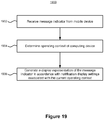
Figure 19 depicts a further method for generating message notifications at a computing device. Themethod 1900 receives at the computing device a message indicator from a mobile device (1902). The message indicator is associated with a message received by the mobile device. The method determines a current operating context of the operating system of the computing device (1904) and generates at the computing device a notification representation of the message indicator in accordance with notification display settings associated with the determined current operating context (1906). The notification display settings associated with the determined operating context can provide rules for determining how a received message notification should be displayed including whether it should be a blank display that does not provide a visual notification to the user. -
Figure 20 depicts a further method for generating message notifications on a mobile device based upon an operating context. Themethod 2000 may receive a message indicator at the mobile device, which may be for a message received at the mobile device or generated at the mobile device. When the message indicator is received, the method determines an operating context of the mobile device (2002). The operating context may indicate a current operating state of the mobile device such as which applications are running, which applications are displayed among other settings or characteristics of the mobile device. A first notification representation of the message is generated in accordance with notification display settings associated with the current operating context (2004), and gesture information is determined (2006). When the determined gesture information satisfies a display criteria, a second notification representation of the message including a direct action area is generated (2008). - The above has described various methods for displaying notification representations on computing devices. Although displaying a single display representation is described above, it is possible to display multiple notifications at the same time. If multiple display representations are to be displayed at the same time, they may be displayed one above the other. Additionally or alternatively, if a number of notification representations are to be displayed, a number, for example two, may be displayed and the display changed to display the additional notification representations after a short period of time. Further, if a notification representation is to be displayed that requires user interaction in order to dismiss, it may be continually displayed and additional notification representations displayed below it.
- Although certain methods, apparatus, computer readable memory, and articles of manufacture have been described herein, the scope of coverage of this disclosure is not limited thereto. To the contrary, this disclosure covers all methods, apparatus, computer readable memory, and articles of manufacture fairly falling within the scope of the appended claims either literally or under the doctrine of equivalents.
- Although the following discloses example methods, system and apparatus including, among other components, software executed on hardware, it should be noted that such methods, system and apparatus are merely illustrative and should not be considered as limiting. For example, it is contemplated that any or all of these hardware and software components could be embodied exclusively in hardware, exclusively in software, exclusively in firmware, or in any combination of hardware, software, and/or firmware. Accordingly, while the following describes example methods and apparatus, persons having ordinary skill in the art will readily appreciate that the examples provided are not the only way to implement such methods, system and apparatus.
- Further exemplary embodiments of the present invention are set out in the following numbered clauses:
- Clause 1. A method for generating message notifications at a mobile device, the method comprising:
- determining at the mobile device a current operating context of the mobile device;
- generating at the mobile device a first notification representation for a message in accordance with notification display settings associated with the determined current operating context;
- determining at the mobile device gesture information from a touch input component; and
- generating at the mobile device a second notification representation comprising at least a portion of the message and an action area for performing a direct action associated with the message in response to the determined gesture information while in the determined current operating context.
-
Clause 2. The method of clause 1 wherein generating the second notification representation is performed when the determined gesture information satisfies a display criteria associated with the second notification representation. -
Clause 3. The method ofclauses 1 or 2, wherein determining a current operating context of the mobile device comprises determining one or more of:- running applications;
- applications displayed on the mobile device; and
- a communication channel associated with the message and a communication channel associated with an application displayed on the mobile device.
- Clause 4. The method of any one of clauses 1 to 3, wherein the notification display settings associated with the current operating context provide rules specifying characteristics of the message and associated operating context characteristic for use in generating the notification representation.
- Clause 5. The method of clause 4, wherein the characteristics of the message comprises one or more of:
- a sender of the message;
- a receiver of the message;
- a subject of the message;
- a body of the message;
- type of the message; and
- an application associated with the message.
- Clause 6. The method of clause 5, wherein the operating context characteristic for use in generating the notification representation comprise one or more of:
- visibility of the notification representation;
- characteristics of the message to include in the notification representation; and location of the notification representation.
- Clause 7. The method of any one of clauses 1 to 6, wherein the direct action comprises one or more of:
- replying to the message;
- sharing the message with one or more contacts;
- marking the message as read; and
- deleting the message.
- Clause 8. The method of any one of clauses 1 to 7, further comprising:
hiding the first notification representation if gesture information is not received within a display time threshold. - Clause 9. The method of any one of clauses 1 to 8, further comprising sending text received in the action area to an originator of the message.
- Clause 10. The method of any one of clauses 1 to 9, further comprising forwarding the message to one or more contacts in response to an action performed in the action area.
- Clause 11. The method of any one of clauses 1 to 10, further comprising sending text received in the action area to an originator of the message.
- Clause 12. The method of any one of claims 1 to 4, wherein the message provides an indication of a missed call, and wherein the direct action area presents a direct action for returning the missed call.
- Clause 13. The method of any one of clauses 1 to 12, wherein the received message is associated with a first communication channel and the current operating context comprises displaying in an application messages associated with a second communication channel.
- Clause 14. The method of clause 13, wherein the notification display settings specify presenting the first notification representation to a user when the first messaging differs from the second communication channel and suppressing the first notification representation when the first communication channel is the same as the second messaging same.
- Clause 15. A mobile device comprising:
- a processor for executing instructions; and
- a memory coupled to the processor storing instructions, which when executed by the processor configure the mobile device to perform a method according to any one of clauses 1 to 14.
Claims (15)
- A method for generating message notifications at a mobile device (102), the method comprising:determining (2002) at the mobile device a current operating context of the mobile device (102);generating (2004) at the mobile device a first notification representation (1404) for a message in accordance with a notification display setting associated with the determined current operating context (1402);determining (2006) at the mobile device gesture information (1410); andgenerating (2008) at the mobile device a second notification representation (1416) comprising at least a portion of the message and an action area (1408) for performing a direct action associated with the message in response to the determined gesture information while in the determined current operating context.
- The method of claim 1, wherein generating the second notification representation is performed when the determined gesture information satisfies a display criterion associated with the second notification representation.
- The method of any preceding claim, wherein the current operating context of the mobile device is based on an application running on the mobile device.
- The method of any preceding claim, wherein the current operating context of the mobile device is based on an application currently displayed on the device.
- The method of any preceding claim, wherein the direct action is associated with a reply to the message.
- The method of any preceding claim, wherein the direct action is associated with sharing the message.
- The method of any preceding claim, wherein the direct action is associated with marking the message as read.
- The method of any preceding claim, wherein the direct action is associated with deletion of the message.
- The method of any preceding claim, further comprising forwarding the message to one or more contacts in response to an action performed in the action area.
- The method of any preceding claim, further comprising sending text received in the action area to an originator of the message.
- The method of any preceding claim, wherein the message provides an indication of a missed call, and wherein the action area presents a direct action for returning the missed call.
- The method of any preceding claim, wherein the message is received at the mobile device.
- The method of any one of claims 1 to 11, wherein the message is generated at the mobile device.
- A mobile device (102) comprising:a processor (1714) for executing instructions; anda memory (1716) coupled to the processor storing instructions, which when executed by the processor configure the mobile device to perform a method according to any preceding claim.
- A computer-readable medium comprising executable instructions which, when executed, cause a processor to perform the method according to any one of claims 1 to 13.
Priority Applications (1)
| Application Number | Priority Date | Filing Date | Title |
|---|---|---|---|
| EP20190534.6A EP3754480A1 (en) | 2013-06-28 | 2013-06-28 | Context sensitive message notifications |
Applications Claiming Priority (2)
| Application Number | Priority Date | Filing Date | Title |
|---|---|---|---|
| EP13174437.7A EP2818996B1 (en) | 2013-06-28 | 2013-06-28 | Context sensitive message notifications |
| EP20190534.6A EP3754480A1 (en) | 2013-06-28 | 2013-06-28 | Context sensitive message notifications |
Related Parent Applications (1)
| Application Number | Title | Priority Date | Filing Date |
|---|---|---|---|
| EP13174437.7A Division EP2818996B1 (en) | 2013-06-28 | 2013-06-28 | Context sensitive message notifications |
Publications (1)
| Publication Number | Publication Date |
|---|---|
| EP3754480A1 true EP3754480A1 (en) | 2020-12-23 |
Family
ID=48745744
Family Applications (2)
| Application Number | Title | Priority Date | Filing Date |
|---|---|---|---|
| EP13174437.7A Active EP2818996B1 (en) | 2013-06-28 | 2013-06-28 | Context sensitive message notifications |
| EP20190534.6A Ceased EP3754480A1 (en) | 2013-06-28 | 2013-06-28 | Context sensitive message notifications |
Family Applications Before (1)
| Application Number | Title | Priority Date | Filing Date |
|---|---|---|---|
| EP13174437.7A Active EP2818996B1 (en) | 2013-06-28 | 2013-06-28 | Context sensitive message notifications |
Country Status (2)
| Country | Link |
|---|---|
| EP (2) | EP2818996B1 (en) |
| CA (1) | CA2855067C (en) |
Families Citing this family (2)
| Publication number | Priority date | Publication date | Assignee | Title |
|---|---|---|---|---|
| US9462570B1 (en) | 2015-10-02 | 2016-10-04 | International Business Machines Corporation | Selectively sending notifications to mobile devices |
| US10135941B2 (en) | 2016-02-18 | 2018-11-20 | International Business Machines Corporation | Managing push notifications on portable devices |
Citations (5)
| Publication number | Priority date | Publication date | Assignee | Title |
|---|---|---|---|---|
| US20100281409A1 (en) * | 2009-04-30 | 2010-11-04 | Nokia Corporation | Apparatus and method for handling notifications within a communications device |
| US7996045B1 (en) * | 2007-11-09 | 2011-08-09 | Google Inc. | Providing interactive alert information |
| US20110260970A1 (en) * | 2010-04-26 | 2011-10-27 | Research In Motion Limited | Portable Electronic Device and Method of Controlling Same |
| US20120054683A1 (en) * | 2010-09-01 | 2012-03-01 | Nokia Corporation | Method, apparatus, computer program and user interface |
| US20120254770A1 (en) * | 2011-03-31 | 2012-10-04 | Eyal Ophir | Messaging interface |
-
2013
- 2013-06-28 EP EP13174437.7A patent/EP2818996B1/en active Active
- 2013-06-28 EP EP20190534.6A patent/EP3754480A1/en not_active Ceased
-
2014
- 2014-06-25 CA CA2855067A patent/CA2855067C/en active Active
Patent Citations (5)
| Publication number | Priority date | Publication date | Assignee | Title |
|---|---|---|---|---|
| US7996045B1 (en) * | 2007-11-09 | 2011-08-09 | Google Inc. | Providing interactive alert information |
| US20100281409A1 (en) * | 2009-04-30 | 2010-11-04 | Nokia Corporation | Apparatus and method for handling notifications within a communications device |
| US20110260970A1 (en) * | 2010-04-26 | 2011-10-27 | Research In Motion Limited | Portable Electronic Device and Method of Controlling Same |
| US20120054683A1 (en) * | 2010-09-01 | 2012-03-01 | Nokia Corporation | Method, apparatus, computer program and user interface |
| US20120254770A1 (en) * | 2011-03-31 | 2012-10-04 | Eyal Ophir | Messaging interface |
Also Published As
| Publication number | Publication date |
|---|---|
| CA2855067A1 (en) | 2014-12-28 |
| CA2855067C (en) | 2021-11-09 |
| EP2818996B1 (en) | 2020-08-12 |
| EP2818996A1 (en) | 2014-12-31 |
Similar Documents
| Publication | Publication Date | Title |
|---|---|---|
| US12114234B2 (en) | Context sensitive message notifications | |
| KR102008916B1 (en) | Method for displaying of unconfirmed contents and an electronic device thereof | |
| EP3751827B1 (en) | Message processing method, unread message display method and computer terminal | |
| CA2855033C (en) | Generating message notifications providing direction actions | |
| CN103558958B (en) | Application program function calling method and terminal | |
| US11765114B2 (en) | Voice communication method | |
| US10084902B2 (en) | Devices, methods, and graphical user interfaces for transferring calls | |
| KR101922464B1 (en) | Method for transmitting and receiving message and an electronic device thereof | |
| CA2731745A1 (en) | Contact objects | |
| KR20140038234A (en) | Method and apparatus for displaying missed calls on mobile terminal | |
| JP5278024B2 (en) | Mobile communication terminal | |
| US20130067374A1 (en) | Method for directly manipulating incoming interactions in an instant communication client application | |
| KR20160029045A (en) | Method for blocking transmission of message | |
| US9467824B2 (en) | Generating message notifications providing direction actions | |
| EP3076642B1 (en) | Operation processing method and device | |
| CA2855067C (en) | Context sensitive message notifications | |
| US20220400175A1 (en) | Wrist-wearable devices for aggregating and guiding access to data from multiple different electronic messaging applications via a quickly-accessible communications-hub mode, and methods of use thereof | |
| KR102357506B1 (en) | Method and apparatus for displaying missed calls on mobile terminal | |
| KR20170130338A (en) | Method for blocking transmission of message | |
| JP2017151630A (en) | Information processing system and information processing method |
Legal Events
| Date | Code | Title | Description |
|---|---|---|---|
| PUAI | Public reference made under article 153(3) epc to a published international application that has entered the european phase |
Free format text: ORIGINAL CODE: 0009012 |
|
| STAA | Information on the status of an ep patent application or granted ep patent |
Free format text: STATUS: THE APPLICATION HAS BEEN PUBLISHED |
|
| AC | Divisional application: reference to earlier application |
Ref document number: 2818996 Country of ref document: EP Kind code of ref document: P |
|
| AK | Designated contracting states |
Kind code of ref document: A1 Designated state(s): AL AT BE BG CH CY CZ DE DK EE ES FI FR GB GR HR HU IE IS IT LI LT LU LV MC MK MT NL NO PL PT RO RS SE SI SK SM TR |
|
| STAA | Information on the status of an ep patent application or granted ep patent |
Free format text: STATUS: REQUEST FOR EXAMINATION WAS MADE |
|
| 17P | Request for examination filed |
Effective date: 20210623 |
|
| RBV | Designated contracting states (corrected) |
Designated state(s): AL AT BE BG CH CY CZ DE DK EE ES FI FR GB GR HR HU IE IS IT LI LT LU LV MC MK MT NL NO PL PT RO RS SE SI SK SM TR |
|
| STAA | Information on the status of an ep patent application or granted ep patent |
Free format text: STATUS: EXAMINATION IS IN PROGRESS |
|
| 17Q | First examination report despatched |
Effective date: 20220405 |
|
| STAA | Information on the status of an ep patent application or granted ep patent |
Free format text: STATUS: THE APPLICATION HAS BEEN REFUSED |
|
| 18R | Application refused |
Effective date: 20240209 |