EP3754315B1 - ENGINE INTAKE PRESSURE AND TEMPERATURE SENSOR PERFORMANCE IMPROVEMENT - Google Patents
ENGINE INTAKE PRESSURE AND TEMPERATURE SENSOR PERFORMANCE IMPROVEMENT Download PDFInfo
- Publication number
- EP3754315B1 EP3754315B1 EP19212065.7A EP19212065A EP3754315B1 EP 3754315 B1 EP3754315 B1 EP 3754315B1 EP 19212065 A EP19212065 A EP 19212065A EP 3754315 B1 EP3754315 B1 EP 3754315B1
- Authority
- EP
- European Patent Office
- Prior art keywords
- temperature
- end portion
- central axis
- airflow hole
- portion surface
- Prior art date
- Legal status (The legal status is an assumption and is not a legal conclusion. Google has not performed a legal analysis and makes no representation as to the accuracy of the status listed.)
- Active
Links
Images



Classifications
-
- G—PHYSICS
- G01—MEASURING; TESTING
- G01K—MEASURING TEMPERATURE; MEASURING QUANTITY OF HEAT; THERMALLY-SENSITIVE ELEMENTS NOT OTHERWISE PROVIDED FOR
- G01K13/00—Thermometers specially adapted for specific purposes
- G01K13/02—Thermometers specially adapted for specific purposes for measuring temperature of moving fluids or granular materials capable of flow
-
- F—MECHANICAL ENGINEERING; LIGHTING; HEATING; WEAPONS; BLASTING
- F02—COMBUSTION ENGINES; HOT-GAS OR COMBUSTION-PRODUCT ENGINE PLANTS
- F02C—GAS-TURBINE PLANTS; AIR INTAKES FOR JET-PROPULSION PLANTS; CONTROLLING FUEL SUPPLY IN AIR-BREATHING JET-PROPULSION PLANTS
- F02C7/00—Features, components parts, details or accessories, not provided for in, or of interest apart form groups F02C1/00 - F02C6/00; Air intakes for jet-propulsion plants
- F02C7/04—Air intakes for gas-turbine plants or jet-propulsion plants
-
- G—PHYSICS
- G01—MEASURING; TESTING
- G01K—MEASURING TEMPERATURE; MEASURING QUANTITY OF HEAT; THERMALLY-SENSITIVE ELEMENTS NOT OTHERWISE PROVIDED FOR
- G01K13/00—Thermometers specially adapted for specific purposes
- G01K13/02—Thermometers specially adapted for specific purposes for measuring temperature of moving fluids or granular materials capable of flow
- G01K13/024—Thermometers specially adapted for specific purposes for measuring temperature of moving fluids or granular materials capable of flow of moving gases
-
- G—PHYSICS
- G01—MEASURING; TESTING
- G01L—MEASURING FORCE, STRESS, TORQUE, WORK, MECHANICAL POWER, MECHANICAL EFFICIENCY, OR FLUID PRESSURE
- G01L19/00—Details of, or accessories for, apparatus for measuring steady or quasi-steady pressure of a fluent medium insofar as such details or accessories are not special to particular types of pressure gauges
- G01L19/0092—Pressure sensor associated with other sensors, e.g. for measuring acceleration or temperature
-
- G—PHYSICS
- G01—MEASURING; TESTING
- G01K—MEASURING TEMPERATURE; MEASURING QUANTITY OF HEAT; THERMALLY-SENSITIVE ELEMENTS NOT OTHERWISE PROVIDED FOR
- G01K2205/00—Application of thermometers in motors, e.g. of a vehicle
- G01K2205/02—Application of thermometers in motors, e.g. of a vehicle for measuring inlet gas temperature
Definitions
- Exemplary embodiments pertain to the art of pressure and/or temperature probes for gas turbine engines.
- Gas turbine engines use a combination pressure and temperature probe to measure pressure and temperature at an inlet of the gas turbine engine.
- a probe is commonly referred to as a P2T2 probe.
- the probe typically includes a housing that protrudes into an inlet air stream of the gas turbine engine.
- the housing may have an aerodynamically efficient shape to reduce airflow disturbances in the inlet.
- a temperature sensing element is located in the housing, with an airflow inlet in the housing to supply airflow to the temperature sensing element.
- the airflow around the temperature sensing element plays a major role in the response time of temperature sensing. Generally, with increased airflow, the response time is decreased.
- US 4765751 A relates to probes which simultaneously measure temperature and pressure of a moving gas stream.
- the pressure and temperature probe has a low drag, an airfoil shaped cross section and includes longitudinally extending pressure cavities adjacent the leading edge and separate longitudinally extending temperature cavity immediately downstream thereof.
- a pressure and temperature probe of a gas turbine engine includes a base portion, an end portion surface, and an airfoil portion extending from the base portion to the end portion surface located at a distal end of the probe.
- the airfoil portion includes a leading edge located at an upstream end of the probe relative to a direction of airflow across the probe.
- a temperature sensor is located in a temperature sensor chamber located in the airfoil portion, and a temperature airflow hole at the distal end of the airfoil portion through the end portion surface and is configured to admit an airflow into the temperature sensor chamber around the temperature sensor.
- the temperature airflow hole is configured and positioned such that the airflow admitted via the temperature airflow hole has a turning angle of less than 90 degrees into the temperature sensor chamber.
- the temperature sensor extends along a sensor central axis in the temperature sensor chamber, and the temperature airflow hole has an airflow hole central axis offset from the sensor central axis in a streamwise direction.
- the airflow hole central axis is located upstream of the sensor central axis.
- the airflow hole central axis is offset from the sensor central axis by between 0.5 and 1.0 times a diameter of the temperature airflow hole.
- the end portion surface includes a first end portion surface, and a second end portion surface sloped toward the base portion relative to the first end portion surface with increasing distance from the leading edge.
- the temperature airflow hole is located at the second end portion surface.
- the slope is one of a constant angle, a varying angle or a curvilinear slope.
- a slope angle of the second end portion surface relative to the first end portion surface is between 2 and 6 degrees.
- the temperature sensor extends along a sensor central axis in the temperature sensor chamber, and the temperature airflow hole has an airflow hole central axis offset from the sensor central axis in a streamwise direction.
- a sensor slot is located along the airfoil portion as a secondary source of airflow to the temperature sensor chamber.
- an inlet of a gas turbine engine includes a casing having an casing inner wall thereby defining an inlet flowpath, and one or more of the pressure and temperature probes extending inwardly from the casing inner wall toward an engine central longitudinal axis.
- the temperature sensor extends along a sensor central axis in the temperature sensor chamber, and the temperature airflow hole has an airflow hole central axis offset from the sensor central axis in a streamwise direction such that the airflow hole central axis is located upstream of the sensor central axis.
- the airflow hole central axis is offset from the sensor central axis by between 0.5 and 1.0 times a diameter of the temperature airflow hole.
- the end portion surface includes a first end portion surface, and a second end portion surface sloped toward the base portion relative to the first end portion surface with increasing distance from the leading edge.
- the temperature airflow hole is located at the second end portion surface.
- the slope is one of a constant angle, a varying angle or a curvilinear slope.
- a slope angle of the second end portion surface relative to the first end portion surface is between 2 and 6 degrees.
- a gas turbine engine includes a fan driven by a turbine of the gas turbine engine, and the inlet is located upstream of the fan.
- FIG. 1 schematically illustrates a gas turbine engine 20.
- the gas turbine engine 20 is disclosed herein as a two-spool turbofan that generally incorporates a fan section 22, a compressor section 24, a combustor section 26 and a turbine section 28.
- Alternative engines might include other systems or features.
- the fan section 22 drives air along a bypass flow path B in a bypass duct, while the compressor section 24 drives air along a core flow path C for compression and communication into the combustor section 26 then expansion through the turbine section 28.
- FIG. 1 schematically illustrates a gas turbine engine 20.
- the gas turbine engine 20 is disclosed herein as a two-spool turbofan that generally incorporates a fan section 22, a compressor section 24, a combustor section 26 and a turbine section 28.
- Alternative engines might include other systems or features.
- the fan section 22 drives air along a bypass flow path B in a bypass duct, while the compressor section 24 drives air along a core flow path C for compression and communication into the combustor section 26
- one or more probes 36 extend radially inwardly toward an engine central longitudinal axis A from an interior casing surface 38 of the casing 32.
- the probe 36 is a pressure and temperature probe configured to detect a pressure and temperature at the inlet portion 30.
- Such a probe is also referred to as a P2T2 probe.
- the probe 36 includes a base portion 38 located at the interior casing surface 80, and an airfoil portion 40 extending from the base portion 38 radially inwardly toward the engine central longitudinal axis A.
- the airfoil portion 40 includes a leading edge 42 and a trailing edge 44, with the leading edge 42 located upstream of the trailing edge 44, relative to a general direction of airflow 46 into the inlet portion 30.
- a first side 48 and a second side 50 opposite the first side 48 each extend from the leading edge 42 to the trailing edge 44.
- An end portion 52 of the probe 36 is located at a distal end of the airfoil portion 40, furthest from the base portion 38.
- a temperature sensor 54 is located in a temperature sensor chamber 56 inside of the airfoil portion 40 of the probe 36. To provide airflow to the temperature sensor 54, a temperature airflow hole 58 is provided through the end portion 52 as a primary source of airflow 60 into the temperature sensor chamber 56.
- the temperature airflow hole 58 has a circular cross-section.
- an airflow slot 62 is provided in one or more of the first side 48 or the second side 50 as a secondary source of airflow to the temperature sensor chamber 56.
- an airflow slot 62 length in a direction from the base portion 38 toward the end portion 52 is greater than a streamwise airflow slot 62 width.
- a pressure airflow inlet 82 is located at the leading edge 42 to admit a pressure measurement airflow into the probe 36.
- the temperature sensor 54 extends along a sensor central axis 64 in the temperature sensor chamber 56.
- the temperature sensor chamber 56 is symmetrical about the sensor central axis 64.
- the temperature airflow hole 58 is offset from the sensor central axis 64, such that an airflow hole central axis 66 is not coaxial with the sensor central axis 64.
- the temperature airflow hole 58 is offset in a streamwise direction, such that the airflow hole central axis 66 is nearer to the leading edge 42 of the airfoil portion 40 than the sensor central axis 64.
- an offset distance 68 is between about 0.5 and 1.0 of a diameter of the temperature airflow hole 58.
- the offset of the temperature airflow hole 58 from the sensor central axis 64 improves airflow through the temperature airflow hole 58 by reducing a turning angle of airflow into temperature sensor chamber 56 via the temperature airflow hole 58 to less than 90 degrees, thus improving airflow into the temperature sensor chamber 56 and response of the temperature sensor 54.
- the end portion 52 includes a first end portion surface 70 and a second end portion surface 72.
- the second end portion surface 72 is located upstream of the temperature airflow hole 58 relative to the streamwise direction.
- the second end portion surface 72 is sloped away from the first end portion surface 70 toward the base portion 38 with a decreasing distance from the temperature airflow hole 58.
- the temperature airflow hole 58 is located along the second end portion surface 72.
- the second end portion surface 72 is sloped at a constant slope angle 74 relative to the first end portion surface 70, while in other embodiments other configurations such as a slope having a varying angle or a curvilinear sloping of the second end portion surface 72 may be utilized.
- the slope angle 74 is between 0 degrees and 45 degrees, while in other embodiments the slope angle 74 is between 2 degrees and 6 degrees.
- the use of the sloping second end portion surface 72 reduces a turning angle of airflow 76 into the temperature airflow hole 58 to below 90 degrees thus resulting in greater airflow through the temperature airflow hole 58 and into the temperature sensor chamber 56.
- the sloping end portion 72 may be used in combination with the offset of the temperature airflow hole 58.
- the configurations disclosed herein improve airflow into the temperature sensor chamber 56 without reducing aerodynamic performance of the airflow portion 40 of the probe 36.
Landscapes
- Engineering & Computer Science (AREA)
- Chemical & Material Sciences (AREA)
- Combustion & Propulsion (AREA)
- Physics & Mathematics (AREA)
- General Physics & Mathematics (AREA)
- Analytical Chemistry (AREA)
- Mechanical Engineering (AREA)
- General Engineering & Computer Science (AREA)
- Measuring Temperature Or Quantity Of Heat (AREA)
Description
- Exemplary embodiments pertain to the art of pressure and/or temperature probes for gas turbine engines.
- Gas turbine engines use a combination pressure and temperature probe to measure pressure and temperature at an inlet of the gas turbine engine. Such a probe is commonly referred to as a P2T2 probe.
- The probe typically includes a housing that protrudes into an inlet air stream of the gas turbine engine. The housing may have an aerodynamically efficient shape to reduce airflow disturbances in the inlet. A temperature sensing element is located in the housing, with an airflow inlet in the housing to supply airflow to the temperature sensing element. The airflow around the temperature sensing element plays a major role in the response time of temperature sensing. Generally, with increased airflow, the response time is decreased.
US 4765751 A relates to probes which simultaneously measure temperature and pressure of a moving gas stream. The pressure and temperature probe has a low drag, an airfoil shaped cross section and includes longitudinally extending pressure cavities adjacent the leading edge and separate longitudinally extending temperature cavity immediately downstream thereof. - In one embodiment, a pressure and temperature probe of a gas turbine engine includes a base portion, an end portion surface, and an airfoil portion extending from the base portion to the end portion surface located at a distal end of the probe. The airfoil portion includes a leading edge located at an upstream end of the probe relative to a direction of airflow across the probe. A temperature sensor is located in a temperature sensor chamber located in the airfoil portion, and a temperature airflow hole at the distal end of the airfoil portion through the end portion surface and is configured to admit an airflow into the temperature sensor chamber around the temperature sensor. The temperature airflow hole is configured and positioned such that the airflow admitted via the temperature airflow hole has a turning angle of less than 90 degrees into the temperature sensor chamber.
- Additionally or alternatively, in this or other embodiments the temperature sensor extends along a sensor central axis in the temperature sensor chamber, and the temperature airflow hole has an airflow hole central axis offset from the sensor central axis in a streamwise direction.
- Additionally or alternatively, in this or other embodiments the airflow hole central axis is located upstream of the sensor central axis.
- Additionally or alternatively, in this or other embodiments the airflow hole central axis is offset from the sensor central axis by between 0.5 and 1.0 times a diameter of the temperature airflow hole.
- Additionally or alternatively, in this or other embodiments the end portion surface includes a first end portion surface, and a second end portion surface sloped toward the base portion relative to the first end portion surface with increasing distance from the leading edge. The temperature airflow hole is located at the second end portion surface.
- Additionally or alternatively, in this or other embodiments the slope is one of a constant angle, a varying angle or a curvilinear slope.
- Additionally or alternatively, in this or other embodiments a slope angle of the second end portion surface relative to the first end portion surface is between 2 and 6 degrees.
- Additionally or alternatively, in this or other embodiments the temperature sensor extends along a sensor central axis in the temperature sensor chamber, and the temperature airflow hole has an airflow hole central axis offset from the sensor central axis in a streamwise direction.
- Additionally or alternatively, in this or other embodiments a sensor slot is located along the airfoil portion as a secondary source of airflow to the temperature sensor chamber.
- Additionally or alternatively, in this or other embodiments an inlet of a gas turbine engine includes a casing having an casing inner wall thereby defining an inlet flowpath, and one or more of the pressure and temperature probes extending inwardly from the casing inner wall toward an engine central longitudinal axis.
- Additionally or alternatively, in this or other embodiments the temperature sensor extends along a sensor central axis in the temperature sensor chamber, and the temperature airflow hole has an airflow hole central axis offset from the sensor central axis in a streamwise direction such that the airflow hole central axis is located upstream of the sensor central axis.
- Additionally or alternatively, in this or other embodiments the airflow hole central axis is offset from the sensor central axis by between 0.5 and 1.0 times a diameter of the temperature airflow hole.
- Additionally or alternatively, in this or other embodiments the end portion surface includes a first end portion surface, and a second end portion surface sloped toward the base portion relative to the first end portion surface with increasing distance from the leading edge. The temperature airflow hole is located at the second end portion surface.
- Additionally or alternatively, in this or other embodiments the slope is one of a constant angle, a varying angle or a curvilinear slope.
- Additionally or alternatively, in this or other embodiments a slope angle of the second end portion surface relative to the first end portion surface is between 2 and 6 degrees.
- Additionally or alternatively, in this or other embodiments a gas turbine engine includes a fan driven by a turbine of the gas turbine engine, and the inlet is located upstream of the fan.
- The following descriptions should not be considered limiting in any way. With reference to the accompanying drawings, like elements are numbered alike:
-
FIG. 1 is a partial cross-sectional illustration of an embodiment of a gas turbine engine; -
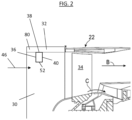
FIG. 2 is a partial cross-sectional view of an inlet of a gas turbine engine including a pressure and temperature probe; -
FIG. 3 is an illustration of a pressure and temperature probe; -
FIG. 4 is an illustration of an end portion of an embodiment of a pressure and temperature probe having an airflow hole axially offset from the sensor; and -
FIG. 5 is an illustration of an end portion of another embodiment of pressure and temperature probe having a sloping end portion surface. - A detailed description of one or more embodiments of the disclosed apparatus and method are presented herein by way of exemplification and not limitation with reference to the Figures.
-
FIG. 1 schematically illustrates agas turbine engine 20. Thegas turbine engine 20 is disclosed herein as a two-spool turbofan that generally incorporates afan section 22, acompressor section 24, acombustor section 26 and aturbine section 28. Alternative engines might include other systems or features. Thefan section 22 drives air along a bypass flow path B in a bypass duct, while thecompressor section 24 drives air along a core flow path C for compression and communication into thecombustor section 26 then expansion through theturbine section 28. Although depicted as a two-spool turbofan gas turbine engine in the disclosed non-limiting embodiment, it should be understood that the concepts described herein are not limited to use with two-spool turbofans as the teachings may be applied to other types of turbine engines including three-spool architectures. Thefan section 22 includes aninlet portion 30, defined by acasing 32 extending upstream of afan 34 of thefan section 22. - Referring to
FIG. 2 , one ormore probes 36 extend radially inwardly toward an engine central longitudinal axis A from aninterior casing surface 38 of thecasing 32. In some embodiments, theprobe 36 is a pressure and temperature probe configured to detect a pressure and temperature at theinlet portion 30. Such a probe is also referred to as a P2T2 probe. Referring toFIG. 3 , theprobe 36 includes abase portion 38 located at theinterior casing surface 80, and anairfoil portion 40 extending from thebase portion 38 radially inwardly toward the engine central longitudinal axis A. Theairfoil portion 40 includes a leadingedge 42 and atrailing edge 44, with the leadingedge 42 located upstream of thetrailing edge 44, relative to a general direction ofairflow 46 into theinlet portion 30. Afirst side 48 and asecond side 50 opposite thefirst side 48 each extend from the leadingedge 42 to thetrailing edge 44. Anend portion 52 of theprobe 36 is located at a distal end of theairfoil portion 40, furthest from thebase portion 38. Atemperature sensor 54 is located in atemperature sensor chamber 56 inside of theairfoil portion 40 of theprobe 36. To provide airflow to thetemperature sensor 54, atemperature airflow hole 58 is provided through theend portion 52 as a primary source ofairflow 60 into thetemperature sensor chamber 56. In some embodiments, thetemperature airflow hole 58 has a circular cross-section. Further, anairflow slot 62 is provided in one or more of thefirst side 48 or thesecond side 50 as a secondary source of airflow to thetemperature sensor chamber 56. In some embodiments, anairflow slot 62 length in a direction from thebase portion 38 toward theend portion 52 is greater than astreamwise airflow slot 62 width. In some embodiments, apressure airflow inlet 82 is located at the leadingedge 42 to admit a pressure measurement airflow into theprobe 36. - Referring now to
FIG. 4 , thetemperature sensor 54 extends along a sensorcentral axis 64 in thetemperature sensor chamber 56. In some embodiments, thetemperature sensor chamber 56 is symmetrical about the sensorcentral axis 64. In some embodiments, thetemperature airflow hole 58 is offset from the sensorcentral axis 64, such that an airflow holecentral axis 66 is not coaxial with the sensorcentral axis 64. In particular, thetemperature airflow hole 58 is offset in a streamwise direction, such that the airflow holecentral axis 66 is nearer to the leadingedge 42 of theairfoil portion 40 than the sensorcentral axis 64. In some embodiments, an offsetdistance 68 is between about 0.5 and 1.0 of a diameter of thetemperature airflow hole 58. The offset of thetemperature airflow hole 58 from the sensorcentral axis 64 improves airflow through thetemperature airflow hole 58 by reducing a turning angle of airflow intotemperature sensor chamber 56 via thetemperature airflow hole 58 to less than 90 degrees, thus improving airflow into thetemperature sensor chamber 56 and response of thetemperature sensor 54. - In another embodiment, illustrated in
FIG. 5 , theend portion 52 includes a firstend portion surface 70 and a secondend portion surface 72. The secondend portion surface 72 is located upstream of thetemperature airflow hole 58 relative to the streamwise direction. The secondend portion surface 72 is sloped away from the firstend portion surface 70 toward thebase portion 38 with a decreasing distance from thetemperature airflow hole 58. Thetemperature airflow hole 58 is located along the secondend portion surface 72. In some embodiments, the secondend portion surface 72 is sloped at aconstant slope angle 74 relative to the firstend portion surface 70, while in other embodiments other configurations such as a slope having a varying angle or a curvilinear sloping of the secondend portion surface 72 may be utilized. In some embodiments, theslope angle 74 is between 0 degrees and 45 degrees, while in other embodiments theslope angle 74 is between 2 degrees and 6 degrees. - The use of the sloping second
end portion surface 72 reduces a turning angle ofairflow 76 into thetemperature airflow hole 58 to below 90 degrees thus resulting in greater airflow through thetemperature airflow hole 58 and into thetemperature sensor chamber 56. In some embodiments, thesloping end portion 72 may be used in combination with the offset of thetemperature airflow hole 58. The configurations disclosed herein improve airflow into thetemperature sensor chamber 56 without reducing aerodynamic performance of theairflow portion 40 of theprobe 36. - The term "about" is intended to include the degree of error associated with measurement of the particular quantity based upon the equipment available at the time of filing the application.
- The terminology used herein is for the purpose of describing particular embodiments only and is not intended to be limiting of the present disclosure. As used herein, the singular forms "a", "an" and "the" are intended to include the plural forms as well, unless the context clearly indicates otherwise. It will be further understood that the terms "comprises" and/or "comprising," when used in this specification, specify the presence of stated features, integers, steps, operations, elements, and/or components, but do not preclude the presence or addition of one or more other features, integers, steps, operations, element components, and/or groups thereof.
Claims (15)
- A pressure and temperature probe of a gas turbine engine (20), comprising:a base portion (38);an end portion surface (52);an airfoil portion (40) extending from the base portion to the end portion surface (52) located at a distal end of the probe, the airfoil portion including a leading edge (42) disposed at an upstream end of the probe relative to a direction of airflow across the probe (46);a temperature sensor (54) disposed in a temperature sensor chamber (56) located in the airfoil portion; anda temperature airflow hole (58) at the distal end of the airfoil portion through the end portion surface (52), the temperature airflow hole being configured to admit an airflow (60) into the temperature sensor chamber around the temperature sensor, the temperature airflow hole configured and positioned such that the airflow admitted via the temperature airflow hole has a turning angle of less than 90 degrees into the temperature sensor chamber.
- The pressure and temperature probe of claim 1, wherein:the temperature sensor extends along a sensor central axis (64) in the temperature sensor chamber; andthe temperature airflow hole has an airflow hole central axis (66) offset from the sensor central axis in a streamwise direction.
- The pressure and temperature probe of claim 2, wherein the airflow hole central axis is disposed upstream of the sensor central axis.
- The pressure and temperature probe of claim 2, wherein the airflow hole central axis is offset from the sensor central axis by between 0.5 and 1.0 times a diameter of the temperature airflow hole.
- The pressure and temperature probe of any preceding claim, wherein the end portion surface includes:a first end portion surface (70); anda second end portion surface (72) sloped toward the base portion relative to the first end portion surface with increasing distance from the leading edge;wherein the temperature airflow hole is disposed at the second end portion surface.
- The pressure and temperature probe of claim 5, wherein the slope is one of a constant angle, a varying angle or a curvilinear slope.
- The pressure and temperature probe of claim 6, wherein a slope angle of the second end portion surface relative to the first end portion surface is between 2 and 6 degrees.
- The pressure and temperature probe of claim 5, wherein:the temperature sensor extends along a sensor central axis in the temperature sensor chamber; andthe temperature airflow hole has an airflow hole central axis offset from the sensor central axis in a streamwise direction.
- The pressure and temperature probe of any preceding claim, further comprising a sensor slot disposed along the airfoil portion as a secondary source of airflow to the temperature sensor chamber.
- An inlet of a gas turbine engine (20), comprising:
a casing (32) having a casing inner wall thereby defining an inlet flowpath; and
one or more pressure and temperature probes of any preceding claim extending inwardly from the casing inner wall toward an engine central longitudinal axis (A). - The inlet of claim 10, wherein:the temperature sensor extends along a sensor central axis in the temperature sensor chamber; andthe temperature airflow hole has an airflow hole central axis offset from the sensor central axis in a streamwise direction such that the airflow hole central axis is disposed upstream of the sensor central axis.
- The inlet of claim 11, wherein the airflow hole central axis is offset from the sensor central axis by between 0.5 and 1.0 times a diameter of the temperature airflow hole.
- The inlet of claim 10, wherein the end portion surface includes:a first end portion surface; anda second end portion surface sloped toward the base portion relative to the first end portion surface with increasing distance from the leading edge;wherein the temperature airflow hole is disposed at the second end portion surface.
- The inlet of claim 13, wherein the slope is one of a constant angle, a varying angle or a curvilinear slope, and/or
wherein a slope angle of the second end portion surface relative to the first end portion surface is between 2 and 6 degrees. - A gas turbine engine (20), comprising:a fan (34) driven by a turbine of the gas turbine engine; andthe inlet of any of claims 10 to 14 disposed upstream of the fan.
Applications Claiming Priority (1)
| Application Number | Priority Date | Filing Date | Title |
|---|---|---|---|
| IN201911024033 | 2019-06-17 |
Publications (2)
| Publication Number | Publication Date |
|---|---|
| EP3754315A1 EP3754315A1 (en) | 2020-12-23 |
| EP3754315B1 true EP3754315B1 (en) | 2025-04-30 |
Family
ID=68731796
Family Applications (1)
| Application Number | Title | Priority Date | Filing Date |
|---|---|---|---|
| EP19212065.7A Active EP3754315B1 (en) | 2019-06-17 | 2019-11-28 | ENGINE INTAKE PRESSURE AND TEMPERATURE SENSOR PERFORMANCE IMPROVEMENT |
Country Status (3)
| Country | Link |
|---|---|
| US (1) | US11578655B2 (en) |
| EP (1) | EP3754315B1 (en) |
| CA (1) | CA3064621A1 (en) |
Families Citing this family (1)
| Publication number | Priority date | Publication date | Assignee | Title |
|---|---|---|---|---|
| US11480475B2 (en) * | 2019-07-03 | 2022-10-25 | Pratt & Whitney Canada Corp. | Method and system for measuring temperature in a gas turbine engine |
Family Cites Families (19)
| Publication number | Priority date | Publication date | Assignee | Title |
|---|---|---|---|---|
| US3348414A (en) * | 1964-10-09 | 1967-10-24 | Gen Electric | Gas turbine temperature measuring apparatus |
| US3451268A (en) * | 1967-05-18 | 1969-06-24 | Gen Motors Corp | Cooled thermocouple |
| US4605315A (en) * | 1984-12-13 | 1986-08-12 | United Technologies Corporation | Temperature probe for rotating machinery |
| US4765751A (en) * | 1987-06-29 | 1988-08-23 | United Technologies Corporation | Temperature and pressure probe |
| FR2840984B1 (en) * | 2002-06-14 | 2005-03-18 | Auxitrol Sa | IMPROVEMENTS IN SENSORS FOR MEASURING AT LEAST ONE PHYSICAL PARAMETER ON A FLUID FLOW AND PARTICULARLY IMPROVEMENTS IN SENSORS DEGIVEN FROM TOTAL AIR TEMPERATURE |
| US20040177683A1 (en) * | 2003-03-13 | 2004-09-16 | Ice Paul A. | Total air temperature probe providing a secondary sensor measurement chamber |
| US7328623B2 (en) * | 2006-03-20 | 2008-02-12 | General Electric Company | Temperature and/or pressure sensor assembly |
| US7845222B1 (en) * | 2010-02-01 | 2010-12-07 | Unison Industries, Llc | Method and assembly for sensing process parameters |
| US8517604B2 (en) * | 2011-12-21 | 2013-08-27 | Unison Industries, Llc | Apparatus for determining an air temperature |
| US9310256B2 (en) * | 2012-05-22 | 2016-04-12 | Unison Industries, Llc | Process sensor with convective increaser |
| US9429481B2 (en) * | 2012-08-31 | 2016-08-30 | Ametek, Inc. | Apparatus and method for measuring total air temperature within an airflow |
| US9116051B2 (en) | 2013-03-07 | 2015-08-25 | United Technologies Corporation | Actively cooled gas turbine sensor probe housing |
| US9488534B2 (en) * | 2013-09-05 | 2016-11-08 | Rosemount Aerospace Inc. | Supercritical total air temperature sensors |
| US9624787B2 (en) * | 2013-09-30 | 2017-04-18 | Rosemount Aerospace Inc. | Total air temperature sensors |
| US9631985B2 (en) * | 2013-10-16 | 2017-04-25 | Rosemount Aerospace Inc. | Total air temperature sensors |
| US10585007B2 (en) * | 2017-06-22 | 2020-03-10 | Unison Industries, Llc | Air temperature sensor |
| US10605675B2 (en) * | 2017-06-22 | 2020-03-31 | Unison Industries, Llc | Air temperature sensor |
| US10578498B2 (en) * | 2017-06-22 | 2020-03-03 | Unison Industries, Llc | Air temperature sensor |
| US10598041B2 (en) * | 2017-10-20 | 2020-03-24 | United Technologies Corporation | Inlet performance measurement system for gas turbine engine |
-
2019
- 2019-11-26 US US16/695,945 patent/US11578655B2/en active Active
- 2019-11-28 EP EP19212065.7A patent/EP3754315B1/en active Active
- 2019-12-10 CA CA3064621A patent/CA3064621A1/en active Pending
Also Published As
| Publication number | Publication date |
|---|---|
| US20200392896A1 (en) | 2020-12-17 |
| CA3064621A1 (en) | 2020-12-17 |
| EP3754315A1 (en) | 2020-12-23 |
| US11578655B2 (en) | 2023-02-14 |
| BR102019026232A2 (en) | 2020-12-29 |
Similar Documents
| Publication | Publication Date | Title |
|---|---|---|
| US4244222A (en) | Instrumentation probe | |
| EP3543473B1 (en) | Gas turbine engine having a splitter with a flush-mounted combined static pressure and temperature probe | |
| US9970316B2 (en) | Instrumented airfoil | |
| US20140205438A1 (en) | Relationship between fan and primary exhaust stream velocities in a geared gas turbine engine | |
| US12553348B2 (en) | Airfoil with arced baffle | |
| EP3879250B1 (en) | Flush-mount combined static pressure and temperature probe with flow enhancement feature | |
| JPS6349164B2 (en) | ||
| EP3221564B1 (en) | Turbomachine including a vane and method of assembling such turbomachine | |
| EP3712388B1 (en) | Apparatus and method and system for inspecting a component of a gas turbine engine | |
| EP3739171B1 (en) | Vane forward rail for gas turbine engine assembly | |
| EP3808941A1 (en) | Angled tip rods in a casting core for a turbine blade | |
| US11578655B2 (en) | Engine intake pressure and temperature sensor performance enhancement | |
| US20210003458A1 (en) | Method and system for measuring temperature in a gas turbine engine | |
| US20220025769A1 (en) | Angled tip rods | |
| US11002147B2 (en) | Fixed vane pack retaining ring | |
| EP3670835A1 (en) | Gas turbine engine rotor blade with a local pressure side blade tip lean | |
| CN109115370A (en) | Air-temperature sensor and the method for reducing error | |
| EP3693544A1 (en) | Gas turbine tangential on board injector with a full sweeping nozzle | |
| EP3483393B1 (en) | Fan assembly of a gas turbine engine with a tip shroud | |
| US10808559B2 (en) | Guide vane retention assembly for gas turbine engine | |
| BR102019026232B1 (en) | PRESSURE AND TEMPERATURE PROBE, INPUT OF A GAS TURBINE ENGINE, AND, GAS TURBINE ENGINE | |
| EP3667030B1 (en) | Modular variable vane assembly for a compressor section of a gas turbine engine | |
| EP3428404B1 (en) | Stator vane assembly for a gas turbine engine |
Legal Events
| Date | Code | Title | Description |
|---|---|---|---|
| PUAI | Public reference made under article 153(3) epc to a published international application that has entered the european phase |
Free format text: ORIGINAL CODE: 0009012 |
|
| STAA | Information on the status of an ep patent application or granted ep patent |
Free format text: STATUS: THE APPLICATION HAS BEEN PUBLISHED |
|
| AK | Designated contracting states |
Kind code of ref document: A1 Designated state(s): AL AT BE BG CH CY CZ DE DK EE ES FI FR GB GR HR HU IE IS IT LI LT LU LV MC MK MT NL NO PL PT RO RS SE SI SK SM TR |
|
| AX | Request for extension of the european patent |
Extension state: BA ME |
|
| STAA | Information on the status of an ep patent application or granted ep patent |
Free format text: STATUS: REQUEST FOR EXAMINATION WAS MADE |
|
| 17P | Request for examination filed |
Effective date: 20210623 |
|
| RBV | Designated contracting states (corrected) |
Designated state(s): AL AT BE BG CH CY CZ DE DK EE ES FI FR GB GR HR HU IE IS IT LI LT LU LV MC MK MT NL NO PL PT RO RS SE SI SK SM TR |
|
| STAA | Information on the status of an ep patent application or granted ep patent |
Free format text: STATUS: EXAMINATION IS IN PROGRESS |
|
| 17Q | First examination report despatched |
Effective date: 20221102 |
|
| RAP3 | Party data changed (applicant data changed or rights of an application transferred) |
Owner name: ROSEMOUNT AEROSPACE INC. |
|
| RIN1 | Information on inventor provided before grant (corrected) |
Inventor name: THANGAVEL, SATHISH Inventor name: CUSHER, AARON A. Inventor name: HOLL, ANDY |
|
| GRAP | Despatch of communication of intention to grant a patent |
Free format text: ORIGINAL CODE: EPIDOSNIGR1 |
|
| STAA | Information on the status of an ep patent application or granted ep patent |
Free format text: STATUS: GRANT OF PATENT IS INTENDED |
|
| INTG | Intention to grant announced |
Effective date: 20241120 |
|
| GRAS | Grant fee paid |
Free format text: ORIGINAL CODE: EPIDOSNIGR3 |
|
| GRAA | (expected) grant |
Free format text: ORIGINAL CODE: 0009210 |
|
| STAA | Information on the status of an ep patent application or granted ep patent |
Free format text: STATUS: THE PATENT HAS BEEN GRANTED |
|
| AK | Designated contracting states |
Kind code of ref document: B1 Designated state(s): AL AT BE BG CH CY CZ DE DK EE ES FI FR GB GR HR HU IE IS IT LI LT LU LV MC MK MT NL NO PL PT RO RS SE SI SK SM TR |
|
| REG | Reference to a national code |
Ref country code: CH Ref legal event code: EP Ref country code: GB Ref legal event code: FG4D |
|
| REG | Reference to a national code |
Ref country code: IE Ref legal event code: FG4D |
|
| REG | Reference to a national code |
Ref country code: DE Ref legal event code: R096 Ref document number: 602019069270 Country of ref document: DE |
|
| REG | Reference to a national code |
Ref country code: NL Ref legal event code: MP Effective date: 20250430 |
|
| REG | Reference to a national code |
Ref country code: AT Ref legal event code: MK05 Ref document number: 1790409 Country of ref document: AT Kind code of ref document: T Effective date: 20250430 |
|
| PG25 | Lapsed in a contracting state [announced via postgrant information from national office to epo] |
Ref country code: PT Free format text: LAPSE BECAUSE OF FAILURE TO SUBMIT A TRANSLATION OF THE DESCRIPTION OR TO PAY THE FEE WITHIN THE PRESCRIBED TIME-LIMIT Effective date: 20250901 Ref country code: ES Free format text: LAPSE BECAUSE OF FAILURE TO SUBMIT A TRANSLATION OF THE DESCRIPTION OR TO PAY THE FEE WITHIN THE PRESCRIBED TIME-LIMIT Effective date: 20250430 Ref country code: FI Free format text: LAPSE BECAUSE OF FAILURE TO SUBMIT A TRANSLATION OF THE DESCRIPTION OR TO PAY THE FEE WITHIN THE PRESCRIBED TIME-LIMIT Effective date: 20250430 |
|
| REG | Reference to a national code |
Ref country code: LT Ref legal event code: MG9D |
|
| PG25 | Lapsed in a contracting state [announced via postgrant information from national office to epo] |
Ref country code: GR Free format text: LAPSE BECAUSE OF FAILURE TO SUBMIT A TRANSLATION OF THE DESCRIPTION OR TO PAY THE FEE WITHIN THE PRESCRIBED TIME-LIMIT Effective date: 20250731 Ref country code: NO Free format text: LAPSE BECAUSE OF FAILURE TO SUBMIT A TRANSLATION OF THE DESCRIPTION OR TO PAY THE FEE WITHIN THE PRESCRIBED TIME-LIMIT Effective date: 20250730 |
|
| PG25 | Lapsed in a contracting state [announced via postgrant information from national office to epo] |
Ref country code: PL Free format text: LAPSE BECAUSE OF FAILURE TO SUBMIT A TRANSLATION OF THE DESCRIPTION OR TO PAY THE FEE WITHIN THE PRESCRIBED TIME-LIMIT Effective date: 20250430 Ref country code: NL Free format text: LAPSE BECAUSE OF FAILURE TO SUBMIT A TRANSLATION OF THE DESCRIPTION OR TO PAY THE FEE WITHIN THE PRESCRIBED TIME-LIMIT Effective date: 20250430 |
|
| PG25 | Lapsed in a contracting state [announced via postgrant information from national office to epo] |
Ref country code: BG Free format text: LAPSE BECAUSE OF FAILURE TO SUBMIT A TRANSLATION OF THE DESCRIPTION OR TO PAY THE FEE WITHIN THE PRESCRIBED TIME-LIMIT Effective date: 20250430 |
|
| PG25 | Lapsed in a contracting state [announced via postgrant information from national office to epo] |
Ref country code: HR Free format text: LAPSE BECAUSE OF FAILURE TO SUBMIT A TRANSLATION OF THE DESCRIPTION OR TO PAY THE FEE WITHIN THE PRESCRIBED TIME-LIMIT Effective date: 20250430 |
|
| PG25 | Lapsed in a contracting state [announced via postgrant information from national office to epo] |
Ref country code: AT Free format text: LAPSE BECAUSE OF FAILURE TO SUBMIT A TRANSLATION OF THE DESCRIPTION OR TO PAY THE FEE WITHIN THE PRESCRIBED TIME-LIMIT Effective date: 20250430 |
|
| PG25 | Lapsed in a contracting state [announced via postgrant information from national office to epo] |
Ref country code: RS Free format text: LAPSE BECAUSE OF FAILURE TO SUBMIT A TRANSLATION OF THE DESCRIPTION OR TO PAY THE FEE WITHIN THE PRESCRIBED TIME-LIMIT Effective date: 20250731 |
|
| PG25 | Lapsed in a contracting state [announced via postgrant information from national office to epo] |
Ref country code: IS Free format text: LAPSE BECAUSE OF FAILURE TO SUBMIT A TRANSLATION OF THE DESCRIPTION OR TO PAY THE FEE WITHIN THE PRESCRIBED TIME-LIMIT Effective date: 20250830 |
|
| PG25 | Lapsed in a contracting state [announced via postgrant information from national office to epo] |
Ref country code: LV Free format text: LAPSE BECAUSE OF FAILURE TO SUBMIT A TRANSLATION OF THE DESCRIPTION OR TO PAY THE FEE WITHIN THE PRESCRIBED TIME-LIMIT Effective date: 20250430 |
|
| PGFP | Annual fee paid to national office [announced via postgrant information from national office to epo] |
Ref country code: DE Payment date: 20251022 Year of fee payment: 7 |
|
| PGFP | Annual fee paid to national office [announced via postgrant information from national office to epo] |
Ref country code: GB Payment date: 20251022 Year of fee payment: 7 |
|
| PG25 | Lapsed in a contracting state [announced via postgrant information from national office to epo] |
Ref country code: SM Free format text: LAPSE BECAUSE OF FAILURE TO SUBMIT A TRANSLATION OF THE DESCRIPTION OR TO PAY THE FEE WITHIN THE PRESCRIBED TIME-LIMIT Effective date: 20250430 Ref country code: DK Free format text: LAPSE BECAUSE OF FAILURE TO SUBMIT A TRANSLATION OF THE DESCRIPTION OR TO PAY THE FEE WITHIN THE PRESCRIBED TIME-LIMIT Effective date: 20250430 |
|
| PGFP | Annual fee paid to national office [announced via postgrant information from national office to epo] |
Ref country code: FR Payment date: 20251022 Year of fee payment: 7 |
|
| PG25 | Lapsed in a contracting state [announced via postgrant information from national office to epo] |
Ref country code: CZ Free format text: LAPSE BECAUSE OF FAILURE TO SUBMIT A TRANSLATION OF THE DESCRIPTION OR TO PAY THE FEE WITHIN THE PRESCRIBED TIME-LIMIT Effective date: 20250430 |
|
| PG25 | Lapsed in a contracting state [announced via postgrant information from national office to epo] |
Ref country code: EE Free format text: LAPSE BECAUSE OF FAILURE TO SUBMIT A TRANSLATION OF THE DESCRIPTION OR TO PAY THE FEE WITHIN THE PRESCRIBED TIME-LIMIT Effective date: 20250430 |
|
| PG25 | Lapsed in a contracting state [announced via postgrant information from national office to epo] |
Ref country code: RO Free format text: LAPSE BECAUSE OF FAILURE TO SUBMIT A TRANSLATION OF THE DESCRIPTION OR TO PAY THE FEE WITHIN THE PRESCRIBED TIME-LIMIT Effective date: 20250430 Ref country code: SK Free format text: LAPSE BECAUSE OF FAILURE TO SUBMIT A TRANSLATION OF THE DESCRIPTION OR TO PAY THE FEE WITHIN THE PRESCRIBED TIME-LIMIT Effective date: 20250430 |
|
| PG25 | Lapsed in a contracting state [announced via postgrant information from national office to epo] |
Ref country code: IT Free format text: LAPSE BECAUSE OF FAILURE TO SUBMIT A TRANSLATION OF THE DESCRIPTION OR TO PAY THE FEE WITHIN THE PRESCRIBED TIME-LIMIT Effective date: 20250430 |
|
| REG | Reference to a national code |
Ref country code: DE Ref legal event code: R097 Ref document number: 602019069270 Country of ref document: DE |
|
| PLBE | No opposition filed within time limit |
Free format text: ORIGINAL CODE: 0009261 |
|
| STAA | Information on the status of an ep patent application or granted ep patent |
Free format text: STATUS: NO OPPOSITION FILED WITHIN TIME LIMIT |
|
| REG | Reference to a national code |
Ref country code: CH Ref legal event code: L10 Free format text: ST27 STATUS EVENT CODE: U-0-0-L10-L00 (AS PROVIDED BY THE NATIONAL OFFICE) Effective date: 20260311 |
|
| 26N | No opposition filed |
Effective date: 20260202 |