EP3754301B1 - Cavity enhanced optical pumping of solid state ring laser gyroscope - Google Patents
Cavity enhanced optical pumping of solid state ring laser gyroscope Download PDFInfo
- Publication number
- EP3754301B1 EP3754301B1 EP20180111.5A EP20180111A EP3754301B1 EP 3754301 B1 EP3754301 B1 EP 3754301B1 EP 20180111 A EP20180111 A EP 20180111A EP 3754301 B1 EP3754301 B1 EP 3754301B1
- Authority
- EP
- European Patent Office
- Prior art keywords
- wavelength
- light
- mirror
- cavity
- primary
- Prior art date
- Legal status (The legal status is an assumption and is not a legal conclusion. Google has not performed a legal analysis and makes no representation as to the accuracy of the status listed.)
- Active
Links
Images

Classifications
-
- G—PHYSICS
- G01—MEASURING; TESTING
- G01C—MEASURING DISTANCES, LEVELS OR BEARINGS; SURVEYING; NAVIGATION; GYROSCOPIC INSTRUMENTS; PHOTOGRAMMETRY OR VIDEOGRAMMETRY
- G01C19/00—Gyroscopes; Turn-sensitive devices using vibrating masses; Turn-sensitive devices without moving masses; Measuring angular rate using gyroscopic effects
- G01C19/58—Turn-sensitive devices without moving masses
- G01C19/64—Gyrometers using the Sagnac effect, i.e. rotation-induced shifts between counter-rotating electromagnetic beams
- G01C19/66—Ring laser gyrometers
- G01C19/661—Ring laser gyrometers details
-
- H—ELECTRICITY
- H01—ELECTRIC ELEMENTS
- H01S—DEVICES USING THE PROCESS OF LIGHT AMPLIFICATION BY STIMULATED EMISSION OF RADIATION [LASER] TO AMPLIFY OR GENERATE LIGHT; DEVICES USING STIMULATED EMISSION OF ELECTROMAGNETIC RADIATION IN WAVE RANGES OTHER THAN OPTICAL
- H01S3/00—Lasers, i.e. devices using stimulated emission of electromagnetic radiation in the infrared, visible or ultraviolet wave range
- H01S3/05—Construction or shape of optical resonators; Accommodation of active medium therein; Shape of active medium
- H01S3/06—Construction or shape of active medium
- H01S3/0602—Crystal lasers or glass lasers
- H01S3/0604—Crystal lasers or glass lasers in the form of a plate or disc
-
- H—ELECTRICITY
- H01—ELECTRIC ELEMENTS
- H01S—DEVICES USING THE PROCESS OF LIGHT AMPLIFICATION BY STIMULATED EMISSION OF RADIATION [LASER] TO AMPLIFY OR GENERATE LIGHT; DEVICES USING STIMULATED EMISSION OF ELECTROMAGNETIC RADIATION IN WAVE RANGES OTHER THAN OPTICAL
- H01S3/00—Lasers, i.e. devices using stimulated emission of electromagnetic radiation in the infrared, visible or ultraviolet wave range
- H01S3/05—Construction or shape of optical resonators; Accommodation of active medium therein; Shape of active medium
- H01S3/06—Construction or shape of active medium
- H01S3/0619—Coatings, e.g. AR, HR, passivation layer
- H01S3/0621—Coatings on the end-faces, e.g. input/output surfaces of the laser light
-
- H—ELECTRICITY
- H01—ELECTRIC ELEMENTS
- H01S—DEVICES USING THE PROCESS OF LIGHT AMPLIFICATION BY STIMULATED EMISSION OF RADIATION [LASER] TO AMPLIFY OR GENERATE LIGHT; DEVICES USING STIMULATED EMISSION OF ELECTROMAGNETIC RADIATION IN WAVE RANGES OTHER THAN OPTICAL
- H01S3/00—Lasers, i.e. devices using stimulated emission of electromagnetic radiation in the infrared, visible or ultraviolet wave range
- H01S3/05—Construction or shape of optical resonators; Accommodation of active medium therein; Shape of active medium
- H01S3/08—Construction or shape of optical resonators or components thereof
- H01S3/081—Construction or shape of optical resonators or components thereof comprising three or more reflectors
- H01S3/0813—Configuration of resonator
-
- H—ELECTRICITY
- H01—ELECTRIC ELEMENTS
- H01S—DEVICES USING THE PROCESS OF LIGHT AMPLIFICATION BY STIMULATED EMISSION OF RADIATION [LASER] TO AMPLIFY OR GENERATE LIGHT; DEVICES USING STIMULATED EMISSION OF ELECTROMAGNETIC RADIATION IN WAVE RANGES OTHER THAN OPTICAL
- H01S3/00—Lasers, i.e. devices using stimulated emission of electromagnetic radiation in the infrared, visible or ultraviolet wave range
- H01S3/05—Construction or shape of optical resonators; Accommodation of active medium therein; Shape of active medium
- H01S3/08—Construction or shape of optical resonators or components thereof
- H01S3/081—Construction or shape of optical resonators or components thereof comprising three or more reflectors
- H01S3/083—Ring lasers
-
- H—ELECTRICITY
- H01—ELECTRIC ELEMENTS
- H01S—DEVICES USING THE PROCESS OF LIGHT AMPLIFICATION BY STIMULATED EMISSION OF RADIATION [LASER] TO AMPLIFY OR GENERATE LIGHT; DEVICES USING STIMULATED EMISSION OF ELECTROMAGNETIC RADIATION IN WAVE RANGES OTHER THAN OPTICAL
- H01S3/00—Lasers, i.e. devices using stimulated emission of electromagnetic radiation in the infrared, visible or ultraviolet wave range
- H01S3/09—Processes or apparatus for excitation, e.g. pumping
- H01S3/091—Processes or apparatus for excitation, e.g. pumping using optical pumping
-
- H—ELECTRICITY
- H01—ELECTRIC ELEMENTS
- H01S—DEVICES USING THE PROCESS OF LIGHT AMPLIFICATION BY STIMULATED EMISSION OF RADIATION [LASER] TO AMPLIFY OR GENERATE LIGHT; DEVICES USING STIMULATED EMISSION OF ELECTROMAGNETIC RADIATION IN WAVE RANGES OTHER THAN OPTICAL
- H01S3/00—Lasers, i.e. devices using stimulated emission of electromagnetic radiation in the infrared, visible or ultraviolet wave range
- H01S3/09—Processes or apparatus for excitation, e.g. pumping
- H01S3/091—Processes or apparatus for excitation, e.g. pumping using optical pumping
- H01S3/094—Processes or apparatus for excitation, e.g. pumping using optical pumping by coherent light
- H01S3/094084—Processes or apparatus for excitation, e.g. pumping using optical pumping by coherent light with pump light recycling, i.e. with reinjection of the unused pump light, e.g. by reflectors or circulators
-
- H—ELECTRICITY
- H01—ELECTRIC ELEMENTS
- H01S—DEVICES USING THE PROCESS OF LIGHT AMPLIFICATION BY STIMULATED EMISSION OF RADIATION [LASER] TO AMPLIFY OR GENERATE LIGHT; DEVICES USING STIMULATED EMISSION OF ELECTROMAGNETIC RADIATION IN WAVE RANGES OTHER THAN OPTICAL
- H01S3/00—Lasers, i.e. devices using stimulated emission of electromagnetic radiation in the infrared, visible or ultraviolet wave range
- H01S3/09—Processes or apparatus for excitation, e.g. pumping
- H01S3/091—Processes or apparatus for excitation, e.g. pumping using optical pumping
- H01S3/094—Processes or apparatus for excitation, e.g. pumping using optical pumping by coherent light
- H01S3/094038—End pumping
-
- H—ELECTRICITY
- H01—ELECTRIC ELEMENTS
- H01S—DEVICES USING THE PROCESS OF LIGHT AMPLIFICATION BY STIMULATED EMISSION OF RADIATION [LASER] TO AMPLIFY OR GENERATE LIGHT; DEVICES USING STIMULATED EMISSION OF ELECTROMAGNETIC RADIATION IN WAVE RANGES OTHER THAN OPTICAL
- H01S3/00—Lasers, i.e. devices using stimulated emission of electromagnetic radiation in the infrared, visible or ultraviolet wave range
- H01S3/14—Lasers, i.e. devices using stimulated emission of electromagnetic radiation in the infrared, visible or ultraviolet wave range characterised by the material used as the active medium
- H01S3/16—Solid materials
- H01S3/1601—Solid materials characterised by an active (lasing) ion
- H01S3/1603—Solid materials characterised by an active (lasing) ion rare earth
-
- H—ELECTRICITY
- H01—ELECTRIC ELEMENTS
- H01S—DEVICES USING THE PROCESS OF LIGHT AMPLIFICATION BY STIMULATED EMISSION OF RADIATION [LASER] TO AMPLIFY OR GENERATE LIGHT; DEVICES USING STIMULATED EMISSION OF ELECTROMAGNETIC RADIATION IN WAVE RANGES OTHER THAN OPTICAL
- H01S3/00—Lasers, i.e. devices using stimulated emission of electromagnetic radiation in the infrared, visible or ultraviolet wave range
- H01S3/14—Lasers, i.e. devices using stimulated emission of electromagnetic radiation in the infrared, visible or ultraviolet wave range characterised by the material used as the active medium
- H01S3/16—Solid materials
- H01S3/1601—Solid materials characterised by an active (lasing) ion
- H01S3/1603—Solid materials characterised by an active (lasing) ion rare earth
- H01S3/1611—Solid materials characterised by an active (lasing) ion rare earth neodymium
-
- H—ELECTRICITY
- H01—ELECTRIC ELEMENTS
- H01S—DEVICES USING THE PROCESS OF LIGHT AMPLIFICATION BY STIMULATED EMISSION OF RADIATION [LASER] TO AMPLIFY OR GENERATE LIGHT; DEVICES USING STIMULATED EMISSION OF ELECTROMAGNETIC RADIATION IN WAVE RANGES OTHER THAN OPTICAL
- H01S3/00—Lasers, i.e. devices using stimulated emission of electromagnetic radiation in the infrared, visible or ultraviolet wave range
- H01S3/14—Lasers, i.e. devices using stimulated emission of electromagnetic radiation in the infrared, visible or ultraviolet wave range characterised by the material used as the active medium
- H01S3/16—Solid materials
- H01S3/17—Solid materials amorphous, e.g. glass
Definitions
- RLGs Ring Laser Gyroscopes
- RLGs utilize a low pressure Helium-Neon gas discharge for an active gain medium.
- the existing Helium-Neon gas discharge RLGs have performed suitably in the inertial navigation and other measurement fields, these Helium-Neon gas discharge RLGs can have lifetime limitations and are expensive to manufacture.
- a solid-state gain medium RLG can provide significant savings over Helium-Neon gas discharge RLGs in terms of labor and fabrication costs. Also, this solid-state gain medium RLG may provide technical advantages over Helium-Neon gas discharge RLGs in terms of increased longevity.
- An example of a solid-state gain medium used for the cavity gain for the solid-state RLG is a layer of Neodymium-doped silica (Nd-doped SiO 2 ). This layer of Nd-doped silica may be deposited onto the top layer or may be incorporated within the layers of a highly reflective, multilayer dielectric mirror in the cavity of the RLG. See for an example US 2017/373458 A1 .
- Embodiments provide an RLG that implements a pumping cavity in an efficient, effective and compact configuration.
- a ring laser gyroscope including a light source, a plurality of primary cavity mirrors and a pumping mirror.
- the light source is configured to generate light of a first wavelength.
- the plurality primary cavity mirrors are configured to route light of a second wavelength around a primary cavity to a readout device.
- One primary cavity mirror of the plurality of primary cavity mirrors includes a gain medium.
- the pumping mirror and the one primary cavity mirror including the gain medium is positioned and configured to reflect the light of the first wavelength back and forth in a pumping cavity through the gain medium, wherein the light of the first wavelength stimulates the gain medium to generate the light of the second wavelength that are reflected around the primary cavity to the readout device.
- an enhanced optical solid state optical pumping system in another example embodiment, includes a light source, a plurality of primary cavity mirrors and a pumping mirror.
- the light source is configured to generate light of a first wavelength.
- the plurality of primary cavity mirrors are configured to route light of a second wavelength through a primary cavity.
- One primary cavity mirror of the plurality of mirrors includes a gain medium, a first portion and a second portion. The first portion is configured to reflect the light of the first wavelength. The second portion is configured to reflect the light of the second wavelength.
- the pumping mirror and the one primary cavity mirror including the gain medium are positioned and configured to reflect the light of the first wavelength back and forth in a pumping cavity, wherein the light of the first wavelength stimulate the gain medium to generate the light of the second wavelength that are routed through the primary cavity.
- a method of operating a laser ring gyroscope includes directing light of a first wavelength into a pumping cavity that includes at pumping mirror and first primary mirror, wherein the pumping mirror and the first primary mirror are configured and positioned to reflect the light of the first wavelength back and forth; stimulating a gain medium associated with the first primary mirror with the light of the first wavelength to generate light of a second wavelength; directing the generated light of the second wavelength around a primary cavity in opposite directions with at least the first primary mirror; reading at least portions of the light of the second wavelength passing through a measurement mirror in the primary cavity; and determining rotation based on the reading of the light of the second wavelengths.
- Embodiments provide a laser assembly with enhanced optical pumping that includes a pumping cavity formed in part with a mirror used for a primary cavity.
- a pumping cavity formed in part with a mirror used for a primary cavity.
- embodiments include a primary cavity and a pumping cavity.
- embodiments employ a thin layer of gain medium that is deposited on the shared mirror that is used to form the pumping cavity.
- the pumping cavity is located within an outline of the primary cavity to reduce the overall size of the system. If the pumping cavity (or gain cavity) is in resonance, the pumping cavity generates intra-cavity, power at the gain medium at much greater than an originating pump laser power is achieved.
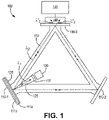
- FIG. 1 illustrates an example of a ring laser gyroscope (RLG) 100 of one embodiment.
- the gyroscope 100 is a solid-state ring laser gyroscope that includes a pumping cavity that passes light of a first wavelength ⁇ 1 through a gain medium to stimulate atoms in the gain medium into an excited state to generate light of a second wavelength ⁇ 2 that is passed through a primary cavity.
- RLG 100 of Figure 1 includes three primary cavity mirrors 110-1, 110-2 and 110-3 that reflect light of a second wavelength ⁇ 2 around a primary cavity 150 in a closed loop pathway.
- the closed pathway is illustrated as being substantially triangle in this example with the primary cavity mirrors 110-1, 110-2 and 110-3 positioned at the respective corners. This configuration is a non-limiting example. In other examples, other shapes of closed pathway may be formed with any number of mirrors needed to direct light though the primary (or main) cavity.
- the primary cavity mirrors 100-1, 110-2 and 110-3 in one embodiment are highly reflective multilayer mirrors positioned to reflect light having the second wavelength ⁇ 2 to the third mirror 110-3 (measurement mirror) where at least portions of counter propagating light of the second wavelengths ⁇ 2 ′ and ⁇ 2 " passing through the measurement mirror 110-3 are read by a readout device 140.
- the light of the second wavelength ⁇ 2 are reflected around the primary cavity 150 in opposite directions via the mirrors 110-1 through 110-3.
- the readout device 140 may include one or more photodetectors that are in optical communication with the closed loop pathway of the primary cavity though mirror 110-3.
- the readout device 140 is communicatively coupled to a processing unit 130 that processes the signals to measure angular motion or rotation.
- a pumping cavity 125 and gain medium 128 that is incorporated with a mirror, such as primary cavity mirror 110-1, is used to create an RLG 100.
- a light source 120 (which may be a laser source in some embodiments) generates light at a first wavelength ⁇ 1 .
- the fourth mirror 118 (pumping mirror) partially reflective to allow the light of the first wavelength ⁇ 1 to pass through a fourth mirror 118 (pumping mirror) into the pumping cavity 125.
- the pumping cavity 125 is set up as a "resonant cavity with pathway control.
- the light source 120 is positioned to provide the light of the first wavelength ⁇ 1 in an off-axis orientation onto the fourth mirror 118 with coating 111a of mirror 110-1 reflecting the light of the first wavelength ⁇ 1 from the light source 120 to mirror 118 to ensure multiple passes.
- an aperture in at least a coating or through the fourth mirror 118 provides the path to launch the light of the first wavelength ⁇ 1 into the pumping cavity 125.
- the pumping cavity 125 in this embodiment is located within an inner boundary of the primary cavity 150 that includes the shared mirror 110-1. The location of the pumping cavity 125 and fourth mirror 118 and laser source 120 with the inner boundary of the primary cavity 150 allows for the RLG 100 to have a compact overall size.
- the use of the primary cavity mirror 110-1 reduces the number of mirrors needed for the RLG 100 with a pumping cavity 125.
- the gain medium 128 comprises a rare-earth doped gain medium.
- the gain medium 128 is few wavelengths thick. In other embodiments the layer may be thicker.
- the gain medium may be formed with a thin, amorphous film of rare-earth doped glassy material.
- the layer of gain medium 128 may include a plurality of layers or sub-layers of gain medium 128 of a desired property.
- the gain medium 128 is formed on the mirror via deposition. Further in an embodiment the gain medium 128 incorporated by laminating process. Further still in some embodiments the gain medium 128 is formed within the mirror 110-1. Hence, embodiments are not limited to a specific location or type of formation of the gain medium 128 that is incorporated with the mirror 110-1.
- the shared mirror 110-1 in the example embodiment is illustrated as including a first portion 111a and a second portion 111b.
- the first and second portions 111a and 111b may be made of a plurality of layers.
- the first portion 111a is designed to reflect one of the light of the first wavelength ⁇ 1 or the second wavelength ⁇ 2 while the second portion 111b is designed to reflect the other of the light of the first wavelength ⁇ 1 or the second wavelength ⁇ 2 .
- the first portion 111a of the mirror 110-1 may be designed to reflect the light of the first wavelength ⁇ 1 while the second portion 11 1b of the mirror 110-1 is designed to reflect the light of the second wavelength ⁇ 2 .
- the light of the first wave length ⁇ 1 within the pumping cavity 125 is reflected back and forth between the first portion 111a of the mirror 110-1 and the fourth mirror 118.
- This pumping of the light back and forth provides a greater chance that the light of the first wave length ⁇ 1 will stimulate ions in the solid state gain medium 128 into excited states that generate the light (laser beam) of the second wave length which travels around the primary cavity 150 via the mirrors 110-1 through 110-3.
- the generated light of the second wavelength ⁇ 2 travels in both directions around the primary cavity 150 with, as discussed above, at least portions of counter propagating light of the second wavelengths ⁇ 2 ′ and ⁇ 2 " passing through the measurement mirror 110-3 where it is read by the readout device 140.
- mirror 110-1 in embodiments is being used in two different cavities, the primary cavity 150 and the pumping cavity 125.
- One of the benefits of using this configuration with a pumping cavity 125 is that less optical power is needed from the light source 120 because the highly reflective mirrors 118 and 110-1 at the first wavelength ⁇ 1 create a reflective cavity that confines the beam within the cavity 125 enabling multiple reflections.
- This is configuration is more efficient at stimulating ions in the solid state gain medium 128.
- the power of the light source 120 may be reduced by a factor of ten with the use of the pumping cavity configuration of embodiments.
- a suitable gain medium 128 dopant is neodymium.
- Other suitable rare-earth dopants that can be used to form the gain medium includes, but is not limited to, cerium (Ce), praseodymium (Pr), neodymium (Nd), promethium (Pm), samarium (Sm), europium (Eu), gadolinium (Gd), terbium (Tb), dysprosium (Dy), holmium (Ho), erbium (Er), thulium (Tm), ytterbium (Yb), and lutetium (Lu).
- Non-limiting examples of glassy host materials than can be used to form gain layer 230 include silica, titania, tantalum oxide (Ta 2 O 5 ), alumina (Al 2 O 3 ), zirconia (ZrO 2 ), silicate glasses, phosphate glasses, fluorosilicate glasses, non-oxide glasses such as fluoride glasses, or the like.
- Other glassy host materials that are suitable for ion beam sputter deposition can also be employed.
- FIG. 2 illustrates a RLG formation flow diagram 200 of one example embodiment.
- the RLG formation flow diagram 200 is provided in sequential blocks. Other embodiments may include additional blocks and block different sequential order. Hence, embodiments are not limited to block and the sequence of the blocks provided in Figure 2 .
- the RLG formation flow diagram 200 starts a block (202) forming a primary cavity 150 and a pumping cavity 125 for the RLG 100.
- the pumping cavity 125 in an embodiment, is positioned within (or within an outline of) the primary cavity 150.
- Mirrors to be used in the primary cavity 150 are selected at block (204).
- the primary cavity mirrors (generally identified as 110) are selected to reflect light of the second wavelength ⁇ 2 around the primary cavity 150. In some embodiments, the number of primary cavity mirrors 110 used is three or greater.
- the primary cavity mirrors 110 are positioned at block (206) to direct the light of the second wavelength ⁇ 2 around the primary cavity 150.
- the one primary cavity mirror 100-1 is further positioned and configured to create the pumping cavity 125 with the pumping mirror 118 at block (208).
- primary cavity mirror 110-1 in the example of Figure 1 includes the gain medium 128.
- the gain medium 128 is selected so that the light of the first wavelength ⁇ 1 stimulates atoms of gain medium 128 to generate (emit) photons of the second wavelength ⁇ 2 that are directed around the primary cavity 150 in opposite directions.
- the light of the first wavelength ⁇ 1 generated by the light source 120, excites (or pumps) the atoms in the gain medium 128 (through absorption) form a lower energy state to an excited energy state.
- the excited atoms emit photons (of the second wavelength ⁇ 2 ) when they return to their normal or ground state.
- the primary cavity mirrors 110 direct the photons of the second wavelength ⁇ 2 to bounce around the path (a ring configuration in the example embodiment) in the primary cavity 150.
- amplification is created by Stimulated Emission of Radiation (LASER) which generates a laser beam.
- the photons of the laser beam are of a single wavelength ⁇ 2 (monochromic) and travel in phase with one another.
- the reflecting back and forth of the pump light of the first wavelength ⁇ 1 through the gain medium helps to excite more atoms and emit more photons (of the second wavelength ⁇ 2 ) that are directed around the primary cavity 150 (LASER cavity) to create the LASER beam.
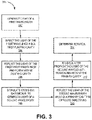
- RLG operation flow diagram 300 is provided in sequential blocks. Other embodiments may include additional blocks and block different sequential order. Hence, embodiments are not limited to block and the sequence of the blocks provided in Figure 3 .
- the RLG operation flow diagram starts a block (302) by generating light (laser beam) of a first wavelength ⁇ 1 .
- the light of the first wavelength ⁇ 1 is directed into pumping cavity 125 at block (304). Once in the pumping cavity 125, the light of the first wavelength ⁇ 1 reflect back and forth between the pumping mirror 118 and the first portion 111a of the mirror 110-1 (306).
- the light of the first wavelength ⁇ 1 stimulates atoms in the gain medium of mirror 110-1 as it is reflected back and forth in the in the pumping cavity 125.
- the stimulated atoms in the gain medium generate (emit) light of a second wavelength ⁇ 2 indicated at block (308).
- the second portion 111b of the mirror 110-1 reflects and directs the generated light of a second wavelength ⁇ 2 (photons) around the primary cavity 150 in opposite directions at block (310).
- the light of the second wavelength ⁇ 2 photons of the second wavelength ⁇ 2
- At least portions of counter propagating light of the second wavelengths ⁇ 2 ′ and ⁇ 2 " passing through the measurement mirror 110-3 are read by the readout device 140 at step (312). From the readout, the processing unit 130 determines angular motion or rotation at step (314).
- any type of device needing an efficient system of generating a laser signal of a specific wavelength using a low power laser beam generating source may implement a pumping cavity as described above.
Landscapes
- Physics & Mathematics (AREA)
- Electromagnetism (AREA)
- Engineering & Computer Science (AREA)
- Optics & Photonics (AREA)
- Plasma & Fusion (AREA)
- Radar, Positioning & Navigation (AREA)
- General Physics & Mathematics (AREA)
- Remote Sensing (AREA)
- Power Engineering (AREA)
- Chemical & Material Sciences (AREA)
- Crystallography & Structural Chemistry (AREA)
- Life Sciences & Earth Sciences (AREA)
- Sustainable Development (AREA)
- Lasers (AREA)
- Gyroscopes (AREA)
Description
- Ring Laser Gyroscopes (RLGs) are used in the inertial navigation field to measure angular motion or rotation. Traditionally, RLGs utilize a low pressure Helium-Neon gas discharge for an active gain medium. Although the existing Helium-Neon gas discharge RLGs have performed suitably in the inertial navigation and other measurement fields, these Helium-Neon gas discharge RLGs can have lifetime limitations and are expensive to manufacture.
- RLG utilizing a solid-state gain medium instead of a Helium-Neon gas mixture is currently being looked at as a viable option. From a manufacturing standpoint, a solid-state gain medium RLG can provide significant savings over Helium-Neon gas discharge RLGs in terms of labor and fabrication costs. Also, this solid-state gain medium RLG may provide technical advantages over Helium-Neon gas discharge RLGs in terms of increased longevity.
- An example of a solid-state gain medium used for the cavity gain for the solid-state RLG is a layer of Neodymium-doped silica (Nd-doped SiO2). This layer of Nd-doped silica may be deposited onto the top layer or may be incorporated within the layers of a highly reflective, multilayer dielectric mirror in the cavity of the RLG. See for an example
US 2017/373458 A1 . - The following summary is made by way of example and not by way of limitation. It is merely provided to aid the reader in understanding some of the aspects of the subject matter described. Embodiments provide an RLG that implements a pumping cavity in an efficient, effective and compact configuration.
- In one embodiment, a ring laser gyroscope including a light source, a plurality of primary cavity mirrors and a pumping mirror is provided. The light source is configured to generate light of a first wavelength. The plurality primary cavity mirrors are configured to route light of a second wavelength around a primary cavity to a readout device. One primary cavity mirror of the plurality of primary cavity mirrors includes a gain medium. The pumping mirror and the one primary cavity mirror including the gain medium is positioned and configured to reflect the light of the first wavelength back and forth in a pumping cavity through the gain medium, wherein the light of the first wavelength stimulates the gain medium to generate the light of the second wavelength that are reflected around the primary cavity to the readout device.
- In another example embodiment, an enhanced optical solid state optical pumping system is provided. The system includes a light source, a plurality of primary cavity mirrors and a pumping mirror. The light source is configured to generate light of a first wavelength. The plurality of primary cavity mirrors are configured to route light of a second wavelength through a primary cavity. One primary cavity mirror of the plurality of mirrors includes a gain medium, a first portion and a second portion. The first portion is configured to reflect the light of the first wavelength. The second portion is configured to reflect the light of the second wavelength. The pumping mirror and the one primary cavity mirror including the gain medium are positioned and configured to reflect the light of the first wavelength back and forth in a pumping cavity, wherein the light of the first wavelength stimulate the gain medium to generate the light of the second wavelength that are routed through the primary cavity.
- In yet another embodiment, a method of operating a laser ring gyroscope is provided. The method includes directing light of a first wavelength into a pumping cavity that includes at pumping mirror and first primary mirror, wherein the pumping mirror and the first primary mirror are configured and positioned to reflect the light of the first wavelength back and forth; stimulating a gain medium associated with the first primary mirror with the light of the first wavelength to generate light of a second wavelength; directing the generated light of the second wavelength around a primary cavity in opposite directions with at least the first primary mirror; reading at least portions of the light of the second wavelength passing through a measurement mirror in the primary cavity; and determining rotation based on the reading of the light of the second wavelengths.
- Embodiments can be more easily understood and further advantages and uses thereof will be more readily apparent, when considered in view of the detailed description and the following figures in which:
-
Figure 1 is an illustration of the ring laser gyroscope according to one exemplary embodiment; -
Figure 2 is a ring laser gyroscope formation flow diagram according to one exemplary embodiment; and -
Figure 3 is a ring laser gyroscope operation flow diagram according to one exemplary embodiment. - In accordance with common practice, the various described features are not drawn to scale but are drawn to emphasize specific features relevant to the subject matter described. Reference characters denote like elements throughout Figures and text.
- In the following detailed description, reference is made to the accompanying drawings, which form a part hereof, and in which is shown by way of illustration specific embodiments in which the inventions may be practiced. These embodiments are described in sufficient detail to enable those skilled in the art to practice the embodiments, and it is to be understood that other embodiments may be utilized and that changes may be made without departing from the scope of the present invention. The following detailed description is, therefore, not to be taken in a limiting sense, and the scope of the present invention is defined only by the claims .
- Embodiments provide a laser assembly with enhanced optical pumping that includes a pumping cavity formed in part with a mirror used for a primary cavity. Hence embodiments include a primary cavity and a pumping cavity. Further, embodiments employ a thin layer of gain medium that is deposited on the shared mirror that is used to form the pumping cavity. In at least one embodiment, the pumping cavity is located within an outline of the primary cavity to reduce the overall size of the system. If the pumping cavity (or gain cavity) is in resonance, the pumping cavity generates intra-cavity, power at the gain medium at much greater than an originating pump laser power is achieved.
-
Figure 1 illustrates an example of a ring laser gyroscope (RLG) 100 of one embodiment. Thegyroscope 100 is a solid-state ring laser gyroscope that includes a pumping cavity that passes light of a first wavelength λ1 through a gain medium to stimulate atoms in the gain medium into an excited state to generate light of a second wavelength λ2 that is passed through a primary cavity. RLG 100 ofFigure 1 includes three primary cavity mirrors 110-1, 110-2 and 110-3 that reflect light of a second wavelength λ2 around aprimary cavity 150 in a closed loop pathway. The closed pathway is illustrated as being substantially triangle in this example with the primary cavity mirrors 110-1, 110-2 and 110-3 positioned at the respective corners. This configuration is a non-limiting example. In other examples, other shapes of closed pathway may be formed with any number of mirrors needed to direct light though the primary (or main) cavity. - The primary cavity mirrors 100-1, 110-2 and 110-3 in one embodiment are highly reflective multilayer mirrors positioned to reflect light having the second wavelength λ2 to the third mirror 110-3 (measurement mirror) where at least portions of counter propagating light of the second wavelengths


readout device 140. As discussed below, in a RLG embodiment, the light of the second wavelength λ2 are reflected around theprimary cavity 150 in opposite directions via the mirrors 110-1 through 110-3. Thereadout device 140 may include one or more photodetectors that are in optical communication with the closed loop pathway of the primary cavity though mirror 110-3. Thereadout device 140 is communicatively coupled to aprocessing unit 130 that processes the signals to measure angular motion or rotation. - In embodiments, a
pumping cavity 125 andgain medium 128 that is incorporated with a mirror, such as primary cavity mirror 110-1, is used to create an RLG 100. A light source 120 (which may be a laser source in some embodiments) generates light at a first wavelength λ1. In one embodiment, the fourth mirror 118 (pumping mirror) partially reflective to allow the light of the first wavelength λ1 to pass through a fourth mirror 118 (pumping mirror) into thepumping cavity 125. In this embodiment, thepumping cavity 125 is set up as a "resonant cavity with pathway control. In another embodiment, thelight source 120 is positioned to provide the light of the first wavelength λ1 in an off-axis orientation onto thefourth mirror 118 withcoating 111a of mirror 110-1 reflecting the light of the first wavelength λ1 from thelight source 120 tomirror 118 to ensure multiple passes. Further in another embodiment, an aperture in at least a coating or through thefourth mirror 118 provides the path to launch the light of the first wavelength λ1 into thepumping cavity 125. Thepumping cavity 125 in this embodiment is located within an inner boundary of theprimary cavity 150 that includes the shared mirror 110-1. The location of thepumping cavity 125 andfourth mirror 118 andlaser source 120 with the inner boundary of theprimary cavity 150 allows for the RLG 100 to have a compact overall size. Moreover, the use of the primary cavity mirror 110-1 reduces the number of mirrors needed for the RLG 100 with apumping cavity 125. - The
gain medium 128 comprises a rare-earth doped gain medium. In one example embodiment, thegain medium 128 is few wavelengths thick. In other embodiments the layer may be thicker. In one embodiment, the gain medium may be formed with a thin, amorphous film of rare-earth doped glassy material. Further, the layer ofgain medium 128 may include a plurality of layers or sub-layers ofgain medium 128 of a desired property. In some embodiments, thegain medium 128 is formed on the mirror via deposition. Further in an embodiment thegain medium 128 incorporated by laminating process. Further still in some embodiments thegain medium 128 is formed within the mirror 110-1. Hence, embodiments are not limited to a specific location or type of formation of thegain medium 128 that is incorporated with the mirror 110-1. - The shared mirror 110-1 in the example embodiment is illustrated as including a
first portion 111a and asecond portion 111b. The first andsecond portions first portion 111a is designed to reflect one of the light of the first wavelength λ1 or the second wavelength λ2 while thesecond portion 111b is designed to reflect the other of the light of the first wavelength λ1 or the second wavelength λ2. For example, thefirst portion 111a of the mirror 110-1 may be designed to reflect the light of the first wavelength λ1 while the second portion 11 1b of the mirror 110-1 is designed to reflect the light of the second wavelength λ2. - The light of the first wave length λ1 within the
pumping cavity 125 is reflected back and forth between thefirst portion 111a of the mirror 110-1 and thefourth mirror 118. This pumping of the light back and forth provides a greater chance that the light of the first wave length λ1 will stimulate ions in the solid state gain medium 128 into excited states that generate the light (laser beam) of the second wave length which travels around theprimary cavity 150 via the mirrors 110-1 through 110-3. The generated light of the second wavelength λ2 travels in both directions around theprimary cavity 150 with, as discussed above, at least portions of counter propagating light of the second wavelengths

readout device 140. - Hence, mirror 110-1 in embodiments is being used in two different cavities, the
primary cavity 150 and thepumping cavity 125. One of the benefits of using this configuration with apumping cavity 125 is that less optical power is needed from thelight source 120 because the highlyreflective mirrors 118 and 110-1 at the first wavelength λ1 create a reflective cavity that confines the beam within thecavity 125 enabling multiple reflections. This is configuration is more efficient at stimulating ions in the solidstate gain medium 128. For example, the power of thelight source 120 may be reduced by a factor of ten with the use of the pumping cavity configuration of embodiments. - An example of a suitable gain medium 128 dopant is neodymium. Other suitable rare-earth dopants that can be used to form the gain medium includes, but is not limited to, cerium (Ce), praseodymium (Pr), neodymium (Nd), promethium (Pm), samarium (Sm), europium (Eu), gadolinium (Gd), terbium (Tb), dysprosium (Dy), holmium (Ho), erbium (Er), thulium (Tm), ytterbium (Yb), and lutetium (Lu). Non-limiting examples of glassy host materials than can be used to form gain layer 230 include silica, titania, tantalum oxide (Ta2O5), alumina (Al2O3), zirconia (ZrO2), silicate glasses, phosphate glasses, fluorosilicate glasses, non-oxide glasses such as fluoride glasses, or the like. Other glassy host materials that are suitable for ion beam sputter deposition can also be employed.
-
Figure 2 illustrates a RLG formation flow diagram 200 of one example embodiment. The RLG formation flow diagram 200 is provided in sequential blocks. Other embodiments may include additional blocks and block different sequential order. Hence, embodiments are not limited to block and the sequence of the blocks provided inFigure 2 . - The RLG formation flow diagram 200 starts a block (202) forming a
primary cavity 150 and apumping cavity 125 for theRLG 100. As discussed above, thepumping cavity 125 in an embodiment, is positioned within (or within an outline of) theprimary cavity 150. Mirrors to be used in theprimary cavity 150 are selected at block (204). The primary cavity mirrors (generally identified as 110) are selected to reflect light of the second wavelength λ2 around theprimary cavity 150. In some embodiments, the number of primary cavity mirrors 110 used is three or greater. The primary cavity mirrors 110 are positioned at block (206) to direct the light of the second wavelength λ2 around theprimary cavity 150. The one primary cavity mirror 100-1 is further positioned and configured to create thepumping cavity 125 with thepumping mirror 118 at block (208). - As discussed above, primary cavity mirror 110-1 in the example of
Figure 1 , includes thegain medium 128. Thegain medium 128 is selected so that the light of the first wavelength λ1 stimulates atoms of gain medium 128 to generate (emit) photons of the second wavelength λ2 that are directed around theprimary cavity 150 in opposite directions. In particular, the light of the first wavelength λ1, generated by thelight source 120, excites (or pumps) the atoms in the gain medium 128 (through absorption) form a lower energy state to an excited energy state. The excited atoms emit photons (of the second wavelength λ2) when they return to their normal or ground state. The primary cavity mirrors 110 direct the photons of the second wavelength λ2 to bounce around the path (a ring configuration in the example embodiment) in theprimary cavity 150. As the photons of the second wavelength λ2 continuously pass through the pumpedgain media 128, as they bounce around theprimary cavity 150, amplification is created by Stimulated Emission of Radiation (LASER) which generates a laser beam. The photons of the laser beam are of a single wavelength λ2 (monochromic) and travel in phase with one another. The reflecting back and forth of the pump light of the first wavelength λ1 through the gain medium helps to excite more atoms and emit more photons (of the second wavelength λ2) that are directed around the primary cavity 150 (LASER cavity) to create the LASER beam. - Referring to
Figure 3 , a RLG operation flow diagram of one embodiment is illustrated. The RLG operation flow diagram 300 is provided in sequential blocks. Other embodiments may include additional blocks and block different sequential order. Hence, embodiments are not limited to block and the sequence of the blocks provided inFigure 3 . - The RLG operation flow diagram starts a block (302) by generating light (laser beam) of a first wavelength λ1. The light of the first wavelength λ1 is directed into pumping
cavity 125 at block (304). Once in thepumping cavity 125, the light of the first wavelength λ1 reflect back and forth between thepumping mirror 118 and thefirst portion 111a of the mirror 110-1 (306). The light of the first wavelength λ1 stimulates atoms in the gain medium of mirror 110-1 as it is reflected back and forth in the in thepumping cavity 125. The stimulated atoms in the gain medium generate (emit) light of a second wavelength λ2 indicated at block (308). Thesecond portion 111b of the mirror 110-1 reflects and directs the generated light of a second wavelength λ2 (photons) around theprimary cavity 150 in opposite directions at block (310). As discussed above, the light of the second wavelength λ2 (photons of the second wavelength λ2) create a laser beam of light of the second wavelength λ2 in theprimary cavity 150. At least portions of counter propagating light of the second wavelengths

readout device 140 at step (312). From the readout, theprocessing unit 130 determines angular motion or rotation at step (314). - Although, embodiments above are described as being applicable to RLG, any type of device needing an efficient system of generating a laser signal of a specific wavelength using a low power laser beam generating source may implement a pumping cavity as described above.
Claims (10)
- A ring laser gyroscope (100) comprising:a light generating source (120) configured to generate light of a first wavelength;a plurality of primary cavity mirrors (110) configured to route light of a second wavelength around a primary cavity (150) to a readout device (140), one primary cavity mirror (110-1) of the plurality of primary cavity mirrors (110) including a gain medium (128); anda pumping mirror (118), the pumping mirror (118) and the one primary cavity mirror (110-1) including the gain medium (128) positioned and configured to reflect the light of the first wavelength back and forth in a pumping cavity (125) through the gain medium (128), wherein the light of the first wavelength stimulates the gain medium (128) to generate the light of the second wavelength that is reflected around the primary cavity (150) to the readout device (140).
- The ring laser gyroscope (100) of claim 1, wherein the pumping cavity (125) is located within an outline of the primary cavity (150).
- The ring laser gyroscope (100) of claim 1, wherein the gain medium (128) includes dopants of at least one of cerium (Ce), praseodymium (Pr), neodymium (Nd), promethium (Pm), samarium (Sm), europium (Eu), gadolinium (Gd), terbium (Tb), dysprosium (Dy), holmium (Ho), erbium (Er), thulium (Tm), ytterbium (Yb), and lutetium (Lu).
- The ring laser gyroscope (100) of claim 1, wherein the gain material (128) includes glassy host material including at least one of silica, titania, tantalum oxide (Ta2O5), alumina (Al2O3), zirconia (ZrO2), silicate glasses, phosphate glasses, fluorosilicate glasses and non-oxide glasses such as fluoride glasses.
- The ring laser gyroscope (100) of claim 1, wherein the number of primary cavity mirrors are at least three.
- The ring laser gyroscope (100) of claim 1, wherein the one primary cavity mirror of the plurality of primary cavity mirrors including a gain medium further comprises:a first portion configured to reflect the light of the first wavelength; anda second portion configured to reflect the light of the second wavelength.
- The ring laser gyroscope (100) of claim 1, wherein the plurality of primary cavity mirrors (110) include a measurement mirror (110-3) that is configured to allow at least portions of the laser beams of the second wavelength to pass through to the readout device (140).
- A method of operating a laser ring gyroscope (100), the method comprising:directing a light of a first wavelength into a pumping cavity (125) that includes a pumping mirror (118) and a first primary mirror (110-1), wherein the pumping mirror (118) and the first primary mirror (110-1) are configured and positioned to reflect the light of the first wavelength back and forth;stimulating a gain medium (128) included by the first primary mirror (110-1) with the light of the first wavelength to generate light of a second wavelength;directing the generated light of the second wavelength around a primary cavity (150) in opposite directions with at least the first primary mirror (110-1);reading at least portions of the light of the second wavelength passing through a measurement mirror (110-3) in the primary cavity (150); anddetermining rotation based on the reading of the light of the second wavelengths passing through the measurement mirror (110-3).
- The method of claim 8, wherein the pumping cavity (125) is positioned within an outline of the primary cavity (150).
- The method of claim 8, wherein the generated light of the second wavelength around a primary cavity (150) in opposite directions with at least the first primary mirror (110-1) further comprises:
reflecting the light of the second wavelength off of a first portion (111b) of the first primary mirror (110-1) configured to reflect the laser beams of the second wavelength.
Applications Claiming Priority (1)
| Application Number | Priority Date | Filing Date | Title |
|---|---|---|---|
| US16/444,038 US10907966B2 (en) | 2019-06-18 | 2019-06-18 | Solid state ring laser gyroscope having a primary cavity and a pumping cavity |
Publications (2)
| Publication Number | Publication Date |
|---|---|
| EP3754301A1 EP3754301A1 (en) | 2020-12-23 |
| EP3754301B1 true EP3754301B1 (en) | 2022-09-07 |
Family
ID=71103221
Family Applications (1)
| Application Number | Title | Priority Date | Filing Date |
|---|---|---|---|
| EP20180111.5A Active EP3754301B1 (en) | 2019-06-18 | 2020-06-15 | Cavity enhanced optical pumping of solid state ring laser gyroscope |
Country Status (3)
| Country | Link |
|---|---|
| US (1) | US10907966B2 (en) |
| EP (1) | EP3754301B1 (en) |
| CN (1) | CN112097752B (en) |
Families Citing this family (1)
| Publication number | Priority date | Publication date | Assignee | Title |
|---|---|---|---|---|
| US11476633B2 (en) | 2020-07-20 | 2022-10-18 | Honeywell International Inc. | Apparatus and methods for stable bidirectional output from ring laser gyroscope |
Family Cites Families (15)
| Publication number | Priority date | Publication date | Assignee | Title |
|---|---|---|---|---|
| US4222668A (en) | 1978-02-23 | 1980-09-16 | Rockwell International Corporation | Ferrimagnetic Faraday elements for ring lasers |
| US4525843A (en) * | 1982-04-29 | 1985-06-25 | The United States Of America As Represented By The Secretary Of The Navy | Ring laser with wavefront conjugating beams |
| US4647204A (en) * | 1985-08-16 | 1987-03-03 | The United States Of America As Represented By The Secretary Of The Army | Compensated dual cavity laser gyro |
| US5363192A (en) | 1991-06-28 | 1994-11-08 | Honeywell Inc. | Mode-locked active gyro solid state lasers |
| US5408492A (en) | 1993-05-21 | 1995-04-18 | Smiths Industries Aerospace & Defense Systems, Inc. | Solid medium optical ring laser rotation sensor |
| CN1119661C (en) * | 2000-04-21 | 2003-08-27 | 中国科学技术大学 | Laser gyro with optical fibre ring |
| CN1162684C (en) * | 2002-04-15 | 2004-08-18 | 清华大学 | Semiconductor side-pumped solid-state laser gyroscope and its electro-optic modulation method |
| FR2937739B1 (en) * | 2008-10-28 | 2010-11-19 | Thales Sa | GYROLASER WITH SOLID CONDITION AND RING OPTICAL CAVITY AMPLIFIER |
| US8687198B2 (en) * | 2011-09-20 | 2014-04-01 | Honeywell International Inc. | Coupled cavity dispersion enhanced ring laser gyroscope |
| CN103208730B (en) * | 2013-04-12 | 2015-08-19 | 中国科学院光电研究院 | There is the solid state laser of annular pump structure |
| US9651379B2 (en) * | 2014-11-17 | 2017-05-16 | Honeywell International Inc. | Eliminating ring laser gyro backscatter |
| WO2016127321A1 (en) * | 2015-02-10 | 2016-08-18 | 深圳大学 | Ring laser sensor |
| US10148059B2 (en) | 2016-06-23 | 2018-12-04 | Theodore John Podgorski | Gain mirror for solid state ring laser rotation sensors |
| CN108832472B (en) * | 2018-06-07 | 2020-02-11 | 中国科学院光电研究院 | Intracavity pumped low-internal-heat solid laser system |
| US20200056889A1 (en) * | 2018-08-17 | 2020-02-20 | Honeywell International Inc. | Enhanced solid-state gain medium for ring laser gyroscopes |
-
2019
- 2019-06-18 US US16/444,038 patent/US10907966B2/en active Active
-
2020
- 2020-05-19 CN CN202010423860.1A patent/CN112097752B/en active Active
- 2020-06-15 EP EP20180111.5A patent/EP3754301B1/en active Active
Also Published As
| Publication number | Publication date |
|---|---|
| US20200400435A1 (en) | 2020-12-24 |
| EP3754301A1 (en) | 2020-12-23 |
| US10907966B2 (en) | 2021-02-02 |
| CN112097752A (en) | 2020-12-18 |
| CN112097752B (en) | 2025-05-09 |
Similar Documents
| Publication | Publication Date | Title |
|---|---|---|
| US6160824A (en) | Laser-pumped compound waveguide lasers and amplifiers | |
| JPH06104515A (en) | Solid state laser | |
| WO2004021532A1 (en) | Optically coupling into highly uniform waveguides | |
| US9118164B1 (en) | Composite laser gain medium | |
| US20090086771A1 (en) | Negative dispersion mirror and mode-locked solid-state laser apparatus including the mirror | |
| EP3754301B1 (en) | Cavity enhanced optical pumping of solid state ring laser gyroscope | |
| JP2014519721A (en) | Method and system for a cryogenic cooled laser amplifier | |
| CA2195598C (en) | Glass fiber laser system using u-doped crystal q-switch | |
| CN101420099A (en) | Germanate glass optical fiber laser with laser wavelength within 1.7-2.1 mu m | |
| US7477674B2 (en) | High-gain solid-state laser | |
| EP3618205A1 (en) | Enhanced solid-state gain medium for ring laser gyroscopes | |
| EP0868765A1 (en) | Solid state laser optimized for multimode operation | |
| EP1482605B1 (en) | Method for exciting an optical amplification medium fiber | |
| EP3611809B1 (en) | Solid state ring laser gyroscope using rare-earth gain dopants in glassy hosts | |
| WO2002047219A1 (en) | Method of transferring energy in an optical fiber laser structure using energy migration | |
| JP2608104B2 (en) | Optical fiber laser device | |
| WO2018140638A1 (en) | System and method for laser system having non-planar thin disc gain media | |
| EP3800442B1 (en) | Ring laser gyroscopes with active volume bragg grating | |
| JP2012516562A (en) | Method for switching the laser radiation of a solid-state laser between different radiation wavelengths and the corresponding solid-state laser device | |
| US5003547A (en) | Room-temperature, flashpumped, 1.96 micron solid state laser | |
| JPH07162062A (en) | Up-conversion laser material | |
| US5724372A (en) | Diode-pumped laser system using uranium-doped Q-switch | |
| US7042915B2 (en) | Fiber laser with cladding-to-core energy migration | |
| JP2007507084A (en) | Solid laser medium | |
| JP2005019540A (en) | Optical fiber laser |
Legal Events
| Date | Code | Title | Description |
|---|---|---|---|
| PUAI | Public reference made under article 153(3) epc to a published international application that has entered the european phase |
Free format text: ORIGINAL CODE: 0009012 |
|
| STAA | Information on the status of an ep patent application or granted ep patent |
Free format text: STATUS: THE APPLICATION HAS BEEN PUBLISHED |
|
| AK | Designated contracting states |
Kind code of ref document: A1 Designated state(s): AL AT BE BG CH CY CZ DE DK EE ES FI FR GB GR HR HU IE IS IT LI LT LU LV MC MK MT NL NO PL PT RO RS SE SI SK SM TR |
|
| AX | Request for extension of the european patent |
Extension state: BA ME |
|
| STAA | Information on the status of an ep patent application or granted ep patent |
Free format text: STATUS: REQUEST FOR EXAMINATION WAS MADE |
|
| 17P | Request for examination filed |
Effective date: 20210616 |
|
| RBV | Designated contracting states (corrected) |
Designated state(s): AL AT BE BG CH CY CZ DE DK EE ES FI FR GB GR HR HU IE IS IT LI LT LU LV MC MK MT NL NO PL PT RO RS SE SI SK SM TR |
|
| REG | Reference to a national code |
Ref country code: DE Ref legal event code: R079 Ref document number: 602020004909 Country of ref document: DE Free format text: PREVIOUS MAIN CLASS: G01C0019660000 Ipc: H01S0003094000 |
|
| RIC1 | Information provided on ipc code assigned before grant |
Ipc: H01S 3/06 20060101ALI20220131BHEP Ipc: H01S 3/083 20060101ALI20220131BHEP Ipc: H01S 3/16 20060101ALI20220131BHEP Ipc: H01S 3/17 20060101ALI20220131BHEP Ipc: G01C 19/66 20060101ALI20220131BHEP Ipc: H01S 3/094 20060101AFI20220131BHEP |
|
| GRAP | Despatch of communication of intention to grant a patent |
Free format text: ORIGINAL CODE: EPIDOSNIGR1 |
|
| STAA | Information on the status of an ep patent application or granted ep patent |
Free format text: STATUS: GRANT OF PATENT IS INTENDED |
|
| INTG | Intention to grant announced |
Effective date: 20220502 |
|
| GRAS | Grant fee paid |
Free format text: ORIGINAL CODE: EPIDOSNIGR3 |
|
| GRAA | (expected) grant |
Free format text: ORIGINAL CODE: 0009210 |
|
| STAA | Information on the status of an ep patent application or granted ep patent |
Free format text: STATUS: THE PATENT HAS BEEN GRANTED |
|
| AK | Designated contracting states |
Kind code of ref document: B1 Designated state(s): AL AT BE BG CH CY CZ DE DK EE ES FI FR GB GR HR HU IE IS IT LI LT LU LV MC MK MT NL NO PL PT RO RS SE SI SK SM TR |
|
| REG | Reference to a national code |
Ref country code: GB Ref legal event code: FG4D |
|
| REG | Reference to a national code |
Ref country code: CH Ref legal event code: EP Ref country code: AT Ref legal event code: REF Ref document number: 1517840 Country of ref document: AT Kind code of ref document: T Effective date: 20220915 |
|
| REG | Reference to a national code |
Ref country code: IE Ref legal event code: FG4D |
|
| REG | Reference to a national code |
Ref country code: DE Ref legal event code: R096 Ref document number: 602020004909 Country of ref document: DE |
|
| REG | Reference to a national code |
Ref country code: LT Ref legal event code: MG9D |
|
| REG | Reference to a national code |
Ref country code: NL Ref legal event code: MP Effective date: 20220907 |
|
| PG25 | Lapsed in a contracting state [announced via postgrant information from national office to epo] |
Ref country code: SE Free format text: LAPSE BECAUSE OF FAILURE TO SUBMIT A TRANSLATION OF THE DESCRIPTION OR TO PAY THE FEE WITHIN THE PRESCRIBED TIME-LIMIT Effective date: 20220907 Ref country code: RS Free format text: LAPSE BECAUSE OF FAILURE TO SUBMIT A TRANSLATION OF THE DESCRIPTION OR TO PAY THE FEE WITHIN THE PRESCRIBED TIME-LIMIT Effective date: 20220907 Ref country code: NO Free format text: LAPSE BECAUSE OF FAILURE TO SUBMIT A TRANSLATION OF THE DESCRIPTION OR TO PAY THE FEE WITHIN THE PRESCRIBED TIME-LIMIT Effective date: 20221207 Ref country code: LV Free format text: LAPSE BECAUSE OF FAILURE TO SUBMIT A TRANSLATION OF THE DESCRIPTION OR TO PAY THE FEE WITHIN THE PRESCRIBED TIME-LIMIT Effective date: 20220907 Ref country code: LT Free format text: LAPSE BECAUSE OF FAILURE TO SUBMIT A TRANSLATION OF THE DESCRIPTION OR TO PAY THE FEE WITHIN THE PRESCRIBED TIME-LIMIT Effective date: 20220907 Ref country code: FI Free format text: LAPSE BECAUSE OF FAILURE TO SUBMIT A TRANSLATION OF THE DESCRIPTION OR TO PAY THE FEE WITHIN THE PRESCRIBED TIME-LIMIT Effective date: 20220907 |
|
| REG | Reference to a national code |
Ref country code: AT Ref legal event code: MK05 Ref document number: 1517840 Country of ref document: AT Kind code of ref document: T Effective date: 20220907 |
|
| PG25 | Lapsed in a contracting state [announced via postgrant information from national office to epo] |
Ref country code: HR Free format text: LAPSE BECAUSE OF FAILURE TO SUBMIT A TRANSLATION OF THE DESCRIPTION OR TO PAY THE FEE WITHIN THE PRESCRIBED TIME-LIMIT Effective date: 20220907 Ref country code: GR Free format text: LAPSE BECAUSE OF FAILURE TO SUBMIT A TRANSLATION OF THE DESCRIPTION OR TO PAY THE FEE WITHIN THE PRESCRIBED TIME-LIMIT Effective date: 20221208 |
|
| PG25 | Lapsed in a contracting state [announced via postgrant information from national office to epo] |
Ref country code: SM Free format text: LAPSE BECAUSE OF FAILURE TO SUBMIT A TRANSLATION OF THE DESCRIPTION OR TO PAY THE FEE WITHIN THE PRESCRIBED TIME-LIMIT Effective date: 20220907 Ref country code: RO Free format text: LAPSE BECAUSE OF FAILURE TO SUBMIT A TRANSLATION OF THE DESCRIPTION OR TO PAY THE FEE WITHIN THE PRESCRIBED TIME-LIMIT Effective date: 20220907 Ref country code: PT Free format text: LAPSE BECAUSE OF FAILURE TO SUBMIT A TRANSLATION OF THE DESCRIPTION OR TO PAY THE FEE WITHIN THE PRESCRIBED TIME-LIMIT Effective date: 20230109 Ref country code: ES Free format text: LAPSE BECAUSE OF FAILURE TO SUBMIT A TRANSLATION OF THE DESCRIPTION OR TO PAY THE FEE WITHIN THE PRESCRIBED TIME-LIMIT Effective date: 20220907 Ref country code: CZ Free format text: LAPSE BECAUSE OF FAILURE TO SUBMIT A TRANSLATION OF THE DESCRIPTION OR TO PAY THE FEE WITHIN THE PRESCRIBED TIME-LIMIT Effective date: 20220907 Ref country code: AT Free format text: LAPSE BECAUSE OF FAILURE TO SUBMIT A TRANSLATION OF THE DESCRIPTION OR TO PAY THE FEE WITHIN THE PRESCRIBED TIME-LIMIT Effective date: 20220907 |
|
| PG25 | Lapsed in a contracting state [announced via postgrant information from national office to epo] |
Ref country code: SK Free format text: LAPSE BECAUSE OF FAILURE TO SUBMIT A TRANSLATION OF THE DESCRIPTION OR TO PAY THE FEE WITHIN THE PRESCRIBED TIME-LIMIT Effective date: 20220907 Ref country code: PL Free format text: LAPSE BECAUSE OF FAILURE TO SUBMIT A TRANSLATION OF THE DESCRIPTION OR TO PAY THE FEE WITHIN THE PRESCRIBED TIME-LIMIT Effective date: 20220907 Ref country code: IS Free format text: LAPSE BECAUSE OF FAILURE TO SUBMIT A TRANSLATION OF THE DESCRIPTION OR TO PAY THE FEE WITHIN THE PRESCRIBED TIME-LIMIT Effective date: 20230107 Ref country code: EE Free format text: LAPSE BECAUSE OF FAILURE TO SUBMIT A TRANSLATION OF THE DESCRIPTION OR TO PAY THE FEE WITHIN THE PRESCRIBED TIME-LIMIT Effective date: 20220907 |
|
| REG | Reference to a national code |
Ref country code: DE Ref legal event code: R097 Ref document number: 602020004909 Country of ref document: DE |
|
| PG25 | Lapsed in a contracting state [announced via postgrant information from national office to epo] |
Ref country code: NL Free format text: LAPSE BECAUSE OF FAILURE TO SUBMIT A TRANSLATION OF THE DESCRIPTION OR TO PAY THE FEE WITHIN THE PRESCRIBED TIME-LIMIT Effective date: 20220907 Ref country code: AL Free format text: LAPSE BECAUSE OF FAILURE TO SUBMIT A TRANSLATION OF THE DESCRIPTION OR TO PAY THE FEE WITHIN THE PRESCRIBED TIME-LIMIT Effective date: 20220907 |
|
| P01 | Opt-out of the competence of the unified patent court (upc) registered |
Effective date: 20230525 |
|
| PLBE | No opposition filed within time limit |
Free format text: ORIGINAL CODE: 0009261 |
|
| STAA | Information on the status of an ep patent application or granted ep patent |
Free format text: STATUS: NO OPPOSITION FILED WITHIN TIME LIMIT |
|
| PG25 | Lapsed in a contracting state [announced via postgrant information from national office to epo] |
Ref country code: DK Free format text: LAPSE BECAUSE OF FAILURE TO SUBMIT A TRANSLATION OF THE DESCRIPTION OR TO PAY THE FEE WITHIN THE PRESCRIBED TIME-LIMIT Effective date: 20220907 |
|
| 26N | No opposition filed |
Effective date: 20230608 |
|
| PG25 | Lapsed in a contracting state [announced via postgrant information from national office to epo] |
Ref country code: SI Free format text: LAPSE BECAUSE OF FAILURE TO SUBMIT A TRANSLATION OF THE DESCRIPTION OR TO PAY THE FEE WITHIN THE PRESCRIBED TIME-LIMIT Effective date: 20220907 |
|
| REG | Reference to a national code |
Ref country code: DE Ref legal event code: R119 Ref document number: 602020004909 Country of ref document: DE |
|
| PG25 | Lapsed in a contracting state [announced via postgrant information from national office to epo] |
Ref country code: MC Free format text: LAPSE BECAUSE OF FAILURE TO SUBMIT A TRANSLATION OF THE DESCRIPTION OR TO PAY THE FEE WITHIN THE PRESCRIBED TIME-LIMIT Effective date: 20220907 |
|
| PG25 | Lapsed in a contracting state [announced via postgrant information from national office to epo] |
Ref country code: MC Free format text: LAPSE BECAUSE OF FAILURE TO SUBMIT A TRANSLATION OF THE DESCRIPTION OR TO PAY THE FEE WITHIN THE PRESCRIBED TIME-LIMIT Effective date: 20220907 |
|
| REG | Reference to a national code |
Ref country code: CH Ref legal event code: PL |
|
| REG | Reference to a national code |
Ref country code: BE Ref legal event code: MM Effective date: 20230630 |
|
| PG25 | Lapsed in a contracting state [announced via postgrant information from national office to epo] |
Ref country code: LU Free format text: LAPSE BECAUSE OF NON-PAYMENT OF DUE FEES Effective date: 20230615 |
|
| REG | Reference to a national code |
Ref country code: IE Ref legal event code: MM4A |
|
| PG25 | Lapsed in a contracting state [announced via postgrant information from national office to epo] |
Ref country code: LU Free format text: LAPSE BECAUSE OF NON-PAYMENT OF DUE FEES Effective date: 20230615 |
|
| PG25 | Lapsed in a contracting state [announced via postgrant information from national office to epo] |
Ref country code: IE Free format text: LAPSE BECAUSE OF NON-PAYMENT OF DUE FEES Effective date: 20230615 |
|
| PG25 | Lapsed in a contracting state [announced via postgrant information from national office to epo] |
Ref country code: IE Free format text: LAPSE BECAUSE OF NON-PAYMENT OF DUE FEES Effective date: 20230615 Ref country code: DE Free format text: LAPSE BECAUSE OF NON-PAYMENT OF DUE FEES Effective date: 20240103 Ref country code: CH Free format text: LAPSE BECAUSE OF NON-PAYMENT OF DUE FEES Effective date: 20230630 |
|
| PG25 | Lapsed in a contracting state [announced via postgrant information from national office to epo] |
Ref country code: IT Free format text: LAPSE BECAUSE OF FAILURE TO SUBMIT A TRANSLATION OF THE DESCRIPTION OR TO PAY THE FEE WITHIN THE PRESCRIBED TIME-LIMIT Effective date: 20220907 Ref country code: BE Free format text: LAPSE BECAUSE OF NON-PAYMENT OF DUE FEES Effective date: 20230630 |
|
| PG25 | Lapsed in a contracting state [announced via postgrant information from national office to epo] |
Ref country code: BG Free format text: LAPSE BECAUSE OF FAILURE TO SUBMIT A TRANSLATION OF THE DESCRIPTION OR TO PAY THE FEE WITHIN THE PRESCRIBED TIME-LIMIT Effective date: 20220907 |
|
| PG25 | Lapsed in a contracting state [announced via postgrant information from national office to epo] |
Ref country code: BG Free format text: LAPSE BECAUSE OF FAILURE TO SUBMIT A TRANSLATION OF THE DESCRIPTION OR TO PAY THE FEE WITHIN THE PRESCRIBED TIME-LIMIT Effective date: 20220907 |
|
| GBPC | Gb: european patent ceased through non-payment of renewal fee |
Effective date: 20240615 |
|
| PG25 | Lapsed in a contracting state [announced via postgrant information from national office to epo] |
Ref country code: GB Free format text: LAPSE BECAUSE OF NON-PAYMENT OF DUE FEES Effective date: 20240615 |
|
| PGFP | Annual fee paid to national office [announced via postgrant information from national office to epo] |
Ref country code: FR Payment date: 20250624 Year of fee payment: 6 |
|
| PG25 | Lapsed in a contracting state [announced via postgrant information from national office to epo] |
Ref country code: CY Free format text: LAPSE BECAUSE OF FAILURE TO SUBMIT A TRANSLATION OF THE DESCRIPTION OR TO PAY THE FEE WITHIN THE PRESCRIBED TIME-LIMIT; INVALID AB INITIO Effective date: 20200615 |
|
| PG25 | Lapsed in a contracting state [announced via postgrant information from national office to epo] |
Ref country code: HU Free format text: LAPSE BECAUSE OF FAILURE TO SUBMIT A TRANSLATION OF THE DESCRIPTION OR TO PAY THE FEE WITHIN THE PRESCRIBED TIME-LIMIT; INVALID AB INITIO Effective date: 20200615 |
|
| PG25 | Lapsed in a contracting state [announced via postgrant information from national office to epo] |
Ref country code: TR Free format text: LAPSE BECAUSE OF FAILURE TO SUBMIT A TRANSLATION OF THE DESCRIPTION OR TO PAY THE FEE WITHIN THE PRESCRIBED TIME-LIMIT Effective date: 20220907 |