EP3753940B1 - Benzodiazepine derivative hydrochloride and crystal form, preparation method, and application thereof - Google Patents
Benzodiazepine derivative hydrochloride and crystal form, preparation method, and application thereof Download PDFInfo
- Publication number
- EP3753940B1 EP3753940B1 EP19754326.7A EP19754326A EP3753940B1 EP 3753940 B1 EP3753940 B1 EP 3753940B1 EP 19754326 A EP19754326 A EP 19754326A EP 3753940 B1 EP3753940 B1 EP 3753940B1
- Authority
- EP
- European Patent Office
- Prior art keywords
- hydrochloride
- hcl
- formula
- crystal form
- ray powder
- Prior art date
- Legal status (The legal status is an assumption and is not a legal conclusion. Google has not performed a legal analysis and makes no representation as to the accuracy of the status listed.)
- Active
Links
Images






Classifications
-
- A—HUMAN NECESSITIES
- A61—MEDICAL OR VETERINARY SCIENCE; HYGIENE
- A61P—SPECIFIC THERAPEUTIC ACTIVITY OF CHEMICAL COMPOUNDS OR MEDICINAL PREPARATIONS
- A61P25/00—Drugs for disorders of the nervous system
- A61P25/04—Centrally acting analgesics, e.g. opioids
-
- A—HUMAN NECESSITIES
- A61—MEDICAL OR VETERINARY SCIENCE; HYGIENE
- A61K—PREPARATIONS FOR MEDICAL, DENTAL OR TOILETRY PURPOSES
- A61K31/00—Medicinal preparations containing organic active ingredients
- A61K31/33—Heterocyclic compounds
- A61K31/395—Heterocyclic compounds having nitrogen as a ring hetero atom, e.g. guanethidine or rifamycins
- A61K31/55—Heterocyclic compounds having nitrogen as a ring hetero atom, e.g. guanethidine or rifamycins having seven-membered rings, e.g. azelastine, pentylenetetrazole
- A61K31/551—Heterocyclic compounds having nitrogen as a ring hetero atom, e.g. guanethidine or rifamycins having seven-membered rings, e.g. azelastine, pentylenetetrazole having two nitrogen atoms, e.g. dilazep
- A61K31/5513—1,4-Benzodiazepines, e.g. diazepam or clozapine
- A61K31/5517—1,4-Benzodiazepines, e.g. diazepam or clozapine condensed with five-membered rings having nitrogen as a ring hetero atom, e.g. imidazobenzodiazepines, triazolam
-
- A—HUMAN NECESSITIES
- A61—MEDICAL OR VETERINARY SCIENCE; HYGIENE
- A61P—SPECIFIC THERAPEUTIC ACTIVITY OF CHEMICAL COMPOUNDS OR MEDICINAL PREPARATIONS
- A61P23/00—Anaesthetics
-
- C—CHEMISTRY; METALLURGY
- C07—ORGANIC CHEMISTRY
- C07D—HETEROCYCLIC COMPOUNDS
- C07D487/00—Heterocyclic compounds containing nitrogen atoms as the only ring hetero atoms in the condensed system, not provided for by groups C07D451/00 - C07D477/00
- C07D487/02—Heterocyclic compounds containing nitrogen atoms as the only ring hetero atoms in the condensed system, not provided for by groups C07D451/00 - C07D477/00 in which the condensed system contains two hetero rings
- C07D487/04—Ortho-condensed systems
-
- A—HUMAN NECESSITIES
- A61—MEDICAL OR VETERINARY SCIENCE; HYGIENE
- A61K—PREPARATIONS FOR MEDICAL, DENTAL OR TOILETRY PURPOSES
- A61K9/00—Medicinal preparations characterised by special physical form
- A61K9/0012—Galenical forms characterised by the site of application
- A61K9/0019—Injectable compositions; Intramuscular, intravenous, arterial, subcutaneous administration; Compositions to be administered through the skin in an invasive manner
-
- C—CHEMISTRY; METALLURGY
- C07—ORGANIC CHEMISTRY
- C07B—GENERAL METHODS OF ORGANIC CHEMISTRY; APPARATUS THEREFOR
- C07B2200/00—Indexing scheme relating to specific properties of organic compounds
- C07B2200/13—Crystalline forms, e.g. polymorphs
Definitions
- the present invention relates to hydrochloride of benzodiazepine derivatives, and their crystal forms, preparation method and use thereof.
- Remimazolam (CNS 7056) is a new generation of benzodiazepine derivatives improved on the basis of midazolam. It has attracted attention due to its fast onset of action and fast recovery. With the deepening of research, the shortcomings of remimazolam gradually emerged. In the Phase II clinical trial of ICU sedation, Ono Company found that the hemodynamics of the patients was unstable after receiving remimazolam, and the plasma concentration in 10% of the patients was higher than the normal range ( PAION AG Analyst call Oct 14 2014 ).
- WO 0069836 disclosed remimazolam and pharmaceutically acceptable salt thereof, but did not disclose the preparation method of the pharmaceutically acceptable salt.
- CN 104059071 and CN 103221414 disclosed preparation methods and crystal forms of remimazolam besylate and p-toluenesulfonate.
- PCT/CN2015/084770 disclosed a series of methods for preparing benzodiazepine derivatives and their sulfonates. These derivatives have a good intravenous anesthesia effect.
- the salt of these compounds is formed by employing an organic sulfonic acid (such as ethanesulfonic acid, benzenesulfonic acid, p-toluenesulfonic acid, etc.) with a basic group of the benzodiazepines to increase their solubility in water.
- an organic sulfonic acid to form a salt has the following disadvantages: it is necessary to use a corresponding alcohol as a solvent for the benzodiazepine derivative during the salification. If an organic sulfonic acid is employed, there is a possibility to form an organic sulfonate ester. For example, see the following reaction scheme: wherein R is methyl or ethyl; R 1 is methyl, ethyl, phenyl, 4-methylphenyl, 4-hydroxyphenyl and the like.
- the organic sulfonate ester thus produced has a strong genotoxicity (ICH Harmonised Tripartite Guideline, Assessment and Control of DNA Reactive (Mutagenic) Impurities in Pharmaceuticals to Limit Potential Carcinogenic Risk, Current Step 4 version, 23 June 2014). Therefore, these organic sulfonates of the benzodiazepine derivatives have the risk of forming potentially genotoxic substances during their production, storage and application.
- the genotoxic substances are characterized in that they may cause damage to human genetic materials at a very low concentration, and then may lead to gene mutations and promote tumorigenesis. Because of their strong toxicity, genotoxic substances pose a strong threat to the drug safety.
- WO2016/011943A1 discloses a benzodiazepine compound and salts thereof, corresponding to the benzodiazepine derivative of Formula I according to the present invention wherein R is ethyl, but does not teach or suggest any crystal form of any of the salts of remimazolam ethyl ester.
- the invention refers to crystal forms of hydrochloride of benzodiazepine derivatives as defined in the appended set of claims. Preferred embodiments are defined in the dependent claims.
- R is methyl, and its crystal form has a structure substantially as shown in FIG. 1 , or may be characterized by one or more parameters substantially as shown in Tables 1-6.
- R is ethyl, and its crystal form has a structure substantially as shown in FIG. 2 , or may be characterized by one or more parameters substantially as shown in Tables 7-12.
- R is methyl, and the compound of Formula I has a content of chloride ion of 6.71-7.52 % (w/w). In another embodiment, R is ethyl, and the compound of Formula I has a content of chloride ion of 6.51-7.31 % (w/w).
- the crystal form of the compound of Formula I wherein R is methyl has an X-ray powder diffraction pattern with the following 2 ⁇ values measured by using CuK ⁇ radiation: about 6.81, 8.93, 13.39, 19.38, 21.23, 22.42, 24.20, 27.31 ⁇ 0.2 degrees.
- the X-ray powder diffraction pattern may also have the following 2 ⁇ values measured by using CuK ⁇ radiation: about 8.11, 9.86, 14.73, 17.47, 23.03, 25.94, 28.31 ⁇ 0.2 degrees.
- the crystal form has an X-ray powder diffraction pattern substantially as shown in FIG. 3 .
- the crystal form of the compound of Formula I wherein R is methyl has an X-ray powder diffraction pattern with the following 2 ⁇ values measured by using CuK ⁇ radiation: about 6.80, 8.93, 9.87, 13.37, 14.69, 19.36, 20.76, 21.25, 22.19, 22.38, 23.06, 24.21, 25.93, 27.73 ⁇ 0.2 degrees.
- the X-ray powder diffraction pattern may also have the following 2 ⁇ values measured by using CuK ⁇ radiation: about 16.14, 17.48, 20.02, 25.17, 26.36, 28.30, 34.13 ⁇ 0.2 degrees.
- the crystal form has an X-ray powder diffraction pattern substantially as shown in FIG. 4 .
- the crystal form of the compound of Formula I wherein R is ethyl has an X-ray powder diffraction pattern with the following 2 ⁇ values measured by using CuK ⁇ radiation: about 6.87, 7.38, 9.53, 13.65, 18.71, 22.13, 22.67, 25.10, 27.25, 29.30 ⁇ 0.2 degrees.
- the X-ray powder diffraction pattern may also have the following 2 ⁇ values measured by using CuK ⁇ radiation: about 14.96, 15.43, 20.23, 20.67, 21.13, 23.52, 28.22, 31.26 ⁇ 0.2 degrees.
- the crystal form has an X-ray powder diffraction pattern substantially as shown in any one of FIGs. 5-8 .
- the crystal form of the compound of Formula I wherein R is ethyl has an X-ray powder diffraction pattern with the following 2 ⁇ values measured by using CuK ⁇ radiation: about 7.41, 9.24, 12.71, 13.64, 15.06, 18.30, 18.72, 21.59, 22.18, 25.74 ⁇ 0.2 degrees.
- the X-ray powder diffraction pattern may also have the following 2 ⁇ values measured by using CuK ⁇ radiation: about 9.52, 11.69, 20.90, 22.60, 23.65, 24.26, 26.40, 28.43, 29.35 ⁇ 0.2 degrees.
- the crystal form has an X-ray powder diffraction pattern substantially as shown in FIG. 9 .
- the crystal form of the compound of Formula I wherein R is ethyl has an X-ray powder diffraction pattern with the following 2 ⁇ values measured by using CuK ⁇ radiation: about 6.84, 7.37, 9.53, 13.66, 22.63, 25.57, 29.28, 31.26 ⁇ 0.2 degrees.
- the X-ray powder diffraction pattern may also have the following 2 ⁇ values measured by using CuK ⁇ radiation: about 15.43, 19.07, 22.16, 34.25 ⁇ 0.2 degrees.
- the crystal form has an X-ray powder diffraction pattern substantially as shown in any one of FIGs. 10-13 .
- the present invention provides a method for preparing the above-mentioned crystal forms of the hydrochloride of the benzodiazepine derivative of Formula I according to the present invention, comprising the following steps: dissolving the free base of the benzodiazepine derivative of the following Formula II-1 or II-2 in an organic solvent 1, adding HCl donor A wherein [H + ] is equimolar to the free base, to form a salt at a temperature of -20 to 60°C, preferably -10 to 30°C, after decolorizing the crude salt, crystallizing it in a crystallization solvent 1 at a temperature of -60 to 80°C, preferably -20 to 60°C, to obtain the crystal form of the hydrochloride of the benzodiazepine derivative of Formula I.
- the organic solvent 1 is an alcohol solvent, such as methanol, ethanol, n-propanol, isopropanol, n-butanol, isobutanol; an ester solvent, such as methyl acetate, ethyl acetate, propyl acetate, isopropyl acetate, butyl acetate; a ketone solvent, such as acetone and butanone; or a mixture thereof.
- an alcohol solvent such as methanol, ethanol, n-propanol, isopropanol, n-butanol, isobutanol
- an ester solvent such as methyl acetate, ethyl acetate, propyl acetate, isopropyl acetate, butyl acetate
- a ketone solvent such as acetone and butanone
- the HCl donor A is an amino acid hydrochloride, such as glycine hydrochloride, alanine hydrochloride, valine hydrochloride; a HCl-anhydrous alcohol solution, that is, an alcohol solution of dry HCl, such as dry HCl-methanol solution, dry HCl-ethanol solution, dry HCl-isopropanol solution; or a solution B that can generate HCl, such as acetyl chloride-methanol solution, acetyl chloride-ethanol solution, propionyl chloride-ethanol solution, acetyl chloride-isopropanol solution.
- a HCl-anhydrous alcohol solution that is, an alcohol solution of dry HCl, such as dry HCl-methanol solution, dry HCl-ethanol solution, dry HCl-isopropanol solution
- a solution B that can generate HCl, such as acetyl chloride-methanol solution, acetyl chloride-ethanol solution
- the HCl donor A is an amino acid hydrochloride
- the crystal form of the hydrochloride of the benzodiazepine derivative has an amount of amino acid of 0%-8% (w/w).
- the HCl donor A is a HCl-anhydrous alcohol solution or a solution B that can generate HCl, and the ratio of amount of substance (molar ratio) of the free base of the benzodiazepine derivative to the HCl donor A (calculated by [H + ]) is 1:0.4 - 1; the HCl donor A is an amino acid hydrochloride, and the amount ratio (molar ratio) of the free base of the benzodiazepine derivative to the amino acid hydrochloride is 1:1-10.
- the crystallization solvent 1 comprises an alcohol solvent, such as methanol, ethanol, n-propanol, isopropanol, n-butanol, isobutanol; an ether solvent, such as ethyl ether, isopropyl ether, dioxane, methyl tert-butyl ether; an ester solvent, such as methyl acetate, ethyl acetate, propyl acetate, isopropyl acetate, butyl acetate; a ketone solvent, such as acetone and butanone; an alkane solvent, such as n-pentane, hexane, heptane, petroleum ether; a halogenated alkane, such as dichloromethane, chloroform, 1,2-dichloroethane; and a combination thereof.
- an alcohol solvent such as methanol, ethanol, n-propanol, isopropanol, n
- a pharmaceutical composition comprising the above-mentioned crystal form of the hydrochloride of the benzodiazepine derivative of Formula I according to the present invention, and a pharmaceutically acceptable excipient, carrier and/or other auxiliary materials.
- the crystal form and the pharmaceutical composition according to the present invention may be used as intravenous anesthetics.
- the crystal form of the hydrochloride of the benzodiazepine derivative provided by the present invention can not only improve the stability of the benzodiazepine derivative, but also eliminate the possibility of forming sulfonate ester impurities with strong genotoxicity during production and storage of the benzodiazepine derivative sulfonate, and has a more excellent anesthetic effect, which is more conducive to clinical use.
- the present invention provides a hydrochloride of the benzodiazepine derivative of Formula I, which, compared to the corresponding sulfonate, 1) has good stability and is less prone to produce a hydrolysis product; 2) does not produce sulfonate ester impurities with strong genotoxicity during production or long-term storage; 3) has a shorter duration of anesthesia and a shorter interval of time to start walking after awakening, less individual differences, which is of great clinical significance.
- the present invention provides a crystal structure of a hydrochloride of a benzodiazepine derivative of the following general Formula I and its ethanolate, wherein R is methyl or ethyl.
- the compound of Formula I when R is methyl, has a content of chloride ion of 6.71-7.52% (w/w).
- the compound of Formula I when R is ethyl, has a content of chloride ion of 6.51-7.31% (w/w).
- the hydrochloride of the benzodiazepine derivative provided by the present invention is a crystalline salt, and their crystal structures and X-ray powder diffraction data and patterns are also provided.
- R is methyl, and it has an X-ray powder diffraction pattern expressed in 2 ⁇ degrees by using Cu-K ⁇ radiation with characteristic absorption at about 6.81, 8.93, 13.39, 19.38, 21.23, 22.42, 24.20, 27.31 ⁇ 0.2, and can be further characterized by an X-ray powder diffraction pattern at 2 ⁇ of about 8.11, 9.86, 14.73, 17.47, 23.03, 25.94, 28.31 ⁇ 0.2 degrees, or the X-ray powder diffraction pattern as shown in FIG. 3 .
- R is methyl, and it has an X-ray powder diffraction pattern expressed in 2 ⁇ degrees by using Cu-K ⁇ radiation with characteristic absorption at about 6.80, 8.93, 9.87, 13.37, 14.69, 19.36, 20.76, 21.25, 22.19, 22.38, 23.06, 24.21, 25.93, 27.73 ⁇ 0.2, and can be further characterized by an X-ray powder diffraction pattern at 2 ⁇ of about 16.14, 17.48, 20.02, 25.17, 26.36, 28.30, 34.13 ⁇ 0.2 degrees, or the X-ray powder diffraction pattern as shown in FIG. 4 .
- R is ethyl, and it has an X-ray powder diffraction pattern expressed in 2 ⁇ degrees by using Cu-K ⁇ radiation with characteristic absorption at about 6.87, 7.38, 9.53, 13.65, 18.71, 22.13, 22.67, 25.10, 27.25, 29.30 ⁇ 0.2, and can be further characterized by an X-ray powder diffraction pattern at 2 ⁇ of about 14.96, 15.43, 20.23, 20.67, 21.13, 23.52, 28.22, 31.26 ⁇ 0.2 degrees, or the X-ray powder diffraction patterns as shown in FIGs. 5-8 .
- R is ethyl, and it has an X-ray powder diffraction pattern expressed in 2 ⁇ degrees by using Cu-K ⁇ radiation with characteristic absorption at about 7.41, 9.24, 12.71, 13.64, 15.06, 18.30, 18.72, 21.59, 22.18, 25.74 ⁇ 0.2, and can be further characterized by an X-ray powder diffraction pattern at 2 ⁇ of about 9.52, 11.69, 20.90, 22.60, 23.65, 24.26, 26.40, 28.43, 29.35 ⁇ 0.2 degrees, or the X-ray powder diffraction pattern as shown in FIG. 9 .
- R is ethyl, and it has an X-ray powder diffraction pattern expressed in 2 ⁇ degrees by using Cu-K ⁇ radiation with characteristic absorption at about 6.84, 7.37, 9.53, 13.66, 22.63, 25.57, 29.28, 31.26 ⁇ 0.2, and can be further characterized by an X-ray powder diffraction pattern at 2 ⁇ of about 15.43, 19.07, 22.16, 34.25 ⁇ 0.2 degrees, or the X-ray powder diffraction patterns as shown in FIGs. 10-13
- a second aspect of the present invention provides a method for preparing the hydrochloride of the benzodiazepine derivative and its crystal form: dissolving the free base of the benzodiazepine derivative in an organic solvent 1; adding HCl donor A equimolar to the free base of the benzodiazepine derivative, to form a salt at -20-60°C to obtain a crude product; and after decolorizing, crystallizing the crude product in a crystallization solvent 1 at -60-80°C to obtain hydrochloride of the benzodiazepine derivative.
- the organic solvent 1 is an alcohol solvent (such as methanol, ethanol, n-propanol, isopropanol, n-butanol, isobutanol, etc.), an ester solvent (such as methyl acetate, ethyl acetate, propyl acetate, isopropyl acetate, butyl acetate, etc.), a ketone solvent (such as acetone, butanone, etc.), or mixtures thereof.
- an alcohol solvent such as methanol, ethanol, n-propanol, isopropanol, n-butanol, isobutanol, etc.
- an ester solvent such as methyl acetate, ethyl acetate, propyl acetate, isopropyl acetate, butyl acetate, etc.
- a ketone solvent such as acetone, butanone, etc.
- the HCl donor A is an amino acid hydrochloride (such as glycine hydrochloride, alanine hydrochloride, valine hydrochloride, etc.), a HCl-anhydrous alcohol solution (i.e., alcohol solution of dry HCl gas, such as dry HCl-methanol solution, dry HCl-ethanol solution), a solution B that can generate HCl (such as acetyl chloride-methanol solution, acetyl chloride-ethanol solution, etc.).
- a HCl-anhydrous alcohol solution i.e., alcohol solution of dry HCl gas, such as dry HCl-methanol solution, dry HCl-ethanol solution
- a solution B that can generate HCl such as acetyl chloride-methanol solution, acetyl chloride-ethanol solution, etc.
- the hydrochloride of the benzodiazepine derivative has an amount of amino acid of 0%-8% (w/w).
- the ratio of amount of substance of the benzodiazepine derivative (calculated by free base) to the amino acid hydrochloride is 1:1-10; and when the HCl donor A is a HCl-anhydrous alcohol solution or a solution B that can generate HCl, the amount ratio of the benzodiazepine derivative (calculated by free base) to acid (calculated by HCl) is 1:0.4-1.
- the temperature for forming a salt is -20 to 60°C, preferably -10 to 30°C; and the crystallization temperature is -60-80°C, preferably -20-60°C.
- the crystallization solvent 1 comprises an alcohol solvent (such as methanol, ethanol, n-propanol, isopropanol, n-butanol, isobutanol, etc.), an ether solvent (such as diethyl ether, isopropyl ether, dioxane, methyl tert-butyl ether, isopropyl ether, etc.), an ester solvent (such as methyl acetate, ethyl acetate, propyl acetate, isopropyl acetate, butyl acetate, etc.), a ketone solvent (such as acetone, butanone, etc.), an alkane solvent (such as pentane, hexane, heptane, petroleum ether, etc.), a halogenated alkane (such as dichloromethane, chloroform, 1,2-dichloroethane, etc.) and combinations thereof.
- an alcohol solvent such as methanol,
- a third aspect of the present invention provides the hydrochloride of the benzodiazepine derivative and the pharmaceutical composition of the present invention, which can be used as intravenous anesthetics.
- the pharmaceutical composition comprises the above-mentioned crystal form of the hydrochloride of the benzodiazepine derivative of Formula I according to the present invention, and optionally a pharmaceutically acceptable excipient, carrier and/or other auxiliary materials.
- the excipient and/or carrier include, for example, one or more of mannitol, sorbitol, xylitol, sucrose, lactose, glucose, dextrin, maltose, maltitol, maltodextrin, erythritol, trehalose, calcium gluconate, calcium sulfate, sodium chloride, glycine, hydrolyzed gelatin, human albumin, etc.
- the composition may optionally include other auxiliary materials, such as a pH adjusting agent, stabilizer, analgesic, bacteriostatic agent, and the like.
- the pH adjusting agent includes, for example, one or more of hydrochloric acid, sulfuric acid, phosphoric acid, citric acid, acetic acid, sodium dihydrogen phosphate, potassium dihydrogen phosphate, ammonium dihydrogen phosphate, disodium hydrogen phosphate, dipotassium hydrogen phosphate, diammonium hydrogen phosphate, sodium phosphate, potassium phosphate, ammonium phosphate, sodium bisulfate, potassium bisulfate, ammonium bisulfate, sodium bicarbonate, potassium bicarbonate, sodium carbonate, potassium carbonate, sodium hydroxide, potassium hydroxide, ammonia water, citric acid, sodium dihydrogen citrate, potassium dihydrogen citrate, ammonium dihydrogen citrate, disodium hydrogen citrate, dipotassium hydrogen citrate, diammonium hydrogen citrate, potassium sodium hydrogen cit
- the stabilizer includes, for example, one or more of sodium bisulfite, sodium metabisulfite, sodium sulfite, sodium thiosulfate, vitamin C, sodium thioglycolate, glycine, cysteine, disodium edetate, sodium calcium edetate, etc.
- the analgesic include, for example: one or more of benzyl alcohol, 1,1,1-trichloro-2-methyl-2-propanol and the like.
- the bacteriostatic agent includes, for example, one or more of benzyl alcohol, 1,1,1-trichloro-2-methyl-2-propanol, benzoic acid and its salts, sorbic acid and its salts, parabens and the like.
- a fifth aspect of the present invention provides the use of the hydrochloride of the benzodiazepine derivative of the present invention in the preparation of intravenous anesthetics.
- X-ray powder diffraction pattern Instrument model: Bruker D8 FOCUS X-ray powder diffractometer; X-ray: Cu target; Scanning method: ⁇ /2 ⁇ ; Scanning range: 3-60°; Voltage: 40KV; Current: 40mA.
- the compound of Formula II-1 (1.8 g, 4 mmol) was dissolved in anhydrous methanol (6 ml) at 13°C, and then 1.57 g anhydrous methanol-HCl (HCl content of 9.29%) (with HCl molar quantity of 4 mmol) was added dropwise thereto. The mixture reacted for 0.5h, then MTBE (54ml) was added dropwise and reacted for another 0.5h. The reaction mixture was filtered, and the filter cake was dissolved in 30 ml of anhydrous methanol, decolorized at 50° C for 0.5 h, and then filtered. The filtrate was concentrated, and the residue was dissolved in anhydrous methanol (14 ml) at 50°C.
- Glycine hydrochloride (2.46 g, 22 mmol) was added in anhydrous methanol (50 ml) at 60°C.
- An anhydrous methanol solution (15 ml) containing the compound of Formula II-1 (5 g, 11 mmol) was added dropwise to the above mixture within 5 min, and allowed to react for 0.5 h.
- the reaction mixture was cooled to -20°C and maintained at this temperature overnight, and then filtered.
- the filtrate was concentrated, and the residue was dissolved in anhydrous methanol (50 ml), decolorized at 55-60°C for 0.5h, and then filtered.
- the filtrate was concentrated, and the residue was dissolved in anhydrous methanol (20 ml) at 60°C.
- Methyl tert-butyl ether 140 ml was added dropwise thereto. Then, it was cooled to room temperature and stirred overnight, and then filtered. The obtained solid was dried to obtain the target product.
- the theoretical value of chloride ion content was 7.45% (w/w), and the measured value was 7.38% (w/w). See FIG. 4 for the X-ray powder diffraction pattern.
- Example 2 With reference to the operation of Example 2, the target compound was prepared with the compound of Formula II-1 and valine hydrochloride as starting materials (with a molar ratio of 1: 1.5). The theoretical value of chloride ion content was 7.45% (w/w), and the measured value was 6.94% (w/w).
- Example 2 With reference to the operation of Example 2, the target compound was prepared with the compound of Formula II-1 and alanine hydrochloride as starting materials (with a molar ratio of 1:3). The theoretical value of chloride ion content was 7.45% (w/w), and the measured value was 6.81% (w/w).
- the target compound was prepared by crystallizing at 20°C, with the compound of Formula II-1 and acetyl chloride-anhydrous methanol solution as starting materials (with a molar ratio of acetyl chloride to the compound of Formula II-1 of 1:1).
- Theoretical value of chloride ion content was 7.45% (w/w), and the measured value was 7.52% (w/w).
- Example 2 The compound of Formula I prepared in Example 1 was recrystallized with ethanol and methyl tert-butyl ether, and allowed to stand at room temperature for 4 days. The crystals were then collected. The obtained crystal was subjected to an X-ray single crystal diffraction experiment, and its crystal parameters are shown in Tables 1-6 below.
- Table 2 Non-hydrogen atomic coordinates (x 10 4 ) and equivalent isotropic shift parameter ( ⁇ 2x 10 3 ) data of the ethanolate of the compound of Formula I wherein R is methyl No.
- the compound of Formula II-2 (1.38 g, 3 mmol) was dissolved in absolute ethanol (5 ml) at 13°C, and then an absolute ethanol solution (5 ml) containing acetyl chloride (3 mmol) was added dropwise, and reacted overnight. Then, MTBE (45ml) was added dropwise to the above reaction mixture, reacted for 0.5h, and then filtered. The filter cake was dissolved in 30 ml absolute ethanol, decolorized at 50°C for 0.5h, and then filtered. The filtrate was concentrated, and the residue was dissolved with absolute ethanol (12 ml) at 50°C, and then MTBE (6ml) was added dropwise to it.
- the target compound was prepared by crystallizing at 20°C, with the compound of Formula II-2 and acetyl chloride-anhydrous isopropanol solution as starting materials (with a molar ratio of 1:1). See FIG. 6 for the X-ray powder diffraction pattern of the crystal. Theoretical value of chloride ion content was 7.24% (w/w), and the measured value was 7.21% (w/w).
- the compound of Formula II-2 (1.38 g, 3 mmol) was dissolved in absolute ethanol (5 ml) at 13°C, and then 1.2 g absolute ethanol-HCl (HCl content of 8.87%) (with HCl molar quantity of 3 mmol) was added dropwise thereto, and reacted for 0.5 h. Then, MTBE (45 ml) was added dropwise to the above reaction mixture, reacted for 0.5 h, and then filtered. The filter cake was dissolved in 30 ml absolute ethanol, decolorized at 50°C for 0.5h, and then filtered.
- Example 9 With reference to the operation of Example 9, another batch of the crystal of the compound of Formula I wherein R is ethyl was obtained.
- the X-ray powder diffraction pattern of the crystal is shown in FIG. 8 .
- Example 11 With reference to the operation of Example 11, another batch of the crystal of the compound of Formula I wherein R is ethyl was obtained.
- the X-ray powder diffraction pattern of the crystal is shown in FIG. 11 .
- Example 12 With reference to the operation of Example 12, another batch of the crystal of the compound of Formula I wherein R is ethyl was obtained.
- the X-ray powder diffraction pattern of the crystal is shown in FIG. 13 .
- the target product was obtained by crystallizing at -10°C with the compound of Formula II-2 and valine hydrochloride as starting materials (with a molar ratio of 1: 1.5), and ethanol and isopropyl ether as the crystallization solvent.
- Theoretical value of chloride ion content was 7.24% (w/w), and the measured value was 6.74% (w/w).
- the target compound was prepared with the compound of Formula II-2 and alanine hydrochloride as starting materials (with a molar ratio of 1:3).
- Theoretical value of chloride ion content was 7.24% (w/w), and the measured value was 6.63% (w/w).
- Example 9 The II-2 hydrochloride prepared in Example 9 was recrystallized with ethanol and methyl tert-butyl ether, and allowed to stand at room temperature for 4 days. The crystals were collected and subjected to an X-ray single crystal diffraction experiment. The crystal parameters are shown in Tables 7 -12 below. Table 8: Data of non-hydrogen atom coordinates (x 10 4 ) and equivalent isotropic shift parameter ( ⁇ 2x 10 3 ) of the ethanate of the compound of Formula I wherein R is ethyl No.
- Table 9 Data of non-hydrogen atom isotropic shift parameter ( ⁇ 2x 10 3 ) of the ethanate of the compound of Formula I wherein R is ethyl No. of Atom U 11 U 22 U 33 U 23 U 13 U 12 Br(1) 30(1) 42(1) 39(1) 4(1) -2(1) 9(1) O(1) 88(3) 35(2) 96(3) 4(2) -51(2) 17(2) N(1) 25(1) 27(1) 21(1) -2(1) -1(1) -6(1) N(2) 25(1) 33(2) 27(1) 4(1) -2(1) 0(1) O(3) 68(2) 21(1) 49(2) -3(1) -9(2) 12(1) N(4) 42(2) 25(1) 25(1) 1(1) 2(1) -1(1) N(3) 28(1) 23(1) 22(1) -1(1) 1(1) 2(1) C(11) 21(2) 25(2) 23(1) -2(1) 0(1) 1(1) C(7) 29(2) 36(2) 21(1) -5(1) 2(1) -8(2) C(2) 26(2) 20(1) 26(1) 1(1) 1(1) -3(1) C(22) 31(2) 23(2) 34(2) -3(1) 9(1) 0(1) C(16) 26(2) 29(2) 30(2) 2(1) -3
- Example 16 Stability test of the hydrochloride of the benzodiazepine derivative
- the compound of Formula I prepared in the above examples were selected, and placed under the conditions of 40°C, RH75% and 25°C, RH60% for an accelerated stability test and a long-term stability test after packaging.
- the changes in the degradation product (CNS-7054) in these compounds in 6 months were observed, and the results are shown in Table 13 below.
- Table 14 Data of stability experiments of the sulfonate of the benzodiazepine derivative R A Class CNS-7054 Accelerated experiment (40°C, RH75 % ) Long-term experiment (25°C, RH60%) Methyl Benzenesulfonic acid Drug substance Increased by 0.07 % in 1 month Increased by 0.04 % in 3 months Methyl Benzenesulfonic acid Lyophilized preparation Increased by 0.37 % in 1 month Increased by 0.35 % in 3 months Methyl P-toluenesulfonic acid Drug substance Increased by 0.1 % in 1 month Increased by 0.1 % in 3 months Methyl P-toluenesulfonic acid Lyophilized preparation Increased by 0.25 % in 1 month Increased by 0.2 % in 3 months Ethyl Benzenesulfonic acid Drug substance Increased by 0.05 % in 1 month Increased by 0.03 % in 3 months Ethyl Benzenes
- the hydrochloride of the benzodiazepine derivative provided by the present invention has good stability, does not generate degradation products (CNS-7054), and does not generate genotoxic impurities.
- Example 17 Determination of ED 50 and LD 50 in KM mice for the hydrochloride of the benzodiazepine derivative
- the ED 50 value and LD 50 value were measured with the disappearance of righting reflex or death as indicators.
- Table 15 Table 15: ED 50 and LD 50 data in KM mice for the hydrochloride of the benzodiazepine derivative No.
- the therapeutic index of the hydrochloride of the benzodiazepine derivative provided by the present invention is not significantly different from that of benzenesulfonate, and with good safety.
- the hydrochloride of the benzodiazepine derivative provided by the present invention has more stable pharmacokinetic properties than sulfonates, and is less affected by individual differences.
Landscapes
- Chemical & Material Sciences (AREA)
- Organic Chemistry (AREA)
- Health & Medical Sciences (AREA)
- Veterinary Medicine (AREA)
- Public Health (AREA)
- General Health & Medical Sciences (AREA)
- Animal Behavior & Ethology (AREA)
- Life Sciences & Earth Sciences (AREA)
- Pharmacology & Pharmacy (AREA)
- Medicinal Chemistry (AREA)
- General Chemical & Material Sciences (AREA)
- Chemical Kinetics & Catalysis (AREA)
- Nuclear Medicine, Radiotherapy & Molecular Imaging (AREA)
- Epidemiology (AREA)
- Anesthesiology (AREA)
- Neurosurgery (AREA)
- Neurology (AREA)
- Biomedical Technology (AREA)
- Bioinformatics & Cheminformatics (AREA)
- Engineering & Computer Science (AREA)
- Pain & Pain Management (AREA)
- Pharmaceuticals Containing Other Organic And Inorganic Compounds (AREA)
- Nitrogen Condensed Heterocyclic Rings (AREA)
Description
- This application claims the priority of
Chinese Patent Application No. 201810151979.0 filed on February 13, 2018 - The present invention relates to hydrochloride of benzodiazepine derivatives, and their crystal forms, preparation method and use thereof.
- Remimazolam (CNS 7056) is a new generation of benzodiazepine derivatives improved on the basis of midazolam. It has attracted attention due to its fast onset of action and fast recovery. With the deepening of research, the shortcomings of remimazolam gradually emerged. In the Phase II clinical trial of ICU sedation, Ono Company found that the hemodynamics of the patients was unstable after receiving remimazolam, and the plasma concentration in 10% of the patients was higher than the normal range (PAION AG Analyst call Oct 14 2014).
-
WO 0069836 CN 104059071 andCN 103221414 disclosed preparation methods and crystal forms of remimazolam besylate and p-toluenesulfonate.PCT/CN2015/084770 
- The organic sulfonate ester thus produced has a strong genotoxicity (ICH Harmonised Tripartite Guideline, Assessment and Control of DNA Reactive (Mutagenic) Impurities in Pharmaceuticals to Limit Potential Carcinogenic Risk,
Current Step 4 version, 23 June 2014). Therefore, these organic sulfonates of the benzodiazepine derivatives have the risk of forming potentially genotoxic substances during their production, storage and application. The genotoxic substances are characterized in that they may cause damage to human genetic materials at a very low concentration, and then may lead to gene mutations and promote tumorigenesis. Because of their strong toxicity, genotoxic substances pose a strong threat to the drug safety. In recent years, more and more serious medical accidents are occurred due to traces of genotoxic impurities found in the marketed drugs. Therefore, regulatory agencies in various countries, such as ICH, FDA, EMA, etc., have more specific requirements for genotoxic impurities, and more and more pharmaceutical companies are focusing on the control and testing of genotoxic impurities in the development of new drugs. In order to avoid the risk of genotoxicity caused by an organic sulfonate ester, it is preferable to replace the sulfonate with an acid radical with no or only a small risk of genotoxicity, such as Cl-. However, there are multiple basic centers in the free base molecules of such benzodiazepine derivatives, using a general method--single amino group to form a salt with a strong acid-hydrochloric acid, which forms a mixture of single and multiple salts, making it difficult to obtain monohydrochloride, and leading to difficulty in crystallization, strong hygroscopicity and poor stability.
CN107266452A andWO2018/148361A1 disclose hydrochlorides of a benzodiazepine derivatives wherein R is methyl.
WO2016/011943A1 discloses a benzodiazepine compound and salts thereof, corresponding to the benzodiazepine derivative of Formula I according to the present invention wherein R is ethyl, but does not teach or suggest any crystal form of any of the salts of remimazolam ethyl ester. - The invention refers to crystal forms of hydrochloride of benzodiazepine derivatives as defined in the appended set of claims. Preferred embodiments are defined in the dependent claims.
- According to an aspect of the present invention, it provides a crystalline form of hydrochloride of a benzodiazepine derivative of Formula I or its ethanolate,
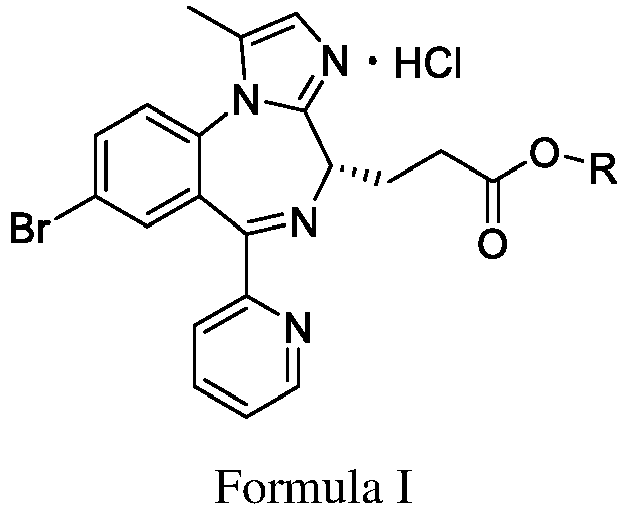
- In an embodiment according to this aspect, R is methyl, and its crystal form has a structure substantially as shown in
FIG. 1 , or may be characterized by one or more parameters substantially as shown in Tables 1-6. In another embodiment, R is ethyl, and its crystal form has a structure substantially as shown inFIG. 2 , or may be characterized by one or more parameters substantially as shown in Tables 7-12. - In an embodiment according to this aspect, R is methyl, and the compound of Formula I has a content of chloride ion of 6.71-7.52% (w/w). In another embodiment, R is ethyl, and the compound of Formula I has a content of chloride ion of 6.51-7.31% (w/w).
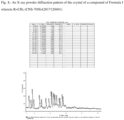
- In one embodiment, the crystal form of the compound of Formula I wherein R is methyl has an X-ray powder diffraction pattern with the following 2θ values measured by using CuKα radiation: about 6.81, 8.93, 13.39, 19.38, 21.23, 22.42, 24.20, 27.31±0.2 degrees. The X-ray powder diffraction pattern may also have the following 2θ values measured by using CuKα radiation: about 8.11, 9.86, 14.73, 17.47, 23.03, 25.94, 28.31±0.2 degrees. In addition, the crystal form has an X-ray powder diffraction pattern substantially as shown in
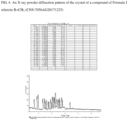
FIG. 3 . - In another embodiment, the crystal form of the compound of Formula I wherein R is methyl, has an X-ray powder diffraction pattern with the following 2θ values measured by using CuKα radiation: about 6.80, 8.93, 9.87, 13.37, 14.69, 19.36, 20.76, 21.25, 22.19, 22.38, 23.06, 24.21, 25.93, 27.73±0.2 degrees. The X-ray powder diffraction pattern may also have the following 2θ values measured by using CuKα radiation: about 16.14, 17.48, 20.02, 25.17, 26.36, 28.30, 34.13±0.2 degrees. In addition, the crystal form has an X-ray powder diffraction pattern substantially as shown in
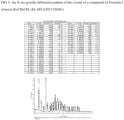
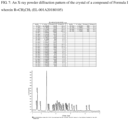
FIG. 4 . - In an embodiment, the crystal form of the compound of Formula I wherein R is ethyl has an X-ray powder diffraction pattern with the following 2θ values measured by using CuKα radiation: about 6.87, 7.38, 9.53, 13.65, 18.71, 22.13, 22.67, 25.10, 27.25, 29.30±0.2 degrees. The X-ray powder diffraction pattern may also have the following 2θ values measured by using CuKα radiation: about 14.96, 15.43, 20.23, 20.67, 21.13, 23.52, 28.22, 31.26±0.2 degrees. In addition, the crystal form has an X-ray powder diffraction pattern substantially as shown in any one of
FIGs. 5-8 . - In an embodiment, the crystal form of the compound of Formula I wherein R is ethyl has an X-ray powder diffraction pattern with the following 2θ values measured by using CuKα radiation: about 7.41, 9.24, 12.71, 13.64, 15.06, 18.30, 18.72, 21.59, 22.18, 25.74±0.2 degrees. The X-ray powder diffraction pattern may also have the following 2θ values measured by using CuKα radiation: about 9.52, 11.69, 20.90, 22.60, 23.65, 24.26, 26.40, 28.43, 29.35±0.2 degrees. In addition, the crystal form has an X-ray powder diffraction pattern substantially as shown in
FIG. 9 . - In another embodiment, the crystal form of the compound of Formula I wherein R is ethyl has an X-ray powder diffraction pattern with the following 2θ values measured by using CuKα radiation: about 6.84, 7.37, 9.53, 13.66, 22.63, 25.57, 29.28, 31.26±0.2 degrees. The X-ray powder diffraction pattern may also have the following 2θ values measured by using CuKα radiation: about 15.43, 19.07, 22.16, 34.25±0.2 degrees. In addition, the crystal form has an X-ray powder diffraction pattern substantially as shown in any one of
FIGs. 10-13 . - According to another aspect of the present invention, it provides a method for preparing the above-mentioned crystal forms of the hydrochloride of the benzodiazepine derivative of Formula I according to the present invention, comprising the following steps: dissolving the free base of the benzodiazepine derivative of the following Formula II-1 or II-2 in an
organic solvent 1, adding HCl donor A wherein [H+] is equimolar to the free base, to form a salt at a temperature of -20 to 60°C, preferably -10 to 30°C, after decolorizing the crude salt, crystallizing it in acrystallization solvent 1 at a temperature of -60 to 80°C, preferably -20 to 60°C, to obtain the crystal form of the hydrochloride of the benzodiazepine derivative of Formula I.
- In an embodiment according to this aspect, the
organic solvent 1 is an alcohol solvent, such as methanol, ethanol, n-propanol, isopropanol, n-butanol, isobutanol; an ester solvent, such as methyl acetate, ethyl acetate, propyl acetate, isopropyl acetate, butyl acetate; a ketone solvent, such as acetone and butanone; or a mixture thereof. - In an embodiment according to this aspect, the HCl donor A is an amino acid hydrochloride, such as glycine hydrochloride, alanine hydrochloride, valine hydrochloride; a HCl-anhydrous alcohol solution, that is, an alcohol solution of dry HCl, such as dry HCl-methanol solution, dry HCl-ethanol solution, dry HCl-isopropanol solution; or a solution B that can generate HCl, such as acetyl chloride-methanol solution, acetyl chloride-ethanol solution, propionyl chloride-ethanol solution, acetyl chloride-isopropanol solution.
- In an embodiment according to this aspect, the HCl donor A is an amino acid hydrochloride, and the crystal form of the hydrochloride of the benzodiazepine derivative has an amount of amino acid of 0%-8% (w/w).
- In an embodiment according to this aspect, the HCl donor A is a HCl-anhydrous alcohol solution or a solution B that can generate HCl, and the ratio of amount of substance (molar ratio) of the free base of the benzodiazepine derivative to the HCl donor A (calculated by [H+]) is 1:0.4 - 1; the HCl donor A is an amino acid hydrochloride, and the amount ratio (molar ratio) of the free base of the benzodiazepine derivative to the amino acid hydrochloride is 1:1-10.
- In an embodiment according to this aspect, the
crystallization solvent 1 comprises an alcohol solvent, such as methanol, ethanol, n-propanol, isopropanol, n-butanol, isobutanol; an ether solvent, such as ethyl ether, isopropyl ether, dioxane, methyl tert-butyl ether; an ester solvent, such as methyl acetate, ethyl acetate, propyl acetate, isopropyl acetate, butyl acetate; a ketone solvent, such as acetone and butanone; an alkane solvent, such as n-pentane, hexane, heptane, petroleum ether; a halogenated alkane, such as dichloromethane, chloroform, 1,2-dichloroethane; and a combination thereof. - According to another aspect of the present invention, it provides a pharmaceutical composition comprising the above-mentioned crystal form of the hydrochloride of the benzodiazepine derivative of Formula I according to the present invention, and a pharmaceutically acceptable excipient, carrier and/or other auxiliary materials.
- The crystal form and the pharmaceutical composition according to the present invention may be used as intravenous anesthetics.
- The crystal form of the hydrochloride of the benzodiazepine derivative provided by the present invention can not only improve the stability of the benzodiazepine derivative, but also eliminate the possibility of forming sulfonate ester impurities with strong genotoxicity during production and storage of the benzodiazepine derivative sulfonate, and has a more excellent anesthetic effect, which is more conducive to clinical use.
- In addition, the present invention provides a hydrochloride of the benzodiazepine derivative of Formula I, which, compared to the corresponding sulfonate, 1) has good stability and is less prone to produce a hydrolysis product; 2) does not produce sulfonate ester impurities with strong genotoxicity during production or long-term storage; 3) has a shorter duration of anesthesia and a shorter interval of time to start walking after awakening, less individual differences, which is of great clinical significance.
- The present invention will be described in more detail below with reference to the drawings.
-
-
FIG. 1 : The monocrystal molecular structure of an ethanolate of a compound of Formula I wherein R is methyl; -
FIG. 2 : The monocrystal molecular structure of an ethanolate of a compound of Formula I wherein R is ethyl; -
FIG. 3 : An X-ray powder diffraction pattern of the crystal of a compound of Formula I wherein R=CH3 (CNS-7056A2017120401); -
FIG. 4 : An X-ray powder diffraction pattern of the crystal of a compound of Formula I wherein R=CH3 (CNS-7056AG20171225); -
FIG. 5 : An X-ray powder diffraction pattern of the crystal of a compound of Formula I wherein R=CH2CH3 (EL-001A2017120401); -
FIG. 6 : An X-ray powder diffraction pattern of the crystal of a compound of Formula I wherein R=CH2CH3 (EL-001A2017120801); -
FIG. 7 : An X-ray powder diffraction pattern of the crystal of a compound of Formula I wherein R=CH2CH3 (EL-001A20180105); -
FIG. 8 : An X-ray powder diffraction pattern of the crystal of a compound of Formula I wherein R=CH2CH3 (EL-001A2018010801); -
FIG. 9 : An X-ray powder diffraction pattern of the crystal of a compound of Formula I wherein R=CH2CH3 (EL-001A20180130); -
FIG. 10 : An X-ray powder diffraction pattern of the crystal of a compound of Formula I wherein R=CH2CH3 (EL-001AG2017121801); -
FIG. 11 : An X-ray powder diffraction pattern of the crystal of a compound of Formula I wherein R=CH2CH3 (EL-001AG2017122101); -
FIG. 12 : An X-ray powder diffraction pattern of the crystal of a compound of Formula I wherein R=CH2CH3 (EL-001AG2017122702LJ) ; and -
FIG. 13 : An X-ray powder diffraction pattern of the crystal of a compound of Formula I wherein R=CH2CH3 (EL-001AG2018010201). - The present invention provides a crystal structure of a hydrochloride of a benzodiazepine derivative of the following general Formula I and its ethanolate,

- According to one embodiment of the present invention, when R is methyl, the crystal of the ethanolate of the benzodiazepine hydrochloride provided by the present invention has the following cell parameters: a=7.6929(6) Å, b=11.9174(10) Å, c=13.2096(11) Å, α= 90°, β= 96.904(1)°, γ=90°. It may also be further characterized by its structure as shown in
Fig. 1 , the parameters as shown in Table 1, the structural coordinates as shown in Table 2, Table 3, and Table 4, and the bond lengths and angles as shown in Table 5 and Table 6. - According to one embodiment of the present invention, when R is ethyl, the crystal of the ethanolate of the benzodiazepine hydrochloride provided by the present invention has the following cell parameters: a=7.3774(1) Å, b=12.7332(2) Å, c=27.1779(4) Å, α= 90°, β= 90°, γ=90°. It may also be further characterized by its structure as shown in
Figure 2 , the structural parameters as shown in Table 7, the structural coordinates as shown in Table 8, Table 9, and Table 10, and the bond lengths and angles as shown in Table 11 and Table 12. - According to an embodiment of the present invention, when R is methyl, the compound of Formula I has a content of chloride ion of 6.71-7.52% (w/w).
- In an embodiment of the present invention, when R is ethyl, the compound of Formula I has a content of chloride ion of 6.51-7.31% (w/w).
- The hydrochloride of the benzodiazepine derivative provided by the present invention is a crystalline salt, and their crystal structures and X-ray powder diffraction data and patterns are also provided.
- According to an embodiment of the present invention, R is methyl, and it has an X-ray powder diffraction pattern expressed in 2θ degrees by using Cu-Kα radiation with characteristic absorption at about 6.81, 8.93, 13.39, 19.38, 21.23, 22.42, 24.20, 27.31±0.2, and can be further characterized by an X-ray powder diffraction pattern at 2θ of about 8.11, 9.86, 14.73, 17.47, 23.03, 25.94, 28.31±0.2 degrees, or the X-ray powder diffraction pattern as shown in
FIG. 3 . - According to an embodiment of the present invention, R is methyl, and it has an X-ray powder diffraction pattern expressed in 2θ degrees by using Cu-Kα radiation with characteristic absorption at about 6.80, 8.93, 9.87, 13.37, 14.69, 19.36, 20.76, 21.25, 22.19, 22.38, 23.06, 24.21, 25.93, 27.73±0.2, and can be further characterized by an X-ray powder diffraction pattern at 2θ of about 16.14, 17.48, 20.02, 25.17, 26.36, 28.30, 34.13±0.2 degrees, or the X-ray powder diffraction pattern as shown in
FIG. 4 . - According to an embodiment of the present invention, R is ethyl, and it has an X-ray powder diffraction pattern expressed in 2θ degrees by using Cu-Kα radiation with characteristic absorption at about 6.87, 7.38, 9.53, 13.65, 18.71, 22.13, 22.67, 25.10, 27.25, 29.30±0.2, and can be further characterized by an X-ray powder diffraction pattern at 2θ of about 14.96, 15.43, 20.23, 20.67, 21.13, 23.52, 28.22, 31.26±0.2 degrees, or the X-ray powder diffraction patterns as shown in
FIGs. 5-8 . - According to an embodiment of the present invention, R is ethyl, and it has an X-ray powder diffraction pattern expressed in 2θ degrees by using Cu-Kα radiation with characteristic absorption at about 7.41, 9.24, 12.71, 13.64, 15.06, 18.30, 18.72, 21.59, 22.18, 25.74±0.2, and can be further characterized by an X-ray powder diffraction pattern at 2θ of about 9.52, 11.69, 20.90, 22.60, 23.65, 24.26, 26.40, 28.43, 29.35±0.2 degrees, or the X-ray powder diffraction pattern as shown in
FIG. 9 . - According to an embodiment of the present invention, R is ethyl, and it has an X-ray powder diffraction pattern expressed in 2θ degrees by using Cu-Kα radiation with characteristic absorption at about 6.84, 7.37, 9.53, 13.66, 22.63, 25.57, 29.28, 31.26±0.2, and can be further characterized by an X-ray powder diffraction pattern at 2θ of about 15.43, 19.07, 22.16, 34.25±0.2 degrees, or the X-ray powder diffraction patterns as shown in
FIGs. 10-13 - According to a second aspect of the present invention, it provides a method for preparing the hydrochloride of the benzodiazepine derivative and its crystal form: dissolving the free base of the benzodiazepine derivative in an
organic solvent 1; adding HCl donor A equimolar to the free base of the benzodiazepine derivative, to form a salt at -20-60°C to obtain a crude product; and after decolorizing, crystallizing the crude product in acrystallization solvent 1 at -60-80°C to obtain hydrochloride of the benzodiazepine derivative. - According to an embodiment of the present invention, the
organic solvent 1 is an alcohol solvent (such as methanol, ethanol, n-propanol, isopropanol, n-butanol, isobutanol, etc.), an ester solvent (such as methyl acetate, ethyl acetate, propyl acetate, isopropyl acetate, butyl acetate, etc.), a ketone solvent (such as acetone, butanone, etc.), or mixtures thereof. - According to an embodiment of the present invention, the HCl donor A is an amino acid hydrochloride (such as glycine hydrochloride, alanine hydrochloride, valine hydrochloride, etc.), a HCl-anhydrous alcohol solution (i.e., alcohol solution of dry HCl gas, such as dry HCl-methanol solution, dry HCl-ethanol solution), a solution B that can generate HCl (such as acetyl chloride-methanol solution, acetyl chloride-ethanol solution, etc.).
- According to an embodiment of the present invention, when the HCl donor A is an amino acid hydrochloride, the hydrochloride of the benzodiazepine derivative has an amount of amino acid of 0%-8% (w/w).
- According to an embodiment of the present invention, when the HCl donor A is an amino acid hydrochloride, the ratio of amount of substance of the benzodiazepine derivative (calculated by free base) to the amino acid hydrochloride is 1:1-10; and when the HCl donor A is a HCl-anhydrous alcohol solution or a solution B that can generate HCl, the amount ratio of the benzodiazepine derivative (calculated by free base) to acid (calculated by HCl) is 1:0.4-1.
- According to an embodiment of the present invention, the temperature for forming a salt is -20 to 60°C, preferably -10 to 30°C; and the crystallization temperature is -60-80°C, preferably -20-60°C.
- According to an embodiment of the present invention, the
crystallization solvent 1 comprises an alcohol solvent (such as methanol, ethanol, n-propanol, isopropanol, n-butanol, isobutanol, etc.), an ether solvent (such as diethyl ether, isopropyl ether, dioxane, methyl tert-butyl ether, isopropyl ether, etc.), an ester solvent (such as methyl acetate, ethyl acetate, propyl acetate, isopropyl acetate, butyl acetate, etc.), a ketone solvent (such as acetone, butanone, etc.), an alkane solvent (such as pentane, hexane, heptane, petroleum ether, etc.), a halogenated alkane (such as dichloromethane, chloroform, 1,2-dichloroethane, etc.) and combinations thereof. - According to a third aspect of the present invention, it provides the hydrochloride of the benzodiazepine derivative and the pharmaceutical composition of the present invention, which can be used as intravenous anesthetics.
- The pharmaceutical composition comprises the above-mentioned crystal form of the hydrochloride of the benzodiazepine derivative of Formula I according to the present invention, and optionally a pharmaceutically acceptable excipient, carrier and/or other auxiliary materials. The excipient and/or carrier include, for example, one or more of mannitol, sorbitol, xylitol, sucrose, lactose, glucose, dextrin, maltose, maltitol, maltodextrin, erythritol, trehalose, calcium gluconate, calcium sulfate, sodium chloride, glycine, hydrolyzed gelatin, human albumin, etc. The composition may optionally include other auxiliary materials, such as a pH adjusting agent, stabilizer, analgesic, bacteriostatic agent, and the like. The pH adjusting agent includes, for example, one or more of hydrochloric acid, sulfuric acid, phosphoric acid, citric acid, acetic acid, sodium dihydrogen phosphate, potassium dihydrogen phosphate, ammonium dihydrogen phosphate, disodium hydrogen phosphate, dipotassium hydrogen phosphate, diammonium hydrogen phosphate, sodium phosphate, potassium phosphate, ammonium phosphate, sodium bisulfate, potassium bisulfate, ammonium bisulfate, sodium bicarbonate, potassium bicarbonate, sodium carbonate, potassium carbonate, sodium hydroxide, potassium hydroxide, ammonia water, citric acid, sodium dihydrogen citrate, potassium dihydrogen citrate, ammonium dihydrogen citrate, disodium hydrogen citrate, dipotassium hydrogen citrate, diammonium hydrogen citrate, potassium sodium hydrogen citrate, sodium citrate, potassium citrate, ammonium citrate, lactic acid, sodium lactate, potassium lactate, ammonium lactate, malic acid, sodium malate, potassium malate, malic acid, sodium hydrogen malate, potassium hydrogen malate, ammonium hydrogen malate, potassium sodium malate, tartaric acid, sodium hydrogen tartrate, potassium hydrogen tartrate, ammonium hydrogen tartrate, potassium sodium tartrate, vitamin C, sodium vitamin C, alginic acid, sodium alginate, succinic acid, sodium succinate, potassium succinate, ammonium succinate, sodium hydrogen succinate, potassium hydrogen succinate, ammonium hydrogen succinate, potassium sodium succinate, acetic acid, sodium acetate, potassium acetate, ammonium acetate, amino acids and their salts. The stabilizer includes, for example, one or more of sodium bisulfite, sodium metabisulfite, sodium sulfite, sodium thiosulfate, vitamin C, sodium thioglycolate, glycine, cysteine, disodium edetate, sodium calcium edetate, etc. The analgesic include, for example: one or more of benzyl alcohol, 1,1,1-trichloro-2-methyl-2-propanol and the like. The bacteriostatic agent includes, for example, one or more of benzyl alcohol, 1,1,1-trichloro-2-methyl-2-propanol, benzoic acid and its salts, sorbic acid and its salts, parabens and the like.
- According to a fifth aspect of the present invention, it provides the use of the hydrochloride of the benzodiazepine derivative of the present invention in the preparation of intravenous anesthetics.
- In order to better illustrate the objective and technical solution of the present invention, examples of the present invention are described in detail below. It should be noted that the following examples are only used to further illustrate the present invention, and cannot be understood as limiting the scope of protection of the present invention. Some non-essential improvements and adjustments made by those skilled in the art based on the above content of the present invention fall into the protection scope of the present invention.
- The preparation of the free base of the benzodiazepine derivative (Formula II-1, Formula II-2) involved in the preparation method according to the present invention is disclosed in
PCT/CN2015/084770 WO0069836 
- X-ray powder diffraction pattern: Instrument model: Bruker D8 FOCUS X-ray powder diffractometer; X-ray: Cu target; Scanning method: θ/2θ; Scanning range: 3-60°; Voltage: 40KV; Current: 40mA.
- The compound of Formula II-1 (1.8 g, 4 mmol) was dissolved in anhydrous methanol (6 ml) at 13°C, and then 1.57 g anhydrous methanol-HCl (HCl content of 9.29%) (with HCl molar quantity of 4 mmol) was added dropwise thereto. The mixture reacted for 0.5h, then MTBE (54ml) was added dropwise and reacted for another 0.5h. The reaction mixture was filtered, and the filter cake was dissolved in 30 ml of anhydrous methanol, decolorized at 50° C for 0.5 h, and then filtered. The filtrate was concentrated, and the residue was dissolved in anhydrous methanol (14 ml) at 50°C. Methyl tert-butyl ether (7 ml) was added dropwise. The solution became turbid, and was stirred for 0.5h. MTBE (98ml) was added dropwise. Then, the solution was cooled to -10°C and stirred for 1 hour and filtered. The filter cake was subjected to slurrying with ether (30 ml) for 1.5h, and then filtered. The filter cake was dried to obtain 1.62 g of a white solid, with a yield of 90%, purity: 99.57%, m.p: 173-175°C. The theoretical value of chloride ion content was 7.45% (w/w), and the measured value was 7.42% (w/w). See
FIG. 3 for the X-ray powder diffraction pattern. - Glycine hydrochloride (2.46 g, 22 mmol) was added in anhydrous methanol (50 ml) at 60°C. An anhydrous methanol solution (15 ml) containing the compound of Formula II-1 (5 g, 11 mmol) was added dropwise to the above mixture within 5 min, and allowed to react for 0.5 h. The reaction mixture was cooled to -20°C and maintained at this temperature overnight, and then filtered. The filtrate was concentrated, and the residue was dissolved in anhydrous methanol (50 ml), decolorized at 55-60°C for 0.5h, and then filtered. The filtrate was concentrated, and the residue was dissolved in anhydrous methanol (20 ml) at 60°C. Methyl tert-butyl ether (140 ml) was added dropwise thereto. Then, it was cooled to room temperature and stirred overnight, and then filtered. The obtained solid was dried to obtain the target product. The theoretical value of chloride ion content was 7.45% (w/w), and the measured value was 7.38% (w/w). See
FIG. 4 for the X-ray powder diffraction pattern. - With reference to the operation of Example 2, the target compound was prepared with the compound of Formula II-1 and valine hydrochloride as starting materials (with a molar ratio of 1: 1.5). The theoretical value of chloride ion content was 7.45% (w/w), and the measured value was 6.94% (w/w).
- With reference to the operation of Example 2, the target compound was prepared with the compound of Formula II-1 and alanine hydrochloride as starting materials (with a molar ratio of 1:3). The theoretical value of chloride ion content was 7.45% (w/w), and the measured value was 6.81% (w/w).
- With reference to the operation of Example 1, the target compound was prepared by crystallizing at 20°C, with the compound of Formula II-1 and acetyl chloride-anhydrous methanol solution as starting materials (with a molar ratio of acetyl chloride to the compound of Formula II-1 of 1:1). Theoretical value of chloride ion content was 7.45% (w/w), and the measured value was 7.52% (w/w).
- The compound of Formula I prepared in Example 1 was recrystallized with ethanol and methyl tert-butyl ether, and allowed to stand at room temperature for 4 days. The crystals were then collected. The obtained crystal was subjected to an X-ray single crystal diffraction experiment, and its crystal parameters are shown in Tables 1-6 below.

Table 2: Non-hydrogen atomic coordinates (x 104) and equivalent isotropic shift parameter (Å2x 10³) data of the ethanolate of the compound of Formula I wherein R is methyl No. of Atom x y z U(eq) Br(1) -4202(1) 8268(1) 6312(1) 20(1) O(1) 1797(2) 1562(2) 6318(1) 24(1) O(2) 3608(2) 1616(2) 7788(1) 24(1) N(1) 3120(2) 7198(2) 8336(1) 11(1) N(2) 5345(3) 6118(2) 8788(1) 14(1) N(3) 2920(3) 5605(2) 6571(1) 12(1) N(4) 2033(3) 7931(2) 4955(1) 16(1) C(1) -1864(3) 8033(2) 6918(2) 15(1) C(2) -744(3) 7443(2) 6369(2) 15(1) C(3) 940(3) 7172(2) 6826(2) 12(1) C(4) 1444(3) 7520(2) 7839(2) 12(1) C(5) 3750(3) 6139(2) 8272(2) 12(1) C(6) 5737(3) 7165(2) 9197(2) 17(1) C(7) 4366(3) 7865(2) 8929(2) 14(1) C(8) 4159(3) 9076(2) 9132(2) 19(1) C(9) 2771(3) 5267(2) 7635(2) 12(1) C(10) 2080(3) 6484(2) 6240(2) 12(1) C(11) 2264(3) 6836(2) 5168(2) 13(1) C(12) 2297(3) 8259(3) 4006(2) 19(1) C(13) 2764(3) 7536(2) 3271(2) 20(1) C(14) 2999(3) 6408(2) 3507(2) 22(1) C(15) 2745(3) 6053(2) 4475(2) 19(1) C(16) 3417(3) 4067(2) 7808(2) 14(1) C(17) 2268(3) 3324(3) 7070(2) 20(1) C(18) 2680(3) 2085(2) 7127(2) 17(1) C(19) 1984(4) 359(2) 6277(3) 29(1) C(20) 324(3) 8166(2) 8354(2) 15(1) C(21) -1338(3) 8426(2) 7891(2) 16(1) Cl(1) 8473(1) 4573(1) 8670(1) 25(1) O(3) 11847(2) 5057(2) 10155(1) 30(1) C(22) 11733(4) 6161(3) 10571(2) 29(1) C(23) 10127(4) 6328(3) 11098(2) 27(1) Note: U(eq) is defined as one third of the trace of the orthogonalized Uij tensor. Table 3: Non-hydrogen atom anisotropic shift parameter (Å2x 10³) data of the ethanolate of the compound of Formula I wherein R is methyl No. of Atom U11 U22 U33 U23 U13 U12 Br(1) 10(1) 18(1) 30(1) 5(1) -2(1) 1(1) O(1) 33(1) 10(1) 28(1) -4(1) -4(1) 2(1) O(2) 25(1) 15(1) 30(1) 4(1) -2(1) 1(1) N(1) 11(1) 10(1) 12(1) -1(1) 2(1) 0(1) N(2) 12(1) 14(1) 16(1) 2(1) 0(1) 3(1) N(3) 14(1) 10(1) 12(1) 1(1) 1(1) -1(1) N(4) 17(1) 15(1) 16(1) 2(1) -1(1) -1(1) C(1) 9(1) 14(2) 22(1) 2(1) 0(1) 0(1) C(2) 16(1) 11(1) 16(1) 1(1) -1(1) -1(1) C(3) 13(1) 8(1) 14(1) 0(1) 1(1) -1(1) C(4) 10(1) 10(1) 14(1) 1(1) 1(1) 0(1) C(5) 13(1) 10(1) 12(1) 1(1) 3(1) 1(1) C(6) 16(1) 18(1) 15(1) 0(1) -2(1) -4(1) C(7) 14(1) 16(1) 10(1) -1(1) 0(1) -2(1) C(8) 20(1) 13(1) 22(1) -3(1) -1(1) -2(1) C(9) 14(1) 11(1) 12(1) 1(1) 1(1) 1(1) C(10) 12(1) 10(1) 14(1) -1(1) -1(1) -4(1) C(11) 12(1) 13(1) 13(1) 0(1) -1(1) 0(1) C(12) 19(1) 18(1) 21(1) 9(1) -1(1) -4(2) C(13) 19(1) 26(1) 14(1) 6(1) 2(1) -2(1) C(14) 26(1) 23(1) 16(1) -2(1) 4(1) 3(1) C(15) 24(1) 16(1) 18(1) 1(1) 2(1) 3(1) C(16) 16(1) 11(1) 16(1) 3(1) 1(1) 1(1) C(17) 25(1) 9(1) 25(1) 0(1) -5(1) 3(1) C(18) 16(1) 11(1) 24(1) 1(1) 5(1) -2(1) C(19) 31(2) 11(1) 45(2) -5(1) -1(1) 3(1) C(20) 17(1) 12(1) 15(1) -1(1) 3(1) -2(1) C(21) 14(1) 11(1) 23(1) -2(1) 7(1) 2(1) Cl(1) 16(1) 26(1) 32(1) -12(1) -1(1) 3(1) O(3) 22(1) 40(1) 26(1) -5(1) -3(1) 9(1) C(22) 34(2) 31(2) 22(1) 2(1) 7(1) -3 (1) C(23) 27(1) 26(2) 27(1) -3(1) 1(1) 2(1) Table 4: Hydrogen atomic coordinates (x 104) and equivalent isotropic shift parameter (Å2x 10³) data of the ethanolate of the compound of Formula I wherein R is methyl No. of hydrogen atom x y z U(eq) H(2) 6024 5542 8856 17 H(2A) -1108 7227 5701 18 H(6) 6775 7361 9593 20 H(8A) 3702 9449 8512 28 H(8B) 5276 9392 9382 28 H(8C) 3364 9174 9632 28 H(9) 1536 5300 7748 15 H(12) 2155 9015 3840 23 H(13) 2919 7800 2625 24 H(14) 3320 5903 3026 26 H(15) 2893 5302 4658 23 H(16A) 4631 4008 7684 17 H(16B) 3331 3840 8506 17 H(17A) 1060 3427 7193 24 H(17B) 2364 3580 6382 24 H(19A) 1305 76 5673 44 H(19B) 1577 28 6868 44 H(19C) 3194 171 6262 44 H(20) 693 8423 9010 18 H(21) -2090 8859 8230 19 H(3) 10946 4916 9780 45 H(22A) 11727 6706 10026 35 H(22B) 12763 6299 11054 35 H(23A) 9102 6175 10629 40 H(23B) 10090 7089 11333 40 H(23C) 10164 5827 11669 40 Table 5: Bond length (Å) and bond angle (°) data of the ethanolate of the compound of Formula I wherein R is methyl Bond Bond length (bond angle°) Bond Bond length Å (bond angle°) Br(1)-C(1) 1.899(2) N(1)-C(5) 1.359(3) O(1)-C(18) 1.348(3) N(1)-C(7) 1.408(3) O(1)-C(19) 1.443(3) N(2)-C(5) 1.330(3) O(2)-C(18) 1.198(3) N(2)-C(6) 1.379(3) N(1)-C(4) 1.427(3) N(3)-C(9) 1.480(3) N(3)-C(10) 1.281(3) C(2)-C(3) 1.400(3) N(4)-C(11) 1.342(3) C(3)-C(4) 1.410(3) N(4)-C(12) 1.352(3) C(3)-C(10) 1.484(3) C(1)-C(2) 1.382(3) C(4)-C(20) 1.393(3) C(1)-C(21) 1.383(3) C(5)-C(9) 1.484(3) C(6)-C(7) 1.358(4) C(12)-C(13) 1.379(4) C(7)-C(8) 1.481(4) C(13)-C(14) 1.386(4) C(9)-C(16) 1.522(3) C(14)-C(15) 1.383(3) C(10)-C(11) 1.498(3) C(16)-C(17) 1.520(3) C(11)-C(15) 1.390(3) C(17)-C(18) 1.510(4) C(20)-C(21) 1.385(3) C(18)-O(1)-C(19) 116.5(2) O(3)-C(22) 1.432(4) C(5)-N(1)-C(4) 122.0(2) C(22)-C(23) 1.502(4) C(5)-N(1)-C(7) 109.57(19) C(7)-N(1)-C(4) 128.4(2) C(2)-C(1)-C(21) 121.9(2) C(5)-N(2)-C(6) 109.2(2) C(21)-C(1)-Br(1) 119.90(17) C(10)-N(3)-C(9) 117.0(2) C(1)-C(2)-C(3) 119.7(2) C(11)-N(4)-C(12) 116.5(2) C(2)-C(3)-C(4) 118.4(2) C(2)-C(1)-Br(1) 118.20(17) C(2)-C(3)-C(10) 118.5(2) C(4)-C(3)-C(10) 123.0(2) N(2)-C(5)-N(1) 107.4(2) C(3)-C(4)-N(1) 119.2(2) N(2)-C(5)-C(9) 130.7(2) C(20)-C(4)-N(1) 120.1(2) C(7)-C(6)-N(2) 109.1(2) C(20)-C(4)-C(3) 120.7(2) N(1)-C(7)-C(8) 124.7(2) N(1)-C(5)-C(9) 121.7(2) C(6)-C(7)-N(1) 104.7(2) C(6)-C(7)-C(8) 130.4(2) N(3)-C(10)-C(11) 116.8(2) N(3)-C(9)-C(5) 104.79(18) C(3)-C(10)-C(11) 117.8(2) N(3)-C(9)-C(16) 109.69(19) N(4)-C(11)-C(10) 116.4(2) C(5)-C(9)-C(16) 116.00(19) N(4)-C(11)-C(15) 123.6(2) N(3)-C(10)-C(3) 125.3(2) C(15)-C(11)-C(10) 119.9(2) N(4)-C(12)-C(13) 123.6(3) C(18)-C(17)-C(16) 115.8(2) C(12)-C(13)-C(14) 119.1(2) O(1)-C(18)-C(17) 109.3(2) C(15)-C(14)-C(13) 118.4(2) O(2)-C(18)-O(1) 124.2(2) C(14)-C(15)-C(11) 118.8(2) O(2)-C(18)-C(17) 126.6(2) C(17)-C(16)-C(9) 107.3(2) C(21)-C(20)-C(4) 120.0(2) C(1)-C(21)-C(20) 119.1(2) O(3)-C(22)-C(23) 113.0(2) Table 6: Bond torsion angle (°) data of the ethanolate of the compound of Formula I wherein R is methyl Bond Torsion angle (°) Bond Torsion angle (°) Br(1)-C(1)-C(2)-C(3) -174.59(17) N(2)-C(5)-C(9)-N(3) -102.1(3) Br(1)-C(1)-C(21)-C(20) 174.62(19) N(2)-C(5)-C(9)-C(16) 190(3) N(1)-C(4)-C(20)-C(21) -176.5(2) N(2)-C(6)-C(7)-N(1) -0.1(3) N(1)-C(5)-C(9)-N(3) 71.7(3) N(2)-C(6)-C(7)-C(8) -176.9(2) N(1)-C(5)-C(9)-C(16) -167.2(2) N(3)-C(9)-C(16)-C(17) -60.3(2) N(3)-C(10)-C(11)-N(4) -153.5(2) C(1)-C(2)-C(3)-C(10) 176.7(2) N(3)-C(10)-C(11)-C(15) 23.0(3) C(2)-C(1)-C(21)-C(20) -3.8(4) N(4)-C(11)-C(15)-C(14) -0.2(4) C(2)-C(3)-C(4)-N(1) 176.6(2) N(4)-C(12)-C(13)-C(14) -0.7(4) C(2)-C(3)-C(4)-C(20) -3.2(4) C(1)-C(2)-C(3)-C(4) -0.4(3) C(2)-C(3)-C(10)-N(3) -130.2(3) C(2)-C(3)-C(10)-C(11) 49.3(3) C(4)-N(1)-C(5)-C(9) 3.2(3) C(3)-C(4)-C(20)-C(21) 3.3(4) C(4)-N(1)-C(7)-C(6) -178.4(2) C(3)-C(10)-C(11)-N(4) 26.9(3) C(4)-N(1)-C(7)-C(8) -1.4(4) C(3)-C(10)-C(11)-C(15) -156.5(2) C(4)-C(3)-C(10)-N(3) 46.7(4) C(4)-N(1)-C(5)-N(2) 178.27(19) C(4)-C(3)-C(10)-C(11) -133.8(2) C(4)-C(20)-C(21)-C(1) 0.2(4) C(5)-N(2)-C(6)-C(7) -0.4(3) C(5)-N(1)-C(4)-C(3) -44.1(3) C(5)-C(9)-C(16)-C(17) -178.74(19) C(5)-N(1)-C(4)-C(20) 135.7(2) C(6)-N(2)-C(5)-N(1) 0.7(3) C(5)-N(1)-C(7)-C(6) 0.6(3) C(6)-N(2)-C(5)-C(9) 175.1(2) C(5)-N(1)-C(7)-C(8) 177.6(2) C(7)-N(1)-C(4)-C(3) 134.8(2) C(7)-N(1)-C(4)-C(20) -45.4(3) C(9)-C(16)-C(17)-C(18) -179.3(2) C(7)-N(1)-C(5)-N(2) -0.8(2) C(10)-N(3)-C(9)-C(5) -70.0(2) C(7)-N(1)-C(5)-C(9) -175.84(19) C(10)-N(3)-C(9)-C(16) 164.8(2) C(9)-N(3)-C(10)-C(3) -1.6(4) C(10)-C(3)-C(4)-N(1) -0.3 (3) C(9)-N(3)-C(10)-C(11) 178.83(19) C(10)-C(3)-C(4)-C(20) 179.9(2) C(10)-C(11)-C(15)-C(14) -176.5(2) C(13)-C(14)-C(15)-C(11) 0.1(4) C(11)-N(4)-C(12)-C(13) 0.5(3) C(16)-C(17)-C(18)-O(1) -168.7(2) C(12)-N(4)-C(11)-C(10) 176.34(19) C(16)-C(17)-C(18)-O(2) 12.9(4) C(12)-N(4)-C(11)-C(15) -0.1(3) C(19)-O(1)-C(18)-O(2) 1.1(4) C(12)-C(13)-C(14)-C(15) 0.3(4) C(19)-O(1)-C(18)-C(17) -177.4(2) C(21)-C(1)-C(2)-C(3) 3.9(4) - The compound of Formula II-2 (1.38 g, 3 mmol) was dissolved in absolute ethanol (5 ml) at 13°C, and then an absolute ethanol solution (5 ml) containing acetyl chloride (3 mmol) was added dropwise, and reacted overnight. Then, MTBE (45ml) was added dropwise to the above reaction mixture, reacted for 0.5h, and then filtered. The filter cake was dissolved in 30 ml absolute ethanol, decolorized at 50°C for 0.5h, and then filtered. The filtrate was concentrated, and the residue was dissolved with absolute ethanol (12 ml) at 50°C, and then MTBE (6ml) was added dropwise to it. The solution became turbid and was stirred for 0.5 h. MTBE (82 ml) was added dropwise to the above mixture. Then, it was cooled to -8°C and stirred for 1h, and then filtered. The filter cake was subjected to pulping with ether (25 ml) for 1.5h, and then filtered. The filter cake was dried to obtain 1.3 g of a white solid, with a yield of 92%, purity: 99.73%, m.p: 160-163°C. Theoretical value of chloride ion content was 7.24% (w/w), and the measured value was 7.31% (w/w). See
FIG. 5 for the X-ray powder diffraction pattern of the crystal. - With reference to the operation of Example 7, the target compound was prepared by crystallizing at 20°C, with the compound of Formula II-2 and acetyl chloride-anhydrous isopropanol solution as starting materials (with a molar ratio of 1:1). See
FIG. 6 for the X-ray powder diffraction pattern of the crystal. Theoretical value of chloride ion content was 7.24% (w/w), and the measured value was 7.21% (w/w). - The compound of Formula II-2 (1.38 g, 3 mmol) was dissolved in absolute ethanol (5 ml) at 13°C, and then 1.2 g absolute ethanol-HCl (HCl content of 8.87%) (with HCl molar quantity of 3 mmol) was added dropwise thereto, and reacted for 0.5 h. Then, MTBE (45 ml) was added dropwise to the above reaction mixture, reacted for 0.5 h, and then filtered. The filter cake was dissolved in 30 ml absolute ethanol, decolorized at 50°C for 0.5h, and then filtered. The filtrate was concentrated, and the residue was dissolved with absolute ethanol (12 ml) at 50°C, and then MTBE (60 ml) was added dropwise thereto. The solution became turbid and was stirred for 0.5 h. MTBE (82 ml) was then added dropwise. Then, it was cooled to -8°C and stirred for 1 h, the mixture was filtered, and the filter cake was subjected to slurrying with ether (25 ml) for 1.5 h, and then filtered. The filter cake was dried to obtain 1.3 g of a white solid, with a yield of 92%, purity: 99.89%, m.p: 162-165°C. Theoretical value of chloride ion content was 7.24% (w/w), and the measured value was 7.15% (w/w). See
FIG. 7 for the X-ray powder diffraction pattern of the crystal. - With reference to the operation of Example 9, another batch of the crystal of the compound of Formula I wherein R is ethyl was obtained. The X-ray powder diffraction pattern of the crystal is shown in
FIG. 8 . - With reference to the operation of Example 9, the crystallization solvent ethanol: methyl tert-butyl ether=1:7 (v/v) was used, and the crystal of the compound of Formula I wherein R is ethyl was obtained. Theoretical value of chloride ion content was 7.24% (w/w), and the measured value was 7.19% (w/w). See
FIG. 9 for the X-ray powder diffraction pattern of the crystal. - Glycine hydrochloride (2.46 g, 22 mmol) was added in absolute ethanol (50 ml) at 60°C, and then an absolute ethanol solution (15 ml) containing the compound of Formula II-2 (5 g, 11 mmol) was added dropwise within 5 minutes, and allowed to react for 0.5h. The reaction mixture was cooled to -20°C and maintained overnight, and then filtered. The filtrate was concentrated, and the residue was dissolved in absolute ethanol (50 ml), decolorized at 55-60°C for 0.5h, and filtered. The filtrate was concentrated. The residue was dissolved in absolute ethanol (20 ml) at 60°C. Methyl tert-butyl ether (140 ml) was added dropwise. Then, it was cooled to room temperature, stirred overnight, and filtered. The filter cake was dried to obtain the target product. Theoretical value of chloride ion content was 7.24% (w/w), and the measured value was 6.82% (w/w). See
FIG. 10 for the X-ray powder diffraction pattern of the crystal. - With reference to the operation of Example 11, another batch of the crystal of the compound of Formula I wherein R is ethyl was obtained. The X-ray powder diffraction pattern of the crystal is shown in
FIG. 11 . - Glycine hydrochloride (2.46 g, 22 mmol) was added in absolute ethanol (50 ml) at 60°C, and then an absolute ethanol solution (15 ml) containing the compound of Formula II-2 (5 g, 11 mmol) was added dropwise within 5 minutes, and allowed to react for 0.5h. It was cooled to -20°C and maintained overnight, then filtered. The filtrate was concentrated, and the residue was dissolved in absolute ethanol (50 ml), decolorized at 55-60°C for 0.5h, and then filtered. The filtrate was concentrated, and the residue was dissolved with absolute ethanol (25 ml) at 60°C, and ethyl acetate (240 ml) was added dropwise thereto. Then, it was cooled to -40°C, stirred for 2h, and filtered. The residue was dissolved in absolute ethanol (25 ml) at 50°C, and methyl tert-butyl ether (150ml) was added dropwise thereto. Then, it was cooled to room temperature, stirred for 1h, and filtered. The filter cake was dried to obtain the target product. Theoretical value of chloride ion content was 7.24% (w/w), and the measured value was 7.02% (w/w). See
FIG. 12 for the X-ray powder diffraction pattern of the crystal. - With reference to the operation of Example 12, another batch of the crystal of the compound of Formula I wherein R is ethyl was obtained. The X-ray powder diffraction pattern of the crystal is shown in
FIG. 13 . - With reference to the operation of Example 11, the target product was obtained by crystallizing at -10°C with the compound of Formula II-2 and valine hydrochloride as starting materials (with a molar ratio of 1: 1.5), and ethanol and isopropyl ether as the crystallization solvent. Theoretical value of chloride ion content was 7.24% (w/w), and the measured value was 6.74% (w/w).
- With reference to the operation of Example 11, the target compound was prepared with the compound of Formula II-2 and alanine hydrochloride as starting materials (with a molar ratio of 1:3). Theoretical value of chloride ion content was 7.24% (w/w), and the measured value was 6.63% (w/w).
- The II-2 hydrochloride prepared in Example 9 was recrystallized with ethanol and methyl tert-butyl ether, and allowed to stand at room temperature for 4 days. The crystals were collected and subjected to an X-ray single crystal diffraction experiment. The crystal parameters are shown in Tables 7 -12 below.

Table 8: Data of non-hydrogen atom coordinates (x 104) and equivalent isotropic shift parameter (Å2x 10³) of the ethanate of the compound of Formula I wherein R is ethyl No. of Atom x y z U(eq) Br(1) -3552(1) 10601(1) 5747(1) 37(1) O(1) 4576(6) 4196(2) 6487(2) 73(1) N(1) 3579(4) 9375(2) 6716(1) 24(1) N(2) 5735(4) 8340(2) 6948(1) 28(1) O(3) 2760(4) 4013(2) 5838(1) 46(1) N(4) 2822(4) 9849(2) 5048(1) 31(1) N(3) 3572(4) 7810(2) 5886(1) 24(1) C(11) 2919(4) 8840(3) 5178(1) 23(1) C(7) 4778(5) 9987(3) 6995(1) 28(1) C(2) -125(4) 9623(2) 5794(1) 24(1) C(22) -855(5) 10674(3) 6501(1) 29(1) C(16) 3957(5) 6435(3) 6506(1) 28(1) C(3) 1528(4) 9324(2) 6006(1) 24(1) C(6) 6102(5) 9324(3) 7136(1) 31(1) C(4) 1938(4) 9694(2) 6478(1) 23(1) C(1) -1287(5) 10272(2) 6046(1) 27(1) C(5) 4197(5) 8375(3) 6699(1) 25(1) C(10) 2729(4) 8615(2) 5715(1) 24(1) C(21) 759(5) 10376(3) 6721(1) 27(1) C(8) 4561(5) 11133(3) 7077(1) 34(1) C(15) 3156(5) 8029(3) 4848(1) 33(1) C(14) 3266(6) 8272(3) 4351(1) 39(1) C(9) 3279(4) 7547(2) 6409(1) 24(1) C(12) 2931(5) 10065(3) 4565(1) 34(1) C(18) 3569(6) 4567(3) 6194(1) 38(1) C(13) 3142(5) 9305(3) 4208(1) 34(1) C(17) 2968(5) 5690(3) 6167(1) 36(1) C(19) 3152(8) 2898(3) 5820(2) 60(1) C(20) 1904(10) 2421(3) 5460(2) 74(2) O(2) 12010(4) 7592(3) 7610(1) 50(1) C(23) 11583(7) 8592(3) 7804(2) 48(1) C(24) 10366(10) 8548(4) 8231(2) 83(2) Cl(1) 8848(1) 6748(1) 6988(1) 34(1) Note: U(eq) is defined as one third of the trace of the orthogonalized Uij tensor. Table 9: Data of non-hydrogen atom isotropic shift parameter (Å2x 10³) of the ethanate of the compound of Formula I wherein R is ethyl No. of Atom U11 U22 U33 U23 U13 U12 Br(1) 30(1) 42(1) 39(1) 4(1) -2(1) 9(1) O(1) 88(3) 35(2) 96(3) 4(2) -51(2) 17(2) N(1) 25(1) 27(1) 21(1) -2(1) -1(1) -6(1) N(2) 25(1) 33(2) 27(1) 4(1) -2(1) 0(1) O(3) 68(2) 21(1) 49(2) -3(1) -9(2) 12(1) N(4) 42(2) 25(1) 25(1) 1(1) 2(1) -1(1) N(3) 28(1) 23(1) 22(1) -1(1) 1(1) 2(1) C(11) 21(2) 25(2) 23(1) -2(1) 0(1) 1(1) C(7) 29(2) 36(2) 21(1) -5(1) 2(1) -8(2) C(2) 26(2) 20(1) 26(1) 1(1) 1(1) -3(1) C(22) 31(2) 23(2) 34(2) -3(1) 9(1) 0(1) C(16) 26(2) 29(2) 30(2) 2(1) -3(1) 1(1) C(3) 26(2) 21(1) 25(1) -2(1) 2(1) -2(1) C(6) 27(2) 39(2) 27(1) -3(1) -4(1) -6(2) C(4) 22(2) 24(2) 23(1) -2(1) 1(1) -2(1) C(1) 24(2) 24(1) 34(2) 4(1) 4(1) -4(1) C(5) 27(2) 28(2) 21(1) 0(1) 2(1) -1(1) C(10) 26(2) 22(1) 24(1) -3(1) 1(1) -2(1) C(21) 28(2) 27(2) 25(1) -5(1) 3(1) -3(1) C(8) 32(2) 36(2) 34(2) -13(2) 2(2) -8(2) C(15) 46(2) 27(2) 27(2) -4(1) 3(2) 8(2) C(14) 50(2) 40(2) 26(2) -9(1) 1(2) 8(2) C(9) 24(2) 25(2) 24(1) 2(1) 2(1) 2(1) C(12) 44(2) 31(2) 27(2) 6(1) 0(2) -1(2) C(18) 43(2) 25(2) 46(2) 3(2) -6(2) 5(2) C(13) 33(2) 45(2) 24(1) 2(2) 0(1) -2(2) C(17) 42(2) 22(2) 45(2) 2(2) -13(2) 3(2) C(19) 85(4) 21(2) 73(3) -7(2) -4(3) 17(2) C(20) 127(5) 24(2) 72(3) -10(2) -6(4) 4(3) O(2) 37(2) 65(2) 47(2) -18(1) -12(1) 14(1) C(23) 49(2) 43(2) 50(2) 4(2) 2(2) -7(2) C(24) 116(5) 50(3) 81(4) -28(3) 49(4) -19(3) Cl(1) 28(1) 42(1) 30(1) -4(1) 0(1) 0(1) Table 10: Data of hydrogen atom coordinates (x 104) and equivalent isotropic shift parameter (Å2x 10³) of the ethanate of the compound of Formula I wherein R is ethyl No. of hydrogen atom x y z U(eq) H(2) 6416 7778 6987 34 H(2A) -443 9376 5476 29 H(22) -1652 11149 6662 35 H(16A) 5278 6396 6444 34 H(16B) 3731 6240 6853 34 H(6) 7121 9503 7333 37 H(21) 1064 10636 7038 32 H(8A) 4204 11472 6768 51 H(8B) 5713 11430 7191 51 H(8C) 3623 11253 7326 51 H(15) 3242 7322 4958 40 H(14) 3424 7733 4113 47 H(9) 1950 7574 6480 29 H(12) 2860 10778 4464 41 H(13) 3200 9492 3870 41 H(17A) 1658 5721 6245 44 H(17B) 3123 5938 5825 44 H(19A) 2972 2579 6148 71 H(19B) 4425 2782 5718 71 H(20A) 2128 2722 5134 112 H(20B) 649 2563 5558 112 H(20C) 2105 1660 5449 112 H(2B) 11129 7368 7445 74 H(23A) 11005 9020 7544 57 H(23B) 12720 8948 7902 57 H(24A) 9274 8150 8145 124 H(24B) 10026 9262 8328 124 H(24C) 10986 8201 8506 124 Table 11: Data of bond length (Å) and bond angle (°) of the ethanolate of the compound of Formula I in which R is ethyl Bond Bond length Å (bond angle°) Bond Bond length Å (bond angle°) Br(1)-C(1) 1.904(4) O(1)-C(18) 1.186(5) N(1)-C(7) 1.402(4) N(1)-C(4) 1.431(4) N(1)-C(5) 1.354(4) N(2)-C(6) 1.380(4) N(2)-C(5) 1.321(4) O(3)-C(18) 1.340(5) O(3)-C(19) 1.450(4) N(4)-C(11) 1.334(4) N(4)-C(12) 1.345(4) N(3)-C(10) 1.286(4) N(3)-C(9) 1.478(4) C(11)-C(10) 1.493(4) C(11)-C(15) 1.380(5) C(7)-C(6) 1.347(5) C(7)-C(8) 1.485(5) C(2)-C(3) 1.401(4) C(2)-C(1) 1.373(4) C(22)-C(1) 1.376(5) C(22)-C(21) 1.386(5) C(16)-C(9) 1.523(4) C(16)-C(17) 1.509(5) C(3)-C(4) 1.401(4) C(3)-C(10) 1.491(4) C(4)-C(21) 1.395(4) C(5)-C(9) 1.481(4) C(15)-C(14) 1.390(5) C(14)-C(13) 1.374(5) C(12)-C(13) 1.379(5) C(18)-C(17) 1.498(5) C(19)-C(20) 1.474(7) O(2)-C(23) 1.415(5) C(23)-C(24) 1.468(7) C(7)-N(1)-C(4) 128.3(3) C(18)-O(3)-C(19) 116.8(3) C(5)-N(1)-C(7) 109.2(3) C(11)-N(4)-C(12) 116.9(3) C(5)-N(1)-C(4) 122.5(3) C(10)-N(3)-C(9) 117.2(3) C(5)-N(2)-C(6) 109.1(3) N(4)-C(11)-C(10) 116.1(3) N(4)-C(11)-C(15) 123.7(3) C(6)-C(7)-C(8) 130.7(3) C(15)-C(11)-C(10) 120.2(3) C(1)-C(2)-C(3) 120.2(3) N(1)-C(7)-C(8) 124.0(3) C(1)-C(22)-C(21) 119.0(3) C(6)-C(7)-N(1) 105.2(3) C(17)-C(16)-C(9) 108.7(3) C(2)-C(3)-C(4) 118.2(3) C(3)-C(4)-N(1) 120.1(3) C(2)-C(3)-C(10) 117.7(3) C(21)-C(4)-N(1) 119.4(3) C(4)-C(3)-C(10) 124.1(3) C(21)-C(4)-C(3) 120.5(3) C(7)-C(6)-N(2) 108.8(3) C(2)-C(1)-Br(1) 117.9(2) C(2)-C(1)-C(22) 121.8(3) N(2)-C(5)-C(9) 129.9(3) C(22)-C(1)-Br(1) 120.3(3) N(3)-C(10)-C(11) 117.4(3) N(1)-C(5)-C(9) 122.2(3) N(3)-C(10)-C(3) 125.4(3) N(2)-C(5)-N(1) 107.7(3) C(3)-C(10)-C(11) 117.2(3) C(22)-C(21)-C(4) 120.2(3) C(22)-C(21)-C(4) 120.2(3) C(11)-C(15)-C(14) 118.2(3) C(11)-C(15)-C(14) 118.2(3) C(13)-C(14)-C(15) 119.0(3) C(13)-C(14)-C(15) 119.0(3) N(3)-C(9)-C(16) 109.1(2) N(3)-C(9)-C(16) 109.1(2) C(22)-C(21)-C(4) 120.2(3) N(3)-C(9)-C(5) 106.5(3) C(11)-C(15)-C(14) 118.2(3) C(5)-C(9)-C(16) 114.8(3) C(13)-C(14)-C(15) 119.0(3) N(4)-C(12)-C(13) 123.4(3) N(3)-C(9)-C(16) 109.1(2) O(1)-C(18)-O(3) 123.6(3) O(1)-C(18)-C(17) 126.8(4) C(18)-C(17)-C(16) 115.3(3) O(3)-C(18)-C(17) 109.6(3) O(3)-C(19)-C(20) 107.5(4) C(14)-C(13)-C(12) 118.7(3) O(2)-C(23)-C(24) 113.4(4) Table 12: Data of bond torsion angle (°) of the ethanolate of the compound of Formula I wherein R is ethyl Bond Torsion angle (°) Bond Torsion angle (°) O(1)-C(18)-C(17)-C(16) 8.9(7) N(1)-C(5)-C(9)-C(16) -169.6(3) N(1)-C(7)-C(6)-N(2) 0.3(4) N(2)-C(5)-C(9)-N(3) -105.1(4) N(1)-C(4)-C(21)-C(22) -178.5(3) N(2)-C(5)-C(9)-C(16) 15.8(5) N(1)-C(5)-C(9)-N(3) 69.5(4) O(3)-C(18)-C(17)-C(16) -172.3(3) N(4)-C(11)-C(10)-N(3) -149.5(3) C(11)-N(4)-C(12)-C(13) -0.3 (6) N(4)-C(11)-C(10)-C(3) 32.4(4) C(11)-C(15)-C(14)-C(13) 0.3(6) N(4)-C(11)-C(15)-C(14) -1.3(6) C(7)-N(1)-C(4)-C(3) 138.6(3) N(4)-C(12)-C(13)-C(14) -0.7(6) C(7)-N(1)-C(4)-C(21) -41.4(4) C(7)-N(1)-C(5)-N(2) -1.0(3) C(2)-C(3)-C(10)-N(3) -135.7(3) C(7)-N(1)-C(5)-C(9) -176.7(3) C(2)-C(3)-C(10)-C(11) 422(4) C(2)-C(3)-C(4)-N(1) 177.6(3) C(3)-C(2)-C(1)-Br(1) -177.5(2) C(2)-C(3)-C(4)-C(21) -2.5(4) C(3)-C(2)-C(1)-C(22) 2.1(5) C(3)-C(4)-C(21)-C(22) 1.6(5) C(4)-N(1)-C(7)-C(8) -2.6(5) C(6)-N(2)-C(5)-N(1) 1.2(3) C(4)-N(1)-C(5)-N(2) 179.4(2) C(6)-N(2)-C(5)-C(9) 176.4(3) C(4)-N(1)-C(5)-C(9) 3.7(4) C(4)-N(1)-C(7)-C(6) -180.0(3) C(4)-C(3)-C(10)-N(3) 43.3(5) C(4)-C(3)-C(10)-C(11) -138.8(3) C(5)-N(1)-C(7)-C(6) 0.4(3) C(1)-C(2)-C(3)-C(4) 0.7(4) C(5)-N(1)-C(7)-C(8) 177.8(3) C(1)-C(2)-C(3)-C(10) 179.8(3) C(5)-N(1)-C(4)-C(3) -41.9(4) C(1)-C(22)-C(21)-C(4) 1.2(5) C(5)-N(1)-C(4)-C(21) 138.2(3) C(5)-N(2)-C(6)-C(7) -0.9(4) C(10)-C(3)-C(4)-N(1) -1.4(5) C(10)-N(3)-C(9)-C(16) 165.0(3) C(10)-C(3)-C(4)-C(21) 178.5(3) C(10)-N(3)-C(9)-C(5) -70.5(4) C(21)-C(22)-C(1)-Br(1) 176.5(2) C(10)-C(11)-C(15)-C(14) 177.9(3) C(21)-C(22)-C(1)-C(2) -3.1(5) C(8)-C(7)-C(6)-N(2) -176.9(3) C(9)-N(3)-C(10)-C(11) -175.9(3) C(15)-C(11)-C(10)-N(3) 31.3(5) C(9)-N(3)-C(10)-C(3) 2.0(5) C(15)-C(11)-C(10)-C(3) -146.8(3) C(9)-C(16)-C(17)-C(18) 176.3(3) C(15)-C(14)-C(13)-C(12) 0.6(6) C(12)-N(4)-C(11)-C(10) -177.9(3) C(12)-N(4)-C(11)-C(15) 1.3(6) C(17)-C(16)-C(9)-C(5) -177.2(3) C(18)-O(3)-C(19)-C(20) 170.6(4) C(19)-O(3)-C(18)-O(1) 0.6(7) C(17)-C(16)-C(9)-N(3) -57.7(4) C(19)-O(3)-C(18)-C(17) -178.2(4) - The compound of Formula I prepared in the above examples were selected, and placed under the conditions of 40°C, RH75% and 25°C, RH60% for an accelerated stability test and a long-term stability test after packaging. The changes in the degradation product (CNS-7054) in these compounds in 6 months were observed, and the results are shown in Table 13 below.
Table 13: Data of stability test of the hydrochloride of the benzodiazepine derivative R Amino acid content Change in CNS-7054 Accelerated experiment (40°C, RH75%) Long - term experiment (25°C, RH60%) Methyl None Not increased Not increased Methyl 2% glycine Not increased Not increased Methyl 3% glycine Not increased Not increased Methyl 4% glycine Increased by Not increased Methyl 5% alanine Increased by 0.01% Not increased Methyl 4% valine Increased by 0.01% Not increased Ethyl None Not increased Not increased Ethyl 1.7% glycine Not increased Not increased Ethyl 2.8% glycine Not increased Not increased Ethyl 4.5% glycine Not increased Not increased Ethyl 4% alanine Increased by 0.01% Not increased Ethyl 5% alanine Increased by 0.01% Not increased Ethyl 4% valine Increased by 0.01% Not increased - In addition, a lyophilized preparation made of sulfonates according to the prior art were partially degraded into carboxylic acid (CNS-7054) and released alcohol in both the accelerated and long-term experiments. The changes are shown in Table 14 below.

Table 14: Data of stability experiments of the sulfonate of the benzodiazepine derivative R A Class CNS-7054 Accelerated experiment (40°C, RH75%) Long-term experiment (25°C, RH60%) Methyl Benzenesulfonic acid Drug substance Increased by 0.07% in 1 month Increased by 0.04% in 3 months Methyl Benzenesulfonic acid Lyophilized preparation Increased by 0.37% in 1 month Increased by 0.35% in 3 months Methyl P-toluenesulfonic acid Drug substance Increased by 0.1% in 1 month Increased by 0.1% in 3 months Methyl P-toluenesulfonic acid Lyophilized preparation Increased by 0.25% in 1 month Increased by 0.2% in 3 months Ethyl Benzenesulfonic acid Drug substance Increased by 0.05% in 1 month Increased by 0.03% in 3 months Ethyl Benzenesulfonic acid Lyophilized preparation Increased by 0.3% in 1 month Increased by 0.26% in 3 months Ethyl P-toluenesulfonic acid Drug substance Increased by 0.2% in 1 month Increased by 0.1% in 3 months Ethyl P-toluenesulfonic acid Lyophilized preparation Increased by 0.25% in 1 month Increased by 0.15% in 3 months - From the above data, it can be seen that the hydrochloride of the benzodiazepine derivative provided by the present invention has good stability, does not generate degradation products (CNS-7054), and does not generate genotoxic impurities.
- Sequential method was used to determine the hypnotic ED50 and LD50 in KM mice for the hydrochloride of the benzodiazepine derivative. Healthy and qualified male KM mice were selected, n=10-20. The drug was injected through the tail vein at a constant rate in 5 seconds. After preliminary pre-test, the approximate dosage that may cause hypnosis (or death) of the animals was found as an intermediate dosage in the formal experiment. A group interval of 0.8 was used, and 2-3 dosage groups were set up and down respectively. The formal experiment started with the administration from the intermediate dosage. When the animal was narcotized (or died), the dosage was reduced by one dose. If the animal was not narcotized (or died), the dosage was increased by one until 3-4 repetitions occurred. The ED50 value and LD50 value were measured with the disappearance of righting reflex or death as indicators. The therapeutic index (TI index = ED50/LD50) was calculated through LD50 and ED50 values. The experimental results are shown in Table 15 below.
Table 15: ED50 and LD50 data in KM mice for the hydrochloride of the benzodiazepine derivative No. R Acid Amino acid content ED50(mg/kg, 95% confidence interval) LD50(mg/kg, 95% confidence interval) TI 1 methyl HCl None 35.20 (32.41∼38.39) 217.48 (192.55∼245.23) 6.2 2 methyl HCl 3% glycine 36.26 (33.57∼40.11) 224.82 (198.12∼252.72) 6.2 3 ethyl HCl None 13.21 (10.68∼-16.32) 205.78 (187.43∼226.14) 15.6 4 ethyl HCl 2.8% glycine 13.53 (11.11∼-16.95) 211.73 (193.08∼232.18) 15.6 positive control 1Methyl Benzene sulfonic acid None 40.64 (37.21∼44.40) 270.09 (237.72∼306.88) 6.6 positive control 2Ethyl Benzene sulfonic acid None 15.62 (13.14∼18.56) 263.14 (223.77∼309.44) 16.8 - From the above data, it can be seen that the therapeutic index of the hydrochloride of the benzodiazepine derivative provided by the present invention is not significantly different from that of benzenesulfonate, and with good safety.
- KM mice, half male and half female, 20 mice in each group. With a dosage of 2*ED50, it was injected into the tail vein at a constant rate in 5 seconds. The time of loss of the righting reflex in mice (induction time), recovery time (duration) and walking time were recorded. The experimental results are shown in Table 16 below.
Table 16: Experimental data of 2*ED50 anesthesia pharmacodynamics in KM mice for the hydrochloride and sulfonate of the benzodiazepine derivative No. R Acid A* Dosage (2*ED50) B* C* D* E* F* 1 Methyl HCl None 70.40 mg/kg 17.8± 2.06 674.3±3 54.28 5/20 508.95± 510.89 8/20 2 Methyl HCl 33% glycine 72.52 mg/kg 17.7± 2.12 673.3±3 48.53 5/20 510.41± 512.25 8/20 3 Ethyl HCl None 26.42 mg/kg 17.28± 2.04 462.75± 179.82 4/20 66.53 ± 149.76 3/20 4 Ethyl HCl 2.8% glycine 27.06 mg/kg 17.35± 2.13 459.75± 184.15 4/20 67.75 ± 155.35 3/20 Positive control 1Methyl BSA* None 81.28 mg/kg 17.6± 1.93 692.3 ± 399.15 9/20 514.95± 525.16 17/20 Positive control 2Ethyl BSA* None 31.24 mg/kg 17.1± 2.00 443.75± 247.86 7/20 192.9 ± 268.98 10/20 Note: A* = amino acid content; B* = induction time (s); C* = duration time (s);
D* = Number of animals with duration time longer than 10 min; E* = Walking time (s);
F* = Number of animals with walking time longer than 1 min; and BSA* = Benzenesulfonic acid - From the above data, it can be seen that:
- 1. The benzodiazepine derivative wherein R is ethyl are better than that wherein R is methyl with respect to the duration time of anesthesia and walking time, with statistical differences.
- 2. With respect to the benzodiazepine derivative wherein R is ethyl, the incidence of the animal anesthesia time of more than 10 minutes is 35% for the sulfonate, and 20% for the hydrochloride. The incidence of the animal walking time of more than 1 min is 50% for the sulfonate and 15% for the hydrochloride, which indicates that the pharmacokinetic properties of the hydrochloride are more stable than those of the sulfonate, and are less affected by individual differences.
- 3. With respect to the benzodiazepine derivative wherein R is methyl, the incidence of the animal anesthesia time of more than 10 minutes is 45% for the sulfonate, and 25% for the hydrochloride. The incidence of the animal walking time of more than 1 min is 85% for the sulfonate and 40% for the hydrochloride, which indicates that the pharmacokinetic properties of the hydrochloride are more stable than those of the sulfonate, and are less affected by individual differences.
- Conclusion: The hydrochloride of the benzodiazepine derivative provided by the present invention has more stable pharmacokinetic properties than sulfonates, and is less affected by individual differences.
Claims (14)
- A crystalline form of the hydrochloride of a benzodiazepine derivative of Formula I,

- The crystal form according to claim 1, wherein the X-ray powder diffraction pattern further shows the following 2θ values measured using CuKα radiation: 14.96, 15.43, 20.23, 20.67, 21.13, 23.52, 28.22, 31.26±0.2 degrees.
- A crystalline form of the hydrochloride of a benzodiazepine derivative of Formula I,

- The crystal form according to claim 3, wherein the X-ray powder diffraction pattern further shows the following 2θ values measured using CuKα radiation: 9.52, 11.69, 20.90, 22.60, 23.65, 24.26, 26.40, 28.43, 29.35±0.2 degrees.
- A crystalline form of the hydrochloride of a benzodiazepine derivative of Formula I,

- The crystal form according to claim 5, wherein the X-ray powder diffraction pattern further shows the following 2θ values measured using CuKα radiation: 15.43, 19.07, 22.16, 34.25±0.2 degrees.
- A method for preparing the crystal form according to any one of claims 1 to 6, comprising the following steps: dissolving the free base of the benzodiazepine derivative of the following Formula II-2 in an organic solvent 1, adding HCl donor A wherein [H+] is equimolar to the free base, to form a salt at a temperature of -20 to 60°C, after decolorizing the crude salt, crystallizing it in a crystallization solvent 1 at a temperature of -60 to 80°C, to obtain the crystal form of the hydrochloride of the benzodiazepine derivative of Formula I,

- The method according to claim 7, wherein the organic solvent 1 is an alcohol solvent, such as methanol, ethanol, n-propanol, isopropanol, n-butanol, isobutanol; an ester solvent, such as methyl acetate, ethyl acetate, propyl acetate, isopropyl acetate, butyl acetate; a ketone solvent, such as acetone and butanone; or a mixture thereof.
- The method according to claim 7, wherein the HCl donor A is an amino acid hydrochloride, such as glycine hydrochloride, alanine hydrochloride, valine hydrochloride; a HCl-anhydrous alcohol solution, that is, an alcohol solution of dry HCl gas, such as dry HCl-methanol solution, dry HCl-ethanol solution, dry HCl-isopropanol solution; or a solution B that can generate HCl, such as acetyl chloride-methanol solution, acetyl chloride-ethanol solution, propionyl chloride-ethanol solution, acetyl chloride-isopropanol solution.
- The method according to claim 9, wherein the HCl donor A is an amino acid hydrochloride, and the crystal form of the hydrochloride of the benzodiazepine derivative has an amount of amino acid of 0%-8% (w/w).
- The method according to claim 9, wherein the HCl donor A is a HCl-anhydrous alcohol solution or a solution B that can generate HCl, and the ratio of amount of substance (molar ratio) of the free base of the benzodiazepine derivative to the HCl donor A (calculated by [H+]) is 1:0.4 - 1; the HCl donor A is an amino acid hydrochloride, and the ratio of amount of substance (molar ratio) of the free base of the benzodiazepine derivative to the amino acid hydrochloride is 1:1-10.
- The method according to claim 7, wherein the temperature for forming a salt is -10 to 30°C, and the temperature for crystallizing is -20 to 60°C.
- A pharmaceutical composition comprising the crystal form according to any one of claims 1 to 6, and a pharmaceutically acceptable excipient, carrier and/or other auxiliary materials.
- The crystal form according to any one of claims 1 to 6 or the pharmaceutical composition according to claim 13 for use as intravenous anesthetics.
Applications Claiming Priority (2)
| Application Number | Priority Date | Filing Date | Title |
|---|---|---|---|
| CN201810151979 | 2018-02-13 | ||
| PCT/CN2019/074935 WO2019158075A1 (en) | 2018-02-13 | 2019-02-13 | Benzodiazepine derivative hydrochloride and crystal form, preparation method, and application thereof |
Publications (3)
| Publication Number | Publication Date |
|---|---|
| EP3753940A1 EP3753940A1 (en) | 2020-12-23 |
| EP3753940A4 EP3753940A4 (en) | 2021-12-22 |
| EP3753940B1 true EP3753940B1 (en) | 2024-12-04 |
Family
ID=67618826
Family Applications (1)
| Application Number | Title | Priority Date | Filing Date |
|---|---|---|---|
| EP19754326.7A Active EP3753940B1 (en) | 2018-02-13 | 2019-02-13 | Benzodiazepine derivative hydrochloride and crystal form, preparation method, and application thereof |
Country Status (14)
| Country | Link |
|---|---|
| US (1) | US11708368B2 (en) |
| EP (1) | EP3753940B1 (en) |
| JP (1) | JP7410036B2 (en) |
| KR (1) | KR102647713B1 (en) |
| CN (2) | CN121627703A (en) |
| AU (1) | AU2019222052B2 (en) |
| BR (1) | BR112020016323A2 (en) |
| CA (1) | CA3090913C (en) |
| EA (1) | EA202091927A1 (en) |
| IL (1) | IL276611A (en) |
| MX (1) | MX2020008465A (en) |
| PH (1) | PH12020551217A1 (en) |
| SG (1) | SG11202007733SA (en) |
| WO (1) | WO2019158075A1 (en) |
Families Citing this family (1)
| Publication number | Priority date | Publication date | Assignee | Title |
|---|---|---|---|---|
| CN114478535B (en) * | 2020-10-23 | 2024-02-09 | 成都苑东生物制药股份有限公司 | Preparation method of crystal form Malun II of benzenesulfonic acid |
Family Cites Families (7)
| Publication number | Priority date | Publication date | Assignee | Title |
|---|---|---|---|---|
| GB9911152D0 (en) | 1999-05-14 | 1999-07-14 | Glaxo Group Ltd | Short-acting benzodiazepines |
| KR20150081370A (en) | 2006-07-10 | 2015-07-13 | 파이온 유케이 리미티드 | Short-acting benzodiazepine salts and their polymorphic forms |
| EP2450039A1 (en) * | 2010-11-08 | 2012-05-09 | PAION UK Ltd. | Dosing regimen for sedation with CNS 7056 (Remimazolam) |
| CN102964349A (en) | 2011-08-31 | 2013-03-13 | 江苏恒瑞医药股份有限公司 | Tosilate of benzodiazepine derivative, its crystal forms, their preparation method and application |
| PL3162804T3 (en) * | 2014-07-23 | 2020-04-30 | Jiangsu Nhwaluokang Pharmaceutical Research And Development Co., Ltd. | New benzodiazepine derivative and use thereof |
| CN110511224A (en) * | 2016-04-08 | 2019-11-29 | 四川科伦药物研究院有限公司 | The salt and its crystal form, preparation method and purposes of benzodiazepine * derivative |
| EP3580219B1 (en) * | 2017-02-09 | 2022-04-13 | Assia Chemical Industries Ltd. | Process for the preparation of remimazolam and solid state forms of remimazolam salts |
-
2019
- 2019-02-13 CA CA3090913A patent/CA3090913C/en active Active
- 2019-02-13 MX MX2020008465A patent/MX2020008465A/en unknown
- 2019-02-13 CN CN202511889827.7A patent/CN121627703A/en active Pending
- 2019-02-13 JP JP2020543143A patent/JP7410036B2/en active Active
- 2019-02-13 EA EA202091927A patent/EA202091927A1/en unknown
- 2019-02-13 KR KR1020207026112A patent/KR102647713B1/en active Active
- 2019-02-13 US US16/969,224 patent/US11708368B2/en active Active
- 2019-02-13 BR BR112020016323-6A patent/BR112020016323A2/en active Search and Examination
- 2019-02-13 PH PH1/2020/551217A patent/PH12020551217A1/en unknown
- 2019-02-13 EP EP19754326.7A patent/EP3753940B1/en active Active
- 2019-02-13 WO PCT/CN2019/074935 patent/WO2019158075A1/en not_active Ceased
- 2019-02-13 AU AU2019222052A patent/AU2019222052B2/en not_active Ceased
- 2019-02-13 CN CN201980012858.0A patent/CN111712501A/en active Pending
- 2019-02-13 SG SG11202007733SA patent/SG11202007733SA/en unknown
-
2020
- 2020-08-10 IL IL276611A patent/IL276611A/en unknown
Also Published As
| Publication number | Publication date |
|---|---|
| AU2019222052B2 (en) | 2022-05-12 |
| WO2019158075A1 (en) | 2019-08-22 |
| CN111712501A (en) | 2020-09-25 |
| US11708368B2 (en) | 2023-07-25 |
| PH12020551217A1 (en) | 2021-04-19 |
| SG11202007733SA (en) | 2020-09-29 |
| JP2021514353A (en) | 2021-06-10 |
| BR112020016323A2 (en) | 2020-12-15 |
| IL276611A (en) | 2020-09-30 |
| US20210002283A1 (en) | 2021-01-07 |
| CA3090913C (en) | 2024-01-02 |
| KR20200120935A (en) | 2020-10-22 |
| CA3090913A1 (en) | 2019-08-22 |
| EP3753940A4 (en) | 2021-12-22 |
| MX2020008465A (en) | 2020-12-07 |
| KR102647713B1 (en) | 2024-03-13 |
| JP7410036B2 (en) | 2024-01-09 |
| EA202091927A1 (en) | 2020-12-07 |
| AU2019222052A1 (en) | 2020-09-17 |
| CN121627703A (en) | 2026-03-10 |
| EP3753940A1 (en) | 2020-12-23 |
Similar Documents
| Publication | Publication Date | Title |
|---|---|---|
| US7893279B2 (en) | Cyclohexanecarboxylic acid compound | |
| PT100352B (en) | HETEROCYCLIC AMINES NOMINALLY DERIVED FROM PIPERAZINE, USEFUL ON ASTHMA THERAPY AND RESPIRATORY TRACT INFLAMMATION | |
| SK6132002A3 (en) | Polycyclic dihydrothiazole derivatives, the production thereof and their use as medicaments | |
| WO2016155473A1 (en) | P-toluenesulfonate for mek kinase inhibitor, and crystal form thereof and preparation method therefor | |
| EP4483876A1 (en) | Use of indazole compound for treating psoriasis | |
| EP2455368B1 (en) | 2-[[[2-[(hydroxyacetyl)amino]-4-pyridinyl]methyl]thio]-n-[4-(trifluoromethoxy)phenyl]-3-pyridinecarboxamide benzene- sulfonate, crystals of same, polymorphs thereof, and processes for production thereof | |
| EP4484414A1 (en) | Salt and crystal form of dipeptidyl peptidase inhibitor compound | |
| EP3753940A1 (en) | Benzodiazepine derivative hydrochloride and crystal form, preparation method, and application thereof | |
| HUP0104122A2 (en) | N-arylsulfonyl amino acid omega amides, process for preparation of the compounds and pharmaceutical compositions containing them | |
| EP4310080A1 (en) | Polymorphic forms of compound and preparation method therefor and application thereof | |
| US4464384A (en) | 2-Phenylimidazo[2,1-b]benzothiazole compounds, salts thereof, process of producing them, and pharmaceutical compositions containing them | |
| EP4596542A1 (en) | Novel co-crystal of enavogliflozin | |
| CN119320416B (en) | Polymorphisms of reduced β-nicotinamide mononucleotide calcium salt, their preparation methods and uses | |
| JP2004525134A (en) | Urokinase inhibitor | |
| KR20110028199A (en) | Improved Process for Preparing Optically Active Piperidine Compounds | |
| HK40036731A (en) | Benzodiazepine derivative hydrochloride and crystal form, preparation method, and application thereof | |
| EA013158B1 (en) | Novel betulinic acid derivatives | |
| CA3268861A1 (en) | Novel co-crystal of enavogliflozin | |
| EP2621899B1 (en) | Novel methylcyclohexane derivatives and uses thereof | |
| KR102184129B1 (en) | Production method of intermediate compound for synthesizing medicament | |
| KR20260070540A (en) | Polymorphs of reduced β-nicotinamide mononucleotide calcium salt, methods for preparing the same, and uses | |
| EP1961749A1 (en) | Acid addition salt of dihydropyridine derivative | |
| AU2022412842A1 (en) | Novel acid addition salt and crystalline form of (2r,3s)-2-(3-(4,5-dichloro-1h-benzo[d]imidazol-1-yl)propyl)piperidin-3-ol | |
| CN119504584A (en) | Dibenzoquinoline compounds and preparation methods, pharmaceutical compositions and uses thereof | |
| CN104725350A (en) | Polycrystalline B-type crystal of alogliptin hydrochloride, preparation method and production purpose thereof |
Legal Events
| Date | Code | Title | Description |
|---|---|---|---|
| STAA | Information on the status of an ep patent application or granted ep patent |
Free format text: STATUS: THE INTERNATIONAL PUBLICATION HAS BEEN MADE |
|
| PUAI | Public reference made under article 153(3) epc to a published international application that has entered the european phase |
Free format text: ORIGINAL CODE: 0009012 |
|
| STAA | Information on the status of an ep patent application or granted ep patent |
Free format text: STATUS: REQUEST FOR EXAMINATION WAS MADE |
|
| 17P | Request for examination filed |
Effective date: 20200901 |
|
| AK | Designated contracting states |
Kind code of ref document: A1 Designated state(s): AL AT BE BG CH CY CZ DE DK EE ES FI FR GB GR HR HU IE IS IT LI LT LU LV MC MK MT NL NO PL PT RO RS SE SI SK SM TR |
|
| AX | Request for extension of the european patent |
Extension state: BA ME |
|
| DAV | Request for validation of the european patent (deleted) | ||
| DAX | Request for extension of the european patent (deleted) | ||
| RIC1 | Information provided on ipc code assigned before grant |
Ipc: C07D 487/04 20060101AFI20210727BHEP Ipc: A61P 25/04 20060101ALI20210727BHEP Ipc: A61K 31/5517 20060101ALI20210727BHEP |
|
| A4 | Supplementary search report drawn up and despatched |
Effective date: 20211124 |
|
| RIC1 | Information provided on ipc code assigned before grant |
Ipc: A61K 31/5517 20060101ALI20211118BHEP Ipc: A61P 25/04 20060101ALI20211118BHEP Ipc: C07D 487/04 20060101AFI20211118BHEP |
|
| STAA | Information on the status of an ep patent application or granted ep patent |
Free format text: STATUS: EXAMINATION IS IN PROGRESS |
|
| 17Q | First examination report despatched |
Effective date: 20230508 |
|
| GRAP | Despatch of communication of intention to grant a patent |
Free format text: ORIGINAL CODE: EPIDOSNIGR1 |
|
| STAA | Information on the status of an ep patent application or granted ep patent |
Free format text: STATUS: GRANT OF PATENT IS INTENDED |
|
| INTG | Intention to grant announced |
Effective date: 20240212 |
|
| GRAJ | Information related to disapproval of communication of intention to grant by the applicant or resumption of examination proceedings by the epo deleted |
Free format text: ORIGINAL CODE: EPIDOSDIGR1 |
|
| STAA | Information on the status of an ep patent application or granted ep patent |
Free format text: STATUS: EXAMINATION IS IN PROGRESS |
|
| GRAP | Despatch of communication of intention to grant a patent |
Free format text: ORIGINAL CODE: EPIDOSNIGR1 |
|
| STAA | Information on the status of an ep patent application or granted ep patent |
Free format text: STATUS: GRANT OF PATENT IS INTENDED |
|
| INTC | Intention to grant announced (deleted) | ||
| INTG | Intention to grant announced |
Effective date: 20240702 |
|
| GRAS | Grant fee paid |
Free format text: ORIGINAL CODE: EPIDOSNIGR3 |
|
| GRAA | (expected) grant |
Free format text: ORIGINAL CODE: 0009210 |
|
| STAA | Information on the status of an ep patent application or granted ep patent |
Free format text: STATUS: THE PATENT HAS BEEN GRANTED |
|
| AK | Designated contracting states |
Kind code of ref document: B1 Designated state(s): AL AT BE BG CH CY CZ DE DK EE ES FI FR GB GR HR HU IE IS IT LI LT LU LV MC MK MT NL NO PL PT RO RS SE SI SK SM TR |
|
| REG | Reference to a national code |
Ref country code: CH Ref legal event code: EP |
|
| REG | Reference to a national code |
Ref country code: DE Ref legal event code: R096 Ref document number: 602019062976 Country of ref document: DE |
|
| REG | Reference to a national code |
Ref country code: IE Ref legal event code: FG4D |
|
| REG | Reference to a national code |
Ref country code: LT Ref legal event code: MG9D |
|
| REG | Reference to a national code |
Ref country code: NL Ref legal event code: MP Effective date: 20241204 |
|
| PG25 | Lapsed in a contracting state [announced via postgrant information from national office to epo] |
Ref country code: HR Free format text: LAPSE BECAUSE OF FAILURE TO SUBMIT A TRANSLATION OF THE DESCRIPTION OR TO PAY THE FEE WITHIN THE PRESCRIBED TIME-LIMIT Effective date: 20241204 |
|
| PG25 | Lapsed in a contracting state [announced via postgrant information from national office to epo] |
Ref country code: FI Free format text: LAPSE BECAUSE OF FAILURE TO SUBMIT A TRANSLATION OF THE DESCRIPTION OR TO PAY THE FEE WITHIN THE PRESCRIBED TIME-LIMIT Effective date: 20241204 |
|
| PG25 | Lapsed in a contracting state [announced via postgrant information from national office to epo] |
Ref country code: BG Free format text: LAPSE BECAUSE OF FAILURE TO SUBMIT A TRANSLATION OF THE DESCRIPTION OR TO PAY THE FEE WITHIN THE PRESCRIBED TIME-LIMIT Effective date: 20241204 |
|
| PG25 | Lapsed in a contracting state [announced via postgrant information from national office to epo] |
Ref country code: ES Free format text: LAPSE BECAUSE OF FAILURE TO SUBMIT A TRANSLATION OF THE DESCRIPTION OR TO PAY THE FEE WITHIN THE PRESCRIBED TIME-LIMIT Effective date: 20241204 |
|
| PG25 | Lapsed in a contracting state [announced via postgrant information from national office to epo] |
Ref country code: NO Free format text: LAPSE BECAUSE OF FAILURE TO SUBMIT A TRANSLATION OF THE DESCRIPTION OR TO PAY THE FEE WITHIN THE PRESCRIBED TIME-LIMIT Effective date: 20250304 |
|
| PG25 | Lapsed in a contracting state [announced via postgrant information from national office to epo] |
Ref country code: GR Free format text: LAPSE BECAUSE OF FAILURE TO SUBMIT A TRANSLATION OF THE DESCRIPTION OR TO PAY THE FEE WITHIN THE PRESCRIBED TIME-LIMIT Effective date: 20250305 Ref country code: LV Free format text: LAPSE BECAUSE OF FAILURE TO SUBMIT A TRANSLATION OF THE DESCRIPTION OR TO PAY THE FEE WITHIN THE PRESCRIBED TIME-LIMIT Effective date: 20241204 |
|
| PG25 | Lapsed in a contracting state [announced via postgrant information from national office to epo] |
Ref country code: RS Free format text: LAPSE BECAUSE OF FAILURE TO SUBMIT A TRANSLATION OF THE DESCRIPTION OR TO PAY THE FEE WITHIN THE PRESCRIBED TIME-LIMIT Effective date: 20250304 |
|
| PG25 | Lapsed in a contracting state [announced via postgrant information from national office to epo] |
Ref country code: NL Free format text: LAPSE BECAUSE OF FAILURE TO SUBMIT A TRANSLATION OF THE DESCRIPTION OR TO PAY THE FEE WITHIN THE PRESCRIBED TIME-LIMIT Effective date: 20241204 |
|
| REG | Reference to a national code |
Ref country code: AT Ref legal event code: MK05 Ref document number: 1748070 Country of ref document: AT Kind code of ref document: T Effective date: 20241204 |
|
| PG25 | Lapsed in a contracting state [announced via postgrant information from national office to epo] |
Ref country code: SM Free format text: LAPSE BECAUSE OF FAILURE TO SUBMIT A TRANSLATION OF THE DESCRIPTION OR TO PAY THE FEE WITHIN THE PRESCRIBED TIME-LIMIT Effective date: 20241204 |
|
| PG25 | Lapsed in a contracting state [announced via postgrant information from national office to epo] |
Ref country code: PL Free format text: LAPSE BECAUSE OF FAILURE TO SUBMIT A TRANSLATION OF THE DESCRIPTION OR TO PAY THE FEE WITHIN THE PRESCRIBED TIME-LIMIT Effective date: 20241204 |
|
| PG25 | Lapsed in a contracting state [announced via postgrant information from national office to epo] |
Ref country code: IS Free format text: LAPSE BECAUSE OF FAILURE TO SUBMIT A TRANSLATION OF THE DESCRIPTION OR TO PAY THE FEE WITHIN THE PRESCRIBED TIME-LIMIT Effective date: 20250404 |
|
| PG25 | Lapsed in a contracting state [announced via postgrant information from national office to epo] |
Ref country code: PT Free format text: LAPSE BECAUSE OF FAILURE TO SUBMIT A TRANSLATION OF THE DESCRIPTION OR TO PAY THE FEE WITHIN THE PRESCRIBED TIME-LIMIT Effective date: 20250404 |
|
| PG25 | Lapsed in a contracting state [announced via postgrant information from national office to epo] |
Ref country code: EE Free format text: LAPSE BECAUSE OF FAILURE TO SUBMIT A TRANSLATION OF THE DESCRIPTION OR TO PAY THE FEE WITHIN THE PRESCRIBED TIME-LIMIT Effective date: 20241204 |
|
| PG25 | Lapsed in a contracting state [announced via postgrant information from national office to epo] |
Ref country code: AT Free format text: LAPSE BECAUSE OF FAILURE TO SUBMIT A TRANSLATION OF THE DESCRIPTION OR TO PAY THE FEE WITHIN THE PRESCRIBED TIME-LIMIT Effective date: 20241204 Ref country code: RO Free format text: LAPSE BECAUSE OF FAILURE TO SUBMIT A TRANSLATION OF THE DESCRIPTION OR TO PAY THE FEE WITHIN THE PRESCRIBED TIME-LIMIT Effective date: 20241204 |
|
| PG25 | Lapsed in a contracting state [announced via postgrant information from national office to epo] |
Ref country code: SK Free format text: LAPSE BECAUSE OF FAILURE TO SUBMIT A TRANSLATION OF THE DESCRIPTION OR TO PAY THE FEE WITHIN THE PRESCRIBED TIME-LIMIT Effective date: 20241204 |
|
| PG25 | Lapsed in a contracting state [announced via postgrant information from national office to epo] |
Ref country code: CZ Free format text: LAPSE BECAUSE OF FAILURE TO SUBMIT A TRANSLATION OF THE DESCRIPTION OR TO PAY THE FEE WITHIN THE PRESCRIBED TIME-LIMIT Effective date: 20241204 |
|
| PG25 | Lapsed in a contracting state [announced via postgrant information from national office to epo] |
Ref country code: IT Free format text: LAPSE BECAUSE OF FAILURE TO SUBMIT A TRANSLATION OF THE DESCRIPTION OR TO PAY THE FEE WITHIN THE PRESCRIBED TIME-LIMIT Effective date: 20241204 |
|
| REG | Reference to a national code |
Ref country code: DE Ref legal event code: R097 Ref document number: 602019062976 Country of ref document: DE |
|
| PG25 | Lapsed in a contracting state [announced via postgrant information from national office to epo] |
Ref country code: SE Free format text: LAPSE BECAUSE OF FAILURE TO SUBMIT A TRANSLATION OF THE DESCRIPTION OR TO PAY THE FEE WITHIN THE PRESCRIBED TIME-LIMIT Effective date: 20241204 |
|
| PG25 | Lapsed in a contracting state [announced via postgrant information from national office to epo] |
Ref country code: MC Free format text: LAPSE BECAUSE OF FAILURE TO SUBMIT A TRANSLATION OF THE DESCRIPTION OR TO PAY THE FEE WITHIN THE PRESCRIBED TIME-LIMIT Effective date: 20241204 |
|
| REG | Reference to a national code |
Ref country code: CH Ref legal event code: PL |
|
| PG25 | Lapsed in a contracting state [announced via postgrant information from national office to epo] |
Ref country code: DK Free format text: LAPSE BECAUSE OF FAILURE TO SUBMIT A TRANSLATION OF THE DESCRIPTION OR TO PAY THE FEE WITHIN THE PRESCRIBED TIME-LIMIT Effective date: 20241204 |
|
| PLBE | No opposition filed within time limit |
Free format text: ORIGINAL CODE: 0009261 |
|
| STAA | Information on the status of an ep patent application or granted ep patent |
Free format text: STATUS: NO OPPOSITION FILED WITHIN TIME LIMIT |
|
| PG25 | Lapsed in a contracting state [announced via postgrant information from national office to epo] |
Ref country code: LU Free format text: LAPSE BECAUSE OF NON-PAYMENT OF DUE FEES Effective date: 20250213 |
|
| PG25 | Lapsed in a contracting state [announced via postgrant information from national office to epo] |
Ref country code: CH Free format text: LAPSE BECAUSE OF NON-PAYMENT OF DUE FEES Effective date: 20250228 |
|
| 26N | No opposition filed |
Effective date: 20250905 |
|
| REG | Reference to a national code |
Ref country code: BE Ref legal event code: MM Effective date: 20250228 |
|
| PG25 | Lapsed in a contracting state [announced via postgrant information from national office to epo] |
Ref country code: BE Free format text: LAPSE BECAUSE OF NON-PAYMENT OF DUE FEES Effective date: 20250228 |
|
| PG25 | Lapsed in a contracting state [announced via postgrant information from national office to epo] |
Ref country code: IE Free format text: LAPSE BECAUSE OF NON-PAYMENT OF DUE FEES Effective date: 20250213 |
|
| PGFP | Annual fee paid to national office [announced via postgrant information from national office to epo] |
Ref country code: GB Payment date: 20260126 Year of fee payment: 8 |
|
| PGFP | Annual fee paid to national office [announced via postgrant information from national office to epo] |
Ref country code: DE Payment date: 20260217 Year of fee payment: 8 |
|
| PGFP | Annual fee paid to national office [announced via postgrant information from national office to epo] |
Ref country code: FR Payment date: 20260126 Year of fee payment: 8 |