EP3753557A1 - Preventive or therapeutic agent and pharmaceutical composition for inflammatory diseases or bone diseases - Google Patents
Preventive or therapeutic agent and pharmaceutical composition for inflammatory diseases or bone diseases Download PDFInfo
- Publication number
- EP3753557A1 EP3753557A1 EP19754880.3A EP19754880A EP3753557A1 EP 3753557 A1 EP3753557 A1 EP 3753557A1 EP 19754880 A EP19754880 A EP 19754880A EP 3753557 A1 EP3753557 A1 EP 3753557A1
- Authority
- EP
- European Patent Office
- Prior art keywords
- mice
- ketamine
- disease
- group
- bone
- Prior art date
- Legal status (The legal status is an assumption and is not a legal conclusion. Google has not performed a legal analysis and makes no representation as to the accuracy of the status listed.)
- Granted
Links
- 0 *c1c([C@](*N)(CCCC2)C2=O)cccc1 Chemical compound *c1c([C@](*N)(CCCC2)C2=O)cccc1 0.000 description 1
Images






Classifications
-
- A—HUMAN NECESSITIES
- A61—MEDICAL OR VETERINARY SCIENCE; HYGIENE
- A61K—PREPARATIONS FOR MEDICAL, DENTAL OR TOILETRY PURPOSES
- A61K31/00—Medicinal preparations containing organic active ingredients
- A61K31/16—Amides, e.g. hydroxamic acids
- A61K31/165—Amides, e.g. hydroxamic acids having aromatic rings, e.g. colchicine, atenolol, progabide
- A61K31/167—Amides, e.g. hydroxamic acids having aromatic rings, e.g. colchicine, atenolol, progabide having the nitrogen of a carboxamide group directly attached to the aromatic ring, e.g. lidocaine, paracetamol
-
- A—HUMAN NECESSITIES
- A61—MEDICAL OR VETERINARY SCIENCE; HYGIENE
- A61K—PREPARATIONS FOR MEDICAL, DENTAL OR TOILETRY PURPOSES
- A61K31/00—Medicinal preparations containing organic active ingredients
- A61K31/13—Amines
- A61K31/135—Amines having aromatic rings, e.g. ketamine, nortriptyline
- A61K31/137—Arylalkylamines, e.g. amphetamine, epinephrine, salbutamol, ephedrine or methadone
-
- A—HUMAN NECESSITIES
- A61—MEDICAL OR VETERINARY SCIENCE; HYGIENE
- A61K—PREPARATIONS FOR MEDICAL, DENTAL OR TOILETRY PURPOSES
- A61K31/00—Medicinal preparations containing organic active ingredients
- A61K31/13—Amines
- A61K31/135—Amines having aromatic rings, e.g. ketamine, nortriptyline
-
- A—HUMAN NECESSITIES
- A61—MEDICAL OR VETERINARY SCIENCE; HYGIENE
- A61P—SPECIFIC THERAPEUTIC ACTIVITY OF CHEMICAL COMPOUNDS OR MEDICINAL PREPARATIONS
- A61P1/00—Drugs for disorders of the alimentary tract or the digestive system
- A61P1/04—Drugs for disorders of the alimentary tract or the digestive system for ulcers, gastritis or reflux esophagitis, e.g. antacids, inhibitors of acid secretion, mucosal protectants
-
- A—HUMAN NECESSITIES
- A61—MEDICAL OR VETERINARY SCIENCE; HYGIENE
- A61P—SPECIFIC THERAPEUTIC ACTIVITY OF CHEMICAL COMPOUNDS OR MEDICINAL PREPARATIONS
- A61P1/00—Drugs for disorders of the alimentary tract or the digestive system
- A61P1/18—Drugs for disorders of the alimentary tract or the digestive system for pancreatic disorders, e.g. pancreatic enzymes
-
- A—HUMAN NECESSITIES
- A61—MEDICAL OR VETERINARY SCIENCE; HYGIENE
- A61P—SPECIFIC THERAPEUTIC ACTIVITY OF CHEMICAL COMPOUNDS OR MEDICINAL PREPARATIONS
- A61P11/00—Drugs for disorders of the respiratory system
-
- A—HUMAN NECESSITIES
- A61—MEDICAL OR VETERINARY SCIENCE; HYGIENE
- A61P—SPECIFIC THERAPEUTIC ACTIVITY OF CHEMICAL COMPOUNDS OR MEDICINAL PREPARATIONS
- A61P11/00—Drugs for disorders of the respiratory system
- A61P11/06—Antiasthmatics
-
- A—HUMAN NECESSITIES
- A61—MEDICAL OR VETERINARY SCIENCE; HYGIENE
- A61P—SPECIFIC THERAPEUTIC ACTIVITY OF CHEMICAL COMPOUNDS OR MEDICINAL PREPARATIONS
- A61P13/00—Drugs for disorders of the urinary system
- A61P13/12—Drugs for disorders of the urinary system of the kidneys
-
- A—HUMAN NECESSITIES
- A61—MEDICAL OR VETERINARY SCIENCE; HYGIENE
- A61P—SPECIFIC THERAPEUTIC ACTIVITY OF CHEMICAL COMPOUNDS OR MEDICINAL PREPARATIONS
- A61P17/00—Drugs for dermatological disorders
-
- A—HUMAN NECESSITIES
- A61—MEDICAL OR VETERINARY SCIENCE; HYGIENE
- A61P—SPECIFIC THERAPEUTIC ACTIVITY OF CHEMICAL COMPOUNDS OR MEDICINAL PREPARATIONS
- A61P17/00—Drugs for dermatological disorders
- A61P17/06—Antipsoriatics
-
- A—HUMAN NECESSITIES
- A61—MEDICAL OR VETERINARY SCIENCE; HYGIENE
- A61P—SPECIFIC THERAPEUTIC ACTIVITY OF CHEMICAL COMPOUNDS OR MEDICINAL PREPARATIONS
- A61P19/00—Drugs for skeletal disorders
- A61P19/02—Drugs for skeletal disorders for joint disorders, e.g. arthritis, arthrosis
-
- A—HUMAN NECESSITIES
- A61—MEDICAL OR VETERINARY SCIENCE; HYGIENE
- A61P—SPECIFIC THERAPEUTIC ACTIVITY OF CHEMICAL COMPOUNDS OR MEDICINAL PREPARATIONS
- A61P19/00—Drugs for skeletal disorders
- A61P19/08—Drugs for skeletal disorders for bone diseases, e.g. rachitism, Paget's disease
-
- A—HUMAN NECESSITIES
- A61—MEDICAL OR VETERINARY SCIENCE; HYGIENE
- A61P—SPECIFIC THERAPEUTIC ACTIVITY OF CHEMICAL COMPOUNDS OR MEDICINAL PREPARATIONS
- A61P19/00—Drugs for skeletal disorders
- A61P19/08—Drugs for skeletal disorders for bone diseases, e.g. rachitism, Paget's disease
- A61P19/10—Drugs for skeletal disorders for bone diseases, e.g. rachitism, Paget's disease for osteoporosis
-
- A—HUMAN NECESSITIES
- A61—MEDICAL OR VETERINARY SCIENCE; HYGIENE
- A61P—SPECIFIC THERAPEUTIC ACTIVITY OF CHEMICAL COMPOUNDS OR MEDICINAL PREPARATIONS
- A61P29/00—Non-central analgesic, antipyretic or antiinflammatory agents, e.g. antirheumatic agents; Non-steroidal antiinflammatory drugs [NSAID]
-
- A—HUMAN NECESSITIES
- A61—MEDICAL OR VETERINARY SCIENCE; HYGIENE
- A61P—SPECIFIC THERAPEUTIC ACTIVITY OF CHEMICAL COMPOUNDS OR MEDICINAL PREPARATIONS
- A61P3/00—Drugs for disorders of the metabolism
- A61P3/08—Drugs for disorders of the metabolism for glucose homeostasis
- A61P3/10—Drugs for disorders of the metabolism for glucose homeostasis for hyperglycaemia, e.g. antidiabetics
-
- A—HUMAN NECESSITIES
- A61—MEDICAL OR VETERINARY SCIENCE; HYGIENE
- A61P—SPECIFIC THERAPEUTIC ACTIVITY OF CHEMICAL COMPOUNDS OR MEDICINAL PREPARATIONS
- A61P37/00—Drugs for immunological or allergic disorders
- A61P37/02—Immunomodulators
Definitions
- the present invention relates to a preventative or therapeutic agent for an inflammatory disease or a bone disease, and a pharmaceutical composition for preventing or treating an inflammatory disease or a bone disease.
- the present application claims priority based on JP 2018-025170 filed in Japan on February 15, 2018, and JP 2018-121858 filed in Japan on June 27, 2018, and the details thereof are cited herein.
- Inflammation is a major cause of many chronic inflammatory diseases. Furthermore, long-term inflammation leads to tissue destruction and causes extensive damage and the eventual dysfunction of inflamed organs.
- Chronic inflammatory diseases are involved in defined tissues or organs.
- chronic inflammatory diseases in musculoskeletal tissue are a cause of diseases such as rheumatoid arthritis and ankylosing spondylitis.
- chronic inflammatory diseases in the digestive tract are a cause of diseases such as Crohn's disease and ulcerative colitis.
- chronic inflammatory diseases in pancreatic ⁇ cells are a cause of diseases such as insulin-dependent diabetes.
- chronic inflammatory diseases in the adrenal glands are a cause of diseases such as Addison's disease.
- chronic inflammatory diseases in the kidneys are a cause of diseases such as Goodpasture syndrome, IgA nephropathy, and interstitial nephritis.
- chronic inflammatory diseases in the exocrine glands are a cause of diseases such as Sjögren's syndrome and autoimmune pancreatitis.
- chronic inflammatory diseases of the skin are a cause of diseases such as psoriasis and atopic dermatitis.
- chronic inflammatory diseases in the respiratory tract are a cause of diseases such as pneumonia, chronic bronchitis, and bronchial asthma.
- chronic inflammatory diseases are also known to be involved in multiple organs, such as systemic lupus erythematosus (SLE) and scleroderma.
- SLE systemic lupus erythematosus
- IBD inflammatory bowel disease
- IBD Inflammatory bowel disease
- IBD Inflammatory bowel disease
- IBD ulcerative colitis and Crohn's disease
- Characteristic symptoms include bloody stool, mucous stool, diarrhea, abdominal pain, and the like, and these symptoms are further characterized as repeatedly improving (remission) and worsening (deterioration).
- the number of patients having ulcerative colitis in Japan was over 160,000 at the end of 2013, which is about 100 people per 100,000 population. Furthermore, the number of patients having Crohn's disease was less than 40,000 at the end of 2013, which is around 27 people per 100,000 population.
- the main goal of current treatments is to lead to remission and extend the time to surgical treatment by maintaining long-term remission.
- pharmacotherapy or cytapheresis therapy is performed, and surgical treatment is performed as necessary.
- steroids often used in pharmacotherapy have strong anti-inflammatory effects, they have significant side effects, so it is desirable to avoid taking them for a long period of time; thus, they are not suitable for the purpose of maintaining remission of inflammatory bowel disease.
- the result of long-term administration of steroids may also lead to refractory colitis that is steroid-resistant, steroid-dependent, or the like.
- refractory colitis that is steroid-resistant, steroid-dependent, or the like.
- a large amount of steroids is administered from the beginning of treatment, so there is a problem in that many side effects appear.
- Azathioprine and 6-mercaptopurine (6-MP), which are immunomodulators, are used as substitutes for the purpose of reducing the amount of steroids used; however, it takes about two to three months for the effects of these drugs to be expressed.
- a biopharmaceutical such as an anti-TNFa antibody (infliximab, adalimumab, or the like) may be used.
- infliximab has been reported to have side effects due to immunosuppression, including infections, such as Mycobacterium tuberculosis infection, sepsis, or pneumonia, and liver damage, rash, or leukopenia.
- infections such as Mycobacterium tuberculosis infection, sepsis, or pneumonia
- liver damage such as Mycobacterium tuberculosis infection, sepsis, or pneumonia
- leukopenia Moreover, it has also been reported that antibodies against these antibody preparations are produced and thus the effect is diminished.
- an anti-TNFa antibody preparation is usually used in combination with immunomodulators (azathioprine and 6-MP) to maintain the effect thereof; however, a problem has been identified in that these combinations increase carcinogenic risk.
- immunomodulators azathioprine and 6-MP
- 5-aminosalicylic acid drugs are widely used for mild to moderate ulcerative colitis and Crohn's disease, but they tend to be less effective for severe patients.
- ketamine is a compound known as an allylcyclohexylamine-based dissociative anesthetic, and is a racemic compound which is a mixture of equal amounts of R-ketamine and S-ketamine.
- Ketamine is known as an NMDA receptor antagonist. Ketamine has a significant advantage in that it does not inhibit respiration at low doses as compared to other common anesthetics, and it is often used as an anesthetic in animals.
- Non Patent Literature 1 reports that ketamine has an anti-inflammatory effect in ulcerative colitis model mice.
- bone homeostasis is maintained by remodeling (bone remodeling), wherein osteoclasts destroy and resorb old bones, and osteoblasts form new bones. If the balance of this bone remodeling is lost for various reasons and bone destruction and resorption becomes superior to bone formation, bone diseases such as osteoporosis, osteolytic bone metastasis, and Paget's disease of the bone are induced.
- osteoporosis can be caused by various factors such as lack of calcium and magnesium, which form bone, lack of a balanced intake of vitamins such as vitamin D, which is necessary for calcium absorption, lack of exercise, aging, and menopause, its pathogenic mechanism is still unknown.
- rheumatoid arthritis which is caused by inflammation due to an immune abnormality or the like, is characterized by chronic polysynovitis with a background of systemic autoimmunity, and accompanying bone destruction.
- rheumatoid arthritis is characterized by chronic polysynovitis with a background of systemic autoimmunity, and accompanying bone destruction.
- Receptor activator of nuclear factor ⁇ B ligand (RANKL) produced from osteoblasts promotes osteoclast formation, function, and the like. Therefore, excessive production of RANKL for any reason leads to excessive bone resorption.
- RANKL nuclear factor ⁇ B ligand
- Denosumab a therapeutic agent for bone diseases
- RANKL a human monoclonal antibody preparation targeting RANKL.
- This preparation exhibits an effect of improving bone disease by binding to RANKL and inhibiting the function of RANKL, thereby suppressing facilitation of bone resorption by osteoclasts and increasing bone density. Furthermore, an effect is exhibited wherein by inhibiting the function of RANKL, it suppresses bone resorption by osteoclasts at joint areas and suppresses the progression of bone erosion and bone destruction at joints in rheumatoid arthritis patients (for example, see Patent Literature 1).
- Patent Literature 1 Japanese Patent No. 4401613
- Non Patent Literature 1 Ashry E.E., et al., Protective Effect of Ketamine Against Acetic Acid-Induced Ulcerative Colitis in Rats, Pharmacology & Pharmacy, 7, 9-18, 2016 .
- Non Patent Document 1 describes that ketamine has an anti-inflammatory effect.
- This kind of dose is an anesthetic dose, and a side effect such as an acute momentum facilitation effect is markedly observed. It is impractical to administer an anesthetic dose of ketamine to a patient for the purpose of preventing or treating an inflammatory disease.
- denosumab is not a fundamental therapeutic agent for bone diseases. Moreover, it is known that when denosumab is administered to a patient having a bone disease, severe side effects may occur, such as hypocalcemia, osteonecrosis of the jaw, osteomyelitis of the jaw, anaphylaxis, atypical fractures such as trochanteric femoral fractures and proximal femoral shaft fractures, and skin infections.
- the object of the present invention is to provide a preventive or therapeutic agent and a pharmaceutical composition for an inflammatory disease or a bone disease.
- the present invention includes the following aspects.
- the present invention provides a preventative or therapeutic agent for an inflammatory disease or a bone disease, containing as an active ingredient a compound represented by the following formula (1) or a pharmacologically acceptable salt thereof.
- a preventative or therapeutic agent for a bone disease will be described later. As will be described later in examples, it is possible to prevent or treat an inflammatory disease with the preventative or therapeutic agent of the present embodiment.
- X represents a hydrogen atom, a halogen atom, or a C 1 -C 10 alkyl group that may be substituted
- R 1 represents a C 1 -C 10 alkyl group that may be substituted, a C 1 -C 10 alkenyl group that may be substituted, or a C 6 -C 14 aryl group that may be substituted
- one or more hydrogen atoms may be substituted for deuterium atoms.
- containing as an active ingredient means that which is included as the main active substance, and the content thereof is not particularly limited, provided that it includes as a medicinal ingredient the compound represented by the foregoing formula (1) or a pharmacologically acceptable salt thereof.
- inflammatory bowel diseases such as ulcerative colitis or Crohn's disease, rheumatoid arthritis, ankylosing spondylitis, insulin-dependent diabetes, Addison's disease, Goodpasture syndrome, IgA nephropathy, interstitial nephritis, Sjögren's syndrome, autoimmune pancreatitis, psoriasis, atopic dermatitis, pneumonia, chronic bronchitis, bronchial asthma, systemic lupus erythematosus (SLE), scleroderma, or delirium may be listed as examples of the "inflammatory disease.”
- the preventative or therapeutic agent of the present embodiment is especially effective against inflammatory bowel diseases such as ulcerative colitis and Crohn's disease, and as will be described later in examples, it is particularly effective against ulcerative colitis.
- inflammatory diseases are chronic diseases that progress over a long period of time (years)
- beginning treatment early may prevent the progression of symptoms.
- an agent to patients having a genetic background that is potentially susceptible to inflammatory diseases before they exhibit symptoms of an inflammatory disease, it may also be used to prevent the onset of an inflammatory disease.
- the preventative or therapeutic agent of the present embodiment is an agent for preventing the onset of an inflammatory disease, and also that it is an agent for preventing the progression of inflammatory disease symptoms. Furthermore, it may be stated that the preventative or therapeutic agent of the present embodiment is a therapeutic agent for preventing the progression of inflammatory disease symptoms and alleviating or improving symptoms.
- X represents a hydrogen atom, a halogen atom, or a C 1 -C 10 alkyl group that may be substituted.
- F, Cl, Br, or I may be listed as examples of the halogen atom.
- a methyl group, ethyl group, propyl group, isopropyl group, cyclopropyl group, butyl group, isobutyl group, t-butyl group, cyclobutyl group, cyclopropylmethyl group, pentyl group, cyclopentyl group, or the like may be listed as examples of the C 1 -C 10 alkyl group.
- a halogen atom such as F, Cl, Br, or I, a hydroxyl group, or the like may be listed as examples of a substituent of the alkyl group.
- R 1 represents a C 1 -C 10 alkyl group that may be substituted, a C 1 -C 10 alkenyl group that may be substituted, or a C6-C14 aryl group that may be substituted.
- R 1 is an alkyl group
- the number of carbon atoms of the alkyl group is 1 to 10, and preferably 1 to 6.
- the alkyl group may be linear, may be branched, and may form a ring.
- halogen atom such as F, Cl, Br, or I
- a hydroxyl group or the like may be listed as examples of a substituent of the alkyl group.
- the C 1 -C 10 alkyl group is not particularly limited as long as the effects of the present embodiment are exhibited, and, for example, a methyl group, ethyl group, propyl group, isopropyl group, cyclopropyl group, butyl group, isobutyl group, t-butyl group, cyclobutyl group, cyclopropylmethyl group, pentyl group, cyclopentyl group, or the like may be listed as examples.
- the alkyl group is preferably a linear alkyl group, more preferably a C 1 -C 5 linear alkyl group, further preferably a methyl group or an ethyl group, and particularly preferably a methyl.
- R 1 is an alkenyl group
- the number of carbon atoms of the alkenyl group is 1 to 10, and preferably 1 to 6.
- the alkenyl group may be linear, may be branched, and may form a ring.
- a halogen atom such as F, Cl, Br, or I, a hydroxyl group, or the like may be listed as examples of a substituent of the alkenyl group.
- alkyl group Groups in which one or two or more double bonds have been introduced into the group described above as the alkyl group may be listed as examples of the alkenyl group, such as a vinyl group, allyl group, or the like.
- R 1 is an aryl group
- the number of carbon atoms of the aryl group is 6 to 14, and preferably 6 to 10.
- a halogen atom such as F, Cl, Br, or I
- a hydroxyl group, or the like may be listed as examples of a substituent of the aryl group.
- a phenyl group or the like may be listed as examples of the specific aryl group.
- the compound represented by the foregoing formula (1) may be isotope labelled.
- the isotope is not particularly limited, and stable isotopes 13 C, 2 H(D), or the like may be listed as examples thereof.
- By performing isotope labeling it is possible to change the in vivo kinetics of the compound or a pharmacologically acceptable salt thereof prior to performing the isotope labeling.
- deuterium-labelled compounds represented by the following formulas (A), (B), and (C) may be listed as examples of this kind of compound.
- X represents a hydrogen atom, a halogen atom, or a C 1 -C 10 alkyl group that may be substituted
- R 1 represents a C 1 -C 10 alkyl group that may be substituted, a C 1 -C 10 alkenyl group that may be substituted, or a C 6 -C 14 aryl group that may be substituted
- D represents a deuterium atom.
- X and R 1 in the foregoing formula (A) are the same as X and R 1 in the foregoing formula (1).
- X represents a hydrogen atom, a halogen atom, or a C 1 -C 10 alkyl group that may be substituted; and R 2 represents a C 1 -C 10 alkyl group that may be substituted, a C 1 -C 10 alkenyl group that may be substituted, or a C 6 -C 14 aryl group that may be substituted.
- at least one of the hydrogen atoms contained in the groups represented by X and R 2 is a deuterium atom.
- X in the foregoing formula (B) is the same as X in the foregoing formula (1)
- R 2 in the foregoing formula (B) is the same as R 1 in the foregoing formula (1).
- X represents a hydrogen atom, a halogen atom, or a C 1 -C 10 alkyl group that may be substituted
- R 2 represents a C 1 -C 10 alkyl group that may be substituted, a C 1 -C 10 alkenyl group that may be substituted, or a C 6 -C 14 aryl group that may be substituted.
- 0 or more of the hydrogen atoms contained in the groups represented by X and R 2 is a deuterium atom.
- X in the foregoing formula (C) is the same as X in the foregoing formula (1)
- R 2 in the foregoing formula (C) is the same as R 1 in the foregoing formula (1).
- hydrochloride, sulfate, hydrobromide, hydroiodide, phosphate, nitrate, benzoate, methanesulfonate, 2-hydroxyethane sulfonate, p-toluenesulfonate, acetate, propanoate, oxalate, malonate, succinate, glutarate, adipate, tartrate, maleate, fumarate, malate, mandelate, or the like may be listed as examples of the pharmacologically acceptable salt of the compound represented by the foregoing formula (1); hydrochloride, methanesulfonate, and p-toluenesulfonate are preferable, while hydrochloride is particularly preferable.
- the compound represented by the foregoing formula (1) or a pharmacologically acceptable salt thereof may be a hydrate, or may be a solvate with the exception of a hydrate.
- the preventative or therapeutic agent for an inflammatory disease of the present embodiment may contain as an active ingredient the compound represented by the foregoing formula (1), which is a free base; a pharmacologically acceptable salt of the compound represented by the foregoing formula (1); or both the compound represented by the foregoing formula (1) and a pharmacologically acceptable salt of the compound represented by the foregoing formula (1).
- the compound represented by the foregoing formula (1) is preferably a compound represented by the following formula (2). That is, the preventative or therapeutic agent of the present embodiment preferably contains as an active ingredient the compound represented by the following formula (2) or a pharmacologically acceptable salt thereof. As will be described later in examples, the compound represented by the following formula (2) or a pharmacologically acceptable salt thereof is highly effective in preventing or treating an inflammatory disease.
- the compound represented by the following formula (2) or a pharmacologically acceptable salt thereof is highly effective in preventing or treating an inflammatory disease.
- one or more hydrogen atoms may be substituted for deuterium atoms.
- the compound represented by the foregoing formula (2) is a compound wherein X and R 1 in the foregoing formula (1) are Cl and a methyl group, respectively, and the compound is called R-ketamine. That is, the preventative or therapeutic agent for an inflammatory disease of the present embodiment preferably contains as an active ingredient R-ketamine or a pharmacologically acceptable salt thereof.
- the compound represented by the foregoing formula (2) may be isotope labelled.
- the isotope is not particularly limited, and stable isotopes 13 C, 2 H(D), or the like may be listed as examples thereof.
- By performing isotope labeling it is possible to change the in vivo kinetics of the compound or a pharmacologically acceptable salt thereof prior to performing the isotope labeling.
- deuterium-labeled compounds represented by the following formulas (D), (E), and (F) may be listed as examples of this kind of compound.
- [In formula (D), D represents a deuterium atom.]
- [In formula (E), D represents a deuterium atom.]
- R-ketamine represented by the foregoing formula (2) is a free base.
- Hydrochloride is preferable as the pharmacologically acceptable salt of R-ketamine.
- the chemical formula of R-ketamine hydrochloride is shown in the following formula (5).
- R-ketamine or a pharmacologically acceptable salt thereof may be a hydrate, or may be a solvate with the exception of a hydrate.
- R-ketamine or a pharmacologically acceptable salt thereof may be isotope-labelled.
- the isotope is not particularly limited, and stable isotopes 13 C, 2 H(D), or the like may be listed as examples thereof.
- By performing isotope labeling it is possible to change the in vivo kinetics of R-ketamine or a pharmacologically acceptable salt thereof prior to performing the isotope labeling.
- deuterium-labeled R-ketamine hydrochloride represented by the following formula (6) is expected to have a slow metabolism and a long duration. [In formula (6), D represents a deuterium atom.]
- the preventative or therapeutic agent for an inflammatory disease of the present embodiment preferably does not substantially contain a compound represented by the following formula (3) or a pharmacologically acceptable salt thereof.
- X represents a hydrogen atom, a halogen atom, or a C 1 -C 10 alkyl group that may be substituted; and R 1 represents a C 1 -C 10 alkyl group that may be substituted, a C 1 -C 10 alkenyl group that may be substituted, or a C 6 -C 14 aryl group that may be substituted.
- preventative or therapeutic agent for an inflammatory disease of the present embodiment "does not substantially contain a compound represented by the foregoing formula (3) or a pharmacologically acceptable salt thereof” means the preventative or therapeutic agent (i) does not contain the compound represented by the foregoing formula (3) at all, and also does not contain a pharmacologically acceptable salt of the compound represented by the foregoing formula (3) at all, (ii) may include the compound represented by the foregoing formula (3) or a pharmacologically acceptable salt of the compound represented by the foregoing formula (3) in an amount that does not cause side effects, or (iii) may include an amount of the compound represented by the foregoing formula (3) or a pharmacologically acceptable salt of the compound represented by the foregoing formula (3) to a degree that is unavoidable from the standpoint of production thereof.
- the compound represented by the foregoing formula (1) which is a drug substance when regarded as a pharmaceutical product, or a pharmacologically acceptable salt thereof may contain the compound represented by the foregoing formula (3) or a pharmacologically acceptable salt thereof at an amount of 0.15 mol% or less.
- the compound represented by the foregoing formula (3) or a pharmacologically acceptable salt thereof may be a compound represented by the following formula (4) or a pharmacologically acceptable salt thereof. That is, the preventative or therapeutic agent for an inflammatory disease of the present embodiment may not substantially contain a compound represented by the following formula (4) or a pharmacologically acceptable salt thereof.
- the compound represented by the foregoing formula (4) is a compound wherein X and R 1 in the foregoing formula (3) are Cl and a methyl group, respectively, and the compound is called S-ketamine. That is, the preventative or therapeutic agent for an inflammatory disease of the present embodiment preferably does not substantially contain S-ketamine or a pharmacologically acceptable salt thereof.
- the effect of preventing or treating an inflammatory disease when administering R-ketamine is higher than the effect of preventing or treating an inflammatory disease when administering S-ketamine.
- the side effects of RS-ketamine (psychosis-inducing effects, dissociation symptoms, drug dependence, and the like), which is an equivalent mixture of R-ketamine and S-ketamine, are mainly caused by S-ketamine.
- the preventative or therapeutic agent for an inflammatory disease that contains as an active ingredient the compound represented by the foregoing formula (1) or a pharmacologically acceptable salt thereof and does not substantially contain the compound represented by the foregoing formula (3) or a pharmacologically acceptable salt thereof has a high therapeutic effect and few side effects.
- the present embodiment provides a pharmaceutical composition for preventing or treating an inflammatory disease or a bone disease, wherein the pharmaceutical composition contains the above-described preventative or therapeutic agent for an inflammatory disease or a bone disease, and a pharmacologically acceptable carrier.
- the pharmaceutical composition for preventing or treating a bone disease will be described later.
- the above-described preventative or therapeutic agent for an inflammatory disease is preferably formulated as a pharmaceutical composition.
- the pharmaceutical composition may be in a dosage form used orally, or may be in a dosage form used parenterally.
- Tablets, capsules, coated tablets, troches, liquid medicines such as solutions or suspensions, and the like may be listed as examples of the dosage form used orally.
- injections, powders, drops, sprays, creams, suppositories, patches, liniments, gels, and the like may be listed as examples of the dosage form used parenterally.
- the formulations of these dosage forms may all be prepared according to a method known by a person having ordinary skill in the pharmaceutical art.
- the form of a solution or suspension formulation is preferable.
- the form of a powder, drops, or aerosol formulation is preferable.
- the form of a semi-solid agent formulation such as a cream or suppository, is preferable.
- the pharmaceutically acceptable carrier is not particularly limited, and those used for ordinary pharmaceutical compositions may be used.
- antioxidants, stabilizers, preservatives, flavoring agents, colorants, dissolving agents, solubilizers, surfactants, emulsifiers, defoamers, viscosity modifiers, gelling agents, absorption promoters, dispersants, excipients, pH adjusters, and the like may be listed as examples.
- the pharmaceutical composition may further include an additive.
- Lubricants such as magnesium stearate, sweeteners such as sucrose, lactose, and saccharin, flavoring agents such as peppermint and gaultheria adenothrix oil, benzyl alcohol and phenol stabilizers, buffering agents such as buffered phosphate and sodium acetate, solubilizing agents such as benzyl benzoate and benzyl alcohol, antioxidants, preservatives, and the like may be given as examples of additives.
- Lubricants such as magnesium stearate, sweeteners such as sucrose, lactose, and saccharin, flavoring agents such as peppermint and gaultheria adenothrix oil, benzyl alcohol and phenol stabilizers, buffering agents such as buffered phosphate and sodium acetate, solubilizing agents such as benzyl benzoate and benzyl alcohol, antioxidants, preservatives, and the like may be given as examples of additives
- the pharmaceutical composition of the present embodiment may contain, in addition to the compound represented by the foregoing formula (1) or a pharmacologically acceptable salt thereof, another medicinal ingredient that has an anti-inflammatory effect other than the compound represented by the foregoing formula (1) or a pharmacologically acceptable salt thereof.
- a formulation for injection may contain, for example, plasma-derived proteins such as albumin, amino acids such as glycine, sugars such as mannitol, and the like as the pharmaceutically acceptable carrier, and may also further contain a buffering agent, solubilizing agent, isotonic agent, and the like. Furthermore, when using it as an aqueous or lyophilized formulation, for example, it may contain a surfactant such as Tween (registered trademark) 80 and Tween (registered trademark) 20 to avoid agglutination.
- a surfactant such as Tween (registered trademark) 80 and Tween (registered trademark) 20 to avoid agglutination.
- Formulations for parenteral administration other than formulations for injection may, for example, contain distilled water or saline, polyalkylene glycol such as polyethylene glycol, oil of vegetable origin, hydrogenated naphthalene, or the like as the pharmaceutically acceptable carrier.
- polyalkylene glycol such as polyethylene glycol, oil of vegetable origin, hydrogenated naphthalene, or the like as the pharmaceutically acceptable carrier.
- a formulation for rectal administration such as a suppository
- a formulation for rectal administration may contain, for example, polyalkylene glycol, Vaseline, cocoa oil, or the like.
- a formulation for inhalation may be solid, and may contain, for example, lactose as an excipient.
- drops for nasal administration may be an aqueous solution or an oil solution.
- the exact dosage and administration schedule of the pharmaceutical composition of the present embodiment may be appropriately adjusted depending on the required amount, treatment method, disease, or degree of necessity for an individual treatment subject, and the like.
- the administration route is preferably oral administration, nasal administration or intravenous administration by injection, and subcutaneous administration or intramuscular administration.
- the treatment target is not particularly limited, but is preferably a mammal, and more preferably a human.
- Dosage may be determined according to, specifically, age, body weight, health status, sex, diet, administration time, administration method, excretion rate, drug combinations, the subject's medical condition, and the like, and furthermore, it may be determined in consideration of other factors.
- the pharmaceutical composition When administering the pharmaceutical composition of the present embodiment to a patient having an inflammatory disease, it is preferable that the pharmaceutical composition includes an active ingredient (the compound represented by the foregoing formula (1) or a pharmacologically acceptable salt thereof) at an amount effective for reducing the symptoms of each inflammatory disease, and preferably for reducing the inflammation of each inflammatory disease.
- an active ingredient the compound represented by the foregoing formula (1) or a pharmacologically acceptable salt thereof
- the dosage per day of the compound represented by the foregoing formula (1) or a pharmacologically acceptable salt thereof will differ depending on the state and weight of a patient, the type of compound, the administration route, and the like, when administering orally, the dosage is usually about 0.01 to 1,000 mg/person/day, and preferably 0.1 to 500 mg/person/day; furthermore, when administering parenterally, the dosage is usually about 0.01 to 500 mg/person/day, and preferably 0.1 to 100 mg/person/day. It is considered appropriate to administer the pharmaceutical composition of the present embodiment once a day or in several divided doses.
- the pharmaceutical composition of the present embodiment may also be used to prevent an inflammatory disease by administering before the onset of an inflammatory disease, and may also be used to treat an inflammatory disease by administering after the onset of symptoms of an inflammatory disease.
- the present invention provides a preventative or therapeutic agent for a bone disease, containing as an active ingredient a compound represented by the following formula (1) or a pharmacologically acceptable salt thereof.
- a preventative or therapeutic agent for a bone disease containing as an active ingredient a compound represented by the following formula (1) or a pharmacologically acceptable salt thereof.
- X represents a hydrogen atom, a halogen atom, or a C 1 -C 10 alkyl group that may be substituted
- R 1 represents a C 1 -C 10 alkyl group that may be substituted, a C 1 -C 10 alkenyl group that may be substituted, or a C 6 -C 14 aryl group that may be substituted.
- osteoporosis In the preventative or therapeutic agent of the present embodiment, osteoporosis, osteolytic bone metastasis, Paget's disease of the bone, and the like may be listed as examples of a "bone disease.”
- administering the preventative or therapeutic agent of the preventative or therapeutic agent makes it possible to change the balance between bone resorption by osteoclasts and bone formation by osteoblasts so that bone formation is superior. As a result, it is possible to prevent or treat a bone disease.
- X and R 1 may be the same as that in the above-described preventative or therapeutic agent for an inflammatory disease.
- the pharmacologically acceptable salt of the compound represented by the foregoing formula (1) may be the same as that in the above-described preventative or therapeutic agent for an inflammatory disease.
- the compound represented by the foregoing formula (1) is preferably a compound represented by the following formula (2). That is, the preventative or therapeutic agent for a bone disease of the present embodiment preferably contains as an active ingredient the compound represented by the following formula (2) or a pharmacologically acceptable salt thereof. As will be described later in examples, the compound represented by the following formula (2) or a pharmacologically acceptable salt thereof is highly effective in preventing or treating a bone disease.
- the compound represented by the foregoing formula (2) is a compound wherein X and R 1 in the foregoing formula (1) are Cl and a methyl group, respectively, and the compound is called R-ketamine. That is, the preventative or therapeutic agent for a bone disease of the present embodiment preferably contains as an active ingredient R-ketamine or a pharmacologically acceptable salt thereof.
- R-ketamine represented by the foregoing formula (2) is a free base.
- Hydrochloride is preferable as the pharmacologically acceptable salt of R-ketamine.
- the chemical formula of R-ketamine hydrochloride is shown in the following formula (5).
- R-ketamine or a pharmacologically acceptable salt thereof may be a hydrate, or may be a solvate with the exception of a hydrate.
- R-ketamine or a pharmacologically acceptable salt thereof may be isotope-labelled.
- the isotope is not particularly limited, and stable isotopes 13 C, 2 H(D), or the like may be listed as examples thereof.
- By performing isotope labeling it is possible to change the in vivo kinetics of R-ketamine or a pharmacologically acceptable salt thereof prior to performing the isotope labeling.
- deuterium-labeled R-ketamine hydrochloride represented by the following formula (6) is expected to have a slow metabolism and a long duration. [In formula (6), D represents a deuterium atom.]
- the preventative or therapeutic agent for a bone disease of the present embodiment preferably does not substantially contain a compound represented by the following formula (3) or a pharmacologically acceptable salt thereof.
- X represents a hydrogen atom, a halogen atom, or a C 1 -C 10 alkyl group that may be substituted; and R 1 represents a C 1 -C 10 alkyl group that may be substituted, a C 1 -C 10 alkenyl group that may be substituted, or a C 6 -C 14 aryl group that may be substituted.
- preventative or therapeutic agent for a bone disease of the present embodiment "does not substantially contain a compound represented by the foregoing formula (3) or a pharmacologically acceptable salt thereof” means the preventative or therapeutic agent (i) does not contain the compound represented by the foregoing formula (3) at all, and also does not contain a pharmacologically acceptable salt of the compound represented by the foregoing formula (3) at all, (ii) may include the compound represented by the foregoing formula (3) or a pharmacologically acceptable salt of the compound represented by the foregoing formula (3) in an amount that does not cause side effects, or (iii) may include an amount of the compound represented by the foregoing formula (3) or a pharmacologically acceptable salt of the compound represented by the foregoing formula (3) to a degree that is unavoidable from the standpoint of production thereof.
- the compound represented by the foregoing formula (1) which is a drug substance when regarded as a pharmaceutical product, or a pharmacologically acceptable salt thereof may contain the compound represented by the foregoing formula (3) or a pharmacologically acceptable salt thereof at an amount of 0.15 mol% or less.
- the compound represented by the foregoing formula (3) or a pharmacologically acceptable salt thereof may be a compound represented by the following formula (4) or a pharmacologically acceptable salt thereof. That is, the preventative or therapeutic agent for a bone disease of the present embodiment preferably does not substantially contain a compound represented by the following formula (4) or a pharmacologically acceptable salt thereof.
- the compound represented by the foregoing formula (4) is a compound wherein X and R 1 in the foregoing formula (3) are Cl and a methyl group, respectively, and the compound is called S-ketamine. That is, the preventative or therapeutic agent for a bone disease of the present embodiment preferably does not substantially contain S-ketamine or a pharmacologically acceptable salt thereof.
- the effect of preventing or treating a bone disease when administering R-ketamine is higher than the effect of preventing or treating a bone disease when administering S-ketamine. Furthermore, as described above, it is conceivable that the side effects of RS-ketamine, which is an equivalent mixture of R-ketamine and S-ketamine, are mainly caused by S-ketamine.
- the preventative or therapeutic agent for a bone disease that contains as an active ingredient the compound represented by the foregoing formula (1) or a pharmacologically acceptable salt thereof and does not substantially contain the compound represented by the foregoing formula (3) or a pharmacologically acceptable salt thereof has a high therapeutic effect and few side effects.
- the present embodiment provides a pharmaceutical composition for preventing or treating a bone disease, containing the above-described preventative or therapeutic agent for a bone disease, and a pharmacologically acceptable carrier.
- the above-described preventative or therapeutic agent for a bone disease is preferably formulated as a pharmaceutical composition.
- the pharmaceutical composition may be in a dosage form used orally, or may be in a dosage form used parenterally.
- the dosage form of the pharmaceutical composition for preventing or treating a bone disease of the present embodiment may be the same as the above-described pharmaceutical composition for preventing or treating an inflammatory disease.
- the pharmaceutical composition of the present embodiment may contain, in addition to the compound represented by the foregoing formula (1) or a pharmacologically acceptable salt thereof, another medicinal ingredient that has the effect of preventing or treating a bone disease other than the compound represented by the foregoing formula (1) or a pharmacologically acceptable salt thereof.
- another medicinal ingredient that has the effect of preventing or treating a bone disease other than the compound represented by the foregoing formula (1) or a pharmacologically acceptable salt thereof.
- calcium, magnesium, vitamin D, calcitocin, vitamin K2, anti-RANKL preparation, biologics (antibody drug), and the like may be listed as examples as such an ingredient.
- the exact dosage and administration schedule of the pharmaceutical composition of the present embodiment may be appropriately adjusted depending on the required amount, treatment method, disease, or degree of necessity for an individual treatment subject, and the like.
- the administration route is preferably oral administration, nasal administration or intravenous administration by injection, and subcutaneous administration or intramuscular administration.
- the treatment target is not particularly limited, but is preferably a mammal, and more preferably a human.
- Dosage may be determined according to, specifically, age, body weight, health status, sex, diet, administration time, administration method, excretion rate, drug combinations, the subject's medical condition, and the like, and furthermore, it may be determined in consideration of other factors.
- the pharmaceutical composition When administering the pharmaceutical composition of the present embodiment to a patient having a bone disease, it is preferable that the pharmaceutical composition includes an active ingredient (the compound represented by the foregoing formula (1) or a pharmacologically acceptable salt thereof) at an amount effective for reducing the symptoms of each bone disease.
- an active ingredient the compound represented by the foregoing formula (1) or a pharmacologically acceptable salt thereof
- the dosage per day of the compound represented by the following formula (1) or a pharmacologically acceptable salt thereof will differ depending on the state and weight of a patient, the type of compound, the administration route, and the like, when administering orally, the dosage is usually about 0.01 to 1,000 mg/person/day, and preferably 0.1 to 500 mg/person/day; furthermore, when administering parenterally, the dosage is usually about 0.01 to 500 mg/person/day, and preferably 0.1 to 100 mg/person/day. It is considered appropriate to administer the pharmaceutical composition of the present embodiment once a day or in several divided doses.
- the pharmaceutical composition of the present embodiment may also be used to prevent a bone disease by administering before the onset of a bone disease, and may also be used to treat a bone disease by administering after the onset of symptoms of a bone disease.
- the present invention provides a method for preventing or treating an inflammatory disease or a bone disease, including administering an effective amount of the compound represented by the foregoing formula (1) or a pharmacologically acceptable salt thereof to a patient in need of treatment.
- the present invention provides the compound represented by the foregoing formula (1) or a pharmacologically acceptable salt thereof for preventing or treating an inflammatory disease or a bone disease.
- the present invention provides a use for the compound represented by the foregoing formula (1) or a pharmacologically acceptable salt thereof for producing a preventative or therapeutic agent for an inflammatory disease or a bone disease.
- the compound represented by the foregoing formula (1), the pharmacologically acceptable salt of the compound represented by the foregoing formula (1), the inflammatory diseases, and the bone diseases are the same as that which is described above.
- the compound represented by the foregoing formula (1) or a pharmacologically acceptable salt thereof preferably does not substantially contain the compound represented by the foregoing formula (3) or a pharmacologically acceptable salt thereof.
- R-ketamine hydrochloride was used as R-ketamine. Furthermore, S-ketamine hydrochloride was used as S-ketamine.
- R-ketamine hydrochloride and S-ketamine hydrochloride were prepared from RS-ketamine (Ketalar (registered trademark), ketamine hydrochloride, Daiichi Sankyo Co., Ltd.) using D-tartaric acid or L-tartaric acid according to the method described in US Patent No. 6040479 .
- the purity of the prepared S-ketamine was 99% or more. Furthermore, the purity of R-ketamine was 99% or more.
- FIG. 1 is a schematic diagram describing an experimental schedule.
- Male BALB/cCr Slc mice (6 weeks old, Japan SLC, Inc.) were used as mice. The mice were given free access to water and food.
- the experiment was started when the mice reached 7 weeks old. Along with the start of the experiment, tap water supplemented with 3% DSS was given as drinking water. Furthermore, a group to which normal tap water containing no DSS was given as drinking water was prepared as a control group.
- mice in the group given tap water supplemented with 3% DSS were administered intraperitoneally once a day for 14 days along with saline (10 mL/kg body weight), S-ketamine (10 mg/kg body weight), or R-ketamine (10 mg/kg body weight).
- mice in the control group were intraperitoneally administered saline (10 mL/kg body weight) once a day for 14 days.
- mice in each group were anesthetized with 5% isoflurane and blood was collected from the heart to obtain plasma. Plasma was stored in a freezer at -80°C until measurement of inflammatory cytokine, to be described later. Furthermore, after the blood collection was completed, the mice in each group were euthanized by exsanguination under isoflurane anesthesia.
- a disease condition score was calculated on the 7th day, 10th day, 12th day, and 14th day from the start of the experiment.
- the disease condition score was evaluated before administering saline, S-ketamine, or R-ketamine to the mice. Specifically, an evaluation score of the amount of weight loss, an evaluation score of feces, and an evaluation score of bleeding were obtained according to the following evaluation criteria, and the total score was used as the disease condition score.
- Body weight before administration of saline, S-ketamine, or R-ketamine was set to 100%, and an amount of weight loss of the mice in each group was evaluated according to the evaluation criteria described in Table 1 below.
- Table 1 Evaluation of Amount of Weight Loss Score Less than 0% 0 0% or more, less than 5% 1 5% or more, less than 10% 2 10% or more, less than 20% 3 20% or more 4
- Feces of the mice in each group were evaluated according to the evaluation criteria described in Table 2 below. [Table 2] Evaluation of Feces Score Normal. Feces remained solid. 0 Loose stool. Feces were semi-solid. Damp and broke easily when touched. 2 Diarrhea. Feces were liquid. 4
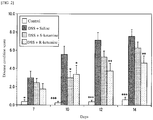
- FIG. 2 is a graph showing the disease condition score of the mice in each group.
- control shows the results of the mice in the control group
- DSS + saline shows the results of the mice in the group administered DSS and saline
- DSS + S-ketamine shows the results of the mice in the group administered DSS and S-ketamine
- DSS + R-ketamine shows the results of the mice in the group administered DSS and R-ketamine.
- Statistical analysis was implemented by performing a one-way analysis of variance (one-way ANOVA) followed by a least significant difference test (Fisher LSD test).
- “*,” “**,” and “***” show that a significant difference was observed at "p ⁇ 0.05,” “p ⁇ 0.01,” and “p ⁇ 0.001,” respectively, as compared to the group administered "DSS + S-ketamine.”
- mice from each group that had been euthanized were resected from cecum to anus, and a length from directly below the cecum to the anus was measured. Subsequently, the lumen of the colon was washed with saline, and after washing, an incision was made in the longitudinal direction, and a colonic inflammation score was determined according to the following evaluation criteria. [Table 4] Evaluation of Colonic Inflammation Score No injuries were observed. 0 Hyperemia was observed. 1 Hyperemia and thickening of the wall were observed. No ulcers were observed. 2 An ulcer was observed, but there was no thickening. 3 Multiple ulcers or sites of inflammation were observed. 4
- FIG. 3 is a graph showing the colonic inflammation scores of the mice in each group.
- control shows the results of the mice in the control group
- DSS + saline shows the results of the mice in the group administered DSS and saline
- DSS + S-ketamine shows the results of the mice in the group administered DSS and S-ketamine
- DSS + R-ketamine shows the results of the mice in the group administered DSS and R-ketamine.
- mice/group mice/group.
- Statistical analysis was implemented by performing a one-way analysis of variance (one-way ANOVA) followed by a least significant difference test (Fisher LSD test).
- “*” and “***” show that a significant difference was observed at "p ⁇ 0.05” and “p ⁇ 0.001,” respectively, as compared to the group administered DSS + S-ketamine.
- "+++” shows that a significant difference was observed at "p ⁇ 0.001" as compared to the "DSS + S-ketamine” group.
- inflammatory cytokines in plasma collected from the mice of each group on the 15th day from the start of the experiment were quantified.
- Interleukin (IL)-6 was quantified as the inflammatory cytokine.
- IL-6 was quantified by ELISA method using a commercially available kit.
- FIG. 4 is a graph showing the results of quantifying IL-6 in blood.
- control shows the results of the mice in the control group
- DSS + saline shows the results of the mice in the group administered DSS and saline
- DSS + S-ketamine shows the results of the mice in the group administered DSS and S-ketamine
- DSS + R-ketamine shows the results of the mice in the group administered DSS and R-ketamine.
- mice/group mice/group.
- Statistical analysis was implemented by performing a one-way analysis of variance (one-way ANOVA) followed by a least significant difference test (Fisher LSD test). In FIG. 4 , "**" and “***” show that a significant difference was observed at "p ⁇ 0.01" and "p ⁇ 0.001,” respectively, as compared to the "DSS + saline” group.
- S-ketamine has a stronger affinity for NMDA receptors than R-ketamine. Therefore, it was speculated that the therapeutic effect of R-ketamine in DSS-treated mice, the ulcerative colitis animal model, is due to a mechanism other than NMDA receptor blockade.
- model mice subjected to stress were prepared by a known method. Specifically, one each of a C57/B6 male mouse (7 weeks old, Japan SLC, Inc.) and an ICR male mouse (9 weeks old or older, Japan SLC, Inc.) were made to coexist for a 10-day period. Each mouse was given free access to water and food. Since ICR mice are larger and more aggressive than C57/B6 mice, C57/B6 sustains stress when these mice are made to coexist.
- mice subjected to social defeat stress were submitted to a social interaction test.
- about 3/4 of the mice exhibited depressive symptoms, and the rest did not exhibit depressive symptoms.
- the mice exhibiting depressive symptoms were selected, and a tail suspension test (Tail Suspension Test, TST), a forced swimming test (Forced swimming Test, FST), and a sucrose preference test were performed.
- TST Tail Suspension Test
- FST Forced swimming Test
- sucrose preference test sucrose preference test
- R-ketamine and S-ketamine were administered to mice having depressive symptoms (hereinafter sometimes referred to as "social defeat stress mice") prepared in Experimental Example 5, and the effects thereof were examined.
- R-ketamine hydrochloride was used as R-ketamine.
- S-ketamine hydrochloride was used as S-ketamine.
- R-ketamine hydrochloride and S-ketamine hydrochloride were prepared in the same manner as in Experimental Example 1.
- R-ketamine (10 mg/kg body weight), S-ketamine (10 mg/kg body weight), or saline (10 mL/kg body weight) was intraperitoneally administered once to social defeat stress mice. Furthermore, C57/B6 male mice not subjected to "social defeat stress" were used as control mice. Saline (10 mL/kg body weight) was intraperitoneally administered once to the control mice.
- each mouse was anesthetized by inhalation of isoflurane. Subsequently, blood was collected and immediately centrifuged to obtain plasma. Plasma was stored in a freezer at -80°C until measurement.
- osteoprotegerin Ostoprotegerin
- RANKL RANKL
- osteopontin osteopontin
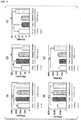
- FIG. 5 (a) to (e) are graphs showing the measurement results.
- FIG. 5 (a) shows the measurement results of OPG
- FIG. 5 (b) shows the measurement results of RANKL
- FIG. 5 (c) shows the OPG/RANKL ratio calculated based on the results of FIG. 5 (a) and (b)
- FIG. 5 (d) shows the measurement results of OPN
- FIG. 5 (e) shows the OPN/RANKL ratio calculated based on the results of FIG. 5 (b) and (d) .
- FIG. 5 (a) shows the measurement results of OPG
- FIG. 5 (b) shows the measurement results of RANKL
- FIG. 5 (d) shows the measurement results of OPN
- FIG. 5 (e) shows the OPN/RANKL ratio calculated based on the results of FIG. 5 (b) and (d) .
- FIG. 5 (a) shows the measurement results of OPG
- FIG. 5 (b) shows the measurement results of RANKL
- mice/group mice/group
- CSDS mouse mice that exhibited depressive symptoms due to social defeat stress
- saline shows the results of mice administered saline
- S-ketamine shows the results of mice administered S-ketamine
- R-ketamine shows the results of mice administered R-ketamine.
- the social defeat stress mice were found to have significantly higher RANKL concentrations in plasma as compared to the control mice. Furthermore, it was revealed that when administering R-ketamine to social defeat stress mice, RANKL concentration in plasma was significantly decreased as compared to when saline was administered to social defeat stress mice.
- OPG/RANKL ratio is a marker used as an indicator of the balance between bone formation and bone resorption. As shown in FIG. 5 (c) , it was revealed that the OPG/RANKL ratio of the social defeat stress mice administered saline was significantly decreased as compared to the control mice. A low OPG/RANKL ratio indicates that bone destruction and resorption tend to be superior to bone formation.
- FIG. 6 is a schematic diagram describing an experimental schedule.
- Male BALB/cCr Slc mice (6 weeks old, Japan SLC, Inc.) were used as mice. The mice were given free access to water and food.
- the experiment was started when the mice reached 7 weeks old. Along with the start of the experiment, tap water supplemented with 3% DSS was given as drinking water. Furthermore, a group to which normal tap water containing no DSS was given as drinking water was prepared as a control group.
- mice in the group given tap water supplemented with 3% DSS were administered intraperitoneally once a day for 14 days along with saline (10 mL/kg body weight), 5-ASA (50 mg/kg body weight), or R-ketamine (10 mg/kg body weight).
- mice in the control group were intraperitoneally administered saline (10 mL/kg body weight) once a day for 14 days.
- mice in each group were anesthetized with 5% isoflurane and blood was collected from the heart to obtain plasma. Plasma was stored in a freezer at -80°C until measurement of inflammatory cytokine, to be described later. Furthermore, after blood collection was completed, the mice in each group were euthanized by exsanguination under isoflurane anesthesia.
- the disease condition score was calculated on the 7 th day, 10th day, 12th day, and 14th day from the start of the experiment.
- the disease condition score was evaluated before administering saline, 5-ASA, or R-ketamine to the mice. Specifically, the evaluation score of the amount of weight loss, the evaluation score of feces, and the evaluation score of bleeding were obtained according to the same evaluation criteria as Experimental Example 2, and the total score was used as the disease condition score.
- FIG. 7 is a graph showing the disease condition score of the mice in each group.
- Vehicle shows the results of the mice in the control group
- DSS + Vehicle shows the results of the mice in the group administered DSS and saline
- DSS + 5-ASA shows the results of the mice in the group administered DSS and 5-ASA
- DSS + R-ketamine shows the results of the mice in the group administered DSS and R-ketamine.
- the colonic inflammation score was evaluated for the mice in each group euthanized on the 15th day from the start of the experiment in Experimental Example 7.
- mice from each group that had been euthanized were resected from the cecum to the anus, and the length from directly below the cecum to the anus was measured. Subsequently, the lumen of the colon was washed with saline, and after washing, an incision was made in the longitudinal direction, and the colonic inflammation score was determined according to the same evaluation criteria as Experimental Example 3.
- FIG. 8 is a graph showing the colonic inflammation scores of mice in each group.
- “Vehicle + Vehicle” shows the results of the mice in the control group
- “DSS + Vehicle” shows the results of the mice in the group administered DSS and saline
- “DSS + 5-ASA” shows the results of the mice in the group administered DSS and 5-ASA
- “DSS + R-ketamine” shows the results of the mice in the group administered DSS and R-ketamine.
- Statistical analysis was implemented by performing a one-way analysis of variance (one-way ANOVA) followed by a least significant difference test (Fisher LSD test).
- “*” and “***” show that a significant difference was observed at "p ⁇ 0.05” and "p ⁇ 0.001,” respectively, as compared to the group administered DSS and saline.
- IL-6 Interleukin -6 was quantified as the inflammatory cytokine. IL-6 was quantified by ELISA method using a commercially available kit.
- FIG. 9 is a graph showing the results of quantifying IL-6 in blood.
- Vehicle + Vehicle shows the results of the mice in the control group
- DSS + Vehicle shows the results of the mice in the group administered DSS and saline
- DSS + 5-ASA shows the results of the mice in the group administered DSS and 5-ASA
- DSS + R-ketamine shows the results of the mice in the group administered DSS and R-ketamine.
- Statistical analysis was implemented by performing a one-way analysis of variance (one-way ANOVA) followed by a least significant difference test (Fisher LSD test).
- “*” and “**” show that significant differences were observed at "p ⁇ 0.05” and “p ⁇ 0.01,” respectively, as compared to the "DSS + saline” group.
- R-ketamine and a metabolite of R-ketamine were administered to mice having depressive symptoms (hereinafter sometimes referred to as "social defeat stress mice"), prepared in the same way as Experimental Example 5, and the effects thereof were examined.
- R-ketamine hydrochloride prepared in the same way as Experimental Example 1 was used as R-ketamine.
- hydrochloride of 2R,6R-hydroxynorketamine (2R, 6R-HNK hydrochloride) which is the end product of R-ketamine, was used as the metabolite of R-ketamine.
- R-ketamine hydrochloride and 2R,6R-HNK hydrochloride were used after dissolving in saline.
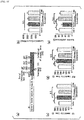
- FIG. 10 (a) is a schematic diagram describing an experimental schedule.
- R-ketamine (10 mg/kg body weight), 2R,6R-HNK (10 mg/kg body weight), or saline (10 mL/kg body weight) was intraperitoneally administered once to social defeat stress mice on the 12th day (D12); the day on which mice were first subjected to social defeat stress is the considered to be the 1st day (D1).
- C57/B6 male mice not subjected to "social defeat stress” were used as control mice.
- Saline (10 mL/kg body weight) was intraperitoneally administered once to control mice.
- LMT momentum
- FST forced swimming test
- SPT sucrose preference test
- each mouse was anesthetized by inhalation of isoflurane. Subsequently, blood was collected and immediately centrifuged to obtain plasma. Plasma was stored in a freezer at -80 °C until measurement. Furthermore, the femur was collected for bone density measurement.
- osteoprotegerin Ostoprotegerin
- RANKL RANKL
- osteopontin osteopontin
- the bone density of the femur was measured using an X-ray CT for laboratory animals (Hitachi Aloka Medical, Ltd., LaTheta LCT-200).
- FIG. 10 (b) to (e) are graphs showing the results of the behavioral rating.
- FIG. 10 (b) is the measurement results of momentum.
- FIG. 10 (c) is the measurement results of the tail suspension test.
- FIG. 10 (d) is the measurement results of the forced swimming test.
- FIG. 10 (e) is the measurement results of the sucrose preference test.
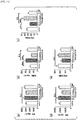
- FIG. 11 (a) to (e) are graphs showing the measurement results of OPG, RANKL, and OPN.
- FIG. 11 (a) shows the measurement results of OPG
- FIG. 11 (b) shows the measurement results of RANKL
- FIG. 11 (c) shows the OPG/RANKL ratio calculated based on the results of FIG. 11 (a) and (b)
- FIG. 11 (d) shows the measurement results of OPN
- FIG. 11 (e) shows the OPN/RANKL ratio calculated based on the results of FIG. 11 (b) and (d) .
- FIG. 11 (b) it was revealed that the social defeat stress mice have significantly higher RANKL concentration in plasma as compared to the control mice. Furthermore, it was revealed that when administering R-ketamine to social defeat stress mice, RANKL concentration in plasma was significantly decreased as compared to when saline was administered to social defeat stress mice. On the other hand, even when 2R,6R-NHK was administered to social defeat stress mice, a significant change to RANKL concentration in plasma was not observed as compared to when saline was administered to social defeat stress mice. As shown in FIG.
- the OPG/RANKL ratio is a marker used as an indicator of the balance between bone formation and bone resorption. As shown in FIG. 11 (c) , it was revealed that the OPG/RANKL ratio of the social defeat stress mice administered saline was significantly decreased as compared to the control mice. A low OPG/RANKL ratio shows that bone destruction and resorption tend to be superior to bone formation.
- FIG. 12 (a) to (d) are graphs showing the measurement results of bone density.
- FIG. 12(a) is a graph showing the results of cortical bone density
- FIG. 12 (b) is a graph showing the results of cancellous bone density
- FIG. 12 (c) is a graph showing the results of total bone density
- FIG. 12 (d) is a graph showing the results of plane bone density.
- cortical bone density and total bone density of the social defeat stress mice were significantly lower as compared to the control mice. Furthermore, it was revealed that when administering R-ketamine to social defeat stress mice, cortical bone density and total bone density were significantly improved as compared to when saline was administered to social defeat stress mice.
- sRANKL soluble RANKL, Oriental Yeast Co., Tokyo, Japan
- 10-week-old female ddY mice Japan SLC, Inc., Hamamatsu, Japan
- R-ketamine hydrochloride prepared in the same way as Experimental Example 1 was used as R-ketamine, and used after dissolving in saline.
- mice to which physiological saline was administered instead of sRANKL were used as control mice.
- R-ketamine (10 mg/kg) was intraperitoneally administered 30 minutes before administration of sRANKL (1 mg/kg), and 24 hours and 48 hours after. Twenty-four hours after the final administration, each mouse was anesthetized by inhalation of isoflurane. Subsequently, the femur was collected for bone density measurement. Bone density of the femur was measured using an X-ray CT for laboratory animals (Hitachi Aloka Medical, Ltd., LaTheta LCT-200). Statistical analysis was implemented by performing a one-way analysis of variance followed by a least significant difference test.
- FIG. 13 (a) to (c) are graphs showing the measurement results of bone density.
- FIG. 13(a) is a graph showing the results of cortical bone density
- FIG. 13 (b) is a graph showing the results of cancellous bone density
- FIG. 13 (c) is a graph showing the results of total bone density.
- “Saline” shows the results of the mice administered saline
- “sRANKL” shows the results of the mice administered sRANKL
- “R-ketamine” shows the results of the mice administered R-ketamine.
- “*” and “**” show that a significant difference was observed at "p ⁇ 0.05” and "p ⁇ 0.01," respectively, as compared to mice administered sRANKL and saline.
- FIG. 13 (a) and (c) it was revealed that cortical bone density and total bone density of the mice administered sRANKL were significantly lower as compared to the control mice. Furthermore, it was revealed that when administering R-ketamine to sRANKL-administered mice, cortical bone density and total bone density were significantly improved as compared to when saline was administered. Moreover, as shown in FIG. 13 (b) , it was revealed that cancellous bone density of mice administered sRANKL was significantly increased when administering R-ketamine.
- mice 8-week-old female ddY mice (Japan SLC, Inc., Hamamatsu, Japan) were anesthetized by inhalation of isoflurane, then a sham operation or ovariectomy operation was performed (Wednesday). The next day (Thursday), saline (10 mL/kg) or R-ketamine (10 mg/kg) was intraperitoneally administered. Thereafter, administration of saline or R-ketamine was repeated on Monday and Thursday, and 6 weeks after the surgery each mouse was anesthetized by inhalation of isoflurane. Subsequently, the femur was collected for bone density measurement.
- Bone density of the femur was measured using an X-ray CT for laboratory animals (Hitachi Aloka Medical, Ltd., LaTheta LCT-200). Statistical analysis was implemented by performing a one-way analysis of variance followed by a least significant difference test.
- FIG. 14(a) to (d) are graphs showing the measurement results of bone density.
- FIG. 14(a) is a graph showing the results of cortical bone density
- FIG. 14 (b) is a graph showing the results of cancellous bone density
- FIG. 14 (c) is a graph showing the results of total bone density
- FIG. 14 (d) is a graph showing the results of plane bone density.
- FIG. 14 (a) and (c) it was revealed that cortical bone density, cancellous bone density, total bone density, and plane bone density of ovariectomized mice were significantly lower as compared to the sham-operated mice. Furthermore, it was revealed that when administering R-ketamine to ovariectomized mice, cortical bone density and total bone density were significantly improved as compared to when saline was administered. Moreover, as shown in FIG. 14 (b) and (d) , it was revealed that cancellous bone density and plane bone density of ovariectomized mice tended to increase along with R-ketamine administration, but it was not statistically significant.
Landscapes
- Health & Medical Sciences (AREA)
- Medicinal Chemistry (AREA)
- Veterinary Medicine (AREA)
- Public Health (AREA)
- General Health & Medical Sciences (AREA)
- Animal Behavior & Ethology (AREA)
- Life Sciences & Earth Sciences (AREA)
- Chemical & Material Sciences (AREA)
- Pharmacology & Pharmacy (AREA)
- General Chemical & Material Sciences (AREA)
- Organic Chemistry (AREA)
- Chemical Kinetics & Catalysis (AREA)
- Nuclear Medicine, Radiotherapy & Molecular Imaging (AREA)
- Bioinformatics & Cheminformatics (AREA)
- Engineering & Computer Science (AREA)
- Physical Education & Sports Medicine (AREA)
- Rheumatology (AREA)
- Orthopedic Medicine & Surgery (AREA)
- Epidemiology (AREA)
- Diabetes (AREA)
- Immunology (AREA)
- Pulmonology (AREA)
- Dermatology (AREA)
- Emergency Medicine (AREA)
- Pain & Pain Management (AREA)
- Endocrinology (AREA)
- Hematology (AREA)
- Obesity (AREA)
- Urology & Nephrology (AREA)
- Acyclic And Carbocyclic Compounds In Medicinal Compositions (AREA)
- Pharmaceuticals Containing Other Organic And Inorganic Compounds (AREA)
- Medicines That Contain Protein Lipid Enzymes And Other Medicines (AREA)
Abstract
Description
- The present invention relates to a preventative or therapeutic agent for an inflammatory disease or a bone disease, and a pharmaceutical composition for preventing or treating an inflammatory disease or a bone disease. The present application claims priority based on
JP 2018-025170 JP 2018-121858 - Inflammation is a major cause of many chronic inflammatory diseases. Furthermore, long-term inflammation leads to tissue destruction and causes extensive damage and the eventual dysfunction of inflamed organs.
- Chronic inflammatory diseases are involved in defined tissues or organs. For example, chronic inflammatory diseases in musculoskeletal tissue are a cause of diseases such as rheumatoid arthritis and ankylosing spondylitis. Furthermore, chronic inflammatory diseases in the digestive tract are a cause of diseases such as Crohn's disease and ulcerative colitis. Moreover, chronic inflammatory diseases in pancreatic β cells are a cause of diseases such as insulin-dependent diabetes. Furthermore, chronic inflammatory diseases in the adrenal glands are a cause of diseases such as Addison's disease. Moreover, chronic inflammatory diseases in the kidneys are a cause of diseases such as Goodpasture syndrome, IgA nephropathy, and interstitial nephritis. Furthermore, chronic inflammatory diseases in the exocrine glands are a cause of diseases such as Sjögren's syndrome and autoimmune pancreatitis. Moreover, chronic inflammatory diseases of the skin are a cause of diseases such as psoriasis and atopic dermatitis. Furthermore, chronic inflammatory diseases in the respiratory tract are a cause of diseases such as pneumonia, chronic bronchitis, and bronchial asthma. Moreover, chronic inflammatory diseases are also known to be involved in multiple organs, such as systemic lupus erythematosus (SLE) and scleroderma.
- These chronic inflammatory diseases are increasing worldwide. Furthermore, it is a fact that current treatments do not provide sufficient treatment.
- Among chronic inflammatory diseases, the general term for diseases of unknown cause that induce chronic inflammation or ulceration of mucous membranes of the large and small intestines is inflammatory bowel disease (inflammatory bowel disease: IBD). Inflammatory bowel disease is mainly classified into ulcerative colitis and Crohn's disease, and both are designated as defined diseases (orphan diseases). Characteristic symptoms include bloody stool, mucous stool, diarrhea, abdominal pain, and the like, and these symptoms are further characterized as repeatedly improving (remission) and worsening (deterioration).
- The number of patients having ulcerative colitis in Japan was over 160,000 at the end of 2013, which is about 100 people per 100,000 population. Furthermore, the number of patients having Crohn's disease was less than 40,000 at the end of 2013, which is around 27 people per 100,000 population.
- Along with the westernization of dietary habits, both ulcerative colitis and Crohn's disease are on course to increase every year. Furthermore, the number of patients per unit population in the United States and Europe is said to be around several to ten times that of Japan, thereby constituting a major social problem.
- As it is difficult to completely cure inflammatory bowel disease, the main goal of current treatments is to lead to remission and extend the time to surgical treatment by maintaining long-term remission. Basically, pharmacotherapy or cytapheresis therapy is performed, and surgical treatment is performed as necessary.
- For example, although steroids often used in pharmacotherapy have strong anti-inflammatory effects, they have significant side effects, so it is desirable to avoid taking them for a long period of time; thus, they are not suitable for the purpose of maintaining remission of inflammatory bowel disease.
- Furthermore, the result of long-term administration of steroids may also lead to refractory colitis that is steroid-resistant, steroid-dependent, or the like. Moreover, in severe cases and refractory cases, a large amount of steroids is administered from the beginning of treatment, so there is a problem in that many side effects appear.
- Azathioprine and 6-mercaptopurine (6-MP), which are immunomodulators, are used as substitutes for the purpose of reducing the amount of steroids used; however, it takes about two to three months for the effects of these drugs to be expressed.
- Furthermore, in pharmacotherapy for inflammatory bowel disease, a biopharmaceutical such as an anti-TNFa antibody (infliximab, adalimumab, or the like) may be used. However, infliximab has been reported to have side effects due to immunosuppression, including infections, such as Mycobacterium tuberculosis infection, sepsis, or pneumonia, and liver damage, rash, or leukopenia. Moreover, it has also been reported that antibodies against these antibody preparations are produced and thus the effect is diminished.
- Furthermore, an anti-TNFa antibody preparation is usually used in combination with immunomodulators (azathioprine and 6-MP) to maintain the effect thereof; however, a problem has been identified in that these combinations increase carcinogenic risk.
- Moreover, 5-aminosalicylic acid drugs are widely used for mild to moderate ulcerative colitis and Crohn's disease, but they tend to be less effective for severe patients.
- Incidentally, ketamine is a compound known as an allylcyclohexylamine-based dissociative anesthetic, and is a racemic compound which is a mixture of equal amounts of R-ketamine and S-ketamine. Ketamine is known as an NMDA receptor antagonist. Ketamine has a significant advantage in that it does not inhibit respiration at low doses as compared to other common anesthetics, and it is often used as an anesthetic in animals.
- For example,
Non Patent Literature 1 reports that ketamine has an anti-inflammatory effect in ulcerative colitis model mice. - Incidentally, bone homeostasis is maintained by remodeling (bone remodeling), wherein osteoclasts destroy and resorb old bones, and osteoblasts form new bones. If the balance of this bone remodeling is lost for various reasons and bone destruction and resorption becomes superior to bone formation, bone diseases such as osteoporosis, osteolytic bone metastasis, and Paget's disease of the bone are induced.
- Along with the recent advent of a super-aging society, the number of patients having bone diseases such as osteoporosis is increasing, and it is estimated that there are about 13 million patients in Japan. For example, although it is known that osteoporosis can be caused by various factors such as lack of calcium and magnesium, which form bone, lack of a balanced intake of vitamins such as vitamin D, which is necessary for calcium absorption, lack of exercise, aging, and menopause, its pathogenic mechanism is still unknown.
- Furthermore, rheumatoid arthritis, which is caused by inflammation due to an immune abnormality or the like, is characterized by chronic polysynovitis with a background of systemic autoimmunity, and accompanying bone destruction. There is a tendency for rheumatoid arthritis to increase year by year, and an important challenge is to investigate the causes of bone loss and bone destruction in these patients and to develop treatments.
- Receptor activator of nuclear factor κB ligand (RANKL) produced from osteoblasts promotes osteoclast formation, function, and the like. Therefore, excessive production of RANKL for any reason leads to excessive bone resorption.
- Although infiltration of activated T cells and B cells, abnormal proliferation of synovial fibroblasts, and the like occurs in the joints of patients having rheumatoid arthritis, RANKL is highly expressed in these cells, so it is thought that facilitation of the formation, function, and survival of osteoclasts induces bone destruction near joints.
- Denosumab, a therapeutic agent for bone diseases, is a human monoclonal antibody preparation targeting RANKL. This preparation exhibits an effect of improving bone disease by binding to RANKL and inhibiting the function of RANKL, thereby suppressing facilitation of bone resorption by osteoclasts and increasing bone density. Furthermore, an effect is exhibited wherein by inhibiting the function of RANKL, it suppresses bone resorption by osteoclasts at joint areas and suppresses the progression of bone erosion and bone destruction at joints in rheumatoid arthritis patients (for example, see Patent Literature 1).
- Patent Literature 1: Japanese Patent No.
4401613 - Non Patent Literature 1: Ashry E.E., et al., Protective Effect of Ketamine Against Acetic Acid-Induced Ulcerative Colitis in Rats, Pharmacology & Pharmacy, 7, 9-18, 2016.
- However, ketamine is used at a high dose of 50 mg/kg in
Non Patent Document 1, which describes that ketamine has an anti-inflammatory effect. This kind of dose is an anesthetic dose, and a side effect such as an acute momentum facilitation effect is markedly observed. It is impractical to administer an anesthetic dose of ketamine to a patient for the purpose of preventing or treating an inflammatory disease. - Furthermore, denosumab is not a fundamental therapeutic agent for bone diseases. Moreover, it is known that when denosumab is administered to a patient having a bone disease, severe side effects may occur, such as hypocalcemia, osteonecrosis of the jaw, osteomyelitis of the jaw, anaphylaxis, atypical fractures such as trochanteric femoral fractures and proximal femoral shaft fractures, and skin infections.
- Against this background, the object of the present invention is to provide a preventive or therapeutic agent and a pharmaceutical composition for an inflammatory disease or a bone disease.
- The present invention includes the following aspects.
- [1] A preventative or therapeutic agent for an inflammatory disease or a bone disease, containing as an active ingredient a compound represented by the following formula (1) or a pharmacologically acceptable salt thereof.

- [2] The preventative or therapeutic agent for an inflammatory disease or a bone disease according to [1], wherein the preventative or therapeutic agent contains as an active ingredient a compound represented by the following formula (2) or a pharmacologically acceptable salt thereof.

- [3] The preventative or therapeutic agent for an inflammatory disease or a bone disease according to [1] or [2], wherein the inflammatory disease is ulcerative colitis, Crohn's disease, rheumatoid arthritis, ankylosing spondylitis, insulin-dependent diabetes, Addison's disease, Goodpasture syndrome, IgA nephropathy, interstitial nephritis, Sjögren's syndrome, autoimmune pancreatitis, psoriasis, atopic dermatitis, pneumonia, chronic bronchitis, bronchial asthma, systemic lupus erythematosus (SLE), scleroderma, or delirium, and the bone disease is osteoporosis, osteolytic bone metastasis, or Paget's disease of bone.
- [4] The preventative or therapeutic agent for an inflammatory disease or a bone disease according to any of [1] to [3], wherein the preventative or therapeutic agent does not substantially contain a compound represented by the following formula (3) or a pharmacologically acceptable salt thereof.

- [5] A preventative or therapeutic agent for an inflammatory disease or a bone disease according to [4], wherein the preventative or therapeutic agent does not substantially contain a compound represented by the following formula (4) or a pharmacologically acceptable salt thereof.

- [6] A pharmaceutical composition for preventing or treating an inflammatory disease or a bone disease, wherein the pharmaceutical composition contains the preventative or therapeutic agent for an inflammatory disease or a bone disease according to any of [1] to [5], and a pharmacologically acceptable carrier.
- According to the present invention, it is possible to provide a preventative or therapeutic agent and pharmaceutical composition for an inflammatory disease or a bone disease.
-
- [
FIG. 1 ] A schematic diagram describing the experimental schedule of Experimental Example 1. - [
FIG. 2 ] A graph showing the results of Experimental Example 2. - [
FIG. 3 ] A graph showing the results of Experimental Example 3. - [
FIG. 4 ] A graph showing the results of Experimental Example 4. - [
FIG. 5 ] (a) to (e) are graphs showing the results of Experimental Example 6. - [
FIG. 6 ] A schematic diagram describing the experimental schedule of Experimental Example 7. - [
FIG. 7 ] A graph showing the results of Experimental Example 8. - [
FIG. 8 ] A graph showing the results of Experimental Example 9. - [
FIG. 9 ] A graph showing the results of Experimental Example 10. - [
FIG. 10 ] (a) is a schematic diagram describing the experimental schedule of Experimental Example 11. (b) to (e) are graphs showing the results of the behavioral rating of Experimental Example 11. - [
FIG. 11 ] (a) to (e) are graphs showing measurement results of osteoprotegerin (OPG), RANKL, and osteopontin (OPN) in Experimental Example 11. - [
FIG. 12 ] (a) to (d) are graphs showing the measurement results of bone density in Experimental Example 11. - [
FIG. 13 ] (a) to (c) are graphs showing the measurement results of bone density in Experimental Example 12. - [
FIG. 14 ] (a) to (d) are graphs showing the measurement results of bone density in Experimental Example 13. - In one embodiment, the present invention provides a preventative or therapeutic agent for an inflammatory disease or a bone disease, containing as an active ingredient a compound represented by the following formula (1) or a pharmacologically acceptable salt thereof. The preventive or therapeutic agent for a bone disease will be described later. As will be described later in examples, it is possible to prevent or treat an inflammatory disease with the preventative or therapeutic agent of the present embodiment.

- [In formula (1), X represents a hydrogen atom, a halogen atom, or a C1-C10 alkyl group that may be substituted; R1 represents a C1-C10 alkyl group that may be substituted, a C1-C10 alkenyl group that may be substituted, or a C6-C14 aryl group that may be substituted; and one or more hydrogen atoms may be substituted for deuterium atoms.]
- In the present specification, "containing as an active ingredient" means that which is included as the main active substance, and the content thereof is not particularly limited, provided that it includes as a medicinal ingredient the compound represented by the foregoing formula (1) or a pharmacologically acceptable salt thereof.
- In the preventative or therapeutic agent for an inflammatory disease of the present embodiment, inflammatory bowel diseases such as ulcerative colitis or Crohn's disease, rheumatoid arthritis, ankylosing spondylitis, insulin-dependent diabetes, Addison's disease, Goodpasture syndrome, IgA nephropathy, interstitial nephritis, Sjögren's syndrome, autoimmune pancreatitis, psoriasis, atopic dermatitis, pneumonia, chronic bronchitis, bronchial asthma, systemic lupus erythematosus (SLE), scleroderma, or delirium may be listed as examples of the "inflammatory disease." The preventative or therapeutic agent of the present embodiment is especially effective against inflammatory bowel diseases such as ulcerative colitis and Crohn's disease, and as will be described later in examples, it is particularly effective against ulcerative colitis.
- Since inflammatory diseases are chronic diseases that progress over a long period of time (years), beginning treatment early may prevent the progression of symptoms. Furthermore, by administering an agent to patients having a genetic background that is potentially susceptible to inflammatory diseases before they exhibit symptoms of an inflammatory disease, it may also be used to prevent the onset of an inflammatory disease.
- It may be stated that the preventative or therapeutic agent of the present embodiment is an agent for preventing the onset of an inflammatory disease, and also that it is an agent for preventing the progression of inflammatory disease symptoms. Furthermore, it may be stated that the preventative or therapeutic agent of the present embodiment is a therapeutic agent for preventing the progression of inflammatory disease symptoms and alleviating or improving symptoms.
- In the compound represented by the foregoing formula (1), X represents a hydrogen atom, a halogen atom, or a C1-C10 alkyl group that may be substituted. F, Cl, Br, or I may be listed as examples of the halogen atom. A methyl group, ethyl group, propyl group, isopropyl group, cyclopropyl group, butyl group, isobutyl group, t-butyl group, cyclobutyl group, cyclopropylmethyl group, pentyl group, cyclopentyl group, or the like may be listed as examples of the C1-C10 alkyl group. Furthermore, for example, a halogen atom such as F, Cl, Br, or I, a hydroxyl group, or the like may be listed as examples of a substituent of the alkyl group.
- Furthermore, in the compound represented by the foregoing formula (1), R1 represents a C1-C10 alkyl group that may be substituted, a C1-C10 alkenyl group that may be substituted, or a C6-C14 aryl group that may be substituted.
- When R1 is an alkyl group, the number of carbon atoms of the alkyl group is 1 to 10, and preferably 1 to 6. The alkyl group may be linear, may be branched, and may form a ring.
- For example, a halogen atom such as F, Cl, Br, or I, a hydroxyl group, or the like may be listed as examples of a substituent of the alkyl group.
- The C1-C10 alkyl group is not particularly limited as long as the effects of the present embodiment are exhibited, and, for example, a methyl group, ethyl group, propyl group, isopropyl group, cyclopropyl group, butyl group, isobutyl group, t-butyl group, cyclobutyl group, cyclopropylmethyl group, pentyl group, cyclopentyl group, or the like may be listed as examples.
- The alkyl group is preferably a linear alkyl group, more preferably a C1-C5 linear alkyl group, further preferably a methyl group or an ethyl group, and particularly preferably a methyl.
- When R1 is an alkenyl group, the number of carbon atoms of the alkenyl group is 1 to 10, and preferably 1 to 6. The alkenyl group may be linear, may be branched, and may form a ring. For example, a halogen atom such as F, Cl, Br, or I, a hydroxyl group, or the like may be listed as examples of a substituent of the alkenyl group.
- Groups in which one or two or more double bonds have been introduced into the group described above as the alkyl group may be listed as examples of the alkenyl group, such as a vinyl group, allyl group, or the like.
- When R1 is an aryl group, the number of carbon atoms of the aryl group is 6 to 14, and preferably 6 to 10. For example, a halogen atom such as F, Cl, Br, or I, a hydroxyl group, or the like may be listed as examples of a substituent of the aryl group. A phenyl group or the like may be listed as examples of the specific aryl group.
- Furthermore, the compound represented by the foregoing formula (1) may be isotope labelled. The isotope is not particularly limited, and stable isotopes 13C, 2H(D), or the like may be listed as examples thereof. By performing isotope labeling, it is possible to change the in vivo kinetics of the compound or a pharmacologically acceptable salt thereof prior to performing the isotope labeling. For example, deuterium-labelled compounds represented by the following formulas (A), (B), and (C) may be listed as examples of this kind of compound.

- X and R1 in the foregoing formula (A) are the same as X and R1 in the foregoing formula (1).

- X in the foregoing formula (B) is the same as X in the foregoing formula (1), and R2 in the foregoing formula (B) is the same as R1 in the foregoing formula (1).

- X in the foregoing formula (C) is the same as X in the foregoing formula (1), and R2 in the foregoing formula (C) is the same as R1 in the foregoing formula (1).
- In the preventative or therapeutic agent for an inflammatory disease of the present embodiment, hydrochloride, sulfate, hydrobromide, hydroiodide, phosphate, nitrate, benzoate, methanesulfonate, 2-hydroxyethane sulfonate, p-toluenesulfonate, acetate, propanoate, oxalate, malonate, succinate, glutarate, adipate, tartrate, maleate, fumarate, malate, mandelate, or the like may be listed as examples of the pharmacologically acceptable salt of the compound represented by the foregoing formula (1); hydrochloride, methanesulfonate, and p-toluenesulfonate are preferable, while hydrochloride is particularly preferable.
- In the preventative or therapeutic agent for an inflammatory disease of the present embodiment, the compound represented by the foregoing formula (1) or a pharmacologically acceptable salt thereof may be a hydrate, or may be a solvate with the exception of a hydrate.
- The preventative or therapeutic agent for an inflammatory disease of the present embodiment may contain as an active ingredient the compound represented by the foregoing formula (1), which is a free base; a pharmacologically acceptable salt of the compound represented by the foregoing formula (1); or both the compound represented by the foregoing formula (1) and a pharmacologically acceptable salt of the compound represented by the foregoing formula (1).
- The compound represented by the foregoing formula (1) is preferably a compound represented by the following formula (2). That is, the preventative or therapeutic agent of the present embodiment preferably contains as an active ingredient the compound represented by the following formula (2) or a pharmacologically acceptable salt thereof. As will be described later in examples, the compound represented by the following formula (2) or a pharmacologically acceptable salt thereof is highly effective in preventing or treating an inflammatory disease.

- The compound represented by the foregoing formula (2) is a compound wherein X and R1 in the foregoing formula (1) are Cl and a methyl group, respectively, and the compound is called R-ketamine. That is, the preventative or therapeutic agent for an inflammatory disease of the present embodiment preferably contains as an active ingredient R-ketamine or a pharmacologically acceptable salt thereof.
- Furthermore, as described above, the compound represented by the foregoing formula (2) may be isotope labelled. The isotope is not particularly limited, and stable isotopes 13C, 2H(D), or the like may be listed as examples thereof. By performing isotope labeling, it is possible to change the in vivo kinetics of the compound or a pharmacologically acceptable salt thereof prior to performing the isotope labeling. For example, deuterium-labeled compounds represented by the following formulas (D), (E), and (F) may be listed as examples of this kind of compound.


- R-ketamine represented by the foregoing formula (2) is a free base. Hydrochloride is preferable as the pharmacologically acceptable salt of R-ketamine. The chemical formula of R-ketamine hydrochloride is shown in the following formula (5). In the preventative or therapeutic agent for an inflammatory disease of the present embodiment, R-ketamine or a pharmacologically acceptable salt thereof may be a hydrate, or may be a solvate with the exception of a hydrate.

- Furthermore, R-ketamine or a pharmacologically acceptable salt thereof may be isotope-labelled. The isotope is not particularly limited, and stable isotopes 13C, 2H(D), or the like may be listed as examples thereof. By performing isotope labeling, it is possible to change the in vivo kinetics of R-ketamine or a pharmacologically acceptable salt thereof prior to performing the isotope labeling. For example, deuterium-labeled R-ketamine hydrochloride represented by the following formula (6) is expected to have a slow metabolism and a long duration.

- Furthermore, the preventative or therapeutic agent for an inflammatory disease of the present embodiment preferably does not substantially contain a compound represented by the following formula (3) or a pharmacologically acceptable salt thereof.

- In the preventative or therapeutic agent for an inflammatory disease of the present embodiment, "does not substantially contain a compound represented by the foregoing formula (3) or a pharmacologically acceptable salt thereof" means the preventative or therapeutic agent (i) does not contain the compound represented by the foregoing formula (3) at all, and also does not contain a pharmacologically acceptable salt of the compound represented by the foregoing formula (3) at all, (ii) may include the compound represented by the foregoing formula (3) or a pharmacologically acceptable salt of the compound represented by the foregoing formula (3) in an amount that does not cause side effects, or (iii) may include an amount of the compound represented by the foregoing formula (3) or a pharmacologically acceptable salt of the compound represented by the foregoing formula (3) to a degree that is unavoidable from the standpoint of production thereof.
- More specifically, for example, in the preventative or therapeutic agent for an inflammatory disease of the present embodiment, the compound represented by the foregoing formula (1), which is a drug substance when regarded as a pharmaceutical product, or a pharmacologically acceptable salt thereof may contain the compound represented by the foregoing formula (3) or a pharmacologically acceptable salt thereof at an amount of 0.15 mol% or less.
- The compound represented by the foregoing formula (3) or a pharmacologically acceptable salt thereof may be a compound represented by the following formula (4) or a pharmacologically acceptable salt thereof. That is, the preventative or therapeutic agent for an inflammatory disease of the present embodiment may not substantially contain a compound represented by the following formula (4) or a pharmacologically acceptable salt thereof.

- The compound represented by the foregoing formula (4) is a compound wherein X and R1 in the foregoing formula (3) are Cl and a methyl group, respectively, and the compound is called S-ketamine. That is, the preventative or therapeutic agent for an inflammatory disease of the present embodiment preferably does not substantially contain S-ketamine or a pharmacologically acceptable salt thereof.
- As will be described later in examples, the effect of preventing or treating an inflammatory disease when administering R-ketamine is higher than the effect of preventing or treating an inflammatory disease when administering S-ketamine. Furthermore, it is conceivable that the side effects of RS-ketamine (psychosis-inducing effects, dissociation symptoms, drug dependence, and the like), which is an equivalent mixture of R-ketamine and S-ketamine, are mainly caused by S-ketamine.
- Accordingly, the preventative or therapeutic agent for an inflammatory disease that contains as an active ingredient the compound represented by the foregoing formula (1) or a pharmacologically acceptable salt thereof and does not substantially contain the compound represented by the foregoing formula (3) or a pharmacologically acceptable salt thereof has a high therapeutic effect and few side effects.
- In one embodiment, the present embodiment provides a pharmaceutical composition for preventing or treating an inflammatory disease or a bone disease, wherein the pharmaceutical composition contains the above-described preventative or therapeutic agent for an inflammatory disease or a bone disease, and a pharmacologically acceptable carrier. The pharmaceutical composition for preventing or treating a bone disease will be described later.
- The above-described preventative or therapeutic agent for an inflammatory disease is preferably formulated as a pharmaceutical composition. The pharmaceutical composition may be in a dosage form used orally, or may be in a dosage form used parenterally.
- Tablets, capsules, coated tablets, troches, liquid medicines such as solutions or suspensions, and the like may be listed as examples of the dosage form used orally. Furthermore, injections, powders, drops, sprays, creams, suppositories, patches, liniments, gels, and the like may be listed as examples of the dosage form used parenterally. The formulations of these dosage forms may all be prepared according to a method known by a person having ordinary skill in the pharmaceutical art.
- When preparing the pharmaceutical composition of the present embodiment as a formulation for injection, the form of a solution or suspension formulation is preferable. Furthermore, when preparing the pharmaceutical composition of the present embodiment as a formulation for transmucosal administration, such as in the nasal cavity or oral cavity, the form of a powder, drops, or aerosol formulation is preferable. Moreover, when preparing the pharmaceutical composition of the present embodiment as a formulation for rectal administration, the form of a semi-solid agent formulation, such as a cream or suppository, is preferable.
- The pharmaceutically acceptable carrier is not particularly limited, and those used for ordinary pharmaceutical compositions may be used. For example, antioxidants, stabilizers, preservatives, flavoring agents, colorants, dissolving agents, solubilizers, surfactants, emulsifiers, defoamers, viscosity modifiers, gelling agents, absorption promoters, dispersants, excipients, pH adjusters, and the like may be listed as examples.
- The pharmaceutical composition may further include an additive. Lubricants such as magnesium stearate, sweeteners such as sucrose, lactose, and saccharin, flavoring agents such as peppermint and gaultheria adenothrix oil, benzyl alcohol and phenol stabilizers, buffering agents such as buffered phosphate and sodium acetate, solubilizing agents such as benzyl benzoate and benzyl alcohol, antioxidants, preservatives, and the like may be given as examples of additives.
- Furthermore, the pharmaceutical composition of the present embodiment may contain, in addition to the compound represented by the foregoing formula (1) or a pharmacologically acceptable salt thereof, another medicinal ingredient that has an anti-inflammatory effect other than the compound represented by the foregoing formula (1) or a pharmacologically acceptable salt thereof.
- A formulation for injection may contain, for example, plasma-derived proteins such as albumin, amino acids such as glycine, sugars such as mannitol, and the like as the pharmaceutically acceptable carrier, and may also further contain a buffering agent, solubilizing agent, isotonic agent, and the like. Furthermore, when using it as an aqueous or lyophilized formulation, for example, it may contain a surfactant such as Tween (registered trademark) 80 and Tween (registered trademark) 20 to avoid agglutination.
- Formulations for parenteral administration other than formulations for injection may, for example, contain distilled water or saline, polyalkylene glycol such as polyethylene glycol, oil of vegetable origin, hydrogenated naphthalene, or the like as the pharmaceutically acceptable carrier.
- For example, a formulation for rectal administration, such as a suppository, may contain, for example, polyalkylene glycol, Vaseline, cocoa oil, or the like. Furthermore, a formulation for inhalation may be solid, and may contain, for example, lactose as an excipient. Moreover, drops for nasal administration may be an aqueous solution or an oil solution.
- The exact dosage and administration schedule of the pharmaceutical composition of the present embodiment may be appropriately adjusted depending on the required amount, treatment method, disease, or degree of necessity for an individual treatment subject, and the like. Furthermore, the administration route is preferably oral administration, nasal administration or intravenous administration by injection, and subcutaneous administration or intramuscular administration.
- The treatment target is not particularly limited, but is preferably a mammal, and more preferably a human.
- Dosage may be determined according to, specifically, age, body weight, health status, sex, diet, administration time, administration method, excretion rate, drug combinations, the subject's medical condition, and the like, and furthermore, it may be determined in consideration of other factors.
- When administering the pharmaceutical composition of the present embodiment to a patient having an inflammatory disease, it is preferable that the pharmaceutical composition includes an active ingredient (the compound represented by the foregoing formula (1) or a pharmacologically acceptable salt thereof) at an amount effective for reducing the symptoms of each inflammatory disease, and preferably for reducing the inflammation of each inflammatory disease.
- Although the dosage per day of the compound represented by the foregoing formula (1) or a pharmacologically acceptable salt thereof will differ depending on the state and weight of a patient, the type of compound, the administration route, and the like, when administering orally, the dosage is usually about 0.01 to 1,000 mg/person/day, and preferably 0.1 to 500 mg/person/day; furthermore, when administering parenterally, the dosage is usually about 0.01 to 500 mg/person/day, and preferably 0.1 to 100 mg/person/day. It is considered appropriate to administer the pharmaceutical composition of the present embodiment once a day or in several divided doses.
- The pharmaceutical composition of the present embodiment may also be used to prevent an inflammatory disease by administering before the onset of an inflammatory disease, and may also be used to treat an inflammatory disease by administering after the onset of symptoms of an inflammatory disease.
- In one embodiment, the present invention provides a preventative or therapeutic agent for a bone disease, containing as an active ingredient a compound represented by the following formula (1) or a pharmacologically acceptable salt thereof. As will be described later in examples, it is possible to prevent or treat a bone disease with the preventative or therapeutic agent of the present embodiment.

- In the preventative or therapeutic agent of the present embodiment, osteoporosis, osteolytic bone metastasis, Paget's disease of the bone, and the like may be listed as examples of a "bone disease." As will be described later in examples, administering the preventative or therapeutic agent of the preventative or therapeutic agent makes it possible to change the balance between bone resorption by osteoclasts and bone formation by osteoblasts so that bone formation is superior. As a result, it is possible to prevent or treat a bone disease.
- In the compound represented by the foregoing formula (1), X and R1 may be the same as that in the above-described preventative or therapeutic agent for an inflammatory disease. Furthermore, the pharmacologically acceptable salt of the compound represented by the foregoing formula (1) may be the same as that in the above-described preventative or therapeutic agent for an inflammatory disease.
- In the preventative or therapeutic agent for a bone disease of the present embodiment, the compound represented by the foregoing formula (1) is preferably a compound represented by the following formula (2). That is, the preventative or therapeutic agent for a bone disease of the present embodiment preferably contains as an active ingredient the compound represented by the following formula (2) or a pharmacologically acceptable salt thereof. As will be described later in examples, the compound represented by the following formula (2) or a pharmacologically acceptable salt thereof is highly effective in preventing or treating a bone disease.
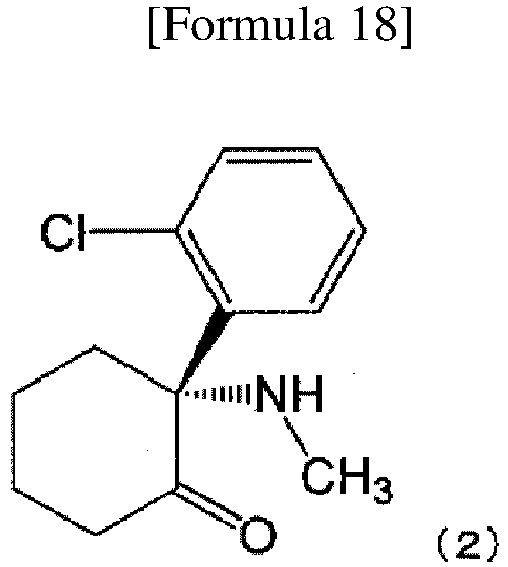
- The compound represented by the foregoing formula (2) is a compound wherein X and R1 in the foregoing formula (1) are Cl and a methyl group, respectively, and the compound is called R-ketamine. That is, the preventative or therapeutic agent for a bone disease of the present embodiment preferably contains as an active ingredient R-ketamine or a pharmacologically acceptable salt thereof.
- R-ketamine represented by the foregoing formula (2) is a free base. Hydrochloride is preferable as the pharmacologically acceptable salt of R-ketamine. The chemical formula of R-ketamine hydrochloride is shown in the following formula (5). In the preventative or therapeutic agent for a bone disease of the present embodiment, R-ketamine or a pharmacologically acceptable salt thereof may be a hydrate, or may be a solvate with the exception of a hydrate.

- Furthermore, R-ketamine or a pharmacologically acceptable salt thereof may be isotope-labelled. The isotope is not particularly limited, and stable isotopes 13C, 2H(D), or the like may be listed as examples thereof. By performing isotope labeling, it is possible to change the in vivo kinetics of R-ketamine or a pharmacologically acceptable salt thereof prior to performing the isotope labeling. For example, deuterium-labeled R-ketamine hydrochloride represented by the following formula (6) is expected to have a slow metabolism and a long duration.

- Furthermore, the preventative or therapeutic agent for a bone disease of the present embodiment preferably does not substantially contain a compound represented by the following formula (3) or a pharmacologically acceptable salt thereof.

- In the preventative or therapeutic agent for a bone disease of the present embodiment, "does not substantially contain a compound represented by the foregoing formula (3) or a pharmacologically acceptable salt thereof" means the preventative or therapeutic agent (i) does not contain the compound represented by the foregoing formula (3) at all, and also does not contain a pharmacologically acceptable salt of the compound represented by the foregoing formula (3) at all, (ii) may include the compound represented by the foregoing formula (3) or a pharmacologically acceptable salt of the compound represented by the foregoing formula (3) in an amount that does not cause side effects, or (iii) may include an amount of the compound represented by the foregoing formula (3) or a pharmacologically acceptable salt of the compound represented by the foregoing formula (3) to a degree that is unavoidable from the standpoint of production thereof.
- More specifically, for example, in the preventative or therapeutic agent for a bone disease of the present embodiment, the compound represented by the foregoing formula (1), which is a drug substance when regarded as a pharmaceutical product, or a pharmacologically acceptable salt thereof may contain the compound represented by the foregoing formula (3) or a pharmacologically acceptable salt thereof at an amount of 0.15 mol% or less.
- The compound represented by the foregoing formula (3) or a pharmacologically acceptable salt thereof may be a compound represented by the following formula (4) or a pharmacologically acceptable salt thereof. That is, the preventative or therapeutic agent for a bone disease of the present embodiment preferably does not substantially contain a compound represented by the following formula (4) or a pharmacologically acceptable salt thereof.

- The compound represented by the foregoing formula (4) is a compound wherein X and R1 in the foregoing formula (3) are Cl and a methyl group, respectively, and the compound is called S-ketamine. That is, the preventative or therapeutic agent for a bone disease of the present embodiment preferably does not substantially contain S-ketamine or a pharmacologically acceptable salt thereof.
- As will be described later in examples, the effect of preventing or treating a bone disease when administering R-ketamine is higher than the effect of preventing or treating a bone disease when administering S-ketamine. Furthermore, as described above, it is conceivable that the side effects of RS-ketamine, which is an equivalent mixture of R-ketamine and S-ketamine, are mainly caused by S-ketamine.
- Accordingly, the preventative or therapeutic agent for a bone disease that contains as an active ingredient the compound represented by the foregoing formula (1) or a pharmacologically acceptable salt thereof and does not substantially contain the compound represented by the foregoing formula (3) or a pharmacologically acceptable salt thereof has a high therapeutic effect and few side effects.
- In one embodiment, the present embodiment provides a pharmaceutical composition for preventing or treating a bone disease, containing the above-described preventative or therapeutic agent for a bone disease, and a pharmacologically acceptable carrier.
- The above-described preventative or therapeutic agent for a bone disease is preferably formulated as a pharmaceutical composition. The pharmaceutical composition may be in a dosage form used orally, or may be in a dosage form used parenterally.
- The dosage form of the pharmaceutical composition for preventing or treating a bone disease of the present embodiment may be the same as the above-described pharmaceutical composition for preventing or treating an inflammatory disease.
- Furthermore, the pharmaceutical composition of the present embodiment may contain, in addition to the compound represented by the foregoing formula (1) or a pharmacologically acceptable salt thereof, another medicinal ingredient that has the effect of preventing or treating a bone disease other than the compound represented by the foregoing formula (1) or a pharmacologically acceptable salt thereof. For example, calcium, magnesium, vitamin D, calcitocin, vitamin K2, anti-RANKL preparation, biologics (antibody drug), and the like may be listed as examples as such an ingredient.
- The exact dosage and administration schedule of the pharmaceutical composition of the present embodiment may be appropriately adjusted depending on the required amount, treatment method, disease, or degree of necessity for an individual treatment subject, and the like. Furthermore, the administration route is preferably oral administration, nasal administration or intravenous administration by injection, and subcutaneous administration or intramuscular administration.
- The treatment target is not particularly limited, but is preferably a mammal, and more preferably a human.
- Dosage may be determined according to, specifically, age, body weight, health status, sex, diet, administration time, administration method, excretion rate, drug combinations, the subject's medical condition, and the like, and furthermore, it may be determined in consideration of other factors.
- When administering the pharmaceutical composition of the present embodiment to a patient having a bone disease, it is preferable that the pharmaceutical composition includes an active ingredient (the compound represented by the foregoing formula (1) or a pharmacologically acceptable salt thereof) at an amount effective for reducing the symptoms of each bone disease.
- Although the dosage per day of the compound represented by the following formula (1) or a pharmacologically acceptable salt thereof will differ depending on the state and weight of a patient, the type of compound, the administration route, and the like, when administering orally, the dosage is usually about 0.01 to 1,000 mg/person/day, and preferably 0.1 to 500 mg/person/day; furthermore, when administering parenterally, the dosage is usually about 0.01 to 500 mg/person/day, and preferably 0.1 to 100 mg/person/day. It is considered appropriate to administer the pharmaceutical composition of the present embodiment once a day or in several divided doses.
- The pharmaceutical composition of the present embodiment may also be used to prevent a bone disease by administering before the onset of a bone disease, and may also be used to treat a bone disease by administering after the onset of symptoms of a bone disease.
- In one embodiment, the present invention provides a method for preventing or treating an inflammatory disease or a bone disease, including administering an effective amount of the compound represented by the foregoing formula (1) or a pharmacologically acceptable salt thereof to a patient in need of treatment.
- In one embodiment, the present invention provides the compound represented by the foregoing formula (1) or a pharmacologically acceptable salt thereof for preventing or treating an inflammatory disease or a bone disease.
- In one embodiment, the present invention provides a use for the compound represented by the foregoing formula (1) or a pharmacologically acceptable salt thereof for producing a preventative or therapeutic agent for an inflammatory disease or a bone disease.
- In each of these embodiments, the compound represented by the foregoing formula (1), the pharmacologically acceptable salt of the compound represented by the foregoing formula (1), the inflammatory diseases, and the bone diseases are the same as that which is described above. The compound represented by the foregoing formula (1) or a pharmacologically acceptable salt thereof preferably does not substantially contain the compound represented by the foregoing formula (3) or a pharmacologically acceptable salt thereof.
- Hereinafter, the present invention will be described more specifically with reference to examples; however, the present invention is not limited to the following examples. Furthermore, various modifications may be made within a scope that does not depart from the technical idea of the present invention. All tests were performed with the consent of the Animal Ethics Committee of Chiba University.
- R-ketamine and S-ketamine were administered to inflammatory disease model mice and the therapeutic effect was examined. Ulcerative colitis model mice to which dextran sulfate (DSS) was administered were used as inflammatory disease model mice.
- R-ketamine hydrochloride was used as R-ketamine. Furthermore, S-ketamine hydrochloride was used as S-ketamine. R-ketamine hydrochloride and S-ketamine hydrochloride were prepared from RS-ketamine (Ketalar (registered trademark), ketamine hydrochloride, Daiichi Sankyo Co., Ltd.) using D-tartaric acid or L-tartaric acid according to the method described in
US Patent No. 6040479 . - A purity of each isomer was confirmed by high performance liquid chromatography (CHIRALPAK (registered trademark) IA, Daicel Corporation, column size: 250 × 4.6 mm, mobile phase: n-hexane/dichloromethane/diethylamine (75/25/0.1), S-ketamine retention time = 6.99 minutes, R-ketamine retention time = 10.56 minutes).
- As a result, the purity of the prepared S-ketamine was 99% or more. Furthermore, the purity of R-ketamine was 99% or more.
- Preparation of ulcerative colitis model mice and administration of drugs were performed as follows.
FIG. 1 is a schematic diagram describing an experimental schedule. Male BALB/cCr Slc mice (6 weeks old, Japan SLC, Inc.) were used as mice. The mice were given free access to water and food. - The experiment was started when the mice reached 7 weeks old. Along with the start of the experiment, tap water supplemented with 3% DSS was given as drinking water. Furthermore, a group to which normal tap water containing no DSS was given as drinking water was prepared as a control group.
- From the 1st day of the experiment, the mice in the group given tap water supplemented with 3% DSS were administered intraperitoneally once a day for 14 days along with saline (10 mL/kg body weight), S-ketamine (10 mg/kg body weight), or R-ketamine (10 mg/kg body weight). From the 1st day of the experiment, the mice in the control group were intraperitoneally administered saline (10 mL/kg body weight) once a day for 14 days.
- Subsequently, on the 15th day from the start of the experiment, the mice in each group were anesthetized with 5% isoflurane and blood was collected from the heart to obtain plasma. Plasma was stored in a freezer at -80°C until measurement of inflammatory cytokine, to be described later. Furthermore, after the blood collection was completed, the mice in each group were euthanized by exsanguination under isoflurane anesthesia.
- For the mice in each group bred according to the schedule of Experimental Example 1, a disease condition score was calculated on the 7th day, 10th day, 12th day, and 14th day from the start of the experiment. The disease condition score was evaluated before administering saline, S-ketamine, or R-ketamine to the mice. Specifically, an evaluation score of the amount of weight loss, an evaluation score of feces, and an evaluation score of bleeding were obtained according to the following evaluation criteria, and the total score was used as the disease condition score.
- Body weight before administration of saline, S-ketamine, or R-ketamine was set to 100%, and an amount of weight loss of the mice in each group was evaluated according to the evaluation criteria described in Table 1 below.
[Table 1] Evaluation of Amount of Weight Loss Score Less than 0% 0 0% or more, less than 5% 1 5% or more, less than 10% 2 10% or more, less than 20% 3 20% or more 4 - Feces of the mice in each group were evaluated according to the evaluation criteria described in Table 2 below.
[Table 2] Evaluation of Feces Score Normal. Feces remained solid. 0 Loose stool. Feces were semi-solid. Damp and broke easily when touched. 2 Diarrhea. Feces were liquid. 4 - Bleeding of the mice in each group was evaluated according to the evaluation criteria described in Table 3 below.
[Table 3] Evaluation of Bleeding Score Normal. Blood was not mixed in feces. 0 Occult blood. Blood was mixed in feces. Slight staining around the anus. 2 Melena. Blood was mixed in feces. Area around the anus was stained with blood. 4 -
FIG. 2 is a graph showing the disease condition score of the mice in each group. InFIG. 2 , "control" shows the results of the mice in the control group, "DSS + saline" shows the results of the mice in the group administered DSS and saline, "DSS + S-ketamine" shows the results of the mice in the group administered DSS and S-ketamine, and "DSS + R-ketamine" shows the results of the mice in the group administered DSS and R-ketamine. - In
FIG. 2 , the data are represented by mean ± standard error (n = 8 to 9 mice/group). Statistical analysis was implemented by performing a one-way analysis of variance (one-way ANOVA) followed by a least significant difference test (Fisher LSD test). InFIG. 2 , "*," "**," and "***" show that a significant difference was observed at "p <0.05," "p <0.01," and "p <0.001," respectively, as compared to the group administered "DSS + S-ketamine." - As a result, a significant deterioration of the disease condition score was observed in the mice of the "DSS + saline" group as compared to the mice of the "control" group. Furthermore, an improvement tendency of the disease condition score was observed in the "DSS + S-ketamine" group, but it was not significant. On the other hand, a significant improvement of the disease condition score was observed in the "DSS + R-ketamine" group.
- In Experimental Example 1, the colonic inflammation score was evaluated for the mice in each group euthanized on the 15th day from the start of the experiment.
- The mice from each group that had been euthanized were resected from cecum to anus, and a length from directly below the cecum to the anus was measured. Subsequently, the lumen of the colon was washed with saline, and after washing, an incision was made in the longitudinal direction, and a colonic inflammation score was determined according to the following evaluation criteria.
[Table 4] Evaluation of Colonic Inflammation Score No injuries were observed. 0 Hyperemia was observed. 1 Hyperemia and thickening of the wall were observed. No ulcers were observed. 2 An ulcer was observed, but there was no thickening. 3 Multiple ulcers or sites of inflammation were observed. 4 -
FIG. 3 is a graph showing the colonic inflammation scores of the mice in each group. InFIG. 3 , "control" shows the results of the mice in the control group, "DSS + saline" shows the results of the mice in the group administered DSS and saline, "DSS + S-ketamine" shows the results of the mice in the group administered DSS and S-ketamine, and "DSS + R-ketamine" shows the results of the mice in the group administered DSS and R-ketamine. - The data are represented by mean ± standard error (n = 8 to 9 mice/group). Statistical analysis was implemented by performing a one-way analysis of variance (one-way ANOVA) followed by a least significant difference test (Fisher LSD test). In
FIG. 3 , "*" and "***" show that a significant difference was observed at "p <0.05" and "p <0.001," respectively, as compared to the group administered DSS + S-ketamine. Furthermore, "+++" shows that a significant difference was observed at "p <0.001" as compared to the "DSS + S-ketamine" group. - As a result, a significant deterioration of the colonic inflammation score was observed in the mice of the "DSS + saline" group as compared to the mice of the "control" group. Furthermore, a significant improvement of the colonic inflammation score was observed in the "DSS + R-ketamine" group as compared to the "DSS + S-ketamine" group.
- In Experimental Example 1, inflammatory cytokines in plasma collected from the mice of each group on the 15th day from the start of the experiment were quantified. Interleukin (IL)-6 was quantified as the inflammatory cytokine. IL-6 was quantified by ELISA method using a commercially available kit.
-
FIG. 4 is a graph showing the results of quantifying IL-6 in blood. InFIG. 4 , "control" shows the results of the mice in the control group, "DSS + saline" shows the results of the mice in the group administered DSS and saline, "DSS + S-ketamine" shows the results of the mice in the group administered DSS and S-ketamine, and "DSS + R-ketamine" shows the results of the mice in the group administered DSS and R-ketamine. - The data are represented by mean ± standard error (n = 8 to 9 mice/group). Statistical analysis was implemented by performing a one-way analysis of variance (one-way ANOVA) followed by a least significant difference test (Fisher LSD test). In
FIG. 4 , "**" and "***" show that a significant difference was observed at "p <0.01" and "p <0.001," respectively, as compared to the "DSS + saline" group. - As a result, a significant increase of IL-6 concentration in blood was observed in the mice of the "DSS + saline" group as compared to the mice of the "control" group. Furthermore, a significant decrease of IL-6 concentration in blood was observed in the "DSS + S-ketamine" group and the "DSS + R-ketamine" group. Moreover, it was revealed that the effect of reducing IL-6 in blood by administration of R-ketamine was higher than when administering S-ketamine.
- From the results of Experimental Examples 1 to 4, it was revealed that intraperitoneal administration of a 10 mg/kg dose of R-ketamine exhibited a therapeutic effect in DSS-treated mice, the ulcerative colitis animal model. In contrast to this, it was revealed that intraperitoneal administration of a 10 mg/kg dose of S-ketamine exhibited a tendency for a therapeutic effect in the ulcerative colitis animal model, but the effect was weaker than that of R-ketamine.
- Since the pharmacokinetics of both isomers of ketamine are the same, it was considered that the difference in the therapeutic effect between R-ketamine and S-ketamine was not due to the difference in the pharmacokinetics of these isomers.
- Furthermore, S-ketamine has a stronger affinity for NMDA receptors than R-ketamine. Therefore, it was speculated that the therapeutic effect of R-ketamine in DSS-treated mice, the ulcerative colitis animal model, is due to a mechanism other than NMDA receptor blockade.
- First, model mice subjected to stress, called "social defeat stress," were prepared by a known method. Specifically, one each of a C57/B6 male mouse (7 weeks old, Japan SLC, Inc.) and an ICR male mouse (9 weeks old or older, Japan SLC, Inc.) were made to coexist for a 10-day period. Each mouse was given free access to water and food. Since ICR mice are larger and more aggressive than C57/B6 mice, C57/B6 sustains stress when these mice are made to coexist.
- Subsequently, C57/B6 mice subjected to social defeat stress were submitted to a social interaction test. As a result, about 3/4 of the mice exhibited depressive symptoms, and the rest did not exhibit depressive symptoms. Subsequently, as a result of the social interaction test, the mice exhibiting depressive symptoms were selected, and a tail suspension test (Tail Suspension Test, TST), a forced swimming test (Forced Swimming Test, FST), and a sucrose preference test were performed. As a result, it was confirmed that the mice exhibiting depressive symptoms in the social interaction test exhibited more depressive symptoms according to the results of the TST, FST, and sucrose preference tests.
- R-ketamine and S-ketamine were administered to mice having depressive symptoms (hereinafter sometimes referred to as "social defeat stress mice") prepared in Experimental Example 5, and the effects thereof were examined. R-ketamine hydrochloride was used as R-ketamine.
- Furthermore, S-ketamine hydrochloride was used as S-ketamine. R-ketamine hydrochloride and S-ketamine hydrochloride were prepared in the same manner as in Experimental Example 1.
- R-ketamine (10 mg/kg body weight), S-ketamine (10 mg/kg body weight), or saline (10 mL/kg body weight) was intraperitoneally administered once to social defeat stress mice. Furthermore, C57/B6 male mice not subjected to "social defeat stress" were used as control mice. Saline (10 mL/kg body weight) was intraperitoneally administered once to the control mice.
- Four days after administration of saline, R-ketamine, or S-ketamine, each mouse was anesthetized by inhalation of isoflurane. Subsequently, blood was collected and immediately centrifuged to obtain plasma. Plasma was stored in a freezer at -80°C until measurement.
- Subsequently, the concentrations of osteoprotegerin (Osteoprotegerin, hereinafter referred to as "OPG"), RANKL, and osteopontin (osteopontin, hereinafter referred to as "OPN") in each plasma were measured using an ELISA kit (R&D Systems, Inc.).
-
FIG. 5 (a) to (e) are graphs showing the measurement results.FIG. 5 (a) shows the measurement results of OPG,FIG. 5 (b) shows the measurement results of RANKL,FIG. 5 (c) shows the OPG/RANKL ratio calculated based on the results ofFIG. 5 (a) and (b), FIG. 5 (d) shows the measurement results of OPN, andFIG. 5 (e) shows the OPN/RANKL ratio calculated based on the results ofFIG. 5 (b) and (d) . InFIG. 5 (a) to (e), the data are shown by mean ± standard error (n = 6 mice/group), "CSDS mouse" shows mice that exhibited depressive symptoms due to social defeat stress, "saline" shows the results of mice administered saline, "S-ketamine" shows the results of mice administered S-ketamine, and "R-ketamine" shows the results of mice administered R-ketamine. - Statistical analysis was implemented by performing a one-way analysis of variance followed by a least significant difference test. In
FIG. 5 (b) and (c) , "*" shows there is a significant difference at p <0.05 as compared to the social defeat stress mouse group administered saline, and "**" shows there is a significant difference at p <0.01 as compared to the social defeat stress mouse group administered saline. Furthermore, inFIG. 5 (a), (d), and (e), "N.S." showed no significant difference. - As a result, as shown in
FIG. 5 (b) , the social defeat stress mice were found to have significantly higher RANKL concentrations in plasma as compared to the control mice. Furthermore, it was revealed that when administering R-ketamine to social defeat stress mice, RANKL concentration in plasma was significantly decreased as compared to when saline was administered to social defeat stress mice. - On the other hand, even when S-ketamine was administered to social defeat stress mice, a significant change to RANKL concentration in plasma was not observed as compared to when saline was administered to social defeat stress mice.
- As described above, bone homeostasis is maintained by a delicate balance between bone resorption by osteoclasts and bone formation by osteoblasts. An OPG/RANKL ratio is a marker used as an indicator of the balance between bone formation and bone resorption. As shown in
FIG. 5 (c) , it was revealed that the OPG/RANKL ratio of the social defeat stress mice administered saline was significantly decreased as compared to the control mice. A low OPG/RANKL ratio indicates that bone destruction and resorption tend to be superior to bone formation. - Moreover, it was revealed that when administering R-ketamine to social defeat stress mice, the OPG/RANKL ratio was significantly increased as compared to when saline was administered to social defeat stress mice. On the other hand, even when S-ketamine was administered to social defeat stress mice, a significant change to the OPG/RANKL ratio was not observed as compared to when saline was administered to social defeat stress mice.
- Note that as shown in
FIG. 5 (d) and (e) , no significant differences in OPN concentration in plasma and the OPN/RANKL ratio were observed. - From the above results, it was revealed that administration of R-ketamine is able to restore an abnormally high expression of RANKL to a normal value. This result shows that R-ketamine is useful as a preventive or therapeutic agent for bone diseases. In contrast to this, such an effect was not observed for S-ketamine.
- Saline, 5-aminosalicylic acid (5-ASA), which is a standard drug for ulcerative colitis, or R-ketamine were each administered to inflammatory disease model mice, and the therapeutic effect was examined. Ulcerative colitis model mice to which dextran sulfate (DSS) was administered, the same as in Experimental Example 1, were used as inflammatory disease model mice. R-ketamine hydrochloride prepared in the same way as Experimental Example 1 was used as R-ketamine.
- Preparation of ulcerative colitis model mice and administration of drugs were performed as follows.
FIG. 6 is a schematic diagram describing an experimental schedule. Male BALB/cCr Slc mice (6 weeks old, Japan SLC, Inc.) were used as mice. The mice were given free access to water and food. - The experiment was started when the mice reached 7 weeks old. Along with the start of the experiment, tap water supplemented with 3% DSS was given as drinking water. Furthermore, a group to which normal tap water containing no DSS was given as drinking water was prepared as a control group.
- From the 1st day of the experiment, the mice in the group given tap water supplemented with 3% DSS were administered intraperitoneally once a day for 14 days along with saline (10 mL/kg body weight), 5-ASA (50 mg/kg body weight), or R-ketamine (10 mg/kg body weight). From the 1st day of the experiment, the mice in the control group were intraperitoneally administered saline (10 mL/kg body weight) once a day for 14 days.
- Subsequently, on the 15th day from the start of the experiment, the mice in each group were anesthetized with 5% isoflurane and blood was collected from the heart to obtain plasma. Plasma was stored in a freezer at -80°C until measurement of inflammatory cytokine, to be described later. Furthermore, after blood collection was completed, the mice in each group were euthanized by exsanguination under isoflurane anesthesia.
- For mice in each group bred according to the schedule of Experimental Example 7, the disease condition score was calculated on the 7th day, 10th day, 12th day, and 14th day from the start of the experiment. The disease condition score was evaluated before administering saline, 5-ASA, or R-ketamine to the mice. Specifically, the evaluation score of the amount of weight loss, the evaluation score of feces, and the evaluation score of bleeding were obtained according to the same evaluation criteria as Experimental Example 2, and the total score was used as the disease condition score.
-
FIG. 7 is a graph showing the disease condition score of the mice in each group. InFIG. 2 , "Vehicle + Vehicle" shows the results of the mice in the control group, "DSS + Vehicle" shows the results of the mice in the group administered DSS and saline, "DSS + 5-ASA" shows the results of the mice in the group administered DSS and 5-ASA, and "DSS + R-ketamine" shows the results of the mice in the group administered DSS and R-ketamine. - In
FIG. 7 , the data are represented by mean ± standard error (n = 8 to 10 mice/group). Statistical analysis was implemented by performing a one-way analysis of variance (one-way ANOVA) followed by a least significant difference test (Fisher LSD test). InFIG. 7 , "**" and "***" show that significant differences were observed at "p <0.01" and "p <0.001," respectively, as compared to the group administered DSS and saline. - As a result, a significant deterioration of the disease condition score was observed in the mice of the "DSS + saline" group as compared to the mice of the "control" group. Furthermore, an improvement tendency of the disease condition score was observed in the "DSS + 5-ASA" group, but it was not significant. On the other hand, a significant improvement of the disease condition score was observed in the "DSS + R-ketamine" group.
- The colonic inflammation score was evaluated for the mice in each group euthanized on the 15th day from the start of the experiment in Experimental Example 7.
- The mice from each group that had been euthanized were resected from the cecum to the anus, and the length from directly below the cecum to the anus was measured. Subsequently, the lumen of the colon was washed with saline, and after washing, an incision was made in the longitudinal direction, and the colonic inflammation score was determined according to the same evaluation criteria as Experimental Example 3.
-
FIG. 8 is a graph showing the colonic inflammation scores of mice in each group. InFIG. 8 , "Vehicle + Vehicle" shows the results of the mice in the control group, "DSS + Vehicle" shows the results of the mice in the group administered DSS and saline, "DSS + 5-ASA" shows the results of the mice in the group administered DSS and 5-ASA, and "DSS + R-ketamine" shows the results of the mice in the group administered DSS and R-ketamine. - The data are represented by mean ± standard error (n = 8 to 10 mice/group). Statistical analysis was implemented by performing a one-way analysis of variance (one-way ANOVA) followed by a least significant difference test (Fisher LSD test). In
FIG. 8 , "*" and "***" show that a significant difference was observed at "p <0.05" and "p <0.001," respectively, as compared to the group administered DSS and saline. - As a result, a significant deterioration of the colonic inflammation score was observed in the mice of the "DSS + saline" group as compared to the mice of the "control" group. Furthermore, a significant improvement of the colonic inflammation score was observed in the "DSS + R-ketamine" group as compared to the "DSS + 5-ASA" group.
- Inflammatory cytokines in plasma collected from the mice of each group on the 15th day from the start of the experiment in Experimental Example 7 were quantified. Interleukin (IL) -6 was quantified as the inflammatory cytokine. IL-6 was quantified by ELISA method using a commercially available kit.
-
FIG. 9 is a graph showing the results of quantifying IL-6 in blood. InFIG. 9 , "Vehicle + Vehicle" shows the results of the mice in the control group, "DSS + Vehicle" shows the results of the mice in the group administered DSS and saline, "DSS + 5-ASA" shows the results of the mice in the group administered DSS and 5-ASA, and "DSS + R-ketamine" shows the results of the mice in the group administered DSS and R-ketamine. - The data are represented by mean ± standard error (n = 8 to 10 mice/group). Statistical analysis was implemented by performing a one-way analysis of variance (one-way ANOVA) followed by a least significant difference test (Fisher LSD test). In
FIG. 9 , "*" and "**" show that significant differences were observed at "p <0.05" and "p <0.01," respectively, as compared to the "DSS + saline" group. - As a result, a significant increase of IL-6 concentration in blood was observed in the mice of the "DSS + saline" group as compared to the mice of the "control" group. Furthermore, a significant decrease of IL-6 concentration in blood was not observed in the "DSS + 5-ASA" group. On the other hand, a significant decrease of IL-6 concentration in blood was observed in the "DSS + R-ketamine" group.
- From the results of Experimental Examples 7 to 10, it was revealed that intraperitoneal administration of a 10 mg/kg dose of R-ketamine shows a significant therapeutic effect in DSS-treated mice, the ulcerative colitis animal model. In contrast to this, intraperitoneal administration of a 50 mg/kg dose of 5-ASA had an extremely weak therapeutic effect in the ulcerative colitis animal model.
- R-ketamine and a metabolite of R-ketamine were administered to mice having depressive symptoms (hereinafter sometimes referred to as "social defeat stress mice"), prepared in the same way as Experimental Example 5, and the effects thereof were examined. R-ketamine hydrochloride prepared in the same way as Experimental Example 1 was used as R-ketamine. Furthermore, hydrochloride of 2R,6R-hydroxynorketamine (2R, 6R-HNK hydrochloride), which is the end product of R-ketamine, was used as the metabolite of R-ketamine. R-ketamine hydrochloride and 2R,6R-HNK hydrochloride were used after dissolving in saline.
-
FIG. 10 (a) is a schematic diagram describing an experimental schedule. R-ketamine (10 mg/kg body weight), 2R,6R-HNK (10 mg/kg body weight), or saline (10 mL/kg body weight) was intraperitoneally administered once to social defeat stress mice on the 12th day (D12); the day on which mice were first subjected to social defeat stress is the considered to be the 1st day (D1). Furthermore, C57/B6 male mice not subjected to "social defeat stress" were used as control mice. Saline (10 mL/kg body weight) was intraperitoneally administered once to control mice. Subsequently, measurement of momentum (LMT) and a tail suspension test (TST) were performed on the same 12th day (D12), the forced swimming test (FST) was performed on the same 13th day (D13), and a sucrose preference test (SPT) was performed on the same 14th day (D14). - Three days after administration (D15) of saline, R-ketamine, or 2R,6R-HNK, each mouse was anesthetized by inhalation of isoflurane. Subsequently, blood was collected and immediately centrifuged to obtain plasma. Plasma was stored in a freezer at -80 °C until measurement. Furthermore, the femur was collected for bone density measurement.
- Subsequently, the concentrations of osteoprotegerin (Osteoprotegerin, hereinafter referred to as "OPG"), RANKL, and osteopontin (osteopontin, hereinafter referred to as "OPN") in each plasma were measured using an ELISA kit (R&D Systems, Inc.).
- Furthermore, the bone density of the femur was measured using an X-ray CT for laboratory animals (Hitachi Aloka Medical, Ltd., LaTheta LCT-200).
-
FIG. 10 (b) to (e) are graphs showing the results of the behavioral rating.FIG. 10 (b) is the measurement results of momentum.FIG. 10 (c) is the measurement results of the tail suspension test.FIG. 10 (d) is the measurement results of the forced swimming test.FIG. 10 (e) is the measurement results of the sucrose preference test. - In
FIG. 10 (b) to (e), the data are shown by mean ± standard error (n = 10 mice/group), "Control" shows the results of the control mice, "Susceptible" shows the results of the mice that exhibited depressive symptoms due to social defeat stress, "Vehicle" shows the results of the mice administered saline, "R-ketamine" shows the results of the mice administered R-ketamine, and "R-NHK" shows the results of the mice administered 2R,6R-HNK. Furthermore, "*" and "**" show there is a significant difference at "p <0.05" and "p <0.01," respectively, as compared to the social defeat stress mouse group administered saline. Moreover, "N.S." showed no significant difference. Statistical analysis was implemented by performing a one-way analysis of variance followed by a least significant difference test. - As a result, as shown in
FIG. 10 (c) to (e) , it was revealed that when administering R-ketamine to social defeat stress mice, a significantly higher antidepressant effect is exhibited as compared to when saline was administered to social defeat stress mice. On the other hand, it was revealed that even when 2R,6R-HNK is administered to social defeat stress mice, no antidepressant effect is exhibited. -
FIG. 11 (a) to (e) are graphs showing the measurement results of OPG, RANKL, and OPN.FIG. 11 (a) shows the measurement results of OPG,FIG. 11 (b) shows the measurement results of RANKL,FIG. 11 (c) shows the OPG/RANKL ratio calculated based on the results ofFIG. 11 (a) and (b), FIG. 11 (d) shows the measurement results of OPN, andFIG. 11 (e) shows the OPN/RANKL ratio calculated based on the results ofFIG. 11 (b) and (d) . - In
FIG. 11 (a) to (e), the data are shown by mean ± standard error (n = 10 mice/group), "Control" shows the results of the control mice, "Susceptible" shows the results of the mice that exhibited depressive symptoms due to social defeat stress, "Vehicle" shows the results of the mice administered saline, "R-ketamine" shows the results of the mice administered R-ketamine, and "R-NHK" shows the results of the mice administered 2R,6R-HNK. Furthermore, "*" and "***" show there is a significant difference at "p 0.05" and "p <0.001," respectively, as compared to the social defeat stress mouse group administered saline. Furthermore, "N.S." showed no significant difference. Statistical analysis was implemented by performing a one-way analysis of variance followed by a least significant difference test. - As a result, as shown in
FIG. 11 (b) , it was revealed that the social defeat stress mice have significantly higher RANKL concentration in plasma as compared to the control mice. Furthermore, it was revealed that when administering R-ketamine to social defeat stress mice, RANKL concentration in plasma was significantly decreased as compared to when saline was administered to social defeat stress mice. On the other hand, even when 2R,6R-NHK was administered to social defeat stress mice, a significant change to RANKL concentration in plasma was not observed as compared to when saline was administered to social defeat stress mice. As shown inFIG. 11 (c) , the OPG/RANKL ratio in the social defeat stress mice significantly increased due to R-ketamine administration; however, a significant change was not observed in those administered 2R,6R-HNK. Note that as shown inFIG. 11 (d) and (e) , no significant difference in OPN concentration in plasma and the OPN/RANKL ratio was observed. - As described above, bone homeostasis is maintained by a delicate balance between bone resorption by osteoclasts and bone formation by osteoblasts. The OPG/RANKL ratio is a marker used as an indicator of the balance between bone formation and bone resorption. As shown in
FIG. 11 (c) , it was revealed that the OPG/RANKL ratio of the social defeat stress mice administered saline was significantly decreased as compared to the control mice. A low OPG/RANKL ratio shows that bone destruction and resorption tend to be superior to bone formation. - Moreover, it was revealed that when administering R-ketamine to social defeat stress mice, the OPG/RANKL was significantly increased as compared to when saline was administered to social defeat stress mice. On the other hand, even when 2R,6R-HNK, a metabolite of R-ketamine, was administered to social defeat stress mice, a significant change to the OPG/RANKL ratio was not observed as compared to when saline was administered to social defeat stress mice.
- From the above results, it was revealed that the administration of R-ketamine is able to restore an abnormally high expression of RANKL to a normal value. On the other hand, no therapeutic effect was observed for 2R,6R-HNK, a metabolite of R-ketamine. This result shows that R-ketamine is useful as a preventive or therapeutic drug for bone diseases, and it is considered to be an effect of R-ketamine itself, rather than the metabolite.
-
FIG. 12 (a) to (d) are graphs showing the measurement results of bone density.FIG. 12(a) is a graph showing the results of cortical bone density,FIG. 12 (b) is a graph showing the results of cancellous bone density,FIG. 12 (c) is a graph showing the results of total bone density, andFIG. 12 (d) is a graph showing the results of plane bone density. - As a result, as shown in
FIG. 12 (a) and (c) , it was revealed that cortical bone density and total bone density of the social defeat stress mice were significantly lower as compared to the control mice. Furthermore, it was revealed that when administering R-ketamine to social defeat stress mice, cortical bone density and total bone density were significantly improved as compared to when saline was administered to social defeat stress mice. - On the other hand, when administering 2R,6R-HNK to social defeat stress mice, no significant change in cortical bone density and total bone density was observed as compared to when saline was administered to social defeat stress mice. Furthermore, as shown in
FIG. 12 (b) and (d) , no difference in cancellous bone density and plane bone density was observed between the 4 groups. - Many studies have reported that the blood of osteoporosis patients has high concentrations of RANKL, and that a human anti-RANKL monoclonal antibody preparation (denosumab) is used as a therapeutic drug. In the present Experimental Example, sRANKL-administered mice were used as a model animal for osteoporosis, and the effect of R-ketamine was examined.
- sRANKL (soluble RANKL, Oriental Yeast Co., Tokyo, Japan) was intraperitoneally administered to 10-week-old female ddY mice (Japan SLC, Inc., Hamamatsu, Japan) to prepare an osteopenia model, then the effect of R-ketamine was examined. Note that sRANKL is an abbreviation of soluble RANKL. R-ketamine hydrochloride prepared in the same way as Experimental Example 1 was used as R-ketamine, and used after dissolving in saline. Furthermore, mice to which physiological saline was administered instead of sRANKL were used as control mice.
- R-ketamine (10 mg/kg) was intraperitoneally administered 30 minutes before administration of sRANKL (1 mg/kg), and 24 hours and 48 hours after. Twenty-four hours after the final administration, each mouse was anesthetized by inhalation of isoflurane. Subsequently, the femur was collected for bone density measurement. Bone density of the femur was measured using an X-ray CT for laboratory animals (Hitachi Aloka Medical, Ltd., LaTheta LCT-200). Statistical analysis was implemented by performing a one-way analysis of variance followed by a least significant difference test.
-
FIG. 13 (a) to (c) are graphs showing the measurement results of bone density.FIG. 13(a) is a graph showing the results of cortical bone density,FIG. 13 (b) is a graph showing the results of cancellous bone density, andFIG. 13 (c) is a graph showing the results of total bone density. InFIG. 13 (a) to (c), "Saline" shows the results of the mice administered saline, "sRANKL" shows the results of the mice administered sRANKL, and "R-ketamine" shows the results of the mice administered R-ketamine. Furthermore "*" and "**" show that a significant difference was observed at "p <0.05" and "p <0.01," respectively, as compared to mice administered sRANKL and saline. - As a result, as shown in
FIG. 13 (a) and (c) , it was revealed that cortical bone density and total bone density of the mice administered sRANKL were significantly lower as compared to the control mice. Furthermore, it was revealed that when administering R-ketamine to sRANKL-administered mice, cortical bone density and total bone density were significantly improved as compared to when saline was administered. Moreover, as shown inFIG. 13 (b) , it was revealed that cancellous bone density of mice administered sRANKL was significantly increased when administering R-ketamine. - From the above results, it was revealed that the administration of R-ketamine is able to improve a decrease in bone density of the femurs of mice administered sRANKL. This result shows that R-ketamine is useful as a preventive or therapeutic agent for bone diseases.
- The effect of R-ketamine was examined using ovariectomized mice as a model animal for osteoporosis.
- 8-week-old female ddY mice (Japan SLC, Inc., Hamamatsu, Japan) were anesthetized by inhalation of isoflurane, then a sham operation or ovariectomy operation was performed (Wednesday). The next day (Thursday), saline (10 mL/kg) or R-ketamine (10 mg/kg) was intraperitoneally administered. Thereafter, administration of saline or R-ketamine was repeated on Monday and Thursday, and 6 weeks after the surgery each mouse was anesthetized by inhalation of isoflurane. Subsequently, the femur was collected for bone density measurement.
- Bone density of the femur was measured using an X-ray CT for laboratory animals (Hitachi Aloka Medical, Ltd., LaTheta LCT-200). Statistical analysis was implemented by performing a one-way analysis of variance followed by a least significant difference test.
-
FIG. 14(a) to (d) are graphs showing the measurement results of bone density.FIG. 14(a) is a graph showing the results of cortical bone density,FIG. 14 (b) is a graph showing the results of cancellous bone density,FIG. 14 (c) is a graph showing the results of total bone density, andFIG. 14 (d) is a graph showing the results of plane bone density. - In
FIG. 14(a) to (d) , "Saline" shows the results of the mice administered saline, and "R-ketamine" shows the results of the mice administered R-ketamine. Furthermore "*" and "**" show that a significant difference was observed at "p <0.05" and "p <0.01," respectively, as compared to mice that underwent ovariectomy surgery and were administered saline. - As a result, as shown in
FIG. 14 (a) and (c) , it was revealed that cortical bone density, cancellous bone density, total bone density, and plane bone density of ovariectomized mice were significantly lower as compared to the sham-operated mice. Furthermore, it was revealed that when administering R-ketamine to ovariectomized mice, cortical bone density and total bone density were significantly improved as compared to when saline was administered. Moreover, as shown inFIG. 14 (b) and (d) , it was revealed that cancellous bone density and plane bone density of ovariectomized mice tended to increase along with R-ketamine administration, but it was not statistically significant. - From the above results, it was revealed that administration of R-ketamine enables an improvement of a decrease in bone density of the femur of ovariectomized mice. This result further supports the fact that R-ketamine is useful as a preventive or therapeutic agent for bone diseases.
- According to the present invention, it is possible to provide a preventative or therapeutic agent and pharmaceutical composition for an inflammatory disease or a bone disease.
Claims (6)
- A preventative or therapeutic agent for an inflammatory disease or a bone disease, containing as an active ingredient a compound represented by the following formula (1) or a pharmacologically acceptable salt thereof.

- The preventative or therapeutic agent for an inflammatory disease or a bone disease according to claim 1, wherein the preventative or therapeutic agent contains as an active ingredient a compound represented by the following formula (2) or a pharmacologically acceptable salt thereof.

- The preventative or therapeutic agent for an inflammatory disease or a bone disease according to claim 1 or 2, wherein the inflammatory disease is ulcerative colitis, Crohn's disease, rheumatoid arthritis, ankylosing spondylitis, insulin-dependent diabetes, Addison's disease, Goodpasture syndrome, IgA nephropathy, interstitial nephritis, Sjögren's syndrome, autoimmune pancreatitis, psoriasis, atopic dermatitis, pneumonia, chronic bronchitis, bronchial asthma, systemic lupus erythematosus (SLE), scleroderma, or delirium, and the bone disease is osteoporosis, osteolytic bone metastasis, or Paget's disease of bone.
- The preventative or therapeutic agent for an inflammatory disease or a bone disease according to any of claims 1 to 3, wherein the preventative or therapeutic agent does not substantially contain a compound represented by the following formula (3) or a pharmacologically acceptable salt thereof.

- The preventative or therapeutic agent for an inflammatory disease or a bone disease according to claim 4, wherein the preventative or therapeutic agent does not substantially contain a compound represented by the following formula (4) or a pharmacologically acceptable salt thereof.

- A pharmaceutical composition for preventing or treating an inflammatory disease or a bone disease, wherein the pharmaceutical composition contains the preventative or therapeutic agent for an inflammatory disease or a bone disease according to any of claims 1 to 5, and a pharmacologically acceptable carrier.
Applications Claiming Priority (3)
| Application Number | Priority Date | Filing Date | Title |
|---|---|---|---|
| JP2018025170 | 2018-02-15 | ||
| JP2018121858 | 2018-06-27 | ||
| PCT/JP2019/005415 WO2019160057A1 (en) | 2018-02-15 | 2019-02-14 | Preventive or therapeutic agent and pharmaceutical composition for inflammatory diseases or bone diseases |
Publications (3)
| Publication Number | Publication Date |
|---|---|
| EP3753557A1 true EP3753557A1 (en) | 2020-12-23 |
| EP3753557A4 EP3753557A4 (en) | 2021-12-01 |
| EP3753557B1 EP3753557B1 (en) | 2025-11-05 |
Family
ID=67618723
Family Applications (1)
| Application Number | Title | Priority Date | Filing Date |
|---|---|---|---|
| EP19754880.3A Active EP3753557B1 (en) | 2018-02-15 | 2019-02-14 | Preventive or therapeutic agent and pharmaceutical composition for inflammatory diseases or bone diseases |
Country Status (7)
| Country | Link |
|---|---|
| US (1) | US11980595B2 (en) |
| EP (1) | EP3753557B1 (en) |
| JP (1) | JP7548669B2 (en) |
| CN (2) | CN118453559A (en) |
| BR (1) | BR112020016500A2 (en) |
| TW (1) | TW201936567A (en) |
| WO (1) | WO2019160057A1 (en) |
Families Citing this family (10)
| Publication number | Priority date | Publication date | Assignee | Title |
|---|---|---|---|---|
| HRP20211629T1 (en) | 2013-09-13 | 2022-02-04 | National University Corporation Chiba University | Application of r-ketamine and salt thereof as pharmaceuticals |
| CN118453559A (en) | 2018-02-15 | 2024-08-09 | 国立大学法人千叶大学 | Preventive or therapeutic agent for inflammatory disease or bone disease and pharmaceutical composition |
| CA3099293A1 (en) | 2018-05-04 | 2019-11-07 | Perception Neuroscience, Inc. | Methods of treating substance abuse |
| CN115190815B (en) | 2019-12-26 | 2024-06-18 | 吉尔伽美什制药公司 | Arylcyclohexylamine derivatives and their use in the treatment of mental disorders |
| EP4084791B1 (en) | 2020-02-18 | 2024-12-18 | Gilgamesh Pharmaceuticals, Inc. | Specific tryptamines for use in the treatment of mood disorders |
| WO2023064363A1 (en) | 2021-10-12 | 2023-04-20 | Perception Neuroscience, Inc. | R-ketamine salts and methods of use thereof |
| JP2025509517A (en) | 2022-03-14 | 2025-04-11 | パーセプション ニューロサイエンス,インコーポレイティド | Pharmaceutical formulations of R-ketamine |
| CN115364195B (en) * | 2022-09-28 | 2026-03-17 | 中南大学湘雅二医院 | Application of Thiostrepton in the preparation of drugs for the prevention and treatment of scleroderma |
| US12129234B1 (en) | 2023-08-03 | 2024-10-29 | Gilgamesh Pharmaceuticals, Inc. | Crystalline salts of N-ethyl-(5-fluoro-1H-indol-3-yl)-N-methylethan-1-amine |
| US12180158B1 (en) | 2023-08-03 | 2024-12-31 | Gilgamesh Pharmaceuticals, Inc. | Crystalline fumarate salts of n-ethyl-2-(5-fluoro-1H-indol-3-yl)-n-methylethan-1-amine |
Family Cites Families (86)
| Publication number | Priority date | Publication date | Assignee | Title |
|---|---|---|---|---|
| US3254124A (en) | 1962-06-29 | 1966-05-31 | Parke Davis & Co | Aminoketones and methods for their production |
| CH535201A (en) | 1969-12-19 | 1973-03-31 | Bristol Myers Co | Process for the resolution of racemic 2- (o-chlorophenyl) -2-methylaminocyclohexanone into the optically active isomers |
| US4670459A (en) | 1984-10-03 | 1987-06-02 | Merrell Dow Pharmaceuticals Inc. | Method of alleviating withdrawal symptoms |
| US5679714A (en) | 1995-06-07 | 1997-10-21 | Weg; Stuart L. | Administration of ketamine for detoxification and treatment of tobacco addiction |
| US5543434A (en) | 1994-02-25 | 1996-08-06 | Weg; Stuart L. | Nasal administration of ketamine to manage pain |
| DE19619665C2 (en) | 1996-05-15 | 2001-03-08 | Goedecke Ag | Racemate separation of ketamine |
| US6248789B1 (en) | 1996-08-29 | 2001-06-19 | Stuart L. Weg | Administration of ketamine to manage pain and to reduce drug dependency |
| US7001609B1 (en) | 1998-10-02 | 2006-02-21 | Regents Of The University Of Minnesota | Mucosal originated drug delivery systems and animal applications |
| US6382204B1 (en) | 1999-10-14 | 2002-05-07 | Becton Dickinson And Company | Drug delivery system including holder and drug container |
| US6962151B1 (en) | 1999-11-05 | 2005-11-08 | Pari GmbH Spezialisten für effektive Inhalation | Inhalation nebulizer |
| SI1257648T2 (en) | 2000-02-23 | 2016-11-30 | Amgen Inc. | Antagonistic selective binding agents of osteoprotegerin binding protein |
| BRPI0002693B8 (en) | 2000-06-19 | 2021-05-25 | Cristalia Produtos Quim Farmaceuticos Ltda | process for obtaining the enantiomers of ketamine and its pharmaceutically acceptable salts |
| US7090830B2 (en) | 2001-05-24 | 2006-08-15 | Alexza Pharmaceuticals, Inc. | Drug condensation aerosols and kits |
| EP1551393A4 (en) | 2002-07-30 | 2010-06-16 | Peter Migaly | Combination therapy for depression, prevention of suicide, and varous medical and psychiatric conditions |
| US7273889B2 (en) | 2002-09-25 | 2007-09-25 | Innovative Drug Delivery Systems, Inc. | NMDA receptor antagonist formulation with reduced neurotoxicity |
| CA2506615A1 (en) | 2002-11-18 | 2004-06-03 | Yaupon Therapeutics, Inc. | Analgesic uses of norketamine and ketamine/norketamine prodrugs |
| US7713440B2 (en) | 2003-10-08 | 2010-05-11 | Lyotropic Therapeutics, Inc. | Stabilized uncoated particles of reversed liquid crystalline phase materials |
| US7928132B2 (en) * | 2004-08-06 | 2011-04-19 | Ohio University | Methods for the amelioration of episodes of acute or chronic ulcerative colitis |
| PT1928405E (en) | 2005-09-28 | 2014-10-20 | Auris Medical Ag | Pharmaceutical compositions for the treatment of inner ear disorders |
| CN101466364A (en) | 2006-03-22 | 2009-06-24 | 纽约大学西奈山医学院 | Intranasal administration of ketamine to treat depression |
| CN101765582A (en) * | 2007-04-26 | 2010-06-30 | 奥斯拜客斯制药有限公司 | deuterium-labeled ketamine |
| US20120225949A1 (en) | 2009-08-14 | 2012-09-06 | Demitri Papalos | Compositions and methods for treating bipolar disorder |
| US20110038807A1 (en) | 2009-08-14 | 2011-02-17 | Demitri Papolos | Compositions and methods for treating bipolar disorder |
| US9737531B2 (en) | 2012-07-12 | 2017-08-22 | Glytech, Llc | Composition and method for treatment of depression and psychosis in humans |
| WO2013138322A1 (en) | 2012-03-12 | 2013-09-19 | Janssen Pharmaceutica Nv | Esketamine for the treatment of treatment-refractory or treatment-resistant depression |
| JP2015512418A (en) | 2012-03-30 | 2015-04-27 | ザ ジェネラル ホスピタル コーポレイション | Compositions containing scopolamine and ketamine in the treatment of depression |
| AU2013305580A1 (en) | 2012-08-23 | 2015-04-09 | Stuart L. Weg | Anxiolytic composition, formulation and method of use |
| US20140275278A1 (en) | 2013-03-15 | 2014-09-18 | Janssen Pharmaceutica Nv | Pharmaceutical composition of s-ketamine hydrochloride |
| SG11201507358VA (en) | 2013-03-15 | 2015-10-29 | Janssen Pharmaceutica Nv | Pharmaceutical composition of s-ketamine hydrochloride |
| AU2014250756B2 (en) | 2013-04-12 | 2019-03-07 | Icahn School Of Medicine At Mount Sinai | Method for treating post-traumatic stress disorder |
| HRP20211629T1 (en) | 2013-09-13 | 2022-02-04 | National University Corporation Chiba University | Application of r-ketamine and salt thereof as pharmaceuticals |
| WO2015051259A1 (en) | 2013-10-04 | 2015-04-09 | Impax Laboratories, Inc. | Pharmaceutical compositions and methods of use |
| CA2936809A1 (en) | 2014-01-14 | 2015-07-23 | Children's Hospital Medical Center | Compositions comprising ketamine for treating an autism spectrum disorder |
| KR101705446B1 (en) | 2014-04-29 | 2017-02-09 | 가톨릭대학교 산학협력단 | Novel compounds having treatment of immune diseases and use therof |
| EP3179993B1 (en) | 2014-08-13 | 2021-01-20 | Janssen Pharmaceutica NV | Esketamine for use in a method for the treatment of depression |
| RU2771275C2 (en) | 2014-11-04 | 2022-04-29 | Аморса Терапьютикс, Инк. | Neuro-attenuating ketamine and norketamine compounds, their derivatives and their production methods |
| EP3085366A1 (en) | 2015-04-22 | 2016-10-26 | Institut du Cerveau et de la Moelle Epiniere-ICM | Nmda antagonists for the treatment of mental disorders with occurrence of aggressive and/or impulsive behavior |
| US20160332962A1 (en) | 2015-05-13 | 2016-11-17 | Janssen Pharmaceutica Nv | (s)-csa salt of s-ketamine, (r)-csa salt of s-ketamine and processes for the preparation of s-ketamine |
| WO2016186968A1 (en) | 2015-05-15 | 2016-11-24 | The Arizona Board Of Regents On Behalf Of The University Of Arizona | Compositions and methods for treating motor disorders |
| US20200297734A1 (en) | 2015-06-19 | 2020-09-24 | Melt Pharmaceuticals, Inc. | Pharmaceutical compositions and methods for anesthesiological applications |
| KR101964571B1 (en) | 2015-06-19 | 2019-04-02 | 해로우 헬스 인코포레이티드 | Pharmaceutical composition for anesthesia |
| AU2016288188B2 (en) | 2015-06-27 | 2021-08-05 | Shenox Pharmaceuticals, Llc | Ketamine transdermal delivery system |
| WO2017087691A1 (en) | 2015-11-17 | 2017-05-26 | The Trustees Of Columbia University In The City Of New York | Pharmacological prophylactics against stress-induced affective disorders and their associated symptoms |
| AU2017238858A1 (en) | 2016-03-25 | 2018-10-18 | The United States Of America, As Represented By The Secretary, Department Of Health And Human Services | Methods of using (2R, 6R)-hydroxynorketamine and (2S, 6S)-hydroxynorketamine in the treatment of depression, anxiety, anhedonia, fatigue, suicidal ideation, and post traumatic stress disorders |
| WO2017180589A1 (en) * | 2016-04-11 | 2017-10-19 | Auspex Pharmaceuticals, Inc. | Deuterated ketamine derivatives |
| JP6327591B2 (en) | 2016-08-12 | 2018-05-23 | マツダ株式会社 | Diesel engine control method and control system |
| US20200261442A1 (en) | 2016-08-26 | 2020-08-20 | Sreenivasarao Vepachedu | Targeted drug rescue with novel compositions, combinations, and methods thereof |
| JP7096813B2 (en) | 2016-08-26 | 2022-07-06 | エクシーバ ゲーエムベーハー | Composition and method thereof |
| US20180177743A1 (en) | 2016-12-22 | 2018-06-28 | Gary Jay | Method of treating pain using racemic mixture of s-ketamine and r-ketamine |
| JP6856840B2 (en) | 2016-12-27 | 2021-04-14 | アクション メディカル テクノロジーズ,エルエルシーAction Medical Technologies,Llc | Injector and how to operate the injector |
| JP6926383B2 (en) | 2017-01-31 | 2021-08-25 | 日本製紙クレシア株式会社 | Absorbent auxiliary pad and how to use it |
| US11478467B2 (en) | 2017-05-04 | 2022-10-25 | Sreenivasarao Vepachedu | Targeted drug rescue with novel compositions, combinations, and methods thereof |
| KR102608479B1 (en) | 2017-05-25 | 2023-12-01 | 글리테크 엘엘씨. | Combination therapy for NMDAR antagonist-responsive neuropsychiatric disorders |
| WO2018234568A2 (en) | 2017-06-23 | 2018-12-27 | Develco Pharma Schweiz Ag | Hydroxynorketamine for the use in the treatment of depression |
| JP7265990B2 (en) | 2017-09-27 | 2023-04-27 | 国立大学法人千葉大学 | R-ketamine and its derivatives as prophylactic or therapeutic agents for neurodegenerative diseases or cognitive dysfunction |
| US10441544B2 (en) | 2017-10-10 | 2019-10-15 | Douglas Pharmaceuticals, Ltd. | Extended release pharmaceutical formulation |
| US10869838B2 (en) | 2017-10-10 | 2020-12-22 | Douglas Pharmaceuticals, Ltd. | Extended release pharmaceutical formulation |
| US11491120B2 (en) | 2017-11-09 | 2022-11-08 | The Trustees Of Columbia University In The City Of New York | Pharmacological prophylactics against stress-induced affective disorders in females |
| EP3505509A1 (en) | 2017-12-29 | 2019-07-03 | Université de Liège | Methods for the preparation of arylcycloalkylamine derivatives |
| KR20260028033A (en) | 2018-01-10 | 2026-03-03 | 엑스더블유파마 리미티드 | Prodrugs of ketamine, compositions and uses thereof |
| CN118453559A (en) | 2018-02-15 | 2024-08-09 | 国立大学法人千叶大学 | Preventive or therapeutic agent for inflammatory disease or bone disease and pharmaceutical composition |
| WO2019169165A1 (en) | 2018-02-28 | 2019-09-06 | Novocine Therapeutics, Llc | Ketamine and ketamine-related compounds for the treatment of neurological disorders |
| WO2019186357A1 (en) | 2018-03-26 | 2019-10-03 | Cellix Bio Private Limited | Compositions and methods for the treatment of neurological diseases |
| CA3099293A1 (en) | 2018-05-04 | 2019-11-07 | Perception Neuroscience, Inc. | Methods of treating substance abuse |
| GB201809976D0 (en) | 2018-06-18 | 2018-08-01 | Neurocentrx Pharma Ltd | Novel formulations |
| BR112020023882A2 (en) | 2018-06-27 | 2021-02-09 | Clexio Biosciences Ltd. | method to treat major depressive disorder |
| WO2020041329A1 (en) | 2018-08-20 | 2020-02-27 | Yale University | Combination therapy for treating or preventing depression or other mood diseases |
| US11865088B2 (en) | 2018-10-05 | 2024-01-09 | Clexio Biosciences Ltd. | Method of treating major depressive disorder |
| EP3863617A1 (en) | 2018-10-11 | 2021-08-18 | Clexio Biosciences Ltd. | Esketamine for use in treating major depressive disorder |
| US20220110889A1 (en) | 2018-12-27 | 2022-04-14 | National University Corporation Chiba University | R-ketamine and derivative thereof as prophylactic or therapeutic agent for neurodevelopmental disorder |
| FI3908570T3 (en) | 2019-01-11 | 2024-02-13 | Alar Pharmaceuticals Inc | Ketamine pamoate and use thereof |
| WO2020198039A1 (en) | 2019-03-23 | 2020-10-01 | Sermone Sandra | Ketamine for treatment of sensory processing deficits |
| WO2020212510A1 (en) | 2019-04-16 | 2020-10-22 | Janssen Pharmaceutica Nv | Synthetic methods of preparing esketamine |
| WO2020232274A1 (en) | 2019-05-15 | 2020-11-19 | Bexson Biomedical, Inc. | Ketamine formulation for subcutaneous injection |
| CA3133012A1 (en) | 2019-08-05 | 2021-02-11 | The Ketamine Research Foundation | Ketamine for the treatment of postpartum symptoms and disorders |
| US11007200B2 (en) | 2019-08-21 | 2021-05-18 | MediSynergics, LLC | Cycloalkyl-diamines for the treatment of pain |
| WO2021121366A1 (en) | 2019-12-20 | 2021-06-24 | Alar Pharmaceuticals Inc. | Long-acting injectable formulations of ketamine pamoate salts |
| CN115190815B (en) | 2019-12-26 | 2024-06-18 | 吉尔伽美什制药公司 | Arylcyclohexylamine derivatives and their use in the treatment of mental disorders |
| US12268658B2 (en) | 2019-12-30 | 2025-04-08 | Clexio Biosciences Ltd. | Dosage regime with esketamine for treating major depressive disorder |
| US12478592B2 (en) | 2019-12-30 | 2025-11-25 | Clexio Biosciences Ltd. | Dosage regime with esketamine for treating neuropsychiatric or neurological conditions |
| PH12022551856A1 (en) | 2020-01-22 | 2024-01-03 | Seelos Therapeutics Inc | Reducing side effects of nmda antagonists |
| EP4125836A1 (en) | 2020-03-27 | 2023-02-08 | Homeostasis Therapeutics, Limited | Method of treatment for anorexia nervosa, bulimia and related clinical syndromes |
| CN115916174A (en) | 2020-04-07 | 2023-04-04 | 纽约市哥伦比亚大学理事会 | Compositions and methods for preventing stress-induced fear, depression-like and anxiety-like behaviors |
| US12128012B2 (en) | 2020-05-15 | 2024-10-29 | University Of Kansas | Ketamine treatment for amyotrophic lateral sclerosis |
| WO2021252971A2 (en) | 2020-06-12 | 2021-12-16 | Bexson Biomedical, Inc. | Systems and devices for controlled drug delivery |
| CA3182424A1 (en) | 2020-06-17 | 2021-12-23 | Irving William Wainer | Hydroxynorketamine analogues, compositions comprising same and methods of use thereof |
-
2019
- 2019-02-14 CN CN202410554639.8A patent/CN118453559A/en active Pending
- 2019-02-14 JP JP2020500562A patent/JP7548669B2/en active Active
- 2019-02-14 BR BR112020016500-0A patent/BR112020016500A2/en unknown
- 2019-02-14 CN CN201980013557.XA patent/CN111936127A/en active Pending
- 2019-02-14 US US16/969,713 patent/US11980595B2/en active Active
- 2019-02-14 EP EP19754880.3A patent/EP3753557B1/en active Active
- 2019-02-14 WO PCT/JP2019/005415 patent/WO2019160057A1/en not_active Ceased
- 2019-02-15 TW TW108105200A patent/TW201936567A/en unknown
Also Published As
| Publication number | Publication date |
|---|---|
| US11980595B2 (en) | 2024-05-14 |
| CN111936127A (en) | 2020-11-13 |
| EP3753557B1 (en) | 2025-11-05 |
| JP7548669B2 (en) | 2024-09-10 |
| TW201936567A (en) | 2019-09-16 |
| CN118453559A (en) | 2024-08-09 |
| JPWO2019160057A1 (en) | 2021-02-04 |
| WO2019160057A1 (en) | 2019-08-22 |
| EP3753557A4 (en) | 2021-12-01 |
| US20210000762A1 (en) | 2021-01-07 |
| BR112020016500A2 (en) | 2020-12-15 |
Similar Documents
| Publication | Publication Date | Title |
|---|---|---|
| EP3753557B1 (en) | Preventive or therapeutic agent and pharmaceutical composition for inflammatory diseases or bone diseases | |
| RU2617502C2 (en) | S1p receptor modulators for multiple sclerosis treatment | |
| TWI900606B (en) | Combination of zibotentan and dapagliflozin for the treatment of endothelin related diseases | |
| KR101996245B1 (en) | Pharmaceutical combination comprising a selective s1p1 receptor agonist | |
| KR20230024277A (en) | Combination treatment of liver failure | |
| SG174050A1 (en) | Endothelin receptor antagonists for early stage idiopathic pulmonary fibrosis | |
| EP1982708A1 (en) | Therapeutic agent for inflammatory bowel disease comprising 2-amino-1,3-propanaediol derivative as active ingredient, and method for treatment of inflammatory bowel disease | |
| US20240350494A1 (en) | Therapeutic modulation of integrins | |
| JP2007514754A (en) | Use of gallium to treat inflammatory arthritis | |
| JP5425229B2 (en) | Use of NK receptor antagonists | |
| WO2022271604A1 (en) | Method of treating a patient infected with a coronavirus and having a baseline level of crp below 150 mg/l | |
| HK40032686A (en) | Preventive or therapeutic agent and pharmaceutical composition for inflammatory diseases or bone diseases | |
| JP2023510279A (en) | Suppression of inflammasome activation | |
| US10624883B2 (en) | Pulmonary hypertension preventative or therapeutic agent containing component exhibiting selenoprotein P activity-inhibiting effect | |
| JP2022176678A (en) | Preventive or therapeutic agent and pharmaceutical composition for inflammatory disease | |
| WO2021010348A1 (en) | TRANSFORMING GROWTH FACTOR β1 AS PREVENTIVE OR THERAPEUTIC AGENT FOR DEPRESSION OR SYMPTOMS OF DEPRESSION | |
| JP2023537418A (en) | Method and pharmaceutical composition for treating chronic nephropathy | |
| TWI651087B (en) | Use of ubiquitin-like inhibitors for preventing or treating osteoporosis | |
| JP7233087B2 (en) | antiarteriosclerotic | |
| RU2569732C9 (en) | Modulators of receptor s1p for treatment of multiple sclerosis | |
| WO2025240262A1 (en) | Integrin inhibitors for reversal of fibrosis and collagen deposition | |
| JP2025524365A (en) | Method for treating obesity using luteinizing hormone receptor agonists | |
| KR20240168338A (en) | Respiratory disease treatment | |
| EA050364B1 (en) | COMBINATION OF ZIBOTENTAN AND DAPAGLIFLOSIN FOR THE TREATMENT OF CHRONIC KIDNEY DISEASE | |
| CN113645978A (en) | Agents for the prevention or treatment of pulmonary fibrosis |
Legal Events
| Date | Code | Title | Description |
|---|---|---|---|
| STAA | Information on the status of an ep patent application or granted ep patent |
Free format text: STATUS: THE INTERNATIONAL PUBLICATION HAS BEEN MADE |
|
| PUAI | Public reference made under article 153(3) epc to a published international application that has entered the european phase |
Free format text: ORIGINAL CODE: 0009012 |
|
| STAA | Information on the status of an ep patent application or granted ep patent |
Free format text: STATUS: REQUEST FOR EXAMINATION WAS MADE |
|
| 17P | Request for examination filed |
Effective date: 20200914 |
|
| AK | Designated contracting states |
Kind code of ref document: A1 Designated state(s): AL AT BE BG CH CY CZ DE DK EE ES FI FR GB GR HR HU IE IS IT LI LT LU LV MC MK MT NL NO PL PT RO RS SE SI SK SM TR |
|
| AX | Request for extension of the european patent |
Extension state: BA ME |
|
| REG | Reference to a national code |
Ref country code: HK Ref legal event code: DE Ref document number: 40032686 Country of ref document: HK |
|
| DAV | Request for validation of the european patent (deleted) | ||
| DAX | Request for extension of the european patent (deleted) | ||
| A4 | Supplementary search report drawn up and despatched |
Effective date: 20211029 |
|
| RIC1 | Information provided on ipc code assigned before grant |
Ipc: A61P 19/10 20060101ALI20211025BHEP Ipc: A61P 1/04 20060101ALI20211025BHEP Ipc: A61K 31/13 20060101AFI20211025BHEP |
|
| STAA | Information on the status of an ep patent application or granted ep patent |
Free format text: STATUS: EXAMINATION IS IN PROGRESS |
|
| 17Q | First examination report despatched |
Effective date: 20231026 |
|
| REG | Reference to a national code |
Ref legal event code: R079 Ref country code: DE Ref legal event code: R079 Ref document number: 602019077744 Country of ref document: DE Free format text: PREVIOUS MAIN CLASS: A61K0031130000 Ipc: A61K0031137000 |
|
| GRAP | Despatch of communication of intention to grant a patent |
Free format text: ORIGINAL CODE: EPIDOSNIGR1 |
|
| STAA | Information on the status of an ep patent application or granted ep patent |
Free format text: STATUS: GRANT OF PATENT IS INTENDED |
|
| RIC1 | Information provided on ipc code assigned before grant |
Ipc: A61P 19/10 20060101ALI20250122BHEP Ipc: A61P 1/04 20060101ALI20250122BHEP Ipc: A61K 31/137 20060101AFI20250122BHEP |
|
| INTG | Intention to grant announced |
Effective date: 20250203 |
|
| GRAS | Grant fee paid |
Free format text: ORIGINAL CODE: EPIDOSNIGR3 |
|
| GRAA | (expected) grant |
Free format text: ORIGINAL CODE: 0009210 |
|
| STAA | Information on the status of an ep patent application or granted ep patent |
Free format text: STATUS: THE PATENT HAS BEEN GRANTED |
|
| AK | Designated contracting states |
Kind code of ref document: B1 Designated state(s): AL AT BE BG CH CY CZ DE DK EE ES FI FR GB GR HR HU IE IS IT LI LT LU LV MC MK MT NL NO PL PT RO RS SE SI SK SM TR |
|
| REG | Reference to a national code |
Ref country code: CH Ref legal event code: F10 Free format text: ST27 STATUS EVENT CODE: U-0-0-F10-F00 (AS PROVIDED BY THE NATIONAL OFFICE) Effective date: 20251105 Ref country code: GB Ref legal event code: FG4D |
|
| P01 | Opt-out of the competence of the unified patent court (upc) registered |
Free format text: CASE NUMBER: UPC_APP_8836_3753557/2025 Effective date: 20251002 |
|
| REG | Reference to a national code |
Ref country code: DE Ref legal event code: R096 Ref document number: 602019077744 Country of ref document: DE |
|
| REG | Reference to a national code |
Ref country code: IE Ref legal event code: FG4D |
|
| REG | Reference to a national code |
Ref country code: NL Ref legal event code: MP Effective date: 20251105 |
|
| PG25 | Lapsed in a contracting state [announced via postgrant information from national office to epo] |
Ref country code: ES Free format text: LAPSE BECAUSE OF FAILURE TO SUBMIT A TRANSLATION OF THE DESCRIPTION OR TO PAY THE FEE WITHIN THE PRESCRIBED TIME-LIMIT Effective date: 20251105 |
|
| REG | Reference to a national code |
Ref country code: LT Ref legal event code: MG9D |
|
| PG25 | Lapsed in a contracting state [announced via postgrant information from national office to epo] |
Ref country code: NO Free format text: LAPSE BECAUSE OF FAILURE TO SUBMIT A TRANSLATION OF THE DESCRIPTION OR TO PAY THE FEE WITHIN THE PRESCRIBED TIME-LIMIT Effective date: 20260205 |
|
| PGFP | Annual fee paid to national office [announced via postgrant information from national office to epo] |
Ref country code: DE Payment date: 20260213 Year of fee payment: 8 |
|
| PG25 | Lapsed in a contracting state [announced via postgrant information from national office to epo] |
Ref country code: FI Free format text: LAPSE BECAUSE OF FAILURE TO SUBMIT A TRANSLATION OF THE DESCRIPTION OR TO PAY THE FEE WITHIN THE PRESCRIBED TIME-LIMIT Effective date: 20251105 Ref country code: AT Free format text: LAPSE BECAUSE OF FAILURE TO SUBMIT A TRANSLATION OF THE DESCRIPTION OR TO PAY THE FEE WITHIN THE PRESCRIBED TIME-LIMIT Effective date: 20251105 Ref country code: HR Free format text: LAPSE BECAUSE OF FAILURE TO SUBMIT A TRANSLATION OF THE DESCRIPTION OR TO PAY THE FEE WITHIN THE PRESCRIBED TIME-LIMIT Effective date: 20251105 |
|
| REG | Reference to a national code |
Ref country code: AT Ref legal event code: MK05 Ref document number: 1853570 Country of ref document: AT Kind code of ref document: T Effective date: 20251105 |
|
| PG25 | Lapsed in a contracting state [announced via postgrant information from national office to epo] |
Ref country code: NL Free format text: LAPSE BECAUSE OF FAILURE TO SUBMIT A TRANSLATION OF THE DESCRIPTION OR TO PAY THE FEE WITHIN THE PRESCRIBED TIME-LIMIT Effective date: 20251105 |
|
| PG25 | Lapsed in a contracting state [announced via postgrant information from national office to epo] |
Ref country code: RS Free format text: LAPSE BECAUSE OF FAILURE TO SUBMIT A TRANSLATION OF THE DESCRIPTION OR TO PAY THE FEE WITHIN THE PRESCRIBED TIME-LIMIT Effective date: 20260205 |
|
| PG25 | Lapsed in a contracting state [announced via postgrant information from national office to epo] |
Ref country code: IS Free format text: LAPSE BECAUSE OF FAILURE TO SUBMIT A TRANSLATION OF THE DESCRIPTION OR TO PAY THE FEE WITHIN THE PRESCRIBED TIME-LIMIT Effective date: 20260305 |
|
| PG25 | Lapsed in a contracting state [announced via postgrant information from national office to epo] |
Ref country code: PT Free format text: LAPSE BECAUSE OF FAILURE TO SUBMIT A TRANSLATION OF THE DESCRIPTION OR TO PAY THE FEE WITHIN THE PRESCRIBED TIME-LIMIT Effective date: 20260305 |
|
| PG25 | Lapsed in a contracting state [announced via postgrant information from national office to epo] |
Ref country code: PL Free format text: LAPSE BECAUSE OF FAILURE TO SUBMIT A TRANSLATION OF THE DESCRIPTION OR TO PAY THE FEE WITHIN THE PRESCRIBED TIME-LIMIT Effective date: 20251105 |
|
| PG25 | Lapsed in a contracting state [announced via postgrant information from national office to epo] |
Ref country code: LV Free format text: LAPSE BECAUSE OF FAILURE TO SUBMIT A TRANSLATION OF THE DESCRIPTION OR TO PAY THE FEE WITHIN THE PRESCRIBED TIME-LIMIT Effective date: 20251105 |
|
| PG25 | Lapsed in a contracting state [announced via postgrant information from national office to epo] |
Ref country code: BG Free format text: LAPSE BECAUSE OF FAILURE TO SUBMIT A TRANSLATION OF THE DESCRIPTION OR TO PAY THE FEE WITHIN THE PRESCRIBED TIME-LIMIT Effective date: 20251105 |