EP3751731B1 - Current-voltage curve scanning method for photovoltaic string, converter - Google Patents
Current-voltage curve scanning method for photovoltaic string, converter Download PDFInfo
- Publication number
- EP3751731B1 EP3751731B1 EP19882298.3A EP19882298A EP3751731B1 EP 3751731 B1 EP3751731 B1 EP 3751731B1 EP 19882298 A EP19882298 A EP 19882298A EP 3751731 B1 EP3751731 B1 EP 3751731B1
- Authority
- EP
- European Patent Office
- Prior art keywords
- group
- photovoltaic
- voltage
- output
- string
- Prior art date
- Legal status (The legal status is an assumption and is not a legal conclusion. Google has not performed a legal analysis and makes no representation as to the accuracy of the status listed.)
- Active
Links
Images





Classifications
-
- H—ELECTRICITY
- H02—GENERATION; CONVERSION OR DISTRIBUTION OF ELECTRIC POWER
- H02S—GENERATION OF ELECTRIC POWER BY CONVERSION OF INFRARED RADIATION, VISIBLE LIGHT OR ULTRAVIOLET LIGHT, e.g. USING PHOTOVOLTAIC [PV] MODULES
- H02S50/00—Monitoring or testing of PV systems, e.g. load balancing or fault identification
-
- H—ELECTRICITY
- H02—GENERATION; CONVERSION OR DISTRIBUTION OF ELECTRIC POWER
- H02S—GENERATION OF ELECTRIC POWER BY CONVERSION OF INFRARED RADIATION, VISIBLE LIGHT OR ULTRAVIOLET LIGHT, e.g. USING PHOTOVOLTAIC [PV] MODULES
- H02S50/00—Monitoring or testing of PV systems, e.g. load balancing or fault identification
- H02S50/10—Testing of PV devices, e.g. of PV modules or single PV cells
-
- H—ELECTRICITY
- H02—GENERATION; CONVERSION OR DISTRIBUTION OF ELECTRIC POWER
- H02J—ELECTRIC POWER NETWORKS; CIRCUIT ARRANGEMENTS OR SYSTEMS FOR SUPPLYING OR DISTRIBUTING ELECTRIC POWER; SYSTEMS FOR STORING ELECTRIC ENERGY
- H02J3/00—Circuit arrangements for AC mains or AC distribution networks
- H02J3/38—Arrangements for feeding a single network from two or more generators or sources in parallel; Arrangements for feeding already energised networks from additional generators or sources in parallel
-
- H—ELECTRICITY
- H02—GENERATION; CONVERSION OR DISTRIBUTION OF ELECTRIC POWER
- H02S—GENERATION OF ELECTRIC POWER BY CONVERSION OF INFRARED RADIATION, VISIBLE LIGHT OR ULTRAVIOLET LIGHT, e.g. USING PHOTOVOLTAIC [PV] MODULES
- H02S40/00—Components or accessories in combination with PV modules, not provided for in groups H02S10/00 - H02S30/00
- H02S40/30—Electrical components
- H02S40/32—Electrical components comprising DC/AC inverter means associated with the PV module itself, e.g. AC modules
-
- Y—GENERAL TAGGING OF NEW TECHNOLOGICAL DEVELOPMENTS; GENERAL TAGGING OF CROSS-SECTIONAL TECHNOLOGIES SPANNING OVER SEVERAL SECTIONS OF THE IPC; TECHNICAL SUBJECTS COVERED BY FORMER USPC CROSS-REFERENCE ART COLLECTIONS [XRACs] AND DIGESTS
- Y02—TECHNOLOGIES OR APPLICATIONS FOR MITIGATION OR ADAPTATION AGAINST CLIMATE CHANGE
- Y02E—REDUCTION OF GREENHOUSE GAS [GHG] EMISSIONS, RELATED TO ENERGY GENERATION, TRANSMISSION OR DISTRIBUTION
- Y02E10/00—Energy generation through renewable energy sources
- Y02E10/50—Photovoltaic [PV] energy
Definitions
- the present invention relates to the field of power electronics technologies, and in particular, to a current-voltage curve scanning method for a photovoltaic string, a converter, and a system.
- FIG. 1 is a schematic diagram of a typical photovoltaic power generation system.
- a photovoltaic string 100 converts solar energy into electric energy by using a photovoltaic effect
- a converter 200 converts the electric energy output by the photovoltaic string 100 into an appropriate alternating current or direct current and supplies the current to a power grid or load 300.
- the photovoltaic string 100 usually includes a plurality of photovoltaic modules (also referred to as solar panels) connected in series and in parallel, to match a rated voltage and a rated current that are required by a system.
- photovoltaic modules also referred to as solar panels
- the photovoltaic string 100 is a source of electric energy. Therefore, a working status of the photovoltaic string 100 determines a maximum power generation capability of the photovoltaic power generation system. Usually, a current-voltage (IV) curve output by the photovoltaic string 100 is used as an indicator for evaluating a power generation capability of the photovoltaic string 100.
- IV current-voltage
- FIG. 2 is a curve diagram of an output characteristic of a photovoltaic string.
- the output characteristic of the photovoltaic string is indicated by solid lines in FIG. 2 .
- the solid lines include an IV curve and a power-voltage (PV) curve, and both curves are comparatively smooth.
- a horizontal coordinate of the IV curve represents a voltage
- a vertical coordinate of the IV curve represents a current, where a maximum voltage is an open-circuit voltage V oc , and a maximum current is a short-circuit current I sc .
- a horizontal coordinate of the PV curve represents a voltage
- a vertical coordinate of the PV curve represents a power, where a maximum power is P max .
- the photovoltaic string is exposed outdoors, there is a potential fault such as blocking, aging, or corrosion, and a power generation capability of the photovoltaic string is affected by a fault.
- the output characteristic of the photovoltaic string is indicated by dashed lines in FIG. 2 . Both an IV curve in this case and a corresponding PV curve deviate from the curves indicated by the solid lines, and a peak power is far less than P max , that is, the power generation capability is impaired.
- IV curve scanning is implemented in a manner in which a person carries a measurement device to a photovoltaic string site to perform measurement.
- a power station includes a huge quantity of photovoltaic strings. Therefore, the manual measurement manner consumes quite a long time, and is excessively inefficient.
- IV curve scanning may be performed on photovoltaic strings at a power station in batches.
- scanning in batches causes a scan time interval.
- the photovoltaic strings convert solar energy into electric energy. Therefore, when measurement is performed in batches, a weather environment affects detection precision.
- United States patent application US 2013/257155 A1 discloses a photovoltaic system including solar cells and an inverter configured to convert direct current generated by the solar cells to alternating current.
- the photovoltaic system includes a maximum power point (MPP) tracking module configured to perform MPP tracking for the photovoltaic system.
- the MPP tracking module is configured to detect shading of the solar cells and to modify its MPP tracking to prevent tracking of local MPPs.
- the MPP tracking module may be incorporated in the inverter.
- the present invention provides a current-voltage scanning method as recited in claim 1 and a method to operate a converter as recited in claim 10. Further advantageous embodiments is as recited in the dependent claims. Irrespective of any statement contained in the rest of this description, and in particular of reference to embodiments, examples and the like, the invention is solely and uniquely to be understood as recited in the attached claims. Specifically the invention refers to the methods of claims 1 and 10 and any reference to converters and systems is to be interpreted as if these are not part of this invention.
- the converter may be a direct current-direct current converter, that is, a DC-DC converter, or may be an inverter, that is, a DC-AC converter.
- An output end of the converter is connected to a photovoltaic string.
- the converter converts direct-current electric energy output by the photovoltaic string and transmits the converted direct-current electric energy to a downstream device.
- FIG. 3 is a schematic diagram of IV curve scanning by using a converter.
- a horizontal axis represents an output voltage of a photovoltaic string
- a vertical axis represents an output current of the photovoltaic string
- a maximum output voltage is an open-circuit voltage V oc
- a maximum output current is a current corresponding to a short-circuit voltage
- the short-circuit voltage is a minimum output voltage V sc .
- a converter has a capability of controlling a photovoltaic string. For example, a converter controls an output voltage of a photovoltaic string to be maintained at an output voltage corresponding to a maximum power, so that the photovoltaic string can output a corresponding peak power.
- the converter may be used to change an operating voltage of the photovoltaic string, so that output currents corresponding to output voltages that correspond to different operating points are measured and recorded, and an IV curve is further obtained through fitting based on output voltages and output currents of a plurality of operating points.
- IV curve scanning is performed in a manner of controlling the output voltage of the photovoltaic string by using the converter. Therefore, a connection manner of an output end of the converter is not limited in this embodiment of this application.
- IV curve scanning can be performed simultaneously on all photovoltaic strings.
- the photovoltaic strings are divided into an even quantity of groups, every two groups are paired, and each pair uses a same control manner. For two groups in each pair, scanning starts at different initial scan points. Initial scan directions of the two groups are also different, and for the two groups, scanning is performed in opposite output power change directions. To be specific, scanning is performed for one group in a direction in which an output power increases, and scanning is performed for the other group in a direction in which an output power decreases. In this way, the output powers of the two groups are kept to compensate each other during IV curve scanning, and further a total output power of the two groups fluctuates as slightly as possible.
- the technical solutions can enable IV curve scanning to be performed simultaneously on all photovoltaic strings at a power station. There is no scan time interval, and therefore, a weather environment does not have an impact. Therefore, an obtained IV curve is comparatively precise.
- FIG. 4 is a flowchart of an IV curve scanning method.
- the current-voltage curve scanning method for a photovoltaic string provided in this embodiment is applied to a converter in a photovoltaic power generation system.
- An input end of each converter is connected to one photovoltaic string, and the converter is configured to control an output voltage of the connected photovoltaic string.
- the photovoltaic string includes a first group and a second group.
- the converter and the photovoltaic string are in a one-to-one relationship, including that the photovoltaic string connected to the input end of the converter is a single photovoltaic string, or the input end of the converter is connected to an equivalent string, where the equivalent string may be a plurality of photovoltaic strings connected in parallel.
- the equivalent string may be a plurality of photovoltaic strings connected in parallel.
- a photovoltaic string 100 actually includes two photovoltaic strings (100a and 100b) that are connected in parallel and then are connected as a whole to a same converter 200.
- the converter 200 controls an output voltage of the photovoltaic string 100. Therefore, it is equivalent to that the converter 200 is connected to one photovoltaic string 100.
- a quantity of photovoltaic strings is equal to a quantity of converters.
- the converter may control the output voltage of the photovoltaic string, and further changes an output current of the photovoltaic string.
- one power station usually includes tens of thousands of photovoltaic strings.
- IV curve scanning can be performed simultaneously on a huge quantity of photovoltaic strings.
- All the photovoltaic strings are divided into an even quantity of groups, every two groups are paired, and each pair is regarded as a unit during IV curve scanning.
- Each group may include one photovoltaic string, or may include a plurality of photovoltaic strings, but two paired groups should have a same quantity of photovoltaic strings.
- each group includes three photovoltaic strings.
- different pairs may have a same quantity of photovoltaic strings or different quantities of photovoltaic strings.
- each group in a first pair includes three photovoltaic strings
- each group in a second pair includes two photovoltaic strings.
- each pair operates in a same manner, the following description is based on that two groups in each pair are a first group and a second group.
- the following method is performed on photovoltaic strings in the first group and the second group in each pair.
- S401 Obtain output powers at initial scan points of photovoltaic strings in the first group, and obtain output powers at initial scan points of photovoltaic strings in the second group.
- IV curve scanning needs to cover an entire output voltage range (between an open-circuit voltage and a short-circuit voltage). Therefore, when an output voltage changes, an output power of each photovoltaic string fluctuates. According to the solutions, IV curve scanning may be performed simultaneously on all strings. Therefore, to reduce a fluctuation of a total output power of a power station, output powers of two groups in each pair are made to compensate each other. In this way, a total output power of each pair is almost stable, and further the total output power of the power station is also almost stable.
- a change direction of the output powers at the initial scan points of the photovoltaic strings in the first group is made to be opposite to a change direction of the output powers at the initial scan points of the photovoltaic strings in the second group, so as to form mutual compensation.
- S402 Control the output powers at the initial scan points of the photovoltaic strings in the first group to sequentially decrease, and control the output powers at the initial scan points of the photovoltaic strings in the second group to sequentially increase, where an initial scan direction of each photovoltaic string in the first group is a direction in which an output voltage changes as an output power decreases, and an initial scan direction of each photovoltaic string in the second group is a direction in which an output voltage changes as an output power increases.
- the first group and the second group include a same quantity of photovoltaic strings.
- each of the first group and the second group includes two photovoltaic strings for description.
- a control method is the same for a case in which another quantity of photovoltaic strings are included.
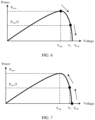
- FIG. 6 is a schematic diagram of initial scan points and initial scan directions of two photovoltaic strings in a first group
- FIG. 7 is a schematic diagram of initial scan points and initial scan directions of two photovoltaic strings in a second group.
- the initial scan points of the two independent strings in the first group are voltage points corresponding to output powers P max and P max /2, that is, two voltage operating points V mp and Vi shown in FIG. 6 .
- the initial scan directions of the two photovoltaic strings are a direction in which a voltage changes as an output power of each photovoltaic string decreases, that is, an arrow direction in FIG. 6 .
- the initial scan directions of the two photovoltaic strings are a direction in which the voltage increases.
- the initial scan points of the two photovoltaic strings in the second group are voltage points corresponding to output powers 0 and P max /2, that is, two voltage operating points Voc and Vi shown in FIG. 7 .
- the initial scan directions of the two photovoltaic strings are a direction in which a voltage changes as an output power of each photovoltaic string increases, that is, an arrow direction in FIG. 7 .
- the initial voltage scan directions of the two photovoltaic strings are a direction in which the voltage decreases.
- initial scan points of photovoltaic strings are not the same, that is, IV curve scanning is not started from a same voltage point, and initial scan directions are also different, and scanning is performed in opposite output power change directions.
- P max is a maximum output power of a photovoltaic string, and is affected by an operating status (a tilt angle, orientation, and aging) of the photovoltaic string at an actual power station. For example, if a maximum output power of one photovoltaic string is 1 kW, P max corresponding to an operating point of the string is 1 kW, and if a maximum output power of another photovoltaic string is 1.2 kW, P max corresponding to an operating point of the string is 1.2 kW.
- an absolute value of a power change amount of a photovoltaic string is controlled to be equal to P max /N
- an absolute value of an output power change amount of another photovoltaic string is also controlled to be equal to P max /N, where N is a quantity of photovoltaic strings included in each group. For example, an absolute value of a power change amount of a photovoltaic string in FIG. 6 from V mp (a start operating point) to V1, an absolute value of a power change amount of a string in FIG.
- S403 Perform current-voltage IV curve scanning on the first group in the initial scan direction of the first group starting from output voltages corresponding to the output powers at the initial scan points of the first group, and perform current-voltage IV curve scanning on the second group in the initial scan direction of the second group starting from output voltages corresponding to the output powers at the initial scan points of the second group, where output powers of the first group and the second group are kept to compensate each other during IV curve scanning.
- the foregoing steps merely determine the initial scan points and the initial scan directions.
- the output powers of the two groups need to be kept to compensate each other during the entire scanning process, that is, to maintain an output power as stable as possible and reduce a fluctuation of the output power.
- an IV curve voltages and currents at a plurality of operating points shown in FIG. 3 need to be scanned. Further, the IV curve is obtained through fitting based on output voltages and output currents, and whether a photovoltaic string is normal is determined based on the IV curve obtained through fitting.
- the method provided in this embodiment is applicable to the following two groups: a first group and a second group.
- IV curve scanning may be performed simultaneously on photovoltaic strings in each of the two groups, but the two groups of photovoltaic strings have different scan start points, that is, different initial scan points, and the two groups of photovoltaic strings also have different initial scan directions.
- Output powers at initial scan points of photovoltaic strings in the first group sequentially decrease, and output powers at initial scan points of photovoltaic strings in the second group sequentially increase.
- an initial scan direction of the first group is a direction in which an output voltage changes as an output power decreases
- an initial scan direction of the second group is a direction in which an output voltage changes as an output power increases.
- Such setting is to ensure that output powers of the two groups compensate each other during IV curve scanning performed on the two groups of photovoltaic strings, that is, a total output power fluctuates slightly. This can enable an entire photovoltaic power generation system to be in a stable working status.
- the foregoing technical solutions can enable IV curve scanning to be performed simultaneously on all photovoltaic strings in a photovoltaic power generation system, and IV curve scanning does not need to be performed in batches. Therefore, there is no time interval between IV curve scanning performed on different photovoltaic strings, and further there is no measurement error caused by a time interval.
- photovoltaic strings are grouped and paired for IV curve scanning. It can be ensured that a total output power of the photovoltaic power generation system fluctuates slightly, provided that it is ensured that powers of two groups in a pair compensate each other, that is, a fluctuation within the pair is comparatively small.
- Photovoltaic strings at a power station may be grouped in a plurality of manners, and the following lists three manners.
- the even quantity of photovoltaic strings are 2N photovoltaic strings, the 2N photovoltaic strings are divided into the first group and the second group, and each of the first group and the second group includes N photovoltaic strings.
- This manner is the simplest grouping manner. That is, the photovoltaic strings are divided into only two groups, and the two groups are paired. For the converter, control is also comparatively simple.
- a power station includes 100 photovoltaic strings, the 100 photovoltaic strings are divided into two groups, and each group includes 50 photovoltaic strings. In this case, N is 50.
- the determining output powers at initial scan points of photovoltaic strings in the first group, and determining output powers at initial scan points of photovoltaic strings in the second group is specifically: determining the output powers that are at the initial scan points of the photovoltaic strings in the first group and that are P max , N ⁇ 1 P max N , ..., and P max N , and determining the output powers that are at the initial scan points of the photovoltaic strings in the second group and that are 0 , P max N , ..., and N ⁇ 1 P max N , where P max is a maximum output power corresponding to each photovoltaic string.
- the even quantity of photovoltaic strings are divided into M sets, and each set is divided into an even quantity of groups.
- the second grouping manner is more complicated than the first grouping manner.
- the photovoltaic strings are finally divided into an even quantity of groups after undergoing two-level grouping.
- M may be an even number or an odd number, but a final quantity of groups is an even quantity of groups.
- sets may include a same quantity of photovoltaic strings or different quantities of photovoltaic strings. An example in which there are 100 photovoltaic strings is still used. For example, the 100 photovoltaic strings are divided into two sets that include same photovoltaic strings, and each set includes 50 photovoltaic strings. In this case, each set is further divided into an even quantity of groups.
- the 50 photovoltaic strings are divided into 10 groups, each group includes five photovoltaic strings, and every two groups of the 10 groups are paired. Totally, five pairs are formed.
- the 100 photovoltaic strings may be alternatively divided into sets that include different quantities of photovoltaic strings. For example, the 100 photovoltaic strings are still divided into two sets, where a first set includes 40 photovoltaic strings, and a second set includes 60 photovoltaic strings. The first set and the second set are further divided into groups, and the groups are then paired.
- the even quantity of photovoltaic strings are divided into M sets, some of the sets are divided into subsets, each subset is divided into an even quantity of groups, and each of the remaining sets is divided into an even quantity of groups.
- the third manner is more complicated than the second manner.
- Some sets need to be first divided into subsets, and then the subsets are further divided into groups. For example, there are 100 photovoltaic strings. 10 of the 100 photovoltaic strings are directly divided into two groups. The other 90 photovoltaic strings are divided into three sets, and each set includes 30 photovoltaic strings. 30 photovoltaic strings in one set are further divided into three subsets, and each subset includes 10 photovoltaic strings. 10 photovoltaic strings are further divided into groups.
- a grouping manner is not specifically limited in this embodiment of this application, provided that photovoltaic strings are finally divided into an even quantity of groups and pairing can be implemented.
- a quantity of photovoltaic strings included in each group is not limited either.
- the converter gradually changes an output voltage of a photovoltaic string to detect and record an output current, and IV curve scanning needs to be performed for a complete cycle. That is, in addition to the steps shown in FIG. 4 , the method further includes: when it is determined during IV curve scanning that an output voltage of each photovoltaic string is equal to an open-circuit voltage, changing a scan direction to a direction in which the output voltage decreases; when it is determined during IV curve scanning that the output voltage of each photovoltaic string is equal to a short-circuit voltage, changing the scan direction to a direction in which the output voltage increases; and when it is determined that the output voltage of each photovoltaic string is the same as the output voltage corresponding to the initial scan point and the scan direction is the same as the initial scan direction, ending IV curve scanning.
- the performing IV curve scanning specifically includes: gradually changing the output voltage of the photovoltaic string, recording an output current corresponding to each output voltage, and obtaining an IV curve based on the output voltage and the corresponding output current.
- FIG. 8 is a flowchart of another IV curve scanning method.
- Method Embodiment 1 a manner of scanning a first group and a second group in each pair has been described.
- the following uses any photovoltaic string in each group as an example to describe a complete process of IV curve scanning performed on the photovoltaic string.
- S804 Determine whether the output voltage of the photovoltaic string is equal to an open-circuit voltage of the photovoltaic string; and if the output voltage of the photovoltaic string is equal to the open-circuit voltage of the photovoltaic string, perform S805, or if the output voltage of the photovoltaic string is not equal to the open-circuit voltage of the photovoltaic string, perform S806.
- S805 Change a scan direction of the photovoltaic string to a direction in which the output voltage decreases.
- S806 Determine whether the output voltage of the photovoltaic string is equal to a short-circuit voltage of the photovoltaic string; and if the output voltage of the photovoltaic string is equal to the short-circuit voltage of the photovoltaic string, perform S807, or if the output voltage of the photovoltaic string is not equal to the short-circuit voltage of the photovoltaic string, perform S808.
- S807 Change the scan direction of the photovoltaic string to a direction in which the output voltage increases.
- S808 Determine whether the output voltage of the photovoltaic string is equal to the output voltage corresponding to the initial scan point and whether the scan direction is the same as the initial scan direction; and if the output voltage of the photovoltaic string is equal to the output voltage corresponding to the initial scan point and the scan direction is the same as the initial scan direction, end IV curve scanning, or if the output voltage of the photovoltaic string is not equal to the output voltage corresponding to the initial scan point and the scan direction is not the same as the initial scan direction, keep the scan direction unchanged and continue to perform IV curve scanning.
- IV curve scanning may be started.
- an output voltage and an output current that are at each operating point of the photovoltaic string are recorded, and an IV curve of the photovoltaic string is obtained through fitting based on the output voltage and the output current.
- the converter gradually changes an output voltage of a photovoltaic string to detect and record an output current.
- the converter may change the output voltage of the photovoltaic string at a fixed voltage change rate, or may change the output voltage of the photovoltaic string at a non-fixed voltage change rate.
- the following describes IV curve scanning that is performed in a manner in which the output voltage of the photovoltaic string is changed at a fixed voltage change rate within each IV curve scan interval. That is, the gradually changing the output voltage of the photovoltaic string is specifically: cgradually changing the output voltage of the photovoltaic string by a fixed voltage scan step within each IV curve scan interval, where the IV curve scan interval includes a voltage interval between the open-circuit voltage and a voltage corresponding to a maximum power of the photovoltaic string, and a voltage interval between the short-circuit voltage and the voltage corresponding to the maximum power of the photovoltaic string.
- FIG. 9 is a schematic diagram of an IV curve.
- a point A is an operating point corresponding to an open-circuit voltage
- a point B is an operating point corresponding to a maximum output power
- a point C is an operating point corresponding to a short-circuit voltage.
- an initial scan point is a point A
- a scan direction is a direction in which a power increases, that is, scanning is performed from A to B.
- an interval from A to B forms an IV curve scan interval
- an interval from B to C forms another IV curve scan interval.
- Voltage change rates within different IV curve scan intervals may be different, but in this embodiment, a voltage change rate within a same IV curve scan interval is the same, that is, the output voltage is changed by an equal voltage difference.
- each group includes one photovoltaic string for description.
- a photovoltaic string in the first group is referred to as a first string
- a photovoltaic string in the second group is referred to as a second string.
- FIG. 10a is a waveform diagram of an output voltage corresponding to IV curve scanning performed on a first string
- FIG. 10b is a waveform diagram of an output power corresponding to IV curve scanning performed on the first string.
- FIG. 11a is a waveform diagram of an output voltage corresponding to IV curve scanning performed on a second string
- FIG. 11b is a waveform diagram of an output power corresponding to IV curve scanning performed on the second string.
- Step 1 Converters corresponding to the first string and the second string control a corresponding photovoltaic string to be at an initial scan point of IV curve scanning.
- a voltage point V mp corresponding to a maximum output power P max is controlled to be an initial scan point of the first string, for example, a point B in FIG. 10a , where a power at the point B is P max ; and for the second string, an open-circuit voltage point Voc is used as an initial scan point, that is, a point A in FIG. 10a , where a power at the point A is 0.
- a point C in FIG. 10a corresponds to a short-circuit voltage point Vsc.
- Step 2 Obtain initial scan directions of IV curve scanning performed on the first string and the second string.
- B is the initial scan point
- a direction in which the voltage changes as the output power decreases is the initial scan direction, that is, a direction in which the voltage increases is the initial scan direction.
- A is the initial scan point
- a direction in which the voltage changes as the output power increases is the initial scan direction, that is, a direction in which the voltage decreases is the initial direction.
- Step 3 Control IV curve scanning to be performed on the first string and the second string.
- the voltage of the first string is controlled to gradually change towards the operating point A, and the voltage of the second string is controlled to gradually change towards the operating point C.
- an output current corresponding to each operating point during the process is recorded.
- Step 4 Determine whether the voltage of each string is equal to an open-circuit voltage value Voc or equal to a short-circuit voltage value Vsc.
- a voltage change direction of the first string is set to a direction in which the voltage decreases, that is, turns back to the point B.
- the scan direction is not changed, and the voltage continues to decrease and changes towards the point C.
- Step 5 Determine whether scanning is completed.
- step 3 is performed in a current scan direction.
- a scan path of the first string is B-A-B-C-B
- a scan path of the second string is A-B-C-B-A.
- the second string is used as a reference, and it is set that a voltage change rate of the second string remains constant during entire IV scanning.
- the output powers of the first string and the second string are controlled to compensate each other during IV curve scanning.
- the voltage of the second string reaches the point B
- the voltage of the first string is controlled to reach the point A
- the voltage of the second string reaches the point C
- the voltage of the first string is controlled to reach the point B
- P max the output power of the first string
- Different IV curve scan paths are set for the two strings, so that when IV curve scanning is performed on the two strings, a moment at which either string outputs a maximum power corresponds to a moment at which the other string outputs a zero power, thereby reducing a fluctuation of a total output power of the two strings.
- each of two groups includes one photovoltaic string for description.
- Steps in overall execution are also the same as those in Method Embodiment 3.
- An operating manner of the second string is the same as that in Method Embodiment 3, and specific waveforms are shown in FIG. 11 .
- a scan path of the first string is also the same as that in Method Embodiment 3. An only difference is that a voltage scan step within each IV curve scan interval is not fixed, and the voltage scan step of the first string is adjusted by using a method that enables an output power of the first string and an output power of the second string to compensate each other.
- the second group is used as a reference group, and the gradually changing the output voltage of the photovoltaic string is specifically:
- Parameters of photovoltaic strings in each group are consistent. For example, maximum powers should be equal in an ideal case. If a fluctuation exists, it is possible that a fluctuation between maximum output powers of the photovoltaic strings is within a preset range.
- the total output power P o of the two groups may be obtained by using a third-party measurement apparatus and sent to the converter of the first group.
- the converter of the second group may directly send an output power of a corresponding photovoltaic string to the converter of the first group, and the converter of the first group obtains the total output power P o .
- the following specifically describes how to adjust a voltage scan step of each photovoltaic string in the first group to enable an output power of the first group and an output power of the second group to better compensate each other.
- the adjusting a voltage scan step based on the power comparison result to change the output voltage of the photovoltaic string specifically includes the following.
- the voltage scan step needs to be decreased, that is, to decrease a voltage change rate.
- the output power is indirectly adjusted by directly adjusting the output voltage.
- the first group may be alternatively used as the reference group, and the converter corresponding to the second group gradually changes the output voltage of the second group, so that the output power of the second group and the output power of the first group better compensate each other, and a fluctuation of a total power is reduced.
- both the two strings use a conventional IV curve scan manner, that is, use a same scan path
- both output powers of the two strings are shown in FIG. 11b .
- the total output power corresponds to a non-mutual-compensation detection method indicated by a line 11 in FIG. 13 .
- the total output power of the two strings in Method Embodiment 3 corresponds to a linear mutual-compensation detection method indicated by a line 22 in FIG. 13
- the total output power in Method Embodiment 4 corresponds to a non-linear mutual-compensation detection method indicated by a line 33 in FIG. 13 .
- a quantity of photovoltaic strings whose powers increase due to IV curve scanning is the same as a quantity of photovoltaic strings whose powers decrease due to IV curve scanning. Therefore, power increasing trends of some photovoltaic strings and power decreasing trends of other strings compensate each other, thereby reducing a fluctuation of a total output power, avoiding an occurrence of a supply-demand imbalance in a photovoltaic power generation system, and ensuring safe and stable operation of the photovoltaic power generation system.
- all photovoltaic strings at a power station do not need to be scanned in batches. This can avoid an impact of a weather change on IV curve scan data of different photovoltaic strings, and improve precision of the IV curve scan data.
- an embodiment of this application further provides a converter.
- FIG. 14 is a schematic diagram of a connection between a converter and a photovoltaic string.
- each converter in this embodiment is connected to one photovoltaic string, and the converter is configured to control an output voltage of the connected photovoltaic string.
- the photovoltaic power generation system includes an even quantity of photovoltaic strings, the even quantity of photovoltaic strings are divided into an even quantity of groups, every two groups of the even quantity of groups are paired, and each pair includes a first group and a second group. As shown in FIG. 14 , only two converters corresponding to one pair are shown: a first converter 201 and a second converter 202.
- the first group 101 corresponds to the first converter
- the second group 102 corresponds to the second converter 202.
- the first group 101 and the second group 102 include a same quantity of photovoltaic strings, and may include a plurality of photovoltaic strings or may include one photovoltaic string.
- the first converter 201 is configured to: obtain output powers at initial scan points of photovoltaic strings in the first group 101; control the output powers at the initial scan points of the photovoltaic strings in the first group 101 to sequentially decrease; and perform current-voltage IV curve scanning on the first group 101 in an initial scan direction of the first group 101 starting from output voltages corresponding to the output powers at the initial scan points of the first group 101.
- the second converter 202 is configured to: obtain output powers at initial scan points of photovoltaic strings in the second group 102; control the output powers at the initial scan points of the photovoltaic strings in the second group 102 to sequentially increase; and perform current-voltage IV curve scanning on the second group 102 in an initial scan direction of the second group 102 starting from output voltages corresponding to the output powers at the initial scan points of the second group 102, where output powers of the first group 101 and the second group 102 are kept to compensate each other during IV curve scanning.
- the converter and the photovoltaic string are in a one-to-one relationship, including that the photovoltaic string connected to the input end of the converter is a single photovoltaic string, or the input end of the converter is connected to an equivalent string, where the equivalent string may be a plurality of photovoltaic strings connected in parallel.
- the equivalent string may be a plurality of photovoltaic strings connected in parallel.
- the foregoing steps merely determine the initial scan points and the initial scan directions.
- the output powers of the two groups need to be kept to compensate each other during the entire scanning process, that is, to maintain an output power as stable as possible and reduce a fluctuation of the output power.
- an IV curve voltages and currents at a plurality of operating points shown in FIG. 3 need to be scanned. Further, the IV curve is obtained through fitting based on output voltages and output currents, and whether a photovoltaic string is normal is determined based on the IV curve obtained through fitting.
- Two converters in each pair may simultaneously perform IV curve scanning on their corresponding groups, but the two groups of photovoltaic strings have different scan start points, that is, different initial scan points, and the two groups of photovoltaic strings also have different initial scan directions.
- Output powers at initial scan points of photovoltaic strings in a first group sequentially decrease, and output powers at initial scan points of photovoltaic strings in a second group sequentially increase.
- an initial scan direction of the first group is a direction in which an output voltage changes as an output power decreases
- an initial scan direction of the second group is a direction in which an output voltage changes as an output power increases.
- Such setting is to ensure that output powers of the two groups compensate each other during IV curve scanning performed on the two groups of photovoltaic strings, that is, a total output power fluctuates slightly.
- This can enable an entire photovoltaic power generation system to be in a stable working status.
- the foregoing technical solutions can enable IV curve scanning to be performed simultaneously on all photovoltaic strings in a photovoltaic power generation system, and IV curve scanning does not need to be performed in batches. Therefore, there is no time interval between IV curve scanning performed on different photovoltaic strings, and further there is no measurement error caused by a time interval.
- photovoltaic strings are grouped and paired for IV curve scanning. It can be ensured that a total output power of the photovoltaic power generation system fluctuates slightly, provided that it is ensured that powers of two groups in a pair compensate each other, that is, a fluctuation within the pair is comparatively small.
- the converter gradually changes an output voltage of a photovoltaic string to detect and record an output current, and IV curve scanning needs to be performed for a complete cycle. Therefore, the first converter and the second converter are further configured to: when it is determined during IV curve scanning that an output voltage of each photovoltaic string is equal to an open-circuit voltage, change a scan direction to a direction in which the output voltage decreases; when it is determined during IV curve scanning that the output voltage of each photovoltaic string is equal to a short-circuit voltage, change the scan direction to a direction in which the output voltage increases; and when it is determined that the output voltage of each photovoltaic string is the same as the output voltage corresponding to the initial scan point and the scan direction is the same as the initial scan direction, end IV curve scanning; and the performing, by the first converter and the second converter, IV curve scanning specifically includes: gradually changing the output voltage of the photovoltaic string, recording an output current corresponding to each output voltage, and obtaining an IV curve based on the output voltage and the corresponding
- the converter gradually changes an output voltage of a photovoltaic string to detect and record an output current.
- the converter may change the output voltage of the photovoltaic string at a fixed voltage change rate, or may change the output voltage of the photovoltaic string at a non-fixed voltage change rate.
- the following describes IV curve scanning that is performed in a manner in which the output voltage of the photovoltaic string is changed at a fixed voltage change rate within each IV curve scan interval. That is, the gradually changing, by the first converter and the second converter, the output voltage of the photovoltaic string is specifically: gradually changing the output voltage of the photovoltaic string by a fixed voltage scan step within each IV curve scan interval, where the IV curve scan interval includes a voltage interval between the open-circuit voltage and a voltage corresponding to a maximum power of the photovoltaic string, and a voltage interval between the short-circuit voltage and the voltage corresponding to the maximum power of the photovoltaic string.
- each of two groups includes one photovoltaic string for description.
- a voltage scan step within each IV curve scan interval is not fixed, and a voltage scan step of a first string is adjusted in a manner that enables an output power of the first string and an output power of a second string to compensate each other.
- the second group is used as a reference group, and the gradually changing, by the first converter, the output voltage of the photovoltaic string is specifically:
- the first group may be alternatively used as the reference group, and the second converter gradually changes the output voltage of the photovoltaic string corresponding to the second converter, so that the output power of the second group and the output power of the first group better compensate each other, and a fluctuation of a total power is reduced.
- the adjusting, by the first converter, a voltage scan step based on the power comparison result to change the output voltage of the photovoltaic string specifically includes:
- the even quantity of photovoltaic strings are 2N photovoltaic strings
- the 2N photovoltaic strings are divided into the first group and the second group, and each of the first group and the second group includes N photovoltaic strings.
- the first converter determines that the output powers at the initial scan points of the photovoltaic strings in the first group are P max , N ⁇ 1 P max N , ..., and P max N ; and the second converter determines that the output powers at the initial scan points of the photovoltaic strings in the second group are 0 , P max N , ..., and N ⁇ 1 P max N , where P max is a maximum output power corresponding to each photovoltaic string.
- the converter in the foregoing embodiment may be a DC-DC converter, or may be a DC-AC converter (that is, an inverter).
- a connection relationship of an output end of a converter is not specifically limited in this embodiment of this application. The following specifically describes several connection relationships of an output end of a converter.
- Output ports of the first converter 201 and the second converter 202 are direct-current connected in parallel and then are connected as a whole to a same direct current bus. If there is another type of load or power supply on the direct current bus, the product implementation is a part of a direct current power grid. If there is no other type of load or power supply on the direct current bus, and the converters are connected to an alternating current power grid through a grid-tied inverter, the product implementation corresponds to a part of a string photovoltaic inverter.
- Second connection relationship Output ports of converters are direct-current connected in series, as shown in FIG. 16 .
- Output ports of the first converter 201 and the second converter 202 are direct-current connected in series to a same direct current bus, and then are connected to an alternating current power grid through a grid-tied inverter.
- the product implementation corresponds to an application scenario of a centralized inverter, and the converters are photovoltaic optimizers.
- Output ports of the first converter 201 and the second converter 202 are connected in parallel and then are connected as a whole to a same alternating current bus.
- the product implementation corresponds to an application scenario of a photovoltaic micro inverter (Micro inverter).
- Output ports of converters are alternating-current connected in series, as shown in FIG. 18 .
- Output ports of the first converter 201 and the second converter 202 are connected in parallel to a same alternating current bus.
- the product implementation corresponds to an application scenario of a modular multi-level converter (Modular Multi-Level Converter, MMC).
- MMC Modular Multi-Level Converter
- the converters in FIG. 15 and FIG. 16 are DC-DC converters, and the converters in FIG. 17 and FIG. 18 are DC-AC converters.
- an input end of a converter has a direct current characteristic, and has a positive port and a negative port.
- Converters have a similar internal structure and a same working principle. Herein, only one converter is used as an example for description.
- FIG. 19 is a schematic diagram of an interior of a converter.
- the converter 200 includes a controller 200a, a current sampling circuit 200b, a voltage sampling circuit 200c, and a hardware circuit 200d.
- the current sampling circuit 200b and the voltage sampling circuit 200c are configured to collect an output current and an output voltage that are of a photovoltaic string, respectively, and convert the output current and the output voltage into signals that can be processed by the controller 200a.
- the hardware circuit 200d includes a capacitor, an inductor, a semiconductor switch, and the like, and is configured to transmit power.
- the controller 200a is configured to perform the steps in the foregoing method embodiments.
- the controller 200a further generates a drive signal by using a specified control loop based on a voltage reference value and the current and the voltage that are obtained through sampling, where the drive signal is used to drive the semiconductor switch in the hardware circuit 200d to be in a closed or open state.
- a control objective of the controller 200a is to make an output voltage of a photovoltaic string be equal to the voltage reference value, and the controller 200a has a function of recording an output voltage and an output current that are of a photovoltaic string.
- converters in each pair may simultaneously control IV curve scanning to be performed on two groups of photovoltaic strings, and control an output power of one group of photovoltaic strings to change in a power increasing direction and an output power of the other group of photovoltaic strings to change in a power decreasing direction, thereby reducing a fluctuation of a total output power of the pair.
- All converters at an entire power station are paired, and simultaneously control IV curve scanning to be performed on corresponding photovoltaic strings. Therefore, there is no scan time interval, and further, a case in which detection precision is comparatively low due to a scan time interval does not occur.
- an embodiment of this application further provides a photovoltaic power generation system.
- the following describes the photovoltaic power generation system in detail with reference to an accompanying drawing.
- FIG. 20 is a schematic diagram of a photovoltaic power generation system.
- the photovoltaic power generation system provided in this embodiment includes the converter in the foregoing embodiment, and further includes a photovoltaic string, where
- Each photovoltaic string corresponds to one converter, and the four photovoltaic strings 100a to 100d correspond to a converter 201 to a converter 204, respectively.
- the photovoltaic string 100a and the photovoltaic string 100b are paired, that is, the corresponding converter 201 and converter 202 are paired.
- the photovoltaic string 100c and the photovoltaic string 100d are paired, that is, the corresponding converter 203 and converter 204 are paired.
- a downstream device connected to the converters is an inverter, where the inverter is required to invert a direct current into an alternating current and feed the alternating current to the alternating current power grid.
- the converters may be directly connected to the direct current power grid.
- a corresponding downstream device may be a transformer.
- IV curve scanning can be performed simultaneously on all photovoltaic strings.
- the photovoltaic strings are divided into an even quantity of groups, every two groups are paired, and each pair uses a same control manner. For two groups in each pair, scanning starts at different initial scan points. Initial scan directions of the two groups are also different, and for the two groups, scanning is performed in opposite output power change directions. To be specific, scanning is performed for one group in a direction in which an output power increases, and scanning is performed for the other group in a direction in which an output power decreases. In this way, the output powers of the two groups are kept to compensate each other during IV curve scanning, and further a total output power of the two groups fluctuates as slightly as possible.
- the system can enable IV curve scanning to be performed simultaneously on all photovoltaic strings at a power station. There is no scan time interval, and therefore, a weather environment does not have an impact. Therefore, an obtained IV curve is comparatively precise.
- At least one (one item) means one or more, and "a plurality of” means two or more.
- "and/or” is used to describe an association relationship between associated objects and indicates that three relationships may exist.
- a and/or B may represent the following three cases: Only A exists, only B exists, and both A and B exist, where A and B may be singular or plural.
- the character “/” generally indicates an "or” relationship between the associated objects.
- "at least one item (one) of the following” or a similar expression thereof represents any combination of these items, including a single item or any combination of a plurality of items.
- a, b, or c may represent a, b, c, "a and b", “a and c", “b and c", or "a, b, and c", where a, b, and c may be singular or plural.
Landscapes
- Engineering & Computer Science (AREA)
- Power Engineering (AREA)
- Control Of Electrical Variables (AREA)
- Photovoltaic Devices (AREA)
Description
- This application claims priority to
Chinese Patent Application No. 201811320167.0, filed with the Chinese Patent Office on November 7, 2018 - The present invention relates to the field of power electronics technologies, and in particular, to a current-voltage curve scanning method for a photovoltaic string, a converter, and a system.
- With continuous promotion of energy conservation, emission reduction, and energy transformation in countries around the world, renewable energy power generation technologies have attracted increasing attention. Among the technologies, a photovoltaic power generation system is widely applied to a power system and a micro power grid due to factors such as technology maturity and economic efficiency thereof.
- Referring to
FIG. 1, FIG. 1 is a schematic diagram of a typical photovoltaic power generation system. - A
photovoltaic string 100 converts solar energy into electric energy by using a photovoltaic effect, and aconverter 200 converts the electric energy output by thephotovoltaic string 100 into an appropriate alternating current or direct current and supplies the current to a power grid orload 300. - In actual application, the
photovoltaic string 100 usually includes a plurality of photovoltaic modules (also referred to as solar panels) connected in series and in parallel, to match a rated voltage and a rated current that are required by a system. - It can be learned from
FIG. 1 that in the photovoltaic power generation system, thephotovoltaic string 100 is a source of electric energy. Therefore, a working status of thephotovoltaic string 100 determines a maximum power generation capability of the photovoltaic power generation system. Usually, a current-voltage (IV) curve output by thephotovoltaic string 100 is used as an indicator for evaluating a power generation capability of thephotovoltaic string 100. -
FIG. 2 is a curve diagram of an output characteristic of a photovoltaic string. - In a normal case, the output characteristic of the photovoltaic string is indicated by solid lines in
FIG. 2 . The solid lines include an IV curve and a power-voltage (PV) curve, and both curves are comparatively smooth. A horizontal coordinate of the IV curve represents a voltage, and a vertical coordinate of the IV curve represents a current, where a maximum voltage is an open-circuit voltage Voc, and a maximum current is a short-circuit current Isc. A horizontal coordinate of the PV curve represents a voltage, and a vertical coordinate of the PV curve represents a power, where a maximum power is Pmax. - In actual application, because the photovoltaic string is exposed outdoors, there is a potential fault such as blocking, aging, or corrosion, and a power generation capability of the photovoltaic string is affected by a fault. In this case, the output characteristic of the photovoltaic string is indicated by dashed lines in
FIG. 2 . Both an IV curve in this case and a corresponding PV curve deviate from the curves indicated by the solid lines, and a peak power is far less than Pmax, that is, the power generation capability is impaired. - It can be learned from a comparison in
FIG. 2 that a fault of the photovoltaic string directly affects a power generation capability of the photovoltaic power generation system. Therefore, obtaining the output characteristic, especially IV curve information, of the photovoltaic string in a timely and rapid manner helps find and locate an unexpected working status of the photovoltaic string as early as possible, provide a reference for operation and maintenance of the photovoltaic power generation system, and reduce a power generation loss caused by a fault of the photovoltaic string. - In the prior art, IV curve scanning is implemented in a manner in which a person carries a measurement device to a photovoltaic string site to perform measurement. However, a power station includes a huge quantity of photovoltaic strings. Therefore, the manual measurement manner consumes quite a long time, and is excessively inefficient.
- In addition, IV curve scanning may be performed on photovoltaic strings at a power station in batches. However, scanning in batches causes a scan time interval. Besides, the photovoltaic strings convert solar energy into electric energy. Therefore, when measurement is performed in batches, a weather environment affects detection precision.
- United States patent application
US 2013/257155 A1 discloses a photovoltaic system including solar cells and an inverter configured to convert direct current generated by the solar cells to alternating current. The photovoltaic system includes a maximum power point (MPP) tracking module configured to perform MPP tracking for the photovoltaic system. The MPP tracking module is configured to detect shading of the solar cells and to modify its MPP tracking to prevent tracking of local MPPs. The MPP tracking module may be incorporated in the inverter. - To resolve the foregoing technical problem existing in the prior art, the present invention provides a current-voltage scanning method as recited in
claim 1 and a method to operate a converter as recited inclaim 10. Further advantageous embodiments is as recited in the dependent claims. Irrespective of any statement contained in the rest of this description, and in particular of reference to embodiments, examples and the like, the invention is solely and uniquely to be understood as recited in the attached claims. Specifically the invention refers to the methods ofclaims - To describe the technical solutions in the embodiments of this application or in the prior art more clearly, the following briefly describes the accompanying drawings for describing the embodiments or the prior art. Apparently, the accompanying drawings in the following description show some embodiments of this application, and a person of ordinary skill in the art may still derive other drawings from these accompanying drawings without creative efforts.
-
FIG. 1 is a schematic diagram of a typical photovoltaic power generation system; -
FIG. 2 is a curve diagram of an output characteristic of a photovoltaic string; -
FIG. 3 is a schematic diagram of IV curve scanning by using a converter; -
FIG. 4 is a flowchart of an IV curve scanning method; -
FIG. 5 is a schematic diagram of a plurality of photovoltaic strings that are connected in parallel; -
FIG. 6 is a schematic diagram of initial scan points and initial scan directions of two photovoltaic strings in a first group; -
FIG. 7 is a schematic diagram of initial scan points and initial scan directions of two photovoltaic strings in a second group; -
FIG. 8 is a flowchart of another IV curve scanning method; -
FIG. 9 is a schematic diagram of an equivalent photovoltaic string; -
FIG. 10a is a waveform diagram of an output voltage corresponding to IV curve scanning performed on a first string; -
FIG. 10b is a waveform diagram of an output power corresponding to IV curve scanning performed on a first string; -
FIG. 11a is a waveform diagram of an output voltage corresponding to IV curve scanning performed on a second string; -
FIG. 11b is a waveform diagram of an output power corresponding to IV curve scanning performed on a second string; -
FIG. 12a is a waveform diagram of an output voltage of a first string; -
FIG. 12b is a waveform diagram of an output power of a first string; -
FIG. 13 is a waveform comparison diagram of total power waveforms; -
FIG. 14 is a schematic diagram of a connection between a converter and a photovoltaic string; -
FIG. 15 is a schematic diagram of a scenario in which output ports of converters are direct-current connected in parallel; -
FIG. 16 is a schematic diagram of a scenario in which output ports of converters are direct-current connected in series; -
FIG. 17 is a schematic diagram of a scenario in which output ports of converters are alternating-current connected in parallel; -
FIG. 18 is a schematic diagram of a scenario in which output ports of converters are alternating-current connected in series; -
FIG. 19 is a schematic diagram of an interior of a converter not part of this invention; -
FIG. 20 is a schematic diagram of a photovoltaic power generation system not part of this invention. - To enable a person skilled in the art to better understand the technical solutions provided in the embodiments of this application, the following first describes an implementation of performing IV curve scanning by using a converter.
- A specific form of the converter is not limited in the embodiments of this application. The converter may be a direct current-direct current converter, that is, a DC-DC converter, or may be an inverter, that is, a DC-AC converter.
- An output end of the converter is connected to a photovoltaic string. The converter converts direct-current electric energy output by the photovoltaic string and transmits the converted direct-current electric energy to a downstream device.
-
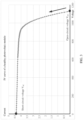
FIG. 3 is a schematic diagram of IV curve scanning by using a converter. - It can be learned from
FIG. 3 that a horizontal axis represents an output voltage of a photovoltaic string, a vertical axis represents an output current of the photovoltaic string, a maximum output voltage is an open-circuit voltage Voc, a maximum output current is a current corresponding to a short-circuit voltage, and the short-circuit voltage is a minimum output voltage Vsc. - A converter has a capability of controlling a photovoltaic string. For example, a converter controls an output voltage of a photovoltaic string to be maintained at an output voltage corresponding to a maximum power, so that the photovoltaic string can output a corresponding peak power.
- Therefore, the converter may be used to change an operating voltage of the photovoltaic string, so that output currents corresponding to output voltages that correspond to different operating points are measured and recorded, and an IV curve is further obtained through fitting based on output voltages and output currents of a plurality of operating points.
- In this embodiment of this application, IV curve scanning is performed in a manner of controlling the output voltage of the photovoltaic string by using the converter. Therefore, a connection manner of an output end of the converter is not limited in this embodiment of this application.
- When the converter controls IV curve scanning to be performed on photovoltaic strings in batches, because there is a scan time interval between the batches, and the photovoltaic strings are easily affected by a weather environment factor, a scan error exists between different batches. As a result, a result of IV curve scanning is not precise enough.
- According to a scanning method provided in the embodiments of this application, IV curve scanning can be performed simultaneously on all photovoltaic strings. The photovoltaic strings are divided into an even quantity of groups, every two groups are paired, and each pair uses a same control manner. For two groups in each pair, scanning starts at different initial scan points. Initial scan directions of the two groups are also different, and for the two groups, scanning is performed in opposite output power change directions. To be specific, scanning is performed for one group in a direction in which an output power increases, and scanning is performed for the other group in a direction in which an output power decreases. In this way, the output powers of the two groups are kept to compensate each other during IV curve scanning, and further a total output power of the two groups fluctuates as slightly as possible. The technical solutions can enable IV curve scanning to be performed simultaneously on all photovoltaic strings at a power station. There is no scan time interval, and therefore, a weather environment does not have an impact. Therefore, an obtained IV curve is comparatively precise.
- The following describes in detail specific implementations provided in the embodiments of this application with reference to the accompanying drawings.
-
FIG. 4 is a flowchart of an IV curve scanning method. - The current-voltage curve scanning method for a photovoltaic string provided in this embodiment is applied to a converter in a photovoltaic power generation system. An input end of each converter is connected to one photovoltaic string, and the converter is configured to control an output voltage of the connected photovoltaic string. The photovoltaic string includes a first group and a second group.
- The converter and the photovoltaic string are in a one-to-one relationship, including that the photovoltaic string connected to the input end of the converter is a single photovoltaic string, or the input end of the converter is connected to an equivalent string, where the equivalent string may be a plurality of photovoltaic strings connected in parallel. To be specific, if a plurality of photovoltaic strings are connected in parallel and then are connected as a whole to a same converter, the plurality of photovoltaic strings connected in parallel are equivalent to one photovoltaic string in this embodiment of this application. For details, refer to
FIG. 5 . Aphotovoltaic string 100 actually includes two photovoltaic strings (100a and 100b) that are connected in parallel and then are connected as a whole to asame converter 200. However, theconverter 200 controls an output voltage of thephotovoltaic string 100. Therefore, it is equivalent to that theconverter 200 is connected to onephotovoltaic string 100. It can be understood that in this embodiment of this application, a quantity of photovoltaic strings is equal to a quantity of converters. The converter may control the output voltage of the photovoltaic string, and further changes an output current of the photovoltaic string. - In actual application, one power station usually includes tens of thousands of photovoltaic strings. By using the technical solutions provided in this embodiment, IV curve scanning can be performed simultaneously on a huge quantity of photovoltaic strings. All the photovoltaic strings are divided into an even quantity of groups, every two groups are paired, and each pair is regarded as a unit during IV curve scanning. There may be a plurality of specific grouping manners, provided that photovoltaic strings are finally divided into an even quantity of groups for pairing and IV curve scanning. Each group may include one photovoltaic string, or may include a plurality of photovoltaic strings, but two paired groups should have a same quantity of photovoltaic strings. For example, each group includes three photovoltaic strings. However, different pairs may have a same quantity of photovoltaic strings or different quantities of photovoltaic strings. For example, two pairs are included, each group in a first pair includes three photovoltaic strings, and each group in a second pair includes two photovoltaic strings.
- Because each pair operates in a same manner, the following description is based on that two groups in each pair are a first group and a second group.
- The following method is performed on photovoltaic strings in the first group and the second group in each pair.
- S401: Obtain output powers at initial scan points of photovoltaic strings in the first group, and obtain output powers at initial scan points of photovoltaic strings in the second group.
- IV curve scanning needs to cover an entire output voltage range (between an open-circuit voltage and a short-circuit voltage). Therefore, when an output voltage changes, an output power of each photovoltaic string fluctuates. According to the solutions, IV curve scanning may be performed simultaneously on all strings. Therefore, to reduce a fluctuation of a total output power of a power station, output powers of two groups in each pair are made to compensate each other. In this way, a total output power of each pair is almost stable, and further the total output power of the power station is also almost stable. Specifically, in this embodiment, a change direction of the output powers at the initial scan points of the photovoltaic strings in the first group is made to be opposite to a change direction of the output powers at the initial scan points of the photovoltaic strings in the second group, so as to form mutual compensation.
- S402: Control the output powers at the initial scan points of the photovoltaic strings in the first group to sequentially decrease, and control the output powers at the initial scan points of the photovoltaic strings in the second group to sequentially increase, where an initial scan direction of each photovoltaic string in the first group is a direction in which an output voltage changes as an output power decreases, and an initial scan direction of each photovoltaic string in the second group is a direction in which an output voltage changes as an output power increases.
- Currently, when IV curve scanning is performed on photovoltaic strings at a power station in batches, for photovoltaic strings that undergo IV curve scanning in a same batch, scanning is performed from a same initial scan point and in a same initial scan direction. To be specific, when an output power of a photovoltaic string increases, output powers of other photovoltaic strings in the same batch also increase, and when an output power of a photovoltaic string decreases, output powers of other photovoltaic strings in the same batch also decrease.
- The first group and the second group include a same quantity of photovoltaic strings. For ease of understanding of S401 and S402, the following uses an example in which each of the first group and the second group includes two photovoltaic strings for description. A control method is the same for a case in which another quantity of photovoltaic strings are included.
-
FIG. 6 is a schematic diagram of initial scan points and initial scan directions of two photovoltaic strings in a first group, andFIG. 7 is a schematic diagram of initial scan points and initial scan directions of two photovoltaic strings in a second group. - The initial scan points of the two independent strings in the first group are voltage points corresponding to output powers Pmax and Pmax/2, that is, two voltage operating points Vmp and Vi shown in
FIG. 6 . The initial scan directions of the two photovoltaic strings are a direction in which a voltage changes as an output power of each photovoltaic string decreases, that is, an arrow direction inFIG. 6 . The initial scan directions of the two photovoltaic strings are a direction in which the voltage increases. - The initial scan points of the two photovoltaic strings in the second group are voltage points corresponding to
output powers 0 and Pmax/2, that is, two voltage operating points Voc and Vi shown inFIG. 7 . The initial scan directions of the two photovoltaic strings are a direction in which a voltage changes as an output power of each photovoltaic string increases, that is, an arrow direction inFIG. 7 . The initial voltage scan directions of the two photovoltaic strings are a direction in which the voltage decreases. - It can be learned from
FIG. 6 and FIG. 7 that in the solutions, initial scan points of photovoltaic strings are not the same, that is, IV curve scanning is not started from a same voltage point, and initial scan directions are also different, and scanning is performed in opposite output power change directions. - Pmax is a maximum output power of a photovoltaic string, and is affected by an operating status (a tilt angle, orientation, and aging) of the photovoltaic string at an actual power station. For example, if a maximum output power of one photovoltaic string is 1 kW, Pmax corresponding to an operating point of the string is 1 kW, and if a maximum output power of another photovoltaic string is 1.2 kW, Pmax corresponding to an operating point of the string is 1.2 kW.
- To ensure an effect that output powers compensate each other, a specific requirement is imposed on a time interval between scanning performed on photovoltaic strings. Specifically, when an absolute value of a power change amount of a photovoltaic string is controlled to be equal to Pmax/N, an absolute value of an output power change amount of another photovoltaic string is also controlled to be equal to Pmax/N, where N is a quantity of photovoltaic strings included in each group. For example, an absolute value of a power change amount of a photovoltaic string in
FIG. 6 from Vmp (a start operating point) to V1, an absolute value of a power change amount of a string inFIG. 6 from V1 (a start operating point) to Voc, an absolute value of a power change amount of a photovoltaic string inFIG. 7 from Voc to V1, and an absolute value of a power change amount of a photovoltaic string inFIG. 7 from V1 to Vmp are all Pmax/2. - S403: Perform current-voltage IV curve scanning on the first group in the initial scan direction of the first group starting from output voltages corresponding to the output powers at the initial scan points of the first group, and perform current-voltage IV curve scanning on the second group in the initial scan direction of the second group starting from output voltages corresponding to the output powers at the initial scan points of the second group, where output powers of the first group and the second group are kept to compensate each other during IV curve scanning.
- The foregoing steps merely determine the initial scan points and the initial scan directions. However, the output powers of the two groups need to be kept to compensate each other during the entire scanning process, that is, to maintain an output power as stable as possible and reduce a fluctuation of the output power.
- To obtain an IV curve, voltages and currents at a plurality of operating points shown in
FIG. 3 need to be scanned. Further, the IV curve is obtained through fitting based on output voltages and output currents, and whether a photovoltaic string is normal is determined based on the IV curve obtained through fitting. - The method provided in this embodiment is applicable to the following two groups: a first group and a second group. IV curve scanning may be performed simultaneously on photovoltaic strings in each of the two groups, but the two groups of photovoltaic strings have different scan start points, that is, different initial scan points, and the two groups of photovoltaic strings also have different initial scan directions. Output powers at initial scan points of photovoltaic strings in the first group sequentially decrease, and output powers at initial scan points of photovoltaic strings in the second group sequentially increase. In addition, an initial scan direction of the first group is a direction in which an output voltage changes as an output power decreases, and an initial scan direction of the second group is a direction in which an output voltage changes as an output power increases. Such setting is to ensure that output powers of the two groups compensate each other during IV curve scanning performed on the two groups of photovoltaic strings, that is, a total output power fluctuates slightly. This can enable an entire photovoltaic power generation system to be in a stable working status.
- The foregoing technical solutions can enable IV curve scanning to be performed simultaneously on all photovoltaic strings in a photovoltaic power generation system, and IV curve scanning does not need to be performed in batches. Therefore, there is no time interval between IV curve scanning performed on different photovoltaic strings, and further there is no measurement error caused by a time interval. In addition, photovoltaic strings are grouped and paired for IV curve scanning. It can be ensured that a total output power of the photovoltaic power generation system fluctuates slightly, provided that it is ensured that powers of two groups in a pair compensate each other, that is, a fluctuation within the pair is comparatively small.
- Photovoltaic strings at a power station may be grouped in a plurality of manners, and the following lists three manners.
- In a first manner, the even quantity of photovoltaic strings are 2N photovoltaic strings, the 2N photovoltaic strings are divided into the first group and the second group, and each of the first group and the second group includes N photovoltaic strings.
- This manner is the simplest grouping manner. That is, the photovoltaic strings are divided into only two groups, and the two groups are paired. For the converter, control is also comparatively simple. For example, a power station includes 100 photovoltaic strings, the 100 photovoltaic strings are divided into two groups, and each group includes 50 photovoltaic strings. In this case, N is 50.
- For the foregoing first grouping manner, the determining output powers at initial scan points of photovoltaic strings in the first group, and determining output powers at initial scan points of photovoltaic strings in the second group is specifically:
determining the output powers that are at the initial scan points of the photovoltaic strings in the first group and that are P max,


- That is, the foregoing manner of determining the output powers that are at the initial scan points of the photovoltaic strings is consistent with manners shown in
FIG. 6 and FIG. 7 . - In a second manner, the even quantity of photovoltaic strings are divided into M sets, and each set is divided into an even quantity of groups.
- The second grouping manner is more complicated than the first grouping manner. The photovoltaic strings are finally divided into an even quantity of groups after undergoing two-level grouping. M may be an even number or an odd number, but a final quantity of groups is an even quantity of groups. In addition, sets may include a same quantity of photovoltaic strings or different quantities of photovoltaic strings. An example in which there are 100 photovoltaic strings is still used. For example, the 100 photovoltaic strings are divided into two sets that include same photovoltaic strings, and each set includes 50 photovoltaic strings. In this case, each set is further divided into an even quantity of groups. For example, the 50 photovoltaic strings are divided into 10 groups, each group includes five photovoltaic strings, and every two groups of the 10 groups are paired. Totally, five pairs are formed. In addition, the 100 photovoltaic strings may be alternatively divided into sets that include different quantities of photovoltaic strings. For example, the 100 photovoltaic strings are still divided into two sets, where a first set includes 40 photovoltaic strings, and a second set includes 60 photovoltaic strings. The first set and the second set are further divided into groups, and the groups are then paired.
- In a third manner, the even quantity of photovoltaic strings are divided into M sets, some of the sets are divided into subsets, each subset is divided into an even quantity of groups, and each of the remaining sets is divided into an even quantity of groups.
- The third manner is more complicated than the second manner. Some sets need to be first divided into subsets, and then the subsets are further divided into groups. For example, there are 100 photovoltaic strings. 10 of the 100 photovoltaic strings are directly divided into two groups. The other 90 photovoltaic strings are divided into three sets, and each set includes 30 photovoltaic strings. 30 photovoltaic strings in one set are further divided into three subsets, and each subset includes 10 photovoltaic strings. 10 photovoltaic strings are further divided into groups.
- The foregoing merely lists three grouping manners. A grouping manner is not specifically limited in this embodiment of this application, provided that photovoltaic strings are finally divided into an even quantity of groups and pairing can be implemented. In addition, a quantity of photovoltaic strings included in each group is not limited either.
- During IV curve scanning, the converter gradually changes an output voltage of a photovoltaic string to detect and record an output current, and IV curve scanning needs to be performed for a complete cycle. That is, in addition to the steps shown in
FIG. 4 , the method further includes: when it is determined during IV curve scanning that an output voltage of each photovoltaic string is equal to an open-circuit voltage, changing a scan direction to a direction in which the output voltage decreases; when it is determined during IV curve scanning that the output voltage of each photovoltaic string is equal to a short-circuit voltage, changing the scan direction to a direction in which the output voltage increases; and when it is determined that the output voltage of each photovoltaic string is the same as the output voltage corresponding to the initial scan point and the scan direction is the same as the initial scan direction, ending IV curve scanning. The performing IV curve scanning specifically includes:
gradually changing the output voltage of the photovoltaic string, recording an output current corresponding to each output voltage, and obtaining an IV curve based on the output voltage and the corresponding output current. - The following describes a complete IV curve scanning process.
-
FIG. 8 is a flowchart of another IV curve scanning method. - In
Method Embodiment 1, a manner of scanning a first group and a second group in each pair has been described. The following uses any photovoltaic string in each group as an example to describe a complete process of IV curve scanning performed on the photovoltaic string. - S801: Obtain an output power at an initial scan point of the photovoltaic string.
- S802: Obtain an initial scan direction of the photovoltaic string.
- 803: Perform scanning in the initial scan direction by using an output voltage corresponding to the output power at the initial scan point as a start point, and during scanning, gradually change the output voltage of the photovoltaic string, and record a corresponding output current.
- S804: Determine whether the output voltage of the photovoltaic string is equal to an open-circuit voltage of the photovoltaic string; and if the output voltage of the photovoltaic string is equal to the open-circuit voltage of the photovoltaic string, perform S805, or if the output voltage of the photovoltaic string is not equal to the open-circuit voltage of the photovoltaic string, perform S806.
- S805: Change a scan direction of the photovoltaic string to a direction in which the output voltage decreases.
- S806: Determine whether the output voltage of the photovoltaic string is equal to a short-circuit voltage of the photovoltaic string; and if the output voltage of the photovoltaic string is equal to the short-circuit voltage of the photovoltaic string, perform S807, or if the output voltage of the photovoltaic string is not equal to the short-circuit voltage of the photovoltaic string, perform S808.
- S807: Change the scan direction of the photovoltaic string to a direction in which the output voltage increases.
- S808: Determine whether the output voltage of the photovoltaic string is equal to the output voltage corresponding to the initial scan point and whether the scan direction is the same as the initial scan direction; and if the output voltage of the photovoltaic string is equal to the output voltage corresponding to the initial scan point and the scan direction is the same as the initial scan direction, end IV curve scanning, or if the output voltage of the photovoltaic string is not equal to the output voltage corresponding to the initial scan point and the scan direction is not the same as the initial scan direction, keep the scan direction unchanged and continue to perform IV curve scanning.
- In this embodiment, only a photovoltaic string is used as an example for description. After an initial scan point and an initial scan direction are determined, IV curve scanning may be started. During IV curve scanning, there are many operating points, an output voltage and an output current that are at each operating point of the photovoltaic string are recorded, and an IV curve of the photovoltaic string is obtained through fitting based on the output voltage and the output current.
- During IV curve scanning, the converter gradually changes an output voltage of a photovoltaic string to detect and record an output current. The converter may change the output voltage of the photovoltaic string at a fixed voltage change rate, or may change the output voltage of the photovoltaic string at a non-fixed voltage change rate.
- In this embodiment, the following describes IV curve scanning that is performed in a manner in which the output voltage of the photovoltaic string is changed at a fixed voltage change rate within each IV curve scan interval. That is, the gradually changing the output voltage of the photovoltaic string is specifically:
cgradually changing the output voltage of the photovoltaic string by a fixed voltage scan step within each IV curve scan interval, where the IV curve scan interval includes a voltage interval between the open-circuit voltage and a voltage corresponding to a maximum power of the photovoltaic string, and a voltage interval between the short-circuit voltage and the voltage corresponding to the maximum power of the photovoltaic string. - The following describes the IV curve scan interval with reference to an accompanying drawing.
-
FIG. 9 is a schematic diagram of an IV curve. - A point A is an operating point corresponding to an open-circuit voltage, a point B is an operating point corresponding to a maximum output power, and a point C is an operating point corresponding to a short-circuit voltage.
- It is assumed that an initial scan point is a point A, and a scan direction is a direction in which a power increases, that is, scanning is performed from A to B. In this case, an interval from A to B forms an IV curve scan interval, and an interval from B to C forms another IV curve scan interval. Voltage change rates within different IV curve scan intervals may be different, but in this embodiment, a voltage change rate within a same IV curve scan interval is the same, that is, the output voltage is changed by an equal voltage difference.
- For ease of understanding of the technical solutions by a person skilled in the art, the following uses an example in which each group includes one photovoltaic string for description. A photovoltaic string in the first group is referred to as a first string, and a photovoltaic string in the second group is referred to as a second string.
-
FIG. 10a is a waveform diagram of an output voltage corresponding to IV curve scanning performed on a first string, andFIG. 10b is a waveform diagram of an output power corresponding to IV curve scanning performed on the first string. -
FIG. 11a is a waveform diagram of an output voltage corresponding to IV curve scanning performed on a second string, andFIG. 11b is a waveform diagram of an output power corresponding to IV curve scanning performed on the second string. - Step 1: Converters corresponding to the first string and the second string control a corresponding photovoltaic string to be at an initial scan point of IV curve scanning.
- Because each group includes only one photovoltaic string, a voltage point Vmp corresponding to a maximum output power Pmax is controlled to be an initial scan point of the first string, for example, a point B in
FIG. 10a , where a power at the point B is Pmax; and for the second string, an open-circuit voltage point Voc is used as an initial scan point, that is, a point A inFIG. 10a , where a power at the point A is 0. A point C inFIG. 10a corresponds to a short-circuit voltage point Vsc. - Step 2: Obtain initial scan directions of IV curve scanning performed on the first string and the second string.
- For the first string, B is the initial scan point, and a direction in which the voltage changes as the output power decreases is the initial scan direction, that is, a direction in which the voltage increases is the initial scan direction. For the second string, A is the initial scan point, and a direction in which the voltage changes as the output power increases is the initial scan direction, that is, a direction in which the voltage decreases is the initial direction.
- Step 3: Control IV curve scanning to be performed on the first string and the second string.
- The voltage of the first string is controlled to gradually change towards the operating point A, and the voltage of the second string is controlled to gradually change towards the operating point C. In addition, an output current corresponding to each operating point during the process is recorded.
- Step 4: Determine whether the voltage of each string is equal to an open-circuit voltage value Voc or equal to a short-circuit voltage value Vsc.
- When the voltage of the first string reaches the point A, that is, is equal to Voc, a voltage change direction of the first string is set to a direction in which the voltage decreases, that is, turns back to the point B. When the voltage of the second string reaches the point B, that is, is equal to Vmp, the scan direction is not changed, and the voltage continues to decrease and changes towards the point C.
- Step 5: Determine whether scanning is completed.
- When the voltage of the first string reaches the point B along the direction in which the voltage increases and the voltage of the second string reaches the point A, scanning ends. Otherwise,
step 3 is performed in a current scan direction. - According to the foregoing steps, a scan path of the first string is B-A-B-C-B, and a scan path of the second string is A-B-C-B-A.
- The second string is used as a reference, and it is set that a voltage change rate of the second string remains constant during entire IV scanning.
- In this embodiment, the output powers of the first string and the second string are controlled to compensate each other during IV curve scanning. To be specific, when the voltage of the second string reaches the point B, the voltage of the first string is controlled to reach the point A; when the voltage of the second string reaches the point C, the voltage of the first string is controlled to reach the point B, and so on, to ensure that whenever the output power of the second string changes by Pmax, the output power of the first string also changes by Pmax. In addition, a voltage change rate of the first string within each interval remains unchanged.
- In
FIG. 10a , when the voltage of the first string changes from the point B to the point A or changes from the point A to the point B, a voltage change rate within each IV curve scan interval remains unchanged. By comparingFIG. 10 withFIG. 11 , it is found that when the voltage of the second string is at the point A (the output power is 0), the voltage of the first string is at the point B (the output power is Pmax), and when the voltage of the second string is at the point B, the voltage of the first string is at the point A or the point C. Therefore, total output powers of the two strings compensate each other at the foregoing several operating points. In this way, a fluctuation of a total output power can be reduced. - Different IV curve scan paths are set for the two strings, so that when IV curve scanning is performed on the two strings, a moment at which either string outputs a maximum power corresponds to a moment at which the other string outputs a zero power, thereby reducing a fluctuation of a total output power of the two strings.
- In the foregoing embodiment, the foregoing describes scanning during which a voltage change rate remains constant within each IV curve scan interval, and the scanning may be referred to as linear scanning. The following describes scanning during which a voltage change rate changes within each IV curve scan interval, and the scanning may be referred to as non-linear scanning. The following still uses an example in which each of two groups includes one photovoltaic string for description.
- To improve an effect that output powers of the two strings compensate each other,
Method Embodiment 3 is further improved. Steps in overall execution are also the same as those inMethod Embodiment 3. An operating manner of the second string is the same as that inMethod Embodiment 3, and specific waveforms are shown inFIG. 11 . A scan path of the first string is also the same as that inMethod Embodiment 3. An only difference is that a voltage scan step within each IV curve scan interval is not fixed, and the voltage scan step of the first string is adjusted by using a method that enables an output power of the first string and an output power of the second string to compensate each other. - The second group is used as a reference group, and the gradually changing the output voltage of the photovoltaic string is specifically:
- comparing a total output power Po of the first group and the second group with a specified power reference value Pref, to obtain a power comparison result, where Pref is equal to XPmax, X is a quantity of photovoltaic strings in the reference group, and Pmax is a maximum power of a single photovoltaic string in the reference group; and
- adjusting a voltage scan step based on the power comparison result to change the output voltage of the photovoltaic string, to enable Po to keep consistent with Pref.
- Parameters of photovoltaic strings in each group are consistent. For example, maximum powers should be equal in an ideal case. If a fluctuation exists, it is possible that a fluctuation between maximum output powers of the photovoltaic strings is within a preset range.
- The total output power Po of the two groups may be obtained by using a third-party measurement apparatus and sent to the converter of the first group. Alternatively, the converter of the second group may directly send an output power of a corresponding photovoltaic string to the converter of the first group, and the converter of the first group obtains the total output power Po. This is not specifically limited in this embodiment. When each of the two groups includes one photovoltaic string, a total output power is Pmax, that is, X=1.
- The following specifically describes how to adjust a voltage scan step of each photovoltaic string in the first group to enable an output power of the first group and an output power of the second group to better compensate each other. The adjusting a voltage scan step based on the power comparison result to change the output voltage of the photovoltaic string specifically includes the following.
- When Po is greater than Pref, if it is determined that a power change direction of each photovoltaic string in the first group is an increasing direction, decrease the voltage scan step of each photovoltaic string in the first group, or if the power change direction is a decreasing direction, increase the voltage scan step of each photovoltaic string in the first group.
- When Po is greater than Pref and the power change direction is the increasing direction, power increasing needs to be slowed down or paused. Therefore, the voltage scan step needs to be decreased, that is, to decrease a voltage change rate. The output power is indirectly adjusted by directly adjusting the output voltage.
- When Po is less than Pref, if it is determined that a power change direction of each photovoltaic string in the first group is an increasing direction, increase a voltage scan step of each photovoltaic string in the first group, or if the power change direction is a decreasing direction, decrease a voltage scan step of each photovoltaic string in the first group.
- When Po is equal to Pref, keep a voltage scan step of each photovoltaic string in the first group unchanged.
- Likewise, the first group may be alternatively used as the reference group, and the converter corresponding to the second group gradually changes the output voltage of the second group, so that the output power of the second group and the output power of the first group better compensate each other, and a fluctuation of a total power is reduced.
- By comparing
FIG. 12a withFIG. 10a and comparingFIG. 12b withFIG. 10b , it can be learned that the voltage change rate of the first string in this embodiment is not fixed, changes with time, and presents an arc-shaped characteristic; and a power change of the first string shown inFIG. 12 and a power change of the second string shown inFIG. 11b better compensate each other. Total power waveforms in different embodiments are compared, as shown inFIG. 13 . - If both the two strings use a conventional IV curve scan manner, that is, use a same scan path, both output powers of the two strings are shown in
FIG. 11b . In this case, the total output power corresponds to a non-mutual-compensation detection method indicated by aline 11 inFIG. 13 . The total output power of the two strings inMethod Embodiment 3 corresponds to a linear mutual-compensation detection method indicated by a line 22 inFIG. 13 , and the total output power inMethod Embodiment 4 corresponds to a non-linear mutual-compensation detection method indicated by aline 33 inFIG. 13 . - Although all the foregoing methods can enable complete IV curve scanning (that is, including a round-trip voltage operation point path from the point A to the point C) to be performed on two independent strings within a same unit detection time, a power fluctuation caused when the existing non-mutual-compensation detection method is used is quite large, and is a sum of respective maximum powers of the two strings. When the method in
Method Embodiment 3 is used, a fluctuation of a total power can be suppressed to some extent, and a peak-to-peak power is 27% of that existing when the non-mutual-compensation detection method is used. When the method inMethod Embodiment 4 is used, a fluctuation of a total power can be basically eliminated, and a peak-to-peak total power is only 4% of that existing when the non-mutual-compensation detection method is used, thereby achieving the most significant effect. - It should be noted that all horizontal coordinates in
FIG. 10a to FIG. 13 represent time. - According to the method provided in the foregoing embodiment, it can be ensured that within any period of time, a quantity of photovoltaic strings whose powers increase due to IV curve scanning is the same as a quantity of photovoltaic strings whose powers decrease due to IV curve scanning. Therefore, power increasing trends of some photovoltaic strings and power decreasing trends of other strings compensate each other, thereby reducing a fluctuation of a total output power, avoiding an occurrence of a supply-demand imbalance in a photovoltaic power generation system, and ensuring safe and stable operation of the photovoltaic power generation system. In addition, all photovoltaic strings at a power station do not need to be scanned in batches. This can avoid an impact of a weather change on IV curve scan data of different photovoltaic strings, and improve precision of the IV curve scan data.
- Based on the current-voltage curve scanning method for a photovoltaic string provided in the foregoing embodiments, an embodiment of this application further provides a converter. The following describes the converter in detail with reference to an accompanying drawing.
-
FIG. 14 is a schematic diagram of a connection between a converter and a photovoltaic string. - An input end of each converter in this embodiment is connected to one photovoltaic string, and the converter is configured to control an output voltage of the connected photovoltaic string. The photovoltaic power generation system includes an even quantity of photovoltaic strings, the even quantity of photovoltaic strings are divided into an even quantity of groups, every two groups of the even quantity of groups are paired, and each pair includes a first group and a second group. As shown in
FIG. 14 , only two converters corresponding to one pair are shown: afirst converter 201 and asecond converter 202. Thefirst group 101 corresponds to the first converter, and thesecond group 102 corresponds to thesecond converter 202. Thefirst group 101 and thesecond group 102 include a same quantity of photovoltaic strings, and may include a plurality of photovoltaic strings or may include one photovoltaic string. - The
first converter 201 is configured to: obtain output powers at initial scan points of photovoltaic strings in thefirst group 101; control the output powers at the initial scan points of the photovoltaic strings in thefirst group 101 to sequentially decrease; and perform current-voltage IV curve scanning on thefirst group 101 in an initial scan direction of thefirst group 101 starting from output voltages corresponding to the output powers at the initial scan points of thefirst group 101. - The
second converter 202 is configured to: obtain output powers at initial scan points of photovoltaic strings in thesecond group 102; control the output powers at the initial scan points of the photovoltaic strings in thesecond group 102 to sequentially increase; and perform current-voltage IV curve scanning on thesecond group 102 in an initial scan direction of thesecond group 102 starting from output voltages corresponding to the output powers at the initial scan points of thesecond group 102, where output powers of thefirst group 101 and thesecond group 102 are kept to compensate each other during IV curve scanning. - The converter and the photovoltaic string are in a one-to-one relationship, including that the photovoltaic string connected to the input end of the converter is a single photovoltaic string, or the input end of the converter is connected to an equivalent string, where the equivalent string may be a plurality of photovoltaic strings connected in parallel. To be specific, if a plurality of photovoltaic strings are connected in parallel and then are connected as a whole to a same converter, the plurality of photovoltaic strings connected in parallel are equivalent to one photovoltaic string in this embodiment of this application.
- The foregoing steps merely determine the initial scan points and the initial scan directions. However, the output powers of the two groups need to be kept to compensate each other during the entire scanning process, that is, to maintain an output power as stable as possible and reduce a fluctuation of the output power.
- To obtain an IV curve, voltages and currents at a plurality of operating points shown in
FIG. 3 need to be scanned. Further, the IV curve is obtained through fitting based on output voltages and output currents, and whether a photovoltaic string is normal is determined based on the IV curve obtained through fitting. - Two converters in each pair may simultaneously perform IV curve scanning on their corresponding groups, but the two groups of photovoltaic strings have different scan start points, that is, different initial scan points, and the two groups of photovoltaic strings also have different initial scan directions. Output powers at initial scan points of photovoltaic strings in a first group sequentially decrease, and output powers at initial scan points of photovoltaic strings in a second group sequentially increase. In addition, an initial scan direction of the first group is a direction in which an output voltage changes as an output power decreases, and an initial scan direction of the second group is a direction in which an output voltage changes as an output power increases. Such setting is to ensure that output powers of the two groups compensate each other during IV curve scanning performed on the two groups of photovoltaic strings, that is, a total output power fluctuates slightly. This can enable an entire photovoltaic power generation system to be in a stable working status. The foregoing technical solutions can enable IV curve scanning to be performed simultaneously on all photovoltaic strings in a photovoltaic power generation system, and IV curve scanning does not need to be performed in batches. Therefore, there is no time interval between IV curve scanning performed on different photovoltaic strings, and further there is no measurement error caused by a time interval. In addition, photovoltaic strings are grouped and paired for IV curve scanning. It can be ensured that a total output power of the photovoltaic power generation system fluctuates slightly, provided that it is ensured that powers of two groups in a pair compensate each other, that is, a fluctuation within the pair is comparatively small.
- During IV curve scanning, the converter gradually changes an output voltage of a photovoltaic string to detect and record an output current, and IV curve scanning needs to be performed for a complete cycle. Therefore, the first converter and the second converter are further configured to: when it is determined during IV curve scanning that an output voltage of each photovoltaic string is equal to an open-circuit voltage, change a scan direction to a direction in which the output voltage decreases; when it is determined during IV curve scanning that the output voltage of each photovoltaic string is equal to a short-circuit voltage, change the scan direction to a direction in which the output voltage increases; and when it is determined that the output voltage of each photovoltaic string is the same as the output voltage corresponding to the initial scan point and the scan direction is the same as the initial scan direction, end IV curve scanning; and
the performing, by the first converter and the second converter, IV curve scanning specifically includes:
gradually changing the output voltage of the photovoltaic string, recording an output current corresponding to each output voltage, and obtaining an IV curve based on the output voltage and the corresponding output current. - During IV curve scanning, the converter gradually changes an output voltage of a photovoltaic string to detect and record an output current. The converter may change the output voltage of the photovoltaic string at a fixed voltage change rate, or may change the output voltage of the photovoltaic string at a non-fixed voltage change rate.
- In this embodiment, the following describes IV curve scanning that is performed in a manner in which the output voltage of the photovoltaic string is changed at a fixed voltage change rate within each IV curve scan interval. That is, the gradually changing, by the first converter and the second converter, the output voltage of the photovoltaic string is specifically: gradually changing the output voltage of the photovoltaic string by a fixed voltage scan step within each IV curve scan interval, where the IV curve scan interval includes a voltage interval between the open-circuit voltage and a voltage corresponding to a maximum power of the photovoltaic string, and a voltage interval between the short-circuit voltage and the voltage corresponding to the maximum power of the photovoltaic string.
- The foregoing describes scanning during which a voltage change rate remains constant within each IV curve scan interval, and the scanning may be referred to as linear scanning. The following describes scanning during which a voltage change rate changes within each IV curve scan interval, and the scanning may be referred to as non-linear scanning. The following still uses an example in which each of two groups includes one photovoltaic string for description.
- To improve an effect that output powers of two strings compensate each other, a voltage scan step within each IV curve scan interval is not fixed, and a voltage scan step of a first string is adjusted in a manner that enables an output power of the first string and an output power of a second string to compensate each other.
- The second group is used as a reference group, and the gradually changing, by the first converter, the output voltage of the photovoltaic string is specifically:
- comparing a total output power Po of the first group and the second group with a specified power reference value Pref, to obtain a power comparison result, where Pref is equal to XPmax, X is a quantity of photovoltaic strings in the reference group, and Pmax is a maximum power of a single photovoltaic string in the reference group; and
- adjusting a voltage scan step based on the power comparison result to change the output voltage of the photovoltaic string, to enable Po to keep consistent with Pref.
- Likewise, the first group may be alternatively used as the reference group, and the second converter gradually changes the output voltage of the photovoltaic string corresponding to the second converter, so that the output power of the second group and the output power of the first group better compensate each other, and a fluctuation of a total power is reduced.
- The adjusting, by the first converter, a voltage scan step based on the power comparison result to change the output voltage of the photovoltaic string specifically includes:
- when Po is greater than Pref, if it is determined that a power change direction of each photovoltaic string in the first group is an increasing direction, decreasing a voltage scan step of each photovoltaic string in the first group, or if the power change direction is a decreasing direction, increasing a voltage scan step of each photovoltaic string in the first group;
- when Po is less than Pref, if it is determined that a power change direction of each photovoltaic string in the first group is an increasing direction, increasing a voltage scan step of each photovoltaic string in the first group, or if the power change direction is a decreasing direction, decreasing a voltage scan step of each photovoltaic string in the first group; or
- when Po is equal to Pref, keeping a voltage scan step of each photovoltaic string in the first group unchanged.
- For information about specific grouping of photovoltaic strings, refer to a description in
Method Embodiment 1, and details are not described herein again. - For example, the even quantity of photovoltaic strings are 2N photovoltaic strings, the 2N photovoltaic strings are divided into the first group and the second group, and each of the first group and the second group includes N photovoltaic strings.
- When the 2N photovoltaic strings are divided into the first group and the second group, the first converter determines that the output powers at the initial scan points of the photovoltaic strings in the first group are P max ,


the second converter determines that the output powers at the initial scan points of the photovoltaic strings in the second group are 0,

- To ensure an effect that output powers compensate each other, a specific requirement is imposed on a time interval between scanning performed on photovoltaic strings. Specifically, when an absolute value of a power change amount of a photovoltaic string is controlled to be equal to Pmax/N, an absolute value of an output power change amount of another photovoltaic string is also controlled to be equal to Pmax/N, where N is a quantity of photovoltaic strings included in each group.
- It should be noted that the converter in the foregoing embodiment may be a DC-DC converter, or may be a DC-AC converter (that is, an inverter). A connection relationship of an output end of a converter is not specifically limited in this embodiment of this application. The following specifically describes several connection relationships of an output end of a converter.
- First connection relationship: Output ports of converters are direct-current connected in parallel, as shown in
FIG. 15 . - Output ports of the
first converter 201 and thesecond converter 202 are direct-current connected in parallel and then are connected as a whole to a same direct current bus. If there is another type of load or power supply on the direct current bus, the product implementation is a part of a direct current power grid. If there is no other type of load or power supply on the direct current bus, and the converters are connected to an alternating current power grid through a grid-tied inverter, the product implementation corresponds to a part of a string photovoltaic inverter. - Second connection relationship: Output ports of converters are direct-current connected in series, as shown in
FIG. 16 . - Output ports of the
first converter 201 and thesecond converter 202 are direct-current connected in series to a same direct current bus, and then are connected to an alternating current power grid through a grid-tied inverter. In this case, the product implementation corresponds to an application scenario of a centralized inverter, and the converters are photovoltaic optimizers. - Third connection relationship: Output ports of converters are alternating-current connected in parallel, as shown in
FIG. 17 . - Output ports of the
first converter 201 and thesecond converter 202 are connected in parallel and then are connected as a whole to a same alternating current bus. In this case, the product implementation corresponds to an application scenario of a photovoltaic micro inverter (Micro inverter). - Fourth connection relationship: Output ports of converters are alternating-current connected in series, as shown in
FIG. 18 . - Output ports of the
first converter 201 and thesecond converter 202 are connected in parallel to a same alternating current bus. In this case, the product implementation corresponds to an application scenario of a modular multi-level converter (Modular Multi-Level Converter, MMC). - The converters in
FIG. 15 and FIG. 16 are DC-DC converters, and the converters inFIG. 17 and FIG. 18 are DC-AC converters. - Because a photovoltaic string outputs a direct current, an input end of a converter has a direct current characteristic, and has a positive port and a negative port.
- The following describes an internal structure of a converter with reference to an accompanying drawing. Converters have a similar internal structure and a same working principle. Herein, only one converter is used as an example for description.
-
FIG. 19 is a schematic diagram of an interior of a converter. - The
converter 200 includes acontroller 200a, acurrent sampling circuit 200b, avoltage sampling circuit 200c, and ahardware circuit 200d. - The
current sampling circuit 200b and thevoltage sampling circuit 200c are configured to collect an output current and an output voltage that are of a photovoltaic string, respectively, and convert the output current and the output voltage into signals that can be processed by thecontroller 200a. - The
hardware circuit 200d includes a capacitor, an inductor, a semiconductor switch, and the like, and is configured to transmit power. - The
controller 200a is configured to perform the steps in the foregoing method embodiments. In addition, thecontroller 200a further generates a drive signal by using a specified control loop based on a voltage reference value and the current and the voltage that are obtained through sampling, where the drive signal is used to drive the semiconductor switch in thehardware circuit 200d to be in a closed or open state. - A control objective of the
controller 200a is to make an output voltage of a photovoltaic string be equal to the voltage reference value, and thecontroller 200a has a function of recording an output voltage and an output current that are of a photovoltaic string. - In this embodiment, converters in each pair may simultaneously control IV curve scanning to be performed on two groups of photovoltaic strings, and control an output power of one group of photovoltaic strings to change in a power increasing direction and an output power of the other group of photovoltaic strings to change in a power decreasing direction, thereby reducing a fluctuation of a total output power of the pair. All converters at an entire power station are paired, and simultaneously control IV curve scanning to be performed on corresponding photovoltaic strings. Therefore, there is no scan time interval, and further, a case in which detection precision is comparatively low due to a scan time interval does not occur.
- Based on the current-voltage curve scanning method for a photovoltaic string and the converter that are provided in the foregoing embodiments, an embodiment of this application further provides a photovoltaic power generation system. The following describes the photovoltaic power generation system in detail with reference to an accompanying drawing.
-
FIG. 20 is a schematic diagram of a photovoltaic power generation system. - The photovoltaic power generation system provided in this embodiment includes the converter in the foregoing embodiment, and further includes a photovoltaic string, where
- the photovoltaic string is configured to convert solar energy into direct-current electric energy; and
- the converter is configured to perform electric energy conversion on the direct-current electric energy and transmit the converted direct-current electric energy to a downstream device.
- As shown in
FIG. 20 , fourphotovoltaic strings 100a to 100d are used as an example for description. Each photovoltaic string corresponds to one converter, and the fourphotovoltaic strings 100a to 100d correspond to aconverter 201 to aconverter 204, respectively. - The
photovoltaic string 100a and thephotovoltaic string 100b are paired, that is, the correspondingconverter 201 andconverter 202 are paired. Likewise, thephotovoltaic string 100c and thephotovoltaic string 100d are paired, that is, the correspondingconverter 203 andconverter 204 are paired. - When the converters are DC-DC converters and an alternating current power grid is subsequently connected, a downstream device connected to the converters is an inverter, where the inverter is required to invert a direct current into an alternating current and feed the alternating current to the alternating current power grid. When a direct current power grid is subsequently connected, the converters may be directly connected to the direct current power grid.
- When the converters are DC-AC converters and an alternating current power grid is subsequently connected, a corresponding downstream device may be a transformer.
- According to the photovoltaic power generation system provided in this embodiment of this application, IV curve scanning can be performed simultaneously on all photovoltaic strings. The photovoltaic strings are divided into an even quantity of groups, every two groups are paired, and each pair uses a same control manner. For two groups in each pair, scanning starts at different initial scan points. Initial scan directions of the two groups are also different, and for the two groups, scanning is performed in opposite output power change directions. To be specific, scanning is performed for one group in a direction in which an output power increases, and scanning is performed for the other group in a direction in which an output power decreases. In this way, the output powers of the two groups are kept to compensate each other during IV curve scanning, and further a total output power of the two groups fluctuates as slightly as possible. The system can enable IV curve scanning to be performed simultaneously on all photovoltaic strings at a power station. There is no scan time interval, and therefore, a weather environment does not have an impact. Therefore, an obtained IV curve is comparatively precise.
- It should be understood that in this application, "at least one (one item)" means one or more, and "a plurality of" means two or more. "and/or" is used to describe an association relationship between associated objects and indicates that three relationships may exist. For example, "A and/or B" may represent the following three cases: Only A exists, only B exists, and both A and B exist, where A and B may be singular or plural. The character "/" generally indicates an "or" relationship between the associated objects. "at least one item (one) of the following" or a similar expression thereof represents any combination of these items, including a single item or any combination of a plurality of items. For example, "at least one of a, b, or c" may represent a, b, c, "a and b", "a and c", "b and c", or "a, b, and c", where a, b, and c may be singular or plural.
Claims (14)
- A current-voltage curve scanning method for a photovoltaic string, wherein the method is applied to converters in a photovoltaic power generation system, an input end of each converter is connected to one photovoltaic string, each converter is configured to control an output voltage of the connected photovoltaic string; and
the method comprises:obtaining output powers at initial scan points of photovoltaic strings in a first group, and obtaining output powers at initial scan points of photovoltaic strings in a second group (S401);characterized in that the method further comprises:controlling the output powers at the initial scan points of the photovoltaic strings in the first group to sequentially decrease, and controlling the output powers at the initial scan points of the photovoltaic strings in the second group to sequentially increase, wherein an initial scan direction of each photovoltaic string in the first group is a direction in which an output voltage changes as an output power decreases, and an initial scan direction of each photovoltaic string in the second group is a direction in which an output voltage changes as an output power increases (S402); andperforming current-voltage IV curve scanning on the first group in the initial scan direction of the first group starting from output voltages corresponding to the output powers at the initial scan points of the first group, and performing current-voltage IV curve scanning on the second group in the initial scan direction of the second group starting from output voltages corresponding to the output powers at the initial scan points of the second group, wherein output powers of the first group and the second group are kept to compensate each other during IV curve scanning (S403). - The method according to claim 1, further comprises: when an output voltage of each photovoltaic string is equal to an open-circuit voltage during IV curve scanning, changing a scan direction to a direction in which the output voltage decreases; when the output voltage of each photovoltaic string is equal to a short-circuit voltage during IV curve scanning, changing the scan direction to a direction in which the output voltage increases; and when the output voltage of each photovoltaic string is the same as the output voltage corresponding to the initial scan point and the scan direction is the same as the initial scan direction, ending IV curve scanning; and
the performing IV curve scanning specifically comprises:
gradually changing the output voltage of the photovoltaic string, recording an output current corresponding to each output voltage, and obtaining an IV curve based on the output voltage and the corresponding output current. - The method according to claim 2, wherein the gradually changing the output voltage of the photovoltaic string is specifically:
gradually changing the output voltage of the photovoltaic string by a fixed voltage scan step within each IV curve scan interval, wherein the IV curve scan interval comprises a voltage interval between the open-circuit voltage and a voltage corresponding to a maximum power of the photovoltaic string, and a voltage interval between the short-circuit voltage and the voltage corresponding to the maximum power of the photovoltaic string. - The method according to claim 2, wherein the second group is used as a reference group, the gradually changing the output voltage of the photovoltaic string is specifically:comparing a total output power Po of the first group and the second group with a specified power reference value Pref, to obtain a power comparison result, wherein Pref is equal to XPmax, X is a quantity of photovoltaic strings in the reference group, and Pmax is a maximum power of a single photovoltaic string in the reference group; andadjusting a voltage scan step based on the power comparison result to change the output voltage of the photovoltaic string, to enable Po to keep consistent with Pref.
- The method according to claim 4, wherein the adjusting a voltage scan step based on the power comparison result to change the output voltage of the photovoltaic string specifically comprises:when Po is greater than Pref, if it is determined that a power change direction of each photovoltaic string in the first group is an increasing direction, decreasing a voltage scan step of each photovoltaic string in the first group, or if the power change direction is a decreasing direction, increasing a voltage scan step of each photovoltaic string in the first group;when Po is less than Pref, if it is determined that a power change direction of each photovoltaic string in the first group is an increasing direction, increasing a voltage scan step of each photovoltaic string in the first group, or if the power change direction is a decreasing direction, decreasing a voltage scan step of each photovoltaic string in the first group; orwhen Po is equal to Pref, keeping a voltage scan step of each photovoltaic string in the first group unchanged.
- The method according to claim 1 or 2, wherein the photovoltaic power generation system comprises an even quantity of photovoltaic strings, the even quantity of photovoltaic strings are 2N photovoltaic strings, wherein the 2N photovoltaic strings are divided into the first group and the second group, and each of the first group and the second group comprises N photovoltaic strings.
- The method according to claim 6, wherein the obtaining output powers at initial scan points of photovoltaic strings in a first group, and obtaining output powers at initial scan points of photovoltaic strings in a second group is specifically:
obtaining the output powers that are at the initial scan points of the photovoltaic strings in the first group and that are P max,

- The method according to claim 1 or 2, wherein the photovoltaic power generation system comprises an even quantity of photovoltaic strings, the even quantity of photovoltaic strings are divided into M sets, and each set is divided into an even quantity of groups.
- The method according to claim 1 or 2, wherein the photovoltaic power generation system comprises an even quantity of photovoltaic strings, the even quantity of photovoltaic strings are divided into M sets, some of the sets are divided into subsets, each subset is divided into an even quantity of groups, and each of the remaining sets is divided into an even quantity of groups.
- Method to operate at least a first converter and a second converter, wherein an input end of each converter is connected to one photovoltaic string, and each converter is configured to control an output voltage of the connected photovoltaic string; the photovoltaic string comprises a first group (101) and a second group (102); wherein the first group (101) corresponds to the first converter (201), and the second group (102) corresponds to the second converter (202); andthe first converter (201) obtains output powers at initial scan points of photovoltaic strings in the first group (101); andthe second converter (202) obtains output powers at initial scan points of photovoltaic strings in the second group (102);characterized in thatthe first converter (201) further controls the output powers at the initial scan points of the photovoltaic strings in the first group (101) to sequentially decrease; and performs current-voltage IV curve scanning on the first group (101) in an initial scan direction of the first group (101) starting from output voltages corresponding to the output powers at the initial scan points of the first group (101); andthe second converter (202) further controls the output powers at the initial scan points of the photovoltaic strings in the second group (102) to sequentially increase; and performs current-voltage IV curve scanning on the second group (102) in an initial scan direction of the second group (102) starting from output voltages corresponding to the output powers at the initial scan points of the second group (102), wherein output powers of the first group (101) and the second group (102) are kept to compensate each other during IV curve scanning.
- The method according to claim 10, wherein the method of operating the first converter and the second converter further comprises:when an output voltage of each photovoltaic string is equal to an open-circuit voltage during IV curve scanning, change a scan direction to a direction in which the output voltage decreases; when the output voltage of each photovoltaic string is equal to a short-circuit voltage during IV curve scanning, change the scan direction to a direction in which the output voltage increases; and when the output voltage of each photovoltaic string is the same as the output voltage corresponding to the initial scan point and the scan direction is the same as the initial scan direction, end IV curve scanning; andthat the first converter and the second converter perform IV curve scanning specifically comprises:
gradually changing the output voltage of the photovoltaic string, recording an output current corresponding to each output voltage, and obtaining an IV curve based on the output voltage and the corresponding output current. - The method according to claim 11, wherein that the first converter and the second converter gradually change the output voltage of the photovoltaic string is specifically: gradually changing the output voltage of the photovoltaic string by a fixed voltage scan step within each IV curve scan interval, wherein the IV curve scan interval comprises a voltage interval between an open-circuit voltage and a voltage corresponding to a maximum power of the photovoltaic string, and a voltage interval between a short-circuit voltage and the voltage corresponding to the maximum power of the photovoltaic string.
- The method according to claim 11, wherein the second group is used as a reference group, that the first converter gradually changes the output voltage of the photovoltaic string is specifically:comparing a total output power Po of the first group and the second group with a specified power reference value Pref, to obtain a power comparison result, wherein Pref is equal to XPmax, X is a quantity of photovoltaic strings in the reference group, and Pmax is a maximum power of a single photovoltaic string in the reference group; andadjusting a voltage scan step based on the power comparison result to change the output voltage of the photovoltaic string, to enable Po to keep consistent with Pref.
- The method according to claim 10, wherein both the first converter and the second converter are any one of the following:
a direct current-direct current converter and a direct current-alternating current converter.
Applications Claiming Priority (2)
| Application Number | Priority Date | Filing Date | Title |
|---|---|---|---|
| CN201811320167.0A CN111162734B (en) | 2018-11-07 | 2018-11-07 | Current-voltage curve scanning method, converter and system for photovoltaic string |
| PCT/CN2019/084493 WO2020093663A1 (en) | 2018-11-07 | 2019-04-26 | Current-voltage curve scanning method for photovoltaic string, converter, and system |
Publications (3)
| Publication Number | Publication Date |
|---|---|
| EP3751731A1 EP3751731A1 (en) | 2020-12-16 |
| EP3751731A4 EP3751731A4 (en) | 2021-03-10 |
| EP3751731B1 true EP3751731B1 (en) | 2023-07-26 |
Family
ID=70554603
Family Applications (1)
| Application Number | Title | Priority Date | Filing Date |
|---|---|---|---|
| EP19882298.3A Active EP3751731B1 (en) | 2018-11-07 | 2019-04-26 | Current-voltage curve scanning method for photovoltaic string, converter |
Country Status (5)
| Country | Link |
|---|---|
| US (1) | US11563404B2 (en) |
| EP (1) | EP3751731B1 (en) |
| CN (1) | CN111162734B (en) |
| ES (1) | ES2960960T3 (en) |
| WO (1) | WO2020093663A1 (en) |
Families Citing this family (21)
| Publication number | Priority date | Publication date | Assignee | Title |
|---|---|---|---|---|
| US11764679B2 (en) * | 2020-01-15 | 2023-09-19 | Solaredge Technologies Ltd. | Power device |
| CN114080748B (en) * | 2020-06-18 | 2023-12-08 | 华为数字能源技术有限公司 | Control method of converter, converter and photovoltaic power generation system |
| CN112367048A (en) * | 2020-11-09 | 2021-02-12 | 华北电力科学研究院有限责任公司 | Group string characteristic curve determination method and system based on centralized photovoltaic power station |
| CN114498725B (en) * | 2020-11-13 | 2025-07-04 | 华为数字能源技术有限公司 | Photovoltaic power generation system, photovoltaic inverter and IV curve scanning method |
| CN115485968B (en) * | 2020-12-22 | 2025-06-27 | 华为数字能源技术有限公司 | Photovoltaic power generation system, power control method and combiner box |
| WO2022133791A1 (en) * | 2020-12-23 | 2022-06-30 | 华为数字能源技术有限公司 | Photovoltaic system and maximum input power determination method |
| CN112994105A (en) * | 2021-03-25 | 2021-06-18 | 华为技术有限公司 | Photovoltaic power generation system, power control device and energy storage system |
| CN115133567B (en) * | 2021-03-27 | 2025-10-28 | 华为数字能源技术有限公司 | Photovoltaic system and leakage current control method of photovoltaic system |
| CN112994616B (en) * | 2021-04-01 | 2022-06-07 | 德雷射科(廊坊)科技有限公司 | Photovoltaic cell scanning control method and device and electronic equipment |
| CN113036807B (en) * | 2021-04-16 | 2023-08-11 | 阳光电源股份有限公司 | Method and system for reducing series-parallel mismatch loss of photovoltaic group |
| CN113703489B (en) * | 2021-08-27 | 2024-03-19 | 合肥零碳技术有限公司 | IV scanning method, device and system |
| CN113572427B (en) * | 2021-08-31 | 2025-10-21 | 上能电气股份有限公司 | Photovoltaic I-V curve test system, test method and photovoltaic equipment |
| CN113644878A (en) * | 2021-08-31 | 2021-11-12 | 上能电气股份有限公司 | Photovoltaic I-V curve test system, test method and photovoltaic equipment |
| CN114938201B (en) * | 2022-04-29 | 2023-11-10 | 帝森克罗德集团有限公司 | Scanning method and device of photovoltaic grid-connected inverter |
| CN115037247B (en) * | 2022-08-10 | 2022-11-25 | 深圳市首航新能源股份有限公司 | Photovoltaic I-V scanning method and device and photovoltaic system |
| CN115549583B (en) * | 2022-09-20 | 2026-04-07 | 华为数字能源技术有限公司 | A photovoltaic control system and its IV curve scanning method |
| CN116525483B (en) * | 2023-07-04 | 2023-09-15 | 合肥华晟光伏科技有限公司 | Heterojunction battery testing method |
| US12583597B2 (en) * | 2024-01-19 | 2026-03-24 | Pratt & Whitney Canada Corp. | Monitoring operability of electrical parameter sensors for aircraft system |
| EP4618410A1 (en) * | 2024-03-14 | 2025-09-17 | P4Q Electronics, S.L. | Control method of a solar photovoltaic installation and solar photovoltaic installation |
| CN118671603B (en) * | 2024-07-25 | 2025-06-20 | 湖南幸福时代新能源有限公司 | A method and system for detecting safety performance of lithium deposition in lithium-ion batteries |
| CN119324680B (en) * | 2024-12-18 | 2025-04-18 | 锦浪科技股份有限公司 | IV curve scanning method |
Family Cites Families (9)
| Publication number | Priority date | Publication date | Assignee | Title |
|---|---|---|---|---|
| US20120160295A1 (en) * | 2010-06-25 | 2012-06-28 | International Business Machines Corporation | Solar cell classification method |
| US9397611B2 (en) * | 2012-03-27 | 2016-07-19 | Sunpower Corporation | Photovoltaic systems with local maximum power point tracking prevention and methods for operating same |
| US20140077608A1 (en) * | 2012-09-18 | 2014-03-20 | Panasonic Corporation | Power generation control device, photovoltaic power generation system and power generation control method |
| CN104022734B (en) * | 2014-06-24 | 2016-06-08 | 西华大学 | A kind of photovoltaic generation control method, treater and system |
| ITUB20152461A1 (en) * | 2015-07-24 | 2017-01-24 | Equipaggiamenti Elettronici Ind S P A | METHOD FOR THE DETERMINATION OF THE ABSOLUTE POINT OF MAXIMUM POWER SUPPLIED BY A STRING OF PHOTOVOLTAIC PANELS AND A CONFIGURED DEVICE TO PERFORM THIS METHOD |
| CN106712716B (en) * | 2017-02-10 | 2019-02-01 | 阳光电源股份有限公司 | A kind of IV curve scanning method and optimizer of photovoltaic modules |
| CN107196604B (en) * | 2017-05-26 | 2020-03-24 | 阳光电源股份有限公司 | A photovoltaic power generation system and its component IV curve scanning method |
| CN107017836B (en) * | 2017-06-12 | 2019-03-05 | 阳光电源股份有限公司 | A photovoltaic power generation system and its component IV curve scanning method |
| CN108418549B (en) * | 2018-03-07 | 2020-03-24 | 阳光电源股份有限公司 | Photovoltaic module IV curve synchronous scanning method, device and photovoltaic power generation system |
-
2018
- 2018-11-07 CN CN201811320167.0A patent/CN111162734B/en active Active
-
2019
- 2019-04-26 WO PCT/CN2019/084493 patent/WO2020093663A1/en not_active Ceased
- 2019-04-26 ES ES19882298T patent/ES2960960T3/en active Active
- 2019-04-26 EP EP19882298.3A patent/EP3751731B1/en active Active
-
2020
- 2020-09-28 US US17/035,142 patent/US11563404B2/en active Active
Also Published As
| Publication number | Publication date |
|---|---|
| WO2020093663A1 (en) | 2020-05-14 |
| ES2960960T3 (en) | 2024-03-07 |
| EP3751731A1 (en) | 2020-12-16 |
| CN111162734A (en) | 2020-05-15 |
| EP3751731A4 (en) | 2021-03-10 |
| US11563404B2 (en) | 2023-01-24 |
| US20210058030A1 (en) | 2021-02-25 |
| CN111162734B (en) | 2023-01-06 |
Similar Documents
| Publication | Publication Date | Title |
|---|---|---|
| EP3751731B1 (en) | Current-voltage curve scanning method for photovoltaic string, converter | |
| Karasani et al. | A three-phase hybrid cascaded modular multilevel inverter for renewable energy environment | |
| EP3764504B1 (en) | Method for controlling string inverter, controller, inverter, and inverter system | |
| Dolara et al. | Energy comparison of seven MPPT techniques for PV systems | |
| US12456869B2 (en) | Photovoltaic power generation system, photovoltaic inverter, and IV curve scanning method | |
| Cortes et al. | Predictive control of a single-phase cascaded h-bridge photovoltaic energy conversion system | |
| WO2020098337A1 (en) | Method and device for tracking maximum power point | |
| Gali et al. | Performance investigation of multifunctional grid connected PV interleaved inverter with power quality enhancement | |
| US9385633B2 (en) | Large scale energy storage system enabling balanced control of inverters | |
| Lv et al. | Robust design of perturb & observe maximum power point tracking for photovoltaic systems | |
| US9748769B2 (en) | Serially connected micro-inverter system having concertina output voltage control | |
| Lv et al. | Robust design of perturb & observe maximum power point tracking | |
| Müller et al. | Ultracapacitor storage enabled global MPPT for photovoltaic central inverters | |
| KR102621719B1 (en) | System for controlling power of solar panel | |
| Tiwary et al. | An improved strategy for high-efficiency multistage PV module using MPPT technique | |
| Rambo et al. | Improving performance of the P&O MPPT using derivative of photovoltaic panel voltage | |
| Zarkov et al. | DC-DC Converter for Adaptation of Thin-Film PV Panel IV Characteristics for Microinverter | |
| CN116154750B (en) | A photovoltaic medium voltage DC converter grid-connected control method | |
| KR101434789B1 (en) | Photovoltaic apparatus and controlling method for maximizing power efficiency of the same | |
| Liu et al. | Influence of discontinuous modulations on DC capacitor power dissipation and capacitor lifetime in cascaded H-bridge STATCOMs | |
| Nabi et al. | Solar PV System with Multi-Port DC Applications | |
| Mahalakshmi et al. | Hybrid Power Management Using Interleaved Landsman Converter Implemented Through Machine Learning | |
| Shen et al. | Influence of distributed photovoltaic access on power quality of distribution network and countermeasures in new power system | |
| Suroso et al. | Study of parallel operation single phase H-bridge CSI and H-bridge VSI | |
| NATARAJAN et al. | Intelligent DC Bus Voltage Quality Enhancement in Solar-Powered EV Charging Infrastructure Using Temporal Fusion Transformers with Self-Attention Mechanism |
Legal Events
| Date | Code | Title | Description |
|---|---|---|---|
| STAA | Information on the status of an ep patent application or granted ep patent |
Free format text: STATUS: THE INTERNATIONAL PUBLICATION HAS BEEN MADE |
|
| PUAI | Public reference made under article 153(3) epc to a published international application that has entered the european phase |
Free format text: ORIGINAL CODE: 0009012 |
|
| STAA | Information on the status of an ep patent application or granted ep patent |
Free format text: STATUS: REQUEST FOR EXAMINATION WAS MADE |
|
| 17P | Request for examination filed |
Effective date: 20200911 |
|
| AK | Designated contracting states |
Kind code of ref document: A1 Designated state(s): AL AT BE BG CH CY CZ DE DK EE ES FI FR GB GR HR HU IE IS IT LI LT LU LV MC MK MT NL NO PL PT RO RS SE SI SK SM TR |
|
| AX | Request for extension of the european patent |
Extension state: BA ME |
|
| A4 | Supplementary search report drawn up and despatched |
Effective date: 20210205 |
|
| RIC1 | Information provided on ipc code assigned before grant |
Ipc: H02S 50/10 20140101AFI20210201BHEP |
|
| DAV | Request for validation of the european patent (deleted) | ||
| DAX | Request for extension of the european patent (deleted) | ||
| STAA | Information on the status of an ep patent application or granted ep patent |
Free format text: STATUS: EXAMINATION IS IN PROGRESS |
|
| 17Q | First examination report despatched |
Effective date: 20220225 |
|
| GRAJ | Information related to disapproval of communication of intention to grant by the applicant or resumption of examination proceedings by the epo deleted |
Free format text: ORIGINAL CODE: EPIDOSDIGR1 |
|
| STAA | Information on the status of an ep patent application or granted ep patent |
Free format text: STATUS: GRANT OF PATENT IS INTENDED |
|
| GRAP | Despatch of communication of intention to grant a patent |
Free format text: ORIGINAL CODE: EPIDOSNIGR1 |
|
| INTG | Intention to grant announced |
Effective date: 20230320 |
|
| GRAS | Grant fee paid |
Free format text: ORIGINAL CODE: EPIDOSNIGR3 |
|
| GRAA | (expected) grant |
Free format text: ORIGINAL CODE: 0009210 |
|
| STAA | Information on the status of an ep patent application or granted ep patent |
Free format text: STATUS: THE PATENT HAS BEEN GRANTED |
|
| AK | Designated contracting states |
Kind code of ref document: B1 Designated state(s): AL AT BE BG CH CY CZ DE DK EE ES FI FR GB GR HR HU IE IS IT LI LT LU LV MC MK MT NL NO PL PT RO RS SE SI SK SM TR |
|
| REG | Reference to a national code |
Ref country code: CH Ref legal event code: EP |
|
| REG | Reference to a national code |
Ref country code: IE Ref legal event code: FG4D |
|
| REG | Reference to a national code |
Ref country code: DE Ref legal event code: R096 Ref document number: 602019033778 Country of ref document: DE |
|
| REG | Reference to a national code |
Ref country code: NL Ref legal event code: FP |
|
| REG | Reference to a national code |
Ref country code: LT Ref legal event code: MG9D |
|
| REG | Reference to a national code |
Ref country code: AT Ref legal event code: MK05 Ref document number: 1593121 Country of ref document: AT Kind code of ref document: T Effective date: 20230726 |
|
| PG25 | Lapsed in a contracting state [announced via postgrant information from national office to epo] |
Ref country code: GR Free format text: LAPSE BECAUSE OF FAILURE TO SUBMIT A TRANSLATION OF THE DESCRIPTION OR TO PAY THE FEE WITHIN THE PRESCRIBED TIME-LIMIT Effective date: 20231027 |
|
| PG25 | Lapsed in a contracting state [announced via postgrant information from national office to epo] |
Ref country code: IS Free format text: LAPSE BECAUSE OF FAILURE TO SUBMIT A TRANSLATION OF THE DESCRIPTION OR TO PAY THE FEE WITHIN THE PRESCRIBED TIME-LIMIT Effective date: 20231126 |
|
| PG25 | Lapsed in a contracting state [announced via postgrant information from national office to epo] |
Ref country code: SE Free format text: LAPSE BECAUSE OF FAILURE TO SUBMIT A TRANSLATION OF THE DESCRIPTION OR TO PAY THE FEE WITHIN THE PRESCRIBED TIME-LIMIT Effective date: 20230726 Ref country code: RS Free format text: LAPSE BECAUSE OF FAILURE TO SUBMIT A TRANSLATION OF THE DESCRIPTION OR TO PAY THE FEE WITHIN THE PRESCRIBED TIME-LIMIT Effective date: 20230726 Ref country code: PT Free format text: LAPSE BECAUSE OF FAILURE TO SUBMIT A TRANSLATION OF THE DESCRIPTION OR TO PAY THE FEE WITHIN THE PRESCRIBED TIME-LIMIT Effective date: 20231127 Ref country code: NO Free format text: LAPSE BECAUSE OF FAILURE TO SUBMIT A TRANSLATION OF THE DESCRIPTION OR TO PAY THE FEE WITHIN THE PRESCRIBED TIME-LIMIT Effective date: 20231026 Ref country code: LV Free format text: LAPSE BECAUSE OF FAILURE TO SUBMIT A TRANSLATION OF THE DESCRIPTION OR TO PAY THE FEE WITHIN THE PRESCRIBED TIME-LIMIT Effective date: 20230726 Ref country code: LT Free format text: LAPSE BECAUSE OF FAILURE TO SUBMIT A TRANSLATION OF THE DESCRIPTION OR TO PAY THE FEE WITHIN THE PRESCRIBED TIME-LIMIT Effective date: 20230726 Ref country code: IS Free format text: LAPSE BECAUSE OF FAILURE TO SUBMIT A TRANSLATION OF THE DESCRIPTION OR TO PAY THE FEE WITHIN THE PRESCRIBED TIME-LIMIT Effective date: 20231126 Ref country code: HR Free format text: LAPSE BECAUSE OF FAILURE TO SUBMIT A TRANSLATION OF THE DESCRIPTION OR TO PAY THE FEE WITHIN THE PRESCRIBED TIME-LIMIT Effective date: 20230726 Ref country code: GR Free format text: LAPSE BECAUSE OF FAILURE TO SUBMIT A TRANSLATION OF THE DESCRIPTION OR TO PAY THE FEE WITHIN THE PRESCRIBED TIME-LIMIT Effective date: 20231027 Ref country code: FI Free format text: LAPSE BECAUSE OF FAILURE TO SUBMIT A TRANSLATION OF THE DESCRIPTION OR TO PAY THE FEE WITHIN THE PRESCRIBED TIME-LIMIT Effective date: 20230726 Ref country code: AT Free format text: LAPSE BECAUSE OF FAILURE TO SUBMIT A TRANSLATION OF THE DESCRIPTION OR TO PAY THE FEE WITHIN THE PRESCRIBED TIME-LIMIT Effective date: 20230726 |
|
| PG25 | Lapsed in a contracting state [announced via postgrant information from national office to epo] |
Ref country code: PL Free format text: LAPSE BECAUSE OF FAILURE TO SUBMIT A TRANSLATION OF THE DESCRIPTION OR TO PAY THE FEE WITHIN THE PRESCRIBED TIME-LIMIT Effective date: 20230726 |
|
| REG | Reference to a national code |
Ref country code: ES Ref legal event code: FG2A Ref document number: 2960960 Country of ref document: ES Kind code of ref document: T3 Effective date: 20240307 |
|
| REG | Reference to a national code |
Ref country code: DE Ref legal event code: R097 Ref document number: 602019033778 Country of ref document: DE |
|
| PG25 | Lapsed in a contracting state [announced via postgrant information from national office to epo] |
Ref country code: SM Free format text: LAPSE BECAUSE OF FAILURE TO SUBMIT A TRANSLATION OF THE DESCRIPTION OR TO PAY THE FEE WITHIN THE PRESCRIBED TIME-LIMIT Effective date: 20230726 Ref country code: RO Free format text: LAPSE BECAUSE OF FAILURE TO SUBMIT A TRANSLATION OF THE DESCRIPTION OR TO PAY THE FEE WITHIN THE PRESCRIBED TIME-LIMIT Effective date: 20230726 Ref country code: EE Free format text: LAPSE BECAUSE OF FAILURE TO SUBMIT A TRANSLATION OF THE DESCRIPTION OR TO PAY THE FEE WITHIN THE PRESCRIBED TIME-LIMIT Effective date: 20230726 Ref country code: DK Free format text: LAPSE BECAUSE OF FAILURE TO SUBMIT A TRANSLATION OF THE DESCRIPTION OR TO PAY THE FEE WITHIN THE PRESCRIBED TIME-LIMIT Effective date: 20230726 Ref country code: CZ Free format text: LAPSE BECAUSE OF FAILURE TO SUBMIT A TRANSLATION OF THE DESCRIPTION OR TO PAY THE FEE WITHIN THE PRESCRIBED TIME-LIMIT Effective date: 20230726 Ref country code: SK Free format text: LAPSE BECAUSE OF FAILURE TO SUBMIT A TRANSLATION OF THE DESCRIPTION OR TO PAY THE FEE WITHIN THE PRESCRIBED TIME-LIMIT Effective date: 20230726 |
|
| PG25 | Lapsed in a contracting state [announced via postgrant information from national office to epo] |
Ref country code: IT Free format text: LAPSE BECAUSE OF FAILURE TO SUBMIT A TRANSLATION OF THE DESCRIPTION OR TO PAY THE FEE WITHIN THE PRESCRIBED TIME-LIMIT Effective date: 20230726 |
|
| PLBE | No opposition filed within time limit |
Free format text: ORIGINAL CODE: 0009261 |
|
| STAA | Information on the status of an ep patent application or granted ep patent |
Free format text: STATUS: NO OPPOSITION FILED WITHIN TIME LIMIT |
|
| 26N | No opposition filed |
Effective date: 20240429 |
|
| PG25 | Lapsed in a contracting state [announced via postgrant information from national office to epo] |
Ref country code: SI Free format text: LAPSE BECAUSE OF FAILURE TO SUBMIT A TRANSLATION OF THE DESCRIPTION OR TO PAY THE FEE WITHIN THE PRESCRIBED TIME-LIMIT Effective date: 20230726 |
|
| PG25 | Lapsed in a contracting state [announced via postgrant information from national office to epo] |
Ref country code: BG Free format text: LAPSE BECAUSE OF FAILURE TO SUBMIT A TRANSLATION OF THE DESCRIPTION OR TO PAY THE FEE WITHIN THE PRESCRIBED TIME-LIMIT Effective date: 20230726 |
|
| PG25 | Lapsed in a contracting state [announced via postgrant information from national office to epo] |
Ref country code: MC Free format text: LAPSE BECAUSE OF FAILURE TO SUBMIT A TRANSLATION OF THE DESCRIPTION OR TO PAY THE FEE WITHIN THE PRESCRIBED TIME-LIMIT Effective date: 20230726 |
|
| PG25 | Lapsed in a contracting state [announced via postgrant information from national office to epo] |
Ref country code: MC Free format text: LAPSE BECAUSE OF FAILURE TO SUBMIT A TRANSLATION OF THE DESCRIPTION OR TO PAY THE FEE WITHIN THE PRESCRIBED TIME-LIMIT Effective date: 20230726 Ref country code: BG Free format text: LAPSE BECAUSE OF FAILURE TO SUBMIT A TRANSLATION OF THE DESCRIPTION OR TO PAY THE FEE WITHIN THE PRESCRIBED TIME-LIMIT Effective date: 20230726 |
|
| REG | Reference to a national code |
Ref country code: CH Ref legal event code: PL |
|
| PG25 | Lapsed in a contracting state [announced via postgrant information from national office to epo] |
Ref country code: LU Free format text: LAPSE BECAUSE OF NON-PAYMENT OF DUE FEES Effective date: 20240426 |
|
| GBPC | Gb: european patent ceased through non-payment of renewal fee |
Effective date: 20240426 |
|
| REG | Reference to a national code |
Ref country code: BE Ref legal event code: MM Effective date: 20240430 |
|
| PG25 | Lapsed in a contracting state [announced via postgrant information from national office to epo] |
Ref country code: LU Free format text: LAPSE BECAUSE OF NON-PAYMENT OF DUE FEES Effective date: 20240426 |
|
| PG25 | Lapsed in a contracting state [announced via postgrant information from national office to epo] |
Ref country code: BE Free format text: LAPSE BECAUSE OF NON-PAYMENT OF DUE FEES Effective date: 20240430 |
|
| PG25 | Lapsed in a contracting state [announced via postgrant information from national office to epo] |
Ref country code: GB Free format text: LAPSE BECAUSE OF NON-PAYMENT OF DUE FEES Effective date: 20240426 |
|
| PG25 | Lapsed in a contracting state [announced via postgrant information from national office to epo] |
Ref country code: FR Free format text: LAPSE BECAUSE OF NON-PAYMENT OF DUE FEES Effective date: 20240430 |
|
| PG25 | Lapsed in a contracting state [announced via postgrant information from national office to epo] |
Ref country code: GB Free format text: LAPSE BECAUSE OF NON-PAYMENT OF DUE FEES Effective date: 20240426 Ref country code: FR Free format text: LAPSE BECAUSE OF NON-PAYMENT OF DUE FEES Effective date: 20240430 Ref country code: BE Free format text: LAPSE BECAUSE OF NON-PAYMENT OF DUE FEES Effective date: 20240430 Ref country code: CH Free format text: LAPSE BECAUSE OF NON-PAYMENT OF DUE FEES Effective date: 20240430 |
|
| PG25 | Lapsed in a contracting state [announced via postgrant information from national office to epo] |
Ref country code: IE Free format text: LAPSE BECAUSE OF NON-PAYMENT OF DUE FEES Effective date: 20240426 |
|
| PGFP | Annual fee paid to national office [announced via postgrant information from national office to epo] |
Ref country code: DE Payment date: 20250305 Year of fee payment: 7 |
|
| PGFP | Annual fee paid to national office [announced via postgrant information from national office to epo] |
Ref country code: ES Payment date: 20250509 Year of fee payment: 7 |
|
| PG25 | Lapsed in a contracting state [announced via postgrant information from national office to epo] |
Ref country code: CY Free format text: LAPSE BECAUSE OF FAILURE TO SUBMIT A TRANSLATION OF THE DESCRIPTION OR TO PAY THE FEE WITHIN THE PRESCRIBED TIME-LIMIT; INVALID AB INITIO Effective date: 20190426 |
|
| PG25 | Lapsed in a contracting state [announced via postgrant information from national office to epo] |
Ref country code: HU Free format text: LAPSE BECAUSE OF FAILURE TO SUBMIT A TRANSLATION OF THE DESCRIPTION OR TO PAY THE FEE WITHIN THE PRESCRIBED TIME-LIMIT; INVALID AB INITIO Effective date: 20190426 |
|
| PGFP | Annual fee paid to national office [announced via postgrant information from national office to epo] |
Ref country code: NL Payment date: 20260317 Year of fee payment: 8 |