EP3751640A1 - Lithium-sulfur secondary battery - Google Patents
Lithium-sulfur secondary battery Download PDFInfo
- Publication number
- EP3751640A1 EP3751640A1 EP19874836.0A EP19874836A EP3751640A1 EP 3751640 A1 EP3751640 A1 EP 3751640A1 EP 19874836 A EP19874836 A EP 19874836A EP 3751640 A1 EP3751640 A1 EP 3751640A1
- Authority
- EP
- European Patent Office
- Prior art keywords
- lithium
- solvent
- secondary battery
- factor
- positive electrode
- Prior art date
- Legal status (The legal status is an assumption and is not a legal conclusion. Google has not performed a legal analysis and makes no representation as to the accuracy of the status listed.)
- Granted
Links
Images
Classifications
-
- H—ELECTRICITY
- H01—ELECTRIC ELEMENTS
- H01M—PROCESSES OR MEANS, e.g. BATTERIES, FOR THE DIRECT CONVERSION OF CHEMICAL ENERGY INTO ELECTRICAL ENERGY
- H01M10/00—Secondary cells; Manufacture thereof
- H01M10/05—Accumulators with non-aqueous electrolyte
- H01M10/052—Li-accumulators
-
- H—ELECTRICITY
- H01—ELECTRIC ELEMENTS
- H01M—PROCESSES OR MEANS, e.g. BATTERIES, FOR THE DIRECT CONVERSION OF CHEMICAL ENERGY INTO ELECTRICAL ENERGY
- H01M10/00—Secondary cells; Manufacture thereof
- H01M10/05—Accumulators with non-aqueous electrolyte
- H01M10/056—Accumulators with non-aqueous electrolyte characterised by the materials used as electrolytes, e.g. mixed inorganic/organic electrolytes
-
- H—ELECTRICITY
- H01—ELECTRIC ELEMENTS
- H01M—PROCESSES OR MEANS, e.g. BATTERIES, FOR THE DIRECT CONVERSION OF CHEMICAL ENERGY INTO ELECTRICAL ENERGY
- H01M10/00—Secondary cells; Manufacture thereof
- H01M10/05—Accumulators with non-aqueous electrolyte
- H01M10/056—Accumulators with non-aqueous electrolyte characterised by the materials used as electrolytes, e.g. mixed inorganic/organic electrolytes
- H01M10/0564—Accumulators with non-aqueous electrolyte characterised by the materials used as electrolytes, e.g. mixed inorganic/organic electrolytes the electrolyte being constituted of organic materials only
- H01M10/0566—Liquid materials
-
- H—ELECTRICITY
- H01—ELECTRIC ELEMENTS
- H01M—PROCESSES OR MEANS, e.g. BATTERIES, FOR THE DIRECT CONVERSION OF CHEMICAL ENERGY INTO ELECTRICAL ENERGY
- H01M10/00—Secondary cells; Manufacture thereof
- H01M10/05—Accumulators with non-aqueous electrolyte
- H01M10/056—Accumulators with non-aqueous electrolyte characterised by the materials used as electrolytes, e.g. mixed inorganic/organic electrolytes
- H01M10/0564—Accumulators with non-aqueous electrolyte characterised by the materials used as electrolytes, e.g. mixed inorganic/organic electrolytes the electrolyte being constituted of organic materials only
- H01M10/0566—Liquid materials
- H01M10/0569—Liquid materials characterised by the solvents
-
- H—ELECTRICITY
- H01—ELECTRIC ELEMENTS
- H01M—PROCESSES OR MEANS, e.g. BATTERIES, FOR THE DIRECT CONVERSION OF CHEMICAL ENERGY INTO ELECTRICAL ENERGY
- H01M4/00—Electrodes
- H01M4/02—Electrodes composed of, or comprising, active material
- H01M4/13—Electrodes for accumulators with non-aqueous electrolyte, e.g. for lithium-accumulators; Processes of manufacture thereof
-
- H—ELECTRICITY
- H01—ELECTRIC ELEMENTS
- H01M—PROCESSES OR MEANS, e.g. BATTERIES, FOR THE DIRECT CONVERSION OF CHEMICAL ENERGY INTO ELECTRICAL ENERGY
- H01M4/00—Electrodes
- H01M4/02—Electrodes composed of, or comprising, active material
- H01M4/13—Electrodes for accumulators with non-aqueous electrolyte, e.g. for lithium-accumulators; Processes of manufacture thereof
- H01M4/136—Electrodes based on inorganic compounds other than oxides or hydroxides, e.g. sulfides, selenides, tellurides, halogenides or LiCoFy
-
- H—ELECTRICITY
- H01—ELECTRIC ELEMENTS
- H01M—PROCESSES OR MEANS, e.g. BATTERIES, FOR THE DIRECT CONVERSION OF CHEMICAL ENERGY INTO ELECTRICAL ENERGY
- H01M4/00—Electrodes
- H01M4/02—Electrodes composed of, or comprising, active material
- H01M4/36—Selection of substances as active materials, active masses, active liquids
- H01M4/58—Selection of substances as active materials, active masses, active liquids of inorganic compounds other than oxides or hydroxides, e.g. sulfides, selenides, tellurides, halogenides or LiCoFy; of polyanionic structures, e.g. phosphates, silicates or borates
- H01M4/581—Chalcogenides or intercalation compounds thereof
- H01M4/5815—Sulfides
-
- H—ELECTRICITY
- H01—ELECTRIC ELEMENTS
- H01M—PROCESSES OR MEANS, e.g. BATTERIES, FOR THE DIRECT CONVERSION OF CHEMICAL ENERGY INTO ELECTRICAL ENERGY
- H01M4/00—Electrodes
- H01M4/02—Electrodes composed of, or comprising, active material
- H01M2004/021—Physical characteristics, e.g. porosity, surface area
-
- H—ELECTRICITY
- H01—ELECTRIC ELEMENTS
- H01M—PROCESSES OR MEANS, e.g. BATTERIES, FOR THE DIRECT CONVERSION OF CHEMICAL ENERGY INTO ELECTRICAL ENERGY
- H01M4/00—Electrodes
- H01M4/02—Electrodes composed of, or comprising, active material
- H01M2004/026—Electrodes composed of, or comprising, active material characterised by the polarity
- H01M2004/027—Negative electrodes
-
- H—ELECTRICITY
- H01—ELECTRIC ELEMENTS
- H01M—PROCESSES OR MEANS, e.g. BATTERIES, FOR THE DIRECT CONVERSION OF CHEMICAL ENERGY INTO ELECTRICAL ENERGY
- H01M4/00—Electrodes
- H01M4/02—Electrodes composed of, or comprising, active material
- H01M2004/026—Electrodes composed of, or comprising, active material characterised by the polarity
- H01M2004/028—Positive electrodes
-
- H—ELECTRICITY
- H01—ELECTRIC ELEMENTS
- H01M—PROCESSES OR MEANS, e.g. BATTERIES, FOR THE DIRECT CONVERSION OF CHEMICAL ENERGY INTO ELECTRICAL ENERGY
- H01M10/00—Secondary cells; Manufacture thereof
- H01M10/42—Methods or arrangements for servicing or maintenance of secondary cells or secondary half-cells
- H01M2010/4292—Aspects relating to capacity ratio of electrodes/electrolyte or anode/cathode
-
- H—ELECTRICITY
- H01—ELECTRIC ELEMENTS
- H01M—PROCESSES OR MEANS, e.g. BATTERIES, FOR THE DIRECT CONVERSION OF CHEMICAL ENERGY INTO ELECTRICAL ENERGY
- H01M2220/00—Batteries for particular applications
- H01M2220/10—Batteries in stationary systems, e.g. emergency power source in plant
-
- H—ELECTRICITY
- H01—ELECTRIC ELEMENTS
- H01M—PROCESSES OR MEANS, e.g. BATTERIES, FOR THE DIRECT CONVERSION OF CHEMICAL ENERGY INTO ELECTRICAL ENERGY
- H01M2220/00—Batteries for particular applications
- H01M2220/20—Batteries in motive systems, e.g. vehicle, ship, plane
-
- H—ELECTRICITY
- H01—ELECTRIC ELEMENTS
- H01M—PROCESSES OR MEANS, e.g. BATTERIES, FOR THE DIRECT CONVERSION OF CHEMICAL ENERGY INTO ELECTRICAL ENERGY
- H01M2300/00—Electrolytes
- H01M2300/0017—Non-aqueous electrolytes
- H01M2300/0025—Organic electrolyte
- H01M2300/0028—Organic electrolyte characterised by the solvent
-
- H—ELECTRICITY
- H01—ELECTRIC ELEMENTS
- H01M—PROCESSES OR MEANS, e.g. BATTERIES, FOR THE DIRECT CONVERSION OF CHEMICAL ENERGY INTO ELECTRICAL ENERGY
- H01M2300/00—Electrolytes
- H01M2300/0017—Non-aqueous electrolytes
- H01M2300/0025—Organic electrolyte
- H01M2300/0028—Organic electrolyte characterised by the solvent
- H01M2300/0034—Fluorinated solvents
-
- H—ELECTRICITY
- H01—ELECTRIC ELEMENTS
- H01M—PROCESSES OR MEANS, e.g. BATTERIES, FOR THE DIRECT CONVERSION OF CHEMICAL ENERGY INTO ELECTRICAL ENERGY
- H01M2300/00—Electrolytes
- H01M2300/0017—Non-aqueous electrolytes
- H01M2300/0025—Organic electrolyte
- H01M2300/0028—Organic electrolyte characterised by the solvent
- H01M2300/0037—Mixture of solvents
-
- Y—GENERAL TAGGING OF NEW TECHNOLOGICAL DEVELOPMENTS; GENERAL TAGGING OF CROSS-SECTIONAL TECHNOLOGIES SPANNING OVER SEVERAL SECTIONS OF THE IPC; TECHNICAL SUBJECTS COVERED BY FORMER USPC CROSS-REFERENCE ART COLLECTIONS [XRACs] AND DIGESTS
- Y02—TECHNOLOGIES OR APPLICATIONS FOR MITIGATION OR ADAPTATION AGAINST CLIMATE CHANGE
- Y02E—REDUCTION OF GREENHOUSE GAS [GHG] EMISSIONS, RELATED TO ENERGY GENERATION, TRANSMISSION OR DISTRIBUTION
- Y02E60/00—Enabling technologies; Technologies with a potential or indirect contribution to GHG emissions mitigation
- Y02E60/10—Energy storage using batteries
Definitions
- the present invention relates to a lithium-sulfur secondary battery.
- the lithium-ion secondary battery with relatively low weight-to-energy storage density ( ⁇ 250 Wh/kg) is facing limitations in application to such products.
- the lithium-sulfur secondary battery has the theoretically high weight-to-energy storage density ( ⁇ 2,600 Wh/kg), it is attracting attention as a next-generation secondary battery technology.
- the lithium-sulfur secondary battery means a battery system using a sulfur-based material having a sulfur-sulfur bond (S-S bond) as a positive electrode active material and using lithium metal as a negative electrode active material.
- S-S bond sulfur-sulfur bond
- Sulfur which is the main material of the positive electrode active material has advantages that it is very rich in resources, is not toxic, and has a low atomic weight.
- the lithium-sulfur secondary battery when discharging the battery, lithium which is a negative electrode active material is oxidized while releasing electron and thus ionizing, and the sulfur-based material which is a positive electrode active material is reduced while accepting the electron.
- the oxidation reaction of lithium is a process by which lithium metal releases electron and is converted to lithium cation form.
- the reduction reaction of sulfur is a process by which the S-S bond accepts two electrons and is converted to a sulfur anion form. The lithium cation produced by the oxidation reaction of lithium is transferred to the positive electrode through the electrolyte and is combined with the sulfur anion generated by the reduction reaction of sulfur to form a salt.
- sulfur before discharging has a cyclic S 8 structure, which is converted to lithium polysulfide (LiS x ) by the reduction reaction.
- LiS x lithium polysulfide
- Li 2 S lithium sulfide
- the existing lithium-sulfur secondary battery generates intermediate polysulfide in Li 2 S x form in order to improve the reactivity of this sulfur and thus induces liquid phase reaction to improve reactivity.
- ether solvents such as dioxolane and dimethoxyethane, which are highly soluble in lithium polysulfide, are used as the solvent of the electrolyte solution.
- the existing lithium-sulfur secondary battery is to be constructed as a catholyte-type lithium-sulfur secondary battery system to improve the reactivity.
- the reactivity and lifetime characteristics of sulfur are affected depending on the content of the electrolyte solution due to the characteristics of the lithium polysulfide dissolved in the electrolyte solution.
- a low content of the electrolyte solution should be injected, but as the content of the electrolyte solution is decreased, the concentration of lithium polysulfide in the electrolyte solution is increased, and thus, normal operation of the battery is difficult due to the decrease in fluidity of the active material and the increase in side reactions.
- Non-Patent Document 1 Abbas Fotouhi et al., Lithium-Sulfur Battery Technology Readiness and Applications-A Review, Energys 2017, 10, 1937 .
- the present invention is to provide a lithium-sulfur secondary battery that can implement a lithium-sulfur secondary battery of high energy density by adjusting the positive electrode and electrolyte solution to a specific condition.
- the present invention provides a lithium-sulfur secondary battery comprising a positive electrode, a negative electrode, a separator, and an electrolyte solution.
- the positive electrode has an SC factor value of 0.45 or more represented by Equation 1 below.
- SC factor ⁇ ⁇ L P wherein P is the porosity (%) of the positive electrode active material layer in the positive electrode, L is the mass of sulfur (mg/cm 2 ) per unit area of the positive electrode active material layer in the positive electrode, and ⁇ is 10 (constant).
- the electrolyte solution includes a solvent and a lithium salt
- the solvent includes a first solvent having a DV 2 factor value of 1.75 or less represented by Equation 2 below and a second solvent that is a fluorinated ether-based solvent.
- DV 2 factor ⁇ ⁇ ⁇ DV wherein DV is the dipole moment per unit volume (D ⁇ mol/L), ⁇ is the viscosity of the solvent (cP, 25 °C), and ⁇ is 100 (constant).
- the first solvent has a DV 2 factor value of 1.5 or less.
- the lithium-sulfur secondary battery has an NS factor value of 3.5 or less represented by Equation 3 below.
- NS factor DV 2 factor SC factor wherein SC factor is equal to the value defined by Equation 1, and DV 2 factor is equal to the value defined by Equation 2.
- the lithium-sulfur secondary battery has an ED factor value of 850 or more represented by Equation 4 below.
- ED factor V ⁇ SC factor ⁇ C D
- V is the nominal discharging voltage (V) for Li/Li +
- D is the density of electrolyte solution (g/cm 3 )
- C is the discharging capacity (mAh/g) at the time of discharging at 0.1C rate
- SC factor is equal to the value defined by Equation 1 above.
- the first solvent is selected from the group consisting of propionitrile, dimethylacetamide, dimethylformamide, gamma-butyrolactone, triethylamine, 1-iodopropane, and combinations thereof.
- the second solvent is selected from the group consisting of 1H,1H,2'H,3H-decafluorodipropyl ether, difluoromethyl 2,2,2-trifluoroethyl ether, 1,2,2,2-tetrafluoroethyl trifluoromethyl ether, 1,1,2,3,3,3-hexafluoropropyl difluoromethyl ether, 1H,1H,2'H,3H-decafluorodipropyl ether, pentafluoroethyl 2,2,2-trifluoroethyl ether, 1H,1H,2'H-perfluorodipropyl ether, and combinations thereof.
- the solvent comprises the first solvent in an amount of 1 to 50% by weight.
- the solvent comprises a second solvent in an amount of 50 to 99% by weight.
- the solvent comprises the first solvent and the second solvent in a weight ratio of 3 : 7 to 1 : 9.
- the lithium-sulfur secondary battery according to the present invention has a high energy density that was difficult to implement with a conventional lithium-sulfur secondary battery, by adjusting the positive electrode and the electrolyte solution to a specific condition.
- the present invention provides a lithium-sulfur secondary battery comprising a positive electrode, a negative electrode, a separator, and an electrolyte solution.
- the lithium-sulfur secondary battery according to the present invention comprises a positive electrode having a low porosity and a high loading amount of sulfur which is a positive electrode active material. In a positive electrode, if the porosity is lowered and the content of the positive electrode active material is increased, the energy density of the battery comprising such a positive electrode is increased.
- the present invention is to provide a lithium-sulfur secondary battery having a higher energy density than the existing lithium-sulfur secondary battery at the time of implementation, by defining the conditions related to sulfur in the positive electrode and specifying an appropriate electrolyte solution condition thereto.
- the positive electrode is not particularly limited, but may be an electrode having a positive electrode active material layer formed on one side of a current collector. If the positive electrode is an electrode having a positive electrode active material layer formed on one side of a current collector, the positive electrode may be prepared by applying a slurry of a positive electrode active material containing a positive electrode active material on one side of a current collector and then drying the slurry. In this case, the slurry may further comprise additives such as binders and electrically conductive materials, fillers, and dispersants in addition to the positive electrode active material.
- the positive electrode active material may comprise elemental sulfur (S 8 ), sulfur-based compounds, or mixtures thereof.
- the binder is a component that assists in bonding between the positive electrode active material and the electrically conductive material and bonding to the current collector, and may typically be added in an amount of 1 wt.% to 30 wt.% based on the total amount of the slurry of the positive electrode active material.
- the binder is not particularly limited, but may be, for example, at least one selected from the group consisting of polyvinylidene fluoride-hexafluoropropylene (PVDF-co-HFP), polyvinylidene fluoride, polyacrylonitrile, polymethyl methacrylate, polyvinyl alcohol, carboxymethylcellulose (CMC), starch, hydroxypropyl cellulose, regenerated cellulose, polyvinyl pyrrolidone, tetrafluoroethylene, polyethylene, polypropylene, polyacrylic acid, ethylene-propylene-diene monomer (EPDM), sulfonated-EPDM, styrene-butadiene rubber (SBR), fluorine rubber, and the mixture of two or more thereof.
- PVDF-co-HFP polyvinylidene fluoride-hexafluoropropylene
- CMC carboxymethylcellulose
- SBR styrene-butadiene rubber
- the electrically conductive material is not particularly limited, but may be, for example, graphites such as natural graphite or artificial graphite; carbon blacks such as carbon black (super-p), acetylene black, Ketjen black, channel black, furnace black, lamp black, thermal black, and Denka black; electrically conductive fibers such as carbon fiber or metal fiber; metal powders such as carbon fluoride, aluminum, and nickel powder; electrically conductive whiskers such as zinc oxide and potassium titanate; electrically conductive metal oxides such as titanium oxide; or electrically conductive materials such as polyphenylene derivatives.
- the electrically conductive material may typically be present in an amount of 0.05 wt.% to 5 wt.% based on the total weight of the slurry of the positive electrode active material.
- the filler is a component for inhibiting the expansion of a positive electrode.
- the filler may be used or not, depending on necessity, and is not particularly limited as long as it is a fibrous material without causing chemical changes in the battery, and examples thereof may include olefinic polymers such as polyethylene and polypropylene; fibrous materials such as glass fibers and carbon fibers.
- the dispersing agent is not particularly limited, but may be, for example, isopropyl alcohol, N-methylpyrrolidone (NMP), acetone and the like.
- the coating can be performed by a method commonly known in the art, but can be performed, for example, by distributing a slurry of positive electrode active material on one side of the positive electrode current collector and then uniformly dispersing the slurry using a doctor blade or the like.
- the coating can be performed by a method such as die casting, comma coating, screen printing and the like.
- the drying is not particularly limited, but may be performed within one day in a vacuum oven at 50°C to 200°C.
- the positive electrodes of the present invention manufactured by the above-described materials and methods are distinguished by SC factor values represented by Equation 1 below.
- SC factor ⁇ ⁇ L P wherein P is the porosity (%) of the positive electrode active material layer in the positive electrode, L is the mass of sulfur (mg/cm 2 ) per unit area of the positive electrode active material layer in the positive electrode, and ⁇ is 10 (constant).
- the lithium-sulfur secondary battery according to the present invention realizes a high energy density by organic coupling of not only the positive electrode but also the negative electrode, separator and electrolyte.
- the SC factor value may be 0.45 or more, preferably 0.5 or more.
- the upper limit of the SC factor value is not particularly limited, but considering the actual embodiment of the lithium-sulfur secondary battery, the SC factor value may be 4.5 or less. In the case of a conventional lithium-sulfur secondary battery, if the SC factor value is 0.45 or more, performance such as energy density of the battery in actual implementation is reduced, but in the case of the lithium-sulfur secondary battery according to the present invention, the performance of the battery is maintained without degradation in actual implementation.
- the negative electrode comprises a negative electrode current collector, and a negative electrode active material layer formed on the negative electrode current collector.
- the negative electrode active material layer includes a negative electrode active material, a binder, and an electrically conductive material.
- the negative electrode active material may comprise a material capable of reversibly intercalating or de-intercalating lithium ion (Li + ), a material capable of reacting with lithium ion to reversibly form lithium containing compounds, lithium metal, or lithium alloy.
- the material capable of reversibly intercalating or de-intercalating lithium ion (Li + ) can be, for example, crystalline carbon, amorphous carbon, or a mixture thereof.
- the material capable of reacting with lithium ion (Li + ) to reversibly form lithium containing compounds may be, for example, tin oxide, titanium nitrate, or silicon.
- the lithium alloy may be, for example, an alloy of lithium (Li) and a metal selected from the group consisting of sodium (Na), potassium (K), rubidium (Rb), cesium (Cs), francium (Fr), beryllium (Be), magnesium (Mg), calcium (Ca), strontium (Sr), barium (Ba), radium (Ra), aluminum (Al), and tin (Sn).
- a metal selected from the group consisting of sodium (Na), potassium (K), rubidium (Rb), cesium (Cs), francium (Fr), beryllium (Be), magnesium (Mg), calcium (Ca), strontium (Sr), barium (Ba), radium (Ra), aluminum (Al), and tin (Sn).
- the binder is not limited to the binder described above, and any binder can be used as long as it can be used as a binder in the art.
- the current collector may be configured by the materials and methods used in the positive electrode described above.
- the separator is a physical separator having a function of physically separating an electrode, which can be used without any particular limitations as long as it is used as a conventional separator.
- the separator is particularly preferable as long as it has excellent ability to impregnate the electrolyte solution while exhibiting a low resistance to the movement of ions in the electrolyte solution.
- the separator enables the lithium ion to be transported between the positive electrode and the negative electrode while separating or insulating the positive electrode and the negative electrode from each other.
- the separator may be made of a porous, nonconductive or insulating material having a porosity of 30 to 50%.
- a porous polymer film for example, a porous polymer film made of a polyolefin-based polymer such as ethylene homopolymer, propylene homopolymer, ethylene/butene copolymer, ethylene/hexene copolymer, ethylene/methacrylate copolymer, etc. may be used, and a nonwoven fabric made of glass fiber having high melting point or the like can be used.
- the porous polymer film is preferably used.
- the impregnation amount and ion conduction characteristics of the electrolyte solution are decreased and the effect of reducing the overvoltage and improving the capacity characteristics becomes insignificant.
- the nonwoven fabric material is used for both the buffer layer and the separator, a mechanical stiffness cannot be ensured and thus a problem of short circuit of the battery occurs.
- the mechanical strength can also be ensured together with the effect of improving the performance of the battery due to the adoption of the buffer layer.
- the ethylene homopolymer (polyethylene) polymer film is used as a separator, and the polyimide nonwoven fabric is used as a buffer layer.
- the polyethylene polymer film preferably has a thickness of 10 to 25 ⁇ m and a porosity of 40 to 50%.
- the electrolyte solution is a non-aqueous electrolyte solution containing a lithium salt, which is composed of a lithium salt and a solvent.
- the electrolyte solution has a density of less than 1.5 g/cm 3 . If the electrolyte solution has a density of 1.5 g/cm 3 or more, it is difficult to realize a high energy density of a lithium-sulfur secondary battery due to an increase in the weight of the electrolyte solution.
- the lithium salt is a substance which can be easily dissolved in a non-aqueous organic solvent, and may be, for example, at least one selected from the group consisting of LiCl, LiBr, LiI, LiClO 4 , LiBF 4 , LiB 10 Cl 10 , LiB(Ph) 4 , LiC 4 BO 8 , LiPF 6 , LiCF 3 SO 3 , LiCF 3 CO 2 , LiAsF 6 , LiSbF 6 , LiAlCl 4 , LiSO 3 CH 3 , LiSO 3 CF 3 , LiSCN, LiC(CF 3 SO 2 ) 3 , LiN(CF 3 SO 2 ) 2 , LiN(C 2 F 5 SO 2 ) 2 , LiN(SO 2 F) 2 , lithium chloroborane, lithium lower aliphatic carboxylate, lithium tetraphenyl borate, and lithium imide.
- the lithium salt may preferably be lithium imide such as LiTFSI.
- the concentration of the lithium salt may be 0.1 to 8.0 M, preferably 0.5 to 5.0 M, more preferably 1.0 to 3.0 M depending on various factors such as the exact composition of the electrolyte solution mixture, the solubility of the salt, the conductivity of the dissolved salt, the charge and discharge conditions of the battery, the operating temperature and other factors known in the lithium secondary battery field. If the concentration of the lithium salt is less than the above range, the conductivity of the electrolyte solution may be lowered and thus the performance of the battery may be deteriorated. If the concentration of the lithium salt exceeds the above range, the viscosity of the electrolyte solution may increase and thus the mobility of the lithium ion (Li + ) may be reduced. Accordingly, it is preferable to select an appropriate concentration of the lithium salt within the above range.
- the solvent comprises a first solvent and a second solvent.
- the first solvent is one having the highest dipole moment per unit volume of the components contained in the solvent in an amount of at least 1% by weight, and thus it is characterized by having a high dipole moment and a low viscosity.
- a solvent having a high dipole moment is used, an effect of improving the solid phase reactivity of sulfur is shown, which can be expressed well when the solvent itself has a low viscosity.
- the first solvent is distinguished by the DV 2 factor represented by Equation 2 below.
- the DV 2 factor value may be 1.75 or less, preferably 1.5 or less.
- the lower limit of the DV 2 factor value is not particularly limited, but considering the actual embodiment of the lithium-sulfur secondary battery, the DV 2 factor value may be 0.1 or more.
- the first solvent has a DV 2 factor value in the above-described range
- its kind is not particularly limited, but may be selected from the group consisting of propionitrile, dimethylacetamide, dimethylformamide, gamma-butyrolactone, triethylamine, 1-iodopropane, and combinations thereof.
- the first solvent may be contained in an amount of 1 to 50% by weight, preferably 5 to 40% by weight, more preferably 10 to 30% by weight, based on the solvent constituting the electrolyte solution.
- the solvent according to the present invention comprises the first solvent within the above-described range by weight percentage, the effect of improving the performance of the battery can be achieved even when used with the positive electrode having a low porosity and a high loading amount of sulfur which is a positive electrode active material.
- the lithium-sulfur secondary battery of the present invention may be further distinguished by an NS factor obtained by combining the SC factor and the DV 2 factor.
- the NS factor is represented by Equation 3 below.
- NS factor DV 2 factor SC factor wherein SC factor is equal to the value defined by Equation 1 above, and DV 2 factor is equal to the value defined by Equation 2 above.
- the NS factor value may be 3.5 or less, preferably 3.0 or less, and more preferably 2.7 or less.
- the lower limit of the NS factor value is not particularly limited, but considering the actual embodiment of the lithium-sulfur secondary battery, the NS factor value may be 0.1 or more. When the NS factor value is adjusted into the above range, the effect of improving the performance of the lithium-sulfur secondary battery may be more excellent.
- the second solvent is a fluorinated ether-based solvent.
- a solvent such as dimethoxyethane, dimethylcarbonate, and the like is used as diluent. If such a solvent is used as a diluent, a battery comprising a high loading, low porosity positive electrode as in the present invention cannot be driven. Therefore, in the present invention, the second solvent is added together with the first solvent to drive the positive electrode according to the present invention.
- the second solvent is a fluorinated ether-based solvent generally used in the art, its kind is not particularly limited, but may be selected from the group consisting of 1H,1H,2'H,3H-decafluorodipropyl ether, difluoromethyl 2,2,2-trifluoroethyl ether, 1,2,2,2-tetrafluoroethyl trifluoromethyl ether, 1,1,2,3,3,3-hexafluoropropyl difluoromethyl ether, 1H,1H,2'H,3H-decafluorodipropyl ether, pentafluoroethyl 2,2,2-trifluoroethyl ether, 1H,1H,2'H-perfluorodipropyl ether, and combinations thereof.
- the second solvent may be contained in an amount of 50 to 99% by weight, preferably 60 to 95% by weight, more preferably 70 to 90% by weight, based on the solvent constituting the electrolyte solution.
- the solvent according to the present invention includes the second solvent within the above-described weight% range, like the first solvent, the effect of improving the performance of the battery can be achieved even when used with the positive electrode having a low porosity and a high loading amount of sulfur which is a positive electrode active material.
- the second solvent may be contained in the electrolyte solution in an amount equal to or greater than that of the first solvent in consideration of the effect of improving the performance of the battery.
- the solvent may comprise the first solvent and the second solvent in a weight ratio of 1 : 1 to 1 : 9, preferably 3 : 7 to 1 : 9 (first solvent: second solvent).
- the nonaqueous electrolyte solution for the lithium-sulfur battery of the present invention may further contain nitric acid or a nitrous acid-based compound as an additive.
- the nitric acid or a nitrous acid-based compound has the effect of forming a stable film on the lithium electrode and improving the charging/discharging efficiency.
- the nitric acid or nitrous acid-based compound is not particularly limited in the present invention, but may be at least one selected from the group consisting of inorganic nitric acid or nitrous acid-based compounds such as lithium nitrate (LiNO 3 ), potassium nitrate (KNO 3 ), cesium nitrate (CsNO 3 ), barium nitrate (Ba(NO 3 ) 2 ), ammonium nitrate (NH 4 NO 3 ), lithium nitrite (LiNO 2 ), potassium nitrite (KNO 2 ), cesium nitrite (CsNO 2 ), ammonium nitrite (NH 4 NO 2 ) ; organic nitric acid or nitrous acid-based compounds such as methyl nitrate, dialkyl imidazolium nitrate, guanidine nitrate, imidazolium nitrate, pyridinium nitrate, ethyl nitrite, propyl nit
- the non-aqueous electrolyte solution may further comprise other additives for the purpose of improving charging/discharging characteristics, flame retardancy, and the like.
- the additives may be pyridine, triethylphosphite, triethanolamine, cyclic ether, ethylene diamine, n-glyme, hexaphosphoric triamide, nitrobenzene derivatives, sulfur, quinone imine dyes, N-substituted oxazolidinone, N,N-substituted imidazolidine, ethylene glycol dialkyl ether, ammonium salt, pyrrole, 2-methoxy ethanol, aluminum trichloride, fluoroethylene carbonate (FEC), propene sultone (PRS), vinylene carbonate (VC) and the like.
- FEC fluoroethylene carbonate
- PRS propene sultone
- VC vinylene carbonate
- the lithium-sulfur secondary battery of the present invention can be manufactured by disposing a separator between a positive electrode and a negative electrode to form an electrode assembly and inserting the electrode assembly into a cylindrical battery case or a rectangular battery case, and then injecting an electrolyte.
- the lithium-sulfur secondary battery of the present invention can be manufactured by laminating the electrode assembly, impregnating the electrode assembly with the electrolyte, putting the obtained result into a battery case and then sealing it.
- the lithium-sulfur secondary battery according to the present invention is distinguished by an ED factor value represented by Equation 4 below.
- ED factor V ⁇ SC factor ⁇ C D
- V is the nominal discharging voltage (V) for Li/Li +
- D is the density of electrolyte solution (g/cm 3 )
- C is the discharging capacity (mAh/g) at the time of discharging at 0.1C rate
- SC factor is equal to the value defined by Equation 1 above.
- the ED factor value may be 850 or more, preferably 870 or more, more preferably 891 or more.
- the upper limit of the ED factor value is not particularly limited, but considering the actual embodiment of the lithium-sulfur secondary battery, the ED factor value may be 10,000 or less.
- the range of the ED factor value means that the lithium-sulfur secondary battery according to the present invention can implement an improved energy density than the conventional lithium-sulfur secondary battery.
- Sulfur, Super-P (SP), an electrically conductive material and a binder were mixed by a ball mill to prepare a composition for forming a positive electrode active material layer, while using water as a solvent.
- Denka black was used as the conductive material
- a mixed binder of SBR and CMC was used as the binder
- the mixing ratio of sulfur and SP (9 : 1 ratio): conductive material: binder was 90 : 10 : 10 by weight.
- the prepared composition for forming the positive electrode active material layer was applied to an aluminum current collector and then dried to prepare a positive electrode (energy density of positive electrode: 6.18 mAh/cm 2 ).
- the porosity of the positive electrode active material layer calculated by measuring electrode weight and electrode thickness (using TESA- ⁇ HITE equipment from TESA company) on the prepared positive electrode was 74%.
- the mass of sulfur per unit area of the positive electrode active material layer was 3.75mg/cm 2 .
- the SC factor value calculated on the basis of these values was 0.50.
- the electrolyte solution was injected into the case to manufacture a lithium-sulfur secondary battery.
- the electrolyte solution was prepared by dissolving lithium bis (trifluoromethyl sulfonyl) imide (LiTFSI) in an organic solvent at a concentration of 3M.
- the organic solvent was a solvent obtained by mixing propionitrile (first solvent) and 1H, 1H, 2'H, 3H-decafluorodipropyl ether (second solvent) in a weight ratio of 3 : 7.
- the dipole moment per unit volume in the first solvent was 97.1 D ⁇ mol/L, and the viscosity (25 °C) of the solvent measured using an LVDV2T-CP viscometer from BROOKFIELD AMETEK company was 0.38 cP.
- the DV 2 factor calculated on the basis of these values was 0.39.
- a lithium-sulfur secondary battery was manufactured in the same manner as in Example 1, except that by changing the preparation condition of the positive electrode, a positive electrode was prepared in such a manner so that the porosity of the positive electrode active material layer is 74%, the mass of sulfur per unit area of the positive electrode active material layer is 3.33 mg/cm 2 , and the SC factor value calculated on the basis of these values is 0.45.
- a lithium-sulfur secondary battery was manufactured in the same manner as in Example 1, except that by changing the preparation condition of the positive electrode, a positive electrode was prepared in such a manner so that the porosity of the positive electrode active material layer is 78%, the mass of sulfur per unit area of the positive electrode active material layer is 2.33 mg/cm 2 , and the SC factor value calculated on the basis of these values is 0.30.
- a lithium-sulfur secondary battery was manufactured in the same manner as in Example 1, except that by changing the preparation condition of the positive electrode, a positive electrode was prepared in such a manner so that the porosity of the positive electrode active material layer is 76%, the mass of sulfur per unit area of the positive electrode active material layer is 2.67 mg/cm 2 , and the SC factor value calculated on the basis of these values is 0.35.
- a lithium-sulfur secondary battery was manufactured in the same manner as in Example 1, except that by changing the preparation condition of the positive electrode, a positive electrode was prepared in such a manner so that the porosity of the positive electrode active material layer is 75%, the mass of sulfur per unit area of the positive electrode active material layer is 3.1 mg/cm 2 , and the SC factor value calculated based on this is 0.41.
- a lithium-sulfur secondary battery was manufactured in the same manner as in Example 1, except that by changing the preparation condition of the electrolyte solution, an electrolyte solution prepared by dissolving lithium bis (trifluoromethyl sulfonyl) imide (LiTFSI) of 1 M concentration and 1 wt.% of LiNO 3 in an organic solvent prepared by mixing 1,3-dioxolane and dimethyl ether in a volume ratio of 1 : 1 was used.
- LiTFSI lithium bis (trifluoromethyl sulfonyl) imide
- a lithium-sulfur secondary battery was manufactured in the same manner as in Example 2, except that by changing the preparation condition of the electrolyte solution, an electrolyte solution prepared by dissolving lithium bis (trifluoromethyl sulfonyl) imide (LiTFSI) of 1 M concentration and 1 wt.% of LiNO 3 in an organic solvent prepared by mixing 1,3-dioxolane and dimethyl ether in a volume ratio of 1 : 1 was used.
- LiTFSI lithium bis (trifluoromethyl sulfonyl) imide
- a lithium-sulfur secondary battery was manufactured in the same manner as in Comparative Example 1, except that by changing the preparation condition of the electrolyte solution, an electrolyte solution prepared by dissolving lithium bis (trifluoromethyl sulfonyl) imide (LiTFSI) of 1 M concentration and 1 wt.% of LiNO 3 in an organic solvent prepared by mixing 1,3-dioxolane and dimethyl ether in a volume ratio of 1 : 1 was used.
- LiTFSI lithium bis (trifluoromethyl sulfonyl) imide
- a lithium-sulfur secondary battery was manufactured in the same manner as in Comparative Example 2, except that by changing the preparation condition of the electrolyte solution, an electrolyte solution prepared by dissolving lithium bis (trifluoromethyl sulfonyl) imide (LiTFSI) of 1 M concentration and 1 wt.% of LiNO 3 in an organic solvent prepared by mixing 1,3-dioxolane and dimethyl ether in a volume ratio of 1 : 1 was used.
- LiTFSI lithium bis (trifluoromethyl sulfonyl) imide
- a lithium-sulfur secondary battery was manufactured in the same manner as in Comparative Example 3, except that by changing the preparation condition of the electrolyte solution, an electrolyte solution prepared by dissolving lithium bis (trifluoromethyl sulfonyl) imide (LiTFSI) of 1 M concentration and 1 wt.% of LiNO 3 in an organic solvent prepared by mixing 1,3-dioxolane and dimethyl ether in a volume ratio of 1 : 1 was used.
- LiTFSI lithium bis (trifluoromethyl sulfonyl) imide
- Example 1 Composition of electrolyte solution SC factor
- Example 1 Composition of the first electrolyte 0.50
- Example 2 0.45 Comparative Example 1 solution 1) 0.30 Comparative Example 2 0.35 Comparative Example 3 0.41
- Comparative Example 4 Composition of the second electrolyte solution 2) 0.50 Comparative Example 5 0.45 Comparative Example 6 0.30 Comparative Example 7 0.35 Comparative Example 8 0.41
- Composition of the first electrolyte solution propionitrile : 1H,1H,2'H,3H-decafluorodipropyl ether (3 : 7, w/w) solvent, 3.0M LiTFSI 2)
- Composition of the second electrolyte solution 1,3-dioxolan : dimethyl ether (1 : 1, v/v) solvent, 1.0M LiTFSI, 1.0 wt% LiNO 3
- a lithium-sulfur secondary battery was manufactured in the same manner as in Example 1, except that by changing the preparation condition of the electrolyte solution, dimethylacetamide instead of propionitrile was used as the first solvent, which has a dipole moment per unit volume of 59.29 D ⁇ mol/L, a solvent viscosity (25 °C) of 0.61 cP, and a DV 2 factor value of 1.02 calculated on the basis of these values.
- a lithium-sulfur secondary battery was manufactured in the same manner as in Example 1, except that by changing the preparation condition of the electrolyte solution, dimethylformamide instead of propionitrile was used as the first solvent, which has a dipole moment per unit volume of 71.04 D ⁇ mol/L, a solvent viscosity (25 °C) of 0.51 cP, and a DV 2 factor value of 0.71 calculated on the basis of these values.
- a lithium-sulfur secondary battery was manufactured in the same manner as in Example 1, except that by changing the preparation condition of the electrolyte solution, gamma-butyrolactone instead of propionitrile was used as the first solvent, which has a dipole moment per unit volume of 84.91 D ⁇ mol/L, a solvent viscosity (25 °C) of 1.03 cP, and a DV 2 factor value of 1.21 calculated on the basis of these values.
- a lithium-sulfur secondary battery was manufactured in the same manner as in Example 1, except that by changing the preparation condition of the electrolyte solution, triethylamine instead of propionitrile was used as the first solvent, which has a dipole moment per unit volume of 136.8 D ⁇ mol/L, a solvent viscosity (25 °C) of 0.42 cP, and a DV 2 factor value of 0.31 calculated on the basis of these values.
- a lithium-sulfur secondary battery was manufactured in the same manner as in Example 1, except that by changing the preparation condition of the electrolyte solution, 1-iodopropane instead of propionitrile was used as the first solvent, which has a dipole moment per unit volume of 32.42 D ⁇ mol/L, a solvent viscosity (25 °C) of 0.45 cP, and a DV 2 factor value of 1.40 calculated on the basis of these values.
- a lithium-sulfur secondary battery was manufactured in the same manner as in Example 1, except that by changing the preparation condition of the electrolyte solution, 1,3-dioxolane instead of propionitrile was used as the first solvent, which has a dipole moment per unit volume of 33.66 D ⁇ mol/L, a solvent viscosity (25 °C) of 0.7 cP, and a DV 2 factor value of 2.07 calculated on the basis of these values.
- a lithium-sulfur secondary battery was manufactured in the same manner as in Example 1, except that by changing the preparation condition of the electrolyte solution, 1,2-dimethoxyethane instead of propionitrile was used as the first solvent, which has a dipole moment per unit volume of 20.54 D ⁇ mol/L, a solvent viscosity (25 °C) of 0.48 cP, and a DV 2 factor value of 2.33 calculated on the basis of these values.
- a lithium-sulfur secondary battery was manufactured in the same manner as in Example 1, except that by changing the preparation condition of the electrolyte solution, tetrahydrofuran instead of propionitrile was used as the first solvent, which has a dipole moment per unit volume of 25.79 D ⁇ mol/L, a solvent viscosity (25 °C) of 0.58 cP, and a DV 2 factor value of 2.24 calculated on the basis of these values.
- a lithium-sulfur secondary battery was manufactured in the same manner as in Example 1, except that by changing the preparation condition of the electrolyte solution, dimethyl sulfoxide instead of propionitrile was used as the first solvent, which has a dipole moment per unit volume of 59.43 D ⁇ mol/L, a solvent viscosity (25 °C) of 1.16 cP, and a DV 2 factor value of 1.95 calculated on the basis of these values.
- a lithium-sulfur secondary battery was manufactured in the same manner as in Example 1, except that by changing the preparation condition of the electrolyte solution, propylene carbonate instead of propionitrile was used as the first solvent, which has a dipole moment per unit volume of 96.13 D ⁇ mol/L, a solvent viscosity (25 °C) of 1.71 cP, and a DV 2 factor value of 1.77 calculated on the basis of these values.
- a lithium-sulfur secondary battery was manufactured in the same manner as in Example 1, except that by changing the preparation condition of the electrolyte solution, dimethyl carbonate instead of propionitrile was used as the first solvent, which has a dipole moment per unit volume of 5.74 D ⁇ mol/L, a solvent viscosity (25 °C) of 0.57 cP, and a DV 2 factor value of 9.93 calculated on the basis of these values.
- the lithium-sulfur secondary batteries according to Examples 1 and 2 may have an ED factor value of 891 or more which cannot be implemented by the lithium-sulfur secondary battery having the composition of the second electrolyte solution or an SC factor of 0.41 or less. This means that the lithium-sulfur secondary battery according to the present invention can implement a higher energy density that could not be realized in the conventional lithium-sulfur secondary battery.
Landscapes
- Chemical & Material Sciences (AREA)
- General Chemical & Material Sciences (AREA)
- Chemical Kinetics & Catalysis (AREA)
- Electrochemistry (AREA)
- Engineering & Computer Science (AREA)
- Inorganic Chemistry (AREA)
- Manufacturing & Machinery (AREA)
- Physics & Mathematics (AREA)
- Condensed Matter Physics & Semiconductors (AREA)
- General Physics & Mathematics (AREA)
- Materials Engineering (AREA)
- Secondary Cells (AREA)
- Battery Electrode And Active Subsutance (AREA)
Abstract
Description
- This application claims the benefits of priorities based on Korean Patent Application No.
10-2018-0128729 filed on October 26, 2018 10-2019-0131538 filed on October 22, 2019 - The present invention relates to a lithium-sulfur secondary battery.
- As the application area of secondary battery are expanding to the electric vehicles (EV) and the energy storage devices (ESS), the lithium-ion secondary battery with relatively low weight-to-energy storage density (∼ 250 Wh/kg) is facing limitations in application to such products. Alternatively, since the lithium-sulfur secondary battery has the theoretically high weight-to-energy storage density (∼ 2,600 Wh/kg), it is attracting attention as a next-generation secondary battery technology.
- The lithium-sulfur secondary battery means a battery system using a sulfur-based material having a sulfur-sulfur bond (S-S bond) as a positive electrode active material and using lithium metal as a negative electrode active material. Sulfur, which is the main material of the positive electrode active material has advantages that it is very rich in resources, is not toxic, and has a low atomic weight.
- In the lithium-sulfur secondary battery, when discharging the battery, lithium which is a negative electrode active material is oxidized while releasing electron and thus ionizing, and the sulfur-based material which is a positive electrode active material is reduced while accepting the electron. In that case, the oxidation reaction of lithium is a process by which lithium metal releases electron and is converted to lithium cation form. In addition, the reduction reaction of sulfur is a process by which the S-S bond accepts two electrons and is converted to a sulfur anion form. The lithium cation produced by the oxidation reaction of lithium is transferred to the positive electrode through the electrolyte and is combined with the sulfur anion generated by the reduction reaction of sulfur to form a salt. Specifically, sulfur before discharging has a cyclic S8 structure, which is converted to lithium polysulfide (LiSx) by the reduction reaction. When the lithium polysulfide is completely reduced, lithium sulfide (Li2S) is produced.
- Sulfur in a solid form, which is a positive electrode active material, is difficult to ensure reactivity with electrons and lithium ions due to its low electrical conductivity. The existing lithium-sulfur secondary battery generates intermediate polysulfide in Li2Sx form in order to improve the reactivity of this sulfur and thus induces liquid phase reaction to improve reactivity. In this case, ether solvents such as dioxolane and dimethoxyethane, which are highly soluble in lithium polysulfide, are used as the solvent of the electrolyte solution. In addition, the existing lithium-sulfur secondary battery is to be constructed as a catholyte-type lithium-sulfur secondary battery system to improve the reactivity. In this case, the reactivity and lifetime characteristics of sulfur are affected depending on the content of the electrolyte solution due to the characteristics of the lithium polysulfide dissolved in the electrolyte solution. In order to construct a high energy density, a low content of the electrolyte solution should be injected, but as the content of the electrolyte solution is decreased, the concentration of lithium polysulfide in the electrolyte solution is increased, and thus, normal operation of the battery is difficult due to the decrease in fluidity of the active material and the increase in side reactions.
- In order to construct a lithium-sulfur secondary battery having a high energy density, there is a need for a battery system capable of driving an electrode having high loading and low porosity, and research on such a battery system is continuously performed in this technical field.
- (Non-Patent Document 1) Abbas Fotouhi et al., Lithium-Sulfur Battery Technology Readiness and Applications-A Review, Energies 2017, 10, 1937.
- In order to solve the above problems, the present invention is to provide a lithium-sulfur secondary battery that can implement a lithium-sulfur secondary battery of high energy density by adjusting the positive electrode and electrolyte solution to a specific condition.
- According to the first aspect of the invention, the present invention provides a lithium-sulfur secondary battery comprising a positive electrode, a negative electrode, a separator, and an electrolyte solution.
- In one embodiment of the present invention, the positive electrode has an SC factor value of 0.45 or more represented by
Equation 1 below.
- In one embodiment of the present invention, the electrolyte solution includes a solvent and a lithium salt, and the solvent includes a first solvent having a DV2 factor value of 1.75 or less represented by
Equation 2 below and a second solvent that is a fluorinated ether-based solvent.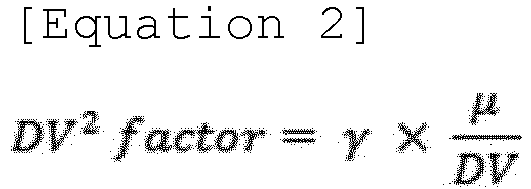
- In one embodiment of the invention, the first solvent has a DV2 factor value of 1.5 or less.
- In one embodiment of the present invention, the lithium-sulfur secondary battery has an NS factor value of 3.5 or less represented by Equation 3 below.

Equation 1, and DV2 factor is equal to the value defined byEquation 2. - In one embodiment of the present invention, the lithium-sulfur secondary battery has an ED factor value of 850 or more represented by Equation 4 below.

Equation 1 above. - In one embodiment of the invention, the first solvent is selected from the group consisting of propionitrile, dimethylacetamide, dimethylformamide, gamma-butyrolactone, triethylamine, 1-iodopropane, and combinations thereof.
- In one embodiment of the invention, the second solvent is selected from the group consisting of 1H,1H,2'H,3H-decafluorodipropyl ether,
difluoromethyl pentafluoroethyl - In one embodiment of the invention, the solvent comprises the first solvent in an amount of 1 to 50% by weight.
- In one embodiment of the invention, the solvent comprises a second solvent in an amount of 50 to 99% by weight.
- In one embodiment of the present invention, the solvent comprises the first solvent and the second solvent in a weight ratio of 3 : 7 to 1 : 9.
- The lithium-sulfur secondary battery according to the present invention has a high energy density that was difficult to implement with a conventional lithium-sulfur secondary battery, by adjusting the positive electrode and the electrolyte solution to a specific condition.
-
-
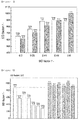
FIG. 1 is a graph showing the measured ED factor values of lithium-sulfur secondary batteries according to Examples 1 and 2 and Comparative Examples 1 to 8. -
FIG. 2 is a graph showing the measured ED factor values of lithium-sulfur secondary batteries according to Examples 1 and 3 to 7 and Comparative Examples 9 to 14. - All of the embodiments provided according to the present invention can be achieved by the following description. It is to be understood that the following description describes preferred embodiments of the present invention, and the present invention is not necessarily limited thereto.
- With respect to the physical properties described herein, when the measurement conditions and methods are not specifically described, the physical properties are measured according to the measurement conditions and methods generally used by those skilled in the art.
- The present invention provides a lithium-sulfur secondary battery comprising a positive electrode, a negative electrode, a separator, and an electrolyte solution. The lithium-sulfur secondary battery according to the present invention comprises a positive electrode having a low porosity and a high loading amount of sulfur which is a positive electrode active material. In a positive electrode, if the porosity is lowered and the content of the positive electrode active material is increased, the energy density of the battery comprising such a positive electrode is increased. However, in a lithium-sulfur secondary battery, if the porosity of the positive electrode is reduced to the minimum and the content of sulfur is increased to the maximum, since the proportion of electrolyte solution per unit sulfur content is reduced, when applying the positive electrode to a lithium-sulfur secondary battery, it is difficult to achieve a target performance. The present invention is to provide a lithium-sulfur secondary battery having a higher energy density than the existing lithium-sulfur secondary battery at the time of implementation, by defining the conditions related to sulfur in the positive electrode and specifying an appropriate electrolyte solution condition thereto.
- In the present invention, the positive electrode is not particularly limited, but may be an electrode having a positive electrode active material layer formed on one side of a current collector. If the positive electrode is an electrode having a positive electrode active material layer formed on one side of a current collector, the positive electrode may be prepared by applying a slurry of a positive electrode active material containing a positive electrode active material on one side of a current collector and then drying the slurry. In this case, the slurry may further comprise additives such as binders and electrically conductive materials, fillers, and dispersants in addition to the positive electrode active material.
- The positive electrode active material may comprise elemental sulfur (S8), sulfur-based compounds, or mixtures thereof. The sulfur-based compound may specifically be Li2Sn (n≥1), an organic sulfur compound or a carbon-sulfur polymer ((C2Sx)n: x=2.5 ∼ 50, n≥2). Since there sulfur material alone does not have electrical conductivity, it is applied in combination with an electrically conductive material.
- The binder is a component that assists in bonding between the positive electrode active material and the electrically conductive material and bonding to the current collector, and may typically be added in an amount of 1 wt.% to 30 wt.% based on the total amount of the slurry of the positive electrode active material. The binder is not particularly limited, but may be, for example, at least one selected from the group consisting of polyvinylidene fluoride-hexafluoropropylene (PVDF-co-HFP), polyvinylidene fluoride, polyacrylonitrile, polymethyl methacrylate, polyvinyl alcohol, carboxymethylcellulose (CMC), starch, hydroxypropyl cellulose, regenerated cellulose, polyvinyl pyrrolidone, tetrafluoroethylene, polyethylene, polypropylene, polyacrylic acid, ethylene-propylene-diene monomer (EPDM), sulfonated-EPDM, styrene-butadiene rubber (SBR), fluorine rubber, and the mixture of two or more thereof.
- The electrically conductive material is not particularly limited, but may be, for example, graphites such as natural graphite or artificial graphite; carbon blacks such as carbon black (super-p), acetylene black, Ketjen black, channel black, furnace black, lamp black, thermal black, and Denka black; electrically conductive fibers such as carbon fiber or metal fiber; metal powders such as carbon fluoride, aluminum, and nickel powder; electrically conductive whiskers such as zinc oxide and potassium titanate; electrically conductive metal oxides such as titanium oxide; or electrically conductive materials such as polyphenylene derivatives. The electrically conductive material may typically be present in an amount of 0.05 wt.% to 5 wt.% based on the total weight of the slurry of the positive electrode active material.
- The filler is a component for inhibiting the expansion of a positive electrode. The filler may be used or not, depending on necessity, and is not particularly limited as long as it is a fibrous material without causing chemical changes in the battery, and examples thereof may include olefinic polymers such as polyethylene and polypropylene; fibrous materials such as glass fibers and carbon fibers.
- The dispersing agent (dispersion) is not particularly limited, but may be, for example, isopropyl alcohol, N-methylpyrrolidone (NMP), acetone and the like.
- The coating can be performed by a method commonly known in the art, but can be performed, for example, by distributing a slurry of positive electrode active material on one side of the positive electrode current collector and then uniformly dispersing the slurry using a doctor blade or the like. In addition, the coating can be performed by a method such as die casting, comma coating, screen printing and the like.
- The drying is not particularly limited, but may be performed within one day in a vacuum oven at 50°C to 200°C.
- The positive electrodes of the present invention manufactured by the above-described materials and methods are distinguished by SC factor values represented by
Equation 1 below.
- In the present invention, the negative electrode comprises a negative electrode current collector, and a negative electrode active material layer formed on the negative electrode current collector.
- The negative electrode active material layer includes a negative electrode active material, a binder, and an electrically conductive material. The negative electrode active material may comprise a material capable of reversibly intercalating or de-intercalating lithium ion (Li+), a material capable of reacting with lithium ion to reversibly form lithium containing compounds, lithium metal, or lithium alloy. The material capable of reversibly intercalating or de-intercalating lithium ion (Li+) can be, for example, crystalline carbon, amorphous carbon, or a mixture thereof. The material capable of reacting with lithium ion (Li+) to reversibly form lithium containing compounds may be, for example, tin oxide, titanium nitrate, or silicon. The lithium alloy may be, for example, an alloy of lithium (Li) and a metal selected from the group consisting of sodium (Na), potassium (K), rubidium (Rb), cesium (Cs), francium (Fr), beryllium (Be), magnesium (Mg), calcium (Ca), strontium (Sr), barium (Ba), radium (Ra), aluminum (Al), and tin (Sn).
- The binder is not limited to the binder described above, and any binder can be used as long as it can be used as a binder in the art.
- Except for the negative electrode active material and the electrically conductive material, the current collector, etc. may be configured by the materials and methods used in the positive electrode described above.
- In the present invention, the separator is a physical separator having a function of physically separating an electrode, which can be used without any particular limitations as long as it is used as a conventional separator. The separator is particularly preferable as long as it has excellent ability to impregnate the electrolyte solution while exhibiting a low resistance to the movement of ions in the electrolyte solution.
- In addition, the separator enables the lithium ion to be transported between the positive electrode and the negative electrode while separating or insulating the positive electrode and the negative electrode from each other. The separator may be made of a porous, nonconductive or insulating material having a porosity of 30 to 50%.
- Specifically, a porous polymer film, for example, a porous polymer film made of a polyolefin-based polymer such as ethylene homopolymer, propylene homopolymer, ethylene/butene copolymer, ethylene/hexene copolymer, ethylene/methacrylate copolymer, etc. may be used, and a nonwoven fabric made of glass fiber having high melting point or the like can be used. Among them, the porous polymer film is preferably used.
- If the polymer film is used for both the buffer layer and the separator, the impregnation amount and ion conduction characteristics of the electrolyte solution are decreased and the effect of reducing the overvoltage and improving the capacity characteristics becomes insignificant. On the contrary, if the nonwoven fabric material is used for both the buffer layer and the separator, a mechanical stiffness cannot be ensured and thus a problem of short circuit of the battery occurs. However, if a film-type separator and a polymer nonwoven fabric buffer layer are used together, the mechanical strength can also be ensured together with the effect of improving the performance of the battery due to the adoption of the buffer layer.
- According to one preferred embodiment of the present invention, the ethylene homopolymer (polyethylene) polymer film is used as a separator, and the polyimide nonwoven fabric is used as a buffer layer. In that case, the polyethylene polymer film preferably has a thickness of 10 to 25 µm and a porosity of 40 to 50%.
- In the present invention, the electrolyte solution is a non-aqueous electrolyte solution containing a lithium salt, which is composed of a lithium salt and a solvent. The electrolyte solution has a density of less than 1.5 g/cm3. If the electrolyte solution has a density of 1.5 g/cm3 or more, it is difficult to realize a high energy density of a lithium-sulfur secondary battery due to an increase in the weight of the electrolyte solution.
- The lithium salt is a substance which can be easily dissolved in a non-aqueous organic solvent, and may be, for example, at least one selected from the group consisting of LiCl, LiBr, LiI, LiClO4, LiBF4, LiB10Cl10, LiB(Ph)4, LiC4BO8, LiPF6, LiCF3SO3, LiCF3CO2, LiAsF6, LiSbF6, LiAlCl4, LiSO3CH3, LiSO3CF3, LiSCN, LiC(CF3SO2)3, LiN(CF3SO2)2, LiN(C2F5SO2)2, LiN(SO2F)2, lithium chloroborane, lithium lower aliphatic carboxylate, lithium tetraphenyl borate, and lithium imide. In one embodiment of the present invention, the lithium salt may preferably be lithium imide such as LiTFSI.
- The concentration of the lithium salt may be 0.1 to 8.0 M, preferably 0.5 to 5.0 M, more preferably 1.0 to 3.0 M depending on various factors such as the exact composition of the electrolyte solution mixture, the solubility of the salt, the conductivity of the dissolved salt, the charge and discharge conditions of the battery, the operating temperature and other factors known in the lithium secondary battery field. If the concentration of the lithium salt is less than the above range, the conductivity of the electrolyte solution may be lowered and thus the performance of the battery may be deteriorated. If the concentration of the lithium salt exceeds the above range, the viscosity of the electrolyte solution may increase and thus the mobility of the lithium ion (Li+) may be reduced. Accordingly, it is preferable to select an appropriate concentration of the lithium salt within the above range.
- The solvent comprises a first solvent and a second solvent. The first solvent is one having the highest dipole moment per unit volume of the components contained in the solvent in an amount of at least 1% by weight, and thus it is characterized by having a high dipole moment and a low viscosity. When a solvent having a high dipole moment is used, an effect of improving the solid phase reactivity of sulfur is shown, which can be expressed well when the solvent itself has a low viscosity. In the present invention, the first solvent is distinguished by the DV2 factor represented by
Equation 2 below.
- In the present invention, if the first solvent has a DV2 factor value in the above-described range, its kind is not particularly limited, but may be selected from the group consisting of propionitrile, dimethylacetamide, dimethylformamide, gamma-butyrolactone, triethylamine, 1-iodopropane, and combinations thereof. According to an embodiment of the present invention, the first solvent may be contained in an amount of 1 to 50% by weight, preferably 5 to 40% by weight, more preferably 10 to 30% by weight, based on the solvent constituting the electrolyte solution. If the solvent according to the present invention comprises the first solvent within the above-described range by weight percentage, the effect of improving the performance of the battery can be achieved even when used with the positive electrode having a low porosity and a high loading amount of sulfur which is a positive electrode active material.
- The lithium-sulfur secondary battery of the present invention may be further distinguished by an NS factor obtained by combining the SC factor and the DV2 factor. The NS factor is represented by Equation 3 below.

Equation 1 above, and DV2 factor is equal to the value defined byEquation 2 above. According to an embodiment of the present invention, the NS factor value may be 3.5 or less, preferably 3.0 or less, and more preferably 2.7 or less. In the present invention, the lower limit of the NS factor value is not particularly limited, but considering the actual embodiment of the lithium-sulfur secondary battery, the NS factor value may be 0.1 or more. When the NS factor value is adjusted into the above range, the effect of improving the performance of the lithium-sulfur secondary battery may be more excellent. - In the present invention, the second solvent is a fluorinated ether-based solvent. Conventionally, in order to control the viscosity of the electrolyte solution, a solvent such as dimethoxyethane, dimethylcarbonate, and the like is used as diluent. If such a solvent is used as a diluent, a battery comprising a high loading, low porosity positive electrode as in the present invention cannot be driven. Therefore, in the present invention, the second solvent is added together with the first solvent to drive the positive electrode according to the present invention. If the second solvent is a fluorinated ether-based solvent generally used in the art, its kind is not particularly limited, but may be selected from the group consisting of 1H,1H,2'H,3H-decafluorodipropyl ether,
difluoromethyl pentafluoroethyl - The nonaqueous electrolyte solution for the lithium-sulfur battery of the present invention may further contain nitric acid or a nitrous acid-based compound as an additive. The nitric acid or a nitrous acid-based compound has the effect of forming a stable film on the lithium electrode and improving the charging/discharging efficiency. The nitric acid or nitrous acid-based compound is not particularly limited in the present invention, but may be at least one selected from the group consisting of inorganic nitric acid or nitrous acid-based compounds such as lithium nitrate (LiNO3), potassium nitrate (KNO3), cesium nitrate (CsNO3), barium nitrate (Ba(NO3)2), ammonium nitrate (NH4NO3), lithium nitrite (LiNO2), potassium nitrite (KNO2), cesium nitrite (CsNO2), ammonium nitrite (NH4NO2) ; organic nitric acid or nitrous acid-based compounds such as methyl nitrate, dialkyl imidazolium nitrate, guanidine nitrate, imidazolium nitrate, pyridinium nitrate, ethyl nitrite, propyl nitrite, butyl nitrite, pentyl nitrite, octyl nitrite; organic nitro compounds such as nitromethane, nitropropane, nitrobutane, nitrobenzene, dinitrobenzene, nitropyridine, dinitropyridine, nitrotoluene, dinitrotoluene, and combinations thereof, and preferably may be lithium nitrate.
- In addition, the non-aqueous electrolyte solution may further comprise other additives for the purpose of improving charging/discharging characteristics, flame retardancy, and the like. Examples of the additives may be pyridine, triethylphosphite, triethanolamine, cyclic ether, ethylene diamine, n-glyme, hexaphosphoric triamide, nitrobenzene derivatives, sulfur, quinone imine dyes, N-substituted oxazolidinone, N,N-substituted imidazolidine, ethylene glycol dialkyl ether, ammonium salt, pyrrole, 2-methoxy ethanol, aluminum trichloride, fluoroethylene carbonate (FEC), propene sultone (PRS), vinylene carbonate (VC) and the like.
- The lithium-sulfur secondary battery of the present invention can be manufactured by disposing a separator between a positive electrode and a negative electrode to form an electrode assembly and inserting the electrode assembly into a cylindrical battery case or a rectangular battery case, and then injecting an electrolyte. Alternatively, the lithium-sulfur secondary battery of the present invention can be manufactured by laminating the electrode assembly, impregnating the electrode assembly with the electrolyte, putting the obtained result into a battery case and then sealing it.
- The lithium-sulfur secondary battery according to the present invention is distinguished by an ED factor value represented by Equation 4 below.

Equation 1 above. The higher the ED factor is, the higher the energy density of the lithium-sulfur secondary battery can be actually implemented. According to an embodiment of the present invention, the ED factor value may be 850 or more, preferably 870 or more, more preferably 891 or more. In the present invention, the upper limit of the ED factor value is not particularly limited, but considering the actual embodiment of the lithium-sulfur secondary battery, the ED factor value may be 10,000 or less. The range of the ED factor value means that the lithium-sulfur secondary battery according to the present invention can implement an improved energy density than the conventional lithium-sulfur secondary battery. - Hereinafter, preferred examples are provided to assist in understanding the present invention, but the following examples are provided only for better understanding of the present invention, and the present invention is not limited thereto.
- Sulfur, Super-P (SP), an electrically conductive material and a binder were mixed by a ball mill to prepare a composition for forming a positive electrode active material layer, while using water as a solvent. In this case, Denka black was used as the conductive material, and a mixed binder of SBR and CMC was used as the binder, and the mixing ratio of sulfur and SP (9 : 1 ratio): conductive material: binder was 90 : 10 : 10 by weight. The prepared composition for forming the positive electrode active material layer was applied to an aluminum current collector and then dried to prepare a positive electrode (energy density of positive electrode: 6.18 mAh/cm2). The porosity of the positive electrode active material layer calculated by measuring electrode weight and electrode thickness (using TESA-µHITE equipment from TESA company) on the prepared positive electrode was 74%. The mass of sulfur per unit area of the positive electrode active material layer was 3.75mg/cm2. The SC factor value calculated on the basis of these values was 0.50.
- After the positive electrode prepared by the above-described method and the negative electrode was positioned to face, a polyethylene separator having a thickness of 20 µm and a porosity of 45% was interposed between the positive electrode and the negative electrode.
- Thereafter, an electrolyte solution was injected into the case to manufacture a lithium-sulfur secondary battery. The electrolyte solution was prepared by dissolving lithium bis (trifluoromethyl sulfonyl) imide (LiTFSI) in an organic solvent at a concentration of 3M. The organic solvent was a solvent obtained by mixing propionitrile (first solvent) and 1H, 1H, 2'H, 3H-decafluorodipropyl ether (second solvent) in a weight ratio of 3 : 7. The dipole moment per unit volume in the first solvent was 97.1 D·mol/L, and the viscosity (25 °C) of the solvent measured using an LVDV2T-CP viscometer from BROOKFIELD AMETEK company was 0.38 cP. The DV2 factor calculated on the basis of these values was 0.39.
- A lithium-sulfur secondary battery was manufactured in the same manner as in Example 1, except that by changing the preparation condition of the positive electrode, a positive electrode was prepared in such a manner so that the porosity of the positive electrode active material layer is 74%, the mass of sulfur per unit area of the positive electrode active material layer is 3.33 mg/cm2, and the SC factor value calculated on the basis of these values is 0.45.
- A lithium-sulfur secondary battery was manufactured in the same manner as in Example 1, except that by changing the preparation condition of the positive electrode, a positive electrode was prepared in such a manner so that the porosity of the positive electrode active material layer is 78%, the mass of sulfur per unit area of the positive electrode active material layer is 2.33 mg/cm2, and the SC factor value calculated on the basis of these values is 0.30.
- A lithium-sulfur secondary battery was manufactured in the same manner as in Example 1, except that by changing the preparation condition of the positive electrode, a positive electrode was prepared in such a manner so that the porosity of the positive electrode active material layer is 76%, the mass of sulfur per unit area of the positive electrode active material layer is 2.67 mg/cm2, and the SC factor value calculated on the basis of these values is 0.35.
- A lithium-sulfur secondary battery was manufactured in the same manner as in Example 1, except that by changing the preparation condition of the positive electrode, a positive electrode was prepared in such a manner so that the porosity of the positive electrode active material layer is 75%, the mass of sulfur per unit area of the positive electrode active material layer is 3.1 mg/cm2, and the SC factor value calculated based on this is 0.41.
- A lithium-sulfur secondary battery was manufactured in the same manner as in Example 1, except that by changing the preparation condition of the electrolyte solution, an electrolyte solution prepared by dissolving lithium bis (trifluoromethyl sulfonyl) imide (LiTFSI) of 1 M concentration and 1 wt.% of LiNO3 in an organic solvent prepared by mixing 1,3-dioxolane and dimethyl ether in a volume ratio of 1 : 1 was used.
- A lithium-sulfur secondary battery was manufactured in the same manner as in Example 2, except that by changing the preparation condition of the electrolyte solution, an electrolyte solution prepared by dissolving lithium bis (trifluoromethyl sulfonyl) imide (LiTFSI) of 1 M concentration and 1 wt.% of LiNO3 in an organic solvent prepared by mixing 1,3-dioxolane and dimethyl ether in a volume ratio of 1 : 1 was used.
- A lithium-sulfur secondary battery was manufactured in the same manner as in Comparative Example 1, except that by changing the preparation condition of the electrolyte solution, an electrolyte solution prepared by dissolving lithium bis (trifluoromethyl sulfonyl) imide (LiTFSI) of 1 M concentration and 1 wt.% of LiNO3 in an organic solvent prepared by mixing 1,3-dioxolane and dimethyl ether in a volume ratio of 1 : 1 was used.
- A lithium-sulfur secondary battery was manufactured in the same manner as in Comparative Example 2, except that by changing the preparation condition of the electrolyte solution, an electrolyte solution prepared by dissolving lithium bis (trifluoromethyl sulfonyl) imide (LiTFSI) of 1 M concentration and 1 wt.% of LiNO3 in an organic solvent prepared by mixing 1,3-dioxolane and dimethyl ether in a volume ratio of 1 : 1 was used.
- A lithium-sulfur secondary battery was manufactured in the same manner as in Comparative Example 3, except that by changing the preparation condition of the electrolyte solution, an electrolyte solution prepared by dissolving lithium bis (trifluoromethyl sulfonyl) imide (LiTFSI) of 1 M concentration and 1 wt.% of LiNO3 in an organic solvent prepared by mixing 1,3-dioxolane and dimethyl ether in a volume ratio of 1 : 1 was used.
- The conditions of Examples 1 and 2 and Comparative Examples 1 to 8 are summarized in Table 1 below.
Table 1: Composition of electrolyte solution SC factor Example 1 Composition of the first electrolyte 0.50 Example 2 0.45 Comparative Example 1 solution1) 0.30 Comparative Example 2 0.35 Comparative Example 3 0.41 Comparative Example 4 Composition of the second electrolyte solution2) 0.50 Comparative Example 5 0.45 Comparative Example 6 0.30 Comparative Example 7 0.35 Comparative Example 8 0.41 1) Composition of the first electrolyte solution = propionitrile : 1H,1H,2'H,3H-decafluorodipropyl ether (3 : 7, w/w) solvent, 3.0M LiTFSI 2) Composition of the second electrolyte solution = 1,3-dioxolan : dimethyl ether (1 : 1, v/v) solvent, 1.0M LiTFSI, 1.0 wt% LiNO3 - A lithium-sulfur secondary battery was manufactured in the same manner as in Example 1, except that by changing the preparation condition of the electrolyte solution, dimethylacetamide instead of propionitrile was used as the first solvent, which has a dipole moment per unit volume of 59.29 D·mol/L, a solvent viscosity (25 °C) of 0.61 cP, and a DV2 factor value of 1.02 calculated on the basis of these values.
- A lithium-sulfur secondary battery was manufactured in the same manner as in Example 1, except that by changing the preparation condition of the electrolyte solution, dimethylformamide instead of propionitrile was used as the first solvent, which has a dipole moment per unit volume of 71.04 D·mol/L, a solvent viscosity (25 °C) of 0.51 cP, and a DV2 factor value of 0.71 calculated on the basis of these values.
- A lithium-sulfur secondary battery was manufactured in the same manner as in Example 1, except that by changing the preparation condition of the electrolyte solution, gamma-butyrolactone instead of propionitrile was used as the first solvent, which has a dipole moment per unit volume of 84.91 D·mol/L, a solvent viscosity (25 °C) of 1.03 cP, and a DV2 factor value of 1.21 calculated on the basis of these values.
- A lithium-sulfur secondary battery was manufactured in the same manner as in Example 1, except that by changing the preparation condition of the electrolyte solution, triethylamine instead of propionitrile was used as the first solvent, which has a dipole moment per unit volume of 136.8 D·mol/L, a solvent viscosity (25 °C) of 0.42 cP, and a DV2 factor value of 0.31 calculated on the basis of these values.
- A lithium-sulfur secondary battery was manufactured in the same manner as in Example 1, except that by changing the preparation condition of the electrolyte solution, 1-iodopropane instead of propionitrile was used as the first solvent, which has a dipole moment per unit volume of 32.42 D·mol/L, a solvent viscosity (25 °C) of 0.45 cP, and a DV2 factor value of 1.40 calculated on the basis of these values.
- A lithium-sulfur secondary battery was manufactured in the same manner as in Example 1, except that by changing the preparation condition of the electrolyte solution, 1,3-dioxolane instead of propionitrile was used as the first solvent, which has a dipole moment per unit volume of 33.66 D·mol/L, a solvent viscosity (25 °C) of 0.7 cP, and a DV2 factor value of 2.07 calculated on the basis of these values.
- A lithium-sulfur secondary battery was manufactured in the same manner as in Example 1, except that by changing the preparation condition of the electrolyte solution, 1,2-dimethoxyethane instead of propionitrile was used as the first solvent, which has a dipole moment per unit volume of 20.54 D·mol/L, a solvent viscosity (25 °C) of 0.48 cP, and a DV2 factor value of 2.33 calculated on the basis of these values.
- A lithium-sulfur secondary battery was manufactured in the same manner as in Example 1, except that by changing the preparation condition of the electrolyte solution, tetrahydrofuran instead of propionitrile was used as the first solvent, which has a dipole moment per unit volume of 25.79 D·mol/L, a solvent viscosity (25 °C) of 0.58 cP, and a DV2 factor value of 2.24 calculated on the basis of these values.
- A lithium-sulfur secondary battery was manufactured in the same manner as in Example 1, except that by changing the preparation condition of the electrolyte solution, dimethyl sulfoxide instead of propionitrile was used as the first solvent, which has a dipole moment per unit volume of 59.43 D·mol/L, a solvent viscosity (25 °C) of 1.16 cP, and a DV2 factor value of 1.95 calculated on the basis of these values.
- A lithium-sulfur secondary battery was manufactured in the same manner as in Example 1, except that by changing the preparation condition of the electrolyte solution, propylene carbonate instead of propionitrile was used as the first solvent, which has a dipole moment per unit volume of 96.13 D·mol/L, a solvent viscosity (25 °C) of 1.71 cP, and a DV2 factor value of 1.77 calculated on the basis of these values.
- A lithium-sulfur secondary battery was manufactured in the same manner as in Example 1, except that by changing the preparation condition of the electrolyte solution, dimethyl carbonate instead of propionitrile was used as the first solvent, which has a dipole moment per unit volume of 5.74 D·mol/L, a solvent viscosity (25 °C) of 0.57 cP, and a DV2 factor value of 9.93 calculated on the basis of these values.
- The conditions of Examples 1 and 3 to 7 and Comparative Examples 9 to 14 are summarized in Table 2 below. NS factor values were calculated and shown in Table 2 below.
Table 2: First solution DV2 factor NS factor Example 1 Propionitrile 0.39 0.78 Example 3 Dimethylacetamide 1.02 2.04 Example 4 Dimethylformamide 0.71 1.42 Example 5 Gamma-Butyrolactone 1.21 2.42 Example 6 Triethylamine 0.31 0.62 Example 7 1-iodopropane 1.40 2.80 Comparative Example 9 1,3-Dioxolane 2.07 4.14 Comparative Example 10 1,2-Dimethoxyethane 2.33 4.66 Comparative Example 11 Tetrahydrofuran 2.24 4.48 Comparative Example 12 Dimethyl sulfoxide 1.95 3.90 Comparative Example 13 Propylene carbonate 1.77 3.54 Comparative Example 14 Dimethyl carbonate 9.93 19.86 - The ED factor values of lithium-sulfur secondary batteries according to Examples 1 and 2 and Comparative Examples 1 to 8 were measured and shown in Table 3 and
FIG. 1 .Table 3: Composition of electrolyte solution SC factor ED factor Example 1 Composition of the first electrolyte solution1) 0.50 1004.6 Example 2 0.45 893.0 Comparative Example 1 0.30 593.1 Comparative Example 2 0.35 695.6 Comparative Example 3 0.41 819.4 Comparative Example 4 Composition of the second electrolyte solution2) 0.50 877.9 Comparative Example 5 0.45 890.8 Comparative Example 6 0.30 654.4 Comparative Example 7 0.35 761.4 Comparative Example 8 0.41 882.5 1) Composition of the first electrolyte solution = propionitrile : 1H,1H,2'H,3H-decafluorodipropyl ether (3 : 7, w/w) solvent, 3.0M LiTFSI 2) Composition of the second electrolyte solution = 1,3-dioxolan : dimethyl ether (1 : 1, v/v) solvent, 1.0M LiTFSI, 1.0 wt% LiNO3 - According to Table 3 and
FIG. 1 , the lithium-sulfur secondary batteries according to Examples 1 and 2 may have an ED factor value of 891 or more which cannot be implemented by the lithium-sulfur secondary battery having the composition of the second electrolyte solution or an SC factor of 0.41 or less. This means that the lithium-sulfur secondary battery according to the present invention can implement a higher energy density that could not be realized in the conventional lithium-sulfur secondary battery. - The ED factor values of lithium-sulfur secondary batteries according to Examples 1 and 3 to 7 and Comparative Examples 9 to 14 were measured and shown in Table 4 and
FIG. 2 .Table 4: First solvent DV2 factor NS factor ED factor Example 1 Propionitrile 0.39 0.78 1004.6 Example 3 Dimethylacetamide 1.02 2.04 939.4 Example 4 Dimethylformamide 0.71 1.42 968.8 Example 5 Gamma-Butyrolactone 1.21 2.42 924.7 Example 6 Triethylamine 0.31 0.62 1019.5 Example 7 1-iodopropane 1.40 2.80 917.4 Comparative Example 9 1,3-Dioxolane 2.07 4.14 567.6 Comparative Example 10 1,2-Dimethoxyethane 2.33 4.66 667.0 Comparative Example 11 Tetrahydrofuran 2.24 4.48 580.5 Comparative Example 12 Dimethyl sulfoxide 1.95 3.90 376.0 Comparative Example 13 Propylene carbonate 1.77 3.54 352.4 Comparative Example 14 Dimethyl carbonate 9.93 19.86 287.6 - Referring to Table 4 and
FIG. 2 , when sulfur is heavily loaded with an SC factor of 0.5, the energy density of the lithium-sulfur secondary battery can be remarkably improved at the DV2 factor of 1.75 or less or the NS factor of 3.50 or less, as in Examples 1 and 3 to 7. - All of the simple modifications and variations of the present invention fall within the scope of the present invention, and the specific scope of protection of the present invention will be apparent from the appended claims.
Claims (10)
- A lithium-sulfur secondary battery comprising a positive electrode, a negative electrode, a separator, and an electrolyte solution, wherein the positive electrode has an SC factor value of 0.45 or more represented by Equation 1 below:

- The lithium-sulfur secondary battery according to claim 1, wherein the electrolyte solution comprises a solvent and a lithium salt, and the solvent includes a first solvent having a DV2 factor value of 1.75 or less represented by Equation 2 below and a second solvent which is a fluorinated ether-based solvent.

- The lithium-sulfur secondary battery according to claim 2, wherein the first solvent has a DV2 factor value of 1.5 or less.
- The lithium-sulfur secondary battery according to claim 2, wherein the lithium-sulfur secondary battery has an NS factor value of 3.5 or less represented by Equation 3 below:

- The lithium-sulfur secondary battery according to claim 1, wherein the lithium-sulfur secondary battery has an ED factor value of 850 or more represented by Equation 4 below:

- The lithium-sulfur secondary battery according to claim 2, wherein the first solvent is selected from the group consisting of propionitrile, dimethylacetamide, dimethylformamide, gamma-butyrolactone, triethylamine, 1-iodopropane, and combinations thereof.
- The lithium-sulfur secondary battery according to claim 2, wherein the second solvent is selected from the group consisting of 1H,1H,2'H,3H-decafluorodipropyl ether, difluoromethyl 2,2,2-trifluoroethyl ether, 1,2,2,2-tetrafluoroethyl trifluoromethyl ether, 1,1,2,3,3,3-hexafluoropropyl difluoromethyl ether, 1H,1H,2'H,3H-decafluorodipropyl ether, pentafluoroethyl 2,2,2-trifluoroethyl ether, 1H,1H,2'H-perfluorodipropyl ether, and combinations thereof.
- The lithium-sulfur secondary battery according to claim 2, wherein the solvent contains the first solvent in an amount of 1 to 50% by weight.
- The lithium-sulfur secondary battery according to claim 2, wherein the solvent contains the second solvent in an amount of 50 to 99% by weight.
- The lithium-sulfur secondary battery according to claim 2, wherein the solvent comprises the first solvent and the second solvent in a weight ratio of 3 : 7 to 1 : 9.
Applications Claiming Priority (3)
| Application Number | Priority Date | Filing Date | Title |
|---|---|---|---|
| KR20180128729 | 2018-10-26 | ||
| KR1020190131538A KR102829147B1 (en) | 2018-10-26 | 2019-10-22 | Lithium-sulfur secondary battery |
| PCT/KR2019/014039 WO2020085811A1 (en) | 2018-10-26 | 2019-10-24 | Lithium-sulfur secondary battery |
Publications (3)
| Publication Number | Publication Date |
|---|---|
| EP3751640A1 true EP3751640A1 (en) | 2020-12-16 |
| EP3751640A4 EP3751640A4 (en) | 2021-06-16 |
| EP3751640B1 EP3751640B1 (en) | 2025-07-16 |
Family
ID=70733918
Family Applications (1)
| Application Number | Title | Priority Date | Filing Date |
|---|---|---|---|
| EP19874836.0A Active EP3751640B1 (en) | 2018-10-26 | 2019-10-24 | Lithium-sulfur secondary battery |
Country Status (8)
| Country | Link |
|---|---|
| US (1) | US12255331B2 (en) |
| EP (1) | EP3751640B1 (en) |
| JP (1) | JP7065990B2 (en) |
| KR (1) | KR102829147B1 (en) |
| CN (2) | CN120413750A (en) |
| ES (1) | ES3040373T3 (en) |
| HU (1) | HUE072742T2 (en) |
| PL (1) | PL3751640T3 (en) |
Cited By (2)
| Publication number | Priority date | Publication date | Assignee | Title |
|---|---|---|---|---|
| EP3863089A4 (en) * | 2019-01-16 | 2021-12-15 | LG Chem, Ltd. | LITHIUM ACCUMULATOR |
| US12087941B2 (en) | 2019-01-16 | 2024-09-10 | Lg Energy Solution, Ltd. | Lithium secondary battery |
Families Citing this family (4)
| Publication number | Priority date | Publication date | Assignee | Title |
|---|---|---|---|---|
| WO2018064365A1 (en) | 2016-09-28 | 2018-04-05 | Sepion Technologies, Inc. | Electrochemical cells with ionic sequestration provided by porous separators |
| US12021224B2 (en) * | 2018-11-22 | 2024-06-25 | Lg Energy Solution, Ltd. | Lithium-sulfur secondary battery |
| WO2022092700A1 (en) * | 2020-10-29 | 2022-05-05 | 주식회사 엘지에너지솔루션 | Lithium-sulfur secondary battery comprising electrolyte containing borate-based lithium salt |
| EP4595143A1 (en) * | 2022-09-27 | 2025-08-06 | Sepion Technologies, Inc. | Ternary solvent electrolytes for high voltage and high rate lithium batteries |
Family Cites Families (19)
| Publication number | Priority date | Publication date | Assignee | Title |
|---|---|---|---|---|
| CN100370641C (en) | 2001-12-21 | 2008-02-20 | 三洋电机株式会社 | Nonaqueous electrolyte secondary battery |
| KR20150088913A (en) | 2011-03-24 | 2015-08-03 | 닛본 덴끼 가부시끼가이샤 | Secondary battery |
| JP5848545B2 (en) | 2011-08-08 | 2016-01-27 | 三星エスディアイ株式会社Samsung SDI Co.,Ltd. | Secondary battery separator layer and secondary battery |
| US20130040185A1 (en) | 2011-08-08 | 2013-02-14 | Hironari Takase | Separator for rechargeable lithium battery, and electrode structure and rechargeable lithium battery including the same |
| CN104080780B (en) | 2011-11-30 | 2018-04-13 | 索尔维公司 | Derivative, its preparation method and its purposes as solvent additive of the meldrum's acid of fluorination |
| US9748572B2 (en) | 2012-06-18 | 2017-08-29 | Uchicago Argonne, Llc | Ultrasound assisted in-situ formation of carbon/sulfur cathodes |
| WO2015083314A1 (en) | 2013-12-03 | 2015-06-11 | 株式会社アルバック | Lithium sulfur secondary battery |
| PL3132483T3 (en) | 2014-04-15 | 2019-07-31 | Uchicago Argonne, Llc | Lithium-sulfur batteries |
| US20170125171A1 (en) | 2014-04-23 | 2017-05-04 | Lg Chem, Ltd. | Organic-inorganic hybrid solar cell |
| JP6658512B2 (en) | 2014-05-02 | 2020-03-04 | 株式会社村田製作所 | Electrolyte, battery, battery pack, electronic device, electric vehicle, power storage device, and power system |
| JP6450395B2 (en) * | 2014-10-23 | 2019-01-09 | 国立大学法人 東京大学 | Electrolyte |
| KR102050836B1 (en) | 2015-12-08 | 2019-12-03 | 주식회사 엘지화학 | Electrolye for lithium secondary battery and lithium secondary battery comprising the same |
| WO2017099420A1 (en) * | 2015-12-08 | 2017-06-15 | 주식회사 엘지화학 | Electrolyte for lithium secondary battery and lithium secondary battery comprising same |
| KR102050837B1 (en) | 2016-02-03 | 2019-12-03 | 주식회사 엘지화학 | Electrolyte for lithium-sulfur battery and lithium-sulfur battery comprising thereof |
| JP6821880B2 (en) | 2016-03-30 | 2021-01-27 | 三菱ケミカル株式会社 | Non-aqueous electrolyte and power storage device using lithium salt and its mixture |
| KR102050838B1 (en) | 2016-04-22 | 2019-12-03 | 주식회사 엘지화학 | Electrolyte for lithium-sulfur battery and lithium-sulfur battery comprising thereof |
| KR102006720B1 (en) | 2016-05-02 | 2019-08-02 | 주식회사 엘지화학 | Electrolyte Containing Polydopamine, And Lithium Sulfur Batteries Comprising The Same |
| JP2019527454A (en) | 2016-07-04 | 2019-09-26 | フンダシオン シデテック | Sulfide / polysulfide ionic liquid electrolyte for lithium-sulfur batteries |
| US10224571B2 (en) | 2016-09-01 | 2019-03-05 | GM Global Technology Operations LLC | Fluorinated ether as electrolyte co-solvent for lithium metal based anode |
-
2019
- 2019-10-22 KR KR1020190131538A patent/KR102829147B1/en active Active
- 2019-10-24 CN CN202510426263.7A patent/CN120413750A/en active Pending
- 2019-10-24 PL PL19874836.0T patent/PL3751640T3/en unknown
- 2019-10-24 HU HUE19874836A patent/HUE072742T2/en unknown
- 2019-10-24 CN CN201980018365.8A patent/CN111837260A/en active Pending
- 2019-10-24 EP EP19874836.0A patent/EP3751640B1/en active Active
- 2019-10-24 JP JP2020545656A patent/JP7065990B2/en active Active
- 2019-10-24 US US16/971,177 patent/US12255331B2/en active Active
- 2019-10-24 ES ES19874836T patent/ES3040373T3/en active Active
Cited By (2)
| Publication number | Priority date | Publication date | Assignee | Title |
|---|---|---|---|---|
| EP3863089A4 (en) * | 2019-01-16 | 2021-12-15 | LG Chem, Ltd. | LITHIUM ACCUMULATOR |
| US12087941B2 (en) | 2019-01-16 | 2024-09-10 | Lg Energy Solution, Ltd. | Lithium secondary battery |
Also Published As
| Publication number | Publication date |
|---|---|
| PL3751640T3 (en) | 2025-10-13 |
| KR102829147B1 (en) | 2025-07-03 |
| EP3751640B1 (en) | 2025-07-16 |
| EP3751640A4 (en) | 2021-06-16 |
| US12255331B2 (en) | 2025-03-18 |
| HUE072742T2 (en) | 2025-12-28 |
| ES3040373T3 (en) | 2025-10-30 |
| CN111837260A (en) | 2020-10-27 |
| JP7065990B2 (en) | 2022-05-12 |
| KR20200047365A (en) | 2020-05-07 |
| US20210104745A1 (en) | 2021-04-08 |
| CN120413750A (en) | 2025-08-01 |
| JP2021516421A (en) | 2021-07-01 |
Similar Documents
| Publication | Publication Date | Title |
|---|---|---|
| EP3751640B1 (en) | Lithium-sulfur secondary battery | |
| US12021224B2 (en) | Lithium-sulfur secondary battery | |
| KR102763145B1 (en) | Lithium-sulfur secondary battery | |
| KR102229455B1 (en) | Method for improving a lifetime of lithium-sulfur battery | |
| KR102763149B1 (en) | Lithium-sulfur secondary battery | |
| US20210399294A1 (en) | Lithium secondary battery | |
| US12573655B2 (en) | Lithium-sulfur secondary battery | |
| EP4117075B1 (en) | Lithium-sulfur secondary battery comprising cyclic carbonate-containing electrolyte | |
| KR102799570B1 (en) | Lithium-sulfur secondary battery | |
| KR102864157B1 (en) | Lithium secondary battery | |
| EP3863089B1 (en) | Lithium secondary battery | |
| KR102799569B1 (en) | Lithium-sulfur secondary battery | |
| KR102799568B1 (en) | Lithium-sulfur secondary battery | |
| EP4117073A1 (en) | Lithium-sulfur secondary battery comprising electrolyte containing s-o-based cyclic compound | |
| EP4117074B1 (en) | Lithium-sulfur secondary battery comprising electrolyte containing borate-based lithium salt | |
| KR102781566B1 (en) | Lithium secondary battery | |
| KR102160707B1 (en) | Method for improving a lifetime of lithium-sulfur battery |
Legal Events
| Date | Code | Title | Description |
|---|---|---|---|
| STAA | Information on the status of an ep patent application or granted ep patent |
Free format text: STATUS: THE INTERNATIONAL PUBLICATION HAS BEEN MADE |
|
| PUAI | Public reference made under article 153(3) epc to a published international application that has entered the european phase |
Free format text: ORIGINAL CODE: 0009012 |
|
| STAA | Information on the status of an ep patent application or granted ep patent |
Free format text: STATUS: REQUEST FOR EXAMINATION WAS MADE |
|
| 17P | Request for examination filed |
Effective date: 20200910 |
|
| AK | Designated contracting states |
Kind code of ref document: A1 Designated state(s): AL AT BE BG CH CY CZ DE DK EE ES FI FR GB GR HR HU IE IS IT LI LT LU LV MC MK MT NL NO PL PT RO RS SE SI SK SM TR |
|
| AX | Request for extension of the european patent |
Extension state: BA ME |
|
| A4 | Supplementary search report drawn up and despatched |
Effective date: 20210518 |
|
| RIC1 | Information provided on ipc code assigned before grant |
Ipc: H01M 4/13 20100101AFI20210511BHEP Ipc: H01M 10/0569 20100101ALI20210511BHEP Ipc: H01M 10/052 20100101ALI20210511BHEP Ipc: H01M 10/42 20060101ALI20210511BHEP Ipc: H01M 4/02 20060101ALI20210511BHEP Ipc: H01M 4/58 20100101ALI20210511BHEP Ipc: H01M 10/056 20100101ALI20210511BHEP Ipc: H01M 4/136 20100101ALI20210511BHEP |
|
| RAP1 | Party data changed (applicant data changed or rights of an application transferred) |
Owner name: LG ENERGY SOLUTION LTD. |
|
| DAV | Request for validation of the european patent (deleted) | ||
| DAX | Request for extension of the european patent (deleted) | ||
| RAP3 | Party data changed (applicant data changed or rights of an application transferred) |
Owner name: LG ENERGY SOLUTION, LTD. |
|
| STAA | Information on the status of an ep patent application or granted ep patent |
Free format text: STATUS: EXAMINATION IS IN PROGRESS |
|
| 17Q | First examination report despatched |
Effective date: 20240312 |
|
| GRAP | Despatch of communication of intention to grant a patent |
Free format text: ORIGINAL CODE: EPIDOSNIGR1 |
|
| STAA | Information on the status of an ep patent application or granted ep patent |
Free format text: STATUS: GRANT OF PATENT IS INTENDED |
|
| RIC1 | Information provided on ipc code assigned before grant |
Ipc: H01M 4/136 20100101ALI20250407BHEP Ipc: H01M 10/056 20100101ALI20250407BHEP Ipc: H01M 4/58 20100101ALI20250407BHEP Ipc: H01M 4/02 20060101ALI20250407BHEP Ipc: H01M 10/42 20060101ALI20250407BHEP Ipc: H01M 10/052 20100101ALI20250407BHEP Ipc: H01M 10/0569 20100101ALI20250407BHEP Ipc: H01M 4/13 20100101AFI20250407BHEP |
|
| INTG | Intention to grant announced |
Effective date: 20250507 |
|
| GRAS | Grant fee paid |
Free format text: ORIGINAL CODE: EPIDOSNIGR3 |
|
| GRAA | (expected) grant |
Free format text: ORIGINAL CODE: 0009210 |
|
| STAA | Information on the status of an ep patent application or granted ep patent |
Free format text: STATUS: THE PATENT HAS BEEN GRANTED |
|
| P01 | Opt-out of the competence of the unified patent court (upc) registered |
Free format text: CASE NUMBER: APP_25206/2025 Effective date: 20250527 |
|
| AK | Designated contracting states |
Kind code of ref document: B1 Designated state(s): AL AT BE BG CH CY CZ DE DK EE ES FI FR GB GR HR HU IE IS IT LI LT LU LV MC MK MT NL NO PL PT RO RS SE SI SK SM TR |
|
| REG | Reference to a national code |
Ref country code: GB Ref legal event code: FG4D |
|
| REG | Reference to a national code |
Ref country code: CH Ref legal event code: EP Ref country code: DE Ref legal event code: R096 Ref document number: 602019072732 Country of ref document: DE |
|
| REG | Reference to a national code |
Ref country code: IE Ref legal event code: FG4D |
|
| REG | Reference to a national code |
Ref country code: SE Ref legal event code: TRGR |
|
| PGFP | Annual fee paid to national office [announced via postgrant information from national office to epo] |
Ref country code: BE Payment date: 20250922 Year of fee payment: 7 Ref country code: GB Payment date: 20250922 Year of fee payment: 7 |
|
| PGFP | Annual fee paid to national office [announced via postgrant information from national office to epo] |
Ref country code: FR Payment date: 20250925 Year of fee payment: 7 |
|
| PGFP | Annual fee paid to national office [announced via postgrant information from national office to epo] |
Ref country code: SE Payment date: 20250923 Year of fee payment: 7 |
|
| REG | Reference to a national code |
Ref country code: ES Ref legal event code: FG2A Ref document number: 3040373 Country of ref document: ES Kind code of ref document: T3 Effective date: 20251030 |
|
| PGFP | Annual fee paid to national office [announced via postgrant information from national office to epo] |
Ref country code: HU Payment date: 20251029 Year of fee payment: 7 |
|
| REG | Reference to a national code |
Ref country code: NL Ref legal event code: MP Effective date: 20250716 |
|
| PG25 | Lapsed in a contracting state [announced via postgrant information from national office to epo] |
Ref country code: PT Free format text: LAPSE BECAUSE OF FAILURE TO SUBMIT A TRANSLATION OF THE DESCRIPTION OR TO PAY THE FEE WITHIN THE PRESCRIBED TIME-LIMIT Effective date: 20251117 |
|
| PG25 | Lapsed in a contracting state [announced via postgrant information from national office to epo] |
Ref country code: NL Free format text: LAPSE BECAUSE OF FAILURE TO SUBMIT A TRANSLATION OF THE DESCRIPTION OR TO PAY THE FEE WITHIN THE PRESCRIBED TIME-LIMIT Effective date: 20250716 |
|
| REG | Reference to a national code |
Ref country code: AT Ref legal event code: MK05 Ref document number: 1814915 Country of ref document: AT Kind code of ref document: T Effective date: 20250716 |
|
| REG | Reference to a national code |
Ref country code: HU Ref legal event code: AG4A Ref document number: E072742 Country of ref document: HU |
|
| PG25 | Lapsed in a contracting state [announced via postgrant information from national office to epo] |
Ref country code: IS Free format text: LAPSE BECAUSE OF FAILURE TO SUBMIT A TRANSLATION OF THE DESCRIPTION OR TO PAY THE FEE WITHIN THE PRESCRIBED TIME-LIMIT Effective date: 20251116 |
|
| PGFP | Annual fee paid to national office [announced via postgrant information from national office to epo] |
Ref country code: DE Payment date: 20250922 Year of fee payment: 7 |
|
| PG25 | Lapsed in a contracting state [announced via postgrant information from national office to epo] |
Ref country code: NO Free format text: LAPSE BECAUSE OF FAILURE TO SUBMIT A TRANSLATION OF THE DESCRIPTION OR TO PAY THE FEE WITHIN THE PRESCRIBED TIME-LIMIT Effective date: 20251016 |
|
| REG | Reference to a national code |
Ref country code: LT Ref legal event code: MG9D |
|
| PG25 | Lapsed in a contracting state [announced via postgrant information from national office to epo] |
Ref country code: AT Free format text: LAPSE BECAUSE OF FAILURE TO SUBMIT A TRANSLATION OF THE DESCRIPTION OR TO PAY THE FEE WITHIN THE PRESCRIBED TIME-LIMIT Effective date: 20250716 |
|
| PG25 | Lapsed in a contracting state [announced via postgrant information from national office to epo] |
Ref country code: FI Free format text: LAPSE BECAUSE OF FAILURE TO SUBMIT A TRANSLATION OF THE DESCRIPTION OR TO PAY THE FEE WITHIN THE PRESCRIBED TIME-LIMIT Effective date: 20250716 |
|
| PG25 | Lapsed in a contracting state [announced via postgrant information from national office to epo] |
Ref country code: HR Free format text: LAPSE BECAUSE OF FAILURE TO SUBMIT A TRANSLATION OF THE DESCRIPTION OR TO PAY THE FEE WITHIN THE PRESCRIBED TIME-LIMIT Effective date: 20250716 |
|
| PG25 | Lapsed in a contracting state [announced via postgrant information from national office to epo] |
Ref country code: GR Free format text: LAPSE BECAUSE OF FAILURE TO SUBMIT A TRANSLATION OF THE DESCRIPTION OR TO PAY THE FEE WITHIN THE PRESCRIBED TIME-LIMIT Effective date: 20251017 |
|
| PG25 | Lapsed in a contracting state [announced via postgrant information from national office to epo] |
Ref country code: LV Free format text: LAPSE BECAUSE OF FAILURE TO SUBMIT A TRANSLATION OF THE DESCRIPTION OR TO PAY THE FEE WITHIN THE PRESCRIBED TIME-LIMIT Effective date: 20250716 |
|
| PG25 | Lapsed in a contracting state [announced via postgrant information from national office to epo] |
Ref country code: BG Free format text: LAPSE BECAUSE OF FAILURE TO SUBMIT A TRANSLATION OF THE DESCRIPTION OR TO PAY THE FEE WITHIN THE PRESCRIBED TIME-LIMIT Effective date: 20250716 |
|
| PGFP | Annual fee paid to national office [announced via postgrant information from national office to epo] |
Ref country code: PL Payment date: 20250925 Year of fee payment: 7 |
|
| PG25 | Lapsed in a contracting state [announced via postgrant information from national office to epo] |
Ref country code: RS Free format text: LAPSE BECAUSE OF FAILURE TO SUBMIT A TRANSLATION OF THE DESCRIPTION OR TO PAY THE FEE WITHIN THE PRESCRIBED TIME-LIMIT Effective date: 20251016 |
|
| PGFP | Annual fee paid to national office [announced via postgrant information from national office to epo] |
Ref country code: ES Payment date: 20251117 Year of fee payment: 7 |
|
| PG25 | Lapsed in a contracting state [announced via postgrant information from national office to epo] |
Ref country code: RO Free format text: LAPSE BECAUSE OF FAILURE TO SUBMIT A TRANSLATION OF THE DESCRIPTION OR TO PAY THE FEE WITHIN THE PRESCRIBED TIME-LIMIT Effective date: 20250716 |
|
| PG25 | Lapsed in a contracting state [announced via postgrant information from national office to epo] |
Ref country code: SM Free format text: LAPSE BECAUSE OF FAILURE TO SUBMIT A TRANSLATION OF THE DESCRIPTION OR TO PAY THE FEE WITHIN THE PRESCRIBED TIME-LIMIT Effective date: 20250716 |
|
| PG25 | Lapsed in a contracting state [announced via postgrant information from national office to epo] |
Ref country code: DK Free format text: LAPSE BECAUSE OF FAILURE TO SUBMIT A TRANSLATION OF THE DESCRIPTION OR TO PAY THE FEE WITHIN THE PRESCRIBED TIME-LIMIT Effective date: 20250716 |
|
| PG25 | Lapsed in a contracting state [announced via postgrant information from national office to epo] |
Ref country code: IT Free format text: LAPSE BECAUSE OF FAILURE TO SUBMIT A TRANSLATION OF THE DESCRIPTION OR TO PAY THE FEE WITHIN THE PRESCRIBED TIME-LIMIT Effective date: 20250716 |
|
| PG25 | Lapsed in a contracting state [announced via postgrant information from national office to epo] |
Ref country code: CZ Free format text: LAPSE BECAUSE OF FAILURE TO SUBMIT A TRANSLATION OF THE DESCRIPTION OR TO PAY THE FEE WITHIN THE PRESCRIBED TIME-LIMIT Effective date: 20250716 |
|
| PG25 | Lapsed in a contracting state [announced via postgrant information from national office to epo] |
Ref country code: EE Free format text: LAPSE BECAUSE OF FAILURE TO SUBMIT A TRANSLATION OF THE DESCRIPTION OR TO PAY THE FEE WITHIN THE PRESCRIBED TIME-LIMIT Effective date: 20250716 Ref country code: SK Free format text: LAPSE BECAUSE OF FAILURE TO SUBMIT A TRANSLATION OF THE DESCRIPTION OR TO PAY THE FEE WITHIN THE PRESCRIBED TIME-LIMIT Effective date: 20250716 |