EP3751636B1 - Battery module and battery pack - Google Patents
Battery module and battery pack Download PDFInfo
- Publication number
- EP3751636B1 EP3751636B1 EP20164198.2A EP20164198A EP3751636B1 EP 3751636 B1 EP3751636 B1 EP 3751636B1 EP 20164198 A EP20164198 A EP 20164198A EP 3751636 B1 EP3751636 B1 EP 3751636B1
- Authority
- EP
- European Patent Office
- Prior art keywords
- battery cells
- abutting faces
- faces
- adjacent
- battery
- Prior art date
- Legal status (The legal status is an assumption and is not a legal conclusion. Google has not performed a legal analysis and makes no representation as to the accuracy of the status listed.)
- Active
Links
Images




Classifications
-
- H—ELECTRICITY
- H01—ELECTRIC ELEMENTS
- H01M—PROCESSES OR MEANS, e.g. BATTERIES, FOR THE DIRECT CONVERSION OF CHEMICAL ENERGY INTO ELECTRICAL ENERGY
- H01M50/00—Constructional details or processes of manufacture of the non-active parts of electrochemical cells other than fuel cells, e.g. hybrid cells
- H01M50/20—Mountings; Secondary casings or frames; Racks, modules or packs; Suspension devices; Shock absorbers; Transport or carrying devices; Holders
- H01M50/233—Mountings; Secondary casings or frames; Racks, modules or packs; Suspension devices; Shock absorbers; Transport or carrying devices; Holders characterised by physical properties of casings or racks, e.g. dimensions
- H01M50/24—Mountings; Secondary casings or frames; Racks, modules or packs; Suspension devices; Shock absorbers; Transport or carrying devices; Holders characterised by physical properties of casings or racks, e.g. dimensions adapted for protecting batteries from their environment, e.g. from corrosion
-
- H—ELECTRICITY
- H01—ELECTRIC ELEMENTS
- H01M—PROCESSES OR MEANS, e.g. BATTERIES, FOR THE DIRECT CONVERSION OF CHEMICAL ENERGY INTO ELECTRICAL ENERGY
- H01M50/00—Constructional details or processes of manufacture of the non-active parts of electrochemical cells other than fuel cells, e.g. hybrid cells
- H01M50/20—Mountings; Secondary casings or frames; Racks, modules or packs; Suspension devices; Shock absorbers; Transport or carrying devices; Holders
- H01M50/204—Racks, modules or packs for multiple batteries or multiple cells
- H01M50/207—Racks, modules or packs for multiple batteries or multiple cells characterised by their shape
- H01M50/209—Racks, modules or packs for multiple batteries or multiple cells characterised by their shape adapted for prismatic or rectangular cells
-
- H—ELECTRICITY
- H01—ELECTRIC ELEMENTS
- H01M—PROCESSES OR MEANS, e.g. BATTERIES, FOR THE DIRECT CONVERSION OF CHEMICAL ENERGY INTO ELECTRICAL ENERGY
- H01M50/00—Constructional details or processes of manufacture of the non-active parts of electrochemical cells other than fuel cells, e.g. hybrid cells
- H01M50/20—Mountings; Secondary casings or frames; Racks, modules or packs; Suspension devices; Shock absorbers; Transport or carrying devices; Holders
- H01M50/289—Mountings; Secondary casings or frames; Racks, modules or packs; Suspension devices; Shock absorbers; Transport or carrying devices; Holders characterised by spacing elements or positioning means within frames, racks or packs
- H01M50/291—Mountings; Secondary casings or frames; Racks, modules or packs; Suspension devices; Shock absorbers; Transport or carrying devices; Holders characterised by spacing elements or positioning means within frames, racks or packs characterised by their shape
-
- H—ELECTRICITY
- H01—ELECTRIC ELEMENTS
- H01M—PROCESSES OR MEANS, e.g. BATTERIES, FOR THE DIRECT CONVERSION OF CHEMICAL ENERGY INTO ELECTRICAL ENERGY
- H01M50/00—Constructional details or processes of manufacture of the non-active parts of electrochemical cells other than fuel cells, e.g. hybrid cells
- H01M50/50—Current conducting connections for cells or batteries
- H01M50/543—Terminals
- H01M50/547—Terminals characterised by the disposition of the terminals on the cells
- H01M50/55—Terminals characterised by the disposition of the terminals on the cells on the same side of the cell
-
- H—ELECTRICITY
- H01—ELECTRIC ELEMENTS
- H01M—PROCESSES OR MEANS, e.g. BATTERIES, FOR THE DIRECT CONVERSION OF CHEMICAL ENERGY INTO ELECTRICAL ENERGY
- H01M50/00—Constructional details or processes of manufacture of the non-active parts of electrochemical cells other than fuel cells, e.g. hybrid cells
- H01M50/50—Current conducting connections for cells or batteries
- H01M50/543—Terminals
- H01M50/552—Terminals characterised by their shape
- H01M50/553—Terminals adapted for prismatic, pouch or rectangular cells
- H01M50/557—Plate-shaped terminals
-
- H—ELECTRICITY
- H01—ELECTRIC ELEMENTS
- H01M—PROCESSES OR MEANS, e.g. BATTERIES, FOR THE DIRECT CONVERSION OF CHEMICAL ENERGY INTO ELECTRICAL ENERGY
- H01M50/00—Constructional details or processes of manufacture of the non-active parts of electrochemical cells other than fuel cells, e.g. hybrid cells
- H01M50/50—Current conducting connections for cells or batteries
- H01M50/502—Interconnectors for connecting terminals of adjacent batteries; Interconnectors for connecting cells outside a battery casing
- H01M50/503—Interconnectors for connecting terminals of adjacent batteries; Interconnectors for connecting cells outside a battery casing characterised by the shape of the interconnectors
-
- H—ELECTRICITY
- H01—ELECTRIC ELEMENTS
- H01M—PROCESSES OR MEANS, e.g. BATTERIES, FOR THE DIRECT CONVERSION OF CHEMICAL ENERGY INTO ELECTRICAL ENERGY
- H01M50/00—Constructional details or processes of manufacture of the non-active parts of electrochemical cells other than fuel cells, e.g. hybrid cells
- H01M50/50—Current conducting connections for cells or batteries
- H01M50/502—Interconnectors for connecting terminals of adjacent batteries; Interconnectors for connecting cells outside a battery casing
- H01M50/507—Interconnectors for connecting terminals of adjacent batteries; Interconnectors for connecting cells outside a battery casing comprising an arrangement of two or more busbars within a container structure, e.g. busbar modules
-
- Y—GENERAL TAGGING OF NEW TECHNOLOGICAL DEVELOPMENTS; GENERAL TAGGING OF CROSS-SECTIONAL TECHNOLOGIES SPANNING OVER SEVERAL SECTIONS OF THE IPC; TECHNICAL SUBJECTS COVERED BY FORMER USPC CROSS-REFERENCE ART COLLECTIONS [XRACs] AND DIGESTS
- Y02—TECHNOLOGIES OR APPLICATIONS FOR MITIGATION OR ADAPTATION AGAINST CLIMATE CHANGE
- Y02E—REDUCTION OF GREENHOUSE GAS [GHG] EMISSIONS, RELATED TO ENERGY GENERATION, TRANSMISSION OR DISTRIBUTION
- Y02E60/00—Enabling technologies; Technologies with a potential or indirect contribution to GHG emissions mitigation
- Y02E60/10—Energy storage using batteries
Definitions
- the present disclosure relates to the field of batteries, and in particular relates to a battery module and a battery pack.
- a battery module includes an upper baseplate, a lower baseplate, and a plurality of battery cells fit to each other in parallel.
- the battery cells are fixed between the upper baseplate and the lower baseplate.
- JP2017139099A provides a battery module which can, when heating or expansion due to an abnormal state of a battery cell has occurred, suppress the expansion of the battery cell and can also more reliably prevent the heat transfer to an adjacent battery cell.
- a battery module 10 comprises a plurality of battery cells 20 arranged next to each other.
- the battery module 10 further comprises a spacer 50 which is sandwiched between the adjacent battery cells 20.
- the spacer 50 is arranged such that it is detached as the internal temperature of the battery cells 20 rises.
- KR1020150128175A provides a spacer for a secondary battery and the secondary battery including the same, capable of promoting heat dissipation and providing an extra space for an expansion of a secondary battery cell by maintaining a proper interval between an adjacent secondary battery cell or between the secondary battery cell and a case.
- the disclosed spacer for the secondary battery comprises a rod portion which is linearly extended in one horizontal direction, and a pair of extension ends extended in a width direction of the rod portion on both ends of the rod portion. Both sides of the width direction of the rod portion are in contact with a pair of sides of the pair of secondary battery cells to face each other. The inner side of the each extension end is in contact with an other side of the secondary battery cell which is adjacent to a side of the secondary battery cell in contact with the rod portion.
- US20030003350A1 provides a tray assembly for use in forming a sealed lead-acid battery system which houses multiple battery cells in horizontal positions for motive-power applications.
- the battery system includes a plurality of sealed lead-acid battery cells, and a housing having a plurality of walls which define an interior for accommodating the battery cells. At least one tray inserts bear against a base of the housing which partitions the interior into at least two compartments for accommodating the battery cells.
- a sealed lead-acid battery system for motive-power applications may be provided which utilizes at least one spacer partially disposed between two battery cells to cause separation thereof.
- JP2017050164A provides a battery module that can be enhanced in cooling efficiency of cells.
- a battery module includes plural cells, plural separators, and plural insulating portions.
- the plural cells are arranged side by side in a first direction, and each cell has a first surface facing the first direction and a second surface located at the opposite side to the first surface.
- Each of the plural separators is located between adjacent ones of the cells, forms a flow path between the adjacent ones of the cells, and is made of metal.
- Each of the plural insulating portions is interposed at least one of between the first surface and the separator and between the second surface and the separator in between the first surface of one of the adjacent cells and the second surface of the other cell of the adjacent cells, and has thermal conductivity and an insulating property.
- the inventor finds at least the following problems in the device known to the inventors: the battery module deforms due to expansion during its operation; and the existing battery module is unreasonable in structure, causing deformation accumulation of the battery cells, so that the performance of the battery module is damaged.
- the present disclosure provides a battery module and a battery pack, for optimizing the structure of the battery module.
- a battery pack including a case and a battery module, the battery module being mounted within the case, the battery module, including:
- a thermal insulation layer is mounted within the gap.
- one first spacing part is fixed between the abutting faces of every two adjacent battery cells.
- the first spacing part is connected with the abutting faces of the two adjacent battery cells through binder.
- the first connecting part is connected with the connecting faces or the second surfaces of the two adjacent battery cells through binder.
- the first connecting part is detachably connected or integrated with the first spacing part.
- the battery module further comprises a second spacer, at least part of which is arranged between the abutting faces of the two adjacent battery cells, and fixed to the abutting faces of the two adjacent battery cells.
- the second spacer comprises:
- one second connecting part is connected with a plurality of the second spacing parts, and one second spacing part is provided between the abutting faces of every two adjacent battery cells.
- the battery module further comprises: an end plate, wherein the end plate is located at least one side of the plurality of battery cells; and the end plate is fixedly connected with the second connecting part, or the end plate is configured to be fixedly connected with the case; wherein the case is configured to mount the battery module.
- the second connecting part and the end plate are fixed to the case through a screw.
- a first fixing part is mounted at the bottom of the case, and a connecting structure on a first connecting part of the battery module is detachably connected with the first fixing part.
- a second fixing part is mounted at the bottom of the case, and an end plate of the battery module and/or a second connecting part are detachably connected with the second fixing part though a screw .
- the first spacer is arranged in a direction of accumulation caused by expansion of the battery module; that is, the first spacer is arranged between abutting faces of the battery cells arranged in a row, the size of the first spacer being smaller than that of the abutting faces; thus, due to the presence of the first spacer, there is the gap between the abutting faces of the two adjacent battery cells , and the gap provides a buffering space for expansion of the battery cells, so that the expansion of the battery cells is limited within the space, and expansion accumulation of the adjacent battery cells due to contact is reduced or even avoided. Moreover, due to proving the first spacer, the battery cells do not contact each other, so that heat transfer between the battery cells is effectively reduced, and the heat dissipation effect is better.
- Some embodiments of the present disclosure provide a battery pack, comprising a case 5 and a battery module provided in any technical solution of the present disclosure, the battery module being mounted within the case 5.
- each battery cell 1 comprises four side faces 13. There are four manners of arrangement of the battery cells 1 in a row, respectively as shown in Figs. 7 to 10 .
- Figure 7 schematically shows smaller side faces 13 serve as abutting faces 14, and a first surface 11 is arranged forward.
- Figure 8 schematically shows smaller side faces 13 serve as abutting faces 14, and a first surface 11 is arranged upward.
- Figure 9 schematically shows larger side faces 13 serve as the abutting faces 14, and the first surface 11 is arranged forward.
- Figure 10 schematically shows the larger side faces 13 serve as the abutting faces 14, and the first surface 11 is arranged upward.
- some embodiments of the present disclosure provide a battery module, comprising battery cells 1 and a first spacer 2.
- the battery cell 1 comprises a first surface 11 provided with an electrode terminal 10, a second surface 12 opposite to the first surface 11, and side faces 13 located between the first surface 11 and the second surface 12.
- the side faces 13 comprise abutting faces 14 and connecting faces 15 connected with the abutting faces 14.
- a plurality of battery cells 1 are arranged in a length direction, and the abutting faces 14 of all the battery cells 1 face to each other.
- the length direction means a length direction L1 of the case 5, as shown in Figure 1 .
- the battery cell 1 comprises a housing 17, an electrode assembly 18 arranged within the housing 17, connectors 19 arranged at an end of the electrode assembly 18, and a cover plate 100 that covers the connectors 19 and the end of the electrode assembly 18.
- the cover plate 100 is provided with the electrode terminals 10.
- the housing 17 has a closed end and an open end.
- the cover plate 100 is arranged at the opening of the housing 17.
- the electrode assembly 18 is mounted within the housing 17 via the opening.
- An outer surface of the cover plate 100 serves as the first surface 11 of the cell described below, and a surface of the housing 17 opposite to the open end serves as the second surface 12 of the cell described below.
- the four side faces of the housing 17 serve as the four side faces of the battery cell 1.
- the battery cell 1 comprises the first surface 11, the second surface 12 and the four side faces 13.
- the first surface 11 is provided with a positive and a negative electrode terminal.
- the side face 13 fit to another battery cell 1 is an abutting face 14, and the side face parallel to the abutting face is also an abutting face 14.
- Other side faces 13 than the abutting faces 14 are connecting faces 15.
- the battery cell 1 has two abutting faces 14 and two connecting faces 15.
- the battery cells 1 arranged in a row are electrically connected. Specifically, the electrode terminals 10 of the battery cells 1 are electrically connected through connecting sheets 16.
- the size of a first spacing part 21 is smaller than that of the abutting face 14, to provide the gap between the abutting faces 14 of the two adjacent battery cells 1.
- the size of the first spacer 2 is smaller than that of the abutting face 14, so that due to the presence of the first spacer 2 between the abutting faces 14 of the two adjacent battery cells 1, there is the gap between the abutting faces 14 of the two adjacent battery cells 1, the width of the gas being 1mm-10mm for example.
- the presence of the gap limits the expansion of the two abutting faces 14 within the gap.
- the battery cells 1 do not directly abut against the adjacent battery cells 1 after expansion, so that the battery cells arranged in a row as a whole do not deform excessively due to expansion.
- a thermal insulation layer (not shown in the figures) is mounted within the gap, to reduce temperature influence of the two adjacent battery cells 1.
- the first spacing part 21 is arranged therebetween.
- the first spacing part 21 enables the battery cells 1 to be connected stably and firmly into a whole.
- the first spacer 2 comprises the first spacing part 21 and a first connecting part 22.
- One first spacing part 21 is arranged between abutting faces 14 of every two adjacent battery cells 1, and connected to the two abutting faces 14.
- the first connecting part 22 and the first spacing part 21 are interconnected, specifically fixedly interconnected or integrated for example.
- the first connecting part 22 is located beyond the abutting faces 14 of the two adjacent battery cells 1, and is fixedly connected with the connecting faces 15 or the second surfaces 12 of the two adjacent battery cells 1.
- the first connecting part 22 and the first spacing part 21 are connected through binder for example.
- the first connecting part 22 and the connecting faces 15 or the second surfaces 12 of the two adjacent battery cells 1 are connected through binder for example.
- the first connecting part 22 is connected with the connecting faces 15 or the second surface 12.
- Figs. 4 , 7 and 9 schematically show connections between the first connecting part 22 and the connecting faces 15.
- Figs. 8 and 10 schematically show connections between the first connecting part 22 and the second surfaces 12 of the two adjacent battery cells 1.
- the first connecting part 22 being fit to the connecting faces 15 is conducive to the structural stability of the entire battery module, and therefore optionally, both the first connecting part 22 and the first spacing part 21 are flat plates, and the first connecting part 22 is perpendicular to the first spacing part 21.
- the first connecting part 22 and the connecting faces 15 of the two adjacent battery cells 1 are fixedly connected through an adhesive for example.
- the first connecting part 22 is fixed to the connecting faces 15 of the two adjacent battery cells 1, so that the entire battery module has more fixing points, and the fixing points are distributed more uniformly.
- the batter pack bears forces more excellently, and is better in structural strength and structural reliability.
- the length of the first connecting part 22 is greater than that of the abutting faces 14, and the portion of the first connecting part 22 located at the outer side of the abutting faces 14 is provided with a connecting structure for connection with the case 5.
- the case 5 is used for mounting the battery module.
- the connecting structure 23 is screw holes for example, in which bolts are mounted to install the battery module to the case 5.
- the connecting structure 23 comprises screw holes, circle centers of which are located on a connecting line L2 of the central line in a thickness direction of the first spacing part 21, so that the areas of the portions of the first connecting part 22 located on two sides of the first spacing part 21 are substantially equal, and the connecting area of the first connecting part 22 and one of the two adjacent battery cells 1 is substantially equal to that of the first connecting part 22 and the other of the two adjacent battery cells 1 , which makes the entire battery module good in structural stability.
- the battery module further comprises a second spacer 3, wherein at least part of the second spacer 3 is arranged between the abutting faces 14 of two adjacent battery cells 1, and connected to the two abutting faces 14, with a gap formed between the second spacer 3 and the first spacer 2.
- the gap between the second spacer 3 and the first spacer 2 is an expansion space for expansion of the battery cells 1.
- Providing the second spacer 3 makes the gaps between every two connected battery cells 1 more uniform, and reduces the phenomenon that some part of the gaps are greater and other part of the gaps are smaller.
- the second spacer 3 comprises a second spacing part 31 and a second connecting part 32.
- One second spacing part 31 is arranged between the abutting faces 14 of every two adjacent battery cells 1, and connected to the two abutting faces 14.
- the second connecting part 32 and the second spacing part 31 are interconnected fixedly or integrated.
- the second connecting part 32 is located beyond the abutting faces 14 of the two adjacent battery cells 1.
- the second connecting part 32 is perpendicular to the second spacing part 31.
- the second connecting part 32 is in a right-angle type, specifically an L-shaped plate for example, and the second spacing part 31 is connected with the second connecting part 32, and the second connecting part 32 is arranged at a corner of the battery cells 1.
- a second spacer 3 is provided at each of two adjacent edges of a row of battery pack.
- Each second spacer 3 is provided with a plurality of the second connecting parts 32.
- Two second spacing parts 31 are provided between the abutting faces 14 of every two adjacent battery cells 1.
- the first spacer 2 is located at one end of the gap of the two adjacent battery cells 1, and the two second spacers 3 are located at the other end of the gap of the two adjacent battery cells 1.
- the thickness of the first spacer 2 is equal to that of the two second spacers 3.
- the second connecting part 32 is fixedly connected to the connecting faces 15 of both the two adjacent battery cells 1.
- the second connecting part 32 and the connecting faces 15 of the two adjacent battery cells 1 are connected through binder.
- one second connecting part 32 is provided with a plurality of second spacing parts 31, and the second spacing parts 31 are provided between the abutting faces 14 of every two adjacent battery cells 1 of the battery cells 1 arranged in a row.
- the battery module further comprises an end plate 4.
- the end plate 4 is located at least one side of the plurality of battery cells 1. At least one of two ends of the battery cells 1 arranged in a row is provided with at least one end plate 4.
- the end plate 4 is fixedly connected with the second connecting part 32; or the end plate 4 is configured to fixedly connect with the case 5, wherein the case 5 is used for mounting the battery module.
- the end plate 4 and the second connecting part 32 are fixedly connected to form a relatively stable and firm frame, and the battery cells 1 arranged in a row are located within the frame.
- the structure makes the structure of the battery module more stable and firmer.
- screws 6 connect both the second connecting part 32 and the end plate 4 to the case 5.
- This structure ensures that the battery module is mounted inside the case 5 more stably, firmly and reliably.
- the mounting relation of the battery module inside the case 5 is introduced below.
- the case 5 comprises a first case 53 and a second case 54.
- the first case 53 and the second case 54 form an accommodating cavity, and the battery module is mounted inside the accommodating cavity.
- a first fixing part 51 and a second fixing part 52 described below are mounted on the inner wall of the second case 54. Both the first fixing part 51 and the second fixing part 52 are fixed to the battery module, to achieve multi-point fixation of the battery module inside the accommodating cavity, so that the battery module has more fixing points which are more dispersed, and the battery module bears forces more uniformly.
- the first fixing part 51 is mounted at the bottom of the case 5, and the connecting structure 23 on the first connecting part 22 of the battery module is detachably connected with the first fixing part 51.
- the first fixing part 51 is a metal rod provided with screw holes for example, and is welded to the inner wall surface of the second case 54.
- the connecting structure 23 is screw holes for example. Bolts pass through the screw holes to achieve detachable connection between the first connecting part 22 and the first fixing part 51.
- the second fixing part 52 is mounted at the bottom of the case 5, and the end plate 4 of the battery module and the second connecting part 32 are detachably connected with the second fixing part 52 through screws.
- the second fixing part 52 is a metal rod provided with screw holes for example, and is welded to the inner wall surface of the second case 54.
- first fixing parts 51 and two second fixing parts 52 there are two first fixing parts 51 and two second fixing parts 52, and the first fixing parts 51 and the second fixing parts 52 form a rectangle matched with the battery cells in a row. It is understood that other numbers of first fixing part 51 and second fixing part 52 with other structures are also adopted to form the required connecting frame.
- one or more battery modules are mounted within the case 5.
- orientation or position relations denoted by the terms “centre” “longitudinal”, “transverse”, “front”, “rear”, “left”, “right”, “vertical”, “horizontal”, “top”, “bottom”, “inner”, “outer” and the like are orientation or position relations based on illustration in the drawings, and are only intended to facilitate describing the present disclosure and simplifying description, instead of indicating or implying the denoted devices or elements necessarily have specific orientations or are constructed and operated in specific orientations, and thus they should not be understood as limiting the protection scope of the present disclosure.
Landscapes
- Chemical & Material Sciences (AREA)
- Chemical Kinetics & Catalysis (AREA)
- Electrochemistry (AREA)
- General Chemical & Material Sciences (AREA)
- Battery Mounting, Suspending (AREA)
- Secondary Cells (AREA)
Description
- This disclosure claims priority to
Chinese Patent Application No. 201920582840.1 filed April 26, 2019 - The present disclosure relates to the field of batteries, and in particular relates to a battery module and a battery pack.
- A battery module includes an upper baseplate, a lower baseplate, and a plurality of battery cells fit to each other in parallel. The battery cells are fixed between the upper baseplate and the lower baseplate.
-
JP2017139099A battery module 10 comprises a plurality of battery cells 20 arranged next to each other. Thebattery module 10 further comprises a spacer 50 which is sandwiched between the adjacent battery cells 20. The spacer 50 is arranged such that it is detached as the internal temperature of the battery cells 20 rises. -
KR1020150128175A -
US20030003350A1 provides a tray assembly for use in forming a sealed lead-acid battery system which houses multiple battery cells in horizontal positions for motive-power applications. In one aspect of the subject invention, the battery system includes a plurality of sealed lead-acid battery cells, and a housing having a plurality of walls which define an interior for accommodating the battery cells. At least one tray inserts bear against a base of the housing which partitions the interior into at least two compartments for accommodating the battery cells. In a second aspect of the subject invention, a sealed lead-acid battery system for motive-power applications may be provided which utilizes at least one spacer partially disposed between two battery cells to cause separation thereof. -
JP2017050164A - The inventor finds at least the following problems in the device known to the inventors: the battery module deforms due to expansion during its operation; and the existing battery module is unreasonable in structure, causing deformation accumulation of the battery cells, so that the performance of the battery module is damaged.
- The present disclosure provides a battery module and a battery pack, for optimizing the structure of the battery module.
- Some embodiments of the present disclosure provide a battery pack, including a case and a battery module, the battery module being mounted within the case, the battery module, including:
- a plurality of battery cells, each of which comprising a first surface provided with an electrode terminal, a second surface opposite to the first surface, and side faces located between the first surface and the second surface; wherein the side faces comprise abutting faces and connecting faces connected with the abutting faces; and the plurality of battery cells are arranged in a length direction, and the abutting faces of all the battery cells face to each other; and
- a first spacer, at least part of which being arranged between the abutting faces of two adjacent battery cells, and fixed to the abutting faces of the two adjacent battery cells, wherein the first spacer is configured to fix to a case;
- the size of the first spacer is smaller than that of the abutting faces; thus, there is a gap between the abutting faces of the two adjacent battery cells;
- wherein the first spacer comprises:
- a first spacing part, arranged between the abutting faces of the two adjacent battery cells and fixed to the abutting faces of the two adjacent battery cells; and
- a first connecting part, connected with the first spacing part, the first connecting part being located beyond the abutting faces of the two adjacent battery cells, and fixed to the connecting faces or the second surfaces of the two adjacent battery cells;
- wherein the length of the first connecting part is greater than that of each of the abutting faces, and a portion of the first connecting part located at an outer side of the abutting faces is provided with a connecting structure for fixation to the case;
- wherein the connecting structure comprises screw holes, a hole centre line of which is substantially parallel to a central line in a thickness direction of the first spacing part.
- In some embodiments, there is a gap between the abutting faces of the two adjacent battery cells.
- In some embodiments, a thermal insulation layer is mounted within the gap.
- In some embodiments, one first spacing part is fixed between the abutting faces of every two adjacent battery cells.
- In some embodiments, the first spacing part is connected with the abutting faces of the two adjacent battery cells through binder.
- In some embodiments, the first connecting part is connected with the connecting faces or the second surfaces of the two adjacent battery cells through binder.
- In some embodiments, the first connecting part is detachably connected or integrated with the first spacing part.
- In some embodiments, the battery module further comprises a second spacer, at least part of which is arranged between the abutting faces of the two adjacent battery cells, and fixed to the abutting faces of the two adjacent battery cells.
- In some embodiments, the second spacer comprises:
- a second spacing part, arranged between abutting faces of the two adjacent battery cells and fixed to the abutting faces of the two adjacent battery cells; and
- a second connecting part, fixedly connected or integrated with the second spacing part and located beyond the abutting faces of the two adjacent battery cells.
- In some embodiments, one second connecting part is connected with a plurality of the second spacing parts, and one second spacing part is provided between the abutting faces of every two adjacent battery cells.
- In some embodiments, the battery module further comprises:
an end plate, wherein the end plate is located at least one side of the plurality of battery cells; and the end plate is fixedly connected with the second connecting part, or the end plate is configured to be fixedly connected with the case; wherein the case is configured to mount the battery module. - In some embodiments, the second connecting part and the end plate are fixed to the case through a screw.
- In some embodiments, a first fixing part is mounted at the bottom of the case, and a connecting structure on a first connecting part of the battery module is detachably connected with the first fixing part.
- In some embodiments, a second fixing part is mounted at the bottom of the case, and an end plate of the battery module and/or a second connecting part are detachably connected with the second fixing part though a screw .
- In the battery module provided by the technical solution described above, the first spacer is arranged in a direction of accumulation caused by expansion of the battery module; that is, the first spacer is arranged between abutting faces of the battery cells arranged in a row, the size of the first spacer being smaller than that of the abutting faces; thus, due to the presence of the first spacer, there is the gap between the abutting faces of the two adjacent battery cells , and the gap provides a buffering space for expansion of the battery cells, so that the expansion of the battery cells is limited within the space, and expansion accumulation of the adjacent battery cells due to contact is reduced or even avoided. Moreover, due to proving the first spacer, the battery cells do not contact each other, so that heat transfer between the battery cells is effectively reduced, and the heat dissipation effect is better.
- The drawings described here are used for providing further understanding of the present disclosure, and are part of the present application, and the schematic embodiments of the present disclosure and description thereof are intended for explaining the present disclosure, rather than improperly limiting the present disclosure. In the drawings:
-
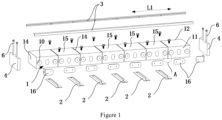
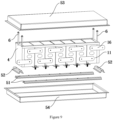
Figure 1 shows an exploded diagram of a battery module provided in some embodiments of the present disclosure; -
Figure 2 shows an exploded diagram of a cell of a battery module provided in some embodiments of the present disclosure; -
Figure 3 shows an enlarged diagram after installation at A of the battery module illustrated inFigure 1 ; -
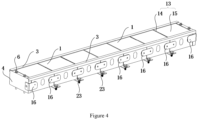
Figure 4 shows a three-dimensional diagram of a battery module provided in some embodiments of the present disclosure; -
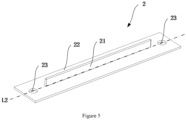
Figure 5 shows a structural diagram of a first spacer of a battery module provided in some embodiments of the present disclosure; -
Figure 6 shows a structural diagram of a second spacer of a battery module provided in some embodiments of the present disclosure; -
Figure 7 shows an exploded diagram of a battery pack provided in some embodiments of the present disclosure; -
Figure 8 shows an exploded diagram of a battery pack provided in some other embodiments of the present disclosure; -
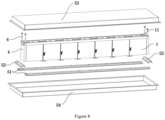
Figure 9 shows an exploded diagram of a battery pack provided in still other embodiments of the present disclosure; and -
Figure 10 shows an exploded diagram of a battery pack provided in yet other embodiments of the present disclosure. - Technical solutions provided by the present disclosure are described in more detail below in conjunction with
Figs. 1~10 . - Some embodiments of the present disclosure provide a battery pack, comprising a
case 5 and a battery module provided in any technical solution of the present disclosure, the battery module being mounted within thecase 5. - Using a
battery cell 1 with a cuboid structure as an example, eachbattery cell 1 comprises four side faces 13. There are four manners of arrangement of thebattery cells 1 in a row, respectively as shown inFigs. 7 to 10 . -
Figure 7 schematically shows smaller side faces 13 serve as abutting faces 14, and afirst surface 11 is arranged forward.Figure 8 schematically shows smaller side faces 13 serve as abutting faces 14, and afirst surface 11 is arranged upward.Figure 9 schematically shows larger side faces 13 serve as the abutting faces 14, and thefirst surface 11 is arranged forward.Figure 10 schematically shows the larger side faces 13 serve as the abutting faces 14, and thefirst surface 11 is arranged upward. - Relevant introduction of the battery module is provided below.
- Referring to
Figure 1 , some embodiments of the present disclosure provide a battery module, comprisingbattery cells 1 and afirst spacer 2. Thebattery cell 1 comprises afirst surface 11 provided with anelectrode terminal 10, asecond surface 12 opposite to thefirst surface 11, and side faces 13 located between thefirst surface 11 and thesecond surface 12. The side faces 13 comprise abutting faces 14 and connectingfaces 15 connected with the abutting faces 14. A plurality ofbattery cells 1 are arranged in a length direction, and the abutting faces 14 of all thebattery cells 1 face to each other. The length direction means a length direction L1 of thecase 5, as shown inFigure 1 . - Referring to
Figure 2 , the structure of thebattery cell 1 is introduced below. - The
battery cell 1 comprises ahousing 17, anelectrode assembly 18 arranged within thehousing 17,connectors 19 arranged at an end of theelectrode assembly 18, and acover plate 100 that covers theconnectors 19 and the end of theelectrode assembly 18. Thecover plate 100 is provided with theelectrode terminals 10. - The
housing 17 has a closed end and an open end. Thecover plate 100 is arranged at the opening of thehousing 17. Theelectrode assembly 18 is mounted within thehousing 17 via the opening. - An outer surface of the
cover plate 100 serves as thefirst surface 11 of the cell described below, and a surface of thehousing 17 opposite to the open end serves as thesecond surface 12 of the cell described below. The four side faces of thehousing 17 serve as the four side faces of thebattery cell 1. - See
Figure 1 , which schematically shows the three-dimensional structure of thebattery cell 1. Using thebattery cell 1 with a cuboid structure as an example, thebattery cell 1 comprises thefirst surface 11, thesecond surface 12 and the four side faces 13. Thefirst surface 11 is provided with a positive and a negative electrode terminal. Among the four side faces 13 ofbattery cell 1, theside face 13 fit to anotherbattery cell 1 is an abuttingface 14, and the side face parallel to the abutting face is also an abuttingface 14. Other side faces 13 than the abutting faces 14 are connecting faces 15. Referring toFigure 1 orFigure 4 , thebattery cell 1 has two abuttingfaces 14 and two connecting faces 15. - Referring to
Figure 1 , thebattery cells 1 arranged in a row are electrically connected. Specifically, theelectrode terminals 10 of thebattery cells 1 are electrically connected through connectingsheets 16. - Referring to
Figure 3 , in some embodiments, there is a gap between abutting faces 14 of the twoadjacent battery cells 1, so that heat dissipation of thebattery cells 1 is better. - Referring to
Figure 3 , the size of afirst spacing part 21 is smaller than that of the abuttingface 14, to provide the gap between the abutting faces 14 of the twoadjacent battery cells 1. - The size of the
first spacer 2 is smaller than that of the abuttingface 14, so that due to the presence of thefirst spacer 2 between the abutting faces 14 of the twoadjacent battery cells 1, there is the gap between the abutting faces 14 of the twoadjacent battery cells 1, the width of the gas being 1mm-10mm for example. The presence of the gap limits the expansion of the two abuttingfaces 14 within the gap. For the battery cells arranged in a row, thebattery cells 1 do not directly abut against theadjacent battery cells 1 after expansion, so that the battery cells arranged in a row as a whole do not deform excessively due to expansion. - In some other embodiments, a thermal insulation layer (not shown in the figures) is mounted within the gap, to reduce temperature influence of the two
adjacent battery cells 1. - Referring to
Figs. 1 ,3 and4 , in some embodiments, between every abutting faces 14 of the twoadjacent battery cells 1 is arranged at least part of thefirst spacer 2; that is, thefirst spacing part 21 is arranged therebetween. Thefirst spacing part 21 enables thebattery cells 1 to be connected stably and firmly into a whole. - Referring to
Figs. 3 and5 , in some embodiments, thefirst spacer 2 comprises thefirst spacing part 21 and a first connectingpart 22. Onefirst spacing part 21 is arranged between abutting faces 14 of every twoadjacent battery cells 1, and connected to the two abutting faces 14. The first connectingpart 22 and thefirst spacing part 21 are interconnected, specifically fixedly interconnected or integrated for example. The first connectingpart 22 is located beyond the abutting faces 14 of the twoadjacent battery cells 1, and is fixedly connected with the connecting faces 15 or thesecond surfaces 12 of the twoadjacent battery cells 1. - The first connecting
part 22 and thefirst spacing part 21 are connected through binder for example. The first connectingpart 22 and the connecting faces 15 or thesecond surfaces 12 of the twoadjacent battery cells 1 are connected through binder for example. - Depending on the placing direction of the
battery cells 1, the first connectingpart 22 is connected with the connecting faces 15 or thesecond surface 12.Figs. 4 ,7 and9 schematically show connections between the first connectingpart 22 and the connecting faces 15.Figs. 8 and10 schematically show connections between the first connectingpart 22 and thesecond surfaces 12 of the twoadjacent battery cells 1. - Specifically, as the
battery cells 1 have a cuboid structure, the first connectingpart 22 being fit to the connecting faces 15 is conducive to the structural stability of the entire battery module, and therefore optionally, both the first connectingpart 22 and thefirst spacing part 21 are flat plates, and the first connectingpart 22 is perpendicular to thefirst spacing part 21. - The first connecting
part 22 and the connecting faces 15 of the twoadjacent battery cells 1 are fixedly connected through an adhesive for example. - The first connecting
part 22 is fixed to the connecting faces 15 of the twoadjacent battery cells 1, so that the entire battery module has more fixing points, and the fixing points are distributed more uniformly. When the battery module is used to in the battery pack later, the batter pack bears forces more excellently, and is better in structural strength and structural reliability. - Referring to
Figure 4 , in some embodiments, the length of the first connectingpart 22 is greater than that of the abutting faces 14, and the portion of the first connectingpart 22 located at the outer side of the abutting faces 14 is provided with a connecting structure for connection with thecase 5. Thecase 5 is used for mounting the battery module. - Referring to
Figs. 5 and7 , the connectingstructure 23 is screw holes for example, in which bolts are mounted to install the battery module to thecase 5. - Referring to
Figs. 1 and5 , the connectingstructure 23 comprises screw holes, circle centers of which are located on a connecting line L2 of the central line in a thickness direction of thefirst spacing part 21, so that the areas of the portions of the first connectingpart 22 located on two sides of thefirst spacing part 21 are substantially equal, and the connecting area of the first connectingpart 22 and one of the twoadjacent battery cells 1 is substantially equal to that of the first connectingpart 22 and the other of the twoadjacent battery cells 1 , which makes the entire battery module good in structural stability. - Referring to
Figs. 1 ,4 and6 , in some embodiments, the battery module further comprises asecond spacer 3, wherein at least part of thesecond spacer 3 is arranged between the abutting faces 14 of twoadjacent battery cells 1, and connected to the two abutting faces 14, with a gap formed between thesecond spacer 3 and thefirst spacer 2. - The gap between the
second spacer 3 and thefirst spacer 2 is an expansion space for expansion of thebattery cells 1. Providing thesecond spacer 3 makes the gaps between every twoconnected battery cells 1 more uniform, and reduces the phenomenon that some part of the gaps are greater and other part of the gaps are smaller. - Referring to
Figs. 1 ,4 and6 , in some embodiments, thesecond spacer 3 comprises asecond spacing part 31 and a second connectingpart 32. Onesecond spacing part 31 is arranged between the abutting faces 14 of every twoadjacent battery cells 1, and connected to the two abutting faces 14. The second connectingpart 32 and thesecond spacing part 31 are interconnected fixedly or integrated. The second connectingpart 32 is located beyond the abutting faces 14 of the twoadjacent battery cells 1. - In some embodiments, there is a gap between the
second spacing part 31 and thefirst spacer 2, and gap is conducive to heat dissipation of thebattery cells 1. - Referring to
Figure 6 , to fit the second connectingpart 32 to the connecting faces 15 of thebattery cells 1, the second connectingpart 32 is perpendicular to thesecond spacing part 31. - Referring to
Figure 6 , in some embodiments, the second connectingpart 32 is in a right-angle type, specifically an L-shaped plate for example, and thesecond spacing part 31 is connected with the second connectingpart 32, and the second connectingpart 32 is arranged at a corner of thebattery cells 1. - Referring to
Figs. 1 and4 , asecond spacer 3 is provided at each of two adjacent edges of a row of battery pack. Eachsecond spacer 3 is provided with a plurality of the second connectingparts 32. Twosecond spacing parts 31 are provided between the abutting faces 14 of every twoadjacent battery cells 1. - The
first spacer 2 is located at one end of the gap of the twoadjacent battery cells 1, and the twosecond spacers 3 are located at the other end of the gap of the twoadjacent battery cells 1. The thickness of thefirst spacer 2 is equal to that of the twosecond spacers 3. By means of thefirst spacer 2 and the twosecond spacers 3, the sizes of the gap at the two ends are substantially same. Such configuration makes the battery module more stable in structure and tidy. - To provide more fixing points for the battery module and make the battery module more stable in structure, in some embodiments, the second connecting
part 32 is fixedly connected to the connecting faces 15 of both the twoadjacent battery cells 1. - Specifically, the second connecting
part 32 and the connecting faces 15 of the twoadjacent battery cells 1 are connected through binder. - Referring to
Figs. 4 and6 , in some embodiments, one second connectingpart 32 is provided with a plurality ofsecond spacing parts 31, and thesecond spacing parts 31 are provided between the abutting faces 14 of every twoadjacent battery cells 1 of thebattery cells 1 arranged in a row. - Referring to
Figs. 4 , and7~10 , in some embodiments, the battery module further comprises anend plate 4. Theend plate 4 is located at least one side of the plurality ofbattery cells 1. At least one of two ends of thebattery cells 1 arranged in a row is provided with at least oneend plate 4. Theend plate 4 is fixedly connected with the second connectingpart 32; or theend plate 4 is configured to fixedly connect with thecase 5, wherein thecase 5 is used for mounting the battery module. - The
end plate 4 and the second connectingpart 32 are fixedly connected to form a relatively stable and firm frame, and thebattery cells 1 arranged in a row are located within the frame. The structure makes the structure of the battery module more stable and firmer. - In some embodiments, screws 6 connect both the second connecting
part 32 and theend plate 4 to thecase 5. - This structure ensures that the battery module is mounted inside the
case 5 more stably, firmly and reliably. - The mounting relation of the battery module inside the
case 5 is introduced below. - Referring to
Figs. 7 to 10 , thecase 5 comprises afirst case 53 and asecond case 54. Thefirst case 53 and thesecond case 54 form an accommodating cavity, and the battery module is mounted inside the accommodating cavity. - A first fixing
part 51 and a second fixingpart 52 described below are mounted on the inner wall of thesecond case 54. Both the first fixingpart 51 and the second fixingpart 52 are fixed to the battery module, to achieve multi-point fixation of the battery module inside the accommodating cavity, so that the battery module has more fixing points which are more dispersed, and the battery module bears forces more uniformly. - Specifically, in some embodiments, the first fixing
part 51 is mounted at the bottom of thecase 5, and the connectingstructure 23 on the first connectingpart 22 of the battery module is detachably connected with the first fixingpart 51. - The first fixing
part 51 is a metal rod provided with screw holes for example, and is welded to the inner wall surface of thesecond case 54. - The connecting
structure 23 is screw holes for example. Bolts pass through the screw holes to achieve detachable connection between the first connectingpart 22 and the first fixingpart 51. - In some embodiments, the second fixing
part 52 is mounted at the bottom of thecase 5, and theend plate 4 of the battery module and the second connectingpart 32 are detachably connected with the second fixingpart 52 through screws. - The
second fixing part 52 is a metal rod provided with screw holes for example, and is welded to the inner wall surface of thesecond case 54. - Referring to
Figs. 7 to 10 , in some embodiments, there are twofirst fixing parts 51 and twosecond fixing parts 52, and the first fixingparts 51 and thesecond fixing parts 52 form a rectangle matched with the battery cells in a row. It is understood that other numbers of first fixingpart 51 and second fixingpart 52 with other structures are also adopted to form the required connecting frame. - In some embodiments, one or more battery modules are mounted within the
case 5. - In description of the present disclosure, it needs to be understood that orientation or position relations denoted by the terms "centre" "longitudinal", "transverse", "front", "rear", "left", "right", "vertical", "horizontal", "top", "bottom", "inner", "outer" and the like are orientation or position relations based on illustration in the drawings, and are only intended to facilitate describing the present disclosure and simplifying description, instead of indicating or implying the denoted devices or elements necessarily have specific orientations or are constructed and operated in specific orientations, and thus they should not be understood as limiting the protection scope of the present disclosure.
- Finally, it should be noted that the above embodiments are only used for illustrating rather than limiting the technical solutions of the present disclosure. Although the present disclosure is described in detail with reference to the foregoing embodiments, those of ordinary skill in the art should understand that they still can make modifications to the technical solutions disclosed in the foregoing embodiments as long as these modification fall within the scope of the current claims.
Claims (11)
- A battery pack, comprising a case (5) and a battery module, the battery module being mounted within the case (5)
Wherein the battery module comprising:a plurality of battery cells (1), each of which comprising a first surface (11) provided with an electrode terminal (10), a second surface (12) opposite to the first surface (11), and side faces (13) located between the first surface (11) and the second surface (12); wherein the side faces (13) comprise abutting faces (14) and connecting faces (15) connected with the abutting faces (14); and the plurality of battery cells (1) are arranged in a length direction, and the abutting faces (14) of all the battery cells (1) face to each other; anda first spacer (2), at least part of which being arranged between the abutting faces (14) of two adjacent battery cells (1), and fixed to the abutting faces (14) of the two adjacent battery cells (1), wherein the first spacer (2) is configured to fix to the case (5);the size of the first spacer (2) is smaller than that of the abutting faces such there is a gap between the abutting faces (14) of the two adjacent battery cells (1);wherein the first spacer (2) comprises:a first spacing part (21), arranged between the abutting faces (14) of the two adjacent battery cells (1) and fixed to the abutting faces (14) of the two adjacent battery cells (1); anda first connecting part (22), connected with the first spacing part (21), the first connecting part (22) being located beyond the abutting faces (14) of the two adjacent battery cells (1), and fixed to the connecting faces (15) or the second surfaces (12) of the two adjacent battery cells (1);wherein the length of the first connecting part (22) is greater than that of each of the abutting faces (14), and a portion of the first connecting part (22) located at an outer side of the abutting faces (14) is provided with a connecting structure (23) for fixation to the case (5);wherein the connecting structure (23) comprises screw holes, a hole centre line of which is substantially parallel to a central line in a thickness direction of the first spacing part (21). - The battery pack of claim 1, wherein there is a gap between the abutting faces (14) of the two adjacent battery cells (1).
- The battery pack of claim 2, wherein a thermal insulation layer is mounted within the gap.
- The battery pack of claim 1, wherein one first spacing part (21) is fixed between the abutting faces (14) of every two adjacent battery cells (1).
- The battery pack of claim 1, wherein the first spacing part (21) is connected with the abutting faces (14) of the two adjacent battery cells (1) through binder.
- The battery pack of claim 1, wherein the first connecting part (22) is connected with the connecting faces (15) or the second surfaces (12) of the two adjacent battery cells (1) through binder.
- The battery pack of claim 1, wherein the first connecting part (22) is detachably connected or integrated with the first spacing part (21).
- The battery pack of any one of claims 1 to 7, further comprising a second spacer (3), at least part of which is arranged between the abutting faces (14) of the two adjacent battery cells (1), and fixed to the abutting faces (14) of the two adjacent battery cells (1).
- The battery pack of claim 8, wherein the second spacer (3) comprises:a second spacing part (31), arranged between abutting faces (14) of the two adjacent battery cells (1) and fixed to the abutting faces (14) of the two adjacent battery cells (1); anda second connecting part (32), fixedly connected or integrated with the second spacing part (31) and located beyond the abutting faces (14) of the two adjacent battery cells (1).
- The battery pack of claim 9, wherein one second connecting part (32) is connected with a plurality of the second spacing parts (31), and one second spacing part (31) is provided between the abutting faces (14) of every two adjacent battery cells (1).
- The battery pack of claim 9, further comprising:
an end plate (4), wherein the end plate (4) is located at least one side of the plurality of battery cells (1); and the end plate (4) is fixedly connected with the second connecting part (32), or the end plate (4) is configured to be fixedly connected with the case (5); wherein the case is configured to mount the battery module.
Applications Claiming Priority (1)
| Application Number | Priority Date | Filing Date | Title |
|---|---|---|---|
| CN201920582840.1U CN209658265U (en) | 2019-04-26 | 2019-04-26 | Battery modules and battery packs |
Publications (2)
| Publication Number | Publication Date |
|---|---|
| EP3751636A1 EP3751636A1 (en) | 2020-12-16 |
| EP3751636B1 true EP3751636B1 (en) | 2025-04-02 |
Family
ID=68529700
Family Applications (1)
| Application Number | Title | Priority Date | Filing Date |
|---|---|---|---|
| EP20164198.2A Active EP3751636B1 (en) | 2019-04-26 | 2020-03-19 | Battery module and battery pack |
Country Status (7)
| Country | Link |
|---|---|
| US (1) | US20200343496A1 (en) |
| EP (1) | EP3751636B1 (en) |
| JP (1) | JP7569798B2 (en) |
| CN (1) | CN209658265U (en) |
| ES (1) | ES3032363T3 (en) |
| HU (1) | HUE071491T2 (en) |
| WO (1) | WO2020215908A1 (en) |
Families Citing this family (6)
| Publication number | Priority date | Publication date | Assignee | Title |
|---|---|---|---|---|
| CN209658265U (en) * | 2019-04-26 | 2019-11-19 | 宁德时代新能源科技股份有限公司 | Battery modules and battery packs |
| CN113054316A (en) * | 2021-03-18 | 2021-06-29 | 维沃移动通信有限公司 | Battery structure, electronic equipment and preparation method of battery structure |
| CN115843398B (en) | 2021-07-21 | 2023-12-15 | 宁德时代新能源科技股份有限公司 | Batteries, electrical equipment, methods and equipment for preparing batteries |
| CN113904054B (en) * | 2021-09-27 | 2023-06-30 | 蜂巢能源科技有限公司 | Battery pack and power device |
| CN114024082B (en) * | 2021-11-04 | 2024-04-30 | 欣旺达动力科技股份有限公司 | Batteries, battery modules and battery packs |
| CN220963596U (en) * | 2023-09-28 | 2024-05-14 | 江苏大艺科技股份有限公司 | Battery cell casing and battery cell components |
Family Cites Families (17)
| Publication number | Priority date | Publication date | Assignee | Title |
|---|---|---|---|---|
| US20030003350A1 (en) * | 2001-07-02 | 2003-01-02 | C&D Charter Holdings, Inc. | Horizontal tray insert and tray assembly for motive-power applications |
| JP5542558B2 (en) * | 2010-07-15 | 2014-07-09 | 株式会社東芝 | Secondary battery device |
| JP5490652B2 (en) * | 2010-09-10 | 2014-05-14 | タイガースポリマー株式会社 | Battery structure |
| JP2012084297A (en) * | 2010-10-08 | 2012-04-26 | Toshiba Corp | Battery pack device |
| KR20150128175A (en) * | 2014-05-08 | 2015-11-18 | 안동대학교 산학협력단 | Spacer for secondary battery spacer and secondary battery with the same |
| CN204809283U (en) * | 2015-07-08 | 2015-11-25 | 宁德时代新能源科技有限公司 | Battery module |
| JP6608653B2 (en) * | 2015-09-02 | 2019-11-20 | 株式会社東芝 | Battery module |
| JP6794617B2 (en) * | 2015-09-18 | 2020-12-02 | 株式会社Gsユアサ | Power storage device |
| JP6657723B2 (en) * | 2015-09-30 | 2020-03-04 | 株式会社Gsユアサ | Power storage device |
| JP6585726B2 (en) * | 2015-10-02 | 2019-10-02 | 日立オートモティブシステムズ株式会社 | Assembled battery |
| JP6577375B2 (en) * | 2016-01-19 | 2019-09-18 | カルソニックカンセイ株式会社 | Assembled battery and method of manufacturing the assembled battery |
| JP2017139099A (en) * | 2016-02-02 | 2017-08-10 | 三菱自動車工業株式会社 | Battery module |
| FR3048129B1 (en) * | 2016-02-18 | 2020-04-17 | Saft | ELECTROCHEMICAL COMPONENT COMPENSATION SYSTEM |
| JP2018116813A (en) * | 2017-01-17 | 2018-07-26 | 株式会社東芝 | Battery module and battery device |
| CN207800692U (en) * | 2017-12-26 | 2018-08-31 | 湛江正信科技服务有限公司 | A kind of lithium battery group |
| CN208570865U (en) * | 2018-08-30 | 2019-03-01 | 宁德时代新能源科技股份有限公司 | Secondary cell |
| CN209658265U (en) * | 2019-04-26 | 2019-11-19 | 宁德时代新能源科技股份有限公司 | Battery modules and battery packs |
-
2019
- 2019-04-26 CN CN201920582840.1U patent/CN209658265U/en active Active
- 2019-12-17 US US16/717,278 patent/US20200343496A1/en not_active Abandoned
-
2020
- 2020-03-09 WO PCT/CN2020/078448 patent/WO2020215908A1/en not_active Ceased
- 2020-03-09 JP JP2021554406A patent/JP7569798B2/en active Active
- 2020-03-19 HU HUE20164198A patent/HUE071491T2/en unknown
- 2020-03-19 EP EP20164198.2A patent/EP3751636B1/en active Active
- 2020-03-19 ES ES20164198T patent/ES3032363T3/en active Active
Also Published As
| Publication number | Publication date |
|---|---|
| WO2020215908A1 (en) | 2020-10-29 |
| HUE071491T2 (en) | 2025-09-28 |
| CN209658265U (en) | 2019-11-19 |
| EP3751636A1 (en) | 2020-12-16 |
| US20200343496A1 (en) | 2020-10-29 |
| ES3032363T3 (en) | 2025-07-17 |
| JP2022529881A (en) | 2022-06-27 |
| JP7569798B2 (en) | 2024-10-18 |
Similar Documents
| Publication | Publication Date | Title |
|---|---|---|
| EP3751636B1 (en) | Battery module and battery pack | |
| US12537254B2 (en) | Battery pack, vehicle, and energy storage device | |
| CN111052494B (en) | Battery modules and battery packs | |
| EP3716392B1 (en) | Battery module having improved cooling structure | |
| EP2765632B1 (en) | Battery module assembly having improved reliability and medium or large-sized battery pack including same | |
| JP5231424B2 (en) | Connection member for electrical connection of battery cells | |
| EP2889932B1 (en) | Power storage device | |
| KR20250164867A (en) | Battery pack and electric vehicle | |
| US20200328385A1 (en) | Battery module | |
| CN118486950A (en) | Battery pack | |
| US20150064523A1 (en) | Battery module | |
| US20220109216A1 (en) | Battery module and battery pack | |
| CN216750213U (en) | Battery pack unit, battery pack and mobile energy storage power supply | |
| KR20240077246A (en) | Battery pack | |
| CN219534611U (en) | Single battery and battery pack | |
| JP2025503745A (en) | Battery module and battery pack including same | |
| CN209104206U (en) | battery module | |
| KR20230134375A (en) | Battery cell assembly and battery module including same | |
| CN218887417U (en) | Battery module and battery pack | |
| CN215644876U (en) | Battery module and battery pack | |
| CN215644729U (en) | Battery module for battery pack and battery pack | |
| CN215644829U (en) | Battery modules and battery packs | |
| CN111435719A (en) | Battery module, battery pack, battery module, battery system, and electric vehicle | |
| CN115312987A (en) | Busbars, battery packs, battery modules and vehicles | |
| CN223156206U (en) | Energy storage device and energy storage battery pack |
Legal Events
| Date | Code | Title | Description |
|---|---|---|---|
| PUAI | Public reference made under article 153(3) epc to a published international application that has entered the european phase |
Free format text: ORIGINAL CODE: 0009012 |
|
| STAA | Information on the status of an ep patent application or granted ep patent |
Free format text: STATUS: THE APPLICATION HAS BEEN PUBLISHED |
|
| AK | Designated contracting states |
Kind code of ref document: A1 Designated state(s): AL AT BE BG CH CY CZ DE DK EE ES FI FR GB GR HR HU IE IS IT LI LT LU LV MC MK MT NL NO PL PT RO RS SE SI SK SM TR |
|
| AX | Request for extension of the european patent |
Extension state: BA ME |
|
| STAA | Information on the status of an ep patent application or granted ep patent |
Free format text: STATUS: REQUEST FOR EXAMINATION WAS MADE |
|
| 17P | Request for examination filed |
Effective date: 20210615 |
|
| RBV | Designated contracting states (corrected) |
Designated state(s): AL AT BE BG CH CY CZ DE DK EE ES FI FR GB GR HR HU IE IS IT LI LT LU LV MC MK MT NL NO PL PT RO RS SE SI SK SM TR |
|
| STAA | Information on the status of an ep patent application or granted ep patent |
Free format text: STATUS: EXAMINATION IS IN PROGRESS |
|
| 17Q | First examination report despatched |
Effective date: 20231124 |
|
| RAP1 | Party data changed (applicant data changed or rights of an application transferred) |
Owner name: CONTEMPORARY AMPEREX TECHNOLOGY(HONG KONG) LIMITED |
|
| REG | Reference to a national code |
Ref country code: DE Ref legal event code: R079 Free format text: PREVIOUS MAIN CLASS: H01M0002100000 Ipc: H01M0050209000 Ref document number: 602020048601 Country of ref document: DE |
|
| RIC1 | Information provided on ipc code assigned before grant |
Ipc: H01M 50/557 20210101ALI20241204BHEP Ipc: H01M 50/55 20210101ALI20241204BHEP Ipc: H01M 50/507 20210101ALI20241204BHEP Ipc: H01M 50/503 20210101ALI20241204BHEP Ipc: H01M 50/291 20210101ALI20241204BHEP Ipc: H01M 50/209 20210101AFI20241204BHEP |
|
| GRAP | Despatch of communication of intention to grant a patent |
Free format text: ORIGINAL CODE: EPIDOSNIGR1 |
|
| STAA | Information on the status of an ep patent application or granted ep patent |
Free format text: STATUS: GRANT OF PATENT IS INTENDED |
|
| INTG | Intention to grant announced |
Effective date: 20250113 |
|
| GRAS | Grant fee paid |
Free format text: ORIGINAL CODE: EPIDOSNIGR3 |
|
| GRAA | (expected) grant |
Free format text: ORIGINAL CODE: 0009210 |
|
| STAA | Information on the status of an ep patent application or granted ep patent |
Free format text: STATUS: THE PATENT HAS BEEN GRANTED |
|
| AK | Designated contracting states |
Kind code of ref document: B1 Designated state(s): AL AT BE BG CH CY CZ DE DK EE ES FI FR GB GR HR HU IE IS IT LI LT LU LV MC MK MT NL NO PL PT RO RS SE SI SK SM TR |
|
| REG | Reference to a national code |
Ref country code: GB Ref legal event code: FG4D |
|
| REG | Reference to a national code |
Ref country code: CH Ref legal event code: EP |
|
| REG | Reference to a national code |
Ref country code: IE Ref legal event code: FG4D |
|
| REG | Reference to a national code |
Ref country code: DE Ref legal event code: R096 Ref document number: 602020048601 Country of ref document: DE |
|
| P01 | Opt-out of the competence of the unified patent court (upc) registered |
Free format text: CASE NUMBER: APP_19245/2025 Effective date: 20250422 |
|
| REG | Reference to a national code |
Ref country code: ES Ref legal event code: FG2A Ref document number: 3032363 Country of ref document: ES Kind code of ref document: T3 Effective date: 20250717 |
|
| REG | Reference to a national code |
Ref country code: NL Ref legal event code: MP Effective date: 20250402 |
|
| PG25 | Lapsed in a contracting state [announced via postgrant information from national office to epo] |
Ref country code: NL Free format text: LAPSE BECAUSE OF FAILURE TO SUBMIT A TRANSLATION OF THE DESCRIPTION OR TO PAY THE FEE WITHIN THE PRESCRIBED TIME-LIMIT Effective date: 20250402 |
|
| REG | Reference to a national code |
Ref country code: AT Ref legal event code: MK05 Ref document number: 1782237 Country of ref document: AT Kind code of ref document: T Effective date: 20250402 |
|
| REG | Reference to a national code |
Ref country code: HU Ref legal event code: AG4A Ref document number: E071491 Country of ref document: HU |
|
| PG25 | Lapsed in a contracting state [announced via postgrant information from national office to epo] |
Ref country code: FI Free format text: LAPSE BECAUSE OF FAILURE TO SUBMIT A TRANSLATION OF THE DESCRIPTION OR TO PAY THE FEE WITHIN THE PRESCRIBED TIME-LIMIT Effective date: 20250402 Ref country code: PT Free format text: LAPSE BECAUSE OF FAILURE TO SUBMIT A TRANSLATION OF THE DESCRIPTION OR TO PAY THE FEE WITHIN THE PRESCRIBED TIME-LIMIT Effective date: 20250804 |
|
| REG | Reference to a national code |
Ref country code: LT Ref legal event code: MG9D |
|
| PG25 | Lapsed in a contracting state [announced via postgrant information from national office to epo] |
Ref country code: NO Free format text: LAPSE BECAUSE OF FAILURE TO SUBMIT A TRANSLATION OF THE DESCRIPTION OR TO PAY THE FEE WITHIN THE PRESCRIBED TIME-LIMIT Effective date: 20250702 Ref country code: GR Free format text: LAPSE BECAUSE OF FAILURE TO SUBMIT A TRANSLATION OF THE DESCRIPTION OR TO PAY THE FEE WITHIN THE PRESCRIBED TIME-LIMIT Effective date: 20250703 |
|
| PG25 | Lapsed in a contracting state [announced via postgrant information from national office to epo] |
Ref country code: PL Free format text: LAPSE BECAUSE OF FAILURE TO SUBMIT A TRANSLATION OF THE DESCRIPTION OR TO PAY THE FEE WITHIN THE PRESCRIBED TIME-LIMIT Effective date: 20250402 |
|
| PG25 | Lapsed in a contracting state [announced via postgrant information from national office to epo] |
Ref country code: BG Free format text: LAPSE BECAUSE OF FAILURE TO SUBMIT A TRANSLATION OF THE DESCRIPTION OR TO PAY THE FEE WITHIN THE PRESCRIBED TIME-LIMIT Effective date: 20250402 |
|
| PG25 | Lapsed in a contracting state [announced via postgrant information from national office to epo] |
Ref country code: HR Free format text: LAPSE BECAUSE OF FAILURE TO SUBMIT A TRANSLATION OF THE DESCRIPTION OR TO PAY THE FEE WITHIN THE PRESCRIBED TIME-LIMIT Effective date: 20250402 |
|
| PG25 | Lapsed in a contracting state [announced via postgrant information from national office to epo] |
Ref country code: AT Free format text: LAPSE BECAUSE OF FAILURE TO SUBMIT A TRANSLATION OF THE DESCRIPTION OR TO PAY THE FEE WITHIN THE PRESCRIBED TIME-LIMIT Effective date: 20250402 |
|
| PG25 | Lapsed in a contracting state [announced via postgrant information from national office to epo] |
Ref country code: RS Free format text: LAPSE BECAUSE OF FAILURE TO SUBMIT A TRANSLATION OF THE DESCRIPTION OR TO PAY THE FEE WITHIN THE PRESCRIBED TIME-LIMIT Effective date: 20250702 |
|
| PG25 | Lapsed in a contracting state [announced via postgrant information from national office to epo] |
Ref country code: IS Free format text: LAPSE BECAUSE OF FAILURE TO SUBMIT A TRANSLATION OF THE DESCRIPTION OR TO PAY THE FEE WITHIN THE PRESCRIBED TIME-LIMIT Effective date: 20250802 |
|
| PG25 | Lapsed in a contracting state [announced via postgrant information from national office to epo] |
Ref country code: LV Free format text: LAPSE BECAUSE OF FAILURE TO SUBMIT A TRANSLATION OF THE DESCRIPTION OR TO PAY THE FEE WITHIN THE PRESCRIBED TIME-LIMIT Effective date: 20250402 |
|
| REG | Reference to a national code |
Ref country code: DE Ref legal event code: R097 Ref document number: 602020048601 Country of ref document: DE |
|
| PG25 | Lapsed in a contracting state [announced via postgrant information from national office to epo] |
Ref country code: SM Free format text: LAPSE BECAUSE OF FAILURE TO SUBMIT A TRANSLATION OF THE DESCRIPTION OR TO PAY THE FEE WITHIN THE PRESCRIBED TIME-LIMIT Effective date: 20250402 Ref country code: DK Free format text: LAPSE BECAUSE OF FAILURE TO SUBMIT A TRANSLATION OF THE DESCRIPTION OR TO PAY THE FEE WITHIN THE PRESCRIBED TIME-LIMIT Effective date: 20250402 |
|
| PG25 | Lapsed in a contracting state [announced via postgrant information from national office to epo] |
Ref country code: CZ Free format text: LAPSE BECAUSE OF FAILURE TO SUBMIT A TRANSLATION OF THE DESCRIPTION OR TO PAY THE FEE WITHIN THE PRESCRIBED TIME-LIMIT Effective date: 20250402 |
|
| PG25 | Lapsed in a contracting state [announced via postgrant information from national office to epo] |
Ref country code: EE Free format text: LAPSE BECAUSE OF FAILURE TO SUBMIT A TRANSLATION OF THE DESCRIPTION OR TO PAY THE FEE WITHIN THE PRESCRIBED TIME-LIMIT Effective date: 20250402 |
|
| PG25 | Lapsed in a contracting state [announced via postgrant information from national office to epo] |
Ref country code: RO Free format text: LAPSE BECAUSE OF FAILURE TO SUBMIT A TRANSLATION OF THE DESCRIPTION OR TO PAY THE FEE WITHIN THE PRESCRIBED TIME-LIMIT Effective date: 20250402 Ref country code: SK Free format text: LAPSE BECAUSE OF FAILURE TO SUBMIT A TRANSLATION OF THE DESCRIPTION OR TO PAY THE FEE WITHIN THE PRESCRIBED TIME-LIMIT Effective date: 20250402 |
|
| PG25 | Lapsed in a contracting state [announced via postgrant information from national office to epo] |
Ref country code: IT Free format text: LAPSE BECAUSE OF FAILURE TO SUBMIT A TRANSLATION OF THE DESCRIPTION OR TO PAY THE FEE WITHIN THE PRESCRIBED TIME-LIMIT Effective date: 20250402 |
|
| PLBE | No opposition filed within time limit |
Free format text: ORIGINAL CODE: 0009261 |
|
| STAA | Information on the status of an ep patent application or granted ep patent |
Free format text: STATUS: NO OPPOSITION FILED WITHIN TIME LIMIT |
|
| REG | Reference to a national code |
Ref country code: CH Ref legal event code: L10 Free format text: ST27 STATUS EVENT CODE: U-0-0-L10-L00 (AS PROVIDED BY THE NATIONAL OFFICE) Effective date: 20260211 |
|
| 26N | No opposition filed |
Effective date: 20260105 |
|
| PGFP | Annual fee paid to national office [announced via postgrant information from national office to epo] |
Ref country code: GB Payment date: 20260325 Year of fee payment: 7 |
|
| PGFP | Annual fee paid to national office [announced via postgrant information from national office to epo] |
Ref country code: DE Payment date: 20260324 Year of fee payment: 7 |
|
| PGFP | Annual fee paid to national office [announced via postgrant information from national office to epo] |
Ref country code: HU Payment date: 20260316 Year of fee payment: 7 |
|
| PGFP | Annual fee paid to national office [announced via postgrant information from national office to epo] |
Ref country code: FR Payment date: 20260330 Year of fee payment: 7 |