EP3751496A1 - Method and system for building reinforcement learning (rl) based model for generating bids - Google Patents
Method and system for building reinforcement learning (rl) based model for generating bids Download PDFInfo
- Publication number
- EP3751496A1 EP3751496A1 EP20179416.1A EP20179416A EP3751496A1 EP 3751496 A1 EP3751496 A1 EP 3751496A1 EP 20179416 A EP20179416 A EP 20179416A EP 3751496 A1 EP3751496 A1 EP 3751496A1
- Authority
- EP
- European Patent Office
- Prior art keywords
- state
- action
- agent
- space
- slot
- Prior art date
- Legal status (The legal status is an assumption and is not a legal conclusion. Google has not performed a legal analysis and makes no representation as to the accuracy of the status listed.)
- Withdrawn
Links
Images



Classifications
-
- H—ELECTRICITY
- H02—GENERATION; CONVERSION OR DISTRIBUTION OF ELECTRIC POWER
- H02J—ELECTRIC POWER NETWORKS; CIRCUIT ARRANGEMENTS OR SYSTEMS FOR SUPPLYING OR DISTRIBUTING ELECTRIC POWER; SYSTEMS FOR STORING ELECTRIC ENERGY
- H02J3/00—Circuit arrangements for AC mains or AC distribution networks
- H02J3/008—Circuit arrangements for power supply or distribution technologies responsive to energy trading
-
- G—PHYSICS
- G06—COMPUTING OR CALCULATING; COUNTING
- G06Q—INFORMATION AND COMMUNICATION TECHNOLOGY [ICT] SPECIALLY ADAPTED FOR ADMINISTRATIVE, COMMERCIAL, FINANCIAL, MANAGERIAL OR SUPERVISORY PURPOSES; SYSTEMS OR METHODS SPECIALLY ADAPTED FOR ADMINISTRATIVE, COMMERCIAL, FINANCIAL, MANAGERIAL OR SUPERVISORY PURPOSES, NOT OTHERWISE PROVIDED FOR
- G06Q30/00—Commerce
- G06Q30/06—Buying, selling or leasing transactions
- G06Q30/08—Auctions
-
- G—PHYSICS
- G06—COMPUTING OR CALCULATING; COUNTING
- G06F—ELECTRIC DIGITAL DATA PROCESSING
- G06F17/00—Digital computing or data processing equipment or methods, specially adapted for specific functions
- G06F17/10—Complex mathematical operations
- G06F17/11—Complex mathematical operations for solving equations, e.g. nonlinear equations, general mathematical optimization problems
-
- G—PHYSICS
- G06—COMPUTING OR CALCULATING; COUNTING
- G06N—COMPUTING ARRANGEMENTS BASED ON SPECIFIC COMPUTATIONAL MODELS
- G06N20/00—Machine learning
-
- G—PHYSICS
- G06—COMPUTING OR CALCULATING; COUNTING
- G06N—COMPUTING ARRANGEMENTS BASED ON SPECIFIC COMPUTATIONAL MODELS
- G06N3/00—Computing arrangements based on biological models
- G06N3/02—Neural networks
- G06N3/04—Architecture, e.g. interconnection topology
- G06N3/0499—Feedforward networks
-
- G—PHYSICS
- G06—COMPUTING OR CALCULATING; COUNTING
- G06N—COMPUTING ARRANGEMENTS BASED ON SPECIFIC COMPUTATIONAL MODELS
- G06N3/00—Computing arrangements based on biological models
- G06N3/02—Neural networks
- G06N3/08—Learning methods
- G06N3/092—Reinforcement learning
-
- G—PHYSICS
- G06—COMPUTING OR CALCULATING; COUNTING
- G06Q—INFORMATION AND COMMUNICATION TECHNOLOGY [ICT] SPECIALLY ADAPTED FOR ADMINISTRATIVE, COMMERCIAL, FINANCIAL, MANAGERIAL OR SUPERVISORY PURPOSES; SYSTEMS OR METHODS SPECIALLY ADAPTED FOR ADMINISTRATIVE, COMMERCIAL, FINANCIAL, MANAGERIAL OR SUPERVISORY PURPOSES, NOT OTHERWISE PROVIDED FOR
- G06Q10/00—Administration; Management
- G06Q10/06—Resources, workflows, human or project management; Enterprise or organisation planning; Enterprise or organisation modelling
- G06Q10/063—Operations research, analysis or management
- G06Q10/0631—Resource planning, allocation, distributing or scheduling for enterprises or organisations
-
- G—PHYSICS
- G06—COMPUTING OR CALCULATING; COUNTING
- G06Q—INFORMATION AND COMMUNICATION TECHNOLOGY [ICT] SPECIALLY ADAPTED FOR ADMINISTRATIVE, COMMERCIAL, FINANCIAL, MANAGERIAL OR SUPERVISORY PURPOSES; SYSTEMS OR METHODS SPECIALLY ADAPTED FOR ADMINISTRATIVE, COMMERCIAL, FINANCIAL, MANAGERIAL OR SUPERVISORY PURPOSES, NOT OTHERWISE PROVIDED FOR
- G06Q30/00—Commerce
- G06Q30/02—Marketing; Price estimation or determination; Fundraising
-
- G—PHYSICS
- G06—COMPUTING OR CALCULATING; COUNTING
- G06Q—INFORMATION AND COMMUNICATION TECHNOLOGY [ICT] SPECIALLY ADAPTED FOR ADMINISTRATIVE, COMMERCIAL, FINANCIAL, MANAGERIAL OR SUPERVISORY PURPOSES; SYSTEMS OR METHODS SPECIALLY ADAPTED FOR ADMINISTRATIVE, COMMERCIAL, FINANCIAL, MANAGERIAL OR SUPERVISORY PURPOSES, NOT OTHERWISE PROVIDED FOR
- G06Q30/00—Commerce
- G06Q30/02—Marketing; Price estimation or determination; Fundraising
- G06Q30/0201—Market modelling; Market analysis; Collecting market data
- G06Q30/0202—Market predictions or forecasting for commercial activities
-
- G—PHYSICS
- G06—COMPUTING OR CALCULATING; COUNTING
- G06Q—INFORMATION AND COMMUNICATION TECHNOLOGY [ICT] SPECIALLY ADAPTED FOR ADMINISTRATIVE, COMMERCIAL, FINANCIAL, MANAGERIAL OR SUPERVISORY PURPOSES; SYSTEMS OR METHODS SPECIALLY ADAPTED FOR ADMINISTRATIVE, COMMERCIAL, FINANCIAL, MANAGERIAL OR SUPERVISORY PURPOSES, NOT OTHERWISE PROVIDED FOR
- G06Q30/00—Commerce
- G06Q30/02—Marketing; Price estimation or determination; Fundraising
- G06Q30/0201—Market modelling; Market analysis; Collecting market data
- G06Q30/0206—Price or cost determination based on market factors
-
- G—PHYSICS
- G06—COMPUTING OR CALCULATING; COUNTING
- G06Q—INFORMATION AND COMMUNICATION TECHNOLOGY [ICT] SPECIALLY ADAPTED FOR ADMINISTRATIVE, COMMERCIAL, FINANCIAL, MANAGERIAL OR SUPERVISORY PURPOSES; SYSTEMS OR METHODS SPECIALLY ADAPTED FOR ADMINISTRATIVE, COMMERCIAL, FINANCIAL, MANAGERIAL OR SUPERVISORY PURPOSES, NOT OTHERWISE PROVIDED FOR
- G06Q30/00—Commerce
- G06Q30/06—Buying, selling or leasing transactions
-
- G—PHYSICS
- G06—COMPUTING OR CALCULATING; COUNTING
- G06Q—INFORMATION AND COMMUNICATION TECHNOLOGY [ICT] SPECIALLY ADAPTED FOR ADMINISTRATIVE, COMMERCIAL, FINANCIAL, MANAGERIAL OR SUPERVISORY PURPOSES; SYSTEMS OR METHODS SPECIALLY ADAPTED FOR ADMINISTRATIVE, COMMERCIAL, FINANCIAL, MANAGERIAL OR SUPERVISORY PURPOSES, NOT OTHERWISE PROVIDED FOR
- G06Q50/00—Information and communication technology [ICT] specially adapted for implementation of business processes of specific business sectors, e.g. utilities or tourism
- G06Q50/06—Energy or water supply
-
- H—ELECTRICITY
- H02—GENERATION; CONVERSION OR DISTRIBUTION OF ELECTRIC POWER
- H02J—ELECTRIC POWER NETWORKS; CIRCUIT ARRANGEMENTS OR SYSTEMS FOR SUPPLYING OR DISTRIBUTING ELECTRIC POWER; SYSTEMS FOR STORING ELECTRIC ENERGY
- H02J3/00—Circuit arrangements for AC mains or AC distribution networks
- H02J3/003—Load forecast, e.g. methods or systems for forecasting future load demand
Definitions
- the disclosure herein generally relates to energy markets, and, more particularly, to a method and a system for Reinforcement Learning (RL) based model for generating bids.
- RL Reinforcement Learning
- a bidding mechanism is used to sell electric energy.
- There are companies/organizations which generate the electric energy i.e. producers, there are end users/consumers, and in between the producers and consumers, there may be many entities.
- the generating companies bid to sell the power.
- the companies would try to make profit in comparison with their operational cost (referring to the sum they may have spent during generation and distribution of the energy).
- Such cost involved may vary based on many factors. For example, amount of money spent in generating nuclear energy may be less as compared to the amount spent in generating energy from solar or tidal sources. Many such constraints affect/govern the rates the companies may quote.
- the bids are collected and are matched against pre-specified rules, and the bids matching the rules are cleared.
- a system for reinforcement based bidding in an energy market includes a communication interface, a memory which includes a Markovian Decision Process (MDP) based model of the electric market, and one or more hardware processors.
- MDP Markovian Decision Process
- the one or more hardware processors generate one or more bidding recommendations using Reinforcement Learning (RL).
- RL Reinforcement Learning
- a RL agent of the system is trained by modeling interaction of the RL agent with the energy market model as a Markovian Decision Process (MDP).
- the training of the RL agent includes defining a state space of the RL agent by using a plurality of state space parameters comprising (i) a forecasted demand D t+h for the consumption slot t + h that is available at time slot t, (ii) a realized demand D t+h-48 and a Maximum Clearing Price (MCP) P t+h-48 at the time slot t +h-48 which precedes the consumption slot t +h by 24 hours, and (iii) a realized demand D t+h-336 and MCP P t+h-336 at the time slot which precedes the consumption slot by one week, as state space variables.
- the training of the RL agent further includes defining an action space of the RL agent, which involves defining one or more actions for each state s in the state space, wherein the one or more actions when executed, maximizes an estimated state-action value function Q ⁇ ( s, a ) of each state in the state space such that error between the estimated state-action value function Q ⁇ ( s, a ) and a true state action value function Q ( s, a ) is minimum.
- the trained RL agent of the system when deployed in a real-time scenario, collects and processes real-time data to generate bids.
- the RL agent While processing the one or more real-time inputs with respect to bidding at a time slot t for a consumption slot t+s, the RL agent observing a state s, and then determines an action from among a plurality of actions defined in the action space, for the state s being observed, as action that minimizes error between Q ⁇ ( s, a ) and Q ( s, a ) for the state s. The RL agent then executes the determined action to generate a bid, which in turn is recommended to a user.
- a processor implemented method for reinforcement based bidding in an energy market is provided.
- a RL agent of the system is trained by modeling interaction of the RL agent with the energy market model as a Markovian Decision Process (MDP).
- the training of the RL agent includes defining a state space of the RL agent by using a plurality of state space parameters comprising (i) a forecasted demand D t+h for the consumption slot t + h that is available at time slot t, (ii) a realized demand D t+h-48 and a Maximum Clearing Price (MCP) P t+h-48 at the time slot t +h-48 which precedes the consumption slot t +h by 24 hours, and (iii) a realized demand D t+h-336 and MCP P t+h-336 at the time slot which precedes the consumption slot by one week, as state space variables.
- MDP Markovian Decision Process
- the training of the RL agent further includes defining an action space of the RL agent, which involves defining one or more actions for each state s in the state space, wherein the one or more actions when executed, maximizes an estimated state-action value function Q ⁇ ( s, a ) of each state in the state space such that error between the estimated state-action value function Q ⁇ ( s, a ) and a true state action value function Q ( s, a ) is minimum.
- the trained RL agent of the system when deployed in a real-time scenario, collects and processes real-time data to generate bids.
- the RL agent While processing the one or more real-time inputs with respect to bidding at a time slot t for a consumption slot t+s, the RL agent observing a state s, and then determines an action from among a plurality of actions defined in the action space, for the state s being observed, as action that minimizes error between Q ⁇ ( s, a ) and Q ( s, a ) for the state s. The RL agent then executes the determined action to generate a bid, which in turn is recommended to a user.
- a non-transitory computer readable medium for reinforcement based bidding in an energy market is provided.
- the non-transitory computer readable medium initially trains a RL agent of the system by modeling interaction of the RL agent with the energy market model as a Markovian Decision Process (MDP).
- MDP Markovian Decision Process
- the training of the RL agent includes defining a state space of the RL agent by using a plurality of state space parameters comprising (i) a forecasted demand D t+h for the consumption slot t + h that is available at time slot t, (ii) a realized demand D t+h-48 and a Maximum Clearing Price (MCP) P t+h-48 at the time slot t +h-48 which precedes the consumption slot t +h by 24 hours, and (iii) a realized demand D t+h-336 and MCP P t+h-336 at the time slot which precedes the consumption slot by one week, as state space variables.
- the training of the RL agent further includes defining an action space of the RL agent, which involves defining one or more actions for each state s in the state space, wherein the one or more actions when executed, maximizes an estimated state-action value function Q ⁇ ( s , a ) of each state in the state space such that error between the estimated state-action value function Q ⁇ ( s, a ) and a true state action value function Q ( s, a ) is minimum.
- the trained RL agent of the system when deployed in a real-time scenario, collects and processes real-time data to generate bids.
- the RL agent While processing the one or more real-time inputs with respect to bidding at a time slot t for a consumption slot t+s, the RL agent observing a state s, and then determines an action from among a plurality of actions defined in the action space, for the state s being observed, as action that minimizes error between Q ⁇ ( s, a ) and Q ( s, a ) for the state s. The RL agent then executes the determined action to generate a bid, which in turn is recommended to a user.
- FIG. 1 through FIG. 4b where similar reference characters denote corresponding features consistently throughout the figures, there are shown preferred embodiments and these embodiments are described in the context of the following exemplary system and/or method.
- FIG. 1 illustrates an exemplary system 100 for building a Reinforcement Learning (RL) based model for bid generation, according to some embodiments of the present disclosure.
- the system 100 includes at least one memory 101, one or more hardware processors 102, and at least one communication interface 103.
- the one or more hardware processors 102 can be implemented as one or more microprocessors, microcomputers, microcontrollers, digital signal processors, central processing units, state machines, graphics controllers, logic circuitries, and/or any devices that manipulate signals based on operational instructions.
- the hardware processor(s) 102 are configured to fetch and execute computer-readable instructions stored in the memory 101, which causes the hardware processor(s) 102 to perform one or more actions associated with the bid generation.
- the system 100 can be implemented in a variety of computing systems, such as laptop computers, notebooks, hand-held devices, workstations, mainframe computers, servers, a network cloud and the like.
- the communication interface(s) 103 can include a variety of software and hardware interfaces, for example, a web interface, a graphical user interface, and the like and can facilitate multiple communications within a wide variety of networks N/W and protocol types, including wired networks, for example, LAN, cable, etc., and wireless networks, such as WLAN, cellular, or satellite.
- the communication interface(s) 103 can include one or more ports for connecting a number of devices to one another or to another server.
- the memory 101 may include any computer-readable medium known in the art including, for example, volatile memory, such as static random access memory (SRAM) and dynamic random access memory (DRAM), and/or non-volatile memory, such as read only memory (ROM), erasable programmable ROM, flash memories, hard disks, optical disks, and magnetic tapes.
- volatile memory such as static random access memory (SRAM) and dynamic random access memory (DRAM)
- non-volatile memory such as read only memory (ROM), erasable programmable ROM, flash memories, hard disks, optical disks, and magnetic tapes.
- ROM read only memory
- erasable programmable ROM erasable programmable ROM
- flash memories hard disks
- optical disks optical disks
- magnetic tapes magnetic tapes.
- one or more modules (not shown) of the system 100 can be stored in the memory 101.
- the memory 101 stores a plurality of instructions which when executed, cause the one or more hardware processors 102 to perform the actions associated
- the memory 101 stores any other data, which may be collected as input, or may be generated during data processing being handled by the system 100 during training of the RL agent and/or for generating the bid recommendations for a given set of real-time inputs, and/or the bidding recommendations generated for each input set.
- the memory 101 stores in one or more associated databases, information on state space and action space variables defined for the RL agent of the system 100.
- the RL agent is realized using one or more of the hardware processors 102 of the system 100.
- terms 'RL agent', 'agent' and so on are used interchangeably.
- the system 100 uses reinforcement learning (RL) to train an agent to place price and quantity bids in the market so as to improve its total profit over a performance horizon of 48 half-hour bidding slots spanning one day.
- the system 100 models the agent's interaction with the market as a Markov Decision Process (MDP).
- MDP Markov Decision Process
- the system 100 uses information pertaining to various parameters historical information across a pre-defined time period corresponding to the one or more energy generators in one or more energy markets, the historical information including a demand, a clearing price, number of bids placed by the one or more energy generators, and an actual quantity of generation cleared by a market operator for the one or more energy generators, which form a market clearing model and a competitor model respectively, built using the historical information/logs. Details of these market clearing model and a competitor model are given in Indian patent application 201921023159 , filed on 11 th of June, 2019.
- the agent observes the state s of the environment, takes an action a and receives a reward r that may depend on both the state s and the action a.
- the agent's action causes the state of the environment to change in a probabilistic manner.
- the agent's optimization problem is to find a decision strategy to maximize the sum of rewards over a finite horizon of decision epochs.
- the dynamics of the environment are not known to the agent, and therefore the agent's optimal strategy needs to be learned only from observed outcomes of past decisions.
- each decision epoch represents a bidding opportunity for one of the next 48 future consumption slots, while the agent's set of ten price-quantity bids constitute the action at that decision epoch.
- the agent's reward for each decision taken is the profit earned by the agent based on market clearance for each consumption slot.
- the system 100 For training the RL agent, the system 100 defines (302) a state space for the RL agent. Details of the state space of the RL agent are given below.
- the system 100 chooses the following as state variables: (i) the forecasted demand D t+h for the consumption slot t + h that is available at time slot t, (ii) realized demand D t +h-48 and MCP P t + h- 48 at the time slot t+h-48 which precedes the consumption slot t +h by 24 hours, and (iii) realized demand D t + h -336 and MCP P t + h -336 at the time slot which precedes the consumption slot by exactly one week.
- the system 100 uses a Deep Q-Network (DQN) algorithm to realize a trained agent.
- DQN Deep Q-Network
- the DQN algorithm is built around a neural network that approximates the best possible action-value function denoted by Q(s, a) for state s and action a.
- the value of Q(s, a) is the one that the agent can hope to receive by applying action a when it is in state s, and then subsequently applying optimal actions till the end of the performance horizon.
- Increasing the value of Q ( s, a ) for any agent is likely to maximize profit/reward.
- Training involves iteratively updating the parameter ⁇ to reduce the error between the estimated state-action value function Q ⁇ ( s, a ) and the true but unknown state-action value function Q ( s , a ).
- the system 100 For training the RL agent, the system 100 also defines (304) an action space for the RL agent. Details of the action space of the RL agent are given below.
- Observations 2 and 3 suggest that it is enough to freeze the price bands in which bids are to be placed, and the only decision the agent needs to take is how to bid its total generating capacity across these price bands.
- a possible percentage distribution of the total generating capacity across the 10 price bands is referred to as a 'quantity bid profile'.
- all the bid profiles historically used by the generating unit were clustered into 5 clusters using the k-means clustering algorithm. The mean centroid quantity bid profile of each cluster was chosen as a candidate quantity bid profile.
- pre-fixed quantity bid profiles were included in the list of candidates, namely: (i) a profile that increases from a low value in the lowest price band to a maximum in the highest price band, (ii) a profile that decreases from a maximum in the lowest price band to a minimum in the highest price band, (iii) a triangular profile that has a minimum in the lowest and highest price bands and achieves a maximum in the middle, and finally (iv) a constant profile.
- the agent's decision space at each auction was then restricted to simply choosing a quantity bid profile from these selected 9 profiles.
- the action space of the agent can be made richer by considering additional profiles which also increases the training complexity.
- the agent When being trained by the system 100, the agent observes a state 's' when bidding at time slot t for a consumption slot t + s, s ⁇ ⁇ 1, owing48 ⁇ , and places a set of 10 quantity bids by selecting the action that maximizes the approximate state-action value function Q ⁇ ( s, a ).
- the bids of competing agents are simulated by invoking supervised learning models.
- a market model clears the market based on the bids of the learning agents and all competing agents, and updates the state to s'.
- the dispatched bid of the agent results in a revenue to the agent equal to the product of the quantity dispatched and the MCP.
- the agent incurs fixed and variable per unit costs on the quantity of power produced and dispatched.
- the difference between the revenue and the cost is the profit that the agent receives as immediate reward.
- Each time slot thus results in a state transition ( s , a, s' ) along with the accompanying immediate reward.
- the parameter vector ⁇ of the neural network is updated in accordance with the DQN algorithm from several state transitions accumulated over time.
- the neural network used has three hidden layers with 10 units each in the first two hidden layers, and 5 units in the third hidden layer.
- the network has an input layer with as many inputs as the number of state variables, and an output layer with as many units as the number of discrete actions that the agent has to choose from. All units use the Rectified Linear Units (ReLU) activation function, and the optimizer used during training is RMSProp.
- ReLU Rectified Linear Units
- the system 100 uses demand data from the historical logs for training the RL agent since the demand is typically independent of the generator bidding behavior.
- the historical behavior of the competition observed in the logs may not be appropriate for training the RL agent. This is because, the market clearing price and quantity realized during training could be different from that of the historical logs (owing to the RL agent submitting a bid different from that of the historical logs). Consequently, the competition behavior may evolve differently from that observed in the historical logs which needs to be captured during training.
- the competition models are used during the RL agent's training. Further, with the help of competition and market models, the RL agent can be trained for a longer duration (than what is available in the historical logs) by looping the historical demand data.
- the RL algorithm has an explore-exploit trade off parameter which aids the agent in choosing previously unexplored actions.
- This parameter is set to a high value in the beginning of the training process helping the agent to choose different possible actions and understand the corresponding reward signals.
- the parameter is decayed during the training epochs as the agent learns to choose actions that maximize reward.
- a trained RL agent when used to process real-time input data to generate bidding recommendations, follows the same approach explained under the "training of the RL agent" section to generate the bidding recommendation for the given input data, i.e. for a state being observed, the RL agent computes an estimated state-action value function for each of a plurality of actions in the action space. Further the system 100 compares the estimated state-action value function of each of the actions with value of the pre-defined true state-action function and determines error between the estimated state-action value function and the true state-action function.
- the system 100 determines (308) an action from among a plurality of actions defined in the action space, for the state s being observed, as action that minimizes error between Q ⁇ ( s, a ) and Q ( s, a ) for the state s and executes the action with least value of error, and executes (310) the determined action with least value of error to generate the bidding recommendation.
- the bid suggestions generated by the system 100 via the agent may be used by one or more users while placing the bids.
- the historical bid placed by the generator of interest was replaced with the bid value suggested by the RL agent.
- the new market clearing price and quantity were estimated under this new bid (along with the historical bids of the competition) using data from the market model. Note that in the historical logs, the bids submitted by the participating generators get cleared by a NEMDE market engine, and as this is different from the market model used by the system 100, this difference can introduce bias in the estimates of the new market clearing price and quantity resulting with the participation of the RL agent. This effect is nullified in comparison with the historical performance as follows. The historical bid values submitted by all the generators to the market model used by the system 100 are fed to obtain estimates of the historical market clearing price and quantity. The performance comparisons are then made between the market clearing price and quantity estimated by the market model with and without the bids submitted by the RL agent.
- the RL agent's performance in placing bids is measured in terms of the following metrics:
- FIGS. 4a and 4b are exemplary graphs showing advantage of the RL agent based bid prediction over a state of the art technique, as experimental results of the system of FIG. 1 , according to some embodiments of the present disclosure.
- Figure 4a gives the performance of the RL bidding agent alongside the historical values for each of the days. As can be seen, for most of the days, the RL agent performs better in terms of profit (as well as revenue). This shows that the RL strategy does not compromise one metric for the sake of the other - since revenue can be increased at the cost of profit by bidding large quantities at lower prices and vice-versa.
- the RL agent increases the average values of the profit and revenue observed across these 26 days by nearly 20% and 15% respectively over historical bidding.
- Embodiments of present disclosure herein address unresolved problem of bidding recommendations for an energy market.
- Embodiments thus provides a Reinforcement Learning (RL) based approach for generating bidding recommendations in an energy market.
- the embodiments herein further provide a mechanism of modeling interaction of the RL agent with an energy market using a Markovian Decision Process (MDP) model.
- MDP Markovian Decision Process
- the hardware device can be any kind of device which can be programmed including e.g. any kind of computer like a server or a personal computer, or the like, or any combination thereof.
- the device may also include means which could be e.g. hardware means like e.g. an application-specific integrated circuit (ASIC), a field-programmable gate array (FPGA), or a combination of hardware and software means, e.g.
- ASIC application-specific integrated circuit
- FPGA field-programmable gate array
- the means can include both hardware means and software means.
- the method embodiments described herein could be implemented in hardware and software.
- the device may also include software means.
- the embodiments may be implemented on different hardware devices, e.g. using a plurality of CPUs.
- the embodiments herein can comprise hardware and software elements.
- the embodiments that are implemented in software include but are not limited to, firmware, resident software, microcode, etc.
- the functions performed by various components described herein may be implemented in other components or combinations of other components.
- a computer-usable or computer readable medium can be any apparatus that can comprise, store, communicate, propagate, or transport the program for use by or in connection with the instruction execution system, apparatus, or device.
- a computer-readable storage medium refers to any type of physical memory on which information or data readable by a processor may be stored.
- a computer-readable storage medium may store instructions for execution by one or more processors, including instructions for causing the processor(s) to perform steps or stages consistent with the embodiments described herein.
- the term "computer-readable medium” should be understood to include tangible items and exclude carrier waves and transient signals, i.e., be non-transitory. Examples include random access memory (RAM), read-only memory (ROM), volatile memory, nonvolatile memory, hard drives, CD ROMs, DVDs, flash drives, disks, and any other known physical storage media.
Landscapes
- Engineering & Computer Science (AREA)
- Business, Economics & Management (AREA)
- Physics & Mathematics (AREA)
- Theoretical Computer Science (AREA)
- General Physics & Mathematics (AREA)
- Strategic Management (AREA)
- Finance (AREA)
- Accounting & Taxation (AREA)
- Development Economics (AREA)
- Economics (AREA)
- Entrepreneurship & Innovation (AREA)
- Data Mining & Analysis (AREA)
- Marketing (AREA)
- Mathematical Physics (AREA)
- General Business, Economics & Management (AREA)
- Software Systems (AREA)
- Human Resources & Organizations (AREA)
- General Engineering & Computer Science (AREA)
- Game Theory and Decision Science (AREA)
- Health & Medical Sciences (AREA)
- Evolutionary Computation (AREA)
- Artificial Intelligence (AREA)
- Computing Systems (AREA)
- General Health & Medical Sciences (AREA)
- Molecular Biology (AREA)
- Computational Linguistics (AREA)
- Biophysics (AREA)
- Biomedical Technology (AREA)
- Life Sciences & Earth Sciences (AREA)
- Power Engineering (AREA)
- Mathematical Optimization (AREA)
- Pure & Applied Mathematics (AREA)
- Computational Mathematics (AREA)
- Mathematical Analysis (AREA)
- Operations Research (AREA)
- Tourism & Hospitality (AREA)
- Computer Vision & Pattern Recognition (AREA)
- Medical Informatics (AREA)
- Algebra (AREA)
- Databases & Information Systems (AREA)
Abstract
In energy markets in which bidding process is used to sell energy, it is important that a mechanism for deciding bidding amount is in place. State of the art systems in this domain have the disadvantage that they rely on simulation data, and also they make certain assumptions, and both the factors can affect accuracy of results when the systems are deployed and are expected to handle practical scenarios. The disclosure herein generally relates to energy markets, and, more particularly, to a method and a system for Reinforcement Learning (RL) based model for generating bids. The system trains a RL agent using historical data with respect to competitor bids places and Market Clearing Prices (MCPs). The RL agent then processes real-time inputs and generates bidding recommendations.
Description
- The present application claims priority from Indian provisional patent application no.
201921023163, filed on June 11, 2019 - The disclosure herein generally relates to energy markets, and, more particularly, to a method and a system for Reinforcement Learning (RL) based model for generating bids.
- In many countries, a bidding mechanism is used to sell electric energy. There are companies/organizations which generate the electric energy i.e. producers, there are end users/consumers, and in between the producers and consumers, there may be many entities. The generating companies bid to sell the power. During this process, the companies would try to make profit in comparison with their operational cost (referring to the sum they may have spent during generation and distribution of the energy). Such cost involved may vary based on many factors. For example, amount of money spent in generating nuclear energy may be less as compared to the amount spent in generating energy from solar or tidal sources. Many such constraints affect/govern the rates the companies may quote. The bids are collected and are matched against pre-specified rules, and the bids matching the rules are cleared. Out of the cleared bids, the highest bid wins. As the bidding and the associated business involve quite a lot of money, bidding if not efficiently performed can cause huge loss for the bidders. Identifying right amount for bidding is a cumbersome task as the same is governed/influenced by multiple parameters/factors.
- In traditional approaches, people or organizations who participate in the bidding process, had to rely on their expertise to make right assumptions with respect to bidding. However, this approach is prone to human errors, which in turn can cause losses. Various state of the art systems which address energy market scenario use different approaches. However, one disadvantage of such systems is that they rely at least partially on simulated data, which may affect results when the systems are deployed and are expected to work on real-time field data. Another disadvantage of such state of the art systems is that working of such systems depend a lot on certain assumptions, such as (i) demand remaining constant over time, (ii) the energy output of a generator remaining constant over time, (iii) a generator picking only a single price to bid all its output, and (iv) generators placing a bid only for the next time slot. However, in a practical scenario it is not necessary that such assumptions are true or are satisfied. As a result, performance of the systems are affected.
- Embodiments of the present disclosure present technological improvements as solutions to one or more of the above-mentioned technical problems recognized by the inventors in conventional systems. For example, in one embodiment, a system for reinforcement based bidding in an energy market is provided. The system includes a communication interface, a memory which includes a Markovian Decision Process (MDP) based model of the electric market, and one or more hardware processors. The one or more hardware processors generate one or more bidding recommendations using Reinforcement Learning (RL). In this approach, initially a RL agent of the system is trained by modeling interaction of the RL agent with the energy market model as a Markovian Decision Process (MDP). The training of the RL agent includes defining a state space of the RL agent by using a plurality of state space parameters comprising (i) a forecasted demand Dt+h for the consumption slot t + h that is available at time slot t, (ii) a realized demand Dt+h-48 and a Maximum Clearing Price (MCP) Pt+h-48 at the time slot t +h-48 which precedes the consumption slot t +h by 24 hours, and (iii) a realized demand Dt+h-336 and MCP Pt+h-336 at the time slot which precedes the consumption slot by one week, as state space variables. The training of the RL agent further includes defining an action space of the RL agent, which involves defining one or more actions for each state s in the state space, wherein the one or more actions when executed, maximizes an estimated state-action value function Qθ (s, a) of each state in the state space such that error between the estimated state-action value function Qθ (s, a) and a true state action value function Q(s, a) is minimum. The trained RL agent of the system when deployed in a real-time scenario, collects and processes real-time data to generate bids. While processing the one or more real-time inputs with respect to bidding at a time slot t for a consumption slot t+s, the RL agent observing a state s, and then determines an action from among a plurality of actions defined in the action space, for the state s being observed, as action that minimizes error between Qθ (s, a) and Q(s, a) for the state s. The RL agent then executes the determined action to generate a bid, which in turn is recommended to a user.
- In another aspect, A processor implemented method for reinforcement based bidding in an energy market is provided. In this method, initially a RL agent of the system is trained by modeling interaction of the RL agent with the energy market model as a Markovian Decision Process (MDP). The training of the RL agent includes defining a state space of the RL agent by using a plurality of state space parameters comprising (i) a forecasted demand Dt+h for the consumption slot t + h that is available at time slot t, (ii) a realized demand Dt+h-48 and a Maximum Clearing Price (MCP) Pt+h-48 at the time slot t +h-48 which precedes the consumption slot t +h by 24 hours, and (iii) a realized demand Dt+h-336 and MCP Pt+h-336 at the time slot which precedes the consumption slot by one week, as state space variables. The training of the RL agent further includes defining an action space of the RL agent, which involves defining one or more actions for each state s in the state space, wherein the one or more actions when executed, maximizes an estimated state-action value function Qθ (s, a) of each state in the state space such that error between the estimated state-action value function Qθ (s, a) and a true state action value function Q(s, a) is minimum. The trained RL agent of the system when deployed in a real-time scenario, collects and processes real-time data to generate bids. While processing the one or more real-time inputs with respect to bidding at a time slot t for a consumption slot t+s, the RL agent observing a state s, and then determines an action from among a plurality of actions defined in the action space, for the state s being observed, as action that minimizes error between Qθ (s, a) and Q(s, a) for the state s. The RL agent then executes the determined action to generate a bid, which in turn is recommended to a user.
- In yet another aspect, a non-transitory computer readable medium for reinforcement based bidding in an energy market is provided. The non-transitory computer readable medium initially trains a RL agent of the system by modeling interaction of the RL agent with the energy market model as a Markovian Decision Process (MDP). The training of the RL agent includes defining a state space of the RL agent by using a plurality of state space parameters comprising (i) a forecasted demand Dt+h for the consumption slot t + h that is available at time slot t, (ii) a realized demand Dt+h-48 and a Maximum Clearing Price (MCP) Pt+h-48 at the time slot t +h-48 which precedes the consumption slot t +h by 24 hours, and (iii) a realized demand Dt+h-336 and MCP Pt+h-336 at the time slot which precedes the consumption slot by one week, as state space variables. The training of the RL agent further includes defining an action space of the RL agent, which involves defining one or more actions for each state s in the state space, wherein the one or more actions when executed, maximizes an estimated state-action value function Qθ (s, a) of each state in the state space such that error between the estimated state-action value function Qθ (s, a) and a true state action value function Q(s, a) is minimum. The trained RL agent of the system when deployed in a real-time scenario, collects and processes real-time data to generate bids. While processing the one or more real-time inputs with respect to bidding at a time slot t for a consumption slot t+s, the RL agent observing a state s, and then determines an action from among a plurality of actions defined in the action space, for the state s being observed, as action that minimizes error between Qθ (s, a) and Q(s, a) for the state s. The RL agent then executes the determined action to generate a bid, which in turn is recommended to a user.
- It is to be understood that both the foregoing general description and the following detailed description are exemplary and explanatory only and are not restrictive of the invention, as claimed.
- The accompanying drawings, which are incorporated in and constitute a part of this disclosure, illustrate exemplary embodiments and, together with the description, serve to explain the disclosed principles:
-
FIG. 1 illustrates an exemplary system for building a Reinforcement Learning (RL) based model for generating bids, according to some embodiments of the present disclosure. -
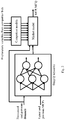
FIG. 2 illustrates a schematic representation of training a RL agent using the system ofFIG. 1 , according to some embodiments of the present disclosure. -
FIG. 3 is a flow diagram depicting steps involved in the processes of training the RL agent and using the RL agent to generate bid recommendations to a user, according to some embodiments of the present disclosure. -
FIGS. 4a and 4b are exemplary graphs showing advantage of the RL agent based bid prediction over a state of the art technique, as experimental results of the system ofFIG. 1 , according to some embodiments of the present disclosure. - Exemplary embodiments are described with reference to the accompanying drawings. In the figures, the left-most digit(s) of a reference number identifies the figure in which the reference number first appears. Wherever convenient, the same reference numbers are used throughout the drawings to refer to the same or like parts. While examples and features of disclosed principles are described herein, modifications, adaptations, and other implementations are possible without departing from the scope of the disclosed embodiments. It is intended that the following detailed description be considered as exemplary only, with the true scope being indicated by the following claims.
- Referring now to the drawings, and more particularly to
FIG. 1 through FIG. 4b , where similar reference characters denote corresponding features consistently throughout the figures, there are shown preferred embodiments and these embodiments are described in the context of the following exemplary system and/or method. -
FIG. 1 illustrates anexemplary system 100 for building a Reinforcement Learning (RL) based model for bid generation, according to some embodiments of the present disclosure. Thesystem 100 includes at least onememory 101, one ormore hardware processors 102, and at least onecommunication interface 103. - The one or
more hardware processors 102 can be implemented as one or more microprocessors, microcomputers, microcontrollers, digital signal processors, central processing units, state machines, graphics controllers, logic circuitries, and/or any devices that manipulate signals based on operational instructions. Among other capabilities, the hardware processor(s) 102 are configured to fetch and execute computer-readable instructions stored in thememory 101, which causes the hardware processor(s) 102 to perform one or more actions associated with the bid generation. In an embodiment, thesystem 100 can be implemented in a variety of computing systems, such as laptop computers, notebooks, hand-held devices, workstations, mainframe computers, servers, a network cloud and the like. - The communication interface(s) 103 can include a variety of software and hardware interfaces, for example, a web interface, a graphical user interface, and the like and can facilitate multiple communications within a wide variety of networks N/W and protocol types, including wired networks, for example, LAN, cable, etc., and wireless networks, such as WLAN, cellular, or satellite. In an embodiment, the communication interface(s) 103 can include one or more ports for connecting a number of devices to one another or to another server.
- The
memory 101 may include any computer-readable medium known in the art including, for example, volatile memory, such as static random access memory (SRAM) and dynamic random access memory (DRAM), and/or non-volatile memory, such as read only memory (ROM), erasable programmable ROM, flash memories, hard disks, optical disks, and magnetic tapes. In an embodiment, one or more modules (not shown) of thesystem 100 can be stored in thememory 101. Thememory 101 stores a plurality of instructions which when executed, cause the one ormore hardware processors 102 to perform the actions associated with building of the RL based model for bid generation depicted inFIG. 2 andFIG. 3 . Various steps given in description ofFIG. 2 andFIG. 3 are in reference to thesystem 100 and components of thesystem 100 thereof. In addition to the plurality of instructions, thememory 101 stores any other data, which may be collected as input, or may be generated during data processing being handled by thesystem 100 during training of the RL agent and/or for generating the bid recommendations for a given set of real-time inputs, and/or the bidding recommendations generated for each input set. For example, thememory 101 stores in one or more associated databases, information on state space and action space variables defined for the RL agent of thesystem 100. The RL agent is realized using one or more of thehardware processors 102 of thesystem 100. In an embodiment, terms 'RL agent', 'agent' and so on are used interchangeably. - The
system 100 uses reinforcement learning (RL) to train an agent to place price and quantity bids in the market so as to improve its total profit over a performance horizon of 48 half-hour bidding slots spanning one day. Thesystem 100 models the agent's interaction with the market as a Markov Decision Process (MDP). Thesystem 100 uses information pertaining to various parameters historical information across a pre-defined time period corresponding to the one or more energy generators in one or more energy markets, the historical information including a demand, a clearing price, number of bids placed by the one or more energy generators, and an actual quantity of generation cleared by a market operator for the one or more energy generators, which form a market clearing model and a competitor model respectively, built using the historical information/logs. Details of these market clearing model and a competitor model are given in Indian patent application201921023159 - In an MDP formulation, at each decision epoch t, the agent observes the state s of the environment, takes an action a and receives a reward r that may depend on both the state s and the action a. The agent's action causes the state of the environment to change in a probabilistic manner. The agent's optimization problem is to find a decision strategy to maximize the sum of rewards over a finite horizon of decision epochs. In the RL setting, the dynamics of the environment are not known to the agent, and therefore the agent's optimal strategy needs to be learned only from observed outcomes of past decisions. In bidding problem as being defined and addressed by the present disclosure, each decision epoch represents a bidding opportunity for one of the next 48 future consumption slots, while the agent's set of ten price-quantity bids constitute the action at that decision epoch. The agent's reward for each decision taken is the profit earned by the agent based on market clearance for each consumption slot.
- For training the RL agent, the
system 100 defines (302) a state space for the RL agent. Details of the state space of the RL agent are given below. - In order to trade off accuracy with computational tractability, it is important to choose a parsimonious state representation which only includes that information which is most pertinent to the bidding task. When training or bidding at time slot t for a future consumption slot t + h, where h ∈ {1, 2, ... , 48}, the
system 100 chooses the following as state variables: (i) the forecasted demand Dt+h for the consumption slot t + h that is available at time slot t, (ii) realized demand D t+h-48 and MCP P t+h-48 at the time slot t+h-48 which precedes the consumption slot t +h by 24 hours, and (iii) realized demand D t+h-336 and MCP P t+h-336 at the time slot which precedes the consumption slot by exactly one week. Thus the state vector when bidding time at slot t for a consumption slot t + h is:
- The
system 100 uses a Deep Q-Network (DQN) algorithm to realize a trained agent. The DQN algorithm is built around a neural network that approximates the best possible action-value function denoted by Q(s, a) for state s and action a. In other words, the value of Q(s, a) is the one that the agent can hope to receive by applying action a when it is in state s, and then subsequently applying optimal actions till the end of the performance horizon. Increasing the value of Q(s, a) for any agent is likely to maximize profit/reward. Training involves iteratively updating the parameter θ to reduce the error between the estimated state-action value function Qθ (s, a) and the true but unknown state-action value function Q(s, a). When in state 's', the trained agent applies the action a that yields a maximum value for Q θ*=(s, a), where the parameter value θ* represents the trained neural network. - For training the RL agent, the
system 100 also defines (304) an action space for the RL agent. Details of the action space of the RL agent are given below. - In order to tractably compute actions that maximize the estimated state-action value function Qθ (s, a) at a state s, it is important to keep the number of actions finite and preferably, small. On the other hand, the agent has to act in the real world by placing price and quantity bids that can take values in a continuous range. Such conflicting requirements are reconciled by introducing a few simplifications:
- 1. An agent has to place bids for all the 48 slots of the next day simultaneously and the bids for all the 48 slots are cleared in parallel by the market. If the system reliability and transient stability requirements of the market operator is overtaken and if it is assumed that a generator has the ability to ramp up or ramp down its generation quantity across the sequence of 48 time slots as required, then the decision to arrive at the <p, q> values for each time slot becomes independent of each other (if the demand for the time slots are known). In other words, the act of placing bids for all the 48 time slots can be decomposed to a sequence of 48 independent single time-slot bids (which can be executed in parallel). In other words, the action space can be modeled so as to consider the problem of generating bids for one time slot alone (rather than 48 time slots).
- 2. It has been observed that certain generating units place bids in the same 10 price bands, with only the quantity bids placed in those price bands varying from auction to auction.
- 3. It has been also observed that the total power bid by the generating unit in any auction was found equal to the generating capacity of the unit. In other words, certain generators belonged to the constant TBQ set.
-
Observations - When being trained by the
system 100, the agent observes a state 's' when bidding at time slot t for a consumption slot t + s, s ∈ {1, .....48}, and places a set of 10 quantity bids by selecting the action that maximizes the approximate state-action value function Qθ (s, a). The bids of competing agents are simulated by invoking supervised learning models. A market model clears the market based on the bids of the learning agents and all competing agents, and updates the state to s'. The dispatched bid of the agent results in a revenue to the agent equal to the product of the quantity dispatched and the MCP. At the same time, the agent incurs fixed and variable per unit costs on the quantity of power produced and dispatched. The difference between the revenue and the cost is the profit that the agent receives as immediate reward. Each time slot thus results in a state transition (s, a, s') along with the accompanying immediate reward. The parameter vector θ of the neural network is updated in accordance with the DQN algorithm from several state transitions accumulated over time. The neural network used has three hidden layers with 10 units each in the first two hidden layers, and 5 units in the third hidden layer. In addition, the network has an input layer with as many inputs as the number of state variables, and an output layer with as many units as the number of discrete actions that the agent has to choose from. All units use the Rectified Linear Units (ReLU) activation function, and the optimizer used during training is RMSProp. A schematic of the training is depicted inFigure 2 . - The
system 100 uses demand data from the historical logs for training the RL agent since the demand is typically independent of the generator bidding behavior. However, it is to be noted that the historical behavior of the competition observed in the logs may not be appropriate for training the RL agent. This is because, the market clearing price and quantity realized during training could be different from that of the historical logs (owing to the RL agent submitting a bid different from that of the historical logs). Consequently, the competition behavior may evolve differently from that observed in the historical logs which needs to be captured during training. Hence, the competition models are used during the RL agent's training. Further, with the help of competition and market models, the RL agent can be trained for a longer duration (than what is available in the historical logs) by looping the historical demand data. - The RL algorithm, has an explore-exploit trade off parameter which aids the agent in choosing previously unexplored actions. This parameter is set to a high value in the beginning of the training process helping the agent to choose different possible actions and understand the corresponding reward signals. The parameter is decayed during the training epochs as the agent learns to choose actions that maximize reward.
- A trained RL agent, at
step 306, when used to process real-time input data to generate bidding recommendations, follows the same approach explained under the "training of the RL agent" section to generate the bidding recommendation for the given input data, i.e. for a state being observed, the RL agent computes an estimated state-action value function for each of a plurality of actions in the action space. Further thesystem 100 compares the estimated state-action value function of each of the actions with value of the pre-defined true state-action function and determines error between the estimated state-action value function and the true state-action function. By comparing the error generated for the actions in the action space, thesystem 100 determines (308) an action from among a plurality of actions defined in the action space, for the state s being observed, as action that minimizes error between Qθ (s, a) and Q(s, a) for the state s and executes the action with least value of error, and executes (310) the determined action with least value of error to generate the bidding recommendation. The bid suggestions generated by thesystem 100 via the agent may be used by one or more users while placing the bids. - In order to compare the performance of the RL agent against the historical performance, data from a region in National Energy Market (NEM) for a period of 26 days each in summer and winter of 2016 was considered. For sake of brevity, results obtained from the 26 days during winter of 2016 are discussed. Bidding over this 26 day period were considered as different realizations of the underlying process rather than as a time series. This is because, the temporal correlations governing the behavior of the competitive generators across days (as found in the historical logs) break down due to the different market clearing price and quantity arising out of the RL agent's different bidding behavior. Therefore, the performance of the RL agent is compared against the performance historically observed during each of the 26 realizations.
- To find the RL agent's performance on a given historical day, the historical bid placed by the generator of interest was replaced with the bid value suggested by the RL agent. Further, the new market clearing price and quantity were estimated under this new bid (along with the historical bids of the competition) using data from the market model. Note that in the historical logs, the bids submitted by the participating generators get cleared by a NEMDE market engine, and as this is different from the market model used by the
system 100, this difference can introduce bias in the estimates of the new market clearing price and quantity resulting with the participation of the RL agent. This effect is nullified in comparison with the historical performance as follows. The historical bid values submitted by all the generators to the market model used by thesystem 100 are fed to obtain estimates of the historical market clearing price and quantity. The performance comparisons are then made between the market clearing price and quantity estimated by the market model with and without the bids submitted by the RL agent. - The RL agent's performance in placing bids is measured in terms of the following metrics:
- Cumulative revenue: Revenue is defined as the product of the market clearing price (MCP) and quantity of generation cleared for a generator in a given time slot. The revenue generated in each time slot is calculated and the total revenue accumulated over a day is taken as a performance metric.
- Cumulative profit: Profit is defined as the difference between revenue earned in a given time slot and the cost of generation in that time slot. Any cost involved in disbursing the generated power is also deducted from the revenue to determine the profit. As with revenue, even the profits are accumulated over a day and this total profit is taken as the performance metric.
- Cleared bid Quantity (CBQ) Ratio: The CBQ is calculated as the ratio between total cleared quantity for the plant and maximum quantity available with the plant for bidding. This ratio is calculated at every time slot of the day and averaged over all days of the testing period. This metric gives an indication of the generator's utilization and hence is useful from the perspective of generator operators.
-
FIGS. 4a and 4b are exemplary graphs showing advantage of the RL agent based bid prediction over a state of the art technique, as experimental results of the system ofFIG. 1 , according to some embodiments of the present disclosure.Figure 4a gives the performance of the RL bidding agent alongside the historical values for each of the days. As can be seen, for most of the days, the RL agent performs better in terms of profit (as well as revenue). This shows that the RL strategy does not compromise one metric for the sake of the other - since revenue can be increased at the cost of profit by bidding large quantities at lower prices and vice-versa. As can be seen fromFigure 4b , the RL agent increases the average values of the profit and revenue observed across these 26 days by nearly 20% and 15% respectively over historical bidding. In the similar way, an increase in average cleared bid quantity ratio also was seen across the 26 days for the RL agent and historical bidding. Clearly, the RL agent performs better on this metric as well. In fact, the RL agent improves the cleared bid ratio by nearly 20% which in turn implies that the generator's utilization improves by an equivalent percentage. - The written description describes the subject matter herein to enable any person skilled in the art to make and use the embodiments. The scope of the subject matter embodiments is defined by the claims and may include other modifications that occur to those skilled in the art. Such other modifications are intended to be within the scope of the claims if they have similar elements that do not differ from the literal language of the claims or if they include equivalent elements with insubstantial differences from the literal language of the claims.
- The embodiments of present disclosure herein address unresolved problem of bidding recommendations for an energy market. Embodiments thus provides a Reinforcement Learning (RL) based approach for generating bidding recommendations in an energy market. Moreover, the embodiments herein further provide a mechanism of modeling interaction of the RL agent with an energy market using a Markovian Decision Process (MDP) model.
- It is to be understood that the scope of the protection is extended to such a program and in addition to a computer-readable means having a message therein; such computer-readable storage means contain program-code means for implementation of one or more steps of the method, when the program runs on a server or mobile device or any suitable programmable device. The hardware device can be any kind of device which can be programmed including e.g. any kind of computer like a server or a personal computer, or the like, or any combination thereof. The device may also include means which could be e.g. hardware means like e.g. an application-specific integrated circuit (ASIC), a field-programmable gate array (FPGA), or a combination of hardware and software means, e.g. an ASIC and an FPGA, or at least one microprocessor and at least one memory with software processing components located therein. Thus, the means can include both hardware means and software means. The method embodiments described herein could be implemented in hardware and software. The device may also include software means. Alternatively, the embodiments may be implemented on different hardware devices, e.g. using a plurality of CPUs.
- The embodiments herein can comprise hardware and software elements. The embodiments that are implemented in software include but are not limited to, firmware, resident software, microcode, etc. The functions performed by various components described herein may be implemented in other components or combinations of other components. For the purposes of this description, a computer-usable or computer readable medium can be any apparatus that can comprise, store, communicate, propagate, or transport the program for use by or in connection with the instruction execution system, apparatus, or device.
- The illustrated steps are set out to explain the exemplary embodiments shown, and it should be anticipated that ongoing technological development will change the manner in which particular functions are performed. These examples are presented herein for purposes of illustration, and not limitation. Further, the boundaries of the functional building blocks have been arbitrarily defined herein for the convenience of the description. Alternative boundaries can be defined so long as the specified functions and relationships thereof are appropriately performed. Alternatives (including equivalents, extensions, variations, deviations, etc., of those described herein) will be apparent to persons skilled in the relevant art(s) based on the teachings contained herein. Such alternatives fall within the scope of the disclosed embodiments. Also, the words "comprising," "having," "containing," and "including," and other similar forms are intended to be equivalent in meaning and be open ended in that an item or items following any one of these words is not meant to be an exhaustive listing of such item or items, or meant to be limited to only the listed item or items. It must also be noted that as used herein and in the appended claims, the singular forms "a," "an," and "the" include plural references unless the context clearly dictates otherwise.
- Furthermore, one or more computer-readable storage media may be utilized in implementing embodiments consistent with the present disclosure. A computer-readable storage medium refers to any type of physical memory on which information or data readable by a processor may be stored. Thus, a computer-readable storage medium may store instructions for execution by one or more processors, including instructions for causing the processor(s) to perform steps or stages consistent with the embodiments described herein. The term "computer-readable medium" should be understood to include tangible items and exclude carrier waves and transient signals, i.e., be non-transitory. Examples include random access memory (RAM), read-only memory (ROM), volatile memory, nonvolatile memory, hard drives, CD ROMs, DVDs, flash drives, disks, and any other known physical storage media.
- It is intended that the disclosure and examples be considered as exemplary only, with a true scope of disclosed embodiments being indicated by the following claims.
Claims (12)
- A system (100) for reinforcement based bidding in an energy market, comprising:a communication interface (103);a memory (101), wherein the memory comprises a Markovian Decision Process (MDP) based model of the energy market;one or more hardware processors (102), wherein the one or more hardware processors generate one or more bidding recommendations using Reinforcement Learning (RL), comprising:training a RL agent of the system, by modeling interaction of the RL agent with the MDP based model of the energy market as a Markovian Decision Process (MDP), comprising:defining (302) a state space of the RL agent by using a plurality of state space parameters comprising (i) a forecasted demand Dt+h for the consumption slot t + h that is available at time slot t, (ii) a realized demand Dt+h-48 and a Maximum Clearing Price (MCP) Pt+h-48 at the time slot t+h-48 which precedes the consumption slot t +h by 24 hours, and (iii) a realized demand Dt+h-336 and MCP Pt+h-336 at the time slot which precedes the consumption slot by one week, as state space variables; anddefining (304) an action space of the RL agent, comprising defining one or more actions for each state 's' in the state space, wherein the one or more actions when executed, maximize an estimated state-action value function Qθ (s, a) of each state in the state space to minimize error between the estimated state-action value function Qθ (s, a) and a true state action value function Q(s, a) is minimum; andprocessing one or more real-time inputs by the RL agent, comprising:observing a state 's' while bidding at a time slot t for a consumption slot t+s;determining (308) an action from among a plurality of actions defined in the action space, for the state s being observed, as action that minimizes error between Qθ (s, a) and Q(s, a) for the state s;executing the determined action to generate a bid; andrecommending (310) the generated bid to a user.
- The system (100) as claimed in claim 1, wherein the MDP based model of the energy market comprises:a first sub-model, wherein the first sub-model models a market clearing operation as an optimization problem as a function of price, maximum quantity of electric energy that can be supplied by a generator in a region m during time t, quantum of power flow through one or more transmission links in the region; anda second sub-model, wherein the second sub-model estimates bids from each competitor, for each generator being considered.
- The system (100) as claimed in claim 1, wherein the system determines the action for the state s being observed, by:determining error between Qθ (s, a) and Q(s, a) for the state s, for each of the one or more actions in the action space;comparing the error determined for the one or more actions with one another; anddetermining the action having least value of error, as the action that minimizes error between Qθ (s, a) and Q(s, a) for the state s.
- The system (100) as claimed in claim 1, wherein observing the state space s at time t for a consumption slot t+s by the system comprises obtaining value of each of the state space parameter from a historical information across a pre-defined time period corresponding to the one or more competitors, the historical information comprising a demand, a clearing price, number of bids placed by the one or more energy generators, and an actual quantity of generation cleared by a market operator for the one or more competitors.
- A processor implemented method (300) for reinforcement based bidding in an energy market, comprising:training a RL agent of a system, via one or more hardware processors, by modeling interaction of the RL agent with a Markovian Decision Process (MDP) based model of the energy market as a Markovian Decision Process, comprising:defining (302) a state space of the RL agent by using a plurality of state space parameters comprising (i) a forecasted demand Dt+h for the consumption slot t + h that is available at time slot t, (ii) a realized demand Dt+h-48 and a Maximum Clearing Price (MCP) Pt+h-48 at the time slot t +h-48 which precedes the consumption slot t +h by 24 hours, and (iii) a realized demand Dt+h-336 and MCP Pt+h-336 at the time slot which precedes the consumption slot by one week, as state space variables; anddefining (304) an action space of the RL agent, comprising defining one or more actions for each state s in the state space, wherein the one or more actions when executed, maximizes an estimated state-action value function Qθ (s, a) of each state in the state space to minimize error between the estimated state-action value function Qθ (s, a) and a true state action value function Q(s, a) is minimum; andprocessing one or more real-time inputs by the RL agent, via the one or more hardware processors, comprising:observing a state s while bidding at a time slot t for a consumption slot t+s;determining (308) an action from among a plurality of actions defined in the action space, for the state s being observed, as action that minimizes error between Qθ (s, a) and Q(s, a) for the state s;executing the determined action to generate a bid; andrecommending (310) the generated bid to a user.
- The processor implemented method as claimed in claim 5, wherein the MDP based model of the electric market comprises:a first sub-model, wherein the first sub-model models a market clearing operation as an optimization problem as a function of price, maximum quantity of electric energy that can be supplied by a generator in a region m during time t, quantum of power flow through one or more transmission links in the region; anda second sub-model, wherein the second sub-model estimates bids from each competitor, for each generator being considered.
- The processor implemented method as claimed in claim 5, wherein determining the action for the state s being observed, comprises:determining error between Qθ (s, a) and Q(s, a) for the state s, for each of the one or more actions in the action space;comparing the error determined for the one or more actions with one another; anddetermining the action having least value of error, as the action that minimizes error between Qθ (s, a) and Q(s, a) for the state s.
- The processor implemented method as claimed in claim 5, wherein observing the state space s at time t for a consumption slot t+s comprises obtaining value of each of the state space parameter from a historical information across a pre-defined time period corresponding to the one or more competitors, the historical information comprising a demand, a clearing price, number of bids placed by the one or more energy generators, and an actual quantity of generation cleared by a market operator for the one or more competitors.
- A non-transitory computer readable medium for reinforcement based bidding in an energy market, wherein the reinforcement based bidding comprising:training a RL agent of a system, via one or more hardware processors, by modeling interaction of the RL agent with a Markovian Decision Process (MDP) based model of the energy market as a Markovian Decision Process, comprising:defining a state space of the RL agent by using a plurality of state space parameters comprising (i) a forecasted demand Dt+h for the consumption slot t + h that is available at time slot t, (ii) a realized demand Dt+h-48 and a Maximum Clearing Price (MCP) Pt+h-48 at the time slot t +h-48 which precedes the consumption slot t +h by 24 hours, and (iii) a realized demand Dt+h-336 and MCP Pt+h-336 at the time slot which precedes the consumption slot by one week, as state space variables; anddefining an action space of the RL agent, comprising defining one or more actions for each state s in the state space, wherein the one or more actions when executed, maximizes an estimated state-action value function Qθ (s, a) of each state in the state space to minimize error between the estimated state-action value function Qθ (s, a) and a true state action value function Q(s, a) is minimum; andprocessing one or more real-time inputs by the RL agent, via the one or more hardware processors, comprising:observing a state s while bidding at a time slot t for a consumption slot t+s;determining an action from among a plurality of actions defined in the action space, for the state s being observed, as action that minimizes error between Qθ (s, a) and Q(s, a) for the state s;executing the determined action to generate a bid; andrecommending the generated bid to a user.
- The non-transitory computer readable medium as claimed in claim 9, wherein the MDP based model of the electric market comprises:a first sub-model, wherein the first sub-model models a market clearing operation as an optimization problem as a function of price, maximum quantity of electric energy that can be supplied by a generator in a region m during time t, quantum of power flow through one or more transmission links in the region; anda second sub-model, wherein the second sub-model estimates bids from each competitor, for each generator being considered.
- The non-transitory computer readable medium as claimed in claim 9, wherein determining the action for the state s being observed, comprises:determining error between Qθ (s, a) and Q(s, a) for the state s, for each of the one or more actions in the action space;comparing the error determined for the one or more actions with one another; anddetermining the action having least value of error, as the action that minimizes error between Qθ (s, a) and Q(s, a) for the state s.
- The non-transitory computer readable medium as claimed in claim 9, wherein observing the state space s at time t for a consumption slot t+s comprises obtaining value of each of the state space parameter from a historical information across a pre-defined time period corresponding to the one or more competitors, the historical information comprising a demand, a clearing price, number of bids placed by the one or more energy generators, and an actual quantity of generation cleared by a market operator for the one or more competitors.
Applications Claiming Priority (1)
| Application Number | Priority Date | Filing Date | Title |
|---|---|---|---|
| IN201921023163 | 2019-06-11 |
Publications (1)
| Publication Number | Publication Date |
|---|---|
| EP3751496A1 true EP3751496A1 (en) | 2020-12-16 |
Family
ID=71092353
Family Applications (1)
| Application Number | Title | Priority Date | Filing Date |
|---|---|---|---|
| EP20179416.1A Withdrawn EP3751496A1 (en) | 2019-06-11 | 2020-06-11 | Method and system for building reinforcement learning (rl) based model for generating bids |
Country Status (2)
| Country | Link |
|---|---|
| US (1) | US11476669B2 (en) |
| EP (1) | EP3751496A1 (en) |
Cited By (2)
| Publication number | Priority date | Publication date | Assignee | Title |
|---|---|---|---|---|
| CN113555870A (en) * | 2021-07-26 | 2021-10-26 | 国网江苏省电力有限公司南通供电分公司 | Q-learning photovoltaic prediction-based power distribution network multi-time scale optimization scheduling method |
| US20250252492A1 (en) * | 2024-02-01 | 2025-08-07 | Jpmorgan Chase Bank, N.A. | Method and system for dynamic request for quotation pricing using reinforcement learning and symbolic regression |
Families Citing this family (6)
| Publication number | Priority date | Publication date | Assignee | Title |
|---|---|---|---|---|
| TWI767525B (en) * | 2021-01-20 | 2022-06-11 | 國立清華大學 | Method and apparatus for renewable energy allocation based on reinforcement learning |
| US20240087019A1 (en) * | 2021-02-23 | 2024-03-14 | Distro Energy B.V. | Transparent Customizable and Transferrable Intelligent Trading Agent |
| US11817704B2 (en) * | 2021-02-23 | 2023-11-14 | Distro Energy B.V. | Transparent customizable and transferrable intelligent trading agent |
| CN116128543B (en) * | 2022-12-16 | 2024-05-24 | 国网山东省电力公司营销服务中心(计量中心) | A comprehensive simulation operation method and system for load declaration and clearing of power sales companies |
| CN116032020B (en) * | 2023-03-09 | 2025-07-29 | 中国华能集团清洁能源技术研究院有限公司 | Intelligent monitoring method and system for new energy power station |
| CN116679726B (en) * | 2023-08-01 | 2023-11-03 | 山东中建众力设备租赁有限公司 | Unmanned tower crane autonomous decision-making system based on edge calculation |
Family Cites Families (4)
| Publication number | Priority date | Publication date | Assignee | Title |
|---|---|---|---|---|
| US20110040636A1 (en) * | 2009-08-14 | 2011-02-17 | Simmons Willard L | Learning system for the use of competing valuation models for real-time advertisement bidding |
| EP3400558B1 (en) * | 2016-02-09 | 2024-11-20 | Google LLC | Reinforcement learning using advantage estimates |
| WO2018213630A1 (en) * | 2017-05-18 | 2018-11-22 | Drift Marketplace, Inc. | Energy opportunity optimitzation system |
| US10504195B2 (en) * | 2017-11-13 | 2019-12-10 | Mitsubishi Electric Research Laboratories, Inc. | System and method for decentralized energy production |
-
2020
- 2020-06-10 US US16/897,842 patent/US11476669B2/en active Active
- 2020-06-11 EP EP20179416.1A patent/EP3751496A1/en not_active Withdrawn
Non-Patent Citations (5)
| Title |
|---|
| ANONYMOUS: "Reinforcement learning - Wikipedia", 5 June 2016 (2016-06-05), XP055647529, Retrieved from the Internet <URL:https://en.wikipedia.org/w/index.php?title=Reinforcement_learning&oldid=723773487> [retrieved on 20191128] * |
| ATHINA C TELLIDOU ET AL: "Multi-Agent Reinforcement Learning for Strategic Bidding in Power Markets", INTELLIGENT SYSTEMS, 2006 3RD INTERNATIONAL IEEE CONFERENCE ON, IEEE, PI, 1 September 2006 (2006-09-01), pages 408 - 413, XP031078819, ISBN: 978-1-4244-0195-6 * |
| CHEN TAO ET AL: "Local Energy Trading Behavior Modeling With Deep Reinforcement Learning", IEEE ACCESS, vol. 6, 18 October 2018 (2018-10-18), pages 62806 - 62814, XP011704874, DOI: 10.1109/ACCESS.2018.2876652 * |
| CHEN TAO ET AL: "Self-learning Prosumer in Competitive Local Energy Market", 2019 IEEE INNOVATIVE SMART GRID TECHNOLOGIES - ASIA (ISGT ASIA), IEEE, 21 May 2019 (2019-05-21), pages 3085 - 3090, XP033638480, DOI: 10.1109/ISGT-ASIA.2019.8881496 * |
| LIANG XIAO ET AL: "Reinforcement Learning-based Energy Trading for Microgrids", ARXIV.ORG, CORNELL UNIVERSITY LIBRARY, 201 OLIN LIBRARY CORNELL UNIVERSITY ITHACA, NY 14853, 19 January 2018 (2018-01-19), XP081207980 * |
Cited By (3)
| Publication number | Priority date | Publication date | Assignee | Title |
|---|---|---|---|---|
| CN113555870A (en) * | 2021-07-26 | 2021-10-26 | 国网江苏省电力有限公司南通供电分公司 | Q-learning photovoltaic prediction-based power distribution network multi-time scale optimization scheduling method |
| CN113555870B (en) * | 2021-07-26 | 2023-10-13 | 国网江苏省电力有限公司南通供电分公司 | A multi-time scale optimal dispatching method for distribution network based on Q-learning photovoltaic prediction |
| US20250252492A1 (en) * | 2024-02-01 | 2025-08-07 | Jpmorgan Chase Bank, N.A. | Method and system for dynamic request for quotation pricing using reinforcement learning and symbolic regression |
Also Published As
| Publication number | Publication date |
|---|---|
| US11476669B2 (en) | 2022-10-18 |
| US20210021128A1 (en) | 2021-01-21 |
Similar Documents
| Publication | Publication Date | Title |
|---|---|---|
| US11476669B2 (en) | Method and system for building reinforcement learning (RL) based model for generating bids | |
| Qi et al. | A practical end-to-end inventory management model with deep learning | |
| US12093805B2 (en) | Optimal policy learning and recommendation for distribution task using deep reinforcement learning model | |
| US20230252285A1 (en) | Spatio-temporal graph neural network for time series prediction | |
| US20140317019A1 (en) | System and method for risk management and portfolio optimization | |
| O’Connor et al. | Electricity price forecasting in the irish balancing market | |
| US20220036387A1 (en) | Multi-faceted large-scale forecasting | |
| CN113283671B (en) | Method and device for predicting replenishment quantity, computer equipment and storage medium | |
| US20230402848A1 (en) | Energy storage optimization system | |
| US20140289007A1 (en) | Scenario based customer lifetime value determination | |
| Chowdhury et al. | Bidding in periodic double auctions using heuristics and dynamic monte carlo tree search. | |
| Nitka et al. | Combining predictive distributions of electricity prices: Does minimizing the CRPS lead to optimal decisions in day-ahead bidding? | |
| Haque et al. | Boosting stock price prediction with anticipated macro policy changes | |
| EP3751495A1 (en) | Neural network based prediction of competition behaviour in energy markets | |
| Guo et al. | Dynamic pricing models in e-commerce: Exploring machine learning techniques to balance profitability and customer satisfaction | |
| Cui et al. | Maximizing the lender’s profit: profit-oriented loan default prediction based on a weighting model | |
| Victor | Analyzing Stock Market Trends using Social Media user Moods and Social Influence using Lightweight BERT-BiGRU-A Model | |
| Chrysanthopoulos et al. | Learning optimal strategies in a stochastic game with partial information applied to electricity markets | |
| US20250022047A1 (en) | Systems and Methods for Optimal Bidding in Repeated Online First-Price Auctions | |
| US20230410201A1 (en) | Systems and methods for generating optimal intraday bids and operating schedules for distributed energy resources | |
| YL et al. | Stock Split Analysis and Market Value Predictions by using Enhanced Long Short-Term Memory | |
| Wang et al. | A Deep Reinforcement Learning Model for Portfolio Management based on Weight Adjustment | |
| Ballester et al. | Analysing the impact of renewables on Iberian wholesale electricity market prices using machine learning techniques | |
| CN115526412A (en) | Financial product transaction scheme determination method and device and electronic equipment | |
| EP4685722A1 (en) | Non-linear single level optimization model for estimating distributed energy resources responses in multi-aggregators multi-subscribers environment |
Legal Events
| Date | Code | Title | Description |
|---|---|---|---|
| PUAI | Public reference made under article 153(3) epc to a published international application that has entered the european phase |
Free format text: ORIGINAL CODE: 0009012 |
|
| STAA | Information on the status of an ep patent application or granted ep patent |
Free format text: STATUS: THE APPLICATION HAS BEEN PUBLISHED |
|
| AK | Designated contracting states |
Kind code of ref document: A1 Designated state(s): AL AT BE BG CH CY CZ DE DK EE ES FI FR GB GR HR HU IE IS IT LI LT LU LV MC MK MT NL NO PL PT RO RS SE SI SK SM TR |
|
| AX | Request for extension of the european patent |
Extension state: BA ME |
|
| STAA | Information on the status of an ep patent application or granted ep patent |
Free format text: STATUS: THE APPLICATION IS DEEMED TO BE WITHDRAWN |
|
| 18D | Application deemed to be withdrawn |
Effective date: 20210617 |