EP3750990A1 - Novel polypeptide-modifying enzymes and uses thereof - Google Patents
Novel polypeptide-modifying enzymes and uses thereof Download PDFInfo
- Publication number
- EP3750990A1 EP3750990A1 EP18213898.2A EP18213898A EP3750990A1 EP 3750990 A1 EP3750990 A1 EP 3750990A1 EP 18213898 A EP18213898 A EP 18213898A EP 3750990 A1 EP3750990 A1 EP 3750990A1
- Authority
- EP
- European Patent Office
- Prior art keywords
- polypeptide
- acid sequence
- nucleic acid
- amino acid
- heterologous
- Prior art date
- Legal status (The legal status is an assumption and is not a legal conclusion. Google has not performed a legal analysis and makes no representation as to the accuracy of the status listed.)
- Withdrawn
Links
- 102000004190 Enzymes Human genes 0.000 title claims abstract description 55
- 108090000790 Enzymes Proteins 0.000 title claims abstract description 55
- 108090000765 processed proteins & peptides Proteins 0.000 claims abstract description 180
- 102000004196 processed proteins & peptides Human genes 0.000 claims abstract description 148
- 150000007523 nucleic acids Chemical class 0.000 claims abstract description 82
- 241000579746 Microvirgula aerodenitrificans Species 0.000 claims abstract description 41
- 238000000034 method Methods 0.000 claims abstract description 33
- 108020004707 nucleic acids Proteins 0.000 claims abstract description 33
- 102000039446 nucleic acids Human genes 0.000 claims abstract description 33
- 239000013598 vector Substances 0.000 claims abstract description 18
- 229920001184 polypeptide Polymers 0.000 claims description 138
- 210000004027 cell Anatomy 0.000 claims description 76
- 108091028043 Nucleic acid sequence Proteins 0.000 claims description 43
- 241000588724 Escherichia coli Species 0.000 claims description 37
- 230000000694 effects Effects 0.000 claims description 30
- 230000014509 gene expression Effects 0.000 claims description 27
- 238000007069 methylation reaction Methods 0.000 claims description 24
- FDJOLVPMNUYSCM-WZHZPDAFSA-L cobalt(3+);[(2r,3s,4r,5s)-5-(5,6-dimethylbenzimidazol-1-yl)-4-hydroxy-2-(hydroxymethyl)oxolan-3-yl] [(2r)-1-[3-[(1r,2r,3r,4z,7s,9z,12s,13s,14z,17s,18s,19r)-2,13,18-tris(2-amino-2-oxoethyl)-7,12,17-tris(3-amino-3-oxopropyl)-3,5,8,8,13,15,18,19-octamethyl-2 Chemical compound [Co+3].N#[C-].N([C@@H]([C@]1(C)[N-]\C([C@H]([C@@]1(CC(N)=O)C)CCC(N)=O)=C(\C)/C1=N/C([C@H]([C@@]1(CC(N)=O)C)CCC(N)=O)=C\C1=N\C([C@H](C1(C)C)CCC(N)=O)=C/1C)[C@@H]2CC(N)=O)=C\1[C@]2(C)CCC(=O)NC[C@@H](C)OP([O-])(=O)O[C@H]1[C@@H](O)[C@@H](N2C3=CC(C)=C(C)C=C3N=C2)O[C@@H]1CO FDJOLVPMNUYSCM-WZHZPDAFSA-L 0.000 claims description 21
- 230000011987 methylation Effects 0.000 claims description 19
- 108090000623 proteins and genes Proteins 0.000 claims description 19
- DCXYFEDJOCDNAF-UHFFFAOYSA-N Asparagine Natural products OC(=O)C(N)CC(N)=O DCXYFEDJOCDNAF-UHFFFAOYSA-N 0.000 claims description 18
- DCXYFEDJOCDNAF-REOHCLBHSA-N L-asparagine Chemical compound OC(=O)[C@@H](N)CC(N)=O DCXYFEDJOCDNAF-REOHCLBHSA-N 0.000 claims description 18
- 229960001230 asparagine Drugs 0.000 claims description 18
- 235000009582 asparagine Nutrition 0.000 claims description 18
- 230000001580 bacterial effect Effects 0.000 claims description 17
- 230000001419 dependent effect Effects 0.000 claims description 16
- 230000004048 modification Effects 0.000 claims description 16
- 238000012986 modification Methods 0.000 claims description 16
- 102000004169 proteins and genes Human genes 0.000 claims description 16
- 239000012634 fragment Substances 0.000 claims description 15
- 241000579763 Microvirgula Species 0.000 claims description 14
- AYFVYJQAPQTCCC-UHFFFAOYSA-N Threonine Natural products CC(O)C(N)C(O)=O AYFVYJQAPQTCCC-UHFFFAOYSA-N 0.000 claims description 14
- 239000004473 Threonine Substances 0.000 claims description 14
- -1 telapevir Chemical compound 0.000 claims description 14
- 235000018102 proteins Nutrition 0.000 claims description 12
- 102000004879 Racemases and epimerases Human genes 0.000 claims description 10
- 108090001066 Racemases and epimerases Proteins 0.000 claims description 10
- 150000008574 D-amino acids Chemical class 0.000 claims description 9
- AGPKZVBTJJNPAG-WHFBIAKZSA-N L-isoleucine Chemical compound CC[C@H](C)[C@H](N)C(O)=O AGPKZVBTJJNPAG-WHFBIAKZSA-N 0.000 claims description 9
- ROHFNLRQFUQHCH-YFKPBYRVSA-N L-leucine Chemical compound CC(C)C[C@H](N)C(O)=O ROHFNLRQFUQHCH-YFKPBYRVSA-N 0.000 claims description 9
- KZSNJWFQEVHDMF-BYPYZUCNSA-N L-valine Chemical compound CC(C)[C@H](N)C(O)=O KZSNJWFQEVHDMF-BYPYZUCNSA-N 0.000 claims description 9
- ROHFNLRQFUQHCH-UHFFFAOYSA-N Leucine Natural products CC(C)CC(N)C(O)=O ROHFNLRQFUQHCH-UHFFFAOYSA-N 0.000 claims description 9
- KZSNJWFQEVHDMF-UHFFFAOYSA-N Valine Natural products CC(C)C(N)C(O)=O KZSNJWFQEVHDMF-UHFFFAOYSA-N 0.000 claims description 9
- 238000006243 chemical reaction Methods 0.000 claims description 9
- 229960000310 isoleucine Drugs 0.000 claims description 9
- AGPKZVBTJJNPAG-UHFFFAOYSA-N isoleucine Natural products CCC(C)C(N)C(O)=O AGPKZVBTJJNPAG-UHFFFAOYSA-N 0.000 claims description 9
- 239000000203 mixture Substances 0.000 claims description 9
- 230000004481 post-translational protein modification Effects 0.000 claims description 9
- 239000002243 precursor Substances 0.000 claims description 9
- NPDBDJFLKKQMCM-UHFFFAOYSA-N tert-butylglycine Chemical compound CC(C)(C)C(N)C(O)=O NPDBDJFLKKQMCM-UHFFFAOYSA-N 0.000 claims description 9
- 239000004474 valine Substances 0.000 claims description 9
- 150000001412 amines Chemical class 0.000 claims description 8
- 239000013612 plasmid Substances 0.000 claims description 8
- 150000008575 L-amino acids Chemical class 0.000 claims description 7
- 108091008324 binding proteins Proteins 0.000 claims description 7
- FWMNVWWHGCHHJJ-SKKKGAJSSA-N 4-amino-1-[(2r)-6-amino-2-[[(2r)-2-[[(2r)-2-[[(2r)-2-amino-3-phenylpropanoyl]amino]-3-phenylpropanoyl]amino]-4-methylpentanoyl]amino]hexanoyl]piperidine-4-carboxylic acid Chemical compound C([C@H](C(=O)N[C@H](CC(C)C)C(=O)N[C@H](CCCCN)C(=O)N1CCC(N)(CC1)C(O)=O)NC(=O)[C@H](N)CC=1C=CC=CC=1)C1=CC=CC=C1 FWMNVWWHGCHHJJ-SKKKGAJSSA-N 0.000 claims description 6
- 101100215643 Aeromonas sobria aerC gene Proteins 0.000 claims description 6
- 101710167853 N-methyltransferase Proteins 0.000 claims description 6
- 238000012217 deletion Methods 0.000 claims description 6
- 230000037430 deletion Effects 0.000 claims description 6
- 230000009144 enzymatic modification Effects 0.000 claims description 6
- 229930188070 thiostrepton Natural products 0.000 claims description 6
- MTCFGRXMJLQNBG-REOHCLBHSA-N (2S)-2-Amino-3-hydroxypropansäure Chemical group OC[C@H](N)C(O)=O MTCFGRXMJLQNBG-REOHCLBHSA-N 0.000 claims description 5
- 108020004414 DNA Proteins 0.000 claims description 5
- 102000004867 Hydro-Lyases Human genes 0.000 claims description 5
- 108090001042 Hydro-Lyases Proteins 0.000 claims description 5
- MTCFGRXMJLQNBG-UHFFFAOYSA-N Serine Chemical group OCC(N)C(O)=O MTCFGRXMJLQNBG-UHFFFAOYSA-N 0.000 claims description 5
- 238000004519 manufacturing process Methods 0.000 claims description 5
- 230000001035 methylating effect Effects 0.000 claims description 5
- 238000006467 substitution reaction Methods 0.000 claims description 5
- 125000000341 threoninyl group Chemical group [H]OC([H])(C([H])([H])[H])C([H])(N([H])[H])C(*)=O 0.000 claims description 5
- DEQANNDTNATYII-OULOTJBUSA-N (4r,7s,10s,13r,16s,19r)-10-(4-aminobutyl)-19-[[(2r)-2-amino-3-phenylpropanoyl]amino]-16-benzyl-n-[(2r,3r)-1,3-dihydroxybutan-2-yl]-7-[(1r)-1-hydroxyethyl]-13-(1h-indol-3-ylmethyl)-6,9,12,15,18-pentaoxo-1,2-dithia-5,8,11,14,17-pentazacycloicosane-4-carboxa Chemical compound C([C@@H](N)C(=O)N[C@H]1CSSC[C@H](NC(=O)[C@H]([C@@H](C)O)NC(=O)[C@H](CCCCN)NC(=O)[C@@H](CC=2C3=CC=CC=C3NC=2)NC(=O)[C@H](CC=2C=CC=CC=2)NC1=O)C(=O)N[C@H](CO)[C@H](O)C)C1=CC=CC=C1 DEQANNDTNATYII-OULOTJBUSA-N 0.000 claims description 4
- AXRYRYVKAWYZBR-UHFFFAOYSA-N Atazanavir Natural products C=1C=C(C=2N=CC=CC=2)C=CC=1CN(NC(=O)C(NC(=O)OC)C(C)(C)C)CC(O)C(NC(=O)C(NC(=O)OC)C(C)(C)C)CC1=CC=CC=C1 AXRYRYVKAWYZBR-UHFFFAOYSA-N 0.000 claims description 4
- 108010019625 Atazanavir Sulfate Proteins 0.000 claims description 4
- 108010001478 Bacitracin Proteins 0.000 claims description 4
- 108010078777 Colistin Proteins 0.000 claims description 4
- 108010092160 Dactinomycin Proteins 0.000 claims description 4
- 108010013198 Daptomycin Proteins 0.000 claims description 4
- BLCLNMBMMGCOAS-URPVMXJPSA-N Goserelin Chemical compound C([C@@H](C(=O)N[C@H](COC(C)(C)C)C(=O)N[C@@H](CC(C)C)C(=O)N[C@@H](CCCN=C(N)N)C(=O)N1[C@@H](CCC1)C(=O)NNC(N)=O)NC(=O)[C@H](CO)NC(=O)[C@H](CC=1C2=CC=CC=C2NC=1)NC(=O)[C@H](CC=1NC=NC=1)NC(=O)[C@H]1NC(=O)CC1)C1=CC=C(O)C=C1 BLCLNMBMMGCOAS-URPVMXJPSA-N 0.000 claims description 4
- 108010069236 Goserelin Proteins 0.000 claims description 4
- 108010026389 Gramicidin Proteins 0.000 claims description 4
- 108010000817 Leuprolide Proteins 0.000 claims description 4
- 108010053775 Nisin Proteins 0.000 claims description 4
- NVNLLIYOARQCIX-MSHCCFNRSA-N Nisin Chemical compound N1C(=O)[C@@H](CC(C)C)NC(=O)C(=C)NC(=O)[C@@H]([C@H](C)CC)NC(=O)[C@@H](NC(=O)C(=C/C)/NC(=O)[C@H](N)[C@H](C)CC)CSC[C@@H]1C(=O)N[C@@H]1C(=O)N2CCC[C@@H]2C(=O)NCC(=O)N[C@@H](C(=O)N[C@H](CCCCN)C(=O)N[C@@H]2C(NCC(=O)N[C@H](C)C(=O)N[C@H](CC(C)C)C(=O)N[C@H](CCSC)C(=O)NCC(=O)N[C@H](CS[C@@H]2C)C(=O)N[C@H](CC(N)=O)C(=O)N[C@H](CCSC)C(=O)N[C@H](CCCCN)C(=O)N[C@@H]2C(N[C@H](C)C(=O)N[C@@H]3C(=O)N[C@@H](C(N[C@H](CC=4NC=NC=4)C(=O)N[C@H](CS[C@@H]3C)C(=O)N[C@H](CO)C(=O)N[C@H]([C@H](C)CC)C(=O)N[C@H](CC=3NC=NC=3)C(=O)N[C@H](C(C)C)C(=O)NC(=C)C(=O)N[C@H](CCCCN)C(O)=O)=O)CS[C@@H]2C)=O)=O)CS[C@@H]1C NVNLLIYOARQCIX-MSHCCFNRSA-N 0.000 claims description 4
- 108010016076 Octreotide Proteins 0.000 claims description 4
- 101100215644 Planktothrix agardhii aerD gene Proteins 0.000 claims description 4
- 108010040201 Polymyxins Proteins 0.000 claims description 4
- 108010053950 Teicoplanin Proteins 0.000 claims description 4
- 108010059993 Vancomycin Proteins 0.000 claims description 4
- 229930183665 actinomycin Natural products 0.000 claims description 4
- 239000003242 anti bacterial agent Substances 0.000 claims description 4
- AXRYRYVKAWYZBR-GASGPIRDSA-N atazanavir Chemical compound C([C@H](NC(=O)[C@@H](NC(=O)OC)C(C)(C)C)[C@@H](O)CN(CC=1C=CC(=CC=1)C=1N=CC=CC=1)NC(=O)[C@@H](NC(=O)OC)C(C)(C)C)C1=CC=CC=C1 AXRYRYVKAWYZBR-GASGPIRDSA-N 0.000 claims description 4
- 229960003277 atazanavir Drugs 0.000 claims description 4
- 229960003071 bacitracin Drugs 0.000 claims description 4
- 229930184125 bacitracin Natural products 0.000 claims description 4
- CLKOFPXJLQSYAH-ABRJDSQDSA-N bacitracin A Chemical compound C1SC([C@@H](N)[C@@H](C)CC)=N[C@@H]1C(=O)N[C@@H](CC(C)C)C(=O)N[C@H](CCC(O)=O)C(=O)N[C@@H]([C@@H](C)CC)C(=O)N[C@@H]1C(=O)N[C@H](CCCN)C(=O)N[C@@H]([C@@H](C)CC)C(=O)N[C@H](CC=2C=CC=CC=2)C(=O)N[C@@H](CC=2N=CNC=2)C(=O)N[C@H](CC(O)=O)C(=O)N[C@@H](CC(N)=O)C(=O)NCCCC1 CLKOFPXJLQSYAH-ABRJDSQDSA-N 0.000 claims description 4
- LHHCSNFAOIFYRV-DOVBMPENSA-N boceprevir Chemical compound O=C([C@@H]1[C@@H]2[C@@H](C2(C)C)CN1C(=O)[C@@H](NC(=O)NC(C)(C)C)C(C)(C)C)NC(C(=O)C(N)=O)CC1CCC1 LHHCSNFAOIFYRV-DOVBMPENSA-N 0.000 claims description 4
- 229960000517 boceprevir Drugs 0.000 claims description 4
- DDTDNCYHLGRFBM-YZEKDTGTSA-N chembl2367892 Chemical compound CC(=O)N[C@H]1[C@@H](O)[C@H](O)[C@H](CO)O[C@H]1O[C@@H]([C@H]1C(N[C@@H](C2=CC(O)=CC(O[C@@H]3[C@H]([C@H](O)[C@H](O)[C@@H](CO)O3)O)=C2C=2C(O)=CC=C(C=2)[C@@H](NC(=O)[C@@H]2NC(=O)[C@@H]3C=4C=C(O)C=C(C=4)OC=4C(O)=CC=C(C=4)[C@@H](N)C(=O)N[C@H](CC=4C=C(Cl)C(O5)=CC=4)C(=O)N3)C(=O)N1)C(O)=O)=O)C(C=C1Cl)=CC=C1OC1=C(O[C@H]3[C@H]([C@@H](O)[C@H](O)[C@H](CO)O3)NC(C)=O)C5=CC2=C1 DDTDNCYHLGRFBM-YZEKDTGTSA-N 0.000 claims description 4
- 229960003346 colistin Drugs 0.000 claims description 4
- 231100000599 cytotoxic agent Toxicity 0.000 claims description 4
- 239000002619 cytotoxin Substances 0.000 claims description 4
- 229960002488 dalbavancin Drugs 0.000 claims description 4
- 108700009376 dalbavancin Proteins 0.000 claims description 4
- DOAKLVKFURWEDJ-QCMAZARJSA-N daptomycin Chemical compound C([C@H]1C(=O)O[C@H](C)[C@@H](C(NCC(=O)N[C@@H](CCCN)C(=O)N[C@@H](CC(O)=O)C(=O)N[C@H](C)C(=O)N[C@@H](CC(O)=O)C(=O)NCC(=O)N[C@H](CO)C(=O)N[C@H](C(=O)N1)[C@H](C)CC(O)=O)=O)NC(=O)[C@H](CC(O)=O)NC(=O)[C@@H](CC(N)=O)NC(=O)[C@H](CC=1C2=CC=CC=C2NC=1)NC(=O)CCCCCCCCC)C(=O)C1=CC=CC=C1N DOAKLVKFURWEDJ-QCMAZARJSA-N 0.000 claims description 4
- 229960005484 daptomycin Drugs 0.000 claims description 4
- 229950008970 glecaprevir Drugs 0.000 claims description 4
- MLSQGNCUYAMAHD-ITNVBOSISA-N glecaprevir Chemical compound O=C([C@@H]1C[C@H]2OC3=NC4=CC=CC=C4N=C3C(F)(F)/C=C/CO[C@@H]3CCC[C@H]3OC(=O)N[C@H](C(N1C2)=O)C(C)(C)C)N[C@]1(C(=O)NS(=O)(=O)C2(C)CC2)C[C@H]1C(F)F MLSQGNCUYAMAHD-ITNVBOSISA-N 0.000 claims description 4
- 229960002913 goserelin Drugs 0.000 claims description 4
- 229960004905 gramicidin Drugs 0.000 claims description 4
- ZWCXYZRRTRDGQE-SORVKSEFSA-N gramicidina Chemical compound C1=CC=C2C(C[C@H](NC(=O)[C@@H](CC(C)C)NC(=O)[C@H](CC=3C4=CC=CC=C4NC=3)NC(=O)[C@@H](CC(C)C)NC(=O)[C@H](CC=3C4=CC=CC=C4NC=3)NC(=O)[C@@H](CC(C)C)NC(=O)[C@H](CC=3C4=CC=CC=C4NC=3)NC(=O)[C@H](C(C)C)NC(=O)[C@H](C(C)C)NC(=O)[C@@H](C(C)C)NC(=O)[C@H](C)NC(=O)[C@H](NC(=O)[C@H](C)NC(=O)CNC(=O)[C@@H](NC=O)C(C)C)CC(C)C)C(=O)NCCO)=CNC2=C1 ZWCXYZRRTRDGQE-SORVKSEFSA-N 0.000 claims description 4
- GFIJNRVAKGFPGQ-LIJARHBVSA-N leuprolide Chemical compound CCNC(=O)[C@@H]1CCCN1C(=O)[C@H](CCCNC(N)=N)NC(=O)[C@H](CC(C)C)NC(=O)[C@@H](CC(C)C)NC(=O)[C@@H](NC(=O)[C@H](CO)NC(=O)[C@H](CC=1C2=CC=CC=C2NC=1)NC(=O)[C@H](CC=1N=CNC=1)NC(=O)[C@H]1NC(=O)CC1)CC1=CC=C(O)C=C1 GFIJNRVAKGFPGQ-LIJARHBVSA-N 0.000 claims description 4
- 229960004338 leuprorelin Drugs 0.000 claims description 4
- JORAUNFTUVJTNG-BSTBCYLQSA-N n-[(2s)-4-amino-1-[[(2s,3r)-1-[[(2s)-4-amino-1-oxo-1-[[(3s,6s,9s,12s,15r,18s,21s)-6,9,18-tris(2-aminoethyl)-3-[(1r)-1-hydroxyethyl]-12,15-bis(2-methylpropyl)-2,5,8,11,14,17,20-heptaoxo-1,4,7,10,13,16,19-heptazacyclotricos-21-yl]amino]butan-2-yl]amino]-3-h Chemical compound CC(C)CCCCC(=O)N[C@@H](CCN)C(=O)N[C@H]([C@@H](C)O)CN[C@@H](CCN)C(=O)N[C@H]1CCNC(=O)[C@H]([C@@H](C)O)NC(=O)[C@H](CCN)NC(=O)[C@H](CCN)NC(=O)[C@H](CC(C)C)NC(=O)[C@@H](CC(C)C)NC(=O)[C@H](CCN)NC1=O.CCC(C)CCCCC(=O)N[C@@H](CCN)C(=O)N[C@H]([C@@H](C)O)CN[C@@H](CCN)C(=O)N[C@H]1CCNC(=O)[C@H]([C@@H](C)O)NC(=O)[C@H](CCN)NC(=O)[C@H](CCN)NC(=O)[C@H](CC(C)C)NC(=O)[C@@H](CC(C)C)NC(=O)[C@H](CCN)NC1=O JORAUNFTUVJTNG-BSTBCYLQSA-N 0.000 claims description 4
- 239000004309 nisin Substances 0.000 claims description 4
- 235000010297 nisin Nutrition 0.000 claims description 4
- 229960002700 octreotide Drugs 0.000 claims description 4
- VHFGEBVPHAGQPI-MYYQHNLBSA-N oritavancin Chemical compound O([C@@H]1C2=CC=C(C(=C2)Cl)OC=2C=C3C=C(C=2O[C@H]2[C@@H]([C@@H](O)[C@H](O)[C@@H](CO)O2)O[C@@H]2O[C@@H](C)[C@H](O)[C@@](C)(NCC=4C=CC(=CC=4)C=4C=CC(Cl)=CC=4)C2)OC2=CC=C(C=C2Cl)[C@@H](O)[C@H](C(N[C@@H](CC(N)=O)C(=O)N[C@H]3C(=O)N[C@H]2C(=O)N[C@@H]1C(N[C@H](C1=CC(O)=CC(O)=C1C=1C(O)=CC=C2C=1)C(O)=O)=O)=O)NC(=O)[C@@H](CC(C)C)NC)[C@H]1C[C@](C)(N)[C@@H](O)[C@H](C)O1 VHFGEBVPHAGQPI-MYYQHNLBSA-N 0.000 claims description 4
- 229960001607 oritavancin Drugs 0.000 claims description 4
- 108010006945 oritavancin Proteins 0.000 claims description 4
- XDJYMJULXQKGMM-UHFFFAOYSA-N polymyxin E1 Natural products CCC(C)CCCCC(=O)NC(CCN)C(=O)NC(C(C)O)C(=O)NC(CCN)C(=O)NC1CCNC(=O)C(C(C)O)NC(=O)C(CCN)NC(=O)C(CCN)NC(=O)C(CC(C)C)NC(=O)C(CC(C)C)NC(=O)C(CCN)NC1=O XDJYMJULXQKGMM-UHFFFAOYSA-N 0.000 claims description 4
- KNIWPHSUTGNZST-UHFFFAOYSA-N polymyxin E2 Natural products CC(C)CCCCC(=O)NC(CCN)C(=O)NC(C(C)O)C(=O)NC(CCN)C(=O)NC1CCNC(=O)C(C(C)O)NC(=O)C(CCN)NC(=O)C(CCN)NC(=O)C(CC(C)C)NC(=O)C(CC(C)C)NC(=O)C(CCN)NC1=O KNIWPHSUTGNZST-UHFFFAOYSA-N 0.000 claims description 4
- 229960001608 teicoplanin Drugs 0.000 claims description 4
- 108010041283 teixobactin Proteins 0.000 claims description 4
- LMBFAGIMSUYTBN-MPZNNTNKSA-N teixobactin Chemical compound C([C@H](C(=O)N[C@@H]([C@@H](C)CC)C(=O)N[C@@H](CO)C(=O)N[C@H](CCC(N)=O)C(=O)N[C@H]([C@@H](C)CC)C(=O)N[C@@H]([C@@H](C)CC)C(=O)N[C@@H](CO)C(=O)N[C@H]1C(N[C@@H](C)C(=O)N[C@@H](C[C@@H]2NC(=N)NC2)C(=O)N[C@H](C(=O)O[C@H]1C)[C@@H](C)CC)=O)NC)C1=CC=CC=C1 LMBFAGIMSUYTBN-MPZNNTNKSA-N 0.000 claims description 4
- MYPYJXKWCTUITO-LYRMYLQWSA-N vancomycin Chemical compound O([C@@H]1[C@@H](O)[C@H](O)[C@@H](CO)O[C@H]1OC1=C2C=C3C=C1OC1=CC=C(C=C1Cl)[C@@H](O)[C@H](C(N[C@@H](CC(N)=O)C(=O)N[C@H]3C(=O)N[C@H]1C(=O)N[C@H](C(N[C@@H](C3=CC(O)=CC(O)=C3C=3C(O)=CC=C1C=3)C(O)=O)=O)[C@H](O)C1=CC=C(C(=C1)Cl)O2)=O)NC(=O)[C@@H](CC(C)C)NC)[C@H]1C[C@](C)(N)[C@H](O)[C@H](C)O1 MYPYJXKWCTUITO-LYRMYLQWSA-N 0.000 claims description 4
- 229960003165 vancomycin Drugs 0.000 claims description 4
- MYPYJXKWCTUITO-UHFFFAOYSA-N vancomycin Natural products O1C(C(=C2)Cl)=CC=C2C(O)C(C(NC(C2=CC(O)=CC(O)=C2C=2C(O)=CC=C3C=2)C(O)=O)=O)NC(=O)C3NC(=O)C2NC(=O)C(CC(N)=O)NC(=O)C(NC(=O)C(CC(C)C)NC)C(O)C(C=C3Cl)=CC=C3OC3=CC2=CC1=C3OC1OC(CO)C(O)C(O)C1OC1CC(C)(N)C(O)C(C)O1 MYPYJXKWCTUITO-UHFFFAOYSA-N 0.000 claims description 4
- KGPGQDLTDHGEGT-JCIKCJKQSA-N zeven Chemical compound C=1C([C@@H]2C(=O)N[C@H](C(N[C@H](C3=CC(O)=C4)C(=O)NCCCN(C)C)=O)[C@H](O)C5=CC=C(C(=C5)Cl)OC=5C=C6C=C(C=5O[C@H]5[C@@H]([C@@H](O)[C@H](O)[C@H](O5)C(O)=O)NC(=O)CCCCCCCCC(C)C)OC5=CC=C(C=C5)C[C@@H]5C(=O)N[C@H](C(N[C@H]6C(=O)N2)=O)C=2C(Cl)=C(O)C=C(C=2)OC=2C(O)=CC=C(C=2)[C@H](C(N5)=O)NC)=CC=C(O)C=1C3=C4O[C@H]1O[C@H](CO)[C@@H](O)[C@H](O)[C@@H]1O KGPGQDLTDHGEGT-JCIKCJKQSA-N 0.000 claims description 4
- VACMTKGMNYPSRC-IHWYPQMZSA-N (Z)-2-amino-3-hydroxybut-2-enoic acid Chemical group C\C(O)=C(\N)C(O)=O VACMTKGMNYPSRC-IHWYPQMZSA-N 0.000 claims description 2
- WHJXQGXBUYGBMM-UPHRSURJSA-N (z)-2-amino-3-hydroxyprop-2-enoic acid Chemical group O\C=C(/N)C(O)=O WHJXQGXBUYGBMM-UPHRSURJSA-N 0.000 claims description 2
- 101710112752 Cytotoxin Proteins 0.000 claims description 2
- 101100509436 Escherichia coli iucD gene Proteins 0.000 claims description 2
- 101150092408 aerA gene Proteins 0.000 claims description 2
- 230000000840 anti-viral effect Effects 0.000 claims description 2
- 150000001576 beta-amino acids Chemical class 0.000 claims description 2
- 230000003115 biocidal effect Effects 0.000 claims description 2
- 210000004671 cell-free system Anatomy 0.000 claims description 2
- 230000000295 complement effect Effects 0.000 claims description 2
- 238000010348 incorporation Methods 0.000 claims description 2
- 239000013589 supplement Substances 0.000 claims description 2
- 125000003275 alpha amino acid group Chemical group 0.000 claims 14
- 102000014914 Carrier Proteins Human genes 0.000 claims 1
- 229940088598 enzyme Drugs 0.000 description 38
- 150000001413 amino acids Chemical class 0.000 description 32
- FAPWRFPIFSIZLT-UHFFFAOYSA-M Sodium chloride Chemical compound [Na+].[Cl-] FAPWRFPIFSIZLT-UHFFFAOYSA-M 0.000 description 20
- PEDCQBHIVMGVHV-UHFFFAOYSA-N Glycerine Chemical compound OCC(O)CO PEDCQBHIVMGVHV-UHFFFAOYSA-N 0.000 description 15
- 229940024606 amino acid Drugs 0.000 description 14
- 239000000047 product Substances 0.000 description 14
- IAZDPXIOMUYVGZ-UHFFFAOYSA-N Dimethylsulphoxide Chemical compound CS(C)=O IAZDPXIOMUYVGZ-UHFFFAOYSA-N 0.000 description 12
- 235000001014 amino acid Nutrition 0.000 description 11
- 238000003556 assay Methods 0.000 description 11
- BDERNNFJNOPAEC-UHFFFAOYSA-N propan-1-ol Chemical compound CCCO BDERNNFJNOPAEC-UHFFFAOYSA-N 0.000 description 11
- 239000000243 solution Substances 0.000 description 11
- 239000002609 medium Substances 0.000 description 10
- 239000011780 sodium chloride Substances 0.000 description 10
- 239000002904 solvent Substances 0.000 description 10
- 239000006228 supernatant Substances 0.000 description 10
- 238000010828 elution Methods 0.000 description 9
- 238000006345 epimerization reaction Methods 0.000 description 9
- 238000007792 addition Methods 0.000 description 8
- 238000004458 analytical method Methods 0.000 description 8
- 230000002255 enzymatic effect Effects 0.000 description 8
- BDAGIHXWWSANSR-UHFFFAOYSA-N methanoic acid Natural products OC=O BDAGIHXWWSANSR-UHFFFAOYSA-N 0.000 description 8
- 108010067770 Endopeptidase K Proteins 0.000 description 7
- 239000000872 buffer Substances 0.000 description 7
- 239000008188 pellet Substances 0.000 description 7
- WEVYAHXRMPXWCK-UHFFFAOYSA-N Acetonitrile Chemical compound CC#N WEVYAHXRMPXWCK-UHFFFAOYSA-N 0.000 description 6
- CEAZRRDELHUEMR-URQXQFDESA-N Gentamicin Chemical compound O1[C@H](C(C)NC)CC[C@@H](N)[C@H]1O[C@H]1[C@H](O)[C@@H](O[C@@H]2[C@@H]([C@@H](NC)[C@@](C)(O)CO2)O)[C@H](N)C[C@@H]1N CEAZRRDELHUEMR-URQXQFDESA-N 0.000 description 6
- 229930182566 Gentamicin Natural products 0.000 description 6
- 102000023732 binding proteins Human genes 0.000 description 6
- 150000001875 compounds Chemical class 0.000 description 6
- RAXXELZNTBOGNW-UHFFFAOYSA-N imidazole Natural products C1=CNC=N1 RAXXELZNTBOGNW-UHFFFAOYSA-N 0.000 description 6
- 239000000758 substrate Substances 0.000 description 6
- XLYOFNOQVPJJNP-UHFFFAOYSA-N water Chemical compound O XLYOFNOQVPJJNP-UHFFFAOYSA-N 0.000 description 6
- 108091023037 Aptamer Proteins 0.000 description 5
- 241000894006 Bacteria Species 0.000 description 5
- 102000016397 Methyltransferase Human genes 0.000 description 5
- 108060004795 Methyltransferase Proteins 0.000 description 5
- 230000006698 induction Effects 0.000 description 5
- 150000002500 ions Chemical class 0.000 description 5
- 238000004895 liquid chromatography mass spectrometry Methods 0.000 description 5
- 239000006166 lysate Substances 0.000 description 5
- 239000012139 lysis buffer Substances 0.000 description 5
- 229910001415 sodium ion Inorganic materials 0.000 description 5
- 239000000126 substance Substances 0.000 description 5
- JKMHFZQWWAIEOD-UHFFFAOYSA-N 2-[4-(2-hydroxyethyl)piperazin-1-yl]ethanesulfonic acid Chemical compound OCC[NH+]1CCN(CCS([O-])(=O)=O)CC1 JKMHFZQWWAIEOD-UHFFFAOYSA-N 0.000 description 4
- OSWFIVFLDKOXQC-UHFFFAOYSA-N 4-(3-methoxyphenyl)aniline Chemical compound COC1=CC=CC(C=2C=CC(N)=CC=2)=C1 OSWFIVFLDKOXQC-UHFFFAOYSA-N 0.000 description 4
- 101000728229 Asticcacaulis excentricus (strain ATCC 15261 / DSM 4724 / KCTC 12464 / NCIMB 9791 / VKM B-1370 / CB 48) Astexin-1 Proteins 0.000 description 4
- 101000728234 Asticcacaulis excentricus (strain ATCC 15261 / DSM 4724 / KCTC 12464 / NCIMB 9791 / VKM B-1370 / CB 48) Astexin-2 Proteins 0.000 description 4
- 101000728232 Asticcacaulis excentricus (strain ATCC 15261 / DSM 4724 / KCTC 12464 / NCIMB 9791 / VKM B-1370 / CB 48) Astexin-3 Proteins 0.000 description 4
- IJGRMHOSHXDMSA-UHFFFAOYSA-N Atomic nitrogen Chemical compound N#N IJGRMHOSHXDMSA-UHFFFAOYSA-N 0.000 description 4
- 101000761079 Burkholderia thailandensis (strain ATCC 700388 / DSM 13276 / CIP 106301 / E264) Capistruin Proteins 0.000 description 4
- 101001056191 Escherichia coli Microcin J25 Proteins 0.000 description 4
- 241000243142 Porifera Species 0.000 description 4
- 101001138028 Rhodococcus jostii Lariatin Proteins 0.000 description 4
- 241000657469 Spermacoce capitata Species 0.000 description 4
- 229920004890 Triton X-100 Polymers 0.000 description 4
- 239000013504 Triton X-100 Substances 0.000 description 4
- 229960000723 ampicillin Drugs 0.000 description 4
- AVKUERGKIZMTKX-NJBDSQKTSA-N ampicillin Chemical compound C1([C@@H](N)C(=O)N[C@H]2[C@H]3SC([C@@H](N3C2=O)C(O)=O)(C)C)=CC=CC=C1 AVKUERGKIZMTKX-NJBDSQKTSA-N 0.000 description 4
- 238000004590 computer program Methods 0.000 description 4
- 235000019253 formic acid Nutrition 0.000 description 4
- 238000004128 high performance liquid chromatography Methods 0.000 description 4
- BPHPUYQFMNQIOC-NXRLNHOXSA-N isopropyl beta-D-thiogalactopyranoside Chemical compound CC(C)S[C@@H]1O[C@H](CO)[C@H](O)[C@H](O)[C@H]1O BPHPUYQFMNQIOC-NXRLNHOXSA-N 0.000 description 4
- 229930014626 natural product Natural products 0.000 description 4
- KXXXUIKPSVVSAW-UHFFFAOYSA-K pyranine Chemical compound [Na+].[Na+].[Na+].C1=C2C(O)=CC(S([O-])(=O)=O)=C(C=C3)C2=C2C3=C(S([O-])(=O)=O)C=C(S([O-])(=O)=O)C2=C1 KXXXUIKPSVVSAW-UHFFFAOYSA-K 0.000 description 4
- 239000000523 sample Substances 0.000 description 4
- XOAAWQZATWQOTB-UHFFFAOYSA-N taurine Chemical compound NCCS(O)(=O)=O XOAAWQZATWQOTB-UHFFFAOYSA-N 0.000 description 4
- 108010021625 Immunoglobulin Fragments Proteins 0.000 description 3
- 102000008394 Immunoglobulin Fragments Human genes 0.000 description 3
- 241000586783 Rhodospirillaceae bacterium BRH_c57 Species 0.000 description 3
- 230000001851 biosynthetic effect Effects 0.000 description 3
- 239000006285 cell suspension Substances 0.000 description 3
- 238000005119 centrifugation Methods 0.000 description 3
- 229960005091 chloramphenicol Drugs 0.000 description 3
- WIIZWVCIJKGZOK-RKDXNWHRSA-N chloramphenicol Chemical compound ClC(Cl)C(=O)N[C@H](CO)[C@H](O)C1=CC=C([N+]([O-])=O)C=C1 WIIZWVCIJKGZOK-RKDXNWHRSA-N 0.000 description 3
- 230000009089 cytolysis Effects 0.000 description 3
- 230000003013 cytotoxicity Effects 0.000 description 3
- 231100000135 cytotoxicity Toxicity 0.000 description 3
- 230000018044 dehydration Effects 0.000 description 3
- 238000006297 dehydration reaction Methods 0.000 description 3
- LOKCTEFSRHRXRJ-UHFFFAOYSA-I dipotassium trisodium dihydrogen phosphate hydrogen phosphate dichloride Chemical compound P(=O)(O)(O)[O-].[K+].P(=O)(O)([O-])[O-].[Na+].[Na+].[Cl-].[K+].[Cl-].[Na+] LOKCTEFSRHRXRJ-UHFFFAOYSA-I 0.000 description 3
- 238000013467 fragmentation Methods 0.000 description 3
- 238000006062 fragmentation reaction Methods 0.000 description 3
- 239000011521 glass Substances 0.000 description 3
- 238000000589 high-performance liquid chromatography-mass spectrometry Methods 0.000 description 3
- 150000002632 lipids Chemical class 0.000 description 3
- 239000002502 liposome Substances 0.000 description 3
- 239000002953 phosphate buffered saline Substances 0.000 description 3
- 238000004885 tandem mass spectrometry Methods 0.000 description 3
- AZKSAVLVSZKNRD-UHFFFAOYSA-M 3-(4,5-dimethylthiazol-2-yl)-2,5-diphenyltetrazolium bromide Chemical compound [Br-].S1C(C)=C(C)N=C1[N+]1=NC(C=2C=CC=CC=2)=NN1C1=CC=CC=C1 AZKSAVLVSZKNRD-UHFFFAOYSA-M 0.000 description 2
- ALYNCZNDIQEVRV-UHFFFAOYSA-N 4-aminobenzoic acid Chemical compound NC1=CC=C(C(O)=O)C=C1 ALYNCZNDIQEVRV-UHFFFAOYSA-N 0.000 description 2
- USFZMSVCRYTOJT-UHFFFAOYSA-N Ammonium acetate Chemical compound N.CC(O)=O USFZMSVCRYTOJT-UHFFFAOYSA-N 0.000 description 2
- 239000005695 Ammonium acetate Substances 0.000 description 2
- XKRFYHLGVUSROY-UHFFFAOYSA-N Argon Chemical compound [Ar] XKRFYHLGVUSROY-UHFFFAOYSA-N 0.000 description 2
- 108091003079 Bovine Serum Albumin Proteins 0.000 description 2
- HEDRZPFGACZZDS-UHFFFAOYSA-N Chloroform Chemical compound ClC(Cl)Cl HEDRZPFGACZZDS-UHFFFAOYSA-N 0.000 description 2
- AOJJSUZBOXZQNB-TZSSRYMLSA-N Doxorubicin Chemical compound O([C@H]1C[C@@](O)(CC=2C(O)=C3C(=O)C=4C=CC=C(C=4C(=O)C3=C(O)C=21)OC)C(=O)CO)[C@H]1C[C@H](N)[C@H](O)[C@H](C)O1 AOJJSUZBOXZQNB-TZSSRYMLSA-N 0.000 description 2
- 239000006144 Dulbecco’s modified Eagle's medium Substances 0.000 description 2
- 241000233866 Fungi Species 0.000 description 2
- 102000053187 Glucuronidase Human genes 0.000 description 2
- 108010060309 Glucuronidase Proteins 0.000 description 2
- 239000007995 HEPES buffer Substances 0.000 description 2
- 108060003951 Immunoglobulin Proteins 0.000 description 2
- 102000001706 Immunoglobulin Fab Fragments Human genes 0.000 description 2
- 108010054477 Immunoglobulin Fab Fragments Proteins 0.000 description 2
- 102000017727 Immunoglobulin Variable Region Human genes 0.000 description 2
- 108010067060 Immunoglobulin Variable Region Proteins 0.000 description 2
- 230000010849 Ion Exchange Activity Effects 0.000 description 2
- 239000006391 Luria-Bertani Medium Substances 0.000 description 2
- 102000016943 Muramidase Human genes 0.000 description 2
- 108010014251 Muramidase Proteins 0.000 description 2
- 108010062010 N-Acetylmuramoyl-L-alanine Amidase Proteins 0.000 description 2
- 108091005804 Peptidases Proteins 0.000 description 2
- 102000035195 Peptidases Human genes 0.000 description 2
- WCUXLLCKKVVCTQ-UHFFFAOYSA-M Potassium chloride Chemical compound [Cl-].[K+] WCUXLLCKKVVCTQ-UHFFFAOYSA-M 0.000 description 2
- 239000004365 Protease Substances 0.000 description 2
- JUJWROOIHBZHMG-UHFFFAOYSA-N Pyridine Chemical compound C1=CC=NC=C1 JUJWROOIHBZHMG-UHFFFAOYSA-N 0.000 description 2
- 108700008625 Reporter Genes Proteins 0.000 description 2
- MEFKEPWMEQBLKI-AIRLBKTGSA-N S-adenosyl-L-methioninate Chemical compound O[C@@H]1[C@H](O)[C@@H](C[S+](CC[C@H](N)C([O-])=O)C)O[C@H]1N1C2=NC=NC(N)=C2N=C1 MEFKEPWMEQBLKI-AIRLBKTGSA-N 0.000 description 2
- 241000187747 Streptomyces Species 0.000 description 2
- 102000007000 Tenascin Human genes 0.000 description 2
- 108010008125 Tenascin Proteins 0.000 description 2
- XSQUKJJJFZCRTK-UHFFFAOYSA-N Urea Chemical compound NC(N)=O XSQUKJJJFZCRTK-UHFFFAOYSA-N 0.000 description 2
- 239000002253 acid Substances 0.000 description 2
- 150000007513 acids Chemical class 0.000 description 2
- 229960001570 ademetionine Drugs 0.000 description 2
- 125000000539 amino acid group Chemical group 0.000 description 2
- 235000019257 ammonium acetate Nutrition 0.000 description 2
- 229940043376 ammonium acetate Drugs 0.000 description 2
- 229940088710 antibiotic agent Drugs 0.000 description 2
- 239000000427 antigen Substances 0.000 description 2
- 108091007433 antigens Proteins 0.000 description 2
- 102000036639 antigens Human genes 0.000 description 2
- 125000004429 atom Chemical group 0.000 description 2
- UCMIRNVEIXFBKS-UHFFFAOYSA-N beta-alanine Chemical compound NCCC(O)=O UCMIRNVEIXFBKS-UHFFFAOYSA-N 0.000 description 2
- 230000027455 binding Effects 0.000 description 2
- 230000000975 bioactive effect Effects 0.000 description 2
- 230000015572 biosynthetic process Effects 0.000 description 2
- 210000004899 c-terminal region Anatomy 0.000 description 2
- 125000003636 chemical group Chemical group 0.000 description 2
- HVYWMOMLDIMFJA-DPAQBDIFSA-N cholesterol Chemical compound C1C=C2C[C@@H](O)CC[C@]2(C)[C@@H]2[C@@H]1[C@@H]1CC[C@H]([C@H](C)CCCC(C)C)[C@@]1(C)CC2 HVYWMOMLDIMFJA-DPAQBDIFSA-N 0.000 description 2
- 238000003776 cleavage reaction Methods 0.000 description 2
- 230000001472 cytotoxic effect Effects 0.000 description 2
- 238000010494 dissociation reaction Methods 0.000 description 2
- 230000005593 dissociations Effects 0.000 description 2
- 230000007717 exclusion Effects 0.000 description 2
- 239000012894 fetal calf serum Substances 0.000 description 2
- 239000012737 fresh medium Substances 0.000 description 2
- 230000004927 fusion Effects 0.000 description 2
- BTCSSZJGUNDROE-UHFFFAOYSA-N gamma-aminobutyric acid Chemical compound NCCCC(O)=O BTCSSZJGUNDROE-UHFFFAOYSA-N 0.000 description 2
- 108091008053 gene clusters Proteins 0.000 description 2
- 230000012010 growth Effects 0.000 description 2
- 102000018358 immunoglobulin Human genes 0.000 description 2
- 238000011534 incubation Methods 0.000 description 2
- 239000007788 liquid Substances 0.000 description 2
- 235000010335 lysozyme Nutrition 0.000 description 2
- 239000004325 lysozyme Substances 0.000 description 2
- 229960000274 lysozyme Drugs 0.000 description 2
- 238000001819 mass spectrum Methods 0.000 description 2
- 230000007246 mechanism Effects 0.000 description 2
- 229910052757 nitrogen Inorganic materials 0.000 description 2
- 235000015097 nutrients Nutrition 0.000 description 2
- 108010067933 oncofetal fibronectin Proteins 0.000 description 2
- 230000003647 oxidation Effects 0.000 description 2
- 238000007254 oxidation reaction Methods 0.000 description 2
- 239000003910 polypeptide antibiotic agent Substances 0.000 description 2
- 108010026035 polytheonamide B Proteins 0.000 description 2
- 239000011148 porous material Substances 0.000 description 2
- 230000003389 potentiating effect Effects 0.000 description 2
- 238000002360 preparation method Methods 0.000 description 2
- 238000001742 protein purification Methods 0.000 description 2
- 230000006337 proteolytic cleavage Effects 0.000 description 2
- 238000000746 purification Methods 0.000 description 2
- 230000008707 rearrangement Effects 0.000 description 2
- 230000009467 reduction Effects 0.000 description 2
- 230000010076 replication Effects 0.000 description 2
- 239000011347 resin Substances 0.000 description 2
- 229920005989 resin Polymers 0.000 description 2
- 238000012552 review Methods 0.000 description 2
- 230000007017 scission Effects 0.000 description 2
- 239000001488 sodium phosphate Substances 0.000 description 2
- 229910000162 sodium phosphate Inorganic materials 0.000 description 2
- 238000000527 sonication Methods 0.000 description 2
- 230000009870 specific binding Effects 0.000 description 2
- 239000000725 suspension Substances 0.000 description 2
- 230000008685 targeting Effects 0.000 description 2
- 229960003080 taurine Drugs 0.000 description 2
- 125000000999 tert-butyl group Chemical group [H]C([H])([H])C(*)(C([H])([H])[H])C([H])([H])[H] 0.000 description 2
- 238000012360 testing method Methods 0.000 description 2
- 238000012546 transfer Methods 0.000 description 2
- RYFMWSXOAZQYPI-UHFFFAOYSA-K trisodium phosphate Chemical compound [Na+].[Na+].[Na+].[O-]P([O-])([O-])=O RYFMWSXOAZQYPI-UHFFFAOYSA-K 0.000 description 2
- OGNSCSPNOLGXSM-UHFFFAOYSA-N (+/-)-DABA Natural products NCCC(N)C(O)=O OGNSCSPNOLGXSM-UHFFFAOYSA-N 0.000 description 1
- CITHEXJVPOWHKC-UUWRZZSWSA-N 1,2-di-O-myristoyl-sn-glycero-3-phosphocholine Chemical compound CCCCCCCCCCCCCC(=O)OC[C@H](COP([O-])(=O)OCC[N+](C)(C)C)OC(=O)CCCCCCCCCCCCC CITHEXJVPOWHKC-UUWRZZSWSA-N 0.000 description 1
- HNSDLXPSAYFUHK-UHFFFAOYSA-N 1,4-bis(2-ethylhexyl) sulfosuccinate Chemical compound CCCCC(CC)COC(=O)CC(S(O)(=O)=O)C(=O)OCC(CC)CCCC HNSDLXPSAYFUHK-UHFFFAOYSA-N 0.000 description 1
- XFDUHJPVQKIXHO-UHFFFAOYSA-N 3-aminobenzoic acid Chemical compound NC1=CC=CC(C(O)=O)=C1 XFDUHJPVQKIXHO-UHFFFAOYSA-N 0.000 description 1
- DHJFFLKPAYHPHU-BYNIDDHOSA-N 5-bromo-4-chloro-3-indolyl beta-D-glucuronide Chemical compound O1[C@H](C(O)=O)[C@@H](O)[C@H](O)[C@@H](O)[C@@H]1OC1=CNC2=CC=C(Br)C(Cl)=C12 DHJFFLKPAYHPHU-BYNIDDHOSA-N 0.000 description 1
- 229920001817 Agar Polymers 0.000 description 1
- HJCMDXDYPOUFDY-WHFBIAKZSA-N Ala-Gln Chemical compound C[C@H](N)C(=O)N[C@H](C(O)=O)CCC(N)=O HJCMDXDYPOUFDY-WHFBIAKZSA-N 0.000 description 1
- 241001135756 Alphaproteobacteria Species 0.000 description 1
- 101710189812 Bilin-binding protein Proteins 0.000 description 1
- UXVMQQNJUSDDNG-UHFFFAOYSA-L Calcium chloride Chemical compound [Cl-].[Cl-].[Ca+2] UXVMQQNJUSDDNG-UHFFFAOYSA-L 0.000 description 1
- 241001146702 Candidatus Entotheonella factor Species 0.000 description 1
- KXDHJXZQYSOELW-UHFFFAOYSA-M Carbamate Chemical compound NC([O-])=O KXDHJXZQYSOELW-UHFFFAOYSA-M 0.000 description 1
- 241000192700 Cyanobacteria Species 0.000 description 1
- 241000863004 Cystobacter Species 0.000 description 1
- 102000012410 DNA Ligases Human genes 0.000 description 1
- 108010061982 DNA Ligases Proteins 0.000 description 1
- 102000016928 DNA-directed DNA polymerase Human genes 0.000 description 1
- 108010014303 DNA-directed DNA polymerase Proteins 0.000 description 1
- GZDFHIJNHHMENY-UHFFFAOYSA-N Dimethyl dicarbonate Chemical compound COC(=O)OC(=O)OC GZDFHIJNHHMENY-UHFFFAOYSA-N 0.000 description 1
- 108010016626 Dipeptides Proteins 0.000 description 1
- 101100437498 Escherichia coli (strain K12) uidA gene Proteins 0.000 description 1
- 241001198387 Escherichia coli BL21(DE3) Species 0.000 description 1
- IMROMDMJAWUWLK-UHFFFAOYSA-N Ethenol Chemical group OC=C IMROMDMJAWUWLK-UHFFFAOYSA-N 0.000 description 1
- 241000195480 Fucus Species 0.000 description 1
- WQZGKKKJIJFFOK-GASJEMHNSA-N Glucose Natural products OC[C@H]1OC(O)[C@H](O)[C@@H](O)[C@@H]1O WQZGKKKJIJFFOK-GASJEMHNSA-N 0.000 description 1
- SRBFZHDQGSBBOR-HWQSCIPKSA-N L-arabinopyranose Chemical compound O[C@H]1COC(O)[C@H](O)[C@H]1O SRBFZHDQGSBBOR-HWQSCIPKSA-N 0.000 description 1
- QEFRNWWLZKMPFJ-ZXPFJRLXSA-N L-methionine (R)-S-oxide Chemical compound C[S@@](=O)CC[C@H]([NH3+])C([O-])=O QEFRNWWLZKMPFJ-ZXPFJRLXSA-N 0.000 description 1
- QEFRNWWLZKMPFJ-UHFFFAOYSA-N L-methionine sulphoxide Natural products CS(=O)CCC(N)C(O)=O QEFRNWWLZKMPFJ-UHFFFAOYSA-N 0.000 description 1
- COLNVLDHVKWLRT-QMMMGPOBSA-N L-phenylalanine Chemical compound OC(=O)[C@@H](N)CC1=CC=CC=C1 COLNVLDHVKWLRT-QMMMGPOBSA-N 0.000 description 1
- QIVBCDIJIAJPQS-VIFPVBQESA-N L-tryptophane Chemical compound C1=CC=C2C(C[C@H](N)C(O)=O)=CNC2=C1 QIVBCDIJIAJPQS-VIFPVBQESA-N 0.000 description 1
- OUYCCCASQSFEME-QMMMGPOBSA-N L-tyrosine Chemical compound OC(=O)[C@@H](N)CC1=CC=C(O)C=C1 OUYCCCASQSFEME-QMMMGPOBSA-N 0.000 description 1
- 239000006142 Luria-Bertani Agar Substances 0.000 description 1
- 241001297251 Microvirgula curvata Species 0.000 description 1
- 239000012901 Milli-Q water Substances 0.000 description 1
- 108091034117 Oligonucleotide Proteins 0.000 description 1
- 108010038807 Oligopeptides Proteins 0.000 description 1
- 102000015636 Oligopeptides Human genes 0.000 description 1
- 239000001888 Peptone Substances 0.000 description 1
- 108010080698 Peptones Proteins 0.000 description 1
- 241000276498 Pollachius virens Species 0.000 description 1
- 102000055027 Protein Methyltransferases Human genes 0.000 description 1
- 108700040121 Protein Methyltransferases Proteins 0.000 description 1
- 241000589194 Rhizobium leguminosarum Species 0.000 description 1
- 102000006382 Ribonucleases Human genes 0.000 description 1
- 108010083644 Ribonucleases Proteins 0.000 description 1
- 241000589196 Sinorhizobium meliloti Species 0.000 description 1
- 238000002105 Southern blotting Methods 0.000 description 1
- 241001521370 Theonella swinhoei Species 0.000 description 1
- NSFFHOGKXHRQEW-UHFFFAOYSA-N Thiostrepton B Natural products N1C(=O)C(C)NC(=O)C(=C)NC(=O)C(C)NC(=O)C(C(C)CC)NC(C(C2=N3)O)C=CC2=C(C(C)O)C=C3C(=O)OC(C)C(C=2SC=C(N=2)C2N=3)NC(=O)C(N=4)=CSC=4C(C(C)(O)C(C)O)NC(=O)C(N=4)CSC=4C(=CC)NC(=O)C(C(C)O)NC(=O)C(N=4)=CSC=4C21CCC=3C1=NC(C(=O)NC(=C)C(=O)NC(=C)C(N)=O)=CS1 NSFFHOGKXHRQEW-UHFFFAOYSA-N 0.000 description 1
- 239000007983 Tris buffer Substances 0.000 description 1
- QIVBCDIJIAJPQS-UHFFFAOYSA-N Tryptophan Natural products C1=CC=C2C(CC(N)C(O)=O)=CNC2=C1 QIVBCDIJIAJPQS-UHFFFAOYSA-N 0.000 description 1
- 241001618467 Verrucomicrobia bacterium SCGC AAA164-I21 Species 0.000 description 1
- 229930003779 Vitamin B12 Natural products 0.000 description 1
- JLCPHMBAVCMARE-UHFFFAOYSA-N [3-[[3-[[3-[[3-[[3-[[3-[[3-[[3-[[3-[[3-[[3-[[5-(2-amino-6-oxo-1H-purin-9-yl)-3-[[3-[[3-[[3-[[3-[[3-[[5-(2-amino-6-oxo-1H-purin-9-yl)-3-[[5-(2-amino-6-oxo-1H-purin-9-yl)-3-hydroxyoxolan-2-yl]methoxy-hydroxyphosphoryl]oxyoxolan-2-yl]methoxy-hydroxyphosphoryl]oxy-5-(5-methyl-2,4-dioxopyrimidin-1-yl)oxolan-2-yl]methoxy-hydroxyphosphoryl]oxy-5-(6-aminopurin-9-yl)oxolan-2-yl]methoxy-hydroxyphosphoryl]oxy-5-(6-aminopurin-9-yl)oxolan-2-yl]methoxy-hydroxyphosphoryl]oxy-5-(6-aminopurin-9-yl)oxolan-2-yl]methoxy-hydroxyphosphoryl]oxy-5-(6-aminopurin-9-yl)oxolan-2-yl]methoxy-hydroxyphosphoryl]oxyoxolan-2-yl]methoxy-hydroxyphosphoryl]oxy-5-(5-methyl-2,4-dioxopyrimidin-1-yl)oxolan-2-yl]methoxy-hydroxyphosphoryl]oxy-5-(4-amino-2-oxopyrimidin-1-yl)oxolan-2-yl]methoxy-hydroxyphosphoryl]oxy-5-(5-methyl-2,4-dioxopyrimidin-1-yl)oxolan-2-yl]methoxy-hydroxyphosphoryl]oxy-5-(5-methyl-2,4-dioxopyrimidin-1-yl)oxolan-2-yl]methoxy-hydroxyphosphoryl]oxy-5-(6-aminopurin-9-yl)oxolan-2-yl]methoxy-hydroxyphosphoryl]oxy-5-(6-aminopurin-9-yl)oxolan-2-yl]methoxy-hydroxyphosphoryl]oxy-5-(4-amino-2-oxopyrimidin-1-yl)oxolan-2-yl]methoxy-hydroxyphosphoryl]oxy-5-(4-amino-2-oxopyrimidin-1-yl)oxolan-2-yl]methoxy-hydroxyphosphoryl]oxy-5-(4-amino-2-oxopyrimidin-1-yl)oxolan-2-yl]methoxy-hydroxyphosphoryl]oxy-5-(6-aminopurin-9-yl)oxolan-2-yl]methoxy-hydroxyphosphoryl]oxy-5-(4-amino-2-oxopyrimidin-1-yl)oxolan-2-yl]methyl [5-(6-aminopurin-9-yl)-2-(hydroxymethyl)oxolan-3-yl] hydrogen phosphate Polymers Cc1cn(C2CC(OP(O)(=O)OCC3OC(CC3OP(O)(=O)OCC3OC(CC3O)n3cnc4c3nc(N)[nH]c4=O)n3cnc4c3nc(N)[nH]c4=O)C(COP(O)(=O)OC3CC(OC3COP(O)(=O)OC3CC(OC3COP(O)(=O)OC3CC(OC3COP(O)(=O)OC3CC(OC3COP(O)(=O)OC3CC(OC3COP(O)(=O)OC3CC(OC3COP(O)(=O)OC3CC(OC3COP(O)(=O)OC3CC(OC3COP(O)(=O)OC3CC(OC3COP(O)(=O)OC3CC(OC3COP(O)(=O)OC3CC(OC3COP(O)(=O)OC3CC(OC3COP(O)(=O)OC3CC(OC3COP(O)(=O)OC3CC(OC3COP(O)(=O)OC3CC(OC3COP(O)(=O)OC3CC(OC3COP(O)(=O)OC3CC(OC3CO)n3cnc4c(N)ncnc34)n3ccc(N)nc3=O)n3cnc4c(N)ncnc34)n3ccc(N)nc3=O)n3ccc(N)nc3=O)n3ccc(N)nc3=O)n3cnc4c(N)ncnc34)n3cnc4c(N)ncnc34)n3cc(C)c(=O)[nH]c3=O)n3cc(C)c(=O)[nH]c3=O)n3ccc(N)nc3=O)n3cc(C)c(=O)[nH]c3=O)n3cnc4c3nc(N)[nH]c4=O)n3cnc4c(N)ncnc34)n3cnc4c(N)ncnc34)n3cnc4c(N)ncnc34)n3cnc4c(N)ncnc34)O2)c(=O)[nH]c1=O JLCPHMBAVCMARE-UHFFFAOYSA-N 0.000 description 1
- 238000002835 absorbance Methods 0.000 description 1
- 230000021736 acetylation Effects 0.000 description 1
- 238000006640 acetylation reaction Methods 0.000 description 1
- 238000001042 affinity chromatography Methods 0.000 description 1
- 238000001261 affinity purification Methods 0.000 description 1
- 239000008272 agar Substances 0.000 description 1
- QCTBMLYLENLHLA-UHFFFAOYSA-N aminomethylbenzoic acid Chemical compound NCC1=CC=C(C(O)=O)C=C1 QCTBMLYLENLHLA-UHFFFAOYSA-N 0.000 description 1
- 229960003375 aminomethylbenzoic acid Drugs 0.000 description 1
- RWZYAGGXGHYGMB-UHFFFAOYSA-N anthranilic acid Chemical compound NC1=CC=CC=C1C(O)=O RWZYAGGXGHYGMB-UHFFFAOYSA-N 0.000 description 1
- 238000013459 approach Methods 0.000 description 1
- 239000007864 aqueous solution Substances 0.000 description 1
- 229910052786 argon Inorganic materials 0.000 description 1
- 125000000613 asparagine group Chemical group N[C@@H](CC(N)=O)C(=O)* 0.000 description 1
- 239000012131 assay buffer Substances 0.000 description 1
- PERZMHJGZKHNGU-JGYWJTCASA-N bambermycin Chemical compound O([C@H]1[C@H](NC(C)=O)[C@@H](O)[C@@H]([C@H](O1)CO[C@H]1[C@@H]([C@@H](O)[C@H](O)[C@@H](CO)O1)O)O[C@@H]1O[C@@H]([C@H]([C@H](O)[C@H]1NC(C)=O)O[C@H]1[C@@H]([C@@H](O)[C@@H](O)[C@H](O1)C(=O)NC=1C(CCC=1O)=O)O)C)[C@H]1[C@@H](OP(O)(=O)OC[C@@H](OC\C=C(/C)CC\C=C\C(C)(C)CCC(=C)C\C=C(/C)CCC=C(C)C)C(O)=O)O[C@H](C(O)=O)[C@@](C)(O)[C@@H]1OC(N)=O PERZMHJGZKHNGU-JGYWJTCASA-N 0.000 description 1
- 230000008901 benefit Effects 0.000 description 1
- SRBFZHDQGSBBOR-UHFFFAOYSA-N beta-D-Pyranose-Lyxose Natural products OC1COC(O)C(O)C1O SRBFZHDQGSBBOR-UHFFFAOYSA-N 0.000 description 1
- 229940000635 beta-alanine Drugs 0.000 description 1
- 125000002619 bicyclic group Chemical group 0.000 description 1
- 230000006696 biosynthetic metabolic pathway Effects 0.000 description 1
- 239000001110 calcium chloride Substances 0.000 description 1
- 229910001628 calcium chloride Inorganic materials 0.000 description 1
- 239000004202 carbamide Substances 0.000 description 1
- 229940041011 carbapenems Drugs 0.000 description 1
- FPPNZSSZRUTDAP-UWFZAAFLSA-N carbenicillin Chemical compound N([C@H]1[C@H]2SC([C@@H](N2C1=O)C(O)=O)(C)C)C(=O)C(C(O)=O)C1=CC=CC=C1 FPPNZSSZRUTDAP-UWFZAAFLSA-N 0.000 description 1
- 229960003669 carbenicillin Drugs 0.000 description 1
- 150000001721 carbon Chemical class 0.000 description 1
- 125000004432 carbon atom Chemical group C* 0.000 description 1
- 125000003178 carboxy group Chemical group [H]OC(*)=O 0.000 description 1
- 238000012512 characterization method Methods 0.000 description 1
- 235000012000 cholesterol Nutrition 0.000 description 1
- 230000021615 conjugation Effects 0.000 description 1
- 238000012258 culturing Methods 0.000 description 1
- 210000000172 cytosol Anatomy 0.000 description 1
- 231100000433 cytotoxic Toxicity 0.000 description 1
- 238000002784 cytotoxicity assay Methods 0.000 description 1
- 231100000263 cytotoxicity test Toxicity 0.000 description 1
- 238000011033 desalting Methods 0.000 description 1
- 238000013461 design Methods 0.000 description 1
- 238000011161 development Methods 0.000 description 1
- 230000029087 digestion Effects 0.000 description 1
- 238000010790 dilution Methods 0.000 description 1
- 239000012895 dilution Substances 0.000 description 1
- VHJLVAABSRFDPM-QWWZWVQMSA-N dithiothreitol Chemical compound SC[C@@H](O)[C@H](O)CS VHJLVAABSRFDPM-QWWZWVQMSA-N 0.000 description 1
- 229960004679 doxorubicin Drugs 0.000 description 1
- 238000002330 electrospray ionisation mass spectrometry Methods 0.000 description 1
- 239000012149 elution buffer Substances 0.000 description 1
- 150000002081 enamines Chemical group 0.000 description 1
- 238000005516 engineering process Methods 0.000 description 1
- 230000009483 enzymatic pathway Effects 0.000 description 1
- AEOCXXJPGCBFJA-UHFFFAOYSA-N ethionamide Chemical compound CCC1=CC(C(N)=S)=CC=N1 AEOCXXJPGCBFJA-UHFFFAOYSA-N 0.000 description 1
- 230000005284 excitation Effects 0.000 description 1
- 239000013604 expression vector Substances 0.000 description 1
- 229960000308 fosfomycin Drugs 0.000 description 1
- YMDXZJFXQJVXBF-STHAYSLISA-N fosfomycin Chemical compound C[C@@H]1O[C@@H]1P(O)(O)=O YMDXZJFXQJVXBF-STHAYSLISA-N 0.000 description 1
- 239000012520 frozen sample Substances 0.000 description 1
- 125000000524 functional group Chemical group 0.000 description 1
- 108020001507 fusion proteins Proteins 0.000 description 1
- 102000037865 fusion proteins Human genes 0.000 description 1
- 229960003692 gamma aminobutyric acid Drugs 0.000 description 1
- 239000007789 gas Substances 0.000 description 1
- 230000002068 genetic effect Effects 0.000 description 1
- 229960002518 gentamicin Drugs 0.000 description 1
- 101150017583 gluC gene Proteins 0.000 description 1
- 239000008103 glucose Substances 0.000 description 1
- 230000013595 glycosylation Effects 0.000 description 1
- 238000006206 glycosylation reaction Methods 0.000 description 1
- 210000004408 hybridoma Anatomy 0.000 description 1
- 230000007062 hydrolysis Effects 0.000 description 1
- 238000006460 hydrolysis reaction Methods 0.000 description 1
- 230000033444 hydroxylation Effects 0.000 description 1
- 238000005805 hydroxylation reaction Methods 0.000 description 1
- 238000000338 in vitro Methods 0.000 description 1
- 230000001939 inductive effect Effects 0.000 description 1
- 230000003834 intracellular effect Effects 0.000 description 1
- 238000002955 isolation Methods 0.000 description 1
- 238000002372 labelling Methods 0.000 description 1
- 150000003951 lactams Chemical class 0.000 description 1
- 238000010667 large scale reaction Methods 0.000 description 1
- 239000003446 ligand Substances 0.000 description 1
- 238000001294 liquid chromatography-tandem mass spectrometry Methods 0.000 description 1
- 239000006325 marine broth Substances 0.000 description 1
- 238000004949 mass spectrometry Methods 0.000 description 1
- 239000000463 material Substances 0.000 description 1
- 235000013372 meat Nutrition 0.000 description 1
- 239000012528 membrane Substances 0.000 description 1
- 238000010369 molecular cloning Methods 0.000 description 1
- 238000012544 monitoring process Methods 0.000 description 1
- 210000003205 muscle Anatomy 0.000 description 1
- 230000035772 mutation Effects 0.000 description 1
- 239000006225 natural substrate Substances 0.000 description 1
- 239000013642 negative control Substances 0.000 description 1
- 239000002773 nucleotide Substances 0.000 description 1
- 125000003729 nucleotide group Chemical group 0.000 description 1
- 239000006916 nutrient agar Substances 0.000 description 1
- 238000012261 overproduction Methods 0.000 description 1
- 235000019319 peptone Nutrition 0.000 description 1
- 238000002823 phage display Methods 0.000 description 1
- COLNVLDHVKWLRT-UHFFFAOYSA-N phenylalanine Natural products OC(=O)C(N)CC1=CC=CC=C1 COLNVLDHVKWLRT-UHFFFAOYSA-N 0.000 description 1
- 239000008363 phosphate buffer Substances 0.000 description 1
- 230000026731 phosphorylation Effects 0.000 description 1
- 238000006366 phosphorylation reaction Methods 0.000 description 1
- 229920000515 polycarbonate Polymers 0.000 description 1
- 239000004417 polycarbonate Substances 0.000 description 1
- 239000013641 positive control Substances 0.000 description 1
- 239000001103 potassium chloride Substances 0.000 description 1
- 235000011164 potassium chloride Nutrition 0.000 description 1
- UMJSCPRVCHMLSP-UHFFFAOYSA-N pyridine Natural products COC1=CC=CN=C1 UMJSCPRVCHMLSP-UHFFFAOYSA-N 0.000 description 1
- 239000010453 quartz Substances 0.000 description 1
- 239000011541 reaction mixture Substances 0.000 description 1
- BOLDJAUMGUJJKM-LSDHHAIUSA-N renifolin D Natural products CC(=C)[C@@H]1Cc2c(O)c(O)ccc2[C@H]1CC(=O)c3ccc(O)cc3O BOLDJAUMGUJJKM-LSDHHAIUSA-N 0.000 description 1
- 230000003252 repetitive effect Effects 0.000 description 1
- 108091008146 restriction endonucleases Proteins 0.000 description 1
- 102000029752 retinol binding Human genes 0.000 description 1
- 108091000053 retinol binding Proteins 0.000 description 1
- 238000004007 reversed phase HPLC Methods 0.000 description 1
- 239000002336 ribonucleotide Substances 0.000 description 1
- 210000003705 ribosome Anatomy 0.000 description 1
- 238000002702 ribosome display Methods 0.000 description 1
- 238000005070 sampling Methods 0.000 description 1
- 238000012216 screening Methods 0.000 description 1
- 238000010187 selection method Methods 0.000 description 1
- VYPSYNLAJGMNEJ-UHFFFAOYSA-N silicon dioxide Inorganic materials O=[Si]=O VYPSYNLAJGMNEJ-UHFFFAOYSA-N 0.000 description 1
- 238000002741 site-directed mutagenesis Methods 0.000 description 1
- 238000001542 size-exclusion chromatography Methods 0.000 description 1
- 238000010512 small scale reaction Methods 0.000 description 1
- 239000001509 sodium citrate Substances 0.000 description 1
- NLJMYIDDQXHKNR-UHFFFAOYSA-K sodium citrate Chemical compound O.O.[Na+].[Na+].[Na+].[O-]C(=O)CC(O)(CC([O-])=O)C([O-])=O NLJMYIDDQXHKNR-UHFFFAOYSA-K 0.000 description 1
- 239000007790 solid phase Substances 0.000 description 1
- 239000007921 spray Substances 0.000 description 1
- 239000007858 starting material Substances 0.000 description 1
- 238000003786 synthesis reaction Methods 0.000 description 1
- 239000012085 test solution Substances 0.000 description 1
- 150000003568 thioethers Chemical class 0.000 description 1
- NSFFHOGKXHRQEW-AIHSUZKVSA-N thiostrepton Chemical compound C([C@]12C=3SC=C(N=3)C(=O)N[C@H](C(=O)NC(/C=3SC[C@@H](N=3)C(=O)N[C@H](C=3SC=C(N=3)C(=O)N[C@H](C=3SC=C(N=3)[C@H]1N=1)[C@@H](C)OC(=O)C3=CC(=C4C=C[C@H]([C@@H](C4=N3)O)N[C@H](C(N[C@@H](C)C(=O)NC(=C)C(=O)N[C@@H](C)C(=O)N2)=O)[C@@H](C)CC)[C@H](C)O)[C@](C)(O)[C@@H](C)O)=C\C)[C@@H](C)O)CC=1C1=NC(C(=O)NC(=C)C(=O)NC(=C)C(N)=O)=CS1 NSFFHOGKXHRQEW-AIHSUZKVSA-N 0.000 description 1
- 229940063214 thiostrepton Drugs 0.000 description 1
- NSFFHOGKXHRQEW-OFMUQYBVSA-N thiostrepton A Natural products CC[C@H](C)[C@@H]1N[C@@H]2C=Cc3c(cc(nc3[C@H]2O)C(=O)O[C@H](C)[C@@H]4NC(=O)c5csc(n5)[C@@H](NC(=O)[C@H]6CSC(=N6)C(=CC)NC(=O)[C@@H](NC(=O)c7csc(n7)[C@]8(CCC(=N[C@@H]8c9csc4n9)c%10nc(cs%10)C(=O)NC(=C)C(=O)NC(=C)C(=O)N)NC(=O)[C@H](C)NC(=O)C(=C)NC(=O)[C@H](C)NC1=O)[C@@H](C)O)[C@](C)(O)[C@@H](C)O)[C@H](C)O NSFFHOGKXHRQEW-OFMUQYBVSA-N 0.000 description 1
- 230000009466 transformation Effects 0.000 description 1
- LENZDBCJOHFCAS-UHFFFAOYSA-N tris Chemical compound OCC(N)(CO)CO LENZDBCJOHFCAS-UHFFFAOYSA-N 0.000 description 1
- OUYCCCASQSFEME-UHFFFAOYSA-N tyrosine Natural products OC(=O)C(N)CC1=CC=C(O)C=C1 OUYCCCASQSFEME-UHFFFAOYSA-N 0.000 description 1
- 238000001195 ultra high performance liquid chromatography Methods 0.000 description 1
- 239000002691 unilamellar liposome Substances 0.000 description 1
- 238000011144 upstream manufacturing Methods 0.000 description 1
- 108010064245 urinary gonadotropin fragment Proteins 0.000 description 1
- 230000002792 vascular Effects 0.000 description 1
- 125000000391 vinyl group Chemical group [H]C([*])=C([H])[H] 0.000 description 1
- 229920002554 vinyl polymer Polymers 0.000 description 1
- 235000019163 vitamin B12 Nutrition 0.000 description 1
- 239000011715 vitamin B12 Substances 0.000 description 1
Images




Classifications
-
- C—CHEMISTRY; METALLURGY
- C07—ORGANIC CHEMISTRY
- C07K—PEPTIDES
- C07K14/00—Peptides having more than 20 amino acids; Gastrins; Somatostatins; Melanotropins; Derivatives thereof
- C07K14/195—Peptides having more than 20 amino acids; Gastrins; Somatostatins; Melanotropins; Derivatives thereof from bacteria
- C07K14/22—Peptides having more than 20 amino acids; Gastrins; Somatostatins; Melanotropins; Derivatives thereof from bacteria from Neisseriaceae (F)
-
- C—CHEMISTRY; METALLURGY
- C12—BIOCHEMISTRY; BEER; SPIRITS; WINE; VINEGAR; MICROBIOLOGY; ENZYMOLOGY; MUTATION OR GENETIC ENGINEERING
- C12N—MICROORGANISMS OR ENZYMES; COMPOSITIONS THEREOF; PROPAGATING, PRESERVING, OR MAINTAINING MICROORGANISMS; MUTATION OR GENETIC ENGINEERING; CULTURE MEDIA
- C12N15/00—Mutation or genetic engineering; DNA or RNA concerning genetic engineering, vectors, e.g. plasmids, or their isolation, preparation or purification; Use of hosts therefor
- C12N15/09—Recombinant DNA-technology
- C12N15/11—DNA or RNA fragments; Modified forms thereof; Non-coding nucleic acids having a biological activity
- C12N15/52—Genes encoding for enzymes or proenzymes
-
- C—CHEMISTRY; METALLURGY
- C12—BIOCHEMISTRY; BEER; SPIRITS; WINE; VINEGAR; MICROBIOLOGY; ENZYMOLOGY; MUTATION OR GENETIC ENGINEERING
- C12N—MICROORGANISMS OR ENZYMES; COMPOSITIONS THEREOF; PROPAGATING, PRESERVING, OR MAINTAINING MICROORGANISMS; MUTATION OR GENETIC ENGINEERING; CULTURE MEDIA
- C12N9/00—Enzymes; Proenzymes; Compositions thereof; Processes for preparing, activating, inhibiting, separating or purifying enzymes
- C12N9/10—Transferases (2.)
- C12N9/1003—Transferases (2.) transferring one-carbon groups (2.1)
- C12N9/1007—Methyltransferases (general) (2.1.1.)
-
- C—CHEMISTRY; METALLURGY
- C12—BIOCHEMISTRY; BEER; SPIRITS; WINE; VINEGAR; MICROBIOLOGY; ENZYMOLOGY; MUTATION OR GENETIC ENGINEERING
- C12N—MICROORGANISMS OR ENZYMES; COMPOSITIONS THEREOF; PROPAGATING, PRESERVING, OR MAINTAINING MICROORGANISMS; MUTATION OR GENETIC ENGINEERING; CULTURE MEDIA
- C12N9/00—Enzymes; Proenzymes; Compositions thereof; Processes for preparing, activating, inhibiting, separating or purifying enzymes
- C12N9/88—Lyases (4.)
-
- C—CHEMISTRY; METALLURGY
- C12—BIOCHEMISTRY; BEER; SPIRITS; WINE; VINEGAR; MICROBIOLOGY; ENZYMOLOGY; MUTATION OR GENETIC ENGINEERING
- C12N—MICROORGANISMS OR ENZYMES; COMPOSITIONS THEREOF; PROPAGATING, PRESERVING, OR MAINTAINING MICROORGANISMS; MUTATION OR GENETIC ENGINEERING; CULTURE MEDIA
- C12N9/00—Enzymes; Proenzymes; Compositions thereof; Processes for preparing, activating, inhibiting, separating or purifying enzymes
- C12N9/90—Isomerases (5.)
-
- C—CHEMISTRY; METALLURGY
- C12—BIOCHEMISTRY; BEER; SPIRITS; WINE; VINEGAR; MICROBIOLOGY; ENZYMOLOGY; MUTATION OR GENETIC ENGINEERING
- C12Y—ENZYMES
- C12Y201/00—Transferases transferring one-carbon groups (2.1)
- C12Y201/01—Methyltransferases (2.1.1)
- C12Y201/01107—Uroporphyrinogen-III C-methyltransferase (2.1.1.107)
Definitions
- the present invention is directed to all aspects of novel polypeptide-modifying enzymes from an enzyme cluster in Microvirgula aerodenitrificans.
- the present invention also relates to nucleic acids encoding these enzymes as well as corresponding vectors and host cells comprising these.
- the present invention encompasses the use of said enzymes in methods for modifying (poly)peptides of interest.
- the polytheonamides with their unusual peptide structure are of ribosomal biosynthetic origin and belong to a new family of ribosomally synthesized and post-translationally modified peptides (RiPPs), termed proteusins.
- PoyA a precursor protein comprised of standard I-amino acids
- seven enzymes introduce a total of 50 posttranslational modifications in a highly promiscuous but precisely controlled fashion ( Freeman et al. Nat. Chem. 9, 387-395, 2017 ).
- RiPPs Arnison et al., Nat Prod Rep 30, 108-60, 2016
- PoyA is organized into an N-terminal leader region and a C-terminal core that is post-translationally modified and ultimately released from the leader.
- one radical S-adenosylmethionine (rSAM) enzyme, PoyD generates 18 D-amino acids by epimerization of the PoyA core.
- Further iterative enzymes install 8 N-methylations of Asn side chains (PoyE), 4 hydroxylations (Poyl), 1 dehydration at Thr (PoyF), and 17 methylations at diverse non-activated carbon atoms (PoyB and PoyC), including 4 methylations that together create a t -butyl unit (PoyC).
- proteolytic cleavage by PoyH releases the core and triggers hydrolysis of an N-terminal enamine function at the t -butylated Thr to generate the pharmacologically important ⁇ -keto moiety of polytheonamides.
- the epimerase PoyD acts irreversibly at each amino acid center
- its coproduction with PoyA in the bacterial host E. coli resulted in mixtures of peptide products that were only processed at the C-terminal half ( Freeman et al., Nat. Chem. 9, 387-395, 2017 ).
- the most recalcitrant enzymes were the C-methyltransferases PoyB and PoyC, which remained completely inactive in E. coli. Both are cobalamin-dependent rSAM methyltransferases, a highly challenging protein family in the context of biotechnological applications ( Lanz et al., Biochemistry 57, 1475-1490, 2018 ).
- Cobalamin (vitamin B12)-dependent radical S-adenosyl methionine (Cbl-dependent rSAM) enzymes catalyze some of the synthetically most challenging reactions, such as methylations of unactivated carbon centers.
- These proteins comprise a large superfamily of currently about 7000 known members ( Bridwell-Rabb et al. Nature 544, 322-326 2017 ).
- bacteria-derived bioactive natural products generated by such reactions Huo et al. Chem Biol 19, 1278-1287, 2012 ) are the economically important carbapenems, thiostrepton, gentamicin, fosfomycin-type compounds, moenomycin, which are all commercial antibiotics.
- these enzyme tools catalyze at least one, optionally multiple C-methylations, N-methylations, epimerizations and/or dehydration(s) and optionally lead to homogenous product mixtures.
- These enzyme tools may have utility for preparing post-translationally modified physiologically active polypeptides, e.g. polypeptide antibiotics, polypeptide cytotoxins, polytheonamides, etc.
- nucleic acid sequence selected from the group consisting of:
- nucleic acids derived from Microvirgula denitrificans encode fully functional enzymes that modify polypeptides of interest in a stable, efficient, and often in a repetitive manner, i.e. multiple modifications of the same polypeptide substrate, and which enzymes produce homogenous products. And even more surprisingly, the enzymes can function in heterologous organisms such as bacteria, e.g. E. coli.
- % (percent) sequence identity indicates the degree of relatedness among two or more nucleic acid molecules that is determined by agreement among the sequences.
- the percentage of "sequence identity” is the result of the percentage of identical regions in two or more sequences while taking into consideration the gaps and other sequence peculiarities.
- the identity of related nucleic acid molecules can be determined with the assistance of known methods. In general, special computer programs are employed that use algorithms adapted to accommodate the specific needs of this task. Preferred methods for determining identity begin with the generation of the largest degree of identity among the sequences to be compared. Preferred computer programs for determining the identity among two nucleic acid sequences comprise, but are not limited to, BLASTN ( Altschul et al., (1990) J. Mol. Biol., 215:403-410 ) and LALIGN ( Huang and Miller, (1991) Adv. Appl. Math., 12:337-357 ). The BLAST programs can be obtained from the National Center for Biotechnology Information (NCBI) and from other sources ( BLAST handbook, Altschul et al., NCB NLM NIH Bethesda, MD 20894 ).
- NCBI National Center for Biotechnology Information
- nucleic acid molecules according to the invention may be prepared synthetically by methods well-known to the skilled person, but also may be isolated from suitable DNA libraries and other publicly available sources of nucleic acids and subsequently may optionally be mutated. The preparation of such libraries or mutations is well-known to the person skilled in the art.
- the nucleic acid of the present invention may be a DNA, RNA or PNA, optionally DNA or PNA.
- the present invention also provides novel nucleic acids encoding the polypeptide enzymes of the present invention characterized in that they have the ability to hybridize to a specifically referenced nucleic acid sequence, optionally under stringent conditions.
- a specifically referenced nucleic acid sequence optionally under stringent conditions.
- Next to common and/or standard protocols in the prior art for determining the ability to hybridize to a specifically referenced nucleic acid sequence under stringent conditions e.g. Sambrook and Russell, (2001) Molecular cloning: A laboratory manual (3 volumes )
- nucleic acid of the present invention is confirmed in a Southern blot assay under the following conditions: 6x sodium chloride/sodium citrate (SSC) at 45°C followed by a wash in 0.2x SSC, 0.1% SDS at 65°C.
- SSC 6x sodium chloride/sodium citrate
- nucleic acid encoding a polypeptide as used in the context of the present invention is meant to include allelic variations and redundancies in the genetic code.
- a nucleic acid sequence degenerated with respect to the nucleic acid code in the context of a specific nucleic acid sequence, e.g. SEQ ID NOs: 1, 3, 5 or 7, is meant to describe nucleic acids that differ from the specified sequence but encode the identical amino acid sequence.
- nucleic acids of the present invention code for specific polypeptide enzymes, in particular,
- the invention relates to an isolated and purified polypeptide selected from the group consisting of:
- polypeptide as used herein, is meant to encompass peptides, polypeptides, oligopeptides and proteins that comprise two or more amino acids linked covalently through peptide bonds. The term does not refer to a specific length of the product.
- the term (poly)peptide includes (poly)peptides with post-translational modifications, for example, glycosylations, acetylations, phosphorylations and the like, as well as (poly)peptides comprising non-natural or non-conventional amino acids and functional derivatives as described below.
- non-natural or non-conventional amino acid refers to naturally occurring or naturally not occurring unnatural amino acids or chemical amino acid analogues, e.g.
- D-amino acids ⁇ , ⁇ -disubstituted amino acids, N-alkyl amino acids, homo-amino acids, dehydroamino acids, aromatic amino acids (other than phenylalanine, tyrosine and tryptophan), and ortho-, meta- or para-aminobenzoic acid.
- Non-conventional amino acids also include compounds which have an amine and carboxyl functional group separated in a 1,3 or larger substitution pattern, such as ⁇ -alanine, ⁇ -amino butyric acid, Freidinger lactam, the bicyclic dipeptide (BTD), amino-methyl benzoic acid and others well known in the art.
- Statine-like isosteres hydroxyethylene isosteres, reduced amide bond isosteres, thioamide isosteres, urea isosteres, carbamate isosteres, thioether isosteres, vinyl isosteres and other amide bond isosteres known to the art may also be used.
- the percentage identity of related amino acid molecules can be determined with the assistance of known methods. In general, special computer programs are employed that use algorithms adapted to accommodate the specific needs of this task. Preferred methods for determining identity begin with the generation of the largest degree of identity among the sequences to be compared. Preferred computer programs for determining the identity among two amino acid sequences comprise, but are not limited to, TBLASTN, BLASTP, BLASTX, TBLASTX ( Altschul et al., J. Mol. Biol., 215, 403-410, 1990 ), or ClustalW ( Larkin MA et al., Bioinformatics, 23, 2947-2948, 2007 ).
- the BLAST programs can be obtained from the National Center for Biotechnology Information (NCBI) and from other sources ( BLAST handbook, Altschul et al., NCB NLM NIH Bethesda, MD 20894 ).
- the ClustalW program can be obtained from http://www.clustal.org.
- the term "functional derivative" of a (poly)peptide of the present invention is meant to include any (poly)peptide or fragment thereof that has been chemically or genetically modified in its amino acid sequence, e.g. by addition, substitution and/or deletion of amino acid residue(s) and/or has been chemically modified in at least one of its atoms and/or functional chemical groups, e.g. by additions, deletions, rearrangement, oxidation, reduction, etc. as long as the derivative still has at least some enzymatic activity to a measurable extent, e.g. of at least about 1 to 10%, preferably 10 to 50% enzymatic activity of the original unmodified (poly)peptide of the invention.
- a "functional fragment" of the invention is one that forms part of a (poly)-peptide or derivative of the invention and still has at least some enzymatic activity to a measurable extent, e.g. of at least about 1 to 10%, preferably 10 to 50% enzymatic activity of the original unmodified (poly)peptide of the invention.
- the enzymatic polypeptides of the present invention can be used to modify substrate polypeptides with broad amino acid sequence variation.
- the enzymes can be isolated or partially purified before use. Specific antibodies can be used to identify, isolate, purify, localise or bind the enzymes of the present invention.
- the present invention also reads on an antibody, optionally a monoclonal antibody, a functional fragment or functional derivative thereof, or antibody-like binding protein that specifically binds a polypeptide of the invention.
- Antibodies, functional fragments and functional derivatives thereof for practicing the invention are routinely available by hybridoma technology ( Kohler and Milstein, Nature 256, 495-497, 1975 ), antibody phage display ( Winter et al., Annu. Rev. Immunol. 12, 433-455, 1994 ), ribosome display ( Schaffitzel et al., J. Immunol. Methods, 231, 119-135, 1999 ) and iterative colony filter screening ( Giovannoni et al., Nucleic Acids Res. 29, E27, 2001 ) once the target antigen is available.
- Typical proteases for fragmenting antibodies into functional products are well-known. Other fragmentation techniques can be used as well as long as the resulting fragment has a specific high affinity and, preferably a dissociation constant in the micromolar to picomolar range.
- a very convenient antibody fragment for targeting applications is the single-chain Fv fragment, in which a variable heavy and a variable light domain are joined together by a polypeptide linker.
- Other antibody fragments for vascular targeting applications include Fab fragments, Fab2 fragments, miniantibodies (also called small immune proteins), tandem scFv-scFv fusions as well as scFv fusions with suitable domains (e.g. with the Fc portion of an immuneglobulin).
- suitable domains e.g. with the Fc portion of an immuneglobulin.
- the term "functional derivative" of an antibody for use in the present invention is meant to include any antibody or fragment thereof that has been chemically or genetically modified in its amino acid sequence, e.g. by addition, substitution and/or deletion of amino acid residue(s) and/or has been chemically modified in at least one of its atoms and/or functional chemical groups, e.g. by additions, deletions, rearrangement, oxidation, reduction, etc. as long as the derivative has substantially the same binding affinity as to its original antigen and, preferably, has a dissociation constant in the micro-, nano- or picomolar range.
- a most preferred derivative of the antibodies for use in the present invention is an antibody fusion protein that will be defined in more detail below.
- the antibody, fragment or functional derivative thereof for use in the invention is one that is selected from the group consisting of polyclonal antibodies, monoclonal antibodies, chimeric antibodies, humanized antibodies, CDR-grafted antibodies, Fv-fragments, Fab-fragments and Fab2-fragments and antibody-like binding proteins, e.g. affilines, anticalines and aptamers.
- aptamer describes nucleic acids that bind to a polypeptide with high affinity. Aptamers can be isolated from a large pool of different single-stranded RNA molecules by selection methods such as SELEX (see, e.g., Jayasena, Clin. Chem., 45, p. 1628 - 1650, (1999 ); Klug and Famulok, M. Mol. Biol. Rep., 20, p. 97 - 107 (1994 ); US 5,582,981 ).
- Aptamers can also be synthesized and selected in their mirror form, for example, as the L-ribonucleotide ( Nolte et al., Nat. Biotechnol., 14, pp.1116 - 1119, (1996 ); Klussmann et al., Nat. Biotechnol., 14, p. 1112 - 1115, (1996 )).
- L-ribonucleotide Nolte et al., Nat. Biotechnol., 14, pp.1116 - 1119, (1996 ); Klussmann et al., Nat. Biotechnol., 14, p. 1112 - 1115, (1996 )
- Another antibody-like binding protein and alternative to classical antibodies are the so-called "protein scaffolds", for example, anticalines, that are based on lipocaline ( Beste et al., Proc. Natl. Acad. Sci. USA, 96, p. 1898 - 1903, (1999 )).
- the natural ligand binding sites of lipocalines, for example, of the retinol-binding protein or bilin-binding protein can be changed, for example, by employing a "combinatorial protein design” approach, and in such a way that they bind selected haptens ( Skerra, Biochem. Biophys. Acta, 1482, pp. 337 - 350, (2000 )).
- the term functional antibody derivative is meant to include said protein-derived alternatives for antibodies, i.e. antibody-like binding proteins, e.g. affilines, anticalines and aptamers that specifically recognize at least one extracellular domain of oncofetal fibronectin or oncofetal tenascin.
- antibody-like binding proteins e.g. affilines, anticalines and aptamers that specifically recognize at least one extracellular domain of oncofetal fibronectin or oncofetal tenascin.
- antibody functional fragment and functional derivative thereof denote all substances that have the same or similar specific binding affinity to any one of the extracellular domains of oncofetal fibronectin or oncofetal tenascin as a complete antibody having specific binding affinity to these targets.
- polypeptide enzymes of the present invention may be encoded and expressed by a vector, optionally a bacterial plasmid, comprising a nucleic acid of the present invention and optionally nucleic acids further encoding and expressing a polypeptide of interest for posttranslational modification by at least one enzymatic polypeptide of the present invention.
- vectors suitable for practicing the present invention may be selected from the group of vectors consisting of pLMB509, pLMB51, pK18mobSacB, pET 28b, pACYC DUET, pCDF DUET, pET DUET, pRSF DUET and pBAD vectors.
- the enzymes of the present invention can be transferred functionally into bacterial host cells and stably and efficiently produce homogeneously modified polypeptides of interest.
- the present invention also provides for a bacterial host cell, optionally a bacterial host cell producing cobalamin, optionally Microvirgula aerodenitricans or E. coli host cell, optionally a cobalamin-producing E. coli, comprising at least one or more of the nucleic acids of the present invention, wherein the host cell expresses and modifies a heterologous polypeptide of interest by one or more polypeptides of the present invention.
- the host cell for practicing the present invention may be selected from the group consisting of Microvirgula sp. AG722, Microvirgula aerodenitrificans strain BE2.4, Microvirgula curvata, Microvirgula sp. DB2-7, Microvirgula sp. H8, Microvirgula sp. HW7, Cystobacter fucus , Rhizobium leguminosarum and Sinorhizobium meliloti.
- the present invention relates to a Microvirgula aerodenitrificans host cell, wherein the host cell expresses at least one heterologous polypeptide for enzymatic modification and one or more polypeptides of the present invention, thereby modifying the at least one heterologous polypeptide by the one or more polypeptides.
- the Microvirgula aerodenitrificans host cell of the present invention clearly differs from the naturally occurring Microvirgula aerodenitrificans by the heterologous substrate polypeptide. This difference can be easily verified by sequence comparison of the nucleic acid sequences of a naturally occurring Microvirgula aerodenitrificans with the corresponding sequences of a recombinantly modified Microvirgula aerodenitrificans host cell.
- both host cells can by lysed and the antibodies can be applied to specifically bind and identify the heterologous polypeptide.
- a Microvirgula aerodenitrificans host cell of the present invention may express
- the host cell of the invention expresses at least the polypeptide of (iv) based on SEQ ID NO: 8 and at least the polypeptide of (ii) based on SEQ ID NO: 4).
- the bacterial host cell of the present invention is an Escherichia coli host cell expressing
- host cells of the present invention are particularly useful for preparing polypeptide-based antibiotics from polypeptide precursor substrates that can be produced recombinantly.
- host cells of the present invention may be a Microvirgula aerodenitrificans or Escherichia coli host cell expressing a heterologous polypeptide for enzymatic modification selected from the group of polypeptide precursors of boceprevir, telapevir, glecaprevir, atazanavir, vancomycin, colistin, teixobactin, bacitracin, gramicidin A-D, goserelin, leuprolide, nateglidine, octreotide, thiostreptons, bottromycins, polymyxin, actinomycin, nisin, protegrin, dalbavancin, daptomycin, enfurvirtide, oritavancin, teicoplanin, and guavanin 2.
- the natural substrate forms part of the AerA cluster together with a leader sequence featuring nucleic acid sequence SEQ ID NO: 9 and corresponding amino acid sequence SEQ ID NO: 10, which directs the substrate to the cytosol.
- the invention also encompasses a Microvirgula aerodenitrificans , optionally an Escherichia coli host cell of the invention expressing a heterologous polypeptide for enzymatic modification encoded by a nucleic acid sequence comprised in the aerA cluster and encompassing the nucleic acid sequence of Seq. ID. NO.: 9 or a nucleic acid sequence hybridizing thereto under stringent conditions.
- the present invention is also directed to a composition comprising at least one nucleic acid, at least one polypeptide, at least one vector, or at least one bacterial host cell of the present invention as described herein.
- nucleic acid sequences, amino acid sequences, vectors and host cells of the present invention have utility for use in a method for producing and modifying a heterologous polypeptide in a Microvirgula aerodenitricans cell or an E. coli cell, optionally a cobalamin-producing E. coli cell.
- a method for producing and modifying a heterologous polypeptide in a Microvirgula aerodenitricans cell or an E. coli cell, optionally a cobalamin-producing E. coli cell may comprise the steps of
- the method of the invention may comprise the steps of
- the one or more further enzymes for modifying the heterologous polypeptide(s) in step (iii) are selected from the polypeptides of the invention.
- the method is one, wherein the one or more further enzymes for modifying the heterologous polypeptide(s) in step (iii) are selected from the group consisting of PoyB, PoyC ( rSAM C-methyltransferases, Freeman et al., Nat. Chem. 9, 387-395, 2017 ), OspD, AvpD, PIpD, PoyD ( Epimerases, Morinaka et. al. Angewandte Chemie, 56(3): 762-766, 2017 ), PIpXY ( ⁇ -amino acid incorporation, Morinaka et. al. Science, 359, 779, 2018 ,), PtsY ( S-methyltransferase, Helf et. al., ChemBioChem 18:444-450, 2017 ).
- the one or more further enzymes for modifying the heterologous polypeptide(s) in step (iii) are selected from the group consisting of PoyB, Poy
- the method of the present invention is specifically suited for preparing polypeptide antibiotics from polypeptide precursors thereof.
- the methods of the invention can be used for modifying at least one heterologous polypeptide selected from the group consisting of polypeptide precursors of boceprevir, telapevir, glecaprevir, atazanavir, vancomycin, colistin, teixobactin, bacitracin, gramicidin A-D, goserelin, leuprolide, nateglidine, octreotide, thiostreptons, bottromycins polymyxin, actinomycin, nisin, protegrin, dalbavancin, daptomycin, enfurvirtide, oritavancin, teicoplanin and guavanin 2.
- Another example for practicing the present invention is a method, wherein at least one, two or all of (i) the heterologous polypeptide(s) of interest, the polypeptide enzyme(s) of the present invention and/or the one or more further enzymes for modifying the heterologous polypeptide(s) are present in the form of host-integrated DNA and/or in the form of a plasmid.
- the invention also relates to the products that are available for the first time with the enzymes, vectors, host cells and methods of the present invention.
- the invention encompasses a polypeptide, optionally a cytotoxin, an antibiotic polypeptide or antiviral polypeptide comprising a posttranslational modification selected from the group consisting of
- the invention also pertains to the use of a nucleic acid, a polypeptide, an antibody, a vector, a host cell, composition or a method of the invention as described herein for modifying a heterologous polypeptide in a bacterial host cell or bacterially derived cell-free system.
- E. coli SM10 strains harboring various plasmids were grown overnight to saturation in 20 mL LB at 250 rpm and 37 °C. Both strains were harvested by centrifugation (10,000 x g), washed with a 0.9% (w/v) NaCl solution, and resuspended in 0.9% (w/v) NaCl solution that was then adjusted to an OD 600 of 4.0.
- Ratios of donor (SM10) and recipient ( M. aerodenitrificans ) strains of 1:9, 3:7, and 1:1 (v/v) were prepared and vortexed in a 1.0 mL final volume, spun down at 16,000 ⁇ g for 1 min, and resuspended in 50 ⁇ L 0.9% (w/v) NaCl solution.
- Cell mixtures were spotted on nutrient agar plates (1.5% (w/v) agar) and let dry prior to incubation at 37 °C for two days. The resulting mixed-cellular growths of different ratios were then removed from the plate with a sterile loop and transferred into 1.0 mL of a 0.9% (w/v) NaCl solution.
- M. aerodenitrificans Starter cultures (20 mL NB with 10 ⁇ g/mL gentamycin) were inoculated from a glycerol stock or a fresh colony harboring pLMB509-derived plasmids and grown overnight at 30 °C and 180 rpm. 200 ⁇ L of the culture was used to inoculate freshly prepared Terrific Broth (TB) media (20 mL with 10 ⁇ g/mL gentamycin) and grown overnight. 4 mL of the cultures was then used to inoculate 400 mL of TB media in 2 L Erlenmeyer flasks, grown at 30 °C and 180 rpm for 1-4 days.
- TB Terrific Broth
- E. coli Plasmids were transformed in BL21 Star (DE3) unless otherwise stated and expression cultures were inoculated from overnight cultures in a 1:100 (v%v) dilution in 1 L TB medium. Cells were grown at 37 °C, 250 rpm to OD 600 1.6-2 in 2.5 L Ultra Yield Flasks (Thompson). Flasks were then chilled in an ice bath for 30 min followed by addition of 1 mM IPTG (final concentration) and incubation at 16 °C, 250 rpm for 18 hours, unless otherwise stated.
- lysis buffer (20 mM imidazole, 50 mM sodium phosphate pH 8.0, 300 mM NaCl, 10% (v/v) glycerol) supplemented with 0.01% (v/v) Triton X-100 and 1 mg/mL lysozyme (Carl Roth) (final concentrations) in a ratio of 1 g wet cell weight to 4 mL lysis buffer.
- the resulting supernatant was incubited with 0.5-1 mL Protino Ni-NTA resin (Macherey-Nagel) for 1 h at 4 °C with gentle rocking.
- the Ni-NTA resin was then pelleted at 800 ⁇ g for 15 min, transferred to a fritted column, and washed with 1 round of 15 mL lysis buffer prior to protein elution with 2 rounds of 0.5-1.0 mL elution buffer (250 mM imidazole, 50 mM sodium phosphate pH 8.0, 300 mM NaCl, 10% (v/v) glycerol).
- the elution fraction was concentrated sufficiently with Amicon Ultra centrifugal filters (3k or 5k MWCO, Millipore).
- Nhis-precursor peptides in pACYCDuet-1 was cotransformed with the AerD gene in pCDF-BAD/ Myc -His A (pBAD/ Myc -His A vector with the native origin of replication replaced by that of pCDFDuet) in E. coli BL21 (DE3) cells and plated on LB agar containing chloramphenicol (25 ⁇ g/mL) and ampicillin (100 ⁇ g/mL) and grown for 20 h at 37 °C or until colonies appeared. These colonies were used to inoculate 20 mL LB with chloramphenicol (25 ⁇ g/mL) and ampicillin (100 ⁇ g/mL) and grown overnight.
- the cells were shaken (200 rpm, 16 °C) for 1 hour to further metabolize intracellular IPTG.
- the washed cell pellets were resuspended in 15 mLTB medium in D 2 O containing ampicillin (100 ⁇ g/mL in D 2 O), and L-arabinose (100 L, 20% w/v in D 2 O) and shaken (200 rpm, 16 °C) for 18 hours.
- the cultures were combined and centrifuged (30 minutes, 15,000 x g) and the pellet resuspended in 10 mL lysis buffer and treated as described in example 4.
- Example 5 Proteolytic cleavage for analysis of core peptides and generation of the core region
- GluC cleavage To analyse the post-translational modifications on the core peptide, between 20-40 ⁇ l of the elution fraction was mixed with 50 ⁇ l 2x GluC buffer and 10 ⁇ l GluC (0.25 ⁇ g/mL) to have a final volume of 100 ⁇ l and incubated at 37 °C for 16 hrs before analysis by LC-MS.
- Proteinase K digest 16 ⁇ l of the elution was mixed with 20 ⁇ l of proteinase K buffer (100 mM Tris, 4 mM CaCl 2 , pH 8.0) 4 ⁇ l of proteinase K (2 mg/mL).
- proteinase K buffer 100 mM Tris, 4 mM CaCl 2 , pH 8.0
- proteinase K 2 mg/mL
- this reaction was carried out in PCR tubes (12 h, 50 °C), while for elutions from expression in M. aerodenitrificans was carried out in glass inlets (12 h, 37 °C).
- AerH digest For small-scale reactions, typically 13 ⁇ l of the peptide elutions were mixed with 7 ⁇ l of Nhis-AerH (23 mg/ml) and 20 ⁇ l of proteinase K buffer. For large scale reactions, 2.4 mL of the peptide elution was mixed with 200 ⁇ l of Nhis-AerH and 2.6 mL of proteinase K buffer. All reactions were done in glass vials. The reaction was then spun down in glass tubes (2,000 x g, 20 min) with the supernatant collected and the pellet being redissolved in 2 mL propanol. This was again centrifuged (2,000 x g, 20 min) and the supernatant collected.
- Culture volumes equaling an OD 600 of 20 were centrifuged (10,000 x g, 10 mins) and the pellets resuspended in 1 mL lysis buffer (50 mM phosphate buffer pH 7.0, 5 mM dithiothreitol, 0.1% Triton X-100, 1 mg/ml lysozyme). Lysis was performed at 37 °C for 15 min followed by sonication using a Qsonica Q700 sonicator and 4420 microtip for 10 cycles of 10 s pulse/10 s rest at 25% amplitude. Lysates were centrifuged at 10,000 x g for 10 min.
- lysate was supplemented with 10 ⁇ l 10 mg/mL X-glucuronide (5-Bromo-4-chloro-3-indolyl ⁇ -D-glucuronide) and incubated for 1 hour at 37 °C.
- X-glucuronide 5-Bromo-4-chloro-3-indolyl ⁇ -D-glucuronide
- a solution of 27.5 mg 1,2-Dimyristoyl-sn-glycero-3-phosphorylcholine (DMPC) and 8 mg cholesterol in CHCl 3 was dried to completeness under vacuum to form a thin lipid layer.
- the thin layer was suspended in 2 ml of trisodium 8-hydroxypyrene-1,3,6-trisulfonate (pyranine)-containing buffer (15 mM Hepes, pH 6.5, 200 mM NaCl, 1 mM pyridine) by mild sonication under argon gas.
- the lipid suspension was extruded 30 times through a polycarbonate filter with a pore size of 0.2 ⁇ m using the Avanti Mini Extruder (Avanti Polar Lipids, Alabaster, AL, USA). Residual external pyranine dye was subsequently removed by size exclusion chromatography using a PD-10 desalting column. The resulting solution was adjusted to 1 mM with dye free resuspension buffer (15mM Hepes pH 6.5, 200mM NaCl). For the H + /Na + exchange assay the liposome solution was diluted to 50 ⁇ M with assay buffer (15 mM HEPES pH 7.5, 200 mM NaCl) to create a pH gradient.
- assay buffer 15 mM HEPES pH 7.5, 200 mM NaCl
- a suspension of pyranine-loaded LUV's was placed into a quartz cuvette (2ml).
- the fluorescence emission was measured at 511 nm with an excitation at 460 nm in a Varian Cary Eclipse spectrofluorimeter.
- peptides in DMSO were added at indicated concentrations and the fluorescence emission was recorded for 15 min at a sampling rate of 0.1 s.
- LUVs were completely lysed by the addition of 5 ⁇ l of a 10% Triton X-100 aqueous solution.
- the background drift by the addition of pure DMSO was subtracted from all traces. The data was normalized against 100% lysis by Triton X-100.
- Wild-type M. aerodenitrificans was grown in 200 mLTB media at 30 °C for one day.
- 30 mL of the culture was centrifuged at 18,000 x g for 30 minutes and the cell pellet was resuspended in 1 mL ammonium acetate buffer (50mM ammonium acetate, 10% v/v glycerol and 50 mM potassium chloride, pH 5).
- the cells were then lysed using Qsonica Q700 sonicator and 4420 microtip for 10 cycles of 10 s pulse/10 s rest at 25% amplitude. Lysates were centrifuged at 11,000 x g for 30 min and the supernatant collected.
- the activity of aeronamide A was measured against HeLa cells.
- Stocked HeLa cells were resuspended in 10 mL HEPES buffered high glucose Dulbecco's Modified Eagle Medium (DMEM) supplemented with GlutaMAX (Gibco). Additionally, the medium contained 10% fetal calf serum (FCS) and 50 mg/mL gentamycin.
- FCS fetal calf serum
- the cells were centrifuged for 5 min at 1000 x g and room temperature. The medium was discarded and the cells resuspended in 10 mL fresh medium.
- the cells were put in a culture dish and incubated for 3-4 days at 37 °C. The cells were checked under the microscope and treated further only when 60-80% of the surface was covered with cells.
- the medium was removed from the culture flask and the cells were washed with 10 mL phosphate buffered saline (PBS). The PBS was discarded and the cells treated with 2 mL Trypsin-EDTA solution. When the cells were detached, 10 mL of medium was added and centrifuged for 5 min at 1000 x g and room temperature. The supernatant was discarded and 10 mL fresh medium were added. 2 mL of the cell suspension were put in a fresh culture flask containing 10 mL medium. Cells healthy enough for cytotoxicity assays were counted and diluted to a 10,000 cells/mL solution. 96 well plates were filled with 200 ⁇ L cell suspension per well.
- PBS phosphate buffered saline
- LC method 1 at a flow rate of 0.5 mL/min, solvent B was 5% from 0 to 2 min, 5% to 98% from 2 to 15 min, 98% from 15 to 20 min, 98% to 5% from 20 to 22 min, and 5% from 22 to 24.5 min.
- solvents used were water with 0.5% (v/v) formic acid (or 0.1% TFA) as solvent A and n-propanol 0.5% (v/v) formic acid (or 0.1% TFA) as solvent B.
- LC method 2 at a flow rate of 0.75 mL/min, solvent B was 25% from 0 to 2 min, 25% to 65% from 2 to 20 min, 98% from 20.5 to 30 min, 98% to 25% from 30 to 32 min, and 25% from 32 to 32.5 min.
- LC method 3 at a flow rate of 0.75 mL/min, solvent B was 25% from 0 to 2 min, 25% to 65% from 2 to 30 min, 98% from 30.5 to 40 min, 98% to 25% from 40 to 42 min, and 25% from 42 to 42.5 min.
- the corresponding methods used for each sample or batches of runs are noted in their respective sections.
- ESI-MS was performed in positive ion mode, with a spray voltage of 3500 V, a capillary temperature of 268.75 °C, probe heater temperature ranging from 350 °C to 437.5 °C and an S-lens level range between 50 and 70.
- Full MS was done at a resolution of 35,000 (AGC target 2e5, maximum IT 100 ms, range 600-2000 m / z ).
- Parallel reaction monitoring (PRM) or data-dependent MSMS was performed at a resolution of 17500 (AGC target between 1e5 and 1e6, maximum IT between 100 ms and 250 ms, isolation windows in the range of 1.1 to 2.2 m / z ) using a stepped NCE of 18, 20 and 22 or an NCE of 18. Scan ranges, inclusion lists, charge exclusions, and dynamic exclusions were adjusted as needed.
- the resulting pellet was dissolved in 75% propanol and separated by RP-HPLC (Phenomenex Luna 5 ⁇ C18, 10 x 250 mm, 2.4 mL/min, 200 nm) with a gradient elution from 25% n-propanol to 65% n-propanol from 2 to 30 min, with fractions collected and analyzed by LC-MS. Aeronamide A eluted between 26.5-27.5 min.
- pLMB509 was first developed as regulatable expression vector for use in Alphaproteobacteria ( Appl Environ Microbiol 2012, 78(19): 7137-7140 ).
- the vector is derived from pRU1097 (pBBR origin of replication) and has an origin of transfer enabling conjugation and gentamycin resistance.
- pRU1097 pBBR origin of replication
- taurine inducible promoter system is present with a downstream gfpmut3.1 reporter gene.
- the vector pLMB509 was modified by replacing the taurine induction system and gfpmut3.1 with the aer promoter (362 bp upstream region from aerC ) proceeded by the reporter gene gusA, encoding the enzyme glucuronidase A (example 6).
- This modified vector was transformed into M. aerodenitrificans and grown under different conditions. These conditions included LB- luria bertani medium, TB- terrific broth, NB- nutrient broth, MB- marine broth and temperatures of 30 °C and 37 °C, with samples being collected at day 1, day 2 and day 3 and frozen.
- the frozen samples were lysed, centrifuged and the supernatant was incubated with X-glucuronide (5-Bromo-4-chloro-3-indolyl ⁇ -D-giucuronide) for 1 hour.
- X-glucuronide 5-Bromo-4-chloro-3-indolyl ⁇ -D-giucuronide
- cultivation of the M . aerodenitrificans reporter strain over a period of three days at 30 °C in terrific broth (TB) medium routinely used for protein expression in E. coli, resulted in strong induction of GusA activity already after one day ( Fig. 3a ).
- the activity of the aer cluster was further established by incubating Nhis-AerAD from E. coli with cell free lysate from M. aerodenitrificans as described in example 9 resulting in the methylation of all 5 asparagine residues ( Fig. 3b, c ).
- Nhis-AerX includes Nhis-AerA, Nhis-AerAR1, Nhis-AerAR2, Nhis-AerAR3, Nhis-AerAP, Nhis-AerA(GG), Nhis-AerAR1(GG), Nhis-AerAR2(GG), Nhis-AerAR3(GG), Nhis-AerAP(GG) and Nhis-AerAV(GG).
- AR1-3 correspond to the core peptide sequences from the rhp cluster; AP to the core from the poy cluster; AV to the vep cluster.
- Transformed colonies were picked and grown at induction conditions as described in example 2 followed by protein purification using affinity chromatography (example 3).
- the purified protein was treated with endoproteinase GluC (example 5) and analyzed by liquid chromatography-mass spectrometry/mass spectrometry (LC-MS/MS) to characterize the sites of modifications ( Fig 4 and 5 ).
- LC-MS/MS liquid chromatography-mass spectrometry/mass spectrometry
- ODIS Orthogonal D 2 O-based induction system, example 4
- the precursor peptide sequences were expressed in E. coli followed by expression of the epimerase AerD in a deuterated background.
- AerA 21 epimerizations, Fig 2
- AerAR2 23 epimerizations
- AerAR1 and AerAP 16 and 6 epimerizations were localized respectively.
- Nhis-AerA purified from 5.5 L of M.aerodenitrificans was cleaved with Nhis-AerH purified from E. coli (example 5).
- the reaction mixture was purified using a C-18 solid phase exchange (SPE) column followed by high-pressure liquid chromatography (HPLC) to yield 600 ⁇ g of pure aeronamide A ( Fig. 6a , example 12).
- Aeronamide A showed potent cytotoxic activity against HeLa cells with an IC 50 value of 1.48 nM (polytheonamide B: 0.58 nM), but not towards the bacteria and fungi (example 10).
- polytheonamide B 0.58 nM
- an H + /Na + ion exchange activity assay was performed on artificial liposomes (examples 7 and 8). Satisfyingly, a similar capability exhibited by polytheonamides for transporting H + and Na + ions was induced by aeronamide A ( Fig. 6b ).
- the almost picomolar range of activity was unexpected given that aeronamide A lacks the tert-butyl moiety on Thr1 ( Fig. 6c ), implicated as being a driving factor in polytheonamide cytotoxicity.
Landscapes
- Health & Medical Sciences (AREA)
- Chemical & Material Sciences (AREA)
- Life Sciences & Earth Sciences (AREA)
- Genetics & Genomics (AREA)
- Organic Chemistry (AREA)
- Engineering & Computer Science (AREA)
- Bioinformatics & Cheminformatics (AREA)
- Zoology (AREA)
- Wood Science & Technology (AREA)
- Molecular Biology (AREA)
- Biomedical Technology (AREA)
- General Health & Medical Sciences (AREA)
- Biochemistry (AREA)
- General Engineering & Computer Science (AREA)
- Biotechnology (AREA)
- Medicinal Chemistry (AREA)
- Microbiology (AREA)
- Biophysics (AREA)
- Gastroenterology & Hepatology (AREA)
- Proteomics, Peptides & Aminoacids (AREA)
- Plant Pathology (AREA)
- Physics & Mathematics (AREA)
- Micro-Organisms Or Cultivation Processes Thereof (AREA)
- Enzymes And Modification Thereof (AREA)
Abstract
The present invention is directed to all aspects of novel polypeptide-modifying enzymes from an enzyme cluster in Microvirgula aerodenitrificans. The present invention also relates to nucleic acids encoding these enzymes as well as corresponding vectors and host cells comprising these. Moreover, the present invention encompasses the use of said enzymes in methods for modifying (poly)peptides of interest.
Description
- The present invention is directed to all aspects of novel polypeptide-modifying enzymes from an enzyme cluster in Microvirgula aerodenitrificans. The present invention also relates to nucleic acids encoding these enzymes as well as corresponding vectors and host cells comprising these. Moreover, the present invention encompasses the use of said enzymes in methods for modifying (poly)peptides of interest.
- Many physiologically active polypeptide-based compounds in nature, for example sponge-related cytotoxins, feature post-translational modifications that have a strong impact on activity. In this respect, marine sponges are a treasure trove of bioactive natural products that exhibit a wide range of activities relevant for biomedical applications. But further development is often impeded by limited supply and synthetically challenging chemical structures. Biological strategies have been proposed for sustainable and economic production based on the suspected or known role of symbiotic bacteria as actual sources of many sponge compounds. However, to date these have not been implemented, mainly because the known producers remain uncultured, are only distantly related to established bacterial hosts for heterologous gene expression, and commonly use unconventional, poorly studied enzymes for natural product biosynthesis.
- Among the most complex and biosynthetically unusual natural products known are the polytheonamides from the sponge Theonella swinhoei. These remarkable 49-residue peptides form a β-helical structure and insert into membranes as unimolecular pores, resulting in potent cytotoxicity at lower picomolar range. The chemical basis of this mechanism is the presence of numerous non-proteinogenic residues with lipophilic or other modifications, as well as an almost perfect alternation of d- and I-configured amino acids that is only interrupted by achiral Gly residues.
- The polytheonamides with their unusual peptide structure are of ribosomal biosynthetic origin and belong to a new family of ribosomally synthesized and post-translationally modified peptides (RiPPs), termed proteusins.
- It was found that when acting on PoyA, a precursor protein comprised of standard I-amino acids, only seven enzymes introduce a total of 50 posttranslational modifications in a highly promiscuous but precisely controlled fashion (Freeman et al. Nat. Chem. 9, 387-395, 2017). Like most other RiPPs (Arnison et al., Nat Prod Rep 30, 108-60, 2016), PoyA is organized into an N-terminal leader region and a C-terminal core that is post-translationally modified and ultimately released from the leader. As the earliest-acting modifying enzyme, one radical S-adenosylmethionine (rSAM) enzyme, PoyD, generates 18 D-amino acids by epimerization of the PoyA core. Further iterative enzymes install 8 N-methylations of Asn side chains (PoyE), 4 hydroxylations (Poyl), 1 dehydration at Thr (PoyF), and 17 methylations at diverse non-activated carbon atoms (PoyB and PoyC), including 4 methylations that together create a t-butyl unit (PoyC). Ultimately, proteolytic cleavage by PoyH releases the core and triggers hydrolysis of an N-terminal enamine function at the t-butylated Thr to generate the pharmacologically important α-keto moiety of polytheonamides.
- Considerable challenges were encountered when attempting to reconstitute the complete enzymatic pathway in heterologous bacterial hosts.
- For example, although the epimerase PoyD acts irreversibly at each amino acid center, its coproduction with PoyA in the bacterial host E. coli resulted in mixtures of peptide products that were only processed at the C-terminal half (Freeman et al., Nat. Chem. 9, 387-395, 2017). The most recalcitrant enzymes were the C-methyltransferases PoyB and PoyC, which remained completely inactive in E. coli. Both are cobalamin-dependent rSAM methyltransferases, a highly challenging protein family in the context of biotechnological applications (Lanz et al., Biochemistry 57, 1475-1490, 2018). Functional expressions of poyB and poyC were ultimately successful in the non-standard host Rhizobi-um leguminosarum (Freeman et al., Nat. Chem. 9, 387-395, 2017), which unlike E. coli contains a complete cobalamin biosynthetic pathway (Burton et al., Canadian Journal of Botany 30, 521-524, 1952). In this way, C-methylations occurred at most of the core positions, but with low efficiency and resulting in complex mixtures of mono- to tetra-methylated products.
- Due to the challenges of identifying and expressing genes from invertebrate symbionts, biological synthesis has to date only been achieved for a single example, patellamide-type RiPPs from tuni-cate-associated cyanobacteria (Donia et al., Nat Chem Biol 2, 729-35, 2006).
- Cobalamin (vitamin B12)-dependent radical S-adenosyl methionine (Cbl-dependent rSAM) enzymes catalyze some of the synthetically most challenging reactions, such as methylations of unactivated carbon centers. These proteins comprise a large superfamily of currently about 7000 known members (Bridwell-Rabb et al. Nature 544, 322-326 2017). Among the numerous examples of bacteria-derived bioactive natural products generated by such reactions (Huo et al. Chem Biol 19, 1278-1287, 2012) are the economically important carbapenems, thiostrepton, gentamicin, fosfomycin-type compounds, moenomycin, which are all commercial antibiotics. Heterologous efforts to produce such compounds either for overproduction or biosynthetic studies have, however, been limited to organisms of related strains. Some examples of these are fosfomycin (Woodyer et al. Chem Biol 13(11): 1171-1182, 2006), bottromycins and thiostreptons (Huo et al. Chem Biol 19, 1278-1287, 2012, Li et al. Mol. BioSyst. 2011,7, 82-90), all produced by Streptomyces species, where responsible clusters were transfered into a standard Streptomyces strain to produce these compounds. The Cbl-dependent rSAM methyltransferases involved in these cases, however, catalyze only up to two methylations.
- It is the objective of the present invention to provide new enzymatic tools for the post-translational modification of polypeptides of interest, optionally for use in heterologous hosts, in particular in bacterial hosts, e.g. such as E. coli. Preferably, these enzyme tools catalyze at least one, optionally multiple C-methylations, N-methylations, epimerizations and/or dehydration(s) and optionally lead to homogenous product mixtures. These enzyme tools may have utility for preparing post-translationally modified physiologically active polypeptides, e.g. polypeptide antibiotics, polypeptide cytotoxins, polytheonamides, etc.
- In a first aspect, the objective technical problem is solved by an isolated and purified nucleic acid, comprising or consisting of a nucleic acid sequence selected from the group consisting of:
- (i) a nucleic acid sequence listed in any one of SEQ ID NOs: 1 (aerC), 3 (aerD), and 5 (aerF), 7 (aerE);
- (ii) a nucleic acid sequence of at least 80 % or 90 % sequence identity, optionally at least 95 % or 98 % sequence identity with a nucleic acid sequence of (i), optionally over the whole sequence;
- (iii) a nucleic acid sequence that hybridizes to the nucleic acid sequence of (i) or (ii) under stringent conditions;
- (iv) a fragment of any of the nucleic acid sequences of (i) to (iii), that hybridizes to the nucleic acid sequence of (i) or (ii) under stringent conditions;
- (v) a nucleic acid sequence degenerated with respect to the nucleic acid sequence of any of (i) to (iv);
- (vi) a nucleic acid sequence, wherein said nucleic acid sequence is derivable by substitution, addition and/or deletion of at least one nucleic acid of the nucleic acid sequences of (i) to (v) that hybridizes to a nucleic acid sequence of (i) or (ii) under stringent conditions;
- (vii) a nucleic acid sequence complementary to the nucleic acid sequence of any of (i) to (vi); wherein the nucleic acid sequence of any of (i) to (vii),
- (a) when based on SEQ ID NO: 1 (aerC) encodes a polypeptide that has cobalamin-dependent rSAM methyltransferase activity, optionally methylates one or more valine(s) to tert-leucine(s), methylates one or more isoleucine(s), methylates one or more leucine(s) and/or methylates one or more threonine(s);
- (b) when based on SEQ ID NO: 3 (aerD) encodes a polypeptide that has rSAM epimerase activity to convert one or more L-amino acid(s) into D-amino acid(s);
- (c) when based on SEQ ID NO: 5 (aerF) encodes a polypeptide that has dehydratase activity to dehydrate an N-terminal threonine and serine to an alpha-keto functional group; or
- (d) when based on SEQ ID NO: 7 (aerE) encodes a polypeptide that has asparagine (ASN) N-methyltransferase activity for methylating one or more side chain amines of one or more asparagine(s).
- It was surprisingly found that the above nucleic acids derived from Microvirgula denitrificans encode fully functional enzymes that modify polypeptides of interest in a stable, efficient, and often in a repetitive manner, i.e. multiple modifications of the same polypeptide substrate, and which enzymes produce homogenous products. And even more surprisingly, the enzymes can function in heterologous organisms such as bacteria, e.g. E. coli.
- The term "% (percent) sequence identity" as known to the skilled artisan and used herein in the context of nucleic acids indicates the degree of relatedness among two or more nucleic acid molecules that is determined by agreement among the sequences. The percentage of "sequence identity" is the result of the percentage of identical regions in two or more sequences while taking into consideration the gaps and other sequence peculiarities.
- The identity of related nucleic acid molecules can be determined with the assistance of known methods. In general, special computer programs are employed that use algorithms adapted to accommodate the specific needs of this task. Preferred methods for determining identity begin with the generation of the largest degree of identity among the sequences to be compared. Preferred computer programs for determining the identity among two nucleic acid sequences comprise, but are not limited to, BLASTN (Altschul et al., (1990) J. Mol. Biol., 215:403-410) and LALIGN (Huang and Miller, (1991) Adv. Appl. Math., 12:337-357). The BLAST programs can be obtained from the National Center for Biotechnology Information (NCBI) and from other sources (BLAST handbook, Altschul et al., NCB NLM NIH Bethesda, MD 20894).
- The nucleic acid molecules according to the invention may be prepared synthetically by methods well-known to the skilled person, but also may be isolated from suitable DNA libraries and other publicly available sources of nucleic acids and subsequently may optionally be mutated. The preparation of such libraries or mutations is well-known to the person skilled in the art.
- The nucleic acid of the present invention may be a DNA, RNA or PNA, optionally DNA or PNA.
- In some instances, the present invention also provides novel nucleic acids encoding the polypeptide enzymes of the present invention characterized in that they have the ability to hybridize to a specifically referenced nucleic acid sequence, optionally under stringent conditions. Next to common and/or standard protocols in the prior art for determining the ability to hybridize to a specifically referenced nucleic acid sequence under stringent conditions (e.g. Sambrook and Russell, (2001) Molecular cloning: A laboratory manual (3 volumes)), it is preferred to analyze and determine the ability to hybridize to a specifically referenced nucleic acid sequence under stringent conditions by comparing the nucleotide sequences, which may be found in gene databases (e.g. http://www.ncbi.nlm.nih.gov/entrez/query.fcgi?db=nucleotide and http://genome.jgi.doe.gov/programs/fungi/index.jsf) with alignment tools, such as e.g. the above-mentioned BLASTN (Altschul et al., (1990) J. Mol. Biol., 215:403-410), LALIGN alignment tools and multiple alignment tools such as e.g. CLUSTALW (Sievers F et al., (2011) Mol. Sys. Bio. 7: 539), MUSCLE (Edgar., (2004) Nucl. Acids Res. 32:1792-7) or T-COFFEE (Notredame et al., (2000) J of Mol. Bio 302 1: 205-17).
- Most preferably, the ability of a nucleic acid of the present invention to hybridize to a specifically referenced nucleic acid, e.g. those listed in any of
SEQ ID NOs - The term "nucleic acid encoding a polypeptide" as used in the context of the present invention is meant to include allelic variations and redundancies in the genetic code. For example, the term "a nucleic acid sequence degenerated with respect to the nucleic acid code" in the context of a specific nucleic acid sequence, e.g. SEQ ID NOs: 1, 3, 5 or 7, is meant to describe nucleic acids that differ from the specified sequence but encode the identical amino acid sequence.
- The nucleic acids of the present invention code for specific polypeptide enzymes, in particular,
- (a) a polypeptide that has cobalamin-dependent rSAM methyltransferase activity, optionally methylates one or more valine(s) to tert-leucine(s), methylates one or more isoleucine(s), methylates one or more leucine(s) and/or methylates one or more threonine(s);
- (b) a polypeptide that has rSAM epimerase activity to convert one or more L-amino acid(s) into D-amino acid(s);
- (c) a polypeptide that has dehydratase activity to dehydrate an N-terminal threonine or serine to an alpha-keto functional group; or
- (d) a polypeptide that has asparagine (ASN) N-methyltransferase activity for methylating one or more side chain amines of one or more asparagine(s).
- Therefore, in a further aspect, the invention relates to an isolated and purified polypeptide selected from the group consisting of:
- (i) polypeptides comprising or consisting of an amino acid sequence selected from the group consisting of SEQ ID NOs: 2, 4, 6 and 8,
- (ii) polypeptides encoded by any of the nucleic acids of
claim 1; - (iii) polypeptides having an amino acid sequence identity of at least 70 % or 80 %; optionally at least 90 % or 95 % with the polypeptides of (i) and/or (ii); and
- (iv) a functional fragment and/or functional derivative of (i), (ii) or (iii);
wherein the polypeptide of any of (i) to (iv),- (a) when based on an amino acid sequence of SEQ ID NO: 2 (AerC) has cobalamin-dependent rSAM methyltransferase activity, optionally methylates one or more valine(s) to tert-leucine(s), methylates one or more isoleucine(s), methylates one or more leucine(s) and/or methylates one or more threonine(s);
- (b) when based on an amino acid sequence of SEQ ID NO: 4 (AerD) has rSAM epimerase activity to convert one or more L-amino acid(s) into D-amino acid(s);
- (c) when based on an amino acid sequence of SEQ ID NO: 6 (AerF) has dehydratase activity to dehydrate an N-terminal threonine or serine to an alpha-keto functional group; or
- (d) when based on an amino acid sequence of SEQ ID NO: 8 (AerE) has asparagine (ASN) N-methyltransferase activity for methylating one or more side chain amine(s) of asparagine(s).
The term "when based on" in conjunction with a specified amino acid sequence indicates that the polypeptide is one of the polypeptides defined in any of passages (i) to (iv) above.
- The term (poly)peptide, as used herein, is meant to encompass peptides, polypeptides, oligopeptides and proteins that comprise two or more amino acids linked covalently through peptide bonds. The term does not refer to a specific length of the product. Optionally, the term (poly)peptide includes (poly)peptides with post-translational modifications, for example, glycosylations, acetylations, phosphorylations and the like, as well as (poly)peptides comprising non-natural or non-conventional amino acids and functional derivatives as described below. The term non-natural or non-conventional amino acid refers to naturally occurring or naturally not occurring unnatural amino acids or chemical amino acid analogues, e.g. D-amino acids, α,α-disubstituted amino acids, N-alkyl amino acids, homo-amino acids, dehydroamino acids, aromatic amino acids (other than phenylalanine, tyrosine and tryptophan), and ortho-, meta- or para-aminobenzoic acid. Non-conventional amino acids also include compounds which have an amine and carboxyl functional group separated in a 1,3 or larger substitution pattern, such as β-alanine, γ-amino butyric acid, Freidinger lactam, the bicyclic dipeptide (BTD), amino-methyl benzoic acid and others well known in the art. Statine-like isosteres, hydroxyethylene isosteres, reduced amide bond isosteres, thioamide isosteres, urea isosteres, carbamate isosteres, thioether isosteres, vinyl isosteres and other amide bond isosteres known to the art may also be used.
- The percentage identity of related amino acid molecules can be determined with the assistance of known methods. In general, special computer programs are employed that use algorithms adapted to accommodate the specific needs of this task. Preferred methods for determining identity begin with the generation of the largest degree of identity among the sequences to be compared. Preferred computer programs for determining the identity among two amino acid sequences comprise, but are not limited to, TBLASTN, BLASTP, BLASTX, TBLASTX (Altschul et al., J. Mol. Biol., 215, 403-410, 1990), or ClustalW (Larkin MA et al., Bioinformatics, 23, 2947-2948, 2007). The BLAST programs can be obtained from the National Center for Biotechnology Information (NCBI) and from other sources (BLAST handbook, Altschul et al., NCB NLM NIH Bethesda, MD 20894). The ClustalW program can be obtained from http://www.clustal.org.
- The term "functional derivative" of a (poly)peptide of the present invention is meant to include any (poly)peptide or fragment thereof that has been chemically or genetically modified in its amino acid sequence, e.g. by addition, substitution and/or deletion of amino acid residue(s) and/or has been chemically modified in at least one of its atoms and/or functional chemical groups, e.g. by additions, deletions, rearrangement, oxidation, reduction, etc. as long as the derivative still has at least some enzymatic activity to a measurable extent, e.g. of at least about 1 to 10%, preferably 10 to 50% enzymatic activity of the original unmodified (poly)peptide of the invention.
- In this context a "functional fragment" of the invention is one that forms part of a (poly)-peptide or derivative of the invention and still has at least some enzymatic activity to a measurable extent, e.g. of at least about 1 to 10%, preferably 10 to 50% enzymatic activity of the original unmodified (poly)peptide of the invention.
- The enzymatic polypeptides of the present invention can be used to modify substrate polypeptides with broad amino acid sequence variation. The enzymes can be isolated or partially purified before use. Specific antibodies can be used to identify, isolate, purify, localise or bind the enzymes of the present invention.
- Therefore, in a further aspect the present invention also reads on an antibody, optionally a monoclonal antibody, a functional fragment or functional derivative thereof, or antibody-like binding protein that specifically binds a polypeptide of the invention.
- Antibodies, functional fragments and functional derivatives thereof for practicing the invention are routinely available by hybridoma technology (Kohler and Milstein, Nature 256, 495-497, 1975), antibody phage display (Winter et al., Annu. Rev. Immunol. 12, 433-455, 1994), ribosome display (Schaffitzel et al., J. Immunol. Methods, 231, 119-135, 1999) and iterative colony filter screening (Giovannoni et al., Nucleic Acids Res. 29, E27, 2001) once the target antigen is available. Typical proteases for fragmenting antibodies into functional products are well-known. Other fragmentation techniques can be used as well as long as the resulting fragment has a specific high affinity and, preferably a dissociation constant in the micromolar to picomolar range.
- A very convenient antibody fragment for targeting applications is the single-chain Fv fragment, in which a variable heavy and a variable light domain are joined together by a polypeptide linker. Other antibody fragments for vascular targeting applications include Fab fragments, Fab2 fragments, miniantibodies (also called small immune proteins), tandem scFv-scFv fusions as well as scFv fusions with suitable domains (e.g. with the Fc portion of an immuneglobulin). For a review on certain antibody formats, see Holliger P, Hudson PJ.; Engineered antibody fragments and the rise of single domains. Nat Biotechnol. 2005 Sep., 23(9):1126-36.).
- The term "functional derivative" of an antibody for use in the present invention is meant to include any antibody or fragment thereof that has been chemically or genetically modified in its amino acid sequence, e.g. by addition, substitution and/or deletion of amino acid residue(s) and/or has been chemically modified in at least one of its atoms and/or functional chemical groups, e.g. by additions, deletions, rearrangement, oxidation, reduction, etc. as long as the derivative has substantially the same binding affinity as to its original antigen and, preferably, has a dissociation constant in the micro-, nano- or picomolar range. A most preferred derivative of the antibodies for use in the present invention is an antibody fusion protein that will be defined in more detail below.
- In a preferred embodiment, the antibody, fragment or functional derivative thereof for use in the invention is one that is selected from the group consisting of polyclonal antibodies, monoclonal antibodies, chimeric antibodies, humanized antibodies, CDR-grafted antibodies, Fv-fragments, Fab-fragments and Fab2-fragments and antibody-like binding proteins, e.g. affilines, anticalines and aptamers.
- For a review of antibody-like binding proteins see Binz et al. on engineering binding proteins from non-immunoglobulin domains in Nature Biotechnology, Vol. 23, No. 10, October 2005, 12571268. The term "aptamer" describes nucleic acids that bind to a polypeptide with high affinity. Aptamers can be isolated from a large pool of different single-stranded RNA molecules by selection methods such as SELEX (see, e.g., Jayasena, Clin. Chem., 45, p. 1628 - 1650, (1999); Klug and Famulok, M. Mol. Biol. Rep., 20, p. 97 - 107 (1994);
US 5,582,981 ). Aptamers can also be synthesized and selected in their mirror form, for example, as the L-ribonucleotide (Nolte et al., Nat. Biotechnol., 14, pp.1116 - 1119, (1996); Klussmann et al., Nat. Biotechnol., 14, p. 1112 - 1115, (1996)). Forms isolated in this way have the advantage that they are not degraded by naturally occurring ribonucleases and, therefore, have a greater stability. - Another antibody-like binding protein and alternative to classical antibodies are the so-called "protein scaffolds", for example, anticalines, that are based on lipocaline (Beste et al., Proc. Natl. Acad. Sci. USA, 96, p. 1898 - 1903, (1999)). The natural ligand binding sites of lipocalines, for example, of the retinol-binding protein or bilin-binding protein, can be changed, for example, by employing a "combinatorial protein design" approach, and in such a way that they bind selected haptens (Skerra, Biochem. Biophys. Acta, 1482, pp. 337 - 350, (2000)). For other protein scaffolds it is also known that they are alternatives for antibodies (Skerra, J. Mol. Recognit, 13, pp. 167 - 287, (2000)). (Hey, Trends in Biotechnology, 23, pp. 514-522, (2005)).
- According to the invention the term functional antibody derivative is meant to include said protein-derived alternatives for antibodies, i.e. antibody-like binding proteins, e.g. affilines, anticalines and aptamers that specifically recognize at least one extracellular domain of oncofetal fibronectin or oncofetal tenascin.
- In summary, the terms antibody, functional fragment and functional derivative thereof denote all substances that have the same or similar specific binding affinity to any one of the extracellular domains of oncofetal fibronectin or oncofetal tenascin as a complete antibody having specific binding affinity to these targets.
- The polypeptide enzymes of the present invention may be encoded and expressed by a vector, optionally a bacterial plasmid, comprising a nucleic acid of the present invention and optionally nucleic acids further encoding and expressing a polypeptide of interest for posttranslational modification by at least one enzymatic polypeptide of the present invention.
- For example, vectors suitable for practicing the present invention may be selected from the group of vectors consisting of pLMB509, pLMB51, pK18mobSacB, pET 28b, pACYC DUET, pCDF DUET, pET DUET, pRSF DUET and pBAD vectors.
- Unlike other sponge-related post-translationally modifying enzymes the enzymes of the present invention can be transferred functionally into bacterial host cells and stably and efficiently produce homogeneously modified polypeptides of interest.
- In this regard, the present invention also provides for a bacterial host cell, optionally a bacterial host cell producing cobalamin, optionally Microvirgula aerodenitricans or E. coli host cell, optionally a cobalamin-producing E. coli, comprising at least one or more of the nucleic acids of the present invention, wherein the host cell expresses and modifies a heterologous polypeptide of interest by one or more polypeptides of the present invention. For example, the host cell for practicing the present invention may be selected from the group consisting of Microvirgula sp. AG722, Microvirgula aerodenitrificans strain BE2.4, Microvirgula curvata, Microvirgula sp. DB2-7, Microvirgula sp. H8, Microvirgula sp. HW7, Cystobacter fucus, Rhizobium leguminosarum and Sinorhizobium meliloti.
- Even though the enzymes of the present invention exist naturally in Microvirgula aerodenitrificans, it was so far only speculated that this organism may actually express enzymes, for example, with cobalamin-dependent rSAM methyltransferase activity. And this assumption was based on the finding of sequence analogies only. Based on sequence analogy, these rSAM proteins comprise a large superfamily of currently about 7000 known members (Bridwell-Rabb et al. Nature 544, 322-326 2017). However, their activity, transferability into heterologous organisms, their substrate specificity and their ability to produce homogenous products differs widely.
- In a further embodiment, the present invention relates to a Microvirgula aerodenitrificans host cell, wherein the host cell expresses at least one heterologous polypeptide for enzymatic modification and one or more polypeptides of the present invention, thereby modifying the at least one heterologous polypeptide by the one or more polypeptides. The Microvirgula aerodenitrificans host cell of the present invention clearly differs from the naturally occurring Microvirgula aerodenitrificans by the heterologous substrate polypeptide. This difference can be easily verified by sequence comparison of the nucleic acid sequences of a naturally occurring Microvirgula aerodenitrificans with the corresponding sequences of a recombinantly modified Microvirgula aerodenitrificans host cell. Alternatively, and when antibodies for the heterologous protein are available, both host cells can by lysed and the antibodies can be applied to specifically bind and identify the heterologous polypeptide.
- For example, a Microvirgula aerodenitrificans host cell of the present invention may express
- (i) at least one polypeptide based on amino acid sequence SEQ ID NO: 2 (AerC);
- (ii) at least one polypeptide based on amino acid sequence SEQ ID NO: 4 (AerD);
- (iii) at least one polypeptide based on amino acid sequence SEQ ID NO: 6 (AerF); and/or
- (iv) at least one polypeptide based on amino acid sequence SEQ ID NO: 8 (AerE),
with the proviso that expression of polypeptide (iv) requires the expression of polypeptide (ii). - It was found that the enzymatic activity of an asparagine N-methyltransferase based on SEQ ID NO: 8 requires the co-existence of an rSAM epimerase based on SEQ ID NO: 4. In another embodiment the host cell of the invention expresses at least the polypeptide of (iv) based on SEQ ID NO: 8 and at least the polypeptide of (ii) based on SEQ ID NO: 4).
- In a further embodiment, the bacterial host cell of the present invention is an Escherichia coli host cell expressing
- (i) at least one polypeptide based on amino acid sequence SEQ ID NO: 2 (AerC);
- (ii) at least one polypeptide based on amino acid sequence SEQ ID NO: 4 (AerD);
- (iii) at least one polypeptide based on amino acid sequence SEQ ID NO: 6 (AerF)2; and/or
- (iv) at least one polypeptide based on amino acid sequence SEQ ID NO: 8 (AerE),
with the proviso that (a) expression of polypeptide (iv) requires the expression of polypeptide (ii) and (b) expression of (i) requires bacterial production or supplement of cobalamin (preferably D and E). - The host cells of the present invention are particularly useful for preparing polypeptide-based antibiotics from polypeptide precursor substrates that can be produced recombinantly. For example, host cells of the present invention may be a Microvirgula aerodenitrificans or Escherichia coli host cell expressing a heterologous polypeptide for enzymatic modification selected from the group of polypeptide precursors of boceprevir, telapevir, glecaprevir, atazanavir, vancomycin, colistin, teixobactin, bacitracin, gramicidin A-D, goserelin, leuprolide, nateglidine, octreotide, thiostreptons, bottromycins, polymyxin, actinomycin, nisin, protegrin, dalbavancin, daptomycin, enfurvirtide, oritavancin, teicoplanin, and
guavanin 2. - In wild type Microvirgula aerodenitrificans the natural substrate forms part of the AerA cluster together with a leader sequence featuring nucleic acid sequence SEQ ID NO: 9 and corresponding amino acid sequence SEQ ID NO: 10, which directs the substrate to the cytosol.
- The invention also encompasses a Microvirgula aerodenitrificans, optionally an Escherichia coli host cell of the invention expressing a heterologous polypeptide for enzymatic modification encoded by a nucleic acid sequence comprised in the aerA cluster and encompassing the nucleic acid sequence of Seq. ID. NO.: 9 or a nucleic acid sequence hybridizing thereto under stringent conditions.
- The present invention is also directed to a composition comprising at least one nucleic acid, at least one polypeptide, at least one vector, or at least one bacterial host cell of the present invention as described herein.
- The nucleic acid sequences, amino acid sequences, vectors and host cells of the present invention have utility for use in a method for producing and modifying a heterologous polypeptide in a Microvirgula aerodenitricans cell or an E. coli cell, optionally a cobalamin-producing E. coli cell. For example, such method may comprise the steps of
- (i) providing a Microvirgula aerodenitricans or E. coli host cell of the invention, optionally a cobalamin-producing E. coli host cell, functionally expressing
- a. at least one polypeptide enzyme of the invention and
- b. at least one heterologous polypeptide of interest; and
- (ii) co-expressing the at least one polypeptide enzyme of the invention and the at least one heterologous polypeptide of interest;
- (iii) and optionally co-expressing one or more further enzymes for modifying the at least one heterologous polypeptide of interest;
- (iv) and optionally at least partially purifying the so-modified heterologous polypeptide, wherein the at least one polypeptide enzyme of the invention is capable of catalyzing at least one modification in the heterologous polypeptide.
- Optionally, the method of the invention may comprise the steps of
- (i) providing a Microvirgula aerodenitricans or a cobalamin-producing E. coli host cell, functionnally expressing
- a. at least one Cbl-dependent rSAM polypeptide enzyme of the invention and
- b. at least one heterologous polypeptide of interest; and
- (ii) co-expressing the at least one Cbl-dependent rSAM enzyme and the at least one heterologous polypeptide;
- (iii) and optionally co-expressing one or more further enzymes for modifying the heterologous polypeptide of interest;
- (iv) and optionally at least partially purifying the so-modified heterologous (poly)peptide of interest;
- For the above methods it is optional that the one or more further enzymes for modifying the heterologous polypeptide(s) in step (iii) are selected from the polypeptides of the invention.
- In a further embodiment of the invention the method is one, wherein the one or more further enzymes for modifying the heterologous polypeptide(s) in step (iii) are selected from the group consisting of PoyB, PoyC (rSAM C-methyltransferases, Freeman et al., Nat. Chem. 9, 387-395, 2017), OspD, AvpD, PIpD, PoyD (Epimerases, Morinaka et. al. Angewandte Chemie, 56(3): 762-766, 2017), PIpXY (β-amino acid incorporation, Morinaka et. al. Science, 359, 779, 2018,), PtsY (S-methyltransferase, Helf et. al., ChemBioChem 18:444-450, 2017).
- The method of the present invention is specifically suited for preparing polypeptide antibiotics from polypeptide precursors thereof.
- For example, the methods of the invention can be used for modifying at least one heterologous polypeptide selected from the group consisting of polypeptide precursors of boceprevir, telapevir, glecaprevir, atazanavir, vancomycin, colistin, teixobactin, bacitracin, gramicidin A-D, goserelin, leuprolide, nateglidine, octreotide, thiostreptons, bottromycins polymyxin, actinomycin, nisin, protegrin, dalbavancin, daptomycin, enfurvirtide, oritavancin, teicoplanin and
guavanin 2. - Another example for practicing the present invention is a method, wherein at least one, two or all of (i) the heterologous polypeptide(s) of interest, the polypeptide enzyme(s) of the present invention and/or the one or more further enzymes for modifying the heterologous polypeptide(s) are present in the form of host-integrated DNA and/or in the form of a plasmid.
- The invention also relates to the products that are available for the first time with the enzymes, vectors, host cells and methods of the present invention.
- For example, the invention encompasses a polypeptide, optionally a cytotoxin, an antibiotic polypeptide or antiviral polypeptide comprising a posttranslational modification selected from the group consisting of
- (i) a methylation of one or more valine(s) to tert-leucine(s), a methylation of one or more isoleucine(s), a methylation of one or more leucine(s), a methylation of one or more threonine(s);
- (ii) a conversion of one or more L-amino acid(s) into D-amino acid(s);
- (iii) a hydrolyzation of an N-terminal dehydro-threonine or -serine to an alpha-keto functional group; and
- (iv) a methylation of one or more side chain amine(s) of asparagine(s),
wherein the polypeptide is obtained by a method of any ofclaims 12 to 17. - In this regard, the invention also pertains to the use of a nucleic acid, a polypeptide, an antibody, a vector, a host cell, composition or a method of the invention as described herein for modifying a heterologous polypeptide in a bacterial host cell or bacterially derived cell-free system.
- The following Figures and Examples serve to illustrate the invention and are not intended to limit the scope of the invention as described in the appended claims.
-
-
Fig. 1 shows the structure and biosynthetic gene cluster of polytheonamides. (a) The secondary structure of polytheonamide A and B is shown, differing in the configuration of the methionine sulfoxide. Modifications occurring post-translationally on the canonical proteingenic amino acids are shown in the legend below. (b) Graphical representation of the polytheonamide (poy) gene cluster and comparison with similar candidate clusters (aer, rhp and vep) in other bacteria. Highlighting corresponds to the modifications hypothesized to occur from the encoded ORFs. (c) Alignment of the core sequences from all clusters. Asn residues predicted to be methylated are underlined, with predicted helix clamps shown.- PoyaA a.a. (SEQ ID NO: 11), Candidatus Entotheonella factor
QAAGGTGIGVVVAVVAGAVANTGAGVNQVAGGNINVVGNINVNANVSVNMNQTT - AerA a.a.(SEQ ID NO: 12), Microvirgula aerodenitrificans
AVAPQTIAVVLVAVVGAAAAAVVTYLGAANVVGAANGTVTANAVANTNAVA - RhoA1 a.a. (SEQ ID NO: 13), Rhodospirillaceae bacterium BRH_c57
AVAPQTIAVVVAVVGIGVVAGNTLGVVNNVGAGNAVAAGNVATTGNAVANTNVIA - RhoA2 a.a. (SEQ ID NO: 14), Rhodospirillaceae bacterium BRH_c57
AVAPQTIAVVVAALGVVVANTLGAVNNVGAGNAVTVGNVATTGNAVANSTSVS - RhoA3 a.a. (SEQ ID NO: 15), Rhodospirillaceae bacterium BRH_c57
AVAPQTIAVVTNGVGVCAVVTGPVTIAYPTNVVTCVVA - VerA a.a. (SEQ ID NO: 16), Verrucomicrobia bacterium SCGC AAA164-I21
AVAGGVAAIAVFVVGVVAVAVGGTVTVAVNINAAVNVHTVVNAVKGANESPW
- PoyaA a.a. (SEQ ID NO: 11), Candidatus Entotheonella factor
-
Fig 2 . shows the (a) extracted ion chromatogram (EIC) looking for the protected AerA core following proteinase K digestion of Nhis-AerA and Nhis AerAD purified from E. coli; (b) ion of protected core fragment (top) after expressions in H2O compared with ion observed following the same treatment after ODIS expressions (below). A mass shift of 21 Da was observed that was localized to the residues indicated (c). Assumed modifications refer to modifications that could not be localized to a particular residue during MS2 analysis, but for which fragmentation support-ted the existence of such a modification.
Nhis-AerA a.a. (SEQ ID NO: 17) Microvirgula aerodenitrificans
TIAVVLVAVVGAAAAAVVTYLGAANVVGAANGTVTANAVANTNAVA -
Fig 3 . Shows the conditions for aer expression: (a) Results of the GusA assay in M. aerodenitrificans. Deeper blue color corresponds to stronger activity of the promoter, with TB-30 (dotted box) the best condition observed. LB- luria bertani medium, TB- terrific broth, NB- nutriaent broth. 30 and 37 correspond to temperature at which growth occurred. (b) EIC following cell-free assays showing product peak for GluC treated Nhis-AerA (5 methylations) and the corresponding mass spectra. (c) Position of methylations to Asn residues of the core based on MS-MS data. Methylation on Asn43 was not localized but proposed based on y-ion fragment masses observed. (SEQ ID NO: 12). -
Fig 4 . shows the aeronamide characterization from expression in M. aerodenitrificans.- (a) Total ion chromatogram (TIC) of GluC treated Nhis-AerA(GG). A: major product, B: minor product.
AerA(GG) a.a. (SEQ ID NO: 18) Microvirgula aerodenitrificans
AVAGGTIAVVLVAVVGAAAAAVVTYLGAANVVGAANGTVTANAVANTNAVA - (b) TIC of GluC treated Nhis-AerA. A: major product, B: minor product. Modifications localized to residues as described in the legend.
SEQ ID NO: 12, see aboveFig 1C
- (a) Total ion chromatogram (TIC) of GluC treated Nhis-AerA(GG). A: major product, B: minor product.
-
Fig 5 . Modifications localized to other cores expressed in M. aerodenitrificans using the tagged-bait strategy. Epimerizations localized via ODIS expressions in E. coli. Assumed modifications refer to modifications that could not be localized to a particular residue during MS2 analysis, but for which fragmentation supported the existence of such a modification.- AerAR1 a.a. (SEQ ID NO: 19) Microvirgula aerodenitrificans
AVAPQTIAVVVAVVGIGVVAGNTLGVVNNVGAGNAVAAGNVATTGNAVANTNVIA - AerAR2 a.a. (SEQ ID NO: 20) Microvirgula aerodenitrificans
AVAPQTIAVVVAALGVVVANTLGAVNNVGAGNAVTVGNVATTGNAVANSTSVS - AerAP a.a. (SEQ ID NO: 21) Microvirgula aerodenitrificans
AVAPQTGIGVVVAVVAGAVANTGAGVNQVAGGNINVVGNINVNANVSVNMNQTT
- AerAR1 a.a. (SEQ ID NO: 19) Microvirgula aerodenitrificans
-
Fig 6 . (a) TIC (left) and mass spectra (right) of HPLC purified aeronamide A following in vitro cleavage of Nhis-AerA (from M. aerodenitrificans) with Nhis-AerH (from E. coli). (b) Results of H+/Na+ ion exchange activity assay on artificial liposomes for aeronamide A and polytheonamide B. (c) Structure of aeronamide A. Modified residues indicated according to the legend below. The orange balloons above the residues point to the residue a methylation was localized to, but without knowledge of the specific position of modification on the side chains. - Restriction enzymes, Q5 site-directed mutagenesis kit, and Gibson assembly mixtures were purchased from New England Biolabs. Thermo Scientific Phusion® DNA polymerase and T4 DNA ligase were used for all PCR reactions and ligations, respectively. PCR primers were supplied by Microsynth and are listed in the 'Oligonucleotides' column of Table S2. Commercial proteases were purchased from Applichem (proteinase K) and New England Biolabs (Endoproteinase GluC). Solvents for HPLC-MS analyses were Optima® LC-MS grade from Fisher Scientific and HPLC grade from Acros Organics and Sigma-Aldrich. Unless otherwise stated, chemicals were purchased from Sigma-Aldrich.
- M. aerodenitrificans DSMZ 15089 primary cultures containing 20 mL nutrient broth (NB) medium (5.0 g peptone, 3.0 g meat extract per 1.0 L) were inoculated from a glycerol stock and grown in a shaker to saturation for 1 day at 180 rpm and 30 °C. E. coli SM10 strains harboring various plasmids were grown overnight to saturation in 20 mL LB at 250 rpm and 37 °C. Both strains were harvested by centrifugation (10,000 x g), washed with a 0.9% (w/v) NaCl solution, and resuspended in 0.9% (w/v) NaCl solution that was then adjusted to an OD600 of 4.0. Ratios of donor (SM10) and recipient (M. aerodenitrificans) strains of 1:9, 3:7, and 1:1 (v/v) were prepared and vortexed in a 1.0 mL final volume, spun down at 16,000 × g for 1 min, and resuspended in 50 µL 0.9% (w/v) NaCl solution. Cell mixtures were spotted on nutrient agar plates (1.5% (w/v) agar) and let dry prior to incubation at 37 °C for two days. The resulting mixed-cellular growths of different ratios were then removed from the plate with a sterile loop and transferred into 1.0 mL of a 0.9% (w/v) NaCl solution. Cell solutions (100 µL) were then plated out on selective NA plates containing gentamycin (10 µg/mL final concentration; positive selection for the pLMB509 plasmid) and carbenicillin (400 µg/mL final concentration; negative selection for SM10). Plates were incubated at 30 °C for up to 2 days.
- M. aerodenitrificans: Starter cultures (20 mL NB with 10 µg/mL gentamycin) were inoculated from a glycerol stock or a fresh colony harboring pLMB509-derived plasmids and grown overnight at 30 °C and 180 rpm. 200 µL of the culture was used to inoculate freshly prepared Terrific Broth (TB) media (20 mL with 10 µg/mL gentamycin) and grown overnight. 4 mL of the cultures was then used to inoculate 400 mL of TB media in 2 L Erlenmeyer flasks, grown at 30 °C and 180 rpm for 1-4 days. The cells were harvested via centrifugation, flash frozen in liquid nitrogen and stored at -80 °C until use.
E. coli: Plasmids were transformed in BL21 Star (DE3) unless otherwise stated and expression cultures were inoculated from overnight cultures in a 1:100 (v%v) dilution in 1 L TB medium. Cells were grown at 37 °C, 250 rpm to OD600 1.6-2 in 2.5 L Ultra Yield Flasks (Thompson). Flasks were then chilled in an ice bath for 30 min followed by addition of 1 mM IPTG (final concentration) and incubation at 16 °C, 250 rpm for 18 hours, unless otherwise stated. - For all AerA variants, the same lysis method was used: Cells were resuspended in lysis buffer (20 mM imidazole, 50 mM sodium phosphate pH 8.0, 300 mM NaCl, 10% (v/v) glycerol) supplemented with 0.01% (v/v) Triton X-100 and 1 mg/mL lysozyme (Carl Roth) (final concentrations) in a ratio of 1 g wet cell weight to 4 mL lysis buffer. Cell suspensions were incubated at 37 °C and 250 rpm for 30 min and sonicated using a Qsonica Q700 sonicator with a 6 mm probe for 15 cycles of 10 s pulse/10 s rest at 25% amplitude followed by centrifugation at 18,000 × g (4 °C, 30 min). The resulting supernatant was incubited with 0.5-1 mL Protino Ni-NTA resin (Macherey-Nagel) for 1 h at 4 °C with gentle rocking.The Ni-NTA resin was then pelleted at 800 × g for 15 min, transferred to a fritted column, and washed with 1 round of 15 mL lysis buffer prior to protein elution with 2 rounds of 0.5-1.0 mL elution buffer (250 mM imidazole, 50 mM sodium phosphate pH 8.0, 300 mM NaCl, 10% (v/v) glycerol). When required, the elution fraction was concentrated sufficiently with Amicon Ultra centrifugal filters (3k or 5k MWCO, Millipore).
- Nhis-precursor peptides in pACYCDuet-1 was cotransformed with the AerD gene in pCDF-BAD/Myc-His A (pBAD/Myc-His A vector with the native origin of replication replaced by that of pCDFDuet) in E. coli BL21 (DE3) cells and plated on LB agar containing chloramphenicol (25 µg/mL) and ampicillin (100 µg/mL) and grown for 20 h at 37 °C or until colonies appeared. These colonies were used to inoculate 20 mL LB with chloramphenicol (25 µg/mL) and ampicillin (100 µg/mL) and grown overnight. The following day, nine separate 50 mL falcon tubes containing TB media (15 mL), chloramphenicol (25 µg/mL) and ampicillin (100 µg/mL) were inoculated with 150 µL and shaken at 37 °C, 250 rpm to OD600 1.6-2. Cultures were cooled on ice for 30 minutes, induced with IPTG (0.1 mM final concentration), and shaken (200 rpm, 16 °C) for 16 hours. The cultures were centrifuged (20 minutes, 10,000 x g) and the supernatant removed. The cell pellets were then washed with TB medium (2 x 15 mL) to remove any residual IPTG. In the second wash, the cells were shaken (200 rpm, 16 °C) for 1 hour to further metabolize intracellular IPTG. The washed cell pellets were resuspended in 15 mLTB medium in D2O containing ampicillin (100 µg/mL in D2O), and L-arabinose (100 L, 20% w/v in D2O) and shaken (200 rpm, 16 °C) for 18 hours. The cultures were combined and centrifuged (30 minutes, 15,000 x g) and the pellet resuspended in 10 mL lysis buffer and treated as described in example 4. Example 5 - Proteolytic cleavage for analysis of core peptides and generation of the core region
- GluC cleavage: To analyse the post-translational modifications on the core peptide, between 20-40 µl of the elution fraction was mixed with 50 µl 2x GluC buffer and 10 µl GluC (0.25 µg/mL) to have a final volume of 100 µl and incubated at 37 °C for 16 hrs before analysis by LC-MS.
- Proteinase K digest: 16 µl of the elution was mixed with 20 µl of proteinase K buffer (100 mM Tris, 4 mM CaCl2, pH 8.0) 4 µl of proteinase K (2 mg/mL). For the elutions arising from expression in E. coli, this reaction was carried out in PCR tubes (12 h, 50 °C), while for elutions from expression in M. aerodenitrificans was carried out in glass inlets (12 h, 37 °C).
- AerH digest: For small-scale reactions, typically 13 µl of the peptide elutions were mixed with 7 µl of Nhis-AerH (23 mg/ml) and 20 µl of proteinase K buffer. For large scale reactions, 2.4 mL of the peptide elution was mixed with 200 µl of Nhis-AerH and 2.6 mL of proteinase K buffer. All reactions were done in glass vials. The reaction was then spun down in glass tubes (2,000 x g, 20 min) with the supernatant collected and the pellet being redissolved in 2 mL propanol. This was again centrifuged (2,000 x g, 20 min) and the supernatant collected.
- Culture volumes equaling an OD600 of 20 were centrifuged (10,000 x g, 10 mins) and the pellets resuspended in 1 mL lysis buffer (50 mM phosphate buffer pH 7.0, 5 mM dithiothreitol, 0.1% Triton X-100, 1 mg/ml lysozyme). Lysis was performed at 37 °C for 15 min followed by sonication using a Qsonica Q700 sonicator and 4420 microtip for 10 cycles of 10 s pulse/10 s rest at 25% amplitude. Lysates were centrifuged at 10,000 x g for 10 min. Then, 0.5 ml of lysate was supplemented with 10
µl 10 mg/mL X-glucuronide (5-Bromo-4-chloro-3-indolyl β-D-glucuronide) and incubated for 1 hour at 37 °C. - To create large unilamellar vesicles (LUVs) a solution of 27.5
mg 1,2-Dimyristoyl-sn-glycero-3-phosphorylcholine (DMPC) and 8 mg cholesterol in CHCl3 was dried to completeness under vacuum to form a thin lipid layer. The thin layer was suspended in 2 ml of trisodium 8-hydroxypyrene-1,3,6-trisulfonate (pyranine)-containing buffer (15 mM Hepes, pH 6.5, 200 mM NaCl, 1 mM pyridine) by mild sonication under argon gas. After five-times freeze-thaw cycles in liquid nitrogen, the lipid suspension was extruded 30 times through a polycarbonate filter with a pore size of 0.2 µm using the Avanti Mini Extruder (Avanti Polar Lipids, Alabaster, AL, USA). Residual external pyranine dye was subsequently removed by size exclusion chromatography using a PD-10 desalting column. The resulting solution was adjusted to 1 mM with dye free resuspension buffer (15mM Hepes pH 6.5, 200mM NaCl). For the H+/Na+ exchange assay the liposome solution was diluted to 50 µM with assay buffer (15 mM HEPES pH 7.5, 200 mM NaCl) to create a pH gradient. - A suspension of pyranine-loaded LUV's was placed into a quartz cuvette (2ml). The fluorescence emission was measured at 511 nm with an excitation at 460 nm in a Varian Cary Eclipse spectrofluorimeter. After 60s, peptides in DMSO were added at indicated concentrations and the fluorescence emission was recorded for 15 min at a sampling rate of 0.1 s. Afterwards LUVs were completely lysed by the addition of 5 µl of a 10% Triton X-100 aqueous solution. The background drift by the addition of pure DMSO was subtracted from all traces. The data was normalized against 100% lysis by Triton X-100.
- Wild-type M. aerodenitrificans was grown in 200 mLTB media at 30 °C for one day. 30 mL of the culture was centrifuged at 18,000 x g for 30 minutes and the cell pellet was resuspended in 1 mL ammonium acetate buffer (50mM ammonium acetate, 10% v/v glycerol and 50 mM potassium chloride, pH 5). The cells were then lysed using Qsonica Q700 sonicator and 4420 microtip for 10 cycles of 10 s pulse/10 s rest at 25% amplitude. Lysates were centrifuged at 11,000 x g for 30 min and the supernatant collected. To 1 mL of the lysate supernatant, 100 µL of Nhis-AerAD from E. coli was added and incubated for 2 days followed by affinity purification as described above. After purification, the sample was treated by gluC and analysed by LC-MS.
- The activity of aeronamide A was measured against HeLa cells. Stocked HeLa cells were resuspended in 10 mL HEPES buffered high glucose Dulbecco's Modified Eagle Medium (DMEM) supplemented with GlutaMAX (Gibco). Additionally, the medium contained 10% fetal calf serum (FCS) and 50 mg/mL gentamycin. The cells were centrifuged for 5 min at 1000 x g and room temperature. The medium was discarded and the cells resuspended in 10 mL fresh medium. The cells were put in a culture dish and incubated for 3-4 days at 37 °C. The cells were checked under the microscope and treated further only when 60-80% of the surface was covered with cells. The medium was removed from the culture flask and the cells were washed with 10 mL phosphate buffered saline (PBS). The PBS was discarded and the cells treated with 2 mL Trypsin-EDTA solution. When the cells were detached, 10 mL of medium was added and centrifuged for 5 min at 1000 x g and room temperature. The supernatant was discarded and 10 mL fresh medium were added. 2 mL of the cell suspension were put in a fresh culture flask containing 10 mL medium. Cells healthy enough for cytotoxicity assays were counted and diluted to a 10,000 cells/mL solution. 96 well plates were filled with 200 µL cell suspension per well. All plates were incubated overnight at 37 °C. The outer wells were not used for the assay. 2 µL of test solutions in DMSO were put in the B lane wells. Aeronamide A was a 1 mM solution, doxorubicin was used as a positive control at 1 mg/mL, and DMSO was used as negative control. 50 µL of lane B were transferred into lane C and mixed, and this transfer to the adjacent lane was repeated until lane G. The plates were then incubated for 3 days. 50 µL of 3-(4,5- dimethylthiazol-2-yl)-2,5-diphenyltetrazolium bromide (MTT) (1 mg/mL in water) were added to all wells and incubated for 3 h at 37 °C. The supernatant was discarded and 150 µL of dimethyl sulfoxide (DMSO) were added to all wells. Absorbance was measured at 570 nm and IC50 was calculated using GraphPad Prism 6 (GraphPad).
- For all HPLC-MS analysis a Phenomenex Kinetex 2.6 µm C18 100 Å (150 x 4.6 mm) was used on a Dionex Ultimate 3000 UHPLC system coupled to a Thermo Scientific Q Exactive mass spectrometer. Unless otherwise stated, the columns were heated to 50 °C. For expression products derived from E. coli and AerAP expressions in M. aerodenitrificans, the solvents used were water with 0.1% (v/v) formic acid (solvent A) and acetonitrile with 0.1% (v/v) formic acid (solvent B). A general LC method was used in this case; LC method 1: at a flow rate of 0.5 mL/min, solvent B was 5% from 0 to 2 min, 5% to 98% from 2 to 15 min, 98% from 15 to 20 min, 98% to 5% from 20 to 22 min, and 5% from 22 to 24.5 min. For all other expressions in M. aerodenitrificans, the solvents used were water with 0.5% (v/v) formic acid (or 0.1% TFA) as solvent A and n-propanol 0.5% (v/v) formic acid (or 0.1% TFA) as solvent B. Two different methods were used with LC method 2: at a flow rate of 0.75 mL/min, solvent B was 25% from 0 to 2 min, 25% to 65% from 2 to 20 min, 98% from 20.5 to 30 min, 98% to 25% from 30 to 32 min, and 25% from 32 to 32.5 min. LC method 3: at a flow rate of 0.75 mL/min, solvent B was 25% from 0 to 2 min, 25% to 65% from 2 to 30 min, 98% from 30.5 to 40 min, 98% to 25% from 40 to 42 min, and 25% from 42 to 42.5 min. The corresponding methods used for each sample or batches of runs are noted in their respective sections. Unless otherwise stated, ESI-MS was performed in positive ion mode, with a spray voltage of 3500 V, a capillary temperature of 268.75 °C, probe heater temperature ranging from 350 °C to 437.5 °C and an S-lens level range between 50 and 70. Full MS was done at a resolution of 35,000 (AGC target 2e5, maximum IT 100 ms, range 600-2000 m/z). Parallel reaction monitoring (PRM) or data-dependent MSMS was performed at a resolution of 17500 (AGC target between 1e5 and 1e6, maximum IT between 100 ms and 250 ms, isolation windows in the range of 1.1 to 2.2 m/z) using a stepped NCE of 18, 20 and 22 or an NCE of 18. Scan ranges, inclusion lists, charge exclusions, and dynamic exclusions were adjusted as needed.
- Supernatants from the AerH digest were combined and diluted to 5% propanol and passed through a Phenomenex Strata® C18-E (55 µm, 70 Å) 5 g / 20mL column. The column was then washed with 4 column volumes of Milli Q water followed by 1 column volume of acetonitrile. Aeronamides were then eluted with 3 column volumes of n-propanol and evaporated using GeneVac EZ-2 Elite. The resulting pellet was dissolved in 75% propanol and separated by RP-HPLC (Phenomenex Luna 5µ C18, 10 x 250 mm, 2.4 mL/min, 200 nm) with a gradient elution from 25% n-propanol to 65% n-propanol from 2 to 30 min, with fractions collected and analyzed by LC-MS. Aeronamide A eluted between 26.5-27.5 min.
- pLMB509 was first developed as regulatable expression vector for use in Alphaproteobacteria (Appl Environ Microbiol 2012, 78(19): 7137-7140). The vector is derived from pRU1097 (pBBR origin of replication) and has an origin of transfer enabling conjugation and gentamycin resistance. For protein expression, a taurine inducible promoter system is present with a downstream gfpmut3.1 reporter gene. To test for expression of the aer cluster in M. aerodenitrificans, the vector pLMB509 was modified by replacing the taurine induction system and gfpmut3.1 with the aer promoter (362 bp upstream region from aerC) proceeded by the reporter gene gusA, encoding the enzyme glucuronidase A (example 6). This modified vector was transformed into M. aerodenitrificans and grown under different conditions. These conditions included LB- luria bertani medium, TB- terrific broth, NB- nutrient broth, MB- marine broth and temperatures of 30 °C and 37 °C, with samples being collected at
day 1,day 2 andday 3 and frozen. The frozen samples were lysed, centrifuged and the supernatant was incubated with X-glucuronide (5-Bromo-4-chloro-3-indolyl β-D-giucuronide) for 1 hour. Of the conditions tested, cultivation of the M. aerodenitrificans reporter strain over a period of three days at 30 °C in terrific broth (TB) medium, routinely used for protein expression in E. coli, resulted in strong induction of GusA activity already after one day (Fig. 3a ). The activity of the aer cluster was further established by incubating Nhis-AerAD from E. coli with cell free lysate from M. aerodenitrificans as described in example 9 resulting in the methylation of all 5 asparagine residues (Fig. 3b, c ). - The modified pLMB509 vector, with Nhis-AerAX under the control of the aer promoter was successfully transformed into Microvirgula aerodenitrificans as described in example 1. Nhis-AerX includes Nhis-AerA, Nhis-AerAR1, Nhis-AerAR2, Nhis-AerAR3, Nhis-AerAP, Nhis-AerA(GG), Nhis-AerAR1(GG), Nhis-AerAR2(GG), Nhis-AerAR3(GG), Nhis-AerAP(GG) and Nhis-AerAV(GG). AR1-3 correspond to the core peptide sequences from the rhp cluster; AP to the core from the poy cluster; AV to the vep cluster.
- Transformed colonies were picked and grown at induction conditions as described in example 2 followed by protein purification using affinity chromatography (example 3). The purified protein was treated with endoproteinase GluC (example 5) and analyzed by liquid chromatography-mass spectrometry/mass spectrometry (LC-MS/MS) to characterize the sites of modifications (
Fig 4 and5 ). In all cases apart from AerAR3 and AerAV, multiple sites carrying C- and N-methylations (catalyzed by aerC and aerR respectively) were localized. Thr1 dehydration (catalyzed by aerF) was observed for AerA, AerA(GG), AerAR1 and AerAR2. To localize epimerizations, ODIS (Orthogonal D2O-based induction system, example 4) was performed. The precursor peptide sequences were expressed in E. coli followed by expression of the epimerase AerD in a deuterated background. Using this, an alternating pattern of epimerization was observed for all peptide sequences with AerA (21 epimerizations,Fig 2 ) and AerAR2 (23 epimerizations) undergoing full epimerization. For AerAR1 andAerAP - To generate aeronamide A, Nhis-AerA purified from 5.5 L of M.aerodenitrificans was cleaved with Nhis-AerH purified from E. coli (example 5). The reaction mixture was purified using a C-18 solid phase exchange (SPE) column followed by high-pressure liquid chromatography (HPLC) to yield 600 µg of pure aeronamide A (
Fig. 6a , example 12). - Aeronamide A showed potent cytotoxic activity against HeLa cells with an IC50 value of 1.48 nM (polytheonamide B: 0.58 nM), but not towards the bacteria and fungi (example 10). To test whether the cytotoxicity is based on a similar pore-forming mechanism as for polytheonamides, an H+/Na+ ion exchange activity assay was performed on artificial liposomes (examples 7 and 8). Satisfyingly, a similar capability exhibited by polytheonamides for transporting H+ and Na+ ions was induced by aeronamide A (
Fig. 6b ). The almost picomolar range of activity was unexpected given that aeronamide A lacks the tert-butyl moiety on Thr1 (Fig. 6c ), implicated as being a driving factor in polytheonamide cytotoxicity.


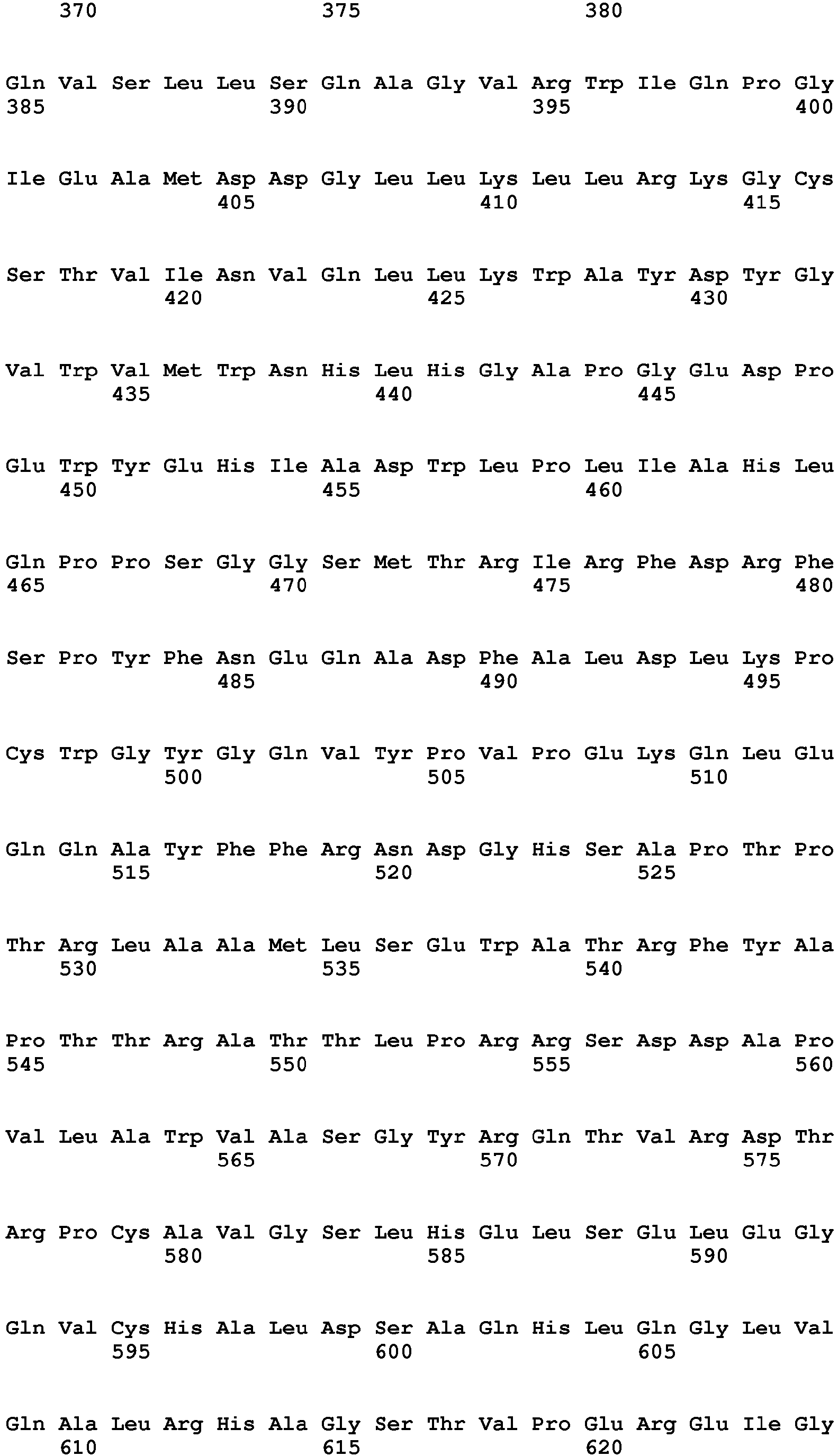


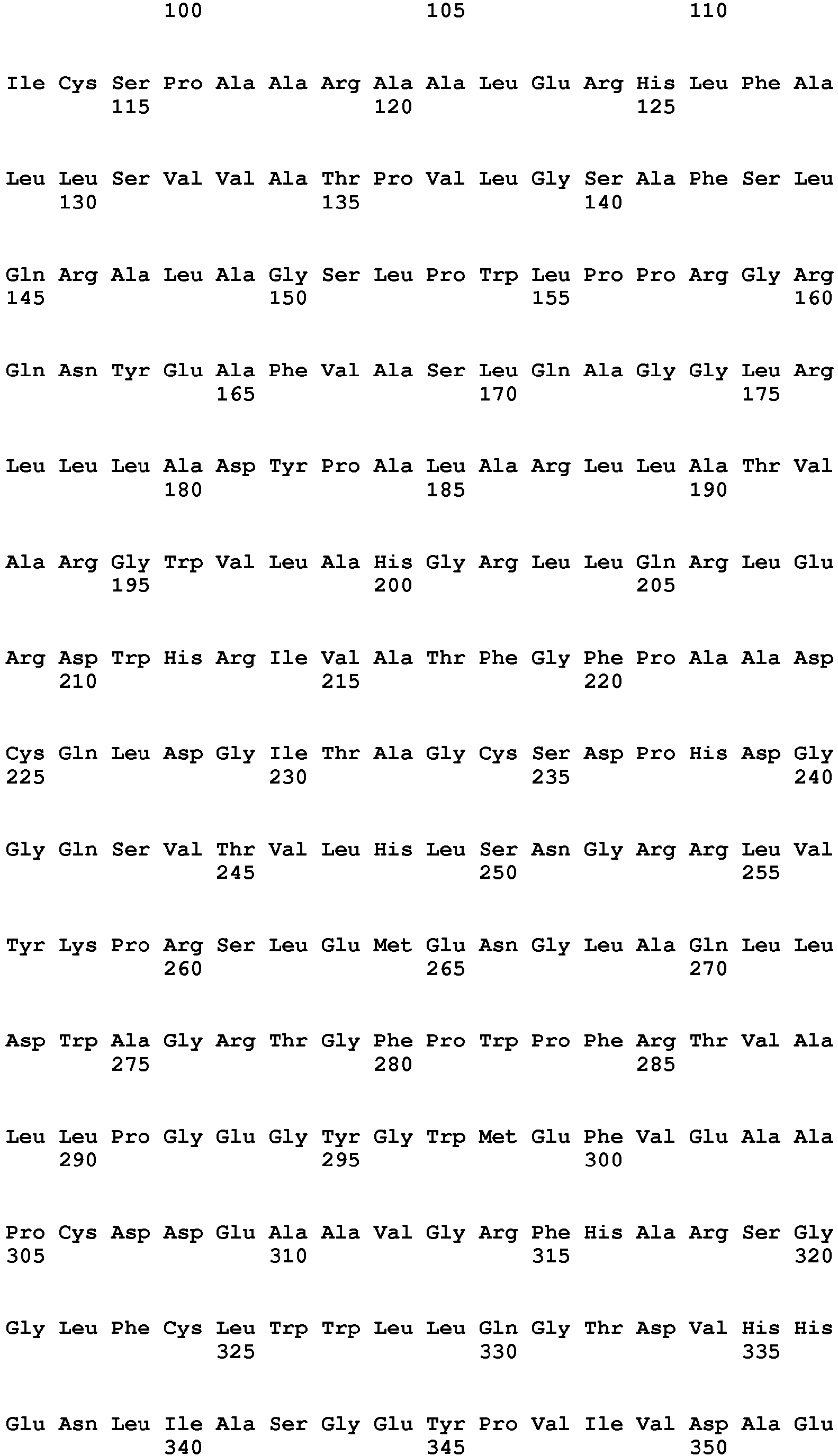


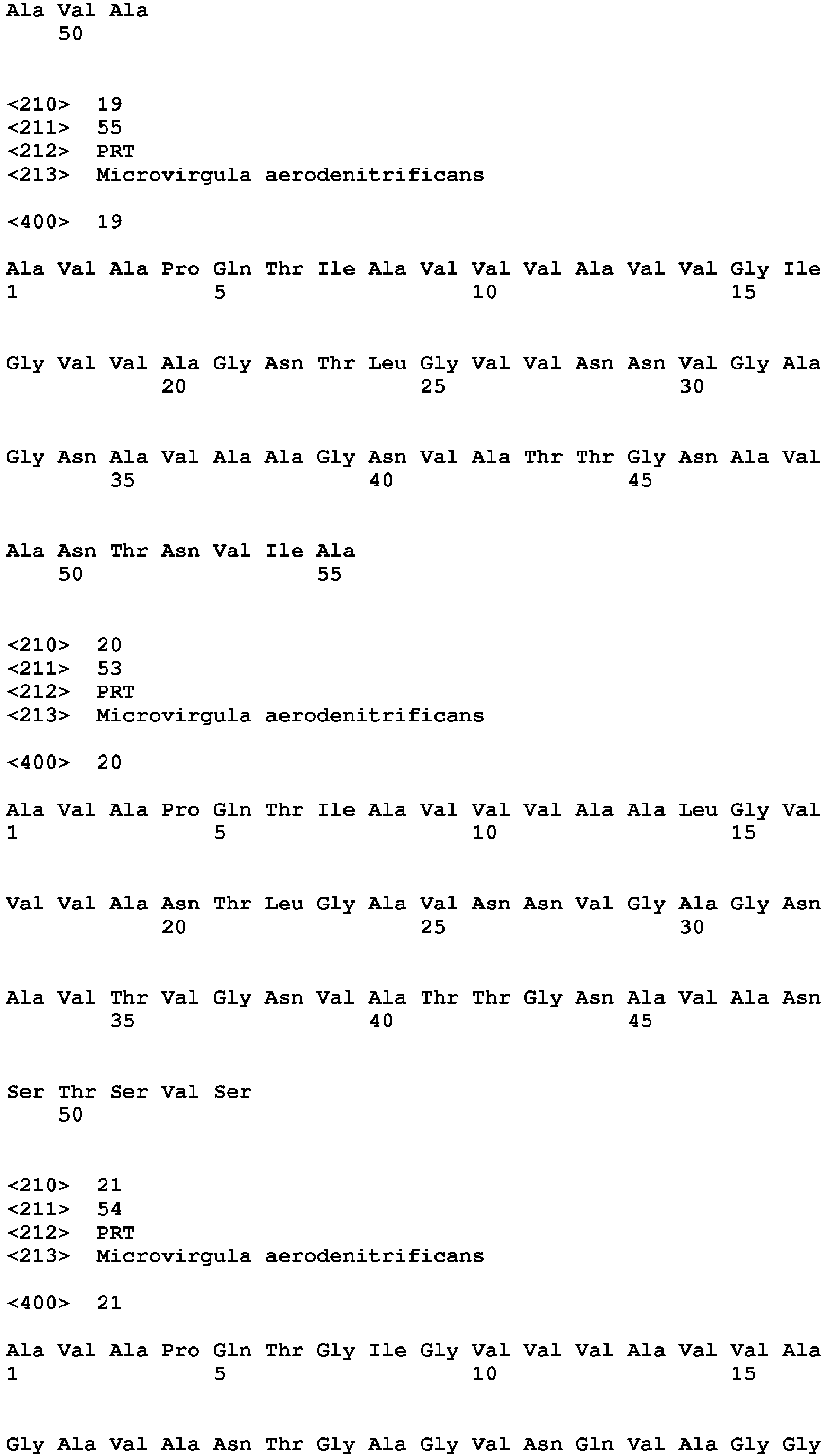

Claims (19)
1. An isolated and purified nucleic acid, comprising or consisting of a nucleic acid sequence selected from the group consisting of:
(i) a nucleic acid sequence listed in any one of SEQ ID NOs: 1 (aerC), 3 (aerD), 5 (aerF), 7 (aerE);
(ii) a nucleic acid sequence of at least 80 or 90 % sequence identity, optionally at least 95 % or 98 % sequence identity with a nucleic acid sequence of (i), optionally over the whole sequence;
(iii) a nucleic acid sequence that hybridizes to a nucleic acid sequence of (i) or (ii) under stringent conditions;
(iv) a fragment of any of the nucleic acid sequences of (i) to (iii), that hybridizes to a nucleic acid sequence of (i) or (ii) under stringent conditions;
(v) a nucleic acid sequence degenerated with respect to a nucleic acid sequence of any of (i) to (iv);
(vi) a nucleic acid sequence, wherein said nucleic acid sequence is derivable by substitution, addition and/or deletion of at least one nucleic acid of the nucleic acid sequences of (i) to (v) that hybridizes to a nucleic acid sequence of (i) or (ii) under stringent conditions;
(vii) a nucleic acid sequence complementary to the nucleic acid sequence of any of (i) to (vi);
wherein the nucleic acid sequence of any of (i) to (vii),
wherein the nucleic acid sequence of any of (i) to (vii),
(a) when based on SEQ ID NO: 1 (aerC) encodes a polypeptide that has cobalamindependent rSAM methytransferase activity, optionally methylates one or more valine(s) to tert-leucine(s), methylates one or more isoleucine(s), methylates one or more leucine(s) and/or methylates one or more threonine(s);
(b) when based on SEQ ID NO: 3 (aerD) encodes a polypeptide that has rSAM epimerase activity to convert one or more L-amino acid(s) into D-amino acid(s);
(c) when based on SEQ ID NO: 5 (aerF) encodes a polypeptide that has dehydratase activity to dehydrate an N-terminal threonine or serine to an alpha-keto functional group; or
(d) when based on SEQ ID NO: 7 (aerE) and encodes a polypeptide that has asparagine (ASN) N-methyltransferase activity for methylating one or more side chain amines of one or more asparagine(s).
2. An isolated and purified polypeptide selected from the group consisting of:
(v) polypeptides comprising or consisting of an amino acid sequence selected from the group consisting of SEQ ID NOs: 2, 4, 6 and 8,
(vi) polypeptides encoded by a nucleic acid of claim 1;
(vii) polypeptides having an amino acid sequence identity of at least 70 or 80 %; optionally at least 90 or 95 % with the polypeptides of (i) and/or (ii); and
(viii) a functional fragment and/or functional derivative of (i), (ii) or (iii);
wherein the polypeptide of any of (i) to (iv),
wherein the polypeptide of any of (i) to (iv),
(e) when based on an amino acid sequence of SEQ ID NO: 2 (AerC) has cobalamin-dependent rSAM methytransferase activity, optionally methylates one or more valine(s) to tert-leucine(s), methylates one or more isoleucine(s), methylates one or more leucine(s) and/or methylates one or more threonine(s);
(f) when based on an amino acid sequence of SEQ ID NO: 4 (AerD) has rSAM epimerase activity to convert one or more L-amino acid(s) into D-amino acid(s);
(g) when based on an amino acid sequence of SEQ ID NO: 6 (AerF) has dehydratase activity to dehydrate an N-terminal threonine or serine to an alpha-keto functional group; or
(h) when based on an amino acid sequence of SEQ ID NO: 8 (AerE) has asparagine (ASN) N-methyltransferase activity for methylating one or more side chain amine(s) of asparagine(s).
3. An antibody, optionally a monoclonal antibody, a functional fragment or functional derivative thereof, or antibody-like binding protein that specifically binds a polypeptide of claim 2.
4. A vector, optionally a plasmid, comprising a nucleic acid according to claim 1 and optionally a polypeptide for posttranslational modification by at least one protein according to claim 2.
5. A bacterial host cell, optionally a bacterial host cell producing cobalamin, optionally microvirgula aerodenitricans or E. coli host cell, optionally a cobalamin-producing E. coli, comprising a nucleic acid according to claim 1, wherein the host cell expresses and modifies a heterologous polypeptide by one or more polypeptides according to claim 2.
6. A microvirgula aerodenitrificans host cell, wherein the host cell expresses at least one heterologous polypeptide for enzymatic modification and one or more polypeptides according to claim 2, thereby modifying the at least one heterologous polypeptide by the one or more polypeptides according to claim 2.
7. A microvirgula aerodenitrificans host cell according to claim 6 expressing
(i) at least one polypeptide based on amino acid sequence SEQ ID NO: 2 (AerC) according to claim 2;
(ii) at least one polypeptide based on amino acid sequence SEQ ID NO: 4 (AerD) according to claim 2;
(iii) at least one polypeptide based on amino acid sequence SEQ ID NO: 6 (AerF) according to claim 2; and/or
(vi) at least one polypeptide based on amino acid sequence SEQ ID NO: 8 (AerE) according to claim 2,
with the proviso that expression of polypeptide (v) requires the expression of polypeptide (ii).
with the proviso that expression of polypeptide (v) requires the expression of polypeptide (ii).
8. An Escherichia coli host cell according to claim 6 expressing
(i) at least one polypeptide based on amino acid sequence SEQ ID NO: 2 (AerC) according to claim 2;
(ii) at least one polypeptide based on amino acid sequence SEQ ID NO: 4 (AerD) according to claim 2;
(iii) at least one polypeptide based on amino acid sequence SEQ ID NO: 6 (AerF) according to claim 2; and/or
(vi) at least one polypeptide based on amino acid sequence SEQ ID NO: 8 (AerE) according to claim 2,
with the proviso that (a) expression of polypeptide (iv) requires the expression of polypeptide (ii) and (b) expression of (i) requires bacterial production or supplement of cobalamin. (preferably D and E)
with the proviso that (a) expression of polypeptide (iv) requires the expression of polypeptide (ii) and (b) expression of (i) requires bacterial production or supplement of cobalamin. (preferably D and E)
9. A microvirgula aerodenitrificans or Escherichia coli host cell according to any of claims 6 to 8 expressing a heterologous polypeptide for enzymatic modification selected from the group of polypeptide precursors of boceprevir, telapevir, glecaprevir, atazanavir, vancomycin, colistin, teixobactin, bacitracin, gramicidin A-D, goserelin, leuprolide, nateglidine, octreotide, thiostreptons, bottromycins polymyxin, actinomycin, nisin, protegrin, dalbavancin, daptomycin, enfurvirtide, oritavancin, teicoplanin and guavanin 2.
10. A microvirgula aerodenitrificans or Escherichia coli host cell according to any of claims 6 to 9 expressing a heterologous polypeptide for enzymatic modification encoded by a nucleic acid sequence comprised in the aerA cluster of Microvirgula aerodenitrificans and encompassing the nucleic acid sequence of Seq. ID. NO.: 9 or a nucleic acid sequence hybridizing thereto under stringent conditions.
11. A composition comprising at least one nucleic acid according to claim 1, at least one polypeptide according to claim 2, at least one vector according to claim 3, or at least one bacterial host cell according to any of claims 4 to 10.
12. A method for producing and modifying a heterologous (poly)peptide in a Microvirgula aerodenitricans cell or an E. coli cell, optionally a cobalamin-producing E. coli cell, comprising the steps of
(i) providing a Microvirgula aerodenitricans or E. coli host cell according to any of claims 5 to 10, optionally a cobalamin-producing E. coli host cell, functionally expressing
a. at least one polypeptide enzyme according to claim 2 and
b. at least one heterologous (poly)peptide of interest; and
(ii) co-expressing the at least one polypeptide enzyme according to claim 2 and the at least one heterologous (poly)peptide of interest;
(iii) and optionally co-expressing one or more further enzymes for modifying the at least one heterologous (poly)peptide of interest;
(iv) and optionally at least partially purifying the so-modified heterologous (poly)peptide,
wherein the at least one polypeptide enzyme according to claim 2 is capable of catalyzing at least one modification in the heterolologous (poly)peptide.
wherein the at least one polypeptide enzyme according to claim 2 is capable of catalyzing at least one modification in the heterolologous (poly)peptide.
13. The method of claim 12, comprising the steps of
(i) providing a Microvirgula aerodenitricans or a cobalamin-producing E. coli host cell, functionally expressing
a. at least one Cbl-dependent rSAM polypeptide enzyme as defined in claim 2 and
b. at least one heterologous (poly)peptide of interest; and
(ii) co-expressing the at least one Cbl-dependent rSAM enzyme and the at least one heterologous (poly)peptide;
(iii) and optionally co-expressing one or more further enzymes for modifying the heterologous (poly)peptide of interest;
(iv) and optionally at least partially purifying the so-modified heterologous (poly)peptide of interest;
wherein the at least one Cbl-dependent rSAM enzyme methylates one or more valine(s) to tert-leucine(s), methylates one or more isoleucine(s), methylates one or more leucine(s) and/or methylates one or more threonine(s) in the at least one heterolologous (poly)peptide of interest.
wherein the at least one Cbl-dependent rSAM enzyme methylates one or more valine(s) to tert-leucine(s), methylates one or more isoleucine(s), methylates one or more leucine(s) and/or methylates one or more threonine(s) in the at least one heterolologous (poly)peptide of interest.
14. The method according to any of claims 12 and 13, wherein the one or more further enzymes for modifying the heterologous (poly)peptide(s) in step (iii) of claims 12 and 13 are selected from the polypeptides according to claim 2.
15. The method according to any of claims 12 to 14, wherein the one or more further enzymes for modifying the heterologous (poly)peptide(s) in step (iii) of claims 12 and 13 are selected from the group consisting of PoyB, PoyC (rSAM C-methyltransferases), OspD, AvpD, PlpD, PoyD (epimerases), PlpXY (β-amino acid incorporation, and PtsY (S-methyltransferase).
16. The method according to any of claims 12 to 15, wherein the at least one heterologous (poly)peptide is selected from the group consisting of polypeptide precursors of boceprevir, telapevir, glecaprevir, atazanavir, vancomycin, colistin, teixobactin, bacitracin, gramicidin A-D, goserelin, leuprolide, nateglidine, octreotide, thiostreptons, bottromycins polymyxin, actinomycin, nisin, protegrin, dalbavancin, daptomycin, enfurvirtide, oritavancin, teicoplanin, guavanin 2.
16. The method according to any of claims 12 to 16, wherein at least one, two or all of (i) the heterologous (poly)peptide of interest, the polypeptide enzyme(s) according to claim 2 and/or the one or more further enzymes for modifying the heterologous (poly)peptide(s) are present in the form of host-integrated DNA and/or in the form of a plasmid.
17. A polypeptide, optionally a cytotoxin, an antibiotic polypeptide or antiviral polypeptide comprising a posttranslational modification selected from the group consisting of
(i) a methylation of one or more valine(s) to tert-leucine(s), a methylation of one or more isoleucine(s), a methylation of one or more leucine(s), a methylation of one or more threonine(s);
(ii) a conversion of one or more L-amino acid(s) into D-amino acid(s);
(iii) a hydrolyzation of an N-terminal dehydro-threonine or -serine to an alpha-keto functional group; and
(iv) a methylation of one or more side chain amine(s) of asparagine(s),
wherein the polypeptide is obtained by a method according to any of claims 12 to 16.
wherein the polypeptide is obtained by a method according to any of claims 12 to 16.
18. Use of a nucleic acid according to claim 1, a polypeptide according to claim 2, an antibody of claim 3, a vector of claim 4, a host cell according to any of claims 5 to 10, a composition of claim 11 or a method according to any of claims 12 to 16 for modifying a heterologous (poly)peptide in a bacterial host cell or bacterially derived cell-free system.
Priority Applications (4)
| Application Number | Priority Date | Filing Date | Title |
|---|---|---|---|
| EP18213898.2A EP3750990A1 (en) | 2018-12-19 | 2018-12-19 | Novel polypeptide-modifying enzymes and uses thereof |
| EP19820761.5A EP3898956A1 (en) | 2018-12-19 | 2019-12-16 | Novel polypeptide-modifying enzymes and uses thereof |
| PCT/EP2019/085355 WO2020127054A1 (en) | 2018-12-19 | 2019-12-16 | Novel polypeptide-modifying enzymes and uses thereof |
| US17/416,980 US20220089655A1 (en) | 2018-12-19 | 2019-12-16 | Novel polypeptide-modifying enzymes and uses thereof |
Applications Claiming Priority (1)
| Application Number | Priority Date | Filing Date | Title |
|---|---|---|---|
| EP18213898.2A EP3750990A1 (en) | 2018-12-19 | 2018-12-19 | Novel polypeptide-modifying enzymes and uses thereof |
Publications (1)
| Publication Number | Publication Date |
|---|---|
| EP3750990A1 true EP3750990A1 (en) | 2020-12-16 |
Family
ID=64746079
Family Applications (2)
| Application Number | Title | Priority Date | Filing Date |
|---|---|---|---|
| EP18213898.2A Withdrawn EP3750990A1 (en) | 2018-12-19 | 2018-12-19 | Novel polypeptide-modifying enzymes and uses thereof |
| EP19820761.5A Withdrawn EP3898956A1 (en) | 2018-12-19 | 2019-12-16 | Novel polypeptide-modifying enzymes and uses thereof |
Family Applications After (1)
| Application Number | Title | Priority Date | Filing Date |
|---|---|---|---|
| EP19820761.5A Withdrawn EP3898956A1 (en) | 2018-12-19 | 2019-12-16 | Novel polypeptide-modifying enzymes and uses thereof |
Country Status (3)
| Country | Link |
|---|---|
| US (1) | US20220089655A1 (en) |
| EP (2) | EP3750990A1 (en) |
| WO (1) | WO2020127054A1 (en) |
Citations (3)
| Publication number | Priority date | Publication date | Assignee | Title |
|---|---|---|---|---|
| US5582981A (en) | 1991-08-14 | 1996-12-10 | Gilead Sciences, Inc. | Method for identifying an oligonucleotide aptamer specific for a target |
| WO2013034579A1 (en) * | 2011-09-05 | 2013-03-14 | Rheinische Friedrich-Wilhelms-Universität Bonn | Biosynthetic gene cluster for the production of peptide/protein analogues |
| WO2017100917A1 (en) * | 2015-12-14 | 2017-06-22 | Mcmaster University | A natural product and genetic data analysis and discovery system, method and computational platform therefor |
-
2018
- 2018-12-19 EP EP18213898.2A patent/EP3750990A1/en not_active Withdrawn
-
2019
- 2019-12-16 WO PCT/EP2019/085355 patent/WO2020127054A1/en not_active Ceased
- 2019-12-16 US US17/416,980 patent/US20220089655A1/en not_active Abandoned
- 2019-12-16 EP EP19820761.5A patent/EP3898956A1/en not_active Withdrawn
Patent Citations (3)
| Publication number | Priority date | Publication date | Assignee | Title |
|---|---|---|---|---|
| US5582981A (en) | 1991-08-14 | 1996-12-10 | Gilead Sciences, Inc. | Method for identifying an oligonucleotide aptamer specific for a target |
| WO2013034579A1 (en) * | 2011-09-05 | 2013-03-14 | Rheinische Friedrich-Wilhelms-Universität Bonn | Biosynthetic gene cluster for the production of peptide/protein analogues |
| WO2017100917A1 (en) * | 2015-12-14 | 2017-06-22 | Mcmaster University | A natural product and genetic data analysis and discovery system, method and computational platform therefor |
Non-Patent Citations (49)
| Title |
|---|
| AGNEYA BHUSHAN ET AL: "Genome mining- and synthetic biology-enabled production of hypermodified peptides, Supplementary Information", NATURE CHEMISTRY, 9 September 2019 (2019-09-09), pages 1 - 46, XP055669170, Retrieved from the Internet <URL:https://static-content.springer.com/esm/art%3A10.1038%2Fs41557-019-0323-9/MediaObjects/41557_2019_323_MOESM1_ESM.pdf> [retrieved on 20200217], DOI: 10.1038/s41557-019-0323-9 * |
| ALTSCHUL ET AL., J. MOL. BIOL., vol. 215, 1990, pages 403 - 410 |
| ALTSCHUL ET AL.: "BLAST handbook", NCB NLM NIH |
| ALTSCHUL ET AL.: "BLAST handbook", NCB NLM NIH BETHESDA |
| ARNISON ET AL., NAT PROD REP, vol. 30, 2016, pages 108 - 60 |
| BESTE ET AL., PROC. NATL. ACAD. SCI. USA, vol. 96, 1999, pages 1898 - 1903 |
| BHUSHAN AGNEYA ET AL: "Genome mining- and synthetic biology-enabled production of hypermodified peptides", NATURE CHEMISTRY, NATURE PUBLISHING GROUP UK, LONDON, vol. 11, no. 10, 9 September 2019 (2019-09-09), pages 931 - 939, XP036888500, ISSN: 1755-4330, [retrieved on 20190909], DOI: 10.1038/S41557-019-0323-9 * |
| BINZ ET AL.: "on engineering binding proteins from non-immunoglobulin domains in", NATURE BIOTECHNOLOGY, vol. 23, no. 10, October 2005 (2005-10-01), pages 12571268 |
| BRIDWELL-RABB ET AL., NATURE, vol. 544, 2017, pages 322 - 326 |
| BURTON ET AL., CANADIAN JOURNAL OF BOTANY, vol. 30, 1952, pages 521 - 524 |
| DATABASE UniProt [online] 10 October 2018 (2018-10-10), "SubName: Full=Methyltransferase family protein {ECO:0000313|EMBL:RAS15732.1};", XP002797761, retrieved from EBI accession no. UNIPROT:A0A329B7M1 Database accession no. A0A329B7M1 * |
| DATABASE UniProt [online] 10 October 2018 (2018-10-10), "SubName: Full=Radical SAM family RiPP maturation amino acid epimerase {ECO:0000313|EMBL:RAS15731.1};", XP002797758, retrieved from EBI accession no. UNIPROT:A0A329B4Y3 Database accession no. A0A329B4Y3 * |
| DATABASE UniProt [online] 10 October 2018 (2018-10-10), "SubName: Full=Type 2 lantibiotic biosynthesis protein LanM {ECO:0000313|EMBL:RAS15733.1};", XP002797760, retrieved from EBI accession no. UNIPROT:A0A329B5S4 Database accession no. A0A329B5S4 * |
| DATABASE UniProt [online] 18 July 2018 (2018-07-18), "RecName: Full=DUF4135 domain-containing protein {ECO:0000259|Pfam:PF13575};", XP002797759, retrieved from EBI accession no. UNIPROT:A0A2S0PEM6 Database accession no. A0A2S0PEM6 * |
| DATABASE UniProt [online] 18 July 2018 (2018-07-18), "SubName: Full=RiPP maturation radical SAM protein 1 {ECO:0000313|EMBL:AVY95798.1};", XP002797757, retrieved from EBI accession no. UNIPROT:A0A2S0PEJ0 Database accession no. A0A2S0PEJ0 * |
| DATABASE UniProt [online] 28 November 2012 (2012-11-28), "SubName: Full=C-methyltransferase {ECO:0000313|EMBL:AFS60638.1};", XP002797765, retrieved from EBI accession no. UNIPROT:J9ZXD6 Database accession no. J9ZXD6 * |
| DATABASE UniProt [online] 28 November 2012 (2012-11-28), "SubName: Full=Epimerase {ECO:0000313|EMBL:AFS60640.1};", XP002797764, retrieved from EBI accession no. UNIPROT:J9ZW29 Database accession no. J9ZW29 * |
| DATABASE UniProt [online] 28 November 2012 (2012-11-28), "SubName: Full=LanM {ECO:0000313|EMBL:AFS60642.1};", XP002797763, retrieved from EBI accession no. UNIPROT:J9ZW15 Database accession no. J9ZW15 * |
| DATABASE UniProt [online] 28 November 2012 (2012-11-28), "SubName: Full=N-methyltransferase {ECO:0000313|EMBL:AFS60641.1};", XP002797762, retrieved from EBI accession no. UNIPROT:J9ZVN3 Database accession no. J9ZVN3 * |
| DONIA ET AL., NAT CHEM BIOL, vol. 2, 2006, pages 729 - 35 |
| EDGAR., NUCL. ACIDS RES., vol. 32, 2004, pages 1792 - 7 |
| EPIMERASES; MORINAKA, ANGEWANDTE CHEMIE, vol. 56, no. 3, 2017, pages 762 - 766 |
| FREEMAN ET AL., NAT. CHEM., vol. 9, 2017, pages 387 - 395 |
| FREEMAN M ET AL: "Metagenome Mining Reveals Polytheonamides as Posttranslationally Modified Ribosomal Peptides", INTERNET CITATION, 13 September 2012 (2012-09-13), pages 1 - 7, XP002685424, ISSN: 0036-8075, Retrieved from the Internet <URL:http://www.sciencemag.org/content/early/2012/09/12/science.1226121.full> [retrieved on 20121017] * |
| GIOVANNONI ET AL., NUCLEIC ACIDS RES., vol. 29, 2001, pages E27 |
| HELF, CHEMBIOCHEM, vol. 18, 2017, pages 444 - 450 |
| HEY, TRENDS IN BIOTECHNOLOGY, vol. 23, 2005, pages 514 - 522 |
| HUANG; MILLER, ADV. APPL. MATH., vol. 12, 1991, pages 337 - 357 |
| HUO ET AL., CHEM BIOL, vol. 19, 2012, pages 1278 - 1287 |
| JAYASENA, CLIN. CHEM., vol. 45, 1999, pages 1628 - 1650 |
| KLUG; FAMULOK, M. MOL. BIOL. REP., vol. 20, 1994, pages 97 - 107 |
| KLUSSMANN ET AL., NAT. BIOTECHNOL., vol. 14, 1996, pages 1112 - 1115 |
| KOHLER; MILSTEIN, NATURE, vol. 256, 1975, pages 495 - 497 |
| LANZ ET AL., BIOCHEMISTRY, vol. 57, 2018, pages 1475 - 1490 |
| LARKIN MA ET AL., BIOINFORMATICS, vol. 23, 2007, pages 2947 - 2948 |
| LI ET AL., MOL. BIOSYST., 8 July 2011 (2011-07-08), pages 2 - 90 |
| MICHAEL A SKINNIDER ET AL: "Supporting Information Genomic charting of ribosomally synthesized natural product chemical space facilitates targeted mining", 3 October 2016 (2016-10-03), XP055669624, Retrieved from the Internet <URL:https://www.pnas.org/content/pnas/suppl/2016/09/30/1609014113.DCSupplemental/pnas.1609014113.sapp.pdf> [retrieved on 20200218] * |
| MICHAEL A. SKINNIDER ET AL: "Genomic charting of ribosomally synthesized natural product chemical space facilitates targeted mining", PROCEEDINGS OF THE NATIONAL ACADEMY OF SCIENCES, vol. 113, no. 42, 3 October 2016 (2016-10-03), US, pages E6343 - E6351, XP055577116, ISSN: 0027-8424, DOI: 10.1073/pnas.1609014113 * |
| MICHAEL F. FREEMAN ET AL: "Seven enzymes create extraordinary molecular complexity in an uncultivated bacterium", NATURE CHEMISTRY, vol. 9, no. 4, 28 November 2016 (2016-11-28), London, pages 387 - 395, XP055669167, ISSN: 1755-4330, DOI: 10.1038/nchem.2666 * |
| MORINAKA, SCIENCE, vol. 359, 2018, pages 779 |
| NAT BIOTECHNOL, vol. 23, no. 9, September 2005 (2005-09-01), pages 1126 - 36 |
| NOLTE ET AL., NAT. BIOTECHNOL., vol. 14, 1996, pages 1116 - 1119 |
| NOTREDAME ET AL., J OF MOL. BIO, vol. 302, no. 1, 2000, pages 205 - 17 |
| SCHAFFITZEL ET AL., J. IMMUNOL. METHODS, vol. 231, 1999, pages 119 - 135 |
| SIEVERS F ET AL., MOL. SYS. BIO., vol. 7, 2011, pages 539 |
| SKERRA, BIOCHEM. BIOPHYS. ACTA, vol. 1482, 2000, pages 337 - 350 |
| SKERRA, J. MOL. RECO-GNIT, vol. 13, 2000, pages 167 - 287 |
| WINTER ET AL., ANNU. REV. IMMUNOL., vol. 12, 1994, pages 433 - 455 |
| WOODYER ET AL., CHEM BIOL, vol. 13, no. 11, 2006, pages 1171 - 1182 |
Also Published As
| Publication number | Publication date |
|---|---|
| US20220089655A1 (en) | 2022-03-24 |
| EP3898956A1 (en) | 2021-10-27 |
| WO2020127054A1 (en) | 2020-06-25 |
Similar Documents
| Publication | Publication Date | Title |
|---|---|---|
| JP4544601B2 (en) | Cyclic peptide | |
| US12297475B2 (en) | System for the assembly and modification of non-ribosomal peptide synthases | |
| Singh et al. | β-Hydroxylation of the aspartyl residue in the phytotoxin syringomycin E: characterization of two candidate hydroxylases AspH and SyrP in Pseudomonas syringae | |
| Kaweewan et al. | Heterologous expression of a cryptic gene cluster from Marinomonas fungiae affords a novel tricyclic peptide marinomonasin | |
| Nickling et al. | Antimicrobial peptides produced by selective pressure incorporation of non-canonical amino acids | |
| JP2014530609A (en) | Gene cluster for biosynthesis of glyceromycin and methylglyceromycin | |
| US20250382653A1 (en) | Method for producing useful substance | |
| EP3330282A1 (en) | Cipa, cipb and pixa as scaffolds to organize proteins into crystalline inclusions | |
| Van Zyl et al. | Use of the mCherry fluorescent protein to optimize the expression of class I lanthipeptides in Escherichia coli | |
| Garg et al. | Characterization of the stereochemical configuration of lanthionines formed by the lanthipeptide synthetase G eo M | |
| US20240384267A1 (en) | Compositions and methods for multiplex decoding of quadruplet codons | |
| US20220348974A1 (en) | Biotin synthases for efficient production of biotin | |
| Zou et al. | Unveiling a CAAX protease‐like protein involved in didemnin drug maturation and secretion | |
| US20230090771A1 (en) | Novel methods for creating alpha-n-methylated polypeptides | |
| US20220089655A1 (en) | Novel polypeptide-modifying enzymes and uses thereof | |
| Sutardja et al. | Expression of Redox Partner Fusions for Light Driven Cytochrome P450s in the Cyanobacterium Synechocystis sp. PCC. 6803 | |
| US20090264616A1 (en) | Cyclodipeptide Synthetases and Their Use for Synthesis of Cyclo(Leu-Leu) Cyclodipeptide | |
| JP7289836B2 (en) | Proline hydroxylase and associated uses, methods and products | |
| US20110318781A1 (en) | CYCLODIPEPTIDE SYNTHETASE AND ITS USE FOR SYNTHESIS OF CYCLO(Tyr-Xaa) CYCLODIPEPTIDES | |
| Nagao et al. | Engineering unusual amino acids into peptides using lantibiotic synthetase | |
| EP4424821A1 (en) | Enzymatic synthesis of odilorhabdin and related peptides/proteins comprising non-standard amino acid residues | |
| Dorrazehi et al. | PBP-A, a cyanobacterial DD-peptidase with high specificity for amidated muropeptides, imposes a pH-dependent fitness cost in Escherichia coli as a consequence of promiscuous activity | |
| CN112513259A (en) | Peptide macrocyclases | |
| Sakono et al. | Production of pentaglycine-fused proteins using Escherichia coli expression system without in vitro peptidase treatment | |
| McRae et al. | Expression and purification of the NG domain from human SRα, a key component of the Signal Recognition Particle (SRP) receptor |
Legal Events
| Date | Code | Title | Description |
|---|---|---|---|
| PUAI | Public reference made under article 153(3) epc to a published international application that has entered the european phase |
Free format text: ORIGINAL CODE: 0009012 |
|
| STAA | Information on the status of an ep patent application or granted ep patent |
Free format text: STATUS: THE APPLICATION HAS BEEN PUBLISHED |
|
| AK | Designated contracting states |
Kind code of ref document: A1 Designated state(s): AL AT BE BG CH CY CZ DE DK EE ES FI FR GB GR HR HU IE IS IT LI LT LU LV MC MK MT NL NO PL PT RO RS SE SI SK SM TR |
|
| AX | Request for extension of the european patent |
Extension state: BA ME |
|
| STAA | Information on the status of an ep patent application or granted ep patent |
Free format text: STATUS: THE APPLICATION IS DEEMED TO BE WITHDRAWN |
|
| 18D | Application deemed to be withdrawn |
Effective date: 20210617 |