EP3750810B1 - Friction energy savers - Google Patents
Friction energy savers Download PDFInfo
- Publication number
- EP3750810B1 EP3750810B1 EP19215627.1A EP19215627A EP3750810B1 EP 3750810 B1 EP3750810 B1 EP 3750810B1 EP 19215627 A EP19215627 A EP 19215627A EP 3750810 B1 EP3750810 B1 EP 3750810B1
- Authority
- EP
- European Patent Office
- Prior art keywords
- aircraft
- heat energy
- energy
- heat
- electrical
- Prior art date
- Legal status (The legal status is an assumption and is not a legal conclusion. Google has not performed a legal analysis and makes no representation as to the accuracy of the status listed.)
- Active
Links
Images

Classifications
-
- B—PERFORMING OPERATIONS; TRANSPORTING
- B64—AIRCRAFT; AVIATION; COSMONAUTICS
- B64D—EQUIPMENT FOR FITTING IN OR TO AIRCRAFT; FLIGHT SUITS; PARACHUTES; ARRANGEMENT OR MOUNTING OF POWER PLANTS OR PROPULSION TRANSMISSIONS IN AIRCRAFT
- B64D15/00—De-icing or preventing icing on exterior surfaces of aircraft
- B64D15/12—De-icing or preventing icing on exterior surfaces of aircraft by electric heating
-
- B—PERFORMING OPERATIONS; TRANSPORTING
- B64—AIRCRAFT; AVIATION; COSMONAUTICS
- B64D—EQUIPMENT FOR FITTING IN OR TO AIRCRAFT; FLIGHT SUITS; PARACHUTES; ARRANGEMENT OR MOUNTING OF POWER PLANTS OR PROPULSION TRANSMISSIONS IN AIRCRAFT
- B64D15/00—De-icing or preventing icing on exterior surfaces of aircraft
-
- B—PERFORMING OPERATIONS; TRANSPORTING
- B64—AIRCRAFT; AVIATION; COSMONAUTICS
- B64D—EQUIPMENT FOR FITTING IN OR TO AIRCRAFT; FLIGHT SUITS; PARACHUTES; ARRANGEMENT OR MOUNTING OF POWER PLANTS OR PROPULSION TRANSMISSIONS IN AIRCRAFT
- B64D15/00—De-icing or preventing icing on exterior surfaces of aircraft
- B64D15/02—De-icing or preventing icing on exterior surfaces of aircraft by ducted hot gas or liquid
-
- B—PERFORMING OPERATIONS; TRANSPORTING
- B64—AIRCRAFT; AVIATION; COSMONAUTICS
- B64D—EQUIPMENT FOR FITTING IN OR TO AIRCRAFT; FLIGHT SUITS; PARACHUTES; ARRANGEMENT OR MOUNTING OF POWER PLANTS OR PROPULSION TRANSMISSIONS IN AIRCRAFT
- B64D41/00—Power installations for auxiliary purposes
-
- F—MECHANICAL ENGINEERING; LIGHTING; HEATING; WEAPONS; BLASTING
- F28—HEAT EXCHANGE IN GENERAL
- F28D—HEAT-EXCHANGE APPARATUS, NOT PROVIDED FOR IN ANOTHER SUBCLASS, IN WHICH THE HEAT-EXCHANGE MEDIA DO NOT COME INTO DIRECT CONTACT
- F28D20/00—Heat storage plants or apparatus in general; Regenerative heat-exchange apparatus not covered by groups F28D17/00 or F28D19/00
- F28D20/02—Heat storage plants or apparatus in general; Regenerative heat-exchange apparatus not covered by groups F28D17/00 or F28D19/00 using latent heat
-
- H—ELECTRICITY
- H02—GENERATION; CONVERSION OR DISTRIBUTION OF ELECTRIC POWER
- H02J—ELECTRIC POWER NETWORKS; CIRCUIT ARRANGEMENTS OR SYSTEMS FOR SUPPLYING OR DISTRIBUTING ELECTRIC POWER; SYSTEMS FOR STORING ELECTRIC ENERGY
- H02J15/00—Systems for storing electric energy specially adapted for power networks
-
- B—PERFORMING OPERATIONS; TRANSPORTING
- B64—AIRCRAFT; AVIATION; COSMONAUTICS
- B64D—EQUIPMENT FOR FITTING IN OR TO AIRCRAFT; FLIGHT SUITS; PARACHUTES; ARRANGEMENT OR MOUNTING OF POWER PLANTS OR PROPULSION TRANSMISSIONS IN AIRCRAFT
- B64D33/00—Arrangement in aircraft of power plant parts or auxiliaries not otherwise provided for
- B64D33/02—Arrangement in aircraft of power plant parts or auxiliaries not otherwise provided for of combustion air intakes
- B64D2033/0233—Arrangement in aircraft of power plant parts or auxiliaries not otherwise provided for of combustion air intakes comprising de-icing means
-
- Y—GENERAL TAGGING OF NEW TECHNOLOGICAL DEVELOPMENTS; GENERAL TAGGING OF CROSS-SECTIONAL TECHNOLOGIES SPANNING OVER SEVERAL SECTIONS OF THE IPC; TECHNICAL SUBJECTS COVERED BY FORMER USPC CROSS-REFERENCE ART COLLECTIONS [XRACs] AND DIGESTS
- Y02—TECHNOLOGIES OR APPLICATIONS FOR MITIGATION OR ADAPTATION AGAINST CLIMATE CHANGE
- Y02E—REDUCTION OF GREENHOUSE GAS [GHG] EMISSIONS, RELATED TO ENERGY GENERATION, TRANSMISSION OR DISTRIBUTION
- Y02E60/00—Enabling technologies; Technologies with a potential or indirect contribution to GHG emissions mitigation
- Y02E60/14—Thermal energy storage
-
- Y—GENERAL TAGGING OF NEW TECHNOLOGICAL DEVELOPMENTS; GENERAL TAGGING OF CROSS-SECTIONAL TECHNOLOGIES SPANNING OVER SEVERAL SECTIONS OF THE IPC; TECHNICAL SUBJECTS COVERED BY FORMER USPC CROSS-REFERENCE ART COLLECTIONS [XRACs] AND DIGESTS
- Y02—TECHNOLOGIES OR APPLICATIONS FOR MITIGATION OR ADAPTATION AGAINST CLIMATE CHANGE
- Y02T—CLIMATE CHANGE MITIGATION TECHNOLOGIES RELATED TO TRANSPORTATION
- Y02T50/00—Aeronautics or air transport
- Y02T50/40—Weight reduction
Definitions
- This disclosure relates to energy conversion systems, e.g., for powering an aircraft system and/or deicing aircraft structures.
- Ice protection systems used in typical subsonic aircraft fall primarily into one of five categories.
- the first category includes systems that use hot bleed air from the engine compressor section and blow it against the region that needs to be protected against ice accretion.
- the second category includes systems that use electrical heating mats to protect critical areas against ice accretion.
- the third category includes inflatable rubber "boots" mounted on the outside of the area of the aircraft to be protected such that when the boot is inflated, the ice is cracked off.
- the fourth category includes electro-mechanical systems that shock the surface of interest to "knock" the ice off. All of these types of systems need power from the aircraft engines in order to perform their function.
- the fifth category includes freezing point depression systems that apply a chemical/fluid to the leading edge to decrease the freezing point of water.
- US 5,687,932 A describes an apparatus for removing heat.
- US 2015/035548 A1 describes a device for detecting critical states of a surface.
- WO 2008/137147 A2 describes methods and compositions for inhibiting surface icing.
- EP 2 636 601 A1 describes a rotary wing aircraft propulsion system with electric power generation.
- US 2017/126150 describes a combined hybrid thermionic and thermoelectric generator.
- A1 CN 109 823510 A describes a hypersonic aircraft and thermal protection structure and coolant circulating system.
- GB 523 803 A describes a water cooling system for an aeroplane.
- an aerodynamic friction energy deicing system is provided according to claim 1.
- the aircraft structure can include, for example, at least one of a leading edge of a wing, a leading edge of a tail, a fuselage, a control surface, an instrument probe, or a windscreen.
- the system can be an aerodynamic friction energy generation system for providing electrical energy to an aircraft wherein the heat energy device can be configured to be operatively connected to an aircraft structure and to convert heat energy due to aerodynamic friction on the aircraft structure into electrical energy for use by an aircraft system.
- the aerodynamic friction energy generation system can include an electrical storage device operatively connected to the heat energy device to receive electrical energy therefrom.
- Storing the heat energy as heat can include storing the heat energy in an aircraft fluid.
- the aircraft fluid can include at least one of aircraft fuel, aircraft hydraulic fluid, aircraft coolant, aircraft refrigerant, or aircraft oil, or a dedicated energy storage fluid.
- the method can include using the stored heat or heat energy for preventing ice formation or deicing the aircraft structure.
- storing the heat energy can include converting the heat energy into electrical energy and storing the electrical energy in an electrical storage device.
- the method can include using the stored electrical energy to power an aircraft system (e.g., avionics, pumps, etc.).
- FIG. 1 an illustrative view of an embodiment of a system in accordance with the disclosure is shown in Fig. 1 and is designated generally by reference character 100.
- FIGs. 2 and 3 Other embodiments and/or aspects of this disclosure are shown in Figs. 2 and 3 .
- Certain embodiments described herein can be used for, e.g., deicing and/or for energy production for any other use.
- an aerodynamic friction energy system 100 includes a heat energy device 101 configured to be operatively connected to an aircraft structure 103 and to convert heat energy due to friction on the aircraft structure 103 into another form (e.g., electrical energy) or to store heat energy (e.g., as heat or chemical energy) due to friction on the aircraft structure 103.
- the converted and/or stored energy can be used for any suitable purpose, e.g., for use in ice prevention and/or deicing and/or powering one or more aircraft systems.
- the system 100 includes the aircraft structure 103, for example.
- the aircraft structure 103 can include at least one of a leading edge of a wing, a leading edge of a tail, a fuselage, a control surface, an instrument probe, or a windscreen. Any other suitable aircraft structure is contemplated herein.
- the heat energy device 101 includes a heat energy storage medium 105 configured to store the heat energy as heat for later use.
- the heat energy storage medium 105 includes a phase change material configured to receive heat due to friction and to change phase from a solid to a liquid as a result to store heat for later use, e.g., for ice prevention and/or deicing.
- the heat energy storage medium 105 includes at least one fluid 205 circulating through the heat energy device 101 including at least one of aircraft fuel, aircraft hydraulic fluid, aircraft coolant, aircraft refrigerant, or aircraft oil, or a dedicated energy storage fluid (e.g., a fluid solely used for the heat energy device 101).
- the at least one fluid 205 can include a plurality of fluids in a fluidly separate circuit through the heat energy device 101, for example.
- the at least one fluid 205 can be from any suitable source, e.g., from a tank 207 circulated by pump 209, for example.
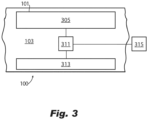
- the heat energy device 101 includes a thermoelectric generator 305 configured to convert heat due to friction into electrical energy.
- An electrical storage device 311 e.g., a battery, a capacitor, etc.
- the system 100 includes an electrical deicing system 313 attached to a structure 103 of an aircraft for receiving energy from the electrical storage device 311, e.g., to provide deicing heat to the aircraft structure.
- the system 100 can be an aerodynamic friction energy generation system for providing electrical energy to an aircraft.
- the heat energy device 101 is configured to be operatively connected to an aircraft structure 103 and to convert heat energy due to aerodynamic friction on the aircraft structure 103 into electrical energy for use by an aircraft system, e.g., electrical deicing system 313 and avionics 315.
- the aerodynamic friction energy generation system 100 includes an electrical storage device 311 operatively connected to the heat energy device 101 to receive electrical energy therefrom.
- the aircraft system can be an electrical deicing system 313. Any other suitable systems (e.g., aircraft avionics 315) are contemplated herein.
- a method includes receiving heat energy caused by aerodynamic friction on an aircraft structure, and storing the heat energy for later use. Storing the heat energy includes storing the heat energy as heat. Storing the heat energy as heat includes storing the heat energy in a phase change material.
- Storing the heat energy as heat can include storing the heat energy in an aircraft fluid or a fluid dedicated to this purpose.
- the aircraft fluid can include at least one of aircraft fuel, aircraft hydraulic fluid, aircraft coolant, aircraft refrigerant, or aircraft oil, or a dedicated energy storage fluid.
- the method includes using the stored heat or heat energy for preventing ice formation or deicing the aircraft structure.
- storing the heat energy can include converting the heat energy into electrical energy and storing the electrical energy in an electrical storage device.
- the method can include using the stored electrical energy for preventing ice formation or deicing the aircraft structure.
- the method can include using the stored electrical energy to power an aircraft system (e.g., one or more of avionics, pumps, etc.).
- Embodiments include using the heat generated by skin friction of a high speed aircraft (e.g., supersonic or hypersonic aircraft) to perform ice protection.
- a high speed aircraft e.g., supersonic or hypersonic aircraft
- embodiments can store the heat generated by the kinetic energy of the speed of flight through the atmosphere to be used later in the flight when at lower speeds and lower altitudes in icing conditions, for example.
- Embodiments could either be the sole means of ice protection or can act as partial or supplemental ice protection to reduce the burden on an active system or power requirements on an engine, for example.
- Embodiments can include a variety of methods to store the heat for use later, including using phase-change materials (e.g., a solid that turns into liquid when heated, then resists freezing to provide deicing), storing in an existing fluid used on the aircraft for other purposes (e.g., hydraulic, fuel, or water), or conversion of heat energy to other forms, e.g., electrical.
- phase-change materials e.g., a solid that turns into liquid when heated, then resists freezing to provide deicing
- an existing fluid used on the aircraft for other purposes e.g., hydraulic, fuel, or water
- conversion of heat energy to other forms e.g., electrical.
- Embodiments can be used to actively power electronics or other aircraft systems in high speed flight, e.g., in a primary electrical generator failure. Embodiments can reduce the overall size and/or weight of deicing systems, for example.
- Embodiments can leverage the unique aspects of high speed vehicles (e.g., supersonic or hypersonic) to provide ice protection more efficiently than aircraft that fly at lower speeds.
- High-speed aircraft can accelerate and climb so quickly on takeoff that exposure to icing conditions may be limited enough to enable a passive means of dealing with any ice accretion (such as a wing design robust to such minimal accretion) during that flight phase.
- a passive means of dealing with any ice accretion such as a wing design robust to such minimal accretion
- these vehicles will spend a significant amount of time in icing conditions during descent, approach, and landing.
- These phases of flight are often most critical for icing because the engines are at low power and it can be difficult to generate enough ice protection energy without increasing thrust to unacceptable levels, for example.
- any numerical values disclosed herein can be exact values or can be values within a range. Further, any terms of approximation (e.g., “about”, “approximately”, “around”) used in this disclosure can mean the stated value within a range. For example, in certain embodiments, the range can be within (plus or minus) 20%, or within 10%, or within 5%, or within 2%, or within any other suitable percentage or number as appreciated by those having ordinary skill in the art (e.g., for known tolerance limits or error ranges).
Landscapes
- Engineering & Computer Science (AREA)
- Aviation & Aerospace Engineering (AREA)
- Physics & Mathematics (AREA)
- Thermal Sciences (AREA)
- Mechanical Engineering (AREA)
- General Engineering & Computer Science (AREA)
- Power Engineering (AREA)
- Engine Equipment That Uses Special Cycles (AREA)
- Vehicle Body Suspensions (AREA)
Description
- This disclosure relates to energy conversion systems, e.g., for powering an aircraft system and/or deicing aircraft structures.
- Ice protection systems used in typical subsonic aircraft fall primarily into one of five categories. The first category includes systems that use hot bleed air from the engine compressor section and blow it against the region that needs to be protected against ice accretion. The second category includes systems that use electrical heating mats to protect critical areas against ice accretion. The third category includes inflatable rubber "boots" mounted on the outside of the area of the aircraft to be protected such that when the boot is inflated, the ice is cracked off. The fourth category includes electro-mechanical systems that shock the surface of interest to "knock" the ice off. All of these types of systems need power from the aircraft engines in order to perform their function. The fifth category includes freezing point depression systems that apply a chemical/fluid to the leading edge to decrease the freezing point of water.
- Such conventional methods and systems have generally been considered satisfactory for their intended purpose. However, there is a need in the art for improved deicing systems, e.g., that can reduce weight and/or power draw for use with high-speed vehicles. The present disclosure provides a solution for this need.
US 5,687,932 A describes an apparatus for removing heat.US 2015/035548 A1 describes a device for detecting critical states of a surface.WO 2008/137147 A2 describes methods and compositions for inhibiting surface icing.EP 2 636 601 A1 describes a rotary wing aircraft propulsion system with electric power generation.US 2017/126150 describes a combined hybrid thermionic and thermoelectric generator. A1CN 109 823510 A describes a hypersonic aircraft and thermal protection structure and coolant circulating system.GB 523 803 A - According to a first aspect, an aerodynamic friction energy deicing system is provided according to claim 1. The aircraft structure can include, for example, at least one of a leading edge of a wing, a leading edge of a tail, a fuselage, a control surface, an instrument probe, or a windscreen.
- In accordance with at least one aspect of this disclosure, the system can be an aerodynamic friction energy generation system for providing electrical energy to an aircraft wherein the heat energy device can be configured to be operatively connected to an aircraft structure and to convert heat energy due to aerodynamic friction on the aircraft structure into electrical energy for use by an aircraft system. The aerodynamic friction energy generation system can include an electrical storage device operatively connected to the heat energy device to receive electrical energy therefrom.
- According to a second aspect, a method is provided according to claim 5.
- Storing the heat energy as heat can include storing the heat energy in an aircraft fluid. The aircraft fluid can include at least one of aircraft fuel, aircraft hydraulic fluid, aircraft coolant, aircraft refrigerant, or aircraft oil, or a dedicated energy storage fluid. The method can include using the stored heat or heat energy for preventing ice formation or deicing the aircraft structure.
- In certain embodiments, storing the heat energy can include converting the heat energy into electrical energy and storing the electrical energy in an electrical storage device. The method can include using the stored electrical energy to power an aircraft system (e.g., avionics, pumps, etc.).
- These and other features of the embodiments of the subject disclosure will become more readily apparent to those skilled in the art from the following detailed description taken in conjunction with the drawings.
- So that those skilled in the art to which the subject disclosure appertains will readily understand how to make and use the devices and methods of the subject disclosure without undue experimentation, embodiments thereof will be described in detail herein below with reference to certain figures, wherein:
-
Fig. 1 is a schematic view of a system in accordance with this disclosure; -
Fig. 2 is a schematic view of a system in accordance with this disclosure; and -
Fig. 3 is a schematic view of a system in accordance with this disclosure. - Reference will now be made to the drawings wherein like reference numerals identify similar structural features or aspects of the subject disclosure. For purposes of explanation and illustration, and not limitation, an illustrative view of an embodiment of a system in accordance with the disclosure is shown in
Fig. 1 and is designated generally byreference character 100. Other embodiments and/or aspects of this disclosure are shown inFigs. 2 and3 . Certain embodiments described herein can be used for, e.g., deicing and/or for energy production for any other use. - Referring to
Figs. 1-3 , an aerodynamicfriction energy system 100 includes aheat energy device 101 configured to be operatively connected to anaircraft structure 103 and to convert heat energy due to friction on theaircraft structure 103 into another form (e.g., electrical energy) or to store heat energy (e.g., as heat or chemical energy) due to friction on theaircraft structure 103. The converted and/or stored energy can be used for any suitable purpose, e.g., for use in ice prevention and/or deicing and/or powering one or more aircraft systems. Thesystem 100 includes theaircraft structure 103, for example. - The
aircraft structure 103 can include at least one of a leading edge of a wing, a leading edge of a tail, a fuselage, a control surface, an instrument probe, or a windscreen. Any other suitable aircraft structure is contemplated herein. - As shown in
Fig, 1 , theheat energy device 101 includes a heatenergy storage medium 105 configured to store the heat energy as heat for later use. The heatenergy storage medium 105 includes a phase change material configured to receive heat due to friction and to change phase from a solid to a liquid as a result to store heat for later use, e.g., for ice prevention and/or deicing. As shown inFig. 2 , the heatenergy storage medium 105 includes at least onefluid 205 circulating through theheat energy device 101 including at least one of aircraft fuel, aircraft hydraulic fluid, aircraft coolant, aircraft refrigerant, or aircraft oil, or a dedicated energy storage fluid (e.g., a fluid solely used for the heat energy device 101). The at least onefluid 205 can include a plurality of fluids in a fluidly separate circuit through theheat energy device 101, for example. The at least onefluid 205 can be from any suitable source, e.g., from atank 207 circulated bypump 209, for example. - Referring to
Fig. 3 , theheat energy device 101 includes athermoelectric generator 305 configured to convert heat due to friction into electrical energy. An electrical storage device 311 (e.g., a battery, a capacitor, etc.) is operatively connected to thethermoelectric generator 305 to receive electrical energy therefrom. Thesystem 100 includes anelectrical deicing system 313 attached to astructure 103 of an aircraft for receiving energy from theelectrical storage device 311, e.g., to provide deicing heat to the aircraft structure. - The
system 100 can be an aerodynamic friction energy generation system for providing electrical energy to an aircraft. Theheat energy device 101 is configured to be operatively connected to anaircraft structure 103 and to convert heat energy due to aerodynamic friction on theaircraft structure 103 into electrical energy for use by an aircraft system, e.g.,electrical deicing system 313 andavionics 315. The aerodynamic frictionenergy generation system 100 includes anelectrical storage device 311 operatively connected to theheat energy device 101 to receive electrical energy therefrom. - In certain embodiments, the aircraft system can be an
electrical deicing system 313. Any other suitable systems (e.g., aircraft avionics 315) are contemplated herein. - In accordance with at least one aspect of this disclosure, a method includes receiving heat energy caused by aerodynamic friction on an aircraft structure, and storing the heat energy for later use. Storing the heat energy includes storing the heat energy as heat. Storing the heat energy as heat includes storing the heat energy in a phase change material.
- Storing the heat energy as heat can include storing the heat energy in an aircraft fluid or a fluid dedicated to this purpose. The aircraft fluid can include at least one of aircraft fuel, aircraft hydraulic fluid, aircraft coolant, aircraft refrigerant, or aircraft oil, or a dedicated energy storage fluid. The method includes using the stored heat or heat energy for preventing ice formation or deicing the aircraft structure.
- In certain embodiments, storing the heat energy can include converting the heat energy into electrical energy and storing the electrical energy in an electrical storage device. The method can include using the stored electrical energy for preventing ice formation or deicing the aircraft structure. The method can include using the stored electrical energy to power an aircraft system (e.g., one or more of avionics, pumps, etc.).
Embodiments include using the heat generated by skin friction of a high speed aircraft (e.g., supersonic or hypersonic aircraft) to perform ice protection. Instead of actively powering an ice protection system, embodiments can store the heat generated by the kinetic energy of the speed of flight through the atmosphere to be used later in the flight when at lower speeds and lower altitudes in icing conditions, for example. Depending on the time spent in icing and the severity of the icing conditions, certain embodiments could either be the sole means of ice protection or can act as partial or supplemental ice protection to reduce the burden on an active system or power requirements on an engine, for example. Embodiments can include a variety of methods to store the heat for use later, including using phase-change materials (e.g., a solid that turns into liquid when heated, then resists freezing to provide deicing), storing in an existing fluid used on the aircraft for other purposes (e.g., hydraulic, fuel, or water), or conversion of heat energy to other forms, e.g., electrical. While energy can be stored for later use, certain embodiments can be used to actively power electronics or other aircraft systems in high speed flight, e.g., in a primary electrical generator failure. Embodiments can reduce the overall size and/or weight of deicing systems, for example. - Embodiments can leverage the unique aspects of high speed vehicles (e.g., supersonic or hypersonic) to provide ice protection more efficiently than aircraft that fly at lower speeds. High-speed aircraft can accelerate and climb so quickly on takeoff that exposure to icing conditions may be limited enough to enable a passive means of dealing with any ice accretion (such as a wing design robust to such minimal accretion) during that flight phase. However, it is more likely that these vehicles will spend a significant amount of time in icing conditions during descent, approach, and landing. These phases of flight are often most critical for icing because the engines are at low power and it can be difficult to generate enough ice protection energy without increasing thrust to unacceptable levels, for example.
- Using the heat energy that is unavoidably created by flying at high speeds as a source for ice protection either eliminates or reduces the need to burden the engines with creating that power for ice protection. In addition, depending on the implementation of the energy storage system it is possible to eliminate bleed air lines or electrical power distribution for an ice protection system.
- Those having ordinary skill in the art understand that any numerical values disclosed herein can be exact values or can be values within a range. Further, any terms of approximation (e.g., "about", "approximately", "around") used in this disclosure can mean the stated value within a range. For example, in certain embodiments, the range can be within (plus or minus) 20%, or within 10%, or within 5%, or within 2%, or within any other suitable percentage or number as appreciated by those having ordinary skill in the art (e.g., for known tolerance limits or error ranges).
- Any suitable combination(s) of any disclosed embodiments and/or any suitable portion(s) thereof are contemplated herein as appreciated by those having ordinary skill in the art.
- The embodiments of the present disclosure, as described above and shown in the drawings, provide for improvement in the art to which they pertain.
Claims (8)
- An aerodynamic friction energy system (100), comprising:a heat energy device (101) configured to be operatively connected to an aircraft structure (103) and to convert heat energy due to aerodynamic friction on the aircraft structure into another form or to store heat energy due to friction on the aircraft structure, wherein the system (100) is configured for use in ice prevention and/or deicing;characterised in that:the heat energy device (101) includes a heat energy storage medium (105) configured to store the heat energy as heat for later use;the heat energy storage medium (105) includes a phase change material configured to receive heat due to friction and to change phase from a solid to a liquid as a result to store heat for later use in ice prevention and/or deicing;the heat energy storage medium (105) includes at least one fluid (205) circulating through the heat energy device (101) including at least one of aircraft fuel, aircraft hydraulic fluid, aircraft coolant, aircraft refrigerant, aircraft oil, or a dedicated energy storage fluid;and in that the heat energy device (101) includes a thermoelectric generator (305) configured to convert heat due to friction into electrical energy, further comprising an electrical storage device (311) operatively connected to the thermoelectric generator to receive electrical energy therefrom, further comprising an electrical deicing system (313) attached to a structure (103) of an aircraft for receiving energy from the electrical storage device.
- The system of claim 1, wherein the aircraft structure includes at least one of a leading edge of a wing, a leading edge of a tail, a fuselage, a control surface, an instrument probe, or a windscreen.
- The system of claims 1 or 2, wherein the system (100) is an aerodynamic friction energy generation system for providing electrical energy to an aircraft, wherein the heat energy device is configured to be operatively connected to an aircraft structure and to convert heat energy due to aerodynamic friction on the aircraft structure into electrical energy for use by an aircraft system.
- The system of claim 3, further comprising an electrical storage device (311) operatively connected to the heat energy device to receive electrical energy therefrom.
- A method, comprising:receiving heat energy caused by aerodynamic friction on an aircraft structure; andstoring the heat energy for later use; characterized in that the method further comprises storing the heat energy includes storing the heat energy as heat;storing the heat energy as heat includes storing the heat energy in a phase change material;further comprising using the stored heat energy for preventing ice formation or deicing the aircraft structure, orfurther comprising using the stored heat for preventing ice formation or deicing the aircraft structure.
- The method of claim 5, wherein storing the heat energy as heat includes storing the heat energy in an aircraft fluid, and wherein the aircraft fluid includes at least one of aircraft fuel, aircraft hydraulic fluid, aircraft coolant, aircraft refrigerant, or aircraft oil, or a dedicated energy storage fluid.
- The method of claims 5 or 6, wherein storing the heat energy includes converting the heat energy into electrical energy and storing the electrical energy in an electrical storage device.
- The method of claim 7, further comprising using the stored electrical energy for preventing ice formation or deicing the aircraft structure.
Applications Claiming Priority (1)
| Application Number | Priority Date | Filing Date | Title |
|---|---|---|---|
| US16/441,876 US20200393203A1 (en) | 2019-06-14 | 2019-06-14 | Friction energy systems |
Publications (2)
| Publication Number | Publication Date |
|---|---|
| EP3750810A1 EP3750810A1 (en) | 2020-12-16 |
| EP3750810B1 true EP3750810B1 (en) | 2024-11-20 |
Family
ID=68887330
Family Applications (1)
| Application Number | Title | Priority Date | Filing Date |
|---|---|---|---|
| EP19215627.1A Active EP3750810B1 (en) | 2019-06-14 | 2019-12-12 | Friction energy savers |
Country Status (3)
| Country | Link |
|---|---|
| US (2) | US20200393203A1 (en) |
| EP (1) | EP3750810B1 (en) |
| CA (1) | CA3064691A1 (en) |
Families Citing this family (2)
| Publication number | Priority date | Publication date | Assignee | Title |
|---|---|---|---|---|
| US20240166358A1 (en) * | 2021-03-05 | 2024-05-23 | Eaton Intelligent Power Limited | System and method for generating electrical energy from thermal waste energy and removing thermal waste energy in an aircraft |
| EP4124573B1 (en) * | 2021-07-29 | 2025-06-18 | Airbus Defence and Space GmbH | Ice protection system and method for an aircraft component, aircraft compo-nent and aircraft using such a system |
Citations (2)
| Publication number | Priority date | Publication date | Assignee | Title |
|---|---|---|---|---|
| GB523803A (en) * | 1939-01-14 | 1940-07-23 | Kenneth Richard Killey Smettem | Improvements in aeroplanes |
| EP2621010A1 (en) * | 2012-01-24 | 2013-07-31 | The Boeing Company | Fuel cell system for aircraft applications having phase change material |
Family Cites Families (20)
| Publication number | Priority date | Publication date | Assignee | Title |
|---|---|---|---|---|
| DE3100506A1 (en) * | 1980-02-01 | 1981-12-17 | Diehl GmbH & Co, 8500 Nürnberg | BULLET WITH THERMAL GENERATOR |
| DE4410914C2 (en) * | 1994-03-29 | 1996-03-28 | Daimler Benz Aerospace Ag | Device for dissipating heat |
| US6294853B1 (en) * | 2000-08-02 | 2001-09-25 | The United States Of America As Represented By The Secretary Of The Air Force | Cooling of electromechanical actuator with phase change material and thermosyphons containing working fluid |
| US6981671B1 (en) * | 2001-03-28 | 2006-01-03 | The United States Of America As Represented By The Secretary Of The Air Force | Airframe structure-integrated capacitor |
| US7514017B2 (en) * | 2007-05-07 | 2009-04-07 | E Paint Company | Methods and compositions for inhibiting surface icing |
| EP2362456A1 (en) * | 2010-02-25 | 2011-08-31 | Koninklijke Philips Electronics N.V. | Thermo-electric generator system |
| EP3575218B1 (en) * | 2010-12-31 | 2021-08-11 | Battelle Memorial Institute | Antenna comprising a layer of carbon nanotubes |
| US9016633B2 (en) * | 2011-06-13 | 2015-04-28 | The Boeing Company | Electromechanical actuator (EMA) heat sink integrated de-icing system |
| US8944367B2 (en) * | 2012-03-05 | 2015-02-03 | Sikorsky Aircraft Corporation | Rotary wing aircraft propulsion system |
| AT512413B1 (en) * | 2012-03-19 | 2013-08-15 | Michael Moser | Integrated flexible ice detector |
| GB2503494A (en) * | 2012-06-29 | 2014-01-01 | Bae Systems Plc | Heat exchanger comprising a fibre reinforced polymer composite |
| ITRM20120427A1 (en) * | 2012-09-03 | 2014-03-04 | Consiglio Nazionale Ricerche | THERMOIONIC CONVERTER DEVICE |
| US9878795B2 (en) * | 2012-12-06 | 2018-01-30 | Saab Ab | De-icing arrangement and method for de-icing a structural element |
| EP2887531B1 (en) * | 2013-12-20 | 2016-06-29 | Airbus Defence and Space GmbH | Resonant energy harvester and an aircraft comprising the resonant energy harvester |
| US10155373B2 (en) * | 2015-10-16 | 2018-12-18 | Quest Integrated, Llc | Printed multifunctional skin for aerodynamic structures, and associated systems and methods |
| US10291156B2 (en) * | 2015-10-30 | 2019-05-14 | Ge Aviation Systems Llc | Combined hybrid thermionic and thermoelectric generator |
| US20180229850A1 (en) * | 2017-02-15 | 2018-08-16 | Pratt & Whitney Canada Corp. | Anti-icing system for gas turbine engine |
| US10822097B2 (en) * | 2018-02-15 | 2020-11-03 | Booz Allen Hamilton Inc. | Ice formation detection and removal system for an aerial vehicle and method |
| DE102018210787B3 (en) * | 2018-06-29 | 2019-05-29 | Ford Global Technologies, Llc | Heating system and method for the interior heating of a vehicle and motor vehicle |
| CN109823510A (en) * | 2019-03-06 | 2019-05-31 | 中南大学 | Hypersonic vehicle and its thermal protection structure and coolant circulation system |
-
2019
- 2019-06-14 US US16/441,876 patent/US20200393203A1/en not_active Abandoned
- 2019-12-10 CA CA3064691A patent/CA3064691A1/en active Pending
- 2019-12-12 EP EP19215627.1A patent/EP3750810B1/en active Active
-
2023
- 2023-05-23 US US18/201,051 patent/US20240077260A1/en active Pending
Patent Citations (2)
| Publication number | Priority date | Publication date | Assignee | Title |
|---|---|---|---|---|
| GB523803A (en) * | 1939-01-14 | 1940-07-23 | Kenneth Richard Killey Smettem | Improvements in aeroplanes |
| EP2621010A1 (en) * | 2012-01-24 | 2013-07-31 | The Boeing Company | Fuel cell system for aircraft applications having phase change material |
Also Published As
| Publication number | Publication date |
|---|---|
| EP3750810A1 (en) | 2020-12-16 |
| BR102019026690A2 (en) | 2020-12-29 |
| CA3064691A1 (en) | 2020-12-14 |
| US20200393203A1 (en) | 2020-12-17 |
| US20240077260A1 (en) | 2024-03-07 |
Similar Documents
| Publication | Publication Date | Title |
|---|---|---|
| EP3931093B1 (en) | Aircraft having hybrid-electric propulsion system with electric storage located in fuselage | |
| US20200277062A1 (en) | Aircraft having hybrid-electric propulsion system with electric storage located in wings | |
| EP4058361A2 (en) | Systems and methods for aircraft | |
| US20240077260A1 (en) | Friction energy systems | |
| EP3461743B1 (en) | Combined fluid ice protection and electronics cooling system | |
| Coffman | Helicopter rotor icing protection methods | |
| Martin et al. | Advanced pneumatic impulse ice protection system (PIIP) for aircraft | |
| Saad et al. | A survey on the use of ram air turbine in aircraft | |
| RU2694695C1 (en) | Method of distribution and control of rotorcraft with helicopter drive hybrid system | |
| Drury et al. | Full-scale testing of a centrifugally powered pneumatic de-icing system for helicopter rotor blades | |
| EP4301659B1 (en) | System and method for generating electrical energy from thermal waste energy and removing thermal waste energy in an aircraft | |
| Filburn | Anti-ice and deice systems for wings, nacelles, and instruments | |
| EP4227222B1 (en) | Airfoil of an aircraft with an ice protection system, aircraft with the airfoil and method of ice protecting the airfoil | |
| BR102019026690B1 (en) | AERODYNAMIC FRICTION ENERGY SYSTEM AND METHOD | |
| Heersema | Heat Flux Requirements for Electrified Aircraft Wing Anti-Ice Systems | |
| WO2025186547A1 (en) | Apparatus | |
| Atchison | NASA Lewis working on de-icing for small planes, copters | |
| MASTERS | Electro-impulse de-icing systems-Issues and concerns for certification | |
| Torenbeek | Choice of the engine and propeller and installation of the powerplant |
Legal Events
| Date | Code | Title | Description |
|---|---|---|---|
| PUAI | Public reference made under article 153(3) epc to a published international application that has entered the european phase |
Free format text: ORIGINAL CODE: 0009012 |
|
| STAA | Information on the status of an ep patent application or granted ep patent |
Free format text: STATUS: THE APPLICATION HAS BEEN PUBLISHED |
|
| AK | Designated contracting states |
Kind code of ref document: A1 Designated state(s): AL AT BE BG CH CY CZ DE DK EE ES FI FR GB GR HR HU IE IS IT LI LT LU LV MC MK MT NL NO PL PT RO RS SE SI SK SM TR |
|
| AX | Request for extension of the european patent |
Extension state: BA ME |
|
| STAA | Information on the status of an ep patent application or granted ep patent |
Free format text: STATUS: REQUEST FOR EXAMINATION WAS MADE |
|
| 17P | Request for examination filed |
Effective date: 20210616 |
|
| RBV | Designated contracting states (corrected) |
Designated state(s): AL AT BE BG CH CY CZ DE DK EE ES FI FR GB GR HR HU IE IS IT LI LT LU LV MC MK MT NL NO PL PT RO RS SE SI SK SM TR |
|
| STAA | Information on the status of an ep patent application or granted ep patent |
Free format text: STATUS: EXAMINATION IS IN PROGRESS |
|
| 17Q | First examination report despatched |
Effective date: 20211105 |
|
| GRAP | Despatch of communication of intention to grant a patent |
Free format text: ORIGINAL CODE: EPIDOSNIGR1 |
|
| STAA | Information on the status of an ep patent application or granted ep patent |
Free format text: STATUS: GRANT OF PATENT IS INTENDED |
|
| RIC1 | Information provided on ipc code assigned before grant |
Ipc: B64D 33/02 20060101ALN20240612BHEP Ipc: B64D 33/00 20060101ALN20240612BHEP Ipc: B64D 15/12 20060101ALN20240612BHEP Ipc: B64D 15/00 20060101AFI20240612BHEP |
|
| INTG | Intention to grant announced |
Effective date: 20240703 |
|
| GRAS | Grant fee paid |
Free format text: ORIGINAL CODE: EPIDOSNIGR3 |
|
| GRAA | (expected) grant |
Free format text: ORIGINAL CODE: 0009210 |
|
| STAA | Information on the status of an ep patent application or granted ep patent |
Free format text: STATUS: THE PATENT HAS BEEN GRANTED |
|
| AK | Designated contracting states |
Kind code of ref document: B1 Designated state(s): AL AT BE BG CH CY CZ DE DK EE ES FI FR GB GR HR HU IE IS IT LI LT LU LV MC MK MT NL NO PL PT RO RS SE SI SK SM TR |
|
| REG | Reference to a national code |
Ref country code: GB Ref legal event code: FG4D |
|
| REG | Reference to a national code |
Ref country code: CH Ref legal event code: EP |
|
| REG | Reference to a national code |
Ref country code: DE Ref legal event code: R096 Ref document number: 602019062162 Country of ref document: DE |
|
| REG | Reference to a national code |
Ref country code: IE Ref legal event code: FG4D |
|
| REG | Reference to a national code |
Ref country code: LT Ref legal event code: MG9D |
|
| REG | Reference to a national code |
Ref country code: NL Ref legal event code: MP Effective date: 20241120 |
|
| PG25 | Lapsed in a contracting state [announced via postgrant information from national office to epo] |
Ref country code: HR Free format text: LAPSE BECAUSE OF FAILURE TO SUBMIT A TRANSLATION OF THE DESCRIPTION OR TO PAY THE FEE WITHIN THE PRESCRIBED TIME-LIMIT Effective date: 20241120 Ref country code: PT Free format text: LAPSE BECAUSE OF FAILURE TO SUBMIT A TRANSLATION OF THE DESCRIPTION OR TO PAY THE FEE WITHIN THE PRESCRIBED TIME-LIMIT Effective date: 20250320 Ref country code: IS Free format text: LAPSE BECAUSE OF FAILURE TO SUBMIT A TRANSLATION OF THE DESCRIPTION OR TO PAY THE FEE WITHIN THE PRESCRIBED TIME-LIMIT Effective date: 20250320 |
|
| PG25 | Lapsed in a contracting state [announced via postgrant information from national office to epo] |
Ref country code: NL Free format text: LAPSE BECAUSE OF FAILURE TO SUBMIT A TRANSLATION OF THE DESCRIPTION OR TO PAY THE FEE WITHIN THE PRESCRIBED TIME-LIMIT Effective date: 20241120 Ref country code: FI Free format text: LAPSE BECAUSE OF FAILURE TO SUBMIT A TRANSLATION OF THE DESCRIPTION OR TO PAY THE FEE WITHIN THE PRESCRIBED TIME-LIMIT Effective date: 20241120 |
|
| REG | Reference to a national code |
Ref country code: AT Ref legal event code: MK05 Ref document number: 1743376 Country of ref document: AT Kind code of ref document: T Effective date: 20241120 |
|
| PG25 | Lapsed in a contracting state [announced via postgrant information from national office to epo] |
Ref country code: BG Free format text: LAPSE BECAUSE OF FAILURE TO SUBMIT A TRANSLATION OF THE DESCRIPTION OR TO PAY THE FEE WITHIN THE PRESCRIBED TIME-LIMIT Effective date: 20241120 |
|
| PG25 | Lapsed in a contracting state [announced via postgrant information from national office to epo] |
Ref country code: ES Free format text: LAPSE BECAUSE OF FAILURE TO SUBMIT A TRANSLATION OF THE DESCRIPTION OR TO PAY THE FEE WITHIN THE PRESCRIBED TIME-LIMIT Effective date: 20241120 |
|
| PG25 | Lapsed in a contracting state [announced via postgrant information from national office to epo] |
Ref country code: NO Free format text: LAPSE BECAUSE OF FAILURE TO SUBMIT A TRANSLATION OF THE DESCRIPTION OR TO PAY THE FEE WITHIN THE PRESCRIBED TIME-LIMIT Effective date: 20250220 |
|
| PG25 | Lapsed in a contracting state [announced via postgrant information from national office to epo] |
Ref country code: AT Free format text: LAPSE BECAUSE OF FAILURE TO SUBMIT A TRANSLATION OF THE DESCRIPTION OR TO PAY THE FEE WITHIN THE PRESCRIBED TIME-LIMIT Effective date: 20241120 Ref country code: LV Free format text: LAPSE BECAUSE OF FAILURE TO SUBMIT A TRANSLATION OF THE DESCRIPTION OR TO PAY THE FEE WITHIN THE PRESCRIBED TIME-LIMIT Effective date: 20241120 Ref country code: GR Free format text: LAPSE BECAUSE OF FAILURE TO SUBMIT A TRANSLATION OF THE DESCRIPTION OR TO PAY THE FEE WITHIN THE PRESCRIBED TIME-LIMIT Effective date: 20250221 |
|
| PG25 | Lapsed in a contracting state [announced via postgrant information from national office to epo] |
Ref country code: PL Free format text: LAPSE BECAUSE OF FAILURE TO SUBMIT A TRANSLATION OF THE DESCRIPTION OR TO PAY THE FEE WITHIN THE PRESCRIBED TIME-LIMIT Effective date: 20241120 |
|
| PG25 | Lapsed in a contracting state [announced via postgrant information from national office to epo] |
Ref country code: RS Free format text: LAPSE BECAUSE OF FAILURE TO SUBMIT A TRANSLATION OF THE DESCRIPTION OR TO PAY THE FEE WITHIN THE PRESCRIBED TIME-LIMIT Effective date: 20250220 |
|
| PG25 | Lapsed in a contracting state [announced via postgrant information from national office to epo] |
Ref country code: SM Free format text: LAPSE BECAUSE OF FAILURE TO SUBMIT A TRANSLATION OF THE DESCRIPTION OR TO PAY THE FEE WITHIN THE PRESCRIBED TIME-LIMIT Effective date: 20241120 |
|
| PG25 | Lapsed in a contracting state [announced via postgrant information from national office to epo] |
Ref country code: DK Free format text: LAPSE BECAUSE OF FAILURE TO SUBMIT A TRANSLATION OF THE DESCRIPTION OR TO PAY THE FEE WITHIN THE PRESCRIBED TIME-LIMIT Effective date: 20241120 |
|
| PG25 | Lapsed in a contracting state [announced via postgrant information from national office to epo] |
Ref country code: EE Free format text: LAPSE BECAUSE OF FAILURE TO SUBMIT A TRANSLATION OF THE DESCRIPTION OR TO PAY THE FEE WITHIN THE PRESCRIBED TIME-LIMIT Effective date: 20241120 |
|
| PG25 | Lapsed in a contracting state [announced via postgrant information from national office to epo] |
Ref country code: RO Free format text: LAPSE BECAUSE OF FAILURE TO SUBMIT A TRANSLATION OF THE DESCRIPTION OR TO PAY THE FEE WITHIN THE PRESCRIBED TIME-LIMIT Effective date: 20241120 |
|
| PG25 | Lapsed in a contracting state [announced via postgrant information from national office to epo] |
Ref country code: SK Free format text: LAPSE BECAUSE OF FAILURE TO SUBMIT A TRANSLATION OF THE DESCRIPTION OR TO PAY THE FEE WITHIN THE PRESCRIBED TIME-LIMIT Effective date: 20241120 |
|
| PG25 | Lapsed in a contracting state [announced via postgrant information from national office to epo] |
Ref country code: CZ Free format text: LAPSE BECAUSE OF FAILURE TO SUBMIT A TRANSLATION OF THE DESCRIPTION OR TO PAY THE FEE WITHIN THE PRESCRIBED TIME-LIMIT Effective date: 20241120 |
|
| PG25 | Lapsed in a contracting state [announced via postgrant information from national office to epo] |
Ref country code: IT Free format text: LAPSE BECAUSE OF FAILURE TO SUBMIT A TRANSLATION OF THE DESCRIPTION OR TO PAY THE FEE WITHIN THE PRESCRIBED TIME-LIMIT Effective date: 20241120 |
|
| REG | Reference to a national code |
Ref country code: CH Ref legal event code: PL |
|
| PG25 | Lapsed in a contracting state [announced via postgrant information from national office to epo] |
Ref country code: LU Free format text: LAPSE BECAUSE OF NON-PAYMENT OF DUE FEES Effective date: 20241212 |
|
| REG | Reference to a national code |
Ref country code: DE Ref legal event code: R097 Ref document number: 602019062162 Country of ref document: DE |
|
| PG25 | Lapsed in a contracting state [announced via postgrant information from national office to epo] |
Ref country code: SE Free format text: LAPSE BECAUSE OF FAILURE TO SUBMIT A TRANSLATION OF THE DESCRIPTION OR TO PAY THE FEE WITHIN THE PRESCRIBED TIME-LIMIT Effective date: 20241120 |
|
| PG25 | Lapsed in a contracting state [announced via postgrant information from national office to epo] |
Ref country code: MC Free format text: LAPSE BECAUSE OF FAILURE TO SUBMIT A TRANSLATION OF THE DESCRIPTION OR TO PAY THE FEE WITHIN THE PRESCRIBED TIME-LIMIT Effective date: 20241120 |
|
| PLBE | No opposition filed within time limit |
Free format text: ORIGINAL CODE: 0009261 |
|
| STAA | Information on the status of an ep patent application or granted ep patent |
Free format text: STATUS: NO OPPOSITION FILED WITHIN TIME LIMIT |
|
| REG | Reference to a national code |
Ref country code: BE Ref legal event code: MM Effective date: 20241231 |
|
| PG25 | Lapsed in a contracting state [announced via postgrant information from national office to epo] |
Ref country code: BE Free format text: LAPSE BECAUSE OF NON-PAYMENT OF DUE FEES Effective date: 20241231 |
|
| PG25 | Lapsed in a contracting state [announced via postgrant information from national office to epo] |
Ref country code: CH Free format text: LAPSE BECAUSE OF NON-PAYMENT OF DUE FEES Effective date: 20241231 |
|
| 26N | No opposition filed |
Effective date: 20250821 |
|
| PG25 | Lapsed in a contracting state [announced via postgrant information from national office to epo] |
Ref country code: IE Free format text: LAPSE BECAUSE OF NON-PAYMENT OF DUE FEES Effective date: 20241212 |
|
| PGFP | Annual fee paid to national office [announced via postgrant information from national office to epo] |
Ref country code: DE Payment date: 20251126 Year of fee payment: 7 |
|
| PGFP | Annual fee paid to national office [announced via postgrant information from national office to epo] |
Ref country code: GB Payment date: 20251119 Year of fee payment: 7 |
|
| PGFP | Annual fee paid to national office [announced via postgrant information from national office to epo] |
Ref country code: FR Payment date: 20251120 Year of fee payment: 7 |