EP3750640B1 - Device and method for cleaning hub and mounting face of vehicle wheels from residues of powder paint - Google Patents
Device and method for cleaning hub and mounting face of vehicle wheels from residues of powder paint Download PDFInfo
- Publication number
- EP3750640B1 EP3750640B1 EP20179839.4A EP20179839A EP3750640B1 EP 3750640 B1 EP3750640 B1 EP 3750640B1 EP 20179839 A EP20179839 A EP 20179839A EP 3750640 B1 EP3750640 B1 EP 3750640B1
- Authority
- EP
- European Patent Office
- Prior art keywords
- nozzle
- shaft
- cleaning
- brush
- compressed air
- Prior art date
- Legal status (The legal status is an assumption and is not a legal conclusion. Google has not performed a legal analysis and makes no representation as to the accuracy of the status listed.)
- Active
Links
Images



Classifications
-
- B—PERFORMING OPERATIONS; TRANSPORTING
- B08—CLEANING
- B08B—CLEANING IN GENERAL; PREVENTION OF FOULING IN GENERAL
- B08B5/00—Cleaning by methods involving the use of air flow or gas flow
- B08B5/02—Cleaning by the force of jets, e.g. blowing-out cavities
-
- B—PERFORMING OPERATIONS; TRANSPORTING
- B08—CLEANING
- B08B—CLEANING IN GENERAL; PREVENTION OF FOULING IN GENERAL
- B08B1/00—Cleaning by methods involving the use of tools
- B08B1/30—Cleaning by methods involving the use of tools by movement of cleaning members over a surface
- B08B1/32—Cleaning by methods involving the use of tools by movement of cleaning members over a surface using rotary cleaning members
- B08B1/34—Cleaning by methods involving the use of tools by movement of cleaning members over a surface using rotary cleaning members rotating about an axis parallel to the surface
-
- B—PERFORMING OPERATIONS; TRANSPORTING
- B60—VEHICLES IN GENERAL
- B60S—SERVICING, CLEANING, REPAIRING, SUPPORTING, LIFTING, OR MANOEUVRING OF VEHICLES, NOT OTHERWISE PROVIDED FOR
- B60S3/00—Vehicle cleaning apparatus not integral with vehicles
- B60S3/04—Vehicle cleaning apparatus not integral with vehicles for exteriors of land vehicles
- B60S3/042—Wheel cleaning devices
Definitions
- the invention relates to a device and a method for cleaning vehicle wheels, in particular a hub and an adjacent mounting face of wheel rims, for example made of a light alloy, after the wheel rims have been subjected to a powder coating operation, in order to remove residues of powder paint from selected areas of the wheel rims, in particular from a front face (mounting face) of a hub of the wheels, which is designed to be coupled, in use, to a vehicle wheel hub unit, and from a radially inner lateral surface of the hub.
- Wheel rims normally consist of an outer ring, which is U-shaped in radial section and on which, in use, the tyres are mounted, of an intermediate part, which usually consists of a plurality of radial spokes, and of a central annular element or hub, which is delimited by an annular front mounting surface or face, which, in use, comes into contact with the wheel hub unit of the vehicle and needs to remain as raw as possible in order to allow for a good friction coupling to the wheel hub unit.
- vehicle wheel rims and, in particular, wheel rims made of light alloys need to be painted and the painting process most commonly used is powder coating, during which an electrostatically charged powder paint is sprayed against the wheel rim and then cured.
- This type of painting process is carried out supporting each wheel rim by means of a respective spindle, which consists of a stem provided, at an upper end thereof, with a conical head projecting from a plate or flange and, at a lower end thereof, with a holding device, which is configured to engage a conveyor, usually a belt or chain conveyor.
- a respective spindle which consists of a stem provided, at an upper end thereof, with a conical head projecting from a plate or flange and, at a lower end thereof, with a holding device, which is configured to engage a conveyor, usually a belt or chain conveyor.
- Each wheel rim is laid on the plate or flange by means of the front annular surface of the central annular element, which engages, with a radially inner lateral wall thereof, the conical head, so that the outer ring or "rim” is supported in a radially projecting manner by the spindle, together with the spokes.
- each spindle is coupled to a conveyor, the wheel rims are caused to go through a painting cabin, where they are painted, in order to then be cured.
- the area of the wheel hub also receives part of the paint, which, despite not perfectly adhering thereto, dirties it and, if it were cured with the rest of the paint correctly deposited on the areas actually subjected to the powder coating, would cause problems during the coupling to the wheel hub unit.
- wheel rims after a powder paint spray deposition phase and before a powder paint curing phase, must be subjected to a cleaning phase, which is aimed at removing dirt/residues of powder paint from the area of the wheel rim hub and, in particular, from a front mounting surface or face of the hub, which, in use, is designed to be coupled to a wheel hub unit, and from a radially inner lateral surface or wall of the wheel rim hub.
- the object of the invention is to provide a device and a method for cleaning selected areas of wheel rims from residues of powder paint, which are not affected by the drawbacks of the prior art and, in particular, allow for quick treatments, have small usage costs and small dimensions and ensure a high safety in use, in particular when it comes to the risk of explosions, as well as a high cleaning efficiency.
- a device in accordance with claim 1 and a method in accordance with claim 8, for cleaning a hub and a mounting face of vehicle wheels from residues of powder paint.
- the document US 2016/136697 discloses a cleaning device suitable for cleaning selected areas of vehicle wheels in accordance with the preamble of claim 1, and a method of cleaning. It
- the document JP2000033331 discloses a cleaning device and a cleaning method for cleaning selected areas of vehicle wheels.
- the document DE202007014659U discloses a device comprising means for cleaning brushes.
- number 1 indicates, as a whole, a cleaning device (which is shown in a merely schematic manner) to clean selected areas of vehicle wheels and, in particular, a hub 3 and an annular mounting face 4 of wheel rims 2 ( figure 5 ) from residues of powder paint, after the wheel rims 2 have been subjected to a known electrostatic powder coating phase and before the powder paint is cured, according to a known painting process.
- a cleaning device which is shown in a merely schematic manner
- the cleaning device 1 comprises at least one cleaning station 5, on which, in use, a wheel or wheel rim 2 is caused to stand, and a cup- or tank-shaped casing 6, which houses, on the inside, at least one cleaning station 5 or, as is the case in the non-limiting example shown herein, a plurality of (in the example discussed herein, three) cleaning stations 5, which can be operated simultaneously and are each designed to receive one wheel rim 2 at a time, even with different diameters and shapes, for example properly spaced apart from one another so as to receive wheel rims with wheel dimensions ranging from 14 inches to 26 inches wherein 1 inch corresponds with 2,54 cm.
- the cleaning stations 5 are accessible through an upper inlet mouth 7 of the casing or tank 6, in the example shown herein having a rectangular shape.
- the latter comprises a plurality of robots 8, only one of them being shown herein, in a merely schematic manner, for the sake of simplicity.
- the robots 8 have at least three numerical control axes and can be of any known type.
- the casing or tank 6 is preferably made of a metal material, because it is conductive.
- Each cleaning station 5 ( figures 4-6 ) comprises (only one of the cleaning stations 5 is described in detail below, the three cleaning stations 5 of the cleaning device 1 being identical, the only difference lying, at most, in the dimensions of the single components) a first hollow shaft 9, which is defined by a first cylindrical pipe section, a fixed support 10 for the shaft 9, the shaft 9 being mounted on the fixed support 10 in an idle manner, a first annular brush 11, which is provided with bristles 12 made preferably of a fireproof synthetic plastic material and which is attached to the shaft 9 in an angularly integral manner.
- Each cleaning station 5 further comprises a cylindrical compressed air feeding pipe 13, which is mounted in a fixed manner relative to the support 10 and is housed in a coaxial fashion within the first shaft 9; the pipe 13 is supplied in a known manner by a compressed air production system on the outside of the casing or tank 6, which is known and is not described for the sake of simplicity.
- each cleaning station 5 further comprises a cup-shaped nozzle 14, which is carried by an upper end 15 ( figures 4 and 6 ) of the compressed air feeding pipe 13 in an idle manner.
- the nozzle 14 can also be telescopically movable in an axial direction onto the air feeding pipe 13 or be axially fixed.
- the nozzle 14 comprises ( figures 4 and 6 ) a lateral cylindrical wall 16, which is coaxial to the compressed air feeding pipe 13, and a bottom wall 18, which is opposite the compressed air feeding pipe 13 and has the shape of an ogive (nose cone). Furthermore, the nozzle 14 is provided, through the lateral cylindrical wall 16, with a plurality of annular rows of first through holes 19 arranged on top of one another in an axial direction,.
- Each station 5 or, more in general, the cleaning device 1 as a whole further comprises a rotation device 20 ( figures 2 and 4 ) for the first shaft 9, as described more in detail below.
- the nozzle 14 and the shaft 9 are relatively movable in an axial manner between a first position ( figure 6 ), in which the nozzle 14 is retracted inside the first brush 11 so that only a first row 21 ( figure 6 ) of first holes 19, which is immediately adjacent to the bottom wall 18, is arranged immediately above the bristles 12 of the first brush 11, and a second position (shown with a broken line and only schematically), in which the nozzle 14 is extracted from the first brush 11 to an extent that is such as to allow it to be inserted, in use, inside the wheel hub 3 of each wheel rim 2, while the first brush 11 cooperates with the mounting face 4 of the hub 3 and at least one row (in the example shown herein, the one that is the farthest from the bottom wall 14) of first holes 19 is aligned substantially flush with the bristles 12 of the first brush 11.
- the wheel rims 2 are supported by the robot/s 8; while the nozzle 14 is axially fixed, the robot 9 presses the wheel rim 2 against the brush 11 pushing the shaft 9 downward against the elastic reaction of the supports 100, thus causing the nozzle 14 to be inserted into the wheel hub at the desired height; at the end of this cleaning phase, the spring supports 100 cause the shaft 9 to go back to the rest position, once the wheel has been released.
- the inside of the first shaft 9 is connected, through the support 10, to an air suction device 22 ( figure 1 ) and, in turn, the inside of the first shaft 9 is connected, through second holes or windows 23, to an annular gap 24 placed between the first brush 11 and the nozzle 14; the holes or windows 23 are radially arranged towards the inside of the first brush 11 ( figures 4 and 6 ), between respective radial spokes thereof.
- the air suction device 22 is supported by the casing or tank 6, on the outside of the latter, and comprises two suction mouths 25 ( figures 1 and 2 ), which are arranged through the casing 6 in the area of a hopper-shaped bottom wall 26 thereof and are connected to a respective suction piping 260 of the device 22.
- the hopper-shaped bottom wall 26 has an inclination relative to the horizontal which is equal to or greater than 30°, so as to make it easier for the (few) residues of powder paint which are removed from the rims 2, by means of the brushes 11 and the nozzles 14, but are not completely sucked away by the device, 22, to detach themselves and slide downwards. Said (few) residues gather themselves at the bottom of the casing or tank 6, where they can manually be removed every now and then or, anyway, later, or they are continuously or occasionally removed by means of a known mechanical device, which is not shown for the sake of simplicity.
- the first holes 19 are all oriented in a same direction inclined relative to a radial direction perpendicular to the lateral cylindrical wall 16 of the nozzle 14, so that compressed air fed to the nozzle 14 by the feeding pipe 13 also causes the nozzle 14 to rotate relative to the feeding pipe 13 due to reaction propulsion.
- the nozzle 14 could be caused to rotate with a known mechanical device.
- the nozzle 14 is made of a preferably fireproof, synthetic plastic material and comprises a first annular element 28 ( figures 4 and 6 ), which is fitted (in a substantially fluid-tight manner) in a coaxial fashion on the upper end 15 of the compressed air feeding pipe 13, and a second annular element 29, which is delimited by the lateral cylindrical wall 16, and which element 29 is fitted in an idle manner on a cylindrical portion 30 ( figure 6 ) of the first annular element 28 having a smaller diameter, preferably with the interposition of a rolling bearing 31 ( figures 4 and 6 ), more preferably made of glass, so as to avoid any possible spark.
- the first annular element 28 of the nozzle 14 can be configured to receive an upward thrust from the compressed air fed to the nozzle 14 through the feeding pipe 13, at least starting from a predetermined compressed air flow rate, so as to progressively move, in use, the nozzle 14 towards the aforesaid second position, in which it is extracted from the first brush 11.
- the nozzle 14 can be moved to the extracted position by means of any known mechanical means, which is not shown herein, or it can be axially fixed, as already mentioned above, and it is the brush 11 that is lowered in order to progressively extract it from the latter.
- each station 5 of the device 1 also comprises a hollow shaft 32 ( figures 4 and 6 ), which is defined by a second cylindrical pipe section and is arranged in a coaxial manner inside the first shaft 9, between the latter and the compressed air feeding pipe 13, radially spaced apart both from the pipe 13 and from the shaft 9, so as to create respective annular gaps between the shaft 32 and the pipe 13 and between the shafts 32 and 9.
- the second shaft 32 supports a second annular brush 33 ( figure 4 ), which is provided with bristles 35 made of a preferably fireproof synthetic plastic material and is concentric to the first brush 11, radially on the inside thereof and radially on the outside of the nozzle 14.
- the second shaft 32 is constrained in an angularly integral manner (and also in an axially integral manner) to the first shaft 9 and the brush 33 is substantially flush with the first brush 11 and is configured to brush, in use, at least part of an inner lateral surface 36 of the wheel hub 3 ( figure 5 ).
- the nozzle 14 is configured to be inserted, in use, radially on the inside of the second brush 33 and inside the wheel hub 3 so as to send compressed air through the first holes 19 towards the inner lateral surface 36 of the wheel hub 3 and through the respective bristles 35 and 12 of the brushes 33 and 11, radially from the inside towards the outside, while both the nozzle 14 and the brushes 11 and 33 rotate.
- the aforesaid second holes 23 directly connect the annular gap 24 to the inside of the first shaft 9, while the annular gap 24 is directly connected to the inside of the second shaft 32; third holes 37 are obtained in such a way that they radially pass through the second shaft 32 so as to connect the inside of the second shaft 32 to the inside of the first shaft 9.
- the holes 37 preferably are inclined downwards, namely on the opposite side relative to the brushes 11 and 33.
- the annular gap 24 is delimited between the first brush 11 and the second brush 33 and is partly covered by a guard ring 38 ( figure 4 ), which is configured to strike, in use, against part of the annular mounting face 4 so as to avoid possible outward radial movements of powder paint removed from the inside of the hub 3.
- the rotation device 20 for the first shaft 9 of each cleaning station 5 comprises, for each station 5, an axle 39 ( figure 2 ), which is arranged radially on the outside of the support 11 and is parallel to the first shaft 9, to which it is coupled by means of a gear transmission 40.
- the cleaning device 1 comprises a plurality of cleaning stations 5 arranged next to one another in series and configured to operate simultaneously, each caused to rotate by a respective axle 39; the axles 39 are operated, a first one, directly by a motor 41 and, the other ones, by the first axle 39 by means of belt transmissions 42.
- axles 39 and, if necessary, also the motor 40 are housed, together with - and on the outside of - the support 11 of each cleaning station 5, inside the casing 6, whose mouth 7 faces towards the brushes 11 (and 33) of the cleaning stations 5.
- the mouth 7 can be provided with an air curtain seal system (which is not shown herein for the sake of simplicity) and the inside of the casing or tank 6 is anyway kept under vacuum by the suction device 22, so as to prevent possible residues of powder paint removed from the wheel rims 2 from being released to the outside.
- an air curtain seal system which is not shown herein for the sake of simplicity
- the cleaning device 1 is also provided with an additional cleaning device, indicated, as a whole, with number 43 ( figures 3 and 5 ), which is specifically destined to the brushes 11 (and 33) and is installed inside the casing or tank 6.
- This system 43 is based on a series of nozzles 44, preferably shaped like a blade, namely at least one for each station 5, which are mounted on rods 45, which, in turn, can radially slide on tracks 46 relative to the station 5 and are operated by means of pneumatic valves 47.
- the nozzles 44 and the system 43 are configured to be moved against the brushes 11 radially from the outside towards the inside and to introduce compressed air jets from the outside towards the inside through the bristles 12 and 35 of the brushes 11 and 33, while the suction device 22 is in action.
- the method comprises the steps of:
- the brushes 11, 33 are caused to rotate at a speed of at least 60 rpm and the first and the second predefined amounts of time are equal to or smaller than 1.5 seconds.
- the bristles 12, 35 thereof are also intercepted by respective second nozzles 44, which radially feed air under pressure from the outside to the inside, after having stopped the supply of compressed air to the first nozzle 14 and for a third predefined amount of time, which is equal to or smaller than 2 seconds.
- UV sensors for a spark control.
- the wheel rims 2 are caused to stand on the cleaning station 5 and are moved by means of a plurality of robots 8 having at least three numerical control axes, all arranged on the outside of the tank 6.
- the wheel rims 2 can be perfectly cleaned from powder paint on all the necessary parts, without any risk of removing paint from wheel rim parts that actually have to be painted. At the same time, there is no risk of powder paint being released into the atmosphere, thus reducing pollution and explosion risks to zero.
Landscapes
- Cleaning In General (AREA)
- Automobile Manufacture Line, Endless Track Vehicle, Trailer (AREA)
- Vehicle Cleaning, Maintenance, Repair, Refitting, And Outriggers (AREA)
Description
- The invention relates to a device and a method for cleaning vehicle wheels, in particular a hub and an adjacent mounting face of wheel rims, for example made of a light alloy, after the wheel rims have been subjected to a powder coating operation, in order to remove residues of powder paint from selected areas of the wheel rims, in particular from a front face (mounting face) of a hub of the wheels, which is designed to be coupled, in use, to a vehicle wheel hub unit, and from a radially inner lateral surface of the hub.
- Wheel rims normally consist of an outer ring, which is U-shaped in radial section and on which, in use, the tyres are mounted, of an intermediate part, which usually consists of a plurality of radial spokes, and of a central annular element or hub, which is delimited by an annular front mounting surface or face, which, in use, comes into contact with the wheel hub unit of the vehicle and needs to remain as raw as possible in order to allow for a good friction coupling to the wheel hub unit.
- Both for aesthetic and technological reasons, vehicle wheel rims and, in particular, wheel rims made of light alloys, need to be painted and the painting process most commonly used is powder coating, during which an electrostatically charged powder paint is sprayed against the wheel rim and then cured.
- This type of painting process is carried out supporting each wheel rim by means of a respective spindle, which consists of a stem provided, at an upper end thereof, with a conical head projecting from a plate or flange and, at a lower end thereof, with a holding device, which is configured to engage a conveyor, usually a belt or chain conveyor.
- Each wheel rim is laid on the plate or flange by means of the front annular surface of the central annular element, which engages, with a radially inner lateral wall thereof, the conical head, so that the outer ring or "rim" is supported in a radially projecting manner by the spindle, together with the spokes.
- Once each spindle is coupled to a conveyor, the wheel rims are caused to go through a painting cabin, where they are painted, in order to then be cured.
- During the powder coating operation, though, the area of the wheel hub also receives part of the paint, which, despite not perfectly adhering thereto, dirties it and, if it were cured with the rest of the paint correctly deposited on the areas actually subjected to the powder coating, would cause problems during the coupling to the wheel hub unit.
- Therefore, wheel rims, after a powder paint spray deposition phase and before a powder paint curing phase, must be subjected to a cleaning phase, which is aimed at removing dirt/residues of powder paint from the area of the wheel rim hub and, in particular, from a front mounting surface or face of the hub, which, in use, is designed to be coupled to a wheel hub unit, and from a radially inner lateral surface or wall of the wheel rim hub.
- Removing said powder paint is not a simple task; as a matter of fact, the paints used for wheel rim painting are highly inflammable/explosive, so that it is impossible to use metal brushes or any other tool that can produce sparks in contact with the rims. The use of soft brushes, for example made of felt or rubber, does not solve the problem of cleaning the rims in a quick, efficient and economic fashion; as a matter of fact, the brushes get dirty very quickly and, hence, need to be manually cleaned. The use of compressed air jets is deemed to be dangerous as well, both because it leads to the risk of removing powder paint from areas that are adjacent to the hub, but need to remain painted, and because even the smallest quantity of paint should carefully be prevented from being released into the atmosphere, both for obvious pollution reasons and, especially, for the risk of formation of explosive mixtures.
- The object of the invention is to provide a device and a method for cleaning selected areas of wheel rims from residues of powder paint, which are not affected by the drawbacks of the prior art and, in particular, allow for quick treatments, have small usage costs and small dimensions and ensure a high safety in use, in particular when it comes to the risk of explosions, as well as a high cleaning efficiency.
- Therefore, according to the invention there are provided a device in accordance with claim 1, and a method in accordance with claim 8, for cleaning a hub and a mounting face of vehicle wheels from residues of powder paint.
- The document
US 2016/136697 discloses a cleaning device suitable for cleaning selected areas of vehicle wheels in accordance with the preamble of claim 1, and a method of cleaning. It The documentJP2000033331 DE202007014659U discloses a device comprising means for cleaning brushes. - Further features and advantages of the invention will be best understood upon perusal of the following description of a non-limiting embodiment thereof, given by mere way of example, with reference to the accompanying drawings, wherein:
-
figure 1 schematically shows a three-quarter perspective front view of a cleaning device for vehicle wheels, in particular for wheel rims, according to the invention and provided with three cleaning stations occupied by three wheel rims with different dimensions; -
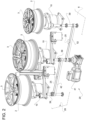
figure 2 schematically shows the same perspective view of the cleaning device of the invention as infigure 1 , with parts left out for a better understanding of the structure of the cleaning stations; -
figure 3 schematically shows a three-quarter perspective rear view of the stations of the cleaning device offigures 1 and2 with two of the three wheel rims left out in order to better show respective details of the cleaning stations; -
figure 4 schematically shows a perspective view, shown in a cross section taken along plane IV-IV, of the cleaning device of the invention in the configuration offigure 3 ; -
figure 5 schematically shows, on a larger scale, a perspective view, shown in a cross section taken along plane V-V, of one of the cleaning stations of the device of the invention; and -
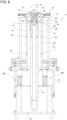
figure 6 schematically shows a side elevation view, shown in a cross section taken along a plane that is parallel to plane V-V, of the cleaning station offigure 5 . - With reference to
figures 1 to 6 , number 1 indicates, as a whole, a cleaning device (which is shown in a merely schematic manner) to clean selected areas of vehicle wheels and, in particular, ahub 3 and an annular mounting face 4 of wheel rims 2 (figure 5 ) from residues of powder paint, after thewheel rims 2 have been subjected to a known electrostatic powder coating phase and before the powder paint is cured, according to a known painting process. - The cleaning device 1 comprises at least one
cleaning station 5, on which, in use, a wheel orwheel rim 2 is caused to stand, and a cup- or tank-shaped casing 6, which houses, on the inside, at least onecleaning station 5 or, as is the case in the non-limiting example shown herein, a plurality of (in the example discussed herein, three)cleaning stations 5, which can be operated simultaneously and are each designed to receive onewheel rim 2 at a time, even with different diameters and shapes, for example properly spaced apart from one another so as to receive wheel rims with wheel dimensions ranging from 14 inches to 26 inches wherein 1 inch corresponds with 2,54 cm. - In order to allow the
wheel rims 2 to be positioned on thecleaning stations 5 located in the casing or tank 6, thecleaning stations 5 are accessible through an upper inlet mouth 7 of the casing or tank 6, in the example shown herein having a rectangular shape. - In order to cause the
wheel rims 2 to stand and, at the same time, be supported on thecleaning stations 5 and in order to move thewheel rims 2 from and to the cleaning device 1, the latter comprises a plurality of robots 8, only one of them being shown herein, in a merely schematic manner, for the sake of simplicity. The robots 8 have at least three numerical control axes and can be of any known type. - The casing or tank 6 is preferably made of a metal material, because it is conductive.
- Each cleaning station 5 (
figures 4-6 ) comprises (only one of thecleaning stations 5 is described in detail below, the threecleaning stations 5 of the cleaning device 1 being identical, the only difference lying, at most, in the dimensions of the single components) a firsthollow shaft 9, which is defined by a first cylindrical pipe section, afixed support 10 for theshaft 9, theshaft 9 being mounted on thefixed support 10 in an idle manner, a firstannular brush 11, which is provided withbristles 12 made preferably of a fireproof synthetic plastic material and which is attached to theshaft 9 in an angularly integral manner. - Each
cleaning station 5 further comprises a cylindrical compressedair feeding pipe 13, which is mounted in a fixed manner relative to thesupport 10 and is housed in a coaxial fashion within thefirst shaft 9; thepipe 13 is supplied in a known manner by a compressed air production system on the outside of the casing or tank 6, which is known and is not described for the sake of simplicity. - According to the invention, each
cleaning station 5 further comprises a cup-shaped nozzle 14, which is carried by an upper end 15 (figures 4 and6 ) of the compressedair feeding pipe 13 in an idle manner. Furthermore, thenozzle 14 can also be telescopically movable in an axial direction onto theair feeding pipe 13 or be axially fixed. - The
nozzle 14 comprises (figures 4 and6 ) a lateralcylindrical wall 16, which is coaxial to the compressedair feeding pipe 13, and abottom wall 18, which is opposite the compressedair feeding pipe 13 and has the shape of an ogive (nose cone). Furthermore, thenozzle 14 is provided, through the lateralcylindrical wall 16, with a plurality of annular rows of first throughholes 19 arranged on top of one another in an axial direction,. - Each
station 5 or, more in general, the cleaning device 1 as a whole further comprises a rotation device 20 (figures 2 and4 ) for thefirst shaft 9, as described more in detail below. - According to the invention, the
nozzle 14 and theshaft 9 are relatively movable in an axial manner between a first position (figure 6 ), in which thenozzle 14 is retracted inside thefirst brush 11 so that only a first row 21 (figure 6 ) offirst holes 19, which is immediately adjacent to thebottom wall 18, is arranged immediately above thebristles 12 of thefirst brush 11, and a second position (shown with a broken line and only schematically), in which thenozzle 14 is extracted from thefirst brush 11 to an extent that is such as to allow it to be inserted, in use, inside thewheel hub 3 of eachwheel rim 2, while thefirst brush 11 cooperates with the mounting face 4 of thehub 3 and at least one row (in the example shown herein, the one that is the farthest from the bottom wall 14) offirst holes 19 is aligned substantially flush with thebristles 12 of thefirst brush 11. - These two configurations, i.e. the extracted and retracted configurations of the
nozzle 14, can be obtained both by configuring theupper end 15 of thefeeding pipe 13 and thenozzle 14 so that thenozzle 14 is axially movable onto thepipe 13 and, as shown in a non-limiting and merely schematic manner infigures 4 and6 , by configuring theshaft 9 in such a way that it is directly or indirectly supported by a bench ofspring supports 100, so that, by pushing thebrush 11 downwards with therespective shaft 9, thenozzle 14 progressively moves from the retracted position to the extracted position. - In use, the
wheel rims 2 are supported by the robot/s 8; while thenozzle 14 is axially fixed, therobot 9 presses thewheel rim 2 against thebrush 11 pushing theshaft 9 downward against the elastic reaction of thesupports 100, thus causing thenozzle 14 to be inserted into the wheel hub at the desired height; at the end of this cleaning phase, the spring supports 100 cause theshaft 9 to go back to the rest position, once the wheel has been released. - Finally, according to the invention, the inside of the
first shaft 9 is connected, through thesupport 10, to an air suction device 22 (figure 1 ) and, in turn, the inside of thefirst shaft 9 is connected, through second holes orwindows 23, to anannular gap 24 placed between thefirst brush 11 and thenozzle 14; the holes orwindows 23 are radially arranged towards the inside of the first brush 11 (figures 4 and6 ), between respective radial spokes thereof. - The air suction device 22 is supported by the casing or tank 6, on the outside of the latter, and comprises two suction mouths 25 (
figures 1 and2 ), which are arranged through the casing 6 in the area of a hopper-shaped bottom wall 26 thereof and are connected to arespective suction piping 260 of the device 22. - The
supports 11, which also have, as a whole, a cylindrical shape and are hollow, havelower openings 27 facing thebottom wall 26 of the casing 6, so that the suction device 22 is suited to suck air also from the inside of thehollow shaft 9 and up to the area of thegap 24 and of thebrushes 11. - The hopper-
shaped bottom wall 26 has an inclination relative to the horizontal which is equal to or greater than 30°, so as to make it easier for the (few) residues of powder paint which are removed from therims 2, by means of thebrushes 11 and thenozzles 14, but are not completely sucked away by the device, 22, to detach themselves and slide downwards. Said (few) residues gather themselves at the bottom of the casing or tank 6, where they can manually be removed every now and then or, anyway, later, or they are continuously or occasionally removed by means of a known mechanical device, which is not shown for the sake of simplicity. - According to a preferred embodiment of the invention, the
first holes 19 are all oriented in a same direction inclined relative to a radial direction perpendicular to the lateralcylindrical wall 16 of thenozzle 14, so that compressed air fed to thenozzle 14 by thefeeding pipe 13 also causes thenozzle 14 to rotate relative to thefeeding pipe 13 due to reaction propulsion. Obviously, as an alternative, thenozzle 14 could be caused to rotate with a known mechanical device. - The
nozzle 14 is made of a preferably fireproof, synthetic plastic material and comprises a first annular element 28 (figures 4 and6 ), which is fitted (in a substantially fluid-tight manner) in a coaxial fashion on theupper end 15 of the compressedair feeding pipe 13, and a secondannular element 29, which is delimited by the lateralcylindrical wall 16, and whichelement 29 is fitted in an idle manner on a cylindrical portion 30 (figure 6 ) of the firstannular element 28 having a smaller diameter, preferably with the interposition of a rolling bearing 31 (figures 4 and6 ), more preferably made of glass, so as to avoid any possible spark. - The first
annular element 28 of thenozzle 14 can be configured to receive an upward thrust from the compressed air fed to thenozzle 14 through thefeeding pipe 13, at least starting from a predetermined compressed air flow rate, so as to progressively move, in use, thenozzle 14 towards the aforesaid second position, in which it is extracted from thefirst brush 11. Alternatively, thenozzle 14 can be moved to the extracted position by means of any known mechanical means, which is not shown herein, or it can be axially fixed, as already mentioned above, and it is thebrush 11 that is lowered in order to progressively extract it from the latter. - According to the invention, each
station 5 of the device 1 also comprises a hollow shaft 32 (figures 4 and6 ), which is defined by a second cylindrical pipe section and is arranged in a coaxial manner inside thefirst shaft 9, between the latter and the compressedair feeding pipe 13, radially spaced apart both from thepipe 13 and from theshaft 9, so as to create respective annular gaps between theshaft 32 and thepipe 13 and between theshafts - The
second shaft 32 supports a second annular brush 33 (figure 4 ), which is provided withbristles 35 made of a preferably fireproof synthetic plastic material and is concentric to thefirst brush 11, radially on the inside thereof and radially on the outside of thenozzle 14. - The
second shaft 32 is constrained in an angularly integral manner (and also in an axially integral manner) to thefirst shaft 9 and thebrush 33 is substantially flush with thefirst brush 11 and is configured to brush, in use, at least part of an innerlateral surface 36 of the wheel hub 3 (figure 5 ). - The
nozzle 14 is configured to be inserted, in use, radially on the inside of thesecond brush 33 and inside thewheel hub 3 so as to send compressed air through thefirst holes 19 towards the innerlateral surface 36 of thewheel hub 3 and through therespective bristles brushes nozzle 14 and thebrushes - The aforesaid
second holes 23 directly connect theannular gap 24 to the inside of thefirst shaft 9, while theannular gap 24 is directly connected to the inside of thesecond shaft 32;third holes 37 are obtained in such a way that they radially pass through thesecond shaft 32 so as to connect the inside of thesecond shaft 32 to the inside of thefirst shaft 9. To this aim, theholes 37 preferably are inclined downwards, namely on the opposite side relative to thebrushes - The
annular gap 24 is delimited between thefirst brush 11 and thesecond brush 33 and is partly covered by a guard ring 38 (figure 4 ), which is configured to strike, in use, against part of the annular mounting face 4 so as to avoid possible outward radial movements of powder paint removed from the inside of thehub 3. - The
rotation device 20 for thefirst shaft 9 of eachcleaning station 5 comprises, for eachstation 5, an axle 39 (figure 2 ), which is arranged radially on the outside of thesupport 11 and is parallel to thefirst shaft 9, to which it is coupled by means of agear transmission 40. - In the non-limiting example shown herein, the cleaning device 1 comprises a plurality of
cleaning stations 5 arranged next to one another in series and configured to operate simultaneously, each caused to rotate by arespective axle 39; theaxles 39 are operated, a first one, directly by amotor 41 and, the other ones, by thefirst axle 39 by means ofbelt transmissions 42. - The
axles 39 and, if necessary, also themotor 40 are housed, together with - and on the outside of - thesupport 11 of eachcleaning station 5, inside the casing 6, whose mouth 7 faces towards the brushes 11 (and 33) of thecleaning stations 5. - The mouth 7 can be provided with an air curtain seal system (which is not shown herein for the sake of simplicity) and the inside of the casing or tank 6 is anyway kept under vacuum by the suction device 22, so as to prevent possible residues of powder paint removed from the
wheel rims 2 from being released to the outside. - In order to obtain, in use, a cleaning of the
brushes nozzle 14, the cleaning device 1 is also provided with an additional cleaning device, indicated, as a whole, with number 43 (figures 3 and5 ), which is specifically destined to the brushes 11 (and 33) and is installed inside the casing or tank 6. - This
system 43 is based on a series ofnozzles 44, preferably shaped like a blade, namely at least one for eachstation 5, which are mounted onrods 45, which, in turn, can radially slide ontracks 46 relative to thestation 5 and are operated by means ofpneumatic valves 47. Thenozzles 44 and thesystem 43, as a whole, are configured to be moved against thebrushes 11 radially from the outside towards the inside and to introduce compressed air jets from the outside towards the inside through thebristles brushes - From what described above, it is clear that the invention is also defined, in accordance with claim 8, by a cleaning method for cleaning selected areas of vehicle wheels, such as a
hub 3 and an annular mounting face 4 ofwheel rims 2, from residues of powder paint left after powder coating of the wheel rims 2. - The method comprises the steps of:
- causing each wheel rim 2 to stand, for a first predefined amount of time, in the area of a cleaning
station 5, which is enclosed within a cup- or tank-shaped casing 6, which is provided at the top with an inlet mouth 7 to allow the wheel rims 2 to be positioned on the cleaningstation 5; - during the standing step in the cleaning
station 5, engaging the annular mounting face 4 and at least part of an innerlateral surface 36 of thewheel hub 3 with a pair of rotatingannular brushes bristles bristles lateral surface 36 of thehub 3 by means of afirst nozzle 14, which is made of a synthetic plastic material, is provided withradial holes 19 and is progressively axially inserted in thehub 3 and simultaneously caused to rotate on itself; - removing the wheel rim 2 from the cleaning station and continuing to cause the
brushes first nozzle 14, which is caused to rotate on itself, for a second predefined amount of time in order to clean the brushes; - simultaneously with the standing step - with the
wheel rim 2 standing on the cleaning station 5 - and with the cleaning step carried out to clean thebrushes nozzle 14 so as to maintain the inside of the casing 6 under vacuum in order to prevent residues of powder paint from being released through the mouth 7 of the casing 6, which, if necessary, can also be protected by an air curtain seal, feeding compressed air flush to the mouth 7, in particular after the removal of the wheel rims 2. - The
brushes - During the cleaning step carried out to clean the
brushes bristles second nozzles 44, which radially feed air under pressure from the outside to the inside, after having stopped the supply of compressed air to thefirst nozzle 14 and for a third predefined amount of time, which is equal to or smaller than 2 seconds. - In order to further improve safety, on the edge of the mouth 7 of the tank 6, on the outside thereof, there can be UV sensors for a spark control.
- The wheel rims 2 are caused to stand on the cleaning
station 5 and are moved by means of a plurality of robots 8 having at least three numerical control axes, all arranged on the outside of the tank 6. - Thanks to these solutions, the wheel rims 2 can be perfectly cleaned from powder paint on all the necessary parts, without any risk of removing paint from wheel rim parts that actually have to be painted. At the same time, there is no risk of powder paint being released into the atmosphere, thus reducing pollution and explosion risks to zero.
- Hence, all the objects of the invention are reached.
Claims (8)
- A cleaning device (1) for cleaning selected areas of vehicle wheels such as a hub (3) and an annular mounting face (4) of wheel rims (2) from residues of powder paint, the cleaning device comprising at least one cleaning station (5) on which a wheel or a wheel rim can be made to station in use; wherein the cleaning station (5) comprises, in combination:i)- a first hollow shaft (9) defined by a first cylindrical pipe section;ii)- a fixed support (10) for the first shaft, the first shaft being mounted idle on said fixed support;iii)- a first annular brush (11) provided with bristles (12) made of a synthetic and preferably fireproof plastic material, angularly fixed integral with the first shaft;iv)- an air feeding cylindrical pipe (13) for feeding compressed air, mounted fixed relative to the support and housed coaxial within the first shaft;v)- a cup-shaped nozzle (14), carried idle by an upper end (15) of the compressed air feeding pipe, the nozzle (14) comprising a cylindrical lateral wall (16) coaxial with the compressed air feeding pipe and a bottom wall (18), opposite to the compressed air feeding pipe, and being provided through the cylindrical lateral wall thereof with a plurality of annular rows (21) of first through holes (19), the annular rows being superimposed to one another in an axial direction; andvi)- a rotation device (20) for the first shaft;vii)- said nozzle (14) and/or said first shaft (9) being configured so as to be relatively axially movable between a first position, wherein the nozzle is retracted inside the first brush (11) so that only a first row (21) of first holes (19), immediately adjacent to the bottom wall, is arranged immediately above the bristles (12) of the first brush, and a second position, wherein the nozzle (14) is extracted from the first brush to an extent such as to be inserted in use inside the wheel hub (3) while the first brush (11) cooperates with the mounting face (4) of the hub and at least one row of the first holes (19) is aligned substantially flush with the bristles (12) of the first brush; characterized in thatviii)- the inside of the first shaft (9) is connected through the support (10) to an air suction device (22), second holes (23) being arranged radially towards the inside of the first brush to connect an annular gap (24) between the first brush and the nozzle with the inside of the first shaft;ix)- the cleaning station (5) comprising a second hollow shaft (32) defined by a second cylindrical pipe section and arranged coaxial inside the first shaft (9), between the latter and the compressed air feeding pipe (13), radially spaced from both; the second shaft supporting a second annular brush (33) provided with bristles (35) made of a synthetic and preferably fireproof material and arranged concentric to the first brush (11), radially inside the latter and outside the nozzle (14); the second shaft being axially and angularly constrained integral with the first shaft and the second brush (33) being arranged substantially flush with the first brush and being configured to brush in use at least part of an inner lateral surface (36) of the wheel hub (3); said nozzle (14) being configured to be inserted in use radially on the inside of the second brush (33) and inside the wheel hub (3) to send compressed air through said first holes (19) towards the inner lateral surface (36) of the wheel hub and through respective bristles (11,35) of said first and second brushes.
- The cleaning device according to claim 1, characterized in that said first holes (19) are all oriented in a same inclined direction relative to a radial direction perpendicular to the cylindrical lateral wall (16) of the nozzle, so that compressed air fed to the nozzle by said feeding pipe (13) causes the nozzle to rotate relative to the feeding pipe.
- The cleaning device according to claim 1 or 2, characterized in that the nozzle (14) is made of a synthetic and preferably fireproof plastic material and comprises a first annular element (28) fitted movable and coaxial on said upper end of the compressed air feeding pipe (13) and a second annular element (29) delimited by said cylindrical lateral wall (16), which is fitted idle on a smaller diameter cylindrical portion (30) of the first annular element, preferably with the interposition of a rolling bearing (31), preferably made of glass.
- The cleaning device according to claim 3, characterized in that the first annular element (28) of the nozzle (14) is configured to receive an upward thrust by the compressed air fed to the nozzle through the feeding pipe (13), so as to progressively bring the nozzle to said second position, wherein it is extracted from the first brush (11).
- The cleaning device according to anyone of the preceding claims, characterized in that second holes (23) directly connect said annular gap (24) to the inside of the first shaft (9) while the annular gap (24) is directly connected to the inside of the second shaft (32), third holes (37) obtained radially passing through the second shaft connecting the inside of the second shaft to the inside of the first shaft.
- The cleaning device according to claim 5, characterized in that said annular gap (24) is delimited between the first and the second brushes and is partly covered by a guard ring (38) configured to abut in use against part of the annular mounting face to prevent any outward radial movements of powder paint removed from the inside of the hub.
- The cleaning device according to one of the preceding claims, characterised in that said rotation device (20) for the first shaft comprises an axle (39) arranged radially on the outside of the support (10) and parallel to the first shaft (9), with which it is coupled by means of a gear transmission (40); the cleaning device (1) comprising a plurality of cleaning stations (5) arranged side-by-side in series and configured to operate simultaneously, each one rotated by one said axle (39); the axles being driven, the first one directly by a motor (41) and the others by the first axle, by means of belt transmissions (42); the axles and the motor being housed, together with, and on the outside of, the support (10) of each cleaning station inside a cup-shaped casing (6), the casing having a mouth (7) facing towards the brushes (11) of the cleaning stations; a bottom wall (26) of the casing being hopper-shaped and being connected to respective suction pipings (260) of the air suction device (22), which is supported by the casing (6), externally to the same.
- A cleaning method for cleaning selected areas of vehicle wheels such as a hub (3) and an annular mounting face (4) of wheel rims (2) from residues of powder paint left after powder painting of the wheel rims, the method comprising the steps of:- making each wheel rim (2) stationary for a first predefined time at a cleaning station (5) enclosed within a cup-shaped casing (6), which is provided at the top with a mouth (7) to allow positioning of the wheel rims on the cleaning station;- during the stationary phase on the cleaning station, engaging the annular mounting face (4) and at least part of an inner lateral surface (36) of the wheel hub with a pair of rotating annular brushes (11,33) having bristles (12,35) made of a synthetic preferably fireproof plastic material and simultaneously sending radially from the inside towards the outside compressed air against the bristles and against the entire inner lateral surface of the hub by means of a first nozzle (14) and provided with radial holes (19) which is progressively inserted axially in the hub and simultaneously made to rotate on itself;- removing the wheel rim from the cleaning station and continuing to make the brushes (11,33) rotate and feeding compressed air to the first nozzle (14) for a second predefined time to clean the brushes; wherein said first nozzle (14) is made of a synthetic plastic material, the method also comprises the steps of:- simultaneously to the stationary phases of the wheel rim on the cleaning station and cleaning of the brushes, sucking from the casing (6) and from the inside of the cleaning station (5) a volume of air greater than that of the compressed air fed to the nozzle (14) so as to maintain the inside of the casing (6) under vacuum to prevent dispersions of residues of powder paint through the mouth of the casing; and wherein- the brushes (11,33) are made to rotate at a speed of at least 60 rpm; the first and the second predefined times being equal to, or lower than, 1.5 sec.; and wherein during the step of cleaning the brushes, the bristles (12,35) of the latter are intercepted by respective second nozzles (44) which feed air under pressure radially from the outside to the inside after suspending the supply of compressed air to the first nozzle (14) and for a third predefined time equal to, or lower than, 2 sec.; the wheel rims being made to station on the cleaning station and being moved by means of robots (8) having at least three numeric control axes.
Applications Claiming Priority (1)
| Application Number | Priority Date | Filing Date | Title |
|---|---|---|---|
| IT102019000009051A IT201900009051A1 (en) | 2019-06-14 | 2019-06-14 | DEVICE AND METHOD FOR CLEANING THE HUB AND MOUNTING FACE OF VEHICLE WHEELS FROM POWDER PAINT RESIDUES |
Publications (2)
| Publication Number | Publication Date |
|---|---|
| EP3750640A1 EP3750640A1 (en) | 2020-12-16 |
| EP3750640B1 true EP3750640B1 (en) | 2023-12-06 |
Family
ID=68281835
Family Applications (1)
| Application Number | Title | Priority Date | Filing Date |
|---|---|---|---|
| EP20179839.4A Active EP3750640B1 (en) | 2019-06-14 | 2020-06-12 | Device and method for cleaning hub and mounting face of vehicle wheels from residues of powder paint |
Country Status (2)
| Country | Link |
|---|---|
| EP (1) | EP3750640B1 (en) |
| IT (1) | IT201900009051A1 (en) |
Families Citing this family (3)
| Publication number | Priority date | Publication date | Assignee | Title |
|---|---|---|---|---|
| DE212021000090U1 (en) * | 2021-05-09 | 2021-06-23 | Wujiang Xinmin High Fiber Co., Ltd. | A surface treatment device for the hot embossing rollers of the production line for viscose-linen composites |
| KR102424228B1 (en) * | 2022-01-27 | 2022-07-25 | 주식회사 디어스세다 | Apparatus for removiing powder paint |
| CN115709195B (en) * | 2022-11-07 | 2024-10-01 | 内蒙古通威高纯晶硅有限公司 | Automatic cleaning method for graphite seat |
Family Cites Families (5)
| Publication number | Priority date | Publication date | Assignee | Title |
|---|---|---|---|---|
| JP2000033331A (en) * | 1998-07-22 | 2000-02-02 | Topy Ind Ltd | Method of removing powder coating from aluminum wheel hole surface and device therefor |
| JP3760709B2 (en) * | 2000-01-20 | 2006-03-29 | 株式会社タツノ・メカトロニクス | washing machine |
| DE102004060859B4 (en) * | 2004-12-15 | 2008-05-21 | Eisenmann Anlagenbau Gmbh & Co. Kg | Apparatus and method for cleaning rims |
| DE202007014659U1 (en) * | 2007-02-05 | 2007-12-20 | Fronius International Gmbh | Cleaning device, tool head and cleaning brush for this |
| KR101523896B1 (en) * | 2014-11-19 | 2015-06-01 | 조재산 | Cleaner For Helmet |
-
2019
- 2019-06-14 IT IT102019000009051A patent/IT201900009051A1/en unknown
-
2020
- 2020-06-12 EP EP20179839.4A patent/EP3750640B1/en active Active
Also Published As
| Publication number | Publication date |
|---|---|
| IT201900009051A1 (en) | 2020-12-14 |
| EP3750640A1 (en) | 2020-12-16 |
Similar Documents
| Publication | Publication Date | Title |
|---|---|---|
| EP3750640B1 (en) | Device and method for cleaning hub and mounting face of vehicle wheels from residues of powder paint | |
| EP3750642B1 (en) | Device and method for cleaning painting spindles for vehicle wheels | |
| CN111032232B (en) | Powder coating equipment for coating workpieces with paint powder | |
| US9138783B2 (en) | Method and apparatus for cleaning surfaces | |
| US20040148050A1 (en) | Device for sucking off specified surface areas on powder-coated vehicle wheels | |
| CN217491346U (en) | Spraying device is used in production of switch board casing | |
| CN109129207B (en) | Automatic sand blasting assembly line for photovoltaic glass | |
| US7487568B2 (en) | Multiple station machine for cleaning a container by scouring with a compressed gas peripheral jet | |
| JP2013050171A (en) | Bearing washing device for railway | |
| US20020023310A1 (en) | Roadway cleaning apparatus | |
| JP5588768B2 (en) | Shock absorber cleaning device, cleaning method and manufacturing method | |
| US11534789B2 (en) | Method for cleaning paint spray gun | |
| CN113769953B (en) | Metal section production process | |
| CN212732681U (en) | Diesel oil filter casing spraying device | |
| EP0195510B1 (en) | Spraying machine with a rotating worksupport table | |
| KR20140073766A (en) | Cleaning system for cellular phone case painting line | |
| US20160017234A1 (en) | Device for cleaning a filling hole frame | |
| CN218590880U (en) | Automobile front and rear bumper spraying support machining platform | |
| KR101742480B1 (en) | Cleaning apparatus having air injector of self rotary drive type | |
| CN115582236B (en) | Automatic enamel spraying and edge blowing equipment for water heater inner tank head and glaze spraying room with the equipment | |
| CN213000818U (en) | Workpiece rotary continuous spraying device | |
| JPH05177498A (en) | Air blow device | |
| CN214440256U (en) | Surface spraying device for aluminum alloy hub machining | |
| CN215968152U (en) | Wet-type white tire side grinding device | |
| CN221539440U (en) | Surface rust removing device for steel member production |
Legal Events
| Date | Code | Title | Description |
|---|---|---|---|
| PUAI | Public reference made under article 153(3) epc to a published international application that has entered the european phase |
Free format text: ORIGINAL CODE: 0009012 |
|
| STAA | Information on the status of an ep patent application or granted ep patent |
Free format text: STATUS: THE APPLICATION HAS BEEN PUBLISHED |
|
| AK | Designated contracting states |
Kind code of ref document: A1 Designated state(s): AL AT BE BG CH CY CZ DE DK EE ES FI FR GB GR HR HU IE IS IT LI LT LU LV MC MK MT NL NO PL PT RO RS SE SI SK SM TR |
|
| AX | Request for extension of the european patent |
Extension state: BA ME |
|
| STAA | Information on the status of an ep patent application or granted ep patent |
Free format text: STATUS: REQUEST FOR EXAMINATION WAS MADE |
|
| 17P | Request for examination filed |
Effective date: 20210611 |
|
| RBV | Designated contracting states (corrected) |
Designated state(s): AL AT BE BG CH CY CZ DE DK EE ES FI FR GB GR HR HU IE IS IT LI LT LU LV MC MK MT NL NO PL PT RO RS SE SI SK SM TR |
|
| GRAP | Despatch of communication of intention to grant a patent |
Free format text: ORIGINAL CODE: EPIDOSNIGR1 |
|
| STAA | Information on the status of an ep patent application or granted ep patent |
Free format text: STATUS: GRANT OF PATENT IS INTENDED |
|
| INTG | Intention to grant announced |
Effective date: 20230626 |
|
| GRAS | Grant fee paid |
Free format text: ORIGINAL CODE: EPIDOSNIGR3 |
|
| GRAA | (expected) grant |
Free format text: ORIGINAL CODE: 0009210 |
|
| STAA | Information on the status of an ep patent application or granted ep patent |
Free format text: STATUS: THE PATENT HAS BEEN GRANTED |
|
| REG | Reference to a national code |
Ref country code: DE Ref legal event code: R079 Ref document number: 602020022191 Country of ref document: DE Free format text: PREVIOUS MAIN CLASS: B08B0001040000 Ipc: B08B0001320000 |
|
| AK | Designated contracting states |
Kind code of ref document: B1 Designated state(s): AL AT BE BG CH CY CZ DE DK EE ES FI FR GB GR HR HU IE IS IT LI LT LU LV MC MK MT NL NO PL PT RO RS SE SI SK SM TR |
|
| REG | Reference to a national code |
Ref country code: GB Ref legal event code: FG4D |
|
| REG | Reference to a national code |
Ref country code: CH Ref legal event code: EP |
|
| REG | Reference to a national code |
Ref country code: DE Ref legal event code: R096 Ref document number: 602020022191 Country of ref document: DE |
|
| REG | Reference to a national code |
Ref country code: IE Ref legal event code: FG4D |
|
| REG | Reference to a national code |
Ref country code: LT Ref legal event code: MG9D |
|
| PG25 | Lapsed in a contracting state [announced via postgrant information from national office to epo] |
Ref country code: GR Free format text: LAPSE BECAUSE OF FAILURE TO SUBMIT A TRANSLATION OF THE DESCRIPTION OR TO PAY THE FEE WITHIN THE PRESCRIBED TIME-LIMIT Effective date: 20240307 |
|
| REG | Reference to a national code |
Ref country code: NL Ref legal event code: MP Effective date: 20231206 |
|
| PG25 | Lapsed in a contracting state [announced via postgrant information from national office to epo] |
Ref country code: LT Free format text: LAPSE BECAUSE OF FAILURE TO SUBMIT A TRANSLATION OF THE DESCRIPTION OR TO PAY THE FEE WITHIN THE PRESCRIBED TIME-LIMIT Effective date: 20231206 |
|
| PG25 | Lapsed in a contracting state [announced via postgrant information from national office to epo] |
Ref country code: ES Free format text: LAPSE BECAUSE OF FAILURE TO SUBMIT A TRANSLATION OF THE DESCRIPTION OR TO PAY THE FEE WITHIN THE PRESCRIBED TIME-LIMIT Effective date: 20231206 |
|
| PG25 | Lapsed in a contracting state [announced via postgrant information from national office to epo] |
Ref country code: LT Free format text: LAPSE BECAUSE OF FAILURE TO SUBMIT A TRANSLATION OF THE DESCRIPTION OR TO PAY THE FEE WITHIN THE PRESCRIBED TIME-LIMIT Effective date: 20231206 Ref country code: GR Free format text: LAPSE BECAUSE OF FAILURE TO SUBMIT A TRANSLATION OF THE DESCRIPTION OR TO PAY THE FEE WITHIN THE PRESCRIBED TIME-LIMIT Effective date: 20240307 Ref country code: ES Free format text: LAPSE BECAUSE OF FAILURE TO SUBMIT A TRANSLATION OF THE DESCRIPTION OR TO PAY THE FEE WITHIN THE PRESCRIBED TIME-LIMIT Effective date: 20231206 Ref country code: BG Free format text: LAPSE BECAUSE OF FAILURE TO SUBMIT A TRANSLATION OF THE DESCRIPTION OR TO PAY THE FEE WITHIN THE PRESCRIBED TIME-LIMIT Effective date: 20240306 |
|
| REG | Reference to a national code |
Ref country code: AT Ref legal event code: MK05 Ref document number: 1637911 Country of ref document: AT Kind code of ref document: T Effective date: 20231206 |
|
| PG25 | Lapsed in a contracting state [announced via postgrant information from national office to epo] |
Ref country code: NL Free format text: LAPSE BECAUSE OF FAILURE TO SUBMIT A TRANSLATION OF THE DESCRIPTION OR TO PAY THE FEE WITHIN THE PRESCRIBED TIME-LIMIT Effective date: 20231206 |
|
| PG25 | Lapsed in a contracting state [announced via postgrant information from national office to epo] |
Ref country code: SE Free format text: LAPSE BECAUSE OF FAILURE TO SUBMIT A TRANSLATION OF THE DESCRIPTION OR TO PAY THE FEE WITHIN THE PRESCRIBED TIME-LIMIT Effective date: 20231206 Ref country code: RS Free format text: LAPSE BECAUSE OF FAILURE TO SUBMIT A TRANSLATION OF THE DESCRIPTION OR TO PAY THE FEE WITHIN THE PRESCRIBED TIME-LIMIT Effective date: 20231206 Ref country code: NO Free format text: LAPSE BECAUSE OF FAILURE TO SUBMIT A TRANSLATION OF THE DESCRIPTION OR TO PAY THE FEE WITHIN THE PRESCRIBED TIME-LIMIT Effective date: 20240306 Ref country code: NL Free format text: LAPSE BECAUSE OF FAILURE TO SUBMIT A TRANSLATION OF THE DESCRIPTION OR TO PAY THE FEE WITHIN THE PRESCRIBED TIME-LIMIT Effective date: 20231206 Ref country code: LV Free format text: LAPSE BECAUSE OF FAILURE TO SUBMIT A TRANSLATION OF THE DESCRIPTION OR TO PAY THE FEE WITHIN THE PRESCRIBED TIME-LIMIT Effective date: 20231206 Ref country code: HR Free format text: LAPSE BECAUSE OF FAILURE TO SUBMIT A TRANSLATION OF THE DESCRIPTION OR TO PAY THE FEE WITHIN THE PRESCRIBED TIME-LIMIT Effective date: 20231206 |
|
| PG25 | Lapsed in a contracting state [announced via postgrant information from national office to epo] |
Ref country code: IS Free format text: LAPSE BECAUSE OF FAILURE TO SUBMIT A TRANSLATION OF THE DESCRIPTION OR TO PAY THE FEE WITHIN THE PRESCRIBED TIME-LIMIT Effective date: 20240406 |
|
| PGFP | Annual fee paid to national office [announced via postgrant information from national office to epo] |
Ref country code: GB Payment date: 20240618 Year of fee payment: 5 |
|
| PGFP | Annual fee paid to national office [announced via postgrant information from national office to epo] |
Ref country code: DE Payment date: 20240627 Year of fee payment: 5 |
|
| PG25 | Lapsed in a contracting state [announced via postgrant information from national office to epo] |
Ref country code: AT Free format text: LAPSE BECAUSE OF FAILURE TO SUBMIT A TRANSLATION OF THE DESCRIPTION OR TO PAY THE FEE WITHIN THE PRESCRIBED TIME-LIMIT Effective date: 20231206 Ref country code: CZ Free format text: LAPSE BECAUSE OF FAILURE TO SUBMIT A TRANSLATION OF THE DESCRIPTION OR TO PAY THE FEE WITHIN THE PRESCRIBED TIME-LIMIT Effective date: 20231206 |
|
| PG25 | Lapsed in a contracting state [announced via postgrant information from national office to epo] |
Ref country code: SK Free format text: LAPSE BECAUSE OF FAILURE TO SUBMIT A TRANSLATION OF THE DESCRIPTION OR TO PAY THE FEE WITHIN THE PRESCRIBED TIME-LIMIT Effective date: 20231206 |
|
| PG25 | Lapsed in a contracting state [announced via postgrant information from national office to epo] |
Ref country code: SM Free format text: LAPSE BECAUSE OF FAILURE TO SUBMIT A TRANSLATION OF THE DESCRIPTION OR TO PAY THE FEE WITHIN THE PRESCRIBED TIME-LIMIT Effective date: 20231206 Ref country code: SK Free format text: LAPSE BECAUSE OF FAILURE TO SUBMIT A TRANSLATION OF THE DESCRIPTION OR TO PAY THE FEE WITHIN THE PRESCRIBED TIME-LIMIT Effective date: 20231206 Ref country code: RO Free format text: LAPSE BECAUSE OF FAILURE TO SUBMIT A TRANSLATION OF THE DESCRIPTION OR TO PAY THE FEE WITHIN THE PRESCRIBED TIME-LIMIT Effective date: 20231206 Ref country code: IS Free format text: LAPSE BECAUSE OF FAILURE TO SUBMIT A TRANSLATION OF THE DESCRIPTION OR TO PAY THE FEE WITHIN THE PRESCRIBED TIME-LIMIT Effective date: 20240406 Ref country code: EE Free format text: LAPSE BECAUSE OF FAILURE TO SUBMIT A TRANSLATION OF THE DESCRIPTION OR TO PAY THE FEE WITHIN THE PRESCRIBED TIME-LIMIT Effective date: 20231206 Ref country code: CZ Free format text: LAPSE BECAUSE OF FAILURE TO SUBMIT A TRANSLATION OF THE DESCRIPTION OR TO PAY THE FEE WITHIN THE PRESCRIBED TIME-LIMIT Effective date: 20231206 Ref country code: AT Free format text: LAPSE BECAUSE OF FAILURE TO SUBMIT A TRANSLATION OF THE DESCRIPTION OR TO PAY THE FEE WITHIN THE PRESCRIBED TIME-LIMIT Effective date: 20231206 |
|
| PGFP | Annual fee paid to national office [announced via postgrant information from national office to epo] |
Ref country code: FR Payment date: 20240625 Year of fee payment: 5 |
|
| PG25 | Lapsed in a contracting state [announced via postgrant information from national office to epo] |
Ref country code: PT Free format text: LAPSE BECAUSE OF FAILURE TO SUBMIT A TRANSLATION OF THE DESCRIPTION OR TO PAY THE FEE WITHIN THE PRESCRIBED TIME-LIMIT Effective date: 20240408 Ref country code: PL Free format text: LAPSE BECAUSE OF FAILURE TO SUBMIT A TRANSLATION OF THE DESCRIPTION OR TO PAY THE FEE WITHIN THE PRESCRIBED TIME-LIMIT Effective date: 20231206 |
|
| PG25 | Lapsed in a contracting state [announced via postgrant information from national office to epo] |
Ref country code: PT Free format text: LAPSE BECAUSE OF FAILURE TO SUBMIT A TRANSLATION OF THE DESCRIPTION OR TO PAY THE FEE WITHIN THE PRESCRIBED TIME-LIMIT Effective date: 20240408 Ref country code: PL Free format text: LAPSE BECAUSE OF FAILURE TO SUBMIT A TRANSLATION OF THE DESCRIPTION OR TO PAY THE FEE WITHIN THE PRESCRIBED TIME-LIMIT Effective date: 20231206 |
|
| REG | Reference to a national code |
Ref country code: DE Ref legal event code: R097 Ref document number: 602020022191 Country of ref document: DE |
|
| PGFP | Annual fee paid to national office [announced via postgrant information from national office to epo] |
Ref country code: IT Payment date: 20240611 Year of fee payment: 5 |
|
| PG25 | Lapsed in a contracting state [announced via postgrant information from national office to epo] |
Ref country code: DK Free format text: LAPSE BECAUSE OF FAILURE TO SUBMIT A TRANSLATION OF THE DESCRIPTION OR TO PAY THE FEE WITHIN THE PRESCRIBED TIME-LIMIT Effective date: 20231206 |
|
| PLBE | No opposition filed within time limit |
Free format text: ORIGINAL CODE: 0009261 |
|
| STAA | Information on the status of an ep patent application or granted ep patent |
Free format text: STATUS: NO OPPOSITION FILED WITHIN TIME LIMIT |
|
| PG25 | Lapsed in a contracting state [announced via postgrant information from national office to epo] |
Ref country code: SI Free format text: LAPSE BECAUSE OF FAILURE TO SUBMIT A TRANSLATION OF THE DESCRIPTION OR TO PAY THE FEE WITHIN THE PRESCRIBED TIME-LIMIT Effective date: 20231206 |
|
| PG25 | Lapsed in a contracting state [announced via postgrant information from national office to epo] |
Ref country code: SI Free format text: LAPSE BECAUSE OF FAILURE TO SUBMIT A TRANSLATION OF THE DESCRIPTION OR TO PAY THE FEE WITHIN THE PRESCRIBED TIME-LIMIT Effective date: 20231206 Ref country code: DK Free format text: LAPSE BECAUSE OF FAILURE TO SUBMIT A TRANSLATION OF THE DESCRIPTION OR TO PAY THE FEE WITHIN THE PRESCRIBED TIME-LIMIT Effective date: 20231206 |
|
| 26N | No opposition filed |
Effective date: 20240909 |
|
| PG25 | Lapsed in a contracting state [announced via postgrant information from national office to epo] |
Ref country code: MC Free format text: LAPSE BECAUSE OF FAILURE TO SUBMIT A TRANSLATION OF THE DESCRIPTION OR TO PAY THE FEE WITHIN THE PRESCRIBED TIME-LIMIT Effective date: 20231206 |
|
| REG | Reference to a national code |
Ref country code: CH Ref legal event code: PL |
|
| PG25 | Lapsed in a contracting state [announced via postgrant information from national office to epo] |
Ref country code: LU Free format text: LAPSE BECAUSE OF NON-PAYMENT OF DUE FEES Effective date: 20240612 |
|
| PG25 | Lapsed in a contracting state [announced via postgrant information from national office to epo] |
Ref country code: IE Free format text: LAPSE BECAUSE OF NON-PAYMENT OF DUE FEES Effective date: 20240612 |
|
| PG25 | Lapsed in a contracting state [announced via postgrant information from national office to epo] |
Ref country code: BE Free format text: LAPSE BECAUSE OF NON-PAYMENT OF DUE FEES Effective date: 20240630 Ref country code: CH Free format text: LAPSE BECAUSE OF NON-PAYMENT OF DUE FEES Effective date: 20240630 |
|
| REG | Reference to a national code |
Ref country code: BE Ref legal event code: MM Effective date: 20240630 |
|
| PG25 | Lapsed in a contracting state [announced via postgrant information from national office to epo] |
Ref country code: FI Free format text: LAPSE BECAUSE OF FAILURE TO SUBMIT A TRANSLATION OF THE DESCRIPTION OR TO PAY THE FEE WITHIN THE PRESCRIBED TIME-LIMIT Effective date: 20231207 |
|
| PG25 | Lapsed in a contracting state [announced via postgrant information from national office to epo] |
Ref country code: CY Free format text: LAPSE BECAUSE OF FAILURE TO SUBMIT A TRANSLATION OF THE DESCRIPTION OR TO PAY THE FEE WITHIN THE PRESCRIBED TIME-LIMIT; INVALID AB INITIO Effective date: 20200612 |
|
| REG | Reference to a national code |
Ref country code: DE Ref legal event code: R119 Ref document number: 602020022191 Country of ref document: DE |
|
| GBPC | Gb: european patent ceased through non-payment of renewal fee |
Effective date: 20250612 |
|
| PG25 | Lapsed in a contracting state [announced via postgrant information from national office to epo] |
Ref country code: HU Free format text: LAPSE BECAUSE OF FAILURE TO SUBMIT A TRANSLATION OF THE DESCRIPTION OR TO PAY THE FEE WITHIN THE PRESCRIBED TIME-LIMIT; INVALID AB INITIO Effective date: 20200612 |
|
| PG25 | Lapsed in a contracting state [announced via postgrant information from national office to epo] |
Ref country code: GB Free format text: LAPSE BECAUSE OF NON-PAYMENT OF DUE FEES Effective date: 20250612 |
|
| PG25 | Lapsed in a contracting state [announced via postgrant information from national office to epo] |
Ref country code: DE Free format text: LAPSE BECAUSE OF NON-PAYMENT OF DUE FEES Effective date: 20260101 |
|
| PG25 | Lapsed in a contracting state [announced via postgrant information from national office to epo] |
Ref country code: IT Free format text: LAPSE BECAUSE OF NON-PAYMENT OF DUE FEES Effective date: 20250612 |
|
| PG25 | Lapsed in a contracting state [announced via postgrant information from national office to epo] |
Ref country code: FR Free format text: LAPSE BECAUSE OF NON-PAYMENT OF DUE FEES Effective date: 20250630 |