EP3748883A1 - Virtual resource unit for multi-resource unit assignment to a single station in wlan - Google Patents
Virtual resource unit for multi-resource unit assignment to a single station in wlan Download PDFInfo
- Publication number
- EP3748883A1 EP3748883A1 EP20177956.8A EP20177956A EP3748883A1 EP 3748883 A1 EP3748883 A1 EP 3748883A1 EP 20177956 A EP20177956 A EP 20177956A EP 3748883 A1 EP3748883 A1 EP 3748883A1
- Authority
- EP
- European Patent Office
- Prior art keywords
- virtual
- rus
- fec
- padding
- sta
- Prior art date
- Legal status (The legal status is an assumption and is not a legal conclusion. Google has not performed a legal analysis and makes no representation as to the accuracy of the status listed.)
- Granted
Links
Images







Classifications
-
- H—ELECTRICITY
- H04—ELECTRIC COMMUNICATION TECHNIQUE
- H04L—TRANSMISSION OF DIGITAL INFORMATION, e.g. TELEGRAPHIC COMMUNICATION
- H04L1/00—Arrangements for detecting or preventing errors in the information received
- H04L1/004—Arrangements for detecting or preventing errors in the information received by using forward error control
- H04L1/0056—Systems characterized by the type of code used
- H04L1/0067—Rate matching
-
- H—ELECTRICITY
- H04—ELECTRIC COMMUNICATION TECHNIQUE
- H04W—WIRELESS COMMUNICATION NETWORKS
- H04W72/00—Local resource management
- H04W72/12—Wireless traffic scheduling
- H04W72/1263—Mapping of traffic onto schedule, e.g. scheduled allocation or multiplexing of flows
- H04W72/1273—Mapping of traffic onto schedule, e.g. scheduled allocation or multiplexing of flows of downlink data flows
-
- H—ELECTRICITY
- H04—ELECTRIC COMMUNICATION TECHNIQUE
- H04L—TRANSMISSION OF DIGITAL INFORMATION, e.g. TELEGRAPHIC COMMUNICATION
- H04L1/00—Arrangements for detecting or preventing errors in the information received
- H04L1/004—Arrangements for detecting or preventing errors in the information received by using forward error control
- H04L1/0056—Systems characterized by the type of code used
- H04L1/0071—Use of interleaving
-
- H—ELECTRICITY
- H03—ELECTRONIC CIRCUITRY
- H03M—CODING; DECODING; CODE CONVERSION IN GENERAL
- H03M13/00—Coding, decoding or code conversion, for error detection or error correction; Coding theory basic assumptions; Coding bounds; Error probability evaluation methods; Channel models; Simulation or testing of codes
- H03M13/03—Error detection or forward error correction by redundancy in data representation, i.e. code words containing more digits than the source words
- H03M13/05—Error detection or forward error correction by redundancy in data representation, i.e. code words containing more digits than the source words using block codes, i.e. a predetermined number of check bits joined to a predetermined number of information bits
- H03M13/11—Error detection or forward error correction by redundancy in data representation, i.e. code words containing more digits than the source words using block codes, i.e. a predetermined number of check bits joined to a predetermined number of information bits using multiple parity bits
- H03M13/1102—Codes on graphs and decoding on graphs, e.g. low-density parity check [LDPC] codes
-
- H—ELECTRICITY
- H03—ELECTRONIC CIRCUITRY
- H03M—CODING; DECODING; CODE CONVERSION IN GENERAL
- H03M13/00—Coding, decoding or code conversion, for error detection or error correction; Coding theory basic assumptions; Coding bounds; Error probability evaluation methods; Channel models; Simulation or testing of codes
- H03M13/27—Coding, decoding or code conversion, for error detection or error correction; Coding theory basic assumptions; Coding bounds; Error probability evaluation methods; Channel models; Simulation or testing of codes using interleaving techniques
-
- H—ELECTRICITY
- H03—ELECTRONIC CIRCUITRY
- H03M—CODING; DECODING; CODE CONVERSION IN GENERAL
- H03M13/00—Coding, decoding or code conversion, for error detection or error correction; Coding theory basic assumptions; Coding bounds; Error probability evaluation methods; Channel models; Simulation or testing of codes
- H03M13/27—Coding, decoding or code conversion, for error detection or error correction; Coding theory basic assumptions; Coding bounds; Error probability evaluation methods; Channel models; Simulation or testing of codes using interleaving techniques
- H03M13/2792—Interleaver wherein interleaving is performed jointly with another technique such as puncturing, multiplexing or routing
-
- H—ELECTRICITY
- H03—ELECTRONIC CIRCUITRY
- H03M—CODING; DECODING; CODE CONVERSION IN GENERAL
- H03M13/00—Coding, decoding or code conversion, for error detection or error correction; Coding theory basic assumptions; Coding bounds; Error probability evaluation methods; Channel models; Simulation or testing of codes
- H03M13/37—Decoding methods or techniques, not specific to the particular type of coding provided for in groups H03M13/03 - H03M13/35
- H03M13/3761—Decoding methods or techniques, not specific to the particular type of coding provided for in groups H03M13/03 - H03M13/35 using code combining, i.e. using combining of codeword portions which may have been transmitted separately, e.g. Digital Fountain codes, Raptor codes or Luby Transform [LT] codes
-
- H—ELECTRICITY
- H03—ELECTRONIC CIRCUITRY
- H03M—CODING; DECODING; CODE CONVERSION IN GENERAL
- H03M13/00—Coding, decoding or code conversion, for error detection or error correction; Coding theory basic assumptions; Coding bounds; Error probability evaluation methods; Channel models; Simulation or testing of codes
- H03M13/63—Joint error correction and other techniques
- H03M13/635—Error control coding in combination with rate matching
- H03M13/6356—Error control coding in combination with rate matching by repetition or insertion of dummy data, i.e. rate reduction
-
- H—ELECTRICITY
- H04—ELECTRIC COMMUNICATION TECHNIQUE
- H04L—TRANSMISSION OF DIGITAL INFORMATION, e.g. TELEGRAPHIC COMMUNICATION
- H04L1/00—Arrangements for detecting or preventing errors in the information received
- H04L1/004—Arrangements for detecting or preventing errors in the information received by using forward error control
-
- H—ELECTRICITY
- H04—ELECTRIC COMMUNICATION TECHNIQUE
- H04L—TRANSMISSION OF DIGITAL INFORMATION, e.g. TELEGRAPHIC COMMUNICATION
- H04L1/00—Arrangements for detecting or preventing errors in the information received
- H04L1/004—Arrangements for detecting or preventing errors in the information received by using forward error control
- H04L1/0041—Arrangements at the transmitter end
-
- H—ELECTRICITY
- H04—ELECTRIC COMMUNICATION TECHNIQUE
- H04L—TRANSMISSION OF DIGITAL INFORMATION, e.g. TELEGRAPHIC COMMUNICATION
- H04L1/00—Arrangements for detecting or preventing errors in the information received
- H04L1/004—Arrangements for detecting or preventing errors in the information received by using forward error control
- H04L1/0041—Arrangements at the transmitter end
- H04L1/0043—Realisations of complexity reduction techniques, e.g. use of look-up tables
-
- H—ELECTRICITY
- H04—ELECTRIC COMMUNICATION TECHNIQUE
- H04L—TRANSMISSION OF DIGITAL INFORMATION, e.g. TELEGRAPHIC COMMUNICATION
- H04L1/00—Arrangements for detecting or preventing errors in the information received
- H04L1/004—Arrangements for detecting or preventing errors in the information received by using forward error control
- H04L1/0056—Systems characterized by the type of code used
- H04L1/0057—Block codes
-
- H—ELECTRICITY
- H04—ELECTRIC COMMUNICATION TECHNIQUE
- H04L—TRANSMISSION OF DIGITAL INFORMATION, e.g. TELEGRAPHIC COMMUNICATION
- H04L1/00—Arrangements for detecting or preventing errors in the information received
- H04L1/004—Arrangements for detecting or preventing errors in the information received by using forward error control
- H04L1/0056—Systems characterized by the type of code used
- H04L1/0061—Error detection codes
-
- H—ELECTRICITY
- H03—ELECTRONIC CIRCUITRY
- H03M—CODING; DECODING; CODE CONVERSION IN GENERAL
- H03M13/00—Coding, decoding or code conversion, for error detection or error correction; Coding theory basic assumptions; Coding bounds; Error probability evaluation methods; Channel models; Simulation or testing of codes
- H03M13/03—Error detection or forward error correction by redundancy in data representation, i.e. code words containing more digits than the source words
- H03M13/05—Error detection or forward error correction by redundancy in data representation, i.e. code words containing more digits than the source words using block codes, i.e. a predetermined number of check bits joined to a predetermined number of information bits
- H03M13/09—Error detection only, e.g. using cyclic redundancy check [CRC] codes or single parity bit
-
- H—ELECTRICITY
- H03—ELECTRONIC CIRCUITRY
- H03M—CODING; DECODING; CODE CONVERSION IN GENERAL
- H03M13/00—Coding, decoding or code conversion, for error detection or error correction; Coding theory basic assumptions; Coding bounds; Error probability evaluation methods; Channel models; Simulation or testing of codes
- H03M13/29—Coding, decoding or code conversion, for error detection or error correction; Coding theory basic assumptions; Coding bounds; Error probability evaluation methods; Channel models; Simulation or testing of codes combining two or more codes or code structures, e.g. product codes, generalised product codes, concatenated codes, inner and outer codes
- H03M13/2906—Coding, decoding or code conversion, for error detection or error correction; Coding theory basic assumptions; Coding bounds; Error probability evaluation methods; Channel models; Simulation or testing of codes combining two or more codes or code structures, e.g. product codes, generalised product codes, concatenated codes, inner and outer codes using block codes
-
- H—ELECTRICITY
- H04—ELECTRIC COMMUNICATION TECHNIQUE
- H04L—TRANSMISSION OF DIGITAL INFORMATION, e.g. TELEGRAPHIC COMMUNICATION
- H04L5/00—Arrangements affording multiple use of the transmission path
- H04L5/003—Arrangements for allocating sub-channels of the transmission path
-
- H—ELECTRICITY
- H04—ELECTRIC COMMUNICATION TECHNIQUE
- H04W—WIRELESS COMMUNICATION NETWORKS
- H04W84/00—Network topologies
- H04W84/02—Hierarchically pre-organised networks, e.g. paging networks, cellular networks, WLAN [Wireless Local Area Network] or WLL [Wireless Local Loop]
- H04W84/10—Small scale networks; Flat hierarchical networks
- H04W84/12—WLAN [Wireless Local Area Networks]
Definitions
- Embodiments of the present invention generally relate to the field of wireless communications. More specifically, embodiments of the present invention relate to systems and methods for using multiple resource units with a single wireless station within a wireless communication network.
- Existing approaches to WLAN wireless communication involve tone plans used to map complex constellation points of codewords to nonadjacent addresses or index values. Interleaving the codeword mapping is important to reduce the error rate of wireless transmissions, for example, caused by burst errors. This type of mapping in effect spreads the data out over frequencies to make channel errors more correctable via error correction algorithms.
- Existing tone plans typically define resource units including a number of data tones (N SD ) that can be assigned to specific users/clients. The size of the channel's resource units depends on the channel's bandwidth and tone spacing.
- the bands currently available for 5GHz transmissions are 20 MHz, 40 MHz, 80 MHz, and 160 MHz. Typically assigning narrower channel bandwidths per user can support a greater number of users/clients, where wider channel bandwidths can provide greater throughput.
- Preamble puncturing can be used to avoid interference at certain frequencies that are otherwise available to a wireless network. For example, in some cases it is useful to "puncture" a hole or gap in the middle of a spectrum segment to avoid interference caused by radar.
- a radar signal When a radar signal is detected, it is possible to puncture a 20 MHz segment that is used by radar out of an 80 MHz segment (resource unit), for example, thereby creating a 20 MHz segment and a 40 MHz segment on either side of the punctured portion.
- the 20 MHz segment and the 40 MHz segment can be treated as separate resource units and assigned to different wireless users/devices. However, it is not possible to assign both resource units to the same wireless user/device under the existing approach.
- Embodiments of the present invention can assign multiple resource units (RUs) to a single wireless station using an aggregated Multi-RU ("virtual resource unit” or "vRU") that aggregates multiple RUs, and the parameters of the virtual RU can be calculated according to existing standards such the padding schemes and RUs (e.g., RU26, RU52, RU106, RU242, RU484, RU996, RU2x996) as defined in IEEE 802.11ax.
- the Virtual RU associated parameters used for joint encoding can be directly calculated based on formulas described herein according to embodiments of the present invention and/or using pre-defined tables in certain implementations.
- Embodiments of the present invention can perform independent encoding for each RU aggregated in the virtual RU, for joint encoding across multiple RUs, or for a mixed transmission scheme that allocates RUs into multiple groups that can be jointly encoded.
- the associated parameters for the Virtual RU are used for both the transmitter and receiver sides of the joint encoding process.
- Virtual RU based joint encoding methodology can be easily extended for general RU aggregations for any size of RU, and any number of RUs in the Multi-RU aggregations.
- this virtual RU-based methodology can be also extended to the unequal MCS or unequal number of spatial streams on each RU for the Multi-RU aggregation.
- a method of transmitting data to a wireless station (STA) using a virtual resource unit (RU) assigned to the wireless STA includes calculating parameters for transmitting the virtual RU according to a multi-RU scheduling, where said virtual RU includes a plurality of RUs of the multi-RU scheduling, performing pre-FEC padding, FEC encoding, and post-FEC padding on the virtual RU according to the parameters, and transmitting data to the wireless STA using the virtual RU.
- performing pre-FEC padding includes performing pre-FEC padding using a vNdbps value including a sum of Ndbps values of the RUs of the virtual RU, a vNcbps value including a sum of Ncbps values of the RUs of the virtual RU, and a vNsd,short value including a sum of Nsd,short values of the RUs of the virtual RU.
- the performing post-FEC padding includes performing post-FEC padding using a vNcbps value, and where the vNcbps value includes a sum of Ncbps values of the RUs of the virtual RU.
- the plurality of RUs of the virtual RU include adjacent physical RUs.
- the plurality of RUs of the virtual RU include non-adjacent physical RUs.
- the method includes determining RU parameters according to tables defined in IEEE 802.11ax, and calculating parameters for transmitting the virtual RU includes calculating parameters using the RU parameters according to the tables.
- the pre-FEC padding includes performing pre-FEC MAC padding and pre-FEC PHY padding.
- the method includes performing LDPC or BCC encoding on the virtual RU.
- the method further includes passing the encoded data to a stream parser, a segment parser, BCC interleaver, a constellation mapper, and/or an LDPC tone mapper for transmission.
- the plurality of RUs of the virtual RU are passed to different segment parsers, different constellation mappers, and different LDPC tone mappers.
- a wireless communication device includes a processor, and a memory coupled to the processor and including instructions executed by the processor to perform a method of transmitting data to a wireless station (STA) using a virtual resource unit (RU) assigned to the wireless STA.
- the method includes calculating parameters for transmitting the virtual RU according to a multi-RU scheduling, where said virtual RU includes a plurality of RUs of the multi-RU scheduling, performing pre-FEC padding, FEC encoding, and post-FEC padding on the virtual RU according to the parameters, and transmitting data to the wireless STA using the virtual RU.
- a non-transitory computer-readable storage medium having embedded therein program instructions, which when executed by one or more processors of a device, causes the device to execute a process for transmitting data to a wireless station (STA) using a virtual resource unit (RU) assigned to the wireless STA.
- the process includes calculating parameters for transmitting the virtual RU according to a multi-RU scheduling, where said virtual RU includes a plurality of RUs of the multi-RU scheduling, performing pre-FEC padding, FEC encoding, and post-FEC padding on the virtual RU according to the parameters, and transmitting data to the wireless STA using the virtual RU.
- EHT Extremely High Throughput
- STA station
- AP access point
- Embodiments of the present invention assign multiple resource units (RUs) to a single wireless station using an aggregated Multi-RU ("virtual resource unit” or “vRU”) that aggregates multiple RUs, and the parameters of the virtual RU can be calculated according to existing standards such the padding schemes and RUs (e.g., RU26, RU52, RU106, RU242, RU484, RU996, RU2x996) as defined in IEEE 802.11ax.
- the virtual RU parameters used for joint encoding can be directly calculated based on formulas described herein according to embodiments of the present invention, and according to values obtained from pre-defined tables.
- Embodiments of the present invention can perform independent encoding for each RU aggregated in the virtual RU, joint encoding across multiple RUs, or a mixed transmission scheme that allocates RUs into multiple groups that can be jointly encoded.
- the associated parameters for the Virtual RU are used for both the transmitter and receiver sides of the joint encoding process.
- the virtual RU based joint encoding methodology can be readily extended for general RU aggregations for any size of RU, and any number of RUs in the Multi-RU aggregations. Furthermore, this virtual RU based methodology can be also extended to the unequal MCS or unequal number of spatial streams on each RU for the Multi-RU aggregation.
- the virtual RU joint encoding process can be used for SU (Single User), DL MU (Multiple Users) of OFDMA, MU-MIMO, UL TB (Trigger Based) PPDU, or a combination thereof.
- SU Single User
- DL MU Multiple Users
- UL TB Trigger Based
- PPDU Trigger Based
- embodiments of the present invention provide a virtual RU transmission scheme for aggregating multiple RUs for assignment to a single wireless STA to advantageously simplify multi-RU transmission processing.
- the virtual RU transmission schemes described herein are performed according to IEEE 802.11be standards.
- IEEE 802.11be standards more than one RUs can be assigned to a single STA; each PSDU transmitted uses one encoder for LDPC; a single tone mapper is used for LDPC for combined RUs within one 80MHz segment; and there is only one PSDU transmitted per STA over each link.
- FIG. 1 a block diagram of an exemplary joint encoding process and transmission scheme 100 for processing a virtual RU is depicted according to embodiments of the present invention.
- the virtual RUs described herein include any combination of two or more "physical RUs," such as the RUs defined in IEE 802.11ax (e.g., RU26, RU52, RU106, RU242, RU484, RU996, RU2x996).
- a virtual RU can include a combination of adjacent or non-adjacent physical RUs, and the packet length and padding schemes for transmitting the virtual RU are calculated using joint encoding over multiple physical RUs to a single wireless STA.
- multi-RU scheduling is performed to assign RUs to a user or users (e.g., wireless STAs).
- virtual RU parameters are determined and used for a joint encoding process including Pre-Forward Error Correction (FEC) padding 115, FEC encoding 120, and Post-FEC padding 125.
- the parameters for performing the padding and FEC encoding can be determined according to pre-defined tables.
- the FEC encoding 120 can include using Low-Density Parity Check (LDPC) or Binary Convolutional Code (BCC), for example.
- the transmission scheme of the virtual RUs includes performing a Cyclic Redundancy Check (CRC) error-detecting function 130 and scramble sequence generator 135.
- CRC Cyclic Redundancy Check
- the encoded virtual RU is sent to a stream parser 140 that divides the outputs of the joint encoding process into blocks of bits and sends the blocks to different interleaves for transmission.
- CRC Cyclic Redundancy Check
- Virtual RU 205 includes three adjacent physical RUs RU106 (210), RU26 (215), and RU52 (220) that are aggregated together in virtual RU 205.
- virtual RU 210 is a 184-tone RU.
- Virtual UR 205 can be encoded and transmitted using the exemplary scheme depicted in Figure 1 , for example, and can be assigned to a single user or wireless STA.
- the number of physical RUs aggregated in the virtual RU is determined based on the desired size (e.g., number of tones) of the virtual RU.
- Virtual RU 305 includes three physical RUs RU106 (310), RU26 (315), and RU52 (320) that are aggregated together in virtual RU 305.
- RU106 (310) and RU26 (3125) are non-adjacent.
- virtual RU 210 is a 184-tone RU.
- Virtual RU 205 including adjacent RUs ( Figure 2 ) and virtual RU 305 including non-adjacent RUs can be encoded/processed (e.g., pre-FEC padding, BCC/LDPC encoding, etc.) in the same way same as long as the sizes of the virtual RUs 205 and 305 are the same (e.g., 184 tones).
- Virtual UR 205 can be encoded and transmitted using the exemplary scheme depicted in Figure 1 , for example, and can be assigned to a single user or wireless STA.
- an exemplary padding scheme 400 for transmission of a virtual RU to a single user/wireless STA is depicted according to embodiments of the present invention.
- the IEEE 802.11ax standard defines padding schemes for transmissions of a single physical RU for each user.
- a modified padding scheme is described herein according to embodiments of the present invention that includes a two-step padding process applied to an HE PPDU.
- the pre-FEC padding process includes both pre-FEC for both the Medium Access Control (MAC) layer (pre-FEC MAC padding) and pre-FEC for the Physical (PHY) layer (pre-FEC PHY padding), and is applied before FEC coding.
- a post-FEC PHY padding process is applied on the FEC encoded bits.
- exemplary padding scheme 400 includes an LDPC Encoder 410 that receives pre-FEC padding bits and excess info bits 405.
- the output of LDPC Encoder 410 and the post-FEC bits 415 are passed to stream parser 420 that divides the outputs of the LDPC encoding process into blocks of bits.
- the blocks are passed to a series of segment parsers (e.g., segment parsers 425 and 430), constellation mappers (e.g., segment parsers 435 and 440) and LDPC Tone Mappers (e.g., LDPC tone mappers 445 and 450) for transmitting the virtual RU to a single user.
- segment parsers e.g., segment parsers 425 and 430
- constellation mappers e.g., segment parsers 435 and 440
- LDPC Tone Mappers e.g., LDPC tone mappers 445 and 450
- the parameters of a virtual RU can be calculated according to existing standards such the padding schemes and RUs (e.g., RU26, RU52, RU106, RU242, RU484, RU996, RU2x996) defined in IEEE 802.11ax.
- the Virtual RU associated parameters used for joint encoding can be directly calculated based on formulas described herein according to embodiments of the present invention with reference to pre-defined tables.
- Table I below includes parameters defined for virtual RUs (vRUs) based on standards defined in IEEE 802.11ax. Each vRU parameter is associated with a specific table or tables as defined according to IEEE 802.11ax standards ( see, IEEE P802.11ax/D4.0, Feb. 2019).
- Tables 27-15, 27-32, and 27-54 published in IEEE P802.11ax/D4.0, Feb. 2019 are partially reproduced below and are referred to in the exemplary vRU parameter calculations described with reference to Figures 5-10 .
- N SS 1 HE-MCS Index DCM Modulation
- N BPSCS N SD
- 24 48 24 1.8 1.7 1.5 2 N/A 34 24 48 36 2.6 2.5 2.3 3 1 16-QAM 1/2 4 12 48 24 1.8 1.7 1.5 0 1/2
- the Ndbps and Ncbps values for the 52 tone RUs and 106 tone RUs can similarly be looked up in tables 27-62 and 27-70, respectively.
- Table 27-62 indicate that the Ndbps value for a 52 tone RU is 144, and the Ncbps value for a 52 tone RU is 192.
- Table 27-70 indicates that the Ndbps value for a 106 tone RU is 306, and the Ncbps value for a 106 tone RU is 408.
- the values obtained from the tables described above can be used to calculate parameters for virtual RU transmission, including pre-FEC padding, BCC encoding, LPDC encoding, and post-FEC padding, among other uses.
- Figures 5-10 illustrate exemplary calculations for determining parameters of vRUs assigned to a single user according to embodiments of the present invention.
- Calculation 500 is performed using a vNdbps value 505 in place of Ndbps, a vNcbps value 510 in place of Ncbps, and a vNsd,short value 515 in place of the Nsd,short, value typically used in this calculation according to IEEE 802.1 1ax.
- the vNdbps, vNcbps, and vNsd,short, values can be calculated as described above according to embodiments of the present invention.
- steps in an exemplary calculation 600 for determining BCC encoding values for a vRU assigned to a single user is depicted according to embodiments of the present invention.
- the value of Ncbps,last is determined according to the standards defined in IEEE 802.11ax using a vNcbps value 605 in place of the Ncbps value typically used in the calculation.
- Step 7 steps in an exemplary calculation 700 for determining LDPC encoding values for a vRU assigned to a single user are depicted according to embodiments of the present invention.
- Calculation 700 is performed using a vNdbps value 705 in place of Ndbps and a vNcbps value 710 in place of the Ncbps value typically used in this calculation according to IEEE 802.11ax.
- the vNdbps and vNcbps values can be calculated as described above according to embodiments of the present invention.
- an exemplary calculation 800 for determining post-FEC padding values for a vRU assigned to a single user is depicted according to embodiments of the present invention.
- the value of Npad,post-FEC is determined according to the standards defined in IEEE 802.11ax using a vNcbps value 805 in place of the Ncbps value typically used in the calculation.
- steps in an exemplary calculation 900 for performing HE-MU Transmission of a vRU assigned to a single user are depicted according to embodiments of the present invention.
- the vRU parameters for the u-th STA which is assigned the virtual RU are denoted as vNsd,u, vNdbps,u, vNcbps,u and vNsd,short,u.
- Calculation 900 is performed using a vNdbps,u value 905 in place of Ndbps and a vNcbps,u value 910 in place of the Ncbps value typically used in this calculation according to IEEE 802.11ax.
- the vNdbps,u and vNcbps,u, values are associated with a specific user/wireless STA (e.g., the u-th user) and can be calculated as described above according to embodiments of the present invention.
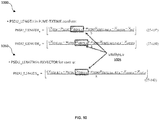
- calculations 1000 and 1050 for calculating PSDU length values for transmitting a vRU assigned to a single user are depicted according to embodiments of the present invention.
- Calculation 1000 is used to determine a PSDU length in a PLME-TXTIME.confirm primitive, and calculation 1050 is sued to determine a PSDU length in an RXVECTOR for user u.
- the vNdbps,u value 1005 is used in place of the Ndbps,u value typically used in these equations as defined in the IEEE 802.11ax standard.
- FIG. 11 an exemplary sequence of computer implemented steps for process 1100 of transmitting data to a wireless STA using a virtual RU assigned to the wireless STA are depicted according to embodiments of the present invention.
- the virtual RU includes multiple RUs that are assigned to the wireless STA, and the virtual RU can be assigned to the wireless STA via an RU scheduling process.
- parameters for transmitting the virtual RU according to a multi-RU scheduling are calculated. The calculations can be performed using new parameters, such as vNdbps, vNcdps, vNsd,short, etc., in place of the typical values defined in IEEE 802.11ax.
- the new parameters can represent a sum of RU parameters associated with the RUs aggregated in the virtual RU.
- the RU parameters associated with the RUs aggregated in the virtual RU are determined using a look-up table defined in IEEE 802.11ax.
- pre-FEC padding, FEC encoding, and post-FEC padding on the virtual RU are performed according to the parameters calculated in step 1105.
- Step 1105 can include that performing pre-FEC padding comprises performing pre-FEC MAC padding and pre-FEC PHY padding, preferably.
- step 1110 can include performing LDPC encoding on the virtual RU.
- the LDPC encoded data is passed to a stream parser, a segment parser, a constellation mapper, and an LDPC tone mapper for transmission.
- data is transmitted to the wireless STA using the virtual RU.
- the virtual RU may be transmitted in an HE PPDU, for example.
- Embodiments of the present invention are drawn to electronic systems for transmitting data using a virtual resource unit assigned to a single user/wireless STA.
- the following discussion describes one such exemplary electronic system or computer system that can be used as a platform for implementing embodiments of the present invention.
- the exemplary computer system 1212 can be a wireless access point or a wireless station, for example.
- the exemplary computer system or wireless device includes a central processing unit (such as a processor or a CPU) 1201 for running software applications and optionally an operating system.
- a central processing unit such as a processor or a CPU
- Read-only memory 1202 and random access memory 1203 store applications and data for use by the CPU 1201.
- Data storage device 1204 provides non-volatile storage for applications and data and may include fixed disk drives, removable disk drives, flash memory devices, and CD-ROM, DVD-ROM or other optical storage devices.
- the optional user inputs 1206 and 1207 comprise devices that communicate inputs from one or more users to the computer system 1212 (e.g., mice, joysticks, cameras, touch screens, and/or microphones).
- a communication or network interface 1208 includes a plurality of transceivers and allows the computer system 1212 to communicate with other computer systems, networks, or devices via an electronic communications network, including wired and/or wireless communication and including an Intranet or the Internet (e.g., 802.11 wireless standard).
- the communication or network interface 1208 can operate multiple transceivers simultaneously.
- the communication or network interface 1208 and can include a dual band interface that can operate in multiple bands simultaneously, such as 2.4 GHz, 5 GHz, and/or 6 GHz.
- the optional display device 1210 may be any device capable of displaying visual information in response to a signal from the computer system 1212 and may include a flat panel touch sensitive display, for example, and may be remotely disposed.
- the components of the computer system 1212, including the CPU 1201, memory 1202/1203, data storage 1204, user input devices 1206, and graphics subsystem 1205 may be coupled via one or more data buses.
- program modules include routines, programs, objects, components, data structures, etc. that perform particular tasks or implement particular abstract data types.
- functionality of the program modules may be combined or distributed as desired in various embodiments.
Landscapes
- Engineering & Computer Science (AREA)
- Computer Networks & Wireless Communication (AREA)
- Signal Processing (AREA)
- Physics & Mathematics (AREA)
- Probability & Statistics with Applications (AREA)
- Theoretical Computer Science (AREA)
- Mobile Radio Communication Systems (AREA)
Abstract
Description
- This application claims the benefit of and priority to provisional patent application Serial Number
62/856,251 - Embodiments of the present invention generally relate to the field of wireless communications. More specifically, embodiments of the present invention relate to systems and methods for using multiple resource units with a single wireless station within a wireless communication network.
- Existing approaches to WLAN wireless communication involve tone plans used to map complex constellation points of codewords to nonadjacent addresses or index values. Interleaving the codeword mapping is important to reduce the error rate of wireless transmissions, for example, caused by burst errors. This type of mapping in effect spreads the data out over frequencies to make channel errors more correctable via error correction algorithms. Existing tone plans typically define resource units including a number of data tones (NSD) that can be assigned to specific users/clients. The size of the channel's resource units depends on the channel's bandwidth and tone spacing. The bands currently available for 5GHz transmissions are 20 MHz, 40 MHz, 80 MHz, and 160 MHz. Typically assigning narrower channel bandwidths per user can support a greater number of users/clients, where wider channel bandwidths can provide greater throughput.
- Preamble puncturing can be used to avoid interference at certain frequencies that are otherwise available to a wireless network. For example, in some cases it is useful to "puncture" a hole or gap in the middle of a spectrum segment to avoid interference caused by radar. When a radar signal is detected, it is possible to puncture a 20 MHz segment that is used by radar out of an 80 MHz segment (resource unit), for example, thereby creating a 20 MHz segment and a 40 MHz segment on either side of the punctured portion. Under the existing protocols of IEEE 802.11ax, the 20 MHz segment and the 40 MHz segment can be treated as separate resource units and assigned to different wireless users/devices. However, it is not possible to assign both resource units to the same wireless user/device under the existing approach.
- Accordingly, what is needed is an approach to wireless transmissions that can assign multiple resource units (RUs) to a single wireless station (STA) to utilize the available spectrum more efficiently, enhanced spectral efficiency and network throughput when preamble puncturing is used, and achieve frequency diversity to improve the overall link quality. A method and devices according to the invention are defined in the independent claims. The dependent claims define preferred embodiments thereof. Embodiments of the present invention can assign multiple resource units (RUs) to a single wireless station using an aggregated Multi-RU ("virtual resource unit" or "vRU") that aggregates multiple RUs, and the parameters of the virtual RU can be calculated according to existing standards such the padding schemes and RUs (e.g., RU26, RU52, RU106, RU242, RU484, RU996, RU2x996) as defined in IEEE 802.11ax. The Virtual RU associated parameters used for joint encoding can be directly calculated based on formulas described herein according to embodiments of the present invention and/or using pre-defined tables in certain implementations.
- Embodiments of the present invention can perform independent encoding for each RU aggregated in the virtual RU, for joint encoding across multiple RUs, or for a mixed transmission scheme that allocates RUs into multiple groups that can be jointly encoded. The associated parameters for the Virtual RU are used for both the transmitter and receiver sides of the joint encoding process. Virtual RU based joint encoding methodology can be easily extended for general RU aggregations for any size of RU, and any number of RUs in the Multi-RU aggregations. Furthermore, this virtual RU-based methodology can be also extended to the unequal MCS or unequal number of spatial streams on each RU for the Multi-RU aggregation.
- According to one embodiment, a method of transmitting data to a wireless station (STA) using a virtual resource unit (RU) assigned to the wireless STA is disclosed. The method includes calculating parameters for transmitting the virtual RU according to a multi-RU scheduling, where said virtual RU includes a plurality of RUs of the multi-RU scheduling, performing pre-FEC padding, FEC encoding, and post-FEC padding on the virtual RU according to the parameters, and transmitting data to the wireless STA using the virtual RU.
- Preferably, performing pre-FEC padding includes performing pre-FEC padding using a vNdbps value including a sum of Ndbps values of the RUs of the virtual RU, a vNcbps value including a sum of Ncbps values of the RUs of the virtual RU, and a vNsd,short value including a sum of Nsd,short values of the RUs of the virtual RU.
- Preferably, the performing post-FEC padding includes performing post-FEC padding using a vNcbps value, and where the vNcbps value includes a sum of Ncbps values of the RUs of the virtual RU.
- Preferably, the plurality of RUs of the virtual RU include adjacent physical RUs.
- Preferably, the plurality of RUs of the virtual RU include non-adjacent physical RUs.
- Preferably, the method includes determining RU parameters according to tables defined in IEEE 802.11ax, and calculating parameters for transmitting the virtual RU includes calculating parameters using the RU parameters according to the tables.
- Preferably, the pre-FEC padding includes performing pre-FEC MAC padding and pre-FEC PHY padding.
- Preferably, the method includes performing LDPC or BCC encoding on the virtual RU.
- Preferably, the method further includes passing the encoded data to a stream parser, a segment parser, BCC interleaver, a constellation mapper, and/or an LDPC tone mapper for transmission.
- Preferably, the plurality of RUs of the virtual RU are passed to different segment parsers, different constellation mappers, and different LDPC tone mappers.
- According to another embodiment, a wireless communication device is disclosed. The wireless communication device includes a processor, and a memory coupled to the processor and including instructions executed by the processor to perform a method of transmitting data to a wireless station (STA) using a virtual resource unit (RU) assigned to the wireless STA. The method includes calculating parameters for transmitting the virtual RU according to a multi-RU scheduling, where said virtual RU includes a plurality of RUs of the multi-RU scheduling, performing pre-FEC padding, FEC encoding, and post-FEC padding on the virtual RU according to the parameters, and transmitting data to the wireless STA using the virtual RU.
- According to a different embodiment, a non-transitory computer-readable storage medium having embedded therein program instructions, which when executed by one or more processors of a device, causes the device to execute a process for transmitting data to a wireless station (STA) using a virtual resource unit (RU) assigned to the wireless STA. The process includes calculating parameters for transmitting the virtual RU according to a multi-RU scheduling, where said virtual RU includes a plurality of RUs of the multi-RU scheduling, performing pre-FEC padding, FEC encoding, and post-FEC padding on the virtual RU according to the parameters, and transmitting data to the wireless STA using the virtual RU.
- The accompanying drawings, which are incorporated in and form a part of this specification, illustrate embodiments of the invention and, together with the description, serve to explain the principles of the invention:
-
Figure 1 is a block diagram of an exemplary joint encoding process for processing a virtual RU depicted according to embodiments of the present invention. -
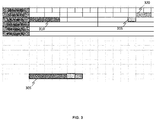
Figure 2 is a block diagram of an exemplary virtual RU including adjacent physical RUs depicted according to embodiments of the present invention. -
Figure 3 is a block diagram of an exemplary virtual RU including non-adjacent physical RUs depicted according to embodiments of the present invention. -
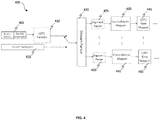
Figure 4 is a block diagram of an exemplary padding scheme for transmission of a virtual RU to a single user/wireless STA depicted according to embodiments of the present invention. -
Figure 5 is a block diagram of an exemplary calculation for determining pre-FEC padding values for a virtual RU assigned to a single user depicted according to embodiments of the present invention. -
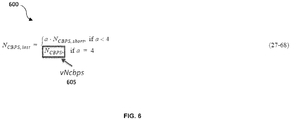
Figure 6 is a diagram of an exemplary calculation for determining BCC encoding values for a virtual RU assigned to a single user is depicted according to embodiments of the present invention. -
Figure 7 is a diagram of an exemplary calculation for determining LDPC encoding values for a virtual RU assigned to a single user depicted according to embodiments of the present invention. -
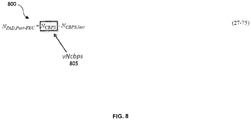
Figure 8 is a diagram of an exemplary calculation for determining post-FEC padding values for a virtual RU assigned to a single user depicted according to embodiments of the present invention. -
Figure 9 is a diagram of an exemplary calculation for performing HE-MU transmission of a virtual RU assigned to a single user depicted according to embodiments of the present invention. -
Figure 10 is a diagram of calculations for calculating PSDU length values for transmitting a virtual RU assigned to a single user depicted according to embodiments of the present invention. -
Figure 11 is a flowchart of an exemplary sequence of computer implemented steps for transmitting data to a wireless STA using a virtual RU assigned to the wireless STA depicted according to embodiments of the present invention. -
Figure 12 is a block diagram depicting an exemplary computer system platform upon which embodiments of the present invention may be implemented. - Reference will now be made in detail to several embodiments. While the subject matter will be described in conjunction with the alternative embodiments, it will be understood that they are not intended to limit the claimed subject matter to these embodiments. On the contrary, the claimed subject matter is intended to cover alternative, modifications, and equivalents, which may be included within the scope of the claimed subject matter as defined by the appended claims.
- Furthermore, in the following detailed description, numerous specific details are set forth in order to provide a thorough understanding of the claimed subject matter. However, it will be recognized by one skilled in the art that embodiments may be practiced without these specific details or with equivalents thereof. In other instances, well-known methods, procedures, components, and circuits have not been described in detail as not to unnecessarily obscure aspects and features of the subject matter.
- Portions of the detailed description that follow are presented and discussed in terms of a method. Although steps and sequencing thereof are disclosed in a figure herein (e.g.,
Figure 11 ) describing the operations of this method, such steps and sequencing are exemplary. Embodiments are well suited to performing various other steps or variations of the steps recited in the flowchart of the figure herein, and in a sequence other than that depicted and described herein. - Some portions of the detailed description are presented in terms of procedures, steps, logic blocks, processing, and other symbolic representations of operations on data bits that can be performed on computer memory. These descriptions and representations are the means used by those skilled in the data processing arts to most effectively convey the substance of their work to others skilled in the art. A procedure, computer-executed step, logic block, process, etc., is here, and generally, conceived to be a self-consistent sequence of steps or instructions leading to a desired result. The steps are those requiring physical manipulations of physical quantities. Usually, though not necessarily, these quantities take the form of electrical or magnetic signals capable of being stored, transferred, combined, compared, and otherwise manipulated in a computer system. It has proven convenient at times, principally for reasons of common usage, to refer to these signals as bits, values, elements, symbols, characters, terms, numbers, or the like.
- It should be borne in mind, however, that all of these and similar terms are to be associated with the appropriate physical quantities and are merely convenient labels applied to these quantities. Unless specifically stated otherwise as apparent from the following discussions, it is appreciated that throughout, discussions utilizing terms such as "accessing," "configuring," "coordinating," "storing," "transmitting," "authenticating," "identifying," "requesting," "reporting," "determining," or the like, refer to the action and processes of a computer system, or similar electronic computing device, that manipulates and transforms data represented as physical (electronic) quantities within the computer system's registers and memories into other data similarly represented as physical quantities within the computer system memories or registers or other such information storage, transmission or display devices.
- As used herein, the term "EHT" may refer generally to a recent generation of wireless communication (Wi-Fi) known as Extremely High Throughput (EHT) and is defined according to the IEEE 802.11be standards. The term station (STA) refers generally to an electronic device capable of sending and receiving data over Wi-Fi that is not operating as an access point (AP).
- Embodiments of the present invention assign multiple resource units (RUs) to a single wireless station using an aggregated Multi-RU ("virtual resource unit" or "vRU") that aggregates multiple RUs, and the parameters of the virtual RU can be calculated according to existing standards such the padding schemes and RUs (e.g., RU26, RU52, RU106, RU242, RU484, RU996, RU2x996) as defined in IEEE 802.11ax. The virtual RU parameters used for joint encoding can be directly calculated based on formulas described herein according to embodiments of the present invention, and according to values obtained from pre-defined tables.
- Embodiments of the present invention can perform independent encoding for each RU aggregated in the virtual RU, joint encoding across multiple RUs, or a mixed transmission scheme that allocates RUs into multiple groups that can be jointly encoded. The associated parameters for the Virtual RU are used for both the transmitter and receiver sides of the joint encoding process. The virtual RU based joint encoding methodology can be readily extended for general RU aggregations for any size of RU, and any number of RUs in the Multi-RU aggregations. Furthermore, this virtual RU based methodology can be also extended to the unequal MCS or unequal number of spatial streams on each RU for the Multi-RU aggregation.
- The virtual RU joint encoding process can be used for SU (Single User), DL MU (Multiple Users) of OFDMA, MU-MIMO, UL TB (Trigger Based) PPDU, or a combination thereof. To avoid added processing complexity, rather than introducing an additional binary convolutionally encoding (BCC) interleaver or low-density parity-check (LDPC) tone mapper, embodiments of the present invention provide a virtual RU transmission scheme for aggregating multiple RUs for assignment to a single wireless STA to advantageously simplify multi-RU transmission processing.
- Preferably, the virtual RU transmission schemes described herein are performed according to IEEE 802.11be standards. For example, according to IEEE 802.11be standards: more than one RUs can be assigned to a single STA; each PSDU transmitted uses one encoder for LDPC; a single tone mapper is used for LDPC for combined RUs within one 80MHz segment; and there is only one PSDU transmitted per STA over each link.
- With regard to
Figure 1 , a block diagram of an exemplary joint encoding process andtransmission scheme 100 for processing a virtual RU is depicted according to embodiments of the present invention. The virtual RUs described herein include any combination of two or more "physical RUs," such as the RUs defined in IEE 802.11ax (e.g., RU26, RU52, RU106, RU242, RU484, RU996, RU2x996). A virtual RU can include a combination of adjacent or non-adjacent physical RUs, and the packet length and padding schemes for transmitting the virtual RU are calculated using joint encoding over multiple physical RUs to a single wireless STA. Atstep 105, multi-RU scheduling is performed to assign RUs to a user or users (e.g., wireless STAs). Atstep 110, virtual RU parameters are determined and used for a joint encoding process including Pre-Forward Error Correction (FEC) padding 115, FEC encoding 120, andPost-FEC padding 125. The parameters for performing the padding and FEC encoding can be determined according to pre-defined tables. The FEC encoding 120 can include using Low-Density Parity Check (LDPC) or Binary Convolutional Code (BCC), for example. The transmission scheme of the virtual RUs includes performing a Cyclic Redundancy Check (CRC) error-detectingfunction 130 andscramble sequence generator 135. The encoded virtual RU is sent to astream parser 140 that divides the outputs of the joint encoding process into blocks of bits and sends the blocks to different interleaves for transmission. - With regard to
Figure 2 , a block diagram of an exemplaryvirtual RU 205 is depicted according to embodiments of the present invention.Virtual RU 205 includes three adjacent physical RUs RU106 (210), RU26 (215), and RU52 (220) that are aggregated together invirtual RU 205. As depicted inFigure 2 ,virtual RU 210 is a 184-tone RU.Virtual UR 205 can be encoded and transmitted using the exemplary scheme depicted inFigure 1 , for example, and can be assigned to a single user or wireless STA. Preferably, the number of physical RUs aggregated in the virtual RU is determined based on the desired size (e.g., number of tones) of the virtual RU. - With regard to
Figure 3 , a block diagram of an exemplaryvirtual RU 305 is depicted according to embodiments of the present invention.Virtual RU 305 includes three physical RUs RU106 (310), RU26 (315), and RU52 (320) that are aggregated together invirtual RU 305. RU106 (310) and RU26 (3125) are non-adjacent. As depicted inFigure 3 ,virtual RU 210 is a 184-tone RU.Virtual RU 205 including adjacent RUs (Figure 2 ) andvirtual RU 305 including non-adjacent RUs can be encoded/processed (e.g., pre-FEC padding, BCC/LDPC encoding, etc.) in the same way same as long as the sizes of the virtual RUs 205 and 305 are the same (e.g., 184 tones).Virtual UR 205 can be encoded and transmitted using the exemplary scheme depicted inFigure 1 , for example, and can be assigned to a single user or wireless STA. - With regard to
Figure 4 , anexemplary padding scheme 400 for transmission of a virtual RU to a single user/wireless STA is depicted according to embodiments of the present invention. The IEEE 802.11ax standard defines padding schemes for transmissions of a single physical RU for each user. Accordingly, a modified padding scheme is described herein according to embodiments of the present invention that includes a two-step padding process applied to an HE PPDU. The pre-FEC padding process includes both pre-FEC for both the Medium Access Control (MAC) layer (pre-FEC MAC padding) and pre-FEC for the Physical (PHY) layer (pre-FEC PHY padding), and is applied before FEC coding. A post-FEC PHY padding process is applied on the FEC encoded bits. In this way, the existing IEEE 802.11ax padding schemes can be lightly modified and re-used for transmitting virtual RUs. As depicted inFigure 4 ,exemplary padding scheme 400 includes anLDPC Encoder 410 that receives pre-FEC padding bits andexcess info bits 405. The output ofLDPC Encoder 410 and thepost-FEC bits 415 are passed to streamparser 420 that divides the outputs of the LDPC encoding process into blocks of bits. The blocks are passed to a series of segment parsers (e.g.,segment parsers 425 and 430), constellation mappers (e.g.,segment parsers 435 and 440) and LDPC Tone Mappers (e.g., LDPC tone mappers 445 and 450) for transmitting the virtual RU to a single user. - As mentioned above, the parameters of a virtual RU can be calculated according to existing standards such the padding schemes and RUs (e.g., RU26, RU52, RU106, RU242, RU484, RU996, RU2x996) defined in IEEE 802.11ax. The Virtual RU associated parameters used for joint encoding can be directly calculated based on formulas described herein according to embodiments of the present invention with reference to pre-defined tables. Table I below includes parameters defined for virtual RUs (vRUs) based on standards defined in IEEE 802.11ax. Each vRU parameter is associated with a specific table or tables as defined according to IEEE 802.11ax standards (see, IEEE P802.11ax/D4.0, Feb. 2019). Tables 27-15, 27-32, and 27-54 published in IEEE P802.11ax/D4.0, Feb. 2019 are partially reproduced below and are referred to in the exemplary vRU parameter calculations described with reference to
Figures 5-10 . Table I below lists several formulas used to compute parameters for transmitting a vRU assigned to a single user.Table I 
Nsd,r look-up in Table 27-14 & Table 27-15 
Nsd,r look-up in Table 27-54 to 27-109 
Nsd,r look-up in Table 27-54 to 27-109 
Nsd,short,r look-up in Table 27-32 - To calculate parameters for an exemplary 184-tone vRU including, for example, an RU106, RU26, and RU52, Table 27-15 and 27-32 are referenced. It is assumed that the values MCS=4, Nss=1, and DCM=0 are pre-set for the vRU. vNsd representing the number of sub carriers for data (data tones) available per RU is calculated using Table 27-15:
Table 27-15-Tone allocation related constants for RUs in an OFDMA HE PPDU Parameter RU Size (tones) Description 26 52 106 242 484 996 2×996 NSD 24 48 102 234 468 980 1960 Number of data subcarriers per RU NSP 2 4 4 8 16 16 32 Number of pilot subcarriers per RU N ST 26 52 106 242 4S4 996 1992 Total number of subcarriers per RU NOTE: NST = NSD + NSP - Table 27-15 indicates that the number of data subcarriers per RU (Nsd) for a RU size of 106 tones is 102, 48 for an RU size of 52 tones, and 24 for an RU size of 26. Therefore, the number of data subcarriers per vRU (vNsd) is calculated as: vNsd = 102 + 48 + 24 = 174 tones.
Table 27-32-NSD,short values RU Size NSD,short DCM = 0 DCM = 1 26-tone 6 2 52-tone 12 6 106-tone 24 12 242-tone 60 30 484- tone 120 60 996-tone 240 120 2×996-tone 492 246 - Table 27-32 indicates the number of data tone subcarriers used for padding (vNsd, short) depending on RU size for configurations where DCM=0 and DCM=1. Embodiments of the present invention assume that DCM is set to zero. Therefore, the vNsd, short is calculated as: vNsd, short = 24 + 6 +12 = 42 tones.
Table 27-54-HE-MCSs for 26-tone RU, NSS = 1 HE-MCS Index DCM Modulation R N BPSCS N SD N CBPS N DBPS Data rate (Mb/s) 0,8 µs GI 1.6 µs GI 3.2 µs GI 0 1 BPSK 1/2 1 12 12 6 0.4 0.4 0.4 0 1/2 24 24 12 0.9 0.8 0.8 1 1 QPSK 1/2 2 12 24 12 0.9 0.8 0.8 0 1/2 24 48 24 1.8 1.7 1.5 2 N/A 34 24 48 36 2.6 2.5 2.3 3 1 16-QAM 1/2 4 12 48 24 1.8 1.7 1.5 0 1/2 24 96 48 3.5 3.3 3.0 4 1 3/4 12 48 36 2.6 2.5 2.3 0 3/4 24 96 72 5.3 5.0 4.5 - Table 27-54 (partially reproduced above) lists the number of data bits per OFDM symbol (Ndbps) and the number of coded bits per symbol (Ncbps) for a 26 tone RU assuming MCS=4 and NSS=1. Similarly, Table 27-62 and 27-70 list the Ndbps and Ncbps values for 52 tone RUs and 106 tone RUs, respectively. The vNdbps and vNcbps values can be determined by adding the respective values from the tables. For example, Table 27-54 indicates that the Ndbps value for a 26-tone RU is 72 tones, and the Ncbps value for a 26-tone RU is 96 tones. The Ndbps and Ncbps values for the 52 tone RUs and 106 tone RUs can similarly be looked up in tables 27-62 and 27-70, respectively. Table 27-62 indicate that the Ndbps value for a 52 tone RU is 144, and the Ncbps value for a 52 tone RU is 192. Table 27-70 indicates that the Ndbps value for a 106 tone RU is 306, and the Ncbps value for a 106 tone RU is 408. Accordingly, the vNdps value for a virtual RU including an RU26, RU52, and an RU106 is calculated as: vNdbps = 72+144+306 = 522, and the vNcbps value is calculated as: vNcbps = 96+192+408 = 696.
- According to embodiments of the present invention, the values obtained from the tables described above can be used to calculate parameters for virtual RU transmission, including pre-FEC padding, BCC encoding, LPDC encoding, and post-FEC padding, among other uses.
Figures 5-10 illustrate exemplary calculations for determining parameters of vRUs assigned to a single user according to embodiments of the present invention. - With regard to
Figure 5 , steps in anexemplary calculation 500 for determining pre-FEC padding values for a vRU assigned to a single user are depicted according to embodiments of the present invention.Calculation 500 is performed using avNdbps value 505 in place of Ndbps, avNcbps value 510 in place of Ncbps, and a vNsd,short value 515 in place of the Nsd,short, value typically used in this calculation according to IEEE 802.1 1ax. The vNdbps, vNcbps, and vNsd,short, values can be calculated as described above according to embodiments of the present invention. - With regard to
Figure 6 , steps in anexemplary calculation 600 for determining BCC encoding values for a vRU assigned to a single user is depicted according to embodiments of the present invention. To perform BCC encoding, the value of Ncbps,last is determined according to the standards defined in IEEE 802.11ax using avNcbps value 605 in place of the Ncbps value typically used in the calculation. - With regard to
Figure 7 , steps in anexemplary calculation 700 for determining LDPC encoding values for a vRU assigned to a single user are depicted according to embodiments of the present invention.Calculation 700 is performed using avNdbps value 705 in place of Ndbps and avNcbps value 710 in place of the Ncbps value typically used in this calculation according to IEEE 802.11ax. The vNdbps and vNcbps values can be calculated as described above according to embodiments of the present invention. - With regard to
Figure 8 , anexemplary calculation 800 for determining post-FEC padding values for a vRU assigned to a single user is depicted according to embodiments of the present invention. To perform BCC encoding, the value of Npad,post-FEC is determined according to the standards defined in IEEE 802.11ax using avNcbps value 805 in place of the Ncbps value typically used in the calculation. - With regard to
Figure 9 , steps in anexemplary calculation 900 for performing HE-MU Transmission of a vRU assigned to a single user are depicted according to embodiments of the present invention. When a single wireless STA is assigned a virtual RU transmitted in an HE-MU format, the vRU parameters for the u-th STA which is assigned the virtual RU are denoted as vNsd,u, vNdbps,u, vNcbps,u and vNsd,short,u.Calculation 900 is performed using a vNdbps,u value 905 in place of Ndbps and a vNcbps,u value 910 in place of the Ncbps value typically used in this calculation according to IEEE 802.11ax. The vNdbps,u and vNcbps,u, values are associated with a specific user/wireless STA (e.g., the u-th user) and can be calculated as described above according to embodiments of the present invention. - With regard to
Figure 10 ,calculations Calculation 1000 is used to determine a PSDU length in a PLME-TXTIME.confirm primitive, andcalculation 1050 is sued to determine a PSDU length in an RXVECTOR for user u. Inequations - With regard to
Figure 11 , an exemplary sequence of computer implemented steps forprocess 1100 of transmitting data to a wireless STA using a virtual RU assigned to the wireless STA are depicted according to embodiments of the present invention. The virtual RU includes multiple RUs that are assigned to the wireless STA, and the virtual RU can be assigned to the wireless STA via an RU scheduling process. At step 1105, parameters for transmitting the virtual RU according to a multi-RU scheduling are calculated. The calculations can be performed using new parameters, such as vNdbps, vNcdps, vNsd,short, etc., in place of the typical values defined in IEEE 802.11ax. The new parameters can represent a sum of RU parameters associated with the RUs aggregated in the virtual RU. Moreover, preferably, the RU parameters associated with the RUs aggregated in the virtual RU are determined using a look-up table defined in IEEE 802.11ax. - At
step 1110, pre-FEC padding, FEC encoding, and post-FEC padding on the virtual RU are performed according to the parameters calculated in step 1105. Step 1105 can include that performing pre-FEC padding comprises performing pre-FEC MAC padding and pre-FEC PHY padding, preferably. Moreover,step 1110 can include performing LDPC encoding on the virtual RU. Preferably, the LDPC encoded data is passed to a stream parser, a segment parser, a constellation mapper, and an LDPC tone mapper for transmission. - At
step 1115, data is transmitted to the wireless STA using the virtual RU. Preferably, the virtual RU may be transmitted in an HE PPDU, for example. - Embodiments of the present invention are drawn to electronic systems for transmitting data using a virtual resource unit assigned to a single user/wireless STA. The following discussion describes one such exemplary electronic system or computer system that can be used as a platform for implementing embodiments of the present invention. The
exemplary computer system 1212 can be a wireless access point or a wireless station, for example. - In the example of
Figure 12 , the exemplary computer system or wireless device includes a central processing unit (such as a processor or a CPU) 1201 for running software applications and optionally an operating system. Read-onlymemory 1202 andrandom access memory 1203 store applications and data for use by theCPU 1201.Data storage device 1204 provides non-volatile storage for applications and data and may include fixed disk drives, removable disk drives, flash memory devices, and CD-ROM, DVD-ROM or other optical storage devices. Theoptional user inputs - A communication or
network interface 1208 includes a plurality of transceivers and allows thecomputer system 1212 to communicate with other computer systems, networks, or devices via an electronic communications network, including wired and/or wireless communication and including an Intranet or the Internet (e.g., 802.11 wireless standard). According to embodiments of the present invention, the communication ornetwork interface 1208 can operate multiple transceivers simultaneously. The communication ornetwork interface 1208 and can include a dual band interface that can operate in multiple bands simultaneously, such as 2.4 GHz, 5 GHz, and/or 6 GHz. - The
optional display device 1210 may be any device capable of displaying visual information in response to a signal from thecomputer system 1212 and may include a flat panel touch sensitive display, for example, and may be remotely disposed. The components of thecomputer system 1212, including theCPU 1201,memory 1202/1203,data storage 1204,user input devices 1206, and graphics subsystem 1205 may be coupled via one or more data buses. - Some embodiments may be described in the general context of computer-executable instructions, such as program modules, executed by one or more computers or other devices. Generally, program modules include routines, programs, objects, components, data structures, etc. that perform particular tasks or implement particular abstract data types. Typically the functionality of the program modules may be combined or distributed as desired in various embodiments.
- Embodiments of the present invention are thus described. While the present invention has been described in particular embodiments, it should be appreciated that the present invention should not be construed as limited by such embodiments, but rather construed according to the following claims.
Claims (12)
- A method of transmitting data to a wireless station, in the following also referred to as STA, using a virtual resource unit, in the following also referred to as RU, assigned to the wireless STA, the method comprising:calculating parameters for transmitting the virtual RU according to a multi-RU scheduling, wherein said virtual RU comprises a plurality of RUs of the multi-RU scheduling (1105);performing pre-FEC padding, FEC encoding, and post-FEC padding on the virtual RU according to the parameters (1110); andtransmitting data to the wireless STA using the virtual RU (1115).
- The method as described in Claim 1, wherein the performing pre-FEC padding comprises performing pre-FEC padding using:a vNdbps value comprising a sum of Ndbps values of the RUs of the virtual RU;a vNcbps value comprising a sum of Ncbps values of the RUs of the virtual RU; anda vNsd,short value comprising a sum of Nsd,short values of the RUs of the virtual RU.
- The method as described in Claim 1 or 2, wherein the performing post-FEC padding comprises performing post-FEC padding using a vNcbps value, and wherein the vNcbps value comprises a sum of Ncbps values of the RUs of the virtual RU.
- The method as described in any one of Claims 1 to 3, wherein the plurality of RUs of the virtual RU comprise adjacent physical RUs.
- The method as described in any one of Claims 1 to 4, wherein the plurality of RUs of the virtual RU comprise non-adjacent physical RUs.
- The method as described in any one of Claims 1 to 5, further comprising determining RU parameters according to tables defined in IEEE 802.11ax, and wherein the calculating parameters for transmitting the virtual RU comprises calculating parameters using the RU parameters according to the tables.
- The method as described in any one of Claims 1 to 6, wherein the performing pre-FEC padding comprises performing pre-FEC MAC padding and pre-FEC PHY padding.
- The method as described in Claim 7, further comprising performing at least one of LDPC encoding and BCC encoding on the virtual RU to produce encoded data.
- The method as described in Claim 8, further comprising passing the LDPC or BCC encoded data to a stream parser, a segment parser, BCC interleaver, a constellation mapper, and/or an LDPC tone mapper for transmission.
- The method as described in Claim 9, wherein the plurality of RUs of the virtual RU are passed to different segment parsers, different constellation mappers, and different LDPC tone mappers.
- A wireless communication device, comprising:a processor (1201); anda memory (1202, 1203, 1204) coupled to the processor (1201) and comprising instructions executed by the processor (1201) to perform a method of transmitting data to a wireless station, in the following also referred to as STA, using a virtual resource unit, in the following also referred to as RU, assigned to the wireless STA, the method comprising the method steps as defined in any one of Claims 1 to 10.
- A non-transitory computer-readable storage medium having embedded therein program instructions, which when executed by one or more processors of a device, causes the device to execute a method of transmitting data to a wireless station, in the following also referred to as STA, using a virtual resource unit, in the following also referred to as RU, assigned to the wireless STA, the method comprising the method steps as defined in any one of Claims 1 to 10.
Applications Claiming Priority (2)
| Application Number | Priority Date | Filing Date | Title |
|---|---|---|---|
| US201962856251P | 2019-06-03 | 2019-06-03 | |
| US16/880,764 US11252749B2 (en) | 2019-06-03 | 2020-05-21 | Virtual resource unit for multi-resource unit assignment to a single station in WLAN |
Publications (3)
| Publication Number | Publication Date |
|---|---|
| EP3748883A1 true EP3748883A1 (en) | 2020-12-09 |
| EP3748883C0 EP3748883C0 (en) | 2025-12-10 |
| EP3748883B1 EP3748883B1 (en) | 2025-12-10 |
Family
ID=70977385
Family Applications (1)
| Application Number | Title | Priority Date | Filing Date |
|---|---|---|---|
| EP20177956.8A Active EP3748883B1 (en) | 2019-06-03 | 2020-06-03 | Virtual resource unit for multi-resource unit assignment to a single station in wlan |
Country Status (4)
| Country | Link |
|---|---|
| US (1) | US11252749B2 (en) |
| EP (1) | EP3748883B1 (en) |
| CN (1) | CN112039630B (en) |
| TW (1) | TWI736289B (en) |
Cited By (4)
| Publication number | Priority date | Publication date | Assignee | Title |
|---|---|---|---|---|
| EP3800814A1 (en) * | 2019-10-01 | 2021-04-07 | MediaTek Singapore Pte. Ltd. | Joint encoding schemes with interleaver and tone mapper for multi-ru operation |
| WO2021219197A1 (en) * | 2020-04-28 | 2021-11-04 | Telefonaktiebolaget Lm Ericsson (Publ) | Signal processing for different resource unit allocations |
| US12119929B2 (en) * | 2020-09-28 | 2024-10-15 | Huawei Technologies Co., Ltd. | Techniques for pre and post forward error correction and packet padding in radio transmission |
| EP4611292A1 (en) * | 2024-03-01 | 2025-09-03 | Avago Technologies International Sales Pte. Limited | Systems and methods for extended long range communication in wireless local area networks (wlans) |
Families Citing this family (12)
| Publication number | Priority date | Publication date | Assignee | Title |
|---|---|---|---|---|
| WO2021006494A1 (en) * | 2019-07-05 | 2021-01-14 | 엘지전자 주식회사 | Method and device for receiving ppdu having been subjected to ldpc tone mapping in broadband tone plan in wireless lan system |
| US11438968B2 (en) * | 2019-10-29 | 2022-09-06 | Intel Corporation | Non-contiguous resource units for wireless local-area networks (WLANs) |
| US11641254B2 (en) * | 2020-03-09 | 2023-05-02 | Apple Inc. | Multi-resource-unit aggregation |
| CN114760019A (en) * | 2021-01-11 | 2022-07-15 | 华为技术有限公司 | Indication method, determination method and communication device of nominal packet filling value |
| US20240121039A1 (en) * | 2021-01-28 | 2024-04-11 | Beijing Xiaomi Mobile Software Co., Ltd. | Communication method and communication device |
| WO2022199268A1 (en) * | 2021-03-25 | 2022-09-29 | Guangdong Oppo Mobile Telecommunications Corp., Ltd. | Methods and devices for resource unit allocation in wireless local area networks |
| KR102997511B1 (en) | 2021-05-06 | 2026-07-29 | 삼성전자주식회사 | Apparatus and method for reusing resources in extended bandwidth |
| CN115412200B (en) * | 2021-05-28 | 2026-07-03 | 华为技术有限公司 | Uplink data transmission method and device in wireless local area network |
| KR20220164187A (en) | 2021-06-04 | 2022-12-13 | 삼성전자주식회사 | Electronic device for allocating resource in wlan system and operating method thereof |
| CN115515214A (en) * | 2021-06-22 | 2022-12-23 | 华为技术有限公司 | Resource indication method and device |
| CN115604849A (en) * | 2021-07-12 | 2023-01-13 | 华为技术有限公司(Cn) | Communication method and communication device |
| WO2025036243A1 (en) * | 2023-08-11 | 2025-02-20 | Mediatek Inc. | Flexible signaling to enable unequal modulation and multiple-layer transmissions in wireless communications |
Citations (2)
| Publication number | Priority date | Publication date | Assignee | Title |
|---|---|---|---|---|
| WO2017075227A1 (en) * | 2015-10-30 | 2017-05-04 | Qualcomm Incorporated | Systems and methods for channel interleaving in wireless networks |
| EP3403383A1 (en) * | 2016-01-14 | 2018-11-21 | Panasonic Intellectual Property Management Co., Ltd. | Transmission apparatus and transmission method for padding and packet extension for downlink multiuser transmission |
Family Cites Families (13)
| Publication number | Priority date | Publication date | Assignee | Title |
|---|---|---|---|---|
| US8830883B2 (en) | 2010-11-16 | 2014-09-09 | Qualcomm Incorporated | Method and apparatus for improving acknowledgement/negative acknowledgement feedback |
| EP3348011B1 (en) | 2015-09-11 | 2020-04-08 | Interdigital Patent Holdings, Inc. | Multiple resource unit allocation for ofdma wlan |
| EP3148276B1 (en) | 2015-09-28 | 2018-09-05 | MediaTek Inc. | Structured resource allocation signaling |
| EP4072091B1 (en) | 2016-05-12 | 2025-09-10 | Panasonic Intellectual Property Corporation of America | Apparatus and method for diversity transmission in a wireless communications system |
| US20180255570A1 (en) | 2017-03-03 | 2018-09-06 | Qualcomm Incorporated | Random access request regulation techniques for wireless stations |
| WO2018193128A1 (en) * | 2017-04-21 | 2018-10-25 | Canon Kabushiki Kaisha | Resource units for unassociated stations and grouped multi-user transmissions in 802.11ax networks |
| CN109600205B (en) * | 2017-09-30 | 2021-10-22 | 华为技术有限公司 | A data transmission method and device |
| US10506446B2 (en) * | 2017-10-26 | 2019-12-10 | Avago Technologies International Sales Pte. Limited | Protocols for flexible channel utilization |
| US10999014B2 (en) * | 2018-08-10 | 2021-05-04 | Qualcomm Incorporated | Hybrid automatic repeat request (HARQ) in a wireless local area network (WLAN) |
| US11134493B2 (en) * | 2018-10-02 | 2021-09-28 | Nxp Usa, Inc. | WLAN physical layer design for efficient hybrid ARQ |
| US11082156B2 (en) * | 2018-10-30 | 2021-08-03 | Nxp Usa, Inc. | Method and apparatus for generating a physical layer (PHY) data unit for hybrid automatic repeat request (HARQ) |
| US10826649B1 (en) * | 2018-12-19 | 2020-11-03 | Marvell Asia Pte, Ltd. | WiFi receiver architecture |
| US11239940B2 (en) * | 2019-10-01 | 2022-02-01 | Mediatek Singapore Pte. Ltd. | Joint encoding schemes with interleaver and tone mapper for multi-RU operation |
-
2020
- 2020-05-21 US US16/880,764 patent/US11252749B2/en active Active
- 2020-05-27 CN CN202010461644.6A patent/CN112039630B/en active Active
- 2020-05-28 TW TW109117766A patent/TWI736289B/en active
- 2020-06-03 EP EP20177956.8A patent/EP3748883B1/en active Active
Patent Citations (2)
| Publication number | Priority date | Publication date | Assignee | Title |
|---|---|---|---|---|
| WO2017075227A1 (en) * | 2015-10-30 | 2017-05-04 | Qualcomm Incorporated | Systems and methods for channel interleaving in wireless networks |
| EP3403383A1 (en) * | 2016-01-14 | 2018-11-21 | Panasonic Intellectual Property Management Co., Ltd. | Transmission apparatus and transmission method for padding and packet extension for downlink multiuser transmission |
Non-Patent Citations (1)
| Title |
|---|
| LAN/MAN STANDARDS COMMITTEE ? OF THE ? IEEE COMPUTER SOCIETY: "Draft Standard for Information technology- Tele- communications and information exchange between systems Local and metropolitan area networks- Specific requirements ? ? Part 11: Wireless LAN Medium Access Control ? (MAC) and Physical Layer (PHY) Specifications ? ? Amendment 6: Enhancements for High", vol. 802.11ax drafts, no. D0.5, 1 October 2016 (2016-10-01), pages 1 - 376, XP068137435, Retrieved from the Internet <URL:www.ieee802.org/11/private/Draft_Standards/11ax/Draft P802.11ax_D0.5.pdf> [retrieved on 20161001] * |
Cited By (6)
| Publication number | Priority date | Publication date | Assignee | Title |
|---|---|---|---|---|
| EP3800814A1 (en) * | 2019-10-01 | 2021-04-07 | MediaTek Singapore Pte. Ltd. | Joint encoding schemes with interleaver and tone mapper for multi-ru operation |
| US11239940B2 (en) | 2019-10-01 | 2022-02-01 | Mediatek Singapore Pte. Ltd. | Joint encoding schemes with interleaver and tone mapper for multi-RU operation |
| US11811526B2 (en) | 2019-10-01 | 2023-11-07 | Mediatek Singapore Pte. Ltd. | Joint encoding schemes with interleaver and tone mapper for multi-RU operation |
| WO2021219197A1 (en) * | 2020-04-28 | 2021-11-04 | Telefonaktiebolaget Lm Ericsson (Publ) | Signal processing for different resource unit allocations |
| US12119929B2 (en) * | 2020-09-28 | 2024-10-15 | Huawei Technologies Co., Ltd. | Techniques for pre and post forward error correction and packet padding in radio transmission |
| EP4611292A1 (en) * | 2024-03-01 | 2025-09-03 | Avago Technologies International Sales Pte. Limited | Systems and methods for extended long range communication in wireless local area networks (wlans) |
Also Published As
| Publication number | Publication date |
|---|---|
| TW202046664A (en) | 2020-12-16 |
| TWI736289B (en) | 2021-08-11 |
| CN112039630A (en) | 2020-12-04 |
| CN112039630B (en) | 2023-05-16 |
| US11252749B2 (en) | 2022-02-15 |
| US20200383133A1 (en) | 2020-12-03 |
| EP3748883C0 (en) | 2025-12-10 |
| EP3748883B1 (en) | 2025-12-10 |
Similar Documents
| Publication | Publication Date | Title |
|---|---|---|
| EP3748883B1 (en) | Virtual resource unit for multi-resource unit assignment to a single station in wlan | |
| US10587375B2 (en) | Downlink signaling in a high efficiency wireless local area network (WLAN) | |
| US12120206B2 (en) | Encoding parameters for a wireless communication system | |
| US10270463B2 (en) | Communication of user specific control information in a wireless network | |
| EP2617146B1 (en) | Selecting frequency bands for transmitting data packets | |
| US8873652B2 (en) | Parsing and encoding methods in a communication system | |
| CN101282122B (en) | Method for partitioning encoding block | |
| CN116709520B (en) | A data processing method and device | |
| JP6340650B2 (en) | Method and apparatus for generating a physical layer (PHY) data unit | |
| EP3211845A1 (en) | Interleaving processing method and apparatus in wlan system based on ofmda | |
| US12323345B2 (en) | Aggregated resource unit transmission scheme for single station allocation in WLAN | |
| EP4152710B1 (en) | Interleaving and subcarrier mapping method supporting unequal modulation, and related device |
Legal Events
| Date | Code | Title | Description |
|---|---|---|---|
| PUAI | Public reference made under article 153(3) epc to a published international application that has entered the european phase |
Free format text: ORIGINAL CODE: 0009012 |
|
| STAA | Information on the status of an ep patent application or granted ep patent |
Free format text: STATUS: THE APPLICATION HAS BEEN PUBLISHED |
|
| AK | Designated contracting states |
Kind code of ref document: A1 Designated state(s): AL AT BE BG CH CY CZ DE DK EE ES FI FR GB GR HR HU IE IS IT LI LT LU LV MC MK MT NL NO PL PT RO RS SE SI SK SM TR |
|
| AX | Request for extension of the european patent |
Extension state: BA ME |
|
| STAA | Information on the status of an ep patent application or granted ep patent |
Free format text: STATUS: REQUEST FOR EXAMINATION WAS MADE |
|
| 17P | Request for examination filed |
Effective date: 20210607 |
|
| RBV | Designated contracting states (corrected) |
Designated state(s): AL AT BE BG CH CY CZ DE DK EE ES FI FR GB GR HR HU IE IS IT LI LT LU LV MC MK MT NL NO PL PT RO RS SE SI SK SM TR |
|
| STAA | Information on the status of an ep patent application or granted ep patent |
Free format text: STATUS: EXAMINATION IS IN PROGRESS |
|
| 17Q | First examination report despatched |
Effective date: 20220518 |
|
| P01 | Opt-out of the competence of the unified patent court (upc) registered |
Effective date: 20230627 |
|
| RIC1 | Information provided on ipc code assigned before grant |
Ipc: H04W 84/12 20090101ALN20230912BHEP Ipc: H04L 5/00 20060101ALN20230912BHEP Ipc: H03M 13/13 20060101ALN20230912BHEP Ipc: H04L 1/00 20060101AFI20230912BHEP |
|
| GRAP | Despatch of communication of intention to grant a patent |
Free format text: ORIGINAL CODE: EPIDOSNIGR1 |
|
| STAA | Information on the status of an ep patent application or granted ep patent |
Free format text: STATUS: GRANT OF PATENT IS INTENDED |
|
| RIC1 | Information provided on ipc code assigned before grant |
Ipc: H04L 1/00 20060101AFI20250724BHEP Ipc: H03M 13/13 20060101ALN20250724BHEP Ipc: H04L 5/00 20060101ALN20250724BHEP Ipc: H04W 84/12 20090101ALN20250724BHEP |
|
| INTG | Intention to grant announced |
Effective date: 20250807 |
|
| GRAS | Grant fee paid |
Free format text: ORIGINAL CODE: EPIDOSNIGR3 |
|
| GRAA | (expected) grant |
Free format text: ORIGINAL CODE: 0009210 |
|
| STAA | Information on the status of an ep patent application or granted ep patent |
Free format text: STATUS: THE PATENT HAS BEEN GRANTED |
|
| RAP3 | Party data changed (applicant data changed or rights of an application transferred) |
Owner name: MEDIATEK SINGAPORE PTE. LTD. |
|
| AK | Designated contracting states |
Kind code of ref document: B1 Designated state(s): AL AT BE BG CH CY CZ DE DK EE ES FI FR GB GR HR HU IE IS IT LI LT LU LV MC MK MT NL NO PL PT RO RS SE SI SK SM TR |
|
| REG | Reference to a national code |
Ref country code: CH Ref legal event code: F10 Free format text: ST27 STATUS EVENT CODE: U-0-0-F10-F00 (AS PROVIDED BY THE NATIONAL OFFICE) Effective date: 20251210 Ref country code: GB Ref legal event code: FG4D |
|
| REG | Reference to a national code |
Ref country code: DE Ref legal event code: R096 Ref document number: 602020063547 Country of ref document: DE |
|
| REG | Reference to a national code |
Ref country code: IE Ref legal event code: FG4D |
|
| U01 | Request for unitary effect filed |
Effective date: 20251229 |
|
| U07 | Unitary effect registered |
Designated state(s): AT BE BG DE DK EE FI FR IT LT LU LV MT NL PT RO SE SI Effective date: 20260112 |
|
| PG25 | Lapsed in a contracting state [announced via postgrant information from national office to epo] |
Ref country code: ES Free format text: LAPSE BECAUSE OF FAILURE TO SUBMIT A TRANSLATION OF THE DESCRIPTION OR TO PAY THE FEE WITHIN THE PRESCRIBED TIME-LIMIT Effective date: 20251210 |
|
| PG25 | Lapsed in a contracting state [announced via postgrant information from national office to epo] |
Ref country code: NO Free format text: LAPSE BECAUSE OF FAILURE TO SUBMIT A TRANSLATION OF THE DESCRIPTION OR TO PAY THE FEE WITHIN THE PRESCRIBED TIME-LIMIT Effective date: 20260310 |
|
| PG25 | Lapsed in a contracting state [announced via postgrant information from national office to epo] |
Ref country code: HR Free format text: LAPSE BECAUSE OF FAILURE TO SUBMIT A TRANSLATION OF THE DESCRIPTION OR TO PAY THE FEE WITHIN THE PRESCRIBED TIME-LIMIT Effective date: 20251210 |
|
| PG25 | Lapsed in a contracting state [announced via postgrant information from national office to epo] |
Ref country code: RS Free format text: LAPSE BECAUSE OF FAILURE TO SUBMIT A TRANSLATION OF THE DESCRIPTION OR TO PAY THE FEE WITHIN THE PRESCRIBED TIME-LIMIT Effective date: 20260310 |
|
| U20 | Renewal fee for the european patent with unitary effect paid |
Year of fee payment: 7 Effective date: 20260507 |
|
| PG25 | Lapsed in a contracting state [announced via postgrant information from national office to epo] |
Ref country code: SM Free format text: LAPSE BECAUSE OF FAILURE TO SUBMIT A TRANSLATION OF THE DESCRIPTION OR TO PAY THE FEE WITHIN THE PRESCRIBED TIME-LIMIT Effective date: 20251210 |
|
| PG25 | Lapsed in a contracting state [announced via postgrant information from national office to epo] |
Ref country code: PL Free format text: LAPSE BECAUSE OF FAILURE TO SUBMIT A TRANSLATION OF THE DESCRIPTION OR TO PAY THE FEE WITHIN THE PRESCRIBED TIME-LIMIT Effective date: 20251210 |
|
| PGFP | Annual fee paid to national office [announced via postgrant information from national office to epo] |
Ref country code: GB Payment date: 20260408 Year of fee payment: 7 |
|
| PG25 | Lapsed in a contracting state [announced via postgrant information from national office to epo] |
Ref country code: IS Free format text: LAPSE BECAUSE OF FAILURE TO SUBMIT A TRANSLATION OF THE DESCRIPTION OR TO PAY THE FEE WITHIN THE PRESCRIBED TIME-LIMIT Effective date: 20260410 |
|
| PG25 | Lapsed in a contracting state [announced via postgrant information from national office to epo] |
Ref country code: CZ Free format text: LAPSE BECAUSE OF FAILURE TO SUBMIT A TRANSLATION OF THE DESCRIPTION OR TO PAY THE FEE WITHIN THE PRESCRIBED TIME-LIMIT Effective date: 20251210 |
|
| PG25 | Lapsed in a contracting state [announced via postgrant information from national office to epo] |
Ref country code: SK Free format text: LAPSE BECAUSE OF FAILURE TO SUBMIT A TRANSLATION OF THE DESCRIPTION OR TO PAY THE FEE WITHIN THE PRESCRIBED TIME-LIMIT Effective date: 20251210 |