EP3748032A1 - Bolt and fastened structure - Google Patents
Bolt and fastened structure Download PDFInfo
- Publication number
- EP3748032A1 EP3748032A1 EP18904436.5A EP18904436A EP3748032A1 EP 3748032 A1 EP3748032 A1 EP 3748032A1 EP 18904436 A EP18904436 A EP 18904436A EP 3748032 A1 EP3748032 A1 EP 3748032A1
- Authority
- EP
- European Patent Office
- Prior art keywords
- mass
- bolt
- less
- based oxide
- oxide film
- Prior art date
- Legal status (The legal status is an assumption and is not a legal conclusion. Google has not performed a legal analysis and makes no representation as to the accuracy of the status listed.)
- Granted
Links
Images
Classifications
-
- C—CHEMISTRY; METALLURGY
- C21—METALLURGY OF IRON
- C21D—MODIFYING THE PHYSICAL STRUCTURE OF FERROUS METALS; GENERAL DEVICES FOR HEAT TREATMENT OF FERROUS OR NON-FERROUS METALS OR ALLOYS; MAKING METAL MALLEABLE, e.g. BY DECARBURISATION OR TEMPERING
- C21D9/00—Heat treatment, e.g. annealing, hardening, quenching or tempering, adapted for particular articles; Furnaces therefor
- C21D9/0093—Heat treatment, e.g. annealing, hardening, quenching or tempering, adapted for particular articles; Furnaces therefor for screws; for bolts
-
- C—CHEMISTRY; METALLURGY
- C23—COATING METALLIC MATERIAL; COATING MATERIAL WITH METALLIC MATERIAL; CHEMICAL SURFACE TREATMENT; DIFFUSION TREATMENT OF METALLIC MATERIAL; COATING BY VACUUM EVAPORATION, BY SPUTTERING, BY ION IMPLANTATION OR BY CHEMICAL VAPOUR DEPOSITION, IN GENERAL; INHIBITING CORROSION OF METALLIC MATERIAL OR INCRUSTATION IN GENERAL
- C23C—COATING METALLIC MATERIAL; COATING MATERIAL WITH METALLIC MATERIAL; SURFACE TREATMENT OF METALLIC MATERIAL BY DIFFUSION INTO THE SURFACE, BY CHEMICAL CONVERSION OR SUBSTITUTION; COATING BY VACUUM EVAPORATION, BY SPUTTERING, BY ION IMPLANTATION OR BY CHEMICAL VAPOUR DEPOSITION, IN GENERAL
- C23C8/00—Solid state diffusion of only non-metal elements into metallic material surfaces; Chemical surface treatment of metallic material by reaction of the surface with a reactive gas, leaving reaction products of surface material in the coating, e.g. conversion coatings, passivation of metals
- C23C8/02—Pretreatment of the material to be coated
-
- C—CHEMISTRY; METALLURGY
- C21—METALLURGY OF IRON
- C21D—MODIFYING THE PHYSICAL STRUCTURE OF FERROUS METALS; GENERAL DEVICES FOR HEAT TREATMENT OF FERROUS OR NON-FERROUS METALS OR ALLOYS; MAKING METAL MALLEABLE, e.g. BY DECARBURISATION OR TEMPERING
- C21D1/00—General methods or devices for heat treatment, e.g. annealing, hardening, quenching or tempering
- C21D1/18—Hardening; Quenching with or without subsequent tempering
- C21D1/25—Hardening, combined with annealing between 300 degrees Celsius and 600 degrees Celsius, i.e. heat refining ("Vergüten")
-
- C—CHEMISTRY; METALLURGY
- C21—METALLURGY OF IRON
- C21D—MODIFYING THE PHYSICAL STRUCTURE OF FERROUS METALS; GENERAL DEVICES FOR HEAT TREATMENT OF FERROUS OR NON-FERROUS METALS OR ALLOYS; MAKING METAL MALLEABLE, e.g. BY DECARBURISATION OR TEMPERING
- C21D1/00—General methods or devices for heat treatment, e.g. annealing, hardening, quenching or tempering
- C21D1/74—Methods of treatment in inert gas, controlled atmosphere, vacuum or pulverulent material
- C21D1/76—Adjusting the composition of the atmosphere
-
- C—CHEMISTRY; METALLURGY
- C21—METALLURGY OF IRON
- C21D—MODIFYING THE PHYSICAL STRUCTURE OF FERROUS METALS; GENERAL DEVICES FOR HEAT TREATMENT OF FERROUS OR NON-FERROUS METALS OR ALLOYS; MAKING METAL MALLEABLE, e.g. BY DECARBURISATION OR TEMPERING
- C21D3/00—Diffusion processes for extraction of non-metals; Furnaces therefor
- C21D3/02—Extraction of non-metals
- C21D3/04—Decarburising
-
- C—CHEMISTRY; METALLURGY
- C21—METALLURGY OF IRON
- C21D—MODIFYING THE PHYSICAL STRUCTURE OF FERROUS METALS; GENERAL DEVICES FOR HEAT TREATMENT OF FERROUS OR NON-FERROUS METALS OR ALLOYS; MAKING METAL MALLEABLE, e.g. BY DECARBURISATION OR TEMPERING
- C21D6/00—Heat treatment of ferrous alloys
- C21D6/002—Heat treatment of ferrous alloys containing Cr
-
- C—CHEMISTRY; METALLURGY
- C21—METALLURGY OF IRON
- C21D—MODIFYING THE PHYSICAL STRUCTURE OF FERROUS METALS; GENERAL DEVICES FOR HEAT TREATMENT OF FERROUS OR NON-FERROUS METALS OR ALLOYS; MAKING METAL MALLEABLE, e.g. BY DECARBURISATION OR TEMPERING
- C21D6/00—Heat treatment of ferrous alloys
- C21D6/005—Heat treatment of ferrous alloys containing Mn
-
- C—CHEMISTRY; METALLURGY
- C21—METALLURGY OF IRON
- C21D—MODIFYING THE PHYSICAL STRUCTURE OF FERROUS METALS; GENERAL DEVICES FOR HEAT TREATMENT OF FERROUS OR NON-FERROUS METALS OR ALLOYS; MAKING METAL MALLEABLE, e.g. BY DECARBURISATION OR TEMPERING
- C21D6/00—Heat treatment of ferrous alloys
- C21D6/008—Heat treatment of ferrous alloys containing Si
-
- C—CHEMISTRY; METALLURGY
- C21—METALLURGY OF IRON
- C21D—MODIFYING THE PHYSICAL STRUCTURE OF FERROUS METALS; GENERAL DEVICES FOR HEAT TREATMENT OF FERROUS OR NON-FERROUS METALS OR ALLOYS; MAKING METAL MALLEABLE, e.g. BY DECARBURISATION OR TEMPERING
- C21D8/00—Modifying the physical properties of ferrous metals or ferrous alloys by deformation combined with, or followed by, heat treatment
-
- C—CHEMISTRY; METALLURGY
- C21—METALLURGY OF IRON
- C21D—MODIFYING THE PHYSICAL STRUCTURE OF FERROUS METALS; GENERAL DEVICES FOR HEAT TREATMENT OF FERROUS OR NON-FERROUS METALS OR ALLOYS; MAKING METAL MALLEABLE, e.g. BY DECARBURISATION OR TEMPERING
- C21D9/00—Heat treatment, e.g. annealing, hardening, quenching or tempering, adapted for particular articles; Furnaces therefor
- C21D9/52—Heat treatment, e.g. annealing, hardening, quenching or tempering, adapted for particular articles; Furnaces therefor for wires; for strips ; for rods of unlimited length
- C21D9/525—Heat treatment, e.g. annealing, hardening, quenching or tempering, adapted for particular articles; Furnaces therefor for wires; for strips ; for rods of unlimited length for wire, for rods
-
- C—CHEMISTRY; METALLURGY
- C21—METALLURGY OF IRON
- C21D—MODIFYING THE PHYSICAL STRUCTURE OF FERROUS METALS; GENERAL DEVICES FOR HEAT TREATMENT OF FERROUS OR NON-FERROUS METALS OR ALLOYS; MAKING METAL MALLEABLE, e.g. BY DECARBURISATION OR TEMPERING
- C21D9/00—Heat treatment, e.g. annealing, hardening, quenching or tempering, adapted for particular articles; Furnaces therefor
- C21D9/52—Heat treatment, e.g. annealing, hardening, quenching or tempering, adapted for particular articles; Furnaces therefor for wires; for strips ; for rods of unlimited length
- C21D9/54—Furnaces for treating strips or wire
-
- C—CHEMISTRY; METALLURGY
- C22—METALLURGY; FERROUS OR NON-FERROUS ALLOYS; TREATMENT OF ALLOYS OR NON-FERROUS METALS
- C22C—ALLOYS
- C22C38/00—Ferrous alloys, e.g. steel alloys
- C22C38/002—Ferrous alloys, e.g. steel alloys containing In, Mg, or other elements not provided for in one single group C22C38/001 - C22C38/60
-
- C—CHEMISTRY; METALLURGY
- C22—METALLURGY; FERROUS OR NON-FERROUS ALLOYS; TREATMENT OF ALLOYS OR NON-FERROUS METALS
- C22C—ALLOYS
- C22C38/00—Ferrous alloys, e.g. steel alloys
- C22C38/02—Ferrous alloys, e.g. steel alloys containing silicon
-
- C—CHEMISTRY; METALLURGY
- C22—METALLURGY; FERROUS OR NON-FERROUS ALLOYS; TREATMENT OF ALLOYS OR NON-FERROUS METALS
- C22C—ALLOYS
- C22C38/00—Ferrous alloys, e.g. steel alloys
- C22C38/04—Ferrous alloys, e.g. steel alloys containing manganese
-
- C—CHEMISTRY; METALLURGY
- C22—METALLURGY; FERROUS OR NON-FERROUS ALLOYS; TREATMENT OF ALLOYS OR NON-FERROUS METALS
- C22C—ALLOYS
- C22C38/00—Ferrous alloys, e.g. steel alloys
- C22C38/18—Ferrous alloys, e.g. steel alloys containing chromium
- C22C38/22—Ferrous alloys, e.g. steel alloys containing chromium with molybdenum or tungsten
-
- C—CHEMISTRY; METALLURGY
- C22—METALLURGY; FERROUS OR NON-FERROUS ALLOYS; TREATMENT OF ALLOYS OR NON-FERROUS METALS
- C22C—ALLOYS
- C22C38/00—Ferrous alloys, e.g. steel alloys
- C22C38/18—Ferrous alloys, e.g. steel alloys containing chromium
- C22C38/34—Ferrous alloys, e.g. steel alloys containing chromium with more than 1.5% by weight of silicon
-
- C—CHEMISTRY; METALLURGY
- C23—COATING METALLIC MATERIAL; COATING MATERIAL WITH METALLIC MATERIAL; CHEMICAL SURFACE TREATMENT; DIFFUSION TREATMENT OF METALLIC MATERIAL; COATING BY VACUUM EVAPORATION, BY SPUTTERING, BY ION IMPLANTATION OR BY CHEMICAL VAPOUR DEPOSITION, IN GENERAL; INHIBITING CORROSION OF METALLIC MATERIAL OR INCRUSTATION IN GENERAL
- C23C—COATING METALLIC MATERIAL; COATING MATERIAL WITH METALLIC MATERIAL; SURFACE TREATMENT OF METALLIC MATERIAL BY DIFFUSION INTO THE SURFACE, BY CHEMICAL CONVERSION OR SUBSTITUTION; COATING BY VACUUM EVAPORATION, BY SPUTTERING, BY ION IMPLANTATION OR BY CHEMICAL VAPOUR DEPOSITION, IN GENERAL
- C23C28/00—Coating for obtaining at least two superposed coatings either by methods not provided for in a single one of groups C23C2/00 - C23C26/00 or by combinations of methods provided for in subclasses C23C and C25C or C25D
- C23C28/04—Coating for obtaining at least two superposed coatings either by methods not provided for in a single one of groups C23C2/00 - C23C26/00 or by combinations of methods provided for in subclasses C23C and C25C or C25D only coatings of inorganic non-metallic material
-
- C—CHEMISTRY; METALLURGY
- C23—COATING METALLIC MATERIAL; COATING MATERIAL WITH METALLIC MATERIAL; CHEMICAL SURFACE TREATMENT; DIFFUSION TREATMENT OF METALLIC MATERIAL; COATING BY VACUUM EVAPORATION, BY SPUTTERING, BY ION IMPLANTATION OR BY CHEMICAL VAPOUR DEPOSITION, IN GENERAL; INHIBITING CORROSION OF METALLIC MATERIAL OR INCRUSTATION IN GENERAL
- C23C—COATING METALLIC MATERIAL; COATING MATERIAL WITH METALLIC MATERIAL; SURFACE TREATMENT OF METALLIC MATERIAL BY DIFFUSION INTO THE SURFACE, BY CHEMICAL CONVERSION OR SUBSTITUTION; COATING BY VACUUM EVAPORATION, BY SPUTTERING, BY ION IMPLANTATION OR BY CHEMICAL VAPOUR DEPOSITION, IN GENERAL
- C23C28/00—Coating for obtaining at least two superposed coatings either by methods not provided for in a single one of groups C23C2/00 - C23C26/00 or by combinations of methods provided for in subclasses C23C and C25C or C25D
- C23C28/04—Coating for obtaining at least two superposed coatings either by methods not provided for in a single one of groups C23C2/00 - C23C26/00 or by combinations of methods provided for in subclasses C23C and C25C or C25D only coatings of inorganic non-metallic material
- C23C28/042—Coating for obtaining at least two superposed coatings either by methods not provided for in a single one of groups C23C2/00 - C23C26/00 or by combinations of methods provided for in subclasses C23C and C25C or C25D only coatings of inorganic non-metallic material including a refractory ceramic layer, e.g. refractory metal oxides, ZrO2, rare earth oxides
-
- C—CHEMISTRY; METALLURGY
- C23—COATING METALLIC MATERIAL; COATING MATERIAL WITH METALLIC MATERIAL; CHEMICAL SURFACE TREATMENT; DIFFUSION TREATMENT OF METALLIC MATERIAL; COATING BY VACUUM EVAPORATION, BY SPUTTERING, BY ION IMPLANTATION OR BY CHEMICAL VAPOUR DEPOSITION, IN GENERAL; INHIBITING CORROSION OF METALLIC MATERIAL OR INCRUSTATION IN GENERAL
- C23C—COATING METALLIC MATERIAL; COATING MATERIAL WITH METALLIC MATERIAL; SURFACE TREATMENT OF METALLIC MATERIAL BY DIFFUSION INTO THE SURFACE, BY CHEMICAL CONVERSION OR SUBSTITUTION; COATING BY VACUUM EVAPORATION, BY SPUTTERING, BY ION IMPLANTATION OR BY CHEMICAL VAPOUR DEPOSITION, IN GENERAL
- C23C8/00—Solid state diffusion of only non-metal elements into metallic material surfaces; Chemical surface treatment of metallic material by reaction of the surface with a reactive gas, leaving reaction products of surface material in the coating, e.g. conversion coatings, passivation of metals
- C23C8/06—Solid state diffusion of only non-metal elements into metallic material surfaces; Chemical surface treatment of metallic material by reaction of the surface with a reactive gas, leaving reaction products of surface material in the coating, e.g. conversion coatings, passivation of metals using gases
- C23C8/08—Solid state diffusion of only non-metal elements into metallic material surfaces; Chemical surface treatment of metallic material by reaction of the surface with a reactive gas, leaving reaction products of surface material in the coating, e.g. conversion coatings, passivation of metals using gases only one element being applied
- C23C8/10—Oxidising
-
- C—CHEMISTRY; METALLURGY
- C23—COATING METALLIC MATERIAL; COATING MATERIAL WITH METALLIC MATERIAL; CHEMICAL SURFACE TREATMENT; DIFFUSION TREATMENT OF METALLIC MATERIAL; COATING BY VACUUM EVAPORATION, BY SPUTTERING, BY ION IMPLANTATION OR BY CHEMICAL VAPOUR DEPOSITION, IN GENERAL; INHIBITING CORROSION OF METALLIC MATERIAL OR INCRUSTATION IN GENERAL
- C23C—COATING METALLIC MATERIAL; COATING MATERIAL WITH METALLIC MATERIAL; SURFACE TREATMENT OF METALLIC MATERIAL BY DIFFUSION INTO THE SURFACE, BY CHEMICAL CONVERSION OR SUBSTITUTION; COATING BY VACUUM EVAPORATION, BY SPUTTERING, BY ION IMPLANTATION OR BY CHEMICAL VAPOUR DEPOSITION, IN GENERAL
- C23C8/00—Solid state diffusion of only non-metal elements into metallic material surfaces; Chemical surface treatment of metallic material by reaction of the surface with a reactive gas, leaving reaction products of surface material in the coating, e.g. conversion coatings, passivation of metals
- C23C8/06—Solid state diffusion of only non-metal elements into metallic material surfaces; Chemical surface treatment of metallic material by reaction of the surface with a reactive gas, leaving reaction products of surface material in the coating, e.g. conversion coatings, passivation of metals using gases
- C23C8/08—Solid state diffusion of only non-metal elements into metallic material surfaces; Chemical surface treatment of metallic material by reaction of the surface with a reactive gas, leaving reaction products of surface material in the coating, e.g. conversion coatings, passivation of metals using gases only one element being applied
- C23C8/10—Oxidising
- C23C8/12—Oxidising using elemental oxygen or ozone
-
- C—CHEMISTRY; METALLURGY
- C23—COATING METALLIC MATERIAL; COATING MATERIAL WITH METALLIC MATERIAL; CHEMICAL SURFACE TREATMENT; DIFFUSION TREATMENT OF METALLIC MATERIAL; COATING BY VACUUM EVAPORATION, BY SPUTTERING, BY ION IMPLANTATION OR BY CHEMICAL VAPOUR DEPOSITION, IN GENERAL; INHIBITING CORROSION OF METALLIC MATERIAL OR INCRUSTATION IN GENERAL
- C23C—COATING METALLIC MATERIAL; COATING MATERIAL WITH METALLIC MATERIAL; SURFACE TREATMENT OF METALLIC MATERIAL BY DIFFUSION INTO THE SURFACE, BY CHEMICAL CONVERSION OR SUBSTITUTION; COATING BY VACUUM EVAPORATION, BY SPUTTERING, BY ION IMPLANTATION OR BY CHEMICAL VAPOUR DEPOSITION, IN GENERAL
- C23C8/00—Solid state diffusion of only non-metal elements into metallic material surfaces; Chemical surface treatment of metallic material by reaction of the surface with a reactive gas, leaving reaction products of surface material in the coating, e.g. conversion coatings, passivation of metals
- C23C8/06—Solid state diffusion of only non-metal elements into metallic material surfaces; Chemical surface treatment of metallic material by reaction of the surface with a reactive gas, leaving reaction products of surface material in the coating, e.g. conversion coatings, passivation of metals using gases
- C23C8/08—Solid state diffusion of only non-metal elements into metallic material surfaces; Chemical surface treatment of metallic material by reaction of the surface with a reactive gas, leaving reaction products of surface material in the coating, e.g. conversion coatings, passivation of metals using gases only one element being applied
- C23C8/10—Oxidising
- C23C8/12—Oxidising using elemental oxygen or ozone
- C23C8/14—Oxidising of ferrous surfaces
-
- F—MECHANICAL ENGINEERING; LIGHTING; HEATING; WEAPONS; BLASTING
- F16—ENGINEERING ELEMENTS AND UNITS; GENERAL MEASURES FOR PRODUCING AND MAINTAINING EFFECTIVE FUNCTIONING OF MACHINES OR INSTALLATIONS; THERMAL INSULATION IN GENERAL
- F16B—DEVICES FOR FASTENING OR SECURING CONSTRUCTIONAL ELEMENTS OR MACHINE PARTS TOGETHER, e.g. NAILS, BOLTS, CIRCLIPS, CLAMPS, CLIPS OR WEDGES; JOINTS OR JOINTING
- F16B33/00—Features common to bolt and nut
-
- F—MECHANICAL ENGINEERING; LIGHTING; HEATING; WEAPONS; BLASTING
- F16—ENGINEERING ELEMENTS AND UNITS; GENERAL MEASURES FOR PRODUCING AND MAINTAINING EFFECTIVE FUNCTIONING OF MACHINES OR INSTALLATIONS; THERMAL INSULATION IN GENERAL
- F16B—DEVICES FOR FASTENING OR SECURING CONSTRUCTIONAL ELEMENTS OR MACHINE PARTS TOGETHER, e.g. NAILS, BOLTS, CIRCLIPS, CLAMPS, CLIPS OR WEDGES; JOINTS OR JOINTING
- F16B33/00—Features common to bolt and nut
- F16B33/06—Surface treatment of parts furnished with screw-thread, e.g. for preventing seizure or fretting
Definitions
- the present invention relates to a bolt, and more specifically relates to a high-strength bolt whose fastening axial force is readily managed.
- the delayed fracture is a kind of environmental embrittlement that occurs by mutual interaction among material, environment, and stress. It is considered that the delayed fracture is due to embrittlement of material caused by hydrogen.
- a surface treatment such as chromium plating is performed.
- Patent Document 1 discloses a high-strength bolt that uses high-carbon steel having a predetermined composition containing silicon, whereby delayed fracture is suppressed. It is also disclosed that the bolt is preferably coated with a chromium plating film or an iron phosphate film.
- Patent Document 1 WO 2016/031528
- High-strength bolts provide large fastening axial forces, and therefore, it is important to manage the fastening axial force in order not to break the bolt and not to make a hollow in a bearing surface.
- the fastening axial force is secured by using a torque wrench so as to manage tightening torque.
- tightening torque does not entirely act as a fastening axial force, but is consumed by friction at a thread surface and a bearing surface, and thus, although a bolt is tightened with fixed torque, a fastening axial force varies depending on surface roughness of the bolt and a lubrication state. That is, although tightening torque is the same, a fastening axial force is small due to occurrence of large friction loss when friction between a bolt and a fastened object is large, and, conversely, the fastening axial force is large when the friction is small.
- high-carbon steel bolts containing silicon have excellent tensile strength and delayed fracture resistance, but provide a fastening axial force that greatly varies with respect to tightening torque. Thus, it is difficult to manage the fastening axial force of the high-carbon steel bolts.
- a surface treatment such as a phosphoric acid film may be performed to a high-carbon steel bolt in order to prevent galling with a mating member and to stabilize fastening properties. This allows hydrogen to invade, thereby making delayed fracture readily occur, and moreover, this roughens a surface, thereby decreasing fatigue strength.
- the present invention has been made in view of these problems in the prior art, and an object thereof is to provide a high-strength bolt having excellent delayed fracture resistance and reliably providing a fastening axial force.
- a high-carbon steel bolt containing silicon has low affinity with a surface treatment material, and therefore, defects are generated on a surface film due to high tightening torque, whereby a friction coefficient of the bolt is changed and variation of a fastening axial force is generated.
- the inventors of the present invention have also found that the above object can be achieved by forming an iron based oxide film with a film thickness of 3 ⁇ m or greater and 20 ⁇ m or less on a surface, instead of a surface treatment such as plating or a phosphoric acid based film treatment.
- a surface treatment such as plating or a phosphoric acid based film treatment.
- the bolt of the present invention has a composition comprising: 0.50 mass % or greater and 0.65 mass % or less of carbon (C), 1.5 mass % or greater and 2.5 mass % or less of silicon (Si), 1.0 mass % or greater and 2.0 mass % or less of chromium (Cr), 0.2 mass % or greater and 1.0 mass % or less of manganese (Mn), 1.5 mass % or greater and 5.0 mass % or less of molybdenum (Mo); in which a total amount of phosphorous (P) and sulfur (S) as impurities is 0.03 mass % or less; and the remaining is iron (Fe).
- the bolt includes an iron based oxide film with a film thickness of 3 ⁇ m or greater and 20 ⁇ m or less on a surface thereof.
- the present invention also provides a fastened structure in which a fastened member is fastened with the bolt described above.
- an iron based oxide film with a film thickness of 3 ⁇ m or greater and 20 ⁇ m or less is provided on a surface of a high-strength bolt.
- the present invention provides a high-strength bolt having excellent delayed fracture resistance and reliably providing a fastening axial force.
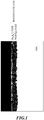
- FIG. 1 is a cross-sectional image of a bolt of an example.
- the bolt has a composition comprising 0.50 mass % or greater and 0.65 mass % or less of carbon (C), 1.5 mass % or greater and 2.5 mass % or less of silicon (Si), 1.0 mass % or greater and 2.0 mass % or less of chromium (Cr), 0.2 mass % or greater and 1.0 mass % or less of manganese (Mn), 1.5 mass % or greater and 5.0 mass % or less of molybdenum (Mo), 0.03 mass % or less of a total amount of phosphorous (P) and sulfur (S) as impurities; and the remaining is iron (Fe).
- the bolt includes an iron based oxide film with a film thickness of 3 ⁇ m or greater and 20 ⁇ m or less on a surface thereof.
- the iron based oxide film is an oxide film formed by reaction of the bolt itself by performing a predetermined heat treatment on the bolt that is rolled.
- the iron based oxide film is not a film, such as a plated film, which is formed by coating a surface of a bolt with other material, e.g. a surface treatment material. For these reasons, film defects, such as peeling off, unlikely occur. As a result, a friction coefficient of the bolt does not change, whereby variation of a fastening axial force with respect to tightening torque can be suppressed.
- the film thickness of the iron based oxide film is 3 ⁇ m or greater and 20 ⁇ m or less. If the film thickness of the iron based oxide film is less than 3 ⁇ m, the iron based oxide film is thin and film defects are easily caused due to tightening torque. On the other hand, in order to form an iron based oxide film with a thickness exceeding 20 ⁇ m, tempering at a high temperature is necessary, which decreases tensile strength of a bolt. In addition, when the film thickness of an oxide film is large, strength of the oxide film itself decreases, and the oxide film easily comes off in tightening.
- the iron based oxide film preferably contains a Si based oxide.
- the Si based oxide originates from silicon that diffuses from the bolt into the iron based oxide film.
- the iron based oxide film containing the Si based oxide is prevented from coming off in tightening.
- the iron based oxide film preferably contains at least Fe 3 O 4 and Fe 2 SiO 4 .
- the iron based oxide film containing FeO 3 has decreased friction with a mating member and thereby provides a large fastening axial force for tightening torque.
- the iron based oxide film containing Fe 2 SiO 4 has an improved affinity with a bolt base material and is thus prevented from coming off, whereby variation of a fastening axial force with respect to tightening torque can be suppressed.
- the iron based oxide film contains Fe 3 O 4 in a greater amount on a surface side of a bolt than on a bolt base material side of the bolt and contains Fe 2 SiO 4 in a greater amount on the bolt base material side of the bolt than on the surface side of the bolt.
- This iron based oxide film has a layer containing Fe 2 SiO 4 as a main component on the bolt base material side of the bolt and has a layer containing FeO 3 as a main component on the surface side of the bolt.
- This structure improves affinity with the bolt base material and further improves lubricating properties with respect to a mating member.
- the term "main component" in the present invention means a component that is contained in an amount of 50 mass % or greater.
- the layer containing Fe 2 SiO 4 as the main component and the layer containing Fe 3 O 4 as the main component result from the difference in diffusion speed among iron, oxygen, and silicon in a predetermined heat treatment.
- the bolt preferably has a tensile strength of 1500 MPa or greater and 1800 MPa or less.
- the bolt can be suitably used in a lower link of a reciprocating engine with a double-link mechanism.
- the iron based oxide film and the fastened member are in direct contact with each other.
- friction between the bolt and the mating member is reduced, whereby galling is prevented.
- defects of the iron based oxide film due to tightening is prevented from being generated, whereby variation of a fastening axial force can be suppressed.
- the content of carbon (C) is 0.50 mass % or greater and 0.65 mass % or less.
- the content of carbon is less than 0.50 mass %, sufficient tempering softening resistance is not obtained, and softening is caused by tempering. As a result, tempering at a high temperature cannot be performed, whereby delayed fracture resistance decreases.
- the content of carbon is greater than 0.65 mass %, the amount of cementite that stores hydrogen remarkably increases, whereby excellent delayed fracture resistance is not obtained.
- the content of silicon (Si) is 1.5 mass % or greater and 2.5 mass % or less.
- the content of silicon is less than 1.5 mass %, tensile strength decreases, and sufficient tempering softening resistance is not obtained. As a result, tempering at a high temperature cannot be performed, whereby delayed fracture resistance decreases.
- the content of silicon is greater than 2.5 mass %, forgeability is remarkably degraded, whereby it is difficult to form a bolt into a predetermined shape.
- the content of chromium (Cr) is 1.0 mass % or greater and 2.0 mass % or less.
- the content of chromium is less than 1.0 mass %, sufficient tempering softening resistance is not obtained. As a result, tempering at a high temperature cannot be performed, whereby delayed fracture resistance decreases.
- the content of chromium is greater than 2.0, cold forgeability of a steel material decreases.
- the content of manganese (Mn) is 0.2 mass % or greater and 1.0 mass % or less.
- Manganese is a hardenability improving element, and when manganese is contained in the amount of 0.2 mass % or greater, tensile strength is improved.
- the content of manganese is greater than 1.0 mass %, segregation at a grain boundary is facilitated, whereby grain boundary strength decreases and delayed fracture resistance decreases.
- the content of molybdenum (Mo) is 1.5 mass % or greater and 5.0 mass % or less.
- Molybdenum is an element effective for improving hardenability for obtaining a martensitic structure and effective for increasing softening resistance and obtaining high strength in a tempering treatment.
- addition of molybdenum in an amount of greater than 5.0 mass % does not provide further effects.
- the total content of phosphorous and sulfur is 0.03 mass % or less and is more preferably 0.02 mass % or less.
- the total content of phosphorous and sulfur is greater than 0.03 mass %, grain boundary segregation is facilitated. As a result, bonding strength of grain boundary decreases, and grain boundary strength decreases, whereby delayed fracture resistance decreases.
- the bolt of the present invention is produced as follows: a workpiece is heated to 900 to 950 °C and is hardened by rapid cooling, and the workpiece is then tempered in a temperature range of 580 to 620 °C for 90 to 120 minutes in an atmosphere adjusted in a way as to contain oxygen at a concentration lower than the concentration of oxygen in the air (20.95 %) in accordance with a screw diameter of the bolt.
- the tempering is preferably performed in an atmosphere containing oxygen of, more preferably, 10 % or less, or further preferably, 5 % or less, with respect to the oxygen concentration.
- Tempering in the atmospheric air does not provide a uniform iron based oxide film, because the film thickness of the iron based oxide film becomes too large, when the tempering is performed in the temperature range described above.
- tempering at a high temperature decreases tensile strength
- tempering at a low temperature decreases toughness, thereby causing decrease in fatigue strength.
- High-strength bolts were obtained as follows: carbon steels for high-strength bolt having the compositions shown in the following Table 1 were subjected to cold forging and thread rolling and were then hardened at 900 °C or higher, and the carbon steels were then tempered in the conditions shown in the following Table 2 and in an atmosphere containing N 2 that was introduced so that an oxygen concentration would be 3 %. Comparative Examples 2, 3, 6, and 8 were tempered in the atmospheric air without introducing N 2 . [Table 1] C (mass %) Si (mass %) Cr (mass %) Mn (mass %) Mo (mass %) S + P (mass %) Fe (mass %) Example 1 0.59 1.80 1.20 0.30 1.60 0.010 Rem.
- Example 2 0.60 1.85 1.20 0.30 1.60 0.015 Rem.
- Example 3 0.58 1.80 1.20 0.30 1.60 0.013 Rem.
- Comparative Example 1 0.58 1.80 1.20 0.30 1.60 0.013 Rem.
- Comparative Example 2 0.58 1.80 1.20 0.30 1.60 0.013 Rem.
- Comparative Example 3 0.40 0.30 1.20 0.30 1.25 0.010 Rem.
- Comparative Example 4 0.59 1.80 1.20 0.30 1.60 0.010 Rem.
- Comparative Example 5 0.59 1.80 1.20 0.30 1.60 0.010 Rem.
- Comparative Example 6 0.59 1.80 1.20 0.30 1.60 0.010 Rem.
- Comparative Example 7 0.59 1.80 1.10 0.33 1.65 0.015 Rem.
- Comparative Example 8 0.58 1.80 1.20 0.30 1.60 0.013 Rem.
- Fatigue strengths of the bolts of the Examples 1 to 3 and the Comparative Examples 1 to 8 were measured by a fatigue test using bolts having same dimensions as a product (based on JISB1081). These bolts were mounted to an axial direction fatigue test machine and were repeatedly applied with a tensile load at a room temperature (25 °C) in the air atmosphere. Tensile fatigue strength (MPa) was measured by a staircase method, and a safety factor relative to necessary fatigue strength was calculated.
- Fastening reliability was evaluated based on occurrence of galling noise at the time of fastening a fastened object with the bolt of Examples 1 to 3 and the Comparative Examples 1 to 8 by a specified tightening torque.
Landscapes
- Chemical & Material Sciences (AREA)
- Engineering & Computer Science (AREA)
- Mechanical Engineering (AREA)
- Materials Engineering (AREA)
- Metallurgy (AREA)
- Organic Chemistry (AREA)
- Crystallography & Structural Chemistry (AREA)
- Thermal Sciences (AREA)
- Physics & Mathematics (AREA)
- Chemical Kinetics & Catalysis (AREA)
- General Engineering & Computer Science (AREA)
- Inorganic Chemistry (AREA)
- Ceramic Engineering (AREA)
- Heat Treatment Of Articles (AREA)
- Connection Of Plates (AREA)
Abstract
Description
- The present invention relates to a bolt, and more specifically relates to a high-strength bolt whose fastening axial force is readily managed.
- It is desired to raise the strength of bolts in order to achieve light weight, small dimensions, and high performances of automobiles. In these circumstances, high-carbon steel bolts having a tensile strength exceeding 1200 MPa are known.
- However, high-carbon steel bolts having high strength are remarkably prone to cause sudden brittle fracture under static stresses after a certain time has elapsed, which is generally called "delayed fracture". The risk of occurrence of the delayed fracture increases as strength of the bolt increases.
- The delayed fracture is a kind of environmental embrittlement that occurs by mutual interaction among material, environment, and stress. It is considered that the delayed fracture is due to embrittlement of material caused by hydrogen. In general, in order to improve delayed fracture resistance, a surface treatment such as chromium plating is performed.
- Patent Document 1 discloses a high-strength bolt that uses high-carbon steel having a predetermined composition containing silicon, whereby delayed fracture is suppressed. It is also disclosed that the bolt is preferably coated with a chromium plating film or an iron phosphate film.
- Patent Document 1:
WO 2016/031528 - High-strength bolts provide large fastening axial forces, and therefore, it is important to manage the fastening axial force in order not to break the bolt and not to make a hollow in a bearing surface. In general, the fastening axial force is secured by using a torque wrench so as to manage tightening torque.
- However, tightening torque does not entirely act as a fastening axial force, but is consumed by friction at a thread surface and a bearing surface, and thus, although a bolt is tightened with fixed torque, a fastening axial force varies depending on surface roughness of the bolt and a lubrication state.
That is, although tightening torque is the same, a fastening axial force is small due to occurrence of large friction loss when friction between a bolt and a fastened object is large, and, conversely, the fastening axial force is large when the friction is small. - In particular, high-carbon steel bolts containing silicon have excellent tensile strength and delayed fracture resistance, but provide a fastening axial force that greatly varies with respect to tightening torque. Thus, it is difficult to manage the fastening axial force of the high-carbon steel bolts.
- A surface treatment such as a phosphoric acid film may be performed to a high-carbon steel bolt in order to prevent galling with a mating member and to stabilize fastening properties. This allows hydrogen to invade, thereby making delayed fracture readily occur, and moreover, this roughens a surface, thereby decreasing fatigue strength.
- The present invention has been made in view of these problems in the prior art, and an object thereof is to provide a high-strength bolt having excellent delayed fracture resistance and reliably providing a fastening axial force.
- The inventors of the present invention have made an intensive research to achieve the above object and have found the following findings. That is, a high-carbon steel bolt containing silicon has low affinity with a surface treatment material, and therefore, defects are generated on a surface film due to high tightening torque, whereby a friction coefficient of the bolt is changed and variation of a fastening axial force is generated.
- The inventors of the present invention have also found that the above object can be achieved by forming an iron based oxide film with a film thickness of 3 µm or greater and 20 µm or less on a surface, instead of a surface treatment such as plating or a phosphoric acid based film treatment. Thus, the present invention has been completed.
- Specifically, the bolt of the present invention has a composition comprising: 0.50 mass % or greater and 0.65 mass % or less of carbon (C),
1.5 mass % or greater and 2.5 mass % or less of silicon (Si),
1.0 mass % or greater and 2.0 mass % or less of chromium (Cr),
0.2 mass % or greater and 1.0 mass % or less of manganese (Mn),
1.5 mass % or greater and 5.0 mass % or less of molybdenum (Mo);
in which a total amount of phosphorous (P) and sulfur (S) as impurities is 0.03 mass % or less; and the remaining is iron (Fe).
The bolt includes an iron based oxide film with a film thickness of 3 µm or greater and 20 µm or less on a surface thereof. - The present invention also provides a fastened structure in which a fastened member is fastened with the bolt described above.
- In the present invention, an iron based oxide film with a film thickness of 3 µm or greater and 20 µm or less is provided on a surface of a high-strength bolt. Thus, the present invention provides a high-strength bolt having excellent delayed fracture resistance and reliably providing a fastening axial force.
-
FIG. 1 is a cross-sectional image of a bolt of an example. - A bolt of the present invention will be described in detail.
The bolt has a composition comprising 0.50 mass % or greater and 0.65 mass % or less of carbon (C), 1.5 mass % or greater and 2.5 mass % or less of silicon (Si), 1.0 mass % or greater and 2.0 mass % or less of chromium (Cr), 0.2 mass % or greater and 1.0 mass % or less of manganese (Mn), 1.5 mass % or greater and 5.0 mass % or less of molybdenum (Mo), 0.03 mass % or less of a total amount of phosphorous (P) and sulfur (S) as impurities; and the remaining is iron (Fe). The bolt includes an iron based oxide film with a film thickness of 3 µm or greater and 20 µm or less on a surface thereof. - The iron based oxide film is an oxide film formed by reaction of the bolt itself by performing a predetermined heat treatment on the bolt that is rolled. The iron based oxide film is not a film, such as a plated film, which is formed by coating a surface of a bolt with other material, e.g. a surface treatment material. For these reasons, film defects, such as peeling off, unlikely occur.
As a result, a friction coefficient of the bolt does not change, whereby variation of a fastening axial force with respect to tightening torque can be suppressed. - The film thickness of the iron based oxide film is 3 µm or greater and 20 µm or less. If the film thickness of the iron based oxide film is less than 3 µm, the iron based oxide film is thin and film defects are easily caused due to tightening torque.
On the other hand, in order to form an iron based oxide film with a thickness exceeding 20 µm, tempering at a high temperature is necessary, which decreases tensile strength of a bolt. In addition, when the film thickness of an oxide film is large, strength of the oxide film itself decreases, and the oxide film easily comes off in tightening. - The iron based oxide film preferably contains a Si based oxide.
The Si based oxide originates from silicon that diffuses from the bolt into the iron based oxide film. The iron based oxide film containing the Si based oxide is prevented from coming off in tightening. - The iron based oxide film preferably contains at least Fe3O4 and Fe2SiO4.
The iron based oxide film containing FeO3 has decreased friction with a mating member and thereby provides a large fastening axial force for tightening torque. The iron based oxide film containing Fe2SiO4 has an improved affinity with a bolt base material and is thus prevented from coming off, whereby variation of a fastening axial force with respect to tightening torque can be suppressed. - It is preferable that the iron based oxide film contains Fe3O4 in a greater amount on a surface side of a bolt than on a bolt base material side of the bolt and contains Fe2SiO4 in a greater amount on the bolt base material side of the bolt than on the surface side of the bolt.
This iron based oxide film has a layer containing Fe2SiO4 as a main component on the bolt base material side of the bolt and has a layer containing FeO3 as a main component on the surface side of the bolt. This structure improves affinity with the bolt base material and further improves lubricating properties with respect to a mating member. The term "main component" in the present invention means a component that is contained in an amount of 50 mass % or greater. - The layer containing Fe2SiO4 as the main component and the layer containing Fe3O4 as the main component result from the difference in diffusion speed among iron, oxygen, and silicon in a predetermined heat treatment.
- The bolt preferably has a tensile strength of 1500 MPa or greater and 1800 MPa or less.
- When the tensile strength is within the above described range, it is possible to fasten with a large fastening axial force. In one example, the bolt can be suitably used in a lower link of a reciprocating engine with a double-link mechanism.
- In a fastened structure in which a fastened member is fastened with the bolt, which has the iron based oxide film on the surface, the iron based oxide film and the fastened member are in direct contact with each other.
Thus, friction between the bolt and the mating member is reduced, whereby galling is prevented. Moreover, defects of the iron based oxide film due to tightening is prevented from being generated, whereby variation of a fastening axial force can be suppressed. - The content of carbon (C) is 0.50 mass % or greater and 0.65 mass % or less. When the content of carbon is less than 0.50 mass %, sufficient tempering softening resistance is not obtained, and softening is caused by tempering. As a result, tempering at a high temperature cannot be performed, whereby delayed fracture resistance decreases.
On the other hand, when the content of carbon is greater than 0.65 mass %, the amount of cementite that stores hydrogen remarkably increases, whereby excellent delayed fracture resistance is not obtained. - The content of silicon (Si) is 1.5 mass % or greater and 2.5 mass % or less. When the content of silicon is less than 1.5 mass %, tensile strength decreases, and sufficient tempering softening resistance is not obtained. As a result, tempering at a high temperature cannot be performed, whereby delayed fracture resistance decreases. When the content of silicon is greater than 2.5 mass %, forgeability is remarkably degraded, whereby it is difficult to form a bolt into a predetermined shape.
- The content of chromium (Cr) is 1.0 mass % or greater and 2.0 mass % or less. When the content of chromium is less than 1.0 mass %, sufficient tempering softening resistance is not obtained. As a result, tempering at a high temperature cannot be performed, whereby delayed fracture resistance decreases.
On the other hand, when the content of chromium is greater than 2.0, cold forgeability of a steel material decreases. - The content of manganese (Mn) is 0.2 mass % or greater and 1.0 mass % or less. Manganese is a hardenability improving element, and when manganese is contained in the amount of 0.2 mass % or greater, tensile strength is improved.
On the other hand, when the content of manganese is greater than 1.0 mass %, segregation at a grain boundary is facilitated, whereby grain boundary strength decreases and delayed fracture resistance decreases. - The content of molybdenum (Mo) is 1.5 mass % or greater and 5.0 mass % or less.
When the content of molybdenum is less than 1.5 mass %, the amounts of generation of molybdenum based carbides that function as trap sites of hydrogen are not sufficient, whereby hydrogen embrittlement cannot be suppressed, and delayed fracture resistance decreases.
Molybdenum is an element effective for improving hardenability for obtaining a martensitic structure and effective for increasing softening resistance and obtaining high strength in a tempering treatment. However, addition of molybdenum in an amount of greater than 5.0 mass % does not provide further effects. - The total content of phosphorous and sulfur is 0.03 mass % or less and is more preferably 0.02 mass % or less.
When the total content of phosphorous and sulfur is greater than 0.03 mass %, grain boundary segregation is facilitated. As a result, bonding strength of grain boundary decreases, and grain boundary strength decreases, whereby delayed fracture resistance decreases. - Next, a method for producing the bolt will be described.
The bolt of the present invention is produced as follows: a workpiece is heated to 900 to 950 °C and is hardened by rapid cooling, and the workpiece is then tempered in a temperature range of 580 to 620 °C for 90 to 120 minutes in an atmosphere adjusted in a way as to contain oxygen at a concentration lower than the concentration of oxygen in the air (20.95 %) in accordance with a screw diameter of the bolt. The tempering is preferably performed in an atmosphere containing oxygen of, more preferably, 10 % or less, or further preferably, 5 % or less, with respect to the oxygen concentration. - Tempering in the atmospheric air does not provide a uniform iron based oxide film, because the film thickness of the iron based oxide film becomes too large, when the tempering is performed in the temperature range described above. In addition, tempering at a high temperature decreases tensile strength, and tempering at a low temperature decreases toughness, thereby causing decrease in fatigue strength.
- The present invention will be detailed with reference to examples hereinafter, but the present invention is not limited to the examples described below.
- High-strength bolts were obtained as follows: carbon steels for high-strength bolt having the compositions shown in the following Table 1 were subjected to cold forging and thread rolling and were then hardened at 900 °C or higher, and the carbon steels were then tempered in the conditions shown in the following Table 2 and in an atmosphere containing N2 that was introduced so that an oxygen concentration would be 3 %.
Comparative Examples 2, 3, 6, and 8 were tempered in the atmospheric air without introducing N2.[Table 1] C (mass %) Si (mass %) Cr (mass %) Mn (mass %) Mo (mass %) S + P (mass %) Fe (mass %) Example 1 0.59 1.80 1.20 0.30 1.60 0.010 Rem. Example 2 0.60 1.85 1.20 0.30 1.60 0.015 Rem. Example 3 0.58 1.80 1.20 0.30 1.60 0.013 Rem. Comparative Example 1 0.58 1.80 1.20 0.30 1.60 0.013 Rem. Comparative Example 2 0.58 1.80 1.20 0.30 1.60 0.013 Rem. Comparative Example 3 0.40 0.30 1.20 0.30 1.25 0.010 Rem. Comparative Example 4 0.59 1.80 1.20 0.30 1.60 0.010 Rem. Comparative Example 5 0.59 1.80 1.20 0.30 1.60 0.010 Rem. Comparative Example 6 0.59 1.80 1.20 0.30 1.60 0.010 Rem. Comparative Example 7 0.59 1.80 1.10 0.33 1.65 0.015 Rem. Comparative Example 8 0.58 1.80 1.20 0.30 1.60 0.013 Rem. "Rem." means "Remaining part". [Table 2] Tempering Temperature (°C) Tempering Time (min) Tempering Atmosphere Example 1 580 100 N2 + Atmospheric Air Example 2 590 100 N2 + Atmospheric Air Example 3 620 100 N2 + Atmospheric Air Comparative Example 1 570 100 N2 + Atmospheric Air Comparative Example 2 600 60 Atmospheric Air Comparative Example 3 600 60 Atmospheric Air Comparative Example 4 580 100 N2 + Atmospheric Air Comparative Example 5 580 100 N2 + Atmospheric Air Comparative Example 6 600 60 Atmospheric Air Comparative Example 7 650 60 N2 + Atmospheric Air Comparative Example 8 590 100 Atmospheric Air - In the Comparative Example 2 in Table 2, an oxide scale that was generated by the heat treatment was peeled off.
A manganese phosphate film was formed on an iron based oxide film of the Comparative Example 4. A zinc phosphate film was formed on an iron based oxide film of the Comparative Example 5.
The Comparative Example 6 was subjected to the heat treatment shown in Table 2 after chromium plating was formed thereon. - Cross-sectional surfaces of the high-strength bolts of the Examples 1 to 3 and the Comparative Examples 1 to 6 were photographed, and film thicknesses of iron based oxide films were measured. A total film thickness of the iron based oxide film and the phosphoric acid based film was measured in the Comparative Examples 4 and 5, and a film thickness of the chromium plating was measured in the Comparative Example 6. A cross-sectional surface of the bolt of the Example 2 is illustrated in
FIG. 1 . Moreover, constituent elements of the iron based oxide film was analyzed by electron probe micro analyzer (EPMA).
Furthermore, the high-strength bolts of the Examples 1 to 3 and the Comparative Examples 1 to 6 were evaluated in the following conditions. The evaluation results are shown in Table 3. - Fatigue strengths of the bolts of the Examples 1 to 3 and the Comparative Examples 1 to 8 were measured by a fatigue test using bolts having same dimensions as a product (based on JISB1081). These bolts were mounted to an axial direction fatigue test machine and were repeatedly applied with a tensile load at a room temperature (25 °C) in the air atmosphere. Tensile fatigue strength (MPa) was measured by a staircase method, and a safety factor relative to necessary fatigue strength was calculated.
- O: Safety factor is 1.1 or greater
- ×: Safety factor is less than 1.1
- Fastening reliability was evaluated based on occurrence of galling noise at the time of fastening a fastened object with the bolt of Examples 1 to 3 and the Comparative Examples 1 to 8 by a specified tightening torque.
- ○: No galling noise occurred
- ×: Galling noise occurred
- The results show that, in Examples 1 to 3 having an iron based oxide film with a film thickness of 3 µm or greater and 20 µm or less, fastening reliability was excellent because defects of the iron based oxide film due to fastening was prevented, and fatigue strength was excellent because tempering was sufficiently performed.
In the Comparative Examples 4 and 5 in which the phosphoric acid based film was formed on the iron based oxide film, the film easily came off and caused film defects. Comparative Examples 7 and 8 had a non-uniform iron based oxide film and had decreased fastening reliability.
| Iron Based Oxide Film | Film Thickness (µm) | Evaluation Results | ||
| Fatigue Test | Fastening Property Test | |||
| Example 1 | Fe3O4 + Fe2SiO4 | 5 | ○ | ○ |
| Example 2 | Fe3O4 + Fe2SiO4 | 10 | ○ | ○ |
| Example 3 | Fe3O4 + Fe2SiO4 | 20 | ○ | ○ |
| Comparative Example 1 | Fe3O4 | 2 | ○ | × |
| Comparative Example 2 | No Film Was Formed | - | ○ | × |
| Comparative Example 3 | Only an Fe2O3 Film was formed | 22 | × | × |
| Comparative Example 4 | Fe3O4 + Fe2SiO4 + Manganese Phosphate film | 8 | × | × |
| Comparative Example 5 | Fe3O4 + Fe2SiO4 + Zinc Phosphate Film | 8 | × | × |
| Comparative Example 6 | Cr plating | 25 | × | × |
| Comparative Example 7 | Fe3O4 + FeSiO4 | 24 | ○ | × |
| Comparative Example 8 | Fe3O4 + FeSiO4 | 30 | ○ | × |
Claims (6)
- A bolt having a composition comprising:0.50 mass % or greater and 0.65 mass % or less of a carbon (C),1.5 mass % or greater and 2.5 mass % or less of a silicon (Si),1.0 mass % or greater and 2.0 mass % or less of a chromium (Cr),0.2 mass % or greater and 1.0 mass % or less of a manganese (Mn),1.5 mass % or greater and 5.0 mass % or less of a molybdenum (Mo),wherein a total amount of a phosphorous (P) and a sulfur (S) as impurities is 0.03 mass % or less,a remaining is an iron (Fe), andthe bolt comprises an iron based oxide film with a film thickness of 3 µm or greater and 20 µm or less on a surface thereof.
- The bolt according to claim 1, wherein the iron based oxide film contains a Si based oxide.
- The bolt according to claim 1 or 2, wherein the iron based oxide film contains at least Fe3O4 and Fe2SiO4.
- The bolt according to any one of claims 1 to 3, wherein the iron based oxide film contains Fe3O4 in a greater amount on a surface side of the bolt than on a bolt base material side of the bolt and contains Fe2SiO4 in a greater amount on the bolt base material side of the bolt than on the surface side of the bolt.
- The bolt according to any one of claims 1 to 4, having a tensile strength of 1500 MPa or greater and 1800 MPa or less.
- A fastened structure, in which a fastened member is fastened with a bolt, wherein the bolt is the bolt according to any one of claims 1 to 5.
Applications Claiming Priority (1)
| Application Number | Priority Date | Filing Date | Title |
|---|---|---|---|
| PCT/JP2018/002991 WO2019150437A1 (en) | 2018-01-30 | 2018-01-30 | Bolt and fastened structure |
Publications (3)
| Publication Number | Publication Date |
|---|---|
| EP3748032A1 true EP3748032A1 (en) | 2020-12-09 |
| EP3748032A4 EP3748032A4 (en) | 2020-12-09 |
| EP3748032B1 EP3748032B1 (en) | 2021-08-11 |
Family
ID=67477961
Family Applications (1)
| Application Number | Title | Priority Date | Filing Date |
|---|---|---|---|
| EP18904436.5A Active EP3748032B1 (en) | 2018-01-30 | 2018-01-30 | Bolt and fastened structure |
Country Status (6)
| Country | Link |
|---|---|
| US (1) | US11708622B2 (en) |
| EP (1) | EP3748032B1 (en) |
| JP (1) | JP6988922B2 (en) |
| CN (1) | CN111655895B (en) |
| MX (1) | MX2020007755A (en) |
| WO (1) | WO2019150437A1 (en) |
Families Citing this family (1)
| Publication number | Priority date | Publication date | Assignee | Title |
|---|---|---|---|---|
| CN120500549A (en) | 2023-01-13 | 2025-08-15 | 日产自动车株式会社 | High-strength bolt |
Family Cites Families (8)
| Publication number | Priority date | Publication date | Assignee | Title |
|---|---|---|---|---|
| JP5166912B2 (en) * | 2008-02-27 | 2013-03-21 | 日本パーカライジング株式会社 | Metal material and manufacturing method thereof |
| JP5417086B2 (en) | 2009-08-25 | 2014-02-12 | 東洋ゴム工業株式会社 | Tire molding method and tire molding die |
| JP5449925B2 (en) * | 2009-08-27 | 2014-03-19 | 株式会社神戸製鋼所 | High strength bolt with improved delayed fracture resistance and method for manufacturing the same |
| WO2011048971A1 (en) * | 2009-10-22 | 2011-04-28 | 日産自動車株式会社 | Steel for high-strength bolts and process for production of high-strength bolts |
| KR101366375B1 (en) * | 2010-03-11 | 2014-02-24 | 신닛테츠스미킨 카부시키카이샤 | High-strength steel and high-strength bolt with excellent resistance to delayed fracture, and manufacturing method therefor |
| KR101604938B1 (en) * | 2012-01-11 | 2016-03-18 | 가부시키가이샤 고베 세이코쇼 | Steel for bolts, bolt, and method for producing bolt |
| JP6422176B2 (en) * | 2014-08-29 | 2018-11-14 | 日産自動車株式会社 | Steel for high-strength bolts and high-strength bolts |
| JPWO2017043034A1 (en) * | 2015-09-07 | 2018-06-28 | パナソニックIpマネジメント株式会社 | Oxide film formed on iron-based substrate, sliding member on which this oxide film is formed, and equipment provided with this sliding member |
-
2018
- 2018-01-30 WO PCT/JP2018/002991 patent/WO2019150437A1/en not_active Ceased
- 2018-01-30 CN CN201880088043.6A patent/CN111655895B/en active Active
- 2018-01-30 EP EP18904436.5A patent/EP3748032B1/en active Active
- 2018-01-30 MX MX2020007755A patent/MX2020007755A/en unknown
- 2018-01-30 JP JP2019568433A patent/JP6988922B2/en active Active
- 2018-01-30 US US16/965,652 patent/US11708622B2/en active Active
Also Published As
| Publication number | Publication date |
|---|---|
| US20210017618A1 (en) | 2021-01-21 |
| JPWO2019150437A1 (en) | 2021-01-28 |
| MX2020007755A (en) | 2020-09-24 |
| CN111655895B (en) | 2023-03-14 |
| EP3748032A4 (en) | 2020-12-09 |
| WO2019150437A1 (en) | 2019-08-08 |
| JP6988922B2 (en) | 2022-01-05 |
| EP3748032B1 (en) | 2021-08-11 |
| US11708622B2 (en) | 2023-07-25 |
| CN111655895A (en) | 2020-09-11 |
Similar Documents
| Publication | Publication Date | Title |
|---|---|---|
| EP3088550B1 (en) | Production method of carburized steel component and carburized steel component | |
| EP3078758B1 (en) | Steel wire for bolts, bolt, and methods for manufacturing same | |
| EP0458646B1 (en) | Bearing steel | |
| US4871268A (en) | Rolling bearing | |
| EP2623627A1 (en) | Case hardened steel and method for producing same | |
| EP2530178B1 (en) | Case-hardened steel and carburized material | |
| EP2832877B1 (en) | Gear having excellent seizing resistance | |
| EP3550048B1 (en) | Steel for soft nitriding, and component | |
| EP2832893B1 (en) | Bearing steel material having superior rolling fatigue characteristics and a method for producing same | |
| EP2913548A1 (en) | Rolling bearing | |
| EP2253728A1 (en) | Rolling component and manufacturing method thereof | |
| JP2005068453A (en) | High surface pressure resistant parts and manufacturing method thereof | |
| EP2647734B1 (en) | Bearing steel exhibiting excellent machinability after spheroidizing annealing and excellent resistance to hydrogen fatigue after quenching/tempering | |
| KR20140101001A (en) | Steel for bolts, bolt, and method for producing bolt | |
| EP1123986B1 (en) | Rolling bearing | |
| EP2559781A1 (en) | Spring and method for producing same | |
| JP2021006660A (en) | Steel parts and their manufacturing methods | |
| WO2002059390A1 (en) | Bearing material | |
| EP3748032B1 (en) | Bolt and fastened structure | |
| EP0745695A1 (en) | Bearing part | |
| JPH05255809A (en) | Bearing steel | |
| JP2005273759A (en) | Rolling support device, manufacturing method of component parts of rolling support device, and heat treatment method of steel | |
| EP0718416B1 (en) | Rolling bearing and method of making same | |
| EP4151761A1 (en) | Steel and steel component | |
| JPH10184701A (en) | Rolling bearing |
Legal Events
| Date | Code | Title | Description |
|---|---|---|---|
| STAA | Information on the status of an ep patent application or granted ep patent |
Free format text: STATUS: THE INTERNATIONAL PUBLICATION HAS BEEN MADE |
|
| PUAI | Public reference made under article 153(3) epc to a published international application that has entered the european phase |
Free format text: ORIGINAL CODE: 0009012 |
|
| STAA | Information on the status of an ep patent application or granted ep patent |
Free format text: STATUS: REQUEST FOR EXAMINATION WAS MADE |
|
| 17P | Request for examination filed |
Effective date: 20200724 |
|
| A4 | Supplementary search report drawn up and despatched |
Effective date: 20200914 |
|
| AK | Designated contracting states |
Kind code of ref document: A1 Designated state(s): AL AT BE BG CH CY CZ DE DK EE ES FI FR GB GR HR HU IE IS IT LI LT LU LV MC MK MT NL NO PL PT RO RS SE SI SK SM TR |
|
| AX | Request for extension of the european patent |
Extension state: BA ME |
|
| DAV | Request for validation of the european patent (deleted) | ||
| DAX | Request for extension of the european patent (deleted) | ||
| GRAP | Despatch of communication of intention to grant a patent |
Free format text: ORIGINAL CODE: EPIDOSNIGR1 |
|
| STAA | Information on the status of an ep patent application or granted ep patent |
Free format text: STATUS: GRANT OF PATENT IS INTENDED |
|
| RIN1 | Information on inventor provided before grant (corrected) |
Inventor name: KOBAYASHI, DAISUKE Inventor name: HAMADA, TAKAHIRO |
|
| INTG | Intention to grant announced |
Effective date: 20210511 |
|
| GRAS | Grant fee paid |
Free format text: ORIGINAL CODE: EPIDOSNIGR3 |
|
| GRAA | (expected) grant |
Free format text: ORIGINAL CODE: 0009210 |
|
| STAA | Information on the status of an ep patent application or granted ep patent |
Free format text: STATUS: THE PATENT HAS BEEN GRANTED |
|
| AK | Designated contracting states |
Kind code of ref document: B1 Designated state(s): AL AT BE BG CH CY CZ DE DK EE ES FI FR GB GR HR HU IE IS IT LI LT LU LV MC MK MT NL NO PL PT RO RS SE SI SK SM TR |
|
| REG | Reference to a national code |
Ref country code: CH Ref legal event code: EP |
|
| REG | Reference to a national code |
Ref country code: DE Ref legal event code: R096 Ref document number: 602018021851 Country of ref document: DE |
|
| REG | Reference to a national code |
Ref country code: IE Ref legal event code: FG4D Ref country code: AT Ref legal event code: REF Ref document number: 1419458 Country of ref document: AT Kind code of ref document: T Effective date: 20210915 |
|
| REG | Reference to a national code |
Ref country code: LT Ref legal event code: MG9D |
|
| REG | Reference to a national code |
Ref country code: NL Ref legal event code: MP Effective date: 20210811 |
|
| REG | Reference to a national code |
Ref country code: AT Ref legal event code: MK05 Ref document number: 1419458 Country of ref document: AT Kind code of ref document: T Effective date: 20210811 |
|
| PG25 | Lapsed in a contracting state [announced via postgrant information from national office to epo] |
Ref country code: HR Free format text: LAPSE BECAUSE OF FAILURE TO SUBMIT A TRANSLATION OF THE DESCRIPTION OR TO PAY THE FEE WITHIN THE PRESCRIBED TIME-LIMIT Effective date: 20210811 Ref country code: NO Free format text: LAPSE BECAUSE OF FAILURE TO SUBMIT A TRANSLATION OF THE DESCRIPTION OR TO PAY THE FEE WITHIN THE PRESCRIBED TIME-LIMIT Effective date: 20211111 Ref country code: PT Free format text: LAPSE BECAUSE OF FAILURE TO SUBMIT A TRANSLATION OF THE DESCRIPTION OR TO PAY THE FEE WITHIN THE PRESCRIBED TIME-LIMIT Effective date: 20211213 Ref country code: LT Free format text: LAPSE BECAUSE OF FAILURE TO SUBMIT A TRANSLATION OF THE DESCRIPTION OR TO PAY THE FEE WITHIN THE PRESCRIBED TIME-LIMIT Effective date: 20210811 Ref country code: AT Free format text: LAPSE BECAUSE OF FAILURE TO SUBMIT A TRANSLATION OF THE DESCRIPTION OR TO PAY THE FEE WITHIN THE PRESCRIBED TIME-LIMIT Effective date: 20210811 Ref country code: BG Free format text: LAPSE BECAUSE OF FAILURE TO SUBMIT A TRANSLATION OF THE DESCRIPTION OR TO PAY THE FEE WITHIN THE PRESCRIBED TIME-LIMIT Effective date: 20211111 Ref country code: SE Free format text: LAPSE BECAUSE OF FAILURE TO SUBMIT A TRANSLATION OF THE DESCRIPTION OR TO PAY THE FEE WITHIN THE PRESCRIBED TIME-LIMIT Effective date: 20210811 Ref country code: RS Free format text: LAPSE BECAUSE OF FAILURE TO SUBMIT A TRANSLATION OF THE DESCRIPTION OR TO PAY THE FEE WITHIN THE PRESCRIBED TIME-LIMIT Effective date: 20210811 Ref country code: ES Free format text: LAPSE BECAUSE OF FAILURE TO SUBMIT A TRANSLATION OF THE DESCRIPTION OR TO PAY THE FEE WITHIN THE PRESCRIBED TIME-LIMIT Effective date: 20210811 Ref country code: FI Free format text: LAPSE BECAUSE OF FAILURE TO SUBMIT A TRANSLATION OF THE DESCRIPTION OR TO PAY THE FEE WITHIN THE PRESCRIBED TIME-LIMIT Effective date: 20210811 |
|
| PG25 | Lapsed in a contracting state [announced via postgrant information from national office to epo] |
Ref country code: PL Free format text: LAPSE BECAUSE OF FAILURE TO SUBMIT A TRANSLATION OF THE DESCRIPTION OR TO PAY THE FEE WITHIN THE PRESCRIBED TIME-LIMIT Effective date: 20210811 Ref country code: LV Free format text: LAPSE BECAUSE OF FAILURE TO SUBMIT A TRANSLATION OF THE DESCRIPTION OR TO PAY THE FEE WITHIN THE PRESCRIBED TIME-LIMIT Effective date: 20210811 Ref country code: GR Free format text: LAPSE BECAUSE OF FAILURE TO SUBMIT A TRANSLATION OF THE DESCRIPTION OR TO PAY THE FEE WITHIN THE PRESCRIBED TIME-LIMIT Effective date: 20211112 |
|
| PG25 | Lapsed in a contracting state [announced via postgrant information from national office to epo] |
Ref country code: NL Free format text: LAPSE BECAUSE OF FAILURE TO SUBMIT A TRANSLATION OF THE DESCRIPTION OR TO PAY THE FEE WITHIN THE PRESCRIBED TIME-LIMIT Effective date: 20210811 |
|
| PG25 | Lapsed in a contracting state [announced via postgrant information from national office to epo] |
Ref country code: DK Free format text: LAPSE BECAUSE OF FAILURE TO SUBMIT A TRANSLATION OF THE DESCRIPTION OR TO PAY THE FEE WITHIN THE PRESCRIBED TIME-LIMIT Effective date: 20210811 |
|
| REG | Reference to a national code |
Ref country code: DE Ref legal event code: R097 Ref document number: 602018021851 Country of ref document: DE |
|
| PG25 | Lapsed in a contracting state [announced via postgrant information from national office to epo] |
Ref country code: SM Free format text: LAPSE BECAUSE OF FAILURE TO SUBMIT A TRANSLATION OF THE DESCRIPTION OR TO PAY THE FEE WITHIN THE PRESCRIBED TIME-LIMIT Effective date: 20210811 Ref country code: SK Free format text: LAPSE BECAUSE OF FAILURE TO SUBMIT A TRANSLATION OF THE DESCRIPTION OR TO PAY THE FEE WITHIN THE PRESCRIBED TIME-LIMIT Effective date: 20210811 Ref country code: RO Free format text: LAPSE BECAUSE OF FAILURE TO SUBMIT A TRANSLATION OF THE DESCRIPTION OR TO PAY THE FEE WITHIN THE PRESCRIBED TIME-LIMIT Effective date: 20210811 Ref country code: EE Free format text: LAPSE BECAUSE OF FAILURE TO SUBMIT A TRANSLATION OF THE DESCRIPTION OR TO PAY THE FEE WITHIN THE PRESCRIBED TIME-LIMIT Effective date: 20210811 Ref country code: CZ Free format text: LAPSE BECAUSE OF FAILURE TO SUBMIT A TRANSLATION OF THE DESCRIPTION OR TO PAY THE FEE WITHIN THE PRESCRIBED TIME-LIMIT Effective date: 20210811 Ref country code: AL Free format text: LAPSE BECAUSE OF FAILURE TO SUBMIT A TRANSLATION OF THE DESCRIPTION OR TO PAY THE FEE WITHIN THE PRESCRIBED TIME-LIMIT Effective date: 20210811 |
|
| PLBE | No opposition filed within time limit |
Free format text: ORIGINAL CODE: 0009261 |
|
| STAA | Information on the status of an ep patent application or granted ep patent |
Free format text: STATUS: NO OPPOSITION FILED WITHIN TIME LIMIT |
|
| 26N | No opposition filed |
Effective date: 20220512 |
|
| PG25 | Lapsed in a contracting state [announced via postgrant information from national office to epo] |
Ref country code: IT Free format text: LAPSE BECAUSE OF FAILURE TO SUBMIT A TRANSLATION OF THE DESCRIPTION OR TO PAY THE FEE WITHIN THE PRESCRIBED TIME-LIMIT Effective date: 20210811 |
|
| PG25 | Lapsed in a contracting state [announced via postgrant information from national office to epo] |
Ref country code: MC Free format text: LAPSE BECAUSE OF FAILURE TO SUBMIT A TRANSLATION OF THE DESCRIPTION OR TO PAY THE FEE WITHIN THE PRESCRIBED TIME-LIMIT Effective date: 20210811 |
|
| REG | Reference to a national code |
Ref country code: CH Ref legal event code: PL |
|
| REG | Reference to a national code |
Ref country code: BE Ref legal event code: MM Effective date: 20220131 |
|
| PG25 | Lapsed in a contracting state [announced via postgrant information from national office to epo] |
Ref country code: LU Free format text: LAPSE BECAUSE OF NON-PAYMENT OF DUE FEES Effective date: 20220130 |
|
| PG25 | Lapsed in a contracting state [announced via postgrant information from national office to epo] |
Ref country code: BE Free format text: LAPSE BECAUSE OF NON-PAYMENT OF DUE FEES Effective date: 20220131 |
|
| PG25 | Lapsed in a contracting state [announced via postgrant information from national office to epo] |
Ref country code: LI Free format text: LAPSE BECAUSE OF NON-PAYMENT OF DUE FEES Effective date: 20220131 Ref country code: CH Free format text: LAPSE BECAUSE OF NON-PAYMENT OF DUE FEES Effective date: 20220131 |
|
| PG25 | Lapsed in a contracting state [announced via postgrant information from national office to epo] |
Ref country code: IE Free format text: LAPSE BECAUSE OF NON-PAYMENT OF DUE FEES Effective date: 20220130 |
|
| REG | Reference to a national code |
Ref country code: DE Ref legal event code: R084 Ref document number: 602018021851 Country of ref document: DE |
|
| REG | Reference to a national code |
Ref country code: GB Ref legal event code: 746 Effective date: 20230926 |
|
| PG25 | Lapsed in a contracting state [announced via postgrant information from national office to epo] |
Ref country code: MK Free format text: LAPSE BECAUSE OF FAILURE TO SUBMIT A TRANSLATION OF THE DESCRIPTION OR TO PAY THE FEE WITHIN THE PRESCRIBED TIME-LIMIT Effective date: 20210811 Ref country code: CY Free format text: LAPSE BECAUSE OF FAILURE TO SUBMIT A TRANSLATION OF THE DESCRIPTION OR TO PAY THE FEE WITHIN THE PRESCRIBED TIME-LIMIT Effective date: 20210811 |
|
| PG25 | Lapsed in a contracting state [announced via postgrant information from national office to epo] |
Ref country code: HU Free format text: LAPSE BECAUSE OF FAILURE TO SUBMIT A TRANSLATION OF THE DESCRIPTION OR TO PAY THE FEE WITHIN THE PRESCRIBED TIME-LIMIT; INVALID AB INITIO Effective date: 20180130 |
|
| PG25 | Lapsed in a contracting state [announced via postgrant information from national office to epo] |
Ref country code: MT Free format text: LAPSE BECAUSE OF FAILURE TO SUBMIT A TRANSLATION OF THE DESCRIPTION OR TO PAY THE FEE WITHIN THE PRESCRIBED TIME-LIMIT Effective date: 20210811 |
|
| PG25 | Lapsed in a contracting state [announced via postgrant information from national office to epo] |
Ref country code: TR Free format text: LAPSE BECAUSE OF FAILURE TO SUBMIT A TRANSLATION OF THE DESCRIPTION OR TO PAY THE FEE WITHIN THE PRESCRIBED TIME-LIMIT Effective date: 20210811 |
|
| PGFP | Annual fee paid to national office [announced via postgrant information from national office to epo] |
Ref country code: GB Payment date: 20251217 Year of fee payment: 9 |
|
| PGFP | Annual fee paid to national office [announced via postgrant information from national office to epo] |
Ref country code: FR Payment date: 20251217 Year of fee payment: 9 |
|
| PG25 | Lapsed in a contracting state [announced via postgrant information from national office to epo] |
Ref country code: SI Free format text: LAPSE BECAUSE OF FAILURE TO SUBMIT A TRANSLATION OF THE DESCRIPTION OR TO PAY THE FEE WITHIN THE PRESCRIBED TIME-LIMIT Effective date: 20210811 |
|
| PGFP | Annual fee paid to national office [announced via postgrant information from national office to epo] |
Ref country code: DE Payment date: 20251217 Year of fee payment: 9 |