EP3747872A1 - Carbocyclic nucleoside analogue - Google Patents
Carbocyclic nucleoside analogue Download PDFInfo
- Publication number
- EP3747872A1 EP3747872A1 EP19178928.8A EP19178928A EP3747872A1 EP 3747872 A1 EP3747872 A1 EP 3747872A1 EP 19178928 A EP19178928 A EP 19178928A EP 3747872 A1 EP3747872 A1 EP 3747872A1
- Authority
- EP
- European Patent Office
- Prior art keywords
- compound
- group
- cazadc
- phosphate
- treatment
- Prior art date
- Legal status (The legal status is an assumption and is not a legal conclusion. Google has not performed a legal analysis and makes no representation as to the accuracy of the status listed.)
- Ceased
Links
- 125000002837 carbocyclic group Chemical group 0.000 title abstract description 10
- 229940127073 nucleoside analogue Drugs 0.000 title description 4
- 150000001875 compounds Chemical class 0.000 claims description 42
- 125000002467 phosphate group Chemical group [H]OP(=O)(O[H])O[*] 0.000 claims description 17
- 150000003839 salts Chemical class 0.000 claims description 16
- 125000002264 triphosphate group Chemical group [H]OP(=O)(O[H])OP(=O)(O[H])OP(=O)(O[H])O* 0.000 claims description 12
- 239000001177 diphosphate Substances 0.000 claims description 9
- XPPKVPWEQAFLFU-UHFFFAOYSA-J diphosphate(4-) Chemical compound [O-]P([O-])(=O)OP([O-])([O-])=O XPPKVPWEQAFLFU-UHFFFAOYSA-J 0.000 claims description 9
- 235000011180 diphosphates Nutrition 0.000 claims description 9
- 201000003793 Myelodysplastic syndrome Diseases 0.000 claims description 8
- 208000037265 diseases, disorders, signs and symptoms Diseases 0.000 claims description 8
- 150000004712 monophosphates Chemical class 0.000 claims description 8
- 239000003814 drug Substances 0.000 claims description 7
- 230000001973 epigenetic effect Effects 0.000 claims description 7
- 230000011987 methylation Effects 0.000 claims description 7
- 238000007069 methylation reaction Methods 0.000 claims description 7
- 230000003463 hyperproliferative effect Effects 0.000 claims description 6
- 238000004458 analytical method Methods 0.000 claims description 5
- 230000002401 inhibitory effect Effects 0.000 claims description 5
- 206010028980 Neoplasm Diseases 0.000 claims description 4
- 201000011510 cancer Diseases 0.000 claims description 4
- 125000002496 methyl group Chemical group [H]C([H])([H])* 0.000 claims description 4
- 208000031261 Acute myeloid leukaemia Diseases 0.000 claims description 3
- 201000001320 Atherosclerosis Diseases 0.000 claims description 3
- JNCMHMUGTWEVOZ-UHFFFAOYSA-N F[CH]F Chemical compound F[CH]F JNCMHMUGTWEVOZ-UHFFFAOYSA-N 0.000 claims description 3
- VUWZPRWSIVNGKG-UHFFFAOYSA-N fluoromethane Chemical compound F[CH2] VUWZPRWSIVNGKG-UHFFFAOYSA-N 0.000 claims description 3
- 229910052739 hydrogen Inorganic materials 0.000 claims description 3
- 125000002023 trifluoromethyl group Chemical group FC(F)(F)* 0.000 claims description 3
- 208000001647 Renal Insufficiency Diseases 0.000 claims description 2
- RYYWUUFWQRZTIU-UHFFFAOYSA-N Thiophosphoric acid Chemical group OP(O)(S)=O RYYWUUFWQRZTIU-UHFFFAOYSA-N 0.000 claims description 2
- 238000000338 in vitro Methods 0.000 claims description 2
- 201000006370 kidney failure Diseases 0.000 claims description 2
- 150000007523 nucleic acids Chemical class 0.000 claims description 2
- 108020004707 nucleic acids Proteins 0.000 claims description 2
- 102000039446 nucleic acids Human genes 0.000 claims description 2
- UEZVMMHDMIWARA-UHFFFAOYSA-M phosphonate Chemical compound [O-]P(=O)=O UEZVMMHDMIWARA-UHFFFAOYSA-M 0.000 claims description 2
- PTMHPRAIXMAOOB-UHFFFAOYSA-L phosphoramidate Chemical compound NP([O-])([O-])=O PTMHPRAIXMAOOB-UHFFFAOYSA-L 0.000 claims description 2
- 150000003013 phosphoric acid derivatives Chemical class 0.000 claims 2
- XAUDJQYHKZQPEU-KVQBGUIXSA-N 5-aza-2'-deoxycytidine Chemical compound O=C1N=C(N)N=CN1[C@@H]1O[C@H](CO)[C@@H](O)C1 XAUDJQYHKZQPEU-KVQBGUIXSA-N 0.000 abstract description 31
- 229940075628 hypomethylating agent Drugs 0.000 abstract description 2
- OKKJLVBELUTLKV-UHFFFAOYSA-N Methanol Chemical compound OC OKKJLVBELUTLKV-UHFFFAOYSA-N 0.000 description 30
- HEDRZPFGACZZDS-MICDWDOJSA-N Trichloro(2H)methane Chemical compound [2H]C(Cl)(Cl)Cl HEDRZPFGACZZDS-MICDWDOJSA-N 0.000 description 30
- YMWUJEATGCHHMB-UHFFFAOYSA-N Dichloromethane Chemical compound ClCCl YMWUJEATGCHHMB-UHFFFAOYSA-N 0.000 description 21
- 210000004027 cell Anatomy 0.000 description 18
- XEKOWRVHYACXOJ-UHFFFAOYSA-N Ethyl acetate Chemical compound CCOC(C)=O XEKOWRVHYACXOJ-UHFFFAOYSA-N 0.000 description 14
- 239000000203 mixture Substances 0.000 description 10
- 239000000243 solution Substances 0.000 description 10
- 238000006243 chemical reaction Methods 0.000 description 9
- 238000001644 13C nuclear magnetic resonance spectroscopy Methods 0.000 description 8
- 238000005160 1H NMR spectroscopy Methods 0.000 description 8
- -1 methoxytrityl Chemical group 0.000 description 8
- 239000002777 nucleoside Substances 0.000 description 8
- 238000011002 quantification Methods 0.000 description 8
- 239000013078 crystal Substances 0.000 description 7
- 208000035475 disorder Diseases 0.000 description 7
- 230000000694 effects Effects 0.000 description 7
- 235000019439 ethyl acetate Nutrition 0.000 description 7
- 239000002904 solvent Substances 0.000 description 7
- WEVYAHXRMPXWCK-UHFFFAOYSA-N Acetonitrile Chemical compound CC#N WEVYAHXRMPXWCK-UHFFFAOYSA-N 0.000 description 6
- IAZDPXIOMUYVGZ-UHFFFAOYSA-N Dimethylsulphoxide Chemical compound CS(C)=O IAZDPXIOMUYVGZ-UHFFFAOYSA-N 0.000 description 6
- KWYUFKZDYYNOTN-UHFFFAOYSA-M Potassium hydroxide Chemical compound [OH-].[K+] KWYUFKZDYYNOTN-UHFFFAOYSA-M 0.000 description 6
- 230000015572 biosynthetic process Effects 0.000 description 6
- 150000003833 nucleoside derivatives Chemical class 0.000 description 6
- NMUSYJAQQFHJEW-UHFFFAOYSA-N 5-Azacytidine Natural products O=C1N=C(N)N=CN1C1C(O)C(O)C(CO)O1 NMUSYJAQQFHJEW-UHFFFAOYSA-N 0.000 description 5
- NMUSYJAQQFHJEW-KVTDHHQDSA-N 5-azacytidine Chemical compound O=C1N=C(N)N=CN1[C@H]1[C@H](O)[C@H](O)[C@@H](CO)O1 NMUSYJAQQFHJEW-KVTDHHQDSA-N 0.000 description 5
- 229910019142 PO4 Inorganic materials 0.000 description 5
- DTQVDTLACAAQTR-UHFFFAOYSA-N Trifluoroacetic acid Chemical class OC(=O)C(F)(F)F DTQVDTLACAAQTR-UHFFFAOYSA-N 0.000 description 5
- 229960002756 azacitidine Drugs 0.000 description 5
- 239000002585 base Substances 0.000 description 5
- 239000000872 buffer Substances 0.000 description 5
- 239000012043 crude product Substances 0.000 description 5
- 229960003603 decitabine Drugs 0.000 description 5
- 230000003301 hydrolyzing effect Effects 0.000 description 5
- 239000002609 medium Substances 0.000 description 5
- 239000012074 organic phase Substances 0.000 description 5
- 125000004430 oxygen atom Chemical group O* 0.000 description 5
- 239000010452 phosphate Substances 0.000 description 5
- NBIIXXVUZAFLBC-UHFFFAOYSA-K phosphate Chemical compound [O-]P([O-])([O-])=O NBIIXXVUZAFLBC-UHFFFAOYSA-K 0.000 description 5
- 235000021317 phosphate Nutrition 0.000 description 5
- 239000001226 triphosphate Substances 0.000 description 5
- WAFJORBWMSLHEF-AQNXPRMDSA-N (1r,3s,4r)-3-phenylmethoxy-4-(phenylmethoxymethyl)cyclopentan-1-amine Chemical compound C([C@H]1C[C@H](C[C@@H]1OCC=1C=CC=CC=1)N)OCC1=CC=CC=C1 WAFJORBWMSLHEF-AQNXPRMDSA-N 0.000 description 4
- ZPECLGVYJKUVTC-UHFFFAOYSA-N 4-ethoxytriazine Chemical compound CCOC1=CC=NN=N1 ZPECLGVYJKUVTC-UHFFFAOYSA-N 0.000 description 4
- PRFAXWWHJWIUPI-UHFFFAOYSA-N 4-methoxytriazine Chemical compound COC1=CC=NN=N1 PRFAXWWHJWIUPI-UHFFFAOYSA-N 0.000 description 4
- FHLNNQCBEUGGKX-UHFFFAOYSA-N COC(NC(=O)C(=O)N1C=NC=C1)=N Chemical compound COC(NC(=O)C(=O)N1C=NC=C1)=N FHLNNQCBEUGGKX-UHFFFAOYSA-N 0.000 description 4
- RGSFGYAAUTVSQA-UHFFFAOYSA-N Cyclopentane Chemical compound C1CCCC1 RGSFGYAAUTVSQA-UHFFFAOYSA-N 0.000 description 4
- VYPSYNLAJGMNEJ-UHFFFAOYSA-N Silicium dioxide Chemical compound O=[Si]=O VYPSYNLAJGMNEJ-UHFFFAOYSA-N 0.000 description 4
- UIIMBOGNXHQVGW-UHFFFAOYSA-M Sodium bicarbonate Chemical compound [Na+].OC([O-])=O UIIMBOGNXHQVGW-UHFFFAOYSA-M 0.000 description 4
- 238000004440 column chromatography Methods 0.000 description 4
- 238000000034 method Methods 0.000 description 4
- 229940002612 prodrug Drugs 0.000 description 4
- 239000000651 prodrug Substances 0.000 description 4
- 239000000741 silica gel Substances 0.000 description 4
- 229910002027 silica gel Inorganic materials 0.000 description 4
- 239000011734 sodium Substances 0.000 description 4
- XLYOFNOQVPJJNP-UHFFFAOYSA-N water Substances O XLYOFNOQVPJJNP-UHFFFAOYSA-N 0.000 description 4
- 125000001054 5 membered carbocyclic group Chemical group 0.000 description 3
- 108060004795 Methyltransferase Proteins 0.000 description 3
- 102000016397 Methyltransferase Human genes 0.000 description 3
- MEFKEPWMEQBLKI-AIRLBKTGSA-N S-adenosyl-L-methioninate Chemical compound O[C@@H]1[C@H](O)[C@@H](C[S+](CC[C@H](N)C([O-])=O)C)O[C@H]1N1C2=NC=NC(N)=C2N=C1 MEFKEPWMEQBLKI-AIRLBKTGSA-N 0.000 description 3
- 230000009471 action Effects 0.000 description 3
- 229960001570 ademetionine Drugs 0.000 description 3
- 125000001797 benzyl group Chemical group [H]C1=C([H])C([H])=C(C([H])=C1[H])C([H])([H])* 0.000 description 3
- 238000004128 high performance liquid chromatography Methods 0.000 description 3
- RMAHPRNLQIRHIJ-UHFFFAOYSA-N methyl carbamimidate Chemical compound COC(N)=N RMAHPRNLQIRHIJ-UHFFFAOYSA-N 0.000 description 3
- 239000012038 nucleophile Substances 0.000 description 3
- 239000011541 reaction mixture Substances 0.000 description 3
- 230000009467 reduction Effects 0.000 description 3
- 239000007787 solid Substances 0.000 description 3
- JYEUMXHLPRZUAT-UHFFFAOYSA-N 1,2,3-triazine Chemical compound C1=CN=NN=C1 JYEUMXHLPRZUAT-UHFFFAOYSA-N 0.000 description 2
- CKTSBUTUHBMZGZ-SHYZEUOFSA-N 2'‐deoxycytidine Chemical compound O=C1N=C(N)C=CN1[C@@H]1O[C@H](CO)[C@@H](O)C1 CKTSBUTUHBMZGZ-SHYZEUOFSA-N 0.000 description 2
- ASJSAQIRZKANQN-CRCLSJGQSA-N 2-deoxy-D-ribose Chemical compound OC[C@@H](O)[C@@H](O)CC=O ASJSAQIRZKANQN-CRCLSJGQSA-N 0.000 description 2
- LUCHPKXVUGJYGU-XLPZGREQSA-N 5-methyl-2'-deoxycytidine Chemical compound O=C1N=C(N)C(C)=CN1[C@@H]1O[C@H](CO)[C@@H](O)C1 LUCHPKXVUGJYGU-XLPZGREQSA-N 0.000 description 2
- QGZKDVFQNNGYKY-UHFFFAOYSA-N Ammonia Chemical compound N QGZKDVFQNNGYKY-UHFFFAOYSA-N 0.000 description 2
- 229910015844 BCl3 Inorganic materials 0.000 description 2
- RTZKZFJDLAIYFH-UHFFFAOYSA-N Diethyl ether Chemical compound CCOCC RTZKZFJDLAIYFH-UHFFFAOYSA-N 0.000 description 2
- 239000006144 Dulbecco’s modified Eagle's medium Substances 0.000 description 2
- 108090000790 Enzymes Proteins 0.000 description 2
- 102000004190 Enzymes Human genes 0.000 description 2
- 238000005033 Fourier transform infrared spectroscopy Methods 0.000 description 2
- 101000931098 Homo sapiens DNA (cytosine-5)-methyltransferase 1 Proteins 0.000 description 2
- 239000007832 Na2SO4 Substances 0.000 description 2
- CDBYLPFSWZWCQE-UHFFFAOYSA-L Sodium Carbonate Chemical compound [Na+].[Na+].[O-]C([O-])=O CDBYLPFSWZWCQE-UHFFFAOYSA-L 0.000 description 2
- PMZURENOXWZQFD-UHFFFAOYSA-L Sodium Sulfate Chemical compound [Na+].[Na+].[O-]S([O-])(=O)=O PMZURENOXWZQFD-UHFFFAOYSA-L 0.000 description 2
- 108700025716 Tumor Suppressor Genes Proteins 0.000 description 2
- 102000044209 Tumor Suppressor Genes Human genes 0.000 description 2
- 125000002777 acetyl group Chemical group [H]C([H])([H])C(*)=O 0.000 description 2
- 239000002253 acid Substances 0.000 description 2
- 230000002378 acidificating effect Effects 0.000 description 2
- 125000002252 acyl group Chemical group 0.000 description 2
- 150000001412 amines Chemical class 0.000 description 2
- 230000000340 anti-metabolite Effects 0.000 description 2
- 229940100197 antimetabolite Drugs 0.000 description 2
- 239000002256 antimetabolite Substances 0.000 description 2
- 125000003236 benzoyl group Chemical group [H]C1=C([H])C([H])=C(C([H])=C1[H])C(*)=O 0.000 description 2
- 230000008827 biological function Effects 0.000 description 2
- 238000011088 calibration curve Methods 0.000 description 2
- PFKFTWBEEFSNDU-UHFFFAOYSA-N carbonyldiimidazole Chemical compound C1=CN=CN1C(=O)N1C=CN=C1 PFKFTWBEEFSNDU-UHFFFAOYSA-N 0.000 description 2
- 230000015556 catabolic process Effects 0.000 description 2
- 230000032823 cell division Effects 0.000 description 2
- 238000003776 cleavage reaction Methods 0.000 description 2
- 229940125782 compound 2 Drugs 0.000 description 2
- 238000006731 degradation reaction Methods 0.000 description 2
- XPPKVPWEQAFLFU-UHFFFAOYSA-N diphosphoric acid Chemical class OP(O)(=O)OP(O)(O)=O XPPKVPWEQAFLFU-UHFFFAOYSA-N 0.000 description 2
- 210000001671 embryonic stem cell Anatomy 0.000 description 2
- 230000002255 enzymatic effect Effects 0.000 description 2
- 238000002474 experimental method Methods 0.000 description 2
- DMEGYFMYUHOHGS-UHFFFAOYSA-N heptamethylene Natural products C1CCCCCC1 DMEGYFMYUHOHGS-UHFFFAOYSA-N 0.000 description 2
- 230000007062 hydrolysis Effects 0.000 description 2
- 238000006460 hydrolysis reaction Methods 0.000 description 2
- 238000010348 incorporation Methods 0.000 description 2
- 230000003902 lesion Effects 0.000 description 2
- 230000003211 malignant effect Effects 0.000 description 2
- 238000005259 measurement Methods 0.000 description 2
- 125000004433 nitrogen atom Chemical group N* 0.000 description 2
- 125000003835 nucleoside group Chemical group 0.000 description 2
- 239000002773 nucleotide Substances 0.000 description 2
- 125000003729 nucleotide group Chemical group 0.000 description 2
- 239000003921 oil Substances 0.000 description 2
- 239000002244 precipitate Substances 0.000 description 2
- 125000002924 primary amino group Chemical group [H]N([H])* 0.000 description 2
- 230000037452 priming Effects 0.000 description 2
- 230000002062 proliferating effect Effects 0.000 description 2
- 108090000623 proteins and genes Proteins 0.000 description 2
- 230000007420 reactivation Effects 0.000 description 2
- 238000001953 recrystallisation Methods 0.000 description 2
- 230000007017 scission Effects 0.000 description 2
- 210000002966 serum Anatomy 0.000 description 2
- 229910000030 sodium bicarbonate Inorganic materials 0.000 description 2
- 239000012279 sodium borohydride Substances 0.000 description 2
- 229910000033 sodium borohydride Inorganic materials 0.000 description 2
- 229910052938 sodium sulfate Inorganic materials 0.000 description 2
- 238000003756 stirring Methods 0.000 description 2
- 238000003786 synthesis reaction Methods 0.000 description 2
- 238000012360 testing method Methods 0.000 description 2
- 150000003573 thiols Chemical group 0.000 description 2
- 230000002103 transcriptional effect Effects 0.000 description 2
- FAQYAMRNWDIXMY-UHFFFAOYSA-N trichloroborane Chemical compound ClB(Cl)Cl FAQYAMRNWDIXMY-UHFFFAOYSA-N 0.000 description 2
- 235000011178 triphosphate Nutrition 0.000 description 2
- UNXRWKVEANCORM-UHFFFAOYSA-N triphosphoric acid Chemical compound OP(O)(=O)OP(O)(=O)OP(O)(O)=O UNXRWKVEANCORM-UHFFFAOYSA-N 0.000 description 2
- 125000002221 trityl group Chemical group [H]C1=C([H])C([H])=C([H])C([H])=C1C([*])(C1=C(C(=C(C(=C1[H])[H])[H])[H])[H])C1=C([H])C([H])=C([H])C([H])=C1[H] 0.000 description 2
- OZFAFGSSMRRTDW-UHFFFAOYSA-N (2,4-dichlorophenyl) benzenesulfonate Chemical compound ClC1=CC(Cl)=CC=C1OS(=O)(=O)C1=CC=CC=C1 OZFAFGSSMRRTDW-UHFFFAOYSA-N 0.000 description 1
- MUDVUWOLBJRUGF-UHFFFAOYSA-N (c-methoxycarbonimidoyl)azanium;chloride Chemical compound Cl.COC(N)=N MUDVUWOLBJRUGF-UHFFFAOYSA-N 0.000 description 1
- IGRCWJPBLWGNPX-UHFFFAOYSA-N 3-(2-chlorophenyl)-n-(4-chlorophenyl)-n,5-dimethyl-1,2-oxazole-4-carboxamide Chemical compound C=1C=C(Cl)C=CC=1N(C)C(=O)C1=C(C)ON=C1C1=CC=CC=C1Cl IGRCWJPBLWGNPX-UHFFFAOYSA-N 0.000 description 1
- HMUOMFLFUUHUPE-XLPZGREQSA-N 4-amino-1-[(2r,4s,5r)-4-hydroxy-5-(hydroxymethyl)oxolan-2-yl]-5-(hydroxymethyl)pyrimidin-2-one Chemical compound C1=C(CO)C(N)=NC(=O)N1[C@@H]1O[C@H](CO)[C@@H](O)C1 HMUOMFLFUUHUPE-XLPZGREQSA-N 0.000 description 1
- 208000035657 Abasia Diseases 0.000 description 1
- QTBSBXVTEAMEQO-UHFFFAOYSA-M Acetate Chemical compound CC([O-])=O QTBSBXVTEAMEQO-UHFFFAOYSA-M 0.000 description 1
- QGZKDVFQNNGYKY-UHFFFAOYSA-O Ammonium Chemical compound [NH4+] QGZKDVFQNNGYKY-UHFFFAOYSA-O 0.000 description 1
- OYPRJOBELJOOCE-UHFFFAOYSA-N Calcium Chemical compound [Ca] OYPRJOBELJOOCE-UHFFFAOYSA-N 0.000 description 1
- OKTJSMMVPCPJKN-UHFFFAOYSA-N Carbon Chemical compound [C] OKTJSMMVPCPJKN-UHFFFAOYSA-N 0.000 description 1
- KRKNYBCHXYNGOX-UHFFFAOYSA-K Citrate Chemical compound [O-]C(=O)CC(O)(CC([O-])=O)C([O-])=O KRKNYBCHXYNGOX-UHFFFAOYSA-K 0.000 description 1
- 108090000695 Cytokines Proteins 0.000 description 1
- 102000004127 Cytokines Human genes 0.000 description 1
- HMFHBZSHGGEWLO-SOOFDHNKSA-N D-ribofuranose Chemical compound OC[C@H]1OC(O)[C@H](O)[C@@H]1O HMFHBZSHGGEWLO-SOOFDHNKSA-N 0.000 description 1
- 102100036279 DNA (cytosine-5)-methyltransferase 1 Human genes 0.000 description 1
- 230000008836 DNA modification Effects 0.000 description 1
- CKTSBUTUHBMZGZ-UHFFFAOYSA-N Deoxycytidine Natural products O=C1N=C(N)C=CN1C1OC(CO)C(O)C1 CKTSBUTUHBMZGZ-UHFFFAOYSA-N 0.000 description 1
- 239000012591 Dulbecco’s Phosphate Buffered Saline Substances 0.000 description 1
- 230000005526 G1 to G0 transition Effects 0.000 description 1
- 108700039691 Genetic Promoter Regions Proteins 0.000 description 1
- VEXZGXHMUGYJMC-UHFFFAOYSA-N Hydrochloric acid Chemical compound Cl VEXZGXHMUGYJMC-UHFFFAOYSA-N 0.000 description 1
- UFHFLCQGNIYNRP-UHFFFAOYSA-N Hydrogen Chemical compound [H][H] UFHFLCQGNIYNRP-UHFFFAOYSA-N 0.000 description 1
- CPELXLSAUQHCOX-UHFFFAOYSA-N Hydrogen bromide Chemical compound Br CPELXLSAUQHCOX-UHFFFAOYSA-N 0.000 description 1
- DGAQECJNVWCQMB-PUAWFVPOSA-M Ilexoside XXIX Chemical compound C[C@@H]1CC[C@@]2(CC[C@@]3(C(=CC[C@H]4[C@]3(CC[C@@H]5[C@@]4(CC[C@@H](C5(C)C)OS(=O)(=O)[O-])C)C)[C@@H]2[C@]1(C)O)C)C(=O)O[C@H]6[C@@H]([C@H]([C@@H]([C@H](O6)CO)O)O)O.[Na+] DGAQECJNVWCQMB-PUAWFVPOSA-M 0.000 description 1
- 239000007836 KH2PO4 Substances 0.000 description 1
- JVTAAEKCZFNVCJ-UHFFFAOYSA-M Lactate Chemical compound CC(O)C([O-])=O JVTAAEKCZFNVCJ-UHFFFAOYSA-M 0.000 description 1
- 206010067387 Myelodysplastic syndrome transformation Diseases 0.000 description 1
- 208000033833 Myelomonocytic Chronic Leukemia Diseases 0.000 description 1
- ABLZXFCXXLZCGV-UHFFFAOYSA-N Phosphorous acid Chemical group OP(O)=O ABLZXFCXXLZCGV-UHFFFAOYSA-N 0.000 description 1
- ZLMJMSJWJFRBEC-UHFFFAOYSA-N Potassium Chemical compound [K] ZLMJMSJWJFRBEC-UHFFFAOYSA-N 0.000 description 1
- 102000055027 Protein Methyltransferases Human genes 0.000 description 1
- 108700040121 Protein Methyltransferases Proteins 0.000 description 1
- 206010038272 Refractory anaemia with ringed sideroblasts Diseases 0.000 description 1
- 208000009527 Refractory anemia Diseases 0.000 description 1
- 208000033501 Refractory anemia with excess blasts Diseases 0.000 description 1
- 206010072684 Refractory cytopenia with unilineage dysplasia Diseases 0.000 description 1
- PYMYPHUHKUWMLA-LMVFSUKVSA-N Ribose Natural products OC[C@@H](O)[C@@H](O)[C@@H](O)C=O PYMYPHUHKUWMLA-LMVFSUKVSA-N 0.000 description 1
- NINIDFKCEFEMDL-UHFFFAOYSA-N Sulfur Chemical compound [S] NINIDFKCEFEMDL-UHFFFAOYSA-N 0.000 description 1
- 238000010521 absorption reaction Methods 0.000 description 1
- 208000013685 acquired idiopathic sideroblastic anemia Diseases 0.000 description 1
- 239000013543 active substance Substances 0.000 description 1
- 125000000217 alkyl group Chemical group 0.000 description 1
- HMFHBZSHGGEWLO-UHFFFAOYSA-N alpha-D-Furanose-Ribose Natural products OCC1OC(O)C(O)C1O HMFHBZSHGGEWLO-UHFFFAOYSA-N 0.000 description 1
- 210000004102 animal cell Anatomy 0.000 description 1
- 239000002246 antineoplastic agent Substances 0.000 description 1
- 229940041181 antineoplastic drug Drugs 0.000 description 1
- 239000007864 aqueous solution Substances 0.000 description 1
- QVGXLLKOCUKJST-UHFFFAOYSA-N atomic oxygen Chemical compound [O] QVGXLLKOCUKJST-UHFFFAOYSA-N 0.000 description 1
- WPYMKLBDIGXBTP-UHFFFAOYSA-N benzoic acid Chemical compound OC(=O)C1=CC=CC=C1 WPYMKLBDIGXBTP-UHFFFAOYSA-N 0.000 description 1
- AGEZXYOZHKGVCM-UHFFFAOYSA-N benzyl bromide Chemical compound BrCC1=CC=CC=C1 AGEZXYOZHKGVCM-UHFFFAOYSA-N 0.000 description 1
- 125000001584 benzyloxycarbonyl group Chemical group C(=O)(OCC1=CC=CC=C1)* 0.000 description 1
- 238000007068 beta-elimination reaction Methods 0.000 description 1
- 230000005540 biological transmission Effects 0.000 description 1
- 239000011575 calcium Substances 0.000 description 1
- 229910052791 calcium Inorganic materials 0.000 description 1
- 239000002775 capsule Substances 0.000 description 1
- 150000001717 carbocyclic compounds Chemical class 0.000 description 1
- 229910052799 carbon Inorganic materials 0.000 description 1
- 230000006652 catabolic pathway Effects 0.000 description 1
- 238000004113 cell culture Methods 0.000 description 1
- 230000030833 cell death Effects 0.000 description 1
- 230000001413 cellular effect Effects 0.000 description 1
- 230000008859 change Effects 0.000 description 1
- 238000004587 chromatography analysis Methods 0.000 description 1
- 201000010902 chronic myelomonocytic leukemia Diseases 0.000 description 1
- 239000012230 colorless oil Substances 0.000 description 1
- 238000002648 combination therapy Methods 0.000 description 1
- 238000001816 cooling Methods 0.000 description 1
- 238000012937 correction Methods 0.000 description 1
- 238000002447 crystallographic data Methods 0.000 description 1
- 230000000254 damaging effect Effects 0.000 description 1
- 238000000354 decomposition reaction Methods 0.000 description 1
- 230000017858 demethylation Effects 0.000 description 1
- 238000010520 demethylation reaction Methods 0.000 description 1
- 238000006392 deoxygenation reaction Methods 0.000 description 1
- 238000010511 deprotection reaction Methods 0.000 description 1
- 230000036576 dermal application Effects 0.000 description 1
- 238000001514 detection method Methods 0.000 description 1
- HMUOMFLFUUHUPE-UHFFFAOYSA-N dhmC Natural products C1=C(CO)C(N)=NC(=O)N1C1OC(CO)C(O)C1 HMUOMFLFUUHUPE-UHFFFAOYSA-N 0.000 description 1
- 150000005690 diesters Chemical class 0.000 description 1
- 238000007865 diluting Methods 0.000 description 1
- 238000010790 dilution Methods 0.000 description 1
- 239000012895 dilution Substances 0.000 description 1
- 239000006185 dispersion Substances 0.000 description 1
- 229940079593 drug Drugs 0.000 description 1
- 239000003937 drug carrier Substances 0.000 description 1
- 238000007877 drug screening Methods 0.000 description 1
- 239000000839 emulsion Substances 0.000 description 1
- 230000006862 enzymatic digestion Effects 0.000 description 1
- 230000004049 epigenetic modification Effects 0.000 description 1
- 125000005448 ethoxyethyl group Chemical group [H]C([H])([H])C([H])([H])OC([H])([H])C([H])([H])* 0.000 description 1
- NPUKDXXFDDZOKR-LLVKDONJSA-N etomidate Chemical class CCOC(=O)C1=CN=CN1[C@H](C)C1=CC=CC=C1 NPUKDXXFDDZOKR-LLVKDONJSA-N 0.000 description 1
- 210000003527 eukaryotic cell Anatomy 0.000 description 1
- 239000006260 foam Substances 0.000 description 1
- 239000012458 free base Substances 0.000 description 1
- 229940083124 ganglion-blocking antiadrenergic secondary and tertiary amines Drugs 0.000 description 1
- 230000030279 gene silencing Effects 0.000 description 1
- 125000000623 heterocyclic group Chemical group 0.000 description 1
- 210000005260 human cell Anatomy 0.000 description 1
- 239000001257 hydrogen Substances 0.000 description 1
- 125000004435 hydrogen atom Chemical group [H]* 0.000 description 1
- LFKYBJLFJOOKAE-UHFFFAOYSA-N imidazol-2-ylidenemethanone Chemical compound O=C=C1N=CC=N1 LFKYBJLFJOOKAE-UHFFFAOYSA-N 0.000 description 1
- 230000002757 inflammatory effect Effects 0.000 description 1
- 239000003112 inhibitor Substances 0.000 description 1
- 150000007529 inorganic bases Chemical class 0.000 description 1
- 230000003993 interaction Effects 0.000 description 1
- 238000002955 isolation Methods 0.000 description 1
- 208000032839 leukemia Diseases 0.000 description 1
- 238000012417 linear regression Methods 0.000 description 1
- 239000008297 liquid dosage form Substances 0.000 description 1
- 210000002540 macrophage Anatomy 0.000 description 1
- 159000000003 magnesium salts Chemical class 0.000 description 1
- 238000012423 maintenance Methods 0.000 description 1
- 210000004962 mammalian cell Anatomy 0.000 description 1
- 238000004519 manufacturing process Methods 0.000 description 1
- 229910052753 mercury Inorganic materials 0.000 description 1
- 230000001035 methylating effect Effects 0.000 description 1
- 239000002480 mineral oil Substances 0.000 description 1
- 235000010446 mineral oil Nutrition 0.000 description 1
- 150000007522 mineralic acids Chemical class 0.000 description 1
- 229910000402 monopotassium phosphate Inorganic materials 0.000 description 1
- 208000016586 myelodysplastic syndrome with excess blasts Diseases 0.000 description 1
- 238000000655 nuclear magnetic resonance spectrum Methods 0.000 description 1
- 238000007344 nucleophilic reaction Methods 0.000 description 1
- 210000000056 organ Anatomy 0.000 description 1
- 150000007524 organic acids Chemical class 0.000 description 1
- 235000005985 organic acids Nutrition 0.000 description 1
- 150000007530 organic bases Chemical class 0.000 description 1
- 230000003647 oxidation Effects 0.000 description 1
- 238000007254 oxidation reaction Methods 0.000 description 1
- 229910052760 oxygen Inorganic materials 0.000 description 1
- 239000001301 oxygen Substances 0.000 description 1
- 239000012071 phase Substances 0.000 description 1
- BRFMYUCUGXFMIO-UHFFFAOYSA-N phosphono dihydrogen phosphate phosphoric acid Chemical compound OP(O)(O)=O.OP(O)(=O)OP(O)(O)=O BRFMYUCUGXFMIO-UHFFFAOYSA-N 0.000 description 1
- 150000003014 phosphoric acid esters Chemical class 0.000 description 1
- 230000000865 phosphorylative effect Effects 0.000 description 1
- 239000011591 potassium Substances 0.000 description 1
- 229910052700 potassium Inorganic materials 0.000 description 1
- GNSKLFRGEWLPPA-UHFFFAOYSA-M potassium dihydrogen phosphate Chemical compound [K+].OP(O)([O-])=O GNSKLFRGEWLPPA-UHFFFAOYSA-M 0.000 description 1
- 239000000843 powder Substances 0.000 description 1
- 238000001556 precipitation Methods 0.000 description 1
- 238000002360 preparation method Methods 0.000 description 1
- 238000002203 pretreatment Methods 0.000 description 1
- 150000003141 primary amines Chemical class 0.000 description 1
- 230000008569 process Effects 0.000 description 1
- 239000000047 product Substances 0.000 description 1
- 230000035755 proliferation Effects 0.000 description 1
- 125000006239 protecting group Chemical group 0.000 description 1
- 238000000746 purification Methods 0.000 description 1
- 230000005855 radiation Effects 0.000 description 1
- 230000009257 reactivity Effects 0.000 description 1
- 208000023933 refractory anemia with excess blasts in transformation Diseases 0.000 description 1
- 230000008672 reprogramming Effects 0.000 description 1
- 238000011160 research Methods 0.000 description 1
- 238000012552 review Methods 0.000 description 1
- 150000003290 ribose derivatives Chemical class 0.000 description 1
- 238000007363 ring formation reaction Methods 0.000 description 1
- 230000003584 silencer Effects 0.000 description 1
- 125000003808 silyl group Chemical group [H][Si]([H])([H])[*] 0.000 description 1
- 238000009097 single-agent therapy Methods 0.000 description 1
- 229910052708 sodium Inorganic materials 0.000 description 1
- 229910000029 sodium carbonate Inorganic materials 0.000 description 1
- 239000007909 solid dosage form Substances 0.000 description 1
- 125000000547 substituted alkyl group Chemical group 0.000 description 1
- 229910052717 sulfur Inorganic materials 0.000 description 1
- 239000011593 sulfur Substances 0.000 description 1
- 239000000725 suspension Substances 0.000 description 1
- SECGTRNNHCDUQG-SYQHCUMBSA-N tert-butyl n-[(1s,2r,4r,5r)-4-[[tert-butyl(dimethyl)silyl]oxymethyl]-6-oxabicyclo[3.1.0]hexan-2-yl]carbamate Chemical compound CC(C)(C)OC(=O)N[C@@H]1C[C@H](CO[Si](C)(C)C(C)(C)C)[C@H]2O[C@@H]12 SECGTRNNHCDUQG-SYQHCUMBSA-N 0.000 description 1
- ILMRJRBKQSSXGY-UHFFFAOYSA-N tert-butyl(dimethyl)silicon Chemical group C[Si](C)C(C)(C)C ILMRJRBKQSSXGY-UHFFFAOYSA-N 0.000 description 1
- JOXIMZWYDAKGHI-UHFFFAOYSA-N toluene-4-sulfonic acid Chemical compound CC1=CC=C(S(O)(=O)=O)C=C1 JOXIMZWYDAKGHI-UHFFFAOYSA-N 0.000 description 1
- 125000002088 tosyl group Chemical group [H]C1=C([H])C(=C([H])C([H])=C1C([H])([H])[H])S(*)(=O)=O 0.000 description 1
- GKASDNZWUGIAMG-UHFFFAOYSA-N triethyl orthoformate Chemical compound CCOC(OCC)OCC GKASDNZWUGIAMG-UHFFFAOYSA-N 0.000 description 1
- 125000000026 trimethylsilyl group Chemical group [H]C([H])([H])[Si]([*])(C([H])([H])[H])C([H])([H])[H] 0.000 description 1
- 210000004881 tumor cell Anatomy 0.000 description 1
- 238000003828 vacuum filtration Methods 0.000 description 1
- 238000005406 washing Methods 0.000 description 1
- 238000002424 x-ray crystallography Methods 0.000 description 1
Images
Classifications
-
- C—CHEMISTRY; METALLURGY
- C07—ORGANIC CHEMISTRY
- C07F—ACYCLIC, CARBOCYCLIC OR HETEROCYCLIC COMPOUNDS CONTAINING ELEMENTS OTHER THAN CARBON, HYDROGEN, HALOGEN, OXYGEN, NITROGEN, SULFUR, SELENIUM OR TELLURIUM
- C07F9/00—Compounds containing elements of Groups 5 or 15 of the Periodic Table
- C07F9/02—Phosphorus compounds
- C07F9/547—Heterocyclic compounds, e.g. containing phosphorus as a ring hetero atom
- C07F9/6515—Heterocyclic compounds, e.g. containing phosphorus as a ring hetero atom having three nitrogen atoms as the only ring hetero atoms
- C07F9/6521—Six-membered rings
-
- A—HUMAN NECESSITIES
- A61—MEDICAL OR VETERINARY SCIENCE; HYGIENE
- A61K—PREPARATIONS FOR MEDICAL, DENTAL OR TOILETRY PURPOSES
- A61K31/00—Medicinal preparations containing organic active ingredients
- A61K31/33—Heterocyclic compounds
- A61K31/395—Heterocyclic compounds having nitrogen as a ring hetero atom, e.g. guanethidine or rifamycins
- A61K31/53—Heterocyclic compounds having nitrogen as a ring hetero atom, e.g. guanethidine or rifamycins having six-membered rings with three nitrogens as the only ring hetero atoms, e.g. chlorazanil, melamine
-
- A—HUMAN NECESSITIES
- A61—MEDICAL OR VETERINARY SCIENCE; HYGIENE
- A61P—SPECIFIC THERAPEUTIC ACTIVITY OF CHEMICAL COMPOUNDS OR MEDICINAL PREPARATIONS
- A61P13/00—Drugs for disorders of the urinary system
- A61P13/12—Drugs for disorders of the urinary system of the kidneys
-
- A—HUMAN NECESSITIES
- A61—MEDICAL OR VETERINARY SCIENCE; HYGIENE
- A61P—SPECIFIC THERAPEUTIC ACTIVITY OF CHEMICAL COMPOUNDS OR MEDICINAL PREPARATIONS
- A61P35/00—Antineoplastic agents
-
- A—HUMAN NECESSITIES
- A61—MEDICAL OR VETERINARY SCIENCE; HYGIENE
- A61P—SPECIFIC THERAPEUTIC ACTIVITY OF CHEMICAL COMPOUNDS OR MEDICINAL PREPARATIONS
- A61P35/00—Antineoplastic agents
- A61P35/02—Antineoplastic agents specific for leukemia
-
- A—HUMAN NECESSITIES
- A61—MEDICAL OR VETERINARY SCIENCE; HYGIENE
- A61P—SPECIFIC THERAPEUTIC ACTIVITY OF CHEMICAL COMPOUNDS OR MEDICINAL PREPARATIONS
- A61P9/00—Drugs for disorders of the cardiovascular system
- A61P9/10—Drugs for disorders of the cardiovascular system for treating ischaemic or atherosclerotic diseases, e.g. antianginal drugs, coronary vasodilators, drugs for myocardial infarction, retinopathy, cerebrovascula insufficiency, renal arteriosclerosis
-
- C—CHEMISTRY; METALLURGY
- C07—ORGANIC CHEMISTRY
- C07D—HETEROCYCLIC COMPOUNDS
- C07D251/00—Heterocyclic compounds containing 1,3,5-triazine rings
- C07D251/02—Heterocyclic compounds containing 1,3,5-triazine rings not condensed with other rings
- C07D251/12—Heterocyclic compounds containing 1,3,5-triazine rings not condensed with other rings having three double bonds between ring members or between ring members and non-ring members
- C07D251/14—Heterocyclic compounds containing 1,3,5-triazine rings not condensed with other rings having three double bonds between ring members or between ring members and non-ring members with hydrogen or carbon atoms directly attached to at least one ring carbon atom
- C07D251/16—Heterocyclic compounds containing 1,3,5-triazine rings not condensed with other rings having three double bonds between ring members or between ring members and non-ring members with hydrogen or carbon atoms directly attached to at least one ring carbon atom to only one ring carbon atom
-
- C—CHEMISTRY; METALLURGY
- C07—ORGANIC CHEMISTRY
- C07D—HETEROCYCLIC COMPOUNDS
- C07D251/00—Heterocyclic compounds containing 1,3,5-triazine rings
- C07D251/02—Heterocyclic compounds containing 1,3,5-triazine rings not condensed with other rings
- C07D251/12—Heterocyclic compounds containing 1,3,5-triazine rings not condensed with other rings having three double bonds between ring members or between ring members and non-ring members
- C07D251/14—Heterocyclic compounds containing 1,3,5-triazine rings not condensed with other rings having three double bonds between ring members or between ring members and non-ring members with hydrogen or carbon atoms directly attached to at least one ring carbon atom
- C07D251/16—Heterocyclic compounds containing 1,3,5-triazine rings not condensed with other rings having three double bonds between ring members or between ring members and non-ring members with hydrogen or carbon atoms directly attached to at least one ring carbon atom to only one ring carbon atom
- C07D251/20—Heterocyclic compounds containing 1,3,5-triazine rings not condensed with other rings having three double bonds between ring members or between ring members and non-ring members with hydrogen or carbon atoms directly attached to at least one ring carbon atom to only one ring carbon atom with no nitrogen atoms directly attached to a ring carbon atom
-
- C—CHEMISTRY; METALLURGY
- C12—BIOCHEMISTRY; BEER; SPIRITS; WINE; VINEGAR; MICROBIOLOGY; ENZYMOLOGY; MUTATION OR GENETIC ENGINEERING
- C12Q—MEASURING OR TESTING PROCESSES INVOLVING ENZYMES, NUCLEIC ACIDS OR MICROORGANISMS; COMPOSITIONS OR TEST PAPERS THEREFOR; PROCESSES OF PREPARING SUCH COMPOSITIONS; CONDITION-RESPONSIVE CONTROL IN MICROBIOLOGICAL OR ENZYMOLOGICAL PROCESSES
- C12Q1/00—Measuring or testing processes involving enzymes, nucleic acids or microorganisms; Compositions therefor; Processes of preparing such compositions
- C12Q1/68—Measuring or testing processes involving enzymes, nucleic acids or microorganisms; Compositions therefor; Processes of preparing such compositions involving nucleic acids
- C12Q1/6876—Nucleic acid products used in the analysis of nucleic acids, e.g. primers or probes
- C12Q1/6883—Nucleic acid products used in the analysis of nucleic acids, e.g. primers or probes for diseases caused by alterations of genetic material
- C12Q1/6886—Nucleic acid products used in the analysis of nucleic acids, e.g. primers or probes for diseases caused by alterations of genetic material for cancer
-
- C—CHEMISTRY; METALLURGY
- C12—BIOCHEMISTRY; BEER; SPIRITS; WINE; VINEGAR; MICROBIOLOGY; ENZYMOLOGY; MUTATION OR GENETIC ENGINEERING
- C12Q—MEASURING OR TESTING PROCESSES INVOLVING ENZYMES, NUCLEIC ACIDS OR MICROORGANISMS; COMPOSITIONS OR TEST PAPERS THEREFOR; PROCESSES OF PREPARING SUCH COMPOSITIONS; CONDITION-RESPONSIVE CONTROL IN MICROBIOLOGICAL OR ENZYMOLOGICAL PROCESSES
- C12Q1/00—Measuring or testing processes involving enzymes, nucleic acids or microorganisms; Compositions therefor; Processes of preparing such compositions
- C12Q1/68—Measuring or testing processes involving enzymes, nucleic acids or microorganisms; Compositions therefor; Processes of preparing such compositions involving nucleic acids
- C12Q1/6813—Hybridisation assays
- C12Q1/6827—Hybridisation assays for detection of mutation or polymorphism
- C12Q1/683—Hybridisation assays for detection of mutation or polymorphism involving restriction enzymes, e.g. restriction fragment length polymorphism [RFLP]
-
- C—CHEMISTRY; METALLURGY
- C12—BIOCHEMISTRY; BEER; SPIRITS; WINE; VINEGAR; MICROBIOLOGY; ENZYMOLOGY; MUTATION OR GENETIC ENGINEERING
- C12Q—MEASURING OR TESTING PROCESSES INVOLVING ENZYMES, NUCLEIC ACIDS OR MICROORGANISMS; COMPOSITIONS OR TEST PAPERS THEREFOR; PROCESSES OF PREPARING SUCH COMPOSITIONS; CONDITION-RESPONSIVE CONTROL IN MICROBIOLOGICAL OR ENZYMOLOGICAL PROCESSES
- C12Q2600/00—Oligonucleotides characterized by their use
- C12Q2600/154—Methylation markers
Definitions
- the present invention relates to novel hydrolytically stable carbocyclic nucleoside analogues of 5-aza-2'-deoxycytidine and 5-aza-cytidine and their use as hypomethylating agents.
- 5-Aza-2'-deoxycytidine decitabine, AzadC
- 5-aza-cytidine AzaC
- Epigenetic information in DNA is associated with the formation of 5-methyl-2'-deoxycytidine (mdC) from 2'-deoxycytidine (dC) with the help of DNA methyltransferases (DNMTs) and S-adenosylmethionine (SAM) as the methylating cofactor [6-7, 4].
- Methylation of dC to mdC in promoter regions is typically associated with transcriptional silencing of genes [8-9].
- AzadC is a prodrug that is inside cells converted into the corresponding active triphosphate and subsequently incorporated into the genome during cell division.
- AzaC is a prodrug as well, that is 2'-deoxygenated and subsequently converted into the corresponding 5'-triphosphate for incorporation into DNA.
- AzaC is also converted into the 5'-triphosphate without prior 2'-deoxygenation and incorporated into RNA.
- the mode of action of Aza(d)C involves reaction of its electrophilic C6 positions with a DNMT active site thiol nucleophile as shown in Fig. 1a [10-11]. This generates a covalent intermediate that is methylated by the SAM cofactor, hold in close proximity.
- Aza(d)C As a result of administering Aza(d)C, a large drop of mdC levels, i.e. a hypomethylating effect is observed, which leads to the reactivation of silenced tumor suppressor genes in cancer cells [1], which allows re-differentiating cancer cells back into normally proliferating cells or gives rise to cell death.
- Aza(d)C is currently in use as a medicament for the treatment of myelodysplastic syndromes (MDS) [2] and acute myeloid leukemia (AML) [4]. Clinically, it is administered in several cycles, with each cycle involving one week of treatment and three weeks of pausing.
- Aza(d)C hydrolyses in aqueous solution following the path depicted in Fig. 1b . This hydrolysis compromises the activity of Aza(d)C, particularly over the long treatment times.
- the present inventors have overcome this problem by providing analogues of Aza(d)C that can demethylate (and hence react with an S-nucleophile), while hydrolysis (reaction with an O-nucleophile) is blocked. Surprisingly, they have found that replacing the oxygen of the deoxyribose by a CH 2 -group has a large remote effect on the reactivity of the heterocycle.
- These analogues, particularly a carbocyclic version of Aza(d)C still inhibit methylation by DNA methyltransferases but are hydrolytically stable as shown in Fig. 1c .
- a first aspect of the present invention relates to a compound of Formula I:
- R 1 may be selected from H, a phosphate group, e.g. a monophosphate, diphosphate or triphosphate group, or a hydroxyl-protecting group.
- phosphate group includes an unmodified phosphate group, e.g. an unmodified monophosphate, unmodified diphosphate or unmodified triphosphate group or a modified phosphate group, e.g. a modified monophosphate, modified diphosphate or modified triphosphate group, wherein one or more oxygen atoms are replaced by carbon, sulfur and/or nitrogen atoms.
- modified phosphate groups are phosphonate, phosphoramidate or phosphorothioate groups.
- phosphate group also includes free phosphate groups and protected phosphate groups, e.g. phosphate esters including monoesters and diesters, and amidates including monoamidates, diamidates and amidate esters.
- R 1 may be a group that is a protected phosphate, diphosphate or triphosphate group to liberate a phosphate, diphosphate or triphosphate group upon cleavage in the cell (prodrug concept).
- Hydroxyl-protecting groups are known in the art, particularly in the field of nucleoside chemistry and include, but are not limited to, acyl groups such as acetyl or benzoyl, benzyl groups, trityl groups such as trityl, methoxytrityl or dimethoxytrityl, silyl groups such as trimethylsilyl, t-butyl-dimethylsilyl or tri-i-propysilyl, or alkyl- or substituted alkyl groups such as methyl, ethoxyethyl or beta-methoxyethoxymethyl.
- acyl groups such as acetyl or benzoyl
- benzyl groups trityl groups such as trityl, methoxytrityl or dimethoxytrityl
- silyl groups such as trimethylsilyl, t-butyl-dimethylsilyl or tri-i-propysilyl
- R 2 may be selected from H, an unmodified or modified, free or protected phosphate group as described above, e.g. a monophosphate, diphosphate or triphosphate group, or a hydroxyl-protecting group as described above.
- R 2 may be a group that is a protected phosphate diphosphate or triphosphate group to liberate a phosphate, diphosphate or triphosphate group upon cleavage in the cell (prodrug concept).
- R 3 may be H.
- the 5-membered carbocyclic ring in Formula I can be considered as a deoxyribose wherein the oxygen atom at positon 1' of the ring has been replaced by a CH 2 -group.
- R 3 may be OH or OR 6 , wherein R 6 is a hydroxyl-protecting group as described above.
- the 5-membered carbocyclic ring in Formula I may be considered as a ribose wherein the oxygen atom at positon 1' of the ring has been replaced by a CH 2 -group.
- R 3 may also be CH 3 , CH 2 F, CHF 2 , CF 3 or F
- the 5-membered carbocyclic ring in Formula I may be considered as a ribose analogue wherein the oxygen atom at positon 1' of the ring has been replaced by a CH 2 -group.
- R 4 and R 5 each may be H, thus providing a primary amino group NH 2 or they may form an amino-protecting group, e.g. wherein one or both H-atoms are replaced by the protecting group.
- Amino-protecting groups are known in the art, particularly in the field of nucleoside chemistry and include, but are not limited to, acyl groups such as acetyl or benzoyl, benzyl groups, carbobenzyloxy groups, tosyl groups, 9-fluorenylmethyloxycarbonyl groups or t-butyloxycarbonyl groups.
- R 1 is H.
- R 2 is H or an unmodified or modified phosphate group, e.g. a monophosphate, diphosphate or triphosphate group including a free or protected monophosphate, diphosphate or triphosphate group.
- R 3 is H or OH.
- R 1 , R 2 , R 3 , R 4 and R 5 each are H, or R 1 , R 2 , R 4 , and R 5 each are H and R 3 is OH.
- R 1 , R 2 , R 3 , R 4 and R 5 are H.
- This compound is a carbocyclic analogue of AzadC (decitabine) which - as indicated above - has a surprisingly high hydrolytic stability while maintaining inhibitory activity towards methyltransferases, particularly DNA methyltransferases.
- the present invention also encompasses salts of the compounds of Formula I, in particular pharmaceutically acceptable salts.
- the compounds of the present invention are capable of forming acid and/or base salts by means of the presence of amino and/or phosphate groups or groups similar thereto.
- Acid addition salts may be formed with inorganic acids and organic acids and include, but are not limited to, acetate, benzoate, hydrobromide, hydrochloride, citrate, lactate, phosphate, tosylate and trifluoroacetate salts.
- Base addition salts can be formed within inorganic bases and organic bases and include, but are not limited to, ammonium, sodium, potassium, calcium, magnesium salts or salts derived from primary, secondary and tertiary amines.
- the compounds of the present invention act as antimetabolites by reducing the level of the epigenetic modification 5-methyl-2'-deoxycitidine (mdC). They may be incorporated into the genome and/or the RNA of proliferating cells and inhibit DNA- and/or RNA-methyltransferases leading to a reduction of mdC in DNA and mC in RNA.
- mdC epigenetic modification 5-methyl-2'-deoxycitidine
- a further aspect of the further invention relates to a compound of Formula I as described above or a pharmaceutically acceptable salt thereof for the use in medicine, e.g. in veterinary or human medicine.
- the compound of the present invention is used for the treatment of a hyperproliferative disorder including malignant or non-malignant hyperproliferative disorders.
- hyperproliferative disorder relates to disorders caused by, associated with and/or accompanied by a dysfunctionally increased proliferation of cells, tissues and/or organs within an organism.
- the invention also relates to a method of treating a hyperproliferative disorder, comprising administering to a subject in need thereof, particularly to a human subject, a therapeutically effective dose of a compound of Formula I or a pharmaceutically acceptable salt thereof.
- the compounds of the present invention are used for the treatment of cancer.
- the compounds of the present invention are used for the treatment of leukemia, e.g. acute myeloid leukemia (AML) or a myelodysplastic syndrome (MDS) including previously treated or untreated, primary or in secondary MDS such as refractory anemia, refractory anemia with ringed sideroblasts, refractory anemia with excess blasts, refractory anemia with excess blasts in transformation and chronic myelomonocytic leukemia as well as intermediate-1, intermediate-2 and high risk MDS.
- AML acute myeloid leukemia
- MDS myelodysplastic syndrome
- the compounds of the invention may be used for the treatment of renal insufficiency based on results reported for decitabine [26].
- the compounds of the present invention may be used for the treatment of atherosclerosis based on the observation that decitabine prevents atherosclerosis lesion formation and reduces the production of inflammatory cytokines by macrophages [27].
- a compound of Formula I or a pharmaceutically acceptable salt thereof may be administered to a subject in need thereof as a pharmaceutically composition comprising the active agent and a pharmacologically acceptable carrier.
- the composition may be administered in any suitable way, e.g. orally, parenterally, by inhalation and/or by dermal application.
- the carrier may be any suitable pharmaceutical carrier.
- the compound of Formula I is administered in a therapeutically effective dose which may be determined by the skilled practitioner based on the subject and the disorder to be treated.
- the composition may be in the form of a solid dosage form, e.g. a tablet, a capsule etc. or a liquid dosage form, e.g. a solution, emulsion, suspension or the like.
- a compound of Formula I may be administered in one or several treatment cycles, wherein each treatment cycle may involve at least 1, 2, 3, 4, 5, 6, 7 or 10 days.
- a compound of Formula I may be administered as a monotherapy or in combination with a further medicament, particularly a medicament suitable for the treatment of hyperproliferative disorders as described above.
- a compound of Formula I may be administered as a combination therapy together with an anti-cancer drug different from Formula I.
- the compounds of Formula I are also useful for non-medical applications, e.g. generally in the fields of basic research, diagnostics and/or drug screening.
- the invention relates to an in vitro use of a compound of Formula I for inhibiting the methylation of nucleic acids including DNA and RNA, particularly for inhibiting the methylation of DNA, more particularly for inhibiting the methylation of genomic DNA.
- the compounds are useful for a genome analysis in cells, e.g. eukaryotic cells such as animal cells including mammalian and human cells, particularly for an epigenetic analysis.
- a general scheme for the preparation of the compounds of Formula I is depicted in the following scheme.
- the synthesis starts with a t-butyloxycarbonyl (Boc)-protected aminocyclopentane derivative 2 which has previously been used to synthesize DNA lesion analogues [12-15].
- Compound 2 was first benzyl-protected to 3, Boc-deprotected to 4, and then reacted with carbimidazole 5, which was prepared in two steps from isomethylurea 6 after generation of the free base 7 with potassium hydroxide and reaction of 7 with carbonyldiimidazole. This provides the carbamoylurea-cyclopentane nucleoside analogue 8.
- Compound 2 was synthesized from tert -Butyl- N -((1 S ,2 R ,4R,5 R )-4-(( tert -butyl-dimethylsilyloxy)methyl)-6-oxa-bicyclo-[3.1.0]-hex-2-yl)-carbamate as described previously [1].
- Boc-protected 2 (3.107 g, 13.43 mmol, 1.0 eq.) was dissolved in dry DMF (75 mL). The solution was cooled to 0 °C and NaH (60% dispersion in mineral oil, 1.182 g, 29.55 mmol, 2.2 eq.) was added in three portions. After 15 min at 0 °C, benzyl bromide (4.00 mL, 33.58 mmol, 2.5 eq.) was added dropwise. The reaction mixture was stirred for 1.5 h at 0 °C and for additional 2 h at rt. The reaction mixture was diluted using CH 2 Cl 2 (30 mL) and the reaction was quenched with sat. NaHCO 3 (30 mL).
- FTIR (ATR): ⁇ /cm -1 3339 ( w ), 2973 ( w ), 2929 ( w ), 2858 ( w ), 1692 ( m ), 1496 ( m ), 1453 ( m ), 1390 ( w ), 1364 ( m ), 1274 ( m ), 1247 ( m ), 1166 ( s ), 1091 ( s ), 1067 ( s ), 1027 ( m ), 1012 ( m ).
- the crude product 4 was dissolved in dry acetonitrile (75 mL) and the carbonyl imidazole 5 (1.506 g, 8.96 mmol, 1.1 eq.) was added. The mixture was refluxed for 2 h. The solvent was removed in vacuo. The crude product was purified by column chromatography on silica gel with a stepwise gradient of i Hex/EtoAc (2:1 ⁇ 1:1) to obtain the methylisobiurete 8 as a yellow oil (2.613 g, 6.35 mmol, 78%).
- Trifluoroacetic acid 75 ⁇ L was added to a solution of 8 (2.613 g, 6.35 mmol, 1.0 eq) in triethyl ortho-formiate (60 mL). The mixture was refluxed for 3 h. The solvent was removed in vacuo. The residue was co-evaporated once with MeOH and the crude product was purified by column chromatography on silica gel with a stepwise gradient of i Hex/EtOAc (2:1 ⁇ 1:1 ⁇ 1:2) to obtain 9a (1.774 g, 4.07 mmol, 64%, colorless solid) and 9b (268.0 mg, 0,64 mmol, 10%, colorless oil).
- Ethoxytriazine 9a (1.630 g, 3.74 mmol, 1.0 eq.) was dissolved in methanolic NH 3 (7 N in MeOH, 60 mL) and stirred for 3 h at rt. The mixture was diluted with H 2 O (340 mL), resulting in a colorless precipitate, which was extracted wit EtOAc (3 ⁇ 200 mL). The organic phases were combined, dried and the solvent was removed in vacuo, which is resulted in the benzyl-protected cAzadC 10 (1.478 g, 3.63 mmol, 97%) as a colorless foam. Synthesis of 10 was also successful starting from the methoxytriazine 9b and following the same procedure.
- the cAzadC monocrystals were analysed by X-ray crystallography ( Table 1).
- Table 1 The solved structure shows the cAzadC 1 in two different cyclopentane conformations in the crystal.
- the latter conformation is typical for 2'-deoxynucleosides in DNA.
- the mobile phase consisted of water (buffer A) and acetonitrile (buffer B) at a flow-rate of 0.5 mL/min as follows: 0 ⁇ 25 min, 0 ⁇ 5% buffer B; 25 min ⁇ 28 min, 5% ⁇ 80%; 28 min ⁇ 38 min, 80%; 38 min ⁇ 43 min 80% ⁇ 0%; 43 min ⁇ 45 min, 0%.
- Feeder independent wt J1 (strain 129S4/SvJae) [24] cells were cultured in the presence of serum and LIF as previously described [25]. They were routinely maintained on gelatinized plates in 2i/L medium. For priming experiments, 2i cultures were passaged when applicable in DMEM supplemented with FBS and LIF as above but lacking the inhibitors. For drug treatment, cells were moved into the primed state by removing 2i from the medium. Cells were incubated 2 d in DMEM supplemented with FBS and LIF in 6-well plates ( VWR ).
- 2x10 5 cells were transferred into a 6-well plate culture dish and supplemented with either 1 ⁇ M (in 0.01% DMSO) or 5 ⁇ M cAzadC (in 0.05% DMSO) and treated for 72 h. After removal of the medium and washing the cells with DPBS, they were directly lysed with RLT + buffer as described in a previous publication [18].
- the gDNA was isolated as described previously [18].
- the gDNA was directly subjected to a total enzymatic digest and analyzed using UHPLC-MS 2 as described in a previous publication [19].
- the external calibration curve was generated by serially diluting pure cAzadC [20 pmol, 10 pmol, 5 pmol, 2.5 pmol, 1.25 pmol, 0.625 pmol, 0.3125 pmol] and measuring it in technical triplicates prior to each measurement. Linear regression was done by OriginPro 2016G.
- mice embryonic stem cells that were primed in serum/Lif as a model system, since mdC levels increase from na ⁇ ve to primed state [17].
- cAzadC 1 in two different concentrations (1 ⁇ M and 5 ⁇ M) to mESC that have been primed for 48 h and allowed the cells to further proliferate under priming conditions in the presence of cAzadC 1 for additional 72 h. After the 72 h, we harvested the cells, isolated the DNA and digested the DNA down to the nucleoside level using our described protocol [18].
- mdC 5-hydroxymethyl-2'-deoxycytidine
- TET enzymes 5-hydroxymethyl-2'-deoxycytidine
- the absolute levels of hmdC are in mESC more than ten times lower than the mdC levels [20, 22]. The consequence is that even after a substantial reduction of mdC, there should be sufficient mdC to keep the hmdC levels constant. The question if and by how much the hmdC level is affected can therefore inform us about how epigenetic reprogramming is organized.
- cAzadC 1 may not only be a valuable tool compound but even a next generation epigenetic pharmaceutical.
Landscapes
- Chemical & Material Sciences (AREA)
- Health & Medical Sciences (AREA)
- Organic Chemistry (AREA)
- Life Sciences & Earth Sciences (AREA)
- General Health & Medical Sciences (AREA)
- Pharmacology & Pharmacy (AREA)
- Animal Behavior & Ethology (AREA)
- Public Health (AREA)
- Medicinal Chemistry (AREA)
- Veterinary Medicine (AREA)
- Nuclear Medicine, Radiotherapy & Molecular Imaging (AREA)
- General Chemical & Material Sciences (AREA)
- Chemical Kinetics & Catalysis (AREA)
- Engineering & Computer Science (AREA)
- Bioinformatics & Cheminformatics (AREA)
- Proteomics, Peptides & Aminoacids (AREA)
- Oncology (AREA)
- Urology & Nephrology (AREA)
- Hematology (AREA)
- Biochemistry (AREA)
- Molecular Biology (AREA)
- Zoology (AREA)
- Analytical Chemistry (AREA)
- Genetics & Genomics (AREA)
- Pathology (AREA)
- Wood Science & Technology (AREA)
- Immunology (AREA)
- Epidemiology (AREA)
- Vascular Medicine (AREA)
- Heart & Thoracic Surgery (AREA)
- Cardiology (AREA)
- General Engineering & Computer Science (AREA)
- Hospice & Palliative Care (AREA)
- Physics & Mathematics (AREA)
- Biophysics (AREA)
- Biotechnology (AREA)
- Microbiology (AREA)
- Pharmaceuticals Containing Other Organic And Inorganic Compounds (AREA)
- Saccharide Compounds (AREA)
Abstract
The present invention relates to a novel hydrolytically stable carbocyclic 5-Aza-2-deoxycytidine as a hypomethylating agent.
Description
- The present invention relates to novel hydrolytically stable carbocyclic nucleoside analogues of 5-aza-2'-deoxycytidine and 5-aza-cytidine and their use as hypomethylating agents.
- 5-Aza-2'-deoxycytidine (decitabine, AzadC) and 5-aza-cytidine (AzaC) are nucleoside analogues that act as an antimetabolite by manipulating epigenetic information [1-5]. Epigenetic information in DNA is associated with the formation of 5-methyl-2'-deoxycytidine (mdC) from 2'-deoxycytidine (dC) with the help of DNA methyltransferases (DNMTs) and S-adenosylmethionine (SAM) as the methylating cofactor [6-7, 4]. Methylation of dC to mdC in promoter regions is typically associated with transcriptional silencing of genes [8-9]. AzadC is a prodrug that is inside cells converted into the corresponding active triphosphate and subsequently incorporated into the genome during cell division. AzaC is a prodrug as well, that is 2'-deoxygenated and subsequently converted into the corresponding 5'-triphosphate for incorporation into DNA. AzaC is also converted into the 5'-triphosphate without prior 2'-deoxygenation and incorporated into RNA. The mode of action of Aza(d)C involves reaction of its electrophilic C6 positions with a DNMT active site thiol nucleophile as shown in
Fig. 1a [10-11]. This generates a covalent intermediate that is methylated by the SAM cofactor, hold in close proximity. Due to the N-atom at position 5 of the triazine heterocycle, the final beta-elimination reaction, which would usually release m(d)C from the DNMT enzyme is not possible anymore. The consequence is the formation of a covalent DNA-DNMT or RNA-DNMT crosslink. - As a result of administering Aza(d)C, a large drop of mdC levels, i.e. a hypomethylating effect is observed, which leads to the reactivation of silenced tumor suppressor genes in cancer cells [1], which allows re-differentiating cancer cells back into normally proliferating cells or gives rise to cell death. Aza(d)C is currently in use as a medicament for the treatment of myelodysplastic syndromes (MDS) [2] and acute myeloid leukemia (AML) [4]. Clinically, it is administered in several cycles, with each cycle involving one week of treatment and three weeks of pausing.
- A problem associated with Aza(d)C is that it hydrolyses in aqueous solution following the path depicted in
Fig. 1b . This hydrolysis compromises the activity of Aza(d)C, particularly over the long treatment times. - The present inventors have overcome this problem by providing analogues of Aza(d)C that can demethylate (and hence react with an S-nucleophile), while hydrolysis (reaction with an O-nucleophile) is blocked. Surprisingly, they have found that replacing the oxygen of the deoxyribose by a CH2-group has a large remote effect on the reactivity of the heterocycle. These analogues, particularly a carbocyclic version of Aza(d)C still inhibit methylation by DNA methyltransferases but are hydrolytically stable as shown in
Fig. 1c . -
- wherein R1 is H, a phosphate group, or a hydroxyl-protecting group,
- R2 is H, a phosphate group, or a hydroxyl-protecting group,
- R3 is H, F, CH3, CH2F, CHF2, CF3, OH or OR6, wherein R6 is a hydroxyl-protecting group, and
- R4 and R5 are H or form an amino-protecting group,
- In the compounds of Formula I, R1 may be selected from H, a phosphate group, e.g. a monophosphate, diphosphate or triphosphate group, or a hydroxyl-protecting group.
- The term "phosphate group" includes an unmodified phosphate group, e.g. an unmodified monophosphate, unmodified diphosphate or unmodified triphosphate group or a modified phosphate group, e.g. a modified monophosphate, modified diphosphate or modified triphosphate group, wherein one or more oxygen atoms are replaced by carbon, sulfur and/or nitrogen atoms. Examples of modified phosphate groups are phosphonate, phosphoramidate or phosphorothioate groups. The term "phosphate group" also includes free phosphate groups and protected phosphate groups, e.g. phosphate esters including monoesters and diesters, and amidates including monoamidates, diamidates and amidate esters. Detailed reviews of protected phosphate and phosphonate groups are found in [28] and [29], the contents of which are herein incorporated by reference. Thus, in pharmaceutical applications, R1 may be a group that is a protected phosphate, diphosphate or triphosphate group to liberate a phosphate, diphosphate or triphosphate group upon cleavage in the cell (prodrug concept).
- Hydroxyl-protecting groups are known in the art, particularly in the field of nucleoside chemistry and include, but are not limited to, acyl groups such as acetyl or benzoyl, benzyl groups, trityl groups such as trityl, methoxytrityl or dimethoxytrityl, silyl groups such as trimethylsilyl, t-butyl-dimethylsilyl or tri-i-propysilyl, or alkyl- or substituted alkyl groups such as methyl, ethoxyethyl or beta-methoxyethoxymethyl.
- R2 may be selected from H, an unmodified or modified, free or protected phosphate group as described above, e.g. a monophosphate, diphosphate or triphosphate group, or a hydroxyl-protecting group as described above. Thus, in pharmaceutical applications, R2 may be a group that is a protected phosphate diphosphate or triphosphate group to liberate a phosphate, diphosphate or triphosphate group upon cleavage in the cell (prodrug concept).
- In certain embodiments, R3 may be H. In such a case, the 5-membered carbocyclic ring in Formula I can be considered as a deoxyribose wherein the oxygen atom at positon 1' of the ring has been replaced by a CH2-group. In further embodiments, R3 may be OH or OR6, wherein R6 is a hydroxyl-protecting group as described above. In these embodiments, the 5-membered carbocyclic ring in Formula I may be considered as a ribose wherein the oxygen atom at positon 1' of the ring has been replaced by a CH2-group. R3 may also be CH3, CH2F, CHF2, CF3 or F In these embodiments, the 5-membered carbocyclic ring in Formula I may be considered as a ribose analogue wherein the oxygen atom at positon 1' of the ring has been replaced by a CH2-group.
- R4 and R5 each may be H, thus providing a primary amino group NH2 or they may form an amino-protecting group, e.g. wherein one or both H-atoms are replaced by the protecting group. Amino-protecting groups are known in the art, particularly in the field of nucleoside chemistry and include, but are not limited to, acyl groups such as acetyl or benzoyl, benzyl groups, carbobenzyloxy groups, tosyl groups, 9-fluorenylmethyloxycarbonyl groups or t-butyloxycarbonyl groups.
- In certain embodiments, R1 is H.
- In certain embodiments, R2 is H or an unmodified or modified phosphate group, e.g. a monophosphate, diphosphate or triphosphate group including a free or protected monophosphate, diphosphate or triphosphate group.
- In certain embodiments, R3 is H or OH.
- In certain particular embodiments R1, R2, R3, R4 and R5 each are H, or R1, R2, R4, and R5 each are H and R3 is OH. In an especially particular embodiment, R1, R2, R3, R4 and R5 are H. This compound is a carbocyclic analogue of AzadC (decitabine) which - as indicated above - has a surprisingly high hydrolytic stability while maintaining inhibitory activity towards methyltransferases, particularly DNA methyltransferases.
- The present invention also encompasses salts of the compounds of Formula I, in particular pharmaceutically acceptable salts. The compounds of the present invention are capable of forming acid and/or base salts by means of the presence of amino and/or phosphate groups or groups similar thereto. Acid addition salts may be formed with inorganic acids and organic acids and include, but are not limited to, acetate, benzoate, hydrobromide, hydrochloride, citrate, lactate, phosphate, tosylate and trifluoroacetate salts. Base addition salts can be formed within inorganic bases and organic bases and include, but are not limited to, ammonium, sodium, potassium, calcium, magnesium salts or salts derived from primary, secondary and tertiary amines.
- The compounds of the present invention act as antimetabolites by reducing the level of the epigenetic modification 5-methyl-2'-deoxycitidine (mdC). They may be incorporated into the genome and/or the RNA of proliferating cells and inhibit DNA- and/or RNA-methyltransferases leading to a reduction of mdC in DNA and mC in RNA. The loss of mdC in DNA, which is a transcriptional silencer in promoters, leads to the reactivation of genes including tumor suppressor genes, which elicits an anti-hyperproliferative effect.
- Thus, a further aspect of the further invention relates to a compound of Formula I as described above or a pharmaceutically acceptable salt thereof for the use in medicine, e.g. in veterinary or human medicine.
- In certain embodiments, the compound of the present invention is used for the treatment of a hyperproliferative disorder including malignant or non-malignant hyperproliferative disorders. The term "hyperproliferative disorder" relates to disorders caused by, associated with and/or accompanied by a dysfunctionally increased proliferation of cells, tissues and/or organs within an organism.
- Thus, the invention also relates to a method of treating a hyperproliferative disorder, comprising administering to a subject in need thereof, particularly to a human subject, a therapeutically effective dose of a compound of Formula I or a pharmaceutically acceptable salt thereof.
- In particular embodiments, the compounds of the present invention are used for the treatment of cancer. In certain embodiments, the compounds of the present invention are used for the treatment of leukemia, e.g. acute myeloid leukemia (AML) or a myelodysplastic syndrome (MDS) including previously treated or untreated, primary or in secondary MDS such as refractory anemia, refractory anemia with ringed sideroblasts, refractory anemia with excess blasts, refractory anemia with excess blasts in transformation and chronic myelomonocytic leukemia as well as intermediate-1, intermediate-2 and high risk MDS.
- In further embodiments, the compounds of the invention may be used for the treatment of renal insufficiency based on results reported for decitabine [26]. In certain embodiments, the compounds of the present invention may be used for the treatment of atherosclerosis based on the observation that decitabine prevents atherosclerosis lesion formation and reduces the production of inflammatory cytokines by macrophages [27].
- A compound of Formula I or a pharmaceutically acceptable salt thereof may be administered to a subject in need thereof as a pharmaceutically composition comprising the active agent and a pharmacologically acceptable carrier. The composition may be administered in any suitable way, e.g. orally, parenterally, by inhalation and/or by dermal application. The carrier may be any suitable pharmaceutical carrier. The compound of Formula I is administered in a therapeutically effective dose which may be determined by the skilled practitioner based on the subject and the disorder to be treated.
- In pharmaceutical applications, the composition may be in the form of a solid dosage form, e.g. a tablet, a capsule etc. or a liquid dosage form, e.g. a solution, emulsion, suspension or the like.
- A compound of Formula I may be administered in one or several treatment cycles, wherein each treatment cycle may involve at least 1, 2, 3, 4, 5, 6, 7 or 10 days.
- A compound of Formula I may be administered as a monotherapy or in combination with a further medicament, particularly a medicament suitable for the treatment of hyperproliferative disorders as described above. In certain embodiments a compound of Formula I may be administered as a combination therapy together with an anti-cancer drug different from Formula I.
- Further, the compounds of Formula I are also useful for non-medical applications, e.g. generally in the fields of basic research, diagnostics and/or drug screening. Thus, in certain embodiments, the invention relates to an in vitro use of a compound of Formula I for inhibiting the methylation of nucleic acids including DNA and RNA, particularly for inhibiting the methylation of DNA, more particularly for inhibiting the methylation of genomic DNA. Thus, the compounds are useful for a genome analysis in cells, e.g. eukaryotic cells such as animal cells including mammalian and human cells, particularly for an epigenetic analysis.
- A general scheme for the preparation of the compounds of Formula I is depicted in the following scheme. The synthesis starts with a t-butyloxycarbonyl (Boc)-protected aminocyclopentane derivative 2 which has previously been used to synthesize DNA lesion analogues [12-15]. Compound 2 was first benzyl-protected to 3, Boc-deprotected to 4, and then reacted with carbimidazole 5, which was prepared in two steps from isomethylurea 6 after generation of the free base 7 with potassium hydroxide and reaction of 7 with carbonyldiimidazole. This provides the carbamoylurea-cyclopentane nucleoside analogue 8. Cyclization to the triazine base 9 was subsequently performed with triethylorthoformate. Reaction of 9 with NH3 in methanol and deprotection of the benzyl groups with BCl3 in dichloromethane furnished the
final compound cAzadC 1 as the free nucleoside. - Recrystallization of
compound cAzadC 1 from hot methanol gave colourless needles, which allowed us to solve the crystal structure that is depicted inFig. 2 . Interesting is the observation thatcAzadC 1 exists with two different cyclopentane conformations in the crystal. One of these conformations is typical for 2'-deoxynucleosides in DNA showing that thecAzadC 1 nucleoside can adopt the correct DNA-type conformation and has the potential to get phosphorylated and integrated into the genome. - Further, the present invention shall be explained in more detailed by the following Figures and Examples.
-
-
Figure 1 . Depiction of 5-aza-2'-deoxycytidine (decitabine, AzadC) together with its mode of action. a) Active site thiol reacts with the C6-position of AzadC. b) Hydrolytic degradation pathway that goes in hand with reaction of a water molecule with the C6-position (O-reactivity) of AzadC. This leads to a final base loss and formation of an abasic site. c) Boxed, depiction of thecarbocyclic version cAzadC 1. -
Figure 2 . Crystal structure of carbocyclic 5-aza-2'-deoxycytidine (cAzadC 1) showing the molecule in the observed C6'-endo conformation (a) and the C2'-endo conformation (2T1) (b). -
Figure 3 . HPLC-based stability measurements showing (a) severe hydrolytic decomposition of 5-aza-2'-deoxycytidine (AzadC) solutions at different pH values, while (b) thecarbocyclic compound cAzadC 1 was stable at all three pH values. The inset table in (a) shows the chromatogram between t1 = 10 min and t2 = 20 min for AzadC. The AzadC signal is depicted in red. -
Figure 4 . Depiction of the quantification data of DNA modifications of carbocyclic 5-aza-2'-deoxycytidine-treated (cAzadC 1) mouse embryonic stem cells (mESC) obtained by UHPLC-MS2. For each condition, three biological replicates were measured in technical triplicates. For each technical replicate, 0.5 µg of DNA were digested. Bar graphs represent mean, error bars represent standard deviation. LLOQ indicates the lower limit of quantification. -
- Compound 2 was synthesized from tert-Butyl-N-((1S,2R,4R,5R)-4-((tert-butyl-dimethylsilyloxy)methyl)-6-oxa-bicyclo-[3.1.0]-hex-2-yl)-carbamate as described previously [1].
-
- Boc-protected 2 (3.107 g, 13.43 mmol, 1.0 eq.) was dissolved in dry DMF (75 mL). The solution was cooled to 0 °C and NaH (60% dispersion in mineral oil, 1.182 g, 29.55 mmol, 2.2 eq.) was added in three portions. After 15 min at 0 °C, benzyl bromide (4.00 mL, 33.58 mmol, 2.5 eq.) was added dropwise. The reaction mixture was stirred for 1.5 h at 0 °C and for additional 2 h at rt. The reaction mixture was diluted using CH2Cl2 (30 mL) and the reaction was quenched with sat. NaHCO3 (30 mL). The mixture was extracted with CH2Cl2 (500 mL). The organic phase was washed three times with sat. NaHCO3 (1 × 400 mL, 2 × 100 mL) and dried over Na2SO4. The solvent was removed in vacuo. The crude product was purified by column chromatography on silica gel with a stepwise gradient iHex/EtOAc (9:1→7:1→4:1) to afford product 3 as a colorless solid (3.39 g, 8.24 mmol, 61%).
Rf = 0.67 (iHex/EtOAc = 2:1)
Mp = 74 - 76 °C
HRMS [ESI+]: [C25H33NO4Na]+, [M+Na+]+ calculated.: 434.2292, found: 434.2299
1H-NMR (599 MHz, CDCl3): δ/ppm = 7.39 - 7.26 (m, 10H, Ar-H), 4.76 (s, 1H, NH), 4.53 - 4.37 (m, 4H, C7-H and C8-H), 4.18 - 4.08 (m, 1H, C1-H), 3.96 - 3.87 (m, 1H, C3-H), 3.53 - 3.41 (m, 2H, C5-H), 2.36 - 2.25 (m, 2H, C6-Ha, C4-H), 2.11 - 2.05 (m, 1H, C2-Ha), 1.77 - 1.68 (m, 1H, C2-Hb), 1.43 (s, 9H, C2'-H), 1.29 - 1.20 (m, 1H, C6-Hb).
13C-NMR (151 MHz, CDCl3): δ/ppm = 155.5 (C1'), 138.60, 138.23, 128.36, 128.28, 127.59, 127.56, 127.42 (C-Ar), 81.0 (C3), 79.2 (C2'), 73.3 (C8), 71.9 (C5), 71.3 (C7), 50.4 (C1), 44.9 (C4), 39.6 (C2), 35.0 (C6), 28.6 (C2').
FTIR (ATR): ṽ/cm-1 = 3339 (w), 2973 (w), 2929 (w), 2858 (w), 1692 (m), 1496 (m), 1453 (m), 1390 (w), 1364 (m), 1274 (m), 1247 (m), 1166 (s), 1091 (s), 1067 (s), 1027 (m), 1012 (m). -
- A solution of Boc-protected amine 3 (3.351 g, 8.14 mmol, 1.0 eq.) and trifluoroacetic acid (12 mL, 30% (v/v)) in dry CH2Cl2 (28 mL) was stirred for 1 h at rt. After removing the solvent in vacuo, the residue was resuspended in sat. Na2CO3 (100 mL) and stirred for 10 min. The mixture was extracted with EtOAc (3 × 150 mL) and the combined organic phases were dried over Na2SO4. Removing the solvent in vacuo resulted in the free amine 4 as viscous brown oil, which was used without further purification due to its instability towards O2.
- Analytical data of purified 4:
- HRMS [ESI+]: [C23H29N4O4Na]+, [M+Na+]+ calculated: 312.1958, found: 312.1955 1H-NMR (400 MHz, CDCl3): δ/ppm = 7.38 - 7.20 (m, 10H, C-Ar), 4.57 - 4.36 (m, 4H, C7, C8), 3.95 - 3.85 (m, 1H, C1), 3.62 - 3.50 (m, 1H, C3), 3.50 - 3.39 (m, 2H, C5), 2.41 - 2.28 (m, 1H, C4), 2.28 - 2.13 (m, 1H, C6-Ha), 2.13 - 1.96 (m, 3H, NH2, C2-Ha), 1.65 - 1.50 (m, 1H, C2-Hb), 1.19 - 1,.08 (m, 1H, C6-Ha),
- 13C-NMR (101 MHz, CDCl3): δ/ppm = 138.8, 138.4, 128.5, 128.5, 127.79, 127.75, 127.7, 127.6 (C-Ar), 81.82 (C3), 73.23 (C7), 72.58 (C5), 71.10 (C8), 51.40 (C1), 45.63 (C4), 42.07 (C2), 38.08 (C6).
-
- To a solution of O-methylisourea hydrochloride 6 (5.00 g, 45.65 mmol, 1.0 eq.) in Et2O:H2O (39:1) at - 15 °C, KOH powder (51.22 g, 912.96 mmol, 20.0 eq.) was added portion wise under constant stirring. After 30 min, the mixture was filtrated, and the residue was washed with ice-cold Et2O (3 × 50 mL). The combined organic phases were concentrated to 20 mL in vacuo. Cooling to - 20 °C resulted in precipitation. Vacuum filtration under N2 flow resulted in O-methylisourea 7 as a colorless wax (1.759 g, 23.74 mmol, 52%). A solution of 7 (1.24 g, 16.74 mmol, 1.0 eq.) and carbonyldiimidazole (2.90 g, 17.91 mmol, 1.07 eq.) in dry THF (35 mL) was stirred for 3 h at rt. After 1 h, a colorless precipitate was observed. The reaction mixture was concentrated to 3 mL in vacuo and filtrated. The residue was washed with ice-cold THF (2 × 3 mL) and the combined organic phases were lyophilized, which resulted in colorless solid 5 (1.946 g, 11.57 mmol, 69%).
1H-NMR (400 MHz, CDCl3): δ/ppm = 8.60 (br s, 1H, N-H), 8.35 (s, 1H, Ar-H), 7.58 (s, 1H, Ar-H), 7.04 (s, 1H, Ar-H), 6.04 (br s, 1H, N-H), 3.96 (s, 3H, C2-H).
13C-NMR (101 MHz, CDCl3): δ/ppm = 165.7 (C1), 157.3 (C3), 137.5(Ar), 130.0 (Ar), 117.2 (Ar), 55.3 (C2). -
- The crude product 4 was dissolved in dry acetonitrile (75 mL) and the carbonyl imidazole 5 (1.506 g, 8.96 mmol, 1.1 eq.) was added. The mixture was refluxed for 2 h. The solvent was removed in vacuo. The crude product was purified by column chromatography on silica gel with a stepwise gradient of iHex/EtoAc (2:1→1:1) to obtain the methylisobiurete 8 as a yellow oil (2.613 g, 6.35 mmol, 78%).
Rf = 0.51 (DCM/MeOH = 19:1)
HRMS [ESI+]: [C23H29N4O4Na]+, [M+Na+]+ calculated: 434.2050, found: 434.2049
1H-NMR (599 MHz, CDCl3): δ/ppm = 7.35 - 7.16 (m, 10H, Ar-H), 5.42 (d,3 J 1',N1 = 7.8 Hz, 1H, N1-H), 4.50 - 4.34 (m, 4H, C7'-Ha,b, C8'-Ha,b), 4.33 - 4.16 (m, 1H, C1'-H), 3.93 - 3.81 (m, 1H, C3'-H), 3.62 (s, 3H, C6-H), 3.43 - 3.31 (m, 2H,C5'-H), 2.34 - 2.18 (m, 2H, C6'-Ha, C4'-H), 2.06 (ddd, 2 J 2'a,2'b = 13,0 Hz, 3 J 2'a,1'/3' = 6,9 Hz, 3 J 2'a,1'/3' = 4,6 Hz, 1H, C2'-Ha), 1.73 (ddd, 2 J 2'a,2b' = 13.0 Hz, 3 J 2'b,1'/3' = 7.0 Hz, 3 J 2'b,1'/4' = 7.0 Hz, 1H, C2'-Hb), 1.28 - 1.11 (m, 1H, C6'-Hb).
13C-NMR (151 MHz, CDCl3): δ/ppm = 163.8 (C2), 162.3 (C4), 138.9 (CAr), 138.5 (CAr), 128.51 (CAr), 128.41 (CAr), 127.76 (CAr), 127.74 (CAr), 127.70 (CAr), 127.56 (CAr), 81.1 (C3'), 73.3 (C7'),71.9 (C5'), 71.2 (C8'), 53.8 (C6), 49.5 (C1'), 45.0 (C4'), 39.5 (C2'), 35.0 (C6'). -
- Trifluoroacetic acid (75 µL) was added to a solution of 8 (2.613 g, 6.35 mmol, 1.0 eq) in triethyl ortho-formiate (60 mL). The mixture was refluxed for 3 h. The solvent was removed in vacuo. The residue was co-evaporated once with MeOH and the crude product was purified by column chromatography on silica gel with a stepwise gradient of iHex/EtOAc (2:1→1:1→1:2) to obtain 9a (1.774 g, 4.07 mmol, 64%, colorless solid) and 9b (268.0 mg, 0,64 mmol, 10%, colorless oil).
- 9a:
- Rf = 0.71 (iHex/EtOAc, 1:3)
- HRMS [ESI+]: [C25H30N3O4H]+, [M+H+]+ calculated: 436.2232, found.: 436.2231.
- 1H-NMR (400 MHz, CDCl3): δ/ppm = 8.23 (s, 1H, C6-H), 7.38 - 7.24 (m, 10H, Ar-H), 5.07 - 4.89 (m, 1H, C1'-H), 4.56 - 4.39 (m, 6H, C7'-Ha,b, C8'-Ha,b, C7-Ha,b), 4.07 - 3.08 (m, 1H, C3'-H), 3.61 - 3.46 (m, 2H, C5'-Ha,b), 2.52 - 2.36 (m, 2H, C6'-Ha, C4'-H), 2.28 (ddd, 1H, 2 J 2'a,2'b = 13,3 Hz, 3 J = 7,6 Hz, 3 J = 2,7 Hz, C2'-Ha), 2.11 (ddd, 1H, 2 J 2'a,2'b = 13.3 Hz, 3 J = 10.0 Hz, 3 J = 6.3 Hz, C2'-Hb), 1.84 - 1.68 (m, 1H, C6'-Hb), 1.40 (t, 3H, 3 J 8,7 = 7,1 Hz, C8-H),
- 13C-NMR (101 MHz, CDCl3): δ/ppm = 169.3 (C4), 158.4 (C6), 155.0 (C2), 138.2 (CAr), 138.1 (CAr), 128.6 (CAr), 128.6 (CAr), 127.93 (CAr), 127.85 (CAr), 127.82 (CAr), 80.4 (C3'), 73.4 (C7'/8'), 71.26 (C7'/8'), 71.25 (C5'), 65.1 (C7), 56.8 (C1'), 44.9 (C4'), 36.9 (C2'), 32.6 (C6'), 14.2 (C8).
- 9b:
- Rf = 0.63 (iHex/EtOAc, 1:3)
- HRMS [ESI+]: [C24H28N3O4]+, [M+H+]+ calculated: 422.2074 , found: 422.2075.
- 1H-NMR (599 MHz, CDCl3): δ/ppm = = 8.23 (s, 1H, C6-H), 7.38 - 7.25 (m, 10H, Ar-H), 5.04 - 4.93 (m, 1H, C1'-H), 4.57 - 4.43 (m, 6H, C7'-Ha,b, C8'-Ha,b), 4.09 - 3.98 (m, 4H, C3'-H, C7-H), 3.60 - 3.50 (m, 2H, C5'-Ha,b), 2.50 - 2.39 (m, 2H, C6'-Ha, C4'-H), 2.28 (ddd, 1H, 2 J 2'a,2'b = 13,1 Hz, 3 J = 7,4 Hz, 3 J = 2,7 Hz, C2'-Ha), 2.11 (ddd, 1H, 2 J 2'a,2'b = 13.1 Hz, 3 J = 10.1 Hz, 3 J = 6.3 Hz, C2'-Hb), 1.80 - 1.68 (m, 1H, C6'-Hb).
- 13C-NMR (101 MHz, CDCl3): δ/ppm = 169.9 (C4), 158.5 (C6), 155.0 (C2), 138.3 (CAr), 138,0 (CAr), 128.63 (CAr), 128.57 (CAr), 127.93 (CAr), 127.84 (CAr), 127.82 (CAr), 80.4 (C3'), 73.5 (C7'/8'), 71.3 (C7'/8'), 56.9 (C1'), 56.0 (C7), 44.9 (C4'), 36.9 (C2'), 32.6 (C6').
-
- Ethoxytriazine 9a (1.630 g, 3.74 mmol, 1.0 eq.) was dissolved in methanolic NH3 (7 N in MeOH, 60 mL) and stirred for 3 h at rt. The mixture was diluted with H2O (340 mL), resulting in a colorless precipitate, which was extracted wit EtOAc (3 × 200 mL). The organic phases were combined, dried and the solvent was removed in vacuo, which is resulted in the benzyl-protected cAzadC 10 (1.478 g, 3.63 mmol, 97%) as a colorless foam. Synthesis of 10 was also successful starting from the methoxytriazine 9b and following the same procedure.
Rf = 0.50 (CH2Cl2/MeOH, 9:1)
HRMS [ESI+]: [C23H27N4O3]+, [M+H+]+ calculated: 407.2078, found.: 407.2081.
1H-NMR (599 MHz, CDCl3): δ/ppm = 8.01 (s, 1H, C6-H), 7.35 - 7.23 (m, 10H, Ar-H), 5.78 (s, 2H, NH), 4.92 - 4.76 (m, 4H, C7'-H and C8'-H), 4.59 - 4.46 (m, 1H, C1'-H), 4.07 - 3.95 (m, 1H, C3'-H), 3.55 - 3.45 (m, 2H, C5'-H), 2.44 - 2.28 (m, 2H, C6'-Ha, C4'-H), 2.24 - 2.16 (m, 1H, C2'-Ha), 2.14 - 2.05 (m, 1H, C2'-Hb), 1.78 - 1.67 (m, 1H, C6'-Hb).
13C-NMR (151 MHz, CDCl3): δ/ppm = 165.7 (C4), 157.1 (C6), 154.2 (C2), 138.3, 138.3, 128.6, 128.5, 127.84, 127.78 (C-Ar), 80.4 (C3'), 73.4 (C8'), 71.4 (C5'), 71.2 (C8'), 56.7 (C1'), 44.9 (C4'), 36.8 (C2'), 32.5 (C6'). -
- A solution of benzyl-protected 10 (1.478 g, 3.63 mmol, 1.0 eq) in CH2Cl2 (100 mL) was cooled to -78 °C and BCl3 (1 M in DCM, 12.7 mL, 12.7 mmol, 3.5 eq.) was added dropwise. The mixture was stirred for 1 h at -78 °C and stirred for additional 2 h at rt. The reaction was quenched by addition of MeOH (85 mL) under constant stirring. The solvent was removed in vacuo. The crude product was purified by column chromatography on silica gel with a stepwise gradient CH2Cl2/MeOH (9:1→7:3) to obtain cAzadC (1, 0.740g, 3.27 mmol, 90%). Recrystallization from hot MeOH resulted in 57% cAzadC (1, 465.3 mg, 2.06 mmol) as colorless acicular monocrystalls.
Rf = 0.1 (CH2Cl2/MeOH, 9:1)
Mp.: 198-200 °C
HRMS [ESI+]: [C9H15N4O3]+, [M+H+]+ calculated: 227,1138, found.: 227,1139.
1H-NMR (400 MHz, D2O): δ/ppm = 8.29 (s, 1H, C6-H), 4.90 - 4.62 (m, 1H, C1'-H, Overlap with D2O signal), 4.29 - 4.16 (m, 1H, C3'-H), 3.73 (dd, 2 J 5'a,5'b = 11.2 Hz, 3 J 5'a, 4' = 5.7 Hz, 1H, C5'a-H), 3.62 (dd, 2 J 5'a,5'b = 11.2 Hz, 3 J 5'b, 4' = 6.8 Hz, 1H, C5'b-H), 2.41 - 2.29 (m, 1H, C6'a-H), 2.28 - 2.18 (m, 1H, C2'a-H), 2.17 - 2.02 (m, 2H, C2'b-H, C4'b-H), 1.77 - 1.55 (m, 1H, C6'b-H).
13C-NMR (101 MHz, CDCl3): δ/ppm = 165.5 (C4), 158.5(C6), 156.4(C2), 72.2 (C3'), 62.8 (C5'), 56.2 (C1'), 48.11 (C4'), 38.0 (C2'), 32.0 (C6').
FTIR (ATR): ṽ/cm-1 = 3194 (m), 1653 (m), 1540 (s), 1437 (s), 1278 (s), 1036 (s). - The cAzadC monocrystals were analysed by X-ray crystallography ( Table 1). The solved structure shows the
cAzadC 1 in two different cyclopentane conformations in the crystal. One conformer adopts a C6'-endo (P = 88.2 °, max = 47.8 °) conformation (Fig. 2a ), while the second exists as the C2'-endo-C3'-exo (South, P = 150.8 °, max = 45.4 °) conformer (Fig. 2b ). The latter conformation is typical for 2'-deoxynucleosides in DNA. - Further figures were generated with the program Mercury 3.5.1. (Cambridge Crystallographic Data Center). The data are deposited under CCDC 1910952.
absorption correction multi-scanTable 1: Crystallographic data for cAzadC net formula C9H14N4O3 transmission factor range 0.9087-0.9580 M r/g mol-1 226.24 refls. measured 34579 crystal size/mm 0.100 × 0.080 × 0.030 R int 0.0373 T/K 100(2) mean σ(I)/I 0.0197 radiation MoKα θ range 3.031-25.40 diffractometer 'Bruker D8Venture' observed refls. 3474 crystal system orthorhombic x, y (weighting scheme) 0.0372, 0.4868 space group 'P 21 21 21' hydrogen refinement mixed a/Å 8.4451(3) Flack parameter 0.3(3) b/Å 11.0958(4) refls in refinement 3787 c/Å 21.9635(8) parameters 321 α/° 90 restraints 0 β/° 90 R(F obs) 0.0284 γ/° 90 R w(F 2) 0.0699 V/Å3 2058.09(13) S 1.054 Z 8 shift/errormax 0.001 calc. density/g cm-3 1.460 max electron density/e0.180 Å-3 µ/mm-1 0.112 min electron density/e -0.173 Å-3 - We next investigated the hydrolytic stability of
cAzadC 1 in direct comparison to the pharmaceutical AzadC. - Both nucleosides were dissolved in aqueous KH2PO4 buffer (100 mM, pH = 7.4, 5.5 and 8.5) in 100 mM concentration. The solutions were immediately analysed via HPLC (t=0 h) with subsequent HPLC analyses every 1.5 h or at indicated time points. As stationary phase an EC 250/4 NUCLEOSIL 120-3 C18 (Macherey-Nagel) chromatography column was used. The mobile phase consisted of water (buffer A) and acetonitrile (buffer B) at a flow-rate of 0.5 mL/min as follows: 0→25 min, 0→5% buffer B; 25 min→28 min, 5%→80%; 28 min→38 min, 80%; 38 min→43 min 80%→0%; 43 min→45 min, 0%.
- Since one treatment cycle for AzadC goes over four weeks we decided to measure the stability at a time point related to a half cycle (14 d). NMR spectra were measured after keeping the solutions at r.t.
- As tumour cells often provide an acidic micro-environment [16], the stability under slightly acidic pH is particularly informative. As evident from the data shown in
Fig. 3 , the pharmaceutical AzadC strongly degraded within these 14 d. Importantly, at pH = 5.5 and at pH = 8.5, intact AzadC was only hardly detectable anymore. At physiological pH (7.4), AzadC was still present after 14 d but the level of degradation is dramatic. - In contrast to these results, we observed for
cAzadC 1 surprisingly no degradation at all tested pH values, including pH = 5.5. This result led to the surprising discovery that the simply O → CH2 exchange causes a strong remote disarming effect that seems to change the properties of the triazine ring so that reaction with water is stopped. - Feeder independent wt J1 (strain 129S4/SvJae) [24] cells were cultured in the presence of serum and LIF as previously described [25]. They were routinely maintained on gelatinized plates in 2i/L medium. For priming experiments, 2i cultures were passaged when applicable in DMEM supplemented with FBS and LIF as above but lacking the inhibitors. For drug treatment, cells were moved into the primed state by removing 2i from the medium. Cells were incubated 2 d in DMEM supplemented with FBS and LIF in 6-well plates (VWR). After splitting, 2x10⁵ cells were transferred into a 6-well plate culture dish and supplemented with either 1 µM (in 0.01% DMSO) or 5 µM cAzadC (in 0.05% DMSO) and treated for 72 h. After removal of the medium and washing the cells with DPBS, they were directly lysed with RLT+ buffer as described in a previous publication [18].
- The gDNA was isolated as described previously [18]. The gDNA was directly subjected to a total enzymatic digest and analyzed using UHPLC-MS2 as described in a previous publication [19]. The external calibration curve was generated by serially diluting pure cAzadC [20 pmol, 10 pmol, 5 pmol, 2.5 pmol, 1.25 pmol, 0.625 pmol, 0.3125 pmol] and measuring it in technical triplicates prior to each measurement. Linear regression was done by OriginPro 2016G.
- We investigated if the disarming effect described in Example 3 would influence the biological functions. We used for this purpose mouse embryonic stem cells (mESC) that were primed in serum/Lif as a model system, since mdC levels increase from naïve to primed state [17]. We added
cAzadC 1 in two different concentrations (1 µM and 5 µM) to mESC that have been primed for 48 h and allowed the cells to further proliferate under priming conditions in the presence ofcAzadC 1 for additional 72 h. After the 72 h, we harvested the cells, isolated the DNA and digested the DNA down to the nucleoside level using our described protocol [18]. - The levels of mdC were finally precisely quantified using isotope dilution UHPLC-MS2. To this end, isotopically labelled standards of the nucleosides were spiked-in for exact quantification [19, 18]. In addition to mdC, we quantified the levels of 5-hydroxymethyl-2'-deoxycytidine (hmdC), which is formed from mdC by the action of TET enzymes [20-21]. The absolute levels of hmdC are in mESC more than ten times lower than the mdC levels [20, 22]. The consequence is that even after a substantial reduction of mdC, there should be sufficient mdC to keep the hmdC levels constant. The question if and by how much the hmdC level is affected can therefore inform us about how epigenetic reprogramming is organized.
- Parallel to the quantification of mdC and hmdC we also quantified to which extend
cAzadC 1 itself was incorporated into the genome of the mESC. Detection of AzadC in the genome of treated cells is only possible after treatment of the DNA with NaBH4. Application of NaBH4 reduces the C(5)=C(6) double bond, which stabilizes the compound so that its quantification becomes possible [23, 19]. To our delight, we noted that the stability ofcAzadC 1 allowed its quantification without this pre-treatment. We also noted that the applied enzymatic digestion protocol allowed to digest genomic DNA (gDNA) even in the presence of large amounts ofcAzadC 1. Taken together, quantification ofcAzadC 1 by UHPLC-MS2 using an external calibration curve was possible in parallel to quantification of canonical and epigenetic bases. - At 1
µM cAzadC 1 concentration, we detected acAzadC 1 level of 5x10⁻⁴ cAzadC per dN (Fig. 4a ). This amounts to almost 3 million cAzadC nucleotides integrated into the genome. At the higher concentration of 5µM cAzadC 1, the level increased 3-fold to 1.7x10⁻³ cAzadC per dN and consequently to more than 8 million integrated cAzadCs per genome. Compared to the incorporation of AzadC, which reaches 1.2x10⁻³ AzadC per dN, when applied with 1 µM [19], the levels ofcAzadC 1 reaches about a third of this level. The data clearly show that the carbocyclic version of AzadC (cAzadC 1) is incorporated and that it reaches in the genome finally comparable levels at 5 µM concentration. - Importantly, after exposing the mESC for 72 h at 1 M cAzadC in the medium, we detected a reduction of the mdC values by almost 30% (
Fig. 4b ). At 5 M concentration in the medium, the mdC levels dropped even to about 50% of the original value. A decrease to 50% is observed for AzadC as well. Here, however, the 50%-reduction is reached faster (24 h) and already with lower AzadC concentration (1 µM) [19]. - The data show that the
carbocyclic version cAzadC 1 needs simply more time to affect the mdC levels by the same amount. We believe that this effect is caused by a potentially slower conversion ofcAzadC 1 into the triphosphate. The slower kinetics ofcAzadC 1, however, is not necessarily a disadvantage given the long treatment times that are applied in the clinic. - Very interesting is also the discovery that the hmdC levels were reduced to about 50% already in the 1 µM experiment. At 5 µM, we were even unable to detect hmdC above background levels using 0.5 µg of genomic DNA. The result shows that the hmdC level dropped even faster than the mdC levels, although hmdC is more than ten times less abundant in the genome. This result is interesting. It indicates that hmdC might be potentially predominantly generated in the mdC maintenance process during cell division. We see here that compound
cAzadC 1 is a perfect tool molecule that now allows to gain further insight into the interplay between methylation of dC to mdC and oxidation of mdC to hmdC. With thenew compound cAzadC 1 in hand we can cleanly correlate demethylation of the genome with the corresponding cellular effects without compromising DNA damaging effects. Finally,cAzadC 1 may not only be a valuable tool compound but even a next generation epigenetic pharmaceutical. - We show that replacement of the in-ring O-atom by a CH2-unit stabilizes the pharmaceutical so that its nucleophilic reaction with water is stopped. The
new nucleoside cAzadC 1 is accepted by the phosphorylating enzymes in cells and the corresponding cAzadC-triphosphates are efficiently incorporated into the genome.cAzadC 1 is incorporated in the genome with several million nucleotides and it causes the mdC level to decrease to 70% relative to the control levels. -
- [1] M. Daskalakis, T. T. Nguyen, C. Nguyen, P. Guldberg, G. Kohler, P. Wijermans, P. A. Jones, M. Lubbert, Blood 2002, 100, 2957-2964.
- [2] H. Kantarjian, J. P. Issa, C. S. Rosenfeld, J. M. Bennett, M. Albitar, J. DiPersio, V. Klimek, J. Slack, C. de Castro, F. Ravandi, R. Helmer, 3rd, L. Shen, S. D. Nimer, R. Leavitt, A. Raza, H. Saba, Cancer 2006, 106, 1794-1803.
- [3] C. Stresemann, F. Lyko, Int. J. Cancer 2008, 123, 8-13.
- [4] Y. Koh, Y. A. Kim, K. Kim, J.-A. Sim, S.-S. Yoon, S. M. Park, Y. H. Yun, Blood 2016, 128, 2381-2381.
- [5] M. Nieto, P. Demolis, E. Béhanzin, A. Moreau, I. Hudson, B. Flores, H. Stemplewski, T. Salmonson, C. Gisselbrecht, D. Bowen, F. Pignatti, Oncologist 2016, 21, 692-700.
- [6] S. S. Smith, B. E. Kaplan, L. C. Sowers, E. M. Newman, Proc. Natl. Acad. Sci. 1992, 89, 4744-4748.
- [7] G. G. Wilson, R. J. Roberts, S. Kumar, J. Posfai, M. Sha, S. Klimasauskas, X. Cheng, Nucleic Acids Res. 1994, 22, 1-10.
- [8] A. Bird, Genes Dev. 2002, 16, 6-21.
- [9] R. J. Klose, A. P. Bird, Trends Biochem. Sci. 2006, 31, 89-97.
- [10] R. Jüttermann, E. Li, R. Jaenisch, Proc. Natl. Acad. Sci. 1994, 91, 11797-11801.
- [11] S. Gabbara, A. S. Bhagwat, Biochem. J. 1995, 307, 87-92.
- [12] M. Ober, H. Müller, C. Pieck, J. Gierlich, T. Carell, J. Am. Chem. Soc. 2005, 127, 18143-18149.
- [13] H. Müller, T. Carell, Eur. J. Org. Chem. 2007, 2007, 1438-1445.
- [14] F. Büsch, J. C. Pieck, M. Ober, J. Gierlich, G. W. Hsu, L. S. Beese, T. Carell, Chem. Eur. J. 2008, 14, 2125-2132.
- [15] T. H. Gehrke, U. Lischke, K. L. Gasteiger, S. Schneider, S. Arnold, H. C. Müller, D. S. Stephenson, H. Zipse, T. Carell, Nat. Chem. Bio. 2013, 9, 455.
- [16] Y. Kato, S. Ozawa, C. Miyamoto, Y. Maehata, A. Suzuki, T. Maeda, Y. Baba, Cancer Cell Int. 2013, 13, 89.
- [17] S. Takahashi, S. Kobayashi, I. Hiratani, Cell. Mol. Life Sci. 2018, 75, 1191-1203.
- [18] F. R. Traube, S. Schiffers, K. Iwan, S. Kellner, F. Spada, M. Müller, T. Carell, Nat. Protoc. 2019, 14, 283-312.
- [19] S. Schiffers, T. M. Wildenhof, K. Iwan, M. Stadlmeier, M. Müller, T. Carell, Helv. Chim. .
- [20] M. Tahiliani, K. P. Koh, Y. Shen, W. A. Pastor, H. Bandukwala, Y. Brudno, S. Agarwal, L. M. Iyer, D. R. Liu, L. Aravind, A. Rao, Science 2009, 324, 930-935.
- [21] S. Ito, L. Shen, Q. Dai, S. C. Wu, L. B. Collins, J. A. Swenberg, C. He, Y. Zhang, Science 2011, 333, 1300-1303.
- [22] M. Münzel, D. Globisch, T. Carell, Angew. Chem. Int. Ed. Engl. 2011, 50, 6460-6468.
- [23] A. Unnikrishnan, A. N. Q. Vo, R. Pickford, M. J. Raftery, A. C. Nunez, A. Verma, L. B. Hesson, J. E. Pimanda, Leukemia 2018, 32, 900-910.
- [24] E. Li, T. H. Bestor, R. Jaenisch, Cell 1992, 69, 915-926.
- [25] T. Pfaffeneder, B. Hackner, M. Truss, M. Münzel, M. Müller, C. A. Deiml, C. Hagemeier, T. Carell, Angew. Chem. Int. Ed. Engl. 2011, 50, 7008-7012.
- [26] Ravandi, F.; Kantarjian, J. E.; Issa, S.; Jabbour, S.; Santos, G.; McCue, D.; Garcia-Manero, F. P. S.; Pierce, E.; O'Brien, J. P.; Cortés, J. E.; Ravandi, F. (2010). "Feasibility of Therapy with Hypomethylating Agents in Patients with Renal Insufficiency". Clinical Lymphoma, Myeloma & Leukemia. 10 (3): 205-210.
- [27] Dunn, J; Thabet, S; Jo, H (July 2015). "Flow-Dependent Epigenetic DNA Methylation in Endothelial Gene Expression and Atherosclerosis". Arteriosclerosis, Thrombosis, and Vascular Biology. 35 (7): 1562-9.
- [28] Hecker, S.J.; Erion, M.D. (2008), "Prodrugs of phosphates and phosphonates". J. Med. Chem 51: 2328-2345.
- [29] Wiemer, J.; Wiemer D.F. (2015), "Prodrugs of phosphonates and phosphates: Crossing the membrane barrier". Top. Curr. Chem. 360: 115-160.
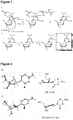
Claims (15)
- A compound of Formula Iwherein R1 is H, a phosphate group or a hydroxyl-protecting group,R2 is H, a phosphate group, or a hydroxyl-protecting group,R3 is H, F, CH3, CH2F, CHF2, CF3, OH or OR6 wherein R6 is a hydroxyl-protecting group,R4 and R5 each are H or form an amino-protecting group,or a salt thereof.
- The compound of claim 1 wherein each phosphate group is independently selected from:(i) a free or protected unmodified phosphate, e.g. monophosphate, diphosphate or triphosphate group, and(ii) a free or protected modified phosphate, e.g. monophosphate, diphosphate or triphosphate group, wherein the modified phosphate group may be selected from a phosphonate, phosphoramidate or phosphorothioate group.
- The compound of claim 1 or 2 wherein R1 is H.
- The compound of any one of claims 1-3 wherein R2 is H.
- The compound of any one of claims 1-4 wherein R3 is H or OH.
- The compound of any one of claims 1-5 wherein R4 and R5 are H.
- The compound of any one of claims 1-6 wherein R1, R2, R3, R4 and R5 each are H, or wherein R1, R2, R4 and R5 each are H and R3 is OH.
- The compound of any one of claims 1-7 wherein R1, R2, R3, R4 and R5 each are H.
- The compound of any one of claims 1-8 or a pharmaceutically acceptable salt thereof for use in medicine.
- The compound of any one of claims 1-8 or a pharmaceutically acceptable salt thereof for the treatment of a hyperproliferative disorder.
- The compound of any one of claims 1-8 or a pharmaceutically acceptable salt thereof for the treatment of cancer.
- The compound of any one of claims 1-8 or a pharmaceutically acceptable salt thereof for the treatment of acute myeloid leukemia (AML), or a myelodysplastic syndrome (MDS).
- The compound of any one of claims 1-8 or a pharmaceutically acceptable salt thereof for the treatment of atherosclerosis or renal insufficiency.
- An in vitro use of the compound of any one of claim 1-8 for inhibiting the methylation of nucleic acids, particularly of DNA.
- The use of claim 11 for an epigenetic analysis.
Priority Applications (12)
| Application Number | Priority Date | Filing Date | Title |
|---|---|---|---|
| US17/616,701 US20220332737A1 (en) | 2019-06-07 | 2019-06-05 | Carbocyclic nucleoside analogue |
| EP19178928.8A EP3747872A1 (en) | 2019-06-07 | 2019-06-07 | Carbocyclic nucleoside analogue |
| BR112021018715A BR112021018715A2 (en) | 2019-06-07 | 2020-06-05 | Carbocyclic nucleoside analogue |
| KR1020217040025A KR102926539B1 (en) | 2019-06-07 | 2020-06-05 | Carbocyclic nucleoside analogues |
| JP2021571533A JP7641918B2 (en) | 2019-06-07 | 2020-06-05 | Carbocyclic Nucleoside Analogues |
| PCT/EP2020/065621 WO2020245351A1 (en) | 2019-06-07 | 2020-06-05 | Carbocyclic nucleoside analogue |
| CN202080038563.3A CN113874358B (en) | 2019-06-07 | 2020-06-05 | Carbocyclic nucleoside analogs |
| AU2020286959A AU2020286959B2 (en) | 2019-06-07 | 2020-06-05 | Carbocyclic nucleoside analogue |
| CA3138831A CA3138831A1 (en) | 2019-06-07 | 2020-06-05 | Carbocyclic nucleoside analogue |
| MX2021015064A MX2021015064A (en) | 2019-06-07 | 2020-06-05 | ANALOG OF CARBOCYCLIC NUCLEOSIDE. |
| EP20732786.7A EP3980405A1 (en) | 2019-06-07 | 2020-06-05 | Carbocyclic nucleoside analogue |
| JP2024208401A JP2025037980A (en) | 2019-06-07 | 2024-11-29 | Carbocyclic nucleoside analogue |
Applications Claiming Priority (1)
| Application Number | Priority Date | Filing Date | Title |
|---|---|---|---|
| EP19178928.8A EP3747872A1 (en) | 2019-06-07 | 2019-06-07 | Carbocyclic nucleoside analogue |
Publications (1)
| Publication Number | Publication Date |
|---|---|
| EP3747872A1 true EP3747872A1 (en) | 2020-12-09 |
Family
ID=66793800
Family Applications (2)
| Application Number | Title | Priority Date | Filing Date |
|---|---|---|---|
| EP19178928.8A Ceased EP3747872A1 (en) | 2019-06-07 | 2019-06-07 | Carbocyclic nucleoside analogue |
| EP20732786.7A Pending EP3980405A1 (en) | 2019-06-07 | 2020-06-05 | Carbocyclic nucleoside analogue |
Family Applications After (1)
| Application Number | Title | Priority Date | Filing Date |
|---|---|---|---|
| EP20732786.7A Pending EP3980405A1 (en) | 2019-06-07 | 2020-06-05 | Carbocyclic nucleoside analogue |
Country Status (10)
| Country | Link |
|---|---|
| US (1) | US20220332737A1 (en) |
| EP (2) | EP3747872A1 (en) |
| JP (2) | JP7641918B2 (en) |
| KR (1) | KR102926539B1 (en) |
| CN (1) | CN113874358B (en) |
| AU (1) | AU2020286959B2 (en) |
| BR (1) | BR112021018715A2 (en) |
| CA (1) | CA3138831A1 (en) |
| MX (1) | MX2021015064A (en) |
| WO (1) | WO2020245351A1 (en) |
Citations (3)
| Publication number | Priority date | Publication date | Assignee | Title |
|---|---|---|---|---|
| WO2006099132A1 (en) * | 2005-03-11 | 2006-09-21 | Supergen, Inc. | Azacytosine analogs and derivatives |
| WO2012094248A1 (en) * | 2011-01-03 | 2012-07-12 | Nanjing Molecular Research, Inc. | O-(substituted benzyl) phosphoramidate compounds and therapeutic use |
| CN107286190A (en) * | 2016-04-13 | 2017-10-24 | 刘沛 | The preparation of oxyl benzylamino phosphoric acid/phosphate derivatives of nucleosides and its medical usage |
Family Cites Families (4)
| Publication number | Priority date | Publication date | Assignee | Title |
|---|---|---|---|---|
| CH527207A (en) * | 1968-05-08 | 1972-08-31 | Ceskoslovenska Akademie Ved | Process for the preparation of 1-glycosyl-5-azacytosines |
| JPS5227077B2 (en) * | 1971-10-19 | 1977-07-18 | ||
| US4177348A (en) * | 1977-12-13 | 1979-12-04 | United States Government | Carbocyclic analogs of cytosine nucleosides |
| US4232154A (en) * | 1977-12-13 | 1980-11-04 | United States Of America | Carbocyclic analogs of cytosine nucleosides exhibiting antiviral and antineoplasticactivity |
-
2019
- 2019-06-05 US US17/616,701 patent/US20220332737A1/en active Pending
- 2019-06-07 EP EP19178928.8A patent/EP3747872A1/en not_active Ceased
-
2020
- 2020-06-05 JP JP2021571533A patent/JP7641918B2/en active Active
- 2020-06-05 WO PCT/EP2020/065621 patent/WO2020245351A1/en not_active Ceased
- 2020-06-05 BR BR112021018715A patent/BR112021018715A2/en unknown
- 2020-06-05 KR KR1020217040025A patent/KR102926539B1/en active Active
- 2020-06-05 CA CA3138831A patent/CA3138831A1/en active Pending
- 2020-06-05 AU AU2020286959A patent/AU2020286959B2/en active Active
- 2020-06-05 MX MX2021015064A patent/MX2021015064A/en unknown
- 2020-06-05 EP EP20732786.7A patent/EP3980405A1/en active Pending
- 2020-06-05 CN CN202080038563.3A patent/CN113874358B/en active Active
-
2024
- 2024-11-29 JP JP2024208401A patent/JP2025037980A/en active Pending
Patent Citations (3)
| Publication number | Priority date | Publication date | Assignee | Title |
|---|---|---|---|---|
| WO2006099132A1 (en) * | 2005-03-11 | 2006-09-21 | Supergen, Inc. | Azacytosine analogs and derivatives |
| WO2012094248A1 (en) * | 2011-01-03 | 2012-07-12 | Nanjing Molecular Research, Inc. | O-(substituted benzyl) phosphoramidate compounds and therapeutic use |
| CN107286190A (en) * | 2016-04-13 | 2017-10-24 | 刘沛 | The preparation of oxyl benzylamino phosphoric acid/phosphate derivatives of nucleosides and its medical usage |
Non-Patent Citations (29)
| Title |
|---|
| A. BIRD, GENES DEV, vol. 16, 2002, pages 6 - 21 |
| A. UNNIKRISHNANA. N. Q. VOR. PICKFORDM. J. RAFTERYA. C. NUNEZA. VERMAL. B. HESSONJ. E. PIMANDA, LEUKEMIA, vol. 32, 2018, pages 900 - 910 |
| C. STRESEMANNF. LYKO, INT. J. CANCER, vol. 123, 2008, pages 8 - 13 |
| DUNN, JTHABET, SJO, H: "Flow-Dependent Epigenetic DNA Methylation in Endothelial Gene Expression and Atherosclerosis", ARTERIOSCLEROSIS, THROMBOSIS, AND VASCULAR BIOLOGY, vol. 35, no. 7, July 2015 (2015-07-01), pages 1562 - 9 |
| E. J. B. DERISSEN ET AL: "Concise Drug Review: Azacitidine and Decitabine", THE ONCOLOGIST, vol. 18, no. 5, 1 May 2013 (2013-05-01), US, pages 619 - 624, XP055633190, ISSN: 1083-7159, DOI: 10.1634/theoncologist.2012-0465 * |
| E. LIT. H. BESTORR. JAENISCH, CELL, vol. 69, 1992, pages 915 - 926 |
| F. BUSCHJ. C. PIECKM. OBERJ. GIERLICHG. W. HSUL. S. BEESET. CARELL, CHEM. EUR. J., vol. 14, 2008, pages 2125 - 2132 |
| F. R. TRAUBES. SCHIFFERSK. IWANS. KELLNERF. SPADAM. MULLERT. CARELL, NAT. PROTOC., vol. 14, 2019, pages 283 - 312 |
| G. G. WILSONR. J. ROBERTSS. KUMARJ. POSFAIM. SHAS. KLIMASAUSKASX. CHENG, NUCLEIC ACIDS RES., vol. 22, 1994, pages 1 - 10 |
| H. KANTARJIANJ. P. ISSAC. S. ROSENFELDJ. M. BENNETTM. ALBITARJ. DIPERSIOV. KLIMEKJ. SLACKC. DE CASTROF. RAVANDI, CANCER, vol. 106, 2006, pages 1794 - 1803 |
| H. MULLERT. CARELL, EUR. J. ORG. CHEM., vol. 2007, 2007, pages 1438 - 1445 |
| HECKER, S.J.ERION, M.D.: "Prodrugs of phosphates and phosphonates", J. MED. CHEM, vol. 51, 2008, pages 2328 - 2345, XP008148502, DOI: doi:10.1021/jm701260b |
| M. DASKALAKIST. T. NGUYENC. NGUYENP. GULDBERGG. KOHLERP. WIJERMANSP. A. JONESM. LUBBERT, BLOOD, vol. 100, 2002, pages 2957 - 2964 |
| M. NIETOP. DEMOLISE. BEHANZINA. MOREAUI. HUDSONB. FLORESH. STEMPLEWSKIT. SALMONSONC. GISSELBRECHTD. BOWEN, ONCOLOGIST, vol. 21, 2016, pages 692 - 700 |
| M. OBERH. MULLERC. PIECKJ. GIERLICHT. CARELL, J. AM. CHEM. SOC., vol. 127, 2005, pages 18143 - 18149 |
| M. TAHILIANIK. P. KOHY. SHENW. A. PASTORH. BANDUKWALAY. BRUDNOS. AGARWALL. M. IYERD. R. LIUL. ARAVIND, SCIENCE, vol. 324, 2009, pages 930 - 935 |
| R. J. KLOSEA. P. BIRD, TRENDS BIOCHEM. SCI., vol. 31, 2006, pages 89 - 97 |
| R. JUTTERMANNE. LIR. JAENISCH, PROC. NATL. ACAD. SCI., vol. 91, 1994, pages 11797 - 11801 |
| RAVANDI, F.KANTARJIAN, J. E.ISSA, S.JABBOUR, S.SANTOS, G.MCCUE, D.GARCIA-MANERO, F. P. S.PIERCE, E.O'BRIEN, J. P.CORTES, J. E.: "Feasibility of Therapy with Hypomethylating Agents in Patients with Renal Insufficiency", CLINICAL LYMPHOMA, MYELOMA & LEUKEMIA, vol. 10, no. 3, 2010, pages 205 - 210 |
| S. GABBARAA. S. BHAGWAT, BIOCHEM. J., vol. 307, 1995, pages 87 - 92 |
| S. ITOL. SHENQ. DAIS. C. WUL. B. COLLINSJ. A. SWENBERGC. HEY. ZHANG, SCIENCE, vol. 333, 2011, pages 1300 - 1303 |
| S. S. SMITHB. E. KAPLANL. C. SOWERSE. M. NEWMAN, PROC. NATL. ACAD. SCI., vol. 89, 1992, pages 4744 - 4748 |
| S. SCHIFFERST. M. WILDENHOFK. IWANM. STADLMEIERM. MULLERT. CARELL, HELV. CHIM. ACTA, vol. 102, 2019, pages e1800229 |
| S. TAKAHASHIS. KOBAYASHII. HIRATANI, CELL. MOL. LIFE SCI., vol. 75, 2018, pages 1191 - 1203 |
| T. H. GEHRKEU. LISCHKEK. L. GASTEIGERS. SCHNEIDERS. ARNOLDH. C. MULLERD. S. STEPHENSONH. ZIPSET. CARELL, NAT. CHEM. BIO., vol. 9, 2013, pages 455 |
| T. PFAFFENEDERB. HACKNERM. TRUSSM. MIINZELM. MULLERC. A. DEIMLC. HAGEMEIERT. CARELL, ANGEW. CHEM. INT. ED. ENGL., vol. 50, 2011, pages 7008 - 7012 |
| WIEMER, J.WIEMER D.F.: "Prodrugs of phosphonates and phosphates: Crossing the membrane barrier", TOP. CURR. CHEM., vol. 360, 2015, pages 115 - 160, XP055512067, DOI: doi:10.1007/128_2014_561 |
| Y. KATOS. OZAWAC. MIYAMOTOY. MAEHATAA. SUZUKIT. MAEDAY. BABA, CANCER CELL INT, vol. 13, 2013, pages 89 |
| Y. KOHY. A. KIMK. KIMJ.-A. SIMS.-S. YOONS. M. PARKY. H. YUN, BLOOD, vol. 128, 2016, pages 2381 - 2381 |
Also Published As
| Publication number | Publication date |
|---|---|
| KR20220017924A (en) | 2022-02-14 |
| WO2020245351A1 (en) | 2020-12-10 |
| AU2020286959A1 (en) | 2021-11-04 |
| JP7641918B2 (en) | 2025-03-07 |
| JP2022535386A (en) | 2022-08-08 |
| CN113874358A (en) | 2021-12-31 |
| AU2020286959B2 (en) | 2025-04-10 |
| MX2021015064A (en) | 2022-01-18 |
| CA3138831A1 (en) | 2020-12-10 |
| CN113874358B (en) | 2025-02-18 |
| BR112021018715A2 (en) | 2021-12-14 |
| US20220332737A1 (en) | 2022-10-20 |
| EP3980405A1 (en) | 2022-04-13 |
| KR102926539B1 (en) | 2026-02-10 |
| JP2025037980A (en) | 2025-03-18 |
Similar Documents
| Publication | Publication Date | Title |
|---|---|---|
| AU2018282469B2 (en) | Beta-D-2'-deoxy-2'alpha-fluoro-2'-beta-C-substituted-2-modified-N6-substituted purine nucleotides for HCV treatment | |
| CA3078267C (en) | Compositions and methods of modulating the immune response by activating alpha protein kinase 1 | |
| EP3031812B1 (en) | Chemical compounds | |
| CA2818713C (en) | Process for the preparation of morpholinyl anthracycline derivatives | |
| EA028974B1 (en) | Hcv polymerase inhibitors | |
| EA025341B1 (en) | Substituted nucleotide analogs | |
| MXPA05004503A (en) | Novel cytarabine monophosphate prodrugs. | |
| EP4626859A1 (en) | Lipid nanoparticle (lnp) delivery systems and formulations | |
| EP3820879B1 (en) | Phosphorus-containing prodrugs of gemcitabine | |
| EP3747872A1 (en) | Carbocyclic nucleoside analogue | |
| Salunke et al. | Synthesis of novel homoazanucleosides and their peptidyl analogs | |
| KR101231925B1 (en) | Gemcitabine prodrugs and method for production thereof | |
| US8623912B2 (en) | Fostriecin derivatives and the pharmaceutical uses thereof | |
| HK40001167A (en) | Pharmaceutical formulation comprising a phosphoramidate derivative of 5-fluoro-2'-deoxyuridine for use in the treatment of cancer | |
| HK1247829B (en) | Beta-d-2'-deoxy-2'alpha-fluoro-2'-beta-c-substituted-2-modified-n6-substituted purine nucleotides for hcv treatment | |
| UA130448C2 (en) | <font face="Symbol">b</font>-D-2'-DESOXY-2'-<font face="Symbol">a</font>-FLUORO-2'-<font face="Symbol">b</font>-C-SUBSTITUTED-2-MODIFIED-N6-SUBSTITUTED PURINE NUCLEOTIDES FOR THE TREATMENT OF HCV-CAUSED DISEASES |
Legal Events
| Date | Code | Title | Description |
|---|---|---|---|
| PUAI | Public reference made under article 153(3) epc to a published international application that has entered the european phase |
Free format text: ORIGINAL CODE: 0009012 |
|
| STAA | Information on the status of an ep patent application or granted ep patent |
Free format text: STATUS: THE APPLICATION HAS BEEN PUBLISHED |
|
| AK | Designated contracting states |
Kind code of ref document: A1 Designated state(s): AL AT BE BG CH CY CZ DE DK EE ES FI FR GB GR HR HU IE IS IT LI LT LU LV MC MK MT NL NO PL PT RO RS SE SI SK SM TR |
|
| AX | Request for extension of the european patent |
Extension state: BA ME |
|
| STAA | Information on the status of an ep patent application or granted ep patent |
Free format text: STATUS: THE APPLICATION HAS BEEN REFUSED |
|
| 18R | Application refused |
Effective date: 20210102 |


