EP3747728B1 - Vehicle cooperation-based train movement authorization method - Google Patents
Vehicle cooperation-based train movement authorization method Download PDFInfo
- Publication number
- EP3747728B1 EP3747728B1 EP19815797.6A EP19815797A EP3747728B1 EP 3747728 B1 EP3747728 B1 EP 3747728B1 EP 19815797 A EP19815797 A EP 19815797A EP 3747728 B1 EP3747728 B1 EP 3747728B1
- Authority
- EP
- European Patent Office
- Prior art keywords
- train
- movement authorization
- vehicle
- current
- tic
- Prior art date
- Legal status (The legal status is an assumption and is not a legal conclusion. Google has not performed a legal analysis and makes no representation as to the accuracy of the status listed.)
- Active
Links
Images



Classifications
-
- B—PERFORMING OPERATIONS; TRANSPORTING
- B61—RAILWAYS
- B61L—GUIDING RAILWAY TRAFFIC; ENSURING THE SAFETY OF RAILWAY TRAFFIC
- B61L27/00—Central railway traffic control systems; Trackside control; Communication systems specially adapted therefor
- B61L27/04—Automatic systems, e.g. controlled by train; Change-over to manual control
-
- B—PERFORMING OPERATIONS; TRANSPORTING
- B61—RAILWAYS
- B61L—GUIDING RAILWAY TRAFFIC; ENSURING THE SAFETY OF RAILWAY TRAFFIC
- B61L15/00—Indicators provided on the vehicle or train for signalling purposes
- B61L15/0018—Communication with or on the vehicle or train
- B61L15/0027—Radio-based, e.g. using GSM-R
-
- B—PERFORMING OPERATIONS; TRANSPORTING
- B61—RAILWAYS
- B61L—GUIDING RAILWAY TRAFFIC; ENSURING THE SAFETY OF RAILWAY TRAFFIC
- B61L23/00—Control, warning or like safety means along the route or between vehicles or trains
-
- B—PERFORMING OPERATIONS; TRANSPORTING
- B61—RAILWAYS
- B61L—GUIDING RAILWAY TRAFFIC; ENSURING THE SAFETY OF RAILWAY TRAFFIC
- B61L27/00—Central railway traffic control systems; Trackside control; Communication systems specially adapted therefor
- B61L27/20—Trackside control of safe travel of vehicle or train, e.g. braking curve calculation
-
- B—PERFORMING OPERATIONS; TRANSPORTING
- B61—RAILWAYS
- B61L—GUIDING RAILWAY TRAFFIC; ENSURING THE SAFETY OF RAILWAY TRAFFIC
- B61L27/00—Central railway traffic control systems; Trackside control; Communication systems specially adapted therefor
- B61L27/40—Handling position reports or trackside vehicle data
-
- B—PERFORMING OPERATIONS; TRANSPORTING
- B61—RAILWAYS
- B61L—GUIDING RAILWAY TRAFFIC; ENSURING THE SAFETY OF RAILWAY TRAFFIC
- B61L99/00—Subject matter not provided for in other groups of this subclass
- B61L99/002—Autonomous vehicles, i.e. under distributed traffic control
-
- B—PERFORMING OPERATIONS; TRANSPORTING
- B61—RAILWAYS
- B61L—GUIDING RAILWAY TRAFFIC; ENSURING THE SAFETY OF RAILWAY TRAFFIC
- B61L27/00—Central railway traffic control systems; Trackside control; Communication systems specially adapted therefor
- B61L27/20—Trackside control of safe travel of vehicle or train, e.g. braking curve calculation
- B61L2027/204—Trackside control of safe travel of vehicle or train, e.g. braking curve calculation using Communication-based Train Control [CBTC]
Definitions
- the present invention relates to the technical field of security control of rail transport signals, and in particular, to a train movement authorization method based on vehicle-to-vehicle cooperation.
- a core system of a traditional communication based train control system (CBTC) - an "automatic train protection system” (ATP) consists of two parts: a trackside part and an on-board part.
- the trackside part is mainly responsible for collecting information of trackside devices and trains, calculating movement authorization for all trains on a line, and sending the movement authorization to an on-board ATP.
- the trackside ATP must maintain positions and status information of all trains within a management region of the trackside ATP and a management region of an adjacent trackside ATP.
- the trackside ATP must further maintain information of a train on a boundary of an adjacent trackside ATP on a boundary of the current trackside ATP, to ensure that the train can operate without stopping in management regions of a plurality of trackside ATP devices.
- the trackside ATP undertakes key functions and has a relatively large management region, and therefore, has strict requirements on reliability. Therefore, simplifying a design of the trackside ATP as much as possible to reduce a probability that the trackside ATP goes wrong is an important direction for designing and developing the CBTC system.
- Core functions of the trackside ATP - train information maintenance and movement authorization calculation not only involve a large quantity of numerical calculation, but also require support of complex interfaces between adjacent trackside ATPs. If such functions are designed to be calculated by the on-board ATP, a numerical calculation function of the trackside ATP and an interface between the trackside ATPs are completely removed, so that complexity of the entire CBTC system can be greatly simplified.
- train movement authorization is calculated through direct information interaction between trains, including operation modes such as train tracking and face-to-face driving.
- the trackside ATP is only responsible for maintaining sequence information of online operating trains and providing the information to the on-board ATP.
- the present invention provides a method for train movement authorization to overcome the shortcomings existing in the prior art and it is described in the independent claim.
- a train movement authorization method based on vehicle-to-vehicle cooperation includes the following steps:
- the train calculates, based on a current train task, a list of all track resources that the train needs to sequentially pass through.
- ATS automatic train supervision system
- the resource allocation information is described by using train sequences in a train information container (TIC).
- TIC train information container
- the TIC is an approach used to divide a track section based on resources, and the TIC is a section without a fork or is a turnout; an ID of the train appearing in one TIC indicates that the trackside resource manager considers that the train is capable of using the TIC resource.
- a movement authorization range of the train crosses a track section corresponding to the entire TIC.
- the current train determines an ID of a first train in downstream of the current train based on an operation direction of the current train and an order of arranging train IDs in the TIC (the train IDs in the TIC are arranged in an agreed order, for example, along an up direction of a line).
- the train calculates an expected train envelope (ETE) based on the task information of the train and calculates a guaranteed train envelope (GTE) based on a current operation status of the train in step 4, and the expected train envelope (ETE) and the guaranteed train envelope (GTE) are used to respond to a movement authorization report for a movement authorization request of another train.
- ETE expected train envelope
- GTE guaranteed train envelope
- the train calculates, based on the ETE, a movement authorization request that needs to be sent to the downstream train of the train, where the request includes ETE information of the current train.
- the current train calculates the movement authorization of the train based on a movement authorization request and a movement authorization report that are sent by the downstream first train of the current train, and calculates a movement authorization report used to respond to a movement authorization request of another train.
- the train determines, based on a current movement authorization location and by comparing operation tasks of trains, a next TIC that the train needs to apply for, and generates a resource application request to be sent to the resource management center.
- the present invention has the following advantages:
- FIG. 1 A topological structure of vehicle-to-ground/vehicle-to-vehicle communication of a CBTC system based on vehicle-to-vehicle cooperation is shown in FIG. 1 .
- no information is exchanged between resource management centers (trackside ATPs).
- An on-board ATP needs to calculate, based on an operation direction, a location, and speed information of a train, a management region of a resource management center in which the train is currently located, and send a track resource request to the resource management center in which the train is currently located and a resource management center that the train is to enter.
- the train After receiving train sequence information from the resource management center, the train determines a next train in the operation direction of the train based on train order information on a current track, requests for movement authorization from the downstream train based on a train movement authorization request, and accordingly calculates movement authorization of the train after receiving a train movement authorization report returned by the train.
- the train When performing information interaction with another train, the train first needs to obtain information of "which trains need to be interacted with". This information is maintained by the trackside ATP (the resource management center), sent to the on-board ATP and is described by using a train sequence on a track section (description is performed by using a TIC). Based on the sequence, the on-board ATP may determine ID information of a closest train in downstream of the operation direction of the train. The on-board ATP calculates movement authorization of the on-board ATP by directly requesting for train information from a downstream train in the operation direction. In addition to basic train operation information (a location, a speed, and a direction), information that the train needs to exchange should further include an expected train envelope (ETE) and a guaranteed train envelope (GTE).
- ETE expected train envelope
- GTE guaranteed train envelope
- the train calculates the "guaranteed train envelope", the "expected train envelope", and train movement authorization based on a current track resource allocation status, train sequence information, and an operation status of the train.
- the ETE is calculated by the train based on an operation task of the train, and a range of the ETE is from a smallest secure back end where the train considers a maximum rollback to a remote end of a next TIC that the train expects to enter.
- a starting point of the GTE is the same as that of the ETE.
- An ending point of the GTE is obtained by extending a maximum head security location of the train by a distance in a train moving direction.
- a basic calculation principle is that after the on-board ATP issues a braking instruction, the train goes through the following three stages:
- step 1 and step 2 the train separately obtains, from the ATS and the trackside resource management center, global information required for calculating movement authorization, and the global information includes a task of a current train and a train sequence of a current line.
- step 3 the train calculates an ID of a first train in downstream of an operation direction of the train based on sequence information of the current train sent by the resource management center.
- the on-board ATP calculates an "expected train envelope" based on an operation task of the train, and if the ID that is calculated in the previous step and that is of the first train in downstream of the operation direction is valid, the on-board ATP should send the "expected train envelope" to the downstream train of the train by using a movement authorization request, and the movement authorization should not be extended before a reply from the downstream train is obtained.
- the "expected train envelope” should further include a time identifier (indicated by a count of a main period of the on-board ATP) when the train sends the information and an operation priority of the train.
- the on-board ATP When receiving an "expected train envelope" sent by another train, the on-board ATP should first determine whether a priority of the train sending the expected envelope is higher than that of the current train, and if the priority of the train sending the expected envelope is higher than that of the current train, an ending point of the "expected train envelope” should be a limiting point for calculating movement authorization of the current train. If the ending point of the "expected train envelope” falls within a range of a "guaranteed train envelope" of the current train, the current train should apply emergency braking.
- the ending point of "expected train envelope” falls within downstream of an ending point of the "guaranteed train envelope” of the current train, the ending point of the "guaranteed train envelope” sent by the current train by using the train movement authorization report should be extended to the ending point of the "expected train envelope”. If the current train finds that a priority of the train sending the request is lower than that of the current train, a "guaranteed train envelope" in a to-be-returned train movement authorization report should be set to an invalid value.
- step 5 after receiving the train movement authorization report returned by the downstream train, the on-board ATP first determines timeliness of the train movement authorization report, and if a time identifier included in the train movement authorization report is not less than a time identifier of a moment when the current train initiates a train movement authorization request, the current train should use the "guaranteed train envelope" in the train movement authorization report, and calculate movement authorization of the train.
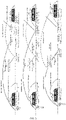
- FIG. 3 is a typical procedure of resource competition of an on-board ATP during face-to-face operation.
- a train 2 has a relatively high traffic priority, but movement authorization of a train 1 first extends into a TIC 2 and reaches a turnout 2.
- the train 1 starts to apply to the resource management center for a resource of the turnout 2.
- the turnout 2 has been allocated by the resource management center to the train 2 in an opposite direction, the train 1 cannot obtain use authorization of the turnout 2.
- the train 2 After movement authorization of the train 2 reaches the turnout 2, the train 2 starts to continue applying for a next track resource in an operation direction of the train 2, that is, the TIC 2.
- the train 2 extends an expected envelope of the train 2 to a remote end of the TIC 2, and sends the expected envelope to the train 1 by using a train movement authorization request. After receiving the movement authorization request, the train 1 determines that a movement authorization location requested by the train 2 overlaps movement authorization currently used by the train 1 but has not entered a guaranteed train envelope of the train 1.
- the train 1 actively withdraws the movement authorization of the train 1 to an end point of a TIC 1 (it is ensured that the movement authorization of the train 1 does not overlap an expected envelope of an oncoming train), sends a "guaranteed movement authorization" location to the train 2 as a mobile authorization location by using a train movement authorization report after the withdrawal, and actively cancels the turnout 1 and the TIC 2 from the resource management center.
- the resource management center can continue processing application of the train 2 for a resource of the turnout 1.
- the train 2 can continue applying for a resource of a TIC 3 and implement a function of preferentially passing through a turnout region.
- the low-priority train (the train 1) is processing a movement authorization request of an oncoming train
- the on-board ATP shall send a tail end of the guaranteed train envelope of this train as "guaranteed movement authorization" when returning a train movement authorization report.
- the train cannot cancel a resource based on the retracted movement authorization, to prevent a conflict caused by re-allocation of the resource to another train.
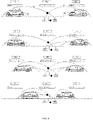
- FIG. 4 is a typical scenario of face-to-face turnback operation of trains. It is assumed that a train 2 has a relatively high operation priority. A train 1 and the train 2 undergo a face-to-face turnback process during operation. Since two service stopping points (SSP) SSP 1 and SSP 2 are relatively close, if the trains turn back at the same time, resources that the trains need to apply for overlap, resulting in resource competition. In this case, the trains need to coordinate resource use by themselves. In the figure, the train 2 first applies for a resource of a TIC 2, and movement authorization of the train 2 extends into the TIC 2, so that it may be ensured that the train 2 accurately stops at a location of the SSP 2.
- SSP service stopping points
- the train 1 detects that the train 1 is not the only train in the TIC 2 based on train sequence information sent by the resource management center to the train 1, and there is another train (that is, the train 2) in downstream of the train 1.
- the train 1 needs to first send a train movement authorization request packet to the train 2 to obtain an operation status of the train 2.
- the train 2 determines that a priority of the train 1 is relatively low.
- the train 2 does not withdraw the movement authorization of the train 2, but sets, as guaranteed movement authorization, a resource limit location (that is, a tail end of an "expected train envelope" of the train 2, which is also a tail end of the movement authorization of the train 2) used by the train 2 and sends the guaranteed movement authorization to the train 1 by using a train movement authorization report.
- the train 1 may extend the movement authorization of the train 1 to a guaranteed movement authorization location in the TIC 2.
- the train 2 sets the movement authorization of the train 2 to be invalid, and then retracts the expected train envelope.
- the train 2 when receiving a new movement authorization request sent by the train 1, uses a tail end of the retracted expected train envelope as a guaranteed movement authorization and sends the guaranteed movement authorization to the train 1, so that the train 1 may further extend the movement authorization of the train 1, to enable the train 1 to accurately stop at the SSP 1.
Landscapes
- Engineering & Computer Science (AREA)
- Mechanical Engineering (AREA)
- Train Traffic Observation, Control, And Security (AREA)
Description
- The present invention relates to the technical field of security control of rail transport signals, and in particular, to a train movement authorization method based on vehicle-to-vehicle cooperation.
- A core system of a traditional communication based train control system (CBTC) - an "automatic train protection system" (ATP) consists of two parts: a trackside part and an on-board part. The trackside part is mainly responsible for collecting information of trackside devices and trains, calculating movement authorization for all trains on a line, and sending the movement authorization to an on-board ATP. To achieve this function, the trackside ATP must maintain positions and status information of all trains within a management region of the trackside ATP and a management region of an adjacent trackside ATP. In addition, the trackside ATP must further maintain information of a train on a boundary of an adjacent trackside ATP on a boundary of the current trackside ATP, to ensure that the train can operate without stopping in management regions of a plurality of trackside ATP devices. The trackside ATP undertakes key functions and has a relatively large management region, and therefore, has strict requirements on reliability. Therefore, simplifying a design of the trackside ATP as much as possible to reduce a probability that the trackside ATP goes wrong is an important direction for designing and developing the CBTC system. Core functions of the trackside ATP - train information maintenance and movement authorization calculation not only involve a large quantity of numerical calculation, but also require support of complex interfaces between adjacent trackside ATPs. If such functions are designed to be calculated by the on-board ATP, a numerical calculation function of the trackside ATP and an interface between the trackside ATPs are completely removed, so that complexity of the entire CBTC system can be greatly simplified.
- It is cited the patent application
KR 20180015786 A - In a train movement authorization method based on vehicle-vehicle cooperation, train movement authorization is calculated through direct information interaction between trains, including operation modes such as train tracking and face-to-face driving. The trackside ATP is only responsible for maintaining sequence information of online operating trains and providing the information to the on-board ATP.
- The present invention provides a method for train movement authorization to overcome the shortcomings existing in the prior art and it is described in the independent claim.
- The purpose of the disclosure may be realized by the following technical solutions.
- A train movement authorization method based on vehicle-to-vehicle cooperation is provided, where the method includes the following steps:
- step 1: obtaining, by a train, current task information from an automatic train supervision system (ATS);
- step 2: obtaining, by the train, current resource allocation information from a trackside resource management center;
- step 3: reckoning, by the train, a first train in downstream of an operation direction of the train based on the received resource allocation information;
- step 4: sending, by the train, a location request to the first train in downstream of the operation direction of the train based on an operation task of the train and responding to a location request of another train;
- step 5: calculating, by the train, movement authorization of the train based on train information sent by the first train in downstream of the operation direction; and
- step 6: applying for, by the train, a corresponding line resource from the trackside resource management center based on the task of the train and a status of the calculated movement authorization.
- Preferably, after the obtaining, by a train, task information of the current train from an automatic train supervision system (ATS) in
step 1, the train calculates, based on a current train task, a list of all track resources that the train needs to sequentially pass through. - Preferably, after the obtaining, by the train, current resource allocation information from a trackside resource management center in
step 2, the resource allocation information is described by using train sequences in a train information container (TIC). - Preferably, the TIC is an approach used to divide a track section based on resources, and the TIC is a section without a fork or is a turnout; an ID of the train appearing in one TIC indicates that the trackside resource manager considers that the train is capable of using the TIC resource.
- Preferably, if an ID of only the current train exists in the train information container (TIC) in
step 2, a movement authorization range of the train crosses a track section corresponding to the entire TIC. - Preferably, if an ID of another train exists in the train information container (TIC) in
step 3, the current train determines an ID of a first train in downstream of the current train based on an operation direction of the current train and an order of arranging train IDs in the TIC (the train IDs in the TIC are arranged in an agreed order, for example, along an up direction of a line). - Preferably, the train calculates an expected train envelope (ETE) based on the task information of the train and calculates a guaranteed train envelope (GTE) based on a current operation status of the train in
step 4, and the expected train envelope (ETE) and the guaranteed train envelope (GTE) are used to respond to a movement authorization report for a movement authorization request of another train. - Preferably, in
step 4, the train calculates, based on the ETE, a movement authorization request that needs to be sent to the downstream train of the train, where the request includes ETE information of the current train. - Preferably, in
step 5, the current train calculates the movement authorization of the train based on a movement authorization request and a movement authorization report that are sent by the downstream first train of the current train, and calculates a movement authorization report used to respond to a movement authorization request of another train. - Preferably, in
step 6, the train determines, based on a current movement authorization location and by comparing operation tasks of trains, a next TIC that the train needs to apply for, and generates a resource application request to be sent to the resource management center. - Compared with the prior art, the present invention has the following advantages:
- 1. In the method of the present invention, a movement authorization calculation function in a design of an existing CBTC system is changed to on-board direct calculation through vehicle-to-vehicle information interaction, to replace a centralized calculation method of a trackside ATP in the existing CBTC system.
- 2. Based on the present invention, complexity of the trackside ATP is reduced, and a numerical calculation module of the trackside ATP and an interface between trackside ATPs are completely removed.
- 3. The on-board ATP in the present invention implements train tracking, track resource competition and coordination, and train face-to-face operation with higher efficiency through vehicle-to-vehicle information interaction that is based on a request/confirmation mechanism.
-
-
FIG. 1 is a topological structure diagram of information interaction between a resource management center (trackside ATP) and an on-board ATP; -
FIG. 2 is a schematic diagram of a calculation principle of an expected train envelope and a guaranteed train envelope; -
FIG. 3 is a typical flowchart of resource competition of an on-board ATP during face-to-face operation of trains, where 11 is an expected envelope of atrain train train train 2, 22 is a guaranteed envelope of thetrain train 2; -
FIG. 4 is a schematic diagram of an operation principle of train tracking and face-to-face operation based on a request/confirmation mechanism; and -
FIG. 5 is a flowchart of a train movement authorization method based on vehicle-to-vehicle cooperation according to the present invention. - The technical solutions in the embodiments of the present invention are clearly and completely described hereafter. It is apparent that the described embodiments are some rather than all of the embodiments of the present invention.
- A topological structure of vehicle-to-ground/vehicle-to-vehicle communication of a CBTC system based on vehicle-to-vehicle cooperation is shown in
FIG. 1 . In the system, no information is exchanged between resource management centers (trackside ATPs). An on-board ATP needs to calculate, based on an operation direction, a location, and speed information of a train, a management region of a resource management center in which the train is currently located, and send a track resource request to the resource management center in which the train is currently located and a resource management center that the train is to enter. After receiving train sequence information from the resource management center, the train determines a next train in the operation direction of the train based on train order information on a current track, requests for movement authorization from the downstream train based on a train movement authorization request, and accordingly calculates movement authorization of the train after receiving a train movement authorization report returned by the train. - When performing information interaction with another train, the train first needs to obtain information of "which trains need to be interacted with". This information is maintained by the trackside ATP (the resource management center), sent to the on-board ATP and is described by using a train sequence on a track section (description is performed by using a TIC). Based on the sequence, the on-board ATP may determine ID information of a closest train in downstream of the operation direction of the train. The on-board ATP calculates movement authorization of the on-board ATP by directly requesting for train information from a downstream train in the operation direction. In addition to basic train operation information (a location, a speed, and a direction), information that the train needs to exchange should further include an expected train envelope (ETE) and a guaranteed train envelope (GTE).
- As shown in
FIG. 2 , the train calculates the "guaranteed train envelope", the "expected train envelope", and train movement authorization based on a current track resource allocation status, train sequence information, and an operation status of the train. The ETE is calculated by the train based on an operation task of the train, and a range of the ETE is from a smallest secure back end where the train considers a maximum rollback to a remote end of a next TIC that the train expects to enter. A starting point of the GTE is the same as that of the ETE. An ending point of the GTE is obtained by extending a maximum head security location of the train by a distance in a train moving direction. This distance is a farthest distance that the train can move from a current moment when the train starts to respond to a braking instruction of the on-board ATP to a moment when the train completely stops, and is calculated according to the following function:
- A basic calculation principle is that after the on-board ATP issues a braking instruction, the train goes through the following three stages:
- traction removing: at an acceleration stage, the train still has traction;
- braking application: at a coasting stage, the traction of the train has been removed, but the train is still affected by the equivalent slope acceleration; and
- emergency braking: a process in which the train stops under an action of the guaranteed emergency braking acceleration.
- Operation distances at the above three stages are separately calculated as follows:


- Therefore, a distance that the guaranteed train envelope needs to extend from a maximum train head location to the operation direction of the train is:

- In a procedure shown in
FIG. 5 , instep 1 andstep 2, the train separately obtains, from the ATS and the trackside resource management center, global information required for calculating movement authorization, and the global information includes a task of a current train and a train sequence of a current line. Instep 3, the train calculates an ID of a first train in downstream of an operation direction of the train based on sequence information of the current train sent by the resource management center. - In
step 4, the on-board ATP calculates an "expected train envelope" based on an operation task of the train, and if the ID that is calculated in the previous step and that is of the first train in downstream of the operation direction is valid, the on-board ATP should send the "expected train envelope" to the downstream train of the train by using a movement authorization request, and the movement authorization should not be extended before a reply from the downstream train is obtained. In addition to location and direction information, the "expected train envelope" should further include a time identifier (indicated by a count of a main period of the on-board ATP) when the train sends the information and an operation priority of the train. When receiving an "expected train envelope" sent by another train, the on-board ATP should first determine whether a priority of the train sending the expected envelope is higher than that of the current train, and if the priority of the train sending the expected envelope is higher than that of the current train, an ending point of the "expected train envelope" should be a limiting point for calculating movement authorization of the current train. If the ending point of the "expected train envelope" falls within a range of a "guaranteed train envelope" of the current train, the current train should apply emergency braking. If the ending point of "expected train envelope" falls within downstream of an ending point of the "guaranteed train envelope" of the current train, the ending point of the "guaranteed train envelope" sent by the current train by using the train movement authorization report should be extended to the ending point of the "expected train envelope". If the current train finds that a priority of the train sending the request is lower than that of the current train, a "guaranteed train envelope" in a to-be-returned train movement authorization report should be set to an invalid value. - In
step 5, after receiving the train movement authorization report returned by the downstream train, the on-board ATP first determines timeliness of the train movement authorization report, and if a time identifier included in the train movement authorization report is not less than a time identifier of a moment when the current train initiates a train movement authorization request, the current train should use the "guaranteed train envelope" in the train movement authorization report, and calculate movement authorization of the train. -
FIG. 3 is a typical procedure of resource competition of an on-board ATP during face-to-face operation. In a shown scenario, it is assumed that atrain 2 has a relatively high traffic priority, but movement authorization of atrain 1 first extends into aTIC 2 and reaches aturnout 2. Thetrain 1 starts to apply to the resource management center for a resource of theturnout 2. However, because theturnout 2 has been allocated by the resource management center to thetrain 2 in an opposite direction, thetrain 1 cannot obtain use authorization of theturnout 2. After movement authorization of thetrain 2 reaches theturnout 2, thetrain 2 starts to continue applying for a next track resource in an operation direction of thetrain 2, that is, theTIC 2. Thetrain 2 extends an expected envelope of thetrain 2 to a remote end of theTIC 2, and sends the expected envelope to thetrain 1 by using a train movement authorization request. After receiving the movement authorization request, thetrain 1 determines that a movement authorization location requested by thetrain 2 overlaps movement authorization currently used by thetrain 1 but has not entered a guaranteed train envelope of thetrain 1. In this way, thetrain 1 actively withdraws the movement authorization of thetrain 1 to an end point of a TIC 1 (it is ensured that the movement authorization of thetrain 1 does not overlap an expected envelope of an oncoming train), sends a "guaranteed movement authorization" location to thetrain 2 as a mobile authorization location by using a train movement authorization report after the withdrawal, and actively cancels theturnout 1 and theTIC 2 from the resource management center. After theturnout 1 is successively canceled, the resource management center can continue processing application of thetrain 2 for a resource of theturnout 1. After thetrain 2 successively obtains an inverted resource of theturnout 1 through application, thetrain 2 can continue applying for a resource of aTIC 3 and implement a function of preferentially passing through a turnout region. For security reasons, when the low-priority train (the train 1) is processing a movement authorization request of an oncoming train, if the low-priority train finds that a movement authorization location requested by the oncoming train has entered a range of a guaranteed train envelope of the train, the on-board ATP shall send a tail end of the guaranteed train envelope of this train as "guaranteed movement authorization" when returning a train movement authorization report. For example, if a broken link point appears in the "guaranteed train envelope", causing retraction of movement authorization of a train, the train cannot cancel a resource based on the retracted movement authorization, to prevent a conflict caused by re-allocation of the resource to another train. -
FIG. 4 is a typical scenario of face-to-face turnback operation of trains. It is assumed that atrain 2 has a relatively high operation priority. Atrain 1 and thetrain 2 undergo a face-to-face turnback process during operation. Since two service stopping points (SSP)SSP 1 andSSP 2 are relatively close, if the trains turn back at the same time, resources that the trains need to apply for overlap, resulting in resource competition. In this case, the trains need to coordinate resource use by themselves. In the figure, thetrain 2 first applies for a resource of aTIC 2, and movement authorization of thetrain 2 extends into theTIC 2, so that it may be ensured that thetrain 2 accurately stops at a location of theSSP 2. When thetrain 1 also applies for the resource ofTIC 2, thetrain 1 detects that thetrain 1 is not the only train in theTIC 2 based on train sequence information sent by the resource management center to thetrain 1, and there is another train (that is, the train 2) in downstream of thetrain 1. Before extending movement authorization of thetrain 1, thetrain 1 needs to first send a train movement authorization request packet to thetrain 2 to obtain an operation status of thetrain 2. After receiving the movement authorization request of thetrain 1, thetrain 2 determines that a priority of thetrain 1 is relatively low. In this case, thetrain 2 does not withdraw the movement authorization of thetrain 2, but sets, as guaranteed movement authorization, a resource limit location (that is, a tail end of an "expected train envelope" of thetrain 2, which is also a tail end of the movement authorization of the train 2) used by thetrain 2 and sends the guaranteed movement authorization to thetrain 1 by using a train movement authorization report. After receiving the guaranteed movement authorization, thetrain 1 may extend the movement authorization of thetrain 1 to a guaranteed movement authorization location in theTIC 2. After thetrain 2 accurately and stably stops, thetrain 2 sets the movement authorization of thetrain 2 to be invalid, and then retracts the expected train envelope. In this case, when receiving a new movement authorization request sent by thetrain 1, thetrain 2 uses a tail end of the retracted expected train envelope as a guaranteed movement authorization and sends the guaranteed movement authorization to thetrain 1, so that thetrain 1 may further extend the movement authorization of thetrain 1, to enable thetrain 1 to accurately stop at theSSP 1. - What is mentioned above is only the specific implementation of the present invention, but does not limit the protection scope of the present invention, and anyone skilled in the art can easily think of mortifications and alternations within the technical scope disclosed by the present invention, all of which shall fall within the protection scope of the present invention. Therefore, the protection scope of the present invention should be determined by the protection scope of the claims.
Claims (10)
- A train movement authorization method based on vehicle-to-vehicle cooperation, wherein the method comprises the following steps:step 1: obtaining, by a train (1,2), current task information from an automatic train supervision system (ATS);step 2: obtaining, by the train, current resource allocation information from a trackside resource management center;step 3: reckoning, by the train, a first train downstream of an operation direction of the train based on the received resource allocation information;step 4; sending, by the train, a location request to the first train based on an operation task of the train and responding to a location request of a second train;step 5: calculating, by the train, a movement authorization (31, 32) of the train based on train information sent by the first train;step 6: applying for, by the train, a corresponding track resource from the trackside resource management center based on the task of the train and a status of the calculated movement authorization.
- The train movement authorization method based on vehicle-to-vehicle cooperation according to claim 1, wherein after the obtaining, by the train, task information of the current train from the automatic train supervision system (ATS) in step 1, the train calculates, based on the current train task, a list of all track resources that the train needs to sequentially pass through.
- The train movement authorization method based on vehicle-to-vehicle cooperation according to claim 1, wherein after the obtaining, by the train, current resource allocation information from the trackside resource management center in step 2, the resource allocation information is described by using train sequences stored in a train information container (TIC).
- The train movement authorization method based on vehicle-to-vehicle cooperation according to claim 3, wherein the TIC is based on dividing a track section based on resources, and if the TIC specifies a track section corresponding to the TIC without a fork or a turnout, an ID of the train appearing in the TIC indicates that the trackside resource manager considers that the train is capable of using the track section corresponding to the TIC.
- The train movement authorization method based on vehicle-to-vehicle cooperation according to claim 4, wherein if the ID of only the current train exists in the train information container (TIC) in step 2, a movement authorization range of the train encompasses the track section corresponding to the TIC.
- The train movement authorization method based on vehicle-to-vehicle cooperation according to claim 4, wherein if an ID of another train exists in the train information container (TIC) in step 3, the current train determines an ID of a first train in downstream of the current train based on an operation direction of the current train and an order of arranging train IDs in the TIC.
- The train movement authorization method based on vehicle-to-vehicle cooperation according to claim 1, wherein the train calculates an expected train envelope (ETE, 11, 12) based on the task information of the train and calculates a guaranteed train envelope (GTE, 21, 22) based on a current operation status of the train in step 4, and the expected train envelope and the guaranteed train envelope are used to respond to a movement authorization report for a movement authorization request of the second train.
- The train movement authorization method based on vehicle-to-vehicle cooperation according to claim 7, wherein in step 4, the train calculates, based on the expected train envelope, a movement authorization request that needs to be sent to the downstream train of the train, wherein the request comprises expected train envelope information of the current train.
- The train movement authorization method based on vehicle-to-vehicle cooperation according to claim 1, wherein in step 5, the current train calculates the movement authorization of the train based on a movement authorization request and a movement authorization report that are sent by the first train in downstream of the current train, and calculates a movement authorization report used to respond to a movement authorization request of the second train.
- The train movement authorization method based on vehicle-to-vehicle cooperation according to claim 1, wherein in step 6, the train determines, based on a current movement authorization location and by comparing operation tasks of trains, a next TIC that the train needs to apply for, and generates a resource application request to be sent to the resource management center.
Priority Applications (1)
| Application Number | Priority Date | Filing Date | Title |
|---|---|---|---|
| RS20221122A RS63808B1 (en) | 2018-06-06 | 2019-03-15 | PROCEDURE FOR OBTAINING A PERMIT TO MOVE A TRAIN BASED ON VEHICLE COOPERATION |
Applications Claiming Priority (2)
| Application Number | Priority Date | Filing Date | Title |
|---|---|---|---|
| CN201810575896.4A CN109080667B (en) | 2018-06-06 | 2018-06-06 | Train moving authorization method based on vehicle-vehicle cooperation |
| PCT/CN2019/078247 WO2019233153A1 (en) | 2018-06-06 | 2019-03-15 | Vehicle cooperation-based train movement authorization method |
Publications (3)
| Publication Number | Publication Date |
|---|---|
| EP3747728A1 EP3747728A1 (en) | 2020-12-09 |
| EP3747728A4 EP3747728A4 (en) | 2021-03-24 |
| EP3747728B1 true EP3747728B1 (en) | 2022-09-21 |
Family
ID=64839449
Family Applications (1)
| Application Number | Title | Priority Date | Filing Date |
|---|---|---|---|
| EP19815797.6A Active EP3747728B1 (en) | 2018-06-06 | 2019-03-15 | Vehicle cooperation-based train movement authorization method |
Country Status (7)
| Country | Link |
|---|---|
| US (1) | US12024212B2 (en) |
| EP (1) | EP3747728B1 (en) |
| CN (1) | CN109080667B (en) |
| EA (1) | EA202091815A1 (en) |
| HU (1) | HUE060667T2 (en) |
| RS (1) | RS63808B1 (en) |
| WO (1) | WO2019233153A1 (en) |
Families Citing this family (29)
| Publication number | Priority date | Publication date | Assignee | Title |
|---|---|---|---|---|
| CN109080667B (en) * | 2018-06-06 | 2020-09-01 | 卡斯柯信号有限公司 | Train moving authorization method based on vehicle-vehicle cooperation |
| CN110104031B (en) * | 2019-04-19 | 2021-06-08 | 卡斯柯信号有限公司 | Train control system degradation management system based on vehicle-to-vehicle communication |
| CN110126882B (en) * | 2019-05-29 | 2021-04-02 | 北京和利时系统工程有限公司 | Train control method and system and calculation method of movement authorization |
| CN110450827B (en) * | 2019-08-09 | 2021-07-23 | 湖南中车时代通信信号有限公司 | Method and system for calculating driving permission line |
| CN110775104B (en) * | 2019-11-07 | 2021-09-10 | 交控科技股份有限公司 | Double-vehicle opposite direction tracking method based on vehicle-vehicle communication |
| CN110920696B (en) * | 2019-12-03 | 2025-12-19 | 卡斯柯信号有限公司 | Rail transit train control system |
| CN110901703B (en) * | 2019-12-09 | 2021-11-02 | 中南大学 | High-speed train movement cooperative blocking control method and system |
| CN111409674B (en) * | 2020-04-03 | 2022-10-04 | 雷冰 | Team driving method and device for mobile unit, computer device and storage medium |
| CN111731348B (en) * | 2020-06-02 | 2022-03-11 | 通号城市轨道交通技术有限公司 | Ground control method, device, equipment and storage medium based on resource management |
| CN111845862B (en) * | 2020-07-14 | 2021-08-31 | 北京交通大学 | A kind of train safety tracking protection method and device based on relative speed |
| CN111994135B (en) * | 2020-08-17 | 2022-06-28 | 交控科技股份有限公司 | Collaborative formation train safety protection method and system based on iterative computation |
| CN112046551B (en) * | 2020-09-07 | 2022-08-19 | 合肥工大高科信息科技股份有限公司 | Unmanned locomotive system based on underground CBTC system and tracking method |
| CN111923931B (en) * | 2020-10-15 | 2020-12-29 | 北京全路通信信号研究设计院集团有限公司 | A method and system for dynamic marshalling and unmarshalling of trains based on ad hoc network |
| CN112572537A (en) * | 2020-12-30 | 2021-03-30 | 卡斯柯信号有限公司 | Train-ground cooperative train operation control system and method |
| CN113746664B (en) * | 2021-07-12 | 2024-09-06 | 浙江众合科技股份有限公司 | Redundant architecture equipment resource management method based on state machine |
| CN115782968A (en) | 2021-09-10 | 2023-03-14 | 比亚迪股份有限公司 | Turnout conflict protection method and target control device |
| CN113844508B (en) * | 2021-11-10 | 2023-06-02 | 中车青岛四方车辆研究所有限公司 | Mobile authorization calculation method and mobile authorization management system based on vehicle-to-vehicle communication |
| CN113911184A (en) * | 2021-11-12 | 2022-01-11 | 卡斯柯信号有限公司 | A Universal Judgment and Calculation Method for Reverse Overlap Regions in Track Sections |
| CN114275015B (en) * | 2021-12-13 | 2023-08-29 | 卡斯柯信号有限公司 | A resource management-based train control system and control method |
| CN115158408B (en) * | 2022-06-30 | 2023-09-26 | 通号城市轨道交通技术有限公司 | Train conflict detection method, train conflict detection device and electronic equipment |
| CN115743233B (en) * | 2022-10-14 | 2024-10-18 | 卡斯柯信号有限公司 | A virtual train safety protection method, device, equipment and medium |
| CN115946747B (en) * | 2022-11-28 | 2024-10-29 | 卡斯柯信号有限公司 | Method, device and storage medium for confirming partial sequence relationship of front and rear trains |
| CN115771549B (en) * | 2022-12-02 | 2024-09-20 | 上海电气泰雷兹交通自动化系统有限公司 | Automatic train connecting and hanging method |
| CN116039733B (en) * | 2022-12-13 | 2024-10-22 | 卡斯柯信号有限公司 | Train anti-collision method, device and storage medium based on train communication |
| CN116176661B (en) * | 2023-04-25 | 2023-09-15 | 北京全路通信信号研究设计院集团有限公司 | Interval train tracking method and system |
| CN116853321B (en) * | 2023-09-04 | 2023-12-12 | 成都交控轨道科技有限公司 | Screen-free method based on vehicle-to-vehicle communication |
| CN119659717B (en) * | 2024-12-16 | 2025-09-23 | 卡斯柯信号有限公司 | Train running direction control method, equipment and medium based on line resource management |
| CN119749644B (en) * | 2024-12-30 | 2025-09-09 | 卡斯柯信号有限公司 | A timetable-based anti-deadlock resource allocation system and method |
| CN119928954A (en) * | 2025-02-10 | 2025-05-06 | 北京全路通信信号研究设计院集团有限公司 | Train operation control method and system |
Family Cites Families (20)
| Publication number | Priority date | Publication date | Assignee | Title |
|---|---|---|---|---|
| JP2004276757A (en) * | 2003-03-17 | 2004-10-07 | Okumura Corp | Vehicle direction monitoring device |
| WO2010093760A1 (en) * | 2009-02-12 | 2010-08-19 | Ansaldo Stat Usa, Inc. | System and method for controlling braking of a train |
| AU2011207466B2 (en) * | 2010-01-25 | 2015-02-05 | Ge Global Sourcing Llc | Method and apparatus related to on-board message repeating for vehicle consist communications system |
| CN101934807B (en) * | 2010-08-24 | 2011-09-28 | 北京交大资产经营有限公司 | Train control system-based mobile authorization calculating method |
| US9718487B2 (en) * | 2014-02-18 | 2017-08-01 | Nabil N. Ghaly | Method and apparatus for a train control system |
| CN104149821B (en) * | 2014-07-09 | 2016-03-16 | 卡斯柯信号有限公司 | For train initiatively interval means of defence and the device of train operation control system |
| KR101864340B1 (en) * | 2016-08-03 | 2018-06-07 | 한국철도기술연구원 | Train-to-train communication based preceding train discovery and the integrity checking method |
| CN106394611B (en) * | 2016-08-31 | 2018-09-04 | 交控科技股份有限公司 | A kind of track switch control method, device and controller |
| DE102016222907A1 (en) * | 2016-11-21 | 2018-05-24 | Siemens Aktiengesellschaft | Rail vehicle and method of operation |
| CN106515797B (en) * | 2016-12-20 | 2018-04-17 | 交控科技股份有限公司 | The train tracking operation method and CBTC systems of no secondary track detection device |
| CN107054413B (en) | 2016-12-21 | 2019-08-16 | 交控科技股份有限公司 | A kind of rail traffic full-automatic driving compressing method and system |
| CN106828542B (en) * | 2016-12-29 | 2018-08-07 | 北京交通大学 | A kind of transmission of Train Detection and Identification information and information merge application method |
| CN106909120A (en) * | 2017-05-11 | 2017-06-30 | 四川高新轨道交通产业技术研究院 | Railcar base complex automatic system |
| CN107284471B (en) * | 2017-05-18 | 2019-05-17 | 交控科技股份有限公司 | A kind of CBTC system based on truck traffic |
| CN107757656B (en) * | 2017-09-30 | 2020-02-25 | 上海富欣智能交通控制有限公司 | Automatic train driving and braking method |
| CN109664923B (en) * | 2017-10-17 | 2021-03-12 | 交控科技股份有限公司 | Urban rail transit train control system based on vehicle-vehicle communication |
| CN109664916B (en) * | 2017-10-17 | 2021-04-27 | 交控科技股份有限公司 | Train operation control system with vehicle-mounted controller as core |
| CN107650949A (en) * | 2017-10-30 | 2018-02-02 | 成都九壹通智能科技股份有限公司 | A kind of train automatic sensing system based on UWB communications |
| CN107745729B (en) * | 2017-11-17 | 2024-04-16 | 中国铁道科学研究院 | Tram automatic driving system |
| CN109080667B (en) * | 2018-06-06 | 2020-09-01 | 卡斯柯信号有限公司 | Train moving authorization method based on vehicle-vehicle cooperation |
-
2018
- 2018-06-06 CN CN201810575896.4A patent/CN109080667B/en active Active
-
2019
- 2019-03-15 HU HUE19815797A patent/HUE060667T2/en unknown
- 2019-03-15 WO PCT/CN2019/078247 patent/WO2019233153A1/en not_active Ceased
- 2019-03-15 RS RS20221122A patent/RS63808B1/en unknown
- 2019-03-15 EP EP19815797.6A patent/EP3747728B1/en active Active
- 2019-03-15 US US16/978,293 patent/US12024212B2/en active Active
- 2019-03-15 EA EA202091815A patent/EA202091815A1/en unknown
Also Published As
| Publication number | Publication date |
|---|---|
| EA202091815A1 (en) | 2020-10-14 |
| HUE060667T2 (en) | 2023-04-28 |
| US20200406943A1 (en) | 2020-12-31 |
| RS63808B1 (en) | 2023-01-31 |
| US12024212B2 (en) | 2024-07-02 |
| CN109080667B (en) | 2020-09-01 |
| CN109080667A (en) | 2018-12-25 |
| WO2019233153A1 (en) | 2019-12-12 |
| EP3747728A1 (en) | 2020-12-09 |
| EP3747728A4 (en) | 2021-03-24 |
Similar Documents
| Publication | Publication Date | Title |
|---|---|---|
| US12024212B2 (en) | Train movement authorization method based on vehicle-to-vehicle cooperation | |
| CN108189869B (en) | Common pipe region setting and switching method in common pipe region of CTCS-2 and CBTC | |
| EP4414243B1 (en) | Anti-deadlock method and apparatus for tacs, and device and medium | |
| US12151726B2 (en) | TACS based method for train interval protection control, and apparatus for method | |
| CN110901693B (en) | Train operation control system based on 5G and cloud computing technology | |
| CN110239596B (en) | A mobile block train control method and system based on CTCS-3 | |
| CN107284471B (en) | A kind of CBTC system based on truck traffic | |
| EP3957543A1 (en) | Mobile blocking train operation control method and system based on train autonomous positioning | |
| CN110395300B (en) | Train cooperative formation operation device and method based on vehicle-to-vehicle communication | |
| CN112606881B (en) | Automatic turnout triggering method and device based on vehicle-vehicle communication | |
| CN110126882B (en) | Train control method and system and calculation method of movement authorization | |
| CN114655283B (en) | Marshalling train handover method, device, electronic equipment and storage medium | |
| CN116443082B (en) | Derailment protection method, device, equipment and medium between adjacent trackside resource managers | |
| CN115257864A (en) | Train control system and method for vehicle-to-vehicle communication | |
| CN110435724B (en) | Method for interconnecting Chinese train operation monitoring system and European train control system | |
| CN107323484A (en) | Train control system based on Big Dipper short message and truck traffic | |
| CN118004250B (en) | A railway cross-station safety protection method and system supporting inter-station collaboration | |
| CN114771606A (en) | Train route handling method and device, electronic equipment and storage medium | |
| CN116714642A (en) | Train interval evacuation protection method, device, electronic equipment and storage medium | |
| CN115973242A (en) | Track resource anti-deadlock management method, equipment and medium for TACS system | |
| CN112172869A (en) | Vehicle-mounted signal system and vehicle-mounted signal communication method | |
| CN113844508B (en) | Mobile authorization calculation method and mobile authorization management system based on vehicle-to-vehicle communication | |
| CN207015356U (en) | Train control system based on Big Dipper short message and truck traffic | |
| CN116873006A (en) | Methods and devices for safe train operation in platform areas | |
| CN115009328A (en) | Resource release method through train interaction, vehicle-mounted equipment and object controller |
Legal Events
| Date | Code | Title | Description |
|---|---|---|---|
| STAA | Information on the status of an ep patent application or granted ep patent |
Free format text: STATUS: THE INTERNATIONAL PUBLICATION HAS BEEN MADE |
|
| PUAI | Public reference made under article 153(3) epc to a published international application that has entered the european phase |
Free format text: ORIGINAL CODE: 0009012 |
|
| STAA | Information on the status of an ep patent application or granted ep patent |
Free format text: STATUS: REQUEST FOR EXAMINATION WAS MADE |
|
| 17P | Request for examination filed |
Effective date: 20200902 |
|
| AK | Designated contracting states |
Kind code of ref document: A1 Designated state(s): AL AT BE BG CH CY CZ DE DK EE ES FI FR GB GR HR HU IE IS IT LI LT LU LV MC MK MT NL NO PL PT RO RS SE SI SK SM TR |
|
| AX | Request for extension of the european patent |
Extension state: BA ME |
|
| A4 | Supplementary search report drawn up and despatched |
Effective date: 20210224 |
|
| RIC1 | Information provided on ipc code assigned before grant |
Ipc: B61L 27/00 20060101AFI20210218BHEP Ipc: B61L 23/00 20060101ALI20210218BHEP Ipc: B61L 27/04 20060101ALI20210218BHEP |
|
| DAV | Request for validation of the european patent (deleted) | ||
| DAX | Request for extension of the european patent (deleted) | ||
| STAA | Information on the status of an ep patent application or granted ep patent |
Free format text: STATUS: EXAMINATION IS IN PROGRESS |
|
| 17Q | First examination report despatched |
Effective date: 20210922 |
|
| GRAP | Despatch of communication of intention to grant a patent |
Free format text: ORIGINAL CODE: EPIDOSNIGR1 |
|
| STAA | Information on the status of an ep patent application or granted ep patent |
Free format text: STATUS: GRANT OF PATENT IS INTENDED |
|
| INTG | Intention to grant announced |
Effective date: 20220420 |
|
| GRAS | Grant fee paid |
Free format text: ORIGINAL CODE: EPIDOSNIGR3 |
|
| GRAA | (expected) grant |
Free format text: ORIGINAL CODE: 0009210 |
|
| STAA | Information on the status of an ep patent application or granted ep patent |
Free format text: STATUS: THE PATENT HAS BEEN GRANTED |
|
| AK | Designated contracting states |
Kind code of ref document: B1 Designated state(s): AL AT BE BG CH CY CZ DE DK EE ES FI FR GB GR HR HU IE IS IT LI LT LU LV MC MK MT NL NO PL PT RO RS SE SI SK SM TR |
|
| REG | Reference to a national code |
Ref country code: GB Ref legal event code: FG4D |
|
| REG | Reference to a national code |
Ref country code: CH Ref legal event code: EP |
|
| REG | Reference to a national code |
Ref country code: DE Ref legal event code: R096 Ref document number: 602019019886 Country of ref document: DE |
|
| REG | Reference to a national code |
Ref country code: IE Ref legal event code: FG4D |
|
| REG | Reference to a national code |
Ref country code: AT Ref legal event code: REF Ref document number: 1519824 Country of ref document: AT Kind code of ref document: T Effective date: 20221015 |
|
| REG | Reference to a national code |
Ref country code: RO Ref legal event code: EPE |
|
| REG | Reference to a national code |
Ref country code: LT Ref legal event code: MG9D |
|
| REG | Reference to a national code |
Ref country code: NL Ref legal event code: MP Effective date: 20220921 |
|
| PG25 | Lapsed in a contracting state [announced via postgrant information from national office to epo] |
Ref country code: SE Free format text: LAPSE BECAUSE OF FAILURE TO SUBMIT A TRANSLATION OF THE DESCRIPTION OR TO PAY THE FEE WITHIN THE PRESCRIBED TIME-LIMIT Effective date: 20220921 Ref country code: NO Free format text: LAPSE BECAUSE OF FAILURE TO SUBMIT A TRANSLATION OF THE DESCRIPTION OR TO PAY THE FEE WITHIN THE PRESCRIBED TIME-LIMIT Effective date: 20221221 Ref country code: LV Free format text: LAPSE BECAUSE OF FAILURE TO SUBMIT A TRANSLATION OF THE DESCRIPTION OR TO PAY THE FEE WITHIN THE PRESCRIBED TIME-LIMIT Effective date: 20220921 Ref country code: LT Free format text: LAPSE BECAUSE OF FAILURE TO SUBMIT A TRANSLATION OF THE DESCRIPTION OR TO PAY THE FEE WITHIN THE PRESCRIBED TIME-LIMIT Effective date: 20220921 Ref country code: FI Free format text: LAPSE BECAUSE OF FAILURE TO SUBMIT A TRANSLATION OF THE DESCRIPTION OR TO PAY THE FEE WITHIN THE PRESCRIBED TIME-LIMIT Effective date: 20220921 |
|
| REG | Reference to a national code |
Ref country code: AT Ref legal event code: MK05 Ref document number: 1519824 Country of ref document: AT Kind code of ref document: T Effective date: 20220921 |
|
| PG25 | Lapsed in a contracting state [announced via postgrant information from national office to epo] |
Ref country code: HR Free format text: LAPSE BECAUSE OF FAILURE TO SUBMIT A TRANSLATION OF THE DESCRIPTION OR TO PAY THE FEE WITHIN THE PRESCRIBED TIME-LIMIT Effective date: 20220921 Ref country code: GR Free format text: LAPSE BECAUSE OF FAILURE TO SUBMIT A TRANSLATION OF THE DESCRIPTION OR TO PAY THE FEE WITHIN THE PRESCRIBED TIME-LIMIT Effective date: 20221222 |
|
| PG25 | Lapsed in a contracting state [announced via postgrant information from national office to epo] |
Ref country code: SM Free format text: LAPSE BECAUSE OF FAILURE TO SUBMIT A TRANSLATION OF THE DESCRIPTION OR TO PAY THE FEE WITHIN THE PRESCRIBED TIME-LIMIT Effective date: 20220921 Ref country code: PT Free format text: LAPSE BECAUSE OF FAILURE TO SUBMIT A TRANSLATION OF THE DESCRIPTION OR TO PAY THE FEE WITHIN THE PRESCRIBED TIME-LIMIT Effective date: 20230123 Ref country code: ES Free format text: LAPSE BECAUSE OF FAILURE TO SUBMIT A TRANSLATION OF THE DESCRIPTION OR TO PAY THE FEE WITHIN THE PRESCRIBED TIME-LIMIT Effective date: 20220921 Ref country code: CZ Free format text: LAPSE BECAUSE OF FAILURE TO SUBMIT A TRANSLATION OF THE DESCRIPTION OR TO PAY THE FEE WITHIN THE PRESCRIBED TIME-LIMIT Effective date: 20220921 Ref country code: AT Free format text: LAPSE BECAUSE OF FAILURE TO SUBMIT A TRANSLATION OF THE DESCRIPTION OR TO PAY THE FEE WITHIN THE PRESCRIBED TIME-LIMIT Effective date: 20220921 |
|
| REG | Reference to a national code |
Ref country code: HU Ref legal event code: AG4A Ref document number: E060667 Country of ref document: HU |
|
| PG25 | Lapsed in a contracting state [announced via postgrant information from national office to epo] |
Ref country code: SK Free format text: LAPSE BECAUSE OF FAILURE TO SUBMIT A TRANSLATION OF THE DESCRIPTION OR TO PAY THE FEE WITHIN THE PRESCRIBED TIME-LIMIT Effective date: 20220921 Ref country code: PL Free format text: LAPSE BECAUSE OF FAILURE TO SUBMIT A TRANSLATION OF THE DESCRIPTION OR TO PAY THE FEE WITHIN THE PRESCRIBED TIME-LIMIT Effective date: 20220921 Ref country code: IS Free format text: LAPSE BECAUSE OF FAILURE TO SUBMIT A TRANSLATION OF THE DESCRIPTION OR TO PAY THE FEE WITHIN THE PRESCRIBED TIME-LIMIT Effective date: 20230121 Ref country code: EE Free format text: LAPSE BECAUSE OF FAILURE TO SUBMIT A TRANSLATION OF THE DESCRIPTION OR TO PAY THE FEE WITHIN THE PRESCRIBED TIME-LIMIT Effective date: 20220921 |
|
| REG | Reference to a national code |
Ref country code: DE Ref legal event code: R097 Ref document number: 602019019886 Country of ref document: DE |
|
| PG25 | Lapsed in a contracting state [announced via postgrant information from national office to epo] |
Ref country code: NL Free format text: LAPSE BECAUSE OF FAILURE TO SUBMIT A TRANSLATION OF THE DESCRIPTION OR TO PAY THE FEE WITHIN THE PRESCRIBED TIME-LIMIT Effective date: 20220921 Ref country code: AL Free format text: LAPSE BECAUSE OF FAILURE TO SUBMIT A TRANSLATION OF THE DESCRIPTION OR TO PAY THE FEE WITHIN THE PRESCRIBED TIME-LIMIT Effective date: 20220921 |
|
| PLBE | No opposition filed within time limit |
Free format text: ORIGINAL CODE: 0009261 |
|
| STAA | Information on the status of an ep patent application or granted ep patent |
Free format text: STATUS: NO OPPOSITION FILED WITHIN TIME LIMIT |
|
| PG25 | Lapsed in a contracting state [announced via postgrant information from national office to epo] |
Ref country code: DK Free format text: LAPSE BECAUSE OF FAILURE TO SUBMIT A TRANSLATION OF THE DESCRIPTION OR TO PAY THE FEE WITHIN THE PRESCRIBED TIME-LIMIT Effective date: 20220921 |
|
| 26N | No opposition filed |
Effective date: 20230622 |
|
| PG25 | Lapsed in a contracting state [announced via postgrant information from national office to epo] |
Ref country code: SI Free format text: LAPSE BECAUSE OF FAILURE TO SUBMIT A TRANSLATION OF THE DESCRIPTION OR TO PAY THE FEE WITHIN THE PRESCRIBED TIME-LIMIT Effective date: 20220921 |
|
| REG | Reference to a national code |
Ref country code: DE Ref legal event code: R082 Ref document number: 602019019886 Country of ref document: DE Representative=s name: SUN, YIMING, M.SC. DIPL. SC. POL. UNIV., DE |
|
| PG25 | Lapsed in a contracting state [announced via postgrant information from national office to epo] |
Ref country code: MC Free format text: LAPSE BECAUSE OF FAILURE TO SUBMIT A TRANSLATION OF THE DESCRIPTION OR TO PAY THE FEE WITHIN THE PRESCRIBED TIME-LIMIT Effective date: 20220921 |
|
| REG | Reference to a national code |
Ref country code: CH Ref legal event code: PL |
|
| REG | Reference to a national code |
Ref country code: BE Ref legal event code: MM Effective date: 20230331 |
|
| PG25 | Lapsed in a contracting state [announced via postgrant information from national office to epo] |
Ref country code: LU Free format text: LAPSE BECAUSE OF NON-PAYMENT OF DUE FEES Effective date: 20230315 |
|
| REG | Reference to a national code |
Ref country code: IE Ref legal event code: MM4A |
|
| PG25 | Lapsed in a contracting state [announced via postgrant information from national office to epo] |
Ref country code: LI Free format text: LAPSE BECAUSE OF NON-PAYMENT OF DUE FEES Effective date: 20230331 Ref country code: IE Free format text: LAPSE BECAUSE OF NON-PAYMENT OF DUE FEES Effective date: 20230315 Ref country code: CH Free format text: LAPSE BECAUSE OF NON-PAYMENT OF DUE FEES Effective date: 20230331 |
|
| PG25 | Lapsed in a contracting state [announced via postgrant information from national office to epo] |
Ref country code: BE Free format text: LAPSE BECAUSE OF NON-PAYMENT OF DUE FEES Effective date: 20230331 |
|
| PG25 | Lapsed in a contracting state [announced via postgrant information from national office to epo] |
Ref country code: IT Free format text: LAPSE BECAUSE OF FAILURE TO SUBMIT A TRANSLATION OF THE DESCRIPTION OR TO PAY THE FEE WITHIN THE PRESCRIBED TIME-LIMIT Effective date: 20220921 |
|
| PG25 | Lapsed in a contracting state [announced via postgrant information from national office to epo] |
Ref country code: BG Free format text: LAPSE BECAUSE OF FAILURE TO SUBMIT A TRANSLATION OF THE DESCRIPTION OR TO PAY THE FEE WITHIN THE PRESCRIBED TIME-LIMIT Effective date: 20220921 |
|
| PG25 | Lapsed in a contracting state [announced via postgrant information from national office to epo] |
Ref country code: BG Free format text: LAPSE BECAUSE OF FAILURE TO SUBMIT A TRANSLATION OF THE DESCRIPTION OR TO PAY THE FEE WITHIN THE PRESCRIBED TIME-LIMIT Effective date: 20220921 |
|
| PG25 | Lapsed in a contracting state [announced via postgrant information from national office to epo] |
Ref country code: CY Free format text: LAPSE BECAUSE OF FAILURE TO SUBMIT A TRANSLATION OF THE DESCRIPTION OR TO PAY THE FEE WITHIN THE PRESCRIBED TIME-LIMIT; INVALID AB INITIO Effective date: 20190315 |
|
| PGFP | Annual fee paid to national office [announced via postgrant information from national office to epo] |
Ref country code: GB Payment date: 20260216 Year of fee payment: 8 |
|
| PGFP | Annual fee paid to national office [announced via postgrant information from national office to epo] |
Ref country code: DE Payment date: 20260218 Year of fee payment: 8 |
|
| PGFP | Annual fee paid to national office [announced via postgrant information from national office to epo] |
Ref country code: RO Payment date: 20260227 Year of fee payment: 8 |
|
| PGFP | Annual fee paid to national office [announced via postgrant information from national office to epo] |
Ref country code: HU Payment date: 20260316 Year of fee payment: 8 |
|
| PGFP | Annual fee paid to national office [announced via postgrant information from national office to epo] |
Ref country code: RS Payment date: 20260226 Year of fee payment: 8 |
|
| PGFP | Annual fee paid to national office [announced via postgrant information from national office to epo] |
Ref country code: FR Payment date: 20260223 Year of fee payment: 8 |
|
| PGFP | Annual fee paid to national office [announced via postgrant information from national office to epo] |
Ref country code: TR Payment date: 20260313 Year of fee payment: 8 |