EP3745695A1 - Electronic collaboration and communication method and system to facilitate communication with hearing or speech impaired participants - Google Patents
Electronic collaboration and communication method and system to facilitate communication with hearing or speech impaired participants Download PDFInfo
- Publication number
- EP3745695A1 EP3745695A1 EP20177208.4A EP20177208A EP3745695A1 EP 3745695 A1 EP3745695 A1 EP 3745695A1 EP 20177208 A EP20177208 A EP 20177208A EP 3745695 A1 EP3745695 A1 EP 3745695A1
- Authority
- EP
- European Patent Office
- Prior art keywords
- information
- text
- engine
- participant
- electronic communication
- Prior art date
- Legal status (The legal status is an assumption and is not a legal conclusion. Google has not performed a legal analysis and makes no representation as to the accuracy of the status listed.)
- Granted
Links
Images


Classifications
-
- H—ELECTRICITY
- H04—ELECTRIC COMMUNICATION TECHNIQUE
- H04M—TELEPHONIC COMMUNICATION
- H04M3/00—Automatic or semi-automatic exchanges
- H04M3/42—Systems providing special services or facilities to subscribers
- H04M3/42391—Systems providing special services or facilities to subscribers where the subscribers are hearing-impaired persons, e.g. telephone devices for the deaf
-
- G—PHYSICS
- G10—MUSICAL INSTRUMENTS; ACOUSTICS
- G10L—SPEECH ANALYSIS TECHNIQUES OR SPEECH SYNTHESIS; SPEECH RECOGNITION; SPEECH OR VOICE PROCESSING TECHNIQUES; SPEECH OR AUDIO CODING OR DECODING
- G10L13/00—Speech synthesis; Text to speech systems
-
- G—PHYSICS
- G10—MUSICAL INSTRUMENTS; ACOUSTICS
- G10L—SPEECH ANALYSIS TECHNIQUES OR SPEECH SYNTHESIS; SPEECH RECOGNITION; SPEECH OR VOICE PROCESSING TECHNIQUES; SPEECH OR AUDIO CODING OR DECODING
- G10L15/00—Speech recognition
- G10L15/26—Speech to text systems
-
- H—ELECTRICITY
- H04—ELECTRIC COMMUNICATION TECHNIQUE
- H04M—TELEPHONIC COMMUNICATION
- H04M3/00—Automatic or semi-automatic exchanges
- H04M3/42—Systems providing special services or facilities to subscribers
- H04M3/56—Arrangements for connecting several subscribers to a common circuit, i.e. affording conference facilities
-
- H—ELECTRICITY
- H04—ELECTRIC COMMUNICATION TECHNIQUE
- H04M—TELEPHONIC COMMUNICATION
- H04M2201/00—Electronic components, circuits, software, systems or apparatus used in telephone systems
- H04M2201/39—Electronic components, circuits, software, systems or apparatus used in telephone systems using speech synthesis
-
- H—ELECTRICITY
- H04—ELECTRIC COMMUNICATION TECHNIQUE
- H04M—TELEPHONIC COMMUNICATION
- H04M2201/00—Electronic components, circuits, software, systems or apparatus used in telephone systems
- H04M2201/40—Electronic components, circuits, software, systems or apparatus used in telephone systems using speech recognition
Definitions
- the present disclosure generally relates to electronic communication methods and systems. More particularly, the disclosure relates to methods and systems suitable for collaborative electronic communications with hearing and/or speech impaired participants.
- Electronic communication systems such as audio conferencing systems and video conferencing systems, allow participants in different locations to communicate with one another.
- Such systems generally include a conferencing engine and one or more devices coupled (e.g., wired or wirelessly) to the conferencing engine.
- a remote participant When a remote participant has a speech impairment, or when it may be otherwise difficult for a remote participant to participate using speech, the participant may resort to conveying information using text, rather than audio information. Similarly, participants with hearing impairments or who may be in an environment in which it may be difficult to hear what other participants are saying may receive information in the form of text, rather than audio information.
- While systems that send or receive text information in place of audio information may work for some applications, such systems do not generally allow hearing or speech impaired participants or participants in environments that make it difficult to participate via traditional audio information to participate in an electronic communication in an efficient manner. For example, such systems generally do not provide means to effectively respond to a communication or to interact with other participants in a manner that resembles a communication of a non-impaired participant. Furthermore, such systems do not provide impaired participants with an ability to offer communications in a manner that is human-like and that resembles the communications of non-impaired participants.
- Exemplary electronic communication methods and systems can be used to, for example, facilitate electronic communication with one or more participants that may be hearing or speech impaired and/or that may be in an environment that may make it difficult to hear and/or to be understood.
- Exemplary methods and systems enable collaborative audio and/or video conference services that can connect a plurality of devices to another device, such as a conference hub or engine, for the purposes of, for example, allowing collaboration of participants in a meeting setting.
- the meeting may occur with one or more participants in a room and/or with one or more participants at various geographically dispersed locations.
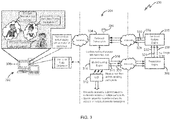
- FIG. 1 illustrates an electronic communication system 100 in accordance with at least one embodiment of the disclosure.
- Electronic communication system 100 includes a first participant device 102, one or more second participant devices 104-110, a text-to-speech (TTS) engine 112, a conferencing engine 114, a speech-to-text (STT) engine 118 and a sentiment engine 120.
- TTS text-to-speech
- STT speech-to-text
- a participant 116 with a speech impairment or that may otherwise have problems communicating using audio information can enter text using device 102, the text is converted to audio information using TTS engine 112, and the audio information is mixed with other audio information from the conference (e.g., from one or more second participant devices 104-110) using conferencing engine 114, such that participant 116 can interact in the conference in a manner similar to other (e.g., non-impaired) participants.
- audio information e.g., a participant in a noisy environment or in an environment where the participant cannot speak or speak at a desired volume
- TTS engine 112 the text is converted to audio information using TTS engine 112
- the audio information is mixed with other audio information from the conference (e.g., from one or more second participant devices 104-110) using conferencing engine 114, such that participant 116 can interact in the conference in a manner similar to other (e.g., non-impaired) participants.
- audio information can be received by STT engine 118 to convert audio information to text information, and the text information can be combined with information corresponding to sentiment information from sentiment engine 120.
- the combination of the text information and information corresponding to the sentiment information can be displayed on first participant device 102.
- First participant device 102 and second participant devices 104-110 can be or include any suitable electronic device, such as a smart phone, a tablet computer, a personal computer, a work station, or any other device that includes a an application or client and a user interface to allow a participant to perform one or more tasks as described herein.
- the terms user and participant as used herein can be used interchangeably.
- First participant device 102 and second participant devices 104-110 can include one or more input devices (such as a keypad or virtual keypad), and one or more speakers, and include one or more wireless communication devices, such as a mobile communication device, a WiFi device, a Bluetooth, or the like.
- first participant device 102 and second participant devices 104-110 can connect to conferencing engine 114 using wireless technology (e.g., using a mobile telephone network), other wireless technologies, and/or wired technology.
- first participant device 102 includes an application or client that receives input from a user via the user interface and stores the input as text information. First participant device 102 causes the text information to be sent to TTS engine 112.
- the client can be, for example, a collaboration or other communication client.
- first participant device 102 includes an application or client that can additionally or alternatively receive information from STT engine 118 and display text information and information corresponding to sentiment information received from sentiment engine 120 on first participant device 102.
- Text-to-speech engine 112 converts the text information into audible information. The audible information is then sent to a mixer within conferencing engine 114. Although separately illustrated, text-to-speech engine 112 can form part of first participant device 102 and/or conferencing engine 114.
- Conferencing engine 114 can include one or more servers. Conferencing engine 114 can be used to authenticate participants in a meeting, initiate an electronic communication between first participant device 102 and one or more second participant devices 104-110, and provide other communication services. For example, conferencing engine 114 can provide collaborative communication between first participant device 102 and the one or more second participant devices 104-110. Additional features of exemplary conferencing engine 114 are described in more detail below in connections with FIGS. 2 and 3 .
- FIGS. 2 and 3 illustrate exemplary methods for conveying information suitable for speech impaired participants and hearing impaired participants, respectively. Although separately illustrated the methods can be combined. Similarly, either or both methods can be performed using the same system, such as system 100.
- Exemplary electronic communication methods suitable for participants that may have a speech impairment include entering text information on a first participant device, determining whether to send text information to a text-to-speech engine immediately, sending the text information to a text-to-speech engine to convert the text information to audio information, providing the audio information received from the text-to-speech engine to a conferencing engine, and mixing the audio information received from the text-to-speech engine with audio information received from a second participant device.
- the method can also include a step of sending an indication to the first participant device to initiate sending text information to a text-to-speech engine and/or sending audio information to a conferencing engine. Additionally or alternatively, the method can further include a step of determining whether a predetermined period of audio silence is detected.
- FIG. 2 illustrates a method 200 in accordance with embodiments of the disclosure.
- Method 200 is illustrated with a participant (e.g., a speech-impaired participant) client 202 (which can form a part of a first participant device, such as first participant device 102) and a conferencing engine 204 (which can be the same or similar to conferencing engine 114).
- a participant e.g., a speech-impaired participant
- client 202 which can form a part of a first participant device, such as first participant device 102
- conferencing engine 204 which can be the same or similar to conferencing engine 114.
- method 200 allows a participant to enter text information with a text-entry field of the participant client and facilitates desired/optimal delivery timing of the corresponding audio information to conferencing engine 204.
- Method 200 includes a first participant entering text (step 206)-e.g., using a first participant device, such as first participant device 102.
- the first participant device determines whether the text entered during step 206 is converted to audio information using the first participant device or whether the text information is sent to a conferencing engine 204 (step 210). The determination can be made by, for example, determining whether the first participant device includes a text-to-speech engine-or not. Additionally or alternatively, the participant client can be configured to enable whether the text to speech conversion is performed locally or not. If the first participant device converts the text to audio information, method 200 proceeds to determining whether to send text-to-speech information instantly to a conferencing engine or whether to wait (step 212).
- Determination step 212 can be done by, for example, by configuring the participant client (e.g., by a participant or an administrator).
- Text information as described herein can be transmitted using, e.g., RFC 4103 (RFC 2793) method, using RTP Payload for text conversation or Instant Messaging Protocol or any other suitable protocol.
- step 212 If, during step 212, it is determined to immediately send text-to-speech information to the conferencing engine 204, then the text information is sent to text-to-speech engine 214 on the first participant device. Audio information (e.g., RTP audio information) is then sent from the text-to-speech engine 214 to conferencing engine 204 (step 216)-e.g., via the Internet 218. Audio information from text-to-speech engine 214 can be processed by conferencing engine 204 (step 236), which mixes the audio information with media streams from other participants, after decoding the respective media streams.
- Audio information e.g., RTP audio information
- step 212 if it is determined that the text information is not to be sent immediately to conferencing engine 204, method 200 proceeds from step 212 to a step of determining whether to send an indication (e.g., to the first participant) before sending the text information to a text-to-speech engine (step 220).
- a determination can be made by, for example, a user or administrator setting within the participant client.
- step 222 of sending an indication, such as an audio signal (e.g., a beep) to a speaker on the first participant device, indicating that the participant can send the text information to be converted to audio information.
- Step 222 can include sending a unique mix of tones as short beep into the conference audio or playing an audio phrase indicating request for silence on the conference to allow the impaired participant to then cause text information to be sent to TTS engine 214.
- an audible tone can only be heard by the first participant and is sent to them to provide a cue that a speech-segment resulting from the text-entry can be introduced.
- a signal can be sent to all participants to indicate that they should be silent, so that information from the first participant can be heard.
- step 220 determines whether the determination at step 220 is no (or not yes).
- method 200 proceeds to step 224 of detecting voice activity.
- Voice Activity Detection can be detected using, for example, the ITU-T G.711 Appendix-II VAD/CNG algorithm to process speech data to detect voice activity or silence.
- Method 200 determines whether a predetermined period (e.g., about 0.5 to about 3 or about 2 seconds) of silence is detected during step 226. If the predetermined value is reached, then method 200 proceeds to converting the text information to audio information using TTS engine 214. Similarly, if a predetermined number (e.g., about 2 to about 10 or 3 or 4) of attempts or inquiries at step 226 have been tried, method 200 proceeds to sending text to TTS engine 214. If the predetermined thresholds for periods of silence and/or retries has not been met, method 200 can loop back to step 220.
- a predetermined period e.g., about 0.5 to about 3 or about 2 seconds
- the text information can be "barged in” and converted using TTS engine 214 and sent to conferencing engine 204 without waiting further in keeping with normal conversational dynamics. For example, if everyone else is talking over one another, a "no rules" approach to interacting can be employed.
- TTS engine 214 and/or TTS engine 232 can include speech cloning synthesis to match a participant's voice if recorded audio of the participant's voice exists.
- TTS engine 214 and/or TTS engine 232 can provide a customer a selectable voice or a designed voice.
- a designed voice can be synthesized by, for example, using Open Source eSpeak software speech synthesizer or CMU Flite Speech Synthesizer or Google Cloud solution like WaveNet Speech synthesis.
- step 210 sending text information to conferencing engine 204 and conferencing engine 204 processing the incoming text information (step 228).
- all the participants can dial in into the conferencing engine to participate a conference.
- the conferencing engine receives all the incoming media streams from all the participants and mixes the incoming audio after decoding media streams.
- the conferencing engine section 228 describes the media stream in text form and conferencing engine section 246 receives the participants media stream in audio.
- the textual data of the participant media can be in RTP form using RFC 4103 standard or using Instant Messaging protocol, or web conferencing text already available in the conferencing engine.
- method 200 determines whether the text information should be immediately sent to text-to-speech engine 232 that is part of conferencing engine 204-or not. If yes, then the text information is sent to text-to-speech engine 232 for conversion to audio information, and the audio information is sent to mixer 234 for mixing with audio information from other participant devices. Similar to above, this determination can be based on a user or administrator setting-this time in the conferencing engine application.
- step 230 a determination is no (or not yes) then method 200 proceeds to step 238 of determining whether (e.g., using a user setting in the conferencing engine software) to send an indication to the first participant (e.g., client 202) of when to cause text information to be sent to TTS engine 232 and/or an audio indication to mixer 234. Once the indication has been sent, audio information from text-to-speech engine 232 can be sent to mixer 234 for joining audio information from participant client 202 with audio information from other participant devices.
- step 238 determines whether the determination at step 238 is no (or not yes). If the determination at step 238 is no (or not yes), method 200 proceeds to step 242 of detecting voice activity-e.g., using techniques described above in connection with step 224.
- Method 200 determines whether a predetermined period (e.g., 0.5-3 or 2 seconds) of silence is detected and/or a maximum number of retries (e.g., about 2-10 or 3 or 4) is attempted during step 244. If the predetermined value is reached, then method 200 proceeds to converting the text information to audio information using TTS engine 232. Similarly, if a predetermined number of attempts or inquiries at step 226 have been tried, method 200 proceeds to converting text to speech using TTS engine 232. If the predetermined thresholds for periods of silence and/or retries has not been met, method 200 can loop back to step 238. If silence is not detected beyond a predetermined time, the text information can be barged in and converted using TTS engine 232 and sent to mixer 234, without waiting.
- a predetermined period e.g., 0.5-3 or 2 seconds
- a maximum number of retries e.g., about 2-10 or 3 or 4
- FIG. 3 a method 300 for facilitating communication with a person who may have a hearing impairment or who may otherwise not be able to hear a communication is illustrated.
- methods 200 and 300 can be combined, such that a method can perform text-to-speech conversion for speech-impaired participants and textual display for hearing-impaired participants.
- pictograms and/or animation which can be based on or mixed with sentiment analysis, to be displayed along side text to convey a "story” or narrative intended to summarize what is being communicated during a conference session.
- participants without disabilities can receive a running view of the image or animated content (e.g
- Method 300 is illustrated in connection with a participant device 302 (which can be the same or similarto a first participant device as described herein), including a participant client 306, a conferencing engine 304 (which can be the same or similar to conferencing engine 114 and/or 204), a transcription engine 308, and a sentiment analysis engine 310.
- Transcription engine 308 and/or sentiment analysis engine 310 can form part of sentiment engine 120, described above in connection with FIG. 1 .
- Client 306 can perform various functions as described herein. As discussed in more detail below, client 306 allows a participant to participate in an audio conference and to receive visual information, such as text, pictorial information (e.g., pictures), and/or animated information to convey sentiment of one or more other participants.
- visual information such as text, pictorial information (e.g., pictures), and/or animated information to convey sentiment of one or more other participants.
- Client 306 can be used to join an audio conference by sending/receiving credentials and/or meeting information to/from conferencing engine 304. Once a participant joins a conference using participant device 302, client 306 can be used to display visual content, such as images and/or animation as described herein.
- Conferencing engine 304 includes a voice activity detection (VAD) engine 312 and a media decoding engine 314.
- Media such as raw audio information (e.g., from first participant device 302 and another participant device) is received at VAD engine 312, which detects the audio information from multiple participant devices. Typically, this audio information is not identified with a particular participant or device.
- Each (e.g., separately identifiable) media stream 316-320 is transmitted to transcription engine 308.
- transcription engine 308 can form part of device 302 or conferencing engine 304.
- Transcribed information streams 322-326 can be sent to sentiment analysis engine 310.
- sentiment engine 310 can form part of device 302 or conferencing engine 304.
- Sentiment engine 310 receives transcribed media streams 322-326 and determines a sentiment associated with transcribed information in one or more media streams 322-326. Sentiment can be determined using, for example, using either Google Cloud Natural Language API or Stanford NLP sentiment analysis tools.
- Media streams 322-326 with transcribed information and sentiment information 328-332 are transmitted to a sentiment transcription engine 334, which generates information corresponding to the sentiment information-e.g., images and/or animation associated with a sentiment determined using sentiment analysis engine 310.
- the image and/or animation can be generated by obtaining images and/or animated content that is associated with a particular sentiment from a database 336.
- database 336 can include images or animation of hands clapping when applause is detected in one or more of streams 328-332.
- animation can be used to display semantic aspects of a conversation that are derived from the linguistic patterns based on, for example, standard NLP functions (see, e.g., Stanford NLP, which is open source). This provides an alternate way for people with disabilities to interact with their work environment-it provides users additional tools to interpret conversations, rather than using just plain text.
- standard NLP functions see, e.g., Stanford NLP, which is open source.
- Transcribed information including sentiment information is then transmitted from conferencing engine 304 to participant device 302.
- Participant device 302 uses client 306 to cause transcribed information and sentiment information to be displayed on device 302.
- transcribed information from transcription engine 308 can be sent directly to both sentiment analysis engine 310 and sentiment transcription engine 334 and sentiment transcription engine 334 can combine the transcribed information and the sentiment information into one or more streams (one stream for each "other" participant), such that transcribed information and sentiment information can be associated with a particular participant.
- methods and systems described herein can be used in other situations and/or by non-impaired participants, such as whenever a user is in a crowd and he/she wishes not to talk, but rather text; whenever a user can listen but not talk; and/or whenever a user can neither listen nor talk, but can view the text and send text.
Landscapes
- Engineering & Computer Science (AREA)
- Multimedia (AREA)
- Computational Linguistics (AREA)
- Health & Medical Sciences (AREA)
- Audiology, Speech & Language Pathology (AREA)
- Human Computer Interaction (AREA)
- Physics & Mathematics (AREA)
- Acoustics & Sound (AREA)
- Signal Processing (AREA)
- Telephonic Communication Services (AREA)
Abstract
Description
- The present disclosure generally relates to electronic communication methods and systems. More particularly, the disclosure relates to methods and systems suitable for collaborative electronic communications with hearing and/or speech impaired participants.
- Electronic communication systems, such as audio conferencing systems and video conferencing systems, allow participants in different locations to communicate with one another. Such systems generally include a conferencing engine and one or more devices coupled (e.g., wired or wirelessly) to the conferencing engine.
- When a remote participant has a speech impairment, or when it may be otherwise difficult for a remote participant to participate using speech, the participant may resort to conveying information using text, rather than audio information. Similarly, participants with hearing impairments or who may be in an environment in which it may be difficult to hear what other participants are saying may receive information in the form of text, rather than audio information.
- While systems that send or receive text information in place of audio information may work for some applications, such systems do not generally allow hearing or speech impaired participants or participants in environments that make it difficult to participate via traditional audio information to participate in an electronic communication in an efficient manner. For example, such systems generally do not provide means to effectively respond to a communication or to interact with other participants in a manner that resembles a communication of a non-impaired participant. Furthermore, such systems do not provide impaired participants with an ability to offer communications in a manner that is human-like and that resembles the communications of non-impaired participants.
- Accordingly, improved electrical communication methods and systems are desired. Any discussion of problems and solutions provided in this section has been included in this disclosure solely for the purposes of providing a context for the present invention and should not be taken as an admission that any or all of the discussion was known at the time the invention was made.
- Subject matter of the present disclosure is particularly pointed out and distinctly claimed in the concluding portion of the specification. A more complete understanding of the present disclosure, however, may best be obtained by referring to the detailed description and claims when considered in connection with the drawing figures.
-
FIG. 1 illustrates an electronic communication system in accordance with various exemplary embodiments of the disclosure. -
FIG. 2 illustrates a flow diagram and method in accordance with exemplary embodiments of the disclosure. -
FIG. 3 illustrates a flow diagram and method in accordance with additional exemplary embodiments of the disclosure. - It will be appreciated that elements in the figures are illustrated for simplicity and clarity and have not necessarily been drawn to scale. For example, the dimensions of some of the elements in the figures may be exaggerated relative to other elements to help to improve understanding of illustrated embodiments of the present invention.
- The description of various embodiments of the present disclosure provided below is merely exemplary and is intended for purposes of illustration only; the following description is not intended to limit the scope of an invention disclosed herein. Moreover, recitation of multiple embodiments having stated features is not intended to exclude other embodiments having additional features or other embodiments incorporating different combinations of the stated features.
- The present disclosure relates generally to electronic communication methods and systems. Exemplary electronic communication methods and systems can be used to, for example, facilitate electronic communication with one or more participants that may be hearing or speech impaired and/or that may be in an environment that may make it difficult to hear and/or to be understood. Exemplary methods and systems enable collaborative audio and/or video conference services that can connect a plurality of devices to another device, such as a conference hub or engine, for the purposes of, for example, allowing collaboration of participants in a meeting setting. The meeting may occur with one or more participants in a room and/or with one or more participants at various geographically dispersed locations.
-
FIG. 1 illustrates anelectronic communication system 100 in accordance with at least one embodiment of the disclosure.Electronic communication system 100 includes afirst participant device 102, one or more second participant devices 104-110, a text-to-speech (TTS) engine 112, aconferencing engine 114, a speech-to-text (STT)engine 118 and asentiment engine 120. As set forth in more detail below, during operation ofcommunication system 100, aparticipant 116 with a speech impairment or that may otherwise have problems communicating using audio information (e.g., a participant in a noisy environment or in an environment where the participant cannot speak or speak at a desired volume) can entertext using device 102, the text is converted to audio information using TTS engine 112, and the audio information is mixed with other audio information from the conference (e.g., from one or more second participant devices 104-110) usingconferencing engine 114, such thatparticipant 116 can interact in the conference in a manner similar to other (e.g., non-impaired) participants. Additionally or alternatively, audio information can be received by STTengine 118 to convert audio information to text information, and the text information can be combined with information corresponding to sentiment information fromsentiment engine 120. The combination of the text information and information corresponding to the sentiment information can be displayed onfirst participant device 102. -
First participant device 102 and second participant devices 104-110 can be or include any suitable electronic device, such as a smart phone, a tablet computer, a personal computer, a work station, or any other device that includes a an application or client and a user interface to allow a participant to perform one or more tasks as described herein. The terms user and participant as used herein can be used interchangeably.First participant device 102 and second participant devices 104-110 can include one or more input devices (such as a keypad or virtual keypad), and one or more speakers, and include one or more wireless communication devices, such as a mobile communication device, a WiFi device, a Bluetooth, or the like. As set forth in more detail below,first participant device 102 and second participant devices 104-110 can connect to conferencingengine 114 using wireless technology (e.g., using a mobile telephone network), other wireless technologies, and/or wired technology. - In accordance with one example,
first participant device 102 includes an application or client that receives input from a user via the user interface and stores the input as text information.First participant device 102 causes the text information to be sent to TTS engine 112. The client can be, for example, a collaboration or other communication client. In accordance with another example,first participant device 102 includes an application or client that can additionally or alternatively receive information fromSTT engine 118 and display text information and information corresponding to sentiment information received fromsentiment engine 120 onfirst participant device 102. - Text-to-speech engine 112 converts the text information into audible information. The audible information is then sent to a mixer within
conferencing engine 114. Although separately illustrated, text-to-speech engine 112 can form part offirst participant device 102 and/orconferencing engine 114. -
Conferencing engine 114 can include one or more servers.Conferencing engine 114 can be used to authenticate participants in a meeting, initiate an electronic communication betweenfirst participant device 102 and one or more second participant devices 104-110, and provide other communication services. For example,conferencing engine 114 can provide collaborative communication betweenfirst participant device 102 and the one or more second participant devices 104-110. Additional features ofexemplary conferencing engine 114 are described in more detail below in connections withFIGS. 2 and3 . -
FIGS. 2 and3 illustrate exemplary methods for conveying information suitable for speech impaired participants and hearing impaired participants, respectively. Although separately illustrated the methods can be combined. Similarly, either or both methods can be performed using the same system, such assystem 100. - Exemplary electronic communication methods suitable for participants that may have a speech impairment include entering text information on a first participant device, determining whether to send text information to a text-to-speech engine immediately, sending the text information to a text-to-speech engine to convert the text information to audio information, providing the audio information received from the text-to-speech engine to a conferencing engine, and mixing the audio information received from the text-to-speech engine with audio information received from a second participant device. The method can also include a step of sending an indication to the first participant device to initiate sending text information to a text-to-speech engine and/or sending audio information to a conferencing engine. Additionally or alternatively, the method can further include a step of determining whether a predetermined period of audio silence is detected.
-
FIG. 2 illustrates amethod 200 in accordance with embodiments of the disclosure.Method 200 is illustrated with a participant (e.g., a speech-impaired participant) client 202 (which can form a part of a first participant device, such as first participant device 102) and a conferencing engine 204 (which can be the same or similar to conferencing engine 114). As set forth in more detail below,method 200 allows a participant to enter text information with a text-entry field of the participant client and facilitates desired/optimal delivery timing of the corresponding audio information to conferencingengine 204. -
Method 200 includes a first participant entering text (step 206)-e.g., using a first participant device, such asfirst participant device 102. Atstep 208, the first participant device determines whether the text entered duringstep 206 is converted to audio information using the first participant device or whether the text information is sent to a conferencing engine 204 (step 210). The determination can be made by, for example, determining whether the first participant device includes a text-to-speech engine-or not. Additionally or alternatively, the participant client can be configured to enable whether the text to speech conversion is performed locally or not. If the first participant device converts the text to audio information,method 200 proceeds to determining whether to send text-to-speech information instantly to a conferencing engine or whether to wait (step 212).Determination step 212 can be done by, for example, by configuring the participant client (e.g., by a participant or an administrator). Text information as described herein can be transmitted using, e.g., RFC 4103 (RFC 2793) method, using RTP Payload for text conversation or Instant Messaging Protocol or any other suitable protocol. - If, during
step 212, it is determined to immediately send text-to-speech information to theconferencing engine 204, then the text information is sent to text-to-speech engine 214 on the first participant device. Audio information (e.g., RTP audio information) is then sent from the text-to-speech engine 214 to conferencing engine 204 (step 216)-e.g., via theInternet 218. Audio information from text-to-speech engine 214 can be processed by conferencing engine 204 (step 236), which mixes the audio information with media streams from other participants, after decoding the respective media streams. - Returning to step 212, if it is determined that the text information is not to be sent immediately to
conferencing engine 204,method 200 proceeds fromstep 212 to a step of determining whether to send an indication (e.g., to the first participant) before sending the text information to a text-to-speech engine (step 220). A determination can be made by, for example, a user or administrator setting within the participant client. - If the determination at
step 220 is yes,method 200 proceeds to step 222 of sending an indication, such as an audio signal (e.g., a beep) to a speaker on the first participant device, indicating that the participant can send the text information to be converted to audio information. Step 222 can include sending a unique mix of tones as short beep into the conference audio or playing an audio phrase indicating request for silence on the conference to allow the impaired participant to then cause text information to be sent toTTS engine 214. In some cases, an audible tone can only be heard by the first participant and is sent to them to provide a cue that a speech-segment resulting from the text-entry can be introduced. Additionally or alternatively, a signal can be sent to all participants to indicate that they should be silent, so that information from the first participant can be heard. - If the determination at
step 220 is no (or not yes),method 200 proceeds to step 224 of detecting voice activity. Voice Activity Detection (VAD) can be detected using, for example, the ITU-T G.711 Appendix-II VAD/CNG algorithm to process speech data to detect voice activity or silence. -
Method 200 then determines whether a predetermined period (e.g., about 0.5 to about 3 or about 2 seconds) of silence is detected duringstep 226. If the predetermined value is reached, thenmethod 200 proceeds to converting the text information to audio information usingTTS engine 214. Similarly, if a predetermined number (e.g., about 2 to about 10 or 3 or 4) of attempts or inquiries atstep 226 have been tried,method 200 proceeds to sending text toTTS engine 214. If the predetermined thresholds for periods of silence and/or retries has not been met,method 200 can loop back to step 220. If silence is not detected beyond a predetermined time, the text information can be "barged in" and converted usingTTS engine 214 and sent toconferencing engine 204 without waiting further in keeping with normal conversational dynamics. For example, if everyone else is talking over one another, a "no rules" approach to interacting can be employed. -
TTS engine 214 and/orTTS engine 232, discussed below, can include speech cloning synthesis to match a participant's voice if recorded audio of the participant's voice exists. Alternatively,TTS engine 214 and/orTTS engine 232 can provide a customer a selectable voice or a designed voice. A designed voice can be synthesized by, for example, using Open Source eSpeak software speech synthesizer or CMU Flite Speech Synthesizer or Google Cloud solution like WaveNet Speech synthesis. - If
conferencing engine 204 performs the text-to-speech conversion, thenmethod 200 proceeds fromstep 210 of sending text information toconferencing engine 204 andconferencing engine 204 processing the incoming text information (step 228). For example, all the participants can dial in into the conferencing engine to participate a conference. Once the participants join, the conferencing engine receives all the incoming media streams from all the participants and mixes the incoming audio after decoding media streams. Theconferencing engine section 228 describes the media stream in text form andconferencing engine section 246 receives the participants media stream in audio. As indicated in earlier section, the textual data of the participant media can be in RTP form using RFC 4103 standard or using Instant Messaging protocol, or web conferencing text already available in the conferencing engine. - At
step 230,method 200 determines whether the text information should be immediately sent to text-to-speech engine 232 that is part of conferencing engine 204-or not. If yes, then the text information is sent to text-to-speech engine 232 for conversion to audio information, and the audio information is sent tomixer 234 for mixing with audio information from other participant devices. Similar to above, this determination can be based on a user or administrator setting-this time in the conferencing engine application. - If at
step 230, a determination is no (or not yes), thenmethod 200 proceeds to step 238 of determining whether (e.g., using a user setting in the conferencing engine software) to send an indication to the first participant (e.g., client 202) of when to cause text information to be sent toTTS engine 232 and/or an audio indication tomixer 234. Once the indication has been sent, audio information from text-to-speech engine 232 can be sent tomixer 234 for joining audio information fromparticipant client 202 with audio information from other participant devices. - If the determination at
step 238 is no (or not yes),method 200 proceeds to step 242 of detecting voice activity-e.g., using techniques described above in connection withstep 224. -
Method 200 then determines whether a predetermined period (e.g., 0.5-3 or 2 seconds) of silence is detected and/or a maximum number of retries (e.g., about 2-10 or 3 or 4) is attempted duringstep 244. If the predetermined value is reached, thenmethod 200 proceeds to converting the text information to audio information usingTTS engine 232. Similarly, if a predetermined number of attempts or inquiries atstep 226 have been tried,method 200 proceeds to converting text to speech usingTTS engine 232. If the predetermined thresholds for periods of silence and/or retries has not been met,method 200 can loop back to step 238. If silence is not detected beyond a predetermined time, the text information can be barged in and converted usingTTS engine 232 and sent tomixer 234, without waiting. - Turning now to
FIG. 3 , a method 300 for facilitating communication with a person who may have a hearing impairment or who may otherwise not be able to hear a communication is illustrated. As noted above, although separately illustrated,methods 200 and 300 can be combined, such that a method can perform text-to-speech conversion for speech-impaired participants and textual display for hearing-impaired participants. - Method 300 can be used to facilitate interaction with hearing-impaired participants who interact with their world in ways that are not necessarily conformist (i.e., approaches used by those without disabilities). Some participants, such as clinically-deaf participants, can look beyond just words to communicate. As set forth in more detail below, method 300 can use pictograms and/or animation, which can be based on or mixed with sentiment analysis, to be displayed along side text to convey a "story" or narrative intended to summarize what is being communicated during a conference session. Similarly, participants without disabilities can receive a running view of the image or animated content (e.g., teamwork = picture of a flock of sheep; or pack of wolves if stated with conviction) designed to interpret the words being spoken during the same conference session.
- Method 300 is illustrated in connection with a participant device 302 (which can be the same or similarto a first participant device as described herein), including a
participant client 306, a conferencing engine 304 (which can be the same or similar toconferencing engine 114 and/or 204), atranscription engine 308, and asentiment analysis engine 310.Transcription engine 308 and/orsentiment analysis engine 310 can form part ofsentiment engine 120, described above in connection withFIG. 1 . -
Client 306 can perform various functions as described herein. As discussed in more detail below,client 306 allows a participant to participate in an audio conference and to receive visual information, such as text, pictorial information (e.g., pictures), and/or animated information to convey sentiment of one or more other participants. -
Client 306 can be used to join an audio conference by sending/receiving credentials and/or meeting information to/fromconferencing engine 304. Once a participant joins a conference usingparticipant device 302,client 306 can be used to display visual content, such as images and/or animation as described herein. -
Conferencing engine 304 includes a voice activity detection (VAD)engine 312 and amedia decoding engine 314. Media, such as raw audio information (e.g., fromfirst participant device 302 and another participant device) is received atVAD engine 312, which detects the audio information from multiple participant devices. Typically, this audio information is not identified with a particular participant or device. However, in accordance with embodiments of the disclosure,media decoding engine 314, which can be integrated with or coupled toVAD engine 312, separates the raw audio information into media streams 316-320 based on a connected participant device, such that each connected device has a corresponding media stream 316-320. In other words, audio information for each connected participant device is separated into a media stream 316-320. Each (e.g., separately identifiable) media stream 316-320 is transmitted totranscription engine 308. Although separately illustrated,transcription engine 308 can form part ofdevice 302 orconferencing engine 304. - Transcribed information streams 322-326, which can be identified by or associated with particular participant devices, can be sent to
sentiment analysis engine 310. Again, although separately illustrated,sentiment engine 310 can form part ofdevice 302 orconferencing engine 304.Sentiment engine 310 receives transcribed media streams 322-326 and determines a sentiment associated with transcribed information in one or more media streams 322-326. Sentiment can be determined using, for example, using either Google Cloud Natural Language API or Stanford NLP sentiment analysis tools. Media streams 322-326 with transcribed information and sentiment information 328-332 are transmitted to asentiment transcription engine 334, which generates information corresponding to the sentiment information-e.g., images and/or animation associated with a sentiment determined usingsentiment analysis engine 310. The image and/or animation can be generated by obtaining images and/or animated content that is associated with a particular sentiment from adatabase 336. For example,database 336 can include images or animation of hands clapping when applause is detected in one or more of streams 328-332. - By way of examples, animation can be used to display semantic aspects of a conversation that are derived from the linguistic patterns based on, for example, standard NLP functions (see, e.g., Stanford NLP, which is open source). This provides an alternate way for people with disabilities to interact with their work environment-it provides users additional tools to interpret conversations, rather than using just plain text.
- Transcribed information including sentiment information is then transmitted from
conferencing engine 304 toparticipant device 302.Participant device 302 usesclient 306 to cause transcribed information and sentiment information to be displayed ondevice 302. Alternatively, transcribed information fromtranscription engine 308 can be sent directly to bothsentiment analysis engine 310 andsentiment transcription engine 334 andsentiment transcription engine 334 can combine the transcribed information and the sentiment information into one or more streams (one stream for each "other" participant), such that transcribed information and sentiment information can be associated with a particular participant. - Systems and methods described herein can help persons with speech and hearing disability to participate in audio conferences without any impediments and to converse seamlessly without other participants realizing any difficulty. The present invention has been described above with reference to a number of exemplary embodiments and examples. It should be appreciated that the particular embodiments shown and described herein are illustrative of the invention and its best mode and are not intended to limit in any way the scope of the invention as set forth in the claims. For example, although described in connection with speech or hearing impaired participants, methods and systems described herein can be used in other situations and/or by non-impaired participants, such as whenever a user is in a crowd and he/she wishes not to talk, but rather text; whenever a user can listen but not talk; and/or whenever a user can neither listen nor talk, but can view the text and send text.
- It will be recognized that changes and modifications may be made to the exemplary embodiments without departing from the scope of the present invention. For example, although steps of methods are listed in a particular order, the steps need not be performed in the illustrated order and some steps may be performed simultaneously. These and other changes or modifications are intended to be included within the scope of the present invention, as expressed in the following claims.
Claims (15)
- An electronic communication system comprising:a first participant device comprising an application that receives input from a user and stores the input as text information;a second participant device;a text-to-speech engine that converts the text information into audio information; anda conferencing engine comprising a mixer that receives audio information from the text-to-speech engine and the second participant device and combines the audio information from the second participant device and the text-to-speech engine into an audio conference.
- The electronic communication system of claim 1, wherein the first device comprises the text-to-speech engine.
- The electronic communication system of claim 1, wherein a conferencing device comprises the text-to-speech engine.
- The electronic communication system of any preceding claim, wherein the application comprises a client.
- The electronic communication system of any preceding claim, wherein the application determines whether to hold the text information or to send the text information to the text-to-speech engine or alternatively wherein the conferencing engine determines whether to hold the text information or to send the text information to the text-to-speech engine.
- The electronic communication system of any preceding claim, wherein the first participant device sends an indication that a user has information to share with the conferencing engine.
- The electronic communication system of any preceding claim, wherein the application determines whether a predetermined period of audio silence is detected, and if the predetermined period of audio silence is detected, causes the text information to be sent to the text-to-speech engine.
- The electronic communication system of any of claims 1 to 6, wherein the conferencing engine determines whether a predetermined period of audio silence is detected, and if the predetermined period of audio silence is detected, causes the text information to be sent to the text-to-speech engine.
- An electronic communication system comprising:a first participant device comprising an application that causes information to be displayed on the first participant device to a first participant;a conferencing engine that separates audio information from one or more second participant devices into one or more media streams, each media stream corresponding to the one or more second participant devices; anda speech-to-text engine that receives the one or more media streams and converts audio information from each of the one or more media streams into text information corresponding to each of the one or more second participant devices,wherein the information to be displayed comprises the text information.
- The electronic communication system of claim 9, further comprising a sentiment engine that receives the text information from the speech-to-text engine.
- The electronic communication system of claim 10, further comprising a sentiment transcription engine that receives sentiment information from the sentiment engine.
- The electronic communication system of claim 11, wherein the first participant device receives sentiment information from the sentiment transcription engine.
- The electronic communication system of claim 12, wherein the first participant device displays information corresponding to the sentiment information and the text information and optionally wherein the information corresponding to the sentiment information comprises animated information or wherein the information corresponding to the sentiment information comprises pictorial information.
- An electronic communication method comprising the steps of:entering text information on a first participant device;determining whether to send text information to a text-to-speech engine immediately;sending the text information to a text-to-speech engine to convert the text information to audio information;providing the audio information received from the text-to-speech engine to a conferencing engine; andmixing the audio information received from the text-to-speech engine with audio information received from a second participant device.
- The electronic communication method of claim 14, further comprising a step of sending an indication that the first participant device has text information to send to the conferencing engine and optionally further comprising a step of determining whether a predetermined period of audio silence is detected.
Applications Claiming Priority (1)
| Application Number | Priority Date | Filing Date | Title |
|---|---|---|---|
| US16/424,257 US11295720B2 (en) | 2019-05-28 | 2019-05-28 | Electronic collaboration and communication method and system to facilitate communication with hearing or speech impaired participants |
Publications (2)
| Publication Number | Publication Date |
|---|---|
| EP3745695A1 true EP3745695A1 (en) | 2020-12-02 |
| EP3745695B1 EP3745695B1 (en) | 2023-09-27 |
Family
ID=70921808
Family Applications (1)
| Application Number | Title | Priority Date | Filing Date |
|---|---|---|---|
| EP20177208.4A Active EP3745695B1 (en) | 2019-05-28 | 2020-05-28 | Electronic collaboration and communication method and system to facilitate communication with hearing or speech impaired participants |
Country Status (3)
| Country | Link |
|---|---|
| US (2) | US11295720B2 (en) |
| EP (1) | EP3745695B1 (en) |
| CA (1) | CA3081853A1 (en) |
Families Citing this family (3)
| Publication number | Priority date | Publication date | Assignee | Title |
|---|---|---|---|---|
| US11194971B1 (en) * | 2020-03-05 | 2021-12-07 | Alexander Dobranic | Vision-based text sentiment analysis and recommendation system |
| WO2022118720A1 (en) * | 2020-12-02 | 2022-06-09 | 株式会社Adeu.Nek | Device for generating mixed text of images and characters |
| US11700334B2 (en) * | 2020-12-15 | 2023-07-11 | Avaya Management L.P. | Method and system for making context based announcements during a communication session |
Citations (3)
| Publication number | Priority date | Publication date | Assignee | Title |
|---|---|---|---|---|
| US20050232166A1 (en) * | 2004-04-14 | 2005-10-20 | Nierhaus Florian P | Mixed mode conferencing |
| US20080227438A1 (en) * | 2007-03-15 | 2008-09-18 | International Business Machines Corporation | Conferencing using publish/subscribe communications |
| US20130294595A1 (en) * | 2012-05-01 | 2013-11-07 | Mitel Networks Corporation | Multi-modal communications with conferencing and clients |
Family Cites Families (29)
| Publication number | Priority date | Publication date | Assignee | Title |
|---|---|---|---|---|
| US20080045182A1 (en) * | 2000-08-22 | 2008-02-21 | Symbian Software Limited | Method of and Apparatus for Communicating User Related Information Using a Wireless Information Device |
| US6570963B1 (en) | 2000-10-30 | 2003-05-27 | Sprint Communications Company L.P. | Call center for handling video calls from the hearing impaired |
| US6853716B1 (en) * | 2001-04-16 | 2005-02-08 | Cisco Technology, Inc. | System and method for identifying a participant during a conference call |
| US20030048353A1 (en) * | 2001-08-07 | 2003-03-13 | Michael Kenoyer | System and method for high resolution videoconferencing |
| US6865264B2 (en) * | 2001-10-31 | 2005-03-08 | International Business Machines Corporation | Apparatus and method for providing conference call roster information with speaker voice identification |
| US20050021344A1 (en) * | 2003-07-24 | 2005-01-27 | International Business Machines Corporation | Access to enhanced conferencing services using the tele-chat system |
| US8170877B2 (en) * | 2005-06-20 | 2012-05-01 | Nuance Communications, Inc. | Printing to a text-to-speech output device |
| US9300790B2 (en) * | 2005-06-24 | 2016-03-29 | Securus Technologies, Inc. | Multi-party conversation analyzer and logger |
| US20130124240A1 (en) * | 2011-11-14 | 2013-05-16 | Srm Institute Of Technology | System and Method for Student Activity Gathering in a University |
| US20130144619A1 (en) * | 2011-12-01 | 2013-06-06 | Richard T. Lord | Enhanced voice conferencing |
| CA2817444A1 (en) * | 2012-05-31 | 2013-11-30 | Razieh Niazi | Uses of root cause analysis, systems and methods |
| US20170206064A1 (en) * | 2013-03-15 | 2017-07-20 | JIBO, Inc. | Persistent companion device configuration and deployment platform |
| US9584758B1 (en) * | 2015-11-25 | 2017-02-28 | International Business Machines Corporation | Combining installed audio-visual sensors with ad-hoc mobile audio-visual sensors for smart meeting rooms |
| US10223066B2 (en) * | 2015-12-23 | 2019-03-05 | Apple Inc. | Proactive assistance based on dialog communication between devices |
| US10026405B2 (en) * | 2016-05-03 | 2018-07-17 | SESTEK Ses velletisim Bilgisayar Tekn. San. Ve Tic A.S. | Method for speaker diarization |
| US10932004B2 (en) * | 2017-01-24 | 2021-02-23 | Adobe Inc. | Recommending content based on group collaboration |
| WO2018144896A1 (en) * | 2017-02-05 | 2018-08-09 | Senstone Inc. | Intelligent portable voice assistant system |
| US20180267774A1 (en) * | 2017-03-16 | 2018-09-20 | Cisco Technology, Inc. | Conference assistant device with configurable user interfaces based on operational state |
| JP2018174442A (en) * | 2017-03-31 | 2018-11-08 | 本田技研工業株式会社 | Conference support system, conference support method, program of conference support apparatus, and program of terminal |
| US10516778B2 (en) * | 2017-04-07 | 2019-12-24 | Wipro Limited | Method and device for displaying a text message received over a voice call |
| US10572594B2 (en) * | 2017-08-01 | 2020-02-25 | Intuit Inc. | Extracting domain-specific actions and entities in natural language commands recognized based on edition and recognition scores |
| CA3077564A1 (en) * | 2017-10-06 | 2019-04-11 | Dynamicly Inc. | System and method for a hybrid conversational and graphical user interface |
| US11404063B2 (en) * | 2018-02-16 | 2022-08-02 | Nippon Telegraph And Telephone Corporation | Nonverbal information generation apparatus, nonverbal information generation model learning apparatus, methods, and programs |
| JP6918255B1 (en) * | 2018-06-27 | 2021-08-11 | グーグル エルエルシーGoogle LLC | Rendering the response to the user's oral utterance using a local text response map |
| US10742432B2 (en) * | 2018-09-11 | 2020-08-11 | International Business Machines Corporation | Facilitating a user in joining a conference call |
| US11010561B2 (en) * | 2018-09-27 | 2021-05-18 | Apple Inc. | Sentiment prediction from textual data |
| US10628743B1 (en) * | 2019-01-24 | 2020-04-21 | Andrew R. Kalukin | Automated ontology system |
| US20200279553A1 (en) * | 2019-02-28 | 2020-09-03 | Microsoft Technology Licensing, Llc | Linguistic style matching agent |
| WO2020235712A1 (en) * | 2019-05-21 | 2020-11-26 | 엘지전자 주식회사 | Artificial intelligence device for generating text or speech having content-based style and method therefor |
-
2019
- 2019-05-28 US US16/424,257 patent/US11295720B2/en active Active
-
2020
- 2020-05-27 CA CA3081853A patent/CA3081853A1/en active Pending
- 2020-05-28 EP EP20177208.4A patent/EP3745695B1/en active Active
-
2022
- 2022-04-05 US US17/713,941 patent/US12406652B2/en active Active
Patent Citations (3)
| Publication number | Priority date | Publication date | Assignee | Title |
|---|---|---|---|---|
| US20050232166A1 (en) * | 2004-04-14 | 2005-10-20 | Nierhaus Florian P | Mixed mode conferencing |
| US20080227438A1 (en) * | 2007-03-15 | 2008-09-18 | International Business Machines Corporation | Conferencing using publish/subscribe communications |
| US20130294595A1 (en) * | 2012-05-01 | 2013-11-07 | Mitel Networks Corporation | Multi-modal communications with conferencing and clients |
Also Published As
| Publication number | Publication date |
|---|---|
| EP3745695B1 (en) | 2023-09-27 |
| US11295720B2 (en) | 2022-04-05 |
| US20200380951A1 (en) | 2020-12-03 |
| CA3081853A1 (en) | 2020-11-28 |
| US20220230622A1 (en) | 2022-07-21 |
| US12406652B2 (en) | 2025-09-02 |
Similar Documents
| Publication | Publication Date | Title |
|---|---|---|
| US20250322181A1 (en) | Systems and methods for providing real-time automated language translations | |
| US12406652B2 (en) | Electronic collaboration and communication method and system to facilitate communication with hearing or speech impaired participants | |
| CN100546322C (en) | Chat and teleconferencing system with text-to-speech and speech-to-text translation | |
| US7933226B2 (en) | System and method for providing communication channels that each comprise at least one property dynamically changeable during social interactions | |
| US7617094B2 (en) | Methods, apparatus, and products for identifying a conversation | |
| US7305438B2 (en) | Method and system for voice on demand private message chat | |
| US7698141B2 (en) | Methods, apparatus, and products for automatically managing conversational floors in computer-mediated communications | |
| US8817061B2 (en) | Recognition of human gestures by a mobile phone | |
| US20060067499A1 (en) | Method and apparatus for querying a list of participants in a conference | |
| US20050226398A1 (en) | Closed Captioned Telephone and Computer System | |
| US20070276908A1 (en) | Method and apparatus for inviting non-rich media endpoints to join a conference sidebar session | |
| US20080151786A1 (en) | Method and apparatus for hybrid audio-visual communication | |
| CN102160335B (en) | Conversation detection in ambient telephony system | |
| JP2003283672A (en) | Conference call system | |
| EP1453287B1 (en) | Automatic management of conversational groups | |
| JP7707767B2 (en) | Online conference system, online conference terminal, and chat control method for online conference system | |
| JP2004007482A (en) | Telephone conference server and system therefor | |
| JP2008172359A (en) | IP intercom system | |
| JP2005316849A (en) | Personal digital assistant, chat system, text transmitting/receiving method and computer program | |
| JPS6320983A (en) | Still picture transmission system |
Legal Events
| Date | Code | Title | Description |
|---|---|---|---|
| PUAI | Public reference made under article 153(3) epc to a published international application that has entered the european phase |
Free format text: ORIGINAL CODE: 0009012 |
|
| STAA | Information on the status of an ep patent application or granted ep patent |
Free format text: STATUS: THE APPLICATION HAS BEEN PUBLISHED |
|
| AK | Designated contracting states |
Kind code of ref document: A1 Designated state(s): AL AT BE BG CH CY CZ DE DK EE ES FI FR GB GR HR HU IE IS IT LI LT LU LV MC MK MT NL NO PL PT RO RS SE SI SK SM TR |
|
| AX | Request for extension of the european patent |
Extension state: BA ME |
|
| STAA | Information on the status of an ep patent application or granted ep patent |
Free format text: STATUS: REQUEST FOR EXAMINATION WAS MADE |
|
| 17P | Request for examination filed |
Effective date: 20210602 |
|
| RBV | Designated contracting states (corrected) |
Designated state(s): AL AT BE BG CH CY CZ DE DK EE ES FI FR GB GR HR HU IE IS IT LI LT LU LV MC MK MT NL NO PL PT RO RS SE SI SK SM TR |
|
| STAA | Information on the status of an ep patent application or granted ep patent |
Free format text: STATUS: EXAMINATION IS IN PROGRESS |
|
| 17Q | First examination report despatched |
Effective date: 20220414 |
|
| GRAP | Despatch of communication of intention to grant a patent |
Free format text: ORIGINAL CODE: EPIDOSNIGR1 |
|
| STAA | Information on the status of an ep patent application or granted ep patent |
Free format text: STATUS: GRANT OF PATENT IS INTENDED |
|
| INTG | Intention to grant announced |
Effective date: 20230707 |
|
| GRAS | Grant fee paid |
Free format text: ORIGINAL CODE: EPIDOSNIGR3 |
|
| GRAA | (expected) grant |
Free format text: ORIGINAL CODE: 0009210 |
|
| STAA | Information on the status of an ep patent application or granted ep patent |
Free format text: STATUS: THE PATENT HAS BEEN GRANTED |
|
| AK | Designated contracting states |
Kind code of ref document: B1 Designated state(s): AL AT BE BG CH CY CZ DE DK EE ES FI FR GB GR HR HU IE IS IT LI LT LU LV MC MK MT NL NO PL PT RO RS SE SI SK SM TR |
|
| REG | Reference to a national code |
Ref country code: GB Ref legal event code: FG4D |
|
| REG | Reference to a national code |
Ref country code: CH Ref legal event code: EP |
|
| REG | Reference to a national code |
Ref country code: DE Ref legal event code: R096 Ref document number: 602020018148 Country of ref document: DE |
|
| REG | Reference to a national code |
Ref country code: IE Ref legal event code: FG4D |
|
| REG | Reference to a national code |
Ref country code: LT Ref legal event code: MG9D |
|
| PG25 | Lapsed in a contracting state [announced via postgrant information from national office to epo] |
Ref country code: GR Free format text: LAPSE BECAUSE OF FAILURE TO SUBMIT A TRANSLATION OF THE DESCRIPTION OR TO PAY THE FEE WITHIN THE PRESCRIBED TIME-LIMIT Effective date: 20231228 |
|
| PG25 | Lapsed in a contracting state [announced via postgrant information from national office to epo] |
Ref country code: SE Free format text: LAPSE BECAUSE OF FAILURE TO SUBMIT A TRANSLATION OF THE DESCRIPTION OR TO PAY THE FEE WITHIN THE PRESCRIBED TIME-LIMIT Effective date: 20230927 Ref country code: RS Free format text: LAPSE BECAUSE OF FAILURE TO SUBMIT A TRANSLATION OF THE DESCRIPTION OR TO PAY THE FEE WITHIN THE PRESCRIBED TIME-LIMIT Effective date: 20230927 Ref country code: NO Free format text: LAPSE BECAUSE OF FAILURE TO SUBMIT A TRANSLATION OF THE DESCRIPTION OR TO PAY THE FEE WITHIN THE PRESCRIBED TIME-LIMIT Effective date: 20231227 Ref country code: LV Free format text: LAPSE BECAUSE OF FAILURE TO SUBMIT A TRANSLATION OF THE DESCRIPTION OR TO PAY THE FEE WITHIN THE PRESCRIBED TIME-LIMIT Effective date: 20230927 Ref country code: LT Free format text: LAPSE BECAUSE OF FAILURE TO SUBMIT A TRANSLATION OF THE DESCRIPTION OR TO PAY THE FEE WITHIN THE PRESCRIBED TIME-LIMIT Effective date: 20230927 Ref country code: HR Free format text: LAPSE BECAUSE OF FAILURE TO SUBMIT A TRANSLATION OF THE DESCRIPTION OR TO PAY THE FEE WITHIN THE PRESCRIBED TIME-LIMIT Effective date: 20230927 Ref country code: GR Free format text: LAPSE BECAUSE OF FAILURE TO SUBMIT A TRANSLATION OF THE DESCRIPTION OR TO PAY THE FEE WITHIN THE PRESCRIBED TIME-LIMIT Effective date: 20231228 Ref country code: FI Free format text: LAPSE BECAUSE OF FAILURE TO SUBMIT A TRANSLATION OF THE DESCRIPTION OR TO PAY THE FEE WITHIN THE PRESCRIBED TIME-LIMIT Effective date: 20230927 |
|
| REG | Reference to a national code |
Ref country code: NL Ref legal event code: MP Effective date: 20230927 |
|
| REG | Reference to a national code |
Ref country code: AT Ref legal event code: MK05 Ref document number: 1616525 Country of ref document: AT Kind code of ref document: T Effective date: 20230927 |
|
| PG25 | Lapsed in a contracting state [announced via postgrant information from national office to epo] |
Ref country code: NL Free format text: LAPSE BECAUSE OF FAILURE TO SUBMIT A TRANSLATION OF THE DESCRIPTION OR TO PAY THE FEE WITHIN THE PRESCRIBED TIME-LIMIT Effective date: 20230927 |
|
| PG25 | Lapsed in a contracting state [announced via postgrant information from national office to epo] |
Ref country code: IS Free format text: LAPSE BECAUSE OF FAILURE TO SUBMIT A TRANSLATION OF THE DESCRIPTION OR TO PAY THE FEE WITHIN THE PRESCRIBED TIME-LIMIT Effective date: 20240127 |
|
| PG25 | Lapsed in a contracting state [announced via postgrant information from national office to epo] |
Ref country code: AT Free format text: LAPSE BECAUSE OF FAILURE TO SUBMIT A TRANSLATION OF THE DESCRIPTION OR TO PAY THE FEE WITHIN THE PRESCRIBED TIME-LIMIT Effective date: 20230927 |
|
| PG25 | Lapsed in a contracting state [announced via postgrant information from national office to epo] |
Ref country code: ES Free format text: LAPSE BECAUSE OF FAILURE TO SUBMIT A TRANSLATION OF THE DESCRIPTION OR TO PAY THE FEE WITHIN THE PRESCRIBED TIME-LIMIT Effective date: 20230927 |
|
| PG25 | Lapsed in a contracting state [announced via postgrant information from national office to epo] |
Ref country code: SM Free format text: LAPSE BECAUSE OF FAILURE TO SUBMIT A TRANSLATION OF THE DESCRIPTION OR TO PAY THE FEE WITHIN THE PRESCRIBED TIME-LIMIT Effective date: 20230927 Ref country code: RO Free format text: LAPSE BECAUSE OF FAILURE TO SUBMIT A TRANSLATION OF THE DESCRIPTION OR TO PAY THE FEE WITHIN THE PRESCRIBED TIME-LIMIT Effective date: 20230927 Ref country code: IS Free format text: LAPSE BECAUSE OF FAILURE TO SUBMIT A TRANSLATION OF THE DESCRIPTION OR TO PAY THE FEE WITHIN THE PRESCRIBED TIME-LIMIT Effective date: 20240127 Ref country code: ES Free format text: LAPSE BECAUSE OF FAILURE TO SUBMIT A TRANSLATION OF THE DESCRIPTION OR TO PAY THE FEE WITHIN THE PRESCRIBED TIME-LIMIT Effective date: 20230927 Ref country code: EE Free format text: LAPSE BECAUSE OF FAILURE TO SUBMIT A TRANSLATION OF THE DESCRIPTION OR TO PAY THE FEE WITHIN THE PRESCRIBED TIME-LIMIT Effective date: 20230927 Ref country code: CZ Free format text: LAPSE BECAUSE OF FAILURE TO SUBMIT A TRANSLATION OF THE DESCRIPTION OR TO PAY THE FEE WITHIN THE PRESCRIBED TIME-LIMIT Effective date: 20230927 Ref country code: AT Free format text: LAPSE BECAUSE OF FAILURE TO SUBMIT A TRANSLATION OF THE DESCRIPTION OR TO PAY THE FEE WITHIN THE PRESCRIBED TIME-LIMIT Effective date: 20230927 Ref country code: SK Free format text: LAPSE BECAUSE OF FAILURE TO SUBMIT A TRANSLATION OF THE DESCRIPTION OR TO PAY THE FEE WITHIN THE PRESCRIBED TIME-LIMIT Effective date: 20230927 Ref country code: PT Free format text: LAPSE BECAUSE OF FAILURE TO SUBMIT A TRANSLATION OF THE DESCRIPTION OR TO PAY THE FEE WITHIN THE PRESCRIBED TIME-LIMIT Effective date: 20240129 |
|
| PG25 | Lapsed in a contracting state [announced via postgrant information from national office to epo] |
Ref country code: PL Free format text: LAPSE BECAUSE OF FAILURE TO SUBMIT A TRANSLATION OF THE DESCRIPTION OR TO PAY THE FEE WITHIN THE PRESCRIBED TIME-LIMIT Effective date: 20230927 Ref country code: IT Free format text: LAPSE BECAUSE OF FAILURE TO SUBMIT A TRANSLATION OF THE DESCRIPTION OR TO PAY THE FEE WITHIN THE PRESCRIBED TIME-LIMIT Effective date: 20230927 |
|
| REG | Reference to a national code |
Ref country code: DE Ref legal event code: R097 Ref document number: 602020018148 Country of ref document: DE |
|
| PG25 | Lapsed in a contracting state [announced via postgrant information from national office to epo] |
Ref country code: DK Free format text: LAPSE BECAUSE OF FAILURE TO SUBMIT A TRANSLATION OF THE DESCRIPTION OR TO PAY THE FEE WITHIN THE PRESCRIBED TIME-LIMIT Effective date: 20230927 |
|
| PG25 | Lapsed in a contracting state [announced via postgrant information from national office to epo] |
Ref country code: DK Free format text: LAPSE BECAUSE OF FAILURE TO SUBMIT A TRANSLATION OF THE DESCRIPTION OR TO PAY THE FEE WITHIN THE PRESCRIBED TIME-LIMIT Effective date: 20230927 |
|
| PLBE | No opposition filed within time limit |
Free format text: ORIGINAL CODE: 0009261 |
|
| STAA | Information on the status of an ep patent application or granted ep patent |
Free format text: STATUS: NO OPPOSITION FILED WITHIN TIME LIMIT |
|
| 26N | No opposition filed |
Effective date: 20240628 |
|
| PG25 | Lapsed in a contracting state [announced via postgrant information from national office to epo] |
Ref country code: SI Free format text: LAPSE BECAUSE OF FAILURE TO SUBMIT A TRANSLATION OF THE DESCRIPTION OR TO PAY THE FEE WITHIN THE PRESCRIBED TIME-LIMIT Effective date: 20230927 |
|
| PG25 | Lapsed in a contracting state [announced via postgrant information from national office to epo] |
Ref country code: SI Free format text: LAPSE BECAUSE OF FAILURE TO SUBMIT A TRANSLATION OF THE DESCRIPTION OR TO PAY THE FEE WITHIN THE PRESCRIBED TIME-LIMIT Effective date: 20230927 |
|
| PG25 | Lapsed in a contracting state [announced via postgrant information from national office to epo] |
Ref country code: BG Free format text: LAPSE BECAUSE OF FAILURE TO SUBMIT A TRANSLATION OF THE DESCRIPTION OR TO PAY THE FEE WITHIN THE PRESCRIBED TIME-LIMIT Effective date: 20230927 |
|
| PG25 | Lapsed in a contracting state [announced via postgrant information from national office to epo] |
Ref country code: BG Free format text: LAPSE BECAUSE OF FAILURE TO SUBMIT A TRANSLATION OF THE DESCRIPTION OR TO PAY THE FEE WITHIN THE PRESCRIBED TIME-LIMIT Effective date: 20230927 |
|
| REG | Reference to a national code |
Ref country code: CH Ref legal event code: PL |
|
| PG25 | Lapsed in a contracting state [announced via postgrant information from national office to epo] |
Ref country code: MC Free format text: LAPSE BECAUSE OF FAILURE TO SUBMIT A TRANSLATION OF THE DESCRIPTION OR TO PAY THE FEE WITHIN THE PRESCRIBED TIME-LIMIT Effective date: 20230927 |
|
| PG25 | Lapsed in a contracting state [announced via postgrant information from national office to epo] |
Ref country code: LU Free format text: LAPSE BECAUSE OF NON-PAYMENT OF DUE FEES Effective date: 20240528 |
|
| PG25 | Lapsed in a contracting state [announced via postgrant information from national office to epo] |
Ref country code: MC Free format text: LAPSE BECAUSE OF FAILURE TO SUBMIT A TRANSLATION OF THE DESCRIPTION OR TO PAY THE FEE WITHIN THE PRESCRIBED TIME-LIMIT Effective date: 20230927 Ref country code: LU Free format text: LAPSE BECAUSE OF NON-PAYMENT OF DUE FEES Effective date: 20240528 Ref country code: CH Free format text: LAPSE BECAUSE OF NON-PAYMENT OF DUE FEES Effective date: 20240531 |
|
| REG | Reference to a national code |
Ref country code: BE Ref legal event code: MM Effective date: 20240531 |
|
| PG25 | Lapsed in a contracting state [announced via postgrant information from national office to epo] |
Ref country code: IE Free format text: LAPSE BECAUSE OF NON-PAYMENT OF DUE FEES Effective date: 20240528 |
|
| PG25 | Lapsed in a contracting state [announced via postgrant information from national office to epo] |
Ref country code: BE Free format text: LAPSE BECAUSE OF NON-PAYMENT OF DUE FEES Effective date: 20240531 |
|
| PGFP | Annual fee paid to national office [announced via postgrant information from national office to epo] |
Ref country code: DE Payment date: 20250402 Year of fee payment: 6 |
|
| PGFP | Annual fee paid to national office [announced via postgrant information from national office to epo] |
Ref country code: FR Payment date: 20250401 Year of fee payment: 6 |
|
| PG25 | Lapsed in a contracting state [announced via postgrant information from national office to epo] |
Ref country code: CY Free format text: LAPSE BECAUSE OF FAILURE TO SUBMIT A TRANSLATION OF THE DESCRIPTION OR TO PAY THE FEE WITHIN THE PRESCRIBED TIME-LIMIT; INVALID AB INITIO Effective date: 20200528 |
|
| PG25 | Lapsed in a contracting state [announced via postgrant information from national office to epo] |
Ref country code: HU Free format text: LAPSE BECAUSE OF FAILURE TO SUBMIT A TRANSLATION OF THE DESCRIPTION OR TO PAY THE FEE WITHIN THE PRESCRIBED TIME-LIMIT; INVALID AB INITIO Effective date: 20200528 |
|
| PGFP | Annual fee paid to national office [announced via postgrant information from national office to epo] |
Ref country code: GB Payment date: 20260310 Year of fee payment: 7 |