EP3744708A1 - Calibrant for liquid chromatography calibration of labeled n-glycans - Google Patents
Calibrant for liquid chromatography calibration of labeled n-glycans Download PDFInfo
- Publication number
- EP3744708A1 EP3744708A1 EP20184735.7A EP20184735A EP3744708A1 EP 3744708 A1 EP3744708 A1 EP 3744708A1 EP 20184735 A EP20184735 A EP 20184735A EP 3744708 A1 EP3744708 A1 EP 3744708A1
- Authority
- EP
- European Patent Office
- Prior art keywords
- rapid
- labeled
- glycan
- glycans
- dextran
- Prior art date
- Legal status (The legal status is an assumption and is not a legal conclusion. Google has not performed a legal analysis and makes no representation as to the accuracy of the status listed.)
- Granted
Links
- 0 CCN(CC)CCNC(c1ccc(cc(cc2)NC(N*)=O)c2n1)=O Chemical compound CCN(CC)CCNC(c1ccc(cc(cc2)NC(N*)=O)c2n1)=O 0.000 description 1
- LINZYZMEBMKKIT-UHFFFAOYSA-N O=C(Nc1cc2cccnc2cc1)ON(C(CC1)=O)C1=O Chemical compound O=C(Nc1cc2cccnc2cc1)ON(C(CC1)=O)C1=O LINZYZMEBMKKIT-UHFFFAOYSA-N 0.000 description 1
Images






Classifications
-
- C—CHEMISTRY; METALLURGY
- C07—ORGANIC CHEMISTRY
- C07D—HETEROCYCLIC COMPOUNDS
- C07D215/00—Heterocyclic compounds containing quinoline or hydrogenated quinoline ring systems
- C07D215/02—Heterocyclic compounds containing quinoline or hydrogenated quinoline ring systems having no bond between the ring nitrogen atom and a non-ring member or having only hydrogen atoms or carbon atoms directly attached to the ring nitrogen atom
- C07D215/16—Heterocyclic compounds containing quinoline or hydrogenated quinoline ring systems having no bond between the ring nitrogen atom and a non-ring member or having only hydrogen atoms or carbon atoms directly attached to the ring nitrogen atom with hetero atoms or with carbon atoms having three bonds to hetero atoms with at the most one bond to halogen, e.g. ester or nitrile radicals, directly attached to ring carbon atoms
- C07D215/48—Carbon atoms having three bonds to hetero atoms with at the most one bond to halogen
-
- G—PHYSICS
- G01—MEASURING; TESTING
- G01N—INVESTIGATING OR ANALYSING MATERIALS BY DETERMINING THEIR CHEMICAL OR PHYSICAL PROPERTIES
- G01N30/00—Investigating or analysing materials by separation into components using adsorption, absorption or similar phenomena or using ion-exchange, e.g. chromatography or field flow fractionation
- G01N30/02—Column chromatography
-
- B—PERFORMING OPERATIONS; TRANSPORTING
- B01—PHYSICAL OR CHEMICAL PROCESSES OR APPARATUS IN GENERAL
- B01D—SEPARATION
- B01D15/00—Separating processes involving the treatment of liquids with solid sorbents; Apparatus therefor
- B01D15/08—Selective adsorption, e.g. chromatography
- B01D15/26—Selective adsorption, e.g. chromatography characterised by the separation mechanism
- B01D15/30—Partition chromatography
- B01D15/305—Hydrophilic interaction chromatography [HILIC]
-
- C—CHEMISTRY; METALLURGY
- C07—ORGANIC CHEMISTRY
- C07H—SUGARS; DERIVATIVES THEREOF; NUCLEOSIDES; NUCLEOTIDES; NUCLEIC ACIDS
- C07H15/00—Compounds containing hydrocarbon or substituted hydrocarbon radicals directly attached to hetero atoms of saccharide radicals
- C07H15/26—Acyclic or carbocyclic radicals, substituted by hetero rings
-
- G—PHYSICS
- G01—MEASURING; TESTING
- G01N—INVESTIGATING OR ANALYSING MATERIALS BY DETERMINING THEIR CHEMICAL OR PHYSICAL PROPERTIES
- G01N30/00—Investigating or analysing materials by separation into components using adsorption, absorption or similar phenomena or using ion-exchange, e.g. chromatography or field flow fractionation
- G01N30/02—Column chromatography
- G01N30/04—Preparation or injection of sample to be analysed
-
- G—PHYSICS
- G01—MEASURING; TESTING
- G01N—INVESTIGATING OR ANALYSING MATERIALS BY DETERMINING THEIR CHEMICAL OR PHYSICAL PROPERTIES
- G01N30/00—Investigating or analysing materials by separation into components using adsorption, absorption or similar phenomena or using ion-exchange, e.g. chromatography or field flow fractionation
- G01N30/02—Column chromatography
- G01N30/88—Integrated analysis systems specially adapted therefor, not covered by a single one of the groups G01N30/04 - G01N30/86
-
- G—PHYSICS
- G01—MEASURING; TESTING
- G01N—INVESTIGATING OR ANALYSING MATERIALS BY DETERMINING THEIR CHEMICAL OR PHYSICAL PROPERTIES
- G01N33/00—Investigating or analysing materials by specific methods not covered by groups G01N1/00 - G01N31/00
- G01N33/48—Biological material, e.g. blood, urine; Haemocytometers
- G01N33/50—Chemical analysis of biological material, e.g. blood, urine; Testing involving biospecific ligand binding methods; Immunological testing
- G01N33/68—Chemical analysis of biological material, e.g. blood, urine; Testing involving biospecific ligand binding methods; Immunological testing involving proteins, peptides or amino acids
- G01N33/6803—General methods of protein analysis not limited to specific proteins or families of proteins
- G01N33/6842—Proteomic analysis of subsets of protein mixtures with reduced complexity, e.g. membrane proteins, phosphoproteins, organelle proteins
-
- G—PHYSICS
- G01—MEASURING; TESTING
- G01N—INVESTIGATING OR ANALYSING MATERIALS BY DETERMINING THEIR CHEMICAL OR PHYSICAL PROPERTIES
- G01N30/00—Investigating or analysing materials by separation into components using adsorption, absorption or similar phenomena or using ion-exchange, e.g. chromatography or field flow fractionation
- G01N30/02—Column chromatography
- G01N2030/022—Column chromatography characterised by the kind of separation mechanism
- G01N2030/027—Liquid chromatography
-
- G—PHYSICS
- G01—MEASURING; TESTING
- G01N—INVESTIGATING OR ANALYSING MATERIALS BY DETERMINING THEIR CHEMICAL OR PHYSICAL PROPERTIES
- G01N30/00—Investigating or analysing materials by separation into components using adsorption, absorption or similar phenomena or using ion-exchange, e.g. chromatography or field flow fractionation
- G01N30/02—Column chromatography
- G01N30/04—Preparation or injection of sample to be analysed
- G01N2030/042—Standards
- G01N2030/047—Standards external
-
- G—PHYSICS
- G01—MEASURING; TESTING
- G01N—INVESTIGATING OR ANALYSING MATERIALS BY DETERMINING THEIR CHEMICAL OR PHYSICAL PROPERTIES
- G01N30/00—Investigating or analysing materials by separation into components using adsorption, absorption or similar phenomena or using ion-exchange, e.g. chromatography or field flow fractionation
- G01N30/02—Column chromatography
- G01N30/62—Detectors specially adapted therefor
- G01N2030/626—Detectors specially adapted therefor calibration, baseline
-
- G—PHYSICS
- G01—MEASURING; TESTING
- G01N—INVESTIGATING OR ANALYSING MATERIALS BY DETERMINING THEIR CHEMICAL OR PHYSICAL PROPERTIES
- G01N30/00—Investigating or analysing materials by separation into components using adsorption, absorption or similar phenomena or using ion-exchange, e.g. chromatography or field flow fractionation
- G01N30/02—Column chromatography
- G01N30/88—Integrated analysis systems specially adapted therefor, not covered by a single one of the groups G01N30/04 - G01N30/86
- G01N2030/8809—Integrated analysis systems specially adapted therefor, not covered by a single one of the groups G01N30/04 - G01N30/86 analysis specially adapted for the sample
- G01N2030/8813—Integrated analysis systems specially adapted therefor, not covered by a single one of the groups G01N30/04 - G01N30/86 analysis specially adapted for the sample biological materials
- G01N2030/8836—Integrated analysis systems specially adapted therefor, not covered by a single one of the groups G01N30/04 - G01N30/86 analysis specially adapted for the sample biological materials involving saccharides
-
- G—PHYSICS
- G01—MEASURING; TESTING
- G01N—INVESTIGATING OR ANALYSING MATERIALS BY DETERMINING THEIR CHEMICAL OR PHYSICAL PROPERTIES
- G01N2400/00—Assays, e.g. immunoassays or enzyme assays, involving carbohydrates
-
- G—PHYSICS
- G01—MEASURING; TESTING
- G01N—INVESTIGATING OR ANALYSING MATERIALS BY DETERMINING THEIR CHEMICAL OR PHYSICAL PROPERTIES
- G01N2440/00—Post-translational modifications [PTMs] in chemical analysis of biological material
- G01N2440/38—Post-translational modifications [PTMs] in chemical analysis of biological material addition of carbohydrates, e.g. glycosylation, glycation
Definitions
- Hydrophilic interaction chromatography (“HILIC”) separation coupled with fluorescence detection in UPLC platforms can be used to resolve complex N-linked glycan populations due to the ability to separate both neutral and charged glycans in a single chromatographic run. Because of the heterogeneity, isomerization and anomericity of glycans, elucidating the structure of complex N-linked glycans can be a significant analytical challenge.
- a dextran ladder can be used to calibrate hydrophilic interaction chromatography (“HILIC”) separations of glycans and convert peak retention times into glucose unit (“GU”) values.
- Each individual glycan structure has a GU value which is directly related to its linkages and its constituent monosaccharides. The GU value can be used to predict structures because each glycan structural component contributes in a specific way to the GU value of a given glycan.
- the elution times of glycans can be expressed in glucose units by reference to a separation calibrant, such as one based on a dextran ladder.
- a dextran ladder can be used to calibrate the liquid chromatography ("LC") runs against day-to-day or system-to-system changes.
- a GU value can be calculated by fitting a fifth order polynomial distribution curve or a cubic spline fit to the retention times of the dextran ladder. Then, using this curve, GU values can be assigned from the retention times observed in a test sample.
- the GU values for N-glycans can be reproducible, with inter-column standard deviations less than 0.3. This allows direct comparison with database values collected from a range of instruments over a period of time. Having GU values, databases of glycans stored in values of GU can be interrogated to aid in elucidating the potential glycan structures existing with a glycan population.
- N-glycans are resolved by the HILIC separation into very similar profiles. It is not a trivial task to produce a dextran ladder that is appropriate for use with glycans that are rapidly labeled with a rapid tagging reagent.
- Dextran is a saccharide comprised of a reducing, aldehyde terminus, different than N-glycosylamines which are released via enzymatic deglycosylation of N-glycosylated proteins. Unlike the latter, dextran cannot therefore be modified with a rapid tagging reagent that targets amine nucleophiles.
- the dextran cannot be rapidly labeled because the saccharide does not contain an appropriate nucleophile.
- Methods of making a rapid labeled dextran ladder and other calibrants useful in liquid chromatography comprise the steps of providing a reducing glycan having an aldehyde group and reacting the reducing glycan with a compound having a primary amine to produce an intermediary compound.
- the intermediary compound is rapidly labeled with the rapid tagging reagent to produce a rapid labeled dextran ladder having substantially identical optical properties as a rapid labeled N-glycan produced by rapid tagging of the N-glycan with the rapid tagging reagent.
- Calibrants are also provided herein of the structural formula: wherein R is a glucose unit or a monosaccharide unit. The methods provided herein are useful for rapid tagging or dual tagging compounds containing an aldehyde group.
- glycosylation profiles of biological samples are often assessed through an analysis of released glycans. These samples, however, are often prepared with techniques that are time-consuming or ones that can lead to a compromise in mass spectrometry ("MS") sensitivity.
- MS mass spectrometry
- Enzymatic release and rapid labeling of N-glycans can address many shortcomings and provide higher throughput of N-glycan sample preparation and enable improved sensitivity for glycan detection. For example, as described herein, with an enzymatic release and rapid labeling of N-glycans, glycoproteins can now be deglycosylated in as low as 10 minutes to produce N-glycans which are then rapidly reacted with rapid tagging reagents. The resulting labeled glycans are then extracted from the labeling reaction byproducts by an SPE method to facilitate analysis of samples.
- N-glycan profile of a biopharmaceutical is a critical quality attribute because it can be a measure of efficacy, safety, and manufacturing conditions. Therefore, approaches for glycan analysis of clinical and commercial bio-therapeutic formulations require high sensitivity. Additionally, when the analysis is performed, rapid turnaround times and high throughput capacity can expedite product development.
- N-glycans are separated by hydrophilic interaction chromatography ("HILIC”) and detected by fluorescence (“FLR”) and mass spectrometry (“MS”).
- HILIC hydrophilic interaction chromatography
- FLR fluorescence
- MS mass spectrometry
- the rapid tagging reagents utilized herein comprise an N-hydroxysuccinimide (NHS) carbamate rapid tagging group, an efficient quinoline fluorophore, and a highly basic tertiary amine for enhancing ionization and are exemplified in Table 1 below.
- NMS N-hydroxysuccinimide
- Table 1 Exemplary Rapid Tagging Reagents Rapid Tagging Reagent No.
- Reagent Reference Names 1 2,5-dioxopyrrolidin-1-yl (2-((2-(diethylamino)ethyl)carbamoyl)quinolin-6-yl)carbamate Rapi Fluor-MS or RFMS 2 2,5-dioxopyrrolidin-1-yl (4-((2-(diethylamino)ethyl)carbamoyl)phenyl)carbamate 3 2,5-dioxopyrrolidin-1-yl quinolin-6-ylcarbamate 4 2,5-dioxopyrrolidin-1-yl methylcarbamate 5 2,5-dioxopyrrolidin-1-yl (4-carbamoylphenyl)carbamate IAB, or Instant AB
- a reducing saccharide is labeled (tagged) via reductive amination and the resulting secondary amine containing saccharide is rapidly tagged with a rapid tagging reagent.
- the methodologies presented herein can be used in tagging or dual tagging any compounds containing an aldehyde.
- the rapid tagging reagent can be directly integrated with the PNGase F deglycosylation procedure which further involves a surfactant and a HILIC ⁇ Elution solid phase extraction (“SPE”) clean-up procedure to provide a quantitative recovery of the released and labeled glycans having the added benefit of no solvent dry-down step prior to the liquid chromatography (“LC”) analysis of samples.
- SPE HILIC ⁇ Elution solid phase extraction
- N-glycan sample preparation can be dependent on reductive amination of aldehyde terminated saccharides. In this process, glycans are reductively aminated in anhydrous conditions in order to minimize desialylation. The sample preparation transitions from aqueous to anhydrous conditions.
- reductive amination can be eliminated through an aqueous rapid tagging reaction.
- glycans can indeed be labeled at their reducing end using reductive amination.
- a tagging reagent containing a primary amine reacts in a condensation reaction with the aldehyde group of the glycan, resulting in an imine or Schiff base, which is reduced by a reducing agent to yield a secondary amine.
- the reaction is often performed in dimethyl sulfoxide containing acetic acid, but alternative approaches using tetrahydrofuran and methanol have been described.
- Examples of an amine include ethanol amine, propylamine, aminobenzamide, peptides with a free amino terminus (as shown in example 5 herein), N,N-dimethylehtylene diamine, amino anthracene and amino biotin.
- An advantage of this labeling approach is the stoichiometric attachment of one label per glycan, allowing a direct quantitation based on fluorescence or UV-absorbance intensity.
- Rapid tagging of glycans can, alternatively, be readily adopted in the laboratory with the GLYCOWORKSTM RAPIFLUOR-MSTM N-glycan Kit described herein, purposefully designed to remove the bottlenecks from all aspects of N-glycan sample preparation.
- the optimized N-glycan sample preparation workflow requires three steps: (1) deglycosylation to release glycans from a glycoprotein; (2) labeling to impart a detectable chemical entity to glycans; and (3) a clean-up step to remove potential interferences from the sample.
- glycans are then rapidly reacted with one or more of the rapid tagging reagents and are thereby labeled with a tag comprised of an efficient fluorophore and a highly basic tertiary amine that yields enhanced sensitivity for both fluorescence and MS detection.
- a depiction of the structure of a rapid labeled glycan is shown immediately below. It is worth noting the rapid labeled glycans have a particularly unique linkage moiety, one that is distinct from the secondary amine linkage that comes from reductive amination reactions. Rapid labeled N-glycans will contain neutral (not acidic) urea linkages.
- PEG poly ethylene glycol
- GLYCOWORKSTM and RAPIFLUOR-MSTM are owned by applicant, Waters Technologies Corporation.
- the mark GLYCOWORKSTM is used in connection with sample preparation kits for laboratory use comprising biological standards, sample preparation device, and disposable cartridges and chemical reagents for preparing samples for chromatography and mass spectrometry.
- the mark RAPIFLUOR-MSTM is used in connection with chemical reagents for preparing samples for chromatography and mass spectrometry and in connection with sample preparation kits for laboratory use comprising biological standards, sample preparation devices, and disposable cartridges.
- the GLYCOWORKSTM RAPIFLUOR-MSTM N-glycan Kit can be used for the fast enzymatic release and rapid labeling of N-glycans.
- This protocol has been validated using monoclonal antibodies and has also been tested to perform for a wide range of other N-linked glycoproteins.
- This sample preparation kit uses optimized deglycosylation conditions and reagents for fast release.
- the kit can include a rapid label reagent described U.S. Published Patent Application No.
- characterization and monitoring of N-glycosylation of proteins is significant in the detection of disease states and the manufacturing of biopharmaceuticals.
- Glycosylation profiles are most often assessed by means of released glycan analyses, wherein samples are often prepared by techniques that are notoriously time-consuming or lead to compromises in MS sensitivity.
- these shortcomings have been addressed by enabling unprecedented sensitivity for glycan detection while also improving the throughput of N-glycan sample preparation.
- glycan data generated can be used to interrogate glycan databases but first require conversion into a standardized valve called a Glucose Unit ("GU") value.
- GUI Glucose Unit
- Another benefit of implementing a calibration standard is the ability to convert existing glycan data into a format that makes exploration of glycan databases possible. The converted data can be used in a discovery process, where samples of unknown glycan composition are under investigation.
- glycans are converted to GU values, users are able to interrogate online databases to gain insight into the potential glycan structures that may exist in their samples, potentially reducing the time required to perform a typical characterization.
- calibration is performed frequently, sometimes as often as after every separation of the glycan mixture.
- HILIC hydrophilic interaction liquid chromatography
- HPLC high performance liquid chromatography
- BEH glycan column an ethylene bridged glycan column operating in HILIC mode
- the BEH glycan column enables and produces reproducible glycan separation data and in less time spent for method optimization.
- BEH columns utilize hybrid-silica BEH, bridged technology particles functionalized with a stable, amide-containing species.
- BEH technology has given rise to numerous particle size stationary phases ranging from 1.7 to 5 ⁇ m diameters to provide a bridge between HPLC and ultra-performance liquid chromatography ("UPLC") technology platforms.
- BEH particles offer peak shape and efficiency for basic analytes, a rational array of chromatographic selectivity and improvements in chemical stability at mobile phase extremes, particularly at elevated pH. The resolving power of these columns is due in part to porous particles with an optimal concentration of amide ligands for associated applications.
- the column can be optimized for use with either a UPLC or HPLC system having fluorescence ("FLR") detection for separating the released and labeled N-linked glycans from various bio-therapeutics, and achieve HILIC-based separations of both neutral and charged labeled glycan species.
- FLR fluorescence
- a dextran calibration ladder (hereinafter sometimes referred to as a "dextran ladder” or “dextran ladder standard”) can be used.
- the glycan profile obtained from a HILIC/FLR system can be calibrated against the dextran ladder and assigned with glucose unit (GU) values.
- GU glucose unit
- one such known ladder, the 2AB-labeled dextran calibration ladder is different than other commercial offerings.
- the average molecular weight of the glucose homopolymer is higher ( ⁇ 4,500 Dalton), therefore, the "workable" GU value range is twice as much as other dextran ladder standards; the observed GU goes from 2 to 30.
- large glycan retention time assignment is improved.
- the purity and structural integrity of the dextran ladder can be assessed by both HILIC and mass spectrometry ("MS").
- the elution times of glycans can be expressed in glucose units ("GU") by reference to the dextran ladder.
- Each individual glycan structure has a GU value which is directly related to its linkages and constituent monosaccharides.
- the GU value can be used to predict structures because each monosaccharide in a specific linkage contributes specifically to the GU value of a given glycan. Therefore, the dextran ladders provided herein can be used to calibrate the LC runs against day-to-day or system-to-system changes.
- the GU value is calculated by fitting a fifth order polynomial distribution curve or cubic spline curve to the dextran ladder, then using this curve to allocate GU values from retention times.
- the GU values for N-glycans can be very reproducible, with standard deviations being less than 0.3 between columns. This allows direct comparison with database values collected from a range of instruments over a period of time.
- databases with glycans stored in values of GU can be interrogated to aid in elucidating the potential glycan structures existing within a glycan population.
- a dextran ladder also provides a quality controlled standard that can be used to calibrate chromatograms obtained on different instruments in different labs.
- Glycan retention times captured using HILIC- FLR instrumentation will vary from instrument to instrument and lab to lab. By converting retention times to GU values, the resulting data can be used to compare information between different locations both on-site and off-site.
- Rapid labeling of N-glycans simplifies preparation of glycan samples for analysis. Yet, it is not a trivial task to produce a dextran ladder that is appropriate for use with glycans that are rapidly labeled with the rapid tagging reagent.
- Provided herein is a two-step process for tagging of reducing glycans that allows for tuning of chromatographic response and chemical properties, such as fluorescence and MS activity and multiple tags with differing detection properties. Each step differs in the nature of attachment to the reducing glycan.
- reducing glycan means reducing sugar, reducing saccharide, reducing polysaccharide (hetero-saccharide different sugar units, or different monosaccharides, or homo-saccharide) and includes any aldehyde terminated saccharide such as chitotriose, chitobiose, galactrose- ⁇ -(1-3)-GalNAc-Glycan, mannotrose-di-(N-acetyl-D-glucosamine) and maltrose.
- a reducing glycan or a reducing sugar is any sugar capable of acting as a reducing agent because it has a free aldehyde group.
- the methodologies provided herein are useful in tagging or dual tagging of any compound containing an aldehyde (also referred to sometimes as an aldehyde group) including O-glycans.
- the first step utilizes a reductive amination process comprising the step of reacting a reducing glycan (an aldehyde terminated saccharide) with a compound having a primary amine to produce an intermediate compound such as ethanol amino dextran ladder, propylamino dextran ladder or other compound having an aldehyde that has been converted to a secondary amine, or a reducing glycan (reducing saccharide) converted to be terminated with a secondary amine.
- a reducing glycan an aldehyde terminated saccharide
- Primary amines also referred to herein as "compound having a primary amine” or amine
- Primary amines which can display a desired characteristic in order to produce the intermediate compound or a compound where its aldehyde is converted to a secondary amine
- the second step is a reaction with the rapid tagging reagent that can impart differing properties. In other words, characteristics of the intermediate compound are different from the rapid tagged compound (i.e., rapid tagged glycan).
- R-NH 2 is ethanol amine or similar type of compound having a primary amine.
- the methodologies provided herein utilize a reaction route to tagging of reducing glycans (or any glycan that is aldehyde terminated) with a rapid tagging/amine reactive label to provide detection of the N glycan through its fluorescent and/or MS active properties.
- Traditional tagging of reducing glycans involves reductive amination (a lengthy process, i.e., 1 to 4 hours and possibly as long as 8 hours for high yield) with a specific tagging reagent.
- the present methodologies utilize reductive amination, once the intermediary amine is produced, a second step (fast, ⁇ 5 min) is taken to introduce the tag (or label) having the fluorescent/MS active properties and provide saccharide molecules of the following structure Formula I.
- the terminal monosaccharide residue is shown to be an N-acetylated glucosamine (GlcNAc) that is linked to the remaining saccharide structure through its 4-OH position.
- the terminal monosaccharide residue does not have to be a GlcNAc, however; the dextran ladder can be terminated with a glucose monosaccharide that links to the structure through its 6-OH position.
- the terminal monosaccharide residue can be linked through the 4-OH position.
- the dextran ladder can be terminated with any glucose monosaccharide that links to the remaining saccharide structure through its 6-OH position as exemplified in Formula II below.
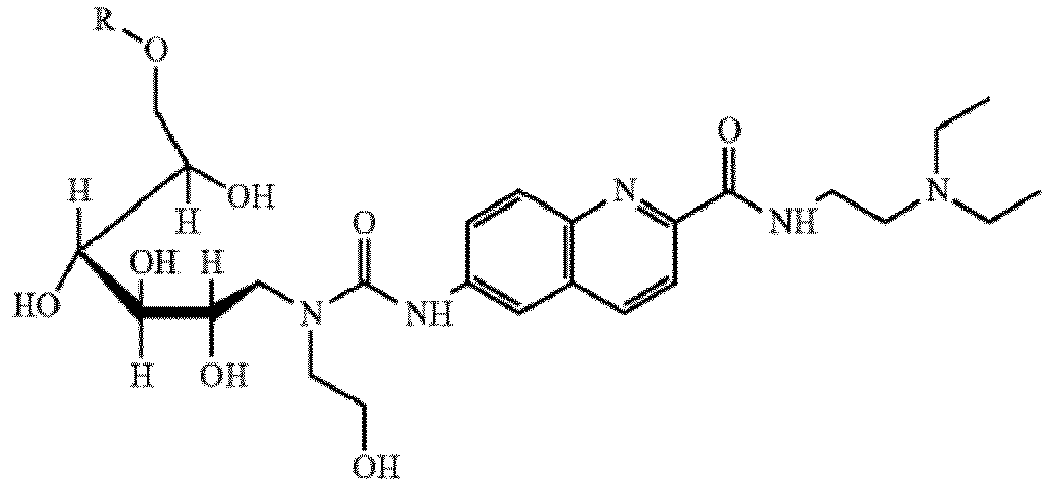
- R can be monosaccharide units or glucose residues
- R 1 is -CH 2 CH 2 OH
- R 2 is the portion of the rapid tagging reagent which incorporates the FLR-MS functionality into the structure, and is exemplified with the following structures:
- the methodologies provided herein allow for tagging of reducing glycans with the rapid tagging agent which has the same optical and MS properties as other molecules that have been labeled with the rapid tagging reagent.
- carrying out reductive amination with the primary amine of the rapid tagging reagent can produce a molecule that differs in absorbance and emission properties from comparable molecules labeled with the rapid tagging agent (N-linked molecules).
- the linkers can be different (amine vs urea), resulting in changes in chromophore properties.
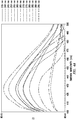
- Figures 4A show optical properties of the rapid labeled dextran ladder produced by the methods described herein where the rapid tagging reagent is: 2,5-dioxopyrrolidin-1-yl (2-((2-(diethylamino)ethyl)carbamoyl) quinolin-6-yl)carbamate Rapi Fluor-MS or RFMS
- Figure 4B shows that the dextran ladder has substantially identical fluorescence properties as that of the rapid labeled glycan produced with the same rapid tagging reagent, the rapid labeled glycan which is exemplified below:
- the present methodologies allow for adjusting the relative retention of a glucose homopolymer (referred to herein as a "dextran ladder") through changes in overall polarity. For example, tagging of the dextran ladder through reductive amination with a) ethanolamine or b) propylamine, followed by reaction with the rapid tagging reagent, results in differing retention characteristics. Thus, the chromatographic retention characteristics, among other characteristics, of the dextran ladder can be tuned as a calibration standard.
- the present methodologies can produce a dextran ladder having chemical properties highly similar to those of N-glycans that are labeled with a rapid tagging labeling reagent.
- one embodiment of such a glucose homopolymer includes reductive amination with ethanolamine followed by labeling with the rapid tagging reagent to produce a rapid labeled ethanolamino dextran ladder (an embodiment of a rapid labeled dextran ladder) shown immediately below:
- the ethanolamine in the procedures set out in Example 3 can be replaced with propylamine.
- the resulting rapid labeled propylamino dextran (shown below) exhibits altered chromatographic retention when separated with a BEH Amide stationary phase as shown in Figure 7A versus that shown in Figure 7B .
- This procedure is designed for the rapid tagging reaction to be performed at a 100-200 fold molar excess of the rapid tagging reagent.
- Add 300 ⁇ l of anhydrous DMF. Use this dextran solution to dissolve 100 ⁇ 0.5 mg of rapid tagging reagent. Allow the reaction to proceed at room temperature for 10 minutes. Periodically (every 20 to 30 seconds), stir/agitate the reaction mixture. At the completion of the incubation at room temperature, dilute the reaction with 7.6 ml ACN.
- a best practice is to dilute the reaction right before loading onto the SPE cartridge.
- the above procedure can result in yields of the labeled dextran ladder prepared from ethanolamino dextran intermediate up to about 80 standards per batch.
- Figures 5A , 5B and 5C show the fluorescence chromatograms for each of the three batches of the labeled (ethanolamino) dextran ladder prepared.
- Figures 6A , 6B and 6C show the corresponding Base Peak Ion (BPI) chromatograms for each batch of rapid labeled dextran ladder.
- BPI Base Peak Ion
- a second rapid labeled dextran was prepared by replacing ethanolamine set out in EXAMPLE 2 with propylamine.
- the chromatographic retention of the resulting rapid labeled, propylamino dextran was compared with that of the previously mentioned rapid labeled, ethanolamino dextran according to the experimental conditions outlined below:
- the column was flushed in 70% HPLC grade acetonitrile (ACN)/30% HPLC grade water v/v.
- the column was then equilibrated with mobile phase conditions before making first injection.
- Table 5 provides the HILIC UPLC/FLR conditions used in the analysis.
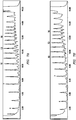
- Figures 7A and 7B show the fluorescence chromatogram obtained for rapid labeled, propylamino dextran versus rapid labeled ethanolamino dextran when using a BEH Amide 2.1 x 50 mm column.
- the presented methodology can impart certain chemical properties onto reducing glycans and sugars via incorporation of separate labeling moieties (or also referred to herein as "tags” or “labels”), one via reductive amination and another by rapid tagging processing.
- tags or “labels”
- a twice labeled N-glycan can be purified from sample matrices via streptavidin pull-down and then subsequently detected via the rapid tagging reagent to impart fluorescence and/or enhanced ionization efficiency.
- This "twice-labeled" saccharide shown below can have a biotin label along with a highly fluorescent, MS active label.
- an amino biotin molecule could be used for reductive amination and the reductively aminated saccharide could be labeled via a rapid tagging reaction.
- more than one fluorophore/chromophore can be used to enable multiple wavelength detection on a single saccharide species, as would be possible if this methodology was applied to reductively aminate a glycan with aminobenzamide and to thereafter label it with the rapid tagging reagent.
- a saccharide can be reductively aminated with a hemagglutinin (HA) epitope tag, a peptide of sequence YPYDVPDYA, and then labeled with the rapid tagging reagent.
- HA hemagglutinin
Landscapes
- Chemical & Material Sciences (AREA)
- Life Sciences & Earth Sciences (AREA)
- Health & Medical Sciences (AREA)
- Organic Chemistry (AREA)
- Engineering & Computer Science (AREA)
- Physics & Mathematics (AREA)
- Analytical Chemistry (AREA)
- Biochemistry (AREA)
- General Health & Medical Sciences (AREA)
- Molecular Biology (AREA)
- Immunology (AREA)
- Pathology (AREA)
- General Physics & Mathematics (AREA)
- Biotechnology (AREA)
- Urology & Nephrology (AREA)
- Bioinformatics & Cheminformatics (AREA)
- Bioinformatics & Computational Biology (AREA)
- Biophysics (AREA)
- Biomedical Technology (AREA)
- Hematology (AREA)
- Genetics & Genomics (AREA)
- Chemical Kinetics & Catalysis (AREA)
- Cell Biology (AREA)
- Microbiology (AREA)
- Food Science & Technology (AREA)
- Medicinal Chemistry (AREA)
- Proteomics, Peptides & Aminoacids (AREA)
- Investigating Or Analysing Biological Materials (AREA)
- Other Investigation Or Analysis Of Materials By Electrical Means (AREA)
- Measuring Or Testing Involving Enzymes Or Micro-Organisms (AREA)
- Saccharide Compounds (AREA)
Abstract
Description
- None.
- Hydrophilic interaction chromatography ("HILIC") separation coupled with fluorescence detection in UPLC platforms can be used to resolve complex N-linked glycan populations due to the ability to separate both neutral and charged glycans in a single chromatographic run. Because of the heterogeneity, isomerization and anomericity of glycans, elucidating the structure of complex N-linked glycans can be a significant analytical challenge. A dextran ladder can be used to calibrate hydrophilic interaction chromatography ("HILIC") separations of glycans and convert peak retention times into glucose unit ("GU") values. Each individual glycan structure has a GU value which is directly related to its linkages and its constituent monosaccharides. The GU value can be used to predict structures because each glycan structural component contributes in a specific way to the GU value of a given glycan.
- As such, the elution times of glycans can be expressed in glucose units by reference to a separation calibrant, such as one based on a dextran ladder. A dextran ladder can be used to calibrate the liquid chromatography ("LC") runs against day-to-day or system-to-system changes. A GU value can be calculated by fitting a fifth order polynomial distribution curve or a cubic spline fit to the retention times of the dextran ladder. Then, using this curve, GU values can be assigned from the retention times observed in a test sample. The GU values for N-glycans can be reproducible, with inter-column standard deviations less than 0.3. This allows direct comparison with database values collected from a range of instruments over a period of time. Having GU values, databases of glycans stored in values of GU can be interrogated to aid in elucidating the potential glycan structures existing with a glycan population.
- Furthermore, even when comparing different approaches for tagging, it can be seen that the labeled N-glycans are resolved by the HILIC separation into very similar profiles. It is not a trivial task to produce a dextran ladder that is appropriate for use with glycans that are rapidly labeled with a rapid tagging reagent. Dextran is a saccharide comprised of a reducing, aldehyde terminus, different than N-glycosylamines which are released via enzymatic deglycosylation of N-glycosylated proteins. Unlike the latter, dextran cannot therefore be modified with a rapid tagging reagent that targets amine nucleophiles. The dextran cannot be rapidly labeled because the saccharide does not contain an appropriate nucleophile. A need exists, as a result, for methods of calibrating the liquid chromatography processes with a standard that has the same optical and/or other physiochemical properties as the rapid labeled N-glycan.
- Methods of making a rapid labeled dextran ladder and other calibrants useful in liquid chromatography are provided herein. The methods comprise the steps of providing a reducing glycan having an aldehyde group and reacting the reducing glycan with a compound having a primary amine to produce an intermediary compound. The intermediary compound is rapidly labeled with the rapid tagging reagent to produce a rapid labeled dextran ladder having substantially identical optical properties as a rapid labeled N-glycan produced by rapid tagging of the N-glycan with the rapid tagging reagent. Calibrants are also provided herein of the structural formula:

-
-
Figure 1 shows an embodiment of workflow for preparing a rapid labeled N-glycan. -
Figure 2 shows fluorescence emission spectra for a rapid labeled N-glycan labeled with a rapid tagging reagent having optimized wavelengths of 265 nm for excitation and 425 nm for emission. -
Figure 3 shows fluorescence emission spectra for a dextran ladder labeled with analog of a rapid tagging reagent by reductive amination only having shifted fluorescence properties of optimized wavelengths of 370 nm for excitation and 480 nm for emission. -
Figures 4A and4B show fluorescent properties of a rapid labeled dextran ladder produced with the methods provided herein. -
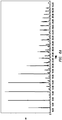
Figures 5A ,5B and5C show representative HILIC fluorescence chromatograms for a rapid labeled ethanolamino dextran ladder produced via the methods provided herein. -
Figures 6A ,6B and6C show the corresponding Base Peak Ion ("BPI") chromatograms for each batch of the rapid labeled dextran ladders of Example 3. -
Figures 7A and 7B show the fluorescence chromatogram obtained for a rapid labeled, propylamino dextran versus a rapid labeled ethanolamino dextran using a glycan BEH amide 2.1 x 50 mm column. - In the manufacturing of biopharmaceuticals, glycosylation profiles of biological samples are often assessed through an analysis of released glycans. These samples, however, are often prepared with techniques that are time-consuming or ones that can lead to a compromise in mass spectrometry ("MS") sensitivity. Enzymatic release and rapid labeling of N-glycans can address many shortcomings and provide higher throughput of N-glycan sample preparation and enable improved sensitivity for glycan detection. For example, as described herein, with an enzymatic release and rapid labeling of N-glycans, glycoproteins can now be deglycosylated in as low as 10 minutes to produce N-glycans which are then rapidly reacted with rapid tagging reagents. The resulting labeled glycans are then extracted from the labeling reaction byproducts by an SPE method to facilitate analysis of samples.
- The N-glycan profile of a biopharmaceutical is a critical quality attribute because it can be a measure of efficacy, safety, and manufacturing conditions. Therefore, approaches for glycan analysis of clinical and commercial bio-therapeutic formulations require high sensitivity. Additionally, when the analysis is performed, rapid turnaround times and high throughput capacity can expedite product development.
- Most analytical strategies for evaluating N-glycans from glycoproteins involve deglycosylation via PNGase F and the labeling of the resulting N-glycans with a chemical moiety that imparts a detectable attribute. In one approach described herein, labeled glycans are separated by hydrophilic interaction chromatography ("HILIC") and detected by fluorescence ("FLR") and mass spectrometry ("MS").
- Furthermore, we previously developed a sample preparation solution that enables FLR and MS sensitivity for glycan detection while improving throughput of N-glycan sample preparation. We have developed rapid tagging reagents which can be synthesized to rapidly react with N-glycans upon their release from glycoproteins. (
Brousmiche, et al., U.S. Published Patent Application No. 2014/0350263, filed August 13, 2014 , [0008]-[0022], [0047]-[0050], [0053]-[0182], [0191], [0228] and [0230]-[0316], incorporated herein by reference). By utilizing the rapid tagging reagent, within a 5 minute reaction, N-glycans can be labeled. The rapid tagging reagents utilized herein comprise an N-hydroxysuccinimide (NHS) carbamate rapid tagging group, an efficient quinoline fluorophore, and a highly basic tertiary amine for enhancing ionization and are exemplified in Table 1 below.TABLE 1 Exemplary Rapid Tagging Reagents Rapid Tagging Reagent No. Labeling Reagent Structure Chemical Name Other Reagent Reference Names 1 
2,5-dioxopyrrolidin-1-yl (2-((2-(diethylamino)ethyl)carbamoyl)quinolin-6-yl)carbamate RapiFluor-MS or RFMS 2 
2,5-dioxopyrrolidin-1-yl (4-((2-(diethylamino)ethyl)carbamoyl)phenyl) carbamate 3 
2,5-dioxopyrrolidin-1-yl quinolin-6- ylcarbamate 4 
2,5-dioxopyrrolidin-1- yl methylcarbamate 5 
2,5-dioxopyrrolidin-1-yl (4-carbamoylphenyl)carbamate IAB, or Instant AB - In the present methods, a reducing saccharide is labeled (tagged) via reductive amination and the resulting secondary amine containing saccharide is rapidly tagged with a rapid tagging reagent. The methodologies presented herein can be used in tagging or dual tagging any compounds containing an aldehyde.
- To further accelerate the preparation of N-glycans, use of the rapid tagging reagent can be directly integrated with the PNGase F deglycosylation procedure which further involves a surfactant and a HILIC µElution solid phase extraction ("SPE") clean-up procedure to provide a quantitative recovery of the released and labeled glycans having the added benefit of no solvent dry-down step prior to the liquid chromatography ("LC") analysis of samples.
- In this example, we describe how to prepare tagged (also referred to herein as "labeled") N-glycans, from glycoprotein to analysis ready sample, in 30 minutes with complete deglycosylation. Our process is a streamlined protocol that can be facilitated by a kit known as the GLYCOWORKS™ RAPIFLUOR-MS™ N-glycan Kit. Sensitivity for labeled N-glycans can be at least 2 and 100 fold increases to previous fluorescence and MS detection and can provide accurate profiling based on robust solid phase extraction ("SPE") to neutralize tetrasialylated N-glycans. Lauber, M. et al., Rapid Preparation of Released N-Glyans for HILIC Analysis Using a Labeling Reagent that Facilitates Sensitive Fluorescence and ESI-MS Detection, Anal. Chem. 2015, 97, 5401-5409, incorporated herein by reference.
- The rapid tagging reagent facilitating our N-glycan analysis was synthesized based on rational design considerations which afford rapid labeling kinetics, high fluorescence quantum yield, and significantly enhanced MS detectability. N-glycan sample preparation can be dependent on reductive amination of aldehyde terminated saccharides. In this process, glycans are reductively aminated in anhydrous conditions in order to minimize desialylation. The sample preparation transitions from aqueous to anhydrous conditions. On the other hand, by utilizing the rapid tagging reagent, reductive amination can be eliminated through an aqueous rapid tagging reaction.
- If not labeled by a rapid tagging reaction, glycans can indeed be labeled at their reducing end using reductive amination. In this reaction, a tagging reagent containing a primary amine reacts in a condensation reaction with the aldehyde group of the glycan, resulting in an imine or Schiff base, which is reduced by a reducing agent to yield a secondary amine. The reaction is often performed in dimethyl sulfoxide containing acetic acid, but alternative approaches using tetrahydrofuran and methanol have been described. Examples of an amine (also referred to herein as primary amine or compound having a primary amine) include ethanol amine, propylamine, aminobenzamide, peptides with a free amino terminus (as shown in example 5 herein), N,N-dimethylehtylene diamine, amino anthracene and amino biotin. An advantage of this labeling approach is the stoichiometric attachment of one label per glycan, allowing a direct quantitation based on fluorescence or UV-absorbance intensity.

- Rapid tagging of glycans can, alternatively, be readily adopted in the laboratory with the GLYCOWORKS™ RAPIFLUOR-MS™ N-glycan Kit described herein, purposefully designed to remove the bottlenecks from all aspects of N-glycan sample preparation. As shown in
Figure 1 below, the optimized N-glycan sample preparation workflow requires three steps: (1) deglycosylation to release glycans from a glycoprotein; (2) labeling to impart a detectable chemical entity to glycans; and (3) a clean-up step to remove potential interferences from the sample. These glycans are then rapidly reacted with one or more of the rapid tagging reagents and are thereby labeled with a tag comprised of an efficient fluorophore and a highly basic tertiary amine that yields enhanced sensitivity for both fluorescence and MS detection. A depiction of the structure of a rapid labeled glycan is shown immediately below. It is worth noting the rapid labeled glycans have a particularly unique linkage moiety, one that is distinct from the secondary amine linkage that comes from reductive amination reactions. Rapid labeled N-glycans will contain neutral (not acidic) urea linkages. This can impact the physicochemical characteristics and/or properties of the rapid labeled glycans, including their chromatographic retention and their fluorescence properties and other physiochemical properties such as isoelectric point ("pI"), acidity, basicity, hydrophobicity, hydrophilicity, ability to chelate metals, UV absorbance, fluorescence, absorbance in the visible spectrum, colorimetric changes, molecular size, affinity to interacting with binding partners (i.e. biotinylated residues to avidin or streptavidin, epitopes to paratopes), reduction/oxidation potential, propensity for crosslinking, cleavability (chemical and thermal), and polymeric substituents of varying length (i.e. poly ethylene glycol (PEG) 4 repeats, PEG 40 repeats).
- As used herein, the marks GLYCOWORKS™ and RAPIFLUOR-MS™ are owned by applicant, Waters Technologies Corporation. The mark GLYCOWORKS™ is used in connection with sample preparation kits for laboratory use comprising biological standards, sample preparation device, and disposable cartridges and chemical reagents for preparing samples for chromatography and mass spectrometry. Similarly, the mark RAPIFLUOR-MS™ is used in connection with chemical reagents for preparing samples for chromatography and mass spectrometry and in connection with sample preparation kits for laboratory use comprising biological standards, sample preparation devices, and disposable cartridges.
- As such the GLYCOWORKS™ RAPIFLUOR-MS™ N-glycan Kit can be used for the fast enzymatic release and rapid labeling of N-glycans. This protocol has been validated using monoclonal antibodies and has also been tested to perform for a wide range of other N-linked glycoproteins. This sample preparation kit uses optimized deglycosylation conditions and reagents for fast release. The kit can include a rapid label reagent described
U.S. Published Patent Application No. 2014/0350263, filed August 13, 2014 , [0008]-[0022], [0047]-[0050], [0053]-[0182], [0191], [0228] and [0230]-[0316], incorporated herein by reference, and is designed to provide both the benefits of sensitive fluorescence detection as well as having appropriate signal intensity for mass detection. - As described herein, characterization and monitoring of N-glycosylation of proteins is significant in the detection of disease states and the manufacturing of biopharmaceuticals. Glycosylation profiles are most often assessed by means of released glycan analyses, wherein samples are often prepared by techniques that are notoriously time-consuming or lead to compromises in MS sensitivity. With the development of the GlycoWorks RapiFluor-MS N-Glycan Kit described herein, these shortcomings have been addressed by enabling unprecedented sensitivity for glycan detection while also improving the throughput of N-glycan sample preparation.
- Equally important as the efficiency and sensitivity gains afforded by this new sample preparation approach, and the associated methodologies, is its robustness and its ability to produce results consistent with historical N-glycan profiling. Furthermore, glycan data generated can be used to interrogate glycan databases but first require conversion into a standardized valve called a Glucose Unit ("GU") value. Hence, another benefit of implementing a calibration standard is the ability to convert existing glycan data into a format that makes exploration of glycan databases possible. The converted data can be used in a discovery process, where samples of unknown glycan composition are under investigation. Once glycans are converted to GU values, users are able to interrogate online databases to gain insight into the potential glycan structures that may exist in their samples, potentially reducing the time required to perform a typical characterization. In liquid chromatography, calibration is performed frequently, sometimes as often as after every separation of the glycan mixture.
- To detect fluorescent ("FLR") labeled glycans, hydrophilic interaction liquid chromatography ("HILIC") coupled with fluorescent detection can be used. For separation processing and in comparison to certain conventional high performance liquid chromatography ("HPLC") methods, an ethylene bridged glycan column (herein after referred as "BEH glycan column" or "BEH column") operating in HILIC mode can provide improvements in peak resolution with the ability to separate both neutral and acidic glycans. The BEH glycan column enables and produces reproducible glycan separation data and in less time spent for method optimization.
- BEH columns utilize hybrid-silica BEH, bridged technology particles functionalized with a stable, amide-containing species. BEH technology has given rise to numerous particle size stationary phases ranging from 1.7 to 5 µm diameters to provide a bridge between HPLC and ultra-performance liquid chromatography ("UPLC") technology platforms. BEH particles offer peak shape and efficiency for basic analytes, a rational array of chromatographic selectivity and improvements in chemical stability at mobile phase extremes, particularly at elevated pH. The resolving power of these columns is due in part to porous particles with an optimal concentration of amide ligands for associated applications. The column can be optimized for use with either a UPLC or HPLC system having fluorescence ("FLR") detection for separating the released and labeled N-linked glycans from various bio-therapeutics, and achieve HILIC-based separations of both neutral and charged labeled glycan species.
- In order to take full advantage of the BEH glycan column, or simply any HILIC-based profiling of glycans, a dextran calibration ladder (hereinafter sometimes referred to as a "dextran ladder" or "dextran ladder standard") can be used. The glycan profile obtained from a HILIC/FLR system can be calibrated against the dextran ladder and assigned with glucose unit (GU) values. For example, one such known ladder, the 2AB-labeled dextran calibration ladder, is different than other commercial offerings. The average molecular weight of the glucose homopolymer is higher (∼4,500 Dalton), therefore, the "workable" GU value range is twice as much as other dextran ladder standards; the observed GU goes from 2 to 30. Hence, large glycan retention time assignment is improved. The purity and structural integrity of the dextran ladder can be assessed by both HILIC and mass spectrometry ("MS").
- The elution times of glycans can be expressed in glucose units ("GU") by reference to the dextran ladder. Each individual glycan structure has a GU value which is directly related to its linkages and constituent monosaccharides. The GU value can be used to predict structures because each monosaccharide in a specific linkage contributes specifically to the GU value of a given glycan. Therefore, the dextran ladders provided herein can be used to calibrate the LC runs against day-to-day or system-to-system changes. The GU value is calculated by fitting a fifth order polynomial distribution curve or cubic spline curve to the dextran ladder, then using this curve to allocate GU values from retention times. The GU values for N-glycans can be very reproducible, with standard deviations being less than 0.3 between columns. This allows direct comparison with database values collected from a range of instruments over a period of time.
- Having GU values, databases with glycans stored in values of GU can be interrogated to aid in elucidating the potential glycan structures existing within a glycan population. A dextran ladder also provides a quality controlled standard that can be used to calibrate chromatograms obtained on different instruments in different labs. Glycan retention times captured using HILIC- FLR instrumentation will vary from instrument to instrument and lab to lab. By converting retention times to GU values, the resulting data can be used to compare information between different locations both on-site and off-site. While the use of GU values is used as an example here, other chromatographic methods can benefit from the use of a dextran calibration prepared by the methods of this invention, including but not limited to reversed phase chromatography and mixed mode iterations of both reversed phase and HILIC.
- Rapid labeling of N-glycans simplifies preparation of glycan samples for analysis. Yet, it is not a trivial task to produce a dextran ladder that is appropriate for use with glycans that are rapidly labeled with the rapid tagging reagent. Provided herein is a two-step process for tagging of reducing glycans that allows for tuning of chromatographic response and chemical properties, such as fluorescence and MS activity and multiple tags with differing detection properties. Each step differs in the nature of attachment to the reducing glycan. The term "reducing glycan" means reducing sugar, reducing saccharide, reducing polysaccharide (hetero-saccharide different sugar units, or different monosaccharides, or homo-saccharide) and includes any aldehyde terminated saccharide such as chitotriose, chitobiose, galactrose-β-(1-3)-GalNAc-Glycan, mannotrose-di-(N-acetyl-D-glucosamine) and maltrose. A reducing glycan or a reducing sugar is any sugar capable of acting as a reducing agent because it has a free aldehyde group. Hence the methodologies provided herein are useful in tagging or dual tagging of any compound containing an aldehyde (also referred to sometimes as an aldehyde group) including O-glycans.
- As shown immediately below, the first step utilizes a reductive amination process comprising the step of reacting a reducing glycan (an aldehyde terminated saccharide) with a compound having a primary amine to produce an intermediate compound such as ethanol amino dextran ladder, propylamino dextran ladder or other compound having an aldehyde that has been converted to a secondary amine, or a reducing glycan (reducing saccharide) converted to be terminated with a secondary amine. Primary amines (also referred to herein as "compound having a primary amine" or amine) which can display a desired characteristic in order to produce the intermediate compound or a compound where its aldehyde is converted to a secondary amine include ethanol amine, propylamine, aminobenzamide, peptides with a free amino terminus (as shown in example 5 herein), N,N-dimethylehtylene diamine, amino anthracene and amino biotin. The second step is a reaction with the rapid tagging reagent that can impart differing properties. In other words, characteristics of the intermediate compound are different from the rapid tagged compound (i.e., rapid tagged glycan).

- This methodology initially arose out of a need to match optical properties between N-linked glycans tagged with the rapid tagging reagent (
Figure 2 ) to the properties of a dextran standard (also referred to herein as a reducing sugar) (Figure 3 ) tagged via only reductive amination using a precursor as shown immediately below:
- The methodologies provided herein utilize a reaction route to tagging of reducing glycans (or any glycan that is aldehyde terminated) with a rapid tagging/amine reactive label to provide detection of the N glycan through its fluorescent and/or MS active properties. Traditional tagging of reducing glycans involves reductive amination (a lengthy process, i.e., 1 to 4 hours and possibly as long as 8 hours for high yield) with a specific tagging reagent. While, the present methodologies utilize reductive amination, once the intermediary amine is produced, a second step (fast, ∼ 5 min) is taken to introduce the tag (or label) having the fluorescent/MS active properties and provide saccharide molecules of the following structure Formula I. As provided in this embodiment, the terminal monosaccharide residue is shown to be an N-acetylated glucosamine (GlcNAc) that is linked to the remaining saccharide structure through its 4-OH position. The terminal monosaccharide residue does not have to be a GlcNAc, however; the dextran ladder can be terminated with a glucose monosaccharide that links to the structure through its 6-OH position. In addition, the terminal monosaccharide residue can be linked through the 4-OH position. The dextran ladder can be terminated with any glucose monosaccharide that links to the remaining saccharide structure through its 6-OH position as exemplified in Formula II below.


- The methodologies provided herein allow for tagging of reducing glycans with the rapid tagging agent which has the same optical and MS properties as other molecules that have been labeled with the rapid tagging reagent. In other words, carrying out reductive amination with the primary amine of the rapid tagging reagent can produce a molecule that differs in absorbance and emission properties from comparable molecules labeled with the rapid tagging agent (N-linked molecules). The linkers can be different (amine vs urea), resulting in changes in chromophore properties. By carrying out reductive amination with a compound having a primary amine, then tagging the amine with the rapid tagging reagent, the optical properties are maintained.
-
Figures 4A show optical properties of the rapid labeled dextran ladder produced by the methods described herein where the rapid tagging reagent is:
Figure 4B shows that the dextran ladder has substantially identical fluorescence properties as that of the rapid labeled glycan produced with the same rapid tagging reagent, the rapid labeled glycan which is exemplified below:

- The present methodologies allow for adjusting the relative retention of a glucose homopolymer (referred to herein as a "dextran ladder") through changes in overall polarity. For example, tagging of the dextran ladder through reductive amination with a) ethanolamine or b) propylamine, followed by reaction with the rapid tagging reagent, results in differing retention characteristics. Thus, the chromatographic retention characteristics, among other characteristics, of the dextran ladder can be tuned as a calibration standard.
- Accordingly, the present methodologies can produce a dextran ladder having chemical properties highly similar to those of N-glycans that are labeled with a rapid tagging labeling reagent.
- As provided in the proposed procedures set out in Example 3, one embodiment of such a glucose homopolymer includes reductive amination with ethanolamine followed by labeling with the rapid tagging reagent to produce a rapid labeled ethanolamino dextran ladder (an embodiment of a rapid labeled dextran ladder) shown immediately below:

- In another embodiment, the ethanolamine in the procedures set out in Example 3 can be replaced with propylamine. The resulting rapid labeled propylamino dextran (shown below) exhibits altered chromatographic retention when separated with a BEH Amide stationary phase as shown in
Figure 7A versus that shown inFigure 7B .
- 100 mg of Dextran 5000 is accurately weighed and placed in an 8 mL. 2800 µl of DMSO is then piped into the 8 mL vial and stirred until the dextran is dissolved. The actual weight is then recorded.
- Add 1200 µl of glacial acid to the 8 ml vial followed by 90.0 mg (91.0 ml) of redistilled ethanolamine (MW=61.08, d=1.012) and then add 128 mg of sodium cyanoborohydride. Gently mix the slurry and incubate for 3 hours at 70°C in a heat block with magnetic stirring. Following the 3 hour incubation, the resulting reaction is removed from the heat block and cooled to a temperature below 40°C. Transfer the reaction contents from the 8 ml vial into a tared 50 ml centrifuge and add 40 ml of ACN. Measure and Record the Tare Weight, and place the vial in a refrigerator for 30 minutes. Then, centrifuged the mixture at 4000 RPM for 5 minutes and decant the supernatant. Re-suspend the pellet in 40 ml ACN and vortex vigorously. Repeat the steps of centrifugation, decantation and re-suspension for a total of three washes. The 30 minute stand is not required. Dry the pellet under a stream of nitrogen for 20 minutes and then overnight under vacuum at room temperature. Weigh the pellet to determine final recovery. Record the Final weight, Tare Weight and Recovered Weight.
- This procedure is designed for the rapid tagging reaction to be performed at a 100-200 fold molar excess of the rapid tagging reagent. Dissolve 4.0 ± 0.3 mg of the ethanolamino dextran in 500 µl of 50 mM HEPES, pH 7.9 (titrated from free acid with sodium hydroxide). Add 300 µl of anhydrous DMF. Use this dextran solution to dissolve 100 ± 0.5 mg of rapid tagging reagent. Allow the reaction to proceed at room temperature for 10 minutes. Periodically (every 20 to 30 seconds), stir/agitate the reaction mixture. At the completion of the incubation at room temperature, dilute the reaction with 7.6 ml ACN. A best practice is to dilute the reaction right before loading onto the SPE cartridge.
- Wash with 6 ml of water and 6 ml equilibration with 85% ACN. Load the ACN diluted reaction mixture in two (2) 4.5 ml volumes (approximate volume) onto a cartridge. Washed three
times 6 ml volumes of 1:9:90 formic acid/water/ACN. Elute with three (3) 4ml volumes of 200 mM ammonium acetate without pH adjustment, 5 % ACN. Dispense 600 µl volumes and dry via centrifugal vacuum evaporation. - The above procedure can result in yields of the labeled dextran ladder prepared from ethanolamino dextran intermediate up to about 80 standards per batch.
- Experimental Conditions for Batches 1 to 3 of rapid labeled Ethanolamino Dextran, a Rapid Labeled DextranLiquid chromatography was used to analyze the fluorescence and MS properties of the labeled dextran ladder as prepared in Example 2. The column was flushed in 70% HPLC grade acetonitrile (ACN) / 30% HPLC grade water v/v. The column was then equilibrated with mobile phase conditions before making first injection. Table 2 and Table 3 immediately below provide HILIC UPLC/FLR/MS conditions used in the analysis.
TABLE 2 System ACQUITY UPLC® H-Class Bio System with an ACQUITY UPLC® FLR Detector / Synapt G2-S Column ACQUITY UPLC® Glycan BEH Amide, 130 Å, 1. 7 µm, 2.1x150 mm Temperature 60°C Mobile Phase A 50 mM Ammonium Formate, pH 4.5 Mobile Phase B 100% acetonitrile (ACN) Flow Rate 0.4 mL/min Gradient Time (min) Flow Rate (mL/min) %A %B Curve 0.0 0.4 25 75 6 40.0 0.4 49 51 6 41.5 0.2 100 0 6 44.5 0.2 100 0 6 48.1 0.2 25 75 6 52.6 0.4 25 75 6 60.0 0.4 25 75 6 FLR wavelength EX 265/ EM 425 nmFLR sampling rate 2 Hz Injection volume 1 µL TABLE 3 Mass Spectrometry Capillary 3.0 Kv Cone 80 V Source offset 50 V Extraction cone 4 V Desolvation gas 800 L/ hr Nebulizer 6 bar Source Temperature 120° C Desolvation Temperature 350°C Sampling Rate 1 Hz Flow Rate 5 µL / min Acquisition Rate 100-2500 m/z LockMass Calibration 0.1 µM Glu-fibrinopeptide B in 50:50 water/ACN, 0.1% (v/v) FA (real-time mass correction) -
Figures 5A ,5B and5C show the fluorescence chromatograms for each of the three batches of the labeled (ethanolamino) dextran ladder prepared.Figures 6A ,6B and6C show the corresponding Base Peak Ion (BPI) chromatograms for each batch of rapid labeled dextran ladder. The masses of labeled Glucose Units (GU) species are shown in Table 4.TABLE 4 GU Labeled Dextran Ladder m/z (monoisotropic) [M+H]+ m/z (monoisotropic) [M+2H]2+ 2 699.333 700.340 350.674 3 861.391 862.398 431.703 4 1023.449 1024.456 512.732 5 1185.507 1186.514 593.761 6 1347.565 1348.572 674.790 7 1509.623 1510.630 755.819 8 1671.681 1672.688 836.848 9 1833.739 1834.746 917.877 10 1995.797 1996.804 998.906 11 2157.855 2158.862 1079.935 12 2319.913 2320.920 1160.964 13 2481.971 2482.978 1241.993 14 2644.029 2645.036 1323.022 15 2806.087 2807.094 1404.051 16 2968.145 2969.152 1485.080 17 3130.203 3131.210 1566.109 18 3292.261 3293.268 1647.138 19 3454.319 3455.326 1728.167 20 3616.377 3617.384 1809.196 - A second rapid labeled dextran was prepared by replacing ethanolamine set out in EXAMPLE 2 with propylamine. The chromatographic retention of the resulting rapid labeled, propylamino dextran was compared with that of the previously mentioned rapid labeled, ethanolamino dextran according to the experimental conditions outlined below:
The column was flushed in 70% HPLC grade acetonitrile (ACN)/30% HPLC grade water v/v. The column was then equilibrated with mobile phase conditions before making first injection. Table 5 provides the HILIC UPLC/FLR conditions used in the analysis.TABLE 5 System ACQUITY UPLC® H-Class Bio System with an ACQUITY UPLC® FLR Detector Column ACQUITY UPLC® Glycan BEH Amide, 130 Å, 1. 7 µm, 2.1x50 mm Temperature 60°C Mobile Phase A 50 mM Ammonium Formate, pH 4.5 Mobile Phase B 100% acetonitrile (ACN) Flow Rate 0.4 mL/min Gradient Time (min) Flow Rate (mL/min) %A %B Curve 0.0 0.4 25 75 6 40.0 0.4 49 51 6 41.5 0.2 100 0 6 44.5 0.2 100 0 6 48.1 0.2 25 75 6 52.6 0.4 25 75 6 60.0 0.4 25 75 6 FLR wavelength EX 265/ EM 425 nmFLR sampling rate 10 Hz Injection volume 1 µL -
Figures 7A and 7B show the fluorescence chromatogram obtained for rapid labeled, propylamino dextran versus rapid labeled ethanolamino dextran when using a BEH Amide 2.1 x 50 mm column. - More broadly, the presented methodology can impart certain chemical properties onto reducing glycans and sugars via incorporation of separate labeling moieties (or also referred to herein as "tags" or "labels"), one via reductive amination and another by rapid tagging processing.
- In an embodiment of the present methodologies, a twice labeled N-glycan can be purified from sample matrices via streptavidin pull-down and then subsequently detected via the rapid tagging reagent to impart fluorescence and/or enhanced ionization efficiency. This "twice-labeled" saccharide shown below can have a biotin label along with a highly fluorescent, MS active label. In an embodiment shown immediately below, an amino biotin molecule could be used for reductive amination and the reductively aminated saccharide could be labeled via a rapid tagging reaction.

- In an embodiment, more than one fluorophore/chromophore can be used to enable multiple wavelength detection on a single saccharide species, as would be possible if this methodology was applied to reductively aminate a glycan with aminobenzamide and to thereafter label it with the rapid tagging reagent.

- The present methodology could also allow saccharides/glycans to be labeled with an epitope tag such that immunoaffinity enrichment or immuno based detection is enabled. In one particular embodiment, a saccharide can be reductively aminated with a hemagglutinin (HA) epitope tag, a peptide of sequence YPYDVPDYA, and then labeled with the rapid tagging reagent.

- Aspects of the invention will now be described with reference to the following numbered clauses:
- 1. A method of making a calibrant useful in liquid chromatography, comprising the steps of:
- providing a reducing glycan having an aldehyde group;
- reacting the aldehyde group of the reducing glycan with a compound having a primary amine to produce an intermediary compound;
- mixing the intermediary compound with the rapid tagging reagent, wherein the intermediary compound is rapidly labeled with the rapid tagging reagent; and
- producing a rapid labeled dextran ladder having substantially identical optical properties as a rapid labeled N-glycan wherein the rapid label N-glycan is produced by rapid tagging of a N-glycan with the rapid tagging reagent.
- 2. A calibrant of the structural formula:
- 3. A method of generating a glucose unit useful in glycan database investigations, comprising the steps of:
- preparing a plurality of N-glycans from a biological sample;
reacting the N-glycans with a rapid tagging reagent to produce a plurality of rapid labeled N-glycans; - providing a reducing glycan;
- reacting the reducing glycan with a compound having a primary amine to produce an intermediary compound;
- mixing the intermediary compound with the rapid tagging reagent, wherein the intermediary compound is rapidly labeled with the rapid tagging reagent to produce a rapid labeled dextran ladder having substantially identical optical properties as the rapid labeled N-glycan;
- calibrating a hydrophilic interaction chromatography separation of the rapid labeled N-glycans with the rapid labeled dextran to provide peak retention times for the rapid labeled N-glycans; and
- converting the peak retention times into glucose units.
- preparing a plurality of N-glycans from a biological sample;
- 4. A method of determining the structure of an N-glycan comprising the steps of:
- preparing a plurality of N-glycans from a biological sample;
- reacting the N-glycans with a rapid tagging reagent to produce a plurality of rapid labeled N-glycans;
- producing a rapid labeled dextran ladder having substantially identical optical properties as the plurality of rapid labeled N-glycans;
- calibrating a hydrophilic interaction chromatography separation of the rapid labeled N-glycans with the rapid labeled dextran to provide peak retention times for the rapid labeled N-glycans;
- converting the peak retention times into glucose units; and
- comparing the glucose units generated to a glucose unit database to identify the structure of the plurality of N-glycans.
- 5. The method of
clause 4, wherein producing a rapid labeled dextran ladder comprises the steps of:- providing a reducing glycan;
- reacting the reducing glycan with a compound having a primary amine to produce an intermediary compound; and
- mixing the intermediary compound with the rapid tagging reagent, wherein the intermediary compound is rapidly labeled with the rapid tagging reagent to produce the rapid labeled dextran ladder.
Claims (5)
- A compound of the structural Formula I or Formula II:




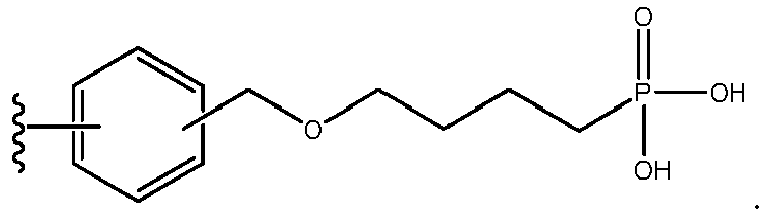
- A compound of claim 1, wherein R is a glucose unit or a monosaccharide unit.
- A compound of any of claims 1-2, wherein R1 is -CH2CH2OH.
- A compound selected from the following compounds:


- A compound of claim 5, wherein R is a glucose unit or a monosaccharide unit.
Applications Claiming Priority (3)
| Application Number | Priority Date | Filing Date | Title |
|---|---|---|---|
| US201462079460P | 2014-11-13 | 2014-11-13 | |
| EP15859131.3A EP3218352B1 (en) | 2014-11-13 | 2015-11-12 | Method for liquid chromatography calibration for labeled n-glycans, method for preparing a dextran ladder calibrant and calibrant |
| PCT/US2015/060326 WO2016077548A1 (en) | 2014-11-13 | 2015-11-12 | Methods for liquid chromatography calibration for rapid labeled n-glycans |
Related Parent Applications (1)
| Application Number | Title | Priority Date | Filing Date |
|---|---|---|---|
| EP15859131.3A Division EP3218352B1 (en) | 2014-11-13 | 2015-11-12 | Method for liquid chromatography calibration for labeled n-glycans, method for preparing a dextran ladder calibrant and calibrant |
Publications (2)
| Publication Number | Publication Date |
|---|---|
| EP3744708A1 true EP3744708A1 (en) | 2020-12-02 |
| EP3744708B1 EP3744708B1 (en) | 2023-08-09 |
Family
ID=55955033
Family Applications (2)
| Application Number | Title | Priority Date | Filing Date |
|---|---|---|---|
| EP15859131.3A Active EP3218352B1 (en) | 2014-11-13 | 2015-11-12 | Method for liquid chromatography calibration for labeled n-glycans, method for preparing a dextran ladder calibrant and calibrant |
| EP20184735.7A Active EP3744708B1 (en) | 2014-11-13 | 2015-11-12 | Calibrant for liquid chromatography calibration of labeled n-glycans |
Family Applications Before (1)
| Application Number | Title | Priority Date | Filing Date |
|---|---|---|---|
| EP15859131.3A Active EP3218352B1 (en) | 2014-11-13 | 2015-11-12 | Method for liquid chromatography calibration for labeled n-glycans, method for preparing a dextran ladder calibrant and calibrant |
Country Status (5)
| Country | Link |
|---|---|
| US (2) | US10502720B2 (en) |
| EP (2) | EP3218352B1 (en) |
| JP (1) | JP6692811B2 (en) |
| CN (3) | CN115536714B (en) |
| WO (1) | WO2016077548A1 (en) |
Families Citing this family (4)
| Publication number | Priority date | Publication date | Assignee | Title |
|---|---|---|---|---|
| CN115536714B (en) * | 2014-11-13 | 2026-04-24 | 沃特世科技公司 | Rapidly labeled N-glycan liquid chromatography calibration method |
| US20180094293A1 (en) * | 2016-10-03 | 2018-04-05 | Waters Technologies Corporation | Labeled glycan amino acid complexes useful in lc-ms analysis and methods of making the same |
| US20250110118A1 (en) * | 2023-10-03 | 2025-04-03 | Agilent Technologies, Inc. | Glycan peak assignment |
| US20250327777A1 (en) * | 2024-04-19 | 2025-10-23 | Waters Technologies Corporation | Dextran improves the sizing analysis of lipid nanoparticles during size exclusion chromatography analysis |
Citations (4)
| Publication number | Priority date | Publication date | Assignee | Title |
|---|---|---|---|---|
| US20090258437A1 (en) * | 2008-02-04 | 2009-10-15 | Prozyme, Inc. | Compounds and methods for rapid labeling of n-glycans |
| WO2013025527A1 (en) * | 2011-08-12 | 2013-02-21 | Life Technologies Corporation | Apparatuses, methods, computer program products, and kits for hi-throughput glycan analysis |
| WO2013049622A1 (en) * | 2011-09-28 | 2013-04-04 | Waters Technologies Corporation | Rapid fluorescence tagging of glycans and other biomolecules with enhanced ms signals |
| US20140350263A1 (en) | 2011-09-28 | 2014-11-27 | Waters Technologies Corporation | Rapid fluorescence tagging of glycans and other biomolecules with enhanced ms signals |
Family Cites Families (91)
| Publication number | Priority date | Publication date | Assignee | Title |
|---|---|---|---|---|
| US2016962A (en) * | 1932-09-27 | 1935-10-08 | Du Pont | Process for producing glucamines and related products |
| US4003912A (en) | 1973-06-11 | 1977-01-18 | Monsanto Company | Dicarboximido-N-phenylsubstituted carbamates and derivatives |
| US4068528A (en) | 1976-01-19 | 1978-01-17 | Rheodyne Incorporated | Two position rotary valve for injecting sample liquids into an analysis system |
| US4138398A (en) | 1976-12-27 | 1979-02-06 | The Upjohn Company | Bis-cyclic ureas |
| JPS59161355A (en) | 1983-03-05 | 1984-09-12 | Haruo Ogura | Novel amino group labeling reagent compound |
| JPS60192703A (en) | 1983-12-05 | 1985-10-01 | Nippon Mejifuijitsukusu Kk | High-molecular compound having at least one free formic group |
| JPS62195361A (en) | 1986-02-21 | 1987-08-28 | Haruo Ogura | Novel amino group labelled reagent compound |
| US5296599A (en) | 1991-09-19 | 1994-03-22 | Millipore Corporation | Activated carbamates compounds |
| US5531959A (en) | 1994-01-31 | 1996-07-02 | Hamilton Company | Automated liquid handling and computer controlled system and method for solid phase chromatographic extractions |
| CA2143519A1 (en) | 1994-03-11 | 1995-09-12 | F. Hoffmann-La Roche Ag | Beta-lactams |
| JP3359203B2 (en) | 1995-10-04 | 2002-12-24 | タカラバイオ株式会社 | Method for analyzing amino acid sequence of peptide |
| TW358097B (en) | 1996-05-24 | 1999-05-11 | Hoffmann La Roche | Beta-lactams and their process and pharmaceutical compositions |
| JP4085443B2 (en) | 1997-05-07 | 2008-05-14 | 株式会社島津製作所 | Amino acid analysis reagent and amino acid analysis method |
| JPH1180107A (en) | 1997-09-01 | 1999-03-26 | Japan Tobacco Inc | Osteogenic promoter and amide compound |
| WO1999021580A1 (en) | 1997-10-27 | 1999-05-06 | The Regents Of The University Of California | Reagents and immunoassay for the detection and quantitative determination of mycothiol and precursors thereof |
| CA2312945A1 (en) | 1997-12-05 | 1999-06-17 | Max-Planck-Gesellschaft Zur Forderung Der Wissenschaften E.V. | Method for identifying nucleic acids by electro-spray mass spectrometry |
| US6379971B1 (en) | 1998-02-24 | 2002-04-30 | Target Discovery, Inc. | Methods for sequencing proteins |
| CN1078615C (en) | 1998-08-06 | 2002-01-30 | 福州大学 | Method for continuous preparation of isomalt oligose by use of hollow fiber enzyme membrane reactor |
| JP3985359B2 (en) | 1998-09-18 | 2007-10-03 | 住友化学株式会社 | Resist composition |
| FR2788518B1 (en) | 1999-01-14 | 2001-03-02 | Centre Nat Rech Scient | NOVEL STABLE ACTIVE CARBAMATES, THEIR PREPARATION PROCESS AND THEIR USE FOR THE PREPARATION OF UREA |
| JP2000329744A (en) | 1999-05-21 | 2000-11-30 | Kao Corp | Organic matter analysis method |
| US6468761B2 (en) | 2000-01-07 | 2002-10-22 | Caliper Technologies, Corp. | Microfluidic in-line labeling method for continuous-flow protease inhibition analysis |
| US6716634B1 (en) | 2000-05-31 | 2004-04-06 | Agilent Technologies, Inc. | Increasing ionization efficiency in mass spectrometry |
| US20020177239A1 (en) | 2001-03-16 | 2002-11-28 | Thomas Gregory Brian | Anti-GPE antibodies, their uses, and analytical methods for GPE |
| US7074570B2 (en) | 2001-05-23 | 2006-07-11 | Ge Healthcare Bio-Sciences Ab | Peptide fragmentation |
| US20050158708A1 (en) | 2001-06-06 | 2005-07-21 | Iris Alroy | Methods and compositions related to tagging of membrane surface proteins |
| JP4290003B2 (en) | 2001-09-14 | 2009-07-01 | エレクトロフォレティクス リミテッド | Mass label |
| JP4102062B2 (en) | 2001-12-19 | 2008-06-18 | 野村化学株式会社 | Aluminum measuring method |
| EP2336763A1 (en) | 2002-02-14 | 2011-06-22 | Ajinomoto Co., Inc. | Method for analysis of compounds with amino group and analytical reagent thereof |
| US20070269895A1 (en) | 2002-06-03 | 2007-11-22 | The Institute For Systems Biology | Methods for quantitative proteome analysis of glycoproteins |
| US7317111B2 (en) | 2002-09-23 | 2008-01-08 | Aries Associates, Inc. | Green and orange fluorescent labels and their uses |
| HUE027607T2 (en) | 2002-10-30 | 2016-10-28 | Basf Se | Aminobenzoylsulfonamides and their preparation |
| GB0306756D0 (en) | 2003-03-24 | 2003-04-30 | Xzillion Gmbh & Co Kg | Mass labels |
| CN1553188A (en) * | 2003-06-06 | 2004-12-08 | 克 宋 | Microarray signal amplifying method |
| US20050221337A1 (en) | 2003-10-02 | 2005-10-06 | Massachusetts Institute Of Technology | Microarrays and microspheres comprising oligosaccharides, complex carbohydrates or glycoproteins |
| US20060127950A1 (en) | 2004-04-15 | 2006-06-15 | Massachusetts Institute Of Technology | Methods and products related to the improved analysis of carbohydrates |
| EP1750126B1 (en) | 2004-05-26 | 2015-09-16 | Ajinomoto Co., Inc. | Method and apparatus for analyzing aminofunctional compound |
| WO2006091214A2 (en) | 2004-06-18 | 2006-08-31 | Molecular Probes, Inc. | Fluorescent isotope tags and their method of use |
| CN1973047A (en) | 2004-06-22 | 2007-05-30 | 加利福尼亚大学董事会 | Oligosaccharide distribution method for detecting cancer |
| US7651847B2 (en) | 2004-06-22 | 2010-01-26 | The Regents Of The University Of California | Methods of oligosaccharide profiling for the detection of cancer |
| JP4568551B2 (en) | 2004-07-28 | 2010-10-27 | 一晃 掛樋 | Method for analyzing glycoprotein sugar chain and method for producing unlabeled sugar chain |
| US8047060B2 (en) | 2005-01-31 | 2011-11-01 | Waters Technologies Corporation | Method and apparatus for sample injection in liquid chromatography |
| ES2337704T3 (en) | 2005-04-26 | 2010-04-28 | National Institute for Bioprocessing Research and Training Limited | AUTOMATED IDENTIFICATION STRATEGY OF THE GLUCOSILATION PROFILE. |
| US8039208B2 (en) * | 2005-04-26 | 2011-10-18 | National Institute For Bioprocessing Research And Training Limited (Nibrt) | Automated strategy for identifying physiological glycosylation markers(s) |
| US20070141723A1 (en) | 2005-12-16 | 2007-06-21 | Sompuram Seshi A | Immunohistochemistry staining controls |
| JP2007163423A (en) | 2005-12-16 | 2007-06-28 | Ajinomoto Co Inc | Amino acid analysis method by mass spectrometer |
| EA029538B1 (en) | 2006-03-07 | 2018-04-30 | Басф Энзаймс Ллк | Polypeptide having aldolase activity, polynucleotide encoding this polypeptide and methods for making and using the polynucleotide and polypeptide |
| US8198063B1 (en) | 2006-09-12 | 2012-06-12 | Pro Zyme, Inc | Rapid deglycosylation of glycoproteins |
| US20080201095A1 (en) | 2007-02-12 | 2008-08-21 | Yip Ping F | Method for Calibrating an Analytical Instrument |
| JP5357059B2 (en) | 2007-02-28 | 2013-12-04 | ウオーターズ・テクノロジーズ・コーポレイシヨン | Liquid chromatography apparatus having diffusion bonded titanium components |
| US7910319B2 (en) | 2007-03-23 | 2011-03-22 | Academia Sinica | Glycoproteomic probes for fluorescent imaging fucosylated glycans in vivo |
| EP2135090A1 (en) | 2007-04-16 | 2009-12-23 | Momenta Pharmaceuticals, Inc. | Proteolytic release of glycans |
| US7847245B2 (en) | 2007-07-18 | 2010-12-07 | Platomics, Inc. | Multiplexing matrix-analyte stereo electronic interactions for high throughput shotgun metabolomics |
| US20100285593A1 (en) | 2007-11-26 | 2010-11-11 | Waters Technologies Corporation | Internal standards and methods for use in quantitatively measuring analytes in a sample |
| FR2939795B1 (en) | 2008-12-17 | 2010-12-17 | Sanofi Aventis | PROCESS FOR PREPARING ACTIVE ESTERS |
| US20100196272A1 (en) * | 2009-01-30 | 2010-08-05 | Neoprobe Corporation | Compositions for radiolabeling diethylenetriaminepentaacetic acid (dtpa)-dextran |
| US8905075B2 (en) | 2009-07-13 | 2014-12-09 | Idex Health & Science Llc | Rotary shear valve assembly with hard-on-hard seal surfaces |
| EP2306199A1 (en) | 2009-09-29 | 2011-04-06 | Academisch Ziekenhuis Leiden Acting Under The Name Leiden University Medical Center | Reductive amination and analysis of carbohydrates using 2-picoline borane as reducing agent |
| EP2305692A1 (en) | 2009-09-29 | 2011-04-06 | Academisch Ziekenhuis Leiden Acting Under The Name Leiden University Medical Center | Method for releasing and labelling O-glycans |
| US8912178B2 (en) | 2010-05-19 | 2014-12-16 | Xcovery Holdings Company, LLC | mTOR selective kinase inhibitors |
| EP2583008A4 (en) | 2010-06-16 | 2014-07-30 | Waters Technologies Corp | Valve for high pressure analytical system |
| WO2012037407A1 (en) | 2010-09-17 | 2012-03-22 | Prozyme, Inc. | Isolation and deglycosylation of glycoproteins |
| CN102103133A (en) * | 2010-10-27 | 2011-06-22 | 南京威尔曼药物研究所 | Method for measuring related substances in glucosamine by using high performance liquid chromatography-evaporative light scattering detector (HPLC-ELSD) |
| WO2012083866A1 (en) | 2010-12-22 | 2012-06-28 | The Hong Kong Polytechnic University | Quinoline derivatives as anti-cancer agents |
| CN103918055B (en) | 2011-03-31 | 2016-08-17 | Dh科技发展私人贸易有限公司 | Compositions, method and test kit for calibrating mass spectrometry |
| US11352325B2 (en) | 2011-09-28 | 2022-06-07 | Waters Technologies Corporation | Rapid fluorescence tagging of glycans and other biomolecules with enhanced MS signals |
| US9177765B2 (en) | 2011-11-29 | 2015-11-03 | Thermo Finnigan Llc | Method for automated checking and adjustment of mass spectrometer calibration |
| WO2013084236A1 (en) | 2011-12-05 | 2013-06-13 | Ben-Gurion University Of The Negev Research And Development Authority | Diagnostic and therapeutic methods and their application in amyotrophic lateral sclerosis (als) |
| US20150057243A1 (en) | 2012-04-02 | 2015-02-26 | Northern University | Compositions and Methods for the Inhibition of Methyltransferases |
| WO2013192530A2 (en) | 2012-06-21 | 2013-12-27 | Children's Medical Center Corporation | Methods and reagents for glycoproteomics |
| US20140030732A1 (en) | 2012-07-25 | 2014-01-30 | Agilent Technologies, Inc. | Microfluidic hplc-chip for glycopeptide analysis with integrated hilic enrichment |
| DE102013212179A1 (en) | 2012-07-31 | 2014-02-06 | Agilent Technologies, Inc. | Derivatization of PNGase F-released glycans on an HPLC chip |
| CN102875695A (en) * | 2012-09-07 | 2013-01-16 | 浙江大学 | Glutathione sensitive alkylated chitosan and preparation and application thereof |
| EP2722673B1 (en) | 2012-10-17 | 2017-07-12 | Hexal AG | Improved method of mapping glycans of glycoproteins |
| EP2741312A1 (en) | 2012-12-05 | 2014-06-11 | Tofwerk AG | Method of calibrating mass-to-charge ratio measurements obtained from a mass spectrometer connected in fluid communication with an analysis system delivering a temporally changing sample |
| US9169331B2 (en) | 2012-12-21 | 2015-10-27 | Dionex Corporation | Separation of glycans by mixed-mode liquid chromatography |
| US9310344B2 (en) | 2013-06-14 | 2016-04-12 | Dionex Corporation | HILIC/anion-exchange/cation-exchange multimodal media |
| US20140227793A1 (en) | 2013-02-14 | 2014-08-14 | California Institute Of Technology | Compositions and methods for glycan sequencing |
| US20140274768A1 (en) | 2013-03-14 | 2014-09-18 | Van Andel Research Institute | Glycoforms of MUC5AC and Endorepellin and Biomarkers for Mucinous Pancreatic Cysts |
| WO2014194320A1 (en) | 2013-05-31 | 2014-12-04 | The Uab Research Foundation | Chromatography mass spectrometry method and system |
| JP6169552B2 (en) * | 2013-10-01 | 2017-07-26 | Jcrファーマ株式会社 | Labeling of sugar chains with 2-aminopyridine |
| US10119944B2 (en) | 2013-12-24 | 2018-11-06 | Waters Technologies Corporation | Materials for hydrophilic interaction chromatography and processes for preparation and use thereof for analysis of glycoproteins and glycopeptides |
| CN106604930B (en) | 2014-05-30 | 2021-10-29 | 新英格兰生物实验室公司 | Deglycosylation Reagents and Methods |
| EP2975401B1 (en) | 2014-07-18 | 2019-12-25 | Hexal AG | Improved method of mapping glycans of glycoproteins in serum samples |
| JP6774748B2 (en) | 2014-08-13 | 2020-10-28 | ウオーターズ・テクノロジーズ・コーポレイシヨン | Rapid fluorescence tagging of glycans and other biomolecules with enhanced MS signals |
| US9823225B2 (en) | 2014-08-25 | 2017-11-21 | Waters Technologies Corporation | Injector sample dilution for a liquid chromatography system |
| US9816971B2 (en) | 2014-09-08 | 2017-11-14 | Waters Technologies Corporation | Controllable injector sample dilution for a liquid chromatography system |
| DK3748340T3 (en) | 2014-10-30 | 2022-04-19 | Waters Technologies Corp | PROCEDURES FOR QUICK PREPARATION OF LABELED GLICOSYLAMINS AND FOR ANALYSIS OF GLICOSYLED BIOMOLECULES WHICH PREPARE THE SAME |
| CN115536714B (en) * | 2014-11-13 | 2026-04-24 | 沃特世科技公司 | Rapidly labeled N-glycan liquid chromatography calibration method |
| GB2549404B (en) | 2014-12-01 | 2020-08-12 | Waters Technologies Corp | System and method for performing a chromatography injection sequence using a single injection valve |
| WO2016112253A1 (en) | 2015-01-09 | 2016-07-14 | Children's Medical Center Corporation | Methods of membrane-based proteomic sample preparation |
-
2015
- 2015-11-12 CN CN202211388568.6A patent/CN115536714B/en active Active
- 2015-11-12 WO PCT/US2015/060326 patent/WO2016077548A1/en not_active Ceased
- 2015-11-12 CN CN201580072776.7A patent/CN107108465B/en active Active
- 2015-11-12 CN CN202010662332.1A patent/CN111796039B/en active Active
- 2015-11-12 JP JP2017525943A patent/JP6692811B2/en active Active
- 2015-11-12 US US15/526,325 patent/US10502720B2/en active Active
- 2015-11-12 EP EP15859131.3A patent/EP3218352B1/en active Active
- 2015-11-12 EP EP20184735.7A patent/EP3744708B1/en active Active
-
2019
- 2019-10-25 US US16/664,403 patent/US11747310B2/en active Active
Patent Citations (4)
| Publication number | Priority date | Publication date | Assignee | Title |
|---|---|---|---|---|
| US20090258437A1 (en) * | 2008-02-04 | 2009-10-15 | Prozyme, Inc. | Compounds and methods for rapid labeling of n-glycans |
| WO2013025527A1 (en) * | 2011-08-12 | 2013-02-21 | Life Technologies Corporation | Apparatuses, methods, computer program products, and kits for hi-throughput glycan analysis |
| WO2013049622A1 (en) * | 2011-09-28 | 2013-04-04 | Waters Technologies Corporation | Rapid fluorescence tagging of glycans and other biomolecules with enhanced ms signals |
| US20140350263A1 (en) | 2011-09-28 | 2014-11-27 | Waters Technologies Corporation | Rapid fluorescence tagging of glycans and other biomolecules with enhanced ms signals |
Non-Patent Citations (2)
| Title |
|---|
| DAVID J HARVEY ED - TSIKAS DIMITRIOS ET AL: "Derivatization of carbohydrates for analysis by chromatography; electrophoresis and mass spectrometry", JOURNAL OF CHROMATOGRAPHY B, ELSEVIER, AMSTERDAM, NL, vol. 879, no. 17, 6 November 2010 (2010-11-06), pages 1196 - 1225, XP028203513, ISSN: 1570-0232, [retrieved on 20101113], DOI: 10.1016/J.JCHROMB.2010.11.010 * |
| LAUBER, M. ET AL.: "Rapid Preparation of Released N-Glyans for HILIC Analysis Using a Labeling Reagent that Facilitates Sensitive Fluorescence and ESI-MS Detection", ANAL. CHEM., vol. 97, 2015, pages 5401 - 5409, XP055214900, DOI: 10.1021/acs.analchem.5b00758 |
Also Published As
| Publication number | Publication date |
|---|---|
| WO2016077548A1 (en) | 2016-05-19 |
| CN115536714A (en) | 2022-12-30 |
| US20200124574A1 (en) | 2020-04-23 |
| EP3218352A1 (en) | 2017-09-20 |
| JP2018502282A (en) | 2018-01-25 |
| US11747310B2 (en) | 2023-09-05 |
| EP3218352B1 (en) | 2020-08-05 |
| CN111796039B (en) | 2023-03-17 |
| US10502720B2 (en) | 2019-12-10 |
| CN107108465A (en) | 2017-08-29 |
| CN107108465B (en) | 2020-08-04 |
| JP6692811B2 (en) | 2020-05-13 |
| EP3218352A4 (en) | 2018-07-18 |
| US20170336368A1 (en) | 2017-11-23 |
| CN111796039A (en) | 2020-10-20 |
| EP3744708B1 (en) | 2023-08-09 |
| CN115536714B (en) | 2026-04-24 |
Similar Documents
| Publication | Publication Date | Title |
|---|---|---|
| EP3309549B1 (en) | Rapid fluorescence tagging of glycans and other biomolecules with enhanced ms signals | |
| US11747310B2 (en) | Methods for liquid chromatography calibration for rapid labeled N-glycans | |
| EP2528443B1 (en) | Quantitative analysis of vitamin d3, vitamin d2, and metabolites thereof | |
| EP2317307B1 (en) | Method of analyzing amino- and/or imino-functional compounds, and analytical reagent | |
| JP2021119345A (en) | Rapid preparation of labeled glycosylamines and methods for analyzing glycosylated biomolecules that produce them | |
| CN110392830B (en) | IROA metabolomics workflow for improved precision, identification, and quantification | |
| EP3519832B1 (en) | Labeled glycan amino acid complexes useful in lc-ms analysis and methods of making the same | |
| US12416638B2 (en) | Methods for labeling amine-containing compounds | |
| US20220026434A1 (en) | Advanced methods for automated high-performance identification of carbohydrates and carbohydrate mixture composition patterns and systems therefore as well as methods for calibration of multi wavelength fluorescence detection systems therefore, based on new fluorescent dyes | |
| US20230194537A1 (en) | Compounds for the detection of glycans | |
| CN114646762A (en) | High-throughput proteome labeling reagent based on secondary mass spectrometry quantification | |
| CN114621182B (en) | Derivatization reagent, synthesis method thereof and MALDI-MS-based method for in-situ analysis of monoamine neurotransmitters | |
| Xin et al. | Ultrasensitive LC-MS analysis of saccharides using 2-hydrazinyl-6-methoxy-1, 3-benzothiazole as a novel derivatization reagent | |
| Hauser et al. | Water-soluble pyrene tags enable the detection of carbohydrates by label-assisted laser desorption/ionisation mass spectrometry | |
| CN120294230A (en) | A method for quantitative analysis of intact proteins based on mass spectrometry tags | |
| JP2006036693A (en) | Compound for labeling aldehyde compound, method for analyzing aldehyde compound, and labeled sugar | |
| HK1197690A (en) | Rapid fluorescence tagging of glycans and other biomolecules with enhanced ms signals | |
| HK1197690B (en) | Rapid fluorescence tagging of glycans and other biomolecules with enhanced ms signals |
Legal Events
| Date | Code | Title | Description |
|---|---|---|---|
| PUAI | Public reference made under article 153(3) epc to a published international application that has entered the european phase |
Free format text: ORIGINAL CODE: 0009012 |
|
| STAA | Information on the status of an ep patent application or granted ep patent |
Free format text: STATUS: THE APPLICATION HAS BEEN PUBLISHED |
|
| AC | Divisional application: reference to earlier application |
Ref document number: 3218352 Country of ref document: EP Kind code of ref document: P |
|
| AK | Designated contracting states |
Kind code of ref document: A1 Designated state(s): AL AT BE BG CH CY CZ DE DK EE ES FI FR GB GR HR HU IE IS IT LI LT LU LV MC MK MT NL NO PL PT RO RS SE SI SK SM TR |
|
| STAA | Information on the status of an ep patent application or granted ep patent |
Free format text: STATUS: REQUEST FOR EXAMINATION WAS MADE |
|
| 17P | Request for examination filed |
Effective date: 20210527 |
|
| RBV | Designated contracting states (corrected) |
Designated state(s): AL AT BE BG CH CY CZ DE DK EE ES FI FR GB GR HR HU IE IS IT LI LT LU LV MC MK MT NL NO PL PT RO RS SE SI SK SM TR |
|
| GRAP | Despatch of communication of intention to grant a patent |
Free format text: ORIGINAL CODE: EPIDOSNIGR1 |
|
| STAA | Information on the status of an ep patent application or granted ep patent |
Free format text: STATUS: GRANT OF PATENT IS INTENDED |
|
| INTG | Intention to grant announced |
Effective date: 20230309 |
|
| GRAS | Grant fee paid |
Free format text: ORIGINAL CODE: EPIDOSNIGR3 |
|
| GRAA | (expected) grant |
Free format text: ORIGINAL CODE: 0009210 |
|
| STAA | Information on the status of an ep patent application or granted ep patent |
Free format text: STATUS: THE PATENT HAS BEEN GRANTED |
|
| P01 | Opt-out of the competence of the unified patent court (upc) registered |
Effective date: 20230620 |
|
| AC | Divisional application: reference to earlier application |
Ref document number: 3218352 Country of ref document: EP Kind code of ref document: P |
|
| AK | Designated contracting states |
Kind code of ref document: B1 Designated state(s): AL AT BE BG CH CY CZ DE DK EE ES FI FR GB GR HR HU IE IS IT LI LT LU LV MC MK MT NL NO PL PT RO RS SE SI SK SM TR |
|
| REG | Reference to a national code |
Ref country code: GB Ref legal event code: FG4D |
|
| REG | Reference to a national code |
Ref country code: CH Ref legal event code: EP |
|
| REG | Reference to a national code |
Ref country code: DE Ref legal event code: R096 Ref document number: 602015085114 Country of ref document: DE |
|
| REG | Reference to a national code |
Ref country code: IE Ref legal event code: FG4D |
|
| REG | Reference to a national code |
Ref country code: DE Ref legal event code: R082 Ref document number: 602015085114 Country of ref document: DE Representative=s name: FORRESTERS IP LLP, DE |
|
| REG | Reference to a national code |
Ref country code: LT Ref legal event code: MG9D |
|
| REG | Reference to a national code |
Ref country code: NL Ref legal event code: MP Effective date: 20230809 |
|
| REG | Reference to a national code |
Ref country code: AT Ref legal event code: MK05 Ref document number: 1597397 Country of ref document: AT Kind code of ref document: T Effective date: 20230809 |
|
| PG25 | Lapsed in a contracting state [announced via postgrant information from national office to epo] |
Ref country code: GR Free format text: LAPSE BECAUSE OF FAILURE TO SUBMIT A TRANSLATION OF THE DESCRIPTION OR TO PAY THE FEE WITHIN THE PRESCRIBED TIME-LIMIT Effective date: 20231110 |
|
| PG25 | Lapsed in a contracting state [announced via postgrant information from national office to epo] |
Ref country code: IS Free format text: LAPSE BECAUSE OF FAILURE TO SUBMIT A TRANSLATION OF THE DESCRIPTION OR TO PAY THE FEE WITHIN THE PRESCRIBED TIME-LIMIT Effective date: 20231209 |
|
| PG25 | Lapsed in a contracting state [announced via postgrant information from national office to epo] |
Ref country code: SE Free format text: LAPSE BECAUSE OF FAILURE TO SUBMIT A TRANSLATION OF THE DESCRIPTION OR TO PAY THE FEE WITHIN THE PRESCRIBED TIME-LIMIT Effective date: 20230809 Ref country code: RS Free format text: LAPSE BECAUSE OF FAILURE TO SUBMIT A TRANSLATION OF THE DESCRIPTION OR TO PAY THE FEE WITHIN THE PRESCRIBED TIME-LIMIT Effective date: 20230809 Ref country code: PT Free format text: LAPSE BECAUSE OF FAILURE TO SUBMIT A TRANSLATION OF THE DESCRIPTION OR TO PAY THE FEE WITHIN THE PRESCRIBED TIME-LIMIT Effective date: 20231211 Ref country code: NO Free format text: LAPSE BECAUSE OF FAILURE TO SUBMIT A TRANSLATION OF THE DESCRIPTION OR TO PAY THE FEE WITHIN THE PRESCRIBED TIME-LIMIT Effective date: 20231109 Ref country code: NL Free format text: LAPSE BECAUSE OF FAILURE TO SUBMIT A TRANSLATION OF THE DESCRIPTION OR TO PAY THE FEE WITHIN THE PRESCRIBED TIME-LIMIT Effective date: 20230809 Ref country code: LV Free format text: LAPSE BECAUSE OF FAILURE TO SUBMIT A TRANSLATION OF THE DESCRIPTION OR TO PAY THE FEE WITHIN THE PRESCRIBED TIME-LIMIT Effective date: 20230809 Ref country code: LT Free format text: LAPSE BECAUSE OF FAILURE TO SUBMIT A TRANSLATION OF THE DESCRIPTION OR TO PAY THE FEE WITHIN THE PRESCRIBED TIME-LIMIT Effective date: 20230809 Ref country code: IS Free format text: LAPSE BECAUSE OF FAILURE TO SUBMIT A TRANSLATION OF THE DESCRIPTION OR TO PAY THE FEE WITHIN THE PRESCRIBED TIME-LIMIT Effective date: 20231209 Ref country code: HR Free format text: LAPSE BECAUSE OF FAILURE TO SUBMIT A TRANSLATION OF THE DESCRIPTION OR TO PAY THE FEE WITHIN THE PRESCRIBED TIME-LIMIT Effective date: 20230809 Ref country code: GR Free format text: LAPSE BECAUSE OF FAILURE TO SUBMIT A TRANSLATION OF THE DESCRIPTION OR TO PAY THE FEE WITHIN THE PRESCRIBED TIME-LIMIT Effective date: 20231110 Ref country code: FI Free format text: LAPSE BECAUSE OF FAILURE TO SUBMIT A TRANSLATION OF THE DESCRIPTION OR TO PAY THE FEE WITHIN THE PRESCRIBED TIME-LIMIT Effective date: 20230809 Ref country code: AT Free format text: LAPSE BECAUSE OF FAILURE TO SUBMIT A TRANSLATION OF THE DESCRIPTION OR TO PAY THE FEE WITHIN THE PRESCRIBED TIME-LIMIT Effective date: 20230809 |
|
| PG25 | Lapsed in a contracting state [announced via postgrant information from national office to epo] |
Ref country code: PL Free format text: LAPSE BECAUSE OF FAILURE TO SUBMIT A TRANSLATION OF THE DESCRIPTION OR TO PAY THE FEE WITHIN THE PRESCRIBED TIME-LIMIT Effective date: 20230809 |
|
| PG25 | Lapsed in a contracting state [announced via postgrant information from national office to epo] |
Ref country code: ES Free format text: LAPSE BECAUSE OF FAILURE TO SUBMIT A TRANSLATION OF THE DESCRIPTION OR TO PAY THE FEE WITHIN THE PRESCRIBED TIME-LIMIT Effective date: 20230809 |
|
| PG25 | Lapsed in a contracting state [announced via postgrant information from national office to epo] |
Ref country code: SM Free format text: LAPSE BECAUSE OF FAILURE TO SUBMIT A TRANSLATION OF THE DESCRIPTION OR TO PAY THE FEE WITHIN THE PRESCRIBED TIME-LIMIT Effective date: 20230809 Ref country code: RO Free format text: LAPSE BECAUSE OF FAILURE TO SUBMIT A TRANSLATION OF THE DESCRIPTION OR TO PAY THE FEE WITHIN THE PRESCRIBED TIME-LIMIT Effective date: 20230809 Ref country code: ES Free format text: LAPSE BECAUSE OF FAILURE TO SUBMIT A TRANSLATION OF THE DESCRIPTION OR TO PAY THE FEE WITHIN THE PRESCRIBED TIME-LIMIT Effective date: 20230809 Ref country code: EE Free format text: LAPSE BECAUSE OF FAILURE TO SUBMIT A TRANSLATION OF THE DESCRIPTION OR TO PAY THE FEE WITHIN THE PRESCRIBED TIME-LIMIT Effective date: 20230809 Ref country code: DK Free format text: LAPSE BECAUSE OF FAILURE TO SUBMIT A TRANSLATION OF THE DESCRIPTION OR TO PAY THE FEE WITHIN THE PRESCRIBED TIME-LIMIT Effective date: 20230809 Ref country code: CZ Free format text: LAPSE BECAUSE OF FAILURE TO SUBMIT A TRANSLATION OF THE DESCRIPTION OR TO PAY THE FEE WITHIN THE PRESCRIBED TIME-LIMIT Effective date: 20230809 Ref country code: SK Free format text: LAPSE BECAUSE OF FAILURE TO SUBMIT A TRANSLATION OF THE DESCRIPTION OR TO PAY THE FEE WITHIN THE PRESCRIBED TIME-LIMIT Effective date: 20230809 |
|
| REG | Reference to a national code |
Ref country code: DE Ref legal event code: R097 Ref document number: 602015085114 Country of ref document: DE |
|
| PG25 | Lapsed in a contracting state [announced via postgrant information from national office to epo] |
Ref country code: IT Free format text: LAPSE BECAUSE OF FAILURE TO SUBMIT A TRANSLATION OF THE DESCRIPTION OR TO PAY THE FEE WITHIN THE PRESCRIBED TIME-LIMIT Effective date: 20230809 |
|
| PLBE | No opposition filed within time limit |
Free format text: ORIGINAL CODE: 0009261 |
|
| STAA | Information on the status of an ep patent application or granted ep patent |
Free format text: STATUS: NO OPPOSITION FILED WITHIN TIME LIMIT |
|
| REG | Reference to a national code |
Ref country code: CH Ref legal event code: PL |
|
| PG25 | Lapsed in a contracting state [announced via postgrant information from national office to epo] |
Ref country code: MC Free format text: LAPSE BECAUSE OF FAILURE TO SUBMIT A TRANSLATION OF THE DESCRIPTION OR TO PAY THE FEE WITHIN THE PRESCRIBED TIME-LIMIT Effective date: 20230809 |
|
| PG25 | Lapsed in a contracting state [announced via postgrant information from national office to epo] |
Ref country code: LU Free format text: LAPSE BECAUSE OF NON-PAYMENT OF DUE FEES Effective date: 20231112 |
|
| 26N | No opposition filed |
Effective date: 20240513 |
|
| PG25 | Lapsed in a contracting state [announced via postgrant information from national office to epo] |
Ref country code: CH Free format text: LAPSE BECAUSE OF NON-PAYMENT OF DUE FEES Effective date: 20231130 |
|
| PG25 | Lapsed in a contracting state [announced via postgrant information from national office to epo] |
Ref country code: MC Free format text: LAPSE BECAUSE OF FAILURE TO SUBMIT A TRANSLATION OF THE DESCRIPTION OR TO PAY THE FEE WITHIN THE PRESCRIBED TIME-LIMIT Effective date: 20230809 Ref country code: LU Free format text: LAPSE BECAUSE OF NON-PAYMENT OF DUE FEES Effective date: 20231112 Ref country code: CH Free format text: LAPSE BECAUSE OF NON-PAYMENT OF DUE FEES Effective date: 20231130 Ref country code: SI Free format text: LAPSE BECAUSE OF FAILURE TO SUBMIT A TRANSLATION OF THE DESCRIPTION OR TO PAY THE FEE WITHIN THE PRESCRIBED TIME-LIMIT Effective date: 20230809 |
|
| REG | Reference to a national code |
Ref country code: BE Ref legal event code: MM Effective date: 20231130 |
|
| REG | Reference to a national code |
Ref country code: IE Ref legal event code: MM4A |
|
| PG25 | Lapsed in a contracting state [announced via postgrant information from national office to epo] |
Ref country code: IE Free format text: LAPSE BECAUSE OF NON-PAYMENT OF DUE FEES Effective date: 20231112 |
|
| PG25 | Lapsed in a contracting state [announced via postgrant information from national office to epo] |
Ref country code: BE Free format text: LAPSE BECAUSE OF NON-PAYMENT OF DUE FEES Effective date: 20231130 |
|
| PG25 | Lapsed in a contracting state [announced via postgrant information from national office to epo] |
Ref country code: FR Free format text: LAPSE BECAUSE OF NON-PAYMENT OF DUE FEES Effective date: 20231130 |
|
| PG25 | Lapsed in a contracting state [announced via postgrant information from national office to epo] |
Ref country code: IE Free format text: LAPSE BECAUSE OF NON-PAYMENT OF DUE FEES Effective date: 20231112 Ref country code: FR Free format text: LAPSE BECAUSE OF NON-PAYMENT OF DUE FEES Effective date: 20231130 Ref country code: BE Free format text: LAPSE BECAUSE OF NON-PAYMENT OF DUE FEES Effective date: 20231130 |
|
| PG25 | Lapsed in a contracting state [announced via postgrant information from national office to epo] |
Ref country code: BG Free format text: LAPSE BECAUSE OF FAILURE TO SUBMIT A TRANSLATION OF THE DESCRIPTION OR TO PAY THE FEE WITHIN THE PRESCRIBED TIME-LIMIT Effective date: 20230809 |
|
| PG25 | Lapsed in a contracting state [announced via postgrant information from national office to epo] |
Ref country code: BG Free format text: LAPSE BECAUSE OF FAILURE TO SUBMIT A TRANSLATION OF THE DESCRIPTION OR TO PAY THE FEE WITHIN THE PRESCRIBED TIME-LIMIT Effective date: 20230809 |
|
| PG25 | Lapsed in a contracting state [announced via postgrant information from national office to epo] |
Ref country code: CY Free format text: LAPSE BECAUSE OF FAILURE TO SUBMIT A TRANSLATION OF THE DESCRIPTION OR TO PAY THE FEE WITHIN THE PRESCRIBED TIME-LIMIT; INVALID AB INITIO Effective date: 20151112 |
|
| PG25 | Lapsed in a contracting state [announced via postgrant information from national office to epo] |
Ref country code: HU Free format text: LAPSE BECAUSE OF FAILURE TO SUBMIT A TRANSLATION OF THE DESCRIPTION OR TO PAY THE FEE WITHIN THE PRESCRIBED TIME-LIMIT; INVALID AB INITIO Effective date: 20151112 |
|
| PG25 | Lapsed in a contracting state [announced via postgrant information from national office to epo] |
Ref country code: TR Free format text: LAPSE BECAUSE OF FAILURE TO SUBMIT A TRANSLATION OF THE DESCRIPTION OR TO PAY THE FEE WITHIN THE PRESCRIBED TIME-LIMIT Effective date: 20230809 |
|
| PGFP | Annual fee paid to national office [announced via postgrant information from national office to epo] |
Ref country code: DE Payment date: 20251022 Year of fee payment: 11 |
|
| PGFP | Annual fee paid to national office [announced via postgrant information from national office to epo] |
Ref country code: GB Payment date: 20251022 Year of fee payment: 11 |