EP3744246B1 - Multidimensional tool for assessing the risk of falling in older people - Google Patents
Multidimensional tool for assessing the risk of falling in older people Download PDFInfo
- Publication number
- EP3744246B1 EP3744246B1 EP19177227.6A EP19177227A EP3744246B1 EP 3744246 B1 EP3744246 B1 EP 3744246B1 EP 19177227 A EP19177227 A EP 19177227A EP 3744246 B1 EP3744246 B1 EP 3744246B1
- Authority
- EP
- European Patent Office
- Prior art keywords
- tool
- multidimensional
- previous
- risk
- multidimensional tool
- Prior art date
- Legal status (The legal status is an assumption and is not a legal conclusion. Google has not performed a legal analysis and makes no representation as to the accuracy of the status listed.)
- Active
Links
Images

Classifications
-
- A—HUMAN NECESSITIES
- A61—MEDICAL OR VETERINARY SCIENCE; HYGIENE
- A61B—DIAGNOSIS; SURGERY; IDENTIFICATION
- A61B5/00—Measuring for diagnostic purposes; Identification of persons
-
- A—HUMAN NECESSITIES
- A61—MEDICAL OR VETERINARY SCIENCE; HYGIENE
- A61B—DIAGNOSIS; SURGERY; IDENTIFICATION
- A61B5/00—Measuring for diagnostic purposes; Identification of persons
- A61B5/68—Arrangements of detecting, measuring or recording means, e.g. sensors, in relation to patient
- A61B5/6887—Arrangements of detecting, measuring or recording means, e.g. sensors, in relation to patient mounted on external non-worn devices, e.g. non-medical devices
-
- A—HUMAN NECESSITIES
- A61—MEDICAL OR VETERINARY SCIENCE; HYGIENE
- A61B—DIAGNOSIS; SURGERY; IDENTIFICATION
- A61B5/00—Measuring for diagnostic purposes; Identification of persons
- A61B5/103—Measuring devices for testing the shape, pattern, colour, size or movement of the body or parts thereof, for diagnostic purposes
- A61B5/11—Measuring movement of the entire body or parts thereof, e.g. head or hand tremor or mobility of a limb
- A61B5/1116—Determining posture transitions
- A61B5/1117—Fall detection
-
- A—HUMAN NECESSITIES
- A61—MEDICAL OR VETERINARY SCIENCE; HYGIENE
- A61G—TRANSPORT, PERSONAL CONVEYANCES, OR ACCOMMODATION SPECIALLY ADAPTED FOR PATIENTS OR DISABLED PERSONS; OPERATING TABLES OR CHAIRS; CHAIRS FOR DENTISTRY; FUNERAL DEVICES
- A61G12/00—Accommodation for nursing, e.g. in hospitals, not covered by groups A61G1/00 - A61G11/00, e.g. trolleys for transport of medicaments or food; Prescription lists
- A61G12/001—Trolleys for transport of medicaments, food, linen, nursing supplies
-
- G—PHYSICS
- G16—INFORMATION AND COMMUNICATION TECHNOLOGY [ICT] SPECIALLY ADAPTED FOR SPECIFIC APPLICATION FIELDS
- G16H—HEALTHCARE INFORMATICS, i.e. INFORMATION AND COMMUNICATION TECHNOLOGY [ICT] SPECIALLY ADAPTED FOR THE HANDLING OR PROCESSING OF MEDICAL OR HEALTHCARE DATA
- G16H20/00—ICT specially adapted for therapies or health-improving plans, e.g. for handling prescriptions, for steering therapy or for monitoring patient compliance
- G16H20/30—ICT specially adapted for therapies or health-improving plans, e.g. for handling prescriptions, for steering therapy or for monitoring patient compliance relating to physical therapies or activities, e.g. physiotherapy, acupressure or exercising
-
- A—HUMAN NECESSITIES
- A61—MEDICAL OR VETERINARY SCIENCE; HYGIENE
- A61B—DIAGNOSIS; SURGERY; IDENTIFICATION
- A61B2503/00—Evaluating a particular growth phase or type of persons or animals
- A61B2503/08—Elderly
-
- A—HUMAN NECESSITIES
- A61—MEDICAL OR VETERINARY SCIENCE; HYGIENE
- A61B—DIAGNOSIS; SURGERY; IDENTIFICATION
- A61B2505/00—Evaluating, monitoring or diagnosing in the context of a particular type of medical care
- A61B2505/09—Rehabilitation or training
-
- A—HUMAN NECESSITIES
- A61—MEDICAL OR VETERINARY SCIENCE; HYGIENE
- A61B—DIAGNOSIS; SURGERY; IDENTIFICATION
- A61B2560/00—Constructional details of operational features of apparatus; Accessories for medical measuring apparatus
- A61B2560/04—Constructional details of apparatus
- A61B2560/0437—Trolley or cart-type apparatus
-
- A—HUMAN NECESSITIES
- A61—MEDICAL OR VETERINARY SCIENCE; HYGIENE
- A61B—DIAGNOSIS; SURGERY; IDENTIFICATION
- A61B5/00—Measuring for diagnostic purposes; Identification of persons
- A61B5/103—Measuring devices for testing the shape, pattern, colour, size or movement of the body or parts thereof, for diagnostic purposes
- A61B5/11—Measuring movement of the entire body or parts thereof, e.g. head or hand tremor or mobility of a limb
- A61B5/112—Gait analysis
Definitions
- the present application concerns a tool for assessing the risk of falling in older people.
- Falls are one of the main causes of health problems in older people who live in the community and are responsible for two-thirds of all unintentional injuries that lead to death, being the main cause of potentially preventable injuries. Thirty per cent of community-dwelling people aged 65 years old or more fall at least once a year and 15% fall more than once. Falls directly or indirectly reduce mobility, physical activity and physical functioning, and are often caused by the fear of falling again, which paradoxically increases the likelihood of another fall, reducing mobility and quality of life. Because falls are a serious and costly health problem, the accurate assessing of the risk of falling is a critical component of the health assessment of older people who live in the community.
- National and international health authorities recommend a multifactorial risk assessment of the risk of falling that includes valid and reliable tools, scientifically tested on populations with specific socio-demographic and cultural characteristics, allowing for sufficient individualization of the programs to prevent falls based on the physical and cognitive state of the older person. It is intended that these tools should demonstrate efficiency and precision in the identification of older people at risk of falling.
- a fall risk assessment tool In order for a fall risk assessment tool to meet the current requirements of the health authorities, it should allow for a multifactorial assessment, including the assessment of several fall risk factors simultaneously, such as the assessment of balance, of the strength of the lower limbs, of impaired walking, the history of falls, the environmental hazards, habitual medication, and the main health problems and cognitive deficits.
- the recommendations also require that the tool should be able to be administered by informal caregivers with specific technical training and should not be exclusive to formal researchers and/or caregivers, and also allow for a single and continuous final score, which permits the repeated verification of the risk of falling in the same person, enabling a clear sense of the reduction or worsening of the individual risk of falling.
- Currently both nationally and internationally, there is no single tool that combines perfectly validated and reliable instruments, which allows for the assessment of the risk of falls in older people in accordance with the criteria recommended by the aforementioned health authorities.
- the current methods of diagnosing the risk of falls in the independent older seek to evaluate, in isolation, various determinants of the risk of falling, whether clinical, morphological, functional or cognitive, giving them an individual discriminatory power.
- Document D1 https://www.casesbysource.com/category/custom-medical-cases
- Document D1 does not disclose a multidimensional tool specifically developed as a solution for assessing the risk of falling in older people, it does not disclose a trolley box for easy transportation of instruments, and wherein said toolbox is itself an instrument adapted for the realization of tests to evaluate the strength of the lower limbs, agility and dynamic balance of older people, as is the case of the present multidimensional tool.
- Document D1 Predicting which older adults will or will not fall using the Fullerton Advanced Balance Scale, Hernandez, D.
- Document D2 does not disclose a multidimensional tool specifically developed as a solution for assessing the risk of falling in older people, it does not disclose a trolley box for easy transportation of instruments, and wherein said toolbox is itself an instrument adapted for the realization of tests to evaluate the strength of the lower limbs, agility and dynamic balance of older people, as is the case of the present multidimensional tool.
- the FAB test is just one of the many tests that can be performed with the presently disclosed tool.
- Document D3 Differences in physical fitness and subjectivity rated physical health in Vietnamese and German older adults, Nguyen, H. et al., (2013 )" (D3) is a study article that investigates the differences in physical fitness in two specific communities.
- Document D3 does not disclose a multidimensional tool specifically developed as a solution for assessing the risk of falling in older people, it does not disclose a trolley box for easy transportation of instruments, and wherein said toolbox is itself an instrument adapted for the realization of tests to evaluate the strength of the lower limbs, agility and dynamic balance of older people, as is the case of the present multidimensional tool.
- the tool herein disclosed is also adapted to be used in different communities.
- Document D4 does not disclose a multidimensional tool specifically developed as a solution for assessing the risk of falling in older people, it does not disclose a trolley box for easy transportation of instruments, and wherein said toolbox is itself an instrument adapted for the realization of tests to evaluate the strength of the lower limbs, agility and dynamic balance of older people, as is the case of the present multidimensional tool.
- the bioimpedance scale is only one of several instruments in the disclosed tool.
- D4 does not disclose an alternative dynamic model to obtain body composition data as a substitute to the bioimpedance scale.
- the invention is defined by a multidimensional tool according to claim 1 .
- Embodiments are disclosed by dependent claims 2-12.
- This application concerns a multidimensional tool (1) for evaluating the risk of falling in the older people consisting of a trolley comprising two consecutive levels of instruments, where:
- the tool has dimensions of 150mm in height, 360mm in width and 460mm in length.
- the tool comprises four retractable cones (6) .
- the tool comprises four dumbbell weights (10).
- the tool comprises two dumbbell handles (11) .
- each dumbbell (10) weighs 0.68 Kg.
- each dumbbell handle (11) weighs 0.91 Kg.
- the tool comprises ten flat markers (5).
- the tool comprises two digital stopwatches (2).
- the tool comprises a support (17) for the flat markers (5) and the retractable cones (6).
- the tool comprises two mattresses (14).
- the means of writing (15) are selected from chalk, pen and pencil.
- the rulers (7) and (8) are retractable.
- This application arises from the need for the existence of a tool that combines, in a single product, the instruments essential for assessing the risk of falling for older people living in the community, where, after applying the respective validity tests, it is possible to diagnose the risk of falling in this population by accurately identifying the people who did not fall, those who fell once and also those who fell more than once in the retrospective space and in the prospective space of one year, which is to say, one year before and one year after evaluation with this tool.
- This technology also comprises the submission of data acquired using the instruments of the tool, and a dynamic model with a statistical basis and an Internet connection, makes it possible to determine with great accuracy the risk of falling in older people who live in the community.
- the tool hereby described was developed from a trolley-style box, built specifically to comprise different measuring instruments that allow for the application of physical, functional and cognitive tests, and clinical questionnaires validated in the international literature, in order to obtain data to assess the risk of falling.
- This multidimensional assessment of the risk of falling generates, using dynamic statistical modelling of the individual results of the various instruments used, a continuous result of the risk of falling with the respective cutoff values adjusted to the characteristics of the population.
- this technology allows for the regular screening of the risk of falling in older people, with great ease of implementation, which can be applied not only by health professionals, i.e., formal caregivers, but also by informal caregivers.
- the easy applicability and high precision of the tool hereby described represents a considerable advancement in the provision of primary health care, enabling the diagnosis of the risk of falling to considerable proportions of the population, which will allow for the development of specific and personalized preventive interventions for people with an increased risk of falling.
- the tool is presented in a trolley configuration, it allows for the easy transport of all the instruments, enabling the tool to be brought directly to the population for evaluation without the latter, which may suffer locomotive or other limitations, having to go to a specific assessment site.
- This technology presents enormous commercial potential, serving both for clinical diagnosis in the services provided by formal health care services (health centers, hospitals, diagnostic clinics or rehabilitation clinics) as well as for scientific and pedagogical purposes (universities, health schools or research centers) and for private use (informal caregivers, older people or their relatives).
- This technology concerns a tool comprising several instruments for measuring the risk of falling in order people to obtain results from the application of physical, functional and cognitive tests to be submitted to a dynamic model with a statistical basis, that makes it possible to determine, with great accuracy, the risk of falling.
- the way the tool is built allows not only for the secure and specific connection of each instrument, but also for the execution of certain tests to assess the risk of falling using the toolbox itself.
- the characteristics of the materials that constitute the toolbox and the geometric shape that it assumes, allows for the realization of tests to evaluate the strength of the lower limbs, agility and dynamic balance.
- the constituent material of the inside of the tool allows for the personalization of the instruments, permitting the elaboration of various combinations of the same instruments in its interior, depending on the typology of the tool desired, allowing the assessor to request a complete or partial tool in accordance with the characteristics that he intends to evaluate in the older people.
- the fall risk prediction model is a dynamic model, it allows for the adjustment of the final result of the risk in accordance with the tests performed.
- This option provided by the tool is unique in a single product, and currently no other tool allows for this diversity in the multidimensional assessment of the risk of falls in older people, guaranteeing high levels of accuracy, reliability and applicability.
- the tool (1) consists of a trolley and is designed to duly accommodate the various measuring instruments that allow for the multidimensional assessment of the risk of falling.
- the tool (1) thus comprises digital stopwatches (2), a 150cm anthropometric tape (3), a 20m measuring tape (4), flat markers (5), 30cm high retractable cones (6), a 30cm ruler (7), a 50cm ruler (8), a stadiometer (9), threaded dumbbell handles (11), threaded dumbbell weights (10), a bioimpedance scale (12), a metronome (13), mattresses (14), means of writing (15), an instruction manual for application and interpretation of the results and digital medium with the instruction manual (16), preferably a CD, with a tutorial for installation of the computer application via the Internet and an alternative dynamic model to bioimpedance.
- the various instruments are divided into two consecutive levels in the tool (1).
- the following instruments are placed in the tool (1) : two digital stopwatches (2), the bioimpedance scale (12), the metronome (13), two mattresses (14), and the instruction manual and digital medium with the manual (16).
- the tool (1) In a second level of the tool (1), below the instruments of the first level, as shown in Figure 3 , the following instruments are placed in the tool (1) : 150cm anthropometric tape (3); the 20m Measuring tape (4); ten flat markers (5)( Figure 4 ); four 30cm high retractable cones (6)( Figure 4 ); a 30 cm ruler (7); a 50 cm ruler (8); a stadiometer (9); two threaded dumbbell handles (11); four threaded dumbbell weights (10); a means of writing (15).
- the tool (1) also includes a support (17) for the flat markers (5) and for the cones (6) in order that they can be vertically arranged as shown in Figure 5 .
- the digital stopwatches (2) allow for the measurement of time in the performance of the tests of agility, balance, strength, aerobic endurance and cognition in motor tasks.
- the anthropometric tape (3) allows for the measurement of the abdominal and hip circumferences of the subject to be evaluated, as measures of body composition.
- the 20m measuring tape (4), the ten flat markers (5) and the four retractable cones (6) allow for the mounting of an aerobic endurance evaluation course using a 6-minute walking test.
- the 30cm ruler (7) and the 50cm ruler (8) allow for the realization of the tests of balance and self-perception of limits of action.
- the stadiometer (9) and the bioimpedance scale (12) allow for the evaluation of stature and body composition, respectively.
- the threaded dumbbell handle (11), together with the threaded dumbbell weights (10), allow for the performance of the strength evaluation test of the upper limbs.
- the metronome (13) allows for the realization of the dynamic balance test.
- the existence of the two mattresses allows for the realization of the dynamic balance tests on unstable surfaces.
- the instruction manual (16) for the application of the tests and interpretation of the results allows for the understanding of the protocols of the various tests and of the cutoff values for the risk of falling, in paper format.
- the digital medium with the instruction manual and installation tutorial for the computer application to guide the user both in the protocols of the tests and the cutoff values from a digital perspective, and with the installation of all the functions of the application that allows for the recording of the results and the obtaining of the risk developed specifically for this tool.
- the digital medium with the manual also contains a tutorial that allows, through the computer application, for the substitution of the tests performed on the bioimpedance scale to assess body composition, given the existence of people with metal prostheses in whom bioimpedance does not work.
- an alternative dynamic model for bioimpedance was developed for this purpose, which combines the results of other variables of body composition to calculate the risk of falling.
- the tool trolley box (1) is made from thermo-molded plastic material with features that give it strength and durability.
- the toolbox (1) has dimensions of 150mm in height, 360mm in width and 460mm in length.
- each threaded dumbbell handle (10) weighs 0.91 kg. In another embodiment each threaded dumbbell weight (11) weighs 0.68 kg.
- the ten flat markers (5) are made from semi-rigid, thermo-molded plastic material.
- the support (17) for the flat markers (5) and retractable cones (6) is made from acrylonitrile butadiene styrene (ABS) material.
- the retractable cones (6) have their base made from ABS material, which can be produced by three-dimensional printing, two metal structural elements, and the body of the cone made from polyester material.
- the 30cm ruler (7) is retractable and made of metallic material, preferably aluminum.
- the 50cm ruler (8) is retractable and made of metallic material, preferably aluminum.
- the threaded handle of the dumbbell (11) is made from metal and may be coated with silicon.
- each of the threaded dumbbell weights (10) is made of metal and may be silicone-coated.
- the ruler (8) is placed at a certain distance, which can be adjusted according to the subject, and parallel to the line drawn.
- the subject is placed behind the drawn line and must clear the predetermined distance in one step so as to completely pass over the ruler (8) that was placed on the ground.
- the distance covered by the stride is measured and recorded with the measuring tape (4) from the line drawn to the edge of the ruler (8).
- This battery comprises eight tests assessing functional fitness in order to evaluate lower and upper strength, body composition, lower and upper flexibility, agility, cardiorespiratory capacity, and the ability to perform dual motor and cognitive tasks.
- Instruments use a stopwatch (2), a 2.27kg dumbbell formed of the dumbbell handle (11) and two weights (10)) to perform the test with female subjects, a 3.63kg dumbbell formed of the dumbbell handle (11) and four weights (10) to perform the test with male subjects, five flat markers (5), four retractable cones 30cm in height (6), a 50cm ruler (8) and a 20m measuring tape (4).
- This multidimensional assessment of the risk of falls based on a dynamic statistical modelling of the individual results of the various instruments used, generates a continuous result of the risk of falls with their respective cutoff values adjusted to the characteristics of the population.
Landscapes
- Health & Medical Sciences (AREA)
- Life Sciences & Earth Sciences (AREA)
- Engineering & Computer Science (AREA)
- Public Health (AREA)
- General Health & Medical Sciences (AREA)
- Biomedical Technology (AREA)
- Animal Behavior & Ethology (AREA)
- Veterinary Medicine (AREA)
- Medical Informatics (AREA)
- Biophysics (AREA)
- Surgery (AREA)
- Physics & Mathematics (AREA)
- Pathology (AREA)
- Molecular Biology (AREA)
- Heart & Thoracic Surgery (AREA)
- Primary Health Care (AREA)
- Epidemiology (AREA)
- Physical Education & Sports Medicine (AREA)
- Physiology (AREA)
- Dentistry (AREA)
- Oral & Maxillofacial Surgery (AREA)
- Nursing (AREA)
- Measurement Of The Respiration, Hearing Ability, Form, And Blood Characteristics Of Living Organisms (AREA)
- Medical Treatment And Welfare Office Work (AREA)
Description
- The present application concerns a tool for assessing the risk of falling in older people.
- Falls are one of the main causes of health problems in older people who live in the community and are responsible for two-thirds of all unintentional injuries that lead to death, being the main cause of potentially preventable injuries. Thirty per cent of community-dwelling people aged 65 years old or more fall at least once a year and 15% fall more than once. Falls directly or indirectly reduce mobility, physical activity and physical functioning, and are often caused by the fear of falling again, which paradoxically increases the likelihood of another fall, reducing mobility and quality of life.
Because falls are a serious and costly health problem, the accurate assessing of the risk of falling is a critical component of the health assessment of older people who live in the community. National and international health authorities recommend a multifactorial risk assessment of the risk of falling that includes valid and reliable tools, scientifically tested on populations with specific socio-demographic and cultural characteristics, allowing for sufficient individualization of the programs to prevent falls based on the physical and cognitive state of the older person. It is intended that these tools should demonstrate efficiency and precision in the identification of older people at risk of falling.
In order for a fall risk assessment tool to meet the current requirements of the health authorities, it should allow for a multifactorial assessment, including the assessment of several fall risk factors simultaneously, such as the assessment of balance, of the strength of the lower limbs, of impaired walking, the history of falls, the environmental hazards, habitual medication, and the main health problems and cognitive deficits. The recommendations also require that the tool should be able to be administered by informal caregivers with specific technical training and should not be exclusive to formal researchers and/or caregivers, and also allow for a single and continuous final score, which permits the repeated verification of the risk of falling in the same person, enabling a clear sense of the reduction or worsening of the individual risk of falling.
Currently, both nationally and internationally, there is no single tool that combines perfectly validated and reliable instruments, which allows for the assessment of the risk of falls in older people in accordance with the criteria recommended by the aforementioned health authorities.
The current methods of diagnosing the risk of falls in the independent older seek to evaluate, in isolation, various determinants of the risk of falling, whether clinical, morphological, functional or cognitive, giving them an individual discriminatory power. These methods overlook the holistic perspective of the life of the human being, where the various determinants are combined into a single system, interacting dynamically, with each, nevertheless, assuming its preponderance in the individual system of the older person.
In fact, currently there only exist elements that separately assess the various risk factors for falls, but which are not combined in a single product, which prevents the large-scale application of diagnostic tests by formal and informal caregivers, and limits the opportunity to compare the results of various populational niches, mainly due to the difficulty of ensuring the reliable replication of the diagnostic tests. Document "https://www.casesbysource.com/category/custom-medical-cases" (D1), is a website disclosing medical cases that can be customizable with an assortment of medical tools, that might comprise several storage levels, and is described as a packing solution. Document D1 does not disclose a multidimensional tool specifically developed as a solution for assessing the risk of falling in older people, it does not disclose a trolley box for easy transportation of instruments, and wherein said toolbox is itself an instrument adapted for the realization of tests to evaluate the strength of the lower limbs, agility and dynamic balance of older people, as is the case of the present multidimensional tool. Document "Predicting which older adults will or will not fall using the Fullerton Advanced Balance Scale, Hernandez, D. et al., (2008)" (D2), is a study article that specifically assessed if the Fullerton Advanced Balance Scale (FAB) can predict faller status in a group of independently functionally older adults. Document D2 does not disclose a multidimensional tool specifically developed as a solution for assessing the risk of falling in older people, it does not disclose a trolley box for easy transportation of instruments, and wherein said toolbox is itself an instrument adapted for the realization of tests to evaluate the strength of the lower limbs, agility and dynamic balance of older people, as is the case of the present multidimensional tool. Furthermore, the FAB test is just one of the many tests that can be performed with the presently disclosed tool. - Document "Differences in physical fitness and subjectivity rated physical health in Vietnamese and German older adults, Nguyen, H. et al., (2013)" (D3) is a study article that investigates the differences in physical fitness in two specific communities. Document D3 does not disclose a multidimensional tool specifically developed as a solution for assessing the risk of falling in older people, it does not disclose a trolley box for easy transportation of instruments, and wherein said toolbox is itself an instrument adapted for the realization of tests to evaluate the strength of the lower limbs, agility and dynamic balance of older people, as is the case of the present multidimensional tool. The tool herein disclosed is also adapted to be used in different communities.
- Document "A comparison study of portable foot-to-foot bioelectrical impedance scale to measure body fat percentage in Asian adults and children, Sim, P. et al., (2014) is a study article that aims to test a specific instrument, the bioimpedance scale. Document D4 does not disclose a multidimensional tool specifically developed as a solution for assessing the risk of falling in older people, it does not disclose a trolley box for easy transportation of instruments, and wherein said toolbox is itself an instrument adapted for the realization of tests to evaluate the strength of the lower limbs, agility and dynamic balance of older people, as is the case of the present multidimensional tool. The bioimpedance scale is only one of several instruments in the disclosed tool. Furthermore, D4 does not disclose an alternative dynamic model to obtain body composition data as a substitute to the bioimpedance scale.
- The invention is defined by a multidimensional tool according to
claim 1. Embodiments are disclosed by dependent claims 2-12. This application concerns a multidimensional tool (1) for evaluating the risk of falling in the older people consisting of a trolley comprising two consecutive levels of instruments, where: - The first level of the tool (1) comprises digital stopwatches (2), a bioimpedance scale (12), a metronome (13), mattresses (14), an instruction manual and digital medium with the manual (16);
- The second level of the tool (1) comprises a 150cm anthropometrical tape (3), a 20m measuring tape (4), flat markers (5), retractable cones 30cm in height (6), a 30cm ruler (7), a 50cm ruler (8), a stadiometer (9), threaded dumbbell handles (11), threaded dumbbell weights (10), a means of writing (15).
- The tool has dimensions of 150mm in height, 360mm in width and 460mm in length.
In one embodiment the tool comprises four retractable cones (6) .
In another embodiment the tool comprises four dumbbell weights (10).
In another embodiment the tool comprises two dumbbell handles (11) .
In yet another embodiment each dumbbell (10) weighs 0.68 Kg. - In another embodiment each dumbbell handle (11) weighs 0.91 Kg.
- In one embodiment the tool comprises ten flat markers (5).
- In another embodiment the tool comprises two digital stopwatches (2).
- In one embodiment the tool comprises a support (17) for the flat markers (5) and the retractable cones (6).
- In one embodiment the tool comprises two mattresses (14).
- In another embodiment the means of writing (15) are selected from chalk, pen and pencil.
- In yet another embodiment the rulers (7) and (8) are retractable.
- This application arises from the need for the existence of a tool that combines, in a single product, the instruments essential for assessing the risk of falling for older people living in the community, where, after applying the respective validity tests, it is possible to diagnose the risk of falling in this population by accurately identifying the people who did not fall, those who fell once and also those who fell more than once in the retrospective space and in the prospective space of one year, which is to say, one year before and one year after evaluation with this tool.
This technology also comprises the submission of data acquired using the instruments of the tool, and a dynamic model with a statistical basis and an Internet connection, makes it possible to determine with great accuracy the risk of falling in older people who live in the community. - The tool hereby described was developed from a trolley-style box, built specifically to comprise different measuring instruments that allow for the application of physical, functional and cognitive tests, and clinical questionnaires validated in the international literature, in order to obtain data to assess the risk of falling.
- This multidimensional assessment of the risk of falling generates, using dynamic statistical modelling of the individual results of the various instruments used, a continuous result of the risk of falling with the respective cutoff values adjusted to the characteristics of the population.
- Additionally, this technology allows for the regular screening of the risk of falling in older people, with great ease of implementation, which can be applied not only by health professionals, i.e., formal caregivers, but also by informal caregivers. The easy applicability and high precision of the tool hereby described represents a considerable advancement in the provision of primary health care, enabling the diagnosis of the risk of falling to considerable proportions of the population, which will allow for the development of specific and personalized preventive interventions for people with an increased risk of falling. It is also noteworthy that, due to the fact that the tool is presented in a trolley configuration, it allows for the easy transport of all the instruments, enabling the tool to be brought directly to the population for evaluation without the latter, which may suffer locomotive or other limitations, having to go to a specific assessment site.
- This technology presents enormous commercial potential, serving both for clinical diagnosis in the services provided by formal health care services (health centers, hospitals, diagnostic clinics or rehabilitation clinics) as well as for scientific and pedagogical purposes (universities, health schools or research centers) and for private use (informal caregivers, older people or their relatives).
- For an easier understanding of this application, figures are attached which represent preferential embodiments but which are not intended to limit the technique disclosed hereby.
-
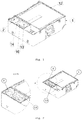
Figure 1 illustrates the first level of instrumentation of the tool (1) for assessing the risk of falling, where the reference numbers represent the following instruments to be positioned in the locations indicated: 2 - digital stopwatches; 12 - bioimpedance scale; 13 - metronome;14 - mattresses; 16 - instructions manual and digital medium with manual. -
Figure 2 illustrates the first level of instrumentation of the tool (1) for assessing the risk of falling and an increased zone A where the instruments are seen 2 - digital stopwatches and 13 - a metronome placed in the respective locations of the tool. -
Figure 3 illustrates the second instrumentation level of the tool (1), where the reference numbers represent the following instruments to be placed in the cited locations: 3 - anthropometric tape; 4 - tape measure; 5 - flat markers; 6 - retractable cones; 7 - metal ruler; 8 - metal ruler; 9 - stadiometer; 10 - dumbbell weight; 11 - threaded dumbbell handle; 15 - means of writing. -
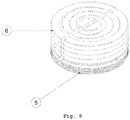
Figure 4 illustrates the support (17) for the flat markers (5) and the retractable cones (6) that are illustrated in the retracted position and extended position. -
Figure 5 illustrates the vertical layout that the plane markers (5) and the retractable cones (6) assume when arranged on the support (17) ofFigure 4 . - With reference to the figures, some embodiments are now described in more detail, but are not intended to limit the scope of this application.
- This technology concerns a tool comprising several instruments for measuring the risk of falling in order people to obtain results from the application of physical, functional and cognitive tests to be submitted to a dynamic model with a statistical basis, that makes it possible to determine, with great accuracy, the risk of falling.
- The way the tool is built allows not only for the secure and specific connection of each instrument, but also for the execution of certain tests to assess the risk of falling using the toolbox itself. The characteristics of the materials that constitute the toolbox and the geometric shape that it assumes, allows for the realization of tests to evaluate the strength of the lower limbs, agility and dynamic balance. The constituent material of the inside of the tool allows for the personalization of the instruments, permitting the elaboration of various combinations of the same instruments in its interior, depending on the typology of the tool desired, allowing the assessor to request a complete or partial tool in accordance with the characteristics that he intends to evaluate in the older people.
- As the fall risk prediction model is a dynamic model, it allows for the adjustment of the final result of the risk in accordance with the tests performed.
This option provided by the tool is unique in a single product, and currently no other tool allows for this diversity in the multidimensional assessment of the risk of falls in older people, guaranteeing high levels of accuracy, reliability and applicability. - In accordance with
figures 1, 2 and3 , the tool (1) consists of a trolley and is designed to duly accommodate the various measuring instruments that allow for the multidimensional assessment of the risk of falling. - The tool (1) thus comprises digital stopwatches (2), a 150cm anthropometric tape (3), a 20m measuring tape (4), flat markers (5), 30cm high retractable cones (6), a 30cm ruler (7), a 50cm ruler (8), a stadiometer (9), threaded dumbbell handles (11), threaded dumbbell weights (10), a bioimpedance scale (12), a metronome (13), mattresses (14), means of writing (15), an instruction manual for application and interpretation of the results and digital medium with the instruction manual (16), preferably a CD, with a tutorial for installation of the computer application via the Internet and an alternative dynamic model to bioimpedance.
- The various instruments are divided into two consecutive levels in the tool (1). In one embodiment on the first level, as shown in
Figure 1 and 2 , the following instruments are placed in the tool (1) : two digital stopwatches (2), the bioimpedance scale (12), the metronome (13), two mattresses (14), and the instruction manual and digital medium with the manual (16).
In a second level of the tool (1), below the instruments of the first level, as shown inFigure 3 , the following instruments are placed in the tool (1) : 150cm anthropometric tape (3); the 20m Measuring tape (4); ten flat markers (5)(Figure 4 ); four 30cm high retractable cones (6)(Figure 4 ); a 30 cm ruler (7); a 50 cm ruler (8); a stadiometer (9); two threaded dumbbell handles (11); four threaded dumbbell weights (10); a means of writing (15).
In accordance withFigure 4 , the tool (1) also includes a support (17) for the flat markers (5) and for the cones (6) in order that they can be vertically arranged as shown inFigure 5 . - The digital stopwatches (2) allow for the measurement of time in the performance of the tests of agility, balance, strength, aerobic endurance and cognition in motor tasks. The anthropometric tape (3) allows for the measurement of the abdominal and hip circumferences of the subject to be evaluated, as measures of body composition.
The 20m measuring tape (4), the ten flat markers (5) and the four retractable cones (6) allow for the mounting of an aerobic endurance evaluation course using a 6-minute walking test.
The 30cm ruler (7) and the 50cm ruler (8) allow for the realization of the tests of balance and self-perception of limits of action. - The stadiometer (9) and the bioimpedance scale (12) allow for the evaluation of stature and body composition, respectively.
The threaded dumbbell handle (11), together with the threaded dumbbell weights (10), allow for the performance of the strength evaluation test of the upper limbs.
The metronome (13) allows for the realization of the dynamic balance test.
The existence of the two mattresses allows for the realization of the dynamic balance tests on unstable surfaces. - The instruction manual (16) for the application of the tests and interpretation of the results allows for the understanding of the protocols of the various tests and of the cutoff values for the risk of falling, in paper format. The digital medium with the instruction manual and installation tutorial for the computer application to guide the user both in the protocols of the tests and the cutoff values from a digital perspective, and with the installation of all the functions of the application that allows for the recording of the results and the obtaining of the risk developed specifically for this tool.
The digital medium with the manual also contains a tutorial that allows, through the computer application, for the substitution of the tests performed on the bioimpedance scale to assess body composition, given the existence of people with metal prostheses in whom bioimpedance does not work. Thus, an alternative dynamic model for bioimpedance was developed for this purpose, which combines the results of other variables of body composition to calculate the risk of falling. - The tool trolley box (1) is made from thermo-molded plastic material with features that give it strength and durability. In one embodiment, the toolbox (1) has dimensions of 150mm in height, 360mm in width and 460mm in length.
- In one embodiment each threaded dumbbell handle (10) weighs 0.91 kg.
In another embodiment each threaded dumbbell weight (11) weighs 0.68 kg.
In one embodiment the ten flat markers (5) are made from semi-rigid, thermo-molded plastic material.
In another embodiment the support (17) for the flat markers (5) and retractable cones (6) is made from acrylonitrile butadiene styrene (ABS) material.
In one embodiment, the retractable cones (6), have their base made from ABS material, which can be produced by three-dimensional printing, two metal structural elements, and the body of the cone made from polyester material.
In one embodiment the 30cm ruler (7) is retractable and made of metallic material, preferably aluminum.
In another embodiment the 50cm ruler (8) is retractable and made of metallic material, preferably aluminum.
In one embodiment the threaded handle of the dumbbell (11) is made from metal and may be coated with silicon.
In one embodiment each of the threaded dumbbell weights (10) is made of metal and may be silicone-coated.
In one embodiment the means of writing (15) are selected from chalk, pen, pencil.
The reliability results performed for the tool (1) also presented good indices:
Intra-rater reliability: intraclass correlation = 0.95; inter-rater reliability: intraclass correlation = 0.89, regardless of whether the evaluator is a formal or informal caregiver, proving the high applicability of this technology. - The tests to be performed in order to assess the risk of falling of an older subject are now described demonstrating the use of each instrument during the various tests.
- Objective: This test allows for the assessment of the self-perception of the subject as to his maximum capacity to accomplish the task of overcoming a horizontal obstacle with one stride.
Instruments: This test uses the means of writing (15), a 50cm ruler (8) and a 20m measuring tape (4). - For this test it is necessary to draw a line on the ground with the means of writing (5) and the ruler (8). The ruler (8) is placed at a certain distance, which can be adjusted according to the subject, and parallel to the line drawn. The subject is placed behind the drawn line and must clear the predetermined distance in one step so as to completely pass over the ruler (8) that was placed on the ground. The distance covered by the stride is measured and recorded with the measuring tape (4) from the line drawn to the edge of the ruler (8).
- Objective: These tests assess dynamic and static balance, comprising ten tests quoted on an ordinal scale varying from 0 (worst) to 4 points (best). The result of the sum of all the tests corresponds to the multidimensional balance value. Instruments: These tests use a stopwatch (2) a 30cm ruler (7) a 50cm ruler (8), the tool box (1), the means of writing (15) to mark the ground, two mattresses (14) and one metronome (13).
- The test of remaining standing with one's feet together and eyes closed assesses the ability to use proprioceptive information to keep one's balance in a standing position, with a reduced support base and without visual stimuli, where the stopwatch (2) measures the duration of the test;
- The test of reaching an object with a lean on the frontal plane without altering the support base evaluates the ability to perform a forward lean to reach an object by evaluating the limits of stability on the frontal plane. This test uses the means of writing (15) and the 30cm ruler (7) ruler is used to place the object (writing medium (15)) at a horizontal distance of 25 cm from the participant's hand when its arm is extended horizontally and at an angle of 90° from the body;
- The test of clearing a step assesses the control of the center of gravity, and measures the lower body strength and the bilateral motor coordination. The toolbox (1) is used in this test as the step to be cleared where the subject must first climb the step with one foot and subsequently completely clear the step with the other foot;
- The ten-step walk in a line evaluates the dynamic control capacity of the center of mass with an altered support base. A writing medium (15) is used to mark the ground with a distance that allows the participant to take ten steps along the mark;
- The unipedal balance test evaluates the maintenance of balance in an upright position supported only on one leg, where the stopwatch (2) counts the time of the duration of the test;
- The test of standing on a semi-rigid surface with one's eyes closed assesses the ability to maintain one's balance in an upright position using the mattresses (14) as a semi-rigid surface and the stopwatch (2) to measure the duration of the test;
- The two-foot jump test assesses the coordination capacity of the upper and lower body, and the lower body power, using a flat marker (5) placed on the ground, and the 50cm ruler (8) to measure a distance of twice the length of the foot of the subject from the marker (5), marking the maximum distance with the ruler (8) or the means of writing (15). The subject must jump with its feet together from the marker (5) in order to clear the distance marked;
- The gait test with rotation of the head evaluates the ability to maintain dynamic balance during a ten-step walk while turning one's head, using the metronome (13) at 100 beats per minute for the subject to rotate its head to the rhythm of the metronome (13) during the walk.
- Objective: The body composition tests evaluate fat mass, lean mass, basal metabolism and visceral fat.
Instruments: These tests use a stadiometer (9), a bioimpedance scale (12), and an anthropometrical tape (3). - The measurement using bioimpedance evaluates the fat mass (%), lean mass (%), basal metabolism and visceral fat, using the bioimpedance scale;
- The height and weight measurement determine the body mass index (KG/M2), using the bioimpedance scale (12) and the stadiometer (9);
- The measurement of the circumference of the waist and hip is performed using the anthropometric tape (3).
- Objective: This battery comprises eight tests assessing functional fitness in order to evaluate lower and upper strength, body composition, lower and upper flexibility, agility, cardiorespiratory capacity, and the ability to perform dual motor and cognitive tasks.
Instruments: These tests use a stopwatch (2), a 2.27kg dumbbell formed of the dumbbell handle (11) and two weights (10)) to perform the test with female subjects, a 3.63kg dumbbell formed of the dumbbell handle (11) and four weights (10) to perform the test with male subjects, five flat markers (5), four retractable cones 30cm in height (6), a 50cm ruler (8) and a 20m measuring tape (4). - The test of getting up and sitting down on a chair assesses the strength and resistance of the lower limbs and uses a stopwatch (2) to measure the duration of the test;
- The forearm flexion test assesses the strength and endurance of the upper limbs and uses the stopwatch (2) to measure the duration of the test and the weights with the aim that the subject performs the maximum number of flexions with the arm holding the weights;
- The test of reaching while seated assesses the flexibility of the trunk and the lower limbs of the subject, using the 50cm ruler (8), to measure the distance the subject can reach towards his foot with his leg extended;
- The test of reaching behind the back assesses the flexibility of the upper limbs of the subject, where one hand is placed above the corresponding shoulder, while the other hand is placed behind the back in the lumbar region, with the two hands trying to reach each other. The 50cm ruler (8) is used to measure the distance between the middle fingers of both hands;
- The test of sitting, walking 2.44m and sitting back down again assesses the physical mobility, speed, agility and dynamic balance of the subject, where a cone (6) is placed at a distance of 2.44m in front of the subject seated in a chair, measured with the measuring tape (4). The subject must cover the distance to the cone (6) and back to the chair, with the duration of the test being measured with the stopwatch (2);
- The double task test is similar to the previous test, but the subject must perform a cognitive task of counting backwards while performing the test. This test can be adapted using other cognitive tasks;
- This multidimensional assessment of the risk of falls, based on a dynamic statistical modelling of the individual results of the various instruments used, generates a continuous result of the risk of falls with their respective cutoff values adjusted to the characteristics of the population.
- This statistical modelling involves four successive steps:
- 1. all the variables are normalized (log10);
- 2. a Principal Component Analysis (PCA) with orthogonal rotation (varimax) is performed, and subsequently, the variables with a loading factor greater than or equal to 0.4, which share at least 15% of the variance with the factor, are used for the constitution of the principle components. This analysis is carried out separately for men and women, and by age groups, specifically for the groups: ≥ 65 years to < 75 years, ≥ 75 years to < 85 years, ≥ 85 years to < 95 years and ≥ 95 years;
- 3. the result of the risk of continuous falls is calculated by the sum of the individual records of the principal components, each weighted for the relative contribution of the principal components for the variance explained.
- 4. the cutoff values for the continuous risk of falls are calculated specifically for each population, using an ROC (Receiving Operating Characteristic) analysis, commonly used to assess the performance of any continuous variable to discriminate between two mutually exclusive states of illness or risk. The specificity and sensitivity measures generated by the ROC analysis enable the determination of the value that identifies the people, of different genders and age groups, at high risk of falling.
- The present description is not, of course, in any way restricted to the embodiments presented in this document and a person with average knowledge of the field may foresee many possibilities for modifying it without deviating from the general idea, as defined in the claims. The preferred embodiments described above can obviously be combined with each other. The following claims additionally define preferential embodiments.
Claims (12)
- Multidimensional tool (1) for assessing the risk of falling in older people consisting of a trolley comprising two consecutive levels of instruments wherein:- a first level of the two consecutive levels of the multidimensional tool (1) comprises digital stopwatches (2), a bioimpedance scale (12), a metronome (13), mattresses (14), a digital medium with an instruction manual (16) and installation tutorial for a computer application, and with an installation of all the functions of the computer application that allows for the recording of results and obtaining of a risk developed specifically for the multidimensional tool, and a tutorial that allows, through the computer application, for a substitution of tests performed on the bioimpedance scale to assess body composition, and an alternative dynamic model for bioimpedance which combines results of other variables of body composition to calculate the risk of falling;- a second of the two consecutive levels of the multidimensional tool (1) comprises a 150cm anthropometric tape (3), a 20m measuring tape (4), flat markers (5), retractable cones 30cm in height (6), a 30cm ruler (7), a 50cm ruler (8), a stadiometer (9), threaded dumbbell handles (11), dumbbell weights (10), and writing media (15); wherein the multidimensional tool (1) is suitable for the realization of tests to evaluate the strength of the lower limbs, agility and dynamic balance; wherein the multidimensional tool (1) is made from thermo-molded plastic material and has the dimensions of 150mm in height, 360mm in width and 460mm in length.
- Multidimensional tool (1) according to any of the previous claims comprising four retractable cones (6).
- Multidimensional tool (1) according to any of the previous claims comprising four dumbbell weights (10).
- Multidimensional tool (1) according to any of the previous claims comprising two dumbbell handles (11).
- Multidimensional tool (1) according to any of the previous claims wherein each dumbbell weight (10) weighs 0.68 Kg.
- Multidimensional tool (1) according to any of the previous claims wherein each dumbbell handle (11) weighs 0.91 Kg.
- Multidimensional tool (1) according to any of the previous claims comprising ten flat markers (5).
- Multidimensional tool (1) according to any of the previous claims comprising two digital stopwatches (2).
- Multidimensional tool (1) according to the previous claims comprising a support (17) for the flat markers (5) and the retractable cones (6).
- Multidimensional tool (1) according to any of the previous claims comprising two mattresses (14).
- Multidimensional tool (1) according to any of the previous claims wherein the means of writing (15) are selected from either chalk, pen, pencil.
- Multidimensional tool (1) according to any of the previous claims wherein the rulers (7) and (8) are retractable.
Applications Claiming Priority (1)
| Application Number | Priority Date | Filing Date | Title |
|---|---|---|---|
| PT115541A PT115541A (en) | 2019-05-27 | 2019-05-27 | MULTIDIMENSIONAL EVALUATION TOOL OF THE RISK OF FALL IN ELDERLY |
Publications (3)
| Publication Number | Publication Date |
|---|---|
| EP3744246A1 EP3744246A1 (en) | 2020-12-02 |
| EP3744246A9 EP3744246A9 (en) | 2021-01-06 |
| EP3744246B1 true EP3744246B1 (en) | 2021-04-28 |
Family
ID=66676342
Family Applications (1)
| Application Number | Title | Priority Date | Filing Date |
|---|---|---|---|
| EP19177227.6A Active EP3744246B1 (en) | 2019-05-27 | 2019-05-29 | Multidimensional tool for assessing the risk of falling in older people |
Country Status (2)
| Country | Link |
|---|---|
| EP (1) | EP3744246B1 (en) |
| PT (1) | PT115541A (en) |
Family Cites Families (4)
| Publication number | Priority date | Publication date | Assignee | Title |
|---|---|---|---|---|
| GB2352815A (en) * | 1999-05-01 | 2001-02-07 | Keith Henderson Cameron | Automatic health or care risk assessment |
| US20130023798A1 (en) * | 2011-07-20 | 2013-01-24 | Intel-Ge Care Innovations Llc | Method for body-worn sensor based prospective evaluation of falls risk in community-dwelling elderly adults |
| US20180177436A1 (en) * | 2016-12-22 | 2018-06-28 | Lumo BodyTech, Inc | System and method for remote monitoring for elderly fall prediction, detection, and prevention |
| KR101932553B1 (en) * | 2017-03-16 | 2018-12-27 | 주식회사 인바디 | Fall risk assessment system |
-
2019
- 2019-05-27 PT PT115541A patent/PT115541A/en unknown
- 2019-05-29 EP EP19177227.6A patent/EP3744246B1/en active Active
Non-Patent Citations (1)
| Title |
|---|
| None * |
Also Published As
| Publication number | Publication date |
|---|---|
| EP3744246A1 (en) | 2020-12-02 |
| EP3744246A9 (en) | 2021-01-06 |
| PT115541A (en) | 2020-11-27 |
Similar Documents
| Publication | Publication Date | Title |
|---|---|---|
| Skowroński et al. | Eurofit special: European fitness battery score variation among individuals with intellectual disabilities | |
| Mannerkorpi et al. | Physical performance characteristics of women with fibromyalgia | |
| Bui et al. | Functional tests in chronic obstructive pulmonary disease, part 1: clinical relevance and links to the international classification of functioning, disability, and health | |
| Bellace et al. | Validity of the Dexter Evaluation System's Jamar dynamometer attachment for assessment of hand grip strength in a normal population | |
| Van Harlinger et al. | Upper limb strength: study providing normative data for a clinical handheld dynamometer | |
| Bansode et al. | Study of correlation between dominant hand’s grip strength and some physical factors in adult males and females | |
| Musa et al. | Association of normative values of grip strength with anthropometric variables among students, in Jiangsu Province | |
| Evans et al. | Repeatability of three-dimensional thorax and pelvis kinematics in the golf swing measured using a field-based motion capture system | |
| Sandmark et al. | Physical work load in physical education teachers | |
| Nara et al. | Predicting lower body explosive strength using hand grip dynamometer strength test | |
| Symonds et al. | A review of muscle‐and performance‐based assessment instruments in DM1 | |
| Padia et al. | Determinants of hand function in children and adolescent with Down Syndrome-A scoping review | |
| Savinainen et al. | Workload and physical capacity among ageing municipal employees—a 16-year follow-up study | |
| Mack-Inocentio et al. | Large-scale assessment of health-related physical fitness in French older adults: feasibility and validity | |
| Dianat et al. | Wrist ulnar/radial torque strength measurements among Iranian population: the effects of age, gender, Body Mass Index and hand dominance | |
| EP3744246A1 (en) | Multidimensional tool for assessing the risk of falling in older people | |
| Van de Winckel et al. | Assessment of arm function in stroke patients: Rivermead Motor Assessment arm section revised with Rasch analysis | |
| Jayakumar et al. | Association of health literacy and physical activity with physical fitness level among adults | |
| Boer | Functional fitness for adults living with Down syndrome | |
| ES2879609T3 (en) | Multidimensional tool to assess the risk of falls in the elderly | |
| Brownell | A scale for measuring the antero-posterior posture of ninth grade boys | |
| FOSTER et al. | The vital capacity of the Chinese: an occupational study | |
| Kimura et al. | A study of changes of physical functions according to changes in cognitive functions in community-dwelling elderly people who participated in an exercise program | |
| Akter | Measurement of hand grip strength by digital jamar hand dynamometer: a study on CRP staffs & BHPI students | |
| Dinucci et al. | Reliability of a modification of the health-related physical fitness test for use with physical education majors |
Legal Events
| Date | Code | Title | Description |
|---|---|---|---|
| STAA | Information on the status of an ep patent application or granted ep patent |
Free format text: STATUS: EXAMINATION IS IN PROGRESS |
|
| PUAI | Public reference made under article 153(3) epc to a published international application that has entered the european phase |
Free format text: ORIGINAL CODE: 0009012 |
|
| 17P | Request for examination filed |
Effective date: 20191206 |
|
| AK | Designated contracting states |
Kind code of ref document: A1 Designated state(s): AL AT BE BG CH CY CZ DE DK EE ES FI FR GB GR HR HU IE IS IT LI LT LU LV MC MK MT NL NO PL PT RO RS SE SI SK SM TR |
|
| AX | Request for extension of the european patent |
Extension state: BA ME |
|
| GRAP | Despatch of communication of intention to grant a patent |
Free format text: ORIGINAL CODE: EPIDOSNIGR1 |
|
| STAA | Information on the status of an ep patent application or granted ep patent |
Free format text: STATUS: GRANT OF PATENT IS INTENDED |
|
| INTG | Intention to grant announced |
Effective date: 20201218 |
|
| RIN1 | Information on inventor provided before grant (corrected) |
Inventor name: LINO NETO PEREIRA, CATARINA Inventor name: ROSA PARREIRA MENDES, FELISMINA Inventor name: DUARTE DOS SANTOS BRAVO, JORGE Inventor name: DE CASTRO MARTINS SECCA RUIVO, MARIA INES Inventor name: DA MOTA CERVEIRA NAZULINO GONCALVES, TIAGO JOSE |
|
| GRAS | Grant fee paid |
Free format text: ORIGINAL CODE: EPIDOSNIGR3 |
|
| GRAA | (expected) grant |
Free format text: ORIGINAL CODE: 0009210 |
|
| STAA | Information on the status of an ep patent application or granted ep patent |
Free format text: STATUS: THE PATENT HAS BEEN GRANTED |
|
| AK | Designated contracting states |
Kind code of ref document: B1 Designated state(s): AL AT BE BG CH CY CZ DE DK EE ES FI FR GB GR HR HU IE IS IT LI LT LU LV MC MK MT NL NO PL PT RO RS SE SI SK SM TR |
|
| REG | Reference to a national code |
Ref country code: GB Ref legal event code: FG4D |
|
| REG | Reference to a national code |
Ref country code: CH Ref legal event code: EP |
|
| REG | Reference to a national code |
Ref country code: DE Ref legal event code: R096 Ref document number: 602019004164 Country of ref document: DE |
|
| REG | Reference to a national code |
Ref country code: AT Ref legal event code: REF Ref document number: 1386187 Country of ref document: AT Kind code of ref document: T Effective date: 20210515 |
|
| REG | Reference to a national code |
Ref country code: IE Ref legal event code: FG4D |
|
| REG | Reference to a national code |
Ref country code: PT Ref legal event code: SC4A Ref document number: 3744246 Country of ref document: PT Date of ref document: 20210601 Kind code of ref document: T Free format text: AVAILABILITY OF NATIONAL TRANSLATION Effective date: 20210517 |
|
| REG | Reference to a national code |
Ref country code: LT Ref legal event code: MG9D |
|
| REG | Reference to a national code |
Ref country code: AT Ref legal event code: MK05 Ref document number: 1386187 Country of ref document: AT Kind code of ref document: T Effective date: 20210428 |
|
| PG25 | Lapsed in a contracting state [announced via postgrant information from national office to epo] |
Ref country code: HR Free format text: LAPSE BECAUSE OF FAILURE TO SUBMIT A TRANSLATION OF THE DESCRIPTION OR TO PAY THE FEE WITHIN THE PRESCRIBED TIME-LIMIT Effective date: 20210428 Ref country code: LT Free format text: LAPSE BECAUSE OF FAILURE TO SUBMIT A TRANSLATION OF THE DESCRIPTION OR TO PAY THE FEE WITHIN THE PRESCRIBED TIME-LIMIT Effective date: 20210428 Ref country code: FI Free format text: LAPSE BECAUSE OF FAILURE TO SUBMIT A TRANSLATION OF THE DESCRIPTION OR TO PAY THE FEE WITHIN THE PRESCRIBED TIME-LIMIT Effective date: 20210428 Ref country code: NL Free format text: LAPSE BECAUSE OF FAILURE TO SUBMIT A TRANSLATION OF THE DESCRIPTION OR TO PAY THE FEE WITHIN THE PRESCRIBED TIME-LIMIT Effective date: 20210428 Ref country code: BG Free format text: LAPSE BECAUSE OF FAILURE TO SUBMIT A TRANSLATION OF THE DESCRIPTION OR TO PAY THE FEE WITHIN THE PRESCRIBED TIME-LIMIT Effective date: 20210728 Ref country code: AT Free format text: LAPSE BECAUSE OF FAILURE TO SUBMIT A TRANSLATION OF THE DESCRIPTION OR TO PAY THE FEE WITHIN THE PRESCRIBED TIME-LIMIT Effective date: 20210428 |
|
| REG | Reference to a national code |
Ref country code: ES Ref legal event code: FG2A Ref document number: 2879609 Country of ref document: ES Kind code of ref document: T3 Effective date: 20211122 |
|
| PG25 | Lapsed in a contracting state [announced via postgrant information from national office to epo] |
Ref country code: IS Free format text: LAPSE BECAUSE OF FAILURE TO SUBMIT A TRANSLATION OF THE DESCRIPTION OR TO PAY THE FEE WITHIN THE PRESCRIBED TIME-LIMIT Effective date: 20210828 Ref country code: LV Free format text: LAPSE BECAUSE OF FAILURE TO SUBMIT A TRANSLATION OF THE DESCRIPTION OR TO PAY THE FEE WITHIN THE PRESCRIBED TIME-LIMIT Effective date: 20210428 Ref country code: PL Free format text: LAPSE BECAUSE OF FAILURE TO SUBMIT A TRANSLATION OF THE DESCRIPTION OR TO PAY THE FEE WITHIN THE PRESCRIBED TIME-LIMIT Effective date: 20210428 Ref country code: NO Free format text: LAPSE BECAUSE OF FAILURE TO SUBMIT A TRANSLATION OF THE DESCRIPTION OR TO PAY THE FEE WITHIN THE PRESCRIBED TIME-LIMIT Effective date: 20210728 Ref country code: RS Free format text: LAPSE BECAUSE OF FAILURE TO SUBMIT A TRANSLATION OF THE DESCRIPTION OR TO PAY THE FEE WITHIN THE PRESCRIBED TIME-LIMIT Effective date: 20210428 Ref country code: SE Free format text: LAPSE BECAUSE OF FAILURE TO SUBMIT A TRANSLATION OF THE DESCRIPTION OR TO PAY THE FEE WITHIN THE PRESCRIBED TIME-LIMIT Effective date: 20210428 |
|
| REG | Reference to a national code |
Ref country code: NL Ref legal event code: MP Effective date: 20210428 |
|
| PG25 | Lapsed in a contracting state [announced via postgrant information from national office to epo] |
Ref country code: EE Free format text: LAPSE BECAUSE OF FAILURE TO SUBMIT A TRANSLATION OF THE DESCRIPTION OR TO PAY THE FEE WITHIN THE PRESCRIBED TIME-LIMIT Effective date: 20210428 Ref country code: SK Free format text: LAPSE BECAUSE OF FAILURE TO SUBMIT A TRANSLATION OF THE DESCRIPTION OR TO PAY THE FEE WITHIN THE PRESCRIBED TIME-LIMIT Effective date: 20210428 Ref country code: RO Free format text: LAPSE BECAUSE OF FAILURE TO SUBMIT A TRANSLATION OF THE DESCRIPTION OR TO PAY THE FEE WITHIN THE PRESCRIBED TIME-LIMIT Effective date: 20210428 Ref country code: MC Free format text: LAPSE BECAUSE OF FAILURE TO SUBMIT A TRANSLATION OF THE DESCRIPTION OR TO PAY THE FEE WITHIN THE PRESCRIBED TIME-LIMIT Effective date: 20210428 Ref country code: SM Free format text: LAPSE BECAUSE OF FAILURE TO SUBMIT A TRANSLATION OF THE DESCRIPTION OR TO PAY THE FEE WITHIN THE PRESCRIBED TIME-LIMIT Effective date: 20210428 Ref country code: CZ Free format text: LAPSE BECAUSE OF FAILURE TO SUBMIT A TRANSLATION OF THE DESCRIPTION OR TO PAY THE FEE WITHIN THE PRESCRIBED TIME-LIMIT Effective date: 20210428 Ref country code: DK Free format text: LAPSE BECAUSE OF FAILURE TO SUBMIT A TRANSLATION OF THE DESCRIPTION OR TO PAY THE FEE WITHIN THE PRESCRIBED TIME-LIMIT Effective date: 20210428 Ref country code: LU Free format text: LAPSE BECAUSE OF NON-PAYMENT OF DUE FEES Effective date: 20210529 |
|
| REG | Reference to a national code |
Ref country code: DE Ref legal event code: R097 Ref document number: 602019004164 Country of ref document: DE |
|
| REG | Reference to a national code |
Ref country code: BE Ref legal event code: MM Effective date: 20210531 |
|
| PLBE | No opposition filed within time limit |
Free format text: ORIGINAL CODE: 0009261 |
|
| STAA | Information on the status of an ep patent application or granted ep patent |
Free format text: STATUS: NO OPPOSITION FILED WITHIN TIME LIMIT |
|
| 26N | No opposition filed |
Effective date: 20220131 |
|
| PG25 | Lapsed in a contracting state [announced via postgrant information from national office to epo] |
Ref country code: IE Free format text: LAPSE BECAUSE OF NON-PAYMENT OF DUE FEES Effective date: 20210529 |
|
| PG25 | Lapsed in a contracting state [announced via postgrant information from national office to epo] |
Ref country code: IS Free format text: LAPSE BECAUSE OF FAILURE TO SUBMIT A TRANSLATION OF THE DESCRIPTION OR TO PAY THE FEE WITHIN THE PRESCRIBED TIME-LIMIT Effective date: 20210828 Ref country code: AL Free format text: LAPSE BECAUSE OF FAILURE TO SUBMIT A TRANSLATION OF THE DESCRIPTION OR TO PAY THE FEE WITHIN THE PRESCRIBED TIME-LIMIT Effective date: 20210428 |
|
| PG25 | Lapsed in a contracting state [announced via postgrant information from national office to epo] |
Ref country code: BE Free format text: LAPSE BECAUSE OF NON-PAYMENT OF DUE FEES Effective date: 20210531 |
|
| REG | Reference to a national code |
Ref country code: CH Ref legal event code: PL |
|
| PG25 | Lapsed in a contracting state [announced via postgrant information from national office to epo] |
Ref country code: LI Free format text: LAPSE BECAUSE OF NON-PAYMENT OF DUE FEES Effective date: 20220531 Ref country code: CH Free format text: LAPSE BECAUSE OF NON-PAYMENT OF DUE FEES Effective date: 20220531 |
|
| PG25 | Lapsed in a contracting state [announced via postgrant information from national office to epo] |
Ref country code: CY Free format text: LAPSE BECAUSE OF FAILURE TO SUBMIT A TRANSLATION OF THE DESCRIPTION OR TO PAY THE FEE WITHIN THE PRESCRIBED TIME-LIMIT Effective date: 20210428 |
|
| PG25 | Lapsed in a contracting state [announced via postgrant information from national office to epo] |
Ref country code: HU Free format text: LAPSE BECAUSE OF FAILURE TO SUBMIT A TRANSLATION OF THE DESCRIPTION OR TO PAY THE FEE WITHIN THE PRESCRIBED TIME-LIMIT; INVALID AB INITIO Effective date: 20190529 Ref country code: GR Free format text: LAPSE BECAUSE OF FAILURE TO SUBMIT A TRANSLATION OF THE DESCRIPTION OR TO PAY THE FEE WITHIN THE PRESCRIBED TIME-LIMIT Effective date: 20210428 |
|
| PGFP | Annual fee paid to national office [announced via postgrant information from national office to epo] |
Ref country code: IT Payment date: 20230529 Year of fee payment: 5 Ref country code: FR Payment date: 20230530 Year of fee payment: 5 Ref country code: ES Payment date: 20230605 Year of fee payment: 5 Ref country code: DE Payment date: 20230607 Year of fee payment: 5 |
|
| PGFP | Annual fee paid to national office [announced via postgrant information from national office to epo] |
Ref country code: GB Payment date: 20230622 Year of fee payment: 5 |
|
| PG25 | Lapsed in a contracting state [announced via postgrant information from national office to epo] |
Ref country code: MK Free format text: LAPSE BECAUSE OF FAILURE TO SUBMIT A TRANSLATION OF THE DESCRIPTION OR TO PAY THE FEE WITHIN THE PRESCRIBED TIME-LIMIT Effective date: 20210428 |
|
| PG25 | Lapsed in a contracting state [announced via postgrant information from national office to epo] |
Ref country code: MT Free format text: LAPSE BECAUSE OF FAILURE TO SUBMIT A TRANSLATION OF THE DESCRIPTION OR TO PAY THE FEE WITHIN THE PRESCRIBED TIME-LIMIT Effective date: 20210428 |
|
| REG | Reference to a national code |
Ref country code: DE Ref legal event code: R119 Ref document number: 602019004164 Country of ref document: DE |
|
| PG25 | Lapsed in a contracting state [announced via postgrant information from national office to epo] |
Ref country code: PT Free format text: LAPSE BECAUSE OF NON-PAYMENT OF DUE FEES Effective date: 20241129 |
|
| PG25 | Lapsed in a contracting state [announced via postgrant information from national office to epo] |
Ref country code: PT Free format text: LAPSE BECAUSE OF NON-PAYMENT OF DUE FEES Effective date: 20241129 |
|
| GBPC | Gb: european patent ceased through non-payment of renewal fee |
Effective date: 20240529 |
|
| PG25 | Lapsed in a contracting state [announced via postgrant information from national office to epo] |
Ref country code: PT Free format text: LAPSE BECAUSE OF NON-PAYMENT OF DUE FEES Effective date: 20241129 Ref country code: DE Free format text: LAPSE BECAUSE OF NON-PAYMENT OF DUE FEES Effective date: 20241203 |
|
| PGFP | Annual fee paid to national office [announced via postgrant information from national office to epo] |
Ref country code: PT Payment date: 20250313 Year of fee payment: 7 |
|
| PGRI | Patent reinstated in contracting state [announced from national office to epo] |
Ref country code: PT Effective date: 20250227 |
|
| PG25 | Lapsed in a contracting state [announced via postgrant information from national office to epo] |
Ref country code: FR Free format text: LAPSE BECAUSE OF NON-PAYMENT OF DUE FEES Effective date: 20240531 |
|
| PG25 | Lapsed in a contracting state [announced via postgrant information from national office to epo] |
Ref country code: GB Free format text: LAPSE BECAUSE OF NON-PAYMENT OF DUE FEES Effective date: 20240529 Ref country code: IT Free format text: LAPSE BECAUSE OF NON-PAYMENT OF DUE FEES Effective date: 20240529 |
|
| REG | Reference to a national code |
Ref country code: ES Ref legal event code: FD2A Effective date: 20250627 |
|
| PG25 | Lapsed in a contracting state [announced via postgrant information from national office to epo] |
Ref country code: ES Free format text: LAPSE BECAUSE OF NON-PAYMENT OF DUE FEES Effective date: 20240530 |
|
| PG25 | Lapsed in a contracting state [announced via postgrant information from national office to epo] |
Ref country code: TR Free format text: LAPSE BECAUSE OF FAILURE TO SUBMIT A TRANSLATION OF THE DESCRIPTION OR TO PAY THE FEE WITHIN THE PRESCRIBED TIME-LIMIT Effective date: 20210428 |