EP3742727A1 - Video encoding method, device, apparatus and storage medium - Google Patents
Video encoding method, device, apparatus and storage medium Download PDFInfo
- Publication number
- EP3742727A1 EP3742727A1 EP18901379.0A EP18901379A EP3742727A1 EP 3742727 A1 EP3742727 A1 EP 3742727A1 EP 18901379 A EP18901379 A EP 18901379A EP 3742727 A1 EP3742727 A1 EP 3742727A1
- Authority
- EP
- European Patent Office
- Prior art keywords
- quantization parameter
- frame
- encoding
- video
- video frame
- Prior art date
- Legal status (The legal status is an assumption and is not a legal conclusion. Google has not performed a legal analysis and makes no representation as to the accuracy of the status listed.)
- Granted
Links
Images



Classifications
-
- H—ELECTRICITY
- H04—ELECTRIC COMMUNICATION TECHNIQUE
- H04N—PICTORIAL COMMUNICATION, e.g. TELEVISION
- H04N19/00—Methods or arrangements for coding, decoding, compressing or decompressing digital video signals
- H04N19/10—Methods or arrangements for coding, decoding, compressing or decompressing digital video signals using adaptive coding
- H04N19/102—Methods or arrangements for coding, decoding, compressing or decompressing digital video signals using adaptive coding characterised by the element, parameter or selection affected or controlled by the adaptive coding
- H04N19/132—Sampling, masking or truncation of coding units, e.g. adaptive resampling, frame skipping, frame interpolation or high-frequency transform coefficient masking
-
- H—ELECTRICITY
- H04—ELECTRIC COMMUNICATION TECHNIQUE
- H04N—PICTORIAL COMMUNICATION, e.g. TELEVISION
- H04N19/00—Methods or arrangements for coding, decoding, compressing or decompressing digital video signals
- H04N19/10—Methods or arrangements for coding, decoding, compressing or decompressing digital video signals using adaptive coding
- H04N19/102—Methods or arrangements for coding, decoding, compressing or decompressing digital video signals using adaptive coding characterised by the element, parameter or selection affected or controlled by the adaptive coding
- H04N19/124—Quantisation
-
- H—ELECTRICITY
- H04—ELECTRIC COMMUNICATION TECHNIQUE
- H04N—PICTORIAL COMMUNICATION, e.g. TELEVISION
- H04N19/00—Methods or arrangements for coding, decoding, compressing or decompressing digital video signals
- H04N19/10—Methods or arrangements for coding, decoding, compressing or decompressing digital video signals using adaptive coding
- H04N19/102—Methods or arrangements for coding, decoding, compressing or decompressing digital video signals using adaptive coding characterised by the element, parameter or selection affected or controlled by the adaptive coding
- H04N19/103—Selection of coding mode or of prediction mode
-
- H—ELECTRICITY
- H04—ELECTRIC COMMUNICATION TECHNIQUE
- H04N—PICTORIAL COMMUNICATION, e.g. TELEVISION
- H04N19/00—Methods or arrangements for coding, decoding, compressing or decompressing digital video signals
- H04N19/10—Methods or arrangements for coding, decoding, compressing or decompressing digital video signals using adaptive coding
- H04N19/102—Methods or arrangements for coding, decoding, compressing or decompressing digital video signals using adaptive coding characterised by the element, parameter or selection affected or controlled by the adaptive coding
- H04N19/103—Selection of coding mode or of prediction mode
- H04N19/105—Selection of the reference unit for prediction within a chosen coding or prediction mode, e.g. adaptive choice of position and number of pixels used for prediction
-
- H—ELECTRICITY
- H04—ELECTRIC COMMUNICATION TECHNIQUE
- H04N—PICTORIAL COMMUNICATION, e.g. TELEVISION
- H04N19/00—Methods or arrangements for coding, decoding, compressing or decompressing digital video signals
- H04N19/10—Methods or arrangements for coding, decoding, compressing or decompressing digital video signals using adaptive coding
- H04N19/134—Methods or arrangements for coding, decoding, compressing or decompressing digital video signals using adaptive coding characterised by the element, parameter or criterion affecting or controlling the adaptive coding
- H04N19/136—Incoming video signal characteristics or properties
-
- H—ELECTRICITY
- H04—ELECTRIC COMMUNICATION TECHNIQUE
- H04N—PICTORIAL COMMUNICATION, e.g. TELEVISION
- H04N19/00—Methods or arrangements for coding, decoding, compressing or decompressing digital video signals
- H04N19/10—Methods or arrangements for coding, decoding, compressing or decompressing digital video signals using adaptive coding
- H04N19/169—Methods or arrangements for coding, decoding, compressing or decompressing digital video signals using adaptive coding characterised by the coding unit, i.e. the structural portion or semantic portion of the video signal being the object or the subject of the adaptive coding
- H04N19/17—Methods or arrangements for coding, decoding, compressing or decompressing digital video signals using adaptive coding characterised by the coding unit, i.e. the structural portion or semantic portion of the video signal being the object or the subject of the adaptive coding the unit being an image region, e.g. an object
- H04N19/172—Methods or arrangements for coding, decoding, compressing or decompressing digital video signals using adaptive coding characterised by the coding unit, i.e. the structural portion or semantic portion of the video signal being the object or the subject of the adaptive coding the unit being an image region, e.g. an object the region being a picture, frame or field
-
- H—ELECTRICITY
- H04—ELECTRIC COMMUNICATION TECHNIQUE
- H04N—PICTORIAL COMMUNICATION, e.g. TELEVISION
- H04N19/00—Methods or arrangements for coding, decoding, compressing or decompressing digital video signals
- H04N19/50—Methods or arrangements for coding, decoding, compressing or decompressing digital video signals using predictive coding
- H04N19/59—Methods or arrangements for coding, decoding, compressing or decompressing digital video signals using predictive coding involving spatial sub-sampling or interpolation, e.g. alteration of picture size or resolution
-
- H—ELECTRICITY
- H04—ELECTRIC COMMUNICATION TECHNIQUE
- H04N—PICTORIAL COMMUNICATION, e.g. TELEVISION
- H04N19/00—Methods or arrangements for coding, decoding, compressing or decompressing digital video signals
- H04N19/85—Methods or arrangements for coding, decoding, compressing or decompressing digital video signals using pre-processing or post-processing specially adapted for video compression
Definitions
- Embodiments of this application claims priority to Chinese Patent Application No. 201810039100.3 , entitled “VIDEO ENCODING METHOD, APPARATUS, DEVICE, AND STORAGE MEDIUM” and filed on January 16, 2018, which is incorporated by reference in its entirety.
- Embodiments of this application relates to the field of video encoding technologies, and in particular, to a video encoding method, apparatus, device, and a storage medium.
- a user may watch streaming videos online, and may further make video calls with others.
- common encoding manners include full-resolution encoding and downsampling encoding.
- an encoder In a full-resolution encoding mode, an encoder directly encodes the video frame.
- a downsampling encoding mode the encoder first performs downsampling on the video frame, and then encodes the downsampled video frame. In the downsampling process, some image details may be lost. Therefore, in the related art, the encoder performs full-resolution encoding on an I frame in the video, and performs downsampling encoding on a P frame in the video.
- the video encoding effect is poor because image characteristics of the video frame are not considered.
- Embodiments of this application provide a video encoding method, apparatus, device, and a storage medium, which can resolve the problem that the video encoding effect is poor because image characteristics of a video frame are not considered when full-resolution encoding is performed on an I frame in a video, and downsampling encoding is performed on a P frame in the video.
- the technical solutions are as follows:
- a video encoding method including:
- a video encoding apparatus including:
- a video encoding device including a processor and a memory, the memory storing at least one instruction, at least one program, and a code set or an instruction set, and the at least one instruction, the at least one program, and the code set or the instruction set being executed by the processor to implement the video encoding method according to the foregoing aspect.
- a computer-readable storage medium storing at least one instruction, at least one program, and a code set or an instruction set, the at least one instruction, the at least one program, and the code set or the instruction set being executed by a processor to perform the video encoding method according to the foregoing aspect.
- pre-coding analysis is first performed on the video frame, to obtain an intra-frame pre-coding cost of the video frame, so that a quantization parameter threshold of the video frame is set according to the intra-frame pre-coding cost.
- a full-resolution or downsampling manner is used for encoding the video frame by comparing a quantization parameter estimation value and the quantization parameter threshold of the video frame.
- both richness and a compression status of details of the current video frame are considered in an encoding manner selecting process, so that the finally determined encoding manner accords with image characteristics of the video frame, thereby improving the video encoding effect.
- Video frame a basic unit of a video, wherein the video is a frame sequence formed by several video frames.
- Intra-frame pre-coding video frame sequence images have a strong correlation in space.
- a background of the video frame is one side wall with same patterns and textures. Therefore, when the video frame is divided into several code blocks, code blocks related to the wall may display same or similar information, and for those blocks that have a high spatial correlation degree, an intra-frame pre-coding technology may be used for precoding.
- an intra-frame pre-coding cost is used for representing richness and a spatial correlation degree of details in the video frame. The richness of the details is used for representing an amount of information stored in the video frame. A larger amount of information stored in the video frame indicates higher richness of the details in the video frame and correspondingly a higher intra-frame pre-coding cost of the video frame.
- the spatial correlation degree is used for representing a correlation degree of information stored in different code blocks in the video frame.
- a higher correlation degree of the information stored in different code blocks indicates a higher spatial correlation degree of the video frame, and a lower intra-frame pre-coding cost of the video frame.
- a higher intra-frame pre-coding cost needs a higher code rate.
- a lower intra-frame pre-coding cost needs a lower code rate.
- Quantization parameter used for representing a compression status of details in a video frame.
- target code rate control is implemented by adjusting a magnitude of a quantization parameter of discrete cosine transformation.
- a smaller quantization parameter indicates a higher code rate of the video frame, and more details are retained in the video frame (i.e., finer quantization indicates a lower distortion degree).
- a larger quantization parameter indicates a lower code rate of the video frame, and a heavier loss of details in the video frame (i.e., coarser quantization indicates a higher distortion degree).
- a value range of the quantization parameter is 0 to 51.
- Fixed quality encoding a video encoding mode, wherein when the fixed quality encoding is used, quantization parameters corresponding to all code blocks in a video frame are the same, thereby achieving a consistent visual effect.
- Fixed code rate encoding a video encoding mode, wherein when the fixed code rate encoding is used, a bit rate of a video is constant, such as 800 kbps.
- I frame also referred to as an intra-prediction frame, and refers to a fully encoded video frame in a video frame sequence.
- I frame When the I frame is decoded, only data of the I frame is needed, and no reference needs to be made to other frames.
- P frame also referred to as an inter-prediction frame or a forward-prediction frame, and used for representing a difference between a current frame and a previous key frame (I frame or P frame).
- I frame or P frame a previous key frame
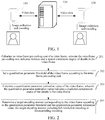
- FIG. 1 is a schematic diagram of an implementation environment, or system, involved by a video encoding method according to an embodiment of this application.
- the implementation environment includes: a first terminal 110, a second terminal 120, and a server 130.
- the first terminal 110 and the second terminal 120 are electronic devices that are installed with video communication applications.
- the electronic devices are smartphones, tablet computers, personal computers, and the like.
- the first terminal 110 and the second terminal 120 are respectively connected to the server 130 through a wired or wireless network.
- the server 130 is a back-end server of the video communication applications.
- the back-end server may be one server, a server cluster formed by several servers, or a cloud computing center.
- the first terminal 110 When a first user using the first terminal 110 performs video communication with a second user using the second terminal 120, the first terminal 110 performs video encoding on a collected image, and transmits encoded video data to the second terminal 120 by using the server 130, so that the second terminal 120 may decode and display the received video data (a manner in which the second terminal 120 transmits video data to the first terminal 110 is the same).
- the video encoding method provided in the embodiment of the present disclosure is applied to the first terminal 110 or the second terminal 120.
- the first terminal 110 and the second terminal 120 are installed with video playing applications, and the server 130 is a back-end server of the video communication applications.
- the first terminal 110 and the second terminal 120 respectively establish a network connection with the server 130, and receive the encoded video data that is transmitted by the server 130, thereby decoding and playing the video data.
- the video encoding method is applied to the server 130.
- the wireless or wired network uses a standard communications technology and/or protocol.
- the network is generally the Internet, but may be any other network, including but not limited to a local area network (LAN), a metropolitan area network (MAN), a wide area network (WAN), a mobile, wired, or wireless network, or any combination of a dedicated network or a virtual dedicated network).
- technologies and/or formats such as hypertext markup language (HTML) and extensible markup language (XML) are used for representing data exchanged through a network.
- HTML hypertext markup language
- XML extensible markup language
- all or some links may be encrypted by using encryption technologies such as a secure socket layer (SSL), transport layer security (TLS), a virtual private network (VPN), and internet protocol security (IPsec).
- SSL secure socket layer
- TLS transport layer security
- VPN virtual private network
- IPsec internet protocol security
- custom and/or dedicated data communication technologies may also be used in place of or in addition to the foregoing data communication technologies.
- the video encoding method provided in the embodiments of this application may be used in a scenario in which a video needs to be encoded.
- the method is applied to a video encoding device.
- the video encoding device may be a mobile terminal installed with video codec software, or may be a server having a video codec function.
- encoding quality of the video encoding device can be improved.
- the following embodiments are described through an example in which a video encoding method is applied to a video encoding device.
- the video encoding method can be applied to the following product scenarios:
- a video call scenario in an instant messaging application An instant messaging application may generally provide a video call function.
- a mobile terminal may encode a collected video frame, and transmit encoded video frame data to a server.
- the server transmits the video frame data to a peer mobile terminal, so that the peer mobile terminal decodes and displays the data. Encoding quality of the mobile terminal for the video frame will directly affect quality of a video call.
- the mobile terminal can determine a target encoding manner that accords with image characteristics of the video frame according to a quantization parameter estimation value and a quantization parameter threshold of the video frame, and encode the video frame by using the target encoding manner, thereby improving video encoding quality of the mobile terminal, and finally improving the quality of the video call.
- a video encoding scenario in a video shooting application In a process of shooting by using a video shooting application, a terminal may encode a collected video frame, thereby generating a corresponding video file when the shooting is finished.
- a video encoding device may determine the most suitable target encoding manner according to image characteristics of a current video frame, and encode the current video frame by using the target encoding manner, thereby improving video encoding quality of the mobile terminal, and finally improving quality of the generated video file.
- scenarios involved by video encoding may use the video encoding method provided in the embodiments of this application. This is not limited in the embodiments of this application.
- FIG. 2 is a flowchart of a video encoding method according to an embodiment of this application. This embodiment is described by using an example in which the video encoding method is applied to a video encoding device. The method includes the following steps:
- the video encoding device calculates an intra-frame pre-coding cost of a video frame, wherein the intra-frame pre-coding cost indicates richness and a spatial correlation degree of details in the video frame.
- the intra-frame pre-coding cost of the video frame is related to a code rate required for encoding.
- a lager intra-frame pre-coding cost indicates richer details in the video frame, and a lower spatial correlation degree of the details. Therefore, to achieve a certain video quality, a code rate required for encoding is higher. Conversely, a smaller intra-frame pre-coding cost indicates a lower code rate required for encoding.
- the video encoding device After a video frame in a video frame sequence is obtained, the video encoding device assumes that the video frame is an I frame, and performs intra-frame pre-coding analysis on the video frame, thereby obtaining an intra-frame pre-coding cost of the video frame through calculation. Subsequently, the video encoding device sets a quantization parameter threshold of the video frame based on the intra-frame pre-coding cost.
- this step includes the following steps.
- the video encoding device After the pre-coding costs of the code blocks are obtained through calculation, the video encoding device adds up the pre-coding costs, to obtain the intra-frame pre-coding cost I cos t of the video frame.
- step 202 the video encoding device sets a quantization parameter threshold of the video frame according to the intra-frame pre-coding cost.
- the video frame needs at least one downsampling and one upsampling, and both the upsampling and the downsampling may cause a loss of the details in the video frame, leading to sawtooth distortion in an edge region of an image, thereby affecting video quality.
- both the upsampling and the downsampling may cause a loss of the details in the video frame, leading to sawtooth distortion in an edge region of an image, thereby affecting video quality.
- a larger amount of information of the video frame leads to heavier distortion after downsampling encoding.
- the video encoding device determines an amount of information of a current video frame according to an intra-frame pre-coding cost. Therefore, a relatively large quantization parameter threshold is set when the amount of information is relatively large, so that full-resolution encoding tends to be performed on the video frame subsequently (to avoid an information loss of the video frame).
- a relatively small quantization parameter threshold is set, so that downsampling encoding tends to be performed on the video frame subsequently (when the amount of information of the video frame is relatively small, the downsampling encoding has a relatively small effect on distortion).
- the video encoding device calculates a quantization parameter estimation value of the video frame, wherein the quantization parameter estimation value indicates a predicted compression status of the details in the video frame.
- the video encoding device estimates a quantization parameter estimation value of the current video frame, thereby determining a predicted compression status of the details in the current video frame according to the quantization parameter estimation value.
- the predicted compression status of the details is used for reflecting a predicted loss status of the details. A heavier predicted compression status of the details indicates that more details are lost. Correspondingly, distortion of the video frame is more severe and quality of the video frame is reduced.
- the quantization parameter estimation value is determined as a preset quantization parameter.
- the preset quantization parameter may be a fixed value, or may be obtained through calculation according to an average code rate of each pixel in the video frame.
- the quantization parameter estimation value is determined by an encoding mode used by an encoder.
- the encoding mode includes fixed quality encoding and fixed code rate encoding.
- the fixed quality encoding refers to an encoding manner maintaining fixed video picture quality
- the fixed code rate encoding refers to an encoding manner maintaining a fixed video code rate.
- step 203 may be simultaneously preformed with steps 201 to 202.
- An execution time sequence between step 203 and steps 201 to 202 is not limited in this embodiment.
- the video encoding device determines a target encoding manner corresponding to the video frame according to the quantization parameter threshold and the quantization parameter estimation value, the target encoding manner including full-resolution encoding or downsampling encoding.
- the video encoding device determines, by comparing the quantization parameter threshold and the quantization parameter estimation value, a target encoding manner is determined for encoding the video frame.
- the video encoding device determines the target encoding manner as downsampling encoding, when the quantization parameter estimation value is greater than the quantization parameter threshold.
- the video encoding device determines the target encoding manner as the full-resolution encoding, when the quantization parameter estimation value is less than the quantization parameter threshold.
- the video encoding device further uses the encoder to perform code rate control (by using a code control algorithm) on the video frame that is encoded by using the target encoding manner according to the quantization parameter estimation value, and finally outputs video frame data.
- the full-resolution encoding is uniformly performed on I frames, and the downsampling encoding is uniformly performed on P frames.
- the video encoding device avoids the downsampling encoding on a video frame with more details, thereby reducing distortion caused in an encoding process, and improving the video encoding effect.
- pre-coding analysis is first performed on the video frame, to obtain an intra-frame pre-coding cost of the video frame, so that a quantization parameter threshold of the video frame is set according to the intra-frame pre-coding cost.
- a full-resolution or downsampling manner is used for encoding the video frame by comparing a quantization parameter estimation value and the quantization parameter threshold of the video frame.
- both richness and a compression status of details of the current video frame are considered in an encoding manner selecting process, so that the finally determined encoding manner accords with image characteristics of the video frame, thereby improving the video encoding effect.
- FIG. 3 is a flowchart of a video encoding method according to another embodiment of this application. This embodiment is described by using an example in which the video encoding method is applied to a video encoding device. The method includes the following steps:
- the video encoding device calculates an intra-frame pre-coding cost of a video frame, wherein the intra-frame pre-coding cost indicates richness and a spatial correlation degree of details in the video frame.
- step 201 An implementation of this step is similar to that of step 201, and details are not described again in this embodiment.
- the video encoding device calculates an average intra-frame pre-coding cost for each pixel according to the intra-frame pre-coding cost and a quantity of pixels of the video frame.
- the video encoding device in order to explore an amount of information of the current video frame (i.e., complexity of the details in the video frame), the video encoding device further calculates an average intra-frame pre-coding cost for each pixel according to an intra-frame pre-coding cost and a quantity of pixel points (i.e., a quantity of pixels) in the current video frame.
- a smaller average intra-frame pre-coding cost indicates a smaller amount of information included by the video frame, and fewer image details (i.e., less information is lost when upsampling and downsampling are performed, and downsampling encoding is suitable for being used).
- a larger average intra-frame pre-coding cost indicates a larger amount of information included by the video frame, and more image details (i.e., more information is lost when upsampling and downsampling are performed, and full-resolution encoding is suitable for being used).
- I cos t is the intra-frame pre-coding cost of the video frame
- width is a quantity of pixel points of the video frame in a horizontal direction
- height is a quantity of pixel points of the video frame in a vertical direction.
- width * height is a resolution of the camera, such as 1080 * 720.
- step 303 the video encoding device sets a quantization parameter threshold as a first value, when the average intra-frame pre-coding cost is greater than a preset cost threshold.
- step 304 the video encoding device sets the quantization parameter threshold as a second value, when the average intra-frame pre-coding cost is less than the preset cost threshold, wherein the first value is greater than the second value.
- the video encoding device sets a cost threshold in advance, and detects whether the average intra-frame pre-coding cost of the current video frame is greater than a preset cost threshold. If yes, it indicates that an amount of information of the current video frame is relatively large. To make the full-resolution encoding tend to be selected subsequently (a distortion degree is relatively high during the downsampling encoding), the video encoding device sets a relatively large quantization parameter threshold for the video frame. If not, it indicates that an amount of information of the current video frame is relatively small. To make the downsampling encoding tend to be selected subsequently, the video encoding device sets a relatively small quantization parameter threshold for the video frame.
- QP TH ⁇ 33 , I cos tPerPixel ⁇ 1.2 36 , I cos tPerPixel ⁇ 1.2
- the video encoding device may further set two or more cost thresholds in advance, and set different quantization parameter thresholds for different cost threshold intervals. This embodiment is described by using an example in which only one cost threshold is set, but does not a constitute limitation on this.
- the video encoding device sets a quantization parameter threshold corresponding to the current video frame according to image characteristics (including a magnitude of an amount of information) of the current video frame. Further, the video encoding device calculates a quantization parameter estimation value of the video frame through steps 305 to 307.
- steps 301 to 304 may be simultaneously preformed with steps 305 to 307. This is not limited in this embodiment.
- the video encoding device determines the quantization parameter estimation value as a preset quantization parameter, when the video frame is a first frame of a frame sequence.
- the video encoding device When obtaining the video frame, the video encoding device first detects whether the video frame is the first frame of a frame sequence. If yes, the preset quantization parameter is determined as the quantization parameter estimation value of the video frame. If not, the quantization parameter estimation value of the video frame is further determined according to an encoding mode used by an encoder. For example, step 306 or 307 is performed.
- the preset quantization parameter may be a fixed value (e.g. 35) that is set in advance, or may be obtained through calculation according to a target code rate, a frame rate, and a resolution.
- the video encoding device obtains an average code rate of each pixel point in the video frame by calculating as "target code rate/frame rate/resolution", and then sets a quantization parameter estimation value of the first frame according to the average code rate.
- a code rate control algorithm may be used to set the quantization parameter according to the average code rate. Details are not described again in this embodiment.
- the video encoding device determines the quantization parameter estimation value as an external preset value of the encoder, when the video frame is not the first frame of the frame sequence and an encoding mode used by the encoder is fixed quality encoding.
- the video encoding device assumes that for the current video frame, full-resolution encoding is used, and further obtains an encoding mode used by the encoder, thereby setting the quantization parameter estimation value of the video frame based on the encoding mode.
- the encoder When the encoding mode used by the encoder is fixed quality encoding, the encoder performs encoding based on a uniform quantization parameter. For example, quantization parameters of all code blocks in the video frame are the same, so that the video encoding device determines an external preset value of the encoder (i.e., quantization parameters preset by the encoder) as the quantization parameter estimation value.
- a uniform quantization parameter For example, quantization parameters of all code blocks in the video frame are the same, so that the video encoding device determines an external preset value of the encoder (i.e., quantization parameters preset by the encoder) as the quantization parameter estimation value.
- the video encoding device calculates a quantization parameter of a pre-determined code block in the video frame, and determines the quantization parameter estimation value as the quantization parameter of the pre-determined code block, when the video frame is not the first frame of the frame sequence and the encoding mode used by the encoder is fixed code rate encoding.
- the video encoding device determines the quantization parameter of the pre-determined code block in the video frame as the quantization parameter estimation value of the video frame.
- the pre-determined code block may be the first code block of the video frame.
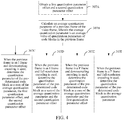
- the video encoding device calculates a quantization parameter of a first code block in the video frame based on a previous frame of the current video frame. For example, as shown in FIG. 4 , this step includes the following steps.
- the video encoding device obtains a first quantization parameter offset and a second quantization parameter offset, wherein the first quantization parameter offset is a difference between a downsampling encoding quantization parameter and a full-resolution encoding quantization parameter, and the second quantization parameter offset is a difference between an I-frame quantization parameter and a P-frame quantization parameter.
- the video encoding device sets a first quantization parameter offset QP delta in advance.
- the first quantization parameter offset is a difference between a full-resolution encoding quantization parameter (a quantization parameter used for code rate control during the full-resolution encoding) and a downsampling encoding quantization parameter (a quantization parameter used for code rate control during the downsampling encoding).
- a value of QP delta may be 5, 6, or 7.
- a value obtained by subtracting the first quantization parameter offset from the full-resolution encoding quantization parameter may be used as the downsampling encoding quantization parameter.
- a value obtained by adding the downsampling encoding quantization parameter with the first quantization parameter offset may be used as the full-resolution encoding quantization parameter.
- the video encoding device sets a second quantization parameter offset QP offset_I / P in advance.
- the second quantization parameter offset is a difference between an I-frame quantization parameter (a quantization parameter used for code rate control on an I frame) and a P-frame quantization parameter (a quantization parameter used for code rate control on a P frame).
- a value of QP offset_I / P may be 1, 2, or 3.
- the video encoding device Before the quantization parameter of the first code block in the video frame is calculated, the video encoding device obtains the first quantization parameter offset and the second quantization parameter offset.
- step 307B the video encoding device calculates an average quantization parameter of a previous frame of the video frame, wherein the average quantization parameter is an average value of quantization parameters of code blocks in the previous frame.
- the video encoding device obtains quantization parameters of code blocks in the previous frame from encoded information, thereby calculating an average quantization parameter of the previous frame according to the quantization parameters of the code blocks. Because pictures of consecutive video frames are consecutive and similar, the video encoding device may determine a quantization parameter estimation value of the current video frame based on the average quantization parameter of the previous frame, thereby reducing processing resources consumed during encoding, and improving accuracy of the quantization parameter estimation value.
- the average quantization parameter of the previous frame calculated by the video encoding device is 30.
- the video encoding device calculates the quantization parameter of the first code block according to a frame type of the previous frame (I frame or P frame) and a used encoding manner (full-resolution encoding or downsampling encoding).
- the video encoding device performs step 307C or 307D. If the previous frame is detected as a P frame, the video encoding device performs step 307E or 307F.
- step 307C when the previous frame is an I frame and downsampling encoding is used, the video encoding device determines the quantization parameter of the pre-determined code block as a sum of the average quantization parameter, the first quantization parameter offset, and the second quantization parameter offset.
- the video encoding device When the previous frame is an I frame and the downsampling encoding is used, the video encoding device performs offset calculation on the average quantization parameter according to the first quantization parameter offset and the second quantization parameter offset to obtain the quantization parameter of the pre-determined code block.
- the video encoding device obtains encoding information of the previous frame.
- step 307D when the previous frame is an I frame and full-resolution encoding is used, the video encoding device determines the quantization parameter of the pre-determined code block as a sum of the average quantization parameter and the second quantization parameter offset.
- a terminal does not need to perform offset processing on the average quantization parameter by using the first quantization parameter offset, that is, directly determines a sum of the average quantization parameter and the second quantization parameter offset as the quantization parameter of the pre-determined code block.
- step 307E when the previous frame is a P frame and downsampling encoding is used, the video encoding device determines the quantization parameter of the pre-determined code block as a sum of the average quantization parameter and the first quantization parameter offset.
- the video encoding device When the previous frame is a P frame and the downsampling encoding is used, the video encoding device performs offset calculation on the average quantization parameter according to the first quantization parameter offset, to obtain the quantization parameter of the pre-determined code block.
- step 307F when the previous frame is a P frame and full-resolution encoding is used, the video encoding device determines the quantization parameter of the pre-determined code block as the average quantization parameter.
- a terminal does not need to perform offset processing on the average quantization parameter by using the first quantization parameter offset, that is, directly determines the average quantization parameter as the quantization parameter of the pre-determined code block.
- the video encoding device calculates the quantization parameter of the pre-determined code block as 30 with reference to examples in steps 307A and 307B.
- Step 308 determine the downsampling encoding as a target encoding manner, when the quantization parameter estimation value is greater than the quantization parameter threshold.
- the video encoding device determines, by comparing the quantization parameter estimation value with the quantization parameter threshold, a target encoding manner used for the video frame.
- the video encoding device determines the downsampling encoding as the target encoding manner of the video frame.
- step 309 the video encoding device determines the full-resolution encoding as the target encoding manner, when the quantization parameter estimation value is less than the quantization parameter threshold.
- the video encoding device determines the full-resolution encoding as the target encoding manner of the video frame.
- step 310 when the video frame the downsampling encoding is used, the video encoding device corrects the quantization parameter estimation value according to the first quantization parameter offset, and encodes the video frame according to the corrected quantization parameter.
- the video encoding device encodes the current video frame by using the target encoding manner, and inputs the encoded video frame into the encoder.
- the encoder performs code rate control on the encoded video frame according to the quantization parameter estimation value.
- the video encoding device corrects the quantization parameter estimation value according to the first quantization parameter offset.
- the corrected quantization parameter quantization parameter estimation value - first quantization parameter offset.
- a quantization parameter estimation value of a downsampling frame (a video frame subjected to the downsampling encoding) is a quantization parameter of actual encoding.
- a quantization parameter estimation value corresponding to a downsampling frame is the quantization parameter of the preset code block.
- the quantization parameter estimation value is corrected by using the first quantization parameter offset that is set in advance, to avoid an abrupt change in video quality during switching between full-resolution encoding and downsampling encoding, and video quality becomes stable.
- overall compression efficiency of a video is improved by setting the second quantization parameter offset in advance.
- the video encoding device when the current video frame is not the first frame, the video encoding device obtains a quantization parameter estimation value of the current video frame based on an average quantization parameter of a previous frame, thereby improving accuracy of the quantization parameter estimation value, and further improving accuracy of an encoding manner selected subsequently.
- an average intra-frame pre-coding cost for each pixel in the video frame is calculated, and a relatively large quantization parameter threshold is set when the average intra-frame pre-coding cost is relatively large, so that the full-resolution encoding tends to be selected subsequently, thereby avoiding a problem of video picture distortion caused due to a heavy information loss by using downsampling encoding when an amount of information of the video frame is relatively large.
- FIG. 5 is a structural block diagram of a video encoding apparatus according to an embodiment of the present disclosure.
- the video encoding apparatus may be implemented as all or a part of a video encoding device.
- the apparatus includes:
- the determining module 540 includes:
- the cost calculation module 510 includes:
- the threshold setting module 520 includes:
- the estimation module 530 includes:
- the encoding mode includes fixed quality encoding and fixed code rate encoding.
- the fixed quality encoding refers to an encoding manner maintaining fixed video picture quality
- the fixed code rate encoding refers to an encoding manner maintaining a fixed video code rate.
- the fifth determining unit is configured to:
- the calculating a quantization parameter of a pre-determined code block in the video frame includes:
- the apparatus further includes: an encoding module, configured to when the downsampling encoding is used for the video frame, correct the quantization parameter estimation value according to the first quantization parameter offset, and encode the video frame according to the corrected quantization parameter.
- an encoding module configured to when the downsampling encoding is used for the video frame, correct the quantization parameter estimation value according to the first quantization parameter offset, and encode the video frame according to the corrected quantization parameter.
- pre-coding analysis is first performed on the video frame, to obtain an intra-frame pre-coding cost of the video frame, so that a quantization parameter threshold of the video frame is set according to the intra-frame pre-coding cost.
- a full-resolution or downsampling manner is used for encoding the video frame by comparing a quantization parameter estimation value and the quantization parameter threshold of the video frame.
- both richness and a compression status of details of the current video frame are considered in an encoding manner selecting process, so that the finally determined encoding manner accords with image characteristics of the video frame, thereby improving the video encoding effect.
- the quantization parameter estimation value is corrected by using the first quantization parameter offset that is set in advance, to avoid an abrupt change in video quality during switching between full-resolution encoding and downsampling encoding, and maintain stable video quality.
- overall compression efficiency of a video is improved by setting the second quantization parameter offset in advance.
- the video encoding device when the current video frame is not the first frame, the video encoding device obtains a quantization parameter estimation value of the current video frame based on an average quantization parameter of a previous frame, thereby improving accuracy of the quantization parameter estimation value, and further improving accuracy of an encoding manner selected subsequently.
- an average intra-frame pre-coding cost for each pixel in the video frame is calculated, and a relatively large quantization parameter threshold is set when the average intra-frame pre-coding cost is relatively large, so that the full-resolution encoding tends to be selected subsequently, thereby avoiding a problem of video picture distortion caused due to a heavy information loss by using downsampling encoding when an amount of information of the video frame is relatively large.
- the video encoding apparatus provided in the foregoing embodiment, only divisions of the foregoing functional modules are described by using an example. During actual application, the foregoing functions may be allocated to and completed by different functional modules according to requirements, that is, the internal structure of the video encoding device is divided into different functional modules, to complete all or some of the foregoing described functions.
- the video encoding apparatus provided in the foregoing embodiment belongs to the same concept as the embodiment of the video encoding method. For a specific implementation process of the apparatus, refer to the method embodiment, and details are not described herein again.
- FIG. 6 is a structural block diagram of a terminal 600 according to an exemplary embodiment of the present disclosure.
- the terminal 600 may be a portable mobile terminal, for example, a smartphone, a tablet computer, a moving picture experts group audio layer III (MP3) player, or a moving picture experts group audio layer IV (MP4) player.
- MP3 moving picture experts group audio layer III
- MP4 moving picture experts group audio layer IV
- the terminal 600 may also be referred to as other names such as user equipment and a portable terminal.
- the terminal 600 includes a processor 601 and a memory 602.
- the processor 601 may include one or more processing cores, for example, a 4-core processor or an 8-core processor.
- the processor 601 may be implemented in at least one hardware form of digital signal processing (DSP), a field-programmable gate array (FPGA), and a programmable logic array (PLA).
- the processor 601 may also include a main processor and a coprocessor.
- the main processor is a processor configured to process data in an awake state, and is also referred to as a central processing unit (CPU).
- the coprocessor is a low power consumption processor configured to process data in a standby state.
- the processor 601 may be integrated with a graphics processing unit (GPU).
- the GPU is configured to be responsible for rendering and drawing content that a display screen needs to display.
- the processor 601 may further include an artificial intelligence (AI) processor.
- the AI processor is configured to process a computing operation related to machine learning.
- the memory 602 may include one or more computer-readable storage media.
- the computer-readable storage medium may be tangible and non-transient.
- the memory 602 may further include a high-speed random access memory and a non-volatile memory, for example, one or more disk storage devices, or flash memory devices.
- the non-transient computer-readable storage medium in the memory 602 is configured to store at least one instruction, and the at least one instruction is used for being executed by the processor 601 to implement the video encoding method provided in this application.
- the terminal 600 may optionally include: a peripheral interface 603 and at least one peripheral.
- the peripheral includes: at least one of a radio frequency (RF) circuit 604, a touch display screen 605, a camera component 606, an audio frequency circuit 607, a positioning component 608, and a power source 609.
- RF radio frequency
- the peripheral interface 603 may be configured to connect the at least one peripheral related to input/output (I/O) to the processor 601 and the memory 602.
- the processor 601, the memory 602 and the peripheral interface 603 are integrated on a same chip or circuit board.
- any one or two of the processor 601, the memory 602, and the peripheral interface 603 may be implemented on a single chip or circuit board. This is not limited in this embodiment.
- the RF circuit 604 is configured to receive and transmit an RF signal, which is also referred as an electromagnetic signal.
- the RF circuit 604 communicates with a communications network and other communications devices by using the electromagnetic signal.
- the RF circuit 604 converts an electrical signal into an electromagnetic signal to be transmitted, or converts a received electromagnetic signal into an electrical signal.
- the RF circuit 604 includes: an antenna system, an RF transceiver, one or more amplifiers, a tuner, an oscillator, a digital signal processor, a codec chipset, a subscriber identity module card, and the like.
- the RF circuit 604 may communicate with other terminals through at least one wireless communication protocol.
- the wireless communication protocol includes, but is not limited to: a world wide web, a metropolitan area network, an intranet, generations of mobile communication networks (2G, 3G, 4G, and 5G), a wireless local area network and/or a wireless fidelity (Wi-Fi) network.
- the RF circuit 604 may also include a circuit related to near field communication (NFC). This is not limited in this application.
- the touch display screen 605 is configured to display a user interface (UI).
- the UI may include a graphic, a text, an icon, a video, and any combination thereof.
- the touch display screen 605 also has a capability of collecting a touch signal on or above a surface of the touch display screen 605.
- the touch signal may be used as a control signal to be inputted into the processor 601 for processing.
- the touch display screen 605 is configured to provide a virtual button and/or a virtual keyboard, which is also referred to as a soft button and/or a soft keyboard. In some embodiments, there may be one touch display screen 605, disposed on a front panel of the terminal 600.
- the touch display screen 605 may be a flexible display screen, disposed on a curved surface or a folded surface of the terminal 600. Even, the touch display screen 605 may be further set in a non-rectangular irregular pattern, namely, a special-shaped screen.
- the touch display screen 605 may be made of a material such as a liquid crystal display (LCD) or an organic light-emitting diode (OLED).
- the camera component 606 is configured to collect an image or a video.
- the camera component 606 includes a front-facing camera and a rear-facing camera.
- the front-facing camera is configured to implement a video call or self-portrait.
- the rear-facing camera is configured to shooting a picture or a video.
- the camera component 606 may further include a flash.
- the flash may be a monochrome temperature flash, or may be a double color temperature flash.
- the double color temperature flash refers to a combination of a warm light flash and a cold light flash, and may be used for light compensation under different color temperatures.
- the audio frequency circuit 607 is configured to provide an audio interface between a user and the terminal 600.
- the audio frequency circuit 607 may include a microphone and a speaker.
- the microphone is configured to collect a sound wave of a user and an environment, and convert the sound wave into the electrical signal to be input to the processor 601 for processing, or to be input to the RF circuit 604 for implementing voice communication.
- the microphone may be further an array microphone or an omnidirectional collection type microphone.
- the speaker is configured to convert the electrical signal from the processor 601 or the RF circuit 604 into the sound wave.
- the speaker may be a conventional film speaker, or may be a piezoelectric ceramic speaker.
- the audio frequency circuit 607 may alternatively include an earphone jack.
- the positioning component 608 is configured to position a current geographic location of the terminal 600 to implement navigation or a location based service (LBS).
- the positioning component 608 may be a positioning component based on a global positioning system (GPS) of the United States, a Beidou system of China, or a Galileo system of Russia.
- GPS global positioning system
- the power source 609 is configured to supply power for the components in the terminal 600.
- the power source 609 may be an alternating current, a direct current, a disposable battery, or a rechargeable battery.
- the rechargeable battery may be a wired rechargeable battery or a wireless rechargeable battery.
- the wired rechargeable battery is a battery charged through a wired line.
- the wireless rechargeable battery is a battery charged through a wireless coil.
- the rechargeable battery may be further configured to support a fast charge technology.
- the terminal 600 further includes one or more sensors 610.
- the one or more sensors 610 include but are not limited to: an acceleration sensor 611, a gyroscope sensor 612, a pressure sensor 613, a fingerprint sensor 614, an optical sensor 615, and a proximity sensor 616.
- the acceleration sensor 611 may detect the magnitude of acceleration on three coordinate axes of a coordinate system established with the terminal 600.
- the acceleration sensor 611 may be configured to detect components of gravity acceleration on the three coordinate axes.
- the processor 601 may control, according to a gravity acceleration signal collected by the acceleration sensor 611, the touch display screen 605 to display the user interface in a transverse view or a longitudinal view.
- the acceleration sensor 611 may be further configured to collect motion data of a game or a user.
- the gyroscope sensor 612 may detect a body direction and a rotation angle of the terminal 600.
- the gyroscope sensor 612 may cooperate with the acceleration sensor 611 to collect a 3D action by the user on the terminal 600.
- the processor 601 may implement the following functions according to the data collected by the gyroscope sensor 612: motion sensing (e.g. changing the UI according to a tilt operation of the user), image stabilization at shooting, game control, and inertial navigation.
- the pressure sensor 613 may be disposed at a side frame of the terminal 600 and/or a lower layer of the touch display screen 605.
- a holding signal of the user on the terminal 600 may be detected, and left/right hand identification and a quick action may be performed according to the holding signal.
- an operable control on the UI interface can be controlled according to a pressure operation of the user on the touch display screen 605.
- the operable control includes at least one of a button control, a scroll-bar control, an icon control and a menu control.
- the fingerprint sensor 614 is configured to collect a user's fingerprint to identify a user's identity according to the collected fingerprint. When identifying that the user's identity is a trusted identity, the processor 601 authorizes the user to perform related sensitive operations.
- the sensitive operations include: unlocking a screen, viewing encryption information, downloading software, paying, changing a setting, and the like.
- the fingerprint sensor 614 may be disposed on a front surface, a back surface, or a side surface of the terminal 600. When a physical button or a vendor logo is disposed on the terminal 600, the fingerprint sensor 614 may be integrated with the physical button or the vendor logo.
- the optical sensor 615 is configured to collect ambient light intensity.
- the processor 601 may control display brightness of the touch display screen 605 according to the ambient light intensity collected by the optical sensor 615. Specifically, when the ambient light intensity is relatively high, the display brightness of the touch display screen 605 is turned up. When the ambient light intensity is relatively low, the display brightness of the touch display screen 605 is turned down.
- the processor 601 may further dynamically adjust a shooting parameter of the camera component 606 according to the ambient light intensity collected by the optical sensor 615.
- the proximity sensor 616 also referred to as a distance sensor, is generally disposed on the front surface of the terminal 600.
- the proximity sensor 616 is configured to collect a distance between the user and the front surface of the terminal 600.
- the touch display screen 605 is controlled by the processor 601 to switch from a screen-on state to a screen-off state.
- the proximity sensor 616 detects that the distance between the user and the front surface of the terminal 600 gradually becomes larger, the touch display screen 605 is controlled by the processor 601 to switch from the screen-off state to the screen-on state.
- FIG. 6 constitutes no limitation on the terminal 600, and the terminal may include more or fewer components than those shown in the figure, or some components may be combined, or a different component deployment may be used.
- An embodiment of this application further provides a video encoding device, including a processor and a memory, the memory storing at least one instruction, at least one program, and a code set or an instruction set, and the at least one instruction, the at least one program, and the code set or the instruction set being loaded and executed by the processor to implement the video encoding method according to the foregoing embodiments.
- An embodiment of this application further provides a computer-readable storage medium, the storage medium storing at least one instruction, at least one program, and a code set or an instruction set, and the at least one instruction, the at least one program, and the code set or the instruction set being loaded and executed by a processor to implement the video encoding method according to the foregoing embodiments.
- the computer-readable storage medium may include: a read-only memory (ROM), a random access memory (RAM), a solid state drive (SSD), an optical disc, or the like.
- the RAM may include a resistance random access memory (ReRAM) and a dynamic random access memory (DRAM).
- ReRAM resistance random access memory
- DRAM dynamic random access memory
Landscapes
- Engineering & Computer Science (AREA)
- Multimedia (AREA)
- Signal Processing (AREA)
- Compression Or Coding Systems Of Tv Signals (AREA)
Abstract
Description
- Embodiments of this application claims priority to Chinese Patent Application No.
201810039100.3 - Embodiments of this application relates to the field of video encoding technologies, and in particular, to a video encoding method, apparatus, device, and a storage medium.
- With the continuous development of multimedia technologies, application scenarios of video become increasingly wider. For example, a user may watch streaming videos online, and may further make video calls with others.
- When a video frame in the video is encoded, common encoding manners include full-resolution encoding and downsampling encoding. In a full-resolution encoding mode, an encoder directly encodes the video frame. In a downsampling encoding mode, the encoder first performs downsampling on the video frame, and then encodes the downsampled video frame. In the downsampling process, some image details may be lost. Therefore, in the related art, the encoder performs full-resolution encoding on an I frame in the video, and performs downsampling encoding on a P frame in the video.
- However, when the video frame is encoded by using the foregoing encoding manner, the video encoding effect is poor because image characteristics of the video frame are not considered.
- Embodiments of this application provide a video encoding method, apparatus, device, and a storage medium, which can resolve the problem that the video encoding effect is poor because image characteristics of a video frame are not considered when full-resolution encoding is performed on an I frame in a video, and downsampling encoding is performed on a P frame in the video. The technical solutions are as follows:
- According to one aspect, a video encoding method is provided, including:
- calculating an intra-frame pre-coding cost of a video frame, wherein the intra-frame pre-coding cost indicates richness and a spatial correlation degree of details in the video frame;
- setting a quantization parameter threshold of the video frame according to the intra-frame pre-coding cost;
- calculating a quantization parameter estimation value of the video frame, wherein the quantization parameter estimation value indicates a predicted compression status of the details in the video frame; and
- determining a target encoding manner corresponding to the video frame according to the quantization parameter threshold and the quantization parameter estimation value, the target encoding manner comprising full-resolution encoding or downsampling encoding.
- According to another aspect, a video encoding apparatus is provided, including:
- a cost calculation module, configured to calculate an intra-frame pre-coding cost of a video frame, wherein the intra-frame pre-coding cost indicates richness and a spatial correlation degree of details in the video frame;
- a threshold setting module, configured to set a quantization parameter threshold of the video frame according to the intra-frame pre-coding cost;
- an estimation module, configured to calculate a quantization parameter estimation value of the video frame, wherein the quantization parameter estimation value indicates a predicted compression status of the details in the video frame; and
- a determining module, configured to determine a target encoding manner corresponding to the video frame according to the quantization parameter threshold and the quantization parameter estimation value, the target encoding manner comprising full-resolution encoding or downsampling encoding.
- According to another aspect, a video encoding device is provided, including a processor and a memory, the memory storing at least one instruction, at least one program, and a code set or an instruction set, and the at least one instruction, the at least one program, and the code set or the instruction set being executed by the processor to implement the video encoding method according to the foregoing aspect.
- According to another aspect, a computer-readable storage medium is provided, the storage medium storing at least one instruction, at least one program, and a code set or an instruction set, the at least one instruction, the at least one program, and the code set or the instruction set being executed by a processor to perform the video encoding method according to the foregoing aspect.
- In the embodiments of this application, before a video frame is encoded, pre-coding analysis is first performed on the video frame, to obtain an intra-frame pre-coding cost of the video frame, so that a quantization parameter threshold of the video frame is set according to the intra-frame pre-coding cost. For determining of an encoding manner used for encoding the video frame, a full-resolution or downsampling manner is used for encoding the video frame by comparing a quantization parameter estimation value and the quantization parameter threshold of the video frame. Compared with an encoding manner used in the related art, in this embodiment, both richness and a compression status of details of the current video frame are considered in an encoding manner selecting process, so that the finally determined encoding manner accords with image characteristics of the video frame, thereby improving the video encoding effect.
- To describe the technical solutions in the embodiments of the present disclosure more clearly, the following briefly describes the accompanying drawings required for describing the embodiments. The accompanying drawings in the following description show some embodiments of the present disclosure, and a person of ordinary skill in the art may still derive other drawings from these accompanying drawings.
-
FIG. 1 is a schematic diagram of an implementation environment involved by a video encoding method according to an embodiment of this application. -
FIG. 2 is a flowchart of a video encoding method according to an embodiment of this application. -
FIG. 3 is a flowchart of a video encoding method according to another embodiment of this application. -
FIG. 4 is a flowchart of an exemplary video encoding device for calculating a quantization parameter estimation value of a current video frame according to a previous frame. -
FIG. 5 is a structural block diagram of a video encoding apparatus according to an embodiment of this application. -
FIG. 6 is a structural block diagram of a terminal according to an exemplary embodiment of this application. - To make the objectives, technical solutions, and advantages of the present disclosure clearer, the following further describes the implementations of the present disclosure in detail with reference to the accompanying drawings.
- "Plurality of" mentioned in the specification means two or more. The "and/or" describes an association relationship for describing associated objects and represents that three relationships may exist. For example, A and/or B may represent the following three cases: Only A exists, both A and B exist, and only B exists. The character "/" in this specification generally indicates an "or" relationship between the associated objects.
- To facilitate understanding, the following explains terms involved in the embodiments of this application.
- Video frame: a basic unit of a video, wherein the video is a frame sequence formed by several video frames.
- Intra-frame pre-coding: video frame sequence images have a strong correlation in space. For example, in one video frame, a background of the video frame is one side wall with same patterns and textures. Therefore, when the video frame is divided into several code blocks, code blocks related to the wall may display same or similar information, and for those blocks that have a high spatial correlation degree, an intra-frame pre-coding technology may be used for precoding. Correspondingly, an intra-frame pre-coding cost is used for representing richness and a spatial correlation degree of details in the video frame. The richness of the details is used for representing an amount of information stored in the video frame. A larger amount of information stored in the video frame indicates higher richness of the details in the video frame and correspondingly a higher intra-frame pre-coding cost of the video frame. The spatial correlation degree is used for representing a correlation degree of information stored in different code blocks in the video frame. A higher correlation degree of the information stored in different code blocks indicates a higher spatial correlation degree of the video frame, and a lower intra-frame pre-coding cost of the video frame. In addition, to achieve pre-determined video quality, a higher intra-frame pre-coding cost needs a higher code rate. Conversely, a lower intra-frame pre-coding cost needs a lower code rate.
- Quantization parameter (QP): used for representing a compression status of details in a video frame. In related code rate control algorithms, target code rate control is implemented by adjusting a magnitude of a quantization parameter of discrete cosine transformation. A smaller quantization parameter indicates a higher code rate of the video frame, and more details are retained in the video frame (i.e., finer quantization indicates a lower distortion degree). A larger quantization parameter indicates a lower code rate of the video frame, and a heavier loss of details in the video frame (i.e., coarser quantization indicates a higher distortion degree). Generally, a value range of the quantization parameter is 0 to 51.
- Fixed quality encoding: a video encoding mode, wherein when the fixed quality encoding is used, quantization parameters corresponding to all code blocks in a video frame are the same, thereby achieving a consistent visual effect.
- Fixed code rate encoding: a video encoding mode, wherein when the fixed code rate encoding is used, a bit rate of a video is constant, such as 800 kbps.
- I frame: also referred to as an intra-prediction frame, and refers to a fully encoded video frame in a video frame sequence. When the I frame is decoded, only data of the I frame is needed, and no reference needs to be made to other frames.
- P frame: also referred to as an inter-prediction frame or a forward-prediction frame, and used for representing a difference between a current frame and a previous key frame (I frame or P frame). When the P frame is decoded, data of a previous key frame is needed.
-
FIG. 1 is a schematic diagram of an implementation environment, or system, involved by a video encoding method according to an embodiment of this application. The implementation environment includes: afirst terminal 110, asecond terminal 120, and aserver 130. - In a video communication scenario, the
first terminal 110 and thesecond terminal 120 are electronic devices that are installed with video communication applications. The electronic devices are smartphones, tablet computers, personal computers, and the like. Thefirst terminal 110 and thesecond terminal 120 are respectively connected to theserver 130 through a wired or wireless network. - The
server 130 is a back-end server of the video communication applications. The back-end server may be one server, a server cluster formed by several servers, or a cloud computing center. - When a first user using the
first terminal 110 performs video communication with a second user using thesecond terminal 120, thefirst terminal 110 performs video encoding on a collected image, and transmits encoded video data to thesecond terminal 120 by using theserver 130, so that thesecond terminal 120 may decode and display the received video data (a manner in which thesecond terminal 120 transmits video data to thefirst terminal 110 is the same). The video encoding method provided in the embodiment of the present disclosure is applied to thefirst terminal 110 or thesecond terminal 120. - In another possible application scenario (an online video playing scenario), the
first terminal 110 and thesecond terminal 120 are installed with video playing applications, and theserver 130 is a back-end server of the video communication applications. Thefirst terminal 110 and thesecond terminal 120 respectively establish a network connection with theserver 130, and receive the encoded video data that is transmitted by theserver 130, thereby decoding and playing the video data. The video encoding method is applied to theserver 130. - Optionally, the wireless or wired network uses a standard communications technology and/or protocol. The network is generally the Internet, but may be any other network, including but not limited to a local area network (LAN), a metropolitan area network (MAN), a wide area network (WAN), a mobile, wired, or wireless network, or any combination of a dedicated network or a virtual dedicated network). In some embodiments, technologies and/or formats such as hypertext markup language (HTML) and extensible markup language (XML) are used for representing data exchanged through a network. In addition, all or some links may be encrypted by using encryption technologies such as a secure socket layer (SSL), transport layer security (TLS), a virtual private network (VPN), and internet protocol security (IPsec). In some other embodiments, custom and/or dedicated data communication technologies may also be used in place of or in addition to the foregoing data communication technologies.
- For convenience of description, the following embodiments are described through an example in which a video encoding method is applied to a video encoding device.
- The video encoding method provided in the embodiments of this application may be used in a scenario in which a video needs to be encoded. The method is applied to a video encoding device. The video encoding device may be a mobile terminal installed with video codec software, or may be a server having a video codec function. By using the foregoing method, encoding quality of the video encoding device can be improved. For convenience of description, the following embodiments are described through an example in which a video encoding method is applied to a video encoding device.
- Optionally, the video encoding method can be applied to the following product scenarios:
A video call scenario in an instant messaging application
An instant messaging application may generally provide a video call function. When the video call function is used, a mobile terminal may encode a collected video frame, and transmit encoded video frame data to a server. The server transmits the video frame data to a peer mobile terminal, so that the peer mobile terminal decodes and displays the data. Encoding quality of the mobile terminal for the video frame will directly affect quality of a video call. By using the video encoding method provided in the embodiments of this application, the mobile terminal can determine a target encoding manner that accords with image characteristics of the video frame according to a quantization parameter estimation value and a quantization parameter threshold of the video frame, and encode the video frame by using the target encoding manner, thereby improving video encoding quality of the mobile terminal, and finally improving the quality of the video call. - A video encoding scenario in a video shooting application
In a process of shooting by using a video shooting application, a terminal may encode a collected video frame, thereby generating a corresponding video file when the shooting is finished. When video encoding is performed by using the video encoding method provided in the embodiments of this application, a video encoding device may determine the most suitable target encoding manner according to image characteristics of a current video frame, and encode the current video frame by using the target encoding manner, thereby improving video encoding quality of the mobile terminal, and finally improving quality of the generated video file. - The product scenarios are merely used as examples. In other embodiments, scenarios involved by video encoding may use the video encoding method provided in the embodiments of this application. This is not limited in the embodiments of this application.
-
FIG. 2 is a flowchart of a video encoding method according to an embodiment of this application. This embodiment is described by using an example in which the video encoding method is applied to a video encoding device. The method includes the following steps: - In
step 201, the video encoding device calculates an intra-frame pre-coding cost of a video frame, wherein the intra-frame pre-coding cost indicates richness and a spatial correlation degree of details in the video frame. - The intra-frame pre-coding cost of the video frame is related to a code rate required for encoding. A lager intra-frame pre-coding cost indicates richer details in the video frame, and a lower spatial correlation degree of the details. Therefore, to achieve a certain video quality, a code rate required for encoding is higher. Conversely, a smaller intra-frame pre-coding cost indicates a lower code rate required for encoding.
- After a video frame in a video frame sequence is obtained, the video encoding device assumes that the video frame is an I frame, and performs intra-frame pre-coding analysis on the video frame, thereby obtaining an intra-frame pre-coding cost of the video frame through calculation. Subsequently, the video encoding device sets a quantization parameter threshold of the video frame based on the intra-frame pre-coding cost.
- For determining a specific manner used for performing the intra-frame pre-coding analysis, in an embodiment, this step includes the following steps.
- 1. Perform downsampling on the video frame.
Optionally, the video encoding device performs 2:1 downsampling on the video frame, that is, both a length and a width of the video frame are reduced by one half, to obtain the downsampled video frame. The video encoding device may perform the downsampling by using algorithms such as direct average, bicubic interpolation, and bilinear interpolation. A specific algorithm of the downsampling and a downsampling proportion are not limited in this embodiment. - 2. Divide the downsampled video frame into a plurality of code blocks, pre-code the code blocks, and calculate pre-coding costs of the code blocks.
For the downsampled video frame, to reduce the difficulty of the pre-coding analysis, the video encoding device divides the video frame into code blocks with a pre-determined size, thereby pre-coding the code blocks, to obtain pre-coding costs of the code blocks.
Optionally, the video encoding device divides the downsampled video frame into 8 * 8 code blocks (whose unit is pixel), and sequentially calculates pre-coding costs of the code blocks. When a length or a width of the downsampled video frame is not an integer multiple of 8, the video encoding device performs edge expansion processing on the downsampled video frame, and then divides the video frame obtained after the edge expansion processing.
For a calculation manner of the pre-coding cost, in an embodiment, the video encoding device determines a sum of absolute values of prediction residuals of pixels in a code block as a pre-coding cost of the code block. In another embodiment, the video encoding device calculates the pre-coding cost according to a formula cos t = D + λR, wherein cost is the pre-coding cost, D is used for representing a distortion degree (which may be represented by a sum of absolute values of differences between all reconstructed images and initial images in the current code block), λ is a Lagrange constant, and R is a quantity of bits occupied by the code block. - 3. Determine a sum of the pre-coding costs of the code blocks as the intra-frame pre-coding cost.
- After the pre-coding costs of the code blocks are obtained through calculation, the video encoding device adds up the pre-coding costs, to obtain the intra-frame pre-coding cost I cost of the video frame.
- In
step 202, the video encoding device sets a quantization parameter threshold of the video frame according to the intra-frame pre-coding cost. - When video encoding is performed by using a downsampling encoding manner, the video frame needs at least one downsampling and one upsampling, and both the upsampling and the downsampling may cause a loss of the details in the video frame, leading to sawtooth distortion in an edge region of an image, thereby affecting video quality. In addition, a larger amount of information of the video frame leads to heavier distortion after downsampling encoding.
- To avoid performing downsampling encoding on a video frame with a large amount of information subsequently, the video encoding device determines an amount of information of a current video frame according to an intra-frame pre-coding cost. Therefore, a relatively large quantization parameter threshold is set when the amount of information is relatively large, so that full-resolution encoding tends to be performed on the video frame subsequently (to avoid an information loss of the video frame). When the amount of information is relatively small, a relatively small quantization parameter threshold is set, so that downsampling encoding tends to be performed on the video frame subsequently (when the amount of information of the video frame is relatively small, the downsampling encoding has a relatively small effect on distortion).
- In
step 203, the video encoding device calculates a quantization parameter estimation value of the video frame, wherein the quantization parameter estimation value indicates a predicted compression status of the details in the video frame. - After obtaining the video frame, the video encoding device estimates a quantization parameter estimation value of the current video frame, thereby determining a predicted compression status of the details in the current video frame according to the quantization parameter estimation value. The predicted compression status of the details is used for reflecting a predicted loss status of the details. A heavier predicted compression status of the details indicates that more details are lost. Correspondingly, distortion of the video frame is more severe and quality of the video frame is reduced.
- In an embodiment, if the video frame is a first frame of a frame sequence, the quantization parameter estimation value is determined as a preset quantization parameter. The preset quantization parameter may be a fixed value, or may be obtained through calculation according to an average code rate of each pixel in the video frame.
- If the video frame is not the first frame of the frame sequence, the quantization parameter estimation value is determined by an encoding mode used by an encoder. The encoding mode includes fixed quality encoding and fixed code rate encoding. The fixed quality encoding refers to an encoding manner maintaining fixed video picture quality, and the fixed code rate encoding refers to an encoding manner maintaining a fixed video code rate.
- There is no strict order between
step 203 andsteps 201 to 202. For example, step 203 may be simultaneously preformed withsteps 201 to 202. An execution time sequence betweenstep 203 andsteps 201 to 202 is not limited in this embodiment. - In
step 204, the video encoding device determines a target encoding manner corresponding to the video frame according to the quantization parameter threshold and the quantization parameter estimation value, the target encoding manner including full-resolution encoding or downsampling encoding. - After the quantization parameter threshold and the quantization parameter estimation value of the video frame are obtained through calculation, the video encoding device determines, by comparing the quantization parameter threshold and the quantization parameter estimation value, a target encoding manner is determined for encoding the video frame.
- In an embodiment, the video encoding device determines the target encoding manner as downsampling encoding, when the quantization parameter estimation value is greater than the quantization parameter threshold. The video encoding device determines the target encoding manner as the full-resolution encoding, when the quantization parameter estimation value is less than the quantization parameter threshold.
- Further, after the video frame is encoded according to the determined target encoding manner, the video encoding device further uses the encoder to perform code rate control (by using a code control algorithm) on the video frame that is encoded by using the target encoding manner according to the quantization parameter estimation value, and finally outputs video frame data.
- In the related art, the full-resolution encoding is uniformly performed on I frames, and the downsampling encoding is uniformly performed on P frames. In contrast, in this embodiment, according to image characteristics of the video frame, the video encoding device avoids the downsampling encoding on a video frame with more details, thereby reducing distortion caused in an encoding process, and improving the video encoding effect.
- In conclusion, in this embodiment, before a video frame is encoded, pre-coding analysis is first performed on the video frame, to obtain an intra-frame pre-coding cost of the video frame, so that a quantization parameter threshold of the video frame is set according to the intra-frame pre-coding cost. For determining of an encoding manner used for encoding the video frame, a full-resolution or downsampling manner is used for encoding the video frame by comparing a quantization parameter estimation value and the quantization parameter threshold of the video frame. Compared with an encoding manner used in the related art, in this embodiment, both richness and a compression status of details of the current video frame are considered in an encoding manner selecting process, so that the finally determined encoding manner accords with image characteristics of the video frame, thereby improving the video encoding effect.
-
FIG. 3 is a flowchart of a video encoding method according to another embodiment of this application. This embodiment is described by using an example in which the video encoding method is applied to a video encoding device. The method includes the following steps: - In
step 301, the video encoding device calculates an intra-frame pre-coding cost of a video frame, wherein the intra-frame pre-coding cost indicates richness and a spatial correlation degree of details in the video frame. - An implementation of this step is similar to that of
step 201, and details are not described again in this embodiment. - In
step 302, the video encoding device calculates an average intra-frame pre-coding cost for each pixel according to the intra-frame pre-coding cost and a quantity of pixels of the video frame. - In an embodiment, in order to explore an amount of information of the current video frame (i.e., complexity of the details in the video frame), the video encoding device further calculates an average intra-frame pre-coding cost for each pixel according to an intra-frame pre-coding cost and a quantity of pixel points (i.e., a quantity of pixels) in the current video frame.
- A smaller average intra-frame pre-coding cost indicates a smaller amount of information included by the video frame, and fewer image details (i.e., less information is lost when upsampling and downsampling are performed, and downsampling encoding is suitable for being used). Conversely, a larger average intra-frame pre-coding cost indicates a larger amount of information included by the video frame, and more image details (i.e., more information is lost when upsampling and downsampling are performed, and full-resolution encoding is suitable for being used).
- For example, the average intra-frame pre-coding cost is given by

- For example, when the video frame is an image frame collected by using a camera, width * height is a resolution of the camera, such as 1080 * 720.
- In
step 303, the video encoding device sets a quantization parameter threshold as a first value, when the average intra-frame pre-coding cost is greater than a preset cost threshold. - In
step 304, the video encoding device sets the quantization parameter threshold as a second value, when the average intra-frame pre-coding cost is less than the preset cost threshold, wherein the first value is greater than the second value. - For an implementation of setting the quantization parameter threshold, in an embodiment, the video encoding device sets a cost threshold in advance, and detects whether the average intra-frame pre-coding cost of the current video frame is greater than a preset cost threshold. If yes, it indicates that an amount of information of the current video frame is relatively large. To make the full-resolution encoding tend to be selected subsequently (a distortion degree is relatively high during the downsampling encoding), the video encoding device sets a relatively large quantization parameter threshold for the video frame. If not, it indicates that an amount of information of the current video frame is relatively small. To make the downsampling encoding tend to be selected subsequently, the video encoding device sets a relatively small quantization parameter threshold for the video frame.
- For example, a formula of setting the quantization parameter threshold QPTH is as follows.

- In other embodiments, the video encoding device may further set two or more cost thresholds in advance, and set different quantization parameter thresholds for different cost threshold intervals. This embodiment is described by using an example in which only one cost threshold is set, but does not a constitute limitation on this.
- Through
steps 301 to 304, the video encoding device sets a quantization parameter threshold corresponding to the current video frame according to image characteristics (including a magnitude of an amount of information) of the current video frame. Further, the video encoding device calculates a quantization parameter estimation value of the video frame throughsteps 305 to 307. - There is no strict order between
steps 301 to 304 andsteps 305 to 307. For example, steps 301 to 304 may be simultaneously preformed withsteps 305 to 307. This is not limited in this embodiment. - In
step 305, the video encoding device determines the quantization parameter estimation value as a preset quantization parameter, when the video frame is a first frame of a frame sequence. - When obtaining the video frame, the video encoding device first detects whether the video frame is the first frame of a frame sequence. If yes, the preset quantization parameter is determined as the quantization parameter estimation value of the video frame. If not, the quantization parameter estimation value of the video frame is further determined according to an encoding mode used by an encoder. For example, step 306 or 307 is performed.
- In an embodiment, the preset quantization parameter may be a fixed value (e.g. 35) that is set in advance, or may be obtained through calculation according to a target code rate, a frame rate, and a resolution.
- For example, the video encoding device obtains an average code rate of each pixel point in the video frame by calculating as "target code rate/frame rate/resolution", and then sets a quantization parameter estimation value of the first frame according to the average code rate. A code rate control algorithm may be used to set the quantization parameter according to the average code rate. Details are not described again in this embodiment.
- In
step 306, the video encoding device determines the quantization parameter estimation value as an external preset value of the encoder, when the video frame is not the first frame of the frame sequence and an encoding mode used by the encoder is fixed quality encoding. - If the current video frame is not the first frame of the frame sequence, the video encoding device assumes that for the current video frame, full-resolution encoding is used, and further obtains an encoding mode used by the encoder, thereby setting the quantization parameter estimation value of the video frame based on the encoding mode.
- When the encoding mode used by the encoder is fixed quality encoding, the encoder performs encoding based on a uniform quantization parameter. For example, quantization parameters of all code blocks in the video frame are the same, so that the video encoding device determines an external preset value of the encoder (i.e., quantization parameters preset by the encoder) as the quantization parameter estimation value.
- In
step 307, the video encoding device calculates a quantization parameter of a pre-determined code block in the video frame, and determines the quantization parameter estimation value as the quantization parameter of the pre-determined code block, when the video frame is not the first frame of the frame sequence and the encoding mode used by the encoder is fixed code rate encoding. - When the encoding mode used by the encoder is fixed code rate encoding (an output code rate is controlled to be constant by adjusting a quantization parameter of the video frame), the video encoding device determines the quantization parameter of the pre-determined code block in the video frame as the quantization parameter estimation value of the video frame. The pre-determined code block may be the first code block of the video frame.
- In an embodiment, the video encoding device calculates a quantization parameter of a first code block in the video frame based on a previous frame of the current video frame. For example, as shown in
FIG. 4 , this step includes the following steps. - In
step 307A, the video encoding device obtains a first quantization parameter offset and a second quantization parameter offset, wherein the first quantization parameter offset is a difference between a downsampling encoding quantization parameter and a full-resolution encoding quantization parameter, and the second quantization parameter offset is a difference between an I-frame quantization parameter and a P-frame quantization parameter. - To maintain video quality to be stable when switching between the downsampling encoding and the full-resolution encoding, and to avoid an abrupt change in the video quality, the video encoding device sets a first quantization parameter offset QPdelta in advance. The first quantization parameter offset is a difference between a full-resolution encoding quantization parameter (a quantization parameter used for code rate control during the full-resolution encoding) and a downsampling encoding quantization parameter (a quantization parameter used for code rate control during the downsampling encoding). A value of QPdelta may be 5, 6, or 7.
- Optionally, a value obtained by subtracting the first quantization parameter offset from the full-resolution encoding quantization parameter may be used as the downsampling encoding quantization parameter. Conversely, a value obtained by adding the downsampling encoding quantization parameter with the first quantization parameter offset may be used as the full-resolution encoding quantization parameter.
- At the same time, to improve overall compression efficiency of a video, the video encoding device sets a second quantization parameter offset QP offset_I/P in advance. The second quantization parameter offset is a difference between an I-frame quantization parameter (a quantization parameter used for code rate control on an I frame) and a P-frame quantization parameter (a quantization parameter used for code rate control on a P frame). A value of QP offset_I/P may be 1, 2, or 3.
- Before the quantization parameter of the first code block in the video frame is calculated, the video encoding device obtains the first quantization parameter offset and the second quantization parameter offset.
- For example, the video encoding device obtains QPdelta =6 and QP offset_I/P =2.
- In
step 307B, the video encoding device calculates an average quantization parameter of a previous frame of the video frame, wherein the average quantization parameter is an average value of quantization parameters of code blocks in the previous frame. - Because the current video frame is not the first frame, that is, a previous frame exists, and the previous frame has been encoded, in an embodiment, the video encoding device obtains quantization parameters of code blocks in the previous frame from encoded information, thereby calculating an average quantization parameter of the previous frame according to the quantization parameters of the code blocks. Because pictures of consecutive video frames are consecutive and similar, the video encoding device may determine a quantization parameter estimation value of the current video frame based on the average quantization parameter of the previous frame, thereby reducing processing resources consumed during encoding, and improving accuracy of the quantization parameter estimation value.
- For example, the average quantization parameter of the previous frame calculated by the video encoding device is 30.
- Based on the average quantization parameter of the previous frame, the video encoding device calculates the quantization parameter of the first code block according to a frame type of the previous frame (I frame or P frame) and a used encoding manner (full-resolution encoding or downsampling encoding).
- Optionally, if the previous frame is detected as an I frame, the video encoding device performs
step step - In
step 307C, when the previous frame is an I frame and downsampling encoding is used, the video encoding device determines the quantization parameter of the pre-determined code block as a sum of the average quantization parameter, the first quantization parameter offset, and the second quantization parameter offset. - When the previous frame is an I frame and the downsampling encoding is used, the video encoding device performs offset calculation on the average quantization parameter according to the first quantization parameter offset and the second quantization parameter offset to obtain the quantization parameter of the pre-determined code block.
- For example, the video encoding device obtains encoding information of the previous frame. The encoding information indicates that the previous frame is an I frame, and the downsampling encoding is used, the quantization parameter of the pre-determined code block is calculated as 30+6+2=38 with reference to the examples in
steps - In
step 307D, when the previous frame is an I frame and full-resolution encoding is used, the video encoding device determines the quantization parameter of the pre-determined code block as a sum of the average quantization parameter and the second quantization parameter offset. - Different from
step 307C, when the previous frame is an I frame and the full-resolution encoding is used, a terminal does not need to perform offset processing on the average quantization parameter by using the first quantization parameter offset, that is, directly determines a sum of the average quantization parameter and the second quantization parameter offset as the quantization parameter of the pre-determined code block. - For example, the video encoding device calculates the quantization parameter of the pre-determined code block as 30+2=32 with reference to the examples in
steps - In
step 307E, when the previous frame is a P frame and downsampling encoding is used, the video encoding device determines the quantization parameter of the pre-determined code block as a sum of the average quantization parameter and the first quantization parameter offset. - When the previous frame is a P frame and the downsampling encoding is used, the video encoding device performs offset calculation on the average quantization parameter according to the first quantization parameter offset, to obtain the quantization parameter of the pre-determined code block.
- For example, the video encoding device calculates the quantization parameter of the pre-determined code block as 30+6=36 with reference to the examples in
steps - In
step 307F, when the previous frame is a P frame and full-resolution encoding is used, the video encoding device determines the quantization parameter of the pre-determined code block as the average quantization parameter. - Different from
step 307E, when the full-resolution encoding is used for the previous frame, a terminal does not need to perform offset processing on the average quantization parameter by using the first quantization parameter offset, that is, directly determines the average quantization parameter as the quantization parameter of the pre-determined code block. - For example, when the previous frame is a P frame and the full-resolution encoding is used, the video encoding device calculates the quantization parameter of the pre-determined code block as 30 with reference to examples in
steps - In
Step 308, determine the downsampling encoding as a target encoding manner, when the quantization parameter estimation value is greater than the quantization parameter threshold. - After the quantization parameter threshold and the quantization parameter estimation value of the current video frame are obtained through
steps 301 to 307, the video encoding device determines, by comparing the quantization parameter estimation value with the quantization parameter threshold, a target encoding manner used for the video frame. - For example, when the obtained quantization parameter threshold is 33, and the quantization parameter estimation value is 36, the video encoding device determines the downsampling encoding as the target encoding manner of the video frame.
- In
step 309, the video encoding device determines the full-resolution encoding as the target encoding manner, when the quantization parameter estimation value is less than the quantization parameter threshold. - For example, when the obtained quantization parameter threshold is 36, and the quantization parameter estimation value is 32, the video encoding device determines the full-resolution encoding as the target encoding manner of the video frame.
- In
step 310, when the video frame the downsampling encoding is used, the video encoding device corrects the quantization parameter estimation value according to the first quantization parameter offset, and encodes the video frame according to the corrected quantization parameter. - After the target encoding manner is determined through
step - To avoid an abrupt change in video quality during switching between full-resolution and downsampling encoding, when the downsampling encoding is performed on the video frame, and before the encoder performs the code rate control, the video encoding device corrects the quantization parameter estimation value according to the first quantization parameter offset. The corrected quantization parameter = quantization parameter estimation value - first quantization parameter offset.
- Further, when the fixed quality encoding is used, a quantization parameter estimation value of a downsampling frame (a video frame subjected to the downsampling encoding) is a quantization parameter of actual encoding. When the fixed code rate encoding is used, a quantization parameter estimation value corresponding to a downsampling frame is the quantization parameter of the preset code block.
- In this embodiment, the quantization parameter estimation value is corrected by using the first quantization parameter offset that is set in advance, to avoid an abrupt change in video quality during switching between full-resolution encoding and downsampling encoding, and video quality becomes stable. At the same time, overall compression efficiency of a video is improved by setting the second quantization parameter offset in advance.
- In this embodiment, when the current video frame is not the first frame, the video encoding device obtains a quantization parameter estimation value of the current video frame based on an average quantization parameter of a previous frame, thereby improving accuracy of the quantization parameter estimation value, and further improving accuracy of an encoding manner selected subsequently.
- In this embodiment, an average intra-frame pre-coding cost for each pixel in the video frame is calculated, and a relatively large quantization parameter threshold is set when the average intra-frame pre-coding cost is relatively large, so that the full-resolution encoding tends to be selected subsequently, thereby avoiding a problem of video picture distortion caused due to a heavy information loss by using downsampling encoding when an amount of information of the video frame is relatively large.
- The following describes an apparatus embodiment of the present disclosure. For details not described in the apparatus embodiment, refer to the foregoing method embodiment that is in a one-to-one correspondence with the apparatus embodiment.
-
FIG. 5 is a structural block diagram of a video encoding apparatus according to an embodiment of the present disclosure. The video encoding apparatus may be implemented as all or a part of a video encoding device. The apparatus includes: - a
cost calculation module 510, configured to calculate an intra-frame pre-coding cost of a video frame, wherein the intra-frame pre-coding cost indicates richness and a spatial correlation degree of details in the video frame; - a
threshold setting module 520, configured to set a quantization parameter threshold of the video frame according to the intra-frame pre-coding cost; - an
estimation module 530, configured to calculate a quantization parameter estimation value of the video frame, wherein the quantization parameter estimation value indicates a predicted compression status of the details in the video frame; and - a determining
module 540, configured to determine a target encoding manner corresponding to the video frame according to the quantization parameter threshold and the quantization parameter estimation value, the target encoding manner including full-resolution encoding or downsampling encoding. - Optionally, the determining
module 540 includes: - a first determining unit, configured to determine the target encoding manner as downsampling encoding, when the quantization parameter estimation value is greater than the quantization parameter threshold; and
- a second determining unit, configured to determine the target encoding manner as full-resolution encoding, when the quantization parameter estimation value is less than the quantization parameter threshold.
- Optionally, the
cost calculation module 510 includes: - a downsampling unit, configured to perform downsampling on the video frame;
- a first calculation unit, configured to divide the downsampled video frame into a plurality of code blocks, and pre-code the code blocks, and calculate pre-coding costs of the code blocks; and
- a third determining unit, configured to determine a sum of the pre-coding costs of the code blocks as the intra-frame pre-coding cost.
- Optionally, the
threshold setting module 520 includes: - a second calculation unit, configured to calculate an average intra-frame pre-coding cost for each pixel according to the intra-frame pre-coding cost and a quantity of pixels of the video frame;
- a first setting unit, configured to set the quantization parameter threshold as a first value, when the average intra-frame pre-coding cost is greater than a preset cost threshold; and
- a second setting unit, configured to set the quantization parameter threshold as a second value, when the average intra-frame pre-coding cost is less than the preset cost threshold, wherein the first value is greater than the second value.
- Optionally, the
estimation module 530 includes: - a fourth determining unit, configured to determine the quantization parameter estimation value as a preset quantization parameter, when the video frame is a first frame of a frame sequence; and
- a fifth determining unit, configured to determine the quantization parameter estimation value according to an encoding mode used by an encoder, when the video frame is not the first frame of the frame sequence.
- The encoding mode includes fixed quality encoding and fixed code rate encoding. The fixed quality encoding refers to an encoding manner maintaining fixed video picture quality, and the fixed code rate encoding refers to an encoding manner maintaining a fixed video code rate.
- Optionally, the fifth determining unit is configured to:
- when the encoding mode is the fixed quality encoding, determine the quantization parameter estimation value as an external preset value of the encoder, wherein the external preset value is a quantization parameter preset by the encoder; and
- when the encoding mode is the fixed code rate encoding, calculate a quantization parameter of a pre-determined code block in the video frame, and determine the quantization parameter estimation value as the quantization parameter of the pre-determined code block, wherein the pre-determined code block is a first code block of the video frame.
- Optionally, the calculating a quantization parameter of a pre-determined code block in the video frame includes:
- obtaining a first quantization parameter offset and a second quantization parameter offset, wherein the first quantization parameter offset is a difference between a downsampling encoding quantization parameter and a full-resolution encoding quantization parameter, and the second quantization parameter offset is a difference between an I-frame quantization parameter and a P-frame quantization parameter;
- calculating an average quantization parameter of a previous frame of the video frame, wherein the average quantization parameter is an average value of quantization parameters of code blocks in the previous frame;
- when the previous frame is an I frame and downsampling encoding is used, determining the quantization parameter of the pre-determined code block as a sum of the average quantization parameter, the first quantization parameter offset, and the second quantization parameter offset;
- when the previous frame is an I frame and full-resolution encoding is used, determining the quantization parameter of the pre-determined code block as a sum of the average quantization parameter and the second quantization parameter offset;
- when the previous frame is a P frame and downsampling encoding is used, determining the quantization parameter of the pre-determined code block as a sum of the average quantization parameter and the first quantization parameter offset; and
- when the previous frame is a P frame and full-resolution encoding is used, determining the quantization parameter of the pre-determined code block as the average quantization parameter.
- Optionally, the apparatus further includes:
an encoding module, configured to when the downsampling encoding is used for the video frame, correct the quantization parameter estimation value according to the first quantization parameter offset, and encode the video frame according to the corrected quantization parameter. - In conclusion, in this embodiment, before a video frame is encoded, pre-coding analysis is first performed on the video frame, to obtain an intra-frame pre-coding cost of the video frame, so that a quantization parameter threshold of the video frame is set according to the intra-frame pre-coding cost. for determining of an encoding manner used for encoding the video frame, a full-resolution or downsampling manner is used for encoding the video frame by comparing a quantization parameter estimation value and the quantization parameter threshold of the video frame. Compared with an encoding manner used in the related art, in this embodiment, both richness and a compression status of details of the current video frame are considered in an encoding manner selecting process, so that the finally determined encoding manner accords with image characteristics of the video frame, thereby improving the video encoding effect.
- In this embodiment, the quantization parameter estimation value is corrected by using the first quantization parameter offset that is set in advance, to avoid an abrupt change in video quality during switching between full-resolution encoding and downsampling encoding, and maintain stable video quality. At the same time, overall compression efficiency of a video is improved by setting the second quantization parameter offset in advance.
- In this embodiment, when the current video frame is not the first frame, the video encoding device obtains a quantization parameter estimation value of the current video frame based on an average quantization parameter of a previous frame, thereby improving accuracy of the quantization parameter estimation value, and further improving accuracy of an encoding manner selected subsequently.
- In this embodiment, an average intra-frame pre-coding cost for each pixel in the video frame is calculated, and a relatively large quantization parameter threshold is set when the average intra-frame pre-coding cost is relatively large, so that the full-resolution encoding tends to be selected subsequently, thereby avoiding a problem of video picture distortion caused due to a heavy information loss by using downsampling encoding when an amount of information of the video frame is relatively large.
- In the video encoding apparatus provided in the foregoing embodiment, only divisions of the foregoing functional modules are described by using an example. During actual application, the foregoing functions may be allocated to and completed by different functional modules according to requirements, that is, the internal structure of the video encoding device is divided into different functional modules, to complete all or some of the foregoing described functions. In addition, the video encoding apparatus provided in the foregoing embodiment belongs to the same concept as the embodiment of the video encoding method. For a specific implementation process of the apparatus, refer to the method embodiment, and details are not described herein again.
-
FIG. 6 is a structural block diagram of a terminal 600 according to an exemplary embodiment of the present disclosure. The terminal 600 may be a portable mobile terminal, for example, a smartphone, a tablet computer, a moving picture experts group audio layer III (MP3) player, or a moving picture experts group audio layer IV (MP4) player. The terminal 600 may also be referred to as other names such as user equipment and a portable terminal. - Generally, the terminal 600 includes a
processor 601 and amemory 602. - The
processor 601 may include one or more processing cores, for example, a 4-core processor or an 8-core processor. Theprocessor 601 may be implemented in at least one hardware form of digital signal processing (DSP), a field-programmable gate array (FPGA), and a programmable logic array (PLA). Theprocessor 601 may also include a main processor and a coprocessor. The main processor is a processor configured to process data in an awake state, and is also referred to as a central processing unit (CPU). The coprocessor is a low power consumption processor configured to process data in a standby state. In some embodiments, theprocessor 601 may be integrated with a graphics processing unit (GPU). The GPU is configured to be responsible for rendering and drawing content that a display screen needs to display. In some embodiments, theprocessor 601 may further include an artificial intelligence (AI) processor. The AI processor is configured to process a computing operation related to machine learning. - The
memory 602 may include one or more computer-readable storage media. The computer-readable storage medium may be tangible and non-transient. Thememory 602 may further include a high-speed random access memory and a non-volatile memory, for example, one or more disk storage devices, or flash memory devices. In some embodiments, the non-transient computer-readable storage medium in thememory 602 is configured to store at least one instruction, and the at least one instruction is used for being executed by theprocessor 601 to implement the video encoding method provided in this application. - In some embodiments, the terminal 600 may optionally include: a
peripheral interface 603 and at least one peripheral. Specifically, the peripheral includes: at least one of a radio frequency (RF)circuit 604, atouch display screen 605, acamera component 606, anaudio frequency circuit 607, apositioning component 608, and apower source 609. - The
peripheral interface 603 may be configured to connect the at least one peripheral related to input/output (I/O) to theprocessor 601 and thememory 602. In some embodiments, theprocessor 601, thememory 602 and theperipheral interface 603 are integrated on a same chip or circuit board. In some other embodiments, any one or two of theprocessor 601, thememory 602, and theperipheral interface 603 may be implemented on a single chip or circuit board. This is not limited in this embodiment. - The
RF circuit 604 is configured to receive and transmit an RF signal, which is also referred as an electromagnetic signal. TheRF circuit 604 communicates with a communications network and other communications devices by using the electromagnetic signal. TheRF circuit 604 converts an electrical signal into an electromagnetic signal to be transmitted, or converts a received electromagnetic signal into an electrical signal. Optionally, theRF circuit 604 includes: an antenna system, an RF transceiver, one or more amplifiers, a tuner, an oscillator, a digital signal processor, a codec chipset, a subscriber identity module card, and the like. TheRF circuit 604 may communicate with other terminals through at least one wireless communication protocol. The wireless communication protocol includes, but is not limited to: a world wide web, a metropolitan area network, an intranet, generations of mobile communication networks (2G, 3G, 4G, and 5G), a wireless local area network and/or a wireless fidelity (Wi-Fi) network. In some embodiments, theRF circuit 604 may also include a circuit related to near field communication (NFC). This is not limited in this application. - The
touch display screen 605 is configured to display a user interface (UI). The UI may include a graphic, a text, an icon, a video, and any combination thereof. Thetouch display screen 605 also has a capability of collecting a touch signal on or above a surface of thetouch display screen 605. The touch signal may be used as a control signal to be inputted into theprocessor 601 for processing. Thetouch display screen 605 is configured to provide a virtual button and/or a virtual keyboard, which is also referred to as a soft button and/or a soft keyboard. In some embodiments, there may be onetouch display screen 605, disposed on a front panel of the terminal 600. In some other embodiments, there may be at least two touch display screens 605, disposed on different surfaces of the terminal 600 respectively or in a folded design. In some more embodiments, thetouch display screen 605 may be a flexible display screen, disposed on a curved surface or a folded surface of the terminal 600. Even, thetouch display screen 605 may be further set in a non-rectangular irregular pattern, namely, a special-shaped screen. Thetouch display screen 605 may be made of a material such as a liquid crystal display (LCD) or an organic light-emitting diode (OLED). - The
camera component 606 is configured to collect an image or a video. Optionally, thecamera component 606 includes a front-facing camera and a rear-facing camera. Generally, the front-facing camera is configured to implement a video call or self-portrait. The rear-facing camera is configured to shooting a picture or a video. In some embodiments, there are at least two rear-facing cameras, each of which is any one of a main camera, a depth of field camera and a wide-angle camera, so as to implement a background blurring function by fusing the main camera and the depth of field camera, and panoramic shooting and virtual reality (VR) shooting functions by fusing the main camera and the wide-angle camera. In some embodiments, thecamera component 606 may further include a flash. The flash may be a monochrome temperature flash, or may be a double color temperature flash. The double color temperature flash refers to a combination of a warm light flash and a cold light flash, and may be used for light compensation under different color temperatures. - The
audio frequency circuit 607 is configured to provide an audio interface between a user and the terminal 600. Theaudio frequency circuit 607 may include a microphone and a speaker. The microphone is configured to collect a sound wave of a user and an environment, and convert the sound wave into the electrical signal to be input to theprocessor 601 for processing, or to be input to theRF circuit 604 for implementing voice communication. For the purpose of stereo collection or noise reduction, there may be a plurality of microphones, disposed at different portions of the terminal 600 respectively. The microphone may be further an array microphone or an omnidirectional collection type microphone. The speaker is configured to convert the electrical signal from theprocessor 601 or theRF circuit 604 into the sound wave. The speaker may be a conventional film speaker, or may be a piezoelectric ceramic speaker. When the speaker is the piezoelectric ceramic speaker, not only can the electrical signal be converted into a sound wave audible to a human being, but also the electrical signal can be converted into a sound wave inaudible to the human being for ranging and the like. In some embodiments, theaudio frequency circuit 607 may alternatively include an earphone jack. - The
positioning component 608 is configured to position a current geographic location of the terminal 600 to implement navigation or a location based service (LBS). Thepositioning component 608 may be a positioning component based on a global positioning system (GPS) of the United States, a Beidou system of China, or a Galileo system of Russia. - The
power source 609 is configured to supply power for the components in theterminal 600. Thepower source 609 may be an alternating current, a direct current, a disposable battery, or a rechargeable battery. When thepower source 609 includes the rechargeable battery, the rechargeable battery may be a wired rechargeable battery or a wireless rechargeable battery. The wired rechargeable battery is a battery charged through a wired line. The wireless rechargeable battery is a battery charged through a wireless coil. The rechargeable battery may be further configured to support a fast charge technology. - In some embodiments, the terminal 600 further includes one or
more sensors 610. The one ormore sensors 610 include but are not limited to: anacceleration sensor 611, agyroscope sensor 612, apressure sensor 613, afingerprint sensor 614, anoptical sensor 615, and aproximity sensor 616. - The
acceleration sensor 611 may detect the magnitude of acceleration on three coordinate axes of a coordinate system established with the terminal 600. For example, theacceleration sensor 611 may be configured to detect components of gravity acceleration on the three coordinate axes. Theprocessor 601 may control, according to a gravity acceleration signal collected by theacceleration sensor 611, thetouch display screen 605 to display the user interface in a transverse view or a longitudinal view. Theacceleration sensor 611 may be further configured to collect motion data of a game or a user. - The
gyroscope sensor 612 may detect a body direction and a rotation angle of the terminal 600. Thegyroscope sensor 612 may cooperate with theacceleration sensor 611 to collect a 3D action by the user on theterminal 600. Theprocessor 601 may implement the following functions according to the data collected by the gyroscope sensor 612: motion sensing (e.g. changing the UI according to a tilt operation of the user), image stabilization at shooting, game control, and inertial navigation. - The
pressure sensor 613 may be disposed at a side frame of the terminal 600 and/or a lower layer of thetouch display screen 605. When thepressure sensor 613 is disposed at the side frame of the terminal 600, a holding signal of the user on the terminal 600 may be detected, and left/right hand identification and a quick action may be performed according to the holding signal. When thepressure sensor 613 is disposed at the lower layer of thetouch display screen 605, an operable control on the UI interface can be controlled according to a pressure operation of the user on thetouch display screen 605. The operable control includes at least one of a button control, a scroll-bar control, an icon control and a menu control. - The
fingerprint sensor 614 is configured to collect a user's fingerprint to identify a user's identity according to the collected fingerprint. When identifying that the user's identity is a trusted identity, theprocessor 601 authorizes the user to perform related sensitive operations. The sensitive operations include: unlocking a screen, viewing encryption information, downloading software, paying, changing a setting, and the like. Thefingerprint sensor 614 may be disposed on a front surface, a back surface, or a side surface of the terminal 600. When a physical button or a vendor logo is disposed on the terminal 600, thefingerprint sensor 614 may be integrated with the physical button or the vendor logo. - The
optical sensor 615 is configured to collect ambient light intensity. In an embodiment, theprocessor 601 may control display brightness of thetouch display screen 605 according to the ambient light intensity collected by theoptical sensor 615. Specifically, when the ambient light intensity is relatively high, the display brightness of thetouch display screen 605 is turned up. When the ambient light intensity is relatively low, the display brightness of thetouch display screen 605 is turned down. In another embodiment, theprocessor 601 may further dynamically adjust a shooting parameter of thecamera component 606 according to the ambient light intensity collected by theoptical sensor 615. - The
proximity sensor 616, also referred to as a distance sensor, is generally disposed on the front surface of the terminal 600. Theproximity sensor 616 is configured to collect a distance between the user and the front surface of the terminal 600. In an embodiment, when theproximity sensor 616 detects that the distance between the user and the front surface of the terminal 600 gradually becomes smaller, thetouch display screen 605 is controlled by theprocessor 601 to switch from a screen-on state to a screen-off state. In a case that theproximity sensor 616 detects that the distance between the user and the front surface of the terminal 600 gradually becomes larger, thetouch display screen 605 is controlled by theprocessor 601 to switch from the screen-off state to the screen-on state. - A person skilled in the art may understand that a structure shown in
FIG. 6 constitutes no limitation on the terminal 600, and the terminal may include more or fewer components than those shown in the figure, or some components may be combined, or a different component deployment may be used. - An embodiment of this application further provides a video encoding device, including a processor and a memory, the memory storing at least one instruction, at least one program, and a code set or an instruction set, and the at least one instruction, the at least one program, and the code set or the instruction set being loaded and executed by the processor to implement the video encoding method according to the foregoing embodiments.
- An embodiment of this application further provides a computer-readable storage medium, the storage medium storing at least one instruction, at least one program, and a code set or an instruction set, and the at least one instruction, the at least one program, and the code set or the instruction set being loaded and executed by a processor to implement the video encoding method according to the foregoing embodiments.
- Optionally, the computer-readable storage medium may include: a read-only memory (ROM), a random access memory (RAM), a solid state drive (SSD), an optical disc, or the like. The RAM may include a resistance random access memory (ReRAM) and a dynamic random access memory (DRAM). The sequence numbers of the foregoing embodiments of this application are merely for the convenience of description, and do not imply the preference among the embodiments.
- The sequence numbers of the embodiments of the present disclosure are merely for the convenience of description, and do not imply the preference among the embodiments.
- The foregoing descriptions are merely exemplary embodiments of the present disclosure, but are not intended to limit the present disclosure. Any modification, equivalent replacement, and improvement made without departing from the spirit and principle of the present disclosure shall fall within the protection scope of the present disclosure.
Claims (19)
- A video encoding method, comprising:calculating an intra-frame pre-coding cost of a video frame, wherein the intra-frame pre-coding cost indicates richness and a spatial correlation degree of details in the video frame;setting a quantization parameter threshold of the video frame according to the intra-frame pre-coding cost;calculating a quantization parameter estimation value of the video frame, wherein the quantization parameter estimation value indicates a predicted compression status of the details in the video frame; anddetermining a target encoding manner corresponding to the video frame according to the quantization parameter threshold and the quantization parameter estimation value, the target encoding manner comprising full-resolution encoding or downsampling encoding.
- The method according to claim 1, wherein the determining the target encoding manner corresponding to the video frame according to the quantization parameter threshold and the quantization parameter estimation value comprises:determining the target encoding manner as downsampling encoding, when the quantization parameter estimation value is greater than the quantization parameter threshold; anddetermining the target encoding manner as full-resolution encoding, when the quantization parameter estimation value is less than the quantization parameter threshold.
- The method according to claim 1 or 2, wherein the calculating the intra-frame pre-coding cost of the video frame comprises:performing downsampling on the video frame;dividing the downsampled video frame into a plurality of code blocks, pre-coding the code blocks, and calculating pre-coding costs of the code blocks; anddetermining a sum of the pre-coding costs of the code blocks as the intra-frame pre-coding cost.
- The method according to claim 1 or 2, wherein the setting the quantization parameter threshold of the video frame according to the intra-frame pre-coding cost comprises:calculating an average intra-frame pre-coding cost for each pixel according to the intra-frame pre-coding cost and a quantity of pixels of the video frame;setting the quantization parameter threshold as a first value, when the average intra-frame pre-coding cost is greater than a preset cost threshold; andsetting the quantization parameter threshold as a second value, when the average intra-frame pre-coding cost is less than the preset cost threshold, wherein the first value is greater than the second value.
- The method according to claim 1 or 2, wherein the calculating the quantization parameter estimation value of the video frame comprises:determining the quantization parameter estimation value as a preset quantization parameter, when the video frame is a first frame of a frame sequence; anddetermining the quantization parameter estimation value according to an encoding mode used by an encoder, when the video frame is not the first frame of the frame sequence, whereinthe encoding mode comprises fixed quality encoding and fixed code rate encoding, the fixed quality encoding refers to an encoding manner maintaining fixed video picture quality, and the fixed code rate encoding refers to an encoding manner maintaining a fixed video code rate.
- The method according to claim 5, wherein the determining the quantization parameter estimation value according to the encoding mode used by the encoder, when the video frame is not the first frame of the frame sequence comprises:when the encoding mode is the fixed quality encoding, determining the quantization parameter estimation value as an external preset value of the encoder, wherein the external preset value is a quantization parameter preset by the encoder; andwhen the encoding mode is the fixed code rate encoding, calculating a quantization parameter of a pre-determined code block in the video frame, and determining the quantization parameter estimation value as the quantization parameter of the pre-determined code block, wherein the pre-determined code block is a first code block of the video frame.
- The method according to claim 6, wherein the calculating the quantization parameter of the pre-determined code block in the video frame comprises:obtaining a first quantization parameter offset and a second quantization parameter offset, wherein the first quantization parameter offset is a difference between a downsampling encoding quantization parameter and a full-resolution encoding quantization parameter, and the second quantization parameter offset is a difference between an I-frame quantization parameter and a P-frame quantization parameter;calculating an average quantization parameter of a previous frame of the video frame, wherein the average quantization parameter is an average value of quantization parameters of code blocks in the previous frame;when the previous frame is an I frame and downsampling encoding is used, determining the quantization parameter of the pre-determined code block as a sum of the average quantization parameter, the first quantization parameter offset, and the second quantization parameter offset;when the previous frame is an I frame and full-resolution encoding is used, determining the quantization parameter of the pre-determined code block as a sum of the average quantization parameter and the second quantization parameter offset;when the previous frame is a P frame and downsampling encoding is used, determining the quantization parameter of the pre-determined code block as a sum of the average quantization parameter and the first quantization parameter offset; andwhen the previous frame is a P frame and full-resolution encoding is used, determining the quantization parameter of the pre-determined code block as the average quantization parameter.
- The method according to claim 7, wherein after the determining the target encoding manner corresponding to the video frame according to the quantization parameter threshold and the quantization parameter estimation value, the method further comprises:
when the downsampling encoding is used for the video frame, correcting the quantization parameter estimation value according to the first quantization parameter offset, and encoding the video frame according to the corrected quantization parameter. - A video encoding method, comprising:calculating, by a video encoding device, an intra-frame pre-coding cost of a video frame, wherein the intra-frame pre-coding cost indicates richness and a spatial correlation degree of details in the video frame;setting, by the video encoding device, a quantization parameter threshold of the video frame according to the intra-frame pre-coding cost;calculating, by the video encoding device, a quantization parameter estimation value of the video frame, wherein the quantization parameter estimation value indicates a predicted compression status of the details in the video frame; anddetermining, by the video encoding device, a target encoding manner corresponding to the video frame according to the quantization parameter threshold and the quantization parameter estimation value, the target encoding manner comprising full-resolution encoding or downsampling encoding.
- The method according to claim 9, wherein the determining, by the video encoding device, the target encoding manner corresponding to the video frame according to the quantization parameter threshold and the quantization parameter estimation value comprises:determining, by the video encoding device, the target encoding manner as downsampling encoding, when the quantization parameter estimation value is greater than the quantization parameter threshold; anddetermining, by the video encoding device, the target encoding manner as the full-resolution encoding, when the quantization parameter estimation value is less than the quantization parameter threshold.
- The method according to claim 9 or 10, wherein the calculating, by the video encoding device, the intra-frame pre-coding cost of the video frame comprises:performing, by the video encoding device, downsampling on the video frame;dividing, by the video encoding device, the downsampled video frame into a plurality of code blocks, pre-coding the code blocks, and calculating pre-coding costs of the code blocks; anddetermining, by the video encoding device, a sum of the pre-coding costs of the code blocks as the intra-frame pre-coding cost.
- The method according to claim 9 or 10, wherein the setting, by the video encoding device, the quantization parameter threshold of the video frame according to the intra-frame pre-coding cost comprises:calculating, by the video encoding device, an average intra-frame pre-coding cost for each pixel according to the intra-frame pre-coding cost and a quantity of pixels of the video frame;setting, by the video encoding device, the quantization parameter threshold as a first value when the average intra-frame pre-coding cost is greater than a preset cost threshold; andsetting, by the video encoding device, the quantization parameter threshold as a second value when the average intra-frame pre-coding cost is less than the preset cost threshold, wherein the first value is greater than the second value.
- The method according to claim 9 or 10, wherein the calculating, by the video encoding device, the quantization parameter estimation value of the video frame comprises:determining, by the video encoding device, the quantization parameter estimation value as a preset quantization parameter, when the video frame is a first frame of a frame sequence; anddetermining, by the video encoding device, the quantization parameter estimation value according to an encoding mode used by an encoder, when the video frame is not the first frame of the frame sequence, whereinthe encoding mode comprises fixed quality encoding and fixed code rate encoding, the fixed quality encoding refers to an encoding manner maintaining fixed video picture quality, and the fixed code rate encoding refers to an encoding manner maintaining a fixed video code rate.
- The method according to claim 13, wherein the determining, by the video encoding device, the quantization parameter estimation value according to the encoding mode used by the encoder, when the video frame is not the first frame of the frame sequence comprises:when the encoding mode is the fixed quality encoding, determining, by the video encoding device, the quantization parameter estimation value as an external preset value of the encoder, wherein the external preset value is a quantization parameter preset by the encoder; andwhen the encoding mode is the fixed code rate encoding, calculating, by the video encoding device, a quantization parameter of a pre-determined code block in the video frame, and determining the quantization parameter estimation value as the quantization parameter of the pre-determined code block, wherein the pre-determined code block is a first code block of the video frame.
- The method according to claim 14, wherein the calculating, by the video encoding device, the quantization parameter of the pre-determined code block in the video frame comprises:obtaining, by the video encoding device, a first quantization parameter offset and a second quantization parameter offset, wherein the first quantization parameter offset is a difference between a downsampling encoding quantization parameter and a full-resolution encoding quantization parameter, and the second quantization parameter offset is a difference between an I-frame quantization parameter and a P-frame quantization parameter;calculating, by the video encoding device, an average quantization parameter of a previous frame of the video frame, wherein the average quantization parameter is an average value of quantization parameters of code blocks in the previous frame;when the previous frame is an I frame and downsampling encoding is used, determining, by the video encoding device, the quantization parameter of the pre-determined code block as a sum of the average quantization parameter, the first quantization parameter offset, and the second quantization parameter offset;when the previous frame is an I frame and full-resolution encoding is used, determining, by the video encoding device, the quantization parameter of the pre-determined code block as a sum of the average quantization parameter and the second quantization parameter offset;when the previous frame is a P frame and downsampling encoding is used, determining, by the video encoding device, the quantization parameter of the pre-determined code block as a sum of the average quantization parameter and the first quantization parameter offset; andwhen the previous frame is a P frame and full-resolution encoding is used, determining, by the video encoding device, the quantization parameter of the pre-determined code block as the average quantization parameter.
- The method according to claim 15, wherein after the determining, by the video encoding device, the target encoding manner corresponding to the video frame according to the quantization parameter threshold and the quantization parameter estimation value, the method further comprises:
when the downsampling encoding is used for the video frame, correcting, by the video encoding device, the quantization parameter estimation value according to the first quantization parameter offset, and encoding the video frame according to the corrected quantization parameter. - A video encoding apparatus, comprising:a cost calculation module, configured to calculate an intra-frame pre-coding cost of a video frame, wherein the intra-frame pre-coding cost indicates richness and a spatial correlation degree of details in the video frame;a threshold setting module, configured to set a quantization parameter threshold of the video frame according to the intra-frame pre-coding cost;an estimation module, configured to calculate a quantization parameter estimation value of the video frame, wherein the quantization parameter estimation value indicates a predicted compression status of the details in the video frame; anda determining module, configured to determine a target encoding manner corresponding to the video frame according to the quantization parameter threshold and the quantization parameter estimation value, the target encoding manner comprising full-resolution encoding or downsampling encoding.
- A video encoding device, comprising a processor and a memory, the memory storing at least one instruction, at least one program, and a code set or an instruction set, and the at least one instruction, the at least one program, and the code set or the instruction set being executed by the processor to implement the video encoding method according to any one of claims 1 to 8.
- A computer-readable storage medium, the storage medium storing at least one instruction, at least one program, and a code set or an instruction set, and the at least one instruction, the at least one program, and the code set or the instruction set being executed by a processor to implement the video encoding method according to any one of claims 1 to 8.
Applications Claiming Priority (2)
| Application Number | Priority Date | Filing Date | Title |
|---|---|---|---|
| CN201810039100.3A CN110049321B (en) | 2018-01-16 | 2018-01-16 | Video coding method, device, equipment and storage medium |
| PCT/CN2018/108847 WO2019140952A1 (en) | 2018-01-16 | 2018-09-29 | Video encoding method, device, apparatus and storage medium |
Publications (3)
| Publication Number | Publication Date |
|---|---|
| EP3742727A1 true EP3742727A1 (en) | 2020-11-25 |
| EP3742727A4 EP3742727A4 (en) | 2020-12-02 |
| EP3742727B1 EP3742727B1 (en) | 2023-07-19 |
Family
ID=67273402
Family Applications (1)
| Application Number | Title | Priority Date | Filing Date |
|---|---|---|---|
| EP18901379.0A Active EP3742727B1 (en) | 2018-01-16 | 2018-09-29 | Video encoding method, device, apparatus and storage medium |
Country Status (5)
| Country | Link |
|---|---|
| US (1) | US11202072B2 (en) |
| EP (1) | EP3742727B1 (en) |
| JP (1) | JP7026260B2 (en) |
| CN (1) | CN110049321B (en) |
| WO (1) | WO2019140952A1 (en) |
Families Citing this family (25)
| Publication number | Priority date | Publication date | Assignee | Title |
|---|---|---|---|---|
| CN109819263B (en) * | 2017-11-22 | 2022-08-19 | 腾讯科技(深圳)有限公司 | Video coding method, video coding device, computer equipment and storage medium |
| WO2020066326A1 (en) * | 2018-09-26 | 2020-04-02 | 富士フイルム株式会社 | Image processing device, imaging device, image processing method, and image processing program |
| WO2021012278A1 (en) * | 2019-07-25 | 2021-01-28 | 深圳市大疆创新科技有限公司 | Data processing method, system, encoder, and decoder |
| CN110536168B (en) * | 2019-09-11 | 2021-09-17 | 北京达佳互联信息技术有限公司 | Video uploading method and device, electronic equipment and storage medium |
| CN110572675B (en) * | 2019-09-27 | 2023-11-14 | 腾讯科技(深圳)有限公司 | Video decoding and encoding methods and devices, storage medium, decoder and encoder |
| CN110636293B (en) * | 2019-09-27 | 2024-03-15 | 腾讯科技(深圳)有限公司 | Video encoding and decoding methods and devices, storage medium and electronic device |
| CN110677657B (en) * | 2019-11-01 | 2022-02-18 | 杭州当虹科技股份有限公司 | Scene segmentation method for content adaptive coding |
| CN114071145B (en) * | 2020-08-03 | 2025-12-12 | 阿里巴巴集团控股有限公司 | Image frame encoding methods, object search methods, computer equipment, storage media |
| CN112272299A (en) * | 2020-11-27 | 2021-01-26 | 广州市网星信息技术有限公司 | Video coding method, device, equipment and storage medium |
| CN114845106B (en) * | 2021-02-01 | 2025-08-15 | 北京大学深圳研究生院 | Video encoding method, video encoding device, storage medium and electronic equipment |
| EP4364422A1 (en) * | 2021-06-30 | 2024-05-08 | Telefonaktiebolaget LM Ericsson (publ) | Encoding resolution control |
| CN114051139B (en) * | 2021-11-09 | 2024-02-02 | 京东科技信息技术有限公司 | Video encoding method and device |
| CN114374841B (en) * | 2021-12-15 | 2024-07-02 | 杭州未名信科科技有限公司 | Optimization method and device for video coding rate control and electronic equipment |
| CN114339252B (en) * | 2021-12-31 | 2023-10-31 | 深圳大学 | A data compression method and device |
| CN114584834B (en) * | 2022-01-27 | 2024-02-13 | 百果园技术(新加坡)有限公司 | Video quality optimization method, device, equipment and storage medium |
| CN116567242A (en) * | 2022-01-27 | 2023-08-08 | 腾讯科技(深圳)有限公司 | Image processing method, device and equipment |
| CN115052150B (en) * | 2022-06-08 | 2025-09-30 | 北京达佳互联信息技术有限公司 | Video encoding method, device, electronic device and storage medium |
| CN116156169A (en) * | 2022-12-19 | 2023-05-23 | 海信视像科技股份有限公司 | Quantization parameter determination method and device |
| CN116600117B (en) * | 2023-05-09 | 2026-03-10 | 北京达佳互联信息技术有限公司 | Quantization parameter determination method, quantization parameter determination device, quantization parameter determination equipment and storage medium |
| CN116708789B (en) * | 2023-08-04 | 2023-10-13 | 湖南马栏山视频先进技术研究院有限公司 | Video analysis coding system based on artificial intelligence |
| CN116744006B (en) * | 2023-08-14 | 2023-10-27 | 光谷技术有限公司 | Video monitoring data storage method based on block chain |
| CN116760988B (en) * | 2023-08-18 | 2023-11-10 | 瀚博半导体(上海)有限公司 | Video coding method and device based on human visual system |
| CN117478881B (en) * | 2023-11-06 | 2024-11-29 | 淘宝(中国)软件有限公司 | Video information processing method, system, device and storage medium |
| CN118972580B (en) * | 2024-08-30 | 2026-04-07 | 摩尔线程智能科技(北京)股份有限公司 | Video coding system and method, electronic equipment and storage medium |
| CN120105705B (en) * | 2025-02-18 | 2025-12-05 | 杭州师范大学 | A Fully Symmetric Multicell Set Membership State Estimation Method Based on Encoding/Decoding and Quantization Mechanisms |
Family Cites Families (12)
| Publication number | Priority date | Publication date | Assignee | Title |
|---|---|---|---|---|
| JP4031455B2 (en) * | 2004-03-29 | 2008-01-09 | 株式会社東芝 | Image encoding device |
| US9071841B2 (en) * | 2011-05-17 | 2015-06-30 | Microsoft Technology Licensing, Llc | Video transcoding with dynamically modifiable spatial resolution |
| EP2579593A1 (en) * | 2011-10-04 | 2013-04-10 | Thomson Licensing | Adaptive quantisation for intra-encoded image blocks |
| KR102001415B1 (en) * | 2012-06-01 | 2019-07-18 | 삼성전자주식회사 | Rate control Method for multi-layer video encoding, and video encoder and video signal processing system using method thereof |
| US9565440B2 (en) * | 2013-06-25 | 2017-02-07 | Vixs Systems Inc. | Quantization parameter adjustment based on sum of variance and estimated picture encoding cost |
| CN103686169A (en) * | 2013-10-25 | 2014-03-26 | 四川大学 | A Fast Algorithm for Intra-frame Prediction Based on Macroblock Features |
| US10264268B2 (en) * | 2015-04-07 | 2019-04-16 | Shenzhen Boyan Technology Ltd. | Pre-encoding for high efficiency video coding |
| CN105898306A (en) * | 2015-12-11 | 2016-08-24 | 乐视云计算有限公司 | Code rate control method and device for sport video |
| CN106791837B (en) * | 2016-12-15 | 2019-11-26 | 北京数码视讯科技股份有限公司 | The forerunner's analysis method and device of Video coding |
| CN106961603B (en) * | 2017-03-07 | 2018-06-15 | 腾讯科技(深圳)有限公司 | Intracoded frame code rate allocation method and device |
| CN107155107B (en) * | 2017-03-21 | 2018-08-03 | 腾讯科技(深圳)有限公司 | Video encoding method and device, video decoding method and device |
| US20180324439A1 (en) * | 2017-05-08 | 2018-11-08 | Mediatek Inc. | Method and apparatus for adaptive video encoding |
-
2018
- 2018-01-16 CN CN201810039100.3A patent/CN110049321B/en active Active
- 2018-09-29 JP JP2020558668A patent/JP7026260B2/en active Active
- 2018-09-29 WO PCT/CN2018/108847 patent/WO2019140952A1/en not_active Ceased
- 2018-09-29 EP EP18901379.0A patent/EP3742727B1/en active Active
-
2020
- 2020-04-27 US US16/859,947 patent/US11202072B2/en active Active
Also Published As
| Publication number | Publication date |
|---|---|
| EP3742727A4 (en) | 2020-12-02 |
| US11202072B2 (en) | 2021-12-14 |
| JP7026260B2 (en) | 2022-02-25 |
| US20200260085A1 (en) | 2020-08-13 |
| JP2021511756A (en) | 2021-05-06 |
| CN110049321A (en) | 2019-07-23 |
| EP3742727B1 (en) | 2023-07-19 |
| WO2019140952A1 (en) | 2019-07-25 |
| CN110049321B (en) | 2022-09-06 |
Similar Documents
| Publication | Publication Date | Title |
|---|---|---|
| US11202072B2 (en) | Video encoding method, apparatus, and device, and storage medium | |
| US11388403B2 (en) | Video encoding method and apparatus, storage medium, and device | |
| CN110267036B (en) | Filtering method and device | |
| JP7618344B2 (en) | Prediction mode decoding method, encoding method, decoding device, encoding device, and storage medium | |
| EP3993396B1 (en) | Video denoising method, device, terminal, and storage medium | |
| EP4395310A1 (en) | Method and apparatus for selecting reference frame, device, and medium | |
| CN110996117B (en) | Video transcoding method and device, electronic equipment and storage medium | |
| CN113079372A (en) | Method, device and equipment for coding inter-frame prediction and readable storage medium | |
| CN113938689B (en) | Quantization parameter determination method and device | |
| CN113891074B (en) | Video encoding method and apparatus, electronic apparatus, and computer-readable storage medium | |
| CN114422782B (en) | Video encoding method, video encoding device, storage medium and electronic equipment | |
| CN116681746A (en) | Method and device for determining depth image | |
| CN111770339B (en) | Video encoding method, device, equipment and storage medium | |
| CN110062226B (en) | Video coding method, video decoding method, device, system and medium | |
| CN114268797B (en) | Method, device, storage medium and electronic equipment for time domain filtering of video | |
| CN110062225A (en) | A kind of method and device of picture filtering | |
| CN118230660A (en) | Display processing method, compensation processing method, device, terminal and medium | |
| HK40048292B (en) | Coding method, device, equipment and readable storage medium of inter-frame prediction | |
| HK40048292A (en) | Coding method, device, equipment and readable storage medium of inter-frame prediction | |
| CN117676170A (en) | Method, apparatus, device and storage medium for detecting blocking effect | |
| HK40030863A (en) | Video encoding method and apparatus, device, and storage medium | |
| HK40015762A (en) | Method, apparatus, terminal and storage medium for video noise reduction | |
| HK40015762B (en) | Method, apparatus, terminal and storage medium for video noise reduction | |
| CN111641831A (en) | Intra prediction method, apparatus, device and storage medium |
Legal Events
| Date | Code | Title | Description |
|---|---|---|---|
| STAA | Information on the status of an ep patent application or granted ep patent |
Free format text: STATUS: THE INTERNATIONAL PUBLICATION HAS BEEN MADE |
|
| PUAI | Public reference made under article 153(3) epc to a published international application that has entered the european phase |
Free format text: ORIGINAL CODE: 0009012 |
|
| STAA | Information on the status of an ep patent application or granted ep patent |
Free format text: STATUS: REQUEST FOR EXAMINATION WAS MADE |
|
| 17P | Request for examination filed |
Effective date: 20200714 |
|
| AK | Designated contracting states |
Kind code of ref document: A1 Designated state(s): AL AT BE BG CH CY CZ DE DK EE ES FI FR GB GR HR HU IE IS IT LI LT LU LV MC MK MT NL NO PL PT RO RS SE SI SK SM TR |
|
| AX | Request for extension of the european patent |
Extension state: BA ME |
|
| A4 | Supplementary search report drawn up and despatched |
Effective date: 20201030 |
|
| RIC1 | Information provided on ipc code assigned before grant |
Ipc: H04N 19/136 20140101ALI20201026BHEP Ipc: H04N 19/132 20140101ALI20201026BHEP Ipc: H04N 19/103 20140101AFI20201026BHEP |
|
| DAV | Request for validation of the european patent (deleted) | ||
| DAX | Request for extension of the european patent (deleted) | ||
| RAP3 | Party data changed (applicant data changed or rights of an application transferred) |
Owner name: TENCENT TECHNOLOGY (SHENZHEN) COMPANY LIMITED |
|
| GRAP | Despatch of communication of intention to grant a patent |
Free format text: ORIGINAL CODE: EPIDOSNIGR1 |
|
| STAA | Information on the status of an ep patent application or granted ep patent |
Free format text: STATUS: GRANT OF PATENT IS INTENDED |
|
| INTG | Intention to grant announced |
Effective date: 20230208 |
|
| GRAS | Grant fee paid |
Free format text: ORIGINAL CODE: EPIDOSNIGR3 |
|
| GRAA | (expected) grant |
Free format text: ORIGINAL CODE: 0009210 |
|
| STAA | Information on the status of an ep patent application or granted ep patent |
Free format text: STATUS: THE PATENT HAS BEEN GRANTED |
|
| AK | Designated contracting states |
Kind code of ref document: B1 Designated state(s): AL AT BE BG CH CY CZ DE DK EE ES FI FR GB GR HR HU IE IS IT LI LT LU LV MC MK MT NL NO PL PT RO RS SE SI SK SM TR |
|
| REG | Reference to a national code |
Ref country code: GB Ref legal event code: FG4D |
|
| REG | Reference to a national code |
Ref country code: CH Ref legal event code: EP |
|
| REG | Reference to a national code |
Ref country code: DE Ref legal event code: R096 Ref document number: 602018053851 Country of ref document: DE |
|
| REG | Reference to a national code |
Ref country code: IE Ref legal event code: FG4D |
|
| REG | Reference to a national code |
Ref country code: LT Ref legal event code: MG9D |
|
| REG | Reference to a national code |
Ref country code: NL Ref legal event code: MP Effective date: 20230719 |
|
| REG | Reference to a national code |
Ref country code: AT Ref legal event code: MK05 Ref document number: 1590644 Country of ref document: AT Kind code of ref document: T Effective date: 20230719 |
|
| PG25 | Lapsed in a contracting state [announced via postgrant information from national office to epo] |
Ref country code: NL Free format text: LAPSE BECAUSE OF FAILURE TO SUBMIT A TRANSLATION OF THE DESCRIPTION OR TO PAY THE FEE WITHIN THE PRESCRIBED TIME-LIMIT Effective date: 20230719 |
|
| PG25 | Lapsed in a contracting state [announced via postgrant information from national office to epo] |
Ref country code: GR Free format text: LAPSE BECAUSE OF FAILURE TO SUBMIT A TRANSLATION OF THE DESCRIPTION OR TO PAY THE FEE WITHIN THE PRESCRIBED TIME-LIMIT Effective date: 20231020 |
|
| PG25 | Lapsed in a contracting state [announced via postgrant information from national office to epo] |
Ref country code: IS Free format text: LAPSE BECAUSE OF FAILURE TO SUBMIT A TRANSLATION OF THE DESCRIPTION OR TO PAY THE FEE WITHIN THE PRESCRIBED TIME-LIMIT Effective date: 20231119 |
|
| PG25 | Lapsed in a contracting state [announced via postgrant information from national office to epo] |
Ref country code: SE Free format text: LAPSE BECAUSE OF FAILURE TO SUBMIT A TRANSLATION OF THE DESCRIPTION OR TO PAY THE FEE WITHIN THE PRESCRIBED TIME-LIMIT Effective date: 20230719 Ref country code: RS Free format text: LAPSE BECAUSE OF FAILURE TO SUBMIT A TRANSLATION OF THE DESCRIPTION OR TO PAY THE FEE WITHIN THE PRESCRIBED TIME-LIMIT Effective date: 20230719 Ref country code: PT Free format text: LAPSE BECAUSE OF FAILURE TO SUBMIT A TRANSLATION OF THE DESCRIPTION OR TO PAY THE FEE WITHIN THE PRESCRIBED TIME-LIMIT Effective date: 20231120 Ref country code: NO Free format text: LAPSE BECAUSE OF FAILURE TO SUBMIT A TRANSLATION OF THE DESCRIPTION OR TO PAY THE FEE WITHIN THE PRESCRIBED TIME-LIMIT Effective date: 20231019 Ref country code: LV Free format text: LAPSE BECAUSE OF FAILURE TO SUBMIT A TRANSLATION OF THE DESCRIPTION OR TO PAY THE FEE WITHIN THE PRESCRIBED TIME-LIMIT Effective date: 20230719 Ref country code: LT Free format text: LAPSE BECAUSE OF FAILURE TO SUBMIT A TRANSLATION OF THE DESCRIPTION OR TO PAY THE FEE WITHIN THE PRESCRIBED TIME-LIMIT Effective date: 20230719 Ref country code: IS Free format text: LAPSE BECAUSE OF FAILURE TO SUBMIT A TRANSLATION OF THE DESCRIPTION OR TO PAY THE FEE WITHIN THE PRESCRIBED TIME-LIMIT Effective date: 20231119 Ref country code: HR Free format text: LAPSE BECAUSE OF FAILURE TO SUBMIT A TRANSLATION OF THE DESCRIPTION OR TO PAY THE FEE WITHIN THE PRESCRIBED TIME-LIMIT Effective date: 20230719 Ref country code: GR Free format text: LAPSE BECAUSE OF FAILURE TO SUBMIT A TRANSLATION OF THE DESCRIPTION OR TO PAY THE FEE WITHIN THE PRESCRIBED TIME-LIMIT Effective date: 20231020 Ref country code: FI Free format text: LAPSE BECAUSE OF FAILURE TO SUBMIT A TRANSLATION OF THE DESCRIPTION OR TO PAY THE FEE WITHIN THE PRESCRIBED TIME-LIMIT Effective date: 20230719 Ref country code: AT Free format text: LAPSE BECAUSE OF FAILURE TO SUBMIT A TRANSLATION OF THE DESCRIPTION OR TO PAY THE FEE WITHIN THE PRESCRIBED TIME-LIMIT Effective date: 20230719 |
|
| PG25 | Lapsed in a contracting state [announced via postgrant information from national office to epo] |
Ref country code: PL Free format text: LAPSE BECAUSE OF FAILURE TO SUBMIT A TRANSLATION OF THE DESCRIPTION OR TO PAY THE FEE WITHIN THE PRESCRIBED TIME-LIMIT Effective date: 20230719 |
|
| REG | Reference to a national code |
Ref country code: DE Ref legal event code: R097 Ref document number: 602018053851 Country of ref document: DE |
|
| PG25 | Lapsed in a contracting state [announced via postgrant information from national office to epo] |
Ref country code: ES Free format text: LAPSE BECAUSE OF FAILURE TO SUBMIT A TRANSLATION OF THE DESCRIPTION OR TO PAY THE FEE WITHIN THE PRESCRIBED TIME-LIMIT Effective date: 20230719 |
|
| PG25 | Lapsed in a contracting state [announced via postgrant information from national office to epo] |
Ref country code: SM Free format text: LAPSE BECAUSE OF FAILURE TO SUBMIT A TRANSLATION OF THE DESCRIPTION OR TO PAY THE FEE WITHIN THE PRESCRIBED TIME-LIMIT Effective date: 20230719 Ref country code: RO Free format text: LAPSE BECAUSE OF FAILURE TO SUBMIT A TRANSLATION OF THE DESCRIPTION OR TO PAY THE FEE WITHIN THE PRESCRIBED TIME-LIMIT Effective date: 20230719 Ref country code: ES Free format text: LAPSE BECAUSE OF FAILURE TO SUBMIT A TRANSLATION OF THE DESCRIPTION OR TO PAY THE FEE WITHIN THE PRESCRIBED TIME-LIMIT Effective date: 20230719 Ref country code: EE Free format text: LAPSE BECAUSE OF FAILURE TO SUBMIT A TRANSLATION OF THE DESCRIPTION OR TO PAY THE FEE WITHIN THE PRESCRIBED TIME-LIMIT Effective date: 20230719 Ref country code: DK Free format text: LAPSE BECAUSE OF FAILURE TO SUBMIT A TRANSLATION OF THE DESCRIPTION OR TO PAY THE FEE WITHIN THE PRESCRIBED TIME-LIMIT Effective date: 20230719 Ref country code: CZ Free format text: LAPSE BECAUSE OF FAILURE TO SUBMIT A TRANSLATION OF THE DESCRIPTION OR TO PAY THE FEE WITHIN THE PRESCRIBED TIME-LIMIT Effective date: 20230719 Ref country code: SK Free format text: LAPSE BECAUSE OF FAILURE TO SUBMIT A TRANSLATION OF THE DESCRIPTION OR TO PAY THE FEE WITHIN THE PRESCRIBED TIME-LIMIT Effective date: 20230719 |
|
| REG | Reference to a national code |
Ref country code: CH Ref legal event code: PL |
|
| PG25 | Lapsed in a contracting state [announced via postgrant information from national office to epo] |
Ref country code: LU Free format text: LAPSE BECAUSE OF NON-PAYMENT OF DUE FEES Effective date: 20230929 |
|
| PLBE | No opposition filed within time limit |
Free format text: ORIGINAL CODE: 0009261 |
|
| STAA | Information on the status of an ep patent application or granted ep patent |
Free format text: STATUS: NO OPPOSITION FILED WITHIN TIME LIMIT |
|
| REG | Reference to a national code |
Ref country code: BE Ref legal event code: MM Effective date: 20230930 |
|
| PG25 | Lapsed in a contracting state [announced via postgrant information from national office to epo] |
Ref country code: LU Free format text: LAPSE BECAUSE OF NON-PAYMENT OF DUE FEES Effective date: 20230929 Ref country code: IT Free format text: LAPSE BECAUSE OF FAILURE TO SUBMIT A TRANSLATION OF THE DESCRIPTION OR TO PAY THE FEE WITHIN THE PRESCRIBED TIME-LIMIT Effective date: 20230719 Ref country code: MC Free format text: LAPSE BECAUSE OF FAILURE TO SUBMIT A TRANSLATION OF THE DESCRIPTION OR TO PAY THE FEE WITHIN THE PRESCRIBED TIME-LIMIT Effective date: 20230719 |
|
| 26N | No opposition filed |
Effective date: 20240422 |
|
| REG | Reference to a national code |
Ref country code: IE Ref legal event code: MM4A |
|
| PG25 | Lapsed in a contracting state [announced via postgrant information from national office to epo] |
Ref country code: IE Free format text: LAPSE BECAUSE OF NON-PAYMENT OF DUE FEES Effective date: 20230929 |
|
| PG25 | Lapsed in a contracting state [announced via postgrant information from national office to epo] |
Ref country code: CH Free format text: LAPSE BECAUSE OF NON-PAYMENT OF DUE FEES Effective date: 20230930 |
|
| PG25 | Lapsed in a contracting state [announced via postgrant information from national office to epo] |
Ref country code: SI Free format text: LAPSE BECAUSE OF FAILURE TO SUBMIT A TRANSLATION OF THE DESCRIPTION OR TO PAY THE FEE WITHIN THE PRESCRIBED TIME-LIMIT Effective date: 20230719 Ref country code: IE Free format text: LAPSE BECAUSE OF NON-PAYMENT OF DUE FEES Effective date: 20230929 Ref country code: CH Free format text: LAPSE BECAUSE OF NON-PAYMENT OF DUE FEES Effective date: 20230930 |
|
| PG25 | Lapsed in a contracting state [announced via postgrant information from national office to epo] |
Ref country code: BE Free format text: LAPSE BECAUSE OF NON-PAYMENT OF DUE FEES Effective date: 20230930 |
|
| PG25 | Lapsed in a contracting state [announced via postgrant information from national office to epo] |
Ref country code: BG Free format text: LAPSE BECAUSE OF FAILURE TO SUBMIT A TRANSLATION OF THE DESCRIPTION OR TO PAY THE FEE WITHIN THE PRESCRIBED TIME-LIMIT Effective date: 20230719 |
|
| PG25 | Lapsed in a contracting state [announced via postgrant information from national office to epo] |
Ref country code: BG Free format text: LAPSE BECAUSE OF FAILURE TO SUBMIT A TRANSLATION OF THE DESCRIPTION OR TO PAY THE FEE WITHIN THE PRESCRIBED TIME-LIMIT Effective date: 20230719 |
|
| PG25 | Lapsed in a contracting state [announced via postgrant information from national office to epo] |
Ref country code: CY Free format text: LAPSE BECAUSE OF FAILURE TO SUBMIT A TRANSLATION OF THE DESCRIPTION OR TO PAY THE FEE WITHIN THE PRESCRIBED TIME-LIMIT; INVALID AB INITIO Effective date: 20180929 |
|
| PG25 | Lapsed in a contracting state [announced via postgrant information from national office to epo] |
Ref country code: HU Free format text: LAPSE BECAUSE OF FAILURE TO SUBMIT A TRANSLATION OF THE DESCRIPTION OR TO PAY THE FEE WITHIN THE PRESCRIBED TIME-LIMIT; INVALID AB INITIO Effective date: 20180929 |
|
| PGFP | Annual fee paid to national office [announced via postgrant information from national office to epo] |
Ref country code: DE Payment date: 20250919 Year of fee payment: 8 |
|
| PGFP | Annual fee paid to national office [announced via postgrant information from national office to epo] |
Ref country code: GB Payment date: 20250923 Year of fee payment: 8 |
|
| PGFP | Annual fee paid to national office [announced via postgrant information from national office to epo] |
Ref country code: FR Payment date: 20250923 Year of fee payment: 8 |
|
| PG25 | Lapsed in a contracting state [announced via postgrant information from national office to epo] |
Ref country code: TR Free format text: LAPSE BECAUSE OF FAILURE TO SUBMIT A TRANSLATION OF THE DESCRIPTION OR TO PAY THE FEE WITHIN THE PRESCRIBED TIME-LIMIT Effective date: 20230719 |