EP3742346A2 - Method for training generative adversarial network (gan), method for generating images by using gan, and computer readable storage medium - Google Patents
Method for training generative adversarial network (gan), method for generating images by using gan, and computer readable storage medium Download PDFInfo
- Publication number
- EP3742346A2 EP3742346A2 EP20175847.1A EP20175847A EP3742346A2 EP 3742346 A2 EP3742346 A2 EP 3742346A2 EP 20175847 A EP20175847 A EP 20175847A EP 3742346 A2 EP3742346 A2 EP 3742346A2
- Authority
- EP
- European Patent Office
- Prior art keywords
- generator
- image
- color
- category
- result
- Prior art date
- Legal status (The legal status is an assumption and is not a legal conclusion. Google has not performed a legal analysis and makes no representation as to the accuracy of the status listed.)
- Ceased
Links
Images



Classifications
-
- G—PHYSICS
- G06—COMPUTING OR CALCULATING; COUNTING
- G06N—COMPUTING ARRANGEMENTS BASED ON SPECIFIC COMPUTATIONAL MODELS
- G06N3/00—Computing arrangements based on biological models
- G06N3/02—Neural networks
- G06N3/08—Learning methods
- G06N3/088—Non-supervised learning, e.g. competitive learning
-
- G—PHYSICS
- G06—COMPUTING OR CALCULATING; COUNTING
- G06F—ELECTRIC DIGITAL DATA PROCESSING
- G06F17/00—Digital computing or data processing equipment or methods, specially adapted for specific functions
- G06F17/10—Complex mathematical operations
- G06F17/18—Complex mathematical operations for evaluating statistical data, e.g. average values, frequency distributions, probability functions, regression analysis
-
- G—PHYSICS
- G06—COMPUTING OR CALCULATING; COUNTING
- G06F—ELECTRIC DIGITAL DATA PROCESSING
- G06F18/00—Pattern recognition
- G06F18/20—Analysing
- G06F18/24—Classification techniques
-
- G—PHYSICS
- G06—COMPUTING OR CALCULATING; COUNTING
- G06F—ELECTRIC DIGITAL DATA PROCESSING
- G06F18/00—Pattern recognition
- G06F18/20—Analysing
- G06F18/24—Classification techniques
- G06F18/241—Classification techniques relating to the classification model, e.g. parametric or non-parametric approaches
- G06F18/2413—Classification techniques relating to the classification model, e.g. parametric or non-parametric approaches based on distances to training or reference patterns
-
- G—PHYSICS
- G06—COMPUTING OR CALCULATING; COUNTING
- G06N—COMPUTING ARRANGEMENTS BASED ON SPECIFIC COMPUTATIONAL MODELS
- G06N3/00—Computing arrangements based on biological models
- G06N3/02—Neural networks
- G06N3/04—Architecture, e.g. interconnection topology
- G06N3/045—Combinations of networks
-
- G—PHYSICS
- G06—COMPUTING OR CALCULATING; COUNTING
- G06N—COMPUTING ARRANGEMENTS BASED ON SPECIFIC COMPUTATIONAL MODELS
- G06N3/00—Computing arrangements based on biological models
- G06N3/02—Neural networks
- G06N3/04—Architecture, e.g. interconnection topology
- G06N3/0464—Convolutional networks [CNN, ConvNet]
-
- G—PHYSICS
- G06—COMPUTING OR CALCULATING; COUNTING
- G06N—COMPUTING ARRANGEMENTS BASED ON SPECIFIC COMPUTATIONAL MODELS
- G06N3/00—Computing arrangements based on biological models
- G06N3/02—Neural networks
- G06N3/04—Architecture, e.g. interconnection topology
- G06N3/047—Probabilistic or stochastic networks
-
- G—PHYSICS
- G06—COMPUTING OR CALCULATING; COUNTING
- G06N—COMPUTING ARRANGEMENTS BASED ON SPECIFIC COMPUTATIONAL MODELS
- G06N3/00—Computing arrangements based on biological models
- G06N3/02—Neural networks
- G06N3/04—Architecture, e.g. interconnection topology
- G06N3/0475—Generative networks
-
- G—PHYSICS
- G06—COMPUTING OR CALCULATING; COUNTING
- G06N—COMPUTING ARRANGEMENTS BASED ON SPECIFIC COMPUTATIONAL MODELS
- G06N3/00—Computing arrangements based on biological models
- G06N3/02—Neural networks
- G06N3/08—Learning methods
-
- G—PHYSICS
- G06—COMPUTING OR CALCULATING; COUNTING
- G06N—COMPUTING ARRANGEMENTS BASED ON SPECIFIC COMPUTATIONAL MODELS
- G06N3/00—Computing arrangements based on biological models
- G06N3/02—Neural networks
- G06N3/08—Learning methods
- G06N3/0895—Weakly supervised learning, e.g. semi-supervised or self-supervised learning
-
- G—PHYSICS
- G06—COMPUTING OR CALCULATING; COUNTING
- G06N—COMPUTING ARRANGEMENTS BASED ON SPECIFIC COMPUTATIONAL MODELS
- G06N3/00—Computing arrangements based on biological models
- G06N3/02—Neural networks
- G06N3/08—Learning methods
- G06N3/09—Supervised learning
-
- G—PHYSICS
- G06—COMPUTING OR CALCULATING; COUNTING
- G06N—COMPUTING ARRANGEMENTS BASED ON SPECIFIC COMPUTATIONAL MODELS
- G06N3/00—Computing arrangements based on biological models
- G06N3/02—Neural networks
- G06N3/08—Learning methods
- G06N3/094—Adversarial learning
-
- G—PHYSICS
- G06—COMPUTING OR CALCULATING; COUNTING
- G06N—COMPUTING ARRANGEMENTS BASED ON SPECIFIC COMPUTATIONAL MODELS
- G06N3/00—Computing arrangements based on biological models
- G06N3/02—Neural networks
- G06N3/08—Learning methods
- G06N3/096—Transfer learning
-
- G—PHYSICS
- G06—COMPUTING OR CALCULATING; COUNTING
- G06T—IMAGE DATA PROCESSING OR GENERATION, IN GENERAL
- G06T11/00—Two-dimensional [2D] image generation
- G06T11/60—Creating or editing images; Combining images with text
-
- G—PHYSICS
- G06—COMPUTING OR CALCULATING; COUNTING
- G06T—IMAGE DATA PROCESSING OR GENERATION, IN GENERAL
- G06T7/00—Image analysis
- G06T7/90—Determination of colour characteristics
-
- G—PHYSICS
- G06—COMPUTING OR CALCULATING; COUNTING
- G06V—IMAGE OR VIDEO RECOGNITION OR UNDERSTANDING
- G06V10/00—Arrangements for image or video recognition or understanding
- G06V10/40—Extraction of image or video features
- G06V10/44—Local feature extraction by analysis of parts of the pattern, e.g. by detecting edges, contours, loops, corners, strokes or intersections; Connectivity analysis, e.g. of connected components
- G06V10/443—Local feature extraction by analysis of parts of the pattern, e.g. by detecting edges, contours, loops, corners, strokes or intersections; Connectivity analysis, e.g. of connected components by matching or filtering
- G06V10/449—Biologically inspired filters, e.g. difference of Gaussians [DoG] or Gabor filters
- G06V10/451—Biologically inspired filters, e.g. difference of Gaussians [DoG] or Gabor filters with interaction between the filter responses, e.g. cortical complex cells
- G06V10/454—Integrating the filters into a hierarchical structure, e.g. convolutional neural networks [CNN]
-
- G—PHYSICS
- G06—COMPUTING OR CALCULATING; COUNTING
- G06V—IMAGE OR VIDEO RECOGNITION OR UNDERSTANDING
- G06V10/00—Arrangements for image or video recognition or understanding
- G06V10/70—Arrangements for image or video recognition or understanding using pattern recognition or machine learning
- G06V10/764—Arrangements for image or video recognition or understanding using pattern recognition or machine learning using classification, e.g. of video objects
-
- G—PHYSICS
- G06—COMPUTING OR CALCULATING; COUNTING
- G06V—IMAGE OR VIDEO RECOGNITION OR UNDERSTANDING
- G06V10/00—Arrangements for image or video recognition or understanding
- G06V10/70—Arrangements for image or video recognition or understanding using pattern recognition or machine learning
- G06V10/82—Arrangements for image or video recognition or understanding using pattern recognition or machine learning using neural networks
-
- G—PHYSICS
- G06—COMPUTING OR CALCULATING; COUNTING
- G06T—IMAGE DATA PROCESSING OR GENERATION, IN GENERAL
- G06T2207/00—Indexing scheme for image analysis or image enhancement
- G06T2207/20—Special algorithmic details
- G06T2207/20081—Training; Learning
-
- G—PHYSICS
- G06—COMPUTING OR CALCULATING; COUNTING
- G06T—IMAGE DATA PROCESSING OR GENERATION, IN GENERAL
- G06T2207/00—Indexing scheme for image analysis or image enhancement
- G06T2207/20—Special algorithmic details
- G06T2207/20084—Artificial neural networks [ANN]
-
- Y—GENERAL TAGGING OF NEW TECHNOLOGICAL DEVELOPMENTS; GENERAL TAGGING OF CROSS-SECTIONAL TECHNOLOGIES SPANNING OVER SEVERAL SECTIONS OF THE IPC; TECHNICAL SUBJECTS COVERED BY FORMER USPC CROSS-REFERENCE ART COLLECTIONS [XRACs] AND DIGESTS
- Y02—TECHNOLOGIES OR APPLICATIONS FOR MITIGATION OR ADAPTATION AGAINST CLIMATE CHANGE
- Y02T—CLIMATE CHANGE MITIGATION TECHNOLOGIES RELATED TO TRANSPORTATION
- Y02T10/00—Road transport of goods or passengers
- Y02T10/10—Internal combustion engine [ICE] based vehicles
- Y02T10/40—Engine management systems
Definitions
- the present disclosure generally relates to a generative adversarial network (GAN), in particular, to a method for training GAN, method for generating images by using a GAN, and a computer readable storage medium.
- GAN generative adversarial network
- GANs and their variants have received massive attention in the machine learning and computer vision communities recently due to their impressive performance in various tasks, such as categorical image generation, text-to-image synthesis, image-to-image translation, and semantic manipulation.
- the goal of GANs or the like is to learn a generator that mimics the underlying distribution represented by a finite set of training data. Considerable progress has been made to improve the robustness of GANs.
- Training a GAN conditioned on category labels requires collecting training examples for each category. If some categories are not available in the training data, then it appears infeasible to learn to generate their representations without any additional information. For instance, in the task of hair recoloring (or hair color transfer), if it is desired to train an image-to-image translation model that recolors hair by rare colors such as purple, it is necessary to collect images with those hair colors. However, it is impractical to collect all possible dyed hair colors for arbitrary recoloring. Another example is that if the training data consists of only red colored roses, the GANs' discriminators would reject the other colors of roses and fail to generate roses of colors other than red. At the same time, we want to ensure that GANs will not generate a rose with an unnatural color. Therefore, to people with ordinary skills in the art, it is important to design a mechanism for improving the diversity of the training distribution to better mimic the underlying distribution.
- the present disclosure is directed to a method for training GAN, method for generating images by using a GAN, and a computer readable storage medium for solving the above technical problems.
- the disclosure provides a method for training a generative adversarial network (GAN), wherein the GAN comprises a first generator, a second generator, a discriminator and a prediction network.
- the method includes: receiving, by the first generator, a first random input and a first category indication and accordingly generating a first output image, wherein the first generator and the second generator are both characterized by a plurality of first neural network weightings, the first category indication indicates that the first output image corresponds to a first type category, and the first type category has available training samples; predicting, by the prediction network, a first semantic embedding vector corresponding to the first output image; generating a first comparing result by comparing the first semantic embedding vector with a second semantic embedding vector corresponding to the first type category; receiving, by the second generator, a second random input and a second category indication and accordingly generating a second output image, wherein the second category indication indicates that the second output image corresponds to a second type category; predicting, by the prediction network, a third
- the disclosure provides a non-transitory computer readable storage medium, recording an executable computer program to be loaded by a training system for training a generative adversarial network (GAN) including a first generator, a second generator, a discriminator and a prediction network to execute steps of: receiving, by the first generator, a first random input and a first category indication and accordingly generating a first output image, wherein the first generator and the second generator are both characterized by a plurality of first neural network weightings, the first category indication indicates that the first output image corresponds to a first type category, and the first type category has available training samples; predicting, by the prediction network, a first semantic embedding vector corresponding to the first output image; generating a first comparing result by comparing the first semantic embedding vector with a second semantic embedding vector corresponding to the first type category; receiving, by the second generator, a second random input and a second category indication and accordingly generating a second output image, wherein the second category indication indicates that the second output image corresponds to
- the disclosure provides a method for generating images by using a generative adversarial network (GAN) including a first generator and a second generator.
- the method includes: receiving, by the first generator, a first random input and a first category indication and accordingly generating a first output image, wherein the first generator and the second generator are both characterized by a plurality of first neural network weightings, the first category indication indicates that the first output image corresponds to a first type category, and the first type category has available training samples; predicting, by the prediction network, a first semantic embedding vector corresponding to the first output image; generating a first comparing result by comparing the first semantic embedding vector with a second semantic embedding vector corresponding to the first type category; receiving, by the second generator, a second random input and a second category indication and accordingly generating a second output image, wherein the second category indication indicates that the second output image corresponds to a second type category, and the second type category has no training samples; predicting, by the prediction network, a third semantic
- the disclosure provides a method for training a generative adversarial network (GAN), wherein the GAN comprises a first generator, a second generator, a discriminator and a color estimator.
- the method includes: receiving, by the first generator, a first input image and a category indication and accordingly generating a first output image via replacing a first color of a first specific region in the first input image with a first target color, wherein the first target color belongs to a first type category having a plurality of training color samples, and the first generator and the second generator are partially characterized by a plurality of first neural network weightings; generating, by the discriminator, a discriminating result and a classification result based on the first output image; receiving, by the second generator, a second input image and a target color indication and accordingly generating a second output image via replacing a second color of a second specific region in the second input image with a second target color, wherein the second target color corresponds to the target color indication, and the second target color does not belonging to the first type
- the disclosure provides a non-transitory computer readable storage medium, recording an executable computer program to be loaded by a training system for training a generative adversarial network (GAN) including a first generator, a second generator, a discriminator, and a color estimator to execute steps of: receiving, by the first generator, a first input image and a category indication and accordingly generating a first output image via replacing a first color of a first specific region in the first input image with a first target color, wherein the first target color belongs to a first type category having a plurality of training color samples, and the first generator and the second generator are partially characterized by a plurality of first neural network weightings; generating, by the discriminator, a discriminating result and a classification result based on the first output image; receiving, by the second generator, a second input image and a target color indication and accordingly generating a second output image via replacing a second color of a second specific region in the second input image with a second target color, wherein the second target color corresponds
- the disclosure provides a method for generating images by using a generative adversarial network (GAN) including a first generator and a second generator.
- the method includes: receiving, by the first generator, a first input image and a category indication and accordingly generating a first output image via replacing a first color of a first specific region in the first input image with a first target color, wherein the first target color belongs to a first type category having a plurality of training color samples, and the training color samples are previously used to train the first generator and the second generator; receiving, by the second generator, a second input image and a target color indication and accordingly generating a second output image via replacing a second color of a second specific region in the second input image with a second target color, wherein the second target color corresponds to the target color indication, and the second target color does not belonging to the first type category.
- GAN generative adversarial network
- the method for training the GAN of the disclosure incorporates domain knowledge into the GAN framework.
- a set of training data under-represented at the category level i.e., all training samples belong to the set of multiple first type categories, denoted as Y 1 (e.g., black, brown, blond hair color categories or red, white rose categories), while another set of multiple second categories, denoted as Y 2 (e.g., any other hair color categories or unavailable rose categories such as blue rose), has no training samples.
- Y 1 e.g., black, brown, blond hair color categories or red, white rose categories
- Y 2 e.g., any other hair color categories or unavailable rose categories such as blue rose
- an existing GAN-based method is used to train a category-conditioned generator (which would be referred to as a first generator G 1 ) by minimizing GAN loss L GAN over the first generator G 1 .
- the method of the disclosure trains another generator (which would be referred to as a second generator G 2 ) from the domain knowledge, which is expressed by a constraint function f that explicitly measures whether an image has the desired characteristics of a particular category.
- the concept of the method of the disclosure includes two parts: (1) constructing the domain knowledge for the task at hand, and (2) training the first generator G 1 and the second generator G 2 that condition on available and unavailable categories, respectively.
- the first generator G 1 and the second generator G 2 shares the neural network weightings, such that the first generator G 1 and the second generator G 2 may be coupled together and to transfer knowledge learned from the first generator G 1 to the second generator G 2 .
- a knowledge loss denoted as L K
- L K a knowledge loss
- the general objective function of the method of the disclosure may be written as min G 1 , G 2 L GAN ( G 1 ) + ⁇ L K ( G 2 ).
- a GAN 100 includes a first generator G 1 , a second generator G 2 , a prediction network E, and a discriminator D.
- the first generator G 1 and the second generator G 2 are both characterized by a plurality of first neural network weightings. That is, the first generator G 1 and the second generator G 2 are two generators sharing at least the first neural network weightings.
- the first generator G 1 and the second generator G 2 are two identical generators sharing the same first neural network weightings, and hence once the first neural network weightings are updated, both of the first generator G 1 and the second generator G 2 would be updated, but the disclosure is not limited thereto.
- the structure of the GAN 100 (in particular, the first generator G 1 and the discriminator D ) is assumed to be a spectral normalization GAN (SN-GAN), and the details of the SN-GAN may be referred to "Takeru Miyato and Masanori Koyama. cgans with projection discriminator. In ICLR, 2018.” and “Takeru Miyato, Toshiki Kataoka, Masanori Koyama, and Yuichi Yoshida. Spectral normalization for generative adversarial networks. In ICLR, 2018.", which would not be repeated herein.
- Fig. 2 shows a flow chart of a method for training the GAN according to the first embodiment of the disclosure.
- a training system e.g., computer devices
- the first generator G 1 may receive a first random input and a first category indication y 1 and accordingly generating a first output image x ' 1 , wherein, the first category indication indicates that the first output image x ' 1 corresponds to a first type category (e.g., "red rose", "white rose"), and the first type category has available training samples (e.g., pictures of red/white roses).
- the first random input may be a random noise denoted by z.
- the process performed in step S210 may be represented as G 1 : z y 1 ⁇ x 1 ⁇ .
- the first category indication y 1 may be defined as a first one-hot vector indicating the first type category. For example, if the first category includes "red rose” and "white rose", the first category indication y 1 may be [1, 0] to indicate the "red rose” or [0, 1] to indicate the "white rose", but the disclosure is not limited thereto.
- the first category indication y 1 may be defined as a first specific semantic embedding vector indicating the first type category. For example, if the first category includes "red rose” and "white rose”, the related textual descriptions related to the "red rose” may be converted to be the corresponding sentence features with the mechanism taught in "Scott Reed, Zeynep Akata, Honglak Lee, and Bernt Schiele. Learning deep representations of fine-grained visual descriptions. In CVPR, 2016.", and those sentence features corresponding to the "red rose” may be averaged to obtain the semantic embedding vector corresponding to "red rose”. Similarly, the semantic embedding vector corresponding to "white rose” may be obtained based on the same principle, which would not be repeated herein.
- the first output image x ' 1 may be regarded as a fake image generated by the first generator G 1 based on the first random input (i.e., z) and the first category indication y 1 .
- the first category indication y 1 is a first specific semantic embedding vector indicating "red rose”
- the first generator G 1 would accordingly generate a fake image of a red rose.
- the first category indication y 1 is a first specific semantic embedding vector indicating "white rose”
- the first generator G 1 would accordingly generate a fake image of a white rose, but the disclosure is not limited thereto.
- the prediction network E may predict a first semantic embedding vector v ' 1 corresponding to the first output image x ' 1 .
- the prediction network E may be an embedding regression network pre-trained with the available training samples belonging to the first type category.
- the prediction network E may output the semantic embedding vector corresponding to the image. For example, if the prediction network E receives a red rose image, the first semantic embedding vector v ' 1 outputted by the prediction network E would be the semantic embedding vector corresponding to "red rose”. For another example, if the prediction network E receives a white rose image, the first semantic embedding vector v ' 1 outputted by the prediction network E would be the semantic embedding vector corresponding to "white rose".
- a first comparing result may be generated by comparing the first semantic embedding vector v ' 1 with a second semantic embedding vector v 1 corresponding to the first type category. For example, if the first category indication y 1 indicates "red rose", the second semantic embedding vector v 1 may correspond to "red rose” as well.
- the first category indication y 1 may be defined as the first specific semantic embedding vector indicating the first type category
- the second semantic embedding vector v 1 may be used to define the first specific semantic embedding vector, i.e., the first category indication y 1 may be the same as the second semantic embedding vector v 1 , but the disclosure is not limited thereto.
- the first comparing result may be understood as related to the similarity between the first semantic embedding vector v ' 1 and the second semantic embedding vector v 1 . If the first generator G 1 generates a fake image (e.g., fake red rose image) with high quality (i.e., difficult to be identified as fake), the first semantic embedding vector v ' 1 should be close to the second semantic embedding vector v 1 , and vice versa.
- a fake image e.g., fake red rose image
- the first semantic embedding vector v ' 1 should be close to the second semantic embedding vector v 1 , and vice versa.
- the second generator G 2 may receive a second random input and a second category indication y 2 and accordingly generating a second output image x ' 2 , wherein the second category indication y 2 indicates that the second output image x ' 2 corresponds to the second type category (e.g., "blue rose"), and the second type category has no training samples (e.g., pictures of blue roses).
- the second random input may be the random noise denoted by z as well for brevity.
- the process performed in step S240 may be represented as G 2 : z y 2 ⁇ x 2 ⁇ .
- the second category indication y 2 may be defined as a second one-hot vector indicating the second type category or a second specific semantic embedding vector indicating the second type category, and the related details may be referred to the above teachings, which would not be repeated herein.
- the second output image x ' 2 may be regarded as a fake image generated by the second generator G 2 based on the second random input (i.e., z) and the second category indication y 2 .
- the second category indication y 2 is a second specific semantic embedding vector indicating "blue rose”
- the second generator G 2 would accordingly generate a fake image of a blue rose, but the disclosure is not limited thereto.
- the prediction network E may predict a third semantic embedding vector v ' 2 corresponding to the second output image x ' 2 .
- the third semantic embedding vector v ' 2 outputted by the prediction network E would be the semantic embedding vector corresponding to "blue rose".
- a second comparing result may be generated by comparing the third semantic embedding vector v ' 2 with a fourth semantic embedding vector v 2 corresponding to the second type category. For example, if the second category indication y 2 indicates "blue rose", the fourth semantic embedding vector v 2 may correspond to "blue rose” as well.
- the second category indication y 2 may be defined as the second specific semantic embedding vector indicating the second type category
- the fourth semantic embedding vector v 2 may be used to define the second specific semantic embedding vector, i.e., the second category indication y 2 may be the same as the fourth semantic embedding vector v 2 , but the disclosure is not limited thereto.
- the second comparing result may be understood as related to the similarity between the third semantic embedding vector v ' 2 and the fourth semantic embedding vector v 2 . If the second generator G 2 generates a fake image (e.g., fake blue rose image) with high quality (i.e., difficult to be identified as fake), the third semantic embedding vector v ' 2 should be close to the fourth semantic embedding vector v 2 , and vice versa.
- a fake image e.g., fake blue rose image
- the third semantic embedding vector v ' 2 should be close to the fourth semantic embedding vector v 2 , and vice versa.
- the discriminator D may generate a discriminating result DR via discriminating between the first output image x ' 1 and a reference image RI belonging to the first type category, wherein the discriminator D is characterized by a plurality of second neural network weightings.
- the reference image RI may be a real image belonging to the first type category, e.g., a real image of red rose
- the discriminator D may be configured to discriminate between the first output image x ' 1 (e.g., a fake image of red rose) and the reference image RI.
- the discriminator D may be configured to determine which of the first output image x ' 1 and the reference image RI is fake.
- the discriminating result DR may be used to formulate a first loss function for training the discriminator D.
- the second neural network weightings may be updated based on the discriminating result DR.
- the second neural network weightings may be updated subject to minimizing the first loss function (i.e., L SNGAN D D ), and the details thereof may be referred to the teachings in SN-GAN.
- the first neural network weightings may be updated based on the discriminating result DR, the first comparing result and the second comparing result.
- the discriminating result DR may be further used to formulate second loss function for training the first generator G 1 and the second generator G 2 .
- the first neural network weightings are updated subject to minimizing a total loss function (denoted as L G ), wherein the total loss function is characterized by the second loss function (i.e., L SNGAN G G 1 ), the first semantic loss function (i.e., L se ( G 1 )), and the second semantic loss function (i.e., L se ( G 2 )).
- the first generator G 1 may be capable of generating fake images corresponding to the first type category (such as fake images of red roses) in the inference phase of the GAN 100.
- the second generator G 2 may be capable of generating fake images corresponding to the second type category (such as fake images of blue roses) in the inference phase of the GAN 100.
- FIG. 3 shows a flow chart of a method for generating images by using GAN in the inference phase according to the first embodiment of the disclosure.
- the symbols/signals in Fig. 1 would be used as examples, but the disclosure is not limited thereto.
- the first generator G 1 may receiving a first random input and a first category indication y 1 and accordingly generating a first output image x' 1 .
- the second generator G 2 may receive a second random input and a second category indication y 2 and accordingly generating a second output image x ' 2 .
- the second generator G 2 may still learn to generate images corresponding to the second type category with the method proposed in the disclosure.
- the disclosure further provides other ways for training a GAN, and the details thereof would be discussed along with a second embodiment in the following.
- a GAN 400 includes a first generator G 1 , a second generator G 2 , a color estimator H, and a discriminator D.
- the first generator G 1 and the second generator G 2 are partially characterized by a plurality of first neural network weightings, and the details would be introduced later.
- the structure of the GAN 400 (in particular, the first generator G 1 , the second generator G 2 and the discriminator D ) is assumed to be a StarGAN taught in " Yunjey Choi, Minje Choi, Munyoung Kim, Jung-Woo Ha, Sunghun Kim, and Jaegul Choo. StarGAN: Unified generative adversarial networks for multi-domain image-to-image translation. In CVPR, 2018 .”, and the details may be referred thereto.
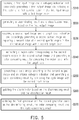
- Fig. 5 shows a flow chart of a method for training the GAN according to the second embodiment of the disclosure.
- a training system e.g., computer devices
- the first generator G 1 may receive a first input image and a category indication y and accordingly generate a first output image x ' 1 via replacing a first color of a first specific region in the first input image with a first target color, wherein the first target color belongs to the first type category having a plurality of training color samples.
- the first input image may be a human face image x.
- the first specific region may be regarded as the hair region of the first input image (i.e., x ), the first color may be regarded as the original hair color of x, the first target color may be one of the colors belong to the first type category.
- the first type category may be the CelebA Face dataset taught in " Ziwei Liu, Ping Luo, Xiaogang Wang, and Xiaoou Tang. Deep learning face attributes in the wild. In ICCV, 2015 ". That is, the first type category may include "black hair”, “brown hair” and “blond hair”, and the training color samples may include pictures of people with black/brown/blond hair, but the disclosure is not limited thereto.
- the first target color may be, for example, black/brown/blond.
- the process in step S510 may be understood as replacing, by the first generator G 1 , the original hair color in the first input image with the first target color to generate the first output image x ' 1 , but the disclosure is not limited thereto.
- the process performed in step S510 may be represented as G 1 : x y ⁇ x 1 ⁇ .
- the category indication y may be defined as a one-hot vector indicating the first type category. For example, if the first category includes "black hair", “brown hair” and "blond hair", the first category indication y may be [1, 0, 0] to indicate the "black hair", [0, 1, 0] to indicate the "brown hair” or [0, 0, 1] to indicate the "blond hair", but the disclosure is not limited thereto.
- the category indication y may be defined as a specific semantic embedding vector indicating the first type category. For example, if the first category includes "black hair”, “brown hair” and “blond hair”, the related textual descriptions related to the "black hair” may be converted to be the corresponding sentence features with the mechanism taught in " Scott Reed, Zeynep Akata, Honglak Lee, and Bernt Schiele. Learning deep representations of fine-grained visual descriptions. In CVPR, 2016 .”, and those sentence features corresponding to the "black hair” may be averaged to obtain the semantic embedding vector corresponding to "black hair”. Similarly, the semantic embedding vector corresponding to "brown hair” and “blond hair” may be obtained based on the same principle, which would not be repeated herein.
- the first output image x ' 1 may be regarded as a fake image generated by the first generator G 1 based on the first input image (i.e., x) and the category indication y.
- the category indication y is a specific semantic embedding vector indicating "black hair”
- the first generator G 1 would accordingly generate a fake image of a human face with black hair.
- the category indication y is a specific semantic embedding vector indicating "brown hair”
- the first generator G 1 would accordingly generate a fake image of a human face with brown hair, but the disclosure is not limited thereto.
- the first generator G 1 includes a first convolutional neural network (CNN) F 1 , a mask network M, and a first combiner C 1 .
- the first CNN F 1 may generate a first foreground image FI1 (which may be formulated as F 1 ( x,y )) based on the first input image and the category indication y .
- the mask network M may generate a first probability map PM1 (which may be formulated as M(x)) corresponding to the first input image, wherein each pixel in the first probability map PM1 is labelled with a probability of corresponding to the first specific region (i.e., the probability of corresponding to the hair region).
- the first combiner C 1 may retrieve a first partial image in the first foreground image FI1 based on the first region in the first probability map, retrieve a second partial image in the first input image based on the second region in the first probability map PM1, and combining the first partial image and the second partial image as the first output image x' 1 .
- the discriminator D may generate a discriminating result DR and a classification result CR based on the first output image x ' 1 .
- the discriminator D may generate the discriminating result DR via discriminating the first output image x ' 1 with a real image belonging to the first type category. For example, if the category indication y indicates "black hair", the real image may be a real image of a human face with black hair, and the discriminator D may be configured to discriminate between the first output image x ' 1 (e.g., a fake image of a human face with black hair) and the real image. In brief, the discriminator D may be configured to determine which of the first output image x ' 1 and the fake is fake.
- the discriminator D may predict a predicted category of the first output image x ' 1 , and the discriminator D may generate the classification result CR via comparing the predicted category with the first type category.
- the discriminator D may predict the category of the first output image x ' 1 as one of "black hair”, “brown hair”, “blond hair”. Next, the discriminator D may determine whether the predicted category matches the first type category indicated by the category indication y.
- the details of obtaining the discriminating result DR and the classification result CR may be referred to the teachings related to StarGAN, which would not be repeated herein.
- the discriminating result DR and the classification result CR may be used to formulate a first loss function for training the discriminator D.
- the second generator G 2 may receive a second input image and a target color indication c and accordingly generating a second output image x ' 2 via replacing a second color of a second specific region in the second input image with a second target color, wherein the second target color corresponds to the target color indication c, and the second target color does not belonging to the first type category.
- the second input image may be assumed to be the human face image x for brevity.
- the second specific region may be regarded as the hair region of the second input image (i.e., x ), the second color may be regarded as the original hair color of x, the second target color may be any color not belonging to the first type category. That is, the second target color is not black, brown, or blond.
- step S530 may be understood as replacing, by the second generator G 2 , the original hair color in the second input image with the second target color to generate the second output image x' 2 , but the disclosure is not limited thereto.
- the process performed in step S530 may be represented as G 2 : x c ⁇ x 2 ⁇ .
- the target color indication c may be a 3D RGB color vector that indicates the second target color. For example, if the target color indication c is (255, 255, 255), the corresponding second target color may be white, but the disclosure is not limited thereto. That is, the second generator G 2 may be used to replace the original hair color of the secondi input image with any desired color corresponding to the target color indication c.
- the second output image x ' 2 may be regarded as a fake image generated by the second generator G 2 based on the second input image (i.e., x) and the target color indication c.
- the target color indication c corresponds to "deep purple”
- the second generator G 2 would accordingly generate a fake image of a human face with deep purple hair, but the disclosure is not limited thereto.
- the second generator G 2 includes a second CNN F 2 , the mask network M, and a second combiner C 2 .
- the second CNN F 2 may generate a second foreground image FI2 (which may be formulated as F 2 ( x,y )) based on the second input image (i.e., x) and the target color indication c.
- the mask network M may generate a second probability map PM2 (which may be the same as the first probability map PM1 and formulated as M(x)) corresponding to the second input image, wherein each pixel in the second probability map is labelled with a probability of corresponding to the second specific region (i.e., the probability of corresponding to the hair region).
- the second combiner C 2 may retrieve a third partial image in the second foreground image FI2 based on the third region in the second probability map, retrieve a fourth partial image in the second input image based on the fourth region in the second probability map PM2, and combining the third partial image and the fourth partial image as the second output image x ' 2 .
- the first generator G 1 and the second generator G 2 are partially characterized by a plurality of first neural network weightings.
- the first CNN F 1 and the second CNN F 2 partially share the first neural network weightings.
- the first CNN F 1 may include a first NN and a second NN, wherein the first NN may convert the category indication y as a first embedding vector, and the second NN may generate the first foreground image FI1 based on the first embedding vector and the first input image.
- the second CNN F 2 may include a third NN and a fourth NN, wherein the fourth NN and the third NN are both characterized by the first neural network weightings. That is, the first CNN F 1 and the second CNN F 2 are two identical NN sharing the same first neural network weightings, and hence once the first neural network weightings are updated, both of the first CNN F 1 and the second CNN F 2 would be updated, but the disclosure is not limited thereto.
- the third NN may convert the target color indication c as a second embedding vector, and the fourth NN may generate the second foreground image FI2 based on the second embedding vector and the second input image x ' 2 .
- the hair recoloring process may be simplified as a simple color transfer. Specifically, it is assumed that the hair recoloring process is a spatially invariant linear transformation. Such an assumption greatly restricts process of generating the foreground images from a highly nonlinear mapping to a linear one. By doing so, the accuracy of defining the hair region may be enhanced; otherwise, a false-positive region (such as eyebrows) could be transformed into an unrealistic color and then appears in the output images.
- the linear transformation parameterized by a 3 ⁇ 4 matrix [a
- b ], takes a pixel color x i as input and outputs a new color x" i by x" i ax i + b.
- Such a transformation can be equivalently expressed by a 1x1 convolution as conv 1 ⁇ 1 ( x ; [ a
- the color estimator H may estimate a region color (which may be represented by H(x)) corresponding to the second specific region in the second output image and generate a color comparing result CC by comparing the region color with the target color.
- the color estimator H may estimate the hair color in the second input image x ' 2 (i.e., the region color) and accordingly generate the color comparing result CC.
- the color estimator H may retrieve the second probability map PM2 and the second foreground image FI2 and estimate the region color via calculating a weighted average of the second foreground image FI2 weighted by the second probability map PM2.
- the color estimator H may include a sub-network S sharing parameters with the mask network M, and the sub-network S may be fed with the second input image (i.e., x) to generate the second probability map PM2 for the color estimator H.
- w is a weighting function that turns the probabilities of the second probability map PM2 into binary weights.
- the color comparing result CC may be understood as related to the similarity between the region color and the target color. If the sub-network S generates the second probability map PM2 with high quality (e.g., the hair region is well-defined), the region color should be close to the target color, and vice versa.
- the first generator G 1 may generate a cycle image CI2 according to the second output image x ' 2 and an original category indication y' and generating a cycle-consistency result by comparing the cycle image CI2 with the second input image (i.e., x). Further, the first generator G 1 may generate another cycle image CI1 according to the first output image x ' 1 and the original category indication y' and generating another cycle-consistency result by comparing the cycle image CI1 with the first input image (i.e., x).
- the another cycle-consistency result may be used to regulate the first generator G 1 with the corresponding loss function L cyc , and the details thereof may be referred to the teachings related to StarGAN. Based on the similar principle, the cycle-consistency result may be used as a reference for training the GAN 400.
- the first generator G 1 and the second generator G 2 may be updated based on the discriminating result DR, the color comparing result CC, and the cycle-consistency result.
- the discriminating result DR, the color comparing result CR, and the cycle-consistency result are used to formulate a second loss function for training the first generator G 1 and the second generator G 2 .
- the first generator G 1 and the second generator G 2 may be updated via updating the first neural network weightings subject to minimizing the second loss function.
- the mask network M may be characterized by a plurality of third neural network weightings, and the mask network M may be jointly trained with the first generator G 1 and the second generator G 2 .
- the first generator G 1 , the second generator G 2 , and the mask network M may be updated via updating the first neural network weightings and the third neural network weightings subject to minimizing the second loss function, but the disclosure is not limited thereto. Since the mask network M shares parameters with the sub-network S in the color estimator, the sub-network S may be correspondingly trained, which forms a unsupervised training manner.
- the first generator G 1 may be capable of generating fake images corresponding to the first type category (such as fake images of human faces with black/brown/blond hair) in the inference phase of the GAN 400.
- the second generator G 2 may be capable of generating fake images corresponding to the second type category (such as fake images of human faces with any desired color) in the inference phase of the GAN 400.
- FIG. 6 shows a flow chart of a method for generating images by using GAN in the inference phase according to the second embodiment of the disclosure.
- the symbols/signals in Fig. 4 would be used as examples, but the disclosure is not limited thereto.
- the first generator G 1 may receive a first input image (e.g., x) and a category indication y and accordingly generating a first output image x ' 1 via replacing a first color of a first specific region in the first input image with a first target color.
- the second generator G 2 may receive a second input image and a target color indication c and accordingly generating a second output image x ' 2 via replacing a second color of a second specific region in the second input image with a second target color.
- the second generator G 2 may still learn to generate images corresponding to the second type category with the method proposed in the disclosure.
- the present disclosure further provides a computer readable storage medium for executing method for for training a GAN.
- the computer readable storage medium is composed of a plurality of program instructions (for example, a setting program instruction and a deployment program instruction) embodied therein. These program instructions can be loaded into a training system (e.g., computer devices) and executed by the same to execute the method for training a GAN and the functions of the training system described above.
- a training system e.g., computer devices
- the method proposed in the disclosure may train the first generator of the GAN with available training samples belonging to the first type category and share the knowledge learnt by the first generator to the second generator. Accordingly, the second generator may learn to generate (fake) images belonging to the second type category even if there are no available training data during training the second generator.
Landscapes
- Engineering & Computer Science (AREA)
- Theoretical Computer Science (AREA)
- Physics & Mathematics (AREA)
- General Physics & Mathematics (AREA)
- Evolutionary Computation (AREA)
- Artificial Intelligence (AREA)
- Data Mining & Analysis (AREA)
- Health & Medical Sciences (AREA)
- General Health & Medical Sciences (AREA)
- Life Sciences & Earth Sciences (AREA)
- Software Systems (AREA)
- Computing Systems (AREA)
- General Engineering & Computer Science (AREA)
- Mathematical Physics (AREA)
- Molecular Biology (AREA)
- Biomedical Technology (AREA)
- Computational Linguistics (AREA)
- Biophysics (AREA)
- Computer Vision & Pattern Recognition (AREA)
- Multimedia (AREA)
- Databases & Information Systems (AREA)
- Medical Informatics (AREA)
- Bioinformatics & Cheminformatics (AREA)
- Bioinformatics & Computational Biology (AREA)
- Evolutionary Biology (AREA)
- Probability & Statistics with Applications (AREA)
- Pure & Applied Mathematics (AREA)
- Computational Mathematics (AREA)
- Mathematical Analysis (AREA)
- Mathematical Optimization (AREA)
- Biodiversity & Conservation Biology (AREA)
- Operations Research (AREA)
- Algebra (AREA)
- Image Analysis (AREA)
- Image Processing (AREA)
- Train Traffic Observation, Control, And Security (AREA)
- Electric Propulsion And Braking For Vehicles (AREA)
- Two-Way Televisions, Distribution Of Moving Picture Or The Like (AREA)
- Management, Administration, Business Operations System, And Electronic Commerce (AREA)
- Silver Salt Photography Or Processing Solution Therefor (AREA)
Abstract
Description
- The present disclosure generally relates to a generative adversarial network (GAN), in particular, to a method for training GAN, method for generating images by using a GAN, and a computer readable storage medium.
- GANs and their variants have received massive attention in the machine learning and computer vision communities recently due to their impressive performance in various tasks, such as categorical image generation, text-to-image synthesis, image-to-image translation, and semantic manipulation. The goal of GANs or the like is to learn a generator that mimics the underlying distribution represented by a finite set of training data. Considerable progress has been made to improve the robustness of GANs.
- However, when the training data does not represent the underlying distribution well, i.e., the empirical training distribution deviates from the underlying distribution, GANs trained from under-represented training data mimic the training distribution, but not the underlying one. This situation occurs because data collection is labor intensive and it is difficult to be thorough. Additionally, some modes of the underlying distribution could be missing in the training data due to insufficient quantity and in particular, diversity.
- Training a GAN conditioned on category labels requires collecting training examples for each category. If some categories are not available in the training data, then it appears infeasible to learn to generate their representations without any additional information. For instance, in the task of hair recoloring (or hair color transfer), if it is desired to train an image-to-image translation model that recolors hair by rare colors such as purple, it is necessary to collect images with those hair colors. However, it is impractical to collect all possible dyed hair colors for arbitrary recoloring. Another example is that if the training data consists of only red colored roses, the GANs' discriminators would reject the other colors of roses and fail to generate roses of colors other than red. At the same time, we want to ensure that GANs will not generate a rose with an unnatural color. Therefore, to people with ordinary skills in the art, it is important to design a mechanism for improving the diversity of the training distribution to better mimic the underlying distribution.
- Accordingly, the present disclosure is directed to a method for training GAN, method for generating images by using a GAN, and a computer readable storage medium for solving the above technical problems.
- The disclosure provides a method for training a generative adversarial network (GAN), wherein the GAN comprises a first generator, a second generator, a discriminator and a prediction network. The method includes: receiving, by the first generator, a first random input and a first category indication and accordingly generating a first output image, wherein the first generator and the second generator are both characterized by a plurality of first neural network weightings, the first category indication indicates that the first output image corresponds to a first type category, and the first type category has available training samples; predicting, by the prediction network, a first semantic embedding vector corresponding to the first output image; generating a first comparing result by comparing the first semantic embedding vector with a second semantic embedding vector corresponding to the first type category; receiving, by the second generator, a second random input and a second category indication and accordingly generating a second output image, wherein the second category indication indicates that the second output image corresponds to a second type category; predicting, by the prediction network, a third semantic embedding vector corresponding to the second output image; generating a second comparing result by comparing the third semantic embedding vector with a fourth semantic embedding vector corresponding to the second type category; generating, by the discriminator, a discriminating result via discriminating between the first output image and at least one reference image belonging to the first type category, wherein the discriminator is characterized by a plurality of second neural network weightings; updating the second neural network weightings based on the discriminating result; updating the first neural network weightings based on the discriminating result, the first comparing result and the second comparing result.
- The disclosure provides a non-transitory computer readable storage medium, recording an executable computer program to be loaded by a training system for training a generative adversarial network (GAN) including a first generator, a second generator, a discriminator and a prediction network to execute steps of: receiving, by the first generator, a first random input and a first category indication and accordingly generating a first output image, wherein the first generator and the second generator are both characterized by a plurality of first neural network weightings, the first category indication indicates that the first output image corresponds to a first type category, and the first type category has available training samples; predicting, by the prediction network, a first semantic embedding vector corresponding to the first output image; generating a first comparing result by comparing the first semantic embedding vector with a second semantic embedding vector corresponding to the first type category; receiving, by the second generator, a second random input and a second category indication and accordingly generating a second output image, wherein the second category indication indicates that the second output image corresponds to a second type category; predicting, by the prediction network, a third semantic embedding vector corresponding to the second output image; generating a second comparing result by comparing the third semantic embedding vector with a fourth semantic embedding vector corresponding to the second type category; generating, by the discriminator, a discriminating result via discriminating between the first output image and at least one reference image belonging to the first type category, wherein the discriminator is characterized by a plurality of second neural network weightings; updating the second neural network weightings based on the discriminating result; updating the first neural network weightings based on the discriminating result, the first comparing result and the second comparing result.
- The disclosure provides a method for generating images by using a generative adversarial network (GAN) including a first generator and a second generator. The method includes: receiving, by the first generator, a first random input and a first category indication and accordingly generating a first output image, wherein the first generator and the second generator are both characterized by a plurality of first neural network weightings, the first category indication indicates that the first output image corresponds to a first type category, and the first type category has available training samples; predicting, by the prediction network, a first semantic embedding vector corresponding to the first output image; generating a first comparing result by comparing the first semantic embedding vector with a second semantic embedding vector corresponding to the first type category; receiving, by the second generator, a second random input and a second category indication and accordingly generating a second output image, wherein the second category indication indicates that the second output image corresponds to a second type category, and the second type category has no training samples; predicting, by the prediction network, a third semantic embedding vector corresponding to the second output image; generating a second comparing result by comparing the third semantic embedding vector with a fourth semantic embedding vector corresponding to the second type category; updating the first neural network weightings based on the first comparing result and the second comparing result.
- The disclosure provides a method for training a generative adversarial network (GAN), wherein the GAN comprises a first generator, a second generator, a discriminator and a color estimator. The method includes: receiving, by the first generator, a first input image and a category indication and accordingly generating a first output image via replacing a first color of a first specific region in the first input image with a first target color, wherein the first target color belongs to a first type category having a plurality of training color samples, and the first generator and the second generator are partially characterized by a plurality of first neural network weightings; generating, by the discriminator, a discriminating result and a classification result based on the first output image; receiving, by the second generator, a second input image and a target color indication and accordingly generating a second output image via replacing a second color of a second specific region in the second input image with a second target color, wherein the second target color corresponds to the target color indication, and the second target color does not belonging to the first type category; estimating, by the color estimator, a region color corresponding to the second specific region in the second output image and generating a color comparing result by comparing the region color with the target color; generating, by the first generator, a cycle image according to the second output image and an original category indication and generating a cycle-consistency result by comparing the cycle image with the second input image; updating the discriminator based on the discriminating result and the classification result; updating the first generator and the second generator based on the discriminating result, the color comparing result, and the cycle-consistency result.
- The disclosure provides a non-transitory computer readable storage medium, recording an executable computer program to be loaded by a training system for training a generative adversarial network (GAN) including a first generator, a second generator, a discriminator, and a color estimator to execute steps of: receiving, by the first generator, a first input image and a category indication and accordingly generating a first output image via replacing a first color of a first specific region in the first input image with a first target color, wherein the first target color belongs to a first type category having a plurality of training color samples, and the first generator and the second generator are partially characterized by a plurality of first neural network weightings; generating, by the discriminator, a discriminating result and a classification result based on the first output image; receiving, by the second generator, a second input image and a target color indication and accordingly generating a second output image via replacing a second color of a second specific region in the second input image with a second target color, wherein the second target color corresponds to the target color indication, and the second target color does not belonging to the first type category; estimating, by the color estimator, a region color corresponding to the second specific region in the second output image and generating a color comparing result by comparing the region color with the target color; generating, by the first generator, a cycle image according to the second output image and an original category indication and generating a cycle-consistency result by comparing the cycle image with the second input image; updating the discriminator based on the discriminating result and the classification result; updating the first generator and the second generator based on the discriminating result, the color comparing result, and the cycle-consistency result.
- The disclosure provides a method for generating images by using a generative adversarial network (GAN) including a first generator and a second generator. The method includes: receiving, by the first generator, a first input image and a category indication and accordingly generating a first output image via replacing a first color of a first specific region in the first input image with a first target color, wherein the first target color belongs to a first type category having a plurality of training color samples, and the training color samples are previously used to train the first generator and the second generator; receiving, by the second generator, a second input image and a target color indication and accordingly generating a second output image via replacing a second color of a second specific region in the second input image with a second target color, wherein the second target color corresponds to the target color indication, and the second target color does not belonging to the first type category.
- The accompanying drawings are included to provide a further understanding of the disclosure, and are incorporated in and constitute a part of this specification. The drawings illustrate embodiments of the disclosure and, together with the description, serve to explain the principles of the disclosure.
-
Fig. 1 is a schematic diagram illustrating the mechanism of training a GAN according to a first embodiment of the disclosure. -
Fig. 2 shows a flow chart of a method for training the GAN according to the first embodiment of the disclosure. -
Fig. 3 shows a flow chart of a method for generating images by using GAN in the inference phase according to the first embodiment of the disclosure. -
Fig. 4 is a schematic diagram illustrating the mechanism of training a GAN according to the second embodiment of the disclosure. -
Fig. 5 shows a flow chart of a method for training the GAN according to the second embodiment of the disclosure. -
Fig. 6 shows a flow chart of a method for generating images by using GAN in the inference phase according to the second embodiment of the disclosure. - Reference will now be made in detail to the present preferred embodiments of the disclosure, examples of which are illustrated in the accompanying drawings. Wherever possible, the same reference numbers are used in the drawings and the description to refer to the same or like parts.
- Roughly speaking, the method for training the GAN of the disclosure incorporates domain knowledge into the GAN framework. In the disclosure, a set of training data under-represented at the category level, i.e., all training samples belong to the set of multiple first type categories, denoted as Y 1 (e.g., black, brown, blond hair color categories or red, white rose categories), while another set of multiple second categories, denoted as Y 2 (e.g., any other hair color categories or unavailable rose categories such as blue rose), has no training samples. The goal of the disclosure is to learn categorical image generation for both Y 1 and Y 2. To generate new data in Y 1, an existing GAN-based method is used to train a category-conditioned generator (which would be referred to as a first generator G 1) by minimizing GAN loss L GAN over the first generator G 1. To generate the second categories Y 2, the method of the disclosure trains another generator (which would be referred to as a second generator G 2) from the domain knowledge, which is expressed by a constraint function f that explicitly measures whether an image has the desired characteristics of a particular category.
- In brief, the concept of the method of the disclosure includes two parts: (1) constructing the domain knowledge for the task at hand, and (2) training the first generator G 1 and the second generator G 2 that condition on available and unavailable categories, respectively. The first generator G 1 and the second generator G 2 shares the neural network weightings, such that the first generator G 1 and the second generator G 2 may be coupled together and to transfer knowledge learned from the first generator G 1 to the second generator G 2. Based on the constraint function f, a knowledge loss, denoted as L K , is further considered to train the second generator G 2. The general objective function of the method of the disclosure may be written as min G
1 ,G2 LGAN (G 1) + λLK (G 2). - See
Fig. 1 , which is a schematic diagram illustrating the mechanism of training a GAN according to a first embodiment of the disclosure. InFig. 1 , aGAN 100 includes a first generator G 1, a second generator G 2, a prediction network E, and a discriminator D. In the first embodiment, the first generator G 1 and the second generator G 2 are both characterized by a plurality of first neural network weightings. That is, the first generator G 1 and the second generator G 2 are two generators sharing at least the first neural network weightings. In one embodiment, the first generator G 1 and the second generator G 2 are two identical generators sharing the same first neural network weightings, and hence once the first neural network weightings are updated, both of the first generator G 1 and the second generator G 2 would be updated, but the disclosure is not limited thereto. - In the first embodiment, the structure of the GAN 100 (in particular, the first generator G 1 and the discriminator D) is assumed to be a spectral normalization GAN (SN-GAN), and the details of the SN-GAN may be referred to "Takeru Miyato and Masanori Koyama. cgans with projection discriminator. In ICLR, 2018." and "Takeru Miyato, Toshiki Kataoka, Masanori Koyama, and Yuichi Yoshida. Spectral normalization for generative adversarial networks. In ICLR, 2018.", which would not be repeated herein.
- See
Fig. 2 , which shows a flow chart of a method for training the GAN according to the first embodiment of the disclosure. In the following, details of the steps inFig. 2 would be introduced by usingFig. 1 as an example, but the disclosure is not limited thereto. In the disclosure, the method ofFig. 2 may be performed by a training system (e.g., computer devices) used for training theGAN 100. - In step S210, the first generator G 1 may receive a first random input and a first category indication y 1 and accordingly generating a first output image x'1, wherein, the first category indication indicates that the first output image x'1 corresponds to a first type category (e.g., "red rose", "white rose"), and the first type category has available training samples (e.g., pictures of red/white roses). In the first embodiment, the first random input may be a random noise denoted by z.
- In the first embodiment, the process performed in step S210 may be represented as

- In another embodiment, the first category indication y 1 may be defined as a first specific semantic embedding vector indicating the first type category. For example, if the first category includes "red rose" and "white rose", the related textual descriptions related to the "red rose" may be converted to be the corresponding sentence features with the mechanism taught in "Scott Reed, Zeynep Akata, Honglak Lee, and Bernt Schiele. Learning deep representations of fine-grained visual descriptions. In CVPR, 2016.", and those sentence features corresponding to the "red rose" may be averaged to obtain the semantic embedding vector corresponding to "red rose". Similarly, the semantic embedding vector corresponding to "white rose" may be obtained based on the same principle, which would not be repeated herein.
- In the first embodiment, the first output image x'1 may be regarded as a fake image generated by the first generator G 1 based on the first random input (i.e., z) and the first category indication y 1. For example, if the first category indication y 1 is a first specific semantic embedding vector indicating "red rose", the first generator G 1 would accordingly generate a fake image of a red rose. For another example, if the first category indication y 1 is a first specific semantic embedding vector indicating "white rose", the first generator G 1 would accordingly generate a fake image of a white rose, but the disclosure is not limited thereto.
- In step S220, the prediction network E may predict a first semantic embedding vector v'1 corresponding to the first output image x'1. In the first embodiment, the prediction network E may be an embedding regression network pre-trained with the available training samples belonging to the first type category.
- That is, if the prediction network E receives an image, the prediction network E may output the semantic embedding vector corresponding to the image. For example, if the prediction network E receives a red rose image, the first semantic embedding vector v'1 outputted by the prediction network E would be the semantic embedding vector corresponding to "red rose". For another example, if the prediction network E receives a white rose image, the first semantic embedding vector v'1 outputted by the prediction network E would be the semantic embedding vector corresponding to "white rose".
- Next, in step S230, a first comparing result may be generated by comparing the first semantic embedding vector v'1 with a second semantic embedding vector v 1 corresponding to the first type category. For example, if the first category indication y 1 indicates "red rose", the second semantic embedding vector v 1 may correspond to "red rose" as well. In addition, since the first category indication y 1 may be defined as the first specific semantic embedding vector indicating the first type category, the second semantic embedding vector v 1 may be used to define the first specific semantic embedding vector, i.e., the first category indication y 1 may be the same as the second semantic embedding vector v 1, but the disclosure is not limited thereto.
- In brief, the first comparing result may be understood as related to the similarity between the first semantic embedding vector v'1 and the second semantic embedding vector v 1. If the first generator G 1 generates a fake image (e.g., fake red rose image) with high quality (i.e., difficult to be identified as fake), the first semantic embedding vector v'1 should be close to the second semantic embedding vector v 1, and vice versa.
- Therefore, in the first embodiment, the first comparing result may be used to formulate a first semantic loss function Lse (G 1) = E z,v
1 ∥E(G 1(z,v 1))-v 1∥2, wherein E is an expectation operator, G 1(z,v 1) is the first output image x'1, E(G 1(z,v 1)) is the first semantic embedding vector v'1. - In step S240, the second generator G 2 may receive a second random input and a second category indication y 2 and accordingly generating a second output image x'2, wherein the second category indication y 2 indicates that the second output image x'2 corresponds to the second type category (e.g., "blue rose"), and the second type category has no training samples (e.g., pictures of blue roses). In the first embodiment, the second random input may be the random noise denoted by z as well for brevity.
- In the first embodiment, the process performed in step S240 may be represented as

- In the first embodiment, the second output image x'2 may be regarded as a fake image generated by the second generator G 2 based on the second random input (i.e., z) and the second category indication y 2. For example, if the second category indication y 2 is a second specific semantic embedding vector indicating "blue rose", the second generator G 2 would accordingly generate a fake image of a blue rose, but the disclosure is not limited thereto.
- In step S250, the prediction network E may predict a third semantic embedding vector v'2 corresponding to the second output image x'2. For example, if the prediction network E receives a blue rose image, the third semantic embedding vector v'2 outputted by the prediction network E would be the semantic embedding vector corresponding to "blue rose".
- Next, in step S260 a second comparing result may be generated by comparing the third semantic embedding vector v'2 with a fourth semantic embedding vector v 2 corresponding to the second type category. For example, if the second category indication y 2 indicates "blue rose", the fourth semantic embedding vector v 2 may correspond to "blue rose" as well. In addition, since the second category indication y 2 may be defined as the second specific semantic embedding vector indicating the second type category, the fourth semantic embedding vector v 2 may be used to define the second specific semantic embedding vector, i.e., the second category indication y 2 may be the same as the fourth semantic embedding vector v 2, but the disclosure is not limited thereto.
- In brief, the second comparing result may be understood as related to the similarity between the third semantic embedding vector v'2 and the fourth semantic embedding vector v 2. If the second generator G 2 generates a fake image (e.g., fake blue rose image) with high quality (i.e., difficult to be identified as fake), the third semantic embedding vector v'2 should be close to the fourth semantic embedding vector v 2, and vice versa.
- Therefore, in the first embodiment, the second comparing result may be used to formulate a second semantic loss function Lse (G 2) = E z,v
2 ∥E(G 2(z,v 2))-v 2∥2, wherein G 2(z,v 2) is the second output image x' 2, E(G 2(z,v 2)) is the third semantic embedding vector v'2. - In step S270, the discriminator D may generate a discriminating result DR via discriminating between the first output image x'1 and a reference image RI belonging to the first type category, wherein the discriminator D is characterized by a plurality of second neural network weightings. In the first embodiment, the reference image RI may be a real image belonging to the first type category, e.g., a real image of red rose, and the discriminator D may be configured to discriminate between the first output image x'1 (e.g., a fake image of red rose) and the reference image RI. In brief, the discriminator D may be configured to determine which of the first output image x'1 and the reference image RI is fake.
- Therefore, based on the teachings of SN-GAN, the discriminating result DR may be used to formulate a first loss function for training the discriminator D. In the first embodiment, the first loss function may be formulated as:

- In step S280, the second neural network weightings may be updated based on the discriminating result DR. In the first embodiment, the second neural network weightings may be updated subject to minimizing the first loss function (i.e.,

- In step S290, the first neural network weightings may be updated based on the discriminating result DR, the first comparing result and the second comparing result. In the first embodiment, the discriminating result DR may be further used to formulate second loss function for training the first generator G 1 and the second generator G 2. In the first embodiment, the second loss function may be formulated as:

- Accordingly, the first neural network weightings are updated subject to minimizing a total loss function (denoted as LG ), wherein the total loss function is characterized by the second loss function (i.e.,


- After the first generator G 1 and the second generator G 2 have been trained, the first generator G 1 may be capable of generating fake images corresponding to the first type category (such as fake images of red roses) in the inference phase of the
GAN 100. Similarly, the second generator G 2 may be capable of generating fake images corresponding to the second type category (such as fake images of blue roses) in the inference phase of theGAN 100. - See
Fig. 3 , which shows a flow chart of a method for generating images by using GAN in the inference phase according to the first embodiment of the disclosure. For facilitating the following discussions, the symbols/signals inFig. 1 would be used as examples, but the disclosure is not limited thereto. - In step S310, the first generator G 1 may receiving a first random input and a first category indication y 1 and accordingly generating a first output image x' 1. In step S320, the second generator G 2 may receive a second random input and a second category indication y 2 and accordingly generating a second output image x'2.
- As could be understood based on the above, even if there are no available training samples belonging to the second type category during the process of training the
GAN 100, the second generator G 2 may still learn to generate images corresponding to the second type category with the method proposed in the disclosure. - In other embodiments, the disclosure further provides other ways for training a GAN, and the details thereof would be discussed along with a second embodiment in the following.
- See
Fig. 4 , which is a schematic diagram illustrating the mechanism of training a GAN according to the second embodiment of the disclosure. InFig. 4 , aGAN 400 includes a first generator G 1, a second generator G 2, a color estimator H, and a discriminator D. In the second embodiment, the first generator G 1 and the second generator G 2 are partially characterized by a plurality of first neural network weightings, and the details would be introduced later. - In the second embodiment, the structure of the GAN 400 (in particular, the first generator G 1, the second generator G 2 and the discriminator D) is assumed to be a StarGAN taught in "Yunjey Choi, Minje Choi, Munyoung Kim, Jung-Woo Ha, Sunghun Kim, and Jaegul Choo. StarGAN: Unified generative adversarial networks for multi-domain image-to-image translation. In CVPR, 2018.", and the details may be referred thereto.
- See
Fig. 5 , which shows a flow chart of a method for training the GAN according to the second embodiment of the disclosure. In the following, details of the steps inFig. 5 would be introduced by usingFig. 4 as an example, but the disclosure is not limited thereto. In the disclosure, the method ofFig. 5 may be performed by a training system (e.g., computer devices) used for training the GAN 500. - In step S510, the first generator G 1 may receive a first input image and a category indication y and accordingly generate a first output image x'1 via replacing a first color of a first specific region in the first input image with a first target color, wherein the first target color belongs to the first type category having a plurality of training color samples. In the second embodiment, the first input image may be a human face image x.
- For better understanding the concept of the second embodiment, the first specific region may be regarded as the hair region of the first input image (i.e., x), the first color may be regarded as the original hair color of x, the first target color may be one of the colors belong to the first type category.
- For example, the first type category may be the CelebA Face dataset taught in "Ziwei Liu, Ping Luo, Xiaogang Wang, and Xiaoou Tang. Deep learning face attributes in the wild. In ICCV, 2015". That is, the first type category may include "black hair", "brown hair" and "blond hair", and the training color samples may include pictures of people with black/brown/blond hair, but the disclosure is not limited thereto.
- That is, the first target color may be, for example, black/brown/blond. In this case, the process in step S510 may be understood as replacing, by the first generator G 1, the original hair color in the first input image with the first target color to generate the first output image x'1, but the disclosure is not limited thereto.
- In the second embodiment, the process performed in step S510 may be represented as

- In another embodiment, the category indication y may be defined as a specific semantic embedding vector indicating the first type category. For example, if the first category includes "black hair", "brown hair" and "blond hair", the related textual descriptions related to the "black hair" may be converted to be the corresponding sentence features with the mechanism taught in "Scott Reed, Zeynep Akata, Honglak Lee, and Bernt Schiele. Learning deep representations of fine-grained visual descriptions. In CVPR, 2016.", and those sentence features corresponding to the "black hair" may be averaged to obtain the semantic embedding vector corresponding to "black hair". Similarly, the semantic embedding vector corresponding to "brown hair" and "blond hair" may be obtained based on the same principle, which would not be repeated herein.
- In the second embodiment, the first output image x'1 may be regarded as a fake image generated by the first generator G 1 based on the first input image (i.e., x) and the category indication y. For example, if the category indication y is a specific semantic embedding vector indicating "black hair", the first generator G 1 would accordingly generate a fake image of a human face with black hair. For another example, if the category indication y is a specific semantic embedding vector indicating "brown hair", the first generator G 1 would accordingly generate a fake image of a human face with brown hair, but the disclosure is not limited thereto.
- More specifically, as shown in
Fig. 4 , the first generator G 1 includes a first convolutional neural network (CNN) F 1, a mask network M, and a first combiner C 1. In the second embodiment, the first CNN F 1 may generate a first foreground image FI1 (which may be formulated as F 1(x,y)) based on the first input image and the category indication y. The mask network M may generate a first probability map PM1 (which may be formulated as M(x)) corresponding to the first input image, wherein each pixel in the first probability map PM1 is labelled with a probability of corresponding to the first specific region (i.e., the probability of corresponding to the hair region). The first combiner C 1 may retrieve a first partial image in the first foreground image FI1 based on the first region in the first probability map, retrieve a second partial image in the first input image based on the second region in the first probability map PM1, and combining the first partial image and the second partial image as the first output image x' 1. - In step S520, the discriminator D may generate a discriminating result DR and a classification result CR based on the first output image x'1. In the second embodiment, the discriminator D may generate the discriminating result DR via discriminating the first output image x'1 with a real image belonging to the first type category. For example, if the category indication y indicates "black hair", the real image may be a real image of a human face with black hair, and the discriminator D may be configured to discriminate between the first output image x'1 (e.g., a fake image of a human face with black hair) and the real image. In brief, the discriminator D may be configured to determine which of the first output image x'1 and the fake is fake.
- Besides, the discriminator D may predict a predicted category of the first output image x'1, and the discriminator D may generate the classification result CR via comparing the predicted category with the first type category.
- For example, the discriminator D may predict the category of the first output image x'1 as one of "black hair", "brown hair", "blond hair". Next, the discriminator D may determine whether the predicted category matches the first type category indicated by the category indication y. The details of obtaining the discriminating result DR and the classification result CR may be referred to the teachings related to StarGAN, which would not be repeated herein.
- Therefore, based on the teachings of StarGAN, the discriminating result DR and the classification result CR may be used to formulate a first loss function for training the discriminator D. In the second embodiment, the first loss function may be formulated as:

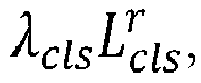
- In step S530, the second generator G 2 may receive a second input image and a target color indication c and accordingly generating a second output image x'2 via replacing a second color of a second specific region in the second input image with a second target color, wherein the second target color corresponds to the target color indication c, and the second target color does not belonging to the first type category. In the second embodiment, the second input image may be assumed to be the human face image x for brevity.
- For better understanding the concept of the second embodiment, the second specific region may be regarded as the hair region of the second input image (i.e., x), the second color may be regarded as the original hair color of x, the second target color may be any color not belonging to the first type category. That is, the second target color is not black, brown, or blond.
- In this case, the process in step S530 may be understood as replacing, by the second generator G 2, the original hair color in the second input image with the second target color to generate the second output image x' 2, but the disclosure is not limited thereto.
- In the second embodiment, the process performed in step S530 may be represented as

- From another perspective, the second output image x'2 may be regarded as a fake image generated by the second generator G 2 based on the second input image (i.e., x) and the target color indication c. For example, if the target color indication c corresponds to "deep purple", the second generator G 2 would accordingly generate a fake image of a human face with deep purple hair, but the disclosure is not limited thereto.
- More specifically, as shown in
Fig. 4 , the second generator G 2 includes a second CNN F 2, the mask network M, and a second combiner C 2. The second CNN F 2 may generate a second foreground image FI2 (which may be formulated as F 2(x,y)) based on the second input image (i.e., x) and the target color indication c. The mask network M may generate a second probability map PM2 (which may be the same as the first probability map PM1 and formulated as M(x)) corresponding to the second input image, wherein each pixel in the second probability map is labelled with a probability of corresponding to the second specific region (i.e., the probability of corresponding to the hair region). The second combiner C 2 may retrieve a third partial image in the second foreground image FI2 based on the third region in the second probability map, retrieve a fourth partial image in the second input image based on the fourth region in the second probability map PM2, and combining the third partial image and the fourth partial image as the second output image x'2. - In addition, as mentioned in the above, the first generator G 1 and the second generator G 2 are partially characterized by a plurality of first neural network weightings. In detail, to achieve transferring the knowledge learned from first generator G 1 to the second generator G 2, the first CNN F 1 and the second CNN F 2 partially share the first neural network weightings.
- In the second embodiment, the first CNN F 1 may include a first NN and a second NN, wherein the first NN may convert the category indication y as a first embedding vector, and the second NN may generate the first foreground image FI1 based on the first embedding vector and the first input image.
- On the other hand, the second CNN F 2 may include a third NN and a fourth NN, wherein the fourth NN and the third NN are both characterized by the first neural network weightings. That is, the first CNN F 1 and the second CNN F 2 are two identical NN sharing the same first neural network weightings, and hence once the first neural network weightings are updated, both of the first CNN F 1 and the second CNN F 2 would be updated, but the disclosure is not limited thereto.
- In this case, the third NN may convert the target color indication c as a second embedding vector, and the fourth NN may generate the second foreground image FI2 based on the second embedding vector and the second input image x'2.
- In the second embodiment, to further improve the accuracy of defining the hair region, the hair recoloring process may be simplified as a simple color transfer. Specifically, it is assumed that the hair recoloring process is a spatially invariant linear transformation. Such an assumption greatly restricts process of generating the foreground images from a highly nonlinear mapping to a linear one. By doing so, the accuracy of defining the hair region may be enhanced; otherwise, a false-positive region (such as eyebrows) could be transformed into an unrealistic color and then appears in the output images. The linear transformation, parameterized by a 3 × 4 matrix [a|b], takes a pixel color xi as input and outputs a new color x"i by x"i = axi + b. Such a transformation can be equivalently expressed by a 1x1 convolution as conv1×1(x; [a|b]).
- In this case the first output image x'1 and the second output image x'2 may be formulated as:


- In step S540, the color estimator H may estimate a region color (which may be represented by H(x)) corresponding to the second specific region in the second output image and generate a color comparing result CC by comparing the region color with the target color. In brief, the color estimator H may estimate the hair color in the second input image x'2 (i.e., the region color) and accordingly generate the color comparing result CC.
- In the second embodiment, the color estimator H may retrieve the second probability map PM2 and the second foreground image FI2 and estimate the region color via calculating a weighted average of the second foreground image FI2 weighted by the second probability map PM2.
- In one embodiment, the color estimator H may include a sub-network S sharing parameters with the mask network M, and the sub-network S may be fed with the second input image (i.e., x) to generate the second probability map PM2 for the color estimator H. In one embodiment, the region color may be calculated as:

- In brief, the color comparing result CC may be understood as related to the similarity between the region color and the target color. If the sub-network S generates the second probability map PM2 with high quality (e.g., the hair region is well-defined), the region color should be close to the target color, and vice versa.
- Therefore, in the second embodiment, the color comparing result CC may be used to formulate a color loss function Lcolor = E x,c ∥H(conv1×1(x;T 2(x,c)))-c∥1, but the disclosure is not limited thereto.
- In step S550, the first generator G 1 may generate a cycle image CI2 according to the second output image x'2 and an original category indication y' and generating a cycle-consistency result by comparing the cycle image CI2 with the second input image (i.e., x). Further, the first generator G 1 may generate another cycle image CI1 according to the first output image x'1 and the original category indication y' and generating another cycle-consistency result by comparing the cycle image CI1 with the first input image (i.e., x).
- As taught in StarGAN, the another cycle-consistency result may be used to regulate the first generator G 1 with the corresponding loss function Lcyc, and the details thereof may be referred to the teachings related to StarGAN. Based on the similar principle, the cycle-consistency result may be used as a reference for training the
GAN 400. - In the second embodiment, the cycle-consistency result may be formulated as:

- In step S560, the discriminator D may be updated based on the discriminating result DR and the classification result CR. Specifically, the discriminator D may be characterized by the second neural network weightings, and the discriminator D may be updated via updating the second neural network weightings subject to minimizing the first loss function (i.e.,


- In step S570, the first generator G 1 and the second generator G 2 may be updated based on the discriminating result DR, the color comparing result CC, and the cycle-consistency result. Specifically, the discriminating result DR, the color comparing result CR, and the cycle-consistency result are used to formulate a second loss function for training the first generator G 1 and the second generator G 2. In the second embodiment, the second loss function may be formulated as:

- In addition, in the second embodiment, the mask network M may be characterized by a plurality of third neural network weightings, and the mask network M may be jointly trained with the first generator G 1 and the second generator G 2. In this case, the first generator G 1, the second generator G 2, and the mask network M may be updated via updating the first neural network weightings and the third neural network weightings subject to minimizing the second loss function, but the disclosure is not limited thereto. Since the mask network M shares parameters with the sub-network S in the color estimator, the sub-network S may be correspondingly trained, which forms a unsupervised training manner.
- After the first generator G 1 and the second generator G 2 have been trained, the first generator G 1 may be capable of generating fake images corresponding to the first type category (such as fake images of human faces with black/brown/blond hair) in the inference phase of the
GAN 400. Similarly, the second generator G 2 may be capable of generating fake images corresponding to the second type category (such as fake images of human faces with any desired color) in the inference phase of theGAN 400. - See
Fig. 6 , which shows a flow chart of a method for generating images by using GAN in the inference phase according to the second embodiment of the disclosure. For facilitating the following discussions, the symbols/signals inFig. 4 would be used as examples, but the disclosure is not limited thereto. - In step S610, the first generator G 1 may receive a first input image (e.g., x) and a category indication y and accordingly generating a first output image x'1 via replacing a first color of a first specific region in the first input image with a first target color. In step S620, the second generator G 2 may receive a second input image and a target color indication c and accordingly generating a second output image x'2 via replacing a second color of a second specific region in the second input image with a second target color.
- As could be understood based on the above, even if there are no available training samples belonging to the second type category during the process of training the
GAN 400, the second generator G 2 may still learn to generate images corresponding to the second type category with the method proposed in the disclosure. - The present disclosure further provides a computer readable storage medium for executing method for for training a GAN. The computer readable storage medium is composed of a plurality of program instructions (for example, a setting program instruction and a deployment program instruction) embodied therein. These program instructions can be loaded into a training system (e.g., computer devices) and executed by the same to execute the method for training a GAN and the functions of the training system described above.
- In summary, the method proposed in the disclosure may train the first generator of the GAN with available training samples belonging to the first type category and share the knowledge learnt by the first generator to the second generator. Accordingly, the second generator may learn to generate (fake) images belonging to the second type category even if there are no available training data during training the second generator.
Claims (16)
- A method for training a generative adversarial network (GAN) (100), wherein the GAN (100) comprises a first generator (G 1), a second generator (G 2), a discriminator (D), and a prediction network (E), comprising:receiving, by the first generator (G 1), a first random input (z) and a first category indication (y 1) and accordingly generating a first output image (x'1), wherein the first generator (G 1) and the second generator (G 2) are both characterized by a plurality of first neural network weightings, the first category indication (y 1) indicates that the first output image (x'1) corresponds to a first type category, and the first type category has available training samples;predicting, by the prediction network (E), a first semantic embedding vector (v'1) corresponding to the first output image (x'1);generating a first comparing result by comparing the first semantic embedding vector (v' 1) with a second semantic embedding vector (v 1) corresponding to the first type category;receiving, by the second generator (G 2), a second random input (z) and a second category indication (y 2) and accordingly generating a second output image (x'2), wherein the second category indication (y 2) indicates that the second output image (x'2) corresponds to a second type category;predicting, by the prediction network (E), a third semantic embedding vector (v'2) corresponding to the second output image (x'2);generating a second comparing result by comparing the third semantic embedding vector (v'2) with a fourth semantic embedding vector (v 2) corresponding to the second type category;generating, by the discriminator (D), a discriminating result (DR) via discriminating between the first output image (x'1) and at least one reference image (RI) belonging to the first type category, wherein the discriminator (D) is characterized by a plurality of second neural network weightings;updating the second neural network weightings based on the discriminating result (DR);updating the first neural network weightings based on the discriminating result (DR), the first comparing result and the second comparing result.
- The method according to claim 1, wherein the discriminating result (DR) is used to formulate a first loss function for training the discriminator (D) and a second loss function for training the first generator (G 1) and the second generator (G 2), and the second neural network weightings are updated subject to minimizing the first loss function.
- The method according to claim 2, wherein the first comparing result is used to formulate a first semantic loss function (Lse (G 1)), the second comparing result is used to formulate a second semantic loss function (Lse (G 2)), and the first neural network weightings are updated subject to minimizing a total loss function, wherein the total loss function is characterized by the second loss function, the first semantic loss function (Lse (G 1)), and the second semantic loss function (Lse (G 2)).
- The method according to claim 1, wherein the first category indication (y 1) is defined as a first one-hot vector indicating the first type category or a first specific semantic embedding vector indicating the first type category.
- The method according to claim 1, wherein the second category indication (y 2) is defined as a second one-hot vector indicating the second type category or a second specific semantic embedding vector indicating the second type category.
- The method according to claim 1, wherein the prediction network (E) is an embedding regression network pre-trained with the available training samples belonging to the first type category.
- The method according to claim 1, wherein the second type category has no training samples.
- A method for training a generative adversarial network (GAN) (400), wherein the GAN (400) comprises a first generator (G 1), a second generator (G 2), a discriminator (D) and a color estimator (H), comprising:receiving, by the first generator (G 1), a first input image (x) and a category indication (y) and accordingly generating a first output image (x'1) via replacing a first color of a first specific region in the first input image (x) with a first target color, wherein the first target color belongs to a first type category having a plurality of training color samples, and the first generator (G 1) and the second generator (G 2) are partially characterized by a plurality of first neural network weightings;generating, by the discriminator (D), a discriminating result (DR) and a classification result (CR) based on the first output image (x'1);receiving, by the second generator (G 2), a second input image (x) and a target color indication (c) and accordingly generating a second output image (x'2) via replacing a second color of a second specific region in the second input image (x) with a second target color, wherein the second target color corresponds to the target color indication (c), and the second target color does not belonging to the first type category;estimating, by the color estimator (H), a region color corresponding to the second specific region in the second output image (x'2) and generating a color comparing result (CC) by comparing the region color with the target color;generating, by the first generator (G 1), a cycle image (CI2) according to the second output image (x'2) and an original category indication (y') and generating a cycle-consistency result by comparing the cycle image (CI2) with the second input image (x);updating the discriminator (D) based on the discriminating result (DR) and the classification result (CR);updating the first generator (G 1) and the second generator (G 2) based on the discriminating result (DR), the color comparing result (CC), and the cycle-consistency result.
- The method according to claim 8, wherein the first generator (G 1) comprises a first convolutional neural network (CNN) (F 1), a mask network (M), and a first combiner (C 1), and the method comprises:using the first CNN (F 1) to generate a first foreground image (FI1) based on the first input image (x) and the category indication (y);using the mask network (M) to generate a first probability map (PM1) corresponding to the first input image (x), wherein each pixel in the first probability map (PM1) is labelled with a probability of corresponding to the first specific region;using the first combiner (C 1) to retrieve a first partial image in the first foreground image (FI1) based on the first region in the first probability map (PM1), retrieve a second partial image in the first input image (x) based on the second region in the first probability map (PM1), and combining the first partial image and the second partial image as the first output image (x'1).
- The method according to claim 9, wherein the mask network (M) is characterized by a plurality of third neural network weightings, and the method further comprising:
updating the mask network (M) via updating the third neural network weightings based on the discriminating result (DR), the color comparing result (CC), and the cycle-consistency result. - The method according to claim 9, wherein the target color indication (c) is a 3D RGB color vector, the second generator (G 2) comprises a second CNN (F 2), the mask network (M), and a second combiner (C 1), and the method comprises:using the second CNN (F 2) to generate a second foreground image (FI2) based on the second input image (x) and the target color indication (c);using the mask network (M) to generate a second probability map (PM2) corresponding to the second input image (x), wherein each pixel in the second probability map (PM2) is labelled with a probability of corresponding to the second specific region;using the second combiner (C 2) to retrieve a third partial image in the second foreground image (FI2) based on the third region in the second probability map (FI2), retrieve a fourth partial image in the second input image (x) based on the fourth region in the second probability map (FI2), and combining the third partial image and the fourth partial image as the second output image (x'2).
- The method according to claim 11, wherein the first foreground image (FI1) is represented as conv 1×1(x;T 1(x,y)), the second foreground image (FI2) is represented as conv 1×1(x;T 2(x,c)), wherein x represents the first input image (x), y represents the category indication (y), c represents the target color indication (c), T 1(x,y) and T 2(x,c) are convolutional neural networks that generate 1x1 convolutional filters.
- The method according to claim 11, comprising:retrieving, by the color estimator (H), the second probability map (PM2) and the second foreground image (FI2);estimating the region color via calculating a weighted average of the second foreground image (FI2) weighted by the second probability map (PM2).
- The method according to claim 8, comprising:generating, by the discriminator (D), the discriminating result (DR) via discriminating the first output image (x'1) with a real image;predicting, by the discriminator (D), a predicted category of the first output image (x'1);generating, by the discriminator (D), the classification result (CR) via comparing the predicted category with the first type category.
- The method according to claim 8, wherein the discriminator (D) is characterized by a plurality of second neural network weightings, the discriminating result (DR) and the classification result (CR) are used to formulate a first loss function for training the discriminator (D), and the method comprises:
updating the discriminator (D) via updating the second neural network weightings subject to minimizing the first loss function. - The method according to claim 8, wherein the discriminating result (DR), the color comparing result (CC), and the cycle-consistency result are used to formulate a second loss function for training the first generator (G 1) and the second generator (G 2), and the method comprises:
updating the first generator (G 1) and the second generator (G 2) via updating the first neural network weightings subject to minimizing the second loss function.
Applications Claiming Priority (1)
| Application Number | Priority Date | Filing Date | Title |
|---|---|---|---|
| US201962851677P | 2019-05-23 | 2019-05-23 |
Publications (2)
| Publication Number | Publication Date |
|---|---|
| EP3742346A2 true EP3742346A2 (en) | 2020-11-25 |
| EP3742346A3 EP3742346A3 (en) | 2021-06-16 |
Family
ID=70802709
Family Applications (1)
| Application Number | Title | Priority Date | Filing Date |
|---|---|---|---|
| EP20175847.1A Ceased EP3742346A3 (en) | 2019-05-23 | 2020-05-20 | Method for training generative adversarial network (gan), method for generating images by using gan, and computer readable storage medium |
Country Status (5)
| Country | Link |
|---|---|
| US (1) | US11379722B2 (en) |
| EP (1) | EP3742346A3 (en) |
| JP (1) | JP6919021B2 (en) |
| CN (1) | CN111985608B (en) |
| TW (1) | TWI772805B (en) |
Cited By (8)
| Publication number | Priority date | Publication date | Assignee | Title |
|---|---|---|---|---|
| CN113706646A (en) * | 2021-06-30 | 2021-11-26 | 酷栈(宁波)创意科技有限公司 | Data processing method for generating landscape painting |
| CN115424119A (en) * | 2022-11-04 | 2022-12-02 | 之江实验室 | Semantic fractal-based interpretable GAN image generation training method and device |
| US11625934B2 (en) | 2020-02-04 | 2023-04-11 | Eygs Llp | Machine learning based end-to-end extraction of tables from electronic documents |
| US11715313B2 (en) | 2019-06-28 | 2023-08-01 | Eygs Llp | Apparatus and methods for extracting data from lineless table using delaunay triangulation and excess edge removal |
| CN116630212A (en) * | 2023-04-24 | 2023-08-22 | 苏州图之源科技有限公司 | A Data Synthesis Method Based on Adaptive Feature Fusion of Conditional GAN Network |
| CN116933088A (en) * | 2023-07-31 | 2023-10-24 | 广东电网有限责任公司 | Secondary equipment fault data generation method and device, electronic equipment and medium |
| US11915465B2 (en) * | 2019-08-21 | 2024-02-27 | Eygs Llp | Apparatus and methods for converting lineless tables into lined tables using generative adversarial networks |
| US12373083B2 (en) | 2019-04-12 | 2025-07-29 | Ernst & Young U.S. Llp | Machine learning based extraction of partition objects from electronic documents |
Families Citing this family (30)
| Publication number | Priority date | Publication date | Assignee | Title |
|---|---|---|---|---|
| FR3103045B1 (en) * | 2019-11-07 | 2021-10-15 | Idemia Identity & Security France | A method of augmenting a training image base representing a fingerprint on a background using a generative antagonist network |
| CN111680123B (en) * | 2020-05-25 | 2024-01-26 | 腾讯科技(深圳)有限公司 | Training method, device, computer equipment and storage medium for dialogue model |
| CN112333402B (en) * | 2020-10-20 | 2021-10-22 | 浙江大学 | A method and system for generating image adversarial samples based on sound waves |
| JP7533149B2 (en) | 2020-11-17 | 2024-08-14 | 株式会社オートネットワーク技術研究所 | Power supply control device |
| CN116569207B (en) * | 2020-12-12 | 2025-12-02 | 三星电子株式会社 | Methods and electronic devices for managing image artifacts |
| WO2022124643A1 (en) * | 2020-12-12 | 2022-06-16 | Samsung Electronics Co., Ltd. | Method and electronic device for managing artifacts of image |
| US11854119B2 (en) * | 2021-01-22 | 2023-12-26 | Adobe Inc. | Automatic object re-colorization |
| CN112818820B (en) * | 2021-01-28 | 2024-03-19 | 北京达佳互联信息技术有限公司 | Image generation model training method, image generation device and electronic equipment |
| WO2021077140A2 (en) * | 2021-02-05 | 2021-04-22 | Innopeak Technology, Inc. | Systems and methods for prior knowledge transfer for image inpainting |
| CN112906785B (en) * | 2021-02-09 | 2023-12-22 | 深圳大学 | Fusion-based zero-sample object type recognition method, device and equipment |
| JP7696438B2 (en) * | 2021-03-03 | 2025-06-20 | ロレアル | Try-on using inverted GAN |
| CN113112498B (en) * | 2021-05-06 | 2024-01-19 | 东北农业大学 | A method for identifying grape leaf lesions based on fine-grained adversarial generative network |
| CN113191365B (en) * | 2021-05-12 | 2023-04-21 | 北京邮电大学 | A Method for Evaluation of Cultural Semantic Image Reconstruction Effect |
| CN113268991B (en) * | 2021-05-19 | 2022-09-23 | 北京邮电大学 | CGAN model-based user personality privacy protection method |
| CN113822790B (en) * | 2021-06-03 | 2023-04-21 | 腾讯云计算(北京)有限责任公司 | Image processing method, device, equipment and computer readable storage medium |
| US20220405634A1 (en) * | 2021-06-16 | 2022-12-22 | Moxa Inc. | Device of Handling Domain-Agnostic Meta-Learning |
| CN113470124B (en) * | 2021-06-30 | 2023-09-22 | 北京达佳互联信息技术有限公司 | Special effects model training method and device, special effects generation method and device |
| CN113449851A (en) * | 2021-07-15 | 2021-09-28 | 北京字跳网络技术有限公司 | Data processing method and device |
| CN113642621B (en) * | 2021-08-03 | 2024-06-28 | 南京邮电大学 | Zero sample image classification method based on generation countermeasure network |
| TWI825461B (en) * | 2021-08-05 | 2023-12-11 | 群聯電子股份有限公司 | Method for training asymmetric generative adversarial network to generate image and electric apparatus using the same |
| CN113989148A (en) * | 2021-10-27 | 2022-01-28 | 中电鸿信信息科技有限公司 | Face recognition data enhancement method based on residual error connection star-type generation countermeasure network |
| CN114090751B (en) * | 2021-11-12 | 2025-08-22 | 北京明略软件系统有限公司 | Dialogue model training, dialogue generation method, system, computer and storage medium |
| CN114219969B (en) * | 2021-11-30 | 2025-02-14 | 中国空间技术研究院 | Semantic adversarial sample generation method based on GAN |
| CN114662571B (en) * | 2022-03-04 | 2025-04-29 | 闽江学院 | Blood leukocyte staining style transfer method based on cyclic generative adversarial network |
| US12525007B2 (en) * | 2022-06-02 | 2026-01-13 | Hon Hai Precision Industry Co., Ltd. | Training method and electronic device |
| CN115099855B (en) * | 2022-06-23 | 2024-09-24 | 广州华多网络科技有限公司 | Method for preparing advertising copywriting model and its device, equipment, medium and product |
| CN114782291B (en) * | 2022-06-23 | 2022-09-06 | 中国科学院自动化研究所 | Image generator training method, apparatus, electronic device and readable storage medium |
| CN115115783B (en) * | 2022-07-08 | 2023-08-15 | 西南石油大学 | A digital core construction method and system for simulating nano-micro pores in shale matrix |
| CN116579414B (en) * | 2023-03-24 | 2024-04-02 | 浙江医准智能科技有限公司 | Model training method, MRI thin layer data reconstruction method, device and equipment |
| CN117351520B (en) * | 2023-10-31 | 2024-06-11 | 广州恒沙数字科技有限公司 | Method and system for hybrid generation of foreground and background images based on generative network |
Family Cites Families (14)
| Publication number | Priority date | Publication date | Assignee | Title |
|---|---|---|---|---|
| US10824910B2 (en) * | 2017-05-04 | 2020-11-03 | Htc Corporation | Image processing method, non-transitory computer readable storage medium and image processing system |
| US20180336439A1 (en) * | 2017-05-18 | 2018-11-22 | Intel Corporation | Novelty detection using discriminator of generative adversarial network |
| JP6928371B2 (en) * | 2017-08-01 | 2021-09-01 | 国立研究開発法人情報通信研究機構 | Classifier, learning method of classifier, classification method in classifier |
| WO2019032604A1 (en) | 2017-08-08 | 2019-02-14 | Reald Spark, Llc | Adjusting a digital representation of a head region |
| US20190108448A1 (en) * | 2017-10-09 | 2019-04-11 | VAIX Limited | Artificial intelligence framework |
| US10937540B2 (en) * | 2017-12-21 | 2021-03-02 | International Business Machines Coporation | Medical image classification based on a generative adversarial network trained discriminator |
| CN108681774B (en) * | 2018-05-11 | 2021-05-14 | 电子科技大学 | Human body target tracking method based on generation of confrontation network negative sample enhancement |
| CN109147010B (en) * | 2018-08-22 | 2023-07-25 | 广东工业大学 | Method, device and system for generating face image with attribute and readable storage medium |
| CN109522807B (en) * | 2018-10-22 | 2020-11-27 | 深圳先进技术研究院 | Satellite image recognition system, method and electronic device based on self-generated features |
| CN109584325B (en) * | 2018-10-30 | 2020-01-07 | 河北科技大学 | A Bidirectional Colorization Method of Anime Images Based on U-shaped Periodically Consistent Adversarial Networks |
| US10977872B2 (en) * | 2018-10-31 | 2021-04-13 | Sony Interactive Entertainment Inc. | Graphical style modification for video games using machine learning |
| GB201818759D0 (en) * | 2018-11-16 | 2019-01-02 | Anthropics Tech Limited | Method of modifying digital images |
| CN109462747B (en) * | 2018-12-11 | 2020-06-26 | 成都美律科技有限公司 | DIBR system cavity filling method based on generation countermeasure network |
| CN113627538B (en) * | 2021-08-12 | 2024-03-01 | 群联电子股份有限公司 | Method for training asymmetric generation of image generated by countermeasure network and electronic device |
-
2020
- 2020-05-20 EP EP20175847.1A patent/EP3742346A3/en not_active Ceased
- 2020-05-22 JP JP2020089735A patent/JP6919021B2/en active Active
- 2020-05-22 CN CN202010439945.9A patent/CN111985608B/en active Active
- 2020-05-22 TW TW109117030A patent/TWI772805B/en active
- 2020-05-22 US US16/880,996 patent/US11379722B2/en active Active
Non-Patent Citations (7)
| Title |
|---|
| KAZEMI HADI ET AL: "Style and Content Disentanglement in Generative Adversarial Networks", 2019 IEEE WINTER CONFERENCE ON APPLICATIONS OF COMPUTER VISION (WACV), IEEE, 7 January 2019 (2019-01-07), pages 848 - 856, XP033525705, DOI: 10.1109/WACV.2019.00095 * |
| SCOTT REEDZEYNEP AKATAHONGLAK LEEBERNT SCHIELE: "Learning deep representations of fine-grained visual descriptions", CVPR, 2016 |
| SPURR ADRIAN ET AL: "Guiding InfoGAN with Semi-supervision", 30 December 2017, 20171230, PAGE(S) 119 - 134, XP047642524 * |
| TAKERU MIYATOMASANORI KOYAMA: "cgans with projection discriminator", ICLR, 2018 |
| TAKERU MIYATOTOSHIKI KATAOKAMASANORI KOYAMAYUICHI YOSHIDA: "Spectral normalization for generative adversarial networks", ICLR, 2018 |
| YUNJEY CHOIMINJE CHOIMUNYOUNG KIMJUNG-WOO HASUNGHUN KIMJAEGUL CHOO: "StarGAN: Unified generative adversarial networks for multi-domain image-to-image translation", CVPR, 2018 |
| ZIWEI LIUPING LUOXIAOGANG WANGXIAOOU TANG: "Deep learning face attributes in the wild", ICCV, 2015 |
Cited By (11)
| Publication number | Priority date | Publication date | Assignee | Title |
|---|---|---|---|---|
| US12373083B2 (en) | 2019-04-12 | 2025-07-29 | Ernst & Young U.S. Llp | Machine learning based extraction of partition objects from electronic documents |
| US11715313B2 (en) | 2019-06-28 | 2023-08-01 | Eygs Llp | Apparatus and methods for extracting data from lineless table using delaunay triangulation and excess edge removal |
| US11915465B2 (en) * | 2019-08-21 | 2024-02-27 | Eygs Llp | Apparatus and methods for converting lineless tables into lined tables using generative adversarial networks |
| US12444163B2 (en) | 2019-08-21 | 2025-10-14 | Eygs Llp | Apparatus and methods for converting lineless tables into lined tables using generative adversarial networks |
| US11625934B2 (en) | 2020-02-04 | 2023-04-11 | Eygs Llp | Machine learning based end-to-end extraction of tables from electronic documents |
| US11837005B2 (en) | 2020-02-04 | 2023-12-05 | Eygs Llp | Machine learning based end-to-end extraction of tables from electronic documents |
| CN113706646A (en) * | 2021-06-30 | 2021-11-26 | 酷栈(宁波)创意科技有限公司 | Data processing method for generating landscape painting |
| CN115424119A (en) * | 2022-11-04 | 2022-12-02 | 之江实验室 | Semantic fractal-based interpretable GAN image generation training method and device |
| CN115424119B (en) * | 2022-11-04 | 2023-03-24 | 之江实验室 | Image generation training method and device capable of explaining GAN based on semantic fractal |
| CN116630212A (en) * | 2023-04-24 | 2023-08-22 | 苏州图之源科技有限公司 | A Data Synthesis Method Based on Adaptive Feature Fusion of Conditional GAN Network |
| CN116933088A (en) * | 2023-07-31 | 2023-10-24 | 广东电网有限责任公司 | Secondary equipment fault data generation method and device, electronic equipment and medium |
Also Published As
| Publication number | Publication date |
|---|---|
| JP6919021B2 (en) | 2021-08-11 |
| TWI772805B (en) | 2022-08-01 |
| US20200372351A1 (en) | 2020-11-26 |
| US11379722B2 (en) | 2022-07-05 |
| CN111985608A (en) | 2020-11-24 |
| CN111985608B (en) | 2024-03-15 |
| JP2020191093A (en) | 2020-11-26 |
| TW202046242A (en) | 2020-12-16 |
| EP3742346A3 (en) | 2021-06-16 |
Similar Documents
| Publication | Publication Date | Title |
|---|---|---|
| US11379722B2 (en) | Method for training generative adversarial network (GAN), method for generating images by using GAN, and computer readable storage medium | |
| Goodfellow et al. | Generative adversarial networks | |
| Chang et al. | Explaining image classifiers by counterfactual generation | |
| DeVries et al. | Learning confidence for out-of-distribution detection in neural networks | |
| Zhao et al. | Unpaired image-to-image translation via latent energy transport | |
| Parafita et al. | Explaining visual models by causal attribution | |
| KR20230133854A (en) | Cross-domain adaptive learning | |
| CN114565810B (en) | A model compression method and system based on data protection scenario | |
| CN112115967A (en) | Image increment learning method based on data protection | |
| CN109191409A (en) | Image procossing, network training method, device, electronic equipment and storage medium | |
| Besserve et al. | A theory of independent mechanisms for extrapolation in generative models | |
| CN102647542B (en) | Image processing device and image processing method | |
| CN120654819A (en) | Multi-mode-based intelligent customer service system | |
| CN112329879A (en) | Method and system for generating image scene graph based on counterfactual multi-agent learning | |
| Liu et al. | Decoupled mixup for data-efficient learning | |
| CN114037864B (en) | Method, device, electronic device and storage medium for constructing image classification model | |
| WO2022159960A1 (en) | Cross-domain adaptive learning | |
| Almuayqil et al. | Stego-image synthesis employing data-driven continuous variable representations of cover images | |
| JP7148078B2 (en) | Attribute estimation device, attribute estimation method, attribute estimator learning device, and program | |
| CN116758379B (en) | Image processing method, device, equipment and storage medium | |
| Dhumale et al. | Generative Modeling Techniques for Simulating Rare Agricultural Events on Prediction of Wheat Yield Production | |
| KR20240084356A (en) | Apparatus and method for visualizing concept used in image classification | |
| CN115221326A (en) | Takeout evaluation text classification method based on deep learning and gradient inversion | |
| Li et al. | Blind image quality assessment with semi-supervised learning | |
| Wong et al. | Information processing constraints in travel behaviour modelling: A generative learning approach |
Legal Events
| Date | Code | Title | Description |
|---|---|---|---|
| PUAI | Public reference made under article 153(3) epc to a published international application that has entered the european phase |
Free format text: ORIGINAL CODE: 0009012 |
|
| STAA | Information on the status of an ep patent application or granted ep patent |
Free format text: STATUS: REQUEST FOR EXAMINATION WAS MADE |
|
| 17P | Request for examination filed |
Effective date: 20200617 |
|
| AK | Designated contracting states |
Kind code of ref document: A2 Designated state(s): AL AT BE BG CH CY CZ DE DK EE ES FI FR GB GR HR HU IE IS IT LI LT LU LV MC MK MT NL NO PL PT RO RS SE SI SK SM TR |
|
| AX | Request for extension of the european patent |
Extension state: BA ME |
|
| PUAL | Search report despatched |
Free format text: ORIGINAL CODE: 0009013 |
|
| AK | Designated contracting states |
Kind code of ref document: A3 Designated state(s): AL AT BE BG CH CY CZ DE DK EE ES FI FR GB GR HR HU IE IS IT LI LT LU LV MC MK MT NL NO PL PT RO RS SE SI SK SM TR |
|
| RIC1 | Information provided on ipc code assigned before grant |
Ipc: G06N 3/04 20060101AFI20210508BHEP Ipc: G06N 3/08 20060101ALI20210508BHEP |
|
| RBV | Designated contracting states (corrected) |
Designated state(s): AL AT BE BG CH CY CZ DE DK EE ES FI FR GB GR HR HU IE IS IT LI LT LU LV MC MK MT NL NO PL PT RO RS SE SI SK SM TR |
|
| STAA | Information on the status of an ep patent application or granted ep patent |
Free format text: STATUS: EXAMINATION IS IN PROGRESS |
|
| 17Q | First examination report despatched |
Effective date: 20230414 |
|
| P01 | Opt-out of the competence of the unified patent court (upc) registered |
Effective date: 20230602 |
|
| STAA | Information on the status of an ep patent application or granted ep patent |
Free format text: STATUS: THE APPLICATION HAS BEEN REFUSED |
|
| 18R | Application refused |
Effective date: 20240911 |