EP3741864A1 - Regenerating and utilizing carbon dioxide - Google Patents
Regenerating and utilizing carbon dioxide Download PDFInfo
- Publication number
- EP3741864A1 EP3741864A1 EP20173743.4A EP20173743A EP3741864A1 EP 3741864 A1 EP3741864 A1 EP 3741864A1 EP 20173743 A EP20173743 A EP 20173743A EP 3741864 A1 EP3741864 A1 EP 3741864A1
- Authority
- EP
- European Patent Office
- Prior art keywords
- carbon dioxide
- clostridium
- dsm
- basic
- acidic
- Prior art date
- Legal status (The legal status is an assumption and is not a legal conclusion. Google has not performed a legal analysis and makes no representation as to the accuracy of the status listed.)
- Granted
Links
Images
Classifications
-
- B—PERFORMING OPERATIONS; TRANSPORTING
- B01—PHYSICAL OR CHEMICAL PROCESSES OR APPARATUS IN GENERAL
- B01D—SEPARATION
- B01D53/00—Separation of gases or vapours; Recovering vapours of volatile solvents from gases; Chemical or biological purification of waste gases, e.g. engine exhaust gases, smoke, fumes, flue gases, aerosols
- B01D53/14—Separation of gases or vapours; Recovering vapours of volatile solvents from gases; Chemical or biological purification of waste gases, e.g. engine exhaust gases, smoke, fumes, flue gases, aerosols by absorption
- B01D53/1418—Recovery of products
-
- B—PERFORMING OPERATIONS; TRANSPORTING
- B01—PHYSICAL OR CHEMICAL PROCESSES OR APPARATUS IN GENERAL
- B01D—SEPARATION
- B01D53/00—Separation of gases or vapours; Recovering vapours of volatile solvents from gases; Chemical or biological purification of waste gases, e.g. engine exhaust gases, smoke, fumes, flue gases, aerosols
- B01D53/14—Separation of gases or vapours; Recovering vapours of volatile solvents from gases; Chemical or biological purification of waste gases, e.g. engine exhaust gases, smoke, fumes, flue gases, aerosols by absorption
- B01D53/1425—Regeneration of liquid absorbents
-
- B—PERFORMING OPERATIONS; TRANSPORTING
- B01—PHYSICAL OR CHEMICAL PROCESSES OR APPARATUS IN GENERAL
- B01D—SEPARATION
- B01D53/00—Separation of gases or vapours; Recovering vapours of volatile solvents from gases; Chemical or biological purification of waste gases, e.g. engine exhaust gases, smoke, fumes, flue gases, aerosols
- B01D53/14—Separation of gases or vapours; Recovering vapours of volatile solvents from gases; Chemical or biological purification of waste gases, e.g. engine exhaust gases, smoke, fumes, flue gases, aerosols by absorption
- B01D53/1456—Removing acid components
- B01D53/1475—Removing carbon dioxide
-
- B—PERFORMING OPERATIONS; TRANSPORTING
- B01—PHYSICAL OR CHEMICAL PROCESSES OR APPARATUS IN GENERAL
- B01D—SEPARATION
- B01D53/00—Separation of gases or vapours; Recovering vapours of volatile solvents from gases; Chemical or biological purification of waste gases, e.g. engine exhaust gases, smoke, fumes, flue gases, aerosols
- B01D53/34—Chemical or biological purification of waste gases
- B01D53/46—Removing components of defined structure
- B01D53/62—Carbon oxides
-
- B—PERFORMING OPERATIONS; TRANSPORTING
- B01—PHYSICAL OR CHEMICAL PROCESSES OR APPARATUS IN GENERAL
- B01D—SEPARATION
- B01D53/00—Separation of gases or vapours; Recovering vapours of volatile solvents from gases; Chemical or biological purification of waste gases, e.g. engine exhaust gases, smoke, fumes, flue gases, aerosols
- B01D53/34—Chemical or biological purification of waste gases
- B01D53/74—General processes for purification of waste gases; Apparatus or devices specially adapted therefor
- B01D53/77—Liquid phase processes
- B01D53/78—Liquid phase processes with gas-liquid contact
-
- B—PERFORMING OPERATIONS; TRANSPORTING
- B01—PHYSICAL OR CHEMICAL PROCESSES OR APPARATUS IN GENERAL
- B01D—SEPARATION
- B01D53/00—Separation of gases or vapours; Recovering vapours of volatile solvents from gases; Chemical or biological purification of waste gases, e.g. engine exhaust gases, smoke, fumes, flue gases, aerosols
- B01D53/34—Chemical or biological purification of waste gases
- B01D53/96—Regeneration, reactivation or recycling of reactants
-
- B—PERFORMING OPERATIONS; TRANSPORTING
- B01—PHYSICAL OR CHEMICAL PROCESSES OR APPARATUS IN GENERAL
- B01D—SEPARATION
- B01D61/00—Processes of separation using semi-permeable membranes, e.g. dialysis, osmosis or ultrafiltration; Apparatus, accessories or auxiliary operations specially adapted therefor
- B01D61/42—Electrodialysis; Electro-osmosis ; Electro-ultrafiltration; Membrane capacitive deionization
- B01D61/44—Ion-selective electrodialysis
- B01D61/445—Ion-selective electrodialysis with bipolar membranes; Water splitting
-
- B—PERFORMING OPERATIONS; TRANSPORTING
- B01—PHYSICAL OR CHEMICAL PROCESSES OR APPARATUS IN GENERAL
- B01D—SEPARATION
- B01D61/00—Processes of separation using semi-permeable membranes, e.g. dialysis, osmosis or ultrafiltration; Apparatus, accessories or auxiliary operations specially adapted therefor
- B01D61/42—Electrodialysis; Electro-osmosis ; Electro-ultrafiltration; Membrane capacitive deionization
- B01D61/44—Ion-selective electrodialysis
- B01D61/46—Apparatus therefor
- B01D61/465—Apparatus therefor comprising the membrane sequence AB or BA, where B is a bipolar membrane
-
- B—PERFORMING OPERATIONS; TRANSPORTING
- B01—PHYSICAL OR CHEMICAL PROCESSES OR APPARATUS IN GENERAL
- B01D—SEPARATION
- B01D61/00—Processes of separation using semi-permeable membranes, e.g. dialysis, osmosis or ultrafiltration; Apparatus, accessories or auxiliary operations specially adapted therefor
- B01D61/42—Electrodialysis; Electro-osmosis ; Electro-ultrafiltration; Membrane capacitive deionization
- B01D61/44—Ion-selective electrodialysis
- B01D61/46—Apparatus therefor
- B01D61/468—Apparatus therefor comprising more than two electrodes
-
- B—PERFORMING OPERATIONS; TRANSPORTING
- B01—PHYSICAL OR CHEMICAL PROCESSES OR APPARATUS IN GENERAL
- B01D—SEPARATION
- B01D61/00—Processes of separation using semi-permeable membranes, e.g. dialysis, osmosis or ultrafiltration; Apparatus, accessories or auxiliary operations specially adapted therefor
- B01D61/42—Electrodialysis; Electro-osmosis ; Electro-ultrafiltration; Membrane capacitive deionization
- B01D61/44—Ion-selective electrodialysis
- B01D61/46—Apparatus therefor
- B01D61/50—Stacks of the plate-and-frame type
-
- B—PERFORMING OPERATIONS; TRANSPORTING
- B01—PHYSICAL OR CHEMICAL PROCESSES OR APPARATUS IN GENERAL
- B01D—SEPARATION
- B01D63/00—Apparatus in general for separation processes using semi-permeable membranes
- B01D63/08—Flat membrane modules
- B01D63/082—Flat membrane modules comprising a stack of flat membranes
-
- C—CHEMISTRY; METALLURGY
- C12—BIOCHEMISTRY; BEER; SPIRITS; WINE; VINEGAR; MICROBIOLOGY; ENZYMOLOGY; MUTATION OR GENETIC ENGINEERING
- C12P—FERMENTATION OR ENZYME-USING PROCESSES TO SYNTHESISE A DESIRED CHEMICAL COMPOUND OR COMPOSITION OR TO SEPARATE OPTICAL ISOMERS FROM A RACEMIC MIXTURE
- C12P7/00—Preparation of oxygen-containing organic compounds
- C12P7/02—Preparation of oxygen-containing organic compounds containing a hydroxy group
- C12P7/04—Preparation of oxygen-containing organic compounds containing a hydroxy group acyclic
-
- C—CHEMISTRY; METALLURGY
- C12—BIOCHEMISTRY; BEER; SPIRITS; WINE; VINEGAR; MICROBIOLOGY; ENZYMOLOGY; MUTATION OR GENETIC ENGINEERING
- C12P—FERMENTATION OR ENZYME-USING PROCESSES TO SYNTHESISE A DESIRED CHEMICAL COMPOUND OR COMPOSITION OR TO SEPARATE OPTICAL ISOMERS FROM A RACEMIC MIXTURE
- C12P7/00—Preparation of oxygen-containing organic compounds
- C12P7/02—Preparation of oxygen-containing organic compounds containing a hydroxy group
- C12P7/04—Preparation of oxygen-containing organic compounds containing a hydroxy group acyclic
- C12P7/06—Ethanol, i.e. non-beverage
-
- C—CHEMISTRY; METALLURGY
- C12—BIOCHEMISTRY; BEER; SPIRITS; WINE; VINEGAR; MICROBIOLOGY; ENZYMOLOGY; MUTATION OR GENETIC ENGINEERING
- C12P—FERMENTATION OR ENZYME-USING PROCESSES TO SYNTHESISE A DESIRED CHEMICAL COMPOUND OR COMPOSITION OR TO SEPARATE OPTICAL ISOMERS FROM A RACEMIC MIXTURE
- C12P7/00—Preparation of oxygen-containing organic compounds
- C12P7/40—Preparation of oxygen-containing organic compounds containing a carboxyl group including Peroxycarboxylic acids
-
- C—CHEMISTRY; METALLURGY
- C12—BIOCHEMISTRY; BEER; SPIRITS; WINE; VINEGAR; MICROBIOLOGY; ENZYMOLOGY; MUTATION OR GENETIC ENGINEERING
- C12P—FERMENTATION OR ENZYME-USING PROCESSES TO SYNTHESISE A DESIRED CHEMICAL COMPOUND OR COMPOSITION OR TO SEPARATE OPTICAL ISOMERS FROM A RACEMIC MIXTURE
- C12P7/00—Preparation of oxygen-containing organic compounds
- C12P7/40—Preparation of oxygen-containing organic compounds containing a carboxyl group including Peroxycarboxylic acids
- C12P7/54—Acetic acid
-
- B—PERFORMING OPERATIONS; TRANSPORTING
- B01—PHYSICAL OR CHEMICAL PROCESSES OR APPARATUS IN GENERAL
- B01D—SEPARATION
- B01D2252/00—Absorbents, i.e. solvents and liquid materials for gas absorption
- B01D2252/10—Inorganic absorbents
- B01D2252/103—Water
-
- B—PERFORMING OPERATIONS; TRANSPORTING
- B01—PHYSICAL OR CHEMICAL PROCESSES OR APPARATUS IN GENERAL
- B01D—SEPARATION
- B01D2258/00—Sources of waste gases
- B01D2258/02—Other waste gases
- B01D2258/0283—Flue gases
-
- B—PERFORMING OPERATIONS; TRANSPORTING
- B01—PHYSICAL OR CHEMICAL PROCESSES OR APPARATUS IN GENERAL
- B01D—SEPARATION
- B01D2311/00—Details relating to membrane separation process operations and control
- B01D2311/12—Addition of chemical agents
-
- B—PERFORMING OPERATIONS; TRANSPORTING
- B01—PHYSICAL OR CHEMICAL PROCESSES OR APPARATUS IN GENERAL
- B01D—SEPARATION
- B01D2311/00—Details relating to membrane separation process operations and control
- B01D2311/18—Details relating to membrane separation process operations and control pH control
-
- B—PERFORMING OPERATIONS; TRANSPORTING
- B01—PHYSICAL OR CHEMICAL PROCESSES OR APPARATUS IN GENERAL
- B01D—SEPARATION
- B01D2311/00—Details relating to membrane separation process operations and control
- B01D2311/26—Further operations combined with membrane separation processes
- B01D2311/2688—Biological processes
-
- Y—GENERAL TAGGING OF NEW TECHNOLOGICAL DEVELOPMENTS; GENERAL TAGGING OF CROSS-SECTIONAL TECHNOLOGIES SPANNING OVER SEVERAL SECTIONS OF THE IPC; TECHNICAL SUBJECTS COVERED BY FORMER USPC CROSS-REFERENCE ART COLLECTIONS [XRACs] AND DIGESTS
- Y02—TECHNOLOGIES OR APPLICATIONS FOR MITIGATION OR ADAPTATION AGAINST CLIMATE CHANGE
- Y02C—CAPTURE, STORAGE, SEQUESTRATION OR DISPOSAL OF GREENHOUSE GASES [GHG]
- Y02C20/00—Capture or disposal of greenhouse gases
- Y02C20/40—Capture or disposal of greenhouse gases of CO2
-
- Y—GENERAL TAGGING OF NEW TECHNOLOGICAL DEVELOPMENTS; GENERAL TAGGING OF CROSS-SECTIONAL TECHNOLOGIES SPANNING OVER SEVERAL SECTIONS OF THE IPC; TECHNICAL SUBJECTS COVERED BY FORMER USPC CROSS-REFERENCE ART COLLECTIONS [XRACs] AND DIGESTS
- Y02—TECHNOLOGIES OR APPLICATIONS FOR MITIGATION OR ADAPTATION AGAINST CLIMATE CHANGE
- Y02E—REDUCTION OF GREENHOUSE GAS [GHG] EMISSIONS, RELATED TO ENERGY GENERATION, TRANSMISSION OR DISTRIBUTION
- Y02E50/00—Technologies for the production of fuel of non-fossil origin
- Y02E50/10—Biofuels, e.g. bio-diesel
-
- Y—GENERAL TAGGING OF NEW TECHNOLOGICAL DEVELOPMENTS; GENERAL TAGGING OF CROSS-SECTIONAL TECHNOLOGIES SPANNING OVER SEVERAL SECTIONS OF THE IPC; TECHNICAL SUBJECTS COVERED BY FORMER USPC CROSS-REFERENCE ART COLLECTIONS [XRACs] AND DIGESTS
- Y02—TECHNOLOGIES OR APPLICATIONS FOR MITIGATION OR ADAPTATION AGAINST CLIMATE CHANGE
- Y02P—CLIMATE CHANGE MITIGATION TECHNOLOGIES IN THE PRODUCTION OR PROCESSING OF GOODS
- Y02P20/00—Technologies relating to chemical industry
- Y02P20/151—Reduction of greenhouse gas [GHG] emissions, e.g. CO2
-
- Y—GENERAL TAGGING OF NEW TECHNOLOGICAL DEVELOPMENTS; GENERAL TAGGING OF CROSS-SECTIONAL TECHNOLOGIES SPANNING OVER SEVERAL SECTIONS OF THE IPC; TECHNICAL SUBJECTS COVERED BY FORMER USPC CROSS-REFERENCE ART COLLECTIONS [XRACs] AND DIGESTS
- Y02—TECHNOLOGIES OR APPLICATIONS FOR MITIGATION OR ADAPTATION AGAINST CLIMATE CHANGE
- Y02P—CLIMATE CHANGE MITIGATION TECHNOLOGIES IN THE PRODUCTION OR PROCESSING OF GOODS
- Y02P20/00—Technologies relating to chemical industry
- Y02P20/50—Improvements relating to the production of bulk chemicals
- Y02P20/59—Biological synthesis; Biological purification
Definitions
- the present invention relates to a method for production of organic acid and/or alcohol comprising the steps of:
- Carbon dioxide (CO 2 ) is a greenhouse gas that is collecting in the atmosphere and causing global warming problems and unwanted climate changes.
- One way to do so would be to reduce emissions by increasing the efficiency of combustion processes, as in fossil fuel-based power plants or motor vehicles with internal combustion engines.
- EP2163294 discloses solvent based capture and regeneration of CO 2 generated from fossil fuel fed electricity generating facilities, coal gasification plants or other sources by electrodialysis operation. However, in this process the further use of the regenerated, captured CO 2 is restricted to further removal from the CO 2 enriched stream. There is no suggestion on how to use the CO 2 enriched stream directly as conventional chemical process require CO 2 as a feedstock in high concentrations to achieve high yields. For example, one major CO 2 application is urea synthesis. In order to run this synthesis efficiently, CO 2 first needs to be purified and fed in a high concentration together with a second reagent, an amine ( Wang, H (2017) Top Curr Chem (Z) 375:49 ).
- the present invention attempts to solve the problems above by providing a method for production of organic acid and/or alcohol from carbon dioxide and by providing a means for production of organic acid and/or alcohol comprising a bipolar membrane electrodialysis unit and a fermenter.
- the present invention captures the carbon dioxide, converts the captured carbon dioxide to a regenerated carbon dioxide, which can be directly used for the production of an organic acid and/or alcohol using at least one microorganism.
- This method provides the advantages of being capable of reducing the carbon dioxide concentration in the air as well as the method provides a use for the carbon dioxide which is stored.
- the present invention relates to a method for production of organic acid and/or alcohol comprising the steps of:
- basic medium in the context of the instant invention refers to a medium having a pH of bigger than 7.
- acidic medium in the context of the instant invention refers to a medium having a pH of smaller than 7.
- a basic, aqueous medium containing carbon dioxide in the form of hydrogencarbonate-anions and/or carbonate-anions in the context of the instant invention refers to carbon dioxide contained in a basic, aqueous medium either in the form of hydrogencarbonate-anions and/or carbonate-anions and/or in the form of carbon dioxide being physically dissolved in a basic, aqueous medium.
- This phrase may refer to carbon dioxide that may be captured from a mixture of gases, for example exhaust gases or ambient air by directing a flow of the exhaust gas or ambient air through a basic, aqueous medium resulting in basic, aqueous medium containing carbon dioxide in the form of hydrogencarbonate-anions and/or carbonate-anions.
- carbon dioxide in the acidic, aqueous solution in the context of the instant invention refers to carbon dioxide contained in an acidic, aqueous medium either in the form of hydrogencarbonate-anions and/or carbonate-anions and/or in the form of carbon dioxide being physically dissolved in an acidic, aqueous medium.
- This phrase may refer to carbon dioxide that may be regenerated or recovered from the basic, aqueous medium resulting in an acidic, aqueous medium containing carbon dioxide in the form of hydrogencarbonate-anions and/or carbonate-anions.
- aqueous medium in the context of the instant invention refers to a medium having a water content of at least 50 wt.-% referring to the total medium.
- pH in connection with the present invention is defined as the value which is measured for the relevant composition at 25°C after stirring for 5 minutes using a calibrated pH electrode in accordance with ISO 4319 (1977).
- step a) comprises providing a mixture of gases comprising carbon dioxide and contacting the mixture of gases with a basic, aqueous medium containing at least one base, thereby capturing the carbon dioxide, which is contained in the basic, aqueous medium in the form of hydrogencarbonate- and/or carbonate-anions.
- the mixture of gases comprises carbon dioxide at a concentration of 350ppm-450ppm, preferably the mixture of gases is air.
- the basic, aqueous medium in step a) contains a base selected from the group of hydroxides and carbonates, preferably of alkaline and earth alkaline hydroxides and carbonates, preferably from the group of sodium hydroxide, potassium hydroxide and calcium hydroxide.
- step a) the basic, aqueous medium is sprayed through a nozzle into a stream of the mixture of gases comprising carbon dioxide.
- step b) of the instant invention the basic, aqueous medium containing the carbon dioxide is fed into a bipolar membrane electrodialysis unit.
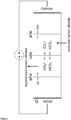
- FIG. 1 shows an example of such a bipolar membrane electrodialysis unit:
- the carbon dioxide exists in solution as negatively charged hydrogencarbonate- and/or carbonate-anions.
- This solution is fed into a a bipolar membrane electrodialysis (BPMED) unit, which separates the Hydrogencarbonate/carbonate solution into an acid and a base by applying a voltage across an alternating stack of ion-selective anion-exchange membranes (AEMs) and water-dissociating bipolar membranes (BPMs), and transporting carbon dioxide as hydrogencarbonate- and/or carbonate-anions into the acidic compartment.
- AEMs ion-selective anion-exchange membranes
- BPMs water-dissociating bipolar membranes
- the acidic solution can convert the transported hydrogencarbonate- and/or carbonate-anions into carbon dioxide, and the low solubility of total dissolved carbon dioxide in the acidic solution can results in carbon dioxide gas evolution, depending on carbon dioxide concentration, temperature and pressure applied.
- the bipolar membrane electrodialysis unit comprises an alternating stack of ion-selective anion-exchange membranes and water-dissociating bipolar membranes of an amount of from 3 to 20 membranes.
- Suited membranes that can be used in the bipolar membrane electrodialysis unit of the instant invention are readily commercially available, for example as ion-selective anion-exchange membranes Neosepta AHA and as water-dissociating bipolar membranes Neosepta BP-1E, both nmanufactured by Ameridia Corp. can be used.
- the bipolar membrane electrodialysis unit used in the process of the instant invention further comprises an ion-selective cation exchange membrane, that separates the acidic compartment from the anode and the basic compartment from the cathode.
- the ion-selective cation exchange membrane is Neosepta C66-10F supplied by Ameridia Corp.
- the pH values within the bipolar membrane electrodialysis unit of the instant invention are kept within constant ranges: preferably the pH of the acidic compartment is maintained in the range of from 1.5 to 7.0, preferably of from 3.0 to 7.0, most preferably from 4.5 to 6.0; preferably the pH of the basic compartment is maintained in the range of from 7.1 to 12.0, preferably of from 8.0 to 11.5, most preferably from 9.5 to 11.0.
- the pH values within the bipolar membrane electrodialysis unit of the instant invention can be kept within constant ranges by adding an acid or a base to the aqueous solutions in the bipolar membrane electrodialysis unit.
- acid is needed, as the pH in both compartments tends to rise rather than to fall during the method according to the instant invention.
- step c) the carbon dioxide is transported to an acidic, aqueous medium.
- an amperage of 5 A to 20 A preferably 5 A to 15A most preferred 5 A to 10 A is applied to the bipolar membrane electrodialysis unit.
- a voltage of 5 V to 30V preferably of 10 V to 25V, most preferably of 10 V to 20V is applied to the bipolar membrane electrodialysis unit.
- step c) the acidic, aqueous solution in the acidic compartment is kept at a temperature within the range of from 1.0 °C to 15 °C, preferably from 6.0°C to 12 °C, even more preferred from 8 °C to 10 °C. This has the technical effect that the carbon dioxide captured from the exhaust gases and/or ambient air can be transported at higher rates.
- the acidic, aqueous solution in the acidic compartment contains an organic extracting medium, which is used in step e) for the recovering of the organic acid and/or alcohol from step d); for details see below, also for the preferred organic extracting media used in this aspect.
- This also has the technical effect that the carbon dioxide captured from the exhaust gases and/or ambient air can be transported at higher rates.
- a concentration of total carbon dioxide in the acidic, aqueous solution in the acidic compartment is in the range of 0.1 to 20 g/l and preferably from 0.5 to 10 g/l is maintained, and preferably the carbon dioxide is fed into step d) at this concentration.
- This concentration of CO 2 although low, is sufficient to carry out the method according to any aspect of the present invention.
- the concentration of CO 2 can be determined by classical gas chromatography, using a flame ionization detector (FID) and the like. A skilled person would be capable of using means known in the art to measure the concentration of CO 2 in step (c).
- step d) the carbon dioxide is converted to an organic acid and/or alcohol by acetogenic bacteria.
- acetogenic bacteria refers to a microorganism which is able to perform the Wood-Ljungdahl pathway and thus is able to convert CO, CO 2 and/or hydrogen to acetate.
- These microorganisms include microorganisms which in their wild-type form do not have a Wood-Ljungdahl pathway, but have acquired this trait as a result of genetic modification.
- Such microorganisms include but are not limited to E. coli cells. These microorganisms may be also known as carboxydotrophic bacteria.
- acetogenic bacteria 21 different genera of the acetogenic bacteria are known in the art (Drake et al., 2006), and these may also include some clostridia (Drake & Kusel, 2005). These bacteria are able to use carbon dioxide or carbon monoxide as a carbon source with hydrogen as an energy source (Wood, 1991). Further, alcohols, aldehydes, carboxylic acids as well as numerous hexoses may also be used as a carbon source (Drake et al., 2004). The reductive pathway that leads to the formation of acetate is referred to as acetyl-CoA or Wood-Ljungdahl pathway.
- the acetogenic bacteria may be selected from the group consisting of Acetoanaerobium notera (ATCC 35199), Acetonema longum (DSM 6540), Acetobacterium carbinolicum (DSM 2925), Acetobacterium malicum (DSM 4132), Acetobacterium species no. 446 ( Morinaga et al., 1990, J. Biotechnol., Vol. 14, p.
- DSM 521 formerly Clostridium thermoaceticum
- DSM 1974 Oxobacter pfennigii
- DM 13326 Sporomusa ovata
- DM 2662 Sporomusa silvacetica
- DSM 2875 Sporomusa termitida
- DSM 4440 Thermoanaerobacter kivui
- the acetogenic cell may be selected from the Clostridium family. Even more in particular, the acetogenic cell used according to any aspect of the present invention may be selected from the group consisting of Clostridium aceticum (DSM 1496), Clostridium autoethanogenum (DSM 10061, DSM 19630 and DSM 23693), Clostridium carboxidivorans (DSM 15243), Clostridium coskatii (ATCC no.
- the strain ATCC BAA-624 of Clostridium carboxidivorans may be used.
- the bacterial strain labelled "P7" and "P11" of Clostridium carboxidivorans as described for example in U.S. 2007/0275447 and U.S. 2008/0057554 may be used.
- Another particularly suitable bacterium may be Clostridium Ijungdahlii.
- strains selected from the group consisting of Clostridium Ijungdahlii PETC, Clostridium Ijungdahlii ERI2, Clostridium Ijungdahlii COL and Clostridium Ijungdahlii O-52 may be used in the conversion of synthesis gas to hexanoic acid. These strains for example are described in WO 98/00558 , WO 00/68407 , ATCC 49587, ATCC 55988 and ATCC 55989.
- step d) the contacting takes place in a fermenter comprising the at least one acetogenic cell, the aqueous production medium, a means of receiving a hydrogen stream, and a means of receiving the recovered carbon dioxide.
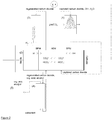
- the fermenter is schematically depicted in (3) of figure 2 .
- acetogenic cells capable of producing the organic acid and/or alcohol may be cultivated with any aqueous production media, substrates, conditions, and processes generally known in the art for culturing bacteria. This allows for the organic acid and/or alcohol to be produced using a biotechnological method.
- appropriate growth medium, pH, temperature, agitation rate, inoculum level, and/or aerobic, microaerobic, or anaerobic conditions are varied.
- the conditions in the fermenter may be varied depending on the microorganisms used. The varying of the conditions to be suitable for the optimal functioning of the microorganisms is within the knowledge of a skilled person.
- the step d) may be carried out wherein in step d) the pH of the aqueous production medium is in the range between 4.0 and 6.9, preferably between 5.0 and 7.0, most preferably between 5.0 and 6.5.
- the pressure may be between 0.9 and 10 bar.
- the microorganisms may be cultured at a temperature ranging from about 20 °C to about 80 °C, preferably ranging from about 25 °C to about 40 °C. In one example, the microorganism may be cultured at 37 °C.
- the pH values within the bipolar membrane electrodialysis unit of the instant invention of the acidic compartment in step c) is maintained in the range of from 5.0 to 6.5 and in step d) the pH of the aqueous production medium is in the range between 5.0 and 6.5.
- the carbon dioxide will remain dissolved in the acidic, aqueous medium without the need of applying high pressure; thus preferably in this context steps c) and d) of the method according to the instant invention are carried out within a pressure range of 0.9 to 1.2 bar.
- the aqueous production medium may comprise any nutrients, ingredients, and/or supplements suitable for growing the microorganism or for promoting the production of the organic acid and/or alcohol.
- the aqueous production medium may comprise at least one of the following: carbon sources, nitrogen sources, such as an ammonium salt, yeast extract, or peptone; minerals; salts; cofactors; buffering agents; vitamins; and any other components and/or extracts that may promote the growth of the bacteria.
- the aqueous production medium to be used must be suitable for the requirements of the particular strains. Descriptions of aqueous production media for various microorganisms are given in "Manual of Methods for General Bacteriology".
- a skilled person would thus be able to determine the suitable conditions that would allow for the production of at least one organic acid and/or alcohol from the carbon dioxide in the aqueous, acidic medium.
- the acetogenic cell in step d) converts the the carbon dioxide in the aqueous, acidic medium to at least one alcohol, at least one organic acid or a mixture of alcohol and organic acid.
- the organic acid may be selected from the group consisting of acetic acid, butyric acid, hexanoic acid and mixture thereof.
- the alcohol may be selected from the group consisting of ethanol, butanol, hexanol and mixtures thereof. In one example, a combination of both an alcohol and an organic acid is formed. Most preferably the alcohol is ethanol and the organic acid acetic acid.
- Step e) involves the recovering of the organic acid and/or alcohol from step d).
- the organic acid and/or alcohol contained in the aqueous production medium preferably is contacted in step e) with an organic extracting medium and results in the formation of two phases.
- organic extracting medium in step e) the organic extracting medium preferably comprises: at least one alkyl-phosphine oxide and at least one alkane comprising at least 12 carbon atoms; or at least one trialkylamine and at least one alkane comprising at least 12 carbon atoms.
- the organic extracting medium according to any aspect of the present invention may efficiently extract the organic acid and/or alcohol into the organic extracting medium.
- This organic extracting medium of a mixture of alkyl-phosphine oxide or trialkylamine and at least one alkane may be considered suitable in the method according to any aspect of the present invention as the mixture works efficiently in extracting the desired organic acid and/or alcohol in the presence of the aqueous production medium.
- the mixture of alkyl-phosphine oxide or trialkylamine and at least one alkane may be considered to work better than any method currently known in the art for extraction organic acid and/or alcohol as it does not require any special equipment to be carried out and it is relatively easy to perform with a high product yield.
- the organic extracting medium according to any aspect of the present invention is also not toxic for the acetogenic cell of step d).
- the alkane may comprise at least 12 carbon atoms.
- the alkane may comprise 12-18 carbon atoms.
- the alkane may be selected from the group consisting of dodecane, tridecane, tetradecane, pentadecane, hexadecane, heptadecane and octadecane.
- the organic extracting medium may comprise a mixture of alkanes.
- Alkyl-phosphine oxides have a general formula of OPX 3 , where X is an alkyl.
- Suitable alkyl phosphine oxides according to any aspect of the present invention include an alkyl group composed of a linear, branched or cyclic hydrocarbon, the hydrocarbon composed of from 1 to about 100 carbon atoms and from 1 to about 200 hydrogen atoms.
- "alkyl” as used in reference to alkyl phosphine oxide according to any aspect of the present invention can refer to a hydrocarbon group having 1 to 20 carbon atoms, frequently between 4 and 15 carbon atoms, or between 6 and 12 carbon atoms, and which can be composed of straight chains, cyclics, branched chains, or mixtures of these.
- the alkyl phosphine oxide may have from one to three alkyl groups on each phosphorus atom.
- the alkyl phosphine oxide has three alkyl groups on P.
- the alkyl group may comprise an oxygen atom in place of one carbon of a C4-C15 or a C6-C12 alkyl group, provided the oxygen atom is not attached to P of the alkyl phosphine oxide.
- the alkyl phosphine oxide is selected from the group consisting of tri-octylphosphine oxide, tri-butylphosphine oxide, hexyl-phosphine oxide, octylphosphine oxide and mixtures thereof. Even more in particular, the alkyl phosphine oxide may be tri-octylphosphine oxide (TOPO).
- TOPO tri-octylphosphine oxide
- Trialkylamines are organic-chemical compounds derived from ammonia (NH 3 ), whose three hydrogen atoms are replaced by alkyl radicals. Examples of trialkylamines are dimethylethylamine, methyldiethylamine, triethylamine, dimethyl-n-propylamine, dimethyl-i-propylamine, methyldi-n-propylamine, dimethylbutylamine, trioctylamine and the like.
- the trialkylamine used in the organic extracting medium according to any aspect of the present invention may not be soluble in water and may be trioctylamine.
- the organic extracting medium according to any aspect of the present invention may be a combination of alkyl-phosphine oxide or trialkylamine and at least one alkane.
- the alkane may comprise at least 12 carbon atoms.
- the alkane may comprise at 12-18 carbon atoms.
- the alkane may be selected from the group consisting of dodecane, tridecane, tetradecane, pentadecane, hexadecane, heptadecane and octadecane.
- the organic extracting medium may comprise a mixture of alkanes. More in particular, the organic extracting medium according to any aspect of the present invention may be a combination of TOPO and tetradecane or hexadecane.
- Trioctylphosphine oxide is an organophosphorus compound with the formula OP(C 8 H 17 ) 3 .
- TOPO may be part of the organic extracting medium together with at least one alkane according to any aspect of the present invention.
- the mixture of TOPO and alkane comprising at least 12 carbon atoms may comprise about 1:100 to 1:10 weight ratio of TOPO relative to the alkane.
- the weight ratio of TOPO to alkane in the organic extracting medium according to any aspect of the present invention may be about 1:100, 1:90, 1:80, 1:70, 1:60, 1:50, 1:40, 1:30, 1:25, 1:20, 1:15, or 1:10.
- the weight ratio of TOPO to alkane may be selected within the range of 1:90 to 1:10, 1:80 to 1:10, 1:70 to 1:10, 1:60 to 1:10, 1:50 to 1:10, 1:40 to 1:10, 1:30 to 1:10 or 1:20 to 1:10.
- the weight ratio of TOPO to alkane may be between 1:40 to 1:15 or 1:25 to 1:15.
- the weight ratio of TOPO to alkane may be about 1:15.
- the alkane may be hexadecane and therefore the weight ratio of TOPO to hexadecane may be about 1:15.
- the organic extracting medium comprises an alkyl-phosphine oxide or a trialkylamine that is more soluble in the alkane used in the organic extracting medium compared to the solubility of TOPO in alkane comprising at least 12 carbon atoms
- the weight ratio of the alkyl-phosphine oxide (other than TOPO) or a trialkylamine to alkane may be 1:1, 2:1, 3:1, 4:1, 5:1, 6:1, 7:1, 8:1, 9:1 or 10:1.
- the organic extracting medium may be trihexy-phosphine oxide and the ratio of trihexy-phosphine oxide to alkane may be 1:1.
- the organic extracting medium may be a lower chain alkyl-phosphine oxide and the ratio of the lower chain alkyl-phosphine oxide to alkane may be 2:1, 3:1, 4:1, 5:1, 6:1, 7:1, 8:1, 9:1 or 10:1.
- a lower-chain alkyl-phosphine oxide refers to a phosphine oxide with a C1-C4 alkyl group.
- the organic extracting medium may be a trialkylamine, this is known to be more soluble than phosphine oxide in alkanes.
- the trialkylamine may be a trioctylamine (TOA) that may be present in the organic extracting medium according to any aspect of the present invention in the ratio of up to 1:1 with the alkane.
- TOA trioctylamine
- the organic extracting medium may be a lower chain trialkylamine and the ratio of the lower chain trialkylamine to alkane may be 2:1, 3:1, 4:1, 5:1, 6:1, 7:1, 8:1, 9:1 or 10:1.
- a lower-chain alkyl-phosphine oxide refers to a phosphine oxide with a C1-C4 alkyl group.
- the term 'about' as used herein refers to a variation within 20 percent.
- the term “about” as used herein refers to +/- 20%, more in particular, +/-10%, even more in particular, +/-5% of a given measurement or value.
- the organic extracting medium in step e) alternatively preferably is selected from alkyl-phosphines oxides and trialkylamines, wherein the total amount of alkyl-phosphines oxides and trialkylamines referring to the total organic extraction medium is at least 98.0 wt.-%, preferably at least 99.5 wt.%.
- the organic acid and/or alcohol in the aqueous production medium may contact the organic extracting medium for a time sufficient to extract the organic acid and/or alcohol from the aqueous production medium into the organic extracting medium.
- a skilled person may be capable of determining the amount of time needed to reach distribution equilibrium and the right bubble agglomeration that may be needed to optimize the extraction process.
- the time needed may be dependent on the amount of organic acid and/or alcohol that may be extracted.
- the time needed to extract the organic acid and/or alcohol from the aqueous production medium into the organic extracting medium may only take a few minutes.
- the time for extraction may be equivalent to the time of production.
- the ratio of the organic extracting medium used to the amount of organic acid and/or alcohol to be extracted may vary depending on how quick the extraction is to be carried out.
- the amount of organic extracting medium is equal to the amount of aqueous production medium comprising the organic acid and/or alcohol.
- the two phases are separated using any means known in the art. This is schematically depicted as (4) and (5) in figure 2 .
- the two phases may be separated using a separation funnel.
- the two phases may also be separated using mixer-settlers, pulsed columns, thermal separation and the like.
- the separation of the organic extracting medium from the hexanoic acid may be carried out using distillation in view of the fact that hexanoic acid distills at a significantly lower boiling point than the organic extracting medium.
- a skilled person may be able to select the best method of separating the absorbent from the desired organic acid and/or alcohol depending on the characteristics of the organic acid and/or alcohol desired to be recovered.
- the organic acid and/or alcohol produced in step d) is acetic acid and/or ethanol, preferably with the acetogenic cell being Clostridium autoethanogenum , comprises a further step f) contacting the acetic acid and/or ethanol with a second organism capable of converting acetic acid and/or ethanol to at least one fatty acid.
- the second organism preferably is Clostridium kluyveri and preferably the at least one fatty acid is hexanoic acid.
- the fatty acid produced in step f) can be recovered in the same way as the organic acid in step e); thus preferably the method according to the invention contains the steps a) to d), f) and e) in the aforementioned order.
- a preferred method according to the instant invention is a continuous process.
- the basic, aqueous medium depleted of the captured carbon dioxide from step c) is fed to step a) as a basic, aqueous medium.
- an organic extracting agent is used for recovering the organic acid and/or alcohol and the organic extracting agent is run in circles while being contained in the acidic, aqueous solution of the acidic compartment of the bipolar membrane electrodialysis unit in step c) as well as in the aqueous production medium in step d).
- a very preferred method according to the instant invention is schematically depicted in figure 2 ). It comprises the steps
- This preferred method according to the instant invention preferably is further characterized by keeping the pH value within the bipolar membrane electrodialysis unit of the acidic compartment maintained by using the organic acid produced in step d) and not totally used in step f) or recovered in step e).
- This preferred method according to the instant invention preferably is further characterized by keeping the pH value within the bipolar membrane electrodialysis unit of the basic compartment maintained by keeping the carbon dioxide in step a) in the basic, aqueous medium stemming from the basic compartment of the bipolar membrane electrodialysis unit and re-feeding it into the basic compartment.
- This preferred method allows for an efficient continuous process.
- Another aspect of the instant invention is an apparatus for performing a process according to the instant invention comprising:
- the apparatus of the instant invention further comprises an ion-selective cation exchange membrane, that separates the acidic compartment from the anode and the basic compartment from the cathode.
- an ion-selective cation exchange membrane is Neosepta C66-10F supplied by Ameridia Corp.
- the apparatus of the instant invention further comprises a means of contacting carbon dioxide in a mixture of gases with a basic, aqueous medium to capture the carbon dioxide from exhaust gases and/or ambient air.
- the apparatus of the instant invention further comprises a means of recovering the organic acid and/or alcohol.
- the apparatus of the instant invention further comprises a means for refeeding a portion of the organic acid and/or alcohol into the acidic compartment of bipolar membrane electrodialysis unit.
- the apparatus of the instant invention further comprises a means for feeding a portion of the basic, aqueous medium from the basic compartment of bipolar membrane electrodialysis unit to the means of contacting carbon dioxide in a mixture of gases with a basic, aqueous medium.
- the apparatus comprises a connecting means that connects the bipolar membrane electrodialysis unit with the fermenter.
- the connecting means may be in the form of an inlet, pipe and the like and may be used to transfer the carbon dioxide in the aqueous, acidic medium to the fermenter.
- Another aspect of the instant invention is the use of the apparatus according to the invention for performing the process according to the invention.
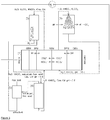
- Air is scrubbed ((1) in figure 3 ) by an aqueous solution of KHCO 3 at a concentration of 0.485 mol/l, that also contains 0,008mol/l of K 2 CO 3 .
- the bipolar membrane electrodialysis unit is a EUR2C-7-Bip assembled in the two-compartment configuration, (Ameridia Corp).
- Each cell contains an ion-selective anion-exchange membrane of 200 cm 2 (Neosepta AHA supplied by Ameridia Corp.) in series with a water-dissociating bipolar membrane (Neosepta BP-1E supplied by Ameridia Corp.).
- a cation exchange membrane (CEM in figure3 , Neosepta C66-10F supplied by Ameridia Corp.) separating the cells from the electrode compartment.
- the spaces between adjacent membranes are filled with 762 mm thick polyethylene mesh spacers.
- the acidic compartment of the bipolar membrane electrodialysis unit contains the fermentation medium EvoDM39, see below.
- the bipolar membrane electrodialysis unit is run with an amperage of 8 A and a voltage of 16 V.
- a mass flow of 14.0 m 3 /h from the acidic compartment of the bipolar membrane electrodialysis unit (2) is fed to a fermenter (3).
- EvoDM39 medium (pH 5.8; 0.429 g/L Mg-acetate, 0.164 g/l Na-acetate, 0.016 g/L Ca-acetate, 2.454 g/l K-acetate, 0.107 mL/L H3PO4 (8.5%), 1.01 mL/L acetic acid, 0.35 mg/L Co-acetate, 1.245 mg/L Ni-acetate, 20 ⁇ g/L d-biotin, 20 ⁇ g/L folic acid, 10 ⁇ g/L pyridoxine-HCl, 50 ⁇ g/L thiamine-HCI, 50 ⁇ g/L Riboflavin, 50 ⁇ g/L nicotinic acid, 50 ⁇ g/L Ca-pantothenate, 50 ⁇ g/L Vitamin B12, 50 ⁇ g/L p-aminobenzoate, 50 ⁇ g/L lipoic acid, 0.702 mg/L (NH4)2Fe
- the pressure is 1.0 bar
- the concentration of hexanoic acid in the extractant, the organic flow, is 19 g/kg.
- the determination of the product concentrations is performed by quantitative 1H-NMR spectroscopy. As an internal quantification standard sodium trimethylsilylpropionate (T(M)SP) is used. Hexanoic acid is separated by distillation (5) and the deloaded extractant is recycled to the extractor (4).
Landscapes
- Chemical & Material Sciences (AREA)
- Engineering & Computer Science (AREA)
- Chemical Kinetics & Catalysis (AREA)
- Health & Medical Sciences (AREA)
- Organic Chemistry (AREA)
- General Chemical & Material Sciences (AREA)
- Water Supply & Treatment (AREA)
- Life Sciences & Earth Sciences (AREA)
- Zoology (AREA)
- Wood Science & Technology (AREA)
- Oil, Petroleum & Natural Gas (AREA)
- Analytical Chemistry (AREA)
- Urology & Nephrology (AREA)
- Environmental & Geological Engineering (AREA)
- Microbiology (AREA)
- Biotechnology (AREA)
- Biochemistry (AREA)
- Bioinformatics & Cheminformatics (AREA)
- General Engineering & Computer Science (AREA)
- General Health & Medical Sciences (AREA)
- Genetics & Genomics (AREA)
- Biomedical Technology (AREA)
- Sustainable Development (AREA)
- Organic Low-Molecular-Weight Compounds And Preparation Thereof (AREA)
- Preparation Of Compounds By Using Micro-Organisms (AREA)
Abstract
Description
- The present invention relates to a method for production of organic acid and/or alcohol comprising the steps of:
- a) providing a basic, aqueous medium containing carbon dioxide in the form of hydrogencarbonate-anions and/or carbonate-anions;
- b) feeding the basic, aqueous medium containing the carbon dioxide of step (a) into a bipolar membrane electrodialysis unit comprising
- an anode,
- a cathode,
- an ion-selective anion-exchange membrane, and
- two water-dissociating bipolar membranes,
- capable of providing for an acidic compartment between the water-dissociating bipolar membrane on the anode side and the ion-selective anion-exchange membrane and for a basic compartment between the water-dissociating bipolar membrane on the cathode side and the ion-selective anion-exchange membrane;
- c) transporting the carbon dioxide in the form of hydrogencarbonate-anions and/or carbonate-anions across the anion-exchange membrane from the basic compartment into the acidic compartment comprising an acidic, aqueous solution;
- d) contacting the carbon dioxide in the acidic, aqueous solution from step (c)and hydrogen with at least one acetogenic cell in an aqueous production medium under suitable conditions to produce at least one organic acid and/or alcohol from the carbon dioxide in the acidic, aqueous solution; and optionally
- e) recovering the organic acid and/or alcohol.
- Carbon dioxide (CO2) is a greenhouse gas that is collecting in the atmosphere and causing global warming problems and unwanted climate changes. Most industrial processes that are being carried out internationally release inadvertently small amounts of CO2 in their exhaust fumes. This CO2 is being accumulated in the environment and causing an increase in temperature that is leading to uncontrollable climate changes such as melting of the polar ice caps, increase in sea-level globally, floods and the like.
There is thus a need to stabilise atmospheric CO2 to reduce these problems. One way to do so would be to reduce emissions by increasing the efficiency of combustion processes, as in fossil fuel-based power plants or motor vehicles with internal combustion engines. However, this is an arduous task taking into the account the increase in the number of cars in the world and the increase in the emissions from burning fossil fuels. Another way is to substitute fossil fuels in carbon-based processes with renewable energy or low-carbon fuels. However, this would reduce emissions but increase fuel costs. Accordingly, there is a need in the art to direct capture CO2 from the atmosphere and to reduce and stabilise the amount of CO2 in ambient air at 350 to 440 parts per million by volume (ppm). - There is also a need to store this captured CO2 in a form where it may be used as an alternative to fossil fuels in view of the depleting amount of fossil fuels available on earth. There are currently numerous technologies and materials for capturing CO2 from ambient air discussed in the literature using absorption/adsorption processes with inorganic chemisorbents, amines/imines, zeolites, anionic exchange resins and the like. Processes applied for carbon capture and storage cannot be directly transferred to CO2 separation from the air due to the humidity of the air, very low CO2 concentrations and the necessity to process close to ambient temperature and pressure conditions (Goeppert A., (2012), Energy Environ Sci., 5: 7833). Further, in Krekel, D., (2018), Applied Energy, 218:361-381 it has been concluded that the results reported show that CO2 separation from ambient air will not be able to play a vital role in the abatement of the climate change problem until 2050 due to its strong technological and economic drawbacks.
- In Sanz-Perez E., (2016) Chem. Rev., 116: 11840-11876, a historical review of different Direct Air Capture (DAC) techniques are disclosed. In particular, different chemical sorbents that are cycled through sorption and desorption cycles for CO2 removal from ultra-dilute gases such as air are disclosed in this paper. However, these methods disclosed are not competitive especially since desorbing of CO2 costs a lot of energy and money. There is thus a need in the art for directly capturing CO2 from ambient air without using desorbing of CO2.
-
EP2163294 discloses solvent based capture and regeneration of CO2 generated from fossil fuel fed electricity generating facilities, coal gasification plants or other sources by electrodialysis operation. However, in this process the further use of the regenerated, captured CO2 is restricted to further removal from the CO2 enriched stream. There is no suggestion on how to use the CO2 enriched stream directly as conventional chemical process require CO2 as a feedstock in high concentrations to achieve high yields. For example, one major CO2 application is urea synthesis. In order to run this synthesis efficiently, CO2 first needs to be purified and fed in a high concentration together with a second reagent, an amine (Wang, H (2017) Top Curr Chem (Z) 375:49). Very diluted aqueous solutions of CO2 are therefore not known to be useful in chemical synthesis and always must be concentrated before use.
More in particular, there is a need in the art to not only directly capture CO2 from ambient air but also to store the CO2 so that the stored CO2 may be used as an alternative source for higher chemicals. - The present invention attempts to solve the problems above by providing a method for production of organic acid and/or alcohol from carbon dioxide and by providing a means for production of organic acid and/or alcohol comprising a bipolar membrane electrodialysis unit and a fermenter. In particular, the present invention captures the carbon dioxide, converts the captured carbon dioxide to a regenerated carbon dioxide, which can be directly used for the production of an organic acid and/or alcohol using at least one microorganism. This method provides the advantages of being capable of reducing the carbon dioxide concentration in the air as well as the method provides a use for the carbon dioxide which is stored.
- The present invention relates to a method for production of organic acid and/or alcohol comprising the steps of:
- a) providing a basic, aqueous medium containing carbon dioxide in the form of hydrogencarbonate-anions and/or carbonate-anions;
- b) feeding the basic, aqueous medium containing the carbon dioxide of step (a) into a bipolar membrane electrodialysis unit comprising
- an anode,
- a cathode,
- an ion-selective anion-exchange membrane, and
- two water-dissociating bipolar membranes,
- capable of providing for an acidic compartment between the water-dissociating bipolar membrane on the anode side and the ion-selective anion-exchange membrane and for a basic compartment between the water-dissociating bipolar membrane on the cathode side and the ion-selective anion-exchange membrane;
- c) transporting the carbon dioxide in the form of hydrogencarbonate-anions and/or carbonate-anions across the anion-exchange membrane from the basic compartment into the acidic compartment comprising an acidic, aqueous solution;
- d) contacting the carbon dioxide in the acidic, aqueous solution from step (c)and hydrogen with at least one acetogenic cell in an aqueous production medium under suitable conditions to produce at least one organic acid and/or alcohol from the carbon dioxide in the acidic, aqueous solution; and optionally
- e) recovering the organic acid and/or alcohol.
- The term "basic medium" in the context of the instant invention refers to a medium having a pH of bigger than 7.
- The term "acidic medium" in the context of the instant invention refers to a medium having a pH of smaller than 7.
- The phrase "a basic, aqueous medium containing carbon dioxide in the form of hydrogencarbonate-anions and/or carbonate-anions" in the context of the instant invention refers to carbon dioxide contained in a basic, aqueous medium either in the form of hydrogencarbonate-anions and/or carbonate-anions and/or in the form of carbon dioxide being physically dissolved in a basic, aqueous medium. This phrase may refer to carbon dioxide that may be captured from a mixture of gases, for example exhaust gases or ambient air by directing a flow of the exhaust gas or ambient air through a basic, aqueous medium resulting in basic, aqueous medium containing carbon dioxide in the form of hydrogencarbonate-anions and/or carbonate-anions.
- The phrase "carbon dioxide in the acidic, aqueous solution" in the context of the instant invention refers to carbon dioxide contained in an acidic, aqueous medium either in the form of hydrogencarbonate-anions and/or carbonate-anions and/or in the form of carbon dioxide being physically dissolved in an acidic, aqueous medium. This phrase may refer to carbon dioxide that may be regenerated or recovered from the basic, aqueous medium resulting in an acidic, aqueous medium containing carbon dioxide in the form of hydrogencarbonate-anions and/or carbonate-anions.
- The term "aqueous medium" in the context of the instant invention refers to a medium having a water content of at least 50 wt.-% referring to the total medium.
- The "pH" in connection with the present invention is defined as the value which is measured for the relevant composition at 25°C after stirring for 5 minutes using a calibrated pH electrode in accordance with ISO 4319 (1977).
- Unless otherwise stated, all percentages (%) given are percentages by weight.
- The provision of the basic, aqueous medium containing carbon dioxide in the form of hydrogencarbonate-anions and/or carbonate-anions can be easily achieved by collecting seawater: natural seawater is slightly basic and thus is capable of naturally capturing carbon dioxide from the ambient air. Thus, taking sea water and feeding it into the process of the instant invention is an advantageous method step a) according to the instant invention
- In a preferred method according to the instant invention step a) comprises
providing a mixture of gases comprising carbon dioxide and contacting the mixture of gases with a basic, aqueous medium containing at least one base, thereby capturing the carbon dioxide, which is contained in the basic, aqueous medium in the form of hydrogencarbonate- and/or carbonate-anions. - It is a preferred method according to the instant invention, that the mixture of gases comprises carbon dioxide at a concentration of 350ppm-450ppm, preferably the mixture of gases is air.
- In a preferred method according to the instant invention the basic, aqueous medium in step a) contains a base selected from the group of hydroxides and carbonates, preferably of alkaline and earth alkaline hydroxides and carbonates, preferably from the group of sodium hydroxide, potassium hydroxide and calcium hydroxide.
- It is a preferred method according to the instant invention, that in step a) the basic, aqueous medium is sprayed through a nozzle into a stream of the mixture of gases comprising carbon dioxide.
- In step b) of the instant invention the basic, aqueous medium containing the carbon dioxide is fed into a bipolar membrane electrodialysis unit.
-
Figure 1 shows an example of such a bipolar membrane electrodialysis unit: The carbon dioxide exists in solution as negatively charged hydrogencarbonate- and/or carbonate-anions. This solution is fed into a a bipolar membrane electrodialysis (BPMED) unit, which separates the Hydrogencarbonate/carbonate solution into an acid and a base by applying a voltage across an alternating stack of ion-selective anion-exchange membranes (AEMs) and water-dissociating bipolar membranes (BPMs), and transporting carbon dioxide as hydrogencarbonate- and/or carbonate-anions into the acidic compartment. - The acidic solution can convert the transported hydrogencarbonate- and/or carbonate-anions into carbon dioxide, and the low solubility of total dissolved carbon dioxide in the acidic solution can results in carbon dioxide gas evolution, depending on carbon dioxide concentration, temperature and pressure applied.
- It is a preferred method of the instant invention, when in step b) the bipolar membrane electrodialysis unit comprises an alternating stack of ion-selective anion-exchange membranes and water-dissociating bipolar membranes of an amount of from 3 to 20 membranes.
Suited membranes that can be used in the bipolar membrane electrodialysis unit of the instant invention are readily commercially available, for example as ion-selective anion-exchange membranes Neosepta AHA and as water-dissociating bipolar membranes Neosepta BP-1E, both nmanufactured by Ameridia Corp. can be used. - Preferably the the bipolar membrane electrodialysis unit used in the process of the instant invention further comprises an ion-selective cation exchange membrane, that separates the acidic compartment from the anode and the basic compartment from the cathode. Preferably the ion-selective cation exchange membrane is Neosepta C66-10F supplied by Ameridia Corp.
It is a preferred method according to the instant invention, that the pH values within the bipolar membrane electrodialysis unit of the instant invention are kept within constant ranges: preferably the pH of the acidic compartment is maintained in the range of from 1.5 to 7.0, preferably of from 3.0 to 7.0, most preferably from 4.5 to 6.0; preferably the pH of the basic compartment is maintained in the range of from 7.1 to 12.0, preferably of from 8.0 to 11.5, most preferably from 9.5 to 11.0. - The pH values within the bipolar membrane electrodialysis unit of the instant invention can be kept within constant ranges by adding an acid or a base to the aqueous solutions in the bipolar membrane electrodialysis unit. Usually acid is needed, as the pH in both compartments tends to rise rather than to fall during the method according to the instant invention.
- In step c) the carbon dioxide is transported to an acidic, aqueous medium. In a preferred method according to the instant invention in step c) an amperage of 5 A to 20 A, preferably 5 A to 15A most preferred 5 A to 10 A is applied to the bipolar membrane electrodialysis unit. Preferably in the method according to the instant invention in step c) a voltage of 5 V to 30V, preferably of 10 V to 25V, most preferably of 10 V to 20V is applied to the bipolar membrane electrodialysis unit.
- In a preferred method according to the instant invention in step c) the acidic, aqueous solution in the acidic compartment is kept at a temperature within the range of from 1.0 °C to 15 °C, preferably from 6.0°C to 12 °C, even more preferred from 8 °C to 10 °C. This has the technical effect that the carbon dioxide captured from the exhaust gases and/or ambient air can be transported at higher rates.
- In a preferred method according to the instant invention in step c) the acidic, aqueous solution in the acidic compartment contains an organic extracting medium, which is used in step e) for the recovering of the organic acid and/or alcohol from step d); for details see below, also for the preferred organic extracting media used in this aspect. This also has the technical effect that the carbon dioxide captured from the exhaust gases and/or ambient air can be transported at higher rates.
- In a preferred method according to the instant invention in step c) a concentration of total carbon dioxide in the acidic, aqueous solution in the acidic compartment is in the range of 0.1 to 20 g/l and preferably from 0.5 to 10 g/l is maintained, and preferably the carbon dioxide is fed into step d) at this concentration. This concentration of CO2 although low, is sufficient to carry out the method according to any aspect of the present invention. The concentration of CO2 can be determined by classical gas chromatography, using a flame ionization detector (FID) and the like. A skilled person would be capable of using means known in the art to measure the concentration of CO2 in step (c).
- In step d) the carbon dioxide is converted to an organic acid and/or alcohol by acetogenic bacteria.
- The term "acetogenic bacteria" as used herein refers to a microorganism which is able to perform the Wood-Ljungdahl pathway and thus is able to convert CO, CO2 and/or hydrogen to acetate. These microorganisms include microorganisms which in their wild-type form do not have a Wood-Ljungdahl pathway, but have acquired this trait as a result of genetic modification. Such microorganisms include but are not limited to E. coli cells. These microorganisms may be also known as carboxydotrophic bacteria. Currently, 21 different genera of the acetogenic bacteria are known in the art (Drake et al., 2006), and these may also include some clostridia (Drake & Kusel, 2005). These bacteria are able to use carbon dioxide or carbon monoxide as a carbon source with hydrogen as an energy source (Wood, 1991). Further, alcohols, aldehydes, carboxylic acids as well as numerous hexoses may also be used as a carbon source (Drake et al., 2004). The reductive pathway that leads to the formation of acetate is referred to as acetyl-CoA or Wood-Ljungdahl pathway.
- In particular, the acetogenic bacteria may be selected from the group consisting of Acetoanaerobium notera (ATCC 35199), Acetonema longum (DSM 6540), Acetobacterium carbinolicum (DSM 2925), Acetobacterium malicum (DSM 4132), Acetobacterium species no. 446 ( Morinaga et al., 1990, J. Biotechnol., Vol. 14, p. 187-194 ),Acetobacterium wieringae (DSM 1911), Acetobacterium woodii (DSM 1030), Alkalibaculum bacchi (DSM 22112), Archaeoglobus fulgidus (DSM 4304), Blautia producta (DSM 2950, formerly Ruminococcus productus, formerly Peptostreptococcus productus), Butyribacterium methylotrophicum (DSM 3468), Clostridium aceticum (DSM 1496), Clostridium autoethanogenum (DSM 10061, DSM 19630 and DSM 23693), Clostridium carboxidivorans (DSM 15243), Clostridium coskatii (ATCC no. PTA-10522), Clostridium drakei (ATCC BA-623), Clostridium formicoaceticum (DSM 92), Clostridium glycolicum (DSM 1288), Clostridium Ijungdahlii (DSM 13528), Clostridium Ijungdahlii C-01 (ATCC 55988), Clostridium Ijungdahlii ERI-2 (ATCC 55380), Clostridium Ijungdahlii O-52 (ATCC 55989), Clostridium mayombei (DSM 6539), Clostridium methoxybenzovorans (DSM 12182), Clostridium ragsdalei (DSM 15248), Clostridium scatologenes (DSM 757), Clostridium species ATCC 29797 ( Schmidt et al., 1986, Chem. Eng. Commun., Vol. 45, p. 61-73 ), Desulfotomaculum kuznetsovii (DSM 6115), Desulfotomaculum thermobezoicum subsp. thermosyntrophicum (DSM 14055), Eubacterium limosum (DSM 20543), Methanosarcina acetivorans C2A (DSM 2834), Moorella sp. HUC22-1 ( Sakai et al., 2004, Biotechnol. Let., Vol. 29, p. 1607-1612 ), Moorella thermoacetica (DSM 521, formerly Clostridium thermoaceticum), Moorella thermoautotrophica (DSM 1974), Oxobacter pfennigii (DSM 322), Sporomusa aerivorans (DSM 13326), Sporomusa ovata (DSM 2662), Sporomusa silvacetica (DSM 10669), Sporomusa sphaeroides (DSM 2875), Sporomusa termitida (DSM 4440) and Thermoanaerobacter kivui (DSM 2030, formerly Acetogenium kivui), the strains in brackets being preferred strains.
- More in particular, the acetogenic cell may be selected from the Clostridium family. Even more in particular, the acetogenic cell used according to any aspect of the present invention may be selected from the group consisting of Clostridium aceticum (DSM 1496), Clostridium autoethanogenum (DSM 10061, DSM 19630 and DSM 23693), Clostridium carboxidivorans (DSM 15243), Clostridium coskatii (ATCC no. PTA-10522), Clostridium drakei (ATCC BA-623), Clostridium formicoaceticum (DSM 92), Clostridium glycolicum (DSM 1288), Clostridium Ijungdahlii (DSM 13528), Clostridium Ijungdahlii C-01 (ATCC 55988), Clostridium ljungdahlii ERI-2 (ATCC 55380), Clostridium Ijungdahlii O-52 (ATCC 55989), Clostridium mayombei (DSM 6539), Clostridium methoxybenzovorans (DSM 12182), Clostridium ragsdalei (DSM 15248), Clostridium scatologenes (DSM 757), and Clostridium species ATCC 29797), the strains in brackets being preferred strains.
- In particular, the strain ATCC BAA-624 of Clostridium carboxidivorans may be used. Even more in particular, the bacterial strain labelled "P7" and "P11" of Clostridium carboxidivorans as described for example in
U.S. 2007/0275447 andU.S. 2008/0057554 may be used.
Another particularly suitable bacterium may be Clostridium Ijungdahlii. In particular, strains selected from the group consisting of Clostridium Ijungdahlii PETC, Clostridium Ijungdahlii ERI2, Clostridium Ijungdahlii COL and Clostridium Ijungdahlii O-52 may be used in the conversion of synthesis gas to hexanoic acid. These strains for example are described inWO 98/00558 WO 00/68407 - It is a preferred method according to the instant invention, that in step d) the contacting takes place in a fermenter comprising the at least one acetogenic cell, the aqueous production medium, a means of receiving a hydrogen stream, and a means of receiving the recovered carbon dioxide. The fermenter is schematically depicted in (3) of
figure 2 . - In some examples, acetogenic cells capable of producing the organic acid and/or alcohol may be cultivated with any aqueous production media, substrates, conditions, and processes generally known in the art for culturing bacteria. This allows for the organic acid and/or alcohol to be produced using a biotechnological method. Depending on the microorganism that is used for organic acid and/or alcohol production, appropriate growth medium, pH, temperature, agitation rate, inoculum level, and/or aerobic, microaerobic, or anaerobic conditions are varied. A skilled person would understand the other conditions necessary to carry out the method according to any aspect of the present invention. In particular, the conditions in the fermenter may be varied depending on the microorganisms used. The varying of the conditions to be suitable for the optimal functioning of the microorganisms is within the knowledge of a skilled person.
- In one example, the step d) according to any aspect of the present invention may be carried out wherein in step d) the pH of the aqueous production medium is in the range between 4.0 and 6.9, preferably between 5.0 and 7.0, most preferably between 5.0 and 6.5. The pressure may be between 0.9 and 10 bar. The microorganisms may be cultured at a temperature ranging from about 20 °C to about 80 °C, preferably ranging from about 25 °C to about 40 °C. In one example, the microorganism may be cultured at 37 °C.
- In a preferred method of the instant invention the pH values within the bipolar membrane electrodialysis unit of the instant invention of the acidic compartment in step c) is maintained in the range of from 5.0 to 6.5 and in step d) the pH of the aqueous production medium is in the range between 5.0 and 6.5. This has the advantage, that further pH adjustments between the two steps are not necessary. Furthermore, within this pH-range the carbon dioxide will remain dissolved in the acidic, aqueous medium without the need of applying high pressure; thus preferably in this context steps c) and d) of the method according to the instant invention are carried out within a pressure range of 0.9 to 1.2 bar.
- In some examples, for the growth of the microorganism and for its production of organic acid and/or alcohol, the the aqueous production medium may comprise any nutrients, ingredients, and/or supplements suitable for growing the microorganism or for promoting the production of the organic acid and/or alcohol. In particular, the the aqueous production medium may comprise at least one of the following: carbon sources, nitrogen sources, such as an ammonium salt, yeast extract, or peptone; minerals; salts; cofactors; buffering agents; vitamins; and any other components and/or extracts that may promote the growth of the bacteria. The aqueous production medium to be used must be suitable for the requirements of the particular strains. Descriptions of aqueous production media for various microorganisms are given in "Manual of Methods for General Bacteriology".
- A skilled person would thus be able to determine the suitable conditions that would allow for the production of at least one organic acid and/or alcohol from the carbon dioxide in the aqueous, acidic medium.
- In one example according to any aspect of the present invention, the acetogenic cell in step d) converts the the carbon dioxide in the aqueous, acidic medium to at least one alcohol, at least one organic acid or a mixture of alcohol and organic acid. In particular, the organic acid may be selected from the group consisting of acetic acid, butyric acid, hexanoic acid and mixture thereof. The alcohol may be selected from the group consisting of ethanol, butanol, hexanol and mixtures thereof. In one example, a combination of both an alcohol and an organic acid is formed. Most preferably the alcohol is ethanol and the organic acid acetic acid.
- Step e) according to any aspect of the present invention involves the recovering of the organic acid and/or alcohol from step d).
The organic acid and/or alcohol contained in the aqueous production medium preferably is contacted in step e) with an organic extracting medium and results in the formation of two phases. As organic extracting medium in step e) the organic extracting medium preferably comprises: at least one alkyl-phosphine oxide and at least one alkane comprising at least 12 carbon atoms; or at least one trialkylamine and at least one alkane comprising at least 12 carbon atoms. - The organic extracting medium according to any aspect of the present invention may efficiently extract the organic acid and/or alcohol into the organic extracting medium. This organic extracting medium of a mixture of alkyl-phosphine oxide or trialkylamine and at least one alkane may be considered suitable in the method according to any aspect of the present invention as the mixture works efficiently in extracting the desired organic acid and/or alcohol in the presence of the aqueous production medium. In particular, the mixture of alkyl-phosphine oxide or trialkylamine and at least one alkane may be considered to work better than any method currently known in the art for extraction organic acid and/or alcohol as it does not require any special equipment to be carried out and it is relatively easy to perform with a high product yield. Further, the organic extracting medium according to any aspect of the present invention is also not toxic for the acetogenic cell of step d).
- The alkane may comprise at least 12 carbon atoms. In particular, the alkane may comprise 12-18 carbon atoms. In one example, the alkane may be selected from the group consisting of dodecane, tridecane, tetradecane, pentadecane, hexadecane, heptadecane and octadecane. In a further example, the organic extracting medium may comprise a mixture of alkanes.
- Alkyl-phosphine oxides have a general formula of OPX3, where X is an alkyl. Suitable alkyl phosphine oxides according to any aspect of the present invention include an alkyl group composed of a linear, branched or cyclic hydrocarbon, the hydrocarbon composed of from 1 to about 100 carbon atoms and from 1 to about 200 hydrogen atoms. In particular, "alkyl" as used in reference to alkyl phosphine oxide according to any aspect of the present invention can refer to a hydrocarbon group having 1 to 20 carbon atoms, frequently between 4 and 15 carbon atoms, or between 6 and 12 carbon atoms, and which can be composed of straight chains, cyclics, branched chains, or mixtures of these. The alkyl phosphine oxide may have from one to three alkyl groups on each phosphorus atom. In one example, the alkyl phosphine oxide has three alkyl groups on P. In some examples, the alkyl group may comprise an oxygen atom in place of one carbon of a C4-C15 or a C6-C12 alkyl group, provided the oxygen atom is not attached to P of the alkyl phosphine oxide. Typically, the alkyl phosphine oxide is selected from the group consisting of tri-octylphosphine oxide, tri-butylphosphine oxide, hexyl-phosphine oxide, octylphosphine oxide and mixtures thereof. Even more in particular, the alkyl phosphine oxide may be tri-octylphosphine oxide (TOPO).
- Trialkylamines are organic-chemical compounds derived from ammonia (NH3), whose three hydrogen atoms are replaced by alkyl radicals. Examples of trialkylamines are dimethylethylamine, methyldiethylamine, triethylamine, dimethyl-n-propylamine, dimethyl-i-propylamine, methyldi-n-propylamine, dimethylbutylamine, trioctylamine and the like. In particular, the trialkylamine used in the organic extracting medium according to any aspect of the present invention may not be soluble in water and may be trioctylamine.
- In one example, the organic extracting medium according to any aspect of the present invention may be a combination of alkyl-phosphine oxide or trialkylamine and at least one alkane. In particular, the alkane may comprise at least 12 carbon atoms. In particular, the alkane may comprise at 12-18 carbon atoms. In one example, the alkane may be selected from the group consisting of dodecane, tridecane, tetradecane, pentadecane, hexadecane, heptadecane and octadecane. In a further example, the organic extracting medium may comprise a mixture of alkanes. More in particular, the organic extracting medium according to any aspect of the present invention may be a combination of TOPO and tetradecane or hexadecane.
- Trioctylphosphine oxide (TOPO) is an organophosphorus compound with the formula OP(C8H17)3. TOPO may be part of the organic extracting medium together with at least one alkane according to any aspect of the present invention. In particular, the mixture of TOPO and alkane comprising at least 12 carbon atoms may comprise about 1:100 to 1:10 weight ratio of TOPO relative to the alkane. More in particular, the weight ratio of TOPO to alkane in the organic extracting medium according to any aspect of the present invention may be about 1:100, 1:90, 1:80, 1:70, 1:60, 1:50, 1:40, 1:30, 1:25, 1:20, 1:15, or 1:10. Even more in particular, the weight ratio of TOPO to alkane may be selected within the range of 1:90 to 1:10, 1:80 to 1:10, 1:70 to 1:10, 1:60 to 1:10, 1:50 to 1:10, 1:40 to 1:10, 1:30 to 1:10 or 1:20 to 1:10. The weight ratio of TOPO to alkane may be between 1:40 to 1:15 or 1:25 to 1:15. In one example, the weight ratio of TOPO to alkane may be about 1:15. In the example, the alkane may be hexadecane and therefore the weight ratio of TOPO to hexadecane may be about 1:15.
- In another example, when the organic extracting medium comprises an alkyl-phosphine oxide or a trialkylamine that is more soluble in the alkane used in the organic extracting medium compared to the solubility of TOPO in alkane comprising at least 12 carbon atoms, the weight ratio of the alkyl-phosphine oxide (other than TOPO) or a trialkylamine to alkane may be 1:1, 2:1, 3:1, 4:1, 5:1, 6:1, 7:1, 8:1, 9:1 or 10:1. In one example, the organic extracting medium may be trihexy-phosphine oxide and the ratio of trihexy-phosphine oxide to alkane may be 1:1. In other examples, the organic extracting medium may be a lower chain alkyl-phosphine oxide and the ratio of the lower chain alkyl-phosphine oxide to alkane may be 2:1, 3:1, 4:1, 5:1, 6:1, 7:1, 8:1, 9:1 or 10:1. In this case, a lower-chain alkyl-phosphine oxide refers to a phosphine oxide with a C1-C4 alkyl group. In another example, the organic extracting medium may be a trialkylamine, this is known to be more soluble than phosphine oxide in alkanes. For example, the trialkylamine may be a trioctylamine (TOA) that may be present in the organic extracting medium according to any aspect of the present invention in the ratio of up to 1:1 with the alkane. Lower chain length amines can be used in even higher ratios. In other examples, the organic extracting medium may be a lower chain trialkylamine and the ratio of the lower chain trialkylamine to alkane may be 2:1, 3:1, 4:1, 5:1, 6:1, 7:1, 8:1, 9:1 or 10:1. In this case, a lower-chain alkyl-phosphine oxide refers to a phosphine oxide with a C1-C4 alkyl group.
- The term 'about' as used herein refers to a variation within 20 percent. In particular, the term "about" as used herein refers to +/- 20%, more in particular, +/-10%, even more in particular, +/-5% of a given measurement or value.
- As organic extracting medium in step e) the organic extracting medium alternatively preferably is selected from alkyl-phosphines oxides and trialkylamines, wherein the total amount of alkyl-phosphines oxides and trialkylamines referring to the total organic extraction medium is at least 98.0 wt.-%, preferably at least 99.5 wt.%.
- In step e) according to any aspect of the present invention, the organic acid and/or alcohol in the aqueous production medium may contact the organic extracting medium for a time sufficient to extract the organic acid and/or alcohol from the aqueous production medium into the organic extracting medium. A skilled person may be capable of determining the amount of time needed to reach distribution equilibrium and the right bubble agglomeration that may be needed to optimize the extraction process. In some examples the time needed may be dependent on the amount of organic acid and/or alcohol that may be extracted. In particular, the time needed to extract the organic acid and/or alcohol from the aqueous production medium into the organic extracting medium may only take a few minutes. According to any aspect of the present invention, where the extraction is carried out in step e) as production takes place in step d), the time for extraction may be equivalent to the time of production.
- The ratio of the organic extracting medium used to the amount of organic acid and/or alcohol to be extracted may vary depending on how quick the extraction is to be carried out. In one example, the amount of organic extracting medium is equal to the amount of aqueous production medium comprising the organic acid and/or alcohol.
- After the step of contacting the organic extracting medium with the aqueous production medium, the two phases (aqueous and organic) are separated using any means known in the art. This is schematically depicted as (4) and (5) in
figure 2 . In one example, the two phases may be separated using a separation funnel. The two phases may also be separated using mixer-settlers, pulsed columns, thermal separation and the like. In one example, where the organic acid is hexanoic acid, the separation of the organic extracting medium from the hexanoic acid may be carried out using distillation in view of the fact that hexanoic acid distills at a significantly lower boiling point than the organic extracting medium. A skilled person may be able to select the best method of separating the absorbent from the desired organic acid and/or alcohol depending on the characteristics of the organic acid and/or alcohol desired to be recovered. - In a preferred method according to the instant invention the organic acid and/or alcohol produced in step d) is acetic acid and/or ethanol, preferably with the acetogenic cell being Clostridium autoethanogenum, comprises a further step
f) contacting the acetic acid and/or ethanol with a second organism capable of converting acetic acid and/or ethanol to at least one fatty acid.
In this context the second organism preferably is Clostridium kluyveri and preferably the at least one fatty acid is hexanoic acid. - The fatty acid produced in step f) can be recovered in the same way as the organic acid in step e); thus preferably the method according to the invention contains the steps a) to d), f) and e) in the aforementioned order.
- A preferred method according to the instant invention is a continuous process. Preferably in this continuous process the basic, aqueous medium depleted of the captured carbon dioxide from step c) is fed to step a) as a basic, aqueous medium. Even more preferably in step e) an organic extracting agent is used for recovering the organic acid and/or alcohol and the organic extracting agent is run in circles while being contained in the acidic, aqueous solution of the acidic compartment of the bipolar membrane electrodialysis unit in step c) as well as in the aqueous production medium in step d).
- A very preferred method according to the instant invention is schematically depicted in
figure 2 ). It comprises the steps - a) providing a mixture of gases comprising carbon dioxide and contacting the mixture of gases with a basic, aqueous medium containing at least one base, thereby providing a basic, aqueous medium containing carbon dioxide in the form of hydrogencarbonate-anions and/or carbonate-anions by ;
- b) feeding the basic, aqueous medium containing the carbon dioxide into a bipolar membrane electrodialysis cell comprising
an anode,
a cathode,
an ion-selective anion-exchange membrane, and
two water-dissociating bipolar membranes,
capable of providing for an acidic compartment between the water-dissociating bipolar membrane on the anode side and the ion-selective anion-exchange membrane and for a basic compartment between the water-dissociating bipolar membrane on the cathode side and the ion-selective anion-exchange membrane; - c) transporting the carbon dioxide in the form of hydrogencarbonate-anions and/or carbonate-anions across the anion-exchange membrane from the basic compartment into the acidic compartment in acidic, aqueous solution;
- d) contacting the carbon dioxide in the acidic, aqueous solution
and hydrogen with at least one acetogenic cell in an aqueous production medium in a fermenter comprising the at least one acetogenic cell, the aqueous production medium, a means of receiving a hydrogen stream, and a means of receiving the carbon dioxide in the acidic, aqueous solution under suitable conditions to produce at least one organic acid and/or alcohol selected from acetic acid and ethanol from the carbon dioxide in the acidic, aqueous solution; - f) contacting the acetic acid and/or ethanol with a second organism capable of converting acetic acid and/or ethanol to at least one fatty acid; and
- e) recovering the organic acid, which is fatty acid of step f).
- This preferred method according to the instant invention preferably is further characterized by keeping the pH value within the bipolar membrane electrodialysis unit of the acidic compartment maintained by using the organic acid produced in step d) and not totally used in step f) or recovered in step e).
- This preferred method according to the instant invention preferably is further characterized by keeping the pH value within the bipolar membrane electrodialysis unit of the basic compartment maintained by keeping the carbon dioxide in step a) in the basic, aqueous medium stemming from the basic compartment of the bipolar membrane electrodialysis unit and re-feeding it into the basic compartment.
- This preferred method allows for an efficient continuous process.
- Another aspect of the instant invention is an apparatus for performing a process according to the instant invention comprising:
- a bipolar membrane electrodialysis unit comprising
- an anode,
- a cathode,
- an ion-selective anion-exchange membrane,
- a means of receiving carbon dioxide in the form of hydrogencarbonate-anions and/or carbonate-anions, and
- two water-dissociating bipolar membranes,
- capable of providing for an acidic compartment between the water-dissociating bipolar membrane on the anode side and the ion-selective anion-exchange membrane and for a basic compartment between the water-dissociating bipolar membrane on the cathode side and the ion-selective anion-exchange membrane;
- a fermenter comprising
- at least one acetogenic cell,
- an aqueous production medium,
- a means of receiving a hydrogen stream, and
- a means of receiving the carbon dioxide recovered from the bipolar membrane electrodialysis unit,
- wherein the acetogenic cell is capable of converting the hydrogen and the carbon dioxide to at least one organic acid and/or alcohol.
- Preferably the apparatus of the instant invention further comprises an ion-selective cation exchange membrane, that separates the acidic compartment from the anode and the basic compartment from the cathode. Preferably the ion-selective cation exchange membrane is Neosepta C66-10F supplied by Ameridia Corp.
- Preferably the apparatus of the instant invention further comprises a means of contacting carbon dioxide in a mixture of gases with a basic, aqueous medium to capture the carbon dioxide from exhaust gases and/or ambient air.
- Preferably the apparatus of the instant invention further comprises a means of recovering the organic acid and/or alcohol.
- More preferably the apparatus of the instant invention further comprises a means for refeeding a portion of the organic acid and/or alcohol into the acidic compartment of bipolar membrane electrodialysis unit.
- More preferably the apparatus of the instant invention further comprises a means for feeding a portion of the basic, aqueous medium from the basic compartment of bipolar membrane electrodialysis unit to the means of contacting carbon dioxide in a mixture of gases with a basic, aqueous medium.
- In one example, the apparatus comprises a connecting means that connects the bipolar membrane electrodialysis unit with the fermenter. The connecting means may be in the form of an inlet, pipe and the like and may be used to transfer the carbon dioxide in the aqueous, acidic medium to the fermenter.
- Another aspect of the instant invention is the use of the apparatus according to the invention for performing the process according to the invention.
-
-
Figure 1 is a schematic view of a bipolar membrane electrodialysis unit. -
Figure 2 is a schematic view of an exemplary process of the instant invention -
Figure 3 is a schematic view of the exemplary process of example 1 of the instant invention - The present invention is illustratively described in the examples listed below without any intention of limiting the invention, whose scope is determined by the entire description and the claims, to the embodiments referred to in the examples.
- Air is scrubbed ((1) in
figure 3 ) by an aqueous solution of KHCO3 at a concentration of 0.485 mol/l, that also contains 0,008mol/l of K2CO3. The K2CO3 is converted by the absorbed CO2 from air into KHCO3 and therefore an aqueous solution with a total concentration of c=0.5 mol/I of KHCO3 with less than0,001 mol/l K2CO3 and a pH of 10.7 is fed with a mass flow of 140 kg/h into the basic compartment of a bipolar membrane electrodialysis unit (2).
The bipolar membrane electrodialysis unit is a EUR2C-7-Bip assembled in the two-compartment configuration, (Ameridia Corp). It consists of seven cells in series. Each cell contains an ion-selective anion-exchange membrane of 200 cm2 (Neosepta AHA supplied by Ameridia Corp.) in series with a water-dissociating bipolar membrane (Neosepta BP-1E supplied by Ameridia Corp.). At each end of the stack of seven cells is a cation exchange membrane (CEM infigure3 , Neosepta C66-10F supplied by Ameridia Corp.) separating the cells from the electrode compartment. The spaces between adjacent membranes are filled with 762 mm thick polyethylene mesh spacers. The acidic compartment of the bipolar membrane electrodialysis unit contains the fermentation medium EvoDM39, see below.
The bipolar membrane electrodialysis unit is run with an amperage of 8 A and a voltage of 16 V. A mass flow of 14.0 m3/h from the acidic compartment of the bipolar membrane electrodialysis unit (2) is fed to a fermenter (3).
The fermenter (3) is a stirred tank reactor (rotation rate=500 rpm) with a volume of 150I. It is filled with 1101 of EvoDM39 medium (pH 5.8; 0.429 g/L Mg-acetate, 0.164 g/l Na-acetate, 0.016 g/L Ca-acetate, 2.454 g/l K-acetate, 0.107 mL/L H3PO4 (8.5%), 1.01 mL/L acetic acid, 0.35 mg/L Co-acetate, 1.245 mg/L Ni-acetate, 20 µg/L d-biotin, 20 µg/L folic acid, 10 µg/L pyridoxine-HCl, 50 µg/L thiamine-HCI, 50 µg/L Riboflavin, 50 µg/L nicotinic acid, 50 µg/L Ca-pantothenate, 50 µg/L Vitamin B12, 50 µg/L p-aminobenzoate, 50 µg/L lipoic acid, 0.702 mg/L (NH4)2Fe(SO4)2 x 4 H2O, 1 ml/L KS-acetate (93,5 mM)). The solution is neutralized with NH3 to set the pH=5.8. The pressure is 1.0 bar
The vessel is inoculated with Clostridium autoethanogenum (DSM 10061) (Cau infigure 3 ) and Clostridium kluyveri (Ckl infigure 3 ) cells. After a growth phase of 48h at T=37 °C and the addition of a hydrogen volume flow of 150 NI/h at a pressure of 1.1 bar an OD=2.4 with roughly the same biomass weight of Clostridium autoethanogenum and Clostridium kluyveri cells is achieved. 99% of the aqueous flow from the fermenter is recycled to the acidic compartment of the bipolar membrane electrodialysis unit. 1 % of the flow was fed into an extractor (4).
An additional flow of 2kg/h of an extractant, a mixture of 6% (w/w) TOPO in tetradecane, is fed to the extractor (4). The extractor is a stirred tank (r=100 rpm) with a residence time of 5 min and a continuously operated settler (V=10I). The total flow into the extractor is 142 kg/h. The flow is separated into one organic flow of 2 kg/h and one aqueous flow of 140 kg/h. The aqueous flow is recycled to the acidic compartment of the bipolar membrane electrodialysis unit. - The concentration of hexanoic acid in the extractant, the organic flow, is 19 g/kg. The determination of the product concentrations is performed by quantitative 1H-NMR spectroscopy. As an internal quantification standard sodium trimethylsilylpropionate (T(M)SP) is used.
Hexanoic acid is separated by distillation (5) and the deloaded extractant is recycled to the extractor (4).
Claims (17)
- A method for production of organic acid and/or alcohol comprising the steps of:a) providing a basic, aqueous medium containing carbon dioxide in the form of hydrogencarbonate-anions and/or carbonate-anions;b) feeding the basic, aqueous medium containing the carbon dioxide of step (a) into a bipolar membrane electrodialysis unit comprisingan anode,a cathode,an ion-selective anion-exchange membrane, andtwo water-dissociating bipolar membranes,capable of providing for an acidic compartment between the water-dissociating bipolar membrane on the anode side and the ion-selective anion-exchange membrane and for a basic compartment between the water-dissociating bipolar membrane on the cathode side and the ion-selective anion-exchange membrane;c) transporting the carbon dioxide in the form of hydrogencarbonate-anions and/or carbonate-anions across the anion-exchange membrane from the basic compartment into the acidic compartment comprising an acidic, aqueous solution;d) contacting the carbon dioxide in the acidic, aqueous solution from step (c)and hydrogen with at least one acetogenic cell in an aqueous production medium under suitable conditions to produce at least one organic acid and/or alcohol from the carbon dioxide in the acidic, aqueous solution; and optionallye) recovering the organic acid and/or alcohol.
- The method according to claim 1, wherein step a) comprises
providing a mixture of gases comprising carbon dioxide and contacting the mixture of gases with a basic, aqueous medium containing at least one base, thereby capturing the carbon dioxide, which is contained in the basic, aqueous medium in the form of hydrogencarbonate- and/or carbonate-anions. - The method according to claim 2, wherein the mixture of gases comprises carbon dioxide at a concentration of 350ppm-450ppm, preferably the mixture of gases is air.
- The method according to either claim 2 or 3, wherein the basic, aqueous medium in step a) contains a base selected from the group of hydroxides and carbonates, preferably of alkaline and earth alkaline hydroxides and carbonates, preferably from the group of sodium hydroxide, potassium hydroxide and calcium hydroxide.
- The method according to any one of the claims 2 to 4, wherein in step a) the basic, aqueous medium is sprayed through a nozzle into a stream of the mixture of gases comprising carbon dioxide.
- The method according to any one of the preceding claims, wherein in step b) the bipolar membrane electrodialysis unit comprises an alternating stack of ion-selective anion-exchange membranes and water-dissociating bipolar membranes of an amount of from 3 to 20 membranes.
- The method according to any one of the preceding claims, wherein in step c) an amperage of 5 A to 20 A, preferably 5 A to 15A most preferred 5 A to 10 A is applied to the bipolar membrane electrodialysis unit.
- The method according to any one of the preceding claims, wherein in step d) the contacting takes place in a fermenter comprising the at least one acetogenic cell, the aqueous production medium, a means of receiving a hydrogen stream, and a means of receiving the carbon dioxide in the acidic, aqueous solution.
- The method according to any one of the preceding claims, wherein in step d) the pH of the aqueous production medium is in the range between 5.0 and 6.5.
- The method according to any one of the preceding claims, wherein the organic acid and/or alcohol produced in step d) is acetic acid and/or ethanol.
- The method according to any one of the preceding claims, wherein in step d) the acetogenic cell is selected from the group consisting of Clostridium aceticum (DSM 1496), Clostridium autoethanogenum (DSM 10061, DSM 19630 and DSM 23693), Clostridium carboxidivorans (DSM 15243), Clostridium coskatii (ATCC no. PTA-10522), Clostridium drakei (ATCC BA-623), Clostridium formicoaceticum (DSM 92), Clostridium glycolicum (DSM 1288), Clostridium Ijungdahlii (DSM 13528), Clostridium Ijungdahlii C-01 (ATCC 55988), Clostridium Ijungdahlii ERI-2 (ATCC 55380), Clostridium Ijungdahlii O-52 (ATCC 55989), Clostridium mayombei (DSM 6539), Clostridium methoxybenzovorans (DSM 12182), Clostridium ragsdalei (DSM 15248), Clostridium scatologenes (DSM 757), and Clostridium species ATCC 29797.
- The method according to any one of the preceding claims, wherein the organic acid and/or alcohol produced in step d) is acetic acid and/or ethanol, preferably with the acetogenic cell being Clostridium autoethanogenum, comprising a further step
f) contacting the acetic acid and/or ethanol with a second organism capable of converting acetic acid and/or ethanol to at least one fatty acid. - The method according to claim 12, wherein the second organism is Clostridium kluyveri and preferably the at least one fatty acid is hexanoic acid.
- Apparatus for performing a process according to at least one of the claims 1 to 13 comprising:a bipolar membrane electrodialysis unit comprisingan anode,a cathode,an ion-selective anion-exchange membrane,a means of receiving carbon dioxide in the form of hydrogencarbonate-anions and/or carbonate-anions, andtwo water-dissociating bipolar membranes,capable of providing for an acidic compartment between the water-dissociating bipolar membrane on the anode side and the ion-selective anion-exchange membrane and for a basic compartment between the water-dissociating bipolar membrane on the cathode side and the ion-selective anion-exchange membrane;a fermenter comprisingat least one acetogenic cell,an aqueous production medium,a means of receiving a hydrogen stream, anda means of receiving the carbon dioxide recovered from the bipolar membrane electrodialysis unit,wherein the acetogenic cell is capable of converting the hydrogen and the carbon dioxide to at least one organic acid and/or alcohol.
- Apparatus according to claim 14, further comprising a means of contacting carbon dioxide in a mixture of gases with a basic, aqueous medium to capture the carbon dioxide.
- Apparatus according to claim 14 or 15 further comprising a means of recovering the organic acid and/or alcohol.
- Use of the apparatus according to any one of claims 14 to 16, for performing the process according to any one of claims 1 to 13.
Applications Claiming Priority (1)
| Application Number | Priority Date | Filing Date | Title |
|---|---|---|---|
| EP19175322.7A EP3741863A1 (en) | 2019-05-20 | 2019-05-20 | Regenerating and utilizing carbon dioxide |
Publications (2)
| Publication Number | Publication Date |
|---|---|
| EP3741864A1 true EP3741864A1 (en) | 2020-11-25 |
| EP3741864B1 EP3741864B1 (en) | 2022-04-06 |
Family
ID=66625055
Family Applications (2)
| Application Number | Title | Priority Date | Filing Date |
|---|---|---|---|
| EP19175322.7A Withdrawn EP3741863A1 (en) | 2019-05-20 | 2019-05-20 | Regenerating and utilizing carbon dioxide |
| EP20173743.4A Not-in-force EP3741864B1 (en) | 2019-05-20 | 2020-05-08 | Regenerating and utilizing carbon dioxide |
Family Applications Before (1)
| Application Number | Title | Priority Date | Filing Date |
|---|---|---|---|
| EP19175322.7A Withdrawn EP3741863A1 (en) | 2019-05-20 | 2019-05-20 | Regenerating and utilizing carbon dioxide |
Country Status (2)
| Country | Link |
|---|---|
| EP (2) | EP3741863A1 (en) |
| ES (1) | ES2914714T3 (en) |
Cited By (7)
| Publication number | Priority date | Publication date | Assignee | Title |
|---|---|---|---|---|
| US20220267914A1 (en) * | 2021-02-19 | 2022-08-25 | Prometheus Fuels, Inc | Integrated direct air capture of co2 for aqueous electrochemical reduction of co2 |
| WO2023136778A1 (en) * | 2022-01-11 | 2023-07-20 | Verdus Technologies Pte. Ltd. | Method and apparatus for removing a target substance from a gas |
| CN116600877A (en) * | 2020-12-03 | 2023-08-15 | 赢创运营有限公司 | way to capture carbon dioxide |
| CN116585868A (en) * | 2023-03-13 | 2023-08-15 | 中国矿业大学 | An integrated process of carbon dioxide capture and urea preparation |
| WO2023177298A2 (en) | 2022-03-18 | 2023-09-21 | Technische Universiteit Delft | Carbon capture and conversion |
| US11920248B2 (en) | 2018-12-18 | 2024-03-05 | Prometheus Fuels, Inc | Methods and systems for fuel production |
| IT202300005802A1 (en) * | 2023-03-27 | 2024-09-27 | Politropos Srl | ELECTROCHEMICAL DEVICE FOR THE REDUCTION OF CO2 IN THE AIR. |
Families Citing this family (3)
| Publication number | Priority date | Publication date | Assignee | Title |
|---|---|---|---|---|
| IT202000030272A1 (en) * | 2020-12-10 | 2022-06-10 | Galvanin S P A | "ECONOMIC DYEING METHOD WITH LOW ENVIRONMENTAL IMPACT, AND APPLICATION PLANT" |
| US20250223710A1 (en) * | 2022-04-19 | 2025-07-10 | The Board Of Trustees Of The University Of Illinois | Integrated system(s) and methods for continuous electrochemical capture and reduction of co2 from dilute sources |
| EP4268934A1 (en) * | 2022-04-27 | 2023-11-01 | Paul Scherrer Institut | A system for electrochemically releasing carbon dioxide being captured in an aqueous solution to a hydrogen gas stream |
Citations (6)
| Publication number | Priority date | Publication date | Assignee | Title |
|---|---|---|---|---|
| WO1998000558A1 (en) | 1994-11-30 | 1998-01-08 | Bioengineering Resources, Inc. | Biological production of acetic acid from waste gases |
| WO2000068407A1 (en) | 1999-05-07 | 2000-11-16 | Bioengineering Resources, Inc. | Clostridium strains which produce ethanol from substrate-containing gases |
| US20070275447A1 (en) | 2006-05-25 | 2007-11-29 | Lewis Randy S | Indirect or direct fermentation of biomass to fuel alcohol |
| US20080057554A1 (en) | 2006-08-31 | 2008-03-06 | Huhnke Raymond L | Isolation and characterization of novel clostridial species |
| EP2163294A1 (en) | 2008-09-08 | 2010-03-17 | Palo Alto Research Center Incorporated | System and method for recovery of co2 by aqueous carbonate flue gas capture and high efficiency bipolar membrane electrodialysis |
| WO2017205038A1 (en) * | 2016-05-26 | 2017-11-30 | X Development Llc | Fuel synthesis from an aqueous solution |
-
2019
- 2019-05-20 EP EP19175322.7A patent/EP3741863A1/en not_active Withdrawn
-
2020
- 2020-05-08 ES ES20173743T patent/ES2914714T3/en active Active
- 2020-05-08 EP EP20173743.4A patent/EP3741864B1/en not_active Not-in-force
Patent Citations (6)
| Publication number | Priority date | Publication date | Assignee | Title |
|---|---|---|---|---|
| WO1998000558A1 (en) | 1994-11-30 | 1998-01-08 | Bioengineering Resources, Inc. | Biological production of acetic acid from waste gases |
| WO2000068407A1 (en) | 1999-05-07 | 2000-11-16 | Bioengineering Resources, Inc. | Clostridium strains which produce ethanol from substrate-containing gases |
| US20070275447A1 (en) | 2006-05-25 | 2007-11-29 | Lewis Randy S | Indirect or direct fermentation of biomass to fuel alcohol |
| US20080057554A1 (en) | 2006-08-31 | 2008-03-06 | Huhnke Raymond L | Isolation and characterization of novel clostridial species |
| EP2163294A1 (en) | 2008-09-08 | 2010-03-17 | Palo Alto Research Center Incorporated | System and method for recovery of co2 by aqueous carbonate flue gas capture and high efficiency bipolar membrane electrodialysis |
| WO2017205038A1 (en) * | 2016-05-26 | 2017-11-30 | X Development Llc | Fuel synthesis from an aqueous solution |
Non-Patent Citations (8)
| Title |
|---|
| GOEPPERT A., ENERGY ENVIRON SCI., vol. 5, 2012, pages 7833 |
| KREKEL, D., APPLIED ENERGY, vol. 218, 2018, pages 361 - 381 |
| MORINAGA ET AL., J. BIOTECHNOL, vol. 14, 1990, pages 187 - 194 |
| SAKAI ET AL., BIOTECHNOL. LET., vol. 29, 2004, pages 1607 - 1612 |
| SANZ-PEREZ E., CHEM. REV., vol. 116, 2016, pages 11840 - 11876 |
| SCHMIDT ET AL., CHEM. ENG. COMMUN., vol. 45, 1986, pages 61 - 73 |
| T. MORINAGA ET AL: "The production of acetic acid from carbon dioxide and hydrogen by an anaerobic bacterium", JOURNAL OF BIOTECHNOLOGY, ELSEVIER, AMSTERDAM, NL, vol. 14, no. 2, May 1990 (1990-05-01), pages 187 - 194, XP023943968, ISSN: 0168-1656, [retrieved on 19900501], DOI: 10.1016/0168-1656(90)90007-X * |
| WANG, H, TOP CURR CHEM (Z, vol. 375, 2017, pages 49 |
Cited By (9)
| Publication number | Priority date | Publication date | Assignee | Title |
|---|---|---|---|---|
| US11920248B2 (en) | 2018-12-18 | 2024-03-05 | Prometheus Fuels, Inc | Methods and systems for fuel production |
| CN116600877A (en) * | 2020-12-03 | 2023-08-15 | 赢创运营有限公司 | way to capture carbon dioxide |
| US20220267914A1 (en) * | 2021-02-19 | 2022-08-25 | Prometheus Fuels, Inc | Integrated direct air capture of co2 for aqueous electrochemical reduction of co2 |
| WO2023136778A1 (en) * | 2022-01-11 | 2023-07-20 | Verdus Technologies Pte. Ltd. | Method and apparatus for removing a target substance from a gas |
| WO2023177298A2 (en) | 2022-03-18 | 2023-09-21 | Technische Universiteit Delft | Carbon capture and conversion |
| NL2031327B1 (en) | 2022-03-18 | 2023-09-29 | Univ Delft Tech | Carbon capture and conversion |
| CN116585868A (en) * | 2023-03-13 | 2023-08-15 | 中国矿业大学 | An integrated process of carbon dioxide capture and urea preparation |
| CN116585868B (en) * | 2023-03-13 | 2023-10-31 | 中国矿业大学 | Integrated process for capturing carbon dioxide and preparing urea |
| IT202300005802A1 (en) * | 2023-03-27 | 2024-09-27 | Politropos Srl | ELECTROCHEMICAL DEVICE FOR THE REDUCTION OF CO2 IN THE AIR. |
Also Published As
| Publication number | Publication date |
|---|---|
| ES2914714T3 (en) | 2022-06-15 |
| EP3741864B1 (en) | 2022-04-06 |
| EP3741863A1 (en) | 2020-11-25 |
Similar Documents
| Publication | Publication Date | Title |
|---|---|---|
| EP3741864B1 (en) | Regenerating and utilizing carbon dioxide | |
| CA2892303C (en) | Improved method for microbial fermentation of a gaseous substrate | |
| AU2017214573B2 (en) | Product management in biological conversion processes | |
| AU2019220419B2 (en) | Extraction of alkanoic acids | |
| ES2690380T3 (en) | Fermentation method | |
| CN104822836B (en) | Method of Operation of Syngas Fermentation Process | |
| JP2024515039A (en) | Process for producing higher linear alkanes | |
| WO2020104411A1 (en) | Production and extraction of alkanoic acids | |
| ES2610189T3 (en) | Alcohol production procedure | |
| US20230405515A1 (en) | Method of capturing carbon dioxide | |
| US20240392328A1 (en) | Comprehensive carbon dioxide and carbon monoxide sequestration process and system | |
| RU2785987C2 (en) | Alkane acid extraction | |
| WO2025087758A1 (en) | Extraction by layers | |
| US20250230472A1 (en) | Extraction of alkanoic acids | |
| EP4003947A1 (en) | Extraction of aliphatic alcohols |
Legal Events
| Date | Code | Title | Description |
|---|---|---|---|
| PUAI | Public reference made under article 153(3) epc to a published international application that has entered the european phase |
Free format text: ORIGINAL CODE: 0009012 |
|
| STAA | Information on the status of an ep patent application or granted ep patent |
Free format text: STATUS: REQUEST FOR EXAMINATION WAS MADE |
|
| 17P | Request for examination filed |
Effective date: 20200508 |
|
| AK | Designated contracting states |
Kind code of ref document: A1 Designated state(s): AL AT BE BG CH CY CZ DE DK EE ES FI FR GB GR HR HU IE IS IT LI LT LU LV MC MK MT NL NO PL PT RO RS SE SI SK SM TR |
|
| AX | Request for extension of the european patent |
Extension state: BA ME |
|
| GRAP | Despatch of communication of intention to grant a patent |
Free format text: ORIGINAL CODE: EPIDOSNIGR1 |
|
| STAA | Information on the status of an ep patent application or granted ep patent |
Free format text: STATUS: GRANT OF PATENT IS INTENDED |
|
| INTG | Intention to grant announced |
Effective date: 20211112 |
|
| GRAS | Grant fee paid |
Free format text: ORIGINAL CODE: EPIDOSNIGR3 |
|
| GRAA | (expected) grant |
Free format text: ORIGINAL CODE: 0009210 |
|
| STAA | Information on the status of an ep patent application or granted ep patent |
Free format text: STATUS: THE PATENT HAS BEEN GRANTED |
|
| AK | Designated contracting states |
Kind code of ref document: B1 Designated state(s): AL AT BE BG CH CY CZ DE DK EE ES FI FR GB GR HR HU IE IS IT LI LT LU LV MC MK MT NL NO PL PT RO RS SE SI SK SM TR |
|
| REG | Reference to a national code |
Ref country code: GB Ref legal event code: FG4D |
|
| REG | Reference to a national code |
Ref country code: CH Ref legal event code: EP |
|
| REG | Reference to a national code |
Ref country code: AT Ref legal event code: REF Ref document number: 1481389 Country of ref document: AT Kind code of ref document: T Effective date: 20220415 |
|
| REG | Reference to a national code |
Ref country code: DE Ref legal event code: R096 Ref document number: 602020002516 Country of ref document: DE |
|
| REG | Reference to a national code |
Ref country code: IE Ref legal event code: FG4D |
|
| REG | Reference to a national code |
Ref country code: ES Ref legal event code: FG2A Ref document number: 2914714 Country of ref document: ES Kind code of ref document: T3 Effective date: 20220615 |
|
| REG | Reference to a national code |
Ref country code: LT Ref legal event code: MG9D |
|
| PGFP | Annual fee paid to national office [announced via postgrant information from national office to epo] |
Ref country code: FR Payment date: 20220525 Year of fee payment: 3 Ref country code: DE Payment date: 20220519 Year of fee payment: 3 |
|
| REG | Reference to a national code |
Ref country code: NL Ref legal event code: MP Effective date: 20220406 |
|
| PGFP | Annual fee paid to national office [announced via postgrant information from national office to epo] |
Ref country code: BE Payment date: 20220519 Year of fee payment: 3 |
|
| REG | Reference to a national code |
Ref country code: AT Ref legal event code: MK05 Ref document number: 1481389 Country of ref document: AT Kind code of ref document: T Effective date: 20220406 |
|
| PG25 | Lapsed in a contracting state [announced via postgrant information from national office to epo] |
Ref country code: NL Free format text: LAPSE BECAUSE OF FAILURE TO SUBMIT A TRANSLATION OF THE DESCRIPTION OR TO PAY THE FEE WITHIN THE PRESCRIBED TIME-LIMIT Effective date: 20220406 |
|
| PG25 | Lapsed in a contracting state [announced via postgrant information from national office to epo] |
Ref country code: SE Free format text: LAPSE BECAUSE OF FAILURE TO SUBMIT A TRANSLATION OF THE DESCRIPTION OR TO PAY THE FEE WITHIN THE PRESCRIBED TIME-LIMIT Effective date: 20220406 Ref country code: PT Free format text: LAPSE BECAUSE OF FAILURE TO SUBMIT A TRANSLATION OF THE DESCRIPTION OR TO PAY THE FEE WITHIN THE PRESCRIBED TIME-LIMIT Effective date: 20220808 Ref country code: NO Free format text: LAPSE BECAUSE OF FAILURE TO SUBMIT A TRANSLATION OF THE DESCRIPTION OR TO PAY THE FEE WITHIN THE PRESCRIBED TIME-LIMIT Effective date: 20220706 Ref country code: LT Free format text: LAPSE BECAUSE OF FAILURE TO SUBMIT A TRANSLATION OF THE DESCRIPTION OR TO PAY THE FEE WITHIN THE PRESCRIBED TIME-LIMIT Effective date: 20220406 Ref country code: HR Free format text: LAPSE BECAUSE OF FAILURE TO SUBMIT A TRANSLATION OF THE DESCRIPTION OR TO PAY THE FEE WITHIN THE PRESCRIBED TIME-LIMIT Effective date: 20220406 Ref country code: GR Free format text: LAPSE BECAUSE OF FAILURE TO SUBMIT A TRANSLATION OF THE DESCRIPTION OR TO PAY THE FEE WITHIN THE PRESCRIBED TIME-LIMIT Effective date: 20220707 Ref country code: FI Free format text: LAPSE BECAUSE OF FAILURE TO SUBMIT A TRANSLATION OF THE DESCRIPTION OR TO PAY THE FEE WITHIN THE PRESCRIBED TIME-LIMIT Effective date: 20220406 Ref country code: BG Free format text: LAPSE BECAUSE OF FAILURE TO SUBMIT A TRANSLATION OF THE DESCRIPTION OR TO PAY THE FEE WITHIN THE PRESCRIBED TIME-LIMIT Effective date: 20220706 Ref country code: AT Free format text: LAPSE BECAUSE OF FAILURE TO SUBMIT A TRANSLATION OF THE DESCRIPTION OR TO PAY THE FEE WITHIN THE PRESCRIBED TIME-LIMIT Effective date: 20220406 |
|
| PGFP | Annual fee paid to national office [announced via postgrant information from national office to epo] |
Ref country code: ES Payment date: 20220725 Year of fee payment: 3 |
|
| PG25 | Lapsed in a contracting state [announced via postgrant information from national office to epo] |
Ref country code: RS Free format text: LAPSE BECAUSE OF FAILURE TO SUBMIT A TRANSLATION OF THE DESCRIPTION OR TO PAY THE FEE WITHIN THE PRESCRIBED TIME-LIMIT Effective date: 20220406 Ref country code: PL Free format text: LAPSE BECAUSE OF FAILURE TO SUBMIT A TRANSLATION OF THE DESCRIPTION OR TO PAY THE FEE WITHIN THE PRESCRIBED TIME-LIMIT Effective date: 20220406 Ref country code: LV Free format text: LAPSE BECAUSE OF FAILURE TO SUBMIT A TRANSLATION OF THE DESCRIPTION OR TO PAY THE FEE WITHIN THE PRESCRIBED TIME-LIMIT Effective date: 20220406 Ref country code: IS Free format text: LAPSE BECAUSE OF FAILURE TO SUBMIT A TRANSLATION OF THE DESCRIPTION OR TO PAY THE FEE WITHIN THE PRESCRIBED TIME-LIMIT Effective date: 20220806 |
|
| REG | Reference to a national code |
Ref country code: DE Ref legal event code: R097 Ref document number: 602020002516 Country of ref document: DE |
|
| PG25 | Lapsed in a contracting state [announced via postgrant information from national office to epo] |
Ref country code: SM Free format text: LAPSE BECAUSE OF FAILURE TO SUBMIT A TRANSLATION OF THE DESCRIPTION OR TO PAY THE FEE WITHIN THE PRESCRIBED TIME-LIMIT Effective date: 20220406 Ref country code: SK Free format text: LAPSE BECAUSE OF FAILURE TO SUBMIT A TRANSLATION OF THE DESCRIPTION OR TO PAY THE FEE WITHIN THE PRESCRIBED TIME-LIMIT Effective date: 20220406 Ref country code: RO Free format text: LAPSE BECAUSE OF FAILURE TO SUBMIT A TRANSLATION OF THE DESCRIPTION OR TO PAY THE FEE WITHIN THE PRESCRIBED TIME-LIMIT Effective date: 20220406 Ref country code: MC Free format text: LAPSE BECAUSE OF FAILURE TO SUBMIT A TRANSLATION OF THE DESCRIPTION OR TO PAY THE FEE WITHIN THE PRESCRIBED TIME-LIMIT Effective date: 20220406 Ref country code: LU Free format text: LAPSE BECAUSE OF NON-PAYMENT OF DUE FEES Effective date: 20220508 Ref country code: EE Free format text: LAPSE BECAUSE OF FAILURE TO SUBMIT A TRANSLATION OF THE DESCRIPTION OR TO PAY THE FEE WITHIN THE PRESCRIBED TIME-LIMIT Effective date: 20220406 Ref country code: DK Free format text: LAPSE BECAUSE OF FAILURE TO SUBMIT A TRANSLATION OF THE DESCRIPTION OR TO PAY THE FEE WITHIN THE PRESCRIBED TIME-LIMIT Effective date: 20220406 Ref country code: CZ Free format text: LAPSE BECAUSE OF FAILURE TO SUBMIT A TRANSLATION OF THE DESCRIPTION OR TO PAY THE FEE WITHIN THE PRESCRIBED TIME-LIMIT Effective date: 20220406 |
|
| PLBE | No opposition filed within time limit |
Free format text: ORIGINAL CODE: 0009261 |
|
| STAA | Information on the status of an ep patent application or granted ep patent |
Free format text: STATUS: NO OPPOSITION FILED WITHIN TIME LIMIT |
|
| 26N | No opposition filed |
Effective date: 20230110 |
|
| PG25 | Lapsed in a contracting state [announced via postgrant information from national office to epo] |
Ref country code: AL Free format text: LAPSE BECAUSE OF FAILURE TO SUBMIT A TRANSLATION OF THE DESCRIPTION OR TO PAY THE FEE WITHIN THE PRESCRIBED TIME-LIMIT Effective date: 20220406 |
|
| PG25 | Lapsed in a contracting state [announced via postgrant information from national office to epo] |
Ref country code: IE Free format text: LAPSE BECAUSE OF NON-PAYMENT OF DUE FEES Effective date: 20220508 |
|
| PG25 | Lapsed in a contracting state [announced via postgrant information from national office to epo] |
Ref country code: SI Free format text: LAPSE BECAUSE OF FAILURE TO SUBMIT A TRANSLATION OF THE DESCRIPTION OR TO PAY THE FEE WITHIN THE PRESCRIBED TIME-LIMIT Effective date: 20220406 |
|
| REG | Reference to a national code |
Ref country code: DE Ref legal event code: R119 Ref document number: 602020002516 Country of ref document: DE |
|
| REG | Reference to a national code |
Ref country code: CH Ref legal event code: PL |
|
| REG | Reference to a national code |
Ref country code: BE Ref legal event code: MM Effective date: 20230531 |
|
| PG25 | Lapsed in a contracting state [announced via postgrant information from national office to epo] |
Ref country code: LI Free format text: LAPSE BECAUSE OF NON-PAYMENT OF DUE FEES Effective date: 20230531 Ref country code: IT Free format text: LAPSE BECAUSE OF FAILURE TO SUBMIT A TRANSLATION OF THE DESCRIPTION OR TO PAY THE FEE WITHIN THE PRESCRIBED TIME-LIMIT Effective date: 20220406 Ref country code: CH Free format text: LAPSE BECAUSE OF NON-PAYMENT OF DUE FEES Effective date: 20230531 |
|
| PG25 | Lapsed in a contracting state [announced via postgrant information from national office to epo] |
Ref country code: MK Free format text: LAPSE BECAUSE OF FAILURE TO SUBMIT A TRANSLATION OF THE DESCRIPTION OR TO PAY THE FEE WITHIN THE PRESCRIBED TIME-LIMIT Effective date: 20220406 Ref country code: DE Free format text: LAPSE BECAUSE OF NON-PAYMENT OF DUE FEES Effective date: 20231201 Ref country code: CY Free format text: LAPSE BECAUSE OF FAILURE TO SUBMIT A TRANSLATION OF THE DESCRIPTION OR TO PAY THE FEE WITHIN THE PRESCRIBED TIME-LIMIT Effective date: 20220406 |
|
| PG25 | Lapsed in a contracting state [announced via postgrant information from national office to epo] |
Ref country code: HU Free format text: LAPSE BECAUSE OF FAILURE TO SUBMIT A TRANSLATION OF THE DESCRIPTION OR TO PAY THE FEE WITHIN THE PRESCRIBED TIME-LIMIT; INVALID AB INITIO Effective date: 20200508 Ref country code: FR Free format text: LAPSE BECAUSE OF NON-PAYMENT OF DUE FEES Effective date: 20230531 Ref country code: BE Free format text: LAPSE BECAUSE OF NON-PAYMENT OF DUE FEES Effective date: 20230531 |
|
| REG | Reference to a national code |
Ref country code: ES Ref legal event code: FD2A Effective date: 20240626 |
|
| PG25 | Lapsed in a contracting state [announced via postgrant information from national office to epo] |
Ref country code: TR Free format text: LAPSE BECAUSE OF FAILURE TO SUBMIT A TRANSLATION OF THE DESCRIPTION OR TO PAY THE FEE WITHIN THE PRESCRIBED TIME-LIMIT Effective date: 20220406 |
|
| PG25 | Lapsed in a contracting state [announced via postgrant information from national office to epo] |
Ref country code: ES Free format text: LAPSE BECAUSE OF NON-PAYMENT OF DUE FEES Effective date: 20230509 |
|
| PG25 | Lapsed in a contracting state [announced via postgrant information from national office to epo] |
Ref country code: ES Free format text: LAPSE BECAUSE OF NON-PAYMENT OF DUE FEES Effective date: 20230509 |
|
| PG25 | Lapsed in a contracting state [announced via postgrant information from national office to epo] |
Ref country code: MT Free format text: LAPSE BECAUSE OF FAILURE TO SUBMIT A TRANSLATION OF THE DESCRIPTION OR TO PAY THE FEE WITHIN THE PRESCRIBED TIME-LIMIT Effective date: 20220406 |
|
| PG25 | Lapsed in a contracting state [announced via postgrant information from national office to epo] |
Ref country code: BG Free format text: LAPSE BECAUSE OF FAILURE TO SUBMIT A TRANSLATION OF THE DESCRIPTION OR TO PAY THE FEE WITHIN THE PRESCRIBED TIME-LIMIT Effective date: 20220406 |
|
| PG25 | Lapsed in a contracting state [announced via postgrant information from national office to epo] |
Ref country code: BG Free format text: LAPSE BECAUSE OF FAILURE TO SUBMIT A TRANSLATION OF THE DESCRIPTION OR TO PAY THE FEE WITHIN THE PRESCRIBED TIME-LIMIT Effective date: 20220406 |
|
| GBPC | Gb: european patent ceased through non-payment of renewal fee |
Effective date: 20240508 |
|
| PG25 | Lapsed in a contracting state [announced via postgrant information from national office to epo] |
Ref country code: GB Free format text: LAPSE BECAUSE OF NON-PAYMENT OF DUE FEES Effective date: 20240508 |