EP3741792A1 - Method of forming semicrystalline polyetherimide, and polyetherimide-containing composition - Google Patents
Method of forming semicrystalline polyetherimide, and polyetherimide-containing composition Download PDFInfo
- Publication number
- EP3741792A1 EP3741792A1 EP19176129.5A EP19176129A EP3741792A1 EP 3741792 A1 EP3741792 A1 EP 3741792A1 EP 19176129 A EP19176129 A EP 19176129A EP 3741792 A1 EP3741792 A1 EP 3741792A1
- Authority
- EP
- European Patent Office
- Prior art keywords
- polyetherimide
- semicrystalline
- alkanol
- range
- amorphous
- Prior art date
- Legal status (The legal status is an assumption and is not a legal conclusion. Google has not performed a legal analysis and makes no representation as to the accuracy of the status listed.)
- Pending
Links
- 0 CC(C)(c(cc1)ccc1Oc(cc1)cc(C(N2C(C)(*)*)=O)c1C2=O)c(cc1)ccc1Oc(cc1)cc(C(N2c3ccc(C(C)(*)*)cc3)=O)c1C2=O Chemical compound CC(C)(c(cc1)ccc1Oc(cc1)cc(C(N2C(C)(*)*)=O)c1C2=O)c(cc1)ccc1Oc(cc1)cc(C(N2c3ccc(C(C)(*)*)cc3)=O)c1C2=O 0.000 description 3
Classifications
-
- C—CHEMISTRY; METALLURGY
- C08—ORGANIC MACROMOLECULAR COMPOUNDS; THEIR PREPARATION OR CHEMICAL WORKING-UP; COMPOSITIONS BASED THEREON
- C08G—MACROMOLECULAR COMPOUNDS OBTAINED OTHERWISE THAN BY REACTIONS ONLY INVOLVING UNSATURATED CARBON-TO-CARBON BONDS
- C08G73/00—Macromolecular compounds obtained by reactions forming a linkage containing nitrogen with or without oxygen or carbon in the main chain of the macromolecule, not provided for in groups C08G12/00 - C08G71/00
- C08G73/06—Polycondensates having nitrogen-containing heterocyclic rings in the main chain of the macromolecule
- C08G73/10—Polyimides; Polyester-imides; Polyamide-imides; Polyamide acids or similar polyimide precursors
- C08G73/1046—Polyimides containing oxygen in the form of ether bonds in the main chain
- C08G73/1053—Polyimides containing oxygen in the form of ether bonds in the main chain with oxygen only in the tetracarboxylic moiety
-
- C—CHEMISTRY; METALLURGY
- C08—ORGANIC MACROMOLECULAR COMPOUNDS; THEIR PREPARATION OR CHEMICAL WORKING-UP; COMPOSITIONS BASED THEREON
- C08J—WORKING-UP; GENERAL PROCESSES OF COMPOUNDING; AFTER-TREATMENT NOT COVERED BY SUBCLASSES C08B, C08C, C08F, C08G or C08H
- C08J3/00—Processes of treating or compounding macromolecular substances
-
- C—CHEMISTRY; METALLURGY
- C08—ORGANIC MACROMOLECULAR COMPOUNDS; THEIR PREPARATION OR CHEMICAL WORKING-UP; COMPOSITIONS BASED THEREON
- C08G—MACROMOLECULAR COMPOUNDS OBTAINED OTHERWISE THAN BY REACTIONS ONLY INVOLVING UNSATURATED CARBON-TO-CARBON BONDS
- C08G73/00—Macromolecular compounds obtained by reactions forming a linkage containing nitrogen with or without oxygen or carbon in the main chain of the macromolecule, not provided for in groups C08G12/00 - C08G71/00
- C08G73/06—Polycondensates having nitrogen-containing heterocyclic rings in the main chain of the macromolecule
- C08G73/10—Polyimides; Polyester-imides; Polyamide-imides; Polyamide acids or similar polyimide precursors
- C08G73/1067—Wholly aromatic polyimides, i.e. having both tetracarboxylic and diamino moieties aromatically bound
- C08G73/1071—Wholly aromatic polyimides containing oxygen in the form of ether bonds in the main chain
-
- C—CHEMISTRY; METALLURGY
- C08—ORGANIC MACROMOLECULAR COMPOUNDS; THEIR PREPARATION OR CHEMICAL WORKING-UP; COMPOSITIONS BASED THEREON
- C08J—WORKING-UP; GENERAL PROCESSES OF COMPOUNDING; AFTER-TREATMENT NOT COVERED BY SUBCLASSES C08B, C08C, C08F, C08G or C08H
- C08J3/00—Processes of treating or compounding macromolecular substances
- C08J3/02—Making solutions, dispersions, lattices or gels by other methods than by solution, emulsion or suspension polymerisation techniques
- C08J3/09—Making solutions, dispersions, lattices or gels by other methods than by solution, emulsion or suspension polymerisation techniques in organic liquids
- C08J3/091—Making solutions, dispersions, lattices or gels by other methods than by solution, emulsion or suspension polymerisation techniques in organic liquids characterised by the chemical constitution of the organic liquid
- C08J3/093—Halogenated hydrocarbons
-
- C—CHEMISTRY; METALLURGY
- C08—ORGANIC MACROMOLECULAR COMPOUNDS; THEIR PREPARATION OR CHEMICAL WORKING-UP; COMPOSITIONS BASED THEREON
- C08J—WORKING-UP; GENERAL PROCESSES OF COMPOUNDING; AFTER-TREATMENT NOT COVERED BY SUBCLASSES C08B, C08C, C08F, C08G or C08H
- C08J3/00—Processes of treating or compounding macromolecular substances
- C08J3/02—Making solutions, dispersions, lattices or gels by other methods than by solution, emulsion or suspension polymerisation techniques
- C08J3/09—Making solutions, dispersions, lattices or gels by other methods than by solution, emulsion or suspension polymerisation techniques in organic liquids
- C08J3/091—Making solutions, dispersions, lattices or gels by other methods than by solution, emulsion or suspension polymerisation techniques in organic liquids characterised by the chemical constitution of the organic liquid
- C08J3/095—Oxygen containing compounds
-
- C—CHEMISTRY; METALLURGY
- C08—ORGANIC MACROMOLECULAR COMPOUNDS; THEIR PREPARATION OR CHEMICAL WORKING-UP; COMPOSITIONS BASED THEREON
- C08J—WORKING-UP; GENERAL PROCESSES OF COMPOUNDING; AFTER-TREATMENT NOT COVERED BY SUBCLASSES C08B, C08C, C08F, C08G or C08H
- C08J3/00—Processes of treating or compounding macromolecular substances
- C08J3/02—Making solutions, dispersions, lattices or gels by other methods than by solution, emulsion or suspension polymerisation techniques
- C08J3/09—Making solutions, dispersions, lattices or gels by other methods than by solution, emulsion or suspension polymerisation techniques in organic liquids
- C08J3/11—Making solutions, dispersions, lattices or gels by other methods than by solution, emulsion or suspension polymerisation techniques in organic liquids from solid polymers
-
- C—CHEMISTRY; METALLURGY
- C08—ORGANIC MACROMOLECULAR COMPOUNDS; THEIR PREPARATION OR CHEMICAL WORKING-UP; COMPOSITIONS BASED THEREON
- C08G—MACROMOLECULAR COMPOUNDS OBTAINED OTHERWISE THAN BY REACTIONS ONLY INVOLVING UNSATURATED CARBON-TO-CARBON BONDS
- C08G2250/00—Compositions for preparing crystalline polymers
-
- C—CHEMISTRY; METALLURGY
- C08—ORGANIC MACROMOLECULAR COMPOUNDS; THEIR PREPARATION OR CHEMICAL WORKING-UP; COMPOSITIONS BASED THEREON
- C08J—WORKING-UP; GENERAL PROCESSES OF COMPOUNDING; AFTER-TREATMENT NOT COVERED BY SUBCLASSES C08B, C08C, C08F, C08G or C08H
- C08J2379/00—Characterised by the use of macromolecular compounds obtained by reactions forming in the main chain of the macromolecule a linkage containing nitrogen with or without oxygen, or carbon only, not provided for in groups C08J2361/00 - C08J2377/00
- C08J2379/04—Polycondensates having nitrogen-containing heterocyclic rings in the main chain; Polyhydrazides; Polyamide acids or similar polyimide precursors
- C08J2379/08—Polyimides; Polyester-imides; Polyamide-imides; Polyamide acids or similar polyimide precursors
Definitions
- Polyetherimides are high-performance polymers exhibiting a desirable combination of heat resistance, chemical resistance, and mechanical strength. As commercially supplied, polyetherimides are amorphous polymers, lacking any crystallinity. For this reason, they cannot be used in applications that require a semicrystalline polymer. Such applications include, for example, the selective laser sintering and jet fusion methods of additive manufacturing.
- One embodiment is a method of forming a semicrystalline polyetherimide, comprising: combining a solvent mixture with an amorphous polyetherimide in a weight ratio of 1:1 to 50:1, respectively, to form a first dispersion; wherein the solvent mixture comprises dichloromethane and a C 1 -C 6 alkanol in a weight ratio of 0.5:1 to 15:1, respectively; and wherein the amorphous polyetherimide comprises etherimide units having the structure agitating the first dispersion for a time of 5 to 500 minutes and at a temperature of 10 to 50 °C to form a second dispersion comprising a semicrystalline polyetherimide; and isolating the semicrystalline polyetherimide from the second dispersion; wherein the isolated semicrystalline polyetherimide exhibits a melting point in a range of 230 to 300 °C, determined according to ASTM D3418-15 by differential scanning calorimetry using a heating rate of 20 °C/minute.
- compositions comprising: a polyetherimide comprising etherimide units having the structure and a solvent mixture comprising dichloromethane and a C 1 -C 6 alkanol; wherein the composition comprises the solvent mixture and the amorphous polyetherimide in a weight ratio of 1:1 to 50:1, respectively; and wherein the solvent mixture comprises the dichloromethane and the C 1 -C 6 alkanol in a weight ratio of 0.5:1 to 15:1, respectively.
- the present inventors have determined that semicrystalline polyetherimide having a specific chemical structure is readily formed and isolated in a method that includes solvent-induced crystallization of the corresponding amorphous polyetherimide in a solvent mixture comprising specific amounts of dichloromethane and a C 1 -C 6 alkanol. Relative to solvent-induced crystallization in ortho -dichlorobenzene, the method allows for crystallization at lower temperature, and more facile removal of residual solvent from the product semicrystalline polyetherimide. Relative to solvent-induced crystallization in dichloromethane alone, the method avoids particle agglomeration during crystallization and produces a higher yield of semicrystalline polyetherimide.
- One embodiment is a method of forming a semicrystalline polyetherimide, comprising: combining a solvent mixture with an amorphous polyetherimide in a weight ratio of 1:1 to 50:1, respectively, to form a first dispersion; wherein the solvent mixture comprises dichloromethane and a C 1 -C 6 alkanol in a weight ratio of 0.5:1 to 15:1, respectively; and wherein the amorphous polyetherimide comprises etherimide units having the structure agitating the first dispersion for a time of 5 to 500 minutes and at a temperature of 10 to 50 °C to form a second dispersion comprising a semicrystalline polyetherimide; and isolating the semicrystalline polyetherimide from the second dispersion; wherein the isolated semicrystalline polyetherimide exhibits a melting point in a range of 230 to 300 °C, determined according to ASTM D3418-15 by differential scanning calorimetry using a heating rate of 20 °C/minute.
- the polymeric starting material for the method is an amorphous polyetherimide.
- amorphous polyetherimide refers to a polyetherimide exhibiting a glass transition temperature in a range of 200 to 225 °C, but not exhibiting a melting point in a range of 230 to 300 °C. The presence of a glass transition temperature and the absence of a melting point are determined according to ASTM D3418-15 by differential scanning calorimetry using a heating rate of 20 °C/minute.
- the amorphous polyetherimide comprises etherimide units having the structure
- the amorphous polyetherimide comprises, based on the weight of the amorphous polyetherimide, at least 95 weight percent of the etherimide units having the structure above.
- the amorphous polyetherimide comprises, based on the weight of the amorphous polyetherimide, 0 to 5 weight percent of etherimide units having a structure different from that above.
- the amorphous polyetherimide comprises, based on the weight of the amorphous polyetherimide, 0 to 5 weight percent of etherimide units having the structure
- Suitable end groups of the amorphous polyetherimide include, for example, those derived from monoanhydrides, such as phthalic anhydride, and those derived from monoamines, such as aniline.
- the number of etherimide units in the amorphous polyetherimide can be, for example, 10 to 1,000, or 20 to 500.
- Methods of making polyetherimides comprising etherimide units having the structure include those described in U.S. Patent Application Publication Numbers US 2009/0029615 A1 of Susarla et al. , and US 2015/0337461 A1 of Bansal et al.
- Such polyetherimides are also commercially available from SABIC as ULTEMTM CRS 5000 series resins, including ULTEMTM Resin CRS 5001, ULTEMTM Resin CRS 5011, and ULTEMTM Resin CRS 5111.
- the amorphous polyetherimide starting material is preferably also in the form of a powder.
- the amorphous polyetherimide is in the form of particles having a Dv50 value in a range of 10 to 400 micrometers, wherein Dv50 is defined as the median equivalent spherical diameter of a volume-based particle size distribution, as determined by laser diffraction according to ISO 13320:2009.
- Dv50 is in a range of 10 to 200 micrometers, or in a range of 10 to 100 micrometers, or in a range of 30 to 95 micrometers, or in a range of 40 to 90 micrometers.
- MastersizerTM particle size analyzers from Malvern Instruments are suitable laser diffraction instruments for determining particle size characteristics according to ISO 13320:2009.
- a solvent mixture is combined with the amorphous polyetherimide in a weight ratio of 1:1 to 50:1, respectively, to form a first dispersion.
- the weight ratio of the solvent mixture to the amorphous polyetherimide can be 2:1 to 20:1, or 2.5:1 to 15:1.
- the solvent mixture comprises dichloromethane and a C 1 -C 6 alkanol in a weight ratio of 0.5:1 to 15:1.
- the weight ratio of dichloromethane to C 1 -C 6 alkanol can be 1:1 to 10:1, or 1.5:1 to 5:1.
- C 1 -C 6 alkanol refers to an aliphatic monoalcohol having one, two, three, four, five, or six carbon atoms. When the alkanol contains three to six carbon atoms, the alkanol can be straight-chain, branched, cyclic, or a combination of at least two of the foregoing.
- C 1 -C 6 alkanols include, for example, methanol, ethanol, propan-1-ol (n-propanol), propan-2-ol (isopropanol), cyclopropanol, butan-1-ol, butan-2-ol, 2-methylpropan-1-ol, 2-methylpropan-2-ol, 1-methylcyclopropanol, 2-methylcyclopropanol, cyclopropylmethanol, cyclobutanol, pentan-1-ol, pentan-2-ol, pentan-3-ol, 3-methylbutan-1-ol, 3-methylbutan-2-ol, 2-methylbutan-2-ol, 2-methylbutan-1-ol, 2,2-dimethylpropan-1-ol, cyclopentanol, cyclobutylmethanol, 1-methylcyclobutanol, 2-methylcyclobutanol, 3-methylcyclobutanol, 2-cyclopropylethanol, 1-cycloprop
- the C 1 -C 6 alkanol is selected from the group consisting of methanol, ethanol, isopropanol, and combinations thereof. In other embodiments, the C 1 -C 6 alkanol is selected from the group consisting of methanol, ethanol, and combinations thereof. In still other embodiments, the C 1 -C 6 alkanol comprises methanol. In some embodiments, the dichloromethane and the C 1 -C 6 alkanol collectively constitute 90 to 100 weight percent of the solvent mixture, or 95 to 100 weight percent of the solvent mixture, or 100 weight percent of the solvent mixture.
- the first dispersion is agitated for a time of 5 to 500 minutes and at a temperature of 10 to 50 °C to form a second dispersion comprising a semicrystalline polyetherimide.
- agitation is agitation by rotary stirrer operating at 100 to 5,000 rotations per minute, or 1,000 to 5,000 rotations per minute, or 1,500 to 5,000 rotations per minute.
- the time of agitation can be 10 to 200 minutes, or 20 to 150 minutes.
- the temperature during agitation can be 15 to 40 °C.
- agitating is conducted for a time of 10 to 200 minutes and at a temperature of 15 to 40 °C.
- a second dispersion comprising a semicrystalline polyetherimide.
- semicrystalline polyetherimide refers to a polyetherimide exhibiting a melting point.
- the semicrystalline polyetherimide must be isolated from the second dispersion before its melting point can be determined.
- the isolated semicrystalline polyetherimide exhibits a melting point in a range of 230 to 300 °C, as determined according to ASTM D3418-15 by differential scanning calorimetry using a heating rate of 20 °C/minute.
- the melting point of the isolated semicrystalline polyetherimide can be in a range of 235 to 280 °C, or in a range of 240 to 265 °C.
- the isolated semicrystalline polyetherimide exhibits an enthalpy of melting in a range of 10 to 40 Joules per gram, or 15 to 35 Joules per gram, determined according to ASTM D3418-15 by differential scanning calorimetry using a heating rate of 20 °C/minute.
- the isolated semicrystalline polyetherimide exhibits a percent crystallinity of 3 to 15 percent.
- the method comprises isolating the semicrystalline polyetherimide from the second dispersion.
- Suitable isolation methods include filtration, centrifugation, freeze drying, and combinations of at least two of the foregoing.
- the isolated semicrystalline polyetherimide is in the form of particles having a Dv50 value in a range of 10 to 400 micrometers, wherein Dv50 is defined as the median equivalent spherical diameter of a volume-based particle size distribution, as determined by laser diffraction according to ISO 13320:2009.
- Dv50 is in a range of 10 to 200 micrometers, or in a range of 10 to 100 micrometers, or in a range of 30 to 95 micrometers, or in a range of 40 to 90 micrometers.
- the amorphous polyetherimide is in the form of particles having a Dv50 value in a range of 10 to 400 micrometers, wherein Dv50 is defined as the median equivalent spherical diameter of a volume-based particle size distribution, as determined by laser diffraction according to ISO 13320:2009; the C 1 -C 6 alkanol is selected from the group consisting of methanol, ethanol, and combinations thereof; the agitating is conducted for a time of 10 to 200 minutes and at a temperature of 15 to 40 °C; and the isolated semicrystalline polyetherimide is in the form of particles having a Dv50 value in a range of 10 to 400 micrometers, wherein Dv50 is defined as the median equivalent spherical diameter of a volume-based particle size distribution, as determined by laser diffraction according to ISO 13320:2009.
- compositions comprising: a polyetherimide comprising etherimide units having the structure and a solvent mixture comprising dichloromethane and a C 1 -C 6 alkanol; wherein the composition comprises the solvent mixture and the amorphous polyetherimide in a weight ratio of 1:1 to 50:1, respectively; and wherein the solvent mixture comprises the dichloromethane and the C 1 -C 6 alkanol in a weight ratio of 0.5:1 to 15:1, respectively.
- the polyetherimide is amorphous. In other embodiments, the polyetherimide is semicrystalline. When the polyetherimide is semicrystalline, it can have a percent crystallinity in a range of 0.1 to 15 percent.
- the C 1 -C 6 alkanol is selected from the group consisting of methanol, ethanol, and combinations thereof.
- the polyetherimide is in the form of particles having a Dv50 value in a range of 10 to 400 micrometers, wherein Dv50 is defined as the median equivalent spherical diameter of a volume-based particle size distribution, as determined by laser diffraction according to ISO 13320:2009; the polyetherimide comprises, based on the weight of the amorphous polyetherimide, at least 95 weight percent of the etherimide units having the structure and the C 1 -C 6 alkanol is selected from the group consisting of methanol, ethanol, and combinations thereof.
- Table 1 Material Description PEI Amorphous poly[2,2- bis (4-(3,4-dicarboxyphenoxy)phenyl)propane)-1,4-phenylene bisimide], CAS Reg. No. 61128-46-9 , having a melt flow rate of 20 grams/10 minutes, determined at 360 °C and 5.0 kilogram load.
- Acetone Acetone, CAS Reg. No. 67-64-1 purity ⁇ 99.8%; obtained from Acros Organics.
- the amorphous polyetherimide which was initially in pellet form, was ground to achieve a volume-based particle size distribution having a median equivalent spherical diameter (Dv50) of 65-85 micrometers, as determined by laser diffraction according to ISO 13320:2009. Grinding was conducted at -20 °C using a cryogenic grinder.
- amorphous polyetherimide was crystallized in ODCB as follows. Ground amorphous polyetherimide (250 grams) was gradually added to a three liter glass beaker containing ODCB (1250 milliliters) at ambient temperature (23 °C) with stirring by a Silverson L5M high speed mixer at 3500 rotations per minute (rpm). The high-speed mixer's rotor, which forces the mixture through a screen, created extreme agitation that resulted in a finely dispersed mixture without visible agglomerations. After addition of the ground amorphous polyetherimide was complete, the resulting mixture was heated to 140 °C on a hot plate.
- the glass beaker and its contents were removed from the hot plate and left to cool to ambient temperature over the course of about 10 minutes, after which a solid powder (semicrystalline polyetherimide) had settled out of the mixture.
- the mixture was stirred to disperse the powder, then filtered through an 8 micrometer filter (Whatman 1440-150) using a Buchner funnel and vacuum provided by a water-jet pump.
- the powder was washed in the Buchner funnel two times with 500 milliliters of acetone. Washing was conducted by adding acetone to the funnel, stirring the resulting mixture until the powder was dispersed, then filtering off the acetone.
- the powder was left to dry on air for about four hours in a fume hood, then dried in a vacuum oven for 144 hours at 200 °C to remove residual ODCB and acetone.
- the following procedure was used to select particles 125 micrometers or smaller.
- 125 micrometer sieve was added 200 grams of powder. The powder was vibrated at 60-65 hertz for five minutes. The yield, calculated as 100 ⁇ (weight of sieved semicrystalline powder) / (weight of amorphous powder), was 95 percent.
- the semicrystalline polyetherimide powder was characterized by differential scanning calorimetry (DSC) according to ASTM D3418-15 using a heating rate of 20 °C/minute. It exhibited a melting point of 254.46 °C and an enthalpy of melting of 32.06 joules/gram.
- Ground amorphous polyetherimide 250 grams was gradually added to a three liter glass beaker containing DCM (1250 milliliters) at ambient temperature (23 °C) with stirring by a Silverson L5M high speed mixer operating at 3500 rpm. During the addition, the amorphous polyetherimide agglomerated, and the stirring speed was increased to 4500 rpm. At this higher stirring speed, the agglomerations broke up, yielding a viscous slurry. After addition of amorphous polyetherimide was complete, the stirring speed was reduced to 3500 rpm, and stirring was continued for about one hour.
- the semicrystalline polyetherimide produced in Example 2 was the starting material for these experiments.
- the semicrystalline polyetherimide was sieved to obtain particles less than or equal to 125 micrometers.
- the yield for the sieving step was 99%.
- the material was divided into two parts. The first part, designated Sample A, was used as-is. To the second part was added 0.05 weight percent surface-treated aluminum oxide ("AlO" in Table 1), creating a material designated Sample B.
- Hausner ratio is a measure of flowability, and values greater than 1.25 are considered to indicate poor flowability. For Sample A and Sample B, Hausner ratio and Compressibility were determined at 23 °C according to the following procedure.
- the results demonstrate that as the bed temperature approaches the melting point, the powder can soften and/or become sticky.
- the bed temperature should be set at or below the onset temperature of the powder.
- Table 8 summarizes powder characteristics and processing parameters used for selective laser sintering (SLS) of three semicrystalline polyetherimides.
- T m (°C) is the melting point of the semicrystalline polyetherimide powder
- T bed (°C) is the bed temperature used for SLS printing
- Laser Power (W) is the SLS laser power in watts
- Density (%) is the density of laser printed parts expressed as a percent of the density of injection molded parts, where densities of laser printed and injection molded parts were determined by the water-displacement method of Archimedes.
- the results in Table 8 show that semicrystalline polyetherimides prepared using all three crystallization conditions exhibited good SLS processability. Table 8 Ex. 11 C. Ex. 8 C.
- Test articles for determination of tensile properties, flexural properties, and notched Izod impact strengths were directly printed by SLS.
- Tensile properties were determined at 23 °C according to ASTM D638-14 using a test speed of 5 millimeters/minute. Values for tensile strength at break and tensile modulus are expressed in units of megapascals (MPa). Values for tensile elongation at break are expressed in units of percent (%).
- Notched Izod impact strength values, expressed in units of joules per meter (J/m), were determined at 23 °C according to ASTM D256-10e1 using a pendulum energy of 1 joule. Flexural properties were determined at 23 °C according to ASTM D790-17.
- the invention includes at least the following aspects.
Landscapes
- Chemical & Material Sciences (AREA)
- Health & Medical Sciences (AREA)
- Chemical Kinetics & Catalysis (AREA)
- Medicinal Chemistry (AREA)
- Polymers & Plastics (AREA)
- Organic Chemistry (AREA)
- Dispersion Chemistry (AREA)
- General Chemical & Material Sciences (AREA)
- Compositions Of Macromolecular Compounds (AREA)
- Processes Of Treating Macromolecular Substances (AREA)
Abstract
Description
- Polyetherimides are high-performance polymers exhibiting a desirable combination of heat resistance, chemical resistance, and mechanical strength. As commercially supplied, polyetherimides are amorphous polymers, lacking any crystallinity. For this reason, they cannot be used in applications that require a semicrystalline polymer. Such applications include, for example, the selective laser sintering and jet fusion methods of additive manufacturing.
- It is known to form a semicrystalline polyetherimide by synthesizing the polyetherimide in ortho-dichlorobenzene. See, e.g., International Patent Application Publication Number
WO 2016/209870 A1 of Kalyanaraman et al., published 29 December 2016 , paragraphs [0064]-[0065]. However, reducing the amount of residual ortho-dichlorobenzene in semicrystalline polyetherimide produced by this method requires relatively high temperatures (e.g., 200 °C) and long times (e.g., one week). It is also known to form semicrystalline polyetherimide by "soaking" an amorphous polyetherimide powder in dichloromethane. See, e.g., International Patent Application Publication NumberWO 2018/119409 A1 of Price et al., published 28 June 2018 , paragraph [00113]. But, as demonstrated in the working examples below, difficulties associated with this method include agglomeration of polyetherimide particles in dichloromethane, and formation of a hard solid during filtration of the product semicrystalline polyetherimide. - There remains a need for a method of forming semicrystalline polyetherimide that avoids the use of high-boiling solvents and the formation of agglomerated solids.
- One embodiment is a method of forming a semicrystalline polyetherimide, comprising: combining a solvent mixture with an amorphous polyetherimide in a weight ratio of 1:1 to 50:1, respectively, to form a first dispersion; wherein the solvent mixture comprises dichloromethane and a C1-C6 alkanol in a weight ratio of 0.5:1 to 15:1, respectively; and wherein the amorphous polyetherimide comprises etherimide units having the structure

- Another embodiment is a composition comprising: a polyetherimide comprising etherimide units having the structure

- These and other embodiments are described in detail below.
- The present inventors have determined that semicrystalline polyetherimide having a specific chemical structure is readily formed and isolated in a method that includes solvent-induced crystallization of the corresponding amorphous polyetherimide in a solvent mixture comprising specific amounts of dichloromethane and a C1-C6 alkanol. Relative to solvent-induced crystallization in ortho-dichlorobenzene, the method allows for crystallization at lower temperature, and more facile removal of residual solvent from the product semicrystalline polyetherimide. Relative to solvent-induced crystallization in dichloromethane alone, the method avoids particle agglomeration during crystallization and produces a higher yield of semicrystalline polyetherimide.
- One embodiment is a method of forming a semicrystalline polyetherimide, comprising: combining a solvent mixture with an amorphous polyetherimide in a weight ratio of 1:1 to 50:1, respectively, to form a first dispersion; wherein the solvent mixture comprises dichloromethane and a C1-C6 alkanol in a weight ratio of 0.5:1 to 15:1, respectively; and wherein the amorphous polyetherimide comprises etherimide units having the structure

- The polymeric starting material for the method is an amorphous polyetherimide. As used herein, the term "amorphous polyetherimide" refers to a polyetherimide exhibiting a glass transition temperature in a range of 200 to 225 °C, but not exhibiting a melting point in a range of 230 to 300 °C. The presence of a glass transition temperature and the absence of a melting point are determined according to ASTM D3418-15 by differential scanning calorimetry using a heating rate of 20 °C/minute.
- The amorphous polyetherimide comprises etherimide units having the structure


- There is no particular limit on the end groups of the amorphous polyetherimide. Suitable end groups include, for example, those derived from monoanhydrides, such as phthalic anhydride, and those derived from monoamines, such as aniline. The number of etherimide units in the amorphous polyetherimide can be, for example, 10 to 1,000, or 20 to 500. Methods of making polyetherimides comprising etherimide units having the structure

US 2009/0029615 A1 of Susarla et al. , andUS 2015/0337461 A1 of Bansal et al. Such polyetherimides are also commercially available from SABIC as ULTEM™ CRS 5000 series resins, including ULTEM™ Resin CRS 5001, ULTEM™ Resin CRS 5011, and ULTEM™ Resin CRS 5111. - When the semicrystalline polyetherimide is intended to be used in an application requiring a powder, for example selective laser sintering or jet fusion, then the amorphous polyetherimide starting material is preferably also in the form of a powder. For example, in some embodiments the amorphous polyetherimide is in the form of particles having a Dv50 value in a range of 10 to 400 micrometers, wherein Dv50 is defined as the median equivalent spherical diameter of a volume-based particle size distribution, as determined by laser diffraction according to ISO 13320:2009. In some embodiments, Dv50 is in a range of 10 to 200 micrometers, or in a range of 10 to 100 micrometers, or in a range of 30 to 95 micrometers, or in a range of 40 to 90 micrometers. Mastersizer™ particle size analyzers from Malvern Instruments are suitable laser diffraction instruments for determining particle size characteristics according to ISO 13320:2009.
- In the method, a solvent mixture is combined with the amorphous polyetherimide in a weight ratio of 1:1 to 50:1, respectively, to form a first dispersion. Within the range of 1:1 to 50:1, the weight ratio of the solvent mixture to the amorphous polyetherimide can be 2:1 to 20:1, or 2.5:1 to 15:1. The solvent mixture comprises dichloromethane and a C1-C6 alkanol in a weight ratio of 0.5:1 to 15:1. Within the range of 0.5:1 to 15:1, the weight ratio of dichloromethane to C1-C6 alkanol can be 1:1 to 10:1, or 1.5:1 to 5:1. The term "C1-C6 alkanol" refers to an aliphatic monoalcohol having one, two, three, four, five, or six carbon atoms. When the alkanol contains three to six carbon atoms, the alkanol can be straight-chain, branched, cyclic, or a combination of at least two of the foregoing.
- C1-C6 alkanols include, for example, methanol, ethanol, propan-1-ol (n-propanol), propan-2-ol (isopropanol), cyclopropanol, butan-1-ol, butan-2-ol, 2-methylpropan-1-ol, 2-methylpropan-2-ol, 1-methylcyclopropanol, 2-methylcyclopropanol, cyclopropylmethanol, cyclobutanol, pentan-1-ol, pentan-2-ol, pentan-3-ol, 3-methylbutan-1-ol, 3-methylbutan-2-ol, 2-methylbutan-2-ol, 2-methylbutan-1-ol, 2,2-dimethylpropan-1-ol, cyclopentanol, cyclobutylmethanol, 1-methylcyclobutanol, 2-methylcyclobutanol, 3-methylcyclobutanol, 2-cyclopropylethanol, 1-cyclopropylethanol, 1-ethylcyclopropanol, 2-ethylcyclopropanol, (1-methylcyclopropyl)methanol, 2,2-dimethylcyclopropanol, (2-methylcyclopropyl)methanol, 1,2-dimethylcyclopropanol, 2,3-dimethylcyclopropanol, hexan-1-ol, hexan-2-ol, hexan-3-ol, 1-methylpentan-1-ol, 4-methylpentan-1-ol, 4-methylpentan-2-ol, 2-methylpentan-2-ol, 2-methylpentan-3-ol, 2-methylpentan-1-ol, 3-methylpentan-1-ol, 3-methylpentan-2-ol, 3-methylpentan-3-ol, 3,3-dimethylbutan-1-ol, 3,3-dimethylbutan-2-ol, 2,2-dimethylbutan-1-ol, 2,3-dimethylbutan-1-ol, 2,3-dimethylbutan-2-ol, cyclohexanol, cyclopentylmethanol, 1-methylcyclopentanol, 2-methylcyclopentanol, 3-methylcyclopentanol, (1-methylcyclobutyl)methanol, 2,2-dimethylcyclobutanol, 3,3-dimethylcyclobutanol, (2-methylcyclobutyl)methanol, 2,3-dimethylcyclobutanol, 1,2-dimethylcyclobutanol, (3-methylcyclobutyl)methanol, 1,3-dimethylcyclobutanol, 2,4-dimethylcyclobutanol, 1-cyclobutylethanol, 2-cyclobutylethanol, 1-ethylcyclobutanol, 2-ethylcyclobutanol, 3-ethylcyclobutanol, 3-cyclopropylpropan-1-ol, 1-cyclopropylpropan-2-ol, 1-cyclopropylpropan-1-ol, 1-propylcyclopropanol, 2-propylcyclopropanol, 2-cyclopropylpropan-1-ol, 1-methyl-1-cyclopropylethanol, 1-(2-propyl)cyclopropanol, 2-(2-propyl)cyclopropanol, 1-(2-methylcyclopropyl)ethanol, 2-(2-methylcyclopropyl)ethanol, 1-ethyl-2-methylcyclopropanol, (2-ethylcyclopropyl)methanol, 1-methyl-2-ethylcyclopropanol, and combinations thereof.
- In some embodiments, the C1-C6 alkanol is selected from the group consisting of methanol, ethanol, isopropanol, and combinations thereof. In other embodiments, the C1-C6 alkanol is selected from the group consisting of methanol, ethanol, and combinations thereof. In still other embodiments, the C1-C6 alkanol comprises methanol. In some embodiments, the dichloromethane and the C1-C6 alkanol collectively constitute 90 to 100 weight percent of the solvent mixture, or 95 to 100 weight percent of the solvent mixture, or 100 weight percent of the solvent mixture.
- After the solvent mixture and the amorphous polyetherimide are combined to form the first dispersion, the first dispersion is agitated for a time of 5 to 500 minutes and at a temperature of 10 to 50 °C to form a second dispersion comprising a semicrystalline polyetherimide. There is no particular limit on the type of agitation employed. An example of suitable agitation is agitation by rotary stirrer operating at 100 to 5,000 rotations per minute, or 1,000 to 5,000 rotations per minute, or 1,500 to 5,000 rotations per minute. Within the range of 5 to 500 minutes, the time of agitation can be 10 to 200 minutes, or 20 to 150 minutes. Within the range of 10 to 50 °C, the temperature during agitation can be 15 to 40 °C. In some embodiments, agitating is conducted for a time of 10 to 200 minutes and at a temperature of 15 to 40 °C.
- Agitation of the first dispersion yields a second dispersion comprising a semicrystalline polyetherimide. As used herein, the term "semicrystalline polyetherimide" refers to a polyetherimide exhibiting a melting point. As a practical matter, the semicrystalline polyetherimide must be isolated from the second dispersion before its melting point can be determined. In some embodiments, the isolated semicrystalline polyetherimide exhibits a melting point in a range of 230 to 300 °C, as determined according to ASTM D3418-15 by differential scanning calorimetry using a heating rate of 20 °C/minute. Within the range of 230 to 300 °C, the melting point of the isolated semicrystalline polyetherimide can be in a range of 235 to 280 °C, or in a range of 240 to 265 °C. In some embodiments, the isolated semicrystalline polyetherimide exhibits an enthalpy of melting in a range of 10 to 40 Joules per gram, or 15 to 35 Joules per gram, determined according to ASTM D3418-15 by differential scanning calorimetry using a heating rate of 20 °C/minute. In some embodiments, the isolated semicrystalline polyetherimide exhibits a percent crystallinity of 3 to 15 percent.
- The method comprises isolating the semicrystalline polyetherimide from the second dispersion. Suitable isolation methods include filtration, centrifugation, freeze drying, and combinations of at least two of the foregoing. In some embodiments, the isolated semicrystalline polyetherimide is in the form of particles having a Dv50 value in a range of 10 to 400 micrometers, wherein Dv50 is defined as the median equivalent spherical diameter of a volume-based particle size distribution, as determined by laser diffraction according to ISO 13320:2009. In some embodiments, Dv50 is in a range of 10 to 200 micrometers, or in a range of 10 to 100 micrometers, or in a range of 30 to 95 micrometers, or in a range of 40 to 90 micrometers.
- In a very specific embodiment of the method, the amorphous polyetherimide is in the form of particles having a Dv50 value in a range of 10 to 400 micrometers, wherein Dv50 is defined as the median equivalent spherical diameter of a volume-based particle size distribution, as determined by laser diffraction according to ISO 13320:2009; the C1-C6 alkanol is selected from the group consisting of methanol, ethanol, and combinations thereof; the agitating is conducted for a time of 10 to 200 minutes and at a temperature of 15 to 40 °C; and the isolated semicrystalline polyetherimide is in the form of particles having a Dv50 value in a range of 10 to 400 micrometers, wherein Dv50 is defined as the median equivalent spherical diameter of a volume-based particle size distribution, as determined by laser diffraction according to ISO 13320:2009.
- Another embodiment is a composition comprising: a polyetherimide comprising etherimide units having the structure

- In some embodiments of the composition, the polyetherimide is amorphous. In other embodiments, the polyetherimide is semicrystalline. When the polyetherimide is semicrystalline, it can have a percent crystallinity in a range of 0.1 to 15 percent.
- All of the variations in the C1-C6 alkanol described above in the context of the method apply as well to the composition. For example, in some embodiments, the C1-C6 alkanol is selected from the group consisting of methanol, ethanol, and combinations thereof.
- In a very specific embodiment of the composition, the polyetherimide is in the form of particles having a Dv50 value in a range of 10 to 400 micrometers, wherein Dv50 is defined as the median equivalent spherical diameter of a volume-based particle size distribution, as determined by laser diffraction according to ISO 13320:2009; the polyetherimide comprises, based on the weight of the amorphous polyetherimide, at least 95 weight percent of the etherimide units having the structure

- All ranges disclosed herein are inclusive of the endpoints, and the endpoints are independently combinable with each other. Each range disclosed herein constitutes a disclosure of any point or sub-range lying within the disclosed range.
- The invention is further illustrated by the following non-limiting examples.
- Materials used in these examples are summarized in Table 1.
Table 1 Material Description PEI Amorphous poly[2,2-bis(4-(3,4-dicarboxyphenoxy)phenyl)propane)-1,4-phenylene bisimide], CAS Reg. No. 61128-46-9, having a melt flow rate of 20 grams/10 minutes, determined at 360 °C and 5.0 kilogram load. ODCB ortho-Dichlorobenzene, CAS Reg. No. 95-50-1, purity ≥ 99.0%; obtained as 1,2-dichlorobenzene from Acros Organics. Acetone Acetone, CAS Reg. No. 67-64-1, purity ≥ 99.8%; obtained from Acros Organics. DCM Dichloromethane, CAS Reg. No. 75-09-2, purity ≥ 99.8%; obtained from Acros Organics. MeOH Methanol, CAS Reg. No. 67-56-1, purity ≥ 99.9%; obtained as methyl alcohol from Acros Organics. EtOH Ethanol, CAS Reg. No. 67-17-5, purity ≥ 99.8%; obtained from Fisher Chemical. 1-PrOH 1-Propanol, CAS Reg. No. 71-23-8, purity ≥ 99.5%; obtained as propan-1-ol from Acros Organics. 2-PrOH 2-Propanol, CAS Reg. No. 67-63-0, purity ≥ 99.5%; obtained as isopropanol from Acros Organics. 1-BuOH 1-Butanol, CAS Reg. No. 71-36-3, purity ≥ 99.5%; obtained Acros Organics. 2-BuOH 2-Butanol, CAS Reg. No. 78-92-2, purity ≥ 99.5%; obtained as sec-butanol from Acros Organics. AlO Aluminum oxide surface-treated with trimethoxyoctylsilane, having a particle size of 10-15 nanometers; obtained as AEROXIDE™ Alu C 805 from Evonik. SiO Fumed silica surface-treated with 3-(trimethoxysilyl)propyl 2-methyl-2-propenoate, having a particle size of 10-15 nanometers; obtained as AEROSIL™ R 7200 from Evonik. - The amorphous polyetherimide, which was initially in pellet form, was ground to achieve a volume-based particle size distribution having a median equivalent spherical diameter (Dv50) of 65-85 micrometers, as determined by laser diffraction according to ISO 13320:2009. Grinding was conducted at -20 °C using a cryogenic grinder.
- In Comparative Example 1, amorphous polyetherimide was crystallized in ODCB as follows. Ground amorphous polyetherimide (250 grams) was gradually added to a three liter glass beaker containing ODCB (1250 milliliters) at ambient temperature (23 °C) with stirring by a Silverson L5M high speed mixer at 3500 rotations per minute (rpm). The high-speed mixer's rotor, which forces the mixture through a screen, created extreme agitation that resulted in a finely dispersed mixture without visible agglomerations. After addition of the ground amorphous polyetherimide was complete, the resulting mixture was heated to 140 °C on a hot plate. After 60 minutes of agitation at 140 °C, the glass beaker and its contents were removed from the hot plate and left to cool to ambient temperature over the course of about 10 minutes, after which a solid powder (semicrystalline polyetherimide) had settled out of the mixture. The mixture was stirred to disperse the powder, then filtered through an 8 micrometer filter (Whatman 1440-150) using a Buchner funnel and vacuum provided by a water-jet pump. The powder was washed in the Buchner funnel two times with 500 milliliters of acetone. Washing was conducted by adding acetone to the funnel, stirring the resulting mixture until the powder was dispersed, then filtering off the acetone. After the washing steps, the powder was left to dry on air for about four hours in a fume hood, then dried in a vacuum oven for 144 hours at 200 °C to remove residual ODCB and acetone. The following procedure was used to select particles 125 micrometers or smaller. To a Retsch AS200 sieve shaker equipped with 200 by 50 millimeter, 125 micrometer sieve was added 200 grams of powder. The powder was vibrated at 60-65 hertz for five minutes. The yield, calculated as 100 × (weight of sieved semicrystalline powder) / (weight of amorphous powder), was 95 percent. The semicrystalline polyetherimide powder was characterized by differential scanning calorimetry (DSC) according to ASTM D3418-15 using a heating rate of 20 °C/minute. It exhibited a melting point of 254.46 °C and an enthalpy of melting of 32.06 joules/gram.
- In Comparative Examples 2-6, crystallization in ODCB was conducted at 80 °C for times of 1, 2, 3, 4, and 5 hours, respectively. The results of DSC characterization are presented in Table 2. This experiment demonstrates that yields, melting points, and enthalpies of melting are essentially insensitive to crystallization time variations in the range 1-5 hours. The results also show that crystallization at 80 °C yielded a product with a lower melting point (about 248 °C) than crystallization at 140 °C (about 254 °C).
Table 2 Crystallization Time (h) Yield (%) Melting Point (°C) Enthalpy of Melting (J/g) Percent Crystallinity C. Ex. 2 1 95 248.16 21.71 8.79 C. Ex. 3 2 95 248.07 21.32 8.63 C. Ex. 4 3 95 248.28 21.52 8.71 C. Ex. 5 4 95 248.42 21.53 8.72 C. Ex. 6 5 95 248.29 21.82 8.83 - Ground amorphous polyetherimide (250 grams) was gradually added to a three liter glass beaker containing DCM (1250 milliliters) at ambient temperature (23 °C) with stirring by a Silverson L5M high speed mixer operating at 3500 rpm. During the addition, the amorphous polyetherimide agglomerated, and the stirring speed was increased to 4500 rpm. At this higher stirring speed, the agglomerations broke up, yielding a viscous slurry. After addition of amorphous polyetherimide was complete, the stirring speed was reduced to 3500 rpm, and stirring was continued for about one hour.
- An attempt to filter the resulting mixture through an 8 micrometer filter (Whatman 1440-150) using a Buchner funnel and a water-jet pump was unsuccessful (no filtrate was observed). The mixture was left on the filter under vacuum in a fume hood for about one hour, resulting in evaporation of most of the DCM and formation of a hard solid. Drying the solid overnight at 100 °C made it even harder. Technically the yield was zero percent because the solid could not be sieved. However, the weight of the recovered hard solid was 50-60% of the weight of the amorphous powder starting material. The hard solid was scraped to provide a powder sample for DSC. The sample exhibited a melting point of 266.53 °C and an enthalpy of melting of 26.53 joules/gram.
- In these experiments, crystallization was conducted in solvent mixtures having dichloromethane:methanol weight ratios of 50:50, 70:30, and 90:10. For each solvent mixture, ground amorphous polyetherimide (250 grams) was gradually added to a three liter glass beaker containing the solvent mixture (1250 milliliters) at ambient temperature (23 °C) with stirring by a Silverson L5M high speed mixer operating at 3,500 rpm. After stirring for about one hour, the mixture was filtered through an 8 micrometer filter (Whatman 1440-150) using a Buchner funnel and a water-jet pump, yielding a filtrate and a powder cake. It was difficult to filter the mixture with 90:10 DCM/MeOH because the solids were agglomerated, but easy to filter the mixtures with 70:30 and 50:50 DCM/MeOH. For each solvent mixture, the powder cake was left on the filter under vacuum in a fume hood for about one hour, then the powder was dried overnight at 100 °C, which was effective to reduce residual dichloromethane to less than 100 parts per million by weight. Yields and DSC results are presented in Table 3. The results show that higher DCM:MeOH ratios are associated with lower yields, higher melting points, and higher enthalpies of melting. Given the low crystallinity of product from 50:50 DCM/MeOH, and the difficulty of filtering the mixture with 90:10 DCM/MeOH, use of 70:30 DCM/MeOH was preferred.
Table 3 DCM:MeOH ratio Yield (%) Melting Point (°C) Enthalpy of Melting (J/g) Percent Crystallinity Ex. 1 50:50 99 234.58 11.46 4.64 Ex. 2 70:30 99 245.87 21.46 8.69 Ex. 3 90:10 10 260.55 28.25 11.44 - In these experiments, crystallization was conducted in 70:30 (weight/weight) mixtures of dichloromethane and C2-C4 alkanols. The crystallization procedure of Examples 1-3 was followed for each solvent mixture. Due to the small scale of these experiments, yields were not determined. DSC results are presented in Table 4. The results show that melting points and enthalpies of melting were relatively insensitive to alkanol type.
Table 4 Alkanol Melting Point (°C) Enthalpy of Melting (J/g) Percent Crystallinity Ex. 4 ethanol 248.89 19.23 7.79 Ex. 5 1-propanol 250.62 19.56 7.92 Ex. 6 2-propanol 250.49 19.20 7.77 Ex. 7 1-butanol 248.92 20.67 8.37 Ex. 8 2-butanol 249.58 20.03 8.11 - The semicrystalline polyetherimide produced in Example 2 was the starting material for these experiments. The semicrystalline polyetherimide was sieved to obtain particles less than or equal to 125 micrometers. The yield for the sieving step was 99%. The material was divided into two parts. The first part, designated Sample A, was used as-is. To the second part was added 0.05 weight percent surface-treated aluminum oxide ("AlO" in Table 1), creating a material designated Sample B. Hausner ratio is a measure of flowability, and values greater than 1.25 are considered to indicate poor flowability. For Sample A and Sample B, Hausner ratio and Compressibility were determined at 23 °C according to the following procedure.
- 1. Use a clean and dry 250 milliliter graduated cylinder (readable to 2 milliliters).
- 2. Gently introduce, without compacting, approximately 100 grams of the test sample (m) weighed with 0.1 per cent accuracy.
- 3. Carefully level the powder without compacting.
- 4. Read the unsettled apparent volume (Vo) to the nearest graduated unit.
- 5. Calculate the bulk density in g/mL by the formula m/V0.
- 6. Mechanically tap the container containing the powder 250 taps from a height of 3.0 ± 0.2 millimeters.
- 7. Read the final tapped volume (Vt) to the nearest graduated unit.
- 8. Calculate the tapped density (g/mL) using the formula m/Vt.
- 9. Calculate the Hausner Ratio (HR) using the formula V0/Vt.
- 10. Calculate the Compressibility using the formula 100×(V0 - Vt)/V0.
- The Hausner ratio results in Table 5 indicate that Sample A has a flow character of "Fair" and Sample B has a flow character of "Good".
Table 5 Ex. 9 Ex. 10 Sample A B Hausner ratio 1.219 1.152 Compressibility (%) 18.11 13.38 - In a first experiment, powder flow was determined as a function of bed temperature for semicrystalline polyetherimide powder prepared by solvent-induced crystallization in 70:30 dichloromethane/methanol. As determined by DSC, the powder exhibited an onset temperature of 239 °C and a melting point of 246 °C. The selective laser sintering apparatus was obtained from Fraunhofer UMSICHT. Bed temperatures in Table 6 are set temperatures in the laser sintering apparatus. In the Table 6, "●" means that the respective property was good, and "--" means that the property was not determined. In the "Melting" row of Table 6, "small curling" indicates that the set temperature was not appropriate for processing. Collectively, the results demonstrate that as the bed temperature approaches the melting point, the powder can soften and/or become sticky. In general, to avoid curling or sticking of the powder at the platform, the bed temperature should be set at or below the onset temperature of the powder.
Table 6 bed temp. (°C) 150 170 190 210 230 235 238 Flowability ● ● ● ● ● ● ● Feeding -- -- -- -- -- ● ● Melting -- -- -- -- -- small curling ● - Table 8 summarizes powder characteristics and processing parameters used for selective laser sintering (SLS) of three semicrystalline polyetherimides. In Table 8, "Tm (°C)" is the melting point of the semicrystalline polyetherimide powder; "Tbed (°C)" is the bed temperature used for SLS printing; "Laser Power (W)" is the SLS laser power in watts; and "Density (%)" is the density of laser printed parts expressed as a percent of the density of injection molded parts, where densities of laser printed and injection molded parts were determined by the water-displacement method of Archimedes. The results in Table 8 show that semicrystalline polyetherimides prepared using all three crystallization conditions exhibited good SLS processability.
Table 8 Ex. 11 C. Ex. 8 C. Ex. 9 Crystallization conditions 70:30 DCM/MeOH, 23 °C ODCB, 80 °C ODCB, 140 °C Flow promoter 0.05% AlO 0.05% AlO 0.05% SiO Tm (°C) 245 248 261 Tbed (°C) 238 242 240 Laser Power (W) 28-31 28-31 36 Density (%_IM) 90 90 95 - Test articles for determination of tensile properties, flexural properties, and notched Izod impact strengths were directly printed by SLS. Tensile properties were determined at 23 °C according to ASTM D638-14 using a test speed of 5 millimeters/minute. Values for tensile strength at break and tensile modulus are expressed in units of megapascals (MPa). Values for tensile elongation at break are expressed in units of percent (%). Notched Izod impact strength values, expressed in units of joules per meter (J/m), were determined at 23 °C according to ASTM D256-10e1 using a pendulum energy of 1 joule. Flexural properties were determined at 23 °C according to ASTM D790-17. Values for flexural strength at break (MPa) and flexural modulus are expressed in units of megapascals (MPa). Values for flexural strain at break are expressed in units of percent. Property values are summarized in Table 9, which also states the crystallization solvent and temperature used to prepare the semicrystalline polyetherimide used for SLS printing of the test articles. The Table 9 results show that similar properties were observed for articles printed from the two semicrystalline polyetherimide powders.
Table 9 C. Ex. 10 Ex. 12 Crystallization conditions ODCB, 80 °C 70:30 DCM/MeOH, 23 °C Tensile modulus (MPa) 1957 1949 Tensile strength at break (MPa) 47.4 49.9 Tensile elongation at break (%) 4.5 4.7 Notched Izod impact strength (J/m) 38.9 32.8 Flexural modulus (MPa) 1830 1600 Flexural strength at break (MPa) 95.7 88.5 Flexural strain at break 7.1 6.9 - The invention includes at least the following aspects.
- Aspect 1: A method of forming a semicrystalline polyetherimide, comprising: combining a solvent mixture with an amorphous polyetherimide in a weight ratio of 1:1 to 50:1, respectively, to form a first dispersion; wherein the solvent mixture comprises dichloromethane and a C1-C6 alkanol in a weight ratio of 0.5:1 to 15:1, respectively; and wherein the amorphous polyetherimide comprises etherimide units having the structure

- Aspect 2: The method of aspect 1, wherein the amorphous polyetherimide is in the form of particles having a Dv50 value in a range of 10 to 400 micrometers, wherein Dv50 is defined as the median equivalent spherical diameter of a volume-based particle size distribution, as determined by laser diffraction according to ISO 13320:2009.
- Aspect 3: The method of aspect 1 or 2, wherein the agitating comprises stirring at 1500 to 5000 rotations per minute.
- Aspect 4: The method of any one of aspects 1-3, wherein the C1-C6 alkanol is selected from the group consisting of methanol, ethanol, isopropanol, and combinations thereof.
- Aspect 5: The method of any one of aspects 1-3, wherein the C1-C6 alkanol is selected from the group consisting of methanol, ethanol, and combinations thereof.
- Aspect 6: The method of any one of aspects 1-3, wherein the C1-C6 alkanol comprises methanol.
- Aspect 7: The method of any one of aspects 1-6, wherein the isolated semicrystalline polyetherimide exhibits an enthalpy of melting in a range of 10 to 40 Joules per gram, determined according to ASTM D3418-15 by differential scanning calorimetry using a heating rate of 20 °C/minute.
- Aspect 8: The method of any one of aspects 1-7, wherein the agitating is conducted for a time of 10 to 200 minutes and at a temperature of 15 to 40 °C.
- Aspect 9: The method of any one of aspects 1-8, wherein the isolated semicrystalline polyetherimide is in the form of particles having a Dv50 value in a range of 10 to 400 micrometers, wherein Dv50 is defined as the median equivalent spherical diameter of a volume-based particle size distribution, as determined by laser diffraction according to ISO 13320:2009.
- Aspect 10: The method of aspect 1, wherein the amorphous polyetherimide is in the form of particles having a Dv50 value in a range of 10 to 400 micrometers, wherein Dv50 is defined as the median equivalent spherical diameter of a volume-based particle size distribution, as determined by laser diffraction according to ISO 13320:2009; the C1-C6 alkanol is selected from the group consisting of methanol, ethanol, and combinations thereof; the agitating is conducted for a time of 10 to 200 minutes and at a temperature of 15 to 40 °C; and the isolated semicrystalline polyetherimide is in the form of particles having a Dv50 value in a range of 10 to 400 micrometers, wherein Dv50 is defined as the median equivalent spherical diameter of a volume-based particle size distribution, as determined by laser diffraction according to ISO 13320:2009.
- Aspect 11: A composition comprising: a polyetherimide comprising etherimide units having the structure
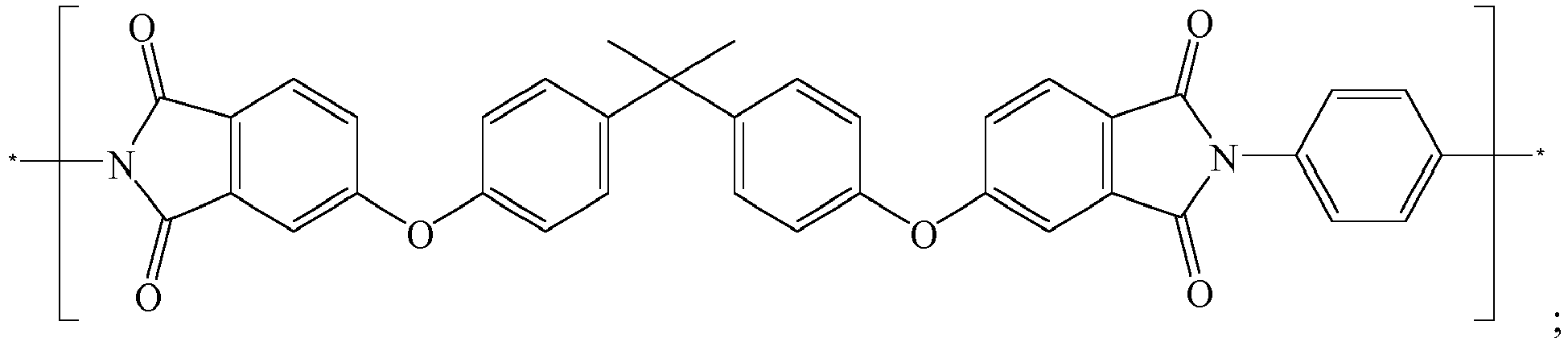
- Aspect 12: The composition of aspect 11, wherein the polyetherimide is amorphous.
- Aspect 13: The composition of aspect 11, wherein the polyetherimide is semicrystalline.
- Aspect 14: The composition of any one of aspects 11-13, wherein the C1-C6 alkanol is selected from the group consisting of methanol, ethanol, and combinations thereof.
- Aspect 15: The composition of aspect 11, wherein the polyetherimide is in the form of particles having a Dv50 value in a range of 10 to 400 micrometers, wherein Dv50 is defined as the median equivalent spherical diameter of a volume-based particle size distribution, as determined by laser diffraction according to ISO 13320:2009; the polyetherimide comprises, based on the weight of the amorphous polyetherimide, at least 95 weight percent of the etherimide units having the structure

Claims (15)
- A method of forming a semicrystalline polyetherimide, comprising:combining a solvent mixture with an amorphous polyetherimide in a weight ratio of 1:1 to 50:1, respectively, to form a first dispersion; wherein the solvent mixture comprises dichloromethane and a C1-C6 alkanol in a weight ratio of 0.5:1 to 15:1, respectively; and wherein the amorphous polyetherimide comprises etherimide units having the structure
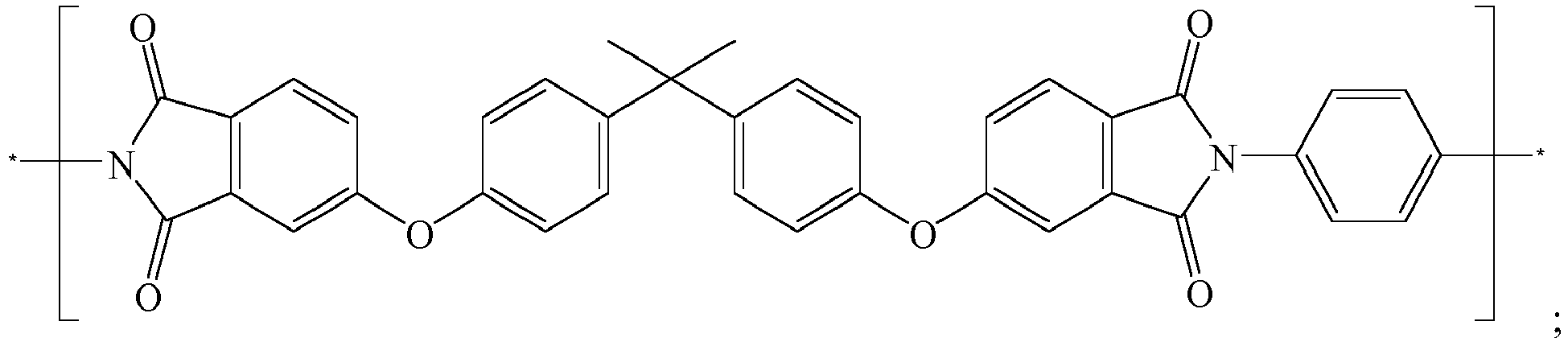 agitating the first dispersion for a time of 5 to 500 minutes and at a temperature of 10 to 50 °C to form a second dispersion comprising a semicrystalline polyetherimide; andisolating the semicrystalline polyetherimide from the second dispersion; wherein the isolated semicrystalline polyetherimide exhibits a melting point in a range of 230 to 300 °C, determined according to ASTM D3418-15 by differential scanning calorimetry using a heating rate of 20 °C/minute.
 - The method of claim 1, wherein the amorphous polyetherimide is in the form of particles having a Dv50 value in a range of 10 to 400 micrometers, wherein Dv50 is defined as the median equivalent spherical diameter of a volume-based particle size distribution, as determined by laser diffraction according to ISO 13320:2009.
- The method of claim 1 or 2, wherein the agitating comprises stirring at 1500 to 5000 rotations per minute.
- The method of any one of claims 1-3, wherein the C1-C6 alkanol is selected from the group consisting of methanol, ethanol, isopropanol, and combinations thereof.
- The method of any one of claims 1-3, wherein the C1-C6 alkanol is selected from the group consisting of methanol, ethanol, and combinations thereof.
- The method of any one of claims 1-3, wherein the C1-C6 alkanol comprises methanol.
- The method of any one of claims 1-6, wherein the isolated semicrystalline polyetherimide exhibits an enthalpy of melting in a range of 10 to 40 Joules per gram, determined according to ASTM D3418-15 by differential scanning calorimetry using a heating rate of 20 °C/minute.
- The method of any one of claims 1-7, wherein the agitating is conducted for a time of 10 to 200 minutes and at a temperature of 15 to 40 °C.
- The method of any one of claims 1-8, wherein the isolated semicrystalline polyetherimide is in the form of particles having a Dv50 value in a range of 10 to 400 micrometers, wherein Dv50 is defined as the median equivalent spherical diameter of a volume-based particle size distribution, as determined by laser diffraction according to ISO 13320:2009.
- The method of claim 1, wherein
the amorphous polyetherimide is in the form of particles having a Dv50 value in a range of 10 to 400 micrometers, wherein Dv50 is defined as the median equivalent spherical diameter of a volume-based particle size distribution, as determined by laser diffraction according to ISO 13320:2009;
the C1-C6 alkanol is selected from the group consisting of methanol, ethanol, and combinations thereof;
the agitating is conducted for a time of 10 to 200 minutes and at a temperature of 15 to 40 °C; and
the isolated semicrystalline polyetherimide is in the form of particles having a Dv50 value in a range of 10 to 400 micrometers, wherein Dv50 is defined as the median equivalent spherical diameter of a volume-based particle size distribution, as determined by laser diffraction according to ISO 13320:2009. - A composition comprising:
a polyetherimide comprising etherimide units having the structure a solvent mixture comprising dichloromethane and a C1-C6 alkanol;wherein the composition comprises the solvent mixture and the amorphous polyetherimide in a weight ratio of 1:1 to 50:1, respectively; andwherein the solvent mixture comprises the dichloromethane and the C1-C6 alkanol in a weight ratio of 0.5:1 to 15:1, respectively.
 - The composition of claim 11, wherein the polyetherimide is amorphous.
- The composition of claim 11, wherein the polyetherimide is semicrystalline.
- The composition of any one of claims 11-13, wherein the C1-C6 alkanol is selected from the group consisting of methanol, ethanol, and combinations thereof.
- The composition of claim 11, wherein
the polyetherimide is in the form of particles having a Dv50 value in a range of 10 to 400 micrometers, wherein Dv50 is defined as the median equivalent spherical diameter of a volume-based particle size distribution, as determined by laser diffraction according to ISO 13320:2009;
the polyetherimide comprises, based on the weight of the amorphous polyetherimide, at least 95 weight percent of the etherimide units having the structure
the C1-C6 alkanol is selected from the group consisting of methanol, ethanol, and combinations thereof.
Priority Applications (4)
| Application Number | Priority Date | Filing Date | Title |
|---|---|---|---|
| EP19176129.5A EP3741792A1 (en) | 2019-05-23 | 2019-05-23 | Method of forming semicrystalline polyetherimide, and polyetherimide-containing composition |
| CN202080029293.XA CN113748155B (en) | 2019-05-23 | 2020-05-07 | Methods of forming semi-crystalline polyetherimides and compositions comprising polyetherimides |
| US17/436,248 US12391802B2 (en) | 2019-05-23 | 2020-05-07 | Method of forming semicrystalline polyetherimide, and polyetherimide-containing composition |
| PCT/IB2020/054331 WO2020234683A1 (en) | 2019-05-23 | 2020-05-07 | Method of forming semicrystalline polyetherimide, and polyetherimide-containing composition |
Applications Claiming Priority (1)
| Application Number | Priority Date | Filing Date | Title |
|---|---|---|---|
| EP19176129.5A EP3741792A1 (en) | 2019-05-23 | 2019-05-23 | Method of forming semicrystalline polyetherimide, and polyetherimide-containing composition |
Publications (1)
| Publication Number | Publication Date |
|---|---|
| EP3741792A1 true EP3741792A1 (en) | 2020-11-25 |
Family
ID=66857605
Family Applications (1)
| Application Number | Title | Priority Date | Filing Date |
|---|---|---|---|
| EP19176129.5A Pending EP3741792A1 (en) | 2019-05-23 | 2019-05-23 | Method of forming semicrystalline polyetherimide, and polyetherimide-containing composition |
Country Status (4)
| Country | Link |
|---|---|
| US (1) | US12391802B2 (en) |
| EP (1) | EP3741792A1 (en) |
| CN (1) | CN113748155B (en) |
| WO (1) | WO2020234683A1 (en) |
Citations (5)
| Publication number | Priority date | Publication date | Assignee | Title |
|---|---|---|---|---|
| US5047487A (en) * | 1985-01-04 | 1991-09-10 | Raychem Corporation | Compositions of poly(imides) having phenylindane diamines and/or dianhydride moieties in the poly(imide) backbone |
| US20090029615A1 (en) | 2007-07-26 | 2009-01-29 | Sabic Innovative Plastics Ip B.V. | Crystallizable Polyetherimides, Method of Manufacture, and Articles Derived Therefrom |
| WO2016209870A1 (en) | 2015-06-23 | 2016-12-29 | Sabic Global Technologies B.V. | Improved manufacturability of amorphous polymers in powder bed fusion processes |
| WO2018119409A1 (en) | 2016-12-23 | 2018-06-28 | Sabic Global Technologies B.V. | Polyetherimide powders for additive manufacturing |
| WO2018197577A1 (en) * | 2017-04-25 | 2018-11-01 | Eos Gmbh Electro Optical Systems | Method for producing a three-dimensional object |
Family Cites Families (7)
| Publication number | Priority date | Publication date | Assignee | Title |
|---|---|---|---|---|
| DE3585318D1 (en) * | 1984-11-22 | 1992-03-12 | Asahi Chemical Ind | EXPANDABLE POLYETHERIMID COMPOSITIONS AND DERIVED FOAMED MATERIALS. |
| JPS6411864A (en) | 1987-07-04 | 1989-01-17 | Brother Ind Ltd | Printing sheet feeder for printer |
| KR100561337B1 (en) | 2002-05-29 | 2006-03-16 | 주식회사 엘지화학 | Method for producing high molecular weight polycarbonate resin |
| US9469734B2 (en) | 2011-03-25 | 2016-10-18 | Sabic Global Technologies B.V. | Fast dissolving polyimide powders |
| US9181395B2 (en) | 2013-03-15 | 2015-11-10 | Sabic Global Technologies B.V. | Optimized emulsion drying process for making micronized polyetherimide polymers |
| CN106170506A (en) | 2014-04-07 | 2016-11-30 | 沙特基础工业全球技术有限公司 | Powder bed molten thermoplastic polymers |
| JP6789284B2 (en) | 2015-08-26 | 2020-11-25 | サビック グローバル テクノロジーズ ベスローテン フェンノートシャップ | Method for producing crystalline polycarbonate powder |
-
2019
- 2019-05-23 EP EP19176129.5A patent/EP3741792A1/en active Pending
-
2020
- 2020-05-07 CN CN202080029293.XA patent/CN113748155B/en active Active
- 2020-05-07 WO PCT/IB2020/054331 patent/WO2020234683A1/en not_active Ceased
- 2020-05-07 US US17/436,248 patent/US12391802B2/en active Active
Patent Citations (6)
| Publication number | Priority date | Publication date | Assignee | Title |
|---|---|---|---|---|
| US5047487A (en) * | 1985-01-04 | 1991-09-10 | Raychem Corporation | Compositions of poly(imides) having phenylindane diamines and/or dianhydride moieties in the poly(imide) backbone |
| US20090029615A1 (en) | 2007-07-26 | 2009-01-29 | Sabic Innovative Plastics Ip B.V. | Crystallizable Polyetherimides, Method of Manufacture, and Articles Derived Therefrom |
| US20150337461A1 (en) | 2007-07-26 | 2015-11-26 | Sabic Global Technologies B.V. | Crystallizable Polyetherimides, Method of Manufacture, and Articles Derived Therefrom |
| WO2016209870A1 (en) | 2015-06-23 | 2016-12-29 | Sabic Global Technologies B.V. | Improved manufacturability of amorphous polymers in powder bed fusion processes |
| WO2018119409A1 (en) | 2016-12-23 | 2018-06-28 | Sabic Global Technologies B.V. | Polyetherimide powders for additive manufacturing |
| WO2018197577A1 (en) * | 2017-04-25 | 2018-11-01 | Eos Gmbh Electro Optical Systems | Method for producing a three-dimensional object |
Non-Patent Citations (1)
| Title |
|---|
| HSIEH A J ET AL: "Transient crystallization of an aromatic polyetherimide: effect of annealing", POLYMER, ELSEVIER SCIENCE PUBLISHERS B.V, GB, vol. 33, no. 2, 1 January 1992 (1992-01-01), pages 306 - 313, XP024121226, ISSN: 0032-3861, [retrieved on 19920101], DOI: 10.1016/0032-3861(92)90987-8 * |
Also Published As
| Publication number | Publication date |
|---|---|
| CN113748155A (en) | 2021-12-03 |
| US12391802B2 (en) | 2025-08-19 |
| US20220162387A1 (en) | 2022-05-26 |
| WO2020234683A1 (en) | 2020-11-26 |
| CN113748155B (en) | 2022-07-22 |
Similar Documents
| Publication | Publication Date | Title |
|---|---|---|
| AU2011232796B2 (en) | Resin particle and method for producing the same | |
| JP5005730B2 (en) | Resin particles and method for producing the same | |
| JPH0129368B2 (en) | ||
| WO2009142010A1 (en) | Resin particle and process for production thereof | |
| JP2011073902A (en) | Talc powder and method for manufacturing the same | |
| JP5467045B2 (en) | Resin particles and method for producing the same | |
| US12391802B2 (en) | Method of forming semicrystalline polyetherimide, and polyetherimide-containing composition | |
| TW202503078A (en) | A carbide-complex concentrated alloy composite powder and method of forming thereof | |
| JP2008096980A (en) | Binder resin composition for toner, toner composition, and method for producing toner composition | |
| JP5214535B2 (en) | Resin particles and method for producing the same | |
| JP2012031270A (en) | Method for producing infrared absorber-containing resin particle, infrared absorber-containing resin particle and electrophotographic toner | |
| JP2012219144A (en) | Method for producing aqueous pigment dispersion for inkjet recording, aqueous pigment dispersion for inkjet recording, and aqueous ink for inkjet recording | |
| EP3684837B1 (en) | Composition and method for powder bed fusion | |
| JP5689270B2 (en) | Method for producing dispersion | |
| JP7255755B1 (en) | Resin powder mixture, method for producing same, and method for producing three-dimensional model | |
| KR101594050B1 (en) | Process for grinding waxes using grinding aids in a jet mill, use of polyols as a grinding aid and wax powder comprising polyols | |
| JP7309708B2 (en) | Method for producing finely pulverized cellulose | |
| EP1263888B1 (en) | Process for producing beta- phase copper phthalocyanine pigment | |
| KR100341980B1 (en) | Conversion of crude phthalocyanine blue from red to green shade in an aqueous environment | |
| KR20150051900A (en) | Process for preparing polymer powder | |
| JP5214563B2 (en) | Resin particles and method for producing the same | |
| KR100964909B1 (en) | Modified polyester resin excellent in pulverization and durability and toner composition comprising the same | |
| CN105278269A (en) | Electrophotographic toner using bioplastic and production method thereof | |
| TWI845915B (en) | Method for producing liquid crystal polymer particles | |
| Eida et al. | The advanced color toner for the fine image quality |
Legal Events
| Date | Code | Title | Description |
|---|---|---|---|
| PUAI | Public reference made under article 153(3) epc to a published international application that has entered the european phase |
Free format text: ORIGINAL CODE: 0009012 |
|
| STAA | Information on the status of an ep patent application or granted ep patent |
Free format text: STATUS: THE APPLICATION HAS BEEN PUBLISHED |
|
| AK | Designated contracting states |
Kind code of ref document: A1 Designated state(s): AL AT BE BG CH CY CZ DE DK EE ES FI FR GB GR HR HU IE IS IT LI LT LU LV MC MK MT NL NO PL PT RO RS SE SI SK SM TR |
|
| AX | Request for extension of the european patent |
Extension state: BA ME |
|
| RAP1 | Party data changed (applicant data changed or rights of an application transferred) |
Owner name: SHPP GLOBAL TECHNOLOGIES B.V. |
|
| STAA | Information on the status of an ep patent application or granted ep patent |
Free format text: STATUS: REQUEST FOR EXAMINATION WAS MADE |
|
| 17P | Request for examination filed |
Effective date: 20210517 |
|
| RBV | Designated contracting states (corrected) |
Designated state(s): AL AT BE BG CH CY CZ DE DK EE ES FI FR GB GR HR HU IE IS IT LI LT LU LV MC MK MT NL NO PL PT RO RS SE SI SK SM TR |
|
| STAA | Information on the status of an ep patent application or granted ep patent |
Free format text: STATUS: EXAMINATION IS IN PROGRESS |
|
| 17Q | First examination report despatched |
Effective date: 20231020 |