EP3741750A1 - 4-(1h-1,2,3-triazol-1-yl)pyrrolidine-2-carboxylic acid derivatives having activity against pain - Google Patents
4-(1h-1,2,3-triazol-1-yl)pyrrolidine-2-carboxylic acid derivatives having activity against pain Download PDFInfo
- Publication number
- EP3741750A1 EP3741750A1 EP19382396.0A EP19382396A EP3741750A1 EP 3741750 A1 EP3741750 A1 EP 3741750A1 EP 19382396 A EP19382396 A EP 19382396A EP 3741750 A1 EP3741750 A1 EP 3741750A1
- Authority
- EP
- European Patent Office
- Prior art keywords
- pyrrolidine
- triazol
- carboxylic acid
- unsubstituted
- compound
- Prior art date
- Legal status (The legal status is an assumption and is not a legal conclusion. Google has not performed a legal analysis and makes no representation as to the accuracy of the status listed.)
- Withdrawn
Links
- 208000002193 Pain Diseases 0.000 title claims abstract description 36
- KCLIAYMWAUHSKI-UHFFFAOYSA-N 4-(triazol-1-yl)pyrrolidine-2-carboxylic acid Chemical class OC(=O)C1CC(CN1)n1ccnn1 KCLIAYMWAUHSKI-UHFFFAOYSA-N 0.000 title 1
- 150000001875 compounds Chemical class 0.000 claims abstract description 108
- 238000000034 method Methods 0.000 claims abstract description 20
- 238000011282 treatment Methods 0.000 claims abstract description 18
- 239000008194 pharmaceutical composition Substances 0.000 claims abstract description 11
- ONIBWKKTOPOVIA-UHFFFAOYSA-N Proline Chemical class OC(=O)C1CCCN1 ONIBWKKTOPOVIA-UHFFFAOYSA-N 0.000 claims abstract description 8
- 238000002360 preparation method Methods 0.000 claims abstract description 8
- 230000008569 process Effects 0.000 claims abstract description 6
- 125000004169 (C1-C6) alkyl group Chemical group 0.000 claims description 26
- 150000003839 salts Chemical class 0.000 claims description 26
- 208000004454 Hyperalgesia Diseases 0.000 claims description 22
- 229910052739 hydrogen Inorganic materials 0.000 claims description 20
- 239000001257 hydrogen Substances 0.000 claims description 20
- 239000000203 mixture Substances 0.000 claims description 19
- 150000002431 hydrogen Chemical group 0.000 claims description 15
- 229910052736 halogen Inorganic materials 0.000 claims description 14
- 150000002367 halogens Chemical group 0.000 claims description 14
- 125000004191 (C1-C6) alkoxy group Chemical group 0.000 claims description 12
- 125000000882 C2-C6 alkenyl group Chemical group 0.000 claims description 11
- 208000004296 neuralgia Diseases 0.000 claims description 11
- 208000021722 neuropathic pain Diseases 0.000 claims description 11
- 239000012453 solvate Substances 0.000 claims description 11
- 125000001797 benzyl group Chemical group [H]C1=C([H])C([H])=C(C([H])=C1[H])C([H])([H])* 0.000 claims description 9
- 229910052801 chlorine Inorganic materials 0.000 claims description 9
- 239000003814 drug Substances 0.000 claims description 9
- 125000002496 methyl group Chemical group [H]C([H])([H])* 0.000 claims description 9
- 239000003960 organic solvent Substances 0.000 claims description 9
- 239000000243 solution Substances 0.000 claims description 9
- HBAQYPYDRFILMT-UHFFFAOYSA-N 8-[3-(1-cyclopropylpyrazol-4-yl)-1H-pyrazolo[4,3-d]pyrimidin-5-yl]-3-methyl-3,8-diazabicyclo[3.2.1]octan-2-one Chemical class C1(CC1)N1N=CC(=C1)C1=NNC2=C1N=C(N=C2)N1C2C(N(CC1CC2)C)=O HBAQYPYDRFILMT-UHFFFAOYSA-N 0.000 claims description 8
- 206010053552 allodynia Diseases 0.000 claims description 8
- 229910052794 bromium Inorganic materials 0.000 claims description 8
- 239000002253 acid Substances 0.000 claims description 7
- 238000002156 mixing Methods 0.000 claims description 7
- 239000011550 stock solution Substances 0.000 claims description 6
- ASTWNOWOCNBRLD-OALUTQOASA-N C(C1=CC=CC=C1)NCC=1C=C(C=C(C=1)F)C=1N=NN(C=1)[C@H]1C[C@H](NC1)C(=O)O Chemical compound C(C1=CC=CC=C1)NCC=1C=C(C=C(C=1)F)C=1N=NN(C=1)[C@H]1C[C@H](NC1)C(=O)O ASTWNOWOCNBRLD-OALUTQOASA-N 0.000 claims description 5
- 208000000094 Chronic Pain Diseases 0.000 claims description 5
- LOGNUJCLMXWOOM-QWRGUYRKSA-N FC=1C=C(C=CC=1)C=1N=NN(C=1)[C@H]1C[C@H](NC1)C(=O)O Chemical compound FC=1C=C(C=CC=1)C=1N=NN(C=1)[C@H]1C[C@H](NC1)C(=O)O LOGNUJCLMXWOOM-QWRGUYRKSA-N 0.000 claims description 5
- 208000035154 Hyperesthesia Diseases 0.000 claims description 5
- 206010065390 Inflammatory pain Diseases 0.000 claims description 5
- 229910003827 NRaRb Inorganic materials 0.000 claims description 5
- LHRQJIHQAQNYLB-QWRGUYRKSA-N BrC1=CC=C(C=C1)C=1N=NN(C=1)[C@H]1C[C@H](NC1)C(=O)O Chemical compound BrC1=CC=C(C=C1)C=1N=NN(C=1)[C@H]1C[C@H](NC1)C(=O)O LHRQJIHQAQNYLB-QWRGUYRKSA-N 0.000 claims description 4
- UDVHCYZKSVWDFI-QWRGUYRKSA-N BrC=1C=C(C=CC=1)C=1N=NN(C=1)[C@H]1C[C@H](NC1)C(=O)O Chemical compound BrC=1C=C(C=CC=1)C=1N=NN(C=1)[C@H]1C[C@H](NC1)C(=O)O UDVHCYZKSVWDFI-QWRGUYRKSA-N 0.000 claims description 4
- AFJKSGJWWWDIOD-RYUDHWBXSA-N C(#N)C1=CC=C(C=C1)C=1N=NN(C=1)[C@H]1C[C@H](NC1)C(=O)O Chemical compound C(#N)C1=CC=C(C=C1)C=1N=NN(C=1)[C@H]1C[C@H](NC1)C(=O)O AFJKSGJWWWDIOD-RYUDHWBXSA-N 0.000 claims description 4
- FMVPLMUJKGMMDZ-RYUDHWBXSA-N C(#N)C=1C=C(C=CC=1)C=1N=NN(C=1)[C@H]1C[C@H](NC1)C(=O)O Chemical compound C(#N)C=1C=C(C=CC=1)C=1N=NN(C=1)[C@H]1C[C@H](NC1)C(=O)O FMVPLMUJKGMMDZ-RYUDHWBXSA-N 0.000 claims description 4
- LFFYXLWOXDNCMO-STQMWFEESA-N C(C1=CC=CC=C1)C=1N=NN(C=1)[C@H]1C[C@H](NC1)C(=O)O Chemical compound C(C1=CC=CC=C1)C=1N=NN(C=1)[C@H]1C[C@H](NC1)C(=O)O LFFYXLWOXDNCMO-STQMWFEESA-N 0.000 claims description 4
- UHMKGQXEKQVXKR-PMACEKPBSA-N C(C1=CC=CC=C1)N(C)CC=1C=C(C=C(C=1)F)C=1N=NN(C=1)[C@H]1C[C@H](NC1)C(=O)O Chemical compound C(C1=CC=CC=C1)N(C)CC=1C=C(C=C(C=1)F)C=1N=NN(C=1)[C@H]1C[C@H](NC1)C(=O)O UHMKGQXEKQVXKR-PMACEKPBSA-N 0.000 claims description 4
- QXLDKKGLIPUSIB-RYUDHWBXSA-N C1(=CC(=CC=C1)C=1N=NN(C=1)[C@H]1C[C@H](NC1)C(=O)O)C Chemical compound C1(=CC(=CC=C1)C=1N=NN(C=1)[C@H]1C[C@H](NC1)C(=O)O)C QXLDKKGLIPUSIB-RYUDHWBXSA-N 0.000 claims description 4
- VKCVTOISOVFQLO-KBPBESRZSA-N CN(C)CC=1C=C(C=C(C=1)F)C=1N=NN(C=1)[C@H]1C[C@H](NC1)C(=O)O Chemical compound CN(C)CC=1C=C(C=C(C=1)F)C=1N=NN(C=1)[C@H]1C[C@H](NC1)C(=O)O VKCVTOISOVFQLO-KBPBESRZSA-N 0.000 claims description 4
- 206010058019 Cancer Pain Diseases 0.000 claims description 4
- BRBSGAVWQKJSKK-KWQFWETISA-N ClC1=C(C=CC(=C1)Cl)C=1N=NN(C=1)[C@H]1C[C@H](NC1)C(=O)O Chemical compound ClC1=C(C=CC(=C1)Cl)C=1N=NN(C=1)[C@H]1C[C@H](NC1)C(=O)O BRBSGAVWQKJSKK-KWQFWETISA-N 0.000 claims description 4
- YQOHZIWDXWXORS-UFBFGSQYSA-N ClC1=C(C=CC(=C1)OC)C=1N=NN(C=1)[C@H]1C[C@H](NC1)C(=O)O Chemical compound ClC1=C(C=CC(=C1)OC)C=1N=NN(C=1)[C@H]1C[C@H](NC1)C(=O)O YQOHZIWDXWXORS-UFBFGSQYSA-N 0.000 claims description 4
- ZCEHZSSQMMUTSD-STQMWFEESA-N ClC1=CC=C(CC=2N=NN(C=2)[C@H]2C[C@H](NC2)C(=O)O)C=C1 Chemical compound ClC1=CC=C(CC=2N=NN(C=2)[C@H]2C[C@H](NC2)C(=O)O)C=C1 ZCEHZSSQMMUTSD-STQMWFEESA-N 0.000 claims description 4
- BTUWOZISFRDLJI-QWRGUYRKSA-N ClC=1C=C(C=C(C=1)Cl)C=1N=NN(C=1)[C@H]1C[C@H](NC1)C(=O)O Chemical compound ClC=1C=C(C=C(C=1)Cl)C=1N=NN(C=1)[C@H]1C[C@H](NC1)C(=O)O BTUWOZISFRDLJI-QWRGUYRKSA-N 0.000 claims description 4
- DPBYIGWQGYRVFV-KWQFWETISA-N ClC=1C=C(C=CC=1Cl)C=1N=NN(C=1)[C@H]1C[C@H](NC1)C(=O)O Chemical compound ClC=1C=C(C=CC=1Cl)C=1N=NN(C=1)[C@H]1C[C@H](NC1)C(=O)O DPBYIGWQGYRVFV-KWQFWETISA-N 0.000 claims description 4
- HOJFCOAYECWTFE-UWVGGRQHSA-N ClC=1C=C(C=NC=1)C=1N=NN(C=1)[C@H]1C[C@H](NC1)C(=O)O Chemical compound ClC=1C=C(C=NC=1)C=1N=NN(C=1)[C@H]1C[C@H](NC1)C(=O)O HOJFCOAYECWTFE-UWVGGRQHSA-N 0.000 claims description 4
- FTWDVHIJMJVHIO-STQMWFEESA-N ClC=1C=C(CC=2N=NN(C=2)[C@H]2C[C@H](NC2)C(=O)O)C=CC=1 Chemical compound ClC=1C=C(CC=2N=NN(C=2)[C@H]2C[C@H](NC2)C(=O)O)C=CC=1 FTWDVHIJMJVHIO-STQMWFEESA-N 0.000 claims description 4
- RDSDWAPBOUTVLR-STQMWFEESA-N FC=1C=C(C=C(C=1)CNC)C=1N=NN(C=1)[C@H]1C[C@H](NC1)C(=O)O Chemical compound FC=1C=C(C=C(C=1)CNC)C=1N=NN(C=1)[C@H]1C[C@H](NC1)C(=O)O RDSDWAPBOUTVLR-STQMWFEESA-N 0.000 claims description 4
- USKNFRKBUCHJNB-KWQFWETISA-N FC=1C=C(C=CC=1F)C=1N=NN(C=1)[C@H]1C[C@H](NC1)C(=O)O Chemical compound FC=1C=C(C=CC=1F)C=1N=NN(C=1)[C@H]1C[C@H](NC1)C(=O)O USKNFRKBUCHJNB-KWQFWETISA-N 0.000 claims description 4
- 208000019695 Migraine disease Diseases 0.000 claims description 4
- ZVVNLMRWJNUAII-UWVGGRQHSA-N N1=CC(=CC=C1)C=1N=NN(C=1)[C@H]1C[C@H](NC1)C(=O)O Chemical compound N1=CC(=CC=C1)C=1N=NN(C=1)[C@H]1C[C@H](NC1)C(=O)O ZVVNLMRWJNUAII-UWVGGRQHSA-N 0.000 claims description 4
- APGKHBGTWWCYRD-UWVGGRQHSA-N N1=CC=C(C=C1)C=1N=NN(C=1)[C@H]1C[C@H](NC1)C(=O)O Chemical compound N1=CC=C(C=C1)C=1N=NN(C=1)[C@H]1C[C@H](NC1)C(=O)O APGKHBGTWWCYRD-UWVGGRQHSA-N 0.000 claims description 4
- 208000005298 acute pain Diseases 0.000 claims description 4
- 208000037265 diseases, disorders, signs and symptoms Diseases 0.000 claims description 4
- 125000004435 hydrogen atom Chemical group [H]* 0.000 claims description 4
- 206010027599 migraine Diseases 0.000 claims description 4
- 208000009935 visceral pain Diseases 0.000 claims description 4
- 239000000654 additive Substances 0.000 claims description 3
- 230000000996 additive effect Effects 0.000 claims description 3
- 239000002671 adjuvant Substances 0.000 claims description 3
- 150000001540 azides Chemical class 0.000 claims description 3
- 125000004093 cyano group Chemical group *C#N 0.000 claims description 3
- 201000010099 disease Diseases 0.000 claims description 3
- 239000003937 drug carrier Substances 0.000 claims description 3
- 229910052705 radium Inorganic materials 0.000 claims description 3
- 229910052701 rubidium Inorganic materials 0.000 claims description 3
- 239000002904 solvent Substances 0.000 claims description 3
- 239000003981 vehicle Substances 0.000 claims description 3
- GLZGAXMTMKJLGQ-UHFFFAOYSA-N 4-(4-phenyltriazol-1-yl)pyrrolidine-2-carboxylic acid Chemical compound C1NC(C(=O)O)CC1N1N=NC(C=2C=CC=CC=2)=C1 GLZGAXMTMKJLGQ-UHFFFAOYSA-N 0.000 claims description 2
- OKPLCSTXKKLCIP-UHFFFAOYSA-N 4-(4-pyridin-2-yltriazol-1-yl)pyrrolidine-2-carboxylic acid Chemical compound C1NC(C(=O)O)CC1N1N=NC(C=2N=CC=CC=2)=C1 OKPLCSTXKKLCIP-UHFFFAOYSA-N 0.000 claims description 2
- WZDJAUCKPCTONC-UHFFFAOYSA-N 4-[4-(2-methoxyphenyl)triazol-1-yl]pyrrolidine-2-carboxylic acid Chemical compound COC1=CC=CC=C1C1=CN(C2CC(NC2)C(O)=O)N=N1 WZDJAUCKPCTONC-UHFFFAOYSA-N 0.000 claims description 2
- RASYTSCXVFGXLB-UHFFFAOYSA-N 4-[4-(3,5-difluorophenyl)triazol-1-yl]pyrrolidine-2-carboxylic acid Chemical compound C1NC(C(=O)O)CC1N1N=NC(C=2C=C(F)C=C(F)C=2)=C1 RASYTSCXVFGXLB-UHFFFAOYSA-N 0.000 claims description 2
- GPRPDOBZJQJQBD-UHFFFAOYSA-N 4-[4-(3-chlorophenyl)triazol-1-yl]pyrrolidine-2-carboxylic acid Chemical compound C1NC(C(=O)O)CC1N1N=NC(C=2C=C(Cl)C=CC=2)=C1 GPRPDOBZJQJQBD-UHFFFAOYSA-N 0.000 claims description 2
- ONJHLPOXBRYOQH-UHFFFAOYSA-N 4-[4-(3-methoxyphenyl)triazol-1-yl]pyrrolidine-2-carboxylic acid Chemical compound COC1=CC=CC(C=2N=NN(C=2)C2CC(NC2)C(O)=O)=C1 ONJHLPOXBRYOQH-UHFFFAOYSA-N 0.000 claims description 2
- ZOARAQYNIFGSNI-UHFFFAOYSA-N 4-[4-(4-fluorophenyl)triazol-1-yl]pyrrolidine-2-carboxylic acid Chemical compound C1NC(C(=O)O)CC1N1N=NC(C=2C=CC(F)=CC=2)=C1 ZOARAQYNIFGSNI-UHFFFAOYSA-N 0.000 claims description 2
- WLBIMTCBIBAHJY-UHFFFAOYSA-N 4-[4-(4-methoxyphenyl)triazol-1-yl]pyrrolidine-2-carboxylic acid Chemical compound C1=CC(OC)=CC=C1C1=CN(C2CC(NC2)C(O)=O)N=N1 WLBIMTCBIBAHJY-UHFFFAOYSA-N 0.000 claims description 2
- UFHFLCQGNIYNRP-UHFFFAOYSA-N Hydrogen Chemical compound [H][H] UFHFLCQGNIYNRP-UHFFFAOYSA-N 0.000 claims description 2
- DGAQECJNVWCQMB-PUAWFVPOSA-M Ilexoside XXIX Chemical compound C[C@@H]1CC[C@@]2(CC[C@@]3(C(=CC[C@H]4[C@]3(CC[C@@H]5[C@@]4(CC[C@@H](C5(C)C)OS(=O)(=O)[O-])C)C)[C@@H]2[C@]1(C)O)C)C(=O)O[C@H]6[C@@H]([C@H]([C@@H]([C@H](O6)CO)O)O)O.[Na+] DGAQECJNVWCQMB-PUAWFVPOSA-M 0.000 claims description 2
- ZLMJMSJWJFRBEC-UHFFFAOYSA-N Potassium Chemical compound [K] ZLMJMSJWJFRBEC-UHFFFAOYSA-N 0.000 claims description 2
- 239000003153 chemical reaction reagent Substances 0.000 claims description 2
- 125000000956 methoxy group Chemical group [H]C([H])([H])O* 0.000 claims description 2
- 229910052700 potassium Inorganic materials 0.000 claims description 2
- 239000011591 potassium Substances 0.000 claims description 2
- 125000002924 primary amino group Chemical group [H]N([H])* 0.000 claims description 2
- 125000006239 protecting group Chemical group 0.000 claims description 2
- 239000011734 sodium Substances 0.000 claims description 2
- 229910052708 sodium Inorganic materials 0.000 claims description 2
- 238000005086 pumping Methods 0.000 claims 1
- 125000002088 tosyl group Chemical group [H]C1=C([H])C(=C([H])C([H])=C1C([H])([H])[H])S(*)(=O)=O 0.000 claims 1
- 125000000026 trimethylsilyl group Chemical group [H]C([H])([H])[Si]([*])(C([H])([H])[H])C([H])([H])[H] 0.000 claims 1
- 102000038650 voltage-gated calcium channel activity Human genes 0.000 abstract description 19
- 108091023044 voltage-gated calcium channel activity Proteins 0.000 abstract description 19
- 230000000144 pharmacologic effect Effects 0.000 abstract description 7
- 238000002560 therapeutic procedure Methods 0.000 abstract description 4
- 239000011575 calcium Substances 0.000 description 33
- OKKJLVBELUTLKV-UHFFFAOYSA-N Methanol Chemical class OC OKKJLVBELUTLKV-UHFFFAOYSA-N 0.000 description 19
- YMWUJEATGCHHMB-UHFFFAOYSA-N Dichloromethane Chemical compound ClCCl YMWUJEATGCHHMB-UHFFFAOYSA-N 0.000 description 16
- -1 triazolyl pyrrolidine derivatives Chemical class 0.000 description 13
- XEKOWRVHYACXOJ-UHFFFAOYSA-N Ethyl acetate Chemical compound CCOC(C)=O XEKOWRVHYACXOJ-UHFFFAOYSA-N 0.000 description 12
- 238000009739 binding Methods 0.000 description 12
- 230000027455 binding Effects 0.000 description 11
- ZMXDDKWLCZADIW-UHFFFAOYSA-N N,N-Dimethylformamide Chemical compound CN(C)C=O ZMXDDKWLCZADIW-UHFFFAOYSA-N 0.000 description 9
- WYURNTSHIVDZCO-UHFFFAOYSA-N Tetrahydrofuran Chemical compound C1CCOC1 WYURNTSHIVDZCO-UHFFFAOYSA-N 0.000 description 8
- 239000000460 chlorine Substances 0.000 description 8
- BDAGIHXWWSANSR-UHFFFAOYSA-N methanoic acid Natural products OC=O BDAGIHXWWSANSR-UHFFFAOYSA-N 0.000 description 8
- IAZDPXIOMUYVGZ-UHFFFAOYSA-N Dimethylsulphoxide Chemical compound CS(C)=O IAZDPXIOMUYVGZ-UHFFFAOYSA-N 0.000 description 7
- UGJMXCAKCUNAIE-UHFFFAOYSA-N Gabapentin Chemical compound OC(=O)CC1(CN)CCCCC1 UGJMXCAKCUNAIE-UHFFFAOYSA-N 0.000 description 7
- DTQVDTLACAAQTR-UHFFFAOYSA-N Trifluoroacetic acid Chemical compound OC(=O)C(F)(F)F DTQVDTLACAAQTR-UHFFFAOYSA-N 0.000 description 7
- LFQSCWFLJHTTHZ-UHFFFAOYSA-N Ethanol Chemical class CCO LFQSCWFLJHTTHZ-UHFFFAOYSA-N 0.000 description 6
- JGFZNNIVVJXRND-UHFFFAOYSA-N N,N-Diisopropylethylamine (DIPEA) Chemical compound CCN(C(C)C)C(C)C JGFZNNIVVJXRND-UHFFFAOYSA-N 0.000 description 6
- PXIPVTKHYLBLMZ-UHFFFAOYSA-N Sodium azide Chemical compound [Na+].[N-]=[N+]=[N-] PXIPVTKHYLBLMZ-UHFFFAOYSA-N 0.000 description 6
- 108090000623 proteins and genes Proteins 0.000 description 6
- 108090000312 Calcium Channels Proteins 0.000 description 5
- 102000003922 Calcium Channels Human genes 0.000 description 5
- 235000019439 ethyl acetate Nutrition 0.000 description 5
- 229910052731 fluorine Inorganic materials 0.000 description 5
- OSWFIVFLDKOXQC-UHFFFAOYSA-N 4-(3-methoxyphenyl)aniline Chemical compound COC1=CC=CC(C=2C=CC(N)=CC=2)=C1 OSWFIVFLDKOXQC-UHFFFAOYSA-N 0.000 description 4
- 108091006146 Channels Proteins 0.000 description 4
- 241000282412 Homo Species 0.000 description 4
- 241000124008 Mammalia Species 0.000 description 4
- VYPSYNLAJGMNEJ-UHFFFAOYSA-N Silicium dioxide Chemical compound O=[Si]=O VYPSYNLAJGMNEJ-UHFFFAOYSA-N 0.000 description 4
- 150000001450 anions Chemical class 0.000 description 4
- 230000033228 biological regulation Effects 0.000 description 4
- 150000001768 cations Chemical class 0.000 description 4
- 238000006243 chemical reaction Methods 0.000 description 4
- 238000007796 conventional method Methods 0.000 description 4
- 239000010949 copper Substances 0.000 description 4
- 238000010511 deprotection reaction Methods 0.000 description 4
- 229940013688 formic acid Drugs 0.000 description 4
- 235000019253 formic acid Nutrition 0.000 description 4
- 239000000546 pharmaceutical excipient Substances 0.000 description 4
- 239000000651 prodrug Substances 0.000 description 4
- 229940002612 prodrug Drugs 0.000 description 4
- 210000003594 spinal ganglia Anatomy 0.000 description 4
- AQRLNPVMDITEJU-UHFFFAOYSA-N triethylsilane Chemical compound CC[SiH](CC)CC AQRLNPVMDITEJU-UHFFFAOYSA-N 0.000 description 4
- RIOQSEWOXXDEQQ-UHFFFAOYSA-N triphenylphosphine Chemical compound C1=CC=CC=C1P(C=1C=CC=CC=1)C1=CC=CC=C1 RIOQSEWOXXDEQQ-UHFFFAOYSA-N 0.000 description 4
- XLYOFNOQVPJJNP-UHFFFAOYSA-N water Substances O XLYOFNOQVPJJNP-UHFFFAOYSA-N 0.000 description 4
- RYHBNJHYFVUHQT-UHFFFAOYSA-N 1,4-Dioxane Chemical compound C1COCCO1 RYHBNJHYFVUHQT-UHFFFAOYSA-N 0.000 description 3
- QTBSBXVTEAMEQO-UHFFFAOYSA-N Acetic acid Chemical compound CC(O)=O QTBSBXVTEAMEQO-UHFFFAOYSA-N 0.000 description 3
- WEVYAHXRMPXWCK-UHFFFAOYSA-N Acetonitrile Chemical compound CC#N WEVYAHXRMPXWCK-UHFFFAOYSA-N 0.000 description 3
- 206010001497 Agitation Diseases 0.000 description 3
- QGZKDVFQNNGYKY-UHFFFAOYSA-N Ammonia Chemical compound N QGZKDVFQNNGYKY-UHFFFAOYSA-N 0.000 description 3
- ZAMOUSCENKQFHK-UHFFFAOYSA-N Chlorine atom Chemical compound [Cl] ZAMOUSCENKQFHK-UHFFFAOYSA-N 0.000 description 3
- RYGMFSIKBFXOCR-UHFFFAOYSA-N Copper Chemical compound [Cu] RYGMFSIKBFXOCR-UHFFFAOYSA-N 0.000 description 3
- PXGOKWXKJXAPGV-UHFFFAOYSA-N Fluorine Chemical compound FF PXGOKWXKJXAPGV-UHFFFAOYSA-N 0.000 description 3
- MUBZPKHOEPUJKR-UHFFFAOYSA-N Oxalic acid Chemical compound OC(=O)C(O)=O MUBZPKHOEPUJKR-UHFFFAOYSA-N 0.000 description 3
- ZMANZCXQSJIPKH-UHFFFAOYSA-N Triethylamine Chemical compound CCN(CC)CC ZMANZCXQSJIPKH-UHFFFAOYSA-N 0.000 description 3
- 208000027418 Wounds and injury Diseases 0.000 description 3
- 125000000484 butyl group Chemical group [H]C([*])([H])C([H])([H])C([H])([H])C([H])([H])[H] 0.000 description 3
- 125000004432 carbon atom Chemical group C* 0.000 description 3
- 230000001684 chronic effect Effects 0.000 description 3
- KRKNYBCHXYNGOX-UHFFFAOYSA-N citric acid Chemical compound OC(=O)CC(O)(C(O)=O)CC(O)=O KRKNYBCHXYNGOX-UHFFFAOYSA-N 0.000 description 3
- 229910052802 copper Inorganic materials 0.000 description 3
- 230000006378 damage Effects 0.000 description 3
- 238000011161 development Methods 0.000 description 3
- 230000018109 developmental process Effects 0.000 description 3
- 238000009826 distribution Methods 0.000 description 3
- 229940079593 drug Drugs 0.000 description 3
- 125000001495 ethyl group Chemical group [H]C([H])([H])C([H])([H])* 0.000 description 3
- 239000011737 fluorine Substances 0.000 description 3
- 230000006870 function Effects 0.000 description 3
- 229960002870 gabapentin Drugs 0.000 description 3
- 125000004051 hexyl group Chemical group [H]C([H])([H])C([H])([H])C([H])([H])C([H])([H])C([H])([H])C([H])([H])* 0.000 description 3
- 238000004128 high performance liquid chromatography Methods 0.000 description 3
- 208000014674 injury Diseases 0.000 description 3
- AYXYPKUFHZROOJ-ZETCQYMHSA-N pregabalin Chemical compound CC(C)C[C@H](CN)CC(O)=O AYXYPKUFHZROOJ-ZETCQYMHSA-N 0.000 description 3
- 229960001233 pregabalin Drugs 0.000 description 3
- 125000001436 propyl group Chemical group [H]C([*])([H])C([H])([H])C([H])([H])[H] 0.000 description 3
- 229920005989 resin Polymers 0.000 description 3
- 239000011347 resin Substances 0.000 description 3
- 239000007787 solid Substances 0.000 description 3
- 239000000725 suspension Substances 0.000 description 3
- 239000003826 tablet Substances 0.000 description 3
- 125000000999 tert-butyl group Chemical group [H]C([H])([H])C(*)(C([H])([H])[H])C([H])([H])[H] 0.000 description 3
- FPGGTKZVZWFYPV-UHFFFAOYSA-M tetrabutylammonium fluoride Chemical compound [F-].CCCC[N+](CCCC)(CCCC)CCCC FPGGTKZVZWFYPV-UHFFFAOYSA-M 0.000 description 3
- YLQBMQCUIZJEEH-UHFFFAOYSA-N tetrahydrofuran Natural products C=1C=COC=1 YLQBMQCUIZJEEH-UHFFFAOYSA-N 0.000 description 3
- 125000002023 trifluoromethyl group Chemical group FC(F)(F)* 0.000 description 3
- 230000003827 upregulation Effects 0.000 description 3
- VNDYJBBGRKZCSX-UHFFFAOYSA-L zinc bromide Chemical compound Br[Zn]Br VNDYJBBGRKZCSX-UHFFFAOYSA-L 0.000 description 3
- GLZGAXMTMKJLGQ-QWRGUYRKSA-N (2s,4s)-4-(4-phenyltriazol-1-yl)pyrrolidine-2-carboxylic acid Chemical compound C1N[C@H](C(=O)O)C[C@@H]1N1N=NC(C=2C=CC=CC=2)=C1 GLZGAXMTMKJLGQ-QWRGUYRKSA-N 0.000 description 2
- OKPLCSTXKKLCIP-WPRPVWTQSA-N (2s,4s)-4-(4-pyridin-2-yltriazol-1-yl)pyrrolidine-2-carboxylic acid Chemical compound C1N[C@H](C(=O)O)C[C@@H]1N1N=NC(C=2N=CC=CC=2)=C1 OKPLCSTXKKLCIP-WPRPVWTQSA-N 0.000 description 2
- AHGLQLQXNHFCED-KWQFWETISA-N (2s,4s)-4-[4-(2-chlorophenyl)triazol-1-yl]pyrrolidine-2-carboxylic acid Chemical compound C1N[C@H](C(=O)O)C[C@@H]1N1N=NC(C=2C(=CC=CC=2)Cl)=C1 AHGLQLQXNHFCED-KWQFWETISA-N 0.000 description 2
- WZDJAUCKPCTONC-ONGXEEELSA-N (2s,4s)-4-[4-(2-methoxyphenyl)triazol-1-yl]pyrrolidine-2-carboxylic acid Chemical compound COC1=CC=CC=C1C1=CN([C@H]2C[C@H](NC2)C(O)=O)N=N1 WZDJAUCKPCTONC-ONGXEEELSA-N 0.000 description 2
- RASYTSCXVFGXLB-QWRGUYRKSA-N (2s,4s)-4-[4-(3,5-difluorophenyl)triazol-1-yl]pyrrolidine-2-carboxylic acid Chemical compound C1N[C@H](C(=O)O)C[C@@H]1N1N=NC(C=2C=C(F)C=C(F)C=2)=C1 RASYTSCXVFGXLB-QWRGUYRKSA-N 0.000 description 2
- GPRPDOBZJQJQBD-QWRGUYRKSA-N (2s,4s)-4-[4-(3-chlorophenyl)triazol-1-yl]pyrrolidine-2-carboxylic acid Chemical compound C1N[C@H](C(=O)O)C[C@@H]1N1N=NC(C=2C=C(Cl)C=CC=2)=C1 GPRPDOBZJQJQBD-QWRGUYRKSA-N 0.000 description 2
- ONJHLPOXBRYOQH-JQWIXIFHSA-N (2s,4s)-4-[4-(3-methoxyphenyl)triazol-1-yl]pyrrolidine-2-carboxylic acid Chemical compound COC1=CC=CC(C=2N=NN(C=2)[C@H]2C[C@H](NC2)C(O)=O)=C1 ONJHLPOXBRYOQH-JQWIXIFHSA-N 0.000 description 2
- ZOARAQYNIFGSNI-QWRGUYRKSA-N (2s,4s)-4-[4-(4-fluorophenyl)triazol-1-yl]pyrrolidine-2-carboxylic acid Chemical compound C1N[C@H](C(=O)O)C[C@@H]1N1N=NC(C=2C=CC(F)=CC=2)=C1 ZOARAQYNIFGSNI-QWRGUYRKSA-N 0.000 description 2
- WLBIMTCBIBAHJY-JQWIXIFHSA-N (2s,4s)-4-[4-(4-methoxyphenyl)triazol-1-yl]pyrrolidine-2-carboxylic acid Chemical compound C1=CC(OC)=CC=C1C1=CN([C@H]2C[C@H](NC2)C(O)=O)N=N1 WLBIMTCBIBAHJY-JQWIXIFHSA-N 0.000 description 2
- 125000004178 (C1-C4) alkyl group Chemical group 0.000 description 2
- 125000003903 2-propenyl group Chemical group [H]C([*])([H])C([H])=C([H])[H] 0.000 description 2
- WKBOTKDWSSQWDR-UHFFFAOYSA-N Bromine atom Chemical compound [Br] WKBOTKDWSSQWDR-UHFFFAOYSA-N 0.000 description 2
- OYPRJOBELJOOCE-UHFFFAOYSA-N Calcium Chemical compound [Ca] OYPRJOBELJOOCE-UHFFFAOYSA-N 0.000 description 2
- XDTMQSROBMDMFD-UHFFFAOYSA-N Cyclohexane Chemical compound C1CCCCC1 XDTMQSROBMDMFD-UHFFFAOYSA-N 0.000 description 2
- FBPFZTCFMRRESA-FSIIMWSLSA-N D-Glucitol Natural products OC[C@H](O)[C@H](O)[C@@H](O)[C@H](O)CO FBPFZTCFMRRESA-FSIIMWSLSA-N 0.000 description 2
- VZCYOOQTPOCHFL-OWOJBTEDSA-N Fumaric acid Chemical compound OC(=O)\C=C\C(O)=O VZCYOOQTPOCHFL-OWOJBTEDSA-N 0.000 description 2
- VEXZGXHMUGYJMC-UHFFFAOYSA-N Hydrochloric acid Chemical compound Cl VEXZGXHMUGYJMC-UHFFFAOYSA-N 0.000 description 2
- 241001465754 Metazoa Species 0.000 description 2
- AFVFQIVMOAPDHO-UHFFFAOYSA-N Methanesulfonic acid Chemical compound CS(O)(=O)=O AFVFQIVMOAPDHO-UHFFFAOYSA-N 0.000 description 2
- FXHOOIRPVKKKFG-UHFFFAOYSA-N N,N-Dimethylacetamide Chemical compound CN(C)C(C)=O FXHOOIRPVKKKFG-UHFFFAOYSA-N 0.000 description 2
- 208000028389 Nerve injury Diseases 0.000 description 2
- QAOWNCQODCNURD-UHFFFAOYSA-N Sulfuric acid Chemical compound OS(O)(=O)=O QAOWNCQODCNURD-UHFFFAOYSA-N 0.000 description 2
- 150000007513 acids Chemical class 0.000 description 2
- 230000004913 activation Effects 0.000 description 2
- 239000002585 base Substances 0.000 description 2
- 230000015572 biosynthetic process Effects 0.000 description 2
- SIPUZPBQZHNSDW-UHFFFAOYSA-N bis(2-methylpropyl)aluminum Chemical compound CC(C)C[Al]CC(C)C SIPUZPBQZHNSDW-UHFFFAOYSA-N 0.000 description 2
- 210000004556 brain Anatomy 0.000 description 2
- GDTBXPJZTBHREO-UHFFFAOYSA-N bromine Substances BrBr GDTBXPJZTBHREO-UHFFFAOYSA-N 0.000 description 2
- 229910052791 calcium Inorganic materials 0.000 description 2
- 239000002775 capsule Substances 0.000 description 2
- 229910052799 carbon Inorganic materials 0.000 description 2
- 229920001429 chelating resin Polymers 0.000 description 2
- OPQARKPSCNTWTJ-UHFFFAOYSA-L copper(ii) acetate Chemical compound [Cu+2].CC([O-])=O.CC([O-])=O OPQARKPSCNTWTJ-UHFFFAOYSA-L 0.000 description 2
- 238000002425 crystallisation Methods 0.000 description 2
- 239000000945 filler Substances 0.000 description 2
- 238000001914 filtration Methods 0.000 description 2
- 238000009472 formulation Methods 0.000 description 2
- 125000000524 functional group Chemical group 0.000 description 2
- 229960003692 gamma aminobutyric acid Drugs 0.000 description 2
- BTCSSZJGUNDROE-UHFFFAOYSA-N gamma-aminobutyric acid Chemical compound NCCCC(O)=O BTCSSZJGUNDROE-UHFFFAOYSA-N 0.000 description 2
- 239000000499 gel Substances 0.000 description 2
- 229930195733 hydrocarbon Natural products 0.000 description 2
- 150000002430 hydrocarbons Chemical class 0.000 description 2
- 230000002401 inhibitory effect Effects 0.000 description 2
- 230000005764 inhibitory process Effects 0.000 description 2
- 230000003993 interaction Effects 0.000 description 2
- 238000007912 intraperitoneal administration Methods 0.000 description 2
- 238000001990 intravenous administration Methods 0.000 description 2
- 229910052740 iodine Inorganic materials 0.000 description 2
- JVTAAEKCZFNVCJ-UHFFFAOYSA-N lactic acid Chemical compound CC(O)C(O)=O JVTAAEKCZFNVCJ-UHFFFAOYSA-N 0.000 description 2
- 239000003446 ligand Substances 0.000 description 2
- 239000007788 liquid Substances 0.000 description 2
- HQKMJHAJHXVSDF-UHFFFAOYSA-L magnesium stearate Chemical compound [Mg+2].CCCCCCCCCCCCCCCCCC([O-])=O.CCCCCCCCCCCCCCCCCC([O-])=O HQKMJHAJHXVSDF-UHFFFAOYSA-L 0.000 description 2
- 238000012423 maintenance Methods 0.000 description 2
- 230000014759 maintenance of location Effects 0.000 description 2
- 238000004519 manufacturing process Methods 0.000 description 2
- 229910052751 metal Inorganic materials 0.000 description 2
- 239000002184 metal Chemical class 0.000 description 2
- 230000008764 nerve damage Effects 0.000 description 2
- 210000002569 neuron Anatomy 0.000 description 2
- 239000002858 neurotransmitter agent Substances 0.000 description 2
- 229940021182 non-steroidal anti-inflammatory drug Drugs 0.000 description 2
- 230000009871 nonspecific binding Effects 0.000 description 2
- 239000012044 organic layer Substances 0.000 description 2
- 238000007911 parenteral administration Methods 0.000 description 2
- 125000001147 pentyl group Chemical group C(CCCC)* 0.000 description 2
- 239000001267 polyvinylpyrrolidone Substances 0.000 description 2
- 229920000036 polyvinylpyrrolidone Polymers 0.000 description 2
- 235000013855 polyvinylpyrrolidone Nutrition 0.000 description 2
- BWHMMNNQKKPAPP-UHFFFAOYSA-L potassium carbonate Chemical compound [K+].[K+].[O-]C([O-])=O BWHMMNNQKKPAPP-UHFFFAOYSA-L 0.000 description 2
- 238000011321 prophylaxis Methods 0.000 description 2
- 102000004169 proteins and genes Human genes 0.000 description 2
- 150000003254 radicals Chemical class 0.000 description 2
- 229920006395 saturated elastomer Polymers 0.000 description 2
- 239000000600 sorbitol Substances 0.000 description 2
- 235000010356 sorbitol Nutrition 0.000 description 2
- 230000000946 synaptic effect Effects 0.000 description 2
- 238000003786 synthesis reaction Methods 0.000 description 2
- 239000006188 syrup Substances 0.000 description 2
- 235000020357 syrup Nutrition 0.000 description 2
- DPKBAXPHAYBPRL-UHFFFAOYSA-M tetrabutylazanium;iodide Chemical compound [I-].CCCC[N+](CCCC)(CCCC)CCCC DPKBAXPHAYBPRL-UHFFFAOYSA-M 0.000 description 2
- 230000000699 topical effect Effects 0.000 description 2
- 125000000391 vinyl group Chemical group [H]C([*])=C([H])[H] 0.000 description 2
- QBYIENPQHBMVBV-HFEGYEGKSA-N (2R)-2-hydroxy-2-phenylacetic acid Chemical compound O[C@@H](C(O)=O)c1ccccc1.O[C@@H](C(O)=O)c1ccccc1 QBYIENPQHBMVBV-HFEGYEGKSA-N 0.000 description 1
- 125000006273 (C1-C3) alkyl group Chemical group 0.000 description 1
- 125000006527 (C1-C5) alkyl group Chemical group 0.000 description 1
- 125000006656 (C2-C4) alkenyl group Chemical group 0.000 description 1
- BJEPYKJPYRNKOW-REOHCLBHSA-N (S)-malic acid Chemical compound OC(=O)[C@@H](O)CC(O)=O BJEPYKJPYRNKOW-REOHCLBHSA-N 0.000 description 1
- YNGDWRXWKFWCJY-UHFFFAOYSA-N 1,4-Dihydropyridine Chemical class C1C=CNC=C1 YNGDWRXWKFWCJY-UHFFFAOYSA-N 0.000 description 1
- PTRUTZFCVFUTMW-UHFFFAOYSA-N 1-ethynyl-3-fluorobenzene Chemical compound FC1=CC=CC(C#C)=C1 PTRUTZFCVFUTMW-UHFFFAOYSA-N 0.000 description 1
- BMYNFMYTOJXKLE-UHFFFAOYSA-N 3-azaniumyl-2-hydroxypropanoate Chemical compound NCC(O)C(O)=O BMYNFMYTOJXKLE-UHFFFAOYSA-N 0.000 description 1
- 125000003542 3-methylbutan-2-yl group Chemical group [H]C([H])([H])C([H])(*)C([H])(C([H])([H])[H])C([H])([H])[H] 0.000 description 1
- SPXOTSHWBDUUMT-UHFFFAOYSA-M 4-nitrobenzenesulfonate Chemical compound [O-][N+](=O)C1=CC=C(S([O-])(=O)=O)C=C1 SPXOTSHWBDUUMT-UHFFFAOYSA-M 0.000 description 1
- NLXLAEXVIDQMFP-UHFFFAOYSA-N Ammonia chloride Chemical compound [NH4+].[Cl-] NLXLAEXVIDQMFP-UHFFFAOYSA-N 0.000 description 1
- 108020000948 Antisense Oligonucleotides Proteins 0.000 description 1
- 208000019901 Anxiety disease Diseases 0.000 description 1
- 241000416162 Astragalus gummifer Species 0.000 description 1
- 229910021589 Copper(I) bromide Inorganic materials 0.000 description 1
- 229910021591 Copper(I) chloride Inorganic materials 0.000 description 1
- 229910021595 Copper(I) iodide Inorganic materials 0.000 description 1
- 229920002261 Corn starch Polymers 0.000 description 1
- FBPFZTCFMRRESA-JGWLITMVSA-N D-glucitol Chemical compound OC[C@H](O)[C@@H](O)[C@H](O)[C@H](O)CO FBPFZTCFMRRESA-JGWLITMVSA-N 0.000 description 1
- FEWJPZIEWOKRBE-JCYAYHJZSA-N Dextrotartaric acid Chemical compound OC(=O)[C@H](O)[C@@H](O)C(O)=O FEWJPZIEWOKRBE-JCYAYHJZSA-N 0.000 description 1
- 102000004190 Enzymes Human genes 0.000 description 1
- 108090000790 Enzymes Proteins 0.000 description 1
- JNBAQSCARXPYJR-WMZOPIPTSA-N FC=1C=C(C=CC=1)C=1N=NN(C=1)[C@H]1C[C@H](N(C1)C(=O)OC(C)(C)C)C(=O)OC(C)(C)C Chemical compound FC=1C=C(C=CC=1)C=1N=NN(C=1)[C@H]1C[C@H](N(C1)C(=O)OC(C)(C)C)C(=O)OC(C)(C)C JNBAQSCARXPYJR-WMZOPIPTSA-N 0.000 description 1
- JNCMHMUGTWEVOZ-UHFFFAOYSA-N F[CH]F Chemical compound F[CH]F JNCMHMUGTWEVOZ-UHFFFAOYSA-N 0.000 description 1
- 102000004300 GABA-A Receptors Human genes 0.000 description 1
- 108090000839 GABA-A Receptors Proteins 0.000 description 1
- 108010010803 Gelatin Proteins 0.000 description 1
- DHMQDGOQFOQNFH-UHFFFAOYSA-N Glycine Chemical compound NCC(O)=O DHMQDGOQFOQNFH-UHFFFAOYSA-N 0.000 description 1
- 206010020772 Hypertension Diseases 0.000 description 1
- 208000004404 Intractable Pain Diseases 0.000 description 1
- GUBGYTABKSRVRQ-QKKXKWKRSA-N Lactose Natural products OC[C@H]1O[C@@H](O[C@H]2[C@H](O)[C@@H](O)C(O)O[C@@H]2CO)[C@H](O)[C@@H](O)[C@H]1O GUBGYTABKSRVRQ-QKKXKWKRSA-N 0.000 description 1
- 235000010643 Leucaena leucocephala Nutrition 0.000 description 1
- 240000007472 Leucaena leucocephala Species 0.000 description 1
- FYYHWMGAXLPEAU-UHFFFAOYSA-N Magnesium Chemical compound [Mg] FYYHWMGAXLPEAU-UHFFFAOYSA-N 0.000 description 1
- 235000019759 Maize starch Nutrition 0.000 description 1
- 229920000168 Microcrystalline cellulose Polymers 0.000 description 1
- 125000000815 N-oxide group Chemical group 0.000 description 1
- 239000007832 Na2SO4 Substances 0.000 description 1
- 229940127450 Opioid Agonists Drugs 0.000 description 1
- 229920002873 Polyethylenimine Polymers 0.000 description 1
- 239000004260 Potassium ascorbate Substances 0.000 description 1
- YZCKVEUIGOORGS-IGMARMGPSA-N Protium Chemical compound [1H] YZCKVEUIGOORGS-IGMARMGPSA-N 0.000 description 1
- IWYDHOAUDWTVEP-UHFFFAOYSA-N R-2-phenyl-2-hydroxyacetic acid Natural products OC(=O)C(O)C1=CC=CC=C1 IWYDHOAUDWTVEP-UHFFFAOYSA-N 0.000 description 1
- 208000013738 Sleep Initiation and Maintenance disease Diseases 0.000 description 1
- PMZURENOXWZQFD-UHFFFAOYSA-L Sodium Sulfate Chemical compound [Na+].[Na+].[O-]S([O-])(=O)=O PMZURENOXWZQFD-UHFFFAOYSA-L 0.000 description 1
- DBMJMQXJHONAFJ-UHFFFAOYSA-M Sodium laurylsulphate Chemical compound [Na+].CCCCCCCCCCCCOS([O-])(=O)=O DBMJMQXJHONAFJ-UHFFFAOYSA-M 0.000 description 1
- 229920002472 Starch Polymers 0.000 description 1
- KDYFGRWQOYBRFD-UHFFFAOYSA-N Succinic acid Natural products OC(=O)CCC(O)=O KDYFGRWQOYBRFD-UHFFFAOYSA-N 0.000 description 1
- FEWJPZIEWOKRBE-UHFFFAOYSA-N Tartaric acid Natural products [H+].[H+].[O-]C(=O)C(O)C(O)C([O-])=O FEWJPZIEWOKRBE-UHFFFAOYSA-N 0.000 description 1
- 229920001615 Tragacanth Polymers 0.000 description 1
- 208000003554 absence epilepsy Diseases 0.000 description 1
- 229960000583 acetic acid Drugs 0.000 description 1
- 235000011054 acetic acid Nutrition 0.000 description 1
- 230000002378 acidificating effect Effects 0.000 description 1
- 239000008186 active pharmaceutical agent Substances 0.000 description 1
- 239000013543 active substance Substances 0.000 description 1
- 230000032683 aging Effects 0.000 description 1
- 229910052783 alkali metal Inorganic materials 0.000 description 1
- 150000001340 alkali metals Chemical class 0.000 description 1
- 229910052784 alkaline earth metal Inorganic materials 0.000 description 1
- 150000001342 alkaline earth metals Chemical class 0.000 description 1
- BJEPYKJPYRNKOW-UHFFFAOYSA-N alpha-hydroxysuccinic acid Natural products OC(=O)C(O)CC(O)=O BJEPYKJPYRNKOW-UHFFFAOYSA-N 0.000 description 1
- PNEYBMLMFCGWSK-UHFFFAOYSA-N aluminium oxide Inorganic materials [O-2].[O-2].[O-2].[Al+3].[Al+3] PNEYBMLMFCGWSK-UHFFFAOYSA-N 0.000 description 1
- 150000001408 amides Chemical class 0.000 description 1
- 125000003277 amino group Chemical group 0.000 description 1
- 229910021529 ammonia Inorganic materials 0.000 description 1
- 238000010171 animal model Methods 0.000 description 1
- 230000003574 anti-allodynic effect Effects 0.000 description 1
- 230000003070 anti-hyperalgesia Effects 0.000 description 1
- 239000000935 antidepressant agent Substances 0.000 description 1
- 229940005513 antidepressants Drugs 0.000 description 1
- 239000000074 antisense oligonucleotide Substances 0.000 description 1
- 238000012230 antisense oligonucleotides Methods 0.000 description 1
- 230000036506 anxiety Effects 0.000 description 1
- 238000003556 assay Methods 0.000 description 1
- 239000012131 assay buffer Substances 0.000 description 1
- 230000008335 axon cargo transport Effects 0.000 description 1
- 239000011230 binding agent Substances 0.000 description 1
- 230000004071 biological effect Effects 0.000 description 1
- AZWXAPCAJCYGIA-UHFFFAOYSA-N bis(2-methylpropyl)alumane Chemical compound CC(C)C[AlH]CC(C)C AZWXAPCAJCYGIA-UHFFFAOYSA-N 0.000 description 1
- 230000000903 blocking effect Effects 0.000 description 1
- MAPRDOKILZKGDP-UHFFFAOYSA-N bromo-chloro-iodomethanesulfonic acid Chemical compound OS(=O)(=O)C(Cl)(Br)I MAPRDOKILZKGDP-UHFFFAOYSA-N 0.000 description 1
- 239000000872 buffer Substances 0.000 description 1
- 239000006172 buffering agent Substances 0.000 description 1
- 239000004067 bulking agent Substances 0.000 description 1
- KDYFGRWQOYBRFD-NUQCWPJISA-N butanedioic acid Chemical compound O[14C](=O)CC[14C](O)=O KDYFGRWQOYBRFD-NUQCWPJISA-N 0.000 description 1
- 230000009460 calcium influx Effects 0.000 description 1
- 239000001506 calcium phosphate Substances 0.000 description 1
- 229910000389 calcium phosphate Inorganic materials 0.000 description 1
- 235000011010 calcium phosphates Nutrition 0.000 description 1
- 159000000007 calcium salts Chemical class 0.000 description 1
- 150000004657 carbamic acid derivatives Chemical class 0.000 description 1
- 239000000969 carrier Substances 0.000 description 1
- 210000004027 cell Anatomy 0.000 description 1
- 210000000170 cell membrane Anatomy 0.000 description 1
- 210000003169 central nervous system Anatomy 0.000 description 1
- 239000007795 chemical reaction product Substances 0.000 description 1
- 235000015218 chewing gum Nutrition 0.000 description 1
- 238000004587 chromatography analysis Methods 0.000 description 1
- 229960004106 citric acid Drugs 0.000 description 1
- 238000005112 continuous flow technique Methods 0.000 description 1
- OXBLHERUFWYNTN-UHFFFAOYSA-M copper(I) chloride Chemical compound [Cu]Cl OXBLHERUFWYNTN-UHFFFAOYSA-M 0.000 description 1
- ARUVKPQLZAKDPS-UHFFFAOYSA-L copper(II) sulfate Chemical compound [Cu+2].[O-][S+2]([O-])([O-])[O-] ARUVKPQLZAKDPS-UHFFFAOYSA-L 0.000 description 1
- 229910000366 copper(II) sulfate Inorganic materials 0.000 description 1
- NKNDPYCGAZPOFS-UHFFFAOYSA-M copper(i) bromide Chemical compound Br[Cu] NKNDPYCGAZPOFS-UHFFFAOYSA-M 0.000 description 1
- LSXDOTMGLUJQCM-UHFFFAOYSA-M copper(i) iodide Chemical compound I[Cu] LSXDOTMGLUJQCM-UHFFFAOYSA-M 0.000 description 1
- 239000006071 cream Substances 0.000 description 1
- 239000012043 crude product Substances 0.000 description 1
- 230000008025 crystallization Effects 0.000 description 1
- 230000001419 dependent effect Effects 0.000 description 1
- 239000003085 diluting agent Substances 0.000 description 1
- 239000007884 disintegrant Substances 0.000 description 1
- 208000035475 disorder Diseases 0.000 description 1
- 238000004090 dissolution Methods 0.000 description 1
- UJUFLPYBFLRQRZ-MNOVXSKESA-N ditert-butyl (2s,4r)-4-methylsulfonyloxypyrrolidine-1,2-dicarboxylate Chemical compound CC(C)(C)OC(=O)[C@@H]1C[C@@H](OS(C)(=O)=O)CN1C(=O)OC(C)(C)C UJUFLPYBFLRQRZ-MNOVXSKESA-N 0.000 description 1
- 239000002552 dosage form Substances 0.000 description 1
- 239000008298 dragée Substances 0.000 description 1
- 239000006196 drop Substances 0.000 description 1
- 238000009510 drug design Methods 0.000 description 1
- 238000007876 drug discovery Methods 0.000 description 1
- 229940088679 drug related substance Drugs 0.000 description 1
- 238000007908 dry granulation Methods 0.000 description 1
- 230000002500 effect on skin Effects 0.000 description 1
- 239000000839 emulsion Substances 0.000 description 1
- 239000002702 enteric coating Substances 0.000 description 1
- 238000009505 enteric coating Methods 0.000 description 1
- 206010015037 epilepsy Diseases 0.000 description 1
- 150000002148 esters Chemical class 0.000 description 1
- HAPOVYFOVVWLRS-UHFFFAOYSA-N ethosuximide Chemical compound CCC1(C)CC(=O)NC1=O HAPOVYFOVVWLRS-UHFFFAOYSA-N 0.000 description 1
- 229960002767 ethosuximide Drugs 0.000 description 1
- 230000029142 excretion Effects 0.000 description 1
- 238000011049 filling Methods 0.000 description 1
- 238000003818 flash chromatography Methods 0.000 description 1
- 235000011389 fruit/vegetable juice Nutrition 0.000 description 1
- 239000001530 fumaric acid Substances 0.000 description 1
- 229960002598 fumaric acid Drugs 0.000 description 1
- 238000007306 functionalization reaction Methods 0.000 description 1
- 239000008273 gelatin Substances 0.000 description 1
- 229920000159 gelatin Polymers 0.000 description 1
- 235000019322 gelatine Nutrition 0.000 description 1
- 235000011852 gelatine desserts Nutrition 0.000 description 1
- 239000008187 granular material Substances 0.000 description 1
- 229940093915 gynecological organic acid Drugs 0.000 description 1
- 125000004836 hexamethylene group Chemical group [H]C([H])([*:2])C([H])([H])C([H])([H])C([H])([H])C([H])([H])C([H])([H])[*:1] 0.000 description 1
- 238000000589 high-performance liquid chromatography-mass spectrometry Methods 0.000 description 1
- 150000004677 hydrates Chemical class 0.000 description 1
- CBOIHMRHGLHBPB-UHFFFAOYSA-N hydroxymethyl Chemical compound O[CH2] CBOIHMRHGLHBPB-UHFFFAOYSA-N 0.000 description 1
- 230000006872 improvement Effects 0.000 description 1
- 238000001727 in vivo Methods 0.000 description 1
- 230000002779 inactivation Effects 0.000 description 1
- 238000011534 incubation Methods 0.000 description 1
- 238000001802 infusion Methods 0.000 description 1
- 230000000977 initiatory effect Effects 0.000 description 1
- 206010022437 insomnia Diseases 0.000 description 1
- 230000003834 intracellular effect Effects 0.000 description 1
- 238000007918 intramuscular administration Methods 0.000 description 1
- 238000007913 intrathecal administration Methods 0.000 description 1
- PNDPGZBMCMUPRI-UHFFFAOYSA-N iodine Chemical compound II PNDPGZBMCMUPRI-UHFFFAOYSA-N 0.000 description 1
- 150000002500 ions Chemical class 0.000 description 1
- 125000000959 isobutyl group Chemical group [H]C([H])([H])C([H])(C([H])([H])[H])C([H])([H])* 0.000 description 1
- 239000004310 lactic acid Substances 0.000 description 1
- 235000014655 lactic acid Nutrition 0.000 description 1
- 229960000448 lactic acid Drugs 0.000 description 1
- 239000008101 lactose Substances 0.000 description 1
- 239000010410 layer Substances 0.000 description 1
- 239000006210 lotion Substances 0.000 description 1
- 229910052749 magnesium Inorganic materials 0.000 description 1
- 239000011777 magnesium Substances 0.000 description 1
- 235000019359 magnesium stearate Nutrition 0.000 description 1
- 239000001630 malic acid Substances 0.000 description 1
- 235000011090 malic acid Nutrition 0.000 description 1
- 229940099690 malic acid Drugs 0.000 description 1
- 229960002510 mandelic acid Drugs 0.000 description 1
- 238000004949 mass spectrometry Methods 0.000 description 1
- 239000000463 material Substances 0.000 description 1
- 239000012528 membrane Substances 0.000 description 1
- 230000028161 membrane depolarization Effects 0.000 description 1
- 230000012241 membrane hyperpolarization Effects 0.000 description 1
- 108020004999 messenger RNA Proteins 0.000 description 1
- 230000004060 metabolic process Effects 0.000 description 1
- MYWUZJCMWCOHBA-VIFPVBQESA-N methamphetamine Chemical compound CN[C@@H](C)CC1=CC=CC=C1 MYWUZJCMWCOHBA-VIFPVBQESA-N 0.000 description 1
- 229940098779 methanesulfonic acid Drugs 0.000 description 1
- 229940016286 microcrystalline cellulose Drugs 0.000 description 1
- 235000019813 microcrystalline cellulose Nutrition 0.000 description 1
- 239000008108 microcrystalline cellulose Substances 0.000 description 1
- 150000007522 mineralic acids Chemical class 0.000 description 1
- 239000002105 nanoparticle Substances 0.000 description 1
- 125000001971 neopentyl group Chemical group [H]C([*])([H])C(C([H])([H])[H])(C([H])([H])[H])C([H])([H])[H] 0.000 description 1
- 210000005036 nerve Anatomy 0.000 description 1
- 230000001537 neural effect Effects 0.000 description 1
- 230000002981 neuropathic effect Effects 0.000 description 1
- 230000003957 neurotransmitter release Effects 0.000 description 1
- 239000002674 ointment Substances 0.000 description 1
- 150000007524 organic acids Chemical class 0.000 description 1
- 235000005985 organic acids Nutrition 0.000 description 1
- 229940116315 oxalic acid Drugs 0.000 description 1
- 235000006408 oxalic acid Nutrition 0.000 description 1
- 210000001428 peripheral nervous system Anatomy 0.000 description 1
- 125000001997 phenyl group Chemical group [H]C1=C([H])C([H])=C(*)C([H])=C1[H] 0.000 description 1
- 150000003014 phosphoric acid esters Chemical class 0.000 description 1
- 239000006187 pill Substances 0.000 description 1
- 239000002798 polar solvent Substances 0.000 description 1
- 229920001467 poly(styrenesulfonates) Polymers 0.000 description 1
- 239000002952 polymeric resin Substances 0.000 description 1
- 235000019275 potassium ascorbate Nutrition 0.000 description 1
- 229940017794 potassium ascorbate Drugs 0.000 description 1
- TZLVRPLSVNESQC-UHFFFAOYSA-N potassium azide Chemical compound [K+].[N-]=[N+]=[N-] TZLVRPLSVNESQC-UHFFFAOYSA-N 0.000 description 1
- 229910000027 potassium carbonate Inorganic materials 0.000 description 1
- CONVKSGEGAVTMB-RXSVEWSESA-M potassium-L-ascorbate Chemical compound [K+].OC[C@H](O)[C@H]1OC(=O)C(O)=C1[O-] CONVKSGEGAVTMB-RXSVEWSESA-M 0.000 description 1
- 239000000843 powder Substances 0.000 description 1
- 238000002953 preparative HPLC Methods 0.000 description 1
- 238000004237 preparative chromatography Methods 0.000 description 1
- 210000000063 presynaptic terminal Anatomy 0.000 description 1
- 108090000765 processed proteins & peptides Proteins 0.000 description 1
- 238000012545 processing Methods 0.000 description 1
- 239000000047 product Substances 0.000 description 1
- 125000006238 prop-1-en-1-yl group Chemical group [H]\C(*)=C(/[H])C([H])([H])[H] 0.000 description 1
- VVWRJUBEIPHGQF-MDZDMXLPSA-N propan-2-yl (ne)-n-propan-2-yloxycarbonyliminocarbamate Chemical compound CC(C)OC(=O)\N=N\C(=O)OC(C)C VVWRJUBEIPHGQF-MDZDMXLPSA-N 0.000 description 1
- VVWRJUBEIPHGQF-UHFFFAOYSA-N propan-2-yl n-propan-2-yloxycarbonyliminocarbamate Chemical compound CC(C)OC(=O)N=NC(=O)OC(C)C VVWRJUBEIPHGQF-UHFFFAOYSA-N 0.000 description 1
- 230000005180 public health Effects 0.000 description 1
- 230000002685 pulmonary effect Effects 0.000 description 1
- 230000002285 radioactive effect Effects 0.000 description 1
- 230000009467 reduction Effects 0.000 description 1
- 125000002914 sec-butyl group Chemical group [H]C([H])([H])C([H])([H])C([H])(*)C([H])([H])[H] 0.000 description 1
- 230000009291 secondary effect Effects 0.000 description 1
- 239000000741 silica gel Substances 0.000 description 1
- 229910002027 silica gel Inorganic materials 0.000 description 1
- 239000000377 silicon dioxide Substances 0.000 description 1
- 210000002027 skeletal muscle Anatomy 0.000 description 1
- PPASLZSBLFJQEF-RKJRWTFHSA-M sodium ascorbate Substances [Na+].OC[C@@H](O)[C@H]1OC(=O)C(O)=C1[O-] PPASLZSBLFJQEF-RKJRWTFHSA-M 0.000 description 1
- 235000010378 sodium ascorbate Nutrition 0.000 description 1
- 229960005055 sodium ascorbate Drugs 0.000 description 1
- 235000019333 sodium laurylsulphate Nutrition 0.000 description 1
- 229940080313 sodium starch Drugs 0.000 description 1
- 229910052938 sodium sulfate Inorganic materials 0.000 description 1
- PPASLZSBLFJQEF-RXSVEWSESA-M sodium-L-ascorbate Chemical compound [Na+].OC[C@H](O)[C@H]1OC(=O)C(O)=C1[O-] PPASLZSBLFJQEF-RXSVEWSESA-M 0.000 description 1
- 238000007614 solvation Methods 0.000 description 1
- 238000010561 standard procedure Methods 0.000 description 1
- 239000008107 starch Substances 0.000 description 1
- 229940032147 starch Drugs 0.000 description 1
- 235000019698 starch Nutrition 0.000 description 1
- 239000007858 starting material Substances 0.000 description 1
- 239000008174 sterile solution Substances 0.000 description 1
- 238000007920 subcutaneous administration Methods 0.000 description 1
- 239000000126 substance Substances 0.000 description 1
- 125000001424 substituent group Chemical group 0.000 description 1
- 235000000346 sugar Nutrition 0.000 description 1
- 229940032330 sulfuric acid Drugs 0.000 description 1
- 239000004094 surface-active agent Substances 0.000 description 1
- 230000005062 synaptic transmission Effects 0.000 description 1
- 208000011580 syndromic disease Diseases 0.000 description 1
- 229920003002 synthetic resin Polymers 0.000 description 1
- 230000009885 systemic effect Effects 0.000 description 1
- 239000002278 tabletting lubricant Substances 0.000 description 1
- 230000008685 targeting Effects 0.000 description 1
- 239000011975 tartaric acid Substances 0.000 description 1
- 229960001367 tartaric acid Drugs 0.000 description 1
- 235000002906 tartaric acid Nutrition 0.000 description 1
- 125000005931 tert-butyloxycarbonyl group Chemical group [H]C([H])([H])C(OC(*)=O)(C([H])([H])[H])C([H])([H])[H] 0.000 description 1
- 125000001973 tert-pentyl group Chemical group [H]C([H])([H])C([H])([H])C(*)(C([H])([H])[H])C([H])([H])[H] 0.000 description 1
- 125000000383 tetramethylene group Chemical group [H]C([H])([*:1])C([H])([H])C([H])([H])C([H])([H])[*:2] 0.000 description 1
- 229940124597 therapeutic agent Drugs 0.000 description 1
- 230000001225 therapeutic effect Effects 0.000 description 1
- JOXIMZWYDAKGHI-UHFFFAOYSA-M toluene-4-sulfonate Chemical compound CC1=CC=C(S([O-])(=O)=O)C=C1 JOXIMZWYDAKGHI-UHFFFAOYSA-M 0.000 description 1
- 238000011200 topical administration Methods 0.000 description 1
- NDLIRBZKZSDGSO-UHFFFAOYSA-N tosyl azide Chemical compound CC1=CC=C(S(=O)(=O)[N-][N+]#N)C=C1 NDLIRBZKZSDGSO-UHFFFAOYSA-N 0.000 description 1
- 231100000331 toxic Toxicity 0.000 description 1
- 230000002588 toxic effect Effects 0.000 description 1
- 239000000196 tragacanth Substances 0.000 description 1
- 235000010487 tragacanth Nutrition 0.000 description 1
- 229940116362 tragacanth Drugs 0.000 description 1
- VZCYOOQTPOCHFL-UHFFFAOYSA-N trans-butenedioic acid Natural products OC(=O)C=CC(O)=O VZCYOOQTPOCHFL-UHFFFAOYSA-N 0.000 description 1
- QORWJWZARLRLPR-UHFFFAOYSA-H tricalcium bis(phosphate) Chemical compound [Ca+2].[Ca+2].[Ca+2].[O-]P([O-])([O-])=O.[O-]P([O-])([O-])=O QORWJWZARLRLPR-UHFFFAOYSA-H 0.000 description 1
- ITMCEJHCFYSIIV-UHFFFAOYSA-M triflate Chemical compound [O-]S(=O)(=O)C(F)(F)F ITMCEJHCFYSIIV-UHFFFAOYSA-M 0.000 description 1
- SEDZOYHHAIAQIW-UHFFFAOYSA-N trimethylsilyl azide Chemical compound C[Si](C)(C)N=[N+]=[N-] SEDZOYHHAIAQIW-UHFFFAOYSA-N 0.000 description 1
- 229920002554 vinyl polymer Polymers 0.000 description 1
- 238000005550 wet granulation Methods 0.000 description 1
- 239000000080 wetting agent Substances 0.000 description 1
- BPKIMPVREBSLAJ-QTBYCLKRSA-N ziconotide Chemical compound C([C@H]1C(=O)N[C@@H](CC(O)=O)C(=O)N[C@@H]2C(=O)N[C@@H]3C(=O)N[C@H](C(=O)NCC(=O)N[C@@H](CO)C(=O)N[C@H](C(N[C@@H](CCCNC(N)=N)C(=O)N[C@@H](CO)C(=O)NCC(=O)N[C@@H](CCCCN)C(=O)N[C@@H](CSSC2)C(N)=O)=O)CSSC[C@H](NC(=O)[C@H](CCCCN)NC(=O)[C@H](C)NC(=O)CNC(=O)[C@H](CCCCN)NC(=O)CNC(=O)[C@H](CCCCN)NC(=O)[C@@H](N)CSSC3)C(=O)N[C@@H](CO)C(=O)N[C@@H](CCCNC(N)=N)C(=O)N[C@@H](CC(C)C)C(=O)N[C@H](C(N1)=O)CCSC)[C@@H](C)O)C1=CC=C(O)C=C1 BPKIMPVREBSLAJ-QTBYCLKRSA-N 0.000 description 1
- 229960002811 ziconotide Drugs 0.000 description 1
Classifications
-
- C—CHEMISTRY; METALLURGY
- C07—ORGANIC CHEMISTRY
- C07D—HETEROCYCLIC COMPOUNDS
- C07D403/00—Heterocyclic compounds containing two or more hetero rings, having nitrogen atoms as the only ring hetero atoms, not provided for by group C07D401/00
- C07D403/02—Heterocyclic compounds containing two or more hetero rings, having nitrogen atoms as the only ring hetero atoms, not provided for by group C07D401/00 containing two hetero rings
- C07D403/04—Heterocyclic compounds containing two or more hetero rings, having nitrogen atoms as the only ring hetero atoms, not provided for by group C07D401/00 containing two hetero rings directly linked by a ring-member-to-ring-member bond
-
- A—HUMAN NECESSITIES
- A61—MEDICAL OR VETERINARY SCIENCE; HYGIENE
- A61P—SPECIFIC THERAPEUTIC ACTIVITY OF CHEMICAL COMPOUNDS OR MEDICINAL PREPARATIONS
- A61P29/00—Non-central analgesic, antipyretic or antiinflammatory agents, e.g. antirheumatic agents; Non-steroidal antiinflammatory drugs [NSAID]
Definitions
- the present invention relates to compounds having pharmacological activity towards the ⁇ 2 ⁇ subunit of the voltage-gated calcium channel, and more particularly to 4-(1 H- 1,2,3-triazolyl-1-yl)pyrrolidine-2-carboxylic acid derivatives having this pharmacological activity, to processes for the preparation of such compounds, to pharmaceutical compositions comprising them, and to their use in therapy, in particular for the treatment of pain.
- Voltage-gated calcium channels are required for many key functions in the body. Different subtypes of voltage-gated calcium channels have been described ( Zamponi et al., Pharmacol Rev. 2015 67:821-70 ).
- the VGCC are assembled through interactions of different subunits, namely ⁇ 1 (Ca v ⁇ 1 ), ⁇ (Ca v ⁇ ) ⁇ 2 ⁇ (Ca v ⁇ 2 ⁇ ) and ⁇ (Ca v ⁇ ).
- the ⁇ 1 subunits are the key porous forming units of the channel complex, being responsible for the Ca 2+ conduction and generation of Ca 2+ influx.
- VGCC can be subdivided into low voltage-activated T-type (Ca v 3.1, Ca v 3.2, and Ca v 3.3), and high voltage-activated L-(Ca v 1.1 through Ca v 1.4), N-(Ca v 2.2), P/Q-(Ca v 2.1), and R-(Ca v 2.3) types, depending on the channel forming Ca v ⁇ subunits.
- Current therapeutic agents include drugs targeting L-type Ca v 1.2 calcium channels, particularly 1,4-dihydropyridines, which are widely used in the treatment of hypertension.
- T-type (Ca v 3) channels are the target of ethosuximide, widely used in absence epilepsy.
- Ziconotide a peptide blocker of N-type (Ca v 2.2) calcium channels, has been approved as a treatment of intractable pain. (Perret and Luo, 2009, supra; Vink and Alewood, Br J Pharmacol. 2012 167:970-89 .).
- the Ca v 1 and Ca v 2 subfamilies contain an auxiliary ⁇ 2 ⁇ subunit, which is the therapeutic target of the gabapentinoid drugs of value in certain epilepsies and chronic neuropathic pain.
- ⁇ 2 ⁇ subunits there are four known ⁇ 2 ⁇ subunits, each encoded by a unique gene and all possessing splice variants.
- Each ⁇ 2 ⁇ protein is encoded by a single messenger RNA and is post-translationally cleaved and then linked by disulfide bonds.
- Four genes encoding ⁇ 2 ⁇ subunits have now been cloned.
- ⁇ 2 ⁇ -1 was initially cloned from skeletal muscle and shows a fairly ubiquitous distribution.
- the ⁇ 2 ⁇ -2 and ⁇ 2 ⁇ -3 subunits were subsequently cloned from brain.
- the most recently identified subunit, ⁇ 2 ⁇ -4 is largely non-neuronal.
- the human ⁇ 2 ⁇ -4 protein sequence shares 30, 32 and 61% identity with the human ⁇ 2 ⁇ -1, ⁇ 2 ⁇ -2 and ⁇ 2 ⁇ -3 subunits, respectively.
- the gene structure of all ⁇ 2 ⁇ subunits is similar. All ⁇ 2 ⁇ subunits show several splice variants ( Davies et al., Trends Pharmacol Sci. 2007 28:220-8 .; Dolphin AC, Nat Rev Neurosci. 2012 13:542-55 ., Biochim Biophys Acta. 2013 1828:1541-9 .).
- the Ca v ⁇ 2 ⁇ -1 subunit may play an important role in neuropathic pain development (Perret and Luo, 2009, supra; Vink and Alewood, 2012, supra ).
- Biochemical data have indicated a significant Ca v ⁇ 2 ⁇ -1, but not Ca v ⁇ 2 ⁇ -2, subunit upregulation in the spinal dorsal horn, and DRG (dorsal root ganglia) after nerve injury that correlates with neuropathic pain development.
- the Ca v ⁇ 2 ⁇ -1 subunit (and the Ca v ⁇ 2 ⁇ -2, but not Ca v ⁇ 2 ⁇ -3 and Ca v ⁇ 2 ⁇ -4, subunits) is the binding site for gabapentin which has anti-allodynic/ hyperalgesic properties in patients and animal models.
- injury-induced Ca v ⁇ 2 ⁇ -1 expression correlates with neuropathic pain development and maintenance, and various calcium channels are known to contribute to spinal synaptic neurotransmission and DRG neuron excitability
- injury-induced Ca v ⁇ 2 ⁇ -1 subunit upregulation may contribute to the initiation and maintenance of neuropathic pain by altering the properties and/or distribution of VGCC in the subpopulation of DRG neurons and their central terminals, therefore modulating excitability and/or synaptic neuroplasticity in the dorsal horn.
- Intrathecal antisense oligonucleotides against the Ca v ⁇ 2 ⁇ -1 subunit can block nerve injury-induced Ca v ⁇ 2 ⁇ -1 upregulation and prevent the onset of allodynia and reserve established allodynia.
- the ⁇ 2 ⁇ subunits of VGCC form the binding site for gabapentin and pregabalin, which are structural derivatives of the inhibitory neurotransmitter GABA although they do not bind to GABAA, GABAB, or benzodiazepine receptors, or alter GABA regulation in animal brain preparations.
- the binding of gabapentin and pregabalin to the Ca v ⁇ 2 ⁇ subunit results in a reduction in the calcium-dependent release of multiple neurotransmitters, leading to efficacy and tolerability for neuropathic pain management.
- Gabapentinoids may also reduce excitability by inhibiting synaptogenesis (Perret and Luo, 2009, supra; Vink and Alewood, 2012, supra, Zamponi et al., 2015, supra ).
- NSAIDs non-steroidal anti-inflammatory drugs
- opioid agonists opioid agonists
- antidepressants but they are much less than optimal regarding their safety ratio. All of them show limited efficacy and a range of secondary effects difficulting their use, especially in chronic settings.
- the present invention offers a solution relevant for the treatment of pain. This was mainly achieved by providing the compounds according to the invention that bind to the ⁇ 2 ⁇ subunit, in particular the ⁇ 2 ⁇ -1 subunit, of the voltage-gated calcium channel.
- the present invention discloses novel compounds with high affinity towards the ⁇ 2 ⁇ subunit of the voltage-gated calcium channel, as well as their use for the treatment of pain. More particularly those compounds are 4-(1 H -1,2,3-triazolyl-1-yl)pyrrolidine-2-carboxylic acid derivatives.
- Ki( ⁇ 2 ⁇ -1) is preferably ⁇ 10000 nM, more preferably ⁇ 5000 nM, even more preferably ⁇ 500 nM or even more preferably ⁇ 100 nM.
- the present invention is directed to novel triazolyl pyrrolidine derivatives of general formula (I): wherein Cy represents a group selected from: and wherein R 1 , R 2 and n are as defined below.
- Another object of the invention relates to the different processes for preparation of compounds of general formula (I).
- Another object of the invention refers to such compounds of general formula (I) for use as a medicament and more particularly for use in the treatment or prophylaxis of pain or pain related conditions, especially neuropathic pain, inflammatory pain or other pain conditions involving allodynia and/or hyperalgesia.
- compositions comprising one or more compounds of general formula (I) with at least one pharmaceutically acceptable excipient.
- the pharmaceutical compositions in accordance with the invention can be adapted in order to be administered by any route of administration, be it orally or parenterally, such as pulmonarily, nasally, rectally and/or intravenously. Therefore, the formulation in accordance with the invention may be adapted for topical or systemic application, particularly for dermal, subcutaneous, intramuscular, intra-articular, intraperitoneal, pulmonary, buccal, sublingual, nasal, percutaneous, vaginal, oral or parenteral application.
- the present invention relates to compounds of general formula (I): wherein Cy represents a group selected from: n is 0 or 1;
- Halogen as referred in the present invention represent fluorine, chlorine, bromine or iodine, preferably fluorine, chlorine or bromine, and especially fluorine or chlorine.
- C 1-6 alkyl is understood as meaning saturated, linear or branched hydrocarbons. It encompasses e.g. -CH 3 and -CH 2 -CH 3 .
- C 1-2 -alkyl represents C1- or C2-alkyl
- C 1-3 -alkyl represents C1-, C2- or C3-alkyl
- C 1-4 -alkyl represents C1-, C2-, C3- or C4-alkyl
- C 1-5 -alkyl represents C1-, C2-, C3-, C4-, or C5-alkyl
- C 1-6 -alkyl represents C1-, C2-, C3-, C4-, C5- or C6-alkyl.
- the C 1-6 alkyl radicals are preferably methyl, ethyl, propyl, methylethyl, butyl, 1-methylpropyl, 2-methylpropyl, 1,1-dimethylethyl, pentyl, 1,1-dimethylpropyl, 1,2-dimethylpropyl, 2,2-dimethylpropyl, hexyl, 1-methylpentyl, if substituted also CHF 2 , CF 3 or CH 2 OH etc.
- C 1-6 alkyl is understood in the context of this invention as methyl, ethyl, propyl, butyl, pentyl, or hexyl; more preferably it is a C 1-4 alkyl like methyl, ethyl, propyl or butyl.
- the C 2-6 alkenyl radicals are preferably vinyl (ethenyl), allyl (2-propenyl).
- C 2-6 -alkenyl is ethylene, propylene, butylene, pentylene, or hexylene; or it is a C 2-4 -alkenyl, like ethylene, propylene, or butylenes.
- a C 1-6 alkoxy group as referred to in the present invention, is undersood as meaning a -O-C 1-6 alkyl group wherein C 1-6 alkyl is as defined previously.
- benzyl means a -CH 2 -phenyl group.
- C 1-6 alkyl C 2-6 alkenyl, C 1-6 alkoxy and benzyl - unless defined otherwise -
- halogen F, Cl, Br, I
- a linear or branched C 1-6 alkyl group -CF 3 , -CH 2 F, -CHF
- the C 1-6 alkyl, C 2-6 alkenyl, C 1-6 alkoxy and benzyl groups are unsubstituted or substituted by one or more susbstituents selected from a C 1-6 alkyl radical, F, Cl, I, Br, OH and -OR' whereby R' for each substitutent independently represents a linear or branched C 1-6 -alkyl radical.
- the C 1-6 alkyl, C 2-6 alkenyl and C 1-6 alkoxy groups are unsubstituted.
- the benzyl groups are unsubstituted.
- More than one replacement on the same molecule and also on the same carbon atom is possible with the same or different substituents.
- This includes for example 3 hydrogens being replaced on the same C atom, as in the case of CF 3 , or at different places of the same molecule, as in the case of e.g. -CH(OH)-CH CH-CHCl 2 .
- R' radicals When several R' radicals are present simultaneously in Formula I they may be identical or different.
- salt is to be understood as meaning any form of the active compound according to the invention in which this assumes an ionic form or is charged and is coupled with a counter-ion (a cation or anion) or is in solution.
- a counter-ion a cation or anion
- complexes of the active compound with other molecules and ions in particular complexes which are formed via ionic interactions.
- physiologically acceptable salt means in the context of this invention any salt that is physiologically tolerated (most of the time meaning not being toxic-especially not caused by the counter-ion) if used appropriately for a treatment especially if used on or applied to humans and/or mammals.
- physiologically acceptable salts can be formed with cations or bases and in the context of this invention is understood as meaning salts of at least one of the compounds used according to the invention - usually a (deprotonated) acid - as an anion with at least one, preferably inorganic, cation which is physiologically tolerated - especially if used on humans and/or mammals.
- the salts of the alkali metals and alkaline earth metals are particularly preferred, and also those with NH 4 , but in particular (mono)- or (di)sodium, (mono)- or (di)potassium, magnesium or calcium salts.
- Physiologically acceptable salts can also be formed with anions or acids and in the context of this invention is understood as meaning salts of at least one of the compounds used according to the invention as the cation with at least one anion which are physiologically tolerated - especially if used on humans and/or mammals.
- the salt formed with a physiologically tolerated acid that is to say salts of the particular active compound with inorganic or organic acids which are physiologically tolerated - especially if used on humans and/or mammals.
- physiologically tolerated salts of particular acids are salts of: hydrochloric acid, hydrobromic acid, sulfuric acid, methanesulfonic acid, formic acid, acetic acid, oxalic acid, succinic acid, malic acid, tartaric acid, mandelic acid, fumaric acid, lactic acid or citric acid.
- solvate any compound that is a solvate of a compound according to the invention like a compound according to general formula I defined above is understood to be also covered by the scope of the invention. Methods of solvation are generally known within the art. Suitable solvates are pharmaceutically acceptable solvates.
- the term "solvate" according to this invention is to be understood as meaning any form of the active compound according to the invention in which this compound has attached to it via noncovalent binding another molecule (most likely a polar solvent). Especially preferred examples include hydrates and alcoholates, like methanolates or ethanolates.
- prodrug is used in its broadest sense and encompasses those derivatives that are converted in vivo to the compounds of the invention. Such derivatives would readily occur to those skilled in the art, and include, depending on the functional groups present in the molecule and without limitation, the following derivatives of the present compounds: esters, amino acid esters, phosphate esters, metal salts sulfonate esters, carbamates, and amides. Examples of well known methods of producing a prodrug of a given acting compound are known to those skilled in the art and can be found e.g. in Krogsgaard-Larsen et al. "Textbook of Drug design and Discovery” Taylor & Francis (April 2002 ).
- the compounds of formula (I) as well as their salts or solvates of the compounds are preferably in pharmaceutically acceptable or substantially pure form.
- pharmaceutically acceptable form is meant, inter alia, having a pharmaceutically acceptable level of purity excluding normal pharmaceutical additives such as diluents and carriers, and including no material considered toxic at normal dosage levels.
- Purity levels for the drug substance are preferably above 50%, more preferably above 70%, most preferably above 90%. In a preferred embodiment it is above 95% of the compound of formula (I), or of its salts. This applies also to its solvates or prodrugs.
- reaction products may, if desired, be purified by conventional methods, such as crystallisation and chromatography.
- these isomers may be separated by conventional techniques such as preparative chromatography. If there are chiral centers the compounds may be prepared in racemic form, or individual enantiomers may be prepared either by enantiospecific synthesis or by resolution.
- Cy represents a group:
- the compounds of formula (I) are those where R 1 represents a hydrogen, a halogen, more preferably a Br, Cl, or F, a -CN, an unsubstituted C 1-6 alkyl, preferably a methyl (-CH 3 ), or a unsubstituted C 1-6 alkoxy, preferably a methoxy (-O-CH 3 ).
- the compounds of formula (I) are those where R 2 represents a hydrogen, a halogen, more preferably a Br, Cl, or F, -(CH 2 ) p -NR a R b , wherein p is 1, R a is a hydrogen or an unsubstituted C 1-6 alkyl, preferably a methyl (-CH 3 ), and R b is a hydrogen, an unsubstituted C 1-6 alkyl, preferably a methyl (-CH 3 ), or an unsubstituted benzyl.
- Cy represents a group: where R 1 is in position 3 of the phenyl and R 1 and R 2 have the same meaning than previously.
- Cy represents a group:
- the compounds of formula (I) according to the invention are those where R 2 represents a hydrogen or a halogen, more preferably a Cl.
- the compounds of formula (I) according to the invention are those where Cy represents a group: where R 2 as the same meaning than previously.
- the compounds of formula (I) are selected from the group consisiting of:
- the compounds of formula (I) are selected from the group consisiting of:
- any compound referred to herein is intended to represent such specific compound as well as certain variations or forms.
- compounds referred to herein may have asymmetric centers and therefore exist in different enantiomeric or diastereomeric forms.
- any given compound referred to herein is intended to represent any one of a racemate, one or more enantiomeric forms, one or more diastereomeric forms, and mixtures thereof.
- stereoisomerism or geometric isomerism about the double bond is also possible, therefore in some cases the molecule could exist as (E)-isomer or (Z)-isomer ( trans and cis isomers).
- each double bond will have its own stereoisomerism, that could be the same as, or different to, the stereoisomerism of the other double bonds of the molecule.
- compounds referred to herein may exist as atropisomers. All the stereoisomers including enantiomers, diastereoisomers, geometric isomers and atropisomers of the compounds referred to herein, and mixtures thereof, are considered within the scope of the present invention.
- any compound referred to herein may exist as tautomers.
- tautomer refers to one of two or more structural isomers of a compound that exist in equilibrium and are readily converted from one isomeric form to another. Common tautomeric pairs are amine-imine, amide-imidic acid, keto-enol, lactam-lactim, etc.
- the invention refers to processes for obtaining the compounds of general formula (I).
- the first step is a continuous flow process that provides a compound of formula (V) starting from a stock solution of a compound of formula (II) with an azide reagent of formula (III), preferably sodium azide, in organic solvent, preferably tetrahydrofuran, dimethylformamide, dioxane or dimethyl sulfoxide or mixtures of these organic solvents with water.
- the solution is pumped continuously through reactor 1 at a temperature range of 50-200 °C, preferably 130 °C and pressure range 0-750 psi, preferably 75 psi.
- Reactor 2 can include a copper source such as copper (I) iodide, copper (I) bromide, copper (I) chloride, copper (II) sulfate, copper (II) acetate or copper metal.
- a copper source such as copper (I) iodide, copper (I) bromide, copper (I) chloride, copper (II) sulfate, copper (II) acetate or copper metal.
- copper sources may be immobilized or impregnated or heterogenized onto different supports, such as nanoparticles, silica, alumina or polymeric resins, preferably Amberlyst A-21 resin.
- supports such as nanoparticles, silica, alumina or polymeric resins, preferably Amberlyst A-21 resin.
- an additive such as sodium ascorbate, potassium ascorbate, a base such as potassium carbonate, N,N-diisopropylethylamine or triethylamine or a small organic molecule, such as proline, can be used.
- the second step is the deprotection of the amino group from compounds of formula (V).
- Boc or Teoc deprotection can be effected by any suitable method, such as treatment with an acid, preferably HCI or trifluoroacetic acid in an appropriate solvent such as 1,4-dioxane, dichloromethane, ethyl acetate or a mixture of an organic solvent and water. Additionaly an additive such as triethylsilane can be used.
- acidsic conditions are also able to convert a compound in which R 3 is tert -butyl to a compound of formula (I) in which R 3 is hydrogen.
- the deprotection reaction can be carried out by treatment with ZnBr 2 in an organic solvent, preferably dichloromethane; alternatively, for Teoc deprotection, by reaction with CsF in an organic solvent, preferably dimethylformamide at a temperature range of 20-130 °C, optionally under microwaves irradiation.
- organic solvent preferably dichloromethane
- Teoc deprotection by reaction with CsF in an organic solvent, preferably dimethylformamide at a temperature range of 20-130 °C, optionally under microwaves irradiation.
- certain compounds of the present invention can also be obtained starting from other compounds of formula (I) by appropriate conversion reactions of functional groups, in one or several steps, using well-known reactions in organic chemistry under standard experimental conditions.
- a compound of formula (I) can be obtained in an enantiopure form from an enantiopure compound of formula (II) or by resolution of a racemic compound of formula (I) either by chiral preparative HPLC of by crystallization of a diastereomeric salt.
- the resolution step can be carried out at a previous stage, using any suitable intermediate.
- Another aspect of the invention refers to a pharmaceutical composition which comprises at least a compound according to the invention as described above according to general formula (I) or a pharmaceutically acceptable salt or steroisomer thereof, and at least a pharmaceutically acceptable carrier, adjuvant or vehicle.
- the present invention thus provides pharmaceutical compositions comprising at least a compound of this invention, or a pharmaceutically acceptable salt or stereoisomers thereof together with at least a pharmaceutically acceptable carrier, adjuvant, or vehicle, for administration to a patient.
- compositions include any solid (of tablets, dragees, capsules, granules, pills, chewing gums, powders, drops, gels etc.) or liquid (juices, syrups, solutions and suspensions) composition for oral, topical or parenteral administration.
- the pharmaceutical compositions are in oral form, either solid or liquid.
- Suitable dose forms for oral administration may be tablets, capsules, syrops or solutions and may contain conventional excipients known in the art such as binding agents, for example syrup, acacia, gelatin, sorbitol, tragacanth, or polyvinylpyrrolidone; fillers, for example lactose, sugar, maize starch, calcium phosphate, sorbitol or glycine; tabletting lubricants, for example magnesium stearate; disintegrants, for example starch, polyvinylpyrrolidone, sodium starch glycollate or microcrystalline cellulose; or pharmaceutically acceptable wetting agents such as sodium lauryl sulfate.
- binding agents for example syrup, acacia, gelatin, sorbitol, tragacanth, or polyvinylpyrrolidone
- fillers for example lactose, sugar, maize starch, calcium phosphate, sorbitol or
- the solid oral compositions may be prepared by conventional methods of blending, filling or tabletting. Repeated blending operations may be used to distribute the active agent throughout those compositions employing large quantities of fillers. Such operations are conventional in the art.
- the tablets may for example be prepared by wet or dry granulation and optionally coated according to methods well known in normal pharmaceutical practice, in particular with an enteric coating.
- compositions may also be adapted for parenteral administration, such as sterile solutions, suspensions or lyophilized products in the apropriate unit dosage form.
- Adequate excipients can be used, such as bulking agents, buffering agents or surfactants.
- the compounds of the invention can be formulated as deposits in dissolved form or in patches, for percutaneous application.
- Skin applications include ointments, gels, creams, lotions, suspensions or emulsions.
- Administration of the compounds or compositions of the present invention may be by any suitable method, such as intravenous infusion, oral preparations, and intraperitoneal and intravenous administration. Oral administration is preferred because of the convenience for the patient and the chronic character of the diseases to be treated.
- an effective administered amount of a compound of the invention will depend on the relative efficacy of the compound chosen, the severity of the disorder being treated and the weight of the sufferer.
- active compounds will typically be administered once or more times a day for example 1, 2, 3 or 4 times daily, with typical total daily doses in the range of from 0.1 to 1000 mg/kg/day.
- Another aspect of the invention refers to the use of a compound of formula (I) according to the invention or a pharmaceutically acceptable salt or isomer thereof in the manufacture of a medicament.
- Another aspect of the invention refers to a compound of formula (I) according to the invention as described above, or a pharmaceutically acceptable salt or isomer thereof, for use as a medicament.
- a further aspect of the invention refers to a compound of formula (I) according to the invention as described above, or a pharmaceutically acceptable salt or isomer thereof, for use in the treatment of pain.
- the pain is medium to severe pain, visceral pain, chronic pain, cancer pain, migraine, inflammatory pain, acute pain or neuropathic pain, allodynia or hyperalgesia. This may include mechanical allodynia or thermal hyperalgesia.
- Another aspect of the invention refers to the use of a compound of formula (I) according to the invention in the manufacture of a medicament for the treatment or prophylaxis of pain.
- the pain is selected from medium to severe pain, visceral pain, chronic pain, cancer pain, migraine, inflammatory pain, acute pain or neuropathic pain, allodynia or hyperalgesia, also preferably including mechanical allodynia or thermal hyperalgesia.
- Another aspect of this invention relates to a method of treating or preventing pain which method comprises administering to a patient in need of such a treatment a therapeutically effective amount of at least a compound of formula (I) according to the invention as above defined or a pharmaceutical composition thereof.
- the pain syndromes that can be treated are medium to severe pain, visceral pain, chronic pain, cancer pain, migraine, inflammatory pain, acute pain or neuropathic pain, allodynia or hyperalgesia, whereas this could also include mechanical allodynia or thermal hyperalgesia.
- Example 1 (2 S ,4 S )-4-(4-(3-Fluorophenyl)-1 H -1,2,3-triazol-1-yl)pyrrolidine-2-carboxylic acid.
- binding reaction was terminated by filtering through Multiscreen GF/C (Millipore) presoaked in 0.5 % polyethyleneimine in Vacuum Manifold Station, followed by 3 washes with ice-cold filtration buffer containing 50 mM Tris-HCI, pH 7.4. Filter plates were dried at 60 °C for 1 h and 30 ⁇ L of scintillation cocktail were added to each well before radioactivity reading. Readings were performed in a Trilux 1450 Microbeta radioactive counter (Perkin Elmer).
- K i ( ⁇ 2 ⁇ -1) is preferably ⁇ 10000 nM, more preferably ⁇ 5000 nM, or even more preferably ⁇ 500 nM.
- K i ( ⁇ 2 ⁇ -1) > 5000 nM the following scale has been adopted for representing the binding to the ⁇ 2 ⁇ -1 subunit of voltage-gated calcium channels: + K i ( ⁇ 2 ⁇ -1) > 5000 nM or inhibition ranges between 1 % and 50 %
Landscapes
- Chemical & Material Sciences (AREA)
- Organic Chemistry (AREA)
- Health & Medical Sciences (AREA)
- Pain & Pain Management (AREA)
- Rheumatology (AREA)
- Chemical Kinetics & Catalysis (AREA)
- General Chemical & Material Sciences (AREA)
- Medicinal Chemistry (AREA)
- Nuclear Medicine, Radiotherapy & Molecular Imaging (AREA)
- Pharmacology & Pharmacy (AREA)
- Life Sciences & Earth Sciences (AREA)
- Animal Behavior & Ethology (AREA)
- General Health & Medical Sciences (AREA)
- Public Health (AREA)
- Veterinary Medicine (AREA)
- Pharmaceuticals Containing Other Organic And Inorganic Compounds (AREA)
Abstract
The present invention relates to 4-(1H-1,2,3-triazolyl-1-yl)pyrrolidine-2-carboxylic acid derivatives (I) having pharmacological activity towards the α2δ subunit of the voltage-gated calcium channel, to processes for the preparation of such compounds, to pharmaceutical compositions comprising them, and to their use in therapy, in particular for the treatment of pain.
Description
- The present invention relates to compounds having pharmacological activity towards the α2δ subunit of the voltage-gated calcium channel, and more particularly to 4-(1H-1,2,3-triazolyl-1-yl)pyrrolidine-2-carboxylic acid derivatives having this pharmacological activity, to processes for the preparation of such compounds, to pharmaceutical compositions comprising them, and to their use in therapy, in particular for the treatment of pain.
- The adequate management of pain constitutes an important challenge, since currently available treatments provide in many cases only modest improvements, leaving many patients unrelieved (Turk, D.C., Wilson, H.D., Cahana, A.; 2011; Lancet; 377; 2226-2235). Pain affects a big portion of the population with an estimated prevalence of 20 % and its incidence, particularly in the case of chronic pain, is increasing due to the population ageing. Additionally, pain is clearly related to comorbidities, such as depression, anxiety and insomnia, which leads to important productivity losses and socio-economical burden (Goldberg, D.S., McGee, S.J.; 2011; BMC Public Health; 11; 770).
- Voltage-gated calcium channels (VGCC) are required for many key functions in the body. Different subtypes of voltage-gated calcium channels have been described (Zamponi et al., Pharmacol Rev. 2015 67:821-70). The VGCC are assembled through interactions of different subunits, namely α1(Cavα1), β(Cavβ) α2δ(Cavα2δ) and γ (Cavγ). The α1 subunits are the key porous forming units of the channel complex, being responsible for the Ca2+ conduction and generation of Ca2+ influx. The α2δ, β, and γ subunits are auxiliary, although very important for the regulation of the channel, since they increase the expression of the α1 subunits in the plasma membrane as well as modulate their function, resulting in functional diversity in different cell types. Based on their physiological and pharmacological properties, VGCC can be subdivided into low voltage-activated T-type (Cav3.1, Cav3.2, and Cav3.3), and high voltage-activated L-(Cav1.1 through Cav1.4), N-(Cav2.2), P/Q-(Cav2.1), and R-(Cav2.3) types, depending on the channel forming Cavα subunits. All of these five subclasses are found in the central and peripheral nervous systems. Regulation of intracellular calcium through activation of these VGCC plays obligatory roles in: 1) neurotransmitter release, 2) membrane depolarization and hyperpolarization, 3) enzyme activation and inactivation, and 4) gene regulation (Perret and Luo, Neurotherapeutics. 2009 6:679-92; Zamponi et al., 2015 supra; Neumaier et al., Prog Neurobiol. 2015 129:1-36.). A large body of data has clearly indicated that VGCC are implicated in mediating various disease states including pain processing. Drugs interacting with the different calcium channel subtypes and subunits have been developed. Current therapeutic agents include drugs targeting L-type Cav1.2 calcium channels, particularly 1,4-dihydropyridines, which are widely used in the treatment of hypertension. T-type (Cav3) channels are the target of ethosuximide, widely used in absence epilepsy. Ziconotide, a peptide blocker of N-type (Cav2.2) calcium channels, has been approved as a treatment of intractable pain. (Perret and Luo, 2009, supra; Vink and Alewood, Br J Pharmacol. 2012 167:970-89.).
- The Cav1 and Cav2 subfamilies contain an auxiliary α2δ subunit, which is the therapeutic target of the gabapentinoid drugs of value in certain epilepsies and chronic neuropathic pain. To date, there are four known α2δ subunits, each encoded by a unique gene and all possessing splice variants. Each α2δ protein is encoded by a single messenger RNA and is post-translationally cleaved and then linked by disulfide bonds. Four genes encoding α2δ subunits have now been cloned. α2δ-1 was initially cloned from skeletal muscle and shows a fairly ubiquitous distribution. The α2δ-2 and α2δ-3 subunits were subsequently cloned from brain. The most recently identified subunit, α2δ-4, is largely non-neuronal. The human α2δ-4 protein sequence shares 30, 32 and 61% identity with the human α2δ-1, α2δ-2 and α2δ-3 subunits, respectively. The gene structure of all α2δ subunits is similar. All α2δ subunits show several splice variants (Davies et al., Trends Pharmacol Sci. 2007 28:220-8.; Dolphin AC, Nat Rev Neurosci. 2012 13:542-55., Biochim Biophys Acta. 2013 1828:1541-9.).
- The Cavα2δ-1 subunit may play an important role in neuropathic pain development (Perret and Luo, 2009, supra; Vink and Alewood, 2012, supra). Biochemical data have indicated a significant Cavα2δ-1, but not Cavα2δ-2, subunit upregulation in the spinal dorsal horn, and DRG (dorsal root ganglia) after nerve injury that correlates with neuropathic pain development. In addition, blocking axonal transport of injury-induced DRG Cavα2δ-1 subunit to the central presynaptic terminals diminishes tactile allodynia in nerve injured animals, suggesting that elevated DRG Cavα2δ-1 subunit contributes to neuropathic allodynia.
- The Cavα2δ-1 subunit (and the Cavα2δ-2, but not Cavα2δ-3 and Cavα2δ-4, subunits) is the binding site for gabapentin which has anti-allodynic/ hyperalgesic properties in patients and animal models. Because injury-induced Cavα2δ-1 expression correlates with neuropathic pain development and maintenance, and various calcium channels are known to contribute to spinal synaptic neurotransmission and DRG neuron excitability, injury-induced Cavα2δ-1 subunit upregulation may contribute to the initiation and maintenance of neuropathic pain by altering the properties and/or distribution of VGCC in the subpopulation of DRG neurons and their central terminals, therefore modulating excitability and/or synaptic neuroplasticity in the dorsal horn. Intrathecal antisense oligonucleotides against the Cavα2δ-1 subunit can block nerve injury-induced Cavα2δ-1 upregulation and prevent the onset of allodynia and reserve established allodynia.
- As mentioned above, the α2δ subunits of VGCC form the binding site for gabapentin and pregabalin, which are structural derivatives of the inhibitory neurotransmitter GABA although they do not bind to GABAA, GABAB, or benzodiazepine receptors, or alter GABA regulation in animal brain preparations. The binding of gabapentin and pregabalin to the Cavα2δ subunit results in a reduction in the calcium-dependent release of multiple neurotransmitters, leading to efficacy and tolerability for neuropathic pain management. Gabapentinoids may also reduce excitability by inhibiting synaptogenesis (Perret and Luo, 2009, supra; Vink and Alewood, 2012, supra, Zamponi et al., 2015, supra).
- Existing pain therapies include non-steroidal anti-inflammatory drugs (NSAIDs), opioid agonists, and antidepressants, but they are much less than optimal regarding their safety ratio. All of them show limited efficacy and a range of secondary effects difficulting their use, especially in chronic settings.
- Accordingly, there is still a need to find compounds that have an alternative or improved pharmacological activity in the treatment of pain, being both effective and showing the desired selectivity, and having good "drugability" properties, i.e. good pharmaceutical properties related to administration, distribution, metabolism and excretion. Compounds of the present invention that show pharmacological activity towards the α2δ subunit, in particular the α2δ-1 subunit, of the voltage-gated calcium channel, result in an innovative, effective and alternative solution for the treatment of pain.
- In view of the existing results of the currently available therapies and clinical practices, the present invention offers a solution relevant for the treatment of pain. This was mainly achieved by providing the compounds according to the invention that bind to the α2δ subunit, in particular the α2δ-1 subunit, of the voltage-gated calcium channel.
- The present invention discloses novel compounds with high affinity towards the α2δ subunit of the voltage-gated calcium channel, as well as their use for the treatment of pain. More particularly those compounds are 4-(1H-1,2,3-triazolyl-1-yl)pyrrolidine-2-carboxylic acid derivatives.
- As this invention is aimed at providing compounds which act as ligands of the α2δ subunit, in particular the α2δ-1 subunit, of the voltage-gated calcium channel, it is a very preferred embodiment if the compound has a binding expressed as Ki responding to the following scales:
Ki(α2δ-1) is preferably < 10000 nM, more preferably < 5000 nM, even more preferably < 500 nM or even more preferably < 100 nM. - In a main aspect, the present invention is directed to novel triazolyl pyrrolidine derivatives of general formula (I):


- Another object of the invention relates to the different processes for preparation of compounds of general formula (I).
- Another object of the invention refers to such compounds of general formula (I) for use as a medicament and more particularly for use in the treatment or prophylaxis of pain or pain related conditions, especially neuropathic pain, inflammatory pain or other pain conditions involving allodynia and/or hyperalgesia.
- It is also an object of the invention to provide pharmaceutical compositions comprising one or more compounds of general formula (I) with at least one pharmaceutically acceptable excipient. The pharmaceutical compositions in accordance with the invention can be adapted in order to be administered by any route of administration, be it orally or parenterally, such as pulmonarily, nasally, rectally and/or intravenously. Therefore, the formulation in accordance with the invention may be adapted for topical or systemic application, particularly for dermal, subcutaneous, intramuscular, intra-articular, intraperitoneal, pulmonary, buccal, sublingual, nasal, percutaneous, vaginal, oral or parenteral application.
- In its main aspect, the present invention relates to compounds of general formula (I):

Cy represents a group selected from:
- R1 is selected from the group consisting of hydrogen, halogen, -CN, linear or branched substituted or unsubstituted C1-6 alkyl, linear or branched substituted or unsubstituted C2-6 alkenyl, and linear or branched substituted or unsubstituted C1-6 alkoxy;
- R2 is selected from the group consisting of hydrogen, halogen, linear or branched substituted or unsubstituted C1-6 alkyl, linear or branched substituted or unsubstituted C2-6 alkenyl, linear or branched substituted or unsubstituted C1-6 alkoxy and -(CH2)p-NRaRb,
- p is 0, 1, 2, or 3;
- Ra and Rb are independently selected from hydrogen, linear or branched C1-6 alkyl and substituted or unsubstituted benzyl;
- optionally in form of one of the stereoisomers, preferably enantiomers or diastereomers, a racemate or in form of a mixture of at least two of the stereoisomers, preferably enantiomers and/or diastereomers, in any mixing ratio, or a corresponding physiologically acceptable salt or solvate thereof.
- In a more specific aspect of the present invention, the following compounds are excluded from formula (I):
- 4-(4-(3-chlorophenyl)-1H-1,2,3-triazol-1-yl)pyrrolidine-2-carboxylic acid,
- 4-(4-(2-methoxyphenyl)-1H-1,2,3-triazol-1-yl)pyrrolidine-2-carboxylic acid,
- 4-(4-(3-methoxyphenyl)-1H-1,2,3-triazol-1-yl)pyrrolidine-2-carboxylic acid,
- 4-(4-(4-fluorophenyl)-1H-1,2,3-triazol-1-yl)pyrrolidine-2-carboxylic acid,
- 4-(4-(4-methoxyphenyl)-1H-1,2,3-triazol-1-yl)pyrrolidine-2-carboxylic acid,
- 4-(4-(pyridin-2-yl)-1H-1,2,3-triazol-1-yl)pyrrolidine-2-carboxylic acid,
- 4-(4-phenyl-1H-1,2,3-triazol-1-yl)pyrrolidine-2-carboxylic acid,
- 4-(4-(2-chloro)-1H-1,2,3-triazol-1-yl)pyrrolidine-2-carboxylic acid,
- 4-(4-(3,5-difluorophenyl)-1H-1,2,3-triazol-1-yl)pyrrolidine-2-carboxylic acid.
- "Halogen" as referred in the present invention represent fluorine, chlorine, bromine or iodine, preferably fluorine, chlorine or bromine, and especially fluorine or chlorine.
- In the context of this invention, C1-6 alkyl is understood as meaning saturated, linear or branched hydrocarbons. It encompasses e.g. -CH3 and -CH2-CH3. In these radicals, C1-2-alkyl represents C1- or C2-alkyl, C1-3-alkyl represents C1-, C2- or C3-alkyl, C1-4-alkyl represents C1-, C2-, C3- or C4-alkyl, C1-5-alkyl represents C1-, C2-, C3-, C4-, or C5-alkyl, C1-6-alkyl represents C1-, C2-, C3-, C4-, C5- or C6-alkyl. The C1-6 alkyl radicals are preferably methyl, ethyl, propyl, methylethyl, butyl, 1-methylpropyl, 2-methylpropyl, 1,1-dimethylethyl, pentyl, 1,1-dimethylpropyl, 1,2-dimethylpropyl, 2,2-dimethylpropyl, hexyl, 1-methylpentyl, if substituted also CHF2, CF3 or CH2OH etc. Preferably C1-6 alkyl is understood in the context of this invention as methyl, ethyl, propyl, butyl, pentyl, or hexyl; more preferably it is a C1-4 alkyl like methyl, ethyl, propyl or butyl.
- C2-6alkenyl is understood as meaning unsaturated, linear or branched hydrocarbons. It encompasses groups like e.g. -CH=CH-CH3. The C2-6 alkenyl radicals are preferably vinyl (ethenyl), allyl (2-propenyl). Preferably in the context of this invention C2-6-alkenyl is ethylene, propylene, butylene, pentylene, or hexylene; or it is a C2-4-alkenyl, like ethylene, propylene, or butylenes.
- A C1-6 alkoxy group, as referred to in the present invention, is undersood as meaning a -O-C1-6 alkyl group wherein C1-6 alkyl is as defined previously.
- In the context of this invention, benzyl means a -CH2-phenyl group.
- In connection with C1-6 alkyl, C2-6 alkenyl, C1-6 alkoxy and benzyl - unless defined otherwise - the term substituted in the context of this invention is understood as meaning replacement of at least one hydrogen radical on a carbon atom by halogen (F, Cl, Br, I), a linear or branched C1-6 alkyl group, -CF3, -CH2F, -CHF2, -CN, -OH, -SH, -NH2, oxo, -(C=O)R', -OR', -SR', -SOR', -SO2R', -NHR', -NR'R" whereby R' and optionally R" for each substitutent independently represents a linear or branched C1-6-alkyl radical.
- In a particularly preferred embodiment of the present invention, the C1-6 alkyl, C2-6 alkenyl, C1-6 alkoxy and benzyl groups are unsubstituted or substituted by one or more susbstituents selected from a C1-6alkyl radical, F, Cl, I, Br, OH and -OR' whereby R' for each substitutent independently represents a linear or branched C1-6-alkyl radical.
- In a further more preferred embodiment of the present invention, the C1-6 alkyl, C2-6 alkenyl and C1-6 alkoxy groups are unsubstituted.
- In another more preferred embodiment of the present invention, the benzyl groups are unsubstituted.
- More than one replacement on the same molecule and also on the same carbon atom is possible with the same or different substituents. This includes for example 3 hydrogens being replaced on the same C atom, as in the case of CF3, or at different places of the same molecule, as in the case of e.g. -CH(OH)-CH=CH-CHCl2.
- When several R' radicals are present simultaneously in Formula I they may be identical or different.
- The term "salt" is to be understood as meaning any form of the active compound according to the invention in which this assumes an ionic form or is charged and is coupled with a counter-ion (a cation or anion) or is in solution. By this are also to be understood complexes of the active compound with other molecules and ions, in particular complexes which are formed via ionic interactions.
- The term "physiologically acceptable salt" means in the context of this invention any salt that is physiologically tolerated (most of the time meaning not being toxic-especially not caused by the counter-ion) if used appropriately for a treatment especially if used on or applied to humans and/or mammals.
- These physiologically acceptable salts can be formed with cations or bases and in the context of this invention is understood as meaning salts of at least one of the compounds used according to the invention - usually a (deprotonated) acid - as an anion with at least one, preferably inorganic, cation which is physiologically tolerated - especially if used on humans and/or mammals. The salts of the alkali metals and alkaline earth metals are particularly preferred, and also those with NH4, but in particular (mono)- or (di)sodium, (mono)- or (di)potassium, magnesium or calcium salts. Physiologically acceptable salts can also be formed with anions or acids and in the context of this invention is understood as meaning salts of at least one of the compounds used according to the invention as the cation with at least one anion which are physiologically tolerated - especially if used on humans and/or mammals. By this is understood in particular, in the context of this invention, the salt formed with a physiologically tolerated acid, that is to say salts of the particular active compound with inorganic or organic acids which are physiologically tolerated - especially if used on humans and/or mammals. Examples of physiologically tolerated salts of particular acids are salts of: hydrochloric acid, hydrobromic acid, sulfuric acid, methanesulfonic acid, formic acid, acetic acid, oxalic acid, succinic acid, malic acid, tartaric acid, mandelic acid, fumaric acid, lactic acid or citric acid.
- Any compound that is a solvate of a compound according to the invention like a compound according to general formula I defined above is understood to be also covered by the scope of the invention. Methods of solvation are generally known within the art. Suitable solvates are pharmaceutically acceptable solvates. The term "solvate" according to this invention is to be understood as meaning any form of the active compound according to the invention in which this compound has attached to it via noncovalent binding another molecule (most likely a polar solvent). Especially preferred examples include hydrates and alcoholates, like methanolates or ethanolates.
- Any compound that is a prodrug of a compound according to the invention like a compound according to general formula I defined above is understood to be also covered by the scope of the invention. The term "prodrug" is used in its broadest sense and encompasses those derivatives that are converted in vivo to the compounds of the invention. Such derivatives would readily occur to those skilled in the art, and include, depending on the functional groups present in the molecule and without limitation, the following derivatives of the present compounds: esters, amino acid esters, phosphate esters, metal salts sulfonate esters, carbamates, and amides. Examples of well known methods of producing a prodrug of a given acting compound are known to those skilled in the art and can be found e.g. in Krogsgaard-Larsen et al. "Textbook of Drug design and Discovery" Taylor & Francis (April 2002).
- Any compound that is a N-oxide of a compound according to the invention like a compound according to general formula I defined above is understood to be also covered by the scope of the invention.
- The compounds of formula (I) as well as their salts or solvates of the compounds are preferably in pharmaceutically acceptable or substantially pure form. By pharmaceutically acceptable form is meant, inter alia, having a pharmaceutically acceptable level of purity excluding normal pharmaceutical additives such as diluents and carriers, and including no material considered toxic at normal dosage levels. Purity levels for the drug substance are preferably above 50%, more preferably above 70%, most preferably above 90%. In a preferred embodiment it is above 95% of the compound of formula (I), or of its salts. This applies also to its solvates or prodrugs.
- The obtained reaction products may, if desired, be purified by conventional methods, such as crystallisation and chromatography. Where the above described processes for the preparation of compounds of the invention give rise to mixtures of stereoisomers, these isomers may be separated by conventional techniques such as preparative chromatography. If there are chiral centers the compounds may be prepared in racemic form, or individual enantiomers may be prepared either by enantiospecific synthesis or by resolution.
- In a first particular embodiment of the compounds of formula (I) according to the invention, Cy represents a group:

- In a preferred aspect of this first embodiment, the compounds of formula (I) are those where R1 represents a hydrogen, a halogen, more preferably a Br, Cl, or F, a -CN, an unsubstituted C1-6 alkyl, preferably a methyl (-CH3), or a unsubstituted C1-6 alkoxy, preferably a methoxy (-O-CH3).
- In another preferred aspect of this first embodiment, the compounds of formula (I) are those where R2 represents a hydrogen, a halogen, more preferably a Br, Cl, or F, -(CH2)p-NRaRb, wherein p is 1, Ra is a hydrogen or an unsubstituted C1-6 alkyl, preferably a methyl (-CH3), and Rb is a hydrogen, an unsubstituted C1-6 alkyl, preferably a methyl (-CH3), or an unsubstituted benzyl.
- In a further preferred aspect of this first embodiment, Cy represents a group:

- In a second particular embodiment of the compounds of formula (I) according to the invention, Cy represents a group:
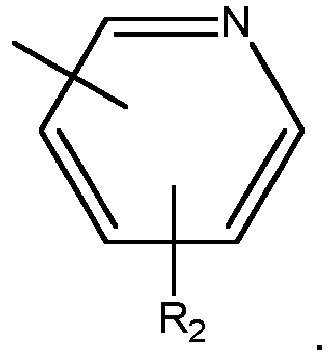
- In a preferred aspect of this second embodiment, the compounds of formula (I) according to the invention are those where R2 represents a hydrogen or a halogen, more preferably a Cl.
- In a further preferred aspect of this second embodiment, the compounds of formula (I) according to the invention are those where Cy represents a group:

- In a more preferred variant of the invention, the compounds of formula (I) are selected from the group consisiting of:
- (2S,4S)-4-(4-(3-fluorophenyl)-1H-1,2,3-triazol-1-yl)pyrrolidine-2-carboxylic acid,
- (2S,4S)-4-(4-(3-chlorophenyl)-1H-1,2,3-triazol-1-yl)pyrrolidine-2-carboxylic acid,
- (2S,4S)-4-(4-(2-methoxyphenyl)-1H-1,2,3-triazol-1-yl)pyrrolidine-2-carboxylic acid,
- (2S,4S)-4-(4-(3-methoxyphenyl)-1H-1,2,3-triazol-1-yl)pyrrolidine-2-carboxylic acid,
- (2S,4S)-4-(4-(4-fluorophenyl)-1H-1,2,3-triazol-1-yl)pyrrolidine-2-carboxylic acid,
- (2S,4S)-4-(4-(4-methoxyphenyl)-1H-1,2,3-triazol-1-yl)pyrrolidine-2-carboxylic acid,
- (2S,4S)-4-(4-phenyl-1H-1,2,3-triazol-1-yl)pyrrolidine-2-carboxylic acid,
- (2S,4S)-4-(4-(m-tolyl)-1H-1,2,3-triazol-1-yl)pyrrolidine-2-carboxylic acid,
- (2S,4S)-4-(4-(pyridin-2-yl)-1H-1,2,3-triazol-1-yl)pyrrolidine-2-carboxylic acid,
- (2S,4S)-4-(4-(3,4-difluorophenyl)-1H-1,2,3-triazol-1-yl)pyrrolidine-2-carboxylic acid,
- (2S,4S)-4-(4-(2-chloro-4-methoxyphenyl)-1H-1,2,3-triazol-1-yl)pyrrolidine-2-carboxylic acid,
- (2S,4S)-4-(4-(2-chlorophenyl)-1H-1,2,3-triazol-1-yl)pyrrolidine-2-carboxylic acid,
- (2S,4S)-4-(4-(2,4-dichlorophenyl)-1H-1,2,3-triazol-1-yl)pyrrolidine-2-carboxylic acid,
- (2S,4S)-4-(4-(3,4-dichlorophenyl)-1H-1,2,3-triazol-1-yl)pyrrolidine-2-carboxylic acid,
- (2S,4S)-4-(4-(3,5-difluorophenyl)-1H-1,2,3-triazol-1-yl)pyrrolidine-2-carboxylic acid,
- (2S,4S)-4-(4-benzyl-1H-1,2,3-triazol-1-yl)pyrrolidine-2-carboxylic acid,
- (2S,4S)-4-(4-(4-bromophenyl)-1H-1,2,3-triazol-1-yl)pyrrolidine-2-carboxylic acid,
- (2S,4S)-4-(4-(pyridin-3-yl)-1H-1,2,3-triazol-1-yl)pyrrolidine-2-carboxylic acid,
- (2S,4S)-4-(4-(pyridin-4-yl)-1H-1,2,3-triazol-1-yl)pyrrolidine-2-carboxylic acid,
- (2S,4S)-4-(4-(5-chloropyridin-3-yl)-1H-1,2,3-triazol-1-yl)pyrrolidine-2-carboxylic acid,
- (2S,4S)-4-(4-(3-cyanophenyl)-1H-1,2,3-triazol-1-yl)pyrrolidine-2-carboxylic acid,
- (2S,4S)-4-(4-(4-cyanophenyl)-1H-1,2,3-triazol-1-yl)pyrrolidine-2-carboxylic acid,
- (2S,4S)-4-(4-(3-chlorobenzyl)-1H-1,2,3-triazol-1-yl)pyrrolidine-2-carboxylic acid,
- (2S,4S)-4-(4-(3-bromophenyl)-1H-1,2,3-triazol-1-yl)pyrrolidine-2-carboxylic acid,
- (2S,4S)-4-(4-(3-((dimethylamino)methyl)-5-fluorophenyl)-1H-1,2,3-triazol-1 - yl)pyrrolidine-2-carboxylic acid,
- (2S,4S)-4-(4-(3-fluoro-5-((methylamino)methyl)phenyl)-1H-1,2,3-triazol-1 - yl)pyrrolidine-2-carboxylic acid,
- (2S,4S)-4-(4-(3,5-dichlorophenyl)-1H-1,2,3-triazol-1-yl)pyrrolidine-2-carboxylic acid,
- (2S,4S)-4-(4-(3-((benzyl(methyl)amino)methyl)-5-fluorophenyl)-1H-1,2,3-triazol-1-yl)pyrrolidine-2-carboxylic acid,
- (2S,4S)-4-(4-(3-((benzylamino)methyl)-5-fluorophenyl)-1H-1,2,3-triazol-1 - yl)pyrrolidine-2-carboxylic acid,
- (2S,4S)-4-(4-(4-chlorobenzyl)-1H-1,2,3-triazol-1-yl)pyrrolidine-2-carboxylic acid,
- In a further more preferred variant of the invention, the compounds of formula (I) are selected from the group consisiting of:
- (2S,4S)-4-(4-(3-fluorophenyl)-1H-1,2,3-triazol-1-yl)pyrrolidine-2-carboxylic acid,
- (2S,4S)-4-(4-(m-tolyl)-1H-1,2,3-triazol-1-yl)pyrrolidine-2-carboxylic acid,
- (2S,4S)-4-(4-(3,4-difluorophenyl)-1H-1,2,3-triazol-1-yl)pyrrolidine-2-carboxylic acid,
- (2S,4S)-4-(4-(2-chloro-4-methoxyphenyl)-1H-1,2,3-triazol-1-yl)pyrrolidine-2-carboxylic acid,
- (2S,4S)-4-(4-(2,4-dichlorophenyl)-1H-1,2,3-triazol-1-yl)pyrrolidine-2-carboxylic acid,
- (2S,4S)-4-(4-(3,4-dichlorophenyl)-1H-1,2,3-triazol-1-yl)pyrrolidine-2-carboxylic acid,
- (2S,4S)-4-(4-benzyl-1H-1,2,3-triazol-1-yl)pyrrolidine-2-carboxylic acid,
- (2S,4S)-4-(4-(4-bromophenyl)-1H-1,2,3-triazol-1-yl)pyrrolidine-2-carboxylic acid,
- (2S,4S)-4-(4-(pyridin-3-yl)-1H-1,2,3-triazol-1-yl)pyrrolidine-2-carboxylic acid,
- (2S,4S)-4-(4-(pyridin-4-yl)-1H-1,2,3-triazol-1-yl)pyrrolidine-2-carboxylic acid,
- (2S,4S)-4-(4-(5-chloropyridin-3-yl)-1H-1,2,3-triazol-1-yl)pyrrolidine-2-carboxylic acid,
- (2S,4S)-4-(4-(3-cyanophenyl)-1H-1,2,3-triazol-1-yl)pyrrolidine-2-carboxylic acid,
- (2S,4S)-4-(4-(4-cyanophenyl)-1H-1,2,3-triazol-1-yl)pyrrolidine-2-carboxylic acid,
- (2S,4S)-4-(4-(3-chlorobenzyl)-1H-1,2,3-triazol-1-yl)pyrrolidine-2-carboxylic acid,
- (2S,4S)-4-(4-(3-bromophenyl)-1H-1,2,3-triazol-1-yl)pyrrolidine-2-carboxylic acid,
- (2S,4S)-4-(4-(3-((dimethylamino)methyl)-5-fluorophenyl)-1H-1,2,3-triazol-1-yl)pyrrolidine-2-carboxylic acid,
- (2S,4S)-4-(4-(3-fluoro-5-((methylamino)methyl)phenyl)-1H-1,2,3-triazol-1-yl)pyrrolidine-2-carboxylic acid,
- (2S,4S)-4-(4-(3,5-dichlorophenyl)-1H-1,2,3-triazol-1-yl)pyrrolidine-2-carboxylic acid,
- (2S,4S)-4-(4-(3-((benzyl(methyl)amino)methyl)-5-fluorophenyl)-1H-1,2,3-triazol-1-yl)pyrrolidine-2-carboxylic acid,
- (2S,4S)-4-(4-(3-((benzylamino)methyl)-5-fluorophenyl)-1H-1,2,3-triazol-1 - yl)pyrrolidine-2-carboxylic acid,
- (2S,4S)-4-(4-(4-chlorobenzyl)-1H-1,2,3-triazol-1-yl)pyrrolidine-2-carboxylic acid,
- Any compound referred to herein is intended to represent such specific compound as well as certain variations or forms. In particular, compounds referred to herein may have asymmetric centers and therefore exist in different enantiomeric or diastereomeric forms. Thus, any given compound referred to herein is intended to represent any one of a racemate, one or more enantiomeric forms, one or more diastereomeric forms, and mixtures thereof. Likewise, stereoisomerism or geometric isomerism about the double bond is also possible, therefore in some cases the molecule could exist as (E)-isomer or (Z)-isomer (trans and cis isomers). If the molecule contains several double bonds, each double bond will have its own stereoisomerism, that could be the same as, or different to, the stereoisomerism of the other double bonds of the molecule. Furthermore, compounds referred to herein may exist as atropisomers. All the stereoisomers including enantiomers, diastereoisomers, geometric isomers and atropisomers of the compounds referred to herein, and mixtures thereof, are considered within the scope of the present invention.
- Furthermore, any compound referred to herein may exist as tautomers. Specifically, the term tautomer refers to one of two or more structural isomers of a compound that exist in equilibrium and are readily converted from one isomeric form to another. Common tautomeric pairs are amine-imine, amide-imidic acid, keto-enol, lactam-lactim, etc.
- In another aspect, the invention refers to processes for obtaining the compounds of general formula (I).
- Compounds of formula (I) as defined above are prepared as shown in Scheme 1:

- The first step is a continuous flow process that provides a compound of formula (V) starting from a stock solution of a compound of formula (II) with an azide reagent of formula (III), preferably sodium azide, in organic solvent, preferably tetrahydrofuran, dimethylformamide, dioxane or dimethyl sulfoxide or mixtures of these organic solvents with water. The solution is pumped continuously through reactor 1 at a temperature range of 50-200 °C, preferably 130 °C and pressure range 0-750 psi, preferably 75 psi. The outcome of this reaction is then mixed continuously with a stock solution of a compound of formula (IV) in an organic solvent, preferably tetrahydrofuran, dimethylformamide, 1,4-dioxane or dimethyl sulfoxide or mixtures of these organic solvents with water, which is pumped through reactor 2 at a temperature range between 0-300 °C, preferably at room temperature and a pressure range between 0-1000 psi, preferably 75 psi. Reactor 2 can include a copper source such as copper (I) iodide, copper (I) bromide, copper (I) chloride, copper (II) sulfate, copper (II) acetate or copper metal. These copper sources may be immobilized or impregnated or heterogenized onto different supports, such as nanoparticles, silica, alumina or polymeric resins, preferably Amberlyst A-21 resin. Additionaly, an additive such as sodium ascorbate, potassium ascorbate, a base such as potassium carbonate, N,N-diisopropylethylamine or triethylamine or a small organic molecule, such as proline, can be used.
- The second step is the deprotection of the amino group from compounds of formula (V). Boc or Teoc deprotection can be effected by any suitable method, such as treatment with an acid, preferably HCI or trifluoroacetic acid in an appropriate solvent such as 1,4-dioxane, dichloromethane, ethyl acetate or a mixture of an organic solvent and water. Additionaly an additive such as triethylsilane can be used. These acidic conditions are also able to convert a compound in which R3 is tert-butyl to a compound of formula (I) in which R3 is hydrogen. Alternatively, the deprotection reaction can be carried out by treatment with ZnBr2 in an organic solvent, preferably dichloromethane; alternatively, for Teoc deprotection, by reaction with CsF in an organic solvent, preferably dimethylformamide at a temperature range of 20-130 °C, optionally under microwaves irradiation.
- The compounds of general formula (II), (III) and (IV) are commercially available or can be prepared by conventional methods described in the bibliography.
- Moreover, certain compounds of the present invention can also be obtained starting from other compounds of formula (I) by appropriate conversion reactions of functional groups, in one or several steps, using well-known reactions in organic chemistry under standard experimental conditions.
- In addition, a compound of formula (I) can be obtained in an enantiopure form from an enantiopure compound of formula (II) or by resolution of a racemic compound of formula (I) either by chiral preparative HPLC of by crystallization of a diastereomeric salt. Alternatively, the resolution step can be carried out at a previous stage, using any suitable intermediate.
- Another aspect of the invention refers to a pharmaceutical composition which comprises at least a compound according to the invention as described above according to general formula (I) or a pharmaceutically acceptable salt or steroisomer thereof, and at least a pharmaceutically acceptable carrier, adjuvant or vehicle. The present invention thus provides pharmaceutical compositions comprising at least a compound of this invention, or a pharmaceutically acceptable salt or stereoisomers thereof together with at least a pharmaceutically acceptable carrier, adjuvant, or vehicle, for administration to a patient.
- Examples of pharmaceutical compositions include any solid (of tablets, dragees, capsules, granules, pills, chewing gums, powders, drops, gels etc.) or liquid (juices, syrups, solutions and suspensions) composition for oral, topical or parenteral administration.
- In a preferred embodiment the pharmaceutical compositions are in oral form, either solid or liquid. Suitable dose forms for oral administration may be tablets, capsules, syrops or solutions and may contain conventional excipients known in the art such as binding agents, for example syrup, acacia, gelatin, sorbitol, tragacanth, or polyvinylpyrrolidone; fillers, for example lactose, sugar, maize starch, calcium phosphate, sorbitol or glycine; tabletting lubricants, for example magnesium stearate; disintegrants, for example starch, polyvinylpyrrolidone, sodium starch glycollate or microcrystalline cellulose; or pharmaceutically acceptable wetting agents such as sodium lauryl sulfate.
- The solid oral compositions may be prepared by conventional methods of blending, filling or tabletting. Repeated blending operations may be used to distribute the active agent throughout those compositions employing large quantities of fillers. Such operations are conventional in the art. The tablets may for example be prepared by wet or dry granulation and optionally coated according to methods well known in normal pharmaceutical practice, in particular with an enteric coating.
- The pharmaceutical compositions may also be adapted for parenteral administration, such as sterile solutions, suspensions or lyophilized products in the apropriate unit dosage form. Adequate excipients can be used, such as bulking agents, buffering agents or surfactants.
- The compounds of the invention can be formulated as deposits in dissolved form or in patches, for percutaneous application.
- Skin applications include ointments, gels, creams, lotions, suspensions or emulsions.
- The mentioned formulations will be prepared using standard methods such as those described or referred to in the Spanish and US Pharmacopoeias and similar reference texts.
- Administration of the compounds or compositions of the present invention may be by any suitable method, such as intravenous infusion, oral preparations, and intraperitoneal and intravenous administration. Oral administration is preferred because of the convenience for the patient and the chronic character of the diseases to be treated.
- Generally an effective administered amount of a compound of the invention will depend on the relative efficacy of the compound chosen, the severity of the disorder being treated and the weight of the sufferer. However, active compounds will typically be administered once or more times a day for example 1, 2, 3 or 4 times daily, with typical total daily doses in the range of from 0.1 to 1000 mg/kg/day.
- Another aspect of the invention refers to the use of a compound of formula (I) according to the invention or a pharmaceutically acceptable salt or isomer thereof in the manufacture of a medicament.
- Another aspect of the invention refers to a compound of formula (I) according to the invention as described above, or a pharmaceutically acceptable salt or isomer thereof, for use as a medicament.
- A further aspect of the invention refers to a compound of formula (I) according to the invention as described above, or a pharmaceutically acceptable salt or isomer thereof, for use in the treatment of pain. Preferably the pain is medium to severe pain, visceral pain, chronic pain, cancer pain, migraine, inflammatory pain, acute pain or neuropathic pain, allodynia or hyperalgesia. This may include mechanical allodynia or thermal hyperalgesia.
- Another aspect of the invention refers to the use of a compound of formula (I) according to the invention in the manufacture of a medicament for the treatment or prophylaxis of pain.
- In a preferred embodiment the pain is selected from medium to severe pain, visceral pain, chronic pain, cancer pain, migraine, inflammatory pain, acute pain or neuropathic pain, allodynia or hyperalgesia, also preferably including mechanical allodynia or thermal hyperalgesia.
- Another aspect of this invention relates to a method of treating or preventing pain which method comprises administering to a patient in need of such a treatment a therapeutically effective amount of at least a compound of formula (I) according to the invention as above defined or a pharmaceutical composition thereof. Among the pain syndromes that can be treated are medium to severe pain, visceral pain, chronic pain, cancer pain, migraine, inflammatory pain, acute pain or neuropathic pain, allodynia or hyperalgesia, whereas this could also include mechanical allodynia or thermal hyperalgesia.
- The present invention is illustrated below with the aid of examples. These illustrations are given solely by way of example and do not limit the general spirit of the present invention.
- The following abbreviations are used:
- ACN: Acetonitrile
- Anh: Anhydrous
- Aq: Aqueous
- CH: Cyclohexane
- DCM: Dichloromethane
- DIAD: Diisopropyl azodicarboxylate
- DIBAL: Diisobutylaluminium hydride
- DIPEA: N,N-Diisopropylethylamine
- DMA: N,N-Dimethylacetamide
- EtOAc: Ethyl acetate
- EtOH: Ethanol
- Ex: Example
- h: Hour/s
- HPLC: High-performance liquid chromatography
- MeOH: Methanol
- MS: Mass spectrometry
- Min: Minutes
- PPh3: Triphenylphosphine
- Ret: Retention time
- rt: Room temperature
- Sat: Saturated
- TBAF: Tetrabutylammonium fluoride
- TBAI: Tetrabutylammonium iodide
- TFA: Trifluoroacetic acid
- THF: Tetrahydrofuran
- The following methods were used to generate the HPLC-MS data:
- Method A: Column Luna PFP 4.6x100mm, 5 µm; flow rate 1 mL/min; A: H2O; B: MeOH; Gradient: 10% to 100% B in 10 min, isocratic 100% B 5 min.
- Method B: Column Luna PFP 4.6x100mm, 5 µm; flow rate 1 mL/min; A: H2O (0.1% Formic Acid); B: MeOH; Gradient: 10% to 100% B in 10 min, isocratic 100% B 5 min.
- Method C: Zorbax Eclipse C8 4.6x150mm, 5 µm; flow rate 1 mL/min; A: H2O (0.1% Formic Acid); B: MeOH; Gradient: 10% to 100% B in 10 min, isocratic 100% B 5 min.
- Method D: Column BEH C18 2.1 x 50 mm, 1.7 µm, flow rate 0.61 mL/min; A: NH4HCO3 10 mM, B: ACN, C: MeOH + 0.1% formic acid; gradient 0.3 min 98% A, 98% A to 0:95:5 A:B:C in 2.7 min; 0:95:5 A:B:C to 100 % B in 0.1 min; isocratic 2 min 100% B.
-
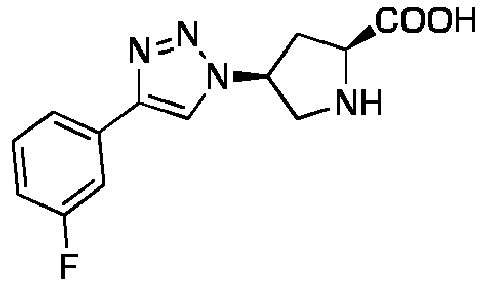

- a) di-tert-Butyl (2S,4S)-4-(4-(3-fluorophenyl)-1H-1,2,3-triazol-1-yl)pyrrolidine-1,2-dicarboxylate. A stock solution of 0.2 M concentration with respect to both di-tert-butyl (2S,4R)-4-((methylsulfonyl)oxy)pyrrolidine-1,2-dicarboxylate and sodium azide (1.0 equiv) was prepared by dissolution in 9:1 DMSO/H2O. The solution was pumped continuously at a flow rate of 24 µL·min-1 through a 1.1 mL mixing chip at 130 °C and 75 psi. The outcome of this reaction was then mixed continuously with a 0.2 M stock solution of 1-ethynyl-3-fluorobenzene (1.0 equiv), which was pumped at a flow rate of 24 µL·min-1 through a 1.2 mL packed bed column filled with Amberlyst A-21-Cul resin (Cu functionalization of 1.27 mmol·g-1 of resin), at room temperature. After 2.5 h, the collected volume was quenched with NH4Cl. The aqueous layer was extracted with EtOAc (x3). The organic layers were combined and washed with H2O (x3). Finally, the organic layers were collected, dried over Na2SO4, filtered and concentrated in vacuo. The crude product was purified by flash chromatography on silica gel (cyclohexane/EtOAc 7:3) to afford the title compound (135 mg, 52% yield).
- b) (2S,4S)-4-(4-(3-Fluorophenyl)-1H-1,2,3-triazol-1-yl)pyrrolidine-2-carboxylic acid. To a solution of the compound obtained in step a) (100 mg, 0.231 mmol) in dichloromethane (1 mL) trifluoracetic acid (9 mL, 13 mmol, 9:1 ratio DCM:TFA) and triethylsilane (0.6 µL, 5.8 µmοl) were added. The resulting mixture was stirred at room temperature for 16 h. The solvent was evaporated under reduce pressure and the crude mixture was purified by Dowex 50WX8 (water:ammonia (up to 30%)) to afford the title compound (29.6 mg, 46% yield).
- HPLC (Method B): Retention time 5.945 min; ESI+-MS m/z, 277.1 (M+H).
- This method was used for the preparation of Ex 2-30 using suitable starting materials:
EX Structure Chemical name Meth od Ret (min) MS 2 
(2S,4S)-4-(4-(3-chlorophenyl)-1H-1,2,3-triazol-1-yl)pyrrolidine-2-carboxylic acid A 6.799 293.1 (M+H) 3 
(2S,4S)-4-(4-(2-methoxyphenyl)-1H-1,2,3-triazol-1-yl)pyrrolidine-2-carboxylic acid D 1.00 289.0 4 
(2S,4S)-4-(4-(3-methoxyphenyl)-1H-1,2,3-triazol-1-yl)pyrrolidine-2-carboxylic acid B 5.866 289.1 5 
(2S,4S)-4-(4-(4-fluorophenyl)-1 H-1,2,3-triazol-1-yl)pyrrolidine-2-carboxylic acid D 0.97 279.9 6 
(2S,4S)-4-(4-(4-methoxyphenyl)-1H-1,2,3-triazol-1-yl)pyrrolidine-2-carboxylic acid D 0.94 289.0 7 
(2S,4S)-4-(4-phenyl-1H-1,2,3-triazol-1-yl)pyrrolidine-2-carboxylic acid B 5.145 259.1 8 
(2S,4S)-4-(4-(m-tolyl)-1H-1,2,3-triazol-1-yl)pyrrolidine-2-carboxylic acid B 6.339 273.1 9 
(2S,4S)-4-(4-(pyridin-2-yl)-1H-1,2,3-triazol-1-yl)pyrrolidine-2-carboxylic acid D 0.71 260.0 10 
(2S,4S)-4-(4-(3,4-difluorophenyl)-1H-1,2,3-triazol-1-yl)pyrrolidine-2-carboxylic acid B 6.897 295.1 11 
(2S,4S)-4-(4-(2-chloro-4-methoxyphenyl)-1H-1,2,3-triazol-1-yl)pyrrolidine-2-carboxylic acid A 6.555 323.1 12 
(2S,4S)-4-(4-(2-chlorophenyl)-1 H-1,2,3-triazol-1-yl)pyrrolidine-2-carboxylic acid B 5.974 293.1 13 
(2S,4S)-4-(4-(2,4-dichlorophenyl)-1H-1,2,3-triazol-1-yl)pyrrolidine-2-carboxylic acid B 7.521 327.0 14 
(2S,4S)-4-(4-(3,4-dichlorophenyl)-1H-1,2,3-triazol-1-yl)pyrrolidine-2-carboxylic acid B 8.251 327.0 15 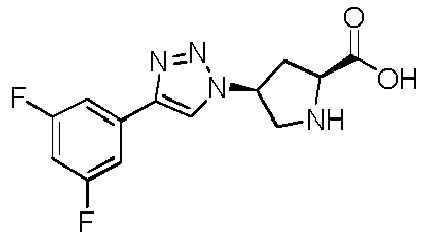
(2S,4S)-4-(4-(3,5-difluorophenyl)-1H-1,2,3-triazol-1-yl)pyrrolidine-2-carboxylic acid A 6.117 295.1 16 
(2S,4S)-4-(4-benzyl-1H-1,2,3-triazol-1-yl)pyrrolidine-2-carboxylic acid B 4.221 273.1 17 
(2S,4S)-4-(4-(4-bromophenyl)-1 H-1,2,3-triazol-1-yl)pyrrolidine-2-carboxylic acid D 1.24 337.0 18 
(2S,4S)-4-(4-(pyridin-3-yl)-1H-1,2,3-triazol-1-yl)pyrrolidine-2-carboxylic acid A 3.772 260.1 19 
(2S,4S)-4-(4-(pyridin-4-yl)-1H-1,2,3-triazol-1-yl)pyrrolidine-2-carboxylic acid A 3.895 260.1 20 
(2S,4S)-4-(4-(5-chloropyridin-3-yl)-1H-1,2,3-triazol-1-yl)pyrrolidine-2-carboxylic acid A 4.991 294.1 21 
(2S,4S)-4-(4-(3-cyanophenyl)-1H-1,2,3-triazol-1-yl)pyrrolidine-2-carboxylic acid A 5.309 284.1 22 
(2S,4S)-4-(4-(4-cyanophenyl)-1H-1,2,3-triazol-1-yl)pyrrolidine-2-carboxylic acid A 5.371 284.1 23 
(2S,4S)-4-(4-(3-chlorobenzyl)-1 H-1,2,3-triazol-1-yl)pyrrolidine-2-carboxylic acid A 6.487 307.0 24 
(2S,4S)-4-(4-(3-bromophenyl)-1 H-1,2,3-triazol-1-yl)pyrrolidine-2-carboxylic acid A 6.733 339.0 25 
(2S,4S)-4-(4-(3-((dimethylamino)methyl )-5-fluorophenyl)-1 H-1,2,3-triazol-1-yl)pyrrolidine-2-carboxylic acid A 2.429 334.2 26 
(2S,4S)-4-(4-(3-fluoro-5-((methylamino)methyl)p henyl)-1H-1,2,3-triazol-1-yl)pyrrolidine-2-carboxylic acid C 1.606 320.2 27 
(2S,4S)-4-(4-(3,5-dichlorophenyl)-1H-1,2,3-triazol-1-yl)pyrrolidine-2-carboxylic acid A 8.150 327.0 28 
(2S,4S)-4-(4-(3-((benzyl(methyl)amino) methyl)-5-fluorophenyl)-1H-1,2,3-triazol-1-yl)pyrrolidine-2-carboxylic acid A 5.268 410.2 29 
(2S,4S)-4-(4-(3-((benzylamino)methyl)-5-fluorophenyl)-1H-1,2,3-triazol-1-yl)pyrrolidine-2-carboxylic acid A 4.790 307.1 30 
(2S,4S)-4-(4-(4-chlorobenzyl)-1 H-1,2,3-triazol-1-yl)pyrrolidine-2-carboxylic acid A 6.841 307.0 - Human α2δ-1 enriched membranes (2.5 µg) were incubated with 15 nM of radiolabeled [3H]-Gabapentin in assay buffer containing Hepes-KOH 10mM, pH 7.4. NSB (non specific binding) was measured by adding 10 µM pregabalin. The binding of the tested compound was measured at either one concentration (% inhibition at 1 or 10 µM) or five different concentrations to determine affinity values (Ki). After 60 min incubation at 27 °C, binding reaction was terminated by filtering through Multiscreen GF/C (Millipore) presoaked in 0.5 % polyethyleneimine in Vacuum Manifold Station, followed by 3 washes with ice-cold filtration buffer containing 50 mM Tris-HCI, pH 7.4. Filter plates were dried at 60 °C for 1 h and 30 µL of scintillation cocktail were added to each well before radioactivity reading. Readings were performed in a Trilux 1450 Microbeta radioactive counter (Perkin Elmer).
- As this invention is aimed at providing compounds which act as ligands of the α2δ subunit of voltage-gated calcium channels and especially compounds which have a binding expressed as Ki responding to the following scales:
Ki(α2δ-1) is preferably < 10000 nM, more preferably < 5000 nM, or even more preferably < 500 nM. - The following scale has been adopted for representing the binding to the α2δ-1 subunit of voltage-gated calcium channels expressed as Ki:
+ Ki(α2δ-1) >= 5000 nM ++ 500 nM <= Ki(α2δ-1) <5000 nM +++ Ki(α2δ-1) <500 nM - Preferably, when Ki(α2δ-1) > 5000 nM, the following scale has been adopted for representing the binding to the α2δ-1 subunit of voltage-gated calcium channels:
+ Ki(α2δ-1) > 5000 nM or inhibition ranges between 1 % and 50 % - All compounds prepared in the present application exhibit binding to the α2δ-1 subunit of voltage-gated calcium channels, in particular the following binding results are shown:
EXAMPLE α2δ-1 Ki (nM) 1 +++ 2 +++ 3 + 4 + 5 ++ 6 + 7 ++ 8 + 9 ++ 10 +++ 11 + 12 ++ 13 + 14 ++ 15 + 16 + 17 ++ 18 + 19 + 20 + 21 + 22 + 23 + 24 ++ 25 + 26 + 27 + 28 + 29 + 30 +
Claims (14)
- Compound of general formula (I):

Cy represents a group selected from: n is 0 or 1;R1 is selected from the group consisting of hydrogen, halogen, -CN, linear or branched substituted or unsubstituted C1-6 alkyl, linear or branched substituted or unsubstituted C2-6 alkenyl, and linear or branched substituted or unsubstituted C1-6 alkoxy;R2 is selected from the group consisting of hydrogen, halogen, linear or branched substituted or unsubstituted C1-6 alkyl, linear or branched substituted or unsubstituted C2-6 alkenyl, linear or branched substituted or unsubstituted C1-6 alkoxy and -(CH2)p-NRaRb,p is 0, 1, 2, or 3;Ra and Rb are independently selected from hydrogen, linear or branched C1-6 alkyl and unsubstituted or unsubstituted benzyl;optionally in form of one of the stereoisomers, preferably enantiomers or diastereomers, a racemate or in form of a mixture of at least two of the stereoisomers, preferably enantiomers and/or diastereomers, in any mixing ratio, or a corresponding physiologically acceptable salt or solvate thereof;wherein the following compounds are excluded:• 4-(4-(3-chlorophenyl)-1H-1,2,3-triazol-1-yl)pyrrolidine-2-carboxylic acid,• 4-(4-(2-methoxyphenyl)-1H-1,2,3-triazol-1-yl)pyrrolidine-2-carboxylic acid,• 4-(4-(3-methoxyphenyl)-1H-1,2,3-triazol-1-yl)pyrrolidine-2-carboxylic acid,• 4-(4-(4-fluorophenyl)-1H-1,2,3-triazol-1-yl)pyrrolidine-2-carboxylic acid,• 4-(4-(4-methoxyphenyl)-1H-1,2,3-triazol-1-yl)pyrrolidine-2-carboxylic acid,• 4-(4-(pyridin-2-yl)-1H-1,2,3-triazol-1-yl)pyrrolidine-2-carboxylic acid,• 4-(4-phenyl-1H-1,2,3-triazol-1-yl)pyrrolidine-2-carboxylic acid,• 4-(4-(2-chloro)-1H-1,2,3-triazol-1-yl)pyrrolidine-2-carboxylic acid,• 4-(4-(3,5-difluorophenyl)-1H-1,2,3-triazol-1-yl)pyrrolidine-2-carboxylic acid.
 - A compound according to claim 1, wherein Cy represents a group:

- A compound according to claim 2, wherein R1 represents a hydrogen, a halogen, more preferably a Br, Cl, or F, a -CN, an unsubstituted C1-6 alkyl, preferably a methyl (-CH3), or a unsubstituted C1-6 alkoxy, preferably a methoxy (-O-CH3).
- A compound according to any of claims 2 to 3, wherein R2 represents a hydrogen, a halogen, more preferably a Br, Cl, or F, -(CH2)p-NRaRb, wherein p is 1, Ra is a hydrogen or an unsubstituted C1-6 alkyl, preferably a methyl (-CH3), and Rb is a hydrogen, an unsubstituted C1-6 alkyl, preferably a methyl (-CH3), or an unsubstituted benzyl.
- A compound according to ny of claims 2 to 4, wherein Cy represents a group:

- A compound according to claim 1, wherein Cy represents a group:

- A compound according to claim 6, wherein R2 represents a hydrogen or a halogen, more preferably a Cl.
- A compound according to any of claims 6 to 7, where Cy represents a group:

- A compound according to any of claims 1 to 8 selected form the group consisiting of:• (2S,4S)-4-(4-(3-fluorophenyl)-1H-1,2,3-triazol-1-yl)pyrrolidine-2-carboxylic acid,• (2S,4S)-4-(4-(m-tolyl)-1H-1,2,3-triazol-1-yl)pyrrolidine-2-carboxylic acid,• (2S,4S)-4-(4-(3,4-difluorophenyl)-1H-1,2,3-triazol-1-yl)pyrrolidine-2-carboxylic acid,• (2S,4S)-4-(4-(2-chloro-4-methoxyphenyl)-1H-1,2,3-triazol-1-yl)pyrrolidine-2-carboxylic acid,• (2S,4S)-4-(4-(2,4-dichlorophenyl)-1H-1,2,3-triazol-1-yl)pyrrolidine-2-carboxylic acid,• (2S,4S)-4-(4-(3,4-dichlorophenyl)-1H-1,2,3-triazol-1-yl)pyrrolidine-2-carboxylic acid,• (2S,4S)-4-(4-benzyl-1H-1,2,3-triazol-1-yl)pyrrolidine-2-carboxylic acid,• (2S,4S)-4-(4-(4-bromophenyl)-1H-1,2,3-triazol-1-yl)pyrrolidine-2-carboxylic acid,• (2S,4S)-4-(4-(pyridin-3-yl)-1H-1,2,3-triazol-1-yl)pyrrolidine-2-carboxylic acid,• (2S,4S)-4-(4-(pyridin-4-yl)-1H-1,2,3-triazol-1-yl)pyrrolidine-2-carboxylic acid,• (2S,4S)-4-(4-(5-chloropyridin-3-yl)-1H-1,2,3-triazol-1-yl)pyrrolidine-2-carboxylic acid,• (2S,4S)-4-(4-(3-cyanophenyl)-1H-1,2,3-triazol-1-yl)pyrrolidine-2-carboxylic acid,• (2S,4S)-4-(4-(4-cyanophenyl)-1H-1,2,3-triazol-1-yl)pyrrolidine-2-carboxylic acid,• (2S,4S)-4-(4-(3-chlorobenzyl)-1H-1,2,3-triazol-1-yl)pyrrolidine-2-carboxylic acid,• (2S,4S)-4-(4-(3-bromophenyl)-1H-1,2,3-triazol-1-yl)pyrrolidine-2-carboxylic acid,• (2S,4S)-4-(4-(3-((dimethylamino)methyl)-5-fluorophenyl)-1H-1,2,3-triazol-1 - yl)pyrrolidine-2-carboxylic acid,• (2S,4S)-4-(4-(3-fluoro-5-((methylamino)methyl)phenyl)-1H-1,2,3-triazol-1-yl)pyrrolidine-2-carboxylic acid,• (2S,4S)-4-(4-(3,5-dichlorophenyl)-1H-1,2,3-triazol-1-yl)pyrrolidine-2-carboxylic acid,• (2S,4S)-4-(4-(3-((benzyl(methyl)amino)methyl)-5-fluorophenyl)-1H-1,2,3-triazol-1-yl)pyrrolidine-2-carboxylic acid,• (2S,4S)-4-(4-(3-((benzylamino)methyl)-5-fluorophenyl)-1H-1,2,3-triazol-1 - yl)pyrrolidine-2-carboxylic acid, and• (2S,4S)-4-(4-(4-chlorobenzyl)-1H-1,2,3-triazol-1-yl)pyrrolidine-2-carboxylic acid.
- A process for the preparation of a compound of formula (I) according to claim 1 comprising the steps of:• reacting a stock solution of a compound of formula (II):
 • with an azide reagent of formula (III):
N3Z (III),
wherein Z is selected from sodium, potassium, tosyl, and trimethylsilyl, in an organic solvent,• pumpimg the resulting solution under continuous flow through a first reactor at a temperature of 50 to 200 °C and pressure of 0 to 750 psi,• mixing continuously the resulting mixture with a stock solution of a compound of formula (IV):
in an organic solvent,• pumping the resulting mixture under continuous flow through a second reactor at a temperature of 0 to 300 °C, and a pressure of 0 to 1000 psi, to give a compound of formula (V): • which is reacted with an acid, in an appropriate solvent, optionally in the presence of an additive,to give a compound of formula (I) according to claim 1.
 - A compound of formula (I) below for use as a medicament:

Cy represents a group selected from: n is 0 or 1;R1 is selected from the group consisting of hydrogen, halogen, -CN, linear or branched substituted or unsubstituted C1-6 alkyl, linear or branched substituted or unsubstituted C2-6 alkenyl, and linear or branched substituted or unsubstituted C1-6 alkoxy;R2 is selected from the group consisting of hydrogen, halogen, linear or branched substituted or unsubstituted C1-6 alkyl, linear or branched substituted or unsubstituted C2-6 alkenyl, linear or branched substituted or unsubstituted C1-6 alkoxy and -(CH2)p-NRaRb,p is 0, 1, 2, or 3;Ra and Rb are independently selected from hydrogen, linear or branched C1-6 alkyl and unsubstituted or unsubstituted benzyl;optionally in form of one of the stereoisomers, preferably enantiomers or diastereomers, a racemate or in form of a mixture of at least two of the stereoisomers, preferably enantiomers and/or diastereomers, in any mixing ratio, or a corresponding physiologically acceptable salt or solvate thereof.
 - A compound of formula (I) according to claim 11 for use in the treatment of pain.
- A compound of formula (I) according to claim 12 for use in the treatment of a disease or condition selected from medium to severe pain, visceral pain, chronic pain, cancer pain, migraine, inflammatory pain, acute pain or neuropathic pain, allodynia, hyperalgesia, mechanical allodynia and thermal hyperalgesia.
- A pharmaceutical composition which comprises a compound of formula (I) according to claim 11 or a pharmaceutically acceptable salt or stereoisomer thereof, and a pharmaceutically acceptable carrier, adjuvant or vehicle.
Priority Applications (1)
| Application Number | Priority Date | Filing Date | Title |
|---|---|---|---|
| EP19382396.0A EP3741750A1 (en) | 2019-05-20 | 2019-05-20 | 4-(1h-1,2,3-triazol-1-yl)pyrrolidine-2-carboxylic acid derivatives having activity against pain |
Applications Claiming Priority (1)
| Application Number | Priority Date | Filing Date | Title |
|---|---|---|---|
| EP19382396.0A EP3741750A1 (en) | 2019-05-20 | 2019-05-20 | 4-(1h-1,2,3-triazol-1-yl)pyrrolidine-2-carboxylic acid derivatives having activity against pain |
Publications (1)
| Publication Number | Publication Date |
|---|---|
| EP3741750A1 true EP3741750A1 (en) | 2020-11-25 |
Family
ID=66668859
Family Applications (1)
| Application Number | Title | Priority Date | Filing Date |
|---|---|---|---|
| EP19382396.0A Withdrawn EP3741750A1 (en) | 2019-05-20 | 2019-05-20 | 4-(1h-1,2,3-triazol-1-yl)pyrrolidine-2-carboxylic acid derivatives having activity against pain |
Country Status (1)
| Country | Link |
|---|---|
| EP (1) | EP3741750A1 (en) |
Citations (1)
| Publication number | Priority date | Publication date | Assignee | Title |
|---|---|---|---|---|
| US20150111814A1 (en) * | 2013-10-22 | 2015-04-23 | Drexel University | Novel compositions for promoting hiv-1 virolysis and methods using same |
-
2019
- 2019-05-20 EP EP19382396.0A patent/EP3741750A1/en not_active Withdrawn
Patent Citations (1)
| Publication number | Priority date | Publication date | Assignee | Title |
|---|---|---|---|---|
| US20150111814A1 (en) * | 2013-10-22 | 2015-04-23 | Drexel University | Novel compositions for promoting hiv-1 virolysis and methods using same |
Non-Patent Citations (13)
| Title |
|---|
| BIOCHIM BIOPHYS ACTA, vol. 1828, 2013, pages 1541 - 9 |
| DAVIES ET AL., TRENDS PHARMACOL SCI., vol. 28, 2007, pages 220 - 8 |
| DOLPHIN AC, NAT REV NEUROSCI., vol. 13, 2012, pages 542 - 55 |
| G. W. ZAMPONI ET AL: "The Physiology, Pathology, and Pharmacology of Voltage-Gated Calcium Channels and Their Future Therapeutic Potential", PHARMACOLOGICAL REVIEWS, vol. 67, no. 4, 10 September 2015 (2015-09-10), pages 821 - 870, XP055447402, DOI: 10.1124/pr.114.009654 * |
| GOLDBERG, D.S.MCGEE, S.J., BMC PUBLIC HEALTH, vol. 11, 2011, pages 770 |
| KROGSGAARD-LARSEN ET AL.: "Textbook of Drug design and Discovery", April 2002, TAYLOR & FRANCIS |
| NEUMAIER ET AL., PROG NEUROBIOL., vol. 129, 2015, pages 1 - 36 |
| PATRICIA LLANES ET AL: "Asymmetric cross- and self-aldol reactions of aldehydes in water with a polystyrene-supported triazolylproline organocatalyst", GREEN CHEMISTRY, vol. 18, no. 12, 1 January 2016 (2016-01-01), GB, pages 3507 - 3512, XP055346069, ISSN: 1463-9262, DOI: 10.1039/C6GC00792A * |
| PERRETLUO, NEUROTHERAPEUTICS, vol. 6, 2009, pages 679 - 92 |
| S VINK ET AL: "Targeting voltage-gated calcium channels: developments in peptide and small-molecule inhibitors for the treatment of neuropathic pain", BRITISH JOURNAL OF PHARMACOLOGY, vol. 167, no. 5, 8 October 2012 (2012-10-08), UK, pages 970 - 989, XP055280197, ISSN: 0007-1188, DOI: 10.1111/j.1476-5381.2012.02082.x * |
| TURK, D.C.WILSON, H.D.CAHANA, A., LANCET, vol. 377, 2011, pages 2226 - 2235 |
| VINKALEWOOD, BR J PHARMACOL., vol. 167, 2012, pages 970 - 89 |
| ZAMPONI ET AL., PHARMACOL REV., vol. 67, 2015, pages 821 - 70 |
Similar Documents
| Publication | Publication Date | Title |
|---|---|---|
| EP3442960A1 (en) | Arylamide derivatives having multimodal activity against pain | |
| EP3452475B1 (en) | Tetrahydropyrimidodiazepine and tetrahydropyridodiazepine compounds for treating pain and pain related conditions | |
| KR102959787B1 (en) | nuclear receptor active compounds | |
| AU2018351059A1 (en) | Benzimidazole derivatives and their uses | |
| KR20230017828A (en) | Pyrazolo[1,5-a]pyrimidine derivatives with multimodal activity against pain | |
| WO2020120539A1 (en) | New pyrrolidine-2-carboxylic acid derivatives for treating pain and pain related conditions | |
| CN107108630A (en) | Substituted N-(pyrrolidin-3-yl)-7H-pyrrolo[2,3-D]pyrimidin-4-amines as JANUS Kinase Inhibitors | |
| EP3478665A1 (en) | Pyrazole derivatives having activity against pain | |
| WO2020021015A1 (en) | New imidazopyridine derivatives for treating pain and pain related conditions | |
| EP3377500B1 (en) | Oxadiazaspiro compounds for the treatment of drug abuse and addiction | |
| EP3700890B1 (en) | Alcoxyamino derivatives for treating pain and pain related conditions | |
| TW202115032A (en) | Homopiperazinyl and homopiperidinyl quinazolin-4(3h)-one derivatives having multimodal activity against pain | |
| US10562908B2 (en) | Ortho substituted phenylpyrazolo- and phenylpyrrolo-pyridazine derivatives having multimodal activity against pain | |
| US20220002314A1 (en) | Piperazinyl and piperidinyl quinazolin-4(3h)-one derivatives having activity against pain | |
| WO2018100048A1 (en) | 2-phenyl-2h-pyrazolo[3,4-d]pyridazine derivatives having activity against pain | |
| WO2019002173A1 (en) | Compounds having multimodal activity against pain | |
| WO2020120606A1 (en) | New pyrrolidine-2-carboxylic acid derivatives for treating pain and pain related conditions | |
| RU2845591C1 (en) | PYRAZOLO [1,5-α]PYRIMIDINE DERIVATIVES HAVING MULTIMODAL ACTIVITY AGAINST PAIN | |
| WO2020089478A1 (en) | New tetrahydropyrimidodiazepin and tetrahydropyridodiazepin compounds for treating pain and pain related conditions | |
| CN111225901A (en) | Propylamine derivatives useful in the treatment of pain and pain-associated conditions | |
| WO2019077106A1 (en) | New alkoxyamino compounds for treating pain and pain related conditions | |
| WO2020089263A1 (en) | Optionally nitrogenated isoquinolin-1(2h)-ones and 1h-isochromen- 1-ones for treating pain and pain related conditions | |
| TW202031264A (en) | New alcoxyaminopyridine derivatives for treating pain and pain related conditions | |
| EP3858438A1 (en) | 3,4-dihydro-2h-spiro[isoquinoline-1,4'-piperidin]amide derivatives having multimodal activity against pain | |
| EP3858810A1 (en) | Dialkylaminoarylcycloalkylamide derivatives having multimodal activity against pain |
Legal Events
| Date | Code | Title | Description |
|---|---|---|---|
| PUAI | Public reference made under article 153(3) epc to a published international application that has entered the european phase |
Free format text: ORIGINAL CODE: 0009012 |
|
| STAA | Information on the status of an ep patent application or granted ep patent |
Free format text: STATUS: THE APPLICATION HAS BEEN PUBLISHED |
|
| AK | Designated contracting states |
Kind code of ref document: A1 Designated state(s): AL AT BE BG CH CY CZ DE DK EE ES FI FR GB GR HR HU IE IS IT LI LT LU LV MC MK MT NL NO PL PT RO RS SE SI SK SM TR |
|
| AX | Request for extension of the european patent |
Extension state: BA ME |
|
| STAA | Information on the status of an ep patent application or granted ep patent |
Free format text: STATUS: THE APPLICATION IS DEEMED TO BE WITHDRAWN |
|
| 18D | Application deemed to be withdrawn |
Effective date: 20210526 |