EP3741660B1 - Outboard motor - Google Patents
Outboard motor Download PDFInfo
- Publication number
- EP3741660B1 EP3741660B1 EP20171958.0A EP20171958A EP3741660B1 EP 3741660 B1 EP3741660 B1 EP 3741660B1 EP 20171958 A EP20171958 A EP 20171958A EP 3741660 B1 EP3741660 B1 EP 3741660B1
- Authority
- EP
- European Patent Office
- Prior art keywords
- pump
- cooling water
- outboard motor
- cooling
- engine
- Prior art date
- Legal status (The legal status is an assumption and is not a legal conclusion. Google has not performed a legal analysis and makes no representation as to the accuracy of the status listed.)
- Active
Links
Images


Classifications
-
- F—MECHANICAL ENGINEERING; LIGHTING; HEATING; WEAPONS; BLASTING
- F02—COMBUSTION ENGINES; HOT-GAS OR COMBUSTION-PRODUCT ENGINE PLANTS
- F02B—INTERNAL-COMBUSTION PISTON ENGINES; COMBUSTION ENGINES IN GENERAL
- F02B61/00—Adaptations of engines for driving vehicles or for driving propellers; Combinations of engines with gearing
- F02B61/04—Adaptations of engines for driving vehicles or for driving propellers; Combinations of engines with gearing for driving propellers
- F02B61/045—Adaptations of engines for driving vehicles or for driving propellers; Combinations of engines with gearing for driving propellers for marine engines
-
- F—MECHANICAL ENGINEERING; LIGHTING; HEATING; WEAPONS; BLASTING
- F01—MACHINES OR ENGINES IN GENERAL; ENGINE PLANTS IN GENERAL; STEAM ENGINES
- F01P—COOLING OF MACHINES OR ENGINES IN GENERAL; COOLING OF INTERNAL-COMBUSTION ENGINES
- F01P3/00—Liquid cooling
- F01P3/20—Cooling circuits not specific to a single part of engine or machine
- F01P3/202—Cooling circuits not specific to a single part of engine or machine for outboard marine engines
-
- B—PERFORMING OPERATIONS; TRANSPORTING
- B63—SHIPS OR OTHER WATERBORNE VESSELS; RELATED EQUIPMENT
- B63H—MARINE PROPULSION OR STEERING
- B63H20/00—Outboard propulsion units, e.g. outboard motors or Z-drives; Arrangements thereof on vessels
- B63H20/28—Arrangements, apparatus and methods for handling cooling-water in outboard drives, e.g. cooling-water intakes
-
- B—PERFORMING OPERATIONS; TRANSPORTING
- B63—SHIPS OR OTHER WATERBORNE VESSELS; RELATED EQUIPMENT
- B63H—MARINE PROPULSION OR STEERING
- B63H20/00—Outboard propulsion units, e.g. outboard motors or Z-drives; Arrangements thereof on vessels
- B63H20/28—Arrangements, apparatus and methods for handling cooling-water in outboard drives, e.g. cooling-water intakes
- B63H20/285—Cooling-water intakes
-
- F—MECHANICAL ENGINEERING; LIGHTING; HEATING; WEAPONS; BLASTING
- F01—MACHINES OR ENGINES IN GENERAL; ENGINE PLANTS IN GENERAL; STEAM ENGINES
- F01P—COOLING OF MACHINES OR ENGINES IN GENERAL; COOLING OF INTERNAL-COMBUSTION ENGINES
- F01P3/00—Liquid cooling
- F01P3/12—Arrangements for cooling other engine or machine parts
-
- F—MECHANICAL ENGINEERING; LIGHTING; HEATING; WEAPONS; BLASTING
- F01—MACHINES OR ENGINES IN GENERAL; ENGINE PLANTS IN GENERAL; STEAM ENGINES
- F01P—COOLING OF MACHINES OR ENGINES IN GENERAL; COOLING OF INTERNAL-COMBUSTION ENGINES
- F01P2050/00—Applications
- F01P2050/02—Marine engines
- F01P2050/12—Outboard engine
Definitions
- the present invention relates to an outboard motor.
- An outboard motor including pumps that pump water from the outside of an outboard motor body is known in general.
- Such an outboard motor is disclosed in Japanese Patent Laid-Open No. 2015-067191 , for example.
- Japanese Patent Laid-Open No. 2015-067191 discloses a cooler for an outboard motor including a main pump that supplies cooling water to an engine unit.
- the main pump is disposed in an upper portion of the outboard motor and is a non-positive displacement electric pump.
- the cooler includes an engine-driven secondary pump disposed in a lower portion of the outboard motor and driven by the driving force of an engine of the engine unit.
- the secondary pump is a positive-displacement pump, and pumps water from the outside of the outboard motor via a water inlet.
- the secondary pump supplies the pumped water to the main pump. That is, the secondary pump is a pump that primes the main pump.
- the main pump is driven to flow the cooling water into a cooling water passage of the engine unit.
- the temperature of the fuel in the fuel tank provided in the vicinity of the engine is conceivably relatively high due to the relatively high temperature of the engine.
- the size of a fuel vaporized gas treatment system is conceivably increased in order to cope with an increase in the temperature of the fuel.
- the layout in the outboard motor is conceivably further restricted.
- An outboard motor includes a first cooling water passage through which first cooling water including water outside an outboard motor body passes to cool a first cooling target including at least one of fuel in a fuel tank and an electrical component other than an engine, and a first pump that is an electric pump configured to pump the first cooling water from an outside of the outboard motor body and flow the first cooling water into the first cooling water passage.
- the first pump is an electric pump configured to pump the first cooling water from the outside of the outboard motor body and flow the first cooling water into the first cooling water passage. Accordingly, even while the engine is stopped, the first pump as an electric pump configured to pump the first cooling water from the outside is driven by electric power. Therefore, even while the engine is stopped, the first pump is driven such that the first cooling target including at least one of the electrical component and the fuel in the fuel tank is cooled with the first cooling water.
- the engine is preferably configured to rotate a drive shaft connected to a propeller
- the outboard motor preferably further includes a rotary electric machine configured to drive the outboard motor by rotating the drive shaft
- the first cooling target preferably includes the electrical component
- the electrical component preferably includes a component of a power supply system configured to supply electric power to the rotary electric machine. It is conceivable that the outboard motor is driven by both the engine and the rotary electric machine (the hybrid technology of the engine and the rotary electric machine is used). In such a case, the component of the power supply system configured to supply electric power to the rotary electric machine conceivably generates heat when the rotary electric machine is driven while the engine is stopped.
- the first cooling target includes the electrical component
- the electrical component includes the component of the power supply system configured to supply electric power to the rotary electric machine such that the first pump is driven even while the engine is stopped.
- the component of the power supply system as the first cooling target is cooled with the first cooling water. Consequently, even when the hybrid technology of the engine and the rotary electric machine configured to drive the outboard motor is applied to the outboard motor, the electrical component, for example, is effectively cooled.
- An outboard motor further includes a second cooling water passage through which second cooling water passes to cool a second cooling target that is different from the first cooling target and includes the engine, and a second pump configured to flow the second cooling water into the second cooling water passage.
- the outboard motor includes the first pump and the second pump, and thus unlike a case in which all the cooling targets are cooled by one pump, the cooling target (first cooling target) cooled by the first pump and the cooling target (second cooling target) cooled by the second pump are dispersed. Therefore, an increase in the size of each of the first pump and the second pump is significantly reduced or prevented. Consequently, the first pump and the second pump, in which increases in their sizes are significantly reduced or prevented, are dispersed and easily disposed in a limited space inside the outboard motor.
- the first pump is preferably configured to have a cooling water pumping capacity per unit time smaller than a cooling water pumping capacity per unit time of the second pump. Accordingly, an increase in the size of the first pump is further significantly reduced or prevented.
- both the first pump and the second pump are preferably positive-displacement pumps.
- one of the first pump and the second pump is a non-positive displacement pump, it is necessary to prime the non-positive displacement pump from the outside of the outboard motor body.
- both the first pump and the second pump are positive-displacement pumps, and thus both the first pump and the second pump easily pump water outside the outboard motor body without priming the first pump and the second pump.
- the first cooling water passage and the second cooling water passage preferably include a common water inlet through which the first cooling water and the second cooling water are taken in upstream of the first cooling target and upstream of the second cooling target. Accordingly, the water inlet through which the first cooling water is taken in and the water inlet through which the second cooling water is taken in are shared, and thus the complex structure of the outboard motor is significantly reduced or prevented.
- the second pump is preferably an engine-driven pump configured to be driven by the drive shaft when the engine drives the drive shaft.
- the amount of heat generated by the engine included in the second cooling target increases as the rotation speed increases. Therefore, the second pump is an engine-driven pump, as described above, such that the flow rate of the second cooling water that flows through the second cooling water passage is increased according to an increase in the amount of heat generated by the engine.
- the engine is preferably configured to rotate a drive shaft connected to a propeller
- the first cooling target preferably includes a rotary electric machine configured to drive the outboard motor by rotating the drive shaft. Accordingly, even while an engine is stopped, the rotary electric machine that generates heat when driven is cooled with the first cooling water (first pump).
- An outboard motor including the rotary electric machine preferably further includes a rotation speed detector configured to detect a rotation speed of the rotary electric machine, and driving of the first pump is preferably controlled based on the rotation speed of the rotary electric machine detected by the rotation speed detector. Accordingly, the rotation speed of the rotary electric machine is detected such that the first pump is driven as necessary. For example, when the rotary electric machine is being driven and the electrical component is generating heat, the first pump is effectively driven such that the electrical component is effectively cooled. Furthermore, when the rotary electric machine is included in the first cooling target, the rotary electric machine is effectively cooled.
- the first pump is preferably configured to be drivable while the engine is stopped. Accordingly, the first pump is driven while the engine is stopped, and thus the first cooling target is cooled even while the engine is stopped.
- the first cooling target preferably includes the electrical component
- the electrical component preferably includes a component of a power supply system including an inverter and a converter
- the first cooling water passage preferably includes a portion configured to cool the inverter upstream of a portion configured to cool the converter. Accordingly, the inverter that generates more heat than the converter is cooled in a relatively upstream portion of the first cooling water passage. Consequently, the first cooling water on the upstream side on which the temperature is lower than that on the downstream side effectively cools the inverter that generates a large amount of heat.
- An outboard motor preferably further includes a temperature detector configured to detect a temperature of the first cooling target, and driving of the first pump is preferably controlled based on the temperature detected by the temperature detector.
- a temperature detector configured to detect a temperature of the first cooling target
- driving of the first pump is preferably controlled based on the temperature detected by the temperature detector.
- An outboard motor preferably further includes a water pressure detector configured to detect a water pressure of the first cooling water that flows through the first cooling water passage, and driving of the first pump is preferably stopped when the water pressure detected by the water pressure detector is equal to or lower than a water pressure threshold.
- a water pressure threshold When the water pressure of the first cooling water becomes equal to or lower than the water pressure threshold in spite of driving the first pump, the first pump may not be operating normally (abnormalities may have occurred).
- driving of the first pump is stopped when the water pressure detected by the water pressure detector is equal to or lower than the water pressure threshold. Accordingly, when there is a possibility that the first pump is not operating normally, driving of the first pump is stopped. Consequently, driving of the first pump in an abnormal state is significantly reduced or prevented.
- the first cooling target preferably includes the fuel in the fuel tank, and the first cooling water passage is preferably disposed along the fuel tank such that the first cooling water in the first cooling water passage cools the fuel in the fuel tank. Accordingly, the temperature becomes high immediately after an engine is stopped, and thus the fuel in the fuel tank, which is preferably cooled even while the engine is stopped, is cooled with the first cooling water. Consequently, even while the engine is stopped, the fuel in the fuel tank is cooled such that volatilization of the fuel is significantly reduced or prevented.
- the first cooling target preferably includes a rectifier/regulator as the electrical component
- the first cooling water passage is preferably disposed along the rectifier/regulator such that the first cooling water in the first cooling water passage cools the rectifier/regulator. Accordingly, the rectifier/regulator is cooled even while the engine is stopped. Consequently, even when the temperature of the rectifier/regulator is relatively high after the engine is stopped, the rectifier/regulator is effectively cooled with the first cooling water.
- the marine vessel 100 includes an outboard motor 101, a hull 102, and a remote control 103.
- the outboard motor 101 is attached to a rear portion of the hull 102.
- the outboard motor 101 includes an outboard motor body 101a.
- the outboard motor body 101a is a case that houses each portion of the outboard motor 101.
- the outboard motor body 101a includes a cowl 111 that houses an engine 1, an upper case 112 provided below the engine 1, a lower case 113 provided below the upper case 112, and a bracket 114 disposed in front of the upper case 112.
- the outboard motor 101 is attached to the hull 102 by the bracket 114 so as to be rotatable about an upward-downward axis and a horizontal axis.
- the engine 1 is an example of a "second cooling target".
- the outboard motor 101 includes the engine 1, a propulsion motor 2, a drive shaft 3, a gearing 4, a propeller shaft 5, a propeller 6, a first pump 7, and a second pump 8. That is, the outboard motor 101 is a hybrid outboard motor driven by the engine 1 and driven by the propulsion motor 2.
- the propulsion motor 2 is an example of a "rotary electric machine configured to drive the outboard motor”.
- the engine 1 is an internal combustion engine driven by combustion of gasoline, light oil, or the like.
- the propulsion motor 2 is an electric motor driven by electric power supplied from an inverter 12 described below.
- the propulsion motor 2 is disposed adjacent to or in the vicinity of the drive shaft 3 in the upper case 112, for example.
- the propulsion motor 2 may be provided in a portion other than the upper case 112 in the outboard motor 101.
- the propulsion motor 2 may be provided in the lower case 113.
- the drive shaft 3 is coupled to a crankshaft (not shown) of the engine 1.
- the drive shaft 3 is coupled to a shaft (not shown) of the propulsion motor 2.
- the drive shaft 3 acquires each of a driving force from the engine 1 and a driving force from the propulsion motor 2.
- the drive shaft 3 extends in an upward-downward direction.
- An upper portion of the drive shaft 3 passes through the upper case 112, and a lower portion of the drive shaft 3 is disposed in the lower case 113.
- the gearing 4 reduces rotation of the drive shaft 3 and transmits the rotation to the propeller shaft 5. That is, the gearing 4 transmits, to the propeller shaft 5 that rotates about a rotation axis extending in a forward-rearward direction, the driving force of the drive shaft 3 that rotates about a rotation axis extending in the upward-downward direction. Specifically, the gearing 4 switches the rotation direction (a forward movement direction and a reverse movement direction) of the propeller shaft 5.
- the gearing 4 is disposed in the lower case 113.
- the propeller 6 (screw) is connected to the propeller shaft 5.
- the propeller 6 is driven to rotate about a rotation axis that extends in the forward-rearward direction.
- the propeller 6 generates a thrust in an axial direction by rotating in water.
- the propeller 6 moves the hull 102 forward or rearward according to the rotation direction.
- the first pump 7 pumps first cooling water L1 used to cool a converter 11 and the inverter 12 described below from the outside of the outboard motor body 101a.
- the first pump 7 flows the first cooling water L1 into a first cooling water passage 10.
- the first pump 7 takes in the first cooling water L1 via a water inlet 9a.
- the water inlet 9a is provided in the lower case 113, for example.
- the first cooling water L1 is discharged to the outside via a water outlet 9b of the outboard motor body 101a.
- the first pump 7 is an electric pump, and is driven when electric power is supplied thereto.
- the first pump 7 is driven when electric power is supplied thereto even while the engine 1 is stopped.
- the first pump 7 includes a pump motor 71, a shaft 72, and an impeller 73.
- the pump motor 71 rotates the shaft 72 using electric power from a pump power supply 14 (see FIG. 6 ) described below. Furthermore, the shaft 72 is fixed to the impeller 73, and transmits a driving force from the pump motor 71 to the impeller 73. Thus, the impeller 73 rotates.
- the first pump 7 is a positive-displacement pump that pumps the first cooling water L1 by a change in volume.
- the first pump 7 pumps water from the water inlet 9a provided upstream (downward) of the first pump 7 and flows the water into the first cooling water passage 10.
- the first pump 7 includes a housing 70, a pump case 74, a suction port 75, a suction passage 76, a discharge port 77, and a discharge passage 78.
- the impeller 73 includes a plurality of vanes disposed at predetermined rotation angle intervals.
- the impeller 73 is made of rubber, for example, and is elastically deformable.
- the impeller 73 is housed with the deformed vanes in the pump case 74. Ends of the vanes of the impeller 73 contact an inner wall of the pump case 74.
- the impeller 73 rotates in an eccentric state. That is, the center 74a of the pump case 74 and the center 72a of the shaft 72 are shifted from each other in a plan view (as viewed in the axial direction).
- the pump case 74 is cylindrical.
- the suction port 75 and the discharge port 77 are provided on the outer periphery of the pump case 74.
- the suction port 75 is disposed on the outer periphery of the pump case 74 at a position at which the volume of a space partitioned by the pump case 74 and the vanes of the impeller 73 is increased.
- the suction passage 76 is connected to the suction port 75 and the water inlet 9a.
- the discharge port 77 is disposed on the outer periphery of the pump case 74 at a position at which the volume of a space partitioned by the pump case 74 and the vanes of the impeller 73 is reduced.
- the discharge passage 78 is connected to the discharge port 77.
- the discharge passage 78 is connected to the first cooling water passage 10.
- the cooling water pumping capacity per unit time of the first pump 7 is smaller than the cooling water pumping capacity per unit time of the second pump 8.
- the flow rate (discharge rate) of the first pump 7 is 10 liters/minute or less, and preferably 3 liters/minute or more and 5 liters/minute or less.
- the cooling water pumping capacity per unit time of the first pump 7 is set to 3 liters/minute or more such that a cooling target is cooled even when the cooling target includes the converter 11 and the inverter 12 (and additionally a fuel tank 323 and a rectifier/regulator (REC/REG) 324, for example, as indicated in the third preferred embodiment described later).
- the cooling water pumping capacity per unit time of the first pump 7 is set to 5 liters/minute or less such that an increase in the size of the first pump 7 is further significantly reduced or prevented.
- the second pump 8 pumps second cooling water L2 used to cool the engine 1 etc. from the outside of the outboard motor body 101a, and flow the second cooling water L2 into a second cooling water passage 20.
- the second pump 8 takes in the second cooling water L2 via the water inlet 9a. That is, according to the first preferred embodiment, the first pump 7 and the second pump 8 pump water from the common water inlet 9a.
- the second pump 8 is an engine-driven pump. That is, the second pump 8 is driven by the drive shaft 3 when the drive shaft 3 is driven by the engine 1.
- an impeller 81 of the second pump 8 rotates integrally with the drive shaft 3. That is, the second pump 8 is driven when the engine 1 is driven, and is stopped when the engine 1 is stopped.
- the second pump 8 is a positive-displacement pump that pumps the second cooling water L2 by a change in volume.
- the outboard motor 101 includes the first cooling water passage 10, the converter 11, and the inverter 12.
- the converter 11 and the inverter 12 are examples of a "first cooling target", an “electrical component”, or a “component of a power supply system”.
- the first cooling water passage 10 flows the first cooling water L1 discharged from the first pump 7.
- the first cooling water passage 10 includes a first portion 10a, an inverter water jacket 10b, a second portion 10c, a converter water jacket 10d, and a third portion 10e.
- the inverter water jacket 10b is an example of a "portion configured to cool the inverter”.
- the converter water jacket 10d is an example of a "portion configured to cool the converter”.
- the first portion 10a, the inverter water jacket 10b, the second portion 10c, the converter water jacket 10d, and the third portion 10e are sequentially disposed in this order from the water inlet 9a toward the water outlet 9b. That is, the inverter water jacket 10b is disposed upstream of the converter water jacket 10d.
- the first portion 10a connects the first pump 7 to the inverter 12 (inverter water jacket 10b).
- the inverter water jacket 10b is adjacent to or in the vicinity of the inverter 12, and absorbs heat from the inverter 12 by the first cooling water L1.
- the second portion 10c connects the inverter 12 (inverter water jacket 10b) to the converter 11 (converter water jacket 10d).
- the converter water jacket 10d is adjacent to or in the vicinity of the converter 11, and absorbs heat from the converter 11 by the first cooling water L1.
- the third portion 10e connects the converter 11 (converter water jacket 10d) to the water outlet 9b.
- the converter 11 and the inverter 12 are components of a power supply system that supply electric power to the propulsion motor 2.
- the converter 11 converts DC power from a battery (not shown) provided in the hull 102 or the outboard motor body 101a into DC power having a predetermined voltage. That is, the converter 11 is a DC-DC converter.
- the inverter 12 converts the power supplied from the converter 11 into AC power, and supplies the converted power to the propulsion motor 2.
- the outboard motor 101 includes an engine control unit (ECU) 13, the pump power supply 14, a switch 15, a rotation speed detector 16a, a temperature detector 16b, a water pressure detector 16c, and a thermal switch 16d.
- ECU engine control unit
- the ECU 13 controls driving of the engine 1, driving of the propulsion motor 2, and driving of the first pump 7.
- the ECU 13 controls the rotation speed of the engine 1, the rotation speed of the propulsion motor 2, and switching of the state (shift position) of the gearing 4 based on operation signals from the remote control 103 provided on the hull 102.
- the switch 15 includes a relay circuit, for example.
- the switch 15 switches between a state in which a current from the pump power supply 14 is supplied to the first pump 7 and a state in which the current from the pump power supply 14 is not supplied to the first pump 7 based on a command from the ECU 13.
- the rotation speed detector 16a is a sensor that detects the rotation speed of the propulsion motor 2 and transmits information about the detected rotation speed to the ECU 13.
- the temperature detector 16b is a sensor provided inside, adjacent to, or in the vicinity of the inverter 12 and that detects the temperature of the inverter 12. The temperature detector 16b transmits information about the detected temperature of the inverter 12 to the ECU 13.
- the water pressure detector 16c is a sensor that detects a water pressure in the first portion 10a of the first cooling water passage 10. The water pressure detector 16c transmits information about the detected water pressure in the first portion 10a to the ECU 13.
- the thermal switch 16d is disposed in a current path between the pump power supply 14 and the first pump 7.
- the thermal switch 16d is disposed inside, adjacent to, or in the vicinity of the first pump 7, and when the temperature of the first pump 7 (thermal switch 16d) becomes equal to or higher than a predetermined temperature threshold (when the first pump 7 has an abnormal temperature) or when a current that flows through the first pump 7 becomes an overcurrent, the current path between the pump power supply 14 and the first pump 7 is disconnected.
- the ECU 13 controls driving of the first pump 7 by switching the switch 15 based on the rotation speed of the propulsion motor 2 detected by the rotation speed detector 16a, the temperature of the inverter 12 detected by the temperature detector 16b, and the water pressure in the first cooling water passage 10 detected by the water pressure detector 16c.
- the ECU 13 performs a control to drive the first pump 7 when the rotation speed of the propulsion motor 2 is equal to or higher than a predetermined value (when the propulsion motor 2 is driven).
- the ECU 13 performs a control to stop driving the first pump 7 when the temperature of the inverter 12 detected by the temperature detector 16b is equal to or higher than the temperature threshold of the inverter 12.
- the ECU 13 performs a control to stop driving the propulsion motor 2 in addition to the control to stop driving the first pump 7.
- the ECU 13 performs a control to stop driving the first pump 7 when the water pressure detected by the water pressure detector 16c is equal to or lower than a water pressure threshold.
- the ECU 13 performs a control to stop driving the propulsion motor 2 in addition to the control to stop driving the first pump 7.
- the outboard motor 101 includes the second cooling water passage 20, an exhaust manifold 21, a thermostat 22, the fuel tank 23, the REC/REG 24, and an oil cooling heat exchanger 25 (hereinafter referred to as a "heat exchanger 25").
- the exhaust manifold 21, the fuel tank 23, the REC/REG 24, and the heat exchanger 25 are examples of a "second cooling target”.
- the second cooling water passage 20 flows the second cooling water L2 discharged from the second pump 8.
- the second cooling water passage 20 includes a first portion 20a, a second portion 20b, an engine cooling water jacket 20c (hereinafter referred to as a "water jacket 20c"), a third portion 20d, a fourth portion 20e, a fifth portion 20f, and a REC/REG cooling water jacket 20g (hereinafter referred to as a "water jacket 20g").
- the first portion 20a, the exhaust manifold 21, the second portion 20b, the water jacket 20c, the third portion 20d, the thermostat 22, and the fourth portion 20e are sequentially disposed in this order from the water inlet 9a (upstream side) toward a water outlet 9c (downstream side).
- the fifth portion 20f is branched into a portion that cools the fuel tank 23, a water jacket 20g, and the heat exchanger 25, the water jacket 20g, and the heat exchanger 25 downstream of a portion that cools the exhaust manifold 21.
- the portion that cools the fuel tank 23, the water jacket 20g, and the heat exchanger 25 are each connected to the fourth portion 20e.
- the fuel tank 23 is housed in the cowl 111, and stores volatile fuel.
- the REC/REG 24 converts electric power generated based on driving of the engine 1 into a direct current of a predetermined voltage and outputs the direct current to the battery (not shown).
- the heat exchanger 25 cools engine oil that flows through an engine oil passage (not shown) with the second cooling water L2.
- the flow of the first cooling water L1 and the flow of the second cooling water L2 are now described with reference to FIGS. 2 and 3 .
- the first cooling water L1 is taken in via the water inlet 9a provided in the lower case 113, and flows into the first pump 7. Then, the first cooling water L1 pressurized and discharged by the first pump 7 is sent to the inverter water jacket 10b. Then, the first cooling water L1 flows into the converter water jacket 10d downstream of the inverter water jacket 10b. Thereafter, the first cooling water L1 is discharged via the water outlet 9b. Consequently, the first cooling water L1 flows through the inverter water jacket 10b such that the inverter 12 is cooled, and the first cooling water L1 flows through the converter water jacket 10d such that the converter 11 is cooled.
- the second cooling water L2 is taken in via the water inlet 9a provided in the lower case 113, and flows into the second pump 8. Then, the second cooling water L2 pressurized and discharged by the second pump 8 is sent to the exhaust manifold 21. Then, the second cooling water L2 flows through the water jacket 20c and the thermostat 22 in this order. Furthermore, the second cooling water L2 is sent to the fuel tank 23, the water jacket 20g, and the heat exchanger 25 from the portion that cools the exhaust manifold 21. Thereafter, the second cooling water L2 discharged from each of the thermostat 22, the fuel tank 23, the water jacket 20g, and the heat exchanger 25 is discharged via the water outlet 9c. Consequently, the engine 1, the engine oil, the exhaust manifold 21, and the fuel in the fuel tank 23 are cooled with the second cooling water L2.
- the first pump 7 is an electric pump configured to pump the first cooling water L1 from the outside of the outboard motor body 101a and flow the first cooling water L1 into the first cooling water passage 10. Accordingly, even while the engine 1 is stopped, the first pump 7 as an electric pump configured to pump the first cooling water L1 from the outside is driven by electric power. Therefore, even while the engine 1 is stopped, the first pump 7 is driven such that the converter 11 and the inverter 12 are cooled with the first cooling water L1.
- the engine 1 is configured to rotate the drive shaft 3 connected to the propeller 6.
- the outboard motor 101 includes the propulsion motor 2 configured to rotate the drive shaft 3.
- the converter 11 and the inverter 12 are components of a power supply system configured to supply electric power to the propulsion motor 2. Accordingly, even while the engine 1 is stopped, the first pump 7 is driven such that the converter 11 and the inverter 12 as components of a power supply system configured to supply electric power to the propulsion motor 2 are cooled with the first cooling water L1. Consequently, even when the hybrid technology of the engine 1 and the propulsion motor 2 is applied to the outboard motor 101, electrical components (the converter 11 and the inverter 12), for example, are effectively cooled.
- the outboard motor 101 further includes the second cooling water passage 20 including the engine 1 etc., through which the second cooling water L2 passes, and the second pump 8 configured to flow the second cooling water L2 into the second cooling water passage 20.
- the outboard motor 101 includes the first pump 7 and the second pump 8, and thus unlike a case in which all the cooling targets are cooled by one pump, the cooling target (first cooling target) cooled by the first pump 7 and the cooling target (second cooling target) cooled by the second pump 8 are dispersed. Therefore, an increase in the size of each of the first pump 7 and the second pump 8 is significantly reduced or prevented. Consequently, the first pump 7 and the second pump 8, in which increases in their sizes are significantly reduced or prevented, are dispersed and easily disposed in a limited space inside the outboard motor 101.
- the first pump 7 is configured to have a first cooling water L1 pumping capacity per unit time smaller than the second cooling water L2 pumping capacity per unit time of the second pump 8. Accordingly, an increase in the size of the first pump 7 is further significantly reduced or prevented.
- both the first pump 7 and the second pump 8 are positive-displacement pumps. Accordingly, both the first pump 7 and the second pump 8 easily pump water outside the outboard motor body 101a without priming the first pump 7 and the second pump 8.
- the first cooling water passage 10 and the second cooling water passage 20 include the common water inlet 9a through which the first cooling water L1 and the second cooling water L2 are taken in upstream of the inverter 12 and upstream of the engine 1. Accordingly, the water inlet 9a through which the first cooling water L1 is taken in and the water inlet 9a through which the second cooling water L2 is taken in are shared, and thus the complex structure of the outboard motor 101 is significantly reduced or prevented.
- the second pump 8 is an engine-driven pump configured to be driven by the drive shaft 3 when the engine 1 drives the drive shaft 3. Accordingly, the flow rate of the second cooling water L2 that flows through the second cooling water passage 20 is increased according to an increase in the amount of heat generated by the engine 1.
- the outboard motor 101 includes the rotation speed detector 16a configured to detect the rotation speed of the propulsion motor 2. Furthermore, driving of the first pump 7 is controlled based on the rotation speed of the propulsion motor 2 detected by the rotation speed detector 16a. Accordingly, the rotation speed of the propulsion motor 2 is detected such that the first pump 7 is driven as necessary. For example, when the propulsion motor 2 is being driven and the converter 11 and the inverter 12 are generating heat, the first pump 7 is effectively driven.
- the first pump 7 is configured to be drivable while the engine 1 is stopped. Accordingly, the first pump 7 is driven while the engine 1 is stopped, and thus the converter 11 and the inverter 12 are cooled even while the engine 1 is stopped.
- the first cooling water passage 10 includes the inverter water jacket 10b, which is a portion configured to cool the inverter 12, upstream of the converter water jacket 10d, which is a portion configured to cool the converter 11. Accordingly, the inverter 12 that generates more heat than the converter 11 is cooled in a relatively upstream portion of the first cooling water passage 10. Consequently, the first cooling water L1 on the upstream side on which the temperature is lower than that on the downstream side effectively cools the inverter 12 that generates a large amount of heat.
- the outboard motor 101 includes the temperature detector 16b configured to detect the temperature of the inverter 12. Furthermore, driving of the first pump 7 is controlled based on the temperature detected by the temperature detector 16b. Accordingly, for example, when the temperature of the inverter 12 is abnormal, driving of the first pump 7 is limited. Consequently, driving of the first pump 7 in an abnormal state is significantly reduced or prevented.
- the outboard motor 101 includes the water pressure detector 16c configured to detect the water pressure of the first cooling water L1 that flows through the first cooling water passage 10. Furthermore, driving of the first pump 7 is stopped when the water pressure detected by the water pressure detector 16c is equal to or lower than the water pressure threshold. Accordingly, when there is a possibility that the first pump 7 is not operating normally, driving of the first pump 7 is stopped. Consequently, driving of the first pump 7 in an abnormal state is significantly reduced or prevented.
- a propulsion motor 202 is cooled with first cooling water L1.
- first cooling water L1 the same or similar structures as those of the first preferred embodiment are denoted by the same reference numerals, and description thereof is omitted.
- the propulsion motor 202 is an example of a "first cooling target”.
- the outboard motor 201 of the marine vessel 200 includes a first cooling water passage 210.
- the propulsion motor 202 is disposed in the first cooling water passage 210, and the propulsion motor 202 is cooled with the first cooling water L1.
- the first cooling water passage 210 includes a first portion 210a that connects a converter 11 to a portion that cools the propulsion motor 202, and a second portion 210b that connects the portion that cools the propulsion motor 202 to a water outlet 9b.
- the first cooling water L1 is pumped from the outside of the outboard motor 201 by a first pump 7, cools an inverter 12, cools the converter 11, cools the propulsion motor 202, and is discharged to the outside of the outboard motor 201.
- the remaining structures of the second preferred embodiment are similar to those of the first preferred embodiment.
- the propulsion motor 202 configured to rotate a drive shaft 3 is cooled with the first cooling water L1. Accordingly, even while an engine 1 is stopped, the propulsion motor 202 that generates heat when driven is cooled with the first cooling water L1 using the first pump 7.
- the remaining advantageous effects of the second preferred embodiment are similar to those of the first preferred embodiment.
- a fuel tank 323 and a REC/REG 324 are cooled with first cooling water L1.
- first cooling water L1 the same or similar structures as those of the first preferred embodiment are denoted by the same reference numerals, and description thereof is omitted.
- the fuel tank 323 and the REC/REG 324 are examples of a "first cooling target".
- the outboard motor 301 of the marine vessel 300 includes a first cooling water passage 310 and a second cooling water passage 320.
- the first cooling water passage 310 is disposed along the fuel tank 323 and the REC/REG 324. That is, in the outboard motor 301, a water jacket 320g that cools the fuel tank 323 and the REC/REG 324 is disposed in the first cooling water passage 310, and fuel in the fuel tank 323 and the REC/REG 324 are cooled with the first cooling water L1.
- the first cooling water passage 310 includes a first portion 310a that connects a converter 11 to a portion that cools the fuel tank 323, a second portion 310b that connects the fuel tank 323 to the water jacket 320g, and a third portion 310c that connects the water jacket 320g to a water outlet 9b.
- the first cooling water L1 is pumped from the outside of the outboard motor 301 by a first pump 7, cools an inverter 12, cools the converter 11, cools the fuel in the fuel tank 323, and cools the REC/REG 324, and is discharged to the outside of the outboard motor 301.
- the remaining structures of the third preferred embodiment are similar to those of the first preferred embodiment.
- the first cooling water passage 310 is disposed along the fuel tank 323 such that the first cooling water L1 in the first cooling water passage 310 cools fuel in the fuel tank 323. Accordingly, the temperature becomes high immediately after an engine 1 is stopped, and thus the fuel in the fuel tank 323, which is preferably cooled even while the engine 1 is stopped, is cooled with the first cooling water L1. Consequently, even while the engine 1 is stopped, the fuel in the fuel tank 323 is cooled such that volatilization of the fuel is significantly reduced or prevented.
- the first cooling water passage 310 is disposed along the REC/REG 324 such that the first cooling water L1 in the first cooling water passage 310 cools the REC/REG 324. Accordingly, the REC/REG 324 is cooled even while the engine 1 is stopped. Consequently, even when the temperature of the REC/REG 324 is relatively high after the engine 1 is stopped, the REC/REG 324 is effectively cooled with the first cooling water L1.
- the remaining advantageous effects of the third preferred embodiment are similar to those of the first preferred embodiment.
- the first cooling target preferably include a converter, an inverter, a propulsion motor, a fuel tank, and a REC/REG in each of the first to third preferred embodiments described above, the present teaching is not restricted to this.
- the first cooling target may alternatively include other components (such as an ECU and a battery).
- the present teaching is not restricted to this.
- only one of the converter and the inverter may alternatively be cooled as the first cooling target.
- the second pump is preferably an engine-driven pump in each of the first to third preferred embodiments described above, the present teaching is not restricted to this.
- the second pump may alternatively be an electric pump.
- cooling water pumping capacity per unit time of the first pump is preferably smaller than the cooling water pumping capacity per unit time of the second pump in each of the first to third preferred embodiments described above, the present teaching is not restricted to this.
- the cooling water pumping capacity per unit time of the first pump may alternatively be equal to or larger than the cooling water pumping capacity per unit time of the second pump.
- the outboard motor preferably includes the common water inlet through which the first cooling water and the second cooling water are taken in in each of the first to third preferred embodiments described above
- the present teaching is not restricted to this.
- a water inlet through which the first cooling water is taken in and a water inlet through which the second cooling water is taken in may alternatively be separately provided.
- the common water inlet, the water inlet through which the first cooling water is taken in, or the water inlet through which the second cooling water is taken in may not be provided in the outboard motor but may be provided in the hull.
- the inverter water jacket is preferably provided upstream of the converter water jacket in each of the first to third preferred embodiments described above, the present teaching is not restricted to this.
- the inverter water jacket may alternatively be provided downstream of the converter water jacket.
- first pump and the second pump are preferably positive-displacement pumps in each of the first to third preferred embodiments described above, the present teaching is not restricted to this.
- at least one of the first pump and the second pump may alternatively be a non-positive displacement pump as long as the cooling water is pumped.
- the water outlets for the first cooling water and the second cooling water are preferably provided in the lower case as shown in FIG. 3 in each of the first to third preferred embodiments described above, the present teaching is not restricted to this.
- the water outlets may alternatively be provided in the propeller.
Landscapes
- Engineering & Computer Science (AREA)
- Chemical & Material Sciences (AREA)
- Combustion & Propulsion (AREA)
- Mechanical Engineering (AREA)
- Ocean & Marine Engineering (AREA)
- General Engineering & Computer Science (AREA)
- Motor Or Generator Cooling System (AREA)
- Electric Propulsion And Braking For Vehicles (AREA)
- Control Of Vehicle Engines Or Engines For Specific Uses (AREA)
Description
- The present invention relates to an outboard motor.
- An outboard motor including pumps that pump water from the outside of an outboard motor body is known in general. Such an outboard motor is disclosed in
Japanese Patent Laid-Open No. 2015-067191 -
Japanese Patent Laid-Open No. 2015-067191 - However, in a conventional outboard motor as disclosed in
Japanese Patent Laid-Open No. 2015-067191 - It is an object of the present invention to provide an outboard motor that cools a cooling target including at least one of fuel in a fuel tank and an electrical component with cooling water even when an engine is stopped. According to the present invention, said object is solved by an outboard motor having the features of
independent claim 1. Preferred embodiments are laid down in the dependent claims. - An outboard motor according to the present invention includes a first cooling water passage through which first cooling water including water outside an outboard motor body passes to cool a first cooling target including at least one of fuel in a fuel tank and an electrical component other than an engine, and a first pump that is an electric pump configured to pump the first cooling water from an outside of the outboard motor body and flow the first cooling water into the first cooling water passage.
- In an outboard motor according to a preferred embodiment, the first pump is an electric pump configured to pump the first cooling water from the outside of the outboard motor body and flow the first cooling water into the first cooling water passage. Accordingly, even while the engine is stopped, the first pump as an electric pump configured to pump the first cooling water from the outside is driven by electric power. Therefore, even while the engine is stopped, the first pump is driven such that the first cooling target including at least one of the electrical component and the fuel in the fuel tank is cooled with the first cooling water.
- In an outboard motor according to a preferred embodiment, the engine is preferably configured to rotate a drive shaft connected to a propeller, the outboard motor preferably further includes a rotary electric machine configured to drive the outboard motor by rotating the drive shaft, the first cooling target preferably includes the electrical component, and the electrical component preferably includes a component of a power supply system configured to supply electric power to the rotary electric machine. It is conceivable that the outboard motor is driven by both the engine and the rotary electric machine (the hybrid technology of the engine and the rotary electric machine is used). In such a case, the component of the power supply system configured to supply electric power to the rotary electric machine conceivably generates heat when the rotary electric machine is driven while the engine is stopped. In this regard, according to a preferred embodiment, the first cooling target includes the electrical component, and the electrical component includes the component of the power supply system configured to supply electric power to the rotary electric machine such that the first pump is driven even while the engine is stopped. Thus, the component of the power supply system as the first cooling target is cooled with the first cooling water. Consequently, even when the hybrid technology of the engine and the rotary electric machine configured to drive the outboard motor is applied to the outboard motor, the electrical component, for example, is effectively cooled.
- An outboard motor according to the present invention further includes a second cooling water passage through which second cooling water passes to cool a second cooling target that is different from the first cooling target and includes the engine, and a second pump configured to flow the second cooling water into the second cooling water passage. Accordingly, the outboard motor includes the first pump and the second pump, and thus unlike a case in which all the cooling targets are cooled by one pump, the cooling target (first cooling target) cooled by the first pump and the cooling target (second cooling target) cooled by the second pump are dispersed. Therefore, an increase in the size of each of the first pump and the second pump is significantly reduced or prevented. Consequently, the first pump and the second pump, in which increases in their sizes are significantly reduced or prevented, are dispersed and easily disposed in a limited space inside the outboard motor.
- In such a case, the first pump is preferably configured to have a cooling water pumping capacity per unit time smaller than a cooling water pumping capacity per unit time of the second pump. Accordingly, an increase in the size of the first pump is further significantly reduced or prevented.
- In an outboard motor including the second pump, both the first pump and the second pump are preferably positive-displacement pumps. When one of the first pump and the second pump is a non-positive displacement pump, it is necessary to prime the non-positive displacement pump from the outside of the outboard motor body. In this regard, according to a preferred embodiment, both the first pump and the second pump are positive-displacement pumps, and thus both the first pump and the second pump easily pump water outside the outboard motor body without priming the first pump and the second pump.
- In an outboard motor including the second pump, the first cooling water passage and the second cooling water passage preferably include a common water inlet through which the first cooling water and the second cooling water are taken in upstream of the first cooling target and upstream of the second cooling target. Accordingly, the water inlet through which the first cooling water is taken in and the water inlet through which the second cooling water is taken in are shared, and thus the complex structure of the outboard motor is significantly reduced or prevented.
- In an outboard motor including the second pump, the second pump is preferably an engine-driven pump configured to be driven by the drive shaft when the engine drives the drive shaft. The amount of heat generated by the engine included in the second cooling target increases as the rotation speed increases. Therefore, the second pump is an engine-driven pump, as described above, such that the flow rate of the second cooling water that flows through the second cooling water passage is increased according to an increase in the amount of heat generated by the engine.
- In an outboard motor including the second pump, the engine is preferably configured to rotate a drive shaft connected to a propeller, and the first cooling target preferably includes a rotary electric machine configured to drive the outboard motor by rotating the drive shaft. Accordingly, even while an engine is stopped, the rotary electric machine that generates heat when driven is cooled with the first cooling water (first pump).
- An outboard motor including the rotary electric machine preferably further includes a rotation speed detector configured to detect a rotation speed of the rotary electric machine, and driving of the first pump is preferably controlled based on the rotation speed of the rotary electric machine detected by the rotation speed detector. Accordingly, the rotation speed of the rotary electric machine is detected such that the first pump is driven as necessary. For example, when the rotary electric machine is being driven and the electrical component is generating heat, the first pump is effectively driven such that the electrical component is effectively cooled. Furthermore, when the rotary electric machine is included in the first cooling target, the rotary electric machine is effectively cooled.
- In an outboard motor according to a preferred embodiment, the first pump is preferably configured to be drivable while the engine is stopped. Accordingly, the first pump is driven while the engine is stopped, and thus the first cooling target is cooled even while the engine is stopped.
- In an outboard motor according to a preferred embodiment, the first cooling target preferably includes the electrical component, the electrical component preferably includes a component of a power supply system including an inverter and a converter, and the first cooling water passage preferably includes a portion configured to cool the inverter upstream of a portion configured to cool the converter. Accordingly, the inverter that generates more heat than the converter is cooled in a relatively upstream portion of the first cooling water passage. Consequently, the first cooling water on the upstream side on which the temperature is lower than that on the downstream side effectively cools the inverter that generates a large amount of heat.
- An outboard motor according to a preferred embodiment preferably further includes a temperature detector configured to detect a temperature of the first cooling target, and driving of the first pump is preferably controlled based on the temperature detected by the temperature detector. When the temperature of the first cooling target becomes abnormal in spite of driving the first pump, the first pump may not be operating normally (abnormalities may have occurred). In consideration of this, driving of the first pump is controlled based on the temperature detected by the temperature detector. Accordingly, for example, when the temperature of the first cooling target is abnormal, driving of the first pump is limited. Consequently, driving of the first pump in an abnormal state is significantly reduced or prevented.
- An outboard motor according to a preferred embodiment preferably further includes a water pressure detector configured to detect a water pressure of the first cooling water that flows through the first cooling water passage, and driving of the first pump is preferably stopped when the water pressure detected by the water pressure detector is equal to or lower than a water pressure threshold. When the water pressure of the first cooling water becomes equal to or lower than the water pressure threshold in spite of driving the first pump, the first pump may not be operating normally (abnormalities may have occurred). In consideration of this, driving of the first pump is stopped when the water pressure detected by the water pressure detector is equal to or lower than the water pressure threshold. Accordingly, when there is a possibility that the first pump is not operating normally, driving of the first pump is stopped. Consequently, driving of the first pump in an abnormal state is significantly reduced or prevented.
- In an outboard motor according to a preferred embodiment, the first cooling target preferably includes the fuel in the fuel tank, and the first cooling water passage is preferably disposed along the fuel tank such that the first cooling water in the first cooling water passage cools the fuel in the fuel tank. Accordingly, the temperature becomes high immediately after an engine is stopped, and thus the fuel in the fuel tank, which is preferably cooled even while the engine is stopped, is cooled with the first cooling water. Consequently, even while the engine is stopped, the fuel in the fuel tank is cooled such that volatilization of the fuel is significantly reduced or prevented.
- In an outboard motor according to a preferred embodiment, the first cooling target preferably includes a rectifier/regulator as the electrical component, and the first cooling water passage is preferably disposed along the rectifier/regulator such that the first cooling water in the first cooling water passage cools the rectifier/regulator. Accordingly, the rectifier/regulator is cooled even while the engine is stopped. Consequently, even when the temperature of the rectifier/regulator is relatively high after the engine is stopped, the rectifier/regulator is effectively cooled with the first cooling water.
- The above and other elements, features, steps, characteristics and advantages of preferred embodiments will become more apparent from the following detailed description of the preferred embodiments with reference to the attached drawings.
-
-
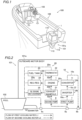
FIG. 1 is a perspective view showing the structure of a marine vessel including an outboard motor according to a first preferred embodiment. -
FIG. 2 is a diagram illustrating the configuration of first and second cooling water passages according to the first preferred embodiment. -
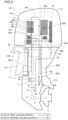
FIG. 3 is a side view showing the structure of the outboard motor according to the first preferred embodiment. -
FIG. 4 is a side view schematically showing the structure of a first pump according to the first preferred embodiment. -
FIG. 5 is a sectional view schematically showing the structure of a first pump according to the first preferred embodiment. -
FIG. 6 is a block diagram showing the structure of the outboard motor according to the first preferred embodiment. -
FIG. 7 is a diagram illustrating the configuration of first and second cooling water passages according to a second preferred embodiment. -
FIG. 8 is a diagram illustrating the configuration of first and second cooling water passages according to a third preferred embodiment. - Preferred embodiments are hereinafter described with reference to the drawings.
- The structure of a
marine vessel 100 according to a first preferred embodiment is now described with reference toFIGS. 1 to 6 . As shown inFIG. 1 , themarine vessel 100 includes anoutboard motor 101, ahull 102, and aremote control 103. - As shown in
FIG. 1 , theoutboard motor 101 is attached to a rear portion of thehull 102. Theoutboard motor 101 includes anoutboard motor body 101a. Theoutboard motor body 101a is a case that houses each portion of theoutboard motor 101. Specifically, theoutboard motor body 101a includes acowl 111 that houses anengine 1, anupper case 112 provided below theengine 1, alower case 113 provided below theupper case 112, and abracket 114 disposed in front of theupper case 112. Theoutboard motor 101 is attached to thehull 102 by thebracket 114 so as to be rotatable about an upward-downward axis and a horizontal axis. Theengine 1 is an example of a "second cooling target". - As shown in
FIGS. 2 and3 , theoutboard motor 101 includes theengine 1, apropulsion motor 2, adrive shaft 3, agearing 4, a propeller shaft 5, apropeller 6, afirst pump 7, and asecond pump 8. That is, theoutboard motor 101 is a hybrid outboard motor driven by theengine 1 and driven by thepropulsion motor 2. Thepropulsion motor 2 is an example of a "rotary electric machine configured to drive the outboard motor". - The
engine 1 is an internal combustion engine driven by combustion of gasoline, light oil, or the like. Thepropulsion motor 2 is an electric motor driven by electric power supplied from aninverter 12 described below. Thepropulsion motor 2 is disposed adjacent to or in the vicinity of thedrive shaft 3 in theupper case 112, for example. Thepropulsion motor 2 may be provided in a portion other than theupper case 112 in theoutboard motor 101. For example, thepropulsion motor 2 may be provided in thelower case 113. - The
drive shaft 3 is coupled to a crankshaft (not shown) of theengine 1. Thedrive shaft 3 is coupled to a shaft (not shown) of thepropulsion motor 2. Thus, thedrive shaft 3 acquires each of a driving force from theengine 1 and a driving force from thepropulsion motor 2. Thedrive shaft 3 extends in an upward-downward direction. An upper portion of thedrive shaft 3 passes through theupper case 112, and a lower portion of thedrive shaft 3 is disposed in thelower case 113. - The
gearing 4 reduces rotation of thedrive shaft 3 and transmits the rotation to the propeller shaft 5. That is, thegearing 4 transmits, to the propeller shaft 5 that rotates about a rotation axis extending in a forward-rearward direction, the driving force of thedrive shaft 3 that rotates about a rotation axis extending in the upward-downward direction. Specifically, thegearing 4 switches the rotation direction (a forward movement direction and a reverse movement direction) of the propeller shaft 5. Thegearing 4 is disposed in thelower case 113. - The propeller 6 (screw) is connected to the propeller shaft 5. The
propeller 6 is driven to rotate about a rotation axis that extends in the forward-rearward direction. Thepropeller 6 generates a thrust in an axial direction by rotating in water. Thepropeller 6 moves thehull 102 forward or rearward according to the rotation direction. - As shown in
FIG. 3 , thefirst pump 7 pumps first cooling water L1 used to cool aconverter 11 and theinverter 12 described below from the outside of theoutboard motor body 101a. Thefirst pump 7 flows the first cooling water L1 into a firstcooling water passage 10. Specifically, thefirst pump 7 takes in the first cooling water L1 via awater inlet 9a. Thewater inlet 9a is provided in thelower case 113, for example. After flowing through the firstcooling water passage 10, the first cooling water L1 is discharged to the outside via awater outlet 9b of theoutboard motor body 101a. - Specifically, as shown in
FIG. 4 , thefirst pump 7 is an electric pump, and is driven when electric power is supplied thereto. In other words, according to the first preferred embodiment, thefirst pump 7 is driven when electric power is supplied thereto even while theengine 1 is stopped. Thefirst pump 7 includes apump motor 71, ashaft 72, and animpeller 73. - The
pump motor 71 rotates theshaft 72 using electric power from a pump power supply 14 (seeFIG. 6 ) described below. Furthermore, theshaft 72 is fixed to theimpeller 73, and transmits a driving force from thepump motor 71 to theimpeller 73. Thus, theimpeller 73 rotates. - As shown in
FIG. 5 , thefirst pump 7 is a positive-displacement pump that pumps the first cooling water L1 by a change in volume. Thus, thefirst pump 7 pumps water from thewater inlet 9a provided upstream (downward) of thefirst pump 7 and flows the water into the firstcooling water passage 10. Specifically, thefirst pump 7 includes ahousing 70, apump case 74, asuction port 75, asuction passage 76, adischarge port 77, and adischarge passage 78. - The
impeller 73 includes a plurality of vanes disposed at predetermined rotation angle intervals. Theimpeller 73 is made of rubber, for example, and is elastically deformable. Theimpeller 73 is housed with the deformed vanes in thepump case 74. Ends of the vanes of theimpeller 73 contact an inner wall of thepump case 74. Theimpeller 73 rotates in an eccentric state. That is, thecenter 74a of thepump case 74 and thecenter 72a of theshaft 72 are shifted from each other in a plan view (as viewed in the axial direction). - The
pump case 74 is cylindrical. Thesuction port 75 and thedischarge port 77 are provided on the outer periphery of thepump case 74. Specifically, thesuction port 75 is disposed on the outer periphery of thepump case 74 at a position at which the volume of a space partitioned by thepump case 74 and the vanes of theimpeller 73 is increased. Thesuction passage 76 is connected to thesuction port 75 and thewater inlet 9a. Thedischarge port 77 is disposed on the outer periphery of thepump case 74 at a position at which the volume of a space partitioned by thepump case 74 and the vanes of theimpeller 73 is reduced. Thedischarge passage 78 is connected to thedischarge port 77. Thedischarge passage 78 is connected to the firstcooling water passage 10. - According to the first preferred embodiment, the cooling water pumping capacity per unit time of the
first pump 7 is smaller than the cooling water pumping capacity per unit time of thesecond pump 8. For example, the flow rate (discharge rate) of thefirst pump 7 is 10 liters/minute or less, and preferably 3 liters/minute or more and 5 liters/minute or less. Thus, the cooling water pumping capacity per unit time of thefirst pump 7 is set to 3 liters/minute or more such that a cooling target is cooled even when the cooling target includes theconverter 11 and the inverter 12 (and additionally afuel tank 323 and a rectifier/regulator (REC/REG) 324, for example, as indicated in the third preferred embodiment described later). In addition, the cooling water pumping capacity per unit time of thefirst pump 7 is set to 5 liters/minute or less such that an increase in the size of thefirst pump 7 is further significantly reduced or prevented. - As shown in
FIG. 2 , thesecond pump 8 pumps second cooling water L2 used to cool theengine 1 etc. from the outside of theoutboard motor body 101a, and flow the second cooling water L2 into a secondcooling water passage 20. Specifically, thesecond pump 8 takes in the second cooling water L2 via thewater inlet 9a. That is, according to the first preferred embodiment, thefirst pump 7 and thesecond pump 8 pump water from thecommon water inlet 9a. - Specifically, as shown in
FIG. 3 , thesecond pump 8 is an engine-driven pump. That is, thesecond pump 8 is driven by thedrive shaft 3 when thedrive shaft 3 is driven by theengine 1. For example, animpeller 81 of thesecond pump 8 rotates integrally with thedrive shaft 3. That is, thesecond pump 8 is driven when theengine 1 is driven, and is stopped when theengine 1 is stopped. - Similarly to the
first pump 7 as a positive-displacement pump, thesecond pump 8 is a positive-displacement pump that pumps the second cooling water L2 by a change in volume. - As shown in
FIG. 2 , theoutboard motor 101 includes the firstcooling water passage 10, theconverter 11, and theinverter 12. Theconverter 11 and theinverter 12 are examples of a "first cooling target", an "electrical component", or a "component of a power supply system". - The first
cooling water passage 10 flows the first cooling water L1 discharged from thefirst pump 7. The firstcooling water passage 10 includes afirst portion 10a, aninverter water jacket 10b, asecond portion 10c, aconverter water jacket 10d, and athird portion 10e. Theinverter water jacket 10b is an example of a "portion configured to cool the inverter". Theconverter water jacket 10d is an example of a "portion configured to cool the converter". - The
first portion 10a, theinverter water jacket 10b, thesecond portion 10c, theconverter water jacket 10d, and thethird portion 10e are sequentially disposed in this order from thewater inlet 9a toward thewater outlet 9b. That is, theinverter water jacket 10b is disposed upstream of theconverter water jacket 10d. - The
first portion 10a connects thefirst pump 7 to the inverter 12 (inverter water jacket 10b). Theinverter water jacket 10b is adjacent to or in the vicinity of theinverter 12, and absorbs heat from theinverter 12 by the first cooling water L1. Thesecond portion 10c connects the inverter 12 (inverter water jacket 10b) to the converter 11 (converter water jacket 10d). Theconverter water jacket 10d is adjacent to or in the vicinity of theconverter 11, and absorbs heat from theconverter 11 by the first cooling water L1. Thethird portion 10e connects the converter 11 (converter water jacket 10d) to thewater outlet 9b. - According to the first preferred embodiment, the
converter 11 and theinverter 12 are components of a power supply system that supply electric power to thepropulsion motor 2. Theconverter 11 converts DC power from a battery (not shown) provided in thehull 102 or theoutboard motor body 101a into DC power having a predetermined voltage. That is, theconverter 11 is a DC-DC converter. Theinverter 12 converts the power supplied from theconverter 11 into AC power, and supplies the converted power to thepropulsion motor 2. - As shown in
FIG. 6 , theoutboard motor 101 includes an engine control unit (ECU) 13, thepump power supply 14, aswitch 15, arotation speed detector 16a, atemperature detector 16b, awater pressure detector 16c, and athermal switch 16d. - The
ECU 13 controls driving of theengine 1, driving of thepropulsion motor 2, and driving of thefirst pump 7. For example, theECU 13 controls the rotation speed of theengine 1, the rotation speed of thepropulsion motor 2, and switching of the state (shift position) of thegearing 4 based on operation signals from theremote control 103 provided on thehull 102. - The
switch 15 includes a relay circuit, for example. Theswitch 15 switches between a state in which a current from thepump power supply 14 is supplied to thefirst pump 7 and a state in which the current from thepump power supply 14 is not supplied to thefirst pump 7 based on a command from theECU 13. - The
rotation speed detector 16a is a sensor that detects the rotation speed of thepropulsion motor 2 and transmits information about the detected rotation speed to theECU 13. Thetemperature detector 16b is a sensor provided inside, adjacent to, or in the vicinity of theinverter 12 and that detects the temperature of theinverter 12. Thetemperature detector 16b transmits information about the detected temperature of theinverter 12 to theECU 13. Thewater pressure detector 16c is a sensor that detects a water pressure in thefirst portion 10a of the firstcooling water passage 10. Thewater pressure detector 16c transmits information about the detected water pressure in thefirst portion 10a to theECU 13. - The
thermal switch 16d is disposed in a current path between thepump power supply 14 and thefirst pump 7. Thethermal switch 16d is disposed inside, adjacent to, or in the vicinity of thefirst pump 7, and when the temperature of the first pump 7 (thermal switch 16d) becomes equal to or higher than a predetermined temperature threshold (when thefirst pump 7 has an abnormal temperature) or when a current that flows through thefirst pump 7 becomes an overcurrent, the current path between thepump power supply 14 and thefirst pump 7 is disconnected. - According to the first preferred embodiment, the
ECU 13 controls driving of thefirst pump 7 by switching theswitch 15 based on the rotation speed of thepropulsion motor 2 detected by therotation speed detector 16a, the temperature of theinverter 12 detected by thetemperature detector 16b, and the water pressure in the firstcooling water passage 10 detected by thewater pressure detector 16c. - For example, the
ECU 13 performs a control to drive thefirst pump 7 when the rotation speed of thepropulsion motor 2 is equal to or higher than a predetermined value (when thepropulsion motor 2 is driven). TheECU 13 performs a control to stop driving thefirst pump 7 when the temperature of theinverter 12 detected by thetemperature detector 16b is equal to or higher than the temperature threshold of theinverter 12. At this time, theECU 13 performs a control to stop driving thepropulsion motor 2 in addition to the control to stop driving thefirst pump 7. Furthermore, theECU 13 performs a control to stop driving thefirst pump 7 when the water pressure detected by thewater pressure detector 16c is equal to or lower than a water pressure threshold. At this time, theECU 13 performs a control to stop driving thepropulsion motor 2 in addition to the control to stop driving thefirst pump 7. - As shown in
FIGS. 2 and3 , theoutboard motor 101 includes the secondcooling water passage 20, anexhaust manifold 21, athermostat 22, thefuel tank 23, the REC/REG 24, and an oil cooling heat exchanger 25 (hereinafter referred to as a "heat exchanger 25"). Theexhaust manifold 21, thefuel tank 23, the REC/REG 24, and theheat exchanger 25 are examples of a "second cooling target". - The second
cooling water passage 20 flows the second cooling water L2 discharged from thesecond pump 8. The secondcooling water passage 20 includes afirst portion 20a, asecond portion 20b, an enginecooling water jacket 20c (hereinafter referred to as a "water jacket 20c"), athird portion 20d, afourth portion 20e, afifth portion 20f, and a REC/REG coolingwater jacket 20g (hereinafter referred to as a "water jacket 20g"). - The
first portion 20a, theexhaust manifold 21, thesecond portion 20b, thewater jacket 20c, thethird portion 20d, thethermostat 22, and thefourth portion 20e are sequentially disposed in this order from thewater inlet 9a (upstream side) toward awater outlet 9c (downstream side). - The
fifth portion 20f is branched into a portion that cools thefuel tank 23, awater jacket 20g, and theheat exchanger 25, thewater jacket 20g, and theheat exchanger 25 downstream of a portion that cools theexhaust manifold 21. The portion that cools thefuel tank 23, thewater jacket 20g, and theheat exchanger 25 are each connected to thefourth portion 20e. - When the rotation speed of the
engine 1 decreases, the opening of thethermostat 22 gradually decreases as the temperature of the second cooling water L2 decreases, such that the flow rate of the second cooling water L2 that passes through thewater jacket 20c gradually decreases. Thefuel tank 23 is housed in thecowl 111, and stores volatile fuel. The REC/REG 24 converts electric power generated based on driving of theengine 1 into a direct current of a predetermined voltage and outputs the direct current to the battery (not shown). Theheat exchanger 25 cools engine oil that flows through an engine oil passage (not shown) with the second cooling water L2. - The flow of the first cooling water L1 and the flow of the second cooling water L2 are now described with reference to
FIGS. 2 and3 . The first cooling water L1 is taken in via thewater inlet 9a provided in thelower case 113, and flows into thefirst pump 7. Then, the first cooling water L1 pressurized and discharged by thefirst pump 7 is sent to theinverter water jacket 10b. Then, the first cooling water L1 flows into theconverter water jacket 10d downstream of theinverter water jacket 10b. Thereafter, the first cooling water L1 is discharged via thewater outlet 9b. Consequently, the first cooling water L1 flows through theinverter water jacket 10b such that theinverter 12 is cooled, and the first cooling water L1 flows through theconverter water jacket 10d such that theconverter 11 is cooled. - The second cooling water L2 is taken in via the
water inlet 9a provided in thelower case 113, and flows into thesecond pump 8. Then, the second cooling water L2 pressurized and discharged by thesecond pump 8 is sent to theexhaust manifold 21. Then, the second cooling water L2 flows through thewater jacket 20c and thethermostat 22 in this order. Furthermore, the second cooling water L2 is sent to thefuel tank 23, thewater jacket 20g, and theheat exchanger 25 from the portion that cools theexhaust manifold 21. Thereafter, the second cooling water L2 discharged from each of thethermostat 22, thefuel tank 23, thewater jacket 20g, and theheat exchanger 25 is discharged via thewater outlet 9c. Consequently, theengine 1, the engine oil, theexhaust manifold 21, and the fuel in thefuel tank 23 are cooled with the second cooling water L2. - According to the first preferred embodiment, the following advantageous effects are achieved.
- According to the first preferred embodiment, the
first pump 7 is an electric pump configured to pump the first cooling water L1 from the outside of theoutboard motor body 101a and flow the first cooling water L1 into the firstcooling water passage 10. Accordingly, even while theengine 1 is stopped, thefirst pump 7 as an electric pump configured to pump the first cooling water L1 from the outside is driven by electric power. Therefore, even while theengine 1 is stopped, thefirst pump 7 is driven such that theconverter 11 and theinverter 12 are cooled with the first cooling water L1. - According to the first preferred embodiment, the
engine 1 is configured to rotate thedrive shaft 3 connected to thepropeller 6. Furthermore, theoutboard motor 101 includes thepropulsion motor 2 configured to rotate thedrive shaft 3. In addition, theconverter 11 and theinverter 12 are components of a power supply system configured to supply electric power to thepropulsion motor 2. Accordingly, even while theengine 1 is stopped, thefirst pump 7 is driven such that theconverter 11 and theinverter 12 as components of a power supply system configured to supply electric power to thepropulsion motor 2 are cooled with the first cooling water L1. Consequently, even when the hybrid technology of theengine 1 and thepropulsion motor 2 is applied to theoutboard motor 101, electrical components (theconverter 11 and the inverter 12), for example, are effectively cooled. - According to the first preferred embodiment, the
outboard motor 101 further includes the secondcooling water passage 20 including theengine 1 etc., through which the second cooling water L2 passes, and thesecond pump 8 configured to flow the second cooling water L2 into the secondcooling water passage 20. Accordingly, theoutboard motor 101 includes thefirst pump 7 and thesecond pump 8, and thus unlike a case in which all the cooling targets are cooled by one pump, the cooling target (first cooling target) cooled by thefirst pump 7 and the cooling target (second cooling target) cooled by thesecond pump 8 are dispersed. Therefore, an increase in the size of each of thefirst pump 7 and thesecond pump 8 is significantly reduced or prevented. Consequently, thefirst pump 7 and thesecond pump 8, in which increases in their sizes are significantly reduced or prevented, are dispersed and easily disposed in a limited space inside theoutboard motor 101. - According to the first preferred embodiment, the
first pump 7 is configured to have a first cooling water L1 pumping capacity per unit time smaller than the second cooling water L2 pumping capacity per unit time of thesecond pump 8. Accordingly, an increase in the size of thefirst pump 7 is further significantly reduced or prevented. - According to the first preferred embodiment, both the
first pump 7 and thesecond pump 8 are positive-displacement pumps. Accordingly, both thefirst pump 7 and thesecond pump 8 easily pump water outside theoutboard motor body 101a without priming thefirst pump 7 and thesecond pump 8. - According to the first preferred embodiment, the first
cooling water passage 10 and the secondcooling water passage 20 include thecommon water inlet 9a through which the first cooling water L1 and the second cooling water L2 are taken in upstream of theinverter 12 and upstream of theengine 1. Accordingly, thewater inlet 9a through which the first cooling water L1 is taken in and thewater inlet 9a through which the second cooling water L2 is taken in are shared, and thus the complex structure of theoutboard motor 101 is significantly reduced or prevented. - According to the first preferred embodiment, the
second pump 8 is an engine-driven pump configured to be driven by thedrive shaft 3 when theengine 1 drives thedrive shaft 3. Accordingly, the flow rate of the second cooling water L2 that flows through the secondcooling water passage 20 is increased according to an increase in the amount of heat generated by theengine 1. - According to the first preferred embodiment, the
outboard motor 101 includes therotation speed detector 16a configured to detect the rotation speed of thepropulsion motor 2. Furthermore, driving of thefirst pump 7 is controlled based on the rotation speed of thepropulsion motor 2 detected by therotation speed detector 16a. Accordingly, the rotation speed of thepropulsion motor 2 is detected such that thefirst pump 7 is driven as necessary. For example, when thepropulsion motor 2 is being driven and theconverter 11 and theinverter 12 are generating heat, thefirst pump 7 is effectively driven. - According to the first preferred embodiment, the
first pump 7 is configured to be drivable while theengine 1 is stopped. Accordingly, thefirst pump 7 is driven while theengine 1 is stopped, and thus theconverter 11 and theinverter 12 are cooled even while theengine 1 is stopped. - According to the first preferred embodiment, the first
cooling water passage 10 includes theinverter water jacket 10b, which is a portion configured to cool theinverter 12, upstream of theconverter water jacket 10d, which is a portion configured to cool theconverter 11. Accordingly, theinverter 12 that generates more heat than theconverter 11 is cooled in a relatively upstream portion of the firstcooling water passage 10. Consequently, the first cooling water L1 on the upstream side on which the temperature is lower than that on the downstream side effectively cools theinverter 12 that generates a large amount of heat. - According to the first preferred embodiment, the
outboard motor 101 includes thetemperature detector 16b configured to detect the temperature of theinverter 12. Furthermore, driving of thefirst pump 7 is controlled based on the temperature detected by thetemperature detector 16b. Accordingly, for example, when the temperature of theinverter 12 is abnormal, driving of thefirst pump 7 is limited. Consequently, driving of thefirst pump 7 in an abnormal state is significantly reduced or prevented. - According to the first preferred embodiment, the
outboard motor 101 includes thewater pressure detector 16c configured to detect the water pressure of the first cooling water L1 that flows through the firstcooling water passage 10. Furthermore, driving of thefirst pump 7 is stopped when the water pressure detected by thewater pressure detector 16c is equal to or lower than the water pressure threshold. Accordingly, when there is a possibility that thefirst pump 7 is not operating normally, driving of thefirst pump 7 is stopped. Consequently, driving of thefirst pump 7 in an abnormal state is significantly reduced or prevented. - The structure of an
outboard motor 201 of amarine vessel 200 according to a second preferred embodiment is now described with reference toFIG. 7 . In the second preferred embodiment, apropulsion motor 202 is cooled with first cooling water L1. In the second preferred embodiment, the same or similar structures as those of the first preferred embodiment are denoted by the same reference numerals, and description thereof is omitted. Thepropulsion motor 202 is an example of a "first cooling target". - As shown in
FIG. 7 , theoutboard motor 201 of themarine vessel 200 according to the second preferred embodiment includes a firstcooling water passage 210. In theoutboard motor 201 according to the second preferred embodiment, thepropulsion motor 202 is disposed in the firstcooling water passage 210, and thepropulsion motor 202 is cooled with the first cooling water L1. Specifically, the firstcooling water passage 210 includes afirst portion 210a that connects aconverter 11 to a portion that cools thepropulsion motor 202, and asecond portion 210b that connects the portion that cools thepropulsion motor 202 to awater outlet 9b. Thus, the first cooling water L1 is pumped from the outside of theoutboard motor 201 by afirst pump 7, cools aninverter 12, cools theconverter 11, cools thepropulsion motor 202, and is discharged to the outside of theoutboard motor 201. The remaining structures of the second preferred embodiment are similar to those of the first preferred embodiment. - According to the second preferred embodiment, the following advantageous effects are achieved.
- According to the second preferred embodiment, in the
outboard motor 201, thepropulsion motor 202 configured to rotate adrive shaft 3 is cooled with the first cooling water L1. Accordingly, even while anengine 1 is stopped, thepropulsion motor 202 that generates heat when driven is cooled with the first cooling water L1 using thefirst pump 7. The remaining advantageous effects of the second preferred embodiment are similar to those of the first preferred embodiment. - The structure of an
outboard motor 301 of amarine vessel 300 according to a third preferred embodiment is now described with reference toFIG. 8 . In the third preferred embodiment, afuel tank 323 and a REC/REG 324 are cooled with first cooling water L1. In the third preferred embodiment, the same or similar structures as those of the first preferred embodiment are denoted by the same reference numerals, and description thereof is omitted. Thefuel tank 323 and the REC/REG 324 are examples of a "first cooling target". - As shown in
FIG. 8 , theoutboard motor 301 of themarine vessel 300 according to the third preferred embodiment includes a firstcooling water passage 310 and a secondcooling water passage 320. The firstcooling water passage 310 is disposed along thefuel tank 323 and the REC/REG 324. That is, in theoutboard motor 301, awater jacket 320g that cools thefuel tank 323 and the REC/REG 324 is disposed in the firstcooling water passage 310, and fuel in thefuel tank 323 and the REC/REG 324 are cooled with the first cooling water L1. - Specifically, the first
cooling water passage 310 includes afirst portion 310a that connects aconverter 11 to a portion that cools thefuel tank 323, asecond portion 310b that connects thefuel tank 323 to thewater jacket 320g, and athird portion 310c that connects thewater jacket 320g to awater outlet 9b. Thus, the first cooling water L1 is pumped from the outside of theoutboard motor 301 by afirst pump 7, cools aninverter 12, cools theconverter 11, cools the fuel in thefuel tank 323, and cools the REC/REG 324, and is discharged to the outside of theoutboard motor 301. The remaining structures of the third preferred embodiment are similar to those of the first preferred embodiment. - According to the third preferred embodiment, the following advantageous effects are achieved.
- According to the third preferred embodiment, the first
cooling water passage 310 is disposed along thefuel tank 323 such that the first cooling water L1 in the firstcooling water passage 310 cools fuel in thefuel tank 323. Accordingly, the temperature becomes high immediately after anengine 1 is stopped, and thus the fuel in thefuel tank 323, which is preferably cooled even while theengine 1 is stopped, is cooled with the first cooling water L1. Consequently, even while theengine 1 is stopped, the fuel in thefuel tank 323 is cooled such that volatilization of the fuel is significantly reduced or prevented. - According to the third preferred embodiment, the first
cooling water passage 310 is disposed along the REC/REG 324 such that the first cooling water L1 in the firstcooling water passage 310 cools the REC/REG 324. Accordingly, the REC/REG 324 is cooled even while theengine 1 is stopped. Consequently, even when the temperature of the REC/REG 324 is relatively high after theengine 1 is stopped, the REC/REG 324 is effectively cooled with the first cooling water L1. The remaining advantageous effects of the third preferred embodiment are similar to those of the first preferred embodiment. - The preferred embodiments described above are illustrative for present teaching but the present teaching also relates to modifications of the preferred embodiments.
- For example, while examples of the first cooling target preferably include a converter, an inverter, a propulsion motor, a fuel tank, and a REC/REG in each of the first to third preferred embodiments described above, the present teaching is not restricted to this. For example, the first cooling target may alternatively include other components (such as an ECU and a battery).
- While both the converter and the inverter are preferably cooled as the first cooling targets in each of the first to third preferred embodiments described above, the present teaching is not restricted to this. For example, only one of the converter and the inverter may alternatively be cooled as the first cooling target.
- While the second pump is preferably an engine-driven pump in each of the first to third preferred embodiments described above, the present teaching is not restricted to this. For example, the second pump may alternatively be an electric pump.
- While the cooling water pumping capacity per unit time of the first pump is preferably smaller than the cooling water pumping capacity per unit time of the second pump in each of the first to third preferred embodiments described above, the present teaching is not restricted to this. For example, the cooling water pumping capacity per unit time of the first pump may alternatively be equal to or larger than the cooling water pumping capacity per unit time of the second pump.
- While the outboard motor preferably includes the common water inlet through which the first cooling water and the second cooling water are taken in in each of the first to third preferred embodiments described above, the present teaching is not restricted to this. For example, a water inlet through which the first cooling water is taken in and a water inlet through which the second cooling water is taken in may alternatively be separately provided. Alternatively, the common water inlet, the water inlet through which the first cooling water is taken in, or the water inlet through which the second cooling water is taken in may not be provided in the outboard motor but may be provided in the hull.
- While the inverter water jacket is preferably provided upstream of the converter water jacket in each of the first to third preferred embodiments described above, the present teaching is not restricted to this. For example, the inverter water jacket may alternatively be provided downstream of the converter water jacket.
- While both the first pump and the second pump are preferably positive-displacement pumps in each of the first to third preferred embodiments described above, the present teaching is not restricted to this. For example, at least one of the first pump and the second pump may alternatively be a non-positive displacement pump as long as the cooling water is pumped.
- While the water outlets for the first cooling water and the second cooling water are preferably provided in the lower case as shown in
FIG. 3 in each of the first to third preferred embodiments described above, the present teaching is not restricted to this. For example, the water outlets may alternatively be provided in the propeller.
Claims (14)
- An outboard motor (101, 201, 301) comprising:an engine (1);an electrical component (11, 12) including a component of a power supply system including an inverter (12) and a converter (11);a first cooling water passage (10, 210, 310) configured for first cooling water (L1) including water outside an outboard motor body (101a) to pass there through to cool a first cooling target (11, 12, 202, 323, 324) including the electrical component (11, 12);a first pump (7) that is an electric pump configured to pump the first cooling water (L1) from an outside of the outboard motor body (101a) and to pump the first cooling water (L1) into the first cooling water passage (10, 210, 310);a second cooling water passage (20, 320) configured for second cooling water (L2) to pass there through to cool a second cooling target (1, 23) that is different from the first cooling target (11, 12, 202, 323, 324) and includes the engine (1); anda second pump (8) configured to pump the second cooling water (L2) into the second cooling water passage (20, 320).
- The outboard motor (101, 201, 301) according to claim 1, wherein the engine (1) is configured to rotate a drive shaft (3) connected to a propeller (6);
the outboard motor (101, 201, 301) further comprises a rotary electric machine (2, 202) configured to drive the outboard motor (101, 201, 301) by rotating the drive shaft (3). - The outboard motor (101, 201, 301) according to claim 2, wherein the first cooling target further includes the rotary electric machine (202).
- The outboard motor (101, 201, 301) according to any one of claims 1 to 3, wherein the first pump (7) is configured to have a cooling water pumping capacity per unit time smaller than a cooling water pumping capacity per unit time of the second pump (8).
- The outboard motor (101, 201, 301) according to any one of claims 1 to 4, wherein both the first pump (7) and the second pump (8) are positive-displacement pumps.
- The outboard motor (101, 201, 301) according to any one of claims 1 to 5, wherein the first cooling water passage (10, 210, 310) and the second cooling water passage (20, 320) include a common water inlet (9a) configured to take in the first cooling water (L1) and the second cooling water (L2) there through upstream of the first cooling target (11, 12, 202, 323, 324) and upstream of the second cooling target (1, 21, 22, 23, 24, 25).
- The outboard motor (101, 201, 301) according to any one of claims 1 to 6, wherein the second pump (8) is an engine-driven pump configured to be driven by a drive shaft (3) when the engine (1) drives the drive shaft (3).
- The outboard motor (101, 201, 301) according to claim 2 or 7, further comprising a rotation speed detector (16a) configured to detect a rotation speed of the rotary electric machine (2, 202); wherein
driving of the first pump (7) is controlled based on the rotation speed of the rotary electric machine (2, 202) detected by the rotation speed detector (16a). - The outboard motor (101, 201, 301) according to any one of claims 1 to 8, wherein the first pump (7) is configured to be drivable while the engine (1) is stopped.
- The outboard motor (101, 201, 301) according to any one of claims 1 to 9, wherein the first cooling water passage (10, 210, 310) includes a portion (10b) configured to cool the inverter upstream of a portion (10d) configured to cool the converter (11).
- The outboard motor (101, 201, 301) according to any one of claims 1 to 10, further comprising a temperature detector (16b) configured to detect a temperature of the first cooling target (11, 12, 202, 323, 324); wherein
driving of the first pump (7) is controlled based on the temperature detected by the temperature detector (16b). - The outboard motor (101, 201, 301) according to any one of claims 1 to 11, further comprising a water pressure detector (16c) configured to detect a water pressure of the first cooling water (L1) that flows through the first cooling water passage (10, 210, 310); wherein
driving of the first pump (7) is stopped when the water pressure detected by the water pressure detector (16c) is equal to or lower than a water pressure threshold. - The outboard motor (301) according to any one of claims 1 to 12, wherein the first cooling target further includes a fuel in a fuel tank (323); and
the first cooling water passage (310) is disposed along the fuel tank (323) and configured to cool the fuel in the fuel tank (323) by the first cooling water (L1) in the first cooling water passage (310). - The outboard motor (301) according to any one of claims 1 to 13, wherein the first cooling target includes a rectifier/regulator (324) as the electrical component; and
the first cooling water passage (310) is disposed along the rectifier/regulator (324) and configured to cool the rectifier/regulator (324) by the first cooling water (L1) in the first cooling water passage (310).
Applications Claiming Priority (1)
| Application Number | Priority Date | Filing Date | Title |
|---|---|---|---|
| JP2019095400A JP2020189556A (en) | 2019-05-21 | 2019-05-21 | Outboard engine and ship |
Publications (2)
| Publication Number | Publication Date |
|---|---|
| EP3741660A1 EP3741660A1 (en) | 2020-11-25 |
| EP3741660B1 true EP3741660B1 (en) | 2024-10-30 |
Family
ID=70476097
Family Applications (1)
| Application Number | Title | Priority Date | Filing Date |
|---|---|---|---|
| EP20171958.0A Active EP3741660B1 (en) | 2019-05-21 | 2020-04-29 | Outboard motor |
Country Status (3)
| Country | Link |
|---|---|
| US (1) | US11319862B2 (en) |
| EP (1) | EP3741660B1 (en) |
| JP (1) | JP2020189556A (en) |
Families Citing this family (7)
| Publication number | Priority date | Publication date | Assignee | Title |
|---|---|---|---|---|
| KR102517768B1 (en) * | 2021-06-22 | 2023-04-05 | 주식회사 일렉트린 | A sail driver |
| JP7638832B2 (en) * | 2021-09-06 | 2025-03-04 | ヤンマーホールディングス株式会社 | Marine cooling system and vessel |
| CN114313188A (en) * | 2021-11-23 | 2022-04-12 | 中国船舶重工集团公司第七〇五研究所 | Electric Boat Outboards & Electric Boats |
| JP2023152101A (en) * | 2022-04-01 | 2023-10-16 | ヤマハ発動機株式会社 | Outboard motor |
| JP2023163658A (en) * | 2022-04-28 | 2023-11-10 | ヤマハ発動機株式会社 | Outboard motor |
| JP2026017632A (en) * | 2024-07-24 | 2026-02-05 | スズキ株式会社 | ship propulsion machine |
| JP2026017633A (en) | 2024-07-24 | 2026-02-05 | スズキ株式会社 | ship propulsion machine |
Family Cites Families (9)
| Publication number | Priority date | Publication date | Assignee | Title |
|---|---|---|---|---|
| US4728306A (en) * | 1986-12-29 | 1988-03-01 | Brunswick Corporation | Marine propulsion auxiliary cooling system |
| US6343966B1 (en) * | 2000-10-12 | 2002-02-05 | Brunswick Corporation | Marine propulsion system having a water pump driven by an electric motor |
| US8333629B2 (en) * | 2008-10-30 | 2012-12-18 | Brp Us Inc. | System and method for cooling a marine outboard engine |
| JP6187103B2 (en) | 2013-09-30 | 2017-08-30 | スズキ株式会社 | Outboard motor cooling system |
| US20170328265A1 (en) * | 2014-02-27 | 2017-11-16 | Brunswick Corporation | Open Loop Cooling Water System Having Recirculation Pump |
| JP2018066277A (en) * | 2016-10-17 | 2018-04-26 | ヤマハ発動機株式会社 | Outboard motor |
| US10890097B1 (en) * | 2018-05-22 | 2021-01-12 | Brunswick Corporation | Cooling systems for marine engines having offset temperature-responsive discharge valves |
| US11072408B1 (en) * | 2019-09-09 | 2021-07-27 | Brunswick Corporation | Marine engines and cooling systems for cooling lubricant in a crankcase of a marine engine |
| US11073116B1 (en) * | 2019-09-25 | 2021-07-27 | Brunswick Corporation | Cooling systems for marine engines having a supercharger |
-
2019
- 2019-05-21 JP JP2019095400A patent/JP2020189556A/en active Pending
-
2020
- 2020-04-29 EP EP20171958.0A patent/EP3741660B1/en active Active
- 2020-05-05 US US16/866,589 patent/US11319862B2/en active Active
Also Published As
| Publication number | Publication date |
|---|---|
| EP3741660A1 (en) | 2020-11-25 |
| US20200370462A1 (en) | 2020-11-26 |
| JP2020189556A (en) | 2020-11-26 |
| US11319862B2 (en) | 2022-05-03 |
Similar Documents
| Publication | Publication Date | Title |
|---|---|---|
| EP3741660A1 (en) | Outboard motor | |
| EP3741969B1 (en) | Outboard motor | |
| US8333629B2 (en) | System and method for cooling a marine outboard engine | |
| US9394832B2 (en) | Aeronautical engine with cooling of an electric starting device | |
| US10507897B2 (en) | Vessel propulsion apparatus | |
| US6645017B1 (en) | Marine powertrain and accessory power system with flywheel motor generator unit | |
| JP2005153727A (en) | Electric outboard motor | |
| US8668467B2 (en) | Integrated fluid handling apparatus | |
| EP4148253B1 (en) | Redundant electrically driven fuel and oil pumping system for gas turbine with bidirectional pump motor | |
| US7112110B1 (en) | Fuel system container for a marine vessel | |
| JP2022067892A (en) | Power source system for vessel and vessel | |
| KR102323735B1 (en) | Sensorless low flow electric water pump and method of regulating flow therewith | |
| US7131386B1 (en) | Marine propulsion system with pressure compensated hydraulic supply capability | |
| US20210024193A1 (en) | Outboard motor | |
| EP3892530B1 (en) | Marine propulsion system and control method | |
| US12534171B2 (en) | Marine vessel propulsion apparatus | |
| EP4667348A1 (en) | Electric propulsion machine | |
| US6343966B1 (en) | Marine propulsion system having a water pump driven by an electric motor | |
| GB2516616A (en) | Hovercraft drive systems | |
| US12338773B2 (en) | Gas turbine engine having a compressor, combustor and turbine aligned along a rotating shaft | |
| EP4707157A1 (en) | Marine propulsion device | |
| US20250153822A1 (en) | Outboard motor and boat | |
| JP7858103B2 (en) | Marine cooling systems and ships | |
| US20250206432A1 (en) | Boat propulsion device, boat, and movable body | |
| US20260054817A1 (en) | Marine propulsion device |
Legal Events
| Date | Code | Title | Description |
|---|---|---|---|
| PUAI | Public reference made under article 153(3) epc to a published international application that has entered the european phase |
Free format text: ORIGINAL CODE: 0009012 |
|
| STAA | Information on the status of an ep patent application or granted ep patent |
Free format text: STATUS: THE APPLICATION HAS BEEN PUBLISHED |
|
| AK | Designated contracting states |
Kind code of ref document: A1 Designated state(s): AL AT BE BG CH CY CZ DE DK EE ES FI FR GB GR HR HU IE IS IT LI LT LU LV MC MK MT NL NO PL PT RO RS SE SI SK SM TR |
|
| AX | Request for extension of the european patent |
Extension state: BA ME |
|
| STAA | Information on the status of an ep patent application or granted ep patent |
Free format text: STATUS: REQUEST FOR EXAMINATION WAS MADE |
|
| 17P | Request for examination filed |
Effective date: 20210517 |
|
| RBV | Designated contracting states (corrected) |
Designated state(s): AL AT BE BG CH CY CZ DE DK EE ES FI FR GB GR HR HU IE IS IT LI LT LU LV MC MK MT NL NO PL PT RO RS SE SI SK SM TR |
|
| STAA | Information on the status of an ep patent application or granted ep patent |
Free format text: STATUS: EXAMINATION IS IN PROGRESS |
|
| 17Q | First examination report despatched |
Effective date: 20211020 |
|
| GRAP | Despatch of communication of intention to grant a patent |
Free format text: ORIGINAL CODE: EPIDOSNIGR1 |
|
| STAA | Information on the status of an ep patent application or granted ep patent |
Free format text: STATUS: GRANT OF PATENT IS INTENDED |
|
| INTG | Intention to grant announced |
Effective date: 20240712 |
|
| GRAS | Grant fee paid |
Free format text: ORIGINAL CODE: EPIDOSNIGR3 |
|
| GRAA | (expected) grant |
Free format text: ORIGINAL CODE: 0009210 |
|
| STAA | Information on the status of an ep patent application or granted ep patent |
Free format text: STATUS: THE PATENT HAS BEEN GRANTED |
|
| AK | Designated contracting states |
Kind code of ref document: B1 Designated state(s): AL AT BE BG CH CY CZ DE DK EE ES FI FR GB GR HR HU IE IS IT LI LT LU LV MC MK MT NL NO PL PT RO RS SE SI SK SM TR |
|
| REG | Reference to a national code |
Ref country code: GB Ref legal event code: FG4D |
|
| REG | Reference to a national code |
Ref country code: CH Ref legal event code: EP |
|
| REG | Reference to a national code |
Ref country code: DE Ref legal event code: R096 Ref document number: 602020040150 Country of ref document: DE |
|
| REG | Reference to a national code |
Ref country code: IE Ref legal event code: FG4D |
|
| P01 | Opt-out of the competence of the unified patent court (upc) registered |
Free format text: CASE NUMBER: APP_64569/2024 Effective date: 20241205 |
|
| REG | Reference to a national code |
Ref country code: LT Ref legal event code: MG9D |
|
| REG | Reference to a national code |
Ref country code: NL Ref legal event code: MP Effective date: 20241030 |
|
| PG25 | Lapsed in a contracting state [announced via postgrant information from national office to epo] |
Ref country code: IS Free format text: LAPSE BECAUSE OF FAILURE TO SUBMIT A TRANSLATION OF THE DESCRIPTION OR TO PAY THE FEE WITHIN THE PRESCRIBED TIME-LIMIT Effective date: 20250228 Ref country code: PT Free format text: LAPSE BECAUSE OF FAILURE TO SUBMIT A TRANSLATION OF THE DESCRIPTION OR TO PAY THE FEE WITHIN THE PRESCRIBED TIME-LIMIT Effective date: 20250228 Ref country code: HR Free format text: LAPSE BECAUSE OF FAILURE TO SUBMIT A TRANSLATION OF THE DESCRIPTION OR TO PAY THE FEE WITHIN THE PRESCRIBED TIME-LIMIT Effective date: 20241030 |
|
| PG25 | Lapsed in a contracting state [announced via postgrant information from national office to epo] |
Ref country code: NL Free format text: LAPSE BECAUSE OF FAILURE TO SUBMIT A TRANSLATION OF THE DESCRIPTION OR TO PAY THE FEE WITHIN THE PRESCRIBED TIME-LIMIT Effective date: 20241030 Ref country code: FI Free format text: LAPSE BECAUSE OF FAILURE TO SUBMIT A TRANSLATION OF THE DESCRIPTION OR TO PAY THE FEE WITHIN THE PRESCRIBED TIME-LIMIT Effective date: 20241030 |
|
| REG | Reference to a national code |
Ref country code: AT Ref legal event code: MK05 Ref document number: 1736661 Country of ref document: AT Kind code of ref document: T Effective date: 20241030 |
|
| PG25 | Lapsed in a contracting state [announced via postgrant information from national office to epo] |
Ref country code: BG Free format text: LAPSE BECAUSE OF FAILURE TO SUBMIT A TRANSLATION OF THE DESCRIPTION OR TO PAY THE FEE WITHIN THE PRESCRIBED TIME-LIMIT Effective date: 20241030 |
|
| PG25 | Lapsed in a contracting state [announced via postgrant information from national office to epo] |
Ref country code: ES Free format text: LAPSE BECAUSE OF FAILURE TO SUBMIT A TRANSLATION OF THE DESCRIPTION OR TO PAY THE FEE WITHIN THE PRESCRIBED TIME-LIMIT Effective date: 20241030 |
|
| PG25 | Lapsed in a contracting state [announced via postgrant information from national office to epo] |
Ref country code: NO Free format text: LAPSE BECAUSE OF FAILURE TO SUBMIT A TRANSLATION OF THE DESCRIPTION OR TO PAY THE FEE WITHIN THE PRESCRIBED TIME-LIMIT Effective date: 20250130 |
|
| PG25 | Lapsed in a contracting state [announced via postgrant information from national office to epo] |
Ref country code: LV Free format text: LAPSE BECAUSE OF FAILURE TO SUBMIT A TRANSLATION OF THE DESCRIPTION OR TO PAY THE FEE WITHIN THE PRESCRIBED TIME-LIMIT Effective date: 20241030 Ref country code: AT Free format text: LAPSE BECAUSE OF FAILURE TO SUBMIT A TRANSLATION OF THE DESCRIPTION OR TO PAY THE FEE WITHIN THE PRESCRIBED TIME-LIMIT Effective date: 20241030 Ref country code: GR Free format text: LAPSE BECAUSE OF FAILURE TO SUBMIT A TRANSLATION OF THE DESCRIPTION OR TO PAY THE FEE WITHIN THE PRESCRIBED TIME-LIMIT Effective date: 20250131 |
|
| PG25 | Lapsed in a contracting state [announced via postgrant information from national office to epo] |
Ref country code: PL Free format text: LAPSE BECAUSE OF FAILURE TO SUBMIT A TRANSLATION OF THE DESCRIPTION OR TO PAY THE FEE WITHIN THE PRESCRIBED TIME-LIMIT Effective date: 20241030 |
|
| PG25 | Lapsed in a contracting state [announced via postgrant information from national office to epo] |
Ref country code: RS Free format text: LAPSE BECAUSE OF FAILURE TO SUBMIT A TRANSLATION OF THE DESCRIPTION OR TO PAY THE FEE WITHIN THE PRESCRIBED TIME-LIMIT Effective date: 20250130 |
|
| PG25 | Lapsed in a contracting state [announced via postgrant information from national office to epo] |
Ref country code: SM Free format text: LAPSE BECAUSE OF FAILURE TO SUBMIT A TRANSLATION OF THE DESCRIPTION OR TO PAY THE FEE WITHIN THE PRESCRIBED TIME-LIMIT Effective date: 20241030 |
|
| PG25 | Lapsed in a contracting state [announced via postgrant information from national office to epo] |
Ref country code: DK Free format text: LAPSE BECAUSE OF FAILURE TO SUBMIT A TRANSLATION OF THE DESCRIPTION OR TO PAY THE FEE WITHIN THE PRESCRIBED TIME-LIMIT Effective date: 20241030 |
|
| PGFP | Annual fee paid to national office [announced via postgrant information from national office to epo] |
Ref country code: IT Payment date: 20250424 Year of fee payment: 6 |
|
| PG25 | Lapsed in a contracting state [announced via postgrant information from national office to epo] |
Ref country code: EE Free format text: LAPSE BECAUSE OF FAILURE TO SUBMIT A TRANSLATION OF THE DESCRIPTION OR TO PAY THE FEE WITHIN THE PRESCRIBED TIME-LIMIT Effective date: 20241030 |
|
| PGFP | Annual fee paid to national office [announced via postgrant information from national office to epo] |
Ref country code: FR Payment date: 20250425 Year of fee payment: 6 |
|
| PG25 | Lapsed in a contracting state [announced via postgrant information from national office to epo] |
Ref country code: RO Free format text: LAPSE BECAUSE OF FAILURE TO SUBMIT A TRANSLATION OF THE DESCRIPTION OR TO PAY THE FEE WITHIN THE PRESCRIBED TIME-LIMIT Effective date: 20241030 |
|
| PG25 | Lapsed in a contracting state [announced via postgrant information from national office to epo] |
Ref country code: SK Free format text: LAPSE BECAUSE OF FAILURE TO SUBMIT A TRANSLATION OF THE DESCRIPTION OR TO PAY THE FEE WITHIN THE PRESCRIBED TIME-LIMIT Effective date: 20241030 |
|
| PG25 | Lapsed in a contracting state [announced via postgrant information from national office to epo] |
Ref country code: CZ Free format text: LAPSE BECAUSE OF FAILURE TO SUBMIT A TRANSLATION OF THE DESCRIPTION OR TO PAY THE FEE WITHIN THE PRESCRIBED TIME-LIMIT Effective date: 20241030 |
|
| REG | Reference to a national code |
Ref country code: DE Ref legal event code: R097 Ref document number: 602020040150 Country of ref document: DE |
|
| PLBE | No opposition filed within time limit |
Free format text: ORIGINAL CODE: 0009261 |
|
| STAA | Information on the status of an ep patent application or granted ep patent |
Free format text: STATUS: NO OPPOSITION FILED WITHIN TIME LIMIT |
|
| PG25 | Lapsed in a contracting state [announced via postgrant information from national office to epo] |
Ref country code: SE Free format text: LAPSE BECAUSE OF FAILURE TO SUBMIT A TRANSLATION OF THE DESCRIPTION OR TO PAY THE FEE WITHIN THE PRESCRIBED TIME-LIMIT Effective date: 20241030 |
|
| 26N | No opposition filed |
Effective date: 20250731 |
|
| REG | Reference to a national code |
Ref country code: DE Ref legal event code: R119 Ref document number: 602020040150 Country of ref document: DE |
|
| REG | Reference to a national code |
Ref country code: CH Ref legal event code: H13 Free format text: ST27 STATUS EVENT CODE: U-0-0-H10-H13 (AS PROVIDED BY THE NATIONAL OFFICE) Effective date: 20251125 |
|
| PG25 | Lapsed in a contracting state [announced via postgrant information from national office to epo] |
Ref country code: LU Free format text: LAPSE BECAUSE OF NON-PAYMENT OF DUE FEES Effective date: 20250429 |
|
| PG25 | Lapsed in a contracting state [announced via postgrant information from national office to epo] |
Ref country code: MC Free format text: LAPSE BECAUSE OF FAILURE TO SUBMIT A TRANSLATION OF THE DESCRIPTION OR TO PAY THE FEE WITHIN THE PRESCRIBED TIME-LIMIT Effective date: 20241030 |
|
| GBPC | Gb: european patent ceased through non-payment of renewal fee |
Effective date: 20250429 |
|
| REG | Reference to a national code |
Ref country code: BE Ref legal event code: MM Effective date: 20250430 |
|
| PG25 | Lapsed in a contracting state [announced via postgrant information from national office to epo] |
Ref country code: DE Free format text: LAPSE BECAUSE OF NON-PAYMENT OF DUE FEES Effective date: 20251104 |
|
| PG25 | Lapsed in a contracting state [announced via postgrant information from national office to epo] |
Ref country code: GB Free format text: LAPSE BECAUSE OF NON-PAYMENT OF DUE FEES Effective date: 20250429 |
|
| PG25 | Lapsed in a contracting state [announced via postgrant information from national office to epo] |
Ref country code: BE Free format text: LAPSE BECAUSE OF NON-PAYMENT OF DUE FEES Effective date: 20250430 |
|
| PG25 | Lapsed in a contracting state [announced via postgrant information from national office to epo] |
Ref country code: CH Free format text: LAPSE BECAUSE OF NON-PAYMENT OF DUE FEES Effective date: 20250430 |
|
| PG25 | Lapsed in a contracting state [announced via postgrant information from national office to epo] |
Ref country code: IE Free format text: LAPSE BECAUSE OF NON-PAYMENT OF DUE FEES Effective date: 20250429 |