EP3739992A1 - Information processing method, device, and apparatus - Google Patents
Information processing method, device, and apparatus Download PDFInfo
- Publication number
- EP3739992A1 EP3739992A1 EP18899537.7A EP18899537A EP3739992A1 EP 3739992 A1 EP3739992 A1 EP 3739992A1 EP 18899537 A EP18899537 A EP 18899537A EP 3739992 A1 EP3739992 A1 EP 3739992A1
- Authority
- EP
- European Patent Office
- Prior art keywords
- change
- configured grant
- bwp
- uplink carrier
- grant timer
- Prior art date
- Legal status (The legal status is an assumption and is not a legal conclusion. Google has not performed a legal analysis and makes no representation as to the accuracy of the status listed.)
- Granted
Links
Images


Classifications
-
- H—ELECTRICITY
- H04—ELECTRIC COMMUNICATION TECHNIQUE
- H04W—WIRELESS COMMUNICATION NETWORKS
- H04W72/00—Local resource management
- H04W72/04—Wireless resource allocation
- H04W72/044—Wireless resource allocation based on the type of the allocated resource
- H04W72/0446—Resources in time domain, e.g. slots or frames
-
- H—ELECTRICITY
- H04—ELECTRIC COMMUNICATION TECHNIQUE
- H04L—TRANSMISSION OF DIGITAL INFORMATION, e.g. TELEGRAPHIC COMMUNICATION
- H04L1/00—Arrangements for detecting or preventing errors in the information received
- H04L1/12—Arrangements for detecting or preventing errors in the information received by using return channel
- H04L1/16—Arrangements for detecting or preventing errors in the information received by using return channel in which the return channel carries supervisory signals, e.g. repetition request signals
- H04L1/18—Automatic repetition systems, e.g. Van Duuren systems
- H04L1/1822—Automatic repetition systems, e.g. Van Duuren systems involving configuration of automatic repeat request [ARQ] with parallel processes
-
- H—ELECTRICITY
- H04—ELECTRIC COMMUNICATION TECHNIQUE
- H04L—TRANSMISSION OF DIGITAL INFORMATION, e.g. TELEGRAPHIC COMMUNICATION
- H04L1/00—Arrangements for detecting or preventing errors in the information received
- H04L1/12—Arrangements for detecting or preventing errors in the information received by using return channel
- H04L1/16—Arrangements for detecting or preventing errors in the information received by using return channel in which the return channel carries supervisory signals, e.g. repetition request signals
- H04L1/18—Automatic repetition systems, e.g. Van Duuren systems
- H04L1/1812—Hybrid protocols; Hybrid automatic repeat request [HARQ]
-
- H—ELECTRICITY
- H04—ELECTRIC COMMUNICATION TECHNIQUE
- H04L—TRANSMISSION OF DIGITAL INFORMATION, e.g. TELEGRAPHIC COMMUNICATION
- H04L1/00—Arrangements for detecting or preventing errors in the information received
- H04L1/12—Arrangements for detecting or preventing errors in the information received by using return channel
- H04L1/16—Arrangements for detecting or preventing errors in the information received by using return channel in which the return channel carries supervisory signals, e.g. repetition request signals
- H04L1/18—Automatic repetition systems, e.g. Van Duuren systems
- H04L1/1812—Hybrid protocols; Hybrid automatic repeat request [HARQ]
- H04L1/1819—Hybrid protocols; Hybrid automatic repeat request [HARQ] with retransmission of additional or different redundancy
-
- H—ELECTRICITY
- H04—ELECTRIC COMMUNICATION TECHNIQUE
- H04L—TRANSMISSION OF DIGITAL INFORMATION, e.g. TELEGRAPHIC COMMUNICATION
- H04L1/00—Arrangements for detecting or preventing errors in the information received
- H04L1/12—Arrangements for detecting or preventing errors in the information received by using return channel
- H04L1/16—Arrangements for detecting or preventing errors in the information received by using return channel in which the return channel carries supervisory signals, e.g. repetition request signals
- H04L1/18—Automatic repetition systems, e.g. Van Duuren systems
- H04L1/1867—Arrangements specially adapted for the transmitter end
- H04L1/1887—Scheduling and prioritising arrangements
-
- H—ELECTRICITY
- H04—ELECTRIC COMMUNICATION TECHNIQUE
- H04L—TRANSMISSION OF DIGITAL INFORMATION, e.g. TELEGRAPHIC COMMUNICATION
- H04L27/00—Modulated-carrier systems
- H04L27/26—Systems using multi-frequency codes
- H04L27/2601—Multicarrier modulation systems
- H04L27/2602—Signal structure
- H04L27/26025—Numerology, i.e. varying one or more of symbol duration, subcarrier spacing, Fourier transform size, sampling rate or down-clocking
-
- H—ELECTRICITY
- H04—ELECTRIC COMMUNICATION TECHNIQUE
- H04L—TRANSMISSION OF DIGITAL INFORMATION, e.g. TELEGRAPHIC COMMUNICATION
- H04L5/00—Arrangements affording multiple use of the transmission path
- H04L5/003—Arrangements for allocating sub-channels of the transmission path
- H04L5/0044—Allocation of payload; Allocation of data channels, e.g. PDSCH or PUSCH
-
- H—ELECTRICITY
- H04—ELECTRIC COMMUNICATION TECHNIQUE
- H04L—TRANSMISSION OF DIGITAL INFORMATION, e.g. TELEGRAPHIC COMMUNICATION
- H04L5/00—Arrangements affording multiple use of the transmission path
- H04L5/003—Arrangements for allocating sub-channels of the transmission path
- H04L5/0078—Timing of allocation
- H04L5/0082—Timing of allocation at predetermined intervals
-
- H—ELECTRICITY
- H04—ELECTRIC COMMUNICATION TECHNIQUE
- H04L—TRANSMISSION OF DIGITAL INFORMATION, e.g. TELEGRAPHIC COMMUNICATION
- H04L5/00—Arrangements affording multiple use of the transmission path
- H04L5/003—Arrangements for allocating sub-channels of the transmission path
- H04L5/0078—Timing of allocation
- H04L5/0087—Timing of allocation when data requirements change
-
- H—ELECTRICITY
- H04—ELECTRIC COMMUNICATION TECHNIQUE
- H04L—TRANSMISSION OF DIGITAL INFORMATION, e.g. TELEGRAPHIC COMMUNICATION
- H04L5/00—Arrangements affording multiple use of the transmission path
- H04L5/0091—Signalling for the administration of the divided path, e.g. signalling of configuration information
- H04L5/0092—Indication of how the channel is divided
-
- H—ELECTRICITY
- H04—ELECTRIC COMMUNICATION TECHNIQUE
- H04L—TRANSMISSION OF DIGITAL INFORMATION, e.g. TELEGRAPHIC COMMUNICATION
- H04L5/00—Arrangements affording multiple use of the transmission path
- H04L5/0091—Signalling for the administration of the divided path, e.g. signalling of configuration information
- H04L5/0094—Indication of how sub-channels of the path are allocated
-
- H—ELECTRICITY
- H04—ELECTRIC COMMUNICATION TECHNIQUE
- H04W—WIRELESS COMMUNICATION NETWORKS
- H04W72/00—Local resource management
- H04W72/20—Control channels or signalling for resource management
- H04W72/23—Control channels or signalling for resource management in the downlink direction of a wireless link, i.e. towards a terminal
-
- H—ELECTRICITY
- H04—ELECTRIC COMMUNICATION TECHNIQUE
- H04W—WIRELESS COMMUNICATION NETWORKS
- H04W72/00—Local resource management
- H04W72/50—Allocation or scheduling criteria for wireless resources
- H04W72/535—Allocation or scheduling criteria for wireless resources based on resource usage policies
-
- H—ELECTRICITY
- H04—ELECTRIC COMMUNICATION TECHNIQUE
- H04L—TRANSMISSION OF DIGITAL INFORMATION, e.g. TELEGRAPHIC COMMUNICATION
- H04L5/00—Arrangements affording multiple use of the transmission path
- H04L5/0001—Arrangements for dividing the transmission path
- H04L5/0003—Two-dimensional division
- H04L5/0005—Time-frequency
- H04L5/0007—Time-frequency the frequencies being orthogonal, e.g. OFDM(A) or DMT
-
- H—ELECTRICITY
- H04—ELECTRIC COMMUNICATION TECHNIQUE
- H04W—WIRELESS COMMUNICATION NETWORKS
- H04W72/00—Local resource management
- H04W72/04—Wireless resource allocation
- H04W72/044—Wireless resource allocation based on the type of the allocated resource
- H04W72/0453—Resources in frequency domain, e.g. a carrier in FDMA
Definitions
- the present disclosure relates to the field of communication technologies, and in particular, to an information processing method, device, and equipment.
- the network bandwidth may be much larger than the terminal transmission bandwidth (the network bandwidth can be configured to a maximum of 400 MHz).
- the capabilities of user equipment (UEs) are different.
- the capabilities of some UEs may not support such a large bandwidth, for example, for the purpose of power saving or the like.
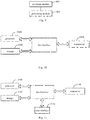
- the bandwidth part (BWP) configuration scenarios in the related art are as shown in Fig. 1a, Fig. 1b and Fig. 1c .
- the UE In the scenario of Fig. 1a , the UE is limited in its ability to support data reception and transmission over a large bandwidth, so a smaller BWP needs to be configured.
- the UE In the scenario of Fig. 1b , the UE supports the configuration of BWP2, but for power saving, the UE may choose to operate in BWP 1.
- the UE uses numerology 1 in BWP1 and numerology 2 in BWP2.
- the numerology is a description of physical characteristics.
- the characteristics in numerology include: different subcarrier spaces (SCSs), different transmission time intervals (TTIs), etc.
- SCSs subcarrier spaces
- TTIs transmission time intervals
- Different numerologies are provided with different parameters to meet different service requirements. For example, some services require shorter TTI duration, etc.
- the network side copes with various requirements by configuring different BWPs.
- the UE can activate only a single BWP for one cell. Assuming that BWP1 and BWP2 both belong to a same cell, only one BWP can be activated for the UE at a time, i.e. the UE activates either BWP1 or BWP2.
- the UE may perform signaling and data transmission in an activated BWP and may switch between different BWPs.
- HARQ hybrid automatic repeat request
- Configured grant scheduling refers to a transmission mode in which resources are allocated and scheduled in advance, and specifically includes: semi-persistent scheduling (SPS), and configured scheduling based on radio resource control (RRC) configuration.
- SPS semi-persistent scheduling
- RRC radio resource control
- a scheme in which a downlink (DL) feedback channel is removed is employed. That is, after the uplink (UL) data is transmitted, there is no feedback channel similar to a physical hybrid ARQ indicator channel (PHICH) in Long Term Evolution (LTE), instead, a downlink control information (DCI) indication mode is used. If the UL data is transmitted incorrectly, the network side transmits retransmission DCI to request a retransmission, and if the UL data is transmitted correctly, the DCI is used to schedule the same HARQ process to perform a new transmission.
- PHICH physical hybrid ARQ indicator channel
- LTE Long Term Evolution
- a configured grant timer is defined.
- the present disclosure provides, in some embodiments, an information processing method applied to a network side.
- the method includes: transmitting configuration information to user equipment (UE), where the configuration information includes duration of a configured grant timer; the duration of the configured grant timer is configured independently for one or more of following reference parameters: bandwidth part (BWP), transmission time interval (TTI) duration, uplink carrier, numerology or subcarrier space (SCS) corresponding to the numerology, or serving cell.
- BWP bandwidth part
- TTI transmission time interval
- SCS subcarrier space
- a configured grant timer is independently configured for each BWP; or when the reference parameter is TTI duration, a configured grant timer is independently configured for each TTI; or when the reference parameter is uplink carrier, a configured grant timer is independently configured for each uplink carrier; or when the reference parameter is numerology or SCS corresponding to the numerology, a configured grant timer is independently configured for each numerology or SCS corresponding to the numerology; or when the reference parameter is serving cell, a configured grant timer is configured for each serving cell.
- the configuration information further includes timer running indication information, where the timer running indication information is used to indicate to the UE any one or more of following information: when the reference parameter is BWP, if a change of BWP occurs, running a configured grant timer corresponding to a BWP before the change or corresponding to a BWP after the change during the change of BWP to maintain a hybrid automatic repeat request (HARQ) process in the BWP before the change; when configured grant scheduling information is received or retransmission is initiated in the BWP after the change, running a configured grant timer corresponding to the BWP after the change; when the reference parameter is TTI duration, if a change of TTI occurs, running a configured grant timer corresponding to TTI duration before the change or corresponding to TTI duration after the change during the change of TTI to maintain an HARQ process in the TTI duration before the change; when the configured grant scheduling information is received or retransmission is initiated in the TTI duration after the change, running a configured grant timer
- the starting position of the configured grant timer is the starting position of the subframe where the data transmission moment is located, or the starting position of the configured grant timer is the current slot of data transmission.
- a unit of the duration of the configured grant timer includes: subframe, symbol, or slot.
- the present disclosure provides, in some embodiments, an information processing method applied to UE.
- the method includes: receiving configuration information transmitted by a network side, where the configuration information includes duration of a configured grant timer; performing data transmission according to the configuration information and maintaining a state of the configured grant timer; where the duration of the configured grant timer is configured independently for one or more of the following reference parameters: BWP, TTI duration, uplink carrier, numerology or SCS corresponding to the numerology, or serving cell.
- the configuration information further includes timer running indication information, where the timer running indication information is used to indicate any one or more of the following information: when the reference parameter includes BWP, if a change of BWP occurs, running a configured grant timer corresponding to a BWP before the change or corresponding to a BWP after the change during the change of BWP to maintain an HARQ process in the BWP before the change; and when configured grant scheduling information is received or retransmission is initiated in the BWP after the change, running a configured grant timer corresponding to the BWP after the change; when the reference parameter includes TTI duration, if a change of TTI occurs, running a configured grant timer corresponding to TTI duration before the change or corresponding to TTI duration after the change during the change of TTI to maintain an HARQ process in the TTI duration before the change; when the configured grant scheduling information is received or retransmission is initiated in the TTI duration after the change, running a configured grant timer corresponding to the TTI duration after
- the performing data transmission according to the configuration information and maintaining the state of the configured grant timer includes: acquiring timer duration of a target configured grant timer according to current transmission characteristics; where the transmission characteristics include BWP, TTI duration, uplink carrier, numerology or SCS corresponding to the numerology, serving cell; when there is data to be transmitted in the HARQ process, transmitting a data packet, and starting or restarting the target configured grant timer; when it is determined according to the duration of the target configured grant timer that the target configured grant timer expires, terminating the HARQ process and stopping the target configured grant timer.
- the starting position of the configured grant timer is the starting position of the subframe where the data transmission moment is located, or the starting position of the configured grant timer is the current slot of data transmission.
- a unit of the duration of the configured grant timer includes: subframe, symbol, or slot.
- the present disclosure provides, in some embodiments, an information processing device.
- the device includes: a transmitting module, configured to transmit configuration information to UE, where the configuration information includes duration of a configured grant timer; the duration of the configured grant timer is configured independently for one or more of the following reference parameters: BWP, TTI duration, uplink carrier, numerology or SCS corresponding to the numerology, or serving cell.
- the configuration information further includes timer running indication information, where the timer running indication information is used to indicate to the UE any one or more of following information: when the reference parameter is BWP, if a change of BWP occurs, running a configured grant timer corresponding to a BWP before the change or corresponding to a BWP after the change during the change of BWP to maintain a hybrid automatic repeat request HARQ process in the BWP before the change; when configured grant scheduling information is received or retransmission is initiated in the BWP after the change, running a configured grant timer corresponding to the BWP after the change; when the reference parameter is TTI duration, if a change of TTI occurs, running a configured grant timer corresponding to TTI duration before the change or corresponding to TTI duration after the change during the change of TTI to maintain an HARQ process in the TTI duration before the change; when the configured grant scheduling information is received or retransmission is initiated in the TTI duration after the change, running a configured grant timer
- an information processing device configured to receive configuration information transmitted by a network side, where the configuration information includes duration of a configured grant timer; a processing module, configured to perform data transmission according to the configuration information and maintain the state of the configured grant timer; where the duration of the configured grant timer is configured independently for one or more of following reference parameters: BWP, TTI duration, uplink carrier, numerology or SCS corresponding to the numerology, or serving cell.
- the configuration information further includes: timer running indication information, where the timer running indication information is used to indicate any one or more of the following information: when the reference parameter is BWP, if a change of BWP occurs, running a configured grant timer corresponding to a BWP before the change or corresponding to a BWP after the change during the change of BWP to maintain a hybrid automatic repeat request HARQ process in the BWP before the change; when configured grant scheduling information is received or retransmission is initiated in the BWP after the change, running a configured grant timer corresponding to the BWP after the change; when the reference parameter is TTI duration, if a change of TTI occurs, running a configured grant timer corresponding to TTI duration before the change or corresponding to TTI duration after the change during the change of TTI to maintain an HARQ process in the TTI duration before the change; when the configured grant scheduling information is received or retransmission is initiated in the TTI duration after the change, running a configured grant timer corresponding to
- the present disclosure provides, in some embodiments, information processing equipment.
- the equipment includes: a transceiver, a storage, a processor, and a program stored in the storage and configured to be executed by the processor; where the processor is configured to read the program in the storage and perform the following process: transmitting configuration information to UE, where the configuration information includes duration of a configured grant timer; or the processor is configured to transmit configuration information to UE through the transceiver, where the configuration information includes duration of a configured grant timer; the duration of the configured grant timer is configured independently for one or more of the following reference parameters: BWP, TTI duration, uplink carrier, numerology or SCS corresponding to the numerology, or serving cell.
- the processor is further configured to read the program in the storage and perform the following process: when the reference parameter is BWP, independently configuring a configured grant timer for each BWP; or when the reference parameter is TTI duration, independently configuring a configured grant timer for each TTI; or when the reference parameter is uplink carrier, independently configuring a configured grant timer for each uplink carrier; or when the reference parameter is numerology or SCS corresponding to the numerology, independently configuring a configured grant timer for each numerology or SCS corresponding to the numerology; or when the reference parameter is serving cell, configuring a configured grant timer for each serving cell.
- the processor is further configured to read the program in the storage and perform the following process: the configuration information further includes timer running indication information, where the timer running indication information is used to indicate to the UE any one or more of following information: when the reference parameter is BWP, if a change of BWP occurs, running a configured grant timer corresponding to a BWP before the change or corresponding to a BWP after the change during the change of BWP to maintain a hybrid automatic repeat request HARQ process in the BWP before the change; when the configured grant scheduling information is received or retransmission is initiated in the BWP after the change, running a configured grant timer corresponding to the BWP after the change; when the reference parameter is TTI duration, if a change of TTI occurs, running a configured grant timer corresponding to TTI duration before the change or corresponding to TTI duration after the change during the change of TTI to maintain an HARQ process in the TTI duration before the change; when the configured grant scheduling information is received or retransmission
- a unit of the duration of the configured grant timer includes: subframe, symbol, or slot.
- the present disclosure provides, in some embodiments, information processing equipment.
- the equipment includes: a transceiver, a storage, a processor, and a program stored in the storage and configured to be executed by the processor; the transceiver is configured to receive configuration information transmitted by a network side, where the configuration information includes duration of a configured grant timer; the processor is configured to read the program in the storage and perform the following process: performing data transmission according to the configuration information and maintaining a state of the configured grant timer; where the duration of the configured grant timer is configured independently for one or more of the following reference parameters: BWP, TTI duration, uplink carrier, numerology or SCS corresponding to the numerology, or serving cell.
- the configuration information further includes: timer running indication information, where the timer running indication information is used to indicate any one or more of the following information: when the reference parameter is BWP, if a change of BWP occurs, running a configured grant timer corresponding to a BWP before the change or corresponding to a BWP after the change during the change of BWP to maintain a hybrid automatic repeat request HARQ process in the BWP before the change; when configured grant scheduling information is received or retransmission is initiated in the BWP after the change, running a configured grant timer corresponding to the BWP after the change; when the reference parameter includes TTI duration, if a change of TTI occurs, running a configured grant timer corresponding to TTI duration before the change or corresponding to TTI duration after the change during the change of TTI to maintain an HARQ process in the TTI duration before the change; when the configured grant scheduling information is received or retransmission is initiated in the TTI duration after the change, running a configured grant timer corresponding to
- the processor is further configured to read the program in the storage and perform the following process: acquiring timer duration of a target configured grant timer according to the current transmission characteristics; where the transmission characteristics include BWP, TTI duration, uplink carrier, numerology or SCS corresponding to the numerology, serving cell; when there is data to be transmitted in the HARQ process, transmitting a data packet, and starting or restarting the target configured grant timer; and when it is determined according to the duration of the target configured grant timer that the target configured grant timer expires, terminating the HARQ process and stopping the target configured grant timer.
- the starting position of the configured grant timer is the starting position of the subframe where the data transmission moment is located, or the starting position of the configured grant timer is the current slot of data transmission.
- a unit of the duration of the configured grant timer includes: subframe, symbol, or slot.
- the present disclosure provides, in some embodiments, a computer-readable storage medium storing therein a computer program, where the computer program is configured to be executed by a processor to implement the steps in the method according to the first aspect, or the computer program is configured to be executed by a processor to implement the steps in the method according to the second aspect.
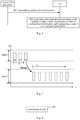
- the information processing method is applied to a network side, and includes: a step 201: transmitting configuration information to UE, where the configuration information includes duration of a configured grant timer.
- the duration of the configured grant timer may be set by the network side according to different application environments or scenarios.
- the configured grant timer is used for recording whether a resource grant is valid. After the UE performs an initial transmission or retransmission, the configured grant timer is started. If the configured grant timer expires, the HARQ process of the resource grant is terminated and the corresponding transmission is delivered to a higher layer; when a scheduling command for the HARQ process is received (new transmission/retransmission), the configured grant timer is started or restarted.
- the duration of the configured grant timer is configured independently for one or more of the following reference parameters: bandwidth part (BWP), transmission time interval (TTI) duration, uplink carrier, numerology or subcarrier space (SCS) corresponding to the numerology, or serving cell.
- BWP bandwidth part
- TTI transmission time interval
- SCS subcarrier space
- the configured grant timers may be configured independently for different reference parameters, respectively.
- a configured grant timer is independently configured for each BWP; or when the reference parameter is TTI duration, a configured grant timer is independently configured for each TTI; or when the reference parameter is uplink carrier, a configured grant timer is independently configured for each uplink carrier; or when the reference parameter is numerology or SCS corresponding to the numerology, a configured grant timer is independently configured for each numerology or SCS corresponding to the numerology; or when the reference parameter is serving cell, a configured grant timer is configured for each serving cell.
- the starting position of the configured grant timer is the starting position of a subframe where the data transmission moment is located, or the starting position of the configured grant timer is the current slot of data transmission.
- the unit of the duration of the configured grant timer includes: subframe, symbol, or slot.
- the reference parameter is BWP which include BWP1 and BWP2
- configured grant timers may be configured for BWP1 and BWP2, respectively. It is assumed the configured grant timers have duration T1 and T2, respectively.
- the configuration information further includes: timer running indication information, where the timer running indication information is used to indicate to the UE any one or more of following information: when the reference parameter is BWP, if a change of BWP occurs, a configured grant timer corresponding to a BWP before the change or corresponding to a BWP after the change is run during the change of BWP to maintain a hybrid automatic repeat request HARQ process in the BWP before the change; when configured grant scheduling information is received or retransmission is initiated in the BWP after the change, a configured grant timer corresponding to the BWP after the change is run; when the reference parameter is TTI duration, if a change of TTI occurs, a configured grant timer corresponding to TTI duration before the change or corresponding to TTI duration after the change is run during the change of TTI to maintain an HARQ process in the TTI duration before the change; when the configured grant scheduling information is received or retransmission is
- the network side transmits acquired duration of the configured grant timer to the UE, so that the UE side can perform data transmission according to the duration of the configured grant timer and the acquired configured grant scheduling information, and maintain the state of the grant timer, thereby determining the data transmission accuracy, and further arranging an effective retransmission or initiating a new transmission in time.
- the data transmission accuracy, the data transmission efficiency and the resource utilization rate are improved.
- an information processing method is applied to the UE, and includes following steps.
- a step 301 receiving configuration information transmitted by a network side, where the configuration information includes duration of a configured grant timer.
- the duration of the configured grant timer is configured independently for one or more of the following reference parameters: BWP, TTI duration, uplink carrier, numerology or SCS corresponding to the numerology, or serving cell.
- the starting position of the configured grant timer is the starting position of the subframe where the data transmission moment is located, or the starting position of the configured grant timer is the current slot of data transmission.
- a unit of the duration of the configured grant timer includes: subframe, symbol, or slot.
- a step 302 performing data transmission according to the configuration information, and maintaining a state of the configured grant timer.
- the UE acquires the timer duration of the target configured grant timer according to current transmission characteristics.
- the transmission characteristics include BWP, TTI duration, uplink carrier, numerology or SCS corresponding to the numerology, serving cell.
- a data packet is transmitted, and the target configured grant timer is started or restarted; and when it is determined according to the duration of the target configured grant timer that the target configured grant timer expires, the HARQ process is terminated and the target configured grant timer is stopped.
- the configuration information further includes: timer running indication information, where the timer running indication information is used to indicate any one or more of the following information: when the reference parameter includes BWP, if a change of BWP occurs, running a configured grant timer corresponding to a BWP before the change or corresponding to a BWP after the change during the change of BWP to maintain a hybrid automatic repeat request HARQ process in the BWP before the change; when configured grant scheduling information is received or retransmission is initiated in the BWP after the change, running a configured grant timer corresponding to the BWP after the change; when the reference parameter includes TTI duration, if a change of TTI occurs, running a configured grant timer corresponding to TTI duration before the change or corresponding to TTI duration after the change during the change of TTI to maintain the HARQ process in the TTI duration before the change; when the configured grant scheduling information is received or retransmission is initiated in the TTI duration
- a change of BWP assuming that a BWP1 is changed to a BWP2
- a configured grant timer corresponding to the BWP1 before the change or corresponding to the BWP2 after the change is run during the change of BWP, to maintain an HARQ process in the BWP1 before the change;
- a configured grant timer corresponding to the BWP2 after the change is run.
- the network side transmits the acquired duration of the configured grant timer to the UE, so that the UE side can perform data transmission according to the duration of the configured grant timer and the acquired configured grant scheduling information, and maintain the state of the grant timer, thereby determining the data transmission accuracy, and further arranging an effective retransmission or initiating a new transmission in time.
- the data transmission accuracy, the data transmission efficiency and the resource utilization rate are improved.
- the information processing method according to the embodiment of the present disclosure includes the following process.
- a step 401 a network side transmits configuration information to UE.
- the configuration information includes: configured grant scheduling information, duration of a configured grant timer and corresponding TTI duration.
- the duration of the configured grant timer is set to corresponding values based on different TTI duration.
- the configuration information may further include timer running indication information, where the timer running indication information is used to indicate to the UE: if a change of TTI occurs, a configured grant timer corresponding to TTI duration before the change or corresponding to TTI duration after the change is run during the change of TTI to maintain the HARQ process in the TTI duration before the change; when the configured grant scheduling information is received or retransmission is initiated in the TTI duration after the change, a configured grant timer corresponding to the TTI duration after the change is run.
- timer running indication information is used to indicate to the UE: if a change of TTI occurs, a configured grant timer corresponding to TTI duration before the change or corresponding to TTI duration after the change is run during the change of TTI to maintain the HARQ process in the TTI duration before the change; when the configured grant scheduling information is received or retransmission is initiated in the TTI duration after the change, a configured grant timer corresponding to the TTI duration after the change is run.
- the duration of the configured grant timer is set to T1 for the duration of TTI 1; and the duration of the configured grant timer is set to T2 for the duration of TTI 2.
- the starting position of the duration of the configured grant timer may be the starting position of the subframe where the data transmission moment is located, or may be the current slot of data transmission.
- the unit of the duration of the configured grant timer may be subframe, symbol, or slot.
- a step 402 UE performs data transmission according to the configured grant scheduling information and the configuration information, and maintains a state of the configured grant timer.
- the UE transmits a data packet, and starts or restarts the configured grant timer.
- the timer expires, the data in the process is delivered to a higher layer.
- a scheduling command new transmission/retransmission for this HARQ process is received, the UE starts or restarts the configured grant timer.
- the configuration information further includes timer running indication information, if a change of TTI occurs in the process of data transmission, a configured grant timer corresponding to TTI duration before the change or corresponding to TTI duration after the change is run during the change of TTI, to maintain the HARQ process in the TTI duration before the change; when the configured grant scheduling information is received or retransmission is initiated in the TTI duration after the change, a configured grant timer corresponding to the TTI duration after the change is run.
- the UE runs a configured grant timer corresponding to TTI 1 before the change or corresponding to TTI 2 after the change during the change of TTI, to maintain the HARQ process in the TTI 1 before the change; and when configured grant scheduling information is received or retransmission is initiated in the TTI 2 after the change, the UE runs a configured grant timer corresponding to the TTI 2 after the change.
- the information processing method according to the embodiment of the present disclosure includes the following process.
- a step 601 a network side transmits configuration information to UE.
- the configuration information includes: configured grant scheduling information, the duration of the configured grant timer and corresponding length of BWP.
- duration of the configured grant timer is set to corresponding values based on different lengths of BWPs.
- the configuration information may further include timer running indication information, where the timer running indication information is used to indicate to the UE: if a change of BWP occurs, running a configured grant timer corresponding to a BWP before the change or corresponding to a BWP after the change during the change of BWP to maintain a hybrid automatic repeat request HARQ process in the BWP before the change; when the configured grant scheduling information is received or retransmission is initiated in the BWP after the change, running a configured grant timer corresponding to the BWP after the change.
- the duration of the configured grant timer is set to T1 for the length of BWP1; the duration of the configured grant timer is set to T2 for the length of BWP2.
- the starting position of the configured grant timer may be a starting position of a subframe where the data transmission moment is located, or may be a current slot of data transmission.
- a unit of the duration of the configured grant timer may be on the order of a subframe, or may be a unit length of a current slot of data transmission.
- a step 602 the UE performs data transmission according to the configured grant scheduling information and the configuration information, and maintains a state of the configured grant timer.
- the UE transmits a data packet, and starts or restarts the configured grant timer.
- the timer expires, the data in the process is delivered to a higher layer.
- a scheduling command new transmission/retransmission for this HARQ process is received, the UE starts or restarts the configured grant timer.
- the configuration information further includes timer running indication information, if a change of BWP occurs in the process of data transmission, a configured grant timer corresponding to a BWP before the change or corresponding to a BWP after the change is run during the change of BWP to maintain a hybrid automatic repeat request HARQ process in the BWP before the change; and when the configured grant scheduling information is received or retransmission is initiated in the BWP after the change, a configured grant timer corresponding to the BWP after the change is run.
- the configured grant timer corresponding to the BWP1 before the change or corresponding to the BWP2 after the change is run during the change of BWP, to maintain the HARQ process in the BWP1 before the change; when the configured grant scheduling information is received or a retransmission is initiated in the BWP2 after the change, the configured grant timer corresponding to the BWP2 after the change is run.
- the configured grant timer is stopped. Or, if corresponding numerology in BWP2 is different from numerology in BWP1, or other conditions cause the HARQ process to fail to retransmit in BWP2, the configured grant timer is stopped.
- the duration of the configured grant timer may also be configured for different uplink carriers.
- the duration of the configured grant timer can be transmitted to the UE through the configuration information. For example, the duration of the supplementary uplink (SUL) configured grant timer corresponding to the uplink carrier 1 is T1, and the duration of the SUL configured grant timer corresponding to the uplink carrier 2 is T2.
- SUL supplementary uplink
- the configuration information further includes timer running indication information, where the timer running indication information is used to indicate to the UE: if a change of uplink carrier occurs, running a configured grant timer corresponding to an uplink carrier before the change or corresponding to an uplink carrier after the change during the change of uplink carrier so as to maintain the HARQ process on the uplink carrier before the change; and when the configured grant scheduling information is received or retransmission is initiated on the uplink carrier after the change, running a configured grant timer corresponding to the uplink carrier after the change.
- a configured grant timer corresponding to the uplink carrier before the change or corresponding to the uplink carrier after the change is run during the change of uplink carrier to maintain the HARQ process on the uplink carrier before the change; and when the configured grant scheduling information is received or retransmission is initiated on the uplink carrier after the change, the configured grant timer corresponding to the uplink carrier after the change is run.
- the duration of the configured grant timer may also be configured for different numerologies.
- the duration of the SUL configured grant timer corresponding to numerology 1 is T3
- the duration of the SUL configured grant timer corresponding to numerology 2 is T4.
- references may be made to descriptions of Fig. 4 or Fig. 6 .
- the duration of the configured grant timer may also be configured for SCSs of different numerologies.
- the duration of the SUL configured grant timer corresponding to the SCS1 is T5
- the duration of the SUL configured grant timer corresponding to the SCS2 is T6.
- the duration of the configured grant timer may also be configured for different serving cells.
- the duration of the SUL configured grant timer corresponding to the serving cell 1 is T7
- the duration of the SUL configured grant timer corresponding to the serving cell 2 is T8.
- references may be made to descriptions of Fig. 4 or Fig. 6 .
- the duration of the configured grant timer is configured according to different reference parameters, so that under different parameter characteristic configurations, improved determination and maintenance of data transmission accuracy, data transmission efficiency and resource utilization rate are achieved.
- an information processing device includes: a transmitting module 801, configured to transmit configuration information to UE, where the configuration information includes duration of a configured grant timer; the duration of the configured grant timer is configured independently for one or more of the following reference parameters: BWP, TTI duration, uplink carrier, numerology or SCS corresponding to the numerology, or serving cell.
- the starting position of the configured grant timer is the starting position of the subframe where the data transmission moment is located, or the starting position of the configured grant timer is the current slot of data transmission.
- a unit of the duration of the configured grant timer includes: subframe, symbol, or slot.
- a configured grant timer is configured independently for each BWP; or when the reference parameter is TTI duration, a configured grant timer is configured independently for each TTI; or when the reference parameter is uplink carrier, a configured grant timer is configured independently for each uplink carrier; or when the reference parameter is numerology or SCS corresponding to the numerology, a configured grant timer is configured independently for each numerology or SCS corresponding to the numerology; or when the reference parameter is serving cell, a configured grant timer is configured for each serving cell.
- the configuration information further includes timer running indication information, where the timer running indication information is used to indicate to the UE any one or more of following information: when the reference parameter is BWP, if a change of BWP occurs, running a configured grant timer corresponding to the BWP before the change or corresponding to the BWP after the change during the change of BWP to maintain a hybrid automatic repeat request HARQ process in the BWP before the change; and when the configured grant scheduling information is received or retransmission is initiated in the BWP after the change, running a configured grant timer corresponding to the BWP after the change; when the reference parameter is TTI duration, if a change of TTI occurs, running a configured grant timer corresponding to TTI duration before the change or corresponding to TTI duration after the change during the change of TTI to maintain an HARQ process in the TTI duration before the change; when the configured grant scheduling information is received or retransmission is initiated in the TTI duration
- the network side transmits the acquired duration of the configured grant timer to the UE, so that the UE side can perform data transmission according to the duration of the configured grant timer and the acquired configured grant scheduling information, and maintain the state of the grant timer, thereby determining the data transmission accuracy, and further arranging an effective retransmission or initiating a new transmission in time.
- the data transmission accuracy, the data transmission efficiency and the resource utilization rate are improved.
- the information processing device includes: a receiving module 901, configured to receive configuration information transmitted by a network side, where the configuration information includes duration of a configured grant timer; a processing module 902, configured to perform data transmission according to the configuration information, and maintain the state of the configured grant timer; where the duration of the configured grant timer is configured independently for one or more of the following reference parameters: BWP, TTI duration, uplink carrier, numerology or SCS corresponding to the numerology, or serving cell.
- the starting position of the configured grant timer is the starting position of the subframe where the data transmission moment is located, or the starting position of the configured grant timer is the current slot of data transmission.
- a unit of the duration of the configured grant timer includes: subframe, symbol, or slot.
- the configuration information further includes: timer running indication information, where the timer running indication information is used to indicate any one or more of the following information: when the reference parameter includes BWP, if a change of BWP occurs, running a configured grant timer corresponding to a BWP before the change or corresponding to a BWP after the change during the change of BWP to maintain a hybrid automatic repeat request HARQ process in the BWP before the change; and when the configured grant scheduling information is received or retransmission is initiated in the BWP after the change, running a configured grant timer corresponding to the BWP after the change; when the reference parameter includes TTI duration, if a change of TTI occurs, running a configured grant timer corresponding to TTI duration before the change or corresponding to TTI duration after the change during the change of TTI to maintain the HARQ process in the TTI duration before the change; when the configured grant scheduling information is received or retransmission is initiated in the TTI duration after the change, running a configured grant timer corresponding to
- the processing module 902 is specifically configured for: acquiring the timer duration of a target configured grant timer according to current transmission characteristics, where the transmission characteristics include BWP, TTI duration, uplink carrier, numerology or SCS corresponding to the numerology, serving cell; when there is data to be transmitted in the HARQ process, transmitting a data packet, and starting or restarting the target configured grant timer; when it is determined according to the duration of the target configured grant timer that the target configured grant timer expires, terminating the HARQ process and stopping the target configured grant timer.
- the network side transmits the acquired duration of the configured grant timer to the UE, so that the UE side can perform data transmission according to the duration of the configured grant timer and the acquired configured grant scheduling information, and maintain the state of the grant timer, thereby determining the data transmission accuracy, and further arranging an effective retransmission or initiating a new transmission in time.
- the data transmission accuracy, the data transmission efficiency and the resource utilization rate are improved.
- information processing equipment includes:
- the duration of the configured grant timer is configured independently for one or more of the following reference parameters: BWP, TTI duration, uplink carrier, numerology or SCS corresponding to the numerology, or serving cell.
- a bus architecture may include any number of interconnected buses and bridges. Various circuits, specifically, one or more processors represented by the processor 1000 and a storage represented by the storage 1020, are linked together. The bus architecture may also link various other circuits such as peripherals, voltage regulators and power management circuits, which are well known in the art, and therefore a further description is omitted herein.
- the bus interface provides interfaces.
- the transceiver 1010 may be a plurality of elements, that is, includes a transmitter and a receiver, to provide units configured to communicate with various other devices over a transmission medium.
- the processor 1000 is responsible for managing the bus architecture and general processing, and the storage 1020 may store data used by the processor 1000 when performing operations.
- the processor 1000 is responsible for managing the bus architecture and general processing, and the storage 1020 may store data used by the processor 1000 when performing operations.
- the processor 1000 is further configured to read the program to implement the following steps: when the reference parameter is BWP, independently configuring a configured grant timer for each BWP; or when the reference parameter is TTI duration, independently configuring a configured grant timer for each TTI; or when the reference parameter is uplink carrier, independently configuring a configured grant timer for each uplink carrier; or when the reference parameter is numerology or SCS corresponding to the numerology, independently configuring a configured grant timer for each numerology or SCS corresponding to the numerology; or when the reference parameter is serving cell, configuring a configured grant timer for each serving cell.
- the processor 1000 is further configured to read the program to implement the following steps: the configuration information further includes timer running indication information, where the timer running indication information is used to indicate to the UE any one or more of following information: when the reference parameter is BWP, if a change of BWP occurs, running a configured grant timer corresponding to a BWP before the change or corresponding to a BWP after the change during the change of BWP to maintain a hybrid automatic repeat request HARQ process in the BWP before the change; and when the configured grant scheduling information is received or retransmission is initiated in the BWP after the change, running a configured grant timer corresponding to the BWP after the change; when the reference parameter is TTI duration, if a change of TTI occurs, running a configured grant timer corresponding to TTI duration before the change or corresponding to TTI duration after the change during the change of TTI to maintain the HARQ process in the TTI duration before the change; when the configured grant scheduling information is received or retransmission is initiated in
- the starting position of the configured grant timer is the starting position of the subframe where the data transmission moment is located, or the starting position of the configured grant timer is the current slot of data transmission.
- a unit of the duration of the configured grant timer includes: subframe, symbol, or slot.
- information processing equipment includes: a processor 1100, configured to read the program in the storage 1120 to implement the following process: a transceiver 1110, configured to receive and transmit data under the control of a processor 1100, specifically, receive configuration information transmitted by a network side, where the configuration information includes duration of a configured grant timer; the processor 1100, configured to read the program in a storage 1120 to implement the following process: performing data transmission according to the configured grant scheduling information and the configuration information, and maintaining the state of the configured grant timer.
- the duration of the configured grant timer is configured independently for one or more of the following reference parameters: BWP, TTI duration, uplink carrier, numerology or SCS corresponding to numerology, or serving cell.
- a bus architecture may include any number of interconnected buses and bridges. Various circuits, specifically, one or more processors represented by the processor 1100 and a storage represented by the storage 1120, are linked together. The bus architecture may also link various other circuits such as peripherals, voltage regulators and power management circuits, which are well known in the art, and therefore a further description is omitted herein.
- the bus interface provides interfaces.
- the transceiver 1110 may be a plurality of elements, that is, includes a transmitter and a receiver, to provide units configured to communicate with various other devices over a transmission medium.
- user interface 1130 may be an interface configured to connect to a requisite device externally or internally, and the connected device includes, but is not limited to: a keypad, display, speaker, microphone, joystick, etc.
- the processor 1100 is responsible for managing the bus architecture and general processing, and the storage 1120 may store data used by the processor 1100 when performing operations.
- the configuration information further includes: timer running indication information, where the timer running indication information is used to indicate any one or more of the following information: when the reference parameter includes BWP, if a change of BWP occurs, running a configured grant timer corresponding to a BWP before the change or corresponding to a BWP after the change during the change of BWP to maintain a hybrid automatic repeat request HARQ process in the BWP before the change; when configured grant scheduling information is received or retransmission is initiated in the BWP after the change, running a configured grant timer corresponding to the BWP after the change; when the reference parameter includes TTI duration, if a change of TTI occurs, running a configured grant timer corresponding to TTI duration before the change or corresponding to TTI duration after the change during the change of TTI to maintain an HARQ process in the TTI duration before the change; when the configured grant scheduling information is received or retransmission is initiated in the TTI duration after the change, running a configured grant timer corresponding to the T
- the processor 1100 is further configured to read the program to implement the following steps: acquiring the timer duration of a target configured grant timer according to current transmission characteristics; where the transmission characteristics include BWP, TTI duration, uplink carrier, numerology or SCS corresponding to the numerology, serving cell; when there is data to be transmitted in the HARQ process, transmitting a data packet, and starting or restarting the target configured grant timer; when it is determined according to the duration of the target configured grant timer that the target configured grant timer expires, terminating the HARQ process and stopping the target configured grant timer.
- the starting position of the configured grant timer is the starting position of the subframe where the data transmission moment is located, or the starting position of the configured grant timer is the current slot of data transmission.
- a unit of the duration of the configured grant timer includes: subframe, symbol, or slot.
- a computer-readable storage medium stores a computer program.
- the computer program is configured to be executed by a processor to implement the following steps: transmitting configuration information to UE, where the configuration information includes the duration of a configured grant timer; the duration of the configured grant timer is configured independently for one or more of the following reference parameters: BWP, TTI duration, uplink carrier, numerology or SCS corresponding to the numerology, or serving cell.
- a configured grant timer is independently configured for each BWP; or when the reference parameter is TTI duration, a configured grant timer is independently configured for each TTI; or when the reference parameter is uplink carrier, a configured grant timer is independently configured for each uplink carrier; or when the reference parameter is numerology or SCS corresponding to the numerology, a configured grant timer is independently configured for each numerology or SCS corresponding to the numerology; or when the reference parameter is serving cell, a configured grant timer is configured for each serving cell.
- the configuration information further includes timer running indication information, where the timer running indication information is used to indicate to the UE any one or more of the following information: when the reference parameter is BWP, if a change of BWP occurs, running a configured grant timer corresponding to a BWP before the change or corresponding to a BWP after the change during the change of BWP to maintain a hybrid automatic repeat request HARQ process in the BWP before the change; when configured grant scheduling information is received or retransmission is initiated in the BWP after the change, running a configured grant timer corresponding to the BWP after the change; when the reference parameter is TTI duration, if a change of TTI occurs, running a configured grant timer corresponding to TTI duration before the change or corresponding to TTI duration after the change during the change of TTI to maintain an HARQ process in the TTI duration before the change; when the configured grant scheduling information is received or retransmission is initiated in the TTI duration after the change, running a configured grant timer corresponding
- the starting position of the configured grant timer is the starting position of the subframe where the data transmission moment is located, or the starting position of the configured grant timer is the current slot of data transmission.
- a unit of the duration of the configured grant timer includes: subframe, symbol, or slot.
- a computer-readable storage medium stores a computer program.
- the computer program is configured to be executed by a processor to implement the following steps: receiving configuration information transmitted by a network side, where the configuration information includes the duration of a configured grant timer; performing data transmission according to the configured grant scheduling information and the configuration information, and maintaining the state of the configured grant timer; where the duration of the configured grant timer is configured independently for one or more of the following reference parameters: BWP, TTI duration, uplink carrier, numerology or SCS corresponding to the numerology, or serving cell.
- the configuration information further includes timer running indication information, where the timer running indication information is used to indicate any one or more of the following information: when the reference parameter includes BWP, if a change of BWP occurs, running a configured grant timer corresponding to a BWP before the change or corresponding to a BWP after the change during the change of BWP to maintain a hybrid automatic repeat request HARQ process in the BWP before the change; when configured grant scheduling information is received or retransmission is initiated in the BWP after the change, running a configured grant timer corresponding to the BWP after the change; when the reference parameter includes TTI duration, if a change of TTI occurs, running a configured grant timer corresponding to TTI duration before the change or corresponding to TTI duration after the change during the change of TTI to maintain an HARQ process in the TTI duration before the change; when the configured grant scheduling information is received or retransmission is initiated in the TTI duration after the change, running a configured grant timer corresponding to the TTI
- the performing data transmission according to the configured grant scheduling information and the configuration information, and maintaining the state of the configured grant timer includes: acquiring the timer duration of a target configured grant timer according to current transmission characteristics; where, the transmission characteristics include BWP, TTI duration, uplink carrier, numerology or SCS corresponding to the numerology, serving cell; when there is data to be transmitted in the HARQ process, transmitting a data packet, and starting or restarting the target configured grant timer; when it is determined according to the duration of the target configured grant timer that the target configured grant timer expires, terminating the HARQ process and stopping the target configured grant timer.
- the starting position of the configured grant timer is the starting position of the subframe where the data transmission moment is located, or the starting position of the configured grant timer is the current slot of data transmission.
- a unit of the duration of the configured grant timer includes: subframe, symbol, or slot.
- the disclosed methods and devices may be implemented in other manners.
- the device embodiments described above are merely illustrative.
- a division of units is only a logical function division.
- there may be another division manner for example, a plurality of units or components may be combined or may be integrated into another system, or some features may be ignored or not be executed.
- mutual coupling or direct coupling or communication connection shown or discussed may be an indirect coupling or communication connection through some interfaces, devices or units, and may be in an electrical, mechanical or other form.
- each functional unit in various embodiments of the present disclosure may be integrated into one processing unit, or each unit may exist alone physically, or two or more units may be integrated into one unit.
- the integrated unit may be implemented in a form of hardware, or may also be implemented in a form of hardware plus a software functional unit.
- the above integrated unit implemented in the form of a software functional unit may be stored in a computer readable storage medium.
- the above software functional unit is stored in a storage medium and includes several instructions so that a computer device (which may be a personal computer, a server, or a network device, etc.) to perform some steps of the methods described in various embodiments of the present disclosure.
- the foregoing storage medium includes various media capable of storing program codes, such as a USB flash drive, a mobile hard disk, a read-only memory (ROM), a random access memory (RAM), a magnetic disk, or an optical disc.
Landscapes
- Engineering & Computer Science (AREA)
- Signal Processing (AREA)
- Computer Networks & Wireless Communication (AREA)
- Physics & Mathematics (AREA)
- Mathematical Physics (AREA)
- Mobile Radio Communication Systems (AREA)
Abstract
Description
- The present application claims a priority to the Chinese patent application No.
201810020219.6 - The present disclosure relates to the field of communication technologies, and in particular, to an information processing method, device, and equipment.
- In the fifth generation mobile communication systems (5G or New Radio (NR) systems), the network bandwidth may be much larger than the terminal transmission bandwidth (the network bandwidth can be configured to a maximum of 400 MHz). However, the capabilities of user equipment (UEs) are different. For example, the capabilities of some UEs may not support such a large bandwidth, for example, for the purpose of power saving or the like.
- The bandwidth part (BWP) configuration scenarios in the related art are as shown in
Fig. 1a, Fig. 1b and Fig. 1c . In the scenario ofFig. 1a , the UE is limited in its ability to support data reception and transmission over a large bandwidth, so a smaller BWP needs to be configured. In the scenario ofFig. 1b , the UE supports the configuration of BWP2, but for power saving, the UE may choose to operate inBWP 1. In the scenario ofFIG. 1c , the UE usesnumerology 1 in BWP1 andnumerology 2 in BWP2. - The numerology is a description of physical characteristics. The characteristics in numerology include: different subcarrier spaces (SCSs), different transmission time intervals (TTIs), etc. Different numerologies are provided with different parameters to meet different service requirements. For example, some services require shorter TTI duration, etc. In practical applications, the network side copes with various requirements by configuring different BWPs.
- However, the UE can activate only a single BWP for one cell. Assuming that BWP1 and BWP2 both belong to a same cell, only one BWP can be activated for the UE at a time, i.e. the UE activates either BWP1 or BWP2. The UE may perform signaling and data transmission in an activated BWP and may switch between different BWPs. In the standardization discussion in the related art, it is agreed that retransmission can be performed between different BWPs, that is, the same hybrid automatic repeat request (HARQ) can be switched between different BWPs.
- Configured grant scheduling refers to a transmission mode in which resources are allocated and scheduled in advance, and specifically includes: semi-persistent scheduling (SPS), and configured scheduling based on radio resource control (RRC) configuration.
- In the discussion on NR, a scheme in which a downlink (DL) feedback channel is removed is employed. That is, after the uplink (UL) data is transmitted, there is no feedback channel similar to a physical hybrid ARQ indicator channel (PHICH) in Long Term Evolution (LTE), instead, a downlink control information (DCI) indication mode is used. If the UL data is transmitted incorrectly, the network side transmits retransmission DCI to request a retransmission, and if the UL data is transmitted correctly, the DCI is used to schedule the same HARQ process to perform a new transmission.
- However, in the process of configured grant scheduling, the manner in which a new transmission is performed does not need to be indicated by the DCI. Instead, a new transmission is automatically triggered when certain time conditions are met. Therefore, this will result in that the UE is unable to ascertain when the HARQ process may be cleared off to perform a new transmission. As a result, a configured grant timer is defined.
- However, there is no configuration and maintenance schemes for the configured grant timer in the related art, so that the accuracy of data transmission cannot be determined.
- In a first aspect, the present disclosure provides, in some embodiments, an information processing method applied to a network side. The method includes: transmitting configuration information to user equipment (UE), where the configuration information includes duration of a configured grant timer; the duration of the configured grant timer is configured independently for one or more of following reference parameters: bandwidth part (BWP), transmission time interval (TTI) duration, uplink carrier, numerology or subcarrier space (SCS) corresponding to the numerology, or serving cell.
- Optionally, when the reference parameter is BWP, a configured grant timer is independently configured for each BWP; or when the reference parameter is TTI duration, a configured grant timer is independently configured for each TTI; or when the reference parameter is uplink carrier, a configured grant timer is independently configured for each uplink carrier; or when the reference parameter is numerology or SCS corresponding to the numerology, a configured grant timer is independently configured for each numerology or SCS corresponding to the numerology; or when the reference parameter is serving cell, a configured grant timer is configured for each serving cell.
- Optionally, the configuration information further includes timer running indication information, where the timer running indication information is used to indicate to the UE any one or more of following information: when the reference parameter is BWP, if a change of BWP occurs, running a configured grant timer corresponding to a BWP before the change or corresponding to a BWP after the change during the change of BWP to maintain a hybrid automatic repeat request (HARQ) process in the BWP before the change; when configured grant scheduling information is received or retransmission is initiated in the BWP after the change, running a configured grant timer corresponding to the BWP after the change; when the reference parameter is TTI duration, if a change of TTI occurs, running a configured grant timer corresponding to TTI duration before the change or corresponding to TTI duration after the change during the change of TTI to maintain an HARQ process in the TTI duration before the change; when the configured grant scheduling information is received or retransmission is initiated in the TTI duration after the change, running a configured grant timer corresponding to the TTI duration after the change; when the reference parameter is uplink carrier, if a change of uplink carrier occurs, running a configured grant timer corresponding to an uplink carrier before the change or corresponding to an uplink carrier after the change during the change of uplink carrier to maintain an HARQ process on the uplink carrier before the change; when the configured grant scheduling information is received or retransmission is initiated on the uplink carrier after the change, running a configured grant timer corresponding to the uplink carrier after the change.
- Optionally, the starting position of the configured grant timer is the starting position of the subframe where the data transmission moment is located, or the starting position of the configured grant timer is the current slot of data transmission.
- Optionally, a unit of the duration of the configured grant timer includes: subframe, symbol, or slot.
- In a second aspect, the present disclosure provides, in some embodiments, an information processing method applied to UE. The method includes: receiving configuration information transmitted by a network side, where the configuration information includes duration of a configured grant timer; performing data transmission according to the configuration information and maintaining a state of the configured grant timer; where the duration of the configured grant timer is configured independently for one or more of the following reference parameters: BWP, TTI duration, uplink carrier, numerology or SCS corresponding to the numerology, or serving cell.
- Optionally, the configuration information further includes timer running indication information, where the timer running indication information is used to indicate any one or more of the following information: when the reference parameter includes BWP, if a change of BWP occurs, running a configured grant timer corresponding to a BWP before the change or corresponding to a BWP after the change during the change of BWP to maintain an HARQ process in the BWP before the change; and when configured grant scheduling information is received or retransmission is initiated in the BWP after the change, running a configured grant timer corresponding to the BWP after the change; when the reference parameter includes TTI duration, if a change of TTI occurs, running a configured grant timer corresponding to TTI duration before the change or corresponding to TTI duration after the change during the change of TTI to maintain an HARQ process in the TTI duration before the change; when the configured grant scheduling information is received or retransmission is initiated in the TTI duration after the change, running a configured grant timer corresponding to the TTI duration after the change; when the reference parameter includes uplink carrier, if a change of uplink carrier occurs, running a configured grant timer corresponding to an uplink carrier before the change or corresponding to an uplink carrier after the change during the change of uplink carrier to maintain an HARQ process on the uplink carrier before the change; when the configured grant scheduling information is received or retransmission is initiated on the uplink carrier after the change, running a configured grant timer corresponding to the uplink carrier after the change.
- Optionally, the performing data transmission according to the configuration information and maintaining the state of the configured grant timer includes: acquiring timer duration of a target configured grant timer according to current transmission characteristics; where the transmission characteristics include BWP, TTI duration, uplink carrier, numerology or SCS corresponding to the numerology, serving cell; when there is data to be transmitted in the HARQ process, transmitting a data packet, and starting or restarting the target configured grant timer; when it is determined according to the duration of the target configured grant timer that the target configured grant timer expires, terminating the HARQ process and stopping the target configured grant timer.
- Optionally, the starting position of the configured grant timer is the starting position of the subframe where the data transmission moment is located, or the starting position of the configured grant timer is the current slot of data transmission.
- Optionally, a unit of the duration of the configured grant timer includes: subframe, symbol, or slot.
- In a third aspect, the present disclosure provides, in some embodiments, an information processing device. The device includes: a transmitting module, configured to transmit configuration information to UE, where the configuration information includes duration of a configured grant timer; the duration of the configured grant timer is configured independently for one or more of the following reference parameters: BWP, TTI duration, uplink carrier, numerology or SCS corresponding to the numerology, or serving cell.
- Optionally, the configuration information further includes timer running indication information, where the timer running indication information is used to indicate to the UE any one or more of following information: when the reference parameter is BWP, if a change of BWP occurs, running a configured grant timer corresponding to a BWP before the change or corresponding to a BWP after the change during the change of BWP to maintain a hybrid automatic repeat request HARQ process in the BWP before the change; when configured grant scheduling information is received or retransmission is initiated in the BWP after the change, running a configured grant timer corresponding to the BWP after the change; when the reference parameter is TTI duration, if a change of TTI occurs, running a configured grant timer corresponding to TTI duration before the change or corresponding to TTI duration after the change during the change of TTI to maintain an HARQ process in the TTI duration before the change; when the configured grant scheduling information is received or retransmission is initiated in the TTI duration after the change, running a configured grant timer corresponding to the TTI duration after the change; when the reference parameter is uplink carrier, if a change of uplink carrier occurs, running a configured grant timer corresponding to an uplink carrier before the change or corresponding to an uplink carrier after the change during the change of uplink carrier to maintain an HARQ process on the uplink carrier before the change; when the configured grant scheduling information is received or retransmission is initiated on the uplink carrier after the change, running a configured grant timer corresponding to the uplink carrier after the change.
- In a fourth aspect, the present disclosure provides, in some embodiments, an information processing device. The device includes: a receiving module, configured to receive configuration information transmitted by a network side, where the configuration information includes duration of a configured grant timer; a processing module, configured to perform data transmission according to the configuration information and maintain the state of the configured grant timer; where the duration of the configured grant timer is configured independently for one or more of following reference parameters: BWP, TTI duration, uplink carrier, numerology or SCS corresponding to the numerology, or serving cell.
- Optionally, the configuration information further includes: timer running indication information, where the timer running indication information is used to indicate any one or more of the following information: when the reference parameter is BWP, if a change of BWP occurs, running a configured grant timer corresponding to a BWP before the change or corresponding to a BWP after the change during the change of BWP to maintain a hybrid automatic repeat request HARQ process in the BWP before the change; when configured grant scheduling information is received or retransmission is initiated in the BWP after the change, running a configured grant timer corresponding to the BWP after the change; when the reference parameter is TTI duration, if a change of TTI occurs, running a configured grant timer corresponding to TTI duration before the change or corresponding to TTI duration after the change during the change of TTI to maintain an HARQ process in the TTI duration before the change; when the configured grant scheduling information is received or retransmission is initiated in the TTI duration after the change, running a configured grant timer corresponding to the TTI duration after the change; when the reference parameter is uplink carrier, if a change of uplink carrier occurs, running a configured grant timer corresponding to an uplink carrier before the change or corresponding to an uplink carrier after the change during the change of uplink carrier to maintain an HARQ process on the uplink carrier before the change; when the configured grant scheduling information is received or retransmission is initiated on the uplink carrier after the change, running a configured grant timer corresponding to the uplink carrier after the change.
- In a fifth aspect, the present disclosure provides, in some embodiments, information processing equipment. The equipment includes: a transceiver, a storage, a processor, and a program stored in the storage and configured to be executed by the processor; where the processor is configured to read the program in the storage and perform the following process: transmitting configuration information to UE, where the configuration information includes duration of a configured grant timer; or the processor is configured to transmit configuration information to UE through the transceiver, where the configuration information includes duration of a configured grant timer; the duration of the configured grant timer is configured independently for one or more of the following reference parameters: BWP, TTI duration, uplink carrier, numerology or SCS corresponding to the numerology, or serving cell.
- Optionally, the processor is further configured to read the program in the storage and perform the following process: when the reference parameter is BWP, independently configuring a configured grant timer for each BWP; or when the reference parameter is TTI duration, independently configuring a configured grant timer for each TTI; or when the reference parameter is uplink carrier, independently configuring a configured grant timer for each uplink carrier; or when the reference parameter is numerology or SCS corresponding to the numerology, independently configuring a configured grant timer for each numerology or SCS corresponding to the numerology; or when the reference parameter is serving cell, configuring a configured grant timer for each serving cell.
- Optionally, the processor is further configured to read the program in the storage and perform the following process: the configuration information further includes timer running indication information, where the timer running indication information is used to indicate to the UE any one or more of following information: when the reference parameter is BWP, if a change of BWP occurs, running a configured grant timer corresponding to a BWP before the change or corresponding to a BWP after the change during the change of BWP to maintain a hybrid automatic repeat request HARQ process in the BWP before the change; when the configured grant scheduling information is received or retransmission is initiated in the BWP after the change, running a configured grant timer corresponding to the BWP after the change; when the reference parameter is TTI duration, if a change of TTI occurs, running a configured grant timer corresponding to TTI duration before the change or corresponding to TTI duration after the change during the change of TTI to maintain an HARQ process in the TTI duration before the change; when the configured grant scheduling information is received or retransmission is initiated in the TTI duration after the change, running a configured grant timer corresponding to the TTI duration after the change; when the reference parameter is uplink carrier, if a change of uplink carrier occurs, running a configured grant timer corresponding to an uplink carrier before the change or corresponding to an uplink carrier after the change during the change of uplink carrier to maintain an HARQ process on the uplink carrier before the change; when the configured grant scheduling information is received or retransmission is initiated on the uplink carrier after the change, running a configured grant timer corresponding to the uplink carrier after the change. Optionally, the starting position of the configured grant timer is the starting position of the subframe where the data transmission moment is located, or the starting position of the configured grant timer is the current slot of data transmission.
- Optionally, a unit of the duration of the configured grant timer includes: subframe, symbol, or slot.
- In a sixth aspect, the present disclosure provides, in some embodiments, information processing equipment. The equipment includes: a transceiver, a storage, a processor, and a program stored in the storage and configured to be executed by the processor; the transceiver is configured to receive configuration information transmitted by a network side, where the configuration information includes duration of a configured grant timer; the processor is configured to read the program in the storage and perform the following process: performing data transmission according to the configuration information and maintaining a state of the configured grant timer; where the duration of the configured grant timer is configured independently for one or more of the following reference parameters: BWP, TTI duration, uplink carrier, numerology or SCS corresponding to the numerology, or serving cell.
- Optionally, the configuration information further includes: timer running indication information, where the timer running indication information is used to indicate any one or more of the following information: when the reference parameter is BWP, if a change of BWP occurs, running a configured grant timer corresponding to a BWP before the change or corresponding to a BWP after the change during the change of BWP to maintain a hybrid automatic repeat request HARQ process in the BWP before the change; when configured grant scheduling information is received or retransmission is initiated in the BWP after the change, running a configured grant timer corresponding to the BWP after the change; when the reference parameter includes TTI duration, if a change of TTI occurs, running a configured grant timer corresponding to TTI duration before the change or corresponding to TTI duration after the change during the change of TTI to maintain an HARQ process in the TTI duration before the change; when the configured grant scheduling information is received or retransmission is initiated in the TTI duration after the change, running a configured grant timer corresponding to the TTI duration after the change; when the reference parameter includes uplink carrier, if a change of uplink carrier occurs, running a configured grant timer corresponding to an uplink carrier before the change or corresponding to an uplink carrier after the change during the change of uplink carrier to maintain an HARQ process on the uplink carrier before the change; when the configured grant scheduling information is received or retransmission is initiated on the uplink carrier after the change, running a configured grant timer corresponding to the uplink carrier after the change.
- Optionally, the processor is further configured to read the program in the storage and perform the following process: acquiring timer duration of a target configured grant timer according to the current transmission characteristics; where the transmission characteristics include BWP, TTI duration, uplink carrier, numerology or SCS corresponding to the numerology, serving cell; when there is data to be transmitted in the HARQ process, transmitting a data packet, and starting or restarting the target configured grant timer; and when it is determined according to the duration of the target configured grant timer that the target configured grant timer expires, terminating the HARQ process and stopping the target configured grant timer.
- Optionally, the starting position of the configured grant timer is the starting position of the subframe where the data transmission moment is located, or the starting position of the configured grant timer is the current slot of data transmission.
- Optionally, a unit of the duration of the configured grant timer includes: subframe, symbol, or slot.
- In a seventh aspect, the present disclosure provides, in some embodiments, a computer-readable storage medium storing therein a computer program, where the computer program is configured to be executed by a processor to implement the steps in the method according to the first aspect, or the computer program is configured to be executed by a processor to implement the steps in the method according to the second aspect.
-
-
Fig. 1a, Fig. 1b, and Fig. 1c are schematic diagrams of BWP configuration scenarios in the related art, respectively; -
Fig. 2 is a flow chart of an information processing method according to an embodiment of the present disclosure; -
Fig. 3 is a flow chart of an information processing method according to an embodiment of the present disclosure; -
Fig. 4 is a flow chart of an information processing method according to an embodiment of the present disclosure; -
Fig. 5 is a schematic diagram of duration of configured grant timers corresponding to different TTIs according to an embodiment of the present disclosure; -
Fig. 6 is a flow chart of an information processing method according to an embodiment of the present disclosure; -
Fig. 7 is a schematic diagram of duration of configured grant timers corresponding to different BWPs according to an embodiment of the present disclosure; -
Fig. 8 is a schematic diagram of an information processing device according to an embodiment of the present disclosure; -
Fig. 9 is a schematic diagram of an information processing device according to an embodiment of the present disclosure; -
Fig. 10 is a schematic diagram of communication equipment according to an embodiment of the present disclosure; -
Fig. 11 is a schematic diagram of communication equipment according to an embodiment of the present disclosure. - Specific embodiments of the present disclosure will be described in further detail below with reference to the accompanying drawings and examples. The following examples are intended to illustrate the present disclosure, but are not intended to limit the scope of the present disclosure.
- As shown in
Fig. 2 , the information processing method according to an embodiment of the present disclosure is applied to a network side, and includes: a step 201: transmitting configuration information to UE, where the configuration information includes duration of a configured grant timer. - The duration of the configured grant timer may be set by the network side according to different application environments or scenarios. The configured grant timer is used for recording whether a resource grant is valid. After the UE performs an initial transmission or retransmission, the configured grant timer is started. If the configured grant timer expires, the HARQ process of the resource grant is terminated and the corresponding transmission is delivered to a higher layer; when a scheduling command for the HARQ process is received (new transmission/retransmission), the configured grant timer is started or restarted. The duration of the configured grant timer is configured independently for one or more of the following reference parameters: bandwidth part (BWP), transmission time interval (TTI) duration, uplink carrier, numerology or subcarrier space (SCS) corresponding to the numerology, or serving cell.
- In the embodiment of the present disclosure, the configured grant timers may be configured independently for different reference parameters, respectively. Specifically, when the reference parameter is BWP, a configured grant timer is independently configured for each BWP; or when the reference parameter is TTI duration, a configured grant timer is independently configured for each TTI; or when the reference parameter is uplink carrier, a configured grant timer is independently configured for each uplink carrier; or when the reference parameter is numerology or SCS corresponding to the numerology, a configured grant timer is independently configured for each numerology or SCS corresponding to the numerology; or when the reference parameter is serving cell, a configured grant timer is configured for each serving cell.
- The starting position of the configured grant timer is the starting position of a subframe where the data transmission moment is located, or the starting position of the configured grant timer is the current slot of data transmission. The unit of the duration of the configured grant timer includes: subframe, symbol, or slot. For example, assuming that the reference parameter is BWP which include BWP1 and BWP2, configured grant timers may be configured for BWP1 and BWP2, respectively. It is assumed the configured grant timers have duration T1 and T2, respectively.
- In addition, in order to further facilitate the determination of the accuracy of data transmission, the configuration information further includes: timer running indication information, where the timer running indication information is used to indicate to the UE any one or more of following information: when the reference parameter is BWP, if a change of BWP occurs, a configured grant timer corresponding to a BWP before the change or corresponding to a BWP after the change is run during the change of BWP to maintain a hybrid automatic repeat request HARQ process in the BWP before the change; when configured grant scheduling information is received or retransmission is initiated in the BWP after the change, a configured grant timer corresponding to the BWP after the change is run; when the reference parameter is TTI duration, if a change of TTI occurs, a configured grant timer corresponding to TTI duration before the change or corresponding to TTI duration after the change is run during the change of TTI to maintain an HARQ process in the TTI duration before the change; when the configured grant scheduling information is received or retransmission is initiated in the TTI duration after the change, a configured grant timer corresponding to the TTI duration after the change is run; when the reference parameter is uplink carrier, if a change of uplink carrier occurs, a configured grant timer corresponding to an uplink carrier before the change or corresponding to an uplink carrier after the change is run during the change of uplink carrier to maintain an HARQ process on the uplink carrier before the change; when the configured grant scheduling information is received or retransmission is initiated on the uplink carrier after the change, a configured grant timer corresponding to the uplink carrier after the change is run.
- In the embodiment of the present disclosure, the network side transmits acquired duration of the configured grant timer to the UE, so that the UE side can perform data transmission according to the duration of the configured grant timer and the acquired configured grant scheduling information, and maintain the state of the grant timer, thereby determining the data transmission accuracy, and further arranging an effective retransmission or initiating a new transmission in time. Thus, the data transmission accuracy, the data transmission efficiency and the resource utilization rate are improved.
- As shown in
Fig. 3 , an information processing method according to an embodiment of the present disclosure is applied to the UE, and includes following steps. - A step 301: receiving configuration information transmitted by a network side, where the configuration information includes duration of a configured grant timer. The duration of the configured grant timer is configured independently for one or more of the following reference parameters: BWP, TTI duration, uplink carrier, numerology or SCS corresponding to the numerology, or serving cell.
- The starting position of the configured grant timer is the starting position of the subframe where the data transmission moment is located, or the starting position of the configured grant timer is the current slot of data transmission. A unit of the duration of the configured grant timer includes: subframe, symbol, or slot.
- A step 302: performing data transmission according to the configuration information, and maintaining a state of the configured grant timer.
- Specifically, in this step, the UE acquires the timer duration of the target configured grant timer according to current transmission characteristics. The transmission characteristics include BWP, TTI duration, uplink carrier, numerology or SCS corresponding to the numerology, serving cell.
- When there is data to be transmitted in the HARQ process, a data packet is transmitted, and the target configured grant timer is started or restarted; and when it is determined according to the duration of the target configured grant timer that the target configured grant timer expires, the HARQ process is terminated and the target configured grant timer is stopped.
- In addition, in order to further facilitate the determination of the accuracy of data transmission, the configuration information further includes: timer running indication information, where the timer running indication information is used to indicate any one or more of the following information: when the reference parameter includes BWP, if a change of BWP occurs, running a configured grant timer corresponding to a BWP before the change or corresponding to a BWP after the change during the change of BWP to maintain a hybrid automatic repeat request HARQ process in the BWP before the change; when configured grant scheduling information is received or retransmission is initiated in the BWP after the change, running a configured grant timer corresponding to the BWP after the change; when the reference parameter includes TTI duration, if a change of TTI occurs, running a configured grant timer corresponding to TTI duration before the change or corresponding to TTI duration after the change during the change of TTI to maintain the HARQ process in the TTI duration before the change; when the configured grant scheduling information is received or retransmission is initiated in the TTI duration after the change, running a configured grant timer corresponding to the TTI duration after the change; when the reference parameter includes uplink carrier, if a change of uplink carrier occurs, running a configured grant timer corresponding to an uplink carrier before the change or corresponding to an uplink carrier after the change during the change of uplink carrier to maintain an HARQ process on the uplink carrier before the change; when the configured grant scheduling information is received or retransmission is initiated on the uplink carrier after the change, running a configured grant timer corresponding to the uplink carrier after the change.
- For example, according to the timer running indication information, if a change of BWP, assuming that a BWP1 is changed to a BWP2, occurs during data transmission by the UE, a configured grant timer corresponding to the BWP1 before the change or corresponding to the BWP2 after the change is run during the change of BWP, to maintain an HARQ process in the BWP1 before the change; when configured grant scheduling information is received or a retransmission is initiated in the BWP2 after the change, a configured grant timer corresponding to the BWP2 after the change is run.
- In the embodiment of the disclosure, the network side transmits the acquired duration of the configured grant timer to the UE, so that the UE side can perform data transmission according to the duration of the configured grant timer and the acquired configured grant scheduling information, and maintain the state of the grant timer, thereby determining the data transmission accuracy, and further arranging an effective retransmission or initiating a new transmission in time. Thus, the data transmission accuracy, the data transmission efficiency and the resource utilization rate are improved.
- Hereinafter, an implementation process of the information processing method according to the embodiment of the present disclosure is described with reference to different reference parameters.
- In this embodiment, a description is given by taking configuring different configured grant timers based on duration of TTIs as an example. As shown in
Fig. 4 , the information processing method according to the embodiment of the present disclosure includes the following process. - A step 401: a network side transmits configuration information to UE.
- The configuration information includes: configured grant scheduling information, duration of a configured grant timer and corresponding TTI duration.
- In the embodiment of the present disclosure, the duration of the configured grant timer is set to corresponding values based on different TTI duration.
- In addition, the configuration information may further include timer running indication information, where the timer running indication information is used to indicate to the UE: if a change of TTI occurs, a configured grant timer corresponding to TTI duration before the change or corresponding to TTI duration after the change is run during the change of TTI to maintain the HARQ process in the TTI duration before the change; when the configured grant scheduling information is received or retransmission is initiated in the TTI duration after the change, a configured grant timer corresponding to the TTI duration after the change is run.
- As shown in
Fig. 5 , in the case of different TTI duration, the duration of the configured grant timer is set to T1 for the duration ofTTI 1; and the duration of the configured grant timer is set to T2 for the duration ofTTI 2. The starting position of the duration of the configured grant timer may be the starting position of the subframe where the data transmission moment is located, or may be the current slot of data transmission. The unit of the duration of the configured grant timer may be subframe, symbol, or slot. - A step 402: UE performs data transmission according to the configured grant scheduling information and the configuration information, and maintains a state of the configured grant timer.
- Specifically, when there is data to be transmitted in an HARQ process, the UE transmits a data packet, and starts or restarts the configured grant timer. When the timer expires, the data in the process is delivered to a higher layer. When a scheduling command (new transmission/retransmission) for this HARQ process is received, the UE starts or restarts the configured grant timer.
- If the configuration information further includes timer running indication information, if a change of TTI occurs in the process of data transmission, a configured grant timer corresponding to TTI duration before the change or corresponding to TTI duration after the change is run during the change of TTI, to maintain the HARQ process in the TTI duration before the change; when the configured grant scheduling information is received or retransmission is initiated in the TTI duration after the change, a configured grant timer corresponding to the TTI duration after the change is run.
- For example, if a change of TTI, assuming that a
TTI 1 is changed to aTTI 2, occurs during data transmission, the UE runs a configured grant timer corresponding toTTI 1 before the change or corresponding toTTI 2 after the change during the change of TTI, to maintain the HARQ process in theTTI 1 before the change; and when configured grant scheduling information is received or retransmission is initiated in theTTI 2 after the change, the UE runs a configured grant timer corresponding to theTTI 2 after the change. - In this embodiment, a description is given by taking configuring different configured grant timers based on lengths of BWPs as an example. As shown in
Fig. 6 , the information processing method according to the embodiment of the present disclosure includes the following process. - A step 601: a network side transmits configuration information to UE.
- The configuration information includes: configured grant scheduling information, the duration of the configured grant timer and corresponding length of BWP.
- In the embodiment of the present disclosure, duration of the configured grant timer is set to corresponding values based on different lengths of BWPs.
- In addition, the configuration information may further include timer running indication information, where the timer running indication information is used to indicate to the UE: if a change of BWP occurs, running a configured grant timer corresponding to a BWP before the change or corresponding to a BWP after the change during the change of BWP to maintain a hybrid automatic repeat request HARQ process in the BWP before the change; when the configured grant scheduling information is received or retransmission is initiated in the BWP after the change, running a configured grant timer corresponding to the BWP after the change.
- In the case of different BWPs, as shown in
Fig. 7 , the duration of the configured grant timer is set to T1 for the length of BWP1; the duration of the configured grant timer is set to T2 for the length of BWP2. The starting position of the configured grant timer may be a starting position of a subframe where the data transmission moment is located, or may be a current slot of data transmission. A unit of the duration of the configured grant timer may be on the order of a subframe, or may be a unit length of a current slot of data transmission. - A step 602: the UE performs data transmission according to the configured grant scheduling information and the configuration information, and maintains a state of the configured grant timer.
- Specifically, when there is data to be transmitted in an HARQ process, the UE transmits a data packet, and starts or restarts the configured grant timer. When the timer expires, the data in the process is delivered to a higher layer. When a scheduling command (new transmission/retransmission) for this HARQ process is received, the UE starts or restarts the configured grant timer.
- If the configuration information further includes timer running indication information, if a change of BWP occurs in the process of data transmission, a configured grant timer corresponding to a BWP before the change or corresponding to a BWP after the change is run during the change of BWP to maintain a hybrid automatic repeat request HARQ process in the BWP before the change; and when the configured grant scheduling information is received or retransmission is initiated in the BWP after the change, a configured grant timer corresponding to the BWP after the change is run.
- For example, if a change of BWP, assuming that a BWP1 is changed to a BWP2, occurs during data transmission by the UE, the configured grant timer corresponding to the BWP1 before the change or corresponding to the BWP2 after the change is run during the change of BWP, to maintain the HARQ process in the BWP1 before the change; when the configured grant scheduling information is received or a retransmission is initiated in the BWP2 after the change, the configured grant timer corresponding to the BWP2 after the change is run.
- As shown in
Fig. 7 , after a resource configuration process is changed to BWP2, if there is no corresponding configured grant scheduling information, the configured grant timer is stopped. Or, if corresponding numerology in BWP2 is different from numerology in BWP1, or other conditions cause the HARQ process to fail to retransmit in BWP2, the configured grant timer is stopped. - In an embodiment of the present disclosure, the duration of the configured grant timer may also be configured for different uplink carriers. The duration of the configured grant timer can be transmitted to the UE through the configuration information. For example, the duration of the supplementary uplink (SUL) configured grant timer corresponding to the
uplink carrier 1 is T1, and the duration of the SUL configured grant timer corresponding to theuplink carrier 2 is T2. Also, in the embodiment of the present disclosure, the configuration information further includes timer running indication information, where the timer running indication information is used to indicate to the UE: if a change of uplink carrier occurs, running a configured grant timer corresponding to an uplink carrier before the change or corresponding to an uplink carrier after the change during the change of uplink carrier so as to maintain the HARQ process on the uplink carrier before the change; and when the configured grant scheduling information is received or retransmission is initiated on the uplink carrier after the change, running a configured grant timer corresponding to the uplink carrier after the change. - Then, if a change of uplink carrier occurs in the subsequent data transmission process by the UE, a configured grant timer corresponding to the uplink carrier before the change or corresponding to the uplink carrier after the change is run during the change of uplink carrier to maintain the HARQ process on the uplink carrier before the change; and when the configured grant scheduling information is received or retransmission is initiated on the uplink carrier after the change, the configured grant timer corresponding to the uplink carrier after the change is run. For other processes of this embodiment, references may be made to descriptions of
Fig. 4 orFig. 6 . - In an embodiment of the present disclosure, the duration of the configured grant timer may also be configured for different numerologies. For example, the duration of the SUL configured grant timer corresponding to
numerology 1 is T3, and the duration of the SUL configured grant timer corresponding tonumerology 2 is T4. For other processes of this embodiment, references may be made to descriptions ofFig. 4 orFig. 6 . - In an embodiment of the present disclosure, the duration of the configured grant timer may also be configured for SCSs of different numerologies. For example, the duration of the SUL configured grant timer corresponding to the SCS1 is T5, and the duration of the SUL configured grant timer corresponding to the SCS2 is T6. For other processes of this embodiment, references may be made to descriptions of
Fig. 4 orFig. 6 . - In an embodiment of the present disclosure, the duration of the configured grant timer may also be configured for different serving cells. For example, the duration of the SUL configured grant timer corresponding to the serving
cell 1 is T7, and the duration of the SUL configured grant timer corresponding to the servingcell 2 is T8. For other processes of this embodiment, references may be made to descriptions ofFig. 4 orFig. 6 . - In the above embodiments, the duration of the configured grant timer is configured according to different reference parameters, so that under different parameter characteristic configurations, improved determination and maintenance of data transmission accuracy, data transmission efficiency and resource utilization rate are achieved.
- As shown in
Fig. 8 , an information processing device according to an embodiment of the present disclosure includes: a transmittingmodule 801, configured to transmit configuration information to UE, where the configuration information includes duration of a configured grant timer; the duration of the configured grant timer is configured independently for one or more of the following reference parameters: BWP, TTI duration, uplink carrier, numerology or SCS corresponding to the numerology, or serving cell. - The starting position of the configured grant timer is the starting position of the subframe where the data transmission moment is located, or the starting position of the configured grant timer is the current slot of data transmission. A unit of the duration of the configured grant timer includes: subframe, symbol, or slot. Specifically, when the reference parameter is BWP, a configured grant timer is configured independently for each BWP; or when the reference parameter is TTI duration, a configured grant timer is configured independently for each TTI; or when the reference parameter is uplink carrier, a configured grant timer is configured independently for each uplink carrier; or when the reference parameter is numerology or SCS corresponding to the numerology, a configured grant timer is configured independently for each numerology or SCS corresponding to the numerology; or when the reference parameter is serving cell, a configured grant timer is configured for each serving cell.
- In addition, in order to further facilitate the determination of the accuracy of data transmission, the configuration information further includes timer running indication information, where the timer running indication information is used to indicate to the UE any one or more of following information: when the reference parameter is BWP, if a change of BWP occurs, running a configured grant timer corresponding to the BWP before the change or corresponding to the BWP after the change during the change of BWP to maintain a hybrid automatic repeat request HARQ process in the BWP before the change; and when the configured grant scheduling information is received or retransmission is initiated in the BWP after the change, running a configured grant timer corresponding to the BWP after the change; when the reference parameter is TTI duration, if a change of TTI occurs, running a configured grant timer corresponding to TTI duration before the change or corresponding to TTI duration after the change during the change of TTI to maintain an HARQ process in the TTI duration before the change; when the configured grant scheduling information is received or retransmission is initiated in the TTI duration after the change, running a configured grant timer corresponding to the TTI duration after the change; when the reference parameter is uplink carrier, if a change of uplink carrier occurs, running a configured grant timer corresponding to an uplink carrier before the change or corresponding to an uplink carrier after the change during the change of uplink carrier to maintain an HARQ process on the uplink carrier before the change; when the configured grant scheduling information is received or retransmission is initiated on the uplink carrier after the change, running a configured grant timer corresponding to the uplink carrier after the change.
- For the principle of operation of the device of the present disclosure, references may be made to the descriptions of the foregoing method embodiments.
- In the embodiment of the disclosure, the network side transmits the acquired duration of the configured grant timer to the UE, so that the UE side can perform data transmission according to the duration of the configured grant timer and the acquired configured grant scheduling information, and maintain the state of the grant timer, thereby determining the data transmission accuracy, and further arranging an effective retransmission or initiating a new transmission in time. Thus, the data transmission accuracy, the data transmission efficiency and the resource utilization rate are improved.
- As shown in
Fig. 9 , the information processing device according to the embodiment of the present disclosure includes: a receivingmodule 901, configured to receive configuration information transmitted by a network side, where the configuration information includes duration of a configured grant timer; aprocessing module 902, configured to perform data transmission according to the configuration information, and maintain the state of the configured grant timer; where the duration of the configured grant timer is configured independently for one or more of the following reference parameters: BWP, TTI duration, uplink carrier, numerology or SCS corresponding to the numerology, or serving cell. - The starting position of the configured grant timer is the starting position of the subframe where the data transmission moment is located, or the starting position of the configured grant timer is the current slot of data transmission. A unit of the duration of the configured grant timer includes: subframe, symbol, or slot.
- The configuration information further includes: timer running indication information, where the timer running indication information is used to indicate any one or more of the following information: when the reference parameter includes BWP, if a change of BWP occurs, running a configured grant timer corresponding to a BWP before the change or corresponding to a BWP after the change during the change of BWP to maintain a hybrid automatic repeat request HARQ process in the BWP before the change; and when the configured grant scheduling information is received or retransmission is initiated in the BWP after the change, running a configured grant timer corresponding to the BWP after the change; when the reference parameter includes TTI duration, if a change of TTI occurs, running a configured grant timer corresponding to TTI duration before the change or corresponding to TTI duration after the change during the change of TTI to maintain the HARQ process in the TTI duration before the change; when the configured grant scheduling information is received or retransmission is initiated in the TTI duration after the change, running a configured grant timer corresponding to the TTI duration after the change; when the reference parameter includes uplink carrier, if a change of uplink carrier occurs, running a configured grant timer corresponding to an uplink carrier before the change or corresponding to an uplink carrier after the change during the change of uplink carrier to maintain an HARQ process on the uplink carrier before the change; when the configured grant scheduling information is received or retransmission is initiated on the uplink carrier after the change, running a configured grant timer corresponding to the uplink carrier after the change.
- The
processing module 902 is specifically configured for: acquiring the timer duration of a target configured grant timer according to current transmission characteristics, where the transmission characteristics include BWP, TTI duration, uplink carrier, numerology or SCS corresponding to the numerology, serving cell; when there is data to be transmitted in the HARQ process, transmitting a data packet, and starting or restarting the target configured grant timer; when it is determined according to the duration of the target configured grant timer that the target configured grant timer expires, terminating the HARQ process and stopping the target configured grant timer. - For the principle of operation of the device of the present disclosure, references may made to the descriptions of the foregoing method embodiments.
- In the embodiment of the disclosure, the network side transmits the acquired duration of the configured grant timer to the UE, so that the UE side can perform data transmission according to the duration of the configured grant timer and the acquired configured grant scheduling information, and maintain the state of the grant timer, thereby determining the data transmission accuracy, and further arranging an effective retransmission or initiating a new transmission in time. Thus, the data transmission accuracy, the data transmission efficiency and the resource utilization rate are improved.
- As shown in
Fig. 10 , information processing equipment according to an embodiment of the present disclosure includes: - a
processor 1000, configured to read a program in astorage 1020 to implement the following process: transmitting configuration information to UE, where the configuration information includes the duration of a configured grant timer; or, aprocessor 1000, - configured to read a program in a
storage 1020, to implement the following process: transmitting configuration information to UE through atransceiver 1010, where the configuration information includes the duration of a configured grant timer; - the
transceiver 1010, configured to receive and transmit data under the control of theprocessor 1000. - The duration of the configured grant timer is configured independently for one or more of the following reference parameters: BWP, TTI duration, uplink carrier, numerology or SCS corresponding to the numerology, or serving cell.
- In
Fig. 10 , a bus architecture may include any number of interconnected buses and bridges. Various circuits, specifically, one or more processors represented by theprocessor 1000 and a storage represented by thestorage 1020, are linked together. The bus architecture may also link various other circuits such as peripherals, voltage regulators and power management circuits, which are well known in the art, and therefore a further description is omitted herein. The bus interface provides interfaces. Thetransceiver 1010 may be a plurality of elements, that is, includes a transmitter and a receiver, to provide units configured to communicate with various other devices over a transmission medium. Theprocessor 1000 is responsible for managing the bus architecture and general processing, and thestorage 1020 may store data used by theprocessor 1000 when performing operations. - The
processor 1000 is responsible for managing the bus architecture and general processing, and thestorage 1020 may store data used by theprocessor 1000 when performing operations. - The
processor 1000 is further configured to read the program to implement the following steps: when the reference parameter is BWP, independently configuring a configured grant timer for each BWP; or when the reference parameter is TTI duration, independently configuring a configured grant timer for each TTI; or when the reference parameter is uplink carrier, independently configuring a configured grant timer for each uplink carrier; or when the reference parameter is numerology or SCS corresponding to the numerology, independently configuring a configured grant timer for each numerology or SCS corresponding to the numerology; or when the reference parameter is serving cell, configuring a configured grant timer for each serving cell. - The processor 1000 is further configured to read the program to implement the following steps: the configuration information further includes timer running indication information, where the timer running indication information is used to indicate to the UE any one or more of following information: when the reference parameter is BWP, if a change of BWP occurs, running a configured grant timer corresponding to a BWP before the change or corresponding to a BWP after the change during the change of BWP to maintain a hybrid automatic repeat request HARQ process in the BWP before the change; and when the configured grant scheduling information is received or retransmission is initiated in the BWP after the change, running a configured grant timer corresponding to the BWP after the change; when the reference parameter is TTI duration, if a change of TTI occurs, running a configured grant timer corresponding to TTI duration before the change or corresponding to TTI duration after the change during the change of TTI to maintain the HARQ process in the TTI duration before the change; when the configured grant scheduling information is received or retransmission is initiated in the TTI duration after the change, running a configured grant timer corresponding to the TTI duration after the change; when the reference parameter is uplink carrier, if a change of uplink carrier occurs, running a configured grant timer corresponding to an uplink carrier before the change or corresponding to an uplink carrier after the change during the change of uplink carrier to maintain an HARQ process on the uplink carrier before the change; when the configured grant scheduling information is received or retransmission is initiated on the uplink carrier after the change, running a configured grant timer corresponding to the uplink carrier after the change.
- The starting position of the configured grant timer is the starting position of the subframe where the data transmission moment is located, or the starting position of the configured grant timer is the current slot of data transmission.
- A unit of the duration of the configured grant timer includes: subframe, symbol, or slot.
- As shown in
Fig. 11 , information processing equipment according to an embodiment of the present disclosure includes: aprocessor 1100, configured to read the program in thestorage 1120 to implement the following process: atransceiver 1110, configured to receive and transmit data under the control of aprocessor 1100, specifically, receive configuration information transmitted by a network side, where the configuration information includes duration of a configured grant timer; theprocessor 1100, configured to read the program in astorage 1120 to implement the following process: performing data transmission according to the configured grant scheduling information and the configuration information, and maintaining the state of the configured grant timer. - The duration of the configured grant timer is configured independently for one or more of the following reference parameters: BWP, TTI duration, uplink carrier, numerology or SCS corresponding to numerology, or serving cell.
- In
Fig. 11 , a bus architecture may include any number of interconnected buses and bridges. Various circuits, specifically, one or more processors represented by theprocessor 1100 and a storage represented by thestorage 1120, are linked together. The bus architecture may also link various other circuits such as peripherals, voltage regulators and power management circuits, which are well known in the art, and therefore a further description is omitted herein. The bus interface provides interfaces. Thetransceiver 1110 may be a plurality of elements, that is, includes a transmitter and a receiver, to provide units configured to communicate with various other devices over a transmission medium. For different UEs,user interface 1130 may be an interface configured to connect to a requisite device externally or internally, and the connected device includes, but is not limited to: a keypad, display, speaker, microphone, joystick, etc. - The
processor 1100 is responsible for managing the bus architecture and general processing, and thestorage 1120 may store data used by theprocessor 1100 when performing operations. - The configuration information further includes: timer running indication information, where the timer running indication information is used to indicate any one or more of the following information: when the reference parameter includes BWP, if a change of BWP occurs, running a configured grant timer corresponding to a BWP before the change or corresponding to a BWP after the change during the change of BWP to maintain a hybrid automatic repeat request HARQ process in the BWP before the change; when configured grant scheduling information is received or retransmission is initiated in the BWP after the change, running a configured grant timer corresponding to the BWP after the change; when the reference parameter includes TTI duration, if a change of TTI occurs, running a configured grant timer corresponding to TTI duration before the change or corresponding to TTI duration after the change during the change of TTI to maintain an HARQ process in the TTI duration before the change; when the configured grant scheduling information is received or retransmission is initiated in the TTI duration after the change, running a configured grant timer corresponding to the TTI duration after the change; when the reference parameter includes uplink carrier, if a change of uplink carrier occurs, running a configured grant timer corresponding to an uplink carrier before the change or corresponding to an uplink carrier after the change during the change of uplink carrier to maintain an HARQ process on the uplink carrier before the change; when the configured grant scheduling information is received or retransmission is initiated on the uplink carrier after the change, running a configured grant timer corresponding to the uplink carrier after the change.
- The
processor 1100 is further configured to read the program to implement the following steps: acquiring the timer duration of a target configured grant timer according to current transmission characteristics; where the transmission characteristics include BWP, TTI duration, uplink carrier, numerology or SCS corresponding to the numerology, serving cell; when there is data to be transmitted in the HARQ process, transmitting a data packet, and starting or restarting the target configured grant timer; when it is determined according to the duration of the target configured grant timer that the target configured grant timer expires, terminating the HARQ process and stopping the target configured grant timer. The starting position of the configured grant timer is the starting position of the subframe where the data transmission moment is located, or the starting position of the configured grant timer is the current slot of data transmission. - A unit of the duration of the configured grant timer includes: subframe, symbol, or slot.
- Furthermore, a computer-readable storage medium according to an embodiment of the present disclosure stores a computer program. The computer program is configured to be executed by a processor to implement the following steps: transmitting configuration information to UE, where the configuration information includes the duration of a configured grant timer; the duration of the configured grant timer is configured independently for one or more of the following reference parameters: BWP, TTI duration, uplink carrier, numerology or SCS corresponding to the numerology, or serving cell.
- When the reference parameter is BWP, a configured grant timer is independently configured for each BWP; or when the reference parameter is TTI duration, a configured grant timer is independently configured for each TTI; or when the reference parameter is uplink carrier, a configured grant timer is independently configured for each uplink carrier; or when the reference parameter is numerology or SCS corresponding to the numerology, a configured grant timer is independently configured for each numerology or SCS corresponding to the numerology; or when the reference parameter is serving cell, a configured grant timer is configured for each serving cell.
- The configuration information further includes timer running indication information, where the timer running indication information is used to indicate to the UE any one or more of the following information: when the reference parameter is BWP, if a change of BWP occurs, running a configured grant timer corresponding to a BWP before the change or corresponding to a BWP after the change during the change of BWP to maintain a hybrid automatic repeat request HARQ process in the BWP before the change; when configured grant scheduling information is received or retransmission is initiated in the BWP after the change, running a configured grant timer corresponding to the BWP after the change; when the reference parameter is TTI duration, if a change of TTI occurs, running a configured grant timer corresponding to TTI duration before the change or corresponding to TTI duration after the change during the change of TTI to maintain an HARQ process in the TTI duration before the change; when the configured grant scheduling information is received or retransmission is initiated in the TTI duration after the change, running a configured grant timer corresponding to the TTI duration after the change; when the reference parameter is uplink carrier, if a change of uplink carrier occurs, running a configured grant timer corresponding to an uplink carrier before the change or corresponding to an uplink carrier after the change during the change of uplink carrier to maintain an HARQ process on the uplink carrier before the change; when the configured grant scheduling information is received or retransmission is initiated on the uplink carrier after the change, running a configured grant timer corresponding to the uplink carrier after the change.
- The starting position of the configured grant timer is the starting position of the subframe where the data transmission moment is located, or the starting position of the configured grant timer is the current slot of data transmission.
- A unit of the duration of the configured grant timer includes: subframe, symbol, or slot.
- Furthermore, a computer-readable storage medium according to an embodiment of the present disclosure stores a computer program. The computer program is configured to be executed by a processor to implement the following steps: receiving configuration information transmitted by a network side, where the configuration information includes the duration of a configured grant timer; performing data transmission according to the configured grant scheduling information and the configuration information, and maintaining the state of the configured grant timer; where the duration of the configured grant timer is configured independently for one or more of the following reference parameters: BWP, TTI duration, uplink carrier, numerology or SCS corresponding to the numerology, or serving cell.
- The configuration information further includes timer running indication information, where the timer running indication information is used to indicate any one or more of the following information: when the reference parameter includes BWP, if a change of BWP occurs, running a configured grant timer corresponding to a BWP before the change or corresponding to a BWP after the change during the change of BWP to maintain a hybrid automatic repeat request HARQ process in the BWP before the change; when configured grant scheduling information is received or retransmission is initiated in the BWP after the change, running a configured grant timer corresponding to the BWP after the change; when the reference parameter includes TTI duration, if a change of TTI occurs, running a configured grant timer corresponding to TTI duration before the change or corresponding to TTI duration after the change during the change of TTI to maintain an HARQ process in the TTI duration before the change; when the configured grant scheduling information is received or retransmission is initiated in the TTI duration after the change, running a configured grant timer corresponding to the TTI duration after the change; when the reference parameter includes uplink carrier, if a change of uplink carrier occurs, running a configured grant timer corresponding to an uplink carrier before the change or corresponding to an uplink carrier after the change during the change of uplink carrier to maintain an HARQ process on the uplink carrier before the change; when the configured grant scheduling information is received or retransmission is initiated on the uplink carrier after the change, running a configured grant timer corresponding to the uplink carrier after the change.
- The performing data transmission according to the configured grant scheduling information and the configuration information, and maintaining the state of the configured grant timer includes: acquiring the timer duration of a target configured grant timer according to current transmission characteristics; where, the transmission characteristics include BWP, TTI duration, uplink carrier, numerology or SCS corresponding to the numerology, serving cell; when there is data to be transmitted in the HARQ process, transmitting a data packet, and starting or restarting the target configured grant timer; when it is determined according to the duration of the target configured grant timer that the target configured grant timer expires, terminating the HARQ process and stopping the target configured grant timer.
- The starting position of the configured grant timer is the starting position of the subframe where the data transmission moment is located, or the starting position of the configured grant timer is the current slot of data transmission.
- A unit of the duration of the configured grant timer includes: subframe, symbol, or slot.
- In some embodiments provided by the present application, it should be noted that, the disclosed methods and devices may be implemented in other manners. For example, the device embodiments described above are merely illustrative. For example, a division of units is only a logical function division. In actual implementation, there may be another division manner, for example, a plurality of units or components may be combined or may be integrated into another system, or some features may be ignored or not be executed. In addition, mutual coupling or direct coupling or communication connection shown or discussed may be an indirect coupling or communication connection through some interfaces, devices or units, and may be in an electrical, mechanical or other form.
- In addition, each functional unit in various embodiments of the present disclosure may be integrated into one processing unit, or each unit may exist alone physically, or two or more units may be integrated into one unit. The integrated unit may be implemented in a form of hardware, or may also be implemented in a form of hardware plus a software functional unit.
- The above integrated unit implemented in the form of a software functional unit may be stored in a computer readable storage medium. The above software functional unit is stored in a storage medium and includes several instructions so that a computer device (which may be a personal computer, a server, or a network device, etc.) to perform some steps of the methods described in various embodiments of the present disclosure. The foregoing storage medium includes various media capable of storing program codes, such as a USB flash drive, a mobile hard disk, a read-only memory (ROM), a random access memory (RAM), a magnetic disk, or an optical disc.
- The descriptions above are optional embodiments of the present disclosure, it should be noted that improvements and the embellishments may be made by those of ordinary skill in the art within the scope of the principle of the disclosure, and these improvements and the embellishments shall be construed as falling within the scope of the present disclosure.
Claims (25)
- An information processing method, applied to a network side, comprising:transmitting configuration information to user equipment (UE), wherein the configuration information comprises duration of a configured grant timer;wherein the duration of the configured grant timer is configured independently for one or more of following reference parameters: bandwidth part (BWP), transmission time interval (TTI) duration, uplink carrier, numerology or subcarrier space (SCS) corresponding to the numerology, or serving cell.
- The information processing method according to claim 1, wherein
when the reference parameter is BWP, a configured grant timer is configured independently for each BWP; or
when the reference parameter is TTI duration, a configured grant timer is configured independently for each TTI; or
when the reference parameter is uplink carrier, a configured grant timer is configured independently for each uplink carrier; or
when the reference parameter is numerology or SCS corresponding to the numerology, a configured grant timer is configured independently for each numerology or SCS corresponding to the numerology; or
when the reference parameter is serving cell, a configured grant timer is configured for each serving cell. - The information processing method according to claim 2, wherein the configuration information further comprises timer running indication information, the timer running indication information is used to indicate to the UE any one or more of following information:when the reference parameter is BWP, if a change of BWP occurs, running a configured grant timer corresponding to a BWP before the change or corresponding to a BWP after the change during the change of BWP to maintain a hybrid automatic repeat request (HARQ) process in the BWP before the change; when configured grant scheduling information is received or retransmission is initiated in the BWP after the change, running a configured grant timer corresponding to the BWP after the change;when the reference parameter is TTI duration, if a change of TTI occurs, running a configured grant timer corresponding to TTI duration before the change or corresponding to TTI duration after the change during the change of TTI to maintain an HARQ process in the TTI duration before the change; when the configured grant scheduling information is received or retransmission is initiated in the TTI duration after the change, running a configured grant timer corresponding to the TTI duration after the change;when the reference parameter is uplink carrier, if a change of uplink carrier occurs, running a configured grant timer corresponding to an uplink carrier before the change or corresponding to an uplink carrier after the change during the change of uplink carrier to maintain an HARQ process on the uplink carrier before the change; when the configured grant scheduling information is received or retransmission is initiated on the uplink carrier after the change, running a configured grant timer corresponding to the uplink carrier after the change.
- The information processing method according to claim 1, wherein a starting position of the configured grant timer is a starting position of a subframe where a data transmission moment is located, or a starting position of the configured grant timer is a current slot of data transmission.
- The information processing method according to claim 1, wherein a unit of the duration of the configured grant timer comprises: subframe, symbol, or slot.
- An information processing method, applied to user equipment (UE), comprising:receiving configuration information transmitted by a network side, wherein the configuration information comprises duration of a configured grant timer;performing data transmission according to the configuration information and maintaining a state of the configured grant timer;wherein the duration of the configured grant timer is configured independently for one or more of following reference parameters: bandwidth part (BWP), transmission time interval (TTI) duration, uplink carrier, numerology or subcarrier space (SCS) corresponding to the numerology, or serving cell.
- The information processing method according to claim 6, wherein the configuration information further comprises timer running indication information, the timer running indication information is used to indicate any one or more of following information:when the reference parameter comprises BWP, if a change of BWP occurs, running a configured grant timer corresponding to a BWP before the change or corresponding to a BWP after the change during the change of BWP to maintain a hybrid automatic repeat request (HARQ) process in the BWP before the change; when configured grant scheduling information is received or retransmission is initiated in the BWP after the change, running a configured grant timer corresponding to the BWP after the change;when the reference parameter comprises TTI duration, if a change of TTI occurs, running a configured grant timer corresponding to TTI duration before the change or corresponding to TTI duration after the change during the change of TTI to maintain an HARQ process in the TTI duration before the change; when the configured grant scheduling information is received or retransmission is initiated in the TTI duration after the change, running a configured grant timer corresponding to the TTI duration after the change;when the reference parameter comprises uplink carrier, if a change of uplink carrier occurs, running a configured grant timer corresponding to an uplink carrier before the change or corresponding to an uplink carrier after the change during the change of uplink carrier to maintain an HARQ process on the uplink carrier before the change; when the configured grant scheduling information is received or retransmission is initiated on the uplink carrier after the change, running a configured grant timer corresponding to the uplink carrier after the change.
- The information processing method according to claim 6, wherein the performing data transmission according to the configuration information and maintaining the state of the configured grant timer comprises:acquiring timer duration of a target configured grant timer according to current transmission characteristics; wherein, the transmission characteristics comprise BWP, TTI duration, uplink carrier, numerology or SCS corresponding to the numerology, serving cell;when there is data to be transmitted in the HARQ process, transmitting a data packet, and starting or restarting the target configured grant timer; when it is determined according to the duration of the target configured grant timer that the target configured grant timer expires, terminating the HARQ process and stopping the target configured grant timer.
- The information processing method according to claim 6, wherein a starting position of the configured grant timer is a starting position of a subframe where a data transmission moment is located, or a starting position of the configured grant timer is a current slot of data transmission.
- The information processing method according to claim 6, wherein a unit of the duration of the configured grant timer comprises: subframe, symbol, or slot.
- An information processing device, comprising:a transmitting module, configured to transmit configuration information to user equipment (UE), wherein the configuration information comprises duration of a configured grant timer;the duration of the configured grant timer is configured independently for one or more of following reference parameters: bandwidth part (BWP), transmission time interval (TTI) duration, uplink carrier, numerology or subcarrier space (SCS) corresponding to the numerology, serving cell.
- The information processing device according to claim 11, wherein the configuration information further comprises timer running indication information, the timer running indication information is used to indicate to the UE any one or more of following information:when the reference parameter is BWP, if a change of BWP occurs, running a configured grant timer corresponding to a BWP before the change or corresponding to a BWP after the change during the change of BWP to maintain a hybrid automatic repeat request (HARQ) process in the BWP before the change; when configured grant scheduling information is received or retransmission is initiated in the BWP after the change, running a configured grant timer corresponding to the BWP after the change;when the reference parameter is TTI duration, if a change of TTI occurs, running a configured grant timer corresponding to TTI duration before the change or corresponding to TTI duration after the change during the change of TTI to maintain an HARQ process in the TTI duration before the change; when the configured grant scheduling information is received or retransmission is initiated in the TTI duration after the change, running a configured grant timer corresponding to the TTI duration after the change;when the reference parameter is uplink carrier, if a change of uplink carrier occurs, running a configured grant timer corresponding to an uplink carrier before the change or corresponding to an uplink carrier after the change during the change of uplink carrier to maintain an HARQ process on the uplink carrier before the change; when the configured grant scheduling information is received or retransmission is initiated on the uplink carrier after the change, running a configured grant timer corresponding to the uplink carrier after the change.
- An information processing device, comprising:a receiving module, configured to receive configuration information transmitted by a network side, wherein the configuration information comprises duration of a configured grant timer;a processing module, configured to perform data transmission according to the configuration information and maintain a state of the configured grant timer;wherein the duration of the configured grant timer is configured independently for one or more of following reference parameters: bandwidth part (BWP), transmission time interval (TTI) duration, uplink carrier, numerology or subcarrier space (SCS) corresponding to the numerology, or serving cell.
- The information processing device according to claim 13, wherein the configuration information further comprises timer running indication information, the timer running indication information is used to indicate any one or more of following information:when the reference parameter is BWP, if a change of BWP occurs, running a configured grant timer corresponding to a BWP before the change or corresponding to a BWP after the change during the change of BWP to maintain a hybrid automatic repeat request (HARQ) process in the BWP before the change; when configured grant scheduling information is received or retransmission is initiated in the BWP after the change, running a configured grant timer corresponding to the BWP after the change;when the reference parameter is TTI duration, if a change of TTI occurs, running a configured grant timer corresponding to TTI duration before the change or corresponding to TTI duration after the change during the change of TTI to maintain an HARQ process in the TTI duration before the change; when the configured grant scheduling information is received or retransmission is initiated in the TTI duration after the change, running a configured grant timer corresponding to the TTI duration after the change;when the reference parameter is uplink carrier, if a change of uplink carrier occurs, running a configured grant timer corresponding to an uplink carrier before the change or corresponding to an uplink carrier after the change during the change of uplink carrier to maintain an HARQ process on the uplink carrier before the change; when the configured grant scheduling information is received or retransmission is initiated on the uplink carrier after the change, running a configured grant timer corresponding to the uplink carrier after the change.
- Information processing equipment, comprising: a transceiver, a storage, a processor, and a program stored in the storage and configured to be executed by the processor; wherein
the processor is configured to read the program in the storage and perform following process: transmitting configuration information to user equipment (UE), wherein the configuration information comprises duration of a configured grant timer; or
the processor is configured to transmit configuration information to user equipment (UE) through the transceiver, wherein the configuration information comprises duration of a configured grant timer;
wherein the duration of the configured grant timer is configured independently for one or more of following reference parameters: bandwidth part (BWP), transmission time interval (TTI) duration, uplink carrier, numerology or subcarrier space (SCS) corresponding to the numerology, or serving cell. - The information processing equipment according to claim 15, wherein the processor is further configured to read the program in the storage and perform following process:when the reference parameter is BWP, independently configuring a configured grant timer for each BWP; orwhen the reference parameter is TTI duration, independently configuring a configured grant timer for each TTI; orwhen the reference parameter is uplink carrier, independently configuring a configured grant timer for each uplink carrier; orwhen the reference parameter is numerology or SCS corresponding to the numerology, independently configuring a configured grant timer for each numerology or SCS corresponding to the numerology; orwhen the reference parameter is serving cell, configuring a configured grant timer for each serving cell.
- The information processing equipment according to claim 16, wherein the processor is further configured to read the program in the storage and perform following process:
the configuration information further comprises timer running indication information, wherein the timer running indication information is used to indicate to the UE any one or more of following information:when the reference parameter is BWP, if a change of BWP occurs, running a configured grant timer corresponding to a BWP before the change or corresponding to a BWP after the change during the change of BWP to maintain a hybrid automatic repeat request (HARQ) process in the BWP before the change; when configured grant scheduling information is received or retransmission is initiated in the BWP after the change, running a configured grant timer corresponding to the BWP after the change;when the reference parameter is TTI duration, if a change of TTI occurs, running a configured grant timer corresponding to TTI duration before the change or corresponding to TTI duration after the change during the change of TTI to maintain an HARQ process in the TTI duration before the change; when the configured grant scheduling information is received or retransmission is initiated in the TTI duration after the change, running a configured grant timer corresponding to the TTI duration after the change;when the reference parameter is uplink carrier, if a change of uplink carrier occurs, running a configured grant timer corresponding to an uplink carrier before the change or corresponding to an uplink carrier after the change during the change of uplink carrier to maintain an HARQ process on the uplink carrier before the change; when the configured grant scheduling information is received or retransmission is initiated on the uplink carrier after the change, running a configured grant timer corresponding to the uplink carrier after the change. - The information processing equipment according to claim 15, wherein a starting position of the configured grant timer is a starting position of a subframe where a data transmission moment is located, or a starting position of the configured grant timer is a current slot of data transmission.
- The information processing equipment according to claim 15, wherein a unit of the duration of the configured grant timer comprises: subframe, symbol, or slot.
- Information processing equipment, comprising: a transceiver, a storage, a processor, and a program stored in the storage and configured to be executed by the processor; wherein
the transceiver is configured to receive configuration information transmitted by a network side, wherein the configuration information comprises duration of a configured grant timer;
the processor is configured to read the program in the storage and perform following process:performing data transmission according to the configuration information and maintaining a state of the configured grant timer;wherein the duration of the configured grant timer is configured independently for one or more of following reference parameters: bandwidth part (BWP), transmission time interval (TTI) duration, uplink carrier, numerology or subcarrier space (SCS) corresponding to the numerology, or serving cell. - The information processing equipment according to claim 20, wherein the configuration information further comprises timer running indication information, the timer running indication information is used to indicate any one or more of following information:when the reference parameter comprises BWP, if a change of BWP occurs, running a configured grant timer corresponding to a BWP before the change or corresponding to a BWP after the change during the change of BWP to maintain a hybrid automatic repeat request (HARQ) process in the BWP before the change; when configured grant scheduling information is received or retransmission is initiated in the BWP after the change, running a configured grant timer corresponding to the BWP after the change;when the reference parameter comprises TTI duration, if a change of TTI occurs, running a configured grant timer corresponding to TTI duration before the change or corresponding to TTI duration after the change during the change of TTI to maintain an HARQ process in the TTI duration before the change; when the configured grant scheduling information is received or retransmission is initiated in the TTI duration after the change, running a configured grant timer corresponding to the TTI duration after the change;when the reference parameter comprises uplink carrier, if a change of uplink carrier occurs, running a configured grant timer corresponding to an uplink carrier before the change or corresponding to an uplink carrier after the change during the change of uplink carrier to maintain an HARQ process on the uplink carrier before the change; when the configured grant scheduling information is received or retransmission is initiated on the uplink carrier after the change, running a configured grant timer corresponding to the uplink carrier after the change.
- The information processing equipment according to claim 20, wherein the processor is further configured to read the program in the storage and perform following process:acquiring timer duration of a target configured grant timer according to current transmission characteristics; wherein the transmission characteristics comprise BWP, TTI duration, uplink carrier, numerology or SCS corresponding to the numerology, serving cell;when there is data to be transmitted in the HARQ process, transmitting a data packet, and starting or restarting the target configured grant timer;when it is determined according to the duration of the target configured grant timer that the target configured grant timer expires, terminating the HARQ process and stopping the target configured grant timer.
- The information processing equipment according to claim 20, wherein a starting position of the configured grant timer is a starting position of a subframe where a data transmission moment is located, or a starting position of the configured grant timer is a current slot of data transmission.
- The information processing equipment according to claim 20, wherein a unit of the duration of the configured grant timer comprises: subframe, symbol, or slot.
- A computer-readable storage medium storing therein a computer program, wherein the computer program is configured to be executed by a processor to implement the steps in the method according to any one of claims 1 to 5; or, the computer program is configured to be executed by a processor to implement the steps in the method according to any one of claims 6 to 10.
Applications Claiming Priority (2)
| Application Number | Priority Date | Filing Date | Title |
|---|---|---|---|
| CN201810020219.6A CN110022608B (en) | 2018-01-09 | 2018-01-09 | An information processing method, device and equipment |
| PCT/CN2018/121471 WO2019137157A1 (en) | 2018-01-09 | 2018-12-17 | Information processing method, device, and apparatus |
Publications (3)
| Publication Number | Publication Date |
|---|---|
| EP3739992A1 true EP3739992A1 (en) | 2020-11-18 |
| EP3739992A4 EP3739992A4 (en) | 2021-01-27 |
| EP3739992B1 EP3739992B1 (en) | 2024-02-21 |
Family
ID=67187845
Family Applications (1)
| Application Number | Title | Priority Date | Filing Date |
|---|---|---|---|
| EP18899537.7A Active EP3739992B1 (en) | 2018-01-09 | 2018-12-17 | Information processing method, device, and apparatus |
Country Status (6)
| Country | Link |
|---|---|
| US (2) | US20210068146A1 (en) |
| EP (1) | EP3739992B1 (en) |
| KR (1) | KR102528125B1 (en) |
| CN (1) | CN110022608B (en) |
| TW (1) | TWI830716B (en) |
| WO (1) | WO2019137157A1 (en) |
Families Citing this family (15)
| Publication number | Priority date | Publication date | Assignee | Title |
|---|---|---|---|---|
| US20210410177A1 (en) * | 2018-09-27 | 2021-12-30 | Ntt Docomo, Inc. | User terminal and radio communication method |
| US11432320B2 (en) * | 2019-05-03 | 2022-08-30 | Mediatek Singapore Pte. Ltd. | Method and apparatus for autonomous retransmissions on configured grants in mobile communications |
| EP3985905B1 (en) | 2019-07-26 | 2024-02-14 | Guangdong Oppo Mobile Telecommunications Corp., Ltd. | Method and device based on duplicate data transmission |
| ES3041416T3 (en) * | 2019-08-07 | 2025-11-12 | Nokia Technologies Oy | Sharing harq processes by multiple configured grants resources |
| CN113475143B (en) * | 2019-08-14 | 2025-01-10 | Oppo广东移动通信有限公司 | Wireless communication method, terminal device and network device |
| CN111800802B (en) * | 2019-08-23 | 2022-02-11 | 维沃移动通信有限公司 | Parameter modification method and equipment |
| WO2021035535A1 (en) * | 2019-08-27 | 2021-03-04 | Oppo广东移动通信有限公司 | Wireless communication method, terminal device and network device |
| WO2021068224A1 (en) * | 2019-10-12 | 2021-04-15 | Oppo广东移动通信有限公司 | Wireless communication method, terminal device, and network device |
| US20210243795A1 (en) * | 2020-01-30 | 2021-08-05 | Nokia Technologies Oy | Flexible data transmission methods considering configured grant timers |
| CN114667789B (en) * | 2020-02-07 | 2024-03-15 | Oppo广东移动通信有限公司 | Timer control method, terminal equipment and network equipment |
| WO2021155605A1 (en) * | 2020-02-07 | 2021-08-12 | Oppo广东移动通信有限公司 | Using method and apparatus for configuring authorization timer, terminal device and network device |
| CN114930959B (en) * | 2020-03-03 | 2025-03-28 | Oppo广东移动通信有限公司 | Information processing method, device, equipment and storage medium |
| CN114070485B (en) * | 2020-08-04 | 2023-12-26 | 中国信息通信研究院 | Data transmission method and device |
| CN114070472B (en) * | 2020-08-05 | 2023-02-21 | 维沃移动通信有限公司 | Data transmission method, device and communication equipment |
| CN112204909B (en) * | 2020-08-27 | 2023-12-29 | 北京小米移动软件有限公司 | Blind retransmission method and device, blind retransmission indication method and device |
Family Cites Families (15)
| Publication number | Priority date | Publication date | Assignee | Title |
|---|---|---|---|---|
| SG155195A1 (en) * | 2004-04-30 | 2009-09-30 | Interdigital Tech Corp | Method and apparatus for minimizing redundant enhanced uplink allocation requests |
| CN101567770B (en) * | 2008-04-25 | 2013-06-05 | 中兴通讯股份有限公司 | Method and device for discontinuously receiving inactive timer configuration |
| US8649363B2 (en) * | 2010-06-01 | 2014-02-11 | Htc Corporation | Method of hybrid automatic repeat request entity handling and communication device thereof |
| CN102075993B (en) * | 2011-01-30 | 2013-06-05 | 大唐移动通信设备有限公司 | Method and equipment for maintaining timer in carrier aggregation system |
| EP2965589A1 (en) * | 2013-03-07 | 2016-01-13 | Telefonaktiebolaget L M Ericsson (publ) | Radio link monitoring |
| US9629066B2 (en) * | 2015-02-24 | 2017-04-18 | Huawei Technologies Co., Ltd. | System and method for transmission time intervals |
| US10433333B2 (en) * | 2015-05-22 | 2019-10-01 | Lg Electronics Inc. | Method for configuring uplink grants over multiple subframes in a wireless communication system and a device therefor |
| EP3104652A1 (en) * | 2015-06-12 | 2016-12-14 | ASUSTek Computer Inc. | Method and apparatus for using a configured uplink resource in a wireless communication system |
| WO2017047404A1 (en) * | 2015-09-18 | 2017-03-23 | シャープ株式会社 | Terminal device, base station device, communication method, and integrated circuit |
| EP3206321B1 (en) * | 2016-02-15 | 2020-07-08 | Panasonic Intellectual Property Corporation of America | Improved uplink harq operation for prose-enabled ues participating in sidelink discovery operation |
| EP3226639B1 (en) * | 2016-04-01 | 2018-09-19 | ASUSTek Computer Inc. | Method and apparatus for improving a transmission using a configured resource in a wireless communication system |
| CN109155709A (en) * | 2016-05-23 | 2019-01-04 | Lg 电子株式会社 | Receive the method and user equipment of down link control information |
| US11115156B2 (en) * | 2017-11-22 | 2021-09-07 | FG Innovation Company Limited | Discontinuous reception operations among multiple bandwidth parts |
| JP7124261B2 (en) * | 2018-11-09 | 2022-08-24 | ハンニバル アイピー エルエルシー | Method and apparatus for uplink transmission |
| US11343842B2 (en) * | 2019-04-05 | 2022-05-24 | Qualcomm Incorporated | Validating uplink configured grants |
-
2018
- 2018-01-09 CN CN201810020219.6A patent/CN110022608B/en active Active
- 2018-12-17 EP EP18899537.7A patent/EP3739992B1/en active Active
- 2018-12-17 WO PCT/CN2018/121471 patent/WO2019137157A1/en not_active Ceased
- 2018-12-17 KR KR1020207020908A patent/KR102528125B1/en active Active
- 2018-12-17 US US16/959,992 patent/US20210068146A1/en not_active Abandoned
- 2018-12-28 TW TW107147689A patent/TWI830716B/en active
-
2024
- 2024-04-25 US US18/646,720 patent/US20240276511A1/en active Pending
Also Published As
| Publication number | Publication date |
|---|---|
| KR102528125B1 (en) | 2023-05-02 |
| EP3739992A4 (en) | 2021-01-27 |
| TW201931917A (en) | 2019-08-01 |
| TWI830716B (en) | 2024-02-01 |
| CN110022608A (en) | 2019-07-16 |
| KR102528125B9 (en) | 2024-04-18 |
| EP3739992B1 (en) | 2024-02-21 |
| US20210068146A1 (en) | 2021-03-04 |
| KR20200097342A (en) | 2020-08-18 |
| WO2019137157A1 (en) | 2019-07-18 |
| CN110022608B (en) | 2021-05-28 |
| US20240276511A1 (en) | 2024-08-15 |
Similar Documents
| Publication | Publication Date | Title |
|---|---|---|
| US20240276511A1 (en) | Information processing method, device and equipment | |
| EP2606587B1 (en) | Methods and apparatus for activating and deactivating secondary cells in a carrier aggregation environment | |
| EP3823195B1 (en) | Data transmission method and apparatus | |
| EP3764733A1 (en) | Communication method and apparatus for discontinuous reception, and communication device and communication system | |
| US20220173842A1 (en) | Timer control method, apparatus, and system | |
| CN111770578B (en) | Resource determination method, device and computer readable storage medium | |
| CN107852265B (en) | Method and terminal for data transmission | |
| CN111385819B (en) | DCI transmission method, terminal and network side equipment | |
| US20220110185A1 (en) | Method for Monitoring Downlink Control Information, Terminal Device, and Non-Transitory Computer-Readable Storage Medium | |
| WO2019062838A1 (en) | Method and device for data transmission | |
| CN115085883B (en) | Information sending and receiving method and device, base station, terminal and communication system | |
| US10397948B2 (en) | Methods and apparatuses for subframe scheduling | |
| US12262387B2 (en) | Processing method, device, terminal and apparatus for partial bandwidth deactivation timer | |
| CN113708898A (en) | Communication method and device | |
| CN114650621B (en) | Communication processing method, device and communication equipment | |
| JP2021100250A (en) | Method and terminal for data transmission | |
| US12052109B2 (en) | Retransmission mechanism for configured grant uplink transmission | |
| EP4024983A1 (en) | Data transmission method and apparatus | |
| EP2584857A1 (en) | Method and device for controlling timer on buffer status report | |
| KR20190099290A (en) | PUCCH Resource Allocation for URLLC Support | |
| CN120283430A (en) | UE Behavior in Energy-Saving Networks | |
| CN103580833B (en) | A kind of method and apparatus for configuring carrier wave polymerization | |
| CN115334695B (en) | Direct link discontinuous reception configuration method, device and communication equipment | |
| CN115604775B (en) | SL processing method, apparatus, terminal and readable storage medium | |
| CN102421116A (en) | Method and equipment for deactivating management of timing reference cell |
Legal Events
| Date | Code | Title | Description |
|---|---|---|---|
| STAA | Information on the status of an ep patent application or granted ep patent |
Free format text: STATUS: THE INTERNATIONAL PUBLICATION HAS BEEN MADE |
|
| PUAI | Public reference made under article 153(3) epc to a published international application that has entered the european phase |
Free format text: ORIGINAL CODE: 0009012 |
|
| STAA | Information on the status of an ep patent application or granted ep patent |
Free format text: STATUS: REQUEST FOR EXAMINATION WAS MADE |
|
| 17P | Request for examination filed |
Effective date: 20200623 |
|
| AK | Designated contracting states |
Kind code of ref document: A1 Designated state(s): AL AT BE BG CH CY CZ DE DK EE ES FI FR GB GR HR HU IE IS IT LI LT LU LV MC MK MT NL NO PL PT RO RS SE SI SK SM TR |
|
| AX | Request for extension of the european patent |
Extension state: BA ME |
|
| A4 | Supplementary search report drawn up and despatched |
Effective date: 20210113 |
|
| RIC1 | Information provided on ipc code assigned before grant |
Ipc: H04W 72/04 20090101AFI20201221BHEP |
|
| DAV | Request for validation of the european patent (deleted) | ||
| DAX | Request for extension of the european patent (deleted) | ||
| RAP1 | Party data changed (applicant data changed or rights of an application transferred) |
Owner name: DATANG MOBILE COMMUNICATIONS EQUIPMENT CO., LTD. |
|
| STAA | Information on the status of an ep patent application or granted ep patent |
Free format text: STATUS: EXAMINATION IS IN PROGRESS |
|
| 17Q | First examination report despatched |
Effective date: 20210921 |
|
| GRAP | Despatch of communication of intention to grant a patent |
Free format text: ORIGINAL CODE: EPIDOSNIGR1 |
|
| STAA | Information on the status of an ep patent application or granted ep patent |
Free format text: STATUS: GRANT OF PATENT IS INTENDED |
|
| RIC1 | Information provided on ipc code assigned before grant |
Ipc: H04W 72/23 20230101ALI20230222BHEP Ipc: H04L 5/00 20060101ALI20230222BHEP Ipc: H04L 1/1822 20230101ALI20230222BHEP Ipc: H04L 1/1867 20230101ALI20230222BHEP Ipc: H04W 72/04 20090101AFI20230222BHEP |
|
| INTG | Intention to grant announced |
Effective date: 20230324 |
|
| GRAJ | Information related to disapproval of communication of intention to grant by the applicant or resumption of examination proceedings by the epo deleted |
Free format text: ORIGINAL CODE: EPIDOSDIGR1 |
|
| STAA | Information on the status of an ep patent application or granted ep patent |
Free format text: STATUS: EXAMINATION IS IN PROGRESS |
|
| INTC | Intention to grant announced (deleted) | ||
| GRAP | Despatch of communication of intention to grant a patent |
Free format text: ORIGINAL CODE: EPIDOSNIGR1 |
|
| STAA | Information on the status of an ep patent application or granted ep patent |
Free format text: STATUS: GRANT OF PATENT IS INTENDED |
|
| INTG | Intention to grant announced |
Effective date: 20230904 |
|
| GRAS | Grant fee paid |
Free format text: ORIGINAL CODE: EPIDOSNIGR3 |
|
| GRAA | (expected) grant |
Free format text: ORIGINAL CODE: 0009210 |
|
| STAA | Information on the status of an ep patent application or granted ep patent |
Free format text: STATUS: THE PATENT HAS BEEN GRANTED |
|
| AK | Designated contracting states |
Kind code of ref document: B1 Designated state(s): AL AT BE BG CH CY CZ DE DK EE ES FI FR GB GR HR HU IE IS IT LI LT LU LV MC MK MT NL NO PL PT RO RS SE SI SK SM TR |
|
| REG | Reference to a national code |
Ref country code: GB Ref legal event code: FG4D |
|
| REG | Reference to a national code |
Ref country code: CH Ref legal event code: EP |
|
| REG | Reference to a national code |
Ref country code: DE Ref legal event code: R096 Ref document number: 602018065699 Country of ref document: DE |
|
| REG | Reference to a national code |
Ref country code: IE Ref legal event code: FG4D |
|
| P01 | Opt-out of the competence of the unified patent court (upc) registered |
Effective date: 20240422 |
|
| REG | Reference to a national code |
Ref country code: LT Ref legal event code: MG9D |
|
| REG | Reference to a national code |
Ref country code: NL Ref legal event code: MP Effective date: 20240221 |
|
| PG25 | Lapsed in a contracting state [announced via postgrant information from national office to epo] |
Ref country code: IS Free format text: LAPSE BECAUSE OF FAILURE TO SUBMIT A TRANSLATION OF THE DESCRIPTION OR TO PAY THE FEE WITHIN THE PRESCRIBED TIME-LIMIT Effective date: 20240621 |
|
| PG25 | Lapsed in a contracting state [announced via postgrant information from national office to epo] |
Ref country code: LT Free format text: LAPSE BECAUSE OF FAILURE TO SUBMIT A TRANSLATION OF THE DESCRIPTION OR TO PAY THE FEE WITHIN THE PRESCRIBED TIME-LIMIT Effective date: 20240221 |
|
| PG25 | Lapsed in a contracting state [announced via postgrant information from national office to epo] |
Ref country code: GR Free format text: LAPSE BECAUSE OF FAILURE TO SUBMIT A TRANSLATION OF THE DESCRIPTION OR TO PAY THE FEE WITHIN THE PRESCRIBED TIME-LIMIT Effective date: 20240522 |
|
| REG | Reference to a national code |
Ref country code: AT Ref legal event code: MK05 Ref document number: 1660205 Country of ref document: AT Kind code of ref document: T Effective date: 20240221 |
|
| PG25 | Lapsed in a contracting state [announced via postgrant information from national office to epo] |
Ref country code: RS Free format text: LAPSE BECAUSE OF FAILURE TO SUBMIT A TRANSLATION OF THE DESCRIPTION OR TO PAY THE FEE WITHIN THE PRESCRIBED TIME-LIMIT Effective date: 20240521 Ref country code: NL Free format text: LAPSE BECAUSE OF FAILURE TO SUBMIT A TRANSLATION OF THE DESCRIPTION OR TO PAY THE FEE WITHIN THE PRESCRIBED TIME-LIMIT Effective date: 20240221 Ref country code: HR Free format text: LAPSE BECAUSE OF FAILURE TO SUBMIT A TRANSLATION OF THE DESCRIPTION OR TO PAY THE FEE WITHIN THE PRESCRIBED TIME-LIMIT Effective date: 20240221 |
|
| PG25 | Lapsed in a contracting state [announced via postgrant information from national office to epo] |
Ref country code: ES Free format text: LAPSE BECAUSE OF FAILURE TO SUBMIT A TRANSLATION OF THE DESCRIPTION OR TO PAY THE FEE WITHIN THE PRESCRIBED TIME-LIMIT Effective date: 20240221 |
|
| PG25 | Lapsed in a contracting state [announced via postgrant information from national office to epo] |
Ref country code: AT Free format text: LAPSE BECAUSE OF FAILURE TO SUBMIT A TRANSLATION OF THE DESCRIPTION OR TO PAY THE FEE WITHIN THE PRESCRIBED TIME-LIMIT Effective date: 20240221 |
|
| PG25 | Lapsed in a contracting state [announced via postgrant information from national office to epo] |
Ref country code: RS Free format text: LAPSE BECAUSE OF FAILURE TO SUBMIT A TRANSLATION OF THE DESCRIPTION OR TO PAY THE FEE WITHIN THE PRESCRIBED TIME-LIMIT Effective date: 20240521 Ref country code: NO Free format text: LAPSE BECAUSE OF FAILURE TO SUBMIT A TRANSLATION OF THE DESCRIPTION OR TO PAY THE FEE WITHIN THE PRESCRIBED TIME-LIMIT Effective date: 20240521 Ref country code: NL Free format text: LAPSE BECAUSE OF FAILURE TO SUBMIT A TRANSLATION OF THE DESCRIPTION OR TO PAY THE FEE WITHIN THE PRESCRIBED TIME-LIMIT Effective date: 20240221 Ref country code: LT Free format text: LAPSE BECAUSE OF FAILURE TO SUBMIT A TRANSLATION OF THE DESCRIPTION OR TO PAY THE FEE WITHIN THE PRESCRIBED TIME-LIMIT Effective date: 20240221 Ref country code: IS Free format text: LAPSE BECAUSE OF FAILURE TO SUBMIT A TRANSLATION OF THE DESCRIPTION OR TO PAY THE FEE WITHIN THE PRESCRIBED TIME-LIMIT Effective date: 20240621 Ref country code: HR Free format text: LAPSE BECAUSE OF FAILURE TO SUBMIT A TRANSLATION OF THE DESCRIPTION OR TO PAY THE FEE WITHIN THE PRESCRIBED TIME-LIMIT Effective date: 20240221 Ref country code: GR Free format text: LAPSE BECAUSE OF FAILURE TO SUBMIT A TRANSLATION OF THE DESCRIPTION OR TO PAY THE FEE WITHIN THE PRESCRIBED TIME-LIMIT Effective date: 20240522 Ref country code: FI Free format text: LAPSE BECAUSE OF FAILURE TO SUBMIT A TRANSLATION OF THE DESCRIPTION OR TO PAY THE FEE WITHIN THE PRESCRIBED TIME-LIMIT Effective date: 20240221 Ref country code: ES Free format text: LAPSE BECAUSE OF FAILURE TO SUBMIT A TRANSLATION OF THE DESCRIPTION OR TO PAY THE FEE WITHIN THE PRESCRIBED TIME-LIMIT Effective date: 20240221 Ref country code: BG Free format text: LAPSE BECAUSE OF FAILURE TO SUBMIT A TRANSLATION OF THE DESCRIPTION OR TO PAY THE FEE WITHIN THE PRESCRIBED TIME-LIMIT Effective date: 20240221 Ref country code: AT Free format text: LAPSE BECAUSE OF FAILURE TO SUBMIT A TRANSLATION OF THE DESCRIPTION OR TO PAY THE FEE WITHIN THE PRESCRIBED TIME-LIMIT Effective date: 20240221 |
|
| PG25 | Lapsed in a contracting state [announced via postgrant information from national office to epo] |
Ref country code: PL Free format text: LAPSE BECAUSE OF FAILURE TO SUBMIT A TRANSLATION OF THE DESCRIPTION OR TO PAY THE FEE WITHIN THE PRESCRIBED TIME-LIMIT Effective date: 20240221 Ref country code: PT Free format text: LAPSE BECAUSE OF FAILURE TO SUBMIT A TRANSLATION OF THE DESCRIPTION OR TO PAY THE FEE WITHIN THE PRESCRIBED TIME-LIMIT Effective date: 20240621 |
|
| PG25 | Lapsed in a contracting state [announced via postgrant information from national office to epo] |
Ref country code: SE Free format text: LAPSE BECAUSE OF FAILURE TO SUBMIT A TRANSLATION OF THE DESCRIPTION OR TO PAY THE FEE WITHIN THE PRESCRIBED TIME-LIMIT Effective date: 20240221 Ref country code: PT Free format text: LAPSE BECAUSE OF FAILURE TO SUBMIT A TRANSLATION OF THE DESCRIPTION OR TO PAY THE FEE WITHIN THE PRESCRIBED TIME-LIMIT Effective date: 20240621 Ref country code: PL Free format text: LAPSE BECAUSE OF FAILURE TO SUBMIT A TRANSLATION OF THE DESCRIPTION OR TO PAY THE FEE WITHIN THE PRESCRIBED TIME-LIMIT Effective date: 20240221 Ref country code: LV Free format text: LAPSE BECAUSE OF FAILURE TO SUBMIT A TRANSLATION OF THE DESCRIPTION OR TO PAY THE FEE WITHIN THE PRESCRIBED TIME-LIMIT Effective date: 20240221 |
|
| PG25 | Lapsed in a contracting state [announced via postgrant information from national office to epo] |
Ref country code: DK Free format text: LAPSE BECAUSE OF FAILURE TO SUBMIT A TRANSLATION OF THE DESCRIPTION OR TO PAY THE FEE WITHIN THE PRESCRIBED TIME-LIMIT Effective date: 20240221 |
|
| PG25 | Lapsed in a contracting state [announced via postgrant information from national office to epo] |
Ref country code: SM Free format text: LAPSE BECAUSE OF FAILURE TO SUBMIT A TRANSLATION OF THE DESCRIPTION OR TO PAY THE FEE WITHIN THE PRESCRIBED TIME-LIMIT Effective date: 20240221 |
|
| PG25 | Lapsed in a contracting state [announced via postgrant information from national office to epo] |
Ref country code: CZ Free format text: LAPSE BECAUSE OF FAILURE TO SUBMIT A TRANSLATION OF THE DESCRIPTION OR TO PAY THE FEE WITHIN THE PRESCRIBED TIME-LIMIT Effective date: 20240221 Ref country code: EE Free format text: LAPSE BECAUSE OF FAILURE TO SUBMIT A TRANSLATION OF THE DESCRIPTION OR TO PAY THE FEE WITHIN THE PRESCRIBED TIME-LIMIT Effective date: 20240221 |
|
| PG25 | Lapsed in a contracting state [announced via postgrant information from national office to epo] |
Ref country code: SK Free format text: LAPSE BECAUSE OF FAILURE TO SUBMIT A TRANSLATION OF THE DESCRIPTION OR TO PAY THE FEE WITHIN THE PRESCRIBED TIME-LIMIT Effective date: 20240221 |
|
| PG25 | Lapsed in a contracting state [announced via postgrant information from national office to epo] |
Ref country code: SM Free format text: LAPSE BECAUSE OF FAILURE TO SUBMIT A TRANSLATION OF THE DESCRIPTION OR TO PAY THE FEE WITHIN THE PRESCRIBED TIME-LIMIT Effective date: 20240221 Ref country code: SK Free format text: LAPSE BECAUSE OF FAILURE TO SUBMIT A TRANSLATION OF THE DESCRIPTION OR TO PAY THE FEE WITHIN THE PRESCRIBED TIME-LIMIT Effective date: 20240221 Ref country code: RO Free format text: LAPSE BECAUSE OF FAILURE TO SUBMIT A TRANSLATION OF THE DESCRIPTION OR TO PAY THE FEE WITHIN THE PRESCRIBED TIME-LIMIT Effective date: 20240221 Ref country code: EE Free format text: LAPSE BECAUSE OF FAILURE TO SUBMIT A TRANSLATION OF THE DESCRIPTION OR TO PAY THE FEE WITHIN THE PRESCRIBED TIME-LIMIT Effective date: 20240221 Ref country code: DK Free format text: LAPSE BECAUSE OF FAILURE TO SUBMIT A TRANSLATION OF THE DESCRIPTION OR TO PAY THE FEE WITHIN THE PRESCRIBED TIME-LIMIT Effective date: 20240221 Ref country code: CZ Free format text: LAPSE BECAUSE OF FAILURE TO SUBMIT A TRANSLATION OF THE DESCRIPTION OR TO PAY THE FEE WITHIN THE PRESCRIBED TIME-LIMIT Effective date: 20240221 |
|
| REG | Reference to a national code |
Ref country code: DE Ref legal event code: R097 Ref document number: 602018065699 Country of ref document: DE |
|
| PG25 | Lapsed in a contracting state [announced via postgrant information from national office to epo] |
Ref country code: IT Free format text: LAPSE BECAUSE OF FAILURE TO SUBMIT A TRANSLATION OF THE DESCRIPTION OR TO PAY THE FEE WITHIN THE PRESCRIBED TIME-LIMIT Effective date: 20240221 |
|
| PLBE | No opposition filed within time limit |
Free format text: ORIGINAL CODE: 0009261 |
|
| STAA | Information on the status of an ep patent application or granted ep patent |
Free format text: STATUS: NO OPPOSITION FILED WITHIN TIME LIMIT |
|
| PG25 | Lapsed in a contracting state [announced via postgrant information from national office to epo] |
Ref country code: IT Free format text: LAPSE BECAUSE OF FAILURE TO SUBMIT A TRANSLATION OF THE DESCRIPTION OR TO PAY THE FEE WITHIN THE PRESCRIBED TIME-LIMIT Effective date: 20240221 |
|
| 26N | No opposition filed |
Effective date: 20241122 |
|
| PG25 | Lapsed in a contracting state [announced via postgrant information from national office to epo] |
Ref country code: SI Free format text: LAPSE BECAUSE OF FAILURE TO SUBMIT A TRANSLATION OF THE DESCRIPTION OR TO PAY THE FEE WITHIN THE PRESCRIBED TIME-LIMIT Effective date: 20240221 |
|
| PG25 | Lapsed in a contracting state [announced via postgrant information from national office to epo] |
Ref country code: MC Free format text: LAPSE BECAUSE OF FAILURE TO SUBMIT A TRANSLATION OF THE DESCRIPTION OR TO PAY THE FEE WITHIN THE PRESCRIBED TIME-LIMIT Effective date: 20240221 |
|
| REG | Reference to a national code |
Ref country code: CH Ref legal event code: PL |
|
| PG25 | Lapsed in a contracting state [announced via postgrant information from national office to epo] |
Ref country code: LU Free format text: LAPSE BECAUSE OF NON-PAYMENT OF DUE FEES Effective date: 20241217 |
|
| REG | Reference to a national code |
Ref country code: BE Ref legal event code: MM Effective date: 20241231 |
|
| PG25 | Lapsed in a contracting state [announced via postgrant information from national office to epo] |
Ref country code: BE Free format text: LAPSE BECAUSE OF NON-PAYMENT OF DUE FEES Effective date: 20241231 |
|
| PG25 | Lapsed in a contracting state [announced via postgrant information from national office to epo] |
Ref country code: CH Free format text: LAPSE BECAUSE OF NON-PAYMENT OF DUE FEES Effective date: 20241231 |
|
| PG25 | Lapsed in a contracting state [announced via postgrant information from national office to epo] |
Ref country code: IE Free format text: LAPSE BECAUSE OF NON-PAYMENT OF DUE FEES Effective date: 20241217 |
|
| PGFP | Annual fee paid to national office [announced via postgrant information from national office to epo] |
Ref country code: DE Payment date: 20251211 Year of fee payment: 8 |
|
| PGFP | Annual fee paid to national office [announced via postgrant information from national office to epo] |
Ref country code: GB Payment date: 20251219 Year of fee payment: 8 |
|
| PGFP | Annual fee paid to national office [announced via postgrant information from national office to epo] |
Ref country code: FR Payment date: 20251229 Year of fee payment: 8 |
|
| PG25 | Lapsed in a contracting state [announced via postgrant information from national office to epo] |
Ref country code: CY Free format text: LAPSE BECAUSE OF FAILURE TO SUBMIT A TRANSLATION OF THE DESCRIPTION OR TO PAY THE FEE WITHIN THE PRESCRIBED TIME-LIMIT Effective date: 20240221 |