EP3739971A1 - Power headroom reporting and receiving method, user terminal, base station, medium and system - Google Patents
Power headroom reporting and receiving method, user terminal, base station, medium and system Download PDFInfo
- Publication number
- EP3739971A1 EP3739971A1 EP18900220.7A EP18900220A EP3739971A1 EP 3739971 A1 EP3739971 A1 EP 3739971A1 EP 18900220 A EP18900220 A EP 18900220A EP 3739971 A1 EP3739971 A1 EP 3739971A1
- Authority
- EP
- European Patent Office
- Prior art keywords
- time slot
- power headroom
- preset threshold
- time
- reporting
- Prior art date
- Legal status (The legal status is an assumption and is not a legal conclusion. Google has not performed a legal analysis and makes no representation as to the accuracy of the status listed.)
- Granted
Links
Images


Classifications
-
- H—ELECTRICITY
- H04—ELECTRIC COMMUNICATION TECHNIQUE
- H04W—WIRELESS COMMUNICATION NETWORKS
- H04W52/00—Power management, e.g. Transmission Power Control [TPC] or power classes
- H04W52/04—Transmission power control [TPC]
- H04W52/30—Transmission power control [TPC] using constraints in the total amount of available transmission power
- H04W52/36—Transmission power control [TPC] using constraints in the total amount of available transmission power with a discrete range or set of values, e.g. step size, ramping or offsets
- H04W52/365—Power headroom reporting
-
- H—ELECTRICITY
- H04—ELECTRIC COMMUNICATION TECHNIQUE
- H04W—WIRELESS COMMUNICATION NETWORKS
- H04W52/00—Power management, e.g. Transmission Power Control [TPC] or power classes
- H04W52/04—Transmission power control [TPC]
- H04W52/30—Transmission power control [TPC] using constraints in the total amount of available transmission power
- H04W52/34—TPC management, i.e. sharing limited amount of power among users or channels or data types, e.g. cell loading
- H04W52/346—TPC management, i.e. sharing limited amount of power among users or channels or data types, e.g. cell loading distributing total power among users or channels
-
- H—ELECTRICITY
- H04—ELECTRIC COMMUNICATION TECHNIQUE
- H04W—WIRELESS COMMUNICATION NETWORKS
- H04W52/00—Power management, e.g. Transmission Power Control [TPC] or power classes
- H04W52/04—Transmission power control [TPC]
- H04W52/38—TPC being performed in particular situations
-
- H—ELECTRICITY
- H04—ELECTRIC COMMUNICATION TECHNIQUE
- H04W—WIRELESS COMMUNICATION NETWORKS
- H04W72/00—Local resource management
- H04W72/04—Wireless resource allocation
- H04W72/044—Wireless resource allocation based on the type of the allocated resource
- H04W72/0446—Resources in time domain, e.g. slots or frames
-
- H—ELECTRICITY
- H04—ELECTRIC COMMUNICATION TECHNIQUE
- H04W—WIRELESS COMMUNICATION NETWORKS
- H04W72/00—Local resource management
- H04W72/04—Wireless resource allocation
- H04W72/044—Wireless resource allocation based on the type of the allocated resource
- H04W72/0453—Resources in frequency domain, e.g. a carrier in FDMA
-
- H—ELECTRICITY
- H04—ELECTRIC COMMUNICATION TECHNIQUE
- H04W—WIRELESS COMMUNICATION NETWORKS
- H04W72/00—Local resource management
- H04W72/20—Control channels or signalling for resource management
- H04W72/23—Control channels or signalling for resource management in the downlink direction of a wireless link, i.e. towards a terminal
-
- H—ELECTRICITY
- H04—ELECTRIC COMMUNICATION TECHNIQUE
- H04W—WIRELESS COMMUNICATION NETWORKS
- H04W76/00—Connection management
- H04W76/20—Manipulation of established connections
- H04W76/27—Transitions between radio resource control [RRC] states
-
- H—ELECTRICITY
- H04—ELECTRIC COMMUNICATION TECHNIQUE
- H04W—WIRELESS COMMUNICATION NETWORKS
- H04W52/00—Power management, e.g. Transmission Power Control [TPC] or power classes
- H04W52/04—Transmission power control [TPC]
- H04W52/06—TPC algorithms
- H04W52/14—Separate analysis of uplink or downlink
- H04W52/146—Uplink power control
-
- H—ELECTRICITY
- H04—ELECTRIC COMMUNICATION TECHNIQUE
- H04W—WIRELESS COMMUNICATION NETWORKS
- H04W52/00—Power management, e.g. Transmission Power Control [TPC] or power classes
- H04W52/04—Transmission power control [TPC]
- H04W52/30—Transmission power control [TPC] using constraints in the total amount of available transmission power
- H04W52/36—Transmission power control [TPC] using constraints in the total amount of available transmission power with a discrete range or set of values, e.g. step size, ramping or offsets
- H04W52/367—Power values between minimum and maximum limits, e.g. dynamic range
Definitions
- the present disclosure generally relates to communication field, and more particularly, to a method for reporting power headroom, a method for receiving power headroom, a user equipment, a base station, a medium and a system.
- a User Equipment In a Long Term Evolution (LTE) system and a New Radio (NR) system, a User Equipment (UE) needs to transmit a Power Headroom Report (PHR) to a base station.
- the PHR includes parameters such as power headroom, a maximum transmission power and a cell identifier, which are used to indicate estimated information of used and remaining power of the UE.
- the base station allocates bandwidth resources and modulation orders for the UE to transmit data based on the PHR.
- the UE when the base station configures "multiple PHRs" for the UE, the UE is required to package power headroom of all uplink carriers that have uplink data transmission at a reporting time of PHRs to one PHR to be reported to the base station.
- the UE due to hardware limitations such as processing capability of chips, in some scenarios, the UE is not capable of processing PHRs of multiple carriers in time, causing a network and the UE to misunderstand the reported power headroom, thereby affecting service quality of the network.
- the UE reports power headroom in a time slot n1 corresponding to a Component Carrier (CC) 1, and receives uplink transmission grant in a time slot n3 of a CC2 to be notified that uplink data needs to be transmitted in a time slot n2, where the time slot n1 and the time slots n2 partially overlap.
- the UE is not capable of packaging the power headroom on the slot n2 corresponding to the CC2 into the PHR corresponding to the slot n1 corresponding to the CC1.
- the base station considers that the PHR reported by the UE should include the power headroom on the time slot n2 corresponding to the CC2, causing the network and the UE to misunderstand the reported power headroom, thereby affecting service quality of the network.
- power headroom may still be accurately reported to the base station to prevent a network and a UE from misunderstanding the reported power headroom.
- a method for reporting power headroom including: determining a first carrier and a first time slot corresponding to the first carrier for transmitting a PHR; acquiring a second time slot for receiving transmission grant information and corresponding to at least one other carrier, where the transmission grant information is used to indicate to perform uplink data transmission in a third time slot; acquiring the third time slot which the uplink data transmission is performed in and corresponds to the at least one other carrier, where the third time slot overlaps with the first time slot in a time domain; determining whether a time difference between the second time slot and the first time slot is less than a preset threshold; rejecting reporting power headroom corresponding to the third time slot, if the time difference between the second time slot and the first time slot is less than the preset threshold; and reporting the power headroom corresponding to the third time slot, if the time difference between the second time slot and the first time slot is greater than or equal to the preset threshold.
- the method may further include: if rejecting reporting the power headroom corresponding to the third time slot, generating the PHR based on power headroom corresponding to the first time slot; if reporting the power headroom corresponding to the third time slot, generating the PHR based on the power headroom corresponding to the first time slot and the power headroom corresponding to the third time slot; and reporting the PHR to the base station using the first time slot.
- the method may further include: receiving signaling from the base station, where the signaling includes a preset threshold parameter; and determining the preset threshold based on the preset threshold parameter.
- the signaling is Radio Resource Control (RRC) signaling.
- RRC Radio Resource Control
- the preset threshold parameter is time length.
- the number of the at least one other carrier is one or more.
- a method for receiving power headroom including: transmitting signaling to a UE, where the signaling includes a preset threshold parameter; and receiving a PHR from the UE.
- a UE including: a first determining circuitry configured to determine a first carrier and a first time slot corresponding to the first carrier for transmitting a PHR; a first acquiring circuitry configured to acquire a second time slot for receiving transmission grant information and corresponding to at least one other carrier, where the transmission grant information is used to indicate to perform uplink data transmission in a third time slot; a second acquiring circuitry configured to acquire the third time slot which the uplink data transmission is performed in and corresponds to the at least one other carrier, where the third time slot overlaps with the first time slot in a time domain; a second determining circuitry configured to determine whether a time difference between the second time slot and the first time slot is less than a preset threshold; a first processing circuitry configured to reject reporting power headroom corresponding to the third time slot, if the time difference between the second time slot and the first time slot is less than the preset threshold; and a second processing circuitry configured to report the power headroom corresponding to the third time slot,
- the UE may further include: a generating circuitry configured to: generate the PHR based on power headroom corresponding to the first time slot if the first processing circuitry rejects reporting the power headroom corresponding to the third time slot, and generate the PHR based on the power headroom corresponding to the first time slot and the power headroom corresponding to the third time slot if the first processing circuitry reports the power headroom corresponding to the third time slot; and a reporting circuitry configured to report the PHR to the base station using the first time slot.
- a generating circuitry configured to: generate the PHR based on power headroom corresponding to the first time slot if the first processing circuitry rejects reporting the power headroom corresponding to the third time slot, and generate the PHR based on the power headroom corresponding to the first time slot and the power headroom corresponding to the third time slot if the first processing circuitry reports the power headroom corresponding to the third time slot.
- the UE may further include: a first receiving circuitry configured to receive signaling from the base station, where the signaling includes a preset threshold parameter; and a third determining circuitry configured to determine the preset threshold based on the preset threshold parameter.
- the signaling is RRC signaling.
- the preset threshold parameter is time length.
- the number of the at least one other carrier is one or more.
- a base station including: a transmitting circuitry configured to transmit signaling to a UE, where the signaling includes a preset threshold parameter; and a second receiving circuitry configured to receive a PHR from the UE.
- a computer readable storage medium having computer instructions stored therein is provided, where once the computer instructions are executed, the above method for reporting power headroom or the above method for receiving power headroom is performed.
- a communication system including a memory and a processor
- the memory has computer instructions stored therein, and once the processor executes the computer instructions, the above method for reporting power headroom or the above method for receiving power headroom is performed.
- Embodiments of the present disclosure may provide following advantages. Whether the time difference between the second time slot corresponding to the at least one other carrier and the first time slot corresponding to the first carrier is less than the preset threshold is determined. If the time difference is less than the preset threshold, the UE rejects reporting power headroom corresponding to the third time slot; and if the time difference is greater than or equal to the preset threshold, the UE reports the power headroom corresponding to the third time slot. In this way, power headroom may be accurately reported to the base station to prevent a network and the UE from misunderstanding the reported power headroom.
- the base station acquires the power headroom of the UE accurately, so as to schedule the UE with high efficiency.
- the UE when the base station configures "multiple PHRs" for the UE, the UE is required to package power headroom of all uplink carriers that have uplink data transmission at a reporting time of PHRs to one PHR to be reported to the base station.
- the UE due to hardware limitations such as processing capability of chips, in some scenarios, the UE is not capable of processing PHRs of multiple carriers in time, causing a network and the UE to misunderstand the reported power headroom, thereby affecting service quality of the network.
- the UE supports two carriers, CC1 and CC2 respectively.
- the UE triggers power headroom reporting, and receives an uplink transmission grant of the CC1 at a time point of (n1-k1), which allows reporting a PHR in a time slot n1 corresponding to the CC1, and receives an uplink transmission grant of the CC2 at a time point of (n2-k2), which allows transmitting uplink data in the time slot n2 corresponding to the CC2.
- the UE is required to package power headroom of the time slot n1 and power headroom of the time slot n2 to one PHR to be reported to the base station.
- the UE is not capable of packaging the power headroom of the time slot n2 corresponding to the CC2 to the PHR to be reported, causing a network and the UE to misunderstand the reported power headroom, thereby affecting service quality of the network.
- whether the time difference between the second time slot corresponding to at least one other carrier and the first time slot corresponding to the first carrier is less than the preset threshold is determined. If the time difference is less than the preset threshold, the UE rejects reporting power headroom corresponding to the third time slot; and if the time difference is greater than or equal to the preset threshold, the UE reports the power headroom corresponding to the third time slot. In this way, power headroom may be accurately reported to the base station to prevent a network and the UE from misunderstanding the reported power headroom.
- Figure 2 schematically illustrates a flow chart of a method for reporting power headroom according to an embodiment.
- the method includes S201 to S206.
- a first carrier and a first time slot corresponding to the first carrier for transmitting a PHR are determined.
- the UE when triggering PHR reporting, the UE needs to calculate power headroom on a time slot corresponding to a carrier of reporting the PHR.
- the power headroom on the time slot corresponding to the carrier of reporting the PHR is calculated according to descriptions in section 7.7.1 or 7.7.2 of 3GPP TS38.213.
- definitions of P CMAX, f,c ( i ), P O_SRS, f,c ( q s ), M SRS, f,c ( i ), ⁇ SRS, f,c ( q s ), PL f,c ( q s ), PL f,c ( q s ) and h f,c ( i,l ) can be found in section 7.3.1 of 3GPP TS38
- power headroom on the first time slot corresponding to the first carrier when the UE needs to report power headroom on the first time slot corresponding to the first carrier, power headroom on the first time slot corresponding to the first carrier requires to be calculated.
- the power headroom on the first time slot corresponding to the first carrier is power headroom corresponding to the first time slot corresponding to the first carrier. Therefore, it is required to determine the first carrier and the first time slot corresponding to the first carrier for transmitting the PHR.
- the UE needs to calculate the power headroom and perform packaging and transmission.
- a second time slot for receiving transmission grant information and corresponding to at least one other carrier is acquired, where the transmission grant information indicates to perform uplink data transmission in a third time slot.
- the third time slot which the uplink data transmission is performed in and corresponds to the at least one other carrier is acquired, where the third time slot overlaps with the first time slot in a time domain.
- the UE when the base station configures "multiple PHRs" for the UE, the UE is required to package power headroom of all uplink carriers that have uplink data transmission at a reporting time of PHRs to one PHR to be reported to the base station. Therefore, the third time slot which the uplink data transmission is performed in and corresponds to the at least one other carrier needs to be acquired, and the third time slot overlaps with the first time slot in a time domain.
- the UE is not capable of packaging all the power headroom corresponding to the third time slot into the PHR corresponding to the first time slot. Therefore, a position of a time slot where transmission grant information allowing data to be transmitted in the third time slot is located needs to be determined. For example, the UE receives at a time point of T1 transmission grant information (i.e., scheduling indication information from the base station) which allows the UE to perform uplink data transmission at a time point of T2, where the time point of T1 is the second time slot and the time point of T2 is the third time slot.
- T1 transmission grant information i.e., scheduling indication information from the base station
- whether a chip is capable of processing the power headroom of the third time slot is determined based on the time difference between the second time slot and the first time slot. If the time difference between the second time slot and the first time slot is less than the preset threshold, it is determined that the time difference is too small. Therefore, it can be determined that the chip is not capable of processing the power headroom of the third time slot. Otherwise, it is determined that the chip is capable of processing the power headroom of the third time slot.
- the preset threshold is determined based on signaling received from the base station. In some embodiments, the method may further include: receiving signaling from the base station, where the signaling includes a preset threshold parameter; and determining the preset threshold based on the preset threshold parameter.
- the signaling is RRC signaling.
- the preset threshold parameter is time length, such as 1 millisecond or 1 microsecond.
- a unit of the time length is millisecond or microsecond.
- a unit of the time length is Orthogonal Frequency Division Multiplexing (OFDM) symbol.
- OFDM Orthogonal Frequency Division Multiplexing
- a unit of the time length is time slot.
- the UE rejects reporting power headroom corresponding to the third time slot.
- the UE rejects reporting the power headroom corresponding to the third time slot.
- the UE reports the power headroom corresponding to the third time slot.
- the UE reports the power headroom corresponding to the third time slot.
- the UE if rejecting reporting the power headroom corresponding to the third time slot, the UE generates the PHR based on power headroom corresponding to the first time slot. If reporting the power headroom corresponding to the third time slot, the UE generates the PHR based on the power headroom corresponding to the first time slot and the power headroom corresponding to the third time slot. The PHR is reported to the base station using the first time slot.
- the number of the at least one other carrier is one or more.
- whether the time difference between the second time slot corresponding to the at least one other carrier and the first time slot corresponding to the first carrier is less than the preset threshold is determined. If the time difference is less than the preset threshold, the UE rejects reporting power headroom corresponding to the third time slot; and if the time difference is greater than or equal to the preset threshold, the UE reports the power headroom corresponding to the third time slot. In this way, power headroom may be accurately reported to the base station to prevent a network and the UE from misunderstanding the reported power headroom.
- Figure 3 schematically illustrates a flow chart of a method for receiving power headroom according to an embodiment.
- the method includes S301 and S302.
- signaling is transmitted to a UE, where the signaling includes a preset threshold parameter.
- a PHR is received from the UE.
- the base station by transmitting the signaling to the UE and receiving the PHR from the UE, the base station acquires the power headroom of the UE accurately, so as to schedule the UE with high efficiency.
- FIG. 4 schematically illustrates a structural diagram of the UE.
- the UE 40 includes a first determining circuitry 41, a first acquiring circuitry 42, a second acquiring circuitry 43, a second determining circuitry 44, a first processing circuitry 45 and a second processing circuitry 46.
- the first determining circuitry 41 is configured to determine a first carrier and a first time slot corresponding to the first carrier for transmitting a PHR.
- the first acquiring circuitry 42 is configured to acquire a second time slot for receiving transmission grant information and corresponding to at least one other carrier, where the transmission grant information is used to indicate to perform uplink data transmission in a third time slot.
- the second acquiring circuitry 43 is configured to acquire the third time slot which the uplink data transmission is performed in and corresponds to the at least one other carrier, where the third time slot overlaps with the first time slot in a time domain.
- the second determining circuitry 44 is configured to determine whether a time difference between the second time slot and the first time slot is less than a preset threshold.
- the first processing circuitry 45 is configured to reject reporting power headroom corresponding to the third time slot, if the time difference between the second time slot and the first time slot is less than the preset threshold.
- the second processing circuitry 46 is configured to report the power headroom corresponding to the third time slot, if the time difference between the second time slot and the first time slot is greater than or equal to the preset threshold.
- the UE 40 may further include a generating circuitry (not shown) and a reporting circuitry (not shown).
- the generating circuitry is configured to: generate the PHR based on power headroom corresponding to the first time slot if the first processing circuitry rejects reporting the power headroom corresponding to the third time slot, and generate the PHR based on the power headroom corresponding to the first time slot and the power headroom corresponding to the third time slot if the first processing circuitry reports the power headroom corresponding to the third time slot.
- the reporting circuitry is configured to report the PHR to the base station using the first time slot.
- the UE 40 may further include a first receiving circuitry (not shown) and a third determining circuitry (not shown).
- the first receiving circuitry is configured to receive signaling from the base station, where the signaling includes a preset threshold parameter.
- the third determining circuitry is configured to determine the preset threshold based on the preset threshold parameter.
- the signaling is RRC signaling.
- the preset threshold parameter is time length.
- a unit of the time length is millisecond or microsecond.
- a unit of the time length is OFDM symbol.
- a unit of the time length is time slot.
- the number of the at least one other carrier is one or more.
- embodiments of the present disclosure also provide a base station for implementing the above method for receiving power headroom.
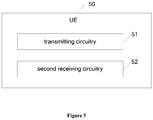
- Figure 5 schematically illustrates a structural diagram of the base station.
- the base station 50 includes a transmitting circuitry 51 and a second receiving circuitry 52.
- the transmitting circuitry 51 is configured to transmit signaling to a UE, where the signaling includes a preset threshold parameter.
- the second receiving circuitry 52 is configured to receive a PHR from the UE.
- a computer readable storage medium having computer instructions stored therein is provided, where once the computer instructions are executed, the method for reporting power headroom or the method for receiving power headroom is performed.
- the computer readable storage medium is a non-volatile or non-transient storage medium.
- a communication system including a memory and a processor
- the memory has computer instructions stored therein, and once the processor executes the computer instructions, the method for reporting power headroom or the method for receiving power headroom is performed.
- the computer program may be stored in a readable storage medium, such as a magnetic disk, an optical disk, a Read-Only Memory (ROM) or a Random Access Memory (RAM).
- a readable storage medium such as a magnetic disk, an optical disk, a Read-Only Memory (ROM) or a Random Access Memory (RAM).
Landscapes
- Engineering & Computer Science (AREA)
- Computer Networks & Wireless Communication (AREA)
- Signal Processing (AREA)
- Mobile Radio Communication Systems (AREA)
Abstract
Description
- The present application claims priority to Chinese patent application No.
201810033668.4, filed on January 12, 2018 - The present disclosure generally relates to communication field, and more particularly, to a method for reporting power headroom, a method for receiving power headroom, a user equipment, a base station, a medium and a system.
- In a Long Term Evolution (LTE) system and a New Radio (NR) system, a User Equipment (UE) needs to transmit a Power Headroom Report (PHR) to a base station. The PHR includes parameters such as power headroom, a maximum transmission power and a cell identifier, which are used to indicate estimated information of used and remaining power of the UE. The base station allocates bandwidth resources and modulation orders for the UE to transmit data based on the PHR.
- In existing techniques, when the base station configures "multiple PHRs" for the UE, the UE is required to package power headroom of all uplink carriers that have uplink data transmission at a reporting time of PHRs to one PHR to be reported to the base station. However, due to hardware limitations such as processing capability of chips, in some scenarios, the UE is not capable of processing PHRs of multiple carriers in time, causing a network and the UE to misunderstand the reported power headroom, thereby affecting service quality of the network.
- For example, when the UE reports power headroom in a time slot n1 corresponding to a Component Carrier (CC) 1, and receives uplink transmission grant in a time slot n3 of a CC2 to be notified that uplink data needs to be transmitted in a time slot n2, where the time slot n1 and the time slots n2 partially overlap. As pipeline processing capability of the chip is limited, the UE is not capable of packaging the power headroom on the slot n2 corresponding to the CC2 into the PHR corresponding to the slot n1 corresponding to the CC1. However, based on appointment in a protocol, the base station considers that the PHR reported by the UE should include the power headroom on the time slot n2 corresponding to the CC2, causing the network and the UE to misunderstand the reported power headroom, thereby affecting service quality of the network.
- By embodiments of the present disclosure, when time slots corresponding to different carriers are overlapped, power headroom may still be accurately reported to the base station to prevent a network and a UE from misunderstanding the reported power headroom.
- In an embodiment of the present disclosure, a method for reporting power headroom is provided, including: determining a first carrier and a first time slot corresponding to the first carrier for transmitting a PHR; acquiring a second time slot for receiving transmission grant information and corresponding to at least one other carrier, where the transmission grant information is used to indicate to perform uplink data transmission in a third time slot; acquiring the third time slot which the uplink data transmission is performed in and corresponds to the at least one other carrier, where the third time slot overlaps with the first time slot in a time domain; determining whether a time difference between the second time slot and the first time slot is less than a preset threshold; rejecting reporting power headroom corresponding to the third time slot, if the time difference between the second time slot and the first time slot is less than the preset threshold; and reporting the power headroom corresponding to the third time slot, if the time difference between the second time slot and the first time slot is greater than or equal to the preset threshold.
- Optionally, the method may further include: if rejecting reporting the power headroom corresponding to the third time slot, generating the PHR based on power headroom corresponding to the first time slot; if reporting the power headroom corresponding to the third time slot, generating the PHR based on the power headroom corresponding to the first time slot and the power headroom corresponding to the third time slot; and reporting the PHR to the base station using the first time slot.
- Optionally, the method may further include: receiving signaling from the base station, where the signaling includes a preset threshold parameter; and determining the preset threshold based on the preset threshold parameter.
- Optionally, the signaling is Radio Resource Control (RRC) signaling.
- Optionally, the preset threshold parameter is time length.
- Optionally, the number of the at least one other carrier is one or more.
- In an embodiment of the present disclosure, a method for receiving power headroom is provided, including: transmitting signaling to a UE, where the signaling includes a preset threshold parameter; and receiving a PHR from the UE.
- In an embodiment of the present disclosure, a UE is provided, including: a first determining circuitry configured to determine a first carrier and a first time slot corresponding to the first carrier for transmitting a PHR; a first acquiring circuitry configured to acquire a second time slot for receiving transmission grant information and corresponding to at least one other carrier, where the transmission grant information is used to indicate to perform uplink data transmission in a third time slot; a second acquiring circuitry configured to acquire the third time slot which the uplink data transmission is performed in and corresponds to the at least one other carrier, where the third time slot overlaps with the first time slot in a time domain; a second determining circuitry configured to determine whether a time difference between the second time slot and the first time slot is less than a preset threshold; a first processing circuitry configured to reject reporting power headroom corresponding to the third time slot, if the time difference between the second time slot and the first time slot is less than the preset threshold; and a second processing circuitry configured to report the power headroom corresponding to the third time slot, if the time difference between the second time slot and the first time slot is greater than or equal to the preset threshold.
- Optionally, the UE may further include: a generating circuitry configured to: generate the PHR based on power headroom corresponding to the first time slot if the first processing circuitry rejects reporting the power headroom corresponding to the third time slot, and generate the PHR based on the power headroom corresponding to the first time slot and the power headroom corresponding to the third time slot if the first processing circuitry reports the power headroom corresponding to the third time slot; and a reporting circuitry configured to report the PHR to the base station using the first time slot.
- Optionally, the UE may further include: a first receiving circuitry configured to receive signaling from the base station, where the signaling includes a preset threshold parameter; and a third determining circuitry configured to determine the preset threshold based on the preset threshold parameter.
- Optionally, the signaling is RRC signaling.
- Optionally, the preset threshold parameter is time length.
- Optionally, the number of the at least one other carrier is one or more.
- In an embodiment of the present disclosure, a base station is provided, including: a transmitting circuitry configured to transmit signaling to a UE, where the signaling includes a preset threshold parameter; and a second receiving circuitry configured to receive a PHR from the UE.
- In an embodiment of the present disclosure, a computer readable storage medium having computer instructions stored therein is provided, where once the computer instructions are executed, the above method for reporting power headroom or the above method for receiving power headroom is performed.
- In an embodiment of the present disclosure, a communication system including a memory and a processor is provided, where the memory has computer instructions stored therein, and once the processor executes the computer instructions, the above method for reporting power headroom or the above method for receiving power headroom is performed.
- Embodiments of the present disclosure may provide following advantages. Whether the time difference between the second time slot corresponding to the at least one other carrier and the first time slot corresponding to the first carrier is less than the preset threshold is determined. If the time difference is less than the preset threshold, the UE rejects reporting power headroom corresponding to the third time slot; and if the time difference is greater than or equal to the preset threshold, the UE reports the power headroom corresponding to the third time slot. In this way, power headroom may be accurately reported to the base station to prevent a network and the UE from misunderstanding the reported power headroom.
- Further, by transmitting the signaling to the UE and receiving the PHR from the UE, the base station acquires the power headroom of the UE accurately, so as to schedule the UE with high efficiency.
-
-
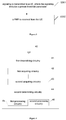
Figure 1 schematically illustrates that time slots corresponding to different carriers overlap in existing techniques; -
Figure 2 schematically illustrates a flow chart of a method for reporting power headroom according to an embodiment; -
Figure 3 schematically illustrates a flow chart of a method for receiving power headroom according to an embodiment; -
Figure 4 schematically illustrates a structural diagram of a UE according to an embodiment; and -
Figure 5 schematically illustrates a structural diagram of a base station according to an embodiment. - In existing techniques, when the base station configures "multiple PHRs" for the UE, the UE is required to package power headroom of all uplink carriers that have uplink data transmission at a reporting time of PHRs to one PHR to be reported to the base station. However, due to hardware limitations such as processing capability of chips, in some scenarios, the UE is not capable of processing PHRs of multiple carriers in time, causing a network and the UE to misunderstand the reported power headroom, thereby affecting service quality of the network.
- Referring to
Figure 1 , the UE supports two carriers, CC1 and CC2 respectively. The UE triggers power headroom reporting, and receives an uplink transmission grant of the CC1 at a time point of (n1-k1), which allows reporting a PHR in a time slot n1 corresponding to the CC1, and receives an uplink transmission grant of the CC2 at a time point of (n2-k2), which allows transmitting uplink data in the time slot n2 corresponding to the CC2. As the time slot n1 corresponding to the CC1 and the time slot n2 corresponding to the CC2 partially overlap, when the "multiple PHRs" are configured, the UE is required to package power headroom of the time slot n1 and power headroom of the time slot n2 to one PHR to be reported to the base station. However, due to hardware limitations such as processing capability of chips, in some scenarios, the UE is not capable of packaging the power headroom of the time slot n2 corresponding to the CC2 to the PHR to be reported, causing a network and the UE to misunderstand the reported power headroom, thereby affecting service quality of the network. - In embodiments of the present disclosure, whether the time difference between the second time slot corresponding to at least one other carrier and the first time slot corresponding to the first carrier is less than the preset threshold is determined. If the time difference is less than the preset threshold, the UE rejects reporting power headroom corresponding to the third time slot; and if the time difference is greater than or equal to the preset threshold, the UE reports the power headroom corresponding to the third time slot. In this way, power headroom may be accurately reported to the base station to prevent a network and the UE from misunderstanding the reported power headroom.
- In order to clarify the object, solutions and advantages of embodiments of the present disclosure, embodiments of present disclosure will be described clearly in detail in conjunction with accompanying drawings.
-
Figure 2 schematically illustrates a flow chart of a method for reporting power headroom according to an embodiment. Referring toFigure 2 , the method includes S201 to S206. - In S201, a first carrier and a first time slot corresponding to the first carrier for transmitting a PHR are determined.
- In some embodiments, when triggering PHR reporting, the UE needs to calculate power headroom on a time slot corresponding to a carrier of reporting the PHR. The power headroom on the time slot corresponding to the carrier of reporting the PHR is calculated according to descriptions in section 7.7.1 or 7.7.2 of 3GPP TS38.213. Power headroom Type 1 is calculated as follows,


- When the UE transmits a Sounding Reference Signal (SRS), power headroom Type 2 is calculated as follows,

- When the UE does not transmit an SRS, power headroom Type 2 is calculated as follows,

- In some embodiments, when the UE needs to report power headroom on the first time slot corresponding to the first carrier, power headroom on the first time slot corresponding to the first carrier requires to be calculated. The power headroom on the first time slot corresponding to the first carrier is power headroom corresponding to the first time slot corresponding to the first carrier. Therefore, it is required to determine the first carrier and the first time slot corresponding to the first carrier for transmitting the PHR. On the first time slot, the UE needs to calculate the power headroom and perform packaging and transmission.
- In S202, a second time slot for receiving transmission grant information and corresponding to at least one other carrier is acquired, where the transmission grant information indicates to perform uplink data transmission in a third time slot.
- In S203, the third time slot which the uplink data transmission is performed in and corresponds to the at least one other carrier is acquired, where the third time slot overlaps with the first time slot in a time domain.
- In some embodiments, when the base station configures "multiple PHRs" for the UE, the UE is required to package power headroom of all uplink carriers that have uplink data transmission at a reporting time of PHRs to one PHR to be reported to the base station. Therefore, the third time slot which the uplink data transmission is performed in and corresponds to the at least one other carrier needs to be acquired, and the third time slot overlaps with the first time slot in a time domain.
- In some embodiments, due to hardware limitations such as processing capability of chips, the UE is not capable of packaging all the power headroom corresponding to the third time slot into the PHR corresponding to the first time slot. Therefore, a position of a time slot where transmission grant information allowing data to be transmitted in the third time slot is located needs to be determined. For example, the UE receives at a time point of T1 transmission grant information (i.e., scheduling indication information from the base station) which allows the UE to perform uplink data transmission at a time point of T2, where the time point of T1 is the second time slot and the time point of T2 is the third time slot.
- In S204, whether a time difference between the second time slot and the first time slot is less than a preset threshold is determined; and if the time difference is less than the preset threshold, S205 is performed, or else, S206 is performed.
- In some embodiments, whether a chip is capable of processing the power headroom of the third time slot is determined based on the time difference between the second time slot and the first time slot. If the time difference between the second time slot and the first time slot is less than the preset threshold, it is determined that the time difference is too small. Therefore, it can be determined that the chip is not capable of processing the power headroom of the third time slot. Otherwise, it is determined that the chip is capable of processing the power headroom of the third time slot.
- In some embodiments, the preset threshold is determined based on signaling received from the base station. In some embodiments, the method may further include: receiving signaling from the base station, where the signaling includes a preset threshold parameter; and determining the preset threshold based on the preset threshold parameter.
- In some embodiments, the signaling is RRC signaling.
- In some embodiments, the preset threshold parameter is time length, such as 1 millisecond or 1 microsecond.
- In some embodiments, a unit of the time length is millisecond or microsecond.
- In some embodiments, a unit of the time length is Orthogonal Frequency Division Multiplexing (OFDM) symbol.
- In some embodiments, a unit of the time length is time slot.
- In S205, the UE rejects reporting power headroom corresponding to the third time slot.
- In some embodiments, if the time difference between the second time slot and the first time slot is less than the preset threshold, it is determined that the chip is not capable of processing the power headroom of the third time slot. Therefore, the UE rejects reporting the power headroom corresponding to the third time slot.
- In S206, the UE reports the power headroom corresponding to the third time slot.
- In some embodiments, if the time difference between the second time slot and the first time slot is greater than or equal to the preset threshold, it is determined that the chip is capable of processing the power headroom of the third time slot. Therefore, the UE reports the power headroom corresponding to the third time slot.
- In some embodiments, if rejecting reporting the power headroom corresponding to the third time slot, the UE generates the PHR based on power headroom corresponding to the first time slot. If reporting the power headroom corresponding to the third time slot, the UE generates the PHR based on the power headroom corresponding to the first time slot and the power headroom corresponding to the third time slot. The PHR is reported to the base station using the first time slot.
- In some embodiments, the number of the at least one other carrier is one or more.
- By the above embodiments, whether the time difference between the second time slot corresponding to the at least one other carrier and the first time slot corresponding to the first carrier is less than the preset threshold is determined. If the time difference is less than the preset threshold, the UE rejects reporting power headroom corresponding to the third time slot; and if the time difference is greater than or equal to the preset threshold, the UE reports the power headroom corresponding to the third time slot. In this way, power headroom may be accurately reported to the base station to prevent a network and the UE from misunderstanding the reported power headroom.
-
Figure 3 schematically illustrates a flow chart of a method for receiving power headroom according to an embodiment. Referring toFigure 3 , the method includes S301 and S302. - In S301, signaling is transmitted to a UE, where the signaling includes a preset threshold parameter.
- In S302, a PHR is received from the UE.
- In the above embodiments, by transmitting the signaling to the UE and receiving the PHR from the UE, the base station acquires the power headroom of the UE accurately, so as to schedule the UE with high efficiency.
- To make those skilled in the art better understand and implement solutions of the present disclosure, embodiments of the present disclosure also provide a UE for implementing the above method for reporting power headroom.
Figure 4 schematically illustrates a structural diagram of the UE. - Referring to
Figure 4 , theUE 40 includes a first determiningcircuitry 41, a first acquiringcircuitry 42, a second acquiringcircuitry 43, a second determiningcircuitry 44, afirst processing circuitry 45 and asecond processing circuitry 46. - The first determining
circuitry 41 is configured to determine a first carrier and a first time slot corresponding to the first carrier for transmitting a PHR. - The first acquiring
circuitry 42 is configured to acquire a second time slot for receiving transmission grant information and corresponding to at least one other carrier, where the transmission grant information is used to indicate to perform uplink data transmission in a third time slot. - The second acquiring
circuitry 43 is configured to acquire the third time slot which the uplink data transmission is performed in and corresponds to the at least one other carrier, where the third time slot overlaps with the first time slot in a time domain. - The second determining
circuitry 44 is configured to determine whether a time difference between the second time slot and the first time slot is less than a preset threshold. - The
first processing circuitry 45 is configured to reject reporting power headroom corresponding to the third time slot, if the time difference between the second time slot and the first time slot is less than the preset threshold. - The
second processing circuitry 46 is configured to report the power headroom corresponding to the third time slot, if the time difference between the second time slot and the first time slot is greater than or equal to the preset threshold. - In some embodiments, the
UE 40 may further include a generating circuitry (not shown) and a reporting circuitry (not shown). - The generating circuitry is configured to: generate the PHR based on power headroom corresponding to the first time slot if the first processing circuitry rejects reporting the power headroom corresponding to the third time slot, and generate the PHR based on the power headroom corresponding to the first time slot and the power headroom corresponding to the third time slot if the first processing circuitry reports the power headroom corresponding to the third time slot.
- The reporting circuitry is configured to report the PHR to the base station using the first time slot.
- In some embodiments, the
UE 40 may further include a first receiving circuitry (not shown) and a third determining circuitry (not shown). - The first receiving circuitry is configured to receive signaling from the base station, where the signaling includes a preset threshold parameter.
- The third determining circuitry is configured to determine the preset threshold based on the preset threshold parameter.
- In some embodiments, the signaling is RRC signaling.
- In some embodiments, the preset threshold parameter is time length.
- In some embodiments, a unit of the time length is millisecond or microsecond.
- In some embodiments, a unit of the time length is OFDM symbol.
- In some embodiments, a unit of the time length is time slot.
- In some embodiments, the number of the at least one other carrier is one or more.
- Operation procedures and principles of the
UE 40 can be referred to the descriptions of the method for reporting power headroom provided in the above embodiments, and are not described in detail here. - To make those skilled in the art better understand and implement solutions of the present disclosure, embodiments of the present disclosure also provide a base station for implementing the above method for receiving power headroom.
Figure 5 schematically illustrates a structural diagram of the base station. - Referring to
Figure 5 , thebase station 50 includes a transmittingcircuitry 51 and asecond receiving circuitry 52. - The transmitting
circuitry 51 is configured to transmit signaling to a UE, where the signaling includes a preset threshold parameter. - The
second receiving circuitry 52 is configured to receive a PHR from the UE. - Operation procedures and principles of the
base station 50 can be referred to the descriptions of the method for receiving power headroom provided in the above embodiments, and are not described in detail here. - In an embodiment of the present disclosure, a computer readable storage medium having computer instructions stored therein is provided, where once the computer instructions are executed, the method for reporting power headroom or the method for receiving power headroom is performed. The computer readable storage medium is a non-volatile or non-transient storage medium.
- In an embodiment of the present disclosure, a communication system including a memory and a processor is provided, where the memory has computer instructions stored therein, and once the processor executes the computer instructions, the method for reporting power headroom or the method for receiving power headroom is performed.
- Those skilled in the art can understand that all of or a portion of the processes in the method provided in the above embodiments can be implemented by related hardware with instruction of computer program. The computer program may be stored in a readable storage medium, such as a magnetic disk, an optical disk, a Read-Only Memory (ROM) or a Random Access Memory (RAM).
- Although the present disclosure has been disclosed above with reference to preferred embodiments thereof, it should be understood that the disclosure is presented by way of example only, and not limitation. Those skilled in the art can modify and vary the embodiments without departing from the spirit and scope of the present disclosure.
Claims (16)
- A method for reporting power headroom, comprising:determining a first carrier and a first time slot corresponding to the first carrier for transmitting a power headroom report (PHR);acquiring a second time slot for receiving transmission grant information and corresponding to at least one other carrier, wherein the transmission grant information is used to indicate to perform uplink data transmission in a third time slot;acquiring the third time slot which the uplink data transmission is performed in and corresponds to the at least one other carrier, wherein the third time slot overlaps with the first time slot in a time domain;determining whether a time difference between the second time slot and the first time slot is less than a preset threshold;rejecting reporting power headroom corresponding to the third time slot, if the time difference between the second time slot and the first time slot is less than the preset threshold; andreporting the power headroom corresponding to the third time slot, if the time difference between the second time slot and the first time slot is greater than or equal to the preset threshold.
- The method according to claim 1, further comprising:if rejecting reporting the power headroom corresponding to the third time slot, generating the PHR based on power headroom corresponding to the first time slot;if reporting the power headroom corresponding to the third time slot, generating the PHR based on the power headroom corresponding to the first time slot and the power headroom corresponding to the third time slot; andreporting the PHR to the base station using the first time slot.
- The method according to claim 1, further comprising:receiving signaling from the base station, where the signaling comprises a preset threshold parameter; anddetermining the preset threshold based on the preset threshold parameter.
- The method according to claim 3, wherein the signaling is Radio Resource Control (RRC) signaling.
- The method according to claim 3, wherein the preset threshold parameter is time length.
- The method according to claim 1, wherein the number of the at least one other carrier is one or more.
- A method for receiving power headroom, comprising:transmitting signaling to a User Equipment (UE), wherein the signaling comprises a preset threshold parameter; andreceiving a power headroom report from the UE.
- A User Equipment (UE), comprising:a first determining circuitry configured to determine a first carrier and a first time slot corresponding to the first carrier for transmitting a power headroom report (PHR);a first acquiring circuitry configured to acquire a second time slot for receiving transmission grant information and corresponding to at least one other carrier, wherein the transmission grant information is used to indicate to perform uplink data transmission in a third time slot;a second acquiring circuitry configured to acquire the third time slot which the uplink data transmission is performed in and corresponds to the at least one other carrier, wherein the third time slot overlaps with the first time slot in a time domain;a second determining circuitry configured to determine whether a time difference between the second time slot and the first time slot is less than a preset threshold;a first processing circuitry configured to reject reporting power headroom corresponding to the third time slot, if the time difference between the second time slot and the first time slot is less than the preset threshold; anda second processing circuitry configured to report the power headroom corresponding to the third time slot, if the time difference between the second time slot and the first time slot is greater than or equal to the preset threshold.
- The UE according to claim 8, further comprising:a generating circuitry configured to: generate the PHR based on power headroom corresponding to the first time slot if the first processing circuitry rejects reporting the power headroom corresponding to the third time slot, and generate the PHR based on the power headroom corresponding to the first time slot and the power headroom corresponding to the third time slot if the first processing circuitry reports the power headroom corresponding to the third time slot; anda reporting circuitry configured to report the PHR to the base station using the first time slot.
- The UE according to claim 8, further comprising:a first receiving circuitry configured to receive signaling from the base station, where the signaling comprises a preset threshold parameter; anda third determining circuitry configured to determine the preset threshold based on the preset threshold parameter.
- The UE according to claim 10, wherein the signaling is Radio Resource Control (RRC) signaling.
- The UE according to claim 10, wherein the preset threshold parameter is time length.
- The UE according to claim 8, wherein the number of the at least one other carrier is one or more.
- Abase station, comprising:a transmitting circuitry configured to transmit signaling to a User Equipment (UE), wherein the signaling comprises a preset threshold parameter; anda second receiving circuitry configured to receive a power headroom report from the UE.
- A computer readable storage medium having computer instructions stored therein, wherein once the computer instructions are executed, the method according to any one of claims 1 to 6 or the method according to claim 7 is performed.
- A communication system comprising a memory and a processor, wherein the memory has computer instructions stored therein, and once the processor executes the computer instructions, the method according to any one of claims 1 to 6 or the method according to claim 7 is performed.
Applications Claiming Priority (2)
| Application Number | Priority Date | Filing Date | Title |
|---|---|---|---|
| CN201810033668.4A CN110035490B (en) | 2018-01-12 | 2018-01-12 | Power headroom reporting method, user terminal and system |
| PCT/CN2018/124764 WO2019137244A1 (en) | 2018-01-12 | 2018-12-28 | Power headroom reporting and receiving method, user terminal, base station, medium and system |
Publications (3)
| Publication Number | Publication Date |
|---|---|
| EP3739971A1 true EP3739971A1 (en) | 2020-11-18 |
| EP3739971A4 EP3739971A4 (en) | 2021-10-27 |
| EP3739971B1 EP3739971B1 (en) | 2024-07-17 |
Family
ID=67219384
Family Applications (1)
| Application Number | Title | Priority Date | Filing Date |
|---|---|---|---|
| EP18900220.7A Active EP3739971B1 (en) | 2018-01-12 | 2018-12-28 | Method for reporting power headroom, method for receiving power headroom, user equipment, base station, medium and system |
Country Status (4)
| Country | Link |
|---|---|
| US (1) | US11202266B2 (en) |
| EP (1) | EP3739971B1 (en) |
| CN (1) | CN110035490B (en) |
| WO (1) | WO2019137244A1 (en) |
Families Citing this family (2)
| Publication number | Priority date | Publication date | Assignee | Title |
|---|---|---|---|---|
| CN113747559B (en) * | 2020-05-28 | 2023-04-25 | 维沃移动通信有限公司 | Method and device for reporting power headroom, terminal and readable storage medium |
| CN114598439B (en) * | 2022-05-09 | 2022-07-29 | 广州世炬网络科技有限公司 | PDCCH blind detection method, terminal and storage medium for 5G communication system |
Family Cites Families (12)
| Publication number | Priority date | Publication date | Assignee | Title |
|---|---|---|---|---|
| CN103220770B (en) | 2009-12-30 | 2016-12-07 | 华为技术有限公司 | A kind of Poewr control method and device |
| KR101471312B1 (en) * | 2010-08-17 | 2014-12-09 | 모토로라 모빌리티 엘엘씨 | Method and apparatus for power headroom reporting during multi-carrier operation |
| US9521632B2 (en) | 2011-08-15 | 2016-12-13 | Google Technology Holdings LLC | Power allocation for overlapping transmission when multiple timing advances are used |
| KR101986865B1 (en) | 2011-11-04 | 2019-06-07 | 인터디지탈 패튼 홀딩스, 인크 | Method and apparatus for power control for wireless transmissions on multiple component carriers associated with multiple timing advances |
| US9801140B2 (en) | 2014-02-11 | 2017-10-24 | Lg Electronics Inc. | Method and apparatus for controlling uplink power in wireless |
| US9357510B2 (en) | 2014-03-31 | 2016-05-31 | Qualcomm Incorporated | Power sharing and power headroom reporting in dual connectivity scenarios |
| WO2015188316A1 (en) * | 2014-06-10 | 2015-12-17 | 华为技术有限公司 | Method, device and system for processing power headroom report |
| EP3172923B1 (en) * | 2014-07-23 | 2019-10-23 | Samsung Electronics Co., Ltd. | Method and apparatus for generating and transmitting power headroom report in mobile communication system |
| JP5890879B1 (en) * | 2014-09-25 | 2016-03-22 | 株式会社Nttドコモ | User apparatus, base station, uplink transmission power report method, and parameter notification method |
| US10701717B2 (en) * | 2017-07-05 | 2020-06-30 | Qualcomm Incorporated | Coexistence of autonomous and grant based uplink transmissions |
| CN109286973B (en) * | 2017-07-21 | 2021-10-19 | 夏普株式会社 | User power headroom reporting related method, user equipment and base station |
| EP3698582B1 (en) * | 2017-11-15 | 2022-09-14 | Convida Wireless, LLC | Method and device for power headroom reporting in 5g nr |
-
2018
- 2018-01-12 CN CN201810033668.4A patent/CN110035490B/en active Active
- 2018-12-28 EP EP18900220.7A patent/EP3739971B1/en active Active
- 2018-12-28 US US16/961,805 patent/US11202266B2/en active Active
- 2018-12-28 WO PCT/CN2018/124764 patent/WO2019137244A1/en not_active Ceased
Also Published As
| Publication number | Publication date |
|---|---|
| US20210007061A1 (en) | 2021-01-07 |
| WO2019137244A1 (en) | 2019-07-18 |
| US11202266B2 (en) | 2021-12-14 |
| EP3739971B1 (en) | 2024-07-17 |
| CN110035490A (en) | 2019-07-19 |
| CN110035490B (en) | 2020-01-03 |
| EP3739971A4 (en) | 2021-10-27 |
Similar Documents
| Publication | Publication Date | Title |
|---|---|---|
| CN112088550B (en) | Method and apparatus for sending uplink transmission based on path loss estimation | |
| US11785551B2 (en) | Data transmission method and terminal device thereof | |
| US10813129B2 (en) | Method and apparatus for sending and receiving uplink data, terminal, and base station | |
| EP4008150B1 (en) | Method of transmitting secondary cell beam failure recovery request information and related device | |
| EP3883304A1 (en) | Method and apparatus for power control and multiplexing for device to device communication in wireless cellular communication system | |
| EP2838302B1 (en) | Mobile station | |
| EP3198816B1 (en) | Method for fast channel measurement and feedback in a lte licensed-assisted access based communication system | |
| KR102600359B1 (en) | Improved Scheduling in Wireless Communications | |
| EP3151613B1 (en) | User equipment and power allocation method | |
| WO2021110156A1 (en) | Methods for channel occupancy time sharing, user equipment, base station and computer readable medium | |
| EP3739984A1 (en) | Power headroom reporting and receiving method, and user terminal, base station, medium and system | |
| WO2022027302A1 (en) | Methods and apparatuses for uplink signal transmissions | |
| EP4080961A1 (en) | Interface sharing method and electronic devices | |
| US11202266B2 (en) | Method for reporting power headroom, method for receiving power headroom, user equipment, base station, medium and system | |
| EP3641194A1 (en) | Uplink control channel transmitting method, receiving method, device, terminal and base station | |
| US12532356B2 (en) | Methods, devices and computer readable media for communication on unlicensed band | |
| US10645723B2 (en) | Signal transmission method, signal transmission control method, user equipment, and base station | |
| US20200366438A1 (en) | Adaptation Of On/Off Mask For NR With Different Numerologies | |
| US20180035428A1 (en) | Method for configuring frame structure, user equipment and network equipment | |
| US20200059920A1 (en) | Uplink control channel transmission in unlicensed communication spectrum | |
| US20260121718A1 (en) | Event-based channel state information in pusch |
Legal Events
| Date | Code | Title | Description |
|---|---|---|---|
| STAA | Information on the status of an ep patent application or granted ep patent |
Free format text: STATUS: THE INTERNATIONAL PUBLICATION HAS BEEN MADE |
|
| PUAI | Public reference made under article 153(3) epc to a published international application that has entered the european phase |
Free format text: ORIGINAL CODE: 0009012 |
|
| STAA | Information on the status of an ep patent application or granted ep patent |
Free format text: STATUS: REQUEST FOR EXAMINATION WAS MADE |
|
| 17P | Request for examination filed |
Effective date: 20200812 |
|
| AK | Designated contracting states |
Kind code of ref document: A1 Designated state(s): AL AT BE BG CH CY CZ DE DK EE ES FI FR GB GR HR HU IE IS IT LI LT LU LV MC MK MT NL NO PL PT RO RS SE SI SK SM TR |
|
| AX | Request for extension of the european patent |
Extension state: BA ME |
|
| DAV | Request for validation of the european patent (deleted) | ||
| DAX | Request for extension of the european patent (deleted) | ||
| A4 | Supplementary search report drawn up and despatched |
Effective date: 20210923 |
|
| RIC1 | Information provided on ipc code assigned before grant |
Ipc: H04W 52/14 20090101ALI20210917BHEP Ipc: H04W 52/34 20090101ALI20210917BHEP Ipc: H04W 52/38 20090101ALI20210917BHEP Ipc: H04W 52/36 20090101AFI20210917BHEP |
|
| GRAP | Despatch of communication of intention to grant a patent |
Free format text: ORIGINAL CODE: EPIDOSNIGR1 |
|
| STAA | Information on the status of an ep patent application or granted ep patent |
Free format text: STATUS: GRANT OF PATENT IS INTENDED |
|
| INTG | Intention to grant announced |
Effective date: 20240229 |
|
| GRAS | Grant fee paid |
Free format text: ORIGINAL CODE: EPIDOSNIGR3 |
|
| GRAA | (expected) grant |
Free format text: ORIGINAL CODE: 0009210 |
|
| STAA | Information on the status of an ep patent application or granted ep patent |
Free format text: STATUS: THE PATENT HAS BEEN GRANTED |
|
| AK | Designated contracting states |
Kind code of ref document: B1 Designated state(s): AL AT BE BG CH CY CZ DE DK EE ES FI FR GB GR HR HU IE IS IT LI LT LU LV MC MK MT NL NO PL PT RO RS SE SI SK SM TR |
|
| REG | Reference to a national code |
Ref country code: CH Ref legal event code: EP |
|
| REG | Reference to a national code |
Ref country code: DE Ref legal event code: R096 Ref document number: 602018072021 Country of ref document: DE |
|
| REG | Reference to a national code |
Ref country code: IE Ref legal event code: FG4D |
|
| REG | Reference to a national code |
Ref country code: LT Ref legal event code: MG9D |
|
| REG | Reference to a national code |
Ref country code: NL Ref legal event code: MP Effective date: 20240717 |
|
| PG25 | Lapsed in a contracting state [announced via postgrant information from national office to epo] |
Ref country code: PT Free format text: LAPSE BECAUSE OF FAILURE TO SUBMIT A TRANSLATION OF THE DESCRIPTION OR TO PAY THE FEE WITHIN THE PRESCRIBED TIME-LIMIT Effective date: 20241118 |
|
| REG | Reference to a national code |
Ref country code: AT Ref legal event code: MK05 Ref document number: 1705276 Country of ref document: AT Kind code of ref document: T Effective date: 20240717 |
|
| PG25 | Lapsed in a contracting state [announced via postgrant information from national office to epo] |
Ref country code: NL Free format text: LAPSE BECAUSE OF FAILURE TO SUBMIT A TRANSLATION OF THE DESCRIPTION OR TO PAY THE FEE WITHIN THE PRESCRIBED TIME-LIMIT Effective date: 20240717 |
|
| PG25 | Lapsed in a contracting state [announced via postgrant information from national office to epo] |
Ref country code: PT Free format text: LAPSE BECAUSE OF FAILURE TO SUBMIT A TRANSLATION OF THE DESCRIPTION OR TO PAY THE FEE WITHIN THE PRESCRIBED TIME-LIMIT Effective date: 20241118 Ref country code: NL Free format text: LAPSE BECAUSE OF FAILURE TO SUBMIT A TRANSLATION OF THE DESCRIPTION OR TO PAY THE FEE WITHIN THE PRESCRIBED TIME-LIMIT Effective date: 20240717 |
|
| PG25 | Lapsed in a contracting state [announced via postgrant information from national office to epo] |
Ref country code: NO Free format text: LAPSE BECAUSE OF FAILURE TO SUBMIT A TRANSLATION OF THE DESCRIPTION OR TO PAY THE FEE WITHIN THE PRESCRIBED TIME-LIMIT Effective date: 20241017 |
|
| PG25 | Lapsed in a contracting state [announced via postgrant information from national office to epo] |
Ref country code: GR Free format text: LAPSE BECAUSE OF FAILURE TO SUBMIT A TRANSLATION OF THE DESCRIPTION OR TO PAY THE FEE WITHIN THE PRESCRIBED TIME-LIMIT Effective date: 20241018 Ref country code: PL Free format text: LAPSE BECAUSE OF FAILURE TO SUBMIT A TRANSLATION OF THE DESCRIPTION OR TO PAY THE FEE WITHIN THE PRESCRIBED TIME-LIMIT Effective date: 20240717 Ref country code: FI Free format text: LAPSE BECAUSE OF FAILURE TO SUBMIT A TRANSLATION OF THE DESCRIPTION OR TO PAY THE FEE WITHIN THE PRESCRIBED TIME-LIMIT Effective date: 20240717 |
|
| PG25 | Lapsed in a contracting state [announced via postgrant information from national office to epo] |
Ref country code: BG Free format text: LAPSE BECAUSE OF FAILURE TO SUBMIT A TRANSLATION OF THE DESCRIPTION OR TO PAY THE FEE WITHIN THE PRESCRIBED TIME-LIMIT Effective date: 20240717 |
|
| PG25 | Lapsed in a contracting state [announced via postgrant information from national office to epo] |
Ref country code: LV Free format text: LAPSE BECAUSE OF FAILURE TO SUBMIT A TRANSLATION OF THE DESCRIPTION OR TO PAY THE FEE WITHIN THE PRESCRIBED TIME-LIMIT Effective date: 20240717 |
|
| PG25 | Lapsed in a contracting state [announced via postgrant information from national office to epo] |
Ref country code: IS Free format text: LAPSE BECAUSE OF FAILURE TO SUBMIT A TRANSLATION OF THE DESCRIPTION OR TO PAY THE FEE WITHIN THE PRESCRIBED TIME-LIMIT Effective date: 20241117 Ref country code: AT Free format text: LAPSE BECAUSE OF FAILURE TO SUBMIT A TRANSLATION OF THE DESCRIPTION OR TO PAY THE FEE WITHIN THE PRESCRIBED TIME-LIMIT Effective date: 20240717 |
|
| PG25 | Lapsed in a contracting state [announced via postgrant information from national office to epo] |
Ref country code: HR Free format text: LAPSE BECAUSE OF FAILURE TO SUBMIT A TRANSLATION OF THE DESCRIPTION OR TO PAY THE FEE WITHIN THE PRESCRIBED TIME-LIMIT Effective date: 20240717 |
|
| PG25 | Lapsed in a contracting state [announced via postgrant information from national office to epo] |
Ref country code: RS Free format text: LAPSE BECAUSE OF FAILURE TO SUBMIT A TRANSLATION OF THE DESCRIPTION OR TO PAY THE FEE WITHIN THE PRESCRIBED TIME-LIMIT Effective date: 20241017 Ref country code: ES Free format text: LAPSE BECAUSE OF FAILURE TO SUBMIT A TRANSLATION OF THE DESCRIPTION OR TO PAY THE FEE WITHIN THE PRESCRIBED TIME-LIMIT Effective date: 20240717 |
|
| PG25 | Lapsed in a contracting state [announced via postgrant information from national office to epo] |
Ref country code: RS Free format text: LAPSE BECAUSE OF FAILURE TO SUBMIT A TRANSLATION OF THE DESCRIPTION OR TO PAY THE FEE WITHIN THE PRESCRIBED TIME-LIMIT Effective date: 20241017 Ref country code: PL Free format text: LAPSE BECAUSE OF FAILURE TO SUBMIT A TRANSLATION OF THE DESCRIPTION OR TO PAY THE FEE WITHIN THE PRESCRIBED TIME-LIMIT Effective date: 20240717 Ref country code: NO Free format text: LAPSE BECAUSE OF FAILURE TO SUBMIT A TRANSLATION OF THE DESCRIPTION OR TO PAY THE FEE WITHIN THE PRESCRIBED TIME-LIMIT Effective date: 20241017 Ref country code: LV Free format text: LAPSE BECAUSE OF FAILURE TO SUBMIT A TRANSLATION OF THE DESCRIPTION OR TO PAY THE FEE WITHIN THE PRESCRIBED TIME-LIMIT Effective date: 20240717 Ref country code: IS Free format text: LAPSE BECAUSE OF FAILURE TO SUBMIT A TRANSLATION OF THE DESCRIPTION OR TO PAY THE FEE WITHIN THE PRESCRIBED TIME-LIMIT Effective date: 20241117 Ref country code: HR Free format text: LAPSE BECAUSE OF FAILURE TO SUBMIT A TRANSLATION OF THE DESCRIPTION OR TO PAY THE FEE WITHIN THE PRESCRIBED TIME-LIMIT Effective date: 20240717 Ref country code: GR Free format text: LAPSE BECAUSE OF FAILURE TO SUBMIT A TRANSLATION OF THE DESCRIPTION OR TO PAY THE FEE WITHIN THE PRESCRIBED TIME-LIMIT Effective date: 20241018 Ref country code: FI Free format text: LAPSE BECAUSE OF FAILURE TO SUBMIT A TRANSLATION OF THE DESCRIPTION OR TO PAY THE FEE WITHIN THE PRESCRIBED TIME-LIMIT Effective date: 20240717 Ref country code: ES Free format text: LAPSE BECAUSE OF FAILURE TO SUBMIT A TRANSLATION OF THE DESCRIPTION OR TO PAY THE FEE WITHIN THE PRESCRIBED TIME-LIMIT Effective date: 20240717 Ref country code: BG Free format text: LAPSE BECAUSE OF FAILURE TO SUBMIT A TRANSLATION OF THE DESCRIPTION OR TO PAY THE FEE WITHIN THE PRESCRIBED TIME-LIMIT Effective date: 20240717 Ref country code: AT Free format text: LAPSE BECAUSE OF FAILURE TO SUBMIT A TRANSLATION OF THE DESCRIPTION OR TO PAY THE FEE WITHIN THE PRESCRIBED TIME-LIMIT Effective date: 20240717 |
|
| PG25 | Lapsed in a contracting state [announced via postgrant information from national office to epo] |
Ref country code: DK Free format text: LAPSE BECAUSE OF FAILURE TO SUBMIT A TRANSLATION OF THE DESCRIPTION OR TO PAY THE FEE WITHIN THE PRESCRIBED TIME-LIMIT Effective date: 20240717 Ref country code: RO Free format text: LAPSE BECAUSE OF FAILURE TO SUBMIT A TRANSLATION OF THE DESCRIPTION OR TO PAY THE FEE WITHIN THE PRESCRIBED TIME-LIMIT Effective date: 20240717 Ref country code: SM Free format text: LAPSE BECAUSE OF FAILURE TO SUBMIT A TRANSLATION OF THE DESCRIPTION OR TO PAY THE FEE WITHIN THE PRESCRIBED TIME-LIMIT Effective date: 20240717 |
|
| REG | Reference to a national code |
Ref country code: DE Ref legal event code: R097 Ref document number: 602018072021 Country of ref document: DE |
|
| PG25 | Lapsed in a contracting state [announced via postgrant information from national office to epo] |
Ref country code: EE Free format text: LAPSE BECAUSE OF FAILURE TO SUBMIT A TRANSLATION OF THE DESCRIPTION OR TO PAY THE FEE WITHIN THE PRESCRIBED TIME-LIMIT Effective date: 20240717 |
|
| PG25 | Lapsed in a contracting state [announced via postgrant information from national office to epo] |
Ref country code: CZ Free format text: LAPSE BECAUSE OF FAILURE TO SUBMIT A TRANSLATION OF THE DESCRIPTION OR TO PAY THE FEE WITHIN THE PRESCRIBED TIME-LIMIT Effective date: 20240717 |
|
| PG25 | Lapsed in a contracting state [announced via postgrant information from national office to epo] |
Ref country code: SK Free format text: LAPSE BECAUSE OF FAILURE TO SUBMIT A TRANSLATION OF THE DESCRIPTION OR TO PAY THE FEE WITHIN THE PRESCRIBED TIME-LIMIT Effective date: 20240717 |
|
| PLBE | No opposition filed within time limit |
Free format text: ORIGINAL CODE: 0009261 |
|
| STAA | Information on the status of an ep patent application or granted ep patent |
Free format text: STATUS: NO OPPOSITION FILED WITHIN TIME LIMIT |
|
| 26N | No opposition filed |
Effective date: 20250422 |
|
| PG25 | Lapsed in a contracting state [announced via postgrant information from national office to epo] |
Ref country code: MC Free format text: LAPSE BECAUSE OF FAILURE TO SUBMIT A TRANSLATION OF THE DESCRIPTION OR TO PAY THE FEE WITHIN THE PRESCRIBED TIME-LIMIT Effective date: 20240717 |
|
| REG | Reference to a national code |
Ref country code: CH Ref legal event code: PL |
|
| PG25 | Lapsed in a contracting state [announced via postgrant information from national office to epo] |
Ref country code: LU Free format text: LAPSE BECAUSE OF NON-PAYMENT OF DUE FEES Effective date: 20241228 |
|
| GBPC | Gb: european patent ceased through non-payment of renewal fee |
Effective date: 20241228 |
|
| PG25 | Lapsed in a contracting state [announced via postgrant information from national office to epo] |
Ref country code: SE Free format text: LAPSE BECAUSE OF FAILURE TO SUBMIT A TRANSLATION OF THE DESCRIPTION OR TO PAY THE FEE WITHIN THE PRESCRIBED TIME-LIMIT Effective date: 20240717 |
|
| REG | Reference to a national code |
Ref country code: BE Ref legal event code: MM Effective date: 20241231 |
|
| PG25 | Lapsed in a contracting state [announced via postgrant information from national office to epo] |
Ref country code: BE Free format text: LAPSE BECAUSE OF NON-PAYMENT OF DUE FEES Effective date: 20241231 Ref country code: GB Free format text: LAPSE BECAUSE OF NON-PAYMENT OF DUE FEES Effective date: 20241228 |
|
| PG25 | Lapsed in a contracting state [announced via postgrant information from national office to epo] |
Ref country code: FR Free format text: LAPSE BECAUSE OF NON-PAYMENT OF DUE FEES Effective date: 20241231 |
|
| PG25 | Lapsed in a contracting state [announced via postgrant information from national office to epo] |
Ref country code: CH Free format text: LAPSE BECAUSE OF NON-PAYMENT OF DUE FEES Effective date: 20241231 |
|
| PG25 | Lapsed in a contracting state [announced via postgrant information from national office to epo] |
Ref country code: IE Free format text: LAPSE BECAUSE OF NON-PAYMENT OF DUE FEES Effective date: 20241228 |
|
| PG25 | Lapsed in a contracting state [announced via postgrant information from national office to epo] |
Ref country code: IT Free format text: LAPSE BECAUSE OF FAILURE TO SUBMIT A TRANSLATION OF THE DESCRIPTION OR TO PAY THE FEE WITHIN THE PRESCRIBED TIME-LIMIT Effective date: 20240717 |
|
| PGFP | Annual fee paid to national office [announced via postgrant information from national office to epo] |
Ref country code: DE Payment date: 20251222 Year of fee payment: 8 |
|
| PG25 | Lapsed in a contracting state [announced via postgrant information from national office to epo] |
Ref country code: CY Free format text: LAPSE BECAUSE OF FAILURE TO SUBMIT A TRANSLATION OF THE DESCRIPTION OR TO PAY THE FEE WITHIN THE PRESCRIBED TIME-LIMIT Effective date: 20240717 |