EP3739493A1 - File verification method, file verification system and file verification server - Google Patents
File verification method, file verification system and file verification server Download PDFInfo
- Publication number
- EP3739493A1 EP3739493A1 EP19194749.8A EP19194749A EP3739493A1 EP 3739493 A1 EP3739493 A1 EP 3739493A1 EP 19194749 A EP19194749 A EP 19194749A EP 3739493 A1 EP3739493 A1 EP 3739493A1
- Authority
- EP
- European Patent Office
- Prior art keywords
- hash value
- file
- verification
- hash
- data structure
- Prior art date
- Legal status (The legal status is an assumption and is not a legal conclusion. Google has not performed a legal analysis and makes no representation as to the accuracy of the status listed.)
- Granted
Links
Images


Classifications
-
- G—PHYSICS
- G06—COMPUTING OR CALCULATING; COUNTING
- G06F—ELECTRIC DIGITAL DATA PROCESSING
- G06F21/00—Security arrangements for protecting computers, components thereof, programs or data against unauthorised activity
- G06F21/60—Protecting data
- G06F21/602—Providing cryptographic facilities or services
-
- G—PHYSICS
- G06—COMPUTING OR CALCULATING; COUNTING
- G06F—ELECTRIC DIGITAL DATA PROCESSING
- G06F21/00—Security arrangements for protecting computers, components thereof, programs or data against unauthorised activity
- G06F21/60—Protecting data
- G06F21/64—Protecting data integrity, e.g. using checksums, certificates or signatures
-
- G—PHYSICS
- G06—COMPUTING OR CALCULATING; COUNTING
- G06F—ELECTRIC DIGITAL DATA PROCESSING
- G06F16/00—Information retrieval; Database structures therefor; File system structures therefor
- G06F16/90—Details of database functions independent of the retrieved data types
- G06F16/901—Indexing; Data structures therefor; Storage structures
- G06F16/9027—Trees
-
- H—ELECTRICITY
- H04—ELECTRIC COMMUNICATION TECHNIQUE
- H04L—TRANSMISSION OF DIGITAL INFORMATION, e.g. TELEGRAPHIC COMMUNICATION
- H04L9/00—Cryptographic mechanisms or cryptographic arrangements for secret or secure communications; Network security protocols
- H04L9/06—Cryptographic mechanisms or cryptographic arrangements for secret or secure communications; Network security protocols the encryption apparatus using shift registers or memories for block-wise or stream coding, e.g. DES systems or RC4; Hash functions; Pseudorandom sequence generators
- H04L9/0618—Block ciphers, i.e. encrypting groups of characters of a plain text message using fixed encryption transformation
- H04L9/0637—Modes of operation, e.g. cipher block chaining [CBC], electronic codebook [ECB] or Galois/counter mode [GCM]
-
- H—ELECTRICITY
- H04—ELECTRIC COMMUNICATION TECHNIQUE
- H04L—TRANSMISSION OF DIGITAL INFORMATION, e.g. TELEGRAPHIC COMMUNICATION
- H04L9/00—Cryptographic mechanisms or cryptographic arrangements for secret or secure communications; Network security protocols
- H04L9/06—Cryptographic mechanisms or cryptographic arrangements for secret or secure communications; Network security protocols the encryption apparatus using shift registers or memories for block-wise or stream coding, e.g. DES systems or RC4; Hash functions; Pseudorandom sequence generators
- H04L9/0643—Hash functions, e.g. MD5, SHA, HMAC or f9 MAC
-
- H—ELECTRICITY
- H04—ELECTRIC COMMUNICATION TECHNIQUE
- H04L—TRANSMISSION OF DIGITAL INFORMATION, e.g. TELEGRAPHIC COMMUNICATION
- H04L9/00—Cryptographic mechanisms or cryptographic arrangements for secret or secure communications; Network security protocols
- H04L9/32—Cryptographic mechanisms or cryptographic arrangements for secret or secure communications; Network security protocols including means for verifying the identity or authority of a user of the system or for message authentication, e.g. authorization, entity authentication, data integrity or data verification, non-repudiation, key authentication or verification of credentials
- H04L9/3236—Cryptographic mechanisms or cryptographic arrangements for secret or secure communications; Network security protocols including means for verifying the identity or authority of a user of the system or for message authentication, e.g. authorization, entity authentication, data integrity or data verification, non-repudiation, key authentication or verification of credentials using cryptographic hash functions
- H04L9/3239—Cryptographic mechanisms or cryptographic arrangements for secret or secure communications; Network security protocols including means for verifying the identity or authority of a user of the system or for message authentication, e.g. authorization, entity authentication, data integrity or data verification, non-repudiation, key authentication or verification of credentials using cryptographic hash functions involving non-keyed hash functions, e.g. modification detection codes [MDCs], MD5, SHA or RIPEMD
-
- H—ELECTRICITY
- H04—ELECTRIC COMMUNICATION TECHNIQUE
- H04L—TRANSMISSION OF DIGITAL INFORMATION, e.g. TELEGRAPHIC COMMUNICATION
- H04L9/00—Cryptographic mechanisms or cryptographic arrangements for secret or secure communications; Network security protocols
- H04L9/50—Cryptographic mechanisms or cryptographic arrangements for secret or secure communications; Network security protocols using hash chains, e.g. blockchains or hash trees
-
- G—PHYSICS
- G06—COMPUTING OR CALCULATING; COUNTING
- G06F—ELECTRIC DIGITAL DATA PROCESSING
- G06F2221/00—Indexing scheme relating to security arrangements for protecting computers, components thereof, programs or data against unauthorised activity
- G06F2221/21—Indexing scheme relating to G06F21/00 and subgroups addressing additional information or applications relating to security arrangements for protecting computers, components thereof, programs or data against unauthorised activity
- G06F2221/2145—Inheriting rights or properties, e.g., propagation of permissions or restrictions within a hierarchy
Definitions
- the disclosure relates to a file verification method, and particularly relates to a file verification method, a file verification system and a file verification server applying a blockchain technique.
- the blockchain technique is composed of cryptography, mathematics, algorithms and economic models, and combines a point-to-point network relationship and adopts a distributed consensus algorithm to solve a synchronization problem of a conventional distributed database, which is a major breakthrough in integrating cross-domain technologies in modern times. Information recorded in the blockchain is not easily forged or cannot be tampered with.
- the disclosure is directed to a file verification method, a file verification system and a file verification server, which are adapted to verify correctness of an electronic file in a low cost and high security manner.
- the disclosure provides a file verification method, which includes following steps.
- a tree data structure is established according to a plurality of first hash values of a plurality of first electronic files.
- a first root hash value of the tree data structure is stored into a block of a blockchain.
- a verification data including block information of the block, one of the first hash values and at least one non-terminal hash value of the tree data structure is generated for one of the first electronic files.
- a second electronic file is verified according to the verification data.
- the disclosure provides a file verification system including a memory, a communication interface, one or a plurality of processors.
- the memory is configured to store data
- the communication interface is configured to connect a blockchain platform.
- the processor is coupled to the memory and the communication interface, and is configured to: establish a tree data structure according to a plurality of first hash values of a plurality of first electronic files; storea first root hash value of the tree data structure into a block of a blockchain; generate a verification data including block information of the block, one of the first hash values and at least one non-terminal hash value of the tree data structure for one of the first electronic files; and verify a second electronic file according to the verification data.
- the invention provides a file verification server including a memory, a communication interface and a processor.
- the memory is configured to store data
- the communication interface is configured to connect a blockchain platform.
- the processor is coupled to the memory and the communication interface, and is configured to: establish a tree data structure according to a plurality of first hash values of a plurality of first electronic files; store a first root hash value of the tree data structure into a block of a blockchain; generate a verification data including block information of the block, one of the first hash values and at least one non-terminal hash value of the tree data structure for one of the first electronic files.
- the tree data structure is established according to a plurality of first hash values of a plurality of first electronic files, and the first root hash value corresponding to the first electronic files is stored in the blockchain to ensure that the first root hash value is not tampered with.
- the verification data respectively corresponding to the first electronic files is also generated based on the tree data structure, so as to verify correctness of a second electronic file according to the generated verification data and the first root hash value recorded in the blockchain, and accordingly determine whether the second electronic file is a forged file generated by tampering with one of the first electronic files.
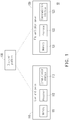
- FIG. 1 is a schematic diagram of a file verification system according to an embodiment of the invention. First, FIG. 1 introduces all components and configuration relationships of the system, and detailed functions thereof are disclosed with reference of FIG. 2 .
- the file verification system 10 includes a user end device 110, a file verification server 120 and a blockchain platform 130.
- the user end device 110 includes a memory 111, a processor 112 and a communication interface 113, which is, for example, an electronic device having a storage ability, such as a personal computer, a notebook computer, a server computer, a tablet computer, a smart phone, etc.
- the file verification server 120 includes a memory 121, a processor 122 and a communication interface 123, and is adapted to provide a file verification service to a user of the user end device 110 through a network.
- the user end device 110 is connected to the file verification server 120 through the network, such that the user may use the file verification service provided by the file verification server 120.
- the memories 111 and 121 are used for storing data file and software components, which may be any type of fixed or movable Random Access Memories (RAMs), Read-Only Memories (ROMs), flash memories, hard drives or other similar devices, integrated circuits or a combination thereof.
- RAMs Random Access Memories
- ROMs Read-Only Memories
- flash memories hard drives or other similar devices, integrated circuits or a combination thereof.
- the communication interfaces 113 and 123 may be electronic components such as wireless network communication chips, antennas, etc., that support any wired or wireless communication standard, and are used for connecting the file verification server 120 and the user end device 110 with other devices or platforms through the network.
- the processors 112 and 122 are respectively used for controlling operations of the components of the user end device 110 and the file verification server 120, and are adapted to execute the software components recorded by the memories 111 and 121, which are, for example, Central Processing Units (CPUs) or other programmable general purpose or special purpose microprocessors, Digital Signal Processors (DSPs), programmable controllers, Application Specific Integrated Circuits (ASICs), Programmable Logic Devices (PLDs) or other similar devices, integrated circuits or a combination thereof.
- CPUs Central Processing Units
- DSPs Digital Signal Processors
- ASICs Application Specific Integrated Circuits
- PLDs Programmable Logic Devices
- the blockchain platform 130 is connected to the user end device 110 and the file verification server 120 through the network.
- the blockchain platform 130 has a plurality of distributed computing node devices, and the computing node devices in the blockchain platform 130 are connected with each other through the network.
- the computing node devices in the blockchain platform 130 commonly maintain one blockchain, and such blockchain may be used for recording data that cannot be tampered with.
- the blockchain may be regarded as a decentralized database, which is maintained collectively by the computing node devices, thus making the data in block chains more reliable.
- the blockchain platform 130 may be an Ethereum blockchain platform.
- the user end device 110 or the file verification server 120 may transmit data to be stored to the blockchain platform 130, and the blockchain platform 130 records the received data to the blockchain according to a blockchain technique.
- the user end device 110 and the file verification server 120 may also retrieve the data that cannot be tampered with from the blockchain according to a block index provided by the blockchain platform 130.
- FIG. 2 is a flowchart illustrating a file verification method according to an embodiment of the invention, and the flow of FIG. 2 is adapted to the file verification system 10 of FIG. 1 , and the method of FIG. 2 is described below with reference of the embodiment of FIG. 1 .
- the processor 122 of the file verification server 120 establishes a tree data structure according to a plurality of first hash values of a plurality of first electronic files.
- the file verification server 120 may collect the first hash value of each of the first electronic files.
- the first electronic files may be document files, an image files, sound files or video files, etc., and the type of the first electronic files is not limited by the invention.
- the first electronic files may be stored in the user end device 110 and other user end devices connected to the file verification server 120. Alternatively, the first electronic files may also be stored in a cloud database.
- the first hash values may be generated by performing a hash processing on the first electronic files.
- the hash processing is a data one-way conversion operation for converting the first electronic file into a string composed of letters and numbers according to a hash algorithm, and the hash algorithm may be a Message-Digest Algorithm 5 (MD5), a Secure Hash Algorithm-1 (SHA1) or a Secure Hash Algorithm-256 (SHA256), etc.
- MD5 Message-Digest Algorithm 5
- SHA1 Secure Hash Algorithm-1
- SHA256 Secure Hash Algorithm-256
- the file verification server 120 After the file verification server 120 collects or generates a plurality of the first hash values of the plurality of first electronic files, the file verification server 120 establishes a tree data structure according to the first hash values.
- the tree data structure may be a Merkle tree of a binary structure, or a tree data structure established according to other rules.
- the file verification server 120 takes the first hash values as leaf nodes in the tree data structure, and generates non-terminal nodes located at intermediate layers by repeatedly executing the hash processing, and finally generates a root node located at a top layer, thereby establishing a complete tree data structure.
- the leaf nodes, the non-terminal nodes and the root node in the tree data structure are all hash values generated based on the hash processing.
- the processor 122 of the file verification server 120 stores a first root hash value of the tree data structure into a block of a blockchain.
- the file verification server 120 uploads the first root hash value to the blockchain platform 130, and the blockchain platform 130 generates a block according to the received first root has value, and connects the block to the blockchain.
- the blockchain platform 130 transmits block information of the block recording the first root hash value to the file verification server 120.
- the block information may include a block height, a transaction ID, a time stamp, etc.
- the processor 122 of the file verification server 120 generates a verification data including the block information of the block, one of the first hash values and at least one first non-terminal hash value of the tree data structure for one of the first electronic files.
- the file verification server 120 may generate the corresponding verification data for each of the first electronic files.
- the verification data of each of the first electronic files requires to include one of the first hash values and the at least one first non-terminal hash value of the tree data structure.
- the tree data structure is, for example, a Merkle tree of a binary structure.
- FIG. 3 is a schematic diagram of generating the verification data according to an embodiment of the invention.
- the file verification server 120 may obtain the first hash values Hash1, Hash2, Hash3 and Hash 4 of the first electronic files F1-F4 to accordingly establish a tree data structure T1.
- the tree data structure T1 includes the first hash values Hash1, Hash2, Hash3 and Hash 4 serving as leaf nodes, first non-terminal hash values Hash 12 and Hash34 serving as non-terminal node, and a first root hash value Hash1234 serving as a root node.
- the first non-terminal hash value Hash12 is generated by performing hash processing to a string generated by concatenating the first hash values Hash1 and Hash2.
- the first non-terminal hash value Hash34 is generated by performing hash processing to a string generated by concatenating the first hash values Hash3 and Hash4.
- the first root hash value Hash1234 is generated by performing hash processing to a string generated by concatenating the first non-terminal hash values Hash12 and Hash34.
- the first root hash value Hash1234 is at a top layer Lv3 of the tree data structure T1; the first non-terminal hash values Hash12 and Hash34 are located at an intermediate layer Lv2 of the tree data structure T1; and the first hash values Hash1, Hash2, Hash3 and Hash 4 are located at a bottom layer Lv1 of the tree data structure T1.
- the file verification server 120 After generating the first root hash value Hash1234 associated with the first electronic files F1-F4, the file verification server 120 stores the first root hash value Hash1234 to a block B1 of a blockchain BC1, and obtains block information BI1 of the block B1 from the blockchain platform 130.
- the file verification server 120 may respectively generate corresponding verification data for the first electronic files F1-F4 according to the block information BI1 and the hash values in the tree data structure T1. For example, when generating verification data PP1 for the first electronic file F2, the file verification server 120 may obtain the first hash value Hash1 of the first electronic file F1 adjacent to the first hash value Hash2 of the first electronic file F2 according to the structure of the tree data structure T1. Moreover, according to the structure of the tree data structure T1, the processor 122 of the file verification server 120 extracts at least one first non-terminal hash value Hash34 from each of the at least one intermediate layer Lv2 of the tree data structure T1.
- the file verification server 120 may combine the first hash value Hash1, the first non-terminal hash value Hash34 and the block information BI1 to generate the verification data PP1 of the first electronic file F2.
- verification data of the other first electronic files F1, F3 and F4 may also generated according to the same manner. Based on the aforementioned description, it is learned that each of the first electronic files F1-F4 has its own verification data, and the verification data are not all node data that store the entire tree data structure.
- the four first electronic files F1-F4 and the tree data structure T1 having one layer of the intermediate layer L2 are taken as an example for description, but the number of the first electronic files and the number of the intermediate layers are not limited by the invention. It is known that in other implementations, the verification data may include more first non-terminal hash values.
- the processor 112 of the user end device 110 verifies a second electronic file according to the verification data.
- the user end device 110 may calculate a second root hash value according to the hash values in the verification data and a second hash value of the second electronic file.
- the user end device 110 may obtain the first root hash value recorded by the blockchain from the blockchain platform 130 according to the block information in the verification data. In this way, by comparing the first root hash value and the second root hash value, the user end device 110 may determine whether the second electronic file passes the verification. If the second electronic file is generated by tampered with the firsts electronic file, the second root hash value is different to the first hash value recorded in the blockchain.
- step S204 may also be executed by the processor 122 of the file verification server 120.
- verification of the second electronic file may be executed by the user end device 110, the file verification server 120 or other device, which is not limited by the invention.
- the first electronic files may also be encrypted first, and the first hash values are generated by performing hash processing to the encrypted first electronic files. In this way, the confidentiality of the first electronic files may be ensured.
- the tree data structure is a binary tree data structure of a binary structure
- the file verification server 120 establishes the binary tree data structure according to the first hash value of the first electronic file and at least one redundant complement value.
- the file verification server 120 requires to set a redundant complement value to compensate for the non-existed first hash value Hash4, thereby establishing the binary tree data structure.
- the redundant complement value is, for example, a predetermined string composed of numbers and/or letters.
- the first electronic files may be respectively stored in a plurality of user end devices, and the file verification server 120 may collect the plurality of first hash values within a predetermined time interval (for example, 12 hours, 24 hours, etc.).
- the file verification server 120 may establish a tree data structure according to the collected first hash values every predetermined time interval. Then, the file verification server 120 may send the verification data to the user end device, such that the user end device may verify the second electronic file according to the verification data.
- FIG. 4 is a detailed flowchart of a method for verifying the second electronic file according to an embodiment of the invention, and the flow of FIG. 4 is adapted to the file verification system 10 of FIG. 1 , and the method of FIG. 4 is described below with reference of the embodiment of FIG. 1 .
- the processor 112 of the user end device 110 obtains the first root hash value from the blockchain according to the block information in the verification data.
- the user end device 110 may download the verification data from the file verification server 120, and inquire the blockchain according to the block information in the verification data to obtain the first root hash value that cannot be tampered with.
- the processor 112 of the user end device 110 performs hash processing to the second electronic file to generate a second hash value.
- the second electronic file to be verified is probably the original first electronic file, or is probably a forged file generated by intentionally tampering with the first electronic file by a person of intention.
- the user end device 110 may use an online public tool to perform the hash processing to the second electronic file to generate the second hash value of the second electronic file.
- the processor 112 of the user end device 110 performs hash processing according to at least one first non-terminal hash value in the verification data, one of the first hash values and the second hash value to generate a second root hash value.
- the user end device 110 generates the second root hash value according to the hash values corresponding to different data structure layers in the verification data and the second harsh value of the second electronic file.
- the processor 112 of the user end device 110 serially concatenates the second hash value of the second electronic file with the first hash value in the verification data to generate a first string, and performs hash processing to the first string to generate a second non-terminal hash value.
- the processor 112 of the user end device 110 serially concatenates at least one first non-terminal hash value in the verification data with the second non-terminal hash value to produce a second string, and performs hash processing to the second string to produce the second root hash value.
- a step S404 the processor 112 of the user end device 110 compares the second root hash value with the first root hash value stored in the blockchain to verify the second electronic file. It is learned that if the content of the second electronic file is different to the content of the first electronic file used for generating the verification data, the second root hash value is different to the first root hash value stored in the blockchain.
- the processor 112 of the user end device 110 determines whether the second root hash value is the same with the first root hash value. If yes, in a sub-step S4042, the processor 112 of the user end device 110 determines that the second electronic file passes the verification. In other words, if the second root hash value is the same with the first root hash value, it represents that the content of the second electronic file is the same with the content of the original first electronic file, and the user end device 110 determines that the second electronic file is correct and passes the verification. If not, in a sub-step S4043, the processor 112 of the user end device 110 determines that the second electronic file does not pass the verification.
- the second root hash value is different to the first root hash value, it represents that the content of the second electronic file is generated by tampering with the content of the first electronic file, and the user end device 110 determines that the second electronic file is incorrect and does not pass the verification.
- FIG. 5 is a schematic diagram of verifying the second electronic file according to an embodiment of the invention.
- the verification operation of FIG. 5 corresponds to the embodiment of FIG. 3 .
- the second electronic file F5 is correct, i.e. the content of the second electronic file F5 is the same with the content of the first electronic file F2 shown in FIG. 3 .
- the user end device 110 wants to verify whether the second electronic file F5 is correct, the user end device 110 performs hash processing to the second electronic file F5 to generate a second hash value Hash2.
- the user end device 110 retrieves the first hash value Hash1 from the verification data PP1, and serially concatenates the first hash value Hash1 with the second hash value Hash2 to generate a first string, and performs hash processing to the first string to generate a second non-terminal hash value Hash12. Then, the processor 112 of the user end device 110 serially concatenates at least one first non-terminal hash value Hash34 in the verification data with the second non-terminal hash value Hash12 to produce a second string, and performs hash processing to the second string to produce the second root hash value Hash1234.
- the second hash value Hash1234 generated according to the verification data PP1 in the verification phase is the same as the first hash value Hash1234 stored in the blockchain BC1. Therefore, the user end device 110 may determine that the second electronic file F5 is correct and passes the verification.
- FIG. 6 is a schematic diagram of verifying the second electronic file according to an embodiment of the invention.
- the verification operation of FIG. 6 corresponds to the embodiment of FIG. 3 .
- the second electronic file F5 is generated by tampering with the first electronic file F2 shown in FIG. 3 .
- the user end device 110 wants to verify whether the second electronic file F5 is correct, the user end device 110 performs hash processing to the second electronic file F5 to generate a second hash value Hash5.
- the user end device 110 performs hash processing according to the second hash value Hash5 and the first hash value Hash1 in the verification data PP1 and the first non-terminal hash value Hash34 to generate the second root hash value Hash1534. Since the second electronic file F5 is incorrect, the second hash value Hash1534 generated according to the verification data PP1 in the verification phase is different to the first hash value Hash1234 stored in the blockchain BC1. Therefore, the user end device 110 may determine that the second electronic file F5 is incorrect and does not pass the verification.
- FIG. 7 is a flowchart illustrating a file verification method according to an embodiment of the invention.
- a web browser 140 obtains a first electronic file stored by the user end device 110.
- the web browser 140 uses an online public tool to perform the hash processing to the first electronic file to obtain a first hash value.
- the web browser 140 uploads the first hash value to the file verification server 120.
- the file verification server 120 establishes a tree data structure according to a plurality of first hash values collected within a predetermined time interval.
- the file verification server 120 sends the first root hash value of the tree data structure to the blockchain platform 130.
- the blockchain platform 130 writes the first root hash value into a block of the blockchain.
- the blockchain platform 130 sends block information of the block to the file verification server 120.
- the file verification server 120 generates verification data of the first electronic file according to the tree data structure and the block information.
- the file verification server 120 sends the verification data to the user end device 110 through the web browser 140.
- the web browser 140 obtains the second electronic file to be verified by the user end device 110.
- the web browser 140 uses the online public tool to perform the hash processing to the second electronic file to obtain a first hash value.
- the user end device 110 sequentially transmits the hash values in the verification data to the web browser 140, and generates the second root hash value through the repeatedly executed hash processing.
- the user end device 110 inquires the blockchain according to the block information.
- the user end device 110 retrieves the first root hash value from the blockchain platform 130.
- the user end device 110 compares the first hash value and the second hash value to verify the second electronic file.
- the root hash value corresponding to a plurality of electronic files is recorded in the blockchain, which may greatly save storage and operation resources needed to establish the blockchain, so as to reduce the cost. Therefore, when correctness of an electronic file is to be verified, the electronic file may be verified according to the root hash value obtained from the blockchain and the hash values in the stored tree data structure, so as to determine whether the electronic file has been tampered with. In this way, the invention may verify and ensure the correctness of the electronic file in a low cost and high security way.
Landscapes
- Engineering & Computer Science (AREA)
- Computer Security & Cryptography (AREA)
- Theoretical Computer Science (AREA)
- Computer Networks & Wireless Communication (AREA)
- Signal Processing (AREA)
- Physics & Mathematics (AREA)
- Software Systems (AREA)
- General Engineering & Computer Science (AREA)
- General Physics & Mathematics (AREA)
- Databases & Information Systems (AREA)
- Health & Medical Sciences (AREA)
- Bioethics (AREA)
- General Health & Medical Sciences (AREA)
- Computer Hardware Design (AREA)
- Data Mining & Analysis (AREA)
- Power Engineering (AREA)
- Storage Device Security (AREA)
- Information Retrieval, Db Structures And Fs Structures Therefor (AREA)
Abstract
Description
- The disclosure relates to a file verification method, and particularly relates to a file verification method, a file verification system and a file verification server applying a blockchain technique.
- Electronic files have a risk of being easily tampered with and deleted without being detected. Therefore, a concept of storing the electronic files in a blockchain has been proposed to prevent data from being tampered with. The blockchain technique is composed of cryptography, mathematics, algorithms and economic models, and combines a point-to-point network relationship and adopts a distributed consensus algorithm to solve a synchronization problem of a conventional distributed database, which is a major breakthrough in integrating cross-domain technologies in modern times. Information recorded in the blockchain is not easily forged or cannot be tampered with.
- However, a block storage space of each block on the blockchain is limited. If the huge file data is split and written into multiple blocks, it is a waste of storage resources and computing resources, which leads to a high cost and impracticability. Therefore, how to make use of the characteristics of the blockchain to ensure data security is an issue of concern to people of the field.
- Therefore, the disclosure is directed to a file verification method, a file verification system and a file verification server, which are adapted to verify correctness of an electronic file in a low cost and high security manner.
- The disclosure provides a file verification method, which includes following steps. A tree data structure is established according to a plurality of first hash values of a plurality of first electronic files. A first root hash value of the tree data structure is stored into a block of a blockchain. A verification data including block information of the block, one of the first hash values and at least one non-terminal hash value of the tree data structure is generated for one of the first electronic files. A second electronic file is verified according to the verification data.
- The disclosure provides a file verification system including a memory, a communication interface, one or a plurality of processors. The memory is configured to store data, and the communication interface is configured to connect a blockchain platform. The processor is coupled to the memory and the communication interface, and is configured to: establish a tree data structure according to a plurality of first hash values of a plurality of first electronic files; storea first root hash value of the tree data structure into a block of a blockchain; generate a verification data including block information of the block, one of the first hash values and at least one non-terminal hash value of the tree data structure for one of the first electronic files; and verify a second electronic file according to the verification data.
- The invention provides a file verification server including a memory, a communication interface and a processor. The memory is configured to store data, and the communication interface is configured to connect a blockchain platform. The processor is coupled to the memory and the communication interface, and is configured to: establish a tree data structure according to a plurality of first hash values of a plurality of first electronic files; store a first root hash value of the tree data structure into a block of a blockchain; generate a verification data including block information of the block, one of the first hash values and at least one non-terminal hash value of the tree data structure for one of the first electronic files.
- Based on the above description, in the embodiment of the disclosure, the tree data structure is established according to a plurality of first hash values of a plurality of first electronic files, and the first root hash value corresponding to the first electronic files is stored in the blockchain to ensure that the first root hash value is not tampered with. Moreover, the verification data respectively corresponding to the first electronic files is also generated based on the tree data structure, so as to verify correctness of a second electronic file according to the generated verification data and the first root hash value recorded in the blockchain, and accordingly determine whether the second electronic file is a forged file generated by tampering with one of the first electronic files.
- To make the aforementioned more comprehensible, several embodiments accompanied with drawings are described in detail as follows.
- The accompanying drawings are included to provide a further understanding of the invention, and are incorporated in and constitute a part of this specification. The drawings illustrate embodiments of the invention and, together with the description, serve to explain the principles of the invention.
-
FIG. 1 is a schematic diagram of a file verification system according to an embodiment of the invention. -
FIG. 2 is a flowchart illustrating a file verification method according to an embodiment of the invention. -
FIG. 3 is a schematic diagram of generating verification data according to an embodiment of the invention. -
FIG. 4 is a detailed flowchart of a method for verifying a second electronic file according to an embodiment of the invention -
FIG. 5 is a schematic diagram of verifying the second electronic file according to an embodiment of the invention. -
FIG. 6 is a schematic diagram of verifying the second electronic file according to an embodiment of the invention. -
FIG. 7 is a flowchart illustrating a file verification method according to an embodiment of the invention. - Reference will now be made in detail to the present preferred embodiments of the invention, examples of which are illustrated in the accompanying drawings. Wherever possible, the same reference numbers are used in the drawings and the description to refer to the same or like parts. Theses exemplary embodiments are only a part of the disclosure, and the disclosure does not disclose all of the implementations. More precisely, these exemplary embodiments are only examples of the system and method in the claims of the disclosure.
-
FIG. 1 is a schematic diagram of a file verification system according to an embodiment of the invention. First,FIG. 1 introduces all components and configuration relationships of the system, and detailed functions thereof are disclosed with reference ofFIG. 2 . - Referring to
FIG. 1 , thefile verification system 10 includes auser end device 110, afile verification server 120 and ablockchain platform 130. Theuser end device 110 includes amemory 111, aprocessor 112 and acommunication interface 113, which is, for example, an electronic device having a storage ability, such as a personal computer, a notebook computer, a server computer, a tablet computer, a smart phone, etc. Thefile verification server 120 includes amemory 121, aprocessor 122 and acommunication interface 123, and is adapted to provide a file verification service to a user of theuser end device 110 through a network. In other words, theuser end device 110 is connected to thefile verification server 120 through the network, such that the user may use the file verification service provided by thefile verification server 120. - The
memories - The
communication interfaces file verification server 120 and theuser end device 110 with other devices or platforms through the network. - The
processors user end device 110 and thefile verification server 120, and are adapted to execute the software components recorded by thememories - The
blockchain platform 130 is connected to theuser end device 110 and thefile verification server 120 through the network. Theblockchain platform 130 has a plurality of distributed computing node devices, and the computing node devices in theblockchain platform 130 are connected with each other through the network. The computing node devices in theblockchain platform 130 commonly maintain one blockchain, and such blockchain may be used for recording data that cannot be tampered with. The blockchain may be regarded as a decentralized database, which is maintained collectively by the computing node devices, thus making the data in block chains more reliable. For example, theblockchain platform 130 may be an Ethereum blockchain platform. In an embodiment, theuser end device 110 or thefile verification server 120 may transmit data to be stored to theblockchain platform 130, and theblockchain platform 130 records the received data to the blockchain according to a blockchain technique. Moreover, theuser end device 110 and thefile verification server 120 may also retrieve the data that cannot be tampered with from the blockchain according to a block index provided by theblockchain platform 130. -
FIG. 2 is a flowchart illustrating a file verification method according to an embodiment of the invention, and the flow ofFIG. 2 is adapted to thefile verification system 10 ofFIG. 1 , and the method ofFIG. 2 is described below with reference of the embodiment ofFIG. 1 . - Referring to
FIG. 1 andFIG. 2 , in a step S201, theprocessor 122 of thefile verification server 120 establishes a tree data structure according to a plurality of first hash values of a plurality of first electronic files. In detail, thefile verification server 120 may collect the first hash value of each of the first electronic files. The first electronic files may be document files, an image files, sound files or video files, etc., and the type of the first electronic files is not limited by the invention. The first electronic files may be stored in theuser end device 110 and other user end devices connected to thefile verification server 120. Alternatively, the first electronic files may also be stored in a cloud database. - The first hash values may be generated by performing a hash processing on the first electronic files. The hash processing is a data one-way conversion operation for converting the first electronic file into a string composed of letters and numbers according to a hash algorithm, and the hash algorithm may be a Message-Digest Algorithm 5 (MD5), a Secure Hash Algorithm-1 (SHA1) or a Secure Hash Algorithm-256 (SHA256), etc. In the embodiment of the invention, the first hash values may be generated by the
user end device 110, thefile verification server 120 or other online tool providing device, which is not limited by the invention. After thefile verification server 120 collects or generates a plurality of the first hash values of the plurality of first electronic files, thefile verification server 120 establishes a tree data structure according to the first hash values. The tree data structure may be a Merkle tree of a binary structure, or a tree data structure established according to other rules. To be specific, thefile verification server 120 takes the first hash values as leaf nodes in the tree data structure, and generates non-terminal nodes located at intermediate layers by repeatedly executing the hash processing, and finally generates a root node located at a top layer, thereby establishing a complete tree data structure. In other words, the leaf nodes, the non-terminal nodes and the root node in the tree data structure are all hash values generated based on the hash processing. - In a step S202, the
processor 122 of thefile verification server 120 stores a first root hash value of the tree data structure into a block of a blockchain. In detail, thefile verification server 120 uploads the first root hash value to theblockchain platform 130, and theblockchain platform 130 generates a block according to the received first root has value, and connects the block to the blockchain. Moreover, after storing the first root hash value into the block of the blockchain, theblockchain platform 130 transmits block information of the block recording the first root hash value to thefile verification server 120. The block information may include a block height, a transaction ID, a time stamp, etc. - Then, in a step S203, the
processor 122 of thefile verification server 120 generates a verification data including the block information of the block, one of the first hash values and at least one first non-terminal hash value of the tree data structure for one of the first electronic files. To be specific, after the block information is obtained, thefile verification server 120 may generate the corresponding verification data for each of the first electronic files. In order to calculate a second root hash value used as a verification credential at a verification phase, the verification data of each of the first electronic files requires to include one of the first hash values and the at least one first non-terminal hash value of the tree data structure. - For example, in
FIG. 3 , the tree data structure is, for example, a Merkle tree of a binary structure.FIG. 3 is a schematic diagram of generating the verification data according to an embodiment of the invention. Referring toFIG. 3 , after performing the hash processing to the first electronic files F1-F4, thefile verification server 120 may obtain the first hash values Hash1, Hash2, Hash3 and Hash 4 of the first electronic files F1-F4 to accordingly establish a tree data structure T1. - The tree data structure T1 includes the first hash values Hash1, Hash2, Hash3 and Hash 4 serving as leaf nodes, first non-terminal hash values Hash 12 and Hash34 serving as non-terminal node, and a first root hash value Hash1234 serving as a root node. The first non-terminal hash value Hash12 is generated by performing hash processing to a string generated by concatenating the first hash values Hash1 and Hash2. The first non-terminal hash value Hash34 is generated by performing hash processing to a string generated by concatenating the first hash values Hash3 and Hash4. The first root hash value Hash1234 is generated by performing hash processing to a string generated by concatenating the first non-terminal hash values Hash12 and Hash34. The first root hash value Hash1234 is at a top layer Lv3 of the tree data structure T1; the first non-terminal hash values Hash12 and Hash34 are located at an intermediate layer Lv2 of the tree data structure T1; and the first hash values Hash1, Hash2, Hash3 and Hash 4 are located at a bottom layer Lv1 of the tree data structure T1.
- After generating the first root hash value Hash1234 associated with the first electronic files F1-F4, the
file verification server 120 stores the first root hash value Hash1234 to a block B1 of a blockchain BC1, and obtains block information BI1 of the block B1 from theblockchain platform 130. - Then, the
file verification server 120 may respectively generate corresponding verification data for the first electronic files F1-F4 according to the block information BI1 and the hash values in the tree data structure T1. For example, when generating verification data PP1 for the first electronic file F2, thefile verification server 120 may obtain the first hash value Hash1 of the first electronic file F1 adjacent to the first hash value Hash2 of the first electronic file F2 according to the structure of the tree data structure T1. Moreover, according to the structure of the tree data structure T1, theprocessor 122 of thefile verification server 120 extracts at least one first non-terminal hash value Hash34 from each of the at least one intermediate layer Lv2 of the tree data structure T1. In this case, when the verification data is generated for the first electronic file F2, the extracted first non-terminal hash value Hash34 and the first hash value Hash2 of the first electronic file F2 are located on different branches of the tree data structure T1. Finally, thefile verification server 120 may combine the first hash value Hash1, the first non-terminal hash value Hash34 and the block information BI1 to generate the verification data PP1 of the first electronic file F2. Similarly, verification data of the other first electronic files F1, F3 and F4 may also generated according to the same manner. Based on the aforementioned description, it is learned that each of the first electronic files F1-F4 has its own verification data, and the verification data are not all node data that store the entire tree data structure. - However, in
FIG. 3 , the four first electronic files F1-F4 and the tree data structure T1 having one layer of the intermediate layer L2 are taken as an example for description, but the number of the first electronic files and the number of the intermediate layers are not limited by the invention. It is known that in other implementations, the verification data may include more first non-terminal hash values. - Referring back to the flow of
FIG. 2 , finally, in a step S204, theprocessor 112 of theuser end device 110 verifies a second electronic file according to the verification data. To be specific, when theuser end device 110 wants to verify whether the content of the second electronic file is the same to the content of one of the first electronic files, theuser end device 110 may calculate a second root hash value according to the hash values in the verification data and a second hash value of the second electronic file. Moreover, theuser end device 110 may obtain the first root hash value recorded by the blockchain from theblockchain platform 130 according to the block information in the verification data. In this way, by comparing the first root hash value and the second root hash value, theuser end device 110 may determine whether the second electronic file passes the verification. If the second electronic file is generated by tampered with the firsts electronic file, the second root hash value is different to the first hash value recorded in the blockchain. - However, it should be noted that the step S204 may also be executed by the
processor 122 of thefile verification server 120. Namely, in case the verification data generated by thefile verification server 120 is obtained, verification of the second electronic file may be executed by theuser end device 110, thefile verification server 120 or other device, which is not limited by the invention. - It should be noted that in an embodiment of the invention, the first electronic files may also be encrypted first, and the first hash values are generated by performing hash processing to the encrypted first electronic files. In this way, the confidentiality of the first electronic files may be ensured. Moreover, when the tree data structure is a binary tree data structure of a binary structure, if the number of the first electronic files is not equal to 2n (n is a positive integer), i.e. the number of the first hash values is not equal to 2n, the
file verification server 120 establishes the binary tree data structure according to the first hash value of the first electronic file and at least one redundant complement value. Referring toFIG. 3 , it is assumed that the first electronic file F4 does not exist, thefile verification server 120 requires to set a redundant complement value to compensate for the non-existed first hash value Hash4, thereby establishing the binary tree data structure. The redundant complement value is, for example, a predetermined string composed of numbers and/or letters. - Moreover, in an embodiment of the invention, the first electronic files may be respectively stored in a plurality of user end devices, and the
file verification server 120 may collect the plurality of first hash values within a predetermined time interval (for example, 12 hours, 24 hours, etc.). In other words, thefile verification server 120 may establish a tree data structure according to the collected first hash values every predetermined time interval. Then, thefile verification server 120 may send the verification data to the user end device, such that the user end device may verify the second electronic file according to the verification data. - Details of the
user end device 110 verifying the second electronic file are described below.FIG. 4 is a detailed flowchart of a method for verifying the second electronic file according to an embodiment of the invention, and the flow ofFIG. 4 is adapted to thefile verification system 10 ofFIG. 1 , and the method ofFIG. 4 is described below with reference of the embodiment ofFIG. 1 . - Referring to
FIG. 1 to FIG. 4 , in a step S401, theprocessor 112 of theuser end device 110 obtains the first root hash value from the blockchain according to the block information in the verification data. To be specific, theuser end device 110 may download the verification data from thefile verification server 120, and inquire the blockchain according to the block information in the verification data to obtain the first root hash value that cannot be tampered with. In a step S402, theprocessor 112 of theuser end device 110 performs hash processing to the second electronic file to generate a second hash value. The second electronic file to be verified is probably the original first electronic file, or is probably a forged file generated by intentionally tampering with the first electronic file by a person of intention. Theuser end device 110 may use an online public tool to perform the hash processing to the second electronic file to generate the second hash value of the second electronic file. - Then, in a step S403, the
processor 112 of theuser end device 110 performs hash processing according to at least one first non-terminal hash value in the verification data, one of the first hash values and the second hash value to generate a second root hash value. To be specific, theuser end device 110 generates the second root hash value according to the hash values corresponding to different data structure layers in the verification data and the second harsh value of the second electronic file. In detail, theprocessor 112 of theuser end device 110 serially concatenates the second hash value of the second electronic file with the first hash value in the verification data to generate a first string, and performs hash processing to the first string to generate a second non-terminal hash value. Then, theprocessor 112 of theuser end device 110 serially concatenates at least one first non-terminal hash value in the verification data with the second non-terminal hash value to produce a second string, and performs hash processing to the second string to produce the second root hash value. - In a step S404, the
processor 112 of theuser end device 110 compares the second root hash value with the first root hash value stored in the blockchain to verify the second electronic file. It is learned that if the content of the second electronic file is different to the content of the first electronic file used for generating the verification data, the second root hash value is different to the first root hash value stored in the blockchain. - In detail, in a sub-step S4041, the
processor 112 of theuser end device 110 determines whether the second root hash value is the same with the first root hash value. If yes, in a sub-step S4042, theprocessor 112 of theuser end device 110 determines that the second electronic file passes the verification. In other words, if the second root hash value is the same with the first root hash value, it represents that the content of the second electronic file is the same with the content of the original first electronic file, and theuser end device 110 determines that the second electronic file is correct and passes the verification. If not, in a sub-step S4043, theprocessor 112 of theuser end device 110 determines that the second electronic file does not pass the verification. In other words, if the second root hash value is different to the first root hash value, it represents that the content of the second electronic file is generated by tampering with the content of the first electronic file, and theuser end device 110 determines that the second electronic file is incorrect and does not pass the verification. -
FIG. 5 is a schematic diagram of verifying the second electronic file according to an embodiment of the invention. The verification operation ofFIG. 5 corresponds to the embodiment ofFIG. 3 . It should be noted that in the case ofFIG. 5 , it is assumed that the second electronic file F5 is correct, i.e. the content of the second electronic file F5 is the same with the content of the first electronic file F2 shown inFIG. 3 . When theuser end device 110 wants to verify whether the second electronic file F5 is correct, theuser end device 110 performs hash processing to the second electronic file F5 to generate a second hash value Hash2. Then, theuser end device 110 retrieves the first hash value Hash1 from the verification data PP1, and serially concatenates the first hash value Hash1 with the second hash value Hash2 to generate a first string, and performs hash processing to the first string to generate a second non-terminal hash value Hash12. Then, theprocessor 112 of theuser end device 110 serially concatenates at least one first non-terminal hash value Hash34 in the verification data with the second non-terminal hash value Hash12 to produce a second string, and performs hash processing to the second string to produce the second root hash value Hash1234. Since the second electronic file F5 is correct, the second hash value Hash1234 generated according to the verification data PP1 in the verification phase is the same as the first hash value Hash1234 stored in the blockchain BC1. Therefore, theuser end device 110 may determine that the second electronic file F5 is correct and passes the verification. -
FIG. 6 is a schematic diagram of verifying the second electronic file according to an embodiment of the invention. The verification operation ofFIG. 6 corresponds to the embodiment ofFIG. 3 . It should be noted that in the case ofFIG. 6 , it is assumed that the second electronic file F5 is generated by tampering with the first electronic file F2 shown inFIG. 3 . When theuser end device 110 wants to verify whether the second electronic file F5 is correct, theuser end device 110 performs hash processing to the second electronic file F5 to generate a second hash value Hash5. Then, theuser end device 110 performs hash processing according to the second hash value Hash5 and the first hash value Hash1 in the verification data PP1 and the first non-terminal hash value Hash34 to generate the second root hash value Hash1534. Since the second electronic file F5 is incorrect, the second hash value Hash1534 generated according to the verification data PP1 in the verification phase is different to the first hash value Hash1234 stored in the blockchain BC1. Therefore, theuser end device 110 may determine that the second electronic file F5 is incorrect and does not pass the verification. -
FIG. 7 is a flowchart illustrating a file verification method according to an embodiment of the invention. Referring toFIG. 7 , in a step S701, aweb browser 140 obtains a first electronic file stored by theuser end device 110. In a step S702, theweb browser 140 uses an online public tool to perform the hash processing to the first electronic file to obtain a first hash value. In a step S703, theweb browser 140 uploads the first hash value to thefile verification server 120. In a step S704, thefile verification server 120 establishes a tree data structure according to a plurality of first hash values collected within a predetermined time interval. In a step S705, thefile verification server 120 sends the first root hash value of the tree data structure to theblockchain platform 130. In a step S706, theblockchain platform 130 writes the first root hash value into a block of the blockchain. In a step S707, theblockchain platform 130 sends block information of the block to thefile verification server 120. In a step S708, thefile verification server 120 generates verification data of the first electronic file according to the tree data structure and the block information. In a step S709, thefile verification server 120 sends the verification data to theuser end device 110 through theweb browser 140. - In the verification phase, in a step S710, the
web browser 140 obtains the second electronic file to be verified by theuser end device 110. In a step S711, theweb browser 140 uses the online public tool to perform the hash processing to the second electronic file to obtain a first hash value. In a step S712, theuser end device 110 sequentially transmits the hash values in the verification data to theweb browser 140, and generates the second root hash value through the repeatedly executed hash processing. In a step S713, theuser end device 110 inquires the blockchain according to the block information. In a step S714, theuser end device 110 retrieves the first root hash value from theblockchain platform 130. In a step S715, theuser end device 110 compares the first hash value and the second hash value to verify the second electronic file. - In summary, in the embodiments of the invention, the root hash value corresponding to a plurality of electronic files is recorded in the blockchain, which may greatly save storage and operation resources needed to establish the blockchain, so as to reduce the cost. Therefore, when correctness of an electronic file is to be verified, the electronic file may be verified according to the root hash value obtained from the blockchain and the hash values in the stored tree data structure, so as to determine whether the electronic file has been tampered with. In this way, the invention may verify and ensure the correctness of the electronic file in a low cost and high security way.
Claims (18)
- A file verification method, comprising:establishing (S201) a tree data structure (T1) according to a plurality of first hash values of a plurality of first electronic files (F1-F4);storing (S202) a first root hash value of the tree data structure (T1) into a block (B1) of a blockchain (BC1);generating (S203) a verification data (PP1) comprising block information (BI1) of the block (B1), one of the first hash values and at least one non-terminal hash value of the tree data structure (T1) for one of the first electronic files (F1-F4); andverifying (S204) a second electronic file (F5) according to the verification data (PP1).
- The file verification method as claimed in claim 1, wherein the step of verifying (S204) the second electronic file (F5) according to the verification data (PP1) comprises:performing (S402) hash processing to the second electronic file (F5) to generate a second hash value;performing (S403) hash processing according to the at least one first non-terminal hash value and one of the first hash values in the verification data (PP1) and the second hash value to generate a second root hash value; andcomparing (S404) the second root hash value with the first root hash value stored in the blockchain (BC1) to verify the second electronic file (F5).
- The file verification method as claimed in claim 2, wherein the step of comparing (S404) the second root hash value with the first root hash value stored in the blockchain (BC1) to verify the second electronic file (F5) comprises:determining (S4041) whether the second root hash value is the same with the first root hash value;if yes, determining (S4042) that the second electronic file (F5) passes the verification; andif not, determining (S4043) that the second electronic file (F5) does not pass the verification.
- The file verification method as claimed in claims 2 or 3, wherein the step of verifying (S204) the second electronic file (F5) according to the verification data (PP1) comprises:obtaining (S401) the first root hash value from the blockchain (BC1) according to the block information (BI1) in the verification data (PP1),wherein the block information (BI1) comprises a block height, a transaction ID and a time stamp.
- The file verification method as claimed in any one of claims 2 to 4, wherein the step of performing hash processing according to the at least one first non-terminal hash value and one of the first hash values in the verification data (PP1) and the second hash value to generate the second root hash value comprises:serially concatenating the second hash value of the second electronic file (F5) with one of the first hash values in the verification data (PP1) to generate a first string, and performing hash processing to the first string to generate a second non-terminal hash value; andserially concatenating the at least one first non-terminal hash value in the verification data (PP1) with the second non-terminal hash value to produce a second string, and performing hash processing to the second string to produce the second root hash value.
- The file verification method as claimed in any one of claims 1 to 5, wherein the first electronic files (F1-F4) are stored in a plurality of user end devices (110) (110) in a distributed manner, and the file verification method further comprises:collecting the first hash values within a predetermined time interval; andsending the verification data (PP1) to one of the user end devices (110).
- The file verification method as claimed in claim any one of claims 1 to 6, wherein the step of establishing (S201) the tree data structure (T1) according to the first hash values of the first electronic files (F1-F4) comprises:
establishing a binary tree data structure according to the first hash values of the first electronic files (F1-F4) and at least one redundant complement value. - The file verification method as claimed in claim any one of claims 1 to 7, wherein the step of generating (S203) the verification data (PP1) comprising the block information (BI1) of the block (B1), one of the first hash values and the at least one non-terminal hash value of the tree data structure (T1) for one of the first electronic files (F1-F4) comprises:
retrieving the at least one first non-terminal hash value from each one of at least one intermediate layer (Lv2) of the tree data structure (T1) according to a structure of the tree data structure (T1), wherein the at least one first non-terminal hash value and the first hash value of one of the first electronic files (F1-F4) are located on different branches of the tree data structure (T1). - A file verification system (10), comprising:a memory (121), configured to store data;a communication interface (123), configured to connect a blockchain platform (130);one or a plurality of processors (122), coupled to the memory (121) and the communication interface (123), and configured to:establish a tree data structure (T1) according to a plurality of first hash values of a plurality of first electronic files (F1-F4);store a first root hash value of the tree data structure (T1) into a block (B1) of a blockchain (BC1);generate a verification data (PP1) comprising block information (BI1) of the block (B1), one of the first hash values and at least one non-terminal hash value of the tree data structure (T1) for one of the first electronic files (F1-F4); andverify a second electronic file (F5) according to the verification data (PP1).
- The file verification system (10) as claimed in claim 9, wherein the processor (122) is further configured to:perform hash processing to the second electronic file (F5) to generate a second hash value;perform hash processing according to the at least one first non-terminal hash value and one of the first hash values in the verification data (PP1) and the second hash value to generate a second root hash value; andcompare the second root hash value with the first root hash value stored in the blockchain (BC1) to verify the second electronic file (F5).
- The file verification system (10) as claimed in claim 10, wherein the processor (122) is further configured to:determine whether the second root hash value is the same with the first root hash value;if yes, determine that the second electronic file (F5) passes the verification; andif not, determine that the second electronic file (F5) does not pass the verification.
- The file verification system (10) as claimed in any one of claims 10 to 11, wherein the processor (122) is further configured to:obtain the first root hash value from the blockchain (BC1) according to the block information (BI1) in the verification data (PP1),wherein the block information (BI1) comprises a block height, a transaction ID and a time stamp.
- The file verification system (10) as claimed in any one of claims 10 to 12, wherein the processor (122) is further configured to:serially concatenate the second hash value of the second electronic file (F5) with one of the first hash values in the verification data (PP1) to generate a first string, and perform hash processing to the first string to generate a second non-terminal hash value; andserially concatenate the at least one first non-terminal hash value in the verification data (PP1) with the second non-terminal hash value to produce a second string, and perform hash processing to the second string to produce the second root hash value.
- The file verification system (10) as claimed in any one of claims 10 to 13, wherein the processor (122) is further configured to:
collect the first hash values within a predetermined time interval. - The file verification system (10) as claimed in any one of claims 10 to 14, wherein the processor (122) is further configured to:
establish a binary tree data structure (T1) according to the first hash values of the first electronic files (F1-F4) and at least one redundant complement value. - The file verification system (10) as claimed in any one of claims 10 to 15, wherein the processor (122) is further configured to:
retrieve the at least one first non-terminal hash value from each one of at least one intermediate layer (Lv2) of the tree data structure (T1) according to a structure of the tree data structure (T1), wherein the at least one first non-terminal hash value and the first hash value of one of the first electronic files (F1-F4) are located on different branches of the tree data structure (T1). - A file verification server (120), comprising:a memory (121), configured to store data;a communication interface (123), configured to connect a blockchain platform (130);a processor (122), coupled to the memory (121) and the communication interface (123), and configured to:establish a tree data structure (T1) according to a plurality of first hash values of a plurality of first electronic files (F1-F4);store a first root hash value of the tree data structure (T1) into a block (B1)of a blockchain (BC1); andgenerate a verification data (PP1) comprising block information (BI1) of the block (B1), one of the first hash values and at least one non-terminal hash value of the tree data structure (T1) for one of the first electronic files (F1-F4).
- The file verification server (120) as claimed in claim 17, wherein the processor (122) is further configured to:collect the first hash values within a predetermined time interval; andsend the verification data (PP1) to a user end device (110), such that the user end device (110) verifies a second electronic file (F5) by using the verification data (PP1).
Applications Claiming Priority (1)
| Application Number | Priority Date | Filing Date | Title |
|---|---|---|---|
| TW108116661A TWI715036B (en) | 2019-05-15 | 2019-05-15 | File verification method, file verification system and file verification server |
Publications (2)
| Publication Number | Publication Date |
|---|---|
| EP3739493A1 true EP3739493A1 (en) | 2020-11-18 |
| EP3739493B1 EP3739493B1 (en) | 2023-01-25 |
Family
ID=67810544
Family Applications (1)
| Application Number | Title | Priority Date | Filing Date |
|---|---|---|---|
| EP19194749.8A Active EP3739493B1 (en) | 2019-05-15 | 2019-08-30 | File verification method, file verification system and file verification server |
Country Status (3)
| Country | Link |
|---|---|
| US (1) | US11361110B2 (en) |
| EP (1) | EP3739493B1 (en) |
| TW (1) | TWI715036B (en) |
Families Citing this family (9)
| Publication number | Priority date | Publication date | Assignee | Title |
|---|---|---|---|---|
| US12217835B2 (en) * | 2020-03-18 | 2025-02-04 | Eresearchtechnology, Inc. | Systems and methods for hashing-based assessment of electronic clinical trial outcomes |
| TWI773161B (en) * | 2021-03-02 | 2022-08-01 | 雲想科技股份有限公司 | Digital signature private key verification method |
| US12170738B2 (en) * | 2021-06-08 | 2024-12-17 | Artema Labs, Inc | Composite cryptographic systems with variable configuration parameters and memory bound functions |
| CN113505155B (en) * | 2021-07-06 | 2023-05-12 | 中国联合网络通信集团有限公司 | Transaction information retrieval method and retrieval device based on blockchain network |
| US12309276B1 (en) * | 2022-09-06 | 2025-05-20 | Wells Fargo Bank, N.A. | Tokenized structured data sharing |
| US12361778B1 (en) | 2022-09-28 | 2025-07-15 | Wells Fargo Bank, N.A. | Generation and validation of non-fungible tokens linked with physical environments |
| US12505455B1 (en) * | 2022-10-18 | 2025-12-23 | Wells Fargo Bank, N.A. | Tokenized structured provenance tracking |
| CN115632877B (en) * | 2022-12-01 | 2023-04-07 | 成都九洲电子信息系统股份有限公司 | Large-scale PCAP data correctness verification method, system and storage medium |
| CN117150576B (en) * | 2023-10-30 | 2024-02-09 | 易签链(深圳)科技有限公司 | Intelligent verification system and method for block chain electronic seal |
Citations (2)
| Publication number | Priority date | Publication date | Assignee | Title |
|---|---|---|---|---|
| US20180101701A1 (en) * | 2016-10-07 | 2018-04-12 | Acronis International Gmbh | System and method for file authenticity certification using blockchain network |
| WO2018164695A1 (en) * | 2017-03-10 | 2018-09-13 | Visa International Service Association | Compact recordation protocol |
Family Cites Families (13)
| Publication number | Priority date | Publication date | Assignee | Title |
|---|---|---|---|---|
| US6785815B1 (en) * | 1999-06-08 | 2004-08-31 | Intertrust Technologies Corp. | Methods and systems for encoding and protecting data using digital signature and watermarking techniques |
| US7428751B2 (en) * | 2002-12-05 | 2008-09-23 | Microsoft Corporation | Secure recovery in a serverless distributed file system |
| JP2005032130A (en) * | 2003-07-10 | 2005-02-03 | Sony Corp | Data management apparatus, data management method, and computer program |
| US9075529B2 (en) * | 2013-01-04 | 2015-07-07 | International Business Machines Corporation | Cloud based data migration and replication |
| KR102059688B1 (en) * | 2015-01-13 | 2019-12-27 | 한국전자통신연구원 | Cyber blackbox system and method thereof |
| US10535063B2 (en) * | 2015-03-13 | 2020-01-14 | First Data Corporation | Systems and methods for securing digital gift cards with a public ledger |
| US10740732B2 (en) * | 2015-05-20 | 2020-08-11 | Ripple Luxembourg S.A. | Resource transfer system |
| EP3314521A4 (en) * | 2015-06-29 | 2019-01-02 | Peernova, Inc. | Cryptographic assurances of data integrity for data crossing trust boundaries |
| US10425428B2 (en) * | 2015-08-20 | 2019-09-24 | Guardtime Sa | Verification lineage tracking and transfer control of data sets |
| US20170075877A1 (en) * | 2015-09-16 | 2017-03-16 | Marie-Therese LEPELTIER | Methods and systems of handling patent claims |
| WO2017079652A1 (en) * | 2015-11-05 | 2017-05-11 | Pulsifer Allen | Cryptographic transactions system |
| US10938567B2 (en) * | 2017-09-12 | 2021-03-02 | Kadena Llc | Parallel-chain architecture for blockchain systems |
| TWI648680B (en) * | 2017-12-01 | 2019-01-21 | 鯨鏈科技股份有限公司 | System of smart contract, method for making the contract and computer-readable storage device |
-
2019
- 2019-05-15 TW TW108116661A patent/TWI715036B/en active
- 2019-08-19 US US16/543,644 patent/US11361110B2/en not_active Expired - Fee Related
- 2019-08-30 EP EP19194749.8A patent/EP3739493B1/en active Active
Patent Citations (2)
| Publication number | Priority date | Publication date | Assignee | Title |
|---|---|---|---|---|
| US20180101701A1 (en) * | 2016-10-07 | 2018-04-12 | Acronis International Gmbh | System and method for file authenticity certification using blockchain network |
| WO2018164695A1 (en) * | 2017-03-10 | 2018-09-13 | Visa International Service Association | Compact recordation protocol |
Non-Patent Citations (1)
| Title |
|---|
| VAUGHAN WAYNE ET AL: "Chainpoint A scalable protocol for anchoring data in the blockchain and generating blockchain receipts", GITHUB, 31 August 2016 (2016-08-31), XP055440062, Retrieved from the Internet <URL:https://github.com/chainpoint/whitepaper/blob/master/chainpoint_white_paper.pdf> [retrieved on 20180111] * |
Also Published As
| Publication number | Publication date |
|---|---|
| US11361110B2 (en) | 2022-06-14 |
| EP3739493B1 (en) | 2023-01-25 |
| TW202044086A (en) | 2020-12-01 |
| US20200364373A1 (en) | 2020-11-19 |
| TWI715036B (en) | 2021-01-01 |
Similar Documents
| Publication | Publication Date | Title |
|---|---|---|
| EP3739493B1 (en) | File verification method, file verification system and file verification server | |
| US12061569B2 (en) | Blockchain data archiving method, apparatus, and computer-readable storage medium | |
| CN107193490B (en) | Distributed data storage system and method based on block chain | |
| US11876909B2 (en) | Verification system and method for chaining data | |
| US11336431B2 (en) | Verification system and method for cooperating with blockchain and off-chain devices | |
| US20200374126A1 (en) | Method for storing an object on a plurality of storage nodes | |
| US10042704B2 (en) | Validating stored encoded data slice integrity in a dispersed storage network | |
| US10073652B2 (en) | Performance optimized storage vaults in a dispersed storage network | |
| KR102363271B1 (en) | Data security of shared blockchain data storage based on error correction codes | |
| CN102067148A (en) | Methods and systems for determining file classifications | |
| CN109753825A (en) | The storage of backup file, backup document down loading method and system | |
| CN111339551B (en) | Data verification method and related device and equipment | |
| CN110554930A (en) | Data storage method and related equipment | |
| KR20190130933A (en) | Method and apparatus for constructing data based blockchain | |
| CN120935273A (en) | BMS protocol adaptation method, system and storage medium based on CSV file | |
| US20170315843A1 (en) | Accessing data in accordance with an execution deadline | |
| TWI783441B (en) | Data processing method and apparatus for cooperation with blockchain | |
| CN112100683A (en) | Document verification method, document verification system and document verification server | |
| KR20210039029A (en) | Logging system based on blockchain and control method thereof | |
| JP2021081859A (en) | Data management system, data management device and data management program | |
| CN121462321B (en) | A method and system for encrypted data storage of an evidence preservation platform | |
| CN116663068A (en) | Consortium Chain Archiving Method, Related Devices and Media | |
| CN121166812A (en) | Coalition chain-based carbon data chain uplink and downlink collaborative certification storing method, device and system and storage medium | |
| CN117251584A (en) | Data processing methods, devices, products, equipment and media for blockchain networks | |
| CN117592095A (en) | Automatic data extraction method, device, equipment and storage medium |
Legal Events
| Date | Code | Title | Description |
|---|---|---|---|
| PUAI | Public reference made under article 153(3) epc to a published international application that has entered the european phase |
Free format text: ORIGINAL CODE: 0009012 |
|
| STAA | Information on the status of an ep patent application or granted ep patent |
Free format text: STATUS: THE APPLICATION HAS BEEN PUBLISHED |
|
| AK | Designated contracting states |
Kind code of ref document: A1 Designated state(s): AL AT BE BG CH CY CZ DE DK EE ES FI FR GB GR HR HU IE IS IT LI LT LU LV MC MK MT NL NO PL PT RO RS SE SI SK SM TR |
|
| AX | Request for extension of the european patent |
Extension state: BA ME |
|
| STAA | Information on the status of an ep patent application or granted ep patent |
Free format text: STATUS: REQUEST FOR EXAMINATION WAS MADE |
|
| 17P | Request for examination filed |
Effective date: 20210320 |
|
| RBV | Designated contracting states (corrected) |
Designated state(s): AL AT BE BG CH CY CZ DE DK EE ES FI FR GB GR HR HU IE IS IT LI LT LU LV MC MK MT NL NO PL PT RO RS SE SI SK SM TR |
|
| STAA | Information on the status of an ep patent application or granted ep patent |
Free format text: STATUS: EXAMINATION IS IN PROGRESS |
|
| 17Q | First examination report despatched |
Effective date: 20220412 |
|
| GRAP | Despatch of communication of intention to grant a patent |
Free format text: ORIGINAL CODE: EPIDOSNIGR1 |
|
| STAA | Information on the status of an ep patent application or granted ep patent |
Free format text: STATUS: GRANT OF PATENT IS INTENDED |
|
| INTG | Intention to grant announced |
Effective date: 20220908 |
|
| GRAS | Grant fee paid |
Free format text: ORIGINAL CODE: EPIDOSNIGR3 |
|
| GRAA | (expected) grant |
Free format text: ORIGINAL CODE: 0009210 |
|
| STAA | Information on the status of an ep patent application or granted ep patent |
Free format text: STATUS: THE PATENT HAS BEEN GRANTED |
|
| AK | Designated contracting states |
Kind code of ref document: B1 Designated state(s): AL AT BE BG CH CY CZ DE DK EE ES FI FR GB GR HR HU IE IS IT LI LT LU LV MC MK MT NL NO PL PT RO RS SE SI SK SM TR |
|
| REG | Reference to a national code |
Ref country code: GB Ref legal event code: FG4D |
|
| REG | Reference to a national code |
Ref country code: CH Ref legal event code: EP |
|
| REG | Reference to a national code |
Ref country code: DE Ref legal event code: R096 Ref document number: 602019024721 Country of ref document: DE |
|
| REG | Reference to a national code |
Ref country code: AT Ref legal event code: REF Ref document number: 1546361 Country of ref document: AT Kind code of ref document: T Effective date: 20230215 Ref country code: IE Ref legal event code: FG4D |
|
| REG | Reference to a national code |
Ref country code: LT Ref legal event code: MG9D |
|
| REG | Reference to a national code |
Ref country code: NL Ref legal event code: MP Effective date: 20230125 |
|
| REG | Reference to a national code |
Ref country code: AT Ref legal event code: MK05 Ref document number: 1546361 Country of ref document: AT Kind code of ref document: T Effective date: 20230125 |
|
| PG25 | Lapsed in a contracting state [announced via postgrant information from national office to epo] |
Ref country code: NL Free format text: LAPSE BECAUSE OF FAILURE TO SUBMIT A TRANSLATION OF THE DESCRIPTION OR TO PAY THE FEE WITHIN THE PRESCRIBED TIME-LIMIT Effective date: 20230125 |
|
| PG25 | Lapsed in a contracting state [announced via postgrant information from national office to epo] |
Ref country code: RS Free format text: LAPSE BECAUSE OF FAILURE TO SUBMIT A TRANSLATION OF THE DESCRIPTION OR TO PAY THE FEE WITHIN THE PRESCRIBED TIME-LIMIT Effective date: 20230125 Ref country code: PT Free format text: LAPSE BECAUSE OF FAILURE TO SUBMIT A TRANSLATION OF THE DESCRIPTION OR TO PAY THE FEE WITHIN THE PRESCRIBED TIME-LIMIT Effective date: 20230525 Ref country code: NO Free format text: LAPSE BECAUSE OF FAILURE TO SUBMIT A TRANSLATION OF THE DESCRIPTION OR TO PAY THE FEE WITHIN THE PRESCRIBED TIME-LIMIT Effective date: 20230425 Ref country code: LV Free format text: LAPSE BECAUSE OF FAILURE TO SUBMIT A TRANSLATION OF THE DESCRIPTION OR TO PAY THE FEE WITHIN THE PRESCRIBED TIME-LIMIT Effective date: 20230125 Ref country code: LT Free format text: LAPSE BECAUSE OF FAILURE TO SUBMIT A TRANSLATION OF THE DESCRIPTION OR TO PAY THE FEE WITHIN THE PRESCRIBED TIME-LIMIT Effective date: 20230125 Ref country code: HR Free format text: LAPSE BECAUSE OF FAILURE TO SUBMIT A TRANSLATION OF THE DESCRIPTION OR TO PAY THE FEE WITHIN THE PRESCRIBED TIME-LIMIT Effective date: 20230125 Ref country code: ES Free format text: LAPSE BECAUSE OF FAILURE TO SUBMIT A TRANSLATION OF THE DESCRIPTION OR TO PAY THE FEE WITHIN THE PRESCRIBED TIME-LIMIT Effective date: 20230125 Ref country code: AT Free format text: LAPSE BECAUSE OF FAILURE TO SUBMIT A TRANSLATION OF THE DESCRIPTION OR TO PAY THE FEE WITHIN THE PRESCRIBED TIME-LIMIT Effective date: 20230125 |
|
| PG25 | Lapsed in a contracting state [announced via postgrant information from national office to epo] |
Ref country code: SE Free format text: LAPSE BECAUSE OF FAILURE TO SUBMIT A TRANSLATION OF THE DESCRIPTION OR TO PAY THE FEE WITHIN THE PRESCRIBED TIME-LIMIT Effective date: 20230125 Ref country code: PL Free format text: LAPSE BECAUSE OF FAILURE TO SUBMIT A TRANSLATION OF THE DESCRIPTION OR TO PAY THE FEE WITHIN THE PRESCRIBED TIME-LIMIT Effective date: 20230125 Ref country code: IS Free format text: LAPSE BECAUSE OF FAILURE TO SUBMIT A TRANSLATION OF THE DESCRIPTION OR TO PAY THE FEE WITHIN THE PRESCRIBED TIME-LIMIT Effective date: 20230525 Ref country code: GR Free format text: LAPSE BECAUSE OF FAILURE TO SUBMIT A TRANSLATION OF THE DESCRIPTION OR TO PAY THE FEE WITHIN THE PRESCRIBED TIME-LIMIT Effective date: 20230426 Ref country code: FI Free format text: LAPSE BECAUSE OF FAILURE TO SUBMIT A TRANSLATION OF THE DESCRIPTION OR TO PAY THE FEE WITHIN THE PRESCRIBED TIME-LIMIT Effective date: 20230125 |
|
| REG | Reference to a national code |
Ref country code: DE Ref legal event code: R097 Ref document number: 602019024721 Country of ref document: DE |
|
| PG25 | Lapsed in a contracting state [announced via postgrant information from national office to epo] |
Ref country code: SM Free format text: LAPSE BECAUSE OF FAILURE TO SUBMIT A TRANSLATION OF THE DESCRIPTION OR TO PAY THE FEE WITHIN THE PRESCRIBED TIME-LIMIT Effective date: 20230125 Ref country code: RO Free format text: LAPSE BECAUSE OF FAILURE TO SUBMIT A TRANSLATION OF THE DESCRIPTION OR TO PAY THE FEE WITHIN THE PRESCRIBED TIME-LIMIT Effective date: 20230125 Ref country code: EE Free format text: LAPSE BECAUSE OF FAILURE TO SUBMIT A TRANSLATION OF THE DESCRIPTION OR TO PAY THE FEE WITHIN THE PRESCRIBED TIME-LIMIT Effective date: 20230125 Ref country code: DK Free format text: LAPSE BECAUSE OF FAILURE TO SUBMIT A TRANSLATION OF THE DESCRIPTION OR TO PAY THE FEE WITHIN THE PRESCRIBED TIME-LIMIT Effective date: 20230125 Ref country code: CZ Free format text: LAPSE BECAUSE OF FAILURE TO SUBMIT A TRANSLATION OF THE DESCRIPTION OR TO PAY THE FEE WITHIN THE PRESCRIBED TIME-LIMIT Effective date: 20230125 |
|
| PG25 | Lapsed in a contracting state [announced via postgrant information from national office to epo] |
Ref country code: SK Free format text: LAPSE BECAUSE OF FAILURE TO SUBMIT A TRANSLATION OF THE DESCRIPTION OR TO PAY THE FEE WITHIN THE PRESCRIBED TIME-LIMIT Effective date: 20230125 Ref country code: AL Free format text: LAPSE BECAUSE OF FAILURE TO SUBMIT A TRANSLATION OF THE DESCRIPTION OR TO PAY THE FEE WITHIN THE PRESCRIBED TIME-LIMIT Effective date: 20230125 |
|
| PLBE | No opposition filed within time limit |
Free format text: ORIGINAL CODE: 0009261 |
|
| STAA | Information on the status of an ep patent application or granted ep patent |
Free format text: STATUS: NO OPPOSITION FILED WITHIN TIME LIMIT |
|
| 26N | No opposition filed |
Effective date: 20231026 |
|
| PG25 | Lapsed in a contracting state [announced via postgrant information from national office to epo] |
Ref country code: SI Free format text: LAPSE BECAUSE OF FAILURE TO SUBMIT A TRANSLATION OF THE DESCRIPTION OR TO PAY THE FEE WITHIN THE PRESCRIBED TIME-LIMIT Effective date: 20230125 |
|
| PG25 | Lapsed in a contracting state [announced via postgrant information from national office to epo] |
Ref country code: MC Free format text: LAPSE BECAUSE OF FAILURE TO SUBMIT A TRANSLATION OF THE DESCRIPTION OR TO PAY THE FEE WITHIN THE PRESCRIBED TIME-LIMIT Effective date: 20230125 |
|
| REG | Reference to a national code |
Ref country code: CH Ref legal event code: PL |
|
| PG25 | Lapsed in a contracting state [announced via postgrant information from national office to epo] |
Ref country code: MC Free format text: LAPSE BECAUSE OF FAILURE TO SUBMIT A TRANSLATION OF THE DESCRIPTION OR TO PAY THE FEE WITHIN THE PRESCRIBED TIME-LIMIT Effective date: 20230125 |
|
| PG25 | Lapsed in a contracting state [announced via postgrant information from national office to epo] |
Ref country code: LU Free format text: LAPSE BECAUSE OF NON-PAYMENT OF DUE FEES Effective date: 20230830 |
|
| PG25 | Lapsed in a contracting state [announced via postgrant information from national office to epo] |
Ref country code: LU Free format text: LAPSE BECAUSE OF NON-PAYMENT OF DUE FEES Effective date: 20230830 Ref country code: CH Free format text: LAPSE BECAUSE OF NON-PAYMENT OF DUE FEES Effective date: 20230831 |
|
| REG | Reference to a national code |
Ref country code: BE Ref legal event code: MM Effective date: 20230831 |
|
| REG | Reference to a national code |
Ref country code: IE Ref legal event code: MM4A |
|
| PG25 | Lapsed in a contracting state [announced via postgrant information from national office to epo] |
Ref country code: IT Free format text: LAPSE BECAUSE OF FAILURE TO SUBMIT A TRANSLATION OF THE DESCRIPTION OR TO PAY THE FEE WITHIN THE PRESCRIBED TIME-LIMIT Effective date: 20230125 |
|
| PG25 | Lapsed in a contracting state [announced via postgrant information from national office to epo] |
Ref country code: IE Free format text: LAPSE BECAUSE OF NON-PAYMENT OF DUE FEES Effective date: 20230830 |
|
| PG25 | Lapsed in a contracting state [announced via postgrant information from national office to epo] |
Ref country code: IE Free format text: LAPSE BECAUSE OF NON-PAYMENT OF DUE FEES Effective date: 20230830 |
|
| PG25 | Lapsed in a contracting state [announced via postgrant information from national office to epo] |
Ref country code: BE Free format text: LAPSE BECAUSE OF NON-PAYMENT OF DUE FEES Effective date: 20230831 |
|
| PG25 | Lapsed in a contracting state [announced via postgrant information from national office to epo] |
Ref country code: BG Free format text: LAPSE BECAUSE OF FAILURE TO SUBMIT A TRANSLATION OF THE DESCRIPTION OR TO PAY THE FEE WITHIN THE PRESCRIBED TIME-LIMIT Effective date: 20230125 |
|
| PG25 | Lapsed in a contracting state [announced via postgrant information from national office to epo] |
Ref country code: BG Free format text: LAPSE BECAUSE OF FAILURE TO SUBMIT A TRANSLATION OF THE DESCRIPTION OR TO PAY THE FEE WITHIN THE PRESCRIBED TIME-LIMIT Effective date: 20230125 |
|
| PG25 | Lapsed in a contracting state [announced via postgrant information from national office to epo] |
Ref country code: CY Free format text: LAPSE BECAUSE OF FAILURE TO SUBMIT A TRANSLATION OF THE DESCRIPTION OR TO PAY THE FEE WITHIN THE PRESCRIBED TIME-LIMIT; INVALID AB INITIO Effective date: 20190830 |
|
| PG25 | Lapsed in a contracting state [announced via postgrant information from national office to epo] |
Ref country code: HU Free format text: LAPSE BECAUSE OF FAILURE TO SUBMIT A TRANSLATION OF THE DESCRIPTION OR TO PAY THE FEE WITHIN THE PRESCRIBED TIME-LIMIT; INVALID AB INITIO Effective date: 20190830 |
|
| PGFP | Annual fee paid to national office [announced via postgrant information from national office to epo] |
Ref country code: DE Payment date: 20250702 Year of fee payment: 7 |
|
| PGFP | Annual fee paid to national office [announced via postgrant information from national office to epo] |
Ref country code: GB Payment date: 20250703 Year of fee payment: 7 |
|
| PGFP | Annual fee paid to national office [announced via postgrant information from national office to epo] |
Ref country code: FR Payment date: 20250703 Year of fee payment: 7 |
|
| PG25 | Lapsed in a contracting state [announced via postgrant information from national office to epo] |
Ref country code: TR Free format text: LAPSE BECAUSE OF FAILURE TO SUBMIT A TRANSLATION OF THE DESCRIPTION OR TO PAY THE FEE WITHIN THE PRESCRIBED TIME-LIMIT Effective date: 20230125 |