EP3738487B1 - Method of recognizing the type of coffee - Google Patents
Method of recognizing the type of coffee Download PDFInfo
- Publication number
- EP3738487B1 EP3738487B1 EP20173046.2A EP20173046A EP3738487B1 EP 3738487 B1 EP3738487 B1 EP 3738487B1 EP 20173046 A EP20173046 A EP 20173046A EP 3738487 B1 EP3738487 B1 EP 3738487B1
- Authority
- EP
- European Patent Office
- Prior art keywords
- coffee
- signal
- type
- hopper
- recognizing
- Prior art date
- Legal status (The legal status is an assumption and is not a legal conclusion. Google has not performed a legal analysis and makes no representation as to the accuracy of the status listed.)
- Active
Links
Images


Classifications
-
- A—HUMAN NECESSITIES
- A47—FURNITURE; DOMESTIC ARTICLES OR APPLIANCES; COFFEE MILLS; SPICE MILLS; SUCTION CLEANERS IN GENERAL
- A47J—KITCHEN EQUIPMENT; COFFEE MILLS; SPICE MILLS; APPARATUS FOR MAKING BEVERAGES
- A47J31/00—Apparatus for making beverages
- A47J31/42—Beverage-making apparatus with incorporated grinding or roasting means for coffee
-
- A—HUMAN NECESSITIES
- A47—FURNITURE; DOMESTIC ARTICLES OR APPLIANCES; COFFEE MILLS; SPICE MILLS; SUCTION CLEANERS IN GENERAL
- A47J—KITCHEN EQUIPMENT; COFFEE MILLS; SPICE MILLS; APPARATUS FOR MAKING BEVERAGES
- A47J42/00—Coffee mills; Spice mills
- A47J42/38—Parts or details
- A47J42/50—Supplying devices, e.g. funnels; Supply containers
-
- A—HUMAN NECESSITIES
- A23—FOODS OR FOODSTUFFS; TREATMENT THEREOF, NOT COVERED BY OTHER CLASSES
- A23F—COFFEE; TEA; THEIR SUBSTITUTES; MANUFACTURE, PREPARATION, OR INFUSION THEREOF
- A23F5/00—Coffee; Coffee substitutes; Preparations thereof
- A23F5/08—Methods of grinding coffee
-
- A—HUMAN NECESSITIES
- A23—FOODS OR FOODSTUFFS; TREATMENT THEREOF, NOT COVERED BY OTHER CLASSES
- A23F—COFFEE; TEA; THEIR SUBSTITUTES; MANUFACTURE, PREPARATION, OR INFUSION THEREOF
- A23F5/00—Coffee; Coffee substitutes; Preparations thereof
- A23F5/24—Extraction of coffee; Coffee extracts; Making instant coffee
- A23F5/26—Extraction of water soluble constituents
-
- A—HUMAN NECESSITIES
- A47—FURNITURE; DOMESTIC ARTICLES OR APPLIANCES; COFFEE MILLS; SPICE MILLS; SUCTION CLEANERS IN GENERAL
- A47J—KITCHEN EQUIPMENT; COFFEE MILLS; SPICE MILLS; APPARATUS FOR MAKING BEVERAGES
- A47J31/00—Apparatus for making beverages
- A47J31/44—Parts or details or accessories of beverage-making apparatus
-
- A—HUMAN NECESSITIES
- A47—FURNITURE; DOMESTIC ARTICLES OR APPLIANCES; COFFEE MILLS; SPICE MILLS; SUCTION CLEANERS IN GENERAL
- A47J—KITCHEN EQUIPMENT; COFFEE MILLS; SPICE MILLS; APPARATUS FOR MAKING BEVERAGES
- A47J31/00—Apparatus for making beverages
- A47J31/44—Parts or details or accessories of beverage-making apparatus
- A47J31/4492—Means to read code provided on ingredient pod or cartridge
-
- A—HUMAN NECESSITIES
- A47—FURNITURE; DOMESTIC ARTICLES OR APPLIANCES; COFFEE MILLS; SPICE MILLS; SUCTION CLEANERS IN GENERAL
- A47J—KITCHEN EQUIPMENT; COFFEE MILLS; SPICE MILLS; APPARATUS FOR MAKING BEVERAGES
- A47J31/00—Apparatus for making beverages
- A47J31/44—Parts or details or accessories of beverage-making apparatus
- A47J31/52—Alarm-clock-controlled mechanisms for coffee- or tea-making apparatus ; Timers for coffee- or tea-making apparatus; Electronic control devices for coffee- or tea-making apparatus
-
- A—HUMAN NECESSITIES
- A47—FURNITURE; DOMESTIC ARTICLES OR APPLIANCES; COFFEE MILLS; SPICE MILLS; SUCTION CLEANERS IN GENERAL
- A47J—KITCHEN EQUIPMENT; COFFEE MILLS; SPICE MILLS; APPARATUS FOR MAKING BEVERAGES
- A47J31/00—Apparatus for making beverages
- A47J31/44—Parts or details or accessories of beverage-making apparatus
- A47J31/52—Alarm-clock-controlled mechanisms for coffee- or tea-making apparatus ; Timers for coffee- or tea-making apparatus; Electronic control devices for coffee- or tea-making apparatus
- A47J31/525—Alarm-clock-controlled mechanisms for coffee- or tea-making apparatus ; Timers for coffee- or tea-making apparatus; Electronic control devices for coffee- or tea-making apparatus the electronic control being based on monitoring of specific process parameters
-
- A—HUMAN NECESSITIES
- A47—FURNITURE; DOMESTIC ARTICLES OR APPLIANCES; COFFEE MILLS; SPICE MILLS; SUCTION CLEANERS IN GENERAL
- A47J—KITCHEN EQUIPMENT; COFFEE MILLS; SPICE MILLS; APPARATUS FOR MAKING BEVERAGES
- A47J42/00—Coffee mills; Spice mills
- A47J42/38—Parts or details
- A47J42/44—Automatic starting or stopping devices; Warning devices
-
- G—PHYSICS
- G01—MEASURING; TESTING
- G01N—INVESTIGATING OR ANALYSING MATERIALS BY DETERMINING THEIR CHEMICAL OR PHYSICAL PROPERTIES
- G01N27/00—Investigating or analysing materials by the use of electric, electrochemical, or magnetic means
- G01N27/02—Investigating or analysing materials by the use of electric, electrochemical, or magnetic means by investigating impedance
- G01N27/04—Investigating or analysing materials by the use of electric, electrochemical, or magnetic means by investigating impedance by investigating resistance
Definitions
- the present invention relates to a method of recognizing coffee preferably stored in a hopper of a grinder or grinder-doser.
- the present invention also relates to an apparatus and a system for recognizing coffee.
- the equipment required for the preparation of the coffee cups i.e. the grinder and the coffee machine, must be suitably regulated.
- Coffee beans have peculiar characteristics that should be accounted for when calibrating and programming the equipment. Namely, account must be taken of the blend in use, the degree of roast of the blend and, last but not least, the date of packaging of the coffee in the package. For this reason each type of coffee in use must be suitably ground by a specific grinder-doser and treated with pressurized hot water with given pressure and temperature values.
- EP 2314188 by the Applicant hereof discloses a conventional coffee machine in which, as the portafilter is removed from a dispenser unit, the grinder-doser associated with such unit is actuated.
- the grinder and the dispenser unit would prepare the beverage without modifying the parameters of the preparation (particle size and dose of coffee, pressure and temperature of hot water), which would result in a product with different organoleptic properties being dispensed into the cup.
- the devices of the prior art are not able to discriminate a blend in use from a reference blend whose concentration spectrum is stored in simplified form in the central control unit of one of the devices being used.
- the sensors used for example in WO 2016075147 do not recognize the blend in the coffee grinder but only determine the intensity of the smell released from the coffee. Therefore, the prior art sensors would not be able to discriminate between two blends having the same TVOC.
- the object of the present invention is to provide a method, an apparatus and a system that can obviate the above discussed drawbacks of the prior art.
- the method, the apparatus and the system of the present invention can detect of one or more specific volatile organic compounds released from the coffee stored in the hopper.
- the method, the apparatus and the system of the present invention can recognize the coffee stored in the hopper from a plurality of reference types of coffee.
- the method, the apparatus and the system of the present invention can warn the bartender or operator if the hopper contains a coffee other than the one that has been predetermined.
- the present invention relates to a method of recognizing a type of coffee from a plurality of reference types of coffee having a reference signal associated therewith.
- the coffee to be recognized is contained in a hopper 300 associated with a grinder or a grinder-doser or an espresso machine.
- the hopper 300 is part of a coffee grinding and/or dosing device.
- the method comprises the steps as set forth hereinbelow, performed according to a preferred embodiment.
- the method of recognizing a type of coffee comprises the step of sensing, by one or more sensors 301, the presence and concentration of one or more volatile organic compounds in a mixture of volatile organic compounds released from the coffee, preferably held within the hopper 300.
- This step of sensing may be carried out periodically as directed by a user and/or alternatively as directed by a control unit.
- the volatile organic compounds released from the coffee in a container are characteristic of the type of coffee, either single-origin or blend.
- each type of coffee releases a plurality of volatile organic compounds in different concentrations, that can be recognized, for example, by means of gas chromatography-mass spectrometry.
- each sensor 301 has a nominal electrical resistance R0 and is configured to record a variation in the electrical resistance ⁇ R from the nominal resistance R0 when at least one volatile organic compound is released from the coffee in the hopper 300.
- each sensor 301 is configured to record the presence and concentration of certain specific organic compounds.
- each sensor 301 comprises a chemically reactive surface 301a configured to record the electrical resistance variation in the presence of one or more volatile organic compounds.
- each sensor 301 comprises a heating element 301b configured to heat the chemically reactive surface 301a in a range of temperatures from 300°C to 400°C, to record the electrical resistance variation in the presence of one or more organic compounds.
- the sensors 301 are configured to sense the presence and concentration of at least the following volatile organic compounds: pyrazine derivatives, furan derivatives, carboxylic acids, pyrrole derivatives, furfural derivatives and pyridine derivatives.
- volatile organic compounds pyrazine derivatives, furan derivatives, carboxylic acids, pyrrole derivatives, furfural derivatives and pyridine derivatives.
- This list of volatile organic compounds is characteristic of the various types of coffee. In particular, the discrimination between types is associated with the concentration of the above listed volatile organic compounds.
- the number of sensors ranges from one to four, preferably from one to eight.
- the materials of the sensors are selected from SnO2, SnO2Au with Au, CuO and SnO2Au.
- the step of sensing, by one or more sensors 301, the presence and concentration of one or more volatile organic compounds comprises the sub-step of measuring, for each sensor, the variation in the electrical resistance with time.
- the measurement of electrical resistance variation is carried out during a predetermined time that ranges from 0.5 seconds to 10 minutes, preferably from 1 to 5 minutes.
- the step of sensing, by one or more sensors 301, the presence and concentration of one or more volatile organic compounds comprises the sub-step of normalizing each measured variation of the electrical resistance ⁇ Rn to the nominal resistance R0 of the sensor to generate a normalized electrical resistance variation.
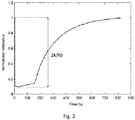
- An example of the normalized electrical resistance variation ⁇ Rn according to the present invention is shown in Figure 2 .
- the step of sensing, by one or more sensors 301, the presence and concentration of one or more volatile organic compounds comprises the sub-step of calculating, for at least one sensor, the first derivative dRn with respect to the time of at least one normalized variation, as shown in Figure 3 . Then, the step of sensing comprises the sub-step of calculating the minimum value of the minimum Min of the calculated derivative.
- the step of sensing, by one or more sensors 301, the presence and concentration of one or more volatile organic compounds comprises the sub-step of sensing at least each variation in the measured resistance ⁇ R to a data processing unit.
- each sensor 301 is in signal communication with the data processing unit 303, sends at least the variations in the measured resistance ⁇ R via a first data sending and receiving unit 302, optionally each sensor 301 sends the normalized variation ⁇ Rn, the first derivative of the normalized variation dRn and the respective minimum value Min that has been calculated.
- the sub-step of normalizing, the sub-step of calculating the first derivative and the sub-step of calculating the minimum of the first derivative are carried out by a data processing unit 303 in response to the first data sending and receiving unit 302 sending the variation in the electrical resistance as measured with time.
- the method of recognizing a type of coffee comprises the step of generating a signal representative of the coffee contained in the hopper 300 according to the volatile organic compounds that have been sensed and their respective concentrations.
- the step of generating the representative signal is carried out by the data processing unit 303 upon reception of the data sent from each sensor 301.
- the step of generating a coffee-representative signal comprises the sub-step of processing each normalized variation ⁇ Rn, the first derivative of the normalized variation dRn and the calculated value of the minimum Min.
- the signal representative of the coffee in the hopper is generated by processing the normalized variation ⁇ Rn for each sensor in use and the minimum of the first derivative Min for at least three of the four sensors in use.
- the method of recognizing a type of coffee comprises the step of comparing the coffee-representative signal with a reference signal associated with each reference type of coffee.
- the reference signal is obtained by analyzing a plurality of reference types of coffee with one or more sensors as described hereinbefore.
- the reference signal is associated with the presence and the concentration of one or more volatile organic compounds released from one respective reference type of coffee.
- the step of generating a representative signal and the step of comparing the representative signal are carried out using a neural network-based algorithm.
- the neural network analyzes the normalized variations ⁇ Rn and the derivatives of normalized resistance dRn, in particular the calculated values of the minimum Min, and thereby generates the signal representative of the type of coffee.
- Neural networks finally compare this generated representative signal with each reference signal, to thereby recognize the coffee in the hopper 300 from the plurality of reference types of coffee.
- the neural network-based algorithm which preferably resides in the data processing unit 303, undergoes a training process.
- the algorithm is trained to recognize a plurality of types of coffee by associating each reference type of coffee with the presence and concentration of one or more volatile organic compounds released from respective reference types of coffee.
- the neural network algorithm is trained to recognize a certain type of coffee as a function of the presence and concentration of certain organic compounds being released.
- the neural network is trained with the variations of normalized electrical resistance and the minimum values of a plurality of reference types of coffee as described above concerning the method of recognizing a type of coffee from a plurality of reference types of coffee having a reference signal associated therewith.
- the neural network algorithm "learns" to recognize a type of coffee from the variations in the normalized electrical resistance and from the first derivatives of the variation in the normalized electrical resistance and in particular the minimum values calculated for a plurality of reference types of coffee.
- the neural network algorithm defines tolerance ranges according to the reference types of coffee used during the training process.
- the neural network recognizes a coffee even if the generated signal for the coffee in the hopper does not match the reference signal, because it falls within a tolerance range predetermined and/or defined by the neural network.
- the neural network algorithm may be periodically updated by training it with additional reference types of coffee.
- the plurality of reference types of coffee include single-origin coffee and blends of coffee, either fresh or at various stages of storage within a hopper, which is known to the skilled person as old coffee.
- the neural network algorithm receives the normalized variation ⁇ Rn and the calculated minimum of the derivative Min and generates the signal representative of the reference coffee.
- the step of comparing the representative signal with the reference signals is carried out by the neural network algorithm, preferably at the same time as the step of generating the representative signal, to thereby identify the type of coffee contained in the hopper 300.
- the method of recognizing a type of coffee comprises the step of generating a recognition signal in response to the comparison of the generated representative signal with the reference signals.
- the recognition signal carries the information concerning the type of coffee in the hopper.
- the method of recognizing a type of coffee comprises the step of generating a proper-use signal when the recognition signal matches a preset reference signal as a function of the tolerance ranges of the neural network and of generating an alarm signal when the representative signal differs from the preset reference signal as a function of the tolerance ranges of the neural network.
- the recognition signal, the proper-use signal and the warning signal are stored in the data processing unit.
- the step comprises a sub-step of sending the recognition signal, the proper-use signal and the alarm signal to a user interface 305 via a second data sending and receiving unit 304.
- a user may consult the stored signals at later times and process them according to his/her own interests.
- the user interface 305 preferably comprises an application, residing in a mobile or fixed device and/or a display associated with the hopper 300.
- the step of generating a proper-use or alarm signal comprises a sub-step of processing a text message associated with the alarm signal and the proper-use signal respectively.
- the message can be customized by a user with the conventional steps known to the skilled person. This message may be, for example, as follows:
- the step of generating a proper-use or alarm signal further comprises the sub-step of displaying the text message processed on the user interface 305.
- the processing unit 303 is configured to send the message to the user interface 305 as follows:
- a message associated with the alarm signal will be displayed to warn the user of the presence of a wrong type of coffee in the hopper 300.
- the method of recognizing a type of coffee comprises a step of controlling a grinder, a grinder-doser or an espresso machine, preferably coupled to the hopper 300.
- the step of controlling is carried out by a control unit 306 associated with a grinder, a grinder-doser or an espresso machine.
- This control unit, 306, which is in signal communication with the data processing unit 303 and/or with the second data sending and receiving unit 304, is configured to enable and disable a grinder, a grinder-doser or an espresso machine in case of generation of an alarm signal.
- the step of controlling comprises the sub-steps of:
- the method of recognizing a type of coffee may be used as part of a method of controlling the operation of a coffee grinding device if the hopper 300 is associated with a grinding device, not shown.
- the method of controlling the operation of a grinding device comprises the step of recognizing the coffee in the hopper 300 using the method of the present invention.
- the method of controlling the operation of a coffee grinding device comprises the step of adjusting one or more parameters of the coffee grinding device according to the recognition signal, such as water temperature and pressure or brewing time.
- the method of recognizing a type of coffee may be used as part of a method of controlling the operation of a coffee machine if the hopper is incorporated in an espresso machine.
- the method of controlling the operation of a coffee machine comprises the step of recognizing the coffee in the hopper 300 using the method of the present invention.
- the method of controlling the operation of a coffee machine comprises the step of adjusting one or more coffee preparation parameters according to the recognition signal, such as water temperature and pressure or brewing time.
- parameters are adjusted also according to the sensed aging.
- the step of controlling comprises the sub-step of cleaning each sensor 301.
- the control unit 306 is in signal communication with cleaning means 307 configured to clean each sensor 301.
- the control unit 306 is configured to periodically generate a trigger signal to trigger the cleaning means 307. More in detail, the control unit 306 triggers a sub-step of cleaning the sensor by blowing air at each sensor to restore the electrical resistance to the nominal resistance conditions R0.
- the present invention further relates to an apparatus for recognizing a type of coffee 400 from a plurality of reference types of coffee having a respective reference signal associated therewith.
- the apparatus for recognizing a type of coffee 400 comprises the hopper 300 for storing coffee beans or ground coffee.
- the hopper comprises a base 300a defining a cavity 300b and a cover 300c removably associated with the base 300a.
- such hopper 300 is a coffee grinding and/or dosing device.
- the apparatus comprises a plurality of sensors 301 configured to sense the presence and the concentration of one or more volatile organic compounds released from the coffee held within the cavity 300b of the hopper 300.
- each sensor is configured to generate a signal representative of the volatile organic compounds that have been sensed and their respective concentrations.
- Each sensor 301 has a nominal electrical resistance R0 and is configured to record a variation in the electrical resistance ⁇ R from the nominal resistance R0 when at least one volatile organic compound is released from the coffee in the hopper.
- each sensor is of the above discussed type.
- the machine comprises the data sending and receiving unit 302 in signal communication with the plurality of sensors and configured to send the data generated by the plurality of sensors 301.
- the sensors 301 are associated with the cover 300c of the hopper.
- one or more sensors 301 are associated in a housing formed in the base 300a of the hopper 300.
- the sensors 301 are placed outside the hopper 301, e.g. at the base 401a and are connected to the cover 300c via a pipe, not shown.
- the sensors 301 are arranged in the base 300a and on the cover 300c.
- the present invention further relates to a system for recognizing a type of coffee 500 from a plurality of reference types of coffee, each type of coffee being associated with a respective reference signal.
- the system for recognizing a type of coffee 500 comprises an apparatus for recognizing a type of coffee 400 as described hereinbefore.
- the system for recognizing a type of coffee 500 comprises a second data sending and receiving unit 304 in signal communication with the first data sending and receiving unit 302 and a data processing unit 303.
- the second data sending and receiving unit 304 is configured to receive the signals generated by the plurality of sensors 301 and preferably to send them to the data processing unit 303.
- the latter for the purposes of the present invention, is configured to:
- the recognition system 500 comprises a user interface 305 in signal communication with the data processing unit 303 and the second data sending and receiving unit 304.
- the recognition system 500 comprises a control unit 306 is in signal communication with the data processing unit 303 and/or with the second data sending and receiving unit 304.
- the control unit 306 is of the type described above, which is configured to:
- the system also comprises cleaning means 307 which are configured to periodically clean each sensor 301.
- the control unit 306 is configured to control the cleaning means 307.
Landscapes
- Engineering & Computer Science (AREA)
- Food Science & Technology (AREA)
- Chemical & Material Sciences (AREA)
- Life Sciences & Earth Sciences (AREA)
- Mechanical Engineering (AREA)
- Polymers & Plastics (AREA)
- Analytical Chemistry (AREA)
- Health & Medical Sciences (AREA)
- Physics & Mathematics (AREA)
- Biochemistry (AREA)
- General Health & Medical Sciences (AREA)
- General Physics & Mathematics (AREA)
- Immunology (AREA)
- Pathology (AREA)
- Electrochemistry (AREA)
- Chemical Kinetics & Catalysis (AREA)
- Apparatus For Making Beverages (AREA)
- Tea And Coffee (AREA)
Description
- The present invention relates to a method of recognizing coffee preferably stored in a hopper of a grinder or grinder-doser. The present invention also relates to an apparatus and a system for recognizing coffee.
- The equipment required for the preparation of the coffee cups, i.e. the grinder and the coffee machine, must be suitably regulated. Coffee beans have peculiar characteristics that should be accounted for when calibrating and programming the equipment. Namely, account must be taken of the blend in use, the degree of roast of the blend and, last but not least, the date of packaging of the coffee in the package. For this reason each type of coffee in use must be suitably ground by a specific grinder-doser and treated with pressurized hot water with given pressure and temperature values.
- In particular, in order to prevent the hoppers of grinders associated with a certain blend from being erroneously fed with a blend other than that associated therewith during calibration, various solutions have been developed.
- For example,
EP 2314188 by the Applicant hereof discloses a conventional coffee machine in which, as the portafilter is removed from a dispenser unit, the grinder-doser associated with such unit is actuated. - Another example is the system for grinding and dispensing coffee as disclosed in
WO 2016075147 in which a sensor is provided for detecting the concentration of total volatile organic compounds (TVOC) released from the coffee.US-A-2018/0055288 discloses a coffee bean grinding system comprising volatile organic compound gas sensors for monitoring the freshness of the coffee beans - If the hopper a coffee grinder were erroneously replenished with a coffee other from the initial one, the grinder and the dispenser unit would prepare the beverage without modifying the parameters of the preparation (particle size and dose of coffee, pressure and temperature of hot water), which would result in a product with different organoleptic properties being dispensed into the cup.
- The devices of the prior art are not able to discriminate a blend in use from a reference blend whose concentration spectrum is stored in simplified form in the central control unit of one of the devices being used.
- In addition, the sensors used for example in
WO 2016075147 , do not recognize the blend in the coffee grinder but only determine the intensity of the smell released from the coffee. Therefore, the prior art sensors would not be able to discriminate between two blends having the same TVOC. - The object of the present invention is to provide a method, an apparatus and a system that can obviate the above discussed drawbacks of the prior art.
- In particular, it is an object of the present invention to provide a method that can discern different types of coffee and warn the operator of any anomaly.
- The aforementioned technical purpose and objects are substantially fulfilled by a method of recognizing coffee, an apparatus and a system that comprise the technical features as disclosed in one or more of the accompanying claims.
- Advantageously, the method, the apparatus and the system of the present invention can detect of one or more specific volatile organic compounds released from the coffee stored in the hopper.
- Advantageously, the method, the apparatus and the system of the present invention can recognize the coffee stored in the hopper from a plurality of reference types of coffee.
- Advantageously, the method, the apparatus and the system of the present invention can warn the bartender or operator if the hopper contains a coffee other than the one that has been predetermined.
- Further features and advantages of the present invention will result more clearly from the illustrative, non-limiting description of a preferred, non-exclusive embodiment of a method, a machine and a system for recognizing coffee as shown in the accompanying drawings:
-
Figure 1 shows a diagrammatic view of the machine for recognizing coffee according to the present invention; -
Figure 2 shows a curve of the electrical resistance of a sensor as used in the method, the apparatus and the system of the present invention; -
Figure 3 shows the graph of the first derivative ofFigure 2 ; -
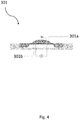
Figure 4 shows a diagrammatic view of a sensor of the present invention. - Although this is not expressly shown, the individual features described with reference to each embodiment shall be intended as auxiliary and/or interchangeable with other features, as described with reference to other embodiments.
- The present invention relates to a method of recognizing a type of coffee from a plurality of reference types of coffee having a reference signal associated therewith. Preferably, the coffee to be recognized is contained in a
hopper 300 associated with a grinder or a grinder-doser or an espresso machine. In particular, thehopper 300 is part of a coffee grinding and/or dosing device. - The method comprises the steps as set forth hereinbelow, performed according to a preferred embodiment.
- The method of recognizing a type of coffee comprises the step of sensing, by one or
more sensors 301, the presence and concentration of one or more volatile organic compounds in a mixture of volatile organic compounds released from the coffee, preferably held within thehopper 300. This step of sensing may be carried out periodically as directed by a user and/or alternatively as directed by a control unit. - In particular, it shall be noted that the volatile organic compounds released from the coffee in a container, preferably a hopper, are characteristic of the type of coffee, either single-origin or blend. In detail, each type of coffee releases a plurality of volatile organic compounds in different concentrations, that can be recognized, for example, by means of gas chromatography-mass spectrometry.
- According to a preferred embodiment, each
sensor 301 has a nominal electrical resistance R0 and is configured to record a variation in the electrical resistance ΔR from the nominal resistance R0 when at least one volatile organic compound is released from the coffee in thehopper 300. In particular, eachsensor 301 is configured to record the presence and concentration of certain specific organic compounds. - Preferably, each
sensor 301 comprises a chemicallyreactive surface 301a configured to record the electrical resistance variation in the presence of one or more volatile organic compounds. In particular, eachsensor 301 comprises aheating element 301b configured to heat the chemicallyreactive surface 301a in a range of temperatures from 300°C to 400°C, to record the electrical resistance variation in the presence of one or more organic compounds. - More preferably, the
sensors 301 are configured to sense the presence and concentration of at least the following volatile organic compounds: pyrazine derivatives, furan derivatives, carboxylic acids, pyrrole derivatives, furfural derivatives and pyridine derivatives. This list of volatile organic compounds is characteristic of the various types of coffee. In particular, the discrimination between types is associated with the concentration of the above listed volatile organic compounds. - In particular, the number of sensors ranges from one to four, preferably from one to eight. According to a preferred embodiment, the materials of the sensors are selected from SnO2, SnO2Au with Au, CuO and SnO2Au.
- The step of sensing, by one or
more sensors 301, the presence and concentration of one or more volatile organic compounds comprises the sub-step of measuring, for each sensor, the variation in the electrical resistance with time. In particular, the measurement of electrical resistance variation is carried out during a predetermined time that ranges from 0.5 seconds to 10 minutes, preferably from 1 to 5 minutes. - The step of sensing, by one or
more sensors 301, the presence and concentration of one or more volatile organic compounds comprises the sub-step of normalizing each measured variation of the electrical resistance ΔRn to the nominal resistance R0 of the sensor to generate a normalized electrical resistance variation. An example of the normalized electrical resistance variation ΔRn according to the present invention is shown inFigure 2 . - According to a preferred embodiment, the step of sensing, by one or
more sensors 301, the presence and concentration of one or more volatile organic compounds comprises the sub-step of calculating, for at least one sensor, the first derivative dRn with respect to the time of at least one normalized variation, as shown inFigure 3 . Then, the step of sensing comprises the sub-step of calculating the minimum value of the minimum Min of the calculated derivative. - The step of sensing, by one or
more sensors 301, the presence and concentration of one or more volatile organic compounds comprises the sub-step of sensing at least each variation in the measured resistance ΔR to a data processing unit. In particular, eachsensor 301, is in signal communication with thedata processing unit 303, sends at least the variations in the measured resistance ΔR via a first data sending and receivingunit 302, optionally eachsensor 301 sends the normalized variation ΔRn, the first derivative of the normalized variation dRn and the respective minimum value Min that has been calculated. - It shall be noted that optionally the sub-step of normalizing, the sub-step of calculating the first derivative and the sub-step of calculating the minimum of the first derivative are carried out by a
data processing unit 303 in response to the first data sending and receivingunit 302 sending the variation in the electrical resistance as measured with time. - The method of recognizing a type of coffee comprises the step of generating a signal representative of the coffee contained in the
hopper 300 according to the volatile organic compounds that have been sensed and their respective concentrations. In particular, the step of generating the representative signal is carried out by thedata processing unit 303 upon reception of the data sent from eachsensor 301. - The step of generating a coffee-representative signal comprises the sub-step of processing each normalized variation ΔRn, the first derivative of the normalized variation dRn and the calculated value of the minimum Min.
- According to a preferred embodiment comprising at least four
sensors 301, the signal representative of the coffee in the hopper is generated by processing the normalized variation ΔRn for each sensor in use and the minimum of the first derivative Min for at least three of the four sensors in use. - The method of recognizing a type of coffee comprises the step of comparing the coffee-representative signal with a reference signal associated with each reference type of coffee. In particular, the reference signal is obtained by analyzing a plurality of reference types of coffee with one or more sensors as described hereinbefore. In detail, the reference signal is associated with the presence and the concentration of one or more volatile organic compounds released from one respective reference type of coffee.
- The step of generating a representative signal and the step of comparing the representative signal are carried out using a neural network-based algorithm. In particular, the neural network analyzes the normalized variations ΔRn and the derivatives of normalized resistance dRn, in particular the calculated values of the minimum Min, and thereby generates the signal representative of the type of coffee. Neural networks finally compare this generated representative signal with each reference signal, to thereby recognize the coffee in the
hopper 300 from the plurality of reference types of coffee. - The neural network-based algorithm, which preferably resides in the
data processing unit 303, undergoes a training process. In particular, the algorithm is trained to recognize a plurality of types of coffee by associating each reference type of coffee with the presence and concentration of one or more volatile organic compounds released from respective reference types of coffee. In detail, the neural network algorithm is trained to recognize a certain type of coffee as a function of the presence and concentration of certain organic compounds being released. For the purposes of the present invention, the neural network is trained with the variations of normalized electrical resistance and the minimum values of a plurality of reference types of coffee as described above concerning the method of recognizing a type of coffee from a plurality of reference types of coffee having a reference signal associated therewith. - By this arrangement, the neural network algorithm "learns" to recognize a type of coffee from the variations in the normalized electrical resistance and from the first derivatives of the variation in the normalized electrical resistance and in particular the minimum values calculated for a plurality of reference types of coffee.
- It shall be noted that the neural network algorithm defines tolerance ranges according to the reference types of coffee used during the training process. Thus, the neural network recognizes a coffee even if the generated signal for the coffee in the hopper does not match the reference signal, because it falls within a tolerance range predetermined and/or defined by the neural network.
- Preferably, the neural network algorithm may be periodically updated by training it with additional reference types of coffee. According to a preferred embodiment of the present invention, the plurality of reference types of coffee include single-origin coffee and blends of coffee, either fresh or at various stages of storage within a hopper, which is known to the skilled person as old coffee.
- In detail, during the step of generating a representative signal, the neural network algorithm receives the normalized variation ΔRn and the calculated minimum of the derivative Min and generates the signal representative of the reference coffee. The step of comparing the representative signal with the reference signals is carried out by the neural network algorithm, preferably at the same time as the step of generating the representative signal, to thereby identify the type of coffee contained in the
hopper 300. - The method of recognizing a type of coffee comprises the step of generating a recognition signal in response to the comparison of the generated representative signal with the reference signals. In particular, the recognition signal carries the information concerning the type of coffee in the hopper.
- The method of recognizing a type of coffee comprises the step of generating a proper-use signal when the recognition signal matches a preset reference signal as a function of the tolerance ranges of the neural network and of generating an alarm signal when the representative signal differs from the preset reference signal as a function of the tolerance ranges of the neural network. Preferably, the recognition signal, the proper-use signal and the warning signal are stored in the data processing unit.
- In particular, the step comprises a sub-step of sending the recognition signal, the proper-use signal and the alarm signal to a
user interface 305 via a second data sending and receivingunit 304. By this arrangement a user may consult the stored signals at later times and process them according to his/her own interests. Theuser interface 305 preferably comprises an application, residing in a mobile or fixed device and/or a display associated with thehopper 300. - The step of generating a proper-use or alarm signal comprises a sub-step of processing a text message associated with the alarm signal and the proper-use signal respectively. It shall be noted that the message can be customized by a user with the conventional steps known to the skilled person. This message may be, for example, as follows:
- "Right coffee" if the signal is the proper-use signal;
- "Wrong coffee" if the signal is the alarm signal;
- "Old coffee" if the signal is the alarm signal and the coffee that has been sensed in the
hopper 300 is recognized as old. - The step of generating a proper-use or alarm signal further comprises the sub-step of displaying the text message processed on the
user interface 305. In a practical example, theprocessing unit 303 is configured to send the message to theuser interface 305 as follows: - via SMS and/or email;
- as a pop-up on the display associated with the
hopper 300. - Advantageously, a message associated with the alarm signal will be displayed to warn the user of the presence of a wrong type of coffee in the
hopper 300. - The method of recognizing a type of coffee comprises a step of controlling a grinder, a grinder-doser or an espresso machine, preferably coupled to the
hopper 300. In particular, the step of controlling is carried out by acontrol unit 306 associated with a grinder, a grinder-doser or an espresso machine. This control unit, 306, which is in signal communication with thedata processing unit 303 and/or with the second data sending and receivingunit 304, is configured to enable and disable a grinder, a grinder-doser or an espresso machine in case of generation of an alarm signal. In detail, the step of controlling comprises the sub-steps of: - receiving the proper-use signal and the alarm signal;
- generating a lock signal if the control unit, 306 receives an alarm signal and later generating a signal for restarting sensing of the presence and of the concentration of volatile organic compounds in the hopper after a predetermined waiting time,
- generating a start signal if the control unit, 306 receives a proper-use signal,
- generating a signal for changing the grinding parameters if the coffee in the
hopper 300 is sensed as old. It shall be noted that the change of the grinding parameters is associated with the type of coffee and aging. Preferably the change of the parameters can be adjusted by a user. - According to one embodiment, the method of recognizing a type of coffee may be used as part of a method of controlling the operation of a coffee grinding device if the
hopper 300 is associated with a grinding device, not shown. In particular, the method of controlling the operation of a grinding device comprises the step of recognizing the coffee in thehopper 300 using the method of the present invention. Then, the method of controlling the operation of a coffee grinding device comprises the step of adjusting one or more parameters of the coffee grinding device according to the recognition signal, such as water temperature and pressure or brewing time. - According to a further embodiment, the method of recognizing a type of coffee may be used as part of a method of controlling the operation of a coffee machine if the hopper is incorporated in an espresso machine. In particular, the method of controlling the operation of a coffee machine comprises the step of recognizing the coffee in the
hopper 300 using the method of the present invention. Then, the method of controlling the operation of a coffee machine comprises the step of adjusting one or more coffee preparation parameters according to the recognition signal, such as water temperature and pressure or brewing time. - In the methods for controlling the operation of a grinding device and a coffee machine, parameters are adjusted also according to the sensed aging.
- Preferably the step of controlling comprises the sub-step of cleaning each
sensor 301. In particular, thecontrol unit 306 is in signal communication with cleaning means 307 configured to clean eachsensor 301. In detail, thecontrol unit 306 is configured to periodically generate a trigger signal to trigger the cleaning means 307. More in detail, thecontrol unit 306 triggers a sub-step of cleaning the sensor by blowing air at each sensor to restore the electrical resistance to the nominal resistance conditions R0. - The present invention further relates to an apparatus for recognizing a type of
coffee 400 from a plurality of reference types of coffee having a respective reference signal associated therewith. - The apparatus for recognizing a type of
coffee 400 comprises thehopper 300 for storing coffee beans or ground coffee. In particular, the hopper comprises abase 300a defining acavity 300b and acover 300c removably associated with thebase 300a. - Preferably,
such hopper 300 is a coffee grinding and/or dosing device. - The apparatus comprises a plurality of
sensors 301 configured to sense the presence and the concentration of one or more volatile organic compounds released from the coffee held within thecavity 300b of thehopper 300. In particular, each sensor is configured to generate a signal representative of the volatile organic compounds that have been sensed and their respective concentrations. Eachsensor 301 has a nominal electrical resistance R0 and is configured to record a variation in the electrical resistance ΔR from the nominal resistance R0 when at least one volatile organic compound is released from the coffee in the hopper. Preferably, each sensor is of the above discussed type. - The machine comprises the data sending and receiving
unit 302 in signal communication with the plurality of sensors and configured to send the data generated by the plurality ofsensors 301. - According to one embodiment, the
sensors 301 are associated with thecover 300c of the hopper. Alternatively, one ormore sensors 301 are associated in a housing formed in thebase 300a of thehopper 300. Alternatively, thesensors 301 are placed outside thehopper 301, e.g. at the base 401a and are connected to thecover 300c via a pipe, not shown. According to a preferred embodiment as shown in the figures thesensors 301 are arranged in thebase 300a and on thecover 300c. - The present invention further relates to a system for recognizing a type of
coffee 500 from a plurality of reference types of coffee, each type of coffee being associated with a respective reference signal. - The system for recognizing a type of
coffee 500 comprises an apparatus for recognizing a type ofcoffee 400 as described hereinbefore. - The system for recognizing a type of
coffee 500 comprises a second data sending and receivingunit 304 in signal communication with the first data sending and receivingunit 302 and adata processing unit 303. In particular, the second data sending and receivingunit 304 is configured to receive the signals generated by the plurality ofsensors 301 and preferably to send them to thedata processing unit 303. The latter, for the purposes of the present invention, is configured to: - generate a signal representative of the coffee contained in the
hopper 300 according to the volatile organic compounds that have been sensed and their respective concentrations, - compare the signal so generated with the reference signals associated with each reference type of coffee,
- generate a recognition signal in response to the comparison of the generated signal with the reference signals,
- generate a proper-use signal when the recognition signal corresponds to a preset reference signal;
- generate an alarm signal when the representative signal differs from the preset reference signal.
- Preferably, the
recognition system 500 comprises auser interface 305 in signal communication with thedata processing unit 303 and the second data sending and receivingunit 304. - In a preferred embodiment, the
recognition system 500 comprises acontrol unit 306 is in signal communication with thedata processing unit 303 and/or with the second data sending and receivingunit 304. Preferably, thecontrol unit 306 is of the type described above, which is configured to: - receive the proper-use signal and the alarm signal;
- generate a lock signal if the control unit, 306 receives an alarm signal and later generating a signal for restarting sensing of the presence and of the concentration of volatile organic compounds in the hopper after a predetermined waiting time,
- generate a start signal if the control unit, 306 receives a proper-use signal,
- generate a signal for changing the grinding parameters if the coffee in the
hopper 300 is sensed as old. - In the preferred embodiment, the system also comprises cleaning means 307 which are configured to periodically clean each
sensor 301. Namely, thecontrol unit 306 is configured to control the cleaning means 307.
Claims (15)
- A method of recognizing a type of coffee from a plurality of reference types of coffee, each reference type of coffee being associated with a respective reference signal, said method comprising the steps of:- sensing, by one or more sensors (301), the presence and concentration of one or more volatile organic compounds in a mixture of volatile organic compounds released from the coffee;- generating a signal representative of the coffee according to the volatile organic compounds that have been sensed and their respective concentrations;- comparing the generated signal with the reference signals associated with each reference type of coffee;- generating a recognition signal in response to the comparison of the generated signal with the reference signals.
- A method of recognizing a type of coffee according to claim 1 wherein:- said coffee is contained in a hopper (300) of a coffee grinding and/or dosing device;- the step of sensing senses the presence and concentration of one or more volatile organic compounds in a mixture of volatile organic compounds released from the coffee in the hopper (300);- the step of generating the signal generates a signal representative of the coffee contained in the hopper (300) according to the volatile organic compounds that have been sensed and their respective concentrations.
- A method of recognizing a type of coffee as claimed in claim 2, wherein:- each sensor (301) has a nominal electrical resistance (R0) and is configured to record a variation in the electrical resistance (ΔR) from the nominal resistance (R0) when at least one volatile organic compound is released from the coffee in the hopper (300).
- A method of recognizing a type of coffee as claimed in claim 3, wherein the step of sensing the presence and the concentration of one or more organic compounds comprises, for each sensor (301), the sub-steps of:- measuring the variation of electrical resistance with time (ΔR),- normalizing each measured variation of the electrical resistance from the nominal resistance of the sensor to generate a normalized electrical resistance variation (ΔRn).
- A method of recognizing a type of coffee as claimed in claim 4, wherein the step of sensing the presence and the concentration of one or more organic compounds further comprises, for at least one sensor (301), the sub-step of:- calculating the first derivative with respect to the time of the normalized variation (dRn);- calculating the minimum value of the first derivative so calculated (Min).
- A method of recognizing a type of coffee as claimed in claim 5, wherein the step of generating a representative signal comprises the sub-steps of:- processing the normalized variations (ΔRn) with the minimum values of the calculated first derivative (Min).
- A method of recognizing a type of coffee as claimed in any of claims 1 to 6 wherein the steps of generating a representative signal and the step of comparing the signal representative of the coffee with a reference signal are carried out using a neural network-based algorithm.
- A method of recognizing a type of coffee as claimed in claim 7, wherein the neural network-based algorithm is trained to recognize a plurality of types of coffee by associating each reference type of coffee with the presence and concentration of one or more volatile organic compounds released from respective reference types of coffee.
- A method of recognizing a type of coffee as claimed in any of claims 1 to 8, characterized in that it comprises a step of:- generating a proper-use signal when the recognition signal corresponds to a preset reference signal;- generating an alarm signal when the representative signal differs from the preset reference signal.
- A method of controlling the operation of a coffee grinding device comprising the steps of:- recognizing the type of coffee in a hopper (300) associated with the coffee grinding device using the method of recognizing a type of coffee as claimed in any of claims 2 to 9;- adjusting one or more operating parameters of the coffee grinding device according to the recognition signal.
- A method of controlling the operation of a coffee machine comprising the steps of:- recognizing the type of coffee in a hopper (300) associated with the coffee machine using the method of recognizing a type of coffee as claimed in any of claims 2 to 9;- adjusting one or more operating parameters of the coffee machine according to the recognition signal.
- An apparatus for recognizing a type of coffee (400) from a plurality of reference types of coffee, each type of coffee being associated with a respective reference signal, said apparatus comprising:- a hopper (300) of a grinding and/or dosing device, the hopper (300) comprising a base (300a) that defines a cavity (300b) to store the coffee and a cover (300c) that is adapted to be releasably associated with the base (300a) to close the cavity (300b);- a plurality of sensors (301) configured to sense the presence and concentration of one or more volatile organic compounds released from the coffee stored in the hopper (300), each sensor (301) being configured to generate a signal representative of the volatile organic compounds that have been sensed and their respective concentrations, wherein each sensor (301) has a nominal electrical resistance (R0) and is configured to record a variation in the electrical resistance (ΔR) from the nominal resistance (R0) when at least one volatile organic compound is released from the coffee in the hopper (300).
- An apparatus as claimed in claim 12, wherein the sensors (301) are associated with the cover (300c) and/or the base (300a) of the hopper (300).
- An apparatus (1) as claimed in any of claims 12 to 13, comprising:- a first data sending and receiving unit (302) in signal communication with the plurality of sensors (301) and configured to send the signals generated by said plurality of sensors (301).
- A system for recognizing a type of coffee (500) from a plurality of reference types of coffee, each type of coffee being associated with a respective reference signal, said system comprising:- an apparatus (400) for recognizing a type of coffee from a plurality of reference types of coffee which comprises:- a hopper (300) of a grinding and/or dosing device, the hopper (300) comprising a base (300a) that defines a cavity (300b) to store the coffee and a cover (300c) that is adapted to be releasably associated with the base (300a) to close the cavity (300b),- a plurality of sensors (301) configured to sense the presence and concentration of one or more volatile organic compounds released from the coffee stored in the hopper (300), each sensor (301) being configured to generate a signal representative of the volatile organic compounds that have been sensed and their respective concentrations,- a first data sending and receiving unit (302) in signal communication with the plurality of sensors (301) and configured to send the signals generated by said plurality of sensors (301),- a second data sending and receiving unit (304) in signal communication with the first data sending and receiving unit (302) for receiving the signals generated by said plurality of sensors (301);- a data processing unit (303) in signal communication with the second data sending/receiving unit (304) and configured to:- generate a signal representative of the coffee contained in the hopper (300) according to the volatile organic compounds that have been sensed and their respective concentrations,- compare the generated signal with the reference signals associated with each reference type of coffee,- generate a recognition signal in response to the comparison of the generated signal with the reference signals,- generate a proper-use signal when the recognition signal corresponds to a preset reference signal;- generate an alarm signal when the representative signal differs from the preset reference signal.
Applications Claiming Priority (1)
| Application Number | Priority Date | Filing Date | Title |
|---|---|---|---|
| IT102019000006877A IT201900006877A1 (en) | 2019-05-15 | 2019-05-15 | Method for recognizing a coffee type |
Publications (2)
| Publication Number | Publication Date |
|---|---|
| EP3738487A1 EP3738487A1 (en) | 2020-11-18 |
| EP3738487B1 true EP3738487B1 (en) | 2022-01-05 |
Family
ID=67734734
Family Applications (1)
| Application Number | Title | Priority Date | Filing Date |
|---|---|---|---|
| EP20173046.2A Active EP3738487B1 (en) | 2019-05-15 | 2020-05-05 | Method of recognizing the type of coffee |
Country Status (7)
| Country | Link |
|---|---|
| US (1) | US11517139B2 (en) |
| EP (1) | EP3738487B1 (en) |
| CN (1) | CN111938433A (en) |
| AU (1) | AU2020203043A1 (en) |
| ES (1) | ES2909829T3 (en) |
| IT (1) | IT201900006877A1 (en) |
| PT (1) | PT3738487T (en) |
Families Citing this family (4)
| Publication number | Priority date | Publication date | Assignee | Title |
|---|---|---|---|---|
| DE102022125327B4 (en) * | 2022-09-30 | 2025-08-14 | Diehl Ako Stiftung & Co. Kg | Coffee machine and method for operating a coffee machine |
| IT202300021927A1 (en) * | 2023-10-20 | 2025-04-20 | Irca Spa | METHOD FOR RECOGNIZING A FOOD PREPARATION FOR THE PREPARATION OF A BEVERAGE, IN PARTICULAR COFFEE, AND/OR FOR RECOGNIZING THE EXTRACTION QUALITY OF THE BEVERAGE DISPENSED |
| CN117860107A (en) * | 2023-12-29 | 2024-04-12 | 咖爷科技(苏州)有限公司 | Coffee machine and control method, device and storage medium thereof |
| CN117918701A (en) * | 2023-12-29 | 2024-04-26 | 咖爷科技(苏州)有限公司 | Control method and device for coffee machine, coffee machine and storage medium |
Family Cites Families (9)
| Publication number | Priority date | Publication date | Assignee | Title |
|---|---|---|---|---|
| WO2009108698A2 (en) * | 2008-02-25 | 2009-09-03 | University Of Florida Research Foundation, Inc. | Quality enhancement of coffee beans by acid and enzyme treatment |
| EP2314188B1 (en) | 2009-10-23 | 2012-10-17 | Gruppo Cimbali S.p.A. | An apparatus and a method for refilling the filter-holders of an espresso coffee machine with selected doses of ground coffee to order |
| RU2502997C2 (en) * | 2011-11-15 | 2013-12-27 | Федеральное государственное бюджетное образовательное учреждение высшего профессионального образования "Воронежская государственная технологическая академия" (ФГБОУВПО "ВГТА") | Method for attributive identification of coffee beverages intended for different social groups and comparative evaluation of aroma characteristics within group |
| RU2700402C2 (en) * | 2014-11-14 | 2019-09-16 | Конинклейке Филипс Н.В. | Coffee beans processing method and device |
| WO2016083148A1 (en) * | 2014-11-25 | 2016-06-02 | Koninklijke Philips N.V. | Coffee roasting apparatus, coffee brewing apparatus and coffee roasting method |
| US20170276627A1 (en) * | 2016-03-23 | 2017-09-28 | Vaon, Llc | Metal oxide-based chemical sensors |
| CN109414130B (en) * | 2016-04-20 | 2022-11-11 | 索利机器人有限公司 | Grinders, analyzers, and related techniques |
| CN106136907A (en) * | 2016-09-05 | 2016-11-23 | 北京小米移动软件有限公司 | Control the method and device of coffee machine |
| IT202000015532A1 (en) * | 2020-06-26 | 2021-12-26 | Gruppo Cimbali Spa | METHOD FOR MONITORING AT LEAST ONE CHARACTERISTIC OF A TYPE OF COFFEE |
-
2019
- 2019-05-15 IT IT102019000006877A patent/IT201900006877A1/en unknown
-
2020
- 2020-05-05 ES ES20173046T patent/ES2909829T3/en active Active
- 2020-05-05 PT PT201730462T patent/PT3738487T/en unknown
- 2020-05-05 EP EP20173046.2A patent/EP3738487B1/en active Active
- 2020-05-08 AU AU2020203043A patent/AU2020203043A1/en not_active Abandoned
- 2020-05-14 US US16/874,160 patent/US11517139B2/en active Active
- 2020-05-15 CN CN202010411019.0A patent/CN111938433A/en active Pending
Also Published As
| Publication number | Publication date |
|---|---|
| EP3738487A1 (en) | 2020-11-18 |
| ES2909829T3 (en) | 2022-05-10 |
| CN111938433A (en) | 2020-11-17 |
| AU2020203043A1 (en) | 2020-12-03 |
| US20200359830A1 (en) | 2020-11-19 |
| PT3738487T (en) | 2022-03-28 |
| IT201900006877A1 (en) | 2020-11-15 |
| US11517139B2 (en) | 2022-12-06 |
Similar Documents
| Publication | Publication Date | Title |
|---|---|---|
| US11517139B2 (en) | Methods of recognizing types of coffee | |
| US20210405010A1 (en) | Method of monitoring at least one characteristic of a type of coffee | |
| US20240245258A1 (en) | Machine to prepare coffee beverages and corresponding regulation method | |
| EP1810598B1 (en) | Apparatus and method of controlling beverage dispensing machines | |
| EP3445212B1 (en) | Grinders, analyzers, and related technologies | |
| TWI760167B (en) | System comprising a coffee machine and an accessory device associated therewith, and method for controlling the operation of said system | |
| US20130167730A1 (en) | System for precise temperature control of liquids in consumer products | |
| US20080175963A1 (en) | Beverage Freshness Detecting and Indicating Systems | |
| WO2014043652A1 (en) | Systems and methods for coffee preparation | |
| JP7544705B2 (en) | Apparatus and method for roasting coffee beans | |
| AU2018215274A1 (en) | Cooker provided with means for measuring swelling of a food product | |
| JP7470690B2 (en) | Apparatus and method for roasting coffee beans | |
| KR20220063815A (en) | Portafilter | |
| US20050247206A1 (en) | Proximity link controller for equipment and product | |
| WO2022023328A1 (en) | Method for roasting coffee beans | |
| KR20230008061A (en) | roasting method | |
| US20090127330A1 (en) | Method for controlling the production of an apparatus for making drinks | |
| RU2833752C1 (en) | Coffee bean grinder | |
| GB2614329A (en) | A method and apparatus for the preparation of a beverage | |
| HK1106680B (en) | Apparatus and method of controlling beverage dispensing machines |
Legal Events
| Date | Code | Title | Description |
|---|---|---|---|
| PUAI | Public reference made under article 153(3) epc to a published international application that has entered the european phase |
Free format text: ORIGINAL CODE: 0009012 |
|
| STAA | Information on the status of an ep patent application or granted ep patent |
Free format text: STATUS: THE APPLICATION HAS BEEN PUBLISHED |
|
| AK | Designated contracting states |
Kind code of ref document: A1 Designated state(s): AL AT BE BG CH CY CZ DE DK EE ES FI FR GB GR HR HU IE IS IT LI LT LU LV MC MK MT NL NO PL PT RO RS SE SI SK SM TR |
|
| AX | Request for extension of the european patent |
Extension state: BA ME |
|
| STAA | Information on the status of an ep patent application or granted ep patent |
Free format text: STATUS: REQUEST FOR EXAMINATION WAS MADE |
|
| 17P | Request for examination filed |
Effective date: 20210514 |
|
| RBV | Designated contracting states (corrected) |
Designated state(s): AL AT BE BG CH CY CZ DE DK EE ES FI FR GB GR HR HU IE IS IT LI LT LU LV MC MK MT NL NO PL PT RO RS SE SI SK SM TR |
|
| GRAP | Despatch of communication of intention to grant a patent |
Free format text: ORIGINAL CODE: EPIDOSNIGR1 |
|
| STAA | Information on the status of an ep patent application or granted ep patent |
Free format text: STATUS: GRANT OF PATENT IS INTENDED |
|
| INTG | Intention to grant announced |
Effective date: 20210727 |
|
| GRAS | Grant fee paid |
Free format text: ORIGINAL CODE: EPIDOSNIGR3 |
|
| GRAA | (expected) grant |
Free format text: ORIGINAL CODE: 0009210 |
|
| STAA | Information on the status of an ep patent application or granted ep patent |
Free format text: STATUS: THE PATENT HAS BEEN GRANTED |
|
| AK | Designated contracting states |
Kind code of ref document: B1 Designated state(s): AL AT BE BG CH CY CZ DE DK EE ES FI FR GB GR HR HU IE IS IT LI LT LU LV MC MK MT NL NO PL PT RO RS SE SI SK SM TR |
|
| REG | Reference to a national code |
Ref country code: GB Ref legal event code: FG4D |
|
| REG | Reference to a national code |
Ref country code: CH Ref legal event code: EP |
|
| REG | Reference to a national code |
Ref country code: AT Ref legal event code: REF Ref document number: 1459772 Country of ref document: AT Kind code of ref document: T Effective date: 20220115 |
|
| REG | Reference to a national code |
Ref country code: DE Ref legal event code: R096 Ref document number: 602020001512 Country of ref document: DE |
|
| REG | Reference to a national code |
Ref country code: IE Ref legal event code: FG4D |
|
| REG | Reference to a national code |
Ref country code: PT Ref legal event code: SC4A Ref document number: 3738487 Country of ref document: PT Date of ref document: 20220328 Kind code of ref document: T Free format text: AVAILABILITY OF NATIONAL TRANSLATION Effective date: 20220322 |
|
| REG | Reference to a national code |
Ref country code: NL Ref legal event code: FP |
|
| REG | Reference to a national code |
Ref country code: LT Ref legal event code: MG9D |
|
| REG | Reference to a national code |
Ref country code: ES Ref legal event code: FG2A Ref document number: 2909829 Country of ref document: ES Kind code of ref document: T3 Effective date: 20220510 |
|
| PG25 | Lapsed in a contracting state [announced via postgrant information from national office to epo] |
Ref country code: SE Free format text: LAPSE BECAUSE OF FAILURE TO SUBMIT A TRANSLATION OF THE DESCRIPTION OR TO PAY THE FEE WITHIN THE PRESCRIBED TIME-LIMIT Effective date: 20220105 Ref country code: RS Free format text: LAPSE BECAUSE OF FAILURE TO SUBMIT A TRANSLATION OF THE DESCRIPTION OR TO PAY THE FEE WITHIN THE PRESCRIBED TIME-LIMIT Effective date: 20220105 Ref country code: NO Free format text: LAPSE BECAUSE OF FAILURE TO SUBMIT A TRANSLATION OF THE DESCRIPTION OR TO PAY THE FEE WITHIN THE PRESCRIBED TIME-LIMIT Effective date: 20220405 Ref country code: LT Free format text: LAPSE BECAUSE OF FAILURE TO SUBMIT A TRANSLATION OF THE DESCRIPTION OR TO PAY THE FEE WITHIN THE PRESCRIBED TIME-LIMIT Effective date: 20220105 Ref country code: HR Free format text: LAPSE BECAUSE OF FAILURE TO SUBMIT A TRANSLATION OF THE DESCRIPTION OR TO PAY THE FEE WITHIN THE PRESCRIBED TIME-LIMIT Effective date: 20220105 Ref country code: BG Free format text: LAPSE BECAUSE OF FAILURE TO SUBMIT A TRANSLATION OF THE DESCRIPTION OR TO PAY THE FEE WITHIN THE PRESCRIBED TIME-LIMIT Effective date: 20220405 |
|
| PG25 | Lapsed in a contracting state [announced via postgrant information from national office to epo] |
Ref country code: PL Free format text: LAPSE BECAUSE OF FAILURE TO SUBMIT A TRANSLATION OF THE DESCRIPTION OR TO PAY THE FEE WITHIN THE PRESCRIBED TIME-LIMIT Effective date: 20220105 Ref country code: LV Free format text: LAPSE BECAUSE OF FAILURE TO SUBMIT A TRANSLATION OF THE DESCRIPTION OR TO PAY THE FEE WITHIN THE PRESCRIBED TIME-LIMIT Effective date: 20220105 Ref country code: GR Free format text: LAPSE BECAUSE OF FAILURE TO SUBMIT A TRANSLATION OF THE DESCRIPTION OR TO PAY THE FEE WITHIN THE PRESCRIBED TIME-LIMIT Effective date: 20220406 Ref country code: FI Free format text: LAPSE BECAUSE OF FAILURE TO SUBMIT A TRANSLATION OF THE DESCRIPTION OR TO PAY THE FEE WITHIN THE PRESCRIBED TIME-LIMIT Effective date: 20220105 |
|
| PG25 | Lapsed in a contracting state [announced via postgrant information from national office to epo] |
Ref country code: IS Free format text: LAPSE BECAUSE OF FAILURE TO SUBMIT A TRANSLATION OF THE DESCRIPTION OR TO PAY THE FEE WITHIN THE PRESCRIBED TIME-LIMIT Effective date: 20220505 |
|
| REG | Reference to a national code |
Ref country code: DE Ref legal event code: R097 Ref document number: 602020001512 Country of ref document: DE |
|
| PG25 | Lapsed in a contracting state [announced via postgrant information from national office to epo] |
Ref country code: SM Free format text: LAPSE BECAUSE OF FAILURE TO SUBMIT A TRANSLATION OF THE DESCRIPTION OR TO PAY THE FEE WITHIN THE PRESCRIBED TIME-LIMIT Effective date: 20220105 Ref country code: SK Free format text: LAPSE BECAUSE OF FAILURE TO SUBMIT A TRANSLATION OF THE DESCRIPTION OR TO PAY THE FEE WITHIN THE PRESCRIBED TIME-LIMIT Effective date: 20220105 Ref country code: RO Free format text: LAPSE BECAUSE OF FAILURE TO SUBMIT A TRANSLATION OF THE DESCRIPTION OR TO PAY THE FEE WITHIN THE PRESCRIBED TIME-LIMIT Effective date: 20220105 Ref country code: EE Free format text: LAPSE BECAUSE OF FAILURE TO SUBMIT A TRANSLATION OF THE DESCRIPTION OR TO PAY THE FEE WITHIN THE PRESCRIBED TIME-LIMIT Effective date: 20220105 Ref country code: DK Free format text: LAPSE BECAUSE OF FAILURE TO SUBMIT A TRANSLATION OF THE DESCRIPTION OR TO PAY THE FEE WITHIN THE PRESCRIBED TIME-LIMIT Effective date: 20220105 Ref country code: CZ Free format text: LAPSE BECAUSE OF FAILURE TO SUBMIT A TRANSLATION OF THE DESCRIPTION OR TO PAY THE FEE WITHIN THE PRESCRIBED TIME-LIMIT Effective date: 20220105 |
|
| PLBE | No opposition filed within time limit |
Free format text: ORIGINAL CODE: 0009261 |
|
| STAA | Information on the status of an ep patent application or granted ep patent |
Free format text: STATUS: NO OPPOSITION FILED WITHIN TIME LIMIT |
|
| PG25 | Lapsed in a contracting state [announced via postgrant information from national office to epo] |
Ref country code: AL Free format text: LAPSE BECAUSE OF FAILURE TO SUBMIT A TRANSLATION OF THE DESCRIPTION OR TO PAY THE FEE WITHIN THE PRESCRIBED TIME-LIMIT Effective date: 20220105 |
|
| 26N | No opposition filed |
Effective date: 20221006 |
|
| PG25 | Lapsed in a contracting state [announced via postgrant information from national office to epo] |
Ref country code: MC Free format text: LAPSE BECAUSE OF FAILURE TO SUBMIT A TRANSLATION OF THE DESCRIPTION OR TO PAY THE FEE WITHIN THE PRESCRIBED TIME-LIMIT Effective date: 20220105 Ref country code: LU Free format text: LAPSE BECAUSE OF NON-PAYMENT OF DUE FEES Effective date: 20220505 |
|
| PG25 | Lapsed in a contracting state [announced via postgrant information from national office to epo] |
Ref country code: SI Free format text: LAPSE BECAUSE OF FAILURE TO SUBMIT A TRANSLATION OF THE DESCRIPTION OR TO PAY THE FEE WITHIN THE PRESCRIBED TIME-LIMIT Effective date: 20220105 |
|
| PG25 | Lapsed in a contracting state [announced via postgrant information from national office to epo] |
Ref country code: IE Free format text: LAPSE BECAUSE OF NON-PAYMENT OF DUE FEES Effective date: 20220505 |
|
| REG | Reference to a national code |
Ref country code: AT Ref legal event code: UEP Ref document number: 1459772 Country of ref document: AT Kind code of ref document: T Effective date: 20220105 |
|
| P01 | Opt-out of the competence of the unified patent court (upc) registered |
Effective date: 20230602 |
|
| PG25 | Lapsed in a contracting state [announced via postgrant information from national office to epo] |
Ref country code: IT Free format text: LAPSE BECAUSE OF FAILURE TO SUBMIT A TRANSLATION OF THE DESCRIPTION OR TO PAY THE FEE WITHIN THE PRESCRIBED TIME-LIMIT Effective date: 20220105 |
|
| P02 | Opt-out of the competence of the unified patent court (upc) changed |
Effective date: 20230817 |
|
| PG25 | Lapsed in a contracting state [announced via postgrant information from national office to epo] |
Ref country code: MK Free format text: LAPSE BECAUSE OF FAILURE TO SUBMIT A TRANSLATION OF THE DESCRIPTION OR TO PAY THE FEE WITHIN THE PRESCRIBED TIME-LIMIT Effective date: 20220105 Ref country code: CY Free format text: LAPSE BECAUSE OF FAILURE TO SUBMIT A TRANSLATION OF THE DESCRIPTION OR TO PAY THE FEE WITHIN THE PRESCRIBED TIME-LIMIT Effective date: 20220105 |
|
| PG25 | Lapsed in a contracting state [announced via postgrant information from national office to epo] |
Ref country code: HU Free format text: LAPSE BECAUSE OF FAILURE TO SUBMIT A TRANSLATION OF THE DESCRIPTION OR TO PAY THE FEE WITHIN THE PRESCRIBED TIME-LIMIT; INVALID AB INITIO Effective date: 20200505 |
|
| PG25 | Lapsed in a contracting state [announced via postgrant information from national office to epo] |
Ref country code: TR Free format text: LAPSE BECAUSE OF FAILURE TO SUBMIT A TRANSLATION OF THE DESCRIPTION OR TO PAY THE FEE WITHIN THE PRESCRIBED TIME-LIMIT Effective date: 20220105 |
|
| PG25 | Lapsed in a contracting state [announced via postgrant information from national office to epo] |
Ref country code: MT Free format text: LAPSE BECAUSE OF FAILURE TO SUBMIT A TRANSLATION OF THE DESCRIPTION OR TO PAY THE FEE WITHIN THE PRESCRIBED TIME-LIMIT Effective date: 20220105 |
|
| PGFP | Annual fee paid to national office [announced via postgrant information from national office to epo] |
Ref country code: NL Payment date: 20250521 Year of fee payment: 6 |
|
| PGFP | Annual fee paid to national office [announced via postgrant information from national office to epo] |
Ref country code: DE Payment date: 20250521 Year of fee payment: 6 |
|
| PGFP | Annual fee paid to national office [announced via postgrant information from national office to epo] |
Ref country code: GB Payment date: 20250527 Year of fee payment: 6 |
|
| PGFP | Annual fee paid to national office [announced via postgrant information from national office to epo] |
Ref country code: BE Payment date: 20250521 Year of fee payment: 6 |
|
| PGFP | Annual fee paid to national office [announced via postgrant information from national office to epo] |
Ref country code: PT Payment date: 20250429 Year of fee payment: 6 |
|
| PGFP | Annual fee paid to national office [announced via postgrant information from national office to epo] |
Ref country code: FR Payment date: 20250528 Year of fee payment: 6 |
|
| PGFP | Annual fee paid to national office [announced via postgrant information from national office to epo] |
Ref country code: CH Payment date: 20250601 Year of fee payment: 6 |
|
| PGFP | Annual fee paid to national office [announced via postgrant information from national office to epo] |
Ref country code: AT Payment date: 20250522 Year of fee payment: 6 |
|
| PGFP | Annual fee paid to national office [announced via postgrant information from national office to epo] |
Ref country code: ES Payment date: 20250630 Year of fee payment: 6 |