EP3737500B1 - Process for making an fcc catalyst with enhanced mesoporosity - Google Patents
Process for making an fcc catalyst with enhanced mesoporosity Download PDFInfo
- Publication number
- EP3737500B1 EP3737500B1 EP19706054.4A EP19706054A EP3737500B1 EP 3737500 B1 EP3737500 B1 EP 3737500B1 EP 19706054 A EP19706054 A EP 19706054A EP 3737500 B1 EP3737500 B1 EP 3737500B1
- Authority
- EP
- European Patent Office
- Prior art keywords
- catalyst
- slurry
- silica
- catalysts
- rare earth
- Prior art date
- Legal status (The legal status is an assumption and is not a legal conclusion. Google has not performed a legal analysis and makes no representation as to the accuracy of the status listed.)
- Active
Links
Images


Classifications
-
- B—PERFORMING OPERATIONS; TRANSPORTING
- B01—PHYSICAL OR CHEMICAL PROCESSES OR APPARATUS IN GENERAL
- B01J—CHEMICAL OR PHYSICAL PROCESSES, e.g. CATALYSIS OR COLLOID CHEMISTRY; THEIR RELEVANT APPARATUS
- B01J29/00—Catalysts comprising molecular sieves
- B01J29/04—Catalysts comprising molecular sieves having base-exchange properties, e.g. crystalline zeolites
- B01J29/06—Crystalline aluminosilicate zeolites; Isomorphous compounds thereof
- B01J29/08—Crystalline aluminosilicate zeolites; Isomorphous compounds thereof of the faujasite type, e.g. type X or Y
- B01J29/084—Y-type faujasite
-
- B—PERFORMING OPERATIONS; TRANSPORTING
- B01—PHYSICAL OR CHEMICAL PROCESSES OR APPARATUS IN GENERAL
- B01J—CHEMICAL OR PHYSICAL PROCESSES, e.g. CATALYSIS OR COLLOID CHEMISTRY; THEIR RELEVANT APPARATUS
- B01J21/00—Catalysts comprising the elements, oxides, or hydroxides of magnesium, boron, aluminium, carbon, silicon, titanium, zirconium, or hafnium
- B01J21/02—Boron or aluminium; Oxides or hydroxides thereof
-
- B—PERFORMING OPERATIONS; TRANSPORTING
- B01—PHYSICAL OR CHEMICAL PROCESSES OR APPARATUS IN GENERAL
- B01J—CHEMICAL OR PHYSICAL PROCESSES, e.g. CATALYSIS OR COLLOID CHEMISTRY; THEIR RELEVANT APPARATUS
- B01J21/00—Catalysts comprising the elements, oxides, or hydroxides of magnesium, boron, aluminium, carbon, silicon, titanium, zirconium, or hafnium
- B01J21/12—Silica and alumina
-
- B—PERFORMING OPERATIONS; TRANSPORTING
- B01—PHYSICAL OR CHEMICAL PROCESSES OR APPARATUS IN GENERAL
- B01J—CHEMICAL OR PHYSICAL PROCESSES, e.g. CATALYSIS OR COLLOID CHEMISTRY; THEIR RELEVANT APPARATUS
- B01J23/00—Catalysts comprising metals or metal oxides or hydroxides, not provided for in group B01J21/00
- B01J23/10—Catalysts comprising metals or metal oxides or hydroxides, not provided for in group B01J21/00 of rare earths
-
- B—PERFORMING OPERATIONS; TRANSPORTING
- B01—PHYSICAL OR CHEMICAL PROCESSES OR APPARATUS IN GENERAL
- B01J—CHEMICAL OR PHYSICAL PROCESSES, e.g. CATALYSIS OR COLLOID CHEMISTRY; THEIR RELEVANT APPARATUS
- B01J29/00—Catalysts comprising molecular sieves
- B01J29/005—Mixtures of molecular sieves comprising at least one molecular sieve which is not an aluminosilicate zeolite, e.g. from groups B01J29/03 - B01J29/049 or B01J29/82 - B01J29/89
-
- B—PERFORMING OPERATIONS; TRANSPORTING
- B01—PHYSICAL OR CHEMICAL PROCESSES OR APPARATUS IN GENERAL
- B01J—CHEMICAL OR PHYSICAL PROCESSES, e.g. CATALYSIS OR COLLOID CHEMISTRY; THEIR RELEVANT APPARATUS
- B01J29/00—Catalysts comprising molecular sieves
- B01J29/04—Catalysts comprising molecular sieves having base-exchange properties, e.g. crystalline zeolites
- B01J29/06—Crystalline aluminosilicate zeolites; Isomorphous compounds thereof
-
- B—PERFORMING OPERATIONS; TRANSPORTING
- B01—PHYSICAL OR CHEMICAL PROCESSES OR APPARATUS IN GENERAL
- B01J—CHEMICAL OR PHYSICAL PROCESSES, e.g. CATALYSIS OR COLLOID CHEMISTRY; THEIR RELEVANT APPARATUS
- B01J29/00—Catalysts comprising molecular sieves
- B01J29/04—Catalysts comprising molecular sieves having base-exchange properties, e.g. crystalline zeolites
- B01J29/06—Crystalline aluminosilicate zeolites; Isomorphous compounds thereof
- B01J29/061—Crystalline aluminosilicate zeolites; Isomorphous compounds thereof containing metallic elements added to the zeolite
-
- B—PERFORMING OPERATIONS; TRANSPORTING
- B01—PHYSICAL OR CHEMICAL PROCESSES OR APPARATUS IN GENERAL
- B01J—CHEMICAL OR PHYSICAL PROCESSES, e.g. CATALYSIS OR COLLOID CHEMISTRY; THEIR RELEVANT APPARATUS
- B01J29/00—Catalysts comprising molecular sieves
- B01J29/04—Catalysts comprising molecular sieves having base-exchange properties, e.g. crystalline zeolites
- B01J29/06—Crystalline aluminosilicate zeolites; Isomorphous compounds thereof
- B01J29/08—Crystalline aluminosilicate zeolites; Isomorphous compounds thereof of the faujasite type, e.g. type X or Y
- B01J29/085—Crystalline aluminosilicate zeolites; Isomorphous compounds thereof of the faujasite type, e.g. type X or Y containing rare earth elements, titanium, zirconium, hafnium, zinc, cadmium, mercury, gallium, indium, thallium, tin or lead
-
- B—PERFORMING OPERATIONS; TRANSPORTING
- B01—PHYSICAL OR CHEMICAL PROCESSES OR APPARATUS IN GENERAL
- B01J—CHEMICAL OR PHYSICAL PROCESSES, e.g. CATALYSIS OR COLLOID CHEMISTRY; THEIR RELEVANT APPARATUS
- B01J29/00—Catalysts comprising molecular sieves
- B01J29/04—Catalysts comprising molecular sieves having base-exchange properties, e.g. crystalline zeolites
- B01J29/06—Crystalline aluminosilicate zeolites; Isomorphous compounds thereof
- B01J29/08—Crystalline aluminosilicate zeolites; Isomorphous compounds thereof of the faujasite type, e.g. type X or Y
- B01J29/085—Crystalline aluminosilicate zeolites; Isomorphous compounds thereof of the faujasite type, e.g. type X or Y containing rare earth elements, titanium, zirconium, hafnium, zinc, cadmium, mercury, gallium, indium, thallium, tin or lead
- B01J29/088—Y-type faujasite
-
- B—PERFORMING OPERATIONS; TRANSPORTING
- B01—PHYSICAL OR CHEMICAL PROCESSES OR APPARATUS IN GENERAL
- B01J—CHEMICAL OR PHYSICAL PROCESSES, e.g. CATALYSIS OR COLLOID CHEMISTRY; THEIR RELEVANT APPARATUS
- B01J29/00—Catalysts comprising molecular sieves
- B01J29/04—Catalysts comprising molecular sieves having base-exchange properties, e.g. crystalline zeolites
- B01J29/06—Crystalline aluminosilicate zeolites; Isomorphous compounds thereof
- B01J29/70—Crystalline aluminosilicate zeolites; Isomorphous compounds thereof of types characterised by their specific structure not provided for in groups B01J29/08 - B01J29/65
-
- B—PERFORMING OPERATIONS; TRANSPORTING
- B01—PHYSICAL OR CHEMICAL PROCESSES OR APPARATUS IN GENERAL
- B01J—CHEMICAL OR PHYSICAL PROCESSES, e.g. CATALYSIS OR COLLOID CHEMISTRY; THEIR RELEVANT APPARATUS
- B01J29/00—Catalysts comprising molecular sieves
- B01J29/04—Catalysts comprising molecular sieves having base-exchange properties, e.g. crystalline zeolites
- B01J29/06—Crystalline aluminosilicate zeolites; Isomorphous compounds thereof
- B01J29/70—Crystalline aluminosilicate zeolites; Isomorphous compounds thereof of types characterised by their specific structure not provided for in groups B01J29/08 - B01J29/65
- B01J29/7038—MWW-type, e.g. MCM-22, ERB-1, ITQ-1, PSH-3 or SSZ-25
-
- B—PERFORMING OPERATIONS; TRANSPORTING
- B01—PHYSICAL OR CHEMICAL PROCESSES OR APPARATUS IN GENERAL
- B01J—CHEMICAL OR PHYSICAL PROCESSES, e.g. CATALYSIS OR COLLOID CHEMISTRY; THEIR RELEVANT APPARATUS
- B01J29/00—Catalysts comprising molecular sieves
- B01J29/04—Catalysts comprising molecular sieves having base-exchange properties, e.g. crystalline zeolites
- B01J29/06—Crystalline aluminosilicate zeolites; Isomorphous compounds thereof
- B01J29/70—Crystalline aluminosilicate zeolites; Isomorphous compounds thereof of types characterised by their specific structure not provided for in groups B01J29/08 - B01J29/65
- B01J29/7042—TON-type, e.g. Theta-1, ISI-1, KZ-2, NU-10 or ZSM-22
-
- B—PERFORMING OPERATIONS; TRANSPORTING
- B01—PHYSICAL OR CHEMICAL PROCESSES OR APPARATUS IN GENERAL
- B01J—CHEMICAL OR PHYSICAL PROCESSES, e.g. CATALYSIS OR COLLOID CHEMISTRY; THEIR RELEVANT APPARATUS
- B01J29/00—Catalysts comprising molecular sieves
- B01J29/04—Catalysts comprising molecular sieves having base-exchange properties, e.g. crystalline zeolites
- B01J29/06—Crystalline aluminosilicate zeolites; Isomorphous compounds thereof
- B01J29/70—Crystalline aluminosilicate zeolites; Isomorphous compounds thereof of types characterised by their specific structure not provided for in groups B01J29/08 - B01J29/65
- B01J29/7049—Crystalline aluminosilicate zeolites; Isomorphous compounds thereof of types characterised by their specific structure not provided for in groups B01J29/08 - B01J29/65 containing rare earth elements, titanium, zirconium, hafnium, zinc, cadmium, mercury, gallium, indium, thallium, tin or lead
-
- B—PERFORMING OPERATIONS; TRANSPORTING
- B01—PHYSICAL OR CHEMICAL PROCESSES OR APPARATUS IN GENERAL
- B01J—CHEMICAL OR PHYSICAL PROCESSES, e.g. CATALYSIS OR COLLOID CHEMISTRY; THEIR RELEVANT APPARATUS
- B01J29/00—Catalysts comprising molecular sieves
- B01J29/04—Catalysts comprising molecular sieves having base-exchange properties, e.g. crystalline zeolites
- B01J29/06—Crystalline aluminosilicate zeolites; Isomorphous compounds thereof
- B01J29/70—Crystalline aluminosilicate zeolites; Isomorphous compounds thereof of types characterised by their specific structure not provided for in groups B01J29/08 - B01J29/65
- B01J29/7049—Crystalline aluminosilicate zeolites; Isomorphous compounds thereof of types characterised by their specific structure not provided for in groups B01J29/08 - B01J29/65 containing rare earth elements, titanium, zirconium, hafnium, zinc, cadmium, mercury, gallium, indium, thallium, tin or lead
- B01J29/7057—Zeolite Beta
-
- B—PERFORMING OPERATIONS; TRANSPORTING
- B01—PHYSICAL OR CHEMICAL PROCESSES OR APPARATUS IN GENERAL
- B01J—CHEMICAL OR PHYSICAL PROCESSES, e.g. CATALYSIS OR COLLOID CHEMISTRY; THEIR RELEVANT APPARATUS
- B01J29/00—Catalysts comprising molecular sieves
- B01J29/04—Catalysts comprising molecular sieves having base-exchange properties, e.g. crystalline zeolites
- B01J29/06—Crystalline aluminosilicate zeolites; Isomorphous compounds thereof
- B01J29/80—Mixtures of different zeolites
-
- B—PERFORMING OPERATIONS; TRANSPORTING
- B01—PHYSICAL OR CHEMICAL PROCESSES OR APPARATUS IN GENERAL
- B01J—CHEMICAL OR PHYSICAL PROCESSES, e.g. CATALYSIS OR COLLOID CHEMISTRY; THEIR RELEVANT APPARATUS
- B01J35/00—Catalysts, in general, characterised by their form or physical properties
- B01J35/40—Catalysts, in general, characterised by their form or physical properties characterised by dimensions, e.g. grain size
-
- B—PERFORMING OPERATIONS; TRANSPORTING
- B01—PHYSICAL OR CHEMICAL PROCESSES OR APPARATUS IN GENERAL
- B01J—CHEMICAL OR PHYSICAL PROCESSES, e.g. CATALYSIS OR COLLOID CHEMISTRY; THEIR RELEVANT APPARATUS
- B01J35/00—Catalysts, in general, characterised by their form or physical properties
- B01J35/60—Catalysts, in general, characterised by their form or physical properties characterised by their surface properties or porosity
- B01J35/63—Pore volume
-
- B—PERFORMING OPERATIONS; TRANSPORTING
- B01—PHYSICAL OR CHEMICAL PROCESSES OR APPARATUS IN GENERAL
- B01J—CHEMICAL OR PHYSICAL PROCESSES, e.g. CATALYSIS OR COLLOID CHEMISTRY; THEIR RELEVANT APPARATUS
- B01J35/00—Catalysts, in general, characterised by their form or physical properties
- B01J35/60—Catalysts, in general, characterised by their form or physical properties characterised by their surface properties or porosity
- B01J35/64—Pore diameter
- B01J35/647—2-50 nm
-
- B—PERFORMING OPERATIONS; TRANSPORTING
- B01—PHYSICAL OR CHEMICAL PROCESSES OR APPARATUS IN GENERAL
- B01J—CHEMICAL OR PHYSICAL PROCESSES, e.g. CATALYSIS OR COLLOID CHEMISTRY; THEIR RELEVANT APPARATUS
- B01J35/00—Catalysts, in general, characterised by their form or physical properties
- B01J35/60—Catalysts, in general, characterised by their form or physical properties characterised by their surface properties or porosity
- B01J35/66—Pore distribution
-
- B—PERFORMING OPERATIONS; TRANSPORTING
- B01—PHYSICAL OR CHEMICAL PROCESSES OR APPARATUS IN GENERAL
- B01J—CHEMICAL OR PHYSICAL PROCESSES, e.g. CATALYSIS OR COLLOID CHEMISTRY; THEIR RELEVANT APPARATUS
- B01J35/00—Catalysts, in general, characterised by their form or physical properties
- B01J35/60—Catalysts, in general, characterised by their form or physical properties characterised by their surface properties or porosity
- B01J35/66—Pore distribution
- B01J35/69—Pore distribution bimodal
-
- B—PERFORMING OPERATIONS; TRANSPORTING
- B01—PHYSICAL OR CHEMICAL PROCESSES OR APPARATUS IN GENERAL
- B01J—CHEMICAL OR PHYSICAL PROCESSES, e.g. CATALYSIS OR COLLOID CHEMISTRY; THEIR RELEVANT APPARATUS
- B01J37/00—Processes, in general, for preparing catalysts; Processes, in general, for activation of catalysts
- B01J37/0009—Use of binding agents; Moulding; Pressing; Powdering; Granulating; Addition of materials ameliorating the mechanical properties of the product catalyst
-
- B—PERFORMING OPERATIONS; TRANSPORTING
- B01—PHYSICAL OR CHEMICAL PROCESSES OR APPARATUS IN GENERAL
- B01J—CHEMICAL OR PHYSICAL PROCESSES, e.g. CATALYSIS OR COLLOID CHEMISTRY; THEIR RELEVANT APPARATUS
- B01J37/00—Processes, in general, for preparing catalysts; Processes, in general, for activation of catalysts
- B01J37/0009—Use of binding agents; Moulding; Pressing; Powdering; Granulating; Addition of materials ameliorating the mechanical properties of the product catalyst
- B01J37/0027—Powdering
- B01J37/0045—Drying a slurry, e.g. spray drying
-
- B—PERFORMING OPERATIONS; TRANSPORTING
- B01—PHYSICAL OR CHEMICAL PROCESSES OR APPARATUS IN GENERAL
- B01J—CHEMICAL OR PHYSICAL PROCESSES, e.g. CATALYSIS OR COLLOID CHEMISTRY; THEIR RELEVANT APPARATUS
- B01J37/00—Processes, in general, for preparing catalysts; Processes, in general, for activation of catalysts
- B01J37/02—Impregnation, coating or precipitation
- B01J37/03—Precipitation; Co-precipitation
- B01J37/036—Precipitation; Co-precipitation to form a gel or a cogel
-
- B—PERFORMING OPERATIONS; TRANSPORTING
- B01—PHYSICAL OR CHEMICAL PROCESSES OR APPARATUS IN GENERAL
- B01J—CHEMICAL OR PHYSICAL PROCESSES, e.g. CATALYSIS OR COLLOID CHEMISTRY; THEIR RELEVANT APPARATUS
- B01J37/00—Processes, in general, for preparing catalysts; Processes, in general, for activation of catalysts
- B01J37/02—Impregnation, coating or precipitation
- B01J37/03—Precipitation; Co-precipitation
- B01J37/038—Precipitation; Co-precipitation to form slurries or suspensions, e.g. a washcoat
-
- B—PERFORMING OPERATIONS; TRANSPORTING
- B01—PHYSICAL OR CHEMICAL PROCESSES OR APPARATUS IN GENERAL
- B01J—CHEMICAL OR PHYSICAL PROCESSES, e.g. CATALYSIS OR COLLOID CHEMISTRY; THEIR RELEVANT APPARATUS
- B01J37/00—Processes, in general, for preparing catalysts; Processes, in general, for activation of catalysts
- B01J37/06—Washing
-
- B—PERFORMING OPERATIONS; TRANSPORTING
- B01—PHYSICAL OR CHEMICAL PROCESSES OR APPARATUS IN GENERAL
- B01J—CHEMICAL OR PHYSICAL PROCESSES, e.g. CATALYSIS OR COLLOID CHEMISTRY; THEIR RELEVANT APPARATUS
- B01J37/00—Processes, in general, for preparing catalysts; Processes, in general, for activation of catalysts
- B01J37/08—Heat treatment
- B01J37/10—Heat treatment in the presence of water, e.g. steam
-
- B—PERFORMING OPERATIONS; TRANSPORTING
- B01—PHYSICAL OR CHEMICAL PROCESSES OR APPARATUS IN GENERAL
- B01J—CHEMICAL OR PHYSICAL PROCESSES, e.g. CATALYSIS OR COLLOID CHEMISTRY; THEIR RELEVANT APPARATUS
- B01J37/00—Processes, in general, for preparing catalysts; Processes, in general, for activation of catalysts
- B01J37/28—Phosphorising
-
- B—PERFORMING OPERATIONS; TRANSPORTING
- B01—PHYSICAL OR CHEMICAL PROCESSES OR APPARATUS IN GENERAL
- B01J—CHEMICAL OR PHYSICAL PROCESSES, e.g. CATALYSIS OR COLLOID CHEMISTRY; THEIR RELEVANT APPARATUS
- B01J37/00—Processes, in general, for preparing catalysts; Processes, in general, for activation of catalysts
- B01J37/30—Ion-exchange
-
- B—PERFORMING OPERATIONS; TRANSPORTING
- B01—PHYSICAL OR CHEMICAL PROCESSES OR APPARATUS IN GENERAL
- B01J—CHEMICAL OR PHYSICAL PROCESSES, e.g. CATALYSIS OR COLLOID CHEMISTRY; THEIR RELEVANT APPARATUS
- B01J6/00—Heat treatments such as Calcining; Fusing ; Pyrolysis
- B01J6/001—Calcining
-
- C—CHEMISTRY; METALLURGY
- C10—PETROLEUM, GAS OR COKE INDUSTRIES; TECHNICAL GASES CONTAINING CARBON MONOXIDE; FUELS; LUBRICANTS; PEAT
- C10G—CRACKING HYDROCARBON OILS; PRODUCTION OF LIQUID HYDROCARBON MIXTURES, e.g. BY DESTRUCTIVE HYDROGENATION, OLIGOMERISATION, POLYMERISATION; RECOVERY OF HYDROCARBON OILS FROM OIL-SHALE, OIL-SAND, OR GASES; REFINING MIXTURES MAINLY CONSISTING OF HYDROCARBONS; REFORMING OF NAPHTHA; MINERAL WAXES
- C10G11/00—Catalytic cracking, in the absence of hydrogen, of hydrocarbon oils
- C10G11/02—Catalytic cracking, in the absence of hydrogen, of hydrocarbon oils characterised by the catalyst used
- C10G11/04—Oxides
- C10G11/05—Crystalline alumino-silicates, e.g. molecular sieves
-
- C—CHEMISTRY; METALLURGY
- C10—PETROLEUM, GAS OR COKE INDUSTRIES; TECHNICAL GASES CONTAINING CARBON MONOXIDE; FUELS; LUBRICANTS; PEAT
- C10G—CRACKING HYDROCARBON OILS; PRODUCTION OF LIQUID HYDROCARBON MIXTURES, e.g. BY DESTRUCTIVE HYDROGENATION, OLIGOMERISATION, POLYMERISATION; RECOVERY OF HYDROCARBON OILS FROM OIL-SHALE, OIL-SAND, OR GASES; REFINING MIXTURES MAINLY CONSISTING OF HYDROCARBONS; REFORMING OF NAPHTHA; MINERAL WAXES
- C10G11/00—Catalytic cracking, in the absence of hydrogen, of hydrocarbon oils
- C10G11/14—Catalytic cracking, in the absence of hydrogen, of hydrocarbon oils with preheated moving solid catalysts
- C10G11/18—Catalytic cracking, in the absence of hydrogen, of hydrocarbon oils with preheated moving solid catalysts according to the "fluidised-bed" technique
-
- B—PERFORMING OPERATIONS; TRANSPORTING
- B01—PHYSICAL OR CHEMICAL PROCESSES OR APPARATUS IN GENERAL
- B01J—CHEMICAL OR PHYSICAL PROCESSES, e.g. CATALYSIS OR COLLOID CHEMISTRY; THEIR RELEVANT APPARATUS
- B01J29/00—Catalysts comprising molecular sieves
- B01J29/04—Catalysts comprising molecular sieves having base-exchange properties, e.g. crystalline zeolites
- B01J29/06—Crystalline aluminosilicate zeolites; Isomorphous compounds thereof
- B01J2029/062—Mixtures of different aluminosilicates
-
- B—PERFORMING OPERATIONS; TRANSPORTING
- B01—PHYSICAL OR CHEMICAL PROCESSES OR APPARATUS IN GENERAL
- B01J—CHEMICAL OR PHYSICAL PROCESSES, e.g. CATALYSIS OR COLLOID CHEMISTRY; THEIR RELEVANT APPARATUS
- B01J29/00—Catalysts comprising molecular sieves
- B01J29/04—Catalysts comprising molecular sieves having base-exchange properties, e.g. crystalline zeolites
- B01J29/06—Crystalline aluminosilicate zeolites; Isomorphous compounds thereof
- B01J29/08—Crystalline aluminosilicate zeolites; Isomorphous compounds thereof of the faujasite type, e.g. type X or Y
- B01J2029/081—Increasing the silica/alumina ratio; Desalumination
-
- B—PERFORMING OPERATIONS; TRANSPORTING
- B01—PHYSICAL OR CHEMICAL PROCESSES OR APPARATUS IN GENERAL
- B01J—CHEMICAL OR PHYSICAL PROCESSES, e.g. CATALYSIS OR COLLOID CHEMISTRY; THEIR RELEVANT APPARATUS
- B01J2229/00—Aspects of molecular sieve catalysts not covered by B01J29/00
- B01J2229/10—After treatment, characterised by the effect to be obtained
- B01J2229/18—After treatment, characterised by the effect to be obtained to introduce other elements into or onto the molecular sieve itself
- B01J2229/186—After treatment, characterised by the effect to be obtained to introduce other elements into or onto the molecular sieve itself not in framework positions
-
- B—PERFORMING OPERATIONS; TRANSPORTING
- B01—PHYSICAL OR CHEMICAL PROCESSES OR APPARATUS IN GENERAL
- B01J—CHEMICAL OR PHYSICAL PROCESSES, e.g. CATALYSIS OR COLLOID CHEMISTRY; THEIR RELEVANT APPARATUS
- B01J2229/00—Aspects of molecular sieve catalysts not covered by B01J29/00
- B01J2229/30—After treatment, characterised by the means used
- B01J2229/36—Steaming
-
- B—PERFORMING OPERATIONS; TRANSPORTING
- B01—PHYSICAL OR CHEMICAL PROCESSES OR APPARATUS IN GENERAL
- B01J—CHEMICAL OR PHYSICAL PROCESSES, e.g. CATALYSIS OR COLLOID CHEMISTRY; THEIR RELEVANT APPARATUS
- B01J2229/00—Aspects of molecular sieve catalysts not covered by B01J29/00
- B01J2229/30—After treatment, characterised by the means used
- B01J2229/42—Addition of matrix or binder particles
-
- B—PERFORMING OPERATIONS; TRANSPORTING
- B01—PHYSICAL OR CHEMICAL PROCESSES OR APPARATUS IN GENERAL
- B01J—CHEMICAL OR PHYSICAL PROCESSES, e.g. CATALYSIS OR COLLOID CHEMISTRY; THEIR RELEVANT APPARATUS
- B01J29/00—Catalysts comprising molecular sieves
- B01J29/04—Catalysts comprising molecular sieves having base-exchange properties, e.g. crystalline zeolites
- B01J29/06—Crystalline aluminosilicate zeolites; Isomorphous compounds thereof
- B01J29/40—Crystalline aluminosilicate zeolites; Isomorphous compounds thereof of the pentasil type, e.g. types ZSM-5, ZSM-8 or ZSM-11, as exemplified by patent documents US3702886, GB1334243 and US3709979, respectively
-
- B—PERFORMING OPERATIONS; TRANSPORTING
- B01—PHYSICAL OR CHEMICAL PROCESSES OR APPARATUS IN GENERAL
- B01J—CHEMICAL OR PHYSICAL PROCESSES, e.g. CATALYSIS OR COLLOID CHEMISTRY; THEIR RELEVANT APPARATUS
- B01J29/00—Catalysts comprising molecular sieves
- B01J29/04—Catalysts comprising molecular sieves having base-exchange properties, e.g. crystalline zeolites
- B01J29/06—Crystalline aluminosilicate zeolites; Isomorphous compounds thereof
- B01J29/65—Crystalline aluminosilicate zeolites; Isomorphous compounds thereof of the ferrierite type, e.g. types ZSM-21, ZSM-35 or ZSM-38, as exemplified by patent documents US4046859, US4016245 and US4046859, respectively
-
- B—PERFORMING OPERATIONS; TRANSPORTING
- B01—PHYSICAL OR CHEMICAL PROCESSES OR APPARATUS IN GENERAL
- B01J—CHEMICAL OR PHYSICAL PROCESSES, e.g. CATALYSIS OR COLLOID CHEMISTRY; THEIR RELEVANT APPARATUS
- B01J29/00—Catalysts comprising molecular sieves
- B01J29/04—Catalysts comprising molecular sieves having base-exchange properties, e.g. crystalline zeolites
- B01J29/06—Crystalline aluminosilicate zeolites; Isomorphous compounds thereof
- B01J29/70—Crystalline aluminosilicate zeolites; Isomorphous compounds thereof of types characterised by their specific structure not provided for in groups B01J29/08 - B01J29/65
- B01J29/7007—Zeolite Beta
-
- C—CHEMISTRY; METALLURGY
- C07—ORGANIC CHEMISTRY
- C07C—ACYCLIC OR CARBOCYCLIC COMPOUNDS
- C07C2527/00—Catalysts comprising the elements or compounds of halogens, sulfur, selenium, tellurium, phosphorus or nitrogen; Catalysts comprising carbon compounds
- C07C2527/14—Phosphorus; Compounds thereof
-
- C—CHEMISTRY; METALLURGY
- C07—ORGANIC CHEMISTRY
- C07C—ACYCLIC OR CARBOCYCLIC COMPOUNDS
- C07C2527/00—Catalysts comprising the elements or compounds of halogens, sulfur, selenium, tellurium, phosphorus or nitrogen; Catalysts comprising carbon compounds
- C07C2527/14—Phosphorus; Compounds thereof
- C07C2527/16—Phosphorus; Compounds thereof containing oxygen
-
- C—CHEMISTRY; METALLURGY
- C07—ORGANIC CHEMISTRY
- C07C—ACYCLIC OR CARBOCYCLIC COMPOUNDS
- C07C2527/00—Catalysts comprising the elements or compounds of halogens, sulfur, selenium, tellurium, phosphorus or nitrogen; Catalysts comprising carbon compounds
- C07C2527/14—Phosphorus; Compounds thereof
- C07C2527/16—Phosphorus; Compounds thereof containing oxygen
- C07C2527/167—Phosphates or other compounds comprising the anion (PnO3n+1)(n+2)-
-
- C—CHEMISTRY; METALLURGY
- C07—ORGANIC CHEMISTRY
- C07C—ACYCLIC OR CARBOCYCLIC COMPOUNDS
- C07C2527/00—Catalysts comprising the elements or compounds of halogens, sulfur, selenium, tellurium, phosphorus or nitrogen; Catalysts comprising carbon compounds
- C07C2527/14—Phosphorus; Compounds thereof
- C07C2527/16—Phosphorus; Compounds thereof containing oxygen
- C07C2527/18—Phosphorus; Compounds thereof containing oxygen with metals
-
- C—CHEMISTRY; METALLURGY
- C07—ORGANIC CHEMISTRY
- C07C—ACYCLIC OR CARBOCYCLIC COMPOUNDS
- C07C2527/00—Catalysts comprising the elements or compounds of halogens, sulfur, selenium, tellurium, phosphorus or nitrogen; Catalysts comprising carbon compounds
- C07C2527/14—Phosphorus; Compounds thereof
- C07C2527/182—Phosphorus; Compounds thereof with silicon
-
- C—CHEMISTRY; METALLURGY
- C07—ORGANIC CHEMISTRY
- C07C—ACYCLIC OR CARBOCYCLIC COMPOUNDS
- C07C2529/00—Catalysts comprising molecular sieves
- C07C2529/04—Catalysts comprising molecular sieves having base-exchange properties, e.g. crystalline zeolites, pillared clays
- C07C2529/06—Crystalline aluminosilicate zeolites; Isomorphous compounds thereof
-
- C—CHEMISTRY; METALLURGY
- C07—ORGANIC CHEMISTRY
- C07C—ACYCLIC OR CARBOCYCLIC COMPOUNDS
- C07C2529/00—Catalysts comprising molecular sieves
- C07C2529/04—Catalysts comprising molecular sieves having base-exchange properties, e.g. crystalline zeolites, pillared clays
- C07C2529/06—Crystalline aluminosilicate zeolites; Isomorphous compounds thereof
- C07C2529/08—Crystalline aluminosilicate zeolites; Isomorphous compounds thereof of the faujasite type, e.g. type X or Y
-
- C—CHEMISTRY; METALLURGY
- C07—ORGANIC CHEMISTRY
- C07C—ACYCLIC OR CARBOCYCLIC COMPOUNDS
- C07C2529/00—Catalysts comprising molecular sieves
- C07C2529/04—Catalysts comprising molecular sieves having base-exchange properties, e.g. crystalline zeolites, pillared clays
- C07C2529/06—Crystalline aluminosilicate zeolites; Isomorphous compounds thereof
- C07C2529/40—Crystalline aluminosilicate zeolites; Isomorphous compounds thereof of the pentasil type, e.g. types ZSM-5, ZSM-8 or ZSM-11
-
- C—CHEMISTRY; METALLURGY
- C07—ORGANIC CHEMISTRY
- C07C—ACYCLIC OR CARBOCYCLIC COMPOUNDS
- C07C2529/00—Catalysts comprising molecular sieves
- C07C2529/04—Catalysts comprising molecular sieves having base-exchange properties, e.g. crystalline zeolites, pillared clays
- C07C2529/06—Crystalline aluminosilicate zeolites; Isomorphous compounds thereof
- C07C2529/70—Crystalline aluminosilicate zeolites; Isomorphous compounds thereof of types characterised by their specific structure not provided for in groups C07C2529/08 - C07C2529/65
-
- C—CHEMISTRY; METALLURGY
- C10—PETROLEUM, GAS OR COKE INDUSTRIES; TECHNICAL GASES CONTAINING CARBON MONOXIDE; FUELS; LUBRICANTS; PEAT
- C10G—CRACKING HYDROCARBON OILS; PRODUCTION OF LIQUID HYDROCARBON MIXTURES, e.g. BY DESTRUCTIVE HYDROGENATION, OLIGOMERISATION, POLYMERISATION; RECOVERY OF HYDROCARBON OILS FROM OIL-SHALE, OIL-SAND, OR GASES; REFINING MIXTURES MAINLY CONSISTING OF HYDROCARBONS; REFORMING OF NAPHTHA; MINERAL WAXES
- C10G2300/00—Aspects relating to hydrocarbon processing covered by groups C10G1/00 - C10G99/00
- C10G2300/70—Catalyst aspects
Definitions
- the present invention pertains to a process for the manufacturing of a catalyst composition useful in a process for the cracking or conversion of a feed comprised of hydrocarbons, such as, for example, those obtained from the processing of crude petroleum, with better physical properties and performance.
- a common challenge in the design and production of heterogeneous catalysts is to find a good compromise between the effectiveness and/or accessibility of the active sites and the effectiveness of the immobilising matrix in giving the catalyst particles sufficient physical strength, i.e. attrition resistance. Further, there is a need to develop a catalyst or catalytic system with better coke selectivity.
- US 4,086,187 discloses a process for the preparation of an attrition resistant catalyst by spray-drying an aqueous slurry prepared by mixing (i) a faujasite zeolite with a sodium content of less than 5 wt% with (ii) kaolin, (iii) peptised pseudoboehmite, and (iv) ammonium polysilicate.
- the attrition resistant catalysts according to US 4,206,085 are prepared by spray-drying a slurry prepared by mixing two types of acidified pseudoboehmite, zeolite, alumina, clay, and either ammonium polysilicate or silica sol.
- WO 02/098563 discloses a process for the preparation of an FCC catalyst having both a high attrition resistance and a high accessibility.
- the catalyst is prepared by slurrying zeolite, clay, and boehmite, feeding the slurry to a shaping apparatus, and shaping the mixture to form particles, characterised in that just before the shaping step the mixture is destabilised.
- This destabilisation is achieved by, e.g., temperature increase, pH increase, pH decrease, or addition of gel-inducing agents such as salts, phosphates, sulphates, and (partially) gelled silica.
- any peptisable compounds present in the slurry must have been well peptised.
- WO 06/067154 describes an FCC catalyst, its preparation and its use. It discloses a process for the preparation of an FCC catalyst having both a high attrition resistance and a high accessibility.
- the catalyst is prepared by slurrying a clay, zeolite, a sodium-free silica source, quasi-crystalline boehmite, and micro-crystalline boehmite, provided that the slurry does not comprise peptised quasi-crystalline boehmite, b) adding a monovalent acid to the slurry, c) adjusting the pH of the slurry to a value above 3, and d) shaping the slurry to form particles.
- WO2015057841 discloses a mesoporous catalyst formed by combining a matrix precursor treated with a polyphosphate, and a metallic oxide treated with a cationic electrolyte.
- the combined treatment with the polyphosphate and cationic polyelectrolyte yields unexpected improvements in attrition resistance, while maintaining high overall pore volume, even as the ratio of mesopore volume to macropore volume of the formed FCC catalyst increases.
- U.S. Patent No. 6,022,471 discloses an FCC catalyst having improved coke selectivity and an FCC process for converting hydrocarbon feedstocks to lower boiling products.
- the catalyst comprises a crystalline aluminosilicate zeolite, gibbsite, rare earth metal compound and a silica matrix prepared from at least one of a silica sol made by an ion-exchange process and an acidic silica sol prepared by mixing sodium silicate, an acid and an aluminum salt of an acid.
- the matrix material is mesoporous having pore diameters in the range between about 100 to 300 ⁇ and may contain two different types of silica sols, and preferably a clay component.
- a first type of silica sol is made by an ion-exchange process.
- the second type of silica sol is prepared by reacting sodium silicate with a mineral acid followed by addition of an aluminum salt.
- the present invention relates to an FCC catalyst meant to be employed in the process for cracking, a hydrocarbon feed over a particular catalyst composition to produce conversion product hydrocarbon compounds of lower molecular weight than feed hydrocarbons, e.g., product comprising a high gasoline fraction.
- a process for manufacturing an FCC catalyst wherein the process comprises:
- the resulting catalyst shows improved benefits over that known in the art.
- the improved catalyst exhibits improved attrition and higher ABD and accessibility.
- the improved catalyst results in better coke selectivity at constant conversion with more bottoms upgrading.
- weight percent (_wt%) as used herein is the dry base weight percent of the specified form of the substance, based upon the total dry base weight of the product for which the specified substance or form of substance is a constituent or component. It should further be understood that, when describing steps or components or elements as being preferred in some manner herein, they are preferred as of the initial date of this disclosure, and that such preference(s) could of course vary depending upon a given circumstance or future development in the art.
- the first step of the process of manufacturing the improved catalyst is to mix clay sources with colloidal silica, and one or more alumina (boehmite) sources.
- a second silica source of acidic colloidal silica or ammonia stabilized or low-sodium stabilized colloidal to this slurry or at a later step.
- the clay, zeolite, QCB, MCB, colloidal silica, and optional other components can be slurried by adding them to water as dry solids. Alternatively, slurries containing the individual materials are mixed to form the slurry. It is also possible to add some of the materials as slurries, and others as dry solids.
- other components may be added, such as aluminium chlorohydrol, aluminium nitrate, Al 2 O 3 , Al(OH) 3 , anionic clays (e.g. hydrotalcite), smectites, sepiolite, barium titanate, calcium titanate, calcium-silicates, magnesium-silicates, magnesium titanate, mixed metal oxides, layered hydroxy salts, additional zeolites, magnesium oxide, bases or salts, and/or metal additives such as compounds containing an alkaline earth metal (for instance Mg, Ca, and Ba), a Group IIIA transition metal, a Group IVA transition metal (e.g. Ti, Zr), a Group VA transition metal (e.g.
- V, Nb a Group VIA transition metal (e.g. Cr, Mo, W), a Group VIIA transition metal (e.g. Mn), a Group VIIIA transition metal (e.g. Fe, Co, Ni, Ru, Rh, Pd, Pt), a Group IB transition metal (e.g. Cu), a Group IIB transition metal (e.g. Zn), a lanthanide (e.g. La, Ce), or mixtures thereof. Any order of addition of these compounds may be used. It is also possible to combine these compounds all at the same time.
- a Group VIA transition metal e.g. Cr, Mo, W
- a Group VIIA transition metal e.g. Mn
- a Group VIIIA transition metal e.g. Fe, Co, Ni, Ru, Rh, Pd, Pt
- a Group IB transition metal e.g. Cu
- a Group IIB transition metal e.g. Zn
- a lanthanide e.g. La, Ce
- boehmite is used in the industry to describe alumina hydrates which exhibit X-ray diffraction (XRD) patterns close to that of aluminium oxide-hydroxide [AlO(OH)]. Further, the term boehmite is generally used to describe a wide range of alumina hydrates which contain different amounts of water of hydration, have different surface areas, pore volumes, specific densities, and exhibit different thermal characteristics upon thermal treatment. Yet their XRD patterns, although they exhibit the characteristic boehmite [AlO(OH)] peaks, usually vary in their widths and can also shift in their location. The sharpness of the XRD peaks and their location has been used to indicate the degree of crystallinity, crystal size, and amount of imperfections.
- XRD X-ray diffraction
- boehmite aluminas there are two categories of boehmite aluminas: quasi-crystalline boehmites (QCBs) and micro-crystalline boehmites (MCBs).
- quasi-crystalline boehmites are also referred to as pseudo-boehmites and gelatinous boehmites.
- QCBs quasi-crystalline boehmites
- MCBs micro-crystalline boehmites
- these QCBs have higher surface areas, larger pores and pore volumes, and lower specific densities than MCBs. They disperse easily in water or acids, have smaller crystal sizes than MCBs, and contain a larger number of water molecules of hydration.
- the extent of hydration of QCB can have a wide range of values, for example from about 1.4 up to about 2 moles of water per mole of Al, intercalated usually orderly or otherwise between the octahedral layers.
- Some typical commercially available QCBs are Pural ® , Catapal ® , and Versal ® products.
- Microcrystalline boehmites are distinguished from the QCBs by their high degree of crystallinity, relatively large crystal size, very low surface areas, and high densities. Contrary to QCBs, MCBs show XRD patterns with higher peak intensities and very narrow half-widths. This is due to their relatively small number of intercalated water molecules, large crystal sizes, the higher degree of crystallization of the bulk material, and the smaller amount of crystal imperfections. Typically, the number of water molecules intercalated can vary in the range from about 1 up to about 1.4 per mole of Al.
- the first source of silica is typically a low sodium silica source and is added to the initial slurry.
- silica sources include, but are not limited to potassium silicate, sodium silicate, lithium silicate, calcium silicate, magnesium silicate, barium silicate, strontium silicate, zinc silicate, phosphorus silicate, and barium silicate.
- suitable organic silicates are silicones (polyorganosiloxanes such as polymethylphenylsiloxane and polydimethylsiloxane) and other compounds containing Si-O-C-O-Si structures, and precursors thereof such as methyl chlorosilane, dimethyl chlorosilane, trimethyl chlorosilane, and mixtures thereof.
- Preferred low sodium silica sources are sodium stabilized colloidal silicas.
- the slurry further comprises about 0 to about 25 wt% and more preferably about 0 to about 20 wt% of silica from the sodium-free silicon source based on the weight of the final catalyst.
- the second silica source is typically an acidic or low sodium or sodium free colloidal silica or polysilicic acid or ammonia stabilized or other low-sodium stabilized colloidal silica.
- Suitable silicon sources to be added as a second silica source include (poly)silicic acid, sodium silicate, sodium-free silicon sources, and organic silicon sources.
- One such source for the second silica is a sodium stabilized or sodium free polysilicic acid made inline of the process by mixing appropriate amounts of sulfuric acid and water glass.
- the acidic colloidal silica is acid stabilized sodium-free or low sodium amorphous colloidal silica particles dispersed in water or any suitable solvent.
- This second addition of silica is generally added in an amount of about 5 to 25 wt%, and preferably about 5 to about 20% based on the weight of the final catalyst.
- the choice of the second silica source can have an effect on when the material is added to the slurry discussed above. If acidic colloidal silica is used, then the silica may be added at any step prior to the pH adjustment step. However, if the second silica source is a sodium stabilized or sodium free polysilicic acid or ammonia stabilized or low-sodium stabilized colloidal, the silica should be added after the zeolite addition just prior to the pH adjustment step. In addition, due to the sodium content of the polysilicic acid it may be necessary to wash the final catalyst to remove excess sodium. It may further be necessary to calcine the final catalyst.
- the clay is preferred to have a low sodium content (less than 0.1 wt% Na 2 O), or to be sodium-free.
- Suitable clays include kaolin, bentonite, saponite, sepiolite, attapulgite, laponite, hectorite, English clay, anionic clays such as hydrotalcite, and heat- or chemically treated clays such as meta-kaolin.
- the slurry preferably comprises about 0 to about 70 wt%, more preferably about 10 to about 60 wt%, and most preferably about 10 to about 50 wt% of clay.
- a monovalent acid is added to the suspension, causing digestion.
- Both organic and inorganic monovalent acids can be used, or a mixture thereof.
- suitable monovalent acids are formic acid, acetic acid, propionic acid, nitric acid, and hydrochloric acid.
- the acid is added to the slurry in an amount sufficient to obtain a pH lower than 7, more preferably between 1 and 4.
- the zeolites used in the process according to the present invention preferably have a low sodium content (less than 1.5 wt% Na 2 O), or are sodium-free.
- the zeolites to be added include RE-Y, and RE-USY zeolite beta, zeolites with pentasil structure such as ZSM-5, phosphorus-activated ZSM-5, ion-exchanged ZSM-5, and mixtures thereof.
- one or more ultra stabilized high SiO2/Al2O3 ratio large pore faujasite zeolite (framework SiO2/Al2O3 ratio above about 6.5) or a rare earth containing USY (framework SiO2/Al2O3 ratio above about 6.5) are utilized.
- about 2 to about 50 wt% of one or more ultra stabilized high Y zeolite or RE-USY is utilized in the catalyst.
- about 0 to about 50 wt % of one or more rare-earth exchanged Y zeolite can be added to the one or more ultra stabilized high Y zeolite or RE-USY.
- small to medium pore size zeolites can be added to the mixture at this time.
- the amount is added in an amount of about 0 to about 30 wt%.
- Any suitable medium pore zeolite may be used.
- Such suitable medium pore zeolites include but are not limited to ZSM-5, ZSM-11, ZSM-22, Beta, or Ferrierite
- a rare earth component is added in an amount of about 0.1 to about 10 wt %, based on the oxide form, in the form of a salt or solution to the mixture.
- suitable rare earth elements include but not limited to lanthanum, yttrium and cerium.
- the rare earth is typically added as hydroxide, chloride, oxide, nitrate, sulfate, oxychlorides, acetates, or carbonates.
- lanthanum nitrate is added in an amount of about 0.1 to about 10 wt % based on the oxide form in the form of a salt or solution.
- the rare earth component can be added before or after the peptization (or digestion) of the alumina as described above.
- the above combined slurry is then passed through a high sheer mixer where it is destabilized by increasing the pH.
- the pH of the slurry is subsequently adjusted to a value above 4.
- the pH of the slurry is preferably not higher than 7, because slurries with a higher pH can be difficult to handle.
- the pH can be adjusted by adding a base (e.g. NaOH or NH 4 OH) to the slurry.
- the time period between the pH adjustment and shaping step preferably is 30 minutes or less, more preferably less than 5 minutes, and most preferably less than 3 minutes.
- the solids content of the slurry preferably is about 10 to about 45 wt%, more preferably about 15 to about 40 wt%, and most preferably about 25 to about 35 wt%.
- the slurry is then shaped.
- suitable shaping methods include spray-drying, pulse drying, pelletising, extrusion (optionally combined with kneading), beading, or any other conventional shaping method used in the catalyst and absorbent fields or combinations thereof.
- a preferred shaping method is spray-drying. If the catalyst is shaped by spray-drying, the inlet temperature of the spray-dryer preferably ranges from 300 to 600°C and the outlet temperature preferably ranges from 105 to 200°C.
- the catalyst so obtained has exceptionally good attrition resistance and accessibility. Therefore, the invention also relates to a catalyst obtainable by the process according to the invention.
- the catalyst is generally an FCC catalyst comprising about about 2 to about 50 wt% of one or more ultra stabilized high SiO2/Al2O3 ratio Y zeolite or RE-USY, 0 to about 50 wt % of one or more rare-earth exchanged Y zeolite, 0 to about 30 wt% of small to medium pore size zeolites, about 5 to about 35 wt% quasicrystalline boehmite, about 0 to about 50 wt% microcrystalline boehmite, about 0 to about 20 wt% silica from sodium stabilized colloidal silica, about 2 to about 30 wt% silica from acidic colloidal silica or polysilicic acid or ammonia stabilized colloidal silica or low-sodium colloidal silica, about 0.1 to about 10 wt% rare earth component as
- a key feature of the resulting catalyst is an increase in mesoporosity over previous catalysts.
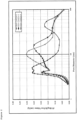
- the BJH pore size distribution from N2 physisorption measurements for catalysts of the present invention along with standard base catalysts after industrially recognized cyclic deactivation in presence of Ni/V and steam are shown in the figures. It indicates that the catalysts of the present invention have increased mesopores in the range of 6 - 40 nm compared to standard base catalysts. It is clear from the table given that the pore diameter distribution having a peak at a pore diameter of about 2.0 to 6 nm has around 20 - 30% of total pore volume and the pore volume of pores with diameter 6 to 40 nm is around 55 - 70% of total pore volume, more preferably 60 - 70%.
- the base catalysts showed almost equal contribution of pore volume from the pores with above mentioned pore diameter ranges.
- the results indicate that the catalysts of the present invention moved significant amount of pores with diameter about 2.0 to 6 nm to mesopores of 6 to 40 nm. It is believed, an increase in mesoporosity improves the performance of the catalysts of the present invention in FCC testing with resid feed. It is believed, the increased mesopores may favor more selective cracking, particularly with larger molecules that leads to less coke and more bottoms upgrading.
- These catalysts can be used as FCC catalysts or FCC additives in hydroprocessing catalysts, alkylation catalysts, reforming catalysts, gas-to-liquid conversion catalysts, coal conversion catalysts, hydrogen manufacturing catalysts, and automotive catalysts.
- the process of the invention is particularly applicable to Fluid Catalytic Cracking (FCC).
- FCC Fluid Catalytic Cracking
- the catalyst which is generally present as a fine particulate comprising over 90 wt% of the particles having diameters in the range of about 5 to about 300 microns.
- a hydrocarbon feedstock is gasified and directed upward through a reaction zone, such that the particulate catalyst is entrained and fluidized in the hydrocarbon feedstock stream.
- the hot catalyst which is coming from the regenerator, reacts with the hydrocarbon feed which is vaporized and cracked by the catalyst.
- temperatures in the reactor are 400-650C and the pressure can be under reduced, atmospheric or superatmospheric pressure, usually about atmospheric to about 5 atmospheres.
- the catalytic process can be either fixed bed, moving bed, or fluidized bed, and the hydrocarbon flow may be either concurrent or countercurrent to the catalyst flow.
- the process of the invention is also suitable for TCC (Thermofor catalytic cracking) or DCC.
- ACE catalyst-to-feed ratios
- the accessibility of the catalysts prepared according to the Examples below was measured by adding 1 g of the catalyst to a stirred vessel containing 50 ml vacuum gas oil diluted in toluene. The solution was circulated between the vessel and a spectrophotometer, in which process the VGO-concentration was continuously measured.
- the attrition resistance of the catalysts was measured using a method substantially based on ASTM 5757 Standard Test Method for Determination of Attrition and Abrasion of Powdered Catalysts by Air Jets, the results from which indicate that the more attrition resistant the catalyst is, the lower the resulting attrition index value observed when testing a material using the above-referenced method.
- the pore size distribution of deactivated catalysts was measured by BJH method from nitrogen adsorption isotherms following ASTM D4641 method.
- Example 1 Four catalysts were made using the above methodologies.
- the base cases are commercial catalysts.
- the total zeolite in base case is 21wt%, whereas in catalysts of the present invention are 25wt%.
- the components of the various samples made is shown below: Catalyst Description Base catalyst#1 New Catalyst#1 New Catalyst#2 Base catalyst#2 New Catalyst#3 New Catalyst#4 RE-Y Zeolite 21.0 9.0 9.0 21.0 9.0 9.0 USY 0.0 16.0 16.0 0.0 16.0 16.0 Quasi-crystalline boehmite 20.0 20.0 20.0 20.0 20.0 20.0 20.0 20.0 20.0 20.0 20.0 20.0 20.0 20.0 20.0
- the catalysts of the present invention showed higher surface areas, higher accessibility and at least comparable if not improved attrition.
- Example 2 Pore size distribution Each of the samples from Example 1 was tested for pore size distribution.
- the deactivated catalysts showed enhanced mesoporosity in the range of 6 to 40 nm compared to base catalysts as shown in the figure below.
- the pore diameter distribution having a peak at a pore diameter of about 2 to 6 nm has around 25-28% of total pore volume and the pore volume of pores with diameter 6 to 40 nm is around 65-68% of total pore volume for the catalysts of the present invention.
- the pore volume contribution of pores with diameter around 2 to 6 nm is around 39% and 44%, and that of pores with diameter 6 to 40 nm is 49% and 53%.
- Example 3 The ACE performance evaluation of these catalysts along with base catalysts in resid feed is given below.
- the catalysts of the present invention were found to be highly active compared to base control catalysts.
- the coke selectivities of catalysts at constant conversion are better (lower coke) with higher bottoms upgrading than base catalysts.
- the better performance of the catalysts coke selectivity and bottoms upgrading can be related to the increased mesoporosity on these catalysts compared to base catalysts.
- Catalyst Description Base catalyst#1 New Catalyst#1 New Catalyst#2 Base catalyst#2 New Catalyst#3 New Catalyst#4 430°F+ Conversion, wt% 79.13 81.25 80.90 80.00 81.19 81.34 Catalyst-to-Oil, wt/wt 5.00 5.00 5.00 5.00 5.00 Catalyst Selectivity @ 79% conversion Coke 8.17 7.11 7.01 8.37 7.17 7.44 % coke reduction 13% 14% 14% 11% 650°F+ 7.13 6.84 6.89 6.84 6.77 6.73 % bottoms upgrading 4% 3% 1% 2%
- Example 4 In the second example given below, where catalysts of the present invention were prepared by the methods described above. As seen before, better binding and accessibility are noted on the present catalysts of the invention compared to the base catalyst.
- Catalyst Description Base Catalyst#3 New catalyst#5 New catalyst#6 RE-Y zeolite 23.00 11.0 11.0 USY 0.00 16.0 0.0 RE/USY 0.00 0.0 18.0 Quasi-crystalline alumina 27.0 20.0 20.0 Micro-crystalline alumina 13.00 13.0 13.0 Low sodium colloidal silica 1.50 5.0 5.0 Acidic colloidal silica 0.00 15.0 15.0 RE component 0.00 2.0 0.0 Clay 35.50 18.0 18.0 Catalyst Description Base Catalyst#3 New catalyst#5 New catalyst#6 ABD 0.77 0.74 0.75 Attrition 2.22 1.17 1.52 Accessibility 10.0 12.8 13.2 Sample PV 0.39 0.37 0.42 SA BET 251 291 286 MSA 133 143 146 MIPV 0.0550 0.0688 0.
- the deactivated catalysts showed enhanced mesoporosity in the range of 6 to 40 nm compared to base catalysts as shown in the figure below.
- the pore diameter distribution having a peak at a pore diameter of about 2 to 6 nm has around 23% of total pore volume and the pore volume of pores with diameter 6 to 40 nm is around 69% of total pore volume for the catalysts of the present invention.
- the pore volume contribution of pores with diameter around 2 to 6 nm is around 38% and that of pores with diameter 6 to 40 nm is 48%, indicating that the catalysts of the present invention showed enhanced mesopores in the range of 6 to 40 nm, which resulted in improved coke selectivity and bottoms upgrading as shown in the ACE testing results in the table below.
- Base catalyst-3 New Catalyst-5 New Catalyst-6 Total PV between ⁇ 2 to ⁇ 80 nm (cc/g) 0.2045 0.2319 0.2312 PV between ⁇ 2 to 6 nm (cc/g) 0.07863 0.05258 0.05302 % Pore volume between pore diameter 2 to 6 nm 38% 23% 23% PV between 6-40nm (cc/g) 0.09817 0.16042 0.15898 % Pore volume between pore diameter 6 to 40 nm 48% 69% 69% Catalyst Description Base Catalyst#3 New catalyst#5 New catalyst#6 430°F+ Conversion, wt% 68.03 67.48 69.09 Catalyst-to-Oil, wt/wt 5.00 5.00 5.00 Selectivity @ 68% conversion Coke 10.39 9.61 9.11 % Coke reduction 8% 12% 650°F+ 11.80 11.49 11.45 % bottoms upgrading 3% 3%
- Example 5 In the example given below, where the catalysts of the present invention were prepared by the methods described above. It is clear from the table below that the catalysts of the present invention showed better binding and accessibility than the base case catalyst.
- Catalyst Description Base catalyst#4 New catalyst#7 New catalyst#8 New catalyst#9 New catalyst#10 New catalyst#11 RE-Y zeolite 21.0 0.0 0.0 0.0 0.0 0.0 USY-1 0.0 25.0 0.0 0.0 0.0 0.0 0.0 USY-2 0.0 0.0 0.0 0.0 25.0 0.0 25.0 RE-USY 0.0 0.0 26.0 0.0 26.0 0.0 Small-pore zeolite 6.0 6.0 6.0 6.0 6.0 6.0 6.0 Quasi-crystalline alumina 30.0 20.0 20.0 20.0 20.0 20.0 20.0 20.0 20.0 Micro-crystalline alumina 15.0 15.0 15.0 15.0 15.0 Low sodium colloidal silica 1.5 5.0 5.0 5.0 5.0 5.0 RE component 0.0 1.0 0.0 1.0 1.0 1.0 1.0 1.0 1.0
- the mesopores in the range of 5-20 nm were created which is absent in the base case catalyst.
- the pore diameter distribution having a peak at a pore diameter of about 2 to 6 nm has around 30% of total pore volume and the pore volume of pores with diameter 6 to 40 nm is around 60% of total pore volume for catalysts of the present invention, whereas the base case catalyst almost equal pore volume contribution from the above mentioned pore diameter ranges.
- Catalysts with 50% reduced colloidal silica also showed comparable pore volume contribution.
- the benefits of mesopores created in catalysts of the present invention are revealed in the ACE performance test with resid feed as shown in the table below.
Landscapes
- Chemical & Material Sciences (AREA)
- Organic Chemistry (AREA)
- Chemical Kinetics & Catalysis (AREA)
- Engineering & Computer Science (AREA)
- Materials Engineering (AREA)
- Crystallography & Structural Chemistry (AREA)
- Oil, Petroleum & Natural Gas (AREA)
- General Chemical & Material Sciences (AREA)
- Thermal Sciences (AREA)
- Physics & Mathematics (AREA)
- Dispersion Chemistry (AREA)
- Catalysts (AREA)
- Production Of Liquid Hydrocarbon Mixture For Refining Petroleum (AREA)
- Nanotechnology (AREA)
- Silicates, Zeolites, And Molecular Sieves (AREA)
Description
- The present invention pertains to a process for the manufacturing of a catalyst composition useful in a process for the cracking or conversion of a feed comprised of hydrocarbons, such as, for example, those obtained from the processing of crude petroleum, with better physical properties and performance.
- A common challenge in the design and production of heterogeneous catalysts is to find a good compromise between the effectiveness and/or accessibility of the active sites and the effectiveness of the immobilising matrix in giving the catalyst particles sufficient physical strength, i.e. attrition resistance. Further, there is a need to develop a catalyst or catalytic system with better coke selectivity.
- The preparation of attrition resistant catalysts is disclosed in several prior art documents.
US 4,086,187 discloses a process for the preparation of an attrition resistant catalyst by spray-drying an aqueous slurry prepared by mixing (i) a faujasite zeolite with a sodium content of less than 5 wt% with (ii) kaolin, (iii) peptised pseudoboehmite, and (iv) ammonium polysilicate. The attrition resistant catalysts according toUS 4,206,085 are prepared by spray-drying a slurry prepared by mixing two types of acidified pseudoboehmite, zeolite, alumina, clay, and either ammonium polysilicate or silica sol. -
WO 02/098563 -
WO 06/067154 -
WO2015057841 discloses a mesoporous catalyst formed by combining a matrix precursor treated with a polyphosphate, and a metallic oxide treated with a cationic electrolyte. The combined treatment with the polyphosphate and cationic polyelectrolyte yields unexpected improvements in attrition resistance, while maintaining high overall pore volume, even as the ratio of mesopore volume to macropore volume of the formed FCC catalyst increases. -
U.S. Patent No. 6,022,471 discloses an FCC catalyst having improved coke selectivity and an FCC process for converting hydrocarbon feedstocks to lower boiling products. The catalyst comprises a crystalline aluminosilicate zeolite, gibbsite, rare earth metal compound and a silica matrix prepared from at least one of a silica sol made by an ion-exchange process and an acidic silica sol prepared by mixing sodium silicate, an acid and an aluminum salt of an acid. The matrix material is mesoporous having pore diameters in the range between about 100 to 300 Å and may contain two different types of silica sols, and preferably a clay component. A first type of silica sol is made by an ion-exchange process. The second type of silica sol is prepared by reacting sodium silicate with a mineral acid followed by addition of an aluminum salt. - The present invention relates to an FCC catalyst meant to be employed in the process for cracking, a hydrocarbon feed over a particular catalyst composition to produce conversion product hydrocarbon compounds of lower molecular weight than feed hydrocarbons, e.g., product comprising a high gasoline fraction.
- In an embodiment, provided is a process for manufacturing an FCC catalyst, wherein the process comprises:
- (a) Adding, clay, boehmite, sodium stabilized colloidal silica to form a slurry;
- (b) Digesting the slurry with a monoprotic acid to a pH of less than 4;
- (c) Adding one or more zeolites from the group of ultra stabilized high SiO2/Al2O3 Y zeolite, wherein the framework SiO2/Al2O3 ratio is above 6.5, rare earth exchanged USY, rare earth exchanged Y zeolites, zeolites with Pentasil and beta structures to the slurry;
- (d) Adding a rare earth component in form of a salt or solution to the slurry either after step (a) or after step (c) and mixing;
- (e) Adjust the slurry pH to below 4 with monoprotic acid;
- (f) Adding low or sodium free poly silicic acid in line or addition of acidic colloidal silica or ammonia stabilized or low-sodium stabilized colloidal anywhere in the above steps a - e;
- (g) Destabilizing the slurry by raising the pH to above 4.0;
- (h) Shaping and collecting the resulting FCC Catalyst;
- (i) Optionally followed by a calcination and post washing step to remove excess sodium as necessary.
- The resulting catalyst shows improved benefits over that known in the art. For example, the improved catalyst exhibits improved attrition and higher ABD and accessibility. Further, the improved catalyst results in better coke selectivity at constant conversion with more bottoms upgrading.
- These and still other embodiments, advantages and features of the present invention shall become further apparent from the following detailed description, including the appended claims.
- Unless otherwise indicated, weight percent (_wt%) as used herein is the dry base weight percent of the specified form of the substance, based upon the total dry base weight of the product for which the specified substance or form of substance is a constituent or component. It should further be understood that, when describing steps or components or elements as being preferred in some manner herein, they are preferred as of the initial date of this disclosure, and that such preference(s) could of course vary depending upon a given circumstance or future development in the art.
- The first step of the process of manufacturing the improved catalyst is to mix clay sources with colloidal silica, and one or more alumina (boehmite) sources. As will be discussed below, one can optionally add a second silica source of acidic colloidal silica or ammonia stabilized or low-sodium stabilized colloidal to this slurry or at a later step. The clay, zeolite, QCB, MCB, colloidal silica, and optional other components can be slurried by adding them to water as dry solids. Alternatively, slurries containing the individual materials are mixed to form the slurry. It is also possible to add some of the materials as slurries, and others as dry solids. Optionally, other components may be added, such as aluminium chlorohydrol, aluminium nitrate, Al2O3, Al(OH)3, anionic clays (e.g. hydrotalcite), smectites, sepiolite, barium titanate, calcium titanate, calcium-silicates, magnesium-silicates, magnesium titanate, mixed metal oxides, layered hydroxy salts, additional zeolites, magnesium oxide, bases or salts, and/or metal additives such as compounds containing an alkaline earth metal (for instance Mg, Ca, and Ba), a Group IIIA transition metal, a Group IVA transition metal (e.g. Ti, Zr), a Group VA transition metal (e.g. V, Nb), a Group VIA transition metal (e.g. Cr, Mo, W), a Group VIIA transition metal (e.g. Mn), a Group VIIIA transition metal (e.g. Fe, Co, Ni, Ru, Rh, Pd, Pt), a Group IB transition metal (e.g. Cu), a Group IIB transition metal (e.g. Zn), a lanthanide (e.g. La, Ce), or mixtures thereof. Any order of addition of these compounds may be used. It is also possible to combine these compounds all at the same time.
- The term "boehmite" is used in the industry to describe alumina hydrates which exhibit X-ray diffraction (XRD) patterns close to that of aluminium oxide-hydroxide [AlO(OH)]. Further, the term boehmite is generally used to describe a wide range of alumina hydrates which contain different amounts of water of hydration, have different surface areas, pore volumes, specific densities, and exhibit different thermal characteristics upon thermal treatment. Yet their XRD patterns, although they exhibit the characteristic boehmite [AlO(OH)] peaks, usually vary in their widths and can also shift in their location. The sharpness of the XRD peaks and their location has been used to indicate the degree of crystallinity, crystal size, and amount of imperfections.
- Broadly, there are two categories of boehmite aluminas: quasi-crystalline boehmites (QCBs) and micro-crystalline boehmites (MCBs). In the state of the art, quasi-crystalline boehmites are also referred to as pseudo-boehmites and gelatinous boehmites. Usually, these QCBs have higher surface areas, larger pores and pore volumes, and lower specific densities than MCBs. They disperse easily in water or acids, have smaller crystal sizes than MCBs, and contain a larger number of water molecules of hydration. The extent of hydration of QCB can have a wide range of values, for example from about 1.4 up to about 2 moles of water per mole of Al, intercalated usually orderly or otherwise between the octahedral layers. Some typical commercially available QCBs are Pural®, Catapal®, and Versal® products.
- Microcrystalline boehmites are distinguished from the QCBs by their high degree of crystallinity, relatively large crystal size, very low surface areas, and high densities. Contrary to QCBs, MCBs show XRD patterns with higher peak intensities and very narrow half-widths. This is due to their relatively small number of intercalated water molecules, large crystal sizes, the higher degree of crystallization of the bulk material, and the smaller amount of crystal imperfections. Typically, the number of water molecules intercalated can vary in the range from about 1 up to about 1.4 per mole of Al.
- The first source of silica is typically a low sodium silica source and is added to the initial slurry. Examples of such silica sources include, but are not limited to potassium silicate, sodium silicate, lithium silicate, calcium silicate, magnesium silicate, barium silicate, strontium silicate, zinc silicate, phosphorus silicate, and barium silicate. Examples of suitable organic silicates are silicones (polyorganosiloxanes such as polymethylphenylsiloxane and polydimethylsiloxane) and other compounds containing Si-O-C-O-Si structures, and precursors thereof such as methyl chlorosilane, dimethyl chlorosilane, trimethyl chlorosilane, and mixtures thereof. Preferred low sodium silica sources are sodium stabilized colloidal silicas. The slurry further comprises about 0 to about 25 wt% and more preferably about 0 to about 20 wt% of silica from the sodium-free silicon source based on the weight of the final catalyst.
- The second silica source is typically an acidic or low sodium or sodium free colloidal silica or polysilicic acid or ammonia stabilized or other low-sodium stabilized colloidal silica. Suitable silicon sources to be added as a second silica source include (poly)silicic acid, sodium silicate, sodium-free silicon sources, and organic silicon sources. One such source for the second silica is a sodium stabilized or sodium free polysilicic acid made inline of the process by mixing appropriate amounts of sulfuric acid and water glass. The acidic colloidal silica is acid stabilized sodium-free or low sodium amorphous colloidal silica particles dispersed in water or any suitable solvent. Ammonia (pH= 8-10.5, PSD = 5-85 nm) or low-sodium stabilized colloidal silica (pH = 5-8, PSD = 5-85 nm) can also be used in place of acidic colloidal silica. This second addition of silica is generally added in an amount of about 5 to 25 wt%, and preferably about 5 to about 20% based on the weight of the final catalyst.
- The choice of the second silica source can have an effect on when the material is added to the slurry discussed above. If acidic colloidal silica is used, then the silica may be added at any step prior to the pH adjustment step. However, if the second silica source is a sodium stabilized or sodium free polysilicic acid or ammonia stabilized or low-sodium stabilized colloidal, the silica should be added after the zeolite addition just prior to the pH adjustment step. In addition, due to the sodium content of the polysilicic acid it may be necessary to wash the final catalyst to remove excess sodium. It may further be necessary to calcine the final catalyst.
- The clay is preferred to have a low sodium content (less than 0.1 wt% Na2O), or to be sodium-free. Suitable clays include kaolin, bentonite, saponite, sepiolite, attapulgite, laponite, hectorite, English clay, anionic clays such as hydrotalcite, and heat- or chemically treated clays such as meta-kaolin. The slurry preferably comprises about 0 to about 70 wt%, more preferably about 10 to about 60 wt%, and most preferably about 10 to about 50 wt% of clay.
- In a next step, a monovalent acid is added to the suspension, causing digestion. Both organic and inorganic monovalent acids can be used, or a mixture thereof. Examples of suitable monovalent acids are formic acid, acetic acid, propionic acid, nitric acid, and hydrochloric acid. The acid is added to the slurry in an amount sufficient to obtain a pH lower than 7, more preferably between 1 and 4.
- One or more zeolites are then added. The zeolites used in the process according to the present invention preferably have a low sodium content (less than 1.5 wt% Na2O), or are sodium-free. The zeolites to be added include RE-Y, and RE-USY zeolite beta, zeolites with pentasil structure such as ZSM-5, phosphorus-activated ZSM-5, ion-exchanged ZSM-5, and mixtures thereof. In particular, one or more ultra stabilized high SiO2/Al2O3 ratio large pore faujasite zeolite (framework SiO2/Al2O3 ratio above about 6.5) or a rare earth containing USY (framework SiO2/Al2O3 ratio above about 6.5) are utilized. In particular, about 2 to about 50 wt% of one or more ultra stabilized high Y zeolite or RE-USY is utilized in the catalyst. In addition, about 0 to about 50 wt % of one or more rare-earth exchanged Y zeolite can be added to the one or more ultra stabilized high Y zeolite or RE-USY.
- Optionally, small to medium pore size zeolites can be added to the mixture at this time. Typically, the amount is added in an amount of about 0 to about 30 wt%. Any suitable medium pore zeolite may be used. Such suitable medium pore zeolites include but are not limited to ZSM-5, ZSM-11, ZSM-22, Beta, or Ferrierite
- A rare earth component is added in an amount of about 0.1 to about 10 wt %, based on the oxide form, in the form of a salt or solution to the mixture. Examples of suitable rare earth elements include but not limited to lanthanum, yttrium and cerium. The rare earth is typically added as hydroxide, chloride, oxide, nitrate, sulfate, oxychlorides, acetates, or carbonates. Preferably, lanthanum nitrate is added in an amount of about 0.1 to about 10 wt % based on the oxide form in the form of a salt or solution. The rare earth component can be added before or after the peptization (or digestion) of the alumina as described above.
- The above combined slurry is then passed through a high sheer mixer where it is destabilized by increasing the pH. The pH of the slurry is subsequently adjusted to a value above 4. The pH of the slurry is preferably not higher than 7, because slurries with a higher pH can be difficult to handle. The pH can be adjusted by adding a base (e.g. NaOH or NH4OH) to the slurry. The time period between the pH adjustment and shaping step preferably is 30 minutes or less, more preferably less than 5 minutes, and most preferably less than 3 minutes. At this step, the solids content of the slurry preferably is about 10 to about 45 wt%, more preferably about 15 to about 40 wt%, and most preferably about 25 to about 35 wt%.
- The slurry is then shaped. Suitable shaping methods include spray-drying, pulse drying, pelletising, extrusion (optionally combined with kneading), beading, or any other conventional shaping method used in the catalyst and absorbent fields or combinations thereof. A preferred shaping method is spray-drying. If the catalyst is shaped by spray-drying, the inlet temperature of the spray-dryer preferably ranges from 300 to 600°C and the outlet temperature preferably ranges from 105 to 200°C.
- The catalyst so obtained has exceptionally good attrition resistance and accessibility. Therefore, the invention also relates to a catalyst obtainable by the process according to the invention. The catalyst is generally an FCC catalyst comprising about about 2 to about 50 wt% of one or more ultra stabilized high SiO2/Al2O3 ratio Y zeolite or RE-USY, 0 to about 50 wt % of one or more rare-earth exchanged Y zeolite, 0 to about 30 wt% of small to medium pore size zeolites, about 5 to about 35 wt% quasicrystalline boehmite, about 0 to about 50 wt% microcrystalline boehmite, about 0 to about 20 wt% silica from sodium stabilized colloidal silica, about 2 to about 30 wt% silica from acidic colloidal silica or polysilicic acid or ammonia stabilized colloidal silica or low-sodium colloidal silica, about 0.1 to about 10 wt% rare earth component as measured by its oxide and the balance clay.
- A key feature of the resulting catalyst is an increase in mesoporosity over previous catalysts. The BJH pore size distribution from N2 physisorption measurements for catalysts of the present invention along with standard base catalysts after industrially recognized cyclic deactivation in presence of Ni/V and steam are shown in the figures. It indicates that the catalysts of the present invention have increased mesopores in the range of 6 - 40 nm compared to standard base catalysts. It is clear from the table given that the pore diameter distribution having a peak at a pore diameter of about 2.0 to 6 nm has around 20 - 30% of total pore volume and the pore volume of pores with diameter 6 to 40 nm is around 55 - 70% of total pore volume, more preferably 60 - 70%. Whereas the base catalysts showed almost equal contribution of pore volume from the pores with above mentioned pore diameter ranges. The results indicate that the catalysts of the present invention moved significant amount of pores with diameter about 2.0 to 6 nm to mesopores of 6 to 40 nm. It is believed, an increase in mesoporosity improves the performance of the catalysts of the present invention in FCC testing with resid feed. It is believed, the increased mesopores may favor more selective cracking, particularly with larger molecules that leads to less coke and more bottoms upgrading.
- These catalysts can be used as FCC catalysts or FCC additives in hydroprocessing catalysts, alkylation catalysts, reforming catalysts, gas-to-liquid conversion catalysts, coal conversion catalysts, hydrogen manufacturing catalysts, and automotive catalysts. The process of the invention is particularly applicable to Fluid Catalytic Cracking (FCC). In the FCC process, the details of which are generally known, the catalyst, which is generally present as a fine particulate comprising over 90 wt% of the particles having diameters in the range of about 5 to about 300 microns. In the reactor portion, a hydrocarbon feedstock is gasified and directed upward through a reaction zone, such that the particulate catalyst is entrained and fluidized in the hydrocarbon feedstock stream. The hot catalyst, which is coming from the regenerator, reacts with the hydrocarbon feed which is vaporized and cracked by the catalyst. Typically temperatures in the reactor are 400-650C and the pressure can be under reduced, atmospheric or superatmospheric pressure, usually about atmospheric to about 5 atmospheres. The catalytic process can be either fixed bed, moving bed, or fluidized bed, and the hydrocarbon flow may be either concurrent or countercurrent to the catalyst flow. The process of the invention is also suitable for TCC (Thermofor catalytic cracking) or DCC.
- Prior to any lab testing the catalyst must be deactivated to simulate catalyst in a refinery unit, this is typically done with steam. These samples were deactivated either by cyclic deactivation with Ni/V which consists of cracking, stripping and regeneration steps in the presence of steam or with 100% steam at higher temperatures, which are industrially accepted deactivation methods for FCC catalysts. The deactivation step is known in the art, and is necessary to catalytic activity. In commercial FCC setting, deactivation occurs shortly after catalyst introduction, and does not need to be carried out as a separate step. The Fluid microactivity test, or Fluidized-bed Simulation Test (FST) or Advanced Cracking Evaluation (ACE) is a test known and generally accepted in the art for ascertaining the FCC cracking activity of a catalyst. In ACE the test is conducted with a series of four catalyst-to-feed ratios (CTO) which are obtained by varying the mass of feed injected to the reactor, while using the same amount of catalyst for all runs. The testing apparatus simulates the cracking of a known amount of a hydrocarbon feedstock of known amount and compositional characteristics. This small scale testing unit is a once through unit and operated approximately as in ASTM 5154-10.
- The accessibility of the catalysts prepared according to the Examples below was measured by adding 1 g of the catalyst to a stirred vessel containing 50 ml vacuum gas oil diluted in toluene. The solution was circulated between the vessel and a spectrophotometer, in which process the VGO-concentration was continuously measured.
- The attrition resistance of the catalysts was measured using a method substantially based on ASTM 5757 Standard Test Method for Determination of Attrition and Abrasion of Powdered Catalysts by Air Jets, the results from which indicate that the more attrition resistant the catalyst is, the lower the resulting attrition index value observed when testing a material using the above-referenced method.
- The pore size distribution of deactivated catalysts was measured by BJH method from nitrogen adsorption isotherms following ASTM D4641 method.
- Example 1: Four catalysts were made using the above methodologies. The base cases are commercial catalysts. The total zeolite in base case is 21wt%, whereas in catalysts of the present invention are 25wt%. The components of the various samples made is shown below:
Catalyst Description Base catalyst# 1New Catalyst# 1New Catalyst# 2Base catalyst# 2New Catalyst# 3New Catalyst# 4RE-Y Zeolite 21.0 9.0 9.0 21.0 9.0 9.0 USY 0.0 16.0 16.0 0.0 16.0 16.0 Quasi-crystalline boehmite 20.0 20.0 20.0 20.0 20.0 20.0 Micro-crystalline boehmite 15.0 25.0 25.0 15.0 25.0 25.0 Low sodiun colloidal silica 1.5 5.0 5.0 1.5 5.0 5.0 Acidic colloidal silica 0.0 15.0 15.0 0.0 15.0 15.0 RE component 0.0 4.0 4.0 0.0 4.0 4.0 Clay 42.5 6.0 6.0 42.5 6.0 6.0 Catalyst Description Base catalyst# 1New Catalyst# 1New Catalyst# 2Base catalyst# 2New Catalyst# 3New Catalyst# 4ABD 0.72 0.72 0.73 0.73 0.74 0.74 Attrition 1.81 200 1.63 1.93 1.28 1.37 Accessibility 11.6 16.2 16.5 12.3 16.1 16.1 Sample PV 0.43 0.47 0.48 0.42 0.41 0.42 SA BET 223 297 293 218 296 295 MSA 107 151 150 105 149 148 MIPV 0.0540 0.0678 0.0662 0.0524 0.0682 0.0683 - Based on the results of Example 1, the catalysts of the present invention showed higher surface areas, higher accessibility and at least comparable if not improved attrition.
- Example 2 Pore size distribution: Each of the samples from Example 1 was tested for pore size distribution. The deactivated catalysts showed enhanced mesoporosity in the range of 6 to 40 nm compared to base catalysts as shown in the figure below. The pore diameter distribution having a peak at a pore diameter of about 2 to 6 nm has around 25-28% of total pore volume and the pore volume of pores with diameter 6 to 40 nm is around 65-68% of total pore volume for the catalysts of the present invention. In the base catalyst, the pore volume contribution of pores with diameter around 2 to 6 nm is around 39% and 44%, and that of pores with diameter 6 to 40 nm is 49% and 53%. This indicates that the catalysts of the present invention showed enhanced mesopores in the range of 6 to 40 nm, which resulted in improved coke selectivity and bottoms upgrading as shown in the ACE testing results in the table below.
Base catalyst# 1New Catalyst# 1New Catalyst# 2Base catalyst# 2New Catalyst# 3New Catalyst# 4Total PV between∼2.0) to ∼80 nm (cc/g) 0.1676 0.2367 0.2363 0.1569 0.2398 0.2336 PV between ∼2. 0 to 6 nm(cc/g) 0.07316 0.06477 0.06699 0.06108 0.06634 0.05939 % Pore volume between pore diameter∼2.0 to 6 nm 44% 27% 28% 39% 28% 25% PV between 6-40mn (cc/g) 0.08254 0.15953 0.15461 0.08252 0.16136 0.15881 % Pore volume between pore diameter 6 to 40 nm 49% 67% 65% 53% 67% 68% - Example 3: The ACE performance evaluation of these catalysts along with base catalysts in resid feed is given below. The catalysts of the present invention were found to be highly active compared to base control catalysts. The coke selectivities of catalysts at constant conversion are better (lower coke) with higher bottoms upgrading than base catalysts. The better performance of the catalysts coke selectivity and bottoms upgrading can be related to the increased mesoporosity on these catalysts compared to base catalysts.
Catalyst Description Base catalyst# 1New Catalyst# 1New Catalyst# 2Base catalyst# 2New Catalyst# 3New Catalyst# 4430°F+ Conversion, wt% 79.13 81.25 80.90 80.00 81.19 81.34 Catalyst-to-Oil, wt/wt 5.00 5.00 5.00 5.00 5.00 5.00 Catalyst Selectivity @ 79% conversion Coke 8.17 7.11 7.01 8.37 7.17 7.44 % coke reduction 13% 14% 14% 11% 650°F+ 7.13 6.84 6.89 6.84 6.77 6.73 % bottoms upgrading 4% 3% 1% 2% - Example 4: In the second example given below, where catalysts of the present invention were prepared by the methods described above. As seen before, better binding and accessibility are noted on the present catalysts of the invention compared to the base catalyst.
Catalyst Description Base Catalyst# 3New catalyst# 5New catalyst#6 RE-Y zeolite 23.00 11.0 11.0 USY 0.00 16.0 0.0 RE/USY 0.00 0.0 18.0 Quasi-crystalline alumina 27.0 20.0 20.0 Micro-crystalline alumina 13.00 13.0 13.0 Low sodium colloidal silica 1.50 5.0 5.0 Acidic colloidal silica 0.00 15.0 15.0 RE component 0.00 2.0 0.0 Clay 35.50 18.0 18.0 Catalyst Description Base Catalyst# 3New catalyst# 5New catalyst#6 ABD 0.77 0.74 0.75 Attrition 2.22 1.17 1.52 Accessibility 10.0 12.8 13.2 Sample PV 0.39 0.37 0.42 SA BET 251 291 286 MSA 133 143 146 MIPV 0.0550 0.0688 0.0651 - Again, the deactivated catalysts showed enhanced mesoporosity in the range of 6 to 40 nm compared to base catalysts as shown in the figure below. As seen before, the pore diameter distribution having a peak at a pore diameter of about 2 to 6 nm has around 23% of total pore volume and the pore volume of pores with diameter 6 to 40 nm is around 69% of total pore volume for the catalysts of the present invention. In the base catalyst, the pore volume contribution of pores with diameter around 2 to 6 nm is around 38% and that of pores with diameter 6 to 40 nm is 48%, indicating that the catalysts of the present invention showed enhanced mesopores in the range of 6 to 40 nm, which resulted in improved coke selectivity and bottoms upgrading as shown in the ACE testing results in the table below.
Base catalyst-3 New Catalyst-5 New Catalyst-6 Total PV between ∼2 to ∼80 nm (cc/g) 0.2045 0.2319 0.2312 PV between ∼2 to 6 nm (cc/g) 0.07863 0.05258 0.05302 % Pore volume between pore diameter 2 to 6 nm38% 23% 23% PV between 6-40nm (cc/g) 0.09817 0.16042 0.15898 % Pore volume between pore diameter 6 to 40 nm 48% 69% 69% Catalyst Description Base Catalyst# 3New catalyst# 5New catalyst#6 430°F+ Conversion, wt% 68.03 67.48 69.09 Catalyst-to-Oil, wt/wt 5.00 5.00 5.00 Selectivity @ 68% conversion Coke 10.39 9.61 9.11 % Coke reduction 8% 12% 650°F+ 11.80 11.49 11.45 % bottoms upgrading 3% 3% - Example 5: In the example given below, where the catalysts of the present invention were prepared by the methods described above. It is clear from the table below that the catalysts of the present invention showed better binding and accessibility than the base case catalyst.
Catalyst Description Base catalyst# 4New catalyst#7 New catalyst#8 New catalyst#9 New catalyst# 10New catalyst#11 RE-Y zeolite 21.0 0.0 0.0 0.0 0.0 0.0 USY-1 0.0 25.0 0.0 0.0 0.0 0.0 USY-2 0.0 0.0 0.0 25.0 0.0 25.0 RE-USY 0.0 0.0 26.0 0.0 26.0 0.0 Small-pore zeolite 6.0 6.0 6.0 6.0 6.0 6.0 Quasi-crystalline alumina 30.0 20.0 20.0 20.0 20.0 20.0 Micro-crystalline alumina 15.0 15.0 15.0 15.0 15.0 15.0 Low sodium colloidal silica 1.5 5.0 5.0 5.0 5.0 5.0 Acidic colloidal silica 0.0 15.0 15.0 15.0 5.0 5.0 RE component 0.0 1.0 0.0 1.0 1.0 1.0 Clay 26.5 13.0 13.0 13.0 23.0 23.0 Catalyst Description Base catalyst# 4New catalyst#7 New catalyst#8 New catalyst#9 New catalyst# 10New catalyst#11 ABD 0.74 0.71 0.73 0.69 0.71 0.68 Attrition 207 1.45 1.07 1.40 1.48 1.99 Accessibility 10.0 13.2 13.2 13.8 10.9 14.7 Sample PV 0.46 0.42 0.40 0.39 0.43 0.41 SA BET 275 310 318 306 304 296 MSA 150 150 159 144 143 138 MIPV 0.0582 0.0740 0.0739 0.0757 0.0749 0.0738 - Also, after the deactivation in presence of Ni, V and steam, the mesopores in the range of 5-20 nm were created which is absent in the base case catalyst. Again the pore diameter distribution having a peak at a pore diameter of about 2 to 6 nm has around 30% of total pore volume and the pore volume of pores with diameter 6 to 40 nm is around 60% of total pore volume for catalysts of the present invention, whereas the base case catalyst almost equal pore volume contribution from the above mentioned pore diameter ranges. Catalysts with 50% reduced colloidal silica also showed comparable pore volume contribution. The benefits of mesopores created in catalysts of the present invention are revealed in the ACE performance test with resid feed as shown in the table below.
Base catalyst# 4New Catalyst#7 New Catalyst#8 New catalyst#9 New catalyst# 10New catalyst#11 TotalPVbetween∼2.0 to ∼80 nm (cc/g) 0.2029 0.2432 0.2259 0.2260 0.2021 0.2026 PV between∼2.0 to 6 nm(cc/g) 0.08945 0.07053 0.06749 0.06358 0.06375 0.06163 % Pore volume between pore diameter∼2.0 to 6 nm 44% 29% 30% 28% 32% 30% PV between 6-40nm (cc/g) 0.08085 0.14827 0.13551 0.13842 0.11085 0.11577 % Pore volume between pore diameter 6 to 40 nm 40% 61% 60% 61% 55% 57% Catalyst Description Base catalyst# 4New catalyst#7 New catalyst#8 New catalyst#9 New catalyst# 10New catalyst#11 430°F+ Conversion, wt% 74.47 76.99 76.82 76.99 77.01 76.35 Catalyst-to-Oil, wt/wt 5.00 5.00 5.00 5.00 5.00 5.00 Selectivity@75% conversion Coke 7.68 6.53 6.45 6.55 6.75 6.71 % Coke reduction 15% 16% 15% 12% 13% 650°F+ 8.77 8.94 9.09 8.95 8.93 8.91
Claims (5)
- A process for the manufacturing of a catalyst composition of the present invention prepared by:a. Adding, clay, boehmite, a first silica to form a slurry;b. Digesting the slurry with a monoprotic acid to a pH of less than 4;c. Adding one or more zeolites from the group of ultra stabilized high SiO2/Al2O3 Y zeolite, wherein the framework SiO2/Al2O3 ratio is above 6.5, rare earth exchanged USY, rare earth exchanged Y zeolites, zeolites with pentasil and beta structures to the slurry and mixtutres thereof;d. Adding a rare earth component in form of a salt or solution to the slurry either after step (a) or after step (c) and mixing;e. Adjust the slurry pH to below 4 with monoprotic acid;f. Adding a second silica anywhere in the above steps a - e;g. Destabilizing the slurry by raising the pH to above 4.0;h. Shaping and collecting the resulting catalyst;i. Optionally followed by a calcination and post washing step to remove excess sodium as necessary.
- The process of Claim 1 wherein the first silica comprises sodium stabilized colloidal silica.
- The process of Claim 1 wherein the second silica comprises acidic colloidal silica or ammonia stabilized colloidal silica or low-sodium stabilized colloidal silica or polysilicic acid, or mixtures thereof
- The process of Claim 1 wherein the one or more rare earth components are added to the catalyst as hydroxide, chloride, oxide, nitrate, sulfate, oxychlorides, acetates, or carbonates.
- The process of Claim 4 wherein the one or more rare earth components comprise lanthanum nitrate.
Priority Applications (1)
| Application Number | Priority Date | Filing Date | Title |
|---|---|---|---|
| EP24196705.8A EP4450600A3 (en) | 2018-01-12 | 2019-01-11 | Fcc catalyst with enhanced mesoporosity, its preparation and use |
Applications Claiming Priority (2)
| Application Number | Priority Date | Filing Date | Title |
|---|---|---|---|
| US201862617176P | 2018-01-12 | 2018-01-12 | |
| PCT/US2019/013279 WO2019140249A1 (en) | 2018-01-12 | 2019-01-11 | Fcc catalyst with enhanced mesoporosity, its preparation and use |
Related Child Applications (1)
| Application Number | Title | Priority Date | Filing Date |
|---|---|---|---|
| EP24196705.8A Division EP4450600A3 (en) | 2018-01-12 | 2019-01-11 | Fcc catalyst with enhanced mesoporosity, its preparation and use |
Publications (2)
| Publication Number | Publication Date |
|---|---|
| EP3737500A1 EP3737500A1 (en) | 2020-11-18 |
| EP3737500B1 true EP3737500B1 (en) | 2024-08-28 |
Family
ID=65494494
Family Applications (2)
| Application Number | Title | Priority Date | Filing Date |
|---|---|---|---|
| EP24196705.8A Pending EP4450600A3 (en) | 2018-01-12 | 2019-01-11 | Fcc catalyst with enhanced mesoporosity, its preparation and use |
| EP19706054.4A Active EP3737500B1 (en) | 2018-01-12 | 2019-01-11 | Process for making an fcc catalyst with enhanced mesoporosity |
Family Applications Before (1)
| Application Number | Title | Priority Date | Filing Date |
|---|---|---|---|
| EP24196705.8A Pending EP4450600A3 (en) | 2018-01-12 | 2019-01-11 | Fcc catalyst with enhanced mesoporosity, its preparation and use |
Country Status (9)
| Country | Link |
|---|---|
| US (2) | US11975309B2 (en) |
| EP (2) | EP4450600A3 (en) |
| JP (1) | JP2021510623A (en) |
| KR (1) | KR102693593B1 (en) |
| CN (1) | CN111565841A (en) |
| CA (1) | CA3087960A1 (en) |
| MX (1) | MX2020007352A (en) |
| RU (1) | RU2020125402A (en) |
| WO (1) | WO2019140249A1 (en) |
Families Citing this family (7)
| Publication number | Priority date | Publication date | Assignee | Title |
|---|---|---|---|---|
| GB201913501D0 (en) * | 2019-09-19 | 2019-11-06 | Johnson Matthey Plc | Acylation coupling method |
| JP2023550582A (en) * | 2020-10-30 | 2023-12-04 | アルベマール コーポレーション | Essentially clay-free FCC catalyst with improved contaminant resistance, preparation and use thereof |
| CA3204869A1 (en) | 2021-01-15 | 2022-07-21 | Daniel Evans | Fcc catalyst additive with pseudo solid state crsytallized zeolite |
| EP4363525A1 (en) * | 2021-06-30 | 2024-05-08 | Albemarle Corporation | Fcc catalyst with ultrastable zeolite and transitional alumina and its use |
| CN115957798B (en) * | 2021-10-09 | 2024-11-15 | 中国石油化工股份有限公司 | A catalytic cracking catalyst with rich mesoporous structure and preparation method thereof |
| US20260042079A1 (en) * | 2022-11-02 | 2026-02-12 | Tosoh Corporation | Zeolite shaped bodies |
| EP4613372A1 (en) * | 2024-03-07 | 2025-09-10 | Hindustan Petroleum Corporation Limited | Resid fcc catalyst composition and process for preparation thereof |
Family Cites Families (24)
| Publication number | Priority date | Publication date | Assignee | Title |
|---|---|---|---|---|
| US4086187A (en) | 1976-06-17 | 1978-04-25 | Filtrol Corporation | Attrition resistant zeolitic catalyst |
| US4206085A (en) | 1979-01-15 | 1980-06-03 | Filtrol Corporation | Balanced alumina matrix in zeolite containing catalyst |
| US6022471A (en) | 1996-10-15 | 2000-02-08 | Exxon Research And Engineering Company | Mesoporous FCC catalyst formulated with gibbsite and rare earth oxide |
| AU2002367444A1 (en) * | 2001-05-10 | 2003-09-29 | Akzo Nobel N.V. | Continuous process and apparatus for the efficient conversion of inorganic solid particles |
| US20050250642A1 (en) * | 2001-05-10 | 2005-11-10 | Dennis Stamires | Continuous process and apparatus for the efficient conversion of inorganic solid particles |
| EP1264635A1 (en) | 2001-06-05 | 2002-12-11 | Akzo Nobel N.V. | Process for the production of catalysts with improved accessibility |
| CN100393416C (en) * | 2001-10-17 | 2008-06-11 | 恩格哈德公司 | FCC catalyst for nickel and vanadium containing feedstocks |
| US6858556B2 (en) * | 2002-02-25 | 2005-02-22 | Indian Oil Corporation Limited | Stabilized dual zeolite single particle catalyst composition and a process thereof |
| JP4272868B2 (en) | 2002-10-08 | 2009-06-03 | 日揮触媒化成株式会社 | Method for producing catalyst composition for catalytic hydrocarbon cracking |
| US7504021B2 (en) | 2004-06-08 | 2009-03-17 | Exxonmobil Research And Engineering Company | FCC process using mesoporous catalyst |
| EP1776189A1 (en) | 2004-06-08 | 2007-04-25 | Exxonmobil Research And Engineering Company | Fcc process using mesoporous catalyst |
| WO2006067154A1 (en) | 2004-12-21 | 2006-06-29 | Albemarle Netherlands Bv | Fcc catalyst, its preparation and use |
| EP1824599B1 (en) | 2004-12-21 | 2020-06-17 | Albemarle Netherlands B.V. | Attrition-resistant catalyst, a process for its preparation and its use |
| JP2008544853A (en) * | 2005-07-01 | 2008-12-11 | アルベマール・ネーザーランズ・ベーブイ | Process for producing a catalyst composition comprising zeolite and non-zeolite components |
| CA2539231C (en) | 2006-03-10 | 2013-08-13 | Baojian Shen | Catalyst composition for treating heavy feedstocks |
| CN101332433B (en) | 2007-06-27 | 2011-07-20 | 中国石油化工股份有限公司 | Catalytic cracking catalyst, preparation method and use thereof |
| EP2027917A1 (en) * | 2007-07-31 | 2009-02-25 | Shell Internationale Researchmaatschappij B.V. | Catalyst composition, its preparation and use |
| WO2013005225A1 (en) | 2011-07-06 | 2013-01-10 | Reliance Industries Ltd. | Process and composition of catalyst/ additive for reducing fuel gas yield in fluid catalytic cracking (fcc) process |
| CN103157507B (en) | 2011-12-15 | 2015-05-13 | 中国石油天然气股份有限公司 | Heavy oil catalytic cracking catalyst and preparation method thereof |
| CN103447070A (en) | 2012-06-01 | 2013-12-18 | 湖北赛因化工有限公司 | FCC (Fluid Cracking Catalyst) catalyst containing silicon binder and preparation method thereof |
| TWI568495B (en) | 2012-09-14 | 2017-02-01 | 中國石油化工科技開發有限公司 | Catalytic cracking catalyst with rare earth Y type molecular sieve and preparation method thereof |
| RU2680081C2 (en) * | 2013-10-15 | 2019-02-15 | Басф Корпорейшн | Mesoporous fluid catalytic cracking catalysts with excellent attrition resistance |
| WO2015179735A1 (en) | 2014-05-22 | 2015-11-26 | Saudi Arabian Oil Company | Framework substituted zeolite catalyst for fluidized catalytic cracking and method for fluidized catalytic cracking |
| JP7080217B2 (en) | 2016-08-04 | 2022-06-03 | アルベマール コーポレーション | FCC catalyst with multiple silicas, its preparation and use |
-
2019
- 2019-01-11 CA CA3087960A patent/CA3087960A1/en active Pending
- 2019-01-11 MX MX2020007352A patent/MX2020007352A/en unknown
- 2019-01-11 JP JP2020538578A patent/JP2021510623A/en active Pending
- 2019-01-11 US US16/960,930 patent/US11975309B2/en active Active
- 2019-01-11 KR KR1020207020103A patent/KR102693593B1/en active Active
- 2019-01-11 RU RU2020125402A patent/RU2020125402A/en unknown
- 2019-01-11 CN CN201980008084.4A patent/CN111565841A/en active Pending
- 2019-01-11 EP EP24196705.8A patent/EP4450600A3/en active Pending
- 2019-01-11 WO PCT/US2019/013279 patent/WO2019140249A1/en not_active Ceased
- 2019-01-11 EP EP19706054.4A patent/EP3737500B1/en active Active
-
2024
- 2024-03-26 US US18/616,525 patent/US20240226859A1/en active Pending
Also Published As
| Publication number | Publication date |
|---|---|
| US11975309B2 (en) | 2024-05-07 |
| WO2019140249A1 (en) | 2019-07-18 |
| MX2020007352A (en) | 2020-09-03 |
| KR102693593B1 (en) | 2024-08-09 |
| EP4450600A2 (en) | 2024-10-23 |
| RU2020125402A (en) | 2022-02-14 |
| CN111565841A (en) | 2020-08-21 |
| JP2021510623A (en) | 2021-04-30 |
| KR20200100690A (en) | 2020-08-26 |
| CA3087960A1 (en) | 2019-07-18 |
| EP4450600A3 (en) | 2025-01-08 |
| US20240226859A1 (en) | 2024-07-11 |
| US20200338536A1 (en) | 2020-10-29 |
| EP3737500A1 (en) | 2020-11-18 |
| BR112020014100A2 (en) | 2020-12-01 |
Similar Documents
| Publication | Publication Date | Title |
|---|---|---|
| US20240226859A1 (en) | Fcc catalyst with enhanced mesoporosity, its preparation and use | |
| US9381502B2 (en) | FCC catalyst, its preparation and use | |
| EP1824599B1 (en) | Attrition-resistant catalyst, a process for its preparation and its use | |
| US11926796B2 (en) | FCC catalyst with more than one silica, its preparation and use | |
| US12083501B2 (en) | FCC catalyst prepared by a process involving more than one silica material | |
| US20240384182A1 (en) | Fcc catalyst with ultrastable zeolite and transitional alumina its preparation and use | |
| KR20230098189A (en) | Substantially clay-free FCC catalyst with increased contaminant resistance, manufacture and use thereof | |
| EP4613372A1 (en) | Resid fcc catalyst composition and process for preparation thereof |
Legal Events
| Date | Code | Title | Description |
|---|---|---|---|
| STAA | Information on the status of an ep patent application or granted ep patent |
Free format text: STATUS: UNKNOWN |
|
| STAA | Information on the status of an ep patent application or granted ep patent |
Free format text: STATUS: THE INTERNATIONAL PUBLICATION HAS BEEN MADE |
|
| PUAI | Public reference made under article 153(3) epc to a published international application that has entered the european phase |
Free format text: ORIGINAL CODE: 0009012 |
|
| STAA | Information on the status of an ep patent application or granted ep patent |
Free format text: STATUS: REQUEST FOR EXAMINATION WAS MADE |
|
| 17P | Request for examination filed |
Effective date: 20200728 |
|
| AK | Designated contracting states |
Kind code of ref document: A1 Designated state(s): AL AT BE BG CH CY CZ DE DK EE ES FI FR GB GR HR HU IE IS IT LI LT LU LV MC MK MT NL NO PL PT RO RS SE SI SK SM TR |
|
| AX | Request for extension of the european patent |
Extension state: BA ME |
|
| DAV | Request for validation of the european patent (deleted) | ||
| DAX | Request for extension of the european patent (deleted) | ||
| STAA | Information on the status of an ep patent application or granted ep patent |
Free format text: STATUS: EXAMINATION IS IN PROGRESS |
|
| 17Q | First examination report despatched |
Effective date: 20210715 |
|
| P01 | Opt-out of the competence of the unified patent court (upc) registered |
Effective date: 20230526 |
|
| GRAP | Despatch of communication of intention to grant a patent |
Free format text: ORIGINAL CODE: EPIDOSNIGR1 |
|
| STAA | Information on the status of an ep patent application or granted ep patent |
Free format text: STATUS: GRANT OF PATENT IS INTENDED |
|
| RIC1 | Information provided on ipc code assigned before grant |
Ipc: C10G 11/18 20060101ALI20240221BHEP Ipc: C10G 11/05 20060101ALI20240221BHEP Ipc: B01J 35/40 20240101ALI20240221BHEP Ipc: B01J 37/00 20060101ALI20240221BHEP Ipc: B01J 21/12 20060101ALI20240221BHEP Ipc: B01J 21/02 20060101ALI20240221BHEP Ipc: B01J 23/10 20060101ALI20240221BHEP Ipc: B01J 29/70 20060101ALI20240221BHEP Ipc: B01J 29/65 20060101ALI20240221BHEP Ipc: B01J 29/40 20060101ALI20240221BHEP Ipc: B01J 29/08 20060101AFI20240221BHEP |
|
| INTG | Intention to grant announced |
Effective date: 20240320 |
|
| GRAS | Grant fee paid |
Free format text: ORIGINAL CODE: EPIDOSNIGR3 |
|
| GRAA | (expected) grant |
Free format text: ORIGINAL CODE: 0009210 |
|
| STAA | Information on the status of an ep patent application or granted ep patent |
Free format text: STATUS: THE PATENT HAS BEEN GRANTED |
|
| RAP1 | Party data changed (applicant data changed or rights of an application transferred) |
Owner name: KETJEN LIMITED LIABILITY COMPANY |
|
| AK | Designated contracting states |
Kind code of ref document: B1 Designated state(s): AL AT BE BG CH CY CZ DE DK EE ES FI FR GB GR HR HU IE IS IT LI LT LU LV MC MK MT NL NO PL PT RO RS SE SI SK SM TR |
|
| REG | Reference to a national code |
Ref country code: GB Ref legal event code: FG4D |
|
| REG | Reference to a national code |
Ref country code: CH Ref legal event code: EP |
|
| REG | Reference to a national code |
Ref country code: DE Ref legal event code: R096 Ref document number: 602019057822 Country of ref document: DE |
|
| REG | Reference to a national code |
Ref country code: IE Ref legal event code: FG4D |
|
| REG | Reference to a national code |
Ref country code: NL Ref legal event code: FP |
|
| REG | Reference to a national code |
Ref country code: LT Ref legal event code: MG9D |
|
| PG25 | Lapsed in a contracting state [announced via postgrant information from national office to epo] |
Ref country code: NO Free format text: LAPSE BECAUSE OF FAILURE TO SUBMIT A TRANSLATION OF THE DESCRIPTION OR TO PAY THE FEE WITHIN THE PRESCRIBED TIME-LIMIT Effective date: 20241128 |
|
| REG | Reference to a national code |
Ref country code: AT Ref legal event code: MK05 Ref document number: 1717369 Country of ref document: AT Kind code of ref document: T Effective date: 20240828 |
|
| PG25 | Lapsed in a contracting state [announced via postgrant information from national office to epo] |
Ref country code: PT Free format text: LAPSE BECAUSE OF FAILURE TO SUBMIT A TRANSLATION OF THE DESCRIPTION OR TO PAY THE FEE WITHIN THE PRESCRIBED TIME-LIMIT Effective date: 20241230 Ref country code: GR Free format text: LAPSE BECAUSE OF FAILURE TO SUBMIT A TRANSLATION OF THE DESCRIPTION OR TO PAY THE FEE WITHIN THE PRESCRIBED TIME-LIMIT Effective date: 20241129 Ref country code: FI Free format text: LAPSE BECAUSE OF FAILURE TO SUBMIT A TRANSLATION OF THE DESCRIPTION OR TO PAY THE FEE WITHIN THE PRESCRIBED TIME-LIMIT Effective date: 20240828 Ref country code: PL Free format text: LAPSE BECAUSE OF FAILURE TO SUBMIT A TRANSLATION OF THE DESCRIPTION OR TO PAY THE FEE WITHIN THE PRESCRIBED TIME-LIMIT Effective date: 20240828 |
|
| PG25 | Lapsed in a contracting state [announced via postgrant information from national office to epo] |
Ref country code: BG Free format text: LAPSE BECAUSE OF FAILURE TO SUBMIT A TRANSLATION OF THE DESCRIPTION OR TO PAY THE FEE WITHIN THE PRESCRIBED TIME-LIMIT Effective date: 20240828 |
|
| PG25 | Lapsed in a contracting state [announced via postgrant information from national office to epo] |
Ref country code: LV Free format text: LAPSE BECAUSE OF FAILURE TO SUBMIT A TRANSLATION OF THE DESCRIPTION OR TO PAY THE FEE WITHIN THE PRESCRIBED TIME-LIMIT Effective date: 20240828 |
|
| PG25 | Lapsed in a contracting state [announced via postgrant information from national office to epo] |
Ref country code: IS Free format text: LAPSE BECAUSE OF FAILURE TO SUBMIT A TRANSLATION OF THE DESCRIPTION OR TO PAY THE FEE WITHIN THE PRESCRIBED TIME-LIMIT Effective date: 20241228 Ref country code: AT Free format text: LAPSE BECAUSE OF FAILURE TO SUBMIT A TRANSLATION OF THE DESCRIPTION OR TO PAY THE FEE WITHIN THE PRESCRIBED TIME-LIMIT Effective date: 20240828 |
|
| PG25 | Lapsed in a contracting state [announced via postgrant information from national office to epo] |
Ref country code: HR Free format text: LAPSE BECAUSE OF FAILURE TO SUBMIT A TRANSLATION OF THE DESCRIPTION OR TO PAY THE FEE WITHIN THE PRESCRIBED TIME-LIMIT Effective date: 20240828 |
|
| PG25 | Lapsed in a contracting state [announced via postgrant information from national office to epo] |
Ref country code: ES Free format text: LAPSE BECAUSE OF FAILURE TO SUBMIT A TRANSLATION OF THE DESCRIPTION OR TO PAY THE FEE WITHIN THE PRESCRIBED TIME-LIMIT Effective date: 20240828 Ref country code: RS Free format text: LAPSE BECAUSE OF FAILURE TO SUBMIT A TRANSLATION OF THE DESCRIPTION OR TO PAY THE FEE WITHIN THE PRESCRIBED TIME-LIMIT Effective date: 20241128 |
|
| PG25 | Lapsed in a contracting state [announced via postgrant information from national office to epo] |
Ref country code: RS Free format text: LAPSE BECAUSE OF FAILURE TO SUBMIT A TRANSLATION OF THE DESCRIPTION OR TO PAY THE FEE WITHIN THE PRESCRIBED TIME-LIMIT Effective date: 20241128 Ref country code: PT Free format text: LAPSE BECAUSE OF FAILURE TO SUBMIT A TRANSLATION OF THE DESCRIPTION OR TO PAY THE FEE WITHIN THE PRESCRIBED TIME-LIMIT Effective date: 20241230 Ref country code: PL Free format text: LAPSE BECAUSE OF FAILURE TO SUBMIT A TRANSLATION OF THE DESCRIPTION OR TO PAY THE FEE WITHIN THE PRESCRIBED TIME-LIMIT Effective date: 20240828 Ref country code: NO Free format text: LAPSE BECAUSE OF FAILURE TO SUBMIT A TRANSLATION OF THE DESCRIPTION OR TO PAY THE FEE WITHIN THE PRESCRIBED TIME-LIMIT Effective date: 20241128 Ref country code: LV Free format text: LAPSE BECAUSE OF FAILURE TO SUBMIT A TRANSLATION OF THE DESCRIPTION OR TO PAY THE FEE WITHIN THE PRESCRIBED TIME-LIMIT Effective date: 20240828 Ref country code: IS Free format text: LAPSE BECAUSE OF FAILURE TO SUBMIT A TRANSLATION OF THE DESCRIPTION OR TO PAY THE FEE WITHIN THE PRESCRIBED TIME-LIMIT Effective date: 20241228 Ref country code: HR Free format text: LAPSE BECAUSE OF FAILURE TO SUBMIT A TRANSLATION OF THE DESCRIPTION OR TO PAY THE FEE WITHIN THE PRESCRIBED TIME-LIMIT Effective date: 20240828 Ref country code: GR Free format text: LAPSE BECAUSE OF FAILURE TO SUBMIT A TRANSLATION OF THE DESCRIPTION OR TO PAY THE FEE WITHIN THE PRESCRIBED TIME-LIMIT Effective date: 20241129 Ref country code: FI Free format text: LAPSE BECAUSE OF FAILURE TO SUBMIT A TRANSLATION OF THE DESCRIPTION OR TO PAY THE FEE WITHIN THE PRESCRIBED TIME-LIMIT Effective date: 20240828 Ref country code: ES Free format text: LAPSE BECAUSE OF FAILURE TO SUBMIT A TRANSLATION OF THE DESCRIPTION OR TO PAY THE FEE WITHIN THE PRESCRIBED TIME-LIMIT Effective date: 20240828 Ref country code: BG Free format text: LAPSE BECAUSE OF FAILURE TO SUBMIT A TRANSLATION OF THE DESCRIPTION OR TO PAY THE FEE WITHIN THE PRESCRIBED TIME-LIMIT Effective date: 20240828 Ref country code: AT Free format text: LAPSE BECAUSE OF FAILURE TO SUBMIT A TRANSLATION OF THE DESCRIPTION OR TO PAY THE FEE WITHIN THE PRESCRIBED TIME-LIMIT Effective date: 20240828 |
|
| PG25 | Lapsed in a contracting state [announced via postgrant information from national office to epo] |
Ref country code: RO Free format text: LAPSE BECAUSE OF FAILURE TO SUBMIT A TRANSLATION OF THE DESCRIPTION OR TO PAY THE FEE WITHIN THE PRESCRIBED TIME-LIMIT Effective date: 20240828 Ref country code: SM Free format text: LAPSE BECAUSE OF FAILURE TO SUBMIT A TRANSLATION OF THE DESCRIPTION OR TO PAY THE FEE WITHIN THE PRESCRIBED TIME-LIMIT Effective date: 20240828 Ref country code: DK Free format text: LAPSE BECAUSE OF FAILURE TO SUBMIT A TRANSLATION OF THE DESCRIPTION OR TO PAY THE FEE WITHIN THE PRESCRIBED TIME-LIMIT Effective date: 20240828 |
|
| PG25 | Lapsed in a contracting state [announced via postgrant information from national office to epo] |
Ref country code: EE Free format text: LAPSE BECAUSE OF FAILURE TO SUBMIT A TRANSLATION OF THE DESCRIPTION OR TO PAY THE FEE WITHIN THE PRESCRIBED TIME-LIMIT Effective date: 20240828 |
|
| PG25 | Lapsed in a contracting state [announced via postgrant information from national office to epo] |
Ref country code: CZ Free format text: LAPSE BECAUSE OF FAILURE TO SUBMIT A TRANSLATION OF THE DESCRIPTION OR TO PAY THE FEE WITHIN THE PRESCRIBED TIME-LIMIT Effective date: 20240828 |
|
| PG25 | Lapsed in a contracting state [announced via postgrant information from national office to epo] |
Ref country code: SK Free format text: LAPSE BECAUSE OF FAILURE TO SUBMIT A TRANSLATION OF THE DESCRIPTION OR TO PAY THE FEE WITHIN THE PRESCRIBED TIME-LIMIT Effective date: 20240828 Ref country code: IT Free format text: LAPSE BECAUSE OF FAILURE TO SUBMIT A TRANSLATION OF THE DESCRIPTION OR TO PAY THE FEE WITHIN THE PRESCRIBED TIME-LIMIT Effective date: 20240828 |
|
| REG | Reference to a national code |
Ref country code: DE Ref legal event code: R097 Ref document number: 602019057822 Country of ref document: DE |
|
| PLBE | No opposition filed within time limit |
Free format text: ORIGINAL CODE: 0009261 |
|
| STAA | Information on the status of an ep patent application or granted ep patent |
Free format text: STATUS: NO OPPOSITION FILED WITHIN TIME LIMIT |
|
| 26N | No opposition filed |
Effective date: 20250530 |
|
| REG | Reference to a national code |
Ref country code: CH Ref legal event code: PL |
|
| PG25 | Lapsed in a contracting state [announced via postgrant information from national office to epo] |
Ref country code: SE Free format text: LAPSE BECAUSE OF FAILURE TO SUBMIT A TRANSLATION OF THE DESCRIPTION OR TO PAY THE FEE WITHIN THE PRESCRIBED TIME-LIMIT Effective date: 20240828 |
|
| PG25 | Lapsed in a contracting state [announced via postgrant information from national office to epo] |
Ref country code: LU Free format text: LAPSE BECAUSE OF NON-PAYMENT OF DUE FEES Effective date: 20250111 Ref country code: MC Free format text: LAPSE BECAUSE OF FAILURE TO SUBMIT A TRANSLATION OF THE DESCRIPTION OR TO PAY THE FEE WITHIN THE PRESCRIBED TIME-LIMIT Effective date: 20240828 |
|
| GBPC | Gb: european patent ceased through non-payment of renewal fee |
Effective date: 20250111 |
|
| PG25 | Lapsed in a contracting state [announced via postgrant information from national office to epo] |
Ref country code: GB Free format text: LAPSE BECAUSE OF NON-PAYMENT OF DUE FEES Effective date: 20250111 Ref country code: BE Free format text: LAPSE BECAUSE OF NON-PAYMENT OF DUE FEES Effective date: 20250131 |
|
| PG25 | Lapsed in a contracting state [announced via postgrant information from national office to epo] |
Ref country code: FR Free format text: LAPSE BECAUSE OF NON-PAYMENT OF DUE FEES Effective date: 20250131 |
|
| PG25 | Lapsed in a contracting state [announced via postgrant information from national office to epo] |
Ref country code: CH Free format text: LAPSE BECAUSE OF NON-PAYMENT OF DUE FEES Effective date: 20250131 |
|
| REG | Reference to a national code |
Ref country code: BE Ref legal event code: MM Effective date: 20250131 |
|
| PG25 | Lapsed in a contracting state [announced via postgrant information from national office to epo] |
Ref country code: IE Free format text: LAPSE BECAUSE OF NON-PAYMENT OF DUE FEES Effective date: 20250111 |
|
| PGFP | Annual fee paid to national office [announced via postgrant information from national office to epo] |
Ref country code: NL Payment date: 20260126 Year of fee payment: 8 |
|
| PGFP | Annual fee paid to national office [announced via postgrant information from national office to epo] |
Ref country code: DE Payment date: 20260128 Year of fee payment: 8 |