EP3737111A1 - Proactive sound detection with noise cancellation component within earphone or headset - Google Patents
Proactive sound detection with noise cancellation component within earphone or headset Download PDFInfo
- Publication number
- EP3737111A1 EP3737111A1 EP20169912.1A EP20169912A EP3737111A1 EP 3737111 A1 EP3737111 A1 EP 3737111A1 EP 20169912 A EP20169912 A EP 20169912A EP 3737111 A1 EP3737111 A1 EP 3737111A1
- Authority
- EP
- European Patent Office
- Prior art keywords
- signal
- noise
- noise cancellation
- meaningful
- meaningless
- Prior art date
- Legal status (The legal status is an assumption and is not a legal conclusion. Google has not performed a legal analysis and makes no representation as to the accuracy of the status listed.)
- Withdrawn
Links
Images

Classifications
-
- G—PHYSICS
- G10—MUSICAL INSTRUMENTS; ACOUSTICS
- G10K—SOUND-PRODUCING DEVICES; METHODS OR DEVICES FOR PROTECTING AGAINST, OR FOR DAMPING, NOISE OR OTHER ACOUSTIC WAVES IN GENERAL; ACOUSTICS NOT OTHERWISE PROVIDED FOR
- G10K11/00—Methods or devices for transmitting, conducting or directing sound in general; Methods or devices for protecting against, or for damping, noise or other acoustic waves in general
- G10K11/16—Methods or devices for protecting against, or for damping, noise or other acoustic waves in general
- G10K11/175—Methods or devices for protecting against, or for damping, noise or other acoustic waves in general using interference effects; Masking sound
- G10K11/178—Methods or devices for protecting against, or for damping, noise or other acoustic waves in general using interference effects; Masking sound by electro-acoustically regenerating the original acoustic waves in anti-phase
- G10K11/1783—Methods or devices for protecting against, or for damping, noise or other acoustic waves in general using interference effects; Masking sound by electro-acoustically regenerating the original acoustic waves in anti-phase handling or detecting of non-standard events or conditions, e.g. changing operating modes under specific operating conditions
- G10K11/17837—Methods or devices for protecting against, or for damping, noise or other acoustic waves in general using interference effects; Masking sound by electro-acoustically regenerating the original acoustic waves in anti-phase handling or detecting of non-standard events or conditions, e.g. changing operating modes under specific operating conditions by retaining part of the ambient acoustic environment, e.g. speech or alarm signals that the user needs to hear
-
- H—ELECTRICITY
- H04—ELECTRIC COMMUNICATION TECHNIQUE
- H04R—LOUDSPEAKERS, MICROPHONES, GRAMOPHONE PICK-UPS OR LIKE ACOUSTIC ELECTROMECHANICAL TRANSDUCERS; ELECTRIC HEARING AIDS; PUBLIC ADDRESS SYSTEMS
- H04R1/00—Details of transducers, loudspeakers or microphones
- H04R1/10—Earpieces; Attachments therefor ; Earphones; Monophonic headphones
- H04R1/1083—Reduction of ambient noise
-
- H—ELECTRICITY
- H04—ELECTRIC COMMUNICATION TECHNIQUE
- H04R—LOUDSPEAKERS, MICROPHONES, GRAMOPHONE PICK-UPS OR LIKE ACOUSTIC ELECTROMECHANICAL TRANSDUCERS; ELECTRIC HEARING AIDS; PUBLIC ADDRESS SYSTEMS
- H04R1/00—Details of transducers, loudspeakers or microphones
- H04R1/08—Mouthpieces; Microphones; Attachments therefor
-
- G—PHYSICS
- G10—MUSICAL INSTRUMENTS; ACOUSTICS
- G10K—SOUND-PRODUCING DEVICES; METHODS OR DEVICES FOR PROTECTING AGAINST, OR FOR DAMPING, NOISE OR OTHER ACOUSTIC WAVES IN GENERAL; ACOUSTICS NOT OTHERWISE PROVIDED FOR
- G10K11/00—Methods or devices for transmitting, conducting or directing sound in general; Methods or devices for protecting against, or for damping, noise or other acoustic waves in general
- G10K11/16—Methods or devices for protecting against, or for damping, noise or other acoustic waves in general
- G10K11/175—Methods or devices for protecting against, or for damping, noise or other acoustic waves in general using interference effects; Masking sound
- G10K11/178—Methods or devices for protecting against, or for damping, noise or other acoustic waves in general using interference effects; Masking sound by electro-acoustically regenerating the original acoustic waves in anti-phase
- G10K11/1787—General system configurations
- G10K11/17885—General system configurations additionally using a desired external signal, e.g. pass-through audio such as music or speech
-
- G—PHYSICS
- G10—MUSICAL INSTRUMENTS; ACOUSTICS
- G10K—SOUND-PRODUCING DEVICES; METHODS OR DEVICES FOR PROTECTING AGAINST, OR FOR DAMPING, NOISE OR OTHER ACOUSTIC WAVES IN GENERAL; ACOUSTICS NOT OTHERWISE PROVIDED FOR
- G10K2210/00—Details of active noise control [ANC] covered by G10K11/178 but not provided for in any of its subgroups
- G10K2210/10—Applications
- G10K2210/108—Communication systems, e.g. where useful sound is kept and noise is cancelled
- G10K2210/1081—Earphones, e.g. for telephones, ear protectors or headsets
-
- H—ELECTRICITY
- H04—ELECTRIC COMMUNICATION TECHNIQUE
- H04R—LOUDSPEAKERS, MICROPHONES, GRAMOPHONE PICK-UPS OR LIKE ACOUSTIC ELECTROMECHANICAL TRANSDUCERS; ELECTRIC HEARING AIDS; PUBLIC ADDRESS SYSTEMS
- H04R2410/00—Microphones
-
- H—ELECTRICITY
- H04—ELECTRIC COMMUNICATION TECHNIQUE
- H04R—LOUDSPEAKERS, MICROPHONES, GRAMOPHONE PICK-UPS OR LIKE ACOUSTIC ELECTROMECHANICAL TRANSDUCERS; ELECTRIC HEARING AIDS; PUBLIC ADDRESS SYSTEMS
- H04R2430/00—Signal processing covered by H04R, not provided for in its groups
- H04R2430/01—Aspects of volume control, not necessarily automatic, in sound systems
-
- H—ELECTRICITY
- H04—ELECTRIC COMMUNICATION TECHNIQUE
- H04R—LOUDSPEAKERS, MICROPHONES, GRAMOPHONE PICK-UPS OR LIKE ACOUSTIC ELECTROMECHANICAL TRANSDUCERS; ELECTRIC HEARING AIDS; PUBLIC ADDRESS SYSTEMS
- H04R2460/00—Details of hearing devices, i.e. of ear- or headphones covered by H04R1/10 or H04R5/033 but not provided for in any of their subgroups, or of hearing aids covered by H04R25/00 but not provided for in any of its subgroups
- H04R2460/01—Hearing devices using active noise cancellation
Definitions
- An earphone or a headset generally has a noise-cancellation component to eliminate environment noise so that user can avoid interference when listening to music.
- a noise-cancellation component to eliminate environment noise so that user can avoid interference when listening to music.
- the user may not hear important sounds from the environment. For example, honk of horn, ambulance warning sounds, name of the user or other important sounds may not be filtered out by the noise-cancellation component, causing dangerous or inconvenience to the user.
- a device comprising a sound detector and a noise cancellation component.
- the sound detector is configured to receive an environment sound obtained from a microphone, and determine if the environment sound has a meaningful signal or not to generate a detection result; and the noise cancellation component is configured to perform a noise cancellation operation based on the detection result to generate an output signal to a speaker.
- a signal processing method comprises the steps of: receiving an environment sound obtained from a microphone; determining if the environment sound has a meaningful signal or not to generate a detection result; and performing a noise cancellation operation based on the detection result to generate an output signal to a speaker.
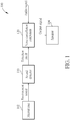
- FIG. 1 is a diagram illustrating a device 100 according to one embodiment of the present invention, wherein the device 100 may be comprised in an earphone or a headset. As shown in FIG. 1 , the device 100 comprises a microphone 102, a sound detector 110, a noise cancellation component 120 and a speaker 104.
- the microphone 102 continuously receives the ambient sound (environment sound), and the sound detector 110 receives the environment sound from the microphone 102.
- the sound detector 110 detects that if the environment sound has a meaningful signal or not to generate a detection result.
- the meaningful signal(s) can be defined and established in a table within the device 100, wherein the meaningful signal(s) may comprise warning tones such as honk of horn and ambulance warning sounds, or a specific voice such as a user name.
- the noise cancellation component 120 performs a noise cancellation operation based on the detection result to generate an output signal to the speaker 104, to make the user only hear the meaningful signal of the environment sound, and the meaningless noise of the environment sound will not be heard by the user.
- the noise cancellation component 120 may also receive the audio signal (i.e. music), and the output signal generated by the noise cancellation component 120 may also comprise the audio signal, so that the user can hear the music and the meaningful signal simultaneously.
- the noise cancellation component 120 may block the audio signal (i.e., the music playback is interrupted), or reduce the strength/volume of the audio signal so that the user can clearly hear the meaningful signal(s).
- the noise cancellation component 120 is only configured to eliminate the meaningless noise of the environment sound, the user can clearly hear the meaningful signal(s) even if the environment sound is continuously under the noise cancellation operation. Therefore, by using the device 100, the user can avoid possible dangers while listening to the music.
- FIG. 2 is a diagram illustrating a device 200 according to one embodiment of the present invention, wherein the device 200 may be comprised in an earphone or a headset.
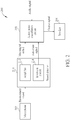
- the device 200 comprises a microphone 202, a sound detector 210, a noise cancellation component (in this embodiment, the noise cancellation component is an active noise cancellation circuit 220) and a speaker 204, wherein the sound detector 210 comprises an amplifier 212 and an inversion circuit 214.
- the microphone 202 continuously receives the ambient sound (environment sound), and the sound detector 210 receives the environment sound from the microphone 202.
- the sound detector 210 detects that if the environment sound has a meaningful signal or not, and generates a detection result comprising the meaningful signal, if any, and the anti-noise signal to the active noise cancellation circuit 220.
- the meaningful signal can be extracted from the environment sound by using any sound recognition technique, and the meaningful signal may be amplified by using the amplifier 212; and the meaningless noise (e.g., the part of the environment sound other than the meaningful signal) is processed by the inversion circuit 214 to generate the anti-noise signal, wherein the anti-noise signal and the meaningless noise may have the similar intensity but opposite phases.
- the meaningful signal(s) can be defined and established in a table within the device 200, wherein the meaningful signal(s) may comprise warning tones such as honk of horn and ambulance warning sounds, or a specific voice such as a user name.
- the active noise cancellation circuit 220 performs a noise cancellation operation based on the detection result to generate an output signal to the speaker 204, wherein the output signal may comprise the meaningful signal and the anti-noise signal. Therefore, because the output signal comprises the anti-noise signal whose phase is opposite to the meaningless noise of the environment sound, the user can only hear the meaningful signal of the environment sound, and the meaningless noise of the environment sound will not be heard by the user (because the meaningless noise and the anti-noise signal are cancelled out).
- the active noise cancellation circuit 220 may also receive the audio signal (i.e. music), and the active noise cancellation circuit 220 may generate the output signal by combining the audio signal, the meaningful signal and the anti-noise signal, so that the user can hear the music and the meaningful signal simultaneously.
- the active noise cancellation circuit 220 may block the audio signal (i.e., the music playback is interrupted), or reduce the strength/volume of the audio signal, so that the user can clearly hear the meaningful signal(s).
- the detection result generated by the sound detector comprises the meaningful signal, however, it is not a limitation of the present invention.
- the detection result may merely comprise the anti-noise signal, and the user can also hear the meaningful signal of the environment sound coming through a case of the earphone or the headset.
- the sound detector 210 generates the anti-noise signal by only using the meaningless signal of the environment sound (i.e. the meaningful signal is not processed by the inversion circuit 214), the user can clearly hear the meaningful signal(s) even if the environment sound is continuously under the noise cancellation operation. Therefore, by using the device 200, the user can avoid possible dangers while listening to the music.
- FIG. 3 is a diagram illustrating a device 300 according to one embodiment of the present invention, wherein the device 300 may be comprised in an earphone or a headset.
- the device 300 comprises a microphone 302, a sound detector 310, a noise cancellation component (in this embodiment, the noise cancellation component is a passive noise cancellation component 320 such as earmuffs) and a speaker 304.
- the noise cancellation component is a passive noise cancellation component 320 such as earmuffs
- the microphone 302 continuously receives the ambient sound (environment sound), and the sound detector 310 receives the environment sound from the microphone 302.
- the sound detector 310 detects that if the environment sound has a meaningful signal or not, and generates a detection result comprising the meaningful signal, if any, to the passive noise cancellation component 320.
- the meaningful signal can be extracted from the environment sound by using any sound recognition technique, and the meaningless noise (e.g., the part of the environment sound other than the meaningful signal) is filtered out by the sound detector 310 (i.e. the detection result does not comprise the meaningless noise).
- the meaningful signal(s) can be defined and established in a table within the device 300, wherein the meaningful signal(s) may comprise warning tones such as honk of horn and ambulance warning sounds, or a specific voice such as a user name.
- the passive noise cancellation component 320 performs a noise cancellation operation based on the detection result to generate an output signal to the speaker 304, wherein the output signal comprises the meaningful signal. Therefore, the user can only hear the meaningful signal of the environment sound, and the meaningless noise of the environment sound will not be heard by the user.
- the passive noise cancellation component 320 may also receive the audio signal (i.e. music), and the passive noise cancellation component 320 may generate the output signal by combining the audio signal and the meaningful signal, so that the user can hear the music and the meaningful signal simultaneously.
- the passive noise cancellation component 320 may block the audio signal (i.e., the music playback is interrupted), or reduce the strength/volume of the audio signal, so that the user can clearly hear the meaningful signal(s).
- the passive noise cancellation component 320 generates output signal having the meaningful signal without the meaningless noise, the user can clearly hear the meaningful signal(s) even if the environment sound is continuously under the noise cancellation operation. Therefore, by using the device 300, the user can avoid possible dangers while listening to the music.
- the above embodiments can also be used in a hearing aid, and the meaningful signal(s) may comprise some specific voices (e.g. human voice), to make the user only hear what they need, without hearing the meaningless noise.
- the meaningful signal(s) may comprise some specific voices (e.g. human voice), to make the user only hear what they need, without hearing the meaningless noise.
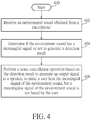
- FIG. 4 is a flowchart of a signal processing method according to one embodiment of the present invention. Referring to the above embodiment, the flow is described as follows.
- Step 400 the flow starts.
- Step 402 receive an environment sound obtained from a microphone.
- Step 404 determine if the environment sound has a meaningful signal or not to generate a detection result.
- Step 406 perform a noise cancellation operation based on the detection result to generate an output signal to a speaker, to make a user hear the meaningful signal of the environment sound, but a meaningless signal of the environment sound is not heard by the user.
- the present invention may also be defined by means of the following numbered clauses.
Landscapes
- Physics & Mathematics (AREA)
- Engineering & Computer Science (AREA)
- Acoustics & Sound (AREA)
- Signal Processing (AREA)
- Health & Medical Sciences (AREA)
- Audiology, Speech & Language Pathology (AREA)
- General Health & Medical Sciences (AREA)
- Multimedia (AREA)
- Soundproofing, Sound Blocking, And Sound Damping (AREA)
- Circuit For Audible Band Transducer (AREA)
Abstract
The present invention provides a device including a sound detector and a noise cancellation component. In the operations of the device, the sound detector is configured to receive an environment sound obtained from a microphone, and determine if the environment sound has a meaningful signal or not to generate a detection result; and the noise cancellation component is configured to perform a noise cancellation operation based on the detection result to generate an output signal to a speaker.
Description
- This application claims the priority of
US Provisional Application No. 62/843,636, filed on May 6th, 2019 - An earphone or a headset generally has a noise-cancellation component to eliminate environment noise so that user can avoid interference when listening to music. However, in the process of eliminating environmental noise, the user may not hear important sounds from the environment. For example, honk of horn, ambulance warning sounds, name of the user or other important sounds may not be filtered out by the noise-cancellation component, causing dangerous or inconvenience to the user.
- It is therefore an objective of the present invention to provide a device capable of the eliminate the meaningless noise of the environment sound while retaining meaningful signal for the user, to solve the above-mentioned problems.
- According to one embodiment of the present invention, a device comprising a sound detector and a noise cancellation component is disclosed. In the operations of the device, the sound detector is configured to receive an environment sound obtained from a microphone, and determine if the environment sound has a meaningful signal or not to generate a detection result; and the noise cancellation component is configured to perform a noise cancellation operation based on the detection result to generate an output signal to a speaker.
- According to another embodiment of the present invention, a signal processing method comprises the steps of: receiving an environment sound obtained from a microphone; determining if the environment sound has a meaningful signal or not to generate a detection result; and performing a noise cancellation operation based on the detection result to generate an output signal to a speaker.
- These and other objectives of the present invention will no doubt become obvious to those of ordinary skill in the art after reading the following detailed description of the preferred embodiment that is illustrated in the various figures and drawings.
-
-
FIG. 1 is a diagram illustrating a device according to one embodiment of the present invention. -
FIG. 2 is a diagram illustrating a device according to one embodiment of the present invention. -
FIG. 3 is a diagram illustrating a device according to one embodiment of the present invention. -
FIG. 4 is a flowchart of a signal processing method according to one embodiment of the present invention. - Certain terms are used throughout the following description and claims to refer to particular system components. As one skilled in the art will appreciate, manufacturers may refer to a component by different names. This document does not intend to distinguish between components that differ in name but not function. In the following discussion and in the claims, the terms "including" and "comprising" are used in an open-ended fashion, and thus should be interpreted to mean "including, but not limited to ...". The terms "couple" and "couples" are intended to mean either an indirect or a direct electrical connection. Thus, if a first device couples to a second device, that connection may be through a direct electrical connection, or through an indirect electrical connection via other devices and connections.
-
FIG. 1 is a diagram illustrating adevice 100 according to one embodiment of the present invention, wherein thedevice 100 may be comprised in an earphone or a headset. As shown inFIG. 1 , thedevice 100 comprises amicrophone 102, asound detector 110, anoise cancellation component 120 and aspeaker 104. - In the operations of the
device 100, themicrophone 102 continuously receives the ambient sound (environment sound), and thesound detector 110 receives the environment sound from themicrophone 102. Thesound detector 110 detects that if the environment sound has a meaningful signal or not to generate a detection result. In this embodiment, the meaningful signal(s) can be defined and established in a table within thedevice 100, wherein the meaningful signal(s) may comprise warning tones such as honk of horn and ambulance warning sounds, or a specific voice such as a user name. Thenoise cancellation component 120 performs a noise cancellation operation based on the detection result to generate an output signal to thespeaker 104, to make the user only hear the meaningful signal of the environment sound, and the meaningless noise of the environment sound will not be heard by the user. - In addition, when the user uses the
device 100 to listen to music, thenoise cancellation component 120 may also receive the audio signal (i.e. music), and the output signal generated by thenoise cancellation component 120 may also comprise the audio signal, so that the user can hear the music and the meaningful signal simultaneously. In another embodiment, when the detection result indicates that one or more meaningful signals are in the environment sound, thenoise cancellation component 120 may block the audio signal (i.e., the music playback is interrupted), or reduce the strength/volume of the audio signal so that the user can clearly hear the meaningful signal(s). - By using the above signal processing mechanism, because the
noise cancellation component 120 is only configured to eliminate the meaningless noise of the environment sound, the user can clearly hear the meaningful signal(s) even if the environment sound is continuously under the noise cancellation operation. Therefore, by using thedevice 100, the user can avoid possible dangers while listening to the music. -
FIG. 2 is a diagram illustrating adevice 200 according to one embodiment of the present invention, wherein thedevice 200 may be comprised in an earphone or a headset. As shown inFIG. 2 , thedevice 200 comprises amicrophone 202, asound detector 210, a noise cancellation component (in this embodiment, the noise cancellation component is an active noise cancellation circuit 220) and aspeaker 204, wherein thesound detector 210 comprises anamplifier 212 and aninversion circuit 214. - In the operations of the
device 200, themicrophone 202 continuously receives the ambient sound (environment sound), and thesound detector 210 receives the environment sound from themicrophone 202. Thesound detector 210 detects that if the environment sound has a meaningful signal or not, and generates a detection result comprising the meaningful signal, if any, and the anti-noise signal to the activenoise cancellation circuit 220. In this embodiment, the meaningful signal can be extracted from the environment sound by using any sound recognition technique, and the meaningful signal may be amplified by using theamplifier 212; and the meaningless noise (e.g., the part of the environment sound other than the meaningful signal) is processed by theinversion circuit 214 to generate the anti-noise signal, wherein the anti-noise signal and the meaningless noise may have the similar intensity but opposite phases. In this embodiment, the meaningful signal(s) can be defined and established in a table within thedevice 200, wherein the meaningful signal(s) may comprise warning tones such as honk of horn and ambulance warning sounds, or a specific voice such as a user name. The activenoise cancellation circuit 220 performs a noise cancellation operation based on the detection result to generate an output signal to thespeaker 204, wherein the output signal may comprise the meaningful signal and the anti-noise signal. Therefore, because the output signal comprises the anti-noise signal whose phase is opposite to the meaningless noise of the environment sound, the user can only hear the meaningful signal of the environment sound, and the meaningless noise of the environment sound will not be heard by the user (because the meaningless noise and the anti-noise signal are cancelled out). - In addition, when the user uses the
device 200 to listen to music, the activenoise cancellation circuit 220 may also receive the audio signal (i.e. music), and the activenoise cancellation circuit 220 may generate the output signal by combining the audio signal, the meaningful signal and the anti-noise signal, so that the user can hear the music and the meaningful signal simultaneously. In another embodiment, when the detection result indicates that one or more meaningful signals are in the environment sound, the activenoise cancellation circuit 220 may block the audio signal (i.e., the music playback is interrupted), or reduce the strength/volume of the audio signal, so that the user can clearly hear the meaningful signal(s). - In the embodiment shown in
FIG. 2 , the detection result generated by the sound detector comprises the meaningful signal, however, it is not a limitation of the present invention. In another embodiment, the detection result may merely comprise the anti-noise signal, and the user can also hear the meaningful signal of the environment sound coming through a case of the earphone or the headset. - By using the above signal processing mechanism, because the
sound detector 210 generates the anti-noise signal by only using the meaningless signal of the environment sound (i.e. the meaningful signal is not processed by the inversion circuit 214), the user can clearly hear the meaningful signal(s) even if the environment sound is continuously under the noise cancellation operation. Therefore, by using thedevice 200, the user can avoid possible dangers while listening to the music. -
FIG. 3 is a diagram illustrating adevice 300 according to one embodiment of the present invention, wherein thedevice 300 may be comprised in an earphone or a headset. As shown inFIG. 3 , thedevice 300 comprises amicrophone 302, asound detector 310, a noise cancellation component (in this embodiment, the noise cancellation component is a passivenoise cancellation component 320 such as earmuffs) and aspeaker 304. - In the operations of the
device 300, themicrophone 302 continuously receives the ambient sound (environment sound), and thesound detector 310 receives the environment sound from themicrophone 302. Thesound detector 310 detects that if the environment sound has a meaningful signal or not, and generates a detection result comprising the meaningful signal, if any, to the passivenoise cancellation component 320. In this embodiment, the meaningful signal can be extracted from the environment sound by using any sound recognition technique, and the meaningless noise (e.g., the part of the environment sound other than the meaningful signal) is filtered out by the sound detector 310 (i.e. the detection result does not comprise the meaningless noise). In this embodiment, the meaningful signal(s) can be defined and established in a table within thedevice 300, wherein the meaningful signal(s) may comprise warning tones such as honk of horn and ambulance warning sounds, or a specific voice such as a user name. The passivenoise cancellation component 320 performs a noise cancellation operation based on the detection result to generate an output signal to thespeaker 304, wherein the output signal comprises the meaningful signal. Therefore, the user can only hear the meaningful signal of the environment sound, and the meaningless noise of the environment sound will not be heard by the user. - In addition, when the user uses the
device 300 to listen to music, the passivenoise cancellation component 320 may also receive the audio signal (i.e. music), and the passivenoise cancellation component 320 may generate the output signal by combining the audio signal and the meaningful signal, so that the user can hear the music and the meaningful signal simultaneously. In another embodiment, when the detection result indicates that one or more meaningful signals are in the environment sound, the passivenoise cancellation component 320 may block the audio signal (i.e., the music playback is interrupted), or reduce the strength/volume of the audio signal, so that the user can clearly hear the meaningful signal(s). - By using the above signal processing mechanism, because the passive
noise cancellation component 320 generates output signal having the meaningful signal without the meaningless noise, the user can clearly hear the meaningful signal(s) even if the environment sound is continuously under the noise cancellation operation. Therefore, by using thedevice 300, the user can avoid possible dangers while listening to the music. - In addition, the above embodiments can also be used in a hearing aid, and the meaningful signal(s) may comprise some specific voices (e.g. human voice), to make the user only hear what they need, without hearing the meaningless noise.
-
FIG. 4 is a flowchart of a signal processing method according to one embodiment of the present invention. Referring to the above embodiment, the flow is described as follows. - Step 400: the flow starts.
- Step 402: receive an environment sound obtained from a microphone.
- Step 404: determine if the environment sound has a meaningful signal or not to generate a detection result.
- Step 406: perform a noise cancellation operation based on the detection result to generate an output signal to a speaker, to make a user hear the meaningful signal of the environment sound, but a meaningless signal of the environment sound is not heard by the user.
- Those skilled in the art will readily observe that numerous modifications and alterations of the device and method may be made while retaining the teachings of the invention. Accordingly, the above disclosure should be construed as limited only by the metes and bounds of the appended claims.
- The present invention may also be defined by means of the following numbered clauses.
- 1. A device, comprising:
- a sound detector, configured to receive an environment sound obtained from a microphone, and determine if the environment sound has a meaningful signal or not to generate a detection result; and
- a noise cancellation component, coupled to the sound detector, configured to perform a noise cancellation operation based on the detection result to generate an output signal to a speaker.
- 2. The device of clause 1, wherein the environment sound has the meaningful signal and a meaningless noise, the noise cancellation component is an active noise cancellation circuit, and the noise cancellation component generates the output signal comprising an anti-noise signal of the meaningless noise.
- 3. The device of clause 2, wherein the sound detector comprises an inversion circuit to change a phase of the meaningless noise to generate the anti-noise signal comprised in the detection result, and the inversion circuit does not process of the meaningful signal as the meaningless noise.
- 4. The device of clause 3, wherein the noise cancellation component generates the output signal comprising the anti-noise signal of the meaningless noise and the meaningful signal of the environment sound.
- 5. The device of clause 3, wherein the noise cancellation component further receives an audio signal, and the noise cancellation component combines the audio signal and the anti-noise signal of the meaningless noise to generate the output signal.
- 6. The device of clause 3, wherein the noise cancellation component further receives an audio signal, and the noise cancellation component blocks the audio signal or reduce a volume of the audio signal; and the output signal generated by the noise cancellation component comprises the anti-noise signal of the meaningless noise without the audio signal, or the output signal comprises the anti-noise signal of the meaningless noise and a volume-reduced audio signal.
- 7. The device of clause 1, wherein the environment sound has the meaningful signal and a meaningless noise, the noise cancellation component is a passive noise cancellation component, and the sound detector generates the detection result comprising the meaningful signal to the noise cancellation component.
- 8. The device of clause 7, the sound detector filters output the meaningless noise, so that the sound detector generates the detection result only comprising the meaningful signal.
- 9. The device of clause 7, wherein the noise cancellation component further receives an audio signal, and the noise cancellation component combines the audio signal and the meaningful signal to generate the output signal.
- 10. The device of clause 7, wherein the noise cancellation component further receives an audio signal, and the noise cancellation component blocks the audio signal or reduce a volume of the audio signal; and the output signal generated by the noise cancellation component only comprises the meaningful signal, or the output signal comprises the meaningful signal and a volume-reduced audio signal.
- 11. The device of clause 1, wherein the meaningful signal comprises a warning tone.
- 12. The device of clause 1, wherein the meaningful signal comprises a specific voice defined by a user of the device.
- 13. A signal processing method, comprising:
- receiving an environment sound obtained from a microphone;
- determining if the environment sound has a meaningful signal or not to generate a detection result; and
- performing a noise cancellation operation based on the detection result to generate an output signal to a speaker.
- 14. The signal processing method of clause 13, wherein the environment sound has the meaningful signal and a meaningless noise, and the step of performing the noise cancellation operation based on the detection result to generate the output signal to the speaker comprises:
performing the noise cancellation operation to generate the output signal comprising an anti-noise signal of the meaningless noise. - 15. The signal processing method of clause 14, wherein the step of performing the noise cancellation operation to generate the output signal comprising the anti-noise signal of the meaningless noise comprises:
performing the noise cancellation operation to generate the output signal comprising the anti-noise signal of the meaningless noise and the meaningful signal of the environment sound. - 16. The signal processing method of clause 13, wherein the environment sound has the meaningful signal and a meaningless noise, and the step of performing the noise cancellation operation based on the detection result to generate the output signal to the speaker comprises:
performing the noise cancellation operation to generate the output signal comprising only comprising the meaningful signal without the meaningless noise. - 17. The signal processing method of clause 13, wherein the meaningful signal comprises a warning tone.
- 18. The signal processing method of clause 13, wherein the meaningful signal comprises a specific voice defined by a user of the device.
Claims (15)
- A device (100, 200, 300), comprising:a sound detector (110, 210, 310), configured to receive an environment sound obtained from a microphone (102, 202, 302), and determine if the environment sound has a meaningful signal or not to generate a detection result; anda noise cancellation component (120, 220, 320), coupled to the sound detector (110, 210, 310), configured to perform a noise cancellation operation based on the detection result to generate an output signal to a speaker (104, 204, 304).
- The device (100, 200, 300) of claim 1, wherein the environment sound has the meaningful signal and a meaningless noise, the noise cancellation component (120, 220, 320) is an active noise cancellation circuit, and the noise cancellation component (120, 220, 320) generates the output signal comprising an anti-noise signal of the meaningless noise.
- The device (100, 200, 300) of claim 2, wherein the sound detector (110, 210, 310) comprises an inversion circuit to change a phase of the meaningless noise to generate the anti-noise signal comprised in the detection result, and the inversion circuit does not process of the meaningful signal as the meaningless noise.
- The device (100, 200, 300) of claim 3, wherein the noise cancellation component (120, 220, 320) generates the output signal comprising the anti-noise signal of the meaningless noise and the meaningful signal of the environment sound; or
wherein the noise cancellation component (120, 220, 320) further receives an audio signal, and the noise cancellation component (120, 220, 320) combines the audio signal and the anti-noise signal of the meaningless noise to generate the output signal. - The device (100, 200, 300) of claim 3, wherein the noise cancellation component (120, 220, 320) further receives an audio signal, and the noise cancellation component (120, 220, 320) blocks the audio signal or reduce a volume of the audio signal; and the output signal generated by the noise cancellation component (120, 220, 320) comprises the anti-noise signal of the meaningless noise without the audio signal, or the output signal comprises the anti-noise signal of the meaningless noise and a volume-reduced audio signal.
- The device (100, 200, 300) of claim 1, wherein the environment sound has the meaningful signal and a meaningless noise, the noise cancellation component (120, 220, 320) is a passive noise cancellation component, and the sound detector (110, 210, 310) generates the detection result comprising the meaningful signal to the noise cancellation component (120, 220, 320).
- The device (100, 200, 300) of claim 6, the sound detector (110, 210, 310) filters output the meaningless noise, so that the sound detector (110, 210, 310) generates the detection result only comprising the meaningful signal.
- The device (100, 200, 300) of claim 6, wherein the noise cancellation component (120, 220, 320) further receives an audio signal, and the noise cancellation component (120, 220, 320) combines the audio signal and the meaningful signal to generate the output signal.
- The device (100, 200, 300) of claim 6, wherein the noise cancellation component (120, 220, 320) further receives an audio signal, and the noise cancellation component (120, 220, 320) blocks the audio signal or reduce a volume of the audio signal; and the output signal generated by the noise cancellation component (120, 220, 320) only comprises the meaningful signal, or the output signal comprises the meaningful signal and a volume-reduced audio signal.
- The device (100, 200, 300) of claim 1, wherein the meaningful signal comprises a warning tone; or
wherein the meaningful signal comprises a specific voice defined by a user of the device (100, 200, 300). - A signal processing method, comprising:receiving an environment sound obtained from a microphone (102, 202, 302);determining if the environment sound has a meaningful signal or not to generate a detection result; andperforming a noise cancellation operation based on the detection result to generate an output signal to a speaker (104, 204, 304).
- The signal processing method of claim 11, wherein the environment sound has the meaningful signal and a meaningless noise, and the step of performing the noise cancellation operation based on the detection result to generate the output signal to the speaker (104, 204, 304) comprises:
performing the noise cancellation operation to generate the output signal comprising an anti-noise signal of the meaningless noise. - The signal processing method of claim 12, wherein the step of performing the noise cancellation operation to generate the output signal comprising the anti-noise signal of the meaningless noise comprises:
performing the noise cancellation operation to generate the output signal comprising the anti-noise signal of the meaningless noise and the meaningful signal of the environment sound. - The signal processing method of claim 11, wherein the environment sound has the meaningful signal and a meaningless noise, and the step of performing the noise cancellation operation based on the detection result to generate the output signal to the speaker (104, 204, 304) comprises:
performing the noise cancellation operation to generate the output signal comprising only comprising the meaningful signal without the meaningless noise. - The signal processing method of claim 11, wherein the meaningful signal comprises a warning tone; or
wherein the meaningful signal comprises a specific voice defined by a user of the device (100, 200, 300).
Applications Claiming Priority (2)
| Application Number | Priority Date | Filing Date | Title |
|---|---|---|---|
| US201962843636P | 2019-05-06 | 2019-05-06 | |
| US16/833,688 US20200357375A1 (en) | 2019-05-06 | 2020-03-30 | Proactive sound detection with noise cancellation component within earphone or headset |
Publications (1)
| Publication Number | Publication Date |
|---|---|
| EP3737111A1 true EP3737111A1 (en) | 2020-11-11 |
Family
ID=70292910
Family Applications (1)
| Application Number | Title | Priority Date | Filing Date |
|---|---|---|---|
| EP20169912.1A Withdrawn EP3737111A1 (en) | 2019-05-06 | 2020-04-16 | Proactive sound detection with noise cancellation component within earphone or headset |
Country Status (4)
| Country | Link |
|---|---|
| US (1) | US20200357375A1 (en) |
| EP (1) | EP3737111A1 (en) |
| CN (1) | CN111901718A (en) |
| TW (1) | TW202046090A (en) |
Citations (6)
| Publication number | Priority date | Publication date | Assignee | Title |
|---|---|---|---|---|
| US20020141599A1 (en) * | 2001-04-03 | 2002-10-03 | Philips Electronics North America Corp. | Active noise canceling headset and devices with selective noise suppression |
| WO2010060076A2 (en) * | 2008-11-24 | 2010-05-27 | Qualcomm Incorporated | Systems, methods, apparatus, and computer program products for enhanced active noise cancellation |
| US20160014497A1 (en) * | 2014-07-10 | 2016-01-14 | Deutsche Telekom Ag | Method for increasing the awareness of headphone users, using selective audio |
| US9830930B2 (en) * | 2015-12-30 | 2017-11-28 | Knowles Electronics, Llc | Voice-enhanced awareness mode |
| US20170345408A1 (en) * | 2016-05-27 | 2017-11-30 | Em-Tech. Co., Ltd. | Active Noise Reduction Headset Device with Hearing Aid Features |
| WO2018164699A1 (en) * | 2017-03-10 | 2018-09-13 | James Jordan Rosenberg | System and method for relative enhancement of vocal utterances in an acoustically cluttered environment |
Family Cites Families (1)
| Publication number | Priority date | Publication date | Assignee | Title |
|---|---|---|---|---|
| CN107454248A (en) * | 2017-06-29 | 2017-12-08 | 努比亚技术有限公司 | A kind of acoustic signal processing method, device and mobile terminal |
-
2020
- 2020-03-30 US US16/833,688 patent/US20200357375A1/en not_active Abandoned
- 2020-04-16 EP EP20169912.1A patent/EP3737111A1/en not_active Withdrawn
- 2020-04-27 CN CN202010342893.3A patent/CN111901718A/en not_active Withdrawn
- 2020-05-05 TW TW109114907A patent/TW202046090A/en unknown
Patent Citations (6)
| Publication number | Priority date | Publication date | Assignee | Title |
|---|---|---|---|---|
| US20020141599A1 (en) * | 2001-04-03 | 2002-10-03 | Philips Electronics North America Corp. | Active noise canceling headset and devices with selective noise suppression |
| WO2010060076A2 (en) * | 2008-11-24 | 2010-05-27 | Qualcomm Incorporated | Systems, methods, apparatus, and computer program products for enhanced active noise cancellation |
| US20160014497A1 (en) * | 2014-07-10 | 2016-01-14 | Deutsche Telekom Ag | Method for increasing the awareness of headphone users, using selective audio |
| US9830930B2 (en) * | 2015-12-30 | 2017-11-28 | Knowles Electronics, Llc | Voice-enhanced awareness mode |
| US20170345408A1 (en) * | 2016-05-27 | 2017-11-30 | Em-Tech. Co., Ltd. | Active Noise Reduction Headset Device with Hearing Aid Features |
| WO2018164699A1 (en) * | 2017-03-10 | 2018-09-13 | James Jordan Rosenberg | System and method for relative enhancement of vocal utterances in an acoustically cluttered environment |
Also Published As
| Publication number | Publication date |
|---|---|
| TW202046090A (en) | 2020-12-16 |
| CN111901718A (en) | 2020-11-06 |
| US20200357375A1 (en) | 2020-11-12 |
Similar Documents
| Publication | Publication Date | Title |
|---|---|---|
| US11432065B2 (en) | Automatic keyword pass-through system | |
| US20170236507A1 (en) | Active noise control and customized audio system | |
| US10341759B2 (en) | System and method of wind and noise reduction for a headphone | |
| KR101068227B1 (en) | Clarity Improvement Device and Voice Output Device Using the Same | |
| US20020141599A1 (en) | Active noise canceling headset and devices with selective noise suppression | |
| KR20150008471A (en) | Frequency and direction-dependent ambient sound handling in personal audio devices having adaptive noise cancellation(anc) | |
| EP2047664A1 (en) | System and method for noise canceling in a portable mobile communication device coupled with a headset assembly and corresponding computer program product | |
| US20080228473A1 (en) | Method and apparatus for adjusting hearing intelligibility in mobile phones | |
| US20200074995A1 (en) | System and Method for Relative Enhancement of Vocal Utterances in an Acoustically Cluttered Environment | |
| JP2007019898A (en) | Mobile phone | |
| JPH09331377A (en) | Noise cancellation circuit | |
| EP2482566B1 (en) | Method for generating an audio signal | |
| JP2008228198A (en) | Reproduction sound adjustment device and reproduction sound adjustment method | |
| US20110105034A1 (en) | Active voice cancellation system | |
| US20200357375A1 (en) | Proactive sound detection with noise cancellation component within earphone or headset | |
| JPH08123438A (en) | Muffler | |
| US20090208036A1 (en) | Magnetic alert detector | |
| JPH09116362A (en) | Automatic volume control device | |
| JP2021097292A (en) | Echo canceling device, echo canceling method, and echo canceling program | |
| KR102813972B1 (en) | System and method for processing acoustic signal of AI speakers | |
| US12621598B2 (en) | Automatic keyword pass-through system | |
| KR100770020B1 (en) | Specific sound recognition and notification device and method | |
| JPS60214113A (en) | Automobile telephone set adaptor | |
| JP3292098B2 (en) | Hearing aid | |
| US20080069377A1 (en) | Audio processing system and method |
Legal Events
| Date | Code | Title | Description |
|---|---|---|---|
| PUAI | Public reference made under article 153(3) epc to a published international application that has entered the european phase |
Free format text: ORIGINAL CODE: 0009012 |
|
| STAA | Information on the status of an ep patent application or granted ep patent |
Free format text: STATUS: THE APPLICATION HAS BEEN PUBLISHED |
|
| AK | Designated contracting states |
Kind code of ref document: A1 Designated state(s): AL AT BE BG CH CY CZ DE DK EE ES FI FR GB GR HR HU IE IS IT LI LT LU LV MC MK MT NL NO PL PT RO RS SE SI SK SM TR |
|
| AX | Request for extension of the european patent |
Extension state: BA ME |
|
| STAA | Information on the status of an ep patent application or granted ep patent |
Free format text: STATUS: THE APPLICATION IS DEEMED TO BE WITHDRAWN |
|
| 18D | Application deemed to be withdrawn |
Effective date: 20210512 |