EP3736830B1 - Solid electrolyte material and battery - Google Patents
Solid electrolyte material and battery Download PDFInfo
- Publication number
- EP3736830B1 EP3736830B1 EP18898735.8A EP18898735A EP3736830B1 EP 3736830 B1 EP3736830 B1 EP 3736830B1 EP 18898735 A EP18898735 A EP 18898735A EP 3736830 B1 EP3736830 B1 EP 3736830B1
- Authority
- EP
- European Patent Office
- Prior art keywords
- solid electrolyte
- electrolyte material
- positive electrode
- battery
- ybr
- Prior art date
- Legal status (The legal status is an assumption and is not a legal conclusion. Google has not performed a legal analysis and makes no representation as to the accuracy of the status listed.)
- Active
Links
Images


Classifications
-
- C—CHEMISTRY; METALLURGY
- C01—INORGANIC CHEMISTRY
- C01F—COMPOUNDS OF THE METALS BERYLLIUM, MAGNESIUM, ALUMINIUM, CALCIUM, STRONTIUM, BARIUM, RADIUM, THORIUM, OR OF THE RARE-EARTH METALS
- C01F17/00—Compounds of rare earth metals
- C01F17/30—Compounds containing rare earth metals and at least one element other than a rare earth metal, oxygen or hydrogen, e.g. La4S3Br6
- C01F17/36—Compounds containing rare earth metals and at least one element other than a rare earth metal, oxygen or hydrogen, e.g. La4S3Br6 halogen being the only anion, e.g. NaYF4
-
- H—ELECTRICITY
- H01—ELECTRIC ELEMENTS
- H01M—PROCESSES OR MEANS, e.g. BATTERIES, FOR THE DIRECT CONVERSION OF CHEMICAL ENERGY INTO ELECTRICAL ENERGY
- H01M10/00—Secondary cells; Manufacture thereof
- H01M10/05—Accumulators with non-aqueous electrolyte
- H01M10/056—Accumulators with non-aqueous electrolyte characterised by the materials used as electrolytes, e.g. mixed inorganic/organic electrolytes
- H01M10/0561—Accumulators with non-aqueous electrolyte characterised by the materials used as electrolytes, e.g. mixed inorganic/organic electrolytes the electrolyte being constituted of inorganic materials only
- H01M10/0562—Solid materials
-
- H—ELECTRICITY
- H01—ELECTRIC ELEMENTS
- H01B—CABLES; CONDUCTORS; INSULATORS; SELECTION OF MATERIALS FOR THEIR CONDUCTIVE, INSULATING OR DIELECTRIC PROPERTIES
- H01B1/00—Conductors or conductive bodies characterised by the conductive materials; Selection of materials as conductors
- H01B1/06—Conductors or conductive bodies characterised by the conductive materials; Selection of materials as conductors mainly consisting of other non-metallic substances
-
- H—ELECTRICITY
- H01—ELECTRIC ELEMENTS
- H01M—PROCESSES OR MEANS, e.g. BATTERIES, FOR THE DIRECT CONVERSION OF CHEMICAL ENERGY INTO ELECTRICAL ENERGY
- H01M10/00—Secondary cells; Manufacture thereof
- H01M10/05—Accumulators with non-aqueous electrolyte
- H01M10/052—Li-accumulators
-
- H—ELECTRICITY
- H01—ELECTRIC ELEMENTS
- H01M—PROCESSES OR MEANS, e.g. BATTERIES, FOR THE DIRECT CONVERSION OF CHEMICAL ENERGY INTO ELECTRICAL ENERGY
- H01M10/00—Secondary cells; Manufacture thereof
- H01M10/05—Accumulators with non-aqueous electrolyte
- H01M10/052—Li-accumulators
- H01M10/0525—Rocking-chair batteries, i.e. batteries with lithium insertion or intercalation in both electrodes; Lithium-ion batteries
-
- H—ELECTRICITY
- H01—ELECTRIC ELEMENTS
- H01M—PROCESSES OR MEANS, e.g. BATTERIES, FOR THE DIRECT CONVERSION OF CHEMICAL ENERGY INTO ELECTRICAL ENERGY
- H01M4/00—Electrodes
- H01M4/02—Electrodes composed of, or comprising, active material
- H01M4/36—Selection of substances as active materials, active masses, active liquids
- H01M4/362—Composites
- H01M4/366—Composites as layered products
-
- H—ELECTRICITY
- H01—ELECTRIC ELEMENTS
- H01M—PROCESSES OR MEANS, e.g. BATTERIES, FOR THE DIRECT CONVERSION OF CHEMICAL ENERGY INTO ELECTRICAL ENERGY
- H01M4/00—Electrodes
- H01M4/02—Electrodes composed of, or comprising, active material
- H01M4/36—Selection of substances as active materials, active masses, active liquids
- H01M4/48—Selection of substances as active materials, active masses, active liquids of inorganic oxides or hydroxides
- H01M4/485—Selection of substances as active materials, active masses, active liquids of inorganic oxides or hydroxides of mixed oxides or hydroxides for inserting or intercalating light metals, e.g. LiTi2O4 or LiTi2OxFy
-
- H—ELECTRICITY
- H01—ELECTRIC ELEMENTS
- H01M—PROCESSES OR MEANS, e.g. BATTERIES, FOR THE DIRECT CONVERSION OF CHEMICAL ENERGY INTO ELECTRICAL ENERGY
- H01M4/00—Electrodes
- H01M4/02—Electrodes composed of, or comprising, active material
- H01M4/36—Selection of substances as active materials, active masses, active liquids
- H01M4/48—Selection of substances as active materials, active masses, active liquids of inorganic oxides or hydroxides
- H01M4/52—Selection of substances as active materials, active masses, active liquids of inorganic oxides or hydroxides of nickel, cobalt or iron
- H01M4/525—Selection of substances as active materials, active masses, active liquids of inorganic oxides or hydroxides of nickel, cobalt or iron of mixed oxides or hydroxides containing iron, cobalt or nickel for inserting or intercalating light metals, e.g. LiNiO2, LiCoO2 or LiCoOxFy
-
- H—ELECTRICITY
- H01—ELECTRIC ELEMENTS
- H01M—PROCESSES OR MEANS, e.g. BATTERIES, FOR THE DIRECT CONVERSION OF CHEMICAL ENERGY INTO ELECTRICAL ENERGY
- H01M4/00—Electrodes
- H01M4/02—Electrodes composed of, or comprising, active material
- H01M4/62—Selection of inactive substances as ingredients for active masses, e.g. binders, fillers
-
- C—CHEMISTRY; METALLURGY
- C01—INORGANIC CHEMISTRY
- C01P—INDEXING SCHEME RELATING TO STRUCTURAL AND PHYSICAL ASPECTS OF SOLID INORGANIC COMPOUNDS
- C01P2002/00—Crystal-structural characteristics
- C01P2002/02—Amorphous compounds
-
- C—CHEMISTRY; METALLURGY
- C01—INORGANIC CHEMISTRY
- C01P—INDEXING SCHEME RELATING TO STRUCTURAL AND PHYSICAL ASPECTS OF SOLID INORGANIC COMPOUNDS
- C01P2002/00—Crystal-structural characteristics
- C01P2002/50—Solid solutions
- C01P2002/52—Solid solutions containing elements as dopants
-
- C—CHEMISTRY; METALLURGY
- C01—INORGANIC CHEMISTRY
- C01P—INDEXING SCHEME RELATING TO STRUCTURAL AND PHYSICAL ASPECTS OF SOLID INORGANIC COMPOUNDS
- C01P2002/00—Crystal-structural characteristics
- C01P2002/50—Solid solutions
- C01P2002/52—Solid solutions containing elements as dopants
- C01P2002/54—Solid solutions containing elements as dopants one element only
-
- C—CHEMISTRY; METALLURGY
- C01—INORGANIC CHEMISTRY
- C01P—INDEXING SCHEME RELATING TO STRUCTURAL AND PHYSICAL ASPECTS OF SOLID INORGANIC COMPOUNDS
- C01P2004/00—Particle morphology
- C01P2004/30—Particle morphology extending in three dimensions
- C01P2004/32—Spheres
-
- C—CHEMISTRY; METALLURGY
- C01—INORGANIC CHEMISTRY
- C01P—INDEXING SCHEME RELATING TO STRUCTURAL AND PHYSICAL ASPECTS OF SOLID INORGANIC COMPOUNDS
- C01P2004/00—Particle morphology
- C01P2004/51—Particles with a specific particle size distribution
-
- C—CHEMISTRY; METALLURGY
- C01—INORGANIC CHEMISTRY
- C01P—INDEXING SCHEME RELATING TO STRUCTURAL AND PHYSICAL ASPECTS OF SOLID INORGANIC COMPOUNDS
- C01P2004/00—Particle morphology
- C01P2004/60—Particles characterised by their size
- C01P2004/61—Micrometer sized, i.e. from 1-100 micrometer
-
- C—CHEMISTRY; METALLURGY
- C01—INORGANIC CHEMISTRY
- C01P—INDEXING SCHEME RELATING TO STRUCTURAL AND PHYSICAL ASPECTS OF SOLID INORGANIC COMPOUNDS
- C01P2004/00—Particle morphology
- C01P2004/60—Particles characterised by their size
- C01P2004/62—Submicrometer sized, i.e. from 0.1-1 micrometer
-
- C—CHEMISTRY; METALLURGY
- C01—INORGANIC CHEMISTRY
- C01P—INDEXING SCHEME RELATING TO STRUCTURAL AND PHYSICAL ASPECTS OF SOLID INORGANIC COMPOUNDS
- C01P2006/00—Physical properties of inorganic compounds
- C01P2006/40—Electric properties
-
- H—ELECTRICITY
- H01—ELECTRIC ELEMENTS
- H01M—PROCESSES OR MEANS, e.g. BATTERIES, FOR THE DIRECT CONVERSION OF CHEMICAL ENERGY INTO ELECTRICAL ENERGY
- H01M4/00—Electrodes
- H01M4/02—Electrodes composed of, or comprising, active material
- H01M2004/026—Electrodes composed of, or comprising, active material characterised by the polarity
- H01M2004/028—Positive electrodes
-
- H—ELECTRICITY
- H01—ELECTRIC ELEMENTS
- H01M—PROCESSES OR MEANS, e.g. BATTERIES, FOR THE DIRECT CONVERSION OF CHEMICAL ENERGY INTO ELECTRICAL ENERGY
- H01M2300/00—Electrolytes
- H01M2300/0017—Non-aqueous electrolytes
- H01M2300/0065—Solid electrolytes
- H01M2300/0068—Solid electrolytes inorganic
- H01M2300/008—Halides
-
- Y—GENERAL TAGGING OF NEW TECHNOLOGICAL DEVELOPMENTS; GENERAL TAGGING OF CROSS-SECTIONAL TECHNOLOGIES SPANNING OVER SEVERAL SECTIONS OF THE IPC; TECHNICAL SUBJECTS COVERED BY FORMER USPC CROSS-REFERENCE ART COLLECTIONS [XRACs] AND DIGESTS
- Y02—TECHNOLOGIES OR APPLICATIONS FOR MITIGATION OR ADAPTATION AGAINST CLIMATE CHANGE
- Y02E—REDUCTION OF GREENHOUSE GAS [GHG] EMISSIONS, RELATED TO ENERGY GENERATION, TRANSMISSION OR DISTRIBUTION
- Y02E60/00—Enabling technologies; Technologies with a potential or indirect contribution to GHG emissions mitigation
- Y02E60/10—Energy storage using batteries
Definitions
- the present disclosure relates to a solid electrolyte material and a battery.
- Patent Literature 1 discloses an all-solid battery using a sulfide solid electrolyte.
- Patent Literature 2 discloses an all-solid battery using, as a solid electrolyte, a halide including indium.
- Non-Patent Literature 1 discloses Li 3 YBr 6 .
- Non-patent Literature 1 Z. anorg. allg. Chem. 623 (1997), 1352
- the solid electrolyte material in one aspect of the present disclosure is represented by the following composition formula (1): Li 3 YX 6 Formula (1) where X is two or more kinds of elements selected from the group consisting of Cl, Br, and I.
- a solid electrolyte material having high lithium ion conductivity can be realized.
- the solid electrolyte material in the first embodiment is a solid electrolyte material represented by the following composition formula (1): Li 3 YX 6 Formula (1) where X is two or more kinds of elements selected from the group consisting of Cl, Br, and I.
- the crystal structure of the solid electrolyte material described in the first embodiment is modulated by doping, with yttrium cations (Y 3+ ), the crystal structure having LiX (X is two or more kinds of elements selected from the group consisting of Cl, Br, and I) as a fundamental structure. Due to the difference in valence between Y and Li and satisfaction of electrical neutrality of the entire crystal, vacancies are generated in the crystal structure.
- the symmetry of the crystal structure is varied from the fundamental structure by stable arrangement of Li, Y, and the vacancy sites in the structure or by balance between the ionic radius of the anion and the ionic radius of the cation. Li ions are allowed to be conducted in the crystal through the vacancies generated in the varied crystal structure.
- a halide solid electrolyte material having high lithium ion conductivity can be realized.
- a solid electrolyte material having a stable structure can be realized in the assumed operation temperature range of the battery (for example, within the range of -30 °C to 80 °C).
- the solid electrolyte material of the first embodiment does not have a configuration (for example, the configuration of Patent Literature 2) in which the phase transition temperature thereof is present in the operation temperature range of the battery.
- a solid electrolyte exhibiting high ion conductivity of not less than 1 ⁇ 10 -4 S / cm can be realized, and an all-solid secondary battery excellent in a charge / discharge characteristic can be realized. Furthermore, by adjusting the composition, ion conductivity of more than 7 ⁇ 10 -4 S / cm is achieved, and an all-solid secondary battery capable of being charged or discharged more rapidly can be realized.
- the solid electrolyte material of the first embodiment does not have a configuration (for example, the configuration of Patent Literature 1) in which hydrogen sulfide is generated if exposed to the air.
- a configuration for example, the configuration of Patent Literature 1
- an all-solid secondary battery which does not generate hydrogen sulfide and is excellent in safety can be realized.
- X may include Br and Cl.
- the solid electrolyte material in the first embodiment may be represented by the following composition formula (2): Li 3 YBr 6-x Cl x Formula (2).
- composition formula (2) 0.5 ⁇ x ⁇ 5.5 may be satisfied.
- the solid electrolyte material in the first embodiment may satisfy 2.0 ⁇ x ⁇ 5.0 in the composition formula (2).
- X may include Br and I.
- the solid electrolyte material in the first embodiment may be represented by the following composition formula (3): Li 3 YBr 6-x I x Formula (3).
- the solid electrolyte material in the first embodiment may satisfy 1.0 ⁇ x ⁇ 3.0 in the composition formula (3).
- the solid electrolyte material in the first embodiment may be represented by the following composition formula (4): Li 3 YCl l Br m I n Formula (4).
- the solid electrolyte material in the first embodiment may satisfy 0.5 ⁇ I ⁇ 5, 0.5 ⁇ m ⁇ 5, and 0.5 ⁇ n ⁇ 5 in the composition formula (4).
- the solid electrolyte material in the first embodiment may satisfy 1 ⁇ I ⁇ 4, 1 ⁇ m ⁇ 4, and 1 ⁇ n ⁇ 4 in the composition formula (4).
- a shape of the solid electrolyte material in the first embodiment is not particularly limited, and may be, for example, an acicular shape, a spherical shape, or an elliptical spherical shape.
- the solid electrolyte material in the first embodiment may be particles.
- the solid electrolyte material in the first embodiment may be formed into a pellet shape or a plate shape by puressurized particles.
- the solid electrolyte material in the first embodiment may include a crystal phase or may include an amorphous phase.
- the median diameter thereof may be not less than 0.1 ⁇ m and not more than 100 ⁇ m.
- the median diameter may be not less than 0.5 ⁇ m and not more than 10 ⁇ m.
- ion conductivity can be further improved.
- a better dispersion state of the solid electrolyte material in the first embodiment and an active material can be formed.
- the solid electrolyte material may have a smaller median diameter than the active material.
- the solid electrolyte material in the first embodiment may be manufactured by the following method, for example.
- Binary halide raw material powders are prepared so as to provide a blending ratio of a target composition.
- a target composition For example, if Li 3 YBr 3 Cl 3 is produced, LiBr and YCl 3 are prepared in a molar ratio of 3:1.
- the raw materials are not particularly limited.
- LiCI, Lil, YBrs, or YI 3 may be used in addition to the above-described raw materials.
- X in the composition formula (1) can be determined by selecting the kinds of the raw material powders.
- the above-mentioned values of "x", “I", “m”, and “n” can be adjusted by adjusting the raw materials and the molar ratio.
- the raw material powders After mixing the raw material powders well, the raw material powders are mixed and ground using a mechanochemical milling method to react. Alternatively, the raw material powders may be mixed well and then sintered in a vacuum or in an inert atmosphere such as an argon / nitrogen atmosphere.
- the configuration (namely, the crystal structure) of the crystal phase in the solid electrolyte material can be determined by adjusting the reaction method and reaction conditions of the raw material powders.
- the battery in the second embodiment is configured using the solid electrolyte material described in the first embodiment.
- the battery in the second embodiment comprises a positive electrode, a negative electrode, and an electrolyte layer.
- the electrolyte layer is a layer provided between the positive electrode and the negative electrode.
- At least one of the positive electrode, the electrolyte layer, and the negative electrode includes the solid electrolyte material in the first embodiment.
- the charge / discharge characteristic of the battery can be improved.
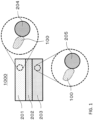
- FIG. 1 is a cross-sectional view showing a schematic configuration of a battery 1000 in the second embodiment.
- the battery 1000 in the second embodiment includes a positive electrode 201, a negative electrode 203, and an electrolyte layer 202.
- the positive electrode 201 includes positive electrode active material particles 204 and solid electrolyte particles 100.
- the electrolyte layer 202 is disposed between the positive electrode 201 and the negative electrode 203.
- the electrolyte layer 202 includes an electrolyte material (for example, a solid electrolyte material).
- the negative electrode 203 includes negative electrode active material particles 205 and the solid electrolyte particles 100.
- the solid electrolyte particles 100 are particles each formed of the solid electrolyte material in the first embodiment or particles each including the solid electrolyte material in the first embodiment as a main component.
- the positive electrode 201 includes a material having a characteristic of storing and releasing metal ions (for example, lithium ions).
- the positive electrode 201 includes, for example, a positive electrode active material (for example, the positive electrode active material particles 204).
- the positive electrode active material examples include Li-containing transition metal oxides (e.g., Li(NiCoAl)O 2 or LiCoO 2 ), transition metal fluorides, polyanion materials, fluorinated polyanion materials, transition metal sulfides, transition metal oxyfluorides, transition metal oxysulfides, and transition metal oxynitrides.
- Li-containing transition metal oxides e.g., Li(NiCoAl)O 2 or LiCoO 2
- transition metal fluorides e.g., Li(NiCoAl)O 2 or LiCoO 2
- transition metal fluorides e.g., Li(NiCoAl)O 2 or LiCoO 2
- polyanion materials e.g., Li(NiCoAl)O 2 or LiCoO 2
- transition metal fluorides e.g., Li(NiCoAl)O 2 or LiCoO 2
- polyanion materials e.g., Li(NiCoAl)O
- a surface of the positive electrode active material may coated partially or entirely with an oxide which is different from the positive electrode active material in order to perform a higher performance battery operation.
- a typical coating material LiNbO 3 can be used.
- the surface coating material is not limited to LiNbOs, and the coating method is not limited, either.
- the thickness of the coating material is desirably approximately 1 to 100 nm to realize a high-performance battery.
- the coating material examples include a Li-Nb-O compound such as LiNbOa, a Li-B-O compound such as LiBO 2 or Li 3 BO 3 , a Li-AI-O compound such as LiAlO 2 , a Li-Si-O compound such as Li 4 SiO 4 , Li 2 SO 4 , a Li-Ti-O compound such as Li 4 Ti 5 O 12 , a Li-Zr-O compound such as Li 2 ZrO 3 , a Li-Mo-O compound such as Li 2 MoO 3 , a Li-V-O compound such as LiV 2 O 5 , and a Li-W-O compound such as Li 2 WO 4 .
- a Li-Nb-O compound such as LiNbOa
- a Li-B-O compound such as LiBO 2 or Li 3 BO 3
- a Li-AI-O compound such as LiAlO 2
- a Li-Si-O compound such as Li 4 SiO 4
- Li 2 SO 4
- the median diameter of the positive electrode active material particles 204 may be not less than 0.1 ⁇ m and not more than 100 ⁇ m. If the median diameter of the positive electrode active material particles 204 is not less than 0.1 ⁇ m, the positive electrode active material particles 204 and the halide solid electrolyte material can form a good dispersion state in the positive electrode. As a result, the charge / discharge characteristic of the battery are improved. In addition, if the median diameter of the positive electrode active material particles 204 is not more than 100 ⁇ m, Li diffusion in the positive electrode active material particles 204 is accelerated. As a result, the battery can operate at a high output.
- the median diameter of the positive electrode active material particles 204 may be larger than the median diameter of the halide solid electrolyte material. Thereby, the good dispersion state of the positive electrode active material particles 204 and the halide solid electrolyte material can be formed.
- the thickness of the positive electrode 201 may be not less than 10 ⁇ m and not more than 500 ⁇ m. If the thickness of the positive electrode is not less than 10 ⁇ m, a sufficient battery energy density can be ensured. If the thickness of the positive electrode is not more than 500 ⁇ m, an operation at a high output can be realized.
- the electrolyte layer 202 is a layer including an electrolyte material.
- the electrolyte material is, for example, a solid electrolyte material.
- the electrolyte layer 202 may be a solid electrolyte layer.
- the solid electrolyte layer may include the solid electrolyte material in the first embodiment as a main component.
- the solid electrolyte layer may include the solid electrolyte material in the above-described first embodiment, for example, at a weight ratio of not less than 50% (namely, not less than 50% by weight) with respect to the entire solid electrolyte layer.
- the charge / discharge characteristic of the battery can be further improved.
- the solid electrolyte layer may include the solid electrolyte material in the first embodiment described above, for example, at a weight ratio of not less than 70% (namely, not less than 70% by weight) with respect to the entire the solid electrolyte layer.
- the charge / discharge characteristic of the battery can be further improved.
- the solid electrolyte layer includes the solid electrolyte material in the above-described first embodiment as a main component, and may further include inevitable impurities, starting materials used when the solid electrolyte material is synthesized, byproducts, or decomposition products.
- the solid electrolyte layer may include the solid electrolyte material in the first embodiment, for example, at a weight ratio of 100% (namely, 100% by weight) with respect to the entire solid electrolyte layer, excluding impurities mixed inevitably.
- the charge / discharge characteristic of the battery can be further improved.
- the solid electrolyte layer may be composed only of the solid electrolyte material in the first embodiment.
- the solid electrolyte layer may be composed of only a solid electrolyte material different from the solid electrolyte material in the first embodiment.
- the solid electrolyte material different from the solid electrolyte material in the first embodiment for example, Li 2 MgX 4 , Li 2 FeX 4 , Li(AI, Ga, In)X 4 , Li 3 (Al, Ga, In)Xs, or LiI may be used.
- X includes at least one selected from the group consisting of Cl, Br, and I.
- the solid electrolyte layer may include simultaneously the solid electrolyte material in the first embodiment and the solid electrolyte material different from the solid electrolyte material in the first embodiment. At this time, both may be dispersed uniformly.
- the layer formed of the solid electrolyte material in the first embodiment and the layer formed of the solid electrolyte material different from the solid electrolyte material in the first embodiment may be sequentially arranged in the stacking direction of the battery.
- the thickness of the solid electrolyte layer may be not less than 1 ⁇ m and not more than 100 ⁇ m. If the thickness of the solid electrolyte layer is not less than 1 ⁇ m, the positive electrode 201 and the negative electrode 203 are easily separated. In addition, if the thickness of the solid electrolyte layer is not more than 100 ⁇ m, an operation at a high output can be realized.
- the negative electrode 203 includes a material having a characteristic of storing and releasing metal ions (for example, Li ions).
- the negative electrode 203 includes, for example, a negative electrode active material (for example, the negative electrode active material particles 205).
- a metal material As the negative electrode active material, a metal material, a carbon material, an oxide, a nitride, a tin compound, or a silicon compound can be used.
- the metal material may be a single metal. Alternatively, the metal material may be an alloy. Examples of the metal material include lithium metal and a lithium alloy.
- Examples of the carbon material include natural graphite, coke, graphitized carbon, carbon fiber, spherical carbon, artificial graphite, and amorphous carbon. From the viewpoint of capacity density, silicon (Si), tin (Sn), a silicon compound, or a tin compound can be used. If a negative electrode active material having a low average reaction voltage is used, the effect of suppressing electrolysis by the solid electrolyte material in the first embodiment is better exhibited.
- the median diameter of the negative electrode active material particles 205 may be not less than 0.1 ⁇ m and not more than 100 ⁇ m. If the median diameter of the negative electrode active material particles 205 is not less than 0.1 ⁇ m, the negative electrode active material particles 205 and the solid electrolyte particles 100 can form a good dispersion state in the negative electrode. As a result, the charge / discharge characteristic of the battery is improved. In addition, if the median diameter of the negative electrode active material particles 205 is not more than 100 ⁇ m, the lithium diffusion in the negative electrode active material particles 205 is accelerated. As a result, the battery can operate at a high output.
- the median diameter of the negative electrode active material particles 205 may be larger than the median diameter of the solid electrolyte particles 100. As a result, the good dispersion state of the negative electrode active material particles 205 and the halide solid electrolyte material can be formed.
- the thickness of the negative electrode 203 may be not less than 10 ⁇ m and not more than 500 ⁇ m. If the thickness of the negative electrode is not less than 10 ⁇ m, the sufficient battery energy density can be secured. In addition, if the thickness of the negative electrode is not more than 500 ⁇ m, an operation at a high output can be realized.
- At least one of the positive electrode 201, the electrolyte layer 202, and the negative electrode 203 may include a sulfide solid electrolyte or an oxide solid electrolyte for the purpose of improving ion conductivity.
- a sulfide solid electrolyte Li 2 S-P 2 S 5 , Li 2 S-SiS 2 , Li 2 S-B 2 S 3 , Li 2 S-GeS 2 , Li 3.25 Ge 0.25 P 0.75 S 4 , or Li 10 GeP 2 S 12 can be used.
- a NASICON solid electrolyte such as LiTi 2 (PO 4 ) 3 and its element substitution product, a (LaLi)TiO 3 perovskite solid electrolyte, a LISICON solid electrolyte such as Li 14 ZnGe 4 O 16 , Li 4 SiO 4 , or LiGeO 4 and its element substitution product, a garnet solid electrolyte such as Li 7 La 3 Zr 2 O 12 and its element substitution product, Li 3 N and its H substitution product, or Li 3 PO 4 and its N substitution product can be used.
- At least one of the positive electrode 201, the electrolyte layer 202, and the negative electrode 203 may include an organic polymer solid electrolyte for the purpose of increasing ion conductivity.
- an organic polymer solid electrolyte for example, a compound of a polymer compound and a lithium salt can be used.
- the polymer compound may have an ethylene oxide structure. Since the polymer compound has the ethylene oxide structure, a large amount of lithium salt can be included, and the ion conductivity can be further increased.
- LiPFs, LiBF 4 , LiSbFs, LiAsFs, LiSO 3 CF 3 , LiN(SO 2 CF 3 ) 2 , LiN(SO 2 C 2 F 5 ) 2 , LiN(SO 2 CF 3 )(SO 2 C 4 F 9 ), or LiC(SO 2 CF 3 ) 3 can be used.
- the lithium salt one lithium salt selected from these may be used alone. Alternatively, a mixture of two or more lithium salts selected from these may be used as the lithium salt.
- At least one of the positive electrode 201, the electrolyte layer 202, and the negative electrode 203 may include a non-aqueous electrolyte solution, a gel electrolyte, and an ionic liquid for the purpose of facilitating exchange of lithium ions and improving the output characteristic of the battery.
- the non-aqueous electrolyte solution includes a non-aqueous solvent and a lithium salt dissolved in the non-aqueous solvent.
- a non-aqueous solvent a cyclic carbonate solvent, a chain carbonate solvent, a cyclic ether solvent, a chain ether solvent, a cyclic ester solvent, a chain ester solvent, or a fluorine solvent can be used.
- the cyclic carbonate solvent include ethylene carbonate, propylene carbonate, and butylene carbonate.
- Examples of the chain carbonate solvent include dimethyl carbonate, ethyl methyl carbonate, and diethyl carbonate.
- Examples of the cyclic ether solvent include tetrahydrofuran, 1,4-dioxane, and 1,3-dioxolane.
- Examples of the chain ether solvent include 1,2-dimethoxyethane and 1,2-diethoxyethane.
- Examples of the cyclic ester solvent include ⁇ -butyrolactone.
- Examples of the chain ester solvent include methyl acetate.
- Examples of the fluorine solvent include fluoroethylene carbonate, methyl fluoropropionate, fluorobenzene, fluoroethyl methyl carbonate, and fluorodimethylene carbonate.
- the non-aqueous solvent one non-aqueous solvent selected from these can be used alone.
- the non-aqueous electrolyte solution may include at least one fluorine solvent selected from the group consisting of fluoroethylene carbonate, methyl fluoropropionate, fluorobenzene, fluoroethyl methyl carbonate, and fluorodimethylene carbonate.
- LiPFs, LiBF 4 , LiSbFs, LiAsFs, LiSO 3 CF 3 , LiN(SO 2 CF 3 ) 2 , LiN(SO 2 C 2 F 5 ) 2 , LiN(SO 2 CF 3 )(SO 2 C 4 F 9 ), or LiC(SO 2 CF 3 ) 3 can be used.
- the lithium salt one lithium salt selected from these may be used alone. Alternatively, a mixture of two or more lithium salts selected from these may be used as the lithium salt.
- the concentration of the lithium salt is, for example, in the range of 0.5 to 2 mol / liter.
- a polymer material including the non-aqueous electrolyte solution can be used.
- the polymer material polyethylene oxide, polyacrylonitrile, polyvinylidene fluoride, polymethyl methacrylate, or a polymer having an ethylene oxide bond may be used.
- the cation which forms the ionic liquid may be an aliphatic chain quaternary salt such as tetraalkylammonium or tetraalkylphosphonium, an aliphatic cyclic ammonium such as pyrrolidinium, morpholinium, imidazolinium, tetrahydropyrimidinium, piperazinium or piperidinium, or a nitrogen-including heterocyclic aromatic cation such as pyridinium or imidazolium.
- an aliphatic chain quaternary salt such as tetraalkylammonium or tetraalkylphosphonium
- an aliphatic cyclic ammonium such as pyrrolidinium, morpholinium, imidazolinium, tetrahydropyrimidinium, piperazinium or piperidinium
- a nitrogen-including heterocyclic aromatic cation such as pyridinium or imidazolium.
- the anion which forms the ionic liquid may be PF 6 - , BF 4 -, SbF 6 - , A S F 6 - , SO 3 CF 3 - , N(SO 2 CF 3 ) 2 - , N(SO 2 C 2 F 5 ) 2 - , N(SO 2 CF 3 )(SO 2 C 4 F 9 ) - , or C(SO 2 CF 3 ) 3 - .
- the ionic liquid may include a lithium salt.
- At least one of the positive electrode 201, the electrolyte layer 202, and the negative electrode 203 may include a binder for the purpose of improving adhesion between the particles.
- the binder is used to improve the binding property of the material which forms the electrode.
- the binders include polyvinylidene fluoride, polytetrafluoroethylene, polyethylene, polypropylene, aramid resin, polyamide, polyimide, polyamideimide, polyacrylonitrile, polyacrylic acid, methyl polyacrylate ester, ethyl polyacrylate eter, hexyl polyacrylate ester, polymethacrylic acid, methyl polymethacrylate ester, ethyl polymethacrylate ester, hexyl polymethacrylate ester, polyvinyl acetate, polyvinylpyrrolidone, polyether, polyethersulfone, hexafluoropolypropylene, styrene butadiene rubber, or carb
- the binder may include a copolymer of two or more materials selected from the group consisting of tetrafluoroethylene, hexafluoroethylene, hexafluoropropylene, perfluoroalkyl vinyl ether, vinylidene fluoride, chlorotrifluoroethylene, ethylene, propylene, pentafluoropropylene, fluoromethyl vinyl ether, acrylic acid, and hexadiene.
- two or more kinds selected from these may be mixed and used as the binder.
- At least one of the positive electrode 201 and the negative electrode 203 may include a conductive agent as necessary.
- the conductive agent is used to lower electrode resistance.
- the conductive agent include graphite such as natural graphite or artificial graphite, carbon black such as acetylene black or ketjen black, a conductive fiber such as a carbon fiber or a metal fiber, carbon fluoride, metal powder such as aluminum, a conductive whisker such as zinc oxide or potassium titanate, a conductive metal oxide such as titanium oxide, or a conductive polymer compound such as polyaniline, polypyrrole, or polythiophene.
- cost reduction can be achieved by using the carbon conductive agent as the conductive agent.
- the battery in the second embodiment can be configured as a battery having various shapes such as a coin shape, a cylindrical shape, a prism shape, a sheet shape, a button shape, a flat shape, or a laminated shape.
- the values of x were 0.5, 1, 2, 3, 4, 5, and 5.5, respectively.
- Li 3 YBr 6-x Cl x powders which were the solid electrolyte materials of the inventive example 1, were provided.
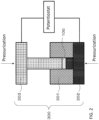
- FIG. 2 is a schematic diagram showing an evaluation method of ion conductivity.
- a pressure-molding die 300 includes a frame 301 formed of an electronically insulating polycarbonate, an upper punch part 303 and a lower punch part 302, both of which are formed of electron conductive stainless steel.
- the ion conductivity was evaluated by the following method.
- the inside of the pressure-molding die 300 was filled with the powder of the solid electrolyte material of the inventive example 1 (example of the solid electrolyte particles 100).
- the powder was pressurized uniaxially at 400 MPa to produce a conductivity measurement cell of the inventive example 1.
- lead wires were routed from the upper punch part 303 and the lower punch part 302, and connected to a potentiostat (Princeton Applied Research, VersaSTAT4) equipped with a frequency response analyzer.
- the ion conductivity at room temperature was measured by an electrochemical impedance measurement method.
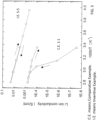
- FIG. 3 is a graph showing temperature dependence of the ion conductivity of solid electrolytes.
- the results shown in FIG. 3 were measured by the following method.
- the solid electrolyte materials of the inventive examples 1-1 to 1-7 which corresponded to a thickness of 700 ⁇ m were inserted into respective insulating outer cylinders.
- Each of the solid electrolyte materials was pressure-molded at a pressure of 40 MPa to provide solid electrolyte layers.
- aluminum powder which corresponded to a thickness of 50 ⁇ m was stacked on the upper and lower surfaces of each of the solid electrolyte layers.
- Each of the solid electrolyte materials having the aluminum powder was pressure-molded at a pressure of 360 MPa to produce stacking structures.
- test bodies each including the stacking structure provided by the above method were put in a thermostatic chamber, and the temperature dependence of the ion conductivity was measured in a temperature rising process and a temperature falling process.
- the solid electrolyte materials of the inventive example 1 were evaluated for the compositions thereof using ICP (Inductively Coupled Plasma) emission spectroscopy.
- ICP Inductively Coupled Plasma
- deviation of Li / Y from its charged composition was within 3%.
- the charged composition with the planetary ball mill was almost the same as the composition of the solid electrolyte material described in each of the inventive examples.
- Li 3 InBr 6 which was the solid electrolyte material of the comparative example 1, was provided.
- the ion conductivity and the phase transition of the solid electrolyte material of the comparative example 1-1 were evaluated in the same manner as in the inventive example 1.
- the ion conductivity measured at 22 °C was less than 1 ⁇ 10 -7 S / cm.
- the temperature dependence of the ion conductivity of the solid electrolyte material of the comparative example 1-1 is shown in FIG. 3 .
- the conductivity was changed suddenly at around 55 °C during the temperature rising process. In other words, a phase change was observed in the solid electrolyte material of the comparative example 1-1.
- the ion conductivity of the solid electrolyte material of the comparative example 1-2 was evaluated in the same manner as in the inventive example 1.
- the measured ion conductivity was 8.7 ⁇ 10 -6 S / cm.
- the ion conductivity measured at 22 °C was 4.0 ⁇ 10 -4 S / cm.
- the ion conductivity measured at 22 °C was 5.0 ⁇ 10 -4 S / cm.
- the phase transition does not occur in the solid electrolytes of the inventive examples 1-1 to 1-7 within the range of -30 °C to 80 °C, whereas the phase transition occurs in the comparative example 1-1.
- the solid electrolyte of the present example has a stable structure in the assumed operation temperature range of the battery.
- the solid electrolyte material Li 3 YBr 6-x Cl x of the inventive example 1 and LiCoO 2 which was the positive electrode active material, were prepared at a volume ratio of 30:70. These were mixed in an agate mortar to prepare a positive electrode mixture.
- the solid electrolyte materials of the inventive example 1 each of which corresponded to a thickness of 700 ⁇ m, and 12.3 mg of the positive electrode mixture were stacked in this order in respective insulating outer cylinders.
- Each of the solid electrolyte materials was pressure-molded at a pressure of 360 MPa to provide a positive electrode and a solid electrolyte layer.
- a metal In (thickness: 200 ⁇ m) was stacked on the opposite side to the side which was in contact with the positive electrode of the solid electrolyte layer.
- Each of the solid electrolyte layers having the positive electrode was pressure-molded at a pressure of 80 MPa to produce a stacking structure of the positive electrode, the solid electrolyte layer, and the negative electrode.
- the secondary batteries of the inventive example 2 were produced.
- the secondary batteries of the inventive examples 2-1 to 2-7 were produced using the solid electrolytes provided in the inventive examples 1-1 to 1-7, respectively.
- the secondary batteries of the inventive example 2 were disposed in a thermostatic chamber at 25 °C. Constant-current charge was performed at a current value of 0.05 C rate (20 hour rate) with respect to theoretical capacity of each of the batteries, and the charge was terminated at a voltage of 3.6 V. Next, each of the batteries was discharged at a current value of the same 0.05 C rate as the above, and the discharge was terminated at a voltage of 1.9 V. From the results of the measurements, the initial discharge capacities are provided.
- the solid electrolyte material of the comparative example 1-2 was used as the solid electrolyte used for the positive electrode mixture and the solid electrolyte layer. Except for this, a secondary battery was produced and a charge / discharge test was conducted in the same manner as in the inventive example 2.
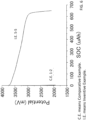
- the initial discharge characteristic of the secondary battery of the comparative example 2-1 is shown in FIG. 4 .
- the initial discharge capacity of the secondary battery of the comparative example 2-1 was less than 1 ⁇ Ah. In other words, in the secondary battery of the comparative example 2-1, the charge / discharge operation failed to be observed.
- the solid electrolyte material according to the present disclosure is an electrolyte material that does not generate hydrogen sulfide and can stably maintain high lithium ion conductivity. Further, it is shown that an all-solid battery which does not generate hydrogen sulfide and is excellent in the charge / discharge characteristic can be realized.
- composition analysis of the solid electrolyte materials of the inventive example 3 was performed by the ICP method. As a result, in each of the inventive examples 3-1 to 3-7, the deviation of Li / Y from the charged composition was within 3%. As a result, the charged composition with the planetary ball mill would be almost the same as the composition of the solid electrolyte material described in the inventive example.
- Table 3 shows the ion conductivity provided in the same manner as in the inventive example 2.
- the dried and solidified powder was put in an alumina crucible and taken out in an air atmosphere.
- the powder after the heat treatment was reground in an agate mortar to provide a positive electrode active material of the inventive example 4 in which a coating layer was formed on the particle surface layer.
- a coating layer was formed on at least a part of the particle surface of all or some of the plurality of the particles.
- the material of the coating layer is LiNbOs.
- the solid electrolyte material Li 3 YBr 6-x I x of the inventive example 3 and Li(NiCoAl)O 2 , which was the positive electrode active material having particle surface coated with LiNbO 3 were prepared at a volume ratio of 30:70. These were mixed in an agate mortar to produce a positive electrode mixture.
- the solid electrolyte materials of the inventive example 3 each of which corresponded to a thickness of 700 ⁇ m, and 12.3 mg of the positive electrode mixture were stacked in this order in respective insulating outer cylinders.
- Each of the solid electrolyte materials was pressure-molded at a pressure of 360 MPa to provide a positive electrode and a solid electrolyte layer.
- a metal In (thickness: 200 ⁇ m) was stacked on the opposite side to the side which was in contact with the positive electrode of the solid electrolyte layer.
- Each of the solid electrolyte layer having the positive electrode was pressure-molded at a pressure of 80 MPa to produce a stacking structure of the positive electrode, the solid electrolyte layer, and the negative electrode.
- the secondary batteries of the inventive examples 4 were produced.
- the secondary batteries were produced in the inventive examples 4-1 to 4-7 using the solid electrolytes provided in the inventive examples 3-1 to 3-7, respectively.
- the secondary batteries of the inventive examples 4 were disposed in a thermostatic chamber at 25 °C. Constant-current charge was performed at a current value of 0.05 C rate (20 hour rate) with respect to theoretical capacity of each of the batteries, and the charge was terminated at a voltage of 3.7 V. Next, each of the batteries was discharged at a current value of the same 0.05 C rate as the above, and the discharge was terminated at a voltage of 1.9 V. From the results of the measurements, the initial discharge capacities are provided.
- the solid electrolyte material according to the present disclosure is an electrolyte material that does not generate hydrogen sulfide and can stably maintain high lithium ion conductivity. Further, it is shown that an all-solid battery which does not generate hydrogen sulfide and is excellent in the charge / discharge characteristic can be realized.
- the ion conductivity was evaluated by the following method.
- the inside of the pressure-molding die 300 was filled with the powder of the solid electrolyte material of the inventive example 5 (example of the solid electrolyte particles 100).
- the powder was pressurized uniaxially at 400 MPa to produce a conductivity measurement cell of the inventive example 5.
- FIG. 5 is a graph showing temperature dependence of the ion conductivity of solid electrolytes.
- FIG. 5 shows the measurement result of the inventive example 5-5 (Li 3 YBr 2 Cl 2 I 2 ) as a typical behavior of the inventive example 5.
- the inventive example 5-5 Li 3 YBr 2 Cl 2 I 2
- the inventive examples 5-1 to 5-10 no sudden change in conductivity indicating a phase change (i.e., a phase transition) was observed.
- the results shown in FIG. 5 were measured by the following method.
- the solid electrolyte materials of the inventive examples 5-1 to 5-10 each of which corresponded to a thickness of 700 ⁇ m were inserted into respective insulating outer cylinders.
- Each of the solid electrolyte materials was pressure-molded at a pressure of 40 MPa to provide solid electrolyte layers.
- aluminum powder which corresponded to a thickness of 50 ⁇ m was stacked on the upper and lower surfaces of each of the solid electrolyte layers.
- Each of the solid electrolyte layers having the aluminum powder was pressure-molded at a pressure of 360 MPa to produce stacking structures.
- test bodies each including the stacking structure provided by the above method were put in a thermostatic chamber, and the temperature dependence of the ion conductivity was measured in a temperature rising process and a temperature falling process.
- the solid electrolyte materials of the inventive example 5 were evaluated for the compositions thereof using the ICP (Inductively Coupled Plasma) emission spectroscopy.
- ICP Inductively Coupled Plasma
- the deviation of Li / Y from its charged composition was within 3%.
- the charged composition with the planetary ball mill was almost the same as the composition of the solid electrolyte material described in each of the inventive examples.
- the dried and solidified powder was put in an alumina crucible and taken out in an air atmosphere.
- the powder after the heat treatment was reground in an agate mortar to provide a positive electrode active material of the inventive example 5 in which a coating layer was formed on the particle surface layer.
- a coating layer was formed on at least a part of the particle surface of all or some of the plurality of the particles.
- the material of the coating layer is LiNbOs.
- the solid electrolyte material Li 3 YCl l Br m I n of the inventive example 5 and Li(NiCoAl)O 2 which was the positive electrode active material having particle surface coated with LiNbOs, were prepared at a volume ratio of 30:70. These were mixed in an agate mortar to produce a positive electrode mixture.
- the solid electrolyte materials of the inventive example 5 each of which corresponded to a thickness of 700 ⁇ m, and 12.3 mg of the positive electrode mixture were stacked in this order in respective insulating outer cylinders.
- Each of the solid electrolyte materials was pressure-molded at a pressure of 360 MPa to provide a positive electrode and a solid electrolyte layer.
- a metal In (thickness: 200 ⁇ m) was stacked on the opposite side to the side which was in contact with the positive electrode of the solid electrolyte layer.
- Each of the solid electrolyte layers having the positive electrode and the metal In was pressure-molded at a pressure of 80 MPa to produce a stacking structure of the positive electrode, the solid electrolyte layer, and the negative electrode.
- the results shown in FIG. 6 were provided by the following method.
- the secondary batteries of the inventive examples 5 were disposed in a thermostatic chamber at 25 °C. Constant-current charge was performed at a current value of 0.05 C rate (20 hour rate) with respect to theoretical capacity of each of the batteries, and the charge was terminated at a voltage of 3.7 V.
- each of the batteries was discharged at a current value of the same 0.05 C rate as the above, and the discharge was terminated at a voltage of 1.9 V.
- the results shown in FIG. 6 were provided by the following method.
- the secondary batteries of the inventive examples 5 were disposed in a thermostatic
- an initial discharge capacity of 650 ⁇ Ah was provided.
- the same measurement was performed in all of the inventive examples 5-1 to 5-10.
- a good discharge capacity which was the same as that in the inventive example 5-5 was provided.
- the solid electrolyte material according to the present disclosure is an electrolyte material that does not generate hydrogen sulfide and can stably maintain high lithium ion conductivity. Further, it is shown that an all-solid battery which does not generate hydrogen sulfide and is excellent in the charge / discharge characteristic can be realized.
- the battery of the present disclosure can be used as, for example, an all-solid lithium secondary battery.
Landscapes
- Chemical & Material Sciences (AREA)
- Chemical Kinetics & Catalysis (AREA)
- Electrochemistry (AREA)
- General Chemical & Material Sciences (AREA)
- Inorganic Chemistry (AREA)
- Engineering & Computer Science (AREA)
- Manufacturing & Machinery (AREA)
- Organic Chemistry (AREA)
- Composite Materials (AREA)
- Physics & Mathematics (AREA)
- Condensed Matter Physics & Semiconductors (AREA)
- General Physics & Mathematics (AREA)
- Geology (AREA)
- Life Sciences & Earth Sciences (AREA)
- Materials Engineering (AREA)
- Secondary Cells (AREA)
- Conductive Materials (AREA)
- Battery Electrode And Active Subsutance (AREA)
- Compounds Of Alkaline-Earth Elements, Aluminum Or Rare-Earth Metals (AREA)
Description
- The present disclosure relates to a solid electrolyte material and a battery.
- Patent Literature 1 discloses an all-solid battery using a sulfide solid electrolyte.
- Patent Literature 2 discloses an all-solid battery using, as a solid electrolyte, a halide including indium.
- Non-Patent Literature 1 discloses Li3YBr6.
-
- Patent Literature 1:
Japanese Patent Application Publication No. 2005-353309 - Patent Literature 2:
Japanese Patent Application Publication No. 2006-244734 - Non-patent Literature 1: Z. anorg. allg. Chem. 623 (1997), 1352
- In the prior art, realization of a solid electrolyte material having high lithium ion conductivity is desired.
- The solid electrolyte material in one aspect of the present disclosure is represented by the following composition formula (1):
Li3YX6 Formula (1)
where
X is two or more kinds of elements selected from the group consisting of Cl, Br, and I. - According to the present disclosure, a solid electrolyte material having high lithium ion conductivity can be realized.
-
-
FIG. 1 is a cross-sectional view showing a schematic configuration of a battery in a second embodiment. -
FIG. 2 is a schematic diagram illustrating an evaluation method of ion conductivity. -
FIG. 3 is a graph showing temperature dependence of the ion conductivity of solid electrolytes. -
FIG. 4 is a graph showing an initial discharge characteristic. -
FIG. 5 is a graph showing the temperature dependence of the ion conductivity of solid electrolytes. -
FIG. 6 is a graph showing an initial discharge characteristic. - Hereinafter, embodiments of the present disclosure will be described with reference to the drawings.
- The solid electrolyte material in the first embodiment is a solid electrolyte material represented by the following composition formula (1):
Li3YX6 Formula (1)
where
X is two or more kinds of elements selected from the group consisting of Cl, Br, and I. - The crystal structure of the solid electrolyte material described in the first embodiment is modulated by doping, with yttrium cations (Y3+), the crystal structure having LiX (X is two or more kinds of elements selected from the group consisting of Cl, Br, and I) as a fundamental structure. Due to the difference in valence between Y and Li and satisfaction of electrical neutrality of the entire crystal, vacancies are generated in the crystal structure. The symmetry of the crystal structure is varied from the fundamental structure by stable arrangement of Li, Y, and the vacancy sites in the structure or by balance between the ionic radius of the anion and the ionic radius of the cation. Li ions are allowed to be conducted in the crystal through the vacancies generated in the varied crystal structure.
- According to the above configuration, a halide solid electrolyte material having high lithium ion conductivity can be realized. In addition, a solid electrolyte material having a stable structure can be realized in the assumed operation temperature range of the battery (for example, within the range of -30 °C to 80 °C). In other words, the solid electrolyte material of the first embodiment does not have a configuration (for example, the configuration of Patent Literature 2) in which the phase transition temperature thereof is present in the operation temperature range of the battery. Thereby, even in an environment where there is a temperature change, high ion conductivity can be stably maintained without causing a phase transition to occur within the operation temperature range of the battery.
- In addition, according to the above configuration, a solid electrolyte exhibiting high ion conductivity of not less than 1 × 10⁻⁴ S / cm can be realized, and an all-solid secondary battery excellent in a charge / discharge characteristic can be realized. Furthermore, by adjusting the composition, ion conductivity of more than 7 × 10⁻⁴ S / cm is achieved, and an all-solid secondary battery capable of being charged or discharged more rapidly can be realized.
- Moreover, by using the solid electrolyte material of the first embodiment, an all-solid secondary battery which does not include sulfur can be realized. In other words, the solid electrolyte material of the first embodiment does not have a configuration (for example, the configuration of Patent Literature 1) in which hydrogen sulfide is generated if exposed to the air. As a result, an all-solid secondary battery which does not generate hydrogen sulfide and is excellent in safety can be realized.
- In the solid electrolyte material in the first embodiment, X may include Br and Cl.
- According to the above configuration, a solid electrolyte material having higher lithium ion conductivity can be realized.
- The solid electrolyte material in the first embodiment may be represented by the following composition formula (2):
Li3YBr6-xClx Formula (2).
- In this case, in the composition formula (2), 0.5 ≤ x ≤ 5.5 may be satisfied.
- According to the above configuration, a solid electrolyte material having higher lithium ion conductivity can be realized.
- The solid electrolyte material in the first embodiment may satisfy 2.0 ≤ x ≤ 5.0 in the composition formula (2).
- According to the above configuration, a solid electrolyte material having higher lithium ion conductivity can be realized.
- In the solid electrolyte material in the first embodiment, X may include Br and I.
- According to the above configuration, a solid electrolyte material having higher lithium ion conductivity can be realized.
- In addition, the solid electrolyte material in the first embodiment may be represented by the following composition formula (3):
Li3YBr6-xIx Formula (3).
- In this case, 0.5 ≤ x ≤ 5.5 may be satisfied in the composition formula (3).
- According to the above configuration, a solid electrolyte material having higher lithium ion conductivity can be realized.
- The solid electrolyte material in the first embodiment may satisfy 1.0 ≤ x ≤ 3.0 in the composition formula (3).
- According to the above configuration, a solid electrolyte material having higher lithium ion conductivity can be realized.
- The solid electrolyte material in the first embodiment may be represented by the following composition formula (4):
Li3YCllBrmIn Formula (4).
- In this case, in the composition formula (4), I + m + n = 6 may be satisfied.
- According to the above configuration, a solid electrolyte material having higher lithium ion conductivity can be realized.
- The solid electrolyte material in the first embodiment may satisfy 0.5 < I < 5, 0.5 < m < 5, and 0.5 < n < 5 in the composition formula (4).
- According to the above configuration, a solid electrolyte material having higher lithium ion conductivity can be realized.
- The solid electrolyte material in the first embodiment may satisfy 1 ≤ I ≤ 4, 1 ≤ m ≤ 4, and 1 ≤ n ≤ 4 in the composition formula (4).
- According to the above configuration, a solid electrolyte material having higher lithium ion conductivity can be realized.
- The solid electrolyte material in the first embodiment may satisfy n = 1, 1 < I, and m < 4 in the composition formula (4).
- According to the above configuration, a solid electrolyte material having higher lithium ion conductivity can be realized.
- The solid electrolyte material in the first embodiment may satisfy n = 2, 1 < I, and 1 < m < 4 in the composition formula (4).
- According to the above configuration, a solid electrolyte material having higher lithium ion conductivity can be realized.
- The solid electrolyte material in the first embodiment may satisfy I = 2, m = 2, and n = 2 in the composition formula (4).
- According to the above configuration, a solid electrolyte material having higher lithium ion conductivity can be realized.
- A shape of the solid electrolyte material in the first embodiment is not particularly limited, and may be, for example, an acicular shape, a spherical shape, or an elliptical spherical shape. For example, the solid electrolyte material in the first embodiment may be particles. In addition, the solid electrolyte material in the first embodiment may be formed into a pellet shape or a plate shape by puressurized particles. In addition, the solid electrolyte material in the first embodiment may include a crystal phase or may include an amorphous phase.
- For example, if the shape of the solid electrolyte material in the first embodiment is particulate (for example, spherical), the median diameter thereof may be not less than 0.1 µm and not more than 100 µm.
- In addition, in the first embodiment, the median diameter may be not less than 0.5 µm and not more than 10 µm.
- According to the above configuration, ion conductivity can be further improved. In addition, a better dispersion state of the solid electrolyte material in the first embodiment and an active material can be formed.
- In the first embodiment, the solid electrolyte material may have a smaller median diameter than the active material.
- According to the above configuration, a better dispersed state of the solid electrolyte material in the first embodiment and the active material can be formed.
- The solid electrolyte material in the first embodiment may be manufactured by the following method, for example.
- Binary halide raw material powders are prepared so as to provide a blending ratio of a target composition. For example, if Li3YBr3Cl3 is produced, LiBr and YCl3 are prepared in a molar ratio of 3:1. The raw materials are not particularly limited. For example, LiCI, Lil, YBrs, or YI3 may be used in addition to the above-described raw materials. At this time, X in the composition formula (1) can be determined by selecting the kinds of the raw material powders. In addition, the above-mentioned values of "x", "I", "m", and "n" can be adjusted by adjusting the raw materials and the molar ratio. After mixing the raw material powders well, the raw material powders are mixed and ground using a mechanochemical milling method to react. Alternatively, the raw material powders may be mixed well and then sintered in a vacuum or in an inert atmosphere such as an argon / nitrogen atmosphere.
- Thereby, the solid electrolyte material including the crystal phase as described above is provided.
- In addition, the configuration (namely, the crystal structure) of the crystal phase in the solid electrolyte material can be determined by adjusting the reaction method and reaction conditions of the raw material powders.
- Hereinafter, the second embodiment will be described. The description which has been set forth in the above-described first embodiment is omitted as appropriate.
- The battery in the second embodiment is configured using the solid electrolyte material described in the first embodiment.
- The battery in the second embodiment comprises a positive electrode, a negative electrode, and an electrolyte layer.
- The electrolyte layer is a layer provided between the positive electrode and the negative electrode.
- At least one of the positive electrode, the electrolyte layer, and the negative electrode includes the solid electrolyte material in the first embodiment.
- According to the above configuration, the charge / discharge characteristic of the battery can be improved.
- A specific example of the battery in the second embodiment will be described below.
-
FIG. 1 is a cross-sectional view showing a schematic configuration of abattery 1000 in the second embodiment. - The
battery 1000 in the second embodiment includes apositive electrode 201, anegative electrode 203, and anelectrolyte layer 202. - The
positive electrode 201 includes positive electrodeactive material particles 204 andsolid electrolyte particles 100. - The
electrolyte layer 202 is disposed between thepositive electrode 201 and thenegative electrode 203. - The
electrolyte layer 202 includes an electrolyte material (for example, a solid electrolyte material). - The
negative electrode 203 includes negative electrodeactive material particles 205 and thesolid electrolyte particles 100. - The
solid electrolyte particles 100 are particles each formed of the solid electrolyte material in the first embodiment or particles each including the solid electrolyte material in the first embodiment as a main component. - The
positive electrode 201 includes a material having a characteristic of storing and releasing metal ions (for example, lithium ions). Thepositive electrode 201 includes, for example, a positive electrode active material (for example, the positive electrode active material particles 204). - Examples of the positive electrode active material include Li-containing transition metal oxides (e.g., Li(NiCoAl)O2 or LiCoO2), transition metal fluorides, polyanion materials, fluorinated polyanion materials, transition metal sulfides, transition metal oxyfluorides, transition metal oxysulfides, and transition metal oxynitrides.
- A surface of the positive electrode active material may coated partially or entirely with an oxide which is different from the positive electrode active material in order to perform a higher performance battery operation. As a typical coating material, LiNbO3 can be used. As long as the battery operation can be performed, the surface coating material is not limited to LiNbOs, and the coating method is not limited, either. Typically, the thickness of the coating material is desirably approximately 1 to 100 nm to realize a high-performance battery. Examples of the coating material include a Li-Nb-O compound such as LiNbOa, a Li-B-O compound such as LiBO2 or Li3BO3, a Li-AI-O compound such as LiAlO2, a Li-Si-O compound such as Li4SiO4, Li2SO4, a Li-Ti-O compound such as Li4Ti5O12, a Li-Zr-O compound such as Li2ZrO3, a Li-Mo-O compound such as Li2MoO3, a Li-V-O compound such as LiV2O5, and a Li-W-O compound such as Li2WO4.
- The median diameter of the positive electrode
active material particles 204 may be not less than 0.1 µm and not more than 100 µm. If the median diameter of the positive electrodeactive material particles 204 is not less than 0.1 µm, the positive electrodeactive material particles 204 and the halide solid electrolyte material can form a good dispersion state in the positive electrode. As a result, the charge / discharge characteristic of the battery are improved. In addition, if the median diameter of the positive electrodeactive material particles 204 is not more than 100 µm, Li diffusion in the positive electrodeactive material particles 204 is accelerated. As a result, the battery can operate at a high output. - The median diameter of the positive electrode
active material particles 204 may be larger than the median diameter of the halide solid electrolyte material. Thereby, the good dispersion state of the positive electrodeactive material particles 204 and the halide solid electrolyte material can be formed. - With regard to a volume ratio "v: 100-v" between the positive electrode
active material particles 204 and the halide solid electrolyte material included in thepositive electrode 201, 30 ≤ v ≤ 95 may be satisfied. In the case of 30 ≤ v, a sufficient battery energy density can be secured. In addition, if v ≤ 95, an operation at a high output can be realized. - The thickness of the
positive electrode 201 may be not less than 10 µm and not more than 500 µm. If the thickness of the positive electrode is not less than 10 µm, a sufficient battery energy density can be ensured. If the thickness of the positive electrode is not more than 500 µm, an operation at a high output can be realized. - The
electrolyte layer 202 is a layer including an electrolyte material. The electrolyte material is, for example, a solid electrolyte material. In other words, theelectrolyte layer 202 may be a solid electrolyte layer. - The solid electrolyte layer may include the solid electrolyte material in the first embodiment as a main component. In other words, the solid electrolyte layer may include the solid electrolyte material in the above-described first embodiment, for example, at a weight ratio of not less than 50% (namely, not less than 50% by weight) with respect to the entire solid electrolyte layer.
- According to the above configuration, the charge / discharge characteristic of the battery can be further improved.
- In addition, the solid electrolyte layer may include the solid electrolyte material in the first embodiment described above, for example, at a weight ratio of not less than 70% (namely, not less than 70% by weight) with respect to the entire the solid electrolyte layer.
- According to the above configuration, the charge / discharge characteristic of the battery can be further improved.
- The solid electrolyte layer includes the solid electrolyte material in the above-described first embodiment as a main component, and may further include inevitable impurities, starting materials used when the solid electrolyte material is synthesized, byproducts, or decomposition products.
- In addition, the solid electrolyte layer may include the solid electrolyte material in the first embodiment, for example, at a weight ratio of 100% (namely, 100% by weight) with respect to the entire solid electrolyte layer, excluding impurities mixed inevitably.
- According to the above configuration, the charge / discharge characteristic of the battery can be further improved.
- As described above, the solid electrolyte layer may be composed only of the solid electrolyte material in the first embodiment.
- Alternatively, the solid electrolyte layer may be composed of only a solid electrolyte material different from the solid electrolyte material in the first embodiment. As the solid electrolyte material different from the solid electrolyte material in the first embodiment, for example, Li2MgX4, Li2FeX4, Li(AI, Ga, In)X4, Li3(Al, Ga, In)Xs, or LiI may be used. Here, X includes at least one selected from the group consisting of Cl, Br, and I.
- The solid electrolyte layer may include simultaneously the solid electrolyte material in the first embodiment and the solid electrolyte material different from the solid electrolyte material in the first embodiment. At this time, both may be dispersed uniformly. Alternatively, the layer formed of the solid electrolyte material in the first embodiment and the layer formed of the solid electrolyte material different from the solid electrolyte material in the first embodiment may be sequentially arranged in the stacking direction of the battery.
- The thickness of the solid electrolyte layer may be not less than 1 µm and not more than 100 µm. If the thickness of the solid electrolyte layer is not less than 1 µm, the
positive electrode 201 and thenegative electrode 203 are easily separated. In addition, if the thickness of the solid electrolyte layer is not more than 100 µm, an operation at a high output can be realized. - The
negative electrode 203 includes a material having a characteristic of storing and releasing metal ions (for example, Li ions). Thenegative electrode 203 includes, for example, a negative electrode active material (for example, the negative electrode active material particles 205). - As the negative electrode active material, a metal material, a carbon material, an oxide, a nitride, a tin compound, or a silicon compound can be used. The metal material may be a single metal. Alternatively, the metal material may be an alloy. Examples of the metal material include lithium metal and a lithium alloy. Examples of the carbon material include natural graphite, coke, graphitized carbon, carbon fiber, spherical carbon, artificial graphite, and amorphous carbon. From the viewpoint of capacity density, silicon (Si), tin (Sn), a silicon compound, or a tin compound can be used. If a negative electrode active material having a low average reaction voltage is used, the effect of suppressing electrolysis by the solid electrolyte material in the first embodiment is better exhibited.
- The median diameter of the negative electrode
active material particles 205 may be not less than 0.1 µm and not more than 100 µm. If the median diameter of the negative electrodeactive material particles 205 is not less than 0.1 µm, the negative electrodeactive material particles 205 and thesolid electrolyte particles 100 can form a good dispersion state in the negative electrode. As a result, the charge / discharge characteristic of the battery is improved. In addition, if the median diameter of the negative electrodeactive material particles 205 is not more than 100 µm, the lithium diffusion in the negative electrodeactive material particles 205 is accelerated. As a result, the battery can operate at a high output. - The median diameter of the negative electrode
active material particles 205 may be larger than the median diameter of thesolid electrolyte particles 100. As a result, the good dispersion state of the negative electrodeactive material particles 205 and the halide solid electrolyte material can be formed. - With regard to a volume ratio "v : 100-v" of the negative electrode
active material particles 205 and thesolid electrolyte particles 100 included in thenegative electrode 203, 30 ≤ v ≤ 95 may be satisfied. In a case of 30 ≤ v, a sufficient battery energy density can be secured. In addition, if v ≤ 95, an operation at a high output can be realized. - The thickness of the
negative electrode 203 may be not less than 10 µm and not more than 500 µm. If the thickness of the negative electrode is not less than 10 µm, the sufficient battery energy density can be secured. In addition, if the thickness of the negative electrode is not more than 500 µm, an operation at a high output can be realized. - At least one of the
positive electrode 201, theelectrolyte layer 202, and thenegative electrode 203 may include a sulfide solid electrolyte or an oxide solid electrolyte for the purpose of improving ion conductivity. As the sulfide solid electrolyte, Li2S-P2S5, Li2S-SiS2, Li2S-B2S3, Li2S-GeS2, Li3.25Ge0.25P0.75S4, or Li10GeP2S12 can be used. As the oxide solid electrolyte, a NASICON solid electrolyte such as LiTi2(PO4)3 and its element substitution product, a (LaLi)TiO3 perovskite solid electrolyte, a LISICON solid electrolyte such as Li14ZnGe4O16, Li4SiO4, or LiGeO4 and its element substitution product, a garnet solid electrolyte such as Li7La3Zr2O12 and its element substitution product, Li3N and its H substitution product, or Li3PO4 and its N substitution product can be used. - At least one of the
positive electrode 201, theelectrolyte layer 202, and thenegative electrode 203 may include an organic polymer solid electrolyte for the purpose of increasing ion conductivity. As the organic polymer solid electrolyte, for example, a compound of a polymer compound and a lithium salt can be used. The polymer compound may have an ethylene oxide structure. Since the polymer compound has the ethylene oxide structure, a large amount of lithium salt can be included, and the ion conductivity can be further increased. As the lithium salt, LiPFs, LiBF4, LiSbFs, LiAsFs, LiSO3CF3, LiN(SO2CF3)2, LiN(SO2C2F5)2, LiN(SO2CF3)(SO2C4F9), or LiC(SO2CF3)3 can be used. As the lithium salt, one lithium salt selected from these may be used alone. Alternatively, a mixture of two or more lithium salts selected from these may be used as the lithium salt. - At least one of the
positive electrode 201, theelectrolyte layer 202, and thenegative electrode 203 may include a non-aqueous electrolyte solution, a gel electrolyte, and an ionic liquid for the purpose of facilitating exchange of lithium ions and improving the output characteristic of the battery. - The non-aqueous electrolyte solution includes a non-aqueous solvent and a lithium salt dissolved in the non-aqueous solvent. As the non-aqueous solvent, a cyclic carbonate solvent, a chain carbonate solvent, a cyclic ether solvent, a chain ether solvent, a cyclic ester solvent, a chain ester solvent, or a fluorine solvent can be used. Examples of the cyclic carbonate solvent include ethylene carbonate, propylene carbonate, and butylene carbonate. Examples of the chain carbonate solvent include dimethyl carbonate, ethyl methyl carbonate, and diethyl carbonate. Examples of the cyclic ether solvent include tetrahydrofuran, 1,4-dioxane, and 1,3-dioxolane. Examples of the chain ether solvent include 1,2-dimethoxyethane and 1,2-diethoxyethane. Examples of the cyclic ester solvent include γ-butyrolactone. Examples of the chain ester solvent include methyl acetate. Examples of the fluorine solvent include fluoroethylene carbonate, methyl fluoropropionate, fluorobenzene, fluoroethyl methyl carbonate, and fluorodimethylene carbonate. As the non-aqueous solvent, one non-aqueous solvent selected from these can be used alone. Alternatively, a combination of two or more non-aqueous solvents selected from these can be used as the non-aqueous solvent. The non-aqueous electrolyte solution may include at least one fluorine solvent selected from the group consisting of fluoroethylene carbonate, methyl fluoropropionate, fluorobenzene, fluoroethyl methyl carbonate, and fluorodimethylene carbonate. As the lithium salt, LiPFs, LiBF4, LiSbFs, LiAsFs, LiSO3CF3, LiN(SO2CF3)2, LiN(SO2C2F5)2, LiN(SO2CF3)(SO2C4F9), or LiC(SO2CF3)3 can be used. As the lithium salt, one lithium salt selected from these may be used alone. Alternatively, a mixture of two or more lithium salts selected from these may be used as the lithium salt. The concentration of the lithium salt is, for example, in the range of 0.5 to 2 mol / liter.
- As the gel electrolyte, a polymer material including the non-aqueous electrolyte solution can be used. As the polymer material, polyethylene oxide, polyacrylonitrile, polyvinylidene fluoride, polymethyl methacrylate, or a polymer having an ethylene oxide bond may be used.
- The cation which forms the ionic liquid may be an aliphatic chain quaternary salt such as tetraalkylammonium or tetraalkylphosphonium, an aliphatic cyclic ammonium such as pyrrolidinium, morpholinium, imidazolinium, tetrahydropyrimidinium, piperazinium or piperidinium, or a nitrogen-including heterocyclic aromatic cation such as pyridinium or imidazolium. The anion which forms the ionic liquid may be PF6 -, BF4-, SbF6 -, ASF6 -, SO3CF3 -, N(SO2CF3)2 -, N(SO2C2F5)2 -, N(SO2CF3)(SO2C4F9)-, or C(SO2CF3)3 -. The ionic liquid may include a lithium salt.
- At least one of the
positive electrode 201, theelectrolyte layer 202, and thenegative electrode 203 may include a binder for the purpose of improving adhesion between the particles. The binder is used to improve the binding property of the material which forms the electrode. The binders include polyvinylidene fluoride, polytetrafluoroethylene, polyethylene, polypropylene, aramid resin, polyamide, polyimide, polyamideimide, polyacrylonitrile, polyacrylic acid, methyl polyacrylate ester, ethyl polyacrylate eter, hexyl polyacrylate ester, polymethacrylic acid, methyl polymethacrylate ester, ethyl polymethacrylate ester, hexyl polymethacrylate ester, polyvinyl acetate, polyvinylpyrrolidone, polyether, polyethersulfone, hexafluoropolypropylene, styrene butadiene rubber, or carboxymethylcellulose. The binder may include a copolymer of two or more materials selected from the group consisting of tetrafluoroethylene, hexafluoroethylene, hexafluoropropylene, perfluoroalkyl vinyl ether, vinylidene fluoride, chlorotrifluoroethylene, ethylene, propylene, pentafluoropropylene, fluoromethyl vinyl ether, acrylic acid, and hexadiene. In addition, two or more kinds selected from these may be mixed and used as the binder. - In addition, at least one of the
positive electrode 201 and thenegative electrode 203 may include a conductive agent as necessary. - The conductive agent is used to lower electrode resistance. Examples of the conductive agent include graphite such as natural graphite or artificial graphite, carbon black such as acetylene black or ketjen black, a conductive fiber such as a carbon fiber or a metal fiber, carbon fluoride, metal powder such as aluminum, a conductive whisker such as zinc oxide or potassium titanate, a conductive metal oxide such as titanium oxide, or a conductive polymer compound such as polyaniline, polypyrrole, or polythiophene. In addition, cost reduction can be achieved by using the carbon conductive agent as the conductive agent.
- Note that the battery in the second embodiment can be configured as a battery having various shapes such as a coin shape, a cylindrical shape, a prism shape, a sheet shape, a button shape, a flat shape, or a laminated shape.
- Hereinafter, details of the present disclosure will be described with reference to the inventive examples and comparative examples.
- Hereinafter, a method for synthesizing and evaluating Li3YBr6-xClx in the present example will be described.
- In a glove box maintained in a dry and low-oxygen atmosphere with a dew point of -90 °C or less and an oxygen value of 5 ppm or less, raw material powders LiBr, YBr3, LiCI, and YCl3 were prepared so as to have a molar ratio of Li : Y : Br : Cl = 3 : 1: 6-x : x. These were ground and mixed in a mortar. Subsequently, milling processing was performed at 600 rpm for 25 hours using a planetary ball mill.
- In the inventive examples 1-1 to 1-7, the values of x were 0.5, 1, 2, 3, 4, 5, and 5.5, respectively.
- As a result, Li3YBr6-xClx powders, which were the solid electrolyte materials of the inventive example 1, were provided.
-
FIG. 2 is a schematic diagram showing an evaluation method of ion conductivity. A pressure-molding die 300 includes aframe 301 formed of an electronically insulating polycarbonate, anupper punch part 303 and alower punch part 302, both of which are formed of electron conductive stainless steel. - Using the configuration shown in
FIG. 2 , the ion conductivity was evaluated by the following method. In a glove box maintained in a dry and low-oxygen atmosphere with a dew point of -90 °C or less and an oxygen value of 5 ppm or less, the inside of the pressure-molding die 300 was filled with the powder of the solid electrolyte material of the inventive example 1 (example of the solid electrolyte particles 100). The powder was pressurized uniaxially at 400 MPa to produce a conductivity measurement cell of the inventive example 1. In a pressurized state, lead wires were routed from theupper punch part 303 and thelower punch part 302, and connected to a potentiostat (Princeton Applied Research, VersaSTAT4) equipped with a frequency response analyzer. The ion conductivity at room temperature was measured by an electrochemical impedance measurement method. - The ion conductivity of the solid electrolyte materials of the inventive example 1 measured at 22 °C is shown in Table 1, which is shown below.
[Table 1] Solid electrolyte material Conductivity (Room temperature) (10-4 S/cm) Phase Transition (Not more than 80 °C) Inventive Example 1-1 Li3YBr5.5Cl0.5 5.5 None Inventive Example 1-2 Li3YBr5Cl 5.9 None Inventive Example 1-3 Li3YBr4Cl2 7.5 None Inventive Example 1-4 Li3YBr3Cl3 8.0 None Inventive Example 1-5 Li3YBr2Cl4 9.7 None Inventive Example 1-6 Li3YBrCl5 7.5 None Inventive Example 1-7 Li3YBr0.5Cl5.5 6.9 None Referential Example 1-1 Li3YBr6 4.0 None Referential Example 1-2 Li3YCl6 5.0 None Comparative Example 1-1 Li3InBr6 <1E-3 55 °C Comparative Example 1-2 Li2FeCl4 8.7E-2 None -
FIG. 3 is a graph showing temperature dependence of the ion conductivity of solid electrolytes.FIG. 3 shows the measurement result of the inventive example 1-4 (x=3, Li3YBr3Cl3) as a typical behavior of the inventive example 1. Within the temperature range from -30 °C to 80 °C, in all the inventive examples 1-1 to 1-7, no sudden change in conductivity indicating a phase change (i.e., a phase transition) was observed. - The results shown in
FIG. 3 were measured by the following method. The solid electrolyte materials of the inventive examples 1-1 to 1-7 which corresponded to a thickness of 700 µm were inserted into respective insulating outer cylinders. Each of the solid electrolyte materials was pressure-molded at a pressure of 40 MPa to provide solid electrolyte layers. Next, aluminum powder which corresponded to a thickness of 50 µm was stacked on the upper and lower surfaces of each of the solid electrolyte layers. Each of the solid electrolyte materials having the aluminum powder was pressure-molded at a pressure of 360 MPa to produce stacking structures. Next, stainless-steel current collectors were disposed on the upper and lower parts of each of the stacking structures, and current collector leads were attached to the current collectors. Finally, insulating ferrules were used to block and seal the insides of the insulating outer cylinders from the outside atmosphere. The test bodies each including the stacking structure provided by the above method were put in a thermostatic chamber, and the temperature dependence of the ion conductivity was measured in a temperature rising process and a temperature falling process. - The solid electrolyte materials of the inventive example 1 were evaluated for the compositions thereof using ICP (Inductively Coupled Plasma) emission spectroscopy. As a result, in each of the inventive examples 1-1 to 1-7, deviation of Li / Y from its charged composition was within 3%. In other words, it can be said that the charged composition with the planetary ball mill was almost the same as the composition of the solid electrolyte material described in each of the inventive examples.
- Hereinafter, a method for synthesizing and evaluating solid electrolytes used as referential examples and comparative examples will be described.
- In a glove box maintained in a dry and low-oxygen atmosphere with a dew point of -90 °C or less and an oxygen value of 5 ppm or less, raw material powders LiBr and InBr3 were prepared in a molar ratio of LiBr : InBrs = 3:1. These were ground and mixed in a mortar. Then, the sample pressure-molded into a shape of a pellet was vacuum-sealed in a glass tube and sintered at 200 °C for 1 week.
- As a result, Li3InBr6, which was the solid electrolyte material of the comparative example 1, was provided.
- Except for the above method, the ion conductivity and the phase transition of the solid electrolyte material of the comparative example 1-1 were evaluated in the same manner as in the inventive example 1. The ion conductivity measured at 22 °C was less than 1 × 10⁻⁷ S / cm.
- The temperature dependence of the ion conductivity of the solid electrolyte material of the comparative example 1-1 is shown in
FIG. 3 . As shown inFIG. 3 , due to the temperature dependence of the conductivity, the conductivity was changed suddenly at around 55 °C during the temperature rising process. In other words, a phase change was observed in the solid electrolyte material of the comparative example 1-1. - LiCI and FeCl2 were used as the raw material powders for a solid electrolyte, and mixed at a molar ratio of LiCI: FeCl2 = 2:1. As a result, Li2FeCl4, which was the solid electrolyte material of the comparative example 1-2, was provided.
- Except for this, the ion conductivity of the solid electrolyte material of the comparative example 1-2 was evaluated in the same manner as in the inventive example 1. The measured ion conductivity was 8.7 × 10⁻⁶ S / cm.
- In a glove box maintained in a dry and low-oxygen atmosphere with a dew point of -90 °C or less and an oxygen value of 5 ppm or less, raw material powders LiBr and YBr3 were prepared in a molar ratio of Li : Y : Br = 3 : 1 : 6. These were ground and mixed in a mortar. Then, milling processing was performed at 600 rpm for 25 hours using a planetary ball mill.
- As a result, a powder of Li3YBr6, which was the solid electrolyte material of the referential example 1-1, was provided.
- The ion conductivity measured at 22 °C was 4.0 × 10⁻⁴ S / cm.
- In a glove box maintained in a dry and low-oxygen atmosphere with a dew point of -90 °C or less and an oxygen value of 5 ppm or less, raw material powders LiCI and YCl3 were prepared in a molar ratio of Li : Y : Cl = 3 : 1 : 6. These were ground and mixed in a mortar. Then, milling processing was performed at 600 rpm for 25 hours using a planetary ball mill.
- As a result, powder of Li3YCl6, which was the solid electrolyte material of the referential example 1-2, was provided.
- The ion conductivity measured at 22 °C was 5.0 × 10⁻⁴ S / cm.
- As understood from the comparison of the inventive examples 1-1 to 1-7 to the comparative example 1-1, it can be seen that the phase transition does not occur in the solid electrolytes of the inventive examples 1-1 to 1-7 within the range of -30 °C to 80 °C, whereas the phase transition occurs in the comparative example 1-1. In other words, it can be seen that the solid electrolyte of the present example has a stable structure in the assumed operation temperature range of the battery.
- In addition, it can also be seen that, in each of the solid electrolyte materials described in the inventive examples 1-1 to 1-7, higher ion conductivity of not less than 5.5 × 10⁻⁴ S / cm is exhibited at 22 °C. Among the present examples, it can be seen that higher ion conductivity is exhibited particularly at 2.0 ≤ × ≤ 5.0.
- Hereinafter, a method for producing and evaluating secondary batteries using Li3YBr6-xClx in the present example will be described.
- In a glove box maintained in a dry and low-oxygen atmosphere with a dew point of -90 °C or less and an oxygen value of 5 ppm or less, the solid electrolyte material Li3YBr6-xClx of the inventive example 1 and LiCoO2, which was the positive electrode active material, were prepared at a volume ratio of 30:70. These were mixed in an agate mortar to prepare a positive electrode mixture.
- The solid electrolyte materials of the inventive example 1 each of which corresponded to a thickness of 700 µm, and 12.3 mg of the positive electrode mixture were stacked in this order in respective insulating outer cylinders. Each of the solid electrolyte materials was pressure-molded at a pressure of 360 MPa to provide a positive electrode and a solid electrolyte layer.
- Next, in each of the insulating outer cylinders, a metal In (thickness: 200 µm) was stacked on the opposite side to the side which was in contact with the positive electrode of the solid electrolyte layer. Each of the solid electrolyte layers having the positive electrode was pressure-molded at a pressure of 80 MPa to produce a stacking structure of the positive electrode, the solid electrolyte layer, and the negative electrode.
- Next, stainless-steel current collectors were disposed on the upper and lower parts of each of the stacking structures, and current collector leads were attached to the current collectors. Finally, insulating ferrules were used to block and seal the insides of the insulating outer cylinders from the outside atmosphere.
- Thus, the secondary batteries of the inventive example 2 were produced. The secondary batteries of the inventive examples 2-1 to 2-7 were produced using the solid electrolytes provided in the inventive examples 1-1 to 1-7, respectively.
-
FIG. 4 shows a graph of the inventive example 2-4 (x=3, Li3YBr3Cl3) as a typical initial discharge characteristic. - The results shown in
FIG. 4 were provided by the following method. In other words, the secondary batteries of the inventive example 2 were disposed in a thermostatic chamber at 25 °C. Constant-current charge was performed at a current value of 0.05 C rate (20 hour rate) with respect to theoretical capacity of each of the batteries, and the charge was terminated at a voltage of 3.6 V. Next, each of the batteries was discharged at a current value of the same 0.05 C rate as the above, and the discharge was terminated at a voltage of 1.9 V. From the results of the measurements, the initial discharge capacities are provided. - The measurements were performed similarly in all the inventive examples 2-1 to 2-7, and the initial discharge capacities are shown in Table 2.
[Table 2] Solid electrolyte material Initial discharge capacity (µAh) Inventive Example 2-1 Li3YBr5.5Cl0.5 700 Inventive Example 2-2 Li3YBr5Cl 750 Inventive Example 2-3 Li3YBr4Cl2 720 Inventive Example 2-4 Li3YBr3Cl3 730 Inventive Example 2-5 Li3YBr2Cl4 800 Inventive Example 2-6 Li3YBrCl5 850 Inventive Example 2-7 Li3YBr0.5Cl5.5 850 Comparative Example 2-1 Li2FeCl4 <1 - Hereinafter, a method for producing and evaluating a secondary battery using a solid electrolyte as a comparative example will be described.
- The solid electrolyte material of the comparative example 1-2 was used as the solid electrolyte used for the positive electrode mixture and the solid electrolyte layer. Except for this, a secondary battery was produced and a charge / discharge test was conducted in the same manner as in the inventive example 2. The initial discharge characteristic of the secondary battery of the comparative example 2-1 is shown in
FIG. 4 . - The initial discharge capacity of the secondary battery of the comparative example 2-1 was less than 1 µAh. In other words, in the secondary battery of the comparative example 2-1, the charge / discharge operation failed to be observed.
- Each of the batteries in which the solid electrolyte materials described in the present example were used exhibited a charge / discharge operation at room temperature. On the other hand, in the comparative example 2-1, the discharge capacity was hardly provided, and the battery operation failed to be observed.
- From the above, it is shown that the solid electrolyte material according to the present disclosure is an electrolyte material that does not generate hydrogen sulfide and can stably maintain high lithium ion conductivity. Further, it is shown that an all-solid battery which does not generate hydrogen sulfide and is excellent in the charge / discharge characteristic can be realized.
- Hereinafter, a method for synthesizing and evaluating Li3YBr6-xIx in the present example will be described.
- In a glove box maintained in a dry and low-oxygen atmosphere with a dew point of -90 °C or less and an oxygen value of 5 ppm or less, raw material powders LiBr, YBr3, Lil, and YI3 were prepared in a molar ratio of Li : Y : Br : I = 3 : 1 : 6-x : x. These were ground and mixed in a mortar. Subsequently, milling processing was performed at 600 rpm for 25 hours using a planetary ball mill.
- The values of x in the inventive examples 3-1, 3-2, 3-3, 3-4, 3-5, 3-6 and 3-7 were x = 0.5, 1, 2, 3, 4, 5, and 5.5, respectively.
- In this way, powders of Li3YBr6-xIx, which were the solid electrolyte materials of the inventive example 3, were provided.
- The evaluation of the ion conductivity in the present example was performed in the same manner as in the inventive example 1. Table 3 shows the measurement results of the ion conductivity.
[Table 3] Solid electrolyte material Conductivity (Room temperature) (10-4 S/cm) Phase Transition (Not more than 80 °C) Inventive Example 3-1 Li3YBr5.5I0.5 6.1 None Inventive Example 3-2 Li3YBr5I 7.1 None Inventive Example 3-3 Li3YBr4I2 10.0 None Inventive Example 3-4 Li3YBr3I3 8.2 None Inventive Example 3-5 Li3YBr2I4 4.5 None Inventive Example 3-6 Li3YBrI5 3.6 None Inventive Example 3-7 Li3YBr0.5I5.5 3.2 None Referential Example 1-1 Li3YBr6 4.0 None Comparative Example 3-1 Li3YI6 0.5 None Comparative Example 1-1 Li3InBr6 <1E-3 55 °C Comparative Li2FeCl4 8.7E-2 None Example 1-2 - The phase transition of the present example was evaluated in the same manner as in the inventive example 1. As a result, within the temperature range of -30 °C to 80 °C, no rapid change in conductivity indicating a phase change (i.e., a phase transition) was observed in all the inventive examples 3-1 to 3-7.
FIG. 3 shows the measurement result of the inventive example 3-3 (x = 2: Li3YBr4I2) as a typical behavior of the inventive example 3. - Composition analysis of the solid electrolyte materials of the inventive example 3 was performed by the ICP method. As a result, in each of the inventive examples 3-1 to 3-7, the deviation of Li / Y from the charged composition was within 3%. As a result, the charged composition with the planetary ball mill would be almost the same as the composition of the solid electrolyte material described in the inventive example.
- Hereinafter, a method for synthesizing and evaluating a solid electrolyte as a comparative example will be described.
- In a glove box maintained in a dry and low-oxygen atmosphere with a dew point of -90 °C or less and an oxygen value of 5 ppm or less, raw material powders LiI and YI3 were prepared in a molar ratio Lil : YI3 = 3 : 1. These were ground and mixed in a mortar. Subsequently, milling processing was performed at 600 rpm for 25 hours using a planetary ball mill.
- As a result, a powder of Li3YI6, which was the solid electrolyte material of the comparative example 3-1, was provided.
- Table 3 shows the ion conductivity provided in the same manner as in the inventive example 2.
- As understood from the comparison of the inventive examples 3-1 to 3-7 to the comparative example 1-1, within the range of -30 °C to 80 °C, no phase transition occurred in the inventive examples 3-1 to 3-7 represented by Li3YBr6-xIx, whereas the phase transition occurred in the comparative example 1-1. In other words, it can be seen that Li3YBr6-xIx has a stable structure in the assumed operation temperature range of the battery.
- Further, as understood from the comparison of the inventive examples 3-1 to 3-7 to the comparative example 3-1, at near room temperature, higher ion conductivity of not less than 1 × 10⁻⁴ S / cm is exhibited in the inventive examples 3-1 to 3-7, whereas ion conductivity of less than 1 × 10⁻⁴ S / cm is exhibited in the comparative example 3-1. In addition, it can also be seen that higher ion conductivity than that in the referential example 1-1 is exhibited in 0.5 ≤ x ≤ 4.0 (See the inventive examples 3-1 to 3-5). In addition, in particular, it can also be seen that higher ion conductivity is exhibited in 1.0 ≤ x ≤ 3.0 (See the inventive examples 3-2 to 3-4).
- Hereinafter, a method for producing and evaluating a secondary battery using Li3YBr6-xIx in present example will be described.
- In an argon glove box, 0.06 mg of a metal Li (manufactured by Honjo Chemical Corporation) and 2.87 mg of pentaethoxyniobium (manufactured by Kojundo Chemical Laboratory Co., Ltd.) were dissolved in 0.2 mL of super-dehydrated ethanol (manufactured by FUJIFILM Wako Pure Chemical Corporation) to provide a coating solution.
- In an agate mortar, stirring was performed while the provided coating solution was gradually added to 100 mg of Li(NiCoAl)O2, which was the positive electrode active material.
- After all the coating solution was added, stirring was performed on a hot plate of 30 °C, until drying and solidification of all the coating solution were visually confirmed.
- The dried and solidified powder was put in an alumina crucible and taken out in an air atmosphere.
- Next, heat treatment was performed at 300 °C for 1 hour in an air atmosphere.
- The powder after the heat treatment was reground in an agate mortar to provide a positive electrode active material of the inventive example 4 in which a coating layer was formed on the particle surface layer. In other words, a plurality of particles of the positive electrode active material were provided, and a coating layer was formed on at least a part of the particle surface of all or some of the plurality of the particles.
- The material of the coating layer is LiNbOs.
- Hereinafter, a method for producing and evaluating the secondary batteries of Li3YBr6-xIx in the present example will be described.
- In a glove box maintained in a dry and low-oxygen atmosphere with a dew point of -90 °C or less and an oxygen value of 5 ppm or less, the solid electrolyte material Li3YBr6-xIx of the inventive example 3 and Li(NiCoAl)O2, which was the positive electrode active material having particle surface coated with LiNbO3 were prepared at a volume ratio of 30:70. These were mixed in an agate mortar to produce a positive electrode mixture.
- The solid electrolyte materials of the inventive example 3 each of which corresponded to a thickness of 700 µm, and 12.3 mg of the positive electrode mixture were stacked in this order in respective insulating outer cylinders. Each of the solid electrolyte materials was pressure-molded at a pressure of 360 MPa to provide a positive electrode and a solid electrolyte layer.
- Next, in each of the insulating outer cylinders, a metal In (thickness: 200 µm) was stacked on the opposite side to the side which was in contact with the positive electrode of the solid electrolyte layer. Each of the solid electrolyte layer having the positive electrode was pressure-molded at a pressure of 80 MPa to produce a stacking structure of the positive electrode, the solid electrolyte layer, and the negative electrode.
- Next, stainless-steel current collectors were disposed on the upper and lower parts of each of the stacking structures, and current collector leads were attached to the current collectors. Finally, insulating ferrules were used to block and seal the insides of the insulating outer cylinders from the outside atmosphere.
- Thus, the secondary batteries of the inventive examples 4 were produced. The secondary batteries were produced in the inventive examples 4-1 to 4-7 using the solid electrolytes provided in the inventive examples 3-1 to 3-7, respectively.
-
FIG. 4 shows a graph of the inventive example 4-3 (x = 2: Li3YBr4I2) as a typical initial discharge characteristic. - The results shown in
FIG. 4 were provided by the following method. In other words, the secondary batteries of the inventive examples 4 were disposed in a thermostatic chamber at 25 °C. Constant-current charge was performed at a current value of 0.05 C rate (20 hour rate) with respect to theoretical capacity of each of the batteries, and the charge was terminated at a voltage of 3.7 V. Next, each of the batteries was discharged at a current value of the same 0.05 C rate as the above, and the discharge was terminated at a voltage of 1.9 V. From the results of the measurements, the initial discharge capacities are provided. - The measurements were performed similarly in all the inventive examples 4-1 to 4-7, and the initial discharge capacities are shown in Table 4.
[Table 4] Solid electrolyte material Initial discharge capacity (µAh) Inventive Example 4-1 Li3YBr5.5I0.5 800 Inventive Example 4-2 Li3YBr5I 810 Inventive Example 4-3 Li3YBr4I2 700 Inventive Example 4-4 Li3YBr3I3 680 Inventive Example 4-5 Li3YBr2I4 400 Inventive Example 4-6 Li3YBrI5 200 Inventive Example 4-7 Li3YBr0.5I5.5 100 Comparative Example 2-1 Li2FeCl4 <1 - Each of the batteries in which the solid electrolyte materials described in the present example exhibited a charge / discharge operation at room temperature. On the other hand, in the comparative example 2-1, the discharge capacity was hardly provided, and the battery operation failed to be observed.
- From the above, it is shown that the solid electrolyte material according to the present disclosure is an electrolyte material that does not generate hydrogen sulfide and can stably maintain high lithium ion conductivity. Further, it is shown that an all-solid battery which does not generate hydrogen sulfide and is excellent in the charge / discharge characteristic can be realized.
- Hereinafter, a method for synthesizing and evaluating Li3Y(Br, Cl, I)6 in the present example will be described.
- In a glove box maintained in a dry and low-oxygen atmosphere with a dew point of -90 °C or less and an oxygen value of 5 ppm or less, raw material powders LiBr, YBrs, LiCI, YCl3, Lil, and YI3 were prepared in a molar ratio of Li : Y : CI : Br: I = 3 : 1 : l : m : n. In other words, Li3YCllBrmIn (l + m + n = 6) was prepared. These were ground and mixed in a mortar. Subsequently, milling processing was performed at 600 rpm for 25 hours using a planetary ball mill.
- In this way, the solid electrolyte materials of the inventive example 5 were provided. The values of I, m, and n in the inventive examples 5-1 to 5-10 are shown in Table 5.
[Table 5] Solid electrolyte material Conductivity (Room temperature ) (10-4 S/cm) Phase Transition (Not more than 80 °C) Inventive Example 5-1 Li3YCl4BrI 21.7 None Inventive Example 5-2 Li3YCl3Br2I 19.2 None Inventive Example 5-3 Li3YCl3BrI2 10.1 None Inventive Example 5-4 Li3YCl2Br3I 19.5 None Inventive Example 5-5 Li3YCl2Br2I2 33.0 None Inventive Example 5-6 Li3YCl2BrI3 5.0 None Inventive Example 5-7 Li3YClBr4I 15.1 None Inventive Example 5-8 Li3YClBr3I2 17.1 None Inventive Example 5-9 Li3YClBr2I3 15.1 None Inventive Example 5-10 Li3YClBrI4 9.8 None - Using the configuration shown in
FIG. 2 , the ion conductivity was evaluated by the following method. In a glove box maintained in a dry and low-oxygen atmosphere with a dew point of -90 °C or less and an oxygen value of 5 ppm or less, the inside of the pressure-molding die 300 was filled with the powder of the solid electrolyte material of the inventive example 5 (example of the solid electrolyte particles 100). The powder was pressurized uniaxially at 400 MPa to produce a conductivity measurement cell of the inventive example 5. In a pressurized state, lead wires were routed from theupper punch part 303 and thelower punch part 302, and connected to a potentiostat (Princeton Applied Research, VersaSTAT4) equipped with a frequency response analyzer. The ion conductivity at room temperature was measured by an electrochemical impedance measurement method. Table 5 shows the ion conductivity of the solid electrolyte materials of the inventive example 5 measured at 22°C. -
FIG. 5 is a graph showing temperature dependence of the ion conductivity of solid electrolytes.FIG. 5 shows the measurement result of the inventive example 5-5 (Li3YBr2Cl2I2) as a typical behavior of the inventive example 5. Within the temperature range from -30 °C to 80 °C, in all the inventive examples 5-1 to 5-10, no sudden change in conductivity indicating a phase change (i.e., a phase transition) was observed. - The results shown in
FIG. 5 were measured by the following method. The solid electrolyte materials of the inventive examples 5-1 to 5-10 each of which corresponded to a thickness of 700 µm were inserted into respective insulating outer cylinders. Each of the solid electrolyte materials was pressure-molded at a pressure of 40 MPa to provide solid electrolyte layers. Next, aluminum powder which corresponded to a thickness of 50 µm was stacked on the upper and lower surfaces of each of the solid electrolyte layers. Each of the solid electrolyte layers having the aluminum powder was pressure-molded at a pressure of 360 MPa to produce stacking structures. Next, stainless-steel current collectors were disposed on the upper and lower parts of each of the stacking structures, and current collector leads were attached to the current collectors. Finally, insulating ferrules were used to block and seal the insides of the insulating outer cylinders from the outside atmosphere. The test bodies each including the stacking structure provided by the above method were put in a thermostatic chamber, and the temperature dependence of the ion conductivity was measured in a temperature rising process and a temperature falling process. - The solid electrolyte materials of the inventive example 5 were evaluated for the compositions thereof using the ICP (Inductively Coupled Plasma) emission spectroscopy. As a result, in each of the inventive examples 5-1 to 5-10, the deviation of Li / Y from its charged composition was within 3%. In other words, it can be said that the charged composition with the planetary ball mill was almost the same as the composition of the solid electrolyte material described in each of the inventive examples.
- In an argon glove box, 0.06 mg of a metal Li (manufactured by Honjo Chemical Corporation) and 2.87 mg of pentaethoxyniobium (manufactured by Kojundo Chemical Laboratory Co., Ltd.) were dissolved in 0.2 mL of super-dehydrated ethanol (manufactured by FUJIFILM Wako Pure Chemical Corporation) to provide a coating solution.
- In an agate mortar, stirring was performed while the provided coating solution was gradually added to 100 mg of Li(NiCoAl)O2, which was the positive electrode active material, while the provided coating solution was added gradually.
- After all the coating solution was added, stirring was performed on a hot plate of 30 °C, until drying and solidification of all the coating solution were visually confirmed.
- The dried and solidified powder was put in an alumina crucible and taken out in an air atmosphere.
- Next, heat treatment was performed at 300 °C for 1 hour in an air atmosphere.
- The powder after the heat treatment was reground in an agate mortar to provide a positive electrode active material of the inventive example 5 in which a coating layer was formed on the particle surface layer. In other words, a plurality of particles of the positive electrode active material were provided, and a coating layer was formed on at least a part of the particle surface of all or some of the plurality of the particles. The material of the coating layer is LiNbOs.
- Hereinafter, the production and evaluation methods for the secondary batteries in the present example will be described.
- In a glove box maintained in a dry and low-oxygen atmosphere with a dew point of -90 °C or less and an oxygen value of 5 ppm or less, the solid electrolyte material Li3YCllBrmIn of the inventive example 5 and Li(NiCoAl)O2, which was the positive electrode active material having particle surface coated with LiNbOs, were prepared at a volume ratio of 30:70. These were mixed in an agate mortar to produce a positive electrode mixture.
- The solid electrolyte materials of the inventive example 5 each of which corresponded to a thickness of 700 µm, and 12.3 mg of the positive electrode mixture were stacked in this order in respective insulating outer cylinders. Each of the solid electrolyte materials was pressure-molded at a pressure of 360 MPa to provide a positive electrode and a solid electrolyte layer.
- Next, in each of the insulating outer cylinders, a metal In (thickness: 200 µm) was stacked on the opposite side to the side which was in contact with the positive electrode of the solid electrolyte layer. Each of the solid electrolyte layers having the positive electrode and the metal In was pressure-molded at a pressure of 80 MPa to produce a stacking structure of the positive electrode, the solid electrolyte layer, and the negative electrode.
- Next, stainless-steel current collectors were disposed on the upper and lower parts of each of the stacking structures, and current collector leads were attached to the current collectors. Finally, insulating ferrules were used to block and seal the insides of the insulating outer cylinders from the outside atmosphere.
- Thus, the secondary batteries using the materials of the inventive example 5 were produced.
-
FIG. 6 shows a graph of the inventive example 5-5 (I = m = n = 2: Li3YCl2Br2I2) as a typical initial discharge characteristic. The results shown inFIG. 6 were provided by the following method. In other words, the secondary batteries of the inventive examples 5 were disposed in a thermostatic chamber at 25 °C. Constant-current charge was performed at a current value of 0.05 C rate (20 hour rate) with respect to theoretical capacity of each of the batteries, and the charge was terminated at a voltage of 3.7 V. Next, each of the batteries was discharged at a current value of the same 0.05 C rate as the above, and the discharge was terminated at a voltage of 1.9 V. InFIG. 6 , in the inventive example 5-5, an initial discharge capacity of 650 µAh was provided. Using the above method, the same measurement was performed in all of the inventive examples 5-1 to 5-10. In each of the inventive examples 5-1 to 5-4 and 5-6 to 5-10, a good discharge capacity which was the same as that in the inventive example 5-5 was provided. - As understood from the comparison of the inventive examples 5-1 to 5-10 to the comparative example 1-1, it can be seen that no phase transition occurs in the solid electrolytes of the present examples within the range of -30 °C to 80 °C, whereas the phase transition occurs in the solid electrolyte of the comparative example 1-1. In other words, it can be seen that the structure is stable in the assumed operation temperature range of the battery in the inventive examples 5-1 to 5-10.
- In addition, it can also be seen that the higher ion conductivity of not less than 5 × 10⁻⁴ S/cm at 22°C is exhibited in all the inventive examples 5-1 to 5-10. Further, the conductivity of not less than 1 × 10⁻³ S / cm is exhibited within the range of n = 1, 1 < I, and m < 4 in Li3YCllBrmIn (see the inventive examples 5-1, 5-2, and 5-4). In addition, also within the range of n = 2, 1 ≤ I, and 1 < m < 4 in Li3YCllBrmIn, the conductivity is not less than 1 × 10⁻³ S / cm (see the inventive examples 5-5 and 5-8). Further, if m = n = I = 2, the conductivity of 3.3 × 10⁻³ S / cm was provided (see the inventive example 5-5).
- In addition, in each of the solid electrolyte materials of the present inventive example, the charging / discharging operation of the battery was observed at room temperature. On the other hand, in the comparative example 1-2, the discharge capacity was hardly provided, and the battery operation failed to be observed.
- From the above, it is shown that the solid electrolyte material according to the present disclosure is an electrolyte material that does not generate hydrogen sulfide and can stably maintain high lithium ion conductivity. Further, it is shown that an all-solid battery which does not generate hydrogen sulfide and is excellent in the charge / discharge characteristic can be realized.
- The battery of the present disclosure can be used as, for example, an all-solid lithium secondary battery.
-
- 100
- Solid electrolyte particles
- 201
- Positive electrode
- 202
- Electrolyte layer
- 203
- Negative electrode
- 204
- Positive electrode active material particle
- 205
- Negative electrode active material particle
- 300
- Pressure-molding die
- 301
- Frame
- 302
- Lower punch part
- 303
- Upper punch part
- 1000
- Battery
Claims (17)
- A solid electrolyte material represented by the following composition formula (1):
Li3YX6 Formula (1)
where
X is two or more kinds of elements selected from the group consisting of Cl, Br, and I. - The solid electrolyte material according to claim 1, wherein X includes Br and Cl.
- The solid electrolyte material according to claim 2, represented by the following composition formula (2):
Li3YBr6-xClx Formula (2)
where
0.5 ≤ x ≤ 5.5. - The solid electrolyte material according to claim 3, wherein
2.0 ≤ x ≤ 5.0 is satisfied. - The solid electrolyte material according to claim 1, wherein
X includes Br and I. - The solid electrolyte material according to claim 5, represented by the following composition formula (3):
Li3YBr6-xIx Formula (3)
where
0.5 ≤ x ≤ 5.5. - The solid electrolyte material according to claim 6, wherein
1.0 ≤ x ≤ 3.0 is satisfied. - The solid electrolyte material according to claim 1, represented by the following composition formula (4):
Li3YCllBrmIn Formula (4)
where
I + m + n = 6. - The solid electrolyte material according to claim 8, wherein
0.5 < I < 5, 0.5 < m < 5, and 0.5 < n < 5 are satisfied. - The solid electrolyte material according to claim 9, wherein
1 ≤ I ≤ 4, 1 ≤ m ≤ 4, and 1 ≤ n ≤ 4 are satisfied. - The solid electrolyte material according to claim 10, wherein
n = 1, 1 < I, and m < 4 are satisfied. - The solid electrolyte material according to claim 10, wherein
n = 2, 1 ≤ I, and 1 < m < 4 are satisfied. - The solid electrolyte material according to claim 12, wherein
I = 2 and m = 2 are satisfied. - A battery, comprising:a positive electrode;a negative electrode; andan electrolyte layer provided between the positive electrode and the negative electrode,whereinat least one selected from the group consisting of the positive electrode, the negative electrode, and the electrolyte layer includes the solid electrolyte material according to any one of claims 1 to 13.
- The battery according to claim 14, whereinthe positive electrode includes a particle formed of a positive electrode active material; andthe particle is coated at least partially with an oxide.
- The battery according to claim 15, wherein
the positive electrode active material is Li(NiCoAl)O2. - The battery according to claim 16, wherein
the oxide is LiNbO3.
Applications Claiming Priority (2)
| Application Number | Priority Date | Filing Date | Title |
|---|---|---|---|
| JP2018000418 | 2018-01-05 | ||
| PCT/JP2018/041891 WO2019135315A1 (en) | 2018-01-05 | 2018-11-13 | Solid electrolyte material and battery |
Publications (3)
| Publication Number | Publication Date |
|---|---|
| EP3736830A1 EP3736830A1 (en) | 2020-11-11 |
| EP3736830A4 EP3736830A4 (en) | 2021-03-03 |
| EP3736830B1 true EP3736830B1 (en) | 2024-01-03 |
Family
ID=67144173
Family Applications (1)
| Application Number | Title | Priority Date | Filing Date |
|---|---|---|---|
| EP18898735.8A Active EP3736830B1 (en) | 2018-01-05 | 2018-11-13 | Solid electrolyte material and battery |
Country Status (5)
| Country | Link |
|---|---|
| US (1) | US20200328453A1 (en) |
| EP (1) | EP3736830B1 (en) |
| JP (1) | JP7417923B2 (en) |
| CN (2) | CN111492442A (en) |
| WO (1) | WO2019135315A1 (en) |
Families Citing this family (33)
| Publication number | Priority date | Publication date | Assignee | Title |
|---|---|---|---|---|
| JPWO2019135318A1 (en) * | 2018-01-05 | 2021-01-14 | パナソニックIpマネジメント株式会社 | Solid electrolyte material and battery |
| WO2019135316A1 (en) * | 2018-01-05 | 2019-07-11 | パナソニックIpマネジメント株式会社 | Solid electrolyte material and battery |
| CN111557058B (en) * | 2018-01-05 | 2023-09-01 | 松下知识产权经营株式会社 | Solid Electrolyte Materials and Batteries |
| WO2019135319A1 (en) * | 2018-01-05 | 2019-07-11 | パナソニックIpマネジメント株式会社 | Solid electrolyte material and battery |
| EP3993093A4 (en) * | 2019-06-26 | 2022-08-03 | Panasonic Intellectual Property Management Co., Ltd. | POSITIVE ELECTRODE AND BATTERY MATERIAL |
| CN110970667A (en) * | 2019-12-20 | 2020-04-07 | 横店集团东磁股份有限公司 | A kind of composite halide solid electrolyte, its preparation method and use |
| WO2021131426A1 (en) | 2019-12-27 | 2021-07-01 | パナソニックIpマネジメント株式会社 | Solid electrolyte composition and solid electrolyte particles |
| WO2021131716A1 (en) | 2019-12-27 | 2021-07-01 | パナソニックIpマネジメント株式会社 | Solid electrolyte composition, method for producing solid electrolyte composition, and method for producing solid electrolyte member |
| JP7788640B2 (en) * | 2020-04-02 | 2025-12-19 | パナソニックIpマネジメント株式会社 | Cathode Materials and Batteries |
| EP4129924A4 (en) * | 2020-04-02 | 2023-09-27 | Panasonic Intellectual Property Management Co., Ltd. | Positive electrode material and battery |
| JP7713676B2 (en) * | 2020-04-09 | 2025-07-28 | パナソニックIpマネジメント株式会社 | Cathode Materials and Batteries |
| US11522217B2 (en) | 2020-04-14 | 2022-12-06 | Saint-Gobain Ceramics & Plastics, Inc. | Electrolyte material and methods of forming |
| KR102595966B1 (en) | 2020-04-14 | 2023-11-01 | 세인트-고바인 세라믹스 앤드 플라스틱스, 인크. | Ion conductive material, electrolyte comprising ion conductive material, and method of forming |
| WO2021209380A1 (en) * | 2020-04-14 | 2021-10-21 | Solvay Sa | New lithium rare-earth halides |
| WO2021217045A1 (en) | 2020-04-23 | 2021-10-28 | Saint-Gobain Ceramics & Plastics, Inc. | Ion conductive layer and methods of forming |
| CN115428214B (en) | 2020-04-23 | 2025-08-12 | 圣戈本陶瓷及塑料股份有限公司 | Ion conductive layer and forming method thereof |
| EP4145558A4 (en) * | 2020-04-28 | 2023-10-25 | Panasonic Intellectual Property Management Co., Ltd. | POSITIVE ELECTRODE MATERIAL AND BATTERY |
| EP4170767A4 (en) * | 2020-06-23 | 2024-10-30 | Panasonic Intellectual Property Management Co., Ltd. | SOLID ELECTROLYTE COMPOSITION, METHOD FOR MANUFACTURING SOLID ELECTROLYTE SHEET, AND METHOD FOR MANUFACTURING BATTERY |
| CN113845140A (en) * | 2020-06-28 | 2021-12-28 | 宝山钢铁股份有限公司 | Fluorine-doped halide solid electrolyte and preparation method thereof |
| CN111900462A (en) * | 2020-07-17 | 2020-11-06 | 国联汽车动力电池研究院有限责任公司 | Solid electrolyte material, preparation method thereof and solid lithium battery |
| JP7318140B2 (en) | 2020-08-07 | 2023-07-31 | サン-ゴバン セラミックス アンド プラスティクス,インコーポレイティド | Electrolyte material and forming method |
| CN112062154A (en) * | 2020-09-15 | 2020-12-11 | 中国科学技术大学 | Preparation method and application of zirconium lithium chloride |
| JP6947321B1 (en) * | 2021-03-01 | 2021-10-13 | Tdk株式会社 | Batteries and battery manufacturing methods |
| KR102637203B1 (en) | 2021-05-17 | 2024-02-19 | 세인트-고바인 세라믹스 앤드 플라스틱스, 인크. | Electrolyte materials and formation methods |
| WO2022249686A1 (en) * | 2021-05-26 | 2022-12-01 | パナソニックIpマネジメント株式会社 | Solid electrolyte material and battery |
| EP4350800A4 (en) * | 2021-05-31 | 2025-06-18 | Panasonic Intellectual Property Management Co., Ltd. | COATED ACTIVE SUBSTANCE, POSITIVE ELECTRODE MATERIAL, POSITIVE ELECTRODE AND BATTERY |
| JPWO2023032473A1 (en) * | 2021-09-01 | 2023-03-09 | ||
| CA3240147A1 (en) | 2021-12-23 | 2023-06-29 | Marc-David BRAIDA | Process for the preparation of lithium rare-earth halides |
| EP4425595A1 (en) | 2023-03-03 | 2024-09-04 | Saint-Gobain Ceramics & Plastics Inc. | Solid halide electrolyte |
| WO2025069384A1 (en) | 2023-09-29 | 2025-04-03 | 国立大学法人名古屋工業大学 | Battery |
| KR20250150880A (en) * | 2024-04-12 | 2025-10-21 | 삼성에스디아이 주식회사 | All-solid-state battery |
| WO2025225640A1 (en) * | 2024-04-23 | 2025-10-30 | パナソニックIpマネジメント株式会社 | Battery |
| EP4651229A1 (en) | 2024-05-13 | 2025-11-19 | Saint-Gobain Ceramics & Plastics Inc. | Process of treatment of a solid electrolyte material |
Family Cites Families (14)
| Publication number | Priority date | Publication date | Assignee | Title |
|---|---|---|---|---|
| KR100513726B1 (en) * | 2003-01-30 | 2005-09-08 | 삼성전자주식회사 | Solid electrolytes, batteries employing the same and method for preparing the same |
| JP5076134B2 (en) | 2004-06-08 | 2012-11-21 | 国立大学法人東京工業大学 | Lithium battery element |
| JP5108205B2 (en) * | 2005-02-28 | 2012-12-26 | 国立大学法人静岡大学 | All solid-state lithium secondary battery |
| US9214674B2 (en) * | 2011-05-26 | 2015-12-15 | Toyota Jidosha Kabushiki Kaisha | Coated active material and lithium solid state battery |
| FR3004467B1 (en) * | 2013-04-12 | 2016-05-27 | Saint-Gobain Cristaux Et Detecteurs | FABRICATION OF STOICHIOMETRIC ELPASOLITE |
| JP5873533B2 (en) * | 2014-07-16 | 2016-03-01 | 三井金属鉱業株式会社 | Sulfide-based solid electrolyte for lithium-ion battery |
| CN105254184A (en) * | 2015-11-27 | 2016-01-20 | 宁波大学 | A kind of rare earth ion doped Li3YCl6 glass-ceramics and its preparation method |
| JP6611949B2 (en) * | 2015-12-22 | 2019-11-27 | トヨタ・モーター・ヨーロッパ | Solid electrolyte materials |
| JPWO2017154922A1 (en) * | 2016-03-08 | 2018-11-22 | 株式会社村田製作所 | Solid electrolyte, all-solid battery, method for producing solid electrolyte, and method for producing all-solid battery |
| CN115036565B (en) * | 2016-08-04 | 2025-02-28 | 松下知识产权经营株式会社 | Solid electrolyte materials and batteries |
| WO2019135319A1 (en) | 2018-01-05 | 2019-07-11 | パナソニックIpマネジメント株式会社 | Solid electrolyte material and battery |
| CN111557058B (en) | 2018-01-05 | 2023-09-01 | 松下知识产权经营株式会社 | Solid Electrolyte Materials and Batteries |
| WO2019135316A1 (en) | 2018-01-05 | 2019-07-11 | パナソニックIpマネジメント株式会社 | Solid electrolyte material and battery |
| JPWO2019135318A1 (en) | 2018-01-05 | 2021-01-14 | パナソニックIpマネジメント株式会社 | Solid electrolyte material and battery |
-
2018
- 2018-11-13 CN CN201880081974.3A patent/CN111492442A/en active Pending
- 2018-11-13 EP EP18898735.8A patent/EP3736830B1/en active Active
- 2018-11-13 CN CN202310865274.6A patent/CN116885271A/en active Pending
- 2018-11-13 JP JP2019563930A patent/JP7417923B2/en active Active
- 2018-11-13 WO PCT/JP2018/041891 patent/WO2019135315A1/en not_active Ceased
-
2020
- 2020-06-25 US US16/911,447 patent/US20200328453A1/en not_active Abandoned
Also Published As
| Publication number | Publication date |
|---|---|
| JP7417923B2 (en) | 2024-01-19 |
| WO2019135315A1 (en) | 2019-07-11 |
| JPWO2019135315A1 (en) | 2021-01-21 |
| EP3736830A4 (en) | 2021-03-03 |
| US20200328453A1 (en) | 2020-10-15 |
| CN116885271A (en) | 2023-10-13 |
| CN111492442A (en) | 2020-08-04 |
| EP3736830A1 (en) | 2020-11-11 |
Similar Documents
| Publication | Publication Date | Title |
|---|---|---|
| EP3736830B1 (en) | Solid electrolyte material and battery | |
| US12095027B2 (en) | Solid electrolyte material and battery | |
| US11760649B2 (en) | Solid electrolyte material and battery | |
| US11404718B2 (en) | Solid electrolyte material and battery | |
| US11427477B2 (en) | Solid electrolyte material and battery | |
| US11784345B2 (en) | Solid electrolyte material and battery | |
| EP3736825A1 (en) | Solid electrolyte material and battery | |
| EP3745498B1 (en) | Negative electrode material and battery using same | |
| EP3745504B1 (en) | Electrode material and battery | |
| EP3745522A1 (en) | Battery | |
| US20200350622A1 (en) | Solid electrolyte material and battery | |
| EP3745500A1 (en) | Battery | |
| EP3736899A1 (en) | Battery | |
| EP3745499A1 (en) | Positive electrode material and battery | |
| EP3745518A1 (en) | Battery | |
| EP3745503A1 (en) | Positive electrode material and battery using same | |
| CN111316378A (en) | Solid Electrolyte Materials and Batteries | |
| CN108701860A (en) | Solid electrolyte material and battery | |
| EP3905273A1 (en) | Solid electrolyte and battery using same | |
| EP4163990A1 (en) | Solid electrolyte material, and battery in which same is used | |
| EP4322242A1 (en) | Solid electrolyte material and battery using same | |
| US20250023095A1 (en) | Solid electrolyte material and battery using same | |
| US20230307703A1 (en) | Solid electrolyte material, and battery using same |
Legal Events
| Date | Code | Title | Description |
|---|---|---|---|
| STAA | Information on the status of an ep patent application or granted ep patent |
Free format text: STATUS: THE INTERNATIONAL PUBLICATION HAS BEEN MADE |
|
| PUAI | Public reference made under article 153(3) epc to a published international application that has entered the european phase |
Free format text: ORIGINAL CODE: 0009012 |
|
| STAA | Information on the status of an ep patent application or granted ep patent |
Free format text: STATUS: REQUEST FOR EXAMINATION WAS MADE |
|
| 17P | Request for examination filed |
Effective date: 20200618 |
|
| AK | Designated contracting states |
Kind code of ref document: A1 Designated state(s): AL AT BE BG CH CY CZ DE DK EE ES FI FR GB GR HR HU IE IS IT LI LT LU LV MC MK MT NL NO PL PT RO RS SE SI SK SM TR |
|
| AX | Request for extension of the european patent |
Extension state: BA ME |
|
| A4 | Supplementary search report drawn up and despatched |
Effective date: 20210129 |
|
| RIC1 | Information provided on ipc code assigned before grant |
Ipc: H01M 10/052 20100101ALI20210125BHEP Ipc: C01D 15/04 20060101ALI20210125BHEP Ipc: H01B 1/06 20060101AFI20210125BHEP Ipc: H01M 4/36 20060101ALI20210125BHEP Ipc: H01M 4/62 20060101ALI20210125BHEP Ipc: H01M 10/0562 20100101ALI20210125BHEP Ipc: C01F 17/36 20200101ALI20210125BHEP Ipc: H01M 4/525 20100101ALI20210125BHEP |
|
| DAV | Request for validation of the european patent (deleted) | ||
| DAX | Request for extension of the european patent (deleted) | ||
| GRAP | Despatch of communication of intention to grant a patent |
Free format text: ORIGINAL CODE: EPIDOSNIGR1 |
|
| STAA | Information on the status of an ep patent application or granted ep patent |
Free format text: STATUS: GRANT OF PATENT IS INTENDED |
|
| INTG | Intention to grant announced |
Effective date: 20230609 |
|
| GRAS | Grant fee paid |
Free format text: ORIGINAL CODE: EPIDOSNIGR3 |
|
| GRAA | (expected) grant |
Free format text: ORIGINAL CODE: 0009210 |
|
| STAA | Information on the status of an ep patent application or granted ep patent |
Free format text: STATUS: THE PATENT HAS BEEN GRANTED |
|
| AK | Designated contracting states |
Kind code of ref document: B1 Designated state(s): AL AT BE BG CH CY CZ DE DK EE ES FI FR GB GR HR HU IE IS IT LI LT LU LV MC MK MT NL NO PL PT RO RS SE SI SK SM TR |
|
| REG | Reference to a national code |
Ref country code: GB Ref legal event code: FG4D |
|
| REG | Reference to a national code |
Ref country code: CH Ref legal event code: EP |
|
| REG | Reference to a national code |
Ref country code: DE Ref legal event code: R096 Ref document number: 602018063806 Country of ref document: DE |
|
| REG | Reference to a national code |
Ref country code: IE Ref legal event code: FG4D |
|
| REG | Reference to a national code |
Ref country code: LT Ref legal event code: MG9D |
|
| PG25 | Lapsed in a contracting state [announced via postgrant information from national office to epo] |
Ref country code: ES Free format text: LAPSE BECAUSE OF FAILURE TO SUBMIT A TRANSLATION OF THE DESCRIPTION OR TO PAY THE FEE WITHIN THE PRESCRIBED TIME-LIMIT Effective date: 20240103 |
|
| PG25 | Lapsed in a contracting state [announced via postgrant information from national office to epo] |
Ref country code: ES Free format text: LAPSE BECAUSE OF FAILURE TO SUBMIT A TRANSLATION OF THE DESCRIPTION OR TO PAY THE FEE WITHIN THE PRESCRIBED TIME-LIMIT Effective date: 20240103 |
|
| REG | Reference to a national code |
Ref country code: NL Ref legal event code: MP Effective date: 20240103 |
|
| REG | Reference to a national code |
Ref country code: AT Ref legal event code: MK05 Ref document number: 1647654 Country of ref document: AT Kind code of ref document: T Effective date: 20240103 |
|
| PG25 | Lapsed in a contracting state [announced via postgrant information from national office to epo] |
Ref country code: NL Free format text: LAPSE BECAUSE OF FAILURE TO SUBMIT A TRANSLATION OF THE DESCRIPTION OR TO PAY THE FEE WITHIN THE PRESCRIBED TIME-LIMIT Effective date: 20240103 |
|
| PG25 | Lapsed in a contracting state [announced via postgrant information from national office to epo] |
Ref country code: NL Free format text: LAPSE BECAUSE OF FAILURE TO SUBMIT A TRANSLATION OF THE DESCRIPTION OR TO PAY THE FEE WITHIN THE PRESCRIBED TIME-LIMIT Effective date: 20240103 |
|
| PG25 | Lapsed in a contracting state [announced via postgrant information from national office to epo] |
Ref country code: IS Free format text: LAPSE BECAUSE OF FAILURE TO SUBMIT A TRANSLATION OF THE DESCRIPTION OR TO PAY THE FEE WITHIN THE PRESCRIBED TIME-LIMIT Effective date: 20240503 |
|
| PG25 | Lapsed in a contracting state [announced via postgrant information from national office to epo] |
Ref country code: LT Free format text: LAPSE BECAUSE OF FAILURE TO SUBMIT A TRANSLATION OF THE DESCRIPTION OR TO PAY THE FEE WITHIN THE PRESCRIBED TIME-LIMIT Effective date: 20240103 |
|
| PG25 | Lapsed in a contracting state [announced via postgrant information from national office to epo] |
Ref country code: GR Free format text: LAPSE BECAUSE OF FAILURE TO SUBMIT A TRANSLATION OF THE DESCRIPTION OR TO PAY THE FEE WITHIN THE PRESCRIBED TIME-LIMIT Effective date: 20240404 |
|
| PG25 | Lapsed in a contracting state [announced via postgrant information from national office to epo] |
Ref country code: HR Free format text: LAPSE BECAUSE OF FAILURE TO SUBMIT A TRANSLATION OF THE DESCRIPTION OR TO PAY THE FEE WITHIN THE PRESCRIBED TIME-LIMIT Effective date: 20240103 Ref country code: RS Free format text: LAPSE BECAUSE OF FAILURE TO SUBMIT A TRANSLATION OF THE DESCRIPTION OR TO PAY THE FEE WITHIN THE PRESCRIBED TIME-LIMIT Effective date: 20240403 |
|
| PG25 | Lapsed in a contracting state [announced via postgrant information from national office to epo] |
Ref country code: AT Free format text: LAPSE BECAUSE OF FAILURE TO SUBMIT A TRANSLATION OF THE DESCRIPTION OR TO PAY THE FEE WITHIN THE PRESCRIBED TIME-LIMIT Effective date: 20240103 Ref country code: CZ Free format text: LAPSE BECAUSE OF FAILURE TO SUBMIT A TRANSLATION OF THE DESCRIPTION OR TO PAY THE FEE WITHIN THE PRESCRIBED TIME-LIMIT Effective date: 20240103 |
|
| PG25 | Lapsed in a contracting state [announced via postgrant information from national office to epo] |
Ref country code: RS Free format text: LAPSE BECAUSE OF FAILURE TO SUBMIT A TRANSLATION OF THE DESCRIPTION OR TO PAY THE FEE WITHIN THE PRESCRIBED TIME-LIMIT Effective date: 20240403 Ref country code: NO Free format text: LAPSE BECAUSE OF FAILURE TO SUBMIT A TRANSLATION OF THE DESCRIPTION OR TO PAY THE FEE WITHIN THE PRESCRIBED TIME-LIMIT Effective date: 20240403 Ref country code: LT Free format text: LAPSE BECAUSE OF FAILURE TO SUBMIT A TRANSLATION OF THE DESCRIPTION OR TO PAY THE FEE WITHIN THE PRESCRIBED TIME-LIMIT Effective date: 20240103 Ref country code: IS Free format text: LAPSE BECAUSE OF FAILURE TO SUBMIT A TRANSLATION OF THE DESCRIPTION OR TO PAY THE FEE WITHIN THE PRESCRIBED TIME-LIMIT Effective date: 20240503 Ref country code: HR Free format text: LAPSE BECAUSE OF FAILURE TO SUBMIT A TRANSLATION OF THE DESCRIPTION OR TO PAY THE FEE WITHIN THE PRESCRIBED TIME-LIMIT Effective date: 20240103 Ref country code: GR Free format text: LAPSE BECAUSE OF FAILURE TO SUBMIT A TRANSLATION OF THE DESCRIPTION OR TO PAY THE FEE WITHIN THE PRESCRIBED TIME-LIMIT Effective date: 20240404 Ref country code: CZ Free format text: LAPSE BECAUSE OF FAILURE TO SUBMIT A TRANSLATION OF THE DESCRIPTION OR TO PAY THE FEE WITHIN THE PRESCRIBED TIME-LIMIT Effective date: 20240103 Ref country code: BG Free format text: LAPSE BECAUSE OF FAILURE TO SUBMIT A TRANSLATION OF THE DESCRIPTION OR TO PAY THE FEE WITHIN THE PRESCRIBED TIME-LIMIT Effective date: 20240103 Ref country code: AT Free format text: LAPSE BECAUSE OF FAILURE TO SUBMIT A TRANSLATION OF THE DESCRIPTION OR TO PAY THE FEE WITHIN THE PRESCRIBED TIME-LIMIT Effective date: 20240103 |
|
| PG25 | Lapsed in a contracting state [announced via postgrant information from national office to epo] |
Ref country code: PL Free format text: LAPSE BECAUSE OF FAILURE TO SUBMIT A TRANSLATION OF THE DESCRIPTION OR TO PAY THE FEE WITHIN THE PRESCRIBED TIME-LIMIT Effective date: 20240103 Ref country code: PT Free format text: LAPSE BECAUSE OF FAILURE TO SUBMIT A TRANSLATION OF THE DESCRIPTION OR TO PAY THE FEE WITHIN THE PRESCRIBED TIME-LIMIT Effective date: 20240503 |
|
| PG25 | Lapsed in a contracting state [announced via postgrant information from national office to epo] |
Ref country code: SE Free format text: LAPSE BECAUSE OF FAILURE TO SUBMIT A TRANSLATION OF THE DESCRIPTION OR TO PAY THE FEE WITHIN THE PRESCRIBED TIME-LIMIT Effective date: 20240103 Ref country code: PT Free format text: LAPSE BECAUSE OF FAILURE TO SUBMIT A TRANSLATION OF THE DESCRIPTION OR TO PAY THE FEE WITHIN THE PRESCRIBED TIME-LIMIT Effective date: 20240503 Ref country code: PL Free format text: LAPSE BECAUSE OF FAILURE TO SUBMIT A TRANSLATION OF THE DESCRIPTION OR TO PAY THE FEE WITHIN THE PRESCRIBED TIME-LIMIT Effective date: 20240103 Ref country code: LV Free format text: LAPSE BECAUSE OF FAILURE TO SUBMIT A TRANSLATION OF THE DESCRIPTION OR TO PAY THE FEE WITHIN THE PRESCRIBED TIME-LIMIT Effective date: 20240103 |
|
| REG | Reference to a national code |
Ref country code: DE Ref legal event code: R097 Ref document number: 602018063806 Country of ref document: DE |
|
| PG25 | Lapsed in a contracting state [announced via postgrant information from national office to epo] |
Ref country code: DK Free format text: LAPSE BECAUSE OF FAILURE TO SUBMIT A TRANSLATION OF THE DESCRIPTION OR TO PAY THE FEE WITHIN THE PRESCRIBED TIME-LIMIT Effective date: 20240103 |
|
| PG25 | Lapsed in a contracting state [announced via postgrant information from national office to epo] |
Ref country code: SM Free format text: LAPSE BECAUSE OF FAILURE TO SUBMIT A TRANSLATION OF THE DESCRIPTION OR TO PAY THE FEE WITHIN THE PRESCRIBED TIME-LIMIT Effective date: 20240103 |
|
| PG25 | Lapsed in a contracting state [announced via postgrant information from national office to epo] |
Ref country code: EE Free format text: LAPSE BECAUSE OF FAILURE TO SUBMIT A TRANSLATION OF THE DESCRIPTION OR TO PAY THE FEE WITHIN THE PRESCRIBED TIME-LIMIT Effective date: 20240103 |
|
| PG25 | Lapsed in a contracting state [announced via postgrant information from national office to epo] |
Ref country code: SK Free format text: LAPSE BECAUSE OF FAILURE TO SUBMIT A TRANSLATION OF THE DESCRIPTION OR TO PAY THE FEE WITHIN THE PRESCRIBED TIME-LIMIT Effective date: 20240103 |
|
| PG25 | Lapsed in a contracting state [announced via postgrant information from national office to epo] |
Ref country code: SM Free format text: LAPSE BECAUSE OF FAILURE TO SUBMIT A TRANSLATION OF THE DESCRIPTION OR TO PAY THE FEE WITHIN THE PRESCRIBED TIME-LIMIT Effective date: 20240103 Ref country code: SK Free format text: LAPSE BECAUSE OF FAILURE TO SUBMIT A TRANSLATION OF THE DESCRIPTION OR TO PAY THE FEE WITHIN THE PRESCRIBED TIME-LIMIT Effective date: 20240103 Ref country code: RO Free format text: LAPSE BECAUSE OF FAILURE TO SUBMIT A TRANSLATION OF THE DESCRIPTION OR TO PAY THE FEE WITHIN THE PRESCRIBED TIME-LIMIT Effective date: 20240103 Ref country code: EE Free format text: LAPSE BECAUSE OF FAILURE TO SUBMIT A TRANSLATION OF THE DESCRIPTION OR TO PAY THE FEE WITHIN THE PRESCRIBED TIME-LIMIT Effective date: 20240103 Ref country code: DK Free format text: LAPSE BECAUSE OF FAILURE TO SUBMIT A TRANSLATION OF THE DESCRIPTION OR TO PAY THE FEE WITHIN THE PRESCRIBED TIME-LIMIT Effective date: 20240103 |
|
| PLBE | No opposition filed within time limit |
Free format text: ORIGINAL CODE: 0009261 |
|
| STAA | Information on the status of an ep patent application or granted ep patent |
Free format text: STATUS: NO OPPOSITION FILED WITHIN TIME LIMIT |
|
| PG25 | Lapsed in a contracting state [announced via postgrant information from national office to epo] |
Ref country code: IT Free format text: LAPSE BECAUSE OF FAILURE TO SUBMIT A TRANSLATION OF THE DESCRIPTION OR TO PAY THE FEE WITHIN THE PRESCRIBED TIME-LIMIT Effective date: 20240103 |
|
| 26N | No opposition filed |
Effective date: 20241007 |
|
| PG25 | Lapsed in a contracting state [announced via postgrant information from national office to epo] |
Ref country code: IT Free format text: LAPSE BECAUSE OF FAILURE TO SUBMIT A TRANSLATION OF THE DESCRIPTION OR TO PAY THE FEE WITHIN THE PRESCRIBED TIME-LIMIT Effective date: 20240103 |
|
| PG25 | Lapsed in a contracting state [announced via postgrant information from national office to epo] |
Ref country code: SI Free format text: LAPSE BECAUSE OF FAILURE TO SUBMIT A TRANSLATION OF THE DESCRIPTION OR TO PAY THE FEE WITHIN THE PRESCRIBED TIME-LIMIT Effective date: 20240103 |
|
| REG | Reference to a national code |
Ref country code: CH Ref legal event code: PL |
|
| PG25 | Lapsed in a contracting state [announced via postgrant information from national office to epo] |
Ref country code: MC Free format text: LAPSE BECAUSE OF FAILURE TO SUBMIT A TRANSLATION OF THE DESCRIPTION OR TO PAY THE FEE WITHIN THE PRESCRIBED TIME-LIMIT Effective date: 20240103 |
|
| PG25 | Lapsed in a contracting state [announced via postgrant information from national office to epo] |
Ref country code: LU Free format text: LAPSE BECAUSE OF NON-PAYMENT OF DUE FEES Effective date: 20241113 |
|
| REG | Reference to a national code |
Ref country code: CH Ref legal event code: PL |
|
| GBPC | Gb: european patent ceased through non-payment of renewal fee |
Effective date: 20241113 |
|
| PG25 | Lapsed in a contracting state [announced via postgrant information from national office to epo] |
Ref country code: CH Free format text: LAPSE BECAUSE OF NON-PAYMENT OF DUE FEES Effective date: 20241130 |
|
| REG | Reference to a national code |
Ref country code: BE Ref legal event code: MM Effective date: 20241130 |
|
| PG25 | Lapsed in a contracting state [announced via postgrant information from national office to epo] |
Ref country code: FI Free format text: LAPSE BECAUSE OF FAILURE TO SUBMIT A TRANSLATION OF THE DESCRIPTION OR TO PAY THE FEE WITHIN THE PRESCRIBED TIME-LIMIT Effective date: 20240103 |
|
| PG25 | Lapsed in a contracting state [announced via postgrant information from national office to epo] |
Ref country code: GB Free format text: LAPSE BECAUSE OF NON-PAYMENT OF DUE FEES Effective date: 20241113 Ref country code: BE Free format text: LAPSE BECAUSE OF NON-PAYMENT OF DUE FEES Effective date: 20241130 |
|
| PG25 | Lapsed in a contracting state [announced via postgrant information from national office to epo] |
Ref country code: FR Free format text: LAPSE BECAUSE OF NON-PAYMENT OF DUE FEES Effective date: 20241130 |
|
| PG25 | Lapsed in a contracting state [announced via postgrant information from national office to epo] |
Ref country code: IE Free format text: LAPSE BECAUSE OF NON-PAYMENT OF DUE FEES Effective date: 20241113 |
|
| PGFP | Annual fee paid to national office [announced via postgrant information from national office to epo] |
Ref country code: DE Payment date: 20251119 Year of fee payment: 8 |
|
| P01 | Opt-out of the competence of the unified patent court (upc) registered |
Free format text: CASE NUMBER: UPC_APP_0016420_3736830/2025 Effective date: 20251209 |
|
| PG25 | Lapsed in a contracting state [announced via postgrant information from national office to epo] |
Ref country code: HU Free format text: LAPSE BECAUSE OF FAILURE TO SUBMIT A TRANSLATION OF THE DESCRIPTION OR TO PAY THE FEE WITHIN THE PRESCRIBED TIME-LIMIT; INVALID AB INITIO Effective date: 20181113 |
|
| PG25 | Lapsed in a contracting state [announced via postgrant information from national office to epo] |
Ref country code: CY Free format text: LAPSE BECAUSE OF FAILURE TO SUBMIT A TRANSLATION OF THE DESCRIPTION OR TO PAY THE FEE WITHIN THE PRESCRIBED TIME-LIMIT; INVALID AB INITIO Effective date: 20181113 |