EP3736665A1 - Method and device for controlling application and computer-readable storage medium - Google Patents
Method and device for controlling application and computer-readable storage medium Download PDFInfo
- Publication number
- EP3736665A1 EP3736665A1 EP19212125.9A EP19212125A EP3736665A1 EP 3736665 A1 EP3736665 A1 EP 3736665A1 EP 19212125 A EP19212125 A EP 19212125A EP 3736665 A1 EP3736665 A1 EP 3736665A1
- Authority
- EP
- European Patent Office
- Prior art keywords
- image acquisition
- acquisition device
- identification code
- graphic identification
- working state
- Prior art date
- Legal status (The legal status is an assumption and is not a legal conclusion. Google has not performed a legal analysis and makes no representation as to the accuracy of the status listed.)
- Ceased
Links
Images


Classifications
-
- G—PHYSICS
- G06—COMPUTING OR CALCULATING; COUNTING
- G06F—ELECTRIC DIGITAL DATA PROCESSING
- G06F1/00—Details not covered by groups G06F3/00 - G06F13/00 and G06F21/00
- G06F1/26—Power supply means, e.g. regulation thereof
- G06F1/32—Means for saving power
- G06F1/3203—Power management, i.e. event-based initiation of a power-saving mode
- G06F1/3206—Monitoring of events, devices or parameters that trigger a change in power modality
-
- G—PHYSICS
- G06—COMPUTING OR CALCULATING; COUNTING
- G06F—ELECTRIC DIGITAL DATA PROCESSING
- G06F1/00—Details not covered by groups G06F3/00 - G06F13/00 and G06F21/00
- G06F1/26—Power supply means, e.g. regulation thereof
- G06F1/32—Means for saving power
- G06F1/3203—Power management, i.e. event-based initiation of a power-saving mode
- G06F1/3206—Monitoring of events, devices or parameters that trigger a change in power modality
- G06F1/3215—Monitoring of peripheral devices
-
- G—PHYSICS
- G06—COMPUTING OR CALCULATING; COUNTING
- G06F—ELECTRIC DIGITAL DATA PROCESSING
- G06F9/00—Arrangements for program control, e.g. control units
- G06F9/06—Arrangements for program control, e.g. control units using stored programs, i.e. using an internal store of processing equipment to receive or retain programs
- G06F9/46—Multiprogramming arrangements
- G06F9/48—Program initiating; Program switching, e.g. by interrupt
- G06F9/4806—Task transfer initiation or dispatching
- G06F9/4843—Task transfer initiation or dispatching by program, e.g. task dispatcher, supervisor, operating system
- G06F9/4881—Scheduling strategies for dispatcher, e.g. round robin, multi-level priority queues
- G06F9/4893—Scheduling strategies for dispatcher, e.g. round robin, multi-level priority queues taking into account power or heat criteria
-
- G—PHYSICS
- G06—COMPUTING OR CALCULATING; COUNTING
- G06F—ELECTRIC DIGITAL DATA PROCESSING
- G06F1/00—Details not covered by groups G06F3/00 - G06F13/00 and G06F21/00
- G06F1/26—Power supply means, e.g. regulation thereof
- G06F1/32—Means for saving power
- G06F1/3203—Power management, i.e. event-based initiation of a power-saving mode
- G06F1/3234—Power saving characterised by the action undertaken
- G06F1/325—Power saving in peripheral device
-
- G—PHYSICS
- G06—COMPUTING OR CALCULATING; COUNTING
- G06F—ELECTRIC DIGITAL DATA PROCESSING
- G06F1/00—Details not covered by groups G06F3/00 - G06F13/00 and G06F21/00
- G06F1/26—Power supply means, e.g. regulation thereof
- G06F1/32—Means for saving power
- G06F1/3203—Power management, i.e. event-based initiation of a power-saving mode
- G06F1/3234—Power saving characterised by the action undertaken
- G06F1/3293—Power saving characterised by the action undertaken by switching to a less power-consuming processor, e.g. sub-CPU
-
- G—PHYSICS
- G06—COMPUTING OR CALCULATING; COUNTING
- G06F—ELECTRIC DIGITAL DATA PROCESSING
- G06F9/00—Arrangements for program control, e.g. control units
- G06F9/06—Arrangements for program control, e.g. control units using stored programs, i.e. using an internal store of processing equipment to receive or retain programs
- G06F9/46—Multiprogramming arrangements
- G06F9/48—Program initiating; Program switching, e.g. by interrupt
- G06F9/4806—Task transfer initiation or dispatching
- G06F9/4812—Task transfer initiation or dispatching by interrupt, e.g. masked
-
- G—PHYSICS
- G06—COMPUTING OR CALCULATING; COUNTING
- G06Q—INFORMATION AND COMMUNICATION TECHNOLOGY [ICT] SPECIALLY ADAPTED FOR ADMINISTRATIVE, COMMERCIAL, FINANCIAL, MANAGERIAL OR SUPERVISORY PURPOSES; SYSTEMS OR METHODS SPECIALLY ADAPTED FOR ADMINISTRATIVE, COMMERCIAL, FINANCIAL, MANAGERIAL OR SUPERVISORY PURPOSES, NOT OTHERWISE PROVIDED FOR
- G06Q20/00—Payment architectures, schemes or protocols
- G06Q20/08—Payment architectures
- G06Q20/20—Point-of-sale [POS] network systems
- G06Q20/208—Input by product or record sensing, e.g. weighing or scanner processing
-
- G—PHYSICS
- G07—CHECKING-DEVICES
- G07G—REGISTERING THE RECEIPT OF CASH, VALUABLES, OR TOKENS
- G07G1/00—Cash registers
- G07G1/0036—Checkout procedures
- G07G1/0045—Checkout procedures with a code reader for reading of an identifying code of the article to be registered, e.g. barcode reader or radio-frequency identity [RFID] reader
-
- G—PHYSICS
- G07—CHECKING-DEVICES
- G07G—REGISTERING THE RECEIPT OF CASH, VALUABLES, OR TOKENS
- G07G1/00—Cash registers
- G07G1/0036—Checkout procedures
- G07G1/0045—Checkout procedures with a code reader for reading of an identifying code of the article to be registered, e.g. barcode reader or radio-frequency identity [RFID] reader
- G07G1/0054—Checkout procedures with a code reader for reading of an identifying code of the article to be registered, e.g. barcode reader or radio-frequency identity [RFID] reader with control of supplementary check-parameters, e.g. weight or number of articles
- G07G1/0063—Checkout procedures with a code reader for reading of an identifying code of the article to be registered, e.g. barcode reader or radio-frequency identity [RFID] reader with control of supplementary check-parameters, e.g. weight or number of articles with means for detecting the geometric dimensions of the article of which the code is read, such as its size or height, for the verification of the registration
-
- H—ELECTRICITY
- H04—ELECTRIC COMMUNICATION TECHNIQUE
- H04N—PICTORIAL COMMUNICATION, e.g. TELEVISION
- H04N23/00—Cameras or camera modules comprising electronic image sensors; Control thereof
- H04N23/60—Control of cameras or camera modules
- H04N23/65—Control of camera operation in relation to power supply
- H04N23/651—Control of camera operation in relation to power supply for reducing power consumption by affecting camera operations, e.g. sleep mode, hibernation mode or power off of selective parts of the camera
-
- H—ELECTRICITY
- H04—ELECTRIC COMMUNICATION TECHNIQUE
- H04N—PICTORIAL COMMUNICATION, e.g. TELEVISION
- H04N21/00—Selective content distribution, e.g. interactive television or video on demand [VOD]
- H04N21/40—Client devices specifically adapted for the reception of or interaction with content, e.g. set-top-box [STB]; Operations thereof
- H04N21/47—End-user applications
- H04N21/472—End-user interface for requesting content, additional data or services; End-user interface for interacting with content, e.g. for content reservation or setting reminders, for requesting event notification, for manipulating displayed content
- H04N21/4722—End-user interface for requesting content, additional data or services; End-user interface for interacting with content, e.g. for content reservation or setting reminders, for requesting event notification, for manipulating displayed content for requesting additional data associated with the content
-
- H—ELECTRICITY
- H04—ELECTRIC COMMUNICATION TECHNIQUE
- H04N—PICTORIAL COMMUNICATION, e.g. TELEVISION
- H04N21/00—Selective content distribution, e.g. interactive television or video on demand [VOD]
- H04N21/80—Generation or processing of content or additional data by content creator independently of the distribution process; Content per se
- H04N21/85—Assembly of content; Generation of multimedia applications
- H04N21/858—Linking data to content, e.g. by linking an URL to a video object, by creating a hotspot
- H04N21/8586—Linking data to content, e.g. by linking an URL to a video object, by creating a hotspot by using a URL
Definitions
- the present disclosure generally relates to the technical field of terminal devices, and more particularly to, a method and device for controlling an Application (APP) and a computer-readable storage medium.
- APP Application
- a shopper may scan a money collection code of a merchant by use of a payment related APP (for example, an APP like WeChat, QQ, Alipay and Union Pay, and the like) in a terminal device to complete a sales transaction with the merchant.
- a payment related APP for example, an APP like WeChat, QQ, Alipay and Union Pay, and the like
- the shopper is required to turn on a screen of a mobile phone and unlock the mobile phone at first, then finds and starts the APP WeChat, clicks icon "+" in a WeChat interface and finally displays a money collection code picture of the merchant in a recognition box on the interface in the mobile phone to enable the mobile phone to automatically scan the money collection code.
- multiple steps are required when a graphic scanning function of the terminal device is used, which brings complexity in operation and relatively high time cost.
- additional time would be required to search for the payment related APP.
- the present disclosure provides a method and a device for controlling an APP and a computer-readable storage medium.
- a method for controlling an APP including:
- the terminal device when the terminal device receives the graphic identification code discovery signal sent by the image acquisition device, the working state of the image acquisition device may be switched from the low-power-consumption mode to the normal working mode, the APP corresponding to content in the terminal device may be determined according to the content, recognized by the image acquisition device, of the graphic identification code, and the preset operation corresponding to the content is further triggered to enable the terminal device to automatically jump to an interface corresponding to the content, so that an operating process of scanning the graphic identification code is simplified, and intelligence of the terminal device is improved.
- the terminal device when receiving the graphic identification code discovery signal sent by the image acquisition device in the low-power-consumption mode, controls the working state of the image acquisition device to be switched to the normal working mode, so that power consumed by the terminal device may be saved.
- the method may further include that: if an exit instruction for the normal working mode is received, the working state of the image acquisition device is controlled to be switched to the low-power-consumption mode.
- the method may further include that:
- the method may be applied to a processor in the terminal device, and the operation that the working state of the image acquisition device is controlled to be switched to the normal working mode if the graphic identification code discovery signal sent by the image acquisition device is received may include that:
- wakeup is executed, and after wakeup, the working state of the image acquisition device is controlled to be switched to the normal working mode.
- the operation that the preset operation corresponding to the content is triggered may include that: if the content is payment related information, a payment function program corresponding to the payment related information in the terminal device is started.
- a device for controlling an APP including:
- the device may further include: a second control module configured to, if an exit instruction for the normal working mode is received, control the working state of the image acquisition device to be switched to the low-power-consumption mode.
- the device may further include: a generation module configured to, if the content corresponding to the graphic identification code is recognized, generate the exit instruction, and/or, if an exit operation input by a user for the normal working mode, generate the exit instruction.
- a generation module configured to, if the content corresponding to the graphic identification code is recognized, generate the exit instruction, and/or, if an exit operation input by a user for the normal working mode, generate the exit instruction.
- the device may be applied to a processor in the terminal device, and the first control module may include:
- the triggering module may include: a first starting submodule configured to, if the content is payment related information, start a payment function program corresponding to the payment related information in the terminal device.
- a device for controlling an APP including:
- a computer-readable storage medium having stored thereon computer program instructions that, when executed by a processor, cause the processor to implement the operations of the method for controlling an APP provided according to the first aspect of the present disclosure.
- the storage medium can be any entity or device capable of storing the program.
- the support can include storage means such as a ROM, for example a CD ROM or a microelectronic circuit ROM, or magnetic storage means, for example a diskette (floppy disk) or a hard disk.
- the storage medium can be an integrated circuit in which the program is incorporated, the circuit being adapted to execute the method in question or to be used in its execution.
- the steps of the method for controlling an APP are determined by computer program instructions.
- the disclosure is also directed to a computer program for executing the steps of the method for controlling an APP as described above when this program is executed by a computer.
- This program can use any programming language and take the form of source code, object code or a code intermediate between source code and object code, such as a partially compiled form, or any other desirable form.
- Fig. 1 is a flow chart showing a method for controlling an APP according to an exemplary embodiment. As shown in Fig. 1 , the method may include the following operations.
- the image acquisition device is arranged in the terminal device, and may be, for example, a camera, a two-dimensional code vision sensor, a barcode vision sensor and the like.
- the working state of the image acquisition device may be divided into an off mode, the low-power-consumption mode and the normal working mode.
- the low-power-consumption mode is a standby mode.
- the image acquisition device in an off mode, all functions are unavailable, and no power is consumed; in the low-power-consumption mode, part of functions are unavailable, relatively less power is consumed, and in the mode, a graphic identification code may be detected, but a content corresponding to the graphic identification code may not further be recognized from the graphic identification code; and in the normal working mode, relatively more power is consumed, not only may the graphic identification code be detected, but also the graphic identification code may further be scanned to obtain the content corresponding to the graphic identification code.
- the graphic identification code may include, but not limited to, a barcode, a two-dimensional code and another graphic identifier with preset information, etc.
- the image acquisition device in the low-power-consumption mode may detect the graphic identification code but may not recognize the content corresponding to the graphic identification code. Therefore, in the present disclosure, when the graphic identification code discovery signal sent by the image acquisition device is received, the working state of the image acquisition device is controlled to be switched from the low-power-consumption mode to the normal working mode to enable the image acquisition device to further recognize the content corresponding to the graphic identification code.
- the graphic identification code discovery signal is configured to represent discovery of the graphic identification code.
- a specific implementation mode for Operation 11 may be as follows: responsive to the graphic identification code discovery signal received by the processor, a wakeup operation is executed, and after wakeup of the processor, the working state of the image acquisition device is controlled to be switched to the normal working mode.
- a content corresponding to a graphic identification code is recognized according to an image including the graphic identification code, which is acquired by the image acquisition device.
- the image acquisition device may recognize the content corresponding to the graphic identification code according to the image acquired by it.
- the graphic identification code contains a specific content and different graphic identification codes contain different specific contents
- the image acquisition device recognizes different contents. For example, if the graphic identification code is a WeChat two-dimensional code, a content recognized by the image acquisition device when scanning the WeChat two-dimensional code is shown in Fig. 2A . If the graphic identification code is a Mobike two-dimensional code, a content recognized by the image acquisition device when scanning the Mobike two-dimensional code is shown in Fig. 2B .
- the preset operation may be an operation of starting an APP corresponding to the content in the terminal device (for example, starting WeChat and QQ, etc.), and may also be an operation of starting a function program (for example, a payment function program and a friend addition function program, etc.) corresponding to the content in the terminal device.
- a function program for example, a payment function program and a friend addition function program, etc.
- a payment function program corresponding to the payment related information in the terminal device is started.
- an APP with a payment function may include, for example, Alipay, WeChat and Union Pay.
- the APPs with the payment function are installed in the terminal device, if the content recognized by the terminal device is a WeChat Pay related content, a WeChat Pay function program in the terminal device may be started, and trading is further implemented by use of a WeChat Pay function.
- the content of the graphic identification code may also be user registration related information, login related information, APP downloading related information and the like, besides the payment related information.
- the terminal device directly jumps to a registration page of the APP for registration of a user of the APP.
- the terminal device directly jumps to a login interface of WeChat for a user to log in WeChat.
- the terminal device directly starts an APP (for example, an APP downloading store, a browser and an APP store, etc.) capable of downloading a corresponding APP, and in addition, the terminal device may also directly jump to a downloading interface of the APP corresponding to the APP downloading related information for the user to download the APP.
- an APP for example, an APP downloading store, a browser and an APP store, etc.
- the terminal device when the terminal device receives the graphic identification code discovery signal sent by the image acquisition device, the working state of the image acquisition device may be switched from the low-power-consumption mode to the normal working mode, the preset operation corresponding to the content may further be determined according to the content, recognized by the image acquisition device, of the graphic identification code, and the preset operation is executed to enable the terminal device to jump to an interface corresponding to the content, so that an operating process of scanning the graphic identification code is simplified, and intelligence of the terminal device is improved.
- the terminal device when receiving the graphic identification code discovery signal sent by the image acquisition device in the low-power-consumption mode, controls the working state of the image acquisition device to be switched to the normal working mode, so that power consumed by the terminal device may be saved.
- Fig. 3 is a flow chart showing a method for controlling an APP according to another exemplary embodiment. As shown in Fig. 3 , the method may include the following operations.
- Operation 31 when a working state of an image acquisition device of a terminal device is in a low-power-consumption mode, it is determined whether a graphic identification code discovery signal sent by the image acquisition device is received, if the graphic identification code discovery signal is received, Operations 32 and 33 are executed, otherwise Operation 34 is executed.
- the processor controls the working state of the image acquisition device to be switched from the low-power-consumption mode to a normal working mode.
- the graphic identification code discovery signal sent by the image acquisition device If the graphic identification code discovery signal sent by the image acquisition device is received, it indicates that there is a graphic identification code required to be scanned in a preset range of the terminal device. For further recognizing a content corresponding to the graphic identification code, the working state of the image acquisition device is required to be switched from the low-power-consumption mode to the normal working mode. If the graphic identification code discovery signal sent by the image acquisition device is not received, it indicates that there is no graphic identification code required to be scanned in the preset range of the terminal device, and in such case, the working state of the image acquisition device may still be kept to be the low-power-consumption mode, to save power.
- the preset range may be a maximum range where the image acquisition device may acquire an image, and may also be a range set by a user and smaller than the maximum range.
- a content corresponding to a graphic identification code is recognized according to an image including the graphic identification code, which is acquired by the image acquisition device.
- Operation 36 a preset operation corresponding to the content is triggered.
- the image acquisition device may recognize the content corresponding to the graphic identification code and further trigger the preset operation corresponding to the content to enable the terminal device to automatically jump to an interface corresponding to the content, so that an operating process of scanning the graphic identification code is simplified, and intelligence of the terminal device is improved.
- Operation 37 may further be executed.
- the terminal device may further generate the exit instruction for the normal working mode to switch the working state of the image acquisition device to the low-power-consumption mode.
- An implementation mode for generation of the exit instruction can be as follows: if the content corresponding to the graphic identification code is recognized, the exit instruction is generated.
- Another implementation mode for generation of the exit instruction can be as follows: if an exit operation input by a user for the normal working mode is detected, the exit instruction is generated.
- the exit operation may be clicking an exit button on the terminal device by the user, and may also be a swipe operation executed by the user on the terminal device and corresponding to the exit instruction, etc.
- Another implementation mode for generation of the exit instruction can be as follows: if the content corresponding to the graphic identification code is recognized and the exit operation input by the user for the normal working mode is detected, the exit instruction is generated.
- Operation 38 is executed.
- the operating process of scanning the graphic identification code may be simplified, the intelligence of the terminal device may be improved, and power consumed by the terminal device may further be saved.
- the present disclosure also provides a device for controlling an APP.
- the device may include a first control module 41, a recognition module 42 and a starting module 43.
- the first control module 41 is configured to, when a working state of an image acquisition device of a terminal device is a low-power-consumption mode and a graphic identification code discovery signal sent by the image acquisition device is received, control the working state of the image acquisition device to be switched to a normal working mode.
- the recognition module 42 is configured to recognize a content corresponding to a graphic identification code according to an image including the graphic identification code, which is acquired by the image acquisition device.
- the triggering module 43 is configured to trigger a preset operation corresponding to the content.
- the device may further include: a second control module 44 configured to, if an exit instruction for the normal working mode is received, control the working state of the image acquisition device to be switched to the low-power-consumption mode.
- a second control module 44 configured to, if an exit instruction for the normal working mode is received, control the working state of the image acquisition device to be switched to the low-power-consumption mode.
- the device may further include: a generation module configured to, if the content corresponding to the graphic identification code is recognized, generate the exit instruction, and/or, if an exit operation input by a user for the normal working mode, generate the exit instruction.
- a generation module configured to, if the content corresponding to the graphic identification code is recognized, generate the exit instruction, and/or, if an exit operation input by a user for the normal working mode, generate the exit instruction.
- the device is applied to a processor in the terminal device, and the first control module may include:
- the triggering module may include: a first starting submodule configured to, if the content is payment related information, start a payment function program corresponding to the payment related information in the terminal device.
- Fig. 6 is a block diagram of a device for controlling an APP according to an exemplary embodiment.
- the device 600 may be a mobile phone, a computer, a digital broadcast terminal device, a messaging device, a gaming console, a tablet, a medical device, exercise equipment, a personal digital assistant and the like.
- the device 600 may include one or more of the following components: a processing component 602, a memory 604, a power component 606, a multimedia component 608, an audio component 610, an Input/Output (I/O) interface 612, a sensor component 614, and a communication component 616.
- the processing component 602 typically controls overall operations of the device 600, such as the operations associated with display, telephone calls, data communications, camera operations, and recording operations.
- the processing component 602 may include one or more processors 620 to execute instructions to perform all or part of the operations of a method for controlling an APP.
- the processing component 602 may include one or more modules which facilitate interaction between the processing component 602 and the other components.
- the processing component 602 may include a multimedia module to facilitate interaction between the multimedia component 608 and the processing component 602.
- the memory 604 is configured to store various types of data to support the operation of the device 600. Examples of such data include instructions for any APPs or methods operated on the device 600, contact data, phonebook data, messages, pictures, video, etc.
- the memory 604 may be implemented by any type of volatile or non-volatile memory devices, or a combination thereof, such as a Static Random Access Memory (SRAM), an Electrically Erasable Programmable Read-Only Memory (EEPROM), an Erasable Programmable Read-Only Memory (EPROM), a Programmable Read-Only Memory (PROM), a Read-Only Memory (ROM), a magnetic memory, a flash memory, and a magnetic or optical disk.
- SRAM Static Random Access Memory
- EEPROM Electrically Erasable Programmable Read-Only Memory
- EPROM Erasable Programmable Read-Only Memory
- PROM Programmable Read-Only Memory
- ROM Read-Only Memory
- magnetic memory a magnetic memory
- flash memory and a magnetic or optical disk.
- the power component 606 provides power for various components of the device 600.
- the power component 606 may include a power management system, one or more power supplies, and other components associated with generation, management and distribution of power for the device 600.
- the multimedia component 608 includes a screen providing an output interface between the device 600 and a user.
- the screen may include a Liquid Crystal Display (LCD) and a Touch Panel (TP). If the screen includes the TP, the screen may be implemented as a touch screen to receive an input signal from the user.
- the TP includes one or more touch sensors to sense touches, swipes and gestures on the TP. The touch sensors may not only sense a boundary of a touch or swipe action but also detect a duration and pressure associated with the touch or swipe action.
- the multimedia component 608 includes a front camera and/or a rear camera.
- the front camera and/or the rear camera may receive external multimedia data when the device 600 is in an operation mode, such as a photographing mode or a video mode.
- an operation mode such as a photographing mode or a video mode.
- Each of the front camera and the rear camera may be a fixed optical lens system or have focusing and optical zooming capabilities.
- the audio component 610 is configured to output and/or input an audio signal.
- the audio component 610 includes a Microphone (MIC), and the MIC is configured to receive an external audio signal when the device 600 is in the operation mode, such as a call mode, a recording mode and a voice recognition mode.
- the received audio signal may further be stored in the memory 604 or sent through the communication component 616.
- the audio component 610 further includes a speaker configured to output the audio signal.
- the I/O interface 612 provides an interface between the processing component 602 and a peripheral interface module, and the peripheral interface module may be a keyboard, a click wheel, a button and the like.
- the button may include, but not limited to: a home button, a volume button, a starting button and a locking button.
- the sensor component 614 includes one or more sensors configured to provide status assessment in various aspects for the device 600. For instance, the sensor component 614 may detect an on/off status of the device 600 and relative positioning of components, such as a display and small keyboard of the device 600, and the sensor component 614 may further detect a change in a position of the device 600 or a component of the device 600, presence or absence of contact between the user and the device 600, orientation or acceleration/deceleration of the device 600 and a change in temperature of the device 600.
- the sensor component 614 may include a proximity sensor configured to detect presence of an object nearby without any physical contact.
- the sensor component 614 may also include a light sensor, such as a Complementary Metal Oxide Semiconductor (CMOS) or Charge Coupled Device (CCD) image sensor, configured for use in an imaging APP.
- CMOS Complementary Metal Oxide Semiconductor
- CCD Charge Coupled Device
- the sensor component 614 may also include an acceleration sensor, a gyroscope sensor, a magnetic sensor, a pressure sensor or a temperature sensor.
- the communication component 616 is configured to facilitate wired or wireless communication between the device 600 and other equipment.
- the device 600 may access a communication-standard-based wireless network, such as a Wireless Fidelity (WiFi) network, a 2nd-Generation (2G) or 3rd-Generation (3G) network or a combination thereof.
- WiFi Wireless Fidelity
- 2G 2nd-Generation
- 3G 3rd-Generation
- the communication component 616 receives a broadcast signal or broadcast associated information from an external broadcast management system through a broadcast channel.
- the communication component 616 further includes a Near Field Communication (NFC) module to facilitate short-range communication.
- NFC Near Field Communication
- the NFC module may be implemented based on a Radio Frequency Identification (RFID) technology, an Infrared Data Association (IrDA) technology, an Ultra-WideBand (UWB) technology, a Bluetooth (BT) technology and another technology.
- RFID Radio Frequency Identification
- IrDA Infrared Data Association
- UWB Ultra-WideBand
- BT Bluetooth
- the device 600 may be implemented by one or more Application Specific Integrated Circuits (ASICs), Digital Signal Processors (DSPs), Digital Signal Processing Devices (DSPDs), Programmable Logic Devices (PLDs), Field Programmable Gate Arrays (FPGAs), controllers, micro-controllers, microprocessors or other electronic components, and is configured to execute the method for controlling an APP.
- ASICs Application Specific Integrated Circuits
- DSPs Digital Signal Processors
- DSPDs Digital Signal Processing Devices
- PLDs Programmable Logic Devices
- FPGAs Field Programmable Gate Arrays
- controllers micro-controllers, microprocessors or other electronic components, and is configured to execute the method for controlling an APP.
- a non-transitory computer-readable storage medium including an instruction such as the memory 604 including an instruction, and the instruction may be executed by the processor 620 of the device 600 to implement the method for controlling an APP.
- the non-transitory computer-readable storage medium may be a ROM, a Random Access Memory (RAM), a Compact Disc Read-Only Memory (CD-ROM), a magnetic tape, a floppy disc, an optical data storage device and the like.
Landscapes
- Engineering & Computer Science (AREA)
- Theoretical Computer Science (AREA)
- Physics & Mathematics (AREA)
- General Physics & Mathematics (AREA)
- General Engineering & Computer Science (AREA)
- Software Systems (AREA)
- Business, Economics & Management (AREA)
- Accounting & Taxation (AREA)
- Strategic Management (AREA)
- General Business, Economics & Management (AREA)
- Geometry (AREA)
- Signal Processing (AREA)
- Finance (AREA)
- Multimedia (AREA)
- Power Sources (AREA)
- Telephone Function (AREA)
- Computer Networks & Wireless Communication (AREA)
- Human Computer Interaction (AREA)
Abstract
Description
- The present disclosure generally relates to the technical field of terminal devices, and more particularly to, a method and device for controlling an Application (APP) and a computer-readable storage medium.
- Along with development of terminal device technologies, graphic scanning functions of terminal devices have become quite common and, particularly, account for a large proportion of payments in trading scenarios. For example, a shopper may scan a money collection code of a merchant by use of a payment related APP (for example, an APP like WeChat, QQ, Alipay and Union Pay, and the like) in a terminal device to complete a sales transaction with the merchant. Specifically, in a scenario where trading is completed by use of a payment function in WeChat, the shopper is required to turn on a screen of a mobile phone and unlock the mobile phone at first, then finds and starts the APP WeChat, clicks icon "+" in a WeChat interface and finally displays a money collection code picture of the merchant in a recognition box on the interface in the mobile phone to enable the mobile phone to automatically scan the money collection code. In such a scenario, multiple steps are required when a graphic scanning function of the terminal device is used, which brings complexity in operation and relatively high time cost. In addition, if many APPs are installed in the terminal device, additional time would be required to search for the payment related APP.
- Accordingly, the present disclosure provides a method and a device for controlling an APP and a computer-readable storage medium.
- According to a first aspect of embodiments of the present disclosure, there is provided a method for controlling an APP , including:
- when a working state of an image acquisition device of a terminal device is in a low-power-consumption mode and a graphic identification code discovery signal sent by the image acquisition device is received, the working state of the image acquisition device is controlled to be switched to a normal working mode;
- a content corresponding to a graphic identification code is recognized according to an image including the graphic identification code, which is acquired by the image acquisition device; and
- a preset operation corresponding to the content is triggered.
- With adoption of the technical solutions above, when the terminal device receives the graphic identification code discovery signal sent by the image acquisition device, the working state of the image acquisition device may be switched from the low-power-consumption mode to the normal working mode, the APP corresponding to content in the terminal device may be determined according to the content, recognized by the image acquisition device, of the graphic identification code, and the preset operation corresponding to the content is further triggered to enable the terminal device to automatically jump to an interface corresponding to the content, so that an operating process of scanning the graphic identification code is simplified, and intelligence of the terminal device is improved. Moreover, the terminal device, when receiving the graphic identification code discovery signal sent by the image acquisition device in the low-power-consumption mode, controls the working state of the image acquisition device to be switched to the normal working mode, so that power consumed by the terminal device may be saved.
- According to an exemplary embodiment, the method may further include that:
if an exit instruction for the normal working mode is received, the working state of the image acquisition device is controlled to be switched to the low-power-consumption mode. - According to an exemplary embodiment, the method may further include that:
- if the content corresponding to the graphic identification code is recognized, the exit instruction is generated; and/or,
- if an exit operation input by a user for the normal working mode is detected, the exit instruction is generated.
- According to an exemplary embodiment, the method may be applied to a processor in the terminal device, and the operation that the working state of the image acquisition device is controlled to be switched to the normal working mode if the graphic identification code discovery signal sent by the image acquisition device is received may include that:
- responsive to the graphic identification code discovery signal received by the processor, wakeup is executed, and after wakeup, the working state of the image acquisition device is controlled to be switched to the normal working mode.
- According to an exemplary embodiment, the operation that the preset operation corresponding to the content is triggered may include that:
if the content is payment related information, a payment function program corresponding to the payment related information in the terminal device is started. - According to a second aspect of the embodiments of the present disclosure, there is provided a device for controlling an APP, including:
- a first control module configured to, when a working state of an image acquisition device of a terminal device is in a low-power-consumption mode and a graphic identification code discovery signal sent by the image acquisition device is received, control the working state of the image acquisition device to be switched to a normal working mode;
- a recognition module configured to recognize a content corresponding to a graphic identification code according to an image including the graphic identification code, which is acquired by the image acquisition device; and
- a triggering module configured to trigger a preset operation corresponding to the content.
- The advantages and technical effects of the device according to the invention correspond to those of the method presented above.
- According to an exemplary embodiment, the device may further include:
a second control module configured to, if an exit instruction for the normal working mode is received, control the working state of the image acquisition device to be switched to the low-power-consumption mode. - According to an exemplary embodiment, the device may further include:
a generation module configured to, if the content corresponding to the graphic identification code is recognized, generate the exit instruction, and/or, if an exit operation input by a user for the normal working mode, generate the exit instruction. - According to an exemplary embodiment, the device may be applied to a processor in the terminal device, and the first control module may include:
- a wakeup submodule configured to, responsive to the graphic identification code discovery signal received by the processor, execute wakeup; and
- a control submodule configured to, after the wakeup submodule executes wakeup, control the working state of the image acquisition device to be switched to the normal working mode.
- According to an exemplary embodiment, the triggering module may include:
a first starting submodule configured to, if the content is payment related information, start a payment function program corresponding to the payment related information in the terminal device. - According to a third aspect of the embodiments of the present disclosure, there is provided a device for controlling an APP, including:
- an image acquisition device;
- a processor; and
- a memory configured to store instructions executable by the processor,
- wherein the processor may be configured to:
- when a working state of the image acquisition device of a terminal device is in a low-power-consumption mode and a graphic identification code discovery signal sent by the image acquisition device is received, control the working state of the image acquisition device to be switched to a normal working mode;
- recognize a content corresponding to a graphic identification code according to an image including the graphic identification code, which is acquired by the image acquisition device; and
- trigger a preset operation corresponding to the content.
- According to a fourth aspect of the embodiments of the present disclosure, there is provided a computer-readable storage medium having stored thereon computer program instructions that, when executed by a processor, cause the processor to implement the operations of the method for controlling an APP provided according to the first aspect of the present disclosure.
- The storage medium can be any entity or device capable of storing the program. For example, the support can include storage means such as a ROM, for example a CD ROM or a microelectronic circuit ROM, or magnetic storage means, for example a diskette (floppy disk) or a hard disk.
- Alternatively, the storage medium can be an integrated circuit in which the program is incorporated, the circuit being adapted to execute the method in question or to be used in its execution.
- In one particular embodiment, the steps of the method for controlling an APP are determined by computer program instructions.
- Consequently, according to a fifth aspect, the disclosure is also directed to a computer program for executing the steps of the method for controlling an APP as described above when this program is executed by a computer.
- This program can use any programming language and take the form of source code, object code or a code intermediate between source code and object code, such as a partially compiled form, or any other desirable form.
- It is to be understood that the above general descriptions and detailed descriptions below are only exemplary and explanatory and not intended to limit the present disclosure.
- The accompanying drawings, which are incorporated in and constitute a part of this specification, illustrate embodiments consistent with the present disclosure and, together with the description, serve to explain the principles of the present disclosure.
-
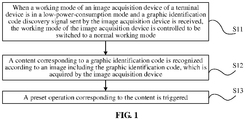
Fig. 1 is a flow chart showing a method for controlling an APP according to an exemplary embodiment. -
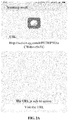
Fig. 2A is a flow chart for a scanning result according to an exemplary embodiment. -
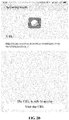
Fig. 2B is a flow chart for a scanning result according to another exemplary embodiment. -
Fig. 3 is a flow chart showing a method for controlling an APP according to another exemplary embodiment. -
Fig. 4 is a block diagram of a device for controlling an APP according to an exemplary embodiment. -
Fig. 5 is a block diagram of a device for controlling an APP according to another exemplary embodiment. -
Fig. 6 is a block diagram of a device for controlling an APP according to an exemplary embodiment. - Reference will now be made in detail to exemplary embodiments, examples of which are illustrated in the accompanying drawings. The following description refers to the accompanying drawings in which the same numbers in different drawings represent the same or similar elements unless otherwise represented. The implementations set forth in the following description of exemplary embodiments do not represent all implementations consistent with the present disclosure. Instead, they are merely examples of apparatuses and methods consistent with aspects related to the present disclosure as recited in the appended claims.
-
Fig. 1 is a flow chart showing a method for controlling an APP according to an exemplary embodiment. As shown inFig. 1 , the method may include the following operations. - In
Operation 11, when a working state of an image acquisition device of a terminal device is in a low-power-consumption mode and a graphic identification code discovery signal sent by the image acquisition device is received, the working state of the image acquisition device is controlled to be switched to a normal working mode. - In the present disclosure, the image acquisition device is arranged in the terminal device, and may be, for example, a camera, a two-dimensional code vision sensor, a barcode vision sensor and the like. Moreover, the working state of the image acquisition device may be divided into an off mode, the low-power-consumption mode and the normal working mode. In the present disclosure, the low-power-consumption mode is a standby mode. For the image acquisition device, in an off mode, all functions are unavailable, and no power is consumed; in the low-power-consumption mode, part of functions are unavailable, relatively less power is consumed, and in the mode, a graphic identification code may be detected, but a content corresponding to the graphic identification code may not further be recognized from the graphic identification code; and in the normal working mode, relatively more power is consumed, not only may the graphic identification code be detected, but also the graphic identification code may further be scanned to obtain the content corresponding to the graphic identification code. The graphic identification code may include, but not limited to, a barcode, a two-dimensional code and another graphic identifier with preset information, etc.
- As described above, the image acquisition device in the low-power-consumption mode may detect the graphic identification code but may not recognize the content corresponding to the graphic identification code. Therefore, in the present disclosure, when the graphic identification code discovery signal sent by the image acquisition device is received, the working state of the image acquisition device is controlled to be switched from the low-power-consumption mode to the normal working mode to enable the image acquisition device to further recognize the content corresponding to the graphic identification code. The graphic identification code discovery signal is configured to represent discovery of the graphic identification code.
- Specifically, the method may be applied to a processor in the terminal device. A specific implementation mode for
Operation 11 may be as follows: responsive to the graphic identification code discovery signal received by the processor, a wakeup operation is executed, and after wakeup of the processor, the working state of the image acquisition device is controlled to be switched to the normal working mode. - In
Operation 12, a content corresponding to a graphic identification code is recognized according to an image including the graphic identification code, which is acquired by the image acquisition device. - When the working state of the image acquisition device is the normal working mode, the image acquisition device may recognize the content corresponding to the graphic identification code according to the image acquired by it. In addition, since the graphic identification code contains a specific content and different graphic identification codes contain different specific contents, in the present disclosure, for different graphic identification codes, the image acquisition device recognizes different contents. For example, if the graphic identification code is a WeChat two-dimensional code, a content recognized by the image acquisition device when scanning the WeChat two-dimensional code is shown in
Fig. 2A . If the graphic identification code is a Mobike two-dimensional code, a content recognized by the image acquisition device when scanning the Mobike two-dimensional code is shown inFig. 2B . - In Operation 13, a preset operation corresponding to the content is triggered according to the content corresponding to the graphic identification code.
- When the content corresponding to the graphic identification code is recognized, the preset operation corresponding to the content is triggered. The preset operation may be an operation of starting an APP corresponding to the content in the terminal device (for example, starting WeChat and QQ, etc.), and may also be an operation of starting a function program (for example, a payment function program and a friend addition function program, etc.) corresponding to the content in the terminal device.
- Specifically, if the content is payment related information, a payment function program corresponding to the payment related information in the terminal device is started. Under a normal condition, an APP with a payment function may include, for example, Alipay, WeChat and Union Pay. When the APPs with the payment function are installed in the terminal device, if the content recognized by the terminal device is a WeChat Pay related content, a WeChat Pay function program in the terminal device may be started, and trading is further implemented by use of a WeChat Pay function.
- In addition, it is to be noted that the content of the graphic identification code may also be user registration related information, login related information, APP downloading related information and the like, besides the payment related information. For example, if the content recognized by the terminal device is user registration related information of a certain APP, the terminal device directly jumps to a registration page of the APP for registration of a user of the APP. If the content recognized by the terminal device is login related information of WeChat, the terminal device directly jumps to a login interface of WeChat for a user to log in WeChat. Or, if the content recognized by the terminal device is APP downloading related information, the terminal device directly starts an APP (for example, an APP downloading store, a browser and an APP store, etc.) capable of downloading a corresponding APP, and in addition, the terminal device may also directly jump to a downloading interface of the APP corresponding to the APP downloading related information for the user to download the APP.
- With adoption of the technical solution, when the terminal device receives the graphic identification code discovery signal sent by the image acquisition device, the working state of the image acquisition device may be switched from the low-power-consumption mode to the normal working mode, the preset operation corresponding to the content may further be determined according to the content, recognized by the image acquisition device, of the graphic identification code, and the preset operation is executed to enable the terminal device to jump to an interface corresponding to the content, so that an operating process of scanning the graphic identification code is simplified, and intelligence of the terminal device is improved. Moreover, the terminal device, when receiving the graphic identification code discovery signal sent by the image acquisition device in the low-power-consumption mode, controls the working state of the image acquisition device to be switched to the normal working mode, so that power consumed by the terminal device may be saved.
- The method for controlling an APP provided in the present disclosure will be described below with reference to a complete embodiment.
- Referring to
Fig. 3, Fig. 3 is a flow chart showing a method for controlling an APP according to another exemplary embodiment. As shown inFig. 3 , the method may include the following operations. - In Operation 31, when a working state of an image acquisition device of a terminal device is in a low-power-consumption mode, it is determined whether a graphic identification code discovery signal sent by the image acquisition device is received, if the graphic identification code discovery signal is received,
Operations - In
Operation 32, a processor of the terminal device is woken up. - In
Operation 33, the processor controls the working state of the image acquisition device to be switched from the low-power-consumption mode to a normal working mode. - In Operation 34, the working state of the image acquisition device is kept to be the low-power-consumption mode.
- If the graphic identification code discovery signal sent by the image acquisition device is received, it indicates that there is a graphic identification code required to be scanned in a preset range of the terminal device. For further recognizing a content corresponding to the graphic identification code, the working state of the image acquisition device is required to be switched from the low-power-consumption mode to the normal working mode. If the graphic identification code discovery signal sent by the image acquisition device is not received, it indicates that there is no graphic identification code required to be scanned in the preset range of the terminal device, and in such case, the working state of the image acquisition device may still be kept to be the low-power-consumption mode, to save power. The preset range may be a maximum range where the image acquisition device may acquire an image, and may also be a range set by a user and smaller than the maximum range.
- In
Operation 35, a content corresponding to a graphic identification code is recognized according to an image including the graphic identification code, which is acquired by the image acquisition device. - In
Operation 36, a preset operation corresponding to the content is triggered. - After the working state of the image acquisition device is switched from the low-power-consumption mode to the normal working mode, the image acquisition device may recognize the content corresponding to the graphic identification code and further trigger the preset operation corresponding to the content to enable the terminal device to automatically jump to an interface corresponding to the content, so that an operating process of scanning the graphic identification code is simplified, and intelligence of the terminal device is improved.
- After the working state of the image acquisition device is switched to the normal working mode,
Operation 37 may further be executed. - In
Operation 37, it is determined whether an exit instruction for the normal working mode is received. - When the working state of the image acquisition device is the normal working mode, the terminal device may further generate the exit instruction for the normal working mode to switch the working state of the image acquisition device to the low-power-consumption mode.
- An implementation mode for generation of the exit instruction can be as follows: if the content corresponding to the graphic identification code is recognized, the exit instruction is generated.
- Another implementation mode for generation of the exit instruction can be as follows: if an exit operation input by a user for the normal working mode is detected, the exit instruction is generated. In the implementation mode, the exit operation may be clicking an exit button on the terminal device by the user, and may also be a swipe operation executed by the user on the terminal device and corresponding to the exit instruction, etc.
- Another implementation mode for generation of the exit instruction can be as follows: if the content corresponding to the graphic identification code is recognized and the exit operation input by the user for the normal working mode is detected, the exit instruction is generated.
- When the terminal device generates the exit instruction, namely the terminal device receives the exit instruction for the normal working mode,
Operation 38 is executed. - In
Operation 38, the working state of the image acquisition device is controlled to be switched to the low-power-consumption mode. - With adoption of the technical solution, the operating process of scanning the graphic identification code may be simplified, the intelligence of the terminal device may be improved, and power consumed by the terminal device may further be saved.
- Based on the same inventive concept, the present disclosure also provides a device for controlling an APP. Referring to
Fig. 4 that is a block diagram of a device for controlling an APP according to an exemplary embodiment, the device may include afirst control module 41, arecognition module 42 and a startingmodule 43. - The
first control module 41 is configured to, when a working state of an image acquisition device of a terminal device is a low-power-consumption mode and a graphic identification code discovery signal sent by the image acquisition device is received, control the working state of the image acquisition device to be switched to a normal working mode. - The
recognition module 42 is configured to recognize a content corresponding to a graphic identification code according to an image including the graphic identification code, which is acquired by the image acquisition device. - The triggering
module 43 is configured to trigger a preset operation corresponding to the content. - Optionally, as shown in
Fig. 5 , the device may further include:
asecond control module 44 configured to, if an exit instruction for the normal working mode is received, control the working state of the image acquisition device to be switched to the low-power-consumption mode. - Optionally, the device may further include:
a generation module configured to, if the content corresponding to the graphic identification code is recognized, generate the exit instruction, and/or, if an exit operation input by a user for the normal working mode, generate the exit instruction. - Optionally, the device is applied to a processor in the terminal device, and the first control module may include:
- a wakeup submodule configured to, responsive to the graphic identification code discovery signal received by the processor, execute wakeup; and
- a control submodule configured to, after the wakeup submodule executes wakeup, control the working state of the image acquisition device to be switched to the normal working mode.
- Optionally, the triggering module may include:
a first starting submodule configured to, if the content is payment related information, start a payment function program corresponding to the payment related information in the terminal device. - With respect to the device in the above embodiment, the specific manners for performing operations for individual modules therein have been described in detail in the embodiment regarding the method, which will not be elaborated herein.
-
Fig. 6 is a block diagram of a device for controlling an APP according to an exemplary embodiment. For example, thedevice 600 may be a mobile phone, a computer, a digital broadcast terminal device, a messaging device, a gaming console, a tablet, a medical device, exercise equipment, a personal digital assistant and the like. - As shown in
Fig. 6 , thedevice 600 may include one or more of the following components: aprocessing component 602, amemory 604, apower component 606, amultimedia component 608, anaudio component 610, an Input/Output (I/O)interface 612, asensor component 614, and acommunication component 616. - The
processing component 602 typically controls overall operations of thedevice 600, such as the operations associated with display, telephone calls, data communications, camera operations, and recording operations. Theprocessing component 602 may include one ormore processors 620 to execute instructions to perform all or part of the operations of a method for controlling an APP. Moreover, theprocessing component 602 may include one or more modules which facilitate interaction between theprocessing component 602 and the other components. For instance, theprocessing component 602 may include a multimedia module to facilitate interaction between themultimedia component 608 and theprocessing component 602. - The
memory 604 is configured to store various types of data to support the operation of thedevice 600. Examples of such data include instructions for any APPs or methods operated on thedevice 600, contact data, phonebook data, messages, pictures, video, etc. Thememory 604 may be implemented by any type of volatile or non-volatile memory devices, or a combination thereof, such as a Static Random Access Memory (SRAM), an Electrically Erasable Programmable Read-Only Memory (EEPROM), an Erasable Programmable Read-Only Memory (EPROM), a Programmable Read-Only Memory (PROM), a Read-Only Memory (ROM), a magnetic memory, a flash memory, and a magnetic or optical disk. - The
power component 606 provides power for various components of thedevice 600. Thepower component 606 may include a power management system, one or more power supplies, and other components associated with generation, management and distribution of power for thedevice 600. - The
multimedia component 608 includes a screen providing an output interface between thedevice 600 and a user. In some embodiments, the screen may include a Liquid Crystal Display (LCD) and a Touch Panel (TP). If the screen includes the TP, the screen may be implemented as a touch screen to receive an input signal from the user. The TP includes one or more touch sensors to sense touches, swipes and gestures on the TP. The touch sensors may not only sense a boundary of a touch or swipe action but also detect a duration and pressure associated with the touch or swipe action. In some embodiments, themultimedia component 608 includes a front camera and/or a rear camera. The front camera and/or the rear camera may receive external multimedia data when thedevice 600 is in an operation mode, such as a photographing mode or a video mode. Each of the front camera and the rear camera may be a fixed optical lens system or have focusing and optical zooming capabilities. - The
audio component 610 is configured to output and/or input an audio signal. For example, theaudio component 610 includes a Microphone (MIC), and the MIC is configured to receive an external audio signal when thedevice 600 is in the operation mode, such as a call mode, a recording mode and a voice recognition mode. The received audio signal may further be stored in thememory 604 or sent through thecommunication component 616. In some embodiments, theaudio component 610 further includes a speaker configured to output the audio signal. - The I/
O interface 612 provides an interface between theprocessing component 602 and a peripheral interface module, and the peripheral interface module may be a keyboard, a click wheel, a button and the like. The button may include, but not limited to: a home button, a volume button, a starting button and a locking button. - The
sensor component 614 includes one or more sensors configured to provide status assessment in various aspects for thedevice 600. For instance, thesensor component 614 may detect an on/off status of thedevice 600 and relative positioning of components, such as a display and small keyboard of thedevice 600, and thesensor component 614 may further detect a change in a position of thedevice 600 or a component of thedevice 600, presence or absence of contact between the user and thedevice 600, orientation or acceleration/deceleration of thedevice 600 and a change in temperature of thedevice 600. Thesensor component 614 may include a proximity sensor configured to detect presence of an object nearby without any physical contact. Thesensor component 614 may also include a light sensor, such as a Complementary Metal Oxide Semiconductor (CMOS) or Charge Coupled Device (CCD) image sensor, configured for use in an imaging APP. In some embodiments, thesensor component 614 may also include an acceleration sensor, a gyroscope sensor, a magnetic sensor, a pressure sensor or a temperature sensor. - The
communication component 616 is configured to facilitate wired or wireless communication between thedevice 600 and other equipment. Thedevice 600 may access a communication-standard-based wireless network, such as a Wireless Fidelity (WiFi) network, a 2nd-Generation (2G) or 3rd-Generation (3G) network or a combination thereof. In an exemplary embodiment, thecommunication component 616 receives a broadcast signal or broadcast associated information from an external broadcast management system through a broadcast channel. In an exemplary embodiment, thecommunication component 616 further includes a Near Field Communication (NFC) module to facilitate short-range communication. For example, the NFC module may be implemented based on a Radio Frequency Identification (RFID) technology, an Infrared Data Association (IrDA) technology, an Ultra-WideBand (UWB) technology, a Bluetooth (BT) technology and another technology. - In an exemplary embodiment, the
device 600 may be implemented by one or more Application Specific Integrated Circuits (ASICs), Digital Signal Processors (DSPs), Digital Signal Processing Devices (DSPDs), Programmable Logic Devices (PLDs), Field Programmable Gate Arrays (FPGAs), controllers, micro-controllers, microprocessors or other electronic components, and is configured to execute the method for controlling an APP. - In an exemplary embodiment, there is also provided a non-transitory computer-readable storage medium including an instruction, such as the
memory 604 including an instruction, and the instruction may be executed by theprocessor 620 of thedevice 600 to implement the method for controlling an APP. For example, the non-transitory computer-readable storage medium may be a ROM, a Random Access Memory (RAM), a Compact Disc Read-Only Memory (CD-ROM), a magnetic tape, a floppy disc, an optical data storage device and the like. - Other implementation solutions of the present disclosure will be apparent to those skilled in the art from consideration of the specification and practice of the present disclosure. This application is intended to cover any variations, uses, or adaptations of the present disclosure following the general principles thereof and including such departures from the present disclosure as come within known or customary practice in the art. It is intended that the specification and examples be considered as exemplary only, with a true scope and spirit of the present disclosure being indicated by the following claims.
- It will be appreciated that the present disclosure is not limited to the exact construction that has been described above and illustrated in the accompanying drawings, and that various modifications and changes may be made without departing from the scope thereof. It is intended that the scope of the present disclosure only be limited by the appended claims.
Claims (13)
- A method for controlling an Application, APP, characterized in that the method comprises:controlling a working state of an image acquisition device to be switched to a normal working mode when the working state of the image acquisition device of a terminal device is in a low-power-consumption mode and a graphic identification code discovery signal sent by the image acquisition device is received (S11);recognizing a content corresponding to a graphic identification code according to an image including the graphic identification code, which is acquired by the image acquisition device (S12); andtriggering a preset operation corresponding to the content (S13).
- The method of claim 1, further comprising:
controlling the working state of the image acquisition device to be switched to the low-power-consumption mode if an exit instruction for the normal working mode is received. - The method of claim 1, further comprising:generating the exit instruction if the content corresponding to the graphic identification code is recognized; and/or,generating the exit instruction if an exit operation input by a user for the normal working mode is detected.
- The method of claim 1, wherein the method is applied to a processor in the terminal device, and controlling the working state of the image acquisition device to be switched to the normal working mode if the graphic identification code discovery signal sent by the image acquisition device is received comprises:
responsive to the graphic identification code discovery signal received by the processor, executing wakeup, and after wakeup, controlling the working state of the image acquisition device to be switched to the normal working mode. - The method of any one of claims 1 to 4, wherein triggering the preset operation corresponding to the content comprises:
starting a payment function program corresponding to the payment related information in the terminal device if the content is payment related information. - A device for controlling an Application, APP, characterized in that the device comprises:a first control module (41) configured to, when a working state of an image acquisition device of a terminal device is in a low-power-consumption mode and a graphic identification code discovery signal sent by the image acquisition device is received, control the working state of the image acquisition device to be switched to a normal working mode;a recognition module (42) configured to recognize a content corresponding to a graphic identification code according to an image including the graphic identification code, which is acquired by the image acquisition device; anda triggering module (43) configured to trigger a preset operation corresponding to the content.
- The device of claim 6, further comprising:
a second control module (44) configured to, if an exit instruction for the normal working mode is received, control the working state of the image acquisition device to be switched to the low-power-consumption mode. - The device of claim 6, further comprising:
a generation module configured to, if the content corresponding to the graphic identification code is recognized, generate the exit instruction, and/or, if an exit operation input by a user for the normal working mode, generate the exit instruction. - The device of claim 6, wherein the device is applied to a processor in the terminal device, the first control module comprises:a wakeup submodule configured to, responsive to the graphic identification code discovery signal received by the processor, execute wakeup; anda control submodule configured to, after the wakeup submodule executes wakeup, control the working state of the image acquisition device to be switched to the normal working mode.
- The device of any one of claims 6 to 9, wherein the triggering module (43) comprises:
a first starting submodule configured to, if the content is payment related information, start a payment function program corresponding to the payment related information in the terminal device. - A device for controlling an Application, APP, comprising:an image acquisition device;a processor; anda memory configured to store instructions executable by the processor,wherein the processor is configured to the operations of the method according to any one of the preceding claims 1 to 5.
- A computer-readable storage medium having stored thereon computer program instructions that, when executed by a processor, cause the processor to implement the operations of the method according to any one of the preceding claims 1 to 5.
- A computer program including instructions for executing the steps of a method for controlling an Application, APP, according to any one of the preceding claims 1 to 5 when said program is executed by a computer.
Applications Claiming Priority (1)
| Application Number | Priority Date | Filing Date | Title |
|---|---|---|---|
| CN201910385694.8A CN111913555A (en) | 2019-05-09 | 2019-05-09 | Application control method, control device, and computer-readable storage medium |
Publications (1)
| Publication Number | Publication Date |
|---|---|
| EP3736665A1 true EP3736665A1 (en) | 2020-11-11 |
Family
ID=68731837
Family Applications (1)
| Application Number | Title | Priority Date | Filing Date |
|---|---|---|---|
| EP19212125.9A Ceased EP3736665A1 (en) | 2019-05-09 | 2019-11-28 | Method and device for controlling application and computer-readable storage medium |
Country Status (3)
| Country | Link |
|---|---|
| US (1) | US20200356977A1 (en) |
| EP (1) | EP3736665A1 (en) |
| CN (1) | CN111913555A (en) |
Cited By (1)
| Publication number | Priority date | Publication date | Assignee | Title |
|---|---|---|---|---|
| US20230205296A1 (en) * | 2020-08-31 | 2023-06-29 | Huawei Technologies Co., Ltd. | Electronic apparatus and response operation method for electronic apparatus |
Families Citing this family (2)
| Publication number | Priority date | Publication date | Assignee | Title |
|---|---|---|---|---|
| CN112749575B (en) * | 2020-12-31 | 2023-02-17 | 支付宝(杭州)信息技术有限公司 | Code scanning device and working mode recognition method, device and device for code scanning device |
| CN118764709B (en) * | 2024-09-05 | 2024-12-20 | 浙江宇视科技有限公司 | A method, device, equipment and medium for switching working modes of image collector |
Citations (6)
| Publication number | Priority date | Publication date | Assignee | Title |
|---|---|---|---|---|
| US20110134250A1 (en) * | 2009-12-03 | 2011-06-09 | Sungun Kim | Power control method of device controllable by user's gesture |
| US20160328692A1 (en) * | 2015-05-07 | 2016-11-10 | Changejar Inc. | Mobile cash change management system and method, and contribution and sharing system and method associated therewith |
| CN107944325A (en) * | 2017-11-23 | 2018-04-20 | 维沃移动通信有限公司 | A kind of barcode scanning method, barcode scanning device and mobile terminal |
| US20180373317A1 (en) * | 2016-01-29 | 2018-12-27 | Huawei Technologies Co., Ltd. | Terminal control method and terminal |
| US20190122185A1 (en) * | 2017-10-24 | 2019-04-25 | Capital One Services, Llc | Camera activation and image processing for transaction verification |
| US20210150171A1 (en) * | 2018-07-27 | 2021-05-20 | Vivo Mobile Communication Co., Ltd. | Object recognition method and mobile terminal |
Family Cites Families (6)
| Publication number | Priority date | Publication date | Assignee | Title |
|---|---|---|---|---|
| US9904349B2 (en) * | 2015-03-27 | 2018-02-27 | Intel Corporation | Technologies for managing power of an embedded controller during a low-power state |
| CN107018328A (en) * | 2017-04-11 | 2017-08-04 | 珠海市魅族科技有限公司 | A kind of image scan method method and image-scanning device |
| CN108738097A (en) * | 2018-05-18 | 2018-11-02 | 珠海格力电器股份有限公司 | Method and device for reducing power consumption |
| CN108989668A (en) * | 2018-06-29 | 2018-12-11 | 维沃移动通信有限公司 | A kind of working method and mobile terminal of camera |
| CN109033912A (en) * | 2018-07-25 | 2018-12-18 | 维沃移动通信有限公司 | An identification code identification method and mobile terminal |
| US10643070B1 (en) * | 2019-05-07 | 2020-05-05 | Accenture Global Solutions Limited | Displaying content on an electronic display based on an environment of the electronic display |
-
2019
- 2019-05-09 CN CN201910385694.8A patent/CN111913555A/en active Pending
- 2019-11-05 US US16/674,733 patent/US20200356977A1/en not_active Abandoned
- 2019-11-28 EP EP19212125.9A patent/EP3736665A1/en not_active Ceased
Patent Citations (7)
| Publication number | Priority date | Publication date | Assignee | Title |
|---|---|---|---|---|
| US20110134250A1 (en) * | 2009-12-03 | 2011-06-09 | Sungun Kim | Power control method of device controllable by user's gesture |
| US20160328692A1 (en) * | 2015-05-07 | 2016-11-10 | Changejar Inc. | Mobile cash change management system and method, and contribution and sharing system and method associated therewith |
| US20180373317A1 (en) * | 2016-01-29 | 2018-12-27 | Huawei Technologies Co., Ltd. | Terminal control method and terminal |
| US20190122185A1 (en) * | 2017-10-24 | 2019-04-25 | Capital One Services, Llc | Camera activation and image processing for transaction verification |
| CN107944325A (en) * | 2017-11-23 | 2018-04-20 | 维沃移动通信有限公司 | A kind of barcode scanning method, barcode scanning device and mobile terminal |
| US20200349551A1 (en) * | 2017-11-23 | 2020-11-05 | Vivo Mobile Communication Co., Ltd. | Code scanning method, code scanning device and mobile terminal |
| US20210150171A1 (en) * | 2018-07-27 | 2021-05-20 | Vivo Mobile Communication Co., Ltd. | Object recognition method and mobile terminal |
Cited By (2)
| Publication number | Priority date | Publication date | Assignee | Title |
|---|---|---|---|---|
| US20230205296A1 (en) * | 2020-08-31 | 2023-06-29 | Huawei Technologies Co., Ltd. | Electronic apparatus and response operation method for electronic apparatus |
| US12411535B2 (en) * | 2020-08-31 | 2025-09-09 | Huawei Technologies Co., Ltd. | Electronic apparatus and response operation method for electronic apparatus |
Also Published As
| Publication number | Publication date |
|---|---|
| US20200356977A1 (en) | 2020-11-12 |
| CN111913555A (en) | 2020-11-10 |
Similar Documents
| Publication | Publication Date | Title |
|---|---|---|
| US11403620B2 (en) | Payment switching method and device | |
| EP3133528B1 (en) | Method and apparatus for fingerprint identification | |
| US10452890B2 (en) | Fingerprint template input method, device and medium | |
| EP3232299A2 (en) | Physical key component, terminal, and touch response method and device | |
| EP3418962A1 (en) | Public transit payment method and device | |
| EP3244303B1 (en) | Method and device for displaying an application interface | |
| EP3136216A1 (en) | Method for controlling mobile terminal and mobile terminal | |
| US20170123587A1 (en) | Method and device for preventing accidental touch of terminal with touch screen | |
| EP3333690A2 (en) | Object starting method and device | |
| US11347988B2 (en) | Method and device for configuring NFC smart card | |
| EP3435218B1 (en) | Method and device for displaying application, and storage medium | |
| EP3119040A1 (en) | Method and device for controlling smart device | |
| EP3173963A1 (en) | Unlocking method and apparatus, computer program and recording medium | |
| EP3232325A1 (en) | Method and device for starting application interface | |
| EP3736665A1 (en) | Method and device for controlling application and computer-readable storage medium | |
| EP3176998A1 (en) | Touch control method and apparatus for function key, computer program and recording medium | |
| US20170075671A1 (en) | Method and apparatus for installing application and smart device using the same | |
| EP3255575A1 (en) | Application triggering method and device | |
| EP3200075A1 (en) | Method and device for calling process | |
| CN111538554A (en) | Payment method, payment device, mobile terminal and storage medium | |
| EP3176740A1 (en) | Information processing method and apparatus, computer program and recording medium | |
| CN104835035A (en) | Numerical value transferring method, device, and system | |
| CN116563830A (en) | Identification code identification method, device and storage medium | |
| EP3211868B1 (en) | Method and device for processing information | |
| CN117041931A (en) | SIM card information display method, SIM card information display device and storage medium |
Legal Events
| Date | Code | Title | Description |
|---|---|---|---|
| PUAI | Public reference made under article 153(3) epc to a published international application that has entered the european phase |
Free format text: ORIGINAL CODE: 0009012 |
|
| STAA | Information on the status of an ep patent application or granted ep patent |
Free format text: STATUS: THE APPLICATION HAS BEEN PUBLISHED |
|
| AK | Designated contracting states |
Kind code of ref document: A1 Designated state(s): AL AT BE BG CH CY CZ DE DK EE ES FI FR GB GR HR HU IE IS IT LI LT LU LV MC MK MT NL NO PL PT RO RS SE SI SK SM TR |
|
| AX | Request for extension of the european patent |
Extension state: BA ME |
|
| STAA | Information on the status of an ep patent application or granted ep patent |
Free format text: STATUS: REQUEST FOR EXAMINATION WAS MADE |
|
| 17P | Request for examination filed |
Effective date: 20210428 |
|
| RBV | Designated contracting states (corrected) |
Designated state(s): AL AT BE BG CH CY CZ DE DK EE ES FI FR GB GR HR HU IE IS IT LI LT LU LV MC MK MT NL NO PL PT RO RS SE SI SK SM TR |
|
| STAA | Information on the status of an ep patent application or granted ep patent |
Free format text: STATUS: EXAMINATION IS IN PROGRESS |
|
| 17Q | First examination report despatched |
Effective date: 20221028 |
|
| STAA | Information on the status of an ep patent application or granted ep patent |
Free format text: STATUS: THE APPLICATION HAS BEEN REFUSED |
|
| 18R | Application refused |
Effective date: 20240101 |