EP3736303A1 - Novel catalyzed synthesis of biodegradable polyesters - Google Patents
Novel catalyzed synthesis of biodegradable polyesters Download PDFInfo
- Publication number
- EP3736303A1 EP3736303A1 EP19172816.1A EP19172816A EP3736303A1 EP 3736303 A1 EP3736303 A1 EP 3736303A1 EP 19172816 A EP19172816 A EP 19172816A EP 3736303 A1 EP3736303 A1 EP 3736303A1
- Authority
- EP
- European Patent Office
- Prior art keywords
- formula
- polyester
- bio
- process according
- strontium
- Prior art date
- Legal status (The legal status is an assumption and is not a legal conclusion. Google has not performed a legal analysis and makes no representation as to the accuracy of the status listed.)
- Withdrawn
Links
- 229920000229 biodegradable polyester Polymers 0.000 title description 3
- 239000004622 biodegradable polyester Substances 0.000 title description 3
- 230000015572 biosynthetic process Effects 0.000 title description 3
- 238000003786 synthesis reaction Methods 0.000 title description 2
- 229920000728 polyester Polymers 0.000 claims abstract description 54
- -1 strontium(II) alkoxide Chemical class 0.000 claims abstract description 34
- 239000003054 catalyst Substances 0.000 claims abstract description 32
- 238000007151 ring opening polymerisation reaction Methods 0.000 claims abstract description 24
- RKDVKSZUMVYZHH-UHFFFAOYSA-N 1,4-dioxane-2,5-dione Chemical class O=C1COC(=O)CO1 RKDVKSZUMVYZHH-UHFFFAOYSA-N 0.000 claims abstract description 22
- 150000002596 lactones Chemical class 0.000 claims abstract description 21
- 230000003197 catalytic effect Effects 0.000 claims abstract description 8
- 238000007334 copolymerization reaction Methods 0.000 claims abstract description 5
- 238000004519 manufacturing process Methods 0.000 claims abstract description 5
- 229920000642 polymer Polymers 0.000 claims description 61
- 238000000034 method Methods 0.000 claims description 44
- 230000008569 process Effects 0.000 claims description 36
- 238000006243 chemical reaction Methods 0.000 claims description 28
- 239000007943 implant Substances 0.000 claims description 25
- JJTUDXZGHPGLLC-UHFFFAOYSA-N lactide Chemical compound CC1OC(=O)C(C)OC1=O JJTUDXZGHPGLLC-UHFFFAOYSA-N 0.000 claims description 19
- 238000006116 polymerization reaction Methods 0.000 claims description 16
- PWYYWQHXAPXYMF-UHFFFAOYSA-N strontium(2+) Chemical compound [Sr+2] PWYYWQHXAPXYMF-UHFFFAOYSA-N 0.000 claims description 16
- 239000004215 Carbon black (E152) Substances 0.000 claims description 15
- 125000004432 carbon atom Chemical group C* 0.000 claims description 15
- 229930195733 hydrocarbon Natural products 0.000 claims description 15
- YFHICDDUDORKJB-UHFFFAOYSA-N trimethylene carbonate Chemical compound O=C1OCCCO1 YFHICDDUDORKJB-UHFFFAOYSA-N 0.000 claims description 15
- LFQSCWFLJHTTHZ-UHFFFAOYSA-N Ethanol Chemical compound CCO LFQSCWFLJHTTHZ-UHFFFAOYSA-N 0.000 claims description 14
- 210000000988 bone and bone Anatomy 0.000 claims description 14
- 239000000203 mixture Substances 0.000 claims description 13
- 239000002904 solvent Substances 0.000 claims description 11
- 150000002148 esters Chemical class 0.000 claims description 10
- 238000013267 controlled drug release Methods 0.000 claims description 7
- 125000001449 isopropyl group Chemical group [H]C([H])([H])C([H])(*)C([H])([H])[H] 0.000 claims description 7
- 125000002496 methyl group Chemical group [H]C([H])([H])* 0.000 claims description 7
- 241000894007 species Species 0.000 claims description 7
- OZJPLYNZGCXSJM-UHFFFAOYSA-N 5-valerolactone Chemical compound O=C1CCCCO1 OZJPLYNZGCXSJM-UHFFFAOYSA-N 0.000 claims description 6
- 241001465754 Metazoa Species 0.000 claims description 6
- 150000004703 alkoxides Chemical class 0.000 claims description 6
- 239000011541 reaction mixture Substances 0.000 claims description 6
- 230000008439 repair process Effects 0.000 claims description 6
- 210000001519 tissue Anatomy 0.000 claims description 6
- 108010027529 Bio-glue Proteins 0.000 claims description 5
- 239000002639 bone cement Substances 0.000 claims description 5
- 239000012598 cell culture matrix Substances 0.000 claims description 5
- 239000006143 cell culture medium Substances 0.000 claims description 5
- 239000011248 coating agent Substances 0.000 claims description 5
- 238000000576 coating method Methods 0.000 claims description 5
- 230000001815 facial effect Effects 0.000 claims description 5
- 238000000338 in vitro Methods 0.000 claims description 5
- 238000001727 in vivo Methods 0.000 claims description 5
- 210000002435 tendon Anatomy 0.000 claims description 5
- YEJRWHAVMIAJKC-UHFFFAOYSA-N 4-Butyrolactone Chemical compound O=C1CCCO1 YEJRWHAVMIAJKC-UHFFFAOYSA-N 0.000 claims description 4
- GHBSPIPJMLAMEP-UHFFFAOYSA-N 6-pentyloxan-2-one Chemical compound CCCCCC1CCCC(=O)O1 GHBSPIPJMLAMEP-UHFFFAOYSA-N 0.000 claims description 4
- 125000000113 cyclohexyl group Chemical group [H]C1([H])C([H])([H])C([H])([H])C([H])(*)C([H])([H])C1([H])[H] 0.000 claims description 4
- 125000001495 ethyl group Chemical group [H]C([H])([H])C([H])([H])* 0.000 claims description 4
- 125000000959 isobutyl group Chemical group [H]C([H])([H])C([H])(C([H])([H])[H])C([H])([H])* 0.000 claims description 4
- 125000004108 n-butyl group Chemical group [H]C([H])([H])C([H])([H])C([H])([H])C([H])([H])* 0.000 claims description 4
- 125000001280 n-hexyl group Chemical group C(CCCCC)* 0.000 claims description 4
- 125000000740 n-pentyl group Chemical group [H]C([H])([H])C([H])([H])C([H])([H])C([H])([H])C([H])([H])* 0.000 claims description 4
- 125000004123 n-propyl group Chemical group [H]C([H])([H])C([H])([H])C([H])([H])* 0.000 claims description 4
- 125000000999 tert-butyl group Chemical group [H]C([H])([H])C(*)(C([H])([H])[H])C([H])([H])[H] 0.000 claims description 4
- PAPBSGBWRJIAAV-UHFFFAOYSA-N ε-Caprolactone Chemical compound O=C1CCCCCO1 PAPBSGBWRJIAAV-UHFFFAOYSA-N 0.000 claims description 4
- 239000004480 active ingredient Substances 0.000 claims description 3
- 239000002552 dosage form Substances 0.000 claims description 3
- 238000001840 matrix-assisted laser desorption--ionisation time-of-flight mass spectrometry Methods 0.000 claims description 3
- RZTOWFMDBDPERY-UHFFFAOYSA-N Delta-Hexanolactone Chemical compound CC1CCCC(=O)O1 RZTOWFMDBDPERY-UHFFFAOYSA-N 0.000 claims description 2
- 150000001338 aliphatic hydrocarbons Chemical class 0.000 claims description 2
- 150000001408 amides Chemical class 0.000 claims description 2
- 239000000010 aprotic solvent Substances 0.000 claims description 2
- 150000004945 aromatic hydrocarbons Chemical class 0.000 claims description 2
- 150000002170 ethers Chemical class 0.000 claims description 2
- 150000002576 ketones Chemical class 0.000 claims description 2
- 150000002825 nitriles Chemical class 0.000 claims description 2
- 150000002828 nitro derivatives Chemical class 0.000 claims description 2
- 150000003462 sulfoxides Chemical class 0.000 claims description 2
- VEZXCJBBBCKRPI-UHFFFAOYSA-N beta-propiolactone Chemical compound O=C1CCO1 VEZXCJBBBCKRPI-UHFFFAOYSA-N 0.000 claims 1
- 229960000380 propiolactone Drugs 0.000 claims 1
- BVKZGUZCCUSVTD-UHFFFAOYSA-L Carbonate Chemical compound [O-]C([O-])=O BVKZGUZCCUSVTD-UHFFFAOYSA-L 0.000 abstract 1
- YXFVVABEGXRONW-UHFFFAOYSA-N Toluene Chemical compound CC1=CC=CC=C1 YXFVVABEGXRONW-UHFFFAOYSA-N 0.000 description 30
- LQZZUXJYWNFBMV-UHFFFAOYSA-N dodecan-1-ol Chemical compound CCCCCCCCCCCCO LQZZUXJYWNFBMV-UHFFFAOYSA-N 0.000 description 12
- 229910052712 strontium Inorganic materials 0.000 description 12
- 229920000747 poly(lactic acid) Polymers 0.000 description 10
- 150000001875 compounds Chemical class 0.000 description 9
- 238000009826 distribution Methods 0.000 description 9
- WYURNTSHIVDZCO-UHFFFAOYSA-N Tetrahydrofuran Chemical compound C1CCOC1 WYURNTSHIVDZCO-UHFFFAOYSA-N 0.000 description 8
- 150000001298 alcohols Chemical class 0.000 description 8
- 238000001819 mass spectrum Methods 0.000 description 8
- 239000000178 monomer Substances 0.000 description 7
- 239000000243 solution Substances 0.000 description 7
- JJTUDXZGHPGLLC-IMJSIDKUSA-N 4511-42-6 Chemical compound C[C@@H]1OC(=O)[C@H](C)OC1=O JJTUDXZGHPGLLC-IMJSIDKUSA-N 0.000 description 6
- HEDRZPFGACZZDS-UHFFFAOYSA-N Chloroform Chemical compound ClC(Cl)Cl HEDRZPFGACZZDS-UHFFFAOYSA-N 0.000 description 6
- RTZKZFJDLAIYFH-UHFFFAOYSA-N Diethyl ether Chemical compound CCOCC RTZKZFJDLAIYFH-UHFFFAOYSA-N 0.000 description 6
- JVTAAEKCZFNVCJ-UHFFFAOYSA-N lactic acid Chemical compound CC(O)C(O)=O JVTAAEKCZFNVCJ-UHFFFAOYSA-N 0.000 description 6
- 238000001542 size-exclusion chromatography Methods 0.000 description 6
- 125000000217 alkyl group Chemical group 0.000 description 5
- 229920000954 Polyglycolide Polymers 0.000 description 4
- WPYMKLBDIGXBTP-UHFFFAOYSA-N benzoic acid Chemical compound OC(=O)C1=CC=CC=C1 WPYMKLBDIGXBTP-UHFFFAOYSA-N 0.000 description 4
- 229910052500 inorganic mineral Inorganic materials 0.000 description 4
- 239000011707 mineral Substances 0.000 description 4
- YLQBMQCUIZJEEH-UHFFFAOYSA-N tetrahydrofuran Natural products C=1C=COC=1 YLQBMQCUIZJEEH-UHFFFAOYSA-N 0.000 description 4
- 238000005160 1H NMR spectroscopy Methods 0.000 description 3
- CSCPPACGZOOCGX-UHFFFAOYSA-N Acetone Chemical compound CC(C)=O CSCPPACGZOOCGX-UHFFFAOYSA-N 0.000 description 3
- WEVYAHXRMPXWCK-UHFFFAOYSA-N Acetonitrile Chemical compound CC#N WEVYAHXRMPXWCK-UHFFFAOYSA-N 0.000 description 3
- UHOVQNZJYSORNB-UHFFFAOYSA-N Benzene Chemical compound C1=CC=CC=C1 UHOVQNZJYSORNB-UHFFFAOYSA-N 0.000 description 3
- YMWUJEATGCHHMB-UHFFFAOYSA-N Dichloromethane Chemical compound ClCCl YMWUJEATGCHHMB-UHFFFAOYSA-N 0.000 description 3
- XEKOWRVHYACXOJ-UHFFFAOYSA-N Ethyl acetate Chemical compound CCOC(C)=O XEKOWRVHYACXOJ-UHFFFAOYSA-N 0.000 description 3
- AEMRFAOFKBGASW-UHFFFAOYSA-N Glycolic acid Polymers OCC(O)=O AEMRFAOFKBGASW-UHFFFAOYSA-N 0.000 description 3
- KFZMGEQAYNKOFK-UHFFFAOYSA-N Isopropanol Chemical compound CC(C)O KFZMGEQAYNKOFK-UHFFFAOYSA-N 0.000 description 3
- ZMXDDKWLCZADIW-UHFFFAOYSA-N N,N-Dimethylformamide Chemical compound CN(C)C=O ZMXDDKWLCZADIW-UHFFFAOYSA-N 0.000 description 3
- LRHPLDYGYMQRHN-UHFFFAOYSA-N N-Butanol Chemical compound CCCCO LRHPLDYGYMQRHN-UHFFFAOYSA-N 0.000 description 3
- 238000004458 analytical method Methods 0.000 description 3
- BTANRVKWQNVYAZ-UHFFFAOYSA-N butan-2-ol Chemical compound CCC(C)O BTANRVKWQNVYAZ-UHFFFAOYSA-N 0.000 description 3
- 239000011575 calcium Substances 0.000 description 3
- 125000002915 carbonyl group Chemical group [*:2]C([*:1])=O 0.000 description 3
- 230000009477 glass transition Effects 0.000 description 3
- VLKZOEOYAKHREP-UHFFFAOYSA-N n-Hexane Chemical compound CCCCCC VLKZOEOYAKHREP-UHFFFAOYSA-N 0.000 description 3
- BDERNNFJNOPAEC-UHFFFAOYSA-N propan-1-ol Chemical compound CCCO BDERNNFJNOPAEC-UHFFFAOYSA-N 0.000 description 3
- XXUZFRDUEGQHOV-UHFFFAOYSA-J strontium ranelate Chemical compound [Sr+2].[Sr+2].[O-]C(=O)CN(CC([O-])=O)C=1SC(C([O-])=O)=C(CC([O-])=O)C=1C#N XXUZFRDUEGQHOV-UHFFFAOYSA-J 0.000 description 3
- 229940079488 strontium ranelate Drugs 0.000 description 3
- OHULXNKDWPTSBI-UHFFFAOYSA-N strontium;propan-2-olate Chemical compound [Sr+2].CC(C)[O-].CC(C)[O-] OHULXNKDWPTSBI-UHFFFAOYSA-N 0.000 description 3
- 239000000126 substance Substances 0.000 description 3
- 0 *C(C(OC1*)=O)OC1=O Chemical compound *C(C(OC1*)=O)OC1=O 0.000 description 2
- KBPLFHHGFOOTCA-UHFFFAOYSA-N 1-Octanol Chemical compound CCCCCCCCO KBPLFHHGFOOTCA-UHFFFAOYSA-N 0.000 description 2
- XFRVVPUIAFSTFO-UHFFFAOYSA-N 1-Tridecanol Chemical compound CCCCCCCCCCCCCO XFRVVPUIAFSTFO-UHFFFAOYSA-N 0.000 description 2
- BBMCTIGTTCKYKF-UHFFFAOYSA-N 1-heptanol Chemical compound CCCCCCCO BBMCTIGTTCKYKF-UHFFFAOYSA-N 0.000 description 2
- IJGRMHOSHXDMSA-UHFFFAOYSA-N Atomic nitrogen Chemical compound N#N IJGRMHOSHXDMSA-UHFFFAOYSA-N 0.000 description 2
- 239000005711 Benzoic acid Substances 0.000 description 2
- CURLTUGMZLYLDI-UHFFFAOYSA-N Carbon dioxide Chemical compound O=C=O CURLTUGMZLYLDI-UHFFFAOYSA-N 0.000 description 2
- RGSFGYAAUTVSQA-UHFFFAOYSA-N Cyclopentane Chemical compound C1CCCC1 RGSFGYAAUTVSQA-UHFFFAOYSA-N 0.000 description 2
- IAZDPXIOMUYVGZ-UHFFFAOYSA-N Dimethylsulphoxide Chemical compound CS(C)=O IAZDPXIOMUYVGZ-UHFFFAOYSA-N 0.000 description 2
- BZLVMXJERCGZMT-UHFFFAOYSA-N Methyl tert-butyl ether Chemical compound COC(C)(C)C BZLVMXJERCGZMT-UHFFFAOYSA-N 0.000 description 2
- IMNFDUFMRHMDMM-UHFFFAOYSA-N N-Heptane Chemical compound CCCCCCC IMNFDUFMRHMDMM-UHFFFAOYSA-N 0.000 description 2
- AMQJEAYHLZJPGS-UHFFFAOYSA-N N-Pentanol Chemical compound CCCCCO AMQJEAYHLZJPGS-UHFFFAOYSA-N 0.000 description 2
- 208000001132 Osteoporosis Diseases 0.000 description 2
- 208000034530 PLAA-associated neurodevelopmental disease Diseases 0.000 description 2
- OFBQJSOFQDEBGM-UHFFFAOYSA-N Pentane Chemical compound CCCCC OFBQJSOFQDEBGM-UHFFFAOYSA-N 0.000 description 2
- 239000004696 Poly ether ether ketone Substances 0.000 description 2
- HEDRZPFGACZZDS-MICDWDOJSA-N Trichloro(2H)methane Chemical compound [2H]C(Cl)(Cl)Cl HEDRZPFGACZZDS-MICDWDOJSA-N 0.000 description 2
- 235000010233 benzoic acid Nutrition 0.000 description 2
- 229920002988 biodegradable polymer Polymers 0.000 description 2
- 239000004621 biodegradable polymer Substances 0.000 description 2
- 229910052791 calcium Inorganic materials 0.000 description 2
- 230000008859 change Effects 0.000 description 2
- 239000007795 chemical reaction product Substances 0.000 description 2
- 239000002131 composite material Substances 0.000 description 2
- 238000013270 controlled release Methods 0.000 description 2
- MWKFXSUHUHTGQN-UHFFFAOYSA-N decan-1-ol Chemical compound CCCCCCCCCCO MWKFXSUHUHTGQN-UHFFFAOYSA-N 0.000 description 2
- DIOQZVSQGTUSAI-UHFFFAOYSA-N decane Chemical compound CCCCCCCCCC DIOQZVSQGTUSAI-UHFFFAOYSA-N 0.000 description 2
- SNRUBQQJIBEYMU-UHFFFAOYSA-N dodecane Chemical compound CCCCCCCCCCCC SNRUBQQJIBEYMU-UHFFFAOYSA-N 0.000 description 2
- 230000000694 effects Effects 0.000 description 2
- 238000005227 gel permeation chromatography Methods 0.000 description 2
- 230000035876 healing Effects 0.000 description 2
- BXWNKGSJHAJOGX-UHFFFAOYSA-N hexadecan-1-ol Chemical compound CCCCCCCCCCCCCCCCO BXWNKGSJHAJOGX-UHFFFAOYSA-N 0.000 description 2
- ZSIAUFGUXNUGDI-UHFFFAOYSA-N hexan-1-ol Chemical compound CCCCCCO ZSIAUFGUXNUGDI-UHFFFAOYSA-N 0.000 description 2
- 230000007062 hydrolysis Effects 0.000 description 2
- 238000006460 hydrolysis reaction Methods 0.000 description 2
- 238000002354 inductively-coupled plasma atomic emission spectroscopy Methods 0.000 description 2
- 238000002329 infrared spectrum Methods 0.000 description 2
- 230000000155 isotopic effect Effects 0.000 description 2
- 239000004310 lactic acid Substances 0.000 description 2
- 235000014655 lactic acid Nutrition 0.000 description 2
- 239000003446 ligand Substances 0.000 description 2
- 239000000463 material Substances 0.000 description 2
- 238000001254 matrix assisted laser desorption--ionisation time-of-flight mass spectrum Methods 0.000 description 2
- 229910052751 metal Inorganic materials 0.000 description 2
- 239000002184 metal Substances 0.000 description 2
- ZWRUINPWMLAQRD-UHFFFAOYSA-N nonan-1-ol Chemical compound CCCCCCCCCO ZWRUINPWMLAQRD-UHFFFAOYSA-N 0.000 description 2
- REIUXOLGHVXAEO-UHFFFAOYSA-N pentadecan-1-ol Chemical compound CCCCCCCCCCCCCCCO REIUXOLGHVXAEO-UHFFFAOYSA-N 0.000 description 2
- 125000001147 pentyl group Chemical group C(CCCC)* 0.000 description 2
- 229920002530 polyetherether ketone Polymers 0.000 description 2
- 230000008092 positive effect Effects 0.000 description 2
- 239000000047 product Substances 0.000 description 2
- 150000003254 radicals Chemical class 0.000 description 2
- 239000000376 reactant Substances 0.000 description 2
- 230000035484 reaction time Effects 0.000 description 2
- 239000011550 stock solution Substances 0.000 description 2
- 238000006467 substitution reaction Methods 0.000 description 2
- HLZKNKRTKFSKGZ-UHFFFAOYSA-N tetradecan-1-ol Chemical compound CCCCCCCCCCCCCCO HLZKNKRTKFSKGZ-UHFFFAOYSA-N 0.000 description 2
- OIASAVWSBWJWBR-UKTHLTGXSA-N trans-2-[3-(4-tert-butylphenyl)-2-methyl-2-propenylidene]malononitrile Chemical compound N#CC(C#N)=CC(/C)=C/C1=CC=C(C(C)(C)C)C=C1 OIASAVWSBWJWBR-UKTHLTGXSA-N 0.000 description 2
- KJIOQYGWTQBHNH-UHFFFAOYSA-N undecanol Chemical compound CCCCCCCCCCCO KJIOQYGWTQBHNH-UHFFFAOYSA-N 0.000 description 2
- XLYOFNOQVPJJNP-UHFFFAOYSA-N water Substances O XLYOFNOQVPJJNP-UHFFFAOYSA-N 0.000 description 2
- RYHBNJHYFVUHQT-UHFFFAOYSA-N 1,4-Dioxane Chemical compound C1COCCO1 RYHBNJHYFVUHQT-UHFFFAOYSA-N 0.000 description 1
- 239000005968 1-Decanol Substances 0.000 description 1
- BOZRCGLDOHDZBP-UHFFFAOYSA-N 2-ethylhexanoic acid;tin Chemical compound [Sn].CCCCC(CC)C(O)=O BOZRCGLDOHDZBP-UHFFFAOYSA-N 0.000 description 1
- 238000004438 BET method Methods 0.000 description 1
- 208000006386 Bone Resorption Diseases 0.000 description 1
- 206010065687 Bone loss Diseases 0.000 description 1
- OYPRJOBELJOOCE-UHFFFAOYSA-N Calcium Chemical compound [Ca] OYPRJOBELJOOCE-UHFFFAOYSA-N 0.000 description 1
- OKTJSMMVPCPJKN-UHFFFAOYSA-N Carbon Chemical compound [C] OKTJSMMVPCPJKN-UHFFFAOYSA-N 0.000 description 1
- XDTMQSROBMDMFD-UHFFFAOYSA-N Cyclohexane Chemical compound C1CCCCC1 XDTMQSROBMDMFD-UHFFFAOYSA-N 0.000 description 1
- UFHFLCQGNIYNRP-UHFFFAOYSA-N Hydrogen Chemical compound [H][H] UFHFLCQGNIYNRP-UHFFFAOYSA-N 0.000 description 1
- CTQNGGLPUBDAKN-UHFFFAOYSA-N O-Xylene Chemical compound CC1=CC=CC=C1C CTQNGGLPUBDAKN-UHFFFAOYSA-N 0.000 description 1
- OAICVXFJPJFONN-UHFFFAOYSA-N Phosphorus Chemical compound [P] OAICVXFJPJFONN-UHFFFAOYSA-N 0.000 description 1
- 229920001244 Poly(D,L-lactide) Polymers 0.000 description 1
- 239000004952 Polyamide Substances 0.000 description 1
- 239000004793 Polystyrene Substances 0.000 description 1
- NINIDFKCEFEMDL-UHFFFAOYSA-N Sulfur Chemical compound [S] NINIDFKCEFEMDL-UHFFFAOYSA-N 0.000 description 1
- 239000005864 Sulphur Substances 0.000 description 1
- 238000010521 absorption reaction Methods 0.000 description 1
- 125000003668 acetyloxy group Chemical group [H]C([H])([H])C(=O)O[*] 0.000 description 1
- 230000009471 action Effects 0.000 description 1
- 230000000274 adsorptive effect Effects 0.000 description 1
- 229910052784 alkaline earth metal Inorganic materials 0.000 description 1
- 150000001342 alkaline earth metals Chemical class 0.000 description 1
- 125000003342 alkenyl group Chemical group 0.000 description 1
- 125000000304 alkynyl group Chemical group 0.000 description 1
- 239000004411 aluminium Substances 0.000 description 1
- 150000001398 aluminium Chemical class 0.000 description 1
- XAGFODPZIPBFFR-UHFFFAOYSA-N aluminium Chemical compound [Al] XAGFODPZIPBFFR-UHFFFAOYSA-N 0.000 description 1
- 229910052782 aluminium Inorganic materials 0.000 description 1
- 238000013459 approach Methods 0.000 description 1
- 125000003118 aryl group Chemical group 0.000 description 1
- 150000005840 aryl radicals Chemical class 0.000 description 1
- 125000004429 atom Chemical group 0.000 description 1
- QVGXLLKOCUKJST-UHFFFAOYSA-N atomic oxygen Chemical compound [O] QVGXLLKOCUKJST-UHFFFAOYSA-N 0.000 description 1
- 230000008901 benefit Effects 0.000 description 1
- 238000006065 biodegradation reaction Methods 0.000 description 1
- 210000001124 body fluid Anatomy 0.000 description 1
- 239000010839 body fluid Substances 0.000 description 1
- 238000009835 boiling Methods 0.000 description 1
- 230000024279 bone resorption Effects 0.000 description 1
- 244000309464 bull Species 0.000 description 1
- 229910052799 carbon Inorganic materials 0.000 description 1
- 239000001569 carbon dioxide Substances 0.000 description 1
- 229910002092 carbon dioxide Inorganic materials 0.000 description 1
- 239000000969 carrier Substances 0.000 description 1
- 229960000541 cetyl alcohol Drugs 0.000 description 1
- 239000003426 co-catalyst Substances 0.000 description 1
- 238000010924 continuous production Methods 0.000 description 1
- 150000005676 cyclic carbonates Chemical class 0.000 description 1
- 125000004122 cyclic group Chemical group 0.000 description 1
- 230000009849 deactivation Effects 0.000 description 1
- 230000003247 decreasing effect Effects 0.000 description 1
- 238000001514 detection method Methods 0.000 description 1
- 238000011161 development Methods 0.000 description 1
- JQZRVMZHTADUSY-UHFFFAOYSA-L di(octanoyloxy)tin Chemical compound [Sn+2].CCCCCCCC([O-])=O.CCCCCCCC([O-])=O JQZRVMZHTADUSY-UHFFFAOYSA-L 0.000 description 1
- 239000000539 dimer Substances 0.000 description 1
- 239000003814 drug Substances 0.000 description 1
- 229940079593 drug Drugs 0.000 description 1
- 239000003480 eluent Substances 0.000 description 1
- 125000001301 ethoxy group Chemical group [H]C([H])([H])C([H])([H])O* 0.000 description 1
- 230000014509 gene expression Effects 0.000 description 1
- 230000036433 growing body Effects 0.000 description 1
- 230000012010 growth Effects 0.000 description 1
- 230000036541 health Effects 0.000 description 1
- DMEGYFMYUHOHGS-UHFFFAOYSA-N heptamethylene Natural products C1CCCCCC1 DMEGYFMYUHOHGS-UHFFFAOYSA-N 0.000 description 1
- 125000005842 heteroatom Chemical group 0.000 description 1
- 230000013632 homeostatic process Effects 0.000 description 1
- 229910052739 hydrogen Inorganic materials 0.000 description 1
- 239000001257 hydrogen Substances 0.000 description 1
- 230000003301 hydrolyzing effect Effects 0.000 description 1
- 125000002887 hydroxy group Chemical group [H]O* 0.000 description 1
- 238000002513 implantation Methods 0.000 description 1
- 238000011503 in vivo imaging Methods 0.000 description 1
- 238000011065 in-situ storage Methods 0.000 description 1
- 238000002347 injection Methods 0.000 description 1
- 239000007924 injection Substances 0.000 description 1
- 238000003780 insertion Methods 0.000 description 1
- 230000037431 insertion Effects 0.000 description 1
- 239000000543 intermediate Substances 0.000 description 1
- 229910052746 lanthanum Inorganic materials 0.000 description 1
- FZLIPJUXYLNCLC-UHFFFAOYSA-N lanthanum atom Chemical compound [La] FZLIPJUXYLNCLC-UHFFFAOYSA-N 0.000 description 1
- 238000010550 living polymerization reaction Methods 0.000 description 1
- 238000011068 loading method Methods 0.000 description 1
- 238000004949 mass spectrometry Methods 0.000 description 1
- 238000005259 measurement Methods 0.000 description 1
- 230000007246 mechanism Effects 0.000 description 1
- 238000002844 melting Methods 0.000 description 1
- 230000008018 melting Effects 0.000 description 1
- VUZPPFZMUPKLLV-UHFFFAOYSA-N methane;hydrate Chemical compound C.O VUZPPFZMUPKLLV-UHFFFAOYSA-N 0.000 description 1
- 230000000877 morphologic effect Effects 0.000 description 1
- 229910052757 nitrogen Inorganic materials 0.000 description 1
- LYGJENNIWJXYER-UHFFFAOYSA-N nitromethane Chemical compound C[N+]([O-])=O LYGJENNIWJXYER-UHFFFAOYSA-N 0.000 description 1
- 235000016709 nutrition Nutrition 0.000 description 1
- 230000035764 nutrition Effects 0.000 description 1
- TVMXDCGIABBOFY-UHFFFAOYSA-N octane Chemical compound CCCCCCCC TVMXDCGIABBOFY-UHFFFAOYSA-N 0.000 description 1
- XZZXKVYTWCYOQX-UHFFFAOYSA-J octanoate;tin(4+) Chemical compound [Sn+4].CCCCCCCC([O-])=O.CCCCCCCC([O-])=O.CCCCCCCC([O-])=O.CCCCCCCC([O-])=O XZZXKVYTWCYOQX-UHFFFAOYSA-J 0.000 description 1
- 230000011164 ossification Effects 0.000 description 1
- 230000000278 osteoconductive effect Effects 0.000 description 1
- 229910052760 oxygen Inorganic materials 0.000 description 1
- 239000001301 oxygen Substances 0.000 description 1
- 229910052698 phosphorus Inorganic materials 0.000 description 1
- 239000011574 phosphorus Substances 0.000 description 1
- 229920001432 poly(L-lactide) Polymers 0.000 description 1
- 229920006209 poly(L-lactide-co-D,L-lactide) Polymers 0.000 description 1
- 229920001072 poly(l-lactide-co-caprolactone) Polymers 0.000 description 1
- 229920001606 poly(lactic acid-co-glycolic acid) Polymers 0.000 description 1
- 229920002647 polyamide Polymers 0.000 description 1
- 229920000515 polycarbonate Polymers 0.000 description 1
- 239000004417 polycarbonate Substances 0.000 description 1
- 229920002643 polyglutamic acid Polymers 0.000 description 1
- 239000004626 polylactic acid Substances 0.000 description 1
- 229920002223 polystyrene Polymers 0.000 description 1
- 229920002635 polyurethane Polymers 0.000 description 1
- 239000004814 polyurethane Substances 0.000 description 1
- 231100000683 possible toxicity Toxicity 0.000 description 1
- 238000002360 preparation method Methods 0.000 description 1
- 125000002924 primary amino group Chemical group [H]N([H])* 0.000 description 1
- RUOJZAUFBMNUDX-UHFFFAOYSA-N propylene carbonate Chemical compound CC1COC(=O)O1 RUOJZAUFBMNUDX-UHFFFAOYSA-N 0.000 description 1
- 238000011160 research Methods 0.000 description 1
- 238000012827 research and development Methods 0.000 description 1
- 238000001179 sorption measurement Methods 0.000 description 1
- 238000004611 spectroscopical analysis Methods 0.000 description 1
- 238000001228 spectrum Methods 0.000 description 1
- 239000003381 stabilizer Substances 0.000 description 1
- 238000003756 stirring Methods 0.000 description 1
- 229910001631 strontium chloride Inorganic materials 0.000 description 1
- 150000003438 strontium compounds Chemical class 0.000 description 1
- AHBGXTDRMVNFER-UHFFFAOYSA-L strontium dichloride Chemical compound [Cl-].[Cl-].[Sr+2] AHBGXTDRMVNFER-UHFFFAOYSA-L 0.000 description 1
- 239000006228 supernatant Substances 0.000 description 1
- 238000013268 sustained release Methods 0.000 description 1
- 239000012730 sustained-release form Substances 0.000 description 1
- 238000001308 synthesis method Methods 0.000 description 1
- 230000001225 therapeutic effect Effects 0.000 description 1
- 231100000331 toxic Toxicity 0.000 description 1
- 230000002588 toxic effect Effects 0.000 description 1
- 231100000419 toxicity Toxicity 0.000 description 1
- 230000001988 toxicity Effects 0.000 description 1
- 238000005809 transesterification reaction Methods 0.000 description 1
- 239000008096 xylene Substances 0.000 description 1
- 229910052727 yttrium Inorganic materials 0.000 description 1
- VWQVUPCCIRVNHF-UHFFFAOYSA-N yttrium atom Chemical compound [Y] VWQVUPCCIRVNHF-UHFFFAOYSA-N 0.000 description 1
Images



Classifications
-
- C—CHEMISTRY; METALLURGY
- C08—ORGANIC MACROMOLECULAR COMPOUNDS; THEIR PREPARATION OR CHEMICAL WORKING-UP; COMPOSITIONS BASED THEREON
- C08G—MACROMOLECULAR COMPOUNDS OBTAINED OTHERWISE THAN BY REACTIONS ONLY INVOLVING UNSATURATED CARBON-TO-CARBON BONDS
- C08G63/00—Macromolecular compounds obtained by reactions forming a carboxylic ester link in the main chain of the macromolecule
- C08G63/78—Preparation processes
- C08G63/82—Preparation processes characterised by the catalyst used
- C08G63/823—Preparation processes characterised by the catalyst used for the preparation of polylactones or polylactides
-
- A—HUMAN NECESSITIES
- A61—MEDICAL OR VETERINARY SCIENCE; HYGIENE
- A61L—METHODS OR APPARATUS FOR STERILISING MATERIALS OR OBJECTS IN GENERAL; DISINFECTION, STERILISATION OR DEODORISATION OF AIR; CHEMICAL ASPECTS OF BANDAGES, DRESSINGS, ABSORBENT PADS OR SURGICAL ARTICLES; MATERIALS FOR BANDAGES, DRESSINGS, ABSORBENT PADS OR SURGICAL ARTICLES
- A61L17/00—Materials for surgical sutures or for ligaturing blood vessels ; Materials for prostheses or catheters
- A61L17/005—Materials for surgical sutures or for ligaturing blood vessels ; Materials for prostheses or catheters containing a biologically active substance, e.g. a medicament or a biocide
-
- A—HUMAN NECESSITIES
- A61—MEDICAL OR VETERINARY SCIENCE; HYGIENE
- A61L—METHODS OR APPARATUS FOR STERILISING MATERIALS OR OBJECTS IN GENERAL; DISINFECTION, STERILISATION OR DEODORISATION OF AIR; CHEMICAL ASPECTS OF BANDAGES, DRESSINGS, ABSORBENT PADS OR SURGICAL ARTICLES; MATERIALS FOR BANDAGES, DRESSINGS, ABSORBENT PADS OR SURGICAL ARTICLES
- A61L17/00—Materials for surgical sutures or for ligaturing blood vessels ; Materials for prostheses or catheters
- A61L17/06—At least partially resorbable materials
- A61L17/10—At least partially resorbable materials containing macromolecular materials
- A61L17/12—Homopolymers or copolymers of glycolic acid or lactic acid
-
- A—HUMAN NECESSITIES
- A61—MEDICAL OR VETERINARY SCIENCE; HYGIENE
- A61L—METHODS OR APPARATUS FOR STERILISING MATERIALS OR OBJECTS IN GENERAL; DISINFECTION, STERILISATION OR DEODORISATION OF AIR; CHEMICAL ASPECTS OF BANDAGES, DRESSINGS, ABSORBENT PADS OR SURGICAL ARTICLES; MATERIALS FOR BANDAGES, DRESSINGS, ABSORBENT PADS OR SURGICAL ARTICLES
- A61L27/00—Materials for grafts or prostheses or for coating grafts or prostheses
- A61L27/14—Macromolecular materials
- A61L27/18—Macromolecular materials obtained otherwise than by reactions only involving carbon-to-carbon unsaturated bonds
-
- A—HUMAN NECESSITIES
- A61—MEDICAL OR VETERINARY SCIENCE; HYGIENE
- A61L—METHODS OR APPARATUS FOR STERILISING MATERIALS OR OBJECTS IN GENERAL; DISINFECTION, STERILISATION OR DEODORISATION OF AIR; CHEMICAL ASPECTS OF BANDAGES, DRESSINGS, ABSORBENT PADS OR SURGICAL ARTICLES; MATERIALS FOR BANDAGES, DRESSINGS, ABSORBENT PADS OR SURGICAL ARTICLES
- A61L27/00—Materials for grafts or prostheses or for coating grafts or prostheses
- A61L27/50—Materials characterised by their function or physical properties, e.g. injectable or lubricating compositions, shape-memory materials, surface modified materials
-
- A—HUMAN NECESSITIES
- A61—MEDICAL OR VETERINARY SCIENCE; HYGIENE
- A61L—METHODS OR APPARATUS FOR STERILISING MATERIALS OR OBJECTS IN GENERAL; DISINFECTION, STERILISATION OR DEODORISATION OF AIR; CHEMICAL ASPECTS OF BANDAGES, DRESSINGS, ABSORBENT PADS OR SURGICAL ARTICLES; MATERIALS FOR BANDAGES, DRESSINGS, ABSORBENT PADS OR SURGICAL ARTICLES
- A61L27/00—Materials for grafts or prostheses or for coating grafts or prostheses
- A61L27/50—Materials characterised by their function or physical properties, e.g. injectable or lubricating compositions, shape-memory materials, surface modified materials
- A61L27/54—Biologically active materials, e.g. therapeutic substances
-
- A—HUMAN NECESSITIES
- A61—MEDICAL OR VETERINARY SCIENCE; HYGIENE
- A61L—METHODS OR APPARATUS FOR STERILISING MATERIALS OR OBJECTS IN GENERAL; DISINFECTION, STERILISATION OR DEODORISATION OF AIR; CHEMICAL ASPECTS OF BANDAGES, DRESSINGS, ABSORBENT PADS OR SURGICAL ARTICLES; MATERIALS FOR BANDAGES, DRESSINGS, ABSORBENT PADS OR SURGICAL ARTICLES
- A61L27/00—Materials for grafts or prostheses or for coating grafts or prostheses
- A61L27/50—Materials characterised by their function or physical properties, e.g. injectable or lubricating compositions, shape-memory materials, surface modified materials
- A61L27/58—Materials at least partially resorbable by the body
-
- A—HUMAN NECESSITIES
- A61—MEDICAL OR VETERINARY SCIENCE; HYGIENE
- A61L—METHODS OR APPARATUS FOR STERILISING MATERIALS OR OBJECTS IN GENERAL; DISINFECTION, STERILISATION OR DEODORISATION OF AIR; CHEMICAL ASPECTS OF BANDAGES, DRESSINGS, ABSORBENT PADS OR SURGICAL ARTICLES; MATERIALS FOR BANDAGES, DRESSINGS, ABSORBENT PADS OR SURGICAL ARTICLES
- A61L31/00—Materials for other surgical articles, e.g. stents, stent-grafts, shunts, surgical drapes, guide wires, materials for adhesion prevention, occluding devices, surgical gloves, tissue fixation devices
- A61L31/04—Macromolecular materials
- A61L31/06—Macromolecular materials obtained otherwise than by reactions only involving carbon-to-carbon unsaturated bonds
-
- A—HUMAN NECESSITIES
- A61—MEDICAL OR VETERINARY SCIENCE; HYGIENE
- A61L—METHODS OR APPARATUS FOR STERILISING MATERIALS OR OBJECTS IN GENERAL; DISINFECTION, STERILISATION OR DEODORISATION OF AIR; CHEMICAL ASPECTS OF BANDAGES, DRESSINGS, ABSORBENT PADS OR SURGICAL ARTICLES; MATERIALS FOR BANDAGES, DRESSINGS, ABSORBENT PADS OR SURGICAL ARTICLES
- A61L31/00—Materials for other surgical articles, e.g. stents, stent-grafts, shunts, surgical drapes, guide wires, materials for adhesion prevention, occluding devices, surgical gloves, tissue fixation devices
- A61L31/14—Materials characterised by their function or physical properties, e.g. injectable or lubricating compositions, shape-memory materials, surface modified materials
-
- A—HUMAN NECESSITIES
- A61—MEDICAL OR VETERINARY SCIENCE; HYGIENE
- A61L—METHODS OR APPARATUS FOR STERILISING MATERIALS OR OBJECTS IN GENERAL; DISINFECTION, STERILISATION OR DEODORISATION OF AIR; CHEMICAL ASPECTS OF BANDAGES, DRESSINGS, ABSORBENT PADS OR SURGICAL ARTICLES; MATERIALS FOR BANDAGES, DRESSINGS, ABSORBENT PADS OR SURGICAL ARTICLES
- A61L31/00—Materials for other surgical articles, e.g. stents, stent-grafts, shunts, surgical drapes, guide wires, materials for adhesion prevention, occluding devices, surgical gloves, tissue fixation devices
- A61L31/14—Materials characterised by their function or physical properties, e.g. injectable or lubricating compositions, shape-memory materials, surface modified materials
- A61L31/148—Materials at least partially resorbable by the body
-
- A—HUMAN NECESSITIES
- A61—MEDICAL OR VETERINARY SCIENCE; HYGIENE
- A61L—METHODS OR APPARATUS FOR STERILISING MATERIALS OR OBJECTS IN GENERAL; DISINFECTION, STERILISATION OR DEODORISATION OF AIR; CHEMICAL ASPECTS OF BANDAGES, DRESSINGS, ABSORBENT PADS OR SURGICAL ARTICLES; MATERIALS FOR BANDAGES, DRESSINGS, ABSORBENT PADS OR SURGICAL ARTICLES
- A61L31/00—Materials for other surgical articles, e.g. stents, stent-grafts, shunts, surgical drapes, guide wires, materials for adhesion prevention, occluding devices, surgical gloves, tissue fixation devices
- A61L31/14—Materials characterised by their function or physical properties, e.g. injectable or lubricating compositions, shape-memory materials, surface modified materials
- A61L31/16—Biologically active materials, e.g. therapeutic substances
-
- C—CHEMISTRY; METALLURGY
- C08—ORGANIC MACROMOLECULAR COMPOUNDS; THEIR PREPARATION OR CHEMICAL WORKING-UP; COMPOSITIONS BASED THEREON
- C08G—MACROMOLECULAR COMPOUNDS OBTAINED OTHERWISE THAN BY REACTIONS ONLY INVOLVING UNSATURATED CARBON-TO-CARBON BONDS
- C08G63/00—Macromolecular compounds obtained by reactions forming a carboxylic ester link in the main chain of the macromolecule
- C08G63/02—Polyesters derived from hydroxycarboxylic acids or from polycarboxylic acids and polyhydroxy compounds
- C08G63/06—Polyesters derived from hydroxycarboxylic acids or from polycarboxylic acids and polyhydroxy compounds derived from hydroxycarboxylic acids
- C08G63/08—Lactones or lactides
-
- C—CHEMISTRY; METALLURGY
- C08—ORGANIC MACROMOLECULAR COMPOUNDS; THEIR PREPARATION OR CHEMICAL WORKING-UP; COMPOSITIONS BASED THEREON
- C08G—MACROMOLECULAR COMPOUNDS OBTAINED OTHERWISE THAN BY REACTIONS ONLY INVOLVING UNSATURATED CARBON-TO-CARBON BONDS
- C08G63/00—Macromolecular compounds obtained by reactions forming a carboxylic ester link in the main chain of the macromolecule
- C08G63/64—Polyesters containing both carboxylic ester groups and carbonate groups
-
- A—HUMAN NECESSITIES
- A61—MEDICAL OR VETERINARY SCIENCE; HYGIENE
- A61K—PREPARATIONS FOR MEDICAL, DENTAL OR TOILETRY PURPOSES
- A61K47/00—Medicinal preparations characterised by the non-active ingredients used, e.g. carriers or inert additives; Targeting or modifying agents chemically bound to the active ingredient
- A61K47/30—Macromolecular organic or inorganic compounds, e.g. inorganic polyphosphates
- A61K47/34—Macromolecular compounds obtained otherwise than by reactions only involving carbon-to-carbon unsaturated bonds, e.g. polyesters, polyamino acids, polysiloxanes, polyphosphazines, copolymers of polyalkylene glycol or poloxamers
-
- A—HUMAN NECESSITIES
- A61—MEDICAL OR VETERINARY SCIENCE; HYGIENE
- A61K—PREPARATIONS FOR MEDICAL, DENTAL OR TOILETRY PURPOSES
- A61K9/00—Medicinal preparations characterised by special physical form
- A61K9/0012—Galenical forms characterised by the site of application
- A61K9/0019—Injectable compositions; Intramuscular, intravenous, arterial, subcutaneous administration; Compositions to be administered through the skin in an invasive manner
- A61K9/0024—Solid, semi-solid or solidifying implants, which are implanted or injected in body tissue
Definitions
- the present invention refers to a novel catalytic process for preparing biodegradable polyesters using strontium alkoxide as a catalyst, polyester polymers obtainable by this process and the use thereof in medical devices and controlled release systems.
- Polyesters such as polylactide (PLA) and polyglycolide (PGA) polymers belong to the most widely established biodegradable materials. Due to their good biocompatibility, safety and attractive mechanical and processual properties, PLA- and PGA-based polymers and composites comprising such polymers are used in various applications, particularly in biomedical and pharmaceutical areas. Thus, polylactide and polyglycolide polymers have been employed in production of bio-resorbable sutures, bioabsorbable implants for bone fixation, scaffolds for tissue engineering and carriers for controlled drug release systems.
- ROP ring-opening polymerization
- lactide or glycolide catalysed by tin octanoate (also known as tin(II) 2-ethylhexanoate).
- tin octanoate also known as tin(II) 2-ethylhexanoate
- This highly active catalyst can provide PLA polymers with high molar mass in bulk or in solution.
- metal alkoxides such as aluminium, lanthanum, yttrium or calcium alkoxides have been reported to catalyse ROP reaction of lactide and glycolide.
- Each individual type of catalyst may provide polymers with different molecular mass distribution, stereochemistry or other product features important for targeted application of the corresponding polymer product. Therefore, the search for novel catalysts for ROP of lactide and glycolide and for novel polyester properties remains an important goal of research and development process.
- Strontium catalysts are quite rarely used for ROP reactions.
- CN 105566615 A discloses ring-opening polymerization of glycolide under harsh conditions using Sr(OAc) 2 (embodiments 13, 14), SrO (embodiment 15) or SrCl 2 (embodiments 17,18), respectively, as a catalyst at 170-210 °C.
- the polydispersity index (M w /M n ) of the resulting PGA polymers ranges from 1.50 to 2.18 with number-average molecular masses from 16.752 to 51.075 g/mol.
- CN 1831027 A discloses preparation of polylactic acid by ROP of lactide catalyzed with bimetallic aluminium/strontium complexes. Polymerization is carried out at very high temperatures (165-190 °C) and provides polymers with molecular masses of 120.000-600.000 g/mol.
- This latter catalyst is shown to be an effective catalyst for ring-opening polymerization of lactide to polyesters with narrow molecular weight distributions. Therefore, Tang et al. teach away from using strontium isopropoxide for polymerization of lactide in order to obtain polymers with a narrow molecular weight distribution. Nor do they disclose using any alcohols as co-catalysts in addition to strontium catalyst.
- the catalysts used for ROP of lactide or glycolide usually remain in the resulting polymer and may influence the final application it is used for, e.g. facilitate the process of bio-degradation of such polymers. Additionally, the potential toxicity of such catalysts remaining in the polymer may be very critical for the use of such polymers in medical applications.
- Strontium is an alkaline earth metal with atomic number 38.
- the similarity of Sr with calcium (Ca) enables Sr to be efficiently incorporated into the mineral phase of bone.
- the positive effect of Sr on bone homeostasis was revealed by studies carried out in the 1950's [ Shorr E, Carter AC. Bull Hosp Jt Dis 1952, 13, 59-66 .]. Since 2004, Strontium Ranelate (SrRan) has been approved for treatment of osteoporosis in several European countries. Studies on healthy animals have shown that oral administration of SrRan in relation to insertion of bone integrating implants improved the peri-implant bone volume and enhanced implant pull-out strength [ Ma ⁇ moun L et al.
- a growing body of research shows that low doses of strontium may lead to increased bone formation and decreased bone resorption, may be clinically effective in preventing bone loss and formation of fractures and increases bone mineral density (BMD), which in turn is an efficient means for preventing osteoporosis [ Clinical Nutrition 2007, vol. 26, pp. 193-207 ].
- BMD bone mineral density
- strontium compound as a catalyst for preparing biodegradable polymers not only would not have a negative effect associated with any toxicity, but may have an additional benefit assignable to the positive effect on bones health due to strontium remaining in the polymer.
- the problem was solved by a catalytic process for preparing polyester by ring-opening polymerization of at least one substituted glycolide of formula (I) wherein R 1 is H or a hydrocarbon radical with 1-10 carbon atoms, or copolymerization of at least one substituted glycolide of formula (I) with trimethylene carbonate and/or at least one lactone of formula (II),
- hydrocarbon radical in the present patent application refers to alkyl-, alkenyl-, alkynyl-, aryl- radicals and corresponding mixed forms thereof, e.g. radicals containing both aryl and alkyl groups.
- Such hydrocarbon radicals may be linear or branched and can also comprise heteroatoms other than carbon (C) and hydrogen (H), such as nitrogen (N), oxygen (O), sulphur (S), and phosphorus (P).
- n is preferably 1-5 and R 1 is preferably H or an alkyl group with 1-6 carbon atoms such as methyl, ethyl, n-propyl, iso-propyl, n-butyl, iso-butyl, tert-butyl, pentyl, n-hexyl or cyclohexyl.
- R 2 ⁇ H, all possible stereoisomers of lactone of formula (II) can be employed, such as (L)-, (D)-isomers or a mixture thereof.
- cyclic carbonates such as trimethylene carbonate (also known as 1,3-propylene carbonate and 1,3-dioxan-2-on) can be used as a monomer in the process according to the invention.
- the hydrocarbon radical R 3 in strontium(II) alkoxide Sr(OR 3 ) 2 used in the process of the present invention is preferably chosen from the alkyl group consisting of methyl, ethyl, n-propyl, iso-propyl, n-butyl, iso-butyl, tert-butyl, n-pentyl, n-hexyl, cyclo-hexyl, 2-ethylhexyl, n-octyl, n-decyl.
- Strontium(II) alkoxide can be synthesized by any suitable procedure, such as by a reaction of metallic strontium with the corresponding alcohol. Another possible synthesis method is a full or partial alkoxy-ligand substitution in a reaction of strontium(II) alkoxide derived from one alcohol with another alcohol. Thus, a reaction of strontium(II) methylate with ethanol would lead to a partial or complete substitution of methoxy-ligands by ethoxy-groups.
- Strontium(II) alkoxide is a highly reactive compound, e.g. prone to hydrolysis. Therefore, particular care should be taken to carry out the polymerization process of the present invention in the absence of water in order to prevent the catalyst from deactivation.
- Strontium(II) alkoxide is employed in catalytic quantities in ROP reaction according to the invention.
- the molar ratio of the sum of all employed glycolides of formula (I), trimethylene carbonate and lactones of formula (II) to the strontium(II) alkoxide is preferably from 10.000 : 1 to 5 :1, more preferably from 1.000 : 1 to 10 : 1, most preferably 500 : 1 to 20 : 1 (mol : mol).
- an alcohol R 4 OH wherein R 4 is a hydrocarbon radical with 1-30 carbon atoms, more preferably with 3-20 carbon atoms, is present in the reaction mixture comprising glycolides of formula (I), strontium(II)alkoxide Sr(OR 3 ) 2 , optionally trimethylene carbonate and/or lactones of formula (II) and/or a solvent at the start of the polymerization process.
- This alcohol in addition to the Sr-coordinated alcoholate, defines alpha end groups of the respectively initiated polymer chain.
- the following alcohols can be employed in the inventive process: 1-propanol, 2-propanol, 1-butanol, 2-butanol, 1-pentanol, 1-hexanol, 1-heptanol, 1-octanol, 1-nonanol, 1-decanol, 1-undecanol, 1-dodecanol, 1-tridecanol, 1-tetradecanol, 1-pentadecanol, 1-hexadecanol. Most preferably, 1-dodecanol is used.
- the molar ratio of alcohol R 4 OH to the strontium(II)alkoxide Sr(OR 3 ) 2 employed can be from 0.1:1 to 10 :1 (mol : mol).
- the process according to the invention can be carried out in bulk, without using any solvent or in an appropriate solvent.
- the solvent is preferably an aprotic solvent, which can be chosen from the group consisting of halogenated or non-halogenated aliphatic or aromatic hydrocarbons, ethers, esters, ketones, amides, nitriles, sulfoxides, nitro-compounds and mixtures thereof.
- the solvent used can be pentane, cyclopentane, hexane, cyclohexane, heptane, octane, decane, dodecane, chloroform, dichloromethane, benzene, toluene, xylene, diethyl ether, methyl tert-butyl ether, tetrahydrofuran, 1,4-dioxane, ethyl acetate, acetone, dimethylformamide, acetonitrile, dimethyl sulfoxide, nitromethane, propylene carbonate.
- the reaction is carried out without any solvent or in the presence of toluene as a solvent.
- the concentration of the reactants in the reaction mixture prior to start of the polymerization process can be varied in a wide range.
- the sum of molar concentrations of all employed glycolides of formula (I), trimethylene carbonate and lactones of formula (II) in the solution prior to start of the polymerization process is from 0.1 to 10 mol/L, more preferably from 0.2 to 5 mol/L.
- the reaction temperature adjusted during the process of the invention depends on the desired polymer distribution and melting point of the used monomers and can usually range from 0 °C to 250 °C and is preferably from 15 to 220 °C, more preferably from 20 °C to 200 °C.
- the process according to the invention can be carried out under normal pressure (1 atm), under reduced pressure of less than 1 atm or under elevated pressure of more than 1 atm. Most preferably, the process is conducted under ambient pressure of approximately 1 atm. In this case, the reaction temperature preferably does not exceed the boiling point at ambient pressure of any reactant or solvent used in the process.
- the process of the present invention can be conducted continuously, semi-continuously or discontinuously (batch wise) as the underlying chemical reaction is very close to ideal living polymerization with no cyclic reaction products present or trans-esterification occurring.
- the reaction time (for a discontinuous process) or the mean residence time in reactor (for a continuous or semi-continuous process) can vary from 0.1 minutes to 5 hours, preferably from 1 minute to 120 minutes.
- Ester units of formula (III) originate from polymerization of substituted glycolide of formula (I); ester units of formula (IV) are formed by polymerization of lactones of formula (II), ester units of formula (V) are formed by polymerization of trimethylene carbonate.
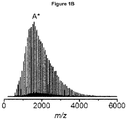
- the polymer species present most abundantly in the polyester can be determined by analyzing the mass spectrum of the polymer obtained by Matrix-Assisted Laser-Desorption-lonisation with Time of Flight Analysis (MALDI TOF) mass spectrometry (MS).
- MALDI TOF Matrix-Assisted Laser-Desorption-lonisation with Time of Flight Analysis
- MS mass spectrometry
- the peak with the highest intensity in the mass spectrum is considered to correspond to the species present most abundantly in the analyzed polyester.
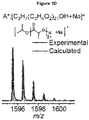
- Identification of the chemical structure of the polyester end groups can be achieved for example by analyzing the isotopic patterns in mass spectrum.
- similarity of the experimental mass spectrum peak distribution with the one calculated for the molecule of particular chemical structure can serve as a proof for this particular chemical structure present in the polymer mass (see Figure 1D for an example).
- polyester according to the present invention is obtainable for example by the process of the present invention, described in detail above.
- VII) Polyester end group originating from lactone of formula (II) (VIII): Polycarbonate end group originating from of trimethylene carbonate.
- the polyester of the present invention has a Sr content of 10 ppm to 1 % by weight, preferably of 100 ppm to 0.8 % by weight, more preferably of 200 ppm to 0.7 % by weight, still more preferably of 500 ppm to 0.5 % by weight.
- the abbreviation "ppm” refers to parts per million.
- the Sr content can be measured by atom adsorption spectroscopy (AAS) or inductively coupled plasma optical emission spectrometry (ICP-OES) method.
- the polyester according to the invention preferably has a weight average molecular weight (M w ) of 800 g/mol to 250.000 g/mol, more preferably of 1000 g/mol to 120.000 g/mol, even more preferably of 1500 g/mol to 60.000 g/mol.
- the polyester of the invention may have a number average molecular weight (M n ) of 500 g/mol to 200.000 g/mol, more preferably of 800 g/mol to 100.000 g/mol, even more preferably of 1000 g/mol to 50.000 g/mol, still even more preferably of 1000 g/mol to 25.000 g/mol.
- GPC gel permeation chromatography
- SEC size-exclusion chromatography
- the polydispersity index of the inventive polyester is preferably in the range 1.03-4.0, more preferably 1.05-3.0, more preferably 1.07-2.0, even more preferably 1.1-1.5.
- the polyester according to the present invention preferably shows a characteristic peak in infra red (IR) spectrum at 1749 ⁇ 5 cm -1 corresponding to carbonyl groups present in the lactic acid based polymer.
- the glass transition temperature T g of the polyester may be in the range of -80 °C - 80 °C, preferably -60 °C - 60 °C. Most preferably, the glass transition temperature T g of the polyester is in the range of 34 °C - 48 °C, still more preferably 35 °C - 47 °C.
- the glass transition temperature T g can be measured as described in European Pharmacopeia 7.0 (EP) chapter 2.2.34.
- the polyester according to the present invention preferably has a specific surface area (BET method) of 2.0 m 2 /g or less, more preferably of 1.5 m 2 /g or less, even more preferably of 1.0 m 2 /g or less, still more preferably of 0.01 m 2 /g - 2 m 2 /g or of 0.1 m 2 /g - 1 m 2 /g.
- the specific surface area can be determined according to the United States Pharmacopeia 36 (USP) chapter ⁇ 846> and European Pharmacopeia 7.0 (EP) chapter 2.9.26.
- the specific surface area is determined utilizing a specific surface area detection equipment (e.g. Quantachrome Nova 2000e BET).
- the specific surface area can be measured using the multi-point and single-point determination using the static-volumetric method (Method II). Prior to the measurement the sample is degassed at 20°C under vacuum.
- the polyester of the invention preferably has an inherent viscosity IV of a 0.1 % solution in chloroform of 0.1 dL/g - 2.0 dL/g, 0.12 dL/g - 1.2 dL/g, 0.14 dL/g - 1.0 dL/g, 0.16 dL/g - 0.44 dL/g, 0.16 dL/g - 0.24 dL/g.
- the determination of the inherent viscosity can be performed in a Ubbelohde viscometer of type 0c at 25 ⁇ 0.1 °C utilizing a polymer sample concentration of 0.1% in chloroform.
- the invention further provides polyester with a Sr content of 10 ppm to 1 % by weight obtainable by the inventive process.
- this polyester possesses some or all of the preferable polymer properties described for the polyester according to the present invention.
- polyesters include poly(L-lactide), poly(D,L-lactide), poly(L-lactide-co-D,L-lactide), poly(D,L-lactide-co-glycolide), poly(glycolide), poly(L-lactide-co-glycolide), poly(glycolide-co-trimethylene carbonate), poly(L-lactide-co-trimethylene carbonate), poly(D,L-lactide-co-trimethylene carbonate), poly(L-lactide-co-caprolactone).
- a molar ratio of lactide : glycolide is preferably from about 80 : 20 to about 40 : 60, most preferably with a molar ratio of lactide : glycolide from about 78 : 22 to about 45 : 55.
- the polyester obtainable by the inventive process has a Sr content of 10 ppm to 1 % by weight, preferably of 100 ppm to 0.8 % by weight, more preferably of 200 ppm to 0.7 % by weight, still more preferably of 500 ppm to 0.5 % by weight.
- the invention further provides bio-resorbable surgical article such as a filament, a rod, a stent or a prostheses, a suture, an implant for bone fixation, bone cement, a scaffold for tissue engineering, a component of controlled drug release system, an in vitro or in vivo cell culture media, a cell culture matrix, a bio-adherent mixture such as bio-glue, a dental or a facial implant, a tendon repair structure, an implant or medical device coating comprising the polyester according to the invention.
- bio-resorbable surgical article such as a filament, a rod, a stent or a prostheses, a suture, an implant for bone fixation, bone cement, a scaffold for tissue engineering, a component of controlled drug release system, an in vitro or in vivo cell culture media, a cell culture matrix, a bio-adherent mixture such as bio-glue, a dental or a facial implant, a tendon repair structure, an implant or medical device coating comprising the polyester according
- bio-resorbable used for description of polymers, controlled release systems, surgical articles and suchlike, means that the polyester of the invention, comprising ester units of formula (III), is after implantation or injection in the human body or in the body of an animal in contact with the body fluids broken down into oligomers in a slow hydrolytic reaction.
- Hydrolysis end products such as lactic acid or glycolic acid, the R 4 OH and R 3 OH alcohols and the catalytic Sr-adducts are metabolized into carbon dioxide and water or secreted or deposited in healthy physiological mineral compartments.
- Other exchangeable expressions for the term "bio-resorbable” which are often used are "resorbable", “bio-degradable” or “adsorptive”.
- controlled drug release systems e.g. comprising special polymers, aimed at targeted transport and delivery of pharmaceutically active compounds in order to facilitate their pharmacokinetics and achieving the desired therapeutic effect thereof in the human or animal body.
- Articles comprising the polyester of the present invention include polymer composites, which may comprise other than polyester polymer types, such as polyamide, polyurethane, polyetheretherketone (PEEK), and other polymers.
- polyester polymer types such as polyamide, polyurethane, polyetheretherketone (PEEK), and other polymers.
- the polyester according to the invention can be used for preparing a bio-resorbable pharmaceutical active ingredient containing dosage form suitable for controlled drug release systems, drug eluting implants, resorbable implants, and coated implants, e.g. in-situ sustained release systems in the human body or in an animal body.
- the polyester of the present invention can also be used for preparing a bio-resorbable medical device or surgical article such a filament, a rod, a stent or a prostheses, a suture, an implant for bone fixation, bone cement, a scaffold for tissue engineering, an in vitro or in vivo cell culture media, a cell culture matrix, a bio-adherent mixture such as bio-glue, a dental or a facial implant, a tendon repair structure, an implant or medical device coating and suchlike.
- a bio-resorbable medical device or surgical article such a filament, a rod, a stent or a prostheses, a suture, an implant for bone fixation, bone cement, a scaffold for tissue engineering, an in vitro or in vivo cell culture media, a cell culture matrix, a bio-adherent mixture such as bio-glue, a dental or a facial implant, a tendon repair structure, an implant or medical device coating and suchlike.
- the polyester of the present invention due to their Sr content, can further be used for specific in vivo imaging using such methods as electron density x-ray absorption and nuclear spin effects.
- the polyester of the present invention can also be used to bio-activate implants and surgical intermediates for healing, in implant stabilizers and for bone repair.
- the invention further provides polyester according to the invention for use in preparing a bio-resorbable pharmaceutical active ingredient containing dosage form suitable for controlled drug release systems in the human body or in an animal body.
- the invention further provides polyester according to the invention for use in preparing a bio-resorbable medical device or surgical article such a filament, a rod, a stent or a prostheses, a suture, an implant for bone fixation, bone cement, a scaffold for tissue engineering, an in vitro or in vivo cell culture media, a cell culture matrix, a bio-adherent mixture such as bio-glue, a dental or a facial implant, a tendon repair structure, an implant or medical device coating.
- a bio-resorbable medical device or surgical article such a filament, a rod, a stent or a prostheses, a suture, an implant for bone fixation, bone cement, a scaffold for tissue engineering, an in vitro or in vivo cell culture media, a cell culture matrix, a bio-adherent mixture such as bio-glue, a dental or a facial implant, a tendon repair structure, an implant or medical device coating.
- a suitable reaction vessel was charged with 1 mmol (144 mg) of L-lactide and 2 mL of anhydrous toluene to form a 0.5 mol/L solution of L-lactide in toluene.
- the ring-opening polymerization (ROP) proceeded at room temperature (25 °C) under stirring inside the glovebox for a time, specified in Table 1.
- 150 ⁇ L aliquots were withdrawn regularly and quenched by addition of 50 ⁇ L of a solution of benzoic acid (4 equivalents with respect to Sr(OiPr) 2 ) in toluene.
- 1 H-NMR and size-exclusion chromatography (SEC) analyses were performed from the quenched reaction mixtures in order to assess the monomer conversion, the average number molar mass, and the polydispersity index of the resulting polylactide after corresponding reaction time are specified in Table 1.
- polymers show end isopropyl groups originating from the initial catalyst Sr(OiPr) 2 ( Figure 1D ).
- the peak at 1749 cm -1 corresponds to carbonyl groups present in the polymer of the present invention.
- This peak is slightly shifted compared to the one typically found in polymers prepared using tin (II) octoate, a well-established catalyst for ROP of lactide.
- This specific IR peak shift results from the specific coordination of carbonyl groups with Sr in the polymer prepared according to the present invention.
- Sr(OiPr) 2 was shown to be an efficient catalyst for polymerization of lactones and co-polymerization of lactones with substituted glycolides.
- Lactones such as ⁇ -caprotactone and ⁇ -valerolactone, were shown to be very reactive in such reactions and lead to a broader molecular weight distribution of the resulting polymers than in the case of homopolymerization of substituted glycolides.
- addition of substituted lactones of formula (II) to substituted glycolides of formula (I) in ring-opening copolymerization allow additional adjusting of polydispersity index, Tg and other polymer properties.
Landscapes
- Health & Medical Sciences (AREA)
- Chemical & Material Sciences (AREA)
- Life Sciences & Earth Sciences (AREA)
- Animal Behavior & Ethology (AREA)
- Epidemiology (AREA)
- General Health & Medical Sciences (AREA)
- Public Health (AREA)
- Veterinary Medicine (AREA)
- Medicinal Chemistry (AREA)
- Surgery (AREA)
- Vascular Medicine (AREA)
- Chemical Kinetics & Catalysis (AREA)
- Engineering & Computer Science (AREA)
- Transplantation (AREA)
- Heart & Thoracic Surgery (AREA)
- Oral & Maxillofacial Surgery (AREA)
- Dermatology (AREA)
- Organic Chemistry (AREA)
- Polymers & Plastics (AREA)
- Biomedical Technology (AREA)
- Molecular Biology (AREA)
- Materials Engineering (AREA)
- Polyesters Or Polycarbonates (AREA)
- Biological Depolymerization Polymers (AREA)
Abstract
Description
- The present invention refers to a novel catalytic process for preparing biodegradable polyesters using strontium alkoxide as a catalyst, polyester polymers obtainable by this process and the use thereof in medical devices and controlled release systems.
- Polyesters such as polylactide (PLA) and polyglycolide (PGA) polymers belong to the most widely established biodegradable materials. Due to their good biocompatibility, safety and attractive mechanical and processual properties, PLA- and PGA-based polymers and composites comprising such polymers are used in various applications, particularly in biomedical and pharmaceutical areas. Thus, polylactide and polyglycolide polymers have been employed in production of bio-resorbable sutures, bioabsorbable implants for bone fixation, scaffolds for tissue engineering and carriers for controlled drug release systems.
- The most common approach to synthesize PLA and PGA polymers is ring-opening polymerization (ROP) of lactide or glycolide catalysed by tin octanoate (also known as tin(II) 2-ethylhexanoate). This highly active catalyst can provide PLA polymers with high molar mass in bulk or in solution. However, increasing concerns about catalyst residuals in polymers and safety have led to development of other catalytic process types recently. Thus, metal alkoxides such as aluminium, lanthanum, yttrium or calcium alkoxides have been reported to catalyse ROP reaction of lactide and glycolide. Each individual type of catalyst may provide polymers with different molecular mass distribution, stereochemistry or other product features important for targeted application of the corresponding polymer product. Therefore, the search for novel catalysts for ROP of lactide and glycolide and for novel polyester properties remains an important goal of research and development process.
- Strontium catalysts are quite rarely used for ROP reactions.
-
CN 105566615 A discloses ring-opening polymerization of glycolide under harsh conditions using Sr(OAc)2 (embodiments 13, 14), SrO (embodiment 15) or SrCl2 (embodiments 17,18), respectively, as a catalyst at 170-210 °C. The polydispersity index (Mw/Mn) of the resulting PGA polymers ranges from 1.50 to 2.18 with number-average molecular masses from 16.752 to 51.075 g/mol. -
CN 1831027 A discloses preparation of polylactic acid by ROP of lactide catalyzed with bimetallic aluminium/strontium complexes. Polymerization is carried out at very high temperatures (165-190 °C) and provides polymers with molecular masses of 120.000-600.000 g/mol. - Z. Tang et al. disclose in Table 2, examples 12-14 of J. of Polym. Sci. Part A: Polym. Chem., 2003, 41, 1934-1941 ring-opening polymerization of ε-caprolactone using strontium isopropoxide as a catalyst. The reactions in these examples were carried out at 40 °C for 6 hours in toluene as a solvent. The authors demonstrate, that the polymerization of caprolactone was effective but resulted in much broader molecular weight distributions (Mw/Mn = 3.37-7.37) than with the other catalyst employed, amino isoproxyl strontium (Sr-PO). This latter catalyst is shown to be an effective catalyst for ring-opening polymerization of lactide to polyesters with narrow molecular weight distributions. Therefore, Tang et al. teach away from using strontium isopropoxide for polymerization of lactide in order to obtain polymers with a narrow molecular weight distribution. Nor do they disclose using any alcohols as co-catalysts in addition to strontium catalyst.
- The catalysts used for ROP of lactide or glycolide usually remain in the resulting polymer and may influence the final application it is used for, e.g. facilitate the process of bio-degradation of such polymers. Additionally, the potential toxicity of such catalysts remaining in the polymer may be very critical for the use of such polymers in medical applications.
- Strontium (Sr) is an alkaline earth metal with atomic number 38. The similarity of Sr with calcium (Ca) enables Sr to be efficiently incorporated into the mineral phase of bone. The positive effect of Sr on bone homeostasis was revealed by studies carried out in the 1950's [Shorr E, Carter AC. Bull Hosp Jt Dis 1952, 13, 59-66.]. Since 2004, Strontium Ranelate (SrRan) has been approved for treatment of osteoporosis in several European countries. Studies on healthy animals have shown that oral administration of SrRan in relation to insertion of bone integrating implants improved the peri-implant bone volume and enhanced implant pull-out strength [Maïmoun L et al. Bone, 2010, 46, 1436-1441 ; Li Y et. al. Clin Oral Implants Res 2012, 23, 1038-1044]. A growing body of research shows that low doses of strontium may lead to increased bone formation and decreased bone resorption, may be clinically effective in preventing bone loss and formation of fractures and increases bone mineral density (BMD), which in turn is an efficient means for preventing osteoporosis [Clinical Nutrition 2007, vol. 26, pp. 193-207].
- Therefore, using strontium compound as a catalyst for preparing biodegradable polymers not only would not have a negative effect associated with any toxicity, but may have an additional benefit assignable to the positive effect on bones health due to strontium remaining in the polymer.
- There is a need for a novel process for ring-opening polymerization of lactide or glycolide and co-polymerization of these compounds with other suitable monomers under mild reaction conditions to provide biodegradable polymers with a desired, controlled by process, e.g. low polydispersity index (Mw/Mn) and relatively low molecular weight, which do not contain any toxic or potentially dangerous metal or mineral residues. There is also a need for biodegradable polyesters with novel and unique properties, which can be applied in novel biomedical and pharmaceutical applications such those of amorphic and osteoconductive bio-functionally doped materials for better healing and growth morphological results.
- The problem was solved by a
catalytic process for preparing polyester by ring-opening polymerization of at least one substituted glycolide of formula (I)
or copolymerization of at least one substituted glycolide of formula (I) with trimethylene carbonate and/or at least one lactone of formula (II),
- wherein n = 1-10, R2 is H or a hydrocarbon radical with 1-10 carbon atoms,
- and a strontium(II) alkoxide Sr(OR3)2, wherein
- R3 is a hydrocarbon radical with 1-30 carbon atoms,
- is used as a catalyst.
- The term "hydrocarbon radical" in the present patent application refers to alkyl-, alkenyl-, alkynyl-, aryl- radicals and corresponding mixed forms thereof, e.g. radicals containing both aryl and alkyl groups. Such hydrocarbon radicals may be linear or branched and can also comprise heteroatoms other than carbon (C) and hydrogen (H), such as nitrogen (N), oxygen (O), sulphur (S), and phosphorus (P).
- In the substituted glycolide of formula (I) R1 is preferably H or an alkyl group with 1-6 carbon atoms such as methyl, ethyl, n-propyl, iso-propyl, n-butyl, iso-butyl, tert-butyl, pentyl, n-hexyl or cyclohexyl. If R1 ≠ H, all possible stereoisomers of compound of formula (I) can be employed, such as (L, L), (D,D), (D,L) or (L,D)-isomers or mixtures thereof. Most preferably, R1 = H or CH3 and the substituted glycolide of formula (I) is glycolide (I, R1 = H) or lactide (I, R1 = CH3).
- In the lactone of formula (II), n is preferably 1-5 and R1 is preferably H or an alkyl group with 1-6 carbon atoms such as methyl, ethyl, n-propyl, iso-propyl, n-butyl, iso-butyl, tert-butyl, pentyl, n-hexyl or cyclohexyl. If R2 ≠ H, all possible stereoisomers of lactone of formula (II) can be employed, such as (L)-, (D)-isomers or a mixture thereof. Most preferably, the lactone of formula (II) is chosen from the group consisting of β-propiotactone (n = 1, R2 = H), γ-butyrolactone (n = 2, R2 = H), δ-valerolactone (n = 3, R2 = H), ε-caprolactone (n = 4, R2 = H), δ-caprolactone (n = 3, R2 = Me), δ-decalactone (n = 3, R2 = n-C5H11) and a mixture thereof.
- Additionally to compounds of formula (I) and optionally compounds of formula (II), cyclic carbonates such as trimethylene carbonate (also known as 1,3-propylene carbonate and 1,3-dioxan-2-on) can be used as a monomer in the process according to the invention.
- The hydrocarbon radical R3 in strontium(II) alkoxide Sr(OR3)2 used in the process of the present invention is preferably chosen from the alkyl group consisting of methyl, ethyl, n-propyl, iso-propyl, n-butyl, iso-butyl, tert-butyl, n-pentyl, n-hexyl, cyclo-hexyl, 2-ethylhexyl, n-octyl, n-decyl. Most preferably, strontium(II) isopropoxide (R3 = iso-propyl) is employed as a catalyst in the process of the invention.
- Strontium(II) alkoxide can be synthesized by any suitable procedure, such as by a reaction of metallic strontium with the corresponding alcohol. Another possible synthesis method is a full or partial alkoxy-ligand substitution in a reaction of strontium(II) alkoxide derived from one alcohol with another alcohol. Thus, a reaction of strontium(II) methylate with ethanol would lead to a partial or complete substitution of methoxy-ligands by ethoxy-groups.
- Strontium(II) alkoxide is a highly reactive compound, e.g. prone to hydrolysis. Therefore, particular care should be taken to carry out the polymerization process of the present invention in the absence of water in order to prevent the catalyst from deactivation.
- Strontium(II) alkoxide is employed in catalytic quantities in ROP reaction according to the invention. The molar ratio of the sum of all employed glycolides of formula (I), trimethylene carbonate and lactones of formula (II) to the strontium(II) alkoxide is preferably from 10.000 : 1 to 5 :1, more preferably from 1.000 : 1 to 10 : 1, most preferably 500 : 1 to 20 : 1 (mol : mol).
- Surprisingly, it was found that the addition of relatively small amounts of alcohols to the reaction mixture comprising the compound of formula (I) and optionally compounds of formula (II) and/or trimethylene carbonate along with strontium(II) alkoxide leads to a significant change in the polymerization reaction outcome, when compared with a similar reaction carried out without any alcohols. Thus, a lower molar mass and lower polydispersity index of the resulting polymers may be achieved with the use of such alcohols.
- Thus, preferably an alcohol R4OH, wherein R4 is a hydrocarbon radical with 1-30 carbon atoms, more preferably with 3-20 carbon atoms, is present in the reaction mixture comprising glycolides of formula (I), strontium(II)alkoxide Sr(OR3)2, optionally trimethylene carbonate and/or lactones of formula (II) and/or a solvent at the start of the polymerization process. This alcohol, in addition to the Sr-coordinated alcoholate, defines alpha end groups of the respectively initiated polymer chain.
- Preferably, the following alcohols can be employed in the inventive process: 1-propanol, 2-propanol, 1-butanol, 2-butanol, 1-pentanol, 1-hexanol, 1-heptanol, 1-octanol, 1-nonanol, 1-decanol, 1-undecanol, 1-dodecanol, 1-tridecanol, 1-tetradecanol, 1-pentadecanol, 1-hexadecanol. Most preferably, 1-dodecanol is used.
- The molar ratio of alcohol R4OH to the strontium(II)alkoxide Sr(OR3)2 employed can be from 0.1:1 to 10 :1 (mol : mol).
- The process according to the invention can be carried out in bulk, without using any solvent or in an appropriate solvent. In the latter case, the solvent is preferably an aprotic solvent, which can be chosen from the group consisting of halogenated or non-halogenated aliphatic or aromatic hydrocarbons, ethers, esters, ketones, amides, nitriles, sulfoxides, nitro-compounds and mixtures thereof. For example, the solvent used can be pentane, cyclopentane, hexane, cyclohexane, heptane, octane, decane, dodecane, chloroform, dichloromethane, benzene, toluene, xylene, diethyl ether, methyl tert-butyl ether, tetrahydrofuran, 1,4-dioxane, ethyl acetate, acetone, dimethylformamide, acetonitrile, dimethyl sulfoxide, nitromethane, propylene carbonate. Most preferably, the reaction is carried out without any solvent or in the presence of toluene as a solvent.
- If a solvent is used in the process of the invention, the concentration of the reactants in the reaction mixture prior to start of the polymerization process can be varied in a wide range. Preferably, the sum of molar concentrations of all employed glycolides of formula (I), trimethylene carbonate and lactones of formula (II) in the solution prior to start of the polymerization process is from 0.1 to 10 mol/L, more preferably from 0.2 to 5 mol/L.
- The reaction temperature adjusted during the process of the invention depends on the desired polymer distribution and melting point of the used monomers and can usually range from 0 °C to 250 °C and is preferably from 15 to 220 °C, more preferably from 20 °C to 200 °C.
- The process according to the invention can be carried out under normal pressure (1 atm), under reduced pressure of less than 1 atm or under elevated pressure of more than 1 atm. Most preferably, the process is conducted under ambient pressure of approximately 1 atm. In this case, the reaction temperature preferably does not exceed the boiling point at ambient pressure of any reactant or solvent used in the process.
- The process of the present invention can be conducted continuously, semi-continuously or discontinuously (batch wise) as the underlying chemical reaction is very close to ideal living polymerization with no cyclic reaction products present or trans-esterification occurring. The reaction time (for a discontinuous process) or the mean residence time in reactor (for a continuous or semi-continuous process) can vary from 0.1 minutes to 5 hours, preferably from 1 minute to 120 minutes.
- The invention provides polyester with a Sr content of 10 ppm to 1 % by weight, comprising ester units of formula (III) and optionally ester units of formula (IV) and/or of formula (V):


- Ester units of formula (III) originate from polymerization of substituted glycolide of formula (I); ester units of formula (IV) are formed by polymerization of lactones of formula (II), ester units of formula (V) are formed by polymerization of trimethylene carbonate.
- Radical R5 in polymer end groups of formula (VI), (VII) and (VIII) may originate from strontium alkoxide catalyst (in this case, R5 = R3) and/or from the alcohol (in this case, R5 = R4) employed.
- The polymer species present most abundantly in the polyester can be determined by analyzing the mass spectrum of the polymer obtained by Matrix-Assisted Laser-Desorption-lonisation with Time of Flight Analysis (MALDI TOF) mass spectrometry (MS). The peak with the highest intensity in the mass spectrum is considered to correspond to the species present most abundantly in the analyzed polyester. Identification of the chemical structure of the polyester end groups can be achieved for example by analyzing the isotopic patterns in mass spectrum. Thus, similarity of the experimental mass spectrum peak distribution with the one calculated for the molecule of particular chemical structure can serve as a proof for this particular chemical structure present in the polymer mass (see
Figure 1D for an example). - The polyester according to the present invention is obtainable for example by the process of the present invention, described in detail above.
- Thus, due to the use of strontium(II) alkoxide Sr(OR3)2 as a catalyst and optionally additionally R4OH in the process of the present invention, the polyester obtainable by a process according to the present invention may show polymer end groups of formula (VIa, R5 = R3) or (VIb, R5 = R4), respectively, originating from the substituted glycolide of formula (I), polymer end groups of formula (VIIa, R5 = R3) and (VIIb, R5 = R4), respectively, originating from the substituted lactone of formula (II) or polymer end groups of formula (VIIIa, R5 = R3) and (VIIIb, R5 = R4), respectively, originating from trimethylene carbonate:


- Use of other than alkoxides strontium compounds as catalysts for ring-opening polymerization of compounds of formula (I), (II) or trimethylene carbonate, would lead to different than those of formula (VI), (VII) or (VIII) polyester end groups. Thus, described in
CN 105566615 A Sr(OAc)2 in ROP of lactide would lead to polymers of formula (IX) with hydroxyl and acetoxy end-groups:
- The polyester of the present invention has a Sr content of 10 ppm to 1 % by weight, preferably of 100 ppm to 0.8 % by weight, more preferably of 200 ppm to 0.7 % by weight, still more preferably of 500 ppm to 0.5 % by weight. The abbreviation "ppm" refers to parts per million. The Sr content can be measured by atom adsorption spectroscopy (AAS) or inductively coupled plasma optical emission spectrometry (ICP-OES) method.
- The polyester according to the invention preferably has a weight average molecular weight (Mw) of 800 g/mol to 250.000 g/mol, more preferably of 1000 g/mol to 120.000 g/mol, even more preferably of 1500 g/mol to 60.000 g/mol. The polyester of the invention may have a number average molecular weight (Mn) of 500 g/mol to 200.000 g/mol, more preferably of 800 g/mol to 100.000 g/mol, even more preferably of 1000 g/mol to 50.000 g/mol, still even more preferably of 1000 g/mol to 25.000 g/mol. Both the polymer weight average and the number average molecular weights can be measured by gel permeation chromatography (GPC), also known as size-exclusion chromatography (SEC) calibrated using polystyrene or poly(lactic acid)-standards and with tetrahydrofuran (THF) used as eluent.
- The polydispersity index D is used as a measure of the broadness of a molecular weight distribution of a polymer and is defined by the following equation:

- The polydispersity index of the inventive polyester is preferably in the range 1.03-4.0, more preferably 1.05-3.0, more preferably 1.07-2.0, even more preferably 1.1-1.5.
- Most preferably, the polyester of the present invention has a polydispersity index of D = 1.1 - 1.5 and a number average molecular weight of Mn = 1.000-25.000 g/mol.
- The polyester according to the present invention preferably shows a characteristic peak in infra red (IR) spectrum at 1749±5 cm-1 corresponding to carbonyl groups present in the lactic acid based polymer.
- The glass transition temperature Tg of the polyester may be in the range of -80 °C - 80 °C, preferably -60 °C - 60 °C. Most preferably, the glass transition temperature Tg of the polyester is in the range of 34 °C - 48 °C, still more preferably 35 °C - 47 °C. The glass transition temperature Tg, can be measured as described in European Pharmacopeia 7.0 (EP) chapter 2.2.34.
- The polyester according to the present invention preferably has a specific surface area (BET method) of 2.0 m2/g or less, more preferably of 1.5 m2/g or less, even more preferably of 1.0 m2/g or less, still more preferably of 0.01 m2/g - 2 m2/g or of 0.1 m2/g - 1 m2/g. The specific surface area can be determined according to the United States Pharmacopeia 36 (USP) chapter <846> and European Pharmacopeia 7.0 (EP) chapter 2.9.26. The specific surface area is determined utilizing a specific surface area detection equipment (e.g. Quantachrome Nova 2000e BET). The specific surface area can be measured using the multi-point and single-point determination using the static-volumetric method (Method II). Prior to the measurement the sample is degassed at 20°C under vacuum.
- The polyester of the invention preferably has an inherent viscosity IV of a 0.1 % solution in chloroform of 0.1 dL/g - 2.0 dL/g, 0.12 dL/g - 1.2 dL/g, 0.14 dL/g - 1.0 dL/g, 0.16 dL/g - 0.44 dL/g, 0.16 dL/g - 0.24 dL/g. The determination of the inherent viscosity can be performed in a Ubbelohde viscometer of type 0c at 25 ± 0.1 °C utilizing a polymer sample concentration of 0.1% in chloroform.
- The invention further provides polyester with a Sr content of 10 ppm to 1 % by weight obtainable by the inventive process. Preferably, this polyester possesses some or all of the preferable polymer properties described for the polyester according to the present invention.
- Preferable, but not limiting examples of such polyesters include poly(L-lactide), poly(D,L-lactide), poly(L-lactide-co-D,L-lactide), poly(D,L-lactide-co-glycolide), poly(glycolide), poly(L-lactide-co-glycolide), poly(glycolide-co-trimethylene carbonate), poly(L-lactide-co-trimethylene carbonate), poly(D,L-lactide-co-trimethylene carbonate), poly(L-lactide-co-caprolactone).
- If the polyester is a poly(lactide-co-glycolide), than a molar ratio of lactide : glycolide is preferably from about 80 : 20 to about 40 : 60, most preferably with a molar ratio of lactide : glycolide from about 78 : 22 to about 45 : 55.
- The polyester obtainable by the inventive process has a Sr content of 10 ppm to 1 % by weight, preferably of 100 ppm to 0.8 % by weight, more preferably of 200 ppm to 0.7 % by weight, still more preferably of 500 ppm to 0.5 % by weight.
- The polyester obtainable by the inventive process preferably has a polydispersity index of D = 1.1-1.5 and a number average molecular weight of Mn = 1.000 g/mol-25.000 g/mol.
- The invention further provides bio-resorbable surgical article such as a filament, a rod, a stent or a prostheses, a suture, an implant for bone fixation, bone cement, a scaffold for tissue engineering, a component of controlled drug release system, an in vitro or in vivo cell culture media, a cell culture matrix, a bio-adherent mixture such as bio-glue, a dental or a facial implant, a tendon repair structure, an implant or medical device coating comprising the polyester according to the invention. The term "bio-resorbable" used for description of polymers, controlled release systems, surgical articles and suchlike, means that the polyester of the invention, comprising ester units of formula (III), is after implantation or injection in the human body or in the body of an animal in contact with the body fluids broken down into oligomers in a slow hydrolytic reaction. Hydrolysis end products such as lactic acid or glycolic acid, the R4OH and R3OH alcohols and the catalytic Sr-adducts are metabolized into carbon dioxide and water or secreted or deposited in healthy physiological mineral compartments. Other exchangeable expressions for the term "bio-resorbable" which are often used are "resorbable", "bio-degradable" or "adsorptive".
- The systems, e.g. comprising special polymers, aimed at targeted transport and delivery of pharmaceutically active compounds in order to facilitate their pharmacokinetics and achieving the desired therapeutic effect thereof in the human or animal body, are referred to as controlled drug release systems.
- Articles comprising the polyester of the present invention include polymer composites, which may comprise other than polyester polymer types, such as polyamide, polyurethane, polyetheretherketone (PEEK), and other polymers.
- The polyester according to the invention can be used for preparing a bio-resorbable pharmaceutical active ingredient containing dosage form suitable for controlled drug release systems, drug eluting implants, resorbable implants, and coated implants, e.g. in-situ sustained release systems in the human body or in an animal body.
- The polyester of the present invention can also be used for preparing a bio-resorbable medical device or surgical article such a filament, a rod, a stent or a prostheses, a suture, an implant for bone fixation, bone cement, a scaffold for tissue engineering, an in vitro or in vivo cell culture media, a cell culture matrix, a bio-adherent mixture such as bio-glue, a dental or a facial implant, a tendon repair structure, an implant or medical device coating and suchlike.
- The polyester of the present invention, due to their Sr content, can further be used for specific in vivo imaging using such methods as electron density x-ray absorption and nuclear spin effects.
- The polyester of the present invention can also be used to bio-activate implants and surgical intermediates for healing, in implant stabilizers and for bone repair.
- The invention further provides polyester according to the invention for use in preparing a bio-resorbable pharmaceutical active ingredient containing dosage form suitable for controlled drug release systems in the human body or in an animal body.
- The invention further provides polyester according to the invention for use in preparing a bio-resorbable medical device or surgical article such a filament, a rod, a stent or a prostheses, a suture, an implant for bone fixation, bone cement, a scaffold for tissue engineering, an in vitro or in vivo cell culture media, a cell culture matrix, a bio-adherent mixture such as bio-glue, a dental or a facial implant, a tendon repair structure, an implant or medical device coating.
- A suitable reaction vessel was charged with 1 mmol (144 mg) of L-lactide and 2 mL of anhydrous toluene to form a 0.5 mol/L solution of L-lactide in toluene.
- 100 µL of a stock solution containing the required quantity of Sr(OiPr)2 and, if necessary, dodecanol in anhydrous toluene were added in order to start the reaction. The amounts of the employed L-lactide, strontium catalyst and alcohol corresponded the molar ratio [lactide]:[ Sr(OiPr)2]:[dodecanol] specified in Table 1.
- The ring-opening polymerization (ROP) proceeded at room temperature (25 °C) under stirring inside the glovebox for a time, specified in Table 1. 150 µL aliquots were withdrawn regularly and quenched by addition of 50 µL of a solution of benzoic acid (4 equivalents with respect to Sr(OiPr)2) in toluene. 1H-NMR and size-exclusion chromatography (SEC) analyses were performed from the quenched reaction mixtures in order to assess the monomer conversion, the average number molar mass, and the polydispersity index of the resulting polylactide after corresponding reaction time are specified in Table 1.
Table 1 
Example [M] : [Sr] : [dodecanol] [mol : mol : mol] t, [min] Conversion, [%] Mn, [g/mol] Mw/ M n1 20 : 1 : 1 0.17 > 99 1.000 1.41 2 20 : 1 : 0 1 96 3.200 1.21 3 100 : 1 : 1 15 99 13.000 1.16 4 100 : 1 : 0 15 76 16.000 1.16 5 200 : 1 : 1 90 72 20.000 1.29 6 200 : 1 : 0 90 52 19.000 1.27 - As it can be seen from Table 1, Sr(OiPr)2 can successfully be used as a catalyst in ring-opening polymerization of lactide. With sufficient catalyst used, very high conversions of lactide can be achieved after relatively short period of time at 25 °C (examples 1-3). With lower catalyst loadings, more time is needed for the completion of the reaction at this temperature (examples 4-6). Relatively low number average molecular weight of polymers (1.000-20.000 g/mol) and very narrow molecular weight distribution (low polydispersity index = 1.16-1.41) resulted in all cases (examples 1-6). Addition of catalytic quantities of dodecanol to the reaction mixture led to significant change of the reaction outcomes. Thus, lactide conversion increased significantly with this alcohol added (example 3 vs. example 4 and example 5 vs. example 6). In examples 1 and 3, substantially lower number average molecular weights have resulted from the reaction as in comparable examples 2 and 4 without using an alcohol.
- Corresponding to an initial molar ratio of [L-lactide] : [Sr(OiPr)2] of 20 : 1, 720 mg (5 mmol) of L-lactide were dissolved in 9.54 mL of anhydrous toluene, and 460 µL of a stock solution containing 105 mg (0.51 mmol) Sr(OiPr)2 in 1 mL of anhydrous toluene were added. After 60 seconds, the polymerization mixture was quenched with a solution of benzoic acid (4 equivalents with respect to Sr(OiPr)2) in anhydrous toluene, and a sample for the determination of the monomer conversion (by 1H-NMR) was taken. The crude PLA was precipitated into cold diethyl ether (-22°C), centrifuged at 5000 rpm for 5 minutes and the supernatant was removed. Afterwards the purified polyester was dried at 40 °C in a vacuum oven overnight. Conversion of L-lactide was 96%. Isolated Yield was 88 %.
1H NMR (300 MHz, CDCl3, δ): 1.51 (d, -CH(CH 3 )2), 1.60 (d, -OCHCH 3 -), 5.05 (m, -CH(CH3)2), 5.18 (q, -OCHCH3-). SEC (THF, PLA calibration): Mn = 1.7 kg mol-1; Mw/Mn = 1.17. MALDI TOF MS (DCTB, Nal): Mn = 2.4 kg mol-1; Mw/Mn = 1.16. - Some characteristic properties of the resulting polymer were observed by analyzing mass spectra and IR-spectra of this polymer.
-
Figure 1A shows a SEC elugram of the polymer prepared in example 7 (A); -
Figure 1B shows a MALDI TOF mass spectrum (DCTB, Nal) of the same polymer; -
Figure 1C shows a zoom into the most abundant region of the mass spectrum of polymer from example 7; -
Figure 1D shows an overlay of the experimental and calculated isotopic patterns for the most abundant peak and assignment to the schematic representation of the polymer structure. - Analysis of the MALDI TOF mass spectrum of the polymer prepared in example 7 shows characteristic molar masses of polymer species found in the resulting polymer mix. The difference in Δm/z of 144 between two adjacent peaks in the mass spectrum corresponds exactly to the mass of a lactide monomer, whereas Δm/z of 72 corresponds to the single lactic acid unit (
Figure 1C ). Therefore, the polymer species from example 7 consist of "dimer" as well as single lactic acid units. Apparently, this is characteristic for the mechanism of strontium catalyst's action occuring in the ROP reaction. - Another interesting aspect of the polymer species revealed by observing mass spectra of the resulting polymers, is that the polymers show end isopropyl groups originating from the initial catalyst Sr(OiPr)2 (
Figure 1D ). -
Figure 2 shows an ATR-IR spectrum of the PLA polymer prepared in example 7 employing a [LA]:[Sr(OiPr)2] = 20:1 as well as the peak assignment. The peak at 1749 cm-1 corresponds to carbonyl groups present in the polymer of the present invention. This peak is slightly shifted compared to the one typically found in polymers prepared using tin (II) octoate, a well-established catalyst for ROP of lactide. This specific IR peak shift results from the specific coordination of carbonyl groups with Sr in the polymer prepared according to the present invention. - In additional examples, Sr(OiPr)2 was shown to be an efficient catalyst for polymerization of lactones and co-polymerization of lactones with substituted glycolides. Lactones, such as ε-caprotactone and δ-valerolactone, were shown to be very reactive in such reactions and lead to a broader molecular weight distribution of the resulting polymers than in the case of homopolymerization of substituted glycolides. Thus, addition of substituted lactones of formula (II) to substituted glycolides of formula (I) in ring-opening copolymerization allow additional adjusting of polydispersity index, Tg and other polymer properties.
Claims (15)
- Catalytic process for preparing polyester by ring-opening polymerization of at least one substituted glycolide of formula (I)

or copolymerization of at least one substituted glycolide of formula (I) with trimethylene carbonate and/or at least one lactone of formula (II), wherein n = 1-10, R2 is H or a hydrocarbon radical with 1-10 carbon atoms,characterized in thata strontium(II) alkoxide Sr(OR3)2, whereinR3 is a hydrocarbon radical with 1-30 carbon atoms,is used as a catalyst.
 - The process according to Claim 1,
characterized in that R1 = H or CH3 and the substituted glycolide of formula (I) is glycolide or lactide. - The process according to Claim 1 or 2,
characterized in that the lactone of formula (II) is chosen from the group consisting of β-propiolactone (n = 1, R2 = H), γ-butyrolactone (n = 2, R2 = H), δ-valerolactone (n = 3, R2 = H), ε-caprolactone (n = 4, R2 = H), δ-caprolactone (n = 3, R2 = Me), δ-decalactone (n = 3, R2 = n-C5H11) and a mixture thereof. - The process according to either of Claims 1 to 3,
characterized in that R3 is chosen from the group consisting of methyl, ethyl, n-propyl, i-propyl, n-butyl, iso-butyl, tert-butyl, n-pentyl, n-hexyl, cyclo-hexyl, 2-ethylhexyl, n-octyl, n-decyl. - The process according to either of Claims 1 to 4,
characterized in that
the molar ratio of the sum of all employed glycolides of formula (I) and lactones of formula (II) to the strontium(II)alkoxide is from 1000 : 1 to 10 : 1. - The process according to either of Claims 1 to 5,
characterized in that the reaction temperature during the process is from 20 °C to 200 °C. - The process according to either of Claims 1 to 6,
characterized in that the process is carried out in an aprotic solvent chosen from the group consisting of halogenated or non-halogenated aliphatic or aromatic hydrocarbons, ethers, esters, ketones, amides, nitriles, sulfoxides, nitro-compounds and mixtures thereof. - The process according to Claim 7,
characterized in that the sum of molar concentrations of all employed glycolides of formula (I), trimethylene carbonate and/or lactones of formula (II) in the solution prior to start of the polymerization process is from 0.1 to 10 mol/L. - The process according to either of Claims 1 to 8,
characterized in that an alcohol R4OH, wherein R4 is a hydrocarbon radical with 1-30 carbon atoms, is present in the reaction mixture comprising glycolides of formula (I), strontium(II)alkoxide Sr(OR3)2, optionally lactones of formula (II) and/or the solvent at the start of the polymerization process. - The process according to either of Claims 1 to 9,
characterized in that the molar ratio of alcohol R4OH to the strontium(II)alkoxide Sr(OR3)2 is from 0.1 : 1 to 10 : 1. - Polyester with a Sr content of 10 ppm to 1 % by weight, comprising ester units of formula (III) and optionally ester units of formula (IV) and/or of formula (V):


- Polyester with a Sr content of 10 ppm to 1 % by weight,
obtainable by a process according to either of Claims 1 to 10. - Bio-resorbable surgical article such a filament, a rod, a stent or a prostheses, a suture, an implant for bone fixation, bone cement, a scaffold for tissue engineering, a component of controlled drug release system, an in vitro or in vivo cell culture media, a cell culture matrix, a bio-adherent mixture such as bio-glue, a dental or a facial implant, a tendon repair structure, an implant or medical device coating comprising the polyester according to either of Claims 11 or 12.
- Polyester according to either of Claims 11 or 12 for use in preparing a bio-resorbable pharmaceutical active ingredient containing dosage form suitable for controlled drug release systems in the human body or in an animal body.
- Polyester according to either of Claims 11 or 12 for use in preparing a bio-resorbable medical device or surgical article such a filament, a rod, a stent or a prostheses, a suture, an implant for bone fixation, bone cement, a scaffold for tissue engineering, an in vitro or in vivo cell culture media, a cell culture matrix, a bio-adherent mixture such as bio-glue, a dental or a facial implant, a tendon repair structure, an implant or medical device coating.
Priority Applications (2)
| Application Number | Priority Date | Filing Date | Title |
|---|---|---|---|
| EP19172816.1A EP3736303A1 (en) | 2019-05-06 | 2019-05-06 | Novel catalyzed synthesis of biodegradable polyesters |
| PCT/EP2020/061832 WO2020225044A1 (en) | 2019-05-06 | 2020-04-29 | Novel catalyzed synthesis of biodegradable polyesters |
Applications Claiming Priority (1)
| Application Number | Priority Date | Filing Date | Title |
|---|---|---|---|
| EP19172816.1A EP3736303A1 (en) | 2019-05-06 | 2019-05-06 | Novel catalyzed synthesis of biodegradable polyesters |
Publications (2)
| Publication Number | Publication Date |
|---|---|
| EP3736303A1 true EP3736303A1 (en) | 2020-11-11 |
| EP3736303A8 EP3736303A8 (en) | 2021-04-21 |
Family
ID=66483815
Family Applications (1)
| Application Number | Title | Priority Date | Filing Date |
|---|---|---|---|
| EP19172816.1A Withdrawn EP3736303A1 (en) | 2019-05-06 | 2019-05-06 | Novel catalyzed synthesis of biodegradable polyesters |
Country Status (2)
| Country | Link |
|---|---|
| EP (1) | EP3736303A1 (en) |
| WO (1) | WO2020225044A1 (en) |
Citations (5)
| Publication number | Priority date | Publication date | Assignee | Title |
|---|---|---|---|---|
| CN1831027A (en) | 2005-03-10 | 2006-09-13 | 江苏九鼎新材料股份有限公司 | Catalyst for producing polylactic resin and its prodn. process |
| EP1908484A2 (en) * | 2006-10-06 | 2008-04-09 | Cordis Corporation | Bioabsorbable device having composite structure for accelerating degradation |
| EP2253637A1 (en) * | 2009-04-30 | 2010-11-24 | Total Petrochemicals Research Feluy | Catalytic systems for immortal ring-opening polymerisation of cyclic esters and cyclic carbonates |
| CN105566615A (en) | 2016-01-14 | 2016-05-11 | 常州大学 | Method for reducing yellowness index of polyglycolic acid |
| CN107022070A (en) * | 2017-04-28 | 2017-08-08 | 南京工业大学 | Method for preparing polyester by ring-opening polymerization |
-
2019
- 2019-05-06 EP EP19172816.1A patent/EP3736303A1/en not_active Withdrawn
-
2020
- 2020-04-29 WO PCT/EP2020/061832 patent/WO2020225044A1/en not_active Ceased
Patent Citations (5)
| Publication number | Priority date | Publication date | Assignee | Title |
|---|---|---|---|---|
| CN1831027A (en) | 2005-03-10 | 2006-09-13 | 江苏九鼎新材料股份有限公司 | Catalyst for producing polylactic resin and its prodn. process |
| EP1908484A2 (en) * | 2006-10-06 | 2008-04-09 | Cordis Corporation | Bioabsorbable device having composite structure for accelerating degradation |
| EP2253637A1 (en) * | 2009-04-30 | 2010-11-24 | Total Petrochemicals Research Feluy | Catalytic systems for immortal ring-opening polymerisation of cyclic esters and cyclic carbonates |
| CN105566615A (en) | 2016-01-14 | 2016-05-11 | 常州大学 | Method for reducing yellowness index of polyglycolic acid |
| CN107022070A (en) * | 2017-04-28 | 2017-08-08 | 南京工业大学 | Method for preparing polyester by ring-opening polymerization |
Non-Patent Citations (6)
| Title |
|---|
| CLINICAL NUTRITION, vol. 26, 2007, pages 193 - 207 |
| LI Y, CLIN ORAL IMPLANTS RES, vol. 23, 2012, pages 1038 - 1044 |
| MAIMOUN L ET AL., BONE, vol. 46, 2010, pages 1436 - 1441 |
| SHORR E; CARTER AC, BULL HOSP JT DIS, vol. 13, 1952, pages 59 - 66 |
| Z. TANG ET AL., J. OF POLYM. SCI. PART A: POLYM. CHEM., vol. 41, 2003, pages 1934 - 1941 |
| ZHAOHUI TANG ET AL: "Strontium-based initiator system for ring-opening polymerization of cyclic esters", JOURNAL OF POLYMER SCIENCE PART A: POLYMER CHEMISTRY, 1 July 2003 (2003-07-01), pages 1934 - 1941, XP055633865, Retrieved from the Internet <URL:https://onlinelibrary.wiley.com/doi/full/10.1002/pola.10740> [retrieved on 20191018], DOI: 10.1002/pola.10740 * |
Also Published As
| Publication number | Publication date |
|---|---|
| EP3736303A8 (en) | 2021-04-21 |
| WO2020225044A1 (en) | 2020-11-12 |
Similar Documents
| Publication | Publication Date | Title |
|---|---|---|
| Kricheldorf et al. | Bismuth (III) n-hexanoate and tin (II) 2-ethylhexanoate initiated copolymerizations of ε-caprolactone and l-lactide | |
| EP0548237B1 (en) | Method for the production of an article from the Copolymer of Lactide and (e)-Caprolactone for medical applications | |
| Piao et al. | Ring-opening polymerization of ε-caprolactone and l-lactide using organic amino calcium catalyst | |
| Dechy-Cabaret et al. | Controlled ring-opening polymerization of lactide and glycolide | |
| Schappacher et al. | Study of a (trimethylenecarbonate-co-ε-caprolactone) polymer—Part 1: Preparation of a new nerve guide through controlled random copolymerization using rare earth catalysts | |
| EP0693294B1 (en) | Bioabsorbable branched polymers containing units derived from dioxanone and medical/surgical devices manufactured therefrom | |
| Kricheldorf | Syntheses and application of polylactides | |
| Korhonen et al. | Synthesis of polylactides in the presence of co-initiators with different numbers of hydroxyl groups | |
| Baimark et al. | Synthesis and characterization of poly (L-lactide-co-ε-caprolactone) copolymers: effects of stannous octoate initiator and diethylene glycol coinitiator concentrations | |
| EP0407617B1 (en) | Process for the preparation of a biocompatible polyester | |
| Kost et al. | Synthesis and properties of l-lactide/1, 3-dioxolane copolymers: Preparation of polyesters with enhanced acid sensitivity | |
| US8242186B2 (en) | Lactic acid oligomer and method for producing the same | |
| Liao et al. | Rapid synthesis of poly (trimethylene carbonate) by microwave-assisted ring-opening polymerization | |
| WO2020225044A1 (en) | Novel catalyzed synthesis of biodegradable polyesters | |
| RU2589876C2 (en) | Method of producing star-like polymers | |
| Dakshinamoorthy et al. | Titanium complexes based on aminodiol ligands for the ring‐opening polymerization of ε‐caprolactone, rac‐β‐butyrolactone, and trimethylene carbonate | |
| Pattaro et al. | Poly (l-lactide-co-glycolide)(pllga)–fast synthesis method for the production of tissue engineering scaffolds | |
| Lochee et al. | Biodegradable poly (ester‐ether) s: Ring‐opening polymerization of D, L‐3‐methyl‐1, 4‐dioxan‐2‐one using various initiator systems | |
| KR20150132318A (en) | Polylactone polymers prepared from monol and diol polymerization initiators possessing two or more carboxylic acid groups | |
| CN102702488A (en) | Preparation method for polylactic acid | |
| WO2011082479A1 (en) | Star polymers having controlled tacticity and methods of making same | |
| El Assimi et al. | Tri (phenylethynyl) Bismuth: A promising and low-toxic pre-catalyst for stereoselective ring-opening polymerization of rac-lactide | |
| JP5167815B2 (en) | Process for the controlled polymerization of O-carboxyanhydrides derived from α-hydroxy acids | |
| Khaptakhanova et al. | Synthesis of polylactic acid by the solid-state polycondensation of oligomers. Effect of the nanosized boron filler on the final properties of the polymer | |
| AU2015365566B2 (en) | Alternating and semi-alternating poly(ester-anhydride) copolymers |
Legal Events
| Date | Code | Title | Description |
|---|---|---|---|
| PUAI | Public reference made under article 153(3) epc to a published international application that has entered the european phase |
Free format text: ORIGINAL CODE: 0009012 |
|
| STAA | Information on the status of an ep patent application or granted ep patent |
Free format text: STATUS: THE APPLICATION HAS BEEN PUBLISHED |
|
| AK | Designated contracting states |
Kind code of ref document: A1 Designated state(s): AL AT BE BG CH CY CZ DE DK EE ES FI FR GB GR HR HU IE IS IT LI LT LU LV MC MK MT NL NO PL PT RO RS SE SI SK SM TR |
|
| AX | Request for extension of the european patent |
Extension state: BA ME |
|
| RIN1 | Information on inventor provided before grant (corrected) |
Inventor name: KARAU, ANDREAS, Inventor name: WINDHAB, NORBERT, Inventor name: ENDRES, THOMAS, Inventor name: SEIBEL, MANUEL, Inventor name: BANDELLI, DAMIANO Inventor name: BINDL, MARTIN, Inventor name: WEBER, CHRISTINE Inventor name: SCHUBERT, ULRICH SIGMAR, |
|
| RIN1 | Information on inventor provided before grant (corrected) |
Inventor name: SCHUBERT, ULRICH SIGMAR, Inventor name: WINDHAB, NORBERT, Inventor name: SEIBEL, MANUEL, Inventor name: BANDELLI, DAMIANO Inventor name: BINDL, MARTIN, Inventor name: ENDRES, THOMAS, Inventor name: KARAU, ANDREAS, Inventor name: WEBER, CHRISTINE |
|
| STAA | Information on the status of an ep patent application or granted ep patent |
Free format text: STATUS: THE APPLICATION IS DEEMED TO BE WITHDRAWN |
|
| 18D | Application deemed to be withdrawn |
Effective date: 20210512 |