EP3735081A1 - Scheduling method, base station, terminal, and storage medium - Google Patents
Scheduling method, base station, terminal, and storage medium Download PDFInfo
- Publication number
- EP3735081A1 EP3735081A1 EP17936473.2A EP17936473A EP3735081A1 EP 3735081 A1 EP3735081 A1 EP 3735081A1 EP 17936473 A EP17936473 A EP 17936473A EP 3735081 A1 EP3735081 A1 EP 3735081A1
- Authority
- EP
- European Patent Office
- Prior art keywords
- transmission units
- scheduling
- identifier
- time domain
- transmission
- Prior art date
- Legal status (The legal status is an assumption and is not a legal conclusion. Google has not performed a legal analysis and makes no representation as to the accuracy of the status listed.)
- Pending
Links
- 238000000034 method Methods 0.000 title claims abstract description 79
- 230000005540 biological transmission Effects 0.000 claims abstract description 629
- 230000011664 signaling Effects 0.000 claims abstract description 98
- 230000003993 interaction Effects 0.000 claims description 10
- 238000004891 communication Methods 0.000 abstract description 20
- 238000005516 engineering process Methods 0.000 abstract description 8
- 238000010586 diagram Methods 0.000 description 10
- 230000008569 process Effects 0.000 description 7
- 230000003287 optical effect Effects 0.000 description 4
- 230000005236 sound signal Effects 0.000 description 4
- 238000007726 management method Methods 0.000 description 3
- 239000002699 waste material Substances 0.000 description 3
- 230000009471 action Effects 0.000 description 2
- 230000008901 benefit Effects 0.000 description 2
- 230000008859 change Effects 0.000 description 2
- 230000006870 function Effects 0.000 description 2
- 230000002452 interceptive effect Effects 0.000 description 2
- 230000001133 acceleration Effects 0.000 description 1
- 238000003491 array Methods 0.000 description 1
- 238000013500 data storage Methods 0.000 description 1
- 238000003384 imaging method Methods 0.000 description 1
- 239000004973 liquid crystal related substance Substances 0.000 description 1
- 238000012986 modification Methods 0.000 description 1
- 230000004048 modification Effects 0.000 description 1
- 230000002093 peripheral effect Effects 0.000 description 1
- 230000003068 static effect Effects 0.000 description 1
- 238000006467 substitution reaction Methods 0.000 description 1
Images




Classifications
-
- H—ELECTRICITY
- H04—ELECTRIC COMMUNICATION TECHNIQUE
- H04W—WIRELESS COMMUNICATION NETWORKS
- H04W72/00—Local resource management
- H04W72/12—Wireless traffic scheduling
- H04W72/1263—Mapping of traffic onto schedule, e.g. scheduled allocation or multiplexing of flows
-
- H—ELECTRICITY
- H04—ELECTRIC COMMUNICATION TECHNIQUE
- H04W—WIRELESS COMMUNICATION NETWORKS
- H04W72/00—Local resource management
- H04W72/20—Control channels or signalling for resource management
- H04W72/23—Control channels or signalling for resource management in the downlink direction of a wireless link, i.e. towards a terminal
-
- H—ELECTRICITY
- H04—ELECTRIC COMMUNICATION TECHNIQUE
- H04W—WIRELESS COMMUNICATION NETWORKS
- H04W72/00—Local resource management
- H04W72/04—Wireless resource allocation
- H04W72/044—Wireless resource allocation based on the type of the allocated resource
- H04W72/0446—Resources in time domain, e.g. slots or frames
Definitions
- the present disclosure relates to the field of communication technology, and more particularly to a scheduling method, a base station, a terminal, and a storage medium.
- data transmission between a base station and a terminal is implemented based on the scheduling of the base station.
- the base station transmits a scheduling signaling to the terminal, wherein the scheduling signaling is used for indicating a location of a scheduled transmission unit.
- the terminal receives the scheduling signaling, so as to determine the location of the transmission unit according to the scheduling signaling. Then, the base station exchanges data with the terminal through the scheduled transmission unit.
- one scheduling signal only indicates the location of one transmission unit.
- communication systems are constantly evolving with the continuous emergence of new Internet applications. Accordingly, the current communication systems provide a plurality of service types, such as eMBB (Enhanced Mobile Broad Band), URLLC (Ultra Reliable Low Latency Communication), mMTC (massive Machine Type Communication), and the like.
- eMBB Enhanced Mobile Broad Band
- URLLC Ultra Reliable Low Latency Communication
- mMTC massive Machine Type Communication
- a more flexible scheduling method is proposed, which may transmit a scheduling signaling in any symbol in a slot, wherein there are a plurality of continuous symbols in a time domain in one slot, and the scheduling signaling is used for indicating that the plurality of symbols that are continuous in the time domain serve as transmission units to be scheduled.
- the present disclosure provides a scheduling method, a base station, a terminal, and a storage medium, which may solve the problems of related technologies.
- the technical solution is described as below.
- a scheduling method is provided.
- the method is applied to a base station, and includes:
- the indication information includes location information of the plurality of transmission units that are discontinuous in the time domain; the location information of the transmission units includes start locations and end locations of the transmission units; or the location information of the transmission units includes start locations and continuation lengths of the transmission units, and end locations of the transmission units are determined by the start locations and the continuation lengths of the transmission units.
- the method further includes:
- the method further includes:
- the indication information is positioned in an information field at a fixed location of the scheduling signaling, and a bit length of the indication information is fixed or determined by configuration.
- the method further includes: determining scheduled transmission units according to a scheduling rule; wherein the scheduling rule is configured to specify that in case that the plurality of transmission units that are continuous in a time domain have been scheduled, remaining plurality of transmission units are scheduled when the remaining plurality of transmission units are discontinuous in the time domain caused by occupied transmission units existing in the plurality of transmission units that are continuous in the time domain; and the terminal is configured to determine the scheduled transmission units according to the scheduling rule.
- a scheduling method is provided.
- the method is applied to a terminal, and includes:
- the indication information includes location information of the plurality of transmission units that are discontinuous in the time domain; the location information of the transmission units includes start locations and end locations of the transmission units; or the location information of the transmission units includes start locations and continuation lengths of the transmission units, and end locations of the transmission units are determined by the start locations and the continuation lengths of the transmission units.
- the indication information is an index identifier
- the determining the plurality of transmission units that are discontinuous in the time domain according to the indication information includes: querying a transmission unit index table according to the index identifier, and determining location information of the plurality of transmission units that are discontinuous in the time domain corresponding to the index identifier, wherein the transmission unit index table includes the location information of the plurality of transmission units that are discontinuous in the time domain corresponding to each index identifier.
- the indication information is an index identifier
- the determining the plurality of transmission units that are discontinuous in the time domain according to the indication information includes: querying a transmission unit index table according to the index identifier, determining a transmission unit configuration corresponding to the index identifier, and determining transmission units that a scheduling identifier is a first identifier in the transmission unit configuration as scheduled transmission units, wherein the transmission unit index table includes the transmission unit configuration corresponding to each index identifier, the transmission unit configuration includes the scheduling identifier for each transmission unit, the scheduling identifier is the first identifier indicating that a corresponding transmission unit is scheduled, or the scheduling identifier is a second identifier indicating that a corresponding transmission unit is not scheduled.
- the indication information is positioned in an information field at a fixed location of the scheduling signaling, and a bit length of the indication information is fixed or determined by configuration.
- the method further includes: determining scheduled transmission units according to a scheduling rule; wherein the scheduling rule is configured to specify that in case that a plurality of transmission units that are continuous in a time domain have been scheduled, remaining plurality of transmission units are scheduled when the remaining plurality of transmission units are discontinuous in the time domain caused by occupied transmission units existing in the plurality of transmission units that are continuous in the time domain, and the base station is configured to determine the scheduled transmission units according to the scheduling rule.
- a base station includes:
- the indication information includes location information of the plurality of transmission units that are discontinuous in the time domain; the location information of the transmission units includes start locations and end locations of the transmission units; or the location information of the transmission units includes start locations and continuation lengths of the transmission units, and end locations of the transmission units are determined by the start locations and the continuation lengths of the transmission units.
- the base station further includes:
- the base station further includes:
- the indication information is positioned in an information field at a fixed location of the scheduling signaling, and a bit length of the indication information is fixed or determined by configuration.
- the scheduling module is further configured to determine scheduled transmission units according to a scheduling rule; wherein the scheduling rule is configured to specify that in case that a plurality of transmission units that are continuous in a time domain have been scheduled, remaining plurality of transmission units are scheduled when the remaining plurality of transmission units are discontinuous in the time domain caused by occupied transmission units existing in the plurality of transmission units that are continuous in the time domain, and the terminal is configured to determine the scheduled transmission units according to the scheduling rule.
- a terminal includes:
- the indication information includes location information of the plurality of transmission units that are discontinuous in the time domain; the location information of the transmission units includes start locations and end locations of the transmission units; or the location information of the transmission units includes start locations and continuation lengths of the transmission units, and end locations of the transmission units are determined by the start locations and the continuation lengths of the transmission units.
- the indication information is an index identifier
- the first determination module is further configured to query a transmission unit index table according to the index identifier, and determine location information of the plurality of transmission units that are discontinuous in the time domain corresponding to the index identifier, wherein the transmission unit index table includes the location information of the plurality of transmission units that are discontinuous in the time domain corresponding to each index identifier.
- the indication information is an index identifier
- the first determination module is further configured to query a transmission unit index table according to the index identifier, determine a transmission unit configuration corresponding to the index identifier, and determine a transmission unit that a scheduling identifier is a first identifier in the transmission unit configuration as scheduled transmission units, wherein the transmission unit index table comprises the transmission unit configuration corresponding to each index identifier, the transmission unit configuration comprises the scheduling identifier for each transmission unit, the scheduling identifier is the first identifier indicating that a corresponding transmission unit is scheduled, or the scheduling identifier is a second identifier indicating that a corresponding transmission unit is not scheduled.
- the indication information is positioned in an information field at a fixed location of the scheduling signaling, and a bit length of the indication information is fixed or determined by configuration.
- the terminal further includes: a second determination module configured to determine scheduled transmission units according to a scheduling rule; wherein the scheduling rule is configured to specify that in case that a plurality of transmission units that are continuous in a time domain have been scheduled, remaining plurality of transmission units are scheduled when the remaining plurality of transmission units are discontinuous in the time domain caused by occupied transmission units existing in the plurality of transmission units that are continuous in the time domain, and the base station is configured to determine the scheduled transmission units according to the scheduling rule.
- a scheduling rule is configured to specify that in case that a plurality of transmission units that are continuous in a time domain have been scheduled, remaining plurality of transmission units are scheduled when the remaining plurality of transmission units are discontinuous in the time domain caused by occupied transmission units existing in the plurality of transmission units that are continuous in the time domain
- the base station is configured to determine the scheduled transmission units according to the scheduling rule.
- a base station includes:
- a terminal includes:
- a computer-readable storage medium having at least one instruction stored therein is provided.
- the instruction is loaded and executed by a processor to implement operation performed in the scheduling method as defined in the first aspect.
- a computer-readable storage medium having at least one instruction stored therein is provided.
- the instruction is loaded and executed by a processor to implement operations performed in the scheduling method as defined in the second aspect.
- the base station transmits a scheduling instruction to the terminal, wherein the scheduling instruction includes indication information for indicating the plurality of transmission units that are discontinuous in the time domain; the terminal receives the scheduling signaling, and determines the plurality of transmission units that are discontinuous in the time domain according to the indication information; and the base station may exchange data with the terminal through the plurality of transmission units.
- Embodiments of the present disclosure provide a method for scheduling a plurality of transmission units that are discontinuous in the time domain, thereby breaking the limitation that only the plurality of transmission units that are continuous in the time domain can be scheduled, which improves flexibility, effectively supports a plurality of service types, and expands the service scope.
- Embodiments of the present disclosure provide a scheduling method, a base station, a terminal, and a storage medium.
- the present disclosure will be described in detail below with reference to accompanying drawings.
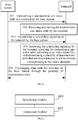
- FIG. 1 is a flowchart of a scheduling method applied to a base station, according to an exemplary embodiment. As shown in FIG. 1 , the method includes the following steps.
- the base station transmits a scheduling signaling to a terminal, wherein the scheduling signaling includes indication information for indicating a plurality of transmission units that are discontinuous in a time domain, and the terminal is configured to receive the scheduling signaling and determine the plurality of transmission units that are discontinuous in the time domain according to the indication information.
- step 102 the base station exchanges data with the terminal through the plurality of transmission units.
- the base station transmits the scheduling instruction to the terminal, wherein the scheduling instruction includes indication information for indicating the plurality of transmission units that are discontinuous in the time domain; the terminal receives the scheduling signaling and determines the scheduled plurality of transmission units that are discontinuous in the time domain according to the indication information; and the base station may exchange data with the terminal through the scheduled plurality of transmission units.
- Embodiments of the present disclosure provide a method for scheduling a plurality of transmission units that are discontinuous in the time domain, thereby breaking the limitation that only the plurality of transmission units that are continuous in the time domain can be scheduled, which improves flexibility, effectively supports a plurality of service types, and expands the service scope.
- the indication information includes location information of the plurality of transmission units that are discontinuous in the time domain; the location information of the transmission units includes start locations and end locations of the transmission units; or the location information of the transmission units includes start locations and continuation lengths of the transmission units, and end locations of the transmission units are determined by the start locations and the continuation lengths of the transmission units.
- the scheduled transmission units may be intuitively and accurately indicated.
- the method further includes:
- the base station first transmits the transmission unit index table to the terminal, then the scheduling instruction transmitted by the base station to the terminal only needs to carry index identifier during each scheduling is carried out, without carrying the location information of the plurality of transmission units, and the location information of the plurality of transmission units can be obtained by querying the transmission unit index table. Accordingly, the data volume is reduced and the network resources are saved.
- the method further includes:
- the base station first transmits the transmission unit index table to the terminal, then the scheduling instruction transmitted by the base station to the terminal only needs to carry index identifier during the scheduling is carried out each time, without carrying the transmission unit configuration, and the transmission unit configuration can be obtained by querying the transmission unit index table. Accordingly, the data volume is reduced and the network resources are saved.
- the indication information is positioned in an information field at a fixed location of the scheduling signaling, and a bit length of the indication information is fixed or determined by configuration.
- the method further includes: determining scheduled transmission units according to a scheduling rule; wherein the scheduling rule is configured to specify that in case that a plurality of transmission units that are continuous in a time domain have been scheduled, remaining plurality of transmission units are scheduled when the remaining plurality of transmission units are discontinuous in the time domain caused by occupied transmission units existing in the plurality of transmission units that are continuous in the time domain, and the terminal is configured to determine the scheduled transmission units according to the scheduling rule.
- the scheduling rule By predefining the scheduling rule, it is possible to instruct the scheduling of the remaining transmission units in case that the plurality of transmission units that are continuous in the time domain have been scheduled but some transmission units are occupied. Accordingly, it not only provides a method for scheduling the plurality of transmission units that are discontinuous in the time domain, but also avoids the waste of the transmission units.
- FIG. 2 is a flowchart of a scheduling method applied to a terminal, according to an exemplary embodiment. As shown in FIG. 2 , the method includes the following steps.
- the terminal receives a scheduling instruction transmitted by a base station, wherein the scheduling signaling includes indication information for indicating a plurality of transmission units that are discontinuous in a time domain.
- step 202 the terminal determines the plurality of transmission units that are discontinuous in the time domain according to the indication information.
- step 203 the terminal exchanges data with the base station through the plurality of transmission units.
- the terminal receives the scheduling instruction transmitted by the base station, wherein the scheduling instruction includes indication information for indicating the plurality of transmission units that are discontinuous in the time domain; the terminal determines the scheduled plurality of transmission units that are discontinuous in the time domain according to the indication information; and the terminal may exchange data with the base station through the plurality of transmission units.
- Embodiments of the present disclosure provide a method for scheduling a plurality of transmission units that are discontinuous in the time domain, thereby breaking the limitation that only the plurality of transmission units that are continuous in the time domain can be scheduled, which improves flexibility, effectively supports a plurality of service types, and expands the service scope.
- the indication information includes location information of the plurality of transmission units that are discontinuous in the time domain; the location information of the transmission units includes start locations and end locations of the transmission units; or the location information of the transmission units includes start locations and continuation lengths of the transmission units, and end locations of the transmission units are determined by the start locations and the continuation lengths of the transmission units.
- the scheduled transmission units may be intuitively and accurately indicated, and the terminal may directly determine the scheduled transmission units according to the location information carried in the scheduling signaling.
- the indication information is an index identifier
- the determining the plurality of transmission units that are discontinuous in the time domain according to the indication information includes: querying a transmission unit index table according to the index identifier, and determining location information of the plurality of transmission units that are discontinuous in the time domain corresponding to the index identifier, wherein the transmission unit index table includes the location information of the plurality of transmission units that are discontinuous in the time domain corresponding to each index identifier.
- the scheduling instruction transmitted by the base station to the terminal only needs to carry index identifier during each scheduling is carried out, without carrying the location information of the plurality of transmission units, and the location information of the plurality of transmission units can be obtained by querying the transmission unit index table. Accordingly, the data volume is reduced and the network resources are saved.
- the indication information is an index identifier
- the determining the plurality of transmission units that are discontinuous in the time domain according to the indication information includes: querying a transmission unit index table according to the index identifier, determining a transmission unit configuration corresponding to the index identifier, and determining transmission units that a scheduling identifier is a first identifier in the transmission unit configuration as scheduled transmission units, wherein the transmission unit index table includes the transmission unit configuration corresponding to each index identifier, the transmission unit configuration includes the scheduling identifier for each transmission unit, the scheduling identifier is the first identifier indicating that a corresponding transmission unit is scheduled, or the scheduling identifier is a second identifier indicating that a corresponding transmission unit is not scheduled.
- the scheduling instruction transmitted by the base station to the terminal only needs to carry index identifier during the scheduling is carried out each time, without carrying the transmission unit configuration, and the transmission unit configuration can be obtained by querying the transmission unit index table. Accordingly, the data volume is reduced and the network resources are saved.
- the indication information is positioned in an information field at a fixed location of the scheduling signaling, and a bit length of the indication information is fixed or determined by a configuration.
- the method further includes: determining scheduled transmission units according to a scheduling rule; wherein the scheduling rule is configured to specify that in case that a plurality of transmission units that are continuous in a time domain have been scheduled, remaining plurality of transmission units are scheduled when the remaining plurality of transmission units are discontinuous in the time domain caused by occupied transmission units existing in the plurality of transmission units that are continuous in the time domain, and the base station is configured to determine the scheduled transmission units according to the scheduling rule.
- the scheduling rule By predefining the scheduling rule, it is possible to instruct the scheduling of the remaining transmission units in case that the plurality of transmission units that are continuous in the time domain have been scheduled but some transmission units are occupied. Accordingly, it not only provides a method for scheduling the plurality of transmission units that are discontinuous in the time domain, but also avoids the waste of the transmission units.
- FIG. 3 is a flowchart of a scheduling method according to an exemplary embodiment.
- a base station and a terminal serve as an interactive subject. As shown in FIG. 3 , the method includes the following steps.
- the base station transmits a scheduling signaling to the terminal, wherein the scheduling signaling includes indication information for indicating a plurality of transmission units that are discontinuous in a time domain.
- the scheduling signaling is a signaling for determining scheduled transmission units, such as DCI (Downlink Control Information) or other signaling.
- DCI Downlink Control Information
- the transmission units are a resource set for carrying data transmission in a frequency domain, sch as one or more REs (Resource Element), or one or more RBs (Resource Block), or other types of frequency domain units.
- the transmission units are a resource set for carrying data transmission in the time domain, such as symbols, slots, subframes, or radio frames, or other types of time domain units.
- the scheduling signaling may schedule one or more data packets, that is, the plurality of transmission units scheduled by the scheduling signaling may carry the data transmission for one data packet, or may carry the data transmission for a plurality of data packets.
- the indication information is added in an information field at a fixed location of the scheduling signaling.
- the terminal may obtain the indication information from the information field at the fixed location in the scheduling signaling when receiving the scheduling signaling.
- a bit length of the indication information may be fixed or determined by configuration.
- the indication information may include location information of the plurality of transmission units that are discontinuous in the time domain, and the locations of the plurality of transmission units that are discontinuous in the time domain may be determined according to the indication information, so that these discontinuous transmission units in the time domain are determined as the transmission units to be scheduled.
- the location information of the transmission units includes start locations and end locations of the transmission units, that is, the indication information includes a start location and an end location of each transmission unit in the plurality of transmission units that are discontinuous in the time domain.
- FIG. 4 is a schematic diagram of one slot according to an exemplary embodiment. With reference to FIG. 4 , one slot includes a plurality of symbols, and a scheduling signaling DCI is transmitted on the first symbol in the slot.
- the indication information is ⁇ start location 1, end location 1 ⁇ , ⁇ start location 2, end location 2 ⁇ , and the two discontinuous transmission units in the time domain indicated by the indication information are shown in FIG. 4 .
- step 302 the terminal receives a scheduling signaling, and determines the plurality of transmission units that are discontinuous in the time domain according to the indication information.
- the instruction information includes the start location and the end location of each transmission unit in the plurality of transmission units that are discontinuous in the time domain, a location of each transmission unit is determined according to the start location and the end location of each transmission unit, and further locations of the plurality of transmission units are determined.
- the end location of each transmission unit is determined according to the start location and the continuation length location of each transmission unit. Accordingly, the location of each transmission unit may be determined according to the start location and the end location of each transmission unit, and further the locations of the plurality of transmission units may be determined.
- step 303 the base station exchanges data with the terminal through the plurality of transmission units.
- the determined plurality of transmission units are the transmission units used when the base station exchanges data with the terminal.
- the base station transmits data through the plurality of transmission units, the terminal receives data through the plurality of transmission units.
- the terminal transmits data through the plurality of transmission units, the base station receives data through the plurality of transmission units.
- the scheduling rule may be set. The scheduling rule is used to specify that in case that the plurality of transmission units that are continuous in the time domain have been scheduled, remaining plurality of transmission units are scheduled when the remaining plurality of transmission units are discontinuous in the time domain caused by occupied transmission units existing in the plurality of transmission units that are continuous in the time domain.
- the base station and the terminal determine the transmission unit to be scheduled according to the scheduling rule, that is, in a case where the plurality of transmission units that are continuous in the time domain have been scheduled, when occupied transmission units exist in the plurality of transmission units that are continuous in the time domain, resulting that the remaining plurality of transmission units are discontinuous in the time domain, the base station exchanges the data with the terminal through the remaining plurality of transmission units.
- the terminal may transmit the data through the transmission unit 1 and the transmission unit 3 according to the scheduling rule; and the base station may receive the data through the transmission unit 1 and the transmission unit 3 according to the scheduling rule.
- the scheduling rule may be predefined in a communication protocol between the base station and the terminal, or may be transmitted to the terminal by the base station through an RRC signaling, a MAC CE, or a physical layer signaling.
- the base station transmits a scheduling instruction to the terminal, wherein the scheduling instruction includes the indication information for indicating the plurality of transmission units that are discontinuous in the time domain; the terminal receives the scheduling instruction and determines the scheduled plurality of transmission units that are discontinuous in the time domain according to the indication information; and the base station may exchange data with the terminal through the plurality of transmission units.
- Embodiments of the present disclosure provide a method for scheduling a plurality of transmission units that are discontinuous in the time domain, thereby breaking the limitation that only the plurality of transmission units that are continuous in the time domain can be scheduled, which improves flexibility, effectively supports a plurality of service types, and expands the service scope.
- the scheduling rule it is possible to instruct the scheduling of the remaining transmission units in case that the plurality of transmission units that are continuous in the time domain have been scheduled but some transmission units are occupied. Accordingly, it not only provides a method for scheduling the plurality of transmission units that are discontinuous in the time domain, but also avoids the waste of the transmission units.
- FIG. 5 is a flowchart of a scheduling method according to an exemplary embodiment.
- a base station and a terminal serve as an interactive subject. As shown in FIG. 5 , the method includes the following steps.
- step 501 the base station transmits a transmission unit index table to the terminal.
- the transmission unit index table includes a plurality of transmission units that are discontinuous in a time domain corresponding to each index identifier.
- the transmission unit index table includes location information of the plurality of transmission units that are discontinuous in the time domain corresponding to each index identifier, and the location information may include start locations and end locations, or include start locations and continuation lengths.
- the location information of the plurality of corresponding transmission units may be determined according to the transmission unit index table provided that the index identifier of this scheduling is determined.
- the transmission unit index table may be shown in Table 1 below.
- Table 1 Index Identifier Transmission Unit 1 ⁇ start location 1, continuation length 1 ⁇ ; ⁇ start location 2, continuation length 2 ⁇ 2 ⁇ start location 1, continuation length 1 ⁇ ; ⁇ start location 2, continuation length 2 ⁇ ; ⁇ start location 3, continuation length 3 ⁇ 3 ⁇ start location 1, continuation length 1 ⁇ ; ⁇ start location 2, continuation length 2 ⁇ ; ⁇ start location 3, continuation length 3 ⁇ ; ⁇ start location 4, continuation length 4 ⁇
- the transmission unit index table includes a transmission unit configuration corresponding to each index identifier
- the transmission unit configuration includes a scheduling identifier for each transmission unit
- the scheduling identifier is a first identifier indicating a corresponding transmission unit is scheduled
- the scheduling identifier is the second identifier indicating that a corresponding transmission unit is not scheduled.
- the corresponding transmission unit configuration may be determined according to the transmission unit index table provided that the index identifier of this scheduling is determined, and further it is determined that which transmission units are scheduled.
- the first identifier is different from the second identifier, for example, the first identifier is 1 and the second identifier is 0.
- the transmission unit index table may be as shown in Table 2 below.
- a scheduling identifier 1 corresponding to one symbol indicates that the symbol is scheduled, and a scheduling identifier 0 corresponding to one symbol indicates the symbol is not scheduled.
- the base station may transmit the transmission unit index table through a plurality of methods, such as an RRC (Radio Resource Control) signaling, a MAC (Media Access Control), a CE (Control Element), or a physical layer signaling.
- RRC Radio Resource Control
- MAC Media Access Control
- CE Control Element
- step 502 the terminal receives and stores the transmission unit index table.
- the embodiment of the present disclosure is exemplified only by transmitting the transmission unit index table to the terminal by the base station.
- the above steps 501 and 502 are optional steps.
- the transmission unit index table may be predefined in a communication protocol between the base station and the terminal, without being transmitted to the terminal by the base station.
- the base station transmits a scheduling signaling to the terminal, wherein the scheduling signaling includes indication information for indicating the plurality of transmission units that are discontinuous in the time domain, and the indication information is an index identifier.
- the scheduling signaling does not need to carry the location information of transmission units to be scheduled, but only needs to carry the index identifier.
- the location information of transmission units to be scheduled is indexed by using the index identifier.
- step 504 the terminal receives the scheduling signaling, queries a transmission unit index table according to the index identifier, and determines the plurality of transmission units that are discontinuous in the time domain corresponding to the index identifier.
- the terminal When receiving the scheduling signaling, the terminal obtains the index identifier therefrom, and queries the transmission unit index table according to the index identifier.
- the transmission unit index table includes location information of the plurality of transmission units that are discontinuous in the time domain corresponding to each index identifier, and the location information of the plurality of transmission units that are discontinuous in the time domain corresponding to the index identifier may be determined by querying the transmission unit index table according to the index identifier, and thus, the plurality of transmission units that are discontinuous in the time domain corresponding to the index identifier may be determined.
- the index identifier in the scheduling signaling is 2
- it is determined that the location information of the plurality of corresponding transmission units is ⁇ start location 1, continuation length 1 ⁇ ; ⁇ start location 2, Continuation length 2 ⁇ ; ⁇ start location 3, continuation length 3 ⁇ , so that the three scheduled transmission units may be determined according to the location information.
- the transmission unit index table includes a transmission unit configuration corresponding to each index identifier
- the transmission unit configuration corresponding to the index identifier may be determined by querying the transmission unit index table according to the index identifier, and transmission units for which the scheduling identifier is a first identifier in the transmission unit configuration may be determined as scheduled transmission units, and thus the plurality of transmission units that are discontinuous in the time domain corresponding to the index identifier may be determined.
- the corresponding transmission unit configuration is 11100001110000 ⁇
- the first symbol, the second symbol, the third symbol, the eighth symbol, the ninth symbol and the tenth symbol in the slot in which the scheduling signaling is located are determined as scheduled transmission units.
- step 505 the base station exchanges the data with the terminal through the plurality of transmission units.
- the plurality of transmission units that are continuous in the time domain may further be scheduled.
- the base station may transmit a scheduling rule to the terminal.
- the scheduling rule is used to specify that in case that the plurality of transmission units that are continuous in the time domain have been scheduled, remaining plurality of transmission units are scheduled when the remaining plurality of transmission units are discontinuous in the time domain caused by occupied transmission units existing in the plurality of transmission units that are continuous in the time domain.
- the terminal stores the scheduling rule, and in a data exchanging process, the base station and the terminal determine transmission units to be scheduled according to the scheduling rule, that is, in a case where the plurality of transmission units that are continuous in the time domain have been scheduled, when occupied transmission units exist in the plurality of transmission units that are continuous in the time domain, resulting that the remaining plurality of transmission units are discontinuous in the time domain, the base station exchanges the data with the terminal through the remaining plurality of transmission units.
- the base station transmits a scheduling instruction to the terminal, wherein the scheduling instruction includes the indication information for indicating the plurality of transmission units that are discontinuous in the time domain; the terminal receives the scheduling instruction and determines the scheduled plurality of transmission units that are discontinuous in the time domain according to the indication information; and the base station may exchange data with the terminal through the plurality of transmission units.
- Embodiments of the present disclosure provide a method for scheduling a plurality of transmission units that are discontinuous in the time domain, thereby breaking the limitation that only the plurality of transmission units that are continuous in the time domain can be scheduled, which improves flexibility, effectively supports a plurality of service types, and expands the service scope.
- the base station first transmits the transmission unit index table to the terminal, then the scheduling instruction transmitted by the base station to the terminal only needs to carry index identifier during each scheduling is carried out, without carrying the location information of the plurality of transmission units or transmission unit configuration. Accordingly, the data volume is reduced and the network resources are saved.
- FIG. 6 is a block diagram showing a base station according to an exemplary embodiment.
- the base station includes a scheduling module 601 and an interaction module 602.
- the scheduling module 601 is configured to transmit a scheduling signaling to a terminal, wherein the scheduling signaling includes indication information for indicating a plurality of transmission units that are discontinuous in a time domain, and the terminal is configured to receive the scheduling signaling and determine the plurality of transmission units that are discontinuous in the time domain according to the indication information.
- the interaction module 602 is configured to exchange data with the terminal through the plurality of transmission units.
- the indication information includes location information of the plurality of transmission units that are discontinuous in the time domain; the location information of the transmission units includes start locations and end locations of the transmission units; or the location information of the transmission units includes start locations and continuation lengths of the transmission units, and end locations of the transmission units are determined by the start locations and the continuation lengths of the transmission units.
- the base station further includes:
- the base station further includes:
- the indication information is positioned in an information field at a fixed location of the scheduling signaling, and a bit length of the indication information is fixed or determined by configuration.
- the scheduling module 601 is further configured to determine scheduled transmission units according to a scheduling rule; wherein the scheduling rule is configured to specify that in case that a plurality of transmission units that are continuous in a time domain have been scheduled, remaining plurality of transmission units are scheduled when the remaining plurality of transmission units are discontinuous in the time domain caused by occupied transmission units existing in the plurality of transmission units that are continuous in the time domain, and the terminal is configured to determine the scheduled transmission units according to the scheduling rule.
- FIG. 7 is a block diagram showing a terminal according to an exemplary embodiment.
- the terminal includes a first reception module 701, a first determination module 702 and an interaction module 703.
- the first reception module 701 is configured to receive a scheduling instruction transmitted by a base station, wherein the scheduling signaling includes indication information for indicating a plurality of transmission units that are discontinuous in a time domain.
- the first determination module 702 is configured to determine the plurality of transmission units that are discontinuous in the time domain according to the indication information.
- the interaction module 703 is configured to exchange data with the base station through the plurality of transmission units.
- the indication information includes location information of the plurality of transmission units that are discontinuous in the time domain; the location information of the transmission units includes start locations and end locations of the transmission units; or the location information of the transmission units includes start locations and continuation lengths of the transmission units, and end locations of the transmission units are determined by the start locations and the continuation lengths of the transmission units.
- the indication information is an index identifier
- the first determination module 702 is further configured to query a transmission unit index table according to the index identifier, and determine location information of the plurality of transmission units that are discontinuous in the time domain corresponding to the index identifier, wherein the transmission unit index table includes the location information of the plurality of transmission units that are discontinuous in the time domain corresponding to each index identifier.
- the indication information is an index identifier
- the first determination module 702 is further configured to query a transmission unit index table according to the index identifier, determine a transmission unit configuration corresponding to the index identifier, and determine a transmission unit that a scheduling identifier is a first identifier in the transmission unit configuration as scheduled transmission units, wherein the transmission unit index table includes the transmission unit configuration corresponding to each index identifier, the transmission unit configuration includes the scheduling identifier for each transmission unit, the scheduling identifier is the first identifier indicating that a corresponding transmission unit is scheduled, or the scheduling identifier is a second identifier indicating that a corresponding transmission unit is not scheduled.
- the indication information is positioned in an information field at a fixed location of the scheduling signaling, and a bit length of the indication information is fixed or determined by configuration.
- the terminal further includes: a second determination module configured to determine scheduled transmission units according to a scheduling rule; wherein the scheduling rule is configured to specify that in case that a plurality of transmission units that are continuous in a time domain have been scheduled, remaining plurality of transmission units are scheduled when the remaining plurality of transmission units are discontinuous in the time domain caused by occupied transmission units existing in the plurality of transmission units that are continuous in the time domain, and the base station is configured to determine the scheduled transmission units according to the scheduling rule.
- a scheduling rule is configured to specify that in case that a plurality of transmission units that are continuous in a time domain have been scheduled, remaining plurality of transmission units are scheduled when the remaining plurality of transmission units are discontinuous in the time domain caused by occupied transmission units existing in the plurality of transmission units that are continuous in the time domain
- the base station is configured to determine the scheduled transmission units according to the scheduling rule.
- the base station and the terminal provided in the above embodiments are exemplified only by taking the division of the above functional modules as an example.
- the above functions may be allocated by different functional modules as required, that is, internal structures of the terminal and the base station are divided into different functional modules to complete all or part of the functions described above.
- the base station and the terminal provided by the above embodiments belong to the same concept as the embodiment of the scheduling method, and specific implementation processes thereof are described in the method embodiments, and are not described herein again.
- FIG. 8 is a block diagram showing a base station according to an exemplary embodiment.
- the base station includes a processor 801; a memory 802, which is configured to store processor-executable instructions; and a transceiver 803.
- the processor 801 is configured to:
- the embodiment of the present disclosure further discloses a computer-readable storage medium.
- An instruction in the computer-readable storage medium causes a base station to perform the scheduling method in the above embodiment when being executed by a processor of the base station.
- FIG. 9 is a block diagram showing a terminal 900 according to an exemplary embodiment.
- the terminal 900 may be a mobile phone, a computer, a digital broadcasting apparatus, a messaging device, a game console, a tablet device, a medical device, a fitness device, a personal digital assistant, and the like.
- the apparatus 900 may include one or more of the following components: a processing component 902, a memory 904, a power component 906, a multimedia component 908, an audio component 910, an input/output (I/O) interface 912, a sensor component 914, and a communication component 916.
- the processing component 902 typically controls the overall operations of the apparatus 900, such as the operations associated with display, telephone calls, data communications, camera operations, and recording operations.
- the processing component 902 may include one or more processors 920 to execute instructions to perform all or part of the steps in the above described methods.
- the processing component 902 may include one or more modules which facilitate the interaction between the processing component 902 and other components.
- the processing component 902 may include a multimedia module to facilitate the interaction between the multimedia component 908 and the processing component 902.
- the memory 904 is configured to store various types of data to support the operation of the apparatus 900. Examples of such data include instructions for any applications or methods operated on the apparatus 900, contact data, phonebook data, messages, pictures, videos, etc.
- the memory 904 may be implemented by using any type of volatile or non-volatile memory devices, or a combination thereof, such as a static random access memory (SRAM), an electrically erasable programmable read-only memory (EEPROM), an erasable programmable read-only memory (EPROM), a programmable read-only memory (PROM), a read-only memory (ROM), a magnetic memory, a flash memory, a magnetic or optical disk.
- SRAM static random access memory
- EEPROM electrically erasable programmable read-only memory
- EPROM erasable programmable read-only memory
- PROM programmable read-only memory
- ROM read-only memory
- magnetic memory a magnetic memory
- flash memory a flash memory
- magnetic or optical disk a
- the power component 906 provides power to various components of the apparatus 900.
- the power component 906 may include a power management system, one or more power sources, and any other components associated with the generation, management, and distribution of power in the apparatus 900.
- the multimedia component 908 includes a screen providing an output interface between the apparatus 900 and the user.
- the screen may include a liquid crystal display (LCD) and a touch panel (TP). If the screen includes the touch panel, the screen may be implemented as a touch screen to receive input signals from the user.
- the touch panel includes one or more touch sensors to sense touches, swipes, and gestures on the touch panel. The touch sensors may not only sense a boundary of a touch or swipe action, but also sense the duration and pressure associated with the touch or swipe action.
- the multimedia component 908 includes a front camera and/or a rear camera. The front camera and the rear camera may receive external multimedia data while the apparatus 900 is in an operation mode, such as a photographing mode or a video mode. Each of the front camera and the rear camera may be a fixed optical lens system or have focus and optical zoom capability.
- the audio component 910 is configured to output and/or input audio signals.
- the audio component 910 includes a microphone (MIC) configured to receive external audio signals when the apparatus 900 is in an operation mode, such as a call mode, a recording mode, and a voice recognition mode.
- the received audio signal may be further stored in the memory 904 or transmitted via the communication component 916.
- the audio component 910 further includes a speaker for outputting audio signals.
- the I/O interface 912 provides an interface between the processing component 902 and peripheral interface modules, such as a keyboard, a click wheel, buttons, and the like.
- the buttons may include, but are not limited to, a home button, a volume button, a start button, and a lock button.
- the sensor component 914 includes one or more sensors to provide status assessments of various aspects of the apparatus 900. For instance, the sensor component 914 may detect an on/off status of the apparatus 900, relative positioning of components, e.g., the display device and the mini keyboard of the apparatus 900, and the sensor component 914 may also detect a position change of the apparatus 900 or a component of the apparatus 900, presence or absence of user contact with the apparatus 900, orientation or acceleration/deceleration of the apparatus 900, and temperature change of the apparatus 900.
- the sensor component 914 may include a proximity sensor configured to detect the presence of nearby objects without any physical contact.
- the sensor component 914 may also include a light sensor, such as a CMOS or CCD image sensor, used for imaging applications.
- the sensor component 914 may also include an accelerometer sensor, a gyroscope sensor, a magnetic sensor, a pressure sensor, or a temperature sensor.
- the communication component 916 is configured to facilitate communication, wired or wirelessly, between the apparatus 900 and other devices.
- the apparatus 900 can access a wireless network based on a communication standard, such as WiFi, 2G, or 3G, or a combination thereof.
- the communication component 916 receives broadcast signals or broadcast associated information from an external broadcast management system via a broadcast channel.
- the communication component 916 further includes a near field communication (NFC) module to facilitate short-range communications.
- the NFC module may be implemented based on a radio frequency identification (RFID) technology, an infrared data association (IrDA) technology, an ultra-wideband (UWB) technology, a Bluetooth (BT) technology, and other technologies.
- RFID radio frequency identification
- IrDA infrared data association
- UWB ultra-wideband
- BT Bluetooth
- the apparatus 900 may be implemented with one or more application specific integrated circuits (ASICs), digital signal processors (DSPs), digital signal processing devices (DSPDs), programmable logic devices (PLDs), field programmable gate arrays (FPGAs), controllers, micro-controllers, microprocessors, or other electronic components, for performing the above described methods.
- ASICs application specific integrated circuits
- DSPs digital signal processors
- DSPDs digital signal processing devices
- PLDs programmable logic devices
- FPGAs field programmable gate arrays
- controllers micro-controllers, microprocessors, or other electronic components, for performing the above described methods.
- a non-transitory computer-readable storage medium including instructions is also provided, such as the memory 904 including instructions, executable by the processor 920 in the apparatus 900, for performing the above-described methods.
- the non-transitory computer-readable storage medium may be a ROM, a RAM, a CD-ROM, a magnetic tape, a floppy disc, an optical data storage device, and the like.
- An instruction in the computer-readable storage medium causes a terminal to perform the method in the above embodiment when being executed by a processor of the terminal.
- the method includes:
Landscapes
- Engineering & Computer Science (AREA)
- Computer Networks & Wireless Communication (AREA)
- Signal Processing (AREA)
- Mobile Radio Communication Systems (AREA)
Abstract
Description
- The present disclosure relates to the field of communication technology, and more particularly to a scheduling method, a base station, a terminal, and a storage medium.
- In the communication system, data transmission between a base station and a terminal is implemented based on the scheduling of the base station. The base station transmits a scheduling signaling to the terminal, wherein the scheduling signaling is used for indicating a location of a scheduled transmission unit. The terminal receives the scheduling signaling, so as to determine the location of the transmission unit according to the scheduling signaling. Then, the base station exchanges data with the terminal through the scheduled transmission unit.
- Generally, one scheduling signal only indicates the location of one transmission unit. However, communication systems are constantly evolving with the continuous emergence of new Internet applications. Accordingly, the current communication systems provide a plurality of service types, such as eMBB (Enhanced Mobile Broad Band), URLLC (Ultra Reliable Low Latency Communication), mMTC (massive Machine Type Communication), and the like. Considering that different service types have different requirements for the communication system, a more flexible scheduling method is proposed, which may transmit a scheduling signaling in any symbol in a slot, wherein there are a plurality of continuous symbols in a time domain in one slot, and the scheduling signaling is used for indicating that the plurality of symbols that are continuous in the time domain serve as transmission units to be scheduled.
- The present disclosure provides a scheduling method, a base station, a terminal, and a storage medium, which may solve the problems of related technologies. The technical solution is described as below.
- According to a first aspect of embodiments of the present disclosure, a scheduling method is provided. The method is applied to a base station, and includes:
- transmitting a scheduling signaling to a terminal, wherein the scheduling signaling includes indication information for indicating a plurality of transmission units that are discontinuous in a time domain, and the terminal is configured to receive the scheduling signaling and determine the plurality of transmission units that are discontinuous in the time domain according to the indication information; and
- exchanging data with the terminal through the plurality of transmission units.
- In a possible implementation, the indication information includes location information of the plurality of transmission units that are discontinuous in the time domain;
the location information of the transmission units includes start locations and end locations of the transmission units; or
the location information of the transmission units includes start locations and continuation lengths of the transmission units, and end locations of the transmission units are determined by the start locations and the continuation lengths of the transmission units. - In another possible implementation, the method further includes:
- transmitting a transmission unit index table to the terminal, wherein the transmission unit index table includes location information of the plurality of transmission units that are discontinuous in the time domain corresponding to each index identifier;
- wherein the indication information is an index identifier, and the terminal is configured to receive the scheduling signaling, query the transmission unit index table according to the index identifier, and determine the location information of the plurality of transmission units that are discontinuous in the time domain corresponding to the index identifier.
- In another possible implementation, the method further includes:
- transmitting a transmission unit index table to the terminal, wherein the transmission unit index table includes a transmission unit configuration corresponding to each index identifier, the transmission unit configuration includes a scheduling identifier for each transmission unit, the scheduling identifier is a first identifier indicating that a corresponding transmission unit is scheduled, or the scheduling identifier is a second identifier indicating that a corresponding transmission unit is not scheduled;
- wherein the indication information is an index identifier, and the terminal is configured to receive the scheduling signaling, query the transmission unit index table according to the index identifier, determine the transmission unit configuration corresponding to the index identifier, and determine transmission units for which the scheduling identifier is the first identifier in the transmission unit configuration as scheduled transmission units.
- In another possible implementation, the indication information is positioned in an information field at a fixed location of the scheduling signaling, and a bit length of the indication information is fixed or determined by configuration.
- In another possible implementation, the method further includes:
determining scheduled transmission units according to a scheduling rule; wherein the scheduling rule is configured to specify that in case that the plurality of transmission units that are continuous in a time domain have been scheduled, remaining plurality of transmission units are scheduled when the remaining plurality of transmission units are discontinuous in the time domain caused by occupied transmission units existing in the plurality of transmission units that are continuous in the time domain; and the terminal is configured to determine the scheduled transmission units according to the scheduling rule. - According to a second aspect of embodiments of the present disclosure, a scheduling method is provided. The method is applied to a terminal, and includes:
- receiving a scheduling instruction transmitted by a base station, wherein the scheduling signaling includes indication information for indicating a plurality of transmission units that are discontinuous in a time domain;
- determining the plurality of transmission units that are discontinuous in the time domain according to the indication information; and
- exchanging data with the base station through the plurality of transmission units.
- In a possible implementation, the indication information includes location information of the plurality of transmission units that are discontinuous in the time domain;
the location information of the transmission units includes start locations and end locations of the transmission units; or
the location information of the transmission units includes start locations and continuation lengths of the transmission units, and end locations of the transmission units are determined by the start locations and the continuation lengths of the transmission units. - In another possible implementation, the indication information is an index identifier, and the determining the plurality of transmission units that are discontinuous in the time domain according to the indication information includes:
querying a transmission unit index table according to the index identifier, and determining location information of the plurality of transmission units that are discontinuous in the time domain corresponding to the index identifier, wherein the transmission unit index table includes the location information of the plurality of transmission units that are discontinuous in the time domain corresponding to each index identifier. - In another possible implementation, the indication information is an index identifier, and the determining the plurality of transmission units that are discontinuous in the time domain according to the indication information includes:
querying a transmission unit index table according to the index identifier, determining a transmission unit configuration corresponding to the index identifier, and determining transmission units that a scheduling identifier is a first identifier in the transmission unit configuration as scheduled transmission units, wherein the transmission unit index table includes the transmission unit configuration corresponding to each index identifier, the transmission unit configuration includes the scheduling identifier for each transmission unit, the scheduling identifier is the first identifier indicating that a corresponding transmission unit is scheduled, or the scheduling identifier is a second identifier indicating that a corresponding transmission unit is not scheduled. - In another possible implementation, the indication information is positioned in an information field at a fixed location of the scheduling signaling, and a bit length of the indication information is fixed or determined by configuration.
- In another possible implementation, the method further includes:
determining scheduled transmission units according to a scheduling rule; wherein the scheduling rule is configured to specify that in case that a plurality of transmission units that are continuous in a time domain have been scheduled, remaining plurality of transmission units are scheduled when the remaining plurality of transmission units are discontinuous in the time domain caused by occupied transmission units existing in the plurality of transmission units that are continuous in the time domain, and the base station is configured to determine the scheduled transmission units according to the scheduling rule. - According to a third aspect of embodiments of the present disclosure, a base station is provided. The station includes:
- a scheduling module configured to transmit a scheduling signaling to a terminal, wherein the scheduling signaling includes indication information for indicating a plurality of transmission units that are discontinuous in a time domain, and the terminal is configured to receive the scheduling signaling and determine the plurality of transmission units that are discontinuous in the time domain according to the indication information; and
- an interaction module configured to exchange data with the terminal through the plurality of transmission units.
- In a possible implementation, the indication information includes location information of the plurality of transmission units that are discontinuous in the time domain;
the location information of the transmission units includes start locations and end locations of the transmission units; or
the location information of the transmission units includes start locations and continuation lengths of the transmission units, and end locations of the transmission units are determined by the start locations and the continuation lengths of the transmission units. - In another possible implementation, the base station further includes:
- a transmission module configured to transmit a transmission unit index table to the terminal, wherein the transmission unit index table includes location information of the plurality of transmission units that are discontinuous in the time domain corresponding to each index identifier;
- wherein the indication information is the index identifier, and the terminal is configured to receive the scheduling signaling, query the transmission unit index table according to the index identifier, and determine the location information of the plurality of transmission units that are discontinuous in the time domain corresponding to the index identifier.
- In another possible implementation, the base station further includes:
- a transmission module configured to transmit a transmission unit index table to the terminal, wherein the transmission unit index table includes a transmission unit configuration corresponding to each index identifier, the transmission unit configuration includes a scheduling identifier for each transmission unit, the scheduling identifier is a first identifier indicating that a corresponding transmission unit is scheduled, or the scheduling identifier is a second identifier indicating that a corresponding transmission unit is not scheduled;
- wherein the indication information is the index identifier, and the terminal is configured to receive the scheduling signaling, query the transmission unit index table according to the index identifier, determine a transmission unit configuration corresponding to the index identifier, and determine transmission units for which the scheduling identifier is the first identifier in the transmission unit configuration as scheduled transmission units.
- In another possible implementation, the indication information is positioned in an information field at a fixed location of the scheduling signaling, and a bit length of the indication information is fixed or determined by configuration.
- In another possible implementation, the scheduling module is further configured to determine scheduled transmission units according to a scheduling rule; wherein the scheduling rule is configured to specify that in case that a plurality of transmission units that are continuous in a time domain have been scheduled, remaining plurality of transmission units are scheduled when the remaining plurality of transmission units are discontinuous in the time domain caused by occupied transmission units existing in the plurality of transmission units that are continuous in the time domain, and the terminal is configured to determine the scheduled transmission units according to the scheduling rule.
- According to a fourth aspect of embodiments of the present disclosure, a terminal is provided. The terminal includes:
- a reception module configured to receive a scheduling instruction transmitted by a base station, wherein the scheduling signaling includes indication information for indicating a plurality of transmission units that are discontinuous in a time domain;
- a determination module configured to determine the plurality of transmission units that are discontinuous in the time domain according to the indication information; and
- an interaction module configured to exchange data with the base station through the plurality of transmission units.
- In a possible implementation, the indication information includes location information of the plurality of transmission units that are discontinuous in the time domain;
the location information of the transmission units includes start locations and end locations of the transmission units; or
the location information of the transmission units includes start locations and continuation lengths of the transmission units, and end locations of the transmission units are determined by the start locations and the continuation lengths of the transmission units. - In another possible implementation, the indication information is an index identifier, and the first determination module is further configured to query a transmission unit index table according to the index identifier, and determine location information of the plurality of transmission units that are discontinuous in the time domain corresponding to the index identifier, wherein the transmission unit index table includes the location information of the plurality of transmission units that are discontinuous in the time domain corresponding to each index identifier.
- In another possible implementation, the indication information is an index identifier, and the first determination module is further configured to query a transmission unit index table according to the index identifier, determine a transmission unit configuration corresponding to the index identifier, and determine a transmission unit that a scheduling identifier is a first identifier in the transmission unit configuration as scheduled transmission units, wherein the transmission unit index table comprises the transmission unit configuration corresponding to each index identifier, the transmission unit configuration comprises the scheduling identifier for each transmission unit, the scheduling identifier is the first identifier indicating that a corresponding transmission unit is scheduled, or the scheduling identifier is a second identifier indicating that a corresponding transmission unit is not scheduled.
- In another possible implementation, the indication information is positioned in an information field at a fixed location of the scheduling signaling, and a bit length of the indication information is fixed or determined by configuration.
- In another possible implementation, the terminal further includes:
a second determination module configured to determine scheduled transmission units according to a scheduling rule; wherein the scheduling rule is configured to specify that in case that a plurality of transmission units that are continuous in a time domain have been scheduled, remaining plurality of transmission units are scheduled when the remaining plurality of transmission units are discontinuous in the time domain caused by occupied transmission units existing in the plurality of transmission units that are continuous in the time domain, and the base station is configured to determine the scheduled transmission units according to the scheduling rule. - According to a fifth aspect of embodiments of the present disclosure, a base station is provided. The base station includes:
- a processor; and
- a memory, which is configured to store processor-executable instructions;
- wherein the processor is configured to:
- transmit a scheduling signaling to a terminal, wherein the scheduling signaling includes indication information for indicating a plurality of transmission units that are discontinuous in a time domain, and the terminal is configured to receive the scheduling signaling and determine the plurality of transmission units that are discontinuous in the time domain according to the indication information; and
- exchange data with the terminal through the plurality of transmission units.
- According to a sixth aspect of embodiments of the present disclosure, a terminal is provided. The terminal includes:
- a processor; and
- a memory, which is configured to store processor-executable instructions;
- wherein the processor is configured to:
- receive a scheduling instruction transmitted by a base station, wherein the scheduling signaling includes indication information for indicating a plurality of transmission units that are discontinuous in a time domain;
- determine the plurality of transmission units that are discontinuous in the time domain according to the indication information; and
- exchange data with the base station through the plurality of transmission units.
- According to a seventh aspect of embodiments of the present disclosure, a computer-readable storage medium having at least one instruction stored therein is provided. The instruction is loaded and executed by a processor to implement operation performed in the scheduling method as defined in the first aspect.
- According to an eighth aspect of embodiments of the present disclosure, a computer-readable storage medium having at least one instruction stored therein is provided. The instruction is loaded and executed by a processor to implement operations performed in the scheduling method as defined in the second aspect.
- The technical solutions provided by embodiments of the present disclosure may include the following benefits.
- According to the method, the base station, the terminal, and the storage medium provided in the embodiments of the present disclosure, the base station transmits a scheduling instruction to the terminal, wherein the scheduling instruction includes indication information for indicating the plurality of transmission units that are discontinuous in the time domain; the terminal receives the scheduling signaling, and determines the plurality of transmission units that are discontinuous in the time domain according to the indication information; and the base station may exchange data with the terminal through the plurality of transmission units. Embodiments of the present disclosure provide a method for scheduling a plurality of transmission units that are discontinuous in the time domain, thereby breaking the limitation that only the plurality of transmission units that are continuous in the time domain can be scheduled, which improves flexibility, effectively supports a plurality of service types, and expands the service scope.
- It is to be understood that both the foregoing general description and the following detailed description are exemplary only and are not intended to limit the present disclosure.
- The accompanying drawings, which are incorporated in and constitute a part of this specification, illustrate embodiments consistent with the present disclosure, and together with the description, serve to explain the principles of the present disclosure.
-
FIG. 1 is a flowchart of a scheduling method according to an exemplary embodiment; -
FIG. 2 is a flow chart of a scheduling method according to an exemplary embodiment; -
FIG. 3 is a flowchart of a scheduling method according to an exemplary embodiment; -
FIG. 4 is a schematic diagram of one slot according to an exemplary embodiment; -
FIG. 5 is a flowchart of a scheduling method according to an exemplary embodiment; -
FIG. 6 is a block diagram showing a base station according to an exemplary embodiment; -
FIG. 7 is a block diagram showing a terminal according to an exemplary embodiment; -
FIG. 8 is a block diagram showing a base station according to an exemplary embodiment; and -
FIG. 9 is a block diagram showing a terminal according to an exemplary embodiment. - In order to make the objective, the technical solution and the advantages of the present disclosure apparent, the present disclosure will be described in detail with reference to accompanying drawings and embodiments. Here, exemplary embodiments of the present disclosure and the description thereof are used to explain the present disclosure, but are not intended to limit the present disclosure.
- Embodiments of the present disclosure provide a scheduling method, a base station, a terminal, and a storage medium. The present disclosure will be described in detail below with reference to accompanying drawings.
-
FIG. 1 is a flowchart of a scheduling method applied to a base station, according to an exemplary embodiment. As shown inFIG. 1 , the method includes the following steps. - In
step 101, the base station transmits a scheduling signaling to a terminal, wherein the scheduling signaling includes indication information for indicating a plurality of transmission units that are discontinuous in a time domain, and the terminal is configured to receive the scheduling signaling and determine the plurality of transmission units that are discontinuous in the time domain according to the indication information. - In
step 102, the base station exchanges data with the terminal through the plurality of transmission units. - According to the method provided in the embodiment of the present disclosure, the base station transmits the scheduling instruction to the terminal, wherein the scheduling instruction includes indication information for indicating the plurality of transmission units that are discontinuous in the time domain; the terminal receives the scheduling signaling and determines the scheduled plurality of transmission units that are discontinuous in the time domain according to the indication information; and the base station may exchange data with the terminal through the scheduled plurality of transmission units. Embodiments of the present disclosure provide a method for scheduling a plurality of transmission units that are discontinuous in the time domain, thereby breaking the limitation that only the plurality of transmission units that are continuous in the time domain can be scheduled, which improves flexibility, effectively supports a plurality of service types, and expands the service scope.
- In a possible implementation, the indication information includes location information of the plurality of transmission units that are discontinuous in the time domain;
the location information of the transmission units includes start locations and end locations of the transmission units; or
the location information of the transmission units includes start locations and continuation lengths of the transmission units, and end locations of the transmission units are determined by the start locations and the continuation lengths of the transmission units. - By carrying the location information of the plurality of transmission units that are discontinuous in the time domain in the scheduling signaling, the scheduled transmission units may be intuitively and accurately indicated.
- In another possible implementation, the method further includes:
- transmitting a transmission unit index table to the terminal, wherein the transmission unit index table includes location information of the plurality of transmission units that are discontinuous in the time domain corresponding to each index identifier; and
- the indication information is the index identifier, and the terminal is configured to receive the scheduling signaling, query the transmission unit index table according to the index identifier, and determine the location information of the plurality of transmission units that are discontinuous in the time domain corresponding to the index identifier.
- The base station first transmits the transmission unit index table to the terminal, then the scheduling instruction transmitted by the base station to the terminal only needs to carry index identifier during each scheduling is carried out, without carrying the location information of the plurality of transmission units, and the location information of the plurality of transmission units can be obtained by querying the transmission unit index table. Accordingly, the data volume is reduced and the network resources are saved.
- In another possible implementation, the method further includes:
- transmitting a transmission unit index table to a terminal, wherein the transmission unit index table includes a transmission unit configuration corresponding to each index identifier, the transmission unit configuration includes a scheduling identifier for each transmission unit, the scheduling identifier is a first identifier indicating that a corresponding transmission unit is scheduled, or the scheduling identifier is a second identifier indicating that a corresponding transmission unit is not scheduled; and
- the indication information is the index identifier, and the terminal is configured to receive the scheduling signaling, query the transmission unit index table according to the index identifier, determine a transmission unit configuration corresponding to the index identifier, and determine transmission units for which the scheduling identifier is the first identifier in the transmission unit configuration as scheduled transmission units.
- The base station first transmits the transmission unit index table to the terminal, then the scheduling instruction transmitted by the base station to the terminal only needs to carry index identifier during the scheduling is carried out each time, without carrying the transmission unit configuration, and the transmission unit configuration can be obtained by querying the transmission unit index table. Accordingly, the data volume is reduced and the network resources are saved.
- In another possible implementation, the indication information is positioned in an information field at a fixed location of the scheduling signaling, and a bit length of the indication information is fixed or determined by configuration.
- In another possible implementation, the method further includes:
determining scheduled transmission units according to a scheduling rule; wherein the scheduling rule is configured to specify that in case that a plurality of transmission units that are continuous in a time domain have been scheduled, remaining plurality of transmission units are scheduled when the remaining plurality of transmission units are discontinuous in the time domain caused by occupied transmission units existing in the plurality of transmission units that are continuous in the time domain, and the terminal is configured to determine the scheduled transmission units according to the scheduling rule. - By predefining the scheduling rule, it is possible to instruct the scheduling of the remaining transmission units in case that the plurality of transmission units that are continuous in the time domain have been scheduled but some transmission units are occupied. Accordingly, it not only provides a method for scheduling the plurality of transmission units that are discontinuous in the time domain, but also avoids the waste of the transmission units.
-
FIG. 2 is a flowchart of a scheduling method applied to a terminal, according to an exemplary embodiment. As shown inFIG. 2 , the method includes the following steps. - In step 201, the terminal receives a scheduling instruction transmitted by a base station, wherein the scheduling signaling includes indication information for indicating a plurality of transmission units that are discontinuous in a time domain.
- In
step 202, the terminal determines the plurality of transmission units that are discontinuous in the time domain according to the indication information. - In
step 203, the terminal exchanges data with the base station through the plurality of transmission units. - According to the method provided in the embodiment of the present disclosure, the terminal receives the scheduling instruction transmitted by the base station, wherein the scheduling instruction includes indication information for indicating the plurality of transmission units that are discontinuous in the time domain; the terminal determines the scheduled plurality of transmission units that are discontinuous in the time domain according to the indication information; and the terminal may exchange data with the base station through the plurality of transmission units. Embodiments of the present disclosure provide a method for scheduling a plurality of transmission units that are discontinuous in the time domain, thereby breaking the limitation that only the plurality of transmission units that are continuous in the time domain can be scheduled, which improves flexibility, effectively supports a plurality of service types, and expands the service scope.
- In a possible implementation, the indication information includes location information of the plurality of transmission units that are discontinuous in the time domain;
the location information of the transmission units includes start locations and end locations of the transmission units; or
the location information of the transmission units includes start locations and continuation lengths of the transmission units, and end locations of the transmission units are determined by the start locations and the continuation lengths of the transmission units. - By carrying the location information of the plurality of transmission units that are discontinuous in the time domain in the scheduling signaling, the scheduled transmission units may be intuitively and accurately indicated, and the terminal may directly determine the scheduled transmission units according to the location information carried in the scheduling signaling.
- In another possible implementation, the indication information is an index identifier, and the determining the plurality of transmission units that are discontinuous in the time domain according to the indication information includes:
querying a transmission unit index table according to the index identifier, and determining location information of the plurality of transmission units that are discontinuous in the time domain corresponding to the index identifier, wherein the transmission unit index table includes the location information of the plurality of transmission units that are discontinuous in the time domain corresponding to each index identifier. - By setting the transmission unit index table, the scheduling instruction transmitted by the base station to the terminal only needs to carry index identifier during each scheduling is carried out, without carrying the location information of the plurality of transmission units, and the location information of the plurality of transmission units can be obtained by querying the transmission unit index table. Accordingly, the data volume is reduced and the network resources are saved.
- In another possible implementation, the indication information is an index identifier, and the determining the plurality of transmission units that are discontinuous in the time domain according to the indication information includes:
querying a transmission unit index table according to the index identifier, determining a transmission unit configuration corresponding to the index identifier, and determining transmission units that a scheduling identifier is a first identifier in the transmission unit configuration as scheduled transmission units, wherein the transmission unit index table includes the transmission unit configuration corresponding to each index identifier, the transmission unit configuration includes the scheduling identifier for each transmission unit, the scheduling identifier is the first identifier indicating that a corresponding transmission unit is scheduled, or the scheduling identifier is a second identifier indicating that a corresponding transmission unit is not scheduled. - By setting the transmission unit index table, during each scheduling, the scheduling instruction transmitted by the base station to the terminal only needs to carry index identifier during the scheduling is carried out each time, without carrying the transmission unit configuration, and the transmission unit configuration can be obtained by querying the transmission unit index table. Accordingly, the data volume is reduced and the network resources are saved.
- In another possible implementation, the indication information is positioned in an information field at a fixed location of the scheduling signaling, and a bit length of the indication information is fixed or determined by a configuration.
- In another possible implementation, the method further includes:
determining scheduled transmission units according to a scheduling rule; wherein the scheduling rule is configured to specify that in case that a plurality of transmission units that are continuous in a time domain have been scheduled, remaining plurality of transmission units are scheduled when the remaining plurality of transmission units are discontinuous in the time domain caused by occupied transmission units existing in the plurality of transmission units that are continuous in the time domain, and the base station is configured to determine the scheduled transmission units according to the scheduling rule. - By predefining the scheduling rule, it is possible to instruct the scheduling of the remaining transmission units in case that the plurality of transmission units that are continuous in the time domain have been scheduled but some transmission units are occupied. Accordingly, it not only provides a method for scheduling the plurality of transmission units that are discontinuous in the time domain, but also avoids the waste of the transmission units.
-
FIG. 3 is a flowchart of a scheduling method according to an exemplary embodiment. A base station and a terminal serve as an interactive subject. As shown inFIG. 3 , the method includes the following steps. - In
step 301, the base station transmits a scheduling signaling to the terminal, wherein the scheduling signaling includes indication information for indicating a plurality of transmission units that are discontinuous in a time domain. - Among them, the scheduling signaling is a signaling for determining scheduled transmission units, such as DCI (Downlink Control Information) or other signaling.
- The transmission units are a resource set for carrying data transmission in a frequency domain, sch as one or more REs (Resource Element), or one or more RBs (Resource Block), or other types of frequency domain units. The transmission units are a resource set for carrying data transmission in the time domain, such as symbols, slots, subframes, or radio frames, or other types of time domain units.
- The scheduling signaling may schedule one or more data packets, that is, the plurality of transmission units scheduled by the scheduling signaling may carry the data transmission for one data packet, or may carry the data transmission for a plurality of data packets.
- In a possible implementation, the indication information is added in an information field at a fixed location of the scheduling signaling. The terminal may obtain the indication information from the information field at the fixed location in the scheduling signaling when receiving the scheduling signaling. Moreover, a bit length of the indication information may be fixed or determined by configuration.
- In the embodiment of the present disclosure, the indication information may include location information of the plurality of transmission units that are discontinuous in the time domain, and the locations of the plurality of transmission units that are discontinuous in the time domain may be determined according to the indication information, so that these discontinuous transmission units in the time domain are determined as the transmission units to be scheduled.
- In a first possible implementation, the location information of the transmission units includes start locations and end locations of the transmission units, that is, the indication information includes a start location and an end location of each transmission unit in the plurality of transmission units that are discontinuous in the time domain.
FIG. 4 is a schematic diagram of one slot according to an exemplary embodiment. With reference toFIG. 4 , one slot includes a plurality of symbols, and a scheduling signaling DCI is transmitted on the first symbol in the slot. The indication information is {startlocation 1, end location 1}, {startlocation 2, end location 2}, and the two discontinuous transmission units in the time domain indicated by the indication information are shown inFIG. 4 . - In a second possible implementation, the location information of the transmission unit includes start locations and continuation lengths of the transmission units, and end locations of the transmission units are determined by the start locations and the continuation lengths of the transmission units. That is, the indication information includes a start location and a continuation length of each transmission unit in the plurality of transmission units that are discontinuous in the time domain. With reference to
FIG. 4 , if the indication information is {startlocation 1, continuation length=3 symbols}, {startlocation 2, continuation length=4 symbols}, the two discontinuous transmission units in the time domain indicated by the indication information are shown inFIG. 4 . - In step 302, the terminal receives a scheduling signaling, and determines the plurality of transmission units that are discontinuous in the time domain according to the indication information.
- If the instruction information includes the start location and the end location of each transmission unit in the plurality of transmission units that are discontinuous in the time domain, a location of each transmission unit is determined according to the start location and the end location of each transmission unit, and further locations of the plurality of transmission units are determined.
- If the indication information includes the start location and the continuation length of each transmission unit in the plurality of transmission units that are discontinuous in the time domain, the end location of each transmission unit is determined according to the start location and the continuation length location of each transmission unit. Accordingly, the location of each transmission unit may be determined according to the start location and the end location of each transmission unit, and further the locations of the plurality of transmission units may be determined.
- In
step 303, the base station exchanges data with the terminal through the plurality of transmission units. - The determined plurality of transmission units are the transmission units used when the base station exchanges data with the terminal. In a downlink process, the base station transmits data through the plurality of transmission units, the terminal receives data through the plurality of transmission units. In an uplink process, the terminal transmits data through the plurality of transmission units, the base station receives data through the plurality of transmission units.
- It should be noted that these embodiments only describe a process for scheduling the plurality of transmission units that are discontinuous in the time domain. In practical applications, the plurality of transmission units that are continuous in the time domain may further be scheduled. Moreover, the scheduling rule may be set. The scheduling rule is used to specify that in case that the plurality of transmission units that are continuous in the time domain have been scheduled, remaining plurality of transmission units are scheduled when the remaining plurality of transmission units are discontinuous in the time domain caused by occupied transmission units existing in the plurality of transmission units that are continuous in the time domain. Moreover, in a data exchanging process, the base station and the terminal determine the transmission unit to be scheduled according to the scheduling rule, that is, in a case where the plurality of transmission units that are continuous in the time domain have been scheduled, when occupied transmission units exist in the plurality of transmission units that are continuous in the time domain, resulting that the remaining plurality of transmission units are discontinuous in the time domain, the base station exchanges the data with the terminal through the remaining plurality of transmission units.
- For example, when the base station has scheduled three continuous transmission units in the time domain: a
transmission unit 1, atransmission unit 2 and a transmission unit 3, but thetransmission unit 2 is occupied, the terminal may transmit the data through thetransmission unit 1 and the transmission unit 3 according to the scheduling rule; and the base station may receive the data through thetransmission unit 1 and the transmission unit 3 according to the scheduling rule. - In practical applications, the scheduling rule may be predefined in a communication protocol between the base station and the terminal, or may be transmitted to the terminal by the base station through an RRC signaling, a MAC CE, or a physical layer signaling.
- According to the method provided by the embodiments of the present disclosure, the base station transmits a scheduling instruction to the terminal, wherein the scheduling instruction includes the indication information for indicating the plurality of transmission units that are discontinuous in the time domain; the terminal receives the scheduling instruction and determines the scheduled plurality of transmission units that are discontinuous in the time domain according to the indication information; and the base station may exchange data with the terminal through the plurality of transmission units. Embodiments of the present disclosure provide a method for scheduling a plurality of transmission units that are discontinuous in the time domain, thereby breaking the limitation that only the plurality of transmission units that are continuous in the time domain can be scheduled, which improves flexibility, effectively supports a plurality of service types, and expands the service scope.
- Moreover, by predefining the scheduling rule, it is possible to instruct the scheduling of the remaining transmission units in case that the plurality of transmission units that are continuous in the time domain have been scheduled but some transmission units are occupied. Accordingly, it not only provides a method for scheduling the plurality of transmission units that are discontinuous in the time domain, but also avoids the waste of the transmission units.
-
FIG. 5 is a flowchart of a scheduling method according to an exemplary embodiment. A base station and a terminal serve as an interactive subject. As shown inFIG. 5 , the method includes the following steps. - In
step 501, the base station transmits a transmission unit index table to the terminal. - The transmission unit index table includes a plurality of transmission units that are discontinuous in a time domain corresponding to each index identifier.
- In a first possible implementation, the transmission unit index table includes location information of the plurality of transmission units that are discontinuous in the time domain corresponding to each index identifier, and the location information may include start locations and end locations, or include start locations and continuation lengths. The location information of the plurality of corresponding transmission units may be determined according to the transmission unit index table provided that the index identifier of this scheduling is determined.
- For example, the transmission unit index table may be shown in Table 1 below.
Table 1 Index Identifier Transmission Unit 1 {start location 1, continuation length 1}; {startlocation 2, continuation length 2}2 {start location 1, continuation length 1}; {startlocation 2, continuation length 2}; {start location 3, continuation length 3}3 {start location 1, continuation length 1}; {startlocation 2, continuation length 2}; {start location 3, continuation length 3}; {start location 4, continuation length 4} - In a second possible implementation, the transmission unit index table includes a transmission unit configuration corresponding to each index identifier, the transmission unit configuration includes a scheduling identifier for each transmission unit, the scheduling identifier is a first identifier indicating a corresponding transmission unit is scheduled, and the scheduling identifier is the second identifier indicating that a corresponding transmission unit is not scheduled. The corresponding transmission unit configuration may be determined according to the transmission unit index table provided that the index identifier of this scheduling is determined, and further it is determined that which transmission units are scheduled. Among them, the first identifier is different from the second identifier, for example, the first identifier is 1 and the second identifier is 0.
- For example, the transmission unit index table may be as shown in Table 2 below. There are 14 symbols in one slot, a
scheduling identifier 1 corresponding to one symbol indicates that the symbol is scheduled, and a scheduling identifier 0 corresponding to one symbol indicates the symbol is not scheduled.Table 2 Index Identifier Transmission Unit Configuration 1 {11111111111111} 2 {11110001111000} 3 {11100001110000} 4 {11100001110011} - The base station may transmit the transmission unit index table through a plurality of methods, such as an RRC (Radio Resource Control) signaling, a MAC (Media Access Control), a CE (Control Element), or a physical layer signaling.
- In
step 502, the terminal receives and stores the transmission unit index table. - It should be noted that the embodiment of the present disclosure is exemplified only by transmitting the transmission unit index table to the terminal by the base station. In fact, the
above steps - In
step 503, the base station transmits a scheduling signaling to the terminal, wherein the scheduling signaling includes indication information for indicating the plurality of transmission units that are discontinuous in the time domain, and the indication information is an index identifier. - When the base station carries out scheduling, the scheduling signaling does not need to carry the location information of transmission units to be scheduled, but only needs to carry the index identifier. The location information of transmission units to be scheduled is indexed by using the index identifier.
- In step 504, the terminal receives the scheduling signaling, queries a transmission unit index table according to the index identifier, and determines the plurality of transmission units that are discontinuous in the time domain corresponding to the index identifier.
- When receiving the scheduling signaling, the terminal obtains the index identifier therefrom, and queries the transmission unit index table according to the index identifier.
- In a first possible implementation, the transmission unit index table includes location information of the plurality of transmission units that are discontinuous in the time domain corresponding to each index identifier, and the location information of the plurality of transmission units that are discontinuous in the time domain corresponding to the index identifier may be determined by querying the transmission unit index table according to the index identifier, and thus, the plurality of transmission units that are discontinuous in the time domain corresponding to the index identifier may be determined.
- Based on the example in Table 1 above, when the index identifier in the scheduling signaling is 2, then it is determined that the location information of the plurality of corresponding transmission units is {start
location 1, continuation length 1}; {startlocation 2, Continuation length 2}; {start location 3, continuation length 3}, so that the three scheduled transmission units may be determined according to the location information. - In a second possible implementation, the transmission unit index table includes a transmission unit configuration corresponding to each index identifier, the transmission unit configuration corresponding to the index identifier may be determined by querying the transmission unit index table according to the index identifier, and transmission units for which the scheduling identifier is a first identifier in the transmission unit configuration may be determined as scheduled transmission units, and thus the plurality of transmission units that are discontinuous in the time domain corresponding to the index identifier may be determined.
- Based on the example in Table 2 above, when the index identifier in the scheduling signaling is 3, the corresponding transmission unit configuration is 11100001110000}, and the first symbol, the second symbol, the third symbol, the eighth symbol, the ninth symbol and the tenth symbol in the slot in which the scheduling signaling is located are determined as scheduled transmission units.
- In
step 505, the base station exchanges the data with the terminal through the plurality of transmission units. - It should be noted that these embodiments only describe a process for scheduling the plurality of transmission units that are discontinuous in the time domain. In practical applications, the plurality of transmission units that are continuous in the time domain may further be scheduled. Moreover, the base station may transmit a scheduling rule to the terminal. The scheduling rule is used to specify that in case that the plurality of transmission units that are continuous in the time domain have been scheduled, remaining plurality of transmission units are scheduled when the remaining plurality of transmission units are discontinuous in the time domain caused by occupied transmission units existing in the plurality of transmission units that are continuous in the time domain. The terminal stores the scheduling rule, and in a data exchanging process, the base station and the terminal determine transmission units to be scheduled according to the scheduling rule, that is, in a case where the plurality of transmission units that are continuous in the time domain have been scheduled, when occupied transmission units exist in the plurality of transmission units that are continuous in the time domain, resulting that the remaining plurality of transmission units are discontinuous in the time domain, the base station exchanges the data with the terminal through the remaining plurality of transmission units.
- According to the method provided by the embodiment of the present disclosure, the base station transmits a scheduling instruction to the terminal, wherein the scheduling instruction includes the indication information for indicating the plurality of transmission units that are discontinuous in the time domain; the terminal receives the scheduling instruction and determines the scheduled plurality of transmission units that are discontinuous in the time domain according to the indication information; and the base station may exchange data with the terminal through the plurality of transmission units. Embodiments of the present disclosure provide a method for scheduling a plurality of transmission units that are discontinuous in the time domain, thereby breaking the limitation that only the plurality of transmission units that are continuous in the time domain can be scheduled, which improves flexibility, effectively supports a plurality of service types, and expands the service scope.
- Moreover, the base station first transmits the transmission unit index table to the terminal, then the scheduling instruction transmitted by the base station to the terminal only needs to carry index identifier during each scheduling is carried out, without carrying the location information of the plurality of transmission units or transmission unit configuration. Accordingly, the data volume is reduced and the network resources are saved.
-
FIG. 6 is a block diagram showing a base station according to an exemplary embodiment. With reference toFIG. 6 , the base station includes ascheduling module 601 and aninteraction module 602. - The
scheduling module 601 is configured to transmit a scheduling signaling to a terminal, wherein the scheduling signaling includes indication information for indicating a plurality of transmission units that are discontinuous in a time domain, and the terminal is configured to receive the scheduling signaling and determine the plurality of transmission units that are discontinuous in the time domain according to the indication information. - The
interaction module 602 is configured to exchange data with the terminal through the plurality of transmission units. - In a possible implementation, the indication information includes location information of the plurality of transmission units that are discontinuous in the time domain;
the location information of the transmission units includes start locations and end locations of the transmission units; or
the location information of the transmission units includes start locations and continuation lengths of the transmission units, and end locations of the transmission units are determined by the start locations and the continuation lengths of the transmission units. - In another possible implementation, the base station further includes:
- a first transmission module configured to transmit a transmission unit index table to the terminal, wherein the transmission unit index table includes location information of the plurality of transmission units that are discontinuous in the time domain corresponding to each index identifier;
- wherein the indication information is the index identifier, and the terminal is configured to receive the scheduling signaling, query the transmission unit index table according to the index identifier, and determine the location information of the plurality of transmission units that are discontinuous in the time domain corresponding to the index identifier.
- In another possible implementation, the base station further includes:
- a second transmission module configured to transmit a transmission unit index table to the terminal, wherein the transmission unit index table includes a transmission unit configuration corresponding to each index identifier, the transmission unit configuration includes a scheduling identifier for each transmission unit, the scheduling identifier is a first identifier indicating that a corresponding transmission unit is scheduled, or the scheduling identifier is a second identifier indicating that a corresponding transmission unit is not scheduled;
- wherein the indication information is the index identifier, and the terminal is configured to receive the scheduling signaling, query the transmission unit index table according to the index identifier, determine a transmission unit configuration corresponding to the index identifier, and determine transmission units for which the scheduling identifier is the first identifier in the transmission unit configuration as scheduled transmission units.
- In another possible implementation, the indication information is positioned in an information field at a fixed location of the scheduling signaling, and a bit length of the indication information is fixed or determined by configuration.
- In another possible implementation, the
scheduling module 601 is further configured to determine scheduled transmission units according to a scheduling rule; wherein the scheduling rule is configured to specify that in case that a plurality of transmission units that are continuous in a time domain have been scheduled, remaining plurality of transmission units are scheduled when the remaining plurality of transmission units are discontinuous in the time domain caused by occupied transmission units existing in the plurality of transmission units that are continuous in the time domain, and the terminal is configured to determine the scheduled transmission units according to the scheduling rule. -
FIG. 7 is a block diagram showing a terminal according to an exemplary embodiment. With reference toFIG. 7 , the terminal includes afirst reception module 701, afirst determination module 702 and aninteraction module 703. - The
first reception module 701 is configured to receive a scheduling instruction transmitted by a base station, wherein the scheduling signaling includes indication information for indicating a plurality of transmission units that are discontinuous in a time domain. - The
first determination module 702 is configured to determine the plurality of transmission units that are discontinuous in the time domain according to the indication information. - The
interaction module 703 is configured to exchange data with the base station through the plurality of transmission units. - In another possible implementation, the indication information includes location information of the plurality of transmission units that are discontinuous in the time domain;
the location information of the transmission units includes start locations and end locations of the transmission units; or
the location information of the transmission units includes start locations and continuation lengths of the transmission units, and end locations of the transmission units are determined by the start locations and the continuation lengths of the transmission units. - In another possible implementation, the indication information is an index identifier, and the
first determination module 702 is further configured to query a transmission unit index table according to the index identifier, and determine location information of the plurality of transmission units that are discontinuous in the time domain corresponding to the index identifier, wherein the transmission unit index table includes the location information of the plurality of transmission units that are discontinuous in the time domain corresponding to each index identifier. - In another possible implementation, the indication information is an index identifier, and the
first determination module 702 is further configured to query a transmission unit index table according to the index identifier, determine a transmission unit configuration corresponding to the index identifier, and determine a transmission unit that a scheduling identifier is a first identifier in the transmission unit configuration as scheduled transmission units, wherein the transmission unit index table includes the transmission unit configuration corresponding to each index identifier, the transmission unit configuration includes the scheduling identifier for each transmission unit, the scheduling identifier is the first identifier indicating that a corresponding transmission unit is scheduled, or the scheduling identifier is a second identifier indicating that a corresponding transmission unit is not scheduled. - In another possible implementation, the indication information is positioned in an information field at a fixed location of the scheduling signaling, and a bit length of the indication information is fixed or determined by configuration.
- In another possible implementation, the terminal further includes:
a second determination module configured to determine scheduled transmission units according to a scheduling rule; wherein the scheduling rule is configured to specify that in case that a plurality of transmission units that are continuous in a time domain have been scheduled, remaining plurality of transmission units are scheduled when the remaining plurality of transmission units are discontinuous in the time domain caused by occupied transmission units existing in the plurality of transmission units that are continuous in the time domain, and the base station is configured to determine the scheduled transmission units according to the scheduling rule. - It should be noted that during scheduling between the base station and the terminal provided in the above embodiments are exemplified only by taking the division of the above functional modules as an example. In practical applications, the above functions may be allocated by different functional modules as required, that is, internal structures of the terminal and the base station are divided into different functional modules to complete all or part of the functions described above. In addition, the base station and the terminal provided by the above embodiments belong to the same concept as the embodiment of the scheduling method, and specific implementation processes thereof are described in the method embodiments, and are not described herein again.
-
FIG. 8 is a block diagram showing a base station according to an exemplary embodiment. With reference toFIG. 8 , the base station includes aprocessor 801; amemory 802, which is configured to store processor-executable instructions; and atransceiver 803. Among them, theprocessor 801 is configured to: - transmit a scheduling signaling to a terminal by the
transceiver 803, wherein the scheduling signaling includes indication information for indicating a plurality of transmission units that are discontinuous in a time domain, and the terminal is configured to receive the scheduling signaling and determine the plurality of transmission units that are discontinuous in the time domain according to the indication information; and - exchange data with the terminal through the plurality of transmission units.
- The embodiment of the present disclosure further discloses a computer-readable storage medium. An instruction in the computer-readable storage medium causes a base station to perform the scheduling method in the above embodiment when being executed by a processor of the base station.
-
FIG. 9 is a block diagram showing a terminal 900 according to an exemplary embodiment. For example, the terminal 900 may be a mobile phone, a computer, a digital broadcasting apparatus, a messaging device, a game console, a tablet device, a medical device, a fitness device, a personal digital assistant, and the like. - Referring to
FIG. 9 , theapparatus 900 may include one or more of the following components: aprocessing component 902, amemory 904, apower component 906, amultimedia component 908, anaudio component 910, an input/output (I/O)interface 912, asensor component 914, and acommunication component 916. - The
processing component 902 typically controls the overall operations of theapparatus 900, such as the operations associated with display, telephone calls, data communications, camera operations, and recording operations. Theprocessing component 902 may include one ormore processors 920 to execute instructions to perform all or part of the steps in the above described methods. Moreover, theprocessing component 902 may include one or more modules which facilitate the interaction between theprocessing component 902 and other components. For instance, theprocessing component 902 may include a multimedia module to facilitate the interaction between themultimedia component 908 and theprocessing component 902. - The
memory 904 is configured to store various types of data to support the operation of theapparatus 900. Examples of such data include instructions for any applications or methods operated on theapparatus 900, contact data, phonebook data, messages, pictures, videos, etc. Thememory 904 may be implemented by using any type of volatile or non-volatile memory devices, or a combination thereof, such as a static random access memory (SRAM), an electrically erasable programmable read-only memory (EEPROM), an erasable programmable read-only memory (EPROM), a programmable read-only memory (PROM), a read-only memory (ROM), a magnetic memory, a flash memory, a magnetic or optical disk. - The
power component 906 provides power to various components of theapparatus 900. Thepower component 906 may include a power management system, one or more power sources, and any other components associated with the generation, management, and distribution of power in theapparatus 900. - The
multimedia component 908 includes a screen providing an output interface between theapparatus 900 and the user. In some embodiments, the screen may include a liquid crystal display (LCD) and a touch panel (TP). If the screen includes the touch panel, the screen may be implemented as a touch screen to receive input signals from the user. The touch panel includes one or more touch sensors to sense touches, swipes, and gestures on the touch panel. The touch sensors may not only sense a boundary of a touch or swipe action, but also sense the duration and pressure associated with the touch or swipe action. In some embodiments, themultimedia component 908 includes a front camera and/or a rear camera. The front camera and the rear camera may receive external multimedia data while theapparatus 900 is in an operation mode, such as a photographing mode or a video mode. Each of the front camera and the rear camera may be a fixed optical lens system or have focus and optical zoom capability. - The
audio component 910 is configured to output and/or input audio signals. For example, theaudio component 910 includes a microphone (MIC) configured to receive external audio signals when theapparatus 900 is in an operation mode, such as a call mode, a recording mode, and a voice recognition mode. The received audio signal may be further stored in thememory 904 or transmitted via thecommunication component 916. In some embodiments, theaudio component 910 further includes a speaker for outputting audio signals. - The I/
O interface 912 provides an interface between theprocessing component 902 and peripheral interface modules, such as a keyboard, a click wheel, buttons, and the like. The buttons may include, but are not limited to, a home button, a volume button, a start button, and a lock button. - The
sensor component 914 includes one or more sensors to provide status assessments of various aspects of theapparatus 900. For instance, thesensor component 914 may detect an on/off status of theapparatus 900, relative positioning of components, e.g., the display device and the mini keyboard of theapparatus 900, and thesensor component 914 may also detect a position change of theapparatus 900 or a component of theapparatus 900, presence or absence of user contact with theapparatus 900, orientation or acceleration/deceleration of theapparatus 900, and temperature change of theapparatus 900. Thesensor component 914 may include a proximity sensor configured to detect the presence of nearby objects without any physical contact. Thesensor component 914 may also include a light sensor, such as a CMOS or CCD image sensor, used for imaging applications. In some embodiments, thesensor component 914 may also include an accelerometer sensor, a gyroscope sensor, a magnetic sensor, a pressure sensor, or a temperature sensor. - The
communication component 916 is configured to facilitate communication, wired or wirelessly, between theapparatus 900 and other devices. Theapparatus 900 can access a wireless network based on a communication standard, such as WiFi, 2G, or 3G, or a combination thereof. In an exemplary embodiment, thecommunication component 916 receives broadcast signals or broadcast associated information from an external broadcast management system via a broadcast channel. In an exemplary embodiment, thecommunication component 916 further includes a near field communication (NFC) module to facilitate short-range communications. For example, the NFC module may be implemented based on a radio frequency identification (RFID) technology, an infrared data association (IrDA) technology, an ultra-wideband (UWB) technology, a Bluetooth (BT) technology, and other technologies. - In exemplary embodiments, the
apparatus 900 may be implemented with one or more application specific integrated circuits (ASICs), digital signal processors (DSPs), digital signal processing devices (DSPDs), programmable logic devices (PLDs), field programmable gate arrays (FPGAs), controllers, micro-controllers, microprocessors, or other electronic components, for performing the above described methods. - In exemplary embodiments, a non-transitory computer-readable storage medium including instructions is also provided, such as the
memory 904 including instructions, executable by theprocessor 920 in theapparatus 900, for performing the above-described methods. For example, the non-transitory computer-readable storage medium may be a ROM, a RAM, a CD-ROM, a magnetic tape, a floppy disc, an optical data storage device, and the like. - Further, there is provided a computer-readable storage medium. An instruction in the computer-readable storage medium causes a terminal to perform the method in the above embodiment when being executed by a processor of the terminal. The method includes:
- receiving a scheduling instruction transmitted by the base station, wherein the scheduling signaling includes indication information for indicating a plurality of transmission units that are discontinuous in a time domain;
- determining the plurality of transmission units that are discontinuous in the time domain according to the instruction information; and
- exchanging data with the base station through the plurality of transmission units.
- Persons of ordinary skill in the art can understand that all or part of the steps described in the above embodiments can be completed through hardware, or through relevant hardware instructed by applications stored in a non-transitory computer readable storage medium, such as a read-only memory, a disk or a CD, etc.
- The foregoing descriptions are merely optional embodiments of the present disclosure, and are not intended to limit the present disclosure. Within the spirit and principles of the disclosure, any modifications, equivalent substitutions, improvements, etc., are within the protection scope of the present disclosure.
Claims (28)
- A scheduling method, applied to a base station, and comprising:Transmitting a scheduling signaling to a terminal, wherein the scheduling signaling comprises indication information for indicating a plurality of transmission units that are discontinuous in a time domain, and the terminal is configured to receive the scheduling signaling and determine the plurality of transmission units that are discontinuous in the time domain according to the indication information; andexchanging data with the terminal through the plurality of transmission units.
- The method according to claim 1, wherein the indication information comprises location information of the plurality of transmission units that are discontinuous in the time domain;
the location information of the transmission units comprises start locations and end locations of the transmission units; or
the location information of the transmission units comprises start locations and continuation lengths of the transmission units, and end locations of the transmission units are determined by the start locations and the continuation lengths of the transmission units. - The method according to claim 1, further comprising:transmitting a transmission unit index table to the terminal, wherein the transmission unit index table comprises location information of the plurality of transmission units that are discontinuous in the time domain corresponding to each index identifier;wherein the indication information is an index identifier, and the terminal is configured to receive the scheduling signaling, query the transmission unit index table according to the index identifier, and determine the location information of the plurality of transmission units that are discontinuous in the time domain corresponding to the index identifier.
- The method according to claim 1, further comprising:transmitting a transmission unit index table to the terminal, wherein the transmission unit index table comprises a transmission unit configuration corresponding to each index identifier, the transmission unit configuration comprises a scheduling identifier for each transmission unit, the scheduling identifier is a first identifier indicating that a corresponding transmission unit is scheduled, or the scheduling identifier is a second identifier indicating that a corresponding transmission unit is not scheduled;wherein the indication information is an index identifier, and the terminal is configured to receive the scheduling signaling, query the transmission unit index table according to the index identifier, determine the transmission unit configuration corresponding to the index identifier, and determine transmission units for which the scheduling identifier is the first identifier in the transmission unit configuration as scheduled transmission units.
- The method according to claim 1, wherein the indication information is positioned in an information field at a fixed location of the scheduling signaling, and a bit length of the indication information is fixed or determined by configuration.
- The method according to claim 1, further comprising:
determining scheduled transmission units according to a scheduling rule; wherein the scheduling rule is configured to specify that in case that a plurality of transmission units that are continuous in the time domain have been scheduled, remaining plurality of transmission units are scheduled when the remaining plurality of transmission units are discontinuous in the time domain caused by occupied transmission units existing in the plurality of transmission units that are continuous in the time domain; and the terminal is configured to determine the scheduled transmission units according to the scheduling rule. - A scheduling method, applied to a terminal, and comprising:receiving a scheduling instruction transmitted by a base station, wherein the scheduling signaling comprises indication information for indicating a plurality of transmission units that are discontinuous in a time domain;determining the plurality of transmission units that are discontinuous in the time domain according to the indication information; andexchanging data with the base station through the plurality of transmission units.
- The method according to claim 7, wherein the indication information comprises location information of the plurality of transmission units that are discontinuous in the time domain;
the location information of the transmission units comprises start locations and end locations of the transmission units; or
the location information of the transmission units comprises start locations and continuation lengths of the transmission units, and end locations of the transmission units are determined by the start locations and the continuation lengths of the transmission units. - The method according to claim 7, wherein the indication information is an index identifier, and the determining the plurality of transmission units that are discontinuous in the time domain according to the indication information comprises:
querying a transmission unit index table according to the index identifier, and determining location information of the plurality of transmission units that are discontinuous in the time domain corresponding to the index identifier, wherein the transmission unit index table comprises the location information of the plurality of transmission units that are discontinuous in the time domain corresponding to each index identifier. - The method according to claim 7, wherein the indication information is an index identifier, and the determining the plurality of transmission units that are discontinuous in the time domain according to the indication information comprises:
querying a transmission unit index table according to the index identifier, determining a transmission unit configuration corresponding to the index identifier, and determining transmission units for which a scheduling identifier is a first identifier in the transmission unit configuration as scheduled transmission units, wherein the transmission unit index table comprises the transmission unit configuration corresponding to each index identifier, the transmission unit configuration comprises the scheduling identifier for each transmission unit, the scheduling identifier is the first identifier indicating that a corresponding transmission unit is scheduled, or the scheduling identifier is a second identifier indicating that a corresponding transmission unit is not scheduled. - The method according to claim 7, wherein the indication information is positioned in an information field at a fixed location of the scheduling signaling, and a bit length of the indication information is fixed or determined by configuration.
- The method according to claim 7, further comprising:
determining scheduled transmission units according to a scheduling rule; wherein the scheduling rule is configured to specify that in case that a plurality of transmission units that are continuous in the time domain have been scheduled, remaining plurality of transmission units are scheduled when the remaining plurality of transmission units are discontinuous in the time domain caused by occupied transmission units existing in the plurality of transmission units that are continuous in the time domain, and the base station is configured to determine the scheduled transmission units according to the scheduling rule. - A base station, comprising:a scheduling module configured to transmit a scheduling signaling to a terminal, wherein the scheduling signaling comprises indication information for indicating a plurality of transmission units that are discontinuous in a time domain, and the terminal is configured to receive the scheduling signaling and determine the plurality of transmission units that are discontinuous in the time domain according to the indication information; andan interaction module configured to exchange data with the terminal through the plurality of transmission units.
- The base station according to claim 13, wherein the indication information comprises location information of the plurality of transmission units that are discontinuous in the time domain;
the location information of the transmission units comprises start locations and end locations of the transmission units; or
the location information of the transmission units comprises start locations and continuation lengths of the transmission units, and end locations of the transmission units are determined by the start locations and the continuation lengths of the transmission units. - The base station according to claim 13, further comprising:a first transmission module configured to transmit a transmission unit index table to the terminal, wherein the transmission unit index table comprises location information of the plurality of transmission units that are discontinuous in the time domain corresponding to each index identifier;wherein the indication information is an index identifier, and the terminal is configured to receive the scheduling signaling, query the transmission unit index table according to the index identifier, and determine the location information of the plurality of transmission units that are discontinuous in the time domain corresponding to the index identifier.
- The base station according to claim 13, further comprising:a second transmission module configured to transmit a transmission unit index table to the terminal, wherein the transmission unit index table comprises a transmission unit configuration corresponding to each index identifier, the transmission unit configuration comprises a scheduling identifier for each transmission unit, the scheduling identifier is a first identifier indicating that a corresponding transmission unit is scheduled, or the scheduling identifier is a second identifier indicating that a corresponding transmission unit is not scheduled;wherein the indication information is an index identifier, and the terminal is configured to receive the scheduling signaling, query the transmission unit index table according to the index identifier, determine a transmission unit configuration corresponding to the index identifier, and determine transmission units for which the scheduling identifier is the first identifier in the transmission unit configuration as scheduled transmission units.
- The method according to claim 13, wherein the indication information is positioned in an information field at a fixed location of the scheduling signaling, and a bit length of the indication information is fixed or determined by configuration.
- The base station according to claim 13, wherein the scheduling module is further configured to determine scheduled transmission units according to a scheduling rule; wherein the scheduling rule is configured to specify that in case that a plurality of transmission units that are continuous in the time domain have been scheduled, remaining plurality of transmission units are scheduled when the remaining plurality of transmission units are discontinuous in the time domain caused by occupied transmission units existing in the plurality of transmission units that are continuous in the time domain, and the terminal is configured to determine the scheduled transmission units according to the scheduling rule.
- A terminal, comprising:a first reception module configured to receive a scheduling instruction transmitted by a base station, wherein the scheduling signaling comprises indication information for indicating a plurality of transmission units that are discontinuous in a time domain;a first determination module configured to determine the plurality of transmission units that are discontinuous in the time domain according to the indication information; andan interaction module configured to exchange data with the base station through the plurality of transmission units.
- The terminal according to claim 19, wherein the indication information comprises location information of the plurality of transmission units that are discontinuous in the time domain;
the location information of the transmission units comprises start locations and end locations of the transmission units; or
the location information of the transmission units comprises start locations and continuation lengths of the transmission units, and end locations of the transmission units are determined by the start locations and the continuation lengths of the transmission units. - The terminal according to claim 19, wherein the indication information is an index identifier, and the first determination module is further configured to query a transmission unit index table according to the index identifier, and determine location information of the plurality of transmission units that are discontinuous in the time domain corresponding to the index identifier, wherein the transmission unit index table comprises the location information of the plurality of transmission units that are discontinuous in the time domain corresponding to each index identifier.
- The terminal according to claim 19, wherein the indication information is an index identifier, and the first determination module is further configured to query a transmission unit index table according to the index identifier, determine a transmission unit configuration corresponding to the index identifier, and determine a transmission unit that a scheduling identifier is a first identifier in the transmission unit configuration as scheduled transmission units, wherein the transmission unit index table comprises the transmission unit configuration corresponding to each index identifier, the transmission unit configuration comprises the scheduling identifier for each transmission unit, the scheduling identifier is the first identifier indicating that a corresponding transmission unit is scheduled, or the scheduling identifier is a second identifier indicating that a corresponding transmission unit is not scheduled.
- The terminal according to claim 19, wherein the indication information is positioned in an information field at a fixed location of the scheduling signaling, and a bit length of the indication information is fixed or determined by configuration.
- The terminal according to claim 19, further comprising:
a second determination module configured to determine scheduled transmission units according to a scheduling rule; wherein the scheduling rule is configured to specify that in case that a plurality of transmission units that are continuous in the time domain have been scheduled, remaining plurality of transmission units are scheduled when the remaining plurality of transmission units are discontinuous in the time domain caused by occupied transmission units existing in the plurality of transmission units that are continuous in the time domain, and the base station is configured to determine the scheduled transmission units according to the scheduling rule. - A base station, comprising:a processor; anda memory, which is configured to store processor-executable instructions;wherein the processor is configured to:transmit a scheduling signaling to a terminal, wherein the scheduling signaling comprises indication information for indicating a plurality of transmission units that are discontinuous in a time domain, and the terminal is configured to receive the scheduling signaling and determine the plurality of transmission units that are discontinuous in the time domain according to the indication information; andinteract data with the terminal through the plurality of transmission units.
- A terminal, comprising:a processor; anda memory, which is configured to store processor-executable instructions;wherein the processor is configured to:receive a scheduling instruction transmitted by a base station, wherein the scheduling signaling comprises indication information for indicating a plurality of transmission units that are discontinuous in a time domain;determine the plurality of transmission units that are discontinuous in the time domain according to the indication information; andinteract data with the base station through the plurality of transmission units.
- A computer-readable storage medium having at least one instruction stored therein, wherein the instruction is loaded and executed by a processor to implement operation performed in the scheduling method as in any one of claims 1 to 6.
- A computer-readable storage medium having at least one instruction stored therein, wherein the instruction is loaded and executed by a processor to implement operations performed in the scheduling method as defined in any one of claims 7 to 12.
Applications Claiming Priority (1)
| Application Number | Priority Date | Filing Date | Title |
|---|---|---|---|
| PCT/CN2017/119031 WO2019127109A1 (en) | 2017-12-27 | 2017-12-27 | Scheduling method, base station, terminal, and storage medium |
Publications (2)
| Publication Number | Publication Date |
|---|---|
| EP3735081A1 true EP3735081A1 (en) | 2020-11-04 |
| EP3735081A4 EP3735081A4 (en) | 2020-12-16 |
Family
ID=63844018
Family Applications (1)
| Application Number | Title | Priority Date | Filing Date |
|---|---|---|---|
| EP17936473.2A Pending EP3735081A4 (en) | 2017-12-27 | 2017-12-27 | Scheduling method, base station, terminal, and storage medium |
Country Status (4)
| Country | Link |
|---|---|
| US (2) | US11595984B2 (en) |
| EP (1) | EP3735081A4 (en) |
| CN (2) | CN108702774A (en) |
| WO (1) | WO2019127109A1 (en) |
Families Citing this family (3)
| Publication number | Priority date | Publication date | Assignee | Title |
|---|---|---|---|---|
| US12135798B2 (en) * | 2020-12-17 | 2024-11-05 | The Toronto-Dominion Bank | Secure resolution of email-based queries involving confidential third-party data |
| WO2022213290A1 (en) * | 2021-04-06 | 2022-10-13 | 北京小米移动软件有限公司 | Method and apparatus for determining time domain resource |
| US20240205961A1 (en) * | 2021-04-08 | 2024-06-20 | Beijing Xiaomi Mobile Software Co., Ltd. | Method and device for data transmission or reception |
Family Cites Families (15)
| Publication number | Priority date | Publication date | Assignee | Title |
|---|---|---|---|---|
| CN101730234B (en) * | 2008-10-31 | 2013-01-02 | 华为技术有限公司 | Method for dispatching resource, system and device |
| CN101971681B (en) * | 2009-05-22 | 2014-12-10 | 华为技术有限公司 | Multi-subframe scheduling method, system, terminal, and base station |
| GB2471284B (en) | 2009-06-22 | 2012-09-05 | Samsung Electronics Co Ltd | Sub-frame allocation pattern signalling |
| CN102036398B (en) * | 2009-09-29 | 2015-06-03 | 中兴通讯股份有限公司 | Relay node (RN) and method thereof for transmitting data |
| EP2936910B1 (en) * | 2012-12-21 | 2016-10-05 | Telefonaktiebolaget LM Ericsson (publ) | Non-consecutive subframes in multi-tti scheduling messages |
| US9942881B2 (en) * | 2014-03-14 | 2018-04-10 | Telefonaktiebolaget Lm Ericsson (Publ) | Uplink multi-TTI scheduling in TDD system |
| EP3235320B1 (en) | 2014-12-15 | 2021-03-31 | Telefonaktiebolaget LM Ericsson (publ) | Uplink resource scheduling in multiple time instances |
| CN105992373B (en) | 2015-01-30 | 2020-09-15 | 中兴通讯股份有限公司 | Data transmission method, device, base station and user equipment |
| CN106304380B (en) * | 2015-06-26 | 2021-04-06 | 中兴通讯股份有限公司 | Resource scheduling indication method and device |
| US10512106B2 (en) * | 2016-08-12 | 2019-12-17 | Electronics And Telecommunications Research Institute | State transition method based on random access procedure in communication system |
| CN106455103B (en) * | 2016-11-30 | 2022-12-20 | 宇龙计算机通信科技(深圳)有限公司 | Resource allocation method and resource allocation device |
| CN108540982B (en) * | 2017-03-06 | 2021-10-22 | 上海诺基亚贝尔股份有限公司 | Communication method and device for virtual base station |
| KR102384877B1 (en) * | 2017-09-29 | 2022-04-08 | 삼성전자주식회사 | Method and apparatus for transmission and reception of data information in wirelss communication system |
| WO2018141165A1 (en) * | 2017-09-30 | 2018-08-09 | 北京小米移动软件有限公司 | Data transmission method and apparatus |
| CN109600820B (en) * | 2017-09-30 | 2023-12-08 | 华为技术有限公司 | A data transmission method, network equipment and terminal equipment |
-
2017
- 2017-12-27 US US16/955,612 patent/US11595984B2/en active Active
- 2017-12-27 EP EP17936473.2A patent/EP3735081A4/en active Pending
- 2017-12-27 CN CN201780002214.4A patent/CN108702774A/en active Pending
- 2017-12-27 CN CN202211314260.7A patent/CN115474284A/en active Pending
- 2017-12-27 WO PCT/CN2017/119031 patent/WO2019127109A1/en not_active Ceased
-
2022
- 2022-12-12 US US18/064,448 patent/US11864205B2/en active Active
Also Published As
| Publication number | Publication date |
|---|---|
| US20230108032A1 (en) | 2023-04-06 |
| WO2019127109A1 (en) | 2019-07-04 |
| CN108702774A (en) | 2018-10-23 |
| US20210076408A1 (en) | 2021-03-11 |
| CN115474284A (en) | 2022-12-13 |
| EP3735081A4 (en) | 2020-12-16 |
| US11595984B2 (en) | 2023-02-28 |
| US11864205B2 (en) | 2024-01-02 |
Similar Documents
| Publication | Publication Date | Title |
|---|---|---|
| CN114245464B (en) | Time domain resource allocation method, data transmission method, base station and terminal | |
| EP3768008B1 (en) | Method and apparatus for indicating and searching for position of synchronous broadcast block of defined cell, and base station | |
| EP3713327B1 (en) | Method for indicating frequency-domain information of common control resource set of remaining minimum system information | |
| US11792816B2 (en) | Data transmission method and device and computer-readable storage medium | |
| US11864205B2 (en) | Scheduling method, base station, terminal and storage medium | |
| EP3661258A1 (en) | Method, device and system for obtaining control information | |
| US11864190B2 (en) | Method and apparatus for configuring and determining transmission block scheduling interval, and base station | |
| US11394515B2 (en) | Information transmission method, device, and system, and storage medium | |
| CN109075956A (en) | Time slot format indication method, device, equipment, system and storage medium | |
| US20220159697A1 (en) | Buffer indication methods and apparatuses, resource transmission methods and apparatuses and user equipment | |
| EP3644564A1 (en) | Method and device for indicating multi-service data multiplex transmission, terminal, and base station | |
| CN108886789B (en) | Method and device for determining uplink and downlink switching points | |
| EP3592086A1 (en) | Method and apparatus for service multiplexing and transmission, and computer-readable storage medium | |
| US11382125B2 (en) | Data transmission method, device and computer readable storage medium | |
| US11570693B2 (en) | Method and apparatus for sending and receiving system information, and user equipment and base station | |
| US11956755B2 (en) | Method and apparatus for transmitting paging signaling | |
| US11190298B2 (en) | Methods and apparatuses for determining number of times of blind decoding schedule signaling, user equipment and base station | |
| CN109618564B (en) | Method and device for indicating transmission direction | |
| EP3790344A1 (en) | Information transmitting method and apparatus, base station, and user equipment | |
| EP3787320A1 (en) | Information indicating and interpreting method and device, base station and user equipment | |
| EP3624514A1 (en) | Method and device for receiving and sending system message, and user equipment and base station | |
| US11696276B2 (en) | Data scheduling method and apparatus | |
| US20220070893A1 (en) | Data scheduling method and apparatus, and data transmission method and apparatus | |
| US20250097836A1 (en) | Information transmitting method and apparatus, information receiving method and apparatus, device, and storage medium | |
| EP3771276A1 (en) | Data transmission method and device |
Legal Events
| Date | Code | Title | Description |
|---|---|---|---|
| STAA | Information on the status of an ep patent application or granted ep patent |
Free format text: STATUS: THE INTERNATIONAL PUBLICATION HAS BEEN MADE |
|
| PUAI | Public reference made under article 153(3) epc to a published international application that has entered the european phase |
Free format text: ORIGINAL CODE: 0009012 |
|
| STAA | Information on the status of an ep patent application or granted ep patent |
Free format text: STATUS: REQUEST FOR EXAMINATION WAS MADE |
|
| 17P | Request for examination filed |
Effective date: 20200724 |
|
| AK | Designated contracting states |
Kind code of ref document: A1 Designated state(s): AL AT BE BG CH CY CZ DE DK EE ES FI FR GB GR HR HU IE IS IT LI LT LU LV MC MK MT NL NO PL PT RO RS SE SI SK SM TR |
|
| AX | Request for extension of the european patent |
Extension state: BA ME |
|
| A4 | Supplementary search report drawn up and despatched |
Effective date: 20201118 |
|
| RIC1 | Information provided on ipc code assigned before grant |
Ipc: H04W 72/12 20090101AFI20201112BHEP |
|
| DAV | Request for validation of the european patent (deleted) | ||
| DAX | Request for extension of the european patent (deleted) | ||
| STAA | Information on the status of an ep patent application or granted ep patent |
Free format text: STATUS: EXAMINATION IS IN PROGRESS |
|
| 17Q | First examination report despatched |
Effective date: 20220630 |