EP3735022A1 - Hybrid automatic repeat request (harq) feedback method and device and data receiving apparatus - Google Patents
Hybrid automatic repeat request (harq) feedback method and device and data receiving apparatus Download PDFInfo
- Publication number
- EP3735022A1 EP3735022A1 EP17936621.6A EP17936621A EP3735022A1 EP 3735022 A1 EP3735022 A1 EP 3735022A1 EP 17936621 A EP17936621 A EP 17936621A EP 3735022 A1 EP3735022 A1 EP 3735022A1
- Authority
- EP
- European Patent Office
- Prior art keywords
- group
- binding rule
- data
- ccs
- harq
- Prior art date
- Legal status (The legal status is an assumption and is not a legal conclusion. Google has not performed a legal analysis and makes no representation as to the accuracy of the status listed.)
- Granted
Links
Images






Classifications
-
- H—ELECTRICITY
- H04—ELECTRIC COMMUNICATION TECHNIQUE
- H04L—TRANSMISSION OF DIGITAL INFORMATION, e.g. TELEGRAPHIC COMMUNICATION
- H04L5/00—Arrangements affording multiple use of the transmission path
- H04L5/003—Arrangements for allocating sub-channels of the transmission path
- H04L5/0053—Allocation of signalling, i.e. of overhead other than pilot signals
- H04L5/0055—Physical resource allocation for ACK/NACK
-
- H—ELECTRICITY
- H04—ELECTRIC COMMUNICATION TECHNIQUE
- H04L—TRANSMISSION OF DIGITAL INFORMATION, e.g. TELEGRAPHIC COMMUNICATION
- H04L1/00—Arrangements for detecting or preventing errors in the information received
- H04L1/12—Arrangements for detecting or preventing errors in the information received by using return channel
- H04L1/16—Arrangements for detecting or preventing errors in the information received by using return channel in which the return channel carries supervisory signals, e.g. repetition request signals
- H04L1/18—Automatic repetition systems, e.g. Van Duuren systems
- H04L1/1812—Hybrid protocols; Hybrid automatic repeat request [HARQ]
- H04L1/1816—Hybrid protocols; Hybrid automatic repeat request [HARQ] with retransmission of the same, encoded, message
-
- H—ELECTRICITY
- H04—ELECTRIC COMMUNICATION TECHNIQUE
- H04L—TRANSMISSION OF DIGITAL INFORMATION, e.g. TELEGRAPHIC COMMUNICATION
- H04L1/00—Arrangements for detecting or preventing errors in the information received
- H04L1/12—Arrangements for detecting or preventing errors in the information received by using return channel
- H04L1/16—Arrangements for detecting or preventing errors in the information received by using return channel in which the return channel carries supervisory signals, e.g. repetition request signals
- H04L1/18—Automatic repetition systems, e.g. Van Duuren systems
- H04L1/1829—Arrangements specially adapted for the receiver end
- H04L1/1861—Physical mapping arrangements
-
- H—ELECTRICITY
- H04—ELECTRIC COMMUNICATION TECHNIQUE
- H04L—TRANSMISSION OF DIGITAL INFORMATION, e.g. TELEGRAPHIC COMMUNICATION
- H04L1/00—Arrangements for detecting or preventing errors in the information received
- H04L1/12—Arrangements for detecting or preventing errors in the information received by using return channel
- H04L1/16—Arrangements for detecting or preventing errors in the information received by using return channel in which the return channel carries supervisory signals, e.g. repetition request signals
- H04L1/18—Automatic repetition systems, e.g. Van Duuren systems
- H04L1/1812—Hybrid protocols; Hybrid automatic repeat request [HARQ]
-
- H—ELECTRICITY
- H04—ELECTRIC COMMUNICATION TECHNIQUE
- H04L—TRANSMISSION OF DIGITAL INFORMATION, e.g. TELEGRAPHIC COMMUNICATION
- H04L1/00—Arrangements for detecting or preventing errors in the information received
- H04L1/12—Arrangements for detecting or preventing errors in the information received by using return channel
- H04L1/16—Arrangements for detecting or preventing errors in the information received by using return channel in which the return channel carries supervisory signals, e.g. repetition request signals
- H04L1/18—Automatic repetition systems, e.g. Van Duuren systems
- H04L1/1829—Arrangements specially adapted for the receiver end
- H04L1/1864—ARQ related signaling
Definitions
- the present disclosure generally relates to the technical field of communications, and more particularly, to a hybrid automatic repeat request (HARQ) feedback method and device, a method and device for determining data to be retransmitted, a data receiving apparatus, a data sending apparatus and a computer-readable storage medium.
- HARQ hybrid automatic repeat request
- 5G 5th Generation
- eMBB enhanced Mobile Broad Band
- mMTC massive Machine Type Communication
- URLLC Ultra Reliable Low Latency Communication
- a URLLC service is applied to the fields of Internet of vehicles and the like requiring low delay, has a very high requirement on timeliness, is required to be timely established and is even preemptive for a previous service.
- An mMTC service is usually insensitive to delay, and data may be delivered at a relatively long interval.
- a manner for effectively transmitting a delay-sensitive service is to improve transmission of a HARQ, for example, giving a retransmission feedback faster and more accurately.
- 3GPP 5G New Radio
- NR 5G New Radio
- CBG code block group
- TB Transmission Block
- LTE Long Term Evolution
- a HARQ feedback method may be applied to a data receiver and may include that:
- the operation that the CC identifiers sequentially included in each CC group are determined may include that:
- the device when the data receiver is UE and the data sender is a base station, the device may further include:
- step S502 the HARQ codebook is parsed to obtain a parameter value of each CC group, the parameter value being determined through calculation by the data receiver after CCs are grouped according to a binding rule and the binding rule including the number of resource units contained in a group of CCs that are allowable for being bound together.
- step S504 feedback bit information corresponding to the resource units is restored according to the parameter value of each CC group and the CC identifiers sequentially included in each CC group.
- a HARQ codebook fed back by the data receiver may be received, the HARQ codebook may be parsed to obtain a parameter value of each CC group, CC identifiers sequentially included in each CC group may be determined, then feedback bit information corresponding to the resource units may be restored according to the parameter value of each CC group and the CC identifiers sequentially included in each CC group, and finally resource unit information of data to be retransmitted may be determined according to the feedback bit information.
- the volume of feedback information is small.
- the data receiver may combine multiple generated codebooks for feedback to the data sender.
- the configuration and sending module 66 is configured to, before the grouping module 61 groups the CCs according to the binding rule, configure the binding rule and send the binding rule to the data sender.
- the receiving module 68 is configured to, before the grouping module 61 groups the CCs according to the binding rule, receive the binding rule from the data sender.
- the third predetermination module 69 is configured to agree, with the data sender, a manner for determining CC identifiers sequentially included in each CC group.
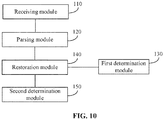
- the receiving module 110 is configured to receive a HARQ codebook fed back by a data receiver.
- the parsing module 120 is configured to parse the HARQ codebook received by the receiving module 110 to obtain a parameter value of each CC group.
- the parameter value may be determined through calculation by the data receiver after CCs are grouped according to a binding rule, and the binding rule may include the number of resource units contained in a group of CCs that are allowable for being bound together.
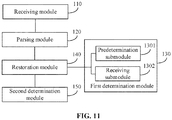
- FIG. 11 is a block diagram of another device for determining data to be retransmitted according to an exemplary embodiment.
- the first determination module 130 may include a predetermination submodule 1301 or a receiving submodule 1302.
- the data sender may agree with the data receiver that the CC identifiers sequentially included in each CC group are determined according to a data receiving sequence or other manners.
- the receiving submodule 1302 is configured to receive, from the data receiver, the CC identifiers sequentially included in each CC group.
- the CC identifiers sequentially included in each CC group may be determined in multiple manners, so that a condition can be provided for determining the resource unit information of data to be retransmitted.
- FIG. 12 is a block diagram of an apparatus applicable to a HARQ feedback device or a device for determining data to be retransmitted according to an exemplary embodiment.
- the apparatus 1200 may be UE such as a mobile phone, a computer, a digital broadcast terminal, a messaging device, a gaming console, a tablet, a medical device, exercise equipment and a personal digital assistant.
- the apparatus 1200 may include one or more of the following components: a processing component 1202, a memory 1204, a power component 1206, a multimedia component 1208, an audio component 1210, an Input/Output (I/O) interface 1212, a sensor component 1214, and a communication component 1216.
- a processing component 1202 a memory 1204, a power component 1206, a multimedia component 1208, an audio component 1210, an Input/Output (I/O) interface 1212, a sensor component 1214, and a communication component 1216.
- one processor 1220 in the processing component 1202 may be configured to:
- one processor 1220 in the processing component 1202 may be configured to:
- the power component 1206 is configured to provide power for various components of the apparatus 1200.
- the power component 1206 may include a power management system, one or more power supplies, and other components associated with generation, management and distribution of power for the apparatus 1200.
- the audio component 1210 is configured to output and/or input an audio signal.
- the audio component 1210 includes a Microphone (MIC), and the MIC is configured to receive an external audio signal when the apparatus 1200 is in the operation mode, such as a call mode, a recording mode and a voice recognition mode.
- the received audio signal may further be stored in the memory 1204 or sent through the communication component 1216.
- the audio component 1210 further includes a speaker configured to output the audio signal.
- the I/O interface 1212 is configured to provide an interface between the processing component 1202 and a peripheral interface module, and the peripheral interface module may be a keyboard, a click wheel, a button and the like.
- the button may include, but not limited to: a home button, a volume button, a starting button and a locking button.
- the sensor component 1214 may include one or more sensors configured to provide status assessment in various aspects for the apparatus 1200. For instance, the sensor component 1214 may detect an on/off status of the apparatus 1200 and relative positioning of components, such as a display and small keyboard of the apparatus 1200, and the sensor component 1214 may further detect a change in a position of the apparatus 1200 or a component of the apparatus 1200, presence or absence of contact between the user and the apparatus 1200, orientation or acceleration/deceleration of the apparatus 1200 and a change in temperature of the apparatus 1200.
- the sensor component 1214 may include a proximity sensor configured to detect presence of an object nearby without any physical contact.
- the sensor component 1214 may also include a light sensor, such as a Complementary Metal Oxide Semiconductor (CMOS) or Charge Coupled Device (CCD) image sensor, configured for use in an imaging application.
- CMOS Complementary Metal Oxide Semiconductor
- CCD Charge Coupled Device
- the sensor component 1214 may also include an acceleration sensor, a gyroscope sensor, a magnetic sensor, a pressure sensor or a temperature sensor.
- the NFC module may be implemented based on a Radio Frequency Identification (RFID) technology, an Infrared Data Association (IrDA) technology, an Ultra-Wide Band (UWB) technology, a Bluetooth (BT) technology and another technology.
- RFID Radio Frequency Identification
- IrDA Infrared Data Association
- UWB Ultra-Wide Band
- BT Bluetooth
- the apparatus 1200 may be implemented by one or more Application Specific Integrated Circuits (ASICs), Digital Signal Processors (DSPs), Digital Signal Processing Devices (DSPDs), Programmable Logic Devices (PLDs), Field Programmable Gate Arrays (FPGAs), controllers, micro-controllers, microprocessors or other electronic components, and is configured to execute the abovementioned method.
- ASICs Application Specific Integrated Circuits
- DSPs Digital Signal Processors
- DSPDs Digital Signal Processing Devices
- PLDs Programmable Logic Devices
- FPGAs Field Programmable Gate Arrays
- controllers micro-controllers, microprocessors or other electronic components, and is configured to execute the abovementioned method.
- FIG. 13 is a block diagram of an apparatus applicable to a device for determining data to be retransmitted or a HARQ feedback device according to an exemplary embodiment.
- the apparatus 1300 may be provided as a base station.
- the apparatus 1300 includes a processing component 1322, a wireless transmission/receiving component 1324, an antenna component 1326 and a wireless interface-specific signal processing part, and the processing component 1322 may further include one or more processors.
- one processor in the processing component 1322 may be configured to:
- one processor in the processing component 1322 may be configured to:
- non-transitory computer-readable storage medium including instructions, and the instructions may be executed by the processing component 1322 of the apparatus 1300 to implement the HARQ feedback method or the method for determining data to be retransmitted.
- the non-transitory computer-readable storage medium may be a ROM, a RAM, a CD-ROM, a magnetic tape, a floppy disc, an optical data storage device and the like.
- the apparatus embodiments substantially correspond to the method embodiments, and thus related parts refer to part of descriptions of the method embodiments.
- the apparatus embodiment described above is only schematic.
- the units described as separate parts therein may or may not be physically separated.
- the parts displayed as units may or may not be physical units, namely, may be located in the same place or may be distributed to multiple network units. Part or all of the modules therein may be selected according to a practical requirement to achieve the purpose of the solutions of the embodiments. Those of ordinary skill in the art may understand and implement without creative work.
Landscapes
- Engineering & Computer Science (AREA)
- Signal Processing (AREA)
- Computer Networks & Wireless Communication (AREA)
- Mobile Radio Communication Systems (AREA)
- Detection And Prevention Of Errors In Transmission (AREA)
- Communication Control (AREA)
Abstract
Description
- The present disclosure generally relates to the technical field of communications, and more particularly, to a hybrid automatic repeat request (HARQ) feedback method and device, a method and device for determining data to be retransmitted, a data receiving apparatus, a data sending apparatus and a computer-readable storage medium.
- Along with development of communication technologies, 5th Generation (5G) has emerged. Present service types of 5G at least include enhanced Mobile Broad Band (eMBB), massive Machine Type Communication (mMTC), Ultra Reliable Low Latency Communication (URLLC) and other types. All these services are data services but have different requirements on delay and reliability. For example, a URLLC service is applied to the fields of Internet of vehicles and the like requiring low delay, has a very high requirement on timeliness, is required to be timely established and is even preemptive for a previous service. An mMTC service is usually insensitive to delay, and data may be delivered at a relatively long interval. A manner for effectively transmitting a delay-sensitive service is to improve transmission of a HARQ, for example, giving a retransmission feedback faster and more accurately. In 3rd Generation Partnership Project (3GPP) 5G New Radio (NR), a code block group (CBG) rather than a Transmission Block (TB) in Long Term Evolution (LTE) is retransmitted. CBG is a smaller data unit in TB.
- For HARQ retransmission of multiple carriers, it is necessary to effectively code and aggregate retransmitted information of multiple component carriers (CCs) to implement unified transmission of retransmitted bits.
- There may be such a condition in the future that the number of CBGs in one TB in a CC is different from the one in a different CC. For this condition, a codebook may be fed back for the CCs with the same number of CBGs in a related art, so as to reduce waste of feedback bits. However, it is necessary to feed back multiple HARQ codebooks and keep multiple counter downlink assignment indexes (DAIs) and total DAIs. If the number of CBGs in one TB increases to 32 in the future, it is necessary to feed back 32 HARQ codebooks and record the position of each CC in the 32 codebooks, which may increase a signaling overhead. Therefore, how to make a HARQ feedback to reduce the volume of feedback information is a technical problem that needs to be solved.
- In view of this, the present application provides a HARQ feedback method and device, a method and device for determining data to be retransmitted, a data receiving apparatus, a data sending apparatus and a computer-readable storage medium, to reduce the volume of feedback information.
- According to a first aspect of embodiments of the present disclosure, a HARQ feedback method may be applied to a data receiver and may include that:
- CCs are grouped according to a binding rule, the binding rule including the number of resource units contained in a group of CCs that are allowable for being bound together;
- a parameter value of each CC group is calculated;
- the same number of HARQ codebooks as that of CC groups are generated, a length of one of the HARQ codebooks being determined respectively by the parameter value of a corresponding CC group and a maximum number of resource units contained in a single CC in the corresponding CC group; and
- the HARQ codebooks are fed back to a data sender.
- In an embodiment, the data receiver is a base station and the data sender is user equipment (UE), the method may further include that:
- before the CCs are grouped according to the binding rule, the binding rule is agreed with the data sender; or
- before the CCs are grouped according to the binding rule, the binding rule is configured and the binding rule is sent to the data sender.
- In an embodiment, the data receiver is UE and the data sender is a base station, the method may further include that:
- before the CCs are grouped according to the binding rule, the binding rule is agreed with the data sender; or
- before the CCs are grouped according to the binding rule, the binding rule sent by the data sender is received.
- In an embodiment, the method may further include that:
- a manner for determining CC identifiers sequentially included in each CC group is agreed with the data sender; or
- CC identifiers sequentially included in each CC group are sent to the data sender.
- In an embodiment, the operation that the CCs are grouped according to the binding rule may include that:
the CCs are hierarchically grouped according to the binding rule, the binding rule including a range of the number of resource units contained the hierarchically grouped CCs. - In an embodiment, the resource units may be CBGs, and the parameter value may be a total DAI.
- In an embodiment, the operation that the binding rule is sent to the data sender may include that:
the binding rule is sent to the data sender through control signaling, the control signaling including broadcast signaling, radio resource control (RRC) upper-layer signaling, media access control (MAC)-layer signaling or physical-layer signaling. - According to a second aspect of the embodiments of the present disclosure, a method for determining data to be retransmitted may be applied to a data sender and may include that:
- a HARQ codebook fed back by a data receiver is received;
- the HARQ codebook is parsed to obtain a parameter value of each CC group, the parameter value being determined through calculation by the data receiver after CCs are grouped according to a binding rule and the binding rule including the number of resource units contained in a group of CCs that are allowable for being bound together;
- CC identifiers sequentially included in each CC group are determined;
- feedback bit information corresponding to the resource units is restored according to the parameter value of each CC group and the CC identifiers sequentially included in each CC group; and
- resource unit information of data to be retransmitted is determined according to the feedback bit information.
- In an embodiment, the operation that the CC identifiers sequentially included in each CC group are determined may include that:
- the CC identifiers sequentially included in each CC group are determined according to a manner, agreed with the data receiver, for determining the CC identifiers sequentially included in each CC group; or
- the CC identifiers sequentially included in each CC group are received from the data receiver.
- In an embodiment, the resource units may be CBGs, and the parameter value may be a total DAI.
- According to a third aspect of the embodiments of the present disclosure, a HARQ feedback device may be applied to a data receiver and may include:
- a grouping module, configured to group CCs according to a binding rule, the binding rule including the number of resource units contained in a group of CCs that are allowable for being bound together;
- a calculation module, configured to calculate a parameter value of each CC group after the grouping module groups the CCs;
- a generation module, configured to generate the same number of HARQ codebooks as that of CC groups after the grouping module groups the CCs, a length of one of the HARQ codebooks being determined respectively by the parameter value of a corresponding CC group and a maximum number of resource units contained in a single CC in the corresponding CC group; and
- a feedback module, configured to feed back the HARQ codebooks generated by the generation module to a data sender.
- In an embodiment, when the data receiver is a base station and the data sender is UE, the device may further include:
- a first predetermination module, configured to, before the grouping module groups the CCs according to the binding rule, agree the binding rule with the data sender; or
- a configuration and sending module, configured to, before the grouping module groups the CCs according to the binding rule, configure the binding rule and send the binding rule to the data sender.
- In an embodiment, when the data receiver is UE and the data sender is a base station, the device may further include:
- a second predetermination module, configured to, before the grouping module groups the CCs according to the binding rule, agree the binding rule with the data sender; or
- a receiving module, configured to, before the grouping module groups the CCs according to the binding rule, receive the binding rule from the data sender.
- In an embodiment, the device may further include:
- a third predetermination module, configured to agree, with the data sender, a manner for determining CC identifiers sequentially included in each CC group; or
- a sending module, configured to send CC identifiers sequentially included in each CC group to the data sender.
- In an embodiment, the grouping module may be configured to:
hierarchically group the CCs according to the binding rule, the binding rule including a range of the number of resource units contained the hierarchically grouped CCs. - In an embodiment, the resource units may be CBGs, and the parameter value may be a total DAI.
- In an embodiment, the configuration and sending module may be configured to:
- send the binding rule to the data sender through control signaling, the control signaling including broadcast signaling, RRC upper-layer signaling, MAC-layer signaling or physical-layer signaling.
- According to a fourth aspect of the embodiments of the present disclosure, a device for determining data to be retransmitted may be applied to a data sender and may include:
- a receiving module, configured to receive a HARQ codebook fed back by a data receiver;
- a parsing module, configured to parse the HARQ codebook received by the receiving module to obtain a parameter value of each CC group, the parameter value being determined through calculation by the data receiver after CCs are grouped according to a binding rule and the binding rule including the number of resource units contained in a group of CCs that are allowable for being bound together;
- a first determination module, configured to determine CC identifiers sequentially included in each CC group;
- a restoration module, configured to restore feedback bit information corresponding to the resource units according to the parameter value, obtained by parsing of the parsing module, in each CC group and the CC identifiers, determined by the first determination module, sequentially included in each CC group; and
- a second determination module, configured to determine resource unit information of data to be retransmitted according to the feedback bit information restored by the restoration module.
- In an embodiment, the first determination module may include:
- a predetermination submodule, configured to determine the CC identifiers sequentially included in each CC group according to a manner, agreed with the data receiver, for determining the CC identifiers sequentially included in each CC group; or
- a receiving submodule, configured to receive the CC identifiers sequentially included in each CC group from the data receiver.
- In an embodiment, the resource units may be CBGs, and the parameter value may be a total DAI.
- According to a fifth aspect of the embodiments of the present disclosure, a data receiving apparatus is provided, which may include:
- a processor; and
- a memory configured to store instructions executable by the processor,
- wherein the processor may be configured to:
- group CCs according to a binding rule, the binding rule including the number of resource units contained in a group of CCs that are allowable for being bound together;
- calculate a parameter value of each CC group;
- generate the same number of HARQ codebooks as that of CC groups, a length of one of the HARQ codebooks being determined respectively by the parameter value of a corresponding CC group and a maximum number of resource units contained in a single CC in the corresponding CC group; and
- feed back the HARQ codebooks to a data sender.
- According to a sixth aspect of the embodiments of the present disclosure, a data sending apparatus is provided, which may include:
- a processor; and
- a memory configured to store instructions executable by the processor,
- wherein the processor may be configured to:
- receive a HARQ codebook fed back by a data receiver;
- parse the HARQ codebook to obtain a parameter value of each CC group, the parameter value being determined through calculation by the data receiver after CCs are grouped according to a binding rule and the binding rule including the number of resource units contained in a group of CCs that are allowable for being bound together;
- determine CC identifiers sequentially included in each CC group;
- restore feedback bit information corresponding to the resource units according to the parameter value of each CC group and the CC identifiers sequentially included in each CC group; and
- determine resource unit information of data to be retransmitted according to the feedback bit information.
- According to a seventh aspect of the embodiments of the present disclosure, a computer-readable storage medium may have computer instructions stored thereon that, when executed by a processor, may implement the steps of the HARQ feedback method.
- According to an eighth aspect of the embodiments of the present disclosure, a computer-readable storage medium may have computer instructions stored thereon that, when executed by a processor, may implement the steps of the method for determining data to be retransmitted.
- The technical solutions provided in the embodiments of the present disclosure may have the following beneficial effects.
- CCs may be grouped according to a binding rule, a parameter value of each CC group may be calculated, a HARQ codebooks with the number of the CC groups may be generated, and then the HARQ codebooks may be fed back to a data sender, so that the volume of feedback information can be optimized, and the volume of the feedback information can be further reduced.
- The HARQ codebook fed back by a data receiver may be received, the HARQ codebook may be parsed to obtain the parameter value of each CC group, the CC identifiers sequentially included in each CC group may be determined, then the feedback bit information corresponding to the resource units may be restored according to the parameter value of each CC group and the CC identifiers sequentially included in each CC group, and finally the resource unit information of the data to be retransmitted may be determined according to the feedback bit information. In the whole implementation process, the volume of the feedback information can be smaller.
- It is to be understood that the above general descriptions and detailed descriptions below are only exemplary and explanatory and not intended to limit the present disclosure.
- The accompanying drawings, which are incorporated in and constitute a part of this specification, illustrate embodiments consistent with the present disclosure and, together with the description, serve to explain the principles of the present disclosure.
-
FIG. 1 is a flowchart showing a HARQ feedback method according to an exemplary embodiment of the present application. -
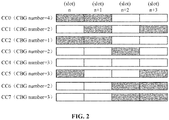
FIG. 2 is a schematic diagram illustrating multiple CCs according to an exemplary embodiment of the present application. -
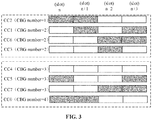
FIG. 3 is a schematic diagram after multiple CCs inFIG. 2 are hierarchically grouped according to an exemplary embodiment of the present application. -
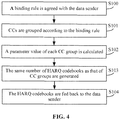
FIG. 4 is a flowchart showing another HARQ feedback method according to an exemplary embodiment of the present application. -
FIG. 5 is a flowchart showing a method for determining data to be retransmitted according to an exemplary embodiment of the present application. -
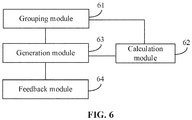
FIG. 6 is a block diagram of a HARQ feedback device according to an exemplary embodiment. -
FIG. 7 is a block diagram of another HARQ feedback device according to an exemplary embodiment. -
FIG. 8 is a block diagram of another HARQ feedback device according to an exemplary embodiment. -
FIG. 9 is a block diagram of another HARQ feedback device according to an exemplary embodiment. -
FIG. 10 is a block diagram of a device for determining data to be retransmitted according to an exemplary embodiment. -
FIG. 11 is a block diagram of another device for determining data to be retransmitted according to an exemplary embodiment. -
FIG. 12 is a block diagram of an apparatus applicable to a HARQ feedback device or a device for determining data to be retransmitted according to an exemplary embodiment. -
FIG. 13 is a block diagram of an apparatus applicable to a device for determining data to be retransmitted or a HARQ feedback device according to an exemplary embodiment. - Reference will now be made in detail to exemplary embodiments, examples of which are illustrated in the accompanying drawings. The following description refers to the accompanying drawings in which the same numbers in different drawings represent the same or similar elements unless otherwise represented. The implementations set forth in the following description of exemplary embodiments do not represent all implementations consistent with the present disclosure. Instead, they are merely examples of apparatuses and methods consistent with aspects related to the present disclosure as recited in the appended claims.
-
FIG. 1 is a flowchart showing a HARQ feedback method according to an exemplary embodiment of the present application. The embodiment is described from the aspect of a data receiver. The data receiver may be a base station or may be UE. As shown inFIG. 1 , the HARQ feedback method may include the following steps. - In step S101, CCs are grouped according to a binding rule, the binding rule including the number of resource units contained in a group of CCs that are allowable for being bound together.
- The resource units each may include, but not limited to, a CBG The operation that the CCs are grouped according to the binding rule may include that: the CCs are hierarchically grouped according to the binding rule, the binding rule including a range of the number of resource units contained the hierarchically grouped CCs. For example, a range of amount of resource units, for example, a range of amount of CBGs, in a first-level CC group is 1 to 2, and a range of amount of resource units, for example, a range of amount of CBGs, in a second-level CC group is 3 to 4.
- A CC grouping process will be described below with 8 CCs as an example. CC0 may include 4 CBGs, CC1 may include 2 CBGs, CC2 may include 1 CBG, CC3 may include 2 CBGs, CC4 may include 3 CBGs, CC5 may include 3 CBGs, CC6 may include 2 CBGs and CC7 may include 3 CBGs, as shown in
FIG. 2 . InFIG. 2 , the grey block represents a slot where data is transmitted. If the binding rule includes that the range of the amount of the CBGs in the first-level CC group is 1 to 2 and the range of the amount of the CBGs in the second-level CC group is 3 to 4, the hierarchically grouped CCs are the ones as shown inFIG. 3 . - In step S102, a parameter value of each CC group is calculated.
- The parameter value may be a total DAI. For example, a total DAI of a first CC group (or the first-level CC group) in
FIG. 3 is calculated to be 7, and a total DAI of a second CC group (or the second-level CC group) inFIG. 3 is calculated to be 6. - In step S103, the same number of HARQ codebooks as that of CC groups are generated, a length of one of the HARQ codebooks being determined by the parameter value of each corresponding CC group and the maximum number of resource units in a single CC in the each corresponding CC group.
- For example, as shown in
FIG 3 , two HARQ codebooks may be generated, a length of the first codebook may be 7∗2=14bit, and a length of the second codebook may be 6∗4=24bit. - In step S104, the HARQ codebooks are fed back to a data sender.
- In the embodiment, the data receiver may combine multiple generated codebooks and feed them back to the data sender.
- In addition, the method may further include that: a manner for determining CC identifiers sequentially included in each CC group is agreed with the data sender, or the CC identifiers sequentially included in each CC group are sent to the data sender. It may be agreed that CC identifiers sequentially included in each CC group are determined according to a data receiving sequence or in other manners.
- According to the embodiments, CCs may be grouped according to a binding rule, a parameter value of each CC group may be calculated, the same number of HARQ codebooks as that of CC groups may be generated, and then the HARQ codebooks may be fed back to a data sender, so that the volume of feedback information is optimized, and the volume of the feedback information is further reduced.
-
FIG. 4 is a flowchart showing another HARQ feedback method according to an exemplary embodiment of the present application. As shown inFIG. 4 , before step S101 is executed, the method may further include the following step. - In step S100, the binding rule is agreed with the data sender.
- In addition, the data receiver may also determine the binding rule in other manners. For example, when the data receiver is a base station and the data sender is UE, the data receiver may configure the binding rule and send the binding rule to the data sender. When the data receiver is UE and the data sender is a base station, the data receiver may receive the binding rule from the data sender.
- The data receiver may send the binding rule to the data sender through control signaling. The control signaling may include broadcast signaling, RRC upper-layer signaling, MAC-layer signaling or physical-layer signaling.
- According to the embodiments, the binding rule may be agreed with the data sender, so that a condition for subsequently grouping CCs according to the binding rule can be provided.
-
FIG. 5 is a flowchart showing a method for determining data to be retransmitted according to an exemplary embodiment of the present application. The embodiment is described from the aspect of a data sender. The data sender may be UE or a base station. As shown inFIG. 5 , the method for determining data to be retransmitted may include the following steps. - In step S501, a HARQ codebook fed back by a data receiver is received.
- In step S502, the HARQ codebook is parsed to obtain a parameter value of each CC group, the parameter value being determined through calculation by the data receiver after CCs are grouped according to a binding rule and the binding rule including the number of resource units contained in a group of CCs that are allowable for being bound together.
- The resource units each may include, but not limited to, a CBG, and the parameter value may be a total DAI.
- In step S503, CC identifiers sequentially included in each CC group are determined.
- The CC identifiers sequentially included in each CC group may be determined in multiple manners. For example, the CC identifiers sequentially included in each CC group may be determined in the following two manners.
- Manner 1): the CC identifiers sequentially included in each CC group are determined according to a manner, agreed with the data receiver, for determining the CC identifiers sequentially included in each CC group.
- The data sender may agree with the data receiver that the CC identifiers sequentially included in each CC group are determined according to a data receiving sequence or in other manners.
- Manner 2): the CC identifiers sequentially included in each CC group are received from the data receiver.
- In step S504, feedback bit information corresponding to the resource units is restored according to the parameter value of each CC group and the CC identifiers sequentially included in each CC group.
- In step S505, resource unit information of data to be retransmitted is determined according to the feedback bit information.
- According to the embodiments, a HARQ codebook fed back by the data receiver may be received, the HARQ codebook may be parsed to obtain a parameter value of each CC group, CC identifiers sequentially included in each CC group may be determined, then feedback bit information corresponding to the resource units may be restored according to the parameter value of each CC group and the CC identifiers sequentially included in each CC group, and finally resource unit information of data to be retransmitted may be determined according to the feedback bit information. In the whole implementation process, the volume of feedback information is small.
-
FIG. 6 is a block diagram of a HARQ feedback device according to an exemplary embodiment. The device may be applied to a data receiver. As shown inFIG. 6 , the device includes agrouping module 61, acalculation module 62, ageneration module 63 and afeedback module 64. - The
grouping module 61 is configured to group CCs according to a binding rule, the binding rule including the number of resource units contained in a group of CCs that are allowable for being bound together. - The resource units each may include, but not limited to, a CBG The
grouping module 61 may be configured to hierarchically group the CCs according to the binding rule, the binding rule including a range of the number of resource units contained the hierarchically grouped CCs. For example, a range of amount of resource units, such as a range of amount of CBGs, in a first-level CC group is 1 to 2, and a range of amount of resource units, such as a range of amount of CBGs, in a second-level CC group is 3 to 4. - A CC grouping process will be described below with 8 CCs as an example. CC0 may include 4 CBGs, CC1 may include 2 CBGs, CC2 may include 1 CBG, CC3 may include 2 CBGs, CC4 may include 3 CBGs, CC5 may include 3 CBGs, CC6 may include 2 CBGs and CC7 may include 3 CBGs, as shown in
FIG. 2 . InFIG. 2 , the grey block represents a slot where data is transmitted. If the binding rule may include that the range of the amount of the CBGs in the first-level CC group is 1 to 2 and the range of the amount of the CBGs in the second-level CC group is 3 to 4, the hierarchically grouped CCs are the ones as shown inFIG. 3 . - The
calculation module 62 is configured to calculate a parameter value of each CC group after thegrouping module 61 groups the CCs. - The parameter value may be a total DAI. For example, a total DAI of a first CC group (or the first-level CC group) in
FIG. 3 is calculated to be 7, and a total DAI of a second CC group (or the second-level CC group) inFIG. 3 is calculated to be 6. - The
generation module 63 is configured to generate the same number of HARQ codebooks as that of CC groups after thegrouping module 61 groups the CCs, a length of one of the HARQ codebooks being determined respectively by the parameter value of each corresponding CC group and the maximum number of resource units in a single CC in the each corresponding CC group. - For example, as shown in
FIG 3 , two HARQ codebooks may be generated, a length of the first codebook may be 7∗2=14bit, and a length of the second codebook may be 6∗4=24bit. - The
feedback module 64 is configured to feed back the HARQ codebooks generated by thegeneration module 63 to a data sender. - In the embodiment, the data receiver may combine multiple generated codebooks for feedback to the data sender.
- According to the embodiments, CCs may be grouped according to a binding rule, a parameter value of each CC group may be calculated, the HARQ codebooks which is of the amount the same as the CC groups may be generated, and then the HARQ codebooks may be fed back to the data sender, so that the volume of feedback information is optimized, and the volume of the feedback information is further reduced.
-
FIG. 7 is a block diagram of another HARQ feedback device according to an exemplary embodiment. As shown inFIG. 7 , based on the embodiment shown inFIG. 6 , when the data receiver is a base station and the data sender is UE, the device may further include afirst predetermination module 65 or a configuration and sendingmodule 66. - The
first predetermination module 65 is configured to, before thegrouping module 61 groups the CCs according to the binding rule, agree the binding rule with the data sender. - The configuration and sending
module 66 is configured to, before thegrouping module 61 groups the CCs according to the binding rule, configure the binding rule and send the binding rule to the data sender. - The configuration and sending
module 66 may send the binding rule to the data sender through control signaling. The control signaling may include broadcast signaling, RRC upper-layer signaling, MAC-layer signaling or physical-layer signaling. - According to the embodiments, the binding rule may be agreed with the data sender or the configured binding rule may be sent to the data sender, so that a condition can be provided for subsequently grouping the CCs according to the binding rule.
-
FIG. 8 is a block diagram of another HARQ feedback device according to an exemplary embodiment. As shown inFIG. 8 , based on the embodiment shown inFIG 6 , when the data receiver is UE and the data sender is a base station, the device may further include asecond predetermination module 67 or a receivingmodule 68. - The
second predetermination module 67 is configured to, before thegrouping module 61 groups the CCs according to the binding rule, agree the binding rule with the data sender. - The receiving
module 68 is configured to, before thegrouping module 61 groups the CCs according to the binding rule, receive the binding rule from the data sender. - According to the embodiments, the binding rule may be agreed with the data sender or the binding rule sent by the data sender may be received, so that a condition can be provided for subsequently grouping the CCs according to the binding rule.
-
FIG. 9 is a block diagram of another HARQ feedback device according to an exemplary embodiment. As shown inFIG. 9 , based on the embodiment shown inFIG. 6 , the device may further include athird predetermination module 69 or a sendingmodule 70. - The
third predetermination module 69 is configured to agree, with the data sender, a manner for determining CC identifiers sequentially included in each CC group. - The sending
module 70 is configured to send the CC identifiers sequentially included in each CC group to the data sender. - According to the embodiments, the manner for determining the CC identifiers sequentially included in each CC group may be agreed with the data sender, or the CC identifiers sequentially included in each CC group may be sent to the data sender, so that a condition can be provided for the data sender to determine resource unit information of data to be retransmitted.
-
FIG. 10 is a block diagram of a device for determining data to be retransmitted according to an exemplary embodiment. The device may be applied to a data sender. As shown inFIG. 10 , the device includes a receivingmodule 110, aparsing module 120, afirst determination module 130, arestoration module 140 and asecond determination module 150. - The receiving
module 110 is configured to receive a HARQ codebook fed back by a data receiver. - The
parsing module 120 is configured to parse the HARQ codebook received by the receivingmodule 110 to obtain a parameter value of each CC group. The parameter value may be determined through calculation by the data receiver after CCs are grouped according to a binding rule, and the binding rule may include the number of resource units contained in a group of CCs that are allowable for being bound together. - The resource units each may include, but not limited to, a CBG, and the parameter value may be a total DAI.
- The
first determination module 130 is configured to determine CC identifiers sequentially included in each CC group. - The
restoration module 140 is configured to restore feedback bit information corresponding to the resource units according to the parameter value, obtained by parsing of theparsing module 120, in each CC group and the CC identifiers, determined by thefirst determination module 130, sequentially included in each CC group. - The
second determination module 150 is configured to determine resource unit information of data to be retransmitted according to the feedback bit information restored by therestoration module 140. - According to the embodiments, a HARQ codebook fed back by the data receiver may be received, the HARQ codebook may be parsed to obtain a parameter value of each CC group, CC identifiers sequentially included in each CC group may be determined, then feedback bit information corresponding to the resource units may be restored according to the parameter value of each CC group and the CC identifiers sequentially included in each CC group, and finally resource unit information of data to be retransmitted may be determined according to the feedback bit information. In the whole implementation process, the volume of feedback information can be small.
-
FIG. 11 is a block diagram of another device for determining data to be retransmitted according to an exemplary embodiment. As shown inFIG. 11 , based on the embodiment shown inFIG. 10 , thefirst determination module 130 may include apredetermination submodule 1301 or a receivingsubmodule 1302. - The predetermination submodule 1301 is configured to determine the CC identifiers sequentially included in each CC group according to a manner, agreed with the data receiver, for determining the CC identifiers sequentially included in each CC group.
- The data sender may agree with the data receiver that the CC identifiers sequentially included in each CC group are determined according to a data receiving sequence or other manners.
- The receiving
submodule 1302 is configured to receive, from the data receiver, the CC identifiers sequentially included in each CC group. - According to the embodiments, the CC identifiers sequentially included in each CC group may be determined in multiple manners, so that a condition can be provided for determining the resource unit information of data to be retransmitted.
-
FIG. 12 is a block diagram of an apparatus applicable to a HARQ feedback device or a device for determining data to be retransmitted according to an exemplary embodiment. For example, theapparatus 1200 may be UE such as a mobile phone, a computer, a digital broadcast terminal, a messaging device, a gaming console, a tablet, a medical device, exercise equipment and a personal digital assistant. - Referring to
FIG. 12 , theapparatus 1200 may include one or more of the following components: aprocessing component 1202, amemory 1204, apower component 1206, amultimedia component 1208, anaudio component 1210, an Input/Output (I/O)interface 1212, a sensor component 1214, and acommunication component 1216. - The
processing component 1202 is typically configured to control overall operations of theapparatus 1200, such as the operations associated with display, telephone calls, data communications, camera operations, and recording operations. Theprocessing component 1202 may include one ormore processors 1220 to execute instructions to perform all or part of the steps in the abovementioned method. Moreover, theprocessing component 1202 may include one or more modules which facilitate interaction between theprocessing component 1202 and the other components. For instance, theprocessing component 1202 may include a multimedia module to facilitate interaction between themultimedia component 1208 and theprocessing component 1202. - When the
apparatus 1200 is applicable to the HARQ feedback device, oneprocessor 1220 in theprocessing component 1202 may be configured to: - group CCs according to a binding rule, the binding rule including the number of resource units in CCs that can be bound into a group;
- calculate a parameter value of each CC group;
- generate the same number of HARQ codebooks as that of CC groups, a length of one of the HARQ codebooks being determined respectively by the parameter value of each corresponding CC group and the maximum number of resource units in a single CC in the each corresponding CC group; and
- feed back the HARQ codebooks to a data sender.
- When the
apparatus 1200 is applicable to the device for determining data to be retransmitted, oneprocessor 1220 in theprocessing component 1202 may be configured to: - receive a HARQ codebook fed back by a data receiver;
- parse the HARQ codebook to obtain a parameter value of each CC group, the parameter value being determined through calculation by the data receiver after CCs are grouped according to a binding rule and the binding rule including the number of resource units in CCs that can be bound into a group;
- determine CC identifiers sequentially included in each CC group;
- restore feedback bit information corresponding to the resource units according to the parameter value of each CC group and the CC identifiers sequentially included in each CC group; and
- determine resource unit information of data to be retransmitted according to the feedback bit information.
- The
memory 1204 is configured to store various types of data to support the operation of theapparatus 1200. Examples of such data may include instructions for any applications or methods operated on theapparatus 1200, contact data, phonebook data, messages, pictures, video, etc. Thememory 1204 may be implemented by any type of volatile or non-volatile memory devices, or a combination thereof, such as a Static Random Access Memory (SRAM), an Electrically Erasable Programmable Read-Only Memory (EEPROM), an Erasable Programmable Read-Only Memory (EPROM), a Programmable Read-Only Memory (PROM), a Read-Only Memory (ROM), a magnetic memory, a flash memory, and a magnetic or optical disk. - The
power component 1206 is configured to provide power for various components of theapparatus 1200. Thepower component 1206 may include a power management system, one or more power supplies, and other components associated with generation, management and distribution of power for theapparatus 1200. - The
multimedia component 1208 may include a screen providing an output interface between theapparatus 1200 and a user. In some embodiments, the screen may include a Liquid Crystal Display (LCD) and a Touch Panel (TP). If the screen includes the TP, the screen may be implemented as a touch screen to receive an input signal from the user. The TP includes one or more touch sensors to sense touches, swipes and gestures on the TP. The touch sensors may not only sense a boundary of a touch or swipe action but also detect a duration and pressure associated with the touch or swipe action. In some embodiments, themultimedia component 1208 includes a front camera and/or a rear camera. The front camera and/or the rear camera may receive external multimedia data when theapparatus 1200 is in an operation mode, such as a photographing mode or a video mode. Each of the front camera and the rear camera may be a fixed optical lens system or have focusing and optical zooming capabilities. - The
audio component 1210 is configured to output and/or input an audio signal. For example, theaudio component 1210 includes a Microphone (MIC), and the MIC is configured to receive an external audio signal when theapparatus 1200 is in the operation mode, such as a call mode, a recording mode and a voice recognition mode. The received audio signal may further be stored in thememory 1204 or sent through thecommunication component 1216. In some embodiments, theaudio component 1210 further includes a speaker configured to output the audio signal. - The I/
O interface 1212 is configured to provide an interface between theprocessing component 1202 and a peripheral interface module, and the peripheral interface module may be a keyboard, a click wheel, a button and the like. The button may include, but not limited to: a home button, a volume button, a starting button and a locking button. - The sensor component 1214 may include one or more sensors configured to provide status assessment in various aspects for the
apparatus 1200. For instance, the sensor component 1214 may detect an on/off status of theapparatus 1200 and relative positioning of components, such as a display and small keyboard of theapparatus 1200, and the sensor component 1214 may further detect a change in a position of theapparatus 1200 or a component of theapparatus 1200, presence or absence of contact between the user and theapparatus 1200, orientation or acceleration/deceleration of theapparatus 1200 and a change in temperature of theapparatus 1200. The sensor component 1214 may include a proximity sensor configured to detect presence of an object nearby without any physical contact. The sensor component 1214 may also include a light sensor, such as a Complementary Metal Oxide Semiconductor (CMOS) or Charge Coupled Device (CCD) image sensor, configured for use in an imaging application. In some embodiments, the sensor component 1214 may also include an acceleration sensor, a gyroscope sensor, a magnetic sensor, a pressure sensor or a temperature sensor. - The
communication component 1216 is configured to facilitate wired or wireless communication between theapparatus 1200 and another apparatus. Theapparatus 1200 may access a communication-standard-based wireless network, such as a Wireless Fidelity (WiFi) network, a 2nd-Generation (2G) or 3rd-Generation (3G) network or a combination thereof. In an exemplary embodiment, thecommunication component 1216 receives a broadcast signal or broadcast associated information from an external broadcast management system through a broadcast channel. In an exemplary embodiment, thecommunication component 1216 further includes a Near Field Communication (NFC) module to facilitate short-range communication. For example, the NFC module may be implemented based on a Radio Frequency Identification (RFID) technology, an Infrared Data Association (IrDA) technology, an Ultra-Wide Band (UWB) technology, a Bluetooth (BT) technology and another technology. - In an exemplary embodiment, the
apparatus 1200 may be implemented by one or more Application Specific Integrated Circuits (ASICs), Digital Signal Processors (DSPs), Digital Signal Processing Devices (DSPDs), Programmable Logic Devices (PLDs), Field Programmable Gate Arrays (FPGAs), controllers, micro-controllers, microprocessors or other electronic components, and is configured to execute the abovementioned method. - In an exemplary embodiment, there is also provided a non-transitory computer-readable storage medium including instructions, such as the
memory 1204 including instructions, and the instructions may be executed by theprocessor 1220 of theapparatus 1200 to implement the abovementioned method. For example, the non-transitory computer-readable storage medium may be a ROM, a Random Access Memory (RAM), a Compact Disc Read-Only Memory (CD-ROM), a magnetic tape, a floppy disc, an optical data storage device and the like. -
FIG. 13 is a block diagram of an apparatus applicable to a device for determining data to be retransmitted or a HARQ feedback device according to an exemplary embodiment. Theapparatus 1300 may be provided as a base station. Referring toFIG. 13 , theapparatus 1300 includes aprocessing component 1322, a wireless transmission/receiving component 1324, anantenna component 1326 and a wireless interface-specific signal processing part, and theprocessing component 1322 may further include one or more processors. - When the
apparatus 1300 is applicable to the HARQ feedback device, one processor in theprocessing component 1322 may be configured to: - group CCs according to a binding rule, the binding rule including the number of resource units in the CCs that can be bound into a group;
- calculate a parameter value of each CC group;
- generate the same number of HARQ codebooks as that of CC groups, a length of one of the HARQ codebooks being determined by the parameter value of the corresponding CC group and the maximum number of resource units in a single CC in the corresponding CC group; and
- feed back the HARQ codebooks to a data sender.
- When the
apparatus 1300 is applicable to the device for determining data to be retransmitted, one processor in theprocessing component 1322 may be configured to: - receive a HARQ codebook fed back by a data receiver;
- parse the HARQ codebook to obtain a parameter value of each CC group, the parameter value being determined through calculation by the data receiver after CCs are grouped according to a binding rule and the binding rule including the number of resource units in the CCs that can be bound into a group;
- determine CC identifiers sequentially included in each CC group;
- restore feedback bit information corresponding to the resource units according to the parameter value of each CC group and the CC identifiers sequentially included in each CC group; and
- determine resource unit information of data to be retransmitted according to the feedback bit information.
- In an exemplary embodiment, there is also provided a non-transitory computer-readable storage medium including instructions, and the instructions may be executed by the
processing component 1322 of theapparatus 1300 to implement the HARQ feedback method or the method for determining data to be retransmitted. For example, the non-transitory computer-readable storage medium may be a ROM, a RAM, a CD-ROM, a magnetic tape, a floppy disc, an optical data storage device and the like. - The apparatus embodiments substantially correspond to the method embodiments, and thus related parts refer to part of descriptions of the method embodiments. The apparatus embodiment described above is only schematic. The units described as separate parts therein may or may not be physically separated. The parts displayed as units may or may not be physical units, namely, may be located in the same place or may be distributed to multiple network units. Part or all of the modules therein may be selected according to a practical requirement to achieve the purpose of the solutions of the embodiments. Those of ordinary skill in the art may understand and implement without creative work.
- It is to be noted that relational terminologies "first", "second" and the like in the present disclosure are adopted only to distinguish one entity or operation from another entity or operation and not always to require or imply existence of any such practical relationship or sequence between the entities or operations. Terminologies "include" and "have" or any other variation thereof is intended to cover nonexclusive inclusions, so that a process, method, object or device including a series of elements not only includes those elements, but also includes other elements that are not clearly listed, or further includes elements intrinsic to the process, the method, the object or the device. Under the condition of no more limitations, an element defined by statement "including a/an......" does not exclude existence of another element that is the same in a process, method, object or device including the element.
- Other implementation solutions of the present disclosure will be apparent to those skilled in the art from consideration of the specification and practice of the present disclosure. This application is intended to cover any variations, uses, or adaptations of the present disclosure following the general principles thereof and including such departures from the present disclosure as come within known or customary practice in the art. It is intended that the specification and examples be considered as exemplary only, with a true scope and spirit of the present disclosure being indicated by the following claims.
- It will be appreciated that the present disclosure is not limited to the exact construction that has been described above and illustrated in the accompanying drawings, and that various modifications and changes may be made without departing from the scope thereof. It is intended that the scope of the present disclosure only be limited by the appended claims.
Claims (24)
- A hybrid automatic repeat request (HARQ) feedback method, applied to a data receiver, the method comprising:grouping component carriers (CCs) according to a binding rule, wherein the binding rule comprises the number of resource units contained in a group of CCs that are allowable for being bound together;calculating a parameter value of each CC group;generating the same number of HARQ codebooks as that of CC groups, wherein a length of one of the HARQ codebooks is determined by the parameter value of a corresponding CC group and a maximum number of resource units contained in a single CC in the corresponding CC group; andfeeding back the HARQ codebooks to a data sender.
- The HARQ feedback method of claim 1, wherein the data receiver is a base station and the data sender is user equipment (UE), the HARQ feedback method further comprises:before grouping the CCs according to the binding rule, agreeing the binding rule with the data sender; orbefore grouping the CCs according to the binding rule, configuring the binding rule and sending the binding rule to the data sender.
- The HARQ feedback method of claim 1, wherein the data receiver is UE and the data sender is a base station, the HARQ feedback method further comprises:before grouping the CCs according to the binding rule, agreeing the binding rule with the data sender; orbefore grouping the CCs according to the binding rule, receiving the binding rule from the data sender.
- The HARQ feedback method of claim 1, further comprising:agreeing, with the data sender, a manner for determining CC identifiers sequentially included in each CC group; orsending CC identifiers sequentially included in each CC group to the data sender.
- The HARQ feedback method of claim 1, wherein grouping the CCs according to the binding rule comprises:
hierarchically grouping the CCs according to the binding rule, wherein the binding rule comprises a range of the number of resource units contained in the hierarchically grouped CCs. - The HARQ feedback method of claim 1, wherein the resource units are code block groups (CBGs), and the parameter value is a total downlink assignment index (DAI).
- The HARQ feedback method of claim 2, wherein sending the binding rule to the data sender comprises:sending the binding rule to the data sender through control signaling,wherein the control signaling comprises broadcast signaling, radio resource control (RRC) upper-layer signaling, media access control (MAC)-layer signaling or physical-layer signaling.
- A method for determining data to be retransmitted, applied to a data sender, the method comprising:receiving a hybrid automatic repeat request (HARQ) codebook fed back by a data receiver;parsing the HARQ codebook to obtain a parameter value of each component carrier (CC) group, wherein the parameter value is determined through calculation by the data receiver after CCs are grouped according to a binding rule and the binding rule comprises the number of resource units contained in a group of CCs that are allowable for being bound together;determining CC identifiers sequentially included in each CC group;restoring feedback bit information corresponding to the resource units, according to the parameter value of each CC group and the CC identifiers sequentially included in each CC group; anddetermining resource unit information of data to be retransmitted according to the feedback bit information.
- The method of claim 8, wherein determining the CC identifiers sequentially included in each CC group comprises:determining the CC identifiers sequentially included in each CC group according to a manner, agreed with the data receiver, for determining the CC identifiers sequentially included in each CC group; orreceiving the CC identifiers sequentially included in each CC group from the data receiver.
- The method of claim 8, wherein the resource units are code block groups (CBG), and the parameter value is a total downlink assignment index (DAI).
- A hybrid automatic repeat request (HARQ) feedback device, applied to a data receiver, the device comprising:a grouping module, configured to group component carriers (CCs) according to a binding rule, wherein the binding rule comprises the number of resource units contained in a group of CCs that are allowable for being bound together;a calculation module, configured to calculate a parameter value of each CC group after the grouping module groups the CCs;a generation module, configured to generate the same number of HARQ codebooks as that of CC groups after the grouping module groups the CCs, wherein a length of one of the HARQ codebooks is determined respectively by the parameter value of a corresponding CC group and a maximum number of resource units contained in a single CC in the corresponding CC group; anda feedback module, configured to feed back the HARQ codebooks generated by the generation module to a data sender.
- The HARQ feedback device of claim 11, wherein the data receiver is a base station and the data sender is user equipment (UE), the HARQ feedback device further comprises:a first predetermination module, configured to, before the grouping module groups the CCs according to the binding rule, agree the binding rule with the data sender; ora configuration and sending module, configured to, before the grouping module groups the CCs according to the binding rule, configure the binding rule and send the binding rule to the data sender.
- The HARQ feedback device of claim 11, wherein the data receiver is UE and the data sender is a base station, the HARQ feedback device further comprises:a second predetermination module, configured to, before the grouping module groups the CCs according to the binding rule, agree the binding rule with the data sender; ora receiving module, configured to, before the grouping module groups the CCs according to the binding rule, receive the binding rule from the data sender.
- The HARQ feedback device of claim 11, further comprising:a third predetermination module, configured to agree, with the data sender, a manner for determining CC identifiers sequentially included in each CC group; ora sending module, configured to send CC identifiers sequentially included in each CC group to the data sender.
- The HARQ feedback device of claim 11, wherein the grouping module is configured to:
hierarchically group the CCs according to the binding rule, wherein the binding rule comprises a range of the number of resource units contained the hierarchically grouped CCs. - The HARQ feedback device of claim 11, wherein the resource units are code block groups (CBGs), and the parameter value is a total downlink assignment index (DAI).
- The HARQ feedback device of claim 12, wherein the configuration and sending module is configured to:send the binding rule to the data sender through control signaling,wherein the control signaling comprises broadcast signaling, radio resource control (RRC) upper-layer signaling, media access control (MAC)-layer signaling or physical-layer signaling.
- A device for determining data to be retransmitted, applied to a data sender, the device comprising:a receiving module, configured to receive a hybrid automatic repeat request (HARQ) codebook fed back by a data receiver;a parsing module, configured to parse the HARQ codebook received by the receiving module to obtain a parameter value of each component carrier (CC) group, wherein the parameter value is determined through calculation by the data receiver after CCs are grouped according to a binding rule and the binding rule comprises the number of resource units contained in a group of CCs that are allowable for being bound together;a first determination module, configured to determine CC identifiers sequentially included in each CC group;a restoration module, configured to restore feedback bit information corresponding to the resource units according to the parameter value, obtained by parsing of the parsing module, in each CC group and the CC identifiers, determined by the first determination module, sequentially included in each CC group; anda second determination module, configured to determine resource unit information of data to be retransmitted according to the feedback bit information restored by the restoration module.
- The device of claim 18, wherein the first determination module comprises:a predetermination submodule, configured to determine the CC identifiers sequentially included in each CC group according to a manner, agreed with the data receiver, for determining the CC identifiers sequentially included in each CC group; ora receiving submodule, configured to receive the CC identifiers sequentially included in each CC group from the data receiver.
- The device of claim 18, wherein the resource units are code block groups (CBGs), and the parameter value is a total downlink assignment index (DAI).
- A data receiving apparatus, comprising:a processor; anda memory configured to store instructions executable by the processor,wherein the processor is configured to:group component carriers (CCs) according to a binding rule, wherein the binding rule comprises the number of resource units contained in a group of CCs that are allowable for being bound together;calculate a parameter value of each CC group;generate the same number of hybrid automatic repeat request (HARQ) codebooks as that of CC groups, wherein a length of one of the HARQ codebooks is determined respectively by the parameter value of a corresponding CC group and a maximum number of resource units contained in a single CC in the corresponding CC group; andfeed back the HARQ codebooks to a data sender.
- A data sending apparatus, comprising:a processor; anda memory configured to store instructions executable by the processor,wherein the processor is configured to:receive a hybrid automatic repeat request (HARQ) codebook fed back by a data receiver;parse the HARQ codebook to obtain a parameter value of each component carrier (CC) group, wherein the parameter value is determined through calculation by the data receiver after CCs are grouped according to a binding rule and the binding rule comprises the number of resource units contained in a group of CCs that are allowable for being bound together;determine CC identifiers sequentially included in each CC group;restore feedback bit information corresponding to the resource units according to the parameter value of each CC group and the CC identifiers sequentially included in each CC group; anddetermine resource unit information of data to be retransmitted according to the feedback bit information.
- A computer-readable storage medium, having computer instructions stored thereon that, when executed by a processor, implements the steps of the hybrid automatic repeat request (HARQ) feedback method according to any one of claims 1-7.
- A computer-readable storage medium, having computer instructions stored thereon that, when executed by a processor, implements the steps of the method for determining data to be retransmitted of any one of claims 8-10.
Applications Claiming Priority (1)
| Application Number | Priority Date | Filing Date | Title |
|---|---|---|---|
| PCT/CN2017/119970 WO2019127415A1 (en) | 2017-12-29 | 2017-12-29 | Hybrid automatic repeat request (harq) feedback method and device and data receiving apparatus |
Publications (3)
| Publication Number | Publication Date |
|---|---|
| EP3735022A1 true EP3735022A1 (en) | 2020-11-04 |
| EP3735022A4 EP3735022A4 (en) | 2021-08-11 |
| EP3735022B1 EP3735022B1 (en) | 2025-08-20 |
Family
ID=65531041
Family Applications (1)
| Application Number | Title | Priority Date | Filing Date |
|---|---|---|---|
| EP17936621.6A Active EP3735022B1 (en) | 2017-12-29 | 2017-12-29 | Hybrid automatic repeat request (harq) feedback method and device and data receiving apparatus |
Country Status (5)
| Country | Link |
|---|---|
| US (1) | US11394495B2 (en) |
| EP (1) | EP3735022B1 (en) |
| CN (1) | CN109451800B (en) |
| ES (1) | ES3053501T3 (en) |
| WO (1) | WO2019127415A1 (en) |
Families Citing this family (3)
| Publication number | Priority date | Publication date | Assignee | Title |
|---|---|---|---|---|
| EP3952166B1 (en) * | 2019-04-30 | 2023-01-04 | Guangdong Oppo Mobile Telecommunications Corp., Ltd. | Feedback information determining method and apparatus |
| US11171745B2 (en) | 2019-07-04 | 2021-11-09 | Qualcomm Incorporated | Group-based acknowledgment feedback techniques for wireless communications |
| WO2021087688A1 (en) * | 2019-11-04 | 2021-05-14 | 北京小米移动软件有限公司 | Data transmission method and apparatus, and storage medium |
Family Cites Families (13)
| Publication number | Priority date | Publication date | Assignee | Title |
|---|---|---|---|---|
| AU2013397787B2 (en) * | 2013-08-08 | 2018-01-04 | Godo Kaisha Ip Bridge 1 | Resource allocation method and device |
| EP3343821B1 (en) * | 2015-09-15 | 2019-11-06 | Huawei Technologies Co., Ltd. | Method for sending control information and communication device |
| US10735146B2 (en) * | 2015-09-25 | 2020-08-04 | Samsung Electronics Co., Ltd. | Method and device for feeding back and receiving HARQ-ACK information |
| CN111050408B (en) * | 2016-04-01 | 2022-07-29 | 展讯通信(上海)有限公司 | Feedback method and system for uplink transmission, base station and user equipment |
| CN107359969B (en) * | 2016-05-10 | 2020-03-24 | 电信科学技术研究院 | HARQ feedback information transmission method, UE, base station and system |
| CN107404712A (en) * | 2016-05-20 | 2017-11-28 | 北京信威通信技术股份有限公司 | The method, apparatus and system of a kind of data transfer |
| CN105915737B (en) * | 2016-06-15 | 2020-06-09 | Tcl移动通信科技(宁波)有限公司 | Circuit switching method and system |
| KR101975341B1 (en) * | 2017-06-15 | 2019-05-07 | 엘지전자 주식회사 | Method and device for transmitting and receiving Acknowledgement information between a user equipment and base station in a wireless communication system |
| WO2018227600A1 (en) * | 2017-06-16 | 2018-12-20 | 富士通株式会社 | Feedback information transmitting and receiving method and device, and communication system |
| US10985877B2 (en) * | 2017-11-16 | 2021-04-20 | Sharp Kabushiki Kaisha | Codebook determination of HARQ-ACK multiplexing with fallback downlink control information (DCI) and code block group (CBG) configurations |
| MX2020007432A (en) * | 2018-01-11 | 2020-09-14 | Sharp Kk | DETERMINATION OF THE HYBRID AUTOMATIC RETRANSMISSION REQUEST ACKNOWLEDGMENT (HARD-ACK) MULTIPLEXING CODE BOOK WITH RESERVATION CODE BLOCK GROUP (CBG) AND DOWNLINK CONTROL INFORMATION (DCI) CONFIGURATIONS. |
| US11012197B2 (en) * | 2018-01-12 | 2021-05-18 | Apple Inc. | Resource set configurations using automatic repeat request information |
| US11032029B2 (en) * | 2019-07-09 | 2021-06-08 | Qualcomm Incorporated | Code-block-group acknowledgment feedback techniques in wireless communications |
-
2017
- 2017-12-29 US US16/955,691 patent/US11394495B2/en active Active
- 2017-12-29 CN CN201780002370.0A patent/CN109451800B/en active Active
- 2017-12-29 ES ES17936621T patent/ES3053501T3/en active Active
- 2017-12-29 WO PCT/CN2017/119970 patent/WO2019127415A1/en not_active Ceased
- 2017-12-29 EP EP17936621.6A patent/EP3735022B1/en active Active
Also Published As
| Publication number | Publication date |
|---|---|
| CN109451800B (en) | 2022-07-29 |
| US20200313811A1 (en) | 2020-10-01 |
| ES3053501T3 (en) | 2026-01-22 |
| CN109451800A (en) | 2019-03-08 |
| EP3735022A4 (en) | 2021-08-11 |
| WO2019127415A1 (en) | 2019-07-04 |
| US11394495B2 (en) | 2022-07-19 |
| EP3735022B1 (en) | 2025-08-20 |
Similar Documents
| Publication | Publication Date | Title |
|---|---|---|
| US11483819B2 (en) | Data transmission method and apparatus and user equipment | |
| EP4250613B1 (en) | Information feedback method and apparatus | |
| US12382493B2 (en) | Slot format indication method and apparatus | |
| US11729767B2 (en) | Method of indicating uplink feedback information and method of transmitting uplink feedback information | |
| US11019642B2 (en) | Method and apparatus for data transmission, user equipment and base station | |
| EP3621231B1 (en) | Harq feedback method and apparatus, device, and computer readable storage medium | |
| US11864190B2 (en) | Method and apparatus for configuring and determining transmission block scheduling interval, and base station | |
| EP3836663A1 (en) | Information scheduling and sending-receiving method and device, and base station and user equipment | |
| EP4708997A1 (en) | Uplink communication method and apparatus, and storage medium | |
| EP3809772A1 (en) | Method and device for determining uplink and downlink switching points | |
| EP3993547A1 (en) | Method for detecting unlicensed frequency band, and apparatus for detecting unlicensed frequency band | |
| EP3735022B1 (en) | Hybrid automatic repeat request (harq) feedback method and device and data receiving apparatus | |
| EP3644668B1 (en) | Time-frequency resource preemption determining method, device, and computer readable storage medium | |
| EP3633897A1 (en) | Data transmission method and apparatus | |
| EP3726763B1 (en) | Hybrid automatic repeat request (harq) feedback configuration method and device and data receiving apparatus | |
| US20240113843A1 (en) | Ue capability processing method and apparatus, communications device and storage medium | |
| WO2020206613A1 (en) | Data feedback method and apparatus, data transmission method and apparatus, base station, and user equipment | |
| US20240396673A1 (en) | Harq-ack codebook generating method, harq-ack codebook receiving method, apparatus, device, and storage medium |
Legal Events
| Date | Code | Title | Description |
|---|---|---|---|
| STAA | Information on the status of an ep patent application or granted ep patent |
Free format text: STATUS: THE INTERNATIONAL PUBLICATION HAS BEEN MADE |
|
| PUAI | Public reference made under article 153(3) epc to a published international application that has entered the european phase |
Free format text: ORIGINAL CODE: 0009012 |
|
| STAA | Information on the status of an ep patent application or granted ep patent |
Free format text: STATUS: REQUEST FOR EXAMINATION WAS MADE |
|
| 17P | Request for examination filed |
Effective date: 20200729 |
|
| AK | Designated contracting states |
Kind code of ref document: A1 Designated state(s): AL AT BE BG CH CY CZ DE DK EE ES FI FR GB GR HR HU IE IS IT LI LT LU LV MC MK MT NL NO PL PT RO RS SE SI SK SM TR |
|
| AX | Request for extension of the european patent |
Extension state: BA ME |
|
| DAV | Request for validation of the european patent (deleted) | ||
| DAX | Request for extension of the european patent (deleted) | ||
| A4 | Supplementary search report drawn up and despatched |
Effective date: 20210713 |
|
| RIC1 | Information provided on ipc code assigned before grant |
Ipc: H04W 28/04 20090101AFI20210707BHEP Ipc: H04L 1/18 20060101ALI20210707BHEP Ipc: H04L 5/00 20060101ALI20210707BHEP |
|
| STAA | Information on the status of an ep patent application or granted ep patent |
Free format text: STATUS: EXAMINATION IS IN PROGRESS |
|
| 17Q | First examination report despatched |
Effective date: 20230228 |
|
| GRAP | Despatch of communication of intention to grant a patent |
Free format text: ORIGINAL CODE: EPIDOSNIGR1 |
|
| STAA | Information on the status of an ep patent application or granted ep patent |
Free format text: STATUS: GRANT OF PATENT IS INTENDED |
|
| RIC1 | Information provided on ipc code assigned before grant |
Ipc: H04L 5/00 20060101ALI20250409BHEP Ipc: H04L 1/1829 20230101ALI20250409BHEP Ipc: H04W 28/04 20090101AFI20250409BHEP |
|
| INTG | Intention to grant announced |
Effective date: 20250513 |
|
| GRAS | Grant fee paid |
Free format text: ORIGINAL CODE: EPIDOSNIGR3 |
|
| GRAA | (expected) grant |
Free format text: ORIGINAL CODE: 0009210 |
|
| STAA | Information on the status of an ep patent application or granted ep patent |
Free format text: STATUS: THE PATENT HAS BEEN GRANTED |
|
| AK | Designated contracting states |
Kind code of ref document: B1 Designated state(s): AL AT BE BG CH CY CZ DE DK EE ES FI FR GB GR HR HU IE IS IT LI LT LU LV MC MK MT NL NO PL PT RO RS SE SI SK SM TR |
|
| REG | Reference to a national code |
Ref country code: GB Ref legal event code: FG4D |
|
| REG | Reference to a national code |
Ref country code: CH Ref legal event code: EP |
|
| REG | Reference to a national code |
Ref country code: DE Ref legal event code: R096 Ref document number: 602017091389 Country of ref document: DE |
|
| REG | Reference to a national code |
Ref country code: IE Ref legal event code: FG4D |
|
| P01 | Opt-out of the competence of the unified patent court (upc) registered |
Free format text: CASE NUMBER: UPC_APP_3614_3735022/2025 Effective date: 20250818 |
|
| REG | Reference to a national code |
Ref country code: NL Ref legal event code: FP |
|
| PGFP | Annual fee paid to national office [announced via postgrant information from national office to epo] |
Ref country code: NL Payment date: 20251112 Year of fee payment: 9 |
|
| PG25 | Lapsed in a contracting state [announced via postgrant information from national office to epo] |
Ref country code: IS Free format text: LAPSE BECAUSE OF FAILURE TO SUBMIT A TRANSLATION OF THE DESCRIPTION OR TO PAY THE FEE WITHIN THE PRESCRIBED TIME-LIMIT Effective date: 20251220 |
|
| PGFP | Annual fee paid to national office [announced via postgrant information from national office to epo] |
Ref country code: DE Payment date: 20251104 Year of fee payment: 9 |
|
| PGFP | Annual fee paid to national office [announced via postgrant information from national office to epo] |
Ref country code: GB Payment date: 20251114 Year of fee payment: 9 |
|
| PG25 | Lapsed in a contracting state [announced via postgrant information from national office to epo] |
Ref country code: NO Free format text: LAPSE BECAUSE OF FAILURE TO SUBMIT A TRANSLATION OF THE DESCRIPTION OR TO PAY THE FEE WITHIN THE PRESCRIBED TIME-LIMIT Effective date: 20251120 |
|
| REG | Reference to a national code |
Ref country code: LT Ref legal event code: MG9D |
|
| PG25 | Lapsed in a contracting state [announced via postgrant information from national office to epo] |
Ref country code: PT Free format text: LAPSE BECAUSE OF FAILURE TO SUBMIT A TRANSLATION OF THE DESCRIPTION OR TO PAY THE FEE WITHIN THE PRESCRIBED TIME-LIMIT Effective date: 20251222 |
|
| PG25 | Lapsed in a contracting state [announced via postgrant information from national office to epo] |
Ref country code: FI Free format text: LAPSE BECAUSE OF FAILURE TO SUBMIT A TRANSLATION OF THE DESCRIPTION OR TO PAY THE FEE WITHIN THE PRESCRIBED TIME-LIMIT Effective date: 20250820 |
|
| PG25 | Lapsed in a contracting state [announced via postgrant information from national office to epo] |
Ref country code: HR Free format text: LAPSE BECAUSE OF FAILURE TO SUBMIT A TRANSLATION OF THE DESCRIPTION OR TO PAY THE FEE WITHIN THE PRESCRIBED TIME-LIMIT Effective date: 20250820 |
|
| PGFP | Annual fee paid to national office [announced via postgrant information from national office to epo] |
Ref country code: FR Payment date: 20251117 Year of fee payment: 9 |
|
| PG25 | Lapsed in a contracting state [announced via postgrant information from national office to epo] |
Ref country code: GR Free format text: LAPSE BECAUSE OF FAILURE TO SUBMIT A TRANSLATION OF THE DESCRIPTION OR TO PAY THE FEE WITHIN THE PRESCRIBED TIME-LIMIT Effective date: 20251121 |
|
| PG25 | Lapsed in a contracting state [announced via postgrant information from national office to epo] |
Ref country code: SE Free format text: LAPSE BECAUSE OF FAILURE TO SUBMIT A TRANSLATION OF THE DESCRIPTION OR TO PAY THE FEE WITHIN THE PRESCRIBED TIME-LIMIT Effective date: 20250820 |
|
| PG25 | Lapsed in a contracting state [announced via postgrant information from national office to epo] |
Ref country code: LV Free format text: LAPSE BECAUSE OF FAILURE TO SUBMIT A TRANSLATION OF THE DESCRIPTION OR TO PAY THE FEE WITHIN THE PRESCRIBED TIME-LIMIT Effective date: 20250820 |
|
| REG | Reference to a national code |
Ref country code: ES Ref legal event code: FG2A Ref document number: 3053501 Country of ref document: ES Kind code of ref document: T3 Effective date: 20260122 |
|
| PG25 | Lapsed in a contracting state [announced via postgrant information from national office to epo] |
Ref country code: PL Free format text: LAPSE BECAUSE OF FAILURE TO SUBMIT A TRANSLATION OF THE DESCRIPTION OR TO PAY THE FEE WITHIN THE PRESCRIBED TIME-LIMIT Effective date: 20250820 Ref country code: BG Free format text: LAPSE BECAUSE OF FAILURE TO SUBMIT A TRANSLATION OF THE DESCRIPTION OR TO PAY THE FEE WITHIN THE PRESCRIBED TIME-LIMIT Effective date: 20250820 |
|
| PG25 | Lapsed in a contracting state [announced via postgrant information from national office to epo] |
Ref country code: RS Free format text: LAPSE BECAUSE OF FAILURE TO SUBMIT A TRANSLATION OF THE DESCRIPTION OR TO PAY THE FEE WITHIN THE PRESCRIBED TIME-LIMIT Effective date: 20251120 |
|
| REG | Reference to a national code |
Ref country code: AT Ref legal event code: MK05 Ref document number: 1828726 Country of ref document: AT Kind code of ref document: T Effective date: 20250820 |
|
| PG25 | Lapsed in a contracting state [announced via postgrant information from national office to epo] |
Ref country code: RO Free format text: LAPSE BECAUSE OF FAILURE TO SUBMIT A TRANSLATION OF THE DESCRIPTION OR TO PAY THE FEE WITHIN THE PRESCRIBED TIME-LIMIT Effective date: 20250820 |
|
| PG25 | Lapsed in a contracting state [announced via postgrant information from national office to epo] |
Ref country code: SM Free format text: LAPSE BECAUSE OF FAILURE TO SUBMIT A TRANSLATION OF THE DESCRIPTION OR TO PAY THE FEE WITHIN THE PRESCRIBED TIME-LIMIT Effective date: 20250820 |
|
| PGFP | Annual fee paid to national office [announced via postgrant information from national office to epo] |
Ref country code: ES Payment date: 20260113 Year of fee payment: 9 |
|
| PG25 | Lapsed in a contracting state [announced via postgrant information from national office to epo] |
Ref country code: DK Free format text: LAPSE BECAUSE OF FAILURE TO SUBMIT A TRANSLATION OF THE DESCRIPTION OR TO PAY THE FEE WITHIN THE PRESCRIBED TIME-LIMIT Effective date: 20250820 |
|
| PG25 | Lapsed in a contracting state [announced via postgrant information from national office to epo] |
Ref country code: AT Free format text: LAPSE BECAUSE OF FAILURE TO SUBMIT A TRANSLATION OF THE DESCRIPTION OR TO PAY THE FEE WITHIN THE PRESCRIBED TIME-LIMIT Effective date: 20250820 |
|
| PG25 | Lapsed in a contracting state [announced via postgrant information from national office to epo] |
Ref country code: IT Free format text: LAPSE BECAUSE OF FAILURE TO SUBMIT A TRANSLATION OF THE DESCRIPTION OR TO PAY THE FEE WITHIN THE PRESCRIBED TIME-LIMIT Effective date: 20250820 |
|
| PG25 | Lapsed in a contracting state [announced via postgrant information from national office to epo] |
Ref country code: CZ Free format text: LAPSE BECAUSE OF FAILURE TO SUBMIT A TRANSLATION OF THE DESCRIPTION OR TO PAY THE FEE WITHIN THE PRESCRIBED TIME-LIMIT Effective date: 20250820 |
|
| PG25 | Lapsed in a contracting state [announced via postgrant information from national office to epo] |
Ref country code: EE Free format text: LAPSE BECAUSE OF FAILURE TO SUBMIT A TRANSLATION OF THE DESCRIPTION OR TO PAY THE FEE WITHIN THE PRESCRIBED TIME-LIMIT Effective date: 20250820 Ref country code: SK Free format text: LAPSE BECAUSE OF FAILURE TO SUBMIT A TRANSLATION OF THE DESCRIPTION OR TO PAY THE FEE WITHIN THE PRESCRIBED TIME-LIMIT Effective date: 20250820 |