EP3734785B1 - Energy management system for minimum fuel cell load, aircraft having an energy management system and method for ensuring minimum fuel cell load - Google Patents
Energy management system for minimum fuel cell load, aircraft having an energy management system and method for ensuring minimum fuel cell load Download PDFInfo
- Publication number
- EP3734785B1 EP3734785B1 EP19315029.9A EP19315029A EP3734785B1 EP 3734785 B1 EP3734785 B1 EP 3734785B1 EP 19315029 A EP19315029 A EP 19315029A EP 3734785 B1 EP3734785 B1 EP 3734785B1
- Authority
- EP
- European Patent Office
- Prior art keywords
- fuel cell
- electric
- electrical load
- energy
- electric power
- Prior art date
- Legal status (The legal status is an assumption and is not a legal conclusion. Google has not performed a legal analysis and makes no representation as to the accuracy of the status listed.)
- Active
Links
Images

Classifications
-
- B—PERFORMING OPERATIONS; TRANSPORTING
- B64—AIRCRAFT; AVIATION; COSMONAUTICS
- B64D—EQUIPMENT FOR FITTING IN OR TO AIRCRAFT; FLIGHT SUITS; PARACHUTES; ARRANGEMENT OR MOUNTING OF POWER PLANTS OR PROPULSION TRANSMISSIONS IN AIRCRAFT
- B64D27/00—Arrangement or mounting of power plants in aircraft; Aircraft characterised by the type or position of power plants
- B64D27/02—Aircraft characterised by the type or position of power plants
- B64D27/24—Aircraft characterised by the type or position of power plants using steam or spring force
-
- H—ELECTRICITY
- H02—GENERATION; CONVERSION OR DISTRIBUTION OF ELECTRIC POWER
- H02J—ELECTRIC POWER NETWORKS; CIRCUIT ARRANGEMENTS OR SYSTEMS FOR SUPPLYING OR DISTRIBUTING ELECTRIC POWER; SYSTEMS FOR STORING ELECTRIC ENERGY
- H02J1/00—Circuit arrangements for DC mains or DC distribution networks
- H02J1/10—Parallel operation of DC sources
-
- B—PERFORMING OPERATIONS; TRANSPORTING
- B60—VEHICLES IN GENERAL
- B60L—PROPULSION OF ELECTRICALLY-PROPELLED VEHICLES; SUPPLYING ELECTRIC POWER FOR AUXILIARY EQUIPMENT OF ELECTRICALLY-PROPELLED VEHICLES; ELECTRODYNAMIC BRAKE SYSTEMS FOR VEHICLES IN GENERAL; MAGNETIC SUSPENSION OR LEVITATION FOR VEHICLES; MONITORING OPERATING VARIABLES OF ELECTRICALLY-PROPELLED VEHICLES; ELECTRIC SAFETY DEVICES FOR ELECTRICALLY-PROPELLED VEHICLES
- B60L50/00—Electric propulsion with power supplied within the vehicle
- B60L50/50—Electric propulsion with power supplied within the vehicle using propulsion power supplied by batteries or fuel cells
- B60L50/70—Electric propulsion with power supplied within the vehicle using propulsion power supplied by batteries or fuel cells using power supplied by fuel cells
-
- B—PERFORMING OPERATIONS; TRANSPORTING
- B60—VEHICLES IN GENERAL
- B60L—PROPULSION OF ELECTRICALLY-PROPELLED VEHICLES; SUPPLYING ELECTRIC POWER FOR AUXILIARY EQUIPMENT OF ELECTRICALLY-PROPELLED VEHICLES; ELECTRODYNAMIC BRAKE SYSTEMS FOR VEHICLES IN GENERAL; MAGNETIC SUSPENSION OR LEVITATION FOR VEHICLES; MONITORING OPERATING VARIABLES OF ELECTRICALLY-PROPELLED VEHICLES; ELECTRIC SAFETY DEVICES FOR ELECTRICALLY-PROPELLED VEHICLES
- B60L58/00—Methods or circuit arrangements for monitoring or controlling batteries or fuel cells, specially adapted for electric vehicles
- B60L58/10—Methods or circuit arrangements for monitoring or controlling batteries or fuel cells, specially adapted for electric vehicles for monitoring or controlling batteries
-
- B—PERFORMING OPERATIONS; TRANSPORTING
- B64—AIRCRAFT; AVIATION; COSMONAUTICS
- B64D—EQUIPMENT FOR FITTING IN OR TO AIRCRAFT; FLIGHT SUITS; PARACHUTES; ARRANGEMENT OR MOUNTING OF POWER PLANTS OR PROPULSION TRANSMISSIONS IN AIRCRAFT
- B64D27/00—Arrangement or mounting of power plants in aircraft; Aircraft characterised by the type or position of power plants
- B64D27/02—Aircraft characterised by the type or position of power plants
- B64D27/30—Aircraft characterised by electric power plants
- B64D27/35—Arrangements for on-board electric energy production, distribution, recovery or storage
- B64D27/353—Arrangements for on-board electric energy production, distribution, recovery or storage using solar cells
-
- B—PERFORMING OPERATIONS; TRANSPORTING
- B64—AIRCRAFT; AVIATION; COSMONAUTICS
- B64D—EQUIPMENT FOR FITTING IN OR TO AIRCRAFT; FLIGHT SUITS; PARACHUTES; ARRANGEMENT OR MOUNTING OF POWER PLANTS OR PROPULSION TRANSMISSIONS IN AIRCRAFT
- B64D27/00—Arrangement or mounting of power plants in aircraft; Aircraft characterised by the type or position of power plants
- B64D27/02—Aircraft characterised by the type or position of power plants
- B64D27/30—Aircraft characterised by electric power plants
- B64D27/35—Arrangements for on-board electric energy production, distribution, recovery or storage
- B64D27/355—Arrangements for on-board electric energy production, distribution, recovery or storage using fuel cells
-
- B—PERFORMING OPERATIONS; TRANSPORTING
- B64—AIRCRAFT; AVIATION; COSMONAUTICS
- B64D—EQUIPMENT FOR FITTING IN OR TO AIRCRAFT; FLIGHT SUITS; PARACHUTES; ARRANGEMENT OR MOUNTING OF POWER PLANTS OR PROPULSION TRANSMISSIONS IN AIRCRAFT
- B64D27/00—Arrangement or mounting of power plants in aircraft; Aircraft characterised by the type or position of power plants
- B64D27/02—Aircraft characterised by the type or position of power plants
- B64D27/30—Aircraft characterised by electric power plants
- B64D27/35—Arrangements for on-board electric energy production, distribution, recovery or storage
- B64D27/357—Arrangements for on-board electric energy production, distribution, recovery or storage using batteries
-
- B—PERFORMING OPERATIONS; TRANSPORTING
- B64—AIRCRAFT; AVIATION; COSMONAUTICS
- B64D—EQUIPMENT FOR FITTING IN OR TO AIRCRAFT; FLIGHT SUITS; PARACHUTES; ARRANGEMENT OR MOUNTING OF POWER PLANTS OR PROPULSION TRANSMISSIONS IN AIRCRAFT
- B64D31/00—Power plant control systems; Arrangement of power plant control systems in aircraft
- B64D31/16—Power plant control systems; Arrangement of power plant control systems in aircraft for electric power plants
-
- B—PERFORMING OPERATIONS; TRANSPORTING
- B64—AIRCRAFT; AVIATION; COSMONAUTICS
- B64D—EQUIPMENT FOR FITTING IN OR TO AIRCRAFT; FLIGHT SUITS; PARACHUTES; ARRANGEMENT OR MOUNTING OF POWER PLANTS OR PROPULSION TRANSMISSIONS IN AIRCRAFT
- B64D31/00—Power plant control systems; Arrangement of power plant control systems in aircraft
- B64D31/16—Power plant control systems; Arrangement of power plant control systems in aircraft for electric power plants
- B64D31/18—Power plant control systems; Arrangement of power plant control systems in aircraft for electric power plants for hybrid-electric power plants
-
- B—PERFORMING OPERATIONS; TRANSPORTING
- B64—AIRCRAFT; AVIATION; COSMONAUTICS
- B64D—EQUIPMENT FOR FITTING IN OR TO AIRCRAFT; FLIGHT SUITS; PARACHUTES; ARRANGEMENT OR MOUNTING OF POWER PLANTS OR PROPULSION TRANSMISSIONS IN AIRCRAFT
- B64D47/00—Equipment not otherwise provided for
-
- B—PERFORMING OPERATIONS; TRANSPORTING
- B64—AIRCRAFT; AVIATION; COSMONAUTICS
- B64U—UNMANNED AERIAL VEHICLES [UAV]; EQUIPMENT THEREFOR
- B64U50/00—Propulsion; Power supply
- B64U50/10—Propulsion
- B64U50/19—Propulsion using electrically powered motors
-
- B—PERFORMING OPERATIONS; TRANSPORTING
- B64—AIRCRAFT; AVIATION; COSMONAUTICS
- B64U—UNMANNED AERIAL VEHICLES [UAV]; EQUIPMENT THEREFOR
- B64U50/00—Propulsion; Power supply
- B64U50/30—Supply or distribution of electrical power
- B64U50/31—Supply or distribution of electrical power generated by photovoltaics
-
- B—PERFORMING OPERATIONS; TRANSPORTING
- B64—AIRCRAFT; AVIATION; COSMONAUTICS
- B64U—UNMANNED AERIAL VEHICLES [UAV]; EQUIPMENT THEREFOR
- B64U50/00—Propulsion; Power supply
- B64U50/30—Supply or distribution of electrical power
- B64U50/32—Supply or distribution of electrical power generated by fuel cells
-
- H—ELECTRICITY
- H01—ELECTRIC ELEMENTS
- H01M—PROCESSES OR MEANS, e.g. BATTERIES, FOR THE DIRECT CONVERSION OF CHEMICAL ENERGY INTO ELECTRICAL ENERGY
- H01M16/00—Structural combinations of different types of electrochemical generators
- H01M16/003—Structural combinations of different types of electrochemical generators of fuel cells with other electrochemical devices, e.g. capacitors, electrolysers
-
- H—ELECTRICITY
- H01—ELECTRIC ELEMENTS
- H01M—PROCESSES OR MEANS, e.g. BATTERIES, FOR THE DIRECT CONVERSION OF CHEMICAL ENERGY INTO ELECTRICAL ENERGY
- H01M8/00—Fuel cells; Manufacture thereof
- H01M8/04—Auxiliary arrangements, e.g. for control of pressure or for circulation of fluids
- H01M8/04298—Processes for controlling fuel cells or fuel cell systems
- H01M8/04694—Processes for controlling fuel cells or fuel cell systems characterised by variables to be controlled
- H01M8/04858—Electric variables
- H01M8/04925—Power, energy, capacity or load
-
- H—ELECTRICITY
- H02—GENERATION; CONVERSION OR DISTRIBUTION OF ELECTRIC POWER
- H02J—ELECTRIC POWER NETWORKS; CIRCUIT ARRANGEMENTS OR SYSTEMS FOR SUPPLYING OR DISTRIBUTING ELECTRIC POWER; SYSTEMS FOR STORING ELECTRIC ENERGY
- H02J4/00—Circuit arrangements for mains or distribution networks not specified as AC or DC; Circuit arrangements for mains or distribution networks combining AC and DC sections or sub-networks
-
- B—PERFORMING OPERATIONS; TRANSPORTING
- B60—VEHICLES IN GENERAL
- B60L—PROPULSION OF ELECTRICALLY-PROPELLED VEHICLES; SUPPLYING ELECTRIC POWER FOR AUXILIARY EQUIPMENT OF ELECTRICALLY-PROPELLED VEHICLES; ELECTRODYNAMIC BRAKE SYSTEMS FOR VEHICLES IN GENERAL; MAGNETIC SUSPENSION OR LEVITATION FOR VEHICLES; MONITORING OPERATING VARIABLES OF ELECTRICALLY-PROPELLED VEHICLES; ELECTRIC SAFETY DEVICES FOR ELECTRICALLY-PROPELLED VEHICLES
- B60L2200/00—Type of vehicles
- B60L2200/10—Air crafts
-
- B—PERFORMING OPERATIONS; TRANSPORTING
- B64—AIRCRAFT; AVIATION; COSMONAUTICS
- B64D—EQUIPMENT FOR FITTING IN OR TO AIRCRAFT; FLIGHT SUITS; PARACHUTES; ARRANGEMENT OR MOUNTING OF POWER PLANTS OR PROPULSION TRANSMISSIONS IN AIRCRAFT
- B64D41/00—Power installations for auxiliary purposes
- B64D2041/005—Fuel cells
-
- B—PERFORMING OPERATIONS; TRANSPORTING
- B64—AIRCRAFT; AVIATION; COSMONAUTICS
- B64D—EQUIPMENT FOR FITTING IN OR TO AIRCRAFT; FLIGHT SUITS; PARACHUTES; ARRANGEMENT OR MOUNTING OF POWER PLANTS OR PROPULSION TRANSMISSIONS IN AIRCRAFT
- B64D2221/00—Electric power distribution systems onboard aircraft
-
- H—ELECTRICITY
- H01—ELECTRIC ELEMENTS
- H01M—PROCESSES OR MEANS, e.g. BATTERIES, FOR THE DIRECT CONVERSION OF CHEMICAL ENERGY INTO ELECTRICAL ENERGY
- H01M2250/00—Fuel cells for particular applications; Specific features of fuel cell system
- H01M2250/20—Fuel cells in motive systems, e.g. vehicle, ship, plane
-
- H—ELECTRICITY
- H02—GENERATION; CONVERSION OR DISTRIBUTION OF ELECTRIC POWER
- H02J—ELECTRIC POWER NETWORKS; CIRCUIT ARRANGEMENTS OR SYSTEMS FOR SUPPLYING OR DISTRIBUTING ELECTRIC POWER; SYSTEMS FOR STORING ELECTRIC ENERGY
- H02J2101/00—Supply or distribution of decentralised, dispersed or local electric power generation
- H02J2101/20—Dispersed power generation using renewable energy sources
- H02J2101/30—Fuel cells
-
- H—ELECTRICITY
- H02—GENERATION; CONVERSION OR DISTRIBUTION OF ELECTRIC POWER
- H02J—ELECTRIC POWER NETWORKS; CIRCUIT ARRANGEMENTS OR SYSTEMS FOR SUPPLYING OR DISTRIBUTING ELECTRIC POWER; SYSTEMS FOR STORING ELECTRIC ENERGY
- H02J2105/00—Networks for supplying or distributing electric power characterised by their spatial reach or by the load
- H02J2105/30—Networks for supplying or distributing electric power characterised by their spatial reach or by the load the load networks being external to vehicles, i.e. exchanging power with vehicles
- H02J2105/32—Networks for supplying or distributing electric power characterised by their spatial reach or by the load the load networks being external to vehicles, i.e. exchanging power with vehicles for aircrafts
-
- Y—GENERAL TAGGING OF NEW TECHNOLOGICAL DEVELOPMENTS; GENERAL TAGGING OF CROSS-SECTIONAL TECHNOLOGIES SPANNING OVER SEVERAL SECTIONS OF THE IPC; TECHNICAL SUBJECTS COVERED BY FORMER USPC CROSS-REFERENCE ART COLLECTIONS [XRACs] AND DIGESTS
- Y02—TECHNOLOGIES OR APPLICATIONS FOR MITIGATION OR ADAPTATION AGAINST CLIMATE CHANGE
- Y02T—CLIMATE CHANGE MITIGATION TECHNOLOGIES RELATED TO TRANSPORTATION
- Y02T10/00—Road transport of goods or passengers
- Y02T10/60—Other road transportation technologies with climate change mitigation effect
- Y02T10/70—Energy storage systems for electromobility, e.g. batteries
-
- Y—GENERAL TAGGING OF NEW TECHNOLOGICAL DEVELOPMENTS; GENERAL TAGGING OF CROSS-SECTIONAL TECHNOLOGIES SPANNING OVER SEVERAL SECTIONS OF THE IPC; TECHNICAL SUBJECTS COVERED BY FORMER USPC CROSS-REFERENCE ART COLLECTIONS [XRACs] AND DIGESTS
- Y02—TECHNOLOGIES OR APPLICATIONS FOR MITIGATION OR ADAPTATION AGAINST CLIMATE CHANGE
- Y02T—CLIMATE CHANGE MITIGATION TECHNOLOGIES RELATED TO TRANSPORTATION
- Y02T50/00—Aeronautics or air transport
- Y02T50/60—Efficient propulsion technologies, e.g. for aircraft
-
- Y—GENERAL TAGGING OF NEW TECHNOLOGICAL DEVELOPMENTS; GENERAL TAGGING OF CROSS-SECTIONAL TECHNOLOGIES SPANNING OVER SEVERAL SECTIONS OF THE IPC; TECHNICAL SUBJECTS COVERED BY FORMER USPC CROSS-REFERENCE ART COLLECTIONS [XRACs] AND DIGESTS
- Y02—TECHNOLOGIES OR APPLICATIONS FOR MITIGATION OR ADAPTATION AGAINST CLIMATE CHANGE
- Y02T—CLIMATE CHANGE MITIGATION TECHNOLOGIES RELATED TO TRANSPORTATION
- Y02T90/00—Enabling technologies or technologies with a potential or indirect contribution to GHG emissions mitigation
- Y02T90/40—Application of hydrogen technology to transportation, e.g. using fuel cells
Definitions
- the invention relates to an energy management system for an aircraft ensuring a minimum load to a fuel cell, an aircraft having such energy management system and a method for an aircraft, for ensuring a minimum load to a fuel cell.
- the invention relates to an energy management system having an electric bus electrically coupling a fuel cell, an energy source, and an electrical load, wherein a controller controls the electrical load in such a manner that a minimum load to a fuel cell is ensured.
- the invention further relates to an aircraft having such energy management system and a method of electrically coupling the fuel cell, the energy source and the electrical load, and controlling the electrical load to ensure a minimum load to a fuel cell.
- Fuel cells become more and more important energy sources, for example on aircrafts, including commercial aircrafts and unmanned aerial vehicles (UAV). For instance, as solar energy is available for most systems during a significant amount of life time, solar cells in combination with a regenerative fuel cell are employed to provide electric energy for consumers of the system.
- UAV unmanned aerial vehicles
- the power regime applied to such regenerative fuel cells may wear out the fuel cell due to fluctuation of power required by the electrical loads of the system.
- an energy management system for an aircraft, comprises a fuel cell configured to convert chemical energy into electric energy, at least one energy source providing electric energy, at least one electrical load, and an electric bus electrically coupled to the fuel cell, the at least one energy source, and the at least one electrical load.
- the fuel cell and the at least one energy source provide electric energy to the at least one electrical load.
- the electric bus is be connected to the fuel cell as well as the at least one energy source via electric wiring and/or may be formed by electric wiring to electrically couple the fuel cell, the at least one energy source and the at least one electrical load.
- the energy management system further comprises a controller configured to control the at least one electrical load in such a manner that a minimum load to the fuel cell is ensured.
- a minimum power constraint of the fuel cell is always respected. This avoids wear out of the fuel cell, since otherwise operating the fuel cell with a small load (below the minimum load) may result in a stop of the chemical reaction in the fuel cell with a possible dry out. For instance, in order to operate the fuel cell at a low power regime, only a small amount of fuel has to be provided to the fuel cell, which may not be enough to activate the fuel cell operation or (when the fuel cell already operated) may stop a proper functioning of the fuel cell. Thus, the fuel cell may be activated and deactivated alternately, which leads to wear out of the fuel cell.
- the fuel cell can be operate at a high power regime.
- Such high power regime may mean operating the fuel cell between 50% and 70%, preferably approximately 60% fuel efficiency.
- the controller may be configured to control the at least one electrical load in such a manner that the bus load (all loads connected to the bus) requires electric energy corresponding to the minimum load, which may be between 45% and 60%, preferably approximately 50% fuel efficiency.
- the fuel cell when activated, will be operated almost always at a power of optimal efficiency, which usually is close to the minimal power that can be provided by the fuel cell.
- the fuel cell can be operated at a high power regime and medium efficiency point, so that the fuel cell can be designed and dimensioned for this particular power regime and not for a broad spectrum of required power levels.
- the weight and size of the fuel cell can be optimized, which increases the power-to-weight ratio being optimal for aircraft, while the lifetime of the fuel cell can be increased due to less wear out of the fuel cell.
- the controller may further control the at least one electrical load in such a manner that an electric power provided by the fuel cell is constant.
- the electric energy consumed at the electric bus i.e. all loads connected to the bus
- the controller in such a manner that the fuel cell can operate on a constant electric energy output level.
- This constant operation of the fuel cell avoids wear out of the fuel cell by avoiding several load changes.
- load changes may result from a change of energy consumption of the at least one electrical load connected to the electric bus and/or from a change of electric energy provided by the at least one energy source to the electric bus.
- the controller can control the at least one electrical load in such a manner that the electric power provided by the fuel cell is larger than a minimum power required by the at least one electrical load, and/or that the fuel cell runs at an optimal efficiency.
- the fuel cell can operate with a minimum load and/or in a constant manner and/or runs at an optimal efficiency.
- the electric energy consumed at the electric bus i.e. all loads connected to the bus
- the controller is controlled by the controller in such a manner that the fuel cell can operate on at least a minimum electric energy output level and/or an electric power provided by the fuel cell (electric energy output level over a predetermined time span) is constant. This allows operation of the fuel cell with the least wear out due to optimal fuel efficiency and optimal power regime for the fuel cell.
- the controller is configured to activate or deactivate the at least one electrical load in dependence on an electric power provided by the at least one energy source.
- the electric energy provided by the at least one energy source is used as a basis for the controller to activate or deactivate the at least one electrical load.
- the controller can control one or more of the at least one electrical load, in order to balance the electric energy provided by the at least one energy source. It is to be understood that the controller can be configured to not only activate or deactivate the one electrical load, but also to control the one electrical load by operating the electrical load at a specific power level (level of energy consumption) in dependence on an electric power provided by the at least one energy source.
- the energy management system may comprise a plurality of electrical loads, and the controller is further configured to activate or deactivate one of the plurality of electrical loads in dependence on the electric power consumed by the remaining of the plurality of electrical loads. It is to be understood that the controller can be configured to not only activate or deactivate the one electrical load, but also to control the one electrical load by operating the electrical load at a specific power level (level of energy consumption) in dependence on the electric power consumed by the remaining of the plurality of electrical loads.
- a specific power level level of energy consumption
- the controller is further configured to keep the bus load power of the electric bus constant over a time period, during which the fuel cell operates in a predetermined power regime. This is achieved by the controller activating, deactivating and/or operating an electrical load in such a manner that the electric energy consumed at the electric bus is constant.
- the controller can determine the predetermined power regime and can control the fuel cell accordingly.
- the controller can set the operation mode of the fuel cell. This also reduces wear out of the fuel cell, since its operation can be kept constant when the predetermined power regime is chosen.
- the predetermined power regime may correspond to a particular fuel efficiency level, such as 45%, 50%, 55%, 60%, or the like.
- the at least one electrical load comprises one or more of an electrolyser, a battery, an electric motor mechanically coupled to a drive unit, an electric heater, and a payload.
- An electric motor mechanically coupled to a drive unit is present with an energy management system installed in a vehicle, which is an aircraft.
- the drive unit may be a propeller (for an aircraft and floating vehicle) or may be a drive wheel (for a street vehicle).
- An electric heater may be used to heat fuel, payload or other items that have to be protected from cold.
- a payload as an electrical load means any electric consumer that requires electric energy, such as the controller, signaling equipment, communication equipment, surveillance equipment, an electric (servo) motor, etc.
- the controller can be configured to operate each of the at least one electrical load in such a manner that a minimum load to the fuel cell is ensured, and/or that the fuel cell outputs a constant electric power, and/or that the electric power provided by the fuel cell is larger than a minimal power required by the at least one electrical load, and/or that the fuel cell runs at an optimal efficiency.
- the fuel cell with the electrolyzer may form a regenerative fuel cell, and the electrolyzer is capable of breaking down a chemical into fuel and a remainder, such as breaking down water into hydrogen and oxygen.
- the controller can be configured to operate the electrolyzer in such a manner that a minimum load to the fuel cell is ensured, and/or that the fuel cell outputs a constant electric power, and/or that the electric power provided by the fuel cell is larger than a minimal power required by the at least one electrical load, and/or that the fuel cell runs at an optimal efficiency.
- the electrolyzer generates fuel (e.g.
- the superfluous electric energy is stored in form of fuel to operate the fuel cell, e.g. in form of reactant gases.
- the energy management system may further comprise a fuel tank fluidly coupled to the electrolyzer and adapted to store fuel generated by the electrolyzer and to provide the stored fuel to the fuel cell.
- the fuel tank may be part of the regenerative fuel cell and/or of the electrolyzer.
- the fuel generated by the electrolyzer may be compressed before being stored in the fuel tank, for example, via a pump or compressor.
- the regenerative fuel cell, electrolyzer and fuel tank form a unit, i.e. are mounted together to form a compact structural unit.
- the at least one electrical load comprises an electric motor mechanically coupled to a drive unit of an aircraft where the controller is configured to operate the electric motor in such a manner that a minimum load to the fuel cell is ensured, and/or that the fuel cell outputs a constant electric power, and/or that the electric power provided by the fuel cell is larger than a minimal power required by the at least one electrical load, and/or that the fuel cell runs at an optimal efficiency.
- the controller controls the electric motor in such a manner that the vehicle performs a climb maneuver and/or accelerates, for example, by increasing the revolution speed of the motor and, hence, the drive unit.
- the drive unit can be a propeller or drive wheel, which revolution speed proportionally depends on the revolution speed of the motor.
- the superfluous electric energy is stored in form of mechanical potential energy and/or kinetic energy of the vehicle in which the energy management system is integrated.
- the at least one electrical load may comprise a battery.
- the controller can then be configured to operate the battery in such a manner that a minimum load to the fuel cell is ensured, and/or that the fuel cell outputs a constant electric power, and/or that the electric power provided by the fuel cell is larger than a minimal power required by the at least one electrical load, and/or that the fuel cell runs at an optimal efficiency.
- the controller can charge the battery, in order to store electric energy, instead of wasting electric energy due to varying electric energy supply and/or varying electric energy consumption, while trying to operate the fuel cell at or above the minimum load (close to a minimal power output of the fuel cell).
- the at least one energy source comprises one or more of at least one solar panel configured to convert light into electric energy, a battery, and an electric motor mechanically coupled to a drive unit and configured to operate as a generator during deceleration or descending periods.
- the at least one energy source provide electric energy to all energy consumers of the energy management system via the electric bus.
- the electric energy generated by the at least one energy source may vary over time, while the electric energy consumed by the at least one electrical load may be constant (or will also vary over time independently from the energy provided).
- the controller has to control the at least one electrical load to compensate for such changes of available/consumed electric energy.
- the electric energy generated by the at least one solar panel varies, for example, due to an angle of the sunlight incident on the at least one solar panel, due to the at least one solar panel being, at least partially, in a shadow and/or due to sunrise or sunset.
- the battery may provide electric energy at a certain level, which may decrease, if the battery runs low.
- the electric motor may generate electric energy during deceleration or descending periods of a vehicle in which the energy management system is implemented. For example, if the electric motor and drive unit (such as a propeller or drive wheel) are fixedly mechanically coupled, i.e. without a clutch or similar separating unit, any deceleration or descending of the vehicle will cause the generation of electric energy.
- Another implementation variant of the energy management system provides at least one light sensor configured to detect the intensity of sunlight incident on the at least one solar panel.
- Such light sensor can be disposed anywhere on a surface of the vehicle, and preferably on a surface of the at least one solar panel.
- each of the at least one solar panel may be equipped with a respective light sensor.
- the controller can then be configured to control the at least one electrical load in dependence on the detected intensity of sunlight.
- the controller can be connected to the at least one light sensor, in order to receive a signal and/or digital data representing the intensity of sunlight incident on the light sensor.
- the energy management system may further be operable in such a manner that especially during transition phases of the sunlight, i.e. sunset or sunrise, the fuel cell is operated at or above the minimum load of the fuel cell, while superfluous electric energy is stored as fuel generated by the electrolyzer, and/or as potential or kinetic energy achieved via the motor and drive unit, and/or as electric energy stored in the battery.
- superfluous electric energy may be used by an electric heater or a payload, which may be operated specifically at times where superfluous electric energy is available (e.g. under the control of the controller).
- the transition phases of the sunlight usually require constant or stepwise adjustment of the electric power generated by the fuel cell, corresponding to the amount of electric energy produced less or more by the at least one solar panel.
- Such conventional change of the output level of the fuel cell twice a day leads to wear out of the fuel cell and significantly reduces the lifetime of the fuel cell.
- operating the fuel cell at or above a minimum load allows for employing a fuel cell in a vehicle having a good power-to-weight ratio and increases the lifetime of the fuel cell.
- the fuel cell may be switched-off entirely, for example, at times of bright sunlight, i.e. when the at least one solar panel produces enough energy for all electrical loads or more.
- the energy management system comprises a plurality of fuel cells configured to convert chemical energy into electric energy.
- Each of the previous implementation variants may be applied to each of the plurality of fuel cells. For instance, if more electric energy is required, more than one fuel cell will be activated (e.g. under the control of the controller).
- the (single) fuel cell or one or more of the plurality of fuel cells is a multi-sector fuel cell, wherein each sector of the fuel cell can be operated individually.
- the active area of the fuel cell, where reactant gases can be brought together maybe divided in sections (sectors) fluidly separated from one another.
- providing reactant gases only to one or more of these sectors allows operation of each sector of the fuel cell individually.
- the controller can be configured to control each of the plurality of fuel cells and/or each of the sectors of the one or more fuel cells individually in such a manner that a minimum load to each of the plurality of fuel cells and/or fuel cell sectors is ensured, and/or that the plurality of fuel cells and/or one or more of the fuel cell sectors output a constant electric power, and/or that the electric power provided by the plurality of fuel cells and/or one or more of the fuel cell sectors is larger than a minimal power required by the at least one electrical load, and/or that the plurality of fuel cells and/or one or more of the fuel cell sectors run at an optimal efficiency.
- the controller is capable of providing the required energy for the electric bus, while operating only as many fuel cells and/or as many sectors of one or more fuel cells as necessary, but at an optimal power regime of the fuel cell and/or sector.
- controller can further operate one or more fuel cells and/or one or more sectors at different power levels. This allows an optimum efficiency of each fuel cell and/or sector, while achieving a power output larger than the minimum required power for all electrical consumers at the electric bus.
- an aircraft comprises an energy management system according to the first aspect or one of its variants.
- the aircraft may be a high-altitude platform station or high altitude pseudo satellite.
- Such type of aircraft is intended to stay in a flight mode for several days, weeks or even months.
- operating the fuel cell at or above a minimum load to the fuel cell or at a constant electric power regime, and/or to provide electric power from the fuel cell to be larger than a minimal power required by the at least one electrical load, and/or running the fuel cell at an optimal efficiency increases the lifetime of the fuel cell and reduces the risk of failure.
- a method for managing energy in a system having a fuel cell, at least one energy source, and at least one electrical load, including an electric motor mechanically coupled to a propeller, wherein the system is an aircraft comprises the steps of: electrically coupling the fuel cell, the at least one energy source, and the at least one electrical load by an electric bus, and controlling the at least one electrical load in such a manner that a minimum load to the fuel cell is ensured.
- the at least one electrical load is controlled in such a manner that the fuel cell outputs a constant electric power.
- the at least one electrical load is controlled in such a manner that the electric power provided by the fuel cell (100) is larger than a minimal power required by the at least one electrical load (130, 140, 150), and/or that the fuel cell (100) runs at an optimal efficiency
- the at least one electrical load can comprise an electrolyzer
- the method comprises the step of: operating the electrolyzer in such a manner that the minimum load to the fuel cell is ensured, and/or that the fuel cell outputs a constant electric power, and/or that the electric power provided by the fuel cell is larger than a minimal power required by the at least one electrical load, and/or that the fuel cell runs at an optimal efficiency.
- the at least one electrical load comprises an electric motor mechanically coupled to a drive unit of a vehicle being the aircraft, such as a propeller or drive wheel, and wherein the method comprises the step of: operating the electric motor in such a manner that the minimum load to the fuel cell is ensured and/or that the fuel cell outputs a constant electric power, and/or that the electric power provided by the fuel cell is larger than a minimal power required by the at least one electrical load, and/or that the fuel cell runs at an optimal efficiency.
- the method further comprises performing a climb and/or acceleration maneuver with the vehicle comprising the system.
- the method may further comprise the step of: operating the electric motor as a generator during deceleration or descending periods of the vehicle.
- the method may further comprise the step of: detecting an intensity of (sun-) light incident on the at least one solar panel by at least one light sensor.
- the controlling of the at least one electrical load can then comprise operating the at least one electrical load in dependence on the detected intensity of (sun-) light.
- each variant or optional feature can be combined with any other aspect, variant, optional feature or even combinations thereof.
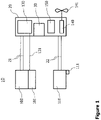
- FIG. 1 schematically illustrates an energy management system 10 that includes a fuel cell 100 configured to convert chemical energy into electric energy.
- the fuel cell 100 may be operated with reactant gases, such as hydrogen and oxygen.
- the reactant gases can be stored in a fuel tank 101, which may comprise more than one chamber, in order to store at least two different reactant gases separated from one another.
- the fuel tank 101 is illustrated as forming a structural unit with the fuel cell 100. However, the fuel tank 101 can be separate from the fuel cell 100 and connected to the fuel cell 100 via one or more ducts (not illustrated) for the reactant gases.
- the fuel cell 100 may be configured as a regenerative fuel cell 100 that is structured so that it recycles (regenerates) the exhaust gas or liquid (for example water).
- the energy management system 10 further comprises an electrolyzer 130 that is configured to convert an ionic substance into fuel (e.g. reactant gases for the fuel cell 100) by applying a direct current (electric energy) to the ionic substance.
- the electrolyzer 130 is fluidly coupled to the fuel tank 101 via one or more associated ducts 131. Although only one duct 131 is illustrated in Fig. 1 , it is to be understood that a plurality of ducts 131 may connect the fuel tank 101 with the electrolyzer 130.
- Fig. 1 illustrates the electrolyzer 130 as a separate component, the electrolyzer 130 may form a structural unit with the fuel cell 100 and/or the fuel tank 101, so that the duct 131 may be omitted or at least can be kept very short.
- the electric energy generated by the fuel cell 100 is provided via associated electrical wiring 21 to an electric bus 20.
- the electric bus 20 is configured to provide electric energy to at least one electrical load 130, 140, 150 schematically illustrated in Fig. 1 .
- the energy management system 10 may further comprise at least one energy source 110, such as an electric motor 140, a battery 150, and/or a solar panel 110 configured to convert light into electric energy.
- the at least one energy source 110 is also electrically connected to the electric bus 20 via associated electrical wiring 22.
- the electric bus 20 electrically couples the fuel cell 100, the at least one energy source 110 and the at least one electrical load 130, 140, 150.
- a controller 30 of the energy management system 10 is configured to control the at least one electrical load 130, 140, 150 in such a manner that a minimum load to the fuel cell 100 is ensured.
- the controller 30 controls the at least one electrical load 130, 140, 150 in such a manner that the electric power consumed at the electric bus 20 does not fall below the minimum load of the fuel cell 100. This ensures that the fuel cell 100 can be operated at a predetermined power regime, such as an optimum and/or high-power regime, so that wear out of the fuel cell 100 is avoided.
- the controller 30 may further be configured to control the at least one electrical load 130, 140, 150 in such a manner that an electric power provided by the fuel cell 100 is constant.
- the electric energy consumption of the at least one electrical load 130, 140, 150 is controlled in such a manner that the fuel cell 100 can operate in a constant mode and produces electric power in a constant manner.
- the controller 30 may further be configured to control the at least one electrical load 130, 140, 150 in such a manner that the electric power provided by the fuel cell 100 is larger than a minimum power required by the at least one electrical load 130, 140, 150, and/or that the fuel cell 100 runs at an optimal efficiency.
- the controller 30 can activate or deactivate the at least one electrical load 130, 140, 150 or can operate the at least one electrical load 130, 140, 150 in a mode, where the at least one electrical load 130, 140, 150 consumes a specific electric power.
- the controller 30 may activate, deactivate or operate the at least one electrical load 130, 140, 150 in a specific energy consuming mode in dependence on an electric power provided by the at least one energy source 110 and/or in dependence on the electric power consumed by the remaining electrical loads 130, 140, 150.
- the controller 30 can compensate for variations of the electric energy running through the electric bus 20, such as varying electric energy provided by the at least one energy source 110 and/or varying consumption of electric energy by the at least one electrical load 130, 140, 150.
- the electrolyzer 130 may increase or decrease its consumption of electric energy, respectively, i.e. may generate more or less reactant gases for the fuel cell 100, respectively, so that the consumption of electric energy of the electrolyzer 130 compensates for the variations.
- excess electric energy available at the electric bus 20 can be stored chemically.
- electric energy produced by the fuel cell 100 is (at least partially) used to operate the electrolyzer 130. Although this is technically unusual, the lifetime of the fuel cell 100 can be increased significantly due to less wear out.
- an aircraft 1 comprising such energy management system 10 is a high-altitude platform station or high altitude pseudo satellite
- a long lifetime of the fuel cell 100 is important, as the aircraft 1 may stay in a flight mode for several days, weeks or even months.
- the energy management system 10 may further comprise an electric motor 140, being one of the at least one electrical load 130, 140, 150.
- the electric motor 140 is mechanically coupled to a drive unit 141, such as a drive wheel or a propeller 141 of a vehicle exemplarily illustrated in Figure 1 .
- drive unit 141 is directly mounted on an output shaft of the electric motor 140 or via a gear transmission (not illustrated).
- the controller 30 can operate the electric motor 140 in such a manner that a minimum load to the fuel cell 100 is ensured and/or that the fuel cell 100 outputs a constant electric power.
- the rotational speed of the electric motor 140 is increased and decreased, respectively, so that the consumption of electric energy of the electric motor 140 compensates for the variations.
- the drive unit 141 can also be operated faster, and the vehicle, such as an aircraft 1 ( Figure 3 ), can perform a climb and/or acceleration maneuver, so that potential and/or kinetic energy are stored in the vehicle 1, respectively.
- electric energy can be stored in a battery 150, being a further example of the at least one electrical load 130, 140, 150.
- the controller 30 may be configured to charge the battery 150, in order to store excess electric energy available at the electric bus 20.
- a further possible electrical load is an electric heater (not exemplarily illustrated besides battery 150) or a payload of the vehicle 1.
- the battery 150 as well as the electric motor 140 may also function as an energy source, e.g. the electric motor 140 may be operated as a generator during deceleration or descending periods of the vehicle.
- At least one light sensor 111 may be included in the energy management system 10.
- the at least one light sensor 111 can detect the intensity of (sun-) light incident on the at least one solar panel 110, so that the controller can control the at least one electrical load 130, 140, 150 in dependence on the detected intensity of (sun-) light.
- Figure 2 schematically illustrates a flow diagram of a method for managing energy in a system, such as an aircraft 1.
- the method includes the step 200 of electrically coupling a fuel cell 100, at least one energy source 110, and at least one electrical load 130, 140, 150 by an electric bus 20.
- the electric energy produced by the fuel cell 100 and the at least one energy source 110 can be delivered to the at least one electrical load 130, 140, 150.
- This distribution or allocation of electric energy to the at least one electrical load 130, 140, 150 may take place during a step 210 of controlling the at least one electrical load 130, 140, 150 in such a manner that a minimum load to the fuel cell 100 is ensured, and/or that the fuel cell 100 outputs a constant electric power, and/or that the electric power provided by the fuel cell 100 is larger than a minimal power required by the at least one electrical load 130, 140, 150, and/or that the fuel cell 100 runs at an optimal efficiency.
- the controlling 210 may be made dependent on step 205, i.e. detecting the intensity of (sun-) light incident on the at least one solar panel 110.
- the intensity of (sun-) light may be measured via one or more light sensors 111, which are connected to the controller 30, which can control the at least one electrical load 130, 140, 150 based on a signal and/or data received from the light sensor(s) 111.
- the controlling 210 may be made dependent on the use of another of the at least one electrical load 130, 140, 150.
- an electric heater 150 may be used at certain times (e.g. at night or cold weather conditions), and a payload 150 may also be used at certain times. If the user time of the electric heater 150 and payload 150 are known in advance, the controlling 210 may take into account such future consumption of electric energy.
- Controlling 210 of the at least one electrical load 130, 140, 150 may include operating an electrolyzer 130 in such a manner that a minimum load to the fuel cell 100 is ensured and/or that the fuel cell 100 outputs a constant electric power.
- controlling 210 may include operating an electric motor 140 with a propeller 141 in such a manner that the minimum load to the fuel cell 100 is ensured and/or that the fuel cell 100 outputs a constant electric power. This may include performing a climb and/or acceleration maneuver of the vehicle 1 in step 213.
- the electrolyzer 130 and/or electric motor 140 may be operated in such a manner that the electric power provided by the fuel cell 100 is larger than a minimal power required by the at least one electrical load 130, 140, 150, and/or that the fuel cell 100 runs at an optimal efficiency.
- the electric motor 140 may also function as an energy source, so that the method further comprises performing in step 214 a deceleration or descending manoeuvre of the vehicle 1 and operating in step 215 the electric motor 140 as a generator. Thus, kinetic and/or potential energy is converted to electric energy.
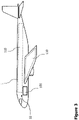
- FIG. 3 schematically illustrates an aircraft 1 (as one possible vehicle 1) comprising an energy management system 10 that includes at least one energy source 110.
- energy source may be at least one solar panel 110 provided on any surface (outer surface) of the aircraft 1, so that light (sunlight) can incident on the solar panel 110.
- the aircraft 1 may further comprise a fuel cell 100, in order to provide electric energy due to a chemical process.
- the fuel cell 100 may produce electric energy at a time when the solar panel(s) 110 do(es) not provide enough electric energy for all consumers, such as during nighttime.
- the fuel cell 100 may be completely switched off.
- the energy management system 10 may control at least one electrical load 130, 140, 150 in such a manner, that that a minimum load to the fuel cell 100 is ensured, and/or that the fuel cell 100 outputs a constant electric power, and/or that the electric power provided by the fuel cell 100 is larger than a minimal power required by the at least one electrical load 130, 140, 150, and/or that the fuel cell 100 runs at an optimal efficiency.
- the fuel cell 100 is not forced to provide a correspondingly varying amount of electric power.
Landscapes
- Engineering & Computer Science (AREA)
- Aviation & Aerospace Engineering (AREA)
- Chemical & Material Sciences (AREA)
- Combustion & Propulsion (AREA)
- Life Sciences & Earth Sciences (AREA)
- Sustainable Development (AREA)
- Sustainable Energy (AREA)
- Power Engineering (AREA)
- General Chemical & Material Sciences (AREA)
- Chemical Kinetics & Catalysis (AREA)
- Electrochemistry (AREA)
- Mechanical Engineering (AREA)
- Transportation (AREA)
- Manufacturing & Machinery (AREA)
- Fuel Cell (AREA)
- Electric Propulsion And Braking For Vehicles (AREA)
Description
- The invention relates to an energy management system for an aircraft ensuring a minimum load to a fuel cell, an aircraft having such energy management system and a method for an aircraft, for ensuring a minimum load to a fuel cell. In particular, the invention relates to an energy management system having an electric bus electrically coupling a fuel cell, an energy source, and an electrical load, wherein a controller controls the electrical load in such a manner that a minimum load to a fuel cell is ensured. The invention further relates to an aircraft having such energy management system and a method of electrically coupling the fuel cell, the energy source and the electrical load, and controlling the electrical load to ensure a minimum load to a fuel cell.
- Fuel cells become more and more important energy sources, for example on aircrafts, including commercial aircrafts and unmanned aerial vehicles (UAV). For instance, as solar energy is available for most systems during a significant amount of life time, solar cells in combination with a regenerative fuel cell are employed to provide electric energy for consumers of the system.
- However, the power regime applied to such regenerative fuel cells may wear out the fuel cell due to fluctuation of power required by the electrical loads of the system.
- The following prior Art documents are here identified:
- Document
WO 2013/136286 A2 discloses the preamble ofclaim 1. - Document
US 2003/230671 A1 discloses an aircraft propulsion, power systems and operation. - Document
US 2017/263956 A1 discloses a fuel cell system and a method for operating a fuel cell system. - Document
US 2015/056477 A1 discloses a fuel cell mixed power supply energy management method. - It is therefore an object of the invention to provide an energy management system for an aircraft, an aircraft and a method , for an aircraft, for managing energy that prevents wear out and increases the lifetime of a fuel cell.
- This object is achieved by an energy management system for an aircraft with the features of
claim 1, an aircraft with the features of claim 9 and a method for an aircraft, for managing energy - in a system with the features of claim 11.
- According to a first exemplary aspect for understanding the present disclosure, an energy management system , for an aircraft, comprises a fuel cell configured to convert chemical energy into electric energy, at least one energy source providing electric energy, at least one electrical load, and an electric bus electrically coupled to the fuel cell, the at least one energy source, and the at least one electrical load. Thus, the fuel cell and the at least one energy source provide electric energy to the at least one electrical load. For instance, the electric bus is be connected to the fuel cell as well as the at least one energy source via electric wiring and/or may be formed by electric wiring to electrically couple the fuel cell, the at least one energy source and the at least one electrical load.
- The energy management system further comprises a controller configured to control the at least one electrical load in such a manner that a minimum load to the fuel cell is ensured. In other words, a minimum power constraint of the fuel cell is always respected. This avoids wear out of the fuel cell, since otherwise operating the fuel cell with a small load (below the minimum load) may result in a stop of the chemical reaction in the fuel cell with a possible dry out. For instance, in order to operate the fuel cell at a low power regime, only a small amount of fuel has to be provided to the fuel cell, which may not be enough to activate the fuel cell operation or (when the fuel cell already operated) may stop a proper functioning of the fuel cell. Thus, the fuel cell may be activated and deactivated alternately, which leads to wear out of the fuel cell.
- The fuel cell can be operate at a high power regime. Such high power regime may mean operating the fuel cell between 50% and 70%, preferably approximately 60% fuel efficiency. The controller may be configured to control the at least one electrical load in such a manner that the bus load (all loads connected to the bus) requires electric energy corresponding to the minimum load, which may be between 45% and 60%, preferably approximately 50% fuel efficiency. Thus, the fuel cell, when activated, will be operated almost always at a power of optimal efficiency, which usually is close to the minimal power that can be provided by the fuel cell. In other words, the fuel cell can be operated at a high power regime and medium efficiency point, so that the fuel cell can be designed and dimensioned for this particular power regime and not for a broad spectrum of required power levels. Thus, the weight and size of the fuel cell can be optimized, which increases the power-to-weight ratio being optimal for aircraft, while the lifetime of the fuel cell can be increased due to less wear out of the fuel cell.
- According to an implementation variant, the controller may further control the at least one electrical load in such a manner that an electric power provided by the fuel cell is constant. In other words, the electric energy consumed at the electric bus (i.e. all loads connected to the bus) during a predetermined time span is controlled by the controller in such a manner that the fuel cell can operate on a constant electric energy output level. This constant operation of the fuel cell avoids wear out of the fuel cell by avoiding several load changes. Such load changes may result from a change of energy consumption of the at least one electrical load connected to the electric bus and/or from a change of electric energy provided by the at least one energy source to the electric bus. Alternatively or additionally, the controller can control the at least one electrical load in such a manner that the electric power provided by the fuel cell is larger than a minimum power required by the at least one electrical load, and/or that the fuel cell runs at an optimal efficiency.
- Thus, even if electric energy consumption at the electric bus and/or electric energy provided by the at least one energy source varies over time, the fuel cell can operate with a minimum load and/or in a constant manner and/or runs at an optimal efficiency. In other words, the electric energy consumed at the electric bus (i.e. all loads connected to the bus) is controlled by the controller in such a manner that the fuel cell can operate on at least a minimum electric energy output level and/or an electric power provided by the fuel cell (electric energy output level over a predetermined time span) is constant. This allows operation of the fuel cell with the least wear out due to optimal fuel efficiency and optimal power regime for the fuel cell.
- According to a further implementation variant the controller is configured to activate or deactivate the at least one electrical load in dependence on an electric power provided by the at least one energy source. Thus, the electric energy provided by the at least one energy source is used as a basis for the controller to activate or deactivate the at least one electrical load. The controller can control one or more of the at least one electrical load, in order to balance the electric energy provided by the at least one energy source. It is to be understood that the controller can be configured to not only activate or deactivate the one electrical load, but also to control the one electrical load by operating the electrical load at a specific power level (level of energy consumption) in dependence on an electric power provided by the at least one energy source.
- Alternatively or additionally, the energy management system may comprise a plurality of electrical loads, and the controller is further configured to activate or deactivate one of the plurality of electrical loads in dependence on the electric power consumed by the remaining of the plurality of electrical loads. It is to be understood that the controller can be configured to not only activate or deactivate the one electrical load, but also to control the one electrical load by operating the electrical load at a specific power level (level of energy consumption) in dependence on the electric power consumed by the remaining of the plurality of electrical loads.
- In accordance with another implementation variant, the controller is further configured to keep the bus load power of the electric bus constant over a time period, during which the fuel cell operates in a predetermined power regime. This is achieved by the controller activating, deactivating and/or operating an electrical load in such a manner that the electric energy consumed at the electric bus is constant. This allows the fuel cell to be operated in a predetermined power regime over a certain time period. For instance, the controller can determine the predetermined power regime and can control the fuel cell accordingly. Thus, the controller can set the operation mode of the fuel cell. This also reduces wear out of the fuel cell, since its operation can be kept constant when the predetermined power regime is chosen. The predetermined power regime may correspond to a particular fuel efficiency level, such as 45%, 50%, 55%, 60%, or the like.
- In a further implementation variant, the at least one electrical load comprises one or more of an electrolyser, a battery, an electric motor mechanically coupled to a drive unit, an electric heater, and a payload. An electric motor mechanically coupled to a drive unit is present with an energy management system installed in a vehicle, which is an aircraft. The drive unit may be a propeller (for an aircraft and floating vehicle) or may be a drive wheel (for a street vehicle). An electric heater may be used to heat fuel, payload or other items that have to be protected from cold. A payload as an electrical load means any electric consumer that requires electric energy, such as the controller, signaling equipment, communication equipment, surveillance equipment, an electric (servo) motor, etc. The controller can be configured to operate each of the at least one electrical load in such a manner that a minimum load to the fuel cell is ensured, and/or that the fuel cell outputs a constant electric power, and/or that the electric power provided by the fuel cell is larger than a minimal power required by the at least one electrical load, and/or that the fuel cell runs at an optimal efficiency.
- The fuel cell with the electrolyzer may form a regenerative fuel cell, and the electrolyzer is capable of breaking down a chemical into fuel and a remainder, such as breaking down water into hydrogen and oxygen. In this regard, the controller can be configured to operate the electrolyzer in such a manner that a minimum load to the fuel cell is ensured, and/or that the fuel cell outputs a constant electric power, and/or that the electric power provided by the fuel cell is larger than a minimal power required by the at least one electrical load, and/or that the fuel cell runs at an optimal efficiency. In other words, at any given time the electrolyzer generates fuel (e.g. hydrogen) in an amount corresponding to the electric energy available at the electric bus (provided by the fuel cell and the at least one energy source connected to the electric bus) less the electric energy consumed by all electrical loads besides the electrolyzer. Otherwise, the electric energy is to be wasted by an electrical heater not having any particular heating function or similar less useful consumer of electric energy. Thus, instead of wasting electric energy due to varying electric energy supply and/or varying electric energy consumption, while trying to operate the fuel cell at or above the minimum load (close to a minimal power output of the fuel cell), the superfluous electric energy is stored in form of fuel to operate the fuel cell, e.g. in form of reactant gases.
- According to a further variant, the energy management system may further comprise a fuel tank fluidly coupled to the electrolyzer and adapted to store fuel generated by the electrolyzer and to provide the stored fuel to the fuel cell. The fuel tank may be part of the regenerative fuel cell and/or of the electrolyzer. Furthermore, the fuel generated by the electrolyzer may be compressed before being stored in the fuel tank, for example, via a pump or compressor. In a specific variant of the energy management system, the regenerative fuel cell, electrolyzer and fuel tank form a unit, i.e. are mounted together to form a compact structural unit.
- In this invention, the at least one electrical load comprises an electric motor mechanically coupled to a drive unit of an aircraft where the controller is configured to operate the electric motor in such a manner that a minimum load to the fuel cell is ensured, and/or that the fuel cell outputs a constant electric power, and/or that the electric power provided by the fuel cell is larger than a minimal power required by the at least one electrical load, and/or that the fuel cell runs at an optimal efficiency. In this instance, for the present claimed invention, the controller controls the electric motor in such a manner that the vehicle performs a climb maneuver and/or accelerates, for example, by increasing the revolution speed of the motor and, hence, the drive unit. The drive unit can be a propeller or drive wheel, which revolution speed proportionally depends on the revolution speed of the motor. Thus, instead of wasting electric energy due to varying electric energy supply and/or varying electric energy consumption, while trying to operate the fuel cell at or above the minimum load (close to a minimal power output of the fuel cell), the superfluous electric energy is stored in form of mechanical potential energy and/or kinetic energy of the vehicle in which the energy management system is integrated.
- According to a further implementation variant, the at least one electrical load may comprise a battery. The controller can then be configured to operate the battery in such a manner that a minimum load to the fuel cell is ensured, and/or that the fuel cell outputs a constant electric power, and/or that the electric power provided by the fuel cell is larger than a minimal power required by the at least one electrical load, and/or that the fuel cell runs at an optimal efficiency. In other words, the controller can charge the battery, in order to store electric energy, instead of wasting electric energy due to varying electric energy supply and/or varying electric energy consumption, while trying to operate the fuel cell at or above the minimum load (close to a minimal power output of the fuel cell).
- In another implementation variant the at least one energy source comprises one or more of at least one solar panel configured to convert light into electric energy, a battery, and an electric motor mechanically coupled to a drive unit and configured to operate as a generator during deceleration or descending periods. Thus, the at least one energy source provide electric energy to all energy consumers of the energy management system via the electric bus. The electric energy generated by the at least one energy source may vary over time, while the electric energy consumed by the at least one electrical load may be constant (or will also vary over time independently from the energy provided). Thus, the controller has to control the at least one electrical load to compensate for such changes of available/consumed electric energy.
- For instance, the electric energy generated by the at least one solar panel varies, for example, due to an angle of the sunlight incident on the at least one solar panel, due to the at least one solar panel being, at least partially, in a shadow and/or due to sunrise or sunset. The battery may provide electric energy at a certain level, which may decrease, if the battery runs low. The electric motor may generate electric energy during deceleration or descending periods of a vehicle in which the energy management system is implemented. For example, if the electric motor and drive unit (such as a propeller or drive wheel) are fixedly mechanically coupled, i.e. without a clutch or similar separating unit, any deceleration or descending of the vehicle will cause the generation of electric energy.
- Another implementation variant of the energy management system provides at least one light sensor configured to detect the intensity of sunlight incident on the at least one solar panel. Such light sensor can be disposed anywhere on a surface of the vehicle, and preferably on a surface of the at least one solar panel. Moreover, each of the at least one solar panel may be equipped with a respective light sensor. The controller can then be configured to control the at least one electrical load in dependence on the detected intensity of sunlight. For instance, the controller can be connected to the at least one light sensor, in order to receive a signal and/or digital data representing the intensity of sunlight incident on the light sensor.
- The energy management system may further be operable in such a manner that especially during transition phases of the sunlight, i.e. sunset or sunrise, the fuel cell is operated at or above the minimum load of the fuel cell, while superfluous electric energy is stored as fuel generated by the electrolyzer, and/or as potential or kinetic energy achieved via the motor and drive unit, and/or as electric energy stored in the battery. In addition, superfluous electric energy may be used by an electric heater or a payload, which may be operated specifically at times where superfluous electric energy is available (e.g. under the control of the controller). The transition phases of the sunlight usually require constant or stepwise adjustment of the electric power generated by the fuel cell, corresponding to the amount of electric energy produced less or more by the at least one solar panel. Such conventional change of the output level of the fuel cell twice a day, however, leads to wear out of the fuel cell and significantly reduces the lifetime of the fuel cell. Thus, operating the fuel cell at or above a minimum load, according to the first aspect or one of its variants, allows for employing a fuel cell in a vehicle having a good power-to-weight ratio and increases the lifetime of the fuel cell.
- It is to be understood that the fuel cell may be switched-off entirely, for example, at times of bright sunlight, i.e. when the at least one solar panel produces enough energy for all electrical loads or more.
- In accordance with a further implementation variant, the energy management system comprises a plurality of fuel cells configured to convert chemical energy into electric energy. Each of the previous implementation variants may be applied to each of the plurality of fuel cells. For instance, if more electric energy is required, more than one fuel cell will be activated (e.g. under the control of the controller).
- Additionally or alternatively, the (single) fuel cell or one or more of the plurality of fuel cells is a multi-sector fuel cell, wherein each sector of the fuel cell can be operated individually. For instance, the active area of the fuel cell, where reactant gases can be brought together, maybe divided in sections (sectors) fluidly separated from one another. Thus, providing reactant gases only to one or more of these sectors allows operation of each sector of the fuel cell individually.
- The controller can be configured to control each of the plurality of fuel cells and/or each of the sectors of the one or more fuel cells individually in such a manner that a minimum load to each of the plurality of fuel cells and/or fuel cell sectors is ensured, and/or that the plurality of fuel cells and/or one or more of the fuel cell sectors output a constant electric power, and/or that the electric power provided by the plurality of fuel cells and/or one or more of the fuel cell sectors is larger than a minimal power required by the at least one electrical load, and/or that the plurality of fuel cells and/or one or more of the fuel cell sectors run at an optimal efficiency. In other words the controller is capable of providing the required energy for the electric bus, while operating only as many fuel cells and/or as many sectors of one or more fuel cells as necessary, but at an optimal power regime of the fuel cell and/or sector.
- It is to be understood that the controller can further operate one or more fuel cells and/or one or more sectors at different power levels. This allows an optimum efficiency of each fuel cell and/or sector, while achieving a power output larger than the minimum required power for all electrical consumers at the electric bus.
- According to a second exemplary aspect for understanding the present disclosure, an aircraft comprises an energy management system according to the first aspect or one of its variants.
- For example, the aircraft may be a high-altitude platform station or high altitude pseudo satellite. Such type of aircraft is intended to stay in a flight mode for several days, weeks or even months. Here it is important that the fuel cell and other components can operate over a long time period., i.e. have a long lifetime. Thus, operating the fuel cell at or above a minimum load to the fuel cell or at a constant electric power regime, and/or to provide electric power from the fuel cell to be larger than a minimal power required by the at least one electrical load, and/or running the fuel cell at an optimal efficiency, increases the lifetime of the fuel cell and reduces the risk of failure.
- According to a third exemplary aspect for understanding the present disclosure, a method for managing energy in a system having a fuel cell, at least one energy source, and at least one electrical load, including an electric motor mechanically coupled to a propeller, wherein the system is an aircraft, comprises the steps of: electrically coupling the fuel cell, the at least one energy source, and the at least one electrical load by an electric bus, and controlling the at least one electrical load in such a manner that a minimum load to the fuel cell is ensured.
- Alternatively or additionally, the at least one electrical load is controlled in such a manner that the fuel cell outputs a constant electric power. Also alternatively or additionally the at least one electrical load is controlled in such a manner that the electric power provided by the fuel cell (100) is larger than a minimal power required by the at least one electrical load (130, 140, 150), and/or that the fuel cell (100) runs at an optimal efficiency
- In a variant of the method, the at least one electrical load can comprise an electrolyzer, and the method comprises the step of: operating the electrolyzer in such a manner that the minimum load to the fuel cell is ensured, and/or that the fuel cell outputs a constant electric power, and/or that the electric power provided by the fuel cell is larger than a minimal power required by the at least one electrical load, and/or that the fuel cell runs at an optimal efficiency.
- The at least one electrical load comprises an electric motor mechanically coupled to a drive unit of a vehicle being the aircraft, such as a propeller or drive wheel, and wherein the method comprises the step of: operating the electric motor in such a manner that the minimum load to the fuel cell is ensured and/or that the fuel cell outputs a constant electric power, and/or that the electric power provided by the fuel cell is larger than a minimal power required by the at least one electrical load, and/or that the fuel cell runs at an optimal efficiency. The method further comprises performing a climb and/or acceleration maneuver with the vehicle comprising the system.
- According to a further variant, the method may further comprise the step of: operating the electric motor as a generator during deceleration or descending periods of the vehicle.
- According to another variant, the method may further comprise the step of: detecting an intensity of (sun-) light incident on the at least one solar panel by at least one light sensor. The controlling of the at least one electrical load can then comprise operating the at least one electrical load in dependence on the detected intensity of (sun-) light.
- The present disclosure is not restricted to the aspects and variants in the described form and order. Specifically, the description of aspects is not to be understood as a specific limiting grouping of features. It is to be understood that the present disclosure also covers combinations of the aspects and variants not explicitly described.
- Thus, each variant or optional feature can be combined with any other aspect, variant, optional feature or even combinations thereof.
- The invention is defined by the features of the
independent claims 1, 9 and 11. Preferred embodiments are defined in the dependent claims. - Preferred embodiments of the invention are now explained in greater detail with reference to the enclosed schematic drawings, in which
- Figure 1
- schematically illustrates an energy management system;
- Figure 2
- schematically illustrates a flow diagram of a method for managing energy in a vehicle; and
- Figure 3
- schematically illustrates an aircraft.
-
Figure 1 schematically illustrates anenergy management system 10 that includes afuel cell 100 configured to convert chemical energy into electric energy. For example, thefuel cell 100 may be operated with reactant gases, such as hydrogen and oxygen. The reactant gases can be stored in afuel tank 101, which may comprise more than one chamber, in order to store at least two different reactant gases separated from one another. Thefuel tank 101 is illustrated as forming a structural unit with thefuel cell 100. However, thefuel tank 101 can be separate from thefuel cell 100 and connected to thefuel cell 100 via one or more ducts (not illustrated) for the reactant gases. - The
fuel cell 100 may be configured as aregenerative fuel cell 100 that is structured so that it recycles (regenerates) the exhaust gas or liquid (for example water). To do so, theenergy management system 10 further comprises anelectrolyzer 130 that is configured to convert an ionic substance into fuel (e.g. reactant gases for the fuel cell 100) by applying a direct current (electric energy) to the ionic substance. Theelectrolyzer 130 is fluidly coupled to thefuel tank 101 via one or more associatedducts 131. Although only oneduct 131 is illustrated inFig. 1 , it is to be understood that a plurality ofducts 131 may connect thefuel tank 101 with theelectrolyzer 130. Furthermore, althoughFig. 1 illustrates theelectrolyzer 130 as a separate component, theelectrolyzer 130 may form a structural unit with thefuel cell 100 and/or thefuel tank 101, so that theduct 131 may be omitted or at least can be kept very short. - The electric energy generated by the
fuel cell 100 is provided via associatedelectrical wiring 21 to anelectric bus 20. Theelectric bus 20 is configured to provide electric energy to at least oneelectrical load Fig. 1 . - The
energy management system 10 may further comprise at least oneenergy source 110, such as anelectric motor 140, abattery 150, and/or asolar panel 110 configured to convert light into electric energy. The at least oneenergy source 110 is also electrically connected to theelectric bus 20 via associatedelectrical wiring 22. Thus, theelectric bus 20 electrically couples thefuel cell 100, the at least oneenergy source 110 and the at least oneelectrical load - A
controller 30 of theenergy management system 10 is configured to control the at least oneelectrical load fuel cell 100 is ensured. In other words, thecontroller 30 controls the at least oneelectrical load electric bus 20 does not fall below the minimum load of thefuel cell 100. This ensures that thefuel cell 100 can be operated at a predetermined power regime, such as an optimum and/or high-power regime, so that wear out of thefuel cell 100 is avoided. - The
controller 30 may further be configured to control the at least oneelectrical load fuel cell 100 is constant. In other words, the electric energy consumption of the at least oneelectrical load fuel cell 100 can operate in a constant mode and produces electric power in a constant manner. Alternatively or additionally, thecontroller 30 may further be configured to control the at least oneelectrical load fuel cell 100 is larger than a minimum power required by the at least oneelectrical load fuel cell 100 runs at an optimal efficiency. - For instance, the
controller 30 can activate or deactivate the at least oneelectrical load electrical load electrical load controller 30 may activate, deactivate or operate the at least oneelectrical load energy source 110 and/or in dependence on the electric power consumed by the remainingelectrical loads controller 30 can compensate for variations of the electric energy running through theelectric bus 20, such as varying electric energy provided by the at least oneenergy source 110 and/or varying consumption of electric energy by the at least oneelectrical load - For instance, if the electric energy available at the
electric bus 20 increases or decreases due to variations, theelectrolyzer 130 may increase or decrease its consumption of electric energy, respectively, i.e. may generate more or less reactant gases for thefuel cell 100, respectively, so that the consumption of electric energy of theelectrolyzer 130 compensates for the variations. Thus, excess electric energy available at theelectric bus 20 can be stored chemically. It is to be noted that electric energy produced by thefuel cell 100 is (at least partially) used to operate theelectrolyzer 130. Although this is technically unusual, the lifetime of thefuel cell 100 can be increased significantly due to less wear out. If in, for example, anaircraft 1 comprising suchenergy management system 10 is a high-altitude platform station or high altitude pseudo satellite, a long lifetime of thefuel cell 100 is important, as theaircraft 1 may stay in a flight mode for several days, weeks or even months. - The
energy management system 10 may further comprise anelectric motor 140, being one of the at least oneelectrical load electric motor 140 is mechanically coupled to adrive unit 141, such as a drive wheel or apropeller 141 of a vehicle exemplarily illustrated inFigure 1 . For example,drive unit 141 is directly mounted on an output shaft of theelectric motor 140 or via a gear transmission (not illustrated). Thecontroller 30 can operate theelectric motor 140 in such a manner that a minimum load to thefuel cell 100 is ensured and/or that thefuel cell 100 outputs a constant electric power. For instance, if the electric energy available at theelectric bus 20 increases or decreases due to variations, the rotational speed of theelectric motor 140 is increased and decreased, respectively, so that the consumption of electric energy of theelectric motor 140 compensates for the variations. When increasing the rotational speed of theelectric motor 140, thedrive unit 141 can also be operated faster, and the vehicle, such as an aircraft 1 (Figure 3 ), can perform a climb and/or acceleration maneuver, so that potential and/or kinetic energy are stored in thevehicle 1, respectively. - Likewise, electric energy can be stored in a
battery 150, being a further example of the at least oneelectrical load controller 30 may be configured to charge thebattery 150, in order to store excess electric energy available at theelectric bus 20. Thus, a minimum load to thefuel cell 100 is ensured and/or thefuel cell 100 can output a constant electric power. A further possible electrical load is an electric heater (not exemplarily illustrated besides battery 150) or a payload of thevehicle 1. - The
battery 150 as well as theelectric motor 140 may also function as an energy source, e.g. theelectric motor 140 may be operated as a generator during deceleration or descending periods of the vehicle. - In order to react faster on variations of the electric energy produced by the at least one
energy source 110, particularly at least onesolar panel 110, at least onelight sensor 111 may be included in theenergy management system 10. The at least onelight sensor 111 can detect the intensity of (sun-) light incident on the at least onesolar panel 110, so that the controller can control the at least oneelectrical load -
Figure 2 schematically illustrates a flow diagram of a method for managing energy in a system, such as anaircraft 1. The method includes thestep 200 of electrically coupling afuel cell 100, at least oneenergy source 110, and at least oneelectrical load electric bus 20. Thus, the electric energy produced by thefuel cell 100 and the at least oneenergy source 110 can be delivered to the at least oneelectrical load electrical load step 210 of controlling the at least oneelectrical load fuel cell 100 is ensured, and/or that thefuel cell 100 outputs a constant electric power, and/or that the electric power provided by thefuel cell 100 is larger than a minimal power required by the at least oneelectrical load fuel cell 100 runs at an optimal efficiency. - The controlling 210 may be made dependent on
step 205, i.e. detecting the intensity of (sun-) light incident on the at least onesolar panel 110. For instance, the intensity of (sun-) light may be measured via one or morelight sensors 111, which are connected to thecontroller 30, which can control the at least oneelectrical load electrical load electric heater 150 may be used at certain times (e.g. at night or cold weather conditions), and apayload 150 may also be used at certain times. If the user time of theelectric heater 150 andpayload 150 are known in advance, the controlling 210 may take into account such future consumption of electric energy. - Controlling 210 of the at least one
electrical load electrolyzer 130 in such a manner that a minimum load to thefuel cell 100 is ensured and/or that thefuel cell 100 outputs a constant electric power. Alternatively or additionally, controlling 210 may include operating anelectric motor 140 with apropeller 141 in such a manner that the minimum load to thefuel cell 100 is ensured and/or that thefuel cell 100 outputs a constant electric power. This may include performing a climb and/or acceleration maneuver of thevehicle 1 instep 213. Likewise, theelectrolyzer 130 and/orelectric motor 140 may be operated in such a manner that the electric power provided by thefuel cell 100 is larger than a minimal power required by the at least oneelectrical load fuel cell 100 runs at an optimal efficiency. - The
electric motor 140 may also function as an energy source, so that the method further comprises performing in step 214 a deceleration or descending manoeuvre of thevehicle 1 and operating instep 215 theelectric motor 140 as a generator. Thus, kinetic and/or potential energy is converted to electric energy. -
Figure 3 schematically illustrates an aircraft 1 (as one possible vehicle 1) comprising anenergy management system 10 that includes at least oneenergy source 110. Such energy source may be at least onesolar panel 110 provided on any surface (outer surface) of theaircraft 1, so that light (sunlight) can incident on thesolar panel 110. In addition, theaircraft 1 may further comprise afuel cell 100, in order to provide electric energy due to a chemical process. For instance, thefuel cell 100 may produce electric energy at a time when the solar panel(s) 110 do(es) not provide enough electric energy for all consumers, such as during nighttime. On the other hand, if enough electric energy is produced by the at least onesolar panel 110, thefuel cell 100 may be completely switched off. - In phases of transition between nighttime and daytime (e.g. sunrise and sunset) the
energy management system 10 may control at least oneelectrical load fuel cell 100 is ensured, and/or that thefuel cell 100 outputs a constant electric power, and/or that the electric power provided by thefuel cell 100 is larger than a minimal power required by the at least oneelectrical load fuel cell 100 runs at an optimal efficiency. Thus, especially during a time of varying electric energy provided by the at least onesolar panel 110, thefuel cell 100 is not forced to provide a correspondingly varying amount of electric power.
Claims (13)
- Energy management system (10) for an aircraft (1), comprising:- a fuel cell (100) configured to convert chemical energy into electric energy;- at least one energy source (110) configured to provide electric energy;- at least one electrical load (130, 140, 150);- an electric bus (20) electrically coupled to the fuel cell (100), the at least one energy source (110), and the at least one electrical load (130, 140, 150); and- a controller (30) configured to control the at least one electrical load (130, 140, 150) in such a manner that an electric power consumed at the electric bus (20) ensures a minimum load to the fuel cell (100), the energy management system being characterised by:the at least one electrical load (130, 140, 150) comprises an electric motor (140) mechanically coupled to a drive unit (141), andthe controller (30) is further configured to operate the electric motor (140) in such a manner that the drive unit (141) performs a climb and/or acceleration manoeuvre of the aircraft (1).
- Energy management system (10) according to claim 1, wherein the controller is further configured to control the at least one electrical load (130, 140, 150) in such a manner that:
an electric power provided by the fuel cell (100) is constant, and/or that the electric power provided by the fuel cell (100) is larger than a minimum power required by the at least one electrical load (130, 140, 150), and/or that the fuel cell (100) is configured to run at an optimal efficiency. - Energy management system (10) according to claim 1 or 2, wherein the controller (30) is configured to activate or deactivate the at least one electrical load (130, 140, 150) in dependence on an electric power provided by the at least one energy source (110), and/or
wherein the energy management system (10) comprises a plurality of electrical loads (130, 140, 150), and the controller is further configured to activate or deactivate a subset of the plurality of electrical loads (130, 140, 150) in dependence on the electric power consumed by the remaining electrical loads of the plurality of electrical loads (130, 140, 150). - Energy management system (10) according to one of claims 1 to 3, wherein the controller (30) is further configured to keep the electric power provided by the fuel cell (100) constant over a time period, during which the fuel cell (100) operates in a predetermined power regime, and wherein preferably the controller (30) is configured to determine the predetermined power regime and controls the fuel cell (100) accordingly.
- Energy management system (10) according to one of claims 1 to 4, wherein the at least one electrical load (130, 140, 150) comprises one or more of:- an electrolyser (130);- a battery (150);- an electric heater (150); and- a payload (150),wherein the controller (30) is configured to operate each of the at least one electrical load (130, 140, 150) in such a manner that the minimum load to the fuel cell (100) is ensured, and/or that the fuel cell (100) outputs a constant electric power, and/or that the electric power provided by the fuel cell (100) is larger than a minimal power required by the at least one electrical load (130, 140, 150), and/or that the fuel cell (100) runs at an optimal efficiency.
- Energy management system (10) according to claim 5, further comprising:- a fuel tank (101) fluidly coupled to the electrolyser (130) and adapted to store fuel generated by the electrolyser (130) and to provide the stored fuel to the fuel cell (100).
- Energy management system (10) according to one of claims 1 to 6, wherein the at least one energy source (110) comprises one or more of:- at least one solar panel (110) configured to convert light into electric energy;- a battery (150); and- an electric motor (140) mechanically coupled to a propeller (141) and configured to operate as a generator during deceleration or descending periods.
- Energy management system (10) according to one of claims 1 to 7, further comprising:- a plurality of fuel cells (100) configured to convert chemical energy into electric energy,wherein preferably one or more of the plurality of fuel cells (100) is a multi-sector fuel cell (100), wherein each sector of the fuel cell (100) can be operated individually, andwherein the controller (30) is further configured to control each of the plurality of fuel cells (100) and/or each of the sectors of the one or more fuel cells (100) in such a manner that:a minimum load to each of the plurality of fuel cells (100) and/or fuel cell sectors is ensured, and/or that the plurality of fuel cells (100) and/or one or more of the fuel cell sectors output a constant electric power, and/or thatthe electric power provided by the plurality of fuel cells (100) and/or one or more of the fuel cell sectors is larger than a minimal power required by the at least one electrical load (130, 140, 150), and/or thatthe plurality of fuel cells (100) and/or one or more of the fuel cell sectors run at an optimal efficiency.
- Aircraft (1) comprising an energy management system (10) according to one of claims 1 to 8.
- Aircraft (1) according to claim 9, wherein the aircraft (1) is a high-altitude platform station or high altitude pseudo satellite.
- Method for managing energy in a system having a fuel cell (100), at least one energy source (110), and at least one electrical load (130, 140, 150) including an electric motor (140) mechanically coupled to a propeller (141), wherein the system is an aircraft (1), wherein the method comprises:- electrically coupling (200) the fuel cell (100), the at least one energy source (110), and the at least one electrical load (130, 140, 150) by an electric bus (20);- controlling (210) the at least one electrical load (130, 140, 150) in such a manner that an electric power consumed at the electric bus (20) ensures a minimum load to the fuel cell (100), and/or that the fuel cell (100) outputs a constant electric power, and/or that the electric power provided by the fuel cell (100) is larger than a minimal power required by the at least one electrical load (130, 140, 150), and/or that the fuel cell (100) runs at an optimal efficiency;- operating (212) the electric motor (140) in such a manner that an electric power consumed at the electric bus (20) ensures the minimum load to the fuel cell (100) and/or that the fuel cell (100) outputs a constant electric power, and/or that the electric power provided by the fuel cell (100) is larger than a minimal power required by the at least one electrical load (130, 140, 150), and/or that the fuel cell (100) runs at an optimal efficiency; and- performing (213) a climb and/or acceleration manoeuvre with the aircraft (1).
- Method according to claim 11, wherein the at least one electrical load (130, 140, 150) comprises an electrolyser (130), and wherein the method comprises:- operating (211) the electrolyser (130) in such a manner that an electric power consumed at the electric bus (20) ensures the minimum load to the fuel cell (100), and/or that the fuel cell (100) outputs a constant electric power, and/or that the electric power provided by the fuel cell (100) is larger than a minimal power required by the at least one electrical load (130, 140, 150), and/or that the fuel cell (100) runs at an optimal efficiency.
- Method according to claim 11, further comprising:- performing (214) a deceleration or descending manoeuvre of the aircraft (1); and- operating (215) the electric motor (140) as a generator during deceleration or descending manoeuvre of the aircraft (1).
Priority Applications (3)
| Application Number | Priority Date | Filing Date | Title |
|---|---|---|---|
| EP19315029.9A EP3734785B1 (en) | 2019-05-02 | 2019-05-02 | Energy management system for minimum fuel cell load, aircraft having an energy management system and method for ensuring minimum fuel cell load |
| US16/864,277 US11186380B2 (en) | 2019-05-02 | 2020-05-01 | Energy management system for minimum fuel cell load, aircraft having an energy management system and method for ensuring minimum fuel cell load |
| CN202010374496.4A CN111874238B (en) | 2019-05-02 | 2020-05-06 | Energy management system, aircraft with the system and method of managing energy |
Applications Claiming Priority (1)
| Application Number | Priority Date | Filing Date | Title |
|---|---|---|---|
| EP19315029.9A EP3734785B1 (en) | 2019-05-02 | 2019-05-02 | Energy management system for minimum fuel cell load, aircraft having an energy management system and method for ensuring minimum fuel cell load |
Publications (2)
| Publication Number | Publication Date |
|---|---|
| EP3734785A1 EP3734785A1 (en) | 2020-11-04 |
| EP3734785B1 true EP3734785B1 (en) | 2022-07-06 |
Family
ID=66810743
Family Applications (1)
| Application Number | Title | Priority Date | Filing Date |
|---|---|---|---|
| EP19315029.9A Active EP3734785B1 (en) | 2019-05-02 | 2019-05-02 | Energy management system for minimum fuel cell load, aircraft having an energy management system and method for ensuring minimum fuel cell load |
Country Status (3)
| Country | Link |
|---|---|
| US (1) | US11186380B2 (en) |
| EP (1) | EP3734785B1 (en) |
| CN (1) | CN111874238B (en) |
Families Citing this family (2)
| Publication number | Priority date | Publication date | Assignee | Title |
|---|---|---|---|---|
| JP7622349B2 (en) * | 2020-03-27 | 2025-01-28 | 株式会社Gsユアサ | Power storage device |
| US12212027B2 (en) * | 2022-03-31 | 2025-01-28 | Honeywell International Inc. | Hydrogen powered auxiliary power unit |
Citations (2)
| Publication number | Priority date | Publication date | Assignee | Title |
|---|---|---|---|---|
| US20150056477A1 (en) * | 2012-09-28 | 2015-02-26 | Infintium Fuel Cell Systems (Shanghai) Co., Ltd. | Fuel Cell Mixed Power Supply Energy Management Method |
| US20170263956A1 (en) * | 2016-03-09 | 2017-09-14 | Volkswagen Ag | Fuel cell system and method for operating a fuel cell system |
Family Cites Families (7)
| Publication number | Priority date | Publication date | Assignee | Title |
|---|---|---|---|---|
| US20030230671A1 (en) * | 2000-08-24 | 2003-12-18 | Dunn James P. | Fuel cell powered electric aircraft |
| US9142847B2 (en) * | 2008-07-08 | 2015-09-22 | Bloom Energy Corporation | Fuel cell load controller |
| EP2825457B1 (en) | 2012-03-13 | 2019-10-09 | Safran Cabin Netherlands N.V. | Power management for galley with fuel cell |
| FR3009544B1 (en) * | 2013-08-06 | 2017-06-23 | Aircelle Sa | ELECTRICAL SYSTEMS OF THE ENERGY-SAVING NACELLE |
| WO2016178054A1 (en) * | 2015-05-06 | 2016-11-10 | Ge Aviation Systems Limited | System and method for electric power distribution and load leveling on aircrafts |
| KR101644101B1 (en) * | 2015-11-19 | 2016-07-29 | 한국항공우주연구원 | Fuel cell of recycle type for monopropellant system and method thereof |
| CN107585316B (en) * | 2016-07-06 | 2024-08-13 | 陕西西氢航天动力科技有限公司 | New energy hybrid power supply system for high-altitude unmanned aerial vehicle |
-
2019
- 2019-05-02 EP EP19315029.9A patent/EP3734785B1/en active Active
-
2020
- 2020-05-01 US US16/864,277 patent/US11186380B2/en active Active
- 2020-05-06 CN CN202010374496.4A patent/CN111874238B/en active Active
Patent Citations (2)
| Publication number | Priority date | Publication date | Assignee | Title |
|---|---|---|---|---|
| US20150056477A1 (en) * | 2012-09-28 | 2015-02-26 | Infintium Fuel Cell Systems (Shanghai) Co., Ltd. | Fuel Cell Mixed Power Supply Energy Management Method |
| US20170263956A1 (en) * | 2016-03-09 | 2017-09-14 | Volkswagen Ag | Fuel cell system and method for operating a fuel cell system |
Also Published As
| Publication number | Publication date |
|---|---|
| CN111874238A (en) | 2020-11-03 |
| CN111874238B (en) | 2025-07-22 |
| US11186380B2 (en) | 2021-11-30 |
| US20200346776A1 (en) | 2020-11-05 |
| EP3734785A1 (en) | 2020-11-04 |
Similar Documents
| Publication | Publication Date | Title |
|---|---|---|
| CA3097684C (en) | Electric drive train and method for feeding an electric drive train | |
| CN107878762B (en) | Long-endurance unmanned aerial vehicle oil-electricity hybrid power system and control method | |
| RU2393592C2 (en) | System of fuel elements for emergency power supply | |
| RU2464204C2 (en) | Aircraft power controller | |
| US20220169129A1 (en) | Hybrid hydrogen power module | |
| US20210276723A1 (en) | Power assembly, power system and unmanned aerial vehicle | |
| US20030230671A1 (en) | Fuel cell powered electric aircraft | |
| EP3344545B1 (en) | A vehicle comprising an engine restart system | |
| CN205906226U (en) | A new forms of energy hybrid power supply system for high altitude unmanned aerial vehicle | |
| US10899466B2 (en) | Electrical power supply on a vehicle | |
| US11186380B2 (en) | Energy management system for minimum fuel cell load, aircraft having an energy management system and method for ensuring minimum fuel cell load | |
| US20200354073A1 (en) | Redundant aviation powertrain system for reliability and safety | |
| KR102739576B1 (en) | Electric power supply system for vessel | |
| US20210323425A1 (en) | Charging scheme for electric propulsion systems | |
| KR20210062113A (en) | Hybrid power supply apparatus of aerial vehicle | |
| CN107585316B (en) | New energy hybrid power supply system for high-altitude unmanned aerial vehicle | |
| US20240190577A1 (en) | Waste heat control for aircraft fuel cell | |
| EP4194333B1 (en) | Power plant for an aircraft, aircraft and method for operating such a plant | |
| JP7814764B2 (en) | Charging station for electric vehicles with fuel cell systems | |
| KR20190131720A (en) | Hybrid power supply apparatus of aerial vehicle | |
| KR102898582B1 (en) | Electric propulsion vessel with adjustable propeller pitch | |
| KR20240099761A (en) | Method and device for managing battery of a moving object | |
| Almesafri et al. | Power system analysis of solar and hydrogen fuel cell powered EVTOL UAV | |
| Mercier et al. | State of the art of Helicopter Hybrid Propulsion | |
| CN120288247A (en) | Optimizing the available energy for electric vehicles |
Legal Events
| Date | Code | Title | Description |
|---|---|---|---|
| PUAI | Public reference made under article 153(3) epc to a published international application that has entered the european phase |
Free format text: ORIGINAL CODE: 0009012 |
|
| STAA | Information on the status of an ep patent application or granted ep patent |
Free format text: STATUS: REQUEST FOR EXAMINATION WAS MADE |
|
| 17P | Request for examination filed |
Effective date: 20200622 |
|
| AK | Designated contracting states |
Kind code of ref document: A1 Designated state(s): AL AT BE BG CH CY CZ DE DK EE ES FI FR GB GR HR HU IE IS IT LI LT LU LV MC MK MT NL NO PL PT RO RS SE SI SK SM TR |
|
| AX | Request for extension of the european patent |
Extension state: BA ME |
|
| STAA | Information on the status of an ep patent application or granted ep patent |
Free format text: STATUS: EXAMINATION IS IN PROGRESS |
|
| 17Q | First examination report despatched |
Effective date: 20210521 |
|
| GRAP | Despatch of communication of intention to grant a patent |
Free format text: ORIGINAL CODE: EPIDOSNIGR1 |
|
| STAA | Information on the status of an ep patent application or granted ep patent |
Free format text: STATUS: GRANT OF PATENT IS INTENDED |
|
| RIC1 | Information provided on ipc code assigned before grant |
Ipc: B64D 41/00 20060101ALI20220127BHEP Ipc: B64D 47/00 20060101ALI20220127BHEP Ipc: B64D 27/24 20060101ALI20220127BHEP Ipc: B64C 39/02 20060101ALI20220127BHEP Ipc: H02J 1/10 20060101AFI20220127BHEP |
|
| INTG | Intention to grant announced |
Effective date: 20220215 |
|
| RAP3 | Party data changed (applicant data changed or rights of an application transferred) |
Owner name: AIRBUS DEFENCE AND SPACE SAS Owner name: AIRBUS OPERATIONS GMBH Owner name: AIRBUS DEFENCE AND SPACE GMBH |
|
| GRAS | Grant fee paid |
Free format text: ORIGINAL CODE: EPIDOSNIGR3 |
|
| GRAA | (expected) grant |
Free format text: ORIGINAL CODE: 0009210 |
|
| STAA | Information on the status of an ep patent application or granted ep patent |
Free format text: STATUS: THE PATENT HAS BEEN GRANTED |
|
| AK | Designated contracting states |
Kind code of ref document: B1 Designated state(s): AL AT BE BG CH CY CZ DE DK EE ES FI FR GB GR HR HU IE IS IT LI LT LU LV MC MK MT NL NO PL PT RO RS SE SI SK SM TR |
|
| REG | Reference to a national code |
Ref country code: AT Ref legal event code: REF Ref document number: 1503565 Country of ref document: AT Kind code of ref document: T Effective date: 20220715 Ref country code: CH Ref legal event code: EP |
|
| REG | Reference to a national code |
Ref country code: DE Ref legal event code: R096 Ref document number: 602019016662 Country of ref document: DE |
|
| REG | Reference to a national code |
Ref country code: IE Ref legal event code: FG4D |
|
| REG | Reference to a national code |
Ref country code: LT Ref legal event code: MG9D |
|
| REG | Reference to a national code |
Ref country code: NL Ref legal event code: MP Effective date: 20220706 |
|
| PG25 | Lapsed in a contracting state [announced via postgrant information from national office to epo] |
Ref country code: SE Free format text: LAPSE BECAUSE OF FAILURE TO SUBMIT A TRANSLATION OF THE DESCRIPTION OR TO PAY THE FEE WITHIN THE PRESCRIBED TIME-LIMIT Effective date: 20220706 Ref country code: RS Free format text: LAPSE BECAUSE OF FAILURE TO SUBMIT A TRANSLATION OF THE DESCRIPTION OR TO PAY THE FEE WITHIN THE PRESCRIBED TIME-LIMIT Effective date: 20220706 Ref country code: PT Free format text: LAPSE BECAUSE OF FAILURE TO SUBMIT A TRANSLATION OF THE DESCRIPTION OR TO PAY THE FEE WITHIN THE PRESCRIBED TIME-LIMIT Effective date: 20221107 Ref country code: NO Free format text: LAPSE BECAUSE OF FAILURE TO SUBMIT A TRANSLATION OF THE DESCRIPTION OR TO PAY THE FEE WITHIN THE PRESCRIBED TIME-LIMIT Effective date: 20221006 Ref country code: NL Free format text: LAPSE BECAUSE OF FAILURE TO SUBMIT A TRANSLATION OF THE DESCRIPTION OR TO PAY THE FEE WITHIN THE PRESCRIBED TIME-LIMIT Effective date: 20220706 Ref country code: LV Free format text: LAPSE BECAUSE OF FAILURE TO SUBMIT A TRANSLATION OF THE DESCRIPTION OR TO PAY THE FEE WITHIN THE PRESCRIBED TIME-LIMIT Effective date: 20220706 Ref country code: LT Free format text: LAPSE BECAUSE OF FAILURE TO SUBMIT A TRANSLATION OF THE DESCRIPTION OR TO PAY THE FEE WITHIN THE PRESCRIBED TIME-LIMIT Effective date: 20220706 Ref country code: FI Free format text: LAPSE BECAUSE OF FAILURE TO SUBMIT A TRANSLATION OF THE DESCRIPTION OR TO PAY THE FEE WITHIN THE PRESCRIBED TIME-LIMIT Effective date: 20220706 Ref country code: ES Free format text: LAPSE BECAUSE OF FAILURE TO SUBMIT A TRANSLATION OF THE DESCRIPTION OR TO PAY THE FEE WITHIN THE PRESCRIBED TIME-LIMIT Effective date: 20220706 |
|
| REG | Reference to a national code |
Ref country code: AT Ref legal event code: MK05 Ref document number: 1503565 Country of ref document: AT Kind code of ref document: T Effective date: 20220706 |
|
| PG25 | Lapsed in a contracting state [announced via postgrant information from national office to epo] |
Ref country code: PL Free format text: LAPSE BECAUSE OF FAILURE TO SUBMIT A TRANSLATION OF THE DESCRIPTION OR TO PAY THE FEE WITHIN THE PRESCRIBED TIME-LIMIT Effective date: 20220706 Ref country code: IS Free format text: LAPSE BECAUSE OF FAILURE TO SUBMIT A TRANSLATION OF THE DESCRIPTION OR TO PAY THE FEE WITHIN THE PRESCRIBED TIME-LIMIT Effective date: 20221106 Ref country code: HR Free format text: LAPSE BECAUSE OF FAILURE TO SUBMIT A TRANSLATION OF THE DESCRIPTION OR TO PAY THE FEE WITHIN THE PRESCRIBED TIME-LIMIT Effective date: 20220706 Ref country code: GR Free format text: LAPSE BECAUSE OF FAILURE TO SUBMIT A TRANSLATION OF THE DESCRIPTION OR TO PAY THE FEE WITHIN THE PRESCRIBED TIME-LIMIT Effective date: 20221007 |
|
| REG | Reference to a national code |
Ref country code: DE Ref legal event code: R097 Ref document number: 602019016662 Country of ref document: DE |
|
| PG25 | Lapsed in a contracting state [announced via postgrant information from national office to epo] |
Ref country code: SM Free format text: LAPSE BECAUSE OF FAILURE TO SUBMIT A TRANSLATION OF THE DESCRIPTION OR TO PAY THE FEE WITHIN THE PRESCRIBED TIME-LIMIT Effective date: 20220706 Ref country code: RO Free format text: LAPSE BECAUSE OF FAILURE TO SUBMIT A TRANSLATION OF THE DESCRIPTION OR TO PAY THE FEE WITHIN THE PRESCRIBED TIME-LIMIT Effective date: 20220706 Ref country code: DK Free format text: LAPSE BECAUSE OF FAILURE TO SUBMIT A TRANSLATION OF THE DESCRIPTION OR TO PAY THE FEE WITHIN THE PRESCRIBED TIME-LIMIT Effective date: 20220706 Ref country code: CZ Free format text: LAPSE BECAUSE OF FAILURE TO SUBMIT A TRANSLATION OF THE DESCRIPTION OR TO PAY THE FEE WITHIN THE PRESCRIBED TIME-LIMIT Effective date: 20220706 Ref country code: AT Free format text: LAPSE BECAUSE OF FAILURE TO SUBMIT A TRANSLATION OF THE DESCRIPTION OR TO PAY THE FEE WITHIN THE PRESCRIBED TIME-LIMIT Effective date: 20220706 |
|
| PLBE | No opposition filed within time limit |
Free format text: ORIGINAL CODE: 0009261 |
|
| STAA | Information on the status of an ep patent application or granted ep patent |
Free format text: STATUS: NO OPPOSITION FILED WITHIN TIME LIMIT |
|
| PG25 | Lapsed in a contracting state [announced via postgrant information from national office to epo] |
Ref country code: SK Free format text: LAPSE BECAUSE OF FAILURE TO SUBMIT A TRANSLATION OF THE DESCRIPTION OR TO PAY THE FEE WITHIN THE PRESCRIBED TIME-LIMIT Effective date: 20220706 Ref country code: EE Free format text: LAPSE BECAUSE OF FAILURE TO SUBMIT A TRANSLATION OF THE DESCRIPTION OR TO PAY THE FEE WITHIN THE PRESCRIBED TIME-LIMIT Effective date: 20220706 |
|
| 26N | No opposition filed |
Effective date: 20230411 |
|
| PG25 | Lapsed in a contracting state [announced via postgrant information from national office to epo] |
Ref country code: AL Free format text: LAPSE BECAUSE OF FAILURE TO SUBMIT A TRANSLATION OF THE DESCRIPTION OR TO PAY THE FEE WITHIN THE PRESCRIBED TIME-LIMIT Effective date: 20220706 |
|
| PG25 | Lapsed in a contracting state [announced via postgrant information from national office to epo] |
Ref country code: SI Free format text: LAPSE BECAUSE OF FAILURE TO SUBMIT A TRANSLATION OF THE DESCRIPTION OR TO PAY THE FEE WITHIN THE PRESCRIBED TIME-LIMIT Effective date: 20220706 |
|
| REG | Reference to a national code |
Ref country code: CH Ref legal event code: PL |
|
| PG25 | Lapsed in a contracting state [announced via postgrant information from national office to epo] |
Ref country code: MC Free format text: LAPSE BECAUSE OF FAILURE TO SUBMIT A TRANSLATION OF THE DESCRIPTION OR TO PAY THE FEE WITHIN THE PRESCRIBED TIME-LIMIT Effective date: 20220706 |
|
| REG | Reference to a national code |
Ref country code: BE Ref legal event code: MM Effective date: 20230531 |
|
| PG25 | Lapsed in a contracting state [announced via postgrant information from national office to epo] |
Ref country code: MC Free format text: LAPSE BECAUSE OF FAILURE TO SUBMIT A TRANSLATION OF THE DESCRIPTION OR TO PAY THE FEE WITHIN THE PRESCRIBED TIME-LIMIT Effective date: 20220706 Ref country code: LU Free format text: LAPSE BECAUSE OF NON-PAYMENT OF DUE FEES Effective date: 20230502 Ref country code: LI Free format text: LAPSE BECAUSE OF NON-PAYMENT OF DUE FEES Effective date: 20230531 Ref country code: IT Free format text: LAPSE BECAUSE OF FAILURE TO SUBMIT A TRANSLATION OF THE DESCRIPTION OR TO PAY THE FEE WITHIN THE PRESCRIBED TIME-LIMIT Effective date: 20220706 Ref country code: CH Free format text: LAPSE BECAUSE OF NON-PAYMENT OF DUE FEES Effective date: 20230531 |
|
| REG | Reference to a national code |
Ref country code: IE Ref legal event code: MM4A |
|
| PG25 | Lapsed in a contracting state [announced via postgrant information from national office to epo] |
Ref country code: IE Free format text: LAPSE BECAUSE OF NON-PAYMENT OF DUE FEES Effective date: 20230502 |
|
| PG25 | Lapsed in a contracting state [announced via postgrant information from national office to epo] |
Ref country code: IE Free format text: LAPSE BECAUSE OF NON-PAYMENT OF DUE FEES Effective date: 20230502 |
|
| PG25 | Lapsed in a contracting state [announced via postgrant information from national office to epo] |
Ref country code: BE Free format text: LAPSE BECAUSE OF NON-PAYMENT OF DUE FEES Effective date: 20230531 |
|
| PG25 | Lapsed in a contracting state [announced via postgrant information from national office to epo] |
Ref country code: BG Free format text: LAPSE BECAUSE OF FAILURE TO SUBMIT A TRANSLATION OF THE DESCRIPTION OR TO PAY THE FEE WITHIN THE PRESCRIBED TIME-LIMIT Effective date: 20220706 |
|
| PG25 | Lapsed in a contracting state [announced via postgrant information from national office to epo] |
Ref country code: BG Free format text: LAPSE BECAUSE OF FAILURE TO SUBMIT A TRANSLATION OF THE DESCRIPTION OR TO PAY THE FEE WITHIN THE PRESCRIBED TIME-LIMIT Effective date: 20220706 |
|
| PGFP | Annual fee paid to national office [announced via postgrant information from national office to epo] |
Ref country code: DE Payment date: 20250521 Year of fee payment: 7 |
|
| PGFP | Annual fee paid to national office [announced via postgrant information from national office to epo] |
Ref country code: GB Payment date: 20250527 Year of fee payment: 7 |
|
| PGFP | Annual fee paid to national office [announced via postgrant information from national office to epo] |
Ref country code: FR Payment date: 20250528 Year of fee payment: 7 |
|
| PG25 | Lapsed in a contracting state [announced via postgrant information from national office to epo] |
Ref country code: CY Free format text: LAPSE BECAUSE OF FAILURE TO SUBMIT A TRANSLATION OF THE DESCRIPTION OR TO PAY THE FEE WITHIN THE PRESCRIBED TIME-LIMIT; INVALID AB INITIO Effective date: 20190502 |
|
| PG25 | Lapsed in a contracting state [announced via postgrant information from national office to epo] |
Ref country code: HU Free format text: LAPSE BECAUSE OF FAILURE TO SUBMIT A TRANSLATION OF THE DESCRIPTION OR TO PAY THE FEE WITHIN THE PRESCRIBED TIME-LIMIT; INVALID AB INITIO Effective date: 20190502 |
|
| PG25 | Lapsed in a contracting state [announced via postgrant information from national office to epo] |
Ref country code: TR Free format text: LAPSE BECAUSE OF FAILURE TO SUBMIT A TRANSLATION OF THE DESCRIPTION OR TO PAY THE FEE WITHIN THE PRESCRIBED TIME-LIMIT Effective date: 20220706 |