EP3734600A1 - Method, system and storage medium for solving echo cancellation failure - Google Patents
Method, system and storage medium for solving echo cancellation failure Download PDFInfo
- Publication number
- EP3734600A1 EP3734600A1 EP18897772.2A EP18897772A EP3734600A1 EP 3734600 A1 EP3734600 A1 EP 3734600A1 EP 18897772 A EP18897772 A EP 18897772A EP 3734600 A1 EP3734600 A1 EP 3734600A1
- Authority
- EP
- European Patent Office
- Prior art keywords
- echo cancellation
- signal
- microphone
- self
- amplitude value
- Prior art date
- Legal status (The legal status is an assumption and is not a legal conclusion. Google has not performed a legal analysis and makes no representation as to the accuracy of the status listed.)
- Granted
Links
Images


Classifications
-
- H—ELECTRICITY
- H04—ELECTRIC COMMUNICATION TECHNIQUE
- H04M—TELEPHONIC COMMUNICATION
- H04M9/00—Arrangements for interconnection not involving centralised switching
- H04M9/08—Two-way loud-speaking telephone systems with means for conditioning the signal, e.g. for suppressing echoes for one or both directions of traffic
-
- G—PHYSICS
- G10—MUSICAL INSTRUMENTS; ACOUSTICS
- G10L—SPEECH ANALYSIS TECHNIQUES OR SPEECH SYNTHESIS; SPEECH RECOGNITION; SPEECH OR VOICE PROCESSING TECHNIQUES; SPEECH OR AUDIO CODING OR DECODING
- G10L21/00—Speech or voice signal processing techniques to produce another audible or non-audible signal, e.g. visual or tactile, in order to modify its quality or its intelligibility
- G10L21/02—Speech enhancement, e.g. noise reduction or echo cancellation
- G10L21/0208—Noise filtering
-
- G—PHYSICS
- G10—MUSICAL INSTRUMENTS; ACOUSTICS
- G10L—SPEECH ANALYSIS TECHNIQUES OR SPEECH SYNTHESIS; SPEECH RECOGNITION; SPEECH OR VOICE PROCESSING TECHNIQUES; SPEECH OR AUDIO CODING OR DECODING
- G10L21/00—Speech or voice signal processing techniques to produce another audible or non-audible signal, e.g. visual or tactile, in order to modify its quality or its intelligibility
- G10L21/02—Speech enhancement, e.g. noise reduction or echo cancellation
- G10L21/0208—Noise filtering
- G10L21/0216—Noise filtering characterised by the method used for estimating noise
-
- G—PHYSICS
- G10—MUSICAL INSTRUMENTS; ACOUSTICS
- G10L—SPEECH ANALYSIS TECHNIQUES OR SPEECH SYNTHESIS; SPEECH RECOGNITION; SPEECH OR VOICE PROCESSING TECHNIQUES; SPEECH OR AUDIO CODING OR DECODING
- G10L21/00—Speech or voice signal processing techniques to produce another audible or non-audible signal, e.g. visual or tactile, in order to modify its quality or its intelligibility
- G10L21/02—Speech enhancement, e.g. noise reduction or echo cancellation
- G10L21/0316—Speech enhancement, e.g. noise reduction or echo cancellation by changing the amplitude
- G10L21/0324—Details of processing therefor
- G10L21/034—Automatic adjustment
-
- H—ELECTRICITY
- H04—ELECTRIC COMMUNICATION TECHNIQUE
- H04N—PICTORIAL COMMUNICATION, e.g. TELEVISION
- H04N21/00—Selective content distribution, e.g. interactive television or video on demand [VOD]
- H04N21/40—Client devices specifically adapted for the reception of or interaction with content, e.g. set-top-box [STB]; Operations thereof
- H04N21/41—Structure of client; Structure of client peripherals
- H04N21/422—Input-only peripherals, i.e. input devices connected to specially adapted client devices, e.g. global positioning system [GPS]
- H04N21/42203—Input-only peripherals, i.e. input devices connected to specially adapted client devices, e.g. global positioning system [GPS] sound input device, e.g. microphone
-
- H—ELECTRICITY
- H04—ELECTRIC COMMUNICATION TECHNIQUE
- H04N—PICTORIAL COMMUNICATION, e.g. TELEVISION
- H04N21/00—Selective content distribution, e.g. interactive television or video on demand [VOD]
- H04N21/40—Client devices specifically adapted for the reception of or interaction with content, e.g. set-top-box [STB]; Operations thereof
- H04N21/47—End-user applications
- H04N21/485—End-user interface for client configuration
- H04N21/4852—End-user interface for client configuration for modifying audio parameters, e.g. switching between mono and stereo
-
- G—PHYSICS
- G10—MUSICAL INSTRUMENTS; ACOUSTICS
- G10L—SPEECH ANALYSIS TECHNIQUES OR SPEECH SYNTHESIS; SPEECH RECOGNITION; SPEECH OR VOICE PROCESSING TECHNIQUES; SPEECH OR AUDIO CODING OR DECODING
- G10L21/00—Speech or voice signal processing techniques to produce another audible or non-audible signal, e.g. visual or tactile, in order to modify its quality or its intelligibility
- G10L21/02—Speech enhancement, e.g. noise reduction or echo cancellation
- G10L21/0208—Noise filtering
- G10L2021/02082—Noise filtering the noise being echo, reverberation of the speech
-
- G—PHYSICS
- G10—MUSICAL INSTRUMENTS; ACOUSTICS
- G10L—SPEECH ANALYSIS TECHNIQUES OR SPEECH SYNTHESIS; SPEECH RECOGNITION; SPEECH OR VOICE PROCESSING TECHNIQUES; SPEECH OR AUDIO CODING OR DECODING
- G10L21/00—Speech or voice signal processing techniques to produce another audible or non-audible signal, e.g. visual or tactile, in order to modify its quality or its intelligibility
- G10L21/02—Speech enhancement, e.g. noise reduction or echo cancellation
- G10L21/0208—Noise filtering
- G10L21/0216—Noise filtering characterised by the method used for estimating noise
- G10L2021/02161—Number of inputs available containing the signal or the noise to be suppressed
- G10L2021/02163—Only one microphone
Definitions
- the present invention relates to a field of a smart television sound effect technology, and more particularly, to a method, system and storage medium for solving an echo cancellation failure.
- an artificial intelligence has become a hot spot, as a part of the artificial intelligence, a speech recognition technology is also becoming more and more familiar to people.
- the speech recognition technology has become a synonymous of intelligence.
- the speech recognition technology in a field of the artificial intelligence has achieved a great progress in recent years, there are still a plurality of problems, especially when it is practically applied to a plurality of smart devices, there are still a plurality of specific usage problems.
- a speech recognition rate of the smart TV will be very low, and even turning the volume of the smart TV down again, during a long period of time, the speech recognition rate will still be pretty low.
- a main reason, from an analysis, is that, a signal captured by a microphone at a high volume has appeared a clipping distortion, which causes an echo cancellation algorithm to require a re-convergence, while a convergence process takes a certain time, and an echo cancellation effect is very poor during the convergence process, bringing a very bad experience to user.
- the present invention is providing a method for solving an echo cancellation failure caused by the clipping distortion, in order to solve a plurality of defects and deficiencies in the prior art, by presetting a maximum amplitude value for a signal intensity that a microphone is allowed to receive, when a signal intensity received by the microphone is greater than or equal to the amplitude value, a volume of the television is turned down to ensure that the signal intensity received by the microphone is less than the amplitude value, so that the echo cancellation is performed without the clipping distortion of the signal, avoiding the echo cancellation failure caused by a multiple convergence of a self-adapting filter due to the clipping distortion of the microphone signal.
- a method for solving an echo cancellation failure applied to solving a problem of a television that an echo cancellation function failure in a certain period, caused by a clipping distortion of a microphone signal, wherein the method for solving the echo cancellation failure comprises a plurality of following steps:
- the self-adapting filter requires a fast convergence, after the convergence is done, the coefficients of the self-adapting filter function tend to be stable, when an echo path is unchanged or a microphone signal does not appear a clipping distortion, the coefficients of the self-adapting filter function will remain stable; when the microphone signal has a clipping distortion, the self-adapting filter re-converges, by adjusting the coefficients of the filter function to adapt a filtering requirement under a new status, making the coefficients of the self-adapting filter function remain stable.
- step B described above comprises specifically a plurality of following steps:
- a system when the microphone signal is larger than or equal to the maximum amplitude value, a system turns down the volume automatically, making the signal that the microphone receives smaller than the maximum amplitude value, and ensuring that the echo cancellation is performing without any signal distortions, so as to avoid a multiple convergence.
- step D described above after the signal that the microphone receives is smaller than the maximum amplitude value without any distortions, performing the echo cancellation by adopting the filter function in a stable state, and without re-converging the self-adapting filter, thus when the volume of the television lowers down, the echo cancellation recovers.
- the present invention further provides a system for solving the echo cancellation failure, applied to solve a problem of the echo cancellation function fails in a certain period, caused by the clipping distortion of the microphone signal, wherein the system comprises: an echo cancellation module, a microphone signal control module and a volume control module; the echo cancellation module, configured to start the echo cancellation algorithm for the echo cancellation, converging the self-adapting filter, so as to make the coefficients of the filter function stable; the microphone signal control module, configured to detect a signal intensity of the microphone, and deciding if the signal intensity that the microphone receives is larger than the maximum amplitude value preset; the volume control module, configured to control the volume of the television, making the signal intensity that the microphone receives smaller than the maximum amplitude value; when the microphone signal control module detects that the microphone signal is larger than the maximum amplitude value preset, the volume control module lowers the volume of the television, and makes the signal intensity that the microphone receives smaller than the maximum amplitude value, and the echo cancellation module performs the echo cancellation by adopting the filter function in
- a specific function of the echo cancellation module achieving the echo cancellation is as below: after starting the echo cancellation algorithm, the self-adapting filter function requires a fast convergence, after the convergence is done, a coefficient of the self-adapting filter function approaches stable, when the echo path is unchanged or the microphone signal has no clipping distortion, making the coefficient of the self-adapting filter function keep stable; when the microphone signal appears a clipping distortion, the self-adapting filter re-converges, and adapts a filter requirement under a new state through adjusting the coefficient of the filter function, making the coefficient of the self-adapting filter function approaches stable keep stable.
- the microphone signal control module comprises a plurality of following functions specifically: presetting a maximum amplitude value of the signal intensity allowed to receive by the microphone, detecting the size of the voice that the television plays, when the microphone signal is larger than or equal to the maximum amplitude value, the volume control module is noticed to lower the volume of the television automatically, to ensure that the echo cancellation is processed without any signal clipping distortions.
- the volume control module comprises a plurality of following functions specifically: when the microphone signal control module detects that the microphone signal is larger than or equal to the maximum amplitude value preset of the microphone signal, the volume control module is then noticed, the volume control module controls lower the volume of the television, making the signal that the microphone received not exceed the maximum amplitude value, to ensure the echo cancellation module to execute the echo cancellation without any signal distortions.
- the present invention further provides a storage medium, the storage medium has a program for solving the echo cancellation failure stored, when the program for solving the echo cancellation failure is executed by a processor, the steps of the above method for solving the echo cancellation failure are achieved.
- the present invention presets a maximum amplitude value for a signal intensity that a microphone is allowed to receive, and adjusts the volume of the smart television, by real time monitoring the signal intensity that the microphone receives, to ensure the echo cancellation is achieved in a case that the signal the microphone receives is not larger than the maximum amplitude value, without any clipping distortions, thus it has avoided causing a problem that the self-adapting filter converges multiple times, making the coefficient of a self--adapting filter function W(n) unstable, and affecting the echo cancellation.
- both machine learning and artificial intelligence are hotspots in a field of technology, and a speech recognition technology, as a part of the artificial intelligence, is becoming more and more familiar.
- the speech recognition technology has become a synonymous of intelligence.
- the speech recognition technology has made great progresses in recent years, there are still some problems.
- the smart television it has found that when a sound played by the television is adjusted to a certain volume value, a speech recognition rate will be very low, and even if the volume is adjusted low again, in a long period of time, the speech recognition rate is still low.
- a core content of the echo cancellation is a self-adapting filter, which is an algorithm or a device that adopts a certain algorithm and automatically adjusts a plurality of filter coefficients to achieve an optimal filtering characteristic, based on an estimation of a plurality of statistical characteristics of both input and output signals.
- the self-adapting filter can be in a continuous domain or a discrete domain.
- a discrete domain self-adapting filter consists of a set of mechanisms including a tap delay line, a variable weighting coefficient, and an automatically adjusting coefficient.
- the self-adapting filter updates and adjusts the variable weighting coefficient for each sample of an input signal sequence X(n) according to a specific algorithm, making a mean squared error minimum of an output signal sequence Y(n) compared to a desired signal sequence d(n), that is, the output signal sequence Y(n) approximates the desired signal sequence d(n), and an echo path function to be solved is a process of a self-adapting filter function W(n) converging.
- the input signal sequence X(n) applied is an echo reference signal
- the desired signal sequence d(n) is an echo signal received by the microphone
- the W(n) after the self-adapting filter converges is the echo path function.
- the echo reference signal is passed through the function W(n), and a very accurate echo signal will be got.
- Subtracting the echo signal from a mixed signal E(n) directly, and obtaining an actual voice signal AW(n) that needs to be sent, an echo cancellation task will be achieved.
- a processing flow for the echo cancellation in the prior art is: after an echo cancellation algorithm starts, a self-adapting filter converges quickly, and after converged, the coefficient of the self-adapting filter function W(n) will tend to stable. As long as the echo path is unchanged or the microphone signal does not have a clipping distortion, the coefficient of the self-adapting filter function W(n) will remain stable. However, when a sound played by the television becomes larger, which causes the signal received by the microphone to have a clipping distortion, a self-adapting filtering needs to be re- converged, by adjusting the coefficient of the filter function W(n), a plurality of filtering requirements in a new state is adapted.
- the present invention provides a method for solving an echo cancellation failure caused by the clipping distortion
- a flow chart for a preferred embodiment of a method for solving the echo cancellation failure in the present invention is shown as FIG. 1
- the preferred embodiment of the method in the present invention comprises a plurality of steps following: Step S100, starting an echo cancellation algorithm, and a self-adapting filter performing a convergence, so as to make a plurality of coefficients of a filter function stable;
- Step S100 starting an echo cancellation algorithm
- a self-adapting filter performing a convergence, so as to make a plurality of coefficients of a filter function stable
- the self-adapting filter will converge fast.
- the coefficients of the self-adapting filter function W(n) will tend to be stable, as long as the echo path is unchanged or the microphone signal does not have a clipping distortion, the coefficient of the self-adapting filter function W(n) will be kept to be stable.
- the self-adapting filter function requires a re-convergence, by adjusting the coefficient of the self-adapting filter function W(n), a filtering requirement in a new state is adapted, and in the new state, the re-convergence will require a relatively long time to finish, so as to keep the coefficient of the self-adapting filter function W(n) stable.
- Step S200 presetting a maximum amplitude value for a microphone signal, and detecting if the microphone signal is lower than the maximum amplitude value; Specifically, in the present embodiment, if the signal received by the microphone is too large, it is generally caused by an excessive sound played by the television itself. So presetting a maximum amplitude value for the microphone signal, before detecting and deciding an intensity of the sound played by the television, and making the signal that the microphone receives lower than the maximum amplitude value.
- the present step presets a maximum amplitude value for a signal intensity that the microphone is allowed to receive, so as to make the signal that the microphone receives smaller than the maximum amplitude value.
- Step S300 when the microphone signal is larger than or equal to the maximum amplitude value, turning down a volume of the television, and making the microphone signal smaller than the maximum amplitude value; Specifically, when the microphone signal is larger than or equal to the maximum amplitude value, a user is reminded to turn the volume lower, or, an option of "adjusting the volume automatically" is added into a system setting of the television, so as to allow the system turns the volume lower automatically, and making the signal that the microphone received smaller than the amplitude value, so as to make sure the echo cancellation is processed in a case of the signal having no distortions, and avoid a multiple convergence caused by the signal distortion.
- Step S400 performing an echo cancellation to the microphone signal by adopting the filter function in the stable state before.
- the filter function in a stable state is still adopted for an echo cancellation, and the self-adapting filter needs no re-convergence. As long as the volume is lowered, the echo cancellation function recovers ASAP, without any disable period for the echo cancellation function.
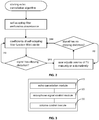
- FIG. 2 a specific flow chart for a preferred embodiment is illustrated.
- the microphone signal is decided to have a clipping distortion or not, if there is no clipping distortion appearing, then the coefficients of the self-adapting filter function W(n) keep stable, while a clipping distortion appears, the user adjusts the volume of the television manually or automatically by starting a system, and deciding if the microphone signal has the clipping distortion or not, after adjusting the volume, if the clipping distortion still appears, then the volume is adjusted continuously, if there is no more clipping distortion appears, then keeping the coefficients of the self-adapting filter function W(n) stable.
- the signal recorded by the microphone does not have any clipping distortions, the coefficient of the self-adapting filter function W(n) is kept in a stable state, and the echo cancellation function is normal and effective.
- the present invention further provides a system for solving the echo cancellation failure, applied to solving a problem that the echo cancellation function is disabled in a certain period, caused by the clipping distortion of the microphone signal.
- FIG. 3 illustrates a schematic diagram for a preferred embodiment of a system for solving the echo cancellation failure in the present invention, Shown as FIG. 3 , the system comprises: an echo cancelation module 10, a microphone signal control module 20 and a volume control module 30.
- the echo cancelation module 10 is applied to starting the echo cancellation algorithm for the echo cancellation, converging the self-adapting filter, so as to make the coefficients of the filter function stable;
- a specific function of the echo cancelation module achieving an echo cancelation task is as following: a core content of the echo cancelation is the self-adapting filter, a working principle of the self-adapting filter may refer to the working process of the self-adapting filter described above, and no more descriptions will be made here.
- the self-adapting filter makes a fast convergence, after the convergence is done, the coefficients of the self-adapting filter function W(n) tend to be stable, when the echo path is unchanged or the microphone signal does not appear a clipping distortion, the coefficients of the self-adapting filter function W(n) will keep remaining stable; when the voice of the television played increases, and makes the signal that the microphone received have a clipping distortion, the self-adapting filter will require a re-convergence, by adjusting the coefficients of the filter function W(n), to adapt a filtering requirement under a new status, while the re-convergence in the new status requires a relatively long time to finish, to make the coefficients of the self-adapting filter function W(n) remain stable.
- the microphone signal control module 20 is applied to detecting the signal intensity of the microphone, and deciding if the signal intensity that the microphone receives is larger than the maximum amplitude value preset.
- the microphone signal control module 20 is applied to detecting the signal intensity of the microphone, and deciding if the signal intensity that the microphone receives is larger than the maximum amplitude value preset, the intensity of the signal that the microphone received is closely related to a size of the sound played by the television itself.
- the volume of the television is lowered, to ensure the echo cancelation is processed without the signal distortion, so as to avoid a problem of the multiple convergence caused by the clipping distortion of the microphone signal, which affects the echo cancelation.
- the volume control module 30 is applied to controlling the volume of the television, making the signal that the microphone receives smaller than the maximum amplitude value.
- the volume control module 30 is applied to controlling the volume of the television, making the signal that the microphone receives smaller than the maximum amplitude value, when the microphone signal control module 20 detects that the microphone signal is larger than or equal to the maximum amplitude value of the microphone signal preset, the volume control module 30 is noticed, and the volume control module 30 controls lower the volume of the television, makes the signal that the microphone received not exceed the maximum amplitude value, and ensures the echo cancelation module 10 is making the echo cancelation without any signal distortions.
- the intensity of the signal that the microphone receives is closely related to the size of the voice that the television itself plays, when the signal that the microphone receives is larger than or equal to the maximum amplitude value preset, the volume of the television is required to be lower, while lowering the volume of the television comprises two methods, one is noticing the user to lower the volume of the television to a suitable volume value; another is adding a "adjusting the volume automatically" option into a system setting of the television, so the system will adjust the volume of the television to a suitable volume value automatically.
- the volume control module 30 lowers the volume of the television, and makes the signal that the microphone receives smaller than the maximum amplitude value, which is achieved by the echo cancelation module 10 making the echo cancelation by adopting the filter function in the stable state.
- Other working principle may refer to the preferred embodiments of the method described above, and no more descriptions will be stated herein.
- the present invention further provides a storage medium, the storage medium is a computer readable storage medium, the storage medium has a program for solving the echo cancellation failure stored, when the program for solving the echo cancellation failure is executed by a processor, the steps of the above method for solving the echo cancellation failure is achieved.
Landscapes
- Engineering & Computer Science (AREA)
- Signal Processing (AREA)
- Multimedia (AREA)
- Human Computer Interaction (AREA)
- Computational Linguistics (AREA)
- Quality & Reliability (AREA)
- Health & Medical Sciences (AREA)
- Audiology, Speech & Language Pathology (AREA)
- Physics & Mathematics (AREA)
- Acoustics & Sound (AREA)
- Cable Transmission Systems, Equalization Of Radio And Reduction Of Echo (AREA)
- Telephone Function (AREA)
Abstract
Description
- The present invention relates to a field of a smart television sound effect technology, and more particularly, to a method, system and storage medium for solving an echo cancellation failure.
- Currently, an artificial intelligence has become a hot spot, as a part of the artificial intelligence, a speech recognition technology is also becoming more and more familiar to people. Under a market driving of a plurality of intelligent equipments including a smart audio and a smart TV, the speech recognition technology has become a synonymous of intelligence. Although the speech recognition technology in a field of the artificial intelligence has achieved a great progress in recent years, there are still a plurality of problems, especially when it is practically applied to a plurality of smart devices, there are still a plurality of specific usage problems. For example, when a smart TV is making a speech recognition, if a volume of the smart TV is turned up to a certain volume value, a speech recognition rate of the smart TV will be very low, and even turning the volume of the smart TV down again, during a long period of time, the speech recognition rate will still be pretty low. A main reason, from an analysis, is that, a signal captured by a microphone at a high volume has appeared a clipping distortion, which causes an echo cancellation algorithm to require a re-convergence, while a convergence process takes a certain time, and an echo cancellation effect is very poor during the convergence process, bringing a very bad experience to user.
- Therefore, the current technology needs to be improved and developed.
- According to a plurality of defects described above in the current technology, the present invention is providing a method for solving an echo cancellation failure caused by the clipping distortion, in order to solve a plurality of defects and deficiencies in the prior art, by presetting a maximum amplitude value for a signal intensity that a microphone is allowed to receive, when a signal intensity received by the microphone is greater than or equal to the amplitude value, a volume of the television is turned down to ensure that the signal intensity received by the microphone is less than the amplitude value, so that the echo cancellation is performed without the clipping distortion of the signal, avoiding the echo cancellation failure caused by a multiple convergence of a self-adapting filter due to the clipping distortion of the microphone signal.
- In order to achieve the above mentioned goals, the technical solution of the present invention to solve the technical problems is as follows:
A method for solving an echo cancellation failure, applied to solving a problem of a television that an echo cancellation function failure in a certain period, caused by a clipping distortion of a microphone signal, wherein the method for solving the echo cancellation failure comprises a plurality of following steps: - A. starting an echo cancellation algorithm, and a self-adapting filter performing a convergence, to make a plurality of coefficients of a filter function to be stable;
- B. presetting a maximum amplitude value for a microphone signal, and detecting if the microphone signal is lower than the maximum amplitude value;
- C. turning down a volume of the television, and making the microphone signal smaller than the maximum amplitude value, when the microphone signal is larger than or equal to the maximum amplitude value;
- D. performing an echo cancellation to the microphone signal by adopting the filter function in a stable state.
- As a further improved technical solution, after starting the echo cancellation algorithm in the step A described above, the self-adapting filter requires a fast convergence, after the convergence is done, the coefficients of the self-adapting filter function tend to be stable, when an echo path is unchanged or a microphone signal does not appear a clipping distortion, the coefficients of the self-adapting filter function will remain stable; when the microphone signal has a clipping distortion, the self-adapting filter re-converges, by adjusting the coefficients of the filter function to adapt a filtering requirement under a new status, making the coefficients of the self-adapting filter function remain stable.
- As a further improved technical solution, the step B described above comprises specifically a plurality of following steps:
- detecting a sound intensity played by the television;
- in combination with the sound intensity played by the television, presetting a maximum amplitude value of the signal intensity allowed by a microphone, to make a signal received by the microphone to be smaller than the maximum amplitude value.
- As a further improved technical solution, in the step C described above, when the microphone signal is larger than or equal to the maximum amplitude value, a system turns down the volume automatically, making the signal that the microphone receives smaller than the maximum amplitude value, and ensuring that the echo cancellation is performing without any signal distortions, so as to avoid a multiple convergence.
- As a further improved technical solution, in the step D described above, after the signal that the microphone receives is smaller than the maximum amplitude value without any distortions, performing the echo cancellation by adopting the filter function in a stable state, and without re-converging the self-adapting filter, thus when the volume of the television lowers down, the echo cancellation recovers.
- The present invention further provides a system for solving the echo cancellation failure, applied to solve a problem of the echo cancellation function fails in a certain period, caused by the clipping distortion of the microphone signal, wherein the system comprises: an echo cancellation module, a microphone signal control module and a volume control module;
the echo cancellation module, configured to start the echo cancellation algorithm for the echo cancellation, converging the self-adapting filter, so as to make the coefficients of the filter function stable;
the microphone signal control module, configured to detect a signal intensity of the microphone, and deciding if the signal intensity that the microphone receives is larger than the maximum amplitude value preset;
the volume control module, configured to control the volume of the television, making the signal intensity that the microphone receives smaller than the maximum amplitude value;
when the microphone signal control module detects that the microphone signal is larger than the maximum amplitude value preset, the volume control module lowers the volume of the television, and makes the signal intensity that the microphone receives smaller than the maximum amplitude value, and the echo cancellation module performs the echo cancellation by adopting the filter function in a stable state. - As a further improved technical solution, a specific function of the echo cancellation module achieving the echo cancellation is as below:
after starting the echo cancellation algorithm, the self-adapting filter function requires a fast convergence, after the convergence is done, a coefficient of the self-adapting filter function approaches stable, when the echo path is unchanged or the microphone signal has no clipping distortion, making the coefficient of the self-adapting filter function keep stable; when the microphone signal appears a clipping distortion, the self-adapting filter re-converges, and adapts a filter requirement under a new state through adjusting the coefficient of the filter function, making the coefficient of the self-adapting filter function approaches stable keep stable. - As a further improved technical solution, the microphone signal control module comprises a plurality of following functions specifically:
presetting a maximum amplitude value of the signal intensity allowed to receive by the microphone, detecting the size of the voice that the television plays, when the microphone signal is larger than or equal to the maximum amplitude value, the volume control module is noticed to lower the volume of the television automatically, to ensure that the echo cancellation is processed without any signal clipping distortions. - As a further improved technical solution, the volume control module comprises a plurality of following functions specifically:
when the microphone signal control module detects that the microphone signal is larger than or equal to the maximum amplitude value preset of the microphone signal, the volume control module is then noticed, the volume control module controls lower the volume of the television, making the signal that the microphone received not exceed the maximum amplitude value, to ensure the echo cancellation module to execute the echo cancellation without any signal distortions. - The present invention further provides a storage medium, the storage medium has a program for solving the echo cancellation failure stored, when the program for solving the echo cancellation failure is executed by a processor, the steps of the above method for solving the echo cancellation failure are achieved.
- Comparing to a case in the current technology that, when the volume of the smart television is larger than a certain value, the signal that the microphone receives will make a clipping distortion, that further makes the self-adapting filter converge multiple times, and affects the echo cancellations, the present invention presets a maximum amplitude value for a signal intensity that a microphone is allowed to receive, and adjusts the volume of the smart television, by real time monitoring the signal intensity that the microphone receives, to ensure the echo cancellation is achieved in a case that the signal the microphone receives is not larger than the maximum amplitude value, without any clipping distortions, thus it has avoided causing a problem that the self-adapting filter converges multiple times, making the coefficient of a self--adapting filter function W(n) unstable, and affecting the echo cancellation.
-
-
FIG. 1 illustrates a flow chart for a preferred embodiment of a method for solving the echo cancellation failure in the present invention; -
FIG. 2 illustrates a specific flow chart for a preferred embodiment of a method for solving the echo cancellation failure in the present invention; -
FIG. 3 illustrates a schematic diagram for a preferred embodiment of a system for solving the echo cancellation failure in the present invention; -
FIG. 4 illustrates a signal flow chart of a self-adapting filter in a discrete domain applied to simulating an unknown discrete system in the present invention; -
FIG. 5 illustrates a flow chart for an echo cancellation process in the current technology. - In order to make the purpose, technical solution and the advantages of the present invention clearer and more explicit, further detailed descriptions of the present invention are stated here, referencing to the attached drawings and some preferred embodiments of the present invention. It should be understood that the detailed embodiments of the invention described here are used to explain the present invention only, instead of limiting the present invention.
- At present, both machine learning and artificial intelligence are hotspots in a field of technology, and a speech recognition technology, as a part of the artificial intelligence, is becoming more and more familiar. Especially driven by a plurality of smart devices including a smart stereo and a smart television, the speech recognition technology has become a synonymous of intelligence. Although the speech recognition technology has made great progresses in recent years, there are still some problems. In the smart television, it has found that when a sound played by the television is adjusted to a certain volume value, a speech recognition rate will be very low, and even if the volume is adjusted low again, in a long period of time, the speech recognition rate is still low. After an analysis, a main reason is found that a clipping distortion has occurred in the signal received by the microphone at a large volume, which causes an echo cancellation algorithm requiring a re-convergence, and a convergence process takes a certain amount of time, while an effect of the echo cancellation during this period of time is very poor.
- A core content of the echo cancellation is a self-adapting filter, which is an algorithm or a device that adopts a certain algorithm and automatically adjusts a plurality of filter coefficients to achieve an optimal filtering characteristic, based on an estimation of a plurality of statistical characteristics of both input and output signals. The self-adapting filter can be in a continuous domain or a discrete domain. A discrete domain self-adapting filter consists of a set of mechanisms including a tap delay line, a variable weighting coefficient, and an automatically adjusting coefficient.
FIG. 4 illustrates a signal flow chart of a self-adapting filter in a discrete domain applied to simulating an unknown discrete system in the present invention, the self-adapting filter updates and adjusts the variable weighting coefficient for each sample of an input signal sequence X(n) according to a specific algorithm, making a mean squared error minimum of an output signal sequence Y(n) compared to a desired signal sequence d(n), that is, the output signal sequence Y(n) approximates the desired signal sequence d(n), and an echo path function to be solved is a process of a self-adapting filter function W(n) converging. The input signal sequence X(n) applied is an echo reference signal, and the desired signal sequence d(n) is an echo signal received by the microphone, and the W(n) after the self-adapting filter converges is the echo path function. After converging, when an actual echo occurs, the echo reference signal is passed through the function W(n), and a very accurate echo signal will be got. Subtracting the echo signal from a mixed signal E(n) directly, and obtaining an actual voice signal AW(n) that needs to be sent, an echo cancellation task will be achieved. - Shown as
FIG. 5 , a processing flow for the echo cancellation in the prior art is: after an echo cancellation algorithm starts, a self-adapting filter converges quickly, and after converged, the coefficient of the self-adapting filter function W(n) will tend to stable. As long as the echo path is unchanged or the microphone signal does not have a clipping distortion, the coefficient of the self-adapting filter function W(n) will remain stable. However, when a sound played by the television becomes larger, which causes the signal received by the microphone to have a clipping distortion, a self-adapting filtering needs to be re- converged, by adjusting the coefficient of the filter function W(n), a plurality of filtering requirements in a new state is adapted. While it takes a relatively long time to finish re-converging in such a state. Therefore, when a re-convergence occurs, even if a user turns down the volume of the television again, to make the signal received by the microphone not being clipped, in a short time, the echo cancellation function still cannot be restored to a normal working state. - According to a plurality of defects in the prior art, the present invention provides a method for solving an echo cancellation failure caused by the clipping distortion, a flow chart for a preferred embodiment of a method for solving the echo cancellation failure in the present invention is shown as
FIG. 1 , the preferred embodiment of the method in the present invention comprises a plurality of steps following:
Step S100, starting an echo cancellation algorithm, and a self-adapting filter performing a convergence, so as to make a plurality of coefficients of a filter function stable;
Specifically, in the present embodiment, after the echo cancellation algorithm being started, the self-adapting filter will converge fast. After the converging is finished, the coefficients of the self-adapting filter function W(n) will tend to be stable, as long as the echo path is unchanged or the microphone signal does not have a clipping distortion, the coefficient of the self-adapting filter function W(n) will be kept to be stable. - When the microphone signal has a clipping distortion, the self-adapting filter function requires a re-convergence, by adjusting the coefficient of the self-adapting filter function W(n), a filtering requirement in a new state is adapted, and in the new state, the re-convergence will require a relatively long time to finish, so as to keep the coefficient of the self-adapting filter function W(n) stable.
- Step S200, presetting a maximum amplitude value for a microphone signal, and detecting if the microphone signal is lower than the maximum amplitude value;
Specifically, in the present embodiment, if the signal received by the microphone is too large, it is generally caused by an excessive sound played by the television itself. So presetting a maximum amplitude value for the microphone signal, before detecting and deciding an intensity of the sound played by the television, and making the signal that the microphone receives lower than the maximum amplitude value. By detecting the intensity of the sound played by the television, and combining with the intensity of the sound played by the television, the present step presets a maximum amplitude value for a signal intensity that the microphone is allowed to receive, so as to make the signal that the microphone receives smaller than the maximum amplitude value. - Step S300, when the microphone signal is larger than or equal to the maximum amplitude value, turning down a volume of the television, and making the microphone signal smaller than the maximum amplitude value;
Specifically, when the microphone signal is larger than or equal to the maximum amplitude value, a user is reminded to turn the volume lower, or, an option of "adjusting the volume automatically" is added into a system setting of the television, so as to allow the system turns the volume lower automatically, and making the signal that the microphone received smaller than the amplitude value, so as to make sure the echo cancellation is processed in a case of the signal having no distortions, and avoid a multiple convergence caused by the signal distortion. - Step S400, performing an echo cancellation to the microphone signal by adopting the filter function in the stable state before.
- Specifically, in the present embodiment, when the microphone signal is smaller than the maximum amplitude value, and the signal has no distortions, the filter function in a stable state is still adopted for an echo cancellation, and the self-adapting filter needs no re-convergence. As long as the volume is lowered, the echo cancellation function recovers ASAP, without any disable period for the echo cancellation function.
- In order to better explain a preferred embodiment for the method in the present invention, and to better understand a plurality of specific implementation steps of the preferred embodiment for the method in the present invention, a specific flow chart of a preferred embodiment for the method in the present invention is provided herein. Shown as
FIG. 2 , a specific flow chart for a preferred embodiment is illustrated. First, starting an echo cancellation algorithm for the echo cancellation, and a self-adapting filter performing a convergence, while a plurality of coefficients of a filter function is stable, then the microphone signal is decided to have a clipping distortion or not, if there is no clipping distortion appearing, then the coefficients of the self-adapting filter function W(n) keep stable, while a clipping distortion appears, the user adjusts the volume of the television manually or automatically by starting a system, and deciding if the microphone signal has the clipping distortion or not, after adjusting the volume, if the clipping distortion still appears, then the volume is adjusted continuously, if there is no more clipping distortion appears, then keeping the coefficients of the self-adapting filter function W(n) stable. By effectively monitoring the intensity of the signal received by the microphone and controlling the volume of the television, the signal recorded by the microphone does not have any clipping distortions, the coefficient of the self-adapting filter function W(n) is kept in a stable state, and the echo cancellation function is normal and effective. - The present invention further provides a system for solving the echo cancellation failure, applied to solving a problem that the echo cancellation function is disabled in a certain period, caused by the clipping distortion of the microphone signal.
FIG. 3 illustrates a schematic diagram for a preferred embodiment of a system for solving the echo cancellation failure in the present invention, Shown asFIG. 3 , the system comprises: anecho cancelation module 10, a microphonesignal control module 20 and avolume control module 30. - The
echo cancelation module 10 is applied to starting the echo cancellation algorithm for the echo cancellation, converging the self-adapting filter, so as to make the coefficients of the filter function stable; - Specifically, in the present embodiment, a specific function of the echo cancelation module achieving an echo cancelation task is as following: a core content of the echo cancelation is the self-adapting filter, a working principle of the self-adapting filter may refer to the working process of the self-adapting filter described above, and no more descriptions will be made here.
- After starting the echo cancellation algorithm, the self-adapting filter makes a fast convergence, after the convergence is done, the coefficients of the self-adapting filter function W(n) tend to be stable, when the echo path is unchanged or the microphone signal does not appear a clipping distortion, the coefficients of the self-adapting filter function W(n) will keep remaining stable; when the voice of the television played increases, and makes the signal that the microphone received have a clipping distortion, the self-adapting filter will require a re-convergence, by adjusting the coefficients of the filter function W(n), to adapt a filtering requirement under a new status, while the re-convergence in the new status requires a relatively long time to finish, to make the coefficients of the self-adapting filter function W(n) remain stable.
- The microphone
signal control module 20 is applied to detecting the signal intensity of the microphone, and deciding if the signal intensity that the microphone receives is larger than the maximum amplitude value preset. - Specifically, in the present embodiment, the microphone
signal control module 20 is applied to detecting the signal intensity of the microphone, and deciding if the signal intensity that the microphone receives is larger than the maximum amplitude value preset, the intensity of the signal that the microphone received is closely related to a size of the sound played by the television itself. Thus presetting a maximum amplitude value for the intensity of the signal that the microphone is allowed to receive, and when the microphone signal is larger than or equal to the maximum amplitude value, the volume of the television is lowered, to ensure the echo cancelation is processed without the signal distortion, so as to avoid a problem of the multiple convergence caused by the clipping distortion of the microphone signal, which affects the echo cancelation. - The
volume control module 30 is applied to controlling the volume of the television, making the signal that the microphone receives smaller than the maximum amplitude value. - Specifically, in the present embodiment, the
volume control module 30 is applied to controlling the volume of the television, making the signal that the microphone receives smaller than the maximum amplitude value, when the microphonesignal control module 20 detects that the microphone signal is larger than or equal to the maximum amplitude value of the microphone signal preset, thevolume control module 30 is noticed, and thevolume control module 30 controls lower the volume of the television, makes the signal that the microphone received not exceed the maximum amplitude value, and ensures theecho cancelation module 10 is making the echo cancelation without any signal distortions. - The intensity of the signal that the microphone receives is closely related to the size of the voice that the television itself plays, when the signal that the microphone receives is larger than or equal to the maximum amplitude value preset, the volume of the television is required to be lower, while lowering the volume of the television comprises two methods, one is noticing the user to lower the volume of the television to a suitable volume value; another is adding a "adjusting the volume automatically" option into a system setting of the television, so the system will adjust the volume of the television to a suitable volume value automatically.
- When the microphone
signal control module 20 detects the signal that the microphone receives is larger than the maximum amplitude value preset, thevolume control module 30 lowers the volume of the television, and makes the signal that the microphone receives smaller than the maximum amplitude value, which is achieved by theecho cancelation module 10 making the echo cancelation by adopting the filter function in the stable state. Other working principle may refer to the preferred embodiments of the method described above, and no more descriptions will be stated herein. - The present invention further provides a storage medium, the storage medium is a computer readable storage medium, the storage medium has a program for solving the echo cancellation failure stored, when the program for solving the echo cancellation failure is executed by a processor, the steps of the above method for solving the echo cancellation failure is achieved.
- It should be understood that, the application of the present invention is not limited to the above examples listed. Ordinary technical personnel in this field can improve or change the applications according to the above descriptions, all of these improvements and transforms should belong to the scope of protection in the appended claims of the present invention.
Claims (15)
- A method for solving an echo cancellation failure, applied to solving a problem of a television that an echo cancellation function failure caused by a clipping distortion of a microphone signal, wherein the method for solving the echo cancellation failure comprises a plurality of following steps:A. starting an echo cancellation algorithm, and a self-adapting filter performing a convergence, to make a plurality of coefficients of a filter function to be stable;B. presetting a maximum amplitude value for a microphone signal, and detecting if the microphone signal is lower than the maximum amplitude value;C. turning down a volume of the television, and making the microphone signal smaller than the maximum amplitude value, when the microphone signal is larger than or equal to the maximum amplitude value;D. performing an echo cancellation to the microphone signal by adopting the filter function in a stable state.
- The method for solving an echo cancellation failure according to claim 1, wherein in the step A, after starting the echo cancellation algorithm, the self-adapting filter requires a fast convergence, after the convergence is done, the coefficients of the self-adapting filter function tend to be stable, when an echo path is unchanged or a microphone signal does not appear a clipping distortion, the coefficients of the self-adapting filter function will remain stable; when the microphone signal has a clipping distortion, the self-adapting filter re-converges, by adjusting the coefficients of the filter function to adapt a filtering requirement under a new status, making the coefficients of the self-adapting filter function remain stable.
- The method for solving an echo cancellation failure according to claim 1, wherein the step B comprises specifically a plurality of following steps:detecting a sound intensity played by the television;in combination with the sound intensity played by the television, presetting a maximum amplitude value of the signal intensity allowed by a microphone, to make a signal received by the microphone to be smaller than the maximum amplitude value.
- The method for solving an echo cancellation failure according to claim 3, wherein in the step C, when the microphone signal is larger than or equal to the maximum amplitude value, a system turns down the volume automatically, making the signal that the microphone receives smaller than the maximum amplitude value, and ensuring that the echo cancellation is performing without any signal distortions, so as to avoid a multiple convergence.
- The method for solving an echo cancellation failure according to claim 4, wherein in the step D, after the signal that the microphone receives is smaller than the maximum amplitude value without any distortions, performing the echo cancellation by adopting the filter function in a stable state, and without re-converging the self-adapting filter, thus when the volume of the television lowers down, the echo cancellation recovers.
- A system for solving an echo cancellation failure, configured to solve a problem of the echo cancellation function failure in a certain period, caused by a clipping distortion of a microphone signal, wherein the system comprises: an echo cancellation module, a microphone signal control module and a volume control module;
the echo cancellation module, configured to start an echo cancellation algorithm for an echo cancellation, converging a self-adapting filter, so as to make a plurality of coefficients of a filter function stable;
the microphone signal control module, configured to detect a signal intensity of the microphone, and decide if the signal intensity that the microphone receives is larger than a maximum amplitude value preset;
the volume control module, configured to control a volume of the television, making the signal intensity that the microphone receives smaller than the maximum amplitude value;
when the microphone signal control module detects that the microphone signal is larger than the maximum amplitude value preset, the volume control module lowers the volume of the television, and makes the signal intensity that the microphone receives smaller than the maximum amplitude value, and the echo cancellation module performs the echo cancellation by adopting the filter function in a stable state. - The system for solving the echo cancellation failure according to claim 6, wherein a specific function of the echo cancellation module achieving the echo cancellation is as below:
after starting the echo cancellation algorithm, the self-adapting filter function requires a fast convergence, after the convergence is done, the coefficients of the self-adapting filter function approaches stable, when an echo path is unchanged or the microphone signal has no clipping distortion, making the coefficients of the self-adapting filter function keep stable; when the microphone signal appears a clipping distortion, the self-adapting filter re-converges, and adapts a filter requirement under a new state through adjusting the coefficients of the filter function, making the coefficients of the self-adapting filter function approaches stable keep stable. - The system for solving the echo cancellation failure according to claim 6, wherein the microphone signal control module comprises a plurality of following functions specifically:
presetting a maximum amplitude value of the signal intensity allowed to receive by the microphone, detecting the size of the voice that the television plays, when the microphone signal is larger than or equal to the maximum amplitude value, the volume control module is noticed to lower the volume of the television automatically, to ensure that the echo cancellation is processed without any signal clipping distortions. - The system for solving the echo cancellation failure according to claim 8, wherein the volume control module comprises a plurality of following functions specifically:
when the microphone signal control module detects that the microphone signal is larger than or equal to the maximum amplitude value preset of the microphone signal, the volume control module is then noticed, the volume control module controls lower the volume of the television, making the signal that the microphone received not exceed the maximum amplitude value, to ensure the echo cancellation module to execute the echo cancellation without any signal distortions. - A storage medium, wherein the storage medium has a program for solving an echo cancellation failure stored, when the program for solving the echo cancellation failure is executed by a processor, the steps of the method for solving the echo cancellation failure are achieved according to anyone of claims 1 to 5.
- The method for solving an echo cancellation failure according to claim 1, wherein in the step A, a plurality of steps of the self-adapting filter performing the convergence comprise: the self-adapting filter updates and adjusts a plurality of weighting coefficients for each sample of an input signal sequence, making an output signal sequence approximate a desired signal sequence, to solve an echo path function; wherein the input signal is an echo reference signal, the desired signal is an echo signal that the microphone received.
- The method for solving an echo cancellation failure according to claim 1, wherein in the step C, turning down the volume of the television is achieved manually or automatically by starting a system.
- The system for solving the echo cancellation failure according to claim 9, wherein the volume control module comprises a plurality of following functions specifically:
when the microphone signal control module detects that the microphone signal is larger than the maximum amplitude value preset, the volume control module lowers the volume of the television, making the signal that the microphone received smaller than the maximum amplitude value, and the echo cancellation is processed by the echo cancellation module adopting a filter function in a steady state. - The system for solving the echo cancellation failure according to claim 6, wherein converging the self-adapting filter comprises specifically: the self-adapting filter updates and adjusts a plurality of weighting coefficients for each sample of an input signal sequence, making an output signal sequence approximate a desired signal sequence, to solve an echo path function; wherein the input signal is an echo reference signal, the desired signal is an echo signal that the microphone received.
- The system for solving the echo cancellation failure according to claim 6, wherein the volume control module lowers the volume of the television manually or automatically by starting a system.
Applications Claiming Priority (2)
| Application Number | Priority Date | Filing Date | Title |
|---|---|---|---|
| CN201711435157.7A CN109979475A (en) | 2017-12-26 | 2017-12-26 | Solve method, system and the storage medium of echo cancellor failure |
| PCT/CN2018/111059 WO2019128402A1 (en) | 2017-12-26 | 2018-10-19 | Method, system and storage medium for solving echo cancellation failure |
Publications (3)
| Publication Number | Publication Date |
|---|---|
| EP3734600A1 true EP3734600A1 (en) | 2020-11-04 |
| EP3734600A4 EP3734600A4 (en) | 2021-07-28 |
| EP3734600B1 EP3734600B1 (en) | 2025-06-04 |
Family
ID=67062995
Family Applications (1)
| Application Number | Title | Priority Date | Filing Date |
|---|---|---|---|
| EP18897772.2A Active EP3734600B1 (en) | 2017-12-26 | 2018-10-19 | Method, system and storage medium for solving echo cancellation failure |
Country Status (4)
| Country | Link |
|---|---|
| US (1) | US11276416B2 (en) |
| EP (1) | EP3734600B1 (en) |
| CN (1) | CN109979475A (en) |
| WO (1) | WO2019128402A1 (en) |
Families Citing this family (4)
| Publication number | Priority date | Publication date | Assignee | Title |
|---|---|---|---|---|
| CN113365017B (en) * | 2020-03-06 | 2022-11-25 | 浙江宇视科技有限公司 | Sound collection method, device and equipment |
| CN111696569B (en) * | 2020-06-29 | 2023-12-15 | 美的集团武汉制冷设备有限公司 | Echo cancellation method for home appliances, home appliances, terminals and storage media |
| CN114171039B (en) * | 2022-01-14 | 2025-08-15 | 联想(北京)有限公司 | Signal processing method and device and electronic equipment |
| CN115457929B (en) * | 2022-07-27 | 2025-04-08 | 杭州芯声智能科技有限公司 | An echo cancellation system with delay estimation function |
Family Cites Families (18)
| Publication number | Priority date | Publication date | Assignee | Title |
|---|---|---|---|---|
| US6009385A (en) * | 1994-12-15 | 1999-12-28 | British Telecommunications Public Limited Company | Speech processing |
| US6766176B1 (en) * | 1996-07-23 | 2004-07-20 | Qualcomm Incorporated | Method and apparatus for automatically adjusting speaker and microphone gains within a mobile telephone |
| US6173056B1 (en) * | 1998-08-25 | 2001-01-09 | Ericsson Inc. | Methods for adjusting audio signals responsive to changes in a power supply level and related communications devices |
| JP2001094479A (en) * | 1999-09-20 | 2001-04-06 | Nippon Telegr & Teleph Corp <Ntt> | Echo canceller |
| AUPR604201A0 (en) * | 2001-06-29 | 2001-07-26 | Hearworks Pty Ltd | Telephony interface apparatus |
| US7894598B2 (en) * | 2004-12-14 | 2011-02-22 | Nuance Communications, Inc. | System for limiting receive audio |
| CN100524466C (en) * | 2006-11-24 | 2009-08-05 | 北京中星微电子有限公司 | Echo elimination device for microphone and method thereof |
| US7742746B2 (en) * | 2007-04-30 | 2010-06-22 | Qualcomm Incorporated | Automatic volume and dynamic range adjustment for mobile audio devices |
| US20090192793A1 (en) * | 2008-01-30 | 2009-07-30 | Desmond Arthur Smith | Method for instantaneous peak level management and speech clarity enhancement |
| EP2708040B1 (en) * | 2011-05-11 | 2019-03-27 | Robert Bosch GmbH | System and method for emitting and especially controlling an audio signal in an environment using an objective intelligibility measure |
| US9686396B2 (en) * | 2011-08-12 | 2017-06-20 | Google Technology Holdings LLC | Method and apparatus for media property of characteristic control in a media system |
| US9166546B2 (en) * | 2011-10-24 | 2015-10-20 | Cochlear Limited | Post-filter common-gain determination |
| CN103259563B (en) * | 2012-02-16 | 2015-11-25 | 联芯科技有限公司 | Sef-adapting filter disperses detection method and echo cancelling system |
| CN103475975A (en) | 2012-06-06 | 2013-12-25 | 天津三星电子有限公司 | Audio processing device |
| US9559651B2 (en) * | 2013-03-29 | 2017-01-31 | Apple Inc. | Metadata for loudness and dynamic range control |
| CN203618113U (en) * | 2013-11-06 | 2014-05-28 | 四川湖山电器有限责任公司 | Audio signal clipping control circuit device with power supply correlation |
| CN105225674B (en) | 2015-09-25 | 2019-02-15 | 维沃移动通信(杭州)有限公司 | A kind of audio signal processing method, device and mobile terminal |
| CN106373603A (en) | 2016-09-08 | 2017-02-01 | Tcl通讯(宁波)有限公司 | Device and method for controlling recording according to sound volume |
-
2017
- 2017-12-26 CN CN201711435157.7A patent/CN109979475A/en active Pending
-
2018
- 2018-10-19 EP EP18897772.2A patent/EP3734600B1/en active Active
- 2018-10-19 WO PCT/CN2018/111059 patent/WO2019128402A1/en not_active Ceased
- 2018-10-19 US US16/494,767 patent/US11276416B2/en active Active
Also Published As
| Publication number | Publication date |
|---|---|
| EP3734600B1 (en) | 2025-06-04 |
| CN109979475A (en) | 2019-07-05 |
| EP3734600A4 (en) | 2021-07-28 |
| US20200035255A1 (en) | 2020-01-30 |
| WO2019128402A1 (en) | 2019-07-04 |
| US11276416B2 (en) | 2022-03-15 |
Similar Documents
| Publication | Publication Date | Title |
|---|---|---|
| US11276416B2 (en) | Method, system and storage medium for solving echo cancellation failure | |
| EP2348750B1 (en) | Control of a loudspeaker output | |
| US8185387B1 (en) | Automatic gain control | |
| CN111145771B (en) | Voice signal processing method, processing device, terminal and storage medium thereof | |
| CN1115795C (en) | Echo canceller with silence detection | |
| KR101855969B1 (en) | A digital compressor for compressing an audio signal | |
| US9319783B1 (en) | Attenuation of output audio based on residual echo | |
| EP3984031B1 (en) | Automatic gain control based on machine learning level estimation of the desired signal | |
| EP2457322B1 (en) | Adaptive gain control for digital audio samples in a media stream | |
| EP4074069A1 (en) | Multiband limiter modes and noise compensation methods | |
| CN106507245A (en) | Method for regulating audio signal and device | |
| GB2395878A (en) | Method of capturing constant echo path information using default coefficients | |
| US9722662B2 (en) | Semiconductor device and serial data transmission line system | |
| US20110286606A1 (en) | Method and system for noise cancellation | |
| US20110099485A1 (en) | ACOUSTIC ECHO CANCELLATION (AEC) WITH CONFERENCING ENVIRONMENT TEMPLATES (CETs) | |
| CN112333606B (en) | Microphone gain abnormity adjusting method and device | |
| CN102255607B (en) | Method for adjusting output volume and system thereof | |
| US3496481A (en) | Automatic gain control system with noise variable threshold | |
| WO2019148975A1 (en) | Sound effect adjusting method, device, television, and storage medium | |
| CN108121426B (en) | Chip voltage adjusting method, device and system | |
| CN114758667A (en) | Method and device for eliminating unsteady noise | |
| JPH05284064A (en) | Automatic equalizer for cable line amplitude characteristic | |
| KR100273364B1 (en) | Audio / Video Packet Control Method on Network | |
| CN205212793U (en) | Compression clipper -limiter | |
| US20250378843A1 (en) | Echo cancellation and audio processing for embedded systems |
Legal Events
| Date | Code | Title | Description |
|---|---|---|---|
| STAA | Information on the status of an ep patent application or granted ep patent |
Free format text: STATUS: THE INTERNATIONAL PUBLICATION HAS BEEN MADE |
|
| PUAI | Public reference made under article 153(3) epc to a published international application that has entered the european phase |
Free format text: ORIGINAL CODE: 0009012 |
|
| STAA | Information on the status of an ep patent application or granted ep patent |
Free format text: STATUS: REQUEST FOR EXAMINATION WAS MADE |
|
| 17P | Request for examination filed |
Effective date: 20190911 |
|
| AK | Designated contracting states |
Kind code of ref document: A1 Designated state(s): AL AT BE BG CH CY CZ DE DK EE ES FI FR GB GR HR HU IE IS IT LI LT LU LV MC MK MT NL NO PL PT RO RS SE SI SK SM TR |
|
| AX | Request for extension of the european patent |
Extension state: BA ME |
|
| DAV | Request for validation of the european patent (deleted) | ||
| DAX | Request for extension of the european patent (deleted) | ||
| A4 | Supplementary search report drawn up and despatched |
Effective date: 20210629 |
|
| RIC1 | Information provided on ipc code assigned before grant |
Ipc: G10L 21/0208 20130101AFI20210623BHEP Ipc: H04M 9/08 20060101ALI20210623BHEP Ipc: H04N 21/422 20110101ALI20210623BHEP Ipc: H04N 21/485 20110101ALI20210623BHEP |
|
| STAA | Information on the status of an ep patent application or granted ep patent |
Free format text: STATUS: EXAMINATION IS IN PROGRESS |
|
| 17Q | First examination report despatched |
Effective date: 20230711 |
|
| GRAP | Despatch of communication of intention to grant a patent |
Free format text: ORIGINAL CODE: EPIDOSNIGR1 |
|
| STAA | Information on the status of an ep patent application or granted ep patent |
Free format text: STATUS: GRANT OF PATENT IS INTENDED |
|
| INTG | Intention to grant announced |
Effective date: 20250207 |
|
| P01 | Opt-out of the competence of the unified patent court (upc) registered |
Free format text: CASE NUMBER: APP_13374/2025 Effective date: 20250318 |
|
| GRAS | Grant fee paid |
Free format text: ORIGINAL CODE: EPIDOSNIGR3 |
|
| GRAA | (expected) grant |
Free format text: ORIGINAL CODE: 0009210 |
|
| STAA | Information on the status of an ep patent application or granted ep patent |
Free format text: STATUS: THE PATENT HAS BEEN GRANTED |
|
| AK | Designated contracting states |
Kind code of ref document: B1 Designated state(s): AL AT BE BG CH CY CZ DE DK EE ES FI FR GB GR HR HU IE IS IT LI LT LU LV MC MK MT NL NO PL PT RO RS SE SI SK SM TR |
|
| REG | Reference to a national code |
Ref country code: GB Ref legal event code: FG4D |
|
| REG | Reference to a national code |
Ref country code: CH Ref legal event code: EP |
|
| REG | Reference to a national code |
Ref country code: DE Ref legal event code: R096 Ref document number: 602018082479 Country of ref document: DE |
|
| REG | Reference to a national code |
Ref country code: IE Ref legal event code: FG4D |
|
| REG | Reference to a national code |
Ref country code: NL Ref legal event code: MP Effective date: 20250604 |
|
| PG25 | Lapsed in a contracting state [announced via postgrant information from national office to epo] |
Ref country code: FI Free format text: LAPSE BECAUSE OF FAILURE TO SUBMIT A TRANSLATION OF THE DESCRIPTION OR TO PAY THE FEE WITHIN THE PRESCRIBED TIME-LIMIT Effective date: 20250604 Ref country code: ES Free format text: LAPSE BECAUSE OF FAILURE TO SUBMIT A TRANSLATION OF THE DESCRIPTION OR TO PAY THE FEE WITHIN THE PRESCRIBED TIME-LIMIT Effective date: 20250604 |
|
| REG | Reference to a national code |
Ref country code: LT Ref legal event code: MG9D |
|
| PG25 | Lapsed in a contracting state [announced via postgrant information from national office to epo] |
Ref country code: GR Free format text: LAPSE BECAUSE OF FAILURE TO SUBMIT A TRANSLATION OF THE DESCRIPTION OR TO PAY THE FEE WITHIN THE PRESCRIBED TIME-LIMIT Effective date: 20250905 Ref country code: NO Free format text: LAPSE BECAUSE OF FAILURE TO SUBMIT A TRANSLATION OF THE DESCRIPTION OR TO PAY THE FEE WITHIN THE PRESCRIBED TIME-LIMIT Effective date: 20250904 |
|
| PG25 | Lapsed in a contracting state [announced via postgrant information from national office to epo] |
Ref country code: PL Free format text: LAPSE BECAUSE OF FAILURE TO SUBMIT A TRANSLATION OF THE DESCRIPTION OR TO PAY THE FEE WITHIN THE PRESCRIBED TIME-LIMIT Effective date: 20250604 |
|
| PG25 | Lapsed in a contracting state [announced via postgrant information from national office to epo] |
Ref country code: BG Free format text: LAPSE BECAUSE OF FAILURE TO SUBMIT A TRANSLATION OF THE DESCRIPTION OR TO PAY THE FEE WITHIN THE PRESCRIBED TIME-LIMIT Effective date: 20250604 |
|
| PG25 | Lapsed in a contracting state [announced via postgrant information from national office to epo] |
Ref country code: HR Free format text: LAPSE BECAUSE OF FAILURE TO SUBMIT A TRANSLATION OF THE DESCRIPTION OR TO PAY THE FEE WITHIN THE PRESCRIBED TIME-LIMIT Effective date: 20250604 |
|
| PG25 | Lapsed in a contracting state [announced via postgrant information from national office to epo] |
Ref country code: RS Free format text: LAPSE BECAUSE OF FAILURE TO SUBMIT A TRANSLATION OF THE DESCRIPTION OR TO PAY THE FEE WITHIN THE PRESCRIBED TIME-LIMIT Effective date: 20250904 |
|
| PG25 | Lapsed in a contracting state [announced via postgrant information from national office to epo] |
Ref country code: LV Free format text: LAPSE BECAUSE OF FAILURE TO SUBMIT A TRANSLATION OF THE DESCRIPTION OR TO PAY THE FEE WITHIN THE PRESCRIBED TIME-LIMIT Effective date: 20250604 |
|
| PG25 | Lapsed in a contracting state [announced via postgrant information from national office to epo] |
Ref country code: NL Free format text: LAPSE BECAUSE OF FAILURE TO SUBMIT A TRANSLATION OF THE DESCRIPTION OR TO PAY THE FEE WITHIN THE PRESCRIBED TIME-LIMIT Effective date: 20250604 |
|
| PG25 | Lapsed in a contracting state [announced via postgrant information from national office to epo] |
Ref country code: PT Free format text: LAPSE BECAUSE OF FAILURE TO SUBMIT A TRANSLATION OF THE DESCRIPTION OR TO PAY THE FEE WITHIN THE PRESCRIBED TIME-LIMIT Effective date: 20251006 |
|
| REG | Reference to a national code |
Ref country code: AT Ref legal event code: MK05 Ref document number: 1801178 Country of ref document: AT Kind code of ref document: T Effective date: 20250604 |
|
| PG25 | Lapsed in a contracting state [announced via postgrant information from national office to epo] |
Ref country code: IS Free format text: LAPSE BECAUSE OF FAILURE TO SUBMIT A TRANSLATION OF THE DESCRIPTION OR TO PAY THE FEE WITHIN THE PRESCRIBED TIME-LIMIT Effective date: 20251004 |
|
| PGFP | Annual fee paid to national office [announced via postgrant information from national office to epo] |
Ref country code: DE Payment date: 20251021 Year of fee payment: 8 |
|
| PG25 | Lapsed in a contracting state [announced via postgrant information from national office to epo] |
Ref country code: SM Free format text: LAPSE BECAUSE OF FAILURE TO SUBMIT A TRANSLATION OF THE DESCRIPTION OR TO PAY THE FEE WITHIN THE PRESCRIBED TIME-LIMIT Effective date: 20250604 Ref country code: AT Free format text: LAPSE BECAUSE OF FAILURE TO SUBMIT A TRANSLATION OF THE DESCRIPTION OR TO PAY THE FEE WITHIN THE PRESCRIBED TIME-LIMIT Effective date: 20250604 |
|
| PG25 | Lapsed in a contracting state [announced via postgrant information from national office to epo] |
Ref country code: CZ Free format text: LAPSE BECAUSE OF FAILURE TO SUBMIT A TRANSLATION OF THE DESCRIPTION OR TO PAY THE FEE WITHIN THE PRESCRIBED TIME-LIMIT Effective date: 20250604 |
|
| PG25 | Lapsed in a contracting state [announced via postgrant information from national office to epo] |
Ref country code: EE Free format text: LAPSE BECAUSE OF FAILURE TO SUBMIT A TRANSLATION OF THE DESCRIPTION OR TO PAY THE FEE WITHIN THE PRESCRIBED TIME-LIMIT Effective date: 20250604 |
|
| PG25 | Lapsed in a contracting state [announced via postgrant information from national office to epo] |
Ref country code: RO Free format text: LAPSE BECAUSE OF FAILURE TO SUBMIT A TRANSLATION OF THE DESCRIPTION OR TO PAY THE FEE WITHIN THE PRESCRIBED TIME-LIMIT Effective date: 20250604 Ref country code: SK Free format text: LAPSE BECAUSE OF FAILURE TO SUBMIT A TRANSLATION OF THE DESCRIPTION OR TO PAY THE FEE WITHIN THE PRESCRIBED TIME-LIMIT Effective date: 20250604 |
|
| PG25 | Lapsed in a contracting state [announced via postgrant information from national office to epo] |
Ref country code: IT Free format text: LAPSE BECAUSE OF FAILURE TO SUBMIT A TRANSLATION OF THE DESCRIPTION OR TO PAY THE FEE WITHIN THE PRESCRIBED TIME-LIMIT Effective date: 20250604 |
|
| REG | Reference to a national code |
Ref country code: DE Ref legal event code: R097 Ref document number: 602018082479 Country of ref document: DE |
|
| PLBE | No opposition filed within time limit |
Free format text: ORIGINAL CODE: 0009261 |
|
| STAA | Information on the status of an ep patent application or granted ep patent |
Free format text: STATUS: NO OPPOSITION FILED WITHIN TIME LIMIT |
|
| PG25 | Lapsed in a contracting state [announced via postgrant information from national office to epo] |
Ref country code: DK Free format text: LAPSE BECAUSE OF FAILURE TO SUBMIT A TRANSLATION OF THE DESCRIPTION OR TO PAY THE FEE WITHIN THE PRESCRIBED TIME-LIMIT Effective date: 20250604 |
|
| REG | Reference to a national code |
Ref country code: CH Ref legal event code: L10 Free format text: ST27 STATUS EVENT CODE: U-0-0-L10-L00 (AS PROVIDED BY THE NATIONAL OFFICE) Effective date: 20260416 |
|
| 26N | No opposition filed |
Effective date: 20260305 |