EP3734533A1 - Payment password reset method and apparatus, and electronic device - Google Patents
Payment password reset method and apparatus, and electronic device Download PDFInfo
- Publication number
- EP3734533A1 EP3734533A1 EP19766589.6A EP19766589A EP3734533A1 EP 3734533 A1 EP3734533 A1 EP 3734533A1 EP 19766589 A EP19766589 A EP 19766589A EP 3734533 A1 EP3734533 A1 EP 3734533A1
- Authority
- EP
- European Patent Office
- Prior art keywords
- user
- payment
- payment password
- password
- forgotten
- Prior art date
- Legal status (The legal status is an assumption and is not a legal conclusion. Google has not performed a legal analysis and makes no representation as to the accuracy of the status listed.)
- Withdrawn
Links
Images


Classifications
-
- G—PHYSICS
- G06—COMPUTING OR CALCULATING; COUNTING
- G06Q—INFORMATION AND COMMUNICATION TECHNOLOGY [ICT] SPECIALLY ADAPTED FOR ADMINISTRATIVE, COMMERCIAL, FINANCIAL, MANAGERIAL OR SUPERVISORY PURPOSES; SYSTEMS OR METHODS SPECIALLY ADAPTED FOR ADMINISTRATIVE, COMMERCIAL, FINANCIAL, MANAGERIAL OR SUPERVISORY PURPOSES, NOT OTHERWISE PROVIDED FOR
- G06Q20/00—Payment architectures, schemes or protocols
- G06Q20/38—Payment protocols; Details thereof
- G06Q20/42—Confirmation, e.g. check or permission by the legal debtor of payment
-
- G—PHYSICS
- G06—COMPUTING OR CALCULATING; COUNTING
- G06Q—INFORMATION AND COMMUNICATION TECHNOLOGY [ICT] SPECIALLY ADAPTED FOR ADMINISTRATIVE, COMMERCIAL, FINANCIAL, MANAGERIAL OR SUPERVISORY PURPOSES; SYSTEMS OR METHODS SPECIALLY ADAPTED FOR ADMINISTRATIVE, COMMERCIAL, FINANCIAL, MANAGERIAL OR SUPERVISORY PURPOSES, NOT OTHERWISE PROVIDED FOR
- G06Q20/00—Payment architectures, schemes or protocols
- G06Q20/38—Payment protocols; Details thereof
- G06Q20/40—Authorisation, e.g. identification of payer or payee, verification of customer or shop credentials; Review and approval of payers, e.g. check credit lines or negative lists
- G06Q20/401—Transaction verification
- G06Q20/4012—Verifying personal identification numbers [PIN]
-
- G—PHYSICS
- G06—COMPUTING OR CALCULATING; COUNTING
- G06F—ELECTRIC DIGITAL DATA PROCESSING
- G06F21/00—Security arrangements for protecting computers, components thereof, programs or data against unauthorised activity
- G06F21/30—Authentication, i.e. establishing the identity or authorisation of security principals
- G06F21/45—Structures or tools for the administration of authentication
-
- G—PHYSICS
- G06—COMPUTING OR CALCULATING; COUNTING
- G06Q—INFORMATION AND COMMUNICATION TECHNOLOGY [ICT] SPECIALLY ADAPTED FOR ADMINISTRATIVE, COMMERCIAL, FINANCIAL, MANAGERIAL OR SUPERVISORY PURPOSES; SYSTEMS OR METHODS SPECIALLY ADAPTED FOR ADMINISTRATIVE, COMMERCIAL, FINANCIAL, MANAGERIAL OR SUPERVISORY PURPOSES, NOT OTHERWISE PROVIDED FOR
- G06Q20/00—Payment architectures, schemes or protocols
- G06Q20/08—Payment architectures
- G06Q20/12—Payment architectures specially adapted for electronic shopping systems
- G06Q20/123—Shopping for digital content
-
- G—PHYSICS
- G06—COMPUTING OR CALCULATING; COUNTING
- G06Q—INFORMATION AND COMMUNICATION TECHNOLOGY [ICT] SPECIALLY ADAPTED FOR ADMINISTRATIVE, COMMERCIAL, FINANCIAL, MANAGERIAL OR SUPERVISORY PURPOSES; SYSTEMS OR METHODS SPECIALLY ADAPTED FOR ADMINISTRATIVE, COMMERCIAL, FINANCIAL, MANAGERIAL OR SUPERVISORY PURPOSES, NOT OTHERWISE PROVIDED FOR
- G06Q20/00—Payment architectures, schemes or protocols
- G06Q20/30—Payment architectures, schemes or protocols characterised by the use of specific devices or networks
- G06Q20/32—Payment architectures, schemes or protocols characterised by the use of specific devices or networks using wireless devices
- G06Q20/322—Aspects of commerce using mobile devices [M-devices]
-
- G—PHYSICS
- G06—COMPUTING OR CALCULATING; COUNTING
- G06Q—INFORMATION AND COMMUNICATION TECHNOLOGY [ICT] SPECIALLY ADAPTED FOR ADMINISTRATIVE, COMMERCIAL, FINANCIAL, MANAGERIAL OR SUPERVISORY PURPOSES; SYSTEMS OR METHODS SPECIALLY ADAPTED FOR ADMINISTRATIVE, COMMERCIAL, FINANCIAL, MANAGERIAL OR SUPERVISORY PURPOSES, NOT OTHERWISE PROVIDED FOR
- G06Q20/00—Payment architectures, schemes or protocols
- G06Q20/30—Payment architectures, schemes or protocols characterised by the use of specific devices or networks
- G06Q20/32—Payment architectures, schemes or protocols characterised by the use of specific devices or networks using wireless devices
- G06Q20/322—Aspects of commerce using mobile devices [M-devices]
- G06Q20/3226—Use of secure elements separate from M-devices
-
- G—PHYSICS
- G06—COMPUTING OR CALCULATING; COUNTING
- G06Q—INFORMATION AND COMMUNICATION TECHNOLOGY [ICT] SPECIALLY ADAPTED FOR ADMINISTRATIVE, COMMERCIAL, FINANCIAL, MANAGERIAL OR SUPERVISORY PURPOSES; SYSTEMS OR METHODS SPECIALLY ADAPTED FOR ADMINISTRATIVE, COMMERCIAL, FINANCIAL, MANAGERIAL OR SUPERVISORY PURPOSES, NOT OTHERWISE PROVIDED FOR
- G06Q20/00—Payment architectures, schemes or protocols
- G06Q20/38—Payment protocols; Details thereof
- G06Q20/382—Payment protocols; Details thereof insuring higher security of transaction
-
- G—PHYSICS
- G06—COMPUTING OR CALCULATING; COUNTING
- G06Q—INFORMATION AND COMMUNICATION TECHNOLOGY [ICT] SPECIALLY ADAPTED FOR ADMINISTRATIVE, COMMERCIAL, FINANCIAL, MANAGERIAL OR SUPERVISORY PURPOSES; SYSTEMS OR METHODS SPECIALLY ADAPTED FOR ADMINISTRATIVE, COMMERCIAL, FINANCIAL, MANAGERIAL OR SUPERVISORY PURPOSES, NOT OTHERWISE PROVIDED FOR
- G06Q20/00—Payment architectures, schemes or protocols
- G06Q20/38—Payment protocols; Details thereof
- G06Q20/40—Authorisation, e.g. identification of payer or payee, verification of customer or shop credentials; Review and approval of payers, e.g. check credit lines or negative lists
- G06Q20/401—Transaction verification
-
- G—PHYSICS
- G06—COMPUTING OR CALCULATING; COUNTING
- G06Q—INFORMATION AND COMMUNICATION TECHNOLOGY [ICT] SPECIALLY ADAPTED FOR ADMINISTRATIVE, COMMERCIAL, FINANCIAL, MANAGERIAL OR SUPERVISORY PURPOSES; SYSTEMS OR METHODS SPECIALLY ADAPTED FOR ADMINISTRATIVE, COMMERCIAL, FINANCIAL, MANAGERIAL OR SUPERVISORY PURPOSES, NOT OTHERWISE PROVIDED FOR
- G06Q20/00—Payment architectures, schemes or protocols
- G06Q20/38—Payment protocols; Details thereof
- G06Q20/40—Authorisation, e.g. identification of payer or payee, verification of customer or shop credentials; Review and approval of payers, e.g. check credit lines or negative lists
- G06Q20/401—Transaction verification
- G06Q20/4014—Identity check for transactions
Definitions
- Embodiments of the specification relate to the technical field of the Internet, and in particular, to a method and an apparatus for resetting a payment password, and an electronic device.
- an electronic device such as a mobile phone
- a user is typically asked to input a payment password. If the user forgets the payment password, the payment processing flow is interrupted. The user needs to find an entrance for resetting passwords and start a process for resetting the payment password through the entrance.
- embodiments of the specification provide a method and an apparatus for resetting a payment password, and an electronic device.
- a method for resetting a payment password including:
- the determining, according to a set determination condition, whether a user has forgotten a payment password includes: obtaining user information of a login user as an input feature to a prediction model, and determining whether the user has forgotten the payment password with the prediction model.
- the user information includes one or more pieces of the following: identity information, asset information, behavior information of using the payment password, or management information on the payment password.
- the prediction model is obtained through training using sample data, and the sample data includes user data of any one of the following users:
- the user is a user having historical payment behaviors satisfying a set activeness condition.
- the set determination condition includes any one of the following:
- the recommendation data includes an interface for switching to a payment password resetting interface.
- an apparatus for resetting a payment password including:
- the determining module is configured, for example, to obtain user information of a login user as an input feature to a prediction model, and determine whether the user has forgotten the payment password with the prediction model.
- the user information includes one or more pieces of the following: identity information, asset information, behavior information of using the payment password, or management information on the payment password.
- the prediction model is obtained through training using sample data, and the sample data includes user data of any one of the following users:
- the user is a user having historical payment behaviors satisfying a set activeness condition.
- the set determination condition includes any one of the following:
- the recommendation data includes an interface for switching to a payment password resetting interface.
- an apparatus including:
- the technical solutions according to the embodiments of the specification may achieve the following advantageous effects:
- the solution for resetting a payment password according to the specification determines, according to a set determination condition, whether a payment password is forgotten, and for a user who has forgotten the payment password and if the user logs in, can autonomously output, to the user, recommendation data for starting a process for resetting the payment password.
- the solution according to the embodiments can autonomously output, to the user who has forgotten the payment password, recommendation data for starting a process for resetting the payment password, prompt that the user has forgotten the payment password, and guide the user to reset the payment password in advance, thereby ensuring the smooth performance of subsequent payment processing, preventing the payment from being interrupted, and improving the payment success rate.
- the user since the recommendation data for starting a process for resetting the payment password has been output to the user, the user is enabled to conveniently start resetting the payment password, which improves the user operation efficiency.
- first, second, third, etc. may be used in the specification to describe various information, but the information shall not be limited to these terms. These terms are only used to differentiate information of the same type from another. For example, without departing from the scope of the specification, first information may also be referred to as second information, and similarly, second information may also be referred to as first information. Depending on the context, the term “if' used herein may be construed as "when" or "at the time of" or "in response to determining.”
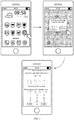
- FIG. 1 is a schematic diagram of a payment password resetting scenario.
- a user holds a smart phone. The user is buying a movie ticket at a movie theater and paying for the movie ticket with the smart phone. During the payment process by the user, the user is asked to input a payment password. If the user forgets the payment password, the payment processing flow is interrupted. The user may use other payment methods, such as by cash. The user may also trigger the interface "Forget Password" in FIG. 1 , so as to enter a process for resetting the payment password and make the payment again after the payment password has been reset.
- the embodiments of the specification provide a solution for resetting a payment password.
- This solution determines, according to a set determination condition, whether a payment password is forgotten, and for a user who has forgotten the payment password and if the user logs in, can autonomously output, to the user, recommendation data for starting a process for resetting the payment password.
- the solution according to the embodiments can autonomously output, to the user who has forgotten the payment password, recommendation data for starting a process for resetting the payment password, prompt that the user has forgotten the payment password, and guide the user to reset the payment password in advance, thereby ensuring the smooth performance of subsequent payment processing, preventing the payment from being interrupted, and improving the success rate of payments.
- the user since the recommendation data for starting a process for resetting the payment password has been output to the user, the user is enabled to conveniently start resetting the payment password, which improves the user operation efficiency.
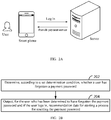
- FIG. 2A is a schematic diagram of an application scenario of payment password resetting according to an example embodiment of the specification.
- FIG. 2A illustrates a server functioning as a server device and a smart phone functioning as a client device.
- the client device may also be a Personal Digital Assistant (PDA), a wearable device, or other intelligent devices.
- PDA Personal Digital Assistant
- the server in FIG. 2A provides payment services to various clients, and a user may install a client having payment functions on the intelligent device.
- the user may log in the server via the client to register an account, provide personal information (e.g., user name, mailing address, registration number or identity information, bank card information, and the like), and obtain the payment service provided by the server.
- personal information e.g., user name, mailing address, registration number or identity information, bank card information, and the like
- FIG. 2B is a flow chart of a method for resetting a payment password according to an example embodiment of the specification. The method includes the following steps.
- Step 202 determine, according to a set determination condition, whether a user has forgotten a payment password.
- Step 204 output, for the user who has been determined to have forgotten the payment password and if the user logs in, recommendation data for starting a process for resetting the payment password.
- whether the user has forgotten a payment password may be determined according to a preset determination condition in the embodiments of the specification. For the user who has been determined to have forgotten the payment password according to a result of the determination, if the user logs in, recommendation data for starting a process for resetting the payment password may be output, and consequently, that the user has forgotten the payment password may be autonomously prompted, and the user is recommended to start the process for resetting the payment password.
- the method according to the embodiments of the specification may be applicable on the server.
- the server determines whether the user has forgotten a payment password, and outputs, for the user who has been determined to have forgotten the payment password and if the user logs in, recommendation data for starting a process for resetting the payment password, where the recommendation data may be sent by the server to the client for display, or the server may use, by means of notification, the client to output the recommendation data.
- the method may also be applicable on the client, such that the client makes the determination and outputs the recommendation data.
- the payment password in the embodiments of the specification is a password dedicated for confirming whether the user can make a payment during a payment process, which is different from the log-in password.
- the timing for executing outputting the recommendation data is "after the user logs in.”
- password resetting is executed immediately after it is confirmed that the user has logged in, so as to guide the user to reset the payment password before the user triggers a payment function of the client and starts the payment process.
- the client may provide a variety of functions in addition to the payment function, and it is possible that the user starts the client and logs in the account to use other functions. Therefore, password resetting may also be executed within a preset time period after the user logs in. For example, there may be a variety of choices, such as password resetting being executed within 2 seconds after the user logs in, password resetting being executed within 5 seconds after the user logs in, or the like.
- the recommendation data may include an interface for switching to a payment password resetting interface.
- the payment password resetting interface may be directly switched to by triggering this interface, to enable the user to conveniently reset the payment password, which improves the user operation efficiency.
- FIG. 3 is a schematic diagram of payment password resetting according to an example embodiment of the specification.
- FIG. 3 illustrates a smart phone functioning as user equipment.
- the smart phone is installed with a client that provides a payment function.
- the client is represented by "Alipay" as an example.
- the server After the user starts the client, the client begins to run, and the user logs in the server via the client. Since the user is determined to be the user who has forgotten the payment password, the server outputs the recommendation data via the client, and the client outputs the interface for switching to a payment password resetting interface.
- the option "Yes, click here to reset" is used as an example of the interface.
- an example display form of this interface may be flexibly configured as needed.
- the client can prompt that the user has forgotten the payment password.
- the user triggers this interface, and the client may directly switch to the payment password resetting interface, such that the user may conveniently reset the payment password.
- the recommendation data may also be interface data of the payment password resetting interface, and then outputting the recommendation data for starting a process for resetting the payment password may be, for example, outputting the payment password resetting interface in the client.
- outputting the recommendation data for starting a process for resetting the payment password may also be outputting a pop-up, in which components required for resetting a payment password are assembled, and the user may perform an operation of resetting the payment password.
- implementations of outputting the recommendation data may be flexibly configured as needed, which is not limited in the embodiments.
- a particular condition for determining whether a login user has forgotten a payment password may be flexibly configured as needed. For example, in example applications, users may have not logged in for a relatively long period, and the possibility that this type of users forget passwords is high. Therefore, the determination condition may be as follows: a user having not logged in within a preset time period, where the preset time period may be one month, 50 days, 90 days, or the like.
- the client in addition to the payment function, the client may provide a variety of services that do not involve payments, and it is possible that the user has often logged in the client to use other services, but has not used the payment service.
- the determination condition may be that a payment password has not been used within a set time range. Since the user has not used the payment password for a relatively long period, the possibility that the user has forgotten the payment passwords is high, and it may be determined that the user has forgotten the payment password.
- the determination condition may further include: a payment failure because a payment password is incorrect or locked, and the payment password having not been reset. Assuming that, after a payment occurs, the user causes the payment to fail as the payment password is incorrect or locked and has not reset the password afterwards, the possibility that the user has forgotten the payment passwords is high, and it may be determined that the user has forgotten the payment password.
- the determination condition may be set in combination with other factors.
- the payment password has not been used for a relatively long period and the user is relatively old, and it is determined that the user has forgotten the payment password.
- the payment password has not been used for a relatively long period and the user has behaviors of resetting the password for a number of times, and it is determined that the user has forgotten the payment password.
- the determination rule may be flexibly configured according to a number of factors, such as service needs, application scenarios, and user features.
- the embodiments of the specification further provide another determination method with high accuracy.
- the determining, according to a set determination condition, whether a user has forgotten a payment password includes:
- the embodiments of the specification may train a prediction model in advance.
- the prediction model may be trained by a service provider in advance, and the trained prediction model may be stored in user equipment for determining whether a user has forgotten a payment password.
- the trained prediction model may also be configured to a server for the user equipment to make a determination through the prediction model of the server.
- sample data used for training may be prepared in advance.
- the sample data may include two types of data, one being data of users who have forgotten payment passwords, and the other being data of users who have not forgotten payment passwords, such that the prediction model may determine, with the sample data, what features users who have forgotten payment passwords may have and what features users who have not forgotten payment passwords may have.
- the prediction model may determine, according to features of a login user, whether the user would forget the payment password.
- the service provider is able to provide one or more services to the user.
- the user When registering an account, the user fills in some registration information, such as age, gender, employment, or other personal information, and submits the information to the service provider.
- Service data may be generated in the process of obtaining services. For example, for the payment service provided by the service provider, the user generates corresponding service data in the payment process. In the process of continuously using the service, the user can accumulate a large amount of service data, according to which the service provider can learn some relevant information of the user. For example, the user's payment behavior may be obtained according to analyses of time of payments made by the user, the number of payments within certain period of time, and the like.
- some data may be selected from the user data as the sample data.
- biometric information a fingerprint, an iris, or a face
- this type of payment passwords does not require the users to memorize, and therefore, service data of this type of users may be excluded as they will not forget the passwords.
- user data of users who have reset passwords may be selected as the sample data.
- Such user data may include service data generated by a password resetting process, and may also include user data such as personal information of the users. Alternatively, service data generated by active users in the payment process may be selected.
- Whether the sample data is appropriate impacts the accuracy of the prediction model to a certain extent. For example, with regard to users who have reset passwords, these users may have reset passwords since they have forgotten the passwords, but may also have reset passwords for other reasons, and if such data of these users is used to train the model, it is possible that an accurate prediction model may not be obtained.
- sample data in the embodiments of the specification may include user data of any one of the following users.
- the first type is a user having historical payment behaviors satisfying a set activeness condition and who causes payment failure due to an incorrect or locked payment password.
- a user having historical payment behaviors satisfying a set activeness condition may be selected as a particular user in the embodiments.
- the activeness condition refers to a frequency at which the user has payment behaviors, for example, once per month, twice per month, or once per three months, which may be flexibly configured in example applications.
- a user who causes payment failure due to an incorrect or locked payment password may also be selected in the embodiments, so as to select users who have truly forgotten passwords. This is because, in the payment process, such user who has forgotten the password may input an incorrect payment password, and the payment password may even be locked after a number of payment errors. In this case, the operation of the user may generate service data of payment failure. Therefore, it can be determined that the reason why this type of service data is generated in the database is because the user has forgotten the payment password.
- the second type is a user having historical payment behaviors satisfying a set activeness condition, who does not reset the password within a set time period, and who makes a successful payment.
- users who truly do not forget passwords also need to be selected.
- it may be a user who does not reset the password within a preset time period and who makes a successful payment. This is because, in the payment process, such users who do not forget passwords will not reset passwords within a set time period and have generated service data of successful payments.
- sample data is needed to ensure the accuracy of a trained model. More sample data may lead to a higher accuracy of the model.
- user data continuously generated by users may be continuously used as new sample data. For example, if it is determined that a user does not forget a password, service data generated after the user makes a successful payment may also be used as sample data, and if it is determined that a user has forgotten a password and the user later resets the payment password, service data of the user may also be used as sample data, thereby achieving continuous training and optimization of the prediction model.
- the prediction model may be obtained by training a machine learning model with the sample data.
- the machine learning model may include a supervised model, a logistic regression model, a random forest model, a Bayesian model, a support vector machine model, a neural network model, or the like.
- the selection of a model impacts the accuracy of the recognition model ultimately obtained through training. Therefore, a variety of models may be selected in example applications for training, which is not limited in the embodiments of the specification.
- sample data is used for the prediction model to analyze, in multiple aspects, what features of the user are associated with forgetting a password and select what user data as sample data, i.e., determine what features are selected for model training.
- the sample data in the embodiments may include service data generated by the user in the payment process, data formed by personal information of the user, data formed by asset information of the user, attribute data of the payment password used by the user, and the like. Accordingly, one or more pieces of the following user information may be selected as input features to the prediction model: identity information, asset information, behavior information of using the payment password, or management information on the payment password.
- the identity information may include age, gender, education, employment, user level, or the like, which describes relevant basic features of the user, and these features are associated with the degree of forgetfulness of the user. Therefore, the identity information may serve as features associated with forgetting a password.
- the asset information may include funds, revenues from asset management, types of bound bank cards, types of bound bank cards, or the like, which describes asset features of the user.
- the behavior information of using the payment password may include a frequency at which the payment password is used, the time of the latest use of the payment password, the time interval between the latest two uses of the payment password, whether the payment password has been changed within a recent time range, the number of historical changes of the payment password, and the like.
- the behavior information of using the payment password may serve as features associated with forgetting a password.
- the management information on the password may include a length of the password, a combination that forms the password, and the like.
- some service providers may limit that the length of the password may not be shorter than 6 bits, and some service providers may limit that the password needs to be a combination of lowercase and uppercase letters, numbers, and the like.
- a user's device may be installed with some applications for managing passwords. The functions of these applications are for recording and managing passwords for the user. If it is detected that such applications are installed in the user's device, the user may record passwords with such applications.
- the management information describes the easiness to remember a password. When a payment password is longer and more complex, it is more likely to forget the payment password. Therefore, the management information on the password may serve as features associated with forgetting a password.
- the service provider prepares the sample data, selects the features and models, and then can train the prediction model in advance.
- the prediction model may be provided in an electronic device or may also be provided in a server for determining, when necessary, whether a user has forgotten a payment password.
- user data of some particular users are selected as the sample data, wherein users with low activeness are eliminated.
- the prediction model is trained with user data of users who satisfy an activeness condition, the user as an object of determination by the prediction model in the application phase may be a user having historical payment behaviors satisfying a set activeness condition, thereby avoiding circumstances in which the prediction model makes incorrect determination on users with low activities.
- the server may select users who satisfy an activeness condition according to a set period, and determine whether these users have forgotten payment passwords. According to a result of determination, the server may obtain users who have forgotten payment passwords. After these users who have forgotten payment passwords log in, the server may output recommendation data for starting a process for resetting the payment password.
- the specification further provides embodiments of an apparatus for resetting a payment password and an electronic device on which the apparatus is applied.
- FIG. 4 is a hardware structural diagram of an electronic device on which an apparatus for resetting a payment password according to the specification is located.
- the electronic device where the apparatus 431 is located may further include other hardware typically according to actual functions of the electronic device, which will not be elaborated by the specification.
- FIG. 5 is a block diagram of an apparatus for resetting a payment password according to an example embodiment of the specification.
- the apparatus includes:
- the determining module is configured, for example, to obtain user information of a login user as an input feature to a prediction model, and determine whether the user has forgotten the payment password with the prediction model.
- the user information includes one or more pieces of the following: identity information, asset information, behavior information of using the payment password, or management information on the payment password.
- the prediction model is obtained through training using sample data, and the sample data includes user data of any one of the following users:
- the user is a user having historical payment behaviors satisfying a set activeness condition.
- the set determination condition includes any one of the following:
- the recommendation data includes an interface for switching to a payment password resetting interface.
- the specification further provides an electronic device.
- the electronic device includes a processor; and a memory configured to store instructions executable by the processor, wherein the processor is configured to
- the description of relevant parts of the method embodiment may be referenced for related parts.
- the above-described apparatus embodiment is merely exemplary, wherein the modules described as separate parts may or may not be physically separated. Parts displayed as modules may or may not be physical modules, i.e., may be located at one place or may be distributed over a plurality of network modules. Some or all of the modules can be selected according to actual needs to achieve the objectives of the solutions of the specification. One of ordinary skill in the art can understand and implement the solutions of the specification without creative effort.
Landscapes
- Business, Economics & Management (AREA)
- Engineering & Computer Science (AREA)
- Accounting & Taxation (AREA)
- Theoretical Computer Science (AREA)
- Physics & Mathematics (AREA)
- General Physics & Mathematics (AREA)
- Computer Security & Cryptography (AREA)
- Strategic Management (AREA)
- General Business, Economics & Management (AREA)
- Finance (AREA)
- Computer Hardware Design (AREA)
- Software Systems (AREA)
- General Engineering & Computer Science (AREA)
- Computer Networks & Wireless Communication (AREA)
- Financial Or Insurance-Related Operations Such As Payment And Settlement (AREA)
- User Interface Of Digital Computer (AREA)
- Storage Device Security (AREA)
- Control Of Vending Devices And Auxiliary Devices For Vending Devices (AREA)
Abstract
Description
- Embodiments of the specification relate to the technical field of the Internet, and in particular, to a method and an apparatus for resetting a payment password, and an electronic device.
- Along with the development of smart device technologies, it is increasingly common to see scenarios where an electronic device, such as a mobile phone, is used for rapid payment. During payment processing, a user is typically asked to input a payment password. If the user forgets the payment password, the payment processing flow is interrupted. The user needs to find an entrance for resetting passwords and start a process for resetting the payment password through the entrance.
- To overcome the problems in the related art, embodiments of the specification provide a method and an apparatus for resetting a payment password, and an electronic device.
- According to a first aspect of the embodiments of the specification, a method for resetting a payment password is provided, including:
- determining, according to a set determination condition, whether a user has forgotten a payment password; and
- for the user who has been determined to have forgotten the payment password, if the user logs in, outputting recommendation data for starting a process for resetting the payment password.
- Optionally, the determining, according to a set determination condition, whether a user has forgotten a payment password includes:
obtaining user information of a login user as an input feature to a prediction model, and determining whether the user has forgotten the payment password with the prediction model. - Optionally, the user information includes one or more pieces of the following:
identity information, asset information, behavior information of using the payment password, or management information on the payment password. - Optionally, the prediction model is obtained through training using sample data, and the sample data includes user data of any one of the following users:
- a user having historical payment behaviors satisfying a preset activeness condition and who causes payment failure due to an incorrect or locked payment password; or
- a user having historical payment behaviors satisfying a preset activeness condition, who does not reset the password within a set time period, and who makes a successful payment.
- Optionally, the user is a user having historical payment behaviors satisfying a set activeness condition.
- Optionally, the set determination condition includes any one of the following:
- a payment failure because a payment password is incorrect or locked, and the payment password having not been reset;
- a payment password having not been used within a preset time range; and
- no log-in within a set time range.
- Optionally, the recommendation data includes an interface for switching to a payment password resetting interface.
- According to a second aspect of the embodiments of the specification, an apparatus for resetting a payment password is provided, including:
- a determining module configured to determine, according to a set determination condition, whether a user has forgotten a payment password; and
- an outputting module configured to output, for the user who has been determined to have forgotten the payment password and if the user logs in, recommendation data for starting a process for resetting the payment password.
- Optionally, the determining module is configured, for example, to
obtain user information of a login user as an input feature to a prediction model, and determine whether the user has forgotten the payment password with the prediction model. - Optionally, the user information includes one or more pieces of the following:
identity information, asset information, behavior information of using the payment password, or management information on the payment password. - Optionally, the prediction model is obtained through training using sample data, and the sample data includes user data of any one of the following users:
- a user having historical payment behaviors satisfying a set activeness condition and who causes payment failure due to an incorrect or locked payment password; or
- a user having historical payment behaviors satisfying a set activeness condition, who does not reset the password within a set time period, and who makes a successful payment.
- Optionally, the user is a user having historical payment behaviors satisfying a set activeness condition.
- Optionally, the set determination condition includes any one of the following:
- a payment failure because a payment password is incorrect or locked, and the payment password having not been reset;
- a payment password having not been used within a set time range; and
- no log-in within a set time range.
- Optionally, the recommendation data includes an interface for switching to a payment password resetting interface.
- According to a third aspect of the embodiments of the specification, an apparatus is provided, including:
- a processor; and
- a memory configured to store instructions executable by the processor,
- wherein the processor is configured to
- determine, according to a set determination condition, whether a user has forgotten a payment password; and
- output, for the user who has been determined to have forgotten the payment password and if the user logs in, recommendation data for starting a process for resetting the payment password.
- The technical solutions according to the embodiments of the specification may achieve the following advantageous effects:
The solution for resetting a payment password according to the specification determines, according to a set determination condition, whether a payment password is forgotten, and for a user who has forgotten the payment password and if the user logs in, can autonomously output, to the user, recommendation data for starting a process for resetting the payment password. - On the one hand, the solution according to the embodiments can autonomously output, to the user who has forgotten the payment password, recommendation data for starting a process for resetting the payment password, prompt that the user has forgotten the payment password, and guide the user to reset the payment password in advance, thereby ensuring the smooth performance of subsequent payment processing, preventing the payment from being interrupted, and improving the payment success rate.
- On the other hand, since the recommendation data for starting a process for resetting the payment password has been output to the user, the user is enabled to conveniently start resetting the payment password, which improves the user operation efficiency.
- It should be understood that the general description above and detailed description below are merely exemplary and illustrative, which may not be used to limit the specification.
- The accompanying drawings here are incorporated into the specification and form a part of the specification. The accompanying drawings illustrate embodiments that comply with the specification, and are used together with the specification to describe the principles of the specification.
-
FIG. 1 is a schematic diagram of a payment password resetting scenario. -
FIG. 2A is a schematic diagram of an application scenario of payment password resetting according to an example embodiment of the specification. -
FIG. 2B is a flow chart of a method for resetting a payment password according to an example embodiment of the specification. -
FIG. 3 is a schematic diagram of payment password resetting according to an example embodiment of the specification. -
FIG. 4 is a hardware structural diagram of an electronic device on which an apparatus for resetting a payment password according to an example embodiment of the specification is provided. -
FIG. 5 is a block diagram of an apparatus for resetting a payment password according to an example embodiment of the specification. - Example embodiments will be described in detail here, and the examples of the embodiments are illustrated in the accompanying drawings. When the description below involves the accompanying drawings, identical numbers in different drawings represent identical or similar elements, unless otherwise indicated. The implementations described in the following example embodiments do not represent all implementations that are consistent with the specification. Rather, they are merely examples of apparatuses and methods that are consistent with some aspects of the specification as described in detail in the appended claims.
- Terms used in the specification are only for the purpose of describing particular embodiments, rather than limiting the specification. "A," "the," and "said" in the singular form used in the specification and the appended claims are intended to include the plural forms as well, unless clearly indicated in the context to have other meanings. It should also be understood that the term "and/or" used herein refers to any or all possible combinations of one or more associated listed items.
- It should be understood that terms such as first, second, third, etc. may be used in the specification to describe various information, but the information shall not be limited to these terms. These terms are only used to differentiate information of the same type from another. For example, without departing from the scope of the specification, first information may also be referred to as second information, and similarly, second information may also be referred to as first information. Depending on the context, the term "if' used herein may be construed as "when..." or "at the time of..." or "in response to determining."
-
FIG. 1 is a schematic diagram of a payment password resetting scenario. InFIG. 1 , a user holds a smart phone. The user is buying a movie ticket at a movie theater and paying for the movie ticket with the smart phone. During the payment process by the user, the user is asked to input a payment password. If the user forgets the payment password, the payment processing flow is interrupted. The user may use other payment methods, such as by cash. The user may also trigger the interface "Forget Password" inFIG. 1 , so as to enter a process for resetting the payment password and make the payment again after the payment password has been reset. - On the basis of this, the embodiments of the specification provide a solution for resetting a payment password. This solution determines, according to a set determination condition, whether a payment password is forgotten, and for a user who has forgotten the payment password and if the user logs in, can autonomously output, to the user, recommendation data for starting a process for resetting the payment password.
- On the one hand, the solution according to the embodiments can autonomously output, to the user who has forgotten the payment password, recommendation data for starting a process for resetting the payment password, prompt that the user has forgotten the payment password, and guide the user to reset the payment password in advance, thereby ensuring the smooth performance of subsequent payment processing, preventing the payment from being interrupted, and improving the success rate of payments.
- On the other hand, since the recommendation data for starting a process for resetting the payment password has been output to the user, the user is enabled to conveniently start resetting the payment password, which improves the user operation efficiency.
- The embodiments of the specification will be described in detail below.
-
FIG. 2A is a schematic diagram of an application scenario of payment password resetting according to an example embodiment of the specification.FIG. 2A illustrates a server functioning as a server device and a smart phone functioning as a client device. Here, the client device may also be a Personal Digital Assistant (PDA), a wearable device, or other intelligent devices. The server inFIG. 2A provides payment services to various clients, and a user may install a client having payment functions on the intelligent device. The user may log in the server via the client to register an account, provide personal information (e.g., user name, mailing address, registration number or identity information, bank card information, and the like), and obtain the payment service provided by the server. - As shown in
FIG. 2B, FIG. 2B is a flow chart of a method for resetting a payment password according to an example embodiment of the specification. The method includes the following steps. - In
Step 202, determine, according to a set determination condition, whether a user has forgotten a payment password. - In
Step 204, output, for the user who has been determined to have forgotten the payment password and if the user logs in, recommendation data for starting a process for resetting the payment password. - In order to prevent the payment process from being interrupted due to the user forgetting the payment password during the payment process, whether the user has forgotten a payment password may be determined according to a preset determination condition in the embodiments of the specification. For the user who has been determined to have forgotten the payment password according to a result of the determination, if the user logs in, recommendation data for starting a process for resetting the payment password may be output, and consequently, that the user has forgotten the payment password may be autonomously prompted, and the user is recommended to start the process for resetting the payment password.
- Here, the method according to the embodiments of the specification may be applicable on the server. The server determines whether the user has forgotten a payment password, and outputs, for the user who has been determined to have forgotten the payment password and if the user logs in, recommendation data for starting a process for resetting the payment password, where the recommendation data may be sent by the server to the client for display, or the server may use, by means of notification, the client to output the recommendation data. In some other examples, the method may also be applicable on the client, such that the client makes the determination and outputs the recommendation data. It should be noted that, when a user registers an account at the server, the user typically sets a log-in password for logging in the account at the server. The payment password in the embodiments of the specification is a password dedicated for confirming whether the user can make a payment during a payment process, which is different from the log-in password.
- Optionally, it may be set that the timing for executing outputting the recommendation data is "after the user logs in." In order to prevent the payment process of the user from being interrupted due to the user forgetting the password, it would be desirable to execute password resetting before the payment process is started, for example, password resetting is executed immediately after it is confirmed that the user has logged in, so as to guide the user to reset the payment password before the user triggers a payment function of the client and starts the payment process. In other examples, the client may provide a variety of functions in addition to the payment function, and it is possible that the user starts the client and logs in the account to use other functions. Therefore, password resetting may also be executed within a preset time period after the user logs in. For example, there may be a variety of choices, such as password resetting being executed within 2 seconds after the user logs in, password resetting being executed within 5 seconds after the user logs in, or the like.
- As an example, the recommendation data may include an interface for switching to a payment password resetting interface. In the case where the user has forgotten the payment password, the payment password resetting interface may be directly switched to by triggering this interface, to enable the user to conveniently reset the payment password, which improves the user operation efficiency.
- As an example,
FIG. 3 is a schematic diagram of payment password resetting according to an example embodiment of the specification.FIG. 3 illustrates a smart phone functioning as user equipment. The smart phone is installed with a client that provides a payment function. InFIG. 3 , the client is represented by "Alipay" as an example. After the user starts the client, the client begins to run, and the user logs in the server via the client. Since the user is determined to be the user who has forgotten the payment password, the server outputs the recommendation data via the client, and the client outputs the interface for switching to a payment password resetting interface. InFIG. 3 , the option "Yes, click here to reset" is used as an example of the interface. In example applications, an example display form of this interface may be flexibly configured as needed. By outputting this interface, the client can prompt that the user has forgotten the payment password. With this prompt, the user triggers this interface, and the client may directly switch to the payment password resetting interface, such that the user may conveniently reset the payment password. - In other examples, the recommendation data may also be interface data of the payment password resetting interface, and then outputting the recommendation data for starting a process for resetting the payment password may be, for example, outputting the payment password resetting interface in the client. In other words, for the user who has been determined to have forgotten the payment password, the client directly switches to the payment password resetting interface after the user logs in. In some other examples, outputting the recommendation data for starting a process for resetting the payment password may also be outputting a pop-up, in which components required for resetting a payment password are assembled, and the user may perform an operation of resetting the payment password. In example applications, implementations of outputting the recommendation data may be flexibly configured as needed, which is not limited in the embodiments.
- In the embodiments of the specification, a particular condition for determining whether a login user has forgotten a payment password may be flexibly configured as needed. For example, in example applications, users may have not logged in for a relatively long period, and the possibility that this type of users forget passwords is high. Therefore, the determination condition may be as follows: a user having not logged in within a preset time period, where the preset time period may be one month, 50 days, 90 days, or the like. In other examples, in addition to the payment function, the client may provide a variety of services that do not involve payments, and it is possible that the user has often logged in the client to use other services, but has not used the payment service. Therefore, the determination condition may be that a payment password has not been used within a set time range. Since the user has not used the payment password for a relatively long period, the possibility that the user has forgotten the payment passwords is high, and it may be determined that the user has forgotten the payment password. Alternatively, the determination condition may further include: a payment failure because a payment password is incorrect or locked, and the payment password having not been reset. Assuming that, after a payment occurs, the user causes the payment to fail as the payment password is incorrect or locked and has not reset the password afterwards, the possibility that the user has forgotten the payment passwords is high, and it may be determined that the user has forgotten the payment password. In some other examples, the determination condition may be set in combination with other factors. For example, the payment password has not been used for a relatively long period and the user is relatively old, and it is determined that the user has forgotten the payment password. Alternatively, the payment password has not been used for a relatively long period and the user has behaviors of resetting the password for a number of times, and it is determined that the user has forgotten the payment password. In example applications, the determination rule may be flexibly configured according to a number of factors, such as service needs, application scenarios, and user features.
- In an optional implementation, the embodiments of the specification further provide another determination method with high accuracy. For example, the determining, according to a set determination condition, whether a user has forgotten a payment password includes:
- obtaining user information of a login user as an input feature to a prediction model, and determining whether the user has forgotten the payment password with the prediction model.
- The embodiments of the specification may train a prediction model in advance. In some examples, the prediction model may be trained by a service provider in advance, and the trained prediction model may be stored in user equipment for determining whether a user has forgotten a payment password. In other examples, the trained prediction model may also be configured to a server for the user equipment to make a determination through the prediction model of the server.
- Next, the prediction model will be described. In the embodiments, sample data used for training may be prepared in advance. The sample data may include two types of data, one being data of users who have forgotten payment passwords, and the other being data of users who have not forgotten payment passwords, such that the prediction model may determine, with the sample data, what features users who have forgotten payment passwords may have and what features users who have not forgotten payment passwords may have. As a result, in the phase of online application of the model, the prediction model may determine, according to features of a login user, whether the user would forget the payment password.
- It should be understood that the service provider is able to provide one or more services to the user. When registering an account, the user fills in some registration information, such as age, gender, employment, or other personal information, and submits the information to the service provider. Service data may be generated in the process of obtaining services. For example, for the payment service provided by the service provider, the user generates corresponding service data in the payment process. In the process of continuously using the service, the user can accumulate a large amount of service data, according to which the service provider can learn some relevant information of the user. For example, the user's payment behavior may be obtained according to analyses of time of payments made by the user, the number of payments within certain period of time, and the like. For the service provider, when a large amount of various user data is stored in a database, some data may be selected from the user data as the sample data. For example, for users using biometric information (a fingerprint, an iris, or a face) as payment passwords, this type of payment passwords does not require the users to memorize, and therefore, service data of this type of users may be excluded as they will not forget the passwords. In other examples, user data of users who have reset passwords may be selected as the sample data. Such user data may include service data generated by a password resetting process, and may also include user data such as personal information of the users. Alternatively, service data generated by active users in the payment process may be selected.
- Whether the sample data is appropriate impacts the accuracy of the prediction model to a certain extent. For example, with regard to users who have reset passwords, these users may have reset passwords since they have forgotten the passwords, but may also have reset passwords for other reasons, and if such data of these users is used to train the model, it is possible that an accurate prediction model may not be obtained.
- On the basis of this, the sample data in the embodiments of the specification may include user data of any one of the following users.
- The first type is a user having historical payment behaviors satisfying a set activeness condition and who causes payment failure due to an incorrect or locked payment password.
- Some users who have few payment behaviors may exist in a large number of users, and this type of users has accumulated a small amount of payment-related user data, while it is difficult for a small amount of user data to accurately depict user features that are related to forgetting passwords for this type of users. Therefore, a user having historical payment behaviors satisfying a set activeness condition may be selected as a particular user in the embodiments. The activeness condition refers to a frequency at which the user has payment behaviors, for example, once per month, twice per month, or once per three months, which may be flexibly configured in example applications.
- On the other hand, since the occurrence of a password resetting behavior may not necessarily be caused by forgetting the password, a user who causes payment failure due to an incorrect or locked payment password may also be selected in the embodiments, so as to select users who have truly forgotten passwords. This is because, in the payment process, such user who has forgotten the password may input an incorrect payment password, and the payment password may even be locked after a number of payment errors. In this case, the operation of the user may generate service data of payment failure. Therefore, it can be determined that the reason why this type of service data is generated in the database is because the user has forgotten the payment password.
- The second type is a user having historical payment behaviors satisfying a set activeness condition, who does not reset the password within a set time period, and who makes a successful payment.
- In the embodiments, in addition to that a historical payment behaviors satisfying a set activeness condition, users who truly do not forget passwords also need to be selected. With regard to the selection of this type of users, it may be a user who does not reset the password within a preset time period and who makes a successful payment. This is because, in the payment process, such users who do not forget passwords will not reset passwords within a set time period and have generated service data of successful payments.
- In the above-described manner, users who have forgotten passwords and users who do not forget passwords are selected from a large number of users in the embodiments. Then, user data of these users are obtained as the sample data.
- Typically, a certain amount of sample data is needed to ensure the accuracy of a trained model. More sample data may lead to a higher accuracy of the model. On the other hand, after the prediction model has been trained and then placed in application for determining whether a user has forgotten a password, user data continuously generated by users may be continuously used as new sample data. For example, if it is determined that a user does not forget a password, service data generated after the user makes a successful payment may also be used as sample data, and if it is determined that a user has forgotten a password and the user later resets the payment password, service data of the user may also be used as sample data, thereby achieving continuous training and optimization of the prediction model.
- After the above-described sample data is prepared, the prediction model may be obtained by training a machine learning model with the sample data. In the training process, to train a proper model with high accuracy depends on feature selection and model selection. Here, the machine learning model may include a supervised model, a logistic regression model, a random forest model, a Bayesian model, a support vector machine model, a neural network model, or the like. The selection of a model impacts the accuracy of the recognition model ultimately obtained through training. Therefore, a variety of models may be selected in example applications for training, which is not limited in the embodiments of the specification.
- In another aspect of the training process, proper features associated with whether a user has forgotten a password need to be selected. The sample data is used for the prediction model to analyze, in multiple aspects, what features of the user are associated with forgetting a password and select what user data as sample data, i.e., determine what features are selected for model training. In an optional implementation, the sample data in the embodiments may include service data generated by the user in the payment process, data formed by personal information of the user, data formed by asset information of the user, attribute data of the payment password used by the user, and the like. Accordingly, one or more pieces of the following user information may be selected as input features to the prediction model: identity information, asset information, behavior information of using the payment password, or management information on the payment password.
- As an example, the identity information may include age, gender, education, employment, user level, or the like, which describes relevant basic features of the user, and these features are associated with the degree of forgetfulness of the user. Therefore, the identity information may serve as features associated with forgetting a password.
- The asset information may include funds, revenues from asset management, types of bound bank cards, types of bound bank cards, or the like, which describes asset features of the user. The more the assets, the higher the level of value of the account is to the user, and the lower the possibility of forgetting the password is. Therefore, the asset information may serve as features associated with forgetting a password.
- The behavior information of using the payment password may include a frequency at which the payment password is used, the time of the latest use of the payment password, the time interval between the latest two uses of the payment password, whether the payment password has been changed within a recent time range, the number of historical changes of the payment password, and the like. When the payment password is used more frequently, it is less likely for the user to forget the payment password. Therefore, the behavior information of using the payment password may serve as features associated with forgetting a password.
- The management information on the password may include a length of the password, a combination that forms the password, and the like. In some examples, some service providers may limit that the length of the password may not be shorter than 6 bits, and some service providers may limit that the password needs to be a combination of lowercase and uppercase letters, numbers, and the like. In example applications, a user's device may be installed with some applications for managing passwords. The functions of these applications are for recording and managing passwords for the user. If it is detected that such applications are installed in the user's device, the user may record passwords with such applications. The management information describes the easiness to remember a password. When a payment password is longer and more complex, it is more likely to forget the payment password. Therefore, the management information on the password may serve as features associated with forgetting a password.
- In the above-described way, the service provider prepares the sample data, selects the features and models, and then can train the prediction model in advance. After the training is completed, the prediction model may be provided in an electronic device or may also be provided in a server for determining, when necessary, whether a user has forgotten a payment password. Here, it can be seen from the above-described analysis that user data of some particular users are selected as the sample data, wherein users with low activeness are eliminated. Since the prediction model is trained with user data of users who satisfy an activeness condition, the user as an object of determination by the prediction model in the application phase may be a user having historical payment behaviors satisfying a set activeness condition, thereby avoiding circumstances in which the prediction model makes incorrect determination on users with low activities. As an example, when the prediction model is provided at the server, the server may select users who satisfy an activeness condition according to a set period, and determine whether these users have forgotten payment passwords. According to a result of determination, the server may obtain users who have forgotten payment passwords. After these users who have forgotten payment passwords log in, the server may output recommendation data for starting a process for resetting the payment password.
- Corresponding to the above-described embodiment of the method for resetting a payment password, the specification further provides embodiments of an apparatus for resetting a payment password and an electronic device on which the apparatus is applied.
- The embodiment of an apparatus for resetting a payment password according to the specification may be applied on an electronic device, such as a smart phone or a server. The apparatus embodiment may be implemented through software, hardware, or a combination of software and hardware. Taking software implementation as an example, a device in the sense of logics is formed by a processor of a file processing where the device is located reading corresponding computer program instructions in a non-volatile storage into a memory for running. From the hardware layer,
FIG. 4 is a hardware structural diagram of an electronic device on which an apparatus for resetting a payment password according to the specification is located. In addition to a processor 410, amemory 430, anetwork interface 420, and anon-volatile storage 440 shown inFIG. 4 , the electronic device where theapparatus 431 is located may further include other hardware typically according to actual functions of the electronic device, which will not be elaborated by the specification. - As shown in
FIG. 5, FIG. 5 is a block diagram of an apparatus for resetting a payment password according to an example embodiment of the specification. The apparatus includes: - a determining
module 51 configured to determine, according to a set determination condition, whether a user has forgotten a payment password; and - an
outputting module 52 configured to output, for the user who has been determined to have forgotten the payment password and if the user logs in, recommendation data for starting a process for resetting the payment password. - Optionally, the determining module is configured, for example, to
obtain user information of a login user as an input feature to a prediction model, and determine whether the user has forgotten the payment password with the prediction model. - Optionally, the user information includes one or more pieces of the following:
identity information, asset information, behavior information of using the payment password, or management information on the payment password. - Optionally, the prediction model is obtained through training using sample data, and the sample data includes user data of any one of the following users:
- a user having historical payment behaviors satisfying a set activeness condition and who causes payment failure due to an incorrect or locked payment password; and
- a user having historical payment behaviors satisfying a set activeness condition, who does not reset the password within a set time period, and who makes a successful payment.
- Optionally, the user is a user having historical payment behaviors satisfying a set activeness condition.
- Optionally, the set determination condition includes any one of the following:
- a payment failure because a payment password is incorrect or locked, and the payment password having not been reset;
- a payment password having not been used within a set time range; and
- no log-in within a set time range.
- Optionally, the recommendation data includes an interface for switching to a payment password resetting interface.
- Correspondingly, the specification further provides an electronic device. The electronic device includes a processor; and a memory configured to store instructions executable by the processor, wherein the processor is configured to
- determine, according to a set determination condition, whether a user has forgotten a payment password; and
- output, for the user who has been determined to have forgotten the payment password and if the user logs in, recommendation data for starting a process for resetting the payment password.
- For detailed implementation processes of functions and roles of the modules in the above-described apparatus for resetting a payment password, the implementation processes of corresponding steps in the above-described method for resetting a payment password may be referenced, which will not be elaborated in the specification.
- Since the apparatus embodiment substantially corresponds to the method embodiment, the description of relevant parts of the method embodiment may be referenced for related parts. The above-described apparatus embodiment is merely exemplary, wherein the modules described as separate parts may or may not be physically separated. Parts displayed as modules may or may not be physical modules, i.e., may be located at one place or may be distributed over a plurality of network modules. Some or all of the modules can be selected according to actual needs to achieve the objectives of the solutions of the specification. One of ordinary skill in the art can understand and implement the solutions of the specification without creative effort.
- Particular embodiments of the specification are described above, and other embodiments fall within the scope of the appended claims. In some cases, actions or steps set forth in the claims may be executed in an order different from those in the embodiments and can still achieve desired results. In addition, processes depicted in the accompanying drawings may not necessarily require the illustrated particular order or a continuous order to achieve desired results. In some implementations, multi-task processing and parallel processing are also feasible or may be beneficial.
- It would be easy for those skilled in the art to conceive, after considering the specification and practicing the embodiments of the specification, of other implementation solutions of the specification. The specification intends to cover any modifications, uses, or adaptive variations of the specification. These modifications, uses, or adaptive variations comply with the general principles of the specification, and include common general knowledge or conventional technical means in the art that are not claimed in the specification. The specification and embodiments may be only deemed to be exemplary, and the true scope and spirit are pointed out in the claims below.
- It should be understood that the specification is not limited to the accurate structure described above and illustrated in the accompanying drawings, and the specification may be subject to various modifications and variations without departing from the scope of the specification. The scope of the specification shall be defined only by the appended claims.
- The above-described is only preferred embodiments of the specification and not intended to limit the specification. Any modifications, equivalent substitutions, and improvements made within the spirit and principle of the specification shall fall within the protection scope of the specification.
Claims (15)
- A method for resetting a payment password, comprising:determining, according to a set determination condition, whether a user has forgotten a payment password; andfor the user who has been determined to have forgotten the payment password, when the user logs in, outputting recommendation data for starting a process for resetting the payment password.
- The method according to claim 1, wherein the determining, according to a set determination condition, whether a user has forgotten a payment password comprises:
obtaining user information of a login user as an input feature to a prediction model, and determining whether the user has forgotten the payment password with the prediction model. - The method according to claim 2, wherein the user information comprises one or more pieces of the following:
identity information, asset information, behavior information of using the payment password, or management information on the payment password. - The method according to claim 2, wherein the prediction model is obtained through training using sample data, and the sample data comprises user data of any one of the following users:a user having historical payment behaviors satisfying a set activeness condition and payment failure due to an incorrect or locked payment password; ora user having historical payment behaviors satisfying the set activeness condition, who does not reset a password within a preset time period, and who makes a successful payment.
- The method according to claim 1, wherein the user is a user having historical payment behaviors satisfying a set activeness condition.
- The method according to claim 1, wherein the set determination condition comprises any one of the following:a payment failure because a payment password is incorrect or locked, and the payment password having not been reset;a payment password having not been used within a set time range; orno log-in within a set time range.
- The method according to claim 1, wherein the recommendation data comprises an interface for switching to a payment password resetting interface.
- An apparatus for resetting a payment password, comprising:a determining module configured to determine, according to a set determination condition, whether a user has forgotten a payment password; andan outputting module configured to output, for the user who has been determined to have forgotten the payment password and when the user logs in, recommendation data for starting a process for resetting the payment password.
- The apparatus according to claim 8, wherein the determining module is configured to
obtain user information of a login user as an input feature to a prediction model, and determine whether the user has forgotten the payment password with the prediction model. - The apparatus according to claim 9, wherein the user information comprises one or more pieces of the following:
identity information, asset information, behavior information of using the payment password, or management information on the payment password. - The apparatus according to claim 9, wherein the prediction model is obtained through training using sample data, and the sample data comprises user data of any one of the following users:a user having historical payment behaviors satisfying a set activeness condition and who causes payment failure due to an incorrect or locked payment password; ora user having historical payment behaviors satisfying a set activeness condition, who does not reset a password within a preset time period, and who makes a successful payment.
- The apparatus according to claim 8, wherein the user is a user having historical payment behaviors satisfying a preset activeness condition.
- The apparatus according to claim 8, wherein the set determination condition comprises any one of the following:a payment failure because a payment password is incorrect or locked, and the payment password having not been reset;a payment password having not been used within a set time range; orno log-in within a set time range.
- The apparatus according to claim 8, wherein the recommendation data comprises an interface for switching to a payment password resetting interface.
- An electronic device, comprising:a processor; anda memory configured to store instructions executable by the processor,wherein the processor is configured todetermine, according to a set determination condition, whether a user has forgotten a payment password; andoutput, for the user who has been determined to have forgotten the payment password and if the user logs in, recommendation data for starting a process for resetting the payment password.
Applications Claiming Priority (2)
| Application Number | Priority Date | Filing Date | Title |
|---|---|---|---|
| CN201810214125.2A CN108564366A (en) | 2018-03-15 | 2018-03-15 | Payment cipher remapping method, device and electronic equipment |
| PCT/CN2019/073554 WO2019174420A1 (en) | 2018-03-15 | 2019-01-29 | Payment password reset method and apparatus, and electronic device |
Publications (2)
| Publication Number | Publication Date |
|---|---|
| EP3734533A1 true EP3734533A1 (en) | 2020-11-04 |
| EP3734533A4 EP3734533A4 (en) | 2021-03-10 |
Family
ID=63531758
Family Applications (1)
| Application Number | Title | Priority Date | Filing Date |
|---|---|---|---|
| EP19766589.6A Withdrawn EP3734533A4 (en) | 2018-03-15 | 2019-01-29 | METHOD AND DEVICE FOR PAYMENT PASSWORD RESET AND ELECTRONIC DEVICE |
Country Status (8)
| Country | Link |
|---|---|
| US (2) | US10909233B2 (en) |
| EP (1) | EP3734533A4 (en) |
| CN (1) | CN108564366A (en) |
| MY (1) | MY205098A (en) |
| PH (1) | PH12020551125A1 (en) |
| SG (1) | SG11202007190VA (en) |
| TW (1) | TWI717673B (en) |
| WO (1) | WO2019174420A1 (en) |
Families Citing this family (10)
| Publication number | Priority date | Publication date | Assignee | Title |
|---|---|---|---|---|
| CN108564366A (en) | 2018-03-15 | 2018-09-21 | 阿里巴巴集团控股有限公司 | Payment cipher remapping method, device and electronic equipment |
| CN110263530B (en) * | 2019-05-30 | 2023-12-08 | 创新先进技术有限公司 | Method and device for identifying password reset requests |
| CN114417279B (en) * | 2019-09-26 | 2025-08-26 | 支付宝(杭州)信息技术有限公司 | Method and device for handling encryption modification behavior |
| CN116208331A (en) * | 2020-02-10 | 2023-06-02 | 支付宝(杭州)信息技术有限公司 | Password reminding method, device and equipment |
| FR3110320A1 (en) * | 2020-05-14 | 2021-11-19 | Orange | Detection of users prone to electronism |
| CN112215613B (en) * | 2020-10-09 | 2022-06-24 | 支付宝(杭州)信息技术有限公司 | Password verification method, device, equipment and medium |
| US12039536B2 (en) * | 2020-10-27 | 2024-07-16 | Prove Identity, Inc. | Transaction authentication, authorization, and/or auditing utilizing subscriber-specific behaviors |
| CN112417430A (en) * | 2020-11-26 | 2021-02-26 | 珠海格力电器股份有限公司 | Processing method and system for decryption error, storage medium and electronic equipment |
| TWI885339B (en) * | 2023-03-07 | 2025-06-01 | 一德金屬工業股份有限公司 | How to control combination locks |
| CN120069879B (en) * | 2025-01-26 | 2025-12-12 | 北京字跳网络技术有限公司 | Methods, devices, equipment and storage media for electronic payment |
Family Cites Families (39)
| Publication number | Priority date | Publication date | Assignee | Title |
|---|---|---|---|---|
| US7908216B1 (en) | 1999-07-22 | 2011-03-15 | Visa International Service Association | Internet payment, authentication and loading system using virtual smart card |
| EP1224628B1 (en) | 1999-10-18 | 2017-02-22 | Stamps.Com | Cryptographic module for secure processing of value-bearing items |
| US7552094B2 (en) | 2000-03-16 | 2009-06-23 | Harexinfotech, Inc. | Optical payment transceiver and system using the same |
| WO2002005061A2 (en) | 2000-07-06 | 2002-01-17 | David Paul Felsher | Information record infrastructure, system and method |
| AU2002338261A1 (en) | 2001-03-30 | 2002-10-15 | Crossmar, Inc. | Method and system for multi-currency escrow service for web-based transactions |
| US7353536B1 (en) * | 2003-09-23 | 2008-04-01 | At&T Delaware Intellectual Property, Inc | Methods of resetting passwords in network service systems including user redirection and related systems and computer-program products |
| US7925584B2 (en) | 2004-06-29 | 2011-04-12 | Textura Corporation | Construction payment management system and method with document tracking features |
| US8646051B2 (en) | 2004-09-10 | 2014-02-04 | At&T Intellectual Property I, L.P. | Automated password reset via an interactive voice response system |
| US8078881B1 (en) * | 2004-11-12 | 2011-12-13 | Liu Gary G | Password resetting method |
| EP1875653B1 (en) | 2005-04-29 | 2018-12-12 | Oracle International Corporation | System and method for fraud monitoring, detection, and tiered user authentication |
| US7552467B2 (en) | 2006-04-24 | 2009-06-23 | Jeffrey Dean Lindsay | Security systems for protecting an asset |
| US7680737B2 (en) | 2006-07-06 | 2010-03-16 | Moneygram International, Inc. | Systems and methods for processing payments with payment review features |
| GB0621189D0 (en) | 2006-10-25 | 2006-12-06 | Payfont Ltd | Secure authentication and payment system |
| US9098845B2 (en) | 2008-09-19 | 2015-08-04 | Logomotion, S.R.O. | Process of selling in electronic shop accessible from the mobile communication device |
| BRPI0919277A2 (en) | 2008-09-22 | 2015-12-15 | Visa Int Service Ass | wireless mobile device, computer readable storage medium, and method for controlling use of a payment application, for operating a mobile device, for authenticating a user of a mobile communication device, for managing access to a resident payment application from a mobile device, to reset a password, and to manage a counter |
| US20100125906A1 (en) * | 2008-11-19 | 2010-05-20 | Palo Alto Research Center Incorporated | Resetting a forgotten password using the password itself as authentication |
| US9886693B2 (en) | 2009-03-30 | 2018-02-06 | Yuh-Shen Song | Privacy protected anti identity theft and payment network |
| US9112702B2 (en) * | 2009-04-29 | 2015-08-18 | Microsoft Technology Licensing, Llc | Alternate authentication |
| KR101789113B1 (en) | 2009-05-03 | 2017-10-23 | 에스에무케이 가부시키가이샤 | A payment terminal using a mobile communication device, such as a mobile phone;a method of direct debit payment transaction |
| US8973113B1 (en) * | 2010-04-15 | 2015-03-03 | Crimson Corporation | Systems and methods for automatically resetting a password |
| US11615115B2 (en) | 2010-12-23 | 2023-03-28 | Mongodb, Inc. | Systems and methods for managing distributed database deployments |
| WO2012122049A2 (en) | 2011-03-04 | 2012-09-13 | Visa International Service Association | Integration of payment capability into secure elements of computers |
| CN103368928B (en) * | 2012-04-11 | 2018-04-27 | 富泰华工业(深圳)有限公司 | Account number cipher reset system and method |
| US10102510B2 (en) | 2012-11-28 | 2018-10-16 | Hoverkey Ltd. | Method and system of conducting a cryptocurrency payment via a mobile device using a contactless token to store and protect a user's secret key |
| CN103235909B (en) * | 2013-04-25 | 2016-08-03 | 广东欧珀移动通信有限公司 | A kind of reset the method for password, device and mobile device |
| US9922322B2 (en) | 2013-12-19 | 2018-03-20 | Visa International Service Association | Cloud-based transactions with magnetic secure transmission |
| BR112016014106A2 (en) | 2013-12-19 | 2017-08-08 | Visa Int Service Ass | METHOD FOR ENHANCED SECURITY OF A COMMUNICATION DEVICE, AND, COMMUNICATION DEVICE |
| CN104732376B (en) * | 2013-12-24 | 2020-01-24 | 腾讯科技(深圳)有限公司 | Payment password resetting method, terminal and system |
| US9355244B2 (en) * | 2013-12-24 | 2016-05-31 | Tencent Technology (Shenzhen) Company Limited | Systems and methods for password reset |
| CN104618314B (en) | 2013-12-24 | 2018-03-09 | 腾讯科技(深圳)有限公司 | A kind of password remapping method, device and system |
| CN104954350B (en) * | 2014-03-31 | 2020-06-23 | 腾讯科技(深圳)有限公司 | Account information protection method and system |
| CN105100022A (en) * | 2014-05-20 | 2015-11-25 | 阿里巴巴集团控股有限公司 | Cipher processing method, server and system |
| CN104053022A (en) * | 2014-06-05 | 2014-09-17 | 东莞中山大学研究院 | A Realization Method of Digital TV Interactive Business |
| CN104102864A (en) * | 2014-07-30 | 2014-10-15 | 宇龙计算机通信科技(深圳)有限公司 | Terminal screen locking password resetting method, resetting system and terminal |
| KR102460459B1 (en) | 2015-02-27 | 2022-10-28 | 삼성전자주식회사 | Method and apparatus for providing card service using electronic device |
| US10810572B1 (en) * | 2016-02-16 | 2020-10-20 | State Farm Mutual Automobile Insurance Company | Connected car as a payment device |
| TWI642010B (en) * | 2016-07-29 | 2018-11-21 | 臺灣行動支付股份有限公司 | Electronic transaction password reset system and method thereof |
| CN107358092A (en) * | 2017-06-27 | 2017-11-17 | 深圳传音通讯有限公司 | Reset the method for screen-lock password and the terminal of screen-lock password can be reset |
| CN108564366A (en) * | 2018-03-15 | 2018-09-21 | 阿里巴巴集团控股有限公司 | Payment cipher remapping method, device and electronic equipment |
-
2018
- 2018-03-15 CN CN201810214125.2A patent/CN108564366A/en active Pending
-
2019
- 2019-01-02 TW TW108100047A patent/TWI717673B/en not_active IP Right Cessation
- 2019-01-29 MY MYPI2020003775A patent/MY205098A/en unknown
- 2019-01-29 SG SG11202007190VA patent/SG11202007190VA/en unknown
- 2019-01-29 EP EP19766589.6A patent/EP3734533A4/en not_active Withdrawn
- 2019-01-29 WO PCT/CN2019/073554 patent/WO2019174420A1/en not_active Ceased
-
2020
- 2020-06-01 US US16/889,548 patent/US10909233B2/en active Active
- 2020-07-24 PH PH12020551125A patent/PH12020551125A1/en unknown
-
2021
- 2021-01-04 US US17/140,875 patent/US11132435B2/en active Active
Also Published As
| Publication number | Publication date |
|---|---|
| US20200293647A1 (en) | 2020-09-17 |
| SG11202007190VA (en) | 2020-08-28 |
| US20210124819A1 (en) | 2021-04-29 |
| EP3734533A4 (en) | 2021-03-10 |
| US10909233B2 (en) | 2021-02-02 |
| CN108564366A (en) | 2018-09-21 |
| TWI717673B (en) | 2021-02-01 |
| TW201939331A (en) | 2019-10-01 |
| WO2019174420A1 (en) | 2019-09-19 |
| US11132435B2 (en) | 2021-09-28 |
| PH12020551125A1 (en) | 2021-05-31 |
| MY205098A (en) | 2024-10-02 |
Similar Documents
| Publication | Publication Date | Title |
|---|---|---|
| US11132435B2 (en) | Payment password reset method and apparatus, and electronic device | |
| US20240289876A1 (en) | Systems and methods for automatically generated digital predictive insights for user interfaces | |
| US9876825B2 (en) | Monitoring user authenticity | |
| US11539716B2 (en) | Online user behavior analysis service backed by deep learning models trained on shared digital information | |
| US10891631B2 (en) | Framework for generating risk evaluation models | |
| US20180337909A1 (en) | Non-repeatable challenge-response authentication | |
| US11854004B2 (en) | Automatic transaction execution based on transaction log analysis | |
| US11823197B2 (en) | Authenticating based on user behavioral transaction patterns | |
| US12174943B2 (en) | Utilizing machine-learning models to determine take-over scores and intelligently secure digital account features | |
| US12417275B2 (en) | Preventing unauthorized access to personal data during authentication processes | |
| US20230196210A1 (en) | Utilizing machine learning models to predict client dispositions and generate adaptive automated interaction responses | |
| US11900377B2 (en) | Authenticating based on behavioral transactional patterns | |
| KR20190075958A (en) | Security verification methods and devices based on biometric features | |
| US20230186307A1 (en) | Method for enhancing transaction security | |
| US20230350874A1 (en) | Machine Learning Models for Discerning Relationships Between Data Stored in a Records System | |
| US12373521B2 (en) | Secure user authentication using machine learning and geo-location data | |
| US12332993B2 (en) | Third party data processing for improvement of authentication questions | |
| US20250111741A1 (en) | Gaming systems for obtaining random numeric inputs | |
| US20230316393A1 (en) | Determining recognized user activities for a third-party risk generator integrated within an application | |
| CN115689571A (en) | Abnormal user behavior monitoring method, device, equipment and medium | |
| CN111310167A (en) | A password reminder method, device and device | |
| EP4738155A1 (en) | Generative construction of digital user identity as verified by personally identifiable information | |
| US20250111738A1 (en) | Data transmission systems and methods for gaming applications | |
| HK40031262A (en) | Password reminding method, device and equipment | |
| HK40031262B (en) | Password reminding method, device and equipment |
Legal Events
| Date | Code | Title | Description |
|---|---|---|---|
| STAA | Information on the status of an ep patent application or granted ep patent |
Free format text: STATUS: THE INTERNATIONAL PUBLICATION HAS BEEN MADE |
|
| PUAI | Public reference made under article 153(3) epc to a published international application that has entered the european phase |
Free format text: ORIGINAL CODE: 0009012 |
|
| STAA | Information on the status of an ep patent application or granted ep patent |
Free format text: STATUS: REQUEST FOR EXAMINATION WAS MADE |
|
| 17P | Request for examination filed |
Effective date: 20200729 |
|
| AK | Designated contracting states |
Kind code of ref document: A1 Designated state(s): AL AT BE BG CH CY CZ DE DK EE ES FI FR GB GR HR HU IE IS IT LI LT LU LV MC MK MT NL NO PL PT RO RS SE SI SK SM TR |
|
| AX | Request for extension of the european patent |
Extension state: BA ME |
|
| RAP1 | Party data changed (applicant data changed or rights of an application transferred) |
Owner name: ALIBABA GROUP HOLDING LIMITED |
|
| RAP1 | Party data changed (applicant data changed or rights of an application transferred) |
Owner name: ADVANCED NEW TECHNOLOGIES CO., LTD. |
|
| A4 | Supplementary search report drawn up and despatched |
Effective date: 20210205 |
|
| RIC1 | Information provided on ipc code assigned before grant |
Ipc: G06Q 20/12 20120101ALI20210201BHEP Ipc: G06F 21/45 20130101ALI20210201BHEP Ipc: G06Q 20/38 20120101AFI20210201BHEP Ipc: G06Q 20/40 20120101ALI20210201BHEP Ipc: G06Q 20/32 20120101ALI20210201BHEP |
|
| DAV | Request for validation of the european patent (deleted) | ||
| DAX | Request for extension of the european patent (deleted) | ||
| STAA | Information on the status of an ep patent application or granted ep patent |
Free format text: STATUS: EXAMINATION IS IN PROGRESS |
|
| 17Q | First examination report despatched |
Effective date: 20210927 |
|
| STAA | Information on the status of an ep patent application or granted ep patent |
Free format text: STATUS: THE APPLICATION HAS BEEN WITHDRAWN |
|
| 18W | Application withdrawn |
Effective date: 20220531 |