EP3733862A1 - Screening method for materials that suppress characteristic body odor of elderly people - Google Patents
Screening method for materials that suppress characteristic body odor of elderly people Download PDFInfo
- Publication number
- EP3733862A1 EP3733862A1 EP18894687.5A EP18894687A EP3733862A1 EP 3733862 A1 EP3733862 A1 EP 3733862A1 EP 18894687 A EP18894687 A EP 18894687A EP 3733862 A1 EP3733862 A1 EP 3733862A1
- Authority
- EP
- European Patent Office
- Prior art keywords
- olfactory receptor
- receptor polypeptide
- trans
- response
- odor
- Prior art date
- Legal status (The legal status is an assumption and is not a legal conclusion. Google has not performed a legal analysis and makes no representation as to the accuracy of the status listed.)
- Granted
Links
Images



Classifications
-
- C—CHEMISTRY; METALLURGY
- C12—BIOCHEMISTRY; BEER; SPIRITS; WINE; VINEGAR; MICROBIOLOGY; ENZYMOLOGY; MUTATION OR GENETIC ENGINEERING
- C12Q—MEASURING OR TESTING PROCESSES INVOLVING ENZYMES, NUCLEIC ACIDS OR MICROORGANISMS; COMPOSITIONS OR TEST PAPERS THEREFOR; PROCESSES OF PREPARING SUCH COMPOSITIONS; CONDITION-RESPONSIVE CONTROL IN MICROBIOLOGICAL OR ENZYMOLOGICAL PROCESSES
- C12Q1/00—Measuring or testing processes involving enzymes, nucleic acids or microorganisms; Compositions therefor; Processes of preparing such compositions
- C12Q1/68—Measuring or testing processes involving enzymes, nucleic acids or microorganisms; Compositions therefor; Processes of preparing such compositions involving nucleic acids
- C12Q1/6897—Measuring or testing processes involving enzymes, nucleic acids or microorganisms; Compositions therefor; Processes of preparing such compositions involving nucleic acids involving reporter genes operably linked to promoters
-
- G—PHYSICS
- G01—MEASURING; TESTING
- G01N—INVESTIGATING OR ANALYSING MATERIALS BY DETERMINING THEIR CHEMICAL OR PHYSICAL PROPERTIES
- G01N33/00—Investigating or analysing materials by specific methods not covered by groups G01N1/00 - G01N31/00
- G01N33/48—Biological material, e.g. blood, urine; Haemocytometers
- G01N33/50—Chemical analysis of biological material, e.g. blood, urine; Testing involving biospecific ligand binding methods; Immunological testing
- G01N33/5005—Chemical analysis of biological material, e.g. blood, urine; Testing involving biospecific ligand binding methods; Immunological testing involving human or animal cells
- G01N33/5008—Chemical analysis of biological material, e.g. blood, urine; Testing involving biospecific ligand binding methods; Immunological testing involving human or animal cells for testing or evaluating the effect of chemical or biological compounds, e.g. drugs, cosmetics
-
- G—PHYSICS
- G01—MEASURING; TESTING
- G01N—INVESTIGATING OR ANALYSING MATERIALS BY DETERMINING THEIR CHEMICAL OR PHYSICAL PROPERTIES
- G01N33/00—Investigating or analysing materials by specific methods not covered by groups G01N1/00 - G01N31/00
- G01N33/48—Biological material, e.g. blood, urine; Haemocytometers
- G01N33/50—Chemical analysis of biological material, e.g. blood, urine; Testing involving biospecific ligand binding methods; Immunological testing
- G01N33/5005—Chemical analysis of biological material, e.g. blood, urine; Testing involving biospecific ligand binding methods; Immunological testing involving human or animal cells
- G01N33/5008—Chemical analysis of biological material, e.g. blood, urine; Testing involving biospecific ligand binding methods; Immunological testing involving human or animal cells for testing or evaluating the effect of chemical or biological compounds, e.g. drugs, cosmetics
- G01N33/502—Chemical analysis of biological material, e.g. blood, urine; Testing involving biospecific ligand binding methods; Immunological testing involving human or animal cells for testing or evaluating the effect of chemical or biological compounds, e.g. drugs, cosmetics for testing non-proliferative effects
- G01N33/5041—Chemical analysis of biological material, e.g. blood, urine; Testing involving biospecific ligand binding methods; Immunological testing involving human or animal cells for testing or evaluating the effect of chemical or biological compounds, e.g. drugs, cosmetics for testing non-proliferative effects involving analysis of members of signalling pathways
-
- G—PHYSICS
- G01—MEASURING; TESTING
- G01N—INVESTIGATING OR ANALYSING MATERIALS BY DETERMINING THEIR CHEMICAL OR PHYSICAL PROPERTIES
- G01N33/00—Investigating or analysing materials by specific methods not covered by groups G01N1/00 - G01N31/00
- G01N33/48—Biological material, e.g. blood, urine; Haemocytometers
- G01N33/50—Chemical analysis of biological material, e.g. blood, urine; Testing involving biospecific ligand binding methods; Immunological testing
- G01N33/68—Chemical analysis of biological material, e.g. blood, urine; Testing involving biospecific ligand binding methods; Immunological testing involving proteins, peptides or amino acids
- G01N33/6872—Intracellular protein regulatory factors and their receptors, e.g. including ion channels
-
- G—PHYSICS
- G01—MEASURING; TESTING
- G01N—INVESTIGATING OR ANALYSING MATERIALS BY DETERMINING THEIR CHEMICAL OR PHYSICAL PROPERTIES
- G01N33/00—Investigating or analysing materials by specific methods not covered by groups G01N1/00 - G01N31/00
- G01N33/48—Biological material, e.g. blood, urine; Haemocytometers
- G01N33/50—Chemical analysis of biological material, e.g. blood, urine; Testing involving biospecific ligand binding methods; Immunological testing
- G01N33/74—Chemical analysis of biological material, e.g. blood, urine; Testing involving biospecific ligand binding methods; Immunological testing involving hormones or other non-cytokine intercellular protein regulatory factors such as growth factors, including receptors to hormones and growth factors
-
- C—CHEMISTRY; METALLURGY
- C07—ORGANIC CHEMISTRY
- C07K—PEPTIDES
- C07K14/00—Peptides having more than 20 amino acids; Gastrins; Somatostatins; Melanotropins; Derivatives thereof
- C07K14/435—Peptides having more than 20 amino acids; Gastrins; Somatostatins; Melanotropins; Derivatives thereof from animals; from humans
- C07K14/705—Receptors; Cell surface antigens; Cell surface determinants
-
- G—PHYSICS
- G01—MEASURING; TESTING
- G01N—INVESTIGATING OR ANALYSING MATERIALS BY DETERMINING THEIR CHEMICAL OR PHYSICAL PROPERTIES
- G01N2333/00—Assays involving biological materials from specific organisms or of a specific nature
- G01N2333/435—Assays involving biological materials from specific organisms or of a specific nature from animals; from humans
- G01N2333/705—Assays involving receptors, cell surface antigens or cell surface determinants
-
- G—PHYSICS
- G01—MEASURING; TESTING
- G01N—INVESTIGATING OR ANALYSING MATERIALS BY DETERMINING THEIR CHEMICAL OR PHYSICAL PROPERTIES
- G01N2333/00—Assays involving biological materials from specific organisms or of a specific nature
- G01N2333/435—Assays involving biological materials from specific organisms or of a specific nature from animals; from humans
- G01N2333/705—Assays involving receptors, cell surface antigens or cell surface determinants
- G01N2333/72—Assays involving receptors, cell surface antigens or cell surface determinants for hormones
- G01N2333/726—G protein coupled receptor, e.g. TSHR-thyrotropin-receptor, LH/hCG receptor, FSH
-
- G—PHYSICS
- G01—MEASURING; TESTING
- G01N—INVESTIGATING OR ANALYSING MATERIALS BY DETERMINING THEIR CHEMICAL OR PHYSICAL PROPERTIES
- G01N2500/00—Screening for compounds of potential therapeutic value
- G01N2500/02—Screening involving studying the effect of compounds C on the interaction between interacting molecules A and B (e.g. A = enzyme and B = substrate for A, or A = receptor and B = ligand for the receptor)
-
- G—PHYSICS
- G01—MEASURING; TESTING
- G01N—INVESTIGATING OR ANALYSING MATERIALS BY DETERMINING THEIR CHEMICAL OR PHYSICAL PROPERTIES
- G01N33/00—Investigating or analysing materials by specific methods not covered by groups G01N1/00 - G01N31/00
- G01N33/48—Biological material, e.g. blood, urine; Haemocytometers
- G01N33/483—Physical analysis of biological material
- G01N33/497—Physical analysis of biological material of gaseous biological material, e.g. breath
Definitions
- the present invention relates to a screening method for materials that suppress the characteristic body odor of elderly people.
- the present invention also relates to a screening method for trans-2-nonenal odor suppressors and further relates to a screening method for trans-2-octenal odor suppressors.
- Body odors are broadly divided into two categories, i.e., the "smell of each body part” (e.g., mouth odor, foot odor, armpit odor, scalp odor) and the “combined smell arising from the body trunk.”
- the "combined smell arising from the body trunk” is known to change with age, and the characteristic body odor of elderly people, which is observed at middle age or later, very strongly tends to be disfavored.
- unsaturated aldehydes such as nonenal and octenal have been reported to cause this odor (Patent Literature 1).
- Unsaturated aldehydes such as nonenal and octenal have also been known as off-flavors in beverages (e.g., Non-patent Literature 1).
- Patent Literature 1 JP H11-286423 A
- Non-patent Literature 1 " The recent findings in the off-flavors of beer” Toru Kishimoto, Journal of Japan Association on Odor Environment, Volume 44, Issue 1 (2013 )
- Screening may be possible for candidate substances for materials that suppress the characteristic body odor of elderly people when olfactory receptors responding to known substances responsible for the characteristic body odor of elderly people are searched and used for this purpose.
- olfactory receptors responding to substances responsible for the characteristic body odor of elderly people have not been known so far.
- the inventors of the present invention have succeeded in newly identifying respective olfactory receptors responding to trans-2-nonenal and trans-2-octenal, which are substances responsible for the characteristic body odor of elderly people and are members of unsaturated aldehydes.
- the inventors of the present invention have made further studies and have found that the use of these olfactory receptors enables the evaluation and selection of materials that suppress the characteristic body odor of elderly people and further trans-2-nonenal odor suppressors and trans-2-octenal odor suppressors by means of the masking effect of olfactory receptor antagonists.
- the present invention provides a screening method for candidate substances for materials that suppress the characteristic body odor of elderly people, as shown below. Moreover, the present invention also provides a screening method for trans-2-nonenal odor suppressors and further provides a screening method for trans-2-octenal odor suppressors, as shown below.
- the method of the present invention allows screening of test substances to select candidate substances for materials that suppress the characteristic body odor of elderly people, which are capable of inhibiting the binding between substances responsible for the characteristic body odor of elderly people and olfactory receptor polypeptides. Moreover, the method of the present invention allows screening for candidate substances for trans-2-nonenal odor suppressors and trans-2-octenal odor suppressors.
- the screening method of the present invention can be expected to contribute to the development of materials that suppress the characteristic body odor of elderly people, trans-2-nonenal odor suppressors and trans-2-octenal odor suppressors.
- the screening method for materials that suppress the characteristic body odor of elderly people is designed such that test substances are screened with olfactory receptor polypeptides responsive to substances responsible for the characteristic body odor of elderly people to select candidate substances for materials that suppress the characteristic body odor of elderly people.
- This method is characterized by comprising the following steps:
- the screening method for materials that suppress the characteristic body odor of elderly people comprises the following steps:
- the screening method for materials that suppress the characteristic body odor of elderly people is configured such that candidate substances for materials that suppress the characteristic body odor of elderly people are selected from among test substances on the basis of the responsiveness of each test substance to an olfactory receptor polypeptide selected from the group consisting of OR2C1, OR2J2, OR4E2, OR5P3, and polypeptides which comprise amino acid sequences sharing an identity of 80% or more with the amino acid sequences of these polypeptides and which are responsive to substances responsible for the characteristic body odor of elderly people.
- candidate substances for materials that suppress the characteristic body odor of elderly people are selected from among test substances on the basis of the responsiveness of each test substance to an olfactory receptor polypeptide selected from the group consisting of OR2C1, OR2J2, OR4E2, OR5P3, and polypeptides which comprise amino acid sequences sharing an identity of 80% or more with the amino acid sequences of these polypeptides and which are responsive to substances responsible for the characteristic body odor of elderly people.
- test substance is not limited in any way, but it refers to a subject to be tested for its suppressive effect on the characteristic body odor of elderly people and is intended to mean a compound, a composition or a mixture.
- the expression "material that suppresses the characteristic body odor of elderly people” is not limited in any way, but it is intended to mean a compound, a composition or a mixture, which is capable of suppressing the characteristic body odor of elderly people. An explanation will be given below of each step in the screening method of the present invention.
- an olfactory receptor polypeptide selected from the group consisting of OR2C1, OR2J2, OR4E2, OR5P3, and polypeptides which comprise an amino acid sequence sharing an identity of 80% or more with the amino acid sequence of any of these polypeptides and which are responsive to a substance responsible for the characteristic body odor of elderly people is brought into contact with the substance responsible for the characteristic body odor of elderly people to measure the response of the olfactory receptor polypeptide to the substance responsible for the characteristic body odor of elderly people.
- the olfactory receptor polypeptide to be used for this purpose is an olfactory receptor polypeptide selected from the group consisting of OR2C1, OR2J2, OR4E2, OR5P3, and polypeptides which comprise an amino acid sequence sharing an identity of 80% or more with the amino acid sequence of any of these polypeptides and which are responsive to a substance responsible for the characteristic body odor of elderly people.
- OR2C1 has been registered in GenBank under NM_012368 and is a polypeptide consisting of an amino acid sequence (SEQ ID NO: 2) encoded by DNA having the nucleotide sequence shown in SEQ ID NO: 1.
- OR2J2 has been registered in GenBank under NM_030905 and is a polypeptide consisting of an amino acid sequence (SEQ ID NO: 4) encoded by DNA having the nucleotide sequence shown in SEQ ID NO: 3.
- OR4E2 has been registered in GenBank under NM_001001912 and is a polypeptide consisting of an amino acid sequence (SEQ ID NO: 6) encoded by DNA having the nucleotide sequence shown in SEQ ID NO: 5.
- OR5P3 has been registered in GenBank under NM_153445 and is a polypeptide consisting of an amino acid sequence (SEQ ID NO: 8) encoded by DNA having the nucleotide sequence shown in SEQ ID NO: 7.
- OR2C1, OR2J2, OR4E2 and/or OR5P3 can be expected to contribute to the development of materials that suppress the characteristic body odor of elderly people.
- an olfactory receptor polypeptide selected from the group consisting of polypeptides which comprise an amino acid sequence sharing an identity of 80% or more, preferably 85% or more, more preferably 90% or more, even more preferably 95% or more, and particularly preferably 98% or more with the amino acid sequence possessed by any of these polypeptides (i.e., SEQ ID NO: 2, 4, 6 or 8) and which are responsive to a substance responsible for the characteristic body odor of elderly people.
- sequence identity of amino acid sequences is calculated herein by the BLAST search algorithm (publicly available from NCBI).
- Such olfactory receptor polypeptides may be used alone, or two or more of them may be used in combination.
- trans-2-nonenal and trans-2-octenal may be preferred for use.
- the response of the olfactory receptor polypeptide may be measured by being contacted with the substance responsible for the characteristic body odor of elderly people on cells isolated from a living body expressing the olfactory receptor polypeptide, or alternatively, the response of the olfactory receptor polypeptide may be measured by being contacted with the substance responsible for the characteristic body odor of elderly people on cells genetically engineered to artificially express the olfactory receptor polypeptide.
- the time required to contact the olfactory receptor polypeptide with the substance responsible for the characteristic body odor of elderly people is not determined exactly because of also depending on the concentration of the substance responsible for the characteristic body odor of elderly people, but it is usually 2 to 4 hours. The same goes for when the olfactory receptor polypeptide is contacted with the substance responsible for the characteristic body odor of elderly people in admixture with a test substance.
- Cells genetically engineered to artificially express the olfactory receptor polypeptide may be prepared when cells are transformed with a vector carrying a gene encoding the olfactory receptor polypeptide.
- the N-terminal 20 amino acid residues of bovine rhodopsin may be integrated together with the olfactory receptor polypeptide. Upon integration of the N-terminal 20 amino acid residues of bovine rhodopsin, cell membrane expression of the olfactory receptor polypeptide may be facilitated.
- Bovine rhodopsin has been registered in GenBank under NM 001014890.
- Bovine rhodopsin is a polypeptide consisting of an amino acid sequence (SEQ ID NO: 22) encoded by DNA at positions 1 to 1047 of the nucleotide sequence shown in SEQ ID NO: 21.
- bovine rhodopsin instead of bovine rhodopsin, it is possible to use a polypeptide which comprises an amino acid sequence sharing an identity of 80% or more, preferably 85% or more, more preferably 90% or more, even more preferably 95% or more, and particularly preferably 98% or more with the amino acid sequence shown in SEQ ID NO: 22 and which is capable of facilitating cell membrane expression of the olfactory receptor polypeptide.
- amino acid residues of not only bovine rhodopsin but also any other polypeptides may be used as long as they can facilitate cell membrane expression of the olfactory receptor polypeptide.
- the response of the olfactory receptor polypeptide there is no particular limitation on how to measure the response of the olfactory receptor polypeptide, and any technique used in the art may be used for this purpose. For example, it is known that once an odorous compound has bound to an olfactory receptor polypeptide, G protein in cells will be activated and this G protein will in turn activate adenylate cyclase to convert ATP into cyclic AMP (cAMP), thereby increasing the intracellular level of cAMP. Thus, the response of the olfactory receptor polypeptide can be measured when the level of cAMP is measured. The level of cAMP may be measured using ELISA techniques, reporter gene assay techniques, etc. Above all, it is preferred that the response of the olfactory receptor polypeptide is measured by reporter gene assay techniques using a luminophore (e.g., luciferase).
- a luminophore e.g., luciferase
- the response of the olfactory receptor polypeptide may be evaluated on the basis of the fold increase value determined by dividing the results measured in the presence of a substance responsible for the characteristic body odor of elderly people by the results measured in the absence of the substance responsible for the characteristic body odor of elderly people.
- a substance responsible for the characteristic body odor of elderly people For example, when the response of the olfactory receptor polypeptide is measured by reporter gene assay techniques using a luminophore (e.g., luciferase), evaluation can be made using the substance responsible for the characteristic body odor of elderly people at a concentration which gives a fold increase value of preferably 2 or more, more preferably 4 or more, and even more preferably 10 or more.
- step (ii) a test substance is mixed with the substance responsible for the characteristic body odor of elderly people to measure the response of the olfactory receptor used in step (i).
- the response of the olfactory receptor polypeptide may be measured in the same manner as shown in step (i), except that the substance responsible for the characteristic body odor of elderly people is mixed with the test substance and contacted with the olfactory receptor polypeptide.
- the response of the olfactory receptor polypeptide may be measured on cells isolated from a living body expressing the olfactory receptor polypeptide, or alternatively, the response of the olfactory receptor polypeptide may be measured on cells genetically engineered to artificially express the olfactory receptor polypeptide.
- the measurement conditions in steps (i) and (ii) are preferably the same, except for the presence or absence of the test substance.
- step (iii) the results measured in steps (i) and (ii) are compared with each other to select a test substance causing a reduction in the response as a candidate substance for materials that suppress the characteristic body odor of elderly people.
- test substance used in step (ii) when a reduction in the response is observed as a result of comparing the results measured in steps (i) and (ii), the test substance used in step (ii) can be evaluated as a candidate substance for materials that suppress the characteristic body odor of elderly people.
- test substances can be screened to select candidate substances for materials that suppress the characteristic body odor of elderly people.
- candidate substances for materials that suppress the characteristic body odor of elderly people from among many test substances, without causing any problems such as olfactory fatigue and variations among individuals associated with sensory testing by means of the human olfactory sense.
- selected substances can be used as candidate substances for materials that suppress the characteristic body odor of elderly people. If necessary, the selected substances may be subjected to modifications or the like to thereby develop novel compounds having the most suitable odor. Further, the selected substances may be blended with other aroma ingredients to thereby develop aroma ingredients capable of suppressing the characteristic body odor of elderly people and also having the most suitable odor.
- the screening method of the present invention can be used to contribute to the development of new aroma ingredients serving as materials that suppress the characteristic body odor of elderly people.
- the screening method for trans-2-nonenal odor suppressors is designed such that test substances are screened with olfactory receptor polypeptides responsive to trans-2-nonenal to select candidate substances for trans-2-nonenal odor suppressors.
- This method is characterized by comprising the following steps:
- the screening method for trans-2-nonenal odor suppressors comprises the following steps:
- the screening method for trans-2-nonenal odor suppressors is configured such that candidate substances for trans-2-nonenal odor suppressors are selected from among test substances on the basis of the responsiveness of each test substance to an olfactory receptor polypeptide selected from the group consisting of OR1D2, OR2C1, OR2J2, OR4E2, OR5P3, OR52N2, and polypeptides which comprise amino acid sequences sharing an identity of 80% or more with the amino acid sequences of these polypeptides and which are responsive to substances responsible for the characteristic body odor of elderly people.
- an olfactory receptor polypeptide selected from the group consisting of OR1D2, OR2C1, OR2J2, OR4E2, OR5P3, OR52N2, and polypeptides which comprise amino acid sequences sharing an identity of 80% or more with the amino acid sequences of these polypeptides and which are responsive to substances responsible for the characteristic body odor of elderly people.
- test substance is not limited in any way, but it refers to a subject to be tested for its suppressive effect on trans-2-nonenal odor and is intended to mean a compound, a composition or a mixture.
- trans-2-nonenal odor suppressor is not limited in any way, but it is intended to mean a compound, a composition or a mixture, which is capable of suppressing trans-2-nonenal odor.
- trans-2-nonenal odor is intended to mean an odor originating from trans-2-nonenal, as exemplified by the characteristic body odor of elderly people, off-flavors, etc. An explanation will be given below of each step.
- an olfactory receptor polypeptide selected from the group consisting of OR1D2, OR2C1, OR2J2, OR4E2, OR5P3, OR52N2, and polypeptides which comprise an amino acid sequence sharing an identity of 80% or more with the amino acid sequence of any of these polypeptides and which are responsive to trans-2-nonenal is brought into contact with trans-2-nonenal to measure the response of the olfactory receptor polypeptide to trans-2-nonenal.
- the olfactory receptor polypeptide to be used for this purpose is an olfactory receptor polypeptide selected from the group consisting of OR1D2, OR2C1, OR2J2, OR4E2, OR5P3, OR52N2, and polypeptides which comprise an amino acid sequence sharing an identity of 80% or more with the amino acid sequence of any of these polypeptides and which are responsive to trans-2-nonenal.
- OR2C1 has been registered in GenBank under NM_012368 and is a polypeptide consisting of an amino acid sequence (SEQ ID NO: 2) encoded by DNA having the nucleotide sequence shown in SEQ ID NO: 1.
- OR2J2 has been registered in GenBank under NM_030905 and is a polypeptide consisting of an amino acid sequence (SEQ ID NO: 4) encoded by DNA having the nucleotide sequence shown in SEQ ID NO: 3.
- OR4E2 has been registered in GenBank under NM_001001912 and is a polypeptide consisting of an amino acid sequence (SEQ ID NO: 6) encoded by DNA having the nucleotide sequence shown in SEQ ID NO: 5.
- OR5P3 has been registered in GenBank under NM_153445 and is a polypeptide consisting of an amino acid sequence (SEQ ID NO: 8) encoded by DNA having the nucleotide sequence shown in SEQ ID NO: 7.
- OR1D2 has been registered in GenBank under NM_002548 and is a polypeptide consisting of an amino acid sequence (SEQ ID NO: 10) encoded by DNA having the nucleotide sequence shown in SEQ ID NO: 9.
- OR52N2 has been registered in GenBank under NM_001005174 and is a polypeptide consisting of an amino acid sequence (SEQ ID NO: 12) encoded by DNA having the nucleotide sequence shown in SEQ ID NO: 11.
- OR1D2, OR2C1, OR2J2, OR4E2, OR5P3 and/or OR52N2 can be expected to contribute to the development of trans-2-nonenal odor suppressors.
- an olfactory receptor polypeptide selected from the group consisting of polypeptides which comprise an amino acid sequence sharing an identity of 80% or more, preferably 85% or more, more preferably 90% or more, even more preferably 95% or more, and particularly preferably 98% or more with the amino acid sequence possessed by any of these polypeptides (i.e., SEQ ID NO: 2, 4, 6, 8, 10 or 12) and which are responsive to trans-2-nonenal.
- Such olfactory receptor polypeptides may be used alone, or two or more of them may be used in combination.
- the response of the olfactory receptor polypeptide may be measured by being contacted with trans-2-nonenal on cells isolated from a living body expressing the olfactory receptor polypeptide, or alternatively, the response of the olfactory receptor polypeptide may be measured by being contacted with trans-2-nonenal on cells genetically engineered to artificially express the olfactory receptor polypeptide.
- the time required to contact the olfactory receptor polypeptide with trans-2-nonenal is not determined exactly because of also depending on the concentration of trans-2-nonenal, but it is usually 2 to 4 hours. The same goes for when the olfactory receptor polypeptide is contacted with trans-2-nonenal in admixture with a test substance.
- Cells genetically engineered to artificially express the olfactory receptor polypeptide may be prepared when cells are transformed with a vector carrying a gene encoding the olfactory receptor polypeptide.
- the N-terminal 20 amino acid residues of bovine rhodopsin may be integrated together with the olfactory receptor polypeptide. Upon integration of the N-terminal 20 amino acid residues of bovine rhodopsin, cell membrane expression of the olfactory receptor polypeptide may be facilitated.
- Bovine rhodopsin has been registered in GenBank under NM 001014890.
- Bovine rhodopsin is a polypeptide consisting of an amino acid sequence (SEQ ID NO: 22) encoded by DNA at positions 1 to 1047 of the nucleotide sequence shown in SEQ ID NO: 21.
- bovine rhodopsin instead of bovine rhodopsin, it is possible to use a polypeptide which comprises an amino acid sequence sharing an identity of 80% or more, preferably 85% or more, more preferably 90% or more, even more preferably 95% or more, and particularly preferably 98% or more with the amino acid sequence shown in SEQ ID NO: 22 and which is capable of facilitating cell membrane expression of the olfactory receptor polypeptide.
- amino acid residues of not only bovine rhodopsin but also any other polypeptides may be used as long as they can facilitate cell membrane expression of the olfactory receptor polypeptide.
- the response of the olfactory receptor polypeptide there is no particular limitation on how to measure the response of the olfactory receptor polypeptide, and any technique used in the art may be used for this purpose. For example, it is known that once an odorous compound has bound to an olfactory receptor polypeptide, G protein in cells will be activated and this G protein will in turn activate adenylate cyclase to convert ATP into cyclic AMP (cAMP), thereby increasing the intracellular level of cAMP. Thus, the response of the olfactory receptor polypeptide can be measured when the level of cAMP is measured. The level of cAMP may be measured using ELISA techniques, reporter gene assay techniques, etc. Above all, it is preferred that the response of the olfactory receptor polypeptide is measured by reporter gene assay techniques using a luminophore (e.g., luciferase).
- a luminophore e.g., luciferase
- the response of the olfactory receptor polypeptide may be evaluated on the basis of the fold increase value determined by dividing the results measured in the presence of trans-2-nonenal by the results measured in the absence of trans-2-nonenal.
- the response of the olfactory receptor polypeptide is measured by reporter gene assay techniques using a luminophore (e.g., luciferase)
- evaluation can be made using trans-2-nonenal at a concentration which gives a fold increase value of preferably 2 or more, more preferably 4 or more, and even more preferably 10 or more.
- step (ii) a test substance is mixed with trans-2-nonenal to measure the response of the olfactory receptor used in step (i).
- the response of the olfactory receptor polypeptide may be measured in the same manner as shown in step (i), except that trans-2-nonenal is mixed with the test substance and contacted with the olfactory receptor polypeptide.
- the response of the olfactory receptor polypeptide may be measured on cells isolated from a living body expressing the olfactory receptor polypeptide, or alternatively, the response of the olfactory receptor polypeptide may be measured on cells genetically engineered to artificially express the olfactory receptor polypeptide.
- the measurement conditions in steps (i) and (ii) are preferably the same, except for the presence or absence of the test substance.
- step (iii) the results measured in steps (i) and (ii) are compared with each other to select a test substance causing a reduction in the response as a candidate substance for trans-2-nonenal odor suppressors.
- test substance used in step (ii) when a reduction in the response is observed as a result of comparing the results measured in steps (i) and (ii), the test substance used in step (ii) can be evaluated as a candidate substance for trans-2-nonenal odor suppressors.
- test substances can be screened to select candidate substances for trans-2-nonenal odor suppressors.
- candidate substances for trans-2-nonenal odor suppressors from among many test substances, without causing any problems such as olfactory fatigue and variations among individuals associated with sensory testing by means of the human olfactory sense.
- the selected substances can be used as candidate substances for trans-2-nonenal odor suppressors. If necessary, the selected substances may be subjected to modifications or the like to thereby develop novel compounds having the most suitable odor. Further, the selected substances may be blended with other aroma ingredients to thereby develop aroma ingredients capable of suppressing trans-2-nonenal odor and also having the most suitable odor.
- the screening method of the present invention can be used to contribute to the development of new aroma ingredients serving as trans-2-nonenal odor suppressors.
- the screening method for trans-2-octenal odor suppressors is designed such that test substances are screened with olfactory receptor polypeptides responsive to trans-2-octenal to select candidate substances for trans-2-octenal odor suppressors.
- This method is characterized by comprising the following steps:
- the screening method for trans-2-octenal odor suppressors comprises the following steps:
- the screening method for trans-2-octenal odor suppressors is configured such that candidate substances for trans-2-octenal odor suppressors are selected from among test substances on the basis of the responsiveness of each test substance to an olfactory receptor polypeptide selected from the group consisting of OR2C1, OR2J2, OR2J3, OR4E2, OR5P3, OR7G1, OR9I1, OR51A7, and polypeptides which comprise amino acid sequences sharing an identity of 80% or more with the amino acid sequences of these polypeptides and which are responsive to trans-2-octenal.
- test substance is not limited in any way, but it refers to a subject to be tested for its suppressive effect on trans-2-octenal odor and is intended to mean a compound, a composition or a mixture.
- trans-2-octenal odor suppressor is not limited in any way, but it is intended to mean a compound, a composition or a mixture, which is capable of suppressing trans-2-octenal odor.
- trans-2-octenal odor is intended to mean an odor originating from trans-2-octenal, as exemplified by the characteristic body odor of elderly people, off-flavors, etc. An explanation will be given below of each step.
- an olfactory receptor polypeptide selected from the group consisting of OR2C1, OR2J2, OR2J3, OR4E2, OR5P3, OR7G1, OR9I1, OR51A7, and polypeptides which comprise an amino acid sequence sharing an identity of 80% or more with the amino acid sequence of any of these polypeptides and which are responsive to trans-2-octenal is brought into contact with trans-2-octenal to measure the response of the olfactory receptor polypeptide to trans-2-octenal.
- the olfactory receptor polypeptide to be used for this purpose is an olfactory receptor polypeptide selected from the group consisting of OR2C1, OR2J2, OR2J3, OR4E2, OR5P3, OR7G1, OR9I1, OR51A7, and polypeptides which comprise an amino acid sequence sharing an identity of 80% or more with the amino acid sequence of any of these polypeptides and which are responsive to trans-2-octenal.
- OR2C1 has been registered in GenBank under NM_012368 and is a polypeptide consisting of an amino acid sequence (SEQ ID NO: 2) encoded by DNA having the nucleotide sequence shown in SEQ ID NO: 1.
- OR2J2 has been registered in GenBank under NM_030905 and is a polypeptide consisting of an amino acid sequence (SEQ ID NO: 4) encoded by DNA having the nucleotide sequence shown in SEQ ID NO: 3.
- OR4E2 has been registered in GenBank under NM_001001912 and is a polypeptide consisting of an amino acid sequence (SEQ ID NO: 6) encoded by DNA having the nucleotide sequence shown in SEQ ID NO: 5.
- OR5P3 has been registered in GenBank under NM_153445 and is a polypeptide consisting of an amino acid sequence (SEQ ID NO: 8) encoded by DNA having the nucleotide sequence shown in SEQ ID NO: 7.
- OR2J3 has been registered in GenBank under NM_001005216 and is a polypeptide consisting of an amino acid sequence (SEQ ID NO: 14) encoded by DNA having the nucleotide sequence shown in SEQ ID NO: 13.
- OR7G1 has been registered in GenBank under NM_001005192 and is a polypeptide consisting of an amino acid sequence (SEQ ID NO: 16) encoded by DNA having the nucleotide sequence shown in SEQ ID NO: 15.
- OR9I1 has been registered in GenBank under NM_001005211 and is a polypeptide consisting of an amino acid sequence (SEQ ID NO: 18) encoded by DNA having the nucleotide sequence shown in SEQ ID NO: 17.
- OR51A7 has been registered in GenBank under NM_001004749 and is a polypeptide consisting of an amino acid sequence (SEQ ID NO: 20) encoded by DNA having the nucleotide sequence shown in SEQ ID NO: 19.
- OR2C1, OR2J2, OR2J3, OR4E2, OR5P3, OR7G1, OR9I1 and/or OR51A7 can be expected to contribute to the development of trans-2-octenal odor suppressors.
- an olfactory receptor polypeptide selected from the group consisting of polypeptides which comprise an amino acid sequence sharing an identity of 80% or more, preferably 85% or more, more preferably 90% or more, even more preferably 95% or more, and particularly preferably 98% or more with the amino acid sequence possessed by any of these polypeptides (i.e., SEQ ID NO: 2, 4, 6, 8, 14, 16, 18 or 20) and which are responsive to trans-2-octenal.
- Such olfactory receptor polypeptides may be used alone, or two or more of them may be used in combination.
- the response of the olfactory receptor polypeptide may be measured by being contacted with trans-2-octenal on cells isolated from a living body expressing the olfactory receptor polypeptide, or alternatively, the response of the olfactory receptor polypeptide may be measured by being contacted with trans-2-octenal on cells genetically engineered to artificially express the olfactory receptor polypeptide.
- the time required to contact the olfactory receptor polypeptide with trans-2-octenal is not determined exactly because of also depending on the concentration of trans-2-octenal, but it is usually 2 to 4 hours. The same goes for when the olfactory receptor polypeptide is contacted with trans-2-octenal in admixture with a test substance.
- Cells genetically engineered to artificially express the olfactory receptor polypeptide may be prepared when cells are transformed with a vector carrying a gene encoding the olfactory receptor polypeptide.
- the N-terminal 20 amino acid residues of bovine rhodopsin may be integrated together with the olfactory receptor polypeptide. Upon integration of the N-terminal 20 amino acid residues of bovine rhodopsin, cell membrane expression of the olfactory receptor polypeptide may be facilitated.
- Bovine rhodopsin has been registered in GenBank under NM_001014890.
- Bovine rhodopsin is a polypeptide consisting of an amino acid sequence (SEQ ID NO: 22) encoded by DNA at positions 1 to 1047 of the nucleotide sequence shown in SEQ ID NO: 21.
- bovine rhodopsin instead of bovine rhodopsin, it is possible to use a polypeptide which comprises an amino acid sequence sharing an identity of 80% or more, preferably 85% or more, more preferably 90% or more, even more preferably 95% or more, and particularly preferably 98% or more with the amino acid sequence shown in SEQ ID NO: 22 and which is capable of facilitating cell membrane expression of the olfactory receptor polypeptide.
- amino acid residues of not only bovine rhodopsin but also any other polypeptides may be used as long as they can facilitate cell membrane expression of the olfactory receptor polypeptide.
- the response of the olfactory receptor polypeptide there is no particular limitation on how to measure the response of the olfactory receptor polypeptide, and any technique used in the art may be used for this purpose. For example, it is known that once an odorous compound has bound to an olfactory receptor polypeptide, G protein in cells will be activated and this G protein will in turn activate adenylate cyclase to convert ATP into cyclic AMP (cAMP), thereby increasing the intracellular level of cAMP. Thus, the response of the olfactory receptor polypeptide can be measured when the level of cAMP is measured. The level of cAMP may be measured using ELISA techniques, reporter gene assay techniques, etc. Above all, it is preferred that the response of the olfactory receptor polypeptide is measured by reporter gene assay techniques using a luminophore (e.g., luciferase).
- a luminophore e.g., luciferase
- the response of the olfactory receptor polypeptide may be evaluated on the basis of the fold increase value determined by dividing the results measured in the presence of trans-2-octenal by the results measured in the absence of trans-2-octenal.
- the response of the olfactory receptor polypeptide is measured by reporter gene assay techniques using a luminophore (e.g., luciferase)
- evaluation can be made using trans-2-octenal at a concentration which gives a fold increase value of preferably 2 or more, more preferably 4 or more, and even more preferably 10 or more.
- step (ii) a test substance is mixed with trans-2-octenal to measure the response of the olfactory receptor used in step (i).
- the response of the olfactory receptor polypeptide may be measured in the same manner as shown in step (i), except that trans-2-octenal is mixed with the test substance and contacted with the olfactory receptor polypeptide.
- the response of the olfactory receptor polypeptide may be measured on cells isolated from a living body expressing the olfactory receptor polypeptide, or alternatively, the response of the olfactory receptor polypeptide may be measured on cells genetically engineered to artificially express the olfactory receptor polypeptide.
- the measurement conditions in steps (i) and (ii) are preferably the same, except for the presence or absence of the test substance.
- step (iii) the results measured in steps (i) and (ii) are compared with each other to select a test substance causing a reduction in the response as a candidate substance for trans-2-octenal odor suppressors.
- test substance used in step (ii) when a reduction in the response is observed as a result of comparing the results measured in steps (i) and (ii), the test substance used in step (ii) can be evaluated as a candidate substance for trans-2-octenal odor suppressors.
- test substances can be screened to select candidate substances for trans-2-octenal odor suppressors.
- candidate substances for trans-2-octenal odor suppressors from among many test substances, without causing any problems such as olfactory fatigue and variations among individuals associated with sensory testing by means of the human olfactory sense.
- the selected substances can be used as candidate substances for trans-2-octenal odor suppressors. If necessary, the selected substances may be subjected to modifications or the like to thereby develop novel compounds having the most suitable odor. Further, the selected substances may be blended with other aroma ingredients to thereby develop aroma ingredients capable of suppressing trans-2-octenal odor and also having the most suitable odor.
- the screening method of the present invention can be used to contribute to the development of new aroma ingredients serving as trans-2-octenal odor suppressors.
- Human olfactory receptor genes were obtained by PCR cloning with Human Genomic DNA: Female (Promega) on the basis of their sequence information registered in GenBank. Into pME18S vectors, the N-terminal 20 amino acid residues of bovine rhodopsin were integrated, and subsequently the resulting human olfactory receptor genes were integrated respectively downstream thereof to obtain human olfactory receptor gene expression vectors.
- Each human olfactory receptor gene expression vector (0.05 ⁇ g), RTP1S vector (0.01 ⁇ g), firefly luciferase vector pGL4.29 containing a cAMP responsive element promoter (Promega, 0.01 ⁇ g) and Renilla luciferase vector pGL4.74 containing a thymidine kinase promoter (Promega, 0.005 ⁇ g) were dissolved in 10 ⁇ L of Opti-MEM I (gibco) to give a gene solution (for one well).
- HEK293T cells were seeded in 100 ⁇ L volumes into 96-well plates (Biocoat, Corning) at a cell density reaching confluence after 24 hours, and the gene solutions were added to the respective wells to cause gene transfer into the cells by lipofection techniques in accordance with the usage of Lipofectamine 3000, followed by culture at 37°C under a 5% carbon dioxide atmosphere for 24 hours.
- an odorous substance serving as an analyte which had been prepared at a given concentration with CD293 (gibco) medium (supplemented with 20 ⁇ M L-glutamine), was added in 50 ⁇ L volumes to stimulate the cells for 3 hours, followed by luciferase activity measurement in accordance with the usage of a Dual-Luciferase Reporter Assay System (Promega).
- the response intensity of each olfactory receptor polypeptide was expressed as a fold increase value, which was determined by dividing the luciferase activity generated upon stimulation with the odorous substance by the luciferase activity generated in a test system not containing the odorous substance.
- OR1D2, OR2C1, OR2J2, OR4E2, OR5P3 and OR52N2 were found to respond to trans-2-nonenal with a fold increase value of 2 or more.
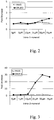
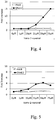
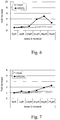
- OR1D2, OR2C1, OR2J2, OR4E2, OR5P3 and OR52N2 were measured for their receptor response to different concentrations of trans-2-nonenal by the luciferase reporter gene assay. The results obtained are shown in Figures 2 to 7 , respectively. OR1D2, OR2C1, OR2J2, OR4E2, OR5P3 and OR52N2 were found to respond to trans-2-nonenal in a concentration-dependent manner. On the other hand, no response was observed in each mock test. Namely, OR1D2, OR2C1, OR2J2, OR4E2, OR5P3 and OR52N2 were shown to respond specifically to trans-2-nonenal.
- Example 2 the cells engineered to express 402 types of human olfactory receptors were measured for receptor responses to trans-2-octenal (50 ⁇ M) by the luciferase reporter gene assay. The results obtained are shown in Figure 8 .
- OR2C1, OR2J2, OR2J3, OR4E2, OR5P3, OR7G1, OR9I1 and OR51A7 were found to respond to trans-2-octenal with a fold increase value of 2 or more.
- trans-2-nonenal and each material that suppresses the characteristic body odor of elderly people were mixed for use as an analyte, and the ratio of the fold increase value obtained in the test using the material that suppresses the characteristic body odor of elderly people was determined assuming that the fold increase value obtained in the test without using the material that suppresses the characteristic body odor of elderly people was set to 100.
- the results obtained are shown in Figures 9 and 10 , respectively.
- cis-3-Hexenol and dimethyltetrahydrobenzaldehyde showed the effect of reducing the response of OR2C1 to trans-2-nonenal in a concentration-dependent manner.
- the screening method of the present invention allows selection of respective candidate substances for materials that suppress the characteristic body odor of elderly people, trans-2-nonenal odor suppressors and trans-2-octenal odor suppressors from among many test substances.
- the screening method of the present invention can be expected to contribute to the development of materials that suppress the characteristic body odor of elderly people, and further trans-2-nonenal odor suppressors and trans-2-octenal odor suppressors.
Landscapes
- Health & Medical Sciences (AREA)
- Life Sciences & Earth Sciences (AREA)
- Engineering & Computer Science (AREA)
- Molecular Biology (AREA)
- Chemical & Material Sciences (AREA)
- Immunology (AREA)
- Biomedical Technology (AREA)
- Urology & Nephrology (AREA)
- Hematology (AREA)
- Cell Biology (AREA)
- Analytical Chemistry (AREA)
- Biotechnology (AREA)
- Physics & Mathematics (AREA)
- Biochemistry (AREA)
- General Health & Medical Sciences (AREA)
- Microbiology (AREA)
- Food Science & Technology (AREA)
- Medicinal Chemistry (AREA)
- General Physics & Mathematics (AREA)
- Pathology (AREA)
- Proteomics, Peptides & Aminoacids (AREA)
- Organic Chemistry (AREA)
- Bioinformatics & Cheminformatics (AREA)
- Zoology (AREA)
- Wood Science & Technology (AREA)
- Genetics & Genomics (AREA)
- Toxicology (AREA)
- Tropical Medicine & Parasitology (AREA)
- Endocrinology (AREA)
- Biophysics (AREA)
- General Engineering & Computer Science (AREA)
- Measuring Or Testing Involving Enzymes Or Micro-Organisms (AREA)
- Peptides Or Proteins (AREA)
- Investigating Or Analysing Biological Materials (AREA)
Abstract
Description
- The present invention relates to a screening method for materials that suppress the characteristic body odor of elderly people. The present invention also relates to a screening method for trans-2-nonenal odor suppressors and further relates to a screening method for trans-2-octenal odor suppressors.
- Ambient odors and malodors perceived as unpleasant in daily life are strongly desired to be eliminated more effectively for improved living environments. In recent years, there has been growing awareness of body odors, among others.
- Body odors are broadly divided into two categories, i.e., the "smell of each body part" (e.g., mouth odor, foot odor, armpit odor, scalp odor) and the "combined smell arising from the body trunk." The "combined smell arising from the body trunk" is known to change with age, and the characteristic body odor of elderly people, which is observed at middle age or later, very strongly tends to be disfavored. As to substances responsible for this characteristic body odor of elderly people, unsaturated aldehydes such as nonenal and octenal have been reported to cause this odor (Patent Literature 1). Unsaturated aldehydes such as nonenal and octenal have also been known as off-flavors in beverages (e.g., Non-patent Literature 1).
- Patent Literature 1:
JP H11-286423 A - Non-patent Literature 1: "The recent findings in the off-flavors of beer" Toru Kishimoto, Journal of Japan Association on Odor Environment, Volume 44, Issue 1 (2013)
- Screening may be possible for candidate substances for materials that suppress the characteristic body odor of elderly people when olfactory receptors responding to known substances responsible for the characteristic body odor of elderly people are searched and used for this purpose. However, such olfactory receptors responding to substances responsible for the characteristic body odor of elderly people have not been known so far.
- Under these circumstances, there has been a desire to search for olfactory receptors responding to substances responsible for the characteristic body odor of elderly people and thereby provide a screening method for candidate substances for materials that suppress the characteristic body odor of elderly people. Moreover, there has also been a desire to search for olfactory receptors responding to unsaturated aldehydes, which are substances responsible not only for the characteristic body odor of elderly people but also for off-flavors in beverages, and thereby provide a screening method for candidate substances for unsaturated aldehyde odor suppressors.
- As a result of extensive and intensive efforts made to solve the problems stated above, the inventors of the present invention have succeeded in newly identifying respective olfactory receptors responding to trans-2-nonenal and trans-2-octenal, which are substances responsible for the characteristic body odor of elderly people and are members of unsaturated aldehydes. The inventors of the present invention have made further studies and have found that the use of these olfactory receptors enables the evaluation and selection of materials that suppress the characteristic body odor of elderly people and further trans-2-nonenal odor suppressors and trans-2-octenal odor suppressors by means of the masking effect of olfactory receptor antagonists.
- Namely, the present invention provides a screening method for candidate substances for materials that suppress the characteristic body odor of elderly people, as shown below. Moreover, the present invention also provides a screening method for trans-2-nonenal odor suppressors and further provides a screening method for trans-2-octenal odor suppressors, as shown below.
- [1] A screening method for materials that suppress the characteristic body odor of elderly people, which comprises the following steps:
- adding a test substance and a substance responsible for the characteristic body odor of elderly people to at least one olfactory receptor polypeptide selected from the group consisting of (a) OR2C1, OR2J2, OR4E2 and OR5P3, and (b) polypeptides which comprise an amino acid sequence sharing an identity of at least 80% with the amino acid sequence of any of the polypeptides in (a) and which are responsive to the substance responsible for the characteristic body odor of elderly people;
- measuring the response of the olfactory receptor polypeptide to the substance responsible for the characteristic body odor of elderly people; and
- identifying a test substance that suppresses the response of the olfactory receptor polypeptide on the basis of the measured response.
- [2] The method according to [1] above, wherein the substance responsible for the characteristic body odor of elderly people is at least one selected from the group consisting of trans-2-nonenal and trans-2-octenal.
- [3] The method according to any of [1] or [2] above, wherein the response of the olfactory receptor polypeptide is measured on cells isolated from a living body expressing the olfactory receptor polypeptide or on cells genetically engineered to artificially express the olfactory receptor polypeptide.
- [4] The method according to any of [1] to [3] above, wherein the response of the olfactory receptor polypeptide is measured by a reporter assay.
- [5] A screening method for trans-2-nonenal odor suppressors, which comprises the following steps:
- adding a test substance and trans-2-nonenal to at least one olfactory receptor polypeptide selected from the group consisting of (a) OR1D2, OR2C1, OR2J2, OR4E2, OR5P3 and OR52N2, and (b) polypeptides which comprise an amino acid sequence sharing an identity of at least 80% with the amino acid sequence of any of the polypeptides in (a) and which are responsive to trans-2-nonenal;
- measuring the response of the olfactory receptor polypeptide to trans-2-nonenal; and
- identifying a test substance that suppresses the response of the olfactory receptor polypeptide on the basis of the measured response.
- [6] The method according to [5] above, wherein the response of the olfactory receptor polypeptide is measured on cells isolated from a living body expressing the olfactory receptor polypeptide or on cells genetically engineered to artificially express the olfactory receptor polypeptide.
- [7] The method according to any of [5] or [6] above, wherein the response of the olfactory receptor polypeptide is measured by a reporter assay.
- [8] A screening method for trans-2-octenal odor suppressors, which comprises the following steps:
- adding a test substance and trans-2-octenal to at least one olfactory receptor polypeptide selected from the group consisting of (a) OR2C1, OR2J2, OR2J3, OR4E2, OR5P3, OR7G1, OR9I1 and OR51A7, and (b) polypeptides which comprise an amino acid sequence sharing an identity of at least 80% with the amino acid sequence of any of the polypeptides in (a) and which are responsive to trans-2-octenal;
- measuring the response of the olfactory receptor polypeptide to trans-2-octenal; and
- identifying a test substance that suppresses the response of the olfactory receptor polypeptide on the basis of the measured response.
- [9] The method according to [8] above, wherein the response of the olfactory receptor polypeptide is measured on cells isolated from a living body expressing the olfactory receptor polypeptide or on cells genetically engineered to artificially express the olfactory receptor polypeptide.
- [10] The method according to any of [8] or [9] above, wherein the response of the olfactory receptor polypeptide is measured by a reporter assay.
- The method of the present invention allows screening of test substances to select candidate substances for materials that suppress the characteristic body odor of elderly people, which are capable of inhibiting the binding between substances responsible for the characteristic body odor of elderly people and olfactory receptor polypeptides. Moreover, the method of the present invention allows screening for candidate substances for trans-2-nonenal odor suppressors and trans-2-octenal odor suppressors. The screening method of the present invention can be expected to contribute to the development of materials that suppress the characteristic body odor of elderly people, trans-2-nonenal odor suppressors and trans-2-octenal odor suppressors.
- Moreover, when attempting to develop new aroma ingredients, there are problems of olfactory fatigue and variations among individuals if many candidate substances are evaluated for their odor by the human olfactory sense alone; and hence the proper selection of candidate substances may involve difficulties. According to the method of the present invention, such problems can be overcome or reduced.
-
-
Figure 1 shows the results measured for the responses of various olfactory receptor polypeptides to trans-2-nonenal. -
Figure 2 shows the results measured for the response of olfactory receptor OR1D2 to trans-2-nonenal. -
Figure 3 shows the results measured for the response of olfactory receptor OR2C1 to trans-2-nonenal. -
Figure 4 shows the results measured for the response of olfactory receptor OR2J2 to trans-2-nonenal. -
Figure 5 shows the results measured for the response of olfactory receptor OR4E2 to trans-2-nonenal. -
Figure 6 shows the results measured for the response of olfactory receptor OR5P3 to trans-2-nonenal. -
Figure 7 shows the results measured for the response of olfactory receptor OR52N2 to trans-2-nonenal. -
Figure 8 shows the results measured for the responses of various olfactory receptor polypeptides to trans-2-octenal. -
Figure 9 shows the results obtained for the suppressive effect induced by addition of cis-3-hexenol on the response of olfactory receptor OR2C1 to trans-2-nonenal. -
Figure 10 shows the results obtained for the suppressive effect induced by addition of dimethyltetrahydrobenzaldehyde on the response of olfactory receptor OR2C1 to trans-2-nonenal. - The screening method of the present invention will be described in more detail below.
- The screening method for materials that suppress the characteristic body odor of elderly people according to the present invention is designed such that test substances are screened with olfactory receptor polypeptides responsive to substances responsible for the characteristic body odor of elderly people to select candidate substances for materials that suppress the characteristic body odor of elderly people. This method is characterized by comprising the following steps:
- adding a test substance and a substance responsible for the characteristic body odor of elderly people to at least one olfactory receptor polypeptide selected from the group consisting of (a) OR2C1, OR2J2, OR4E2 and OR5P3, and (b) polypeptides which comprise an amino acid sequence sharing an identity of at least 80% with the amino acid sequence of any of the polypeptides in (a) and which are responsive to the substance responsible for the characteristic body odor of elderly people;
- measuring the response of the olfactory receptor polypeptide to the substance responsible for the characteristic body odor of elderly people; and
- identifying a test substance that suppresses the response of the olfactory receptor polypeptide on the basis of the measured response.
- According to a preferred embodiment of the present invention, the screening method for materials that suppress the characteristic body odor of elderly people comprises the following steps:
- (i) bringing an olfactory receptor polypeptide selected from the group consisting of (a) OR2C1, OR2J2, OR4E2 and OR5P3, and (b) polypeptides which comprise an amino acid sequence sharing an identity of 80% or more with the amino acid sequence of any of the polypeptides in (a) and which are responsive to a substance responsible for the characteristic body odor of elderly people into contact with the substance responsible for the characteristic body odor of elderly people to measure the response of the olfactory receptor polypeptide to the substance responsible for the characteristic body odor of elderly people;
- (ii) mixing a test substance with the substance responsible for the characteristic body odor of elderly people to measure the response of the olfactory receptor polypeptide used in step (i); and
- (iii) comparing the results measured in steps (i) and (ii) to select a test substance causing a reduction in the response as a candidate substance for materials that suppress the characteristic body odor of elderly people.
- The screening method for materials that suppress the characteristic body odor of elderly people according to the present invention is configured such that candidate substances for materials that suppress the characteristic body odor of elderly people are selected from among test substances on the basis of the responsiveness of each test substance to an olfactory receptor polypeptide selected from the group consisting of OR2C1, OR2J2, OR4E2, OR5P3, and polypeptides which comprise amino acid sequences sharing an identity of 80% or more with the amino acid sequences of these polypeptides and which are responsive to substances responsible for the characteristic body odor of elderly people.
- A single olfactory receptor is known to respond to several types of structurally similar odorous compounds. Thus, when olfactory receptor polypeptides responsive to known substances responsible for the characteristic body odor of elderly people are identified and test substances are evaluated for their responsiveness to these olfactory receptor polypeptides, candidate substances capable of preventing known substances responsible for the characteristic body odor of elderly people from binding to the olfactory receptor polypeptides can be selected from among the test substances. As used herein, the term "test substance" is not limited in any way, but it refers to a subject to be tested for its suppressive effect on the characteristic body odor of elderly people and is intended to mean a compound, a composition or a mixture. Likewise, as used herein, the expression "material that suppresses the characteristic body odor of elderly people" is not limited in any way, but it is intended to mean a compound, a composition or a mixture, which is capable of suppressing the characteristic body odor of elderly people. An explanation will be given below of each step in the screening method of the present invention.
- In step (i), an olfactory receptor polypeptide selected from the group consisting of OR2C1, OR2J2, OR4E2, OR5P3, and polypeptides which comprise an amino acid sequence sharing an identity of 80% or more with the amino acid sequence of any of these polypeptides and which are responsive to a substance responsible for the characteristic body odor of elderly people is brought into contact with the substance responsible for the characteristic body odor of elderly people to measure the response of the olfactory receptor polypeptide to the substance responsible for the characteristic body odor of elderly people.
- The olfactory receptor polypeptide to be used for this purpose is an olfactory receptor polypeptide selected from the group consisting of OR2C1, OR2J2, OR4E2, OR5P3, and polypeptides which comprise an amino acid sequence sharing an identity of 80% or more with the amino acid sequence of any of these polypeptides and which are responsive to a substance responsible for the characteristic body odor of elderly people.
- OR2C1 has been registered in GenBank under NM_012368 and is a polypeptide consisting of an amino acid sequence (SEQ ID NO: 2) encoded by DNA having the nucleotide sequence shown in SEQ ID NO: 1.
- OR2J2 has been registered in GenBank under NM_030905 and is a polypeptide consisting of an amino acid sequence (SEQ ID NO: 4) encoded by DNA having the nucleotide sequence shown in SEQ ID NO: 3.
- OR4E2 has been registered in GenBank under NM_001001912 and is a polypeptide consisting of an amino acid sequence (SEQ ID NO: 6) encoded by DNA having the nucleotide sequence shown in SEQ ID NO: 5.
- OR5P3 has been registered in GenBank under NM_153445 and is a polypeptide consisting of an amino acid sequence (SEQ ID NO: 8) encoded by DNA having the nucleotide sequence shown in SEQ ID NO: 7.
- Since these polypeptides strongly respond selectively to trans-2-nonenal and trans-2-octenal, the screening method using OR2C1, OR2J2, OR4E2 and/or OR5P3 can be expected to contribute to the development of materials that suppress the characteristic body odor of elderly people.
- As an olfactory receptor, it is also possible to use an olfactory receptor polypeptide selected from the group consisting of polypeptides which comprise an amino acid sequence sharing an identity of 80% or more, preferably 85% or more, more preferably 90% or more, even more preferably 95% or more, and particularly preferably 98% or more with the amino acid sequence possessed by any of these polypeptides (i.e., SEQ ID NO: 2, 4, 6 or 8) and which are responsive to a substance responsible for the characteristic body odor of elderly people. It should be noted that the sequence identity of amino acid sequences is calculated herein by the BLAST search algorithm (publicly available from NCBI).
- Such olfactory receptor polypeptides may be used alone, or two or more of them may be used in combination.
- In the present invention, as a substance responsible for the characteristic body odor of elderly people, at least one selected from the group consisting of trans-2-nonenal and trans-2-octenal may be preferred for use.
- In the present invention, there is no particular limitation on how to contact an olfactory receptor polypeptide with a substance responsible for the characteristic body odor of elderly people to measure the response of the olfactory receptor polypeptide to the substance responsible for the characteristic body odor of elderly people. For example, the response of the olfactory receptor polypeptide may be measured by being contacted with the substance responsible for the characteristic body odor of elderly people on cells isolated from a living body expressing the olfactory receptor polypeptide, or alternatively, the response of the olfactory receptor polypeptide may be measured by being contacted with the substance responsible for the characteristic body odor of elderly people on cells genetically engineered to artificially express the olfactory receptor polypeptide. The time required to contact the olfactory receptor polypeptide with the substance responsible for the characteristic body odor of elderly people is not determined exactly because of also depending on the concentration of the substance responsible for the characteristic body odor of elderly people, but it is usually 2 to 4 hours. The same goes for when the olfactory receptor polypeptide is contacted with the substance responsible for the characteristic body odor of elderly people in admixture with a test substance.
- Cells genetically engineered to artificially express the olfactory receptor polypeptide may be prepared when cells are transformed with a vector carrying a gene encoding the olfactory receptor polypeptide.
- In a preferred embodiment of the present invention, the N-
terminal 20 amino acid residues of bovine rhodopsin may be integrated together with the olfactory receptor polypeptide. Upon integration of the N-terminal 20 amino acid residues of bovine rhodopsin, cell membrane expression of the olfactory receptor polypeptide may be facilitated. - Bovine rhodopsin has been registered in GenBank under NM 001014890. Bovine rhodopsin is a polypeptide consisting of an amino acid sequence (SEQ ID NO: 22) encoded by DNA at
positions 1 to 1047 of the nucleotide sequence shown in SEQ ID NO: 21. - Moreover, instead of bovine rhodopsin, it is possible to use a polypeptide which comprises an amino acid sequence sharing an identity of 80% or more, preferably 85% or more, more preferably 90% or more, even more preferably 95% or more, and particularly preferably 98% or more with the amino acid sequence shown in SEQ ID NO: 22 and which is capable of facilitating cell membrane expression of the olfactory receptor polypeptide.
- It should be noted that amino acid residues of not only bovine rhodopsin but also any other polypeptides may be used as long as they can facilitate cell membrane expression of the olfactory receptor polypeptide.
- There is no particular limitation on how to measure the response of the olfactory receptor polypeptide, and any technique used in the art may be used for this purpose. For example, it is known that once an odorous compound has bound to an olfactory receptor polypeptide, G protein in cells will be activated and this G protein will in turn activate adenylate cyclase to convert ATP into cyclic AMP (cAMP), thereby increasing the intracellular level of cAMP. Thus, the response of the olfactory receptor polypeptide can be measured when the level of cAMP is measured. The level of cAMP may be measured using ELISA techniques, reporter gene assay techniques, etc. Above all, it is preferred that the response of the olfactory receptor polypeptide is measured by reporter gene assay techniques using a luminophore (e.g., luciferase).
- According to one embodiment of the present invention, the response of the olfactory receptor polypeptide may be evaluated on the basis of the fold increase value determined by dividing the results measured in the presence of a substance responsible for the characteristic body odor of elderly people by the results measured in the absence of the substance responsible for the characteristic body odor of elderly people. For example, when the response of the olfactory receptor polypeptide is measured by reporter gene assay techniques using a luminophore (e.g., luciferase), evaluation can be made using the substance responsible for the characteristic body odor of elderly people at a concentration which gives a fold increase value of preferably 2 or more, more preferably 4 or more, and even more preferably 10 or more.
- In step (ii), a test substance is mixed with the substance responsible for the characteristic body odor of elderly people to measure the response of the olfactory receptor used in step (i).
- The response of the olfactory receptor polypeptide may be measured in the same manner as shown in step (i), except that the substance responsible for the characteristic body odor of elderly people is mixed with the test substance and contacted with the olfactory receptor polypeptide. For example, the response of the olfactory receptor polypeptide may be measured on cells isolated from a living body expressing the olfactory receptor polypeptide, or alternatively, the response of the olfactory receptor polypeptide may be measured on cells genetically engineered to artificially express the olfactory receptor polypeptide. For proper comparison of the results measured in steps (i) and (ii), the measurement conditions in steps (i) and (ii) are preferably the same, except for the presence or absence of the test substance.
- In step (iii), the results measured in steps (i) and (ii) are compared with each other to select a test substance causing a reduction in the response as a candidate substance for materials that suppress the characteristic body odor of elderly people.
- In the present invention, when a reduction in the response is observed as a result of comparing the results measured in steps (i) and (ii), the test substance used in step (ii) can be evaluated as a candidate substance for materials that suppress the characteristic body odor of elderly people.
- In such a way as described above, test substances can be screened to select candidate substances for materials that suppress the characteristic body odor of elderly people. According to the present invention, it is possible to select candidate substances for materials that suppress the characteristic body odor of elderly people from among many test substances, without causing any problems such as olfactory fatigue and variations among individuals associated with sensory testing by means of the human olfactory sense.
- These selected substances can be used as candidate substances for materials that suppress the characteristic body odor of elderly people. If necessary, the selected substances may be subjected to modifications or the like to thereby develop novel compounds having the most suitable odor. Further, the selected substances may be blended with other aroma ingredients to thereby develop aroma ingredients capable of suppressing the characteristic body odor of elderly people and also having the most suitable odor. The screening method of the present invention can be used to contribute to the development of new aroma ingredients serving as materials that suppress the characteristic body odor of elderly people.
- The screening method for trans-2-nonenal odor suppressors according to the present invention is designed such that test substances are screened with olfactory receptor polypeptides responsive to trans-2-nonenal to select candidate substances for trans-2-nonenal odor suppressors. This method is characterized by comprising the following steps:
- adding a test substance and trans-2-nonenal to at least one olfactory receptor polypeptide selected from the group consisting of (a) OR1D2, OR2C1, OR2J2, OR4E2, OR5P3 and OR52N2, and (b) polypeptides which comprise an amino acid sequence sharing an identity of at least 80% with the amino acid sequence of any of the polypeptides in (a) and which are responsive to trans-2-nonenal;
- measuring the response of the olfactory receptor polypeptide to trans-2-nonenal; and
- identifying a test substance that suppresses the response of the olfactory receptor polypeptide on the basis of the measured response.
- According to a preferred embodiment of the present invention, the screening method for trans-2-nonenal odor suppressors comprises the following steps:
- (i) bringing an olfactory receptor polypeptide selected from the group consisting of (a) OR1D2, OR2C1, OR2J2, OR4E2, OR5P3 and OR52N2, and (b) polypeptides which comprise an amino acid sequence sharing an identity of 80% or more with the amino acid sequence of any of the polypeptides in (a) and which are responsive to trans-2-nonenal into contact with trans-2-nonenal to measure the response of the olfactory receptor polypeptide to trans-2-nonenal;
- (ii) mixing a test substance with trans-2-nonenal to measure the response of the olfactory receptor polypeptide used in step (i); and
- (iii) comparing the results measured in steps (i) and (ii) to select a test substance causing a reduction in the response as a candidate substance for trans-2-nonenal odor suppressors.
- The screening method for trans-2-nonenal odor suppressors according to the present invention is configured such that candidate substances for trans-2-nonenal odor suppressors are selected from among test substances on the basis of the responsiveness of each test substance to an olfactory receptor polypeptide selected from the group consisting of OR1D2, OR2C1, OR2J2, OR4E2, OR5P3, OR52N2, and polypeptides which comprise amino acid sequences sharing an identity of 80% or more with the amino acid sequences of these polypeptides and which are responsive to substances responsible for the characteristic body odor of elderly people.
- In the screening method for trans-2-nonenal odor suppressors according to the present invention, the term "test substance" is not limited in any way, but it refers to a subject to be tested for its suppressive effect on trans-2-nonenal odor and is intended to mean a compound, a composition or a mixture. Likewise, the term "trans-2-nonenal odor suppressor" is not limited in any way, but it is intended to mean a compound, a composition or a mixture, which is capable of suppressing trans-2-nonenal odor. Likewise, the term "trans-2-nonenal odor" is intended to mean an odor originating from trans-2-nonenal, as exemplified by the characteristic body odor of elderly people, off-flavors, etc. An explanation will be given below of each step.
- In step (i), an olfactory receptor polypeptide selected from the group consisting of OR1D2, OR2C1, OR2J2, OR4E2, OR5P3, OR52N2, and polypeptides which comprise an amino acid sequence sharing an identity of 80% or more with the amino acid sequence of any of these polypeptides and which are responsive to trans-2-nonenal is brought into contact with trans-2-nonenal to measure the response of the olfactory receptor polypeptide to trans-2-nonenal.
- The olfactory receptor polypeptide to be used for this purpose is an olfactory receptor polypeptide selected from the group consisting of OR1D2, OR2C1, OR2J2, OR4E2, OR5P3, OR52N2, and polypeptides which comprise an amino acid sequence sharing an identity of 80% or more with the amino acid sequence of any of these polypeptides and which are responsive to trans-2-nonenal.
- OR2C1 has been registered in GenBank under NM_012368 and is a polypeptide consisting of an amino acid sequence (SEQ ID NO: 2) encoded by DNA having the nucleotide sequence shown in SEQ ID NO: 1.
- OR2J2 has been registered in GenBank under NM_030905 and is a polypeptide consisting of an amino acid sequence (SEQ ID NO: 4) encoded by DNA having the nucleotide sequence shown in SEQ ID NO: 3.
- OR4E2 has been registered in GenBank under NM_001001912 and is a polypeptide consisting of an amino acid sequence (SEQ ID NO: 6) encoded by DNA having the nucleotide sequence shown in SEQ ID NO: 5.
- OR5P3 has been registered in GenBank under NM_153445 and is a polypeptide consisting of an amino acid sequence (SEQ ID NO: 8) encoded by DNA having the nucleotide sequence shown in SEQ ID NO: 7.
- OR1D2 has been registered in GenBank under NM_002548 and is a polypeptide consisting of an amino acid sequence (SEQ ID NO: 10) encoded by DNA having the nucleotide sequence shown in SEQ ID NO: 9.
- OR52N2 has been registered in GenBank under NM_001005174 and is a polypeptide consisting of an amino acid sequence (SEQ ID NO: 12) encoded by DNA having the nucleotide sequence shown in SEQ ID NO: 11.
- Since these polypeptides strongly respond selectively to trans-2-nonenal, the screening method using OR1D2, OR2C1, OR2J2, OR4E2, OR5P3 and/or OR52N2 can be expected to contribute to the development of trans-2-nonenal odor suppressors.
- As an olfactory receptor, it is also possible to use an olfactory receptor polypeptide selected from the group consisting of polypeptides which comprise an amino acid sequence sharing an identity of 80% or more, preferably 85% or more, more preferably 90% or more, even more preferably 95% or more, and particularly preferably 98% or more with the amino acid sequence possessed by any of these polypeptides (i.e., SEQ ID NO: 2, 4, 6, 8, 10 or 12) and which are responsive to trans-2-nonenal.
- Such olfactory receptor polypeptides may be used alone, or two or more of them may be used in combination.
- In the present invention, there is no particular limitation on how to contact an olfactory receptor polypeptide with trans-2-nonenal to measure the response of the olfactory receptor polypeptide to trans-2-nonenal. For example, the response of the olfactory receptor polypeptide may be measured by being contacted with trans-2-nonenal on cells isolated from a living body expressing the olfactory receptor polypeptide, or alternatively, the response of the olfactory receptor polypeptide may be measured by being contacted with trans-2-nonenal on cells genetically engineered to artificially express the olfactory receptor polypeptide. The time required to contact the olfactory receptor polypeptide with trans-2-nonenal is not determined exactly because of also depending on the concentration of trans-2-nonenal, but it is usually 2 to 4 hours. The same goes for when the olfactory receptor polypeptide is contacted with trans-2-nonenal in admixture with a test substance.
- Cells genetically engineered to artificially express the olfactory receptor polypeptide may be prepared when cells are transformed with a vector carrying a gene encoding the olfactory receptor polypeptide.
- In a preferred embodiment of the present invention, the N-
terminal 20 amino acid residues of bovine rhodopsin may be integrated together with the olfactory receptor polypeptide. Upon integration of the N-terminal 20 amino acid residues of bovine rhodopsin, cell membrane expression of the olfactory receptor polypeptide may be facilitated. - Bovine rhodopsin has been registered in GenBank under NM 001014890. Bovine rhodopsin is a polypeptide consisting of an amino acid sequence (SEQ ID NO: 22) encoded by DNA at
positions 1 to 1047 of the nucleotide sequence shown in SEQ ID NO: 21. - Moreover, instead of bovine rhodopsin, it is possible to use a polypeptide which comprises an amino acid sequence sharing an identity of 80% or more, preferably 85% or more, more preferably 90% or more, even more preferably 95% or more, and particularly preferably 98% or more with the amino acid sequence shown in SEQ ID NO: 22 and which is capable of facilitating cell membrane expression of the olfactory receptor polypeptide.
- It should be noted that amino acid residues of not only bovine rhodopsin but also any other polypeptides may be used as long as they can facilitate cell membrane expression of the olfactory receptor polypeptide.
- There is no particular limitation on how to measure the response of the olfactory receptor polypeptide, and any technique used in the art may be used for this purpose. For example, it is known that once an odorous compound has bound to an olfactory receptor polypeptide, G protein in cells will be activated and this G protein will in turn activate adenylate cyclase to convert ATP into cyclic AMP (cAMP), thereby increasing the intracellular level of cAMP. Thus, the response of the olfactory receptor polypeptide can be measured when the level of cAMP is measured. The level of cAMP may be measured using ELISA techniques, reporter gene assay techniques, etc. Above all, it is preferred that the response of the olfactory receptor polypeptide is measured by reporter gene assay techniques using a luminophore (e.g., luciferase).
- According to one embodiment of the present invention, the response of the olfactory receptor polypeptide may be evaluated on the basis of the fold increase value determined by dividing the results measured in the presence of trans-2-nonenal by the results measured in the absence of trans-2-nonenal. For example, when the response of the olfactory receptor polypeptide is measured by reporter gene assay techniques using a luminophore (e.g., luciferase), evaluation can be made using trans-2-nonenal at a concentration which gives a fold increase value of preferably 2 or more, more preferably 4 or more, and even more preferably 10 or more.
- In step (ii), a test substance is mixed with trans-2-nonenal to measure the response of the olfactory receptor used in step (i).
- The response of the olfactory receptor polypeptide may be measured in the same manner as shown in step (i), except that trans-2-nonenal is mixed with the test substance and contacted with the olfactory receptor polypeptide. For example, the response of the olfactory receptor polypeptide may be measured on cells isolated from a living body expressing the olfactory receptor polypeptide, or alternatively, the response of the olfactory receptor polypeptide may be measured on cells genetically engineered to artificially express the olfactory receptor polypeptide. For proper comparison of the results measured in steps (i) and (ii), the measurement conditions in steps (i) and (ii) are preferably the same, except for the presence or absence of the test substance.
- In step (iii), the results measured in steps (i) and (ii) are compared with each other to select a test substance causing a reduction in the response as a candidate substance for trans-2-nonenal odor suppressors.
- In the present invention, when a reduction in the response is observed as a result of comparing the results measured in steps (i) and (ii), the test substance used in step (ii) can be evaluated as a candidate substance for trans-2-nonenal odor suppressors.
- In such a way as described above, test substances can be screened to select candidate substances for trans-2-nonenal odor suppressors. According to the present invention, it is possible to select candidate substances for trans-2-nonenal odor suppressors from among many test substances, without causing any problems such as olfactory fatigue and variations among individuals associated with sensory testing by means of the human olfactory sense.
- The selected substances can be used as candidate substances for trans-2-nonenal odor suppressors. If necessary, the selected substances may be subjected to modifications or the like to thereby develop novel compounds having the most suitable odor. Further, the selected substances may be blended with other aroma ingredients to thereby develop aroma ingredients capable of suppressing trans-2-nonenal odor and also having the most suitable odor. The screening method of the present invention can be used to contribute to the development of new aroma ingredients serving as trans-2-nonenal odor suppressors.
- The screening method for trans-2-octenal odor suppressors according to the present invention is designed such that test substances are screened with olfactory receptor polypeptides responsive to trans-2-octenal to select candidate substances for trans-2-octenal odor suppressors. This method is characterized by comprising the following steps:
- adding a test substance and trans-2-octenal to at least one olfactory receptor polypeptide selected from the group consisting of (a) OR2C1, OR2J2, OR2J3, OR4E2, OR5P3, OR7G1, OR9I1 and OR51A7, and (b) polypeptides which comprise an amino acid sequence sharing an identity of at least 80% with the amino acid sequence of any of the polypeptides in (a) and which are responsive to trans-2-octenal;
- measuring the response of the olfactory receptor polypeptide to trans-2-octenal; and
- identifying a test substance that suppresses the response of the olfactory receptor polypeptide on the basis of the measured response.
- According to a preferred embodiment of the present invention, the screening method for trans-2-octenal odor suppressors comprises the following steps:
- (i) bringing an olfactory receptor polypeptide selected from the group consisting of (a) OR2C1, OR2J2, OR2J3, OR4E2, OR5P3, OR7G1, OR9I1 and OR51A7, and (b) polypeptides which comprise an amino acid sequence sharing an identity of 80% or more with the amino acid sequence of any of the polypeptides in (a) and which are responsive to trans-2-octenal into contact with trans-2-octenal to measure the response of the olfactory receptor polypeptide to trans-2-octenal;
- (ii) mixing a test substance with trans-2-octenal to measure the response of the olfactory receptor polypeptide used in step (i); and
- (iii) comparing the results measured in steps (i) and (ii) to select a test substance causing a reduction in the response as a candidate substance for trans-2-octenal odor suppressors.
- The screening method for trans-2-octenal odor suppressors according to the present invention is configured such that candidate substances for trans-2-octenal odor suppressors are selected from among test substances on the basis of the responsiveness of each test substance to an olfactory receptor polypeptide selected from the group consisting of OR2C1, OR2J2, OR2J3, OR4E2, OR5P3, OR7G1, OR9I1, OR51A7, and polypeptides which comprise amino acid sequences sharing an identity of 80% or more with the amino acid sequences of these polypeptides and which are responsive to trans-2-octenal.
- In the screening method for trans-2-octenal odor suppressors according to the present invention, the term "test substance" is not limited in any way, but it refers to a subject to be tested for its suppressive effect on trans-2-octenal odor and is intended to mean a compound, a composition or a mixture. Likewise, the term "trans-2-octenal odor suppressor" is not limited in any way, but it is intended to mean a compound, a composition or a mixture, which is capable of suppressing trans-2-octenal odor. Likewise, the term "trans-2-octenal odor" is intended to mean an odor originating from trans-2-octenal, as exemplified by the characteristic body odor of elderly people, off-flavors, etc. An explanation will be given below of each step.
- In step (i), an olfactory receptor polypeptide selected from the group consisting of OR2C1, OR2J2, OR2J3, OR4E2, OR5P3, OR7G1, OR9I1, OR51A7, and polypeptides which comprise an amino acid sequence sharing an identity of 80% or more with the amino acid sequence of any of these polypeptides and which are responsive to trans-2-octenal is brought into contact with trans-2-octenal to measure the response of the olfactory receptor polypeptide to trans-2-octenal.
- The olfactory receptor polypeptide to be used for this purpose is an olfactory receptor polypeptide selected from the group consisting of OR2C1, OR2J2, OR2J3, OR4E2, OR5P3, OR7G1, OR9I1, OR51A7, and polypeptides which comprise an amino acid sequence sharing an identity of 80% or more with the amino acid sequence of any of these polypeptides and which are responsive to trans-2-octenal.
- OR2C1 has been registered in GenBank under NM_012368 and is a polypeptide consisting of an amino acid sequence (SEQ ID NO: 2) encoded by DNA having the nucleotide sequence shown in SEQ ID NO: 1.
- OR2J2 has been registered in GenBank under NM_030905 and is a polypeptide consisting of an amino acid sequence (SEQ ID NO: 4) encoded by DNA having the nucleotide sequence shown in SEQ ID NO: 3.
- OR4E2 has been registered in GenBank under NM_001001912 and is a polypeptide consisting of an amino acid sequence (SEQ ID NO: 6) encoded by DNA having the nucleotide sequence shown in SEQ ID NO: 5.
- OR5P3 has been registered in GenBank under NM_153445 and is a polypeptide consisting of an amino acid sequence (SEQ ID NO: 8) encoded by DNA having the nucleotide sequence shown in SEQ ID NO: 7.
- OR2J3 has been registered in GenBank under NM_001005216 and is a polypeptide consisting of an amino acid sequence (SEQ ID NO: 14) encoded by DNA having the nucleotide sequence shown in SEQ ID NO: 13.
- OR7G1 has been registered in GenBank under NM_001005192 and is a polypeptide consisting of an amino acid sequence (SEQ ID NO: 16) encoded by DNA having the nucleotide sequence shown in SEQ ID NO: 15.
- OR9I1 has been registered in GenBank under NM_001005211 and is a polypeptide consisting of an amino acid sequence (SEQ ID NO: 18) encoded by DNA having the nucleotide sequence shown in SEQ ID NO: 17.
- OR51A7 has been registered in GenBank under NM_001004749 and is a polypeptide consisting of an amino acid sequence (SEQ ID NO: 20) encoded by DNA having the nucleotide sequence shown in SEQ ID NO: 19.
- Since these polypeptides strongly respond selectively to trans-2-octenal, the, screening method using OR2C1, OR2J2, OR2J3, OR4E2, OR5P3, OR7G1, OR9I1 and/or OR51A7 can be expected to contribute to the development of trans-2-octenal odor suppressors.
- As an olfactory receptor, it is also possible to use an olfactory receptor polypeptide selected from the group consisting of polypeptides which comprise an amino acid sequence sharing an identity of 80% or more, preferably 85% or more, more preferably 90% or more, even more preferably 95% or more, and particularly preferably 98% or more with the amino acid sequence possessed by any of these polypeptides (i.e., SEQ ID NO: 2, 4, 6, 8, 14, 16, 18 or 20) and which are responsive to trans-2-octenal.
- Such olfactory receptor polypeptides may be used alone, or two or more of them may be used in combination.
- In the present invention, there is no particular limitation on how to contact an olfactory receptor polypeptide with trans-2-octenal to measure the response of the olfactory receptor polypeptide to trans-2-octenal. For example, the response of the olfactory receptor polypeptide may be measured by being contacted with trans-2-octenal on cells isolated from a living body expressing the olfactory receptor polypeptide, or alternatively, the response of the olfactory receptor polypeptide may be measured by being contacted with trans-2-octenal on cells genetically engineered to artificially express the olfactory receptor polypeptide. The time required to contact the olfactory receptor polypeptide with trans-2-octenal is not determined exactly because of also depending on the concentration of trans-2-octenal, but it is usually 2 to 4 hours. The same goes for when the olfactory receptor polypeptide is contacted with trans-2-octenal in admixture with a test substance.
- Cells genetically engineered to artificially express the olfactory receptor polypeptide may be prepared when cells are transformed with a vector carrying a gene encoding the olfactory receptor polypeptide.
- In a preferred embodiment of the present invention, the N-
terminal 20 amino acid residues of bovine rhodopsin may be integrated together with the olfactory receptor polypeptide. Upon integration of the N-terminal 20 amino acid residues of bovine rhodopsin, cell membrane expression of the olfactory receptor polypeptide may be facilitated. - Bovine rhodopsin has been registered in GenBank under NM_001014890. Bovine rhodopsin is a polypeptide consisting of an amino acid sequence (SEQ ID NO: 22) encoded by DNA at
positions 1 to 1047 of the nucleotide sequence shown in SEQ ID NO: 21. - Moreover, instead of bovine rhodopsin, it is possible to use a polypeptide which comprises an amino acid sequence sharing an identity of 80% or more, preferably 85% or more, more preferably 90% or more, even more preferably 95% or more, and particularly preferably 98% or more with the amino acid sequence shown in SEQ ID NO: 22 and which is capable of facilitating cell membrane expression of the olfactory receptor polypeptide.
- It should be noted that amino acid residues of not only bovine rhodopsin but also any other polypeptides may be used as long as they can facilitate cell membrane expression of the olfactory receptor polypeptide.
- There is no particular limitation on how to measure the response of the olfactory receptor polypeptide, and any technique used in the art may be used for this purpose. For example, it is known that once an odorous compound has bound to an olfactory receptor polypeptide, G protein in cells will be activated and this G protein will in turn activate adenylate cyclase to convert ATP into cyclic AMP (cAMP), thereby increasing the intracellular level of cAMP. Thus, the response of the olfactory receptor polypeptide can be measured when the level of cAMP is measured. The level of cAMP may be measured using ELISA techniques, reporter gene assay techniques, etc. Above all, it is preferred that the response of the olfactory receptor polypeptide is measured by reporter gene assay techniques using a luminophore (e.g., luciferase).
- According to one embodiment of the present invention, the response of the olfactory receptor polypeptide may be evaluated on the basis of the fold increase value determined by dividing the results measured in the presence of trans-2-octenal by the results measured in the absence of trans-2-octenal. For example, when the response of the olfactory receptor polypeptide is measured by reporter gene assay techniques using a luminophore (e.g., luciferase), evaluation can be made using trans-2-octenal at a concentration which gives a fold increase value of preferably 2 or more, more preferably 4 or more, and even more preferably 10 or more.
- In step (ii), a test substance is mixed with trans-2-octenal to measure the response of the olfactory receptor used in step (i).
- The response of the olfactory receptor polypeptide may be measured in the same manner as shown in step (i), except that trans-2-octenal is mixed with the test substance and contacted with the olfactory receptor polypeptide. For example, the response of the olfactory receptor polypeptide may be measured on cells isolated from a living body expressing the olfactory receptor polypeptide, or alternatively, the response of the olfactory receptor polypeptide may be measured on cells genetically engineered to artificially express the olfactory receptor polypeptide. For proper comparison of the results measured in steps (i) and (ii), the measurement conditions in steps (i) and (ii) are preferably the same, except for the presence or absence of the test substance.
- In step (iii), the results measured in steps (i) and (ii) are compared with each other to select a test substance causing a reduction in the response as a candidate substance for trans-2-octenal odor suppressors.
- In the present invention, when a reduction in the response is observed as a result of comparing the results measured in steps (i) and (ii), the test substance used in step (ii) can be evaluated as a candidate substance for trans-2-octenal odor suppressors.
- In such a way as described above, test substances can be screened to select candidate substances for trans-2-octenal odor suppressors. According to the present invention, it is possible to select candidate substances for trans-2-octenal odor suppressors from among many test substances, without causing any problems such as olfactory fatigue and variations among individuals associated with sensory testing by means of the human olfactory sense.
- The selected substances can be used as candidate substances for trans-2-octenal odor suppressors. If necessary, the selected substances may be subjected to modifications or the like to thereby develop novel compounds having the most suitable odor. Further, the selected substances may be blended with other aroma ingredients to thereby develop aroma ingredients capable of suppressing trans-2-octenal odor and also having the most suitable odor. The screening method of the present invention can be used to contribute to the development of new aroma ingredients serving as trans-2-octenal odor suppressors.
- The present invention will be further described in more detail below by way of the following illustrative examples, although the present invention is not limited to these examples.
- Human olfactory receptor genes were obtained by PCR cloning with Human Genomic DNA: Female (Promega) on the basis of their sequence information registered in GenBank. Into pME18S vectors, the N-
terminal 20 amino acid residues of bovine rhodopsin were integrated, and subsequently the resulting human olfactory receptor genes were integrated respectively downstream thereof to obtain human olfactory receptor gene expression vectors. - Each human olfactory receptor gene expression vector (0.05 µg), RTP1S vector (0.01 µg), firefly luciferase vector pGL4.29 containing a cAMP responsive element promoter (Promega, 0.01 µg) and Renilla luciferase vector pGL4.74 containing a thymidine kinase promoter (Promega, 0.005 µg) were dissolved in 10 µL of Opti-MEM I (gibco) to give a gene solution (for one well). HEK293T cells were seeded in 100 µL volumes into 96-well plates (Biocoat, Corning) at a cell density reaching confluence after 24 hours, and the gene solutions were added to the respective wells to cause gene transfer into the cells by lipofection techniques in accordance with the usage of Lipofectamine 3000, followed by culture at 37°C under a 5% carbon dioxide atmosphere for 24 hours.
- After removal of the culture solutions, an odorous substance serving as an analyte, which had been prepared at a given concentration with CD293 (gibco) medium (supplemented with 20 µM L-glutamine), was added in 50 µL volumes to stimulate the cells for 3 hours, followed by luciferase activity measurement in accordance with the usage of a Dual-Luciferase Reporter Assay System (Promega). The response intensity of each olfactory receptor polypeptide was expressed as a fold increase value, which was determined by dividing the luciferase activity generated upon stimulation with the odorous substance by the luciferase activity generated in a test system not containing the odorous substance.
- The cells engineered to express 402 types of human olfactory receptors were measured for receptor responses to trans-2-nonenal (60 µM) by the luciferase reporter gene assay. The results obtained are shown in
Figure 1 . OR1D2, OR2C1, OR2J2, OR4E2, OR5P3 and OR52N2 were found to respond to trans-2-nonenal with a fold increase value of 2 or more. - In addition, OR1D2, OR2C1, OR2J2, OR4E2, OR5P3 and OR52N2 were measured for their receptor response to different concentrations of trans-2-nonenal by the luciferase reporter gene assay. The results obtained are shown in
Figures 2 to 7 , respectively. OR1D2, OR2C1, OR2J2, OR4E2, OR5P3 and OR52N2 were found to respond to trans-2-nonenal in a concentration-dependent manner. On the other hand, no response was observed in each mock test. Namely, OR1D2, OR2C1, OR2J2, OR4E2, OR5P3 and OR52N2 were shown to respond specifically to trans-2-nonenal. - In the same manner as shown in Example 1, the cells engineered to express 402 types of human olfactory receptors were measured for receptor responses to trans-2-octenal (50 µM) by the luciferase reporter gene assay. The results obtained are shown in
Figure 8 . OR2C1, OR2J2, OR2J3, OR4E2, OR5P3, OR7G1, OR9I1 and OR51A7 were found to respond to trans-2-octenal with a fold increase value of 2 or more. - Evaluation of materials that suppress the characteristic body odor of elderly people for their suppressive effect on the response of OR2C1
- cis-3-Hexenol and dimethyltetrahydrobenzaldehyde (IFF trade name: Triplal), which had been known to mask and modulate the characteristic body odor of elderly people, i.e., known as materials that suppress the characteristic body odor of elderly people in Journal of Society Cosmetic Chemists Japan, 34(4), 379-386 (2000), were measured for their suppressive effect on the response of OR2C1 strongly responsive to trans-2-nonenal by the luciferase reporter gene assay. In the luciferase reporter gene assay, trans-2-nonenal and each material that suppresses the characteristic body odor of elderly people were mixed for use as an analyte, and the ratio of the fold increase value obtained in the test using the material that suppresses the characteristic body odor of elderly people was determined assuming that the fold increase value obtained in the test without using the material that suppresses the characteristic body odor of elderly people was set to 100. The results obtained are shown in
Figures 9 and 10 , respectively. cis-3-Hexenol and dimethyltetrahydrobenzaldehyde showed the effect of reducing the response of OR2C1 to trans-2-nonenal in a concentration-dependent manner. - The screening method of the present invention allows selection of respective candidate substances for materials that suppress the characteristic body odor of elderly people, trans-2-nonenal odor suppressors and trans-2-octenal odor suppressors from among many test substances. The screening method of the present invention can be expected to contribute to the development of materials that suppress the characteristic body odor of elderly people, and further trans-2-nonenal odor suppressors and trans-2-octenal odor suppressors.
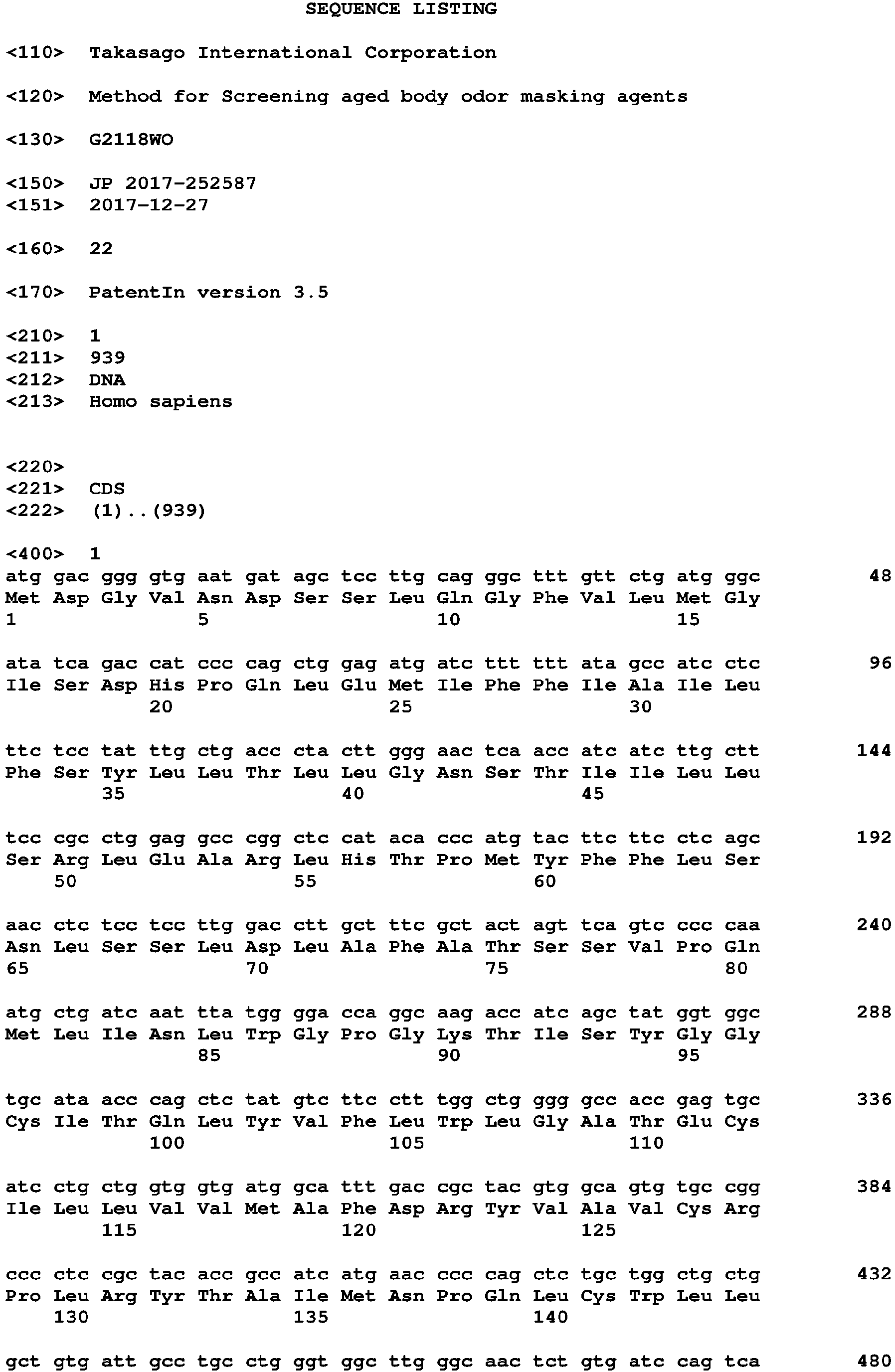


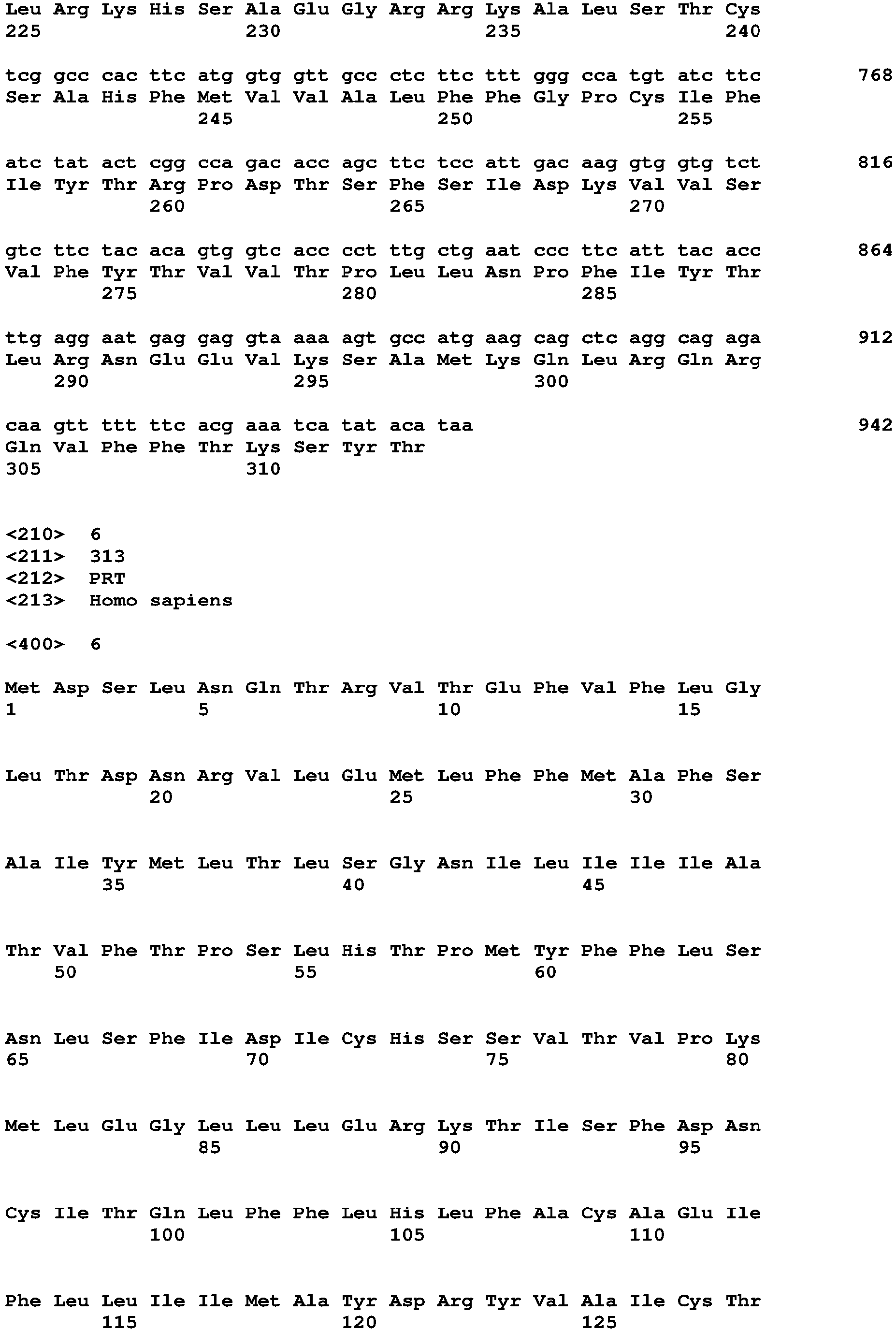


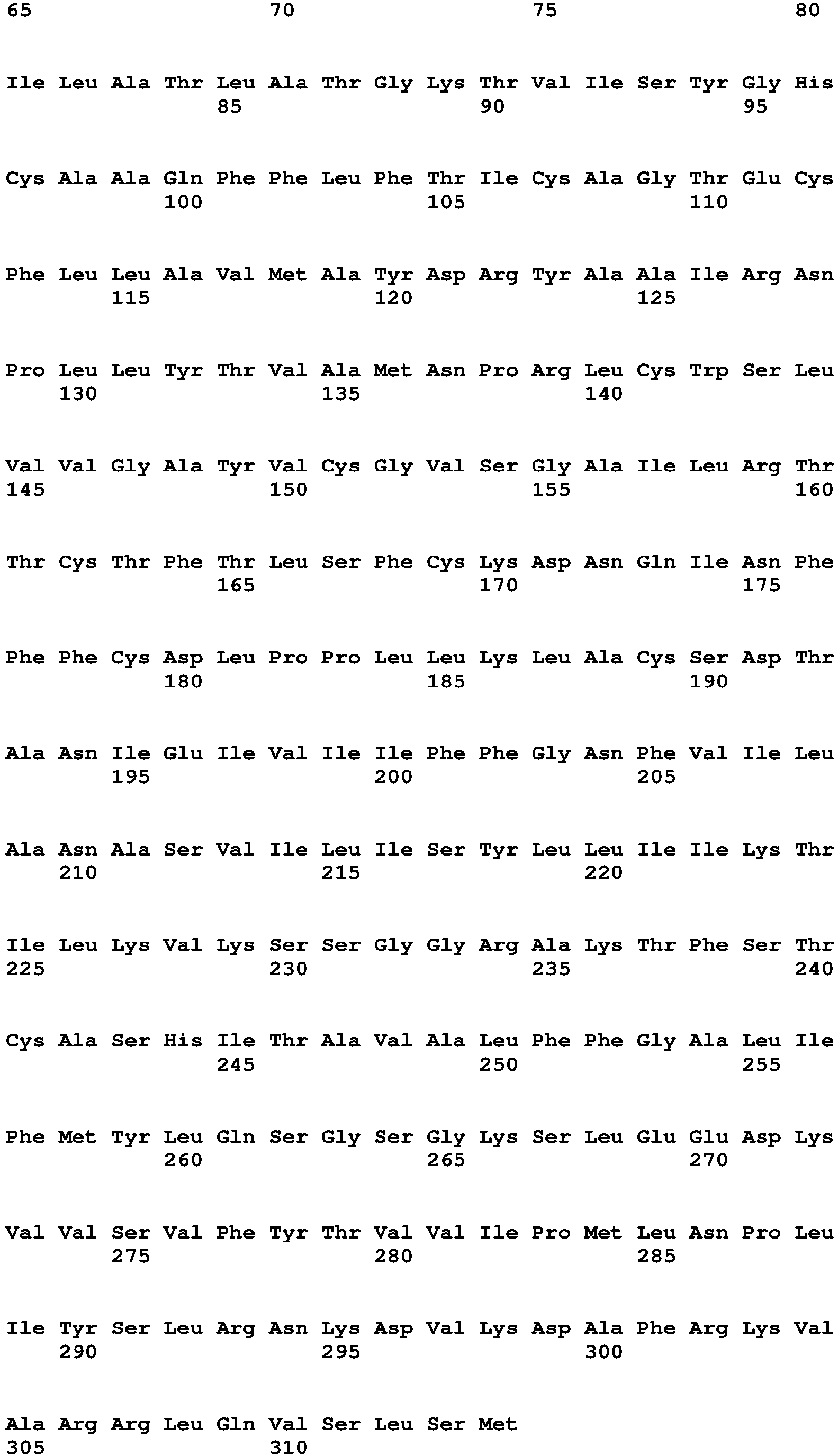


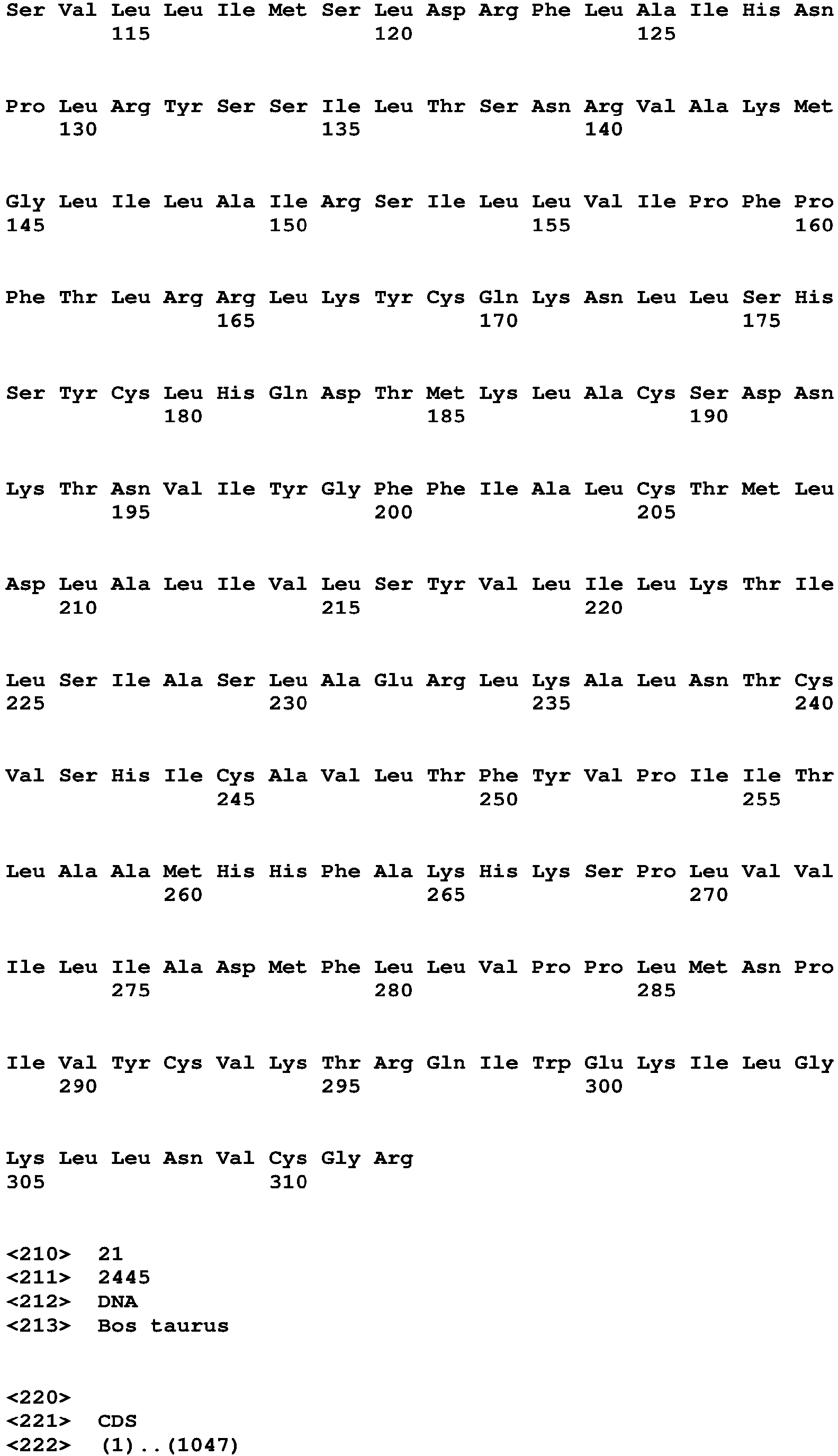


Claims (10)
- A screening method for materials that suppress the characteristic body odor of elderly people, which comprises the following steps:adding a test substance and a substance responsible for the characteristic body odor of elderly people to at least one olfactory receptor polypeptide selected from the group consisting of (a) OR2C1, OR2J2, OR4E2 and OR5P3, and (b) polypeptides which comprise an amino acid sequence sharing an identity of at least 80% with the amino acid sequence of any of the polypeptides in (a) and which are responsive to the substance responsible for the characteristic body odor of elderly people;measuring the response of the olfactory receptor polypeptide to the substance responsible for the characteristic body odor of elderly people; andidentifying a test substance that suppresses the response of the olfactory receptor polypeptide on the basis of the measured response.
- The method according to claim 1, wherein the substance responsible for the characteristic body odor of elderly people is at least one selected from the group consisting of trans-2-nonenal and trans-2-octenal.
- The method according to any one of claim 1 or 2, wherein the response of the olfactory receptor polypeptide is measured on cells isolated from a living body expressing the olfactory receptor polypeptide or on cells genetically engineered to artificially express the olfactory receptor polypeptide.
- The method according to any one of claims 1 to 3, wherein the response of the olfactory receptor polypeptide is measured by a reporter assay.
- A screening method for trans-2-nonenal odor suppressors, which comprises the following steps:adding a test substance and trans-2-nonenal to at least one olfactory receptor polypeptide selected from the group consisting of (a) OR1D2, OR2C1, OR2J2, OR4E2, OR5P3 and OR52N2, and (b) polypeptides which comprise an amino acid sequence sharing an identity of at least 80% with the amino acid sequence of any of the polypeptides in (a) and which are responsive to trans-2-nonenal;measuring the response of the olfactory receptor polypeptide to trans-2-nonenal; andidentifying a test substance that suppresses the response of the olfactory receptor polypeptide on the basis of the measured response.
- The method according to claim 5, wherein the response of the olfactory receptor polypeptide is measured on cells isolated from a living body expressing the olfactory receptor polypeptide or on cells genetically engineered to artificially express the olfactory receptor polypeptide.
- The method according to any one of claim 5 or 6, wherein the response of the olfactory receptor polypeptide is measured by a reporter assay.
- A screening method for trans-2-octenal odor suppressors, which comprises the following steps:adding a test substance and trans-2-octenal to at least one olfactory receptor polypeptide selected from the group consisting of (a) OR2C1, OR2J2, OR2J3, OR4E2, OR5P3, OR7G1, OR9I1 and OR51A7, and (b) polypeptides which comprise an amino acid sequence sharing an identity of at least 80% with the amino acid sequence of any of the polypeptides in (a) and which are responsive to trans-2-octenal;measuring the response of the olfactory receptor polypeptide to trans-2-octenal; andidentifying a test substance that suppresses the response of the olfactory receptor polypeptide on the basis of the measured response.
- The method according to claim 8, wherein the response of the olfactory receptor polypeptide is measured on cells isolated from a living body expressing the olfactory receptor polypeptide or on cells genetically engineered to artificially express the olfactory receptor polypeptide.
- The method according to any one of claim 8 or 9, wherein the response of the olfactory receptor polypeptide is measured by a reporter assay.
Applications Claiming Priority (2)
| Application Number | Priority Date | Filing Date | Title |
|---|---|---|---|
| JP2017252587 | 2017-12-27 | ||
| PCT/JP2018/047918 WO2019131789A1 (en) | 2017-12-27 | 2018-12-26 | Screening method for materials that suppress characteristic body odor of elderly people |
Publications (3)
| Publication Number | Publication Date |
|---|---|
| EP3733862A1 true EP3733862A1 (en) | 2020-11-04 |
| EP3733862A4 EP3733862A4 (en) | 2022-01-05 |
| EP3733862B1 EP3733862B1 (en) | 2023-11-08 |
Family
ID=67067533
Family Applications (1)
| Application Number | Title | Priority Date | Filing Date |
|---|---|---|---|
| EP18894687.5A Active EP3733862B1 (en) | 2017-12-27 | 2018-12-26 | Screening method for materials that suppress characteristic body odor of elderly people |
Country Status (5)
| Country | Link |
|---|---|
| US (1) | US11649510B2 (en) |
| EP (1) | EP3733862B1 (en) |
| JP (1) | JP7203760B2 (en) |
| ES (1) | ES2965730T3 (en) |
| WO (1) | WO2019131789A1 (en) |
Families Citing this family (17)
| Publication number | Priority date | Publication date | Assignee | Title |
|---|---|---|---|---|
| WO2021085590A1 (en) * | 2019-11-01 | 2021-05-06 | 高砂香料工業株式会社 | Screening method for offensive odor suppressing material |
| EP3944854A3 (en) | 2020-07-28 | 2022-02-23 | Takasago International Corporation | Fragrance composition |
| US11760169B2 (en) | 2020-08-20 | 2023-09-19 | Denso International America, Inc. | Particulate control systems and methods for olfaction sensors |
| US11881093B2 (en) | 2020-08-20 | 2024-01-23 | Denso International America, Inc. | Systems and methods for identifying smoking in vehicles |
| US11813926B2 (en) | 2020-08-20 | 2023-11-14 | Denso International America, Inc. | Binding agent and olfaction sensor |
| US12017506B2 (en) | 2020-08-20 | 2024-06-25 | Denso International America, Inc. | Passenger cabin air control systems and methods |
| US11636870B2 (en) | 2020-08-20 | 2023-04-25 | Denso International America, Inc. | Smoking cessation systems and methods |
| US12377711B2 (en) | 2020-08-20 | 2025-08-05 | Denso International America, Inc. | Vehicle feature control systems and methods based on smoking |
| US11932080B2 (en) | 2020-08-20 | 2024-03-19 | Denso International America, Inc. | Diagnostic and recirculation control systems and methods |
| US12251991B2 (en) | 2020-08-20 | 2025-03-18 | Denso International America, Inc. | Humidity control for olfaction sensors |
| US11828210B2 (en) | 2020-08-20 | 2023-11-28 | Denso International America, Inc. | Diagnostic systems and methods of vehicles using olfaction |
| US12269315B2 (en) | 2020-08-20 | 2025-04-08 | Denso International America, Inc. | Systems and methods for measuring and managing odor brought into rental vehicles |
| US11760170B2 (en) | 2020-08-20 | 2023-09-19 | Denso International America, Inc. | Olfaction sensor preservation systems and methods |
| JP2023084478A (en) * | 2021-12-07 | 2023-06-19 | 花王株式会社 | Method for evaluating and/or selecting inhibitors for odors caused by aldehydes |
| CN118632933A (en) * | 2022-02-03 | 2024-09-10 | 味之素株式会社 | Method for screening substances that inhibit odor of 4-methylacetophenone and method for inhibiting odor of 4-methylacetophenone |
| CN119855915A (en) * | 2022-09-12 | 2025-04-18 | 高砂香料工业株式会社 | Screening method of raw material for inhibiting malodor |
| WO2025047522A1 (en) * | 2023-08-31 | 2025-03-06 | 高砂香料工業株式会社 | Screening method for odor-suppressing material |
Family Cites Families (12)
| Publication number | Priority date | Publication date | Assignee | Title |
|---|---|---|---|---|
| JPH11286423A (en) * | 1998-03-31 | 1999-10-19 | Shiseido Co Ltd | Composition for suppressing body odor |
| US20100248390A1 (en) * | 2009-03-02 | 2010-09-30 | Duke University | Compositions and methods for identifying ligands of odorant receptors |
| JP2011178721A (en) * | 2010-03-01 | 2011-09-15 | Miyoshi Kasei Inc | Body odor suppressing agent and cosmetic product compounded therewith |
| JP5697383B2 (en) | 2010-09-03 | 2015-04-08 | 花王株式会社 | Search method for malodor control agent |
| WO2012029922A1 (en) | 2010-09-03 | 2012-03-08 | 花王株式会社 | Method for searching for malodor control agent, malodor control agent, and malodor control method |
| US8637259B1 (en) | 2011-02-09 | 2014-01-28 | Chemcom S.A. | Methods of identifying modulators of olfactory receptors involved in the perception of sweat carboxylic acids |
| WO2012108495A1 (en) * | 2011-02-10 | 2012-08-16 | サントリーホールディングス株式会社 | Agent to suppress old person smell, containing oolong tea extract and/or chinese blackberry tea extract |
| JP5798382B2 (en) | 2011-06-06 | 2015-10-21 | 花王株式会社 | Odor control agent |
| JP5593271B2 (en) | 2011-06-06 | 2014-09-17 | 花王株式会社 | Search method for malodor control agent |
| JP2014240441A (en) * | 2014-09-29 | 2014-12-25 | 富士化学工業株式会社 | Astaxanthin-containing composition for suppressing aging odor |
| WO2016204211A1 (en) * | 2015-06-17 | 2016-12-22 | 花王株式会社 | Method for evaluating and selecting agent for suppressing odors of sulfide compounds |
| JP6122181B2 (en) | 2015-06-17 | 2017-04-26 | 花王株式会社 | Method for evaluating or selecting an inhibitor of sulfide compound odor |
-
2018
- 2018-12-26 US US16/956,889 patent/US11649510B2/en active Active
- 2018-12-26 ES ES18894687T patent/ES2965730T3/en active Active
- 2018-12-26 WO PCT/JP2018/047918 patent/WO2019131789A1/en not_active Ceased
- 2018-12-26 JP JP2019562121A patent/JP7203760B2/en active Active
- 2018-12-26 EP EP18894687.5A patent/EP3733862B1/en active Active
Also Published As
| Publication number | Publication date |
|---|---|
| WO2019131789A1 (en) | 2019-07-04 |
| JPWO2019131789A1 (en) | 2020-12-17 |
| JP7203760B2 (en) | 2023-01-13 |
| ES2965730T3 (en) | 2024-04-16 |
| US20200318205A1 (en) | 2020-10-08 |
| EP3733862A4 (en) | 2022-01-05 |
| EP3733862B1 (en) | 2023-11-08 |
| US11649510B2 (en) | 2023-05-16 |
Similar Documents
| Publication | Publication Date | Title |
|---|---|---|
| EP3733862B1 (en) | Screening method for materials that suppress characteristic body odor of elderly people | |
| JP7662685B2 (en) | Methods for identifying malodor-modulating compounds | |
| ES2807440T3 (en) | Musk compound identification procedure | |
| JP6588715B2 (en) | Search method for urine odor suppressor | |
| WO2012029922A1 (en) | Method for searching for malodor control agent, malodor control agent, and malodor control method | |
| JP6849399B2 (en) | How to search for fragrance materials that have the scent of Ambergris | |
| EP3944855B1 (en) | Method for screening of unpleasant odor masking agents | |
| JP2009539377A5 (en) | ||
| JP6504659B2 (en) | Odor evaluation using olfactory receptor | |
| EP4589010A1 (en) | Screening method for offensive odor suppressing material | |
| WO2018190118A1 (en) | Method for screening perfume material having amber gris note | |
| JP2023084478A (en) | Method for evaluating and/or selecting inhibitors for odors caused by aldehydes | |
| WO2025047522A1 (en) | Screening method for odor-suppressing material | |
| WO2018163800A1 (en) | Method for screening for flavor material having marine note | |
| Tong et al. | Association of a single amino acid replacement with dorsal pigmentation in a lizard from the Qinghai-Tibetan Plateau | |
| Suzuki et al. | Pharmacological characteristics of tachykinin receptors mediating acetycholine release from neonatal rat spinal cord | |
| JP7411792B2 (en) | A method for determining the formulation of a combination of multiple aroma, taste, or somatosensory candidate substances that reproduces the aroma, taste, or somatosensation of a target substance. | |
| JP7863414B2 (en) | Evaluation and/or selection method for odor suppressants caused by carboxylic acids | |
| Spampinato et al. | Characterization of a putative calcitonin receptor in IMR 32 human neuroblastoma cells | |
| JP2024179798A (en) | Method for evaluating and/or selecting agents for suppressing odors caused by heterocyclic aromatic compounds | |
| JP2024179804A (en) | Method for evaluating and/or selecting agents for suppressing aldehyde-based odors | |
| JP2015202097A (en) | Evaluation or selection method for astringent taste inhibitor |
Legal Events
| Date | Code | Title | Description |
|---|---|---|---|
| STAA | Information on the status of an ep patent application or granted ep patent |
Free format text: STATUS: THE INTERNATIONAL PUBLICATION HAS BEEN MADE |
|
| PUAI | Public reference made under article 153(3) epc to a published international application that has entered the european phase |
Free format text: ORIGINAL CODE: 0009012 |
|
| STAA | Information on the status of an ep patent application or granted ep patent |
Free format text: STATUS: REQUEST FOR EXAMINATION WAS MADE |
|
| 17P | Request for examination filed |
Effective date: 20200716 |
|
| AK | Designated contracting states |
Kind code of ref document: A1 Designated state(s): AL AT BE BG CH CY CZ DE DK EE ES FI FR GB GR HR HU IE IS IT LI LT LU LV MC MK MT NL NO PL PT RO RS SE SI SK SM TR |
|
| AX | Request for extension of the european patent |
Extension state: BA ME |
|
| DAV | Request for validation of the european patent (deleted) | ||
| DAX | Request for extension of the european patent (deleted) | ||
| RIC1 | Information provided on ipc code assigned before grant |
Ipc: G01N 33/74 20060101ALI20210830BHEP Ipc: G01N 33/68 20060101ALI20210830BHEP Ipc: G01N 33/50 20060101ALI20210830BHEP Ipc: G01N 33/497 20060101ALI20210830BHEP Ipc: C07K 14/705 20060101ALI20210830BHEP Ipc: C12Q 1/02 20060101AFI20210830BHEP |
|
| A4 | Supplementary search report drawn up and despatched |
Effective date: 20211208 |
|
| RIC1 | Information provided on ipc code assigned before grant |
Ipc: G01N 33/74 20060101ALI20211202BHEP Ipc: G01N 33/68 20060101ALI20211202BHEP Ipc: G01N 33/50 20060101ALI20211202BHEP Ipc: G01N 33/497 20060101ALI20211202BHEP Ipc: C07K 14/705 20060101ALI20211202BHEP Ipc: C12Q 1/02 20060101AFI20211202BHEP |
|
| STAA | Information on the status of an ep patent application or granted ep patent |
Free format text: STATUS: EXAMINATION IS IN PROGRESS |
|
| 17Q | First examination report despatched |
Effective date: 20220714 |
|
| GRAP | Despatch of communication of intention to grant a patent |
Free format text: ORIGINAL CODE: EPIDOSNIGR1 |
|
| STAA | Information on the status of an ep patent application or granted ep patent |
Free format text: STATUS: GRANT OF PATENT IS INTENDED |
|
| INTG | Intention to grant announced |
Effective date: 20230605 |
|
| GRAS | Grant fee paid |
Free format text: ORIGINAL CODE: EPIDOSNIGR3 |
|
| GRAA | (expected) grant |
Free format text: ORIGINAL CODE: 0009210 |
|
| STAA | Information on the status of an ep patent application or granted ep patent |
Free format text: STATUS: THE PATENT HAS BEEN GRANTED |
|
| AK | Designated contracting states |
Kind code of ref document: B1 Designated state(s): AL AT BE BG CH CY CZ DE DK EE ES FI FR GB GR HR HU IE IS IT LI LT LU LV MC MK MT NL NO PL PT RO RS SE SI SK SM TR |
|
| P01 | Opt-out of the competence of the unified patent court (upc) registered |
Effective date: 20231002 |
|
| REG | Reference to a national code |
Ref country code: GB Ref legal event code: FG4D |
|
| REG | Reference to a national code |
Ref country code: CH Ref legal event code: EP |
|
| REG | Reference to a national code |
Ref country code: DE Ref legal event code: R096 Ref document number: 602018060986 Country of ref document: DE |
|
| REG | Reference to a national code |
Ref country code: IE Ref legal event code: FG4D |
|
| REG | Reference to a national code |
Ref country code: LT Ref legal event code: MG9D |
|
| REG | Reference to a national code |
Ref country code: NL Ref legal event code: MP Effective date: 20231108 |
|
| PG25 | Lapsed in a contracting state [announced via postgrant information from national office to epo] |
Ref country code: GR Free format text: LAPSE BECAUSE OF FAILURE TO SUBMIT A TRANSLATION OF THE DESCRIPTION OR TO PAY THE FEE WITHIN THE PRESCRIBED TIME-LIMIT Effective date: 20240209 |
|
| PG25 | Lapsed in a contracting state [announced via postgrant information from national office to epo] |
Ref country code: IS Free format text: LAPSE BECAUSE OF FAILURE TO SUBMIT A TRANSLATION OF THE DESCRIPTION OR TO PAY THE FEE WITHIN THE PRESCRIBED TIME-LIMIT Effective date: 20240308 |
|
| PG25 | Lapsed in a contracting state [announced via postgrant information from national office to epo] |
Ref country code: LT Free format text: LAPSE BECAUSE OF FAILURE TO SUBMIT A TRANSLATION OF THE DESCRIPTION OR TO PAY THE FEE WITHIN THE PRESCRIBED TIME-LIMIT Effective date: 20231108 |
|
| REG | Reference to a national code |
Ref country code: AT Ref legal event code: MK05 Ref document number: 1629637 Country of ref document: AT Kind code of ref document: T Effective date: 20231108 |
|
| PG25 | Lapsed in a contracting state [announced via postgrant information from national office to epo] |
Ref country code: NL Free format text: LAPSE BECAUSE OF FAILURE TO SUBMIT A TRANSLATION OF THE DESCRIPTION OR TO PAY THE FEE WITHIN THE PRESCRIBED TIME-LIMIT Effective date: 20231108 |
|
| REG | Reference to a national code |
Ref country code: ES Ref legal event code: FG2A Ref document number: 2965730 Country of ref document: ES Kind code of ref document: T3 Effective date: 20240416 |
|
| PG25 | Lapsed in a contracting state [announced via postgrant information from national office to epo] |
Ref country code: AT Free format text: LAPSE BECAUSE OF FAILURE TO SUBMIT A TRANSLATION OF THE DESCRIPTION OR TO PAY THE FEE WITHIN THE PRESCRIBED TIME-LIMIT Effective date: 20231108 |
|
| PG25 | Lapsed in a contracting state [announced via postgrant information from national office to epo] |
Ref country code: NL Free format text: LAPSE BECAUSE OF FAILURE TO SUBMIT A TRANSLATION OF THE DESCRIPTION OR TO PAY THE FEE WITHIN THE PRESCRIBED TIME-LIMIT Effective date: 20231108 Ref country code: LT Free format text: LAPSE BECAUSE OF FAILURE TO SUBMIT A TRANSLATION OF THE DESCRIPTION OR TO PAY THE FEE WITHIN THE PRESCRIBED TIME-LIMIT Effective date: 20231108 Ref country code: IS Free format text: LAPSE BECAUSE OF FAILURE TO SUBMIT A TRANSLATION OF THE DESCRIPTION OR TO PAY THE FEE WITHIN THE PRESCRIBED TIME-LIMIT Effective date: 20240308 Ref country code: GR Free format text: LAPSE BECAUSE OF FAILURE TO SUBMIT A TRANSLATION OF THE DESCRIPTION OR TO PAY THE FEE WITHIN THE PRESCRIBED TIME-LIMIT Effective date: 20240209 Ref country code: BG Free format text: LAPSE BECAUSE OF FAILURE TO SUBMIT A TRANSLATION OF THE DESCRIPTION OR TO PAY THE FEE WITHIN THE PRESCRIBED TIME-LIMIT Effective date: 20240208 Ref country code: AT Free format text: LAPSE BECAUSE OF FAILURE TO SUBMIT A TRANSLATION OF THE DESCRIPTION OR TO PAY THE FEE WITHIN THE PRESCRIBED TIME-LIMIT Effective date: 20231108 Ref country code: PT Free format text: LAPSE BECAUSE OF FAILURE TO SUBMIT A TRANSLATION OF THE DESCRIPTION OR TO PAY THE FEE WITHIN THE PRESCRIBED TIME-LIMIT Effective date: 20240308 |
|
| PG25 | Lapsed in a contracting state [announced via postgrant information from national office to epo] |
Ref country code: SE Free format text: LAPSE BECAUSE OF FAILURE TO SUBMIT A TRANSLATION OF THE DESCRIPTION OR TO PAY THE FEE WITHIN THE PRESCRIBED TIME-LIMIT Effective date: 20231108 Ref country code: RS Free format text: LAPSE BECAUSE OF FAILURE TO SUBMIT A TRANSLATION OF THE DESCRIPTION OR TO PAY THE FEE WITHIN THE PRESCRIBED TIME-LIMIT Effective date: 20231108 Ref country code: PL Free format text: LAPSE BECAUSE OF FAILURE TO SUBMIT A TRANSLATION OF THE DESCRIPTION OR TO PAY THE FEE WITHIN THE PRESCRIBED TIME-LIMIT Effective date: 20231108 Ref country code: NO Free format text: LAPSE BECAUSE OF FAILURE TO SUBMIT A TRANSLATION OF THE DESCRIPTION OR TO PAY THE FEE WITHIN THE PRESCRIBED TIME-LIMIT Effective date: 20240208 Ref country code: LV Free format text: LAPSE BECAUSE OF FAILURE TO SUBMIT A TRANSLATION OF THE DESCRIPTION OR TO PAY THE FEE WITHIN THE PRESCRIBED TIME-LIMIT Effective date: 20231108 Ref country code: HR Free format text: LAPSE BECAUSE OF FAILURE TO SUBMIT A TRANSLATION OF THE DESCRIPTION OR TO PAY THE FEE WITHIN THE PRESCRIBED TIME-LIMIT Effective date: 20231108 |
|
| PG25 | Lapsed in a contracting state [announced via postgrant information from national office to epo] |
Ref country code: DK Free format text: LAPSE BECAUSE OF FAILURE TO SUBMIT A TRANSLATION OF THE DESCRIPTION OR TO PAY THE FEE WITHIN THE PRESCRIBED TIME-LIMIT Effective date: 20231108 |
|
| PG25 | Lapsed in a contracting state [announced via postgrant information from national office to epo] |
Ref country code: CZ Free format text: LAPSE BECAUSE OF FAILURE TO SUBMIT A TRANSLATION OF THE DESCRIPTION OR TO PAY THE FEE WITHIN THE PRESCRIBED TIME-LIMIT Effective date: 20231108 |
|
| PG25 | Lapsed in a contracting state [announced via postgrant information from national office to epo] |
Ref country code: SK Free format text: LAPSE BECAUSE OF FAILURE TO SUBMIT A TRANSLATION OF THE DESCRIPTION OR TO PAY THE FEE WITHIN THE PRESCRIBED TIME-LIMIT Effective date: 20231108 |
|
| PG25 | Lapsed in a contracting state [announced via postgrant information from national office to epo] |
Ref country code: SM Free format text: LAPSE BECAUSE OF FAILURE TO SUBMIT A TRANSLATION OF THE DESCRIPTION OR TO PAY THE FEE WITHIN THE PRESCRIBED TIME-LIMIT Effective date: 20231108 Ref country code: SK Free format text: LAPSE BECAUSE OF FAILURE TO SUBMIT A TRANSLATION OF THE DESCRIPTION OR TO PAY THE FEE WITHIN THE PRESCRIBED TIME-LIMIT Effective date: 20231108 Ref country code: RO Free format text: LAPSE BECAUSE OF FAILURE TO SUBMIT A TRANSLATION OF THE DESCRIPTION OR TO PAY THE FEE WITHIN THE PRESCRIBED TIME-LIMIT Effective date: 20231108 Ref country code: EE Free format text: LAPSE BECAUSE OF FAILURE TO SUBMIT A TRANSLATION OF THE DESCRIPTION OR TO PAY THE FEE WITHIN THE PRESCRIBED TIME-LIMIT Effective date: 20231108 Ref country code: DK Free format text: LAPSE BECAUSE OF FAILURE TO SUBMIT A TRANSLATION OF THE DESCRIPTION OR TO PAY THE FEE WITHIN THE PRESCRIBED TIME-LIMIT Effective date: 20231108 Ref country code: CZ Free format text: LAPSE BECAUSE OF FAILURE TO SUBMIT A TRANSLATION OF THE DESCRIPTION OR TO PAY THE FEE WITHIN THE PRESCRIBED TIME-LIMIT Effective date: 20231108 |
|
| REG | Reference to a national code |
Ref country code: CH Ref legal event code: PL |
|
| REG | Reference to a national code |
Ref country code: DE Ref legal event code: R097 Ref document number: 602018060986 Country of ref document: DE |
|
| PG25 | Lapsed in a contracting state [announced via postgrant information from national office to epo] |
Ref country code: LU Free format text: LAPSE BECAUSE OF NON-PAYMENT OF DUE FEES Effective date: 20231226 |
|
| PG25 | Lapsed in a contracting state [announced via postgrant information from national office to epo] |
Ref country code: MC Free format text: LAPSE BECAUSE OF FAILURE TO SUBMIT A TRANSLATION OF THE DESCRIPTION OR TO PAY THE FEE WITHIN THE PRESCRIBED TIME-LIMIT Effective date: 20231108 |
|
| REG | Reference to a national code |
Ref country code: BE Ref legal event code: MM Effective date: 20231231 |
|
| PG25 | Lapsed in a contracting state [announced via postgrant information from national office to epo] |
Ref country code: MC Free format text: LAPSE BECAUSE OF FAILURE TO SUBMIT A TRANSLATION OF THE DESCRIPTION OR TO PAY THE FEE WITHIN THE PRESCRIBED TIME-LIMIT Effective date: 20231108 Ref country code: LU Free format text: LAPSE BECAUSE OF NON-PAYMENT OF DUE FEES Effective date: 20231226 |
|
| PLBE | No opposition filed within time limit |
Free format text: ORIGINAL CODE: 0009261 |
|
| STAA | Information on the status of an ep patent application or granted ep patent |
Free format text: STATUS: NO OPPOSITION FILED WITHIN TIME LIMIT |
|
| REG | Reference to a national code |
Ref country code: IE Ref legal event code: MM4A |
|
| PG25 | Lapsed in a contracting state [announced via postgrant information from national office to epo] |
Ref country code: IE Free format text: LAPSE BECAUSE OF NON-PAYMENT OF DUE FEES Effective date: 20231226 |
|
| PG25 | Lapsed in a contracting state [announced via postgrant information from national office to epo] |
Ref country code: BE Free format text: LAPSE BECAUSE OF NON-PAYMENT OF DUE FEES Effective date: 20231231 |
|
| 26N | No opposition filed |
Effective date: 20240809 |
|
| PG25 | Lapsed in a contracting state [announced via postgrant information from national office to epo] |
Ref country code: CH Free format text: LAPSE BECAUSE OF NON-PAYMENT OF DUE FEES Effective date: 20231231 |
|
| PG25 | Lapsed in a contracting state [announced via postgrant information from national office to epo] |
Ref country code: SI Free format text: LAPSE BECAUSE OF FAILURE TO SUBMIT A TRANSLATION OF THE DESCRIPTION OR TO PAY THE FEE WITHIN THE PRESCRIBED TIME-LIMIT Effective date: 20231108 |
|
| PG25 | Lapsed in a contracting state [announced via postgrant information from national office to epo] |
Ref country code: SI Free format text: LAPSE BECAUSE OF FAILURE TO SUBMIT A TRANSLATION OF THE DESCRIPTION OR TO PAY THE FEE WITHIN THE PRESCRIBED TIME-LIMIT Effective date: 20231108 Ref country code: IE Free format text: LAPSE BECAUSE OF NON-PAYMENT OF DUE FEES Effective date: 20231226 Ref country code: CH Free format text: LAPSE BECAUSE OF NON-PAYMENT OF DUE FEES Effective date: 20231231 Ref country code: BE Free format text: LAPSE BECAUSE OF NON-PAYMENT OF DUE FEES Effective date: 20231231 |
|
| PG25 | Lapsed in a contracting state [announced via postgrant information from national office to epo] |
Ref country code: FI Free format text: LAPSE BECAUSE OF FAILURE TO SUBMIT A TRANSLATION OF THE DESCRIPTION OR TO PAY THE FEE WITHIN THE PRESCRIBED TIME-LIMIT Effective date: 20231108 |
|
| PG25 | Lapsed in a contracting state [announced via postgrant information from national office to epo] |
Ref country code: CY Free format text: LAPSE BECAUSE OF FAILURE TO SUBMIT A TRANSLATION OF THE DESCRIPTION OR TO PAY THE FEE WITHIN THE PRESCRIBED TIME-LIMIT; INVALID AB INITIO Effective date: 20181226 |
|
| PG25 | Lapsed in a contracting state [announced via postgrant information from national office to epo] |
Ref country code: HU Free format text: LAPSE BECAUSE OF FAILURE TO SUBMIT A TRANSLATION OF THE DESCRIPTION OR TO PAY THE FEE WITHIN THE PRESCRIBED TIME-LIMIT; INVALID AB INITIO Effective date: 20181226 |
|
| PG25 | Lapsed in a contracting state [announced via postgrant information from national office to epo] |
Ref country code: TR Free format text: LAPSE BECAUSE OF FAILURE TO SUBMIT A TRANSLATION OF THE DESCRIPTION OR TO PAY THE FEE WITHIN THE PRESCRIBED TIME-LIMIT Effective date: 20231108 |
|
| PGFP | Annual fee paid to national office [announced via postgrant information from national office to epo] |
Ref country code: DE Payment date: 20251126 Year of fee payment: 8 |
|
| PGFP | Annual fee paid to national office [announced via postgrant information from national office to epo] |
Ref country code: GB Payment date: 20251120 Year of fee payment: 8 |
|
| PGFP | Annual fee paid to national office [announced via postgrant information from national office to epo] |
Ref country code: IT Payment date: 20251119 Year of fee payment: 8 |
|
| PGFP | Annual fee paid to national office [announced via postgrant information from national office to epo] |
Ref country code: FR Payment date: 20251120 Year of fee payment: 8 |
|
| PGFP | Annual fee paid to national office [announced via postgrant information from national office to epo] |
Ref country code: ES Payment date: 20260102 Year of fee payment: 8 |