EP3733658A1 - Prenylated benzopyranes as ppar agonists - Google Patents
Prenylated benzopyranes as ppar agonists Download PDFInfo
- Publication number
- EP3733658A1 EP3733658A1 EP18897200.4A EP18897200A EP3733658A1 EP 3733658 A1 EP3733658 A1 EP 3733658A1 EP 18897200 A EP18897200 A EP 18897200A EP 3733658 A1 EP3733658 A1 EP 3733658A1
- Authority
- EP
- European Patent Office
- Prior art keywords
- group
- alkyl
- compound
- independently selected
- pparα
- Prior art date
- Legal status (The legal status is an assumption and is not a legal conclusion. Google has not performed a legal analysis and makes no representation as to the accuracy of the status listed.)
- Granted
Links
- 0 CC(C(CCC=C(CC=*)C*=I)(CCc1c2)O*1c(*)cc2OC)=N Chemical compound CC(C(CCC=C(CC=*)C*=I)(CCc1c2)O*1c(*)cc2OC)=N 0.000 description 5
Images












Classifications
-
- C—CHEMISTRY; METALLURGY
- C07—ORGANIC CHEMISTRY
- C07D—HETEROCYCLIC COMPOUNDS
- C07D311/00—Heterocyclic compounds containing six-membered rings having one oxygen atom as the only hetero atom, condensed with other rings
- C07D311/02—Heterocyclic compounds containing six-membered rings having one oxygen atom as the only hetero atom, condensed with other rings ortho- or peri-condensed with carbocyclic rings or ring systems
- C07D311/04—Benzo[b]pyrans, not hydrogenated in the carbocyclic ring
- C07D311/58—Benzo[b]pyrans, not hydrogenated in the carbocyclic ring other than with oxygen or sulphur atoms in position 2 or 4
- C07D311/70—Benzo[b]pyrans, not hydrogenated in the carbocyclic ring other than with oxygen or sulphur atoms in position 2 or 4 with two hydrocarbon radicals attached in position 2 and elements other than carbon and hydrogen in position 6
- C07D311/72—3,4-Dihydro derivatives having in position 2 at least one methyl radical and in position 6 one oxygen atom, e.g. tocopherols
-
- A—HUMAN NECESSITIES
- A61—MEDICAL OR VETERINARY SCIENCE; HYGIENE
- A61P—SPECIFIC THERAPEUTIC ACTIVITY OF CHEMICAL COMPOUNDS OR MEDICINAL PREPARATIONS
- A61P3/00—Drugs for disorders of the metabolism
Definitions
- the present invention refers to compounds comprising a prenylated benzopyran core structure. Said compounds display activity as agonists of PPAR ⁇ , PPAR ⁇ , or dual activity as agonists of PPAR ⁇ and PPAR ⁇ .
- the invention therefore refers to compounds with said prenylated benzopyran structure of formula I, the pharmaceutically acceptable salts thereof, first medical use, and the use of prenylated benzopyran compounds in the treatment of diseases responding to the administration of PPAR ⁇ and /or PPAR ⁇ agonists.
- Said diseases are disorders such as type 2 diabetes (T2D), obesity, metabolic syndrome, cardiovascular disorders, dyslipidemias, such as hypercholesterolemia, familial hypertriglyceridemia (serious and moderate), primary chylomicronemia, familial dysbetalipoproteinemia or hyperlipoproteinemia, inflammation and neurodegenerative diseases such as Parkinson's, Alzheimer's or amyotrophic lateral sclerosis (ALS).
- T2D type 2 diabetes
- obesity obesity
- metabolic syndrome cardiovascular disorders
- dyslipidemias such as hypercholesterolemia, familial hypertriglyceridemia (serious and moderate)
- primary chylomicronemia familial dysbetalipoproteinemia or hyperlipoproteinemia
- inflammation such as Parkinson's, Alzheimer's or amyotrophic lateral sclerosis (ALS).
- ALS amyotrophic lateral sclerosis
- Peroxisome proliferation activator receptors belong to the family of nuclear hormonal receptors. There are three types of PPAR: PPAR ⁇ (NR1C1), PPAP ⁇ / ⁇ (NUC1; NR1C2), and PPAR ⁇ (NR1C3). They all act as heterodimers with 9-cys-retinoic acid receptors (retinoid X receptor; RXR) and play a key role in the regulation of various metabolic pathways, including lipid biosynthesis and glucose metabolism, as well as in cell differentiation and proliferation and in apoptosis (Cheang et al., 2015, Ahmadian et al., 2013 and Tan et al., 2017).
- RXR 9-cys-retinoic acid receptor
- PPAR are considered powerful therapeutic tools for the control of various pathologies, such as type 2 diabetes (T2D), obesity, hyperlipidemia, cardiovascular disorders, inflammation and neurodegenerative diseases. PPAR are also important due to their involvement in the control of inflammatory processes, and can regulate inflammation, vascular function and vascular remodeling (Cheang et al., 2015, Ahmadian et al., 2013 and Tan et al., 2017).
- PPAR ⁇ are mainly found in the liver, kidneys, heart, muscle and adipose tissue, and play an essential role in the oxidation of fatty acids and the metabolism of lipoproteins.
- PPAR ⁇ are mainly present in adipose tissue, macrophages, monocytes, intestinal cells, skeletal muscle and endothelium. They are related to lipid metabolism, adipogenesis, glucose homeostasis and insulin sensitization.
- PPAR ligands and in particular agonists PPAR ⁇ and PPAR ⁇ , inhibit the expression of inflammation genes and can interfere negatively with signaling pathways for proinflammatory transcription factors in vascular and inflammatory cells.
- PPAR ⁇ are activated by the fibrate compounds: fenofibrate, chlorfibrate, benzafibrate, and similar compounds such as WY-14643:
- PPAR ⁇ agonists can reduce triglyceride levels and increase HDL-c, and are highly effective in the treatment of hypertriglyceridemia.1
- thiazolidinedione (TZD) type agonists among which are rosiglitazone and pioglitazone, which have been used clinically in the treatment of T2D due to their capacity to reduce glucose levels in blood and improve sensitivity to insulin (Ahmadian et al., 2013).
- PPAR ⁇ agonists can lead to increased levels of creatinine and transaminases, and more rarely myopathy, while PPAR ⁇ agonists are related to weight gain, edema and myocardial infarction (Cheang et al., 2015).
- the possibility of finding a single compound that can activate the two receptors PPAR ⁇ and PPAR ⁇ , a dual agonist, is seen as a potential alternative in the treatment of T2D and metabolic syndrome with fewer side effects (Cheang et al., 2015 and Tan et al., 2017).
- hPPARa and hPPARy dual agonists allow combining the properties of PPAR ⁇ agonists (fibrates) on the regulation of lipid metabolism, including reduction of triglycerides (TG), with the additional effect of the improved insulin sensitivity produced by PPAR ⁇ agonists (TZD).
- TG triglycerides
- ZTD PPAR ⁇ agonists
- PPAR ⁇ / ⁇ dual ligands have generally shown greater effectiveness and lower toxicity in animals for the treatment of metabolic disorders than the use of selective compounds for each receptor.
- clinical studies show that PPAR ⁇ / ⁇ dual agonists reduce insulin resistance in type 2 diabetes, glycaemia and TG values in plasma, and participate in the control of vascular inflammation. Therefore, the search for PPAR ⁇ / ⁇ dual agonists is important for the treatment of various metabolic disorders such as metabolic syndrome, T2D, and cardiovascular diseases.
- the present invention describes PPAR ⁇ and /or PPAR ⁇ agonist compounds and pharmaceutical compositions comprising the same.
- Said compounds, and the compositions comprising the same are useful in the treatment of diseases that respond to the administration of PPAR ⁇ and /or PPAR ⁇ agonists.
- Said compounds are, therefore, useful in the treatment of cardiovascular disorders, type 2 diabetes (T2D), obesity, metabolic syndrome, hypercholesterolemia, hypertriglyceridemia, primary chylomicronemia, hyperlipoproteinemia, familial dysbetalipoproteinemia, inflammation and neurodegenerative diseases, such as Parkinson's, Alzheimer's or amyotrophic lateral sclerosis (ALS).
- the present invention also describes the use of said PPAR ⁇ and /or PPAR ⁇ agonists, and of the pharmaceutical compositions comprising the same, in the treatment of a disease that responds to the administration of PPAR ⁇ and /or PPAR ⁇ agonists.
- One embodiment of the PPAR ⁇ and /or PPAR ⁇ agonist compounds described refers to a compound of general formula I, stereoisomers and pharmaceutically acceptable salts thereof: wherein
- R 1 when R 1 is H and R 3 is methyl, R 5 is other than H or methyl, and when R 1 is methyl and R 3 is methyl, R 5 is other than H or methyl.
- One embodiment refers to a compound of general formula I, described above, to its enantiomers, E,Z isomers and pharmaceutically acceptable salts thereof.
- phenol protecting group is defined as a group substituting the H of the OH phenol group used to prevent the same from being reactive, or as a group that improves the pharmacodynamics and pharmacokinetics of the molecule.
- Non-limiting examples of phenol protecting groups are: C 1-6 alkyl (e.g. methyl, ethyl, propyl, etc.); allyl; alkylamine (e.g. methyl- isoquinolein); alkylamide (e.g. acetamide); alkylaryl (e.g. benzyl, p-fluorobenzyl, p-methoxybenzyl); alkyl-ether (e.g.
- halo-alkyl e.g. trifluoromethyl, fluoroethyl, chloroethyl
- silyl e.g. alkyltrimethylsilanes, allyltrimethylsilanes
- carbamates C(O)NR m R p wherein R m and/or R p are each one and independently H, C 1-6 alkyl or aryl
- an acyl group e.g. benzoyl
- an alkylsulphone or a halo-alkylsulphone e.g. trifluoromethylsulphone.
- the group R 1 is a phenol protecting group independently selected from the group consisting of H; C 1-6 alkyl; allyl; alkylamide; alkylamine; alkylaryl; alkyl-ether; halo-alkyl; silyl; C(O)NR m R p , wherein R m and/or R p are each one and independently: H, C 1-6 alkyl or aryl; acyl C(O)R a , wherein R a is an aryl group; alkylsulphone and halo-alkylsulphone.
- R 1 is independently selected from the group consisting of H, C 1-6 alkyl, allyl, alkylamide, alkylaryl, alkyl-ether, alkylbenzoyl, halo-alkyl, silyl, halo-alkylsulphone and an acyl group -C(O)R a , wherein R a is an aryl group.
- R 1 is independently selected from the group consisting of H, C 1-6 alkyl, alkylamide, alkylaryl, and an acyl group -C(O)R a , wherein R a is an aryl group.
- carboxylic acid protecting group is defined as a group substituting the H of the carboxylic acid group -COOH to prevent the same from being reactive, or as a group that improves the pharmacodynamics and pharmacokinetics of the molecule.
- Non-limiting examples of carboxylic acid protecting groups are: C 1-6 alkyl, allyl, alkylamide, alkylamine, alkylaryl, alkyl-ether, alkyl-ester, halo-alkyl, silyl, carbamate C(O)NR m R p , wherein R m and/or R p are each one and independently H, C 1-6 alkyl or aryl, acyl C(O)R a , wherein R a is aryl, alkylsulphone or a halo-alkylsulphone group.
- R 5 is independently selected from H; C 1-6 alkyl; allyl; alkylamide; alkylamine; alkylaryl; alkyl-ether; halo-alkyl; silyl; C(O)NR m R p , wherein R m and/or R p are each one and independently H, C 1-6 alkyl or aryl; acyl; alkylsulphone or halo-alkylsulphone.
- R 5 is independently selected from the group consisting of H, C 1-6 alkyl, alkylaryl and alkyl-ester.
- R 5 is independently selected from the group consisting of H, C 1-6 alkyl, aryl, alkylaryl, alkyl-ether, alkyl-ester, alkylsulphone, halo-alkyl, silyl and halo-alkylsulphone.
- One embodiment of the invention refers to a compound of general formula I, stereoisomers and pharmaceutically acceptable salts thereof: wherein
- R 5 when R 1 is H and R 3 is methyl, R 5 is other than H or methyl, and when R 1 is methyl and R 3 is methyl, R 5 is other than H or methyl.
- a compound of formula I includes all the stereoisomers of said formula I.
- stereoisomer refers to molecules with the same molecular formula and the same sequence of atoms bonded (same constitution), and with the same bonds between the atoms, but which differ in the three-dimensional orientation of their atoms in space. Enantiomers and diastereomers are two different types of stereoisomers.
- enantiomer refers to two stereoisomers that are mirror images of each other and cannot be superimposed on each other.
- one embodiment of the present invention comprises the R and S enantiomers of the compounds of formula I, where said enantiomers are the 2 possible enantiomers with respect to the C-2 position of the benzopyran core, therefore including the R and S configurations of the radical R 10 .
- diastereomer refers to two stereoisomers that are not mirror images of each other.
- Diastereomers include meso compounds, E/Z isomers and non-enantiomeric optical isomers.
- One embodiment refers to a compound of general formula I, described above, to its enantiomers, E,Z isomers and pharmaceutically acceptable salts thereof.
- An embodiment comprises the R enantiomer with respect to the C-2 position of the benzopyran core.
- Another embodiment comprises the S enantiomer with respect to the C-2 position of the benzopyran core.
- One embodiment comprises the E isomer with respect to the double bond of C-'3 position in the prenylated side chain.
- One embodiment comprises the Z isomer with respect to the double bond of C-'3 position in the prenylated side chain.
- the term pharmaceutically acceptable salt refers to any salt which, when administered to a patient, can deliver (directly or indirectly) the compound in question to the patient.
- Said salts are preferably addition salts of organic or inorganic acids or, of organic or inorganic bases.
- addition salts of acids include, but are not limited to, addition salts of inorganic acids such as, e.g., chloride, bromide, iodide, sulphate, nitrate, phosphate, or addition salts of organic acids such as, e.g., acetate, trifluoroacetate, maleate, fumarate, citrate, oxalate, succinate or tartrate.
- addition salts of bases include, but are not limited to, addition salts of inorganic bases such as, e.g., sodium, potassium, calcium or ammonium, or addition salts of organic bases such as, e.g., ethylenediamine, ethanolamine, N,N-dialkylethanolamine, triethanolamine and aminoacid basic salts.
- inorganic bases such as, e.g., sodium, potassium, calcium or ammonium
- addition salts of organic bases such as, e.g., ethylenediamine, ethanolamine, N,N-dialkylethanolamine, triethanolamine and aminoacid basic salts.
- organic bases such as, e.g., ethylenediamine, ethanolamine, N,N-dialkylethanolamine, triethanolamine and aminoacid basic salts.
- the methods for forming the salts are convention methods of the art.
- C 1-6 alkyl refers to a hydrocarbon chain of 1 to 6 carbon atoms, fully saturated, that can be linear or branched.
- halo-alkyl refers to a hydrocarbon chain, linear or branched, in which at least one H has been substituted with a halogen atom.
- aklylamide refers to a hydrocarbon chain, linear or branched, substituted with an amide group.
- alkylamine refers to a hydrocarbon chain, linear or branched, substituted with an amine group.
- aryl refers to a group derived from an aromatic hydrocarbon formed by removing one hydrogen atom from an aromatic ring in said aromatic hydrocarbon.
- said aryl groups can be optionally substituted.
- substitutions are OH, alkoxide, alkyl, halogen, halogenated alkyl, cyano, thiol, amine or alkylamine.
- alkylaryl refers to a hydrocarbon chain substituted with an aryl group, which is, in turn, defined as described above.
- alkoxide refers to an oxygen atom linked to a hydrocarbon chain, where said hydrocarbon chain may comprise an alkyl and/or an aryl group, as defined above.
- alkyl ether refers to a saturated hydrocarbon chain substituted with an alkoxide group, which is defined as described above.
- acyl refers to a carbonyl group linked to a hydrocarbon chain, where said hydrocarbon chain may comprise an alkyl and/or an aryl group, as defined above.
- esters refers to a group derived from a carboxylic acid -COOH, where the hydroxyl group -OH is replaced by an alkoxide group, as defined according to the present invention.
- alkyl ester refers to a saturated hydrocarbon chain substituted with an ester group, as defined above.
- A is an O atom.
- A is a S atom.
- A is a NR 7 group, where R 7 is independently selected from H, OR 8 or a C 1-6 alkyl group, and wherein R 8 is an H group or a C 1-6 alkyl group. More preferably R 7 is H, -OH or -OCH 3 .
- R 1 is H.
- R 1 is a C 1-6 alkyl group. More preferably R 1 is a methyl or propyl group.
- R 1 is an alkylaryl group. More preferably R 1 is a benzyl or 4-fluorobenzyl group.
- R 1 is an alkylamide group. More preferably R 1 is an acetamide group.
- R 1 is an acyl group -C(O)R a . More preferably R1 is an acyl group -C(O)R a , wherein R a is an aryl group. Even more preferably R a is a phenyl group.
- R 3 is H.
- R 3 is methyl
- R 4 is C 1-6 alkyl or an alkoxide group.
- the alkoxide group is a halogenated alkoxide group.
- R 4 is methyl
- R 4 is -OCH 2 CF 3 .
- R 5 is H.
- R 5 is C 1-6 alkyl. More preferably R 5 is methyl, ethyl, propyl, butyl or tert-butyl. Even more preferably R 5 is methyl, ethyl or propyl.
- R 5 is alkylaryl. More preferably R 5 is benzyl.
- R 5 is alkyl ester. More preferably R 5 is -CH 2 COOCH 3 or-CH(COOCH 3 ) 2 .
- R 6 is methyl
- R 6 is OR 9 wherein Rg is C 1-6 alkyl. More preferably Rg is ethyl.
- R 10 is C 1-6 alkyl. More preferably R 10 is methyl.
- a preferred embodiment of the invention refers to a compound of formula I, stereoisomers and pharmaceutically acceptable salts thereof, selected independently from the group consisting of 3, 4, 4a, 4b, 4c, 6, 8, 9,10, 11, 12 and 13:
- One embodiment comprises the enantiomer R of the compounds 3, 4, 4a, 4b, 4c, 6, 7, 8, 9, 10, 11, 12 and 13, with respect to the position C-2 of the benzopyran core.
- Another embodiment comprises the enantiomer S of the compounds 3, 4, 4a, 4b, 4c, 6, 7, 8, 9, 10, 11, 12 and 13, with respect to the position C-2 of the benzopyran core.
- One embodiment comprises the isomer ( E,Z ) of the compounds 3, 4, 4a, 4b, 4c, 6, 7, 8, 10, 11 and 12, with respect to the positions C-'3 and C-'7 of the prenylated side chain.
- Another embodiment comprises the isomer ( E,E ) of the compounds 3, 4, 4a, 4b, 4c, 6, 7, 8,10, 11 and 12, with respect to the positions C-'3 and C-'7 of the prenylated side chain.
- One embodiment comprises the isomer ( Z,Z ) of the compounds 3, 4, 4a, 4b, 4c, 6, 7, 8, 10, 11 and 12, with respect to the positions C-'3 and C-'7 of the prenylated side chain.
- Another embodiment comprises the isomer ( Z,E ) of the compounds 3, 4, 4a, 4b, 4c, 6, 7, 8, 10, 11 and 12, with respect to the positions C-'3 and C-'7 of the prenylated side chain.
- One embodiment comprises the isomer E of the compounds 9 and 13, with respect to the position C-'3 of the prenylated side chain.
- Another embodiment comprises the isomer Z of the compounds 9 and 13, with respect to the position C-'3 of the prenylated side chain.
- the compounds of formula I, stereoisomers and pharmaceutically acceptable salts thereof, with PPAR agonist activity comprise a common structure derived from the natural prenylated benzopyrans polycerasoidol and polycerasoidin (Gonzalez et al., 1995 and 1996), natural isomers of compounds 1 and 2 described herein:
- the isomer (3 E ,7 Z ) of compound 1 corresponds to the natural compound polycerasoidol
- the isomer (3 E ,7 E ) is the natural compound isopolycerasoidol
- polycerasoidin corresponds to the isomer (3E,7Z) of compound 2:
- One embodiment comprises the enantiomer R of the compounds 1 and 2, with respect to the position C-2 of the benzopyran core.
- Another embodiment comprises the enantiomer S of the compounds 1 and 2, with respect to the position C-2 of the benzopyran core.
- One embodiment comprises the isomer ( E,E ) of the compounds 1 and 2, with respect to the positions C-'3 and C-'7 of the prenylated side chain.
- Another embodiment comprises the isomer ( E,Z ) of the compounds 1 and 2, with respect to the positions C-'3 and C-'7 of the prenylated side chain.
- One embodiment comprises the isomer ( Z,Z ) of the compounds 1 and 2, with respect to the positions C-'3 and C-'7 of the prenylated side chain.
- Another embodiment comprises the isomer ( Z,E ) of the compounds 1 and 2, with respect to the positions C-'3 and C-'7 of the prenylated side chain.
- a preferred embodiment relates to a compound of formula I, stereoisomers and pharmaceutically acceptable salts thereof: wherein R 3 , R 10 and R 4 are methyl and R 2 is a derivative of a prenyl group with structure: wherein A is an O atom and R 6 is methyl, and wherein said compound of formula I is a compound of formula II, stereoisomers and pharmaceutically acceptable salts thereof: wherein R 1 and R 5 are defined according to the embodiments of the present invention described above.
- Said compounds of formula II therefore, include the compounds 1, 2 and derived compounds with different groups R 1 and R 5 .
- R 5 when R 1 is H, R 5 is other than H or methyl, and when R 1 is Me, R 5 is other than H or methyl.
- One embodiment comprises the R enantiomer of the compounds of formula II, with respect to the position C-2 of the benzopyran core.
- Another embodiment comprises the enantiomer R of the compounds of formula II, with respect to the position C-2 of the benzopyran core.
- One embodiment comprises the isomer ( E,Z ) of the compounds of formula II, with respect to the positions C-'3 and C-'7 of the prenylated side chain.
- Another embodiment comprises the isomer ( E,E ) of the compounds of formula II, with respect to the positions C-'3 and C-'7 of the prenylated side chain.
- One embodiment comprises the isomer ( Z,Z ) of the compounds of formula II, with respect to the positions C-'3 and C-'7 of the prenylated side chain.
- Another embodiment comprises the isomer ( Z,E ) of the compounds of formula II, with respect to the positions C-'3 and C-'7 of the prenylated side chain.
- R 1 is H and R 5 is H.
- R 1 is C 1-6 alkyl and R 5 is H. More preferably R 1 is methyl and R 5 is H.
- R 1 is H and R 5 is C 1-6 alkyl. More preferably R 1 is H and R 5 is methyl or propyl.
- R 1 is H and R 5 is alkylaryl. More preferably R 1 is H and R 5 is benzyl.
- R 1 is alkylamide and R 5 is alkylaryl. More preferably R 1 is acetamide, and R 5 is benzyl.
- R 1 and R 5 are alkylaryl. More preferably R 1 and R 5 are benzyl.
- R 1 is C 1-6 alkyl and R 5 is H. More preferably R 1 is propyl and R 5 is H.
- R 1 is an acyl group -C(O)R a , wherein R a is an aryl group, and R 5 is an alkyl ester group. More preferably R 1 is a benzoyl group and R 5 is a -CH 2 COOCH 3 group.
- R 1 is a C 1-6 alkyl group and R 5 is an alkyl ester group. More preferably R 1 is a methyl group and R 5 is a -CH 2 COOCH 3 group or a -CH(COOCH 3 ) 2 group.
- Both compounds 1 and 2 feature a similar structure and only differ in the functional group in position C-6, which is a hydroxyl group in compound 1 and a methoxy group in compound 2. Departing from compounds 1 and 2 the compounds 3, 4, 4a,4b, 4c, 6, 7 or 8 of formula I can be synthesized by substituting the positions C-9' and C-6, as is described in Example 1 below.
- One embodiment of the compound of formula II, stereoisomers and pharmaceutically acceptable salts thereof, as described above, is a compound independently selected from compounds 1, 2, 3, 4, 4a, 4b, 4c, 6, 7 or 8.
- a preferred embodiment of the present invention refers to a compound of formula II, stereoisomers and pharmaceutically acceptable salts thereof, selected independently from the group consisting of 3, 4, 4a, 4b, 4c, 6, 7 and 8.
- the compounds 3, 4, 4a, 4b, 4c, 6, 7 and 8 are ( E,Z ) isomers, with respect to the double bonds of the prenylated side chain in positions C-3' and C-7'.
- Another preferred embodiment of the present invention relates to a compound of formula I, stereoisomers and pharmaceutically acceptable salts thereof: wherein R 3 is H, R 4 and R 10 are methyl and R 2 is a prenyl group derivative with structure: wherein A is an O atom, and wherein said compound of formula I is a compound of formula III, stereoisomers and pharmaceutically acceptable salts thereof: wherein R 1 , R 5 , and R 6 are defined according to the embodiments of the present invention described above.
- Said compounds of formula III also present a structure derived from the compounds 1 and 2, but, unlike the compounds of formula II, feature a H instead of methyl as the R 3 group, and, in addition to the modifications in positions C-6 (-OR 1 ) and C-9' (-COOR 5 ), also feature modifications in position C-8' (R 6 ).
- One embodiment comprises the enantiomer R of the compounds of formula III, with respect to the position C-2 of the benzopyran core.
- Another embodiment comprises the enantiomer R of the compounds of formula III, with respect to the position C-2 of the benzopyran core.
- One embodiment comprises the isomer ( E,Z ) of the compounds of formula III, with respect to the positions C-'3 and C-'7 of the prenylated side chain.
- Another embodiment comprises the isomer ( E,E ) of the compounds of formula III, with respect to the positions C-'3 and C-'7 of the prenylated side chain.
- One embodiment comprises the isomer ( Z,Z ) of the compounds of formula III, with respect to the positions C-'3 and C-'7 of the prenylated side chain.
- Another embodiment comprises the isomer ( Z,E ) of the compounds of formula III, with respect to the positions C-'3 and C-'7 of the prenylated side chain.
- R 1 is an alkylaryl group
- R 6 is an -OR 9 group, wherein Rg is C 1-6 alkyl, and R 5 is H or a C 1-6 alkyl group. More preferably R 1 is a benzyl group, R 6 is a -OCH 2 CH 3 group, and R 5 is H or ethyl.
- R 1 is a 4-fluorobenzyl group
- R 6 is a -OCH 2 CH 3 group
- R 5 is ethyl.
- One embodiment of the compound of formula III, stereoisomers and pharmaceutically acceptable salts thereof, as described above, is a compound that is independently selected from compounds 10, 11 and 12:
- Another preferred embodiment of the present invention refers to a compound of formula I, stereoisomers and pharmaceutically acceptable salts thereof: wherein R 3 is H, R 4 and R 10 are methyl and R 2 is an alkyl-ester group with structure: wherein A is an O atom, and wherein said compound of formula I is a compound of formula IV, stereoisomers and pharmaceutically acceptable salts thereof: wherein R 1 and R 5 are defined according to the embodiments of the present invention described above.
- Said compounds of formula IV also feature a structure derived from the compounds of formula I, 1 and 2.
- the compounds of formula IV are compounds of formula I wherein the radical R 3 is H, and not methyl as it is in the compounds 1 and 2, and the radical R 2 is an alkyl-ester group which, unlike in the compounds 1 and 2, does not feature a second prenyl group.
- One embodiment comprises the enantiomer R of the compounds of formula IV, with respect to the position C-2 of the benzopyran core.
- Another embodiment comprises the enantiomer S of the compounds of formula IV, with respect to the position C-2 of the benzopyran core.
- One embodiment comprises the isomer E of the compounds of formula IV, with respect to the double bond of the prenylated side chain.
- Another embodiment comprises the isomer Z of the compounds of formula IV, with respect to the double bond of the prenylated side chain.
- R 1 is alkylaryl and R 5 is C 1-6 alkyl. More preferably R 1 is 4-fluorobenzyl and R 5 is ethyl.
- Another preferred embodiment of the present invention refers to a compound of formula I, stereoisomers and pharmaceutically acceptable salts thereof: wherein R 3 is H, R 10 is methyl and R 2 is -C(O)OR b , and wherein said compound of formula I is a compound of formula V, stereoisomers and pharmaceutically acceptable salts thereof: wherein R b is a C 1-6 alkyl group, and R 1 and R 4 are defined according to the embodiments of the present invention described above.
- Said compounds of formula V also feature a structure derived from the compounds of formula I, 1 and 2, but wherein said formula I the radical R 2 is an ester group, instead of a prenylated alkyl-ester group featured in compounds 1 and 2.
- One embodiment comprises the enantiomer R of the compounds of formula V, with respect to the position C-2 of the benzopyran core.
- Another embodiment comprises the enantiomer S of the compounds of formula V, with respect to the position C-2 of the benzopyran core.
- One embodiment comprises the isomer E of the compounds of formula V, with respect to the double bond of the prenylated side chain.
- Another embodiment comprises the isomer Z of the compounds of formula V, with respect to the double bond of the prenylated side chain.
- R 1 is alkylaryl, R b is C 1-6 alkyl and R 4 is an alkoxide group. More preferably R 1 is benzyl, R b is ethyl and R 4 is -OCH 2 CF 3 .
- An embodiment of the present invention refers to a pharmaceutical composition
- a pharmaceutical composition comprising an effective amount of at least a compound of formula I, stereoisomers and pharmaceutically acceptable salts thereof, as described above, and at least one pharmaceutically acceptable excipient.
- an effective amount is defined as an amount of the compound that provides an objectively identifiable improvement in the condition of the patient, recognized by a qualified observer, and where said patient is treated with a pharmaceutical composition comprising said amount of the compound.
- pharmaceutically acceptable excipients are inert ingredients such as, but not limited to, cosolvents, surfactants, oils, wetting agents, emollients, preservatives, stabilizers and antioxidants.
- An embodiment of the present invention refers to a compound of formula I, stereoisomers and pharmaceutically acceptable salts thereof: wherein
- Another embodiment of the present invention refers to a compound of formula I, stereoisomers and pharmaceutically acceptable salts thereof: wherein
- An embodiment of the compound of formula I, or of a composition comprising the same, for use as a medicament, as described above, comprises any of the enantiomers thereof or mixtures of the same, and any of the E/Z enantiomers thereof and mixtures of the same, and their pharmaceutically acceptable salts.
- One embodiment comprises the enantiomer R.
- Another embodiment comprises the enantiomer S.
- One embodiment comprises the isomer E.
- Another embodiment comprises the isomer Z.
- Another preferred embodiment refers to a compound of formula I, stereoisomers and pharmaceutically acceptable salts thereof, independently selected from the group consisting of 3, 4, 4a, 4b, 4c, 6, 7, 8, 9, 10, 11, 12 and 13, or a pharmaceutical composition comprising the same, for use as a medicament.
- the compounds of formula I described are agonists of PPAR ⁇ and/or PPAR ⁇ . Consequently, said compounds are useful in the treatment of diseases responding to the administration of PPAR ⁇ and/or PPAR ⁇ agonists, that is, diseases mediated by PPAR ⁇ and/or PPAR ⁇ agonists, which is to say diseases whose treatment benefits from the administration of PPAR ⁇ and PPAR ⁇ agonists.
- PPAR are considered to be powerful therapeutic tools for controlling cardiovascular disorders, type 2 diabetes (T2D), obesity, metabolic syndrome, hypercholesterolemia, hypertriglyceridemia, primary chylomicronemia, hyperlipoproteinemia, familial dysbetalipoproteinemia, inflammation and neurodegenerative diseases such as Parkinson's, Alzheimer's or amyotrophic lateral sclerosis (ALS) (Ahmadian et al., 2013).
- PPAR are also important due to their involvement in the control of inflammatory processes, and thus can regulate inflammation, vascular function, and vascular remodeling.
- An embodiment of the present invention relates to a compound of formula I, stereoisomers and pharmaceutically acceptable salts thereof: wherein
- the disease that responds to the administration of PPAR ⁇ and/or PPAR ⁇ agonists is independently selected from cardiovascular disorders, type 2 diabetes (T2D), obesity, metabolic syndrome, hypercholesterolemia, hypertriglyceridemia, primary chylomicronemia, hyperlipoproteinemia, familial dysbetalipoproteinemia, inflammation and neurodegenerative diseases.
- T2D type 2 diabetes
- obesity obesity
- metabolic syndrome hypercholesterolemia
- hypertriglyceridemia hypertriglyceridemia
- primary chylomicronemia hyperlipoproteinemia
- familial dysbetalipoproteinemia familial dysbetalipoproteinemia
- inflammation neurodegenerative diseases.
- cardiovascular disorders refer to atherosclerosis.
- the neurodegenerative diseases are selected independently from Parkinson's, Alzheimer's or amyotrophic lateral sclerosis (ALS).
- ALS amyotrophic lateral sclerosis
- An embodiment of the present invention refers to a compound of formula I, stereoisomers and pharmaceutically acceptable salts thereof: wherein
- the disease that responds to the administration of PPAR ⁇ and/or PPAR ⁇ agonists is independently selected from cardiovascular disorders, type 2 diabetes (T2D), obesity, metabolic syndrome, hypercholesterolemia, hypertriglyceridemia, primary chylomicronemia, hyperlipoproteinemia, familial dysbetalipoproteinemia, inflammation and neurodegenerative diseases.
- T2D type 2 diabetes
- obesity obesity
- metabolic syndrome hypercholesterolemia
- hypertriglyceridemia hypertriglyceridemia
- primary chylomicronemia hyperlipoproteinemia
- familial dysbetalipoproteinemia familial dysbetalipoproteinemia
- inflammation neurodegenerative diseases.
- the neurodegenerative diseases are selected independently from Parkinson's, Alzheimer's or amyotrophic lateral sclerosis (ALS).
- ALS amyotrophic lateral sclerosis
- One embodiment refers to a compound of formula I or a pharmaceutical composition comprising the same, as described above, for use in the treatment of autoimmune diseases, such as type 2 diabetes (T2D).
- T2D type 2 diabetes
- Another embodiment refers to a compound of formula I or a pharmaceutical composition comprising the same, as described above, for use in the treatment of atherosclerosis.
- Another embodiment refers to a compound of formula I or a pharmaceutical composition comprising the same, as described above, for use in the treatment of atherogenesis.
- Another embodiment refers to a compound of formula I or a pharmaceutical composition comprising the same, as described above, for use in the treatment of inflammation and diseases related to inflammatory processes.
- Another embodiment refers to a compound of formula I or a pharmaceutical composition comprising the same, as described above, for use in the treatment of hypercholesterolemia.
- Another embodiment refers to a compound of formula I or a pharmaceutical composition comprising the same, as described above, for use in the treatment of hypertriglyceridemia.
- Another embodiment refers to a compound of formula I or a pharmaceutical composition comprising the same, as described above, for use in the treatment of metabolic syndrome.
- Another embodiment refers to a compound of formula I or a pharmaceutical composition comprising the same, as described above, for use in the treatment of obesity.
- Another embodiment refers to a compound of formula I or a pharmaceutical composition comprising the same, as described above, for use in the treatment of primary chylomicronemia.
- Another embodiment refers to a compound of formula I or a pharmaceutical composition comprising the same, as described above, for use in the treatment of hyperlipoproteinemia.
- Another embodiment refers to a compound of formula I or a pharmaceutical composition comprising the same, as described above, for use in the treatment of dysbetalipoproteinemia.
- R 5 when R 1 is H and R 3 is methyl, R 5 is other than H or methyl, and when R 1 is methyl and R 3 is methyl, R 5 is other than H or methyl.
- An embodiment of the compound of formula I, or of a composition comprising the same, for use in the treatment of a disease that responds to the administration of PPAR ⁇ and/or PPAR ⁇ agonists, as described above, comprises any of the enantiomers thereof or mixtures of same, and any of the E/Z enantiomers thereof and mixtures of the same, and their pharmaceutically acceptable salts.
- One embodiment comprises the enantiomer R.
- Another embodiment comprises the enantiomer S.
- One embodiment comprises the isomer E.
- Another embodiment comprises the isomer Z.
- Another embodiment of the present invention refers to a compound of formula I, stereoisomers and pharmaceutically acceptable salts thereof, that is independently selected from the group consisting of II, III, IV and V: or wherein R 1 , R 4 , R 5 , R 6 and R b are defined as described above, or a pharmaceutical composition comprising the same, for use in the treatment of a disease that responds to the administration of PPAR ⁇ and/or PPAR ⁇ agonists.
- An embodiment of the compound of formula II, III, IV or V, or of a composition comprising one of said compounds, for use in the treatment of a disease that responds to the administration of PPAR ⁇ and/or PPAR ⁇ agonists, as described above, comprises any of the enantiomers thereof or mixtures of the same, and any of the E/Z enantiomers thereof and mixtures of the same, and their pharmaceutically acceptable salts.
- Another embodiment of the present invention refers to a compound of formula I, stereoisomers and pharmaceutically acceptable salts thereof independently selected from a compound 1, 2, 3, 4, 4a, 4b, 4c, 5, 6, 7, 8, 9, 10, 11, 12 or 13, or a pharmaceutical composition comprising the same, for use in the treatment of a disease that responds to the administration of PPAR ⁇ and/or PPAR ⁇ agonists.
- the compounds 1, 2, 3, 4, 4a, 4b, 4c, 5, 6, 7, 8, 9, 10, 11, 12 and 13, for use in the treatment of a disease that responds to the administration of PPAR ⁇ and/or PPAR ⁇ agonists, as described above, comprise the enantiomer R .
- the compounds 1, 2, 3, 4, 4a, 4b, 4c, 5, 6, 7, 8, 9, 10, 11, 12 and 13, for use in the treatment of a disease that responds to the administration of PPAR ⁇ and/or PPAR ⁇ agonists, as described above, comprise the enantiomer S .
- the compounds 1, 2, 3, 4, 4a, 4b, 4c, 5, 6, 7, 8, 10, 11 and 12, for use in the treatment of a disease that responds to the administration of PPAR ⁇ and/or PPAR ⁇ agonists, as described above, comprise the isomer ( E,Z ) .
- the compounds 1, 2, 3, 4, 4a, 4b, 4c, 5, 6, 7, 8, 10, 11 and 12, for use in the treatment of a disease that responds to the administration of PPAR ⁇ and/or PPAR ⁇ agonists, as described above, comprise the isomer ( E,E ) .
- the compounds 1, 2, 3, 4, 4a, 4b, 4c, 5, 6, 7, 8, 10, 11 and 12, for use in the treatment of a disease that responds to the administration of PPAR ⁇ and/or PPAR ⁇ agonists, as described above, comprise the isomer ( Z,Z ) .
- the compounds 1, 2, 3, 4, 4a, 4b, 4c, 5, 6, 7, 8, 10, 11 and 12, for use in the treatment of a disease that responds to the administration of PPAR ⁇ and/or PPAR ⁇ agonists, as described above, comprise the isomer ( Z,E ) .
- the compounds 9 and 13, for use in the treatment of a disease that responds to the administration of PPAR ⁇ and/or PPAR ⁇ agonists, as described above, comprise the isomer E .
- the compounds 9 and 13, for use in the treatment of a disease that responds to the administration of PPAR ⁇ and/or PPAR ⁇ agonists, as described above, comprise the isomer Z .
- Another embodiment relates to the use of the compounds of formula I in the treatment of diseases that respond to the administration of PPAR ⁇ and/or PPAR ⁇ agonists.
- Another embodiment relates to a method of treatment comprising the administration of an effective amount of at least one compound of formula I, or of a pharmaceutical composition comprising the same, to a patient suffering from a disease that responds to the administration of PPAR ⁇ and/or PPAR ⁇ agonists.
- Another embodiment of the present invention refers to a compound of formula I independently selected from the group consisting of 1, 2, 3, 4c, 5, 7, 8, 9, 10, 11, 12 and 13, for use in the treatment of a disease that responds to the administration of PPAR ⁇ and PPAR ⁇ dual agonists.
- the disease that responds to the administration of PPAR ⁇ / ⁇ dual agonists is independently selected from the group consisting of cardiovascular disorders, type 2 diabetes (T2D), obesity, metabolic syndrome, hypercholesterolemia, hypertriglyceridemia, primary chylomicronemia, hyperlipoproteinemia, familial dysbetalipoproteinemia, inflammation and neurodegenerative diseases.
- T2D type 2 diabetes
- diabetes obesity
- metabolic syndrome hypercholesterolemia
- hypertriglyceridemia hypertriglyceridemia
- primary chylomicronemia hyperlipoproteinemia
- familial dysbetalipoproteinemia familial dysbetalipoproteinemia
- inflammation neurodegenerative diseases.
- the neurodegenerative diseases are selected independently from Parkinson's, Alzheimer's or amyotrophic lateral sclerosis (ALS).
- Another embodiment refers to a method of treatment comprising the administration of an effective amount of at least one compound of formula I, selected independently from the group consisting of 1, 2, 3, 4c, 5, 7, 8, 9, 10, 11, 12 and 13, or of a pharmaceutical composition comprising the same, to a patient suffering from a disease that responds to the administration of PPAR ⁇ and PPAR ⁇ dual agonists.
- One embodiment of the invention refers to the method for synthesizing the compounds of formula I, as described above, wherein said method comprises:
- This synthetic method provides the compounds 1, 2, 3, 4, 4a, 4b, 4c, 5, 6, 7, 8, 9, 10, 11, 12 and 13 described above.
- Reagents and conditions (a) pyrrolidine, EtOH, 45°C, 24 h; (b) Zn, HCl-AcOH (2:1, v/v), amb temp, 1 h; (c) R 1 X where X is a halogen, K 2 CO 3 , EtOH, reflux, 4 h; (d) 1M DIBAL-H (diisobutylaluminium hydride) in THF, -78 °C, 20 min; (e) 1) R 4 -MgBr, - 78 °C, 3 h; 2) MeC(OR 6 ) 3 , isobutyric acid (2 drops), 140°C, 2 h; (f) (g) tBuOK or NaH, THF, 0°C at amb temp, 16h.
- DIBAL-H diisobutylaluminium hydride
- the chromane core is therefore obtained by (a) condensation of 2,5-dihydroxy acetophenone and alkylketoester, producing benzopyran-4-one (Kabbe et al., 1982). Then, (b) the carbonyl group is reduced by a Clemmensen reduction, and (c) the phenol group is protected. Elongation of the side chain is performed (d) by reducing the ethyl ester, forming the corresponding aldehyde.
- Compound 13 is obtained subjecting said aldehyde obtained in step (d) to olefination by the Wittig reaction (f) or the Horner-Wadsworth-Emmons reaction (g) (Bisceglia et al., 2012 and Toshima et al., 2001).
- step (e) the aldehyde obtained in step (d), is first treated with a Grignard reagent to generate an allyl alcohol which is then subjected to Johnson-Claisen transposition conditions (Sen et al., 1990) to finally obtain the ester of compound 9.
- the compounds 1-8 and 10-12 are obtained by a second elongation of the side chain again using the conditions of step (d) described above to reduce the ester group of compound 9, forming the corresponding aldehyde, wherein said aldehyde is then subjected to an olefination using the Wittig reaction (f) or the Horner-Wadsworth-Emmons reaction (g).
- Hewlett-Packard HP-1100 or TripleTOF5600 (ABSciex) was used for the LC-MS analysis, with the API (atmospheric pressure ionization) source configured as APCI (atmospheric pressure chemical ionization) or APIES (ionization by electrospray) in positive or negative mode.
- the NMR spectra 1 H, 13 C, COSY 45, DEPT, HSQC and HMBC
- the resonance multiplicities for 13 C NMR were assigned by DEPT experiments.
- the NMR assignments were supported by COSY 45, DEPT, HSQC and HMBC experiments.
- Polycerasoidol (1) and polycerasoidin (2) were isolated from a methanolic extract of bark of stems of Polyalthia cerasoides and P . sclerophylla and identified according to their chromatographic and spectral characteristics (Gonzalez et al., 1995 and 1996).
- the residue obtained (250 mg) was used in the following reaction unpurified.
- the residue was treated with 10 mL triethyl orthoacetate and catalytic amounts of isobutyric acid (3 drops) (Sen et al., 1990). 7
- the mixture was shaken at 140°C for 2 h. When cooled, the mixture was concentrated in the rotary evaporator to eliminate excess triethyl orthoacetate.
- the residue was diluted with CH 2 Cl 2 (20 mL) and washed with H 2 O (3 x 15 mL), dehydrated with anhydrous Na 2 SO 4 and concentrated in the rotary evaporator.
- step (e) After performing step (e), another reduction of the ester group obtained is performed by Johnson-Claisen transposition, to again obtain an aldehyde, in the conditions described in step (d) of section 1.3.
- Compound 11 was obtained by hydrolysis of the ester group, by treatment with KOH at reflux of compound 10.
- Steps (a), (b), (c) and (d) were performed as described in section 1.3, wherein the O-protection of the benzopyrane ester was performed with benzyl chloride.
- the natural compounds 1 and 2, the compounds 3-8 and the compound 9 were studied in vitro by PPAR ⁇ / ⁇ transactivation assays.
- a transcription assay was performed in Cos-7 cells transiently transfected with a luciferase reporter plasmid in the presence of expression vectors pGAL4hPPAR ⁇ and pGAL4hPPAR ⁇ (Carmona et al., 2007).
- the Cos-7 cells were obtained from ATCC (CRL-1651).
- the cells were maintained under standard culture conditions (Dulbecco modified minimum essential Eagle medium, DMEM) supplemented with 10% fetal calf serum (FCS) at 37°C in 5% humidity CO 2 atmosphere. The medium was changed every 2 days.
- DMEM Dulbecco modified minimum essential Eagle medium
- FCS fetal calf serum
- the Cos-7 cells were seeded in 60 mm discs at a density of 5.5 x 10 5 cells/disc in DMEM supplemented with 10% FCS and incubated at 37°C for 16 h before transfection.
- the cells were transfected in DMEM using jetPEI, with reporter (pG5-TK-pGL3) and expression (pGal4-h, hPPAR ⁇ or hPPAR ⁇ ) plasmids.
- the expression plasmid pCMV- ⁇ -galactosidase was cotransfected as a control for transfection efficacy.
- the transfection was stopped adding DMEM supplemented with 10% FCS, and the cells were trypsinised and seeded in 96-well plates and incubated for 6 h in DMEM containing 10% FCS. Subsequently, the cells were incubated for 24 h in DMEM containing 0.2% FCS and increasing concentrations of the compounds or the vehicle (DMSO, maximum concentration 0.1%) were tested. Finally, the cells were washed once with PBS cooled on ice, lysed and the luciferase and ⁇ -galactosidase assays were performed.
- the tests were conducted in a PPAR/Gal4 chimera of a human luciferase reporter gene to determine the maximum transactivation response of each compound.
- the different compounds were tested in a concentration range from 0.001 to 10 ⁇ M.
- the results obtained for all the compounds were compared with the data of the reference compounds WY-14643 and rosiglitazone in hPPAR ⁇ and hPPAR ⁇ , respectively.
- the natural product polycerasoidol (1) showed the greatest PPAR ⁇ / ⁇ dual agonist activity, and its maximum response was comparable to that obtained by the reference compounds (WY-14643 and rosiglitazone).
- the data of EC 50 showed that natural compound 1, and its semisynthetic derivative 3, with the free phenol group, show total agonist activity for hPPAR ⁇ and hPPAR ⁇ , and high transactivation percentages (107-100% and 95-86% for hPPAR ⁇ and hPPAR ⁇ , respectively).
- the compound 4c the O -propylated derivative with a free carboxylic function in C-9', showed the greatest transactivation percentage (191% and 88% for hPPAR ⁇ and hPPAR ⁇ , respectively).
- the remaining derivatives of polycerasoidol (4a, 4b and 5) showed lower transactivation percentages than the compounds 1, 3 and 4c at the tested concentrations.
- the modifications on the carboxylic group in C-9' of the side chain in position 2, introducing the group COOCH(COOCH 3 ) 2 result in compound 7 with selectivity for PPAR ⁇ activation (76% for hPPAR ⁇ and 37% for hPPAR ⁇ ).
- the derivative 8, with a group COOCH 2 COOCH 3 in C-9' showed a lower PPAR ⁇ activation (39% for hPPAR ⁇ and 24% for hPPAR ⁇ ).
- the compound 9 also showed dual agonist activity and a high transactivation percentage (251% for hPPAR ⁇ and 57% for hPPAR ⁇ , respectively).
- the compounds 10, 11, 12 and 13 also showed PPAR ⁇ and PPAR ⁇ dual agonist activity, standing out the potency of compound 11, with transactivation percentages of 96% and 62% for hPPAR ⁇ and hPPAR ⁇ respectively.
- Example 3 Cytotoxicity studies on human neutrophils and human umbilical vein endothelial cells (HUVEC)
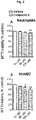
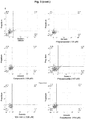
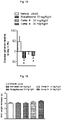
- the compounds 1, 2 and 8 and the reference compounds were evaluated at concentrations of 30 and 100 ⁇ M in human neutrophils ( Fig. 1A ) and primary cultures of human umbilical vein endothelial cells (HUVEC) ( Fig. 1B ) using two different techniques: MTT colorimetry assay and flow cytometry analysis for cellular apoptosis and survival.
- the synthetic compound 9 was evaluated at 10, 30 and 100 ⁇ M ( Fig. 2 ).
- MTT assay The viability of neutrophils and HUVEC was determined by the MTT colorimetric assay MTT (3(4,5-dimethylthiazol-2-yl)-2,5-diphenyltetrazoyl bromide).
- Neutrophils were obtained from the leukocyte-platelet fraction (buffy coats) of healthy donors by centrifuging with Ficoll-Hypaque density gradient.
- Human umbilical vein endothelial cells were isolated with the collagenase treatment and maintained in a human specific endothelial base medium (EBM-2) supplemented with endothelial growth medium (EGM-2) and 10% FCS. Cells of the first passage were cultured until their confluence in 24-well plates. Before starting each experiment, the cells were incubated for 24 h in a medium containing 1% FBS.
- apoptosis and survival rate for human neutrophils and HUVEC was determined by double staining with annexin V and propidium iodide (PI) by flow cytometry.
- Confluent HUVEC and freshly isolated neutrophils were washed, resuspended in binding buffer 1x (1 x 10 6 cells/mL) and stained with annexin V conjugated with FITC and propidium iodide (PI) as described in the manufacturer's instructions.
- the cells were analyzed in a BD FACSVerse Flow Cytometer (BD Biosciences, San Jose, CA) and differentiated as early apoptosis cells (annexin V + and PI - ), late apoptosis cells and/or necrotic cells (annexin V + and PI + ), and live cells (annexin V - and PI - ).
- endothelium that covers the blood vessel lumen has several functions, the alterations of which (“endothelial dysfunction”) have been related to cardiovascular diseases, thromboembolism and atherosclerosis.
- endothelial dysfunction is one of the first manifestations of the start of atherosclerosis that leads to a proinflammatory and prothrombotic phenotype of the endothelium, causing the release and migration of leukocytes into the subendothelial space.
- PPARs in particular PPAR ⁇ and PPAR ⁇ , are expressed in most vascular cells, including endothelial cells and smooth muscle cells, where they participate in specific anti-inflammatory effects and lipid control (Rosenson et al., 2012). 12 PPAR ⁇ agonists (rosiglitazone) can inhibit the inflammatory process, reducing the accumulation of neutrophils and mononuclear cells (Palee et al., 2011).
- the parallel flow camera technique was used, which allows viewing cell adhesion under dynamic physiological flow conditions.
- neutrophils and mononuclear cells were perfused through monolayers of HUVEC previously stimulated, or not, with TNF ⁇ (20 ng/mL) for 24 h.
- the neutrophils and human mononuclear cells were obtained in suspension from healthy volunteers by the Ficoll-Hypaque method, centrifuging by density gradient.
- Freshly isolated cells (1 x 10 6 /mL) were perfused through the monolayer of endothelial cells (HUVEC) stimulated, or not, with TNF ⁇ for 24 h.
- the interactions of the leukocytes were determined after being perfused for 5 min at 0.5 dyne/cm 2 .
- the HUVEC plates were placed in the flow chamber (GlycoTech, Gaithersburg, MD) and a camera was coupled to a phase-contrast inverted microscope (Axio Observer A1 Carl Zeiss microscope, Thornwood, NY) to view cell adhesion (20x lens and 10x eyepiece). In addition, the images were recorded on video for subsequent analysis.
- the HUVEC were pretreated with polycerasoidol (1), polycerasoidin (2), compound (8), or compound 9 at doses of 1, 3, 10, 30 and 100 ⁇ M, as well as WY-14643 or rosiglitazone at 1 ⁇ M, 20 hours before stimulation with TNF ⁇ (Sanz et al., 2012).
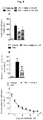
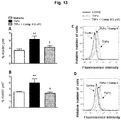
- TNF ⁇ caused significantly increased adhesion to endothelial cells of mononuclear leukocytes and neutrophils ( Figures 5 and 6 ). None of the compounds significantly inhibited HUVEC-neutrophil interactions at a concentration of 1 ⁇ M; however, it should be noted that pretreatment with polycerasoidol (1), the synthetic analogue 9 and rosiglitazone significantly reduced the adhesion of HUVEC-mononuclear cells ( Figures 5 and 6 ) in a concentration-dependent manner ( Figures 5C and 6B ).
- polycerasoidol (1) was 5 times less potent than rosiglitazone, while compound 9 showed a potency approximately 3.6 and 16 times greater than rosiglitazone and polycerasoidol, respectively (values IC 50 of 0.30 ⁇ M vs. 1.1 ⁇ M and 4.9 ⁇ M, respectively).
- polycerasoidol (1) and the synthetic compound 9 were able to inhibit the recruitment of mononuclear cells without compromising the immune response of neutrophils, necessary for the host defenses. Therefore, it seems that both compounds are interesting candidates for additional immuno-pharmacological assays given their capability of reducing mononuclear cell recruitment, their potency as dual PPAR ⁇ / ⁇ agonists and their low cytotoxicity.
- Example 5 Polycerasoidol (1) and compound 9 inhibited mononuclear cell adhesion to the endothelium, induced by TNF ⁇ via RXR ⁇ /PPAR ⁇ interaction
- Polycerasoidol (1) and the synthetic compound 9 are dual PPAR ⁇ / ⁇ agonists and rosiglitazone is a PPAR ⁇ selective agonist.
- siRNA interfering RNA
- Confluent HUVEC were transfected with specific siRNA for RXR ⁇ , PPAR ⁇ and PPAR ⁇ (Dharmacon, Lafayette, CO) using RNAiMAX of lipofectamin (Invitrogen, Carslbad, CA) for 48 h (Sanz et al., 2012). 13 Then the cells were treated for 20 h with polycerasoidol (1) at 10 ⁇ M or rosiglitazone at 1 ⁇ M and subsequently stimulated for 4 h with TNF ⁇ (10 ng/mL). To confirm, the silencing of PPAR ⁇ , PPAR ⁇ and RXR ⁇ via siRNA, a Western blot analysis was performed (Sanz et al., 2012).
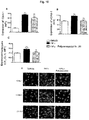
- PPAR form heterodimers with RXR which in some cases respond in a synergic manner to both agonists. Since PPAR ⁇ can interact with RXR ⁇ to generate their anti-inflammatory activity (Sanz et al., 2012), the directed deletion of the expression of RXR ⁇ in HUVEC with RXR ⁇ specific siRNA (>72% reduction in protein, Figure 7 ) also completely suppressed the inhibitory effect of polycerasoidol (1) on mononuclear cell adhesion induced by TNF ⁇ ( Figure 8C ).
- HUVEC were immunoprecipitated with an anti-PPARy antibody and were subjected to electrophoresis and western-blot with an anti-RXR ⁇ antibody, and increased RXR ⁇ /PPAR ⁇ interaction was detected in cells pretreated with polycerasoidol (1) or rosiglitazone ( Figure 8D ).
- the protein extracts were obtained in 50 mM Tris-HCI (pH 8), 150 mM NaCl, 1% Nonidet P-40 and protease (1 mM PMSF, 40 ⁇ g/mL aprotinin and 40 ⁇ g/mL leupeptin) and phosphatase inhibitors. Then the protein extracts ( ⁇ 200 ⁇ g) were incubated with 5 ⁇ g of an antibody against PPAR ⁇ . Immunocomplexes were precipitated using an anti-rabbit IgG beads (cat# 8800, eBioscience, San Diego, CA) and suspended in a sample buffer with 50 mM dithiotreitol (DTT).
- Example 6 Polycerasoidol (1) and the synthetic compound 9 reduced the expression of the intercellular adhesion molecule-1 (ICAM-1), the vascular cell adhesion molecule-1 (VCAM-1) and fractatquine (CX 3 CL1), induced by TNF ⁇
- ICM-1 intercellular adhesion molecule-1
- VCAM-1 vascular cell adhesion molecule-1
- CX 3 CL1 fractatquine
- cytokines In cardiovascular and cardiometabolic diseases (hypertension, obesity, diabetes, metabolic syndrome) high levels have been detected of circulating mediators, among other cytokines and chemokines that can represent endothelial function disorders.
- Proinflammatory cytokines stimulate the endothelium to express cellular adhesion molecules (CAM), such as vascular cell adhesion molecule-1 (VCAM-1) and intercellular adhesion molecule-1 (ICAM-1), increasing leukocyte adhesion to vascular endothelial cells, which is an important process in the initial phase of the inflammatory and immunological response (Zernecke et al., 2010).
- CAM cellular adhesion molecules
- VCAM-1 vascular cell adhesion molecule-1
- IAM-1 intercellular adhesion molecule-1
- PPAR ⁇ is expressed in the vasculature and leukocytes, and its activation can reduce the expression of CAMs, such as ICAM-1 or VCAM-1, as well as the expression of CX 3 CL1 (fractalkine).
- CX 3 CL1 is a chemokine expressed on the surface of endothelial cells and it can bind to its receptor CX 3 CR1, expressed in monocytes, T lymphocytes and NK cells, promoting cell adhesion.
- CX 3 CL1 can also be detached from the cell surface under the action of ADAM 10 and ADAM 17, releasing a soluble form that can act as a chemoattractant of the leukocytes expressing its receptor.
- CXCL16 which as CX 3 CL1 is also expressed in endothelial cells and can be detached by the action of ADAM10. It exerts its action by interacting with its CXCR6 receptor, present in certain leukocyte subtypes, promoting the adhesion thereof to the endothelial surface.
- these chemokines and adhesion molecules regulate the adhesion and migration of leukocytes to the vascular wall, and there are indications that an increase in their endothelial expression is associated with an increase in atherosclerosis (Zernecke et al., 2008).
- HUVEC HUVEC was pretreated with polycerasoidol (1) (10 ⁇ M) or with compound 9 (3 ⁇ M) for 24 h, and then stimulated with TNF ⁇ (20 ng/mL) for another 24 h.
- the cells were collected from the flasks using accutase (StemPro® Accutase® Cell Dissociation Reagent, ThermoFischer Scientific, Waltham, MA).
- confluent HUVEC were cultured on glass and some cells were incubated for 24 h with polycerasoidol (1) (10 ⁇ M) or compound 9 (3 ⁇ M), before being stimulated with TNF ⁇ (20 ng/mL) for an additional 24 h.
- the cells were then washed twice with PBS (1x), fixed with 4% paraformaldehyde and blocked in a PBS (1x) solution containing 1% BSA.
- HUVEC were incubated at 4°C overnight with a mouse primary monoclonal antibody against human VCAM-1 (dilution 1:200; clone 1.G11B1, Serotec, Kidlington, UK), ICAM-1 (dilution 1:200; clone 6.5B5, Serotec, Kidlington, UK), CX 3 CL1 (dilution 1:200; clone 81506, R&D Systems, Minneapolis, MN) or CXCL16 (1:200 dilution; Immunostep, Salamanca, Spain) in a 0.1% BSA/PBS solution, followed by incubation with a goat alexa-fluor 488-conjugated anti-rabbit secondary antibody (dilution 1:1000; A11034, Life Technologies, Carlsbad, CA) at room temperature for 1 h.
- a goat alexa-fluor 488-conjugated anti-rabbit secondary antibody (dilution 1:1000; A11034, Life Technologies, Carlsbad, CA) at room temperature for 1
- the cell nuclei were counterstained with Hoechst (dilution 1:4000 in PBS, Sigma-Aldrich, Madrid, Spain). Images were obtained with a fluorescence microscope (Axio Observer A1, Carl Zeiss, Thornwood, NY) equipped with a 40x lens and 10x eyepiece.
- Example 7 Polycerasoidol (1) and compound 9 inhibit activation of p38 MAPK and NF- ⁇ B induced by TNF ⁇ in HUVEC
- HUVEC The effect of polycerasoidol (1) or compound 9 on the phosphorylation of p38 MAPK and p65 (NF- ⁇ B) induced by TNF ⁇ was determined in HUVEC by flow cytometry. HUVEC were previously incubated for 24 h with compound 1 (10 ⁇ M) or 9 (3 ⁇ M) and stimulated for 1 h with TNF ⁇ (20 ng/mL).
- the endothelial cells were fixed with BD Cytofix Fixation Buffer (BD Biosciences, San Jose, CA) and permeabilized with BD Sol Perm III solution (BD Biosciences, San Jose, CA) and sequentially stained with a 1:10 dilution of a PE-conjugated mAb antibody against human p65 (pS529, clone K10-895.12.50; BD Biosciences, San Jose, CA) and a 1:10 dilution of Alexa Fluor-conjugated mAb antibody against human p38 MAPK (pT80/pY182, clone 36/p38; BD Biosciences, San Jose, CA). The cells were analyzed with a BD FACSVerse flow cytometer (BD Biosciences, San Jose, CA).
- Example 8 Treatment of ob / ob mice with compound 9.
- ob / ob mice have a leptin deficiency, and are associated with hyperphagia and obesity, as well as hyperglycemia and hyperinsulinemia. This study used male ob / ob mice (C57BL/6J) (Charles River laboratories, Chatillon-sur-Chalaronne, France).
- mice were housed in individual cages in a room with controlled temperature, humidity and light. They were kept and bred (UCIM animal house, University of Valencia) in pathogen-free conditions with free access to food and autoclaved water, at a humidity of 60-65% and a constant temperature of 22 ⁇ 2°C with a dark/light cycle of 12 h (light from 06:00-18:00 h, dark from 18:00-06:00 h). The mice were allowed to acclimate for ten days prior to the study.
- mice aged 7 to 8 weeks were treated daily orally using an orogastric tube with compound 9 (10 and 30 mg/Kg/d), rosiglitazone (10 mg/ Kg/ d) and/or WY-14643 (30 mg/Kg/d) between 9:00 and 11:00 a.m. by oral gavage for 4 days.
- the control ob/ob mice were just administered with vehicle (physiological saline solution with HEC 1%).
- the compounds were prepared freshly each day in a 1% suspension of HEC for oral administration. Randomization was performed based on the glycaemia values on day 0.
- the amount of food ingested and the body weight were determined daily for each mouse. Every day between 9:00 and 11:00 a.m. (prior to treatment) blood glucose levels were measured using (Contour next USB Blood glucose meter, BAYER, Basel, Switzerland).
- the mice were anesthesized with isofluorane and blood was extracted by cardiac puncture. The blood was collected in tubes containing EDTA or heparin. Plasma samples were obtained by centrifugation and stored at -80°C. After obtaining the samples, the animals were sacrificed by cervical dislocation and subsequently different organs such as white adipose tissue (WAT) and liver were extracted for additional studies. The organs were weighed and frozen for subsequent RNA analysis and to conduct histological studies
- the samples of epididymal white adipose tissue (WAT) and liver were fixed in 4% paraformaldehyde, embedded in paraffin, sectioned with a microtome (Leica RM2245, Leica Biosystems, Wetzlar, Germany) and mounted in microscope slides Superfrost® plus (Thermo Fisher Scientific, Waltham, MA).
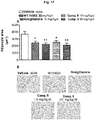
- Cross sections of WAT and liver were obtained. At least 10 slides were examined containing ⁇ 4 cross sections of tissue (5 ⁇ m thickness) of each animal. Hematoxilin and eosin (H&E) staining was performed of the WAT and liver. Inflammatory infiltration in WAT was measured as previously described (Toyoda et al., 2008).
- the samples were revealed with a solution containing 3,3'-diaminobenzidine (DAB, Vector Laboratories Inc, Burlingame, CA), and subsequently stained with Harris hematoxilin (Sigma-Aldrich, Madrid, Spain) and dehydrated.
- DAB 3,3'-diaminobenzidine
- Harris hematoxilin Sigma-Aldrich, Madrid, Spain
- Five fields of each WAT tissue section were photographed (Axio Observer A1, Carl Zeiss microscope, Thornwood, NY) digitalized and analyzed ( ImageJ software 1.48V, Bethesda, MA). Quantification was performed double blind with codes.
- the relative quantification of the various transcriptions was determined by the 2 - ⁇ Ct method using GAPDH (Applied Biosystems, Thermo Fisher Scientific, Waltham, MA) as endogenous and normalized control for the control group.
- Free fatty acids (FFA) in plasma and the enzymes aspartate aminotransferase (AST) and alanine aminotransferase (ALT) were determined with a colorimetric assay kit (Sigma-Aldrich, Madrid, Spain).
- AST aspartate aminotransferase
- ALT alanine aminotransferase
- plasma lipid levels for total cholesterol and triglycerides (TG) were measured by enzymatic methods (WAKO, Cape Charles, VA).
- the concentration of HDL-cholesterol (HDL-c) was also determined with the same method used to measure total cholesterol, after precipitating the apolipoprotein-B (apoB) with dextran sulphate/MgCl 2 (Sigma-Aldrich, Madrid, Spain) as previously described (Zieske et al., 2005).
- mice and food ingested were weighed daily.
- the weight gain at the end of treatment was calculated (d 5 -d 0 ) ( Figure 14A ).
- Treatment with compound 9 at the doses of 10 and 30 mg/Kg/d did not cause significant differences in weight gain compared to the control group.
- Weight gain was 1.70 ⁇ 0.25, 2.5 ⁇ 0.32 and 1.88 ⁇ 0.52 g for control mice treated with rosiglitazone and compound 9 (30 mg/Kg/d), respectively.
- Feed efficiency showed the same tendency and no observable differences were found in mice treated with compound 9 ( Figure 14B ).
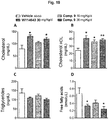
- compound 9 and WY-14643 showed a decrease of triglyceride levels in plasma, although not in a significant manner, which may be due to the short treatment time (122 mg/dL or 101 mg/dL at a dose of 10 or 30 mg/Kg/d, respectively, vs. 137 mg/dL for the control ob / ob ) ( Figure 19C ).
- Compound 9 at 30 mg/Kg/d and WY-14643 were able to significantly decrease blood levels of free fatty acids (0.25 and 0.33 mol/ ⁇ L, respectively, vs. 0.67 mol/ ⁇ L in the control ob / ob ) ( Figure 19D ).
Landscapes
- Chemical & Material Sciences (AREA)
- Organic Chemistry (AREA)
- Health & Medical Sciences (AREA)
- Engineering & Computer Science (AREA)
- Bioinformatics & Cheminformatics (AREA)
- Diabetes (AREA)
- Hematology (AREA)
- Obesity (AREA)
- Chemical Kinetics & Catalysis (AREA)
- General Chemical & Material Sciences (AREA)
- Medicinal Chemistry (AREA)
- Nuclear Medicine, Radiotherapy & Molecular Imaging (AREA)
- Pharmacology & Pharmacy (AREA)
- Life Sciences & Earth Sciences (AREA)
- Animal Behavior & Ethology (AREA)
- General Health & Medical Sciences (AREA)
- Public Health (AREA)
- Veterinary Medicine (AREA)
- Pharmaceuticals Containing Other Organic And Inorganic Compounds (AREA)
Abstract
Description
- The present invention refers to compounds comprising a prenylated benzopyran core structure. Said compounds display activity as agonists of PPARα, PPARγ, or dual activity as agonists of PPARα and PPARγ. The invention therefore refers to compounds with said prenylated benzopyran structure of formula I, the pharmaceutically acceptable salts thereof, first medical use, and the use of prenylated benzopyran compounds in the treatment of diseases responding to the administration of PPARα and /or PPARγ agonists. Said diseases are disorders such as
type 2 diabetes (T2D), obesity, metabolic syndrome, cardiovascular disorders, dyslipidemias, such as hypercholesterolemia, familial hypertriglyceridemia (serious and moderate), primary chylomicronemia, familial dysbetalipoproteinemia or hyperlipoproteinemia, inflammation and neurodegenerative diseases such as Parkinson's, Alzheimer's or amyotrophic lateral sclerosis (ALS). - Peroxisome proliferation activator receptors (PPAR) belong to the family of nuclear hormonal receptors. There are three types of PPAR: PPARα (NR1C1), PPAPβ/δ (NUC1; NR1C2), and PPARγ (NR1C3). They all act as heterodimers with 9-cys-retinoic acid receptors (retinoid X receptor; RXR) and play a key role in the regulation of various metabolic pathways, including lipid biosynthesis and glucose metabolism, as well as in cell differentiation and proliferation and in apoptosis (Cheang et al., 2015, Ahmadian et al., 2013 and Tan et al., 2017).
- PPAR are considered powerful therapeutic tools for the control of various pathologies, such as
type 2 diabetes (T2D), obesity, hyperlipidemia, cardiovascular disorders, inflammation and neurodegenerative diseases. PPAR are also important due to their involvement in the control of inflammatory processes, and can regulate inflammation, vascular function and vascular remodeling (Cheang et al., 2015, Ahmadian et al., 2013 and Tan et al., 2017). - PPARα are mainly found in the liver, kidneys, heart, muscle and adipose tissue, and play an essential role in the oxidation of fatty acids and the metabolism of lipoproteins.
- PPARγ are mainly present in adipose tissue, macrophages, monocytes, intestinal cells, skeletal muscle and endothelium. They are related to lipid metabolism, adipogenesis, glucose homeostasis and insulin sensitization.
- PPAR ligands, and in particular agonists PPARα and PPARγ, inhibit the expression of inflammation genes and can interfere negatively with signaling pathways for proinflammatory transcription factors in vascular and inflammatory cells.
- PPARα are activated by the fibrate compounds: fenofibrate, chlorfibrate, benzafibrate, and similar compounds such as WY-14643:

- PPARα agonists can reduce triglyceride levels and increase HDL-c, and are highly effective in the treatment of hypertriglyceridemia.1
- Among the known PPARγ ligands of these receptors stand out thiazolidinedione (TZD) type agonists, among which are rosiglitazone and pioglitazone, which have been used clinically in the treatment of T2D due to their capacity to reduce glucose levels in blood and improve sensitivity to insulin (Ahmadian et al., 2013).

- The development of PPARα or PPARγ agonists, or of dual PPARα/PPARγ agonists, has led to the synthesis of a new class of candidates with therapeutic potential (Cheang et al., 2015 and Tan et al., 2017). In fact, dual PPARα/γ agonists are considered to be more potent compounds in the correction of lipid and glucose homeostasis in T2D and metabolic syndrome than selective agonists (Tan et al., 2017). Despite the clinical effectiveness of PPARα and PPARγ agonists in the treatment of dyslipidemias and T2D, respectively, the appearance of numerous adverse effects has limited the use of these selective agonists, requiring the withdrawal of numerous drugs. In particular, PPARα agonists can lead to increased levels of creatinine and transaminases, and more rarely myopathy, while PPARγ agonists are related to weight gain, edema and myocardial infarction (Cheang et al., 2015). The possibility of finding a single compound that can activate the two receptors PPARα and PPARγ, a dual agonist, is seen as a potential alternative in the treatment of T2D and metabolic syndrome with fewer side effects (Cheang et al., 2015 and Tan et al., 2017). The use of two PPARα/γ dual agonists belonging to the group of glitazars has been recently approved, saroglitazar in India (Lipaglyn™, by the Zydus Cadila research centre) and lobeglitazone in Korea (Duvie™, by Chong Kun Dang), for lipid and glycemic control (Tan et al., 2017).

- However, other dual agonists such as farglitazar and muraglitazar have been withdrawn from the market due to their side effects in edema, myocardial infarction, stroke and heart failure, as have aleglitazar (in clinical phase II), ragaglitazar and tesaglitazar, since they have shown carcinogenicity in rodent models and increased creatinine in plasma (Tan et al., 2017).
- The development of hPPARa and hPPARy dual agonists allows combining the properties of PPARα agonists (fibrates) on the regulation of lipid metabolism, including reduction of triglycerides (TG), with the additional effect of the improved insulin sensitivity produced by PPARγ agonists (TZD). These hPPARα/γ dual ligands have generally shown greater effectiveness and lower toxicity in animals for the treatment of metabolic disorders than the use of selective compounds for each receptor. In fact, clinical studies show that PPARα/γ dual agonists reduce insulin resistance in
type 2 diabetes, glycaemia and TG values in plasma, and participate in the control of vascular inflammation. Therefore, the search for PPARα/γ dual agonists is important for the treatment of various metabolic disorders such as metabolic syndrome, T2D, and cardiovascular diseases. - Consequently, there is a need to develop PPARα and /or γ agonists that would show a greater effectiveness than the currently available ones, and /or also would show lower toxicity.
- The present invention describes PPARα and /or PPARγ agonist compounds and pharmaceutical compositions comprising the same. Said compounds, and the compositions comprising the same, are useful in the treatment of diseases that respond to the administration of PPARα and /or PPARγ agonists. Said compounds are, therefore, useful in the treatment of cardiovascular disorders,
type 2 diabetes (T2D), obesity, metabolic syndrome, hypercholesterolemia, hypertriglyceridemia, primary chylomicronemia, hyperlipoproteinemia, familial dysbetalipoproteinemia, inflammation and neurodegenerative diseases, such as Parkinson's, Alzheimer's or amyotrophic lateral sclerosis (ALS). The present invention also describes the use of said PPARα and /or PPARγ agonists, and of the pharmaceutical compositions comprising the same, in the treatment of a disease that responds to the administration of PPARα and /or PPARγ agonists. - One embodiment of the PPARα and /or PPARγ agonist compounds described refers to a compound of general formula I, stereoisomers and pharmaceutically acceptable salts thereof:

- R1 is independently selected from H or a phenol protecting group;
- R2 is independently selected from an alkyl-ester group with structure:


wherein- A is independently selected from an O atom, a S atom or a NR7 group, wherein R7 is independently selected from H, OR8 or a C1-6alkyl group, and wherein R8 is a H group or a C1-6 alkyl group;
- R5 is independently selected from H or a carboxylic acid protecting group;
- R6 is C1-6 alkyl or OR9, wherein Rg is C1-6 alkyl;
- R3 is H or a C1-6 alkyl group;
- R4 is a C1-6 alkyl group or an alkoxide;
- R10 is independently selected from a C1-6 alkyl, allyl, alkylamine, alkylamide, alkylaryl, alkylether, haloalkyl, silyl, carbamate, alkylsulphone or haloalkylsulphone group.
- In an embodiment of present invention when R1 is H and R3 is methyl, R5 is other than H or methyl, and when R1 is methyl and R3 is methyl, R5 is other than H or methyl.
- One embodiment refers to a compound of general formula I, described above, to its enantiomers, E,Z isomers and pharmaceutically acceptable salts thereof.
- For the purposes of the present invention, the term "phenol protecting group" is defined as a group substituting the H of the OH phenol group used to prevent the same from being reactive, or as a group that improves the pharmacodynamics and pharmacokinetics of the molecule. Non-limiting examples of phenol protecting groups, among others, are: C1-6 alkyl (e.g. methyl, ethyl, propyl, etc.); allyl; alkylamine (e.g. methyl- isoquinolein); alkylamide (e.g. acetamide); alkylaryl (e.g. benzyl, p-fluorobenzyl, p-methoxybenzyl); alkyl-ether (e.g. 2-methoxyethoxymethyl); halo-alkyl (e.g. trifluoromethyl, fluoroethyl, chloroethyl); silyl (e.g. alkyltrimethylsilanes, allyltrimethylsilanes); carbamates C(O)NRmRp, wherein Rm and/or Rp are each one and independently H, C1-6 alkyl or aryl; an acyl group (e.g. benzoyl), an alkylsulphone or a halo-alkylsulphone (e.g. trifluoromethylsulphone).
- In one embodiment of the present invention the group R1 is a phenol protecting group independently selected from the group consisting of H; C1-6 alkyl; allyl; alkylamide; alkylamine; alkylaryl; alkyl-ether; halo-alkyl; silyl; C(O)NRmRp, wherein Rm and/or Rp are each one and independently: H, C1-6 alkyl or aryl; acyl C(O)Ra, wherein Ra is an aryl group; alkylsulphone and halo-alkylsulphone.
- In one embodiment R1 is independently selected from the group consisting of H, C1-6 alkyl, allyl, alkylamide, alkylaryl, alkyl-ether, alkylbenzoyl, halo-alkyl, silyl, halo-alkylsulphone and an acyl group -C(O)Ra, wherein Ra is an aryl group.
- In another embodiment R1 is independently selected from the group consisting of H, C1-6 alkyl, alkylamide, alkylaryl, and an acyl group -C(O)Ra, wherein Ra is an aryl group.
- For the purposes of the present invention, the term "carboxylic acid protecting group" is defined as a group substituting the H of the carboxylic acid group -COOH to prevent the same from being reactive, or as a group that improves the pharmacodynamics and pharmacokinetics of the molecule. Non-limiting examples of carboxylic acid protecting groups, among others, are: C1-6 alkyl, allyl, alkylamide, alkylamine, alkylaryl, alkyl-ether, alkyl-ester, halo-alkyl, silyl, carbamate C(O)NRmRp, wherein Rm and/or Rp are each one and independently H, C1-6 alkyl or aryl, acyl C(O)Ra, wherein Ra is aryl, alkylsulphone or a halo-alkylsulphone group.
- In one embodiment R5 is independently selected from H; C1-6 alkyl; allyl; alkylamide; alkylamine; alkylaryl; alkyl-ether; halo-alkyl; silyl; C(O)NRmRp, wherein Rm and/or Rp are each one and independently H, C1-6 alkyl or aryl; acyl; alkylsulphone or halo-alkylsulphone.
- In one embodiment R5 is independently selected from the group consisting of H, C1-6 alkyl, alkylaryl and alkyl-ester.
- In another embodiment R5 is independently selected from the group consisting of H, C1-6 alkyl, aryl, alkylaryl, alkyl-ether, alkyl-ester, alkylsulphone, halo-alkyl, silyl and halo-alkylsulphone.
- One embodiment of the invention refers to a compound of general formula I, stereoisomers and pharmaceutically acceptable salts thereof:

- R1 is independently selected from H; C1-6 alkyl; allyl; alkylamide; alkylamine; alkylaryl; alkyl-ether; halo-alkyl; silyl; C(O)NRmRp, wherein Rm and/or Rp are each one and independently H, C1-6 alkyl or aryl; acyl C(O)Ra, wherein Ra is an aryl group; alkylsulphone or halo-alkylsulphone;
- R2 is independently selected from an alkyl-ester group with structure:


wherein- A is independently selected from an O atom O, a S atom S or a NR7 group, wherein R7 is independently selected from H, OR8 or a C1-6 alkyl group; and wherein R8 is an H or a C1-6 alkyl group;
- R5 is independently selected from H; C1-6 alkyl; allyl; alkylamide; alkylamine; alkylaryl; alkyl-ether; halo-alkyl; silyl; C(O)NRmRp, wherein Rm and/or Rp are each one and independently H, C1-6 alkyl or aryl; acyl; alkylsulphone or halo-alkylsulphone;
- R6 is C1-6 alkyl or OR9 wherein Rg is C1-6 alkyl;
- R3 is H or a C1-6 alkyl group;
- R4 is a C1-6 alkyl group or an alkoxide;
- R10 is independently selected from a C1-6 alkyl, allyl, alkylamine, alkylamide, alkylaryl, alkylether, haloalkyl, silyl, carbamate, alkylsulphone or haloalkylsulphone group.
- In an embodiment of the present invention when R1 is H and R3 is methyl, R5 is other than H or methyl, and when R1 is methyl and R3 is methyl, R5 is other than H or methyl.
- For the purposes of the present invention, a compound of formula I includes all the stereoisomers of said formula I.
- For the purposes of the present invention, the term "stereoisomer" refers to molecules with the same molecular formula and the same sequence of atoms bonded (same constitution), and with the same bonds between the atoms, but which differ in the three-dimensional orientation of their atoms in space. Enantiomers and diastereomers are two different types of stereoisomers.
- For the purposes of the present invention the term "enantiomer" refers to two stereoisomers that are mirror images of each other and cannot be superimposed on each other.
- Specifically, one embodiment of the present invention comprises the R and S enantiomers of the compounds of formula I, where said enantiomers are the 2 possible enantiomers with respect to the C-2 position of the benzopyran core, therefore including the R and S configurations of the radical R10.
- For the purposes of the present invention the term "diastereomer" refers to two stereoisomers that are not mirror images of each other. Diastereomers include meso compounds, E/Z isomers and non-enantiomeric optical isomers.
- E/Z isomers refer to compounds comprising C=C double bonds, that is, alkenes or cycloalkenes. If in a C=C double bond the two higher priority substituents, according to the IUPAC (International Union of Pure and Applied Chemistry) rules, are on the same side of the bond, the arrangement is Z. However, if they are on opposite sides the arrangement is E.
- One embodiment refers to a compound of general formula I, described above, to its enantiomers, E,Z isomers and pharmaceutically acceptable salts thereof.
- An embodiment comprises the R enantiomer with respect to the C-2 position of the benzopyran core.
- Another embodiment comprises the S enantiomer with respect to the C-2 position of the benzopyran core.
- One embodiment comprises the E isomer with respect to the double bond of C-'3 position in the prenylated side chain.
- One embodiment comprises the Z isomer with respect to the double bond of C-'3 position in the prenylated side chain.
- For the purposes of the present invention the term pharmaceutically acceptable salt refers to any salt which, when administered to a patient, can deliver (directly or indirectly) the compound in question to the patient. Said salts are preferably addition salts of organic or inorganic acids or, of organic or inorganic bases. Examples of addition salts of acids include, but are not limited to, addition salts of inorganic acids such as, e.g., chloride, bromide, iodide, sulphate, nitrate, phosphate, or addition salts of organic acids such as, e.g., acetate, trifluoroacetate, maleate, fumarate, citrate, oxalate, succinate or tartrate. Examples of addition salts of bases include, but are not limited to, addition salts of inorganic bases such as, e.g., sodium, potassium, calcium or ammonium, or addition salts of organic bases such as, e.g., ethylenediamine, ethanolamine, N,N-dialkylethanolamine, triethanolamine and aminoacid basic salts. The methods for forming the salts are convention methods of the art.
- For the purposes of the present invention, the term "C1-6 alkyl" refers to a hydrocarbon chain of 1 to 6 carbon atoms, fully saturated, that can be linear or branched.
- For the purposes of the present invention, the term "halo-alkyl" refers to a hydrocarbon chain, linear or branched, in which at least one H has been substituted with a halogen atom.
- For the purposes of the present invention, the term "allyl" refers to a hydrocarbon chain, linear or branched, which comprises at least one -CH=CH-CH2- group.
- For the purposes of the present invention, the term "aklylamide" refers to a hydrocarbon chain, linear or branched, substituted with an amide group.
- For the purposes of the present invention, the term "alkylamine" refers to a hydrocarbon chain, linear or branched, substituted with an amine group.
- For the purposes of the present invention the term "aryl" refers to a group derived from an aromatic hydrocarbon formed by removing one hydrogen atom from an aromatic ring in said aromatic hydrocarbon. For the purposes of the present invention said aryl groups can be optionally substituted. Non-limiting examples of substitutions are OH, alkoxide, alkyl, halogen, halogenated alkyl, cyano, thiol, amine or alkylamine.
- For the purposes of the present invention the term "alkylaryl" refers to a hydrocarbon chain substituted with an aryl group, which is, in turn, defined as described above.
- For the purposes of the present invention, the term "alkoxide" refers to an oxygen atom linked to a hydrocarbon chain, where said hydrocarbon chain may comprise an alkyl and/or an aryl group, as defined above.
- For the purposes of the present invention the term "alkyl ether" refers to a saturated hydrocarbon chain substituted with an alkoxide group, which is defined as described above.
- For the purposes of the present invention, the term "acyl" refers to a carbonyl group linked to a hydrocarbon chain, where said hydrocarbon chain may comprise an alkyl and/or an aryl group, as defined above.
- For the purposes of the present invention the term "ester" refers to a group derived from a carboxylic acid -COOH, where the hydroxyl group -OH is replaced by an alkoxide group, as defined according to the present invention.
- For the purposes of the present invention the term "alkyl ester" refers to a saturated hydrocarbon chain substituted with an ester group, as defined above.
- In a preferred embodiment A is an O atom.
- In another preferred embodiment A is a S atom.
- In another preferred embodiment A is a NR7 group, where R7 is independently selected from H, OR8 or a C1-6alkyl group, and wherein R8 is an H group or a C1-6 alkyl group. More preferably R7 is H, -OH or -OCH3.
- In a preferred embodiment R1 is H.
- In another preferred embodiment R1 is a C1-6 alkyl group. More preferably R1 is a methyl or propyl group.
- In another preferred embodiment R1 is an alkylaryl group. More preferably R1 is a benzyl or 4-fluorobenzyl group.
- In another preferred embodiment R1 is an alkylamide group. More preferably R1 is an acetamide group.
- In another preferred embodiment R1 is an acyl group -C(O)Ra. More preferably R1 is an acyl group -C(O)Ra, wherein Ra is an aryl group. Even more preferably Ra is a phenyl group.
- In a preferred embodiment R3 is H.
- In another preferred embodiment R3 is methyl.
- In a preferred embodiment R4 is C1-6 alkyl or an alkoxide group. In a preferred embodiment the alkoxide group is a halogenated alkoxide group.
- In a more preferred embodiment R4 is methyl.
- In a more preferred embodiment R4 is -OCH2CF3.
- In a preferred embodiment R5 is H.
- In another preferred embodiment R5 is C1-6 alkyl. More preferably R5 is methyl, ethyl, propyl, butyl or tert-butyl. Even more preferably R5 is methyl, ethyl or propyl.
- In another preferred embodiment R5 is alkylaryl. More preferably R5 is benzyl.
- In another preferred embodiment R5 is alkyl ester. More preferably R5 is -CH2COOCH3 or-CH(COOCH3)2.
- In a preferred embodiment R6 is methyl.
- In another preferred embodiment R6 is OR9 wherein Rg is C1-6 alkyl. More preferably Rg is ethyl.
- In a preferred embodiment R10 is C1-6 alkyl. More preferably R10 is methyl.
- A preferred embodiment of the invention refers to a compound of formula I, stereoisomers and pharmaceutically acceptable salts thereof, selected independently from the group consisting of 3, 4, 4a, 4b, 4c, 6, 8, 9,10, 11, 12 and 13:


- One embodiment comprises the enantiomer R of the
compounds - Another embodiment comprises the enantiomer S of the
compounds - One embodiment comprises the isomer (E,Z) of the
compounds - Another embodiment comprises the isomer (E,E) of the
compounds - One embodiment comprises the isomer (Z,Z) of the
compounds - Another embodiment comprises the isomer (Z,E) of the
compounds - One embodiment comprises the isomer E of the
compounds 9 and 13, with respect to the position C-'3 of the prenylated side chain. - Another embodiment comprises the isomer Z of the
compounds 9 and 13, with respect to the position C-'3 of the prenylated side chain. - The compounds of formula I, stereoisomers and pharmaceutically acceptable salts thereof, with PPAR agonist activity, comprise a common structure derived from the natural prenylated benzopyrans polycerasoidol and polycerasoidin (Gonzalez et al., 1995 and 1996), natural isomers of
compounds compound 1 corresponds to the natural compound polycerasoidol, while the isomer (3E,7E) is the natural compound isopolycerasoidol, and polycerasoidin corresponds to the isomer (3E,7Z) of compound 2:

- Said documents, by Gonzalez et al. (1995 and 1996), describe the isolation of the natural compounds polycerasoidol and polycerasoidin from the bark of the tree genus Polyalthia, indicating that some of the compounds of the family of prenylated hydroquinones to which they belong are known to have cytotoxic or antioxidant properties, without making reference to, or giving indications on, a possible activity as PPAR agonists. In the same sense, other documents disclose said compounds, or compounds with a similar structure, although said compounds also lack activity as PPAR agonists. In particular, documents Taha et al., 2015 and Karimian et al. (2015) describe the use of polycerasoidol, its methyl ester, and polycerasoidin as inducing apoptosis in breast cancer tumor cells. Zhao et al. (2010) analyses various metabolites derived from tocopherol and tocotrienols detected in urine, serum or liver, in human and mouse samples, among which polycerasoidol is described. Zafra-Polo et al. (1996) describes polyalthidin, related to the basic structure of the compounds of the invention, but which is described only with regard to its activity as an inhibitor of the mitochondrial respiratory chain. Lastly, document
EP0421419A describes benzopyran core compounds with three prenylated chains, making reference to their use to reduce serum cholesterol levels. None of these documents describes or gives indications on the possible use of similar compounds having a prenylated benzopyran core as PPAR agonists. - One embodiment comprises the enantiomer R of the
compounds - Another embodiment comprises the enantiomer S of the
compounds - One embodiment comprises the isomer (E,E) of the
compounds - Another embodiment comprises the isomer (E,Z) of the
compounds - One embodiment comprises the isomer (Z,Z) of the
compounds - Another embodiment comprises the isomer (Z,E) of the
compounds - A preferred embodiment relates to a compound of formula I, stereoisomers and pharmaceutically acceptable salts thereof:


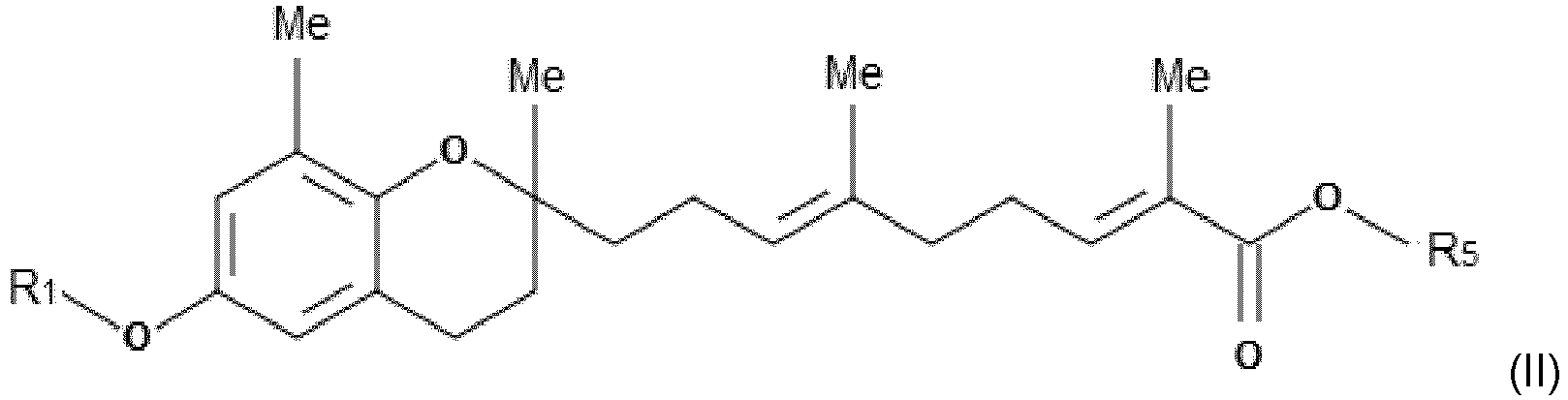
- Said compounds of formula II, therefore, include the
compounds - In a preferred embodiment, when R1 is H, R5 is other than H or methyl, and when R1 is Me, R5 is other than H or methyl.
- One embodiment comprises the R enantiomer of the compounds of formula II, with respect to the position C-2 of the benzopyran core.
- Another embodiment comprises the enantiomer R of the compounds of formula II, with respect to the position C-2 of the benzopyran core.
- One embodiment comprises the isomer (E,Z) of the compounds of formula II, with respect to the positions C-'3 and C-'7 of the prenylated side chain.
- Another embodiment comprises the isomer (E,E) of the compounds of formula II, with respect to the positions C-'3 and C-'7 of the prenylated side chain.
- One embodiment comprises the isomer (Z,Z) of the compounds of formula II, with respect to the positions C-'3 and C-'7 of the prenylated side chain.
- Another embodiment comprises the isomer (Z,E) of the compounds of formula II, with respect to the positions C-'3 and C-'7 of the prenylated side chain.
- In a preferred embodiment, R1 is H and R5 is H.
- In another preferred embodiment, R1 is C1-6 alkyl and R5 is H. More preferably R1 is methyl and R5 is H.
- In another preferred embodiment, R1 is H and R5 is C1-6 alkyl. More preferably R1 is H and R5 is methyl or propyl.
- In a preferred embodiment, R1 is H and R5 is alkylaryl. More preferably R1 is H and R5 is benzyl.
- In another preferred embodiment, R1 is alkylamide and R5 is alkylaryl. More preferably R1 is acetamide, and R5 is benzyl.
- In another preferred embodiment, R1 and R5 are alkylaryl. More preferably R1 and R5 are benzyl.
- In another preferred embodiment, R1 is C1-6 alkyl and R5 is H. More preferably R1 is propyl and R5 is H.
- In another preferred embodiment, R1 is an acyl group -C(O)Ra, wherein Ra is an aryl group, and R5 is an alkyl ester group. More preferably R1 is a benzoyl group and R5 is a -CH2COOCH3 group.
- In another preferred embodiment, R1 is a C1-6 alkyl group and R5 is an alkyl ester group. More preferably R1 is a methyl group and R5 is a -CH2COOCH3 group or a -CH(COOCH3)2 group.
- Both
compounds compound 1 and a methoxy group incompound 2. Departing fromcompounds compounds - One embodiment of the compound of formula II, stereoisomers and pharmaceutically acceptable salts thereof, as described above, is a compound independently selected from
compounds - A preferred embodiment of the present invention refers to a compound of formula II, stereoisomers and pharmaceutically acceptable salts thereof, selected independently from the group consisting of 3, 4, 4a, 4b, 4c, 6, 7 and 8. In a preferred embodiment the
compounds - Another preferred embodiment of the present invention relates to a compound of formula I, stereoisomers and pharmaceutically acceptable salts thereof:


and wherein said compound of formula I is a compound of formula III, stereoisomers and pharmaceutically acceptable salts thereof:
- Said compounds of formula III also present a structure derived from the
compounds - One embodiment comprises the enantiomer R of the compounds of formula III, with respect to the position C-2 of the benzopyran core.
- Another embodiment comprises the enantiomer R of the compounds of formula III, with respect to the position C-2 of the benzopyran core.
- One embodiment comprises the isomer (E,Z) of the compounds of formula III, with respect to the positions C-'3 and C-'7 of the prenylated side chain.
- Another embodiment comprises the isomer (E,E) of the compounds of formula III, with respect to the positions C-'3 and C-'7 of the prenylated side chain.
- One embodiment comprises the isomer (Z,Z) of the compounds of formula III, with respect to the positions C-'3 and C-'7 of the prenylated side chain.
- Another embodiment comprises the isomer (Z,E) of the compounds of formula III, with respect to the positions C-'3 and C-'7 of the prenylated side chain.
- In a preferred embodiment, R1 is an alkylaryl group, R6 is an -OR9 group, wherein Rg is C1-6 alkyl, and R5 is H or a C1-6 alkyl group. More preferably R1 is a benzyl group, R6 is a -OCH2CH3 group, and R5 is H or ethyl.
- More preferably R1 is a 4-fluorobenzyl group, R6 is a -OCH2CH3 group, and R5 is ethyl.
- One embodiment of the compound of formula III, stereoisomers and pharmaceutically acceptable salts thereof, as described above, is a compound that is independently selected from
compounds 10, 11 and 12:


- Another preferred embodiment of the present invention refers to a compound of formula I, stereoisomers and pharmaceutically acceptable salts thereof:


and wherein said compound of formula I is a compound of formula IV, stereoisomers and pharmaceutically acceptable salts thereof:
- Said compounds of formula IV also feature a structure derived from the compounds of formula I, 1 and 2. However, the compounds of formula IV are compounds of formula I wherein the radical R3 is H, and not methyl as it is in the
compounds compounds - One embodiment comprises the enantiomer R of the compounds of formula IV, with respect to the position C-2 of the benzopyran core.
- Another embodiment comprises the enantiomer S of the compounds of formula IV, with respect to the position C-2 of the benzopyran core.
- One embodiment comprises the isomer E of the compounds of formula IV, with respect to the double bond of the prenylated side chain.
- Another embodiment comprises the isomer Z of the compounds of formula IV, with respect to the double bond of the prenylated side chain.
- In a preferred embodiment R1 is alkylaryl and R5 is C1-6 alkyl. More preferably R1 is 4-fluorobenzyl and R5 is ethyl.
- One embodiment of the compound of formula IV, stereoisomers and pharmaceutically acceptable salts thereof, as described above, is compound 9:

- Another preferred embodiment of the present invention refers to a compound of formula I, stereoisomers and pharmaceutically acceptable salts thereof:


- Said compounds of formula V also feature a structure derived from the compounds of formula I, 1 and 2, but wherein said formula I the radical R2 is an ester group, instead of a prenylated alkyl-ester group featured in
compounds - One embodiment comprises the enantiomer R of the compounds of formula V, with respect to the position C-2 of the benzopyran core.
- Another embodiment comprises the enantiomer S of the compounds of formula V, with respect to the position C-2 of the benzopyran core.
- One embodiment comprises the isomer E of the compounds of formula V, with respect to the double bond of the prenylated side chain.
- Another embodiment comprises the isomer Z of the compounds of formula V, with respect to the double bond of the prenylated side chain.
- In a preferred embodiment R1 is alkylaryl, Rb is C1-6 alkyl and R4 is an alkoxide group. More preferably R1 is benzyl, Rb is ethyl and R4 is -OCH2CF3.
- One embodiment of the compound of formula V, stereoisomers and pharmaceutically acceptable salts thereof, as described above, is compound 13:

- An embodiment of the present invention refers to a pharmaceutical composition comprising an effective amount of at least a compound of formula I, stereoisomers and pharmaceutically acceptable salts thereof, as described above, and at least one pharmaceutically acceptable excipient.
- For the purposes of the present invention an effective amount is defined as an amount of the compound that provides an objectively identifiable improvement in the condition of the patient, recognized by a qualified observer, and where said patient is treated with a pharmaceutical composition comprising said amount of the compound.
- For the purposes of the present invention, pharmaceutically acceptable excipients are inert ingredients such as, but not limited to, cosolvents, surfactants, oils, wetting agents, emollients, preservatives, stabilizers and antioxidants.
- An embodiment of the present invention refers to a compound of formula I, stereoisomers and pharmaceutically acceptable salts thereof:

- R1 is H or a phenol protecting group;
- R2 is independently selected from an alkyl-ester group with structure:


wherein- A is independently selected from an O atom, a S atom or a NR7 group, wherein R7 is independently selected from H, OR8 or a C1-6 alkyl group, and wherein R8 is H or a C1-6 alkyl group;
- R5 is independently selected from H or a carboxylic acid protecting group;
- R6 is C1-6 alkyl or ORg, wherein Rg is C1-6 alkyl;
- R3 is H or a C1-6 alkyl group; and
- R4 is a C1-6 alkyl group or an alkoxide;
- R10 is independently selected from a C1-6 alkyl, allyl, alkylamine, alkylamide, alkylaryl, alkylether, haloalkyl, silyl, carbamate, alkylsulphone or haloalkylsulphone group; and
- Another embodiment of the present invention refers to a compound of formula I, stereoisomers and pharmaceutically acceptable salts thereof:

- R1 is independently selected from the group consisting of H; C1-6 alkyl; allyl; alkylamide; alkylamine; alkylaryl; alkyl-ether; halo-alkyl; silyl; C(O)NRmRp, wherein Rm and/or Rp are each one and independently H, C1-6 alkyl or aryl; acyl C(O)Ra, wherein Ra is an aryl group; alkylsulphone and halo-alkylsulphone;
- R2 is independently selected from an alkyl-ester group with structure:

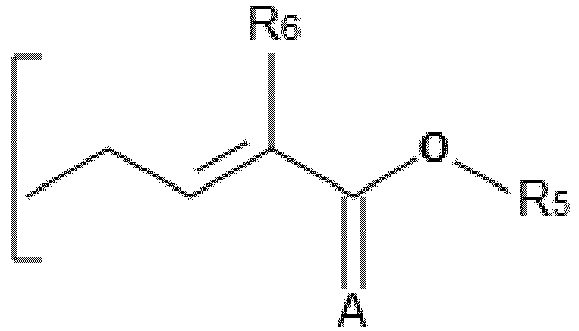
wherein- A is independently selected from an O atom, a S atom or a NR7 group, wherein R7 is independently selected from H, OR8 or a C1-6 alkyl group, and wherein R8 is H or a C1-6 alkyl group;
- R5 is independently selected from H; C1-6 alkyl; allyl; alkylamide; alkylamine; alkylaryl; alkyl-ether; halo-alkyl; silyl; C(O)NRmRp, wherein Rm and/or Rp are each one and independently H, C1-6 alkyl or aryl; acyl C(O)Ra, wherein Ra is an aryl group; alkylsulphone or halo-alkylsulphone;
- R6 is C1-6 alkyl or OR9 wherein Rg is C1-6 alkyl;
- R3 is H or a C1-6 alkyl group; and
- R4 is a C1-6 alkyl group or an alkoxide;
- R10 is independently selected from a C1-6 alkyl, allyl, alkylamine, alkylamide, alkylaryl, alkyléter, haloalkyl, silyl, carbamate, alkylsulphone or haloalkylsulphone group; and
- An embodiment of the compound of formula I, or of a composition comprising the same, for use as a medicament, as described above, comprises any of the enantiomers thereof or mixtures of the same, and any of the E/Z enantiomers thereof and mixtures of the same, and their pharmaceutically acceptable salts. One embodiment comprises the enantiomer R. Another embodiment comprises the enantiomer S. One embodiment comprises the isomer E. Another embodiment comprises the isomer Z.
- Another preferred embodiment refers to a compound of formula I, stereoisomers and pharmaceutically acceptable salts thereof, independently selected from the group consisting of 3, 4, 4a, 4b, 4c, 6, 7, 8, 9, 10, 11, 12 and 13, or a pharmaceutical composition comprising the same, for use as a medicament.
- The compounds of formula I described are agonists of PPARα and/or PPARγ. Consequently, said compounds are useful in the treatment of diseases responding to the administration of PPARα and/or PPARγ agonists, that is, diseases mediated by PPARα and/or PPARγ agonists, which is to say diseases whose treatment benefits from the administration of PPARα and PPARγ agonists.
- As indicated above, PPAR are considered to be powerful therapeutic tools for controlling cardiovascular disorders,
type 2 diabetes (T2D), obesity, metabolic syndrome, hypercholesterolemia, hypertriglyceridemia, primary chylomicronemia, hyperlipoproteinemia, familial dysbetalipoproteinemia, inflammation and neurodegenerative diseases such as Parkinson's, Alzheimer's or amyotrophic lateral sclerosis (ALS) (Ahmadian et al., 2013). Moreover, PPAR are also important due to their involvement in the control of inflammatory processes, and thus can regulate inflammation, vascular function, and vascular remodeling. - An embodiment of the present invention relates to a compound of formula I, stereoisomers and pharmaceutically acceptable salts thereof:

- R1 is H or a phenol protecting group;
- R2 is independently selected from an alkyl-ester group with structure:


wherein- A is independently selected from an O atom, a S atom or a NR7 group, wherein R7 is independently selected from H, OR8 or a C1-6 alkyl group, and wherein R8 is H or a C1-6 alkyl group;
- R5 is H or a carboxylic acid protecting group;
- R6 is C1-6 alkyl or ORg, wherein Rg is C1-6 alkyl;
- R3 is H or a C1-6 alkyl group; and
- R4 is a C1-6 alkyl group or an alkoxide; and
- R10 is independently selected from a C1-6 alkyl, allyl, alkylamine, alkylamide, alkylaryl, alkylether, haloalkyl, silyl, carbamate, alkylsulphone or haloalkylsulphone group;
- In one embodiment the disease that responds to the administration of PPARα and/or PPARγ agonists is independently selected from cardiovascular disorders,
type 2 diabetes (T2D), obesity, metabolic syndrome, hypercholesterolemia, hypertriglyceridemia, primary chylomicronemia, hyperlipoproteinemia, familial dysbetalipoproteinemia, inflammation and neurodegenerative diseases. - In one embodiment the cardiovascular disorders refer to atherosclerosis.
- In one embodiment the neurodegenerative diseases are selected independently from Parkinson's, Alzheimer's or amyotrophic lateral sclerosis (ALS).
- An embodiment of the present invention refers to a compound of formula I, stereoisomers and pharmaceutically acceptable salts thereof:

- R1 is independently selected from the group consisting of H; C1-6 alkyl; allyl; alkylamide; alkylamine; alkylaryl; alkyl-ether; halo-alkyl; silyl; C(O)NRmRp, wherein Rm and/or Rp are each one and independently H, C1-6 alkyl or aryl; acyl C(O)Ra, wherein Ra is an aryl group; alkylsulphone and halo-alkylsulphone;
- R2 is independently selected from an alkyl-ester group with structure:


wherein- A is independently selected from an O atom, a S atom or a NR7 group, wherein R7 is independently selected from H, OR8 or a C1-6 alkyl group, and wherein R8 is H or a C1-6 alkyl group;
- R5 is independently selected from H; C1-6 alkyl; allyl; alkylamide; alkylamine; alkylaryl; alkyl-ether; halo-alkyl; silyl; C(O)NRmRp, wherein Rm and/or Rp are each one and independently H, C1-6 alkyl or aryl; acyl C(O)Ra, wherein Ra is is an aryl group; alkylsulphone or halo-alkylsulphone;
- R6 is C1-6 alkyl or ORg, wherein Rg is C1-6 alkyl;
- R3 is H or a C1-6 alkyl group; and
- R4 is a C1-6 alkyl group or an alkoxide; and
- R10 is independently selected from a C1-6 alkyl, allyl, alkylamine, alkylamide, alkylaryl, alkylether, haloalkyl, silyl, carbamate, alkylsulphone or haloalkylsulphone group;
- In one embodiment the disease that responds to the administration of PPARα and/or PPARγ agonists is independently selected from cardiovascular disorders,
type 2 diabetes (T2D), obesity, metabolic syndrome, hypercholesterolemia, hypertriglyceridemia, primary chylomicronemia, hyperlipoproteinemia, familial dysbetalipoproteinemia, inflammation and neurodegenerative diseases. - In one embodiment the neurodegenerative diseases are selected independently from Parkinson's, Alzheimer's or amyotrophic lateral sclerosis (ALS).
- One embodiment refers to a compound of formula I or a pharmaceutical composition comprising the same, as described above, for use in the treatment of autoimmune diseases, such as
type 2 diabetes (T2D). - Another embodiment refers to a compound of formula I or a pharmaceutical composition comprising the same, as described above, for use in the treatment of atherosclerosis. Another embodiment refers to a compound of formula I or a pharmaceutical composition comprising the same, as described above, for use in the treatment of atherogenesis.
- Another embodiment refers to a compound of formula I or a pharmaceutical composition comprising the same, as described above, for use in the treatment of inflammation and diseases related to inflammatory processes.
- Another embodiment refers to a compound of formula I or a pharmaceutical composition comprising the same, as described above, for use in the treatment of hypercholesterolemia.
- Another embodiment refers to a compound of formula I or a pharmaceutical composition comprising the same, as described above, for use in the treatment of hypertriglyceridemia.
- Another embodiment refers to a compound of formula I or a pharmaceutical composition comprising the same, as described above, for use in the treatment of metabolic syndrome.
- Another embodiment refers to a compound of formula I or a pharmaceutical composition comprising the same, as described above, for use in the treatment of obesity.
- Another embodiment refers to a compound of formula I or a pharmaceutical composition comprising the same, as described above, for use in the treatment of primary chylomicronemia.
- Another embodiment refers to a compound of formula I or a pharmaceutical composition comprising the same, as described above, for use in the treatment of hyperlipoproteinemia.
- Another embodiment refers to a compound of formula I or a pharmaceutical composition comprising the same, as described above, for use in the treatment of dysbetalipoproteinemia.
- In an embodiment of the present invention when R1 is H and R3 is methyl, R5 is other than H or methyl, and when R1 is methyl and R3 is methyl, R5 is other than H or methyl.
- An embodiment of the compound of formula I, or of a composition comprising the same, for use in the treatment of a disease that responds to the administration of PPARα and/or PPARγ agonists, as described above, comprises any of the enantiomers thereof or mixtures of same, and any of the E/Z enantiomers thereof and mixtures of the same, and their pharmaceutically acceptable salts. One embodiment comprises the enantiomer R. Another embodiment comprises the enantiomer S. One embodiment comprises the isomer E. Another embodiment comprises the isomer Z.
- Another embodiment of the present invention refers to a compound of formula I, stereoisomers and pharmaceutically acceptable salts thereof, that is independently selected from the group consisting of II, III, IV and V:


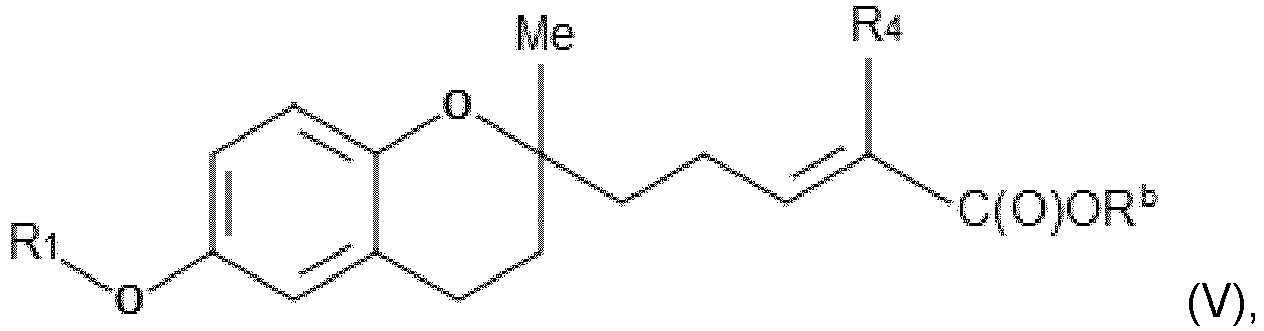
- An embodiment of the compound of formula II, III, IV or V, or of a composition comprising one of said compounds, for use in the treatment of a disease that responds to the administration of PPARα and/or PPARγ agonists, as described above, comprises any of the enantiomers thereof or mixtures of the same, and any of the E/Z enantiomers thereof and mixtures of the same, and their pharmaceutically acceptable salts.
- Another embodiment of the present invention refers to a compound of formula I, stereoisomers and pharmaceutically acceptable salts thereof independently selected from a
compound -
Compound 5 refers to the compound of formula I: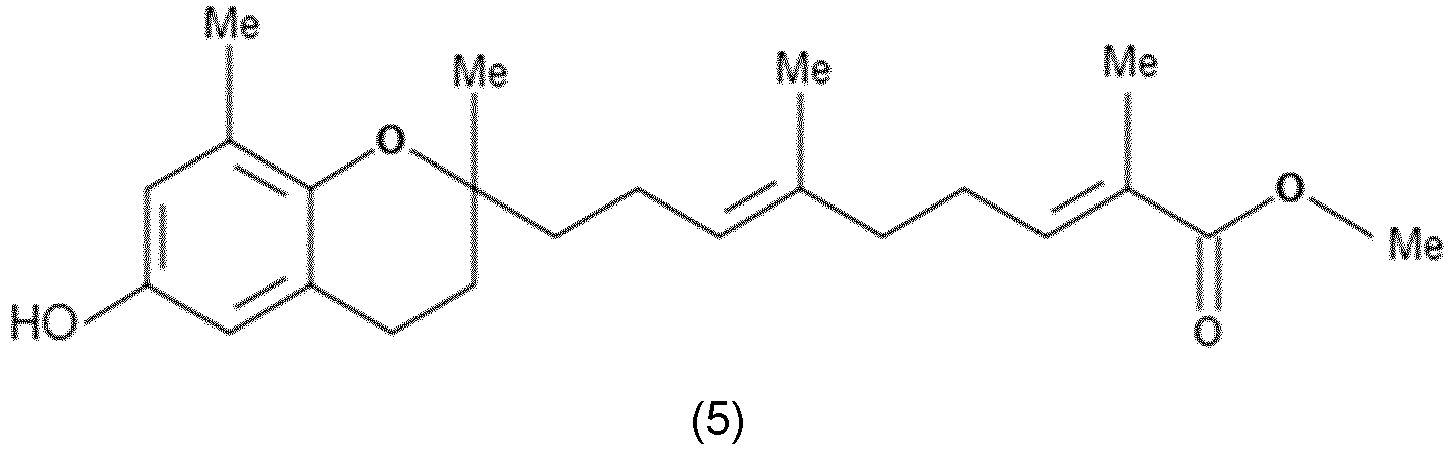
- In one embodiment the
compounds - In another embodiment the
compounds - In one embodiment the
compounds - In another embodiment the
compounds - In one embodiment the
compounds - In another embodiment the
compounds - In one embodiment the
compounds 9 and 13, for use in the treatment of a disease that responds to the administration of PPARα and/or PPARγ agonists, as described above, comprise the isomer E. - In another embodiment the
compounds 9 and 13, for use in the treatment of a disease that responds to the administration of PPARα and/or PPARγ agonists, as described above, comprise the isomer Z. - Another embodiment relates to the use of the compounds of formula I in the treatment of diseases that respond to the administration of PPARα and/or PPARγ agonists.
- Another embodiment relates to a method of treatment comprising the administration of an effective amount of at least one compound of formula I, or of a pharmaceutical composition comprising the same, to a patient suffering from a disease that responds to the administration of PPARα and/or PPARγ agonists.
- Another embodiment of the present invention refers to a compound of formula I independently selected from the group consisting of 1, 2, 3, 4c, 5, 7, 8, 9, 10, 11, 12 and 13, for use in the treatment of a disease that responds to the administration of PPARα and PPARγ dual agonists.
- In one embodiment the disease that responds to the administration of PPARα/γ dual agonists is independently selected from the group consisting of cardiovascular disorders,
type 2 diabetes (T2D), obesity, metabolic syndrome, hypercholesterolemia, hypertriglyceridemia, primary chylomicronemia, hyperlipoproteinemia, familial dysbetalipoproteinemia, inflammation and neurodegenerative diseases. - In a more preferred embodiment the neurodegenerative diseases are selected independently from Parkinson's, Alzheimer's or amyotrophic lateral sclerosis (ALS).
- Another embodiment refers to a method of treatment comprising the administration of an effective amount of at least one compound of formula I, selected independently from the group consisting of 1, 2, 3, 4c, 5, 7, 8, 9, 10, 11, 12 and 13, or of a pharmaceutical composition comprising the same, to a patient suffering from a disease that responds to the administration of PPARα and PPARγ dual agonists.
- One embodiment of the invention refers to the method for synthesizing the compounds of formula I, as described above, wherein said method comprises:
- (a) condensing a 2,5-dihydroxyacetophenone and an alkylketoester to obtain a benzopyran-4-one of formula A;

- (b) reducing the ketone group of the benzopyran-4-one obtained in step (a);
- (c) protecting the phenol group of the benzopyran-4-one to obtain a benzopyran ester of formula (B);

- (d) reducing the ester group with suitable reagents to obtain an aldehyde;

- (e) reacting the aldehyde group (C), obtained in (d), with a Grignard reagent to obtain an allyl alcohol;


- the aldehyde (C) obtained in step (d) is subjected to:
- (f) Horner-Wadsworth-Emmons olefination conditions using a phosphonate that comprises a -CH(COORb)R4 radical, or
- (g) Wittig olefination conditions using a phosphorus ylide comprising a-C(COORb)R4 radical;

- or wherein after performing step (e), the benzopyran ester (D) obtained is subjected to step (d):

- or wherein after performing step (e), the benzopyran ester (D) obtained is subjected to step (d):
- (f)- Horner-Wadsworth-Emmons olefination conditions using a phosphonate comprising a -CH(COOR5)R6 radical, or
- (g) Wittig olefination conditions using a phosphorus ylide comprising a - C(COOR5)R6 radical;
- This synthetic method provides the
compounds - This synthetic method for the compounds of formula I can be summarized as follows:

- Reagents and conditions: (a) pyrrolidine, EtOH, 45°C, 24 h; (b) Zn, HCl-AcOH (2:1, v/v), amb temp, 1 h; (c) R1X where X is a halogen, K2CO3, EtOH, reflux, 4 h; (d) 1M DIBAL-H (diisobutylaluminium hydride) in THF, -78 °C, 20 min; (e) 1) R4-MgBr, - 78 °C, 3 h; 2) MeC(OR6)3, isobutyric acid (2 drops), 140°C, 2 h; (f) (g) tBuOK or NaH, THF, 0°C at amb temp, 16h.
- The chromane core is therefore obtained by (a) condensation of 2,5-dihydroxy acetophenone and alkylketoester, producing benzopyran-4-one (Kabbe et al., 1982). Then, (b) the carbonyl group is reduced by a Clemmensen reduction, and (c) the phenol group is protected. Elongation of the side chain is performed (d) by reducing the ethyl ester, forming the corresponding aldehyde. Compound 13 is obtained subjecting said aldehyde obtained in step (d) to olefination by the Wittig reaction (f) or the Horner-Wadsworth-Emmons reaction (g) (Bisceglia et al., 2012 and Toshima et al., 2001).
- To obtain
compound 9, (e) the aldehyde obtained in step (d), is first treated with a Grignard reagent to generate an allyl alcohol which is then subjected to Johnson-Claisen transposition conditions (Sen et al., 1990) to finally obtain the ester ofcompound 9. The compounds 1-8 and 10-12 are obtained by a second elongation of the side chain again using the conditions of step (d) described above to reduce the ester group ofcompound 9, forming the corresponding aldehyde, wherein said aldehyde is then subjected to an olefination using the Wittig reaction (f) or the Horner-Wadsworth-Emmons reaction (g). -
-
Figure 1 . Effect on cell viability by MTT test of polycerasoidol (1), polycerasoidin (2),compound 8, WY-14643 and rosiglitazone. In human neutrophils (Fig. 1A ) and HUVEC (Fig. 1B ). Data represented as mean ± SEM for n=5 independent experiments. *p <0.05 or **p <0.01 with respect to the vehicle group. -
Figure 2 . Effect ofsynthetic analogue 9 on cell viability by MTT test. In human neutrophils (A) and HUVEC (B). Data represented as mean ± SEM for n=5 independent experiments. *p <0.05 or **p <0.01 with respect to the vehicle group. -
Figure 3 . Effect of polycerasoidol (1), polycerasoidin (2),compound 8, WY-14643 and rosiglitazone, on cell viability using flow cytometry. Percentage of apoptotic neutrophils (Fig. 3A ), survival (Fig. 3B ), apoptosis (Fig. 3C ) and survival in HUVEC (Fig. 3D ) after 24 h incubation with thecompounds Fig. 3E ) showing the effects of the vehicle and compounds 1, 2, 8, WY-14643 and rosiglitazone on neutrophil apoptosis/survival. *p <0.05 or **p <0.01 with respect to the vehicle group. -
Figure 4 . Effect ofcompound 9 on cell viability by flow cytometry. Percentage of neutrophil apoptosis (Fig. 4A ), survival (Fig. 4B ), apoptosis of HUVEC (Fig. 4C ) and survival (Fig. 4D ) after 24 h incubation. The apoptotic cells were quantified as a percentage of the total population of annexin V+/PI- late apoptotic cells and/or necrotic cells such as annexin V+/PI+, and non-apoptotic viable cells as annexin V-/PI-. The columns correspond to the mean ± SEM for n=3 independent experiments. The representative panels for flow cytometry have been included (Fig. 4E ) showing the effects of the vehicle and ofcompound 9 on neutrophil apoptosis/survival. *p <0.05 or **p <0.01 with respect to the vehicle group. -
Figure 5 . Polycerasoidol (1) inhibits mononuclear cell adhesion to HUVEC induced by TNFα in physiological flow conditions. The cells were pretreated for 20 h with 1 µM polycerasoidol (1), polycerasoidin (2),compound 8, WY-14643 or rosiglitazone, prior to stimulation with TNFα (20 ng/mL, 24 h). Freshly isolated human neutrophils of mononuclear cells were perfused across the endothelial monolayers for 5 min at 0.5 dyn/cm2 quantifying the adhesion of neutrophils (Fig. 5A ) and mononuclear cells (Fig. 5B ). Dose-response curves were obtained for polycerasoidol (1) and rosiglitazone with HUVEC stimulated with TNFα (20 ng/mL, 24 h) and perfused with freshly isolated human mononuclear cells (Fig. 5C ). The results are the mean ± SEM of 4-6 independent experiments. **p <0.01 with respect to the vehicle group and ††p < 0.01 with respect to cells stimulated with TNFα. -
Figure 6 .Compound 9 inhibits mononuclear cell adhesion to HUVEC induced by TNFα in physiological flow conditions. Some cells were pretreated for 20 h with compound 9 (3, 30 or 100 µM), prior to stimulation with TNFα (20 ng/mL, 24 h). Freshly isolated human neutrophils or mononuclear cells were perfused across the endothelial monolayers for 5 min at 0.5 dyn/cm2 quantifying the adhesion of neutrophils (Fig. 6A ) and mononuclear cells (Fig. 6B ). The concentration-response curves (0.1-100 µM) were made forcompound 9 with HUVEC stimulated with TNFα (20 ng/mL, 24 h) and perfused with freshly isolated human mononuclear cells (Fig. 6C ). The results are the mean ± SEM for 4-6 independent experiments. **p< 0.01 with respect to the vehicle group ++p< 0.01 with respect to cells stimulated with TNFα. -
Figure 7 . Endothelial cells were transfected with control siRNA or specific siRNA for RXRα, PPARα or PPAR. 48 h after transfection, the protein expression of RXRα (Fig. 7A ), PPARα (Fig. 7B ) or PPARγ (Fig. 7C ) was determined by Western blot. The results (mean ± SEM for n=4 independent experiments) are expressed with respect to β-actin. The images of the representative gels are also shown. **p <0.01 with respect to the values in the corresponding siRNA control group. -
Figure 8 . The silencing of PPARγ or RXRα by siRNA stops the inhibiting effect of polycerasoidol (1) in the interactions between endothelial cells and mononuclear leukocytes induced by TNFα. HUVEC were transfected with control or specific siRNA for RXRα, PPARα or PPARγ. 48 h after transfection the cells were pretreated with polycerasoidol (10 µM) or rosiglitazone (1 µM) for 20 h and then stimulated with TNFα (20 ng/mL, 4h). The mononuclear cell adhesion was quantified. The results are the mean ± SEM of 3-4 independent experiments. *p <0.05 or **p <0.01 with respect to the corresponding vehicle group, †p <0.05 or ††p <0.01 with respect to corresponding cells stimulated with TNFα (Fig. 8A, 8B, 8C ). The RXRα/PPARγ interaction was measured by immunoprecipitation of PPARγ followed by Western blot for RXRα. Chemoluminescence films were quantified by image analysis. The blot represents n=3 independent experiments (Fig. 8D ). -
Figure 9 . The RXRα/PPARγ interaction ofcompound 9 was measured by immunoprecipitation of PPARγ followed by Western blot for RXRα. Chemoluminescence films were quantified by image analysis. The blot represents n=3 independent experiments. -
Figure 10 . Polycerasoidol (1) inhibits the expression in HUVEC of ICAM-1, VCAM-1 and CX3CL1 induced by TNFα. Some cells were pretreated with polycerasoidol (10 µM) 20 h, before stimulation with TNFα (20 ng/mL, 24 h for ICAM-1, VCAM-1 and CX3CL1). Flow cytometry was used to determine the expression of ICAM-1 (Fig. 10A ), VCAM-1 (Fig. 10B ) and CX3CL1 (Fig. 10C ). The results (mean ± SEM) were expressed as the mean fluorescence intensity of n=3-6 independent experiments. Expression of ICAM-1, VCAM-1, and CX3CL1 was also seen in HUVEC not permeabilized by inmunofluorescence, using alexa-fluor 488 (green) (Fig. 10E ). The nuclei were counterstained with Hoechst dye (blue). *p <0.05 or **p <0.01 with respect to the vehicle group, †p <0.05 or ††p <0.01 with respect to cells stimulated with TNFα. -
Figure 11 .Compound 9 inhibits the expression in HUVEC of VCAM-1, CX3CL1 and CXCL16 induced by TNFα, but not ICAM-1. Some cells were pretreated with compound 9 (3 µM) 20 h, before stimulation with TNFα (20 ng/mL, 24 h). Flow cytometry was used to determine the expression of ICAM-1 (Fig. 11A ), VCAM-1(Fig. 11B ), CX3CL1 (Fig. 11C ) and CXCL16 (Fig. 11D ). The results (mean ± SEM) were expressed as the mean fluorescence intensity for n=3-6 independent experiments. Expression of ICAM-1, VCAM-1, CX3CL1 and CXCL16 was also seen in HUVEC not permeabilized by immunofluorescence, using alexa-fluor 488 (green) (Fig. 11E ). The nuclei were counterstained with Hoechst dye (blue). **p <0.01 with respect to the vehicle group, †p <0.05 or ††p <0.01 with respect to cells stimulated with TNFα. -
Figure 12 . Polycerasoidol (1) inhibits the activation of p38 MAPK and NF-κB (p65) induced by TNFα in HUVEC. The cells were stimulated for 1 h with TNFα (20 ng/mL). Some cells were pretreated with polycerasoidol (10 µM) 20 h before stimulation with TNFα. The activation of p38 MAPK (Fig. 12A ) and NF-κB (Fig. 12B ) was determined by flow cytometry. The results (mean ± SEM) were expressed as the mean fluorescence intensity of n=3-6 independent experiments (Fig. 12C and 12D ). The representative histograms are shown. **p <0.01 with respect to the vehicle group †p <0.05 and ††p <0.01 with respect to cells stimulated with TNFα. -
Figure 13 .Compound 9 inhibits the activation of p38 MAPK and NF-κB (p65) induced by TNFα in HUVEC. The cells were stimulated for 1 h with TNFα (20 ng/mL). Some cells were pretreated with compound 9 (3 µM) 20 h before stimulation with TNFα. The activation of p38 MAPK (Fig. 13A ) and NF-κB (Fig. 13B ) was determined by flow cytometry. The results (mean ± SEM) were expressed as the mean fluorescence intensity of n=3-6 independent experiments (Fig. 13C and 13D ) The representative histograms are shown. **p <0.01 with respect to the vehicle group and †p <0.05 with respect to cells stimulated with TNFα. -
Figure 14 .Compound 9 does not cause a significant weight gain (g) and feed efficiency in ob/ob mice after 4 days of treatment. The histograms show the weight gain (Fig. 14A ) expressed as difference in weight betweenday 5 and day 0 (d5-d0), and feed efficiency (Fig. 14B ) calculated as the ratio of weight gain and food consumed. No significant differences were observed either in weight gain or feed efficiency between mice treated withcompound 9 and the control groups. The columns represent the mean ± SEM of n=5-6 independent experiments. -
Figure 15 .Compound 9 and rosiglitazone reduce plasma glucose values in ob/ob mice after 4 days of treatment. The glucose variation with respect to d0 (day 0, before treatment) is shown, calculated according to the formula: ((d5-d0)/d0) x 100. The columns represent the mean ± SEM of n=5-6 independent experiments. *p <0.05 with respect to the group of ob/ob mice administered with the vehicle. -
Figure 16 .Compound 9 does not cause significant weight gain of white adipose tissue (WAT) in ob/ob mice after 4 days of treatment. The columns show the mean ± SEM for n=5-6 independent experiments -
Figure 17 .Compound 9 significantly reduces the mean surface area of WAT adipocytes in a dose-dependent manner in ob/ob mice after 4 days of treatment. Mean surface area of adipocytes in µm2 (Fig. 17A ), and the corresponding representative images (Fig. 17B ). The columns represent the mean ± SEM of n=5-6 independent experiments. *p <0.05 or **p <0.01 with respect to the group of ob/ob mice administered with the vehicle. -
Figure 18 . Study of the anti-inflammatory effect on white adipose tissue (WAT) in ob/ob mice after 4 days of treatment. MCP-1 mRNA expression level in WAT (Fig. 18A ) and F4/80+ macrophage quantification in WAT by immunohistochemistry (Fig. 18B ).Compound 9 reduces the expression of MCP-1 mRNA and the number of macrophages infiltrated in white adipose tissue (WAT). The columns correspond to the mean ± SEM of n= 5-6 independent experiments. *p <0.05 with respect to the group of ob/ob mice administered with the vehicle. -
Figure 19 .Compound 9 and WY-14643 increase total cholesterol and HDL-c levels, and reduce triglyceride and free fatty acid levels in plasma. Total cholesterol levels (Fig. 19A ), HDL-c (Fig. 19B ), triglycerides (Fig. 19C ) and free fatty acids (Fig.19D ). The columns represent the mean ± SEM of n=5-6 independent experiments. *p <0.05 or **p <0.01 with respect to the group of ob/ob mice administered with the vehicle. -
Figure 20 .Compound 9 did not significantly affect the weight of the liver nor the accumulated triglycerides, compared to the control group (vehicle). Liver weight gain (Fig. 20A ) and liver triglyceride levels (Fig. 20B ). The columns represent the mean ± SEM of n=5-6 independent experiments. *p <0.05 with respect to the group of ob/ob mice administered with the vehicle. -
Figure 21 .Compound 9 reduced the circulating (plasma) levels of alanine amino transferase (ALT) and aspartic transaminase (AST) in ob/ob mice after 4 days of treatment. The columns represent the mean ± SEM of n=5-6 independent experiments. *p <0.05 with respect to the group of ob/ob mice administered with the vehicle. - The examples described below are for purposes of illustration only and are not meant to limit the scope of the present invention. All the research with human samples of this study has been performed in compliance with the principles of the Declaration of Helsinki and with the approval of the institutional ethics committee of the Hospital Clínico Universitario de Valencia (Valencia, Spain).
- All reagents and solvents were acquired from commercial sources and used directly. All reactions sensitive to humidity were performed in flasks dried in an oven in a nitrogen atmosphere and with dry solvents. All reactions were controlled by analytical TLC with
silica gel 60 F254 (Merck 5554) and UV detection at 254 nm. Residues were purified through a silica gel column 60H (5-40 µm, Merck 7736) and by ultrafast chromatography (230-400 µm, Merck 9385). The preparatory TLC was performed using 0.5 mm silica gel plates (Merck). Hewlett-Packard (HP-1100) or TripleTOF5600 (ABSciex) was used for the LC-MS analysis, with the API (atmospheric pressure ionization) source configured as APCI (atmospheric pressure chemical ionization) or APIES (ionization by electrospray) in positive or negative mode. The NMR spectra (1H, 13C, COSY 45, DEPT, HSQC and HMBC) were referenced for the signal of CDCl3 solvent in aBruker AC 300 or AC-500. The resonance multiplicities for 13C NMR were assigned by DEPT experiments. The NMR assignments were supported by COSY 45, DEPT, HSQC and HMBC experiments. - Polycerasoidol (1) and polycerasoidin (2) were isolated from a methanolic extract of bark of stems of Polyalthia cerasoides and P. sclerophylla and identified according to their chromatographic and spectral characteristics (Gonzalez et al., 1995 and 1996).
- Compound 3: 1-bromopropane CH3CH2CH2Br (20 µL 0.2 mmol) was added to a suspension of polycerasoidol (1) (80 mg, 0.2 mmol) and K2CO3 (80 mg) in acetone (2 mL), and the mixture was shaken at reflux for 4 h. The reaction mixture was concentrated to dryness and again dissolved in 10 mL of CH2Cl2. The organic phase was washed with brine (3 x 10 mL) and H2O (3 x 10 mL), dehydrated with anhydrous Na2SO4 and evaporated to dryness in a rotary evaporator. The reaction crude was purified by silica gel column chromatography (hexane-AcOEt, 90:10) to obtain compound 3 (50 mg, 63 %). NMR 1H (400 MHz, CDCl3) δ 6.49 (d, J= 2.6 Hz, H-7), 6.39 (d, J= 2.6 Hz, H-5), 5.91 (td, J= 1.3, 7.2 Hz, H-7', 5.15 (td, J= 0.9, 7.1 Hz, H-3'), 4.11 (t, J= 6.6 Hz, 2H, COOCH 2CH2CH3-9'), 2.68 (t, J= 6.6 Hz, 2H, CH2-4), 2.57 (ddd, J= 1.2, 7.5, 15.1 Hz, 2H, CH2-6'), 2.12 (s, 3H, CH3-13'), 2.10-2.03 (m, 4H, CH2-2' and CH2-5'), 1.89 (d, 3H, J= 1.6 Hz, CH3-10'), 1.75 (sex, J= 7.3 Hz, 2H, COOCH2 CH 2CH3-9'), 1.86-1.60 (m, 4H, CH2-3, CH2-1'), 1.59 (s, 3H, CH3-11'), 1.25 (s, 3H, CH3-12'), 0.97 (t, J= 7.3 Hz, 3H, COOCH2CH2 CH 3-9'); NMR 13C (125 MHz, CDCl3) δ 168.4 (COOCH2CH2CH3-9'), 147.9 (C-6), 145.8 (C-8a), 142.8 (CH-7'), 134.3 (C-4'), 127.2 (C-8'), 127.0 (C-8), 124.9 (CH-3'), 121.1 (C-4a), 115.6 (CH-7), 112.6 (CH-5), 75.2 (C-2), 65.8 (COOCH 2CH2CH3-9'), 39.6 (CH2-1'), 39.0 (CH2-5'), 31.3 (CH2-3), 27.9 (CH2-6'), 23.9 (CH3-12'), 22.4 (CH2-4), 22.1 (COOCH2 CH 2CH3-9'), 22.0 (CH2-2'), 20.6 (CH3-10'), 16.0 (CH3-13'), 15.7 (CH3-11'), 10.5 (COOCH2CH2 CH 3-9'); LC-MS (APCI positive mode) m/z 401.1 (100) [MH]+; HREIMS m/z 400.263746 [M]+ (400.261360 calc for C25H36O4).
- Compound 4: Benzyl chloride ClCH2Ph (25 µL 0.2 mmol) was added to a suspension of polycerasoidol (1) (80 mg, 0.2 mmol) and K2CO3 (80 mg) in acetone (2 mL), and the mixture was shaken at reflux for 4 h. After the usual extraction, the reaction crude was purified by silica gel column chromatography (hexane-AcOEt, 90:10) to obtain compound 4 (60 mg, 67 %). 1H NMR (400 MHz, CDCl3) δ 7.39-7.29 (m, 5H, COOCH2 Ph-9'), 6.50 (dd, J= 0.4, 2.7 Hz, H-7), 6.40 (dd, J= 0.4, 2.7 Hz, H-5), 5.95 (td, J= 1.3, 7.2 Hz, H-7'), 5.20 (s, 2H, COOCH2 Ph-9'), 5.12 (td, J= 1.1, 7.1 Hz, H-3'), 2.70 (td, J= 2.5, 6.7 Hz, 2H, CH2-4), 2.57 (ddd, J= 1.3, 7.4, 15.2 Hz, 2H, CH2-6'), 2.14 (s, 3H, CH3-13'), 2.12-1.90 (m, 4H, CH2-2' and CH2-5'), 1.92 (d, 3H, J= 1.6 Hz, CH3-10'), 1.82-1.60 (m, 4H, CH2-3 and CH2-1'), 1.56 (s, 3H, CH3-11'), 1.26 (s, 3H, CH3-12'); NMR 13C (125 MHz, CDCl3) δ 167.9 (COOCH2Ph-9'), 147.8 (C-6), 145.8 (C-8a), 143.6 (CH-7'), 134.1 (C-1" de COOCH2 Ph-9'), 134.3 (C-4'), 128.5 (2CH de COOCH2 Ph-9'), 128.0 (3CH de COOCH2 Ph-9'), 127.3 (C-8'), 126.7 (C-8), 124.8 (CH-3'), 121.2 (C-4a), 115.6 (CH-7), 112.6 (CH-5), 76.0 (C-2), 66.0 (COOCH 2Ph-9'), 39.6 (CH2-1'), 39.0 (CH2-5'), 31.3 (CH2-3), 28.0 (CH2-6'), 24.0 (CH3-12'), 22.4 (CH2-4), 22.1 (CH2-2'), 20.6 (CH3-10'), 16.0 (CH3-13'), 15.7 (CH3-11'); LC-MS (APCI positive mode) m/z 472.2 (100) [MH + Na]+; EIMS m/z 357 [M-CH2Ph]+.
- Compound 4a: 2-chloroacetamide ClCH2CONH2 (0.1 mmol) was added to a suspension of compound 4 (45 mg, 0.1 mmol) and K2CO3 (45 mg) in acetonitrile (5 mL), and the mixture was shaken at reflux for 9 h. After the usual extraction, the reaction crude was purified by silica gel column chromatography (hexane-AcOEt, 90:10) to obtain compound 4a (25 mg, 50 %). NMR 1H (400 MHz, CDCl3) δ 7.38-7.29 (m, 5H, COOCH2 Ph-9'), 6.60 (d, J= 3.0 Hz, H-7), 6.46 (dd, J= 3.0 Hz, H-5), 5.93 (td, J= 1.3, 7.3 Hz, H-7'), 5.18 (s, 2H, COOCH2 Ph-9'), 5.11 (td, J= 1.2, 7.3 Hz, H-3'), 4.41 (s, 2H, OCH 2CONH2-6), 2.72 (td, J= 2.5, 6.5 Hz, 2H, CH2-4), 2.56 (ddd, J= 1.2, 7.3, 14.8 Hz, 2H, CH2-6'), 2.16 (s, 3H, CH3-13'), 2.10-2.04 (m, 4H, CH2-2' and CH2-5'), 1.92 (d, 3H, J= 1.2 Hz, CH3-10'), 1.81-1.58 (m, 4H, CH2-3, CH2-1'), 1.55 (s, 3H, CH3-11'), 1.26 (s, 3H, CH3-12'); NMR 13C (100 MHz, CDCl3) δ 171.8 (OCH2 CONH2-6), 167.7 (COOCH2Ph-9'), 149.8 (C-6), 147.0 (C-8a), 143.5 (CH-7'), 136.2 (C-1" de COOCH2 Ph-9'), 134.4 (C-4'), 128.4 (2CH de COOCH2 Ph-9'), 128.0 (3CH de COOCH2 Ph-9'), 126.7 (C-8'), 126.7 (C-8), 124.7 (CH-3'), 121.2 (C-4a), 115.6 (CH-7), 112.0 (CH-5), 75.5 (C-2), 67.9 (OCH 2CONH2-6), 65.9 (COOCH 2Ph-9'), 39.6 (CH2-1'), 39.0 (CH2-5'), 31.2 (CH2-3), 28.0 (CH2-6'), 24.0 (CH3-12'), 22.6 (CH2-4), 22.1 (CH2-2'), 20.6 (CH3-10'), 16.2 (CH3-13'), 15.7 (CH3-11'); HREIMS m/z 505.290785 [M]+ (505.282824 calc for C31H39NO5).
- Compound 4b. Benzyl chloride ClCH2Ph (10 µL 0.1 mmol) was added to a suspension of compound 4 (35 mg, 0.1 mmol) and K2CO3 (35 mg) in acetone (5 mL), and the mixture was shaken at reflux for 15 h. After the usual extraction, the reaction crude was purified by silica gel column chromatography (hexane-AcOEt, 90:10) to obtain compound 4b (20 mg, 40 %). NMR 1H (400 MHz, CDCl3) δ 7.44-7.29 (m, 10H, OCH2 Ph-6, COOCH2 Ph-9'), 6.66 (d, J= 3.0 Hz, H-7), 6.54 (dd, J= 3.0 Hz, H-5), 5.94 (td, J= 1.2, 7.2 Hz, H-7'), 5.19 (s, 2H, COOCH2 Ph-9'), 5.12 (td, J= 1.2, 7.2 Hz, H-3'), 4.98 (s, 2H, OCH 2Ph-6), 2.73 (td, J= 2.8, 6.7 Hz, 2H, CH2-4), 2.56 (ddd, J= 1.2, 7.2, 15.2 Hz, 2H, CH2-6'), 2.16 (s, 3H, CH3-13'), 2.11-2.04 (m, 4H, CH2-2' and CH2-5'), 1.92 (d, 3H, J= 1.2 Hz, CH3-10'), 1.81-1.60 (m, 4H, CH2-3, CH2-1'), 1.56 (s, 3H, CH3-11'), 1.27 (s, 3H, CH3-12'); NMR 13C (100 MHz, CDCl3) δ 167.0 (COOCH2Ph-9'), 151.4 (C-6), 146.2 (C-8a), 143.5 (CH-7'), 137.6 and 136.2 (2C, C-1" de OCH2 Ph-6, C-1'" de COOCH2 Ph-9'), 134.3 (C-4'), 128.5-127.5 (10CH, OCH2 Ph-6, COOCH2 Ph-9'), 127.2 (C-8'), 126.7 (C-8), 124.9 (CH-3'), 120.9 (C-4a), 115.7 (CH-7), 112.2 (CH-5), 75.3 (C-2), 70.5 (OCH 2Ph-6), 65.9 (COOCH 2Ph-9'), 39.7 (CH2-1'), 39.0 (CH2-5'), 31.4 (CH2-3), 28.0 (CH2-6'), 24.0 (CH3-12'), 22.6 (CH2-4), 22.1 (CH2-2'), 20.6 (CH3-10'), 16.2 (CH3-13'), 15.7 (CH3-11'); EIMS m/z 538 [M]+ (70), 447 [M-CH2Ph]+, 356 (10) [M-2 x CH2Ph]+, 91 (100).
- Compound 4c. 1-bromopropane CH3CH2CH2Br (20 µL, 0.2 mmol) was added to a suspension of compound 4 (70 mg, 0.2 mmol) and K2CO3 (70 mg) in acetone (5 mL), and the mixture was shaken at reflux for 10 h. After the usual extraction, the reaction crude with the protected phenol group was dissolved in 10 mL of an EtOH-
KOH 20% (v/v) mixture and kept at reflux for 10 h. Subsequently, the reaction mixture was acidified with HCI 1N, concentrated to dryness and redissolved in 10 mL of CH2Cl2. After the usual extraction, the reaction crude was purified by silica gel column chromatography (hexane-AcOEt, 90:10) to obtain 4c (34 mg, 43 %). NMR 1H (300 MHz, CDCl3) δ 6.58 (d, J= 2.9 Hz, H-7), 6.45 (d, J= 2.9 Hz, H-5), 6.06 (td, J= 1.3, 7.3 Hz, H-7'), 5.16 (td, J= 0.9, 6.6 Hz, H-3'), 3.83 (t, J= 6.6 Hz, 2H, OCH 2CH2CH3-6), 2.72 (t, J= 6.8 Hz, 2H, CH2-4), 2.62 (dd, J= 7.5, 14.4 Hz, 2H, CH2-6'), 2.15 (s, 3H, CH3-13'), 2.11-2.05 (m, 4H, CH2-2' and CH2-5'), 1.90 (d, 3H, J= 1.5 Hz, CH3-10'), 1.79-1.72 (m, 6H, OCH2 CH 2CH3-6, CH2-3 and CH2-1'), 1.60 (s, 3H, CH3-11'), 1.26 (s, 3H, CH3-12'), 1.01 (t, J= 6.6 Hz, 3H, OCH2CH2 CH 3-6); NMR 13C (75 MHz, CDCl3) δ 173.0 (COOH-9'), 151.6 (C-6), 146.3 (C-8a), 145.9 (CH-7'), 134.2 (C-4'), 127.1 (C-8'), 126.1 (C-8), 125.1 (CH-3'), 120.9 (C-4a), 115.4 (CH-7), 111.8 (CH-5), 75.2 (C-2), 70.0 (OCH 2CH2CH3-6), 39.7 (CH2-1'), 39.0 (CH2-5'), 31.4 (CH2-3), 28.1 (CH2-6'), 24.0 (CH3-12'), 22.7 (CH2-4), 22.6 (OCH2 CH 2CH3-6), 22.1 (CH2-2'), 20.5 (CH3-10'), 16.2 (CH3-13'), 15.7 (CH3-11'), 22.6 (OCH2CH2 CH 3-6); LC-MS (APCI positive mode) m/z 424.2 (100) [MH + Na]+. -
Compound 5. Concentrated HCI (1.5 mL) was added dropwise at 0°C to a solution of polycerasoidol (1) (10 mg, 0.03 mmol) in methanol (5 mL). The mixture was shaken at reflux for 7 h. After the usual extraction, the reaction crude was purified by preparative silica gel TLC (hexane-AcOEt, 90:10) to obtain 5 (6 mg, 54 %). NMR 1H (300 MHz, CDCl3) δ 6.48 (d, J= 2.9 Hz, H-7), 6.38 (d, J= 2.9 Hz, H-5), 5.94 (td, J= 1.2, 7.4 Hz, H-7'), 5.16 (td, J= 1.2, 7.4 Hz, H-3'), 3.73 (s, 3H, COOCH 3-9'), 2.80-2.57 (m, 4H, CH2-4, CH2-6'), 2.35-2.00 (m, 4H, CH2-2' and CH2-5'), 2.12 (s, 3H, CH3-13'), 1.90-1.82 (m, 4H, CH2-3, CH2-1'), 1.90 (d, 3H, J= 1.3 Hz, CH3-10'), 1.58 (s, 3H, CH3-11'), 1.25 (s, 3H, CH3-12'); NMR 13C (75 MHz, CDCl3) δ 169.1 (COOCH3-9'), 147.3 (C-6), 146.0 (C-8a), 144.8 (CH-7'), 134.2 (C-4'), 127.2 (C-8'), 127.1 (C-8), 124.9 (CH-3'), 121.1 (C-4a), 115.5 (CH-7), 112.5 (CH-5), 75.1 (C-2), 51.1 (COOCH 3-9'), 39.5 (CH2-1'), 39.0 (CH2-5'), 31.3 (CH2-3), 27.9 (CH2-6'), 23.9 (CH3-12'), 22.3 (CH2-4), 22.0 (CH2-2'), 20.5 (CH3-10'), 16.0 (CH3-13'), 15.7 (CH3-11'); HREIMS m/z 372.236641 [M]+ (372.230060 calc for C23H32O4). -
Compound 6. Benzoyl chloride PhCOCI (25 µL, 0.2 mmol) was added to a suspension of polycerasoidol (1) (100 mg, 0.3 mmol) and K2CO3 (100 mg) in acetone (5 mL), and the mixture was shaken at reflux for 2 h. Then methyl bromoacetate BrCH2COOCH3 (20 µL, 0.2 mmol) was added and the mixture was shaken at reflux for 15 h. After the usual extraction, the reaction crude was purified by silica gel column chromatography (hexane-AcOEt, 90:10) to obtain compound 6 (55 mg, 35 %). NMR 1H (400 MHz, CDCl3) δ 8.18 (dd, 2H, J= 1.5, 7.7 Hz, H-2" and H-6" de OCOPh-6), 7.62 (td, J= 1.5, 7.7 Hz, H-4" de OCOPh-6), 7.50 (td, 2H, J= 1.5, 7.7 Hz, H-3" and H-5" de OCOPh-6), 6.80 (dd, J= 0.8, 2.8 Hz, H-7), 6.75 (dd, J= 0.8, 2.8 Hz, H-5), 6.02 (td, J= 1.2, 7.2 Hz, H-7'), 5.17 (td, J= 1.2, 7.2 Hz, H-3'), 4.69 (s, 2H, COOCH 2COOCH3-9'), 3.77 (s, 3H, COOCH2COOCH 3-9'), 2.77 (m, 2H, CH2-4), 2.61 (m, 2H, CH2-6'), 2.18 (s, 3H, CH3-13'), 2.15-2.06 (m, 4H, CH2-2', CH2-5'), 1.94 (d, 3H, J= 1.6 Hz, CH3-10'), 1.80-1.62 (m, 4H, CH2-3, CH2-1'), 1.57 (s, 3H, CH3-11'), 1.30 (s, 3H, CH3-12'); NMR 13C (100 MHz, CDCl3) δ 170.0-165.0 (3C, OCOPh-6 and COOCH2 COOCH3-9'), 149.5 (C-6), 145.0 (CH-7'), 142.7 (C-8a), 134.4 (C-1" de OCOPh-6), 134.2 (C-4'), 130.1-128.5 (5CH, de OCOPh-6), 127.4 (C-8'), 125.9 (C-8), 124.9 (CH-3'), 121.2 (CH-7), 120.9 (C-4a), 119.2 (CH-5), 75.9 (C-2), 60.4 (COOCH 2COOCH3-9'), 52.2 (COOCH2COOCH3 -9'), 39.8 (CH2-1'), 39.0 (CH2-5'), 31.0 (CH2-3), 28.0 (CH2-6'), 24.1 (CH3-12'), 22.4 (CH2-4), 22.1 (CH2-2'), 20.5 (CH3-10'), 16.1 (CH3-13'), 15.7 (CH3-11'); HREIMS m/z 534.267390 [M]+ (534.261754 calc for C32H38O7). - Compound 7. Dimethyl bromomalonate BrCH(COOCH3)2 (5 µL, 0.05 mmol) was added to a suspension of polycerasoidin (2) (20 mg, 0.05 mmol) and K2CO3 (20 mg) in acetone (5 mL), and the mixture was shaken at reflux for 6 h. Then methyl bromoacetate BrCH2COOCH3 (20 µL, 0.2 mmol) was added and the mixture was shaken at reflux for 15 h. After the usual extraction, the reaction crude was purified by preparative TLC (hexane-AcOEt, 80:20) to obtain compound 7 (17 mg, 67 %). NMR 1H (300 MHz, CDCl3) δ 6.56 (d, J= 2.8 Hz, H-7), 6.44 (d, J= 2.8 Hz, H-5), 6.08 (td, J= 1.3, 7.2 Hz, H-7'), 5.62 (s, COOCH(COOCH3)2-9'), 5.16 (t, J= 6.6 Hz, H-3'), 3.83 (s, 6H, COOCH(COOCH3 )2-9'), 3.73 (s, 3H, COOCH3 -6), 2.75-2.71 (m, 2H, CH2-4), 2.66-2.59 (m, 2H, CH2-6'), 2.18-2.05 (m, 4H, CH2-2' and CH2-5'), 2.15 (s, 3H, CH3-13'), 1.96 (d, 3H, J= 1.3 Hz, CH3-10'), 1.90-1.73 (m, 4H, CH2-3, CH2-1'), 1.59 (s, 3H, CH3-11'), 1.26 (s, 3H, CH3-12'); NMR 13C (75 MHz, CDCl3) δ 169.0-167.2 (3C, COOCH(COOCH3)2-9'), 151.5 (C-6), 145.4 (C-8a), 144.4 (CH-7'), 133.7 (C-4'), 126.6 (C-8'), 126.1 (COOCH(COOCH3)2-9'), 125.3 (C-8), 124.4 (CH-3'), 121.0 (C-4a), 115.0 (CH-7), 111.0 (CH-5), 75.4 (C-2), 56.1 (OCH 3-6), 52.1 (2C, COOCH(COOCH3 )2-9'), 40.0 (CH2-1'), 39.0 (CH2-5'), 31.3 (CH2-3), 28.3 (CH2-6'), 24.1 (CH3-12'), 23.3 (CH2-4), 22.2 (CH2-2'), 20.3 (CH3-10'), 16.3 (CH3-13'), 16.0 (CH3-11'); HREIMS m/z 502.263390 [M]+ (502.256669 calc for C28H38O8).
-
Compound 8. Methyl bromoacetate BrCH2COOCH3 (5 µL, 0.05 mmol) was added to a suspension of polycerasoidin (2) (20 mg, 0.05 mmol) and K2CO3 (20 mg) in acetone (5 mL), and the mixture was shaken at reflux for 6 h. After the usual extraction, the reaction crude was purified by preparative silica gel TLC (hexane-AcOEt, 80:20) to obtain compound 8 (15 mg, 67 %). NMR 1H (300 MHz, CDCl3) δ 6.56 (d, J= 2.7 Hz, H-7), 6.44 (d, J= 2.7 Hz, H-5), 6.00 (td, J= 1.5, 7.2 Hz, H-7'), 5.15 (td, J= 1.5, 7.2 Hz, H-3'), 4.68 (s, 2H, COOCH 2COOCH3-9'), 3.76 (s, 3H, COOCH2COOCH3 -9'), 3.73 (s, 3H, COOCH3 -6), 2.73 (t, 2H, J= 7.0 Hz, CH2-4), 2.59 (dd, 2H, J= 7.2, 14.8 Hz, CH2-6'), 2.15 (s, 3H, CH3-13'), 2.10-2.04 (m, 4H, CH2-2' and CH2-5'), 1.93 (d, 3H, J= 1.4 Hz, CH3-10'), 1.79-1.56 (m, 4H, CH2-3, CH2-1'), 1.59 (s, 3H, CH3-11'), 1.26 (s, 3H, CH3-12'); NMR 13C (75 MHz, CDCl3) δ 168.8 and 167.4 (2C, COOCH2COOCH3-9'), 152.5 (C-6), 146.4 (C-8a), 145.4 (CH-7'), 134.7 (C-4'), 127.6 (C-8'), 126.3 (C-8), 125.4 (CH-3'), 121.3 (C-4a), 115.2 (CH-7), 111.4 (CH-5), 75.7 (C-2), 60.8 (COOCH 2COOCH3-9'), 56.0 (OCH3 -6), 52.6 (COOCH2COOCH3 -9'), 40.1 (CH2-1'), 39.4 (CH2-5'), 31.8 (CH2-3), 28.4 (CH2-6'), 24.4 (CH3-12'), 23.1 (CH2-4), 22.6 (CH2-2'), 20.9 (CH3-10'), 16.6 (CH3-13'), 16.1 (CH3-11'); HREIMS m/z 444.252007 [M]+ (444.251189 calc for C26H36O6). -

- (a) Synthesis of benzopyran-4-one: 2,5-dihydroxyacetophenone (0.5 g, 3.28 mmol), ethyl levulinate (0.46 mL, 3.28 mmol) and pyrrolidine (0.87 mL, 9.86 mmol), were dissolved in absolute EtOH (10 mL) with a 3-Å (100 mg) molecular sieve.6 The mixture was shaken at 45°C for 24 h under a N2 atmosphere. Then the reaction mixture was filtered and the filtrate was diluted with CH2Cl2 (100 mL) and washed with HCI 1N (3 x 50 mL), H2O (3 x 50 mL) and brine (3 x 50 mL), dried on anhydrous Na2SO4 and evaporated in the rotary evaporator. The residue was purified by silica gel column chromatography (hexane-AcOEt, 70:30) to obtain the benzopyran-4-one (729 mg, 2.62 mmol, 80%) as a yellowish oil. NMR 1H (400 MHz, CDCl3) δ 7.34 (d, J= 3.0 Hz, H-5), 7.07 (dd, J= 8.9, 3.0 Hz, H-7), 6.80 (d, J= 8.9 Hz, H-8), 4.14 (q, J= 7.1 Hz, 2H, COOCH 2 CH3), 2.78 (d, J= 16.7 Hz, 1H, CH2a-3), 2.63 (d, J= 16.7 Hz, 1H, CH2b-3), 2.53-2.46 (m, 2H, CH2-2'), 2.1 (m, 2H, CH2-1'), 1.38 (s, 3H, CH3-4'), 1.25 (t, J= 7.1 Hz, 3H, COOCH2C H 3 ); 13C NMR (100 MHz, CDCl3) δ 193.0 (C-4), 173.3 ( CO OCH2CH3-3'), 153.7 (C-8a), 150.2 (C-6), 125.2 (CH-7), 120.1 (C-4a), 119.5 (CH-8), 110.6 (CH-5), 79.8 (C-2), 60.8 (COO CH 2CH3), 47.2 (CH2-3), 34.1 (CH2-1'), 28.7 (CH2-2'), 23.3 (CH3-4'), 14.1 (COOCH2 CH3 ); EIMS m/z 278 [M: C15H18O5]+ (35), 233 (25), 177 (100), 137 (75); HREIMS (%) m/z 278.11408 [M]+ (278.11542 calc for C15H18O5).
- (b) Reduction of the ketone group: The benzopyran-4-one (0.4 g, 1.44 mmol) was dissolved in a mixture of AcOH-H2O (2:1, v/v) (14 mL). Then zinc powder (1.69 g, 25.92 mmol) and HClconc (9 mL) was added slowly for 30 min and the mixture was shaken for 1 h at ambient temperature. H2O (15 mL) was added to the reaction mixture and filtered, and the filtrate was extracted with AcOEt (3 x 15 mL). The organic phases were combined, dried on anhydrous Na2SO4 and evaporated in the rotary evaporator. The residue was purified by silica gel column chromatography (hexane-AcOEt, 85:15) to obtain the benzopyran ester (220.3 mg, 0.834 mmol, 58%) as a colorless oil. NMR 1H (300 MHz, CDCl3) δ 6.55 (m, 3H, H-5, H-7, H-8), 4.12 (q, J= 7.1 Hz, 2H, COOCH 2 CH3), 2.70 (m, 2H, CH2-4), 2.44 (t, J= 7.7 Hz, 2H, H-2'), 2.05-1.70 (m, 4H, CH2-3, CH2-1'), 1.23 (s, 3H, CH3-2), 1.24 (t, J= 7.1 Hz, 3H, COOCH2 CH 3 ); 13C NMR (75 MHz, CDCl3) δ 174.1 ( CO OCH2CH3-3'), 148.8 (C-6), 147.4 (C-8a), 121.6 (CH-7), 117.8 (CH-8), 115.4 (C-4a), 114.6 (CH-5), 74.6 (C-2), 60.5 (COO CH 2 CH3), 34.3 (CH2-3), 31.1 (CH2-1'), 28.8 (CH2-2'), 34.3 (CH2-3), 23.7 (CH3-2), 22.1 (CH2-4), 14.1 (COOCH2 CH 3 ); EIMS m/z 264 [M: C15H20O4]+ (100), 218 (50), 163 (35), 123 (55). HREIMS (%) m/z 264.13562 [M]+ (264.13616 calc for C15H20O4) (100).
- (c) O-protection of the benzopyran ester: A suspension of benzopyran ester (0.5 g, 1.89 mmol), p-fluorobenzyl chloride pF(Ph)CH2Cl (0.3 mL, 2.46 mmol), anhydrous K2CO3 (0.4 g, 2.83 mmol) in absolute EtOH (20 mL) was stirred at 65°C under a N2 atmosphere for 4 h. The reaction mixture was evaporated in the rotary evaporator, H2O (3 x 20 mL) was added and it was extracted with CH2Cl2 (3 x 15 mL). The organic phases were combined, washed with HCI 1M (2 x 15 mL) and brine (2 x 15 mL), dehydrated with anhydrous Na2SO4 and evaporated at a reduced pressure. The residue was purified by silica gel column chromatography (hexane-AcOEt, 90:10) to obtain the O-protected benzopyran ester (556 mg, 1.49 mmol, 79%) as a colorless oil. NMR 1H (300 MHz, CDCl3) δ 7.39 (m, 2H, H-2", H-6"), 7.05 (m, 2H, H-3", H-5"), 6.70 (m, 3H, H-5, H-7, H-8), 4.94 (s, 2H, p-F-PhC H 2 O), 4.13 (q, J= 7.1 Hz, 2H, CO2 CH 2 CH3), 2.76 (t, 2H, J= 6.7 Hz, CH2-4), 2.48 (t, J= 7.7 Hz, 2H, CH2-2'), 1.91 (m, 4H, CH2-3, CH2-1'), 1.24 (t, J= 7.2 Hz, 3H, CO2CH2C H 3 -3'); NMR 13C (75 MHz, CDCl3) δ 173.6 ( CO OCH2CH3-3'), 162.3 (d, J CF=243.7 Hz, C-4"), 152.0 (C-6), 147.9 (C-8a), 133.1 (d, J CF= 3 Hz, C-1"), 129.1 (d, 2C, J CF= 8.3 Hz, C-2", C-6"), 121.4 (C-4a), 117.7 (CH-5), 115.2 (d, 2C, J CF= 24.8 Hz, CH-3", CH-5"), 115.1 and 114.4 (CH-7 and CH-8), 74.6 (C-2), 69.9 (p-F-PhC H 2 O), 60.3 (CO2 CH2 CH3), 34.3 (CH2-1'), 31.0 (CH2-3), 28.7 (CH2-2'), 23.6 (CH3-2), 22.2 (CH2-4), 14.1 (CO2CH2 CH 3); HREIMS m/z (%) 372.1730 [M]+ (372.173688 calc for C22H25O4F) (83).
- (d) Reduction of O-protected benzopyran ester. A solution of O-protected benzopyran ester (0.2 g, 0.54 mmol) in anhydrous CH2Cl2 (6 mL) at -78°C under a N2 atmosphere was shaken for 15 min. A solution of diisobutyl aluminium hydride (DIBAL-H) 1M in THF (2.47 mL, 2.47 mmol) was added dropwise to this solution. After 20 min the reaction was stopped by adding MeOH (1 mL) and shaken for 15 min, and then a saturated aqueous solution of NH4Cl (1 mL) was added. The mixture was shaken for 1 h at ambient temperature, filtered and the filtrate extracted with AcOEt (3 x 15 mL). The organic phases were combined, dried on anhydrous Na2SO4 and evaporated at reduced pressure. The residue was purified by column chromatography (hexane-AcOEt, 90:10) to obtain the aldehyde (128 mg, 0.34 mmol, 63%) as a colorless oil. NMR 1H (300 MHz, CDCl3) δ 9.78 (t, J= 1.6 Hz, 1H, CHO), 7.39 (m, 2H, H-2" and H-6"), 7.06 (m, 2H, H-3" and H-5"), 6.73 (m, 3H, H-5, H-7, H-8), 4.94 (s, 2H, OCH 2 Ph-p-F), 2.75 (m, 2H, CH2-4), 2.60 (m, 2H, CH2-2'), 1.90 (m, 4H, CH2-3, CH2-1'), 1.30 (s, 3H, CH3-2); NMR 13C (75 MHz, CDCl3) δ 202 (CHO), 162.4 (d, J CF=244.4 Hz, C-4"), 152.1 (C-6), 147.7 (C-8a), 133.1 (d, J CF= 3.3 Hz, C-1"), 129.3 and 129.2 (d, 2C, J CF= 8.3 Hz, C-2", C-6"), 121.4 (C-4a), 117.7 (CH-5), 115.2 (d, 2C, J CF= 24.8 Hz, CH-3", CH-5"), 115.2 and 114.5 (CH-7 and CH-8), 74.6 (C-2), 69.9 (O CH2 Ph-p-F), 38.4 (CH2-2'), 31.8 (CH2-1'), 31.2 (CH2-3), 23.7 (CH3-2), 22.3(CH2-4); HREIMS m/z (%) 329.1552 [M]+ (329.1547 calc for C20H21O3F), 343.1710 (343.1704 calc for C21H23O3F).
- (e) Grignard reaction and Johnson-Claisen transposition: A solution of the aldehyde intermediate (0.2 g, 0.61 mmol) in anhydrous THF (5 mL) was shaken at -78°C under a N2 atmosphere for 15 min, and then treated with a solution of isopropenyl magnesium bromide 0.5 M (7.32 mL, 3.66 mmol) (Sen et al., 1990).7 The mixture was shaken at -78°C for 3 h. The reaction mixture was treated with a saturated solution of NH4Cl and shaken for 15 min at ambient temperature. H2O was added and extracted with AcOEt (3 x 15 mL). The organic phases were combined, and the resulting organic phase was washed with H2O (3 x 15 mL) and brine (3 x 15 mL), dehydrated with anhydrous Na2SO4 and concentrated in the rotary evaporator.
- The residue obtained (250 mg) was used in the following reaction unpurified. The residue was treated with 10 mL triethyl orthoacetate and catalytic amounts of isobutyric acid (3 drops) (Sen et al., 1990).7 The mixture was shaken at 140°C for 2 h. When cooled, the mixture was concentrated in the rotary evaporator to eliminate excess triethyl orthoacetate. The residue was diluted with CH2Cl2 (20 mL) and washed with H2O (3 x 15 mL), dehydrated with anhydrous Na2SO4 and concentrated in the rotary evaporator. The residue was purified by silica gel column chromatography (hexane/AcOEt, 98:2) to obtain 126 mg of compound 9 (0.29 mmol, 47 %). NMR 1H (500 MHz, CDCl3) δ 7.39 (m, 2H, H-2" and H-6"), 7.06 (m, 2H, H-3" and H-5"), 6.73 (m, 3H, H-5, H-7, H-8), 5.14 (t, J= 7.0 Hz, 1H, CH-3'), 4.94 (s, 2H, OC H 2 Ph-p-F), 4.11 (q, J= 7.4 Hz, 2H, COOCH 2 CH3), 2.72 (t, J= 6.8, 2H, CH2-4), 2.39 (m, 2H, CH2-6'), 2.28 (m, 2H, CH2-5'), 2.08 (m, 2H, CH2-2'), 1.82 (m, 2H, CH2-3), 1.67 (m, 6H, CH2-1'), 1.60 (s, 3H, CH3-4'), 1.27 (s, 3H, CH3-2), 1.23 (t, J= 7.3 Hz, 3H, COOCH2C H 3 ); NMR 13C (125 MHz, CDCl3) δ 173.4 (CO), 162.4 (d, J CF=245 Hz, C-4"), 151.9 (C-6), 148.2 (C-8a), 133.5 (C-4'), 133.3 (d, J CF= 3 Hz, C-1"), 129.2 (d, 2C, J CF= 8.3 Hz, C-2", C-6"), 124.9 (C-3'), 121.7 (C-4a), 117.8 (CH-5), 115.3 (d, 2C, J CF= 24.8 Hz, CH-3", CH-5"), 115.2 and 114.4 (CH-7 and CH-8), 75.6 (C-2), 70.1 (O CH2 Ph-p-F), 60.2 (COOC H 2CH3), 39.2 (CH2-1'), 34.6 (CH2-6'), 33.2 (CH2-5'), 30.9 (CH2-3), 24.1 (CH3-2), 22.4 (CH2-4), 22.2 (CH2-2'), 15.8 (CH3-4'), 14.2 (COOCH2 CH3 ); HREIMS m/z (%) 441.2441 [M]+ (441.2436 calc for C27H33FO4).
- Steps (a), (b), (c), (d) and (e) were performed as described in section 1.3 for
compound 9, although the O-protection of the benzopyran ester was performed with benzyl chloride (R1= benzyl) in the case ofcompounds 10 and 11 and, with p-fluorobenzyl chloride (R1= p-FluoroBn) in the case of compound 12. - After performing step (e), another reduction of the ester group obtained is performed by Johnson-Claisen transposition, to again obtain an aldehyde, in the conditions described in step (d) of section 1.3.
- The
compounds 10 and 12 were obtained by olefination of the aldehyde obtained by Wittig reaction with a phosphorus ylide (Ph)3P=C(CH2CH3)(COOCH2CH3) or Horner-Wadsworth-Emmons reaction with a phosphonate (EtO)2P(O)-CH(CH2CH3)(COOCH2CH3). Compound 11 was obtained by hydrolysis of the ester group, by treatment with KOH at reflux ofcompound 10.
- Steps (a), (b), (c) and (d) were performed as described in section 1.3, wherein the O-protection of the benzopyrane ester was performed with benzyl chloride. The aldehyde obtained after step (d) was subjected to olefination by Wittig reaction with a phosphorus ylide (Ph)3P=C(CH2CF3)(COOCH2CH3) or Horner-Wadsworth-Emmons reaction with a phosphonate (EtO)2P(O)-CH(CH2CF3)(COOCH2CH3).

- The
natural compounds compound 9 were studied in vitro by PPARα/γ transactivation assays. A transcription assay was performed in Cos-7 cells transiently transfected with a luciferase reporter plasmid in the presence of expression vectors pGAL4hPPARα and pGAL4hPPARγ (Carmona et al., 2007). The Cos-7 cells were obtained from ATCC (CRL-1651). The cells were maintained under standard culture conditions (Dulbecco modified minimum essential Eagle medium, DMEM) supplemented with 10% fetal calf serum (FCS) at 37°C in 5% humidity CO2 atmosphere. The medium was changed every 2 days. The Cos-7 cells were seeded in 60 mm discs at a density of 5.5 x 10⁵ cells/disc in DMEM supplemented with 10% FCS and incubated at 37°C for 16 h before transfection. The cells were transfected in DMEM using jetPEI, with reporter (pG5-TK-pGL3) and expression (pGal4-h, hPPARα or hPPARγ) plasmids. The expression plasmid pCMV-β-galactosidase was cotransfected as a control for transfection efficacy. After 16 h the transfection was stopped adding DMEM supplemented with 10% FCS, and the cells were trypsinised and seeded in 96-well plates and incubated for 6 h in DMEM containing 10% FCS. Subsequently, the cells were incubated for 24 h in DMEM containing 0.2% FCS and increasing concentrations of the compounds or the vehicle (DMSO, maximum concentration 0.1%) were tested. Finally, the cells were washed once with PBS cooled on ice, lysed and the luciferase and β-galactosidase assays were performed. - To evaluate the compounds for PPAR transcriptional activity, the tests were conducted in a PPAR/Gal4 chimera of a human luciferase reporter gene to determine the maximum transactivation response of each compound. The different compounds were tested in a concentration range from 0.001 to 10 µM. The results obtained for all the compounds were compared with the data of the reference compounds WY-14643 and rosiglitazone in hPPARα and hPPARγ, respectively.
- The results are summarized in Table 1.
Table 1 hPPARα hPPARγ Compound EC50 (nM) Efficacy (%) EC50 (nM) Efficacy (%) Rosiglitazone 10000 15 4 100 WY-14643 10000 100 NA NA Polycerasoidol, 1 184 107 84 95 Polycerasoidin, 2 1000 82 1000 55 3 10000 100 991 86 4a 10000 18 10000 0 4b 10000 28 10000 0 4c salt 10000 191 1692 88 5 10000 27 574 35 6 10000 14 10000 0 7 1616 76 10000 37 8 10000 39 12 24 9 300 251 400 57 10 10000 60 2000 183 11 1500 96 300 62 12 10000 113 2000 183 13 10000 166 400 39 (a) Maximum activity obtained with each compound expressed as a percentage of the maximum activity of WY-14643 for PPARα (EC50 12 µM) and rosiglitazone for PPARγ ( EC 50 4 nM) respectively. (NA: not active on the tested hPPAR). - Among all the compounds tested, the natural product polycerasoidol (1) showed the greatest PPARα/γ dual agonist activity, and its maximum response was comparable to that obtained by the reference compounds (WY-14643 and rosiglitazone). The data of EC50 showed that
natural compound 1, and itssemisynthetic derivative 3, with the free phenol group, show total agonist activity for hPPARα and hPPARγ, and high transactivation percentages (107-100% and 95-86% for hPPARα and hPPARγ, respectively). The compound 4c, the O-propylated derivative with a free carboxylic function in C-9', showed the greatest transactivation percentage (191% and 88% for hPPARα and hPPARγ, respectively). The remaining derivatives of polycerasoidol (4a, 4b and 5) showed lower transactivation percentages than thecompounds position 2, introducing the group COOCH(COOCH3)2 result in compound 7 with selectivity for PPARα activation (76% for hPPARα and 37% for hPPARγ). However, thederivative 8, with a group COOCH2COOCH3 in C-9', showed a lower PPARα activation (39% for hPPARα and 24% for hPPARγ). Thecompound 9 also showed dual agonist activity and a high transactivation percentage (251% for hPPARα and 57% for hPPARγ, respectively). - The
compounds 10, 11, 12 and 13 also showed PPARα and PPARγ dual agonist activity, standing out the potency of compound 11, with transactivation percentages of 96% and 62% for hPPARα and hPPARγ respectively. - It should be noted that compounds 1 (natural) and 9 (synthetic) showed powerful dual agonist action for receptors PPARα and PPARγ.
Compound 2 showed moderate PPARα/γ dual activity andcompound 8 displaced its selectivity to the activation of PPARγ (Table 1). - It was previously mentioned that there are significant limitations in the use of PPAR agonists in humans, due to adverse effects such as hepatotoxicity, cancer, cardiotoxicity and other cardiovascular effects. Glitazars are the most widely studied compounds with PPARγ agonist activity. However, as indicated in the introduction, only the use of the dual agonists saroglitazar (Lipaglyn™) in India since 2013 and lobeglitazone in Korea (Duvie™), with antidiabetic and hypolipemiant effects, is approved. Nowadays, there is a greater interest in developing PPARα and PPARγ dual agonists with fewer adverse effects than PPARα or PPARγ selective ligands (Tan et al., 2017).
- To evaluate potential adverse effects (cytotoxicity) of the compounds of the invention, the
compounds Fig. 1A ) and primary cultures of human umbilical vein endothelial cells (HUVEC) (Fig. 1B ) using two different techniques: MTT colorimetry assay and flow cytometry analysis for cellular apoptosis and survival. In addition, thesynthetic compound 9 was evaluated at 10, 30 and 100 µM (Fig. 2 ). - MTT assay. The viability of neutrophils and HUVEC was determined by the MTT colorimetric assay MTT (3(4,5-dimethylthiazol-2-yl)-2,5-diphenyltetrazoyl bromide).
- Neutrophils were obtained from the leukocyte-platelet fraction (buffy coats) of healthy donors by centrifuging with Ficoll-Hypaque density gradient.
- Human umbilical vein endothelial cells (HUVEC) were isolated with the collagenase treatment and maintained in a human specific endothelial base medium (EBM-2) supplemented with endothelial growth medium (EGM-2) and 10% FCS. Cells of the first passage were cultured until their confluence in 24-well plates. Before starting each experiment, the cells were incubated for 24 h in a medium containing 1% FBS.
- 100 µL of neutrophils and HUVEC (2 × 10⁵ cells/mL) suspension in supplemented RPMI medium were added to each well of a 96-well plate. The cells were incubated in absence and/or presence of the compounds at 37°C for 24h. An MTT solution was prepared (2 mg/mL in PBS). 100 µL of the MTT solution were added to each well and incubated at 37°C for an additional 3 h. The supernatants were discarded and 200 µL of DMSO were added to each well to dissolve the precipitated formazan. The optical densities at two wavelengths (560 and 630 nm) were measured in a spectrophotometer (Infinite M200, Tecan, Mannedorf, Switzerland).
- All the compounds showed significant cytotoxicity at 100 µM on both types of cells (
Figures 1 and2 ). Polycerasoidin (2) and the derivative 8 also showed toxicity at 30 µM on neutrophils and HUVEC, and WY-14643 produced cytotoxicity at 30 µM (9%) but only on human neutrophils (Fig. 1 ). Thesynthetic compound 9 showed cytotoxicity only in HUVEC at 30 µM (Fig. 2 ) (12% with respect to the vehicle). - In addition, the apoptosis and survival rate for human neutrophils and HUVEC was determined by double staining with annexin V and propidium iodide (PI) by flow cytometry.
- Cytofluorometric analysis of apoptosis and survival. The kit FITC Annexin V Apoptosis Detection kit (BD Bioscience, San Jose, CA) was used. The staining protocol and all the reagents were supplied with the commercial kit. HUVEC were separated from the culture flasks by accutase (StemPro® Accutase® Cell dissociation reagent, Thermofischer Scientific Waltham, MA). Both cell types were incubated at 37°C for 24h in the presence or absence of the test compounds. Confluent HUVEC and freshly isolated neutrophils were washed, resuspended in binding buffer 1x (1 x 106 cells/mL) and stained with annexin V conjugated with FITC and propidium iodide (PI) as described in the manufacturer's instructions. The cells were analyzed in a BD FACSVerse Flow Cytometer (BD Biosciences, San Jose, CA) and differentiated as early apoptosis cells (annexin V+ and PI-), late apoptosis cells and/or necrotic cells (annexin V+ and PI+), and live cells (annexin V- and PI-).
- In neutrophils
only compound 8 and rosiglitazone at a concentration of 100 µM caused a minimal effect on cell survival (5.3% and 8.5% respectively) (Figure 3B ). Thesynthetic compound 9 also caused a minimal effect on neutrophil survival at 30 and 100 µM concentration (1.07% and 1.55%, respectively), compared to the vehicle (Figure 4B ). Instead, all the compounds increased the apoptosis significantly and reduced the survival at 30 µM concentration in HUVEC, with the exception of polycerasoidol (1) (Figures 3C and D ) and compound 9 (Figures 4C and D ). In HUVEC, the most toxic compounds were polycerasoidin (2), itsanalogue 8 and rosiglitazone, which reduced cell survival by 38,9, 61,3 and 79,2%, respectively, at 100 µM concentration and exerted some significant effects at 30 µM concentration (Figures 3C and D ). It is worth noting the absence of toxicity ofcompound 9 in HUVEC at the tested concentrations, including at 100 µM, compared with the vehicle (Figures 4 C and D ). - The introduction mentioned the limited use on humans of numerous PPARα and PPARγ agonists due to toxicity problems which is responsible of significant adverse effects. In fact, although rosiglitazone has numerous beneficial effects in patients with
type 2 diabetes, the evidence of its adverse cardiovascular effects, that include the risk of myocardial infarction and cardiac insufficiency, has forced the withdrawal of the drug in numerous countries of the European Community (Palee et al., 2011). Thus, toxicity studies are important in this type of compounds, and the MTT and Flow cytometry assays we have conducted show that thecompounds - The endothelium that covers the blood vessel lumen has several functions, the alterations of which ("endothelial dysfunction") have been related to cardiovascular diseases, thromboembolism and atherosclerosis. In fact, endothelial dysfunction is one of the first manifestations of the start of atherosclerosis that leads to a proinflammatory and prothrombotic phenotype of the endothelium, causing the release and migration of leukocytes into the subendothelial space.
- PPARs, in particular PPARα and PPARγ, are expressed in most vascular cells, including endothelial cells and smooth muscle cells, where they participate in specific anti-inflammatory effects and lipid control (Rosenson et al., 2012).12 PPARγ agonists (rosiglitazone) can inhibit the inflammatory process, reducing the accumulation of neutrophils and mononuclear cells (Palee et al., 2011).
- The parallel flow camera technique was used, which allows viewing cell adhesion under dynamic physiological flow conditions.
- In the execution of this study, neutrophils and mononuclear cells were perfused through monolayers of HUVEC previously stimulated, or not, with TNFα (20 ng/mL) for 24 h. For this purpose, the neutrophils and human mononuclear cells were obtained in suspension from healthy volunteers by the Ficoll-Hypaque method, centrifuging by density gradient. Freshly isolated cells (1 x 10⁶/mL) were perfused through the monolayer of endothelial cells (HUVEC) stimulated, or not, with TNFα for 24 h. In all the experiments the interactions of the leukocytes were determined after being perfused for 5 min at 0.5 dyne/cm2. The HUVEC plates were placed in the flow chamber (GlycoTech, Gaithersburg, MD) and a camera was coupled to a phase-contrast inverted microscope (Axio Observer A1 Carl Zeiss microscope, Thornwood, NY) to view cell adhesion (20x lens and 10x eyepiece). In addition, the images were recorded on video for subsequent analysis.
- The HUVEC were pretreated with polycerasoidol (1), polycerasoidin (2), compound (8), or
compound 9 at doses of 1, 3, 10, 30 and 100 µM, as well as WY-14643 or rosiglitazone at 1 µM, 20 hours before stimulation with TNFα (Sanz et al., 2012). - TNFα caused significantly increased adhesion to endothelial cells of mononuclear leukocytes and neutrophils (
Figures 5 and6 ). None of the compounds significantly inhibited HUVEC-neutrophil interactions at a concentration of 1 µM; however, it should be noted that pretreatment with polycerasoidol (1), thesynthetic analogue 9 and rosiglitazone significantly reduced the adhesion of HUVEC-mononuclear cells (Figures 5 and6 ) in a concentration-dependent manner (Figures 5C and6B ). In this assay polycerasoidol (1) was 5 times less potent than rosiglitazone, whilecompound 9 showed a potency approximately 3.6 and 16 times greater than rosiglitazone and polycerasoidol, respectively (values IC50 of 0.30 µM vs. 1.1 µM and 4.9 µM, respectively). Based on these results and the cytotoxicity studies on apoptosis and survival in neutrophils, it can be concluded that polycerasoidol (1) and thesynthetic compound 9 were able to inhibit the recruitment of mononuclear cells without compromising the immune response of neutrophils, necessary for the host defenses. Therefore, it seems that both compounds are interesting candidates for additional immuno-pharmacological assays given their capability of reducing mononuclear cell recruitment, their potency as dual PPARα/γ agonists and their low cytotoxicity. - Polycerasoidol (1) and the
synthetic compound 9 are dual PPARα/γ agonists and rosiglitazone is a PPARγ selective agonist. To suppress PPARα or PPARγ expression in endothelial cells, we have used a gene silencing approach via interfering RNA (siRNA). - Confluent HUVEC were transfected with specific siRNA for RXRα, PPARα and PPARγ (Dharmacon, Lafayette, CO) using RNAiMAX of lipofectamin (Invitrogen, Carslbad, CA) for 48 h (Sanz et al., 2012).13 Then the cells were treated for 20 h with polycerasoidol (1) at 10 µM or rosiglitazone at 1 µM and subsequently stimulated for 4 h with TNFα (10 ng/mL). To confirm, the silencing of PPARα, PPARγ and RXRα via siRNA, a Western blot analysis was performed (Sanz et al., 2012).13 After silencing, the cells were washed, scraped, collected and centrifuged at 15.000 g at 4°C for 30 min to obtain the total protein extract. The protein concentration was determined by the Bradford method. The samples were denatured, subjected to 10% SDS-polyacrylamide gel electrophoresis (SDS-PAGE) and transferred to a nitrocellulose membrane. The membranes were blocked with 5% BSA-PBS/0.05
% Tween 20 and incubated with the corresponding antibody. Rabbit polyclonal antibodies against RXRα and PPARγ and the mouse monoclonal antibody against PPARα were acquired from Santa Cruz Biotechnology (dilution: 1:400, Santa Cruz, CA). An anti-rabbit or anti-mouse IgG secondary antibodies linked to radish peroxidase were supplied by DakoCytomation (dilution 1:2000, Denmark). - 48 hours after transfection with PPARα or PPARγ specific siRNA, the HUVEC showed > 68% and 66% reduction in protein, respectively, compared to the levels detected in siRNA control cells (
Figure 7 ). In control siRNA transfected cells, stimulation with TNFα induced significant increases in the adhesion of mononuclear cells that were inhibited when the endothelial cells were pretreated with polycerasoidol (1) or rosiglitazone (Figure 8A and B ). It should be noted that while these responses were not affected by PPARα silencing (Figure 8A ), the responses induced by polycerasoidol (1) were annulled in HUVEC deficient in PPARγ (Figure 8B ). PPAR form heterodimers with RXR which in some cases respond in a synergic manner to both agonists. Since PPARγ can interact with RXRα to generate their anti-inflammatory activity (Sanz et al., 2012), the directed deletion of the expression of RXRα in HUVEC with RXRα specific siRNA (>72% reduction in protein,Figure 7 ) also completely suppressed the inhibitory effect of polycerasoidol (1) on mononuclear cell adhesion induced by TNFα (Figure 8C ). - In addition, to confirm the interaction between PPARγ and RXRα, HUVEC were immunoprecipitated with an anti-PPARy antibody and were subjected to electrophoresis and western-blot with an anti-RXRα antibody, and increased RXRα/PPARγ interaction was detected in cells pretreated with polycerasoidol (1) or rosiglitazone (
Figure 8D ). - For the immunoprecipitation, the protein extracts were obtained in 50 mM Tris-HCI (pH 8), 150 mM NaCl, 1% Nonidet P-40 and protease (1 mM PMSF, 40 µg/mL aprotinin and 40 µg/mL leupeptin) and phosphatase inhibitors. Then the protein extracts (∼200 µg) were incubated with 5 µg of an antibody against PPARγ. Immunocomplexes were precipitated using an anti-rabbit IgG beads (cat# 8800, eBioscience, San Diego, CA) and suspended in a sample buffer with 50 mM dithiotreitol (DTT). Western blot was performed with an antibody against RXRα and the membranes were incubated with the secondary HRP-conjugate Rabbit TrueBlot (eBioscience, San Diego, CA) as secondary antibody. Chemoluminescence signals were developed with ECL (GE Healthcare, Madrid, Spain).
- The same immunoprecipitation experiment was conducted with the synthetic compound 9 (
Figure 9 ). In view of the results, it can be concluded that polycerasoidol (1) and thecompound 9, do not require the activation of PPARα to inhibit the recruitment of mononuclear cells, but they require the activation of RXRα and PPARγ to exert their anti-inflammatory effect, as with other PPARγ or RXRα selective agonists (Sanz et al., 2012). - In cardiovascular and cardiometabolic diseases (hypertension, obesity, diabetes, metabolic syndrome) high levels have been detected of circulating mediators, among other cytokines and chemokines that can represent endothelial function disorders. Proinflammatory cytokines stimulate the endothelium to express cellular adhesion molecules (CAM), such as vascular cell adhesion molecule-1 (VCAM-1) and intercellular adhesion molecule-1 (ICAM-1), increasing leukocyte adhesion to vascular endothelial cells, which is an important process in the initial phase of the inflammatory and immunological response (Zernecke et al., 2010). PPARγ is expressed in the vasculature and leukocytes, and its activation can reduce the expression of CAMs, such as ICAM-1 or VCAM-1, as well as the expression of CX3CL1 (fractalkine). CX3CL1 is a chemokine expressed on the surface of endothelial cells and it can bind to its receptor CX3CR1, expressed in monocytes, T lymphocytes and NK cells, promoting cell adhesion. CX3CL1 can also be detached from the cell surface under the action of
ADAM 10 and ADAM 17, releasing a soluble form that can act as a chemoattractant of the leukocytes expressing its receptor. In addition to CX3CL1, there is another transmembrane chemokine, CXCL16, which as CX3CL1 is also expressed in endothelial cells and can be detached by the action of ADAM10. It exerts its action by interacting with its CXCR6 receptor, present in certain leukocyte subtypes, promoting the adhesion thereof to the endothelial surface. Thus, these chemokines and adhesion molecules regulate the adhesion and migration of leukocytes to the vascular wall, and there are indications that an increase in their endothelial expression is associated with an increase in atherosclerosis (Zernecke et al., 2008). - To investigate the expression ofVCAM-1, ICAM-1, fractalkine (CX3CL1) and CXCL16, HUVEC were pretreated with polycerasoidol (1) (10 µM) or with compound 9 (3 µM) for 24 h, and then stimulated with TNFα (20 ng/mL) for another 24 h. The cells were collected from the flasks using accutase (StemPro® Accutase® Cell Dissociation Reagent, ThermoFischer Scientific, Waltham, MA). Then they were washed and incubated for 1 h with a APC-conjugated mAb antibody against human VCAM-1 (100 µg/mL; clone STA, BioLegend, San Diego, CA), a FITC- conjugated mAb against human ICAM-1 (400 µg/mL; clone HA58, BioLegend, San Diego, CA), a PE-conjugated mAb against human CX3CL1 (1.25 µg/mL; clone 51637, R&D Systems, Minneapolis, MN) or with a APC-conjugated mAb antibody against human CXCL16 (clone 256213, R&D Systems, Abingdon, UK), all at a dilution of 1:25 in 3% BSA/PBS. The samples were analyzed using a BD FACSVerse Flow Cytometer (BD Biosciences, San Jose, CA).
- This study showed that pretreating HUVEC with polycerasoidol (1) for 20 h at 10 µM significantly reduced the expression of ICAM-1 and VCAM-1, induced by TNFα (
Fig. 10 ), the effect being stronger for VCAM-1 (87.8% inhibition) than for ICAM-1 (23.8% inhibition). To investigate the effect of polycerasoidol (1) on the expression of fractalkine (CX3CL1), the cells were stimulated with TNFα and the responses were evaluated by flow cytometry and immunofluorescence after 24 h. - The results showed that polycerasoidol (1) at 10 µM reduced the expression of this chemokine by 77.6% (
Figure 10C ). The expression of adhesion molecules such as VCAM-1, ICAM-1 or chemokines as CX3CL1 or CXCL16, was also determined forcompound 9 at 3 µM, which showed a significant decrease in the expression of VCAM-1, CX3CL1 and CXCL16 (Figure 11 ). - To perform the immunofluorescence assays, confluent HUVEC were cultured on glass and some cells were incubated for 24 h with polycerasoidol (1) (10 µM) or compound 9 (3 µM), before being stimulated with TNFα (20 ng/mL) for an additional 24 h. The cells were then washed twice with PBS (1x), fixed with 4% paraformaldehyde and blocked in a PBS (1x) solution containing 1% BSA. HUVEC were incubated at 4°C overnight with a mouse primary monoclonal antibody against human VCAM-1 (dilution 1:200; clone 1.G11B1, Serotec, Kidlington, UK), ICAM-1 (dilution 1:200; clone 6.5B5, Serotec, Kidlington, UK), CX3CL1 (dilution 1:200; clone 81506, R&D Systems, Minneapolis, MN) or CXCL16 (1:200 dilution; Immunostep, Salamanca, Spain) in a 0.1% BSA/PBS solution, followed by incubation with a goat alexa-fluor 488-conjugated anti-rabbit secondary antibody (dilution 1:1000; A11034, Life Technologies, Carlsbad, CA) at room temperature for 1 h. The cell nuclei were counterstained with Hoechst (dilution 1:4000 in PBS, Sigma-Aldrich, Madrid, Spain). Images were obtained with a fluorescence microscope (Axio Observer A1, Carl Zeiss, Thornwood, NY) equipped with a 40x lens and 10x eyepiece.
- There is substantial evidence that PPAR ligands can modulate MAPK signaling pathways (Park et al., 2011). According to our investigation the intracellular signaling pathways are underlying the inhibitory responses exerted by polycerasoidol (1) and the
synthetic compound 9. - The effect of polycerasoidol (1) or
compound 9 on the phosphorylation of p38 MAPK and p65 (NF-κB) induced by TNFα was determined in HUVEC by flow cytometry. HUVEC were previously incubated for 24 h with compound 1 (10 µM) or 9 (3 µM) and stimulated for 1 h with TNFα (20 ng/mL). The endothelial cells were fixed with BD Cytofix Fixation Buffer (BD Biosciences, San Jose, CA) and permeabilized with BD Sol Perm III solution (BD Biosciences, San Jose, CA) and sequentially stained with a 1:10 dilution of a PE-conjugated mAb antibody against human p65 (pS529, clone K10-895.12.50; BD Biosciences, San Jose, CA) and a 1:10 dilution of Alexa Fluor-conjugated mAb antibody against human p38 MAPK (pT80/pY182, clone 36/p38; BD Biosciences, San Jose, CA). The cells were analyzed with a BD FACSVerse flow cytometer (BD Biosciences, San Jose, CA). - The results show that polycerasoidol (1) was able to decrease substantially (63.4%) the activation of p38 MAPK, as also could compound 9 (71.9%) (
Figures 12A and13A ). In addition, the activation of various compounds in the MAPK family is associated with the transactivation of NF-κB (p65). The mobilization of NF-κB to the nucleus activates the transcription of genes that encode the expression of numerous inflammatory mediators, such as endothelial adhesion molecules or the synthesis of cytokines and chemokines (Monaco et al., 2004). We could determine that polycerasoidol (1) andcompound 9 were able to inhibit significantly the activation of NF-κB induced by TNFα (Figures 12B and13B ). - Protocols conforming to European Union guidelines for the care and protection of animals were approved by the Ethics Committee of the University of Valencia. All efforts were made to minimize the number of animals used and their suffering.
- ob/ob mice have a leptin deficiency, and are associated with hyperphagia and obesity, as well as hyperglycemia and hyperinsulinemia. This study used male ob/ob mice (C57BL/6J) (Charles River laboratories, Chatillon-sur-Chalaronne, France).
- The mice were housed in individual cages in a room with controlled temperature, humidity and light. They were kept and bred (UCIM animal house, University of Valencia) in pathogen-free conditions with free access to food and autoclaved water, at a humidity of 60-65% and a constant temperature of 22±2°C with a dark/light cycle of 12 h (light from 06:00-18:00 h, dark from 18:00-06:00 h). The mice were allowed to acclimate for ten days prior to the study.
- Male ob/ob mice aged 7 to 8 weeks were treated daily orally using an orogastric tube with compound 9 (10 and 30 mg/Kg/d), rosiglitazone (10 mg/ Kg/ d) and/or WY-14643 (30 mg/Kg/d) between 9:00 and 11:00 a.m. by oral gavage for 4 days. The control ob/ob mice were just administered with vehicle (physiological saline solution with
HEC 1%). The doses were selected in view of prior results obtained from an experiment with ob/ob mice (n=3) in whichcompound 9 and the compounds of reference, rosiglitazone and WY-14643, were administered intraperitoneally (data not shown). 6 animals were used in each group in independent experiments (n=6). The compounds were prepared freshly each day in a 1% suspension of HEC for oral administration. Randomization was performed based on the glycaemia values onday 0. For the duration of the experiment the amount of food ingested and the body weight were determined daily for each mouse. Every day between 9:00 and 11:00 a.m. (prior to treatment) blood glucose levels were measured using (Contour next USB Blood glucose meter, BAYER, Basel, Switzerland). On the fifth day of the experiment the mice were anesthesized with isofluorane and blood was extracted by cardiac puncture. The blood was collected in tubes containing EDTA or heparin. Plasma samples were obtained by centrifugation and stored at -80°C. After obtaining the samples, the animals were sacrificed by cervical dislocation and subsequently different organs such as white adipose tissue (WAT) and liver were extracted for additional studies. The organs were weighed and frozen for subsequent RNA analysis and to conduct histological studies - The samples of epididymal white adipose tissue (WAT) and liver were fixed in 4% paraformaldehyde, embedded in paraffin, sectioned with a microtome (Leica RM2245, Leica Biosystems, Wetzlar, Germany) and mounted in microscope slides Superfrost® plus (Thermo Fisher Scientific, Waltham, MA). Cross sections of WAT and liver were obtained. At least 10 slides were examined containing ≈ 4 cross sections of tissue (5 µm thickness) of each animal. Hematoxilin and eosin (H&E) staining was performed of the WAT and liver. Inflammatory infiltration in WAT was measured as previously described (Toyoda et al., 2008). After inactivation of the peroxidase (3% H2O2) and blocking with goat serum (Abcam, Cambridge, UK), cross sections of WAT were incubated overnight (4°C) with the following primary (mAb) monoclonal antibody: a rabbit anti-mouse F4/80 mAb (dilution 1:100, Abcam, Cambridge, UK). A specific marking was detected with a secondary goat HRP-conjugated anti-rabbit antibody (dilution 1:500, Dako, Copenhagen, Denmark). To confirm the specificity of the antibodies, control antibodies with the same isotope (Abcam, Cambridge, UK) or secondary antibody were used only as negative controls. The samples were revealed with a solution containing 3,3'-diaminobenzidine (DAB, Vector Laboratories Inc, Burlingame, CA), and subsequently stained with Harris hematoxilin (Sigma-Aldrich, Madrid, Spain) and dehydrated. Five fields of each WAT tissue section were photographed (Axio Observer A1, Carl Zeiss microscope, Thornwood, NY) digitalized and analyzed (ImageJ software 1.48V, Bethesda, MA). Quantification was performed double blind with codes.
- The total RNA was extracted from mouse WAT by homogenization. Reverse transcription was performed with 1000 ng of total RNA using the inverse transcription kit TaqMan (Applied Biosystems, Thermo Fisher Scientific, Waltham, MA) and converted to cDNA by standard methods. The cDNA was amplified with specific feeders for the mouse monocytic chemoattractant protein 1 (MCP-1 or CCL2, Mm00441242_m1) in a Real Time PCR 7900HT apparatus (Applied Biosystems, Thermo Fisher Scientific, Waltham, MA) using Universal Master Mix (Applied Biosystems, Thermo Fisher Scientific, Waltham, MA). All feeders were designed by Applied Biosystems. The relative quantification of the various transcriptions was determined by the 2-ΔΔCt method using GAPDH (Applied Biosystems, Thermo Fisher Scientific, Waltham, MA) as endogenous and normalized control for the control group.
- Free fatty acids (FFA) in plasma, and the enzymes aspartate aminotransferase (AST) and alanine aminotransferase (ALT) were determined with a colorimetric assay kit (Sigma-Aldrich, Madrid, Spain). In addition the plasma lipid levels for total cholesterol and triglycerides (TG) were measured by enzymatic methods (WAKO, Cape Charles, VA). The concentration of HDL-cholesterol (HDL-c) was also determined with the same method used to measure total cholesterol, after precipitating the apolipoprotein-B (apoB) with dextran sulphate/MgCl2 (Sigma-Aldrich, Madrid, Spain) as previously described (Zieske et al., 2005).
- An adverse effect during treatment with TZD in individuals with T2D is weight gain (Ahmadian et al., 2013). To determine the effects of the treatment with
compound 9, mice and food ingested were weighed daily. The weight gain at the end of treatment was calculated (d5-d0) (Figure 14A ). Treatment withcompound 9 at the doses of 10 and 30 mg/Kg/d did not cause significant differences in weight gain compared to the control group. Weight gain was 1.70 ±0.25, 2.5±0.32 and 1.88±0.52 g for control mice treated with rosiglitazone and compound 9 (30 mg/Kg/d), respectively. Feed efficiency showed the same tendency and no observable differences were found in mice treated with compound 9 (Figure 14B ). - While after 4 days a 47% increase in glucose blood levels (248 vs. 300 mg/dL) was detected in control ob/ob mice administered with vehicle, administration of
compound 9 decreased by 20% in glucose blood levels (261 vs. 194 mg/dL) at the dose of 30 mg/Kg/d compared to day 0 (d0). Finally, treatment with rosiglitazone reduced glucose blood levels by 32% (217 vs. 135 mg/dL) (Figure 15 ). - Treatment of ob/ob mice with
compound 9 did not significantly increase the weight of epididymal white adipose tissue (WAT) compared to the control group (Figure 16 ). In addition, a histological examination of WAT revealed changes in cell morphology, with a significant decrease in the mean area of the adipocytes in mice treated withcompound 9 in a dose-dependent manner, similar to the effect caused by WY-14643 (Figure 17 ). Thus suggesting the capability ofcompound 9 to prevent adipocyte hypertrophy. In contrast, treatment with rosiglitazone increased the number of small size adipocytes in WAT deposits, reducing the mean area of the adipocytes and confirming its adipogenic effect. - There is evidence that, in obese individuals with T2D, a chronic inflammatory process that is initiated in the adipose tissue is triggered. In the WAT of obese mice, gene expression levels in inflammatory pathways are increased, resulting in an increase in inflammatory chemokines in the adipose tissue of obese individuals, such as monocyte chemoattractant protein (MCP-1), which participates in monocyte recruitment to the inflammation area (Yoshimura et al., 1989), as well as an increased infiltration of macrophages in the adipose tissue (MacKnight et al., 1996).
- Studies were conducted on the WAT inflammatory process and it was observed that the expression of MCP-1 was significantly reduced (
Figure 18A ) in ob/ob mice treated withcompound 9 at 30 mg/Kg/d. In addition, the quantification of macrophages in WAT by immunohistochemistry using an antibody against F4/80, showed thatcompound 9, at a dose of 30 mg/Kg/d, was able to significantly reduce the number of macrophages, indicating the capability ofcompound 9 to reduce macrophage infiltration in WAT, similar to the effect caused by rosiglitazone (Figure 18B ). - The effects on the dyslipidemia of ob/ob mice was studied, determining various plasma parameters such as total cholesterol, HDL-c, triglycerides and free fatty acids. Treatment with
compound 9 at a dose of 30 mg/Kg/d and WY-14643 significantly increased total cholesterol levels with respect to the control group of ob/ob mice (50% and 64%, respectively) (Figure 19A ).Compound 9 at the doses of 10 and 30 mg/Kg/d and WY-14643 also significantly increased HDL-c with respect to the control group of ob/ob mice (Figure 19B ). Moreover,compound 9 and WY-14643 showed a decrease of triglyceride levels in plasma, although not in a significant manner, which may be due to the short treatment time (122 mg/dL or 101 mg/dL at a dose of 10 or 30 mg/Kg/d, respectively, vs. 137 mg/dL for the control ob/ob) (Figure 19C ).Compound 9 at 30 mg/Kg/d and WY-14643 were able to significantly decrease blood levels of free fatty acids (0.25 and 0.33 mol/µL, respectively, vs. 0.67 mol/µL in the control ob/ob) (Figure 19D ). - The effect of
compound 9 in a primordial organ such as the liver was studied, showing a non-significant weight increase with respect to the ob/ob control group (Figure 20A ). Quantification of the triglyceride content showed that in the short time of treatment withcompound 9 at 30 mg/Kg/d, triglycerides did not accumulate significantly in the liver compared to the ob/ob control group (Figure 20B ). -
Compound 9 reduced ALT and AST levels, the latter one experimenting a statistically significant decrease at a concentration of 30 mg/Kg/d (28%) compared to the ob/ob control group after 4 days of treatment (Figure 21 ). This suggests thatcompound 9 could reduce hepatic damage, showing a hepatoprotective effect. -
- 1. Cheang, W. S. et al. The peroxisome proliferator-activated receptors in cardiovascular diseases: experimental benefits and clinical challenges. Br. J. Pharmacol. 2015, 172, 5512-5522.
- 2. Ahmadian, M. et al. PPARγ signaling and metabolism: the good, the bad and the future. Nat. Med. 2013, 19, 557-566.
- 3. Tan, C. K. et al. Synthetic and natural Peroxisome Proliferator-Activated Receptor (PPAR) agonists as candidates for the therapy of the metabolic syndrome. Expert Opin. Ther. Targets 2017, 21, 333-348.
- 4. Gonzalez, M. C. et al. Polycerasoidin and polycerasoidol, two new prenylated benzopyran derivatives from Polyalthia cerasoides. J. Nat. Prod. 1995, 58, 1278-1284.
- 5. Gonzalez, M. C. et al. Prenylated benzopyran derivatives from two Polyalthia species. Phytochem. 1996, 43, 1361-1364.
- 6. Kabbe, H.-J., Widdig, A. Synthesis and reactions of 4-chromanones. Angew. Chem. Int. Ed. Engl. 1982, 21, 247-256.
- 7. Sen, S. E. et al. Inhibition of vertebrate squalene epoxidase by extended and truncated analogues of trisnorsqualene alcohol. J. Med. Chem. 1990, 33, 1698-1701.
- 8. Bisceglia, J. A.; Orelli, L. R. Recent Applications of the Horner-Wadsworth-Emmons Reaction to the Synthesis of Natural Products. Curr. Org. Chem. 2012, 16, 2206-2230.
- 9. Toshima, K. et al. The First Total Synthesis of Concanamycin F (Concanolide A). J. Org. Chem. 2001, 66, 1708-1715.
- 10. Carmona, M. C. et al. S 26948: a new specific peroxisome proliferator-activated receptor-modulator with potent antidiabetes and antiatherogenic effects. Diabetes 2007, 56, 2797-2808.
- 11. Palee, S. et al. PPARgamma activator, rosiglitazone: Is it beneficial or harmful to the cardiovascular system? World J. Cardiol. 2011, 3, 144-152.
- 12. Rosenson, R. S. et al. Modulating peroxisome proliferator-activated receptors for therapeutic benefit? Biology, clinical experience, and future prospects. Am. Heart J. 2012, 164, 672-680.
- 13. Sanz, M. J. et al. Retinoid X receptor agonists impair arterial mononuclear cell recruitment through peroxisome proliferator-activated receptor-gamma activation. J. Immunol. 2012, 189, 411-424.
- 14. Zernecke, A.; Weber, C., Chemokines in the vascular inflammatory response of atherosclerosis. Cardiovasc. Res. 2010, 86, 192-201.
- 15. Zernecke, A. et al. Chemokines in atherosclerosis an update. Artherioscler. Thromb. Vasc. Biol. 2008, 28, 1897-1908.
- 16. Park, J. B. et al. Peroxisome proliferator-activated receptor-gamma agonists suppress tissue factor overexpression in rat balloon injury model with paclitaxel infusion. PLoS One 2011, 6, e2832.
- 17. Monaco, C.; Paleolog, E., Nuclear factor kappaB: a potential therapeutic target in atherosclerosis and thrombosis. Cardiovasc. Res. 2004, 61, 671-678.
- 18. Toyoda, T. et al. Effect of peroxisoma proliferator-activated receptor-a ligands in the interaction between adipocytes and macrophages in obese adipose tissue. Obesity 2008, 16, 1199-1207.
- 19. Zieske A. W. et al. Elevated serum c-reactive protein levels and advanced atherosclerosis in youth. Arterioscler. Thromb. Vasc. Biol. 2005, 25, 1237-1243.
- 20. Yoshimura, T. et al. Human monocyte chemoattractant protein-1 (MCP-1). Full-length cDNA cloning, expression in mitogen-stimulated blood mononuclear leukocytes, and sequence similarity to mouse competence gene JE. FEBS Lett. 1989, 244, 487-49321.
- 21. McKnight, A. J. et al. Molecular cloning of F4/80, a murine macrophage-restricted cell surface glycoprotein with homology to the G-protein-linked transmembrane 7 hormone receptor family. J. Biol. Chem. 1996, 271, 486-489.
- 22. Taha H et al., (2015) PLoS ONE 10(5) e0126126.doi: 10.1371 /journal.pone.0126126.
- 23. Zhao Yang et al., Journal of Agricultural and Food Chemistry (2010), 58(8), 4844-4852.
- 24. Karimian et al., (2015) PLoS ONE 10(5) e0127434.doi:10.1371/journal.pone.0127434.
- 25. Zafra-Polo et. Al., J. Nat. Prod., 1996, 59(10), 913-916.
Claims (13)
- Compound of general formula I, stereoisomers and pharmaceutically acceptable salts thereof:
 - R1 is independently selected from the group consisting of H; C1-6 alkyl; allyl; alkylamide; alkylamine; alkylaryl; alkyl-ether; halo-alkyl; silyl; C(O)NRmRp, wherein Rm and/or Rp are each one and independently H, C1-6 alkyl or aryl; acyl C(O)Ra, wherein Ra is an aryl group; alkylsulphone and halo-alkylsulphone;- R2 is independently selected from an alkyl-ester group with structure:

wherein- A is independently selected from an O atom, a S atom or a NR7 group, wherein R7 is independently selected from H, OR8 or a C1-6 alkyl group, and wherein R8 is H group or a C1-6 alkyl group;- R5 is independently selected from the group consisting of H; C1-6 alkyl; allyl; alkylamide; alkylamine; alkylaryl; alkyl-ether; halo-alkyl; silyl; C(O)NRmRp, wherein Rm and/or Rp are each one and independently H, C1-6 alkyl or aryl; acyl; alkylsulphone and halo-alkylsulphone;- R6 is C1-6 alkyl or OR9 wherein Rg is C1-6 alkyl;and wherein- R3 is H or a C1-6 alkyl group;- R4 is a C1-6 alkyl group or an alkoxide;- R10 is independently selected from a C1-6 alkyl, allyl, alkylamine, alkylamide, alkylaryl, alkylether, haloalkyl, silyl, carbamate, alkylsulphone or haloalkylsulphone group;and wherein, in addition,
when R1 is H and R3 is methyl, R5 is other than H or methyl, and
when R1 is methyl and R3 is methyl, R5 is other than H or methyl. - Compound according to claim 1, selected from the group consisting of 3, 4, 4a, 4b, 4c, 6, 7, 8, 9, 10, 11, 12 and 13:
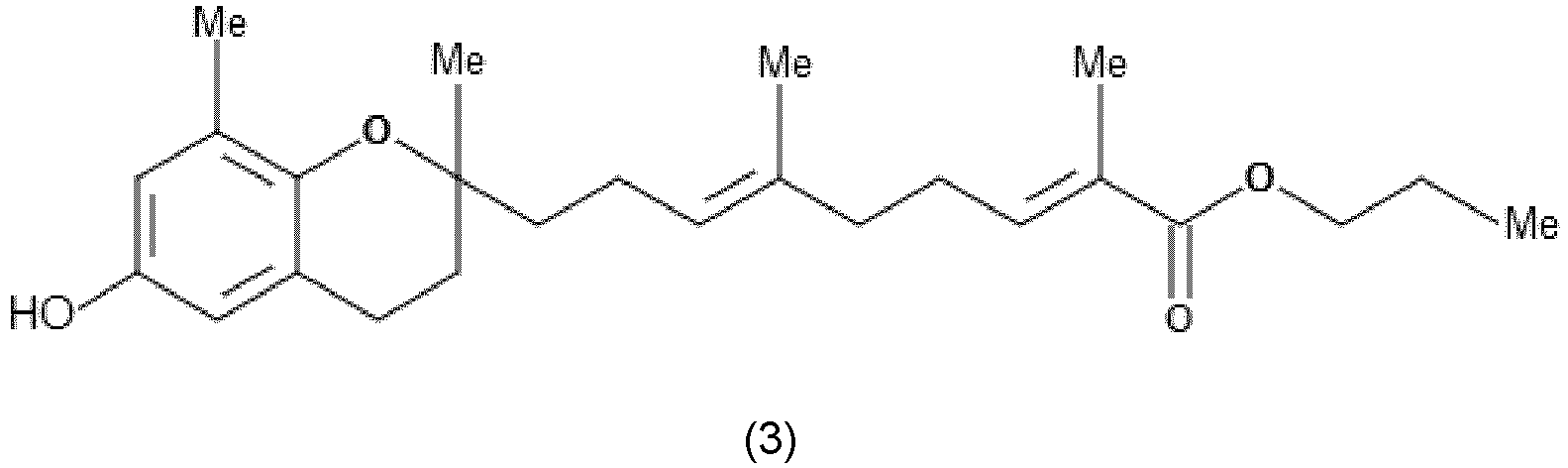


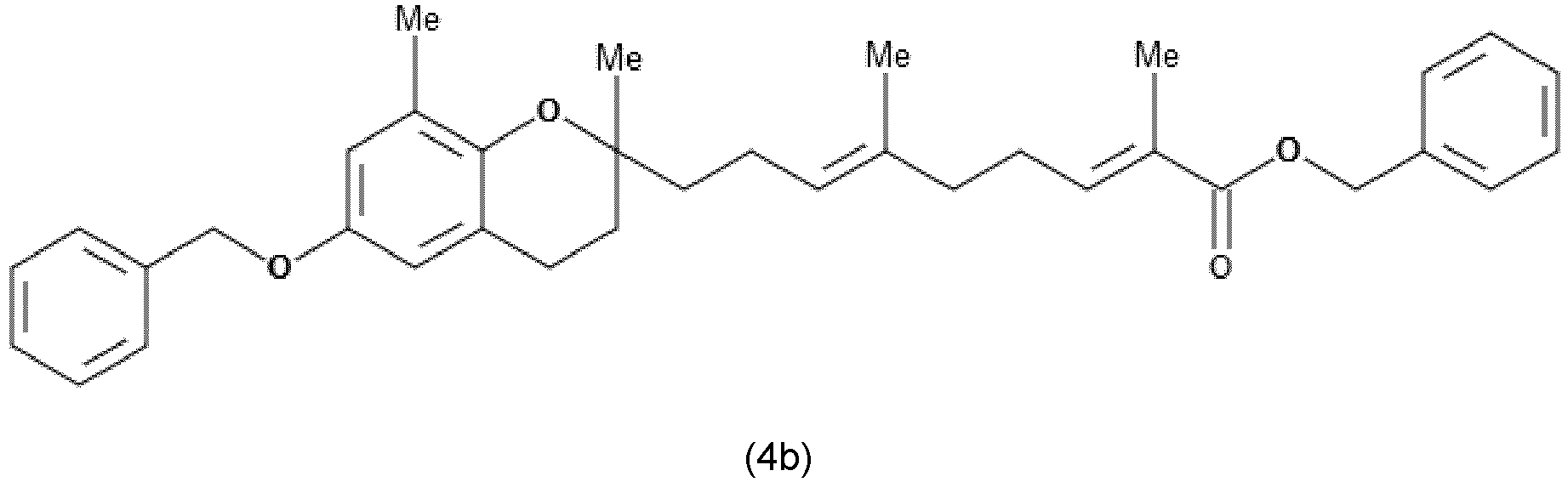


- Compound according to any of claims 1 or 2, for use as a medicament.
- Compound according to any of claims 1 or 2 for use in the treatment of a disease that responds to the administration of PPARα and/or PPARγ agonists.
- Compound for use according to claim 4, wherein the disease that responds to the administration of PPARα and/or PPARγ agonists is independently selected from the group consisting of cardiometabolic disorders, type 2 diabetes (T2D), obesity, metabolic syndrome, hypercholesterolemia, hypertriglyceridemia, primary chylomicronemia, hyperlipoproteinemia, familial dysbetalipoproteinemia, and neurodegenerative diseases.
- Pharmaceutical composition comprising an effective amount of at least one compound of formula I, according to any of claims 1 or 2, and at least one pharmaceutically acceptable excipient.
- Pharmaceutical composition according to claim 6, for use as a medicament.
- Pharmaceutical composition according to claim 6 for use in the treatment of a disease that responds to the administration of PPARα and/or PPARγ agonists.
- Pharmaceutical composition for use according to claim 8, wherein the disease that responds to the administration of PPARα and/or PPARγ agonists is independently selected from the group consisting of cardiometabolic disorders, type 2 diabetes (T2D), obesity, metabolic syndrome, hypercholesterolemia, hypertriglyceridemia, primary chylomicronemia, hyperlipoproteinemia, familial dysbetalipoproteinemia, and neurodegenerative diseases.
- Compound of general formula I, stereoisomers and pharmaceutically acceptable salts thereof:
 - R1 is independently selected from the group consisting of H and a phenol protecting group;- R2 is independently selected from an alkyl-ester group with structure:

wherein- A is independently selected from an O atom, a S atom or a NR7 group, wherein R7 is independently selected from H, OR8 or a C1-6 alkyl group, and wherein R8 is H group or a C1-6 alkyl group;- R5 is independently selected from H or a carboxylic acid protecting group;- R6 is C1-6 alkyl or OR9, wherein Rg is C1-6 alkyl;and wherein- R3 is H or a C1-6 alkyl group;- R4 is a C1-6 alkyl group or an alkoxide;- R10 is independently selected from a C1-6 alkyl, allyl, alkylamine, alkylamide, alkylaryl, alkylether, haloalkyl, silyl, carbamate, alkylsulphone or haloalkylsulphone groupfor use in the treatment of a disease that responds to the administration of PPARα and/or PPARγ agonists. - Compound for use according to claim 10, wherein the disease that responds to the administration of PPARα and/or PPARγ agonists is independently selected from the group consisting of cardiovascular disorders, type 2 diabetes (DT2), obesity, metabolic syndrome, hypercholesterolemia, hypertriglyceridemia, primary chylomicronemia, hyperlipoproteinemia, familial dysbetalipoproteinemia, inflammation, and neurodegenerative diseases.
- Pharmaceutical composition comprising an effective amount of at least one compound according to claim 10 and at least one pharmaceutically acceptable excipient, for use in the treatment of a disease that responds to the administration of PPARα and/or PPARγ agonists.
- Pharmaceutical composition for use according to claim 12, wherein the disease that responds to the administration of PPARα and/or PPARγ agonists is independently selected from the group consisting of cardiovascular disorders, type 2 diabetes (DT2), obesity, metabolic syndrome, hypercholesterolemia, hypertriglyceridemia, primary chylomicronemia, hyperlipoproteinemia, familial dysbetalipoproteinemia, inflammation, and neurodegenerative diseases.
Applications Claiming Priority (2)
| Application Number | Priority Date | Filing Date | Title |
|---|---|---|---|
| ES201731470A ES2718000B2 (en) | 2017-12-26 | 2017-12-26 | BENZOPIRANOS PRENILADOS AGONISTAS DE PPAR |
| PCT/ES2018/070826 WO2019129909A1 (en) | 2017-12-26 | 2018-12-21 | Prenylated benzopyranes as ppar agonists |
Publications (3)
| Publication Number | Publication Date |
|---|---|
| EP3733658A1 true EP3733658A1 (en) | 2020-11-04 |
| EP3733658A4 EP3733658A4 (en) | 2020-12-16 |
| EP3733658B1 EP3733658B1 (en) | 2023-02-22 |
Family
ID=66947143
Family Applications (1)
| Application Number | Title | Priority Date | Filing Date |
|---|---|---|---|
| EP18897200.4A Active EP3733658B1 (en) | 2017-12-26 | 2018-12-21 | Prenylated benzopyranes as ppar agonists |
Country Status (3)
| Country | Link |
|---|---|
| EP (1) | EP3733658B1 (en) |
| ES (1) | ES2718000B2 (en) |
| WO (1) | WO2019129909A1 (en) |
Cited By (1)
| Publication number | Priority date | Publication date | Assignee | Title |
|---|---|---|---|---|
| EP4635565A1 (en) | 2024-04-17 | 2025-10-22 | Fundación para la Investigación del Hospital Clínico de la Comunidad Valenciana (INCLIVA) | Prenylated tetrahydroquinolines and quinolines with ppar agonist activity |
Family Cites Families (3)
| Publication number | Priority date | Publication date | Assignee | Title |
|---|---|---|---|---|
| KR910007523A (en) * | 1989-10-04 | 1991-05-30 | 브리스톨-마이어즈 스퀴브 컴페니 | Tocotrienols for the treatment of diseases of hypercholesterolemia, hyperlipidemia and thromboembolism |
| JP2004513090A (en) * | 2000-09-27 | 2004-04-30 | メルク エンド カムパニー インコーポレーテッド | Benzopyrancarboxylic acid derivatives for the treatment of diabetes and dyslipidemia |
| US9309547B2 (en) * | 2012-05-22 | 2016-04-12 | The Board Of Trustees Of The University Of Arkansas | Methods for making tocoflexols and analogues thereof |
-
2017
- 2017-12-26 ES ES201731470A patent/ES2718000B2/en not_active Expired - Fee Related
-
2018
- 2018-12-21 WO PCT/ES2018/070826 patent/WO2019129909A1/en not_active Ceased
- 2018-12-21 EP EP18897200.4A patent/EP3733658B1/en active Active
Cited By (2)
| Publication number | Priority date | Publication date | Assignee | Title |
|---|---|---|---|---|
| EP4635565A1 (en) | 2024-04-17 | 2025-10-22 | Fundación para la Investigación del Hospital Clínico de la Comunidad Valenciana (INCLIVA) | Prenylated tetrahydroquinolines and quinolines with ppar agonist activity |
| WO2025219431A1 (en) | 2024-04-17 | 2025-10-23 | Fundación Para La Investigación Del Hospital Clínico De La Comunidad Valenciana Incliva | Prenylated tetrahydroquinolines and quinolines with ppar agonist activity |
Also Published As
| Publication number | Publication date |
|---|---|
| EP3733658B1 (en) | 2023-02-22 |
| EP3733658A4 (en) | 2020-12-16 |
| ES2718000B2 (en) | 2019-12-20 |
| WO2019129909A1 (en) | 2019-07-04 |
| ES2718000A1 (en) | 2019-06-26 |
Similar Documents
| Publication | Publication Date | Title |
|---|---|---|
| AU2021269396B2 (en) | Very-long-chain polyunsaturated fatty acids, elovanoid hydroxylated derivatives, and methods of use | |
| US10017442B2 (en) | Method of using dihydro-resveratrol or its stilbenoid derivatives and/or chemical variants in treatment of tumorous pathologies | |
| JP2023184606A (en) | Active agents and methods of their use for the treatment of metabolic disorders and non-alcoholic fatty liver disease | |
| EP3946308A1 (en) | Very-long-chain polyunsaturated fatty acids, elovanoid hydroxylated derivatives, and methods of use | |
| CN110183431B (en) | Compound for treating or preventing liver diseases | |
| AU2008302356A1 (en) | Compositions and methods for treating inflammation and inflammation-related disorders by Plectranthus Amboinicus extracts | |
| EP3442943B1 (en) | Aminobenzoic acid derivatives for use as anti-inflammatory agents, anti-metastatic agents and/or anticancer agents | |
| Lin et al. | Synthesis of aryl dihydrothiazol acyl shikonin ester derivatives as anticancer agents through microtubule stabilization | |
| CA3103958A1 (en) | Activators of the unfolded protein response | |
| KR20100073528A (en) | Composition containing dieckol for treating and preventing neurodegenerative disease | |
| Pativada et al. | Benzylideneacetone derivatives inhibit osteoclastogenesis and activate osteoblastogenesis independently based on specific structure–activity relationship | |
| EP3733658B1 (en) | Prenylated benzopyranes as ppar agonists | |
| Wang et al. | Garcinol and its analogues: Synthesis, cytotoxic activity and mechanistic investigation | |
| JP5265915B2 (en) | (-)-Epigallocatechin gallate derivative for inhibiting proteasome | |
| KR102221723B1 (en) | Compound for activating ampk and uses thereof | |
| TW202237073A (en) | Functionalized long-chain hydrocarbon mono- and di-carboxylic acids and derivatives therof, and their use for the prevention or treatment of disease | |
| Zhang et al. | Synthesis of natural 3′-Prenylchalconaringenin and biological evaluation of ameliorating non-alcoholic fatty liver disease and metabolic syndrome | |
| da Silva et al. | Antiangiogenic and antitumoral activity of LQFM126 prototype against B16F10 melanoma cells | |
| WO2021222738A1 (en) | Compounds for estrogen receptor positive cancers | |
| WO2022020605A1 (en) | Treatment of metastasized estrogen receptor positive breast cancer | |
| JP7826460B2 (en) | Composition for treating or preventing obesity or obesity-related liver disease, comprising a verbenone derivative | |
| RU2527526C2 (en) | Indolyl-substituted pyrazino-quinolines and using them for treating cancer | |
| Park et al. | Cinnamomum cassia Extract and Its Novel Isolated Compound Suppress Inflammation via Autophagy Induction in Sepsis | |
| HK40103109A (en) | Composition for treating or preventing obesity or obesity-associated liver disease, comprising verbenone derivatives | |
| JP2024543655A (en) | Cannabidiol derivatives, their preparation and use |
Legal Events
| Date | Code | Title | Description |
|---|---|---|---|
| STAA | Information on the status of an ep patent application or granted ep patent |
Free format text: STATUS: THE INTERNATIONAL PUBLICATION HAS BEEN MADE |
|
| PUAI | Public reference made under article 153(3) epc to a published international application that has entered the european phase |
Free format text: ORIGINAL CODE: 0009012 |
|
| STAA | Information on the status of an ep patent application or granted ep patent |
Free format text: STATUS: REQUEST FOR EXAMINATION WAS MADE |
|
| 17P | Request for examination filed |
Effective date: 20200624 |
|
| AK | Designated contracting states |
Kind code of ref document: A1 Designated state(s): AL AT BE BG CH CY CZ DE DK EE ES FI FR GB GR HR HU IE IS IT LI LT LU LV MC MK MT NL NO PL PT RO RS SE SI SK SM TR |
|
| AX | Request for extension of the european patent |
Extension state: BA ME |
|
| A4 | Supplementary search report drawn up and despatched |
Effective date: 20201117 |
|
| RIC1 | Information provided on ipc code assigned before grant |
Ipc: A61K 31/355 20060101ALI20201111BHEP Ipc: A61P 3/06 20060101ALI20201111BHEP Ipc: A61P 3/10 20060101ALI20201111BHEP Ipc: C07D 311/72 20060101AFI20201111BHEP |
|
| DAV | Request for validation of the european patent (deleted) | ||
| DAX | Request for extension of the european patent (deleted) | ||
| STAA | Information on the status of an ep patent application or granted ep patent |
Free format text: STATUS: EXAMINATION IS IN PROGRESS |
|
| 17Q | First examination report despatched |
Effective date: 20220216 |
|
| GRAP | Despatch of communication of intention to grant a patent |
Free format text: ORIGINAL CODE: EPIDOSNIGR1 |
|
| STAA | Information on the status of an ep patent application or granted ep patent |
Free format text: STATUS: GRANT OF PATENT IS INTENDED |
|
| INTG | Intention to grant announced |
Effective date: 20220921 |
|
| GRAS | Grant fee paid |
Free format text: ORIGINAL CODE: EPIDOSNIGR3 |
|
| GRAA | (expected) grant |
Free format text: ORIGINAL CODE: 0009210 |
|
| STAA | Information on the status of an ep patent application or granted ep patent |
Free format text: STATUS: THE PATENT HAS BEEN GRANTED |
|
| AK | Designated contracting states |
Kind code of ref document: B1 Designated state(s): AL AT BE BG CH CY CZ DE DK EE ES FI FR GB GR HR HU IE IS IT LI LT LU LV MC MK MT NL NO PL PT RO RS SE SI SK SM TR |
|
| REG | Reference to a national code |
Ref country code: GB Ref legal event code: FG4D |
|
| REG | Reference to a national code |
Ref country code: CH Ref legal event code: EP |
|
| REG | Reference to a national code |
Ref country code: DE Ref legal event code: R096 Ref document number: 602018046561 Country of ref document: DE |
|
| REG | Reference to a national code |
Ref country code: AT Ref legal event code: REF Ref document number: 1549443 Country of ref document: AT Kind code of ref document: T Effective date: 20230315 Ref country code: IE Ref legal event code: FG4D |
|
| REG | Reference to a national code |
Ref country code: LT Ref legal event code: MG9D |
|
| P01 | Opt-out of the competence of the unified patent court (upc) registered |
Effective date: 20230516 |
|
| P02 | Opt-out of the competence of the unified patent court (upc) changed |
Effective date: 20230519 |
|
| REG | Reference to a national code |
Ref country code: NL Ref legal event code: MP Effective date: 20230222 |
|
| REG | Reference to a national code |
Ref country code: AT Ref legal event code: MK05 Ref document number: 1549443 Country of ref document: AT Kind code of ref document: T Effective date: 20230222 |
|
| PG25 | Lapsed in a contracting state [announced via postgrant information from national office to epo] |
Ref country code: RS Free format text: LAPSE BECAUSE OF FAILURE TO SUBMIT A TRANSLATION OF THE DESCRIPTION OR TO PAY THE FEE WITHIN THE PRESCRIBED TIME-LIMIT Effective date: 20230222 Ref country code: PT Free format text: LAPSE BECAUSE OF FAILURE TO SUBMIT A TRANSLATION OF THE DESCRIPTION OR TO PAY THE FEE WITHIN THE PRESCRIBED TIME-LIMIT Effective date: 20230622 Ref country code: NO Free format text: LAPSE BECAUSE OF FAILURE TO SUBMIT A TRANSLATION OF THE DESCRIPTION OR TO PAY THE FEE WITHIN THE PRESCRIBED TIME-LIMIT Effective date: 20230522 Ref country code: NL Free format text: LAPSE BECAUSE OF FAILURE TO SUBMIT A TRANSLATION OF THE DESCRIPTION OR TO PAY THE FEE WITHIN THE PRESCRIBED TIME-LIMIT Effective date: 20230222 Ref country code: LV Free format text: LAPSE BECAUSE OF FAILURE TO SUBMIT A TRANSLATION OF THE DESCRIPTION OR TO PAY THE FEE WITHIN THE PRESCRIBED TIME-LIMIT Effective date: 20230222 Ref country code: LT Free format text: LAPSE BECAUSE OF FAILURE TO SUBMIT A TRANSLATION OF THE DESCRIPTION OR TO PAY THE FEE WITHIN THE PRESCRIBED TIME-LIMIT Effective date: 20230222 Ref country code: HR Free format text: LAPSE BECAUSE OF FAILURE TO SUBMIT A TRANSLATION OF THE DESCRIPTION OR TO PAY THE FEE WITHIN THE PRESCRIBED TIME-LIMIT Effective date: 20230222 Ref country code: ES Free format text: LAPSE BECAUSE OF FAILURE TO SUBMIT A TRANSLATION OF THE DESCRIPTION OR TO PAY THE FEE WITHIN THE PRESCRIBED TIME-LIMIT Effective date: 20230222 Ref country code: AT Free format text: LAPSE BECAUSE OF FAILURE TO SUBMIT A TRANSLATION OF THE DESCRIPTION OR TO PAY THE FEE WITHIN THE PRESCRIBED TIME-LIMIT Effective date: 20230222 |
|
| PG25 | Lapsed in a contracting state [announced via postgrant information from national office to epo] |
Ref country code: SE Free format text: LAPSE BECAUSE OF FAILURE TO SUBMIT A TRANSLATION OF THE DESCRIPTION OR TO PAY THE FEE WITHIN THE PRESCRIBED TIME-LIMIT Effective date: 20230222 Ref country code: PL Free format text: LAPSE BECAUSE OF FAILURE TO SUBMIT A TRANSLATION OF THE DESCRIPTION OR TO PAY THE FEE WITHIN THE PRESCRIBED TIME-LIMIT Effective date: 20230222 Ref country code: IS Free format text: LAPSE BECAUSE OF FAILURE TO SUBMIT A TRANSLATION OF THE DESCRIPTION OR TO PAY THE FEE WITHIN THE PRESCRIBED TIME-LIMIT Effective date: 20230622 Ref country code: GR Free format text: LAPSE BECAUSE OF FAILURE TO SUBMIT A TRANSLATION OF THE DESCRIPTION OR TO PAY THE FEE WITHIN THE PRESCRIBED TIME-LIMIT Effective date: 20230523 Ref country code: FI Free format text: LAPSE BECAUSE OF FAILURE TO SUBMIT A TRANSLATION OF THE DESCRIPTION OR TO PAY THE FEE WITHIN THE PRESCRIBED TIME-LIMIT Effective date: 20230222 |
|
| PG25 | Lapsed in a contracting state [announced via postgrant information from national office to epo] |
Ref country code: SM Free format text: LAPSE BECAUSE OF FAILURE TO SUBMIT A TRANSLATION OF THE DESCRIPTION OR TO PAY THE FEE WITHIN THE PRESCRIBED TIME-LIMIT Effective date: 20230222 Ref country code: RO Free format text: LAPSE BECAUSE OF FAILURE TO SUBMIT A TRANSLATION OF THE DESCRIPTION OR TO PAY THE FEE WITHIN THE PRESCRIBED TIME-LIMIT Effective date: 20230222 Ref country code: EE Free format text: LAPSE BECAUSE OF FAILURE TO SUBMIT A TRANSLATION OF THE DESCRIPTION OR TO PAY THE FEE WITHIN THE PRESCRIBED TIME-LIMIT Effective date: 20230222 Ref country code: DK Free format text: LAPSE BECAUSE OF FAILURE TO SUBMIT A TRANSLATION OF THE DESCRIPTION OR TO PAY THE FEE WITHIN THE PRESCRIBED TIME-LIMIT Effective date: 20230222 Ref country code: CZ Free format text: LAPSE BECAUSE OF FAILURE TO SUBMIT A TRANSLATION OF THE DESCRIPTION OR TO PAY THE FEE WITHIN THE PRESCRIBED TIME-LIMIT Effective date: 20230222 |
|
| REG | Reference to a national code |
Ref country code: DE Ref legal event code: R097 Ref document number: 602018046561 Country of ref document: DE |
|
| PG25 | Lapsed in a contracting state [announced via postgrant information from national office to epo] |
Ref country code: SK Free format text: LAPSE BECAUSE OF FAILURE TO SUBMIT A TRANSLATION OF THE DESCRIPTION OR TO PAY THE FEE WITHIN THE PRESCRIBED TIME-LIMIT Effective date: 20230222 |
|
| PLBE | No opposition filed within time limit |
Free format text: ORIGINAL CODE: 0009261 |
|
| STAA | Information on the status of an ep patent application or granted ep patent |
Free format text: STATUS: NO OPPOSITION FILED WITHIN TIME LIMIT |
|
| 26N | No opposition filed |
Effective date: 20231123 |
|
| PG25 | Lapsed in a contracting state [announced via postgrant information from national office to epo] |
Ref country code: SI Free format text: LAPSE BECAUSE OF FAILURE TO SUBMIT A TRANSLATION OF THE DESCRIPTION OR TO PAY THE FEE WITHIN THE PRESCRIBED TIME-LIMIT Effective date: 20230222 |
|
| PG25 | Lapsed in a contracting state [announced via postgrant information from national office to epo] |
Ref country code: IT Free format text: LAPSE BECAUSE OF FAILURE TO SUBMIT A TRANSLATION OF THE DESCRIPTION OR TO PAY THE FEE WITHIN THE PRESCRIBED TIME-LIMIT Effective date: 20230222 |
|
| REG | Reference to a national code |
Ref country code: DE Ref legal event code: R119 Ref document number: 602018046561 Country of ref document: DE |
|
| REG | Reference to a national code |
Ref country code: CH Ref legal event code: PL |
|
| PG25 | Lapsed in a contracting state [announced via postgrant information from national office to epo] |
Ref country code: LU Free format text: LAPSE BECAUSE OF NON-PAYMENT OF DUE FEES Effective date: 20231221 |
|
| PG25 | Lapsed in a contracting state [announced via postgrant information from national office to epo] |
Ref country code: MC Free format text: LAPSE BECAUSE OF FAILURE TO SUBMIT A TRANSLATION OF THE DESCRIPTION OR TO PAY THE FEE WITHIN THE PRESCRIBED TIME-LIMIT Effective date: 20230222 |
|
| GBPC | Gb: european patent ceased through non-payment of renewal fee |
Effective date: 20231221 |
|
| REG | Reference to a national code |
Ref country code: BE Ref legal event code: MM Effective date: 20231231 |
|
| PG25 | Lapsed in a contracting state [announced via postgrant information from national office to epo] |
Ref country code: MC Free format text: LAPSE BECAUSE OF FAILURE TO SUBMIT A TRANSLATION OF THE DESCRIPTION OR TO PAY THE FEE WITHIN THE PRESCRIBED TIME-LIMIT Effective date: 20230222 Ref country code: LU Free format text: LAPSE BECAUSE OF NON-PAYMENT OF DUE FEES Effective date: 20231221 |
|
| REG | Reference to a national code |
Ref country code: IE Ref legal event code: MM4A |
|
| PG25 | Lapsed in a contracting state [announced via postgrant information from national office to epo] |
Ref country code: DE Free format text: LAPSE BECAUSE OF NON-PAYMENT OF DUE FEES Effective date: 20240702 Ref country code: IE Free format text: LAPSE BECAUSE OF NON-PAYMENT OF DUE FEES Effective date: 20231221 |
|
| PG25 | Lapsed in a contracting state [announced via postgrant information from national office to epo] |
Ref country code: GB Free format text: LAPSE BECAUSE OF NON-PAYMENT OF DUE FEES Effective date: 20231221 |
|
| PG25 | Lapsed in a contracting state [announced via postgrant information from national office to epo] |
Ref country code: BE Free format text: LAPSE BECAUSE OF NON-PAYMENT OF DUE FEES Effective date: 20231231 |
|
| PG25 | Lapsed in a contracting state [announced via postgrant information from national office to epo] |
Ref country code: FR Free format text: LAPSE BECAUSE OF NON-PAYMENT OF DUE FEES Effective date: 20231231 |
|
| PG25 | Lapsed in a contracting state [announced via postgrant information from national office to epo] |
Ref country code: CH Free format text: LAPSE BECAUSE OF NON-PAYMENT OF DUE FEES Effective date: 20231231 |
|
| PG25 | Lapsed in a contracting state [announced via postgrant information from national office to epo] |
Ref country code: IE Free format text: LAPSE BECAUSE OF NON-PAYMENT OF DUE FEES Effective date: 20231221 Ref country code: GB Free format text: LAPSE BECAUSE OF NON-PAYMENT OF DUE FEES Effective date: 20231221 Ref country code: FR Free format text: LAPSE BECAUSE OF NON-PAYMENT OF DUE FEES Effective date: 20231231 Ref country code: DE Free format text: LAPSE BECAUSE OF NON-PAYMENT OF DUE FEES Effective date: 20240702 Ref country code: CH Free format text: LAPSE BECAUSE OF NON-PAYMENT OF DUE FEES Effective date: 20231231 Ref country code: BE Free format text: LAPSE BECAUSE OF NON-PAYMENT OF DUE FEES Effective date: 20231231 |
|
| PG25 | Lapsed in a contracting state [announced via postgrant information from national office to epo] |
Ref country code: BG Free format text: LAPSE BECAUSE OF FAILURE TO SUBMIT A TRANSLATION OF THE DESCRIPTION OR TO PAY THE FEE WITHIN THE PRESCRIBED TIME-LIMIT Effective date: 20230222 |
|
| PG25 | Lapsed in a contracting state [announced via postgrant information from national office to epo] |
Ref country code: BG Free format text: LAPSE BECAUSE OF FAILURE TO SUBMIT A TRANSLATION OF THE DESCRIPTION OR TO PAY THE FEE WITHIN THE PRESCRIBED TIME-LIMIT Effective date: 20230222 |
|
| PG25 | Lapsed in a contracting state [announced via postgrant information from national office to epo] |
Ref country code: CY Free format text: LAPSE BECAUSE OF FAILURE TO SUBMIT A TRANSLATION OF THE DESCRIPTION OR TO PAY THE FEE WITHIN THE PRESCRIBED TIME-LIMIT; INVALID AB INITIO Effective date: 20181221 |
|
| PG25 | Lapsed in a contracting state [announced via postgrant information from national office to epo] |
Ref country code: HU Free format text: LAPSE BECAUSE OF FAILURE TO SUBMIT A TRANSLATION OF THE DESCRIPTION OR TO PAY THE FEE WITHIN THE PRESCRIBED TIME-LIMIT; INVALID AB INITIO Effective date: 20181221 |
|
| PG25 | Lapsed in a contracting state [announced via postgrant information from national office to epo] |
Ref country code: TR Free format text: LAPSE BECAUSE OF FAILURE TO SUBMIT A TRANSLATION OF THE DESCRIPTION OR TO PAY THE FEE WITHIN THE PRESCRIBED TIME-LIMIT Effective date: 20230222 |