EP3733657A1 - Cocrystal of tocopherol and proline and preparation method therefor - Google Patents
Cocrystal of tocopherol and proline and preparation method therefor Download PDFInfo
- Publication number
- EP3733657A1 EP3733657A1 EP18894831.9A EP18894831A EP3733657A1 EP 3733657 A1 EP3733657 A1 EP 3733657A1 EP 18894831 A EP18894831 A EP 18894831A EP 3733657 A1 EP3733657 A1 EP 3733657A1
- Authority
- EP
- European Patent Office
- Prior art keywords
- crystal
- tocopherol
- proline
- ray powder
- powder diffraction
- Prior art date
- Legal status (The legal status is an assumption and is not a legal conclusion. Google has not performed a legal analysis and makes no representation as to the accuracy of the status listed.)
- Withdrawn
Links
- GVJHHUAWPYXKBD-IEOSBIPESA-N α-tocopherol Chemical compound OC1=C(C)C(C)=C2O[C@@](CCC[C@H](C)CCC[C@H](C)CCCC(C)C)(C)CCC2=C1C GVJHHUAWPYXKBD-IEOSBIPESA-N 0.000 title claims abstract description 259
- GVJHHUAWPYXKBD-UHFFFAOYSA-N d-alpha-tocopherol Natural products OC1=C(C)C(C)=C2OC(CCCC(C)CCCC(C)CCCC(C)C)(C)CCC2=C1C GVJHHUAWPYXKBD-UHFFFAOYSA-N 0.000 title claims abstract description 255
- ONIBWKKTOPOVIA-BYPYZUCNSA-N L-Proline Chemical compound OC(=O)[C@@H]1CCCN1 ONIBWKKTOPOVIA-BYPYZUCNSA-N 0.000 title claims abstract description 186
- 239000011732 tocopherol Substances 0.000 title claims abstract description 132
- 229930003799 tocopherol Natural products 0.000 title claims abstract description 132
- 235000010384 tocopherol Nutrition 0.000 title claims abstract description 129
- 229960001295 tocopherol Drugs 0.000 title claims abstract description 129
- ONIBWKKTOPOVIA-UHFFFAOYSA-N Proline Natural products OC(=O)C1CCCN1 ONIBWKKTOPOVIA-UHFFFAOYSA-N 0.000 title claims abstract description 52
- 238000002360 preparation method Methods 0.000 title claims abstract description 20
- 239000013078 crystal Substances 0.000 claims abstract description 302
- 238000000034 method Methods 0.000 claims abstract description 23
- 238000002844 melting Methods 0.000 claims abstract description 17
- 230000008018 melting Effects 0.000 claims abstract description 17
- 230000003078 antioxidant effect Effects 0.000 claims abstract description 12
- 235000013305 food Nutrition 0.000 claims abstract description 7
- 239000002537 cosmetic Substances 0.000 claims abstract description 6
- 239000003814 drug Substances 0.000 claims abstract description 6
- 230000036541 health Effects 0.000 claims abstract description 5
- 239000003963 antioxidant agent Substances 0.000 claims abstract description 4
- 229960002429 proline Drugs 0.000 claims description 185
- 229930182821 L-proline Natural products 0.000 claims description 135
- 229960000984 tocofersolan Drugs 0.000 claims description 128
- 235000004835 α-tocopherol Nutrition 0.000 claims description 127
- 239000002076 α-tocopherol Substances 0.000 claims description 127
- OKKJLVBELUTLKV-UHFFFAOYSA-N Methanol Chemical compound OC OKKJLVBELUTLKV-UHFFFAOYSA-N 0.000 claims description 96
- 238000000634 powder X-ray diffraction Methods 0.000 claims description 57
- 239000002244 precipitate Substances 0.000 claims description 48
- 238000000113 differential scanning calorimetry Methods 0.000 claims description 36
- 238000001237 Raman spectrum Methods 0.000 claims description 29
- 239000007787 solid Substances 0.000 claims description 29
- 238000001069 Raman spectroscopy Methods 0.000 claims description 28
- 229930182820 D-proline Natural products 0.000 claims description 24
- GZIFEOYASATJEH-VHFRWLAGSA-N δ-tocopherol Chemical compound OC1=CC(C)=C2O[C@@](CCC[C@H](C)CCC[C@H](C)CCCC(C)C)(C)CCC2=C1 GZIFEOYASATJEH-VHFRWLAGSA-N 0.000 claims description 24
- ONIBWKKTOPOVIA-SCSAIBSYSA-N D-Proline Chemical compound OC(=O)[C@H]1CCCN1 ONIBWKKTOPOVIA-SCSAIBSYSA-N 0.000 claims description 23
- GZIFEOYASATJEH-UHFFFAOYSA-N D-delta tocopherol Natural products OC1=CC(C)=C2OC(CCCC(C)CCCC(C)CCCC(C)C)(C)CCC2=C1 GZIFEOYASATJEH-UHFFFAOYSA-N 0.000 claims description 23
- 238000002329 infrared spectrum Methods 0.000 claims description 23
- 239000002904 solvent Substances 0.000 claims description 19
- 238000001757 thermogravimetry curve Methods 0.000 claims description 17
- LFQSCWFLJHTTHZ-UHFFFAOYSA-N Ethanol Chemical compound CCO LFQSCWFLJHTTHZ-UHFFFAOYSA-N 0.000 claims description 16
- 238000005033 Fourier transform infrared spectroscopy Methods 0.000 claims description 13
- 238000000862 absorption spectrum Methods 0.000 claims description 12
- 230000000977 initiatory effect Effects 0.000 claims description 12
- ZWEHNKRNPOVVGH-UHFFFAOYSA-N 2-Butanone Chemical compound CCC(C)=O ZWEHNKRNPOVVGH-UHFFFAOYSA-N 0.000 claims description 9
- CSCPPACGZOOCGX-UHFFFAOYSA-N Acetone Chemical compound CC(C)=O CSCPPACGZOOCGX-UHFFFAOYSA-N 0.000 claims description 8
- LYGJENNIWJXYER-UHFFFAOYSA-N nitromethane Chemical compound C[N+]([O-])=O LYGJENNIWJXYER-UHFFFAOYSA-N 0.000 claims description 8
- WEVYAHXRMPXWCK-UHFFFAOYSA-N Acetonitrile Chemical compound CC#N WEVYAHXRMPXWCK-UHFFFAOYSA-N 0.000 claims description 6
- YMWUJEATGCHHMB-UHFFFAOYSA-N Dichloromethane Chemical compound ClCCl YMWUJEATGCHHMB-UHFFFAOYSA-N 0.000 claims description 6
- XEKOWRVHYACXOJ-UHFFFAOYSA-N Ethyl acetate Chemical compound CCOC(C)=O XEKOWRVHYACXOJ-UHFFFAOYSA-N 0.000 claims description 6
- YXFVVABEGXRONW-UHFFFAOYSA-N Toluene Chemical compound CC1=CC=CC=C1 YXFVVABEGXRONW-UHFFFAOYSA-N 0.000 claims description 6
- 239000012046 mixed solvent Substances 0.000 claims description 6
- 239000000546 pharmaceutical excipient Substances 0.000 claims description 5
- 239000000047 product Substances 0.000 claims description 5
- KFZMGEQAYNKOFK-UHFFFAOYSA-N Isopropanol Chemical compound CC(C)O KFZMGEQAYNKOFK-UHFFFAOYSA-N 0.000 claims description 4
- BZLVMXJERCGZMT-UHFFFAOYSA-N Methyl tert-butyl ether Chemical compound COC(C)(C)C BZLVMXJERCGZMT-UHFFFAOYSA-N 0.000 claims description 4
- ZMXDDKWLCZADIW-UHFFFAOYSA-N N,N-Dimethylformamide Chemical compound CN(C)C=O ZMXDDKWLCZADIW-UHFFFAOYSA-N 0.000 claims description 4
- WYURNTSHIVDZCO-UHFFFAOYSA-N Tetrahydrofuran Chemical compound C1CCOC1 WYURNTSHIVDZCO-UHFFFAOYSA-N 0.000 claims description 4
- 235000010389 delta-tocopherol Nutrition 0.000 claims description 4
- 239000000203 mixture Substances 0.000 claims description 4
- 235000019144 δ-tocotrienol Nutrition 0.000 claims description 4
- 235000006708 antioxidants Nutrition 0.000 claims description 3
- 150000003789 δ-tocopherols Chemical class 0.000 claims description 3
- 150000003790 δ-tocotrienols Chemical class 0.000 claims description 3
- 235000001815 DL-alpha-tocopherol Nutrition 0.000 claims description 2
- GSNUFIFRDBKVIE-UHFFFAOYSA-N DMF Natural products CC1=CC=C(C)O1 GSNUFIFRDBKVIE-UHFFFAOYSA-N 0.000 claims description 2
- 238000001035 drying Methods 0.000 claims description 2
- JMMWKPVZQRWMSS-UHFFFAOYSA-N isopropanol acetate Natural products CC(C)OC(C)=O JMMWKPVZQRWMSS-UHFFFAOYSA-N 0.000 claims description 2
- 229940011051 isopropyl acetate Drugs 0.000 claims description 2
- GWYFCOCPABKNJV-UHFFFAOYSA-N isovaleric acid Chemical compound CC(C)CC(O)=O GWYFCOCPABKNJV-UHFFFAOYSA-N 0.000 claims description 2
- 235000016709 nutrition Nutrition 0.000 claims description 2
- 230000035764 nutrition Effects 0.000 claims description 2
- 239000003960 organic solvent Substances 0.000 claims description 2
- 238000003756 stirring Methods 0.000 claims description 2
- YLQBMQCUIZJEEH-UHFFFAOYSA-N tetrahydrofuran Natural products C=1C=COC=1 YLQBMQCUIZJEEH-UHFFFAOYSA-N 0.000 claims description 2
- 229940088594 vitamin Drugs 0.000 claims description 2
- 229930003231 vitamin Natural products 0.000 claims description 2
- 235000013343 vitamin Nutrition 0.000 claims description 2
- 239000011782 vitamin Substances 0.000 claims description 2
- 150000003722 vitamin derivatives Chemical class 0.000 claims description 2
- XLYOFNOQVPJJNP-UHFFFAOYSA-N water Substances O XLYOFNOQVPJJNP-UHFFFAOYSA-N 0.000 claims description 2
- 230000007774 longterm Effects 0.000 abstract description 7
- 238000004519 manufacturing process Methods 0.000 abstract description 4
- 238000003860 storage Methods 0.000 abstract description 2
- 239000007788 liquid Substances 0.000 description 20
- 239000000843 powder Substances 0.000 description 20
- 238000012360 testing method Methods 0.000 description 18
- ZAKOWWREFLAJOT-CEFNRUSXSA-N D-alpha-tocopherylacetate Chemical compound CC(=O)OC1=C(C)C(C)=C2O[C@@](CCC[C@H](C)CCC[C@H](C)CCCC(C)C)(C)CCC2=C1C ZAKOWWREFLAJOT-CEFNRUSXSA-N 0.000 description 15
- 229940042585 tocopherol acetate Drugs 0.000 description 15
- 238000004566 IR spectroscopy Methods 0.000 description 10
- 230000008859 change Effects 0.000 description 10
- 150000001875 compounds Chemical class 0.000 description 9
- 235000015278 beef Nutrition 0.000 description 8
- HHEAADYXPMHMCT-UHFFFAOYSA-N dpph Chemical compound [O-][N+](=O)C1=CC([N+](=O)[O-])=CC([N+]([O-])=O)=C1[N]N(C=1C=CC=CC=1)C1=CC=CC=C1 HHEAADYXPMHMCT-UHFFFAOYSA-N 0.000 description 6
- 239000000523 sample Substances 0.000 description 6
- 238000010521 absorption reaction Methods 0.000 description 5
- 230000015572 biosynthetic process Effects 0.000 description 5
- 230000007760 free radical scavenging Effects 0.000 description 5
- 235000013372 meat Nutrition 0.000 description 5
- 238000003836 solid-state method Methods 0.000 description 5
- 235000012206 bottled water Nutrition 0.000 description 4
- 230000003064 anti-oxidating effect Effects 0.000 description 3
- 230000003287 optical effect Effects 0.000 description 3
- 150000003254 radicals Chemical class 0.000 description 3
- 239000000126 substance Substances 0.000 description 3
- 235000019149 tocopherols Nutrition 0.000 description 3
- QUEDXNHFTDJVIY-UHFFFAOYSA-N γ-tocopherol Chemical class OC1=C(C)C(C)=C2OC(CCCC(C)CCCC(C)CCCC(C)C)(C)CCC2=C1 QUEDXNHFTDJVIY-UHFFFAOYSA-N 0.000 description 3
- OTXNTMVVOOBZCV-UHFFFAOYSA-N 2R-gamma-tocotrienol Natural products OC1=C(C)C(C)=C2OC(CCC=C(C)CCC=C(C)CCC=C(C)C)(C)CCC2=C1 OTXNTMVVOOBZCV-UHFFFAOYSA-N 0.000 description 2
- VYPSYNLAJGMNEJ-UHFFFAOYSA-N Silicium dioxide Chemical compound O=[Si]=O VYPSYNLAJGMNEJ-UHFFFAOYSA-N 0.000 description 2
- 238000002835 absorbance Methods 0.000 description 2
- 230000001133 acceleration Effects 0.000 description 2
- 229940087168 alpha tocopherol Drugs 0.000 description 2
- RZFHLOLGZPDCHJ-DLQZEEBKSA-N alpha-Tocotrienol Natural products Oc1c(C)c(C)c2O[C@@](CC/C=C(/CC/C=C(\CC/C=C(\C)/C)/C)\C)(C)CCc2c1C RZFHLOLGZPDCHJ-DLQZEEBKSA-N 0.000 description 2
- 239000003153 chemical reaction reagent Substances 0.000 description 2
- 230000000694 effects Effects 0.000 description 2
- 238000010812 external standard method Methods 0.000 description 2
- 238000004128 high performance liquid chromatography Methods 0.000 description 2
- 238000004321 preservation Methods 0.000 description 2
- 239000002994 raw material Substances 0.000 description 2
- 230000006641 stabilisation Effects 0.000 description 2
- 238000011105 stabilization Methods 0.000 description 2
- WGVKWNUPNGFDFJ-DQCZWYHMSA-N β-tocopherol Chemical compound OC1=CC(C)=C2O[C@@](CCC[C@H](C)CCC[C@H](C)CCCC(C)C)(C)CCC2=C1C WGVKWNUPNGFDFJ-DQCZWYHMSA-N 0.000 description 2
- FGYKUFVNYVMTAM-UHFFFAOYSA-N (R)-2,5,8-trimethyl-2-(4,8,12-trimethyl-trideca-3t,7t,11-trienyl)-chroman-6-ol Natural products OC1=CC(C)=C2OC(CCC=C(C)CCC=C(C)CCC=C(C)C)(C)CCC2=C1C FGYKUFVNYVMTAM-UHFFFAOYSA-N 0.000 description 1
- GJJVAFUKOBZPCB-ZGRPYONQSA-N (r)-3,4-dihydro-2-methyl-2-(4,8,12-trimethyl-3,7,11-tridecatrienyl)-2h-1-benzopyran-6-ol Chemical class OC1=CC=C2OC(CC/C=C(C)/CC/C=C(C)/CCC=C(C)C)(C)CCC2=C1 GJJVAFUKOBZPCB-ZGRPYONQSA-N 0.000 description 1
- ODADKLYLWWCHNB-UHFFFAOYSA-N 2R-delta-tocotrienol Natural products OC1=CC(C)=C2OC(CCC=C(C)CCC=C(C)CCC=C(C)C)(C)CCC2=C1 ODADKLYLWWCHNB-UHFFFAOYSA-N 0.000 description 1
- GUOCOOQWZHQBJI-UHFFFAOYSA-N 4-oct-7-enoxy-4-oxobutanoic acid Chemical compound OC(=O)CCC(=O)OCCCCCCC=C GUOCOOQWZHQBJI-UHFFFAOYSA-N 0.000 description 1
- 0 C*[C@@](C[C@@](C)C1)C1=C Chemical compound C*[C@@](C[C@@](C)C1)C1=C 0.000 description 1
- 125000000180 D-prolyl group Chemical group N1[C@@H](C(=O)*)CCC1 0.000 description 1
- 239000011627 DL-alpha-tocopherol Substances 0.000 description 1
- 229940123457 Free radical scavenger Drugs 0.000 description 1
- 125000000174 L-prolyl group Chemical group [H]N1C([H])([H])C([H])([H])C([H])([H])[C@@]1([H])C(*)=O 0.000 description 1
- 229920002774 Maltodextrin Polymers 0.000 description 1
- 239000005913 Maltodextrin Substances 0.000 description 1
- 238000005411 Van der Waals force Methods 0.000 description 1
- 150000001242 acetic acid derivatives Chemical class 0.000 description 1
- 239000004480 active ingredient Substances 0.000 description 1
- 229940064063 alpha tocotrienol Drugs 0.000 description 1
- QVGXLLKOCUKJST-UHFFFAOYSA-N atomic oxygen Chemical compound [O] QVGXLLKOCUKJST-UHFFFAOYSA-N 0.000 description 1
- 230000009286 beneficial effect Effects 0.000 description 1
- 229940066595 beta tocopherol Drugs 0.000 description 1
- FGYKUFVNYVMTAM-YMCDKREISA-N beta-Tocotrienol Natural products Oc1c(C)c2c(c(C)c1)O[C@@](CC/C=C(\CC/C=C(\CC/C=C(\C)/C)/C)/C)(C)CC2 FGYKUFVNYVMTAM-YMCDKREISA-N 0.000 description 1
- 239000012496 blank sample Substances 0.000 description 1
- 230000000052 comparative effect Effects 0.000 description 1
- 229940099418 d- alpha-tocopherol succinate Drugs 0.000 description 1
- 230000003247 decreasing effect Effects 0.000 description 1
- BTNBMQIHCRIGOU-UHFFFAOYSA-N delta-tocotrienol Natural products CC(=CCCC(=CCCC(=CCCOC1(C)CCc2cc(O)cc(C)c2O1)C)C)C BTNBMQIHCRIGOU-UHFFFAOYSA-N 0.000 description 1
- 238000004821 distillation Methods 0.000 description 1
- FGYKUFVNYVMTAM-MUUNZHRXSA-N epsilon-Tocopherol Natural products OC1=CC(C)=C2O[C@@](CCC=C(C)CCC=C(C)CCC=C(C)C)(C)CCC2=C1C FGYKUFVNYVMTAM-MUUNZHRXSA-N 0.000 description 1
- 239000000796 flavoring agent Substances 0.000 description 1
- 235000019634 flavors Nutrition 0.000 description 1
- OTXNTMVVOOBZCV-YMCDKREISA-N gamma-Tocotrienol Natural products Oc1c(C)c(C)c2O[C@@](CC/C=C(\CC/C=C(\CC/C=C(\C)/C)/C)/C)(C)CCc2c1 OTXNTMVVOOBZCV-YMCDKREISA-N 0.000 description 1
- 235000010382 gamma-tocopherol Nutrition 0.000 description 1
- WIGCFUFOHFEKBI-UHFFFAOYSA-N gamma-tocopherol Natural products CC(C)CCCC(C)CCCC(C)CCCC1CCC2C(C)C(O)C(C)C(C)C2O1 WIGCFUFOHFEKBI-UHFFFAOYSA-N 0.000 description 1
- 238000010438 heat treatment Methods 0.000 description 1
- 239000001257 hydrogen Substances 0.000 description 1
- 229910052739 hydrogen Inorganic materials 0.000 description 1
- 125000002887 hydroxy group Chemical group [H]O* 0.000 description 1
- 230000006872 improvement Effects 0.000 description 1
- 239000004615 ingredient Substances 0.000 description 1
- 230000003993 interaction Effects 0.000 description 1
- 229940035034 maltodextrin Drugs 0.000 description 1
- 239000000463 material Substances 0.000 description 1
- 229910052751 metal Inorganic materials 0.000 description 1
- 239000002184 metal Substances 0.000 description 1
- 238000002156 mixing Methods 0.000 description 1
- 230000004048 modification Effects 0.000 description 1
- 238000012986 modification Methods 0.000 description 1
- 239000001301 oxygen Substances 0.000 description 1
- 229910052760 oxygen Inorganic materials 0.000 description 1
- ISWSIDIOOBJBQZ-UHFFFAOYSA-N phenol group Chemical group C1(=CC=CC=C1)O ISWSIDIOOBJBQZ-UHFFFAOYSA-N 0.000 description 1
- 239000006069 physical mixture Substances 0.000 description 1
- 230000005855 radiation Effects 0.000 description 1
- 239000002516 radical scavenger Substances 0.000 description 1
- 238000011160 research Methods 0.000 description 1
- 238000005464 sample preparation method Methods 0.000 description 1
- 230000001953 sensory effect Effects 0.000 description 1
- 239000000377 silicon dioxide Substances 0.000 description 1
- 229940080313 sodium starch Drugs 0.000 description 1
- 239000007921 spray Substances 0.000 description 1
- KDYFGRWQOYBRFD-UHFFFAOYSA-L succinate(2-) Chemical compound [O-]C(=O)CCC([O-])=O KDYFGRWQOYBRFD-UHFFFAOYSA-L 0.000 description 1
- 229930003802 tocotrienol Natural products 0.000 description 1
- 239000011731 tocotrienol Substances 0.000 description 1
- 235000019148 tocotrienols Nutrition 0.000 description 1
- 229940068778 tocotrienols Drugs 0.000 description 1
- 238000005303 weighing Methods 0.000 description 1
- 150000003772 α-tocopherols Chemical class 0.000 description 1
- 235000019145 α-tocotrienol Nutrition 0.000 description 1
- 239000011730 α-tocotrienol Substances 0.000 description 1
- 235000007680 β-tocopherol Nutrition 0.000 description 1
- 239000011590 β-tocopherol Substances 0.000 description 1
- 235000019151 β-tocotrienol Nutrition 0.000 description 1
- 239000011723 β-tocotrienol Substances 0.000 description 1
- 239000002478 γ-tocopherol Substances 0.000 description 1
- QUEDXNHFTDJVIY-DQCZWYHMSA-N γ-tocopherol Chemical compound OC1=C(C)C(C)=C2O[C@@](CCC[C@H](C)CCC[C@H](C)CCCC(C)C)(C)CCC2=C1 QUEDXNHFTDJVIY-DQCZWYHMSA-N 0.000 description 1
- 235000019150 γ-tocotrienol Nutrition 0.000 description 1
- 239000011722 γ-tocotrienol Substances 0.000 description 1
- OTXNTMVVOOBZCV-WAZJVIJMSA-N γ-tocotrienol Chemical compound OC1=C(C)C(C)=C2O[C@@](CC/C=C(C)/CC/C=C(C)/CCC=C(C)C)(C)CCC2=C1 OTXNTMVVOOBZCV-WAZJVIJMSA-N 0.000 description 1
- 239000002446 δ-tocopherol Substances 0.000 description 1
- 239000011729 δ-tocotrienol Substances 0.000 description 1
- ODADKLYLWWCHNB-LDYBVBFYSA-N δ-tocotrienol Chemical compound OC1=CC(C)=C2O[C@@](CC/C=C(C)/CC/C=C(C)/CCC=C(C)C)(C)CCC2=C1 ODADKLYLWWCHNB-LDYBVBFYSA-N 0.000 description 1
Images






Classifications
-
- C—CHEMISTRY; METALLURGY
- C07—ORGANIC CHEMISTRY
- C07D—HETEROCYCLIC COMPOUNDS
- C07D207/00—Heterocyclic compounds containing five-membered rings not condensed with other rings, with one nitrogen atom as the only ring hetero atom
- C07D207/02—Heterocyclic compounds containing five-membered rings not condensed with other rings, with one nitrogen atom as the only ring hetero atom with only hydrogen or carbon atoms directly attached to the ring nitrogen atom
- C07D207/04—Heterocyclic compounds containing five-membered rings not condensed with other rings, with one nitrogen atom as the only ring hetero atom with only hydrogen or carbon atoms directly attached to the ring nitrogen atom having no double bonds between ring members or between ring members and non-ring members
- C07D207/10—Heterocyclic compounds containing five-membered rings not condensed with other rings, with one nitrogen atom as the only ring hetero atom with only hydrogen or carbon atoms directly attached to the ring nitrogen atom having no double bonds between ring members or between ring members and non-ring members with hetero atoms or with carbon atoms having three bonds to hetero atoms with at the most one bond to halogen, e.g. ester or nitrile radicals, directly attached to ring carbon atoms
- C07D207/16—Carbon atoms having three bonds to hetero atoms with at the most one bond to halogen, e.g. ester or nitrile radicals
-
- A—HUMAN NECESSITIES
- A23—FOODS OR FOODSTUFFS; TREATMENT THEREOF, NOT COVERED BY OTHER CLASSES
- A23B—PRESERVATION OF FOODS, FOODSTUFFS OR NON-ALCOHOLIC BEVERAGES; CHEMICAL RIPENING OF FRUIT OR VEGETABLES
- A23B4/00—Preservation of meat, sausages, fish or fish products
- A23B4/14—Preserving with chemicals not covered by groups A23B4/02 or A23B4/12
- A23B4/18—Preserving with chemicals not covered by groups A23B4/02 or A23B4/12 in the form of liquids or solids
- A23B4/20—Organic compounds; Microorganisms; Enzymes
-
- A—HUMAN NECESSITIES
- A23—FOODS OR FOODSTUFFS; TREATMENT THEREOF, NOT COVERED BY OTHER CLASSES
- A23K—FODDER
- A23K20/00—Accessory food factors for animal feeding-stuffs
- A23K20/10—Organic substances
- A23K20/116—Heterocyclic compounds
- A23K20/121—Heterocyclic compounds containing oxygen or sulfur as hetero atom
-
- A—HUMAN NECESSITIES
- A23—FOODS OR FOODSTUFFS; TREATMENT THEREOF, NOT COVERED BY OTHER CLASSES
- A23K—FODDER
- A23K20/00—Accessory food factors for animal feeding-stuffs
- A23K20/10—Organic substances
- A23K20/142—Amino acids; Derivatives thereof
-
- A—HUMAN NECESSITIES
- A23—FOODS OR FOODSTUFFS; TREATMENT THEREOF, NOT COVERED BY OTHER CLASSES
- A23K—FODDER
- A23K20/00—Accessory food factors for animal feeding-stuffs
- A23K20/10—Organic substances
- A23K20/174—Vitamins
-
- A—HUMAN NECESSITIES
- A23—FOODS OR FOODSTUFFS; TREATMENT THEREOF, NOT COVERED BY OTHER CLASSES
- A23L—FOODS, FOODSTUFFS OR NON-ALCOHOLIC BEVERAGES, NOT OTHERWISE PROVIDED FOR; PREPARATION OR TREATMENT THEREOF
- A23L33/00—Modifying nutritive qualities of foods; Dietetic products; Preparation or treatment thereof
- A23L33/10—Modifying nutritive qualities of foods; Dietetic products; Preparation or treatment thereof using additives
- A23L33/15—Vitamins
-
- A—HUMAN NECESSITIES
- A23—FOODS OR FOODSTUFFS; TREATMENT THEREOF, NOT COVERED BY OTHER CLASSES
- A23L—FOODS, FOODSTUFFS OR NON-ALCOHOLIC BEVERAGES, NOT OTHERWISE PROVIDED FOR; PREPARATION OR TREATMENT THEREOF
- A23L33/00—Modifying nutritive qualities of foods; Dietetic products; Preparation or treatment thereof
- A23L33/10—Modifying nutritive qualities of foods; Dietetic products; Preparation or treatment thereof using additives
- A23L33/17—Amino acids, peptides or proteins
- A23L33/175—Amino acids
-
- A—HUMAN NECESSITIES
- A61—MEDICAL OR VETERINARY SCIENCE; HYGIENE
- A61K—PREPARATIONS FOR MEDICAL, DENTAL OR TOILETRY PURPOSES
- A61K31/00—Medicinal preparations containing organic active ingredients
- A61K31/33—Heterocyclic compounds
- A61K31/335—Heterocyclic compounds having oxygen as the only ring hetero atom, e.g. fungichromin
- A61K31/35—Heterocyclic compounds having oxygen as the only ring hetero atom, e.g. fungichromin having six-membered rings with one oxygen as the only ring hetero atom
- A61K31/352—Heterocyclic compounds having oxygen as the only ring hetero atom, e.g. fungichromin having six-membered rings with one oxygen as the only ring hetero atom condensed with carbocyclic rings, e.g. methantheline
- A61K31/353—3,4-Dihydrobenzopyrans, e.g. chroman, catechin
- A61K31/355—Tocopherols, e.g. vitamin E
-
- A—HUMAN NECESSITIES
- A61—MEDICAL OR VETERINARY SCIENCE; HYGIENE
- A61K—PREPARATIONS FOR MEDICAL, DENTAL OR TOILETRY PURPOSES
- A61K31/00—Medicinal preparations containing organic active ingredients
- A61K31/33—Heterocyclic compounds
- A61K31/395—Heterocyclic compounds having nitrogen as a ring hetero atom, e.g. guanethidine or rifamycins
- A61K31/40—Heterocyclic compounds having nitrogen as a ring hetero atom, e.g. guanethidine or rifamycins having five-membered rings with one nitrogen as the only ring hetero atom, e.g. sulpiride, succinimide, tolmetin, buflomedil
- A61K31/401—Proline; Derivatives thereof, e.g. captopril
-
- A—HUMAN NECESSITIES
- A61—MEDICAL OR VETERINARY SCIENCE; HYGIENE
- A61K—PREPARATIONS FOR MEDICAL, DENTAL OR TOILETRY PURPOSES
- A61K8/00—Cosmetics or similar toiletry preparations
- A61K8/18—Cosmetics or similar toiletry preparations characterised by the composition
- A61K8/30—Cosmetics or similar toiletry preparations characterised by the composition containing organic compounds
- A61K8/49—Cosmetics or similar toiletry preparations characterised by the composition containing organic compounds containing heterocyclic compounds
- A61K8/4906—Cosmetics or similar toiletry preparations characterised by the composition containing organic compounds containing heterocyclic compounds with one nitrogen as the only hetero atom
- A61K8/4913—Cosmetics or similar toiletry preparations characterised by the composition containing organic compounds containing heterocyclic compounds with one nitrogen as the only hetero atom having five membered rings, e.g. pyrrolidone carboxylic acid
-
- A—HUMAN NECESSITIES
- A61—MEDICAL OR VETERINARY SCIENCE; HYGIENE
- A61K—PREPARATIONS FOR MEDICAL, DENTAL OR TOILETRY PURPOSES
- A61K8/00—Cosmetics or similar toiletry preparations
- A61K8/18—Cosmetics or similar toiletry preparations characterised by the composition
- A61K8/30—Cosmetics or similar toiletry preparations characterised by the composition containing organic compounds
- A61K8/67—Vitamins
- A61K8/678—Tocopherol, i.e. vitamin E
-
- C—CHEMISTRY; METALLURGY
- C07—ORGANIC CHEMISTRY
- C07D—HETEROCYCLIC COMPOUNDS
- C07D311/00—Heterocyclic compounds containing six-membered rings having one oxygen atom as the only hetero atom, condensed with other rings
- C07D311/02—Heterocyclic compounds containing six-membered rings having one oxygen atom as the only hetero atom, condensed with other rings ortho- or peri-condensed with carbocyclic rings or ring systems
- C07D311/04—Benzo[b]pyrans, not hydrogenated in the carbocyclic ring
- C07D311/58—Benzo[b]pyrans, not hydrogenated in the carbocyclic ring other than with oxygen or sulphur atoms in position 2 or 4
- C07D311/70—Benzo[b]pyrans, not hydrogenated in the carbocyclic ring other than with oxygen or sulphur atoms in position 2 or 4 with two hydrocarbon radicals attached in position 2 and elements other than carbon and hydrogen in position 6
- C07D311/72—3,4-Dihydro derivatives having in position 2 at least one methyl radical and in position 6 one oxygen atom, e.g. tocopherols
-
- A—HUMAN NECESSITIES
- A23—FOODS OR FOODSTUFFS; TREATMENT THEREOF, NOT COVERED BY OTHER CLASSES
- A23V—INDEXING SCHEME RELATING TO FOODS, FOODSTUFFS OR NON-ALCOHOLIC BEVERAGES AND LACTIC OR PROPIONIC ACID BACTERIA USED IN FOODSTUFFS OR FOOD PREPARATION
- A23V2002/00—Food compositions, function of food ingredients or processes for food or foodstuffs
-
- C—CHEMISTRY; METALLURGY
- C07—ORGANIC CHEMISTRY
- C07B—GENERAL METHODS OF ORGANIC CHEMISTRY; APPARATUS THEREFOR
- C07B2200/00—Indexing scheme relating to specific properties of organic compounds
- C07B2200/13—Crystalline forms, e.g. polymorphs
Definitions
- the invention relates to a co-crystal of tocopherol and proline and a preparation method thereof.
- the co-crystal is in a crystalline or partial crystalline form under normal pressure at room temperature.
- the co-crystal has better crystallinity, higher tocopherol content, and better thermal stability, light stability, accelerated stability and long-term stability.
- tocopherol and proline interact with each other via non-covalent bonds.
- Tocopherol has anti-oxidation effect, and is widely applied in the fields of medicine, food production, feed industry production, cosmetics, etc.
- Tocopherols include natural tocopherol and synthetic tocopherol.
- Natural tocopherol comprises two types of tocopherols and tocotrienols, and comprises 8 kinds of compounds, namely ⁇ -, ⁇ -, ⁇ -, ⁇ -tocopherols and ⁇ -, ⁇ -, ⁇ -tocotrienols.
- Synthetic tocopherol refers to ⁇ -tocopherol, and has 8 optical isomers.
- D- ⁇ -tocopherol is a form of tocopherol which is most widely distributed in nature, most abundant, and has the highest activity.
- tocopherol which is in the form of an oily liquid, is sensitive to oxygen, and unstable when exposed to air, thus causing various problems, such as the inconvenience when weighing during the production, transportation, and use, poor compatibility with excipients, instability, etc.
- it is used after being derived to tocopherol acetate or succinate, and further converted into a solid powder by embedding techniques.
- the content of tocopherol in the embedded solid powder is relatively low (the highest content is 50% for the commercially available tocopherol), and the antioxidant property of tocopherol is closely related to the phenolic hydroxyl group in its chemical structure. The esterified tocopherol loses its antioxidant property, limiting its application as an antioxidant.
- co-crystal refers to a chemical substance in which there is a covalent bond(s) in the two compounds and the two compounds (tocopherol and proline) interact with each other via the non-covalent bond(s).
- covalent bond(s) in the two compounds
- the two compounds tocopherol and proline
- hydrogen bonds and other types of bonds such as van der Waals forces, can be observed between the two compounds.
- van der Waals forces can be observed between the two compounds.
- These interactions cause the two compounds present in the co-crystal to combine with each other.
- Such combination distinguishes the co-crystal from the physical mixture of these two compounds in their properties (such as melting point, IR spectrum, etc.).
- tocopherol can form co-crystals with proline.
- the co-crystal formed has the following significant advantages: 1. Compared with the tocopherol complex, the co-crystal has better crystallinity and increased melting point; 2. Compared with the tocopherol itself, the co-crystal has significantly improved stability; 3. Compared with semi-synthetic or fully synthetic tocopherol, the co-crystal has more excellent antioxidant effect. Therefore, the co-crystal of tocopherol and proline has good application value in practice.
- the present invention provides a co-crystal of tocopherol and proline.
- the proline is D-proline, or L-proline, or a racemic mixture of the both.
- the molecular structure thereof is as follows:
- the proline is L-proline.
- the tocopherol is selected from one or more of natural tocopherol and synthetic tocopherol.
- the natural tocopherol comprises ⁇ -, ⁇ -, ⁇ -, ⁇ -tocopherols and ⁇ -, ⁇ -, ⁇ -tocotrienols, and the stereo configuration of C2, C4' and C8' is RRR.
- the molecular structure of natural tocopherol is shown below: Name of natural tocopherol R 1 R 2 ⁇ -tocopherol/ ⁇ -tocotrienol CH 3 CH 3 ⁇ -tocopherol/ ⁇ -tocotrienol CH 3 H ⁇ -tocopherol/ ⁇ -tocotrienol H CH 3 ⁇ -tocopherol/ ⁇ -tocotrienol H
- the synthetic tocopherol is an equimolar mixture of eight optical isomers of DL- ⁇ -tocopherol.
- the C2, C4' and C8' stereo configurations of the eight optical isomers are RRR, SSS, RSR, SRS, RRS, SSR, SRR and RSS, respectively.
- the molecular structure thereof is shown below,
- the tocopherol is D- ⁇ -tocopherol.
- the present invention further provides a method for preparing the co-crystal of tocopherol and proline, which comprises the following steps:
- the suitable solvent is a common organic solvent selected from but not limited to water, methanol, ethanol, isopropanol, acetone, methyl ethyl ketone, acetonitrile, tetrahydrofuran, nitromethane, ethyl acetate, isopropyl acetate, methyl tert-butyl ether, toluene, DMF and methylene chloride and the like, and a mixed solvent thereof; in step (i), the suitable solvent is selected from but not limited to methanol, ethanol, nitromethane, acetone and methyl ethyl ketone;
- the co-crystal of tocopherol and proline according to the invention is in a crystalline or partial crystalline form under normal pressure at room temperature.
- the stoichiometric ratio of tocopherol to proline in the co-crystal is 1:2, 1:1 or 2:1.
- the co-crystal is a co-crystal formed by D- ⁇ -tocopherol and L-proline.
- the stoichiometric ratio of D- ⁇ -tocopherol to L-proline in the co-crystal is 1:2-2:1, preferably 1:2, 1:1 or 2:1.
- co-crystal of D- ⁇ -tocopherol and L-proline is in a crystalline form under normal pressure at room temperature.
- the stoichiometric ratio of D- ⁇ -tocopherol to L-proline in the co-crystal is 1:1.
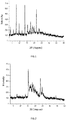
- the X-ray powder diffraction pattern is characterized by an X-ray powder diffraction pattern having characteristic peaks at 2 ⁇ diffraction angle of 3.8 ⁇ 0.2, 5.8 ⁇ 0.2, 7.7 ⁇ 0.2, 9.7 ⁇ 0.2, 11.6 ⁇ 0.2, 13.6 ⁇ 0.2, 15.4 ⁇ 0.2, 17.5 ⁇ 0.2, 21.4 ⁇ 0.2 degrees; preferably, the X-ray powder diffraction pattern further has characteristic peaks at 2 ⁇ diffraction angle of 16.8 ⁇ 0.2, 18.8 ⁇ 0.2, 19.5 ⁇ 0.2, 23.4 ⁇ 0.2 degrees; more preferably, it has an X-ray powder diffraction pattern shown in FIG. 1 .
- the preparation method for the above co-crystal is as follows: D- ⁇ -tocopherol and L-proline are added at a stoichiometric ratio of 1:1 to a mixed solvent of methanol and nitromethane (preferably, the volume ratio of methanol to nitromethane is 1:1), and the resultant is stirred at 20-60°C for 0.5-2 hours, and recrystallized to obtain a white precipitate. The precipitate is filtered and the solid thus obtained is dried at room temperature to give a co-crystal of D- ⁇ -tocopherol and L-proline.
- the preparation method for the above co-crystal is as follows: D- ⁇ -tocopherol (5 mmol) and L-proline (5 mmol) are added at a stoichiometric ratio of 1:1 to 20 ml of a mixed solvent of methanol and nitromethane (volume ratio 1: 1), and the resultant is stirred at 40°C for 1 hour, and recrystallized to obtain a white precipitate. The precipitate is filtered through a Buchner funnel, and the solid is dried in a vacuum oven at room temperature for 1 day to give a co-crystal of D- ⁇ -tocopherol and L-proline.
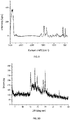
- the 1:1 co-crystal formed by D- ⁇ -tocopherol and L-proline is determined by differential scanning calorimetry, the melting initiation temperature is 66 ⁇ 3°C, and the maximum peak value is 70°C; preferably, it has a differential scanning calorimetry thermogram shown in FIG. 3 .
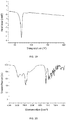
- the 1:1 co-crystal formed by D- ⁇ -tocopherol and L-proline is characterized by the infrared absorption spectrum obtained by using a Fourier transform infrared spectrometer, and is characterized by the following important wave numbers: 3438 cm -1 , 3163 cm -1 , 2926 cm -1 , 1626 cm -1 , 1564 cm -1 , 1462 cm -1 , 1377 cm -1 , 1294 cm -1 , 1262 cm -1 , 1171 cm -1 , 1089 cm -1 , 1034 cm -1 , 923 cm -1 , 864 cm -1 , 670 cm -1 , 484 cm -1 ; preferably, it has an infrared spectrum shown in FIG. 4 .
- the 1:1 co-crystal formed by D- ⁇ -tocopherol and L-proline is characterized by the Raman spectrum obtained by using a laser Raman spectrometer, and is characterized by the following important wave numbers: 2922 cm -1 , 2870 cm -1 , 1617 cm -1 , 1580 cm -1 , 1464 cm -1 , 1393 cm -1 , 1340 cm -1 , 596 cm -1 , 566 cm -1 , 491 cm -1 ; preferably, it has a Raman spectrum shown in FIG. 5 .
- a co-crystal of D- ⁇ -tocopherol and L-proline is in a partial crystalline form under normal pressure at room temperature.
- the stoichiometric ratio of D- ⁇ -tocopherol to L-proline in the co-crystal is 1:1. It is characterized by an X-ray powder diffraction pattern having characteristic peaks at 2 ⁇ diffraction angle of 7.6 ⁇ 0.2, 13.2 ⁇ 0.2, 15.3 ⁇ 0.2, 18.1 ⁇ 0.2, 19.5 ⁇ 0.2, 23.5 ⁇ 0.2, 24.8 ⁇ 0.2 degrees; preferably, it has an X-ray powder diffraction pattern shown in FIG. 2 .
- the preparation method for the above co-crystal is as follows: D- ⁇ -tocopherol and L-proline are added at a stoichiometric ratio of 1:1 to methanol solvent, and the resultant is stirred at 20-60°C for 0.5-2 hours, and recrystallized to obtain a white precipitate. The precipitate is filtered and the solid thus obtained is dried at room temperature to give a co-crystal of D- ⁇ -tocopherol and L-proline.
- the preparation method for the above co-crystal is as follows: D- ⁇ -tocopherol (5 mmol) and L-proline (5 mmol) are added at a stoichiometric ratio of 1:1 to 10 ml of methanol solvent, and the resultant is stirred at 40°C for 1 hour, and recrystallized to obtain a white precipitate. The precipitate is filtered through a Buchner funnel, and the solid is dried in a vacuum oven at room temperature for 1 day to give a co-crystal of D- ⁇ -tocopherol and L-proline.
- the 1:1 co-crystal formed by D- ⁇ -tocopherol and L-proline is determined by differential scanning calorimetry, the melting initiation temperature is 66 ⁇ 3°C, and the maximum peak value is 70°C; preferably, it has a differential scanning calorimetry thermogram shown in FIG. 3 .
- the 1:1 co-crystal formed by D- ⁇ -tocopherol and L-proline is characterized by the infrared absorption spectrum obtained by using a Fourier transform infrared spectrometer, and is characterized by the following important wave numbers: 3438 cm -1 , 3163 cm -1 , 2926 cm -1 , 1626 cm -1 , 1564 cm -1 , 1462 cm -1 , 1377 cm -1 , 1294 cm -1 , 1262 cm -1 , 1171 cm -1 , 1089 cm -1 , 1034 cm -1 , 923 cm -1 , 864 cm -1 , 670 cm -1 , 484 cm -1 ; preferably, it has an infrared spectrum shown in FIG. 4 .
- the 1:1 co-crystal formed by D- ⁇ -tocopherol and L-proline is characterized by the Raman spectrum obtained by using a laser Raman spectrometer, and is characterized by the following important wave numbers: 2922 cm -1 , 2870 cm -1 , 1617 cm -1 , 1580 cm -1 , 1464 cm -1 , 1393 cm -1 , 1340 cm -1 , 596 cm -1 , 566 cm -1 , 491 cm -1 ; preferably, it has a Raman spectrum shown in FIG. 5 .
- the present invention also provides another co-crystal of D- ⁇ -tocopherol and L-proline.
- the co-crystal is in a partial crystalline form under normal pressure at room temperature.
- the stoichiometric ratio of D- ⁇ -tocopherol to L-proline in the co-crystal is 2:1.
- the X-ray powder diffraction pattern is characterized by an X-ray powder diffraction pattern having characteristic peaks at 2 ⁇ diffraction angle of 7.5 ⁇ 0.2, 13.2 ⁇ 0.2, 15.2 ⁇ 0.2, 23.4 ⁇ 0.2 degrees; preferably, the X-ray powder diffraction pattern further has characteristic peaks at 2 ⁇ diffraction angle of 9.4 ⁇ 0.2, 18.6 ⁇ 0.2, 19.9 ⁇ 0.2 degrees; more preferably, it has an X-ray powder diffraction pattern shown in FIG. 6 .
- the preparation method for the above co-crystal is as follows: D- ⁇ -tocopherol and L-proline are added at a stoichiometric ratio of 2:1 to methanol solvent, and the resultant is stirred at 20-60°C for 0.5-2 hours, and recrystallized to obtain a white precipitate. The precipitate is filtered and the solid thus obtained is dried at room temperature to give a co-crystal of D- ⁇ -tocopherol and L-proline.
- the preparation method for the above co-crystal is as follows: D- ⁇ -tocopherol (10 mmol) and L-proline (5 mmol) are added at a stoichiometric ratio of 2:1 to 10 ml of methanol solvent, and the resultant is stirred at 40°C for 1 hour, and recrystallized to obtain a white precipitate. The precipitate is filtered through a Buchner funnel, and the solid is dried in a vacuum oven at room temperature for 1 day to give a co-crystal of D- ⁇ -tocopherol and L-proline.
- the 2:1 co-crystal formed by D- ⁇ -tocopherol and L-proline is determined by differential scanning calorimetry, the melting initiation temperature is 73 ⁇ 5°C, and the maximum peak value is 77°C; preferably, it has a differential scanning calorimetry thermogram shown in FIG. 7 .
- the 2:1 co-crystal formed by D- ⁇ -tocopherol and L-proline is characterized by the infrared absorption spectrum obtained by using a Fourier transform infrared spectrometer, and is characterized by the following important wave numbers: 3436 cm -1 , 3164 cm -1 , 2926 cm -1 , 1625 cm -1 , 1462cm -1 , 1377 cm -1 , 1316 cm -1 , 1292 cm -1 , 1261 cm -1 , 1225 cm -1 , 1171 cm -1 , 1089 cm -1 , 1033 cm -1 , 924 cm -1 , 865 cm -1 , 812 cm -1 , 787 cm -1 , 731 cm -1 , 484 cm -1 ; preferably, it has an infrared spectrum shown in FIG. 8 .
- the 2:1 co-crystal formed by D- ⁇ -tocopherol and L-proline is characterized by the Raman spectrum obtained by using a laser Raman spectrometer, and is characterized by the following important wave numbers: 2921 cm -1 , 2896 cm -1 , 2870 cm -1 , 1615 cm -1 , 1582 cm -1 , 1462 cm -1 , 1393 cm -1 , 1340 cm -1 , 595 cm -1 , 564 cm -1 , 489 cm -1 ; preferably, it has a Raman spectrum shown in FIG. 9 .
- the present invention also provides another co-crystal of D- ⁇ -tocopherol and L-proline.
- the co-crystal is in a partial crystalline form under normal pressure at room temperature.
- the stoichiometric ratio of D- ⁇ -tocopherol to L-proline in the co-crystal is 1:2.
- the X-ray powder diffraction pattern is characterized by an X-ray powder diffraction pattern having characteristic peaks at 2 ⁇ diffraction angle of 15.2 ⁇ 0.2, 18.0 ⁇ 0.2, 19.6 ⁇ 0.2, 23.5 ⁇ 0.2, 24.8 ⁇ 0.2 degrees; preferably, the X-ray powder diffraction pattern further has characteristic peaks at 2 ⁇ diffraction angle of 7.5 ⁇ 0.2, 13.2 ⁇ 0.2, 18.4 ⁇ 0.2, 22.7 ⁇ 0.2 degrees; more preferably, it has an X-ray powder diffraction pattern shown in FIG. 10 .
- the preparation method for the above co-crystal is as follows: D- ⁇ -tocopherol and L-proline are added at a stoichiometric ratio of 1:2 to methanol solvent, and the resultant is stirred at 20-60°C for 0.5-2 hours, and recrystallized to obtain a white precipitate. The precipitate is filtered and the solid thus obtained is dried at room temperature to give a co-crystal of D- ⁇ -tocopherol and L-proline.
- the preparation method for the above co-crystal is as follows: D- ⁇ -tocopherol (5 mmol) and L-proline (10 mmol) are added at a stoichiometric ratio of 1:2 to 10 ml of methanol solvent, and the resultant is stirred at 40°C for 1 hour, and recrystallized to obtain a white precipitate. The precipitate is filtered through a Buchner funnel, and the solid is dried in a vacuum oven at room temperature for 1 day to give a co-crystal of D- ⁇ -tocopherol and L-proline.
- the 1:2 co-crystal formed by D- ⁇ -tocopherol and L-proline is determined by differential scanning calorimetry, the melting initiation temperature is 70 ⁇ 5°C, and the maximum peak value is 74°C; preferably, it has a differential scanning calorimetry thermogram shown in FIG. 11 .
- the 1:2 co-crystal formed by D- ⁇ -tocopherol and L-proline is characterized by the infrared absorption spectrum obtained by using a Fourier transform infrared spectrometer, and is characterized by the following important wave numbers: 3434 cm -1 , 2926 cm -1 , 1625 cm -1 , 1564 cm -1 , 1461 cm -1 , 1377 cm -1 , 1317 cm -1 , 1293 cm -1 , 1261 cm -1 , 1170 cm -1 , 1088 cm -1 , 1034 cm -1 , 944 cm -1 , 920 cm -1 , 850 cm -1 , 788 cm -1 , 670 cm -1 , 643 cm -1 , 484 cm -1 ; preferably, it has an infrared spectrum shown in FIG. 12 .
- the 1:2 co-crystal formed by D- ⁇ -tocopherol and L-proline is characterized by the Raman spectrum obtained by using a laser Raman spectrometer, and is characterized by the following important wave numbers: 2971 cm -1 , 2872 cm -1 , 1619 cm -1 , 1582 cm -1 , 1449 cm -1 , 1377 cm -1 , 1341 cm -1 , 1243 cm -1 , 1180 cm -1 , 1061 cm -1 , 1038 cm -1 , 990 cm -1 , 956 cm -1 , 595 cm -1 , 924 cm -1 , 904 cm -1 , 867 cm -1 , 596 cm -1 , 489 cm -1 ; preferably, it has a Raman spectrum shown in FIG. 13 .
- the tocopherol co-crystal is a co-crystal of D- ⁇ -tocopherol and D-proline.
- a co-crystal of D- ⁇ -tocopherol and D-proline is in a partial crystalline form under normal pressure at room temperature.
- the stoichiometric ratio of D- ⁇ -tocopherol to D-proline in the co-crystal is 3:2. It is characterized by an X-ray powder diffraction pattern having characteristic peaks at 2 ⁇ diffraction angle of 9.0 ⁇ 0.2, 14.8 ⁇ 0.2, 16.7 ⁇ 0.2, 18.2 ⁇ 0.2, 23.5 ⁇ 0.2 degrees; preferably, it has an X-ray powder diffraction pattern shown in FIG. 14 .
- the preparation method for the above co-crystal is as follows: D- ⁇ -tocopherol and D-proline are added at a stoichiometric ratio of 3:2 to methanol, and the resultant is stirred at 20-60°C for 0.5-2 hours, and recrystallized to obtain a white precipitate. The precipitate is filtered and the solid thus obtained is dried at room temperature to give a co-crystal of D- ⁇ -tocopherol and D-proline.
- the preparation method for the above co-crystal is as follows: D- ⁇ -tocopherol (6 mmol) and D-proline (4 mmol) are added at a stoichiometric ratio of 3:2 to 10 ml of methanol, and the resultant is stirred at 40°C for 1 hour, and recrystallized to obtain a white precipitate. The precipitate is filtered through a Buchner funnel, and the solid is dried in a vacuum oven at room temperature for 1 day to give a co-crystal of D- ⁇ -tocopherol and D-proline.
- the 3:2 co-crystal formed by the D- ⁇ -tocopherol and D-proline is determined by differential scanning calorimetry, the melting initiation temperature is 64 ⁇ 3°C, and the maximum peak value is 74°C; preferably, it has a differential scanning calorimetry thermogram shown in FIG. 15 .
- the 3:2 co-crystal formed by the D- ⁇ -tocopherol and D-proline is characterized by the infrared absorption spectrum obtained by using a Fourier transform infrared spectrometer, and is characterized by the following important wave numbers: 3410 cm -1 , 3151 cm -1 , 2952 cm -1 , 2926 cm -1 , 1612 cm -1 , 1558 cm -1 , 1469 cm -1 , 1376 cm -1 , 1218 cm -1 , 1202 cm -1 , 1097 cm -1 , 1039 cm -1 , 993 cm -1 , 946 cm -1 , 874 cm -1 , 843 cm -1 , 674 cm -1 , 642 cm -1 ; preferably, it has an infrared spectrum shown in FIG. 16 .
- the 3:2 co-crystal formed by the D- ⁇ -tocopherol and D-proline is characterized by the Raman spectrum obtained by using a laser Raman spectrometer, and is characterized by the following important wave numbers: 2999 cm -1 , 2930 cm -1 , 2873 cm -1 , 1443 cm -1 , 1376 cm -1 , 1152 cm -1 , 1052 cm -1 , 997 cm -1 , 962 cm -1 , 918 cm -1 , 748cm -1 , 595 cm -1 ; preferably, it has a Raman spectrum shown in FIG. 17 .
- the tocopherol co-crystal is a co-crystal of synthetic tocopherol and L-proline.
- a co-crystal of synthetic tocopherol and L-proline is in a partial crystalline form under normal pressure at room temperature.
- the stoichiometric ratio of synthetic tocopherol to L-proline in the co-crystal is 1:1. It is characterized by an X-ray powder diffraction pattern having characteristic peaks at 2 ⁇ diffraction angle of 7.5 ⁇ 0.2, 13.1 ⁇ 0.2, 15.4 ⁇ 0.2, 16.7 ⁇ 0.2, 18.6 ⁇ 0.2 degrees; preferably, the X-ray powder diffraction pattern further has characteristic peaks at 2 ⁇ diffraction angle of 16.1 ⁇ 0.2, 17.0 ⁇ 0.2 degrees; more preferably, it has an X-ray powder diffraction pattern shown in FIG. 18 .
- the preparation method for the above co-crystal is as follows: synthetic tocopherol and L-proline are added at a stoichiometric ratio of 1:1 to methanol, and the resultant is stirred at 20-40°C for 0.5-2 hours, and recrystallized to obtain a white precipitate. The precipitate is filtered and the solid thus obtained is dried at room temperature to give a co-crystal of synthetic tocopherol and L-proline.
- the preparation method for the above co-crystal is as follows: synthetic tocopherol (5 mmol) and L-proline (5 mmol) are added at a stoichiometric ratio of 1:1 to 10 ml of methanol, and the resultant is stirred at 40°C for 1 hour, and recrystallized to obtain a white precipitate. The precipitate is filtered through a Buchner funnel, and the solid is dried in a vacuum oven at room temperature for 1 day to give a co-crystal of synthetic tocopherol and L-proline.
- the 1:1 co-crystal formed by synthetic tocopherol and L-proline is determined by differential scanning calorimetry, the melting initiation temperature is 65 ⁇ 3°C, and the maximum peak value is 70°C; preferably, it has a differential scanning calorimetry thermogram shown in FIG. 19 .
- the 1:1 co-crystal formed by synthetic tocopherol and L-proline is characterized by the infrared absorption spectrum obtained by using a Fourier transform infrared spectrometer, and is characterized by the following important wave numbers: 3428 cm -1 , 3171 cm -1 , 2927 cm -1 , 1625 cm -1 , 1463 cm -1 , 1376 cm -1 , 1262 cm -1 , 1170 cm -1 , 1091 cm -1 , 1032 cm -1 , 927 cm -1 , 867 cm -1 , 670 cm -1 , 480 cm -1 ; preferably, it has an infrared spectrum shown in FIG. 20 .
- the 1:1 co-crystal formed by synthetic tocopherol and L-proline is characterized by the Raman spectrum obtained by using a laser Raman spectrometer, and is characterized by the following important wave numbers: 1614 cm -1 , 1580 cm -1 , 1442 cm -1 , 1394 cm -1 , 1374 cm -1 , 1340 cm -1 , 623 cm -1 , 596 cm -1 , 565 cm -1 , 489 cm -1 ; preferably, it has a Raman spectrum shown in FIG. 21 .
- the invention also provides a health product, food, cosmetics, medicine, pharmaceutic adjuvant or feed, which contains the co-crystal of tocopherol and proline.
- the invention also provides a use of the co-crystal of tocopherol and proline in the preparation of vitamin nutrition, antioxidants and the like.
- the invention also provides a use of the co-crystal of tocopherol and proline in the preparation of health product, food, cosmetics, medicine, pharmaceutic adjuvant and feed.
- the differential scanning calorimetry was performed by using TA DSC Q2000 instrument at a heating rate of 10 K/min.
- the Fourier transform infrared spectrometer used was Thermo Scientific Nicolet 6700.
- the laser Raman spectrometer used was Thermo Scientific DXR Raman Microscope.
- the co-crystals of the present invention are completely different from the mixture of tocopherol and proline obtained by simple physical mixing of the two compounds, and the present invention has the following beneficial effects:
- D- ⁇ -tocopherol (5 mmol) and L-proline (5 mmol) were added at a stoichiometric ratio of 1:1 to 20 ml of a mixed solvent of methanol and nitromethane (volume ratio 1: 1), and the resultant was stirred at 40°C for 1 hour, and recrystallized to obtain a white precipitate.
- the precipitate was filtered through a Buchner funnel, and the solid was dried in a vacuum oven at room temperature for 1 day to give a co-crystal of D- ⁇ -tocopherol and L-proline.
- This co-crystal is in a crystalline form under normal pressure at room temperature, and the co-crystal was characterized by X-ray powder diffraction (XRPD). The result is shown in FIG. 1 .
- D- ⁇ -tocopherol (5 mmol) and L-proline (5 mmol) were added at a stoichiometric ratio of 1:1 to 10 ml of methanol solvent, and the resultant was stirred at 40°C for 1 hour, and recrystallized to obtain a white precipitate.
- the precipitate was filtered through a Buchner funnel, and the solid was dried in a vacuum oven at room temperature for 1 day to give a co-crystal of D- ⁇ -tocopherol and L-proline.
- Example 2 Various qualitative methods can be used to confirm the formation of the co-crystal of D- ⁇ -tocopherol and L-proline in Example 2.
- This co-crystal is in a partial crystalline form under normal pressure at room temperature.
- the co-crystal was characterized by solid-state methods such as X-ray powder diffraction (XRPD), differential scanning calorimetry (DSC), infrared spectroscopy (IR), and Raman spectroscopy (Raman). The results are shown in FIGS. 2-5 , respectively.
- XRPD X-ray powder diffraction
- DSC differential scanning calorimetry
- IR infrared spectroscopy
- Raman spectroscopy Raman spectroscopy
- D- ⁇ -tocopherol (10 mmol) and L-proline (5 mmol) were added at a stoichiometric ratio of 2:1 to 10 ml of methanol solvent, and the resultant was stirred at 40°C for 1 hour, and recrystallized to obtain a white precipitate.
- the precipitate was filtered through a Buchner funnel, and the solid was dried in a vacuum oven at room temperature for 1 day to give a co-crystal of D- ⁇ -tocopherol and L-proline.
- Example 3 Various qualitative methods can be used to confirm the formation of the co-crystal of D- ⁇ -tocopherol and L-proline in Example 3.
- This co-crystal is in a partial crystalline form under normal pressure at room temperature.
- the co-crystal was characterized by solid-state methods such as X-ray powder diffraction (XRPD), differential scanning calorimetry (DSC), infrared spectroscopy (IR), and Raman spectroscopy (Raman). The results are shown in FIGS. 6-9 , respectively.
- D- ⁇ -tocopherol (5 mmol) and L-proline (10 mmol) were added at a stoichiometric ratio of 1:2 to 10 ml of methanol solvent, and the resultant was stirred at 40°C for 1 hour, and recrystallized to obtain a white precipitate.
- the precipitate was filtered through a Buchner funnel, and the solid was dried in a vacuum oven at room temperature for 1 day to give a co-crystal of D- ⁇ -tocopherol and L-proline.
- Example 4 Various qualitative methods can be used to confirm the formation of the co-crystal of D- ⁇ -tocopherol and L-proline in Example 4.
- This co-crystal is in a partial crystalline form under normal pressure at room temperature.
- the co-crystal was characterized by solid-state methods such as X-ray powder diffraction (XRPD), differential scanning calorimetry (DSC), infrared spectroscopy (IR), and Raman spectroscopy (Raman). The results are shown in FIGS. 10-13 , respectively.
- D- ⁇ -tocopherol (6 mmol) and D-proline (4 mmol) were added at a stoichiometric ratio of 1:1 to 10 ml of methanol solvent, and the resultant was stirred at 40°C for 1 hour, and recrystallized to obtain a white precipitate.
- the precipitate was filtered through a Buchner funnel, and the solid was dried in a vacuum oven at room temperature for 1 day to give a co-crystal of D- ⁇ -tocopherol and D-proline.
- Example 5 Various qualitative methods can be used to confirm the formation of the co-crystal of D- ⁇ -tocopherol and D-proline in Example 5.
- This co-crystal is in a partial crystalline form under normal pressure at room temperature.
- the co-crystal was characterized by solid-state methods such as X-ray powder diffraction (XRPD), differential scanning calorimetry (DSC), infrared spectroscopy (IR), and Raman spectroscopy (Raman). The results are shown in FIGS. 14-17 , respectively.
- Synthetic tocopherol (5 mmol) and L-proline (5 mmol) were added at a stoichiometric ratio of 1:1 to 10 ml of methanol solvent, and the resultant was stirred at 40°C for 1 hour, and recrystallized to obtain a white precipitate.
- the precipitate was filtered through a Buchner funnel, and the solid was dried in a vacuum oven at room temperature for 1 day to give a co-crystal of synthetic tocopherol and L-proline.
- Example 6 Various qualitative methods can be used to confirm the formation of the co-crystal of synthetic tocopherol and L-proline in Example 6.
- This co-crystal is in a partial crystalline form under normal pressure at room temperature.
- the co-crystal was characterized by solid-state methods such as X-ray powder diffraction (XRPD), differential scanning calorimetry (DSC), infrared spectroscopy (IR), and Raman spectroscopy (Raman). The results are shown in FIGS. 18-21 , respectively.
- XRPD X-ray powder diffraction
- DSC differential scanning calorimetry
- IR infrared spectroscopy
- Raman spectroscopy Raman spectroscopy
- Example 7 Comparison between the stability of D- ⁇ -tocopherol itself and that of the co-crystal of D- ⁇ -tocopherol and L-proline
- co-crystals of the present invention in the context have significantly improved stability compared to D- ⁇ -tocopherol itself; representative studies were carried out by using the 1:1 co-crystal formed by D- ⁇ -tocopherol and L-proline obtained in Example 2.
- the co-crystal of D- ⁇ -tocopherol and L-proline obtained in Example 2 was compared with D- ⁇ -tocopherol itself for their difference in stability, including (1) high temperature stability at 60°C, (2) 5500 lux light stability, (3) accelerated test stability (40°C/75% relative humidity), (4) long-term test stability (25°C/60% relative humidity).
- the content was determined by HPLC, and the content was calculated by the external standard method.
- the initial contents of D- ⁇ -tocopherol in D- ⁇ -tocopherol itself and the co-crystal were both set at 100%.
- the content of D- ⁇ -tocopherol itself was 77.3% of the initial content, while the content of D- ⁇ -tocopherol in the 1:1 co-crystal formed by D- ⁇ -tocopherol and L-proline was maintained at 95.4%; under the conditions of strong light irradiation, after 20 days, the content of D- ⁇ -tocopherol itself was 88.5% of the initial content, while the content of D- ⁇ -tocopherol in the 1:1 co-crystal formed by D- ⁇ -tocopherol and L-proline was maintained at 97.3%; under accelerated test conditions (40°C/75% relative humidity), after 3 months, the content of D- ⁇ -tocopherol itself was 96.9% of the initial content, while the content of D- ⁇
- co-crystal of the present invention in the context has a significantly improved stability compared to the synthetic tocopherol itself; representative studies were carried out by using the 1:1 co-crystal formed by synthetic tocopherol and L-proline obtained in Example 6.
- the acceleration test (40°C/75% relative humidity) was carried out for the comparison of the stability difference between the co-crystal of synthetic tocopherol and L-proline obtained in Example 6 and synthetic tocopherol itself.
- the results are shown in Table 9-Table 10.
- the content was determined by HPLC, the content was calculated by the external standard method, and the content is calculated based on the total tocopherol content. Both the initial tocopherol contents in the synthetic tocopherol itself and in the co-crystals were set at 100%. Under the accelerated test conditions, after 1 month, the content of synthetic tocopherol itself was 94.1% of the initial content, while the content of tocopherol in the 1:1 co-crystal formed by synthetic tocopherol and L-proline remained unchanged. It can be seen that the co-crystal of synthetic tocopherol and L-proline has better acceleration stability when compared with the synthetic tocopherol raw material itself.
- Table 9 shows the content change of synthetic tocopherol under accelerated test conditions (40°C/75% relative humidity); Table 10 shows the content change of the 1:1 co-crystal formed by synthetic tocopherol and L-proline under accelerated test conditions (40°C/75% relative humidity).
- Table 9 Item Time (Month) 0 1 Appearance Yellow liquid Yellow liquid content 100.0% 94.1%
- Table 10 Item Time (Month) 0 1 Appearance Yellow liquid Yellow liquid content 100.0% 100.2%
- Example 9 Comparison between the free radical scavenging ability of synthetic tocopherol acetate and that of the co-crystal of D- ⁇ -tocopherol and L-proline
- co-crystals of the present invention in the context have a stronger ability to scavenge free radicals when compared with synthetic tocopherol acetate.
- Experimental reagents 1:1 co-crystal formed by D- ⁇ -tocopherol and L-proline prepared in Example 2; commercially available synthetic tocopherol acetate (50% embedded powder of synthetic tocopherol acetate (active ingredients comprise the acetate derivatives of 8 kinds of ⁇ -tocopherol isomers, and the auxiliary materials are sodium starch octenyl succinate, maltodextrin, silica), purchased from DSM Inc.); methanol.
- DPPH also known as 1,1-diphenyl-2-trinitrophenylhydrazine
- 1,1-diphenyl-2-trinitrophenylhydrazine is a very stable nitrogen-centered free radical. Its solution with a purple color has maximum absorption at 517 nm and the absorbance is proportional to its concentration.
- the free radical scavenging ability of the compound is evaluated based on the principle that the color of solution becomes lighter after being added with a free radical scavenger, which reduces the number of free radicals, thereby decreasing the absorbance.
- the co-crystal of the present invention can significantly reduce the absorption of DPPH solution at 517 nm wavelength, it proves that the co-crystal has prominent free radical scavenging ability, while the commercially available synthetic tocopherol acetate loses its free radical scavenging ability.
- the co-crystal of the present invention in the context has a more significant antioxidant effect, which contributes to the stabilization of meat color, preservation and anti-oxidation of the meat.
Landscapes
- Chemical & Material Sciences (AREA)
- Life Sciences & Earth Sciences (AREA)
- Health & Medical Sciences (AREA)
- Organic Chemistry (AREA)
- Polymers & Plastics (AREA)
- Engineering & Computer Science (AREA)
- Food Science & Technology (AREA)
- Animal Behavior & Ethology (AREA)
- Public Health (AREA)
- Veterinary Medicine (AREA)
- Zoology (AREA)
- General Health & Medical Sciences (AREA)
- Epidemiology (AREA)
- Animal Husbandry (AREA)
- Pharmacology & Pharmacy (AREA)
- Medicinal Chemistry (AREA)
- Birds (AREA)
- Proteomics, Peptides & Aminoacids (AREA)
- Mycology (AREA)
- Nutrition Science (AREA)
- Wood Science & Technology (AREA)
- Chemical Kinetics & Catalysis (AREA)
- General Chemical & Material Sciences (AREA)
- Microbiology (AREA)
- Pharmaceuticals Containing Other Organic And Inorganic Compounds (AREA)
- Cosmetics (AREA)
- Coloring Foods And Improving Nutritive Qualities (AREA)
- Food Preservation Except Freezing, Refrigeration, And Drying (AREA)
- General Preparation And Processing Of Foods (AREA)
- Meat, Egg Or Seafood Products (AREA)
- Pyrane Compounds (AREA)
- Pyrrole Compounds (AREA)
- Plural Heterocyclic Compounds (AREA)
Abstract
Description
- The invention relates to a co-crystal of tocopherol and proline and a preparation method thereof. The co-crystal is in a crystalline or partial crystalline form under normal pressure at room temperature. The co-crystal has better crystallinity, higher tocopherol content, and better thermal stability, light stability, accelerated stability and long-term stability. In the co-crystal, tocopherol and proline interact with each other via non-covalent bonds.
- Tocopherol has anti-oxidation effect, and is widely applied in the fields of medicine, food production, feed industry production, cosmetics, etc. Tocopherols include natural tocopherol and synthetic tocopherol. Natural tocopherol comprises two types of tocopherols and tocotrienols, and comprises 8 kinds of compounds, namely α-, β-, γ-, δ-tocopherols and α-, β-, γ-, δ-tocotrienols. Synthetic tocopherol refers to α-tocopherol, and has 8 optical isomers. Among them, D-α-tocopherol is a form of tocopherol which is most widely distributed in nature, most abundant, and has the highest activity.
- However, tocopherol, which is in the form of an oily liquid, is sensitive to oxygen, and unstable when exposed to air, thus causing various problems, such as the inconvenience when weighing during the production, transportation, and use, poor compatibility with excipients, instability, etc. In order to improve the stability of tocopherol, it is used after being derived to tocopherol acetate or succinate, and further converted into a solid powder by embedding techniques. However, the content of tocopherol in the embedded solid powder is relatively low (the highest content is 50% for the commercially available tocopherol), and the antioxidant property of tocopherol is closely related to the phenolic hydroxyl group in its chemical structure. The esterified tocopherol loses its antioxidant property, limiting its application as an antioxidant. Therefore, it is constant pursuit to obtain a tocopherol product that is convenient to use, and has high content of tocopherol, high chemical stability and excellent antioxidant property. In the Japanese Patent
JP2008024603(A - In the present invention, the term "co-crystal" refers to a chemical substance in which there is a covalent bond(s) in the two compounds and the two compounds (tocopherol and proline) interact with each other via the non-covalent bond(s). Generally, hydrogen bonds and other types of bonds, such as van der Waals forces, can be observed between the two compounds. These interactions cause the two compounds present in the co-crystal to combine with each other. Such combination distinguishes the co-crystal from the physical mixture of these two compounds in their properties (such as melting point, IR spectrum, etc.).
- It is well known that a crystalline form of a compound generally has a higher melting point and better stability. After researches, the present inventor has found that tocopherol can form co-crystals with proline. The co-crystal formed has the following significant advantages: 1. Compared with the tocopherol complex, the co-crystal has better crystallinity and increased melting point; 2. Compared with the tocopherol itself, the co-crystal has significantly improved stability; 3. Compared with semi-synthetic or fully synthetic tocopherol, the co-crystal has more excellent antioxidant effect. Therefore, the co-crystal of tocopherol and proline has good application value in practice.
- In a first aspect, the present invention provides a co-crystal of tocopherol and proline.
- Preferably, the proline is D-proline, or L-proline, or a racemic mixture of the both. The molecular structure thereof is as follows:

- Preferably, the proline is L-proline.
- In the present invention, the tocopherol is selected from one or more of natural tocopherol and synthetic tocopherol.
- The natural tocopherol comprises α-, β-, γ-, δ-tocopherols and α-, β-, γ-, δ-tocotrienols, and the stereo configuration of C2, C4' and C8' is RRR. The molecular structure of natural tocopherol is shown below:
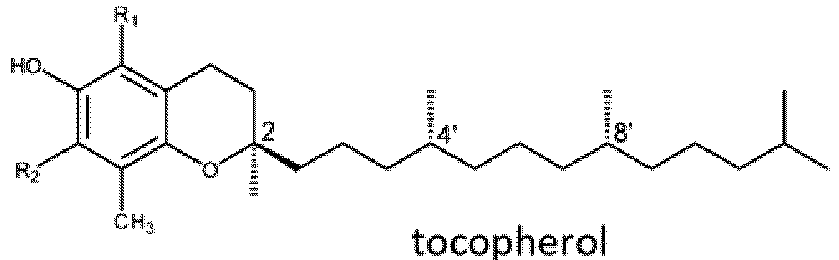

Name of natural tocopherol R1 R2 α-tocopherol/α-tocotrienol CH3 CH3 β-tocopherol/β-tocotrienol CH3 H γ-tocopherol/γ-tocotrienol H CH3 δ-tocopherol/δ-tocotrienol H H - The synthetic tocopherol is an equimolar mixture of eight optical isomers of DL-α-tocopherol. The C2, C4' and C8' stereo configurations of the eight optical isomers are RRR, SSS, RSR, SRS, RRS, SSR, SRR and RSS, respectively. The molecular structure thereof is shown below,

- Preferably, the tocopherol is D-α-tocopherol.
- In a second aspect, the present invention further provides a method for preparing the co-crystal of tocopherol and proline, which comprises the following steps:
- (i) Dissolving tocopherol and proline in a suitable solvent and stirring the same at 10-80°C until they are dissolved;
- (ii) Recrystallizing the solution obtained from step (i);
- (iii) Separating the solid and drying the same.
- In a preferred embodiment of the present invention, in step (i), the suitable solvent is a common organic solvent selected from but not limited to water, methanol, ethanol, isopropanol, acetone, methyl ethyl ketone, acetonitrile, tetrahydrofuran, nitromethane, ethyl acetate, isopropyl acetate, methyl tert-butyl ether, toluene, DMF and methylene chloride and the like, and a mixed solvent thereof; in a more preferred embodiment of the present invention, in step (i), the suitable solvent is selected from but not limited to methanol, ethanol, nitromethane, acetone and methyl ethyl ketone;
- The co-crystal of tocopherol and proline according to the invention is in a crystalline or partial crystalline form under normal pressure at room temperature. The stoichiometric ratio of tocopherol to proline in the co-crystal is 1:2, 1:1 or 2:1.
- In a preferred embodiment of the present invention, the co-crystal is a co-crystal formed by D-α-tocopherol and L-proline.
- Wherein, the stoichiometric ratio of D-α-tocopherol to L-proline in the co-crystal is 1:2-2:1, preferably 1:2, 1:1 or 2:1.
- Provided is a co-crystal of D-α-tocopherol and L-proline. The co-crystal is in a crystalline form under normal pressure at room temperature. The stoichiometric ratio of D-α-tocopherol to L-proline in the co-crystal is 1:1. It is characterized by an X-ray powder diffraction pattern having characteristic peaks at 2θ diffraction angle of 3.8±0.2, 5.8±0.2, 7.7±0.2, 9.7±0.2, 11.6±0.2, 13.6±0.2, 15.4±0.2, 17.5±0.2, 21.4±0.2 degrees; preferably, the X-ray powder diffraction pattern further has characteristic peaks at 2θ diffraction angle of 16.8±0.2, 18.8±0.2, 19.5±0.2, 23.4±0.2 degrees; more preferably, it has an X-ray powder diffraction pattern shown in
FIG. 1 . - The preparation method for the above co-crystal is as follows: D-α-tocopherol and L-proline are added at a stoichiometric ratio of 1:1 to a mixed solvent of methanol and nitromethane (preferably, the volume ratio of methanol to nitromethane is 1:1), and the resultant is stirred at 20-60°C for 0.5-2 hours, and recrystallized to obtain a white precipitate. The precipitate is filtered and the solid thus obtained is dried at room temperature to give a co-crystal of D-α-tocopherol and L-proline.
- Preferably, the preparation method for the above co-crystal is as follows: D-α-tocopherol (5 mmol) and L-proline (5 mmol) are added at a stoichiometric ratio of 1:1 to 20 ml of a mixed solvent of methanol and nitromethane (volume ratio 1: 1), and the resultant is stirred at 40°C for 1 hour, and recrystallized to obtain a white precipitate. The precipitate is filtered through a Buchner funnel, and the solid is dried in a vacuum oven at room temperature for 1 day to give a co-crystal of D-α-tocopherol and L-proline.
- The 1:1 co-crystal formed by D-α-tocopherol and L-proline is determined by differential scanning calorimetry, the melting initiation temperature is 66±3°C, and the maximum peak value is 70°C; preferably, it has a differential scanning calorimetry thermogram shown in
FIG. 3 . - The 1:1 co-crystal formed by D-α-tocopherol and L-proline is characterized by the infrared absorption spectrum obtained by using a Fourier transform infrared spectrometer, and is characterized by the following important wave numbers: 3438 cm-1, 3163 cm-1, 2926 cm-1, 1626 cm-1, 1564 cm-1, 1462 cm-1, 1377 cm-1, 1294 cm-1, 1262 cm-1, 1171 cm-1, 1089 cm-1, 1034 cm-1, 923 cm-1, 864 cm-1, 670 cm-1, 484 cm-1; preferably, it has an infrared spectrum shown in
FIG. 4 . - The 1:1 co-crystal formed by D-α-tocopherol and L-proline is characterized by the Raman spectrum obtained by using a laser Raman spectrometer, and is characterized by the following important wave numbers: 2922 cm-1, 2870 cm-1, 1617 cm-1, 1580 cm-1, 1464 cm-1, 1393 cm-1, 1340 cm-1, 596 cm-1, 566 cm-1, 491 cm-1; preferably, it has a Raman spectrum shown in
FIG. 5 . - Provided is a co-crystal of D-α-tocopherol and L-proline. The co-crystal is in a partial crystalline form under normal pressure at room temperature. The stoichiometric ratio of D-α-tocopherol to L-proline in the co-crystal is 1:1. It is characterized by an X-ray powder diffraction pattern having characteristic peaks at 2θ diffraction angle of 7.6±0.2, 13.2±0.2, 15.3±0.2, 18.1±0.2, 19.5±0.2, 23.5±0.2, 24.8±0.2 degrees; preferably, it has an X-ray powder diffraction pattern shown in
FIG. 2 . - The preparation method for the above co-crystal is as follows: D-α-tocopherol and L-proline are added at a stoichiometric ratio of 1:1 to methanol solvent, and the resultant is stirred at 20-60°C for 0.5-2 hours, and recrystallized to obtain a white precipitate. The precipitate is filtered and the solid thus obtained is dried at room temperature to give a co-crystal of D-α-tocopherol and L-proline.
- Preferably, the preparation method for the above co-crystal is as follows: D-α-tocopherol (5 mmol) and L-proline (5 mmol) are added at a stoichiometric ratio of 1:1 to 10 ml of methanol solvent, and the resultant is stirred at 40°C for 1 hour, and recrystallized to obtain a white precipitate. The precipitate is filtered through a Buchner funnel, and the solid is dried in a vacuum oven at room temperature for 1 day to give a co-crystal of D-α-tocopherol and L-proline.
- The 1:1 co-crystal formed by D-α-tocopherol and L-proline is determined by differential scanning calorimetry, the melting initiation temperature is 66±3°C, and the maximum peak value is 70°C; preferably, it has a differential scanning calorimetry thermogram shown in
FIG. 3 . - The 1:1 co-crystal formed by D-α-tocopherol and L-proline is characterized by the infrared absorption spectrum obtained by using a Fourier transform infrared spectrometer, and is characterized by the following important wave numbers: 3438 cm-1, 3163 cm-1, 2926 cm-1, 1626 cm-1, 1564 cm-1, 1462 cm-1, 1377 cm-1, 1294 cm-1, 1262 cm-1, 1171 cm-1, 1089 cm-1, 1034 cm-1, 923 cm-1, 864 cm-1, 670 cm-1, 484 cm-1; preferably, it has an infrared spectrum shown in
FIG. 4 . - The 1:1 co-crystal formed by D-α-tocopherol and L-proline is characterized by the Raman spectrum obtained by using a laser Raman spectrometer, and is characterized by the following important wave numbers: 2922 cm-1, 2870 cm-1, 1617 cm-1, 1580 cm-1, 1464 cm-1, 1393 cm-1, 1340 cm-1, 596 cm-1, 566 cm-1, 491 cm-1; preferably, it has a Raman spectrum shown in
FIG. 5 . - The present invention also provides another co-crystal of D-α-tocopherol and L-proline. The co-crystal is in a partial crystalline form under normal pressure at room temperature. The stoichiometric ratio of D-α-tocopherol to L-proline in the co-crystal is 2:1. It is characterized by an X-ray powder diffraction pattern having characteristic peaks at 2θ diffraction angle of 7.5±0.2, 13.2±0.2, 15.2±0.2, 23.4±0.2 degrees; preferably, the X-ray powder diffraction pattern further has characteristic peaks at 2θ diffraction angle of 9.4±0.2, 18.6±0.2, 19.9±0.2 degrees; more preferably, it has an X-ray powder diffraction pattern shown in
FIG. 6 . - The preparation method for the above co-crystal is as follows: D-α-tocopherol and L-proline are added at a stoichiometric ratio of 2:1 to methanol solvent, and the resultant is stirred at 20-60°C for 0.5-2 hours, and recrystallized to obtain a white precipitate. The precipitate is filtered and the solid thus obtained is dried at room temperature to give a co-crystal of D-α-tocopherol and L-proline.
- Preferably, the preparation method for the above co-crystal is as follows: D-α-tocopherol (10 mmol) and L-proline (5 mmol) are added at a stoichiometric ratio of 2:1 to 10 ml of methanol solvent, and the resultant is stirred at 40°C for 1 hour, and recrystallized to obtain a white precipitate. The precipitate is filtered through a Buchner funnel, and the solid is dried in a vacuum oven at room temperature for 1 day to give a co-crystal of D-α-tocopherol and L-proline.
- The 2:1 co-crystal formed by D-α-tocopherol and L-proline is determined by differential scanning calorimetry, the melting initiation temperature is 73±5°C, and the maximum peak value is 77°C; preferably, it has a differential scanning calorimetry thermogram shown in
FIG. 7 . - The 2:1 co-crystal formed by D-α-tocopherol and L-proline is characterized by the infrared absorption spectrum obtained by using a Fourier transform infrared spectrometer, and is characterized by the following important wave numbers: 3436 cm-1, 3164 cm-1, 2926 cm-1, 1625 cm-1, 1462cm-1, 1377 cm-1, 1316 cm-1, 1292 cm-1, 1261 cm-1, 1225 cm-1, 1171 cm-1, 1089 cm-1, 1033 cm-1, 924 cm-1, 865 cm-1, 812 cm-1, 787 cm-1, 731 cm-1, 484 cm-1; preferably, it has an infrared spectrum shown in
FIG. 8 . - The 2:1 co-crystal formed by D-α-tocopherol and L-proline is characterized by the Raman spectrum obtained by using a laser Raman spectrometer, and is characterized by the following important wave numbers: 2921 cm-1, 2896 cm-1, 2870 cm-1, 1615 cm-1, 1582 cm-1, 1462 cm-1, 1393 cm-1, 1340 cm-1, 595 cm-1, 564 cm-1, 489 cm-1; preferably, it has a Raman spectrum shown in
FIG. 9 . - The present invention also provides another co-crystal of D-α-tocopherol and L-proline. The co-crystal is in a partial crystalline form under normal pressure at room temperature. The stoichiometric ratio of D-α-tocopherol to L-proline in the co-crystal is 1:2. It is characterized by an X-ray powder diffraction pattern having characteristic peaks at 2θ diffraction angle of 15.2±0.2, 18.0±0.2, 19.6±0.2, 23.5±0.2, 24.8±0.2 degrees; preferably, the X-ray powder diffraction pattern further has characteristic peaks at 2θ diffraction angle of 7.5±0.2, 13.2±0.2, 18.4±0.2, 22.7±0.2 degrees; more preferably, it has an X-ray powder diffraction pattern shown in
FIG. 10 . - The preparation method for the above co-crystal is as follows: D-α-tocopherol and L-proline are added at a stoichiometric ratio of 1:2 to methanol solvent, and the resultant is stirred at 20-60°C for 0.5-2 hours, and recrystallized to obtain a white precipitate. The precipitate is filtered and the solid thus obtained is dried at room temperature to give a co-crystal of D-α-tocopherol and L-proline.
- Preferably, the preparation method for the above co-crystal is as follows: D-α-tocopherol (5 mmol) and L-proline (10 mmol) are added at a stoichiometric ratio of 1:2 to 10 ml of methanol solvent, and the resultant is stirred at 40°C for 1 hour, and recrystallized to obtain a white precipitate. The precipitate is filtered through a Buchner funnel, and the solid is dried in a vacuum oven at room temperature for 1 day to give a co-crystal of D-α-tocopherol and L-proline.
- The 1:2 co-crystal formed by D-α-tocopherol and L-proline is determined by differential scanning calorimetry, the melting initiation temperature is 70±5°C, and the maximum peak value is 74°C; preferably, it has a differential scanning calorimetry thermogram shown in
FIG. 11 . - The 1:2 co-crystal formed by D-α-tocopherol and L-proline is characterized by the infrared absorption spectrum obtained by using a Fourier transform infrared spectrometer, and is characterized by the following important wave numbers: 3434 cm-1, 2926 cm-1, 1625 cm-1, 1564 cm-1, 1461 cm-1, 1377 cm-1, 1317 cm-1, 1293 cm-1, 1261 cm-1, 1170 cm-1, 1088 cm-1, 1034 cm-1, 944 cm-1, 920 cm-1, 850 cm-1, 788 cm-1, 670 cm-1, 643 cm-1, 484 cm-1; preferably, it has an infrared spectrum shown in
FIG. 12 . - The 1:2 co-crystal formed by D-α-tocopherol and L-proline is characterized by the Raman spectrum obtained by using a laser Raman spectrometer, and is characterized by the following important wave numbers: 2971 cm-1, 2872 cm-1, 1619 cm-1, 1582 cm-1, 1449 cm-1, 1377 cm-1, 1341 cm-1, 1243 cm-1, 1180 cm-1, 1061 cm-1, 1038 cm-1, 990 cm-1, 956 cm-1, 595 cm-1, 924 cm-1, 904 cm-1, 867 cm-1, 596 cm-1, 489 cm-1; preferably, it has a Raman spectrum shown in
FIG. 13 . - In another preferred embodiment of the present invention, the tocopherol co-crystal is a co-crystal of D-δ-tocopherol and D-proline.
- Provided is a co-crystal of D-δ-tocopherol and D-proline. The co-crystal is in a partial crystalline form under normal pressure at room temperature. The stoichiometric ratio of D-δ-tocopherol to D-proline in the co-crystal is 3:2. It is characterized by an X-ray powder diffraction pattern having characteristic peaks at 2θ diffraction angle of 9.0±0.2, 14.8±0.2, 16.7±0.2, 18.2±0.2, 23.5±0.2 degrees; preferably, it has an X-ray powder diffraction pattern shown in
FIG. 14 . - The preparation method for the above co-crystal is as follows: D-δ-tocopherol and D-proline are added at a stoichiometric ratio of 3:2 to methanol, and the resultant is stirred at 20-60°C for 0.5-2 hours, and recrystallized to obtain a white precipitate. The precipitate is filtered and the solid thus obtained is dried at room temperature to give a co-crystal of D-δ-tocopherol and D-proline.
- Preferably, the preparation method for the above co-crystal is as follows: D-δ-tocopherol (6 mmol) and D-proline (4 mmol) are added at a stoichiometric ratio of 3:2 to 10 ml of methanol, and the resultant is stirred at 40°C for 1 hour, and recrystallized to obtain a white precipitate. The precipitate is filtered through a Buchner funnel, and the solid is dried in a vacuum oven at room temperature for 1 day to give a co-crystal of D-δ-tocopherol and D-proline.
- The 3:2 co-crystal formed by the D-δ-tocopherol and D-proline is determined by differential scanning calorimetry, the melting initiation temperature is 64±3°C, and the maximum peak value is 74°C; preferably, it has a differential scanning calorimetry thermogram shown in
FIG. 15 . - The 3:2 co-crystal formed by the D-δ-tocopherol and D-proline is characterized by the infrared absorption spectrum obtained by using a Fourier transform infrared spectrometer, and is characterized by the following important wave numbers: 3410 cm-1, 3151 cm-1, 2952 cm-1, 2926 cm-1, 1612 cm-1, 1558 cm-1, 1469 cm-1, 1376 cm-1, 1218 cm-1, 1202 cm-1, 1097 cm-1, 1039 cm-1, 993 cm-1, 946 cm-1, 874 cm-1, 843 cm-1, 674 cm-1, 642 cm-1; preferably, it has an infrared spectrum shown in
FIG. 16 . - The 3:2 co-crystal formed by the D-δ-tocopherol and D-proline is characterized by the Raman spectrum obtained by using a laser Raman spectrometer, and is characterized by the following important wave numbers: 2999 cm-1, 2930 cm-1, 2873 cm-1, 1443 cm-1, 1376 cm-1, 1152 cm-1, 1052 cm-1, 997 cm-1, 962 cm-1, 918 cm-1, 748cm-1, 595 cm-1; preferably, it has a Raman spectrum shown in
FIG. 17 . - In another preferred embodiment of the present invention, the tocopherol co-crystal is a co-crystal of synthetic tocopherol and L-proline.
- Provided is a co-crystal of synthetic tocopherol and L-proline. The co-crystal is in a partial crystalline form under normal pressure at room temperature. The stoichiometric ratio of synthetic tocopherol to L-proline in the co-crystal is 1:1. It is characterized by an X-ray powder diffraction pattern having characteristic peaks at 2θ diffraction angle of 7.5±0.2, 13.1±0.2, 15.4±0.2, 16.7±0.2, 18.6±0.2 degrees; preferably, the X-ray powder diffraction pattern further has characteristic peaks at 2θ diffraction angle of 16.1±0.2, 17.0±0.2 degrees; more preferably, it has an X-ray powder diffraction pattern shown in
FIG. 18 . - The preparation method for the above co-crystal is as follows: synthetic tocopherol and L-proline are added at a stoichiometric ratio of 1:1 to methanol, and the resultant is stirred at 20-40°C for 0.5-2 hours, and recrystallized to obtain a white precipitate. The precipitate is filtered and the solid thus obtained is dried at room temperature to give a co-crystal of synthetic tocopherol and L-proline.
- Preferably, the preparation method for the above co-crystal is as follows: synthetic tocopherol (5 mmol) and L-proline (5 mmol) are added at a stoichiometric ratio of 1:1 to 10 ml of methanol, and the resultant is stirred at 40°C for 1 hour, and recrystallized to obtain a white precipitate. The precipitate is filtered through a Buchner funnel, and the solid is dried in a vacuum oven at room temperature for 1 day to give a co-crystal of synthetic tocopherol and L-proline.
- The 1:1 co-crystal formed by synthetic tocopherol and L-proline is determined by differential scanning calorimetry, the melting initiation temperature is 65±3°C, and the maximum peak value is 70°C; preferably, it has a differential scanning calorimetry thermogram shown in
FIG. 19 . - The 1:1 co-crystal formed by synthetic tocopherol and L-proline is characterized by the infrared absorption spectrum obtained by using a Fourier transform infrared spectrometer, and is characterized by the following important wave numbers: 3428 cm-1, 3171 cm-1, 2927 cm-1, 1625 cm-1, 1463 cm-1, 1376 cm-1, 1262 cm-1, 1170 cm-1, 1091 cm-1, 1032 cm-1, 927 cm-1, 867 cm-1, 670 cm-1, 480 cm-1; preferably, it has an infrared spectrum shown in
FIG. 20 . - The 1:1 co-crystal formed by synthetic tocopherol and L-proline is characterized by the Raman spectrum obtained by using a laser Raman spectrometer, and is characterized by the following important wave numbers: 1614 cm-1, 1580 cm-1, 1442 cm-1, 1394 cm-1, 1374 cm-1, 1340 cm-1, 623 cm-1, 596 cm-1, 565 cm-1, 489 cm-1; preferably, it has a Raman spectrum shown in
FIG. 21 . - The invention also provides a health product, food, cosmetics, medicine, pharmaceutic adjuvant or feed, which contains the co-crystal of tocopherol and proline.
- The invention also provides a use of the co-crystal of tocopherol and proline in the preparation of vitamin nutrition, antioxidants and the like.
- The invention also provides a use of the co-crystal of tocopherol and proline in the preparation of health product, food, cosmetics, medicine, pharmaceutic adjuvant and feed.
- The X-ray powder diffraction patterns in the present invention were obtained by using an X-ray powder diffractometer (Bruker D8 Advanced), with Cu Kα radiation(λ=1.54056Å) in a scanning range of 3° to 40° in 2θ at a scanning rate of 2°/min.
- The differential scanning calorimetry was performed by using TA DSC Q2000 instrument at a heating rate of 10 K/min.
- The Fourier transform infrared spectrometer used was Thermo Scientific Nicolet 6700.
- The laser Raman spectrometer used was Thermo Scientific DXR Raman Microscope.
- The co-crystals of the present invention are completely different from the mixture of tocopherol and proline obtained by simple physical mixing of the two compounds, and the present invention has the following beneficial effects:
- 1. Compared with the complex of tocopherol, the present co-crystals have better crystallinity and higher melting points; 2. Compared with the tocopherol itself, the present co-crystals have significantly improved stability; 3. Compared with semi-synthetic or fully synthetic tocopherol, the present co-crystals have more excellent antioxidant effect. Therefore, the present co- crystals of tocopherol and proline have high application value in practice.
-
-
FIG. 1 is an X-ray powder diffraction (XRPD) pattern of the crystalline form of the 1:1 co-crystal formed by D-α-tocopherol and L-proline provided by the present invention; -
FIG. 2 is an X-ray powder diffraction (XRPD) pattern of the partial crystalline form of the 1:1 co-crystal formed by D-α-tocopherol and L-proline provided by the present invention; -
FIG. 3 is a differential scanning calorimetry (DSC) thermogram of the crystalline form/partial crystalline form of the 1:1 co-crystal formed by D-α-tocopherol and L-proline provided by the present invention; -
FIG. 4 is an infrared spectrum (IR) of the crystalline form/partial crystalline form of the 1:1 co-crystal formed by D-α-tocopherol and L-proline provided by the present invention; -
FIG. 5 is a Raman spectrum (Raman) of the crystalline form/partial crystalline of the 1:1 co-crystal form formed by D-α-tocopherol and L-proline provided by the present invention; -
FIG. 6 is an X-ray powder diffraction (XRPD) pattern of the partial crystalline form of the 2:1 co-crystal formed by D-α-tocopherol and L-proline provided by the present invention; -
FIG. 7 is a differential scanning calorimetry (DSC) thermogram of the partial crystalline form of the 2:1 co-crystal formed by D-α-tocopherol and L-proline provided by the present invention; -
FIG. 8 is an infrared spectrum (IR) of the partial crystalline form of the 2:1 co-crystal formed by D-α-tocopherol and L-proline provided by the present invention; -
FIG. 9 is a Raman spectrum (Raman) of the partial crystalline form of the 2:1 co-crystal formed by D-α-tocopherol and L-proline provided by the present invention; -
FIG. 10 is an X-ray powder diffraction (XRPD) pattern of the partial crystalline form of the 1:2 co-crystal formed by D-α-tocopherol and L-proline provided by the present invention; -
FIG. 11 is a differential scanning calorimetry (DSC) thermogram of the partial crystalline form of the 1:2 co-crystal formed by D-α-tocopherol and L-proline provided by the present invention; -
FIG. 12 is an infrared spectrum (IR) of the partial crystalline form of the 1:2 co-crystal formed by D-α-tocopherol and L-proline provided by the present invention; -
FIG. 13 is a Raman spectrum (Raman) of the partial crystalline form of the 1:2 co-crystal formed by D-α-tocopherol and L-proline provided by the present invention; -
FIG. 14 is an X-ray powder diffraction (XRPD) pattern of the partial crystalline form of the 3:2 co-crystal formed by D-δ-tocopherol and D-proline provided by the present invention; -
FIG. 15 is a differential scanning calorimetry (DSC) thermogram of the partial crystalline form of the 3:2 co-crystal formed by D-δ-tocopherol and D-proline provided by the present invention; -
FIG. 16 is an infrared spectrum (IR) of the partial crystalline form of the 3:2 co-crystal formed by D-δ-tocopherol and D-proline provided by the present invention; -
FIG. 17 is a Raman spectrum (Raman) of the partial crystalline form of the 3:2 co-crystal formed by D-δ-tocopherol and D-proline provided by the present invention; -
FIG. 18 is an X-ray powder diffraction (XRPD) pattern of the partial crystalline form of the 1:1 co-crystal formed by synthetic tocopherol and L-proline provided by the present invention; -
FIG. 19 is a differential scanning calorimetry (DSC) thermogram of the partial crystalline form of the 1:1 co-crystal formed by synthetic tocopherol and L-proline provided by the present invention; -
FIG. 20 is an infrared spectrum (IR) of the partial crystalline form of the 1:1 co-crystal formed by synthetic tocopherol and L-proline provided by the present invention; -
FIG. 21 is a Raman spectrum (Raman) of the partial crystalline form of the 1:1 co-crystal formed by synthetic tocopherol and L-proline provided by the present invention; -
FIG. 22 shows the comparison between the DPPH solution free radical scavenging ability of the synthetic tocopherol acetate and that of the 1:1 co-crystal formed by D-α-tocopherol and L-proline prepared in Example 2; -
FIG. 23 shows a comparative picture of the antioxidant effects in the raw beef between the synthetic tocopherol acetate and the 1:1 co-crystal formed by D-α-tocopherol and L-proline prepared in Example 2. - In order to make the objectives, technical solutions and advantages of the present invention clearer, the present invention will be further described in detail below with reference to the drawings and examples. It should be understood that the embodiments described herein are only used to explain the present invention, and are not intended to limit the present invention.
- D-α-tocopherol (5 mmol) and L-proline (5 mmol) were added at a stoichiometric ratio of 1:1 to 20 ml of a mixed solvent of methanol and nitromethane (volume ratio 1: 1), and the resultant was stirred at 40°C for 1 hour, and recrystallized to obtain a white precipitate. The precipitate was filtered through a Buchner funnel, and the solid was dried in a vacuum oven at room temperature for 1 day to give a co-crystal of D-α-tocopherol and L-proline.
- This co-crystal is in a crystalline form under normal pressure at room temperature, and the co-crystal was characterized by X-ray powder diffraction (XRPD). The result is shown in
FIG. 1 . - D-α-tocopherol (5 mmol) and L-proline (5 mmol) were added at a stoichiometric ratio of 1:1 to 10 ml of methanol solvent, and the resultant was stirred at 40°C for 1 hour, and recrystallized to obtain a white precipitate. The precipitate was filtered through a Buchner funnel, and the solid was dried in a vacuum oven at room temperature for 1 day to give a co-crystal of D-α-tocopherol and L-proline.
- Various qualitative methods can be used to confirm the formation of the co-crystal of D-α-tocopherol and L-proline in Example 2. This co-crystal is in a partial crystalline form under normal pressure at room temperature. The co-crystal was characterized by solid-state methods such as X-ray powder diffraction (XRPD), differential scanning calorimetry (DSC), infrared spectroscopy (IR), and Raman spectroscopy (Raman). The results are shown in
FIGS. 2-5 , respectively. - D-α-tocopherol (10 mmol) and L-proline (5 mmol) were added at a stoichiometric ratio of 2:1 to 10 ml of methanol solvent, and the resultant was stirred at 40°C for 1 hour, and recrystallized to obtain a white precipitate. The precipitate was filtered through a Buchner funnel, and the solid was dried in a vacuum oven at room temperature for 1 day to give a co-crystal of D-α-tocopherol and L-proline.
- Various qualitative methods can be used to confirm the formation of the co-crystal of D-α-tocopherol and L-proline in Example 3. This co-crystal is in a partial crystalline form under normal pressure at room temperature. The co-crystal was characterized by solid-state methods such as X-ray powder diffraction (XRPD), differential scanning calorimetry (DSC), infrared spectroscopy (IR), and Raman spectroscopy (Raman). The results are shown in
FIGS. 6-9 , respectively. - D-α-tocopherol (5 mmol) and L-proline (10 mmol) were added at a stoichiometric ratio of 1:2 to 10 ml of methanol solvent, and the resultant was stirred at 40°C for 1 hour, and recrystallized to obtain a white precipitate. The precipitate was filtered through a Buchner funnel, and the solid was dried in a vacuum oven at room temperature for 1 day to give a co-crystal of D-α-tocopherol and L-proline.
- Various qualitative methods can be used to confirm the formation of the co-crystal of D-α-tocopherol and L-proline in Example 4. This co-crystal is in a partial crystalline form under normal pressure at room temperature. The co-crystal was characterized by solid-state methods such as X-ray powder diffraction (XRPD), differential scanning calorimetry (DSC), infrared spectroscopy (IR), and Raman spectroscopy (Raman). The results are shown in
FIGS. 10-13 , respectively. - D-δ-tocopherol (6 mmol) and D-proline (4 mmol) were added at a stoichiometric ratio of 1:1 to 10 ml of methanol solvent, and the resultant was stirred at 40°C for 1 hour, and recrystallized to obtain a white precipitate. The precipitate was filtered through a Buchner funnel, and the solid was dried in a vacuum oven at room temperature for 1 day to give a co-crystal of D-δ-tocopherol and D-proline.
- Various qualitative methods can be used to confirm the formation of the co-crystal of D-δ-tocopherol and D-proline in Example 5. This co-crystal is in a partial crystalline form under normal pressure at room temperature. The co-crystal was characterized by solid-state methods such as X-ray powder diffraction (XRPD), differential scanning calorimetry (DSC), infrared spectroscopy (IR), and Raman spectroscopy (Raman). The results are shown in
FIGS. 14-17 , respectively. - Synthetic tocopherol (5 mmol) and L-proline (5 mmol) were added at a stoichiometric ratio of 1:1 to 10 ml of methanol solvent, and the resultant was stirred at 40°C for 1 hour, and recrystallized to obtain a white precipitate. The precipitate was filtered through a Buchner funnel, and the solid was dried in a vacuum oven at room temperature for 1 day to give a co-crystal of synthetic tocopherol and L-proline.
- Various qualitative methods can be used to confirm the formation of the co-crystal of synthetic tocopherol and L-proline in Example 6. This co-crystal is in a partial crystalline form under normal pressure at room temperature. The co-crystal was characterized by solid-state methods such as X-ray powder diffraction (XRPD), differential scanning calorimetry (DSC), infrared spectroscopy (IR), and Raman spectroscopy (Raman). The results are shown in
FIGS. 18-21 , respectively. - Those skilled in the art can understand that the co-crystals of the present invention in the context have significantly improved stability compared to D-α-tocopherol itself; representative studies were carried out by using the 1:1 co-crystal formed by D-α-tocopherol and L-proline obtained in Example 2.
- The co-crystal of D-α-tocopherol and L-proline obtained in Example 2 was compared with D-α-tocopherol itself for their difference in stability, including (1) high temperature stability at 60°C, (2) 5500 lux light stability, (3) accelerated test stability (40°C/75% relative humidity), (4) long-term test stability (25°C/60% relative humidity).
- The results are shown in Table 1 to Table 8.
- Table 1 shows the content change of D-α-tocopherol under high temperature conditions;
- Table 2 shows the content change of the 1:1 co-crystal formed by D-α-tocopherol and L-proline under high temperature conditions;
- Table 3 shows the content change of D-α-tocopherol under the condition of strong light irradiation;
- Table 4 shows the content change of the 1:1 co-crystal formed by D-α-tocopherol and L-proline under the condition of strong light irradiation;
- Table 5 shows the content change of D-α-tocopherol under accelerated test conditions (40°C/75% relative humidity);
- Table 6 shows the content change of the 1:1 co-crystal formed by D-α-tocopherol and L-proline under accelerated test conditions (40°C/75% relative humidity);
- Table 7 shows the content change of D-α-tocopherol under long-term test conditions (25°C /60% relative humidity);
- Table 8 shows the content change of the 1:1 co-crystal formed by D-α-tocopherol and L-proline under long-term test conditions (25°C/60% relative humidity).
- The content was determined by HPLC, and the content was calculated by the external standard method. The initial contents of D-α-tocopherol in D-α-tocopherol itself and the co-crystal were both set at 100%. At 60°C, after 30 days, the content of D-α-tocopherol itself was 77.3% of the initial content, while the content of D-α-tocopherol in the 1:1 co-crystal formed by D-α-tocopherol and L-proline was maintained at 95.4%; under the conditions of strong light irradiation, after 20 days, the content of D-α-tocopherol itself was 88.5% of the initial content, while the content of D-α-tocopherol in the 1:1 co-crystal formed by D-α-tocopherol and L-proline was maintained at 97.3%; under accelerated test conditions (40°C/75% relative humidity), after 3 months, the content of D-α-tocopherol itself was 96.9% of the initial content, while the content of D-α-tocopherol in the 1:1 co-crystal formed by D-α-tocopherol and L-proline was maintained at 99.7%; under long-term test conditions (25°C /60% Relative humidity), after 3 months, the content of D-α-tocopherol itself was 96.9% of the initial content, while the content of D-α-tocopherol in the 1:1 co-crystal formed by D-α-tocopherol and L-proline was maintained at 99.6%. It can be seen that the co-crystal of D-α-tocopherol and L-proline has better high-temperature stability, light stability, accelerated stability and long-term stability when compared with D-α-tocopherol raw material itself.
- Those skilled in the art can understand that the co-crystal of the present invention in the context has a significantly improved stability compared to the synthetic tocopherol itself; representative studies were carried out by using the 1:1 co-crystal formed by synthetic tocopherol and L-proline obtained in Example 6.
- The acceleration test (40°C/75% relative humidity) was carried out for the comparison of the stability difference between the co-crystal of synthetic tocopherol and L-proline obtained in Example 6 and synthetic tocopherol itself. The results are shown in Table 9-Table 10. The content was determined by HPLC, the content was calculated by the external standard method, and the content is calculated based on the total tocopherol content. Both the initial tocopherol contents in the synthetic tocopherol itself and in the co-crystals were set at 100%. Under the accelerated test conditions, after 1 month, the content of synthetic tocopherol itself was 94.1% of the initial content, while the content of tocopherol in the 1:1 co-crystal formed by synthetic tocopherol and L-proline remained unchanged. It can be seen that the co-crystal of synthetic tocopherol and L-proline has better acceleration stability when compared with the synthetic tocopherol raw material itself.
- Table 9 shows the content change of synthetic tocopherol under accelerated test conditions (40°C/75% relative humidity);
Table 10 shows the content change of the 1:1 co-crystal formed by synthetic tocopherol and L-proline under accelerated test conditions (40°C/75% relative humidity).Table 9 Item Time (Month) 0 1 Appearance Yellow liquid Yellow liquid content 100.0% 94.1% Table 10 Item Time (Month) 0 1 Appearance Yellow liquid Yellow liquid content 100.0% 100.2% - Those skilled in the art can understand that the co-crystals of the present invention in the context have a stronger ability to scavenge free radicals when compared with synthetic tocopherol acetate.
- Experimental reagents: 1:1 co-crystal formed by D-α-tocopherol and L-proline prepared in Example 2; commercially available synthetic tocopherol acetate (50% embedded powder of synthetic tocopherol acetate (active ingredients comprise the acetate derivatives of 8 kinds of α-tocopherol isomers, and the auxiliary materials are sodium starch octenyl succinate, maltodextrin, silica), purchased from DSM Inc.); methanol.
- DPPH, also known as 1,1-diphenyl-2-trinitrophenylhydrazine, is a very stable nitrogen-centered free radical. Its solution with a purple color has maximum absorption at 517 nm and the absorbance is proportional to its concentration. The free radical scavenging ability of the compound is evaluated based on the principle that the color of solution becomes lighter after being added with a free radical scavenger, which reduces the number of free radicals, thereby decreasing the absorbance.
- Sample preparation:
- A. 5 mg/mL (D-α-tocopherol equivalent) of the solutions of the commercially available synthetic tocopherol acetate and the co-crystal of D-α-tocopherol and L-proline of the present invention in methanol were prepared.
- B. 75 µM of the solution of DPPH in methanol was prepared;
- C. As a blank control group, 0.8 mL of methanol was added to 9.2 mL of DPPH, and the resultant was kept in the dark for 30 min for UV absorption testing;
- D. 0.8 mL of the solution of tocopherol was added to 9.2 mL of the solution of DPPH, and the resultant was kept in the dark for 30 min for UV absorption testing;
- The results of ultraviolet absorption are shown in
FIG. 22 , it can be seen that, the co-crystal of the present invention can significantly reduce the absorption of DPPH solution at 517 nm wavelength, it proves that the co-crystal has prominent free radical scavenging ability, while the commercially available synthetic tocopherol acetate loses its free radical scavenging ability. - Those skilled in the art can understand that, when compared with the commercially available synthetic tocopherol acetate, the co-crystal of the present invention in the context has a more significant antioxidant effect, which contributes to the stabilization of meat color, preservation and anti-oxidation of the meat.
- Experimental reagents: 1:1 co-crystal formed by D-α-tocopherol and L-proline prepared in Example 2; commercially available synthetic tocopherol acetate (same as that in Example 8); 95% ethanol; commercially available bottled water.
- Sample preparations:
- A. the lean beef was cut into pieces with a size of about 2x2 cm, 200 grams for each.
- B. 69mg of the co-crystal was dissolved in 5ml of 95% ethanol solution, and the same equivalent of the commercially available synthetic tocopherol acetate was dissolved in 5ml of commercially available bottled water. Each of the prepared tocopherol solution was put in a small spray bottle and sprayed evenly on the surface of the beef, into which the remaining ingredients were further added (co-crystal-treated sample was added with 5ml of commercially available bottled water; commercially available synthetic tocopherol acetate-treated sample was added with 5ml of 95% ethanol solution) and the treated beef was kneaded evenly for 2 minutes. As the blank control group, 200 g of beef was treated with 5ml of 95% ethanol solution and 5ml of commercially available bottled water.
- C. All samples were placed in a metal dish, numbered and stored at 2-4°C for 8 days. Beef samples treated with different tocopherols were observed at different storage times for their variations in color and sensory indexes.
- The results are shown in
FIG. 23 . After 8 days, there are significant differences in meat color among the sample added with the co-crystal of D-α-tocopherol and L-proline, the sample added with commercially available synthetic tocopherol acetate and the blank sample. The co-crystal of D-α-tocopherol and L-proline can delay the darkening and greening of beef; in terms of flavor, except for the sample added with the co-crystal of D-α-tocopherol and L-proline, both of the other two samples have rancidity. It can be seen that the addition of the co-crystal contributes to the stabilization of meat color, preservation and anti-oxidation of the meat. - The above contents are only the preferred embodiments of the present invention and are not intended to limit the present invention. Any modification, equivalence and improvement and the like made within the spirit and principle of the present invention shall be included in the protection scope of the present invention.
| Item | High temperature test (60 °C) | ||||
| Day 0 | Day 5 | Day 10 | Day 20 | Day 30 | |
| Appearance | Light yellow oily liquid | Light yellow oily liquid | Yellow oily liquid | Yellow oily liquid | Yellow oily liquid |
| content | 100% | 96.7% | 89.4% | 78.7% | 77.3% |
| Item | High temperature test (60 °C) | ||||
| Day 0 | Day 5 | Day 10 | Day 20 | Day 30 | |
| Appearance | Off-white powder | Off-white powder | Off-white powder | Off-white powder | Off-white powder |
| content | 100% | 98.5% | 96.9% | 96.9% | 95.4% |
| Item | Strong light irradiation test (25 °C, illuminance 5500 Lux, near ultraviolet energy 90µW/cm2) | |||
| Day 0 | Day 5 | Day 10 | Day 20 | |
| Appearance | Light yellow oily liquid | Light yellow oily liquid | Light yellow oily liquid | Light yellow oily liquid |
| content | 100% | 97.8% | 91.8% | 88.5% |
| Item | Strong light irradiation test (25 °C, illuminance 5500 Lux, near ultraviolet energy 90µW/cm2) | |||
| Day 0 | Day 5 | Day 10 | Day 20 | |
| Appearance | Off-white powder | Off-white powder | Off-white powder | Off-white powder |
| content | 100% | 96.3% | 96.1% | 97.3% |
| Item | Time (Month) | |||
| 0 | 1 | 2 | 3 | |
| Appearance | Yellow liquid | Yellow liquid | Yellow liquid | Yellow liquid |
| content | 100% | 98.0% | 99.1% | 96.9% |
| Item | Time (Month) | |||
| 0 | 1 | 2 | 3 | |
| Appearance | Off-white powder | Off-white powder | Off-white powder | Off-white powder |
| content | 100% | 100.6% | 100.1% | 99.7% |
| Item | Time (Month) | |
| 0 | 3 | |
| Appearance | Yellow liquid | Yellow liquid |
| content | 100.0% | 96.9% |
| Item | Time (Month) | |
| 0 | 3 | |
| Appearance | Off-white powder | Off-white powder |
| content | 100.0% | 99.6% |
Claims (36)
- A co-crystal of tocopherol and proline.
- The co-crystal of tocopherol and proline of claim 1, characterized in that,
the proline comprises D-proline, or L-proline, or a racemic mixture of the both;
the tocopherol comprises natural tocopherol and synthetic tocopherol, the natural tocopherol comprises α-, β-, γ-, δ-tocopherols and α-, β-, γ-, δ-tocotrienols; the synthetic tocopherol comprises DL-α-tocopherols. - The co-crystal of tocopherol and proline of claim 1 or 2, characterized in that, the stoichiometric ratio of tocopherol to proline in the co-crystal is 1:2∼2:1.
- A method for preparing the co-crystal of tocopherol and proline of claim 1 or 2, characterized in that, the method comprises the following steps:(i) Dissolving tocopherol and proline in a suitable solvent and stirring the same at 10-80°C until they are dissolved;(ii) Recrystallizing the solution obtained from step (i);(iii) Separating the solid and drying the same,wherein, the suitable solvent is an organic solvent selected from water, methanol, ethanol, isopropanol, acetone, methyl ethyl ketone, acetonitrile, tetrahydrofuran, nitromethane, ethyl acetate, isopropyl acetate, methyl tert-butyl ether, toluene, DMF and methylene chloride and a mixed solvent thereof.
- A co-crystal of tocopherol and proline, characterized in that, the co-crystal is a co-crystal of D-α-tocopherol and L-proline, the co-crystal is in a crystalline form under normal pressure at room temperature, the stoichiometric ratio of D-α-tocopherol to L-proline in the co-crystal is 1:1, the co-crystal is characterized by an X-ray powder diffraction pattern having characteristic peaks at 2θ diffraction angle of 3.8±0.2, 5.8±0.2, 7.7±0.2, 9.7±0.2, 11.6±0.2, 13.6±0.2, 15.4±0.2, 17.5±0.2, 21.4±0.2 degrees; preferably, the X-ray powder diffraction pattern further has characteristic peaks at 2θ diffraction angle of 16.8±0.2, 18.8±0.2, 19.5±0.2, 23.4±0.2 degrees; more preferably, the co-crystal has an X-ray powder diffraction pattern shown in FIG. 1.
- The co-crystal of tocopherol and proline of claim 5, characterized in that, the co-crystal is determined by differential scanning calorimetry, the melting initiation temperature is 66±3°C, and the maximum peak value is 70°C; preferably, the co-crystal has a differential scanning calorimetry thermogram shown in FIG. 3.
- The co-crystal of tocopherol and proline of claim 5, characterized in that, the co-crystal is characterized by the infrared absorption spectrum obtained by using a Fourier transform infrared spectrometer, and is characterized by the following important wave numbers: 3438 cm-1, 3163 cm-1, 2926 cm-1, 1626 cm-1, 1564 cm-1, 1462 cm-1, 1377 cm-1, 1294 cm-1, 1262 cm-1, 1171 cm-1, 1089 cm-1, 1034 cm-1, 923 cm-1, 864 cm-1, 670 cm-1, 484 cm-1; preferably, the co-crystal has an infrared spectrum shown in FIG. 4.
- The co-crystal of tocopherol and proline of claim 5, characterized in that, the co-crystal is characterized by the Raman spectrum obtained by using a laser Raman spectrometer, and is characterized by the following important wave numbers: 2922 cm-1, 2870 cm-1, 1617 cm-1, 1580 cm-1, 1464 cm-1, 1393 cm-1, 1340 cm-1, 596 cm-1, 566 cm-1, 491 cm-1; preferably, the co-crystal has a Raman spectrum shown in FIG. 5.
- A method for preparing the co-crystal of any one of claims 5 to 8, characterized in that, the method comprises the following steps: D-α-tocopherol and L-proline are added at a stoichiometric ratio of 1:1 to a mixed solvent of methanol and nitromethane, and the resultant is stirred at 20-60°C for 0.5-2 hours, and recrystallized to obtain a white precipitate, and the precipitate is filtered and the solid thus obtained is dried at room temperature to give a co-crystal of D-α-tocopherol and L-proline.
- A co-crystal of tocopherol and proline, characterized in that, the co-crystal is a co-crystal of D-α-tocopherol and L-proline, the co-crystal is in a partial crystalline form under normal pressure at room temperature, and the stoichiometric ratio of D-α-tocopherol to L-proline in the co-crystal is 1:1; the co-crystal is characterized by an X-ray powder diffraction pattern having characteristic peaks at 2θ diffraction angle of 7.6±0.2, 13.2±0.2, 15.3±0.2, 18.1±0.2, 19.5±0.2, 23.5±0.2, 24.8±0.2 degrees; preferably, the co-crystal has an X-ray powder diffraction pattern shown in FIG. 2.
- The co-crystal of tocopherol and proline of claim 10, characterized in that, the co-crystal is determined by differential scanning calorimetry, the melting initiation temperature is 66±3°C, and the maximum peak value is 70°C; preferably, the co-crystal has a differential scanning calorimetry thermogram shown in FIG. 3.
- The co-crystal of tocopherol and proline of claim 10, characterized in that, the co-crystal is characterized by the infrared absorption spectrum obtained by using a Fourier transform infrared spectrometer, and is characterized by the following important wave numbers: 3438 cm-1, 3163 cm-1, 2926 cm-1, 1626 cm-1, 1564 cm-1, 1462 cm-1, 1377 cm-1, 1294 cm-1, 1262 cm-1, 1171 cm-1, 1089 cm-1, 1034 cm-1, 923 cm-1, 864 cm-1, 670 cm-1, 484 cm-1; preferably, the co-crystal has an infrared spectrum shown in FIG. 4.
- The co-crystal of tocopherol and proline of claim 10, characterized in that, the co-crystal is characterized by the Raman spectrum obtained by using a laser Raman spectrometer, and is characterized by the following important wave numbers: 2922 cm-1, 2870 cm-1, 1617 cm-1, 1580 cm-1, 1464 cm-1, 1393 cm-1, 1340 cm-1, 596 cm-1, 566 cm-1, 491 cm-1; preferably, the co-crystal has a Raman spectrum shown in FIG. 5.
- A method for preparing the co-crystal of any one of claims 10 to 13, characterized in that, the method comprises the following steps: D-α-tocopherol and L-proline are added at a stoichiometric ratio of 1:1 to methanol solvent, and the resultant is stirred at 20-60°C for 0.5-2 hours, and recrystallized to obtain a white precipitate, the precipitate is filtered and the solid thus obtained is dried at room temperature to give a co-crystal of D-α-tocopherol and L-proline.
- A co-crystal of tocopherol and proline, characterized in that, the co-crystal is a co-crystal of D-α-tocopherol and L-proline, the co-crystal is in a partial crystalline form under normal pressure at room temperature; the stoichiometric ratio of D-α-tocopherol to L-proline in the co-crystal is 2:1; the co-crystal is characterized by an X-ray powder diffraction pattern having characteristic peaks at 2θ diffraction angle of 7.5±0.2, 13.2±0.2, 15.2±0.2, 23.4±0.2 degrees; preferably, the X-ray powder diffraction pattern further has characteristic peaks at 2θ diffraction angle of 9.4±0.2, 18.6±0.2, 19.9±0.2 degrees; more preferably, the co-crystal has an X-ray powder diffraction pattern shown in FIG. 6.
- The co-crystal of tocopherol and proline of claim 15, characterized in that, the co-crystal is determined by differential scanning calorimetry, the melting initiation temperature is 73±5°C, and the maximum peak value is 77°C; preferably, the co-crystal has a differential scanning calorimetry thermogram shown in FIG. 7.
- The co-crystal of tocopherol and proline of claim 15, characterized in that, the co-crystal is characterized by the infrared absorption spectrum obtained by using a Fourier transform infrared spectrometer, and is characterized by the following important wave numbers: 3436 cm-1, 3164 cm-1, 2926 cm-1, 1625 cm-1, 1462cm-1, 1377 cm-1, 1316 cm-1, 1292 cm-1, 1261 cm-1, 1225 cm-1, 1171 cm-1, 1089 cm-1, 1033 cm-1, 924 cm-1, 865 cm-1, 812 cm-1, 787 cm-1, 731 cm-1, 484 cm-1; preferably, the co-crystal has an infrared spectrum shown in FIG. 8.
- The co-crystal of tocopherol and proline of claim 15, characterized in that, the co-crystal is characterized by the Raman spectrum obtained by using a laser Raman spectrometer, and is characterized by the following important wave numbers: 2921 cm-1, 2896 cm-1, 2870 cm-1, 1615 cm-1, 1582 cm-1, 1462 cm-1, 1393 cm-1, 1340 cm-1, 595 cm-1, 564 cm-1, 489 cm-1; preferably, the co-crystal has a Raman spectrum shown in FIG. 9.
- A method for preparing the co-crystal of any one of claims 15 to 18, characterized in that, the method comprises the following steps: D-α-tocopherol and L-proline are added at a stoichiometric ratio of 2:1 to methanol solvent, and the resultant is stirred at 20-60°C for 0.5-2 hours, and recrystallized to obtain a white precipitate, the precipitate is filtered and the solid thus obtained is dried at room temperature to give a co-crystal of D-α-tocopherol and L-proline.
- A co-crystal of tocopherol and proline, characterized in that, the co-crystal is a co-crystal of D-α-tocopherol and L-proline, and the co-crystal is in a partial crystalline form under normal pressure at room temperature; the stoichiometric ratio of D-α-tocopherol to L-proline in the co-crystal is 1:2; the co-crystal is characterized by an X-ray powder diffraction pattern having characteristic peaks at 2θ diffraction angle of 15.2±0.2, 18.0±0.2, 19.6±0.2, 23.5±0.2, 24.8±0.2 degrees; preferably, the X-ray powder diffraction pattern further has characteristic peaks at 2θ diffraction angle of 7.5±0.2, 13.2±0.2, 18.4±0.2, 22.7±0.2 degrees; more preferably, the co-crystal has an X-ray powder diffraction pattern shown in FIG. 10.
- The co-crystal of tocopherol and proline of claim 20, characterized in that, the co-crystal is determined by differential scanning calorimetry, the melting initiation temperature is 70±5°C, and the maximum peak value is 74°C; preferably, the co-crystal has a differential scanning calorimetry thermogram shown in FIG. 11.
- The co-crystal of tocopherol and proline of claim 20, characterized in that, the co-crystal is characterized by the infrared absorption spectrum obtained by using a Fourier transform infrared spectrometer, and is characterized by the following important wave numbers: 3434 cm-1, 2926 cm-1, 1625 cm-1, 1564 cm-1, 1461 cm-1, 1377 cm-1, 1317 cm-1, 1293 cm-1, 1261 cm-1, 1170 cm-1, 1088 cm-1, 1034 cm-1, 944 cm-1, 920 cm-1, 850 cm-1, 788 cm-1, 670 cm-1, 643 cm-1, 484 cm-1; preferably, the co-crystal has an infrared spectrum shown in FIG. 12.
- The co-crystal of tocopherol and proline of claim 20, characterized in that, the co-crystal is characterized by the Raman spectrum obtained by using a laser Raman spectrometer, and is characterized by the following important wave numbers: 2971 cm-1, 2872 cm-1, 1619 cm-1, 1582 cm-1, 1449 cm-1, 1377 cm-1, 1341 cm-1, 1243 cm-1, 1180 cm-1, 1061 cm-1, 1038 cm-1, 990 cm-1, 956 cm-1, 595 cm-1, 924 cm-1, 904 cm-1, 867 cm-1, 596 cm-1, 489 cm-1; preferably, the co-crystal has a Raman spectrum shown in FIG. 13.
- A method for preparing the co-crystal of any one of claims 20 to 23, characterized in that, the method comprises the following steps: D-α-tocopherol and L-proline are added at a stoichiometric ratio of 1:2 to methanol solvent, and the resultant is stirred at 20-60°C for 0.5-2 hours, and recrystallized to obtain a white precipitate, the precipitate is filtered and the solid thus obtained is dried at room temperature to give a co-crystal of D-α-tocopherol and L-proline.
- A co-crystal of tocopherol and proline, characterized in that, the co-crystal is a co-crystal of D-δ-tocopherol and D-proline, and the co-crystal is in a partial crystalline form under normal pressure at room temperature; the stoichiometric ratio of D-δ-tocopherol to D-proline in the co-crystal is 3:2, the co-crystal is characterized by an X-ray powder diffraction pattern having characteristic peaks at 2θ diffraction angle of 9.0±0.2, 14.8±0.2, 16.7±0.2, 18.2±0.2, 23.5±0.2 degrees; preferably, the co-crystal has an X-ray powder diffraction pattern shown in FIG. 14.
- The co-crystal of tocopherol and proline of claim 25, characterized in that, the co-crystal is determined by differential scanning calorimetry, the melting initiation temperature is 64±3°C, and the maximum peak value is 74°C; preferably, the co-crystal has a differential scanning calorimetry thermogram shown in FIG. 15.
- The co-crystal of tocopherol and proline of claim 25, characterized in that, the co-crystal is characterized by the infrared absorption spectrum obtained by using a Fourier transform infrared spectrometer, and is characterized by the following important wave numbers: 3410 cm-1, 3151 cm-1, 2952 cm-1, 2926 cm-1, 1612 cm-1, 1558 cm-1, 1469 cm-1, 1376 cm-1, 1218 cm-1, 1202 cm-1, 1097 cm-1, 1039 cm-1, 993 cm-1, 946 cm-1, 874 cm-1, 843 cm-1, 674 cm-1, 642 cm-1; preferably, the co-crystal has an infrared spectrum shown in FIG. 16.
- The co-crystal of tocopherol and proline of claim 25, characterized in that, the co-crystal is characterized by the Raman spectrum obtained by using a laser Raman spectrometer, and is characterized by the following important wave numbers: 2999 cm-1, 2930 cm-1, 2873 cm-1, 1443 cm-1, 1376 cm-1, 1152 cm-1, 1052 cm-1, 997 cm-1, 962 cm-1, 918 cm-1, 748cm-1, 595 cm-1; preferably, the co-crystal has a Raman spectrum shown in FIG. 17.
- A method for preparing the co-crystal of any one of claims 25 to 28, characterized in that, the method comprises the following steps: D-δ-tocopherol and D-proline are added at a stoichiometric ratio of 3:2 to methanol, and the resultant is stirred at 20-60°C for 0.5-2 hours, and recrystallized to obtain a white precipitate, the precipitate is filtered and the solid thus obtained is dried at room temperature to give a co-crystal of D-δ-tocopherol and D-proline.
- A co-crystal of tocopherol and proline, characterized in that, the co-crystal is a co-crystal of synthetic tocopherol and L-proline, and the co-crystal is in a partial crystalline form under normal pressure at room temperature; the stoichiometric ratio of synthetic tocopherol to L-proline in the co-crystal is 1:1; the co-crystal is characterized by an X-ray powder diffraction pattern having characteristic peaks at 2θ diffraction angle of 7.5±0.2, 13.1±0.2, 15.4±0.2, 16.7±0.2, 18.6±0.2 degrees; preferably, the X-ray powder diffraction pattern further has characteristic peaks at 2θ diffraction angle of 16.1±0.2, 17.0±0.2 degrees; more preferably, the co-crystal has an X-ray powder diffraction pattern shown in FIG. 18.
- The co-crystal of tocopherol and proline of claim 30, characterized in that, the co-crystal is determined by differential scanning calorimetry, the melting initiation temperature is 65±3°C, and the maximum peak value is 70°C; preferably, the co-crystal has a differential scanning calorimetry thermogram shown in FIG. 19.
- The co-crystal of tocopherol and proline of claim 30, characterized in that, the co-crystal is characterized by the infrared absorption spectrum obtained by using a Fourier transform infrared spectrometer, and is characterized by the following important wave numbers: 3428 cm-1, 3171 cm-1, 2927 cm-1, 1625 cm-1, 1463 cm-1, 1376 cm-1, 1262 cm-1, 1170 cm-1, 1091 cm-1, 1032 cm-1, 927 cm-1, 867 cm-1, 670 cm-1, 480 cm-1; preferably, the co-crystal has an infrared spectrum shown in FIG. 20.
- The co-crystal of tocopherol and proline of claim 30, characterized in that, the co-crystal is characterized by the Raman spectrum obtained by using a laser Raman spectrometer, and is characterized by the following important wave numbers: 1614 cm-1, 1580 cm-1, 1442 cm-1, 1394 cm-1, 1374 cm-1, 1340 cm-1, 623 cm-1, 596 cm-1, 565 cm-1, 489 cm-1; preferably, the co-crystal has a Raman spectrum shown in FIG. 21.
- A method for preparing the co-crystal of any one of claims 30 to 33, characterized in that, the method comprises the following steps: synthetic tocopherol and L-proline are added at a stoichiometric ratio of 1:1 to methanol, and the resultant is stirred at 20-40°C for 0.5-2 hours, and recrystallized to obtain a white precipitate, the precipitate is filtered and the solid thus obtained is dried at room temperature to give a co-crystal of synthetic tocopherol and L-proline.
- A health product, food, cosmetics, medicine, pharmaceutic adjuvant or feed, which contains the co-crystal of any one of claims 1-3, 5-8, 10-13, 15-18, 20-23, 25-28 and 30-33.
- A use of the co-crystal of any one of claims 1-3, 5-8, 10-13, 15-18, 20-23, 25-28 and 30-33 in the preparation of a vitamin nutrition or an antioxidant, and a use of the co-crystal in the preparation of health product, food, cosmetics, medicine, pharmaceutic adjuvant and feed.
Applications Claiming Priority (2)
| Application Number | Priority Date | Filing Date | Title |
|---|---|---|---|
| CN201711435511.6A CN108033939B (en) | 2017-12-26 | 2017-12-26 | Co-crystal of tocopherol and proline and preparation method thereof |
| PCT/CN2018/093967 WO2019128175A1 (en) | 2017-12-26 | 2018-07-02 | Cocrystal of tocopherol and proline and preparation method therefor |
Publications (2)
| Publication Number | Publication Date |
|---|---|
| EP3733657A1 true EP3733657A1 (en) | 2020-11-04 |
| EP3733657A4 EP3733657A4 (en) | 2021-03-03 |
Family
ID=62101250
Family Applications (1)
| Application Number | Title | Priority Date | Filing Date |
|---|---|---|---|
| EP18894831.9A Withdrawn EP3733657A4 (en) | 2017-12-26 | 2018-07-02 | Cocrystal of tocopherol and proline and preparation method therefor |
Country Status (5)
| Country | Link |
|---|---|
| US (1) | US20200331855A1 (en) |
| EP (1) | EP3733657A4 (en) |
| JP (1) | JP2021507935A (en) |
| CN (1) | CN108033939B (en) |
| WO (1) | WO2019128175A1 (en) |
Cited By (1)
| Publication number | Priority date | Publication date | Assignee | Title |
|---|---|---|---|---|
| EP4497748A1 (en) | 2023-07-24 | 2025-01-29 | Basf Se | Improved multicomponent crystals of tocopherol mixtures and process of making |
Families Citing this family (5)
| Publication number | Priority date | Publication date | Assignee | Title |
|---|---|---|---|---|
| CN110192655B (en) * | 2019-04-28 | 2022-02-18 | 中国科学院上海药物研究所 | Microsphere of alpha-tocopherol and preparation method thereof |
| CN110833531B (en) * | 2019-12-19 | 2022-11-25 | 健康元药业集团股份有限公司 | Vitamin E preparation and preparation method thereof |
| CN112998133B (en) * | 2021-02-24 | 2022-08-23 | 中国科学院上海药物研究所 | Plant essential oil amino acid composition and preparation method thereof |
| CN119215198B (en) * | 2024-10-29 | 2026-04-21 | 浙江工业大学 | A method for preparing fat-soluble vitamin E powder |
| CN119735489B (en) * | 2025-02-28 | 2025-08-08 | 深圳杉海创新技术有限公司 | A phenylethylresorcinol proline eutectic and its preparation method and application |
Family Cites Families (3)
| Publication number | Priority date | Publication date | Assignee | Title |
|---|---|---|---|---|
| UA77660C2 (en) * | 2000-10-03 | 2007-01-15 | Compositions and methods for reducing plasma lipoprotein a level in human | |
| JP4029109B1 (en) | 2006-07-18 | 2008-01-09 | タマ生化学株式会社 | Complex powder of vitamin E and proline and method for producing the same |
| WO2008153945A2 (en) * | 2007-06-06 | 2008-12-18 | University Of South Florida | Nutraceutical co-crystal compositions |
-
2017
- 2017-12-26 CN CN201711435511.6A patent/CN108033939B/en active Active
-
2018
- 2018-07-02 JP JP2020536754A patent/JP2021507935A/en not_active Ceased
- 2018-07-02 US US16/958,416 patent/US20200331855A1/en not_active Abandoned
- 2018-07-02 EP EP18894831.9A patent/EP3733657A4/en not_active Withdrawn
- 2018-07-02 WO PCT/CN2018/093967 patent/WO2019128175A1/en not_active Ceased
Cited By (2)
| Publication number | Priority date | Publication date | Assignee | Title |
|---|---|---|---|---|
| EP4497748A1 (en) | 2023-07-24 | 2025-01-29 | Basf Se | Improved multicomponent crystals of tocopherol mixtures and process of making |
| WO2025021904A1 (en) | 2023-07-24 | 2025-01-30 | Basf Se | Improved multicomponent crystals of tocopherol mixtures and process of making |
Also Published As
| Publication number | Publication date |
|---|---|
| WO2019128175A1 (en) | 2019-07-04 |
| CN108033939B (en) | 2020-09-11 |
| EP3733657A4 (en) | 2021-03-03 |
| CN108033939A (en) | 2018-05-15 |
| JP2021507935A (en) | 2021-02-25 |
| US20200331855A1 (en) | 2020-10-22 |
Similar Documents
| Publication | Publication Date | Title |
|---|---|---|
| EP3733657A1 (en) | Cocrystal of tocopherol and proline and preparation method therefor | |
| Niki et al. | Vitamin E: Structure, properties and functions | |
| Haenen et al. | Peroxynitrite scavenging by flavonoids | |
| Zheng et al. | Polyphenols from longan seeds and their radical-scavenging activity | |
| JP5775459B2 (en) | Process for the production of α-tocotrienol and derivatives | |
| CA2599295C (en) | Method of producing proanthocyanidin oligomer | |
| US5663376A (en) | Process for the preparation of α-tocopherol | |
| EP4303212B1 (en) | Hydroxytyrosol nicotinamide eutectic crystal, and preparation method therefor and composition thereof | |
| EP4306507A1 (en) | Co-crystal of coenzyme qh and nicotinamide, preparation method therefor and use thereof | |
| CN112841643A (en) | Method for solubilizing hydrophobic polyphenol by using hydrophilic polyphenol | |
| KR950032419A (en) | Polymer Compositions with Improved Thermal Oxidation Stability | |
| Turkiewicz et al. | Phytonutrient profiling of spinach leaves using LC-ESI-QTOF/MS: Linking polar and non-polar extracts to enzyme inhibitory properties | |
| KR101182630B1 (en) | Anthocyan derivative with improved structural stability and synthesis method for the same | |
| EP2877503B1 (en) | Stabilized composition comprising homopolymers or copolymers of ethylene and natural antioxidants | |
| Ćavar et al. | Evaluation of the antioxidant activity of a series of 4-methylcoumarins using different testing methods | |
| US7261769B2 (en) | Stabilized anthocyanin extract from Garcinia indica | |
| Force et al. | Formal [8+ 3]-Annulation between Azaoxyallyl Cations and Tropones | |
| Evtyugin et al. | A comprehensive DPPH study on the antioxidant activity of ellagic acid from Eucalyptus sulphite pulping liquor for food applications | |
| CN104592331A (en) | Quercetin derivative as well as preparation process and application thereof | |
| EP3191464B1 (en) | Synthesis of isoflavanes and intermediates thereof | |
| Reichel et al. | Changes in flavonoids and nonphenolic pigments during on-tree maturation and postharvest pericarp browning of litchi (Litchi chinensis Sonn.) as shown by HPLC-MS n | |
| WO2012160568A1 (en) | Process for preparing docetaxel trihydrate polymorph | |
| Young et al. | Synthesis of condensed tannins. Part 16. Stereochemical differentiation of the first ‘angular’(2 S, 3 R)-profisetinidin tetraflavanoids from Rhus lancea (karree) and the varying dynamic behaviour of their derivatives | |
| CN104892556A (en) | Stilbene coumarin derivative as well as preparation method and application thereof | |
| HU191734B (en) | Process for photo-stabilizing n-/ethoxycarbonyl/-3-/4-morpholinyl/-sidnonimine /molsidomine/ |
Legal Events
| Date | Code | Title | Description |
|---|---|---|---|
| STAA | Information on the status of an ep patent application or granted ep patent |
Free format text: STATUS: THE INTERNATIONAL PUBLICATION HAS BEEN MADE |
|
| PUAI | Public reference made under article 153(3) epc to a published international application that has entered the european phase |
Free format text: ORIGINAL CODE: 0009012 |
|
| STAA | Information on the status of an ep patent application or granted ep patent |
Free format text: STATUS: REQUEST FOR EXAMINATION WAS MADE |
|
| 17P | Request for examination filed |
Effective date: 20200722 |
|
| AK | Designated contracting states |
Kind code of ref document: A1 Designated state(s): AL AT BE BG CH CY CZ DE DK EE ES FI FR GB GR HR HU IE IS IT LI LT LU LV MC MK MT NL NO PL PT RO RS SE SI SK SM TR |
|
| AX | Request for extension of the european patent |
Extension state: BA ME |
|
| A4 | Supplementary search report drawn up and despatched |
Effective date: 20210203 |
|
| RIC1 | Information provided on ipc code assigned before grant |
Ipc: A23K 20/142 20160101ALI20210128BHEP Ipc: C07D 311/72 20060101AFI20210128BHEP Ipc: A23K 20/174 20160101ALI20210128BHEP Ipc: A61P 39/06 20060101ALI20210128BHEP Ipc: A23L 33/15 20160101ALI20210128BHEP Ipc: A61K 31/401 20060101ALI20210128BHEP Ipc: A23K 20/121 20160101ALI20210128BHEP Ipc: C07D 207/16 20060101ALI20210128BHEP Ipc: A23L 33/175 20160101ALI20210128BHEP |
|
| DAV | Request for validation of the european patent (deleted) | ||
| DAX | Request for extension of the european patent (deleted) | ||
| STAA | Information on the status of an ep patent application or granted ep patent |
Free format text: STATUS: THE APPLICATION IS DEEMED TO BE WITHDRAWN |
|
| 18D | Application deemed to be withdrawn |
Effective date: 20230201 |