EP3730610A1 - Modified cas9 system and its use for improved gene editing - Google Patents
Modified cas9 system and its use for improved gene editing Download PDFInfo
- Publication number
- EP3730610A1 EP3730610A1 EP19171002.9A EP19171002A EP3730610A1 EP 3730610 A1 EP3730610 A1 EP 3730610A1 EP 19171002 A EP19171002 A EP 19171002A EP 3730610 A1 EP3730610 A1 EP 3730610A1
- Authority
- EP
- European Patent Office
- Prior art keywords
- hdr
- cas9 nuclease
- modified cas9
- cells
- crispr
- Prior art date
- Legal status (The legal status is an assumption and is not a legal conclusion. Google has not performed a legal analysis and makes no representation as to the accuracy of the status listed.)
- Granted
Links
Images




Classifications
-
- C—CHEMISTRY; METALLURGY
- C12—BIOCHEMISTRY; BEER; SPIRITS; WINE; VINEGAR; MICROBIOLOGY; ENZYMOLOGY; MUTATION OR GENETIC ENGINEERING
- C12N—MICROORGANISMS OR ENZYMES; COMPOSITIONS THEREOF; PROPAGATING, PRESERVING, OR MAINTAINING MICROORGANISMS; MUTATION OR GENETIC ENGINEERING; CULTURE MEDIA
- C12N9/00—Enzymes; Proenzymes; Compositions thereof; Processes for preparing, activating, inhibiting, separating or purifying enzymes
- C12N9/14—Hydrolases (3)
- C12N9/16—Hydrolases (3) acting on ester bonds (3.1)
- C12N9/22—Ribonucleases [RNase]; Deoxyribonucleases [DNase]
-
- C—CHEMISTRY; METALLURGY
- C07—ORGANIC CHEMISTRY
- C07K—PEPTIDES
- C07K2319/00—Fusion polypeptide
-
- C—CHEMISTRY; METALLURGY
- C07—ORGANIC CHEMISTRY
- C07K—PEPTIDES
- C07K2319/00—Fusion polypeptide
- C07K2319/01—Fusion polypeptide containing a localisation/targetting motif
- C07K2319/09—Fusion polypeptide containing a localisation/targetting motif containing a nuclear localisation signal
-
- C—CHEMISTRY; METALLURGY
- C07—ORGANIC CHEMISTRY
- C07K—PEPTIDES
- C07K2319/00—Fusion polypeptide
- C07K2319/80—Fusion polypeptide containing a DNA binding domain, e.g. Lacl or Tet-repressor
Definitions
- Gene therapy relies on the use of genes to cure genetic defects identified in patients.
- the approach of gene therapy can be used to reconstitute a function which is missing or lost in the diseased cells of the patient.
- gene therapy has been widely used to treat primary immunodeficiencies caused by mutations that inactivate key genes in the hematopoietic system.
- a typical gene therapy approach in this case is to use natural viral vectors, modified in a way that viral genetic elements are removed and substituted with an expression cassette encoding for the gene which is missing in the patient's cells.
- Hematopoietic cells derived from the patient can be then isolated and transduced with the recombinant vector; this results in the integration of the viral genome into the host genome leading to the expression of the gene harbored by the virus.
- the expression of the gene missing in patient cells is reconstituted from the new gene product delivered by the virus.
- the modified cells can be used as a gene therapy product and transplanted back to the original patient as a therapy. Even though this approach has shown successful for the treatment of multiple immunodeficiencies, it relies on the random mechanism by which the viral genome is integrated in the host cell. This poses serious safety concerns as integration close to oncogenes or oncosuppressors might lead to uncontrolled proliferation of the modified cells and, even if rare, such events can lead on the long run to the occurrence of cancer.
- HDR homology-directed repair
- NHEJ non-homologous end-joining
- Precise modification of a genome includes both the integration of a gene expression cassette in a very precise location of the host genome previously validated to be safe when modified, the so-called "safe harbors", and the precise reversion of a disease causing mutation to the normal sequence. Both cases rely on delivering into the cells a fragment of exogenous DNA (the so-called donor DNA) homologous to the target site and containing either the expression cassette to be integrated or the normal sequence to correct the underlying mutation.
- donor DNA fragment of exogenous DNA
- HR Homologous Recombination
- HDR Homology Directed Repair
- DN designer nucleases
- ZFNs zinc finger nucleases
- TALENs transcription activator-like effector nucleases
- CRISPR-Cas nucleases CRISPR-Cas nucleases
- DNs Designer Nucleases based on the CRISPR-Cas systems are to date among the most widely used as a consequence of their versatility and efficiency.
- NHEJ non-homologous end-joining
- CRISPR Clustered Regulatory Interspaced Short Palindromic Repeats
- the HDR-CRISPR complex as described herein can be easily delivered to clinically relevant primary human cells in the form of mRNA/gRNA or as protein/gRNA. It offers therefore a strategy for improving HDR-based genome editing in therapeutically relevant cell types.
- Cas9 wild type contains two nuclease domains designated as RuvC and HNH which each cut a different strand of the DNA.
- the HNH domain nicks the DNA strand that is complementary to the crRNA and the RuvC-like domain nicks the strand that is not complementary to the crRNA.
- Cas9 cleaves the DNA three base pairs upstream of the protospacer adjacent motif (PAM), resulting in a blunt-end cleavage of DNA. Cleaving the DNA is deleterious to the invading plasmid or virus, resulting in degradation and protection against these invaders.
- PAM protospacer adjacent motif
- a double-strand break is highly efficient in the degradation of foreign DNA since the Cas9 induced double-strand breaks can be repaired by non-homologous end joining (NHEJ) which may easily result in insertions and/or deletions (indels).
- NHEJ non-homologous end joining
- indels insertions and/or deletions
- HDR homology-directed repair
- the RuvC catalytic domain may be inactivated for example by a single amino acid mutation that inactivates this domain.
- Such mutation may be for example the mutation D10A.
- a Cas9 having such a mutation has only the HNH catalytic domain which cuts just one strand of the DNA that is complementary to the sgRNA.
- Such variant is also designated "nickase Cas9" or "nCas9”.
- nCas9 are used for the homologous directed repair (HDR).
- a modified Cas9 protein which is able to instruct the DNA repair machinery of the cell to repair a double strand break (DSB) via the homologous directed repair (HDR) pathway with higher frequency as compared to physiological conditions.
- DSB double strand break
- HDR homologous directed repair
- a fusion of an active nuclease, the Cas9 protein derived from Streptococcus pyogenes (SpCas9), and a combination of one or multiple factors involved in the HDR pathway for DNA repair is described.
- the modified Cas9 complex according to the invention may be used in a system which can be designated shortly as "HDR-CRISPR".
- HDR-CRISPR In general after the introduction of a double-strand break of the nucleic acid induced by Cas9 which is preferably derived from Streptococcus pyogenes the presence of HDR factors directly fused or linked to the Cas9 molecules at the target site drives the cell to repair the break in the DNA by engaging the HDR-mediated DNA repair pathway.
- One of the advantages of the preferred embodiments of the invention is the broad application since it can be used in all instances where precise DNA changes are required, as for example in order to correct a point mutation in cells derived from the patient. Alternatively, it can be used in order to integrate the expression cassette of a gene of interest in a very specific position of the target genome.
- the mutated Cas9 which is one of the essential components of the HDR-CRISPR can be produced by recombinant means.
- the nucleic acid coding for the Cas9 may be linked directly to genes coding for the HDR-promoting factors and this construct may be inserted into a vector which may have viral or plasmid-derived components.
- a vector may be able to replicate in the host cell and to express the modified Cas9 protein comprising the preferred HDR-promoting factors which may be linked via an amino acid linker having for example the sequence SAAGGGGSGPRSG (SEQ ID NO:1) or an amino acid linker having the sequence TVDSAAGGGGSGPS (SEQ ID NO:2).
- Such modified Cas9 fusion proteins are typically expressed in a cell line from the plasmid that contains also a promoter which may preferably be derived from CMV (cytomegalovirus) followed by the construct.
- a promoter which may preferably be derived from CMV (cytomegalovirus) followed by the construct.
- CMV cytomegalovirus
- RNA components required for the function of the CRISPR-Cas system must also be present in the target cells. Such RNA components can be present either on the same replicating unit or they can alternatively be present in a further vector or several vectors.
- the modified Cas9 nuclease comprises at least a substantial part of the Cas nuclease which is required for the biological activity. At least one functional part or preferably the whole molecule of a HDR factor is directly fused to the Cas9 via an amino acid linker.
- the Cas9 nuclease is in preferred embodiments directly fused via a linker to the HDR factors whereby the linker is expressed from the genetic construct coding therefor.
- the Cas9 nuclease may be linked to the HDR factor by a chemical linker. Such embodiment may be suitable for certain in vitro modifications of the genome.
- the HDR factors are selected from the group consisting of the factors having the designation:
- the HDR factors are selected from the group consisting of RAD51, RAD52 and MRE11.
- CtlP SEQ ID NO:11
- CtlP may be added to the construct only in addition to at least one of the HDR factors mentioned above.
- CtlP acts as a co-factor for MRE11 endonuclease in triggering DNA end resection.
- the Cas9 nuclease fragment or the whole enzyme may be derived from different microorganisms like Streptococcus pyogenes, Streptococcus thermophiles, Listeria monocytogenes, Staphylococcus aureus, Neisseria meningitidis, Campylobacter jejuni or other bacteria whereby, however, the Cas9 derived from Streptococcus pyogenes is preferred.
- the construct comprises at least one of the HDR factors, RAD51, RAD52 and Mre11.
- the modified Cas9 nuclease according to the invention comprises two and more preferred of those HDR factors.
- the construct may contain additionally CtIP.
- modified Cas9 nuclease construct according to the present invention may comprise other functional parts like a hemagglutination tag and/or a promoter sequence preferably derived from CMV.
- a further embodiment of the present invention relates to the nucleic acids coding for the modified Cas9 nuclease constructs as described herein which can be deduced from the amino acid sequence.
- a suitable codon usage is selected and the required nucleic acid can easily be synthesized.
- Such nucleic acid sequences may be inserted into a suitable vector to express the construct.
- Such vectors may be derived from viral origin or from plasmid origin or may contain functional groups derived from such origins.
- the Cas9 nuclease constructs as described herein may be used, preferably in the form of a nucleic acid contained within a suitable vector in a method for editing nucleic acid sequence in a homology-directed repair. Such methods may be used in order to treat patients whereby very precise modifications in certain relevant gene areas are required.
- the method according to the present invention it is possible to change the sequence of a gene very precisely in order either to remove an undesired mutation or to induce a certain mutation either in a structural gene or in a regulatory gene sequence like a promoter or an activator and the like.
- the method of editing genomic sequences encompasses the modified Cas9 construct as described herein which is usually inserted into the target cell via transfection, transduction, electroporation or cell fusion.
- the vector is designed in order to allow the replication of the vector in a target cell and the expression of the modified Cas9 complex as described herein.
- the required RNA sequences may also be encoded on the same vector or alternatively on another vector. It depends on the specific requirements whether all genetic elements required for editing the sequence are contained in one vector or are separated on several, preferably two or not more than three vectors. The use of a vector comprising all required elements is preferred.
- RNA sequences are in a preferred embodiment not further modified.
- the gRNA is used which is required for the CRISPR Cas genome edition at the desired position of the genome.
- HDR-CRISPR was developed.
- the present invention encompasses the physical fusion between an active Cas9 nuclease with one or multiple proteins or protein domains, involved in promoting the repair of a DSB through homologous recombination.
- linkers having functional ends which can react with the HDR factors on the one hand and with the Cas9 molecule on the other hand are known to the person skilled in the art and can be used successfully. Such linking may be advantageous when in vitro steps like manipulation of gene sequences in cell cultures are performed.
- HDR-CRISPR system This consists of a fusion between the preferably used Cas9 nuclease from Streptococcus pyogenes (SpCas9), with single or multiple protein or protein domains involved in the mechanism of homologous directed repair (HDR). It is assumed that the presence of HDR-promoting proteins or protein domains at the site of a double strand break introduced by the Cas9 nuclease, would drive the repair of the break via the HDR pathway.
- SpCas9 Streptococcus pyogenes
- Two versions of the HDR-CRISPR were generated which are shown in Figure 1 . Both constructs consist of the SpCas9 embedded with two nuclear localization signals (NLS) (SEQ ID NO:12) and a hemagglutinin (HA)-tag (SEQ ID NO:13). In the version 1 (HDR-CRISPR v1), the SpCas9 is directly fused to single proteins or protein domains involved in HDR-mediated DNA repair.
- NLS nuclear localization signals
- HA hemagglutinin-tag
- the construct shown on top of Figure1 comprises therefore the following components: a hemagglutination tag, a nuclear localization signal, Cas9, a nuclear localization signal, a linker and the HDR factors which may be selected from EXO1, CTIP, RAD51, RAD52, RAD54, MRE11, PALB2 and FANCD2.
- the version 2 (HDR-CRISPR v2), includes a fusion of the SpCas9 and CTIP, which has been previously shown to increase the frequency of HDR-mediated repair of DSBs, together with an additional HDR-promoting protein or protein domain.
- CTIP which has previously been shown to increase the frequency of HDR-mediated repair of DSB is linked to the HDR factors RAD51, RAD52 and MRE11 whereby on each side of the HDR factors a linker is used.
- TLR traffic light reporter
- NHEJ non-homologous end-joining
- the so-called traffic light indicator allows a differentiation between a non-homologous end joining of the DNA break resulting in red cells and a homology-directed repair resulting in green cells with the higher percentage of the green cells indicating that the homology-directed repair is used more frequently by the cell.
- TLR-cells were transfected with a corrective donor DNA and each of the HDR-CRISPR tested in which the Cas9 nuclease is fused to each of the HDR-promoting factors: EXO1, CTIP, RAD51, RAD52, RAD54, MRE11, PALB2, FANCD1.
- BFP blue fluorescent protein
- HDR-CRISPR v2 were significantly better in promoting HDR as compared to the previously characterized HDR-CRISPR v1 harboring the SpCas9 fused to the CTIP ( Figure 4 ).
- amino acid sequences of the highly relevant protein sequences as used in the present invention are provided in the sequence protocol which is part of the present invention.
- the sequences and the corresponding gene products are listed in the Table below: SEQ ID NO:1 amino acid linker SEQ ID NO:2 amino acid linker SEQ ID NO:3 Cas9 SEQ ID NO:4 RAD51 SEQ ID NO:5 RAD52 SEQ ID NO:6 RAD54 SEQ ID NO:7 MRE11 SEQ ID NO:8 PALB2 SEQ ID NO:9 FANCD2 SEQ ID NO:10 EXO1 SEQ ID NO:11 CtlP SEQ ID NO:12 NLS SEQ ID NO:13 HA
- the HDR factors were isolated from human samples. The sequences as used are shown in the sequence protocol. For isolating the HDR factors RNA from human cells of different origin such as HEK293T, Jurkat, K562 cells was isolated. Via Reverse Transcription PCR (RTPCR) the entire coding region of the HDR factor of interest has been amplified and sequenced. To this end, the primers used for the PCR were selected to bind at the extremities of the coding region from the ATG translation start codon to the stop codon. Moreover, the primers included recognition sites for restriction enzymes which are compatible with the restriction sites present in the plasmid used as suitable vector.
- RTPCR Reverse Transcription PCR
- the resulting PCR amplicons were digested with restriction enzymes and cloned in the appropriate vectors.
- the HDR factors were directly cloned in the HDR-CRISPR v1 or HDR-CRISPR v2 plasmids which are schematically shown in Figure 1 .
- the appropriate HA tag and the NLS sequences were also included.
Landscapes
- Health & Medical Sciences (AREA)
- Life Sciences & Earth Sciences (AREA)
- Chemical & Material Sciences (AREA)
- Molecular Biology (AREA)
- Organic Chemistry (AREA)
- Engineering & Computer Science (AREA)
- Bioinformatics & Cheminformatics (AREA)
- Zoology (AREA)
- Wood Science & Technology (AREA)
- Genetics & Genomics (AREA)
- Microbiology (AREA)
- Biotechnology (AREA)
- Biomedical Technology (AREA)
- Biochemistry (AREA)
- General Engineering & Computer Science (AREA)
- General Health & Medical Sciences (AREA)
- Medicinal Chemistry (AREA)
- Micro-Organisms Or Cultivation Processes Thereof (AREA)
- Medicines That Contain Protein Lipid Enzymes And Other Medicines (AREA)
- Enzymes And Modification Thereof (AREA)
- Saccharide Compounds (AREA)
Abstract
Description
- Gene therapy relies on the use of genes to cure genetic defects identified in patients. In general, the approach of gene therapy can be used to reconstitute a function which is missing or lost in the diseased cells of the patient. In the last decades, gene therapy has been widely used to treat primary immunodeficiencies caused by mutations that inactivate key genes in the hematopoietic system. A typical gene therapy approach in this case is to use natural viral vectors, modified in a way that viral genetic elements are removed and substituted with an expression cassette encoding for the gene which is missing in the patient's cells. Hematopoietic cells derived from the patient can be then isolated and transduced with the recombinant vector; this results in the integration of the viral genome into the host genome leading to the expression of the gene harbored by the virus. As a consequence, the expression of the gene missing in patient cells is reconstituted from the new gene product delivered by the virus. The modified cells can be used as a gene therapy product and transplanted back to the original patient as a therapy. Even though this approach has shown successful for the treatment of multiple immunodeficiencies, it relies on the random mechanism by which the viral genome is integrated in the host cell. This poses serious safety concerns as integration close to oncogenes or oncosuppressors might lead to uncontrolled proliferation of the modified cells and, even if rare, such events can lead on the long run to the occurrence of cancer.
- The correction of DNA breaks can occur either by homology-directed repair (HDR) which is typically much less efficient than the non-homologous end-joining (NHEJ) repair. Because of the low efficiency of HDR-based targeted genomic modification it is often far below the desired clinically relevant frequencies. The therapeutic potential of precise genome editing remains therefore a largely unexplored opportunity. Current strategies to increase the low rate of HDR-based gene editing rely mostly on the use of small molecule drugs to either block the cells in the S/G2 cell cycle phase, when the HDR pathway is most active or to inhibit the NHEJ. Typically such small molecules have a broad impact on cellular physiology and while they may be effective in some systems (mostly in vitro systems) their implication for clinically oriented studies might be undermined by safety concerns and an unfavorable risk/benefit ratio.
- In the last decade, methods to precisely modify patient's own cells without using randomly integrating viral vectors have become more and more attractive. Precise modification of a genome includes both the integration of a gene expression cassette in a very precise location of the host genome previously validated to be safe when modified, the so-called "safe harbors", and the precise reversion of a disease causing mutation to the normal sequence. Both cases rely on delivering into the cells a fragment of exogenous DNA (the so-called donor DNA) homologous to the target site and containing either the expression cassette to be integrated or the normal sequence to correct the underlying mutation.
- In order to allow the transfer of the genetic information from the exogenous DNA to the precise location of the genome to be modified, the cells use the mechanism of Homologous Recombination (HR) also called Homology Directed Repair (HDR). Typically, HR is a very rare event in mammalian cells but this frequency can be increased to a relevant extent if a DNA double strand break (DSB) occurs at the target site and at the same time a homologous donor DNA is provided. Thereby in the last 20 years, huge efforts have been devoted to characterize and improve platforms to create DSBs in specific genomic locations and this has resulted in the introduction of designer nucleases (DN) as zinc finger nucleases (ZFNs), transcription activator-like effector nucleases (TALENs) and CRISPR-Cas nucleases.
- Among these, Designer Nucleases (DNs) based on the CRISPR-Cas systems are to date among the most widely used as a consequence of their versatility and efficiency. However, when a DSB occurs, mammalian cells rely mostly on the non-homologous end-joining (NHEJ) DNA repair pathway to repair the break and survive. This pathway is error-prone and does not lead to the incorporation of the genetic information from the exogenous DNA to DSB site. Even when using highly efficient DNs, HDR-mediated gene editing is still extremely inefficient as NHEJ-mediated correction of a DSB is preferred leading to small mutations at the site of the break.
- This unbalance between NHEJ and HR strongly hampers the applicability of precise genome editing as novel therapeutic option for human disorders. Indeed, the frequency of precise genome editing events in hematopoietic stem cells, the most relevant cell type in the field of gene therapy of primary immunodeficiency, is highly variable and far below the desired threshold which would be significant for achieving therapeutic benefit in patients. To further increase the low rate of HR-based gene editing, several strategies have been adopted which typically use chemical compounds to change the physiological balance between NHEJ and HDR in favor of the latter. However, even though these strategies have shown promising in some cellular systems, their applicability in clinically relevant settings poses concerns due to the potential side effects related to their use. Therefore, there is a need to develop a novel platform to render HR-mediated genome editing more efficient and potentially applicable into clinics.
- Some years ago, a unique pathway has been discovered which uses bacteria and archea to defend themselves from cellular invaders like plasmids or bacteriophages. Such defense mechanism has been designated as Clustered Regulatory Interspaced Short Palindromic Repeats (CRISPR) along with the CRISPR associated proteins which are shortly designated as Cas proteins. Meanwhile three different types of CRISPR-Cas systems have been identified in bacteria and archea, namely Type I, Type II and Type III. The Type II CRISPR system has been most commonly adapted for genome editing due to its simplicity requiring just one Cas protein, Cas9 and of course RNA components. The RNA components are required for bringing the nuclease to the desired site at the DNA sequence to be edited.
- The HDR-CRISPR complex as described herein can be easily delivered to clinically relevant primary human cells in the form of mRNA/gRNA or as protein/gRNA. It offers therefore a strategy for improving HDR-based genome editing in therapeutically relevant cell types.
- Cas9 wild type contains two nuclease domains designated as RuvC and HNH which each cut a different strand of the DNA. The HNH domain nicks the DNA strand that is complementary to the crRNA and the RuvC-like domain nicks the strand that is not complementary to the crRNA. Cas9 cleaves the DNA three base pairs upstream of the protospacer adjacent motif (PAM), resulting in a blunt-end cleavage of DNA. Cleaving the DNA is deleterious to the invading plasmid or virus, resulting in degradation and protection against these invaders. A double-strand break is highly efficient in the degradation of foreign DNA since the Cas9 induced double-strand breaks can be repaired by non-homologous end joining (NHEJ) which may easily result in insertions and/or deletions (indels). For genome editing the NHEJ is, however, disadvantageous.
- Charpentier et al., Nature Communications (2018) 9:1133 [DOI: 10.1038/s41467-018-03475-7] describe the fusion of CtlP to Cas9 in order to enhance the transgene integration by homology-dependent repair (HDR).
- The so-called homology-directed repair (HDR) is for the genetic engineering more valuable since a precise modification of the sequence can be obtained. In order to make the activity of Cas9 more specific the RuvC catalytic domain may be inactivated for example by a single amino acid mutation that inactivates this domain. Such mutation may be for example the mutation D10A. A Cas9 having such a mutation has only the HNH catalytic domain which cuts just one strand of the DNA that is complementary to the sgRNA. Such variant is also designated "nickase Cas9" or "nCas9". In preferred embodiments such nCas9 are used for the homologous directed repair (HDR).
- In a preferred embodiment of the present invention a modified Cas9 protein is disclosed which is able to instruct the DNA repair machinery of the cell to repair a double strand break (DSB) via the homologous directed repair (HDR) pathway with higher frequency as compared to physiological conditions. In particular, a fusion of an active nuclease, the Cas9 protein derived from Streptococcus pyogenes (SpCas9), and a combination of one or multiple factors involved in the HDR pathway for DNA repair is described.
- The modified Cas9 complex according to the invention may be used in a system which can be designated shortly as "HDR-CRISPR". In general after the introduction of a double-strand break of the nucleic acid induced by Cas9 which is preferably derived from Streptococcus pyogenes the presence of HDR factors directly fused or linked to the Cas9 molecules at the target site drives the cell to repair the break in the DNA by engaging the HDR-mediated DNA repair pathway. One of the advantages of the preferred embodiments of the invention is the broad application since it can be used in all instances where precise DNA changes are required, as for example in order to correct a point mutation in cells derived from the patient. Alternatively, it can be used in order to integrate the expression cassette of a gene of interest in a very specific position of the target genome.
- The mutated Cas9 which is one of the essential components of the HDR-CRISPR can be produced by recombinant means. In this case the nucleic acid coding for the Cas9 may be linked directly to genes coding for the HDR-promoting factors and this construct may be inserted into a vector which may have viral or plasmid-derived components. Such a vector may be able to replicate in the host cell and to express the modified Cas9 protein comprising the preferred HDR-promoting factors which may be linked via an amino acid linker having for example the sequence SAAGGGGSGPRSG (SEQ ID NO:1) or an amino acid linker having the sequence TVDSAAGGGGSGPS (SEQ ID NO:2). Such modified Cas9 fusion proteins are typically expressed in a cell line from the plasmid that contains also a promoter which may preferably be derived from CMV (cytomegalovirus) followed by the construct. One example of such a construct can be seen in
Figure 1 . - It is a preferred embodiment of the present invention to deliver the modified Cas9 structure according to the present invention in the format of a replicable element into the target cells which may be human primary cells since there are several protocols available how such Cas9 proteins can be introduced into the target cells. Of course the RNA components required for the function of the CRISPR-Cas system must also be present in the target cells. Such RNA components can be present either on the same replicating unit or they can alternatively be present in a further vector or several vectors.
- In preferred embodiments of the present invention the modified Cas9 nuclease (SEQ ID NO:3) comprises at least a substantial part of the Cas nuclease which is required for the biological activity. At least one functional part or preferably the whole molecule of a HDR factor is directly fused to the Cas9 via an amino acid linker.
- The Cas9 nuclease is in preferred embodiments directly fused via a linker to the HDR factors whereby the linker is expressed from the genetic construct coding therefor. In an alternative embodiment, however, the Cas9 nuclease may be linked to the HDR factor by a chemical linker. Such embodiment may be suitable for certain in vitro modifications of the genome.
- The HDR factors are selected from the group consisting of the factors having the designation:
- RAD51 (SEQ ID NO:4)
- RAD52 (SEQ ID NO:5)
- RAD54 (SEQ ID NO:6)
- MRE11 (SEQ ID NO:7)
- PALB2 (SEQ ID NO:8)
- FANCD2 (SEQ ID NO:9)
- EXO1 (SEQ ID NO:10).
- In particularly preferred embodiments the HDR factors are selected from the group consisting of RAD51, RAD52 and MRE11.
- Another protein which may be added to the modified Cas9 construct is CtlP (SEQ ID NO:11). CtlP may be added to the construct only in addition to at least one of the HDR factors mentioned above. CtlP acts as a co-factor for MRE11 endonuclease in triggering DNA end resection.
- The Cas9 nuclease fragment or the whole enzyme may be derived from different microorganisms like Streptococcus pyogenes, Streptococcus thermophiles, Listeria monocytogenes, Staphylococcus aureus, Neisseria meningitidis, Campylobacter jejuni or other bacteria whereby, however, the Cas9 derived from Streptococcus pyogenes is preferred.
- In preferred embodiments of the present invention the construct comprises at least one of the HDR factors, RAD51, RAD52 and Mre11. In particularly preferred embodiment the modified Cas9 nuclease according to the invention comprises two and more preferred of those HDR factors. In further embodiments the construct may contain additionally CtIP.
- In a further embodiment the modified Cas9 nuclease construct according to the present invention may comprise other functional parts like a hemagglutination tag and/or a promoter sequence preferably derived from CMV.
- A further embodiment of the present invention relates to the nucleic acids coding for the modified Cas9 nuclease constructs as described herein which can be deduced from the amino acid sequence. Of course a suitable codon usage is selected and the required nucleic acid can easily be synthesized. Such nucleic acid sequences may be inserted into a suitable vector to express the construct. Such vectors may be derived from viral origin or from plasmid origin or may contain functional groups derived from such origins.
- In another embodiment of the present invention, the Cas9 nuclease constructs as described herein may be used, preferably in the form of a nucleic acid contained within a suitable vector in a method for editing nucleic acid sequence in a homology-directed repair. Such methods may be used in order to treat patients whereby very precise modifications in certain relevant gene areas are required. By the method according to the present invention it is possible to change the sequence of a gene very precisely in order either to remove an undesired mutation or to induce a certain mutation either in a structural gene or in a regulatory gene sequence like a promoter or an activator and the like.
- The method of editing genomic sequences encompasses the modified Cas9 construct as described herein which is usually inserted into the target cell via transfection, transduction, electroporation or cell fusion. The vector is designed in order to allow the replication of the vector in a target cell and the expression of the modified Cas9 complex as described herein. The required RNA sequences may also be encoded on the same vector or alternatively on another vector. It depends on the specific requirements whether all genetic elements required for editing the sequence are contained in one vector or are separated on several, preferably two or not more than three vectors. The use of a vector comprising all required elements is preferred.
- The RNA sequences are in a preferred embodiment not further modified. Preferably the gRNA is used which is required for the CRISPR Cas genome edition at the desired position of the genome.
- To overcome the problem of low efficiency in HR-mediated genome editing and create a platform readily translatable to clinically oriented applications, HDR-CRISPR was developed. The present invention encompasses the physical fusion between an active Cas9 nuclease with one or multiple proteins or protein domains, involved in promoting the repair of a DSB through homologous recombination. In an alternative it is, however, also possible to link the HDR factors to the Cas9 nuclease by chemical linking methods. Linkers having functional ends which can react with the HDR factors on the one hand and with the Cas9 molecule on the other hand are known to the person skilled in the art and can be used successfully. Such linking may be advantageous when in vitro steps like manipulation of gene sequences in cell cultures are performed.
- It is assumed that by increasing the concentration of factors that promote the repair of a DSB via HR precisely at the site of double strand break an increased frequency of HR-mediated genome editing is achieved. The invention is applicable in any gene editing strategy that relies on homologous recombination for success. Moreover, the use of the platform in the form of in vitro transcribed mRNA or recombinant protein allows delivery directly in clinically relevant primary human cells without toxicity concerns as these delivery methods are relatively safe, well-established and used already in pre-clinical settings.
- Preferred embodiments of the present invention are described in the experiments and the Figures.
- The ability to precisely correct the genome of a cell harboring a certain disease-causing mutation is still an unmet need in particular in patient-derived primary cells. To contribute in overcoming this problem, the HDR-CRISPR system has been developed. This consists of a fusion between the preferably used Cas9 nuclease from Streptococcus pyogenes (SpCas9), with single or multiple protein or protein domains involved in the mechanism of homologous directed repair (HDR). It is assumed that the presence of HDR-promoting proteins or protein domains at the site of a double strand break introduced by the Cas9 nuclease, would drive the repair of the break via the HDR pathway.
- Two versions of the HDR-CRISPR were generated which are shown in
Figure 1 . Both constructs consist of the SpCas9 embedded with two nuclear localization signals (NLS) (SEQ ID NO:12) and a hemagglutinin (HA)-tag (SEQ ID NO:13). In the version 1 (HDR-CRISPR v1), the SpCas9 is directly fused to single proteins or protein domains involved in HDR-mediated DNA repair. The construct shown on top ofFigure1 comprises therefore the following components: a hemagglutination tag, a nuclear localization signal, Cas9, a nuclear localization signal, a linker and the HDR factors which may be selected from EXO1, CTIP, RAD51, RAD52, RAD54, MRE11, PALB2 and FANCD2. - The version 2 (HDR-CRISPR v2), includes a fusion of the SpCas9 and CTIP, which has been previously shown to increase the frequency of HDR-mediated repair of DSBs, together with an additional HDR-promoting protein or protein domain. In this construct CTIP which has previously been shown to increase the frequency of HDR-mediated repair of DSB is linked to the HDR factors RAD51, RAD52 and MRE11 whereby on each side of the HDR factors a linker is used.
- In order to test the ability of our HDR-CRISPR systems to promote the repair of a double strand break via HDR, a traffic light reporter (TLR) system previously described was used (
Figure 2 ). In brief, the TLR construct integrated in the cellular genome of the reporter cells (TLR-cells) consists of a mutated green fluorescent protein (mVenus) fused to an out of frame red fluorescent protein (TagRFP) via a T2A self-cleaving peptide. Since mVenus is mutated and the TagRFP is out of frame, the cells harboring the reporter are neither green nor red. - Upon introduction of a DSB by the Cas9 at the site of the mutation in the mVenus sequence, repair via non-homologous end-joining (NHEJ) results in the occurrence of small insertion/deletion (indel) mutations, one third of which would restore the reading frame of the TagRFP protein resulting in the appearance of red cells. If a proper donor template to correct the mVenus mutation is delivered into the cells together with the Cas9 nuclease, HDR events can be measured by the appearance of green cells. Consequently the so-called traffic light indicator allows a differentiation between a non-homologous end joining of the DNA break resulting in red cells and a homology-directed repair resulting in green cells with the higher percentage of the green cells indicating that the homology-directed repair is used more frequently by the cell.
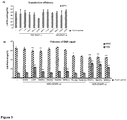
- Thereby, the outcome of DNA repair, either NHEJ or HDR, can be easily monitored by flow cytometry in particular by counting the number of cells appearing either red or green. TLR-cells were transfected with a corrective donor DNA and each of the HDR-CRISPR tested in which the Cas9 nuclease is fused to each of the HDR-promoting factors: EXO1, CTIP, RAD51, RAD52, RAD54, MRE11, PALB2, FANCD1. To monitor for transfection efficiency a construct expressing a blue fluorescent protein (BFP) was included in all the samples. Having shown that transfection efficiency was similar in all the samples (
Figure 3A ), the extent of red or green cells 7 days post transfection was measured (Figure 3B ). While the canonical SpCas9 (without HDR factor) was able to promote HDR in about 5% of the repair events, the extent of HDR was significantly increased for all the HDR-CRISPR v2 and for 3 out 8 HDR-CRISPR v1 analyzed. - Importantly, the HDR-CRISPR v2 were significantly better in promoting HDR as compared to the previously characterized HDR-CRISPR v1 harboring the SpCas9 fused to the CTIP (
Figure 4 ). - Using our best performing HDR-CRISPR v2 the ratio between the two DNA repair events approached to 1 implying that HDR-mediated DSB repair occurs almost with the same frequency as NHEJ-mediated ones (
Figure 5 ). In conclusion, a novel platform has been established capable of promoting the repair of a nuclease-induced DSB via HDR. This can be applied to correct disease-causing mutations in the context of primary immunodeficiency or of other genetic defects in general. -
-
Figure 1 . Schematic of the HDR-CRISPR system. The different components of HDR-CRISPR v1 and v2 are indicated on the right side as rectangles. The different HDR-promoting proteins or protein domains used in the two version of HDR-CRISPR analyzed are indicated in brackets. -
Figure 2 . Schematic of the reporter system used. The traffic light reporter system consists of a HEK293T-based cell line harboring integrated in its genome a copy of the indicated reporter construct composed of an mVenus gene with a mutation preventing its fluorescence, fused to an out-of-frame TagRFP gene via a self-cleaving T2A peptide. Upon transfection of the reporter cell line (TLR-cells) with both the HDR-CRISPR and a properly designed donor DNA template for repair of the mVenus sequence, DNA repair events either mediated by non-homologous end-joining (NHEJ) or homologous directed repair (HDR) can be monitor by the occurrence of red or green cells respectively. -
Figure 3 . Efficacy of the HDR-CRISPR system. A) The histogram shows the transfection efficiency obtained after transfection of the TLR-cells with the mix containing the indicated HDR-CRISPR that included a plasmid expressing a blue fluorescent protein (BFP) to monitor for transfection. The amount of blue cells is measured via flow cytometry three days after transfection (mean ± S.E.M.). B) The extent of double strand breaks repaired either via non-homologous end-joining or homologous directed repair is measured via flow cytometry seven days post transfections of the TLR-cells. The extent of cells either showing red or green fluorescence indicative of NHEJ- and HDR-mediated double strand break repair, respectively, are indicated (mean ± S.E.M.). Statistically significant differences, as compared to the SpCas9 without any fusion partner are reported within the graph (two-tailed, paired Student's t-test, *P < 0.05, **P < 0.01). -
Figure 4 . Comparison of HDR-CRISPR systems. The histogram shows the extent of double strand breaks repaired either via NHEJ or HDR measured as red or green cells respectively 7 days after transfection (mean ± S.E.M.). The data are extracted from those shown infigure 3 to compare side-by-side the efficiencies of the previously published HDR-CRISPR v1 containing a fusion between SpCas9 and CTIP, with our newly established HDR-CRISPR v2. Statistically significant differences, as compared to the indicated HDR-CRISPR are indicated within the graph (two-tailed, paired Student's t-test, **P < 0.01). -
Figure 5 . Extent of DSB repair pathway choice. The data infigure 3 are shown here as ratio between the DSB repair events occurred either via HDR or NHEJ. Each dot represents a single experiment. Statistically significant differences as compared to the indicated HDR-CRISPR v1 are reported within the graph (two-tailed, paired Student's t-test, *P < 0.05, **P < 0.01). - The amino acid sequences of the highly relevant protein sequences as used in the present invention are provided in the sequence protocol which is part of the present invention. The sequences and the corresponding gene products are listed in the Table below:
SEQ ID NO:1 amino acid linker SEQ ID NO:2 amino acid linker SEQ ID NO:3 Cas9 SEQ ID NO:4 RAD51 SEQ ID NO:5 RAD52 SEQ ID NO:6 RAD54 SEQ ID NO:7 MRE11 SEQ ID NO:8 PALB2 SEQ ID NO:9 FANCD2 SEQ ID NO:10 EXO1 SEQ ID NO:11 CtlP SEQ ID NO:12 NLS SEQ ID NO:13 HA - The HDR factors were isolated from human samples. The sequences as used are shown in the sequence protocol. For isolating the HDR factors RNA from human cells of different origin such as HEK293T, Jurkat, K562 cells was isolated. Via Reverse Transcription PCR (RTPCR) the entire coding region of the HDR factor of interest has been amplified and sequenced. To this end, the primers used for the PCR were selected to bind at the extremities of the coding region from the ATG translation start codon to the stop codon. Moreover, the primers included recognition sites for restriction enzymes which are compatible with the restriction sites present in the plasmid used as suitable vector.
- The resulting PCR amplicons were digested with restriction enzymes and cloned in the appropriate vectors. The HDR factors were directly cloned in the HDR-CRISPR v1 or HDR-CRISPR v2 plasmids which are schematically shown in
Figure 1 . Of course the appropriate HA tag and the NLS sequences were also included.






Claims (12)
- Modified Cas9 nuclease comprising a substantial part of a Cas9 nuclease and fused thereto at least one of a protein domain of a HDR factor selected from the group consisting of RAD51, RAD52, RAD54, MRE11, PALB2, FANCD2 and EXO1.
- Modified Cas9 nuclease according to claim 1 characterized in that the Cas9 nuclease fragment is derived from Streptococcus pyogenes.
- Modified Cas9 nuclease according to claim 1 or 2 characterized in that the HDR factor is selected from RAD51, RAD52 and/or MRE11.
- Modified Cas9 nuclease according to claim 3 characterized in that it comprises at least two HDR factors selected from RAD51, RAD52 and MRE11.
- Modified Cas9 nuclease according to any of claims 1 to 4 characterized in that it comprises a hemagglutination tag and/or a promoter derived from CMV.
- Modified Cas9 nuclease according to claim 3 characterized in that it further comprises CtlP.
- Nucleic acid coding for a modified Cas9 nuclease according to any of claims 1 to 6.
- Nucleic acid according to claim 7 characterized in that it is a DNA sequence.
- Vector for the transfection of target cells characterized in that it comprises a nucleic acid according to claims 7 and 8.
- Vector according to claim 9 characterized in that it is a plasmid.
- Vector according to claim 9 characterized in that it is a vector comprising viral elements.
- Method for editing nucleic acid sequences in a homology directed repair wherein a modified Cas9 nuclease according to any of claims 1 to 6 and/or a nucleic acid according to claim 7 or 8 and/or a vector according to any of claims 10 and 11 is transferred into target cell.
Priority Applications (3)
| Application Number | Priority Date | Filing Date | Title |
|---|---|---|---|
| DK19171002.9T DK3730610T3 (en) | 2019-04-25 | 2019-04-25 | MODIFIED CAS9 SYSTEM AND ITS USE FOR IMPROVED RE-EDITATION |
| ES19171002T ES2920273T3 (en) | 2019-04-25 | 2019-04-25 | Modified CAS9 system and its use for enhanced gene editing |
| EP19171002.9A EP3730610B1 (en) | 2019-04-25 | 2019-04-25 | Modified cas9 system and its use for improved gene editing |
Applications Claiming Priority (1)
| Application Number | Priority Date | Filing Date | Title |
|---|---|---|---|
| EP19171002.9A EP3730610B1 (en) | 2019-04-25 | 2019-04-25 | Modified cas9 system and its use for improved gene editing |
Publications (2)
| Publication Number | Publication Date |
|---|---|
| EP3730610A1 true EP3730610A1 (en) | 2020-10-28 |
| EP3730610B1 EP3730610B1 (en) | 2022-04-13 |
Family
ID=66397008
Family Applications (1)
| Application Number | Title | Priority Date | Filing Date |
|---|---|---|---|
| EP19171002.9A Active EP3730610B1 (en) | 2019-04-25 | 2019-04-25 | Modified cas9 system and its use for improved gene editing |
Country Status (3)
| Country | Link |
|---|---|
| EP (1) | EP3730610B1 (en) |
| DK (1) | DK3730610T3 (en) |
| ES (1) | ES2920273T3 (en) |
Cited By (1)
| Publication number | Priority date | Publication date | Assignee | Title |
|---|---|---|---|---|
| RU2763747C1 (en) * | 2020-12-30 | 2022-01-10 | Федеральное Государственное Бюджетное Учреждение Науки Институт Молекулярной Биологии Им. В.А. Энгельгардта Российской Академии Наук (Имб Ран) | Pcdexo-gs-ssb genetic constructs containing sequences encoding chimeric ssb proteins and exonucleases of the bacteriophage homologous recombination apparatus, combined via a glycine-serine polylinker |
Citations (3)
| Publication number | Priority date | Publication date | Assignee | Title |
|---|---|---|---|---|
| WO2016054326A1 (en) * | 2014-10-01 | 2016-04-07 | The General Hospital Corporation | Methods for increasing efficiency of nuclease-induced homology-directed repair |
| WO2017142923A1 (en) * | 2016-02-16 | 2017-08-24 | Emendobio Inc. | Compositions and methods for promoting homology directed repair mediated gene editing |
| WO2017180694A1 (en) * | 2016-04-13 | 2017-10-19 | Editas Medicine, Inc. | Cas9 fusion molecules gene editing systems, and methods of use thereof |
-
2019
- 2019-04-25 EP EP19171002.9A patent/EP3730610B1/en active Active
- 2019-04-25 DK DK19171002.9T patent/DK3730610T3/en active
- 2019-04-25 ES ES19171002T patent/ES2920273T3/en active Active
Patent Citations (3)
| Publication number | Priority date | Publication date | Assignee | Title |
|---|---|---|---|---|
| WO2016054326A1 (en) * | 2014-10-01 | 2016-04-07 | The General Hospital Corporation | Methods for increasing efficiency of nuclease-induced homology-directed repair |
| WO2017142923A1 (en) * | 2016-02-16 | 2017-08-24 | Emendobio Inc. | Compositions and methods for promoting homology directed repair mediated gene editing |
| WO2017180694A1 (en) * | 2016-04-13 | 2017-10-19 | Editas Medicine, Inc. | Cas9 fusion molecules gene editing systems, and methods of use thereof |
Non-Patent Citations (3)
| Title |
|---|
| CHARPENTIER ET AL., NATURE COMMUNICATIONS, vol. 9, 2018, pages 1133 |
| LING WANG ET AL: "Enhancing Targeted Genomic DNA Editing in Chicken Cells Using the CRISPR/Cas9 System", PLOS ONE, vol. 12, no. 1, 9 January 2017 (2017-01-09), pages e0169768, XP055385966, DOI: 10.1371/journal.pone.0169768 * |
| SIMIN SHAO ET AL: "Enhancing CRISPR/Cas9-mediated homology-directed repair in mammalian cells by expressing Saccharomyces cerevisiae Rad52", INTERNATIONAL JOURNAL OF BIOCHEMISTRY AND CELL BIOLOGY, vol. 92, 18 September 2017 (2017-09-18), GB, pages 43 - 52, XP055627157, ISSN: 1357-2725, DOI: 10.1016/j.biocel.2017.09.012 * |
Cited By (1)
| Publication number | Priority date | Publication date | Assignee | Title |
|---|---|---|---|---|
| RU2763747C1 (en) * | 2020-12-30 | 2022-01-10 | Федеральное Государственное Бюджетное Учреждение Науки Институт Молекулярной Биологии Им. В.А. Энгельгардта Российской Академии Наук (Имб Ран) | Pcdexo-gs-ssb genetic constructs containing sequences encoding chimeric ssb proteins and exonucleases of the bacteriophage homologous recombination apparatus, combined via a glycine-serine polylinker |
Also Published As
| Publication number | Publication date |
|---|---|
| DK3730610T3 (en) | 2022-07-11 |
| ES2920273T3 (en) | 2022-08-02 |
| EP3730610B1 (en) | 2022-04-13 |
Similar Documents
| Publication | Publication Date | Title |
|---|---|---|
| US20200010519A1 (en) | Nuclease fusions for enhancing genome editing by homology-directed transgene integration | |
| CN105940013B (en) | Methods and compositions for treating hemophilia | |
| JP7520826B2 (en) | Compositions and methods for transgene delivery | |
| US10428327B2 (en) | Compositions and methods for enhancing homologous recombination | |
| JP2018534114A5 (en) | ||
| Epstein et al. | Combining engineered nucleases with adeno-associated viral vectors for therapeutic gene editing | |
| KR20200011899A (en) | Genome editing for treating autoimmune disease | |
| JP2024540390A (en) | Mobile elements and their chimeric constructs | |
| US11891635B2 (en) | Nucleic acid sequence replacement by NHEJ | |
| JP2025523975A (en) | Biallelic knockout of ANGPTL3 | |
| EP3730610B1 (en) | Modified cas9 system and its use for improved gene editing | |
| US20240124869A1 (en) | Curing disease by transcription regulatory gene editing | |
| EP3640334A1 (en) | Genome editing system for repeat expansion mutation | |
| KR102847166B1 (en) | A gene editing of anticoagulant factors | |
| AU2024329453A1 (en) | Dual nuclease systems for gene editing, methods of producing and using same | |
| EP4208206B1 (en) | Modified cas9 system having a dominant negative effector on non-homologous end-joining fused thereto and its use for improved gene editing | |
| US20230190889A1 (en) | Gene editing of anticoagulant factors | |
| RU2763747C1 (en) | Pcdexo-gs-ssb genetic constructs containing sequences encoding chimeric ssb proteins and exonucleases of the bacteriophage homologous recombination apparatus, combined via a glycine-serine polylinker | |
| CN118660959A (en) | Mobile elements and chimeric constructs thereof | |
| CN120966795A (en) | Exonuclease editors and gene editing methods | |
| HK40004669A (en) | Therapeutic applications of cpf1-based genome editing | |
| HK40005602B (en) | Compositions and methods for enhancing homologous recombination | |
| HK40005602A (en) | Compositions and methods for enhancing homologous recombination | |
| HK1226756A1 (en) | Methods and compositions for treating hemophilia |
Legal Events
| Date | Code | Title | Description |
|---|---|---|---|
| PUAI | Public reference made under article 153(3) epc to a published international application that has entered the european phase |
Free format text: ORIGINAL CODE: 0009012 |
|
| STAA | Information on the status of an ep patent application or granted ep patent |
Free format text: STATUS: THE APPLICATION HAS BEEN PUBLISHED |
|
| AK | Designated contracting states |
Kind code of ref document: A1 Designated state(s): AL AT BE BG CH CY CZ DE DK EE ES FI FR GB GR HR HU IE IS IT LI LT LU LV MC MK MT NL NO PL PT RO RS SE SI SK SM TR |
|
| AX | Request for extension of the european patent |
Extension state: BA ME |
|
| STAA | Information on the status of an ep patent application or granted ep patent |
Free format text: STATUS: REQUEST FOR EXAMINATION WAS MADE |
|
| 17P | Request for examination filed |
Effective date: 20210406 |
|
| RBV | Designated contracting states (corrected) |
Designated state(s): AL AT BE BG CH CY CZ DE DK EE ES FI FR GB GR HR HU IE IS IT LI LT LU LV MC MK MT NL NO PL PT RO RS SE SI SK SM TR |
|
| STAA | Information on the status of an ep patent application or granted ep patent |
Free format text: STATUS: EXAMINATION IS IN PROGRESS |
|
| 17Q | First examination report despatched |
Effective date: 20210531 |
|
| GRAP | Despatch of communication of intention to grant a patent |
Free format text: ORIGINAL CODE: EPIDOSNIGR1 |
|
| STAA | Information on the status of an ep patent application or granted ep patent |
Free format text: STATUS: GRANT OF PATENT IS INTENDED |
|
| INTG | Intention to grant announced |
Effective date: 20211029 |
|
| GRAS | Grant fee paid |
Free format text: ORIGINAL CODE: EPIDOSNIGR3 |
|
| GRAA | (expected) grant |
Free format text: ORIGINAL CODE: 0009210 |
|
| STAA | Information on the status of an ep patent application or granted ep patent |
Free format text: STATUS: THE PATENT HAS BEEN GRANTED |
|
| AK | Designated contracting states |
Kind code of ref document: B1 Designated state(s): AL AT BE BG CH CY CZ DE DK EE ES FI FR GB GR HR HU IE IS IT LI LT LU LV MC MK MT NL NO PL PT RO RS SE SI SK SM TR |
|
| REG | Reference to a national code |
Ref country code: GB Ref legal event code: FG4D |
|
| REG | Reference to a national code |
Ref country code: CH Ref legal event code: EP |
|
| REG | Reference to a national code |
Ref country code: DE Ref legal event code: R096 Ref document number: 602019013585 Country of ref document: DE |
|
| REG | Reference to a national code |
Ref country code: IE Ref legal event code: FG4D |
|
| REG | Reference to a national code |
Ref country code: AT Ref legal event code: REF Ref document number: 1483448 Country of ref document: AT Kind code of ref document: T Effective date: 20220515 |
|
| REG | Reference to a national code |
Ref country code: DK Ref legal event code: T3 Effective date: 20220704 |
|
| REG | Reference to a national code |
Ref country code: SE Ref legal event code: TRGR |
|
| REG | Reference to a national code |
Ref country code: ES Ref legal event code: FG2A Ref document number: 2920273 Country of ref document: ES Kind code of ref document: T3 Effective date: 20220802 |
|
| REG | Reference to a national code |
Ref country code: LT Ref legal event code: MG9D |
|
| REG | Reference to a national code |
Ref country code: NL Ref legal event code: MP Effective date: 20220413 |
|
| REG | Reference to a national code |
Ref country code: AT Ref legal event code: MK05 Ref document number: 1483448 Country of ref document: AT Kind code of ref document: T Effective date: 20220413 |
|
| PG25 | Lapsed in a contracting state [announced via postgrant information from national office to epo] |
Ref country code: NL Free format text: LAPSE BECAUSE OF FAILURE TO SUBMIT A TRANSLATION OF THE DESCRIPTION OR TO PAY THE FEE WITHIN THE PRESCRIBED TIME-LIMIT Effective date: 20220413 |
|
| PG25 | Lapsed in a contracting state [announced via postgrant information from national office to epo] |
Ref country code: PT Free format text: LAPSE BECAUSE OF FAILURE TO SUBMIT A TRANSLATION OF THE DESCRIPTION OR TO PAY THE FEE WITHIN THE PRESCRIBED TIME-LIMIT Effective date: 20220816 Ref country code: NO Free format text: LAPSE BECAUSE OF FAILURE TO SUBMIT A TRANSLATION OF THE DESCRIPTION OR TO PAY THE FEE WITHIN THE PRESCRIBED TIME-LIMIT Effective date: 20220713 Ref country code: LT Free format text: LAPSE BECAUSE OF FAILURE TO SUBMIT A TRANSLATION OF THE DESCRIPTION OR TO PAY THE FEE WITHIN THE PRESCRIBED TIME-LIMIT Effective date: 20220413 Ref country code: HR Free format text: LAPSE BECAUSE OF FAILURE TO SUBMIT A TRANSLATION OF THE DESCRIPTION OR TO PAY THE FEE WITHIN THE PRESCRIBED TIME-LIMIT Effective date: 20220413 Ref country code: GR Free format text: LAPSE BECAUSE OF FAILURE TO SUBMIT A TRANSLATION OF THE DESCRIPTION OR TO PAY THE FEE WITHIN THE PRESCRIBED TIME-LIMIT Effective date: 20220714 Ref country code: FI Free format text: LAPSE BECAUSE OF FAILURE TO SUBMIT A TRANSLATION OF THE DESCRIPTION OR TO PAY THE FEE WITHIN THE PRESCRIBED TIME-LIMIT Effective date: 20220413 Ref country code: BG Free format text: LAPSE BECAUSE OF FAILURE TO SUBMIT A TRANSLATION OF THE DESCRIPTION OR TO PAY THE FEE WITHIN THE PRESCRIBED TIME-LIMIT Effective date: 20220713 Ref country code: AT Free format text: LAPSE BECAUSE OF FAILURE TO SUBMIT A TRANSLATION OF THE DESCRIPTION OR TO PAY THE FEE WITHIN THE PRESCRIBED TIME-LIMIT Effective date: 20220413 |
|
| PG25 | Lapsed in a contracting state [announced via postgrant information from national office to epo] |
Ref country code: RS Free format text: LAPSE BECAUSE OF FAILURE TO SUBMIT A TRANSLATION OF THE DESCRIPTION OR TO PAY THE FEE WITHIN THE PRESCRIBED TIME-LIMIT Effective date: 20220413 Ref country code: PL Free format text: LAPSE BECAUSE OF FAILURE TO SUBMIT A TRANSLATION OF THE DESCRIPTION OR TO PAY THE FEE WITHIN THE PRESCRIBED TIME-LIMIT Effective date: 20220413 Ref country code: LV Free format text: LAPSE BECAUSE OF FAILURE TO SUBMIT A TRANSLATION OF THE DESCRIPTION OR TO PAY THE FEE WITHIN THE PRESCRIBED TIME-LIMIT Effective date: 20220413 Ref country code: IS Free format text: LAPSE BECAUSE OF FAILURE TO SUBMIT A TRANSLATION OF THE DESCRIPTION OR TO PAY THE FEE WITHIN THE PRESCRIBED TIME-LIMIT Effective date: 20220813 |
|
| REG | Reference to a national code |
Ref country code: DE Ref legal event code: R097 Ref document number: 602019013585 Country of ref document: DE |
|
| PG25 | Lapsed in a contracting state [announced via postgrant information from national office to epo] |
Ref country code: SM Free format text: LAPSE BECAUSE OF FAILURE TO SUBMIT A TRANSLATION OF THE DESCRIPTION OR TO PAY THE FEE WITHIN THE PRESCRIBED TIME-LIMIT Effective date: 20220413 Ref country code: SK Free format text: LAPSE BECAUSE OF FAILURE TO SUBMIT A TRANSLATION OF THE DESCRIPTION OR TO PAY THE FEE WITHIN THE PRESCRIBED TIME-LIMIT Effective date: 20220413 Ref country code: RO Free format text: LAPSE BECAUSE OF FAILURE TO SUBMIT A TRANSLATION OF THE DESCRIPTION OR TO PAY THE FEE WITHIN THE PRESCRIBED TIME-LIMIT Effective date: 20220413 Ref country code: MC Free format text: LAPSE BECAUSE OF FAILURE TO SUBMIT A TRANSLATION OF THE DESCRIPTION OR TO PAY THE FEE WITHIN THE PRESCRIBED TIME-LIMIT Effective date: 20220413 Ref country code: EE Free format text: LAPSE BECAUSE OF FAILURE TO SUBMIT A TRANSLATION OF THE DESCRIPTION OR TO PAY THE FEE WITHIN THE PRESCRIBED TIME-LIMIT Effective date: 20220413 Ref country code: CZ Free format text: LAPSE BECAUSE OF FAILURE TO SUBMIT A TRANSLATION OF THE DESCRIPTION OR TO PAY THE FEE WITHIN THE PRESCRIBED TIME-LIMIT Effective date: 20220413 |
|
| PLBE | No opposition filed within time limit |
Free format text: ORIGINAL CODE: 0009261 |
|
| STAA | Information on the status of an ep patent application or granted ep patent |
Free format text: STATUS: NO OPPOSITION FILED WITHIN TIME LIMIT |
|
| 26N | No opposition filed |
Effective date: 20230116 |
|
| PG25 | Lapsed in a contracting state [announced via postgrant information from national office to epo] |
Ref country code: AL Free format text: LAPSE BECAUSE OF FAILURE TO SUBMIT A TRANSLATION OF THE DESCRIPTION OR TO PAY THE FEE WITHIN THE PRESCRIBED TIME-LIMIT Effective date: 20220413 |
|
| PG25 | Lapsed in a contracting state [announced via postgrant information from national office to epo] |
Ref country code: SI Free format text: LAPSE BECAUSE OF FAILURE TO SUBMIT A TRANSLATION OF THE DESCRIPTION OR TO PAY THE FEE WITHIN THE PRESCRIBED TIME-LIMIT Effective date: 20220413 |
|
| PG25 | Lapsed in a contracting state [announced via postgrant information from national office to epo] |
Ref country code: MK Free format text: LAPSE BECAUSE OF FAILURE TO SUBMIT A TRANSLATION OF THE DESCRIPTION OR TO PAY THE FEE WITHIN THE PRESCRIBED TIME-LIMIT Effective date: 20220413 Ref country code: CY Free format text: LAPSE BECAUSE OF FAILURE TO SUBMIT A TRANSLATION OF THE DESCRIPTION OR TO PAY THE FEE WITHIN THE PRESCRIBED TIME-LIMIT Effective date: 20220413 |
|
| PG25 | Lapsed in a contracting state [announced via postgrant information from national office to epo] |
Ref country code: HU Free format text: LAPSE BECAUSE OF FAILURE TO SUBMIT A TRANSLATION OF THE DESCRIPTION OR TO PAY THE FEE WITHIN THE PRESCRIBED TIME-LIMIT; INVALID AB INITIO Effective date: 20190425 |
|
| PG25 | Lapsed in a contracting state [announced via postgrant information from national office to epo] |
Ref country code: TR Free format text: LAPSE BECAUSE OF FAILURE TO SUBMIT A TRANSLATION OF THE DESCRIPTION OR TO PAY THE FEE WITHIN THE PRESCRIBED TIME-LIMIT Effective date: 20220413 |
|
| PG25 | Lapsed in a contracting state [announced via postgrant information from national office to epo] |
Ref country code: MT Free format text: LAPSE BECAUSE OF FAILURE TO SUBMIT A TRANSLATION OF THE DESCRIPTION OR TO PAY THE FEE WITHIN THE PRESCRIBED TIME-LIMIT Effective date: 20220413 |
|
| PG25 | Lapsed in a contracting state [announced via postgrant information from national office to epo] |
Ref country code: BG Free format text: LAPSE BECAUSE OF FAILURE TO SUBMIT A TRANSLATION OF THE DESCRIPTION OR TO PAY THE FEE WITHIN THE PRESCRIBED TIME-LIMIT Effective date: 20220413 |
|
| PG25 | Lapsed in a contracting state [announced via postgrant information from national office to epo] |
Ref country code: BG Free format text: LAPSE BECAUSE OF FAILURE TO SUBMIT A TRANSLATION OF THE DESCRIPTION OR TO PAY THE FEE WITHIN THE PRESCRIBED TIME-LIMIT Effective date: 20220413 |
|
| PGFP | Annual fee paid to national office [announced via postgrant information from national office to epo] |
Ref country code: LU Payment date: 20250417 Year of fee payment: 7 |
|
| PGFP | Annual fee paid to national office [announced via postgrant information from national office to epo] |
Ref country code: DE Payment date: 20250417 Year of fee payment: 7 |
|
| PGFP | Annual fee paid to national office [announced via postgrant information from national office to epo] |
Ref country code: ES Payment date: 20250519 Year of fee payment: 7 Ref country code: DK Payment date: 20250423 Year of fee payment: 7 |
|
| PGFP | Annual fee paid to national office [announced via postgrant information from national office to epo] |
Ref country code: IT Payment date: 20250430 Year of fee payment: 7 Ref country code: BE Payment date: 20250422 Year of fee payment: 7 |
|
| PGFP | Annual fee paid to national office [announced via postgrant information from national office to epo] |
Ref country code: FR Payment date: 20250424 Year of fee payment: 7 |
|
| PGFP | Annual fee paid to national office [announced via postgrant information from national office to epo] |
Ref country code: CH Payment date: 20250501 Year of fee payment: 7 |
|
| PGFP | Annual fee paid to national office [announced via postgrant information from national office to epo] |
Ref country code: IE Payment date: 20250428 Year of fee payment: 7 |
|
| PGFP | Annual fee paid to national office [announced via postgrant information from national office to epo] |
Ref country code: SE Payment date: 20250423 Year of fee payment: 7 |
|
| PGFP | Annual fee paid to national office [announced via postgrant information from national office to epo] |
Ref country code: GB Payment date: 20260324 Year of fee payment: 8 |