EP3730147A1 - Preparation with hypoglycemic effect - Google Patents

Preparation with hypoglycemic effect Download PDF

Info

Publication number
EP3730147A1
EP3730147A1 EP20460016.7A EP20460016A EP3730147A1 EP 3730147 A1 EP3730147 A1 EP 3730147A1 EP 20460016 A EP20460016 A EP 20460016A EP 3730147 A1 EP3730147 A1 EP 3730147A1
Authority
EP
European Patent Office
Prior art keywords
diabetes
preparation
group
betulin
animals
Prior art date
Legal status (The legal status is an assumption and is not a legal conclusion. Google has not performed a legal analysis and makes no representation as to the accuracy of the status listed.)
Pending
Application number
EP20460016.7A
Other languages
German (de)
French (fr)
Inventor
Mikolaj TOMULEWICK
Current Assignee (The listed assignees may be inaccurate. Google has not performed a legal analysis and makes no representation or warranty as to the accuracy of the list.)
Instytut Biotechnologii I Badan Medycznych "biolamed" Sp Z O O
Original Assignee
Instytut Biotechnologii I Badan Medycznych "biolamed" Sp Z O O
Priority date (The priority date is an assumption and is not a legal conclusion. Google has not performed a legal analysis and makes no representation as to the accuracy of the date listed.)
Filing date
Publication date
Application filed by Instytut Biotechnologii I Badan Medycznych "biolamed" Sp Z O O filed Critical Instytut Biotechnologii I Badan Medycznych "biolamed" Sp Z O O
Publication of EP3730147A1 publication Critical patent/EP3730147A1/en
Pending legal-status Critical Current

Links

Images

Classifications

    • AHUMAN NECESSITIES
    • A61MEDICAL OR VETERINARY SCIENCE; HYGIENE
    • A61KPREPARATIONS FOR MEDICAL, DENTAL OR TOILETRY PURPOSES
    • A61K36/00Medicinal preparations of undetermined constitution containing material from algae, lichens, fungi or plants, or derivatives thereof, e.g. traditional herbal medicines
    • A61K36/18Magnoliophyta (angiosperms)
    • A61K36/185Magnoliopsida (dicotyledons)
    • AHUMAN NECESSITIES
    • A61MEDICAL OR VETERINARY SCIENCE; HYGIENE
    • A61KPREPARATIONS FOR MEDICAL, DENTAL OR TOILETRY PURPOSES
    • A61K31/00Medicinal preparations containing organic active ingredients
    • A61K31/045Hydroxy compounds, e.g. alcohols; Salts thereof, e.g. alcoholates
    • AHUMAN NECESSITIES
    • A61MEDICAL OR VETERINARY SCIENCE; HYGIENE
    • A61KPREPARATIONS FOR MEDICAL, DENTAL OR TOILETRY PURPOSES
    • A61K31/00Medicinal preparations containing organic active ingredients
    • A61K31/185Acids; Anhydrides, halides or salts thereof, e.g. sulfur acids, imidic, hydrazonic or hydroximic acids
    • A61K31/19Carboxylic acids, e.g. valproic acid
    • AHUMAN NECESSITIES
    • A61MEDICAL OR VETERINARY SCIENCE; HYGIENE
    • A61PSPECIFIC THERAPEUTIC ACTIVITY OF CHEMICAL COMPOUNDS OR MEDICINAL PREPARATIONS
    • A61P3/00Drugs for disorders of the metabolism
    • A61P3/08Drugs for disorders of the metabolism for glucose homeostasis
    • A61P3/10Drugs for disorders of the metabolism for glucose homeostasis for hyperglycaemia, e.g. antidiabetics

Definitions

  • the subject of the invention is a preparation with hypoglycemic effect, used adjunctively in patients with diabetes, and having an impact on the activity of carbohydrate metabolizing enzymes and on the expression profile of the genes of the enzymes involved in carbohydrate metabolism.
  • the treatment costs will increase as well. Diabetes is not only a disease that consumes a lot of financial resources, but also causes the social costs of so-called non-medical due to employee absences, a decrease in their productivity, and as a consequence premature resignation from professional activity [Report of the Institute of Health Protection, 2018].
  • the goal of this invention is to create a dietary supplement, a widely available agent supporting the reduction of blood glucose, which will also support the prevention of diabetes development in Poland.
  • Diabetes is a metabolic disease with a genetic predisposition, accompanied by chronic hyperglycaemia due to absolute or relative insulin deficiency. It is one of the most important medical and social problems of our time, because it occupies a high place in the structure of chronic pathology of all age groups and is one of the most important reasons for the increase in disability and mortality both in Poland and in the world.
  • the World Health Organization distinguishes: type 1 diabetes, type 2 diabetes, MODY type diabetes, gestational diabetes and other specific types diagnosed based on fasting and postprandial blood glucose.
  • a common feature of all types of diabetes is the continuous increase blood glucose level, which in turn leads to the development of metabolic disorders in tissues. Elevated glucose level in the blood and body fluids leads to many pathological changes in various organs and body systems causing serious complications such as acute ketoacidosis, lactic acidosis, hypoglycemia, hyperosmolar coma as well as nephro-, ophthalmic, retino- and encephalopathy [American Diabetes Association, 2014].
  • cardiovascular insufficiency cardiovascular insufficiency, respiratory system, ketoacidosis and lactic acidosis, pregnancy, breastfeeding, as well as gastrointestinal side effects (nausea, vomiting, diarrhea) as well as endocrine (hypoglycaemia) and hematopoietic system.
  • composition for the prevention or treatment of diabetes comprising the extract of the leaves of the hybrid plant Camellia sinensis and Camellia taliensis.
  • Betulin and its derivatives can be isolated from birch bark by sublimation by extraction with organic solvents (dichloromethane, chloroform, acetone) and crystallization from appropriate solvents. Betulin together with other triterpenoids such as lupeol, betulinic acid, betulinic aldehyde and allobetulin are found in large quantities in the birch bark.
  • the purpose of the invention is to broaden the range of preparations of natural origin with hypoglycemic effect on the activity of carbohydrate metabolizing enzymes and on the expression profile of the genes of the enzymes involved in carbohydrate metabolism.
  • the pharmaceutical carrier is selected from the group consisting of polyvinylpyrrolidone, cellulose derivatives, including hydroxypropylmethylcellulose and hydroxypropylcellulose, cyclodextrin, gelatin, hypromellose phthalate, sugars and polyhydric alcohols, calcium sulfate dihydrate, dibasic calcium phophate, sorbitol, mannitol, anhydrous lactose, dextrose, acacia, tragacanth, ethylcellulose, methylcellulose, polyvinyl alcohol, sodium carboxymethylcellulose, silicon dioxide, polyethylene glycol 400, polyethylene glycol 4000, starch, porous silica carriers, aluminum silicate, calcium silicate, sugars, magnesium stearate, cellulose, calcium phosphate and combinations thereof.
  • the pharmaceutical carrier is modified starch.
  • the preparation of natural origin with hypoglycemic effect causes a hypoglycemic effect by lowering blood glucose concentration, and also improves morphometry of pancreatic islands and increases insulin concentration in animals with induced diabetes.
  • Rat liver glycogen phosphorylase, rat liver and skeletal muscle hexokinase, rat liver glucose-6-phosphate dehydrogenase (DG-6-P), rat liver and skeletal muscle phosphofructokinase were selected as potential targets for in vitro testing of the hypoglycemic activity of lupane triterpenoids.
  • Tested compounds did not significantly affect hexokinase activity in both liver and skeletal muscle of rats.
  • Lupane triterpenoids at the tested concentrations showed a multidirectional effect on phosphofructokinase activity in homogenates and post-mitochondrial fraction in both liver and muscle tissue of rats. Probably the tested lupane triterpenoids did not directly affect the enzyme itself, but mediated their effect on phosphofructokinase by acting on other cellular enzymes, changing the concentrations of allosteric regulators (ATP, AMP, etc.).
  • allosteric regulators ATP, AMP, etc.
  • Betulin and betulinic acid have been shown to statistically significantly increase insulin secretion by pancreatic islet ⁇ -cells compared to the control group. The strongest reaction was observed after 30 minutes of incubation in the presence of 10 ⁇ M lupane triterpenoids ( Figure 1 ).
  • Hyperglycaemia was caused by administration of a 40% glucose solution at doses of 2 or 4 g/kg. Animals from the respective groups received triterpenoids suspensions in 2% starch, once, intragastrically, at 100 and 1000 mg/kg, 2 hours before glucose administration.
  • Blood glucose was determined with a Roche AccuCheck Active glucometer (USA) before and after glucose administration every 30 minutes for 2 hours and then every 60 minutes for 6 hours.
  • the tested lupane terpenoids have been shown to cause a statistically significant and dose dependent reduction in glucose levels in animals with induced hyperglycemia, but no increase in this effect has been observed after the 1000 mg/kg dose.
  • Diabetes was caused by a single intraperitoneal administration of alloxan at a dose of 170 mg/kg bw. The development of diabetes was observed on the basis of the main symptoms (polydipsia, polyphagia), glycosuria and hyperglycemia. Animals with high glucose levels of at least 14 mmol/L were selected for the experiment.
  • the first group was formed from healthy animals without diabetes.
  • the control group (healthy animals) received NaCl 1 ml/kg; Group 2. - diabetes mellitus (DM), received NaCl 1 ml/kg; Group 3. - DM + Betulin, at a dose of 100 mg/kg; Group 4. - DM + Lupeol, at a dose of 100 mg/kg; Group 5 - DM + Betulonic acid, at a dose of 100 mg/kg; Group 6 - DM + Betulinic acid, at a dose of 100 mg/kg; Group 7 - DM + Betulin-3,28-diacetate, at a dose of 100 mg/kg.
  • Peripheral blood glucose was determined using a Roche AccuCheck Active meter (USA) before and after glucose administration every 60 minutes for 5 hours. A drop of blood was taken from the tail tip incision.
  • Alloxane was used to induce diabetes, which causes damage to the necrotic islet type pancreatic apparatus due to selective accumulation in ⁇ -cells and induction of massive free radical generation.
  • Diabetes was caused by a single intraperitoneal administration of alloxan at a dose of 170 mg/kg bw. The development of diabetes was observed on the basis of the main symptoms (polydipsia, polyphagia), glycosuria and hyperglycemia. Animals with high glucose levels of at least 14 mmol/L were selected for the experiment.
  • the first group was formed from healthy animals without diabetes.
  • the control group (healthy animals) received NaCl 1 ml/kg; Group 2 - DM + Lupeol, at a dose of 100 mg/kg; Group 3 - DM + Betulonic acid, at a dose of 100 mg/kg; Group 4 - DM + 3,28-betulin diacetate, at a dose of 100 mg/kg; Group 5 - DM + Betulinic acid, at a dose of 50 mg/kg; Group 6 - DM + Betulinic acid, at a dose of 100 mg/kg; Group 7 - DM + Betulin, at a dose of 50 mg/kg; Group 8 - DM + Betulin, at a dose of 100 mg/kg. All test compounds were administered intragastrically as a suspension in a 2% starch solution for 30 days.
  • a pharmaceutical carrier is selected from the group consisting of polyvinylpyrrolidone, cellulose derivatives, including hydroxypropylmethylcellulose and hydroxypropylcellulose, cyclodextrin, gelatin, hypromellose phthalate, sugars and polyhydric alcohols, calcium sulfate dihydrate, dibasic calcium phophate, sorbitol, mannitol, anhydrous lactose, dextrose, acacia, tragacanth, ethylcellulose, methylcellulose, polyvinyl alcohol, sodium carboxymethylcellulose, silicon dioxide, polyethylene glycol 400, polyethylene glycol 4000, starch, porous silica carriers, aluminum silicate, calcium silicate, sugars, magnesium stearate, cellulose, calcium phosphate and their combinations, from which a capsule will be prepared, into which a biologically active substance from the lupane triterpenoid group in the group consisting of polyvinylpyrrolidone, cellulose derivatives

Landscapes

  • Health & Medical Sciences (AREA)
  • Life Sciences & Earth Sciences (AREA)
  • Natural Medicines & Medicinal Plants (AREA)
  • General Health & Medical Sciences (AREA)
  • Pharmacology & Pharmacy (AREA)
  • Animal Behavior & Ethology (AREA)
  • Medicinal Chemistry (AREA)
  • Public Health (AREA)
  • Veterinary Medicine (AREA)
  • Chemical & Material Sciences (AREA)
  • Epidemiology (AREA)
  • Engineering & Computer Science (AREA)
  • Diabetes (AREA)
  • Alternative & Traditional Medicine (AREA)
  • Biotechnology (AREA)
  • Mycology (AREA)
  • Microbiology (AREA)
  • Medical Informatics (AREA)
  • Botany (AREA)
  • General Chemical & Material Sciences (AREA)
  • Organic Chemistry (AREA)
  • Endocrinology (AREA)
  • Emergency Medicine (AREA)
  • Nuclear Medicine, Radiotherapy & Molecular Imaging (AREA)
  • Bioinformatics & Cheminformatics (AREA)
  • Chemical Kinetics & Catalysis (AREA)
  • Obesity (AREA)
  • Hematology (AREA)
  • Medicines Containing Plant Substances (AREA)
  • Steroid Compounds (AREA)
  • Pharmaceuticals Containing Other Organic And Inorganic Compounds (AREA)

Abstract

The subject of the invention is a preparation with hypoglycemic effect, used adjunctively in patients with diabetes, and having an impact on the activity of carbohydrate metabolizing enzymes and on the expression profile of the genes of the enzymes involved in carbohydrate metabolism.Preparation with hypoglycemic effect containing as active substance a compound from the group of lupane triterpenoids isolated from the birch bark Betula pendula Roth. characterized in that lupeol contains 0.5-24.5% w/w, betulin contains 0.5-24.5% w/w, betulinic acid contains 0.5-24.5% w/w, betulonic acid contains 0.5-24.5% w/w.The preparation is characterized by the fact that the active substances are enclosed in a 500 or 800 mg gelatin capsule.

Description

  • The subject of the invention is a preparation with hypoglycemic effect, used adjunctively in patients with diabetes, and having an impact on the activity of carbohydrate metabolizing enzymes and on the expression profile of the genes of the enzymes involved in carbohydrate metabolism.
  • Epidemiological data from 2018 indicate that every year 5 million people die from diabetes and its complications. By 2040, it is estimated that 642 million people in the range of 20-79 age will have diabetes. In Poland, by 2015, there were 3 million adults with diabetes. It is expected that by 2040 this number will increase to over 4 million people.
  • With the increased numer of patients, the treatment costs will increase as well. Diabetes is not only a disease that consumes a lot of financial resources, but also causes the social costs of so-called non-medical due to employee absences, a decrease in their productivity, and as a consequence premature resignation from professional activity [Report of the Institute of Health Protection, 2018]. Considering the above, the goal of this invention is to create a dietary supplement, a widely available agent supporting the reduction of blood glucose, which will also support the prevention of diabetes development in Poland.
  • Diabetes is a metabolic disease with a genetic predisposition, accompanied by chronic hyperglycaemia due to absolute or relative insulin deficiency. It is one of the most important medical and social problems of our time, because it occupies a high place in the structure of chronic pathology of all age groups and is one of the most important reasons for the increase in disability and mortality both in Poland and in the world.
  • Metabolic disorders occurring in the course of diabetes can lead to serious and irreversible changes in the body. Hyperglycaemia plays a major role in this process. The incidence of diabetes in epidemiological studies is about 6% of the total population, with the majority of people with diabetes being of working age.
  • The World Health Organization (WHO) distinguishes: type 1 diabetes, type 2 diabetes, MODY type diabetes, gestational diabetes and other specific types diagnosed based on fasting and postprandial blood glucose.
  • A common feature of all types of diabetes is the continuous increase blood glucose level, which in turn leads to the development of metabolic disorders in tissues. Elevated glucose level in the blood and body fluids leads to many pathological changes in various organs and body systems causing serious complications such as acute ketoacidosis, lactic acidosis, hypoglycemia, hyperosmolar coma as well as nephro-, ophthalmic, retino- and encephalopathy [American Diabetes Association, 2014].
  • The main and effective drug used in the treatment of type 1 diabetes are insulin injections, while in type 2 diabetes - oral hypoglycemic agents such as: biguanides, sulfonylureas, glinides, thiazolidinediones, α-glycosidase inhibitors as well as replacement insulin therapy in the ineffective use of oral drugs. Hypoglycemic drugs can be considered as adjuvant (complementary) therapy aimed at reducing the risk of complications, which is a consequence of constant hyperglycemia.
  • When using known hypoglycemic agents, many contraindications should be borne in mind: cardiovascular insufficiency, respiratory system, ketoacidosis and lactic acidosis, pregnancy, breastfeeding, as well as gastrointestinal side effects (nausea, vomiting, diarrhea) as well as endocrine (hypoglycaemia) and hematopoietic system.
  • Currently, the target of diabetes pharmacotherapy is to achieve stable compensation, prevent the development of complications and look for prevention methods to development of this disease entity. Given the relative limitations and the significant number of side effects of synthetic drugs, supporting therapy with natural preparations still poses a technological challenge in the biotechnology and pharmaceutical market.
  • From the US patent US 20160166631 is known a preparation containing in its composition, among others magnesium, zinc, chromium, vitamin B12, American ginseng, cinnamon bark, lutein and green tea extract, used as a dietary supplement to control blood glucose levels and how to prevent, alleviate or treat type 2 diabetes.
  • From the international patent WO 2019008551 is known a composition with anti-diabetic effect enriched with triterpenoids from the extract of ossicular, a medicinal plant originating in Mexico known as spiral ginger, for the treatment of diabetes.
  • From US patent US 20170182110 is known a composition for the prevention or treatment of diabetes, comprising the extract of the leaves of the hybrid plant Camellia sinensis and Camellia taliensis.
  • One of the more promising groups of compounds are triterpenoids and their derivatives, mainly lupane triterpenoids. Triterpenes belong to the group of organic compounds. They are isoprene hexamers. Years of experience have allowed to describe over four thousand triterpenes and their derivatives. Betulin and its derivatives belong to the group of pentacyclic triterpenes characterized by the presence of five six-carbon or one five- and four six-carbon rings. The skeleton is made of six isoprene units and is formed as a result of cyclization of the squalene molecule. Betulin and its derivatives can be isolated from birch bark by sublimation by extraction with organic solvents (dichloromethane, chloroform, acetone) and crystallization from appropriate solvents. Betulin together with other triterpenoids such as lupeol, betulinic acid, betulinic aldehyde and allobetulin are found in large quantities in the birch bark.
  • One of the natural sources of lupane triterpenoids is the outer layer of the bark of white birch species (Betula) e.g. B. verrucosa, B. pendula, B. pubescens, B. alba. Birch bark is a byproduct of wood processing and is practically not used in economic activity. According to various sources, birch bark contains up to 40% betulin and up to 5-10% lupeol. Birch bark extracts contain betulin and oxidized derivatives: betulinic acid, betulinic aldehyde, betulinic acid methyl ester, betulonic aldehyde, betulonic acid, as well as a large number of related compounds.
  • The purpose of the invention is to broaden the range of preparations of natural origin with hypoglycemic effect on the activity of carbohydrate metabolizing enzymes and on the expression profile of the genes of the enzymes involved in carbohydrate metabolism.
  • A preparation of natural origin with a hypoglycemic effect, according to the invention, containing as active substance compounds belonging to the group of lupane triterpenoids isolated from the birch bark Betula pendula Roth. It is characterized by the fact that as active ingredients it contains 0.5-24.5% lupeol, 0.5-24.5% betulin, 0.5-24.5% betulinic acid, 0.5-24.5% betulonic acid, and the active substance is enclosed in a gelatin capsule in an amount of 500 or 800 mg. The pharmaceutical carrier is selected from the group consisting of polyvinylpyrrolidone, cellulose derivatives, including hydroxypropylmethylcellulose and hydroxypropylcellulose, cyclodextrin, gelatin, hypromellose phthalate, sugars and polyhydric alcohols, calcium sulfate dihydrate, dibasic calcium phophate, sorbitol, mannitol, anhydrous lactose, dextrose, acacia, tragacanth, ethylcellulose, methylcellulose, polyvinyl alcohol, sodium carboxymethylcellulose, silicon dioxide, polyethylene glycol 400, polyethylene glycol 4000, starch, porous silica carriers, aluminum silicate, calcium silicate, sugars, magnesium stearate, cellulose, calcium phosphate and combinations thereof. The pharmaceutical carrier is modified starch.
  • The preparation of natural origin with hypoglycemic effect, according to the invention, causes a hypoglycemic effect by lowering blood glucose concentration, and also improves morphometry of pancreatic islands and increases insulin concentration in animals with induced diabetes.
  • The present invention will be described in the examples with reference to a particular preferred embodiment, which does not limit other possible solutions according to the invention.
  • In vitro investigation of the mechanisms of hypoglycemic action of lupane terpenoids
  • Rat liver glycogen phosphorylase, rat liver and skeletal muscle hexokinase, rat liver glucose-6-phosphate dehydrogenase (DG-6-P), rat liver and skeletal muscle phosphofructokinase were selected as potential targets for in vitro testing of the hypoglycemic activity of lupane triterpenoids.
  • Investigating the effect of lupane triterpenoids on glycogen phosphorylase activity, a reduced enzyme activity in rat liver homogenates and post-mitochondrial fraction was demonstrated in all study groups. Betulin, betulon and betulinic acids had the greatest inhibitory effect.
  • Tested compounds did not significantly affect hexokinase activity in both liver and skeletal muscle of rats.
  • Surprising results were obtained by examining the effect of lupane triterpenoids on glucose-6-phosphate activity. A 10% increase in enzyme activity was observed in rat liver homogenates, whereas the opposite effect was observed in the post-mitochondrial fraction. In both cases, the observed effects were dose-dependent. Since no definitive response could be obtained regarding the effect of lupane triterpenoids on DG-6-P activity, an additional enzyme purification procedure was performed and all compounds used were shown to inhibit enzyme activity in a dose-dependent manner. Table 1. Effect of lupane triterpenoids on DG-6-P activity in 5.6-fold purified rat liver
    Group Lupane triterpenoids concentration
    5 µM 25 µM
    E % of control E % of control
    Control 0,210±0,015 - 0,212±0,015 -
    Betulin 0,149±0,004 71,00±2,02 0,100±0,002 47,60±0,97
    3,28-betulin diacetate 0,158±0,002 75,00±1,18 0,111±0,008 52,80±3,81
    Lupeol 0,143±0,005 68,00±2,38 0,113±0,009 53,60±4,23
    Betulinic acid 0,144±0,002 68,80±0,86 0,093±0,007 44,20±3,27
    Betulonic acid 0,148±0,003 70,35±1,29 0,109±0,007 51,90±3,18
    Allobetulin 0,151±0,004 72,00±1,92 0,103±0,002 48,95±0,54
  • Lupane triterpenoids at the tested concentrations showed a multidirectional effect on phosphofructokinase activity in homogenates and post-mitochondrial fraction in both liver and muscle tissue of rats. Probably the tested lupane triterpenoids did not directly affect the enzyme itself, but mediated their effect on phosphofructokinase by acting on other cellular enzymes, changing the concentrations of allosteric regulators (ATP, AMP, etc.).
  • Therefore, there are premises to assume that the hypoglycemic effect of lupane triterpenoids may result from a change in the regulation of glucose homeostasis at the level of glycogen degradation in the liver and muscle tissue, as well as from a change in the direction of intracellular glucose metabolism in the liver from gluconeogenesis to glycolysis.
  • Effect of lupane terpenoids on insulin secretion by β-cells of the Langerhans islets of the pancreas
  • To study the effect of betulin and betulinic acid on insulin secretion by pancreatic islet β-cells, their solutions in DMSO were incubated with isolated Langerhans islands in concentrations of 10 µM for 30 minutes, after which the insulin content in the incubation medium was determined by enzyme immunoassay.
  • Betulin and betulinic acid have been shown to statistically significantly increase insulin secretion by pancreatic islet β-cells compared to the control group. The strongest reaction was observed after 30 minutes of incubation in the presence of 10 µM lupane triterpenoids (Figure 1).
  • Assessment of the effect of lupane triterpenoids on blood glucose levels in rats with induced hyperglycemia
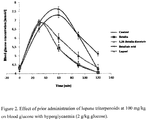
  • To study the effect of betulin, 3,28-diacetate betulin, betulinic acid and lupeol on blood glucose levels in rats with induced hyperglycemia, the animals received 2 hours prior to glucose administration, test substances at doses of 100 or 1000 mg/kg. Hyperglycaemia was caused by oral administration of a 40% glucose solution at a dose of 2 g/kg (OGTT-2) or 4 g/kg (OGTT-4).
  • The study was conducted on Wistar rats weighing 220-250 g. All animals were subjected to two weeks of observation prior to the experiment to exclude infection. Rats were housed in standard cages, 5 individuals in each. The animals stayed in a room with a temperature of 22±2°C, air humidity 60-70% and in natural lighting (12/12 in a day/night cycle). The animals had free access to water and standard laboratory feed ad libitum.
  • Animals were randomized into 5 groups, 8 individuals each.
  • Hyperglycaemia was caused by administration of a 40% glucose solution at doses of 2 or 4 g/kg. Animals from the respective groups received triterpenoids suspensions in 2% starch, once, intragastrically, at 100 and 1000 mg/kg, 2 hours before glucose administration.
  • Blood glucose was determined with a Roche AccuCheck Active glucometer (USA) before and after glucose administration every 30 minutes for 2 hours and then every 60 minutes for 6 hours.
  • The tested lupane terpenoids have been shown to cause a statistically significant and dose dependent reduction in glucose levels in animals with induced hyperglycemia, but no increase in this effect has been observed after the 1000 mg/kg dose.
  • The most significant reduction in blood glucose levels at the peak of hyperglycemia by 30-35% compared to control animals observed after administration of betulin or betulinic acid (Figure 2 and 3).
  • Study of the hypoglycemic effect of lupane triterpenoids in experimental diabetes in rats
  • The study was conducted on Wistar rats weighing 220-250 g. All animals were subjected to two weeks of observation prior to the experiment to exclude infection. Rats were housed in standard cages, 5 individuals in each. The animals stayed in a room with a temperature of 22±2°C, air humidity 60-70% and in natural lighting (12/12 in a day/night cycle). The animals had free access to water and standard laboratory feed ad libitum.
  • Diabetes was caused by a single intraperitoneal administration of alloxan at a dose of 170 mg/kg bw. The development of diabetes was observed on the basis of the main symptoms (polydipsia, polyphagia), glycosuria and hyperglycemia. Animals with high glucose levels of at least 14 mmol/L were selected for the experiment.
  • Animals were randomized into 6 groups of 8 individuals each. The first group, the control group, was formed from healthy animals without diabetes. The control group (healthy animals) received NaCl 1 ml/kg; Group 2. - diabetes mellitus (DM), received NaCl 1 ml/kg; Group 3. - DM + Betulin, at a dose of 100 mg/kg; Group 4. - DM + Lupeol, at a dose of 100 mg/kg; Group 5 - DM + Betulonic acid, at a dose of 100 mg/kg; Group 6 - DM + Betulinic acid, at a dose of 100 mg/kg; Group 7 - DM + Betulin-3,28-diacetate, at a dose of 100 mg/kg.
  • 4 hours after drug administration, all animals intragastrically received a 40% glucose solution at a dose of 4 g/kg. The time of administration is determined in the available literature on its pharmacokinetics - peak plasma levels of lupane triterpenoids in rats are observed 3-4 hours after intragastric administration.
  • Peripheral blood glucose was determined using a Roche AccuCheck Active meter (USA) before and after glucose administration every 60 minutes for 5 hours. A drop of blood was taken from the tail tip incision.
  • In animals with diabetes and induced hyperglycemia, it was shown that the initial administration of test compounds was accompanied by a significant reduction in blood glucose levels compared to the control group of animals with alloxan-induced diabetes (Table 2). It should be noted that in the group of animals with diabetes without treatment (DM), the glucose level did not approach the lower limit even 5 hours after the glucose load, and in the DM + Betulin and DM + Betulinic acid groups the indicators normalized, as in healthy animals, already 4 hours after glucose administration. Table 2. Blood glucose concentration in rats with alloxane-induced diabetes (mmol/L).
    Blood collection time, hours Glucose concentration, mmol/l
    Diabetes Diabetes+ Betulin Diabetes+ Lupeol Diabetes+ Betulinic acid Diabetes+ Betulonic acid Diabetes+ 3,28-Betulin-3,28-diacetate
    0 10,38±0,7 8 10,82±0,31 10,71±0,6 3 10,12±0,70 10,32±0,77 11,77±0,7 0
    2 27,21±0,7 7 22,61±0,4* 26,50±1,2 0 25,64±1,50 18,5±0,32** 26,22±1,6 0
    5 13,48±0,7 9 6,01±0,78** 9,38±0,75 * 7,88±1,30* * 6,52±0,7** 8,51±0,52 *
    * - p< 0,05 compared to the Diabetes group
    ** - p< 0,01 compared to the Diabetes group
  • Evaluation of the functional state of the pancreas in modeling diabetes in laboratory animals
  • The possible cytoprotective effect of lupane triterpenoids on the functional state of the pancreas in alloxan-induced diabetes in rats was evaluated.
  • Alloxane was used to induce diabetes, which causes damage to the necrotic islet type pancreatic apparatus due to selective accumulation in β-cells and induction of massive free radical generation.
  • The study was conducted on Wistar rats weighing 220-250 g. All animals were subjected to two weeks of observation prior to the experiment to exclude infection. Rats were housed in standard cages, 5 individuals in each. The animals stayed in a room with a temperature of 22±2°C, air humidity 60-70% and in natural lighting (12/12 in a day/night cycle). The animals had free access to water and standard laboratory feed ad libitum.
  • Diabetes was caused by a single intraperitoneal administration of alloxan at a dose of 170 mg/kg bw. The development of diabetes was observed on the basis of the main symptoms (polydipsia, polyphagia), glycosuria and hyperglycemia. Animals with high glucose levels of at least 14 mmol/L were selected for the experiment.
  • Animals were randomized into 8 groups of 8 individuals each. The first group, the control group, was formed from healthy animals without diabetes. The control group (healthy animals) received NaCl 1 ml/kg; Group 2 - DM + Lupeol, at a dose of 100 mg/kg; Group 3 - DM + Betulonic acid, at a dose of 100 mg/kg; Group 4 - DM + 3,28-betulin diacetate, at a dose of 100 mg/kg; Group 5 - DM + Betulinic acid, at a dose of 50 mg/kg; Group 6 - DM + Betulinic acid, at a dose of 100 mg/kg; Group 7 - DM + Betulin, at a dose of 50 mg/kg; Group 8 - DM + Betulin, at a dose of 100 mg/kg. All test compounds were administered intragastrically as a suspension in a 2% starch solution for 30 days.
  • Alloxan administration has been shown to cause pronounced destructive changes in the rat pancreatic island apparatus. In microscopic examination, signs of necrotic β-cell death were observed in most pancreatic islets, in most cases cytoplasmic vacuolization, reduced testicular size, chromatin condensation and apoptosis were observed. Inflammatory changes were also observed, which were demonstrated by lymphocytic infiltration along the periphery of the islets. Morphometric results showed that the number, area and diameter of islets in diabetic animals were statistically significantly reduced by 1.5-2 times compared to control values.
  • In animals treated with betulin and betulinic acid at doses of 50 mg/kg/day for 30 days, pathological changes persisted in the islet pancreatic apparatus. There is a tendency to increase the area of Langerhans islets and their number. The islet diameter increased significantly (by 10-15%) and the number of β-cells in the islets (by 25-35%) compared to the untreated group.
  • The introduction of betulin and betulinic acid at doses of 100 mg/kg/day for 30 days was accompanied by a significant improvement in the morphological picture of the pancreas compared to the untreated group. In particular, an increase in the surface of the islands, their diameter, and an increase in the number of β-cells in the composition of the islands was noted.
  • The task set out was solved as a result of developing a dietary supplement composition using a pharmaceutical carrier is selected from the group consisting of polyvinylpyrrolidone, cellulose derivatives, including hydroxypropylmethylcellulose and hydroxypropylcellulose, cyclodextrin, gelatin, hypromellose phthalate, sugars and polyhydric alcohols, calcium sulfate dihydrate, dibasic calcium phophate, sorbitol, mannitol, anhydrous lactose, dextrose, acacia, tragacanth, ethylcellulose, methylcellulose, polyvinyl alcohol, sodium carboxymethylcellulose, silicon dioxide, polyethylene glycol 400, polyethylene glycol 4000, starch, porous silica carriers, aluminum silicate, calcium silicate, sugars, magnesium stearate, cellulose, calcium phosphate and their combinations, from which a capsule will be prepared, into which a biologically active substance from the lupane triterpenoid group in the amount of: 500 or 800 mg of substance in one capsule. They correspond to the sizes "0" and "00", which is a size that allows easy swallowing.

Claims (2)

  1. A preparation with hypoglycemic effect used adjunctively in patients with diabetes, and having an impact on the activity of carbohydrate metabolizing enzymes and on the expression profile of the enzyme genes involved in metabolism, containing as an active substance a compound or compounds from the group of triterpenoid lupane isolated from birch bark Betula pendula Roth, characterized in that lupeole contains 0.5-24.5% by w/w, betulin contains 0.5-24.5% w/w, betulinic acid contains 0.5-24.5% w/w, betulonic acid contains 0.5-24.5% w/w.
  2. The preparation as in claim 1 characterized in that the active ingredients enclosed in a gelatin capsule are in an amount of 500 or 800 mg.
EP20460016.7A 2019-04-24 2020-03-23 Preparation with hypoglycemic effect Pending EP3730147A1 (en)

Applications Claiming Priority (1)

Application Number Priority Date Filing Date Title
PL429726A PL248647B1 (en) 2019-04-24 2019-04-24 A preparation with hypoglycemic action

Publications (1)

Publication Number Publication Date
EP3730147A1 true EP3730147A1 (en) 2020-10-28

Family

ID=70779672

Family Applications (1)

Application Number Title Priority Date Filing Date
EP20460016.7A Pending EP3730147A1 (en) 2019-04-24 2020-03-23 Preparation with hypoglycemic effect

Country Status (2)

Country Link
EP (1) EP3730147A1 (en)
PL (1) PL248647B1 (en)

Citations (5)

* Cited by examiner, † Cited by third party
Publication number Priority date Publication date Assignee Title
RU2304976C1 (en) * 2005-12-30 2007-08-27 Общество с ограниченной ответственностью "Березовый мир" Method for treatment of type 2 diabetes mellitus
KR20130076579A (en) * 2011-12-28 2013-07-08 한동대학교 산학협력단 Betulinic acid and its derivatives with anti-hyperglycemic activity and compositions comprising the same
US20160166631A1 (en) 2013-08-26 2016-06-16 Charles H. Liu Nutraceutical combination for prevention and treatment of type 2 diabetes
US20170182110A1 (en) 2014-04-23 2017-06-29 Nippon Paper Industries Co., Ltd. Agent for preventing or ameliorating diabetes
WO2019008551A2 (en) 2017-07-07 2019-01-10 Benny Antony A coated costus composition enriched with triterpenoids and a method of preparation of the same

Patent Citations (5)

* Cited by examiner, † Cited by third party
Publication number Priority date Publication date Assignee Title
RU2304976C1 (en) * 2005-12-30 2007-08-27 Общество с ограниченной ответственностью "Березовый мир" Method for treatment of type 2 diabetes mellitus
KR20130076579A (en) * 2011-12-28 2013-07-08 한동대학교 산학협력단 Betulinic acid and its derivatives with anti-hyperglycemic activity and compositions comprising the same
US20160166631A1 (en) 2013-08-26 2016-06-16 Charles H. Liu Nutraceutical combination for prevention and treatment of type 2 diabetes
US20170182110A1 (en) 2014-04-23 2017-06-29 Nippon Paper Industries Co., Ltd. Agent for preventing or ameliorating diabetes
WO2019008551A2 (en) 2017-07-07 2019-01-10 Benny Antony A coated costus composition enriched with triterpenoids and a method of preparation of the same

Non-Patent Citations (3)

* Cited by examiner, † Cited by third party
Title
FILOMENA S. G. SILVA ET AL: "Oleanolic, Ursolic, and Betulinic Acids as Food Supplements or Pharmaceutical Agents for Type 2 Diabetes: Promise or Illusion?", JOURNAL OF AGRICULTURAL AND FOOD CHEMISTRY, vol. 64, no. 15, 8 April 2016 (2016-04-08), US, pages 2991 - 3008, XP055717519, ISSN: 0021-8561, DOI: 10.1021/acs.jafc.5b06021 *
GOMES CASTRO ALLISSON JHONATAN ET AL: "The potent insulin secretagogue effect of betulinic acid is mediated by potassium and chloride channels", ARCHIVES OF BIOCHEMISTRY AND BIOPHYSICS, ACADEMIC PRESS, US, vol. 648, 25 April 2018 (2018-04-25), pages 20 - 26, XP085395935, ISSN: 0003-9861, DOI: 10.1016/J.ABB.2018.04.015 *
PAVEL SIMAN ET AL: "Effective Method of Purification of Betulin from Birch Bark: The Importance of Its Purity for Scientific and Medicinal Use", PLOS ONE, vol. 11, no. 5, 6 May 2016 (2016-05-06), pages e0154933, XP055717535, DOI: 10.1371/journal.pone.0154933 *

Also Published As

Publication number Publication date
PL248647B1 (en) 2026-01-12
PL429726A1 (en) 2020-11-02

Similar Documents

Publication Publication Date Title
Ye et al. Hydroxysafflor yellow A protects against myocardial ischemia/reperfusion injury via suppressing NLRP3 inflammasome and activating autophagy
Hasaninezhad et al. The assessment of antidiabetic properties of novel synthetic curcumin analogues: α-amylase and α-glucosidase as the target enzymes
CN102091083B (en) Petroleum ether extract of traditional Chinese medicine for preventing and treating glucose and lipid metabolic disturbance and preparation method thereof
CN117017972B (en) Activation of AMPK by lignum Aquilariae Resinatum component
Xu et al. Protective effect of acorn (Quercus liaotungensis Koidz) on streptozotocin-damaged MIN6 cells and type 2 diabetic rats via p38 MAPK/Nrf2/HO-1 pathway
Zhang et al. Ginsenoside F1 attenuates pirarubicin-induced cardiotoxicity by modulating Nrf2 and AKT/Bcl-2 signaling pathways
Guo et al. Astragalus saponins inhibit cell growth, aerobic glycolysis and attenuate the inflammatory response in a DSS-induced colitis model
Chewchinda et al. Antidiabetic effects of Maclura cochinchinensis (Lour.) corner heartwood extract
US11524021B2 (en) Use of ginsenoside M1 for manufacturing medicament for treating oral cancer
CN106631804A (en) Compound separated out from labiatae isodon plant, and preparation method and application thereof
EP3730147A1 (en) Preparation with hypoglycemic effect
CN107213160B (en) Application of NADPH in antagonizing drug-induced mitochondrial toxicity
EP3744331A1 (en) Combination of betulin and cyclodextrin for use in the treatment of alzheimer&#39;s disease
TW202206092A (en) Extract of cocculus hirsutus for treatment of covid-19
Wu et al. Renoprotective activity of Ribes diacanthum pall (RDP) against inflammation in cisplatin-stimulated mice model and human renal tubular epithelial cells
Aguilar-Guadarrama et al. Chemical Constituents from Agave applanata and Its Antihyperglycemic, Anti-inflammatory, and Antimicrobial Activities Associated with Its Tissue Repair Capability
Xu et al. Comparative study on the antidiabetic efficacy of unripe and ripe fruit extracts of siraitia grosvenorii and the possible mechanism of action
Sharmila et al. Anti-diabetic potential of Indian medicinal plants with Garcinia kola and Syzygium cumini
Allah et al. In vitro and in vivo studies of anti diabetic effect of khaya senegalensis leaves and bark extracts
CN106822338A (en) Compound composition for lowering blood sugar and blood fat, preventing and/or treating diabetes and its complications and use thereof
CN102863501B (en) Spirostanol glycoside-type compound, and application and preparation method thereof
CN108403980B (en) A kind of effective part of hypoglycemic plant extract and its preparation method and application
WO2013189229A1 (en) New use of 20(s)-protopanoxadiol
Nadaf A study of hypoglycemic effect of Caesalpinia bonduc extract on alloxan induced diabetic albino rats
CN110215449A (en) Alkannic acid is inhibiting the application in insulin amyloid polypeptide aggregation

Legal Events

Date Code Title Description
PUAI Public reference made under article 153(3) epc to a published international application that has entered the european phase

Free format text: ORIGINAL CODE: 0009012

STAA Information on the status of an ep patent application or granted ep patent

Free format text: STATUS: REQUEST FOR EXAMINATION WAS MADE

17P Request for examination filed

Effective date: 20200519

AK Designated contracting states

Kind code of ref document: A1

Designated state(s): AL AT BE BG CH CY CZ DE DK EE ES FI FR GB GR HR HU IE IS IT LI LT LU LV MC MK MT NL NO PL PT RO RS SE SI SK SM TR

AX Request for extension of the european patent

Extension state: BA ME

STAA Information on the status of an ep patent application or granted ep patent

Free format text: STATUS: EXAMINATION IS IN PROGRESS

17Q First examination report despatched

Effective date: 20230925

STAA Information on the status of an ep patent application or granted ep patent

Free format text: STATUS: THE APPLICATION HAS BEEN REFUSED